
A romantic bridal face is softer than a party face but more structured than everyday makeup. It has to read as you at arm’s length, still show up in a photo taken from the back of the room, and survive tears, hugs and a long evening. What brides ask me for now is real-looking skin, diffused blush, eyes defined without hard edges, controlled glow and a lip chosen for them rather than a single bridal shade. Below are twenty directions I work in, from barely-there to evening drama, with notes on who each suits and what I watch for when I apply it.
Glow Versus Shine, and Where the Light Should Land
Almost every romantic look starts with luminous skin, and the difference between glow and shine is placement. Glow sits where light naturally hits: the top of the cheekbone, the bridge of the nose, the brow bone, the cupid’s bow. Shine is what happens when the whole face reflects, especially the T-zone, and in photos it looks like sweat. So I add radiance to the high points and keep the centre of the face satin.
Two things make that harder on a wedding day. Some setting powders and sunscreens contain ingredients that bounce flash back and leave a white cast in photos, so I avoid heavy SPF and very white powders on the day itself and wear sunscreen under them only if it’s been tested with flash. And skin gets oilier as the day goes on, so a glow that’s perfect at noon can be too much by the first dance.
- Highlight: cheekbones and brow bone, never the whole forehead.
- Powder: a thin press on the T-zone, not a full set over the face.
- Products: cream under powder lasts longer than either alone.
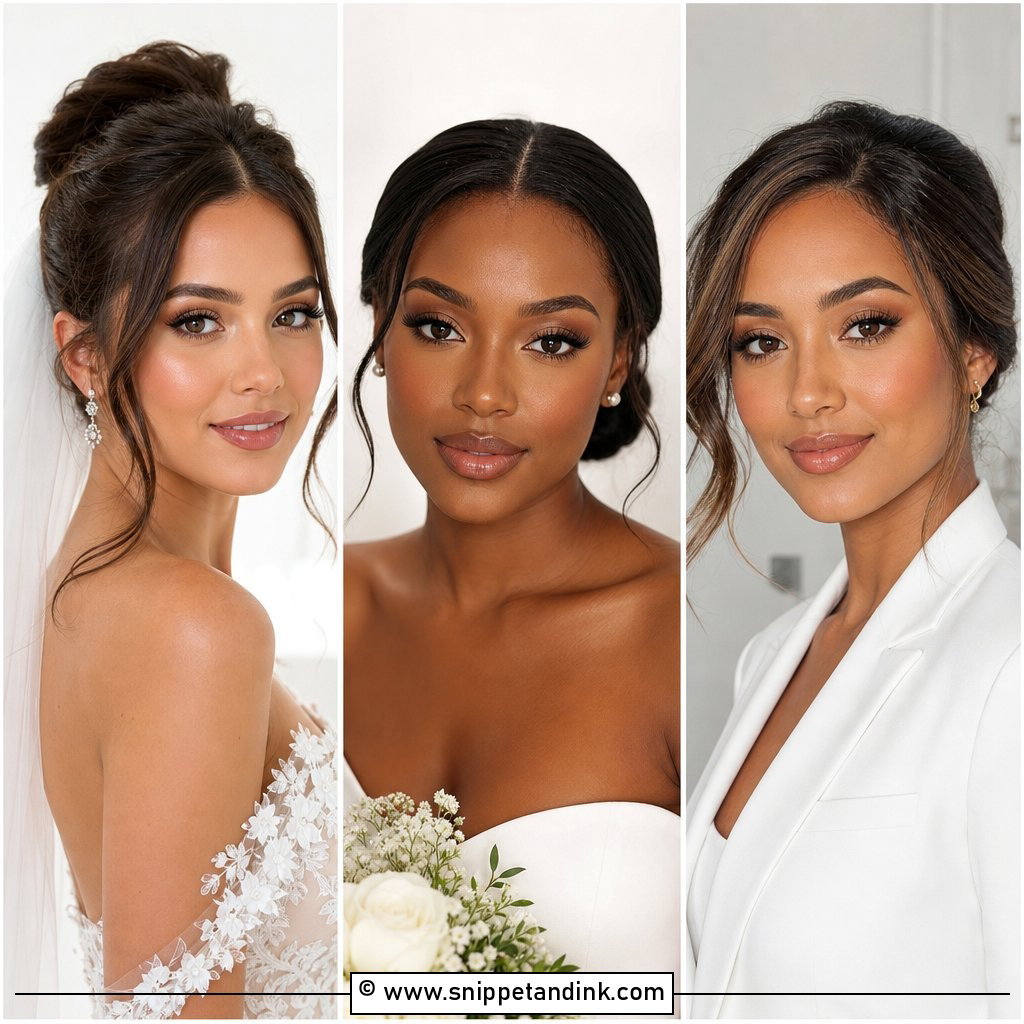
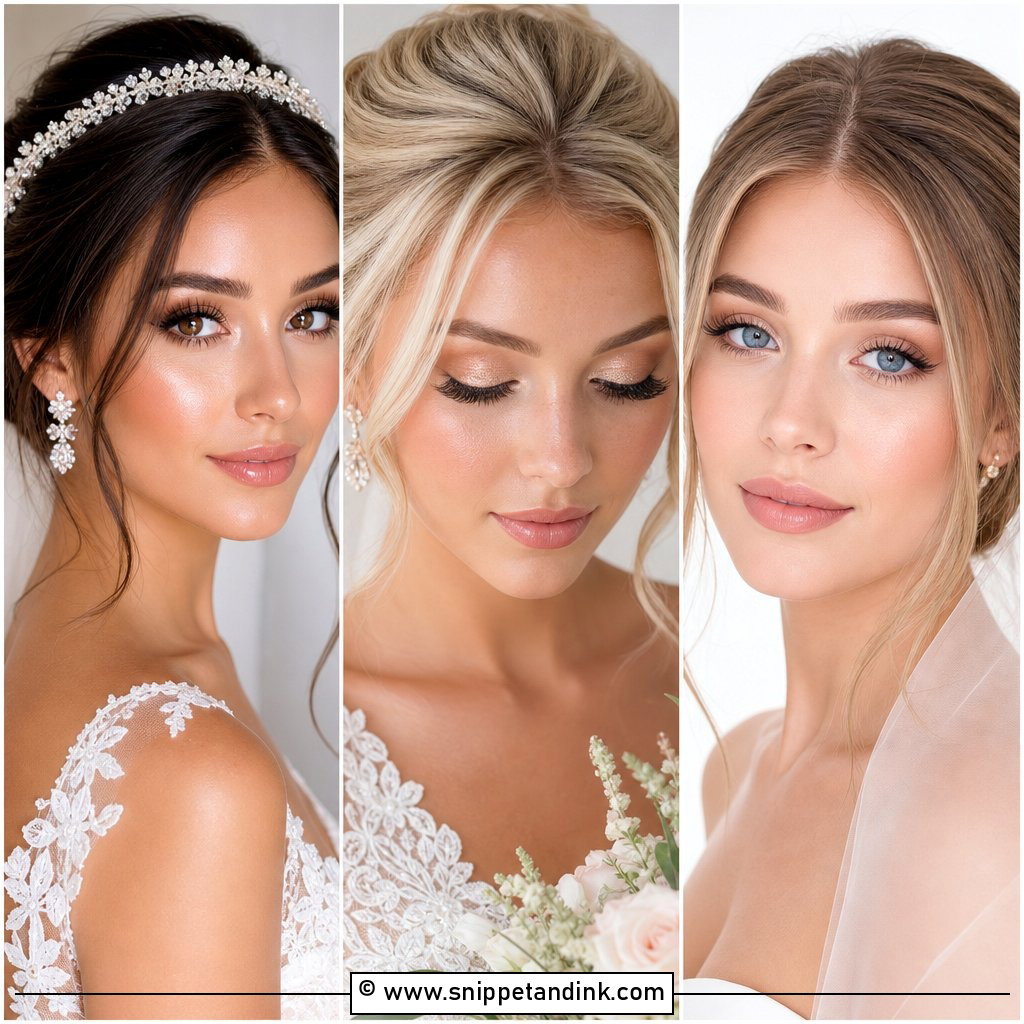
1. Soft Glam Bridal Makeup
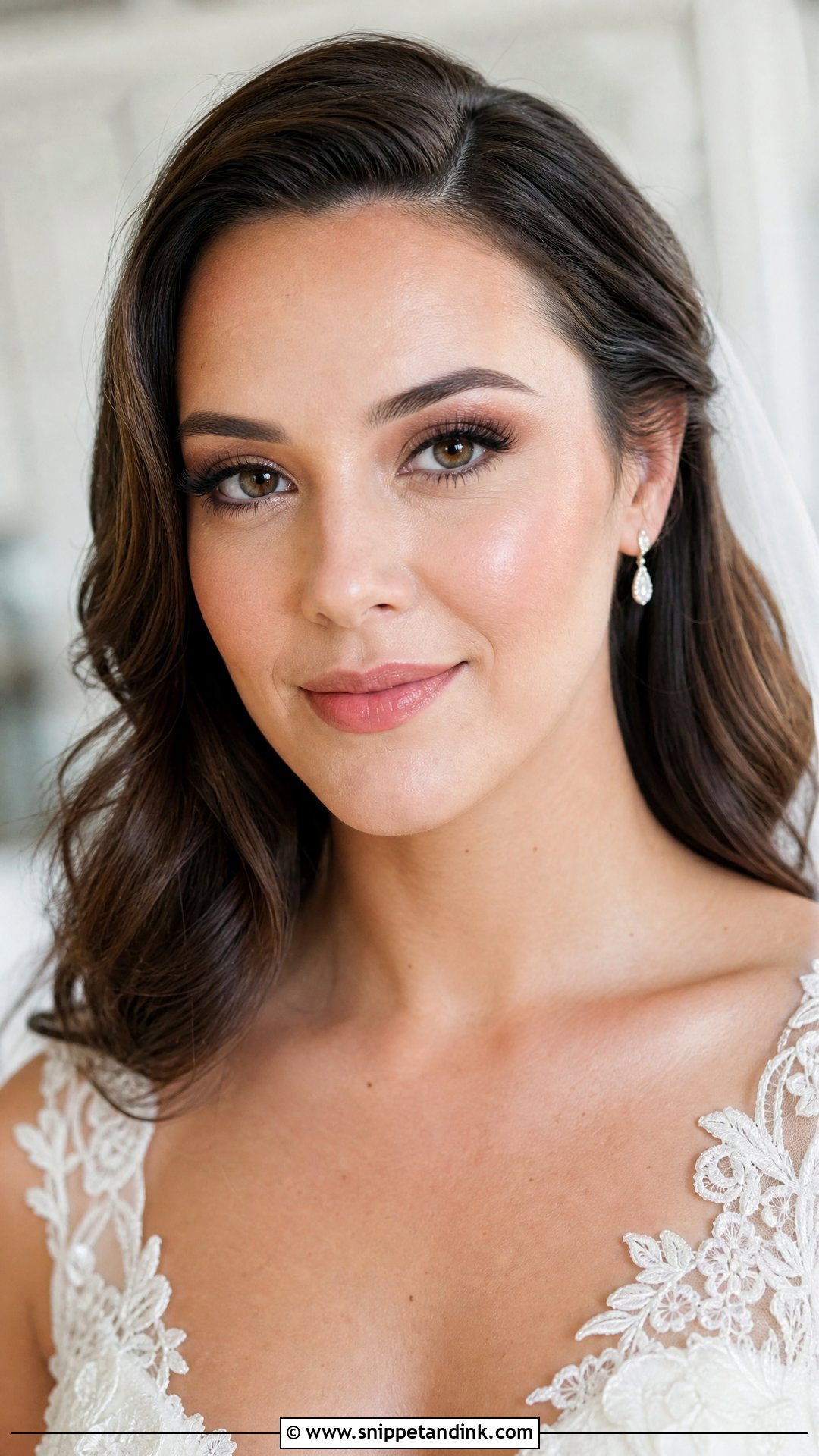
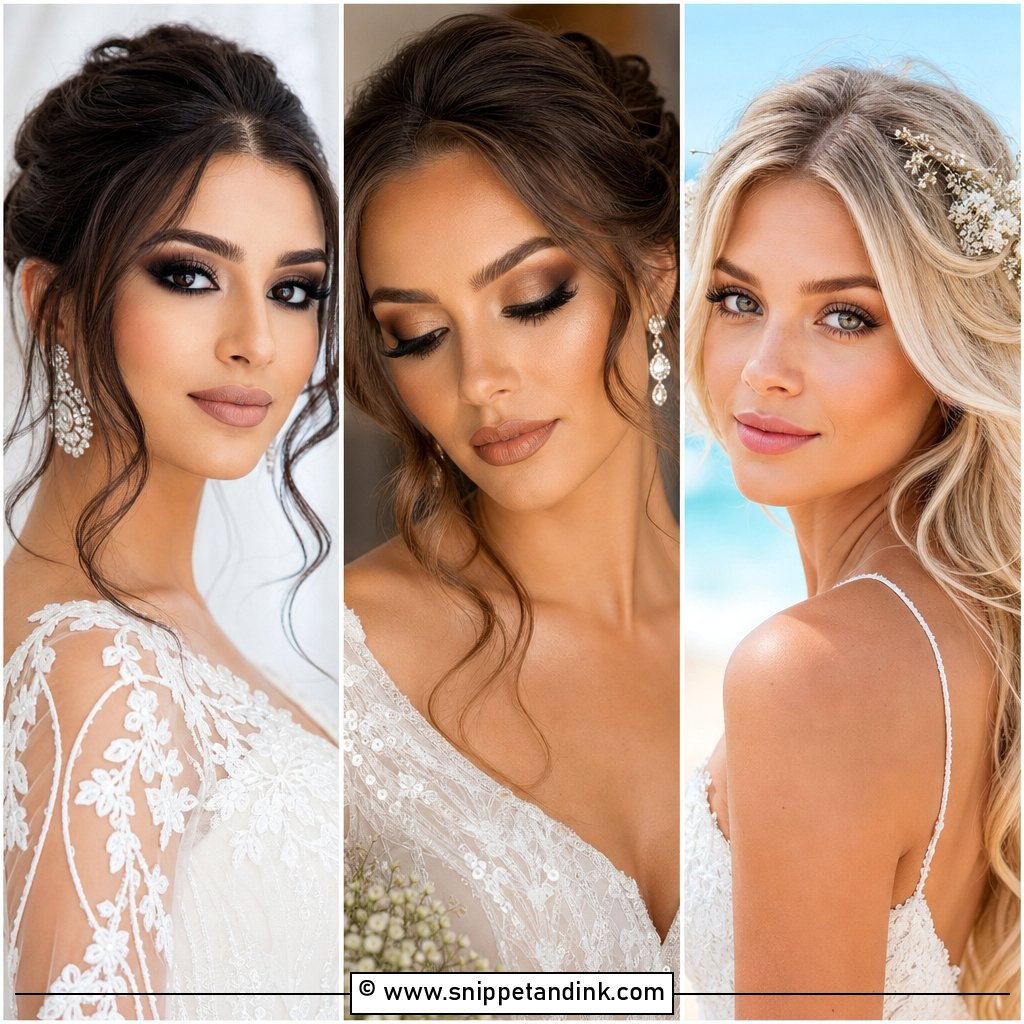
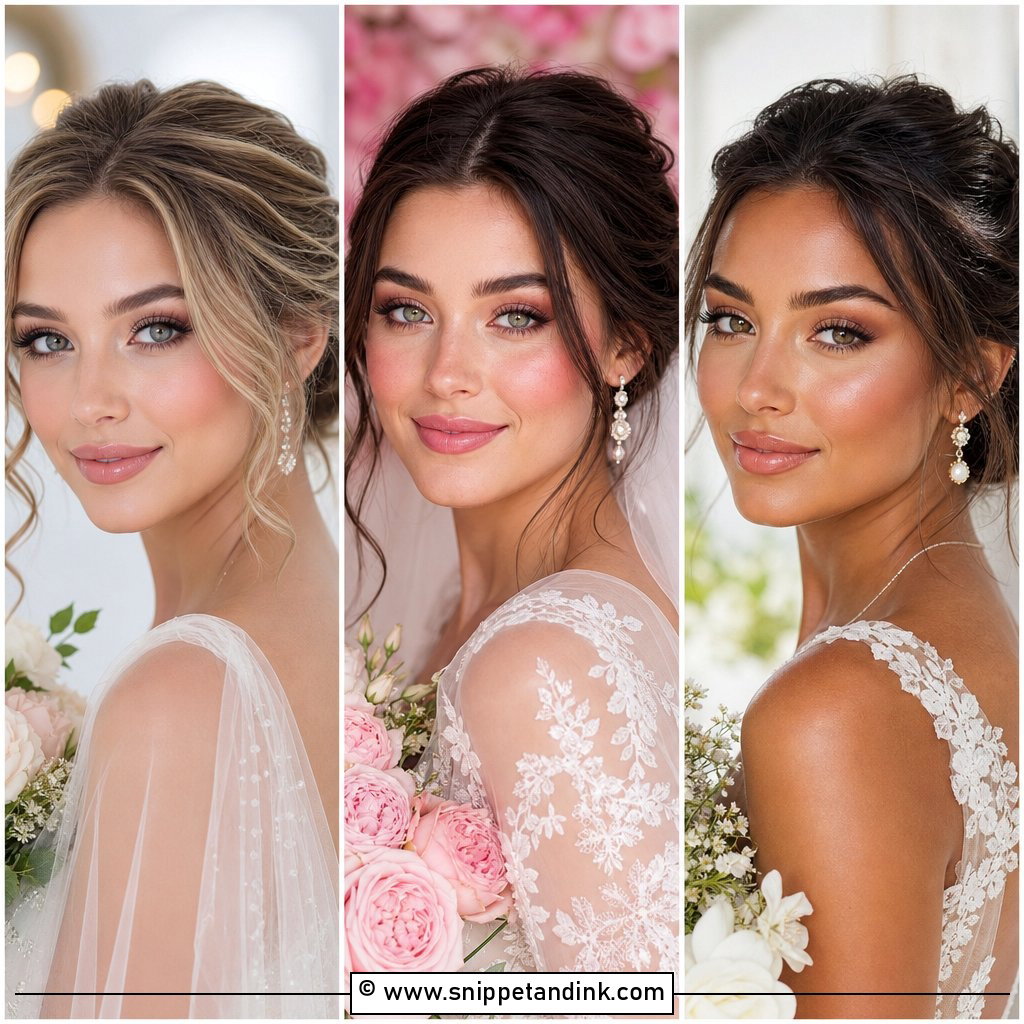
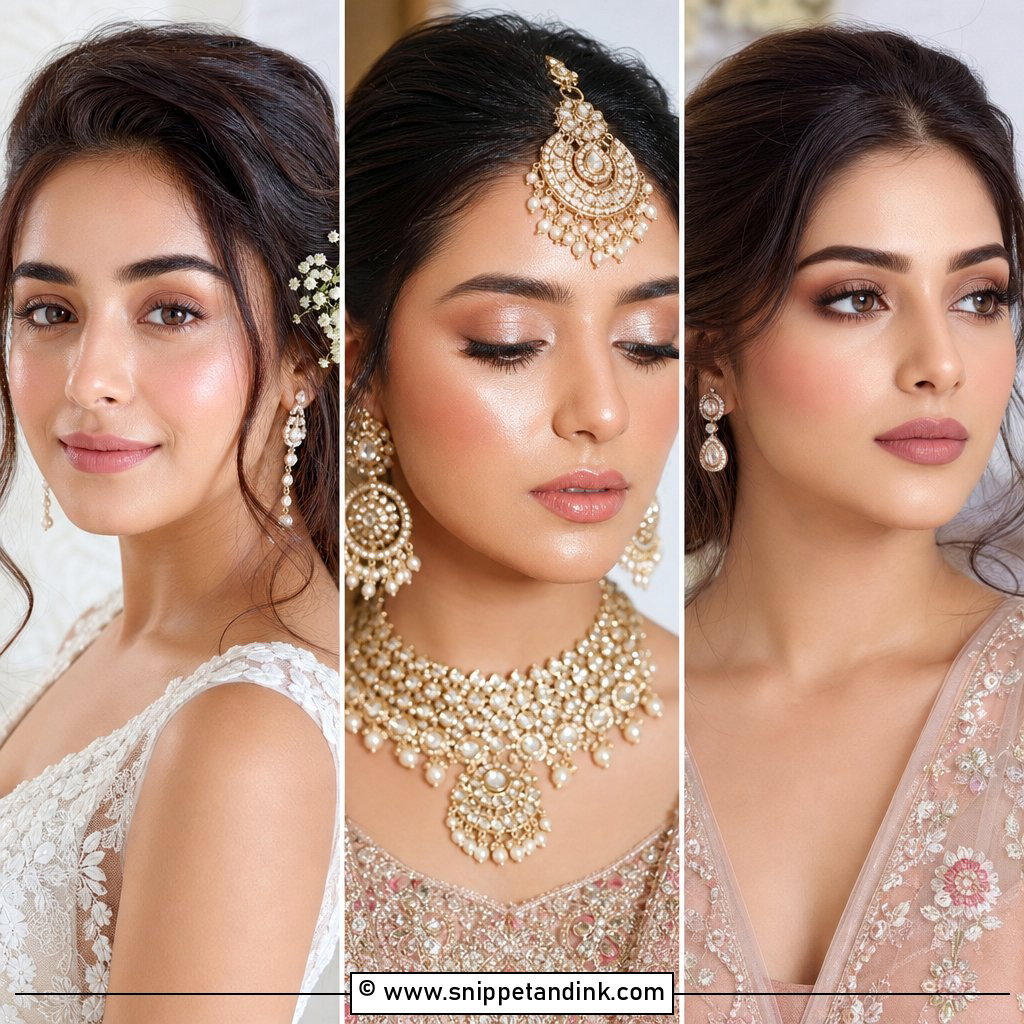
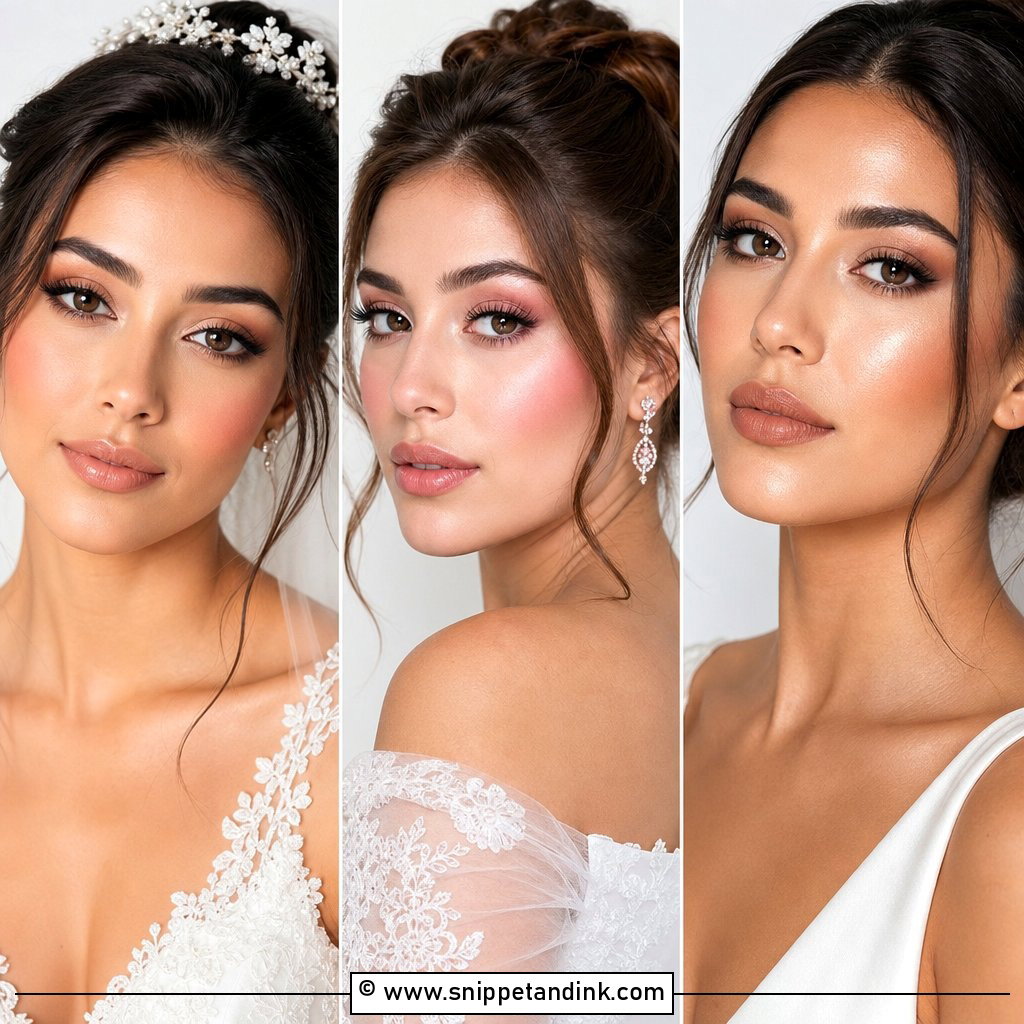
Soft glam is the look I do most, because it defines without looking heavy. I use a medium-coverage foundation, concealer only where it’s needed, cream blush and a champagne highlight on the high points. Eyes get beige, taupe and warm brown blended until there are no edges, a thin brown liner, soft lashes and brows brushed up. Lips go pink nude or beige rose in a satin finish. Where it goes wrong is in the blending: one visible line on the lid and it starts to read as heavier than it is. It suits most dresses and almost any venue.
2. Natural Bridal Makeup
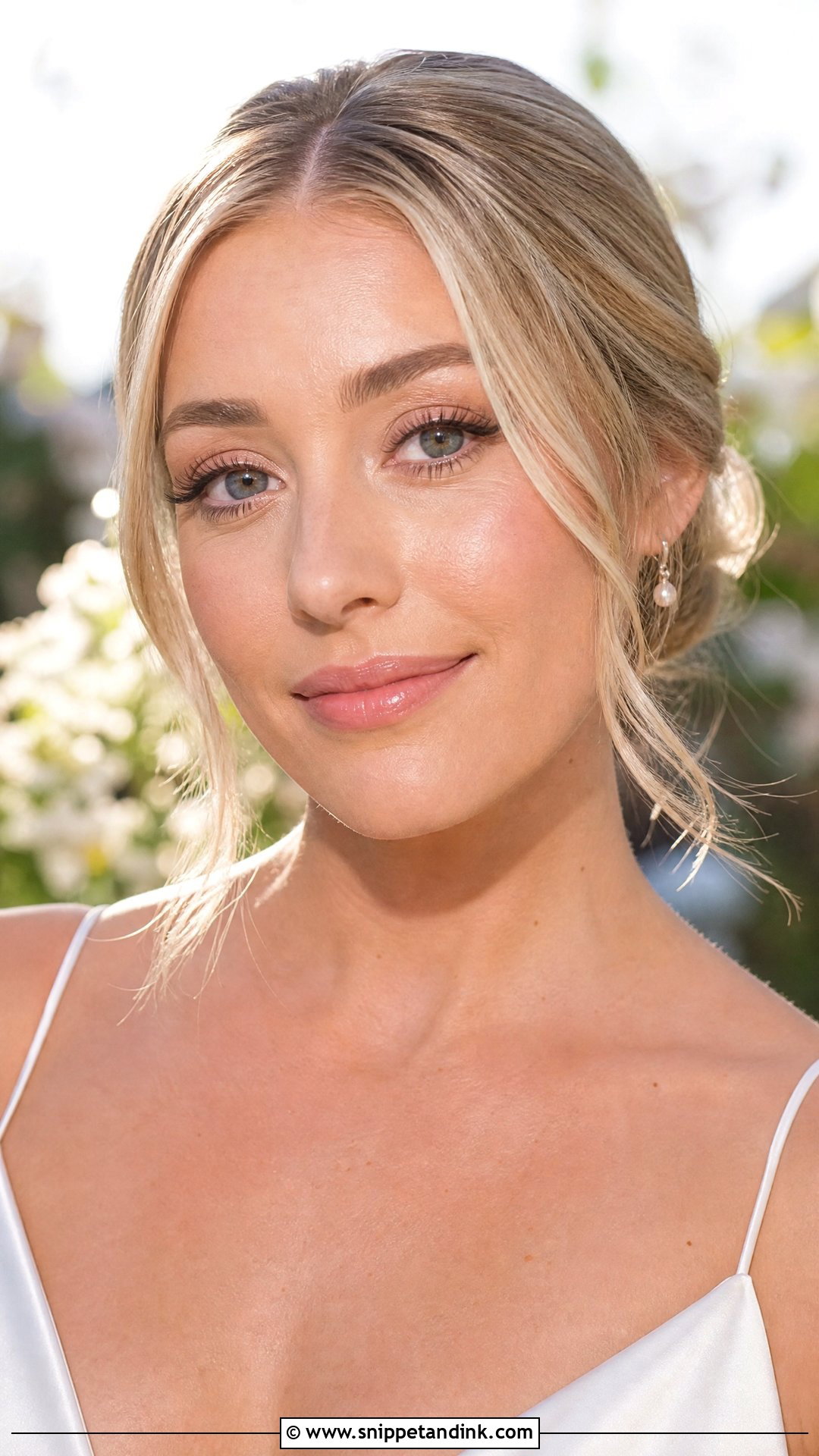
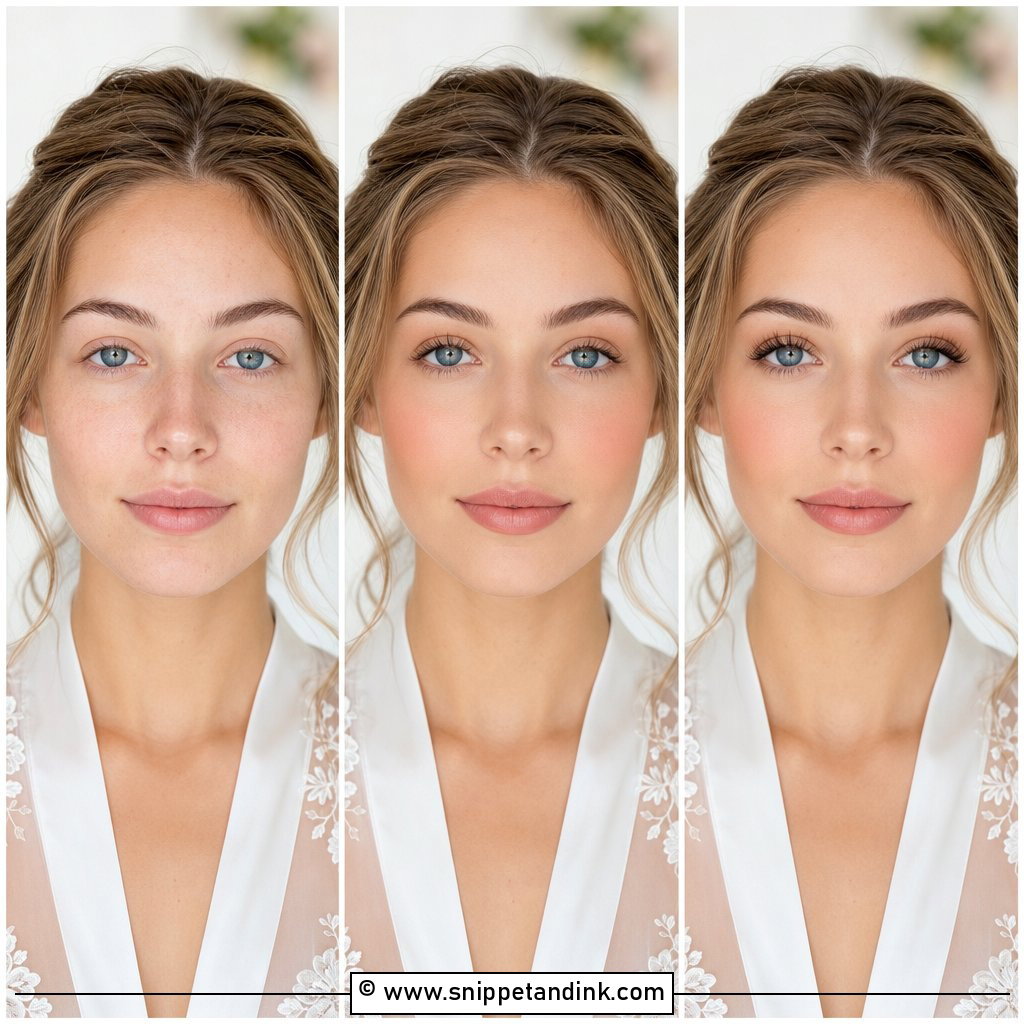
Natural makeup is harder to do well than full glam, because there’s nothing to hide behind. I prep the skin properly, then use a light foundation or skin tint only where it’s needed and leave freckles and natural texture showing. Peach or rose cream blush, a touch of highlighter, matte beige on the lid, curled lashes and a little brown mascara or liner keep it fresh. A sheer pink or nude lip finishes it. It’s the right choice for brides who rarely wear makeup, but I’d still add a little more than feels necessary, because a camera flattens a face that looks complete in the mirror.
3. Dewy Bridal Makeup
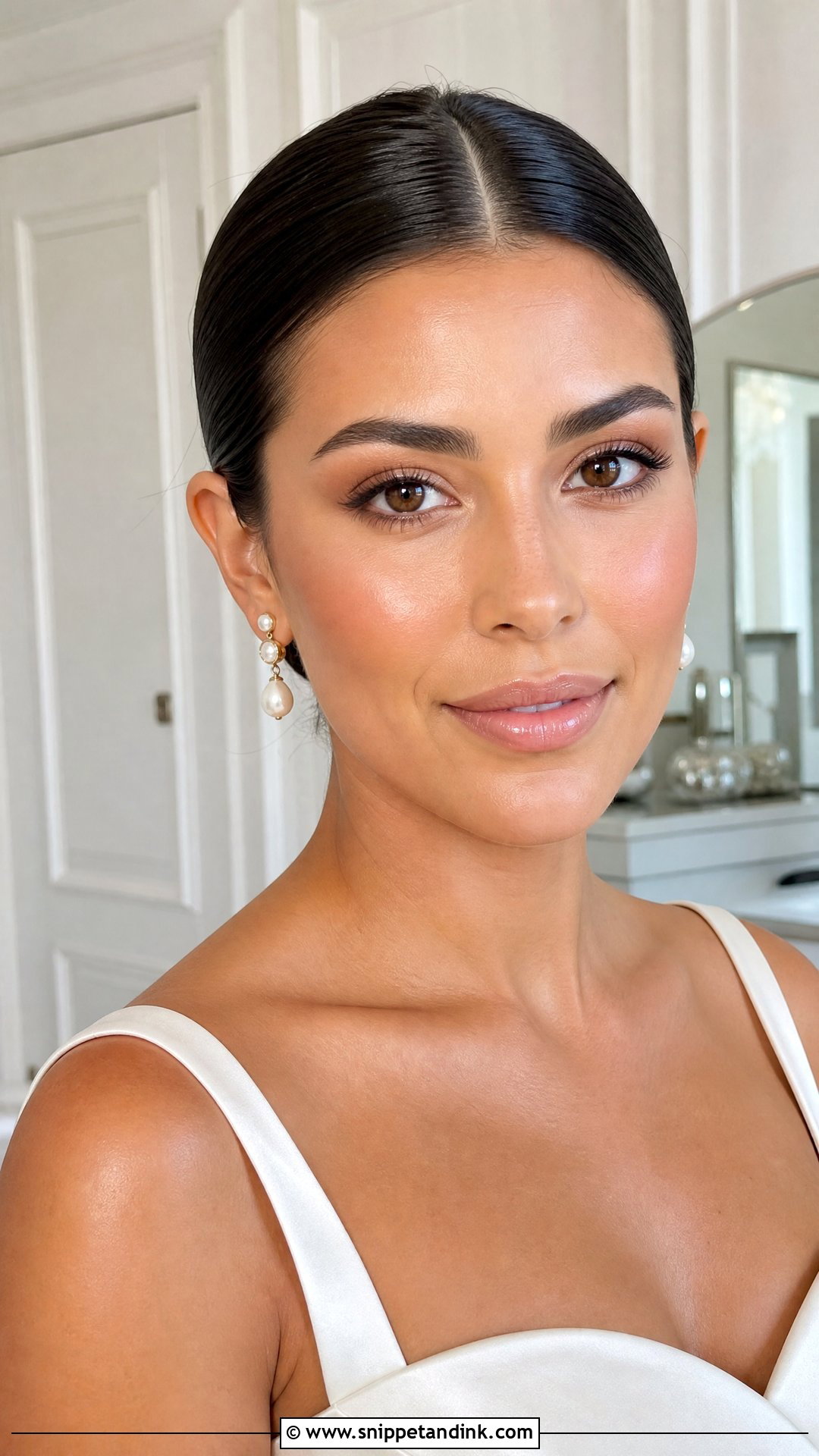
Dewy skin photographs well in close-ups, as long as the glow is placed and not spread everywhere. I use a radiant primer and a natural-finish foundation, then powder only the sides of the nose, the forehead centre and the smile lines, the spots that turn from glow to grease first. Cream blush in rose or peach brings life back, and a liquid highlight goes on the cheekbones. Eyes stay soft so the skin is the focus. A glossy nude pink lip finishes it. If your skin runs oily by midday, I’d choose satin over dewy.
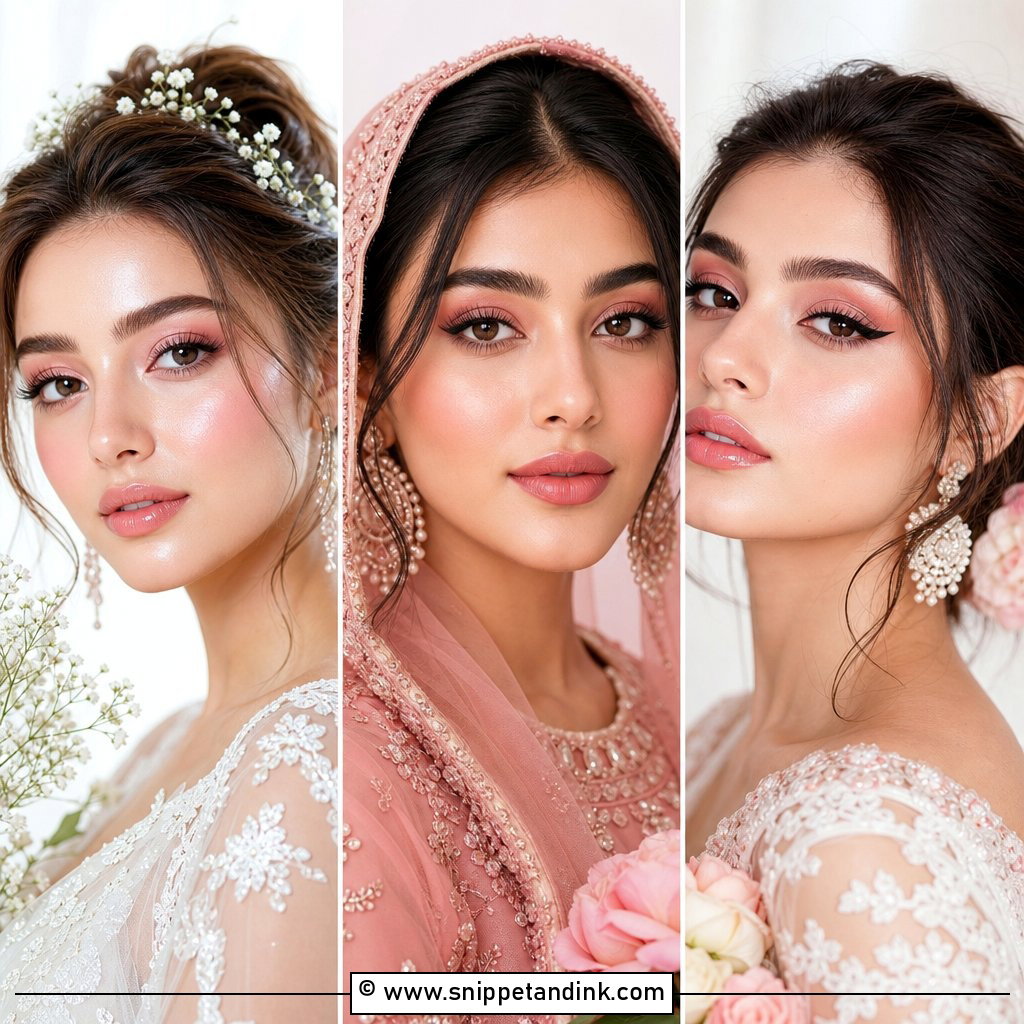
4. Pink Bridal Makeup
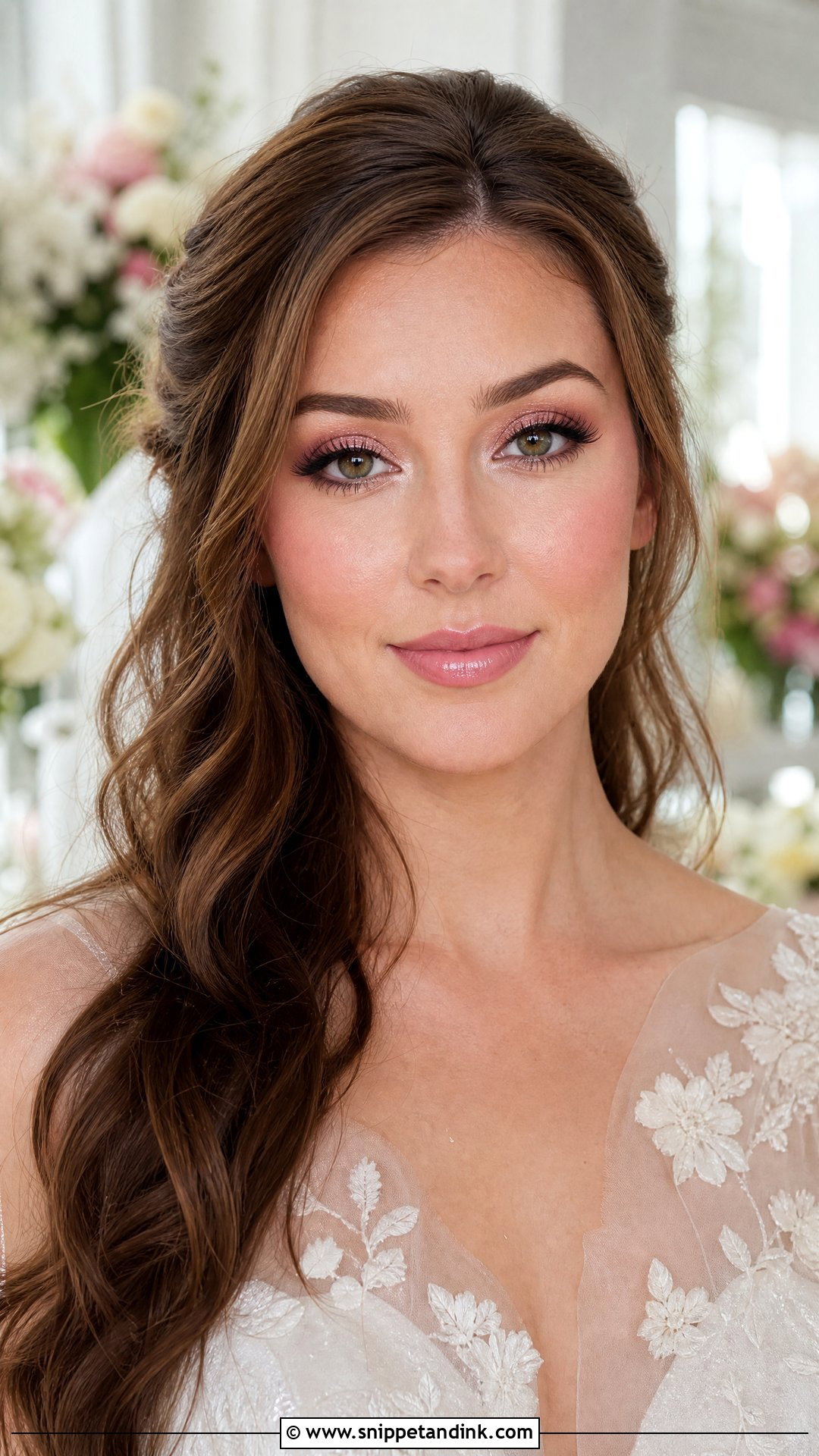
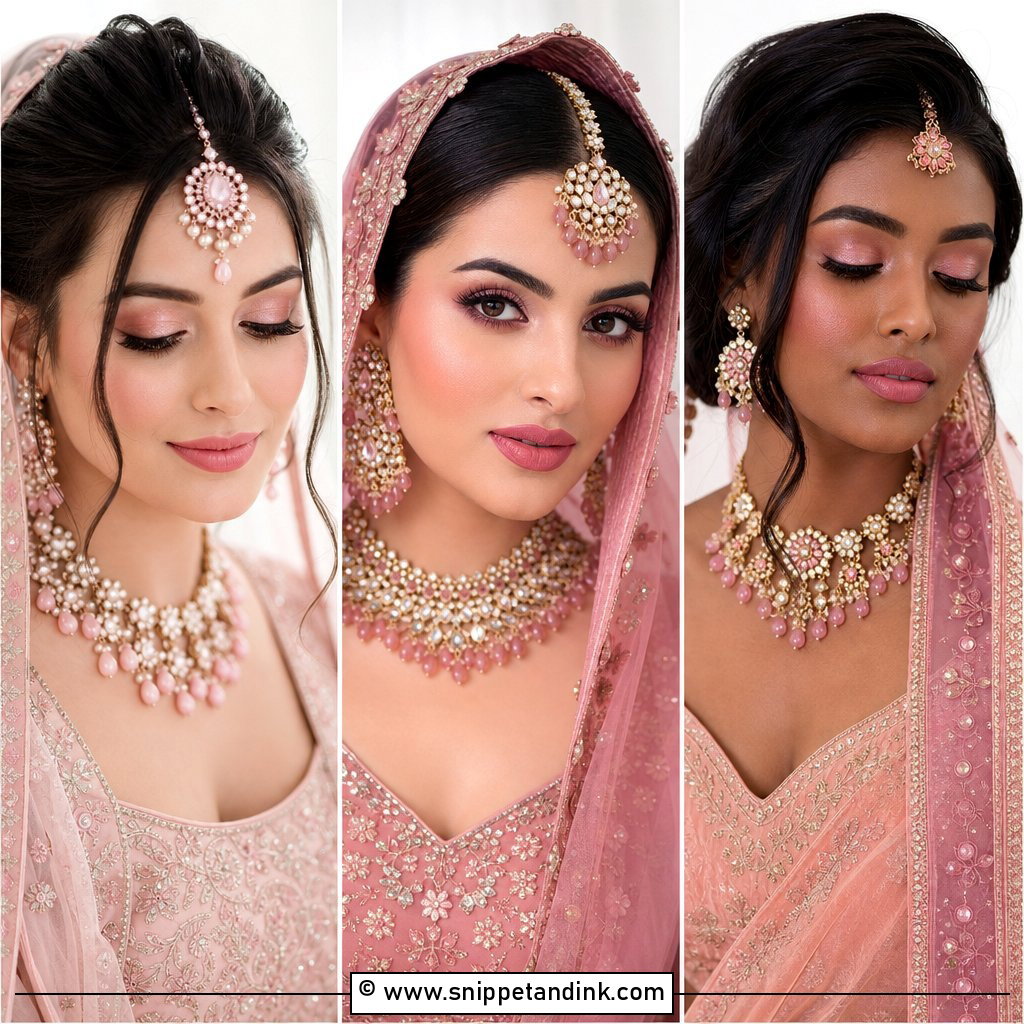
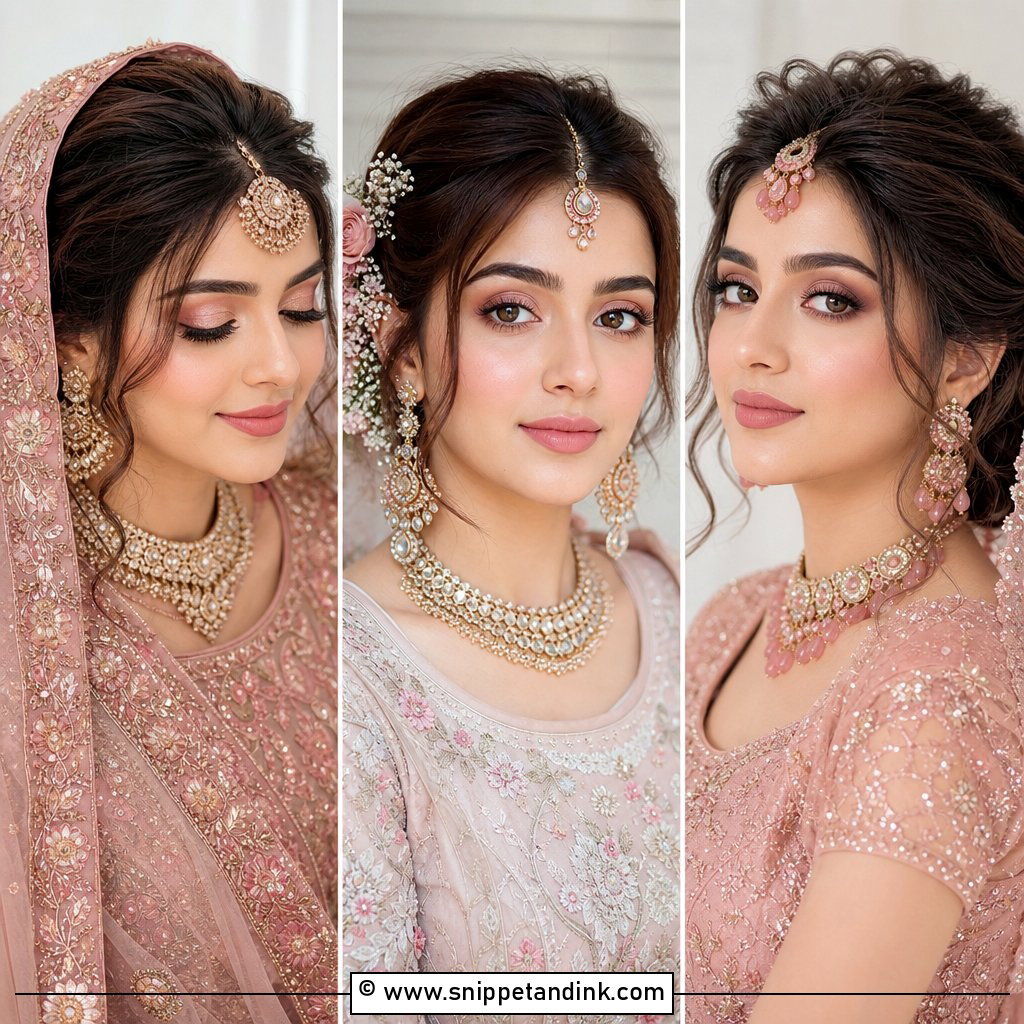
Pink is easy to wear if the shade matches your undertone. As a starting point, baby pink tends to suit fair skin, rose pink light to medium skin, mauve pink olive skin and berry rose deeper skin. I keep the complexion smooth and sweep pink blush high on the cheeks for a natural flush. On the eyes, a pale rose or champagne pink with brown liner and wispy lashes. The thing I check is that the blush and lip are related shades; two unrelated pinks fight on camera. It suits a garden wedding or a spring ceremony.
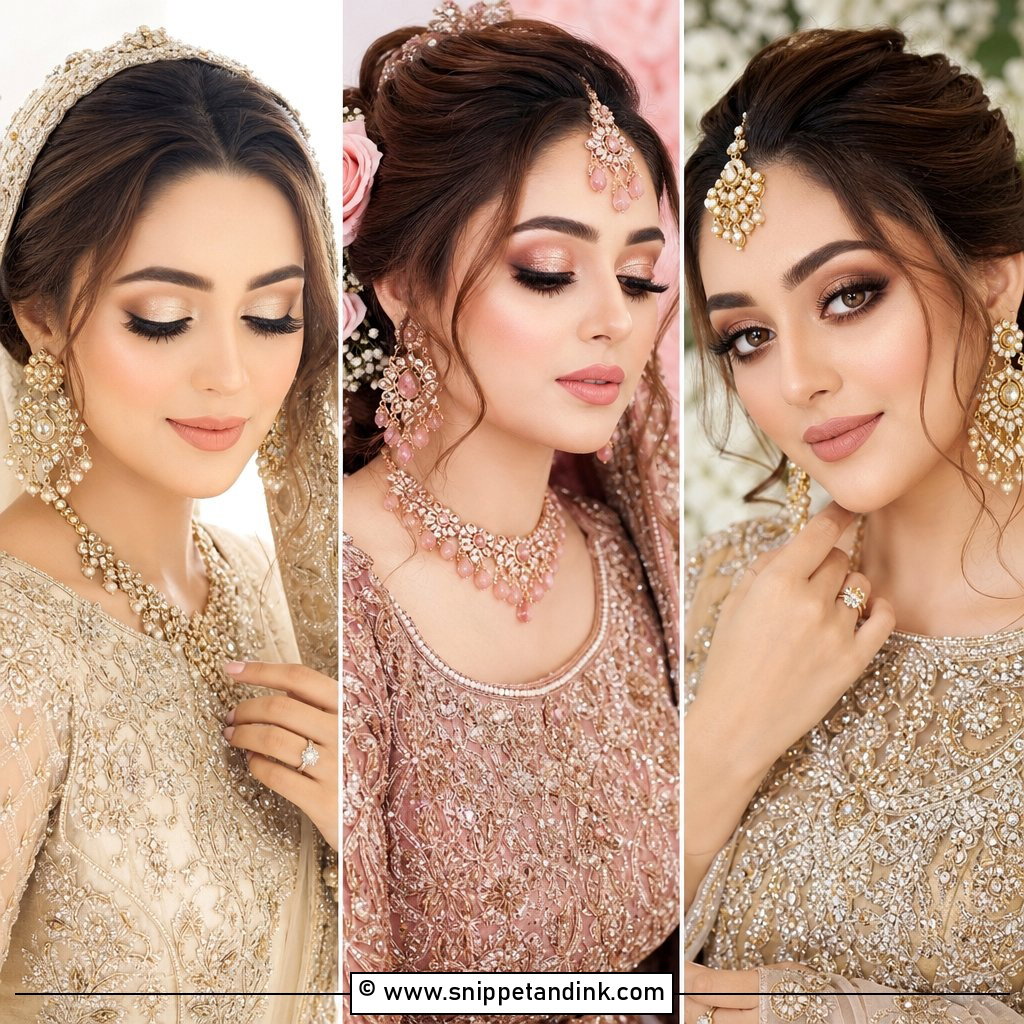
5. Rose Gold Bridal Makeup
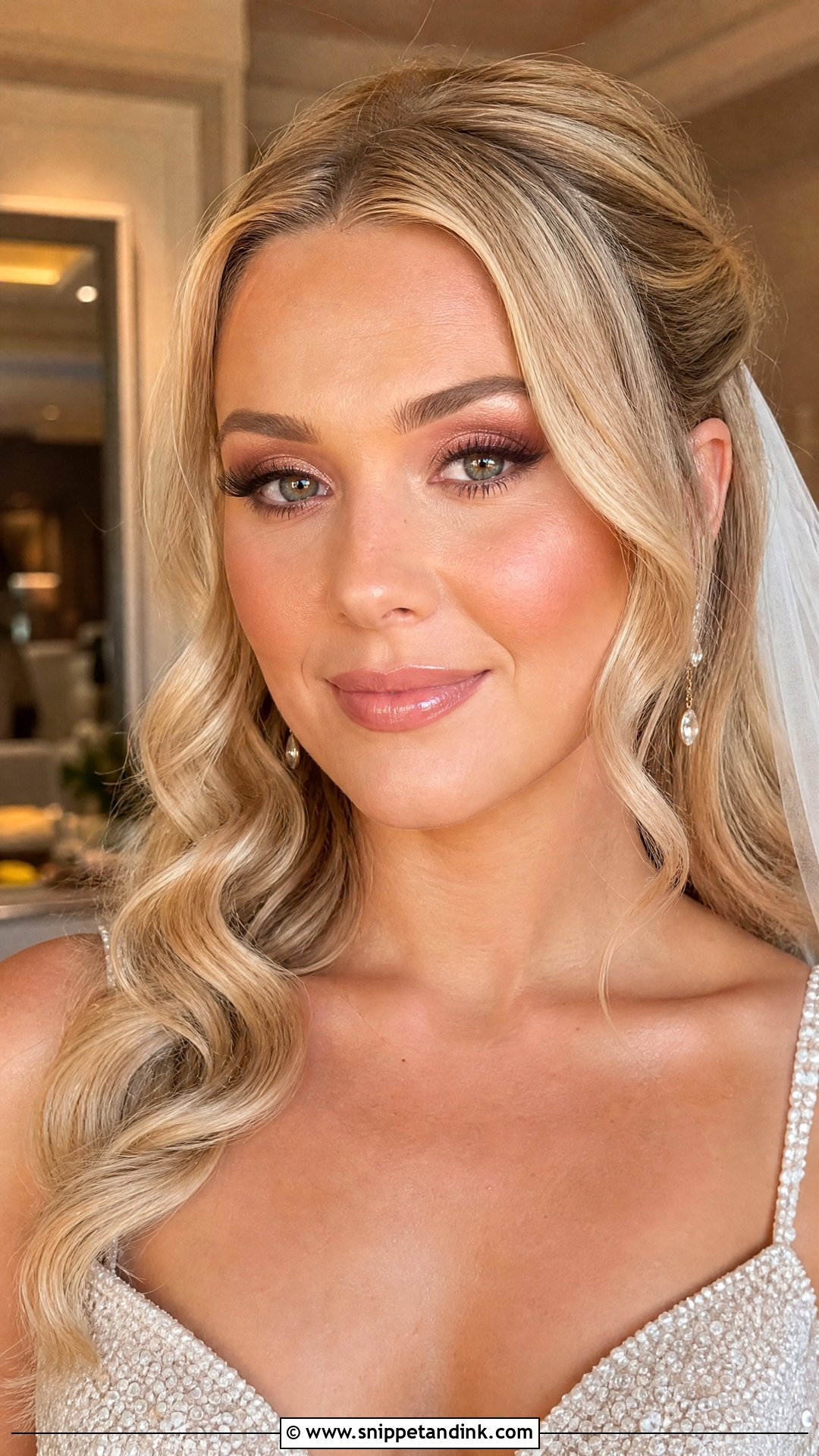
Rose gold sits halfway between pink and bronze, so it flatters a wide range of skin tones. I put rose gold shimmer on the lid, warm brown in the crease and a deeper bronze along the lash line, then keep the liner thin so the shimmer still shows. Shimmer emphasises texture, so on hooded or crepey lids I’d keep it to the centre of the lid only. Peachy rose blush and a champagne highlight warm the face, and a rosy nude or mauve gloss finishes it. It glows in golden-hour light and candlelit receptions.
6. Classic Bridal Makeup
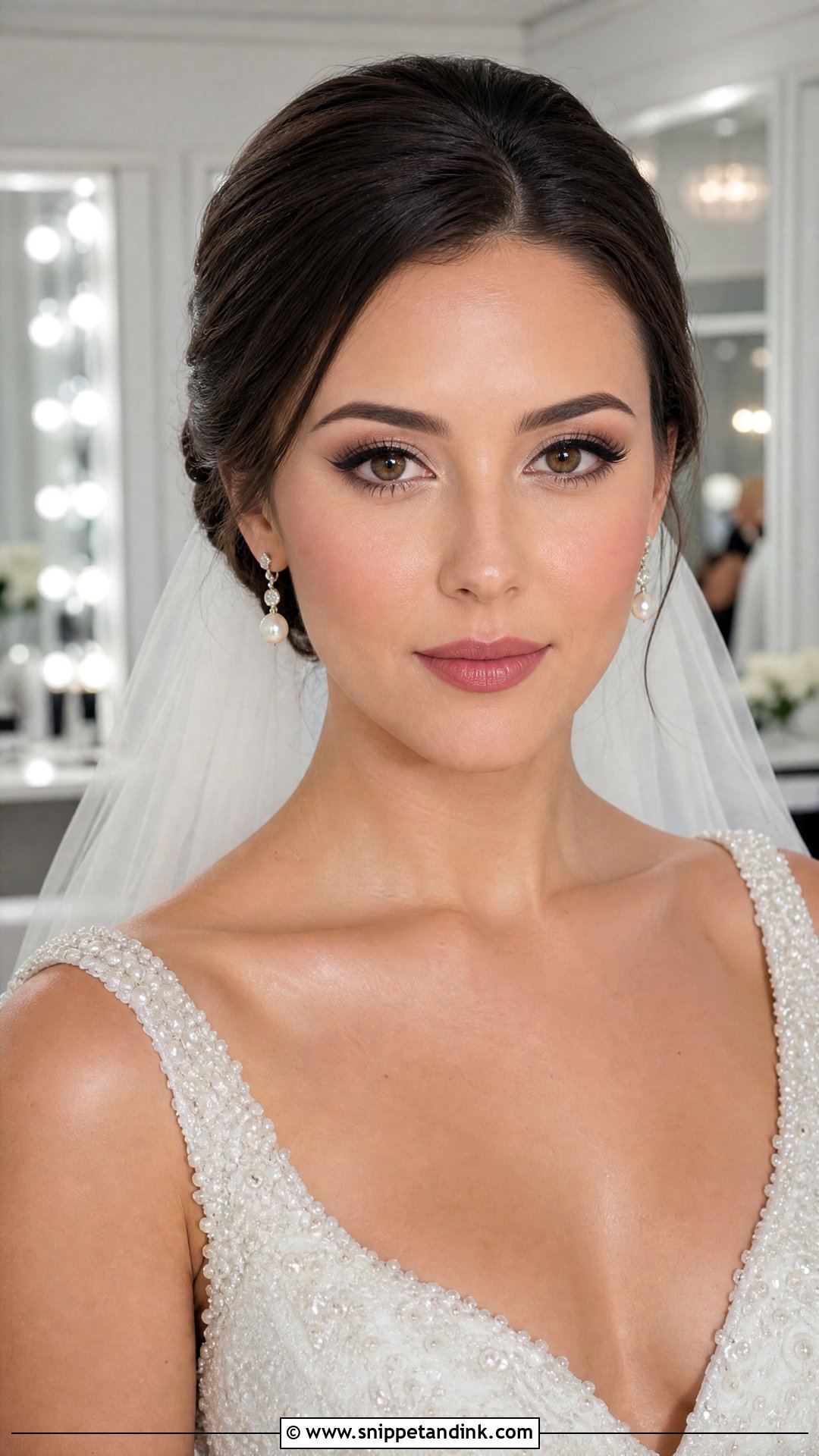
Classic bridal makeup lasts because it’s built on balance: polished skin, softly defined eyes and enough lip colour to show in photos. I use a long-wear satin foundation, a natural contour, soft pink or peach blush and a subtle highlight. Neutral matte shadows, a clean brown or black wing and separated lashes define the eyes. Brows should look shaped but never blocky. A rose or soft berry lipstick gives the face structure. It’s the look I’d suggest under a veil, because nothing in it competes with the fabric.
7. Matte Bridal Makeup
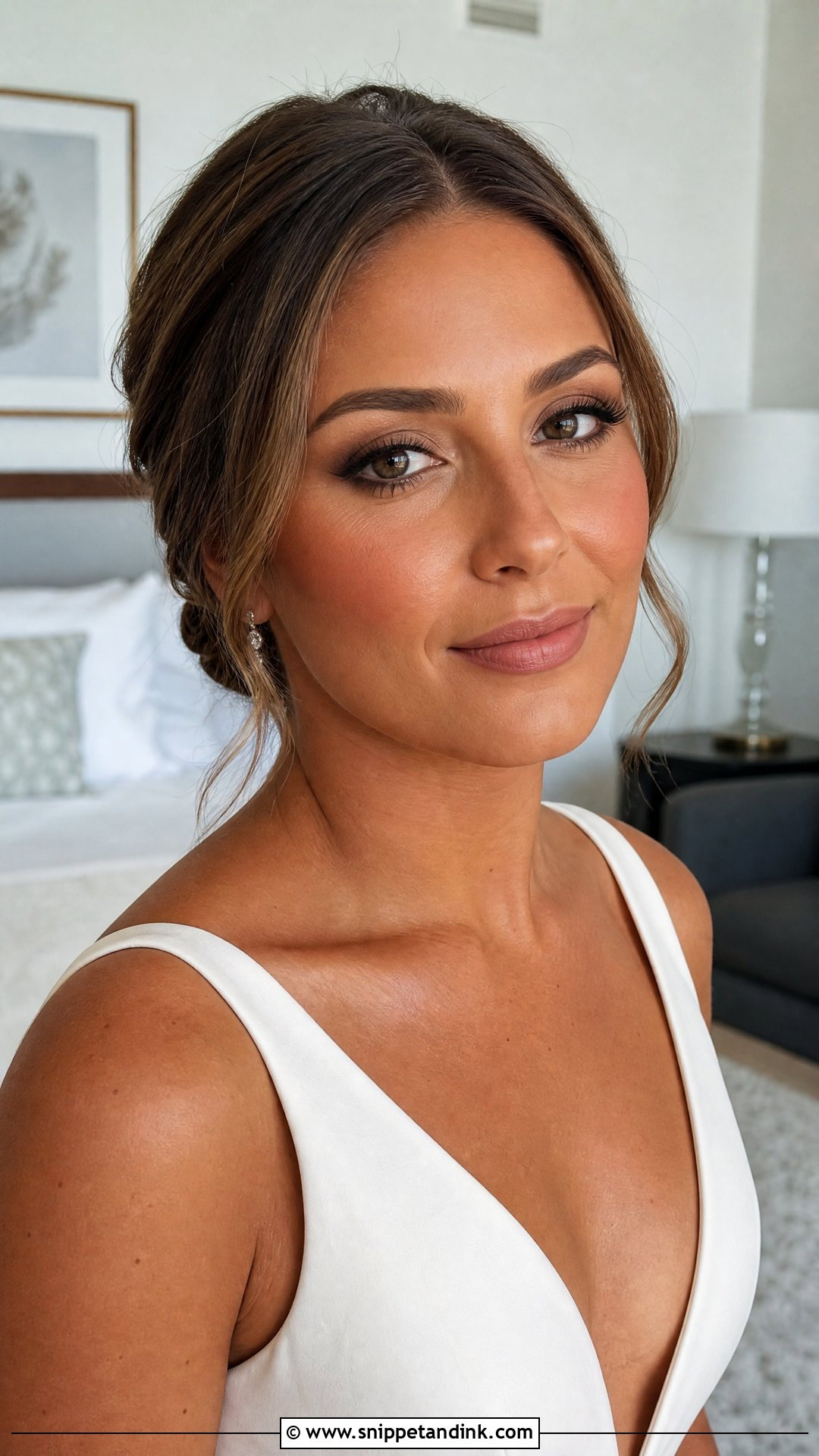
Matte makeup holds up in heat, but flat matte skin can look like a mask in photos. I use a soft matte foundation, set only where it’s needed, and bring dimension back with powder blush, a little bronzer and a satin highlight. Matte taupe, beige and cocoa shadows keep the eyes soft, with individual lashes or a natural strip. A velvet nude or rose lipstick suits it. It’s my first suggestion for oily skin and humid venues, and for a black-tie evening where the photographer will use flash.
8. Smokey Eye Bridal Makeup
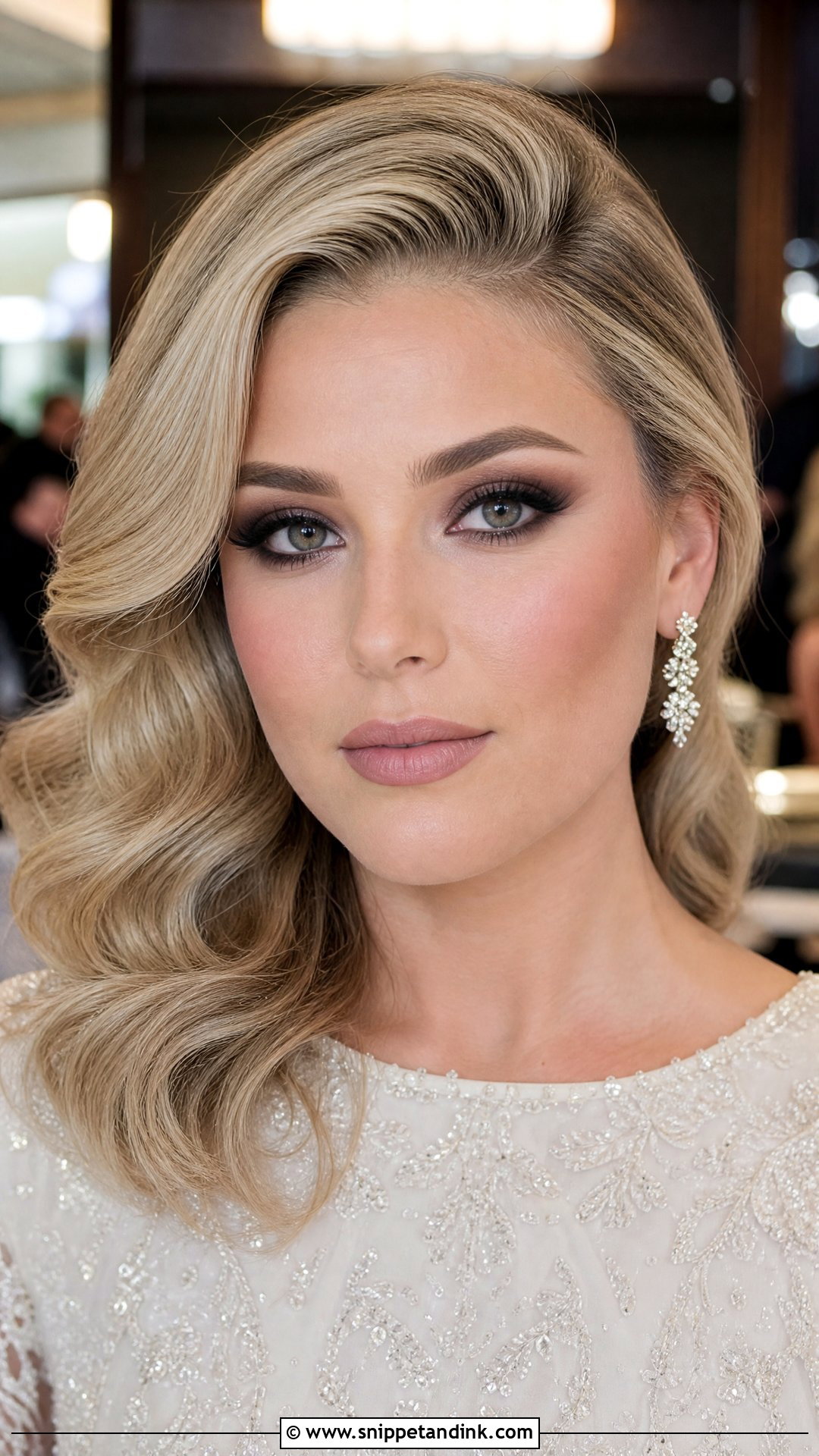
Smokey eye bridal makeup stays romantic when the edges are soft. I avoid black across the lid and use taupe, espresso, bronze, plum brown or soft charcoal, darkest at the lash line and blended upward into a lighter crease. I do the eyes first on a smokey look, so any fallout can be cleaned off before the foundation goes on. Clean skin, sculpted cheeks and a muted rose lip balance it. Lashes should be full but wispy. It suits an evening or winter wedding and a formal gown.
9. Brown Smokey Bridal Makeup
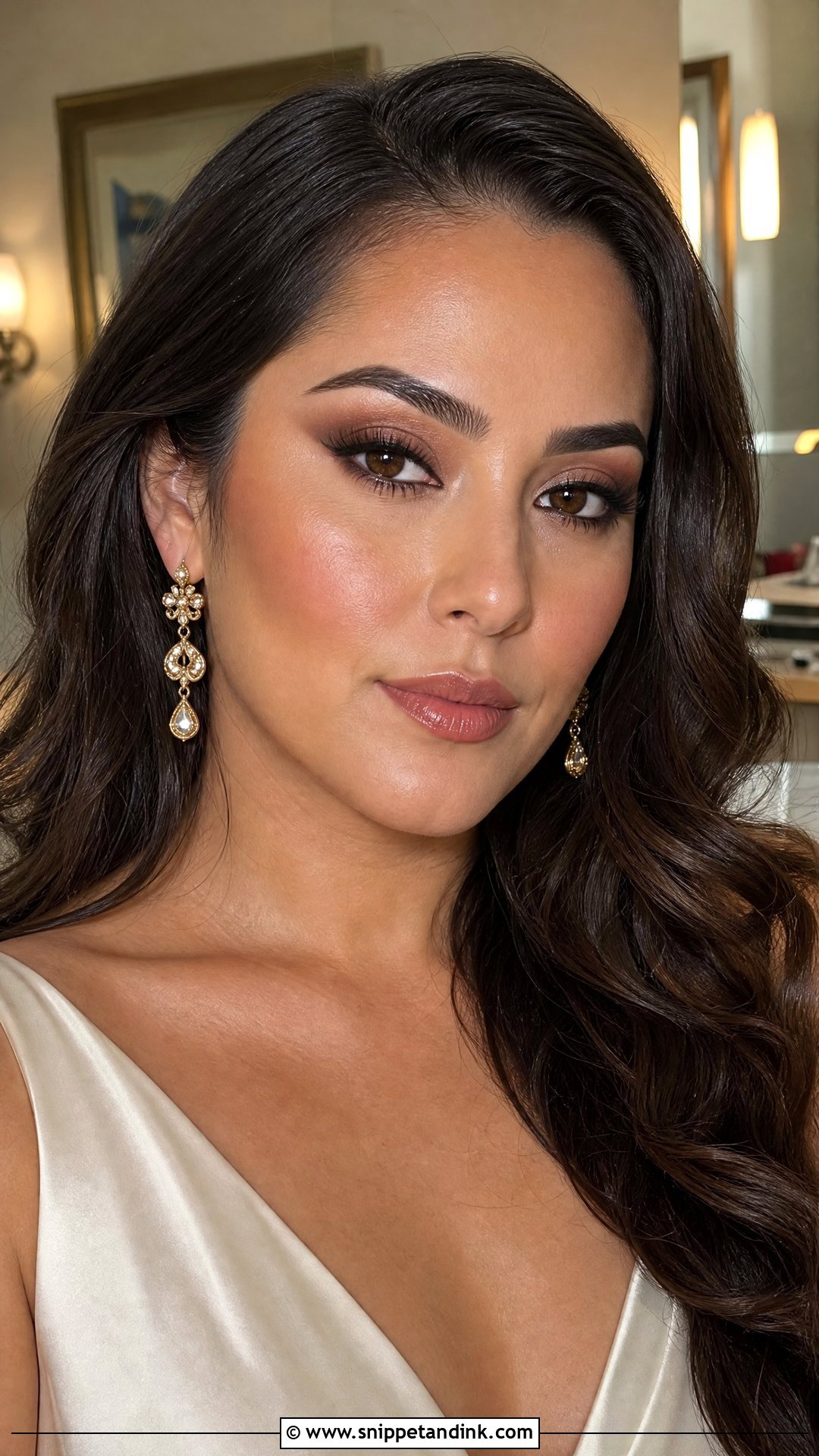
Brown smokey eyes give depth while staying warmer than black, and they flatter nearly every eye colour. I use cream or powder shadow in caramel, chocolate and soft espresso, blended around the upper and lower lash lines until there’s no edge. Brown liner and lifted lashes finish the eye. Keep the face warm with blush, a little bronzer and natural highlight, and pick a rosy brown or peach nude lip. If you’ve never worn colour under the lower lashes, try it at your trial first; it can feel heavy to someone not used to it.
10. Peach Bridal Makeup
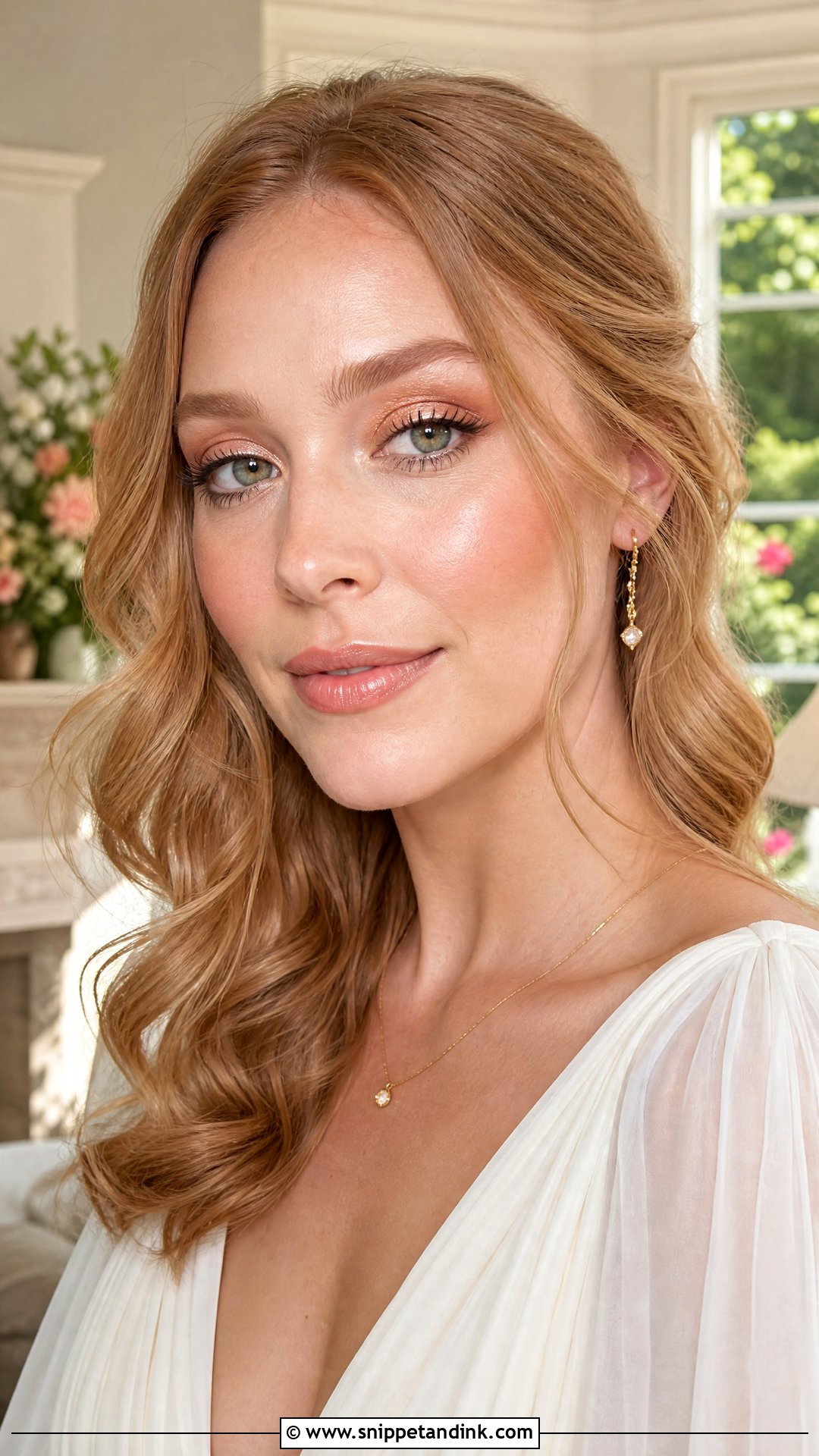
Peach brings warmth to the face, and I find it suits a spring or summer ceremony outdoors. Cream blush goes high, blended toward the temples so it lifts rather than sits on the apple of the cheek. Champagne, soft peach and warm brown on the eyes, with brown liner and natural lashes. A light bronzer and soft golden highlight keep the face fresh, and a peach nude or sheer apricot gloss ties it together. On very fair, cool-toned skin peach can look orange in photos, so I’d swap to a peachy pink.
11. Champagne Bridal Makeup
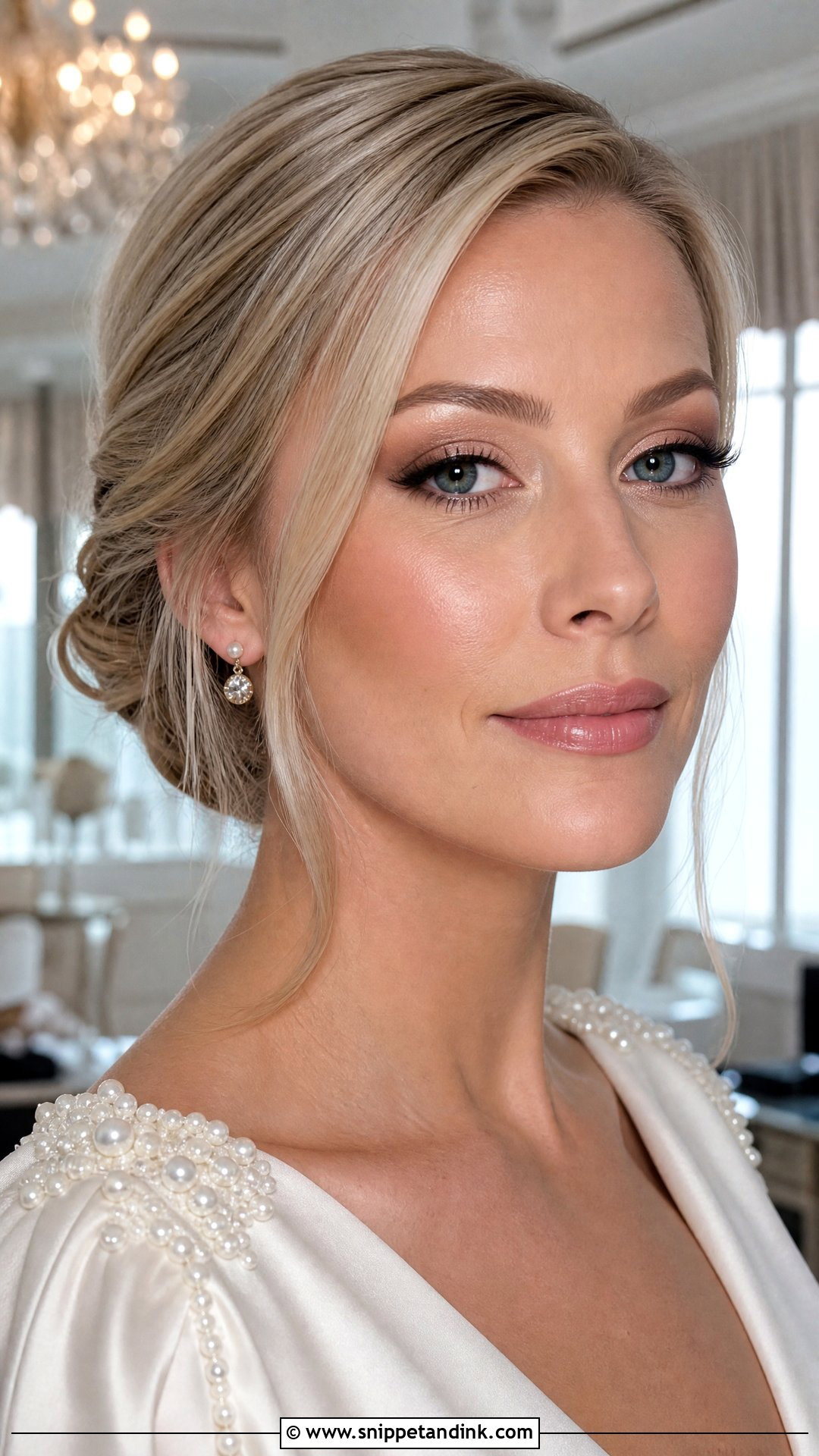
Champagne makeup is about light, not colour. A soft champagne shimmer goes on the lid with beige, taupe or brown shading in the crease, then a thin liner and fluttery lashes for lift. Neutral blush, a refined highlight and a nude pink or beige satin lip keep the rest quiet. Shimmer particle size matters here; fine shimmer looks like a sheen, chunky glitter looks like a party. It suits silk gowns, pearl details and evening receptions with warm lighting.
12. Nude Bridal Makeup
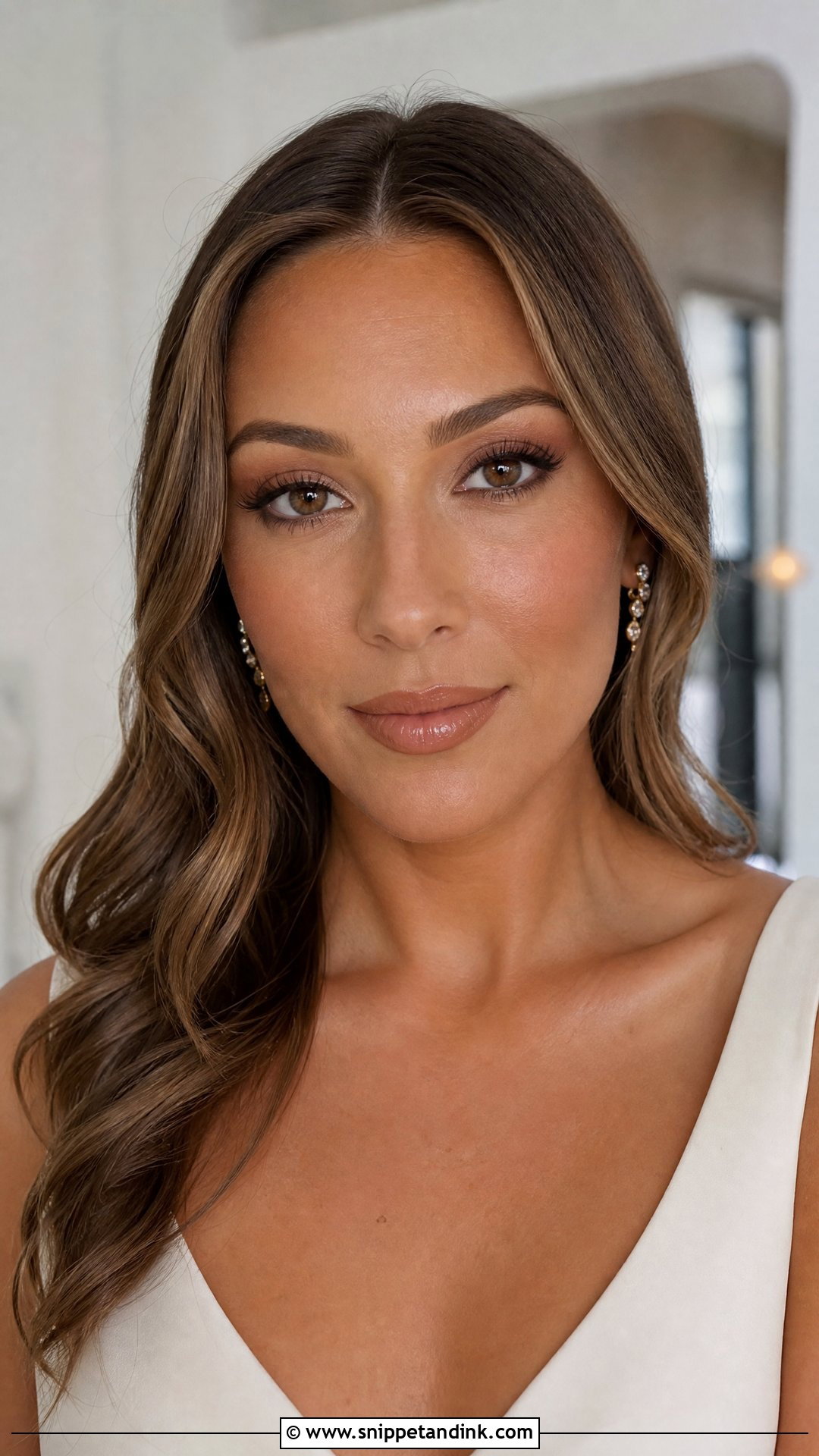
Nude makeup works when every shade is matched to your skin depth and undertone, and fails when it isn’t. A nude lip one shade too pale washes the face out; one too brown looks dull. I use a skin-like base, muted blush, gentle bronzer and a subtle highlight, then matte beige, tan or caramel on the eyes with a touch of shimmer in the inner corners. Lashes lifted, lips matched to your natural lip colour or one shade deeper. It’s for the minimalist bride who prefers quiet over drama.
13. Glowy Bridal Makeup
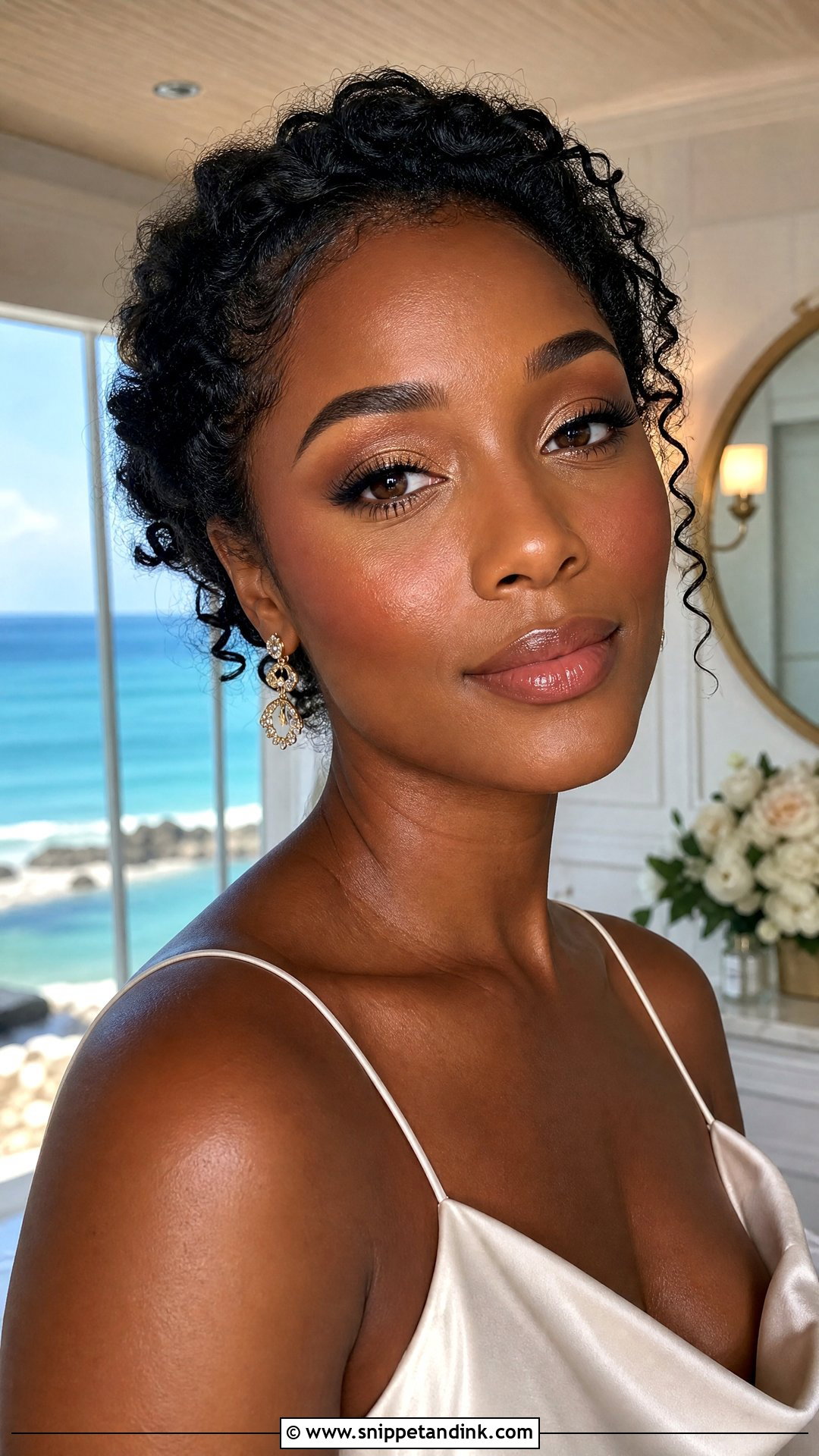
Glowy bridal makeup looks lit from within when the skin underneath is hydrated, so prep matters more than product. I use a radiant foundation, creamy concealer and cream blush, then highlight the tops of the cheekbones, the brow bone and the cupid’s bow, keeping shimmer away from areas with visible pores or texture. Eyes stay soft in warm beige with brown liner and airy lashes, and the lip is a glossy rose or nude. It’s a natural fit for a beach or garden wedding.
14. Blush Bridal Makeup
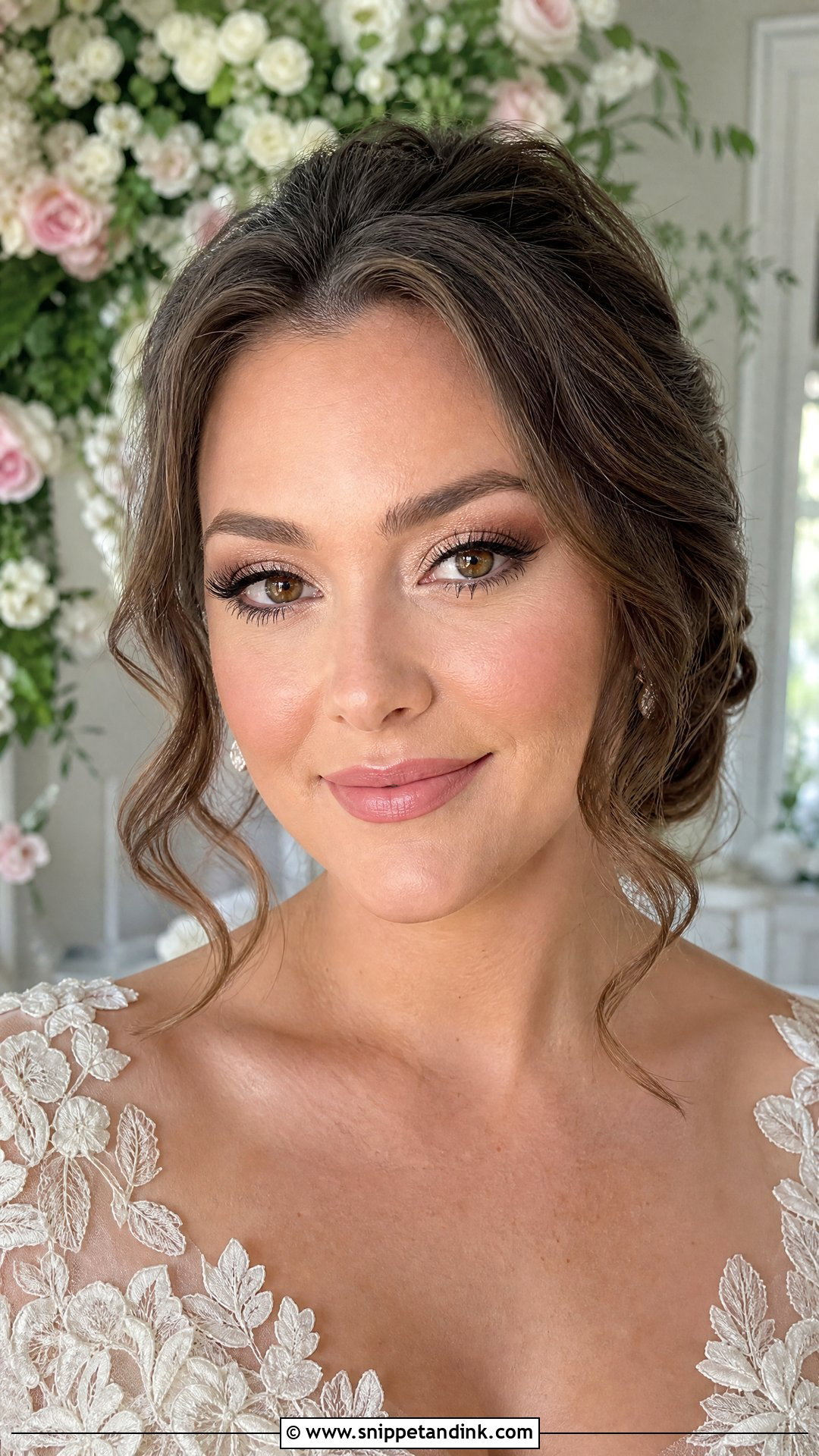
Blush gives the face that flushed, just-married look, and the secret is layering. I put cream or liquid blush down first, blend it into the foundation so it never sits as a stripe, then press a little powder blush on top so it lasts. Rose, peach, mauve or berry all work depending on your skin. Keep the eyes neutral with a little shimmer and natural lashes. A lip in the same family as the cheeks makes it look intentional. If you flush naturally when emotional, I’d go slightly lighter than you think.
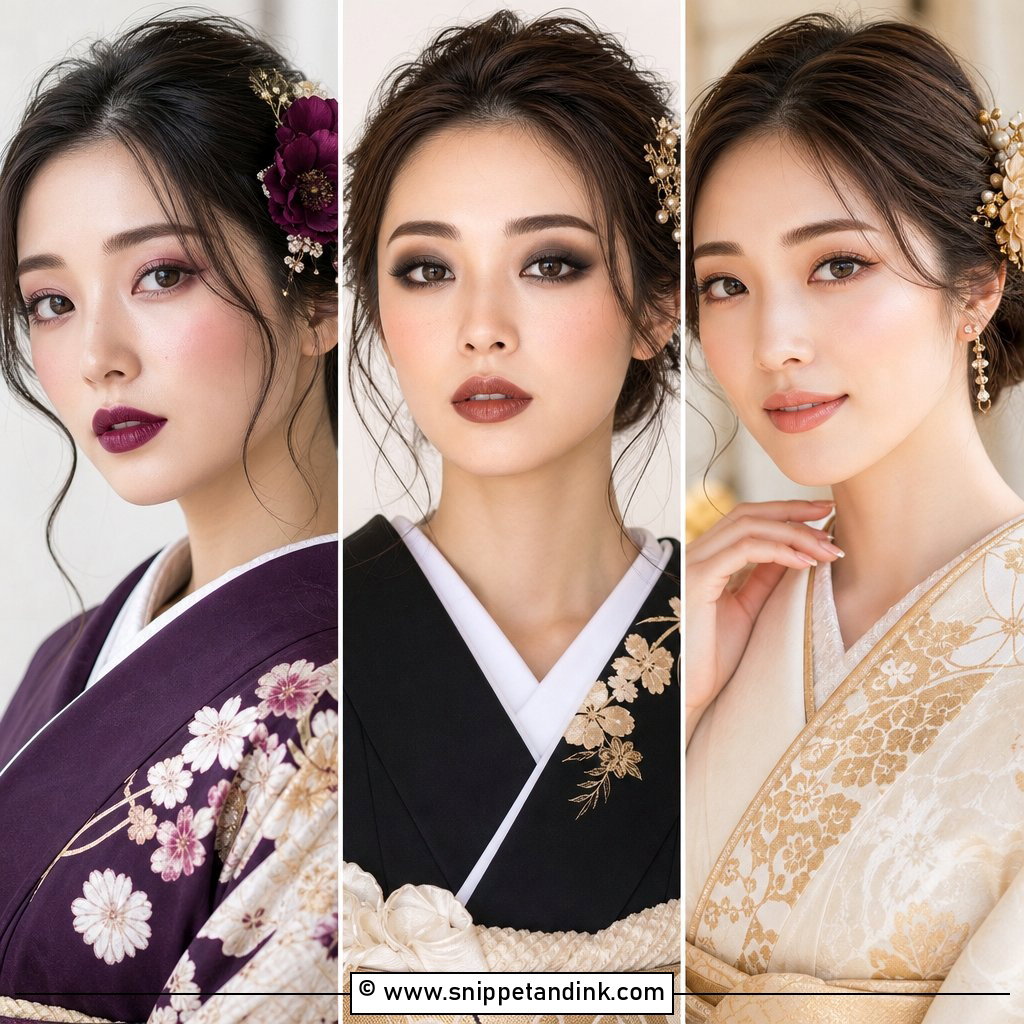
15. Mauve Bridal Makeup
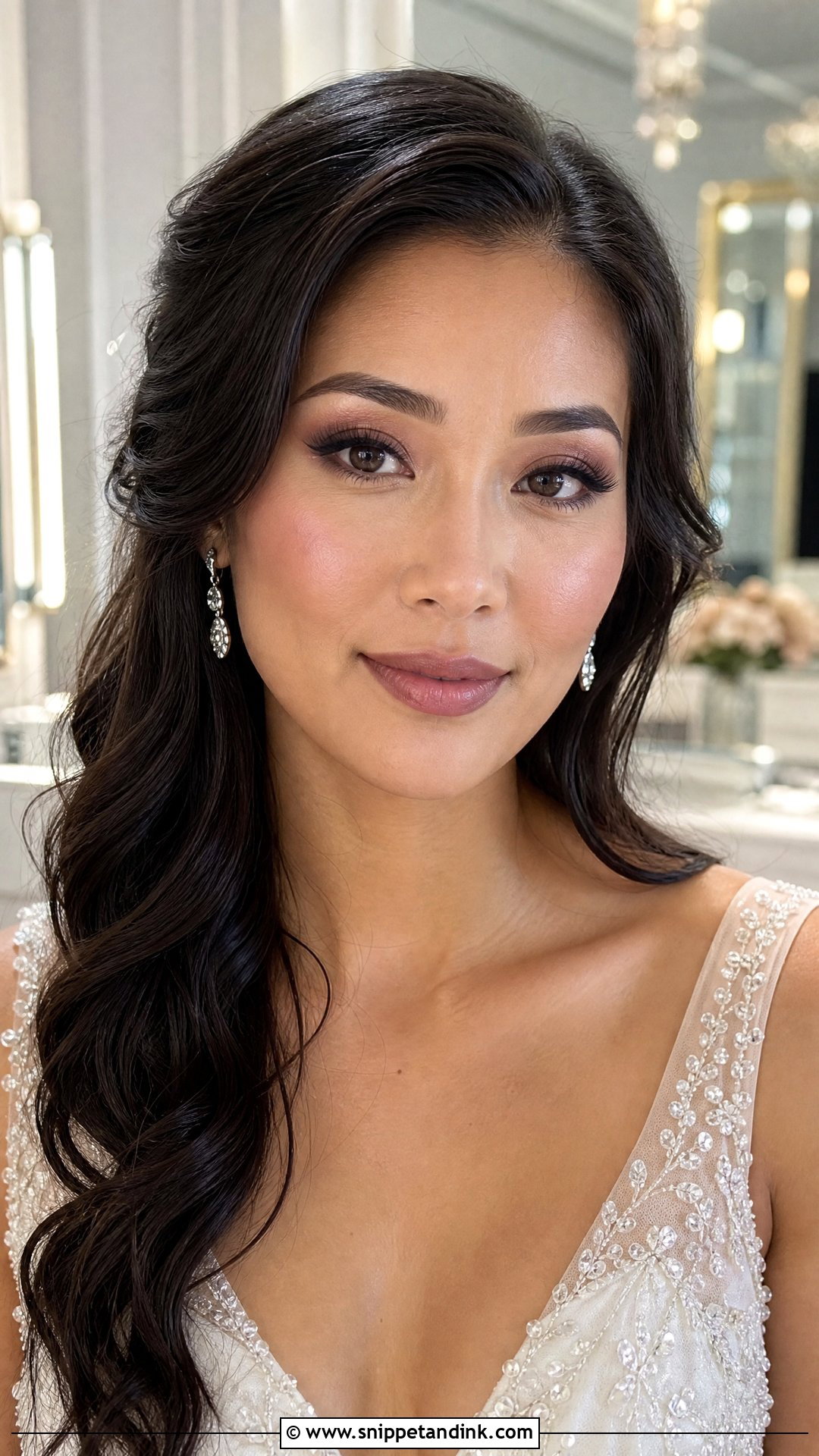
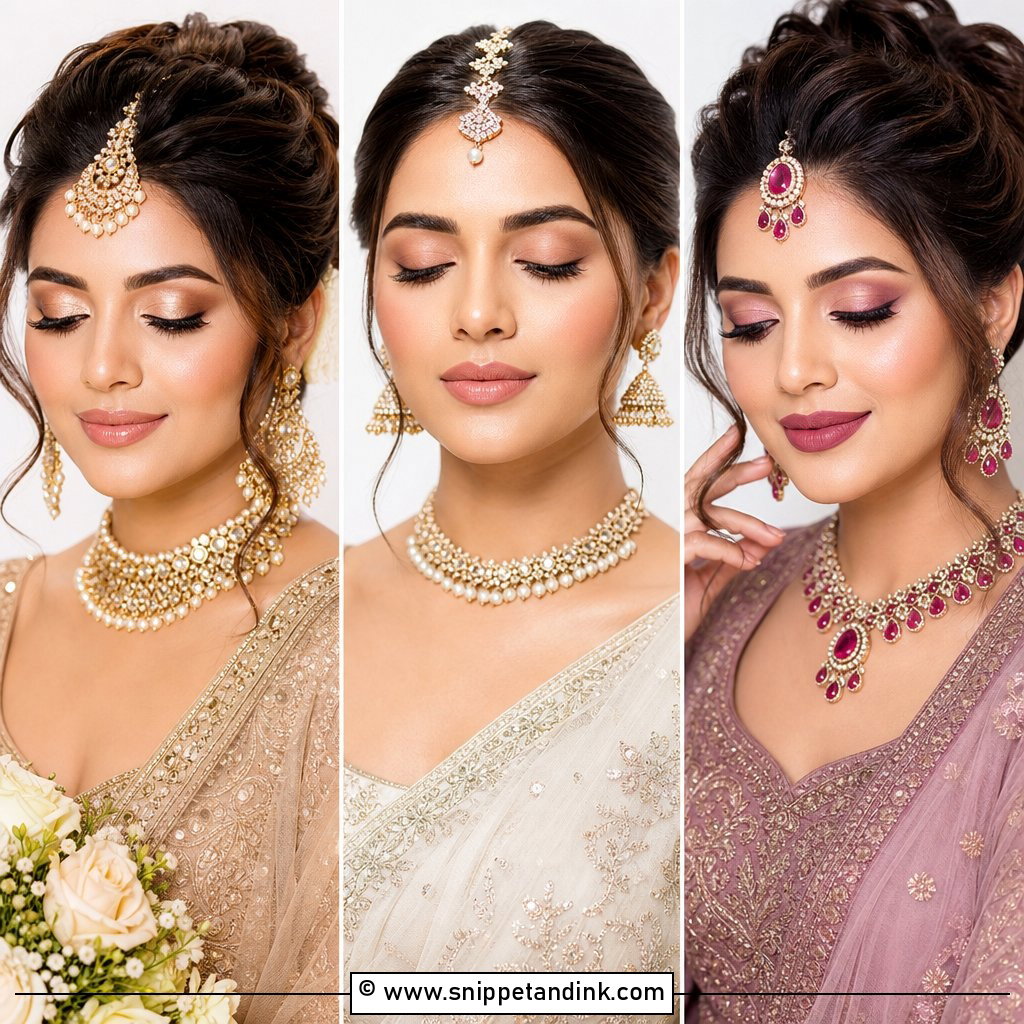
Mauve bridal makeup is a little moodier than pink and gives colour without going bold. I use mauve or dusty rose blush, then taupe, plum-brown or mauve shadow on the eyes. Brown liner keeps it gentle and black mascara adds the contrast photos need. Satin skin suits mauve better than very dewy skin. Finish with a mauve nude or soft plum stain. It’s at its best for an autumn or evening ceremony, beside silver jewellery and a cool floral palette.
16. Bronze Bridal Makeup
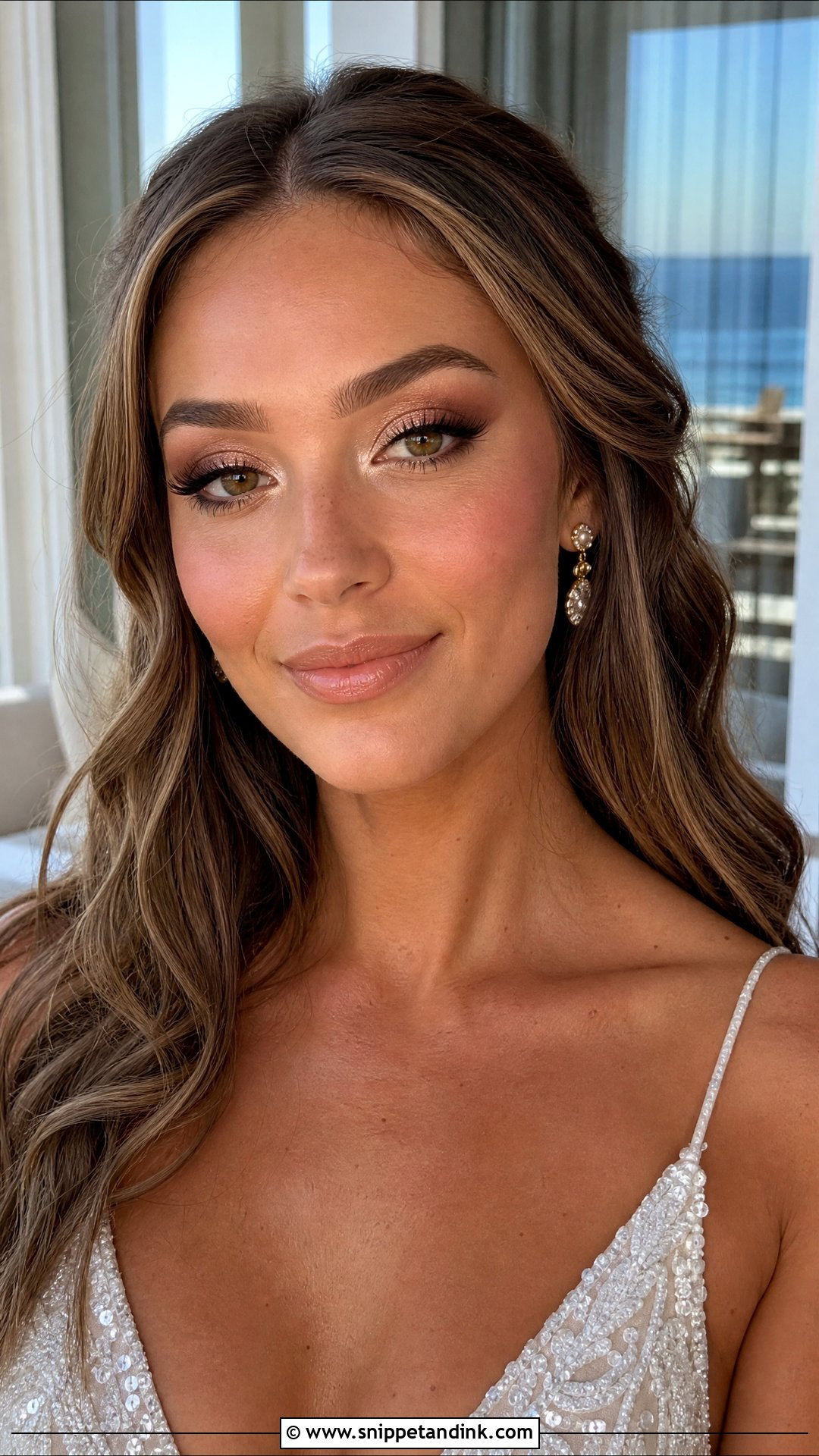
Bronze makeup warms the face and suits a summer wedding or sunset ceremony. I place bronzer around the temples, cheekbones and jawline, where the sun would naturally hit, then add warm peach or terracotta blush. Bronze shimmer goes on the lid, matte brown in the crease and a deeper shade at the outer corner, with brown liner and full lashes. Pick a caramel or peach nude lip. Bronzer must match your undertone; too orange or too grey and it reads as dirty rather than sun-warmed, which is why I test it on the jawline in daylight.
17. Red Lip Bridal Makeup
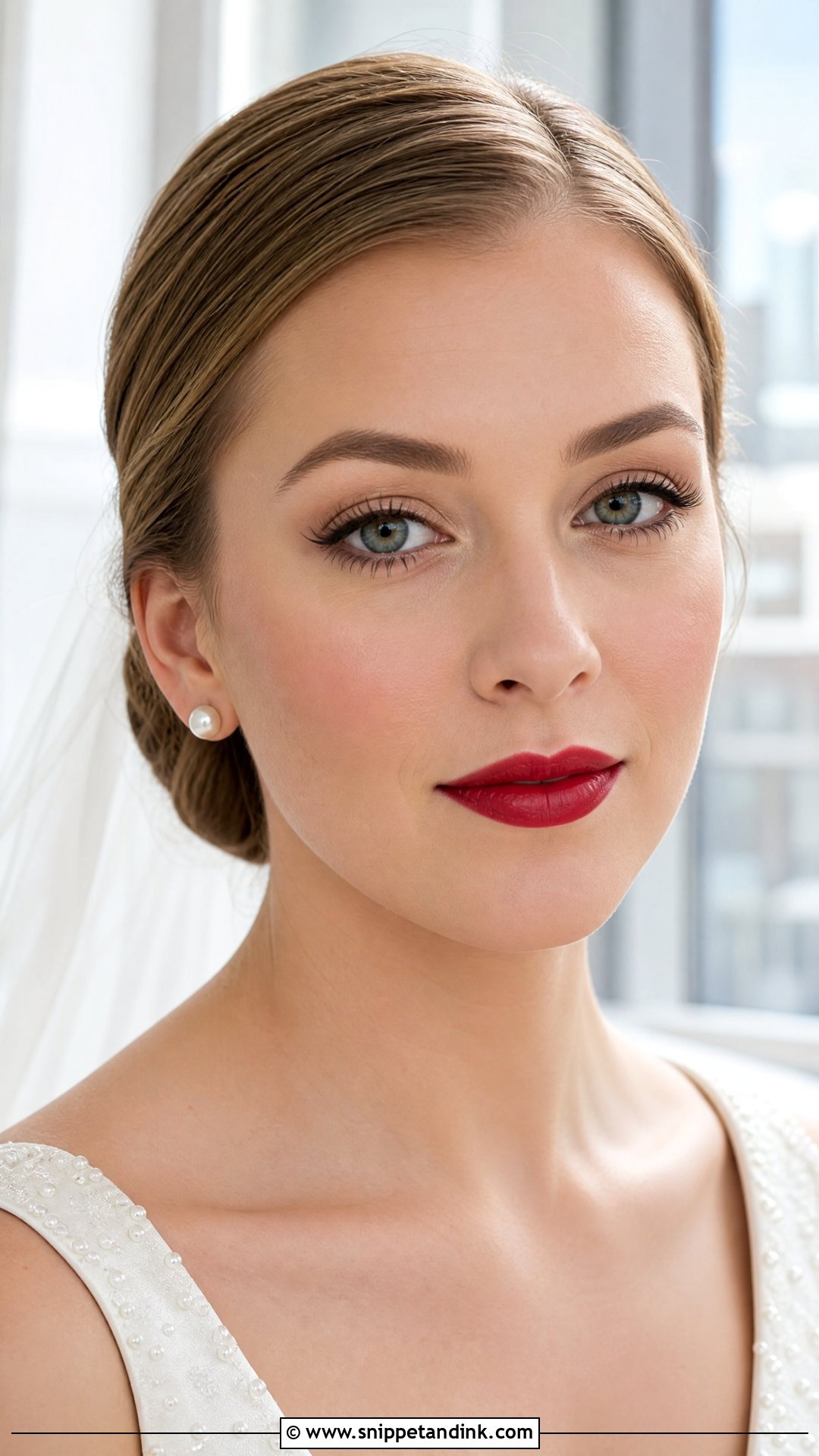
A red lip looks confident when the rest of the face stays clean. As a rule, blue-red flatters cool skin, true red balanced undertones, brick red warm skin and deep cherry richer skin tones. I keep the base smooth and matte or satin, with subtle blush and almost no highlighter. Eyes are defined but not heavy. A long-wearing liner and lipstick are essential, and I line slightly inside the edge, not outside, so the colour doesn’t bleed into fine lines by evening. Wear it only if red already feels like you; the wedding day is a poor time to discover you don’t like it.
18. Winged Liner Bridal Makeup
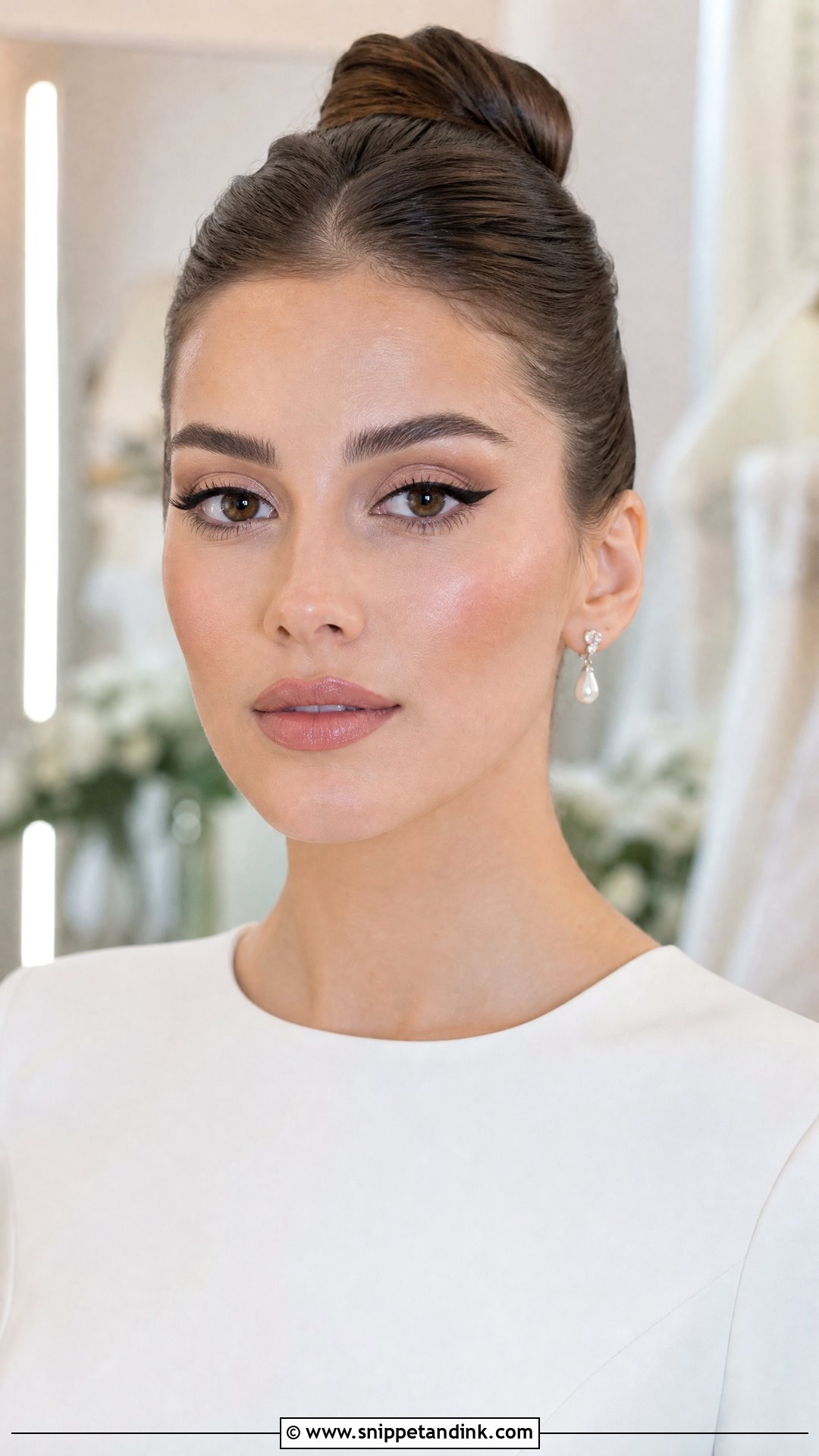
Winged liner bridal makeup lifts the eye without a smokey look. The softest version pairs neutral shadow with a thin wing and lashes that taper outward. Brown liner reads gentle, black more classic. I draw the wing with your eyes open and looking straight ahead, because a wing drawn on a closed lid often disappears into a hooded fold. Satin skin, natural contour and pink or peach blush balance it, with a nude pink or rosy lip. It sits well with sleek buns and strapless or high-neck gowns.
19. Berry Bridal Makeup
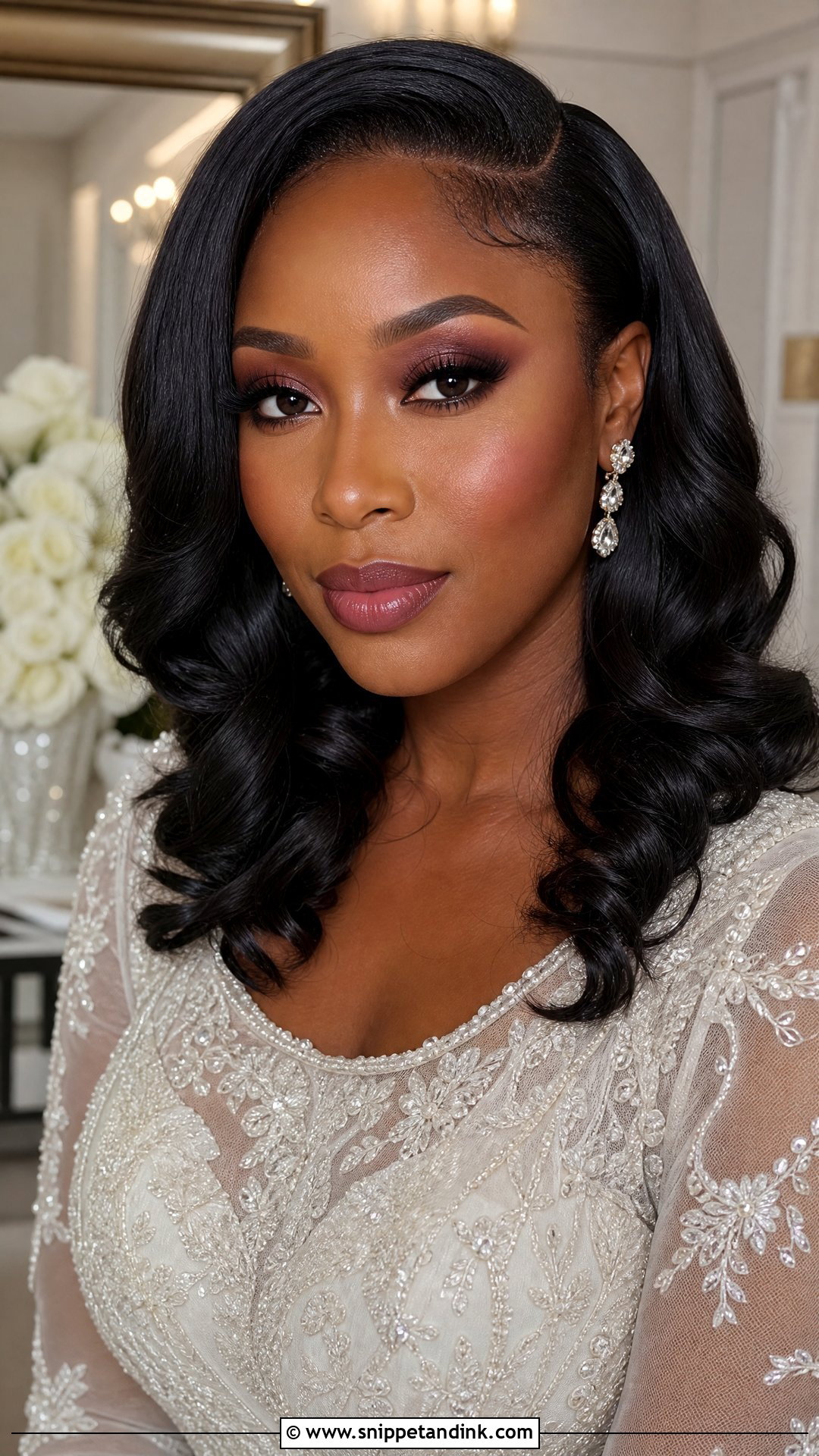
Berry is rich and warm, especially for fall and winter weddings, and it works best as an accent. I use soft berry blush, a rose-plum lip and neutral eyes with a hint of mauve. For more drama, the outer corners go deeper in plum-brown with wispy lashes. Keep the skin clean and softly radiant so the colour looks fresh. Berry suits deep, tan, olive and fair skin when the depth is adjusted. Dark lip colours transfer, so I blot, set with a tissue and powder, then apply a second layer.
20. Full Glam Bridal Makeup
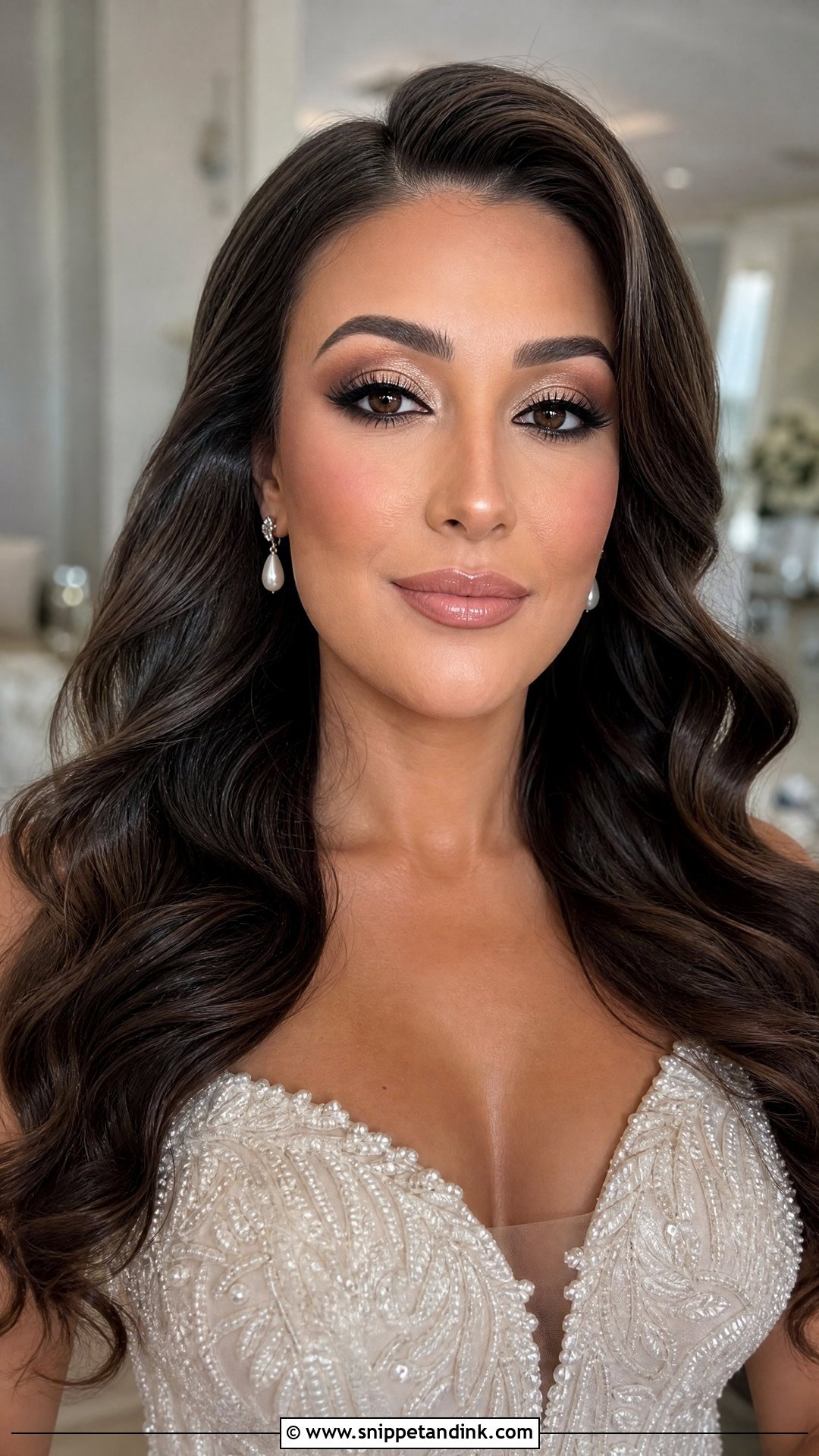
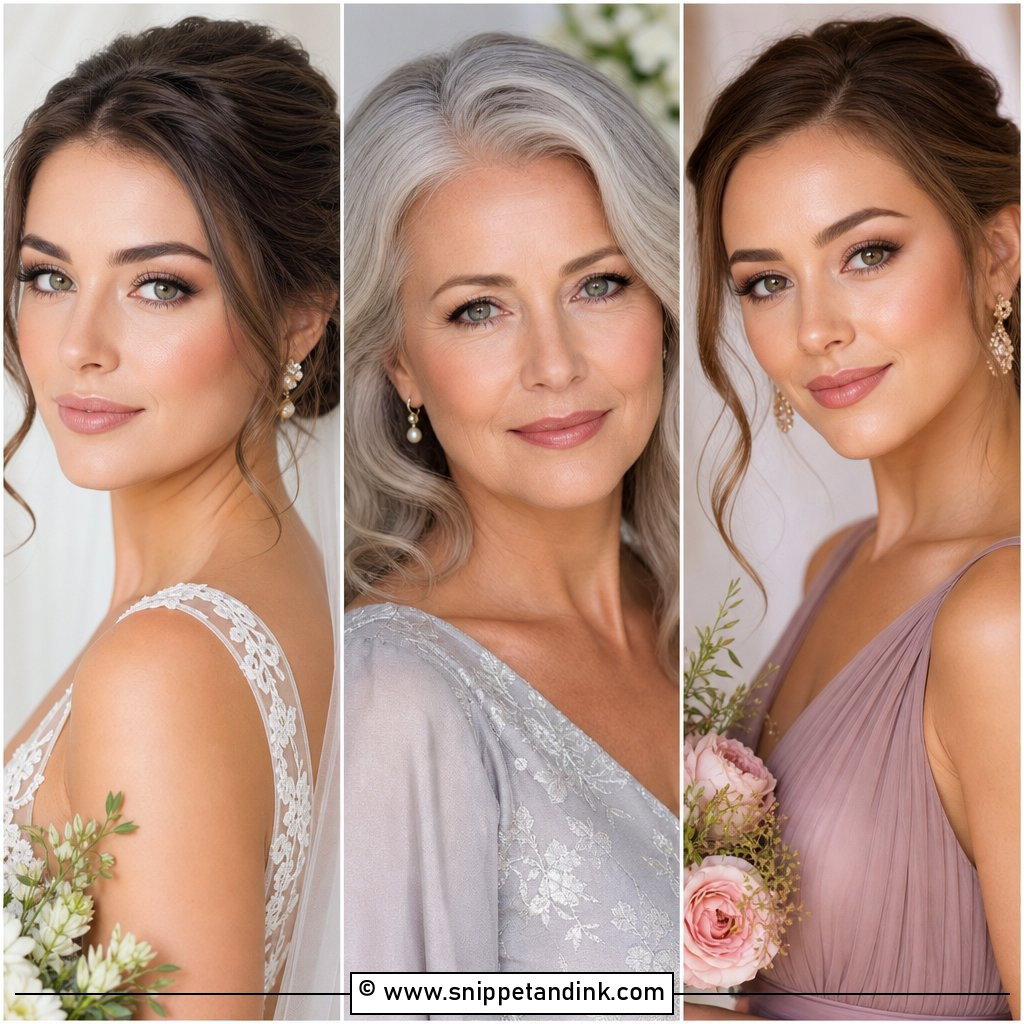
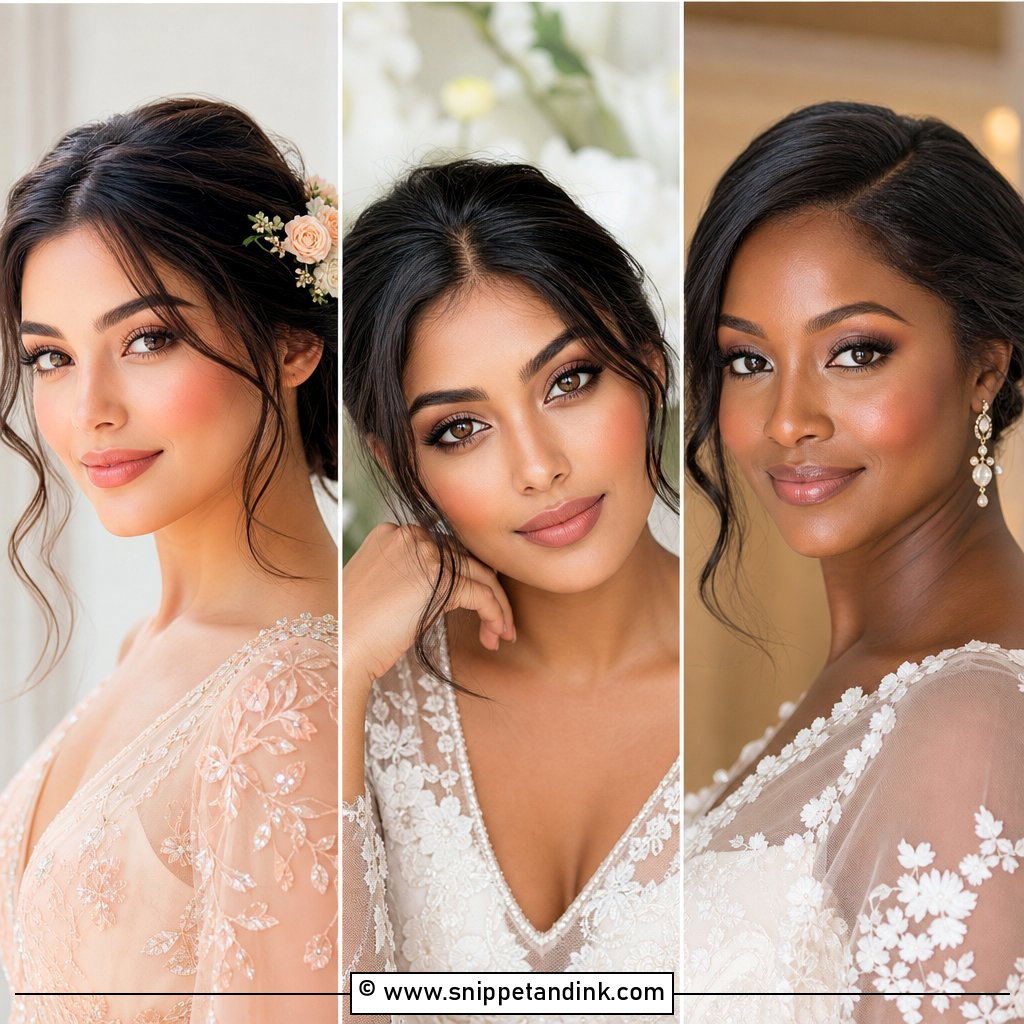
Full glam suits a bride who wants strong definition and already wears makeup often. It stays romantic when everything is blended. I use long-wear foundation, brightened under-eyes, soft contour, blush and a controlled highlight. Eyes get shimmer lids, deeper outer corners, defined liner and full lashes. Brows should be shaped but still natural. A nude, rose, mauve or soft brown lip keeps it bridal. The risk is a face that looks older in daylight than at night, so for a noon ceremony I’d tone down the contour and put the full depth on at the evening touch-up.
Morning Church, Evening Barn: Adjusting for the Light
The same face looks different under daylight, tungsten bulbs and candles. In bright midday sun, contour and dark liner look harsh, so I go softer and rely on blush. Warm evening lighting eats colour, especially pinks, so lips and cheeks need a little more depth than feels natural. Cool, white LED lighting in some modern venues can make warm bronzes look muddy.
If your ceremony and reception happen in very different light, plan a small change between them rather than one look that compromises both. A deeper lip and an extra layer of mascara at the evening touch-up often does it.
A Clutch-Sized Touch-Up Kit, Carried by Someone Else
Your touch-up kit should be small enough for a bridesmaid’s bag, because you won’t be holding it yourself. I’d pack:
- Your exact lipstick and liner, since a similar shade never quite matches.
- Blotting papers, which lift oil without adding powder layers.
- A small pressed powder for the nose and chin only.
- Cotton buds for any mascara smudge under the eye.
- A spare lash glue tube if you’re wearing strip lashes.
If a tear runs, press a folded tissue under the lower lashes and hold it; wiping drags the foundation with it.
Soft Enough Up Close, Defined Enough Across the Aisle
Whichever direction you choose, the look that works is the one that suits your features, your dress and your day, and still feels like you when someone is a foot from your face. Think about your venue, season, lighting, skin type and how much makeup you’re used to. Book a trial and wear it for several hours afterwards: check the lip colour, the lashes and how the skin looks at the end of the day, and take a photo with flash. Then trust it, and let the photographer worry about the light.
You'll Like These Ideas:


Leave a Reply