
Good bridal makeup should still look like you when your mum sees you in the doorway, and still be there when the photographer packs up. Most brides I work with now ask for real-looking skin, softly defined eyes, cream blush and a lip they can actually talk and eat in, rather than one heavy formula applied to everyone. Below are twenty directions, from a bare natural face and a classic red lip to a bronze smoky eye and a few pearl accents. Each comes with how I’d build it and who it suits. Treat them as starting points for your trial, then adjust coverage, lash shape, lip tone and glow until it works in the room and on camera.
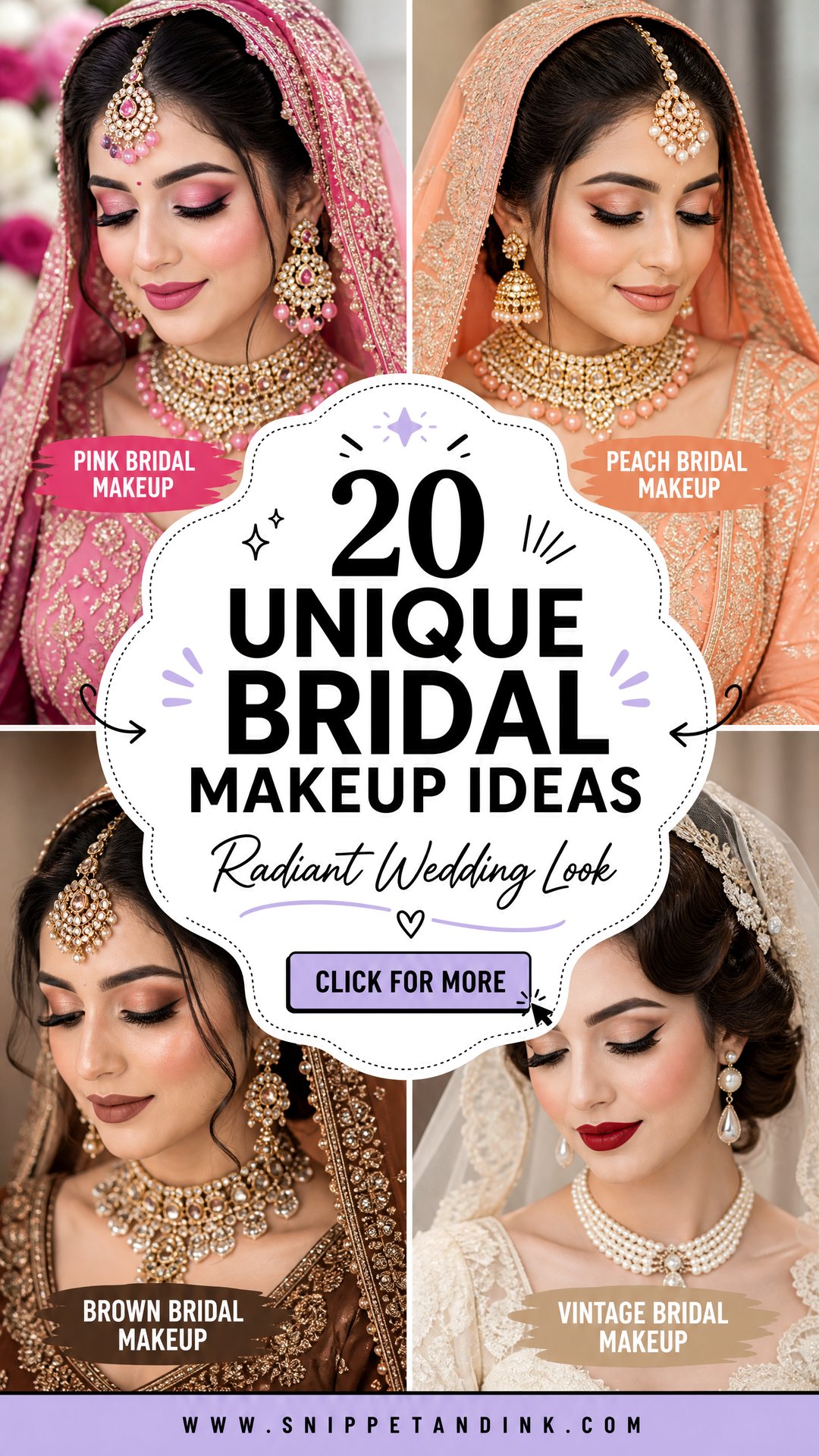
Your Skin Type Picks the Finish Before Any Colour Does
Brides usually come to me with a colour in mind: peach, bronze, a red lip. I start somewhere else. I look at what your skin does by early afternoon, because that tells me which finish will survive the day. Colour sits on top of the finish, and a finish chosen for the wrong skin will fail no matter how pretty the shade is.
- Oily or shiny by midday: matte or natural-matte base, glow only on the high points of the cheeks, and blotting papers in your bag.
- Dry or tight: dewy or satin base, cream blush instead of powder, and no matte liquid lipstick.
- Combination: satin overall, powder pressed through the T-zone only.
- Mature skin: thin layers, very little powder under the eyes, and a satin lip rather than matte, which settles into fine lines.
Once the finish is agreed, almost any colour story here can be adapted to it. A bronze look can be matte or dewy, and a pink look can be glossy or velvety. Start with the skin and the rest falls into place much more easily.
1. Natural Bridal Makeup
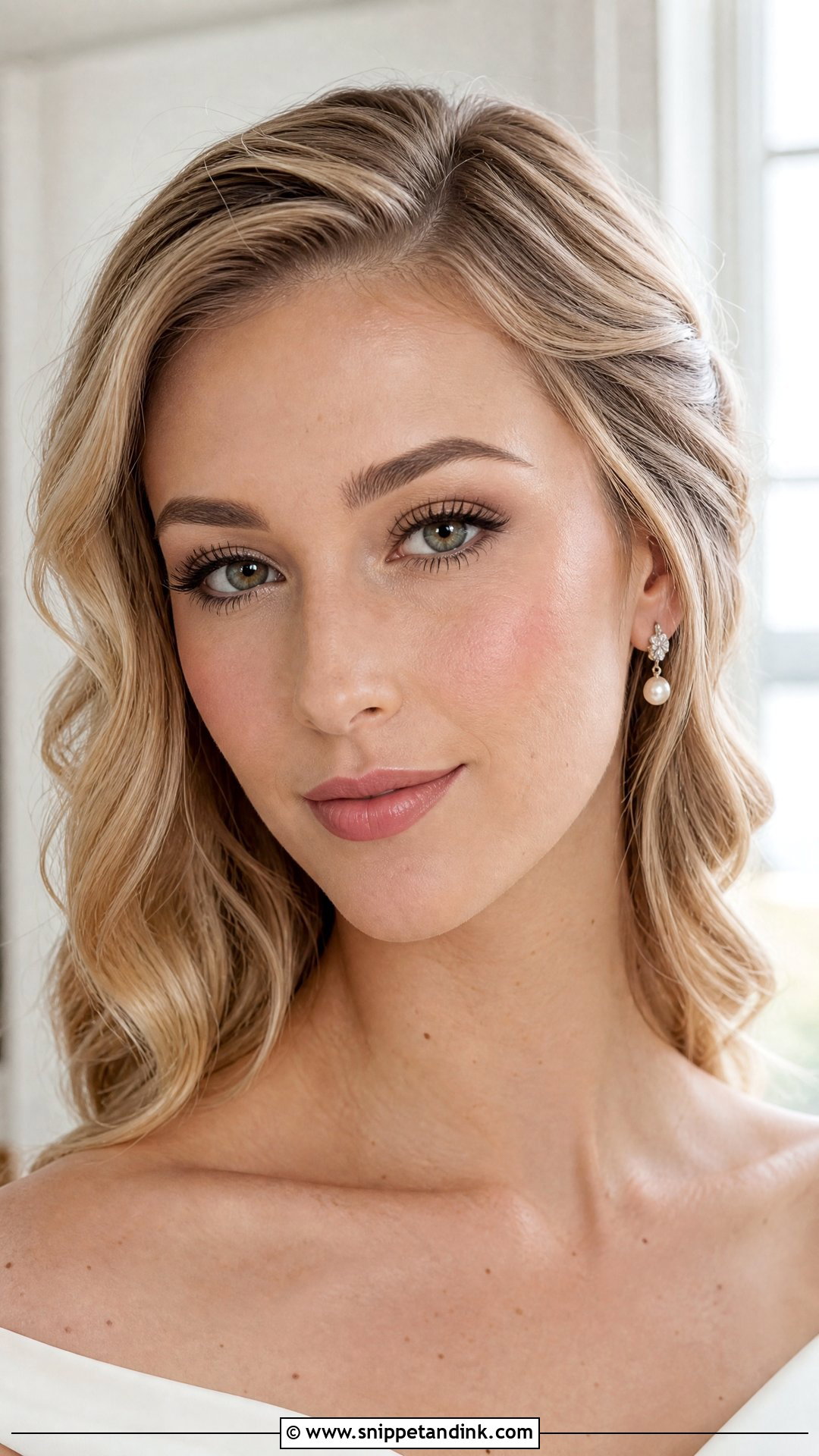
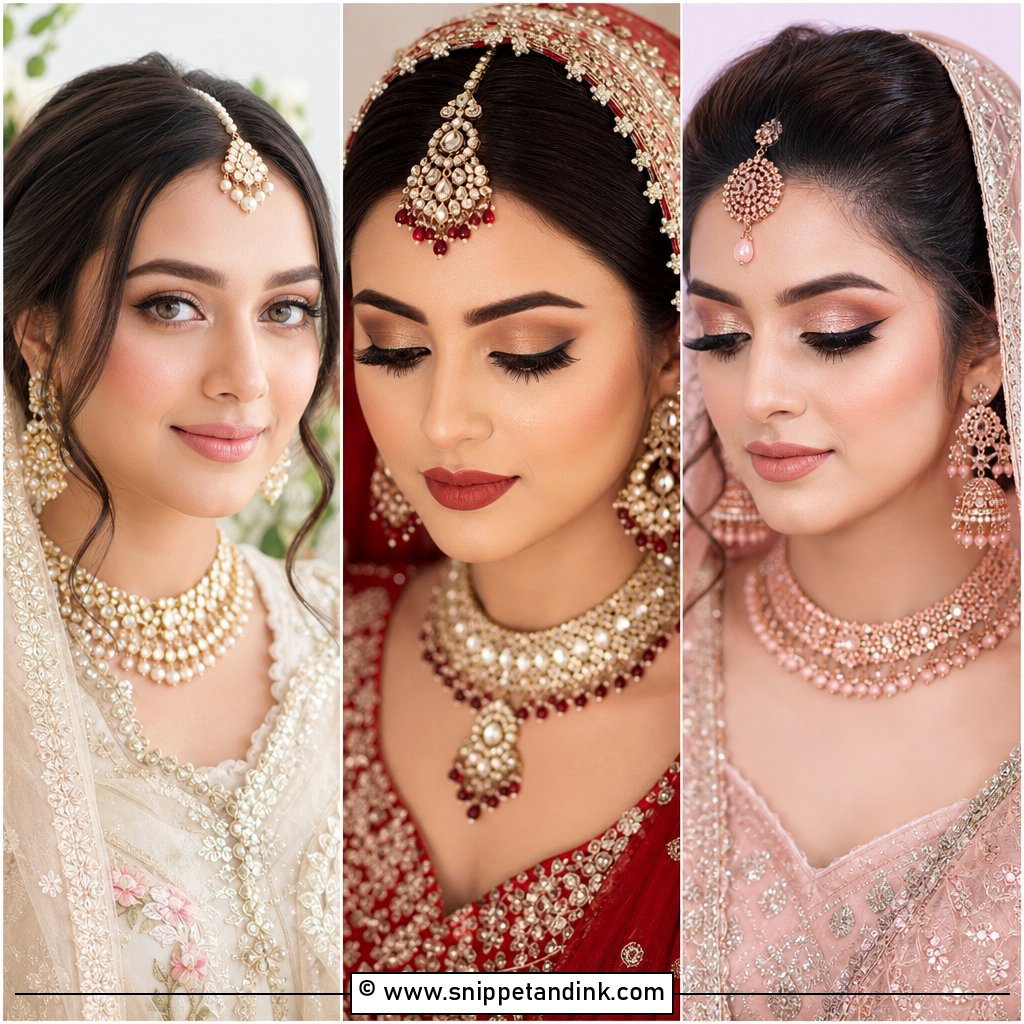
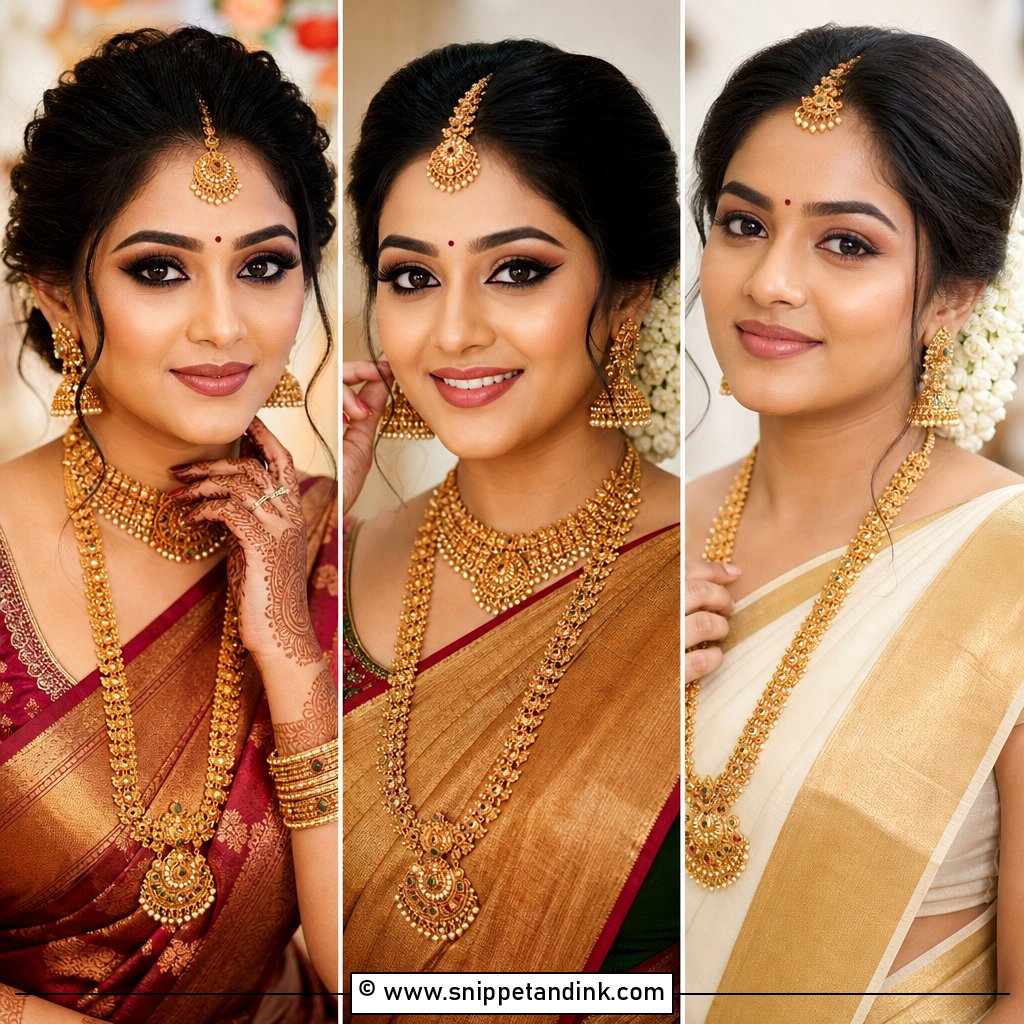
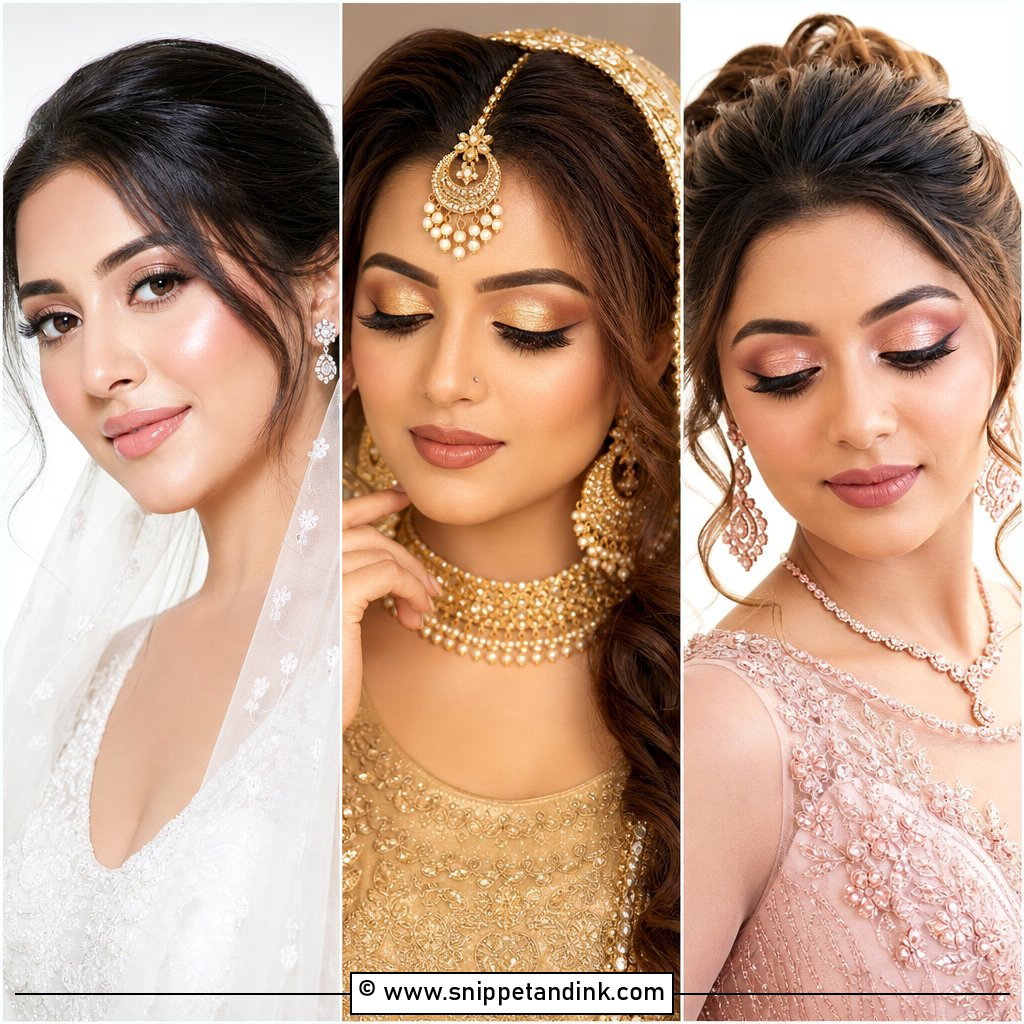
Natural makeup takes more skill than people think, because there’s nowhere to hide uneven blending. I use a skin tint or sheer foundation and conceal only where it’s needed, so freckles and real texture still show. Taupe or beige shadow gives quiet shape, and a brown liner pressed into the lash line lifts the eye without a visible line. Wispy lashes look better here than a dense strip. Rosy cream blush, a little champagne on the cheekbone and a satin nude-pink lip finish it. It’s my default for daytime and outdoor ceremonies, where strong light shows every edge.
2. Soft Glam Bridal Makeup
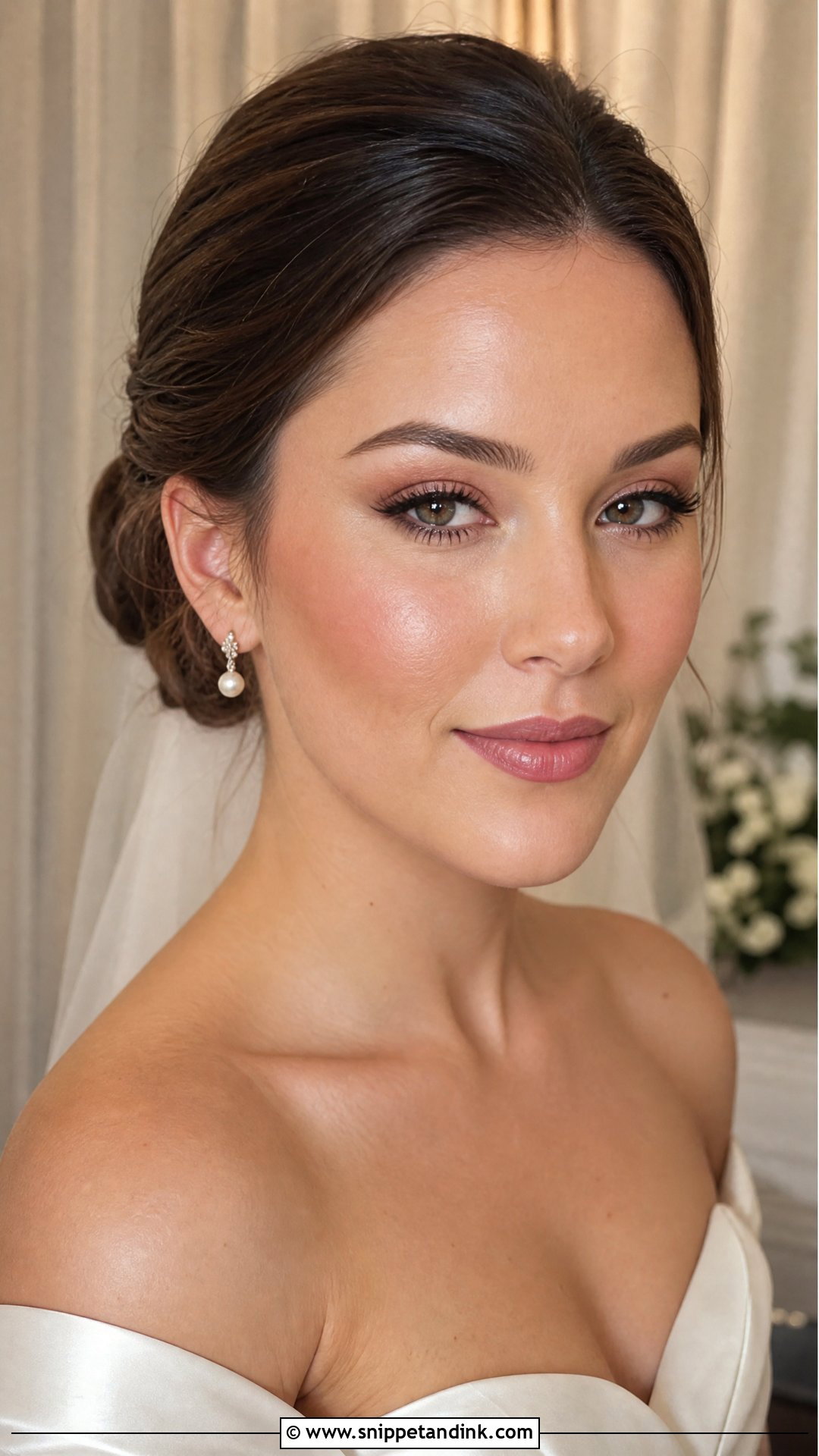
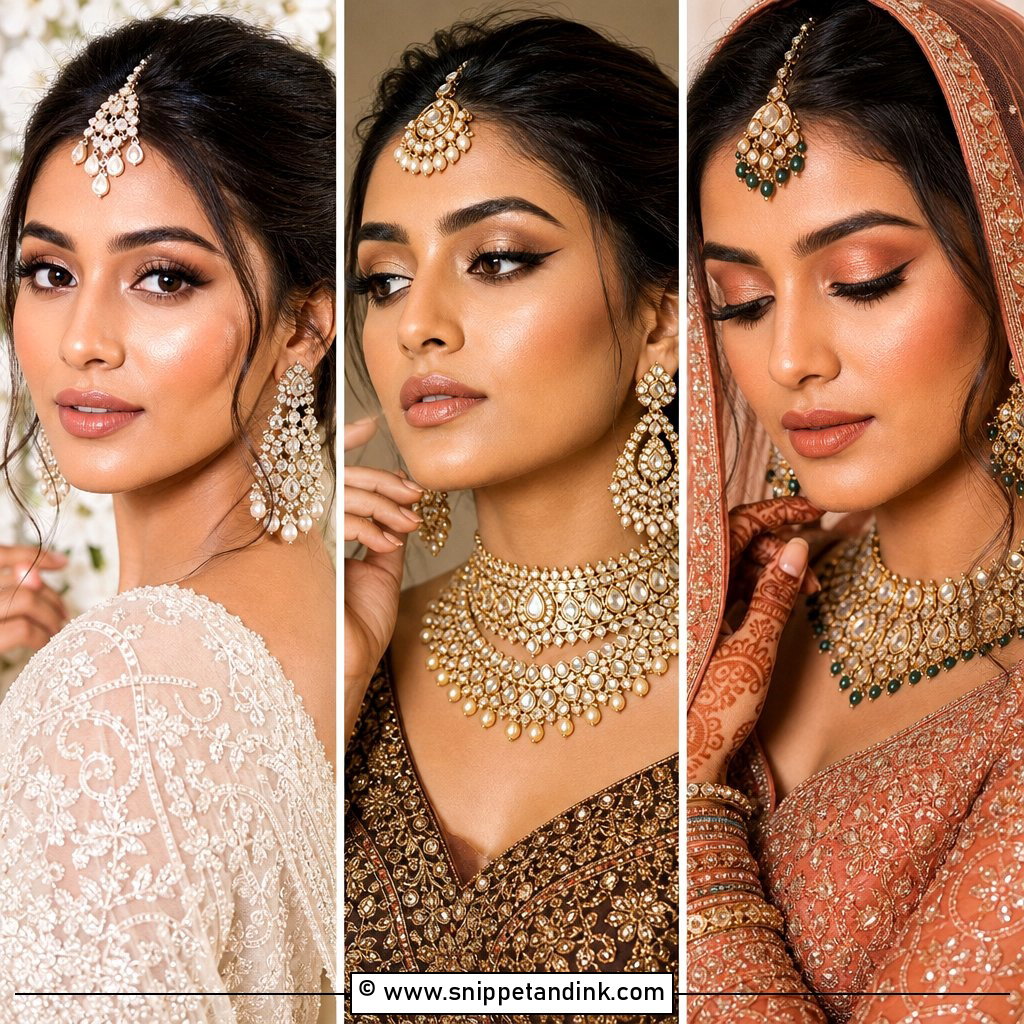
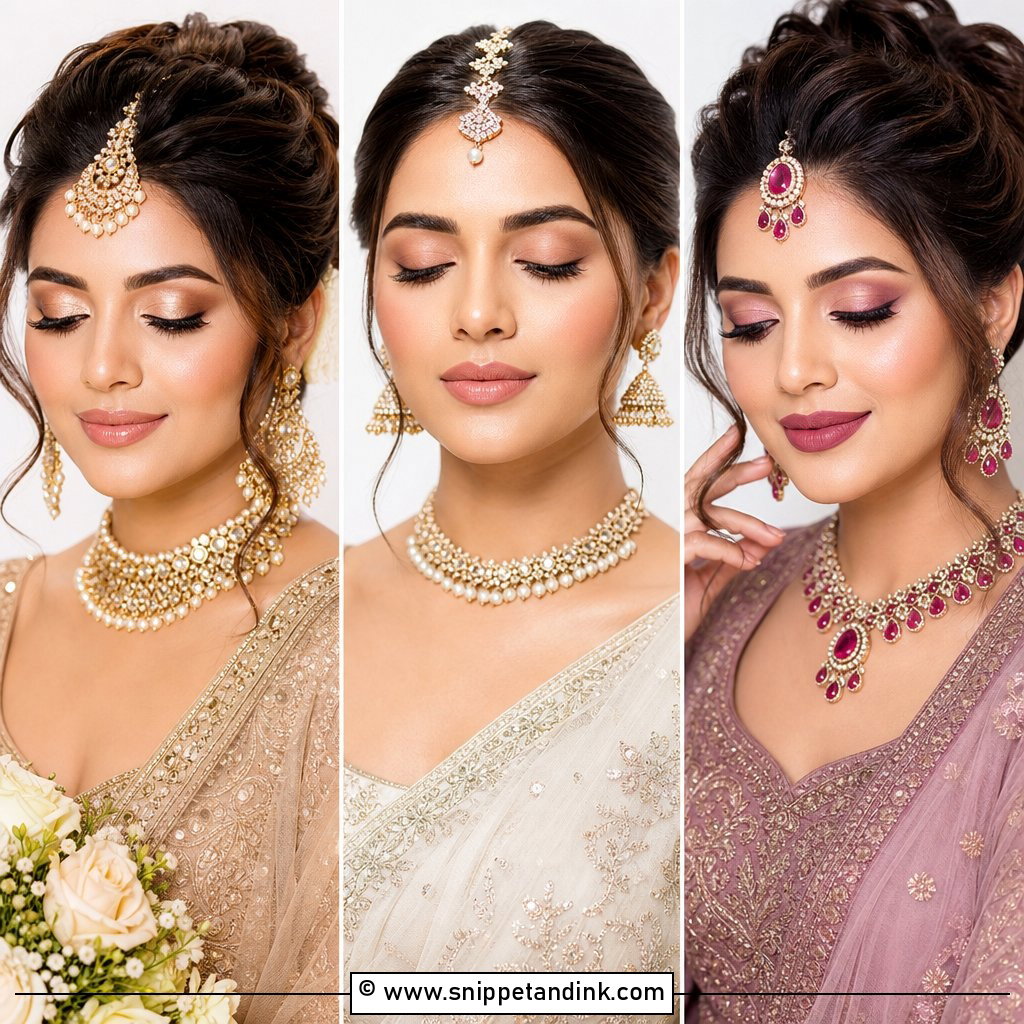
Soft glam sits one step past natural: more shape, still nothing harsh. The base should look smooth and gently radiant rather than flat. Warm brown shadow is diffused into the outer corner with a thin line along the lashes, then individual lashes or a tapered strip lift the outer eye for photos. I place contour just under the cheekbone and blend it upward, then bring freshness back with peachy-pink blush. A satin nude mauve or beige-pink lip keeps it balanced. If you can’t decide between natural and full glam, this is usually where we land at the trial.
3. Dewy Bridal Makeup
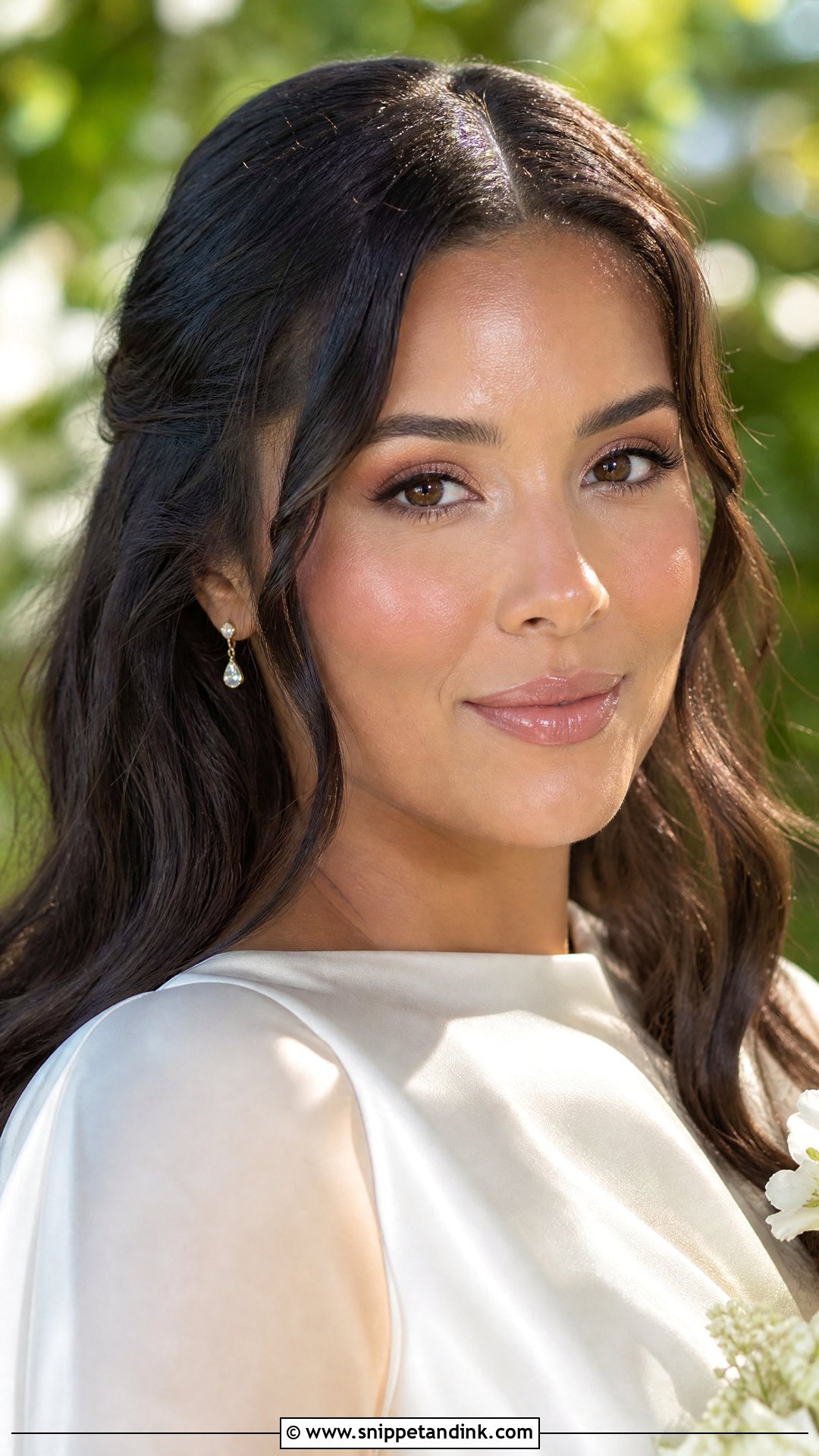
Dewy skin is lovely in person and risky on camera, so glow placement is everything. The key is controlled radiance: well-hydrated skin, lightweight foundation and powder pressed only through the centre of the face where shine appears first. Cream blush in rose, peach or berry, then highlighter tapped on the cheekbones, brow bones and inner corners. Eyes stay soft with champagne shimmer and brown liner. A sheer gloss suits it. I’d avoid this finish if your skin is already oily by midday, because by the speeches the planned glow and the unplanned shine look identical.
4. Matte Bridal Makeup
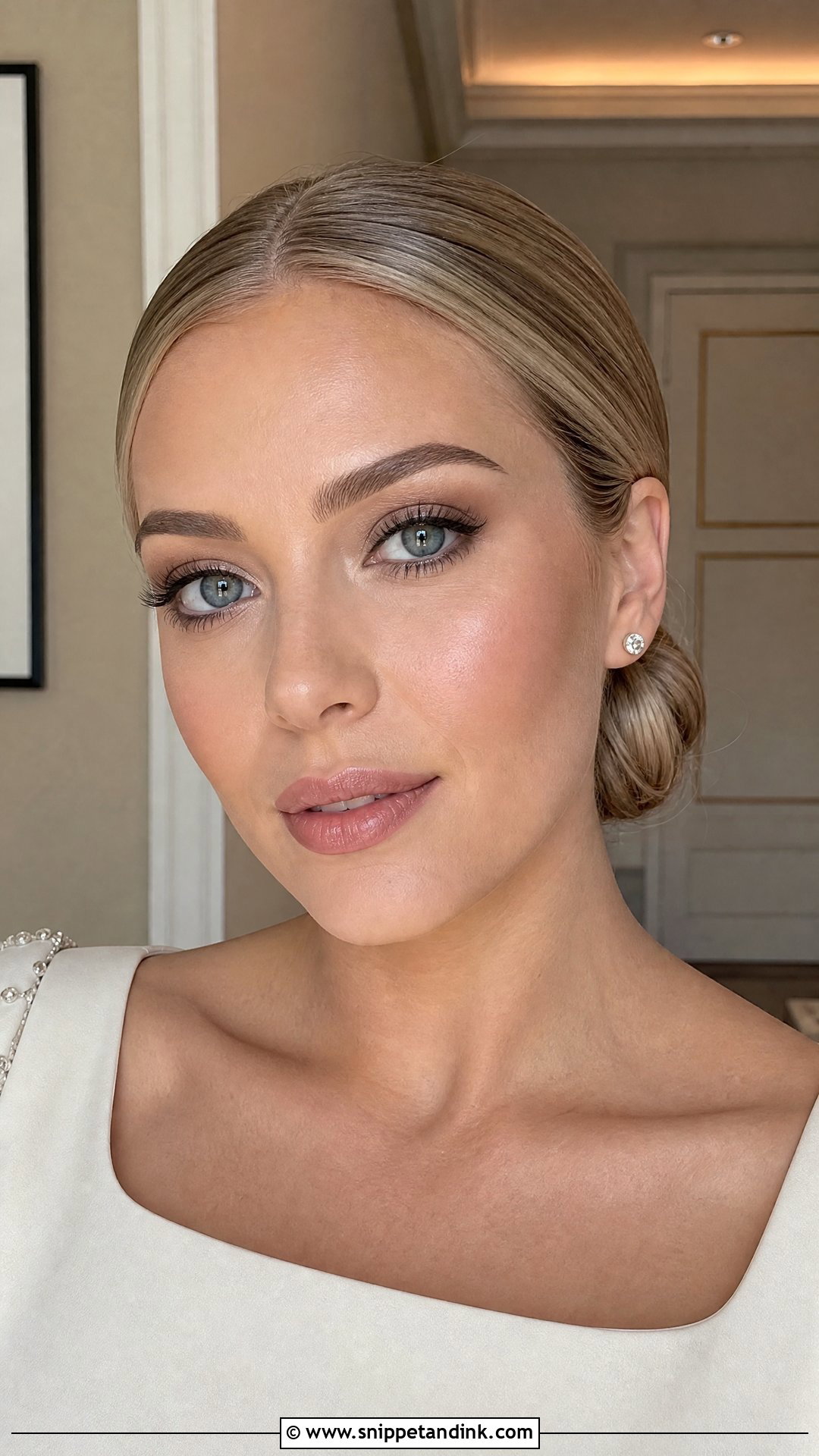
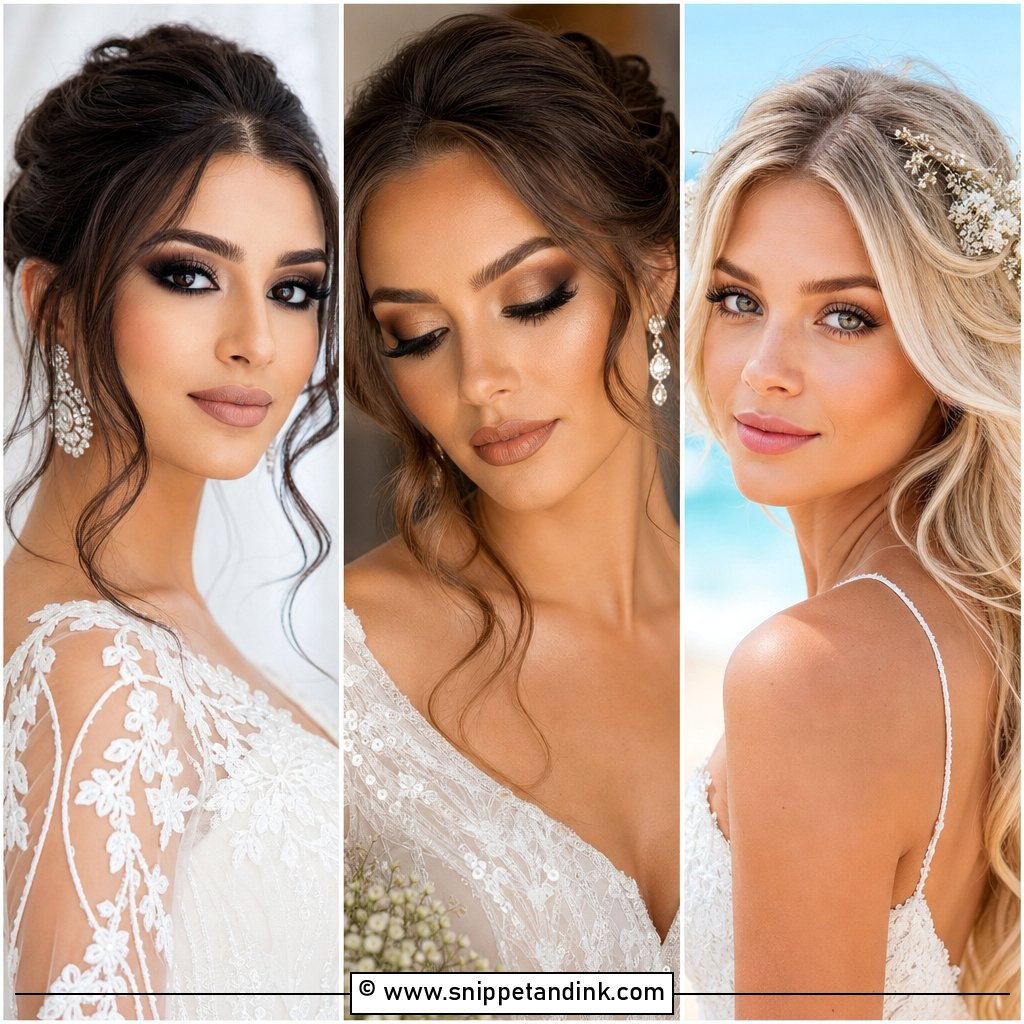
Matte has moved on from the flat, cakey finish people remember. Modern matte starts with well-prepped skin, then a natural-matte foundation, thin layers of concealer and a finely milled powder only where you need it. Soft brown or rose shadow adds dimension; a black-brown liner keeps the eye crisp. Blush stays satin or soft matte so the face doesn’t look dusty. A velvet nude, rose or mauve lip finishes it. It’s the finish I’d suggest for oily skin and long formal days, and it handles flash and heat better than any other here. On dry skin, though, matte shows every flake, so the prep the week before matters.
5. Classic Red Lip Bridal Makeup
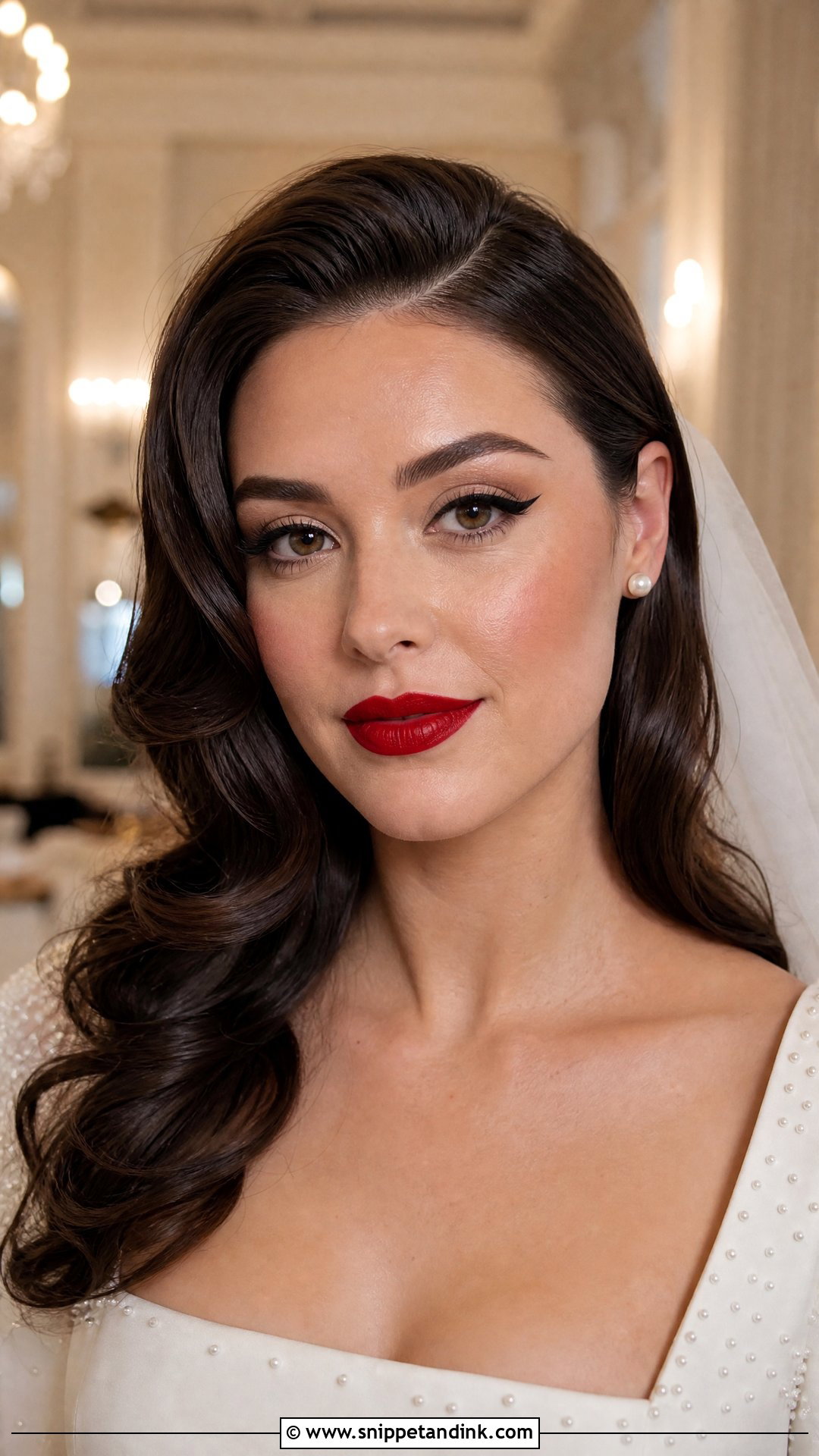
A red lip changes the whole face, so everything else gets pulled back. I keep the complexion clean and even, use soft neutral blush and only a light contour. Eyes get beige or taupe shadow, a slim black wing and well-defined lashes, with brows groomed but not sharp. The red itself should follow your undertone: blue-reds suit cool skin, true reds suit most people, and brick reds suit warm and olive skin. I line the whole lip, apply in two thin layers and blot in between, which holds far better than one thick coat. Don’t wear red if you’ll be anxious about it all day; the lipstick should feel fun, not like a job.
6. Pink Bridal Makeup
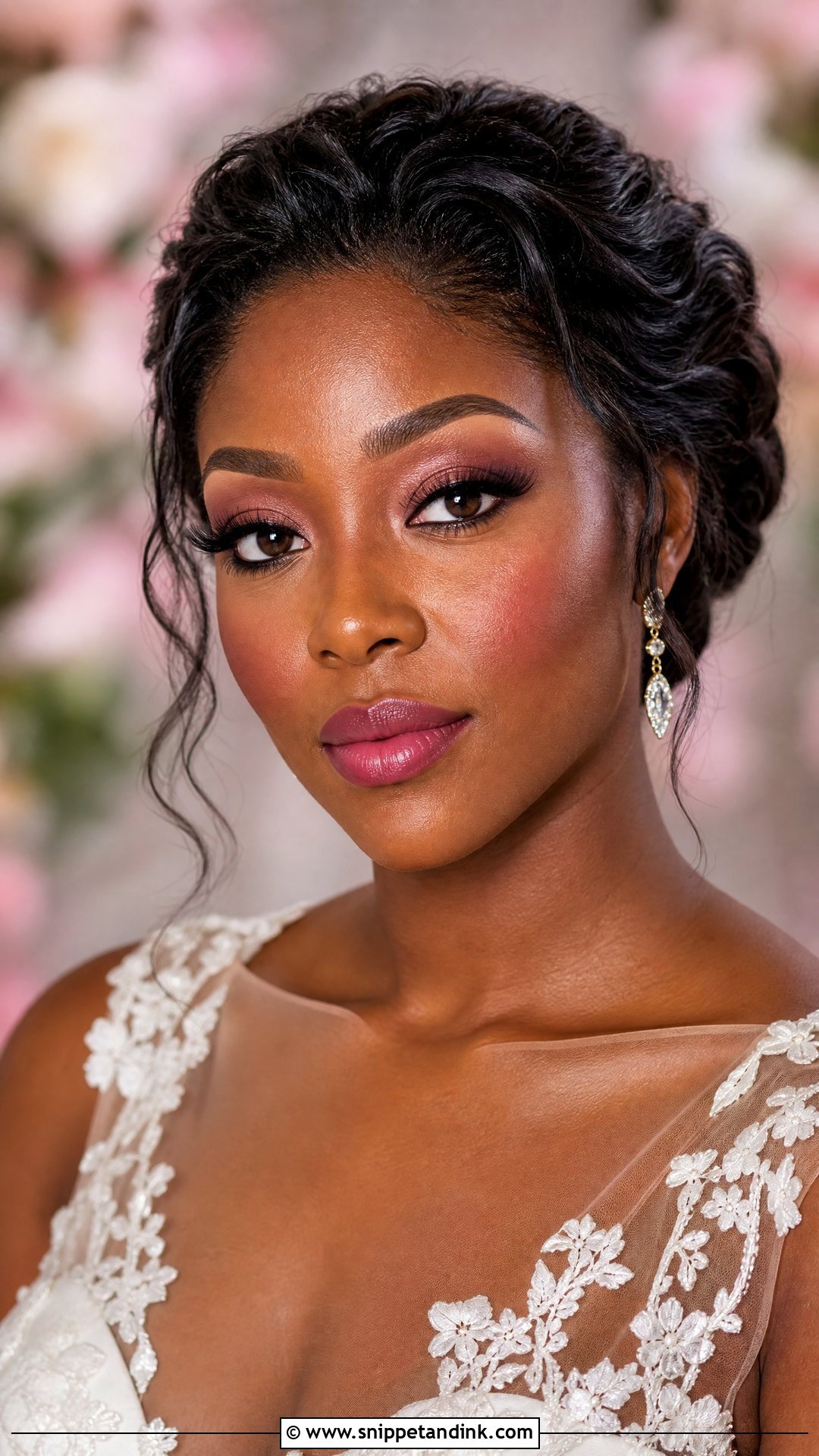
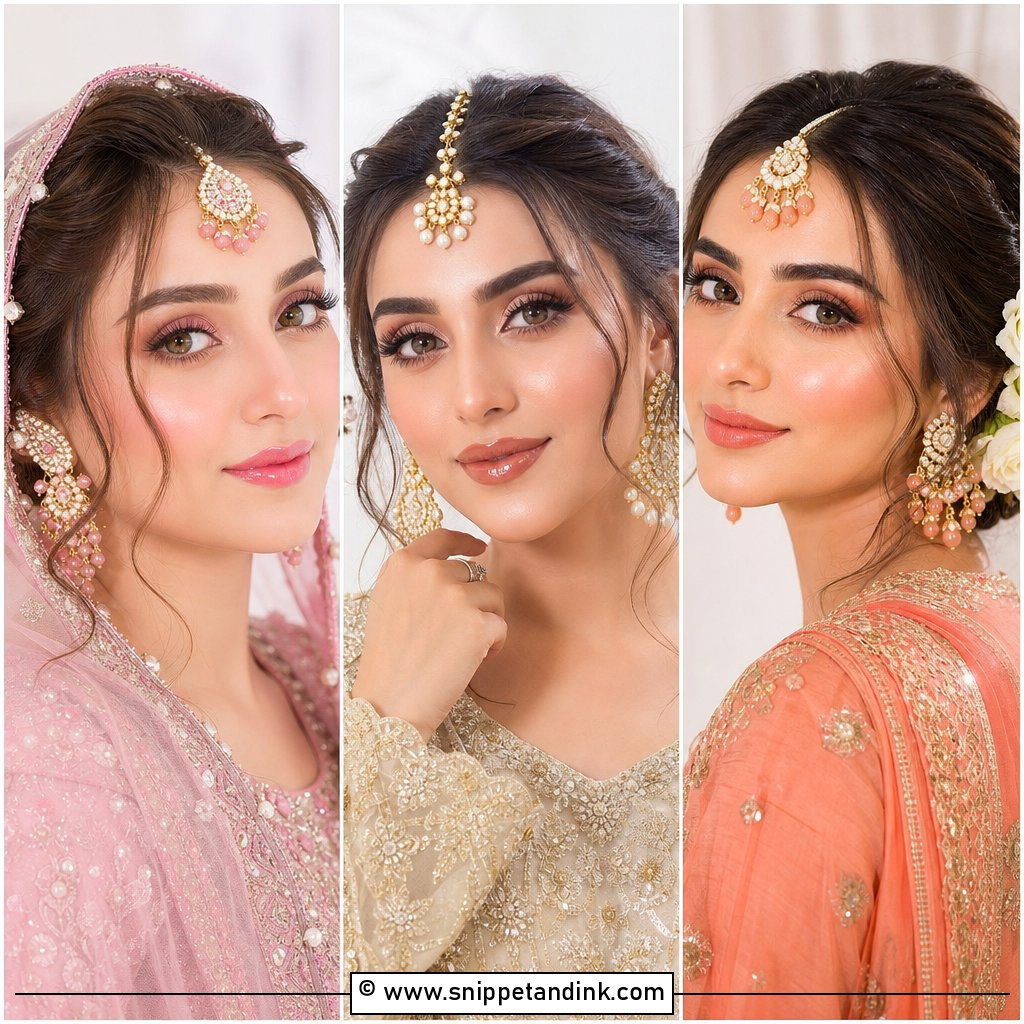
Pink can tip into sweet very quickly, so I balance it with a soft brown in the crease. Petal-pink blush, rose shadow and a pink-nude lip are the base palette. Fair and light skin usually suits cooler rose or baby pink; tan and deep skin tend to come alive in warm rose, raspberry or mauve-pink, which hold their colour rather than looking chalky. The skin stays smooth with a slight glow. Curled lashes, feathered brows and a touch of highlight finish it. It suits blush-toned dresses and floral details, and it’s especially forgiving if you flush when you cry.
7. Bronze Bridal Makeup
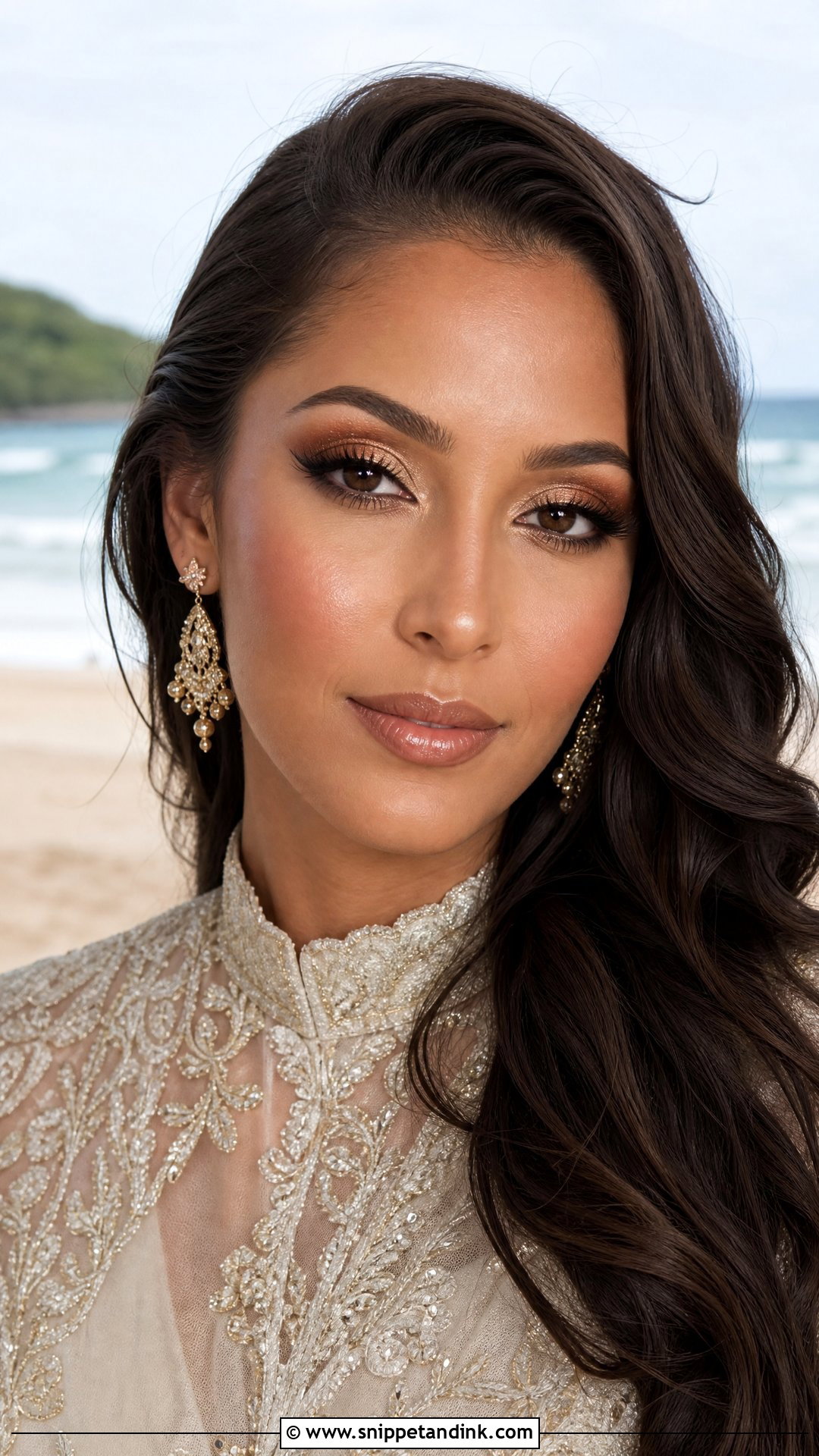
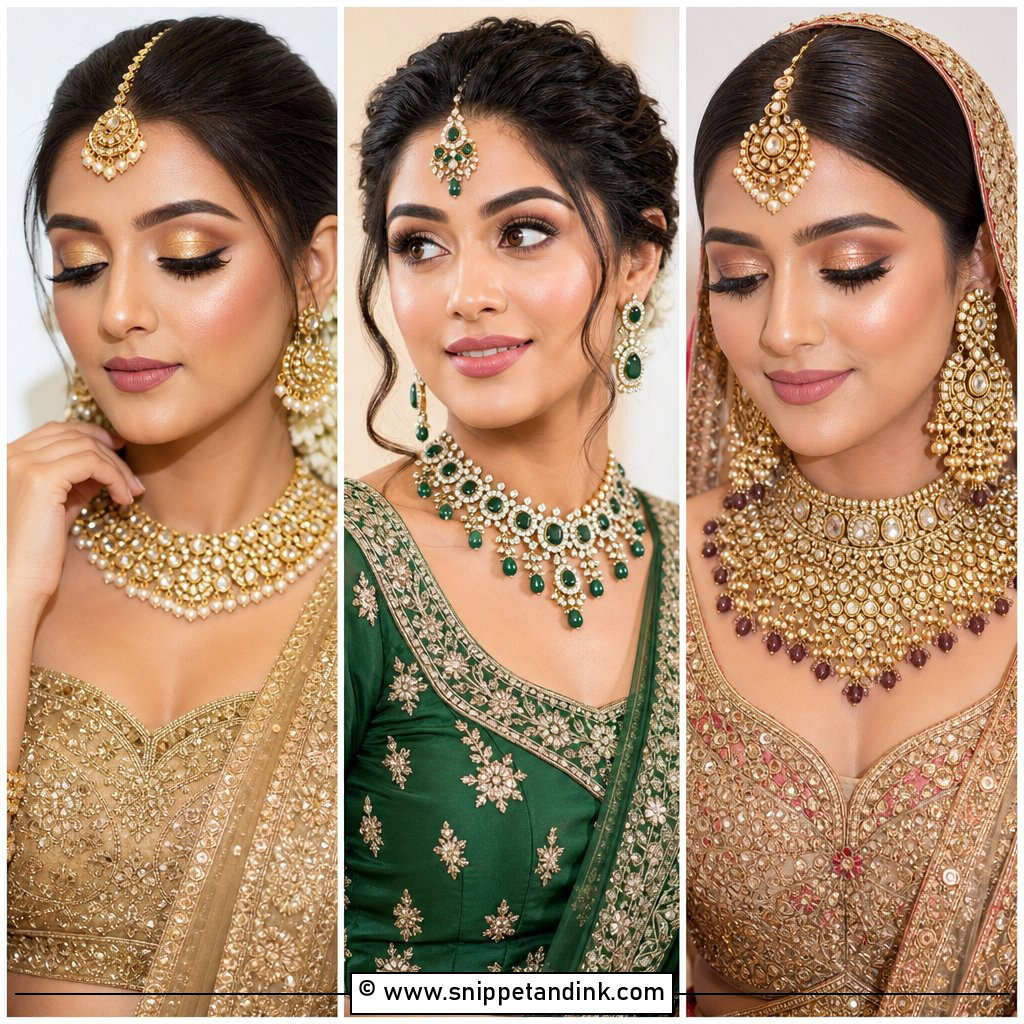
Bronze bridal makeup warms and sculpts at the same time. It’s especially easy on golden, olive, tan and deep skin, and on fair skin I swap to champagne-bronze shades so it doesn’t look muddy. Bronzer goes where the sun would hit: forehead, cheeks and jawline. Peach or terracotta blush sits high on the cheeks. On the eyes, bronze shimmer is layered over a warm matte brown, with soft smoky liner. A caramel nude or warm rose lip keeps it all in one family. Beach weddings and golden-hour photos are where this look really earns its place.
8. Smokey Eye Bridal Makeup
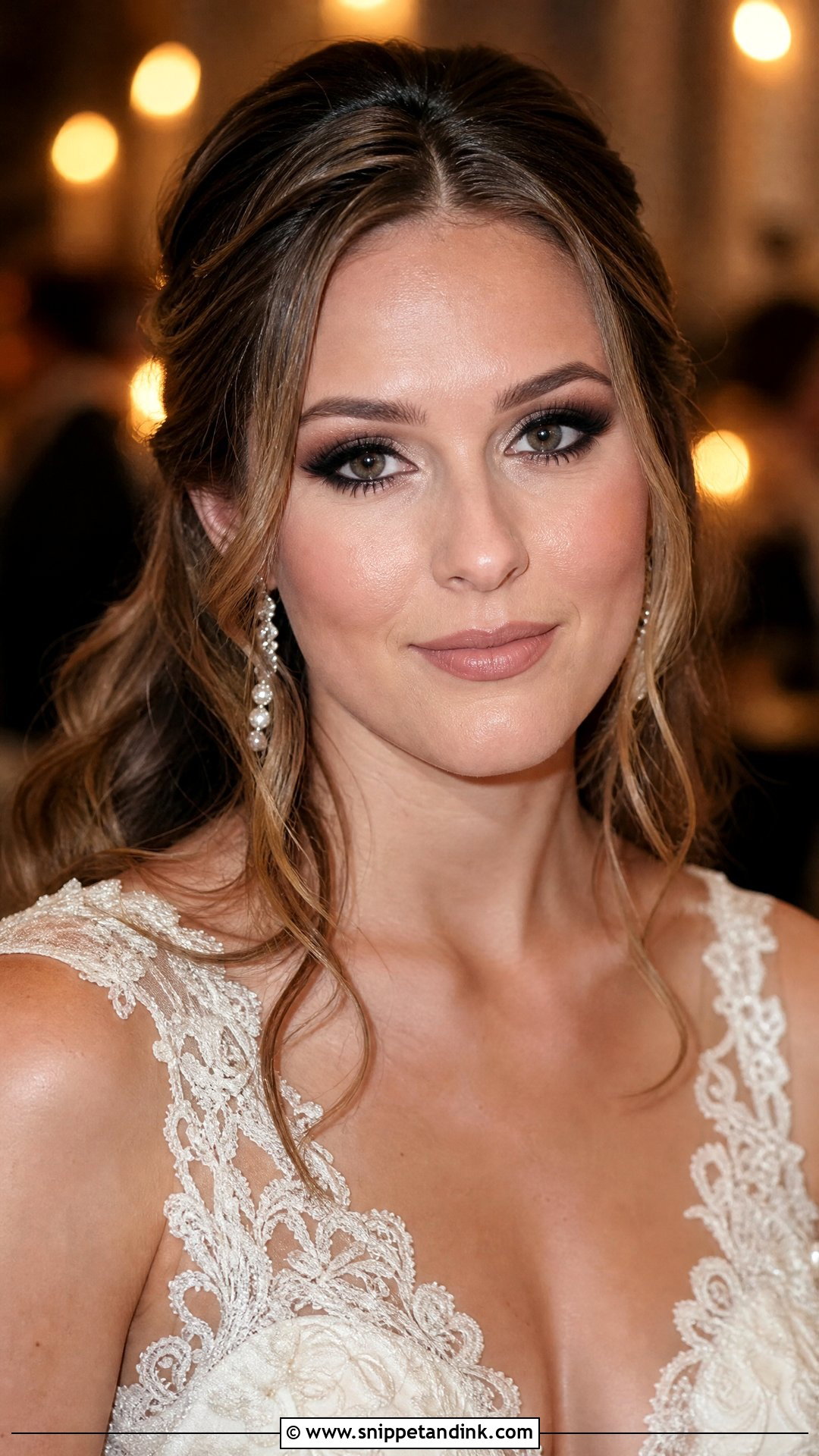
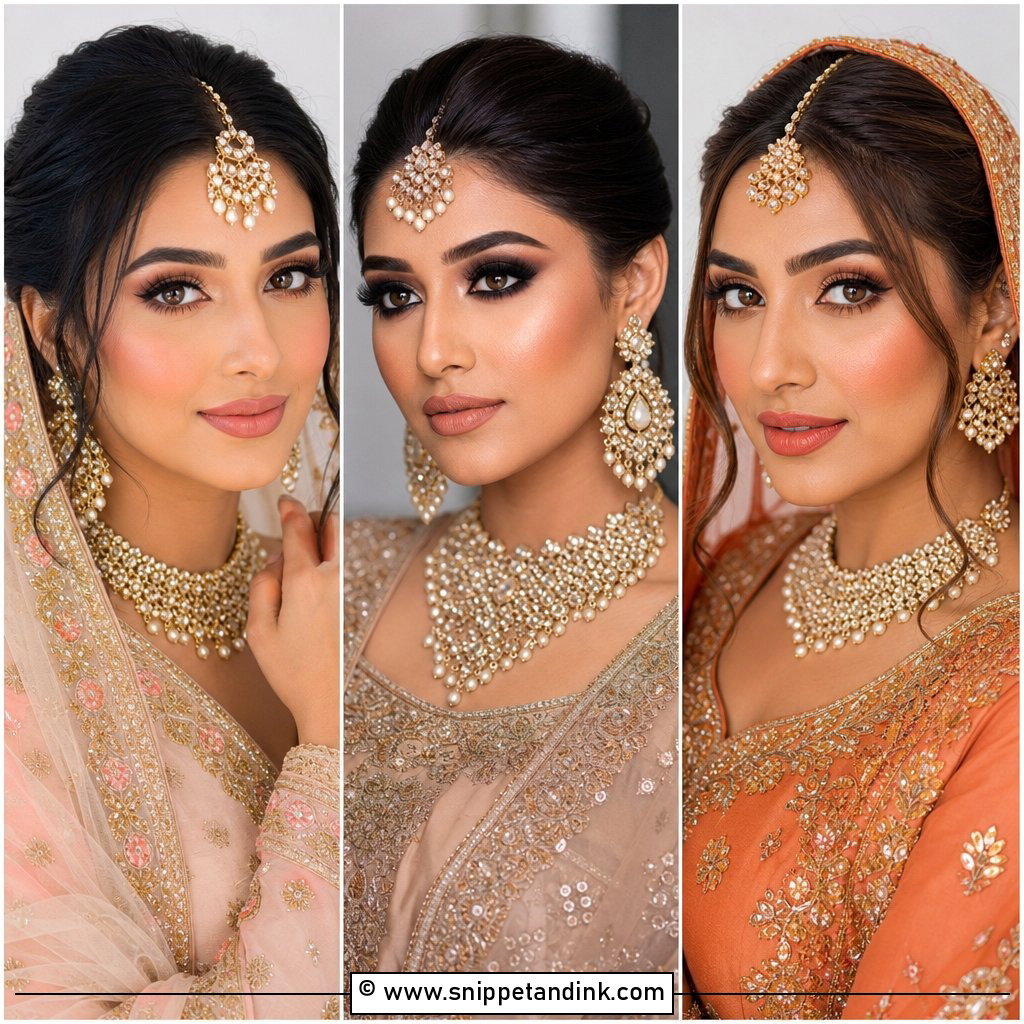
A bridal smoky eye has to be blended softer than an evening-out version, because it will be photographed from two feet away. I rarely use pure black. Espresso, warm brown, taupe, bronze or plum all read as smoky in photos while staying flattering. The darkest shade stays close to the lashes and fades upward. Waterproof liner, individual lashes and a little inner-corner highlight keep the eyes looking open rather than heavy. Blush brings colour back to the face, and a nude or soft mauve lip lets the eyes lead. It suits evening weddings best; in harsh midday sun it can look tired.
9. Winged Liner Bridal Makeup
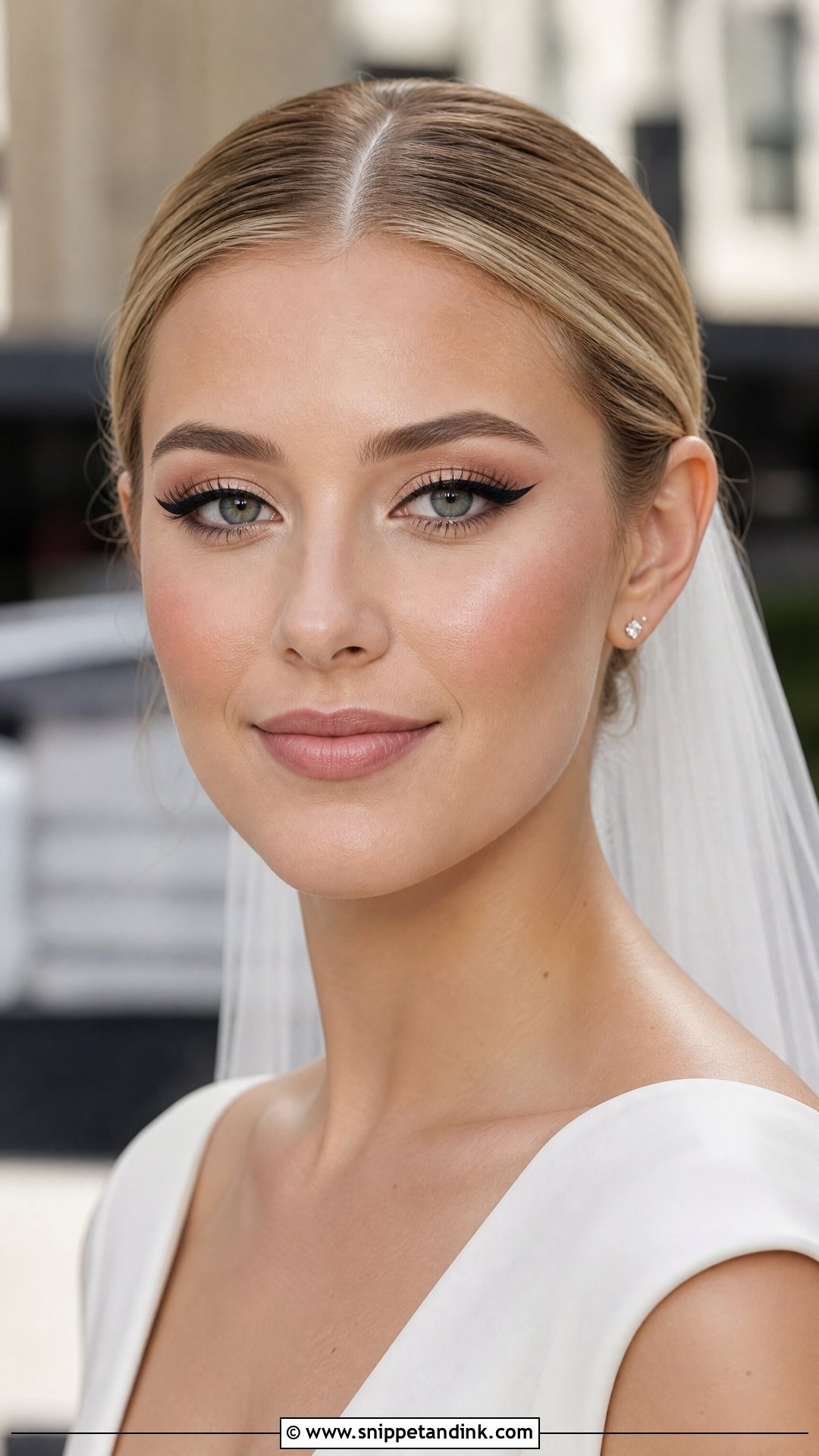
Winged liner bridal makeup only works when the wing follows your eye shape. On round eyes, a small lifted wing elongates; on hooded eyes, I draw the wing with the eye open and looking straight ahead, otherwise it folds and disappears. A softer smoked wing is often kinder to hooded lids. The lid stays simple in matte beige, champagne or soft taupe. I use a waterproof gel or liquid, then lift the lashes and fill the brows lightly. Skin can be satin or softly dewy, with peachy-pink blush and a nude rose lip. Sleek hair and a minimal gown suit it.
10. Monochrome Bridal Makeup
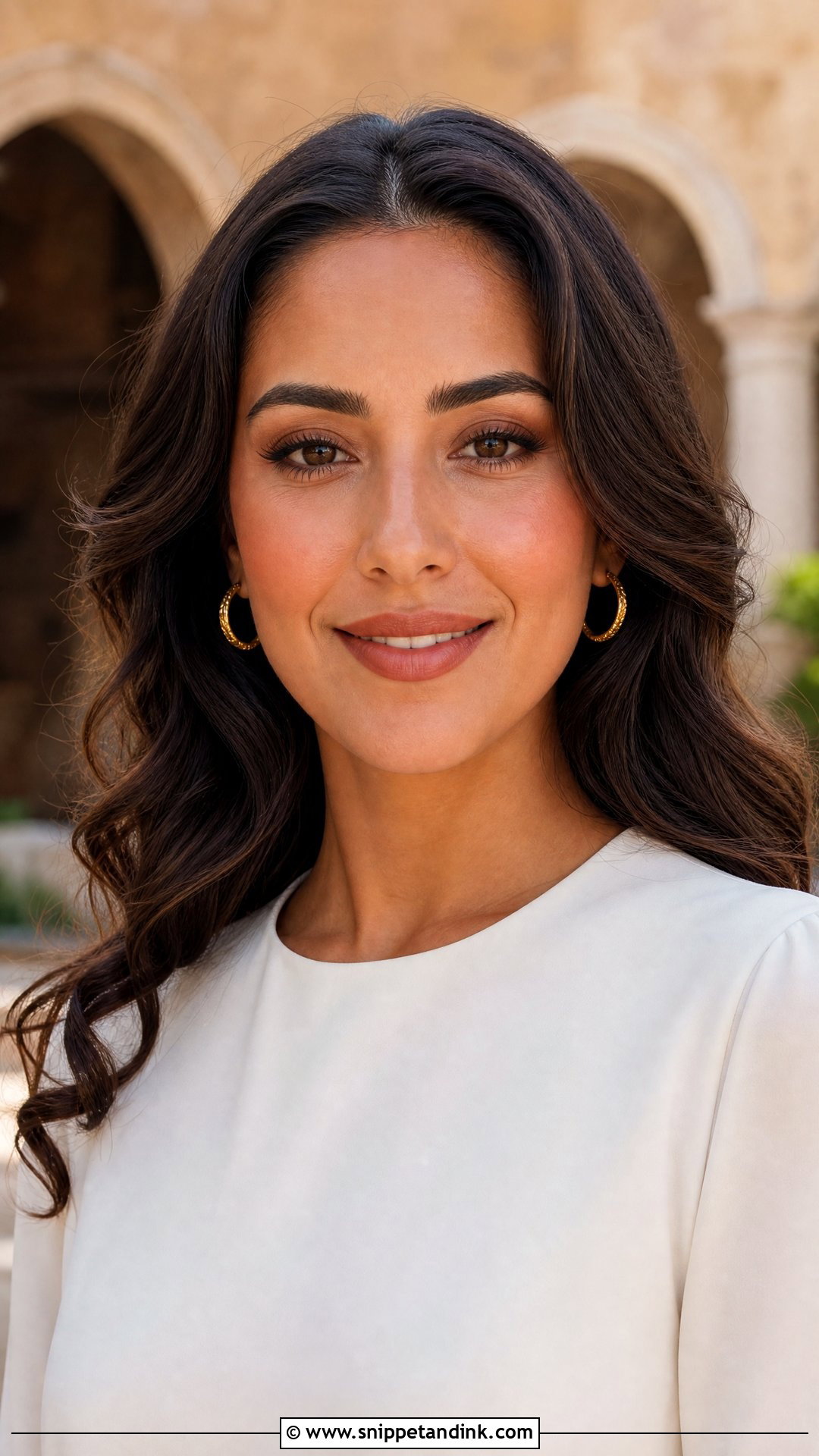
Monochrome means one colour family on the eyes, cheeks and lips. Rose, peach, terracotta, mauve and soft berry are the easiest to wear. I start with cream blush, then use the same product or a near match as a sheer wash on the lids, and finish with a lip stain or satin lipstick in the same tone. It’s quick to touch up, since one shade does three jobs. The base stays natural and bright, with brown liner and wispy lashes for structure. It suits brides who want colour that feels balanced and a fresh editorial feel.
11. Peach Bridal Makeup
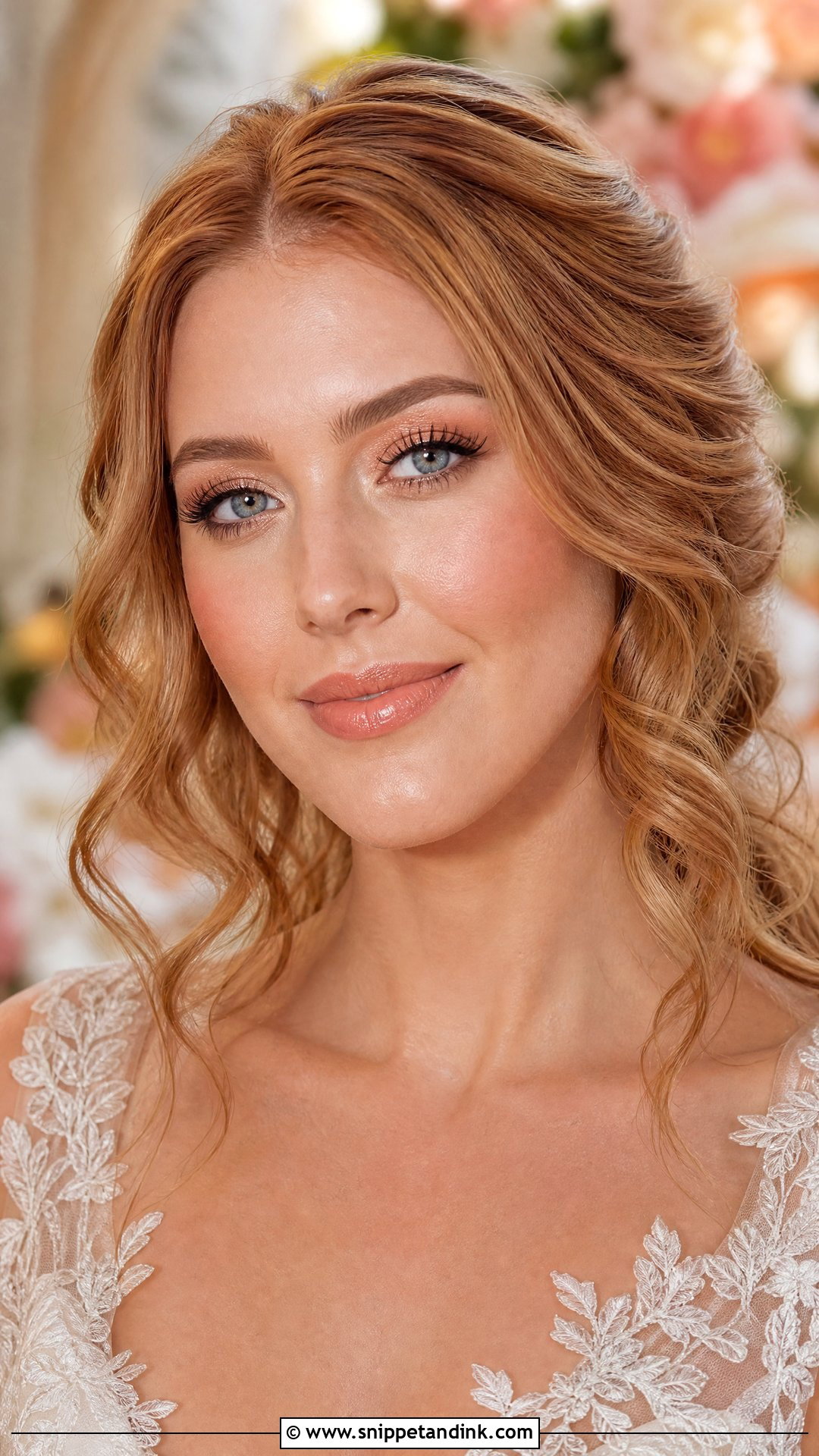
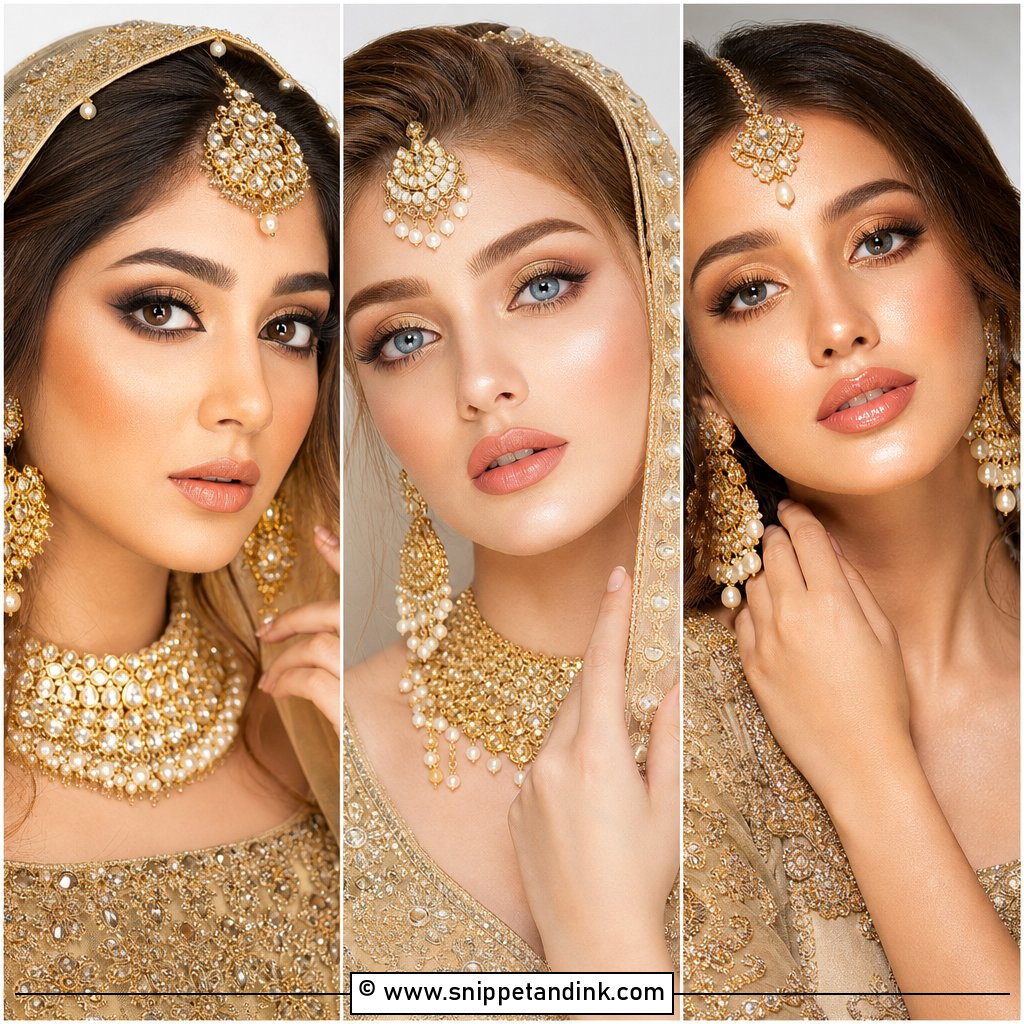
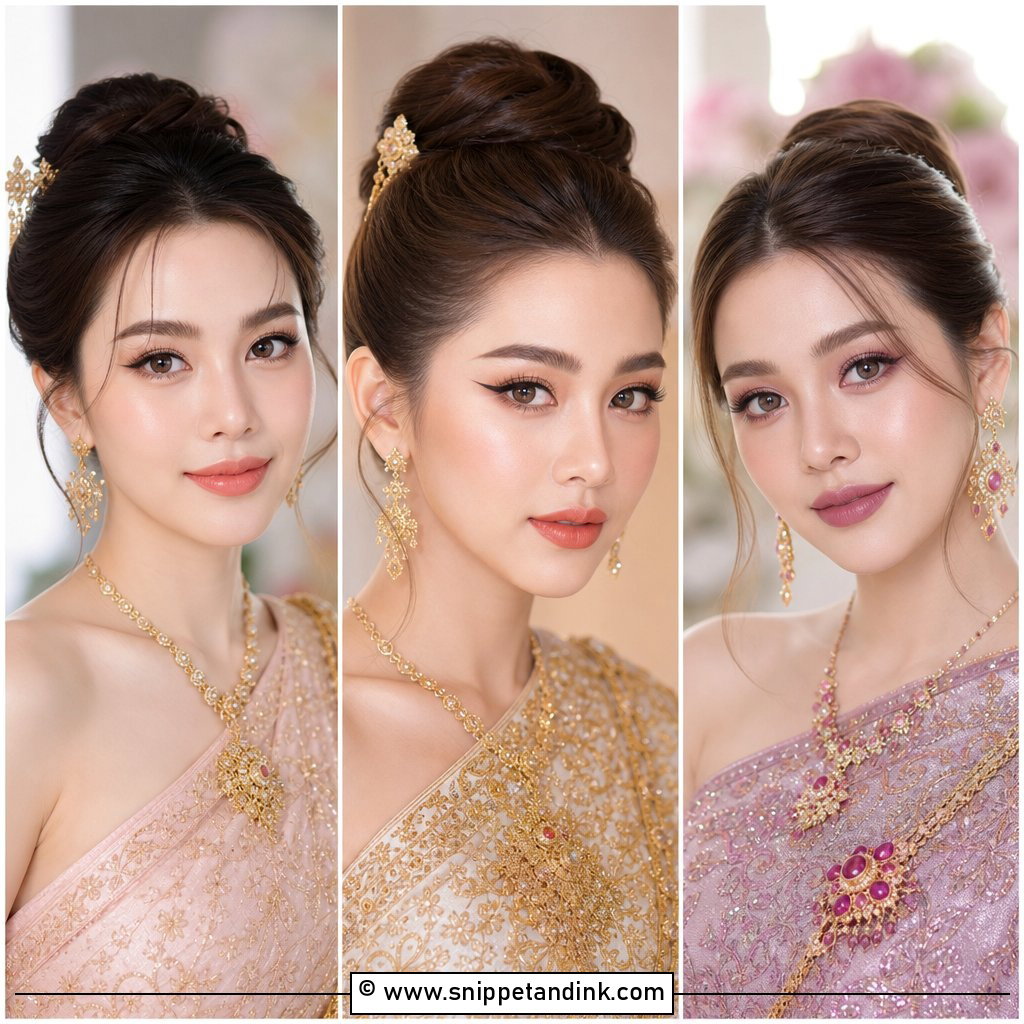
Peach wakes the face up. It adds colour without weight, which is why I reach for it for spring, summer and outdoor weddings. Peach or apricot blush goes on the cheeks, with warm beige and soft peach blended over the lids and a touch of golden shimmer in the centre to catch the light. Brown liner and fluttery lashes keep the eyes gentle. Lips can be peach-nude, coral-pink or warm beige, satin or glossy. Peach can turn orange on very cool, fair skin, so on those brides I lean toward a pinker apricot. It pairs well with ivory gowns and gold jewellery.
12. Brown Bridal Makeup
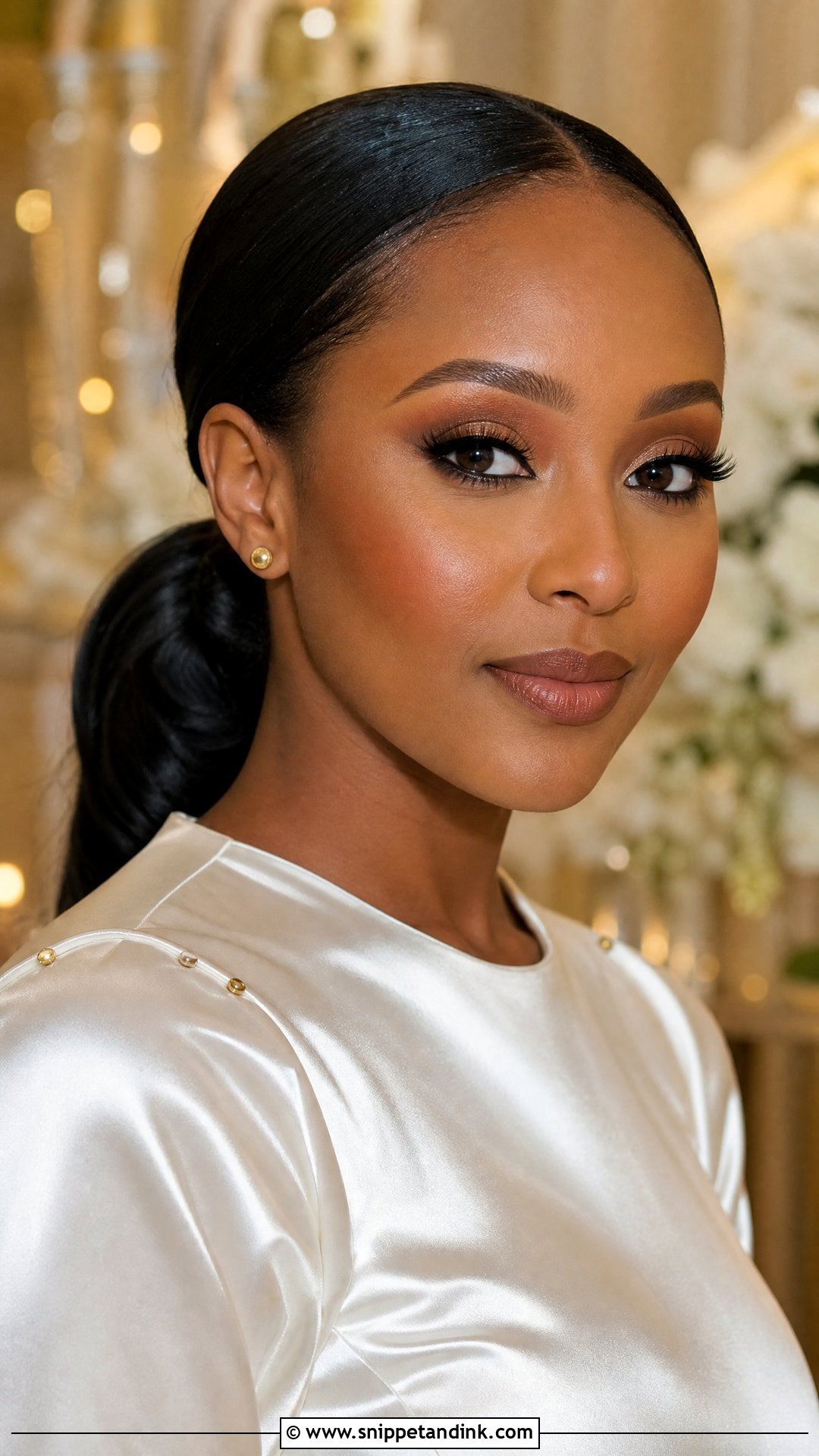
Brown bridal makeup is the palette I’d trust for a bride who isn’t sure what she wants, because brown scales from soft taupe to deep espresso without changing character. For a light version, I use caramel and beige shadows with brown liner. For more depth, chocolate goes through the outer corner and under the lower lashes. Skin is smooth and softly contoured, with warm rose or cinnamon blush. A nude-brown, mocha or pink-brown lip completes it. It works across skin tones and seasons, and it rarely looks dated in photos years later.
13. Gold Bridal Makeup
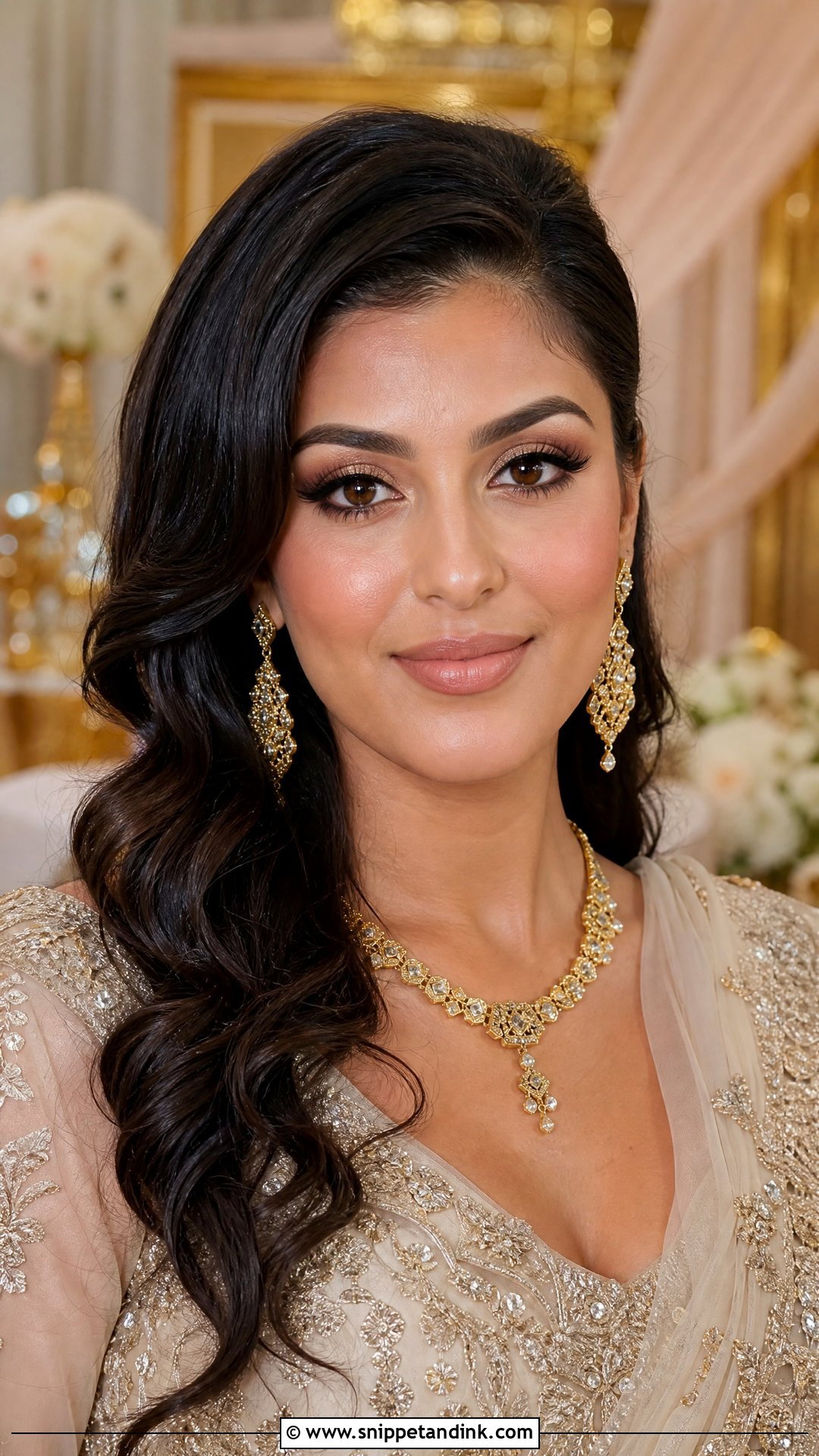
Gold makeup feels celebratory, but the texture matters more than the shade. Fine shimmer or metallic shadow looks polished up close; chunky glitter migrates down the cheeks by lunchtime and catches the flash. A soft gold lid with brown in the crease, black-brown liner and full but separated lashes is my usual structure. The skin stays warm with bronzer, peach blush and champagne highlight, and the lip is a nude peach, caramel or rose-brown. Rich gold flatters medium, tan, deep and olive skin, while champagne-gold suits fair skin better. Evening light and warm-toned jewellery make it glow.
14. Rose Gold Bridal Makeup
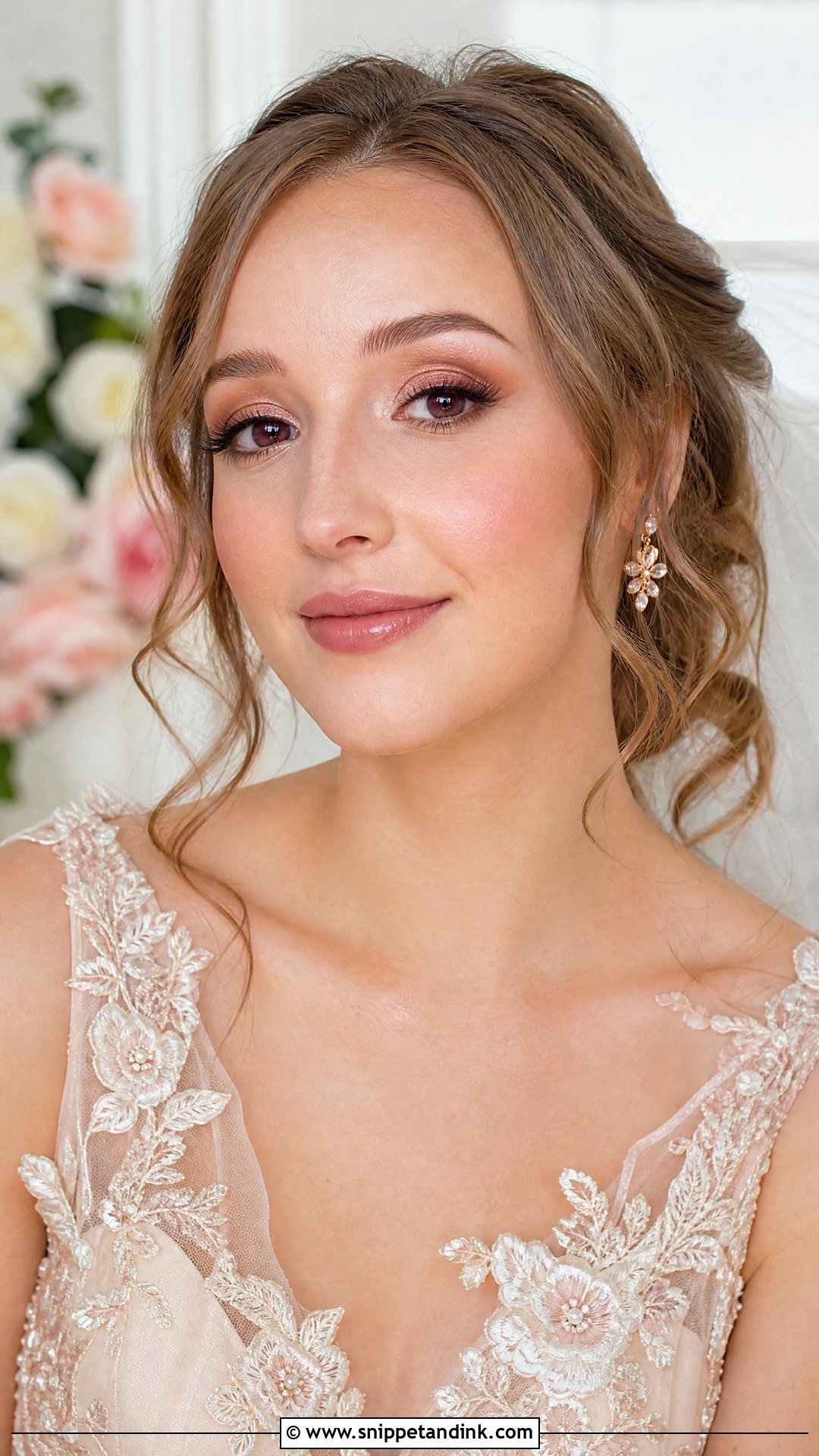
Rose gold sits between pink and bronze. I start with a satin base and place rose blush high on the cheeks for a slight lift. On the eyes, rose-gold shimmer goes on the lid, soft brown in the crease, and a touch of plum or bronze at the outer corner for depth. Brown liner keeps it soft and wispy lashes finish it. Lips are rosy nude or pink-beige. The metallic warmth suits most skin tones, though on very red-toned skin I go easy on the pink so it doesn’t exaggerate redness. Warm or blush-toned wedding details pick it up well.
15. Pearl Bridal Makeup
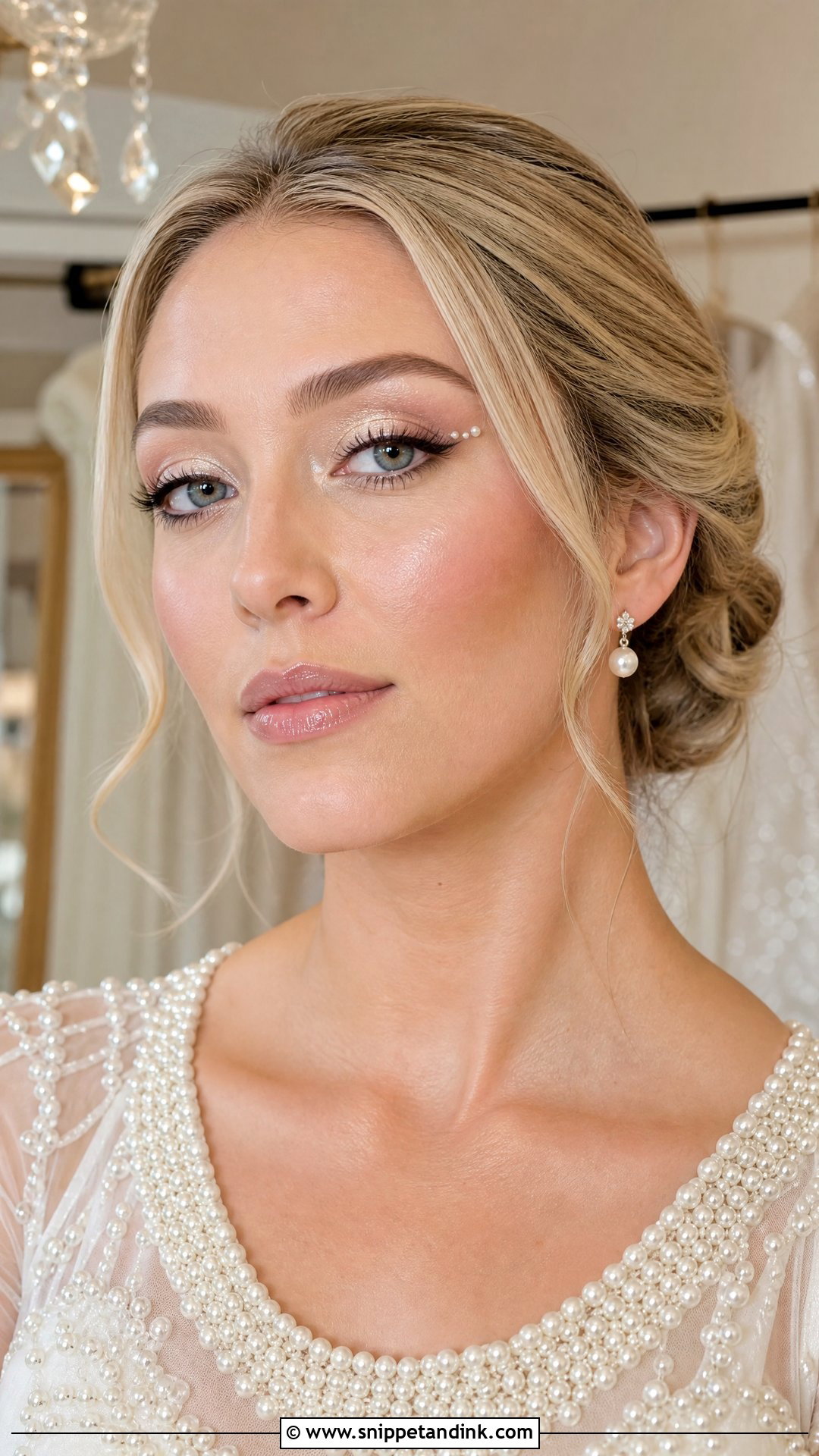
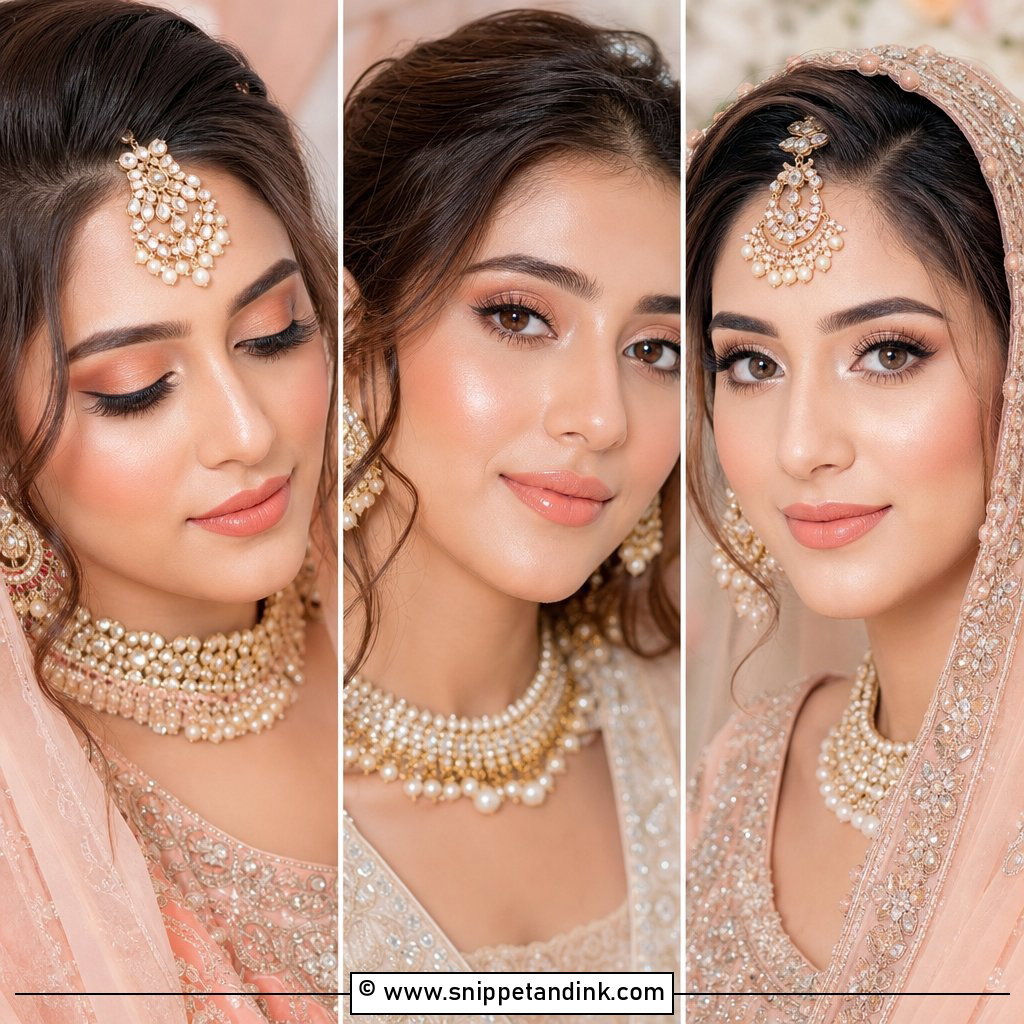
Pearl accents are fun, but a little goes a long way. A pearly inner-corner highlight, a soft opal sheen on the lids, or a few tiny adhesive pearls near the outer eye are enough. I fix stick-on pearls with lash glue rather than the backing they come with, since the original adhesive rarely survives tears and heat. Skin stays fresh, with pink or peach blush and a light dusting of powder through the T-zone. Brows soft, lashes lifted rather than heavy, and a glossy nude, pale rose or soft mauve lip. It gives you one unusual detail without changing the whole look.
16. Lavender Bridal Makeup
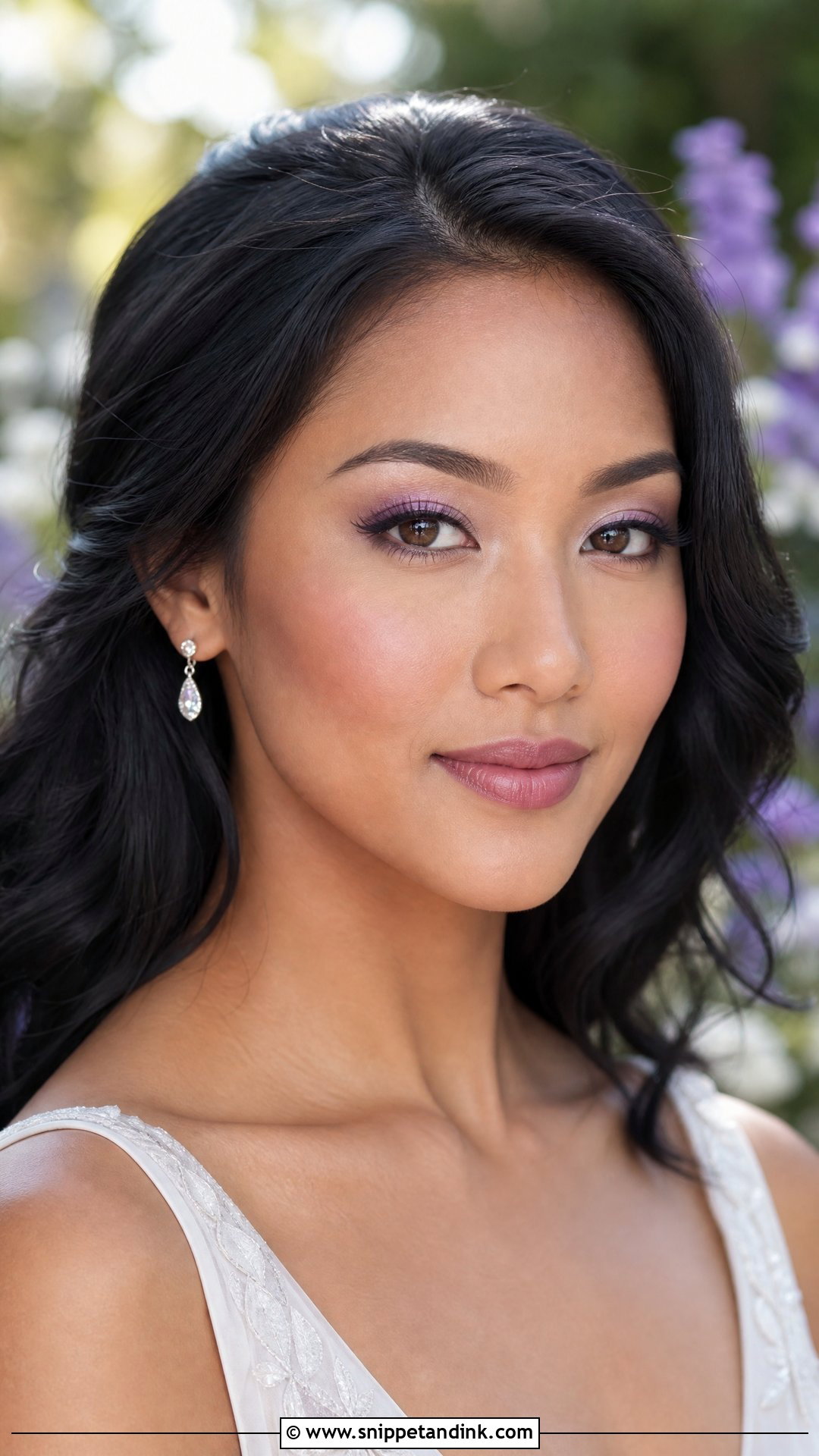
Lavender is an easy way into colour, and it’s surprisingly flattering. It makes brown, green and hazel eyes look brighter, since purple sits opposite yellow and gold on the colour wheel. I use a sheer lavender wash on the lid, with taupe or cool brown through the crease so it reads as wearable. Plum liner defines the lash line more softly than black. Skin is satin-finish with cool pink blush and a subtle highlight, and the lip is pink-mauve or a cool nude. It’s at home at a spring or garden wedding. Keep it sheer; an opaque lavender lid looks costume-like in photos.
17. Burgundy Bridal Makeup
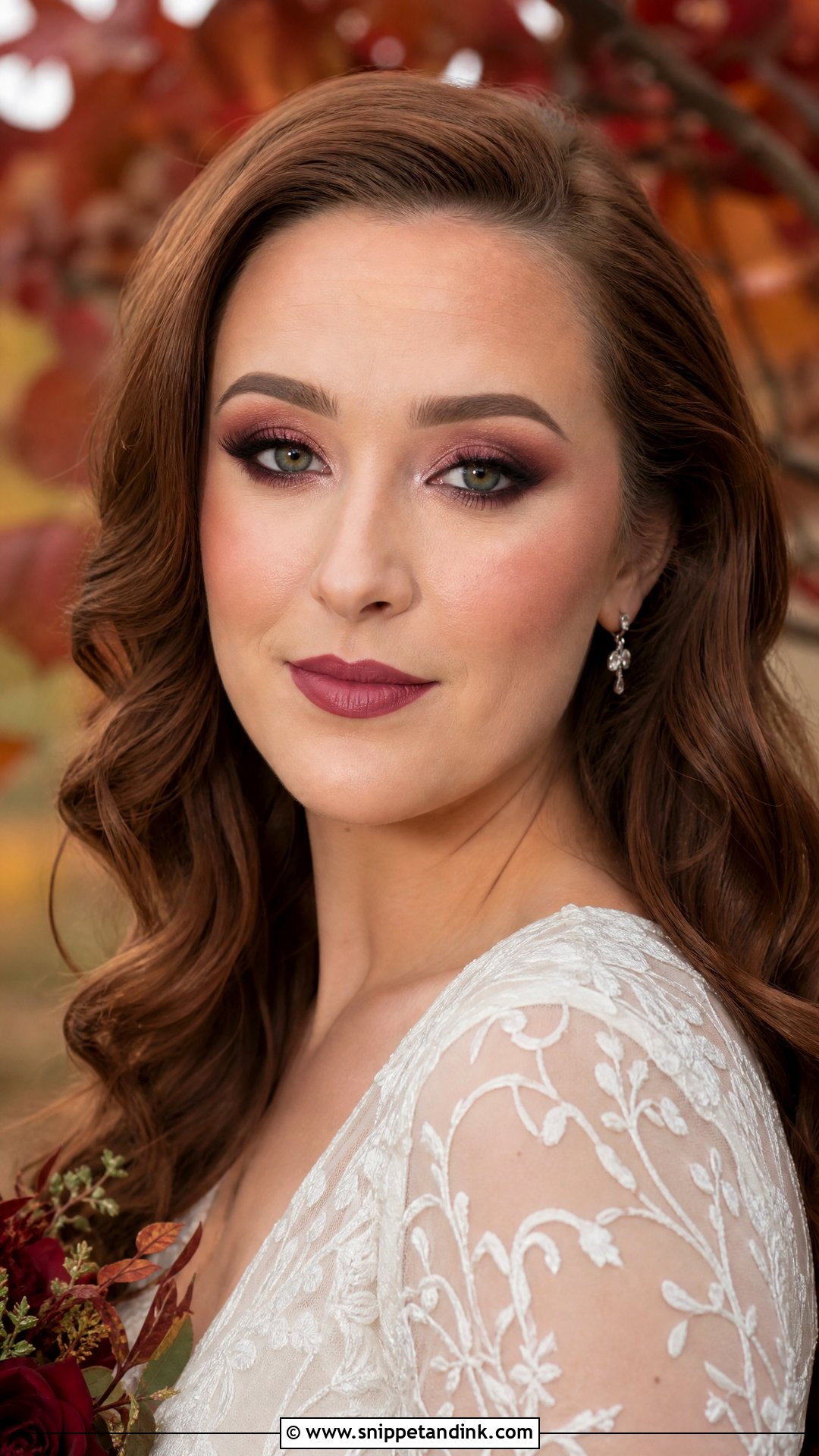
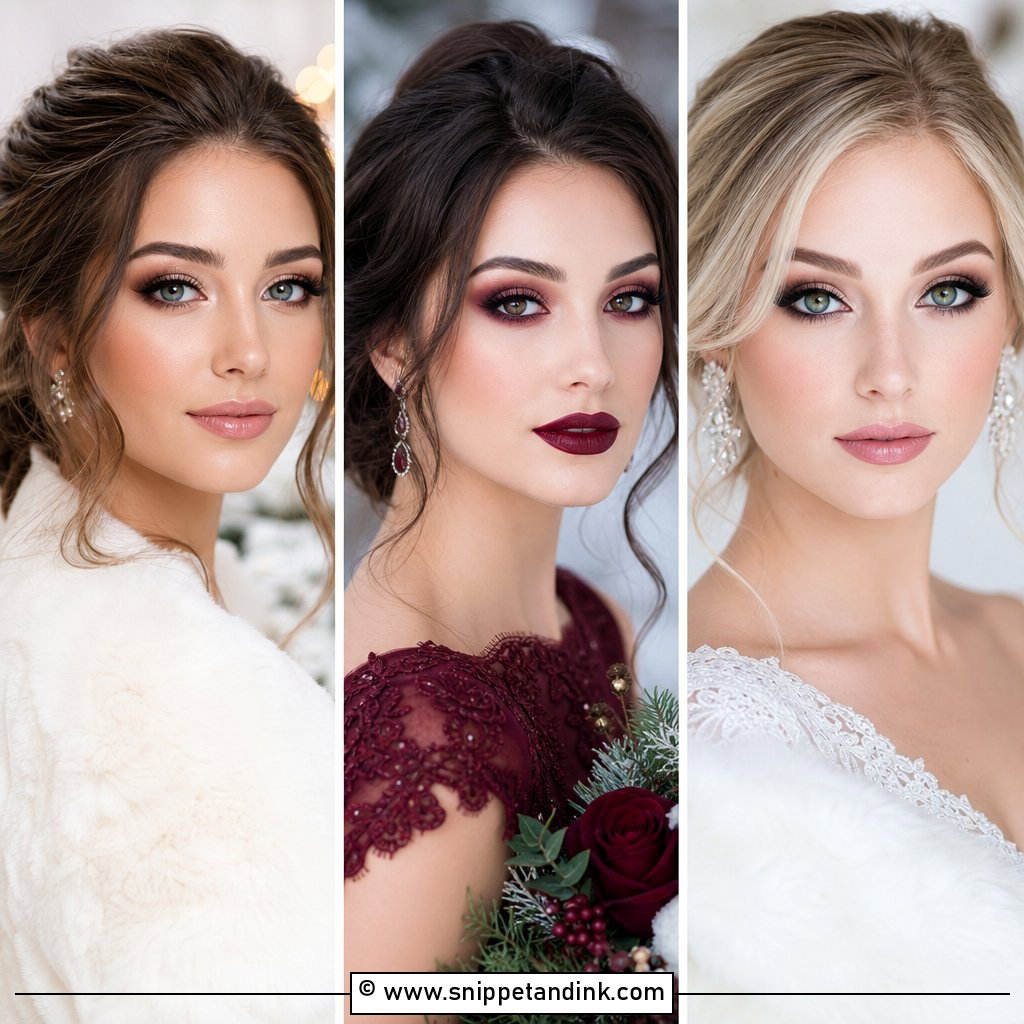
Burgundy bridal makeup brings depth, but red-based shadows around the eyes can make you look tired or teary if they’re not handled carefully. I blend burgundy into brown, plum or rose so the eyes still look lifted. The deepest shade stays at the lashes and outer corner, and I keep it off the inner lower lash line, which is where red tones look most like irritation. A smooth satin base, rose-bronze blush and controlled highlight support it. Lips go muted berry, mauve nude or soft brown-pink rather than a full burgundy match. It suits autumn and winter weddings and formal gowns.
18. Full Glam Bridal Makeup
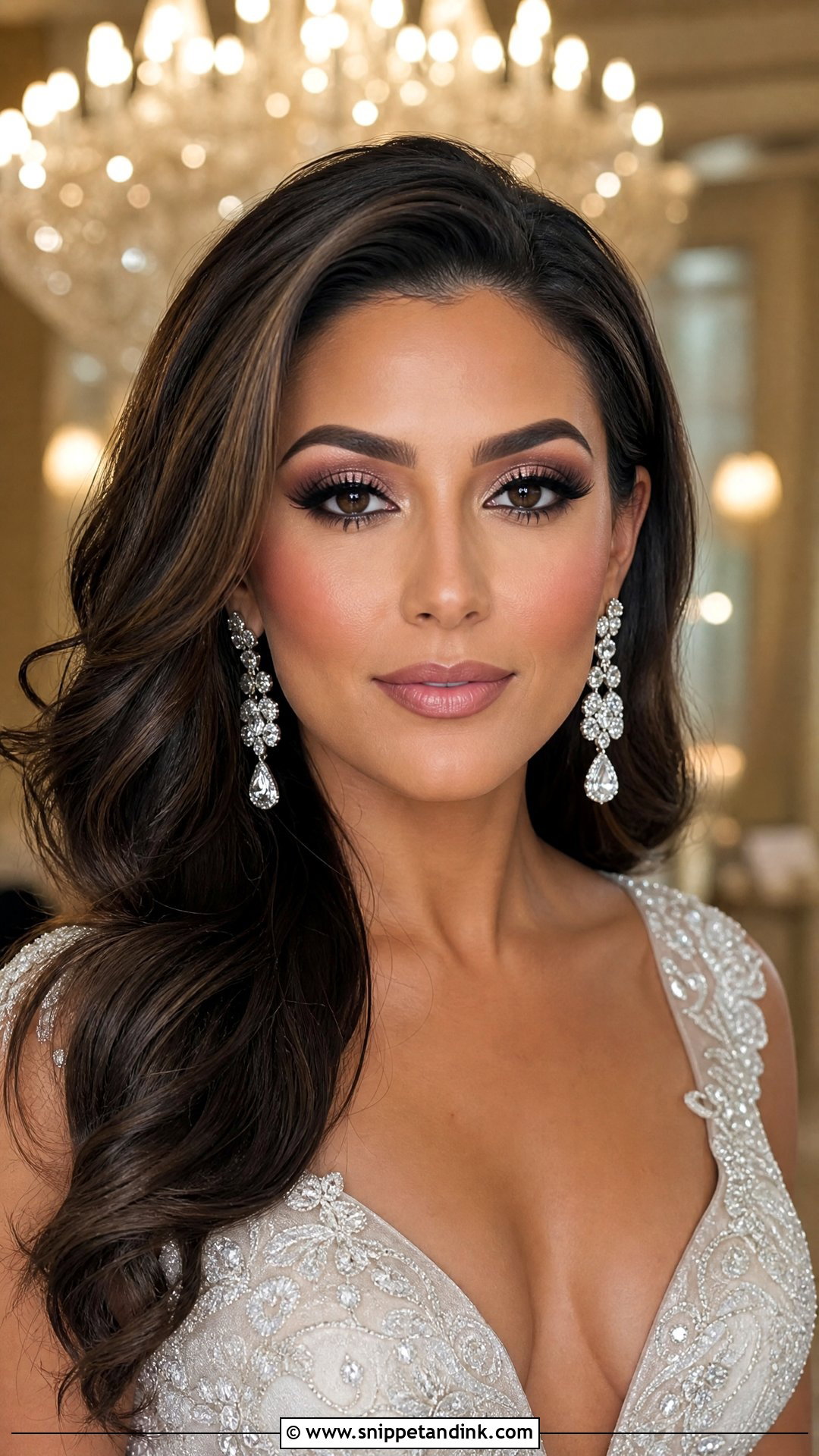
Full glam means strong definition and high-impact photos, and the whole skill is in blending. I build long-wear foundation, brightening concealer, soft contour and setting powder in thin layers so the base lasts without looking heavy. Eyes get matte crease work, shimmer on the lid, black liner and fuller lashes. Brows are defined but brushed through, never a solid block. Sculpted cheeks, visible blush and a smooth highlighter finish the face. The lip is usually nude, rose or mauve to keep it refined. Do your trial in daylight as well as indoors, because full glam that looks right under salon lights can feel heavy outdoors.
19. No Makeup Bridal Makeup
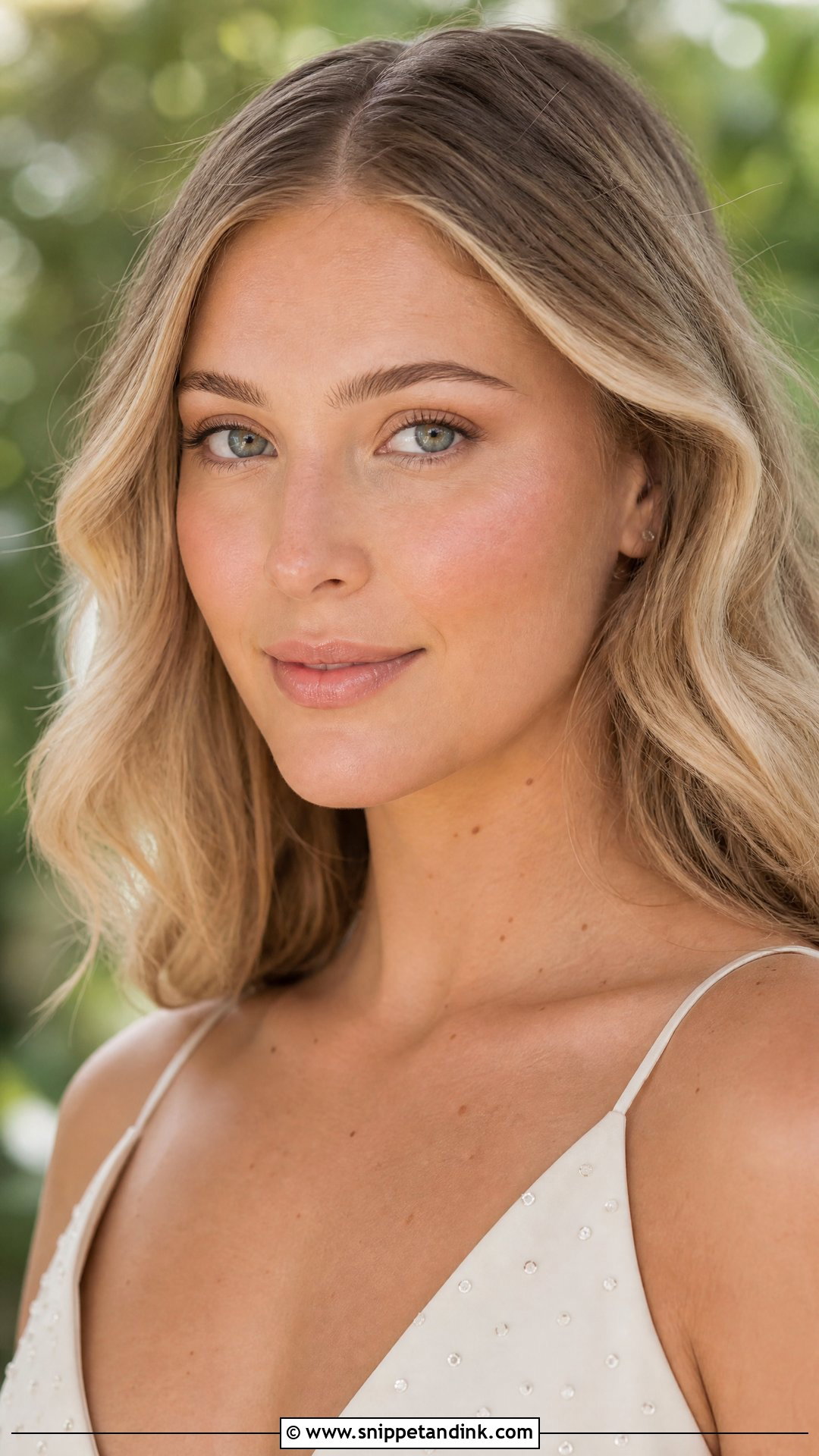
No-makeup makeup still needs to last twelve hours, so it isn’t the shortcut it sounds like. The aim is healthy skin, soft definition and barely there colour. I prep the skin well, use a sheer foundation and conceal only pinpoint areas. Cream bronzer adds warmth and liquid blush gives a natural flush. Brows are set with gel, lashes curled, and a brown tightline adds definition you can’t actually see. Clear or brown mascara suits very soft looks; a few individual lashes add lift without anyone noticing. A tinted balm or sheer nude lip finishes it. It’s the right call if you rarely wear makeup and want to recognise yourself.
20. Vintage Bridal Makeup
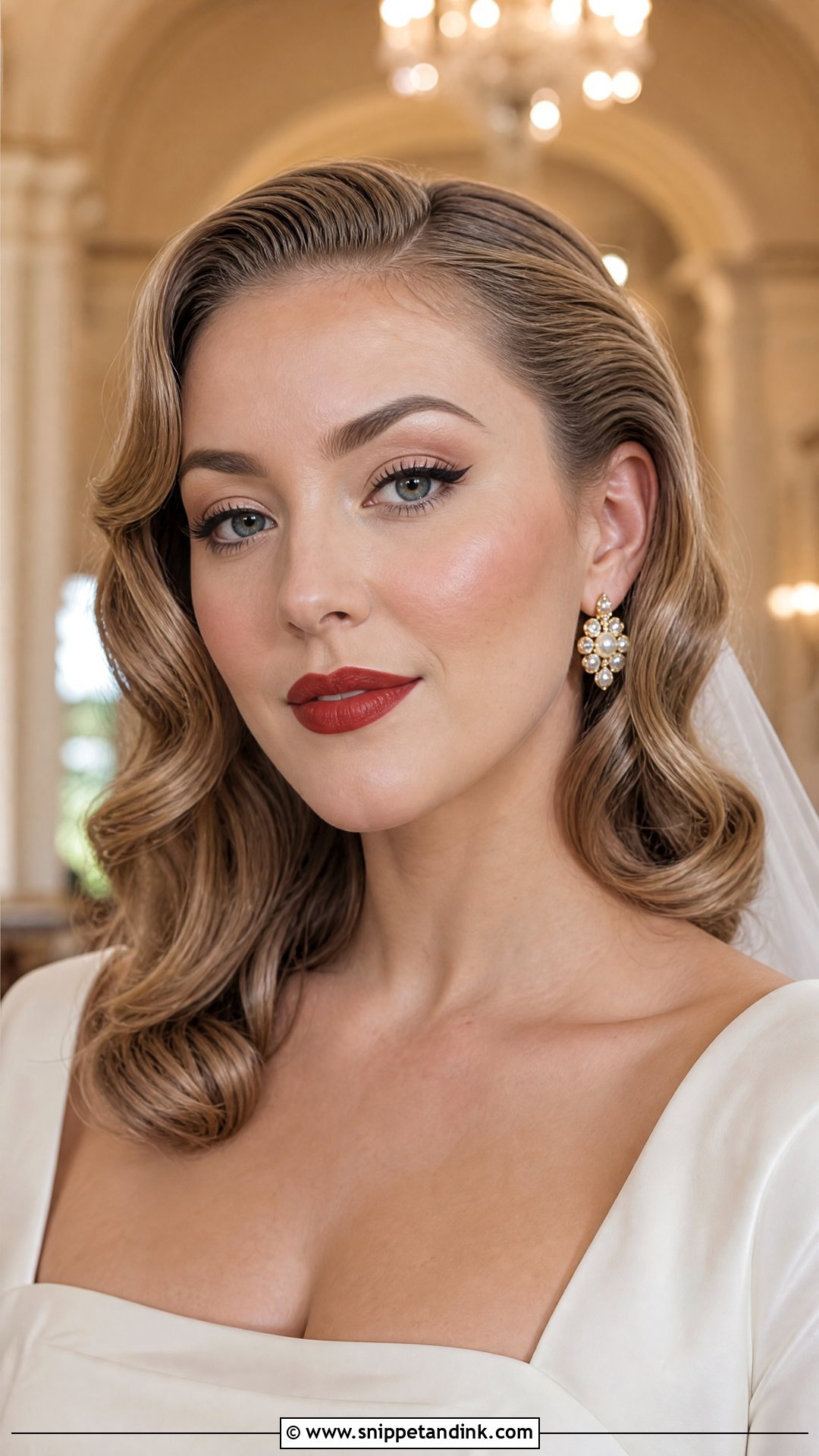
Vintage makeup works best when you borrow one or two ideas from an era rather than copying the whole thing. A satin complexion, softly powdered centre of the face, clean brows, subtle contour and balanced blush make the base. Eyes get a soft wing, a neutral lid and defined lashes. Then the lip: classic red, rose or warm brick, lined crisply and filled with a long-wear satin or velvet formula. It suits structured gowns, short veils, waved hair and buns. If you go too literal with a 1950s or 1940s look, it can read as fancy dress, so keep the skin modern.
SPF, Powder and the White Cast That Only Shows Up in Photos
Flashback is the one problem brides can’t see in the mirror. Some sunscreens with mineral filters and some very fine setting powders reflect the camera flash, which leaves a pale cast across the face or bright patches under the eyes. In person you look fine. In the photos you look ghostly.
To avoid it, I keep heavy mineral sunscreen off the face on the day and use a lighter sunscreen under makeup instead, applied early so it can settle. I go easy on translucent powder under the eyes, and I test the finished face with a phone flash before anyone leaves the room. If you want SPF for an outdoor ceremony, bring the one you plan to use to your trial so we can photograph it with flash.
A Lipstick Plan for Dinner, Toasts and the Kiss
The lip is the first thing to go. Coffee, champagne, dinner and a lot of kissing will wear through any formula. Here’s how I build it so it fades evenly rather than leaving a ring of liner:
- Line and fill the whole lip with liner, not just the edges.
- Apply the lipstick in a thin layer, blot with tissue, then apply a second layer.
- For bright or dark shades, ask about a long-wear stain underneath as a backup.
- Give your maid of honour the exact liner and lipstick, plus a small mirror, for a touch-up after dinner.
Matte liquid lipsticks last longest, but oily food breaks them down faster than you’d expect and they can feel dry by evening. If your lips tend to peel, a satin formula you reapply twice is kinder than a matte one you can’t fix.
Recognise Yourself in the Mirror at Midnight
Trends are a useful starting point, but your skin type, your dress, the light at your venue and how you normally wear makeup should make the final call. Bring two or three photos to your trial, then check the look by a window and with your phone’s flash on. Pay attention through the day: how the foundation wears, how the lip fades, whether the lashes feel comfortable by evening. Natural, soft glam, a red lip, bronze eyes or a few pearls can all work. What matters is that the face in the photos is unmistakably yours.
You'll Like These Ideas:


Leave a Reply