
Wedding makeup has two jobs that pull against each other. It has to look like skin when your partner is standing a foot away, and it has to survive the camera, twelve hours of wear, tears and a lot of cheek kisses. The looks below run from barely there to full glam, matte to dewy, with a classic red lip and soft smoky eyes along the way. For each one I’ve added what I actually do in the chair and where that look tends to fail, so you can bring a realistic brief to your trial.
Reading Your Venue’s Light Before You Pick a Finish
Before I talk shades with a bride, I ask where she’ll be standing for the ceremony and when. Light changes what a finish looks like far more than most people expect.
- Bright outdoor sun shows texture and shine. Satin or soft-matte skin, with glow kept to the cheekbones, holds up best.
- Dim churches and evening receptions swallow soft color, so definition around the eyes and a little more blush than usual help your face read across the room.
- Flash and phone cameras bounce off certain ingredients. Some mineral sunscreens and silica-heavy setting powders can leave a white cast on the face in flash photos, so I keep them off the wedding base and handle sun protection separately.
- Golden hour portraits warm everything up, which is why very warm bronzed looks can turn orange at sunset.
Your skin type matters next. Oily skin usually wants a matte or satin base whatever the venue; dry or mature skin looks best with more hydration and less powder. Tell your artist which looks from this list you like and which finish you usually wear, and let her adjust the texture to your skin.
1. Natural Bridal Makeup
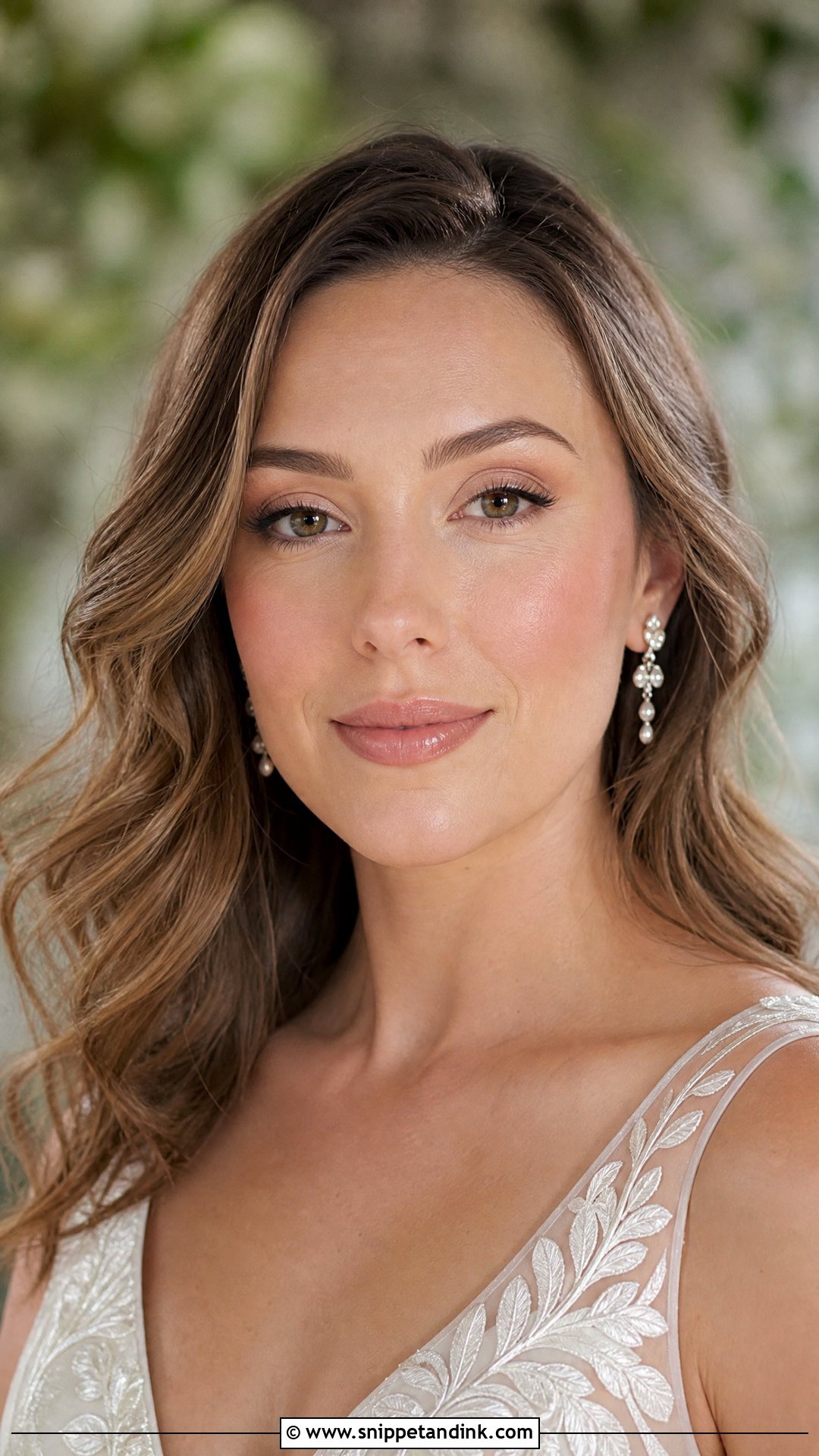
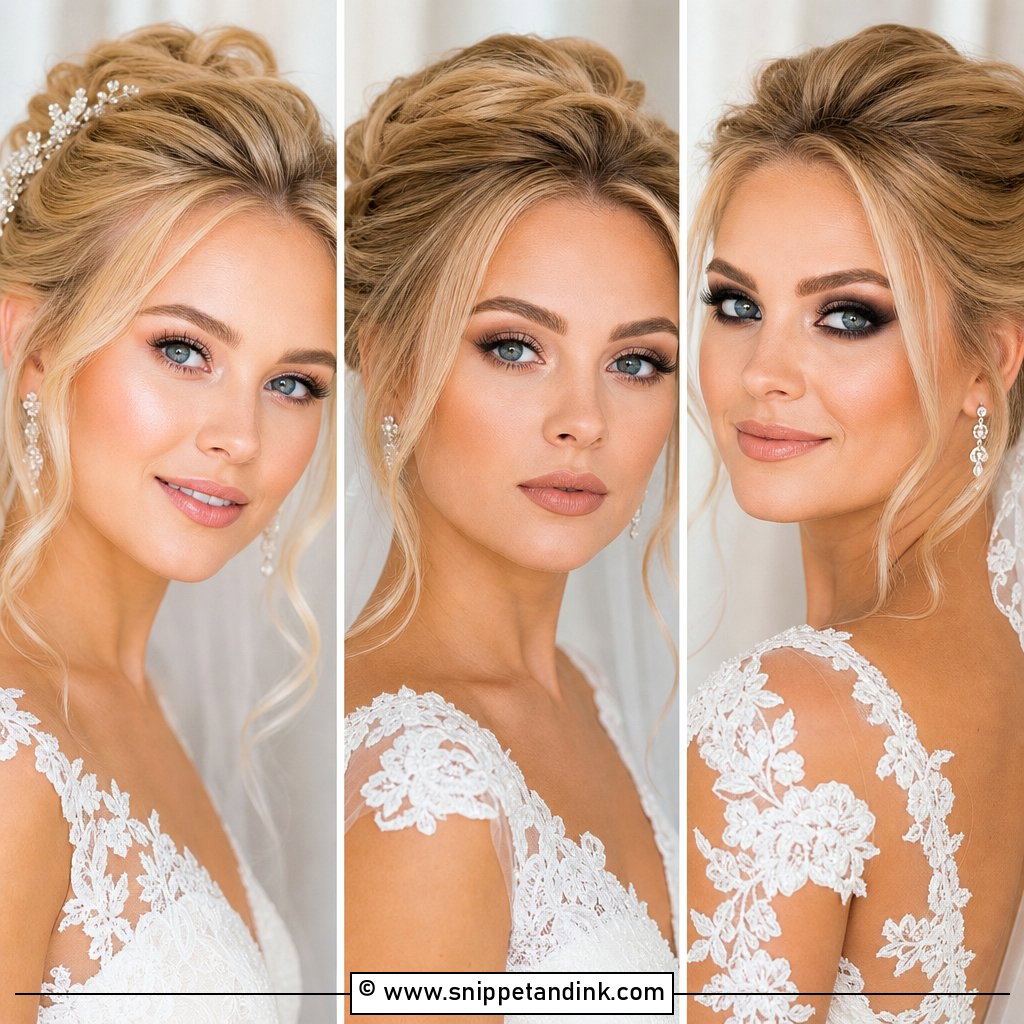
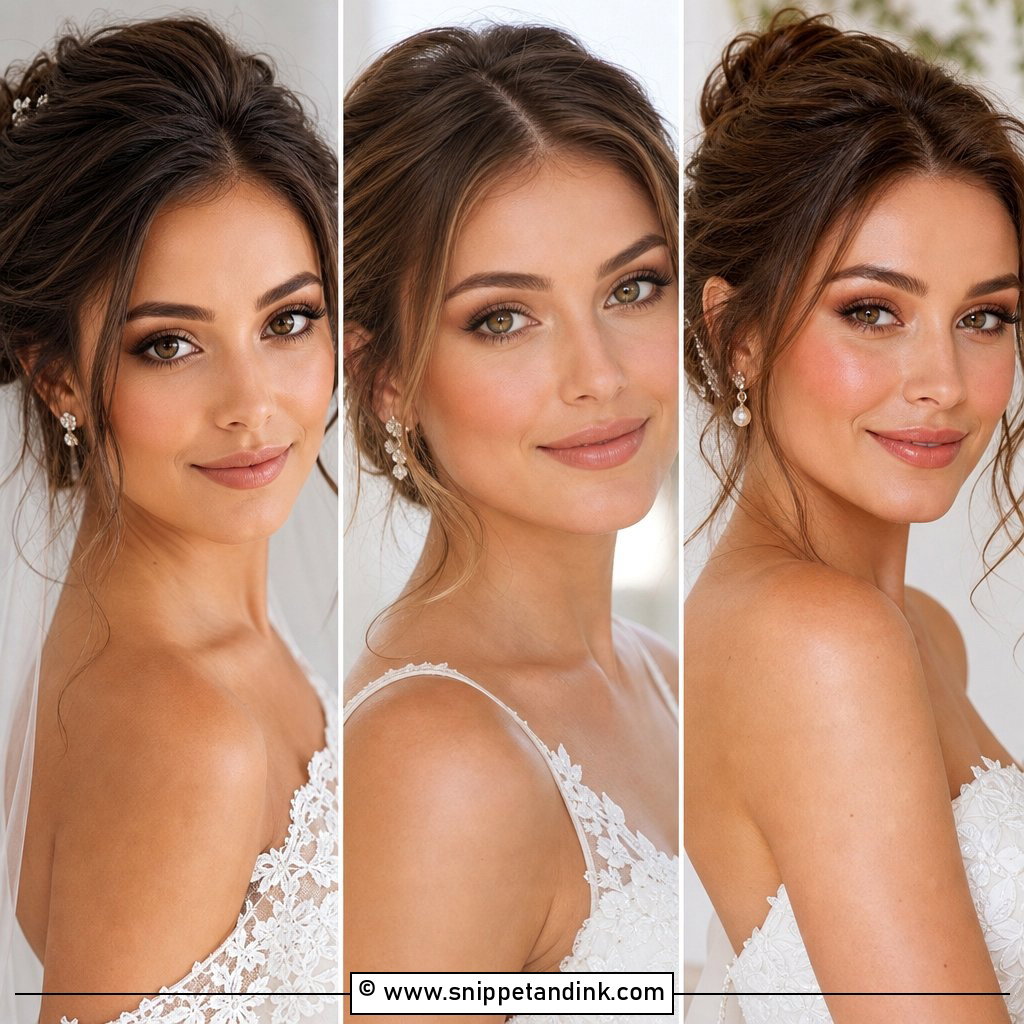
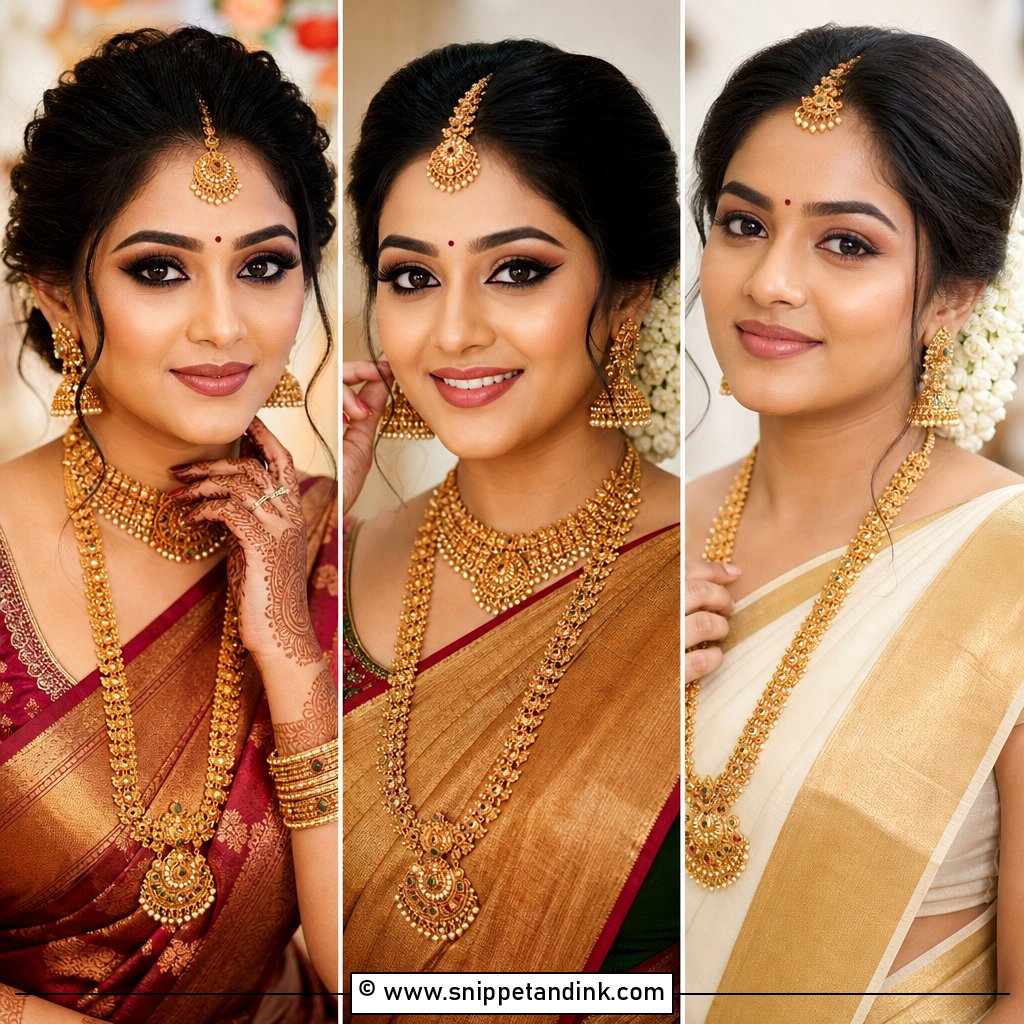
Natural makeup still takes more product than you think, because the camera flattens color. I start with moisturizer and a thin foundation, conceal only where it’s needed, then use a peach or rose cream blush pressed in with fingers so it melts into the skin. Eyes get champagne or taupe, thin brown liner and wispy lashes, and brows are brushed up rather than filled. A satin nude-pink lip is easy to top up. If you rarely wear makeup, this is the version where you’ll still recognise yourself in the mirror at 10pm.
2. Soft Glam Bridal Makeup
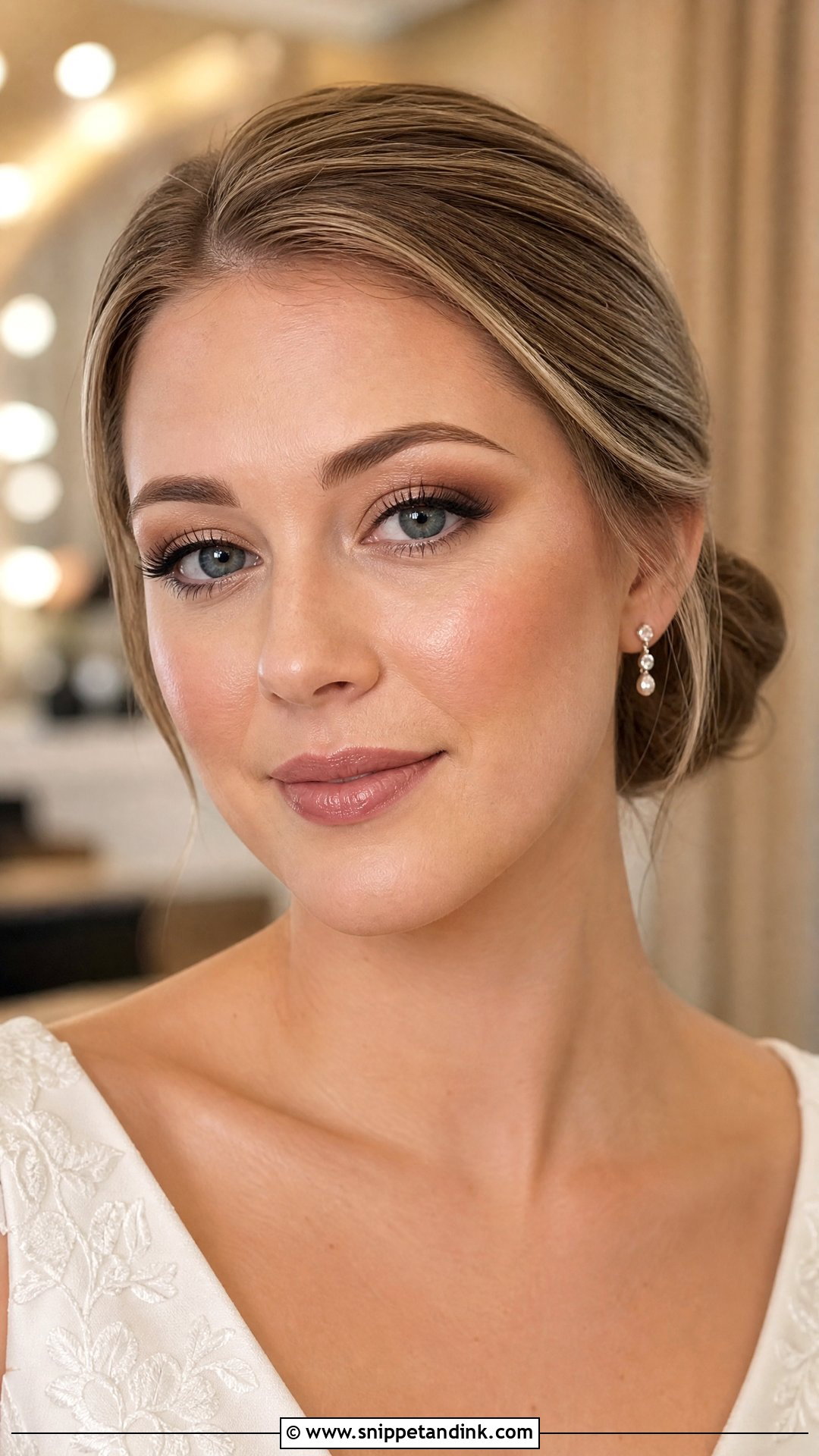
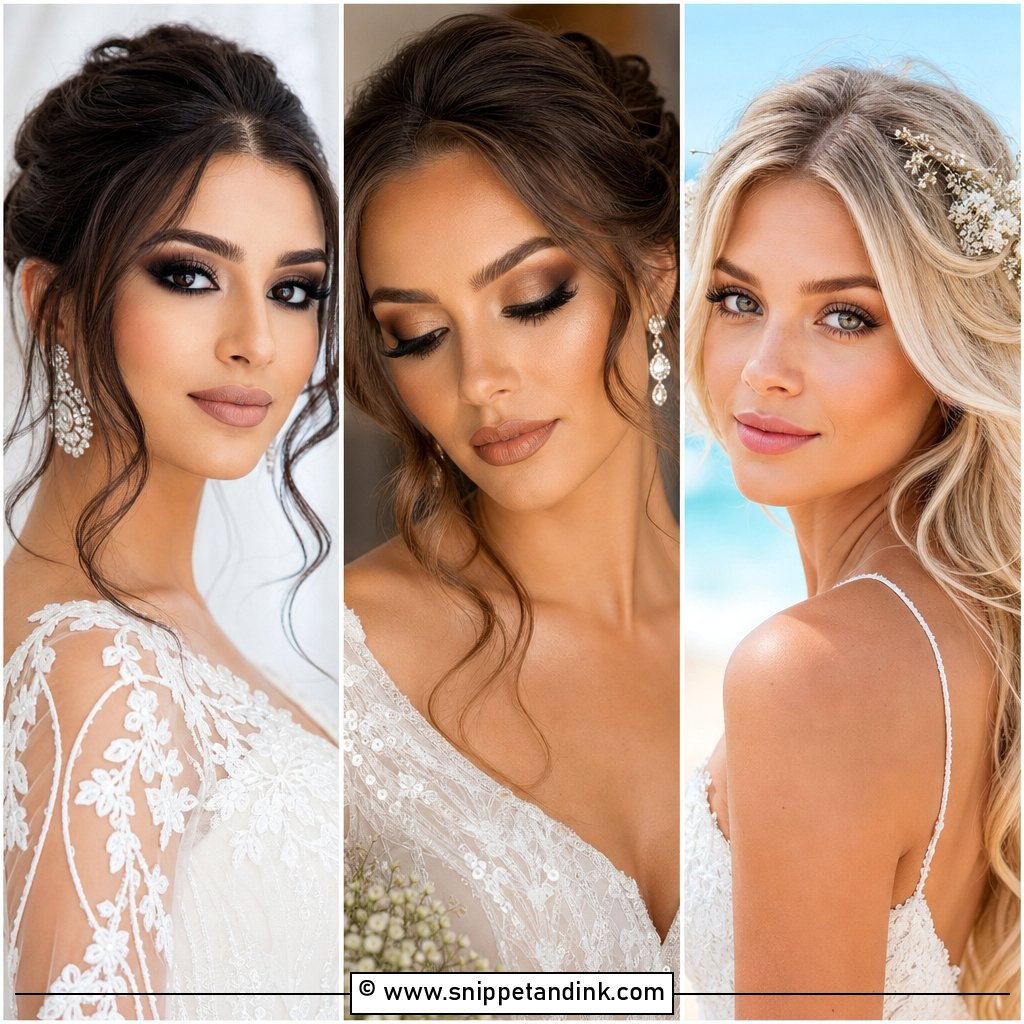
Soft glam is what most of my brides end up booking, because it gives clear shape to the face without looking like a performance. Medium coverage, gently sculpted cheeks, neutral eyes, fluttery lashes, nude or pink lip. All of it depends on blending: any visible edge on contour or shadow shows up twice as strongly in close-up photos. Warm browns and rose-beige suit a wide range of skin tones. It’s also the easiest look to tune at a trial; I’ll add liner, push the blush, or swap to gloss depending on what your face needs.
3. Glowy Bridal Makeup
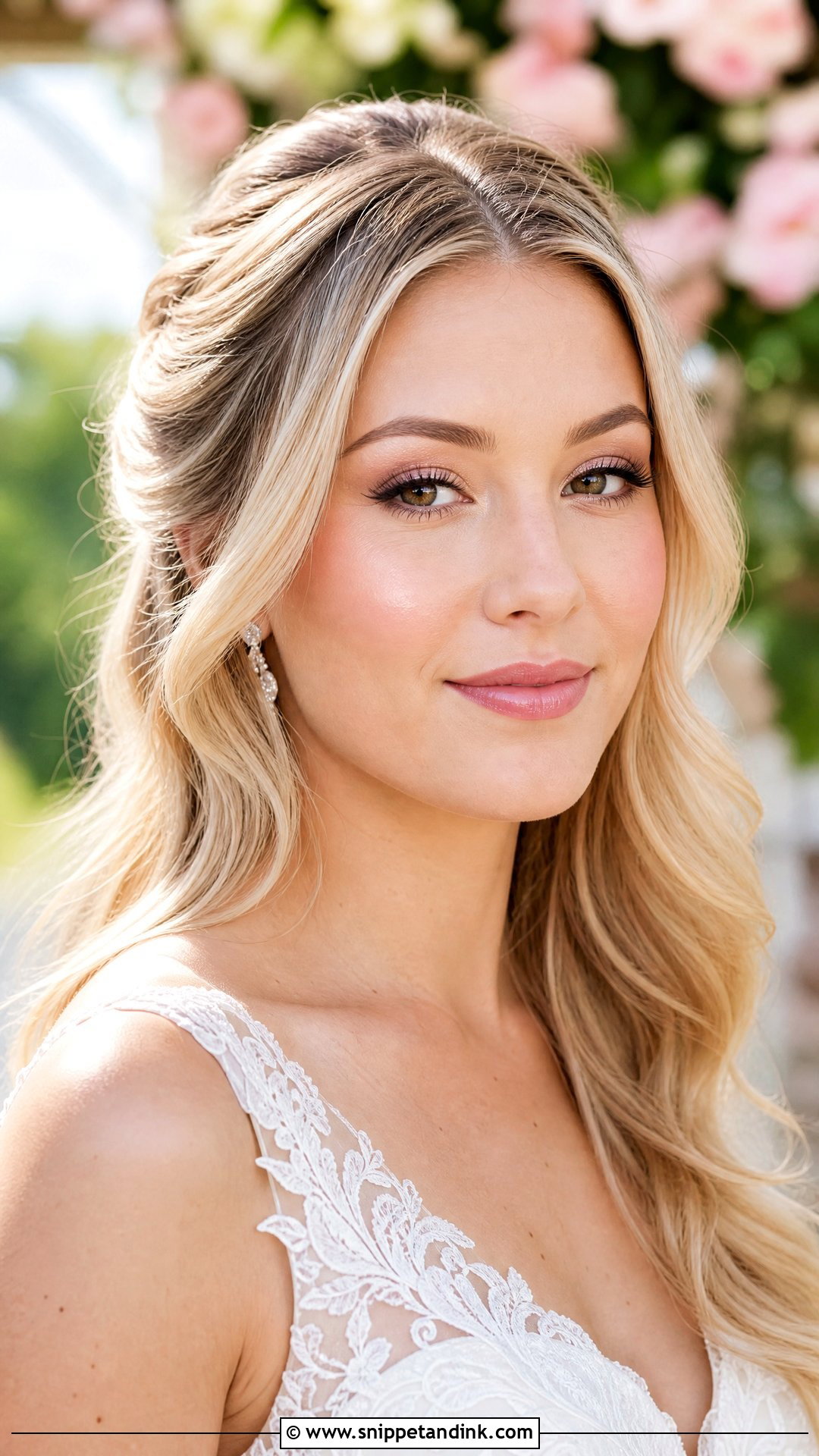
Glowy skin has to be built, not just layered with highlighter. I use a radiant primer, thin coats of foundation and cream blush, then powder only the creases and the center of the face, so the cheekbones keep their sheen. Highlight goes on the tops of the cheeks, the brow bone and the inner corners, and nowhere near the nose tip, which is where glow turns into shine on camera. Champagne or soft bronze on the eyes and a glossy nude lip finish it. Skip anything with visible glitter particles; they read as texture in close-ups.
4. Matte Bridal Makeup
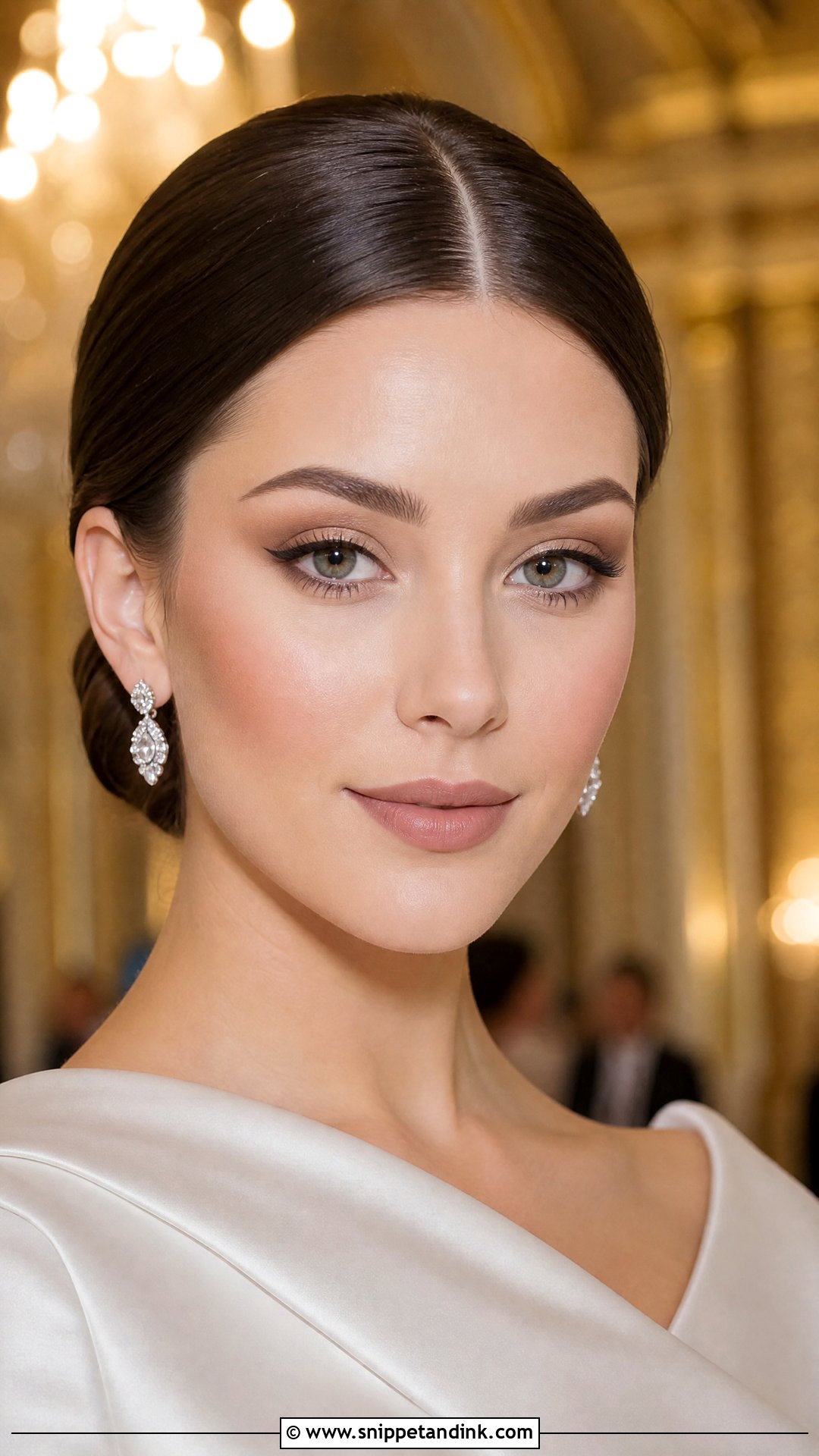
Matte makeup lasts longest, and it’s what I suggest for oily skin and hot venues. The risk is a flat, dry finish that settles into lines by evening. Good skin prep matters more here than anywhere: hydrate first, then a natural-matte foundation, and finely milled powder only where you actually get shiny. I keep the blush satin or soft-matte so the face still has life, and pair it with neutral matte eyes, groomed brows and a blurred rose lip. If you have dry or mature skin, ask for a satin-matte base instead of a fully matte one.
5. Classic Red Lip Bridal Makeup
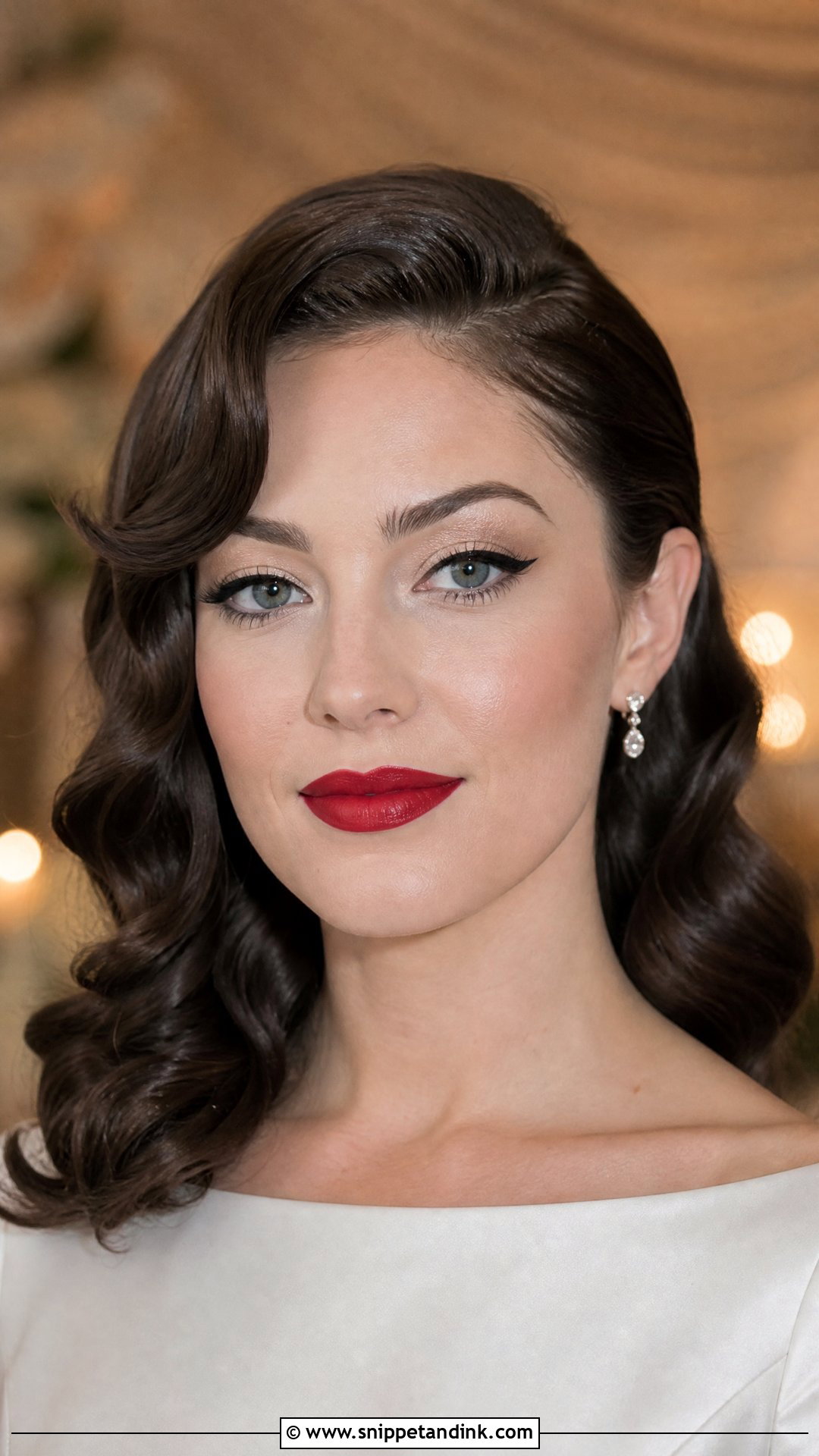
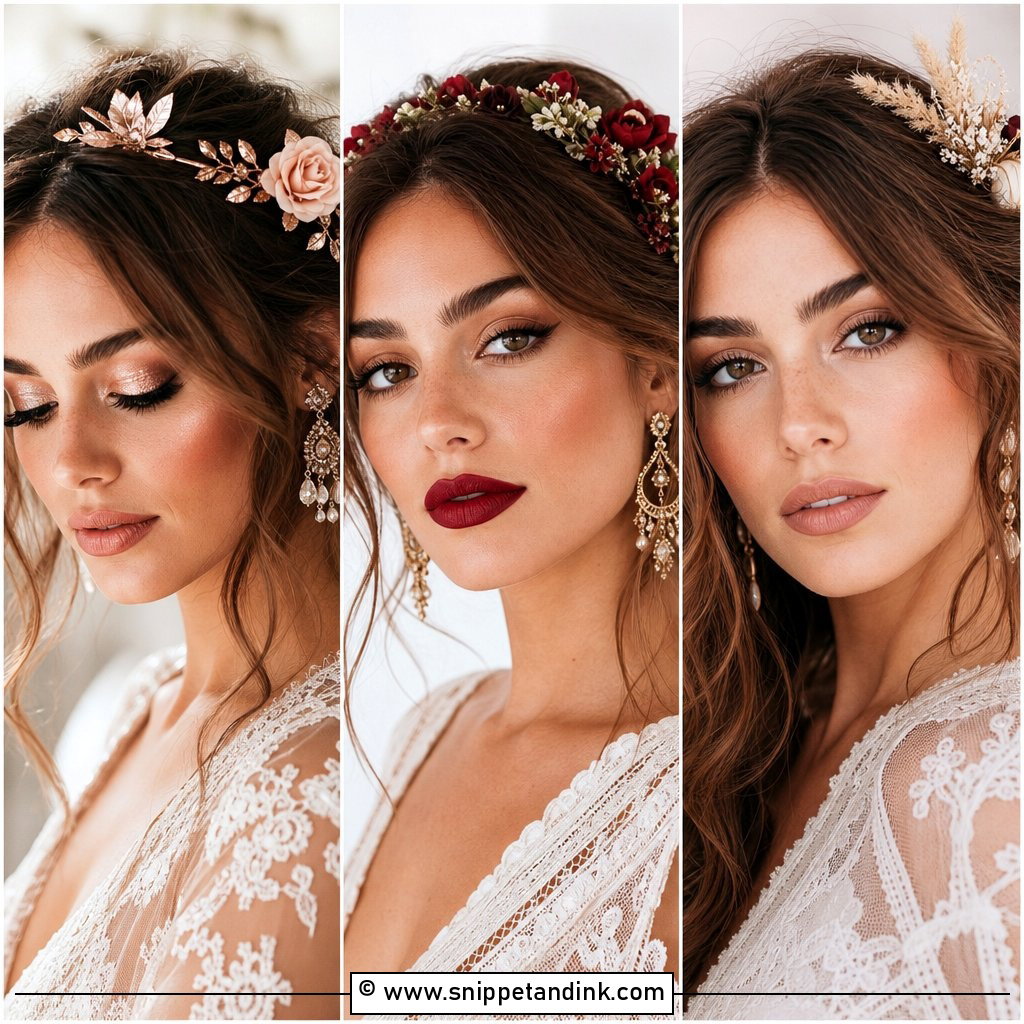
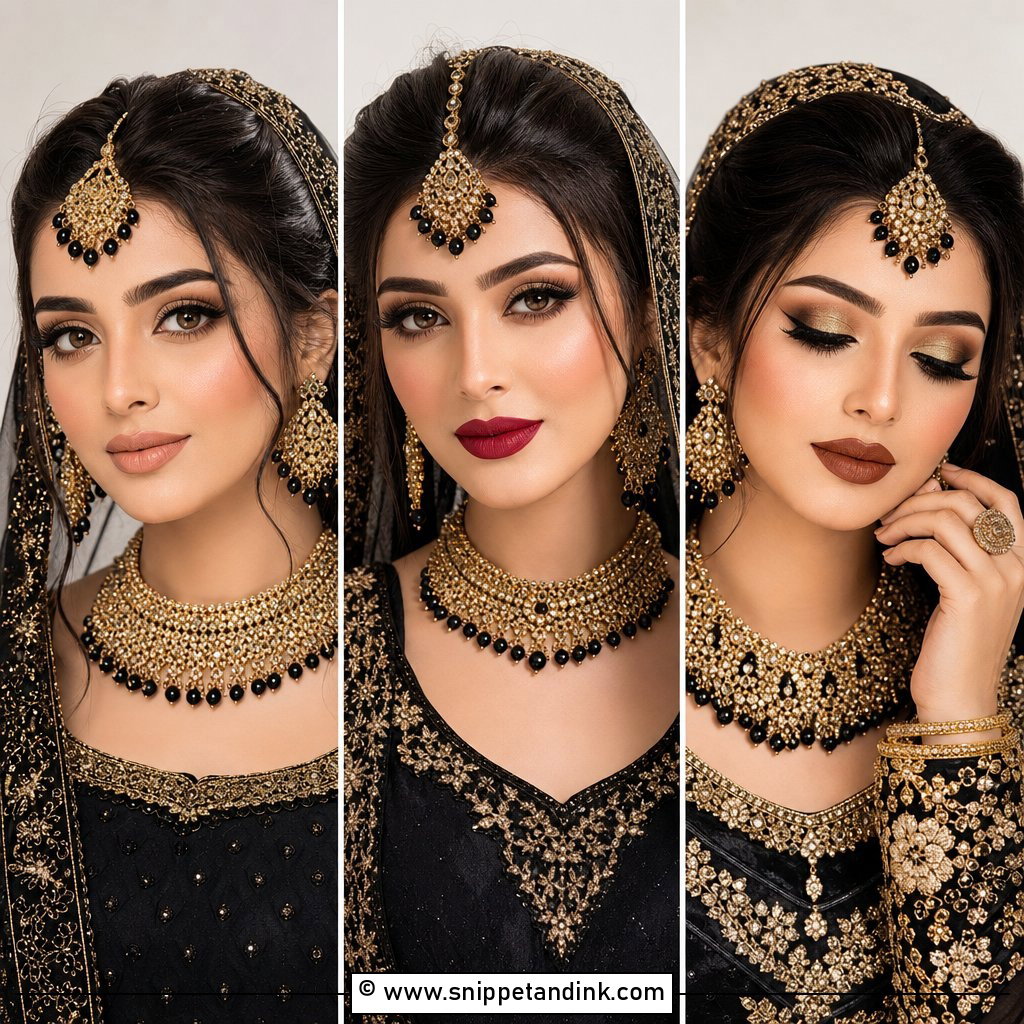
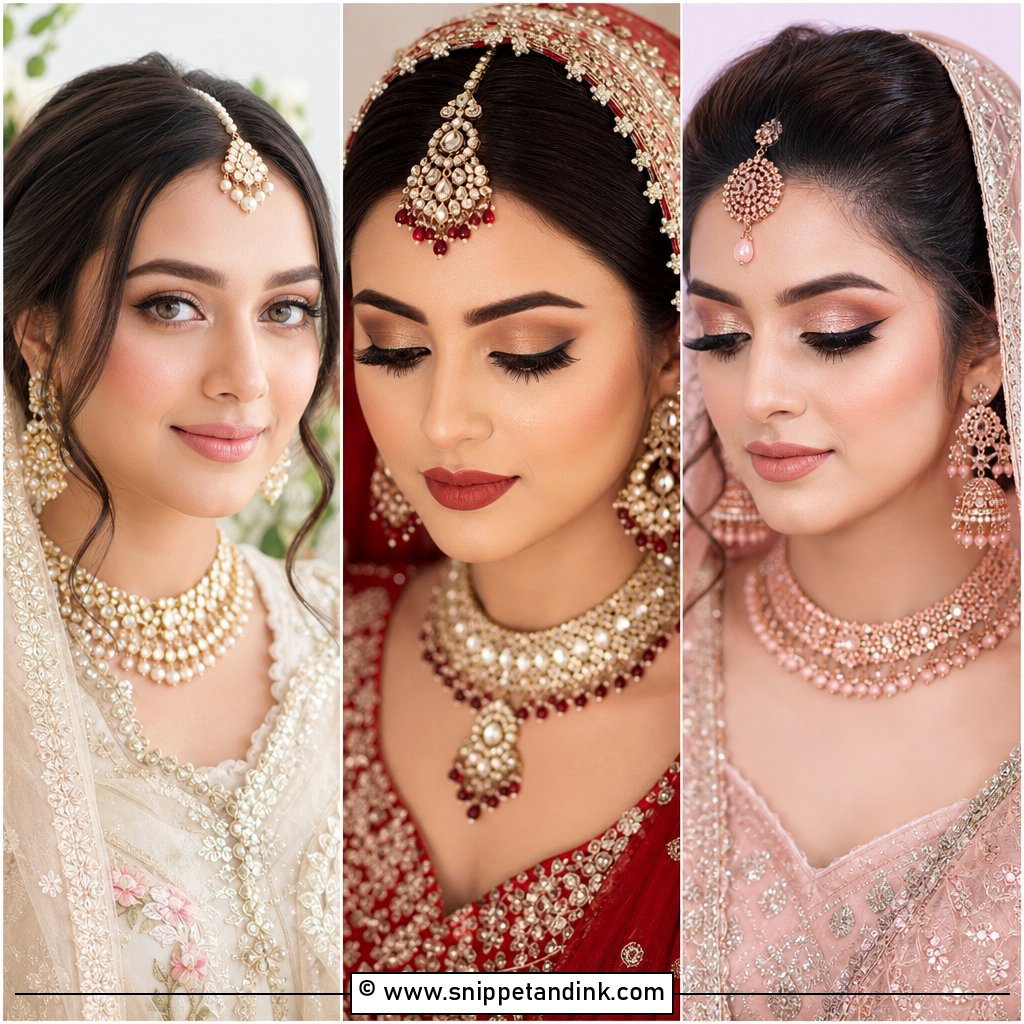
A red lip needs the rest of the face to step back. I keep the skin even with soft contour and clean blush, put a champagne wash on the lid, and add a thin wing and defined lashes. The shade matters most: blue-reds for cool undertones, true red for neutral, brick or tomato for warm. I line the whole lip with a matching pencil first, then apply a long-wear formula and blot, because a red that’s only on top will bleed into fine lines within hours. Expect to touch it up after the kiss and again after dinner.
6. Smokey Eye Bridal Makeup
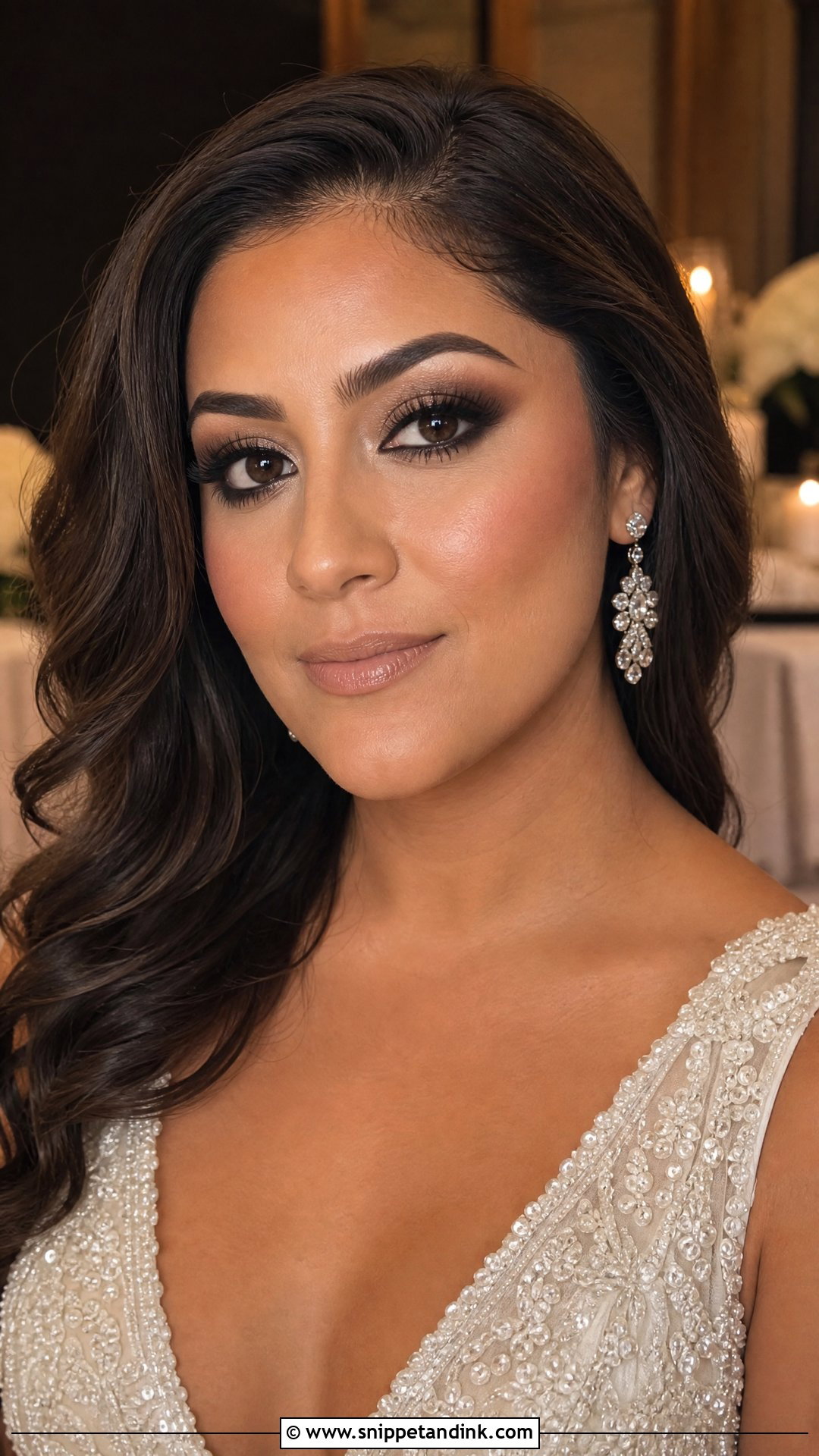
A smoky eye goes romantic or heavy depending entirely on the edges. Instead of black, I usually reach for brown, bronze, plum, or charcoal, with the deepest shade pressed close to the lashes and lighter tones blended upward and out. Waterproof liner and individual lashes hold the shape through tears. Clean the under-eye after the shadow, not before, so fallout doesn’t leave grey patches. Keep the cheeks neutral and the lip nude or mauve. Hooded eyes need the smoke placed above the crease line, or it disappears when your eyes are open.
7. Bronzed Bridal Makeup
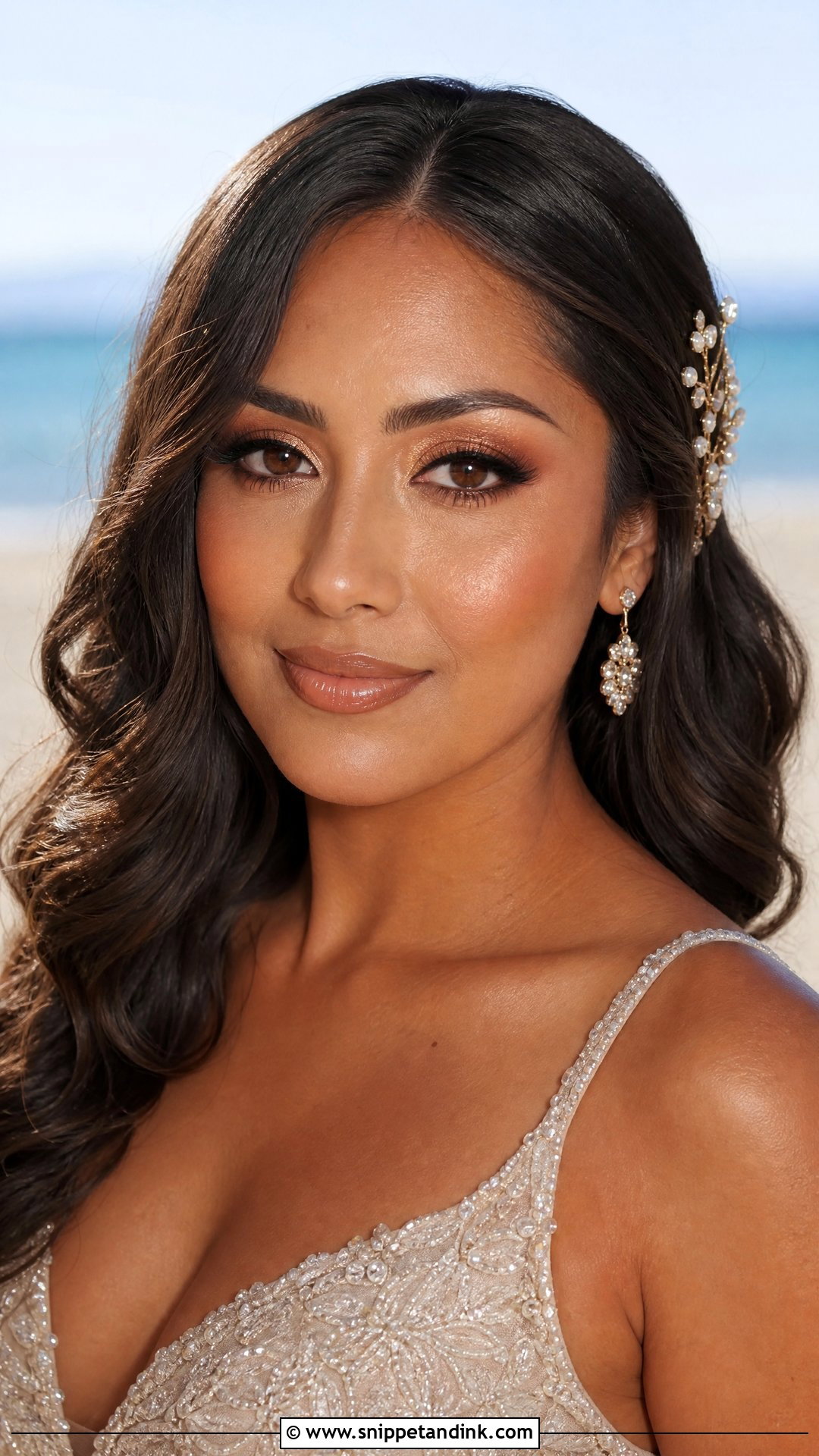
The first thing I do with bronzed makeup is check the neck and chest. A warm face above a pale neckline is obvious in every photo, especially in a strapless dress, so I either match the face to the body or carry a little bronzer down onto the décolletage. Bronzer sits at the temples, under the cheekbones and along the jaw, blended into peach or terracotta blush. Copper or caramel eyes with brown liner suit it, and a nude-peach or warm pink lip keeps it soft. Ivory and champagne dresses sit best against this warmth.
8. Romantic Pink Bridal Makeup
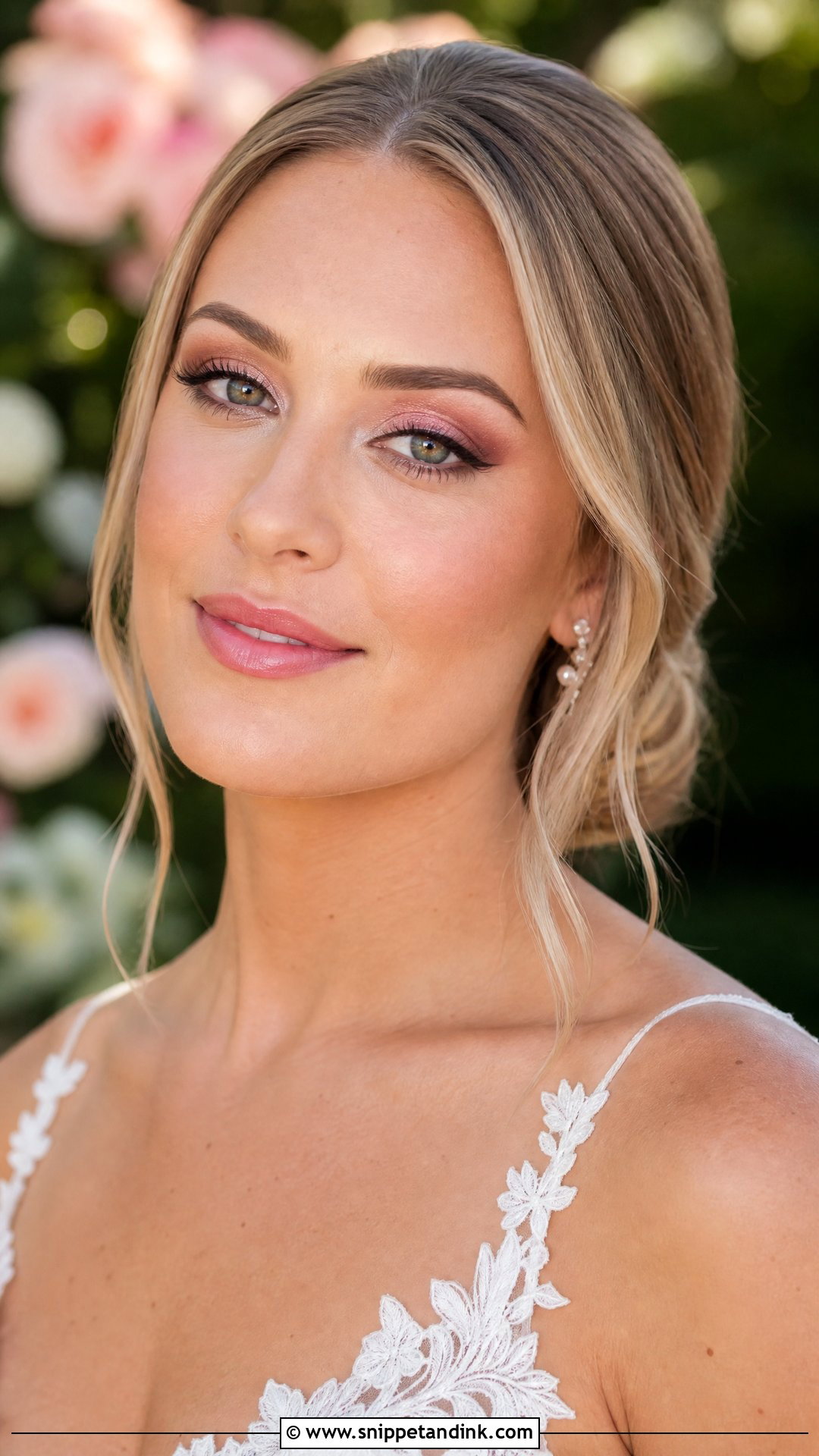
Pink can tip young quickly. I keep it grown-up by choosing one pink that matches your natural flush, using it on the cheeks, then tying the eyes and lips back to it more quietly: a pale pink wash on the lid, taupe in the crease, brown liner, and a satin lip close to your own lip color. Rose, dusty blush or mauve-pink can all work; it depends on your undertone. Sharp brows and even skin are what stop it reading as sweet, and it sits naturally with lace and spring flowers.
9. Champagne Bridal Makeup
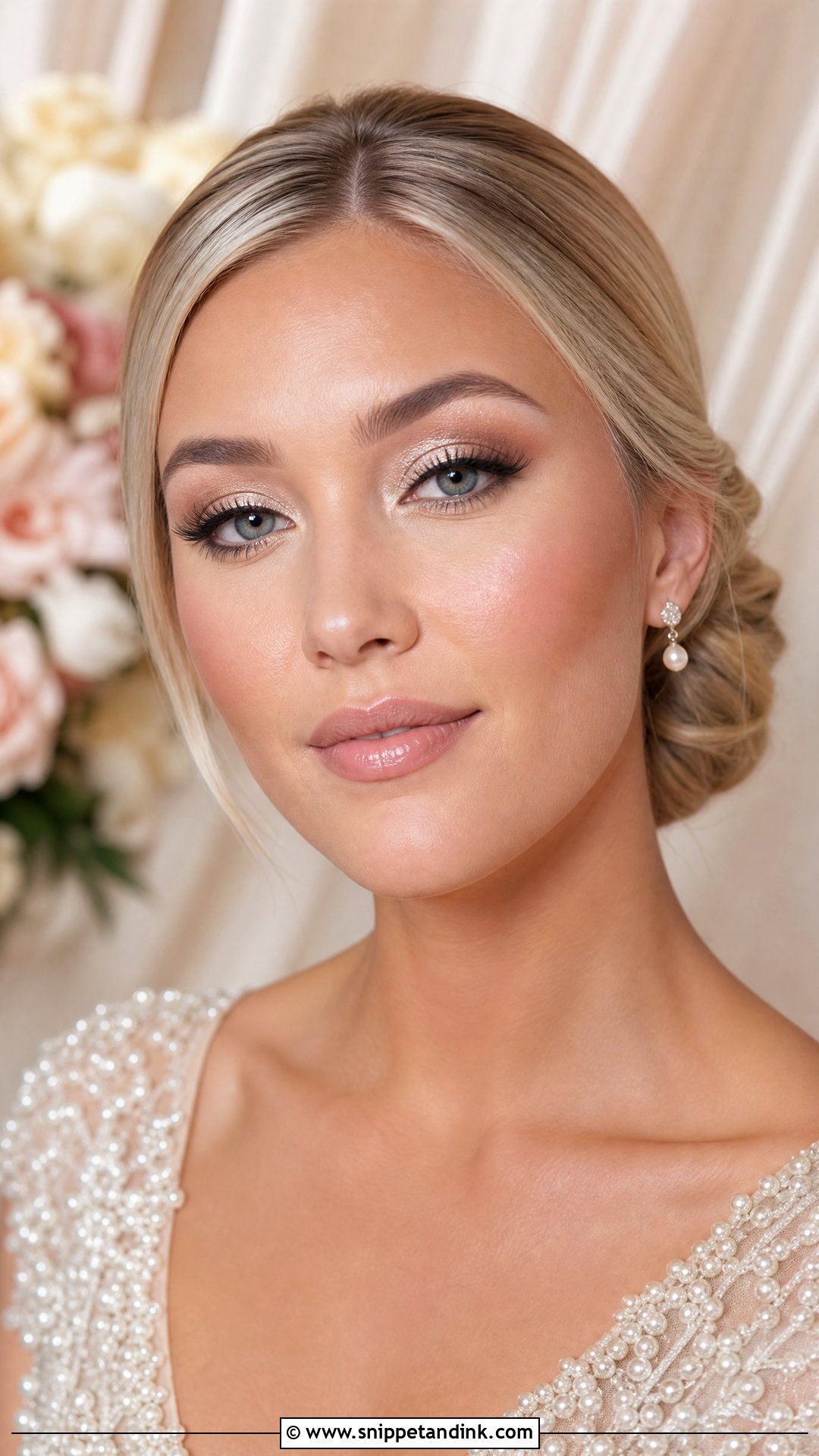
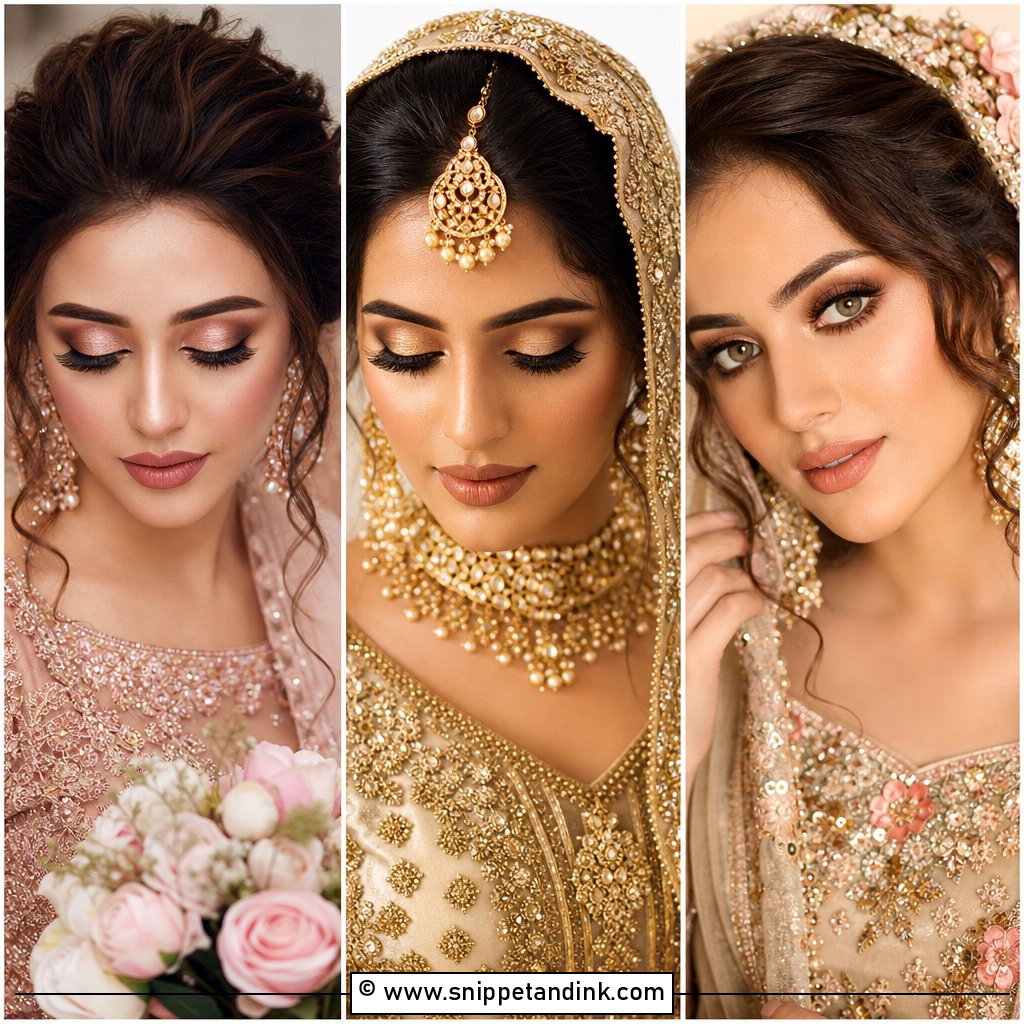
Champagne is the shade I reach for when lighting is unpredictable, since it brightens in daylight and still glows under warm reception lamps. A pressed champagne shimmer on the lid opens the eye, with soft brown in the crease, fine liner and wispy lashes. The skin stays satin, with subtle bronzer and a peachy nude blush. A nude-pink or beige gloss won’t fight the eyes. It’s the right call when you want light without obvious color, and it suits pearls and a sleek bun. Choose pressed shimmer over loose pigment; loose sparkle travels down onto the cheeks.
10. Full Glam Bridal Makeup
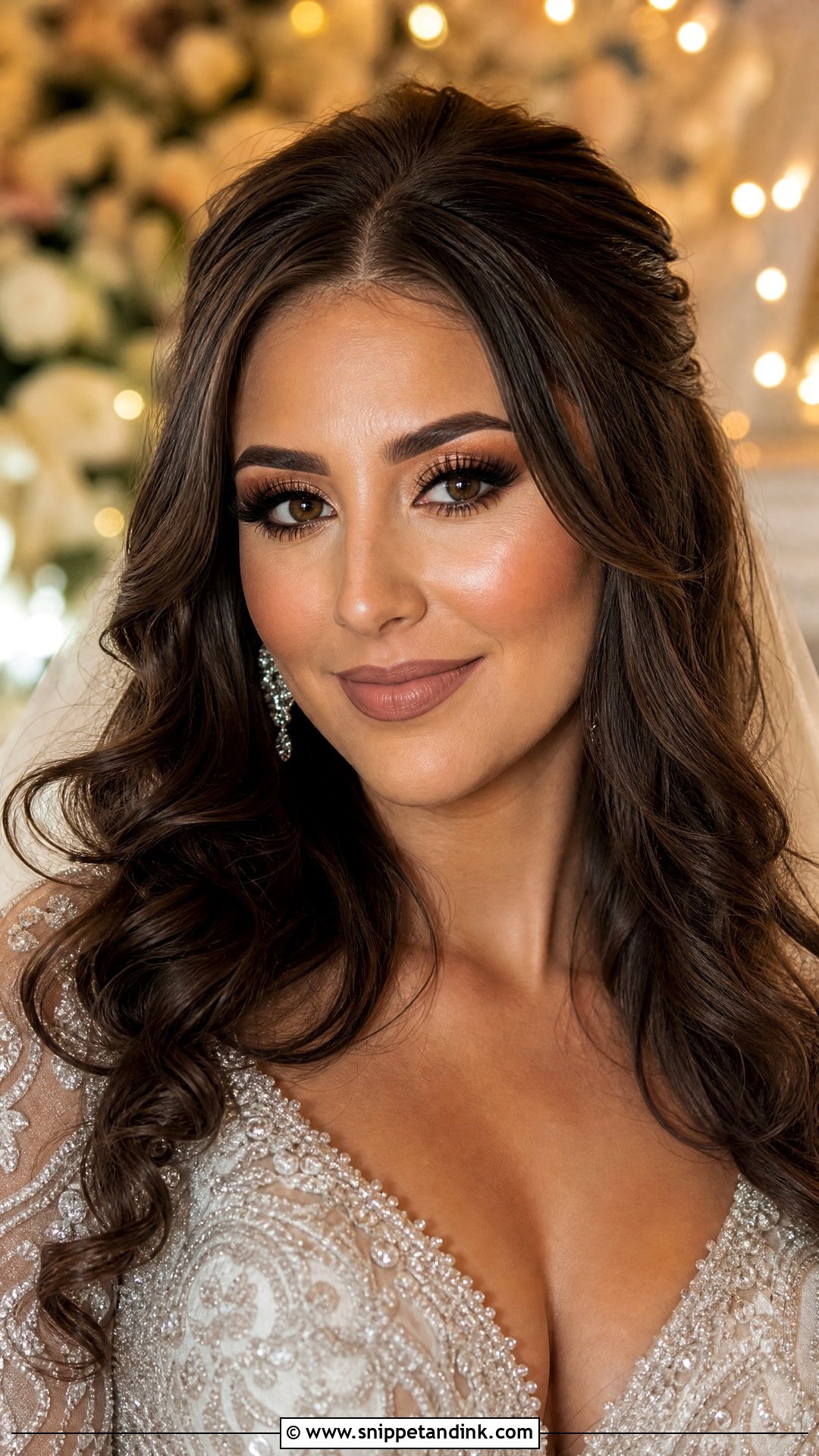
Full glam means fuller coverage, sculpted cheeks, bright under-eyes, structured brows, dramatic lashes and a defined lip. The trick that keeps it from looking heavy is choosing one focus, a smoky eye, a sharp liner or a strong lip, and letting everything else stay polished rather than loud. I set in thin layers between steps instead of one heavy powder at the end. It suits black-tie evenings and large rooms where faces are seen from a distance. If you never wear this much makeup, book a trial and wear it for a full evening before you commit.
11. Dewy Bridal Makeup
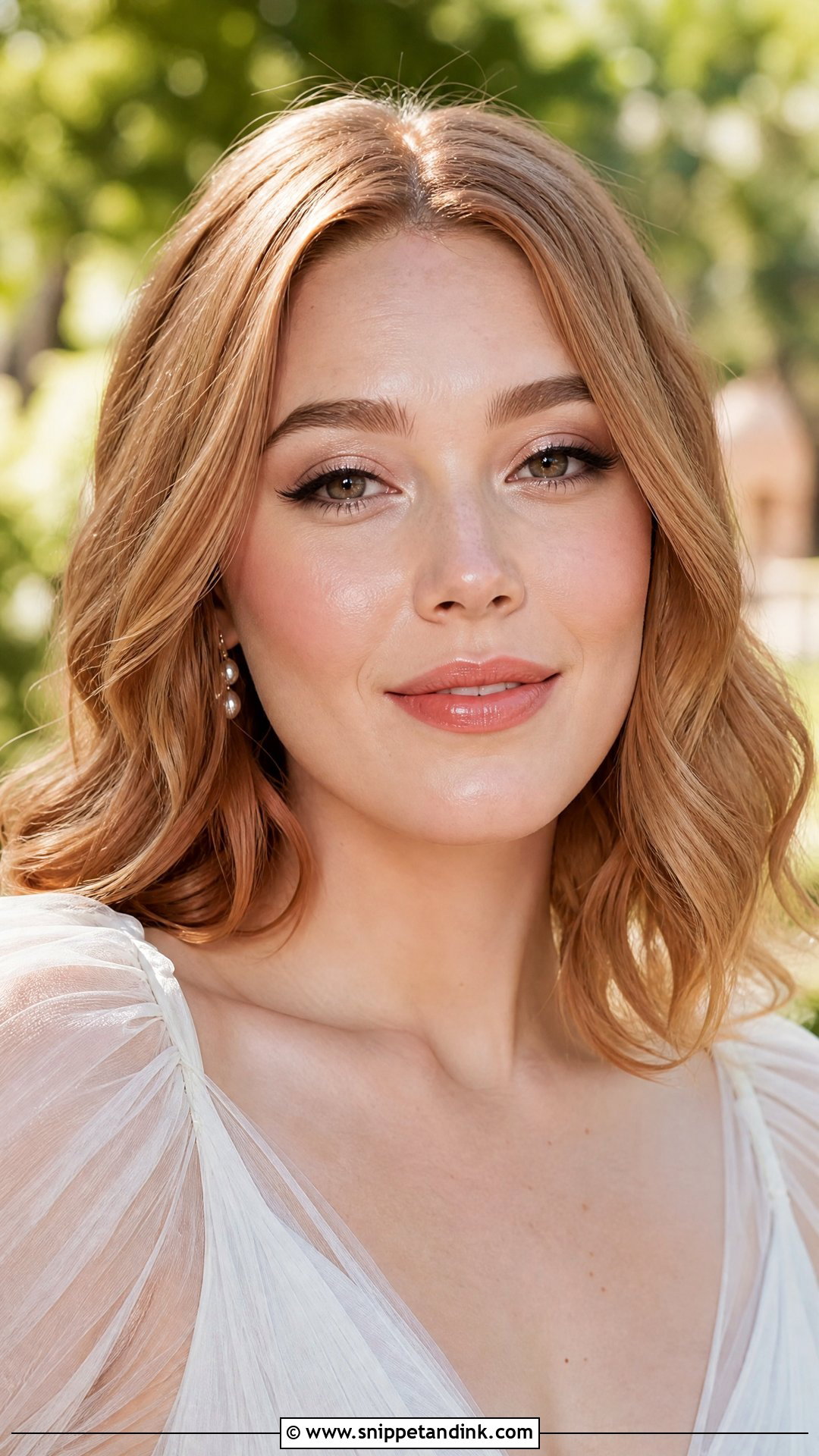
Dewy and oily look similar until you see the photos. The difference is placement. I use a luminous foundation, cream blush and a touch of liquid highlight on the high points, then powder the T-zone lightly so the glow stays on the cheeks and off the forehead and nose. Pearl, rose gold or warm beige on the eyes with brown liner and natural lashes keep it fresh, and a glossy lip finishes it. This look depends on skin prep: exfoliate gently a few days before, and moisturize well the morning of. Oily skin types usually do better with satin than full dewy.
12. Minimal Bridal Makeup
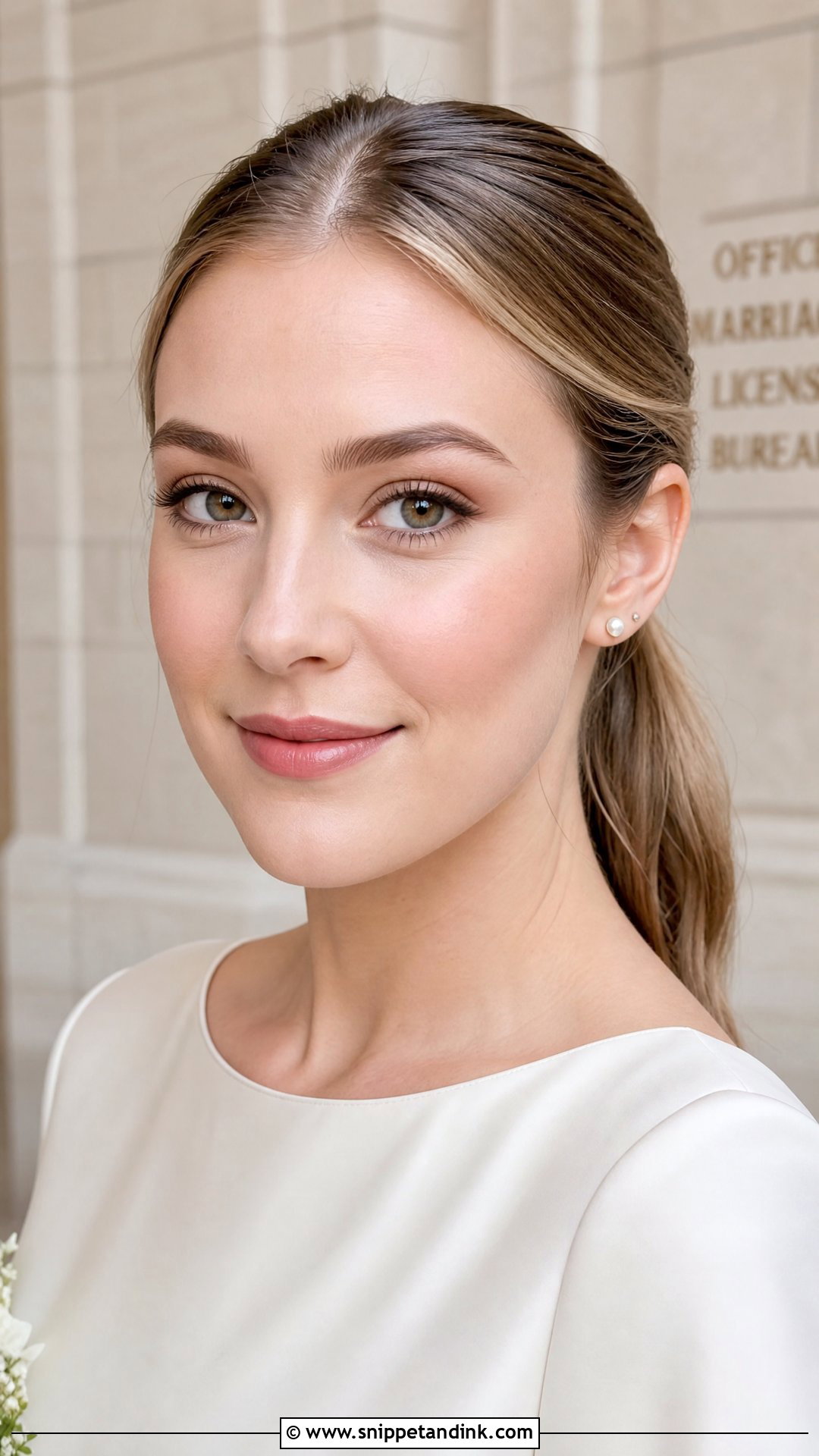
Minimal makeup has the least margin for error, because there’s nothing to hide behind. I use a sheer foundation or skin tint, concealer only on redness and shadows, and a natural cream blush. Tightlining the upper lash line with brown pencil defines the eyes without looking like liner, and curled lashes plus a beige or taupe wash finish them. Brows are groomed, not drawn. A tinted balm or satin nude lip keeps it easy. It suits simple dresses, courthouse ceremonies and brides who feel masked in heavy makeup, but the skin needs to be in good shape going in.
13. Rose Gold Bridal Makeup
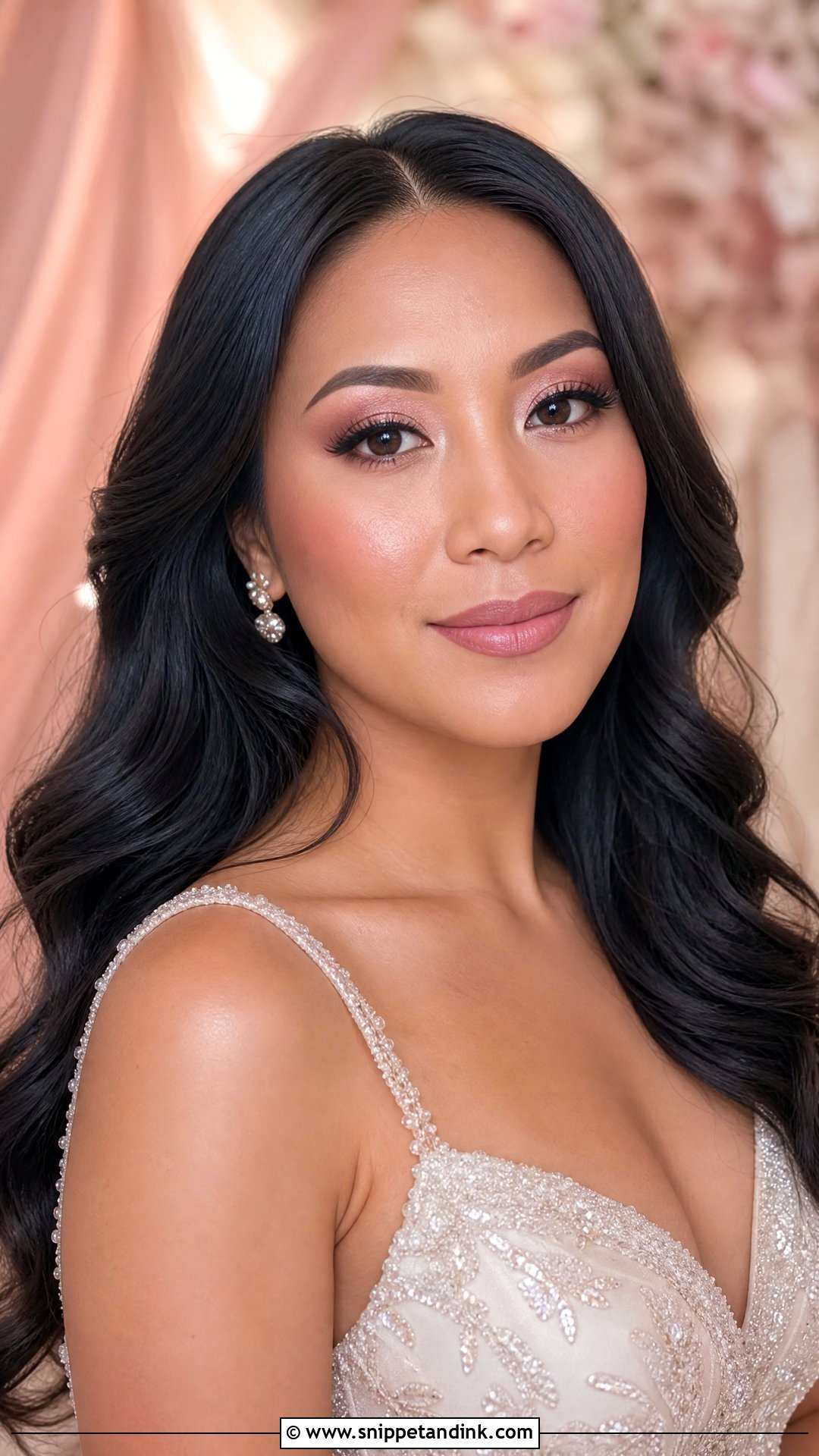
Rose gold sits between pink and bronze, so it’s a good pick when beige feels too plain but you don’t want obvious color. Rose gold shimmer on the lid, soft brown or mauve in the crease, a thin liner, warm pink blush and a rose-nude lip. The shade has to shift with skin tone: fair skin usually looks best in a softer pink champagne, while deeper skin carries richer copper-rose shades that wouldn’t show at all in a lighter version. I swatch both on the back of the hand at the trial and choose under daylight.
14. Brown Smokey Bridal Makeup
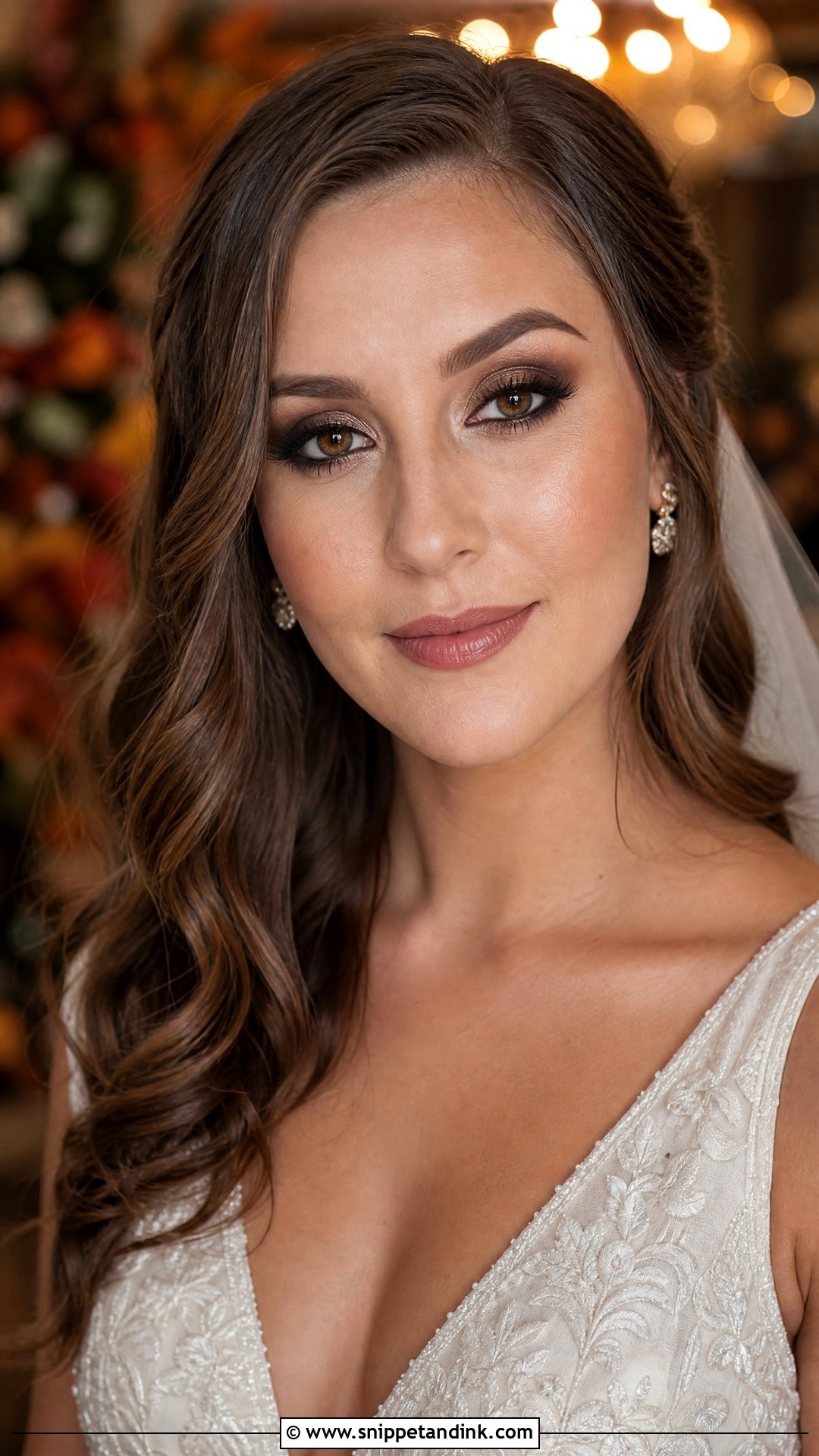
If black smoky eyes feel too severe, brown gives the same depth with a softer edge. I blend chocolate, espresso, bronze or taupe around the lash line and into the outer corner, keeping the diffused edge angled up so the eye looks lifted rather than closed. Waterproof brown or black liner and soft lashes add shape. Brown smoke flatters most eye colors, and it makes blue and green eyes look noticeably brighter. Warm bronzer, neutral blush and a nude or mauve lip balance it for evening and candlelit receptions.
15. Peach Bridal Makeup
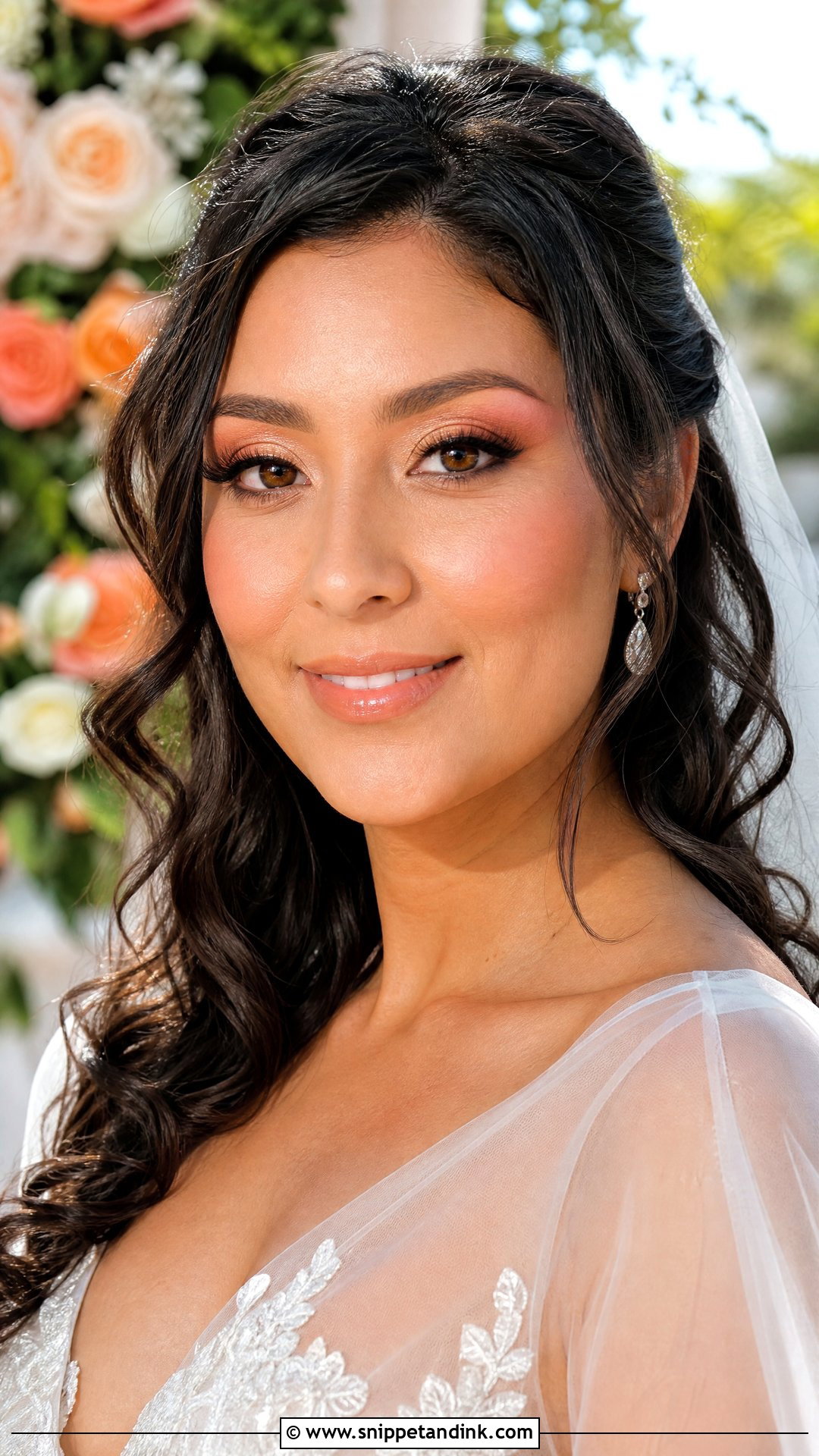
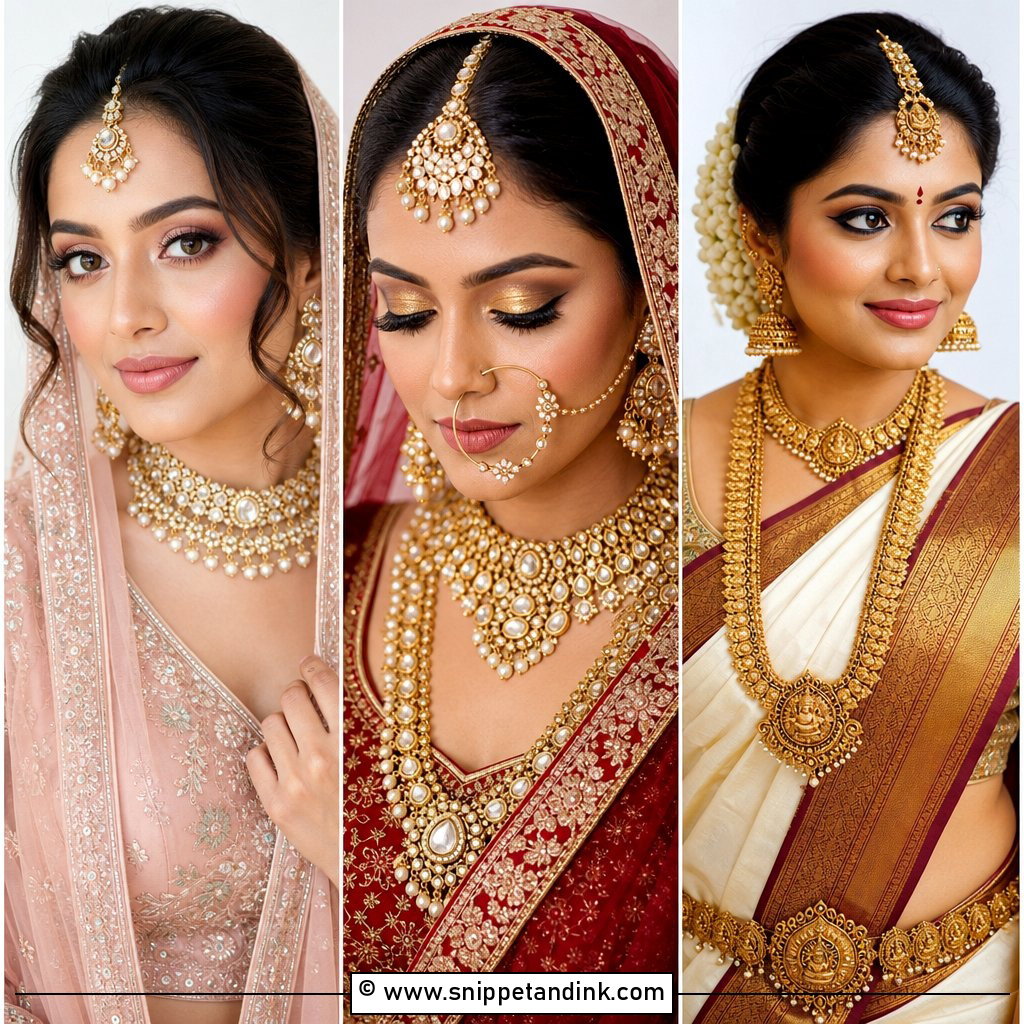
Peach is the look I build from the cheeks outward. The blush is the centerpiece, then warm beige, apricot or soft gold on the eyes and a peach-nude or coral-pink lip echo it. A touch of bronzer keeps the peach from sitting on top of the skin. Shade choice follows depth: fair skin suits soft apricot, medium skin coral-peach, and deep skin burnt peach or warm terracotta, since a pale peach can look ashy on darker complexions. It’s warm without the weight of a full bronzed look, which makes it easy to wear in daylight.
16. Mauve Bridal Makeup
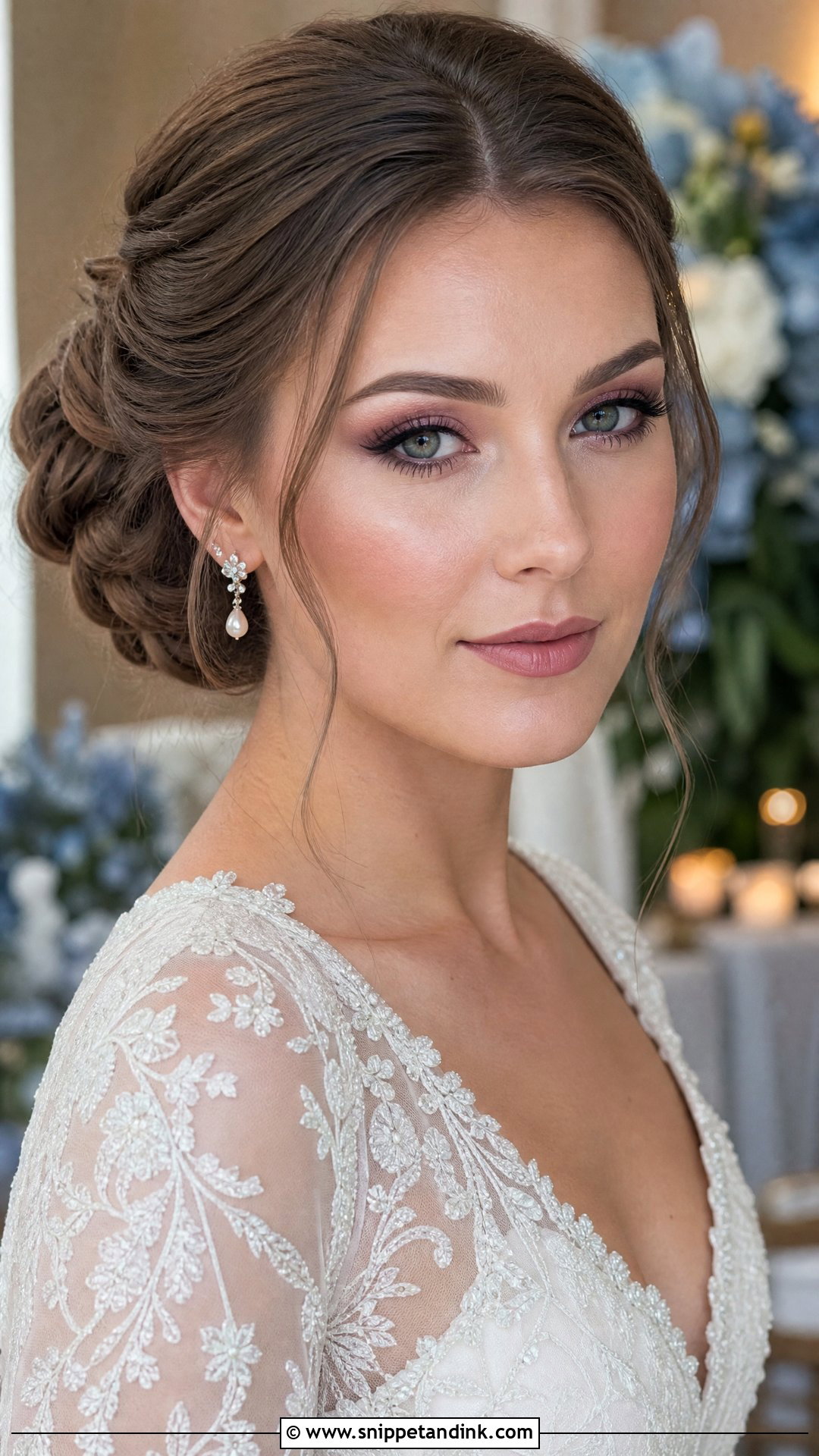
Mauve bridal makeup is my suggestion for brides who don’t like peach or bronze on themselves. It’s slightly cool, so mauve-brown goes in the crease, a satin taupe or pink-mauve on the lid, and soft liner along the lashes, with muted rose blush and a mauve-nude lip. The catch is that mauve can make skin look tired if the shade leans grey, so I always warm the cheeks a little with blush or bronzer. It sits well with silver jewelry, cool-white gowns and autumn or winter dates.
17. Black Winged Liner Bridal Makeup
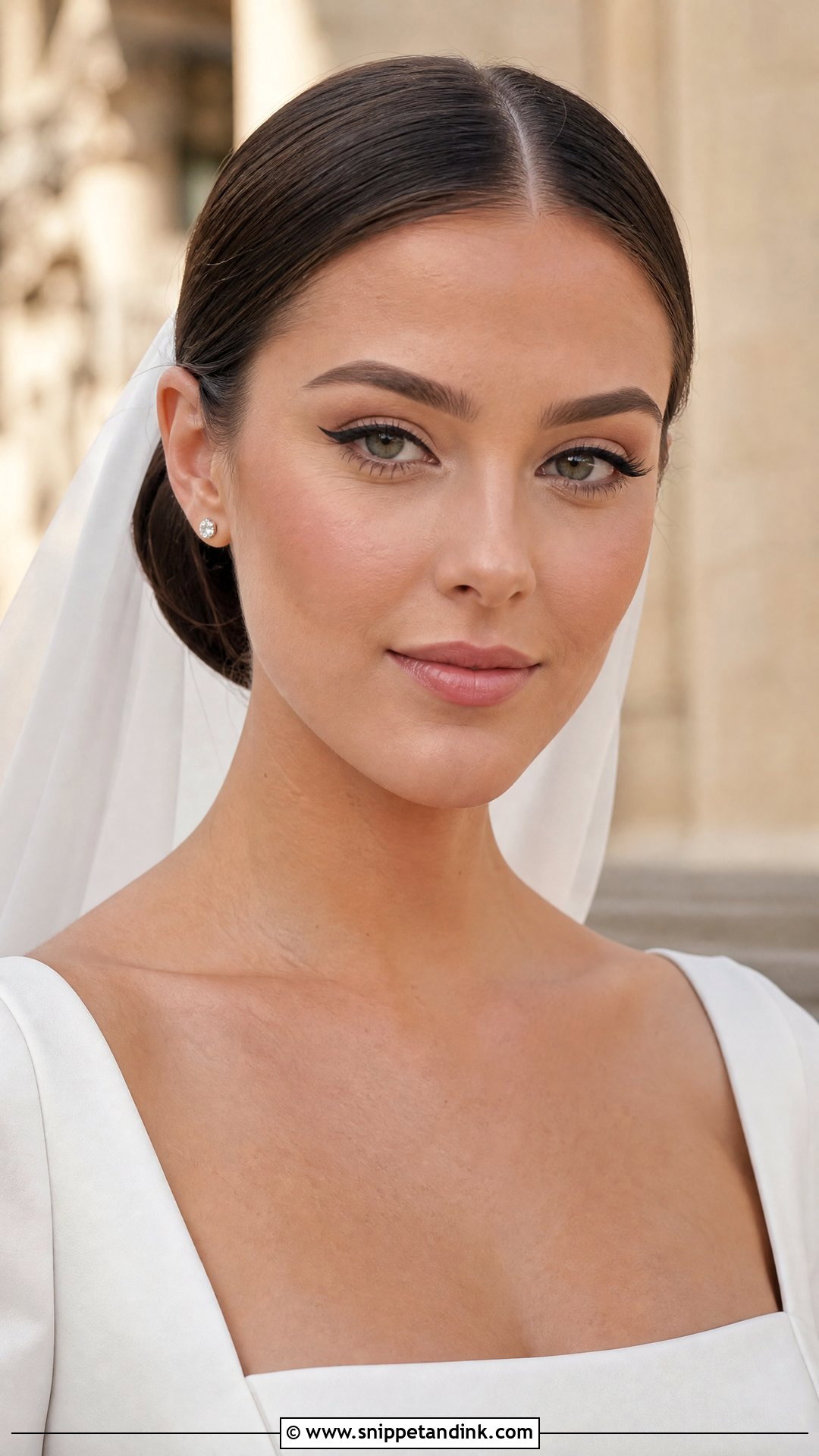
A black wing is only flattering when it follows your eye shape. On hooded eyes I draw it with the eye open, looking straight ahead, so the wing doesn’t fold and break when you blink. The lid stays matte beige or champagne, and individual or half lashes extend the outer corner without crowding it. Skin is smooth with soft blush, and the lip can go nude, pink or red. Use waterproof liner; a smudged wing is the first thing anyone notices after the ceremony.
18. Burgundy Bridal Makeup
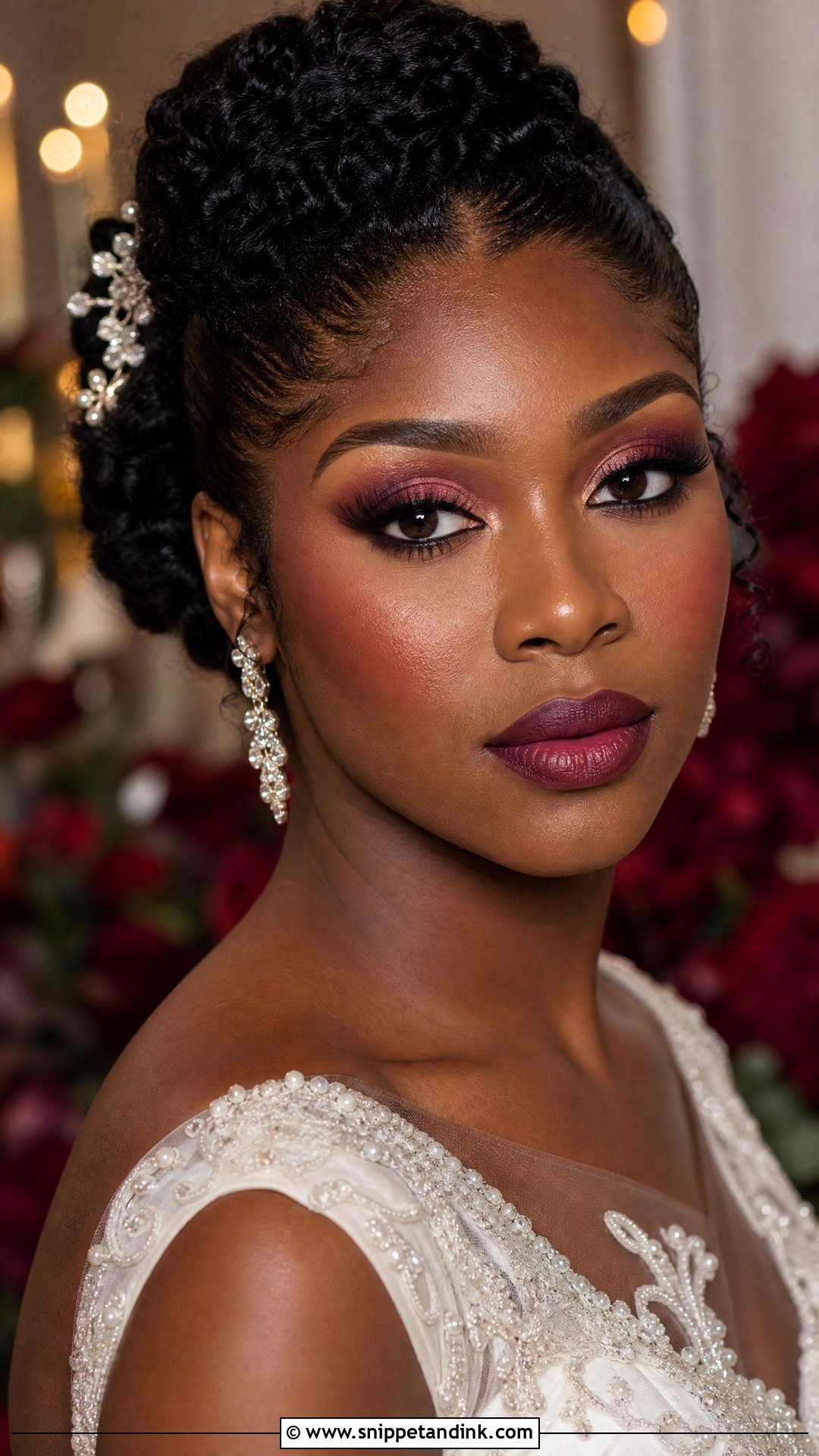
Burgundy on the eyes needs a buffer. I blend it with brown, plum or bronze rather than using it alone, which keeps it rich instead of sore-looking. For a subtle version, keep the color tight to the lash line or in the outer corner only. Satin skin, berry-rose blush and a muted berry or nude-mauve lip finish the look. It suits fall and winter weddings and evening ceremonies, and it brings out green, hazel and brown eyes. Avoid making every feature dark at once; if the eyes go deep, the lip goes softer.
19. Golden Bridal Makeup
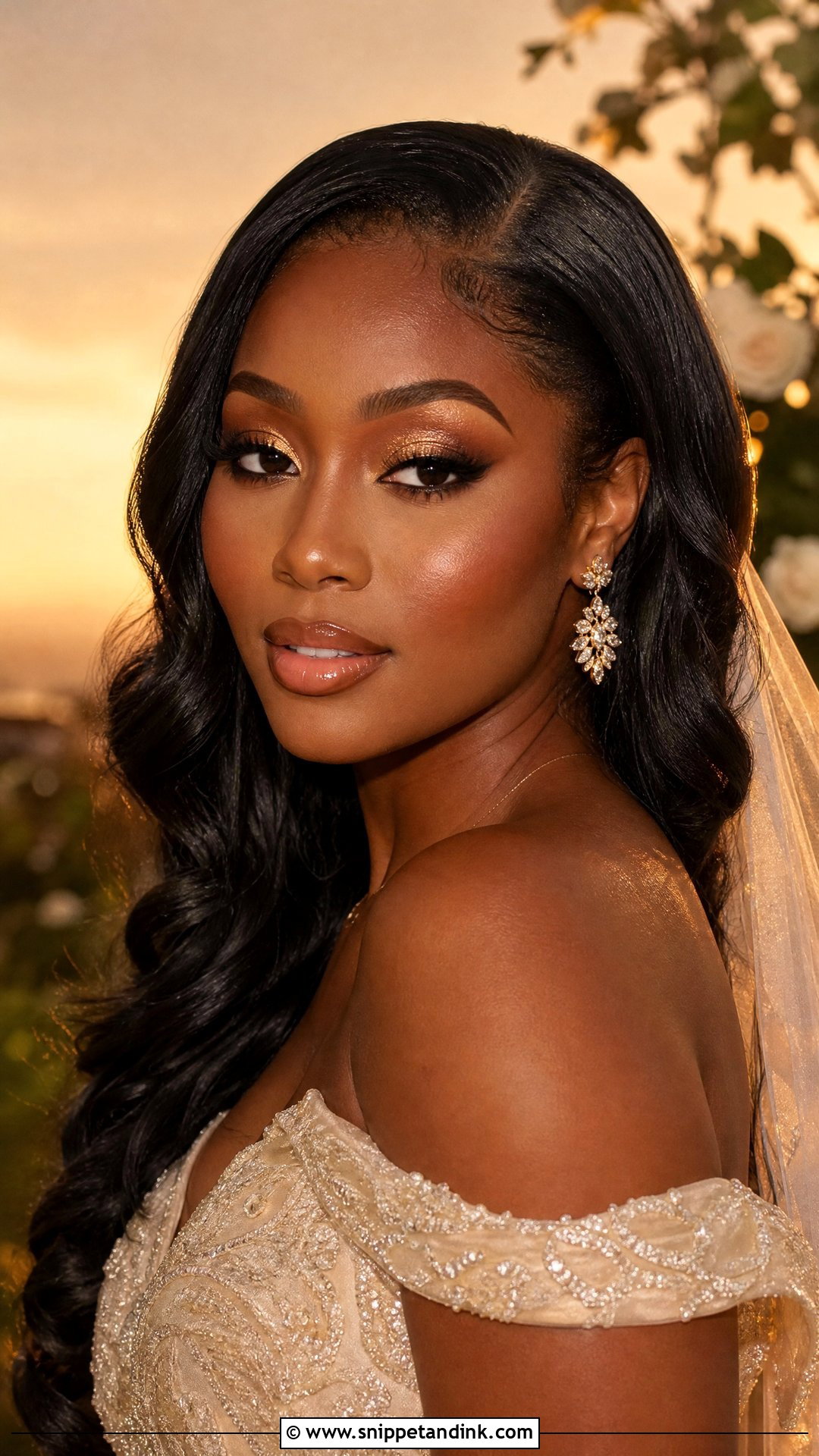
Gold makeup reads as celebratory, and it looks especially warm on medium, tan, olive and deep skin. Fair skin isn’t left out; a pale gold or champagne-gold carries the same idea without turning brassy. I put soft gold shimmer on the lid, warm brown in the crease, and keep the lash line clean. Bronzer, honey or peach blush and a refined golden highlight on the high points come next, with a caramel nude or warm pink lip. Gold jewelry and sunset portraits suit it. Keep the shimmer finely milled; chunky gold catches flash and shows every crease.
20. Vintage Bridal Makeup
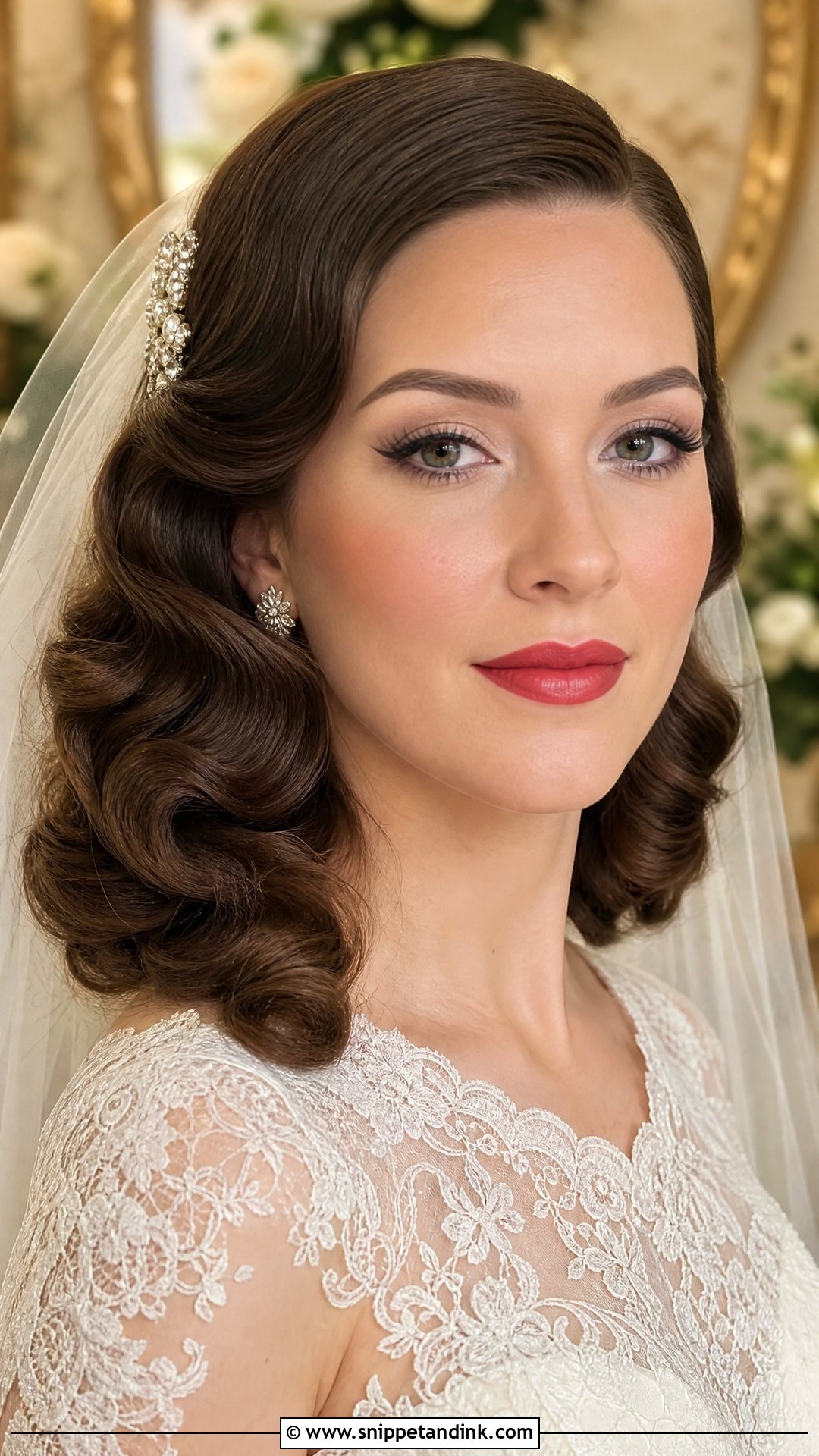
Old-Hollywood makeup was built for film, so I lighten it for modern cameras. That means satin skin instead of heavy powder, softer brows instead of thin high arches, and lashes that lift rather than overwhelm. The bones of the look stay: neutral lids, a black or brown wing, fluttery lashes and a defined lip in red, rose, berry or warm nude. Gentle contour and blush give shape. It pairs naturally with sculpted waves, satin gowns and a classic veil.
Tears, Kisses and Hot Rooms: What Fades First
Even long-wear makeup moves over a twelve-hour day, and it fails in a predictable order. Lip color goes first, especially after drinks and dinner. Then the shine comes through on the nose and forehead, and the under-eye area creases or smudges if you cry.
I plan for that rather than fighting it. Lips get liner across the whole mouth so a stain stays when the color wears off. The under-eye gets the lightest possible layer of concealer, set with very little powder, so tears don’t drag it into lines. Mascara is waterproof, and lashes are glued along the full band so the corners don’t lift.
What to keep in your bag
- Your lipstick and its matching liner.
- Blotting papers, which remove shine without adding another layer of powder.
- Cotton buds for dabbing tears from the corners instead of wiping.
- A small tube of lash glue for a corner that lifts.
Give the bag to a bridesmaid, and ask her to check your lips after the ceremony and again before the first dance.
What Your Trial Photos Will Tell You
Pick the look that matches your face, your dress and the light you’ll be standing in, and then test it. At your trial, check the makeup by a window, under indoor lamps and with your phone flash, and take photos from the side as well as the front. Wear it for several hours afterwards to see how it moves. Any look on this list can be adjusted to your skin tone, but only a trial shows you whether it still feels like you at the end of the night.
You'll Like These Ideas:


Leave a Reply