
Formalwear shouldn’t make you pick a side of the shop floor before you’ve even found something you like. When I dress someone for a wedding without gendered rules, I start with the invitation, then fit, then fabric, and only then with what the piece is “supposed” to be. A well-cut suit sits sharply on almost any body, and a jumpsuit, a skirt with a blazer or a pair of wide-leg trousers can carry the same polish. Venue and season decide your colors, layers and shoes more than any trend does. The looks below run from relaxed outdoor parties through cocktail receptions to full black tie, and each one comes with the tailoring notes I’d give you at a fitting.
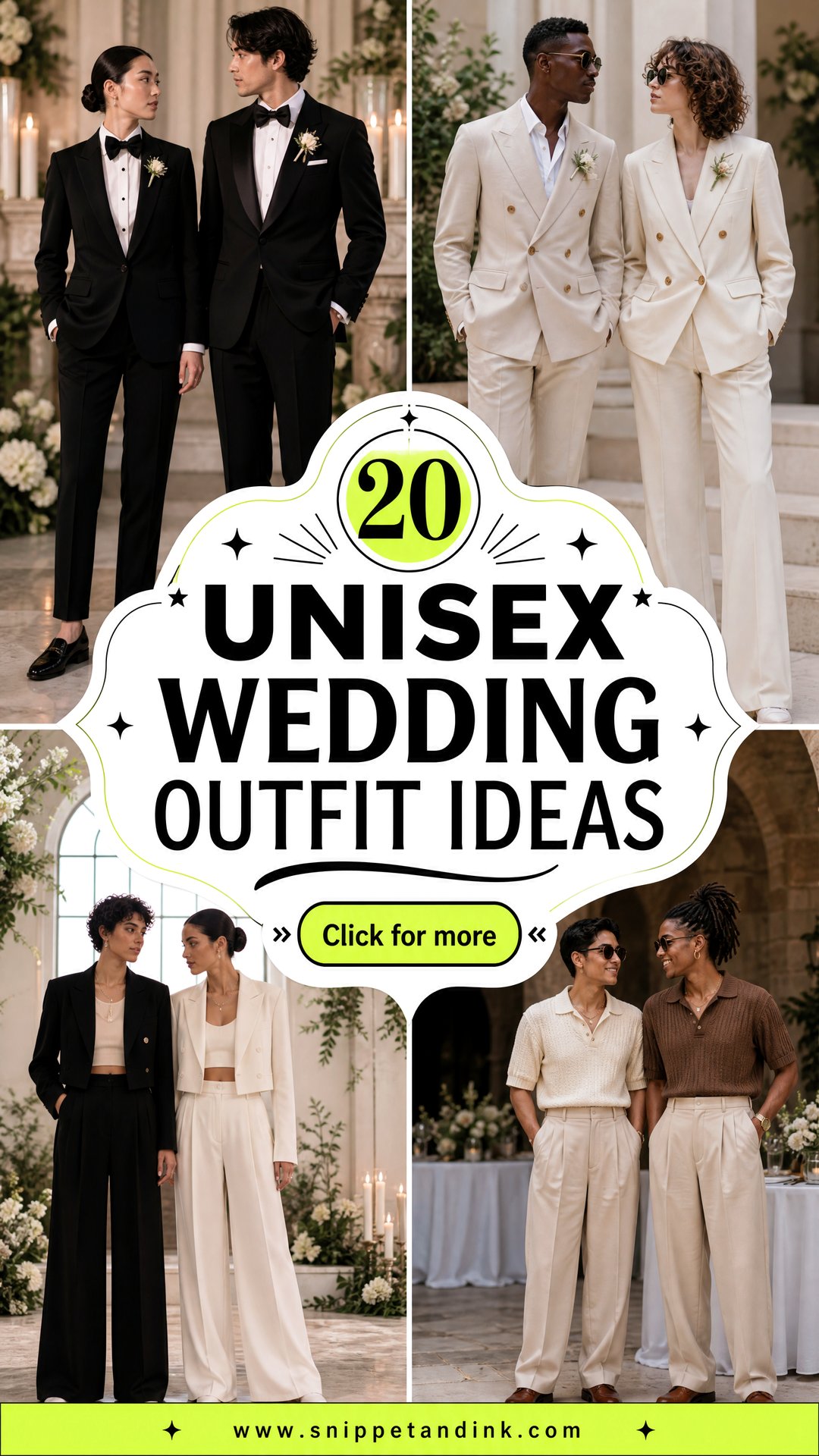
Shopping Both Sides of the Store Without Getting the Size Wrong
Gender-neutral dressing usually means buying from menswear and womenswear racks, and the two are cut on different assumptions. Menswear jackets are sized by chest measurement and expect a straighter torso, with less shaping at the waist and more room through the shoulders. Womenswear jackets are sized by number, carry more waist suppression and often have narrower shoulders and shorter sleeves. Neither is wrong; you just have to know which one starts closer to your body.
My rule at a fitting is to buy for the shoulders and alter everything else. A tailor can take in a waist, shorten sleeves, hem trousers and let out a seat seam if there’s allowance, but rebuilding shoulders is expensive and rarely looks right. If the shoulder seam sits past your natural shoulder bone, or pinches inward, keep looking.
- Menswear trousers are often sold unhemmed, which is a gift if you’re tall or wearing a heel; womenswear trousers usually arrive finished and can only go shorter.
- Check the rise. A trouser that sits too low on curvier hips will gape at the back of the waistband when you sit.
- Button side doesn’t matter to anyone but you, so don’t let it rule out a jacket that fits.
- Bring the shirt or top you’ll actually wear to every fitting, since a thick shirt changes how a jacket closes.
1. Black Tuxedo Wedding Outfit
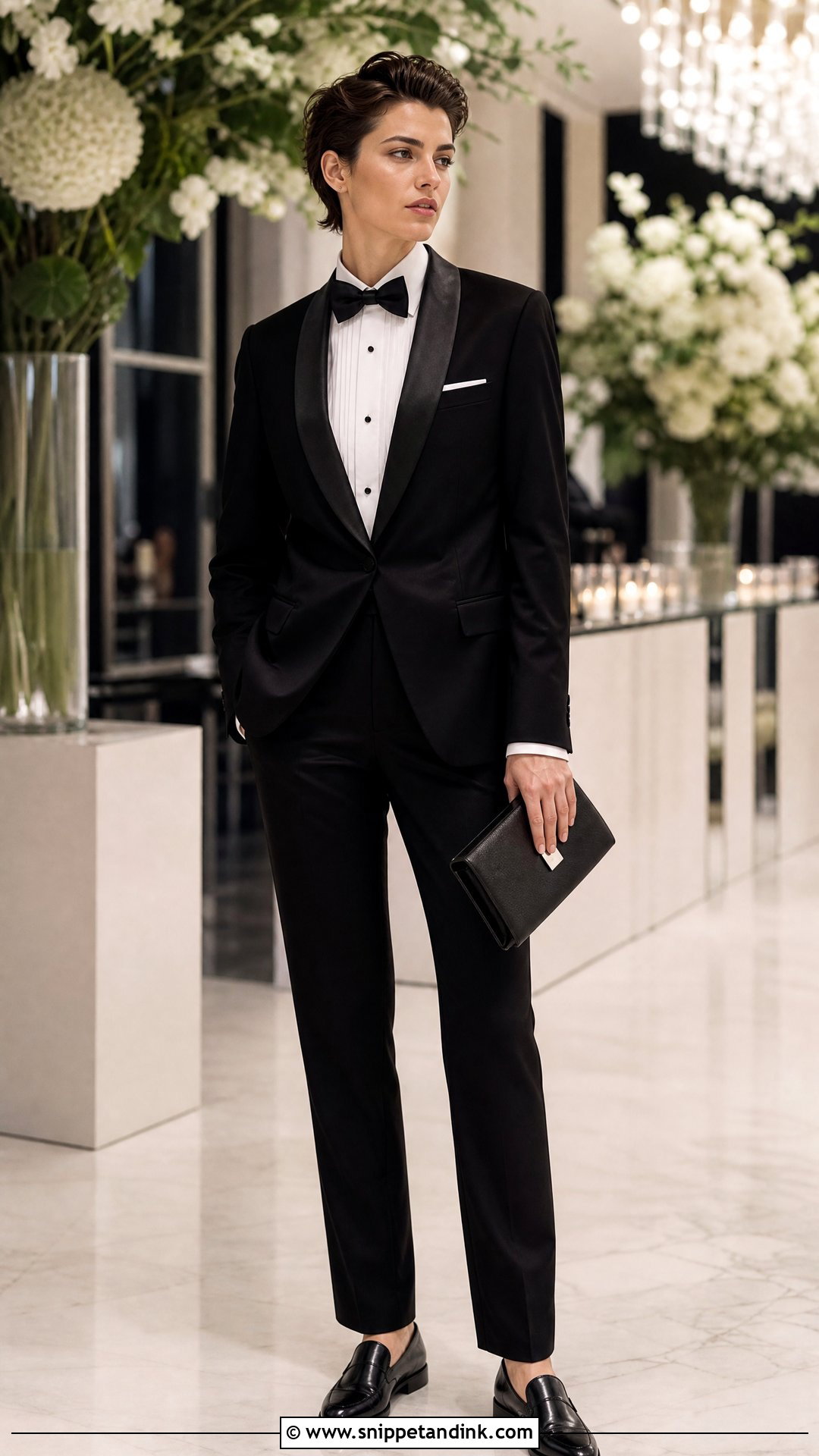
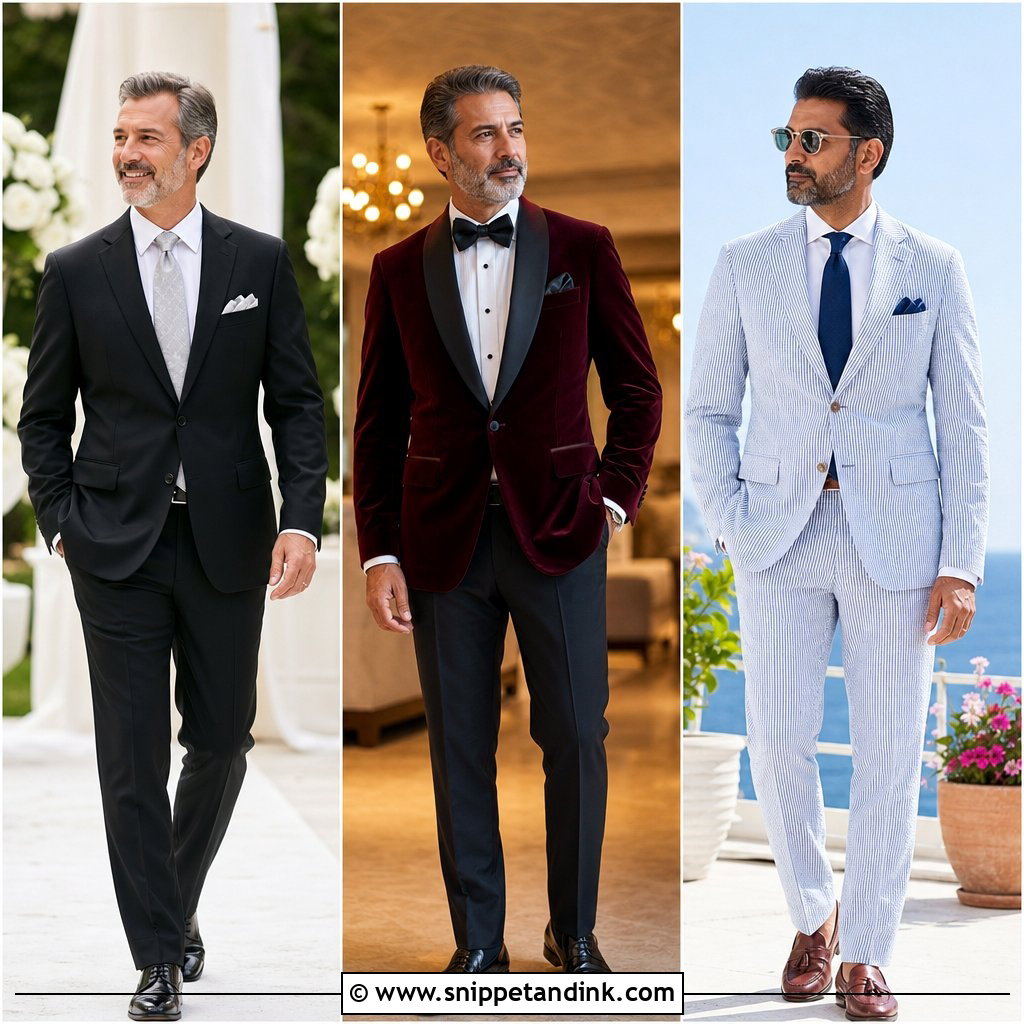
A black tuxedo is the safest answer when an invitation says black tie, and it rewards precise tailoring more than almost anything else on this list. I look for a single-button jacket with satin lapels and straight-leg trousers with a mid or high rise, because a low rise lets the shirt bloom over the waistband once you sit down. A white pleated shirt gives the classic contrast; a black silk shirt reads softer and hides creases better late in the night. Satin lapels show every wrinkle from a lapel pin that’s too heavy, so keep a brooch small. Hem the trousers with the exact shoes you’ll wear, whether that’s oxfords, loafers or a low block heel, and finish with a compact clutch rather than a bag that breaks the jacket line.
2. Navy Suit Wedding Outfit
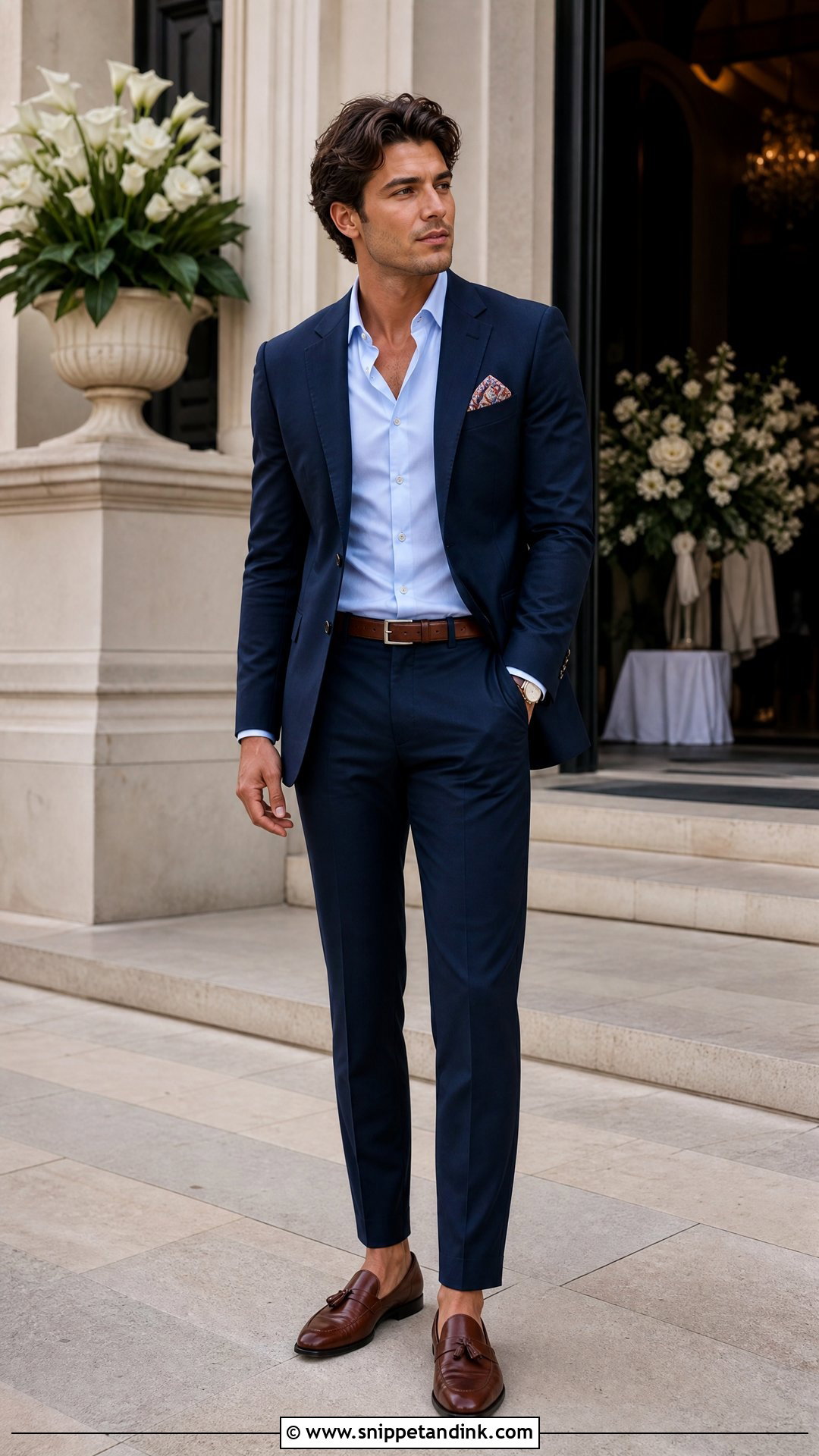
Navy is my default when black feels too severe for an afternoon ceremony. A two-piece with a gently structured blazer and straight or slightly tapered trousers moves between daytime and evening with nothing more than a shoe change: brown loafers keep it approachable, black oxfords or pointed ankle boots push it formal. Underneath, a white, pale blue or ivory shirt in cotton poplin or silk all sit well against the blue. The test I use at fittings is simple. If the button pulls into an X when you stand relaxed, the jacket is a size too small, and no tailor can add fabric that isn’t there. Finish with a patterned pocket square and a slim belt, and stop there.
3. Sage Green Suit Wedding Outfit
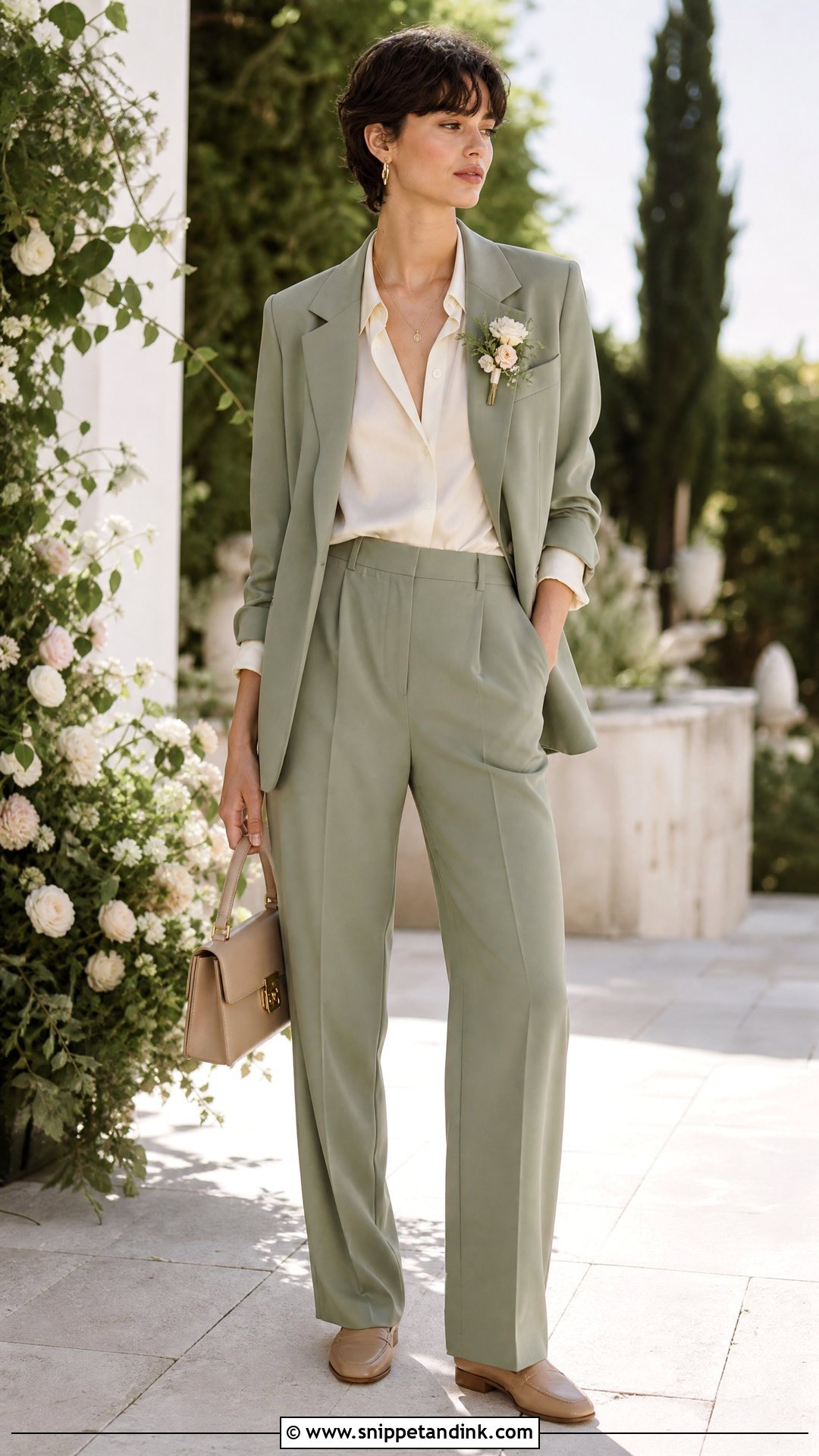
Sage is a garden and vineyard color, and it behaves best in daylight. I build it on a relaxed tailored suit with a lightly shaped jacket and full-length trousers, then keep the shirt quiet: cream silk for a softer read, a white collarless shirt if you want it cleaner. Pale greens wash out next to bright white flowers and can look grey under warm indoor bulbs, so check the fabric outside before you commit. Tan loafers, beige block-heel boots or brown derbies ground the lighter tones. I’d skip adding other botanical shades in the accessories; let the suit be the only green you’re wearing. Light wool or a linen blend gives movement without collapsing into casual.
4. Linen Suit Wedding Outfit
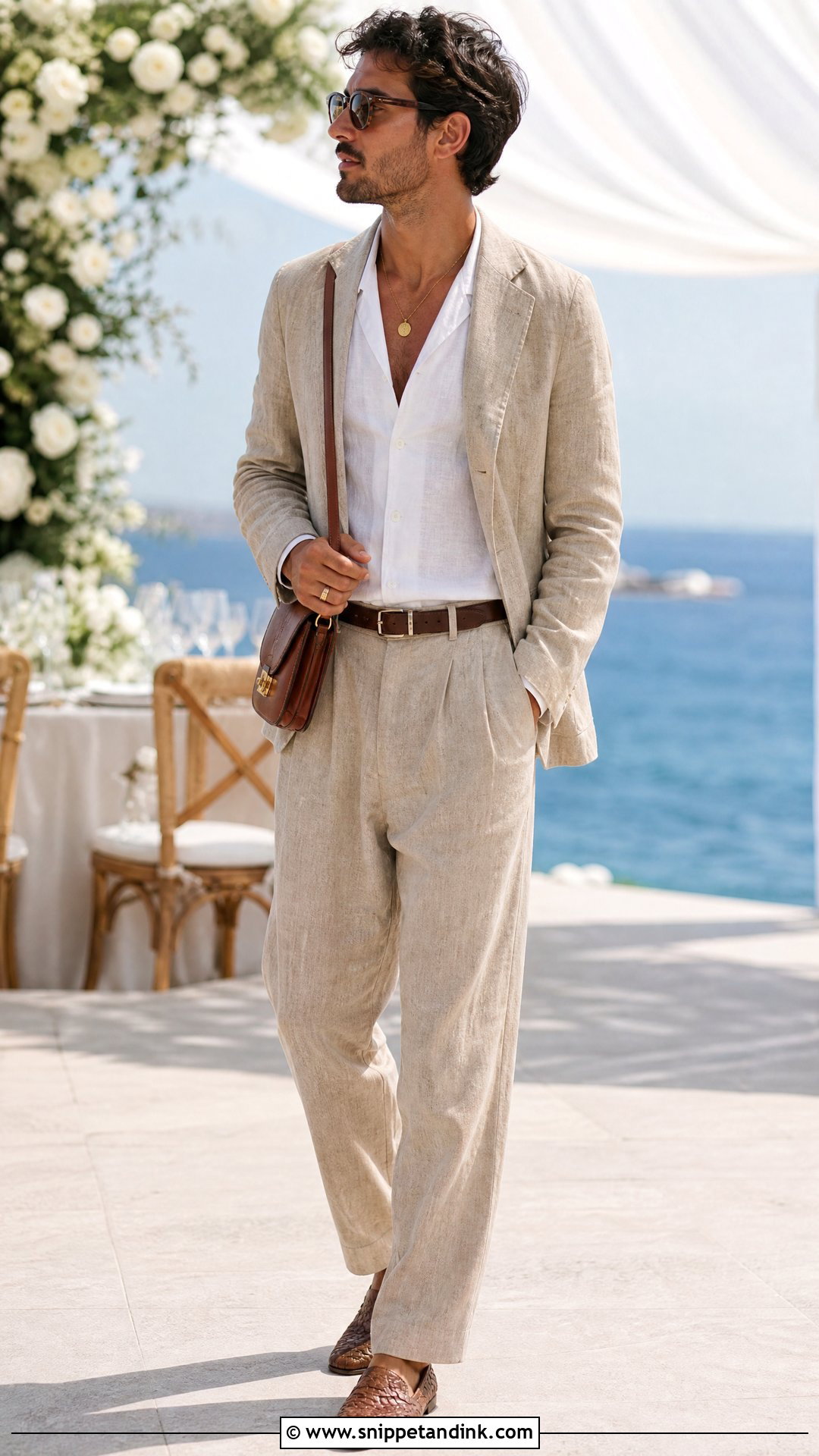
Heat is the whole reason to wear this. A breathable linen or linen-blend suit in sand, stone, light grey or muted blue, with an unlined blazer and relaxed trousers, stays wearable at a beach or summer ceremony when wool would be miserable. Pair it with a tucked camp-collar shirt or a lightweight button-down in white or cream, and leather loafers, woven flats or dress sandals if the venue allows open shoes. Linen creases the moment you sit, and I tell everyone to accept that before they buy. A linen-wool or linen-cotton blend creases less than pure linen, which is worth knowing if you’ll be photographed after a long car ride. Fit through the shoulders and waist is what stops the wrinkles from looking sloppy.
5. Velvet Suit Wedding Outfit
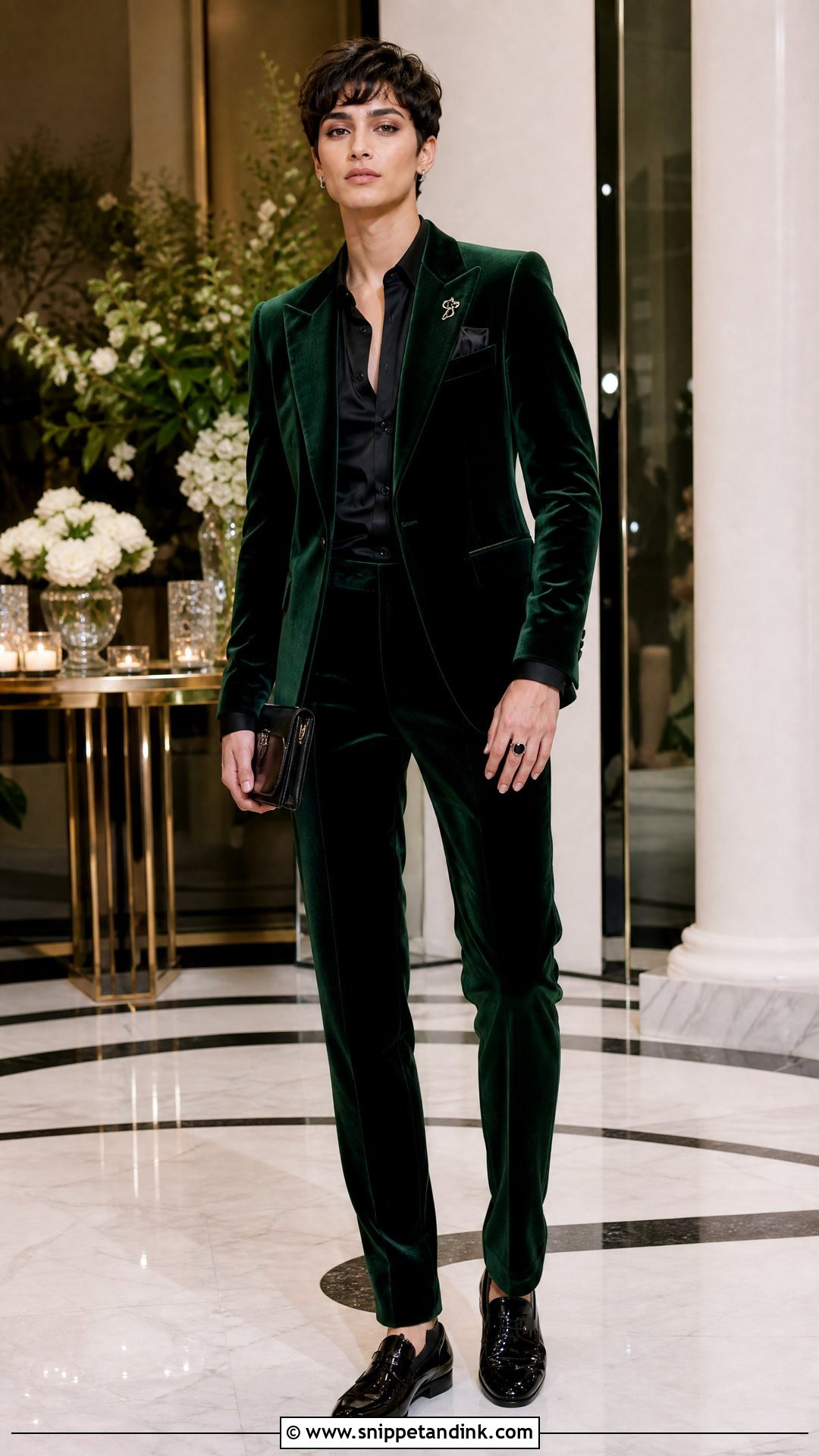
Velvet does a lot of the work for you in winter, so the silhouette should stay simple. Burgundy, forest green, midnight blue or black, with a streamlined jacket and straight-leg trousers, keeps the bulk of the fabric from swallowing a smaller frame. I put a matte silk or lightweight cotton shirt under it, never another shiny fabric. Velvet pile crushes where you sit and where a bag strap rubs, so I’d carry a small satin clutch rather than a crossbody, and steam it gently from the inside instead of pressing. Black loafers, heeled boots or patent oxfords all hold the right level of formality. One fine chain or a lapel pin is plenty against that texture.
6. Double-Breasted Suit Wedding Outfit
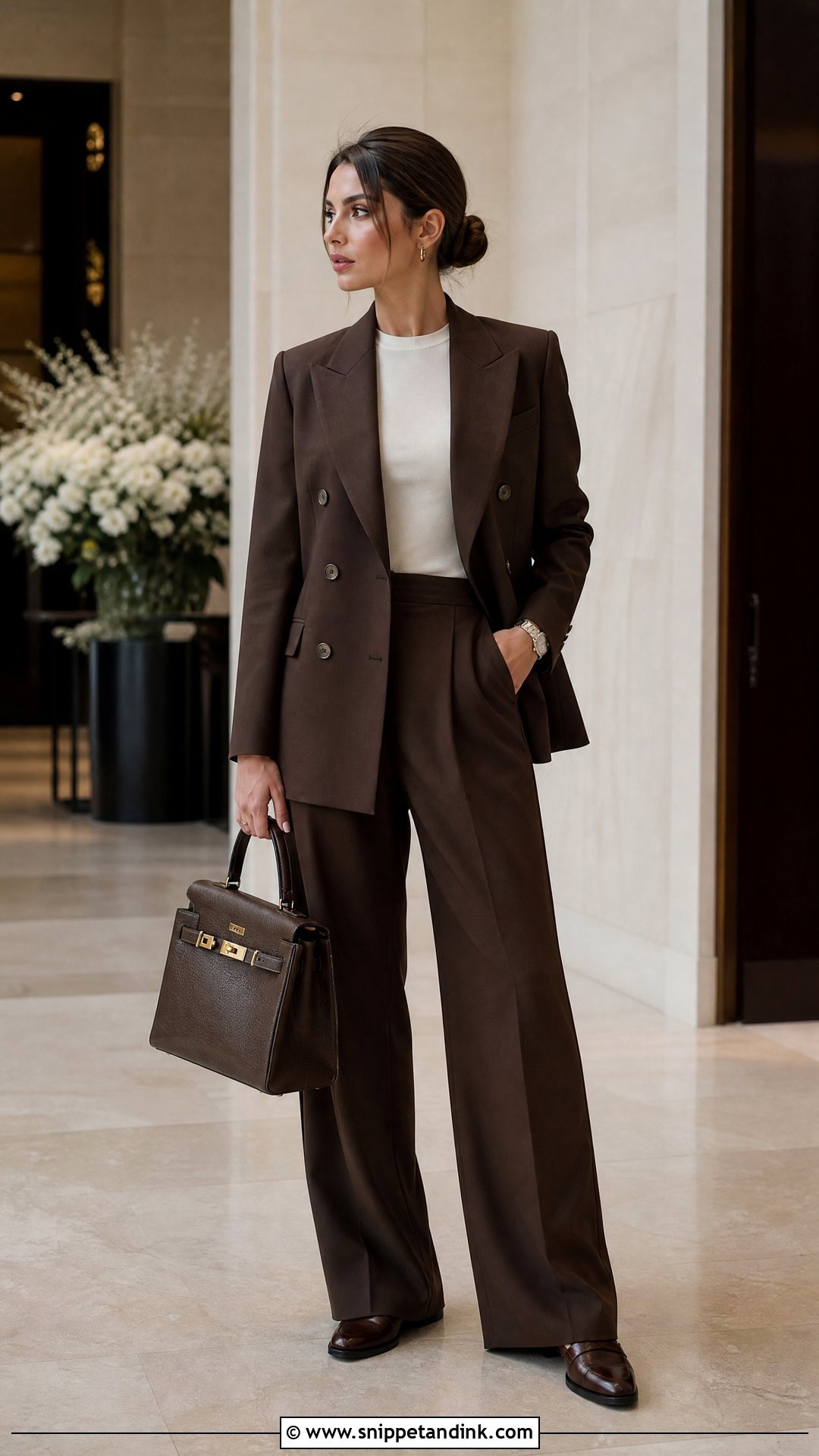
A double-breasted suit is more forgiving than its reputation once it’s tailored properly, because the overlap gives a strong line across the torso on many body shapes. What I check first is how it closes. A double-breasted jacket has to be worn buttoned, so if it only looks right open, it’s the wrong size. It should follow your frame without strain across the chest or hips. Matching high-rise trousers in black, charcoal, navy or chocolate brown keep the proportions tidy. A fitted crewneck top under it looks current; a crisp shirt and tie read traditional. Chunky loafers, sleek oxfords or pointed boots all suit it, and the suit rewears easily long after the wedding.
7. Three-Piece Suit Wedding Outfit
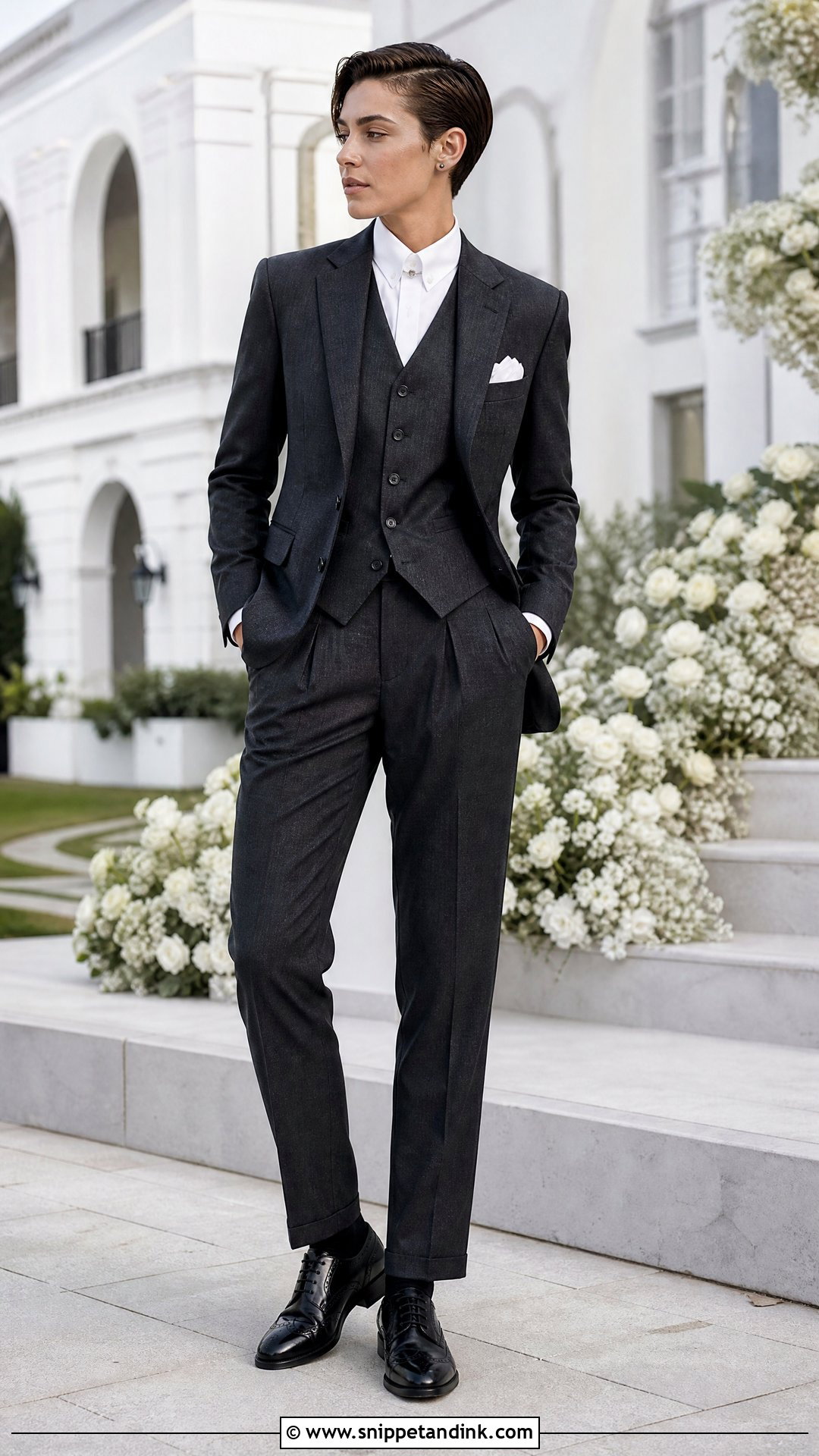
A three-piece gives you three outfits in one day: full formal for the ceremony, waistcoat and trousers for the reception, and a lighter look again if the venue warms up. The waistcoat is the piece I fuss over. It should lie flat against the torso and cover the trouser waistband with no shirt peeking out between them, which usually means a higher-rise trouser. Straight, wide or gently tapered legs all work. Wear it with a white poplin shirt for a classic finish, or skip the shirt under the vest if the dress code is relaxed and the vest is cut to sit high enough. Polished brogues, loafers or low heels, plus one collar pin or slim necklace, finish it.
8. Wide-Leg Jumpsuit Wedding Outfit
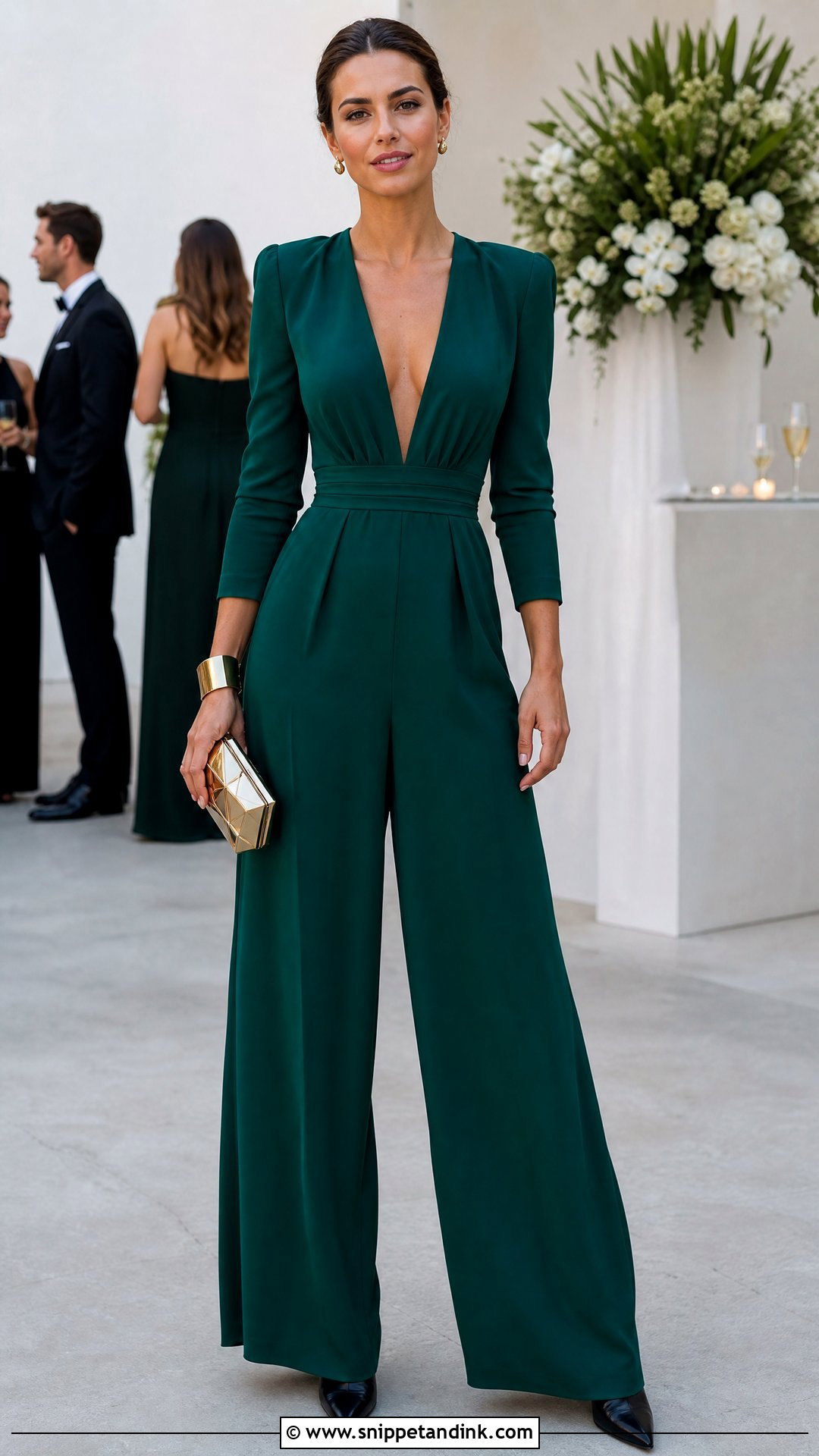
A wide-leg jumpsuit gives you the impact of a suit in a single piece, and it suits people who want structure on top and movement below. I look for defined shoulders, a waistband that sits at your real waist and fluid legs that nearly reach the floor. Black, navy, teal, plum and rust all hold up at cocktail and formal weddings. Here’s the practical bit people forget: bathroom trips. Try sitting, standing and taking it off in a fitting room before you buy, and check that the torso length doesn’t pull when you raise your arms to hug someone. If the neckline is more open than you’d like, a fitted mesh top or smooth camisole underneath fixes it.
9. Cape Jumpsuit Wedding Outfit
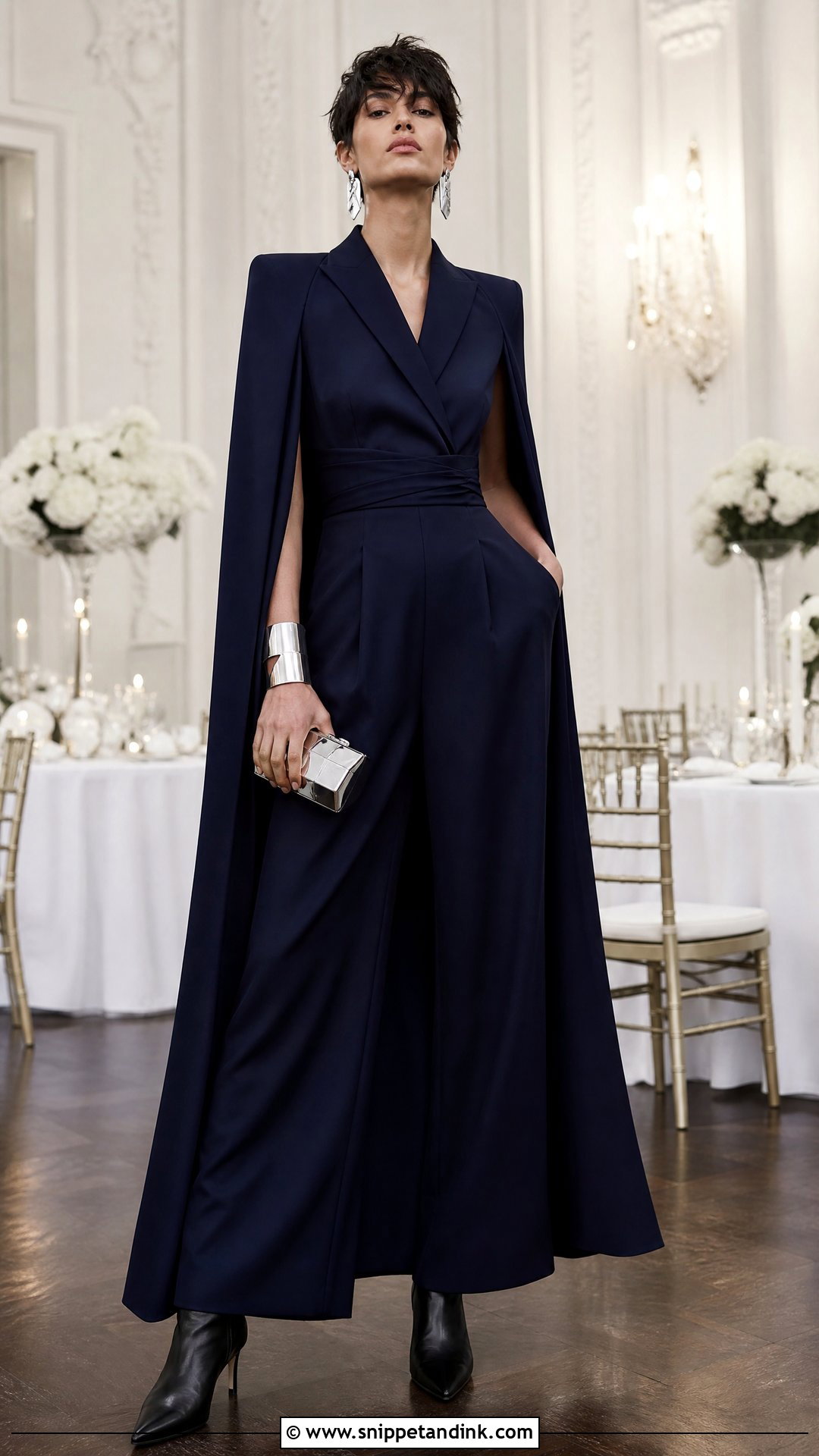
A cape jumpsuit gets you black-tie drama without a gown or a tuxedo. Look for a full-length jumpsuit with a clean bodice, wide or straight trousers and a cape panel attached at the shoulders, in a single deep color such as black, navy, emerald or burgundy. The cape changes how you move. It catches on chair backs, car doors and the strap of a shoulder bag, so I’d carry a small hard-case clutch and choose shoes that won’t snag the hem. Skip the necklace because the cape already frames your neck; sculptural earrings or a wide cuff is the one accessory. Ask a friend to check the back before photos, as capes twist when you’ve been sitting.
10. Vest And Trouser Wedding Outfit
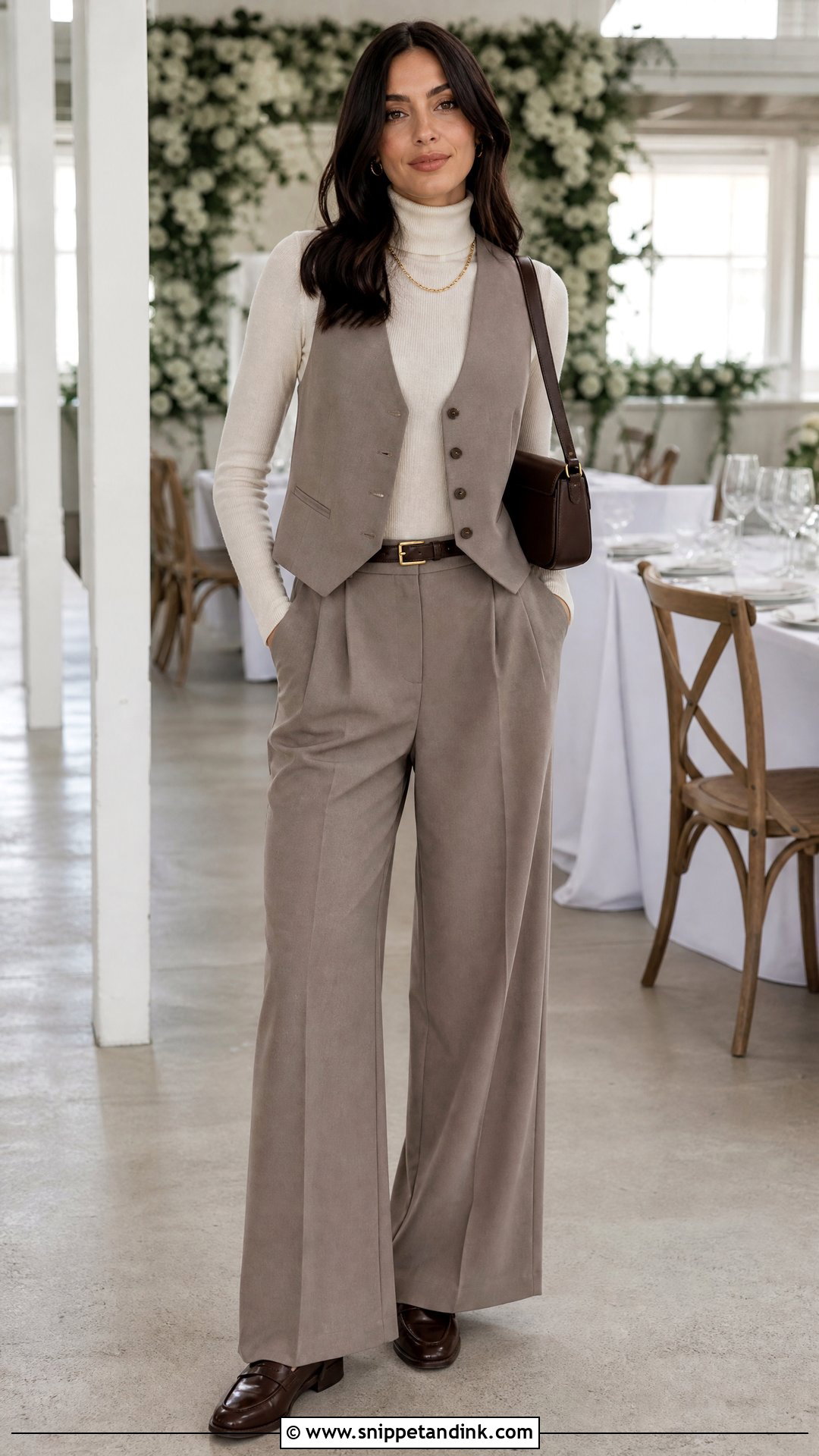
When a full suit feels restrictive, I’d reach for a tailored vest and matching trousers. A longline or traditionally cut waistcoat has to follow the torso without gaping between buttons; if it gapes when you sit, size up and take in the back. Pair it with pleated wide-leg trousers, a fitted shirt and polished loafers. In warm weather it can go over a sleeveless high-neck top, or on its own when the cut covers properly. Bring a lightweight blazer for the ceremony and lose it at the reception. A compact shoulder bag, a chain necklace and simple rings are enough, and every piece rewears separately afterward.
11. Satin Shirt And Tailored Trouser Wedding Outfit
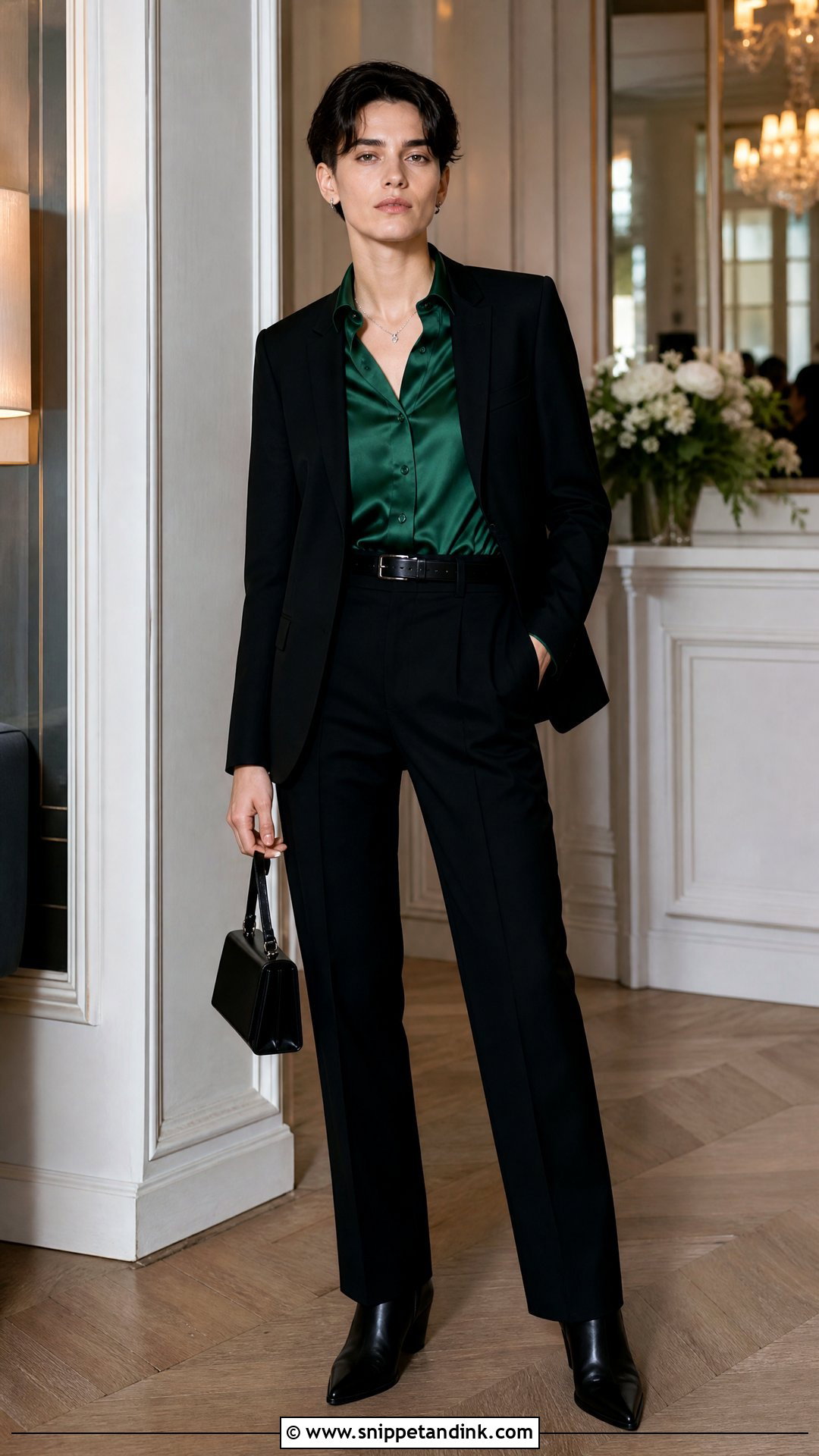
Satin is unforgiving with sweat and creases, so I treat this as an evening or air-conditioned look. Choose one jewel tone, sapphire or copper or deep red, and tuck it into high-rise black or charcoal trousers. A slightly relaxed shirt sits better than a tight one, because fitted satin pulls into ripples across the buttons. Keep every other fabric matte so the shirt stays the focus, and add a fitted blazer if the ceremony is more formal. Black loafers, pointed boots or minimal block heels make a clean base. Pick jewelry in a metal that suits the shirt’s sheen, and the cut of shirt and trouser can be adjusted independently for different bodies.
12. Blazer And Midi Skirt Wedding Outfit
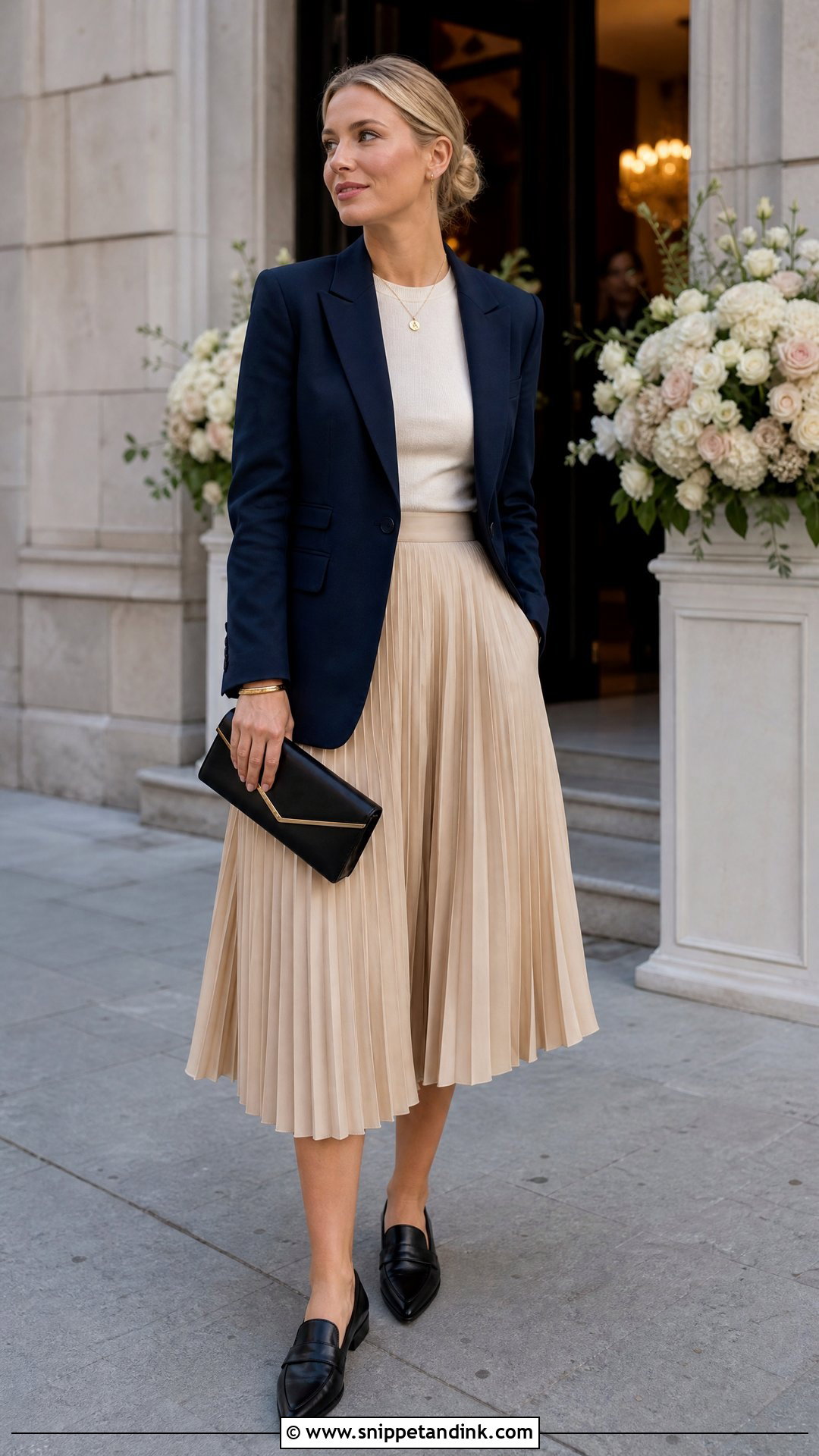
Pairing a structured blazer with a flowing midi skirt is one of my favorite ways to mix traditionally masculine and feminine shapes in a single outfit. Start with a pleated, satin or softly draped skirt in a solid neutral or a muted jewel tone, then add a fitted crewneck and a blazer that ends around the hip. Too long and it fights the skirt’s movement; too cropped and it can look like a different outfit. Belting the blazer gives a sharper waist. The skirt and jacket should share either a color family or the same level of formality, never neither. Loafers, pointed flats, ankle boots or block heels all work at cocktail dress codes.
13. Cropped Blazer And Wide-Leg Pants Wedding Outfit
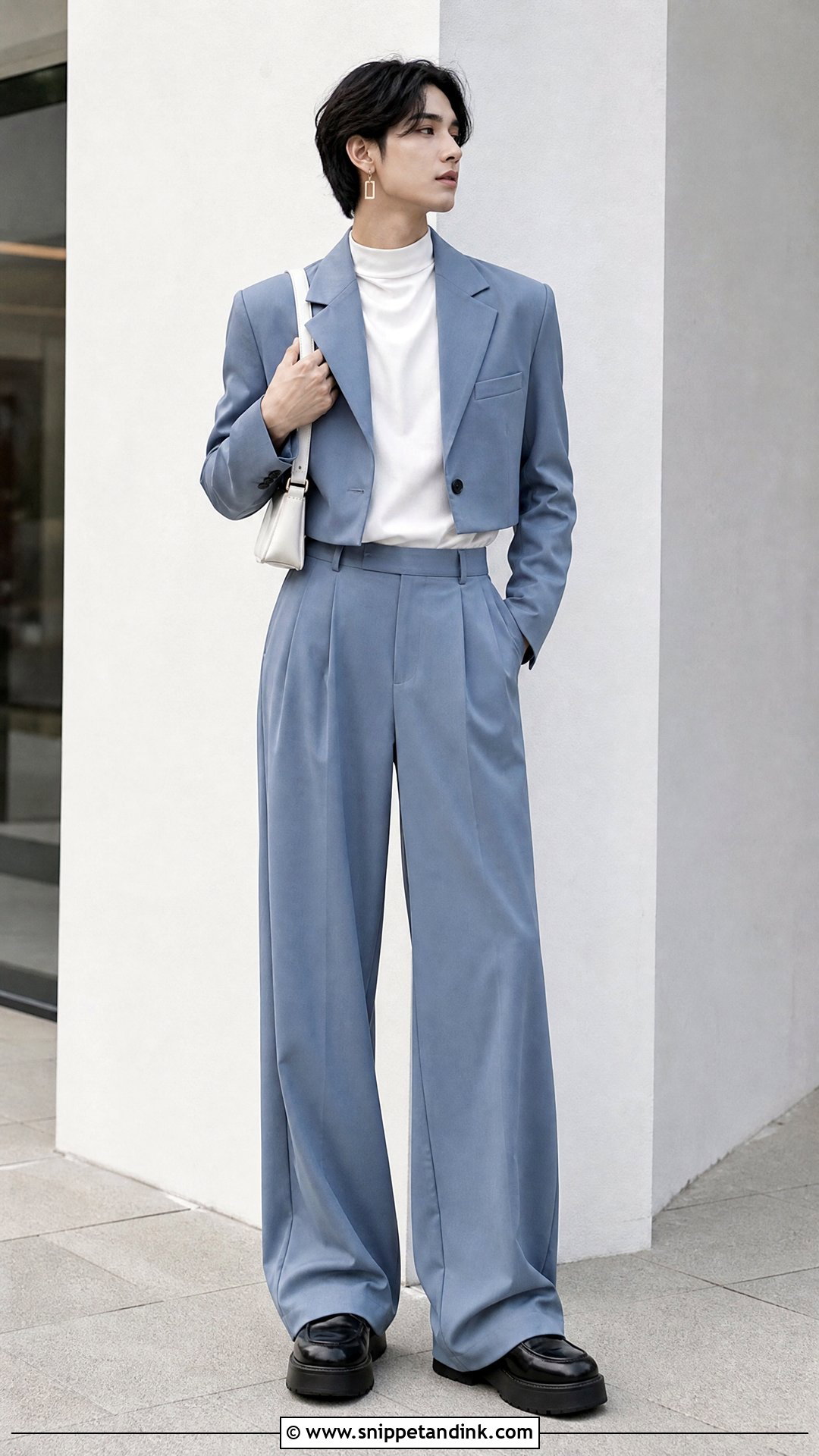
The cropped blazer and wide-leg trouser combination is all about where the waist sits. A matching set in navy, taupe, dusty blue, burgundy or forest green looks most polished, worn over a fitted mock-neck, silk shell or crisp shirt. The trousers must sit securely at the waist and fall over the hips without bunching, because the cropped jacket puts that exact spot on display. I’d add platform loafers, pointed boots or block heels to balance the width of the leg. Petite frames often need the jacket shortened as well as the hem, and taller frames need the trouser length checked with a full break of fabric over the shoe. Both pieces can be tailored separately, which is why this set adapts so well.
14. White Monochrome Wedding Outfit
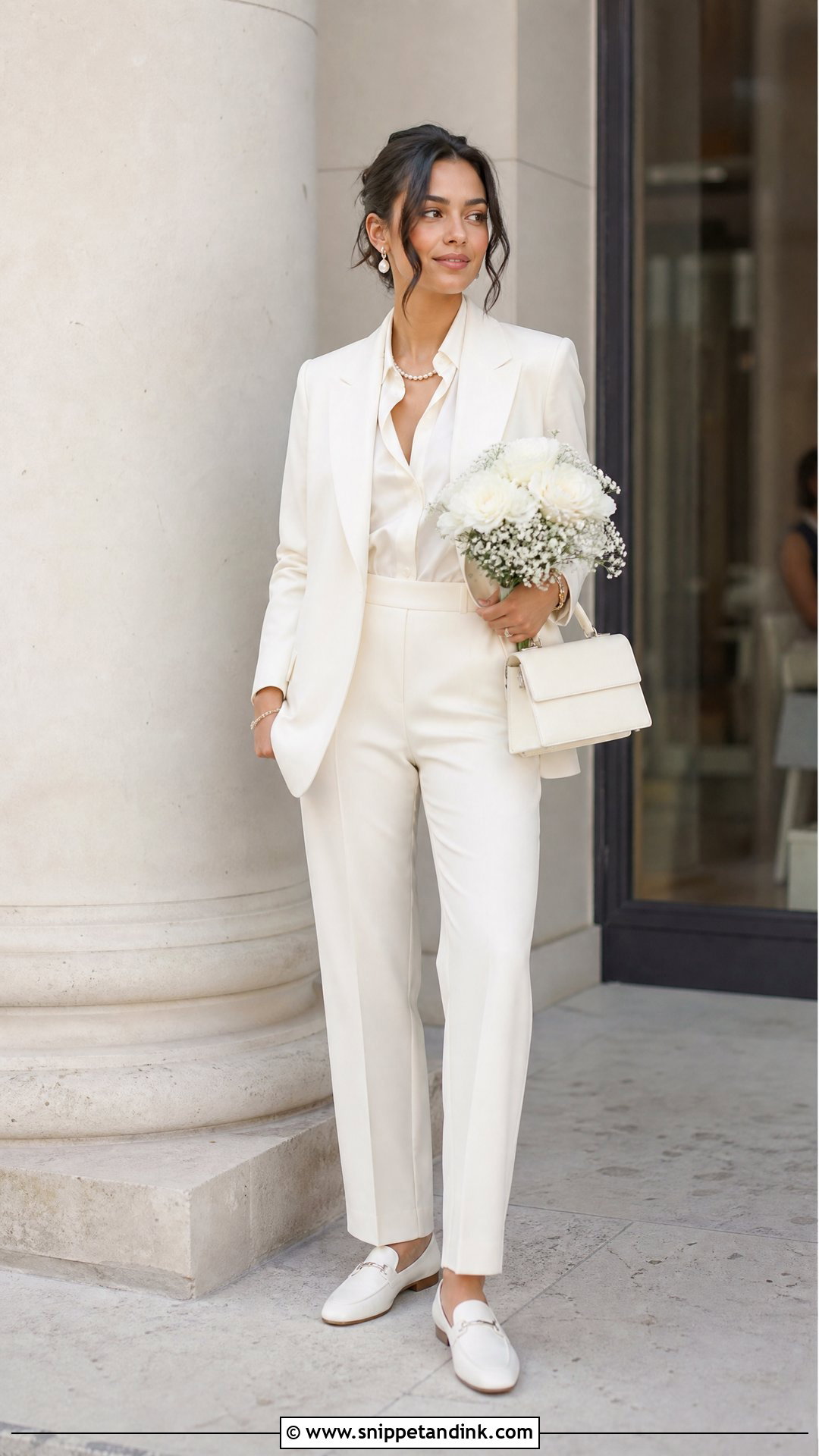
An all-white outfit is a natural fit for someone getting married, a courthouse ceremony, or an event where the couple has specifically asked guests to wear white. Build it with an ivory blazer, matching straight-leg trousers and a cream silk shirt or fitted knit top. Mixing textures stops the palette looking flat, but mixing whites is risky: a bright white shirt makes an ivory suit look dirty in photos, so I hold every piece against each other in daylight before buying. Finish with white loafers, ivory boots or neutral block heels, and pearl, silver or gold details. If you’re a guest, a suit doesn’t make white acceptable. Confirm it, or pick another color.
15. Burgundy Suit Wedding Outfit
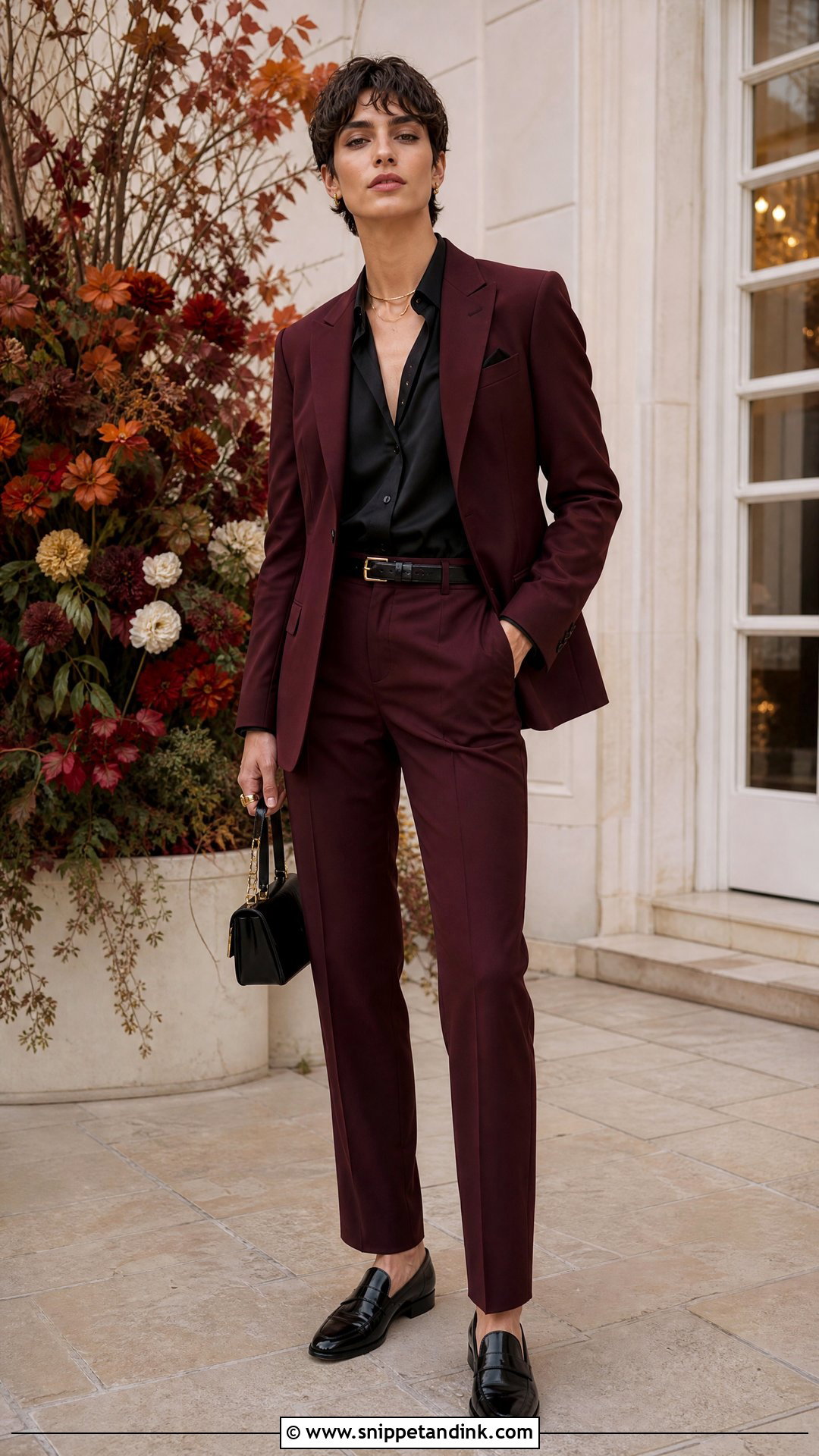
Burgundy reads warm and personal without becoming loud. I’d go lightweight wool for fall and velvet for winter, with a black shirt for evening drama or ivory or pale pink to soften it for daytime. Gold jewelry pulls out the red undertone; silver cools it down. Deep reds can shift toward brown or purple depending on the lighting, so check the shade under warm bulbs if the reception is indoors. Black loafers, lace-ups or smooth leather boots with a dark belt keep it cohesive. Keep any pattern in the accessories quiet so the color stays the point.
16. Pastel Suit Wedding Outfit
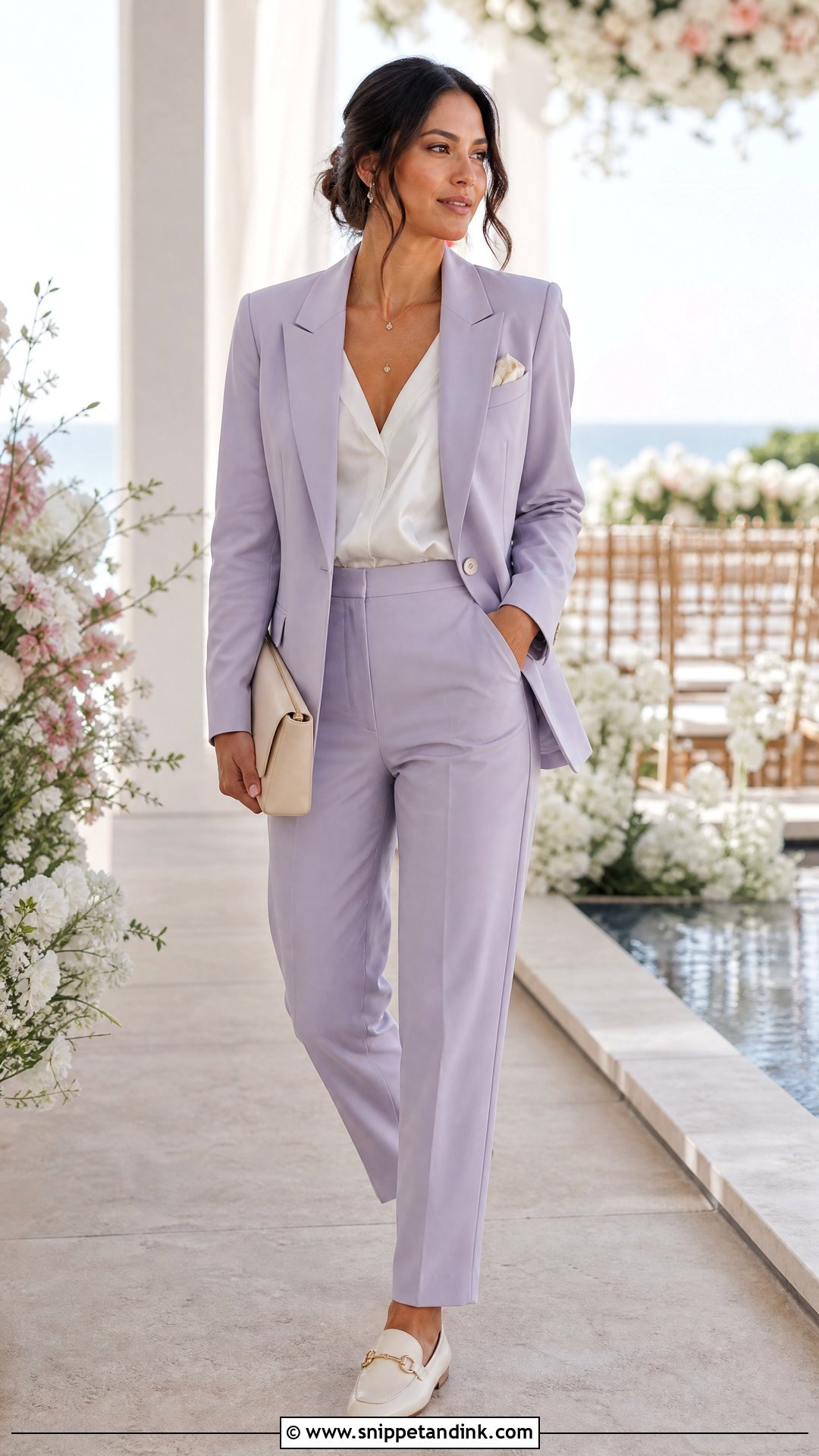
A pastel suit feels right for spring and summer daylight, and it’s the least forgiving color on this list. Powder blue, lavender, muted peach or pale green in a lightweight fabric with some structure will show every wrinkle, every pulled seam and every sweat mark that a navy suit would hide. That’s why I insist on proper pressing and a fit check sitting down. Pair it with a white shirt, a tonal knit or a silky blouse in a nearby shade, and white loafers, cream derbies, nude block heels or refined flats. Trousers can be wide, straight or cropped, but the length has to suit the exact shoes. Keep the accessories neutral and few.
17. Patterned Suit Wedding Outfit
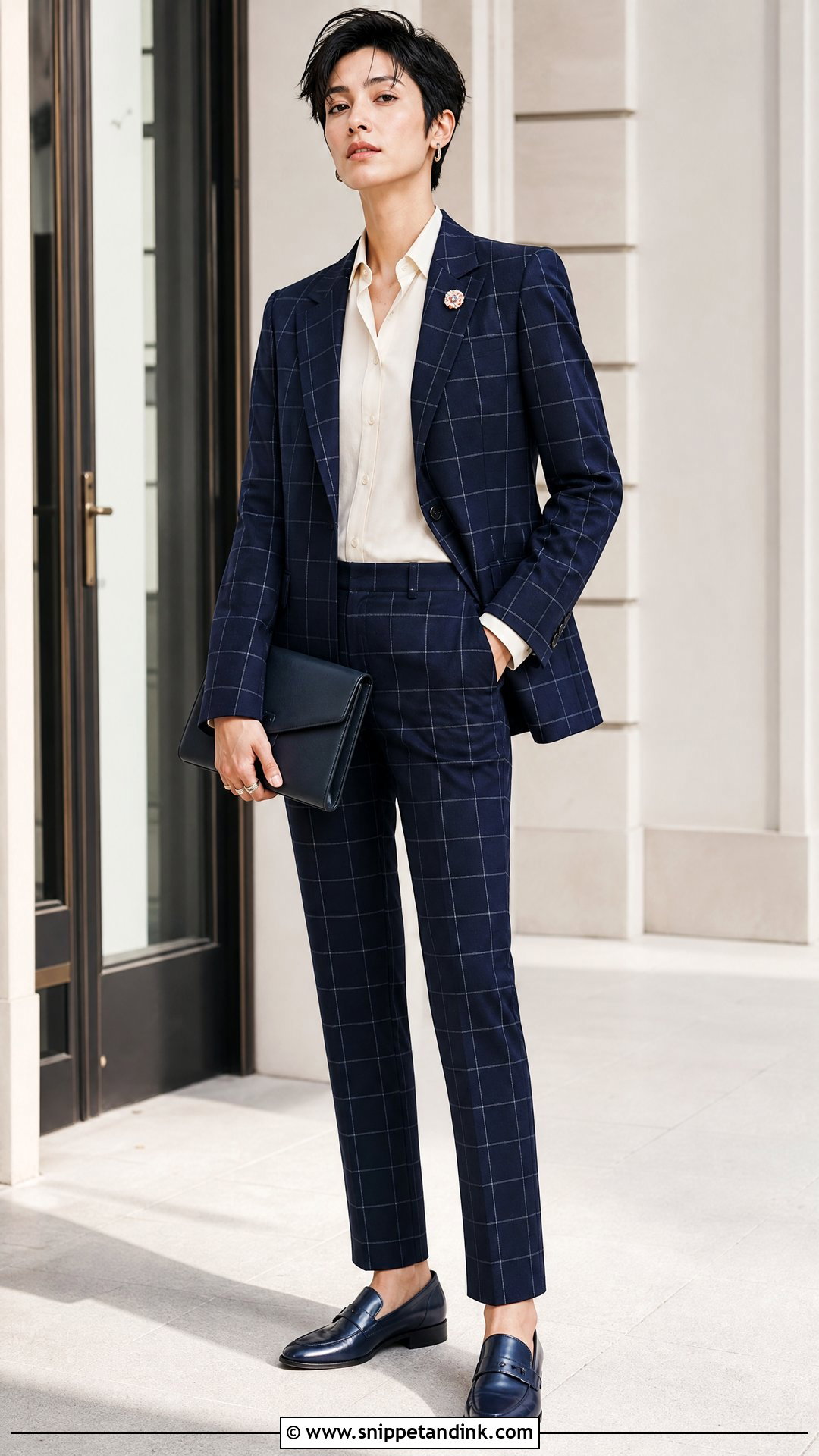
Patterned suits go wrong at the seams. Before I recommend one, I check whether the windowpane or stripe lines up across the front closure, the pockets and the back seam, because a mismatched pattern on cheaper construction is obvious in a full-length photo. Keep the pattern controlled, such as a small check, pinstripe, tonal floral or geometric, and the shirt solid in black, cream, navy or charcoal. Pick shoes in a color already in the suit, whether loafers, boots or minimal heels. A plain clutch, simple rings and one lapel accessory complete it. Done that way, a patterned set reads personal rather than costume-like.
18. Knit Polo And Pleated Trouser Wedding Outfit
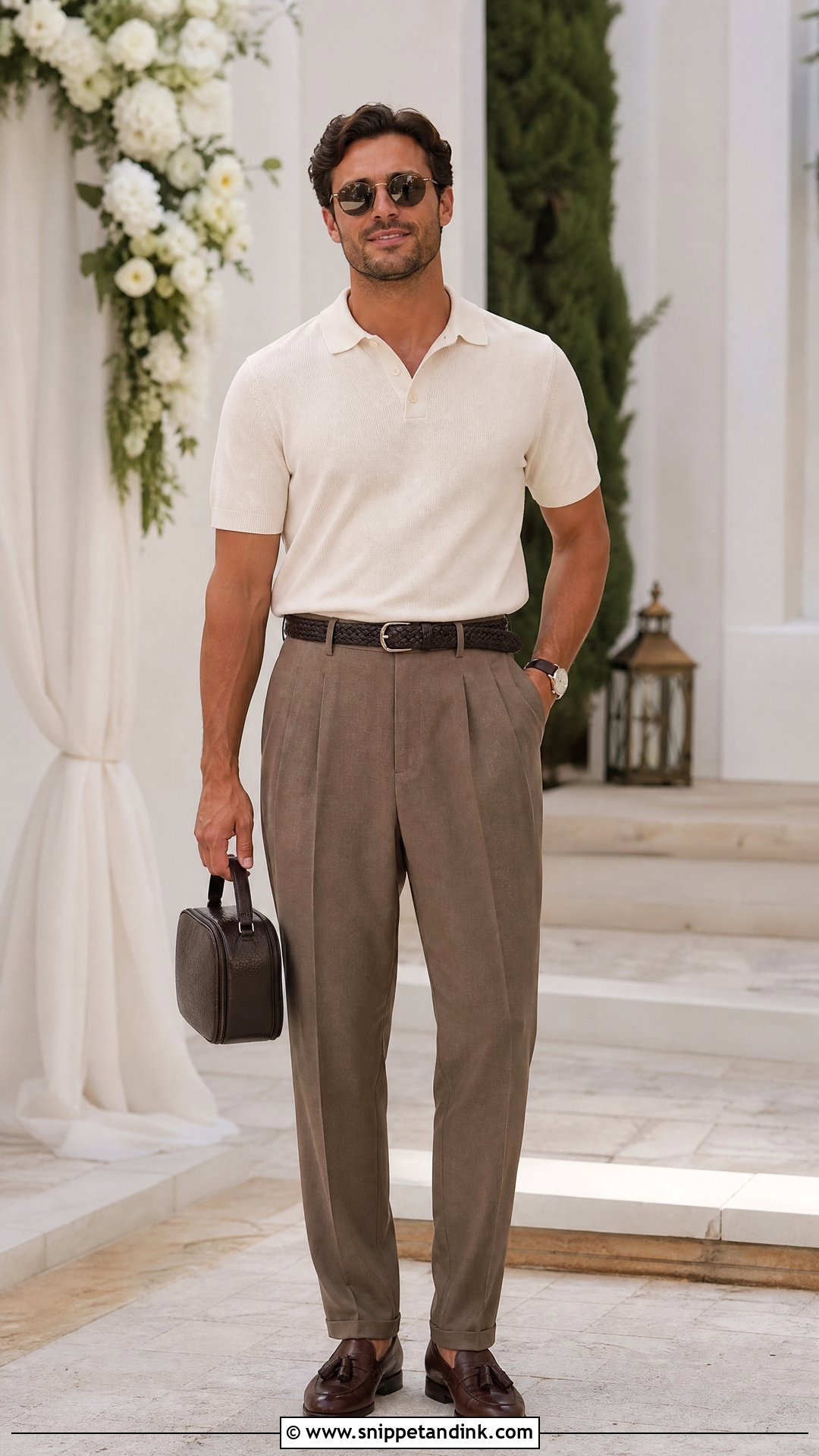
For a dressy-casual wedding I like a fine-knit polo with tailored pleated trousers. The polo should be smooth with a structured collar; a ribbed or piqué sports polo looks like golf. Tonal pairings do the work here: cream with taupe, navy with slate, olive with chocolate brown. Tuck it fully or do a neat partial tuck depending on the rise. Fine knits cling in heat and stretch at the hem if you keep untucking them, so a slightly heavier gauge holds its shape better outdoors. Finish with leather loafers, dress sneakers if permitted, a woven belt and a small bag. Pack a light blazer for the ceremony and you’re dressed a clear step above everyday casual.
19. Dressy Shorts Suit Wedding Outfit
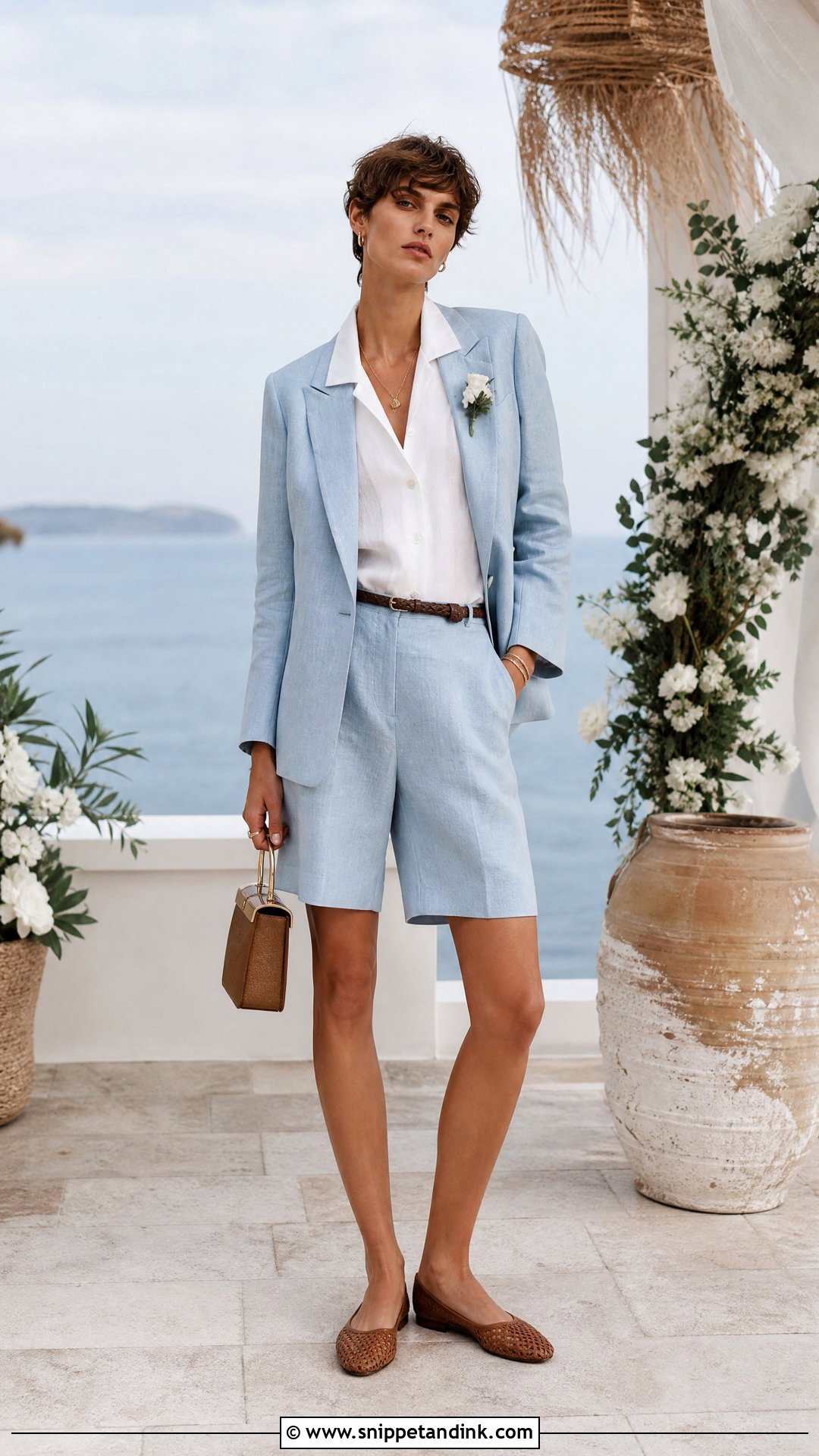
A shorts suit only works when the invitation is genuinely casual: a summer garden, a beach or a destination party. I’d choose tailored knee-length shorts with a matching lightweight blazer in linen, cotton twill or a breathable blend, over a camp-collar shirt, silky shell or fine-knit top. The shorts need a clean hem and enough room through the thigh, because tight shorts ride up the moment you sit and lose the tailored line. Refined loafers, woven leather flats or dress sandals keep it polished; athletic shoes don’t belong here unless the couple has said so. Because it shows more leg than a suit, check the venue and any cultural expectations first.
20. Black Blazer And Silk Trousers Wedding Outfit
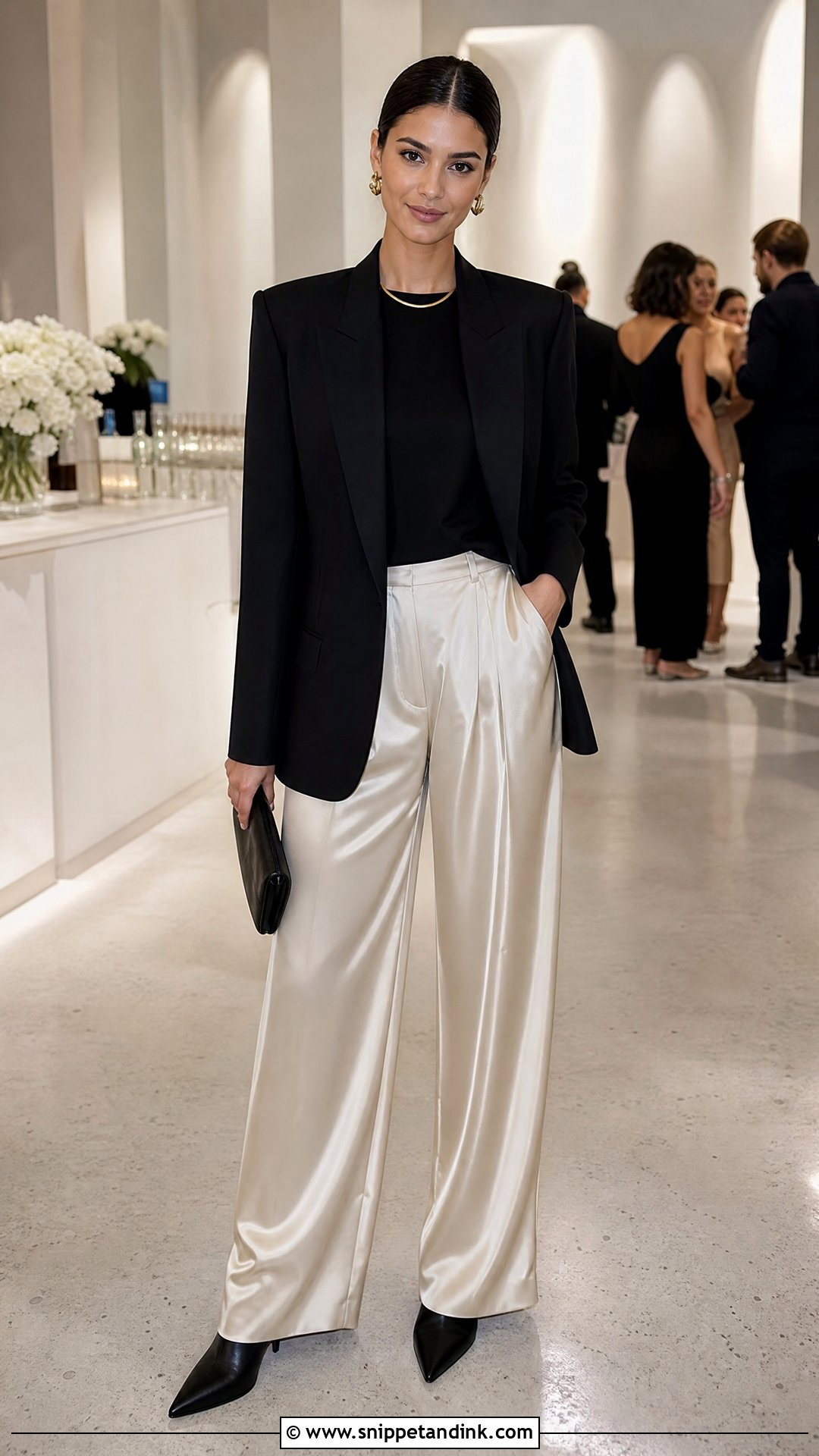
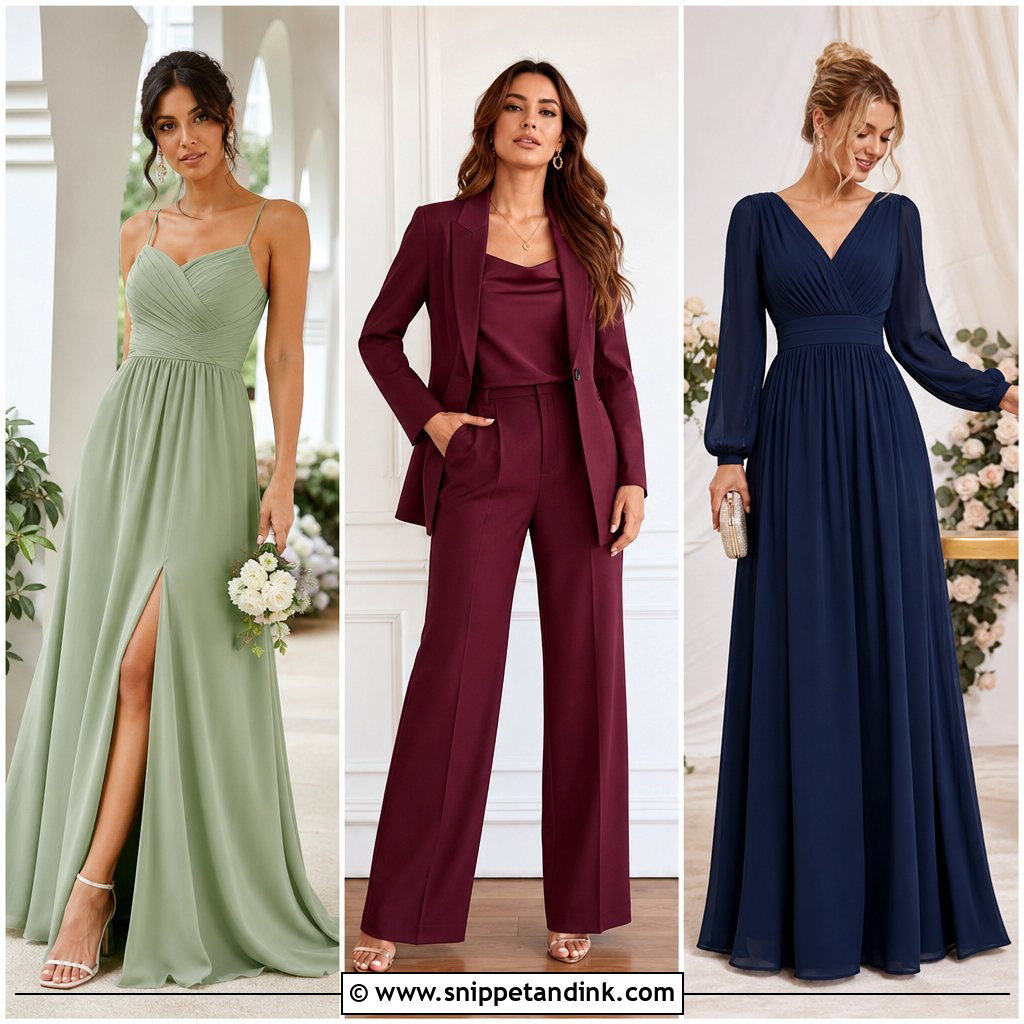
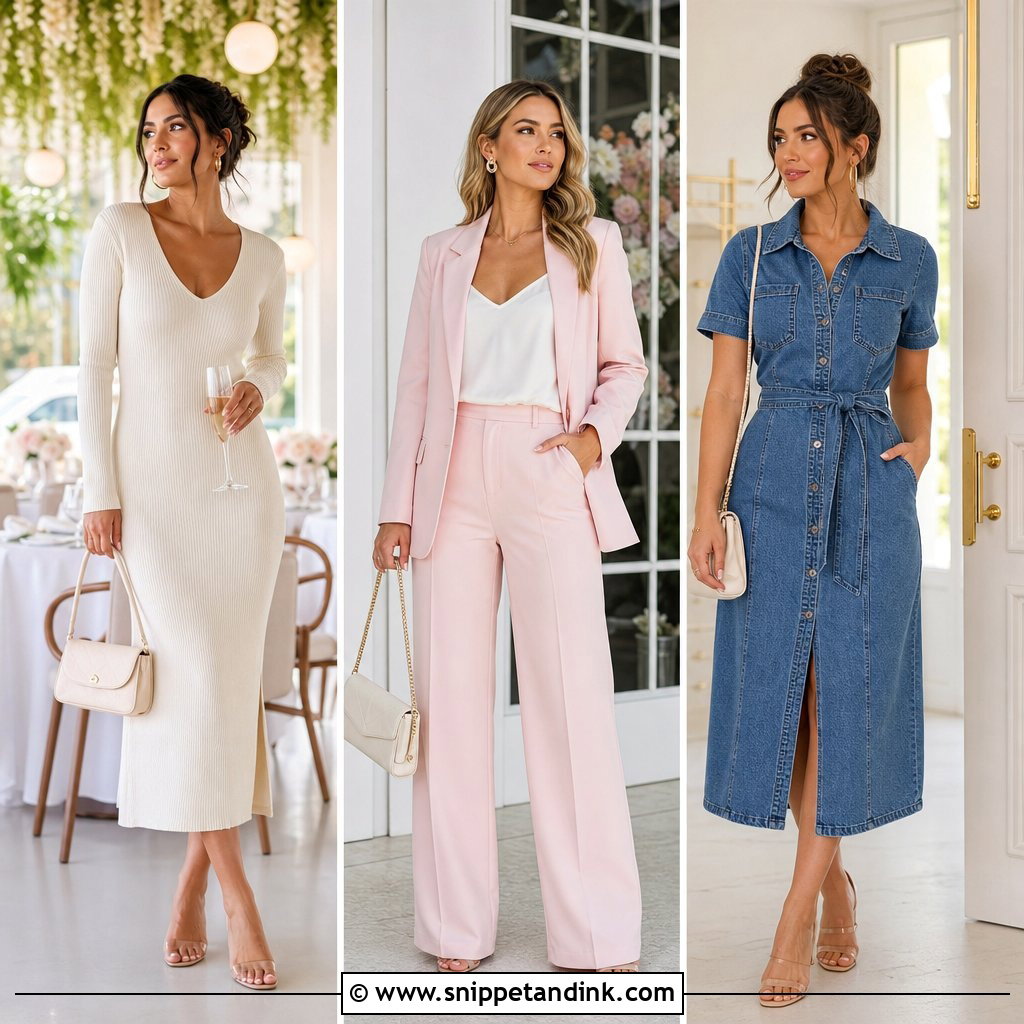
Silk trousers under a sharp black blazer give you the depth of a suit without matching pieces. Choose fluid, full-length pants in champagne, chocolate, navy, olive or black, and a blazer with clean shoulders. A fitted tank, collarless shirt or draped blouse goes underneath depending on how much coverage you want. Silk drags and frays when it’s too long, so hem it to clear the floor with your chosen pointed boots, platform loafers, flats or block heels. Lighter silks also show water and sweat marks, which is why I’d lean toward darker shades for an outdoor summer day. Separates like these are practical for anyone who wants to rewear the pieces later.
Hems, Shoes and the Order I Buy Things In
Most fit problems I see on wedding days come from doing things out of order. People buy the suit, get it hemmed, then buy shoes, and suddenly the trousers puddle over a flat or flash ankle above a platform. Shoes come first. Every trouser length on this list depends on the exact heel height you’ll wear.
- Settle the outfit and the shoes together, at least six to eight weeks out.
- Book the tailor next. Alterations commonly take two to four weeks, longer in spring and early summer when every wedding party is in at once.
- Go to the fitting in the shoes, the shirt and any shapewear or binder you’ll wear on the day.
- Collect it at least a week early and wear the whole outfit for an hour at home: sit, climb stairs, raise your arms.
If something fails on the day
Pack a small kit: safety pins, fabric tape for a dropped hem, a lint roller for dark suits and a travel steamer if you’re staying nearby. Fabric tape holds a hem for a full evening and peels off without leaving a mark on most wools, so I never send anyone out without a strip of it.
Dress for the Invitation, Then for Yourself
Wedding attire can be formal, personal and free of gendered rules all at once. Start with the dress code, then the season, the venue and how much you’ll be moving. Suits give structure, while jumpsuits and separates give flexibility, and mixing silhouettes lets you keep only the details you actually enjoy. Whatever you pick, leave time for alterations and do one full test with shoes and accessories on. Good fit is what makes simple pieces look considered, and it’s what lets you forget about your clothes and enjoy the day.
You'll Like These Ideas:


Leave a Reply