
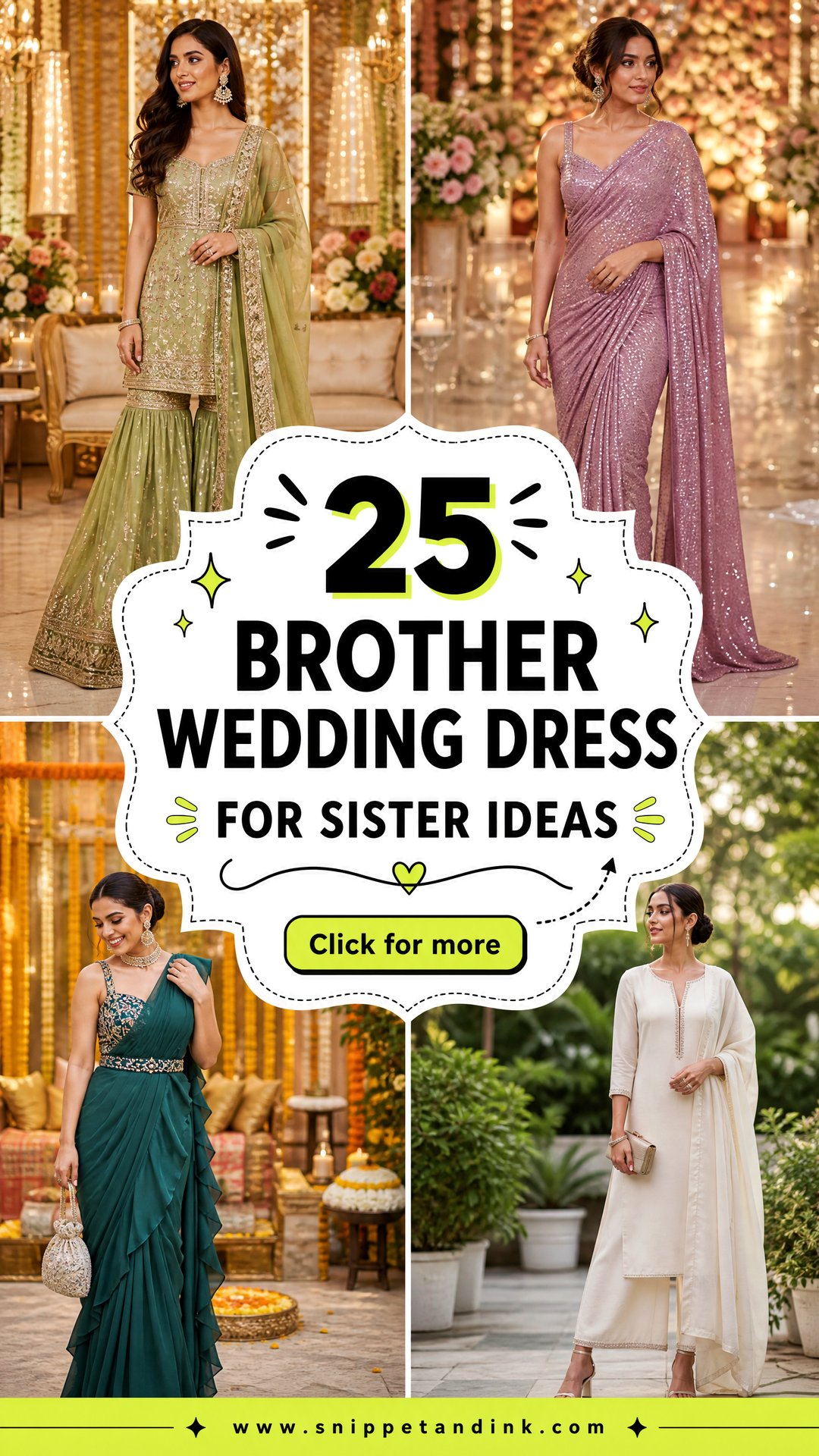
A sister of the groom has a strange brief. She should look festive enough to stand beside the couple in every family photo, yet never close enough to the bride’s look to confuse anyone. She also needs to sit through rituals, greet a hundred relatives and dance. Below are what I consider the best Brother Wedding Dress for Sister choices, from lehengas and silk sarees to sharara sets, gowns and Indo-western separates, each with notes on fabric, styling and which function it suits.
How Heavy Should the Sister’s Outfit Be Next to the Bride’s?
This is the question I’m asked most by sisters of the groom, and the honest answer is: noticeably lighter. The bride will usually be in the heaviest embroidery of the day, often in red or a deep jewel tone. If your lehenga has the same density of zardozi, it competes in every wide shot, even in a different colour.
In practice I look at three things side by side with a photo of the bridal outfit:
- Colour. Stay out of the bride’s main shade for the ceremony. Ask her directly; it’s a normal question and most brides appreciate it.
- Weight of work. Choose a lighter technique than hers, such as thread work, gota or sequins against her zardozi, or a woven silk against her heavy embroidery.
- Dupatta. Hers is the showpiece. Keep yours sheer with a narrow border, or skip it for a cape or jacket.
Many families now coordinate the groom’s side in one palette for the main ceremony. If yours does, ask early, because finding a specific shade in a ready-made outfit is far harder than having one dyed and stitched.
1. Lehenga For Brother Wedding
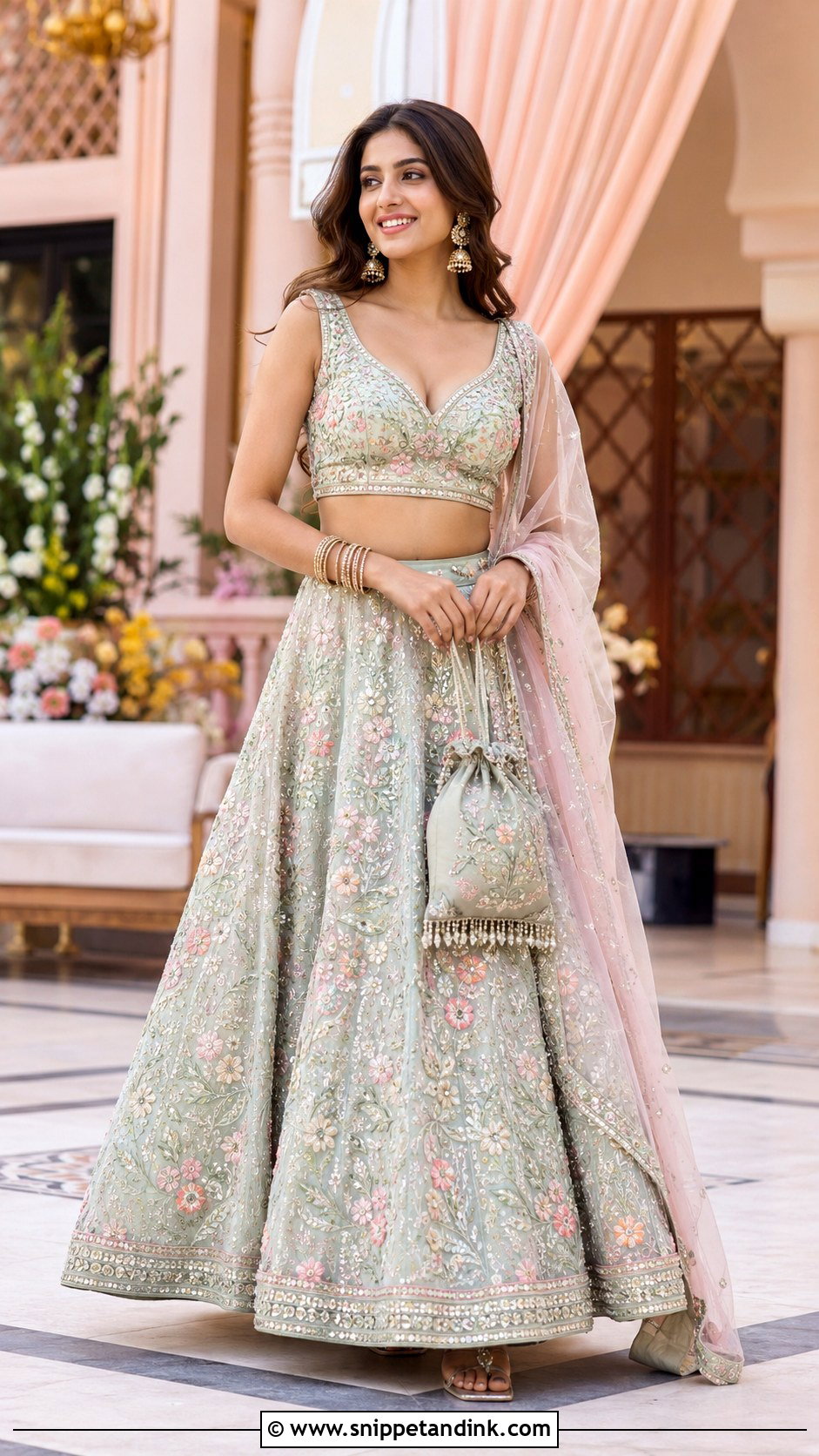
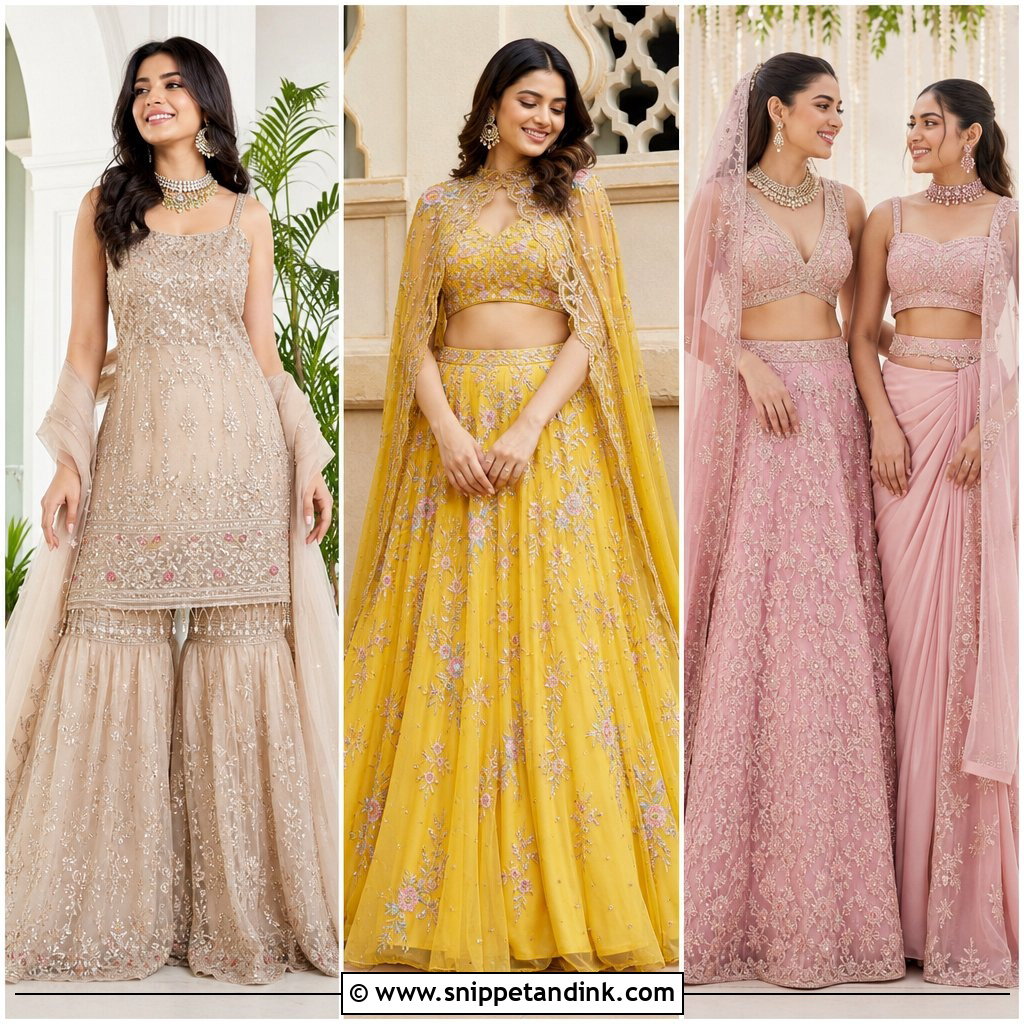
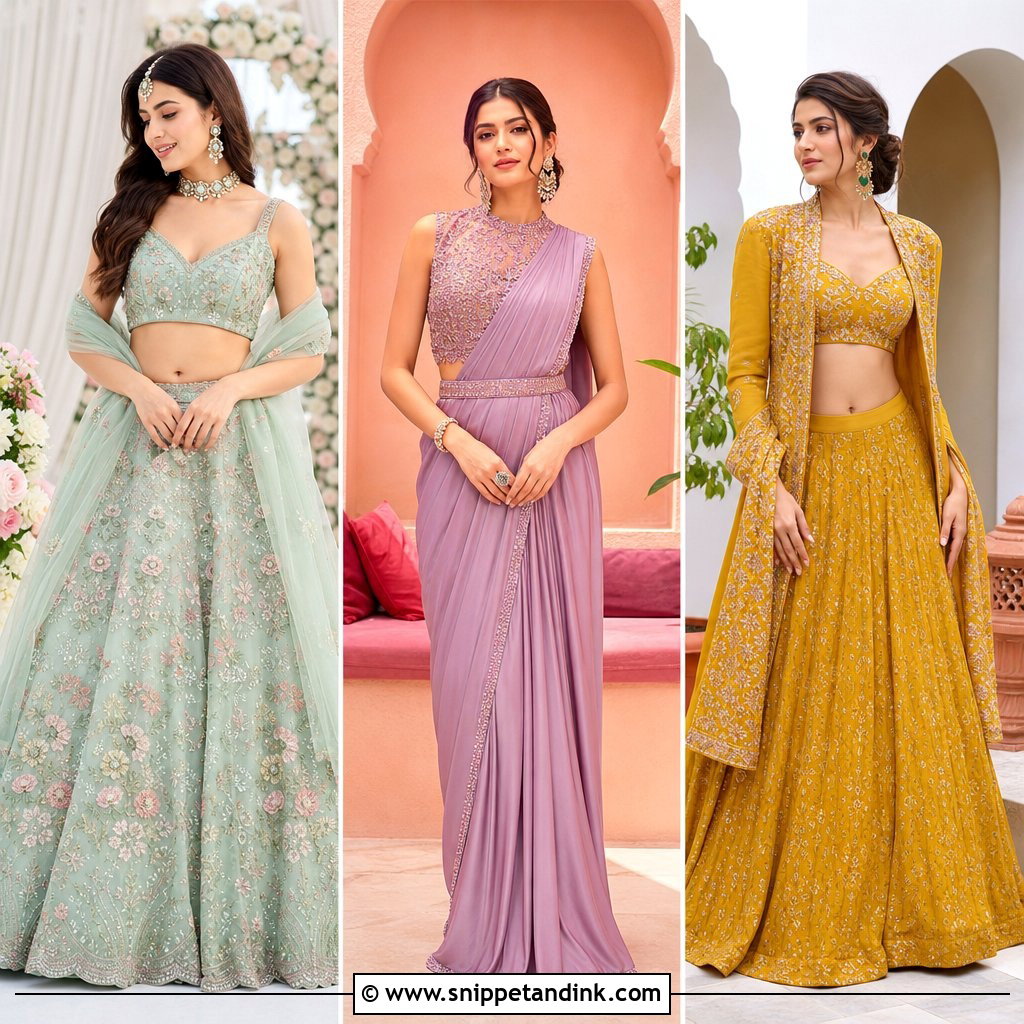
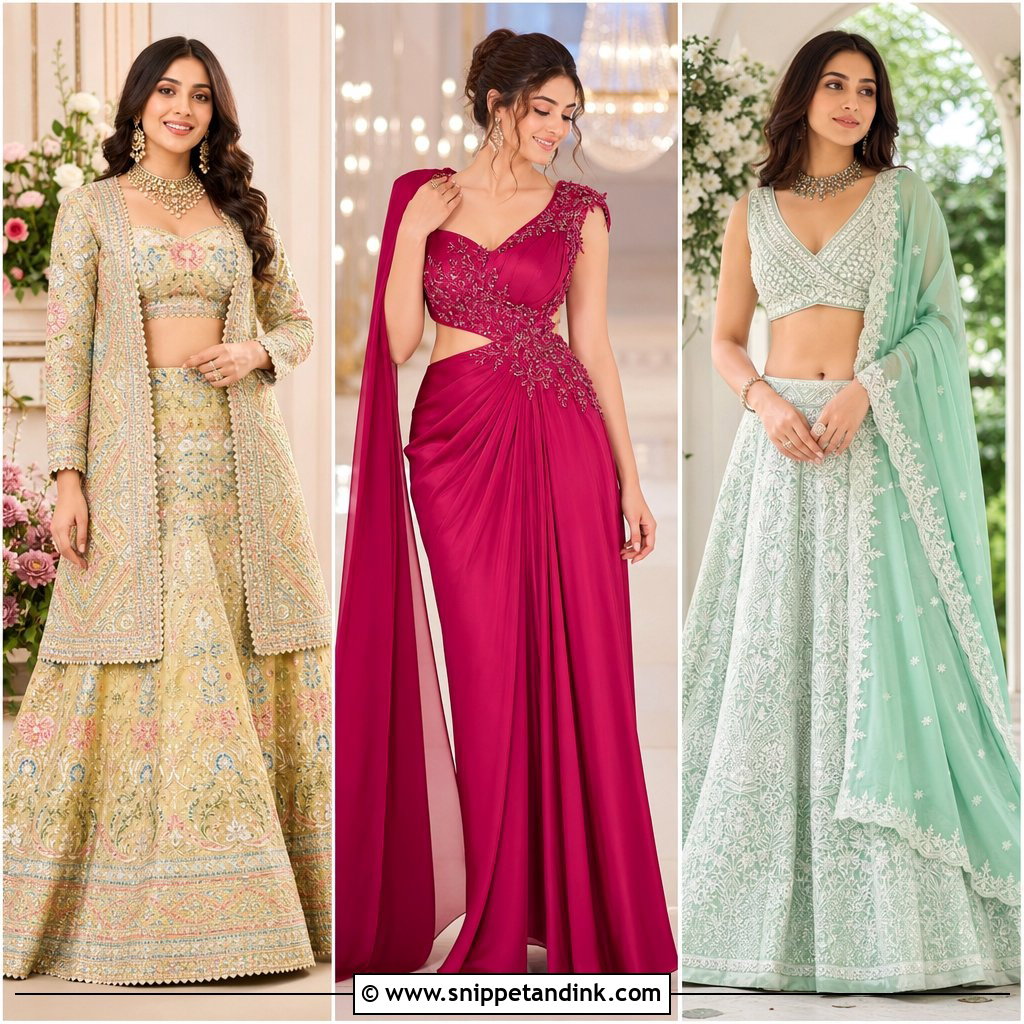
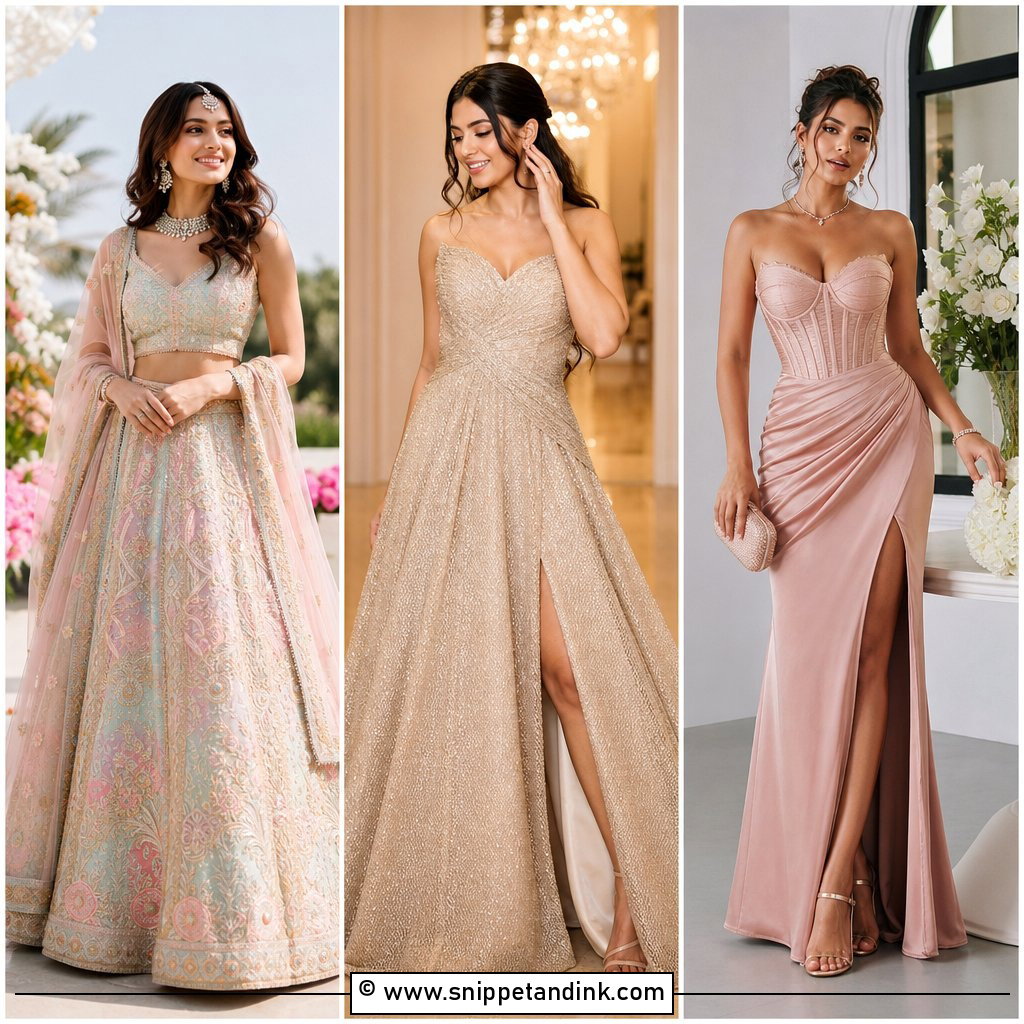
The lehenga is the default for a reason: it photographs well from every side and suits almost any function. Fabric is the first decision. Pick silk, georgette, organza, or velvet lehenga styles according to the season, since velvet in May is miserable and organza in a cold December mandap looks thin. Daytime suits pastel pink, sage, powder blue or peach; evenings call for emerald, maroon, navy or plum. Keep the embroidery a level below the bride’s. Jhumkas, bangles, embellished heels and a small potli finish it.
2. Saree For Brother Wedding
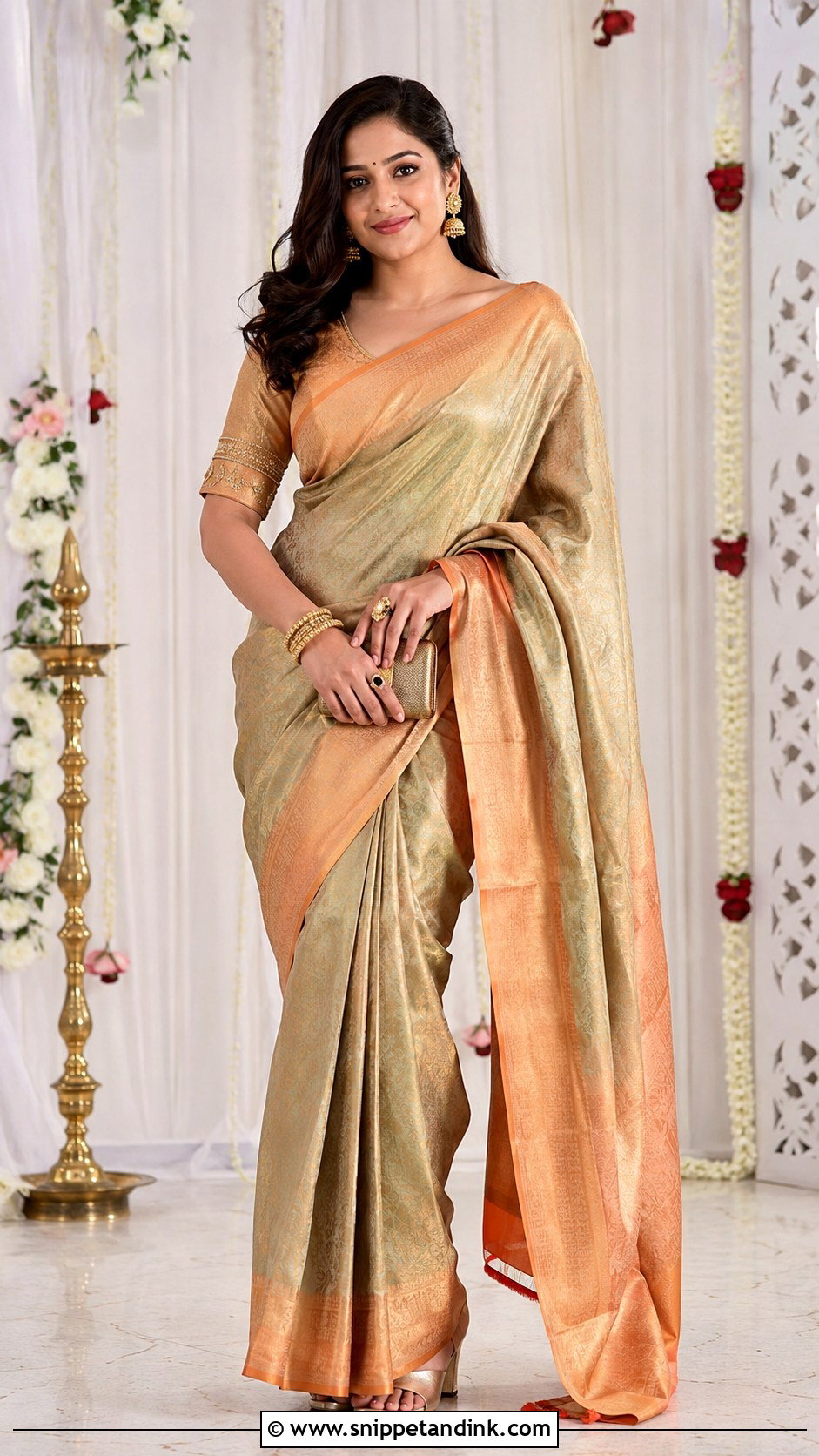
Nobody ever looks underdressed in a saree at a family wedding. Silk carries the main ceremony; organza or chiffon suits a daytime function. For formal events, zari borders, delicate sequins or thread embroidery add enough. A structured blouse matters more than the saree itself, because a poorly cut blouse shows in every candid shot. Statement earrings, a clutch, minimal bangles and comfortable heels finish it. Check the bride’s colour first; two red sarees in the front row is a conversation nobody wants.
3. Anarkali Dress For Brother Wedding
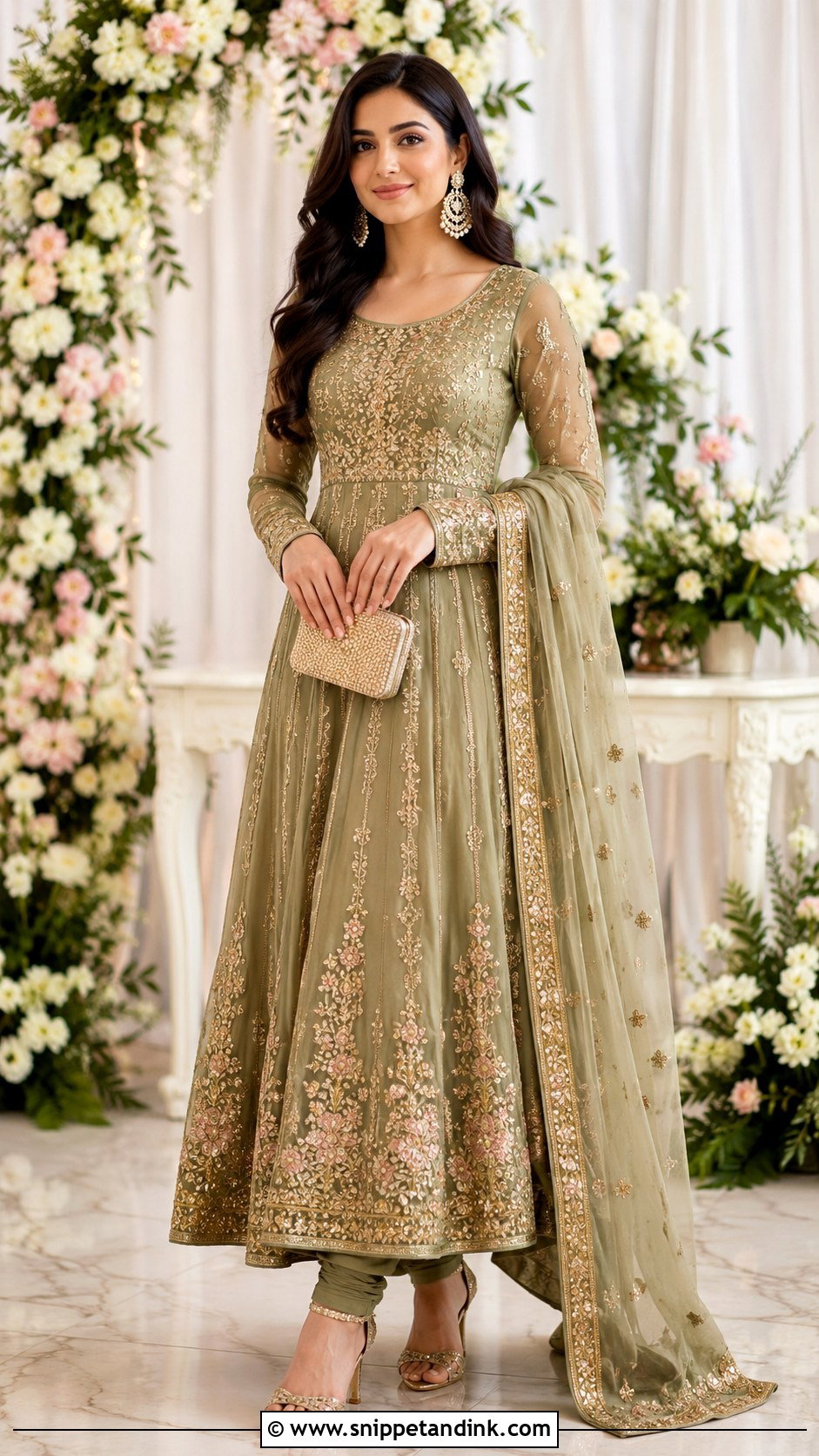
Anarkalis are forgiving, and that’s why I recommend them for the main ceremony to sisters who’ll be up and down all day. The long flare moves with you, needs no re-pinning, and sits neatly on the floor during rituals. Silk, georgette, chanderi or net with embroidery at the neckline, sleeves or hem all work. Emerald, ruby, royal blue and deep purple suit evenings; mint and blush suit daytime. Pair it with churidar, a matching dupatta, chandbalis and a neat clutch. Have the churidar cut long enough to gather at the ankle; that’s the detail that makes it look right.
4. Sharara Set For Brother Wedding
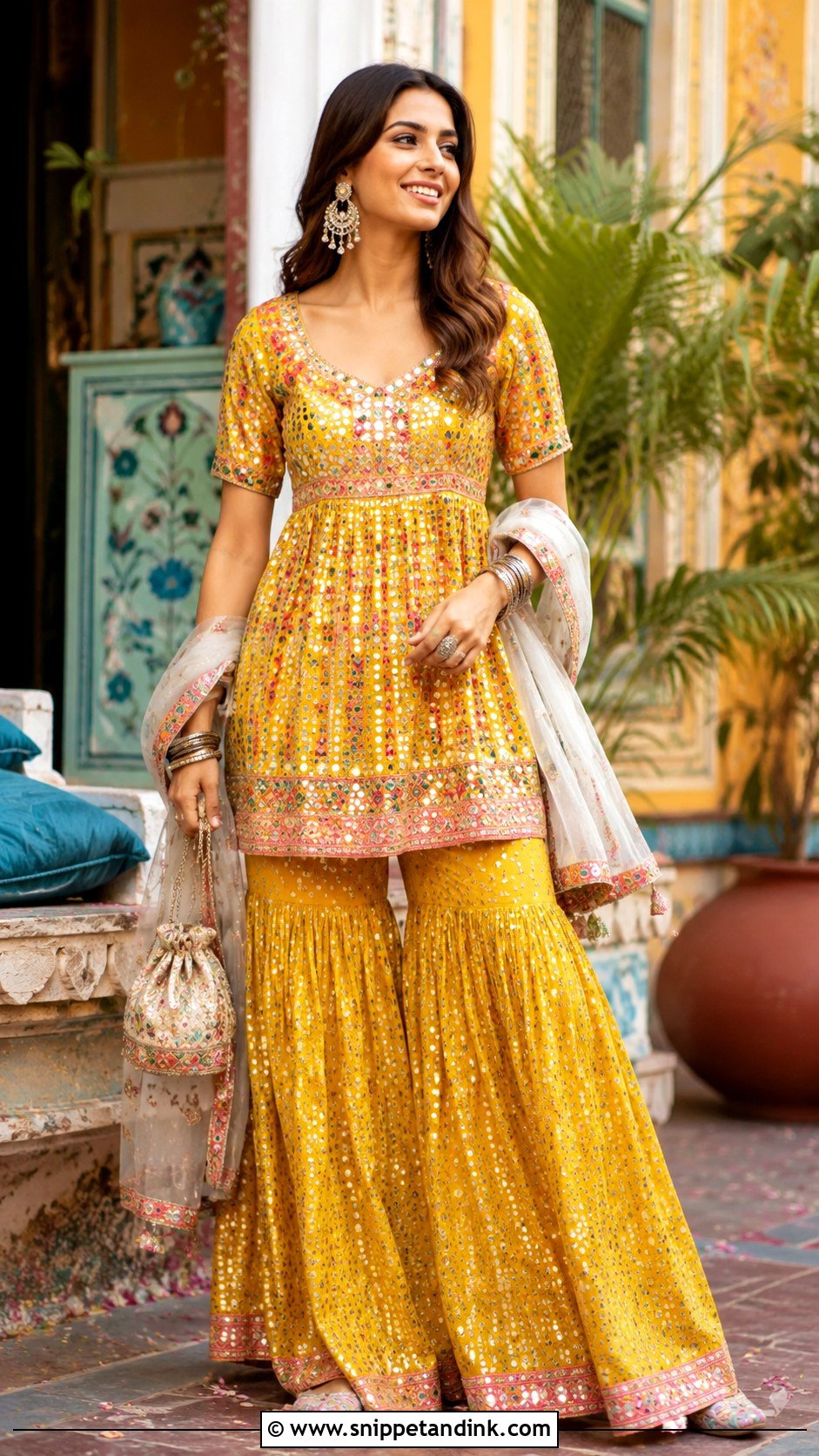
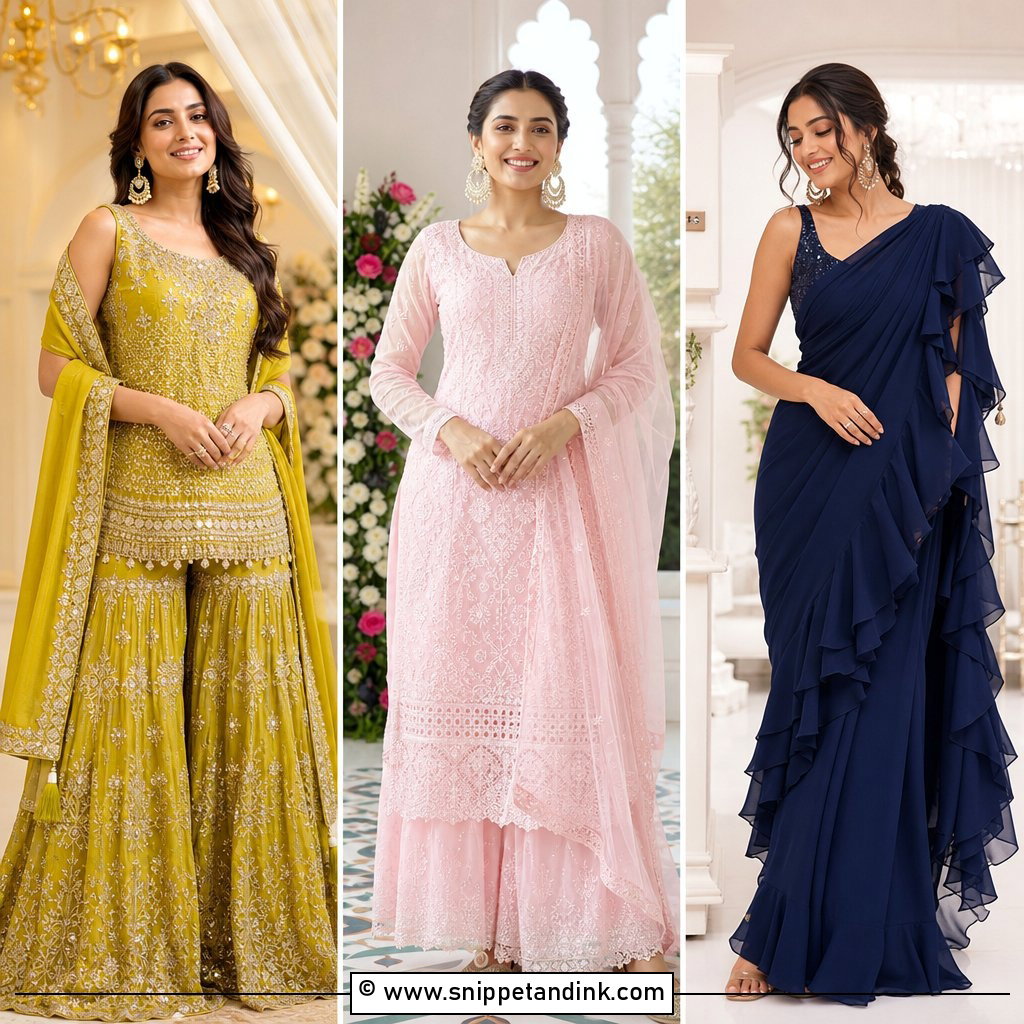
Sharara sets dance well. The wide legs swing instead of tangling, which is exactly what you want at mehendi, sangeet, or pre-wedding celebrations. Mirror work, gota patti, sequins or light zari all suit it. A short kurti looks younger; a longer one looks more formal. Bright yellow, fuchsia, teal and coral are made for these functions. Block heels or juttis, statement earrings, stacked bangles and a small embroidered bag complete it. Gota patti is lighter than zari embroidery, so it keeps a full sharara from dragging on the waistband.
5. Gharara Dress For Brother Wedding
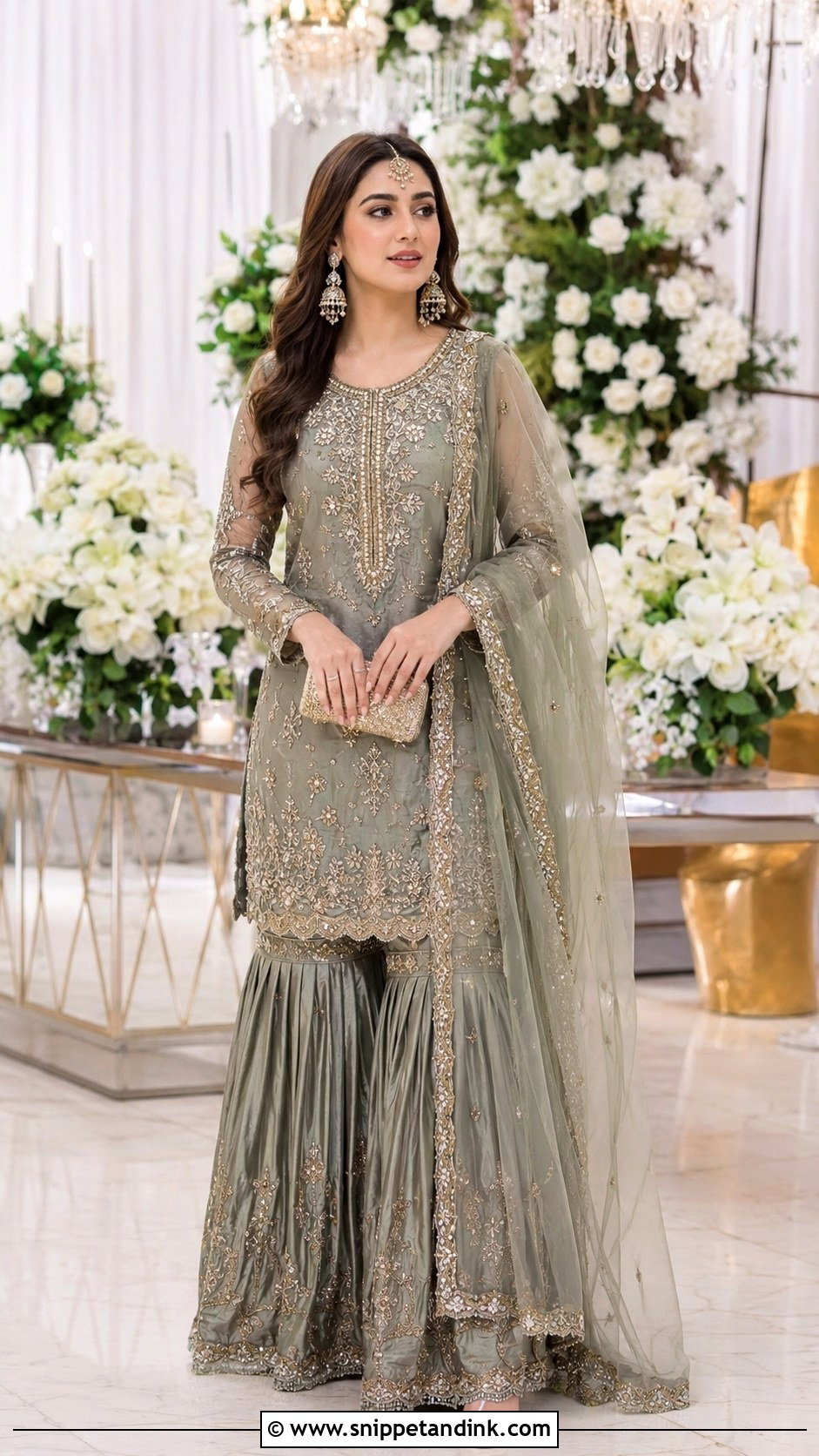
A gharara reads as old-school in the best sense. The fitted thigh and the flare that opens at the knee give it a distinct outline, usually marked by a band at the joint. Silk, brocade, georgette and tissue all work; tissue catches light beautifully but creases fast, so steam it on the day. Blush, champagne, pistachio and powder blue keep it soft, while maroon, bottle green or navy feel grander. Passa-style earrings, a delicate maang tikka and a sleek clutch finish it. Keep makeup fresh and let the silhouette speak.
6. Indo Western Dress For Brother Wedding
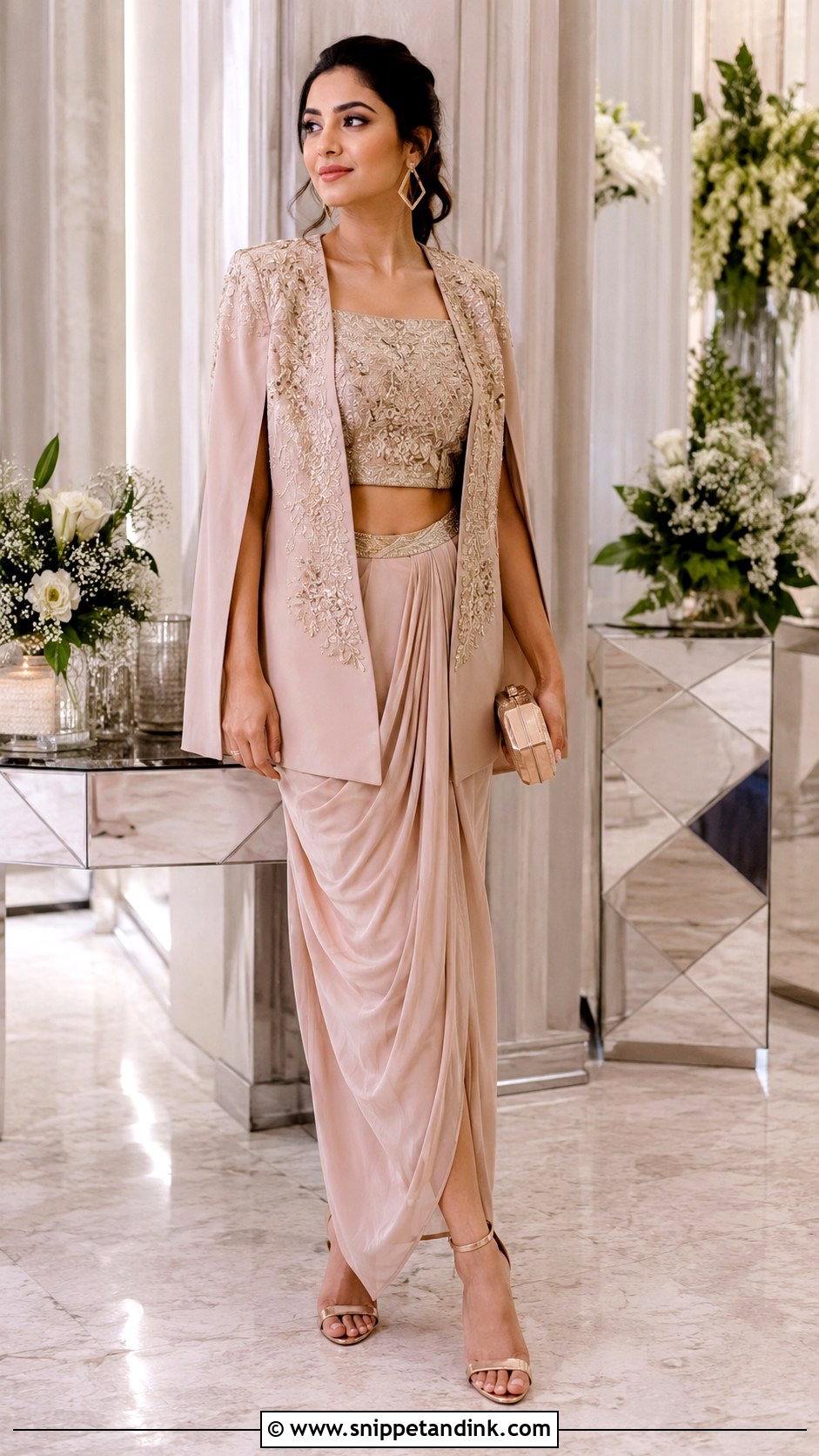
Indo-western suits the sister who never quite feels herself in a full lehenga. A draped skirt with a crop top, a cape blouse with trousers, or an embroidered jacket over a flowing skirt all work for receptions, engagements and sangeet nights. Look for clean cuts and one point of detail, such as mirror work, metallic thread or a belt. Sleek heels, geometric earrings and a structured clutch complete it. With a cape or jacket, drop the necklace entirely. Older relatives tend to accept these looks more readily when there’s a recognisable Indian element in the fabric or embroidery.
7. Reception Gown For Brother Wedding
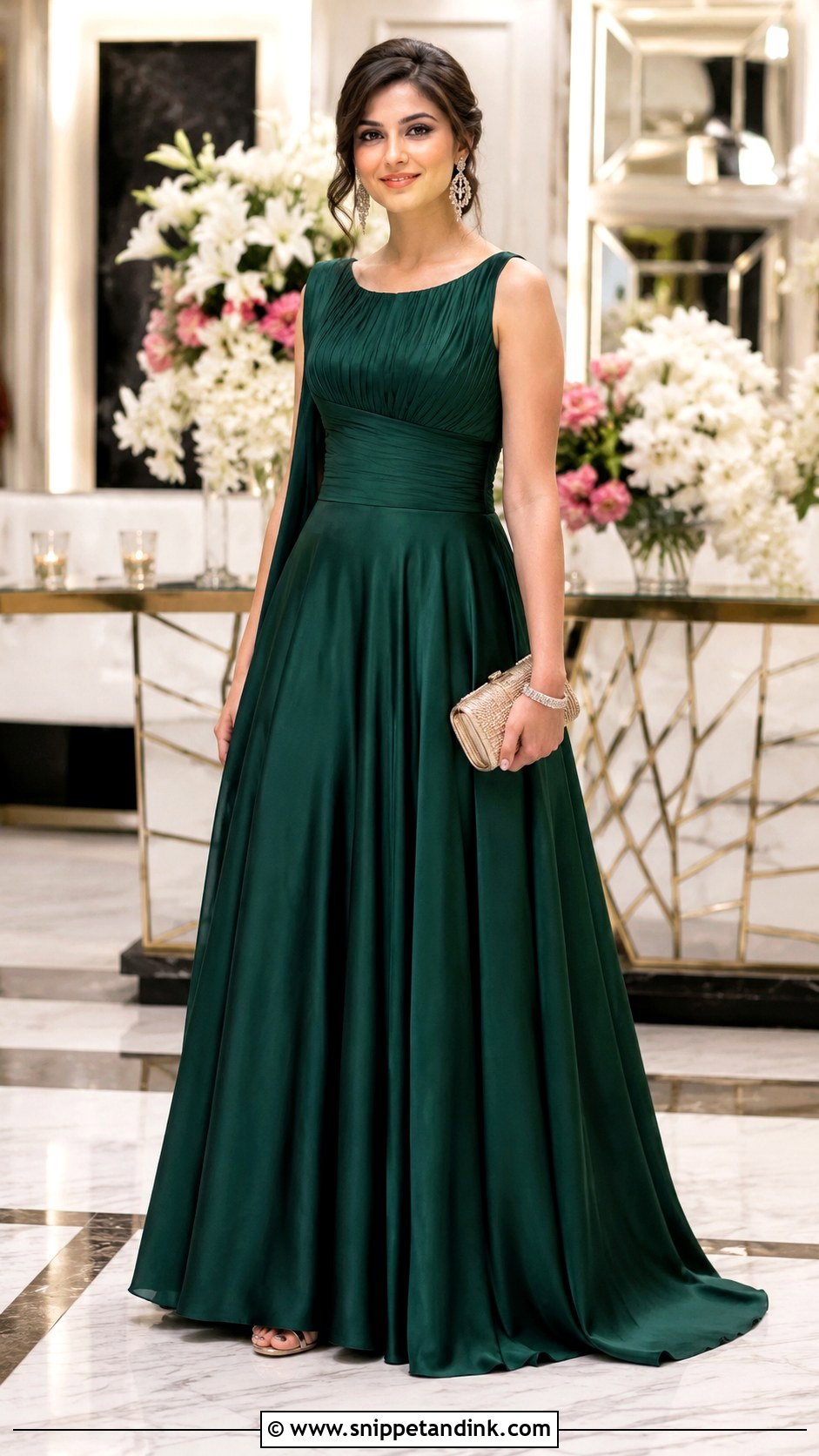
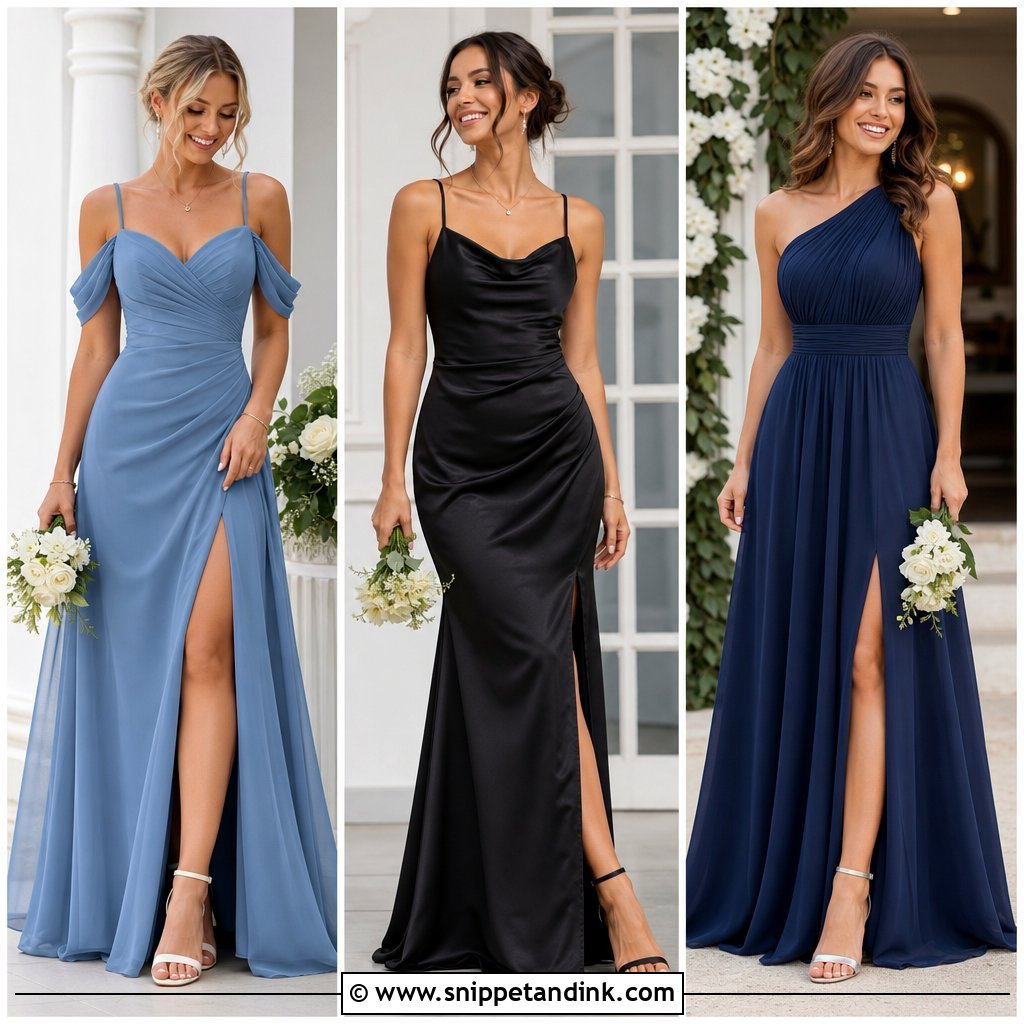
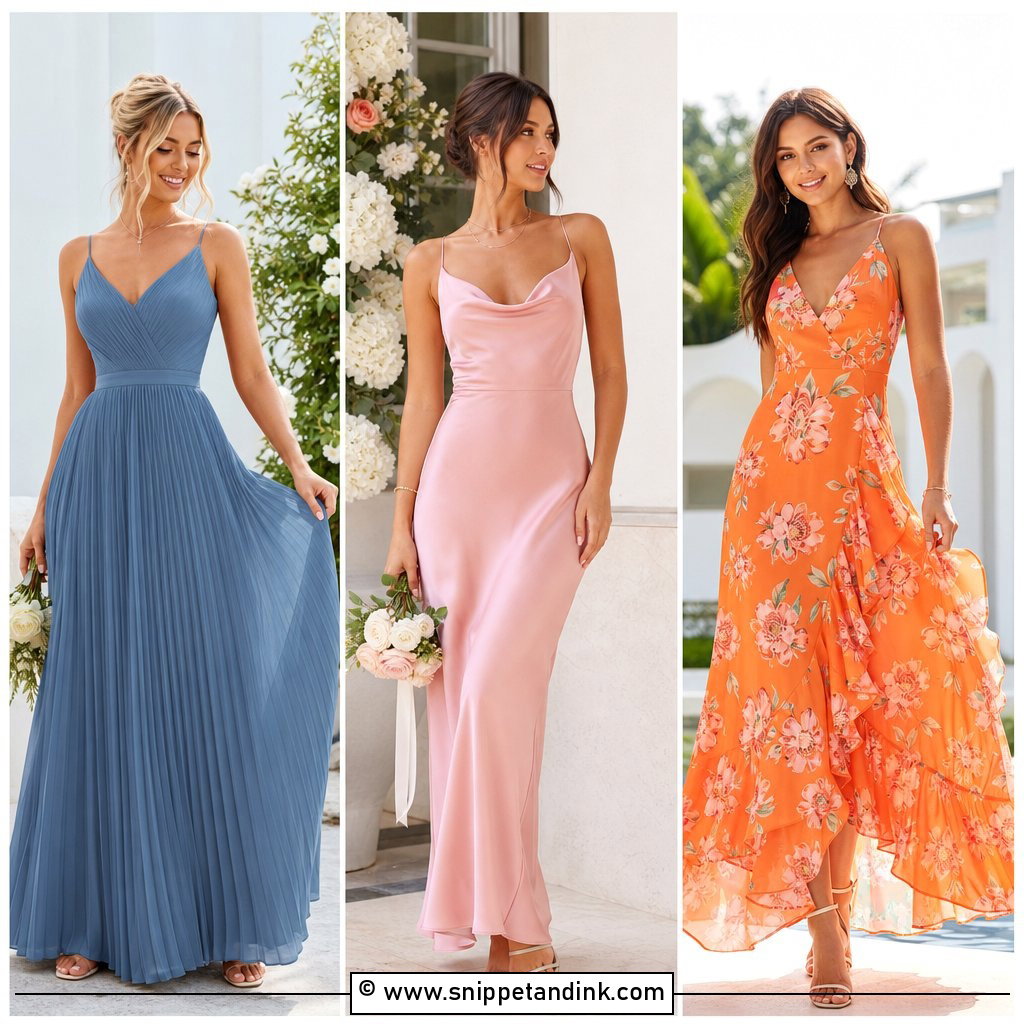
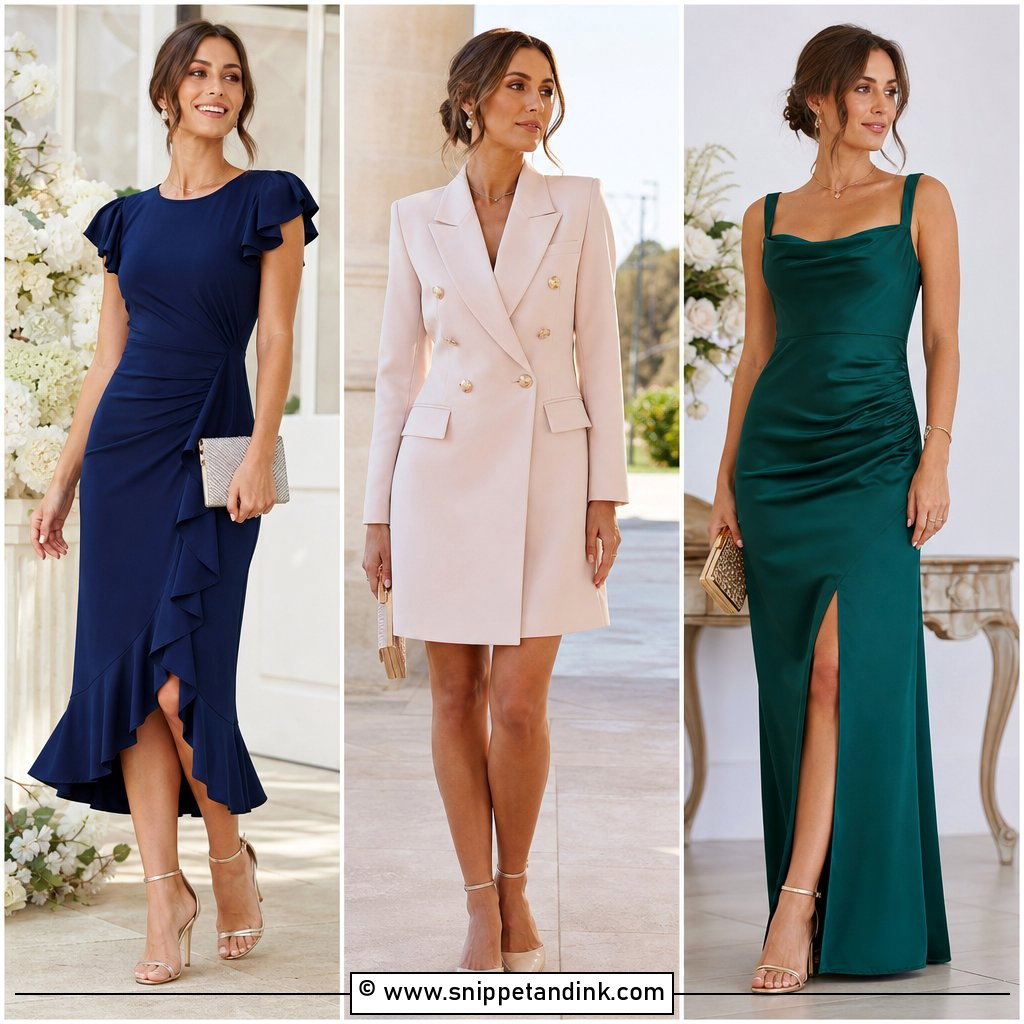
At a formal evening reception, a gown is often the most comfortable thing in the room. Satin, crepe, chiffon, tulle and embellished net all work, in A-line, fit-and-flare or draped shapes. Midnight blue, emerald, burgundy and charcoal hold up under stage lights; champagne and rose gold read softer. If the gown is heavily worked, drop to studs and a slim bracelet. Soft waves or a sleek bun keep it refined. Tulle skirts look dreamy but catch on chair legs and other guests’ heels, so I’d choose a lightly layered one for a crowded hall.
8. Silk Saree For Brother Wedding
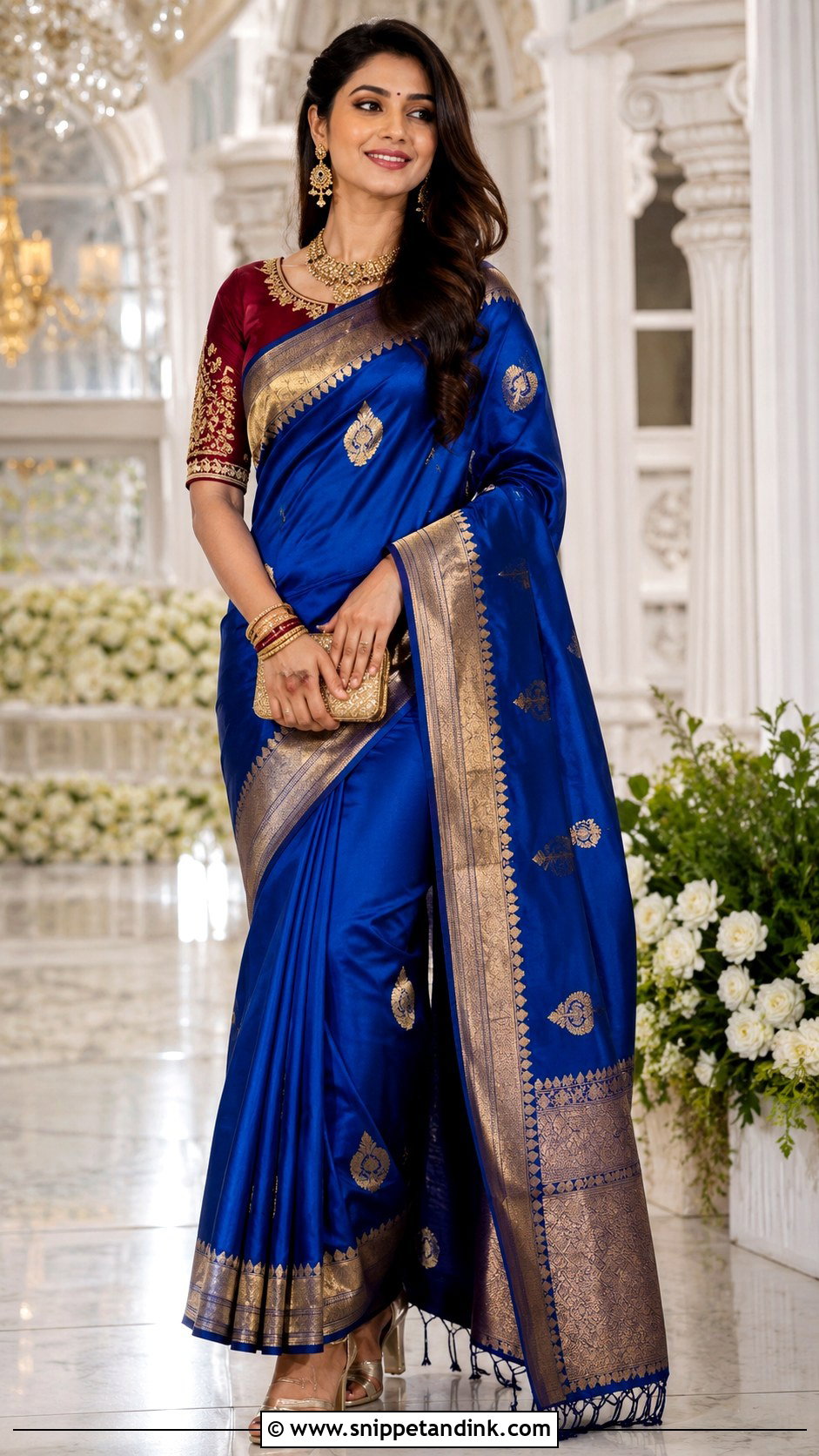
Silk sarees are heirloom territory. Kanjivaram, Banarasi, Paithani and Tussar each carry a different regional character, and for the main ceremony or morning rituals there’s nothing more dignified. Rani pink, mustard, teal, royal blue and deep green all suit a wedding. A contrast blouse makes it look styled rather than borrowed. Gold-toned jewelry, bangles and a bindi complete it. Heavier silks need practised pleating, so if you don’t drape often, ask someone experienced to do it and pin it at the shoulder and waist.
9. Organza Saree For Brother Wedding
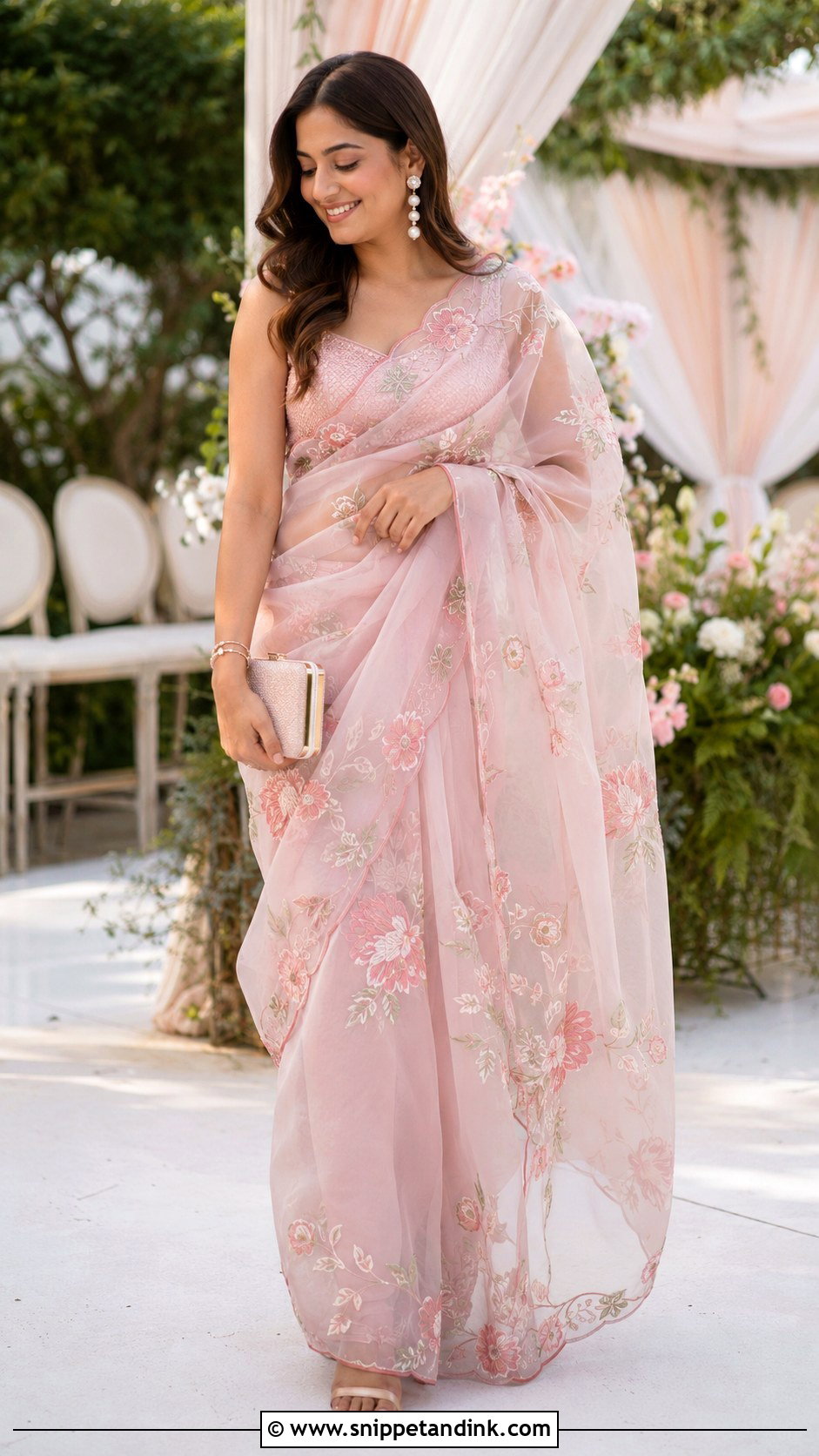
Organza gives volume without weight. That’s why it suits daytime events, where a heavy silk would feel oppressive in the heat. Floral embroidery, pearl details or a scalloped border make it special enough for a sibling’s wedding. Lilac, blush, mint, peach and powder blue all glow in natural light. A fitted blouse, pearl earrings and heeled sandals are enough. Organza does stand away from the body, so keep the pleats narrow and the accessories light, or the whole outfit looks puffy.
10. Sequin Saree For Brother Wedding
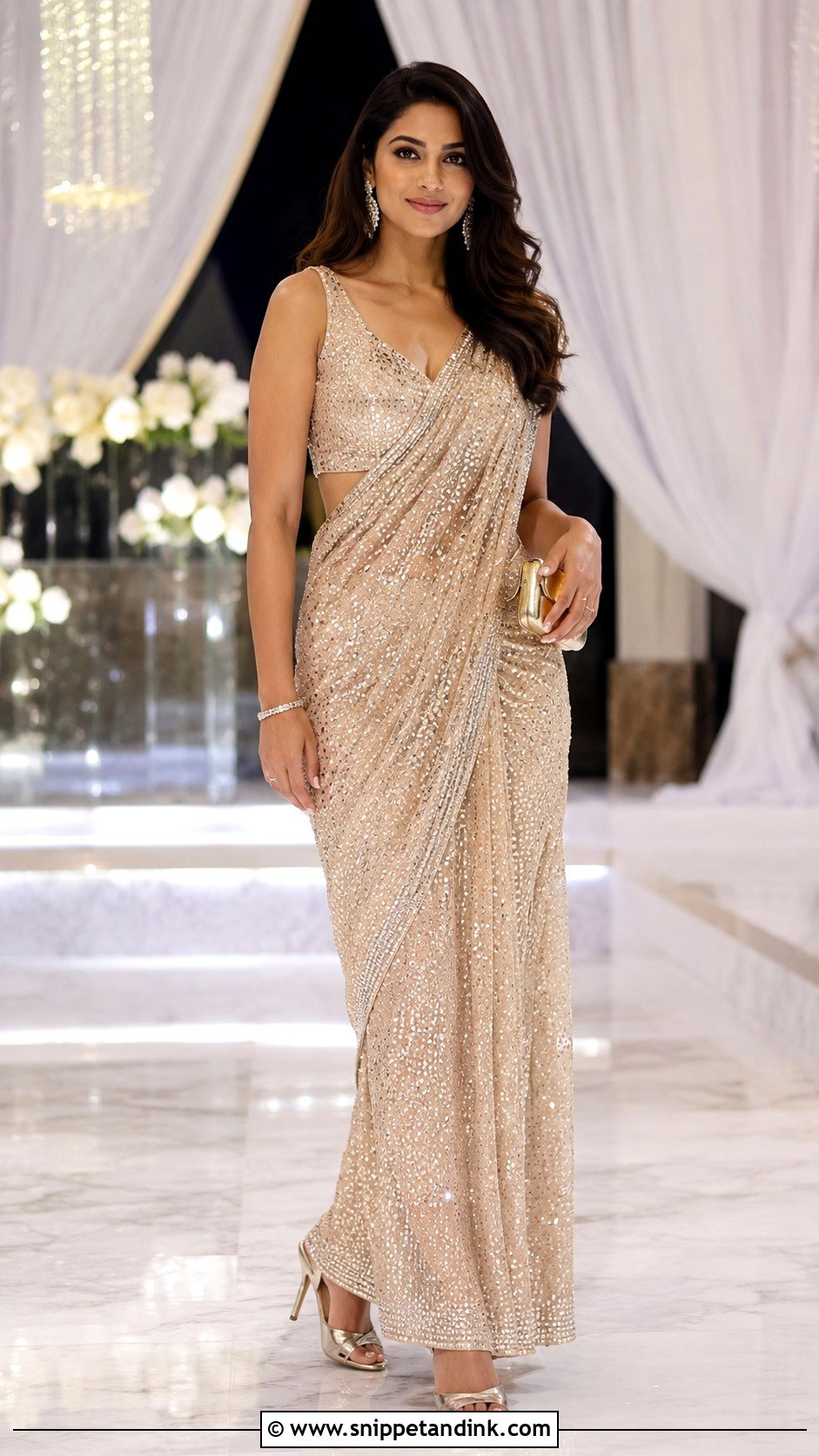
Sequins belong at the reception or sangeet, under artificial light where they actually sparkle. In afternoon sun they can look harsh. Choose champagne, dusty rose, bronze, emerald, navy or silver-gray rather than a loud colour, because the shine already does the work. With a heavily embellished saree, keep the blouse plain; with a lighter one, a matching sequin blouse works. Studs or drops, metallic heels and a clean clutch are enough. Smooth hair and polished makeup keep the overall effect balanced.
11. Velvet Lehenga For Brother Wedding
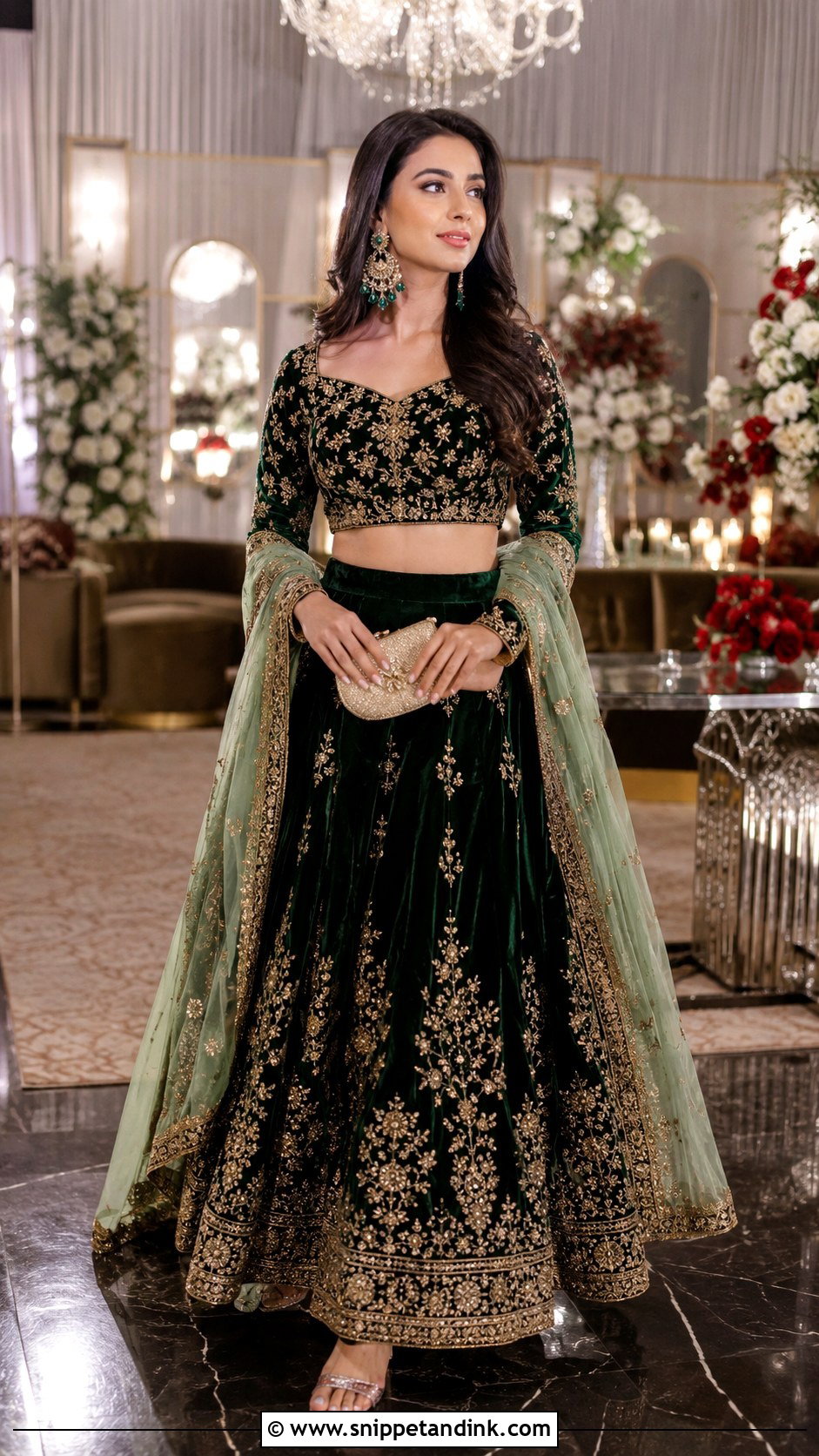
Velvet is a winter fabric, full stop. It looks rich in maroon, emerald, navy, plum and chocolate brown, and it keeps you warm at an outdoor evening function in December. Zari, dabka and antique gold embroidery suit the pile without overloading it. Pair the lehenga with a fitted blouse and a net or organza dupatta to lighten the weight. Statement earrings, a cocktail ring and a compact clutch are enough. Velvet crushes where you sit, so hang it straight after each wear and steam from the inside.
12. Pastel Lehenga For Brother Wedding
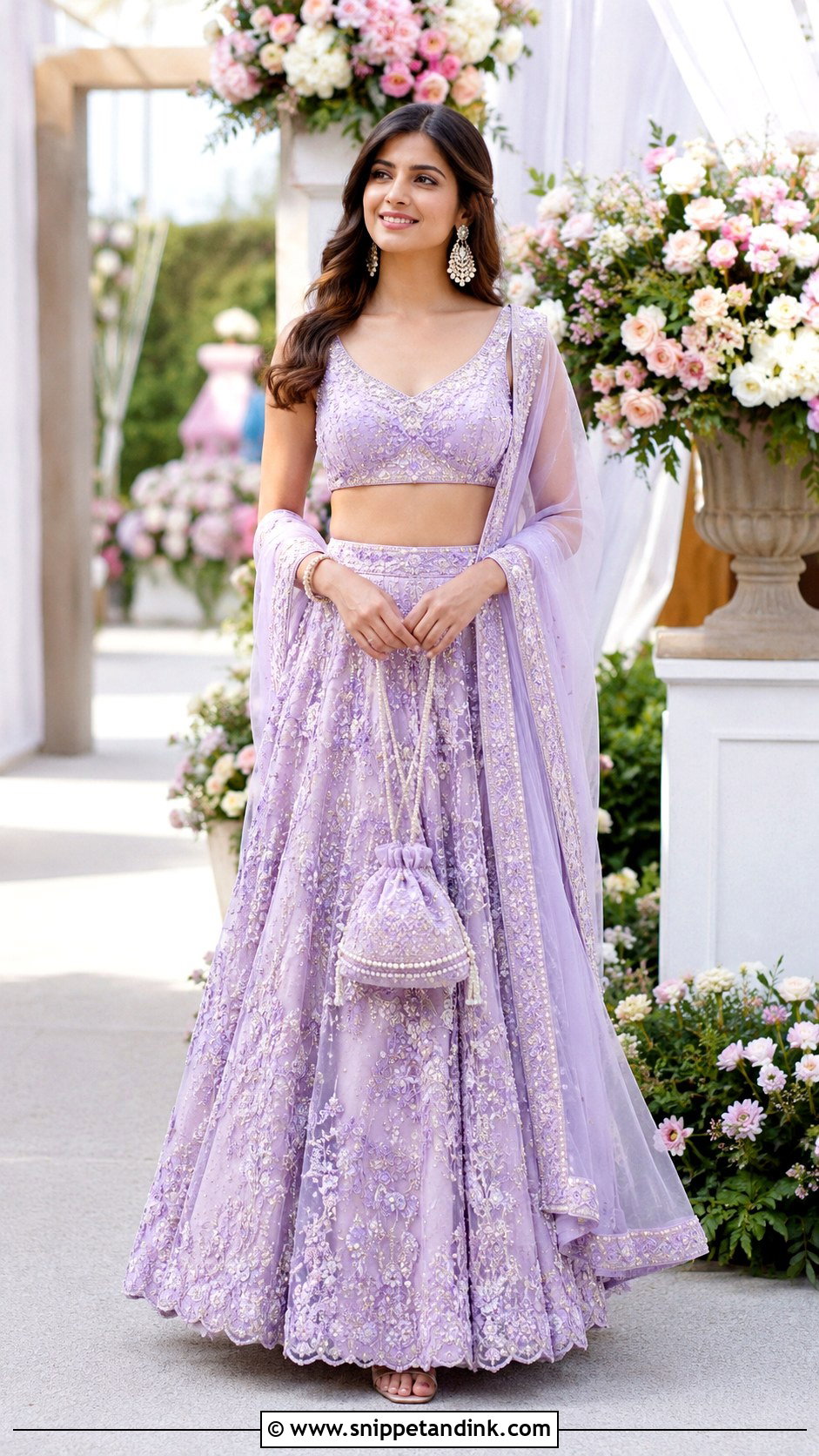
Pastels look fresh in daylight and youthful without being loud: blush pink, mint, lavender, powder blue, peach and champagne. Choose delicate embroidery, pearl work, thread work or light sequins, with a flowing skirt in organza, georgette or tulle. A matching or contrast blouse, a sheer dupatta, pearl earrings and nude or metallic heels finish it. One question to ask first: is the bride wearing pastel? Many brides now choose blush or peach for one function, and a sister in the same shade beside her looks like a matched set.
13. Jacket Lehenga For Brother Wedding
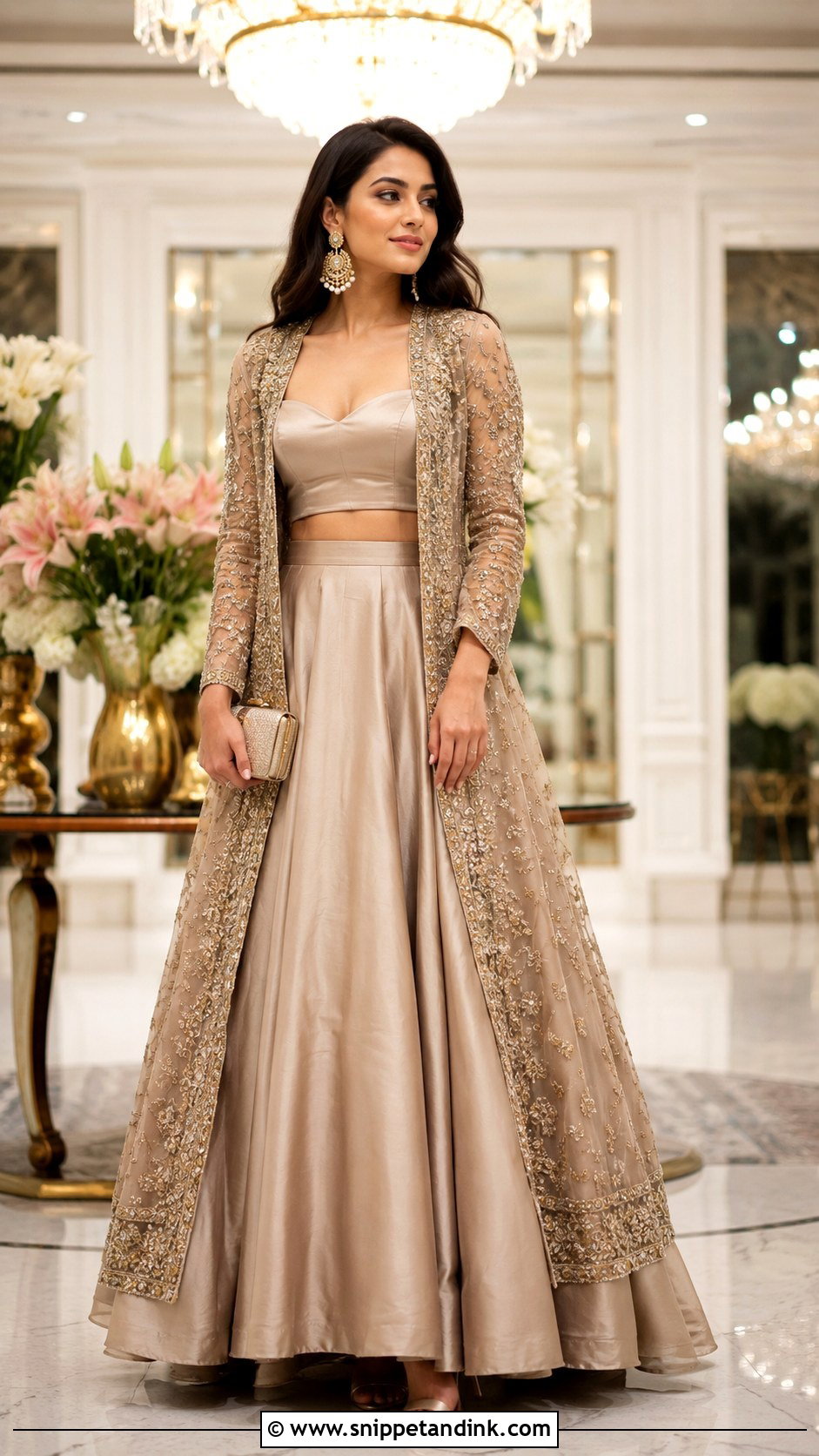
A jacket lehenga replaces the dupatta with a long embroidered jacket, a cape jacket or a short structured one, so there’s nothing to keep re-adjusting. It suits receptions, engagements and winter weddings, when the jacket also keeps you warm. Either pair a plain lehenga with a heavily embroidered jacket or keep both lightly worked. Heels, statement earrings and a sleek clutch complete it. If the jacket has a high neck, skip the necklace altogether. Make sure the jacket’s armholes are cut generously, because a tight one restricts every hug.
14. Cape Dress For Brother Wedding
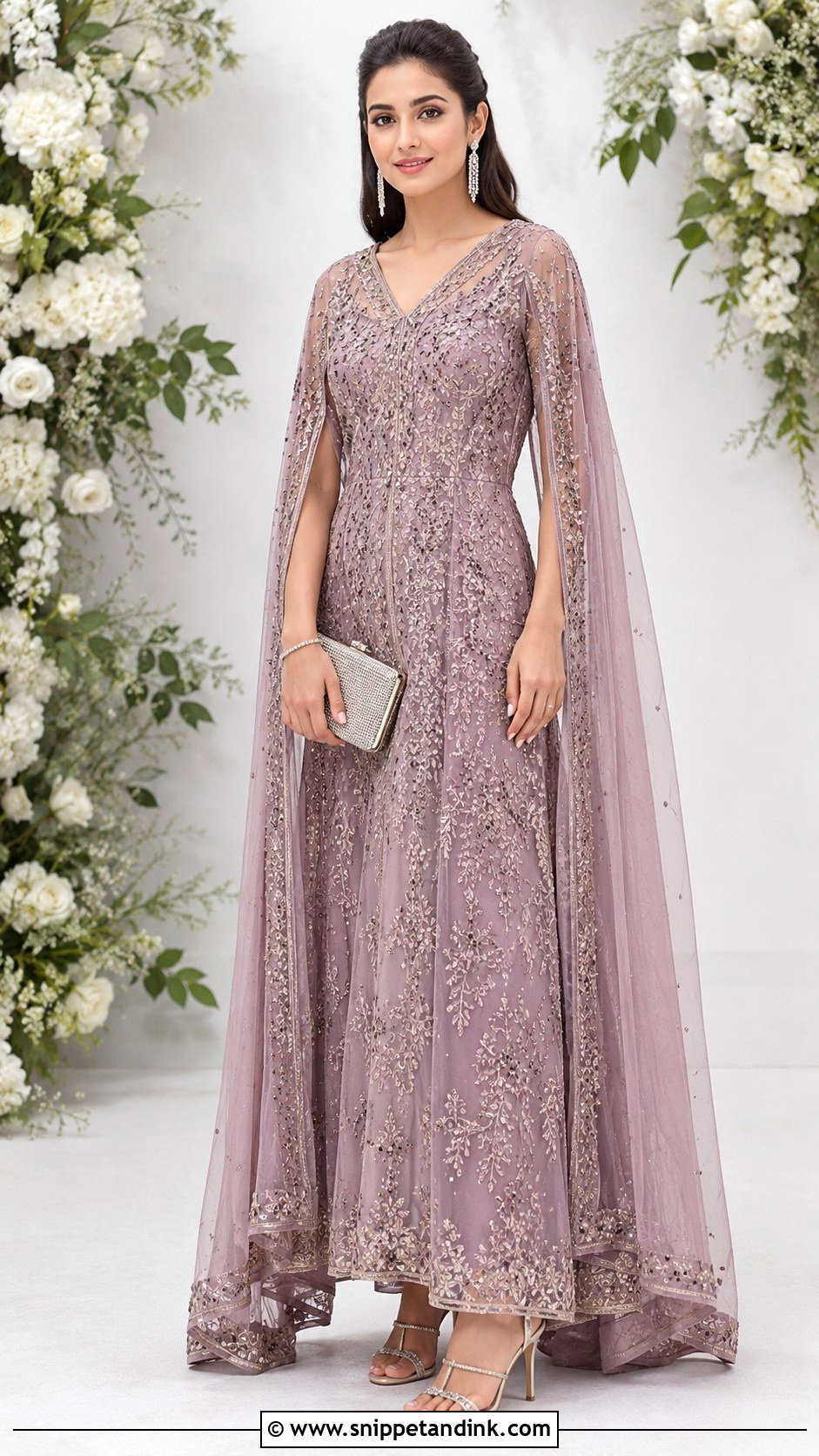
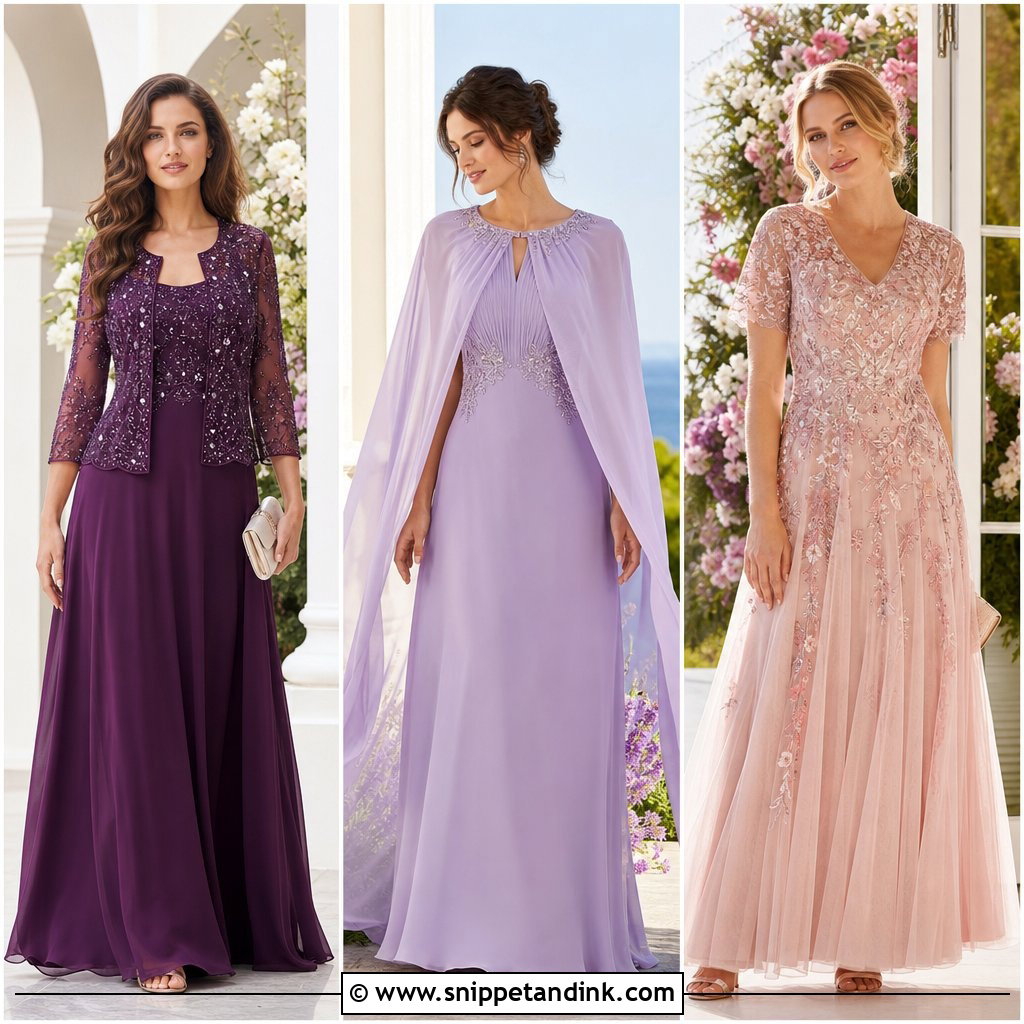
Capes are freeing for sisters who’ll be carrying trays, fixing the bride’s dupatta and hugging relatives all night. It can be a cape gown, cape lehenga or cape kurta set; the cape gives drama without a dupatta to manage. Sheer, embroidered or lightly embellished capes look festive. Slim heels, long earrings and a small clutch are enough. If the cape is heavily worked, keep everything under it simple. Receptions, sangeet functions and contemporary venues suit it.
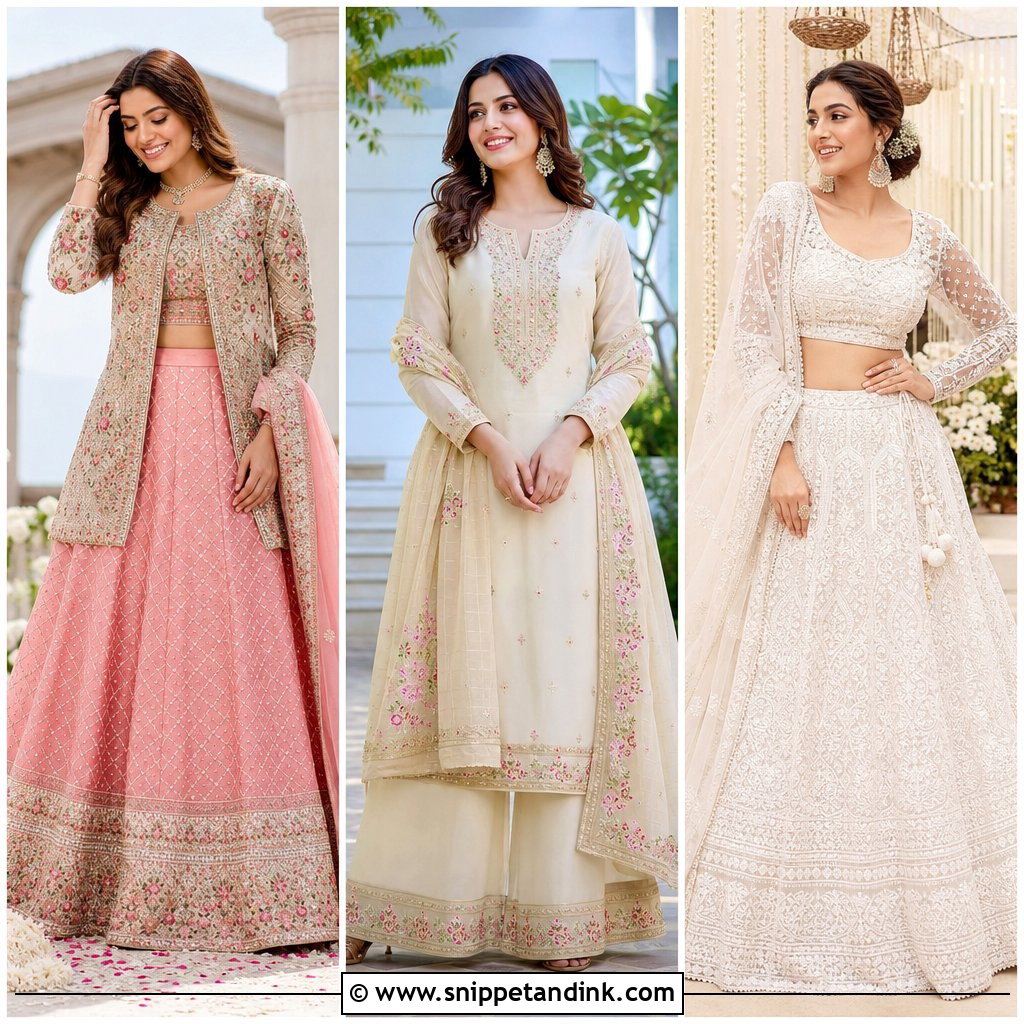
15. Kurta Palazzo Set For Brother Wedding
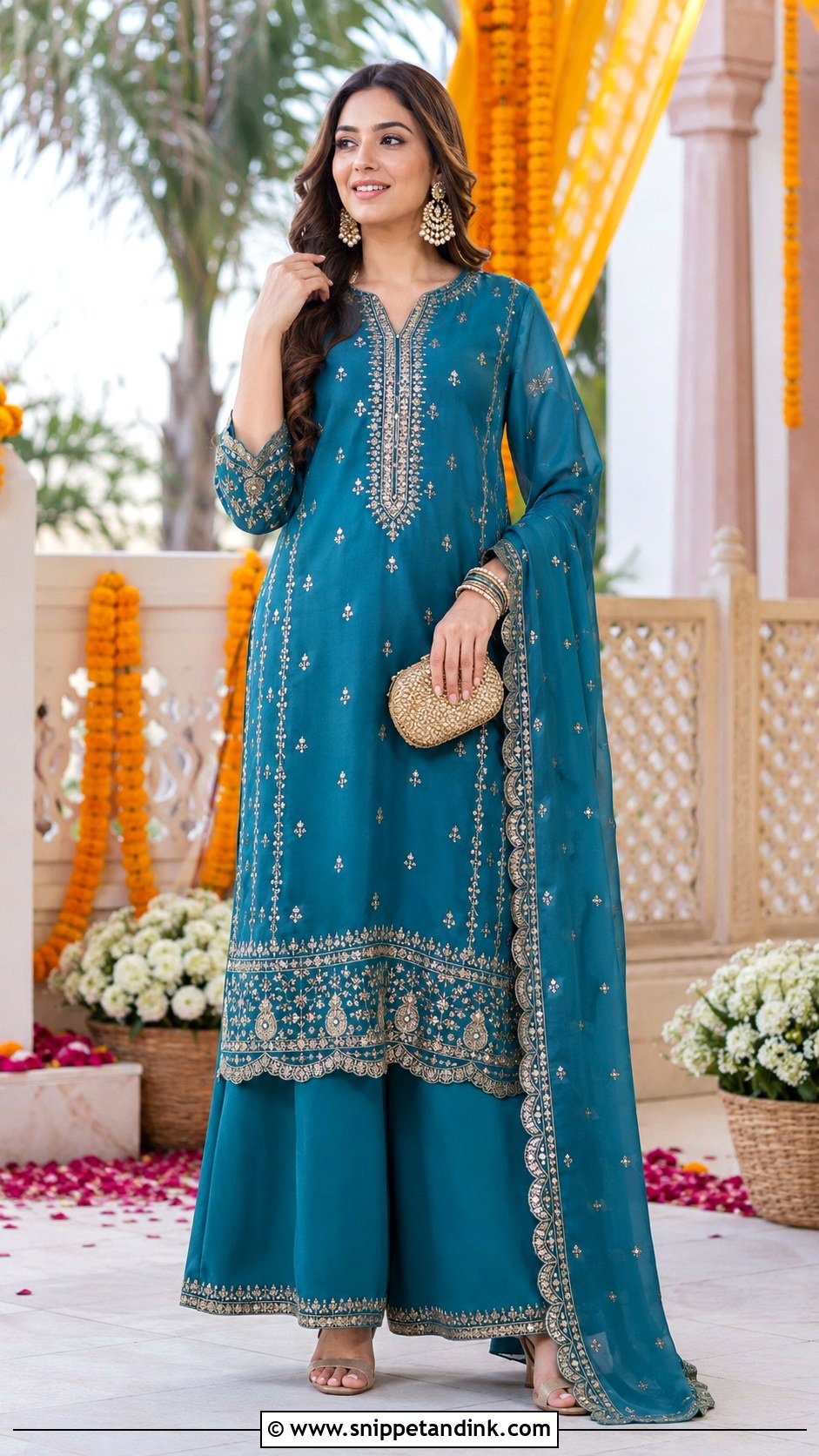
A kurta palazzo set is what I’d pack for pre-wedding functions, daytime ceremonies and smaller family events. Wide-leg palazzos let you sit cross-legged during a puja without worrying about the hem. A long embroidered kurta looks formal; a short kurta with flared palazzos looks younger. Silk, georgette, chanderi and cotton silk all work, in mustard, teal, magenta, ivory-gold or coral. Add a matching dupatta, juttis or block heels, earrings and bangles. Cotton silk breathes well in summer heat, which matters on a long day of hosting.
16. Chikankari Outfit For Brother Wedding
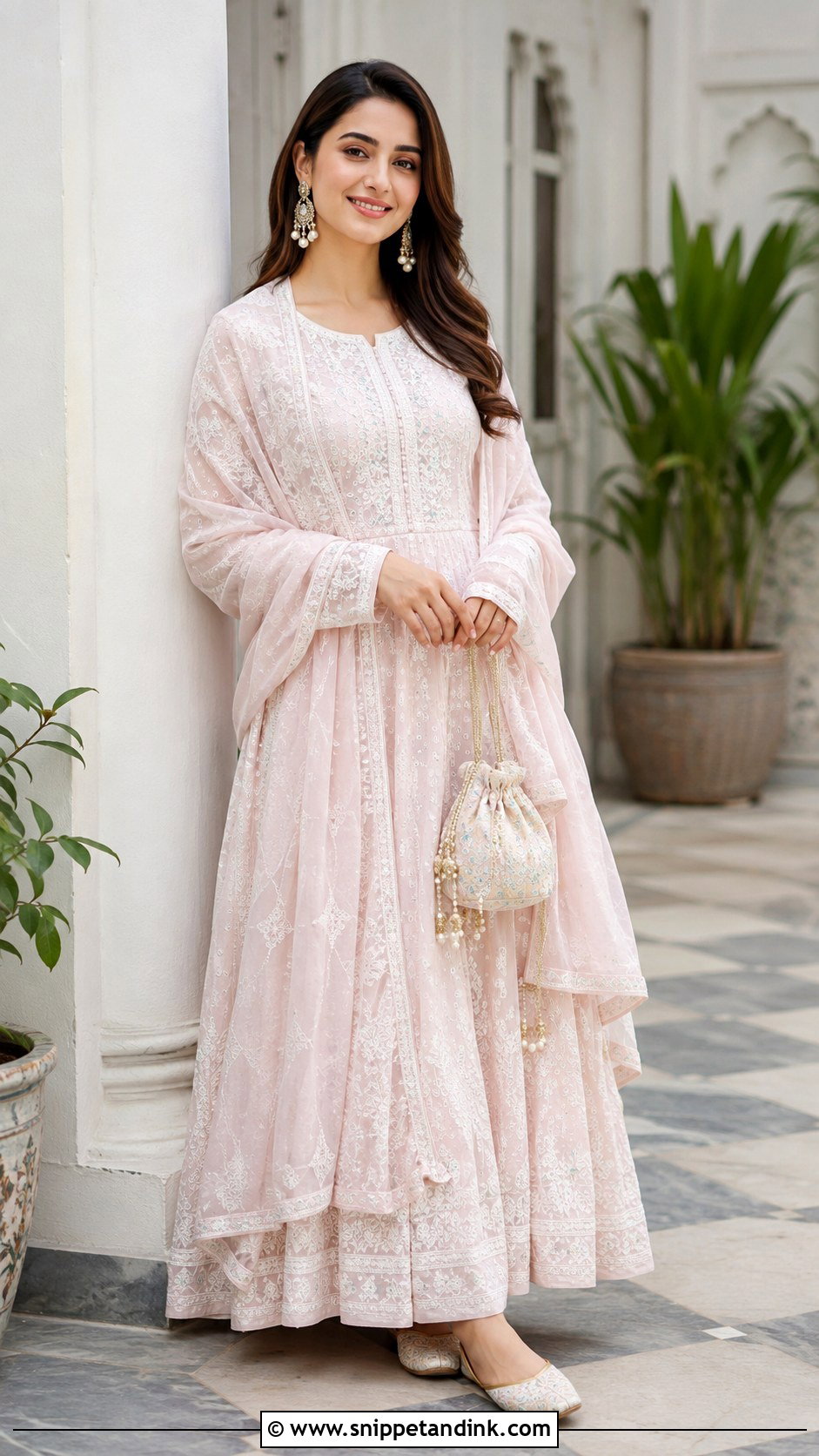
Chikankari is shadow-work hand embroidery, and its fine stitches look best up close, which makes it right for intimate ceremonies and summer daytime functions. It comes as lehengas, Anarkalis, kurta sets and sarees. Ivory with a coloured lining, lemon yellow, mint and blush all suit it. Most chikankari is worked on fine fabric, so a lining is essential in daylight. Pearl jewelry, nude heels or embroidered juttis and a delicate potli finish it. For a more festive version, look for subtle mukaish, the tiny metallic dots worked into the embroidery.
17. Mirror Work Dress For Brother Wedding
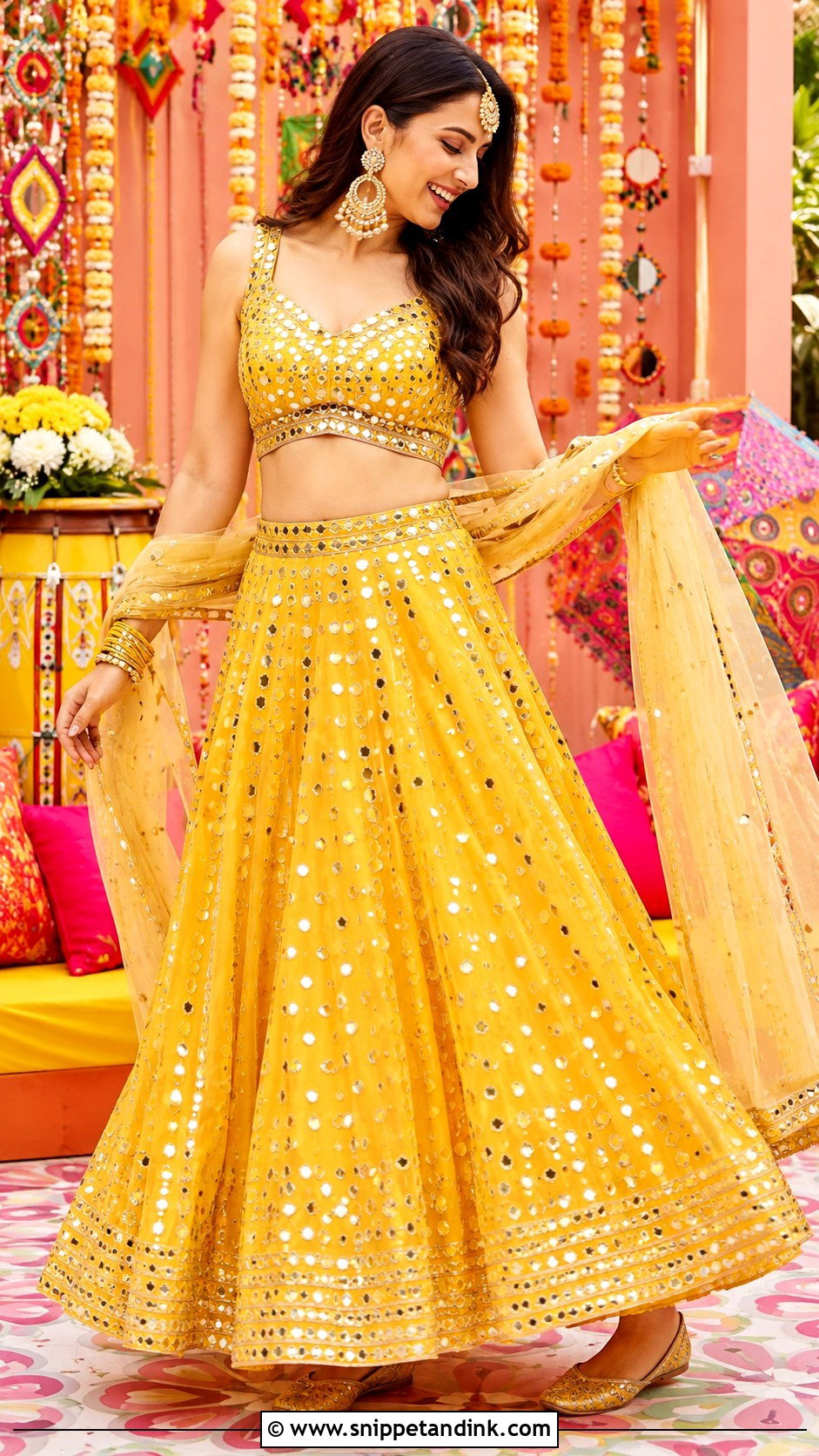
Mirror work turns any outfit into a mehendi or sangeet outfit. A mirror lehenga, sharara set or short kurta with a flared skirt looks playful and bright. Yellow, orange, turquoise, fuchsia and green suit daytime; navy or black work for evening if the family is comfortable with dark colours. Since the mirrors already reflect light, keep the jewelry to statement earrings and a few bangles. Comfortable heels or juttis and a braid or loose waves complete it. Real glass mirrors add weight, so try the outfit on for a full hour before deciding.
18. Floral Lehenga For Brother Wedding
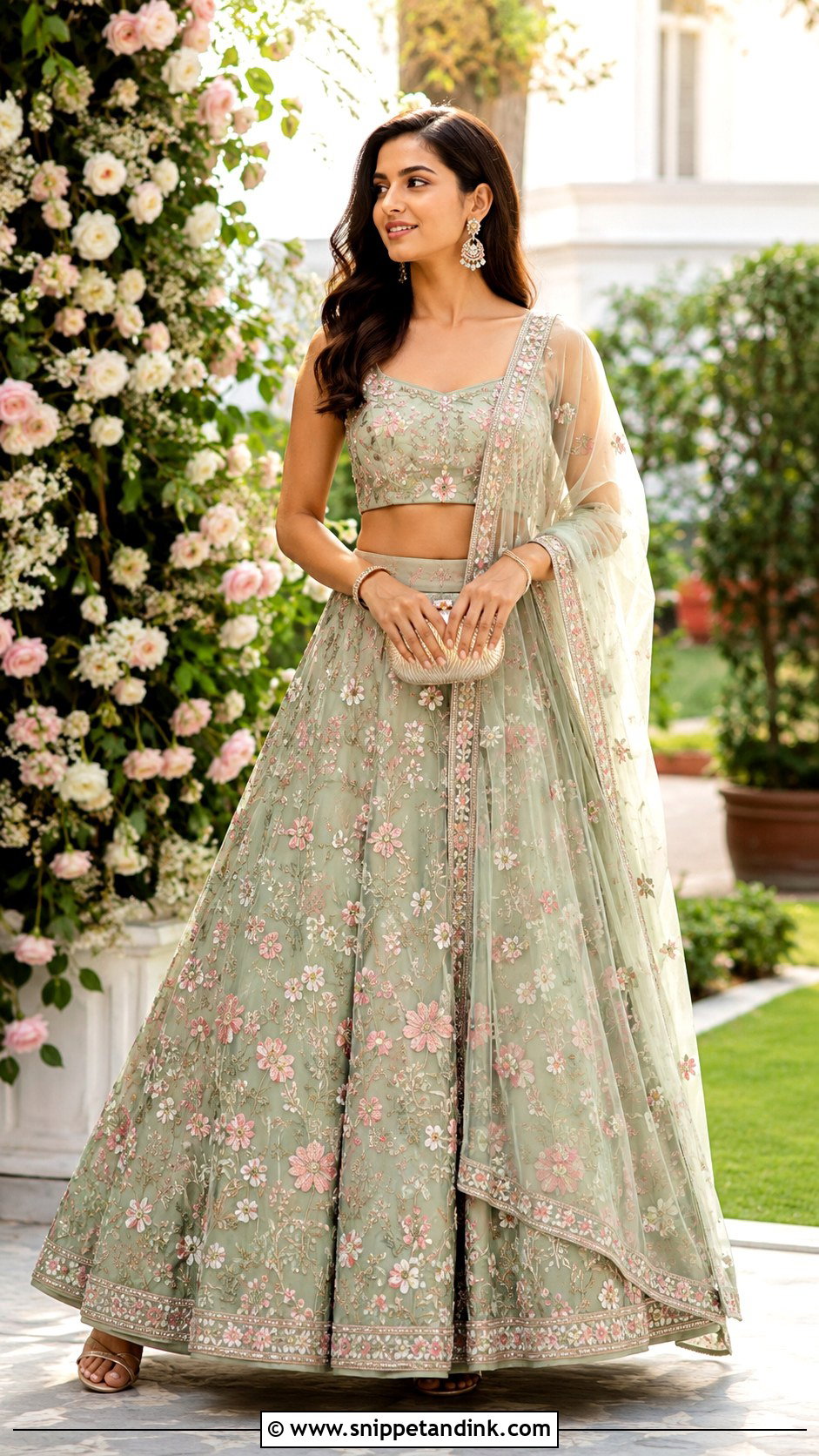
Garden weddings and daytime ceremonies suit a floral lehenga. Printed florals keep it light; embroidered florals make it formal enough for the main event. Blush, peach, ivory, sage and lavender work in sunlight, while bold flowers on a navy, burgundy or emerald base hold up in the evening. Pair it with a simple blouse, a sheer dupatta, delicate earrings and strappy heels. A floral hair accessory works if it is small. Choose a print with plenty of background showing; dense all-over florals can look busy in group photos.
19. Ruffle Saree For Brother Wedding
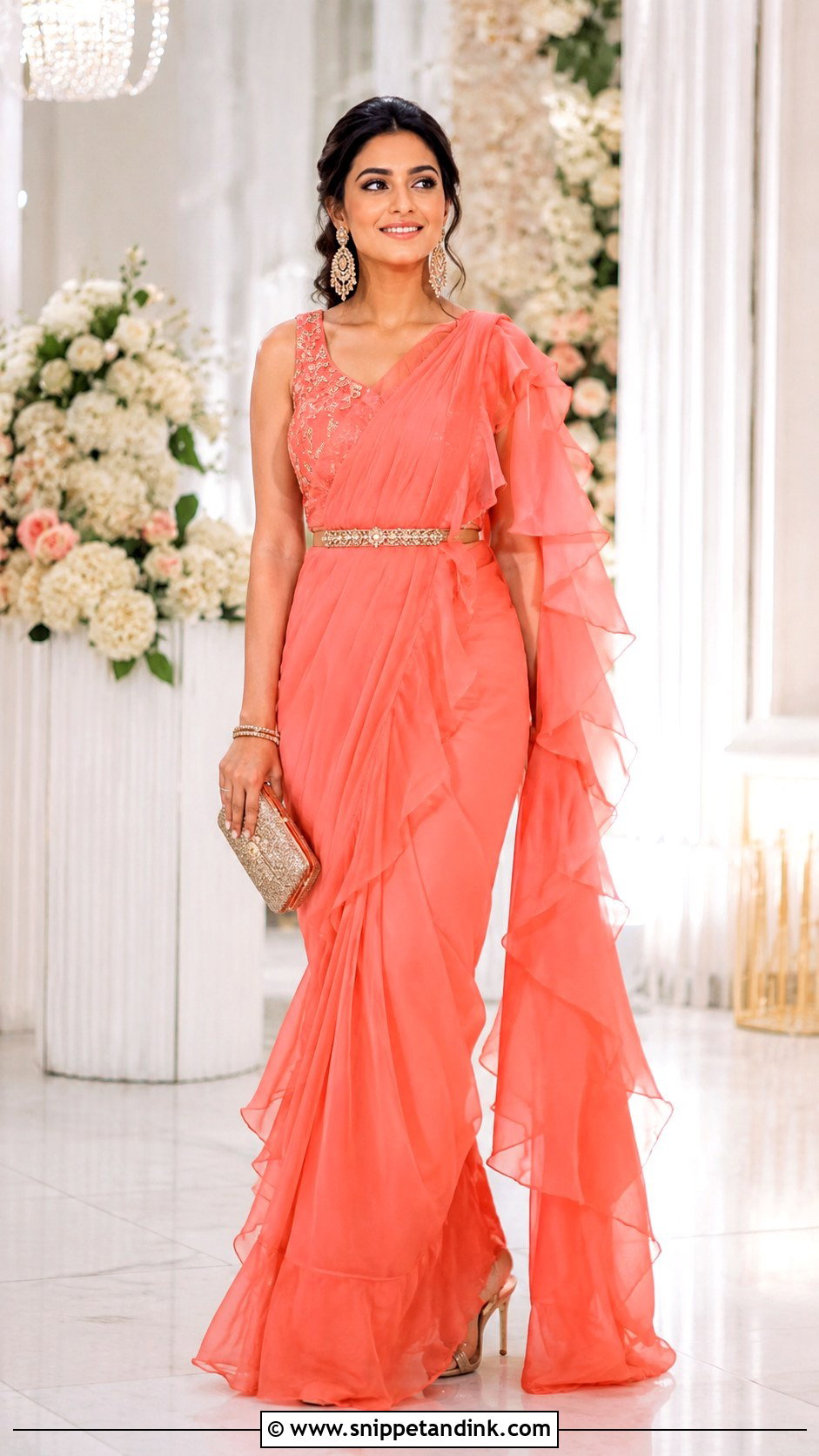
A ruffle saree adds movement and volume to a simple drape, and it suits sangeet, engagement and reception events. Georgette, chiffon or a pre-draped version keeps it easy. Soft metallics, bright pink, teal, lavender and coral all look festive. An embroidered blouse or a belt gives it shape, with statement earrings, heels and a sleek clutch. Keep the hair clean and the makeup fresh so the ruffles look deliberate. Ruffles add bulk at the hip, so a belt helps if you prefer a defined waist.
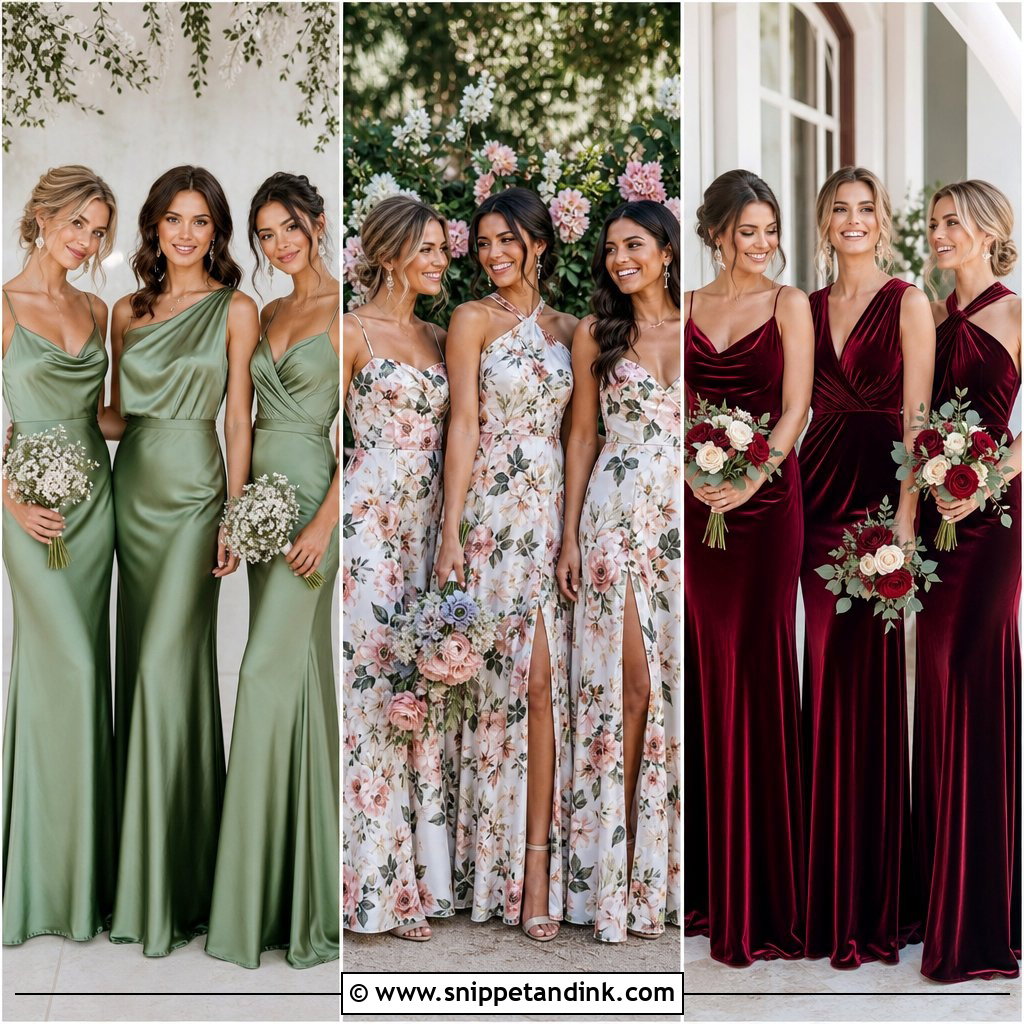
20. Pre Draped Saree For Brother Wedding
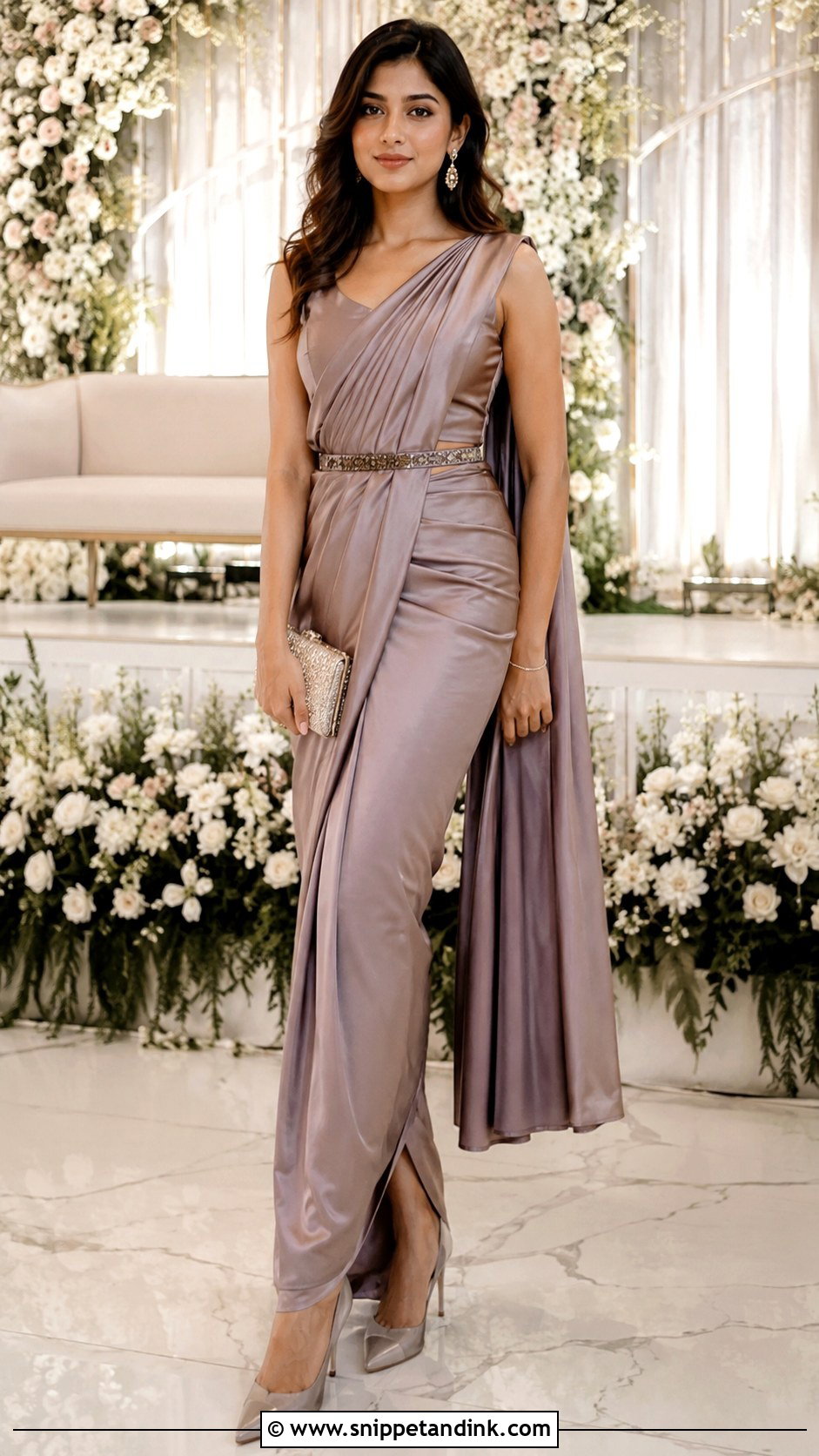
Pleats that come loose mid-baraat are a real risk with a hand-draped saree, and a pre-draped one removes it. Stitched pleats, an attached pallu and sometimes a belt keep everything secure while you dance and greet guests. Satin, crepe, georgette and shimmer fabrics give a sleek finish. A structured blouse, statement earrings, heels and a clutch complete it. Receptions, engagement parties and sangeet functions suit it best. Try it on with your shoes before the wedding, because the fall length is fixed once stitched.
21. Designer Suit For Brother Wedding
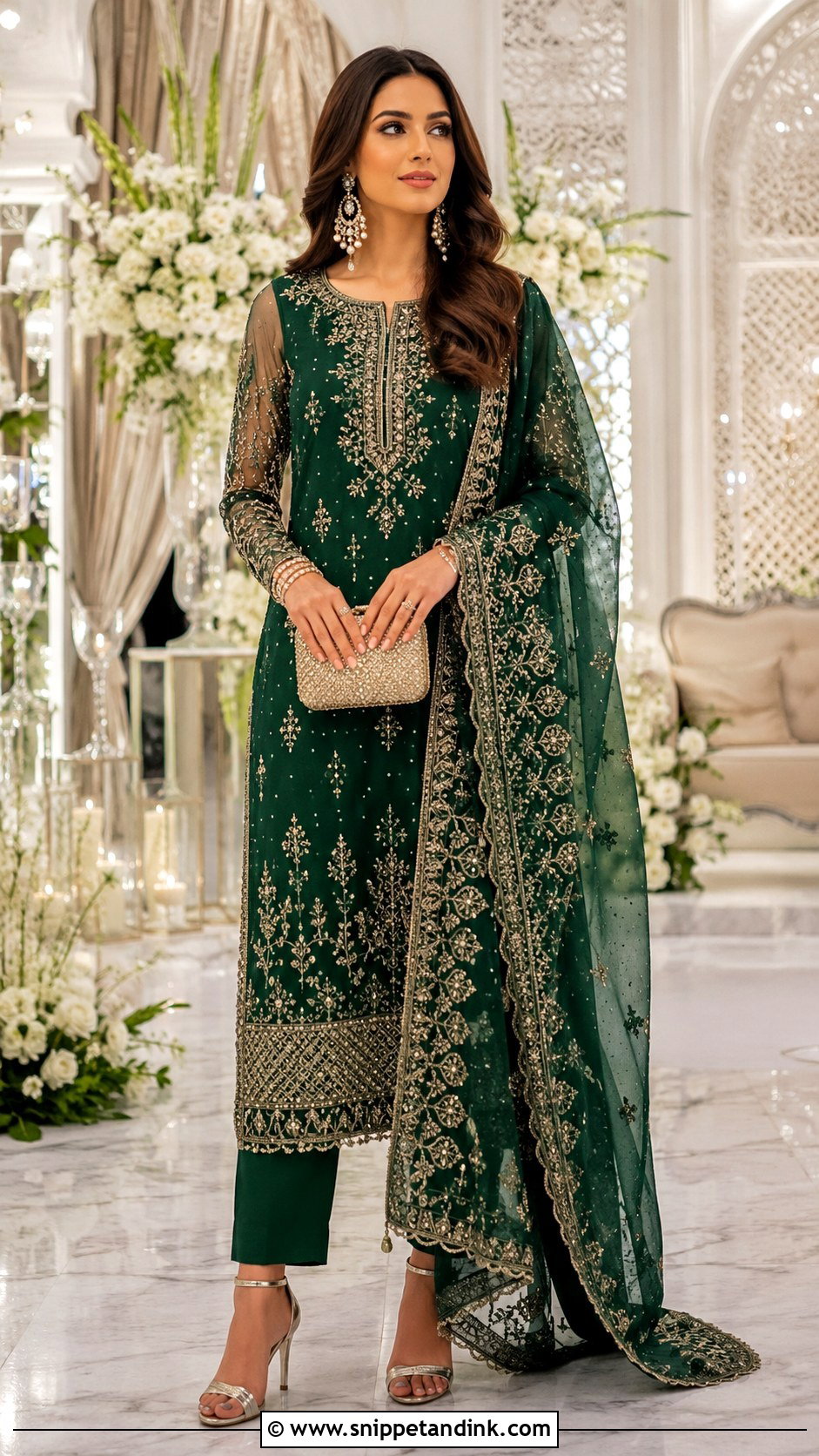
A designer suit is the modest choice that still looks festive. A heavily embroidered straight suit, a floor-length kurta with pants or a Pakistani-style suit with a detailed dupatta all work for family ceremonies and daytime events. Silk, organza, georgette and chanderi make it dressy. Let the dupatta lead if it has rich borders, and keep the rest quiet. Emerald, rose pink, mustard, royal blue and ivory-gold suit weddings. Heels or juttis, statement earrings, bangles and a clutch complete it. Straight suits look sharpest when the side slits land at mid-thigh, so check that at the fitting.
22. Skirt And Top For Brother Wedding
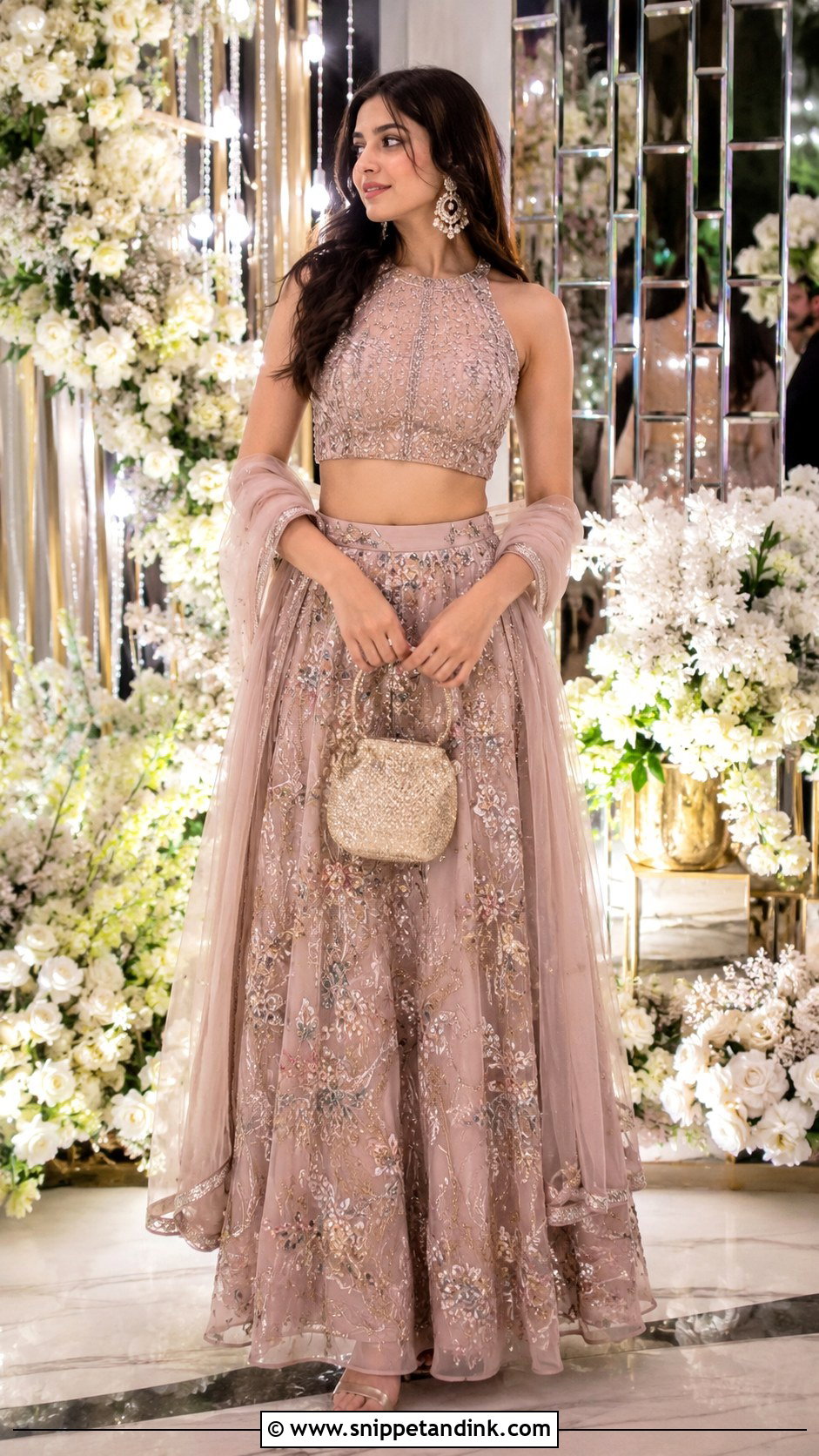
A skirt and top is the mix-and-match option, and the pieces are easy to wear again after the wedding. Choose a flowing embroidered skirt with a crop top, peplum or structured blouse, and add a dupatta, cape or long jacket for a more traditional finish. A printed skirt with a solid blouse is lighter; a heavily embroidered skirt is more formal. It suits engagements, mehendi and sangeet. Make sure the waistband sits comfortably when you sit on the floor, not only when you stand.
23. Jumpsuit For Brother Wedding
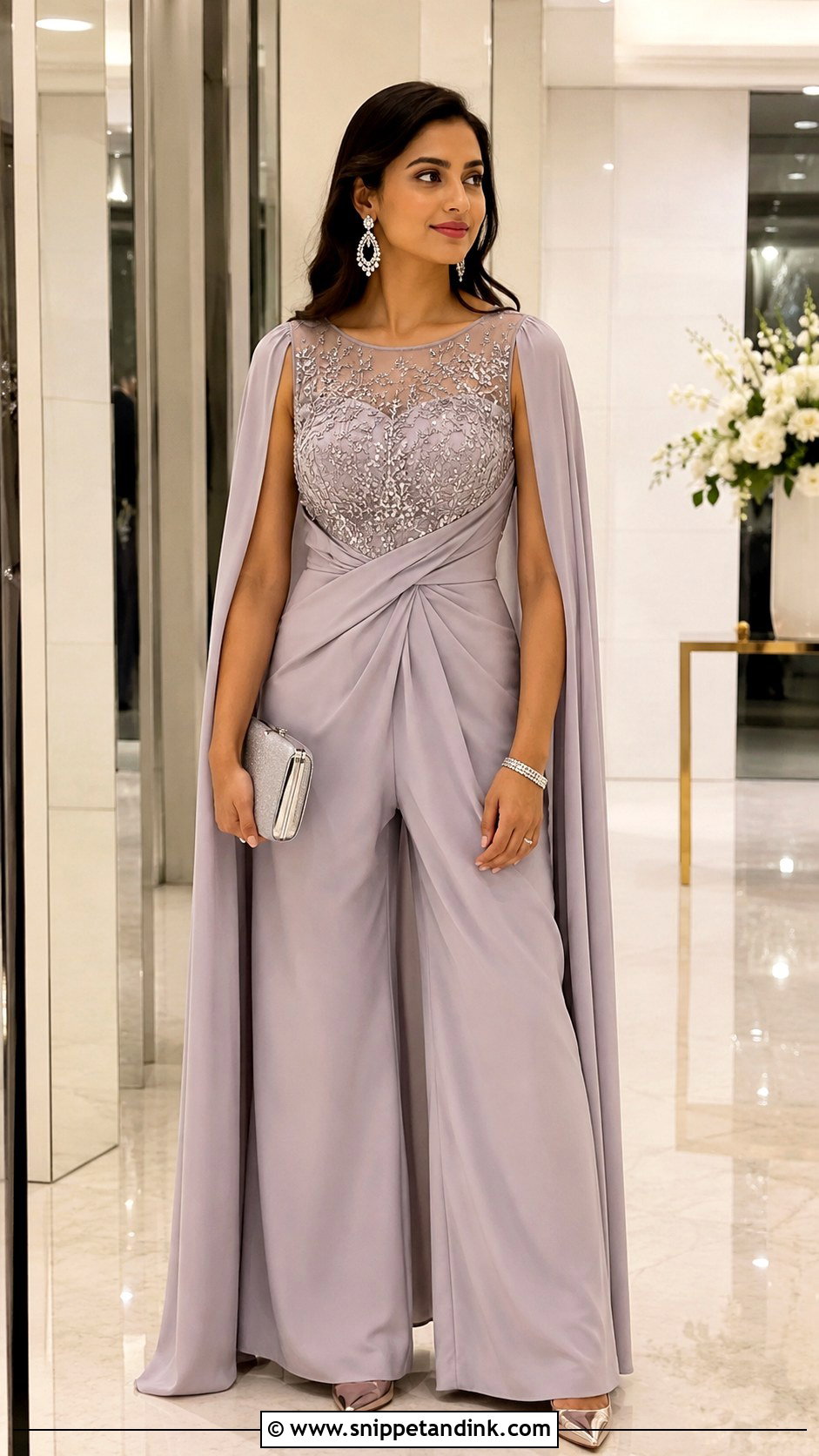
Jumpsuits work at receptions and modern pre-wedding events when the fabric does the dressing up. Wide-leg silhouettes in satin, crepe, silk blends or embellished fabric look right, especially draped, caped or with an embroidered bodice. Jewel tones, metallic neutrals and rich pastels all suit it. Pointed heels, statement earrings and a structured clutch finish it; add a delicate necklace only if the neckline is plain. Check the length with your heels on, since jumpsuit legs that pool at the floor look sloppy.
24. Co Ord Set For Brother Wedding
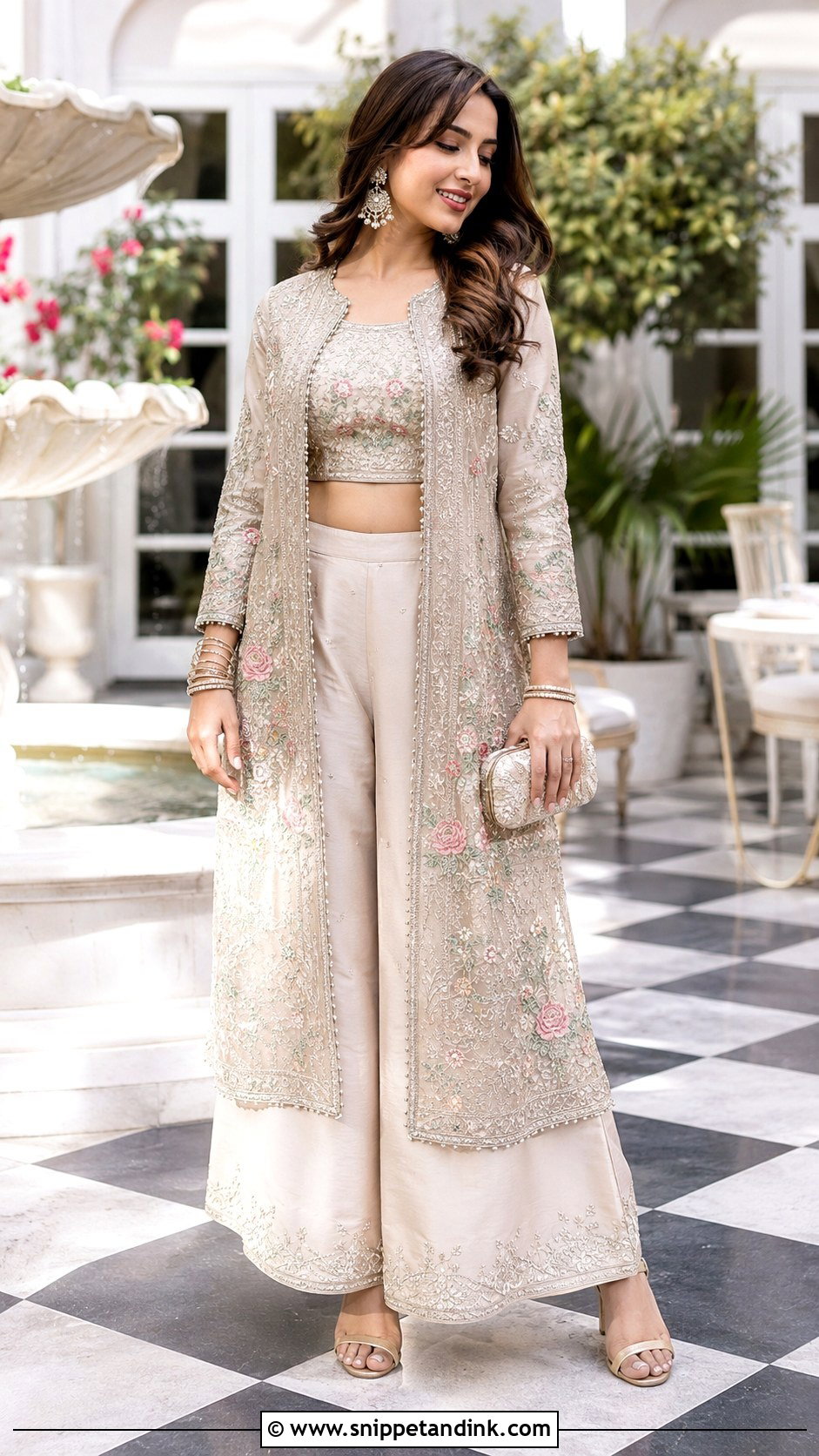
Co-ord sets travel well, and that’s their real advantage for an out-of-town wedding. An embroidered crop top with palazzos, a brocade jacket with matching trousers or a silk tunic with wide-leg pants all look festive with the right fabric. They suit smaller ceremonies and daytime functions. Bright colours, soft metallics or refined prints depend on the event, and a dupatta or cape adds tradition. Block heels or juttis, earrings and a clutch finish it. Raw silk and brocade resist creasing in a suitcase far better than georgette.
25. Minimal Dress For Brother Wedding
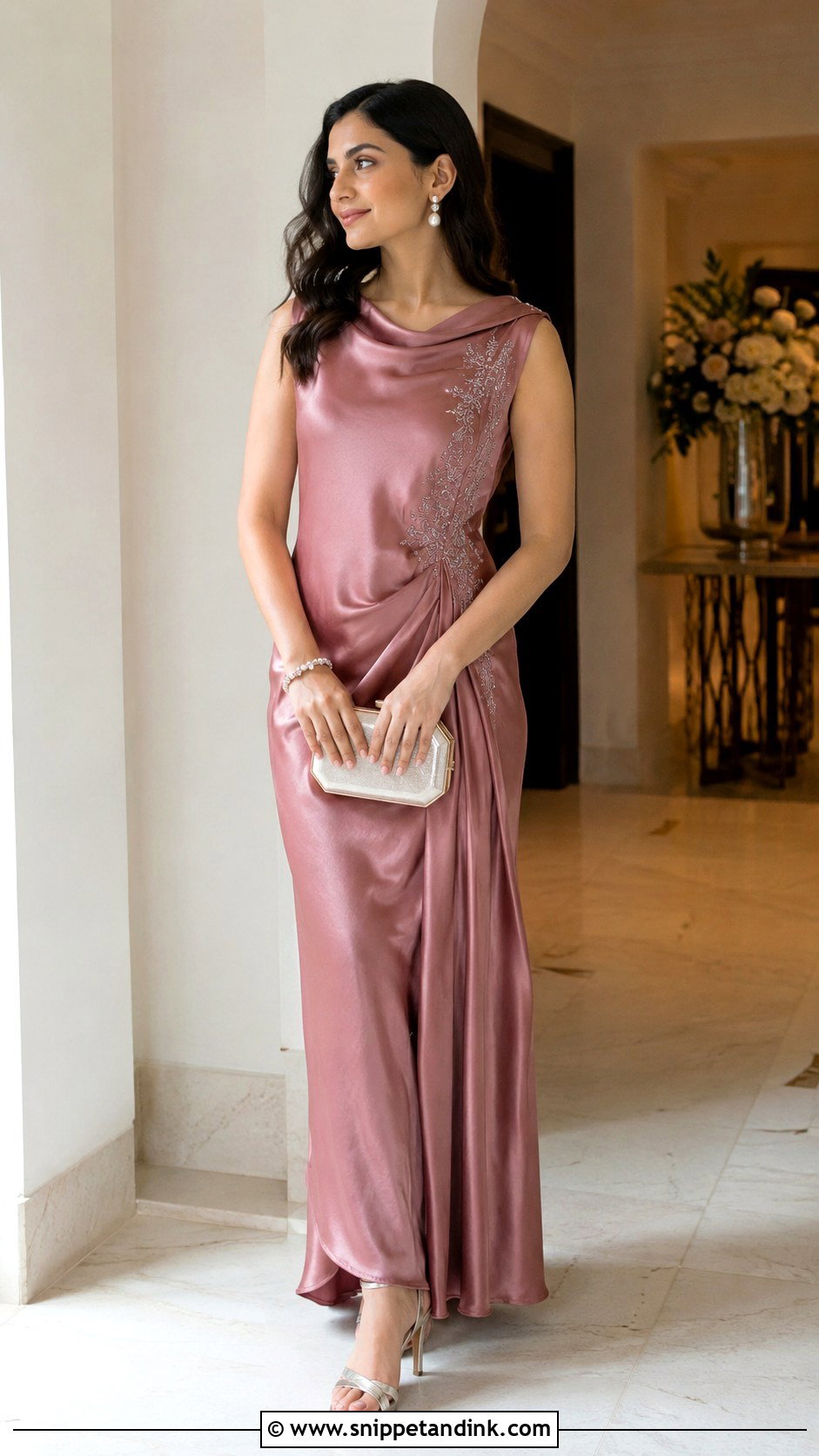
Minimal works only when the fabric is rich. A satin maxi, an embroidered midi, a sleek Anarkali or a plain silk saree with statement jewelry all fit an understated or modern wedding. Dusty rose, sage, navy, champagne, mauve and deep green keep it refined. Pearl earrings, metallic heels, a structured clutch and a bracelet are enough. Minimal does not mean plain; every piece has to be chosen. Watch the fit most of all, because with no embroidery to distract, a loose seam or a wrong hem is the first thing anyone sees.
Packing Lehengas and Sarees for a Wedding Out of Town
Destination and out-of-town weddings mean four or five outfits in a suitcase, and heavy Indian wear doesn’t love being folded. Lehenga skirts pack best turned inside out and rolled loosely around tissue paper, or laid in the case with the can-can folded flat inside. Never check in your main ceremony outfit; it goes in your hand luggage, along with the blouse and dupatta.
- Pack each outfit as a set in its own garment or zip bag, with the jewelry and safety pins for that function tucked inside.
- Bring a small travel steamer. Hotel irons are too hot for organza, tissue and sequins.
- Wrap mirror work and sequins in a cotton cloth so they don’t snag the outfit packed beside them.
- Take one spare blouse that matches two of your outfits, in case a hook breaks.
Wearing it again after the wedding
The pieces don’t have to retire after one week. A lehenga skirt works with a plain silk shirt at Diwali; a heavy dupatta lifts a simple suit; a saree blouse can be paired with a different drape. Have the outfit dry-cleaned by someone who handles embroidered wear, then store it in a muslin cloth rather than plastic, refolding it along new lines every few months so the zari doesn’t crack at the creases.
Dressing Close to the Couple Without Stealing the Frame
Work from the function, the season and the venue first, then your comfort. A lehenga, saree, gown, sharara or Indo-western outfit can all look right when fit, colour, fabric and accessories pull in the same direction. As the groom’s sister, you want to look like family in the photos without competing with the couple. Choose pieces you can move, sit and dance in, and that still feel like you. The ideas above give you a starting point for every event of the week.
You'll Like These Ideas:


Leave a Reply