
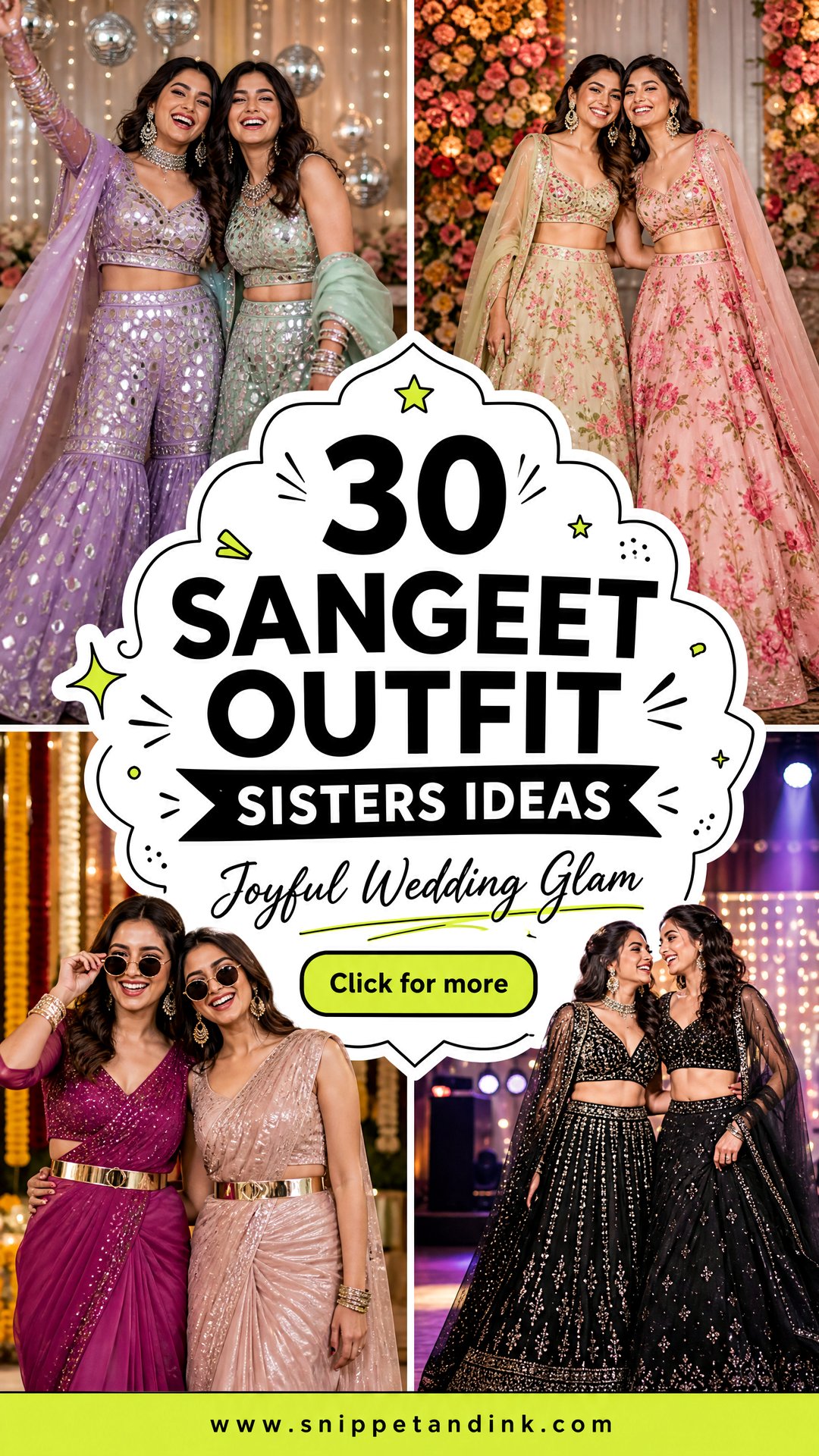
The bride’s sister has a harder Sangeet brief than the bride does. You’re dancing, hosting aunties, running to fetch the dupatta someone left in the car, and still turning up in every group photo. When I dress sisters for this night, the outfit has to pass two tests: can you raise both arms over your head in it, and does it sit one step below the bride in shine and weight. Below are thirty options I’d genuinely put on a sister, from lehengas and shararas to sarees, anarkalis and Indo-western looks, with notes on what each one asks of you once the music starts.
Testing a Sangeet Outfit Against the Choreography
Most sisters learn their dance in leggings and then meet the real outfit two days before the function. That’s backwards. I ask for at least one rehearsal in the actual outfit, or something with the same skirt weight and the same shoes, a week or more before the Sangeet so there’s time for alterations.
What I watch for in that rehearsal:
- Arms overhead: if the blouse lifts away from the skirt or cuts under the arm, the armhole needs opening or the blouse needs lengthening.
- Spins: a lehenga hem should clear the floor by about a finger’s width in your dancing shoes. Longer than that and you’ll step on it on the first turn.
- Floor moves: if the choreography has you kneeling or sitting, try it. Corsets and fitted jumpsuits are where this usually fails.
- Dupatta behaviour: pin it, dance the full routine, and see where it ends up. If it slides, add a pin at the waist or switch to a cape.
Tailors are busiest in wedding season, so book alteration slots early. A blouse adjustment that takes a day in the off months can take a week when every family in town is getting married.
1. Sangeet Sequin Lehenga Outfit
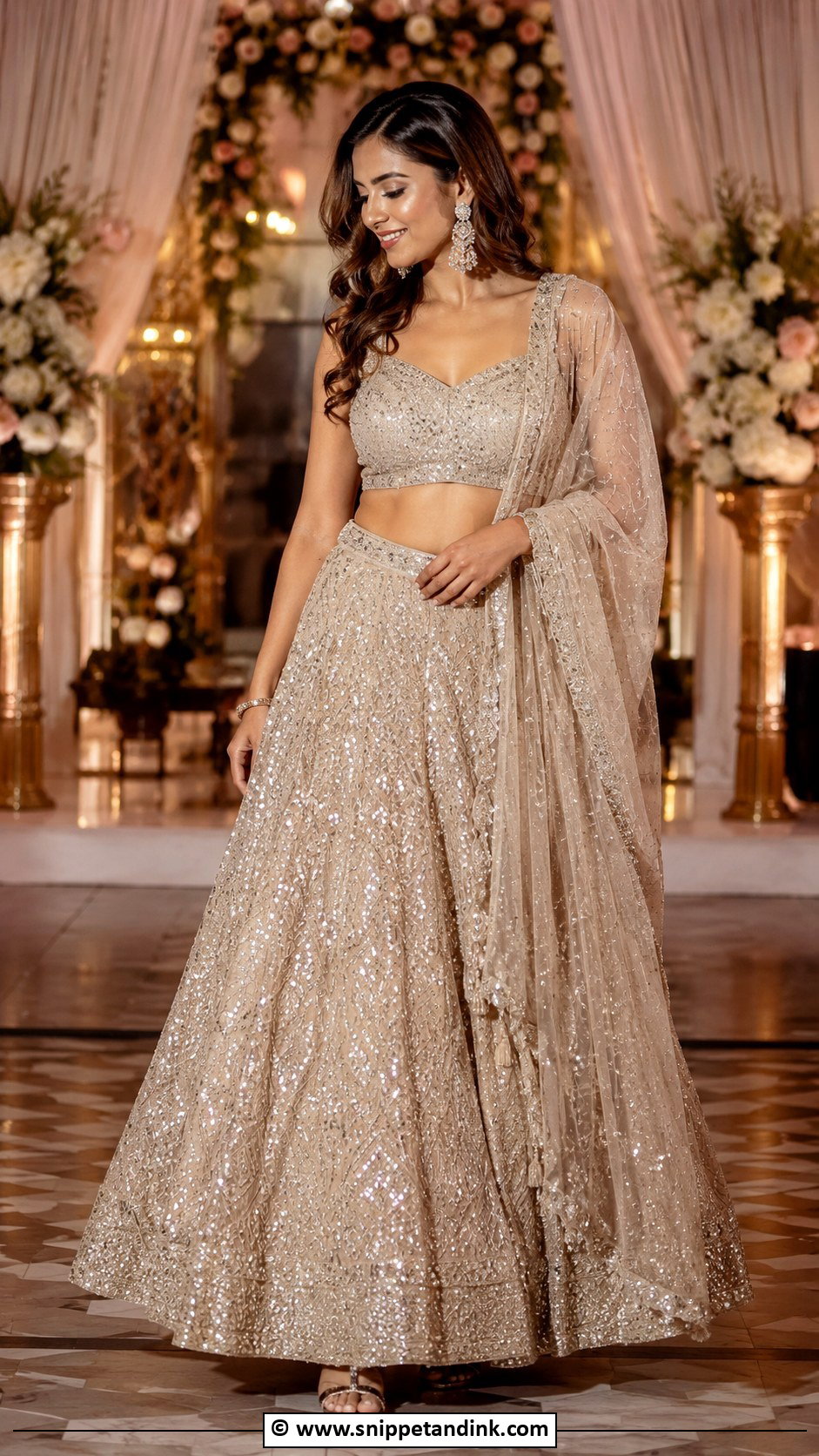
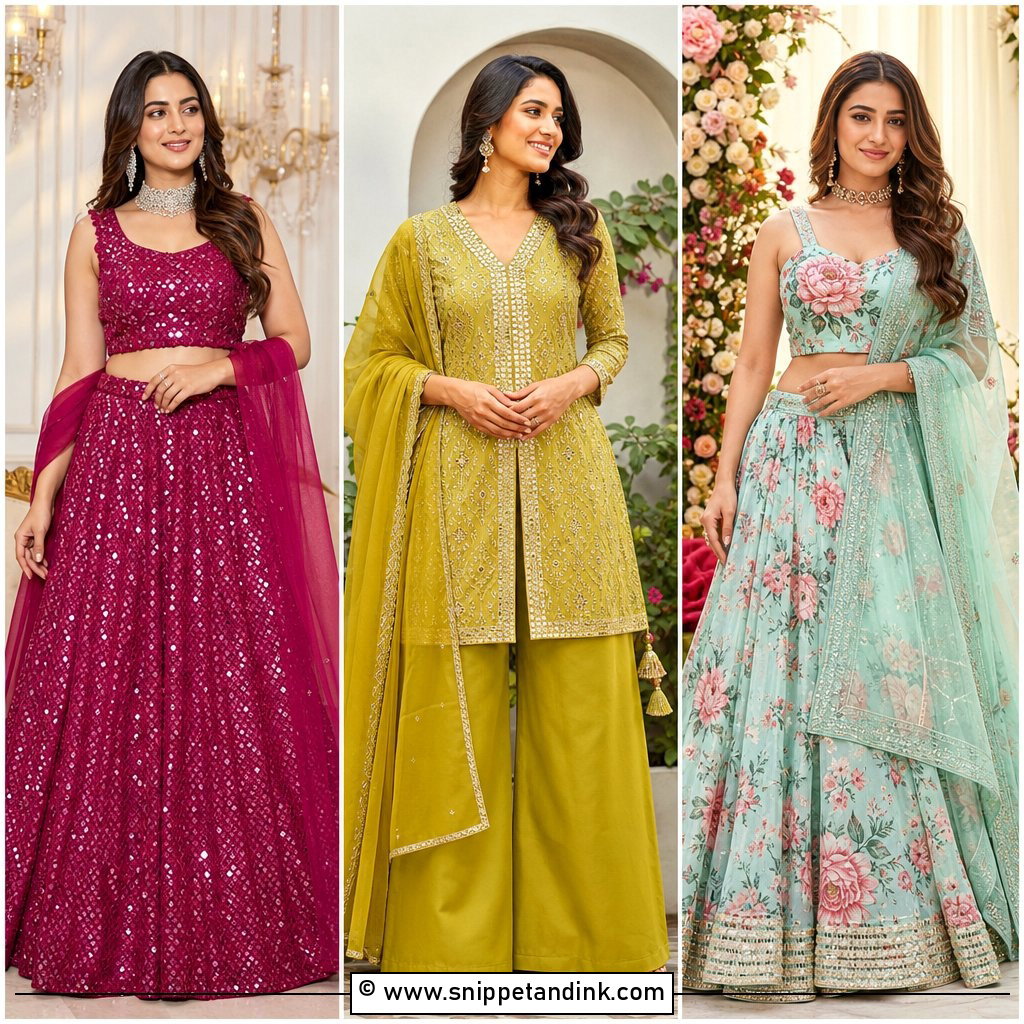
Sequins do most of the styling work for you, which is why I reach for them when a sister has little time to get ready. Champagne, emerald and midnight blue read richer under warm stage lights than pure silver, which can flare white on camera. The detail I check at the fitting is the blouse armhole: sequinned fabric has almost no give, so a cut that feels fine standing can bite when you lift your arms for a hook step. Pin the dupatta at one shoulder with two pins, not one, and keep the earrings sleek so they don’t snag the sequins.
2. Sangeet Mirror Work Sharara Outfit
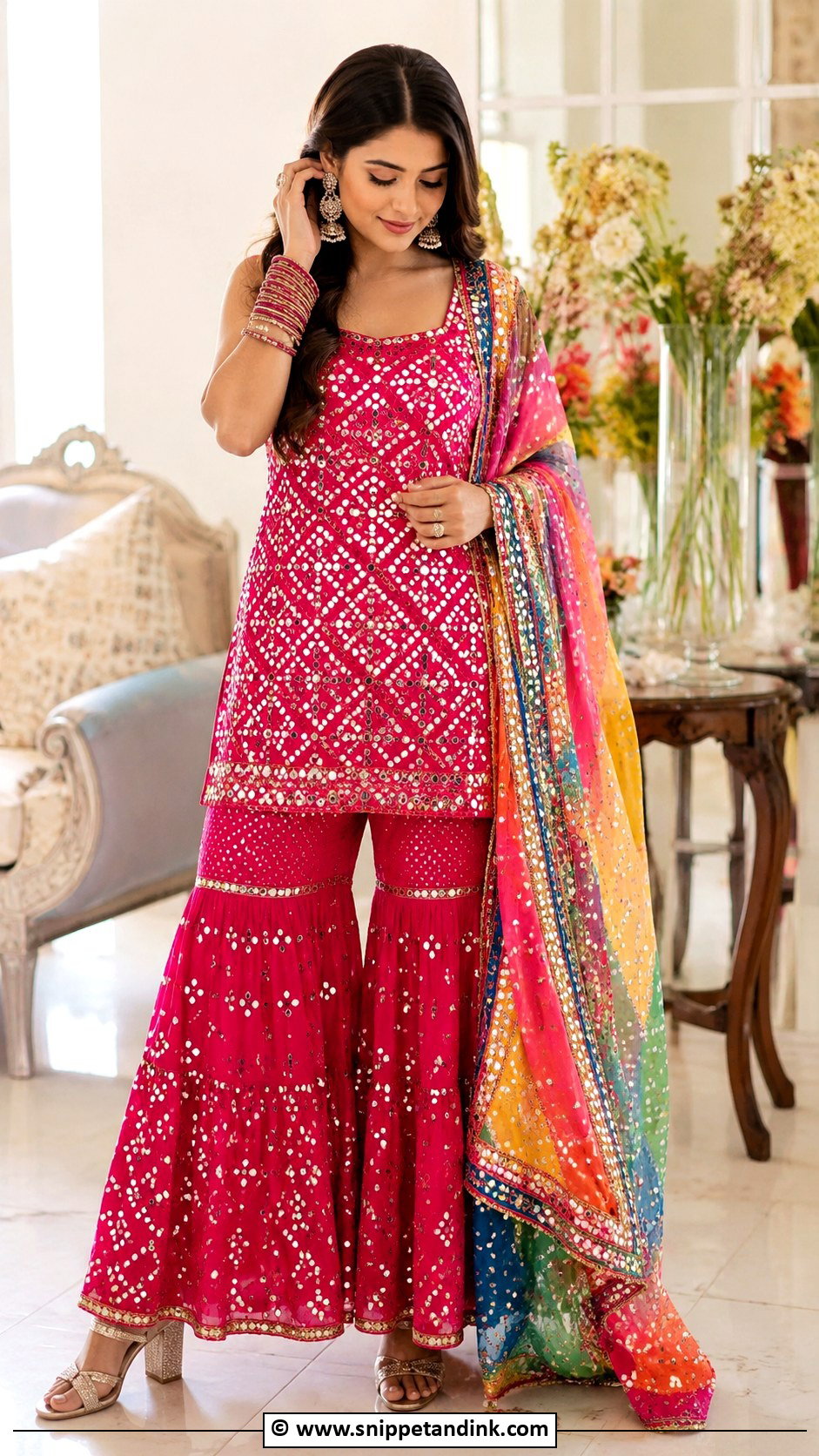
A mirror work sharara is my first suggestion for a sister who is in three dance numbers. The wide legs swing with you, and there’s no hem to trip over the way a long lehenga can. Hot pink and turquoise suit a playful theme; ivory mirror work with a bright dupatta is the calmer route. One thing to know: real mirror pieces are hand-stitched and can scratch bare arms, so I ask for a lined short kurti or a peplum with soft inner seams. Block heels or juttis, never stilettos, on a dance floor scattered with fallen marigolds.
3. Sangeet Ruffle Saree Outfit
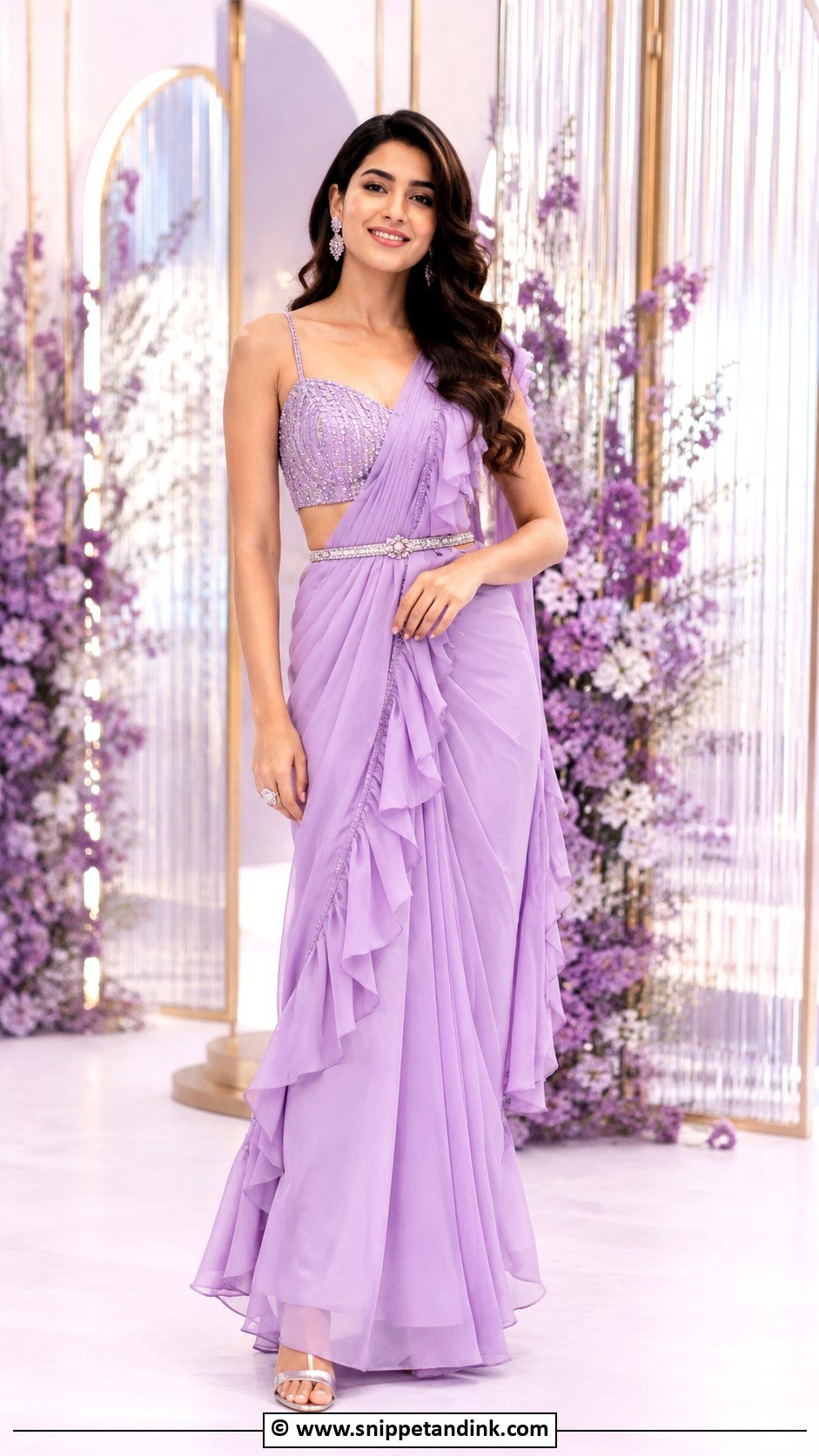
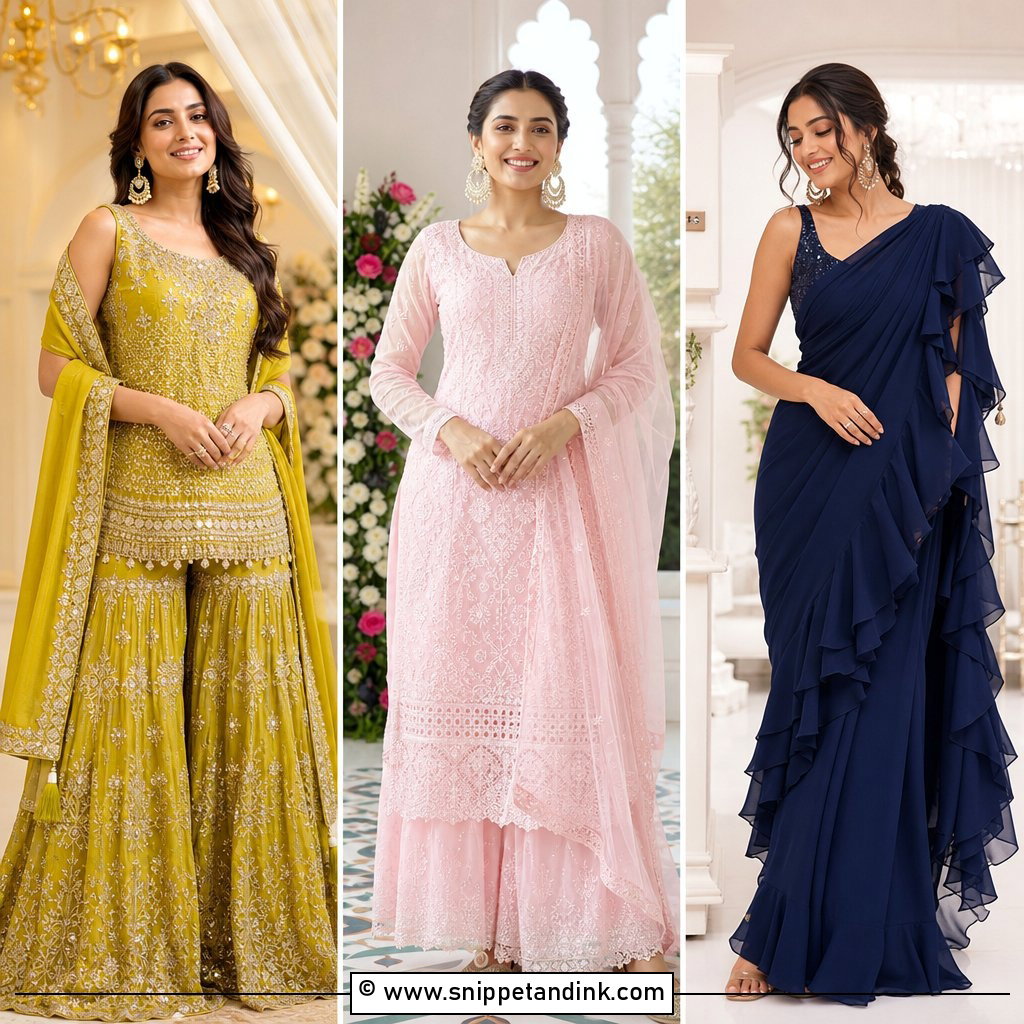
Ruffles give you the line of a saree with far less to manage, because the frills hide a slightly loose pleat. Chiffon and georgette ruffles fall soft; organza ruffles stand away from the body and add width, so I suggest organza only to sisters happy with that volume. A corset or structured blouse anchors all that movement. If you’re nervous about the drape slipping mid-performance, a slim waist belt over the pallu is the quiet insurance I add.
4. Sangeet Cape Lehenga Outfit
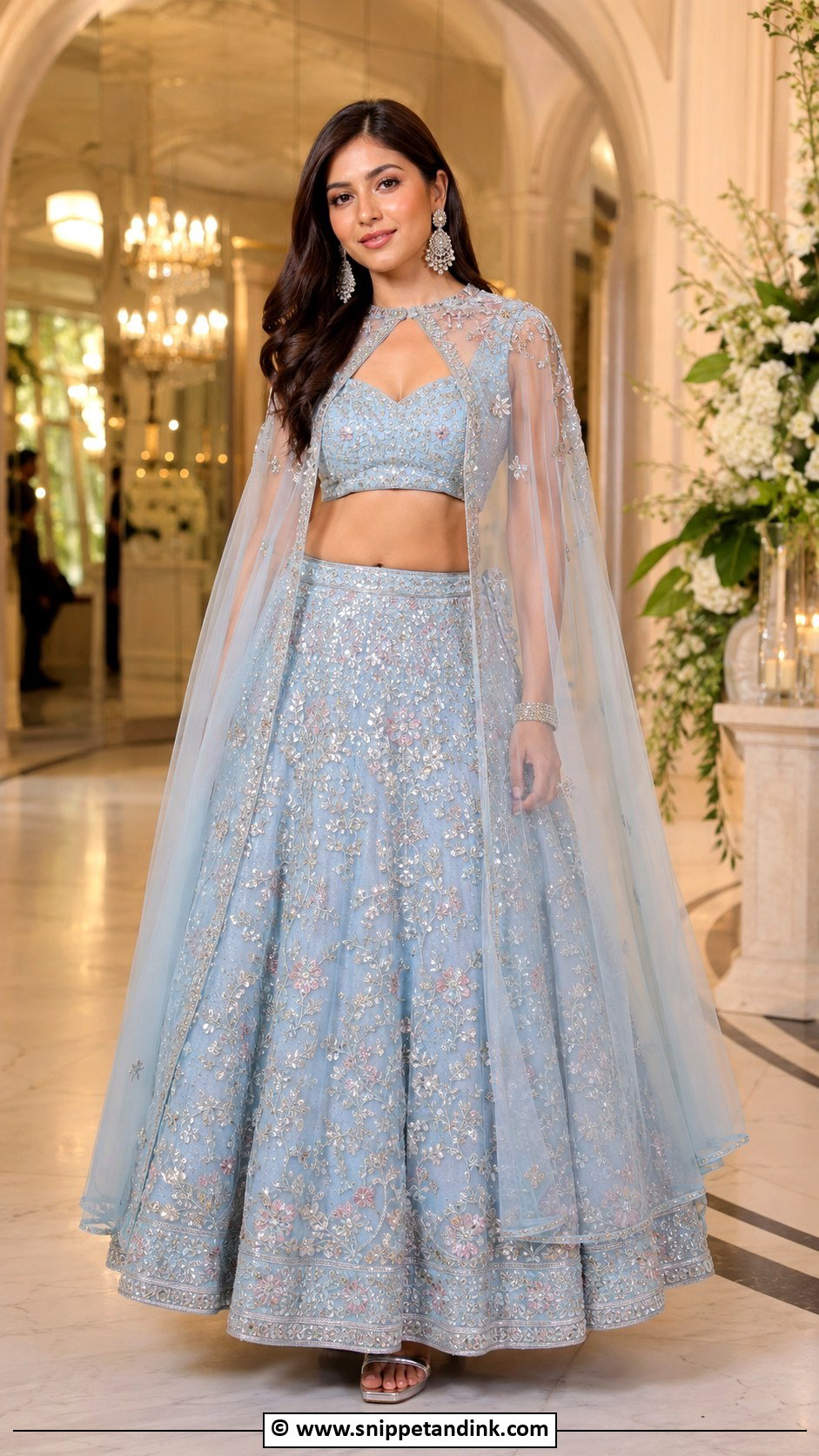
A cape solves the dupatta problem entirely, which matters more than people expect when your hands are busy all night. I look for a sheer cape stitched into the blouse at the shoulder seam rather than tied, because a tied cape slides back as soon as you dance. Pastels read softer here and jewel tones read more festive after dark. With heavy work around the neckline, skip the necklace and let drop earrings and a low bun carry it.
5. Sangeet Pre Draped Saree Outfit
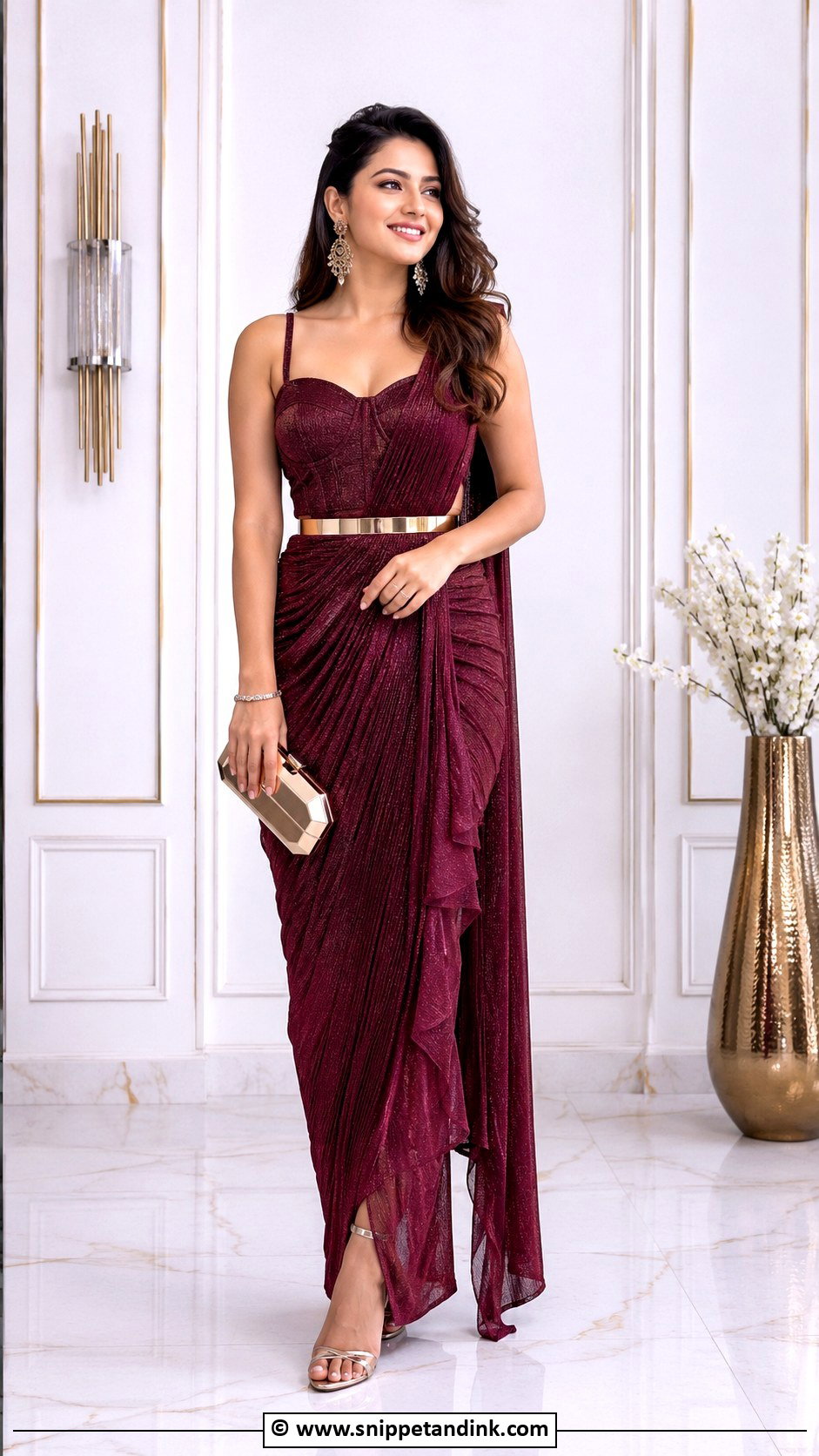
Pre-draped sarees are what I recommend to sisters who have never pleated their own saree and don’t want to learn on the morning of the wedding week. The pleats are stitched, so they stay put through spins. Satin and crepe hold the stitched pleats crisply, while georgette is softer and more forgiving if you sit for long stretches. Wine, teal and plum all work after dark. Try it on with the exact heels you’ll wear, because the hem length is fixed and can’t be adjusted by tucking.
6. Sangeet Anarkali Gown Outfit
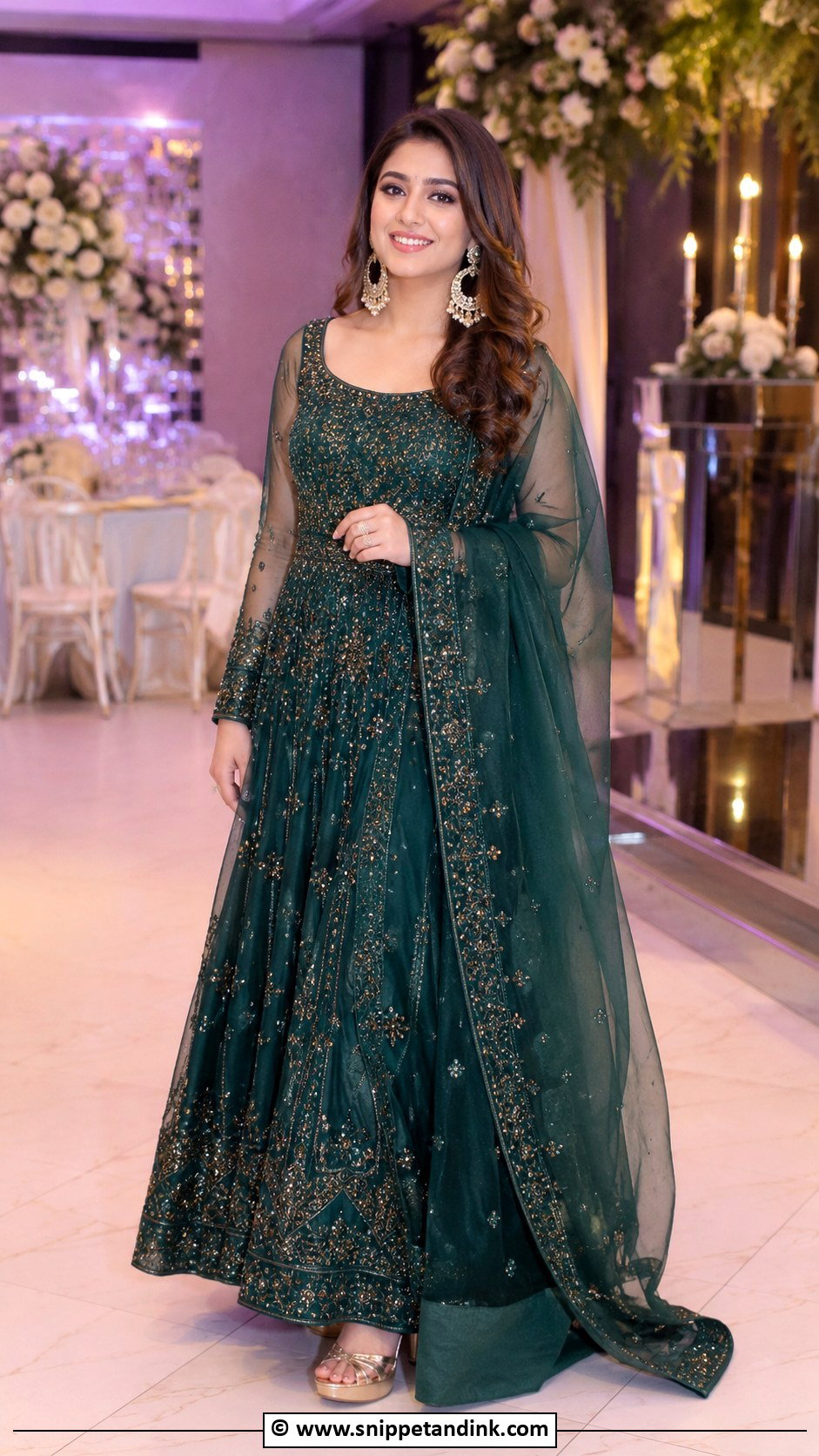
An Anarkali covers more than a lehenga or saree, and some sisters simply feel more at ease in it. The weight sits in the flare, so I check how the gown moves when you twirl: a well-cut panelled Anarkali opens into a full circle, while a cheaper one with fewer panels just swings. If the bride’s outfit is heavily embroidered, choose tonal zari or light sequins rather than bridal-level work. Emerald, ruby and navy read rich in evening light. Chandelier earrings and soft curls finish it.
7. Sangeet Crop Top And Skirt Outfit
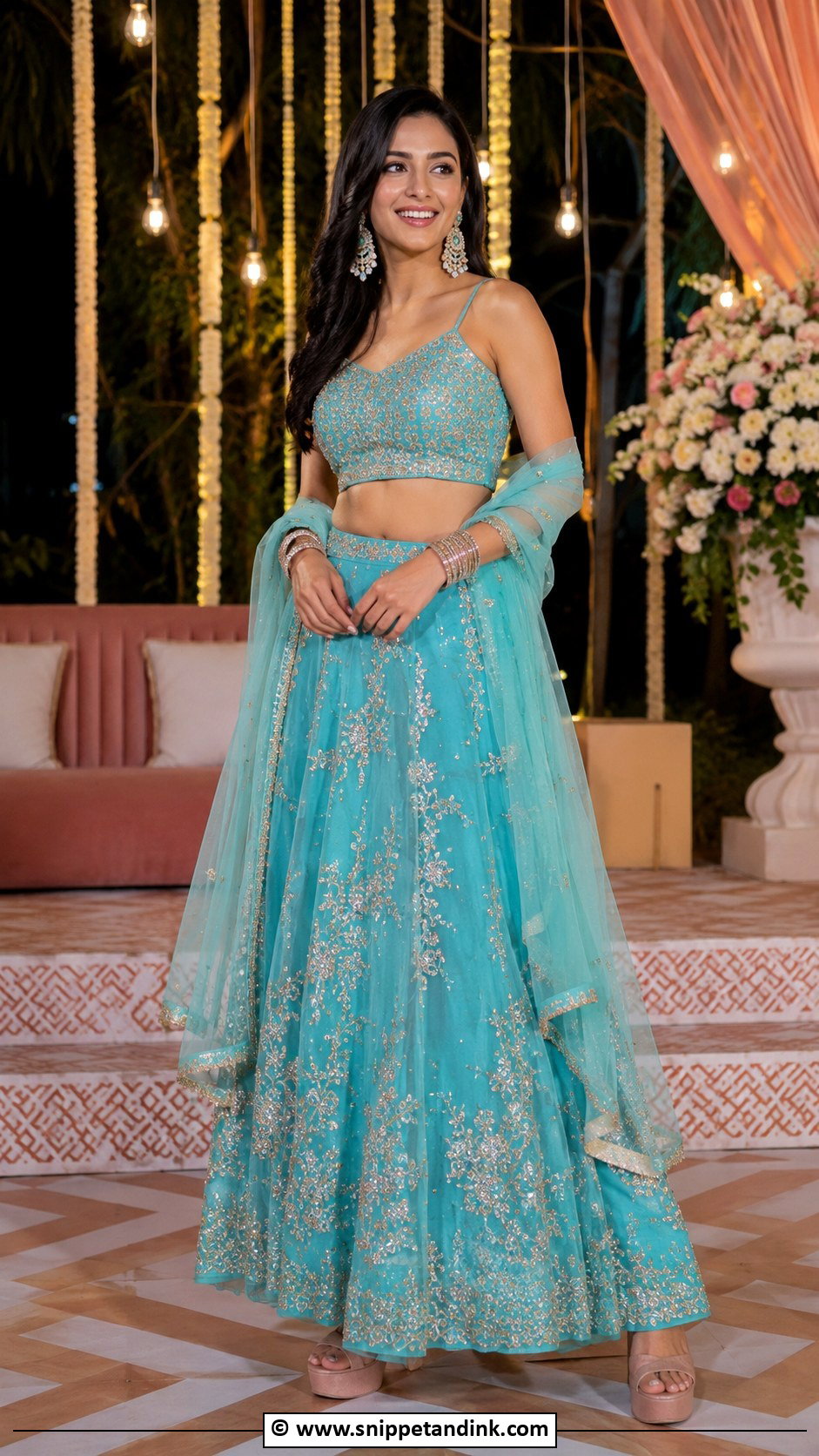
A crop top and flared skirt feels lighter than a lehenga, and that’s the point. Because the dupatta is optional, there’s one less thing to pin before you go on stage. I like this for younger sisters or cousins in a group dance, where the same silhouette in different colours looks coordinated without being uniform. Check the gap between top and skirt with your arms raised; a two-inch gap at rest can become six on the dance floor, so decide in the trial room if you’re comfortable with that.
8. Sangeet Velvet Lehenga Outfit
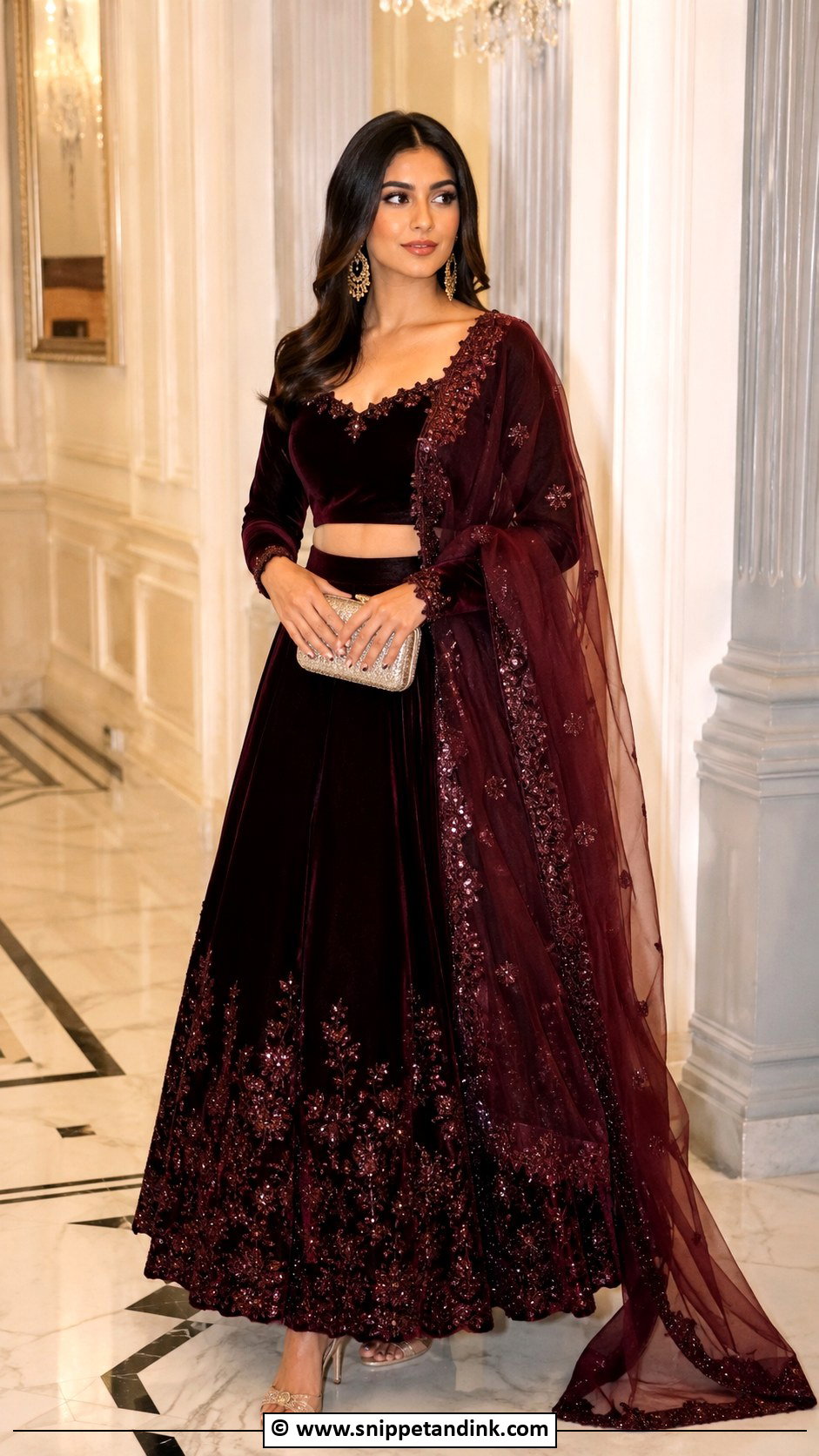
Velvet belongs to winter and night functions. A deep velvet lehenga in maroon, emerald or navy reads luxurious with very little embroidery, but it’s warm and heavy, so I steer sisters toward a lighter flare and keep velvet away from crowded summer venues. An organza or net dupatta keeps the top half from feeling solid. Gold jewellery suits velvet, though I keep it refined so nobody mistakes you for the bride. Cushioned heels help, because velvet skirts add real weight to every step.
9. Sangeet Organza Lehenga Outfit
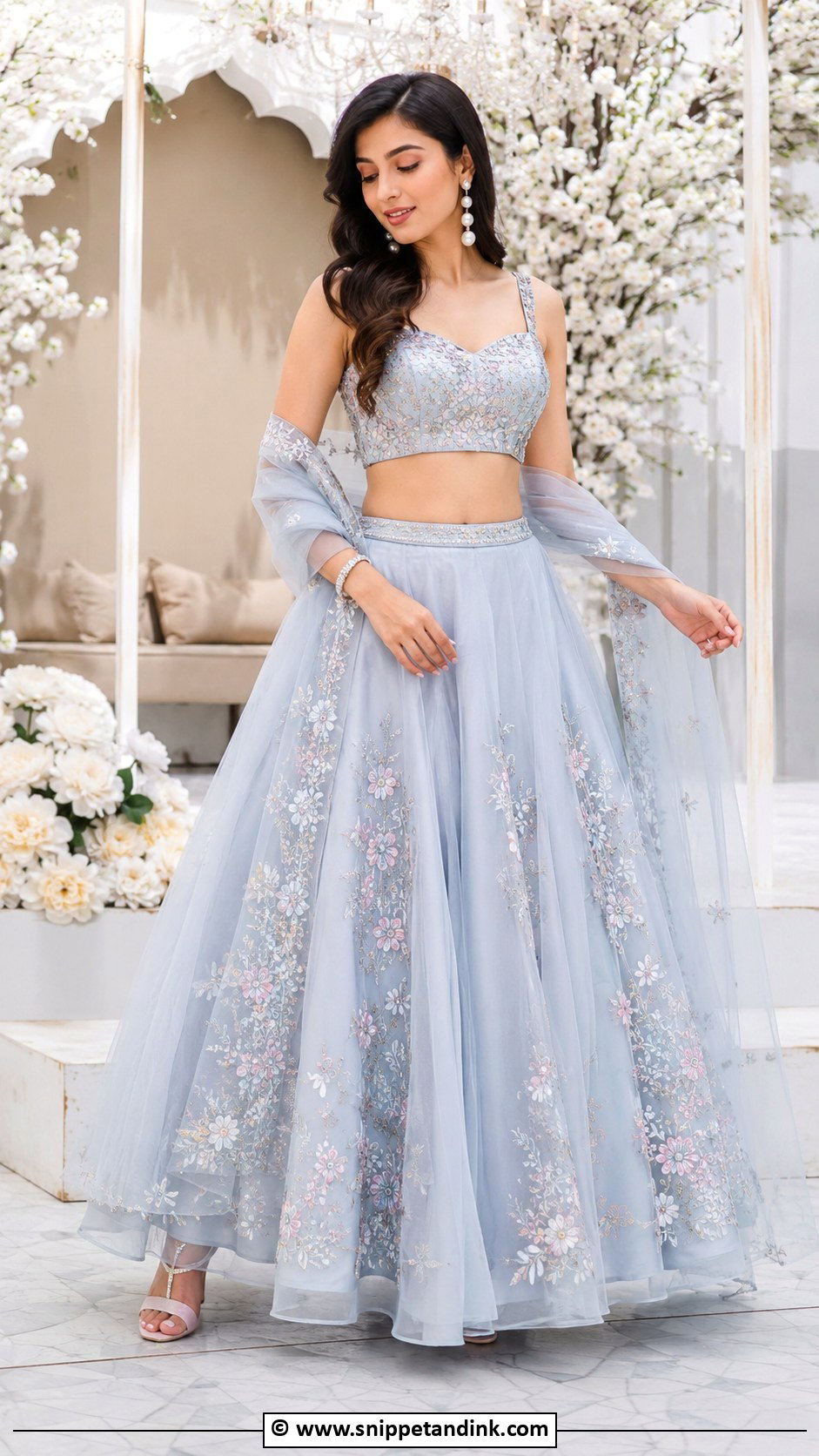
Organza holds volume without the weight of layered net, which is why it suits sisters who want a full skirt but can’t face a heavy one for five hours. It does crease where you sit, and those creases show in close-up photos, so I suggest a quick steam backstage before any stage moment. Powder blue, peach and sage look fresh in it. Pearl earrings and loose waves keep the mood soft, and it carries well from an afternoon start into the evening.
10. Sangeet Palazzo Suit Outfit
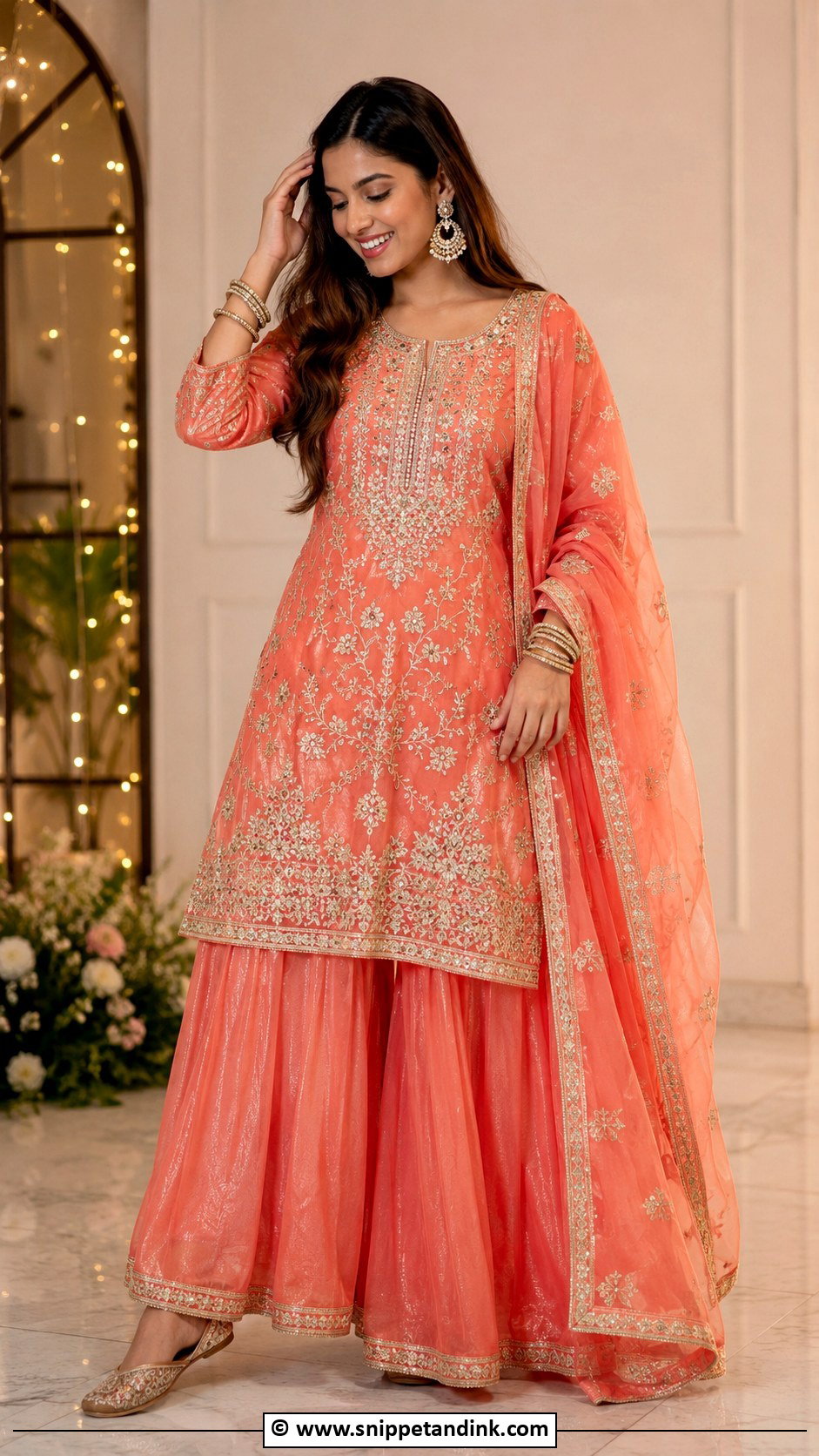
A palazzo suit is the most practical outfit on this list for the sister who is also running the evening. Wide palazzos let you climb stage steps, carry trays and dance without lifting a hem. Silk or brocade palazzos read dressier than cotton ones, and mirror work on the kurta brings the festive note. I always suggest a dupatta you can remove and pin to a chair once the formal photos are done. Juttis or block heels keep you on your feet until the last song.
11. Sangeet Indo Western Jumpsuit Outfit
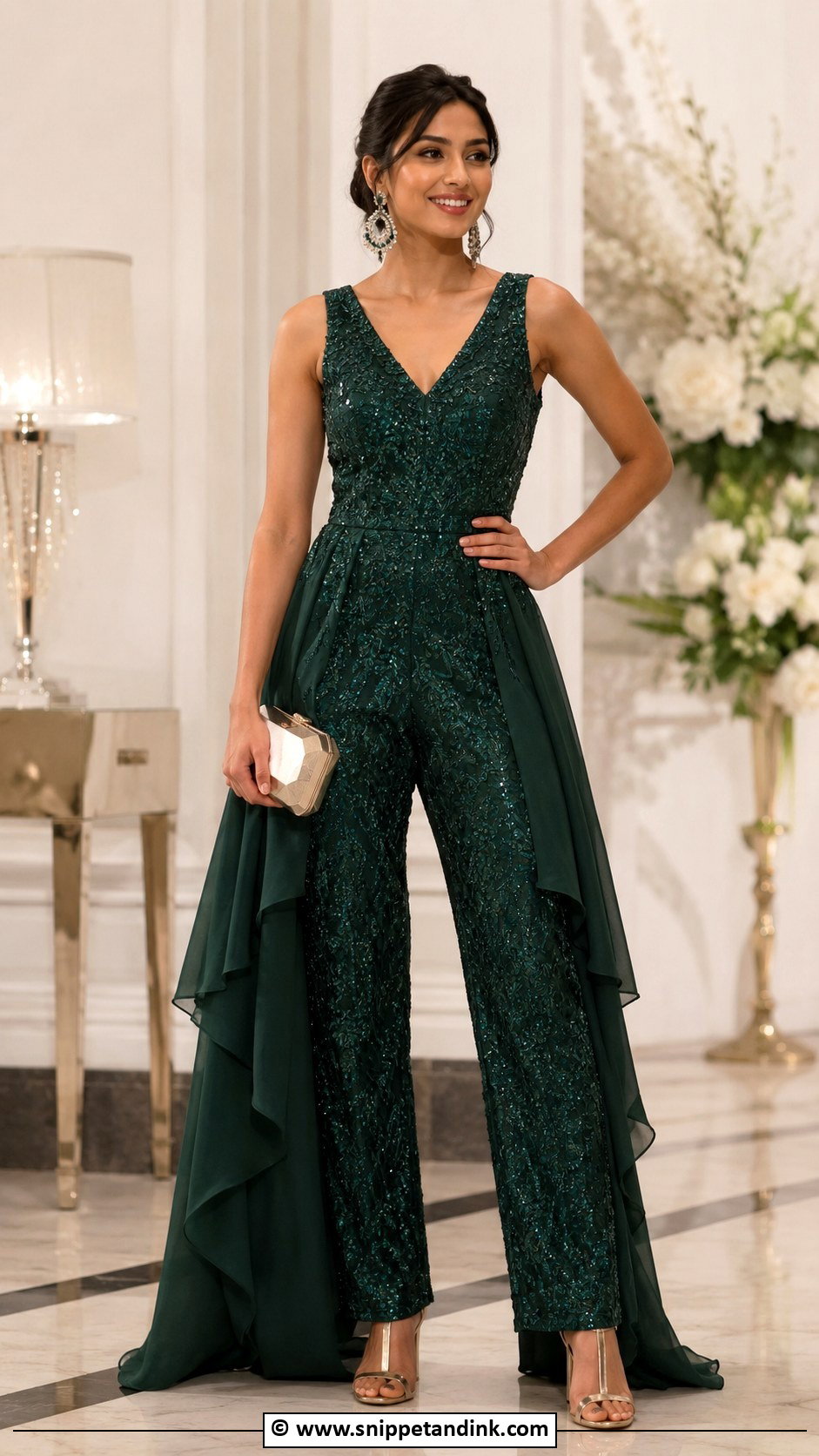
An Indo-western jumpsuit gives you a clean line that feels secure from neck to ankle, which is why sisters who dread wardrobe slips love it. Look for an attached drape or cape so it still reads like a wedding function and not a party. The fit is where these go wrong: too tight through the hip and you can’t sit or squat for floor-level photos. I ask for a sit test in the trial room before anything is shortened. Metallic heels and a sleek clutch suit the modern shape.
12. Sangeet Jacket Lehenga Outfit
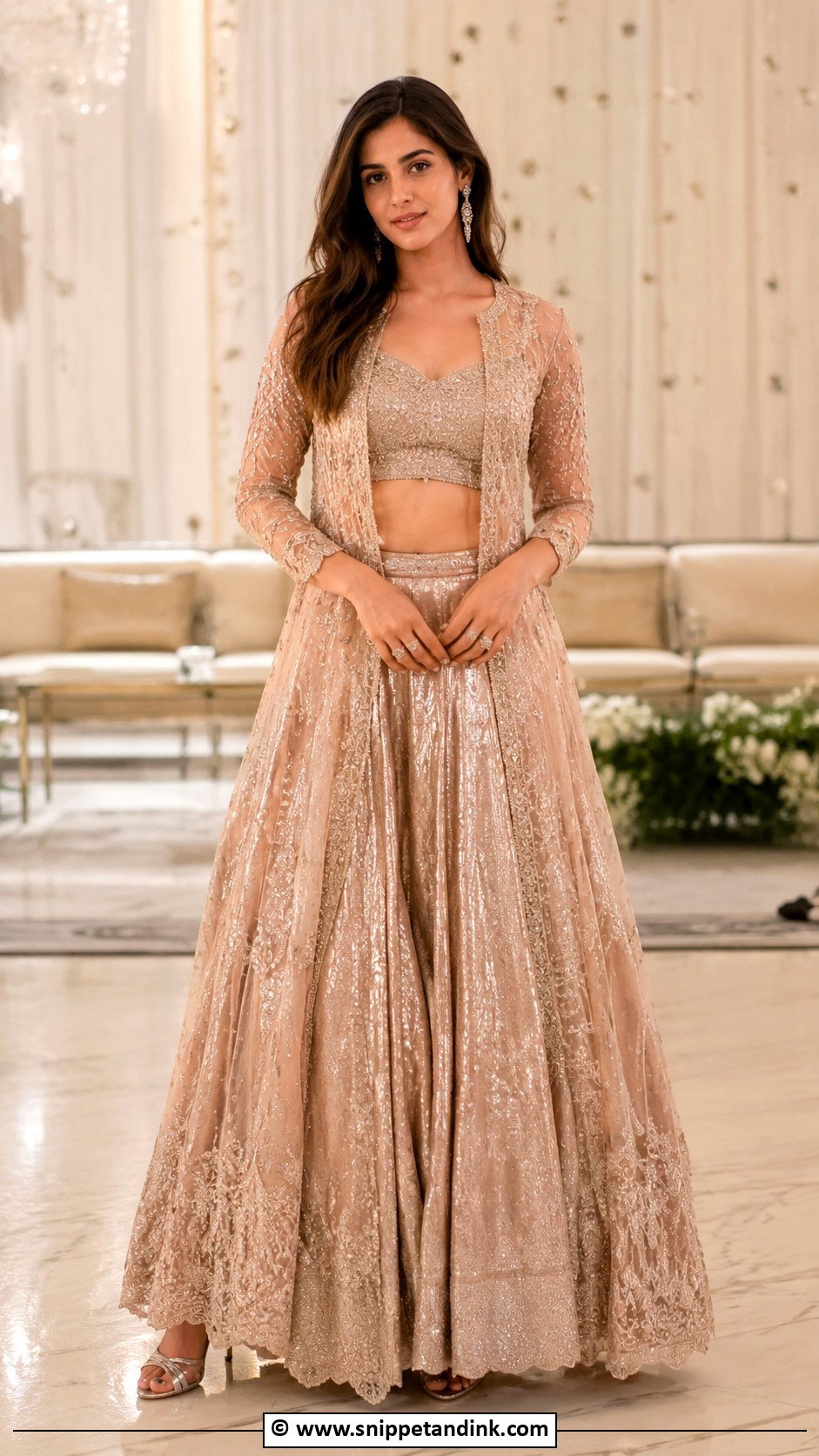
A jacket over a lehenga is my answer when a sister wants more coverage but still wants a festive skirt. A long embroidered jacket adds height; a cropped one reads younger. If the event is warm, ask for a sheer or lightly lined jacket, because a fully lined brocade jacket gets hot quickly once the dancing starts. The jacket already carries detail, so the dupatta can stay at home. Match the metal of your earrings to the embroidery thread, gold with gold zari, silver with silver.
13. Sangeet Gharara Outfit
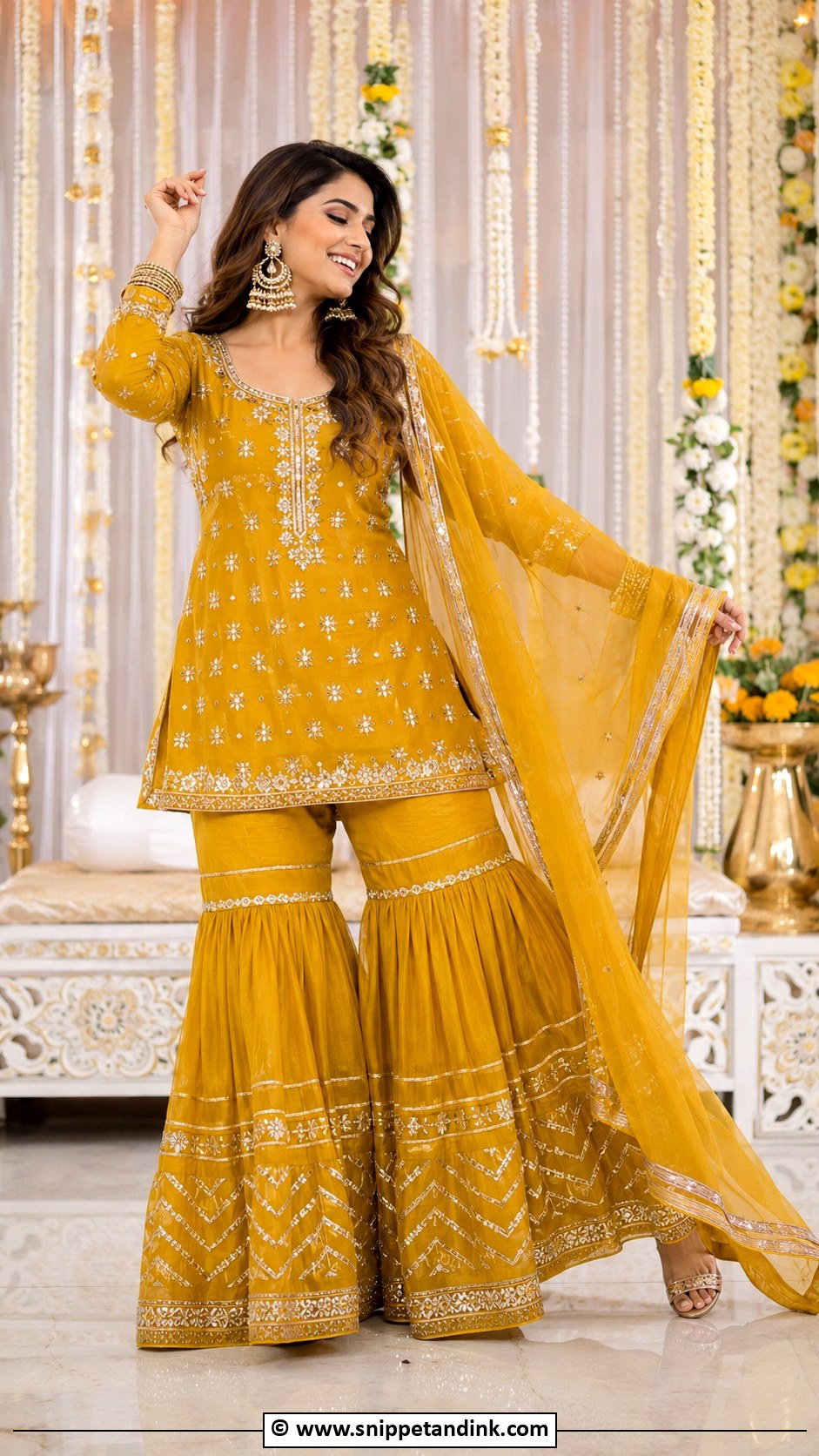
The gharara’s join below the knee, the gota-trimmed band where the flare begins, is what makes it move so well, and it’s also where a poor fit shows first. If that join sits too high, the flare starts at the thigh and you lose the classic shape. Gota and mirror work suit the Sangeet; mustard, pink and turquoise are traditional colours for it. A short kurti keeps the proportions right. Jhumkas and glass bangles finish a look that feels rooted in family tradition and still dances easily.
14. Sangeet Metallic Saree Outfit
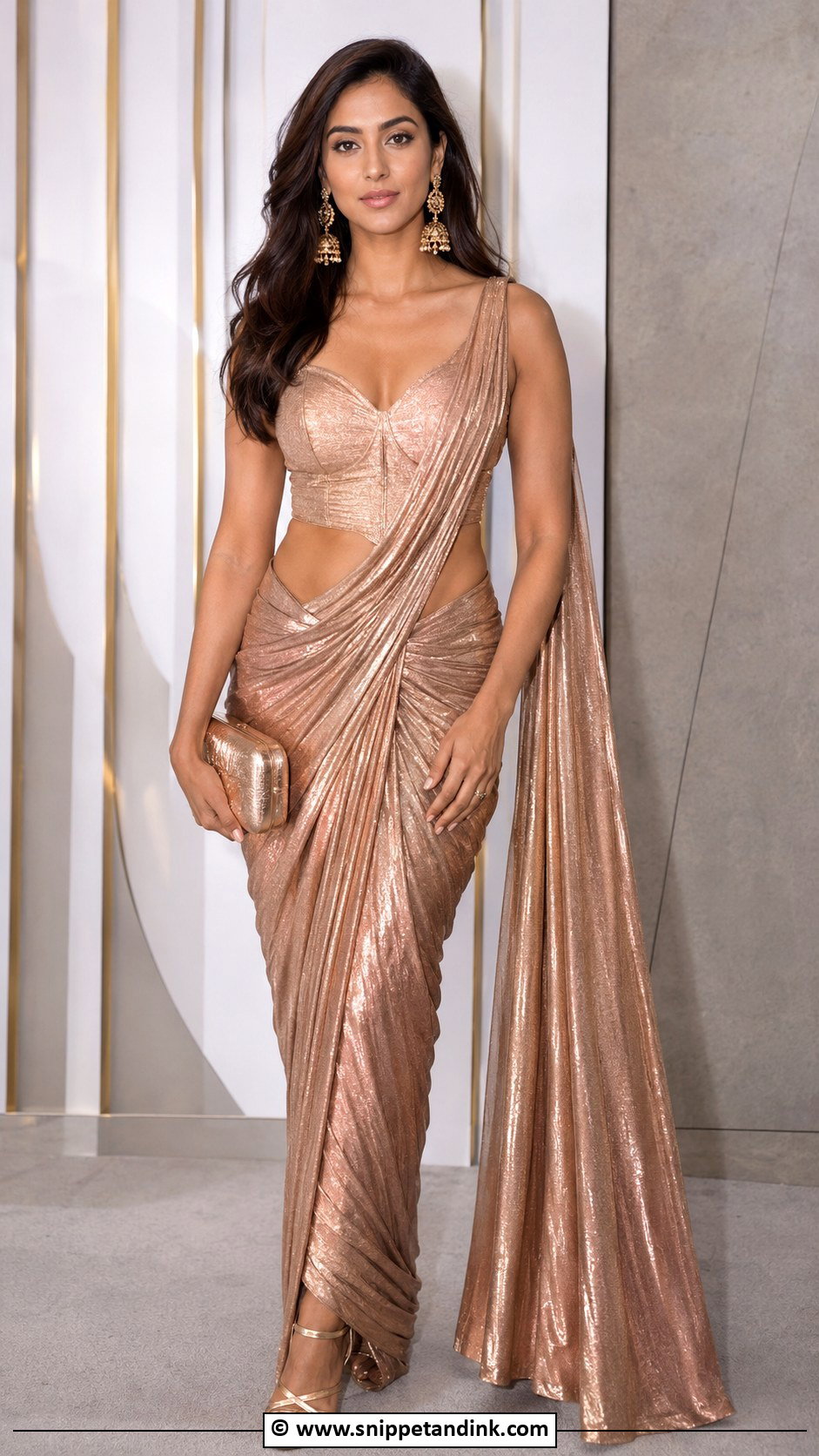
Metallic sarees catch every light in the room, so the fabric does the work and you can keep accessories to one strong piece. Gold and bronze tend to warm most skin tones; silver can look cold under yellow stage lights. I’d avoid a very shiny saree if you’re self-conscious, because metallic tissue shows every fold. A fitted blouse with a clean neckline keeps it modern. It’s also one of the easiest outfits on this list to rewear at another wedding.
15. Sangeet Floral Lehenga Outfit
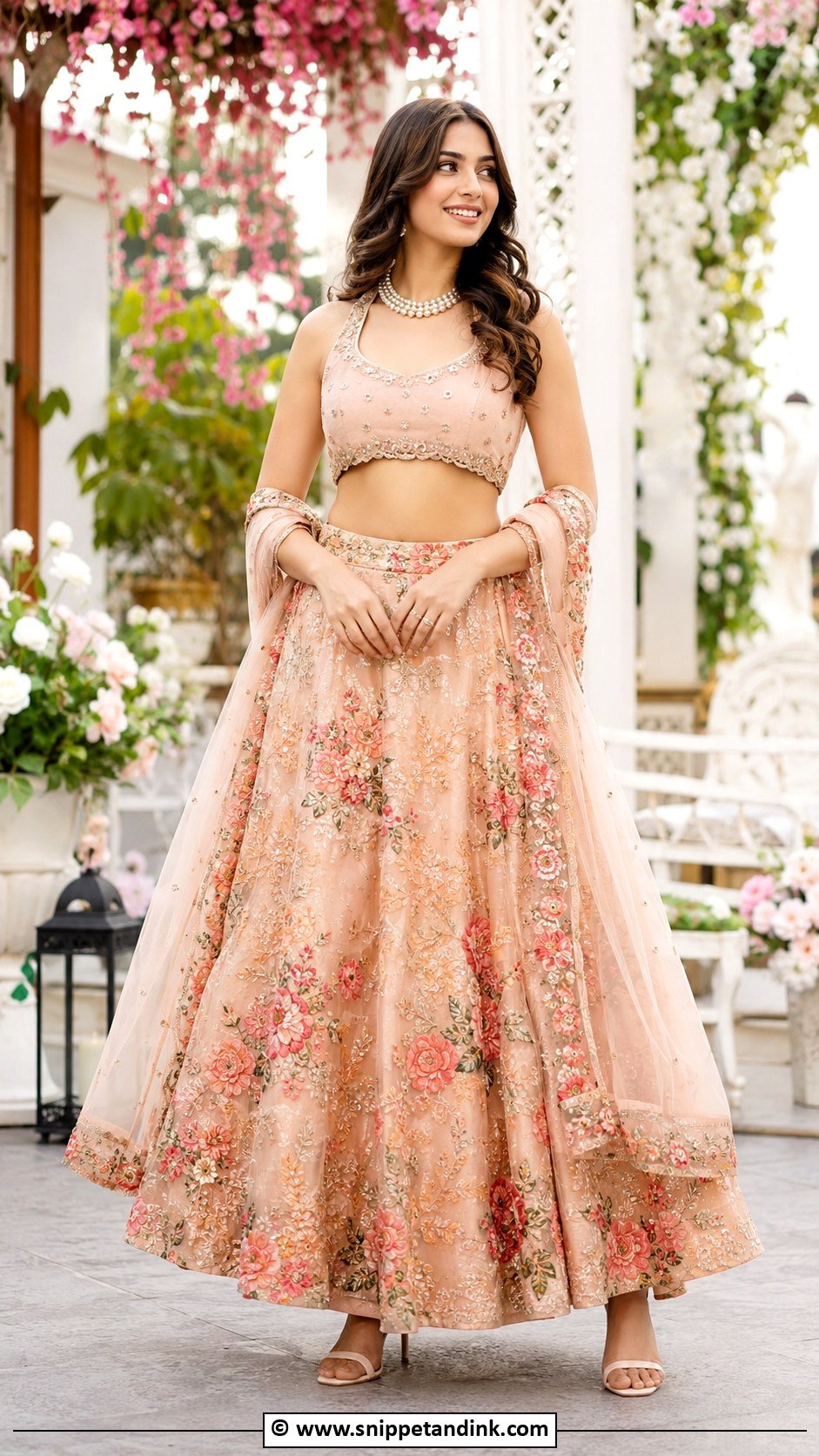
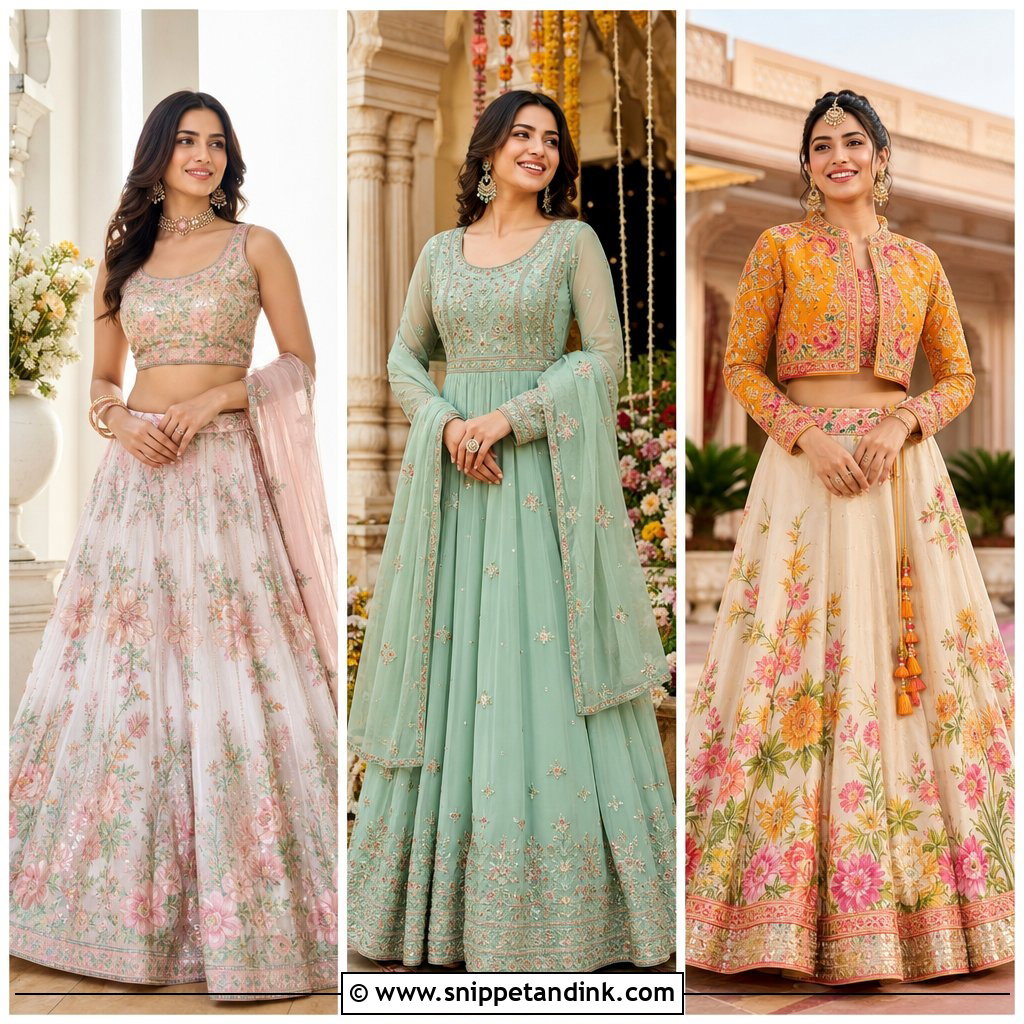
Printed florals feel relaxed and suit daytime or garden Sangeets; embroidered florals are dressier and hold up after dark. The balance rule I use is simple: busy print, plain blouse; quiet print, embellished blouse. A light dupatta matters because floral skirts often come with a matching heavy one that makes the whole look bulky. Pearls and soft curls suit the mood. This is a good choice for destination and outdoor celebrations where the setting is already colourful.
16. Sangeet Peplum Sharara Outfit
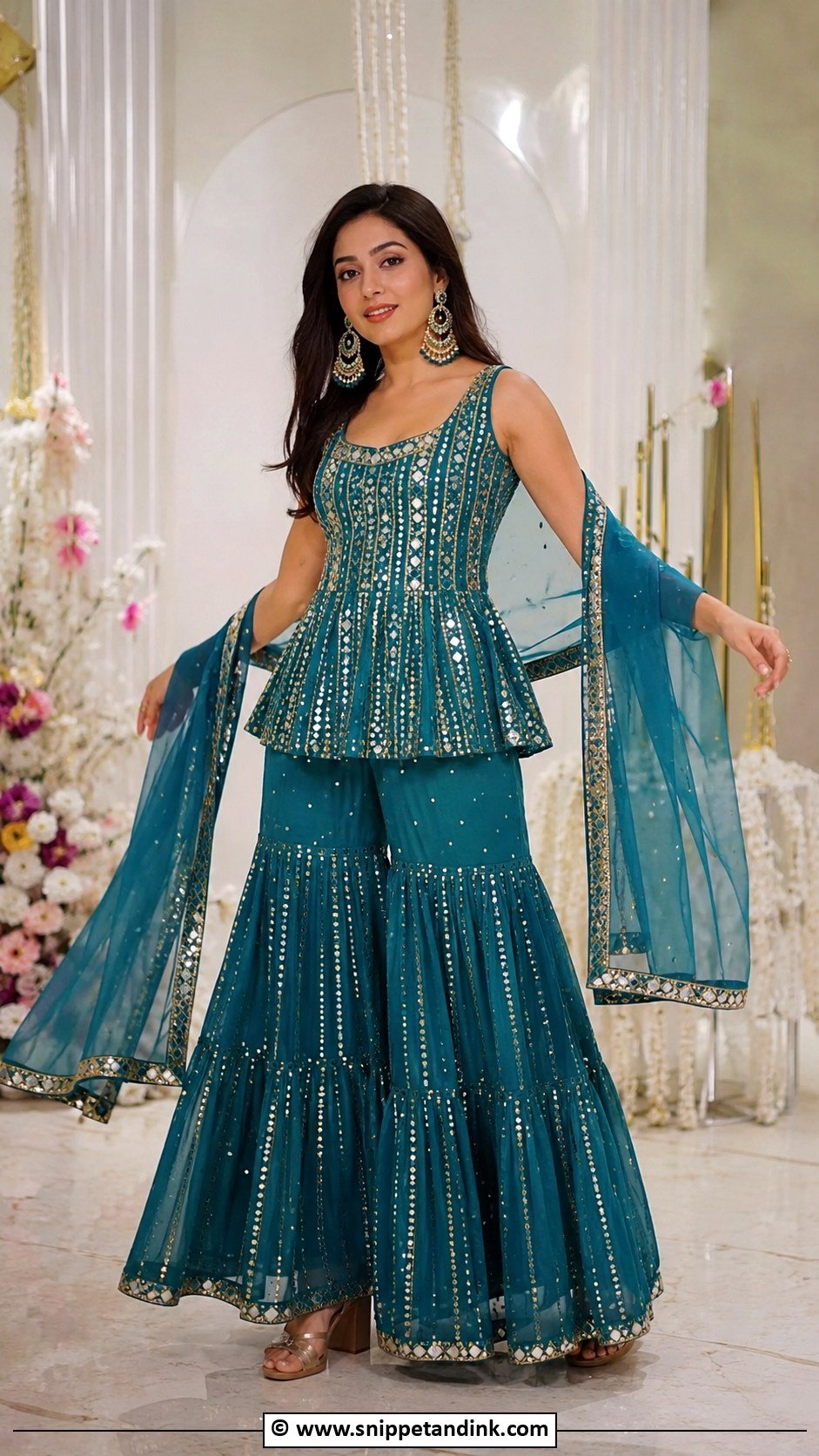
The peplum defines the waist and then flares over the hip, which balances the volume of sharara pants rather than adding to it. That’s why I suggest this to sisters who feel lost in a full lehenga. Mirror work and gota both sit well on peplums. Choose the neckline you’ll stop thinking about once the dancing starts, square and V-necks stay put better than sweetheart cuts on most frames. Skip the dupatta if the top is already detailed.
17. Sangeet Corset Lehenga Outfit
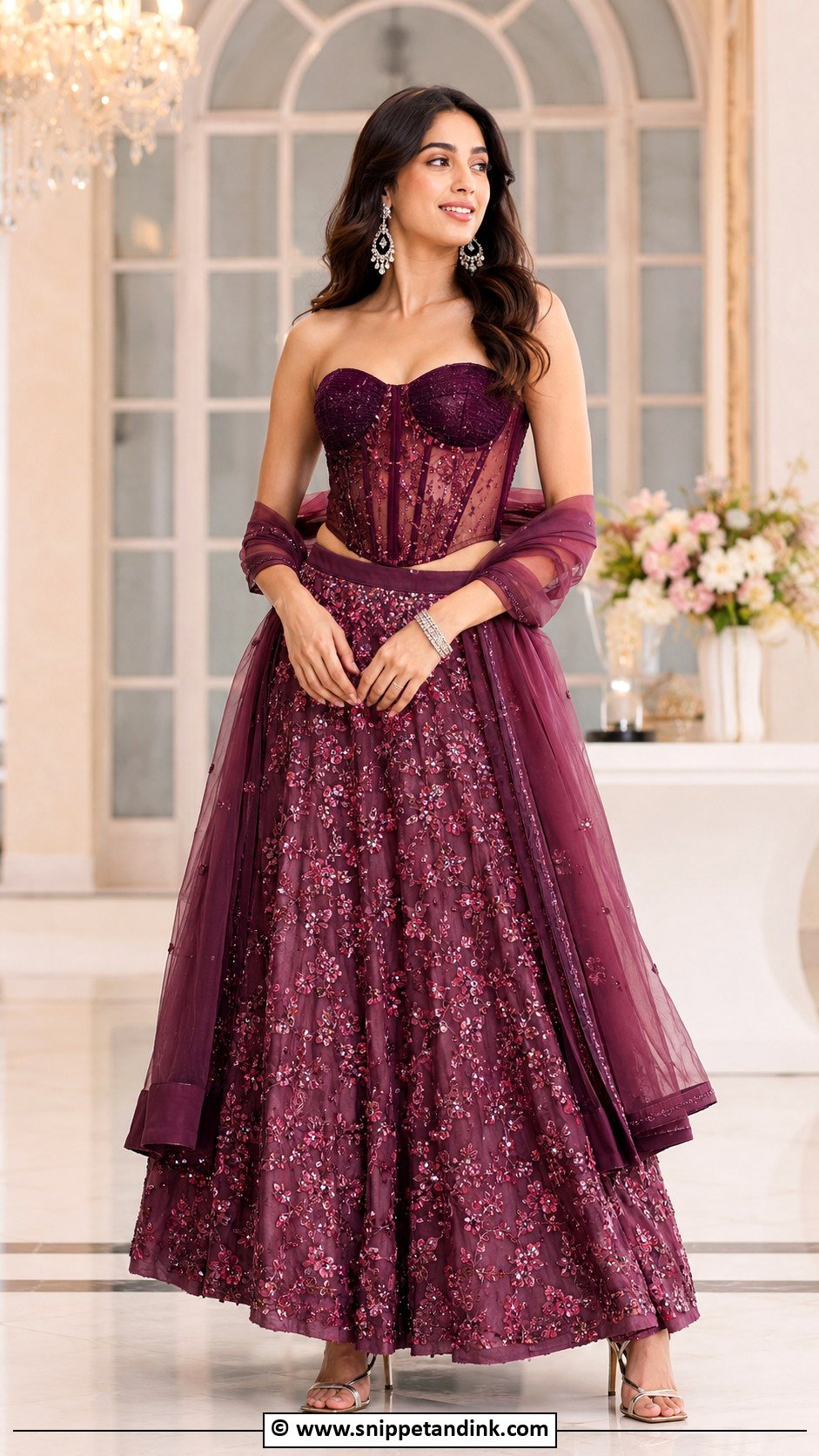
Corset blouses are everywhere at Sangeets now, and the good ones are built with boning and a firm waist tape so they don’t ride up. That structure is also why they can feel tight by the end of the night, so I ask sisters to sit and eat in the corset at the final fitting. Thicker straps and a supportive neckline keep it from feeling like a party top. Satin and organza skirts suit it; jewel tones and deep pastels both work. Keep jewellery at the ears and wrists, not the neckline.
18. Sangeet Satin Co Ord Outfit
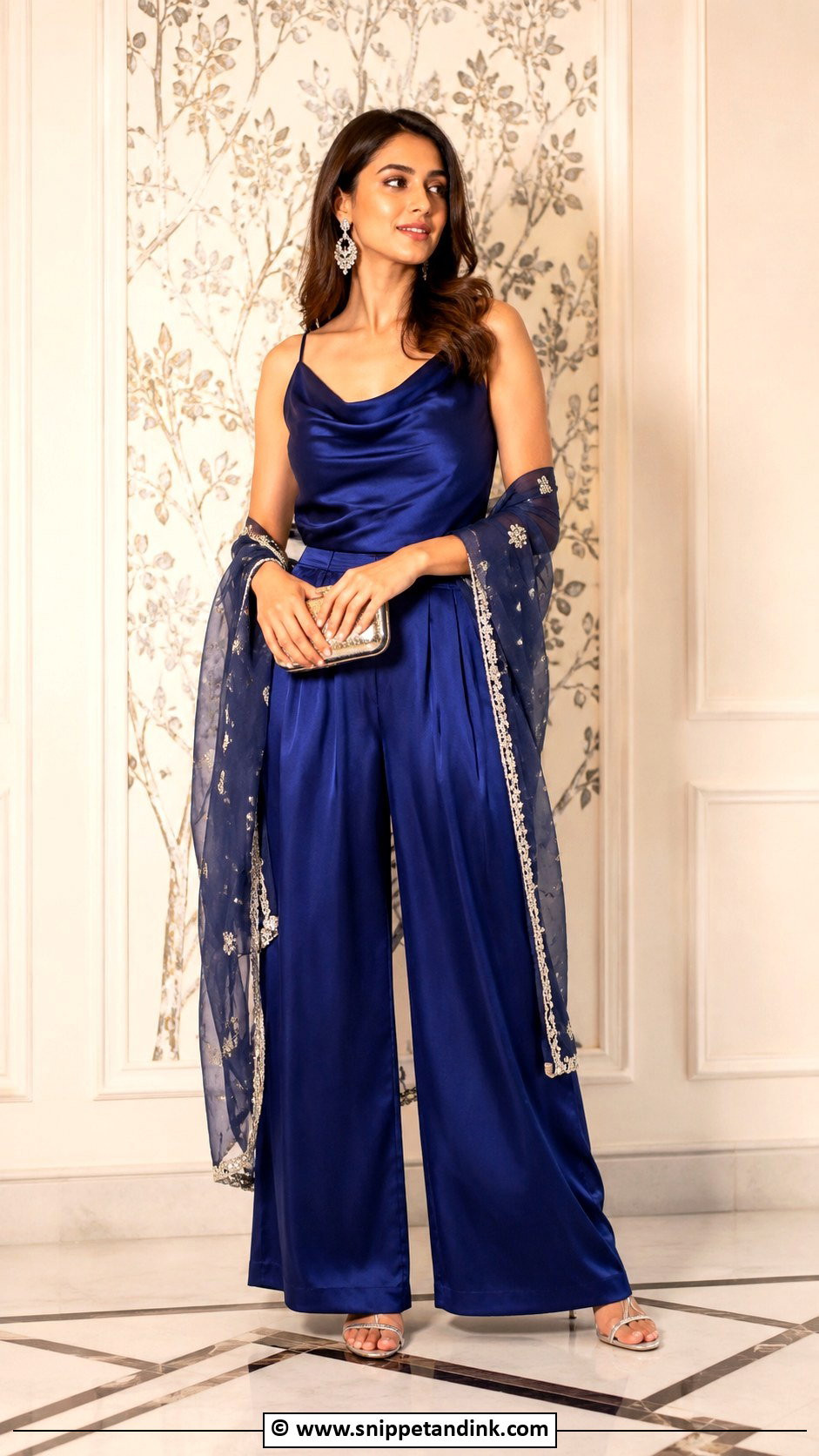
A satin co-ord is the minimal option, and it works because satin has its own sheen under evening light. A draped top with wide-leg pants or a crop blouse with a skirt both work. Satin shows sweat marks and seat creases more than embroidered fabrics, so I suggest deeper shades like emerald, chocolate and cobalt over pale champagne if you’ll be dancing hard. An embroidered border or a statement dupatta makes it wedding-ready.
19. Sangeet Chikankari Lehenga Outfit
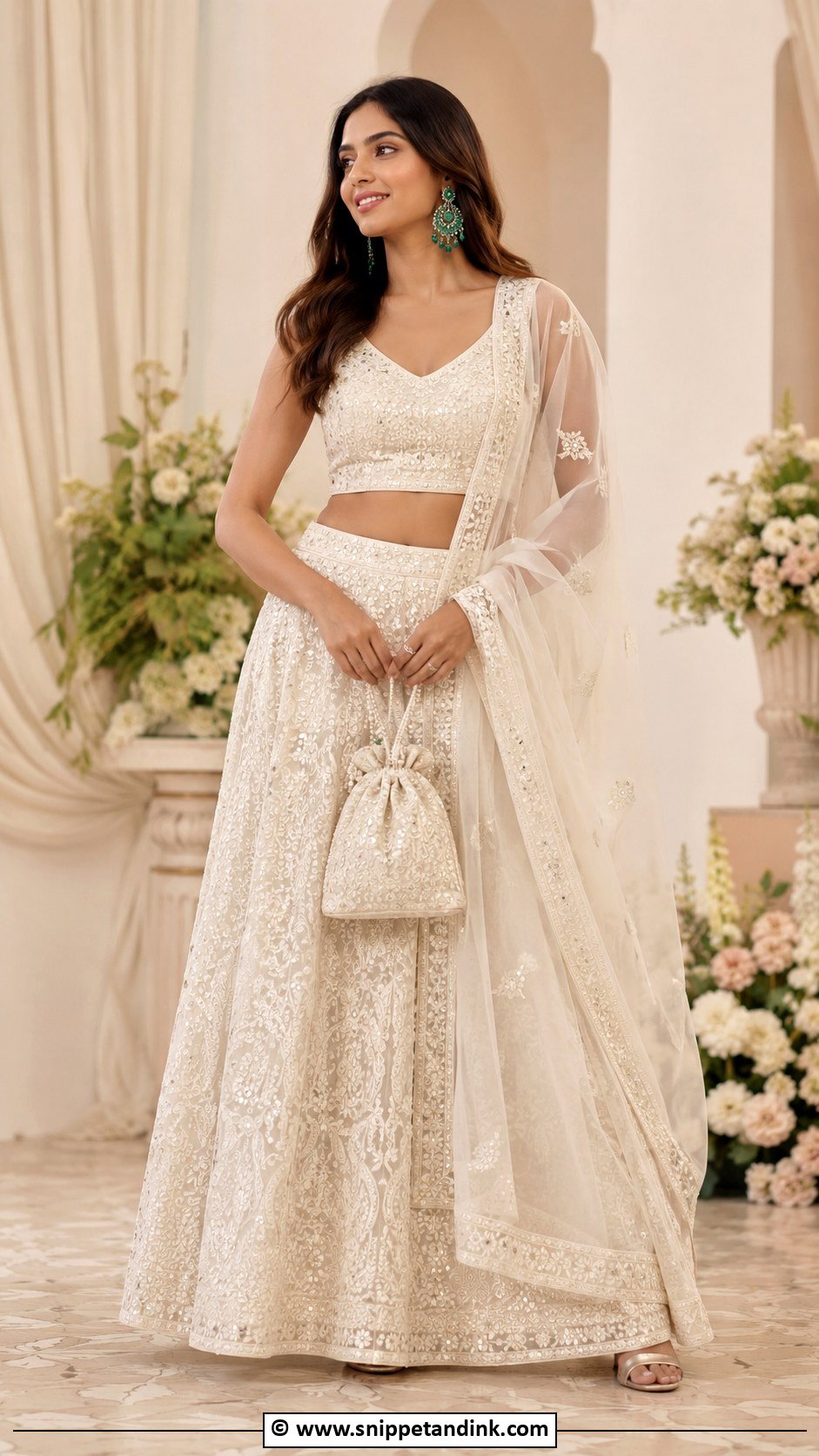
Chikankari is fine hand embroidery, usually on light cotton, georgette or chiffon, so it’s naturally airy for a dancing night. Plain tonal chikankari can look daytime under stage lights; I ask for mukaish or sequin highlights in the embroidery if the event runs late. Ivory, mint and powder blue are classic. Pale outfits need one point of contrast, so an emerald earring or a bright potli does more here than extra jewellery.
20. Sangeet Banarasi Skirt Outfit
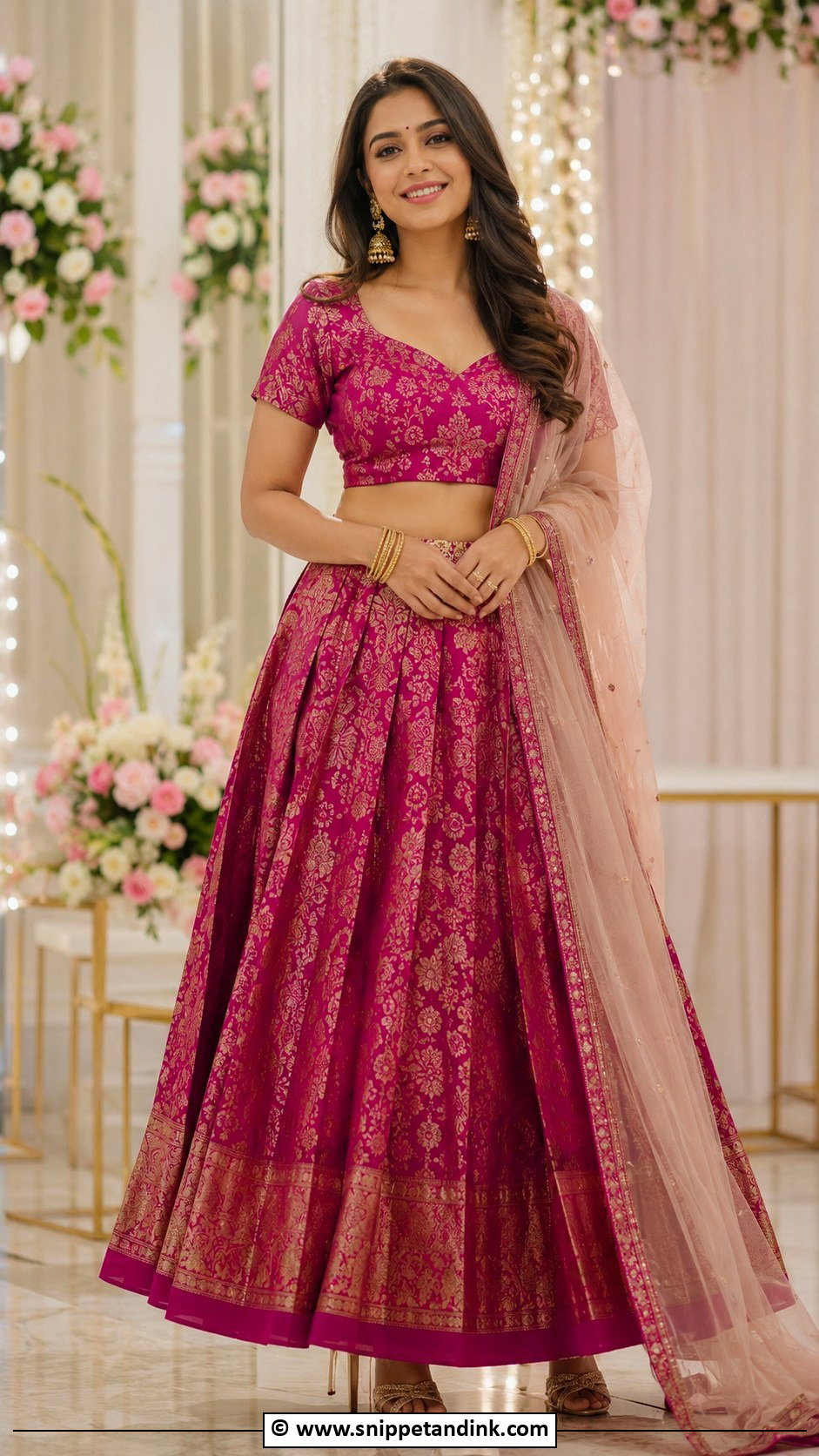
A Banarasi skirt outfit gives you heritage weaving without the full commitment of a saree. Brocade is stiff, so the skirt holds its own shape and needs only a simple blouse or silk crop top. Magenta, green and royal blue with gold zari read festive at night. Because Banarasi silk is heavy, keep the dupatta light. A sleek bun, a bindi and jhumkas complete it, and the stiff skirt still moves well for a Sangeet set.
21. Sangeet Belted Saree Outfit
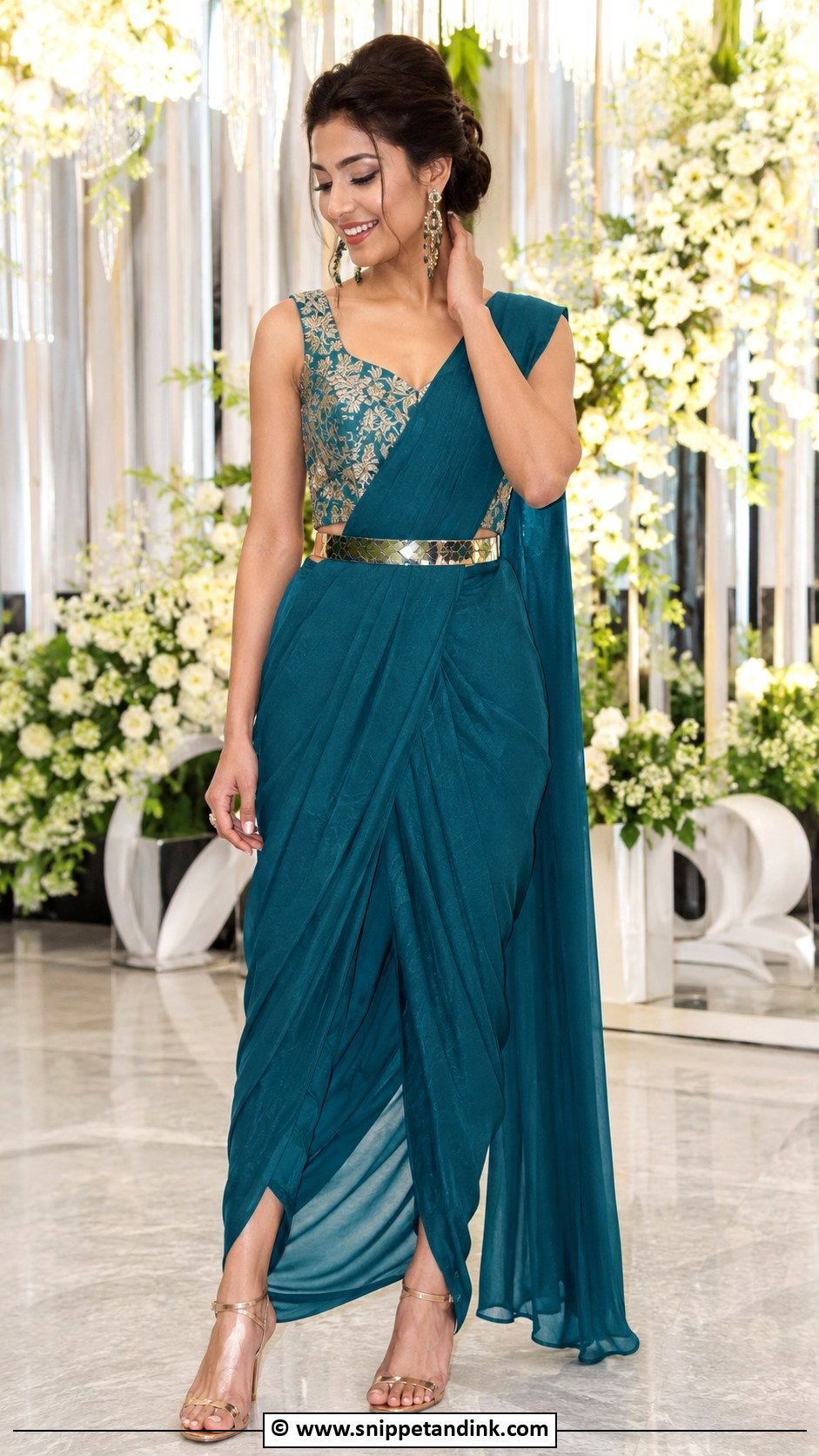
The belt is doing a real job here: it locks the pallu and pleats at the waist so the drape survives choreography. Georgette and chiffon fall smoothly under a belt; heavy silk tends to bunch. I suggest a belt with a proper hook clasp rather than a tie, because ties loosen as you move. Sleeveless or corset blouses both work. Keep the hair neat and the earrings dropped, and you have a saree you can actually dance in.
22. Sangeet Pastel Lehenga Outfit
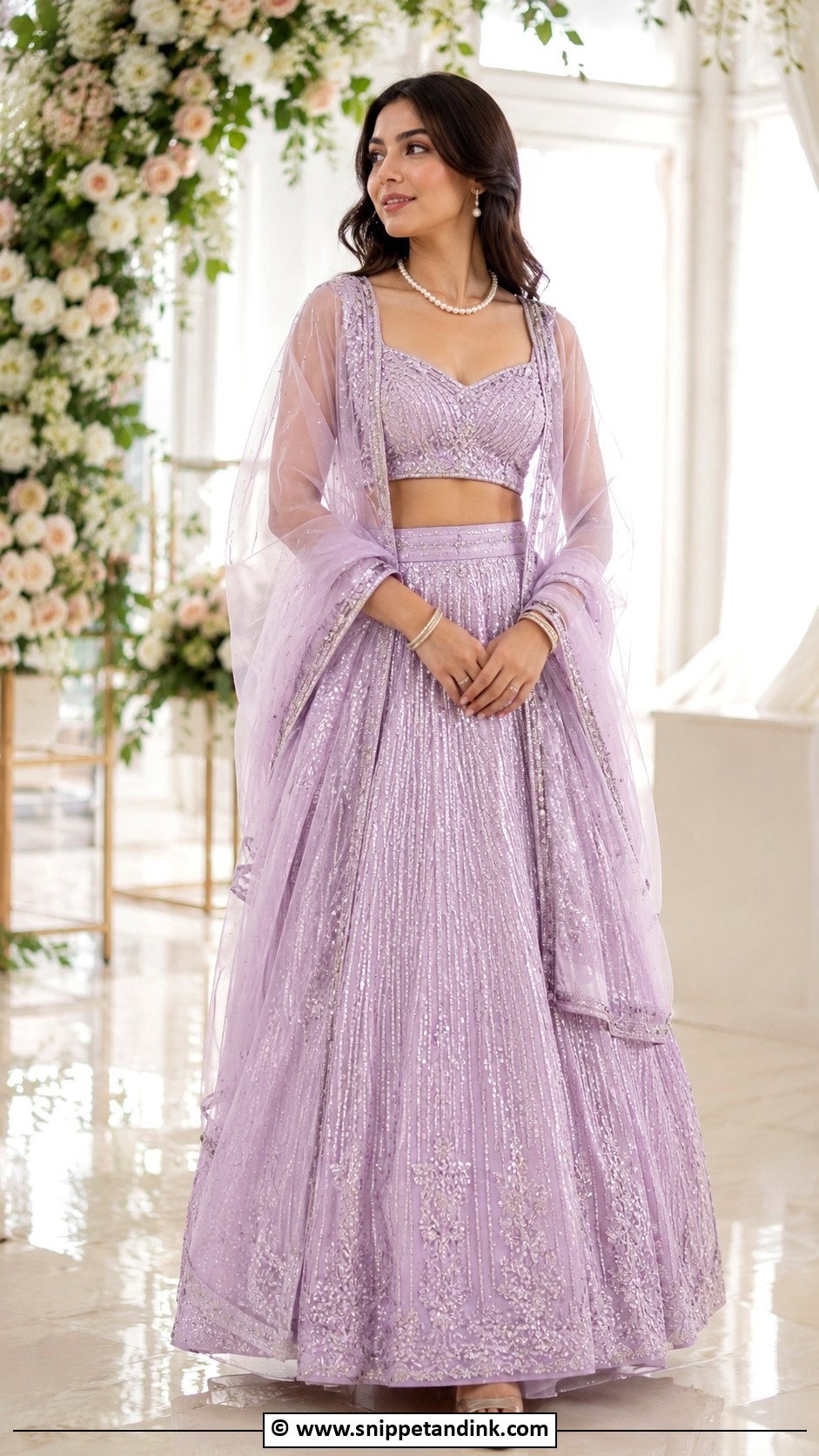
Pastels are the easiest way to give sisters coordinated colors without overshadowing a bride in red or a deep jewel tone. On their own, though, plain pastels can look daytime-casual under evening lights, so I always ask for shimmer, pearl or mirror detail. Lilac, mint and butter yellow look current. A fitted blouse and light dupatta keep the shape clean, and pearls or soft gold suit the delicate palette.
23. Sangeet Black Lehenga Outfit
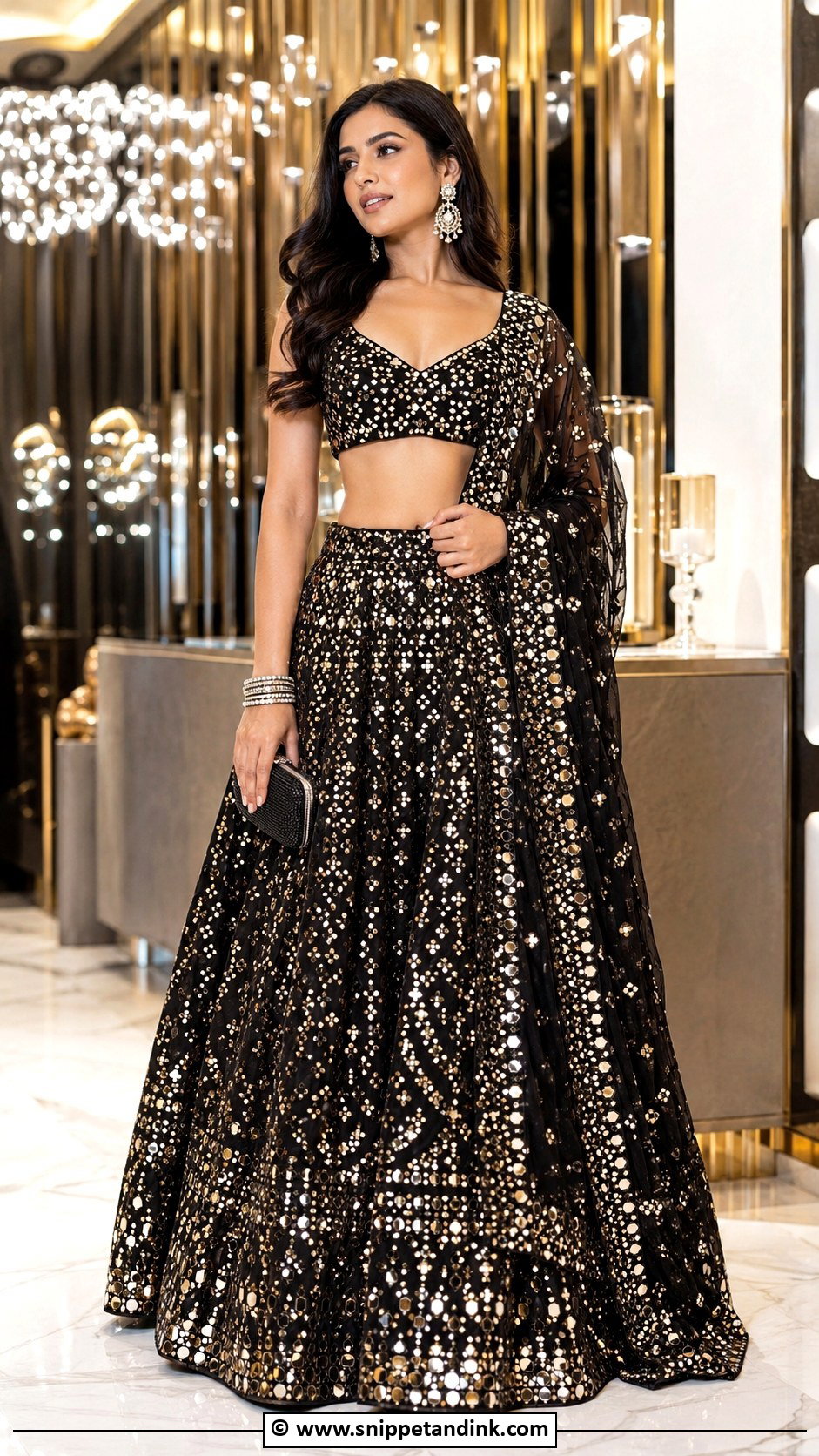
Black is still avoided by some families at weddings, so I’d check with the bride and the elders before buying one. Where it’s welcome, a black lehenga with gold borders, mirror work or colourful threadwork looks bold and festive. A silver or gold blouse lifts it. Black also hides sweat and seat creases better than any pastel, which matters on a long dancing night. Crystal earrings and a sleek clutch suit it; glowing skin and defined eyes keep it from looking severe.
24. Sangeet White And Gold Sharara Outfit
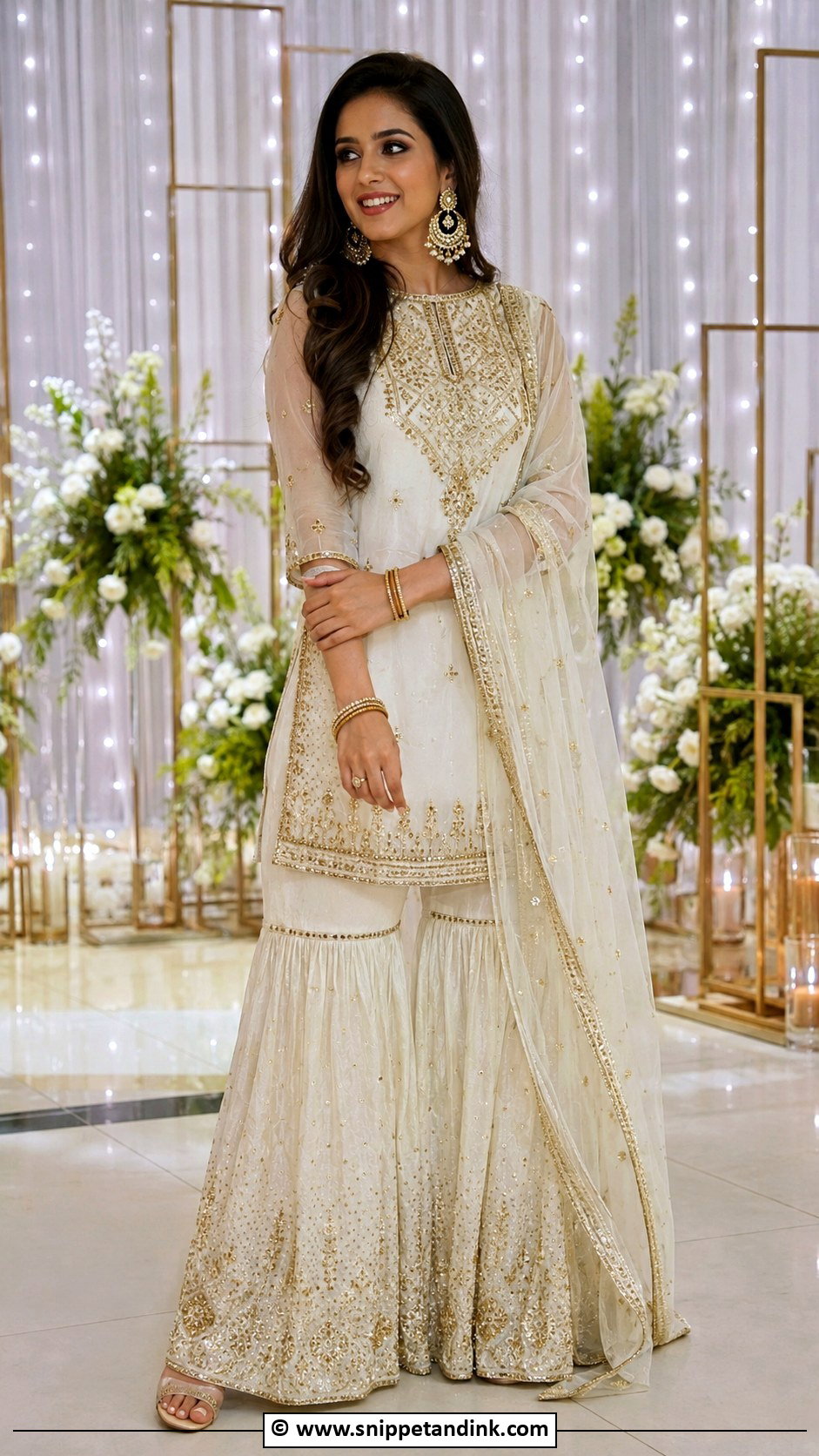
White and gold is graceful, but I flag it early: in some families white sits too close to mourning, and in others it can compete with an ivory-wearing bride. If both are fine, gota, zari or mirror details stop it from looking plain. A short kurti with flowy sharara pants gives easy movement, and a sheer dupatta with gold edging finishes it. Pale fabrics show marks easily, so keep a stain pen nearby before dinner.
25. Sangeet Ombre Lehenga Outfit
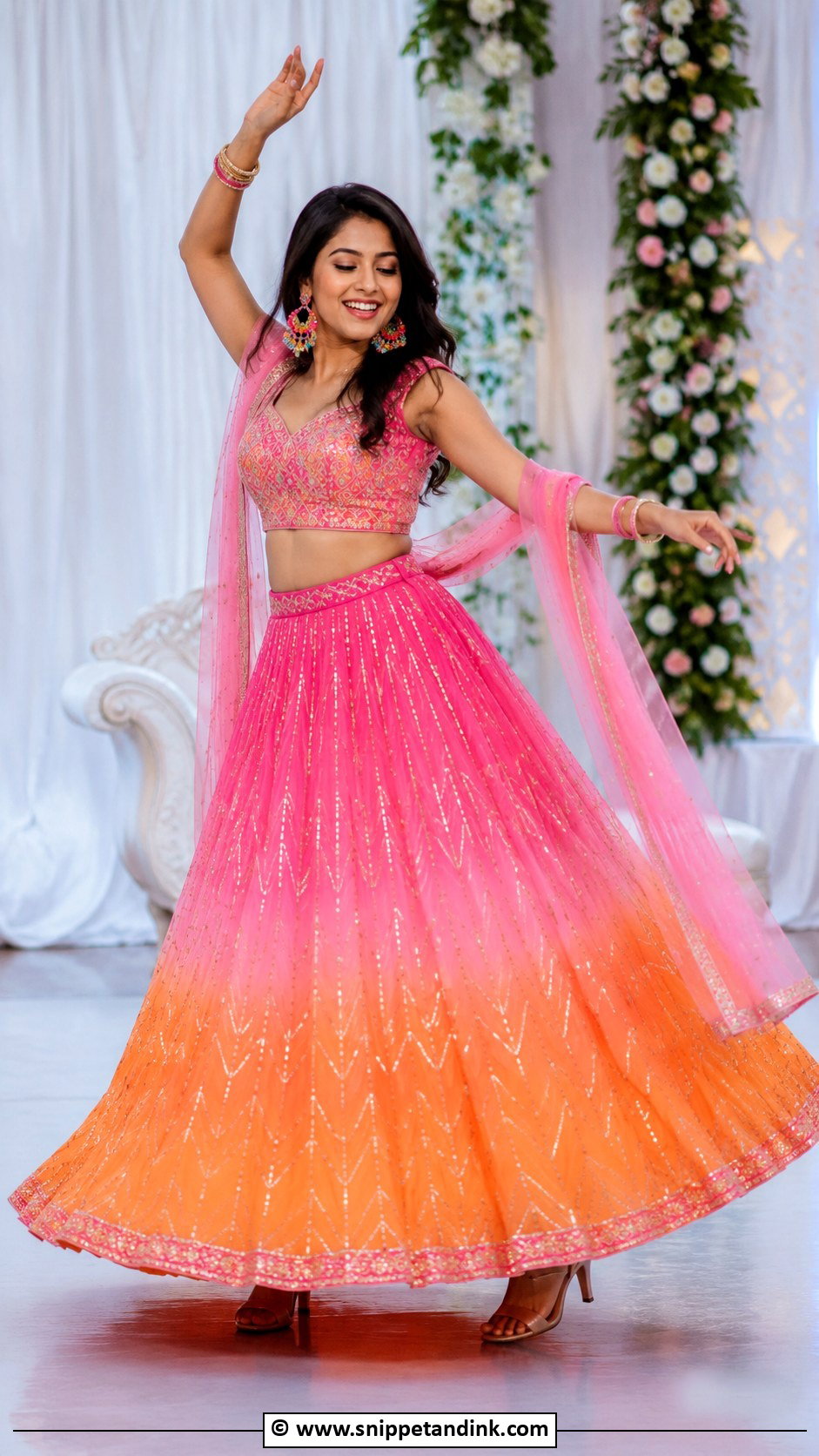
Ombre dyeing is done by hand, so no two skirts match exactly, which is part of its charm and also why you should see the fabric in daylight before you buy. Pink to orange and blue to lavender are popular blends. I match the blouse to one of the two ends of the gradient so the outfit feels connected. Keep the dupatta plain, because the skirt is already busy. Earrings in the darker shade ground the look.
26. Sangeet Long Kurta And Skirt Outfit
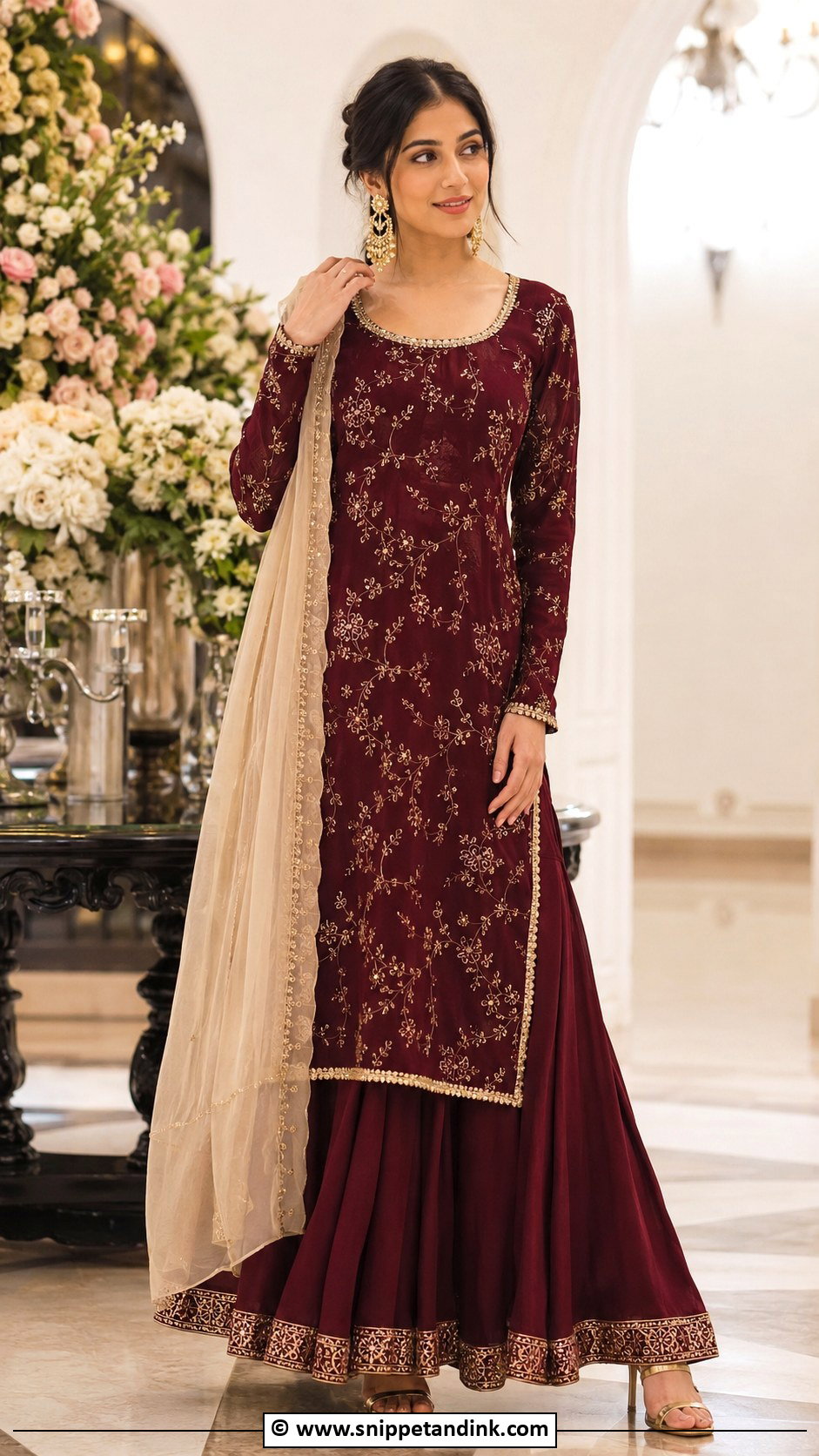
A long kurta over a skirt suits sisters who don’t want a fitted blouse at all, and it layers festive without feeling exposed. A side slit on the kurta is not just style; it lets your stride open up when you walk or dance. Wine, teal and mustard are rich colours for it. I suggest a straight or slightly flared kurta, since a very flared one over a full skirt doubles the volume. A light dupatta and statement earrings finish it.
27. Sangeet Dhoti Pants Outfit
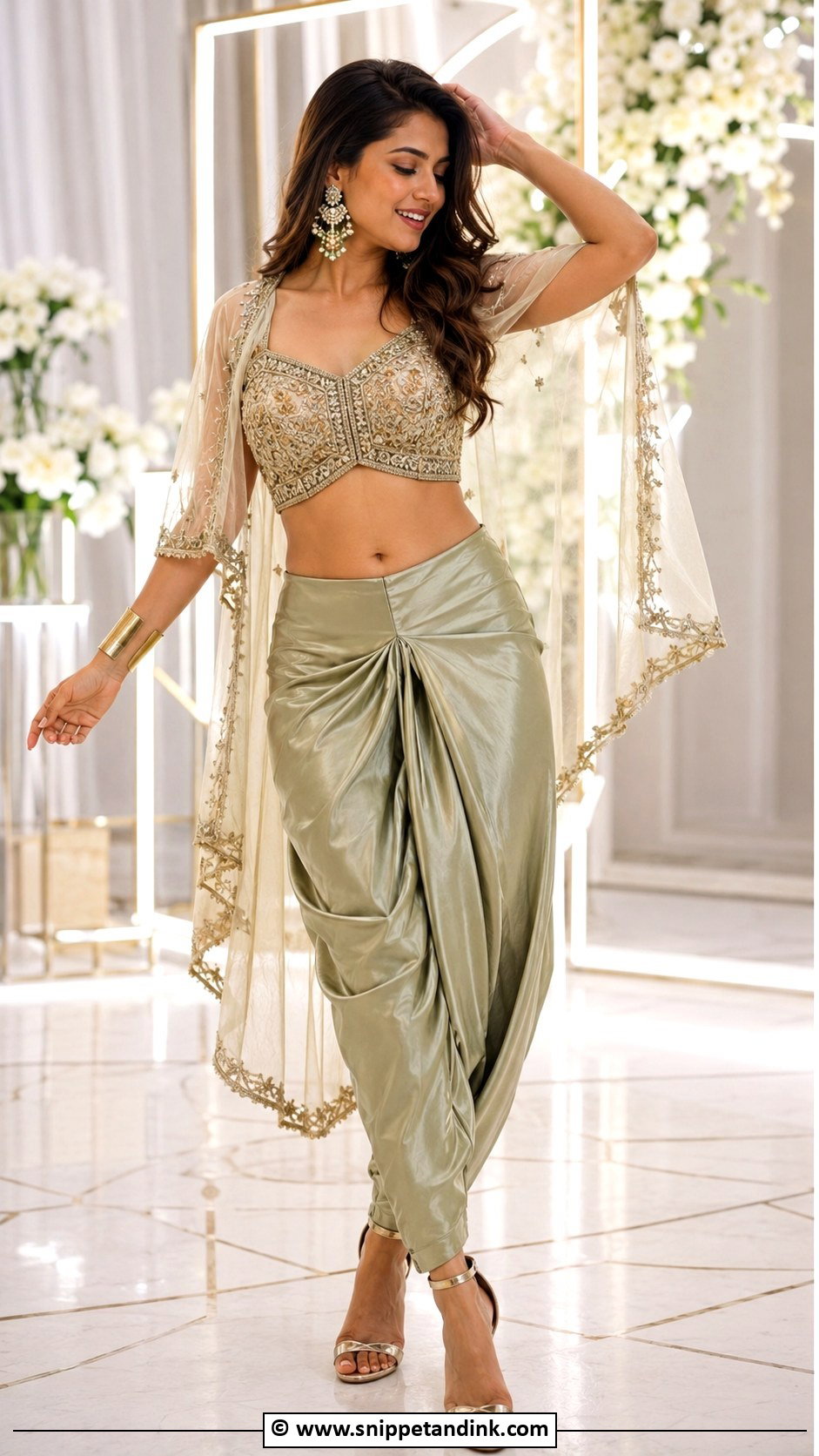
A dhoti pants outfit is the most energetic silhouette here, and choreographers like it because legs are visible for footwork. The draped dhoti pants pair with a crop top, peplum or short kurti, and a cape or jacket brings it back to festive. Silk and crepe drape cleanly; stiff fabrics balloon. Heels must be secure, I prefer ankle straps for any routine with jumps. It reads especially well in choreographed sets and family entrances.
28. Sangeet Net Lehenga Outfit
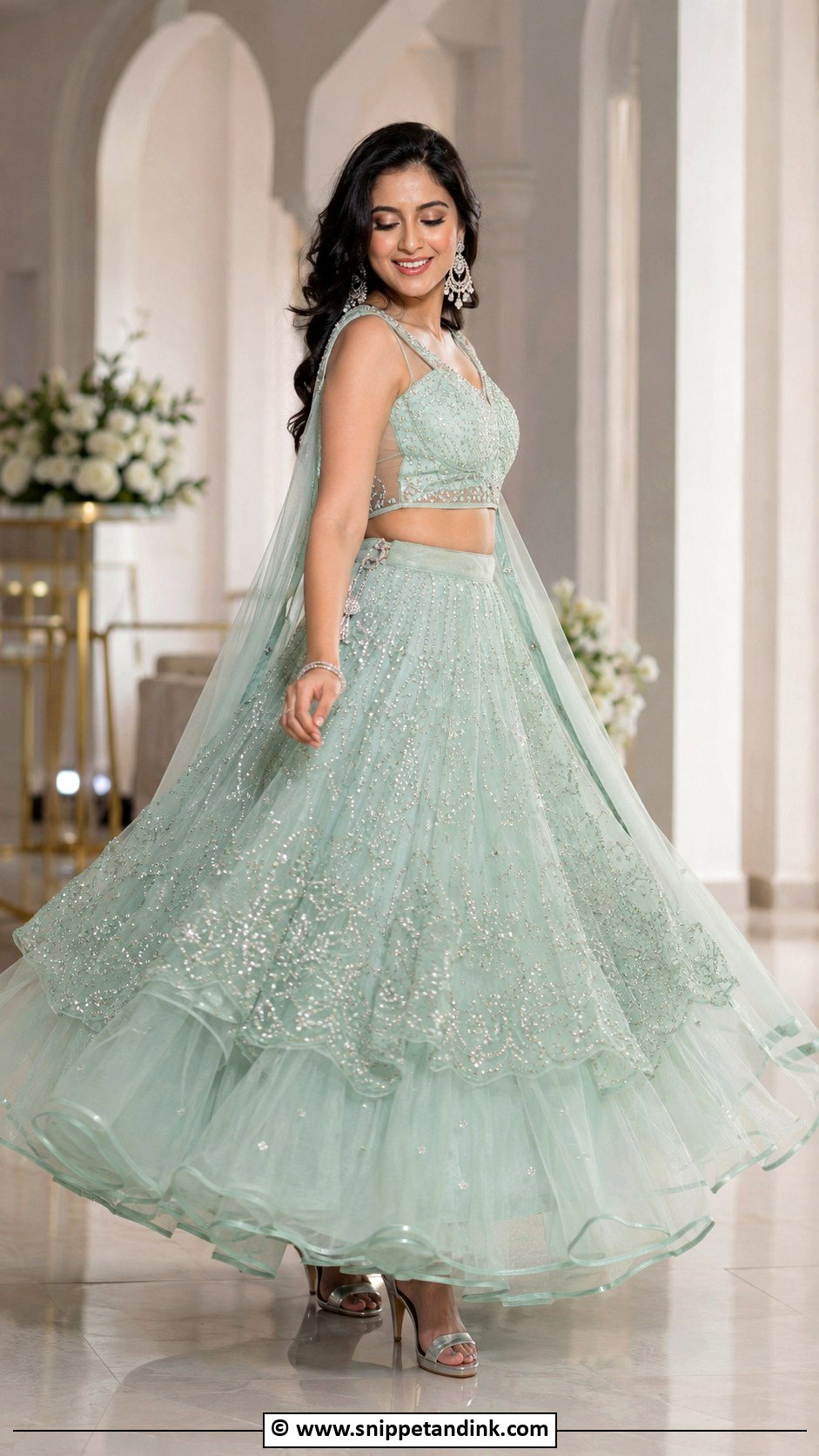
Net lehengas get their volume from layers, sometimes with a can-can underneath, and the can-can is what scratches by the end of the night. I ask for a soft lining between the net and the skin. Crystal or sequin details catch the stage lights. Soft shades look princess-like, jewel tones bolder. Pair it with a structured blouse so the full skirt stays balanced, and pin the dupatta neatly to avoid fuss on stage. It’s built for twirls.
29. Sangeet Palazzo Saree Outfit
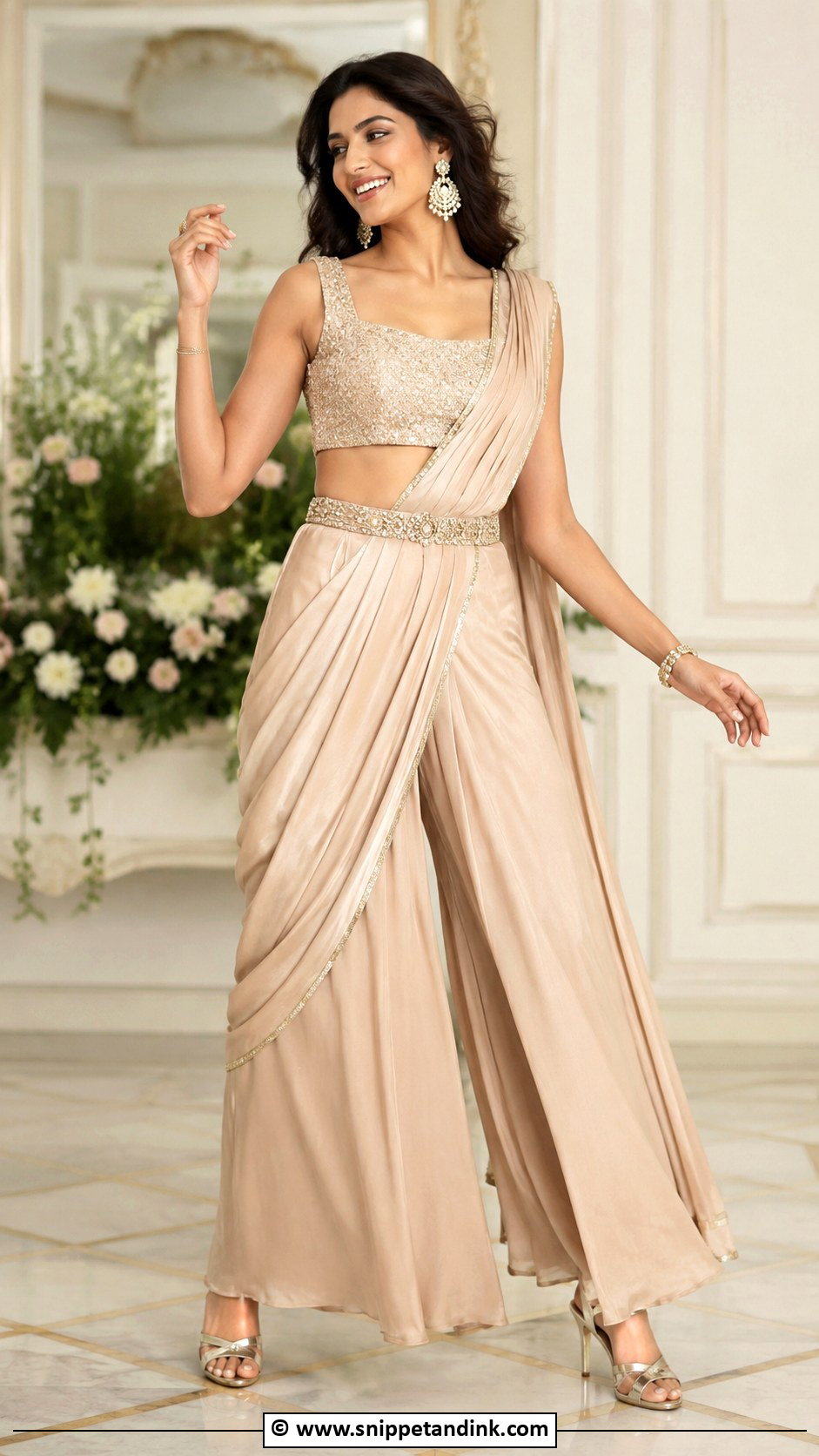
A palazzo saree gives the drape of a saree with pants underneath, so you can stride, climb stairs and dance without managing pleats. The pallu adds the elegance; the palazzos make it secure. Choose shimmer fabric, satin or crepe for a clean fall. A waist belt keeps the drape locked. I’d steer a sister toward this if she’s hosting and dancing, because it’s the one saree look where you can sit on the floor for a dholki photo without worrying.
30. Sangeet Coordinated Sisters Outfit
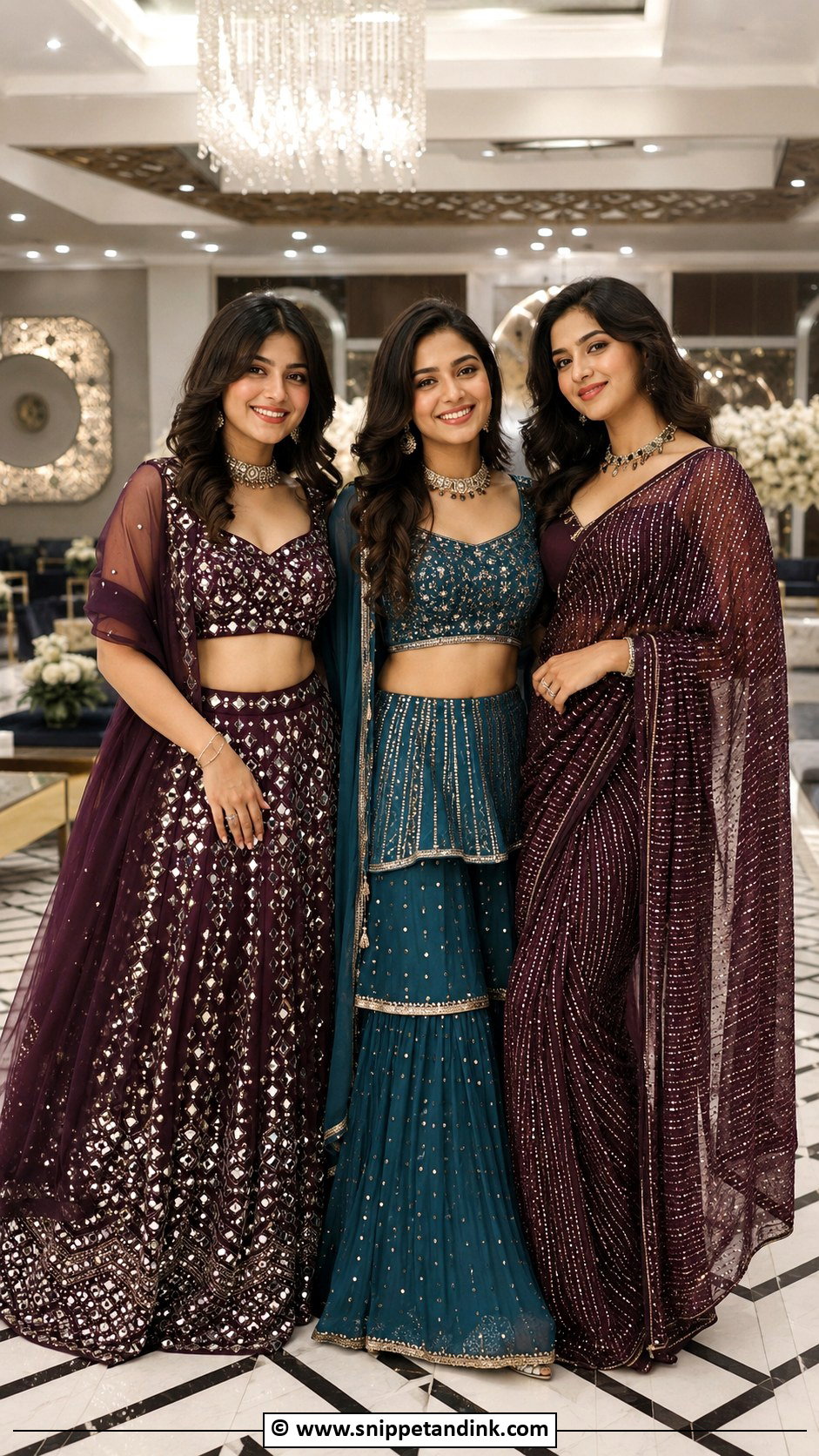
Coordinated doesn’t have to mean identical, and I’d argue it shouldn’t. Pick one palette, then let each sister choose the silhouette that suits her body and her role on the night: lehenga for one, sharara for another, saree for the eldest. Keep one shared detail such as mirror work or matching dupattas, and keep jewellery in the same metal tone. The group reads as family in photos, and nobody spends the evening in an outfit that doesn’t fit her style.
Clearing Your Colours With the Bride First
The single conversation I’d have before buying anything is with the bride, about her Sangeet outfit. Ask for the colour and roughly how heavy the work is. Then pick something that either sits in a different family of colour or is clearly lighter in embellishment. A sister in the same shade of fuchsia with equal sequin coverage is the most common clash I see in family photos, and it’s never intentional.
Check with elders too if you’re considering black or all-white. Some families are relaxed about both; others still treat them as wrong for a celebration, and it’s easier to know before the tailor starts.
Safety Pins, Hooks and Tape in the Potli
Something gives way at nearly every Sangeet I dress: a blouse hook, a dupatta pin, a sandal strap. Sisters are the people the bride sends for help, so carry enough for both of you.
- Six or seven small safety pins, in gold and silver to match the outfit
- Double-sided fashion tape for necklines and slipping pallus
- Two spare blouse hooks and a threaded needle
- Blotting papers and a lip colour
- Gel cushions or grip pads for heels on polished stage floors
All of it fits in a small potli, and it will save at least one outfit before the night is over.
Shine Kept One Notch Below the Bride
The sister’s outfit has a narrow job: festive enough for the stage, comfortable enough for five hours on your feet, and always a notch below the bride. Any of the silhouettes here can do that when the fit allows movement, the drape is secured and the shine is kept in proportion. Do the arm-raise test, the sit test and the shoe test before the day, and you’ll spend the Sangeet dancing rather than adjusting.
You'll Like These Ideas:


Leave a Reply