
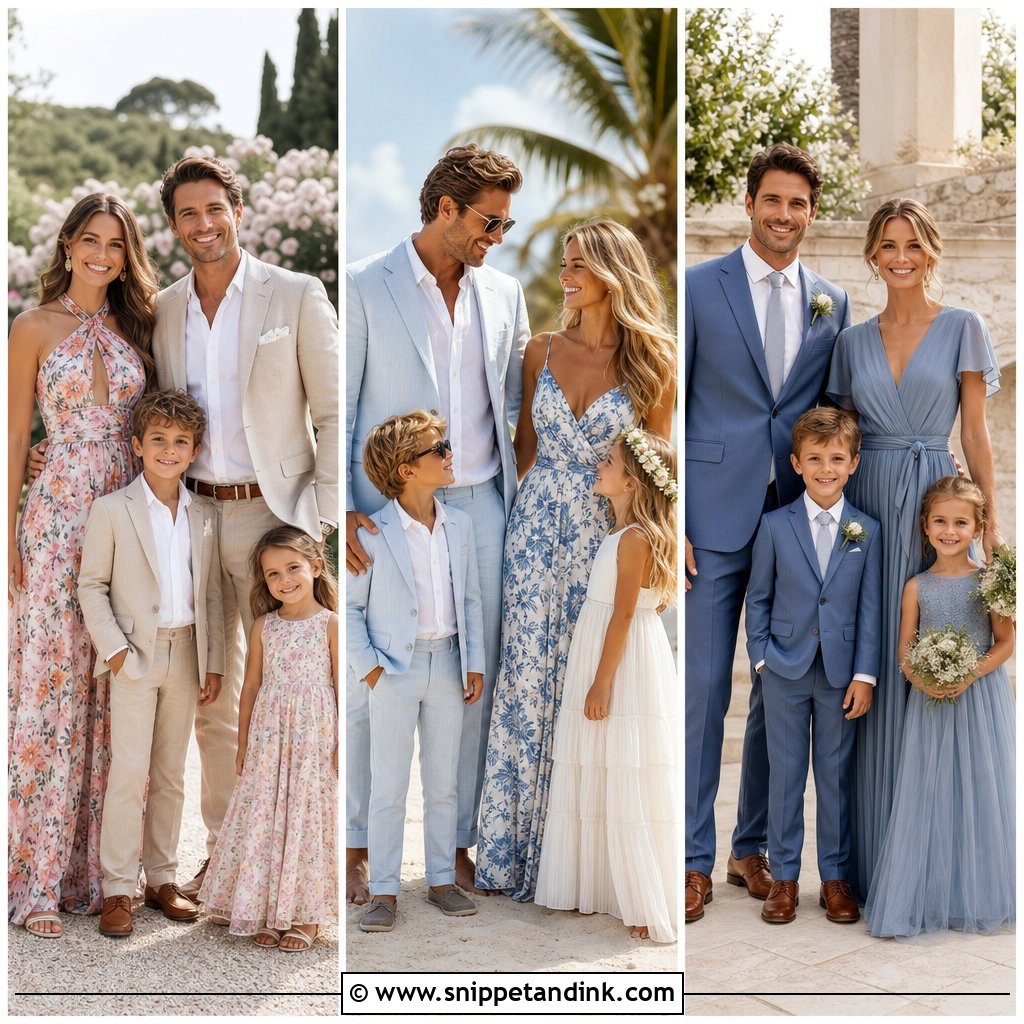
Dressing for your sister’s wedding is a different brief from dressing as a guest. You’ll be in the family portraits, you’ll probably be on your feet helping for hours, and people will notice what you wear. When I style a sister of the bride, I start with three questions for the bride herself: the palette, the venue and how formal she wants the family to look. After that, there’s a lot of room. Gowns, jumpsuits, tailored separates, traditional wear and relaxed outdoor looks can all work. The ideas below each come with shoes, jewelry and a bag, plus the fitting or fabric detail I’d check before you buy.
Questions to Settle With the Bride Before You Shop
Most sister-of-the-bride outfit problems come from guessing. A five-minute conversation early on avoids nearly all of them. These are the points I ask sisters to clear with the bride first:
- Does she want immediate family coordinated in a color, or just kept away from certain shades?
- Will you stand with the bridesmaids, or separately as family? It changes whether you should complement their dresses or avoid them.
- How formal will the family portraits be, and will parents be in black tie?
- Are there cultural or religious rules about shoulders, black, white or red?
- Is there more than one event? A mehndi or rehearsal dinner may need its own outfit.
Some brides want total control; others honestly don’t mind. Either way, asking shows you’re thinking of her day rather than your own look, and it gives you a clear brief to shop to.
1. Satin Maxi Dress for Sister’s Wedding
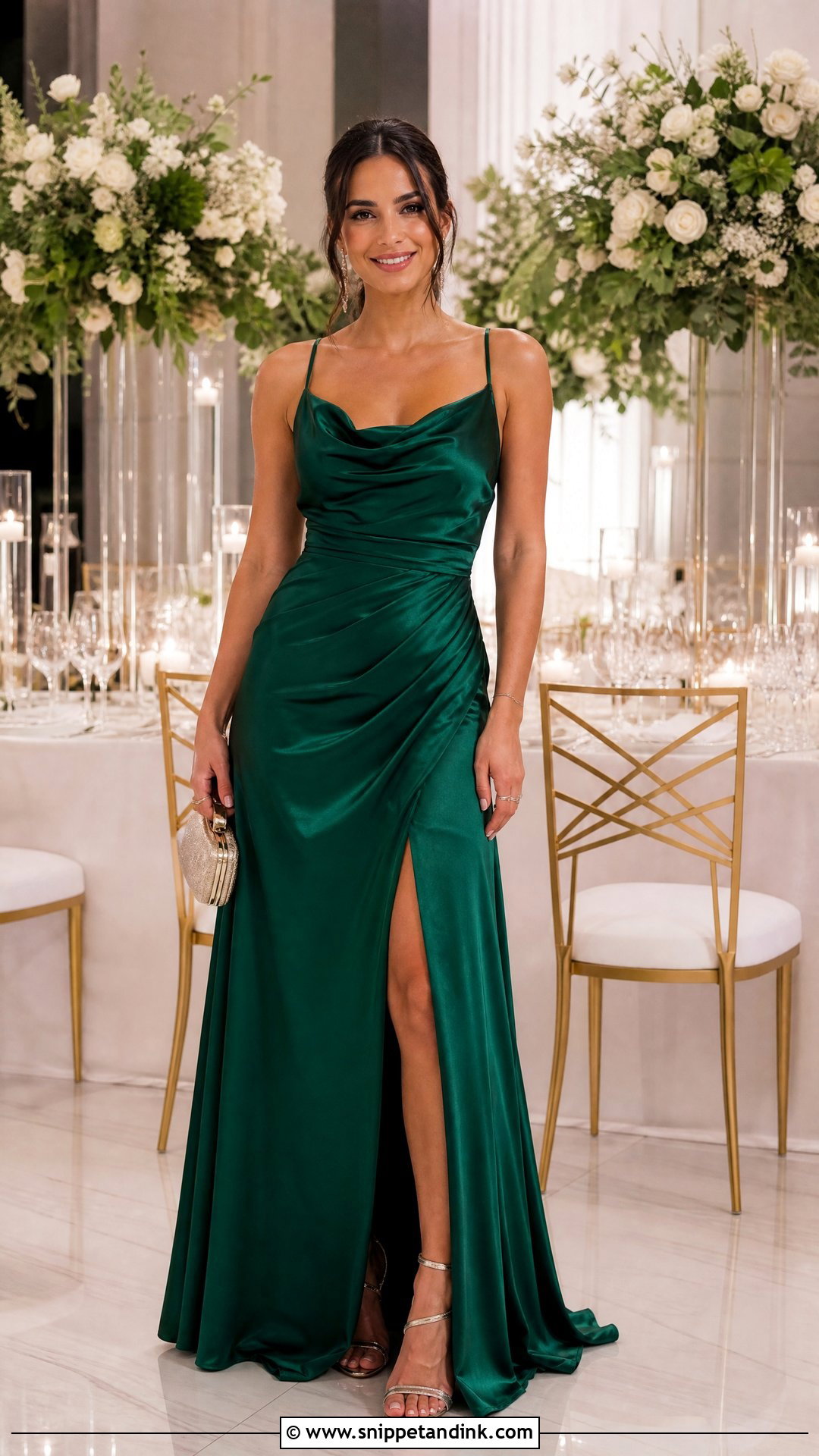
Satin is the fabric I’d pick for an evening wedding if you want to look dressed up without beading or sparkle. Emerald, navy and plum all read rich in low light; stay away from champagne and ivory, which can look bridal in photos. A softly draped neckline and defined waist are the most forgiving shapes. The honest downside of satin is that it shows everything underneath it and creases wherever you sit. Get smooth, line-free underwear, have it hemmed to your shoes, and steam it at the venue if you can. Strappy metallic heels, small drop earrings and a structured clutch finish it, with a sleek low bun keeping the attention on the fabric.
2. Floral Midi Dress for Sister’s Wedding
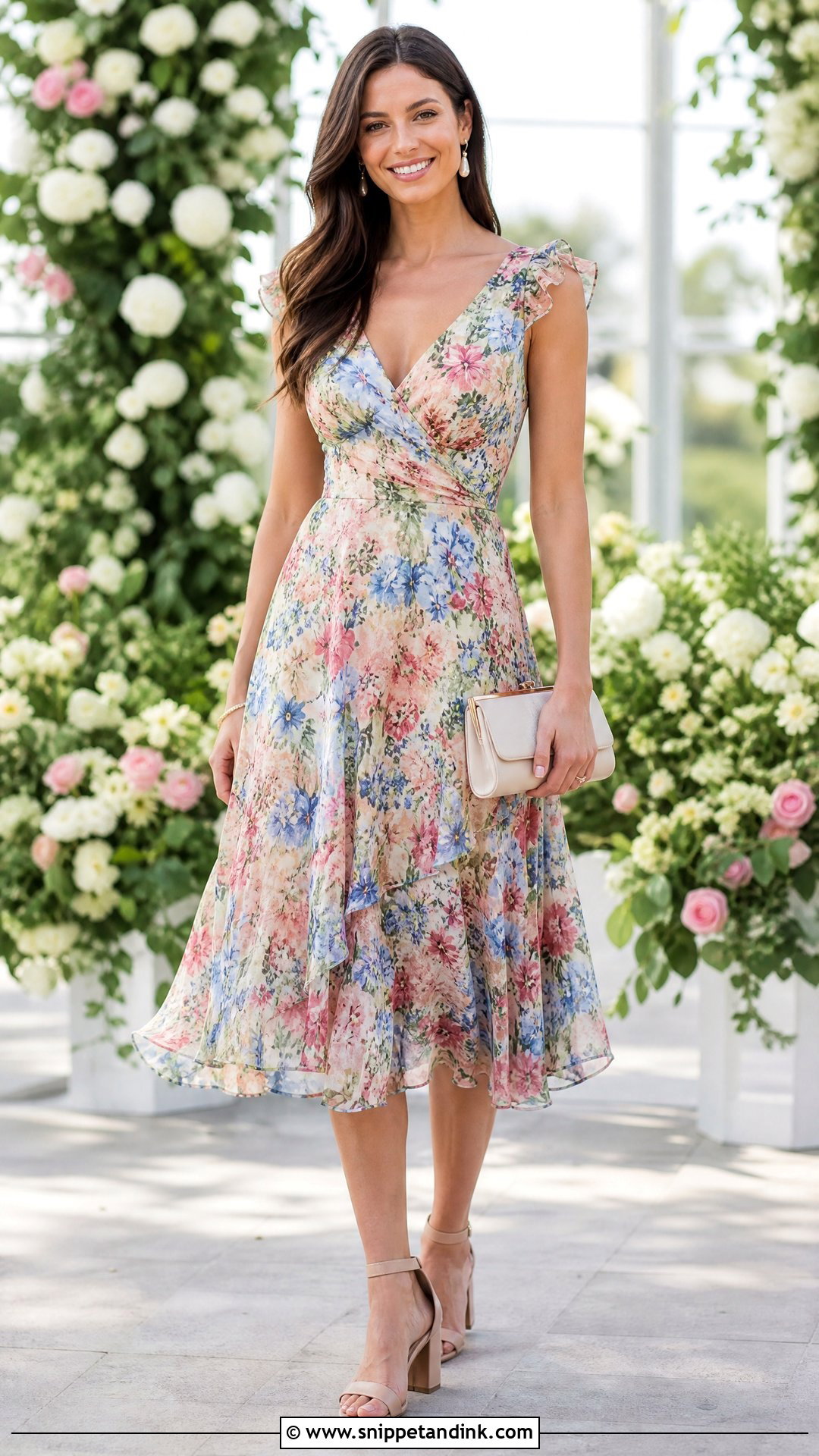
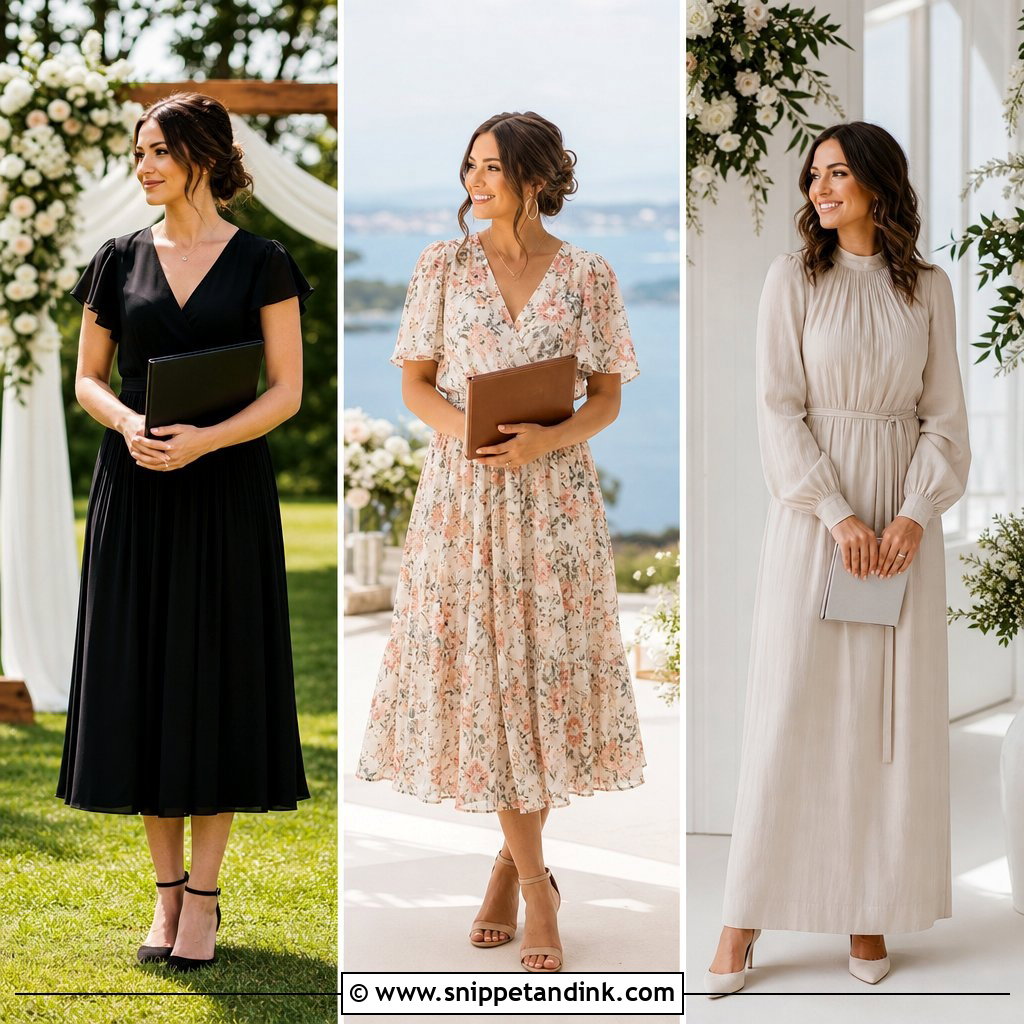
Floral midis are my default for outdoor daytime ceremonies, but only with a print on a colored background. A mostly white floral can read close to bridal in group photos. An A-line or gently flared skirt lets you sit and dance without riding up. For a garden, chiffon or crepe breathes better than polyester satin. Pick one color from the print and repeat it in your bag. Block heels sink less on grass than stilettos. Keep the earrings and shoes plain, because the print is already doing the work.
3. One-Shoulder Gown for Sister’s Wedding
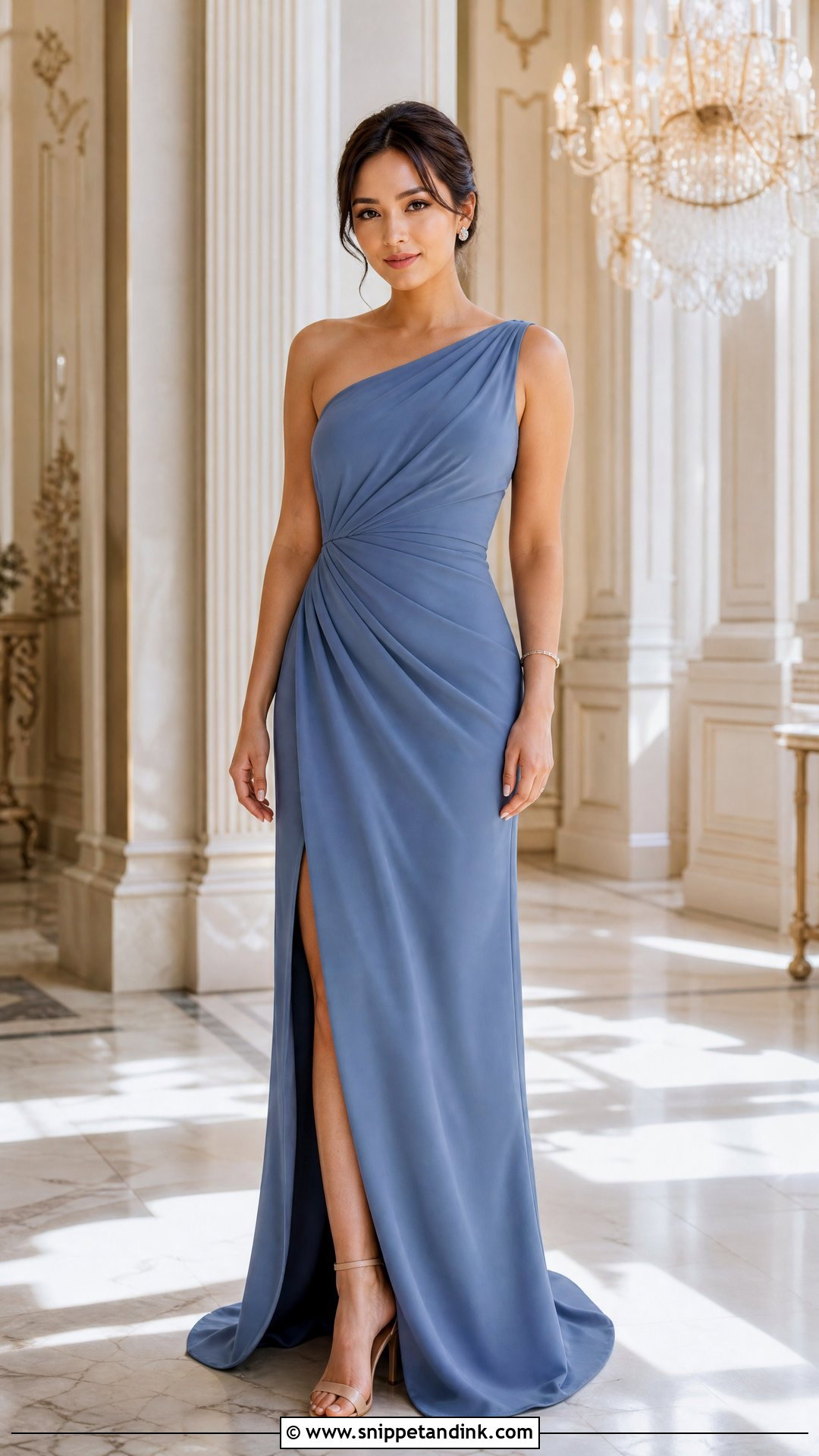
One-shoulder gowns in matte crepe are one of my favorite sister-of-the-bride looks for a formal evening. The neckline frames the face in portraits without needing a necklace, and you shouldn’t wear one; it fights with the asymmetry. Jewel tones, dusty blue and muted coral sit well next to most bridal palettes. Put a slim bracelet on the bare arm. If the gown has a side slit, sit down in it at the fitting and check how far it opens. A soft updo or waves pushed to the covered side keep the shoulder visible.
4. Pleated Chiffon Maxi Dress for Sister’s Wedding
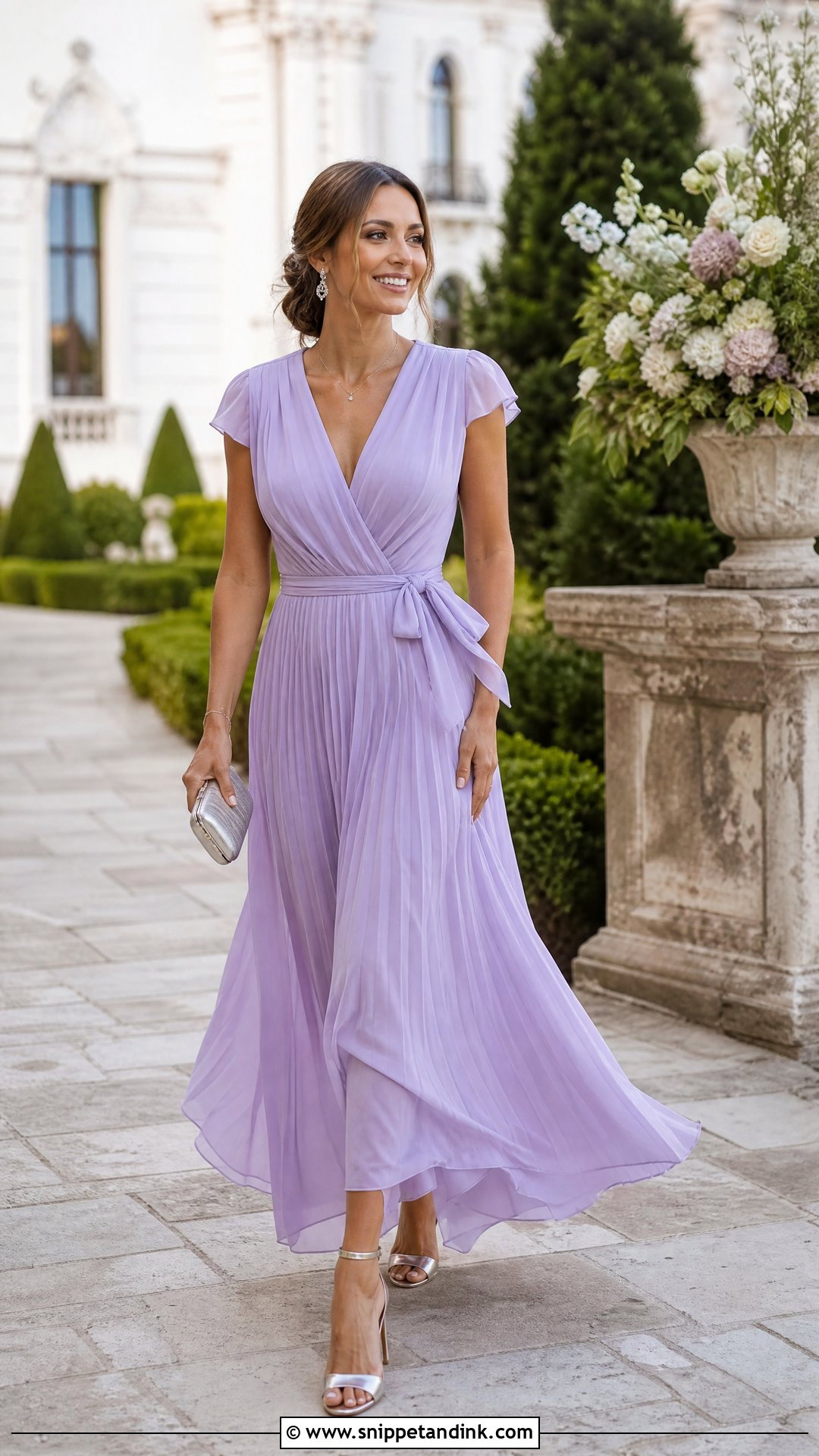
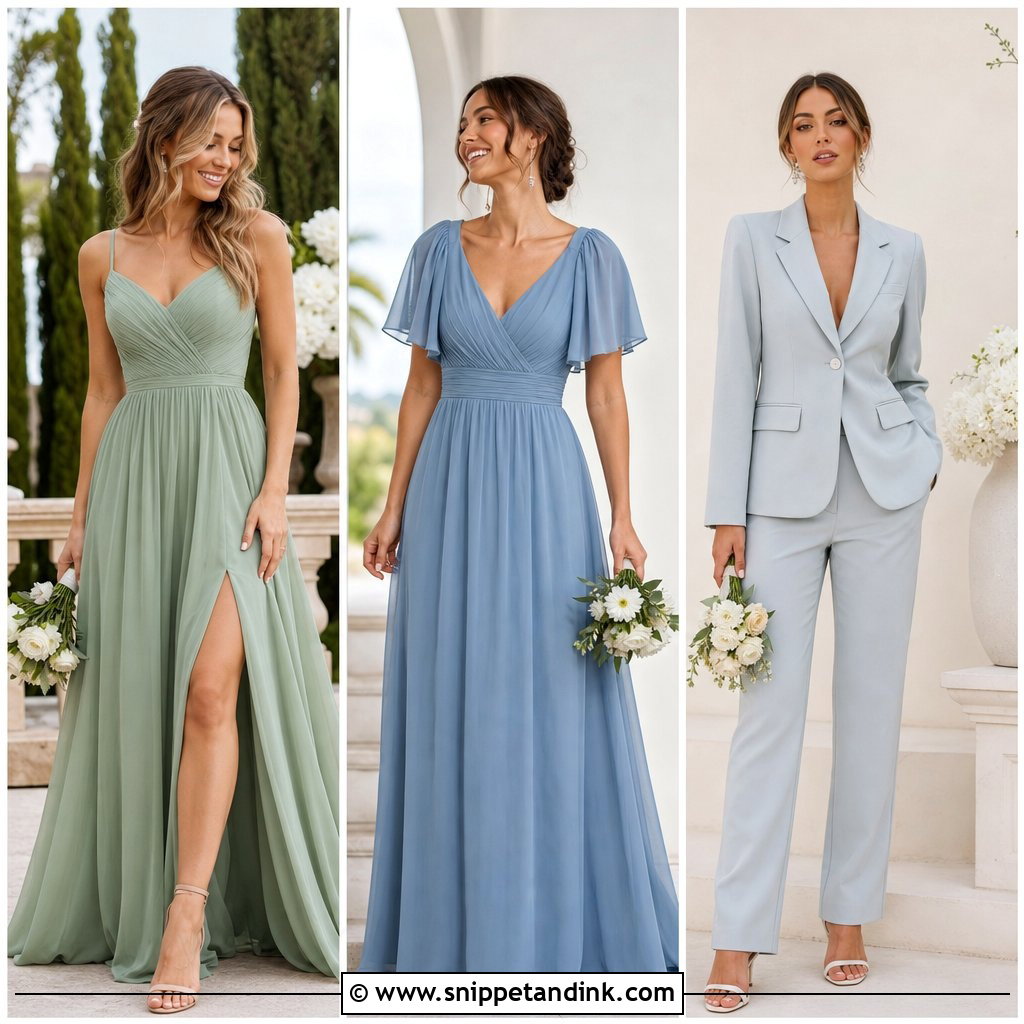
Pleated chiffon moves with the slightest breeze, which is exactly why it looks so good at outdoor ceremonies. Lavender, sage and cornflower blue usually fit spring and summer palettes. A wrap bodice or defined waistband gives shape without stiffness. The fabric is delicate, though, and pleats can snag on rough chair backs or brooch pins, so I’d skip anything sharp near the skirt. On grass or gravel, use heel protectors or dressy flats. A metallic clutch and fine layered earrings suit it, and it sits well within most semi-formal dress code settings at gardens, estates and vineyards.
5. Velvet Gown for Sister’s Wedding
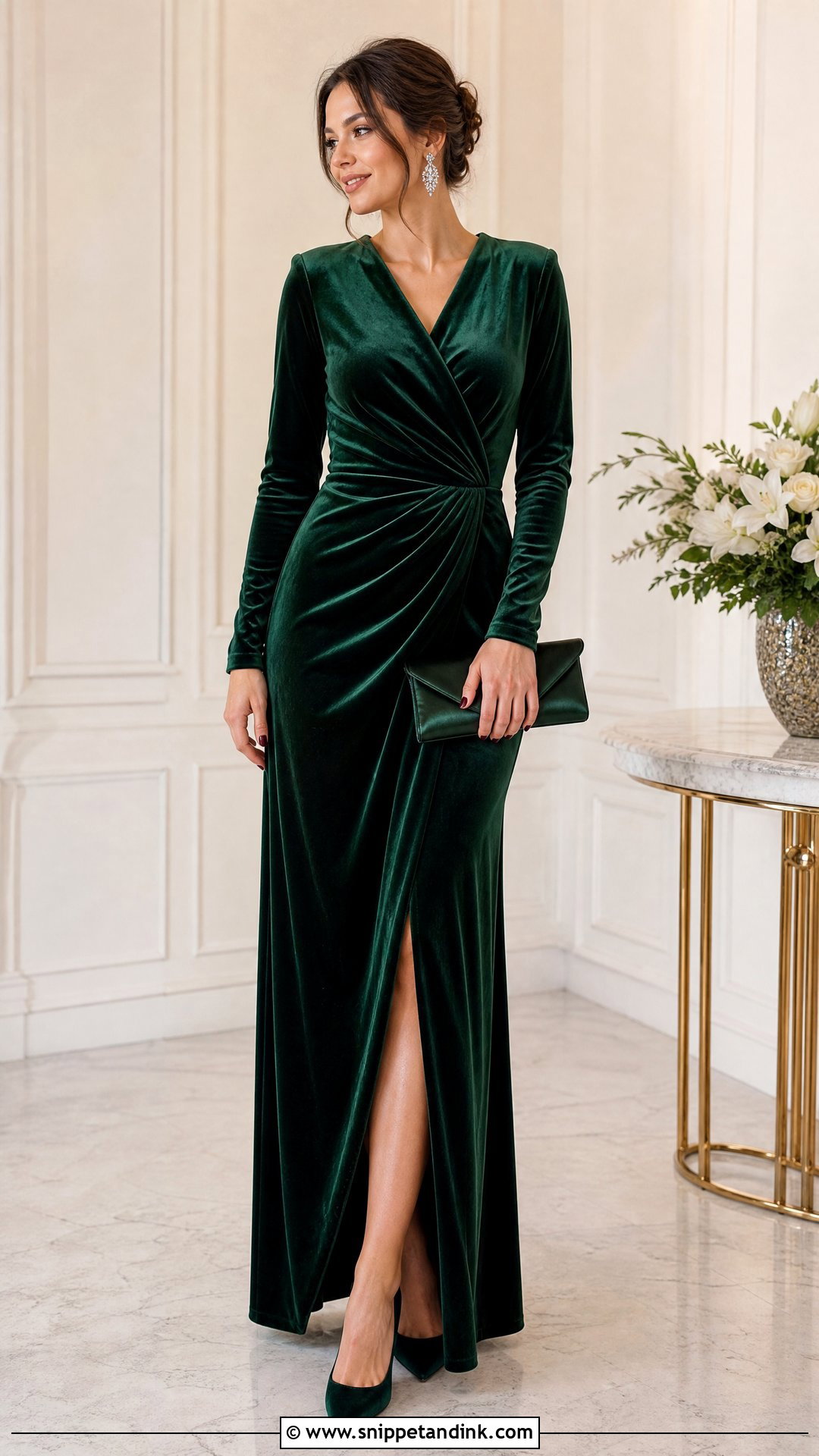
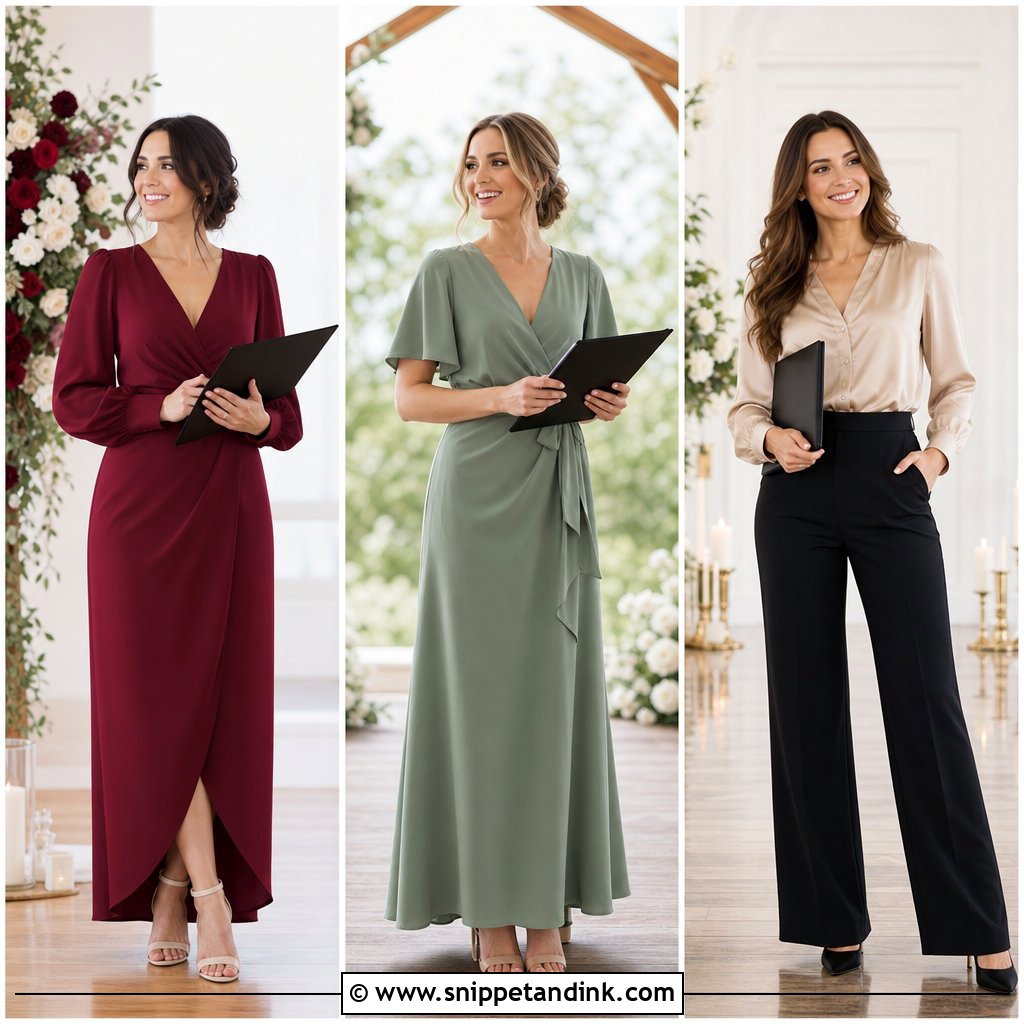
Velvet is the one fabric that keeps you warm and still looks formal at a winter wedding. Burgundy, forest green and midnight blue have enough depth on their own that you don’t need embellishment. A fitted or wrap bodice works with most body shapes. Velvet does mark where it’s pressed, so hang it the night before rather than folding it into a suitcase. Pointed pumps and crystal earrings finish it. Pick either a delicate pendant or statement earrings, not both. Over the top, a tailored wool coat looks far smarter in arrival photos than a casual jacket.
6. Pastel Pantsuit for Sister’s Wedding
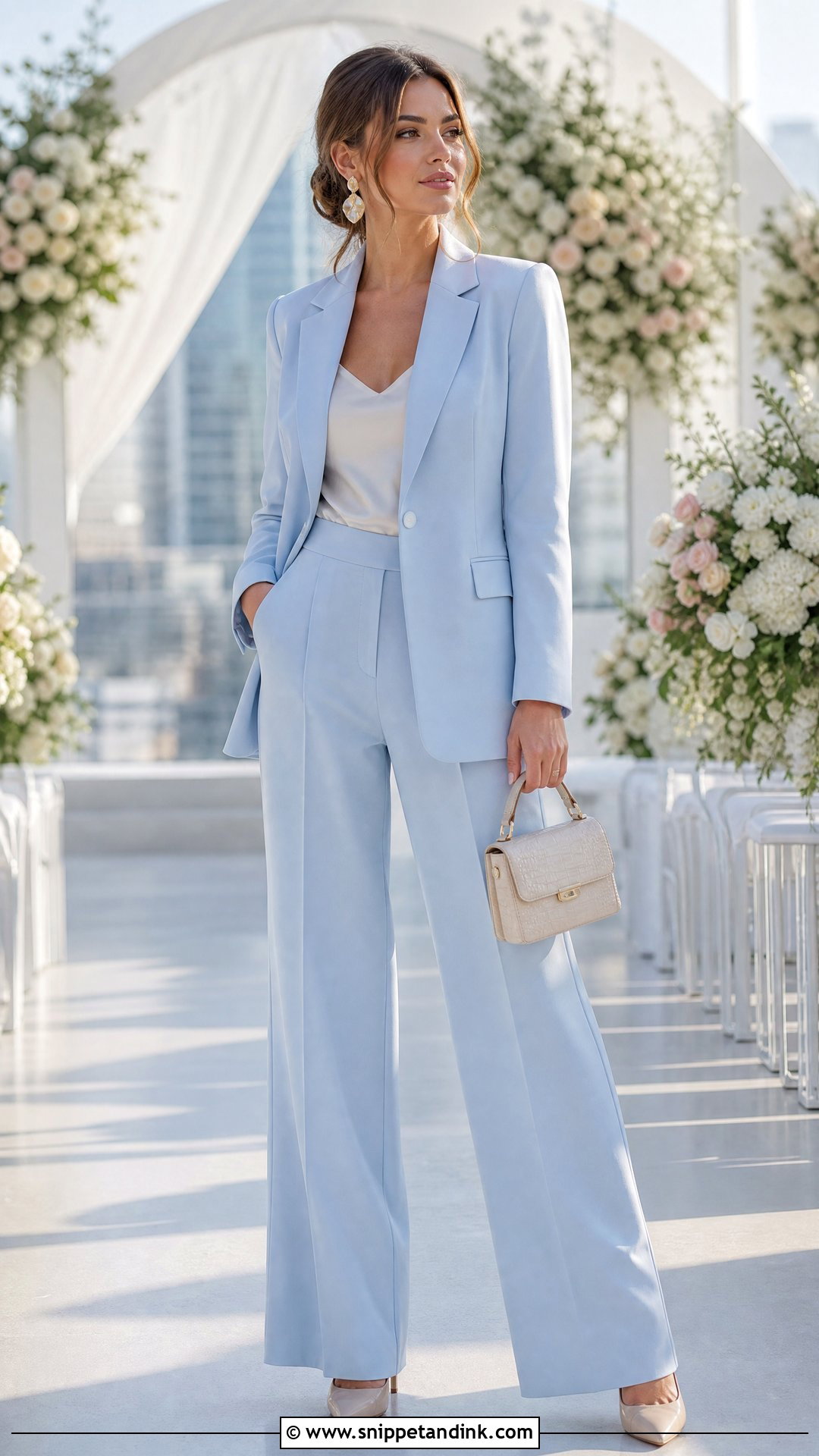
Not everyone feels like herself in a dress, and a pastel pantsuit is a confident alternative for city and contemporary weddings. Fit is everything here. I check that the blazer sits flat across the shoulders without pulling at the button, and that the trousers almost skim the floor in the exact heels you’ll wear. Powder blue, lilac and soft green photograph well in daylight. A silk camisole underneath keeps the look soft. Pointed heels and sculptural earrings make it feel like occasion wear rather than office wear. A sleek ponytail suits the tailoring.
7. Wide-Leg Jumpsuit for Sister’s Wedding
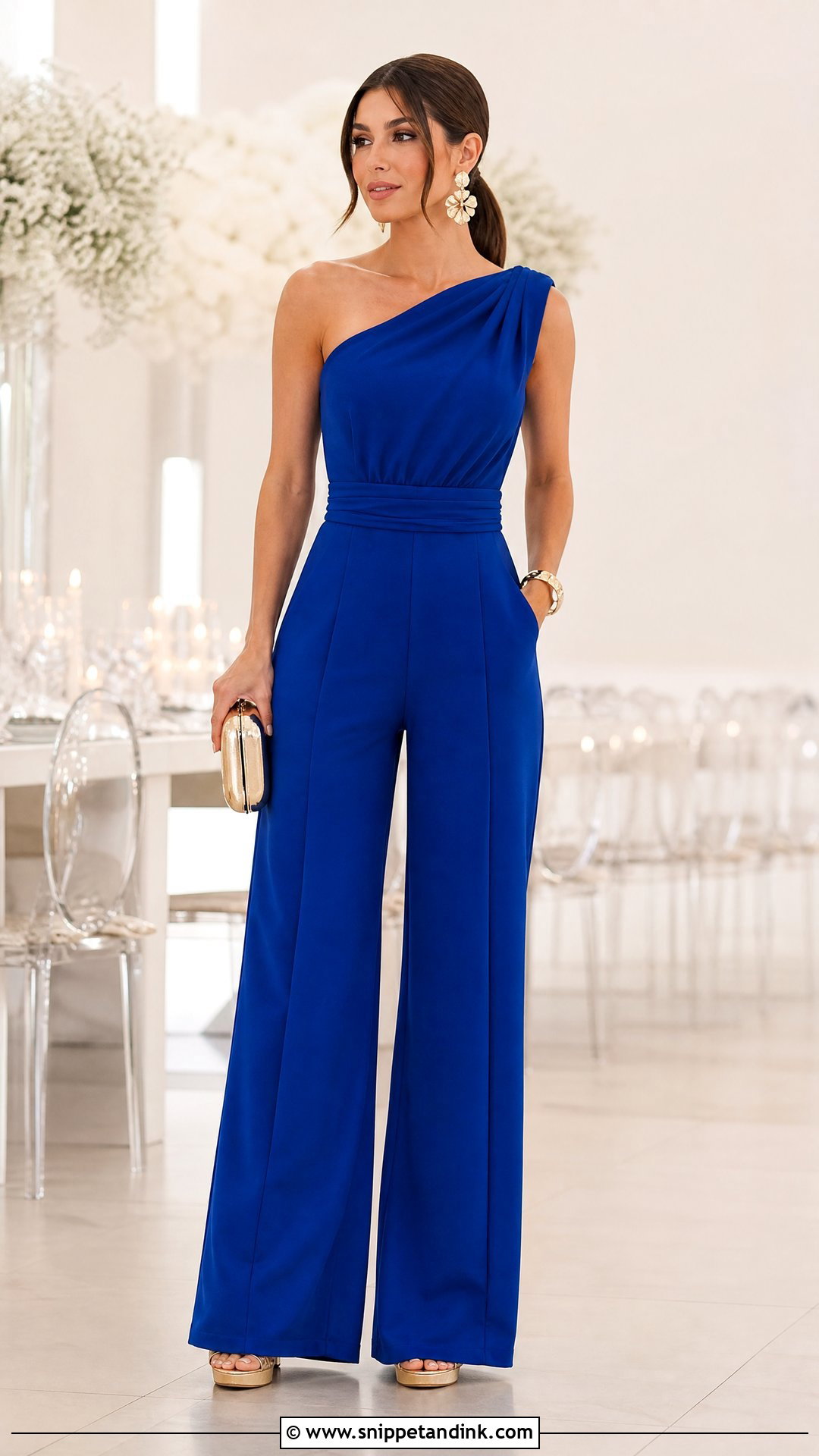
A wide-leg jumpsuit gives you the drama of a gown with the freedom to crouch, carry and dance. I always check the torso length first. If it’s too short, the crotch pulls when you sit and the whole thing looks wrong in seated portraits. A one-shoulder, halter or draped V-neck makes it read formal. Cobalt, magenta and dark teal hold up well in photos. Platforms or block heels balance the wide leg, and the hem should be altered to those exact shoes. It’s a sensible pick if you’ll be running errands for the bride all day.
8. Brocade Skirt and Blouse for Sister’s Wedding
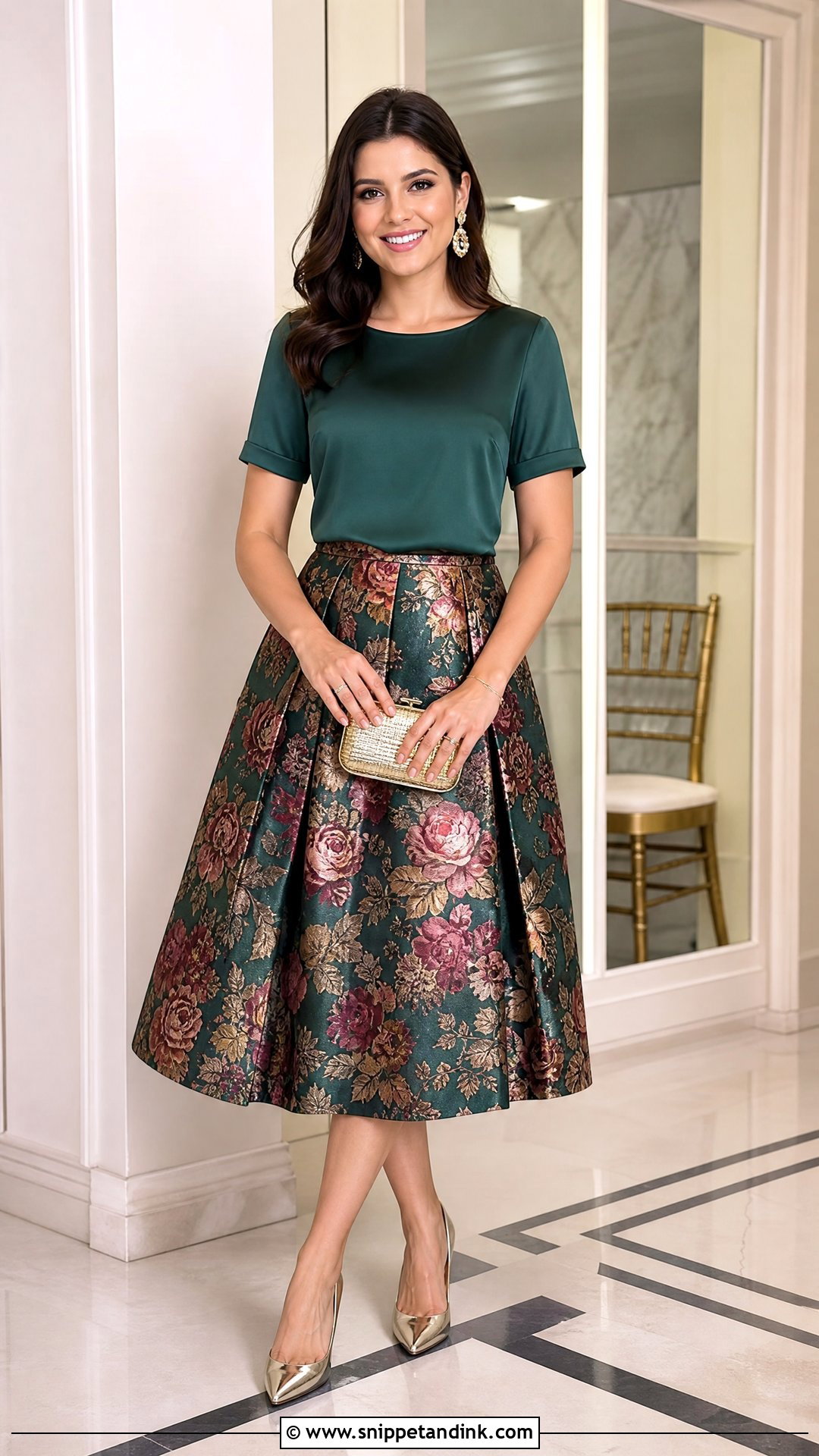
A brocade skirt with a plain blouse is the outfit I suggest most often to sisters who want something they’ll wear again. The structured A-line shape holds itself, so it looks polished from the first photo to the last. Balance the heavy texture with a solid silk blouse or fitted knit top; two textured pieces together look busy. Metallic pumps and a compact clutch tie it together. A hem just below the knee looks most occasion-ready. Brocade can also pick up one color from the wedding palette without looking like a bridesmaid’s dress.
9. Slip Dress and Blazer for Sister’s Wedding
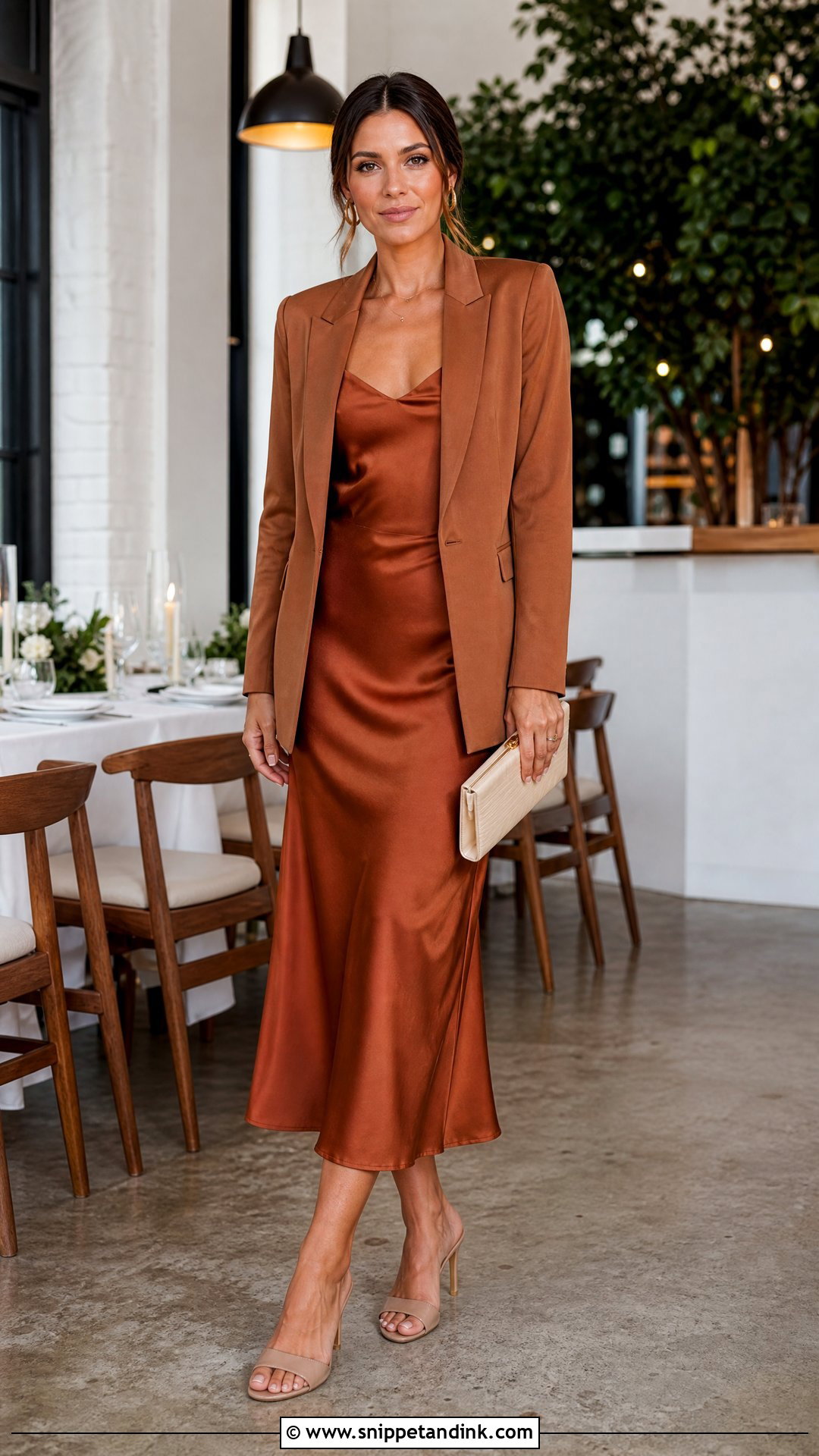
A midi slip dress under a tailored blazer is a modern option that changes through the day. Choose heavier satin or crepe; thin satin clings and shows every seam. Navy, copper and dusty rose work as the dress, with a matching or gently contrasting blazer on top. Fashion tape keeps a cowl neckline in place when you bend. Wear the blazer through the ceremony and speeches, then take it off for dancing. Heeled mules and medium hoops keep it clean. It suits restaurant receptions and cocktail dress codes.
10. Tea-Length Dress for Sister’s Wedding
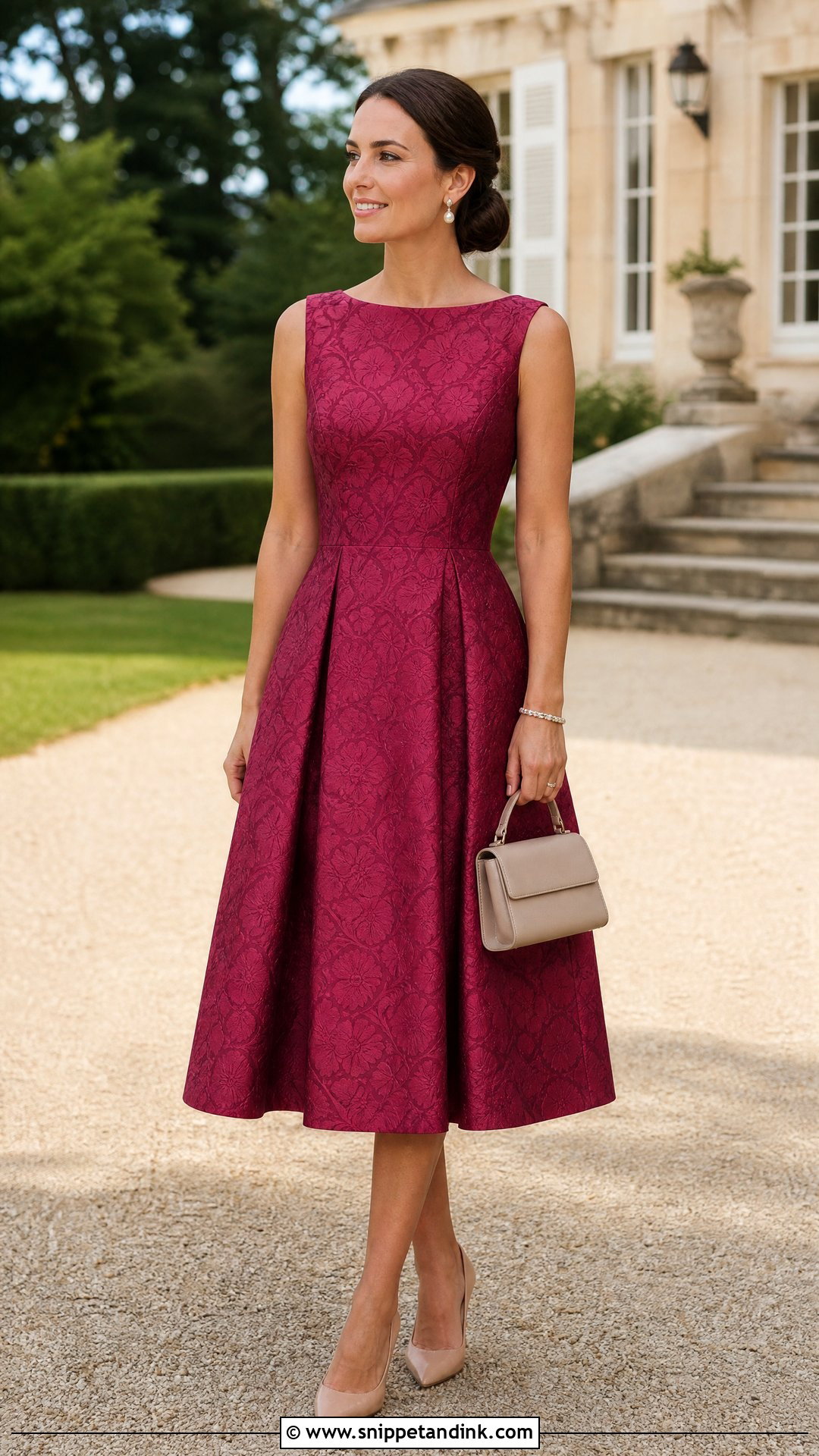
Tea-length dresses with a fitted waist and full skirt look formal in family photos and stay comfortable for a long day. Crepe, jacquard or floral organza in raspberry, green or blue all work. Height matters with this hem. On petite frames I’d take it just below the knee, because mid-calf can cut the leg at its widest point; taller women can carry the longer length. If the skirt has a lot of volume, keep the neckline plain. Pearl studs and ankle-strap heels give the classic finish this shape deserves.
11. Wrap Midi Dress for Sister’s Wedding
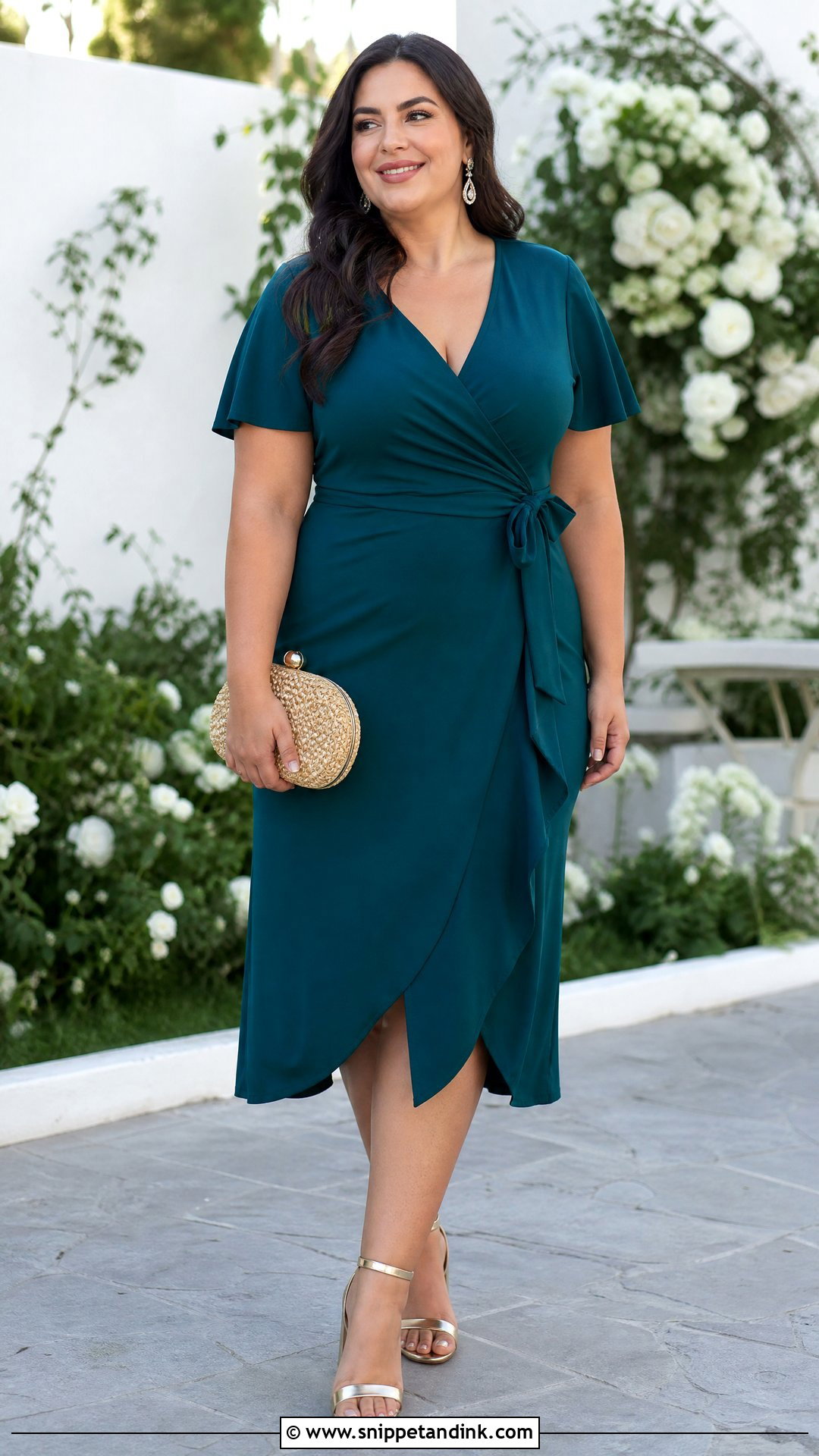
Wrap dresses adjust as you go, which matters on a day with a long lunch and a late dinner. The tied waist lets you loosen it a little after the meal. Choose matte crepe or good jersey; thin fabric clings at the hip and shows lines. Rich solids and small prints work as long as the background isn’t white. The neckline is the weak point, since it opens when you lean forward to fix your sister’s veil, so add a hidden snap or a strip of fashion tape. Block heels and polished earrings finish it.
12. Off-the-Shoulder Gown for Sister’s Wedding
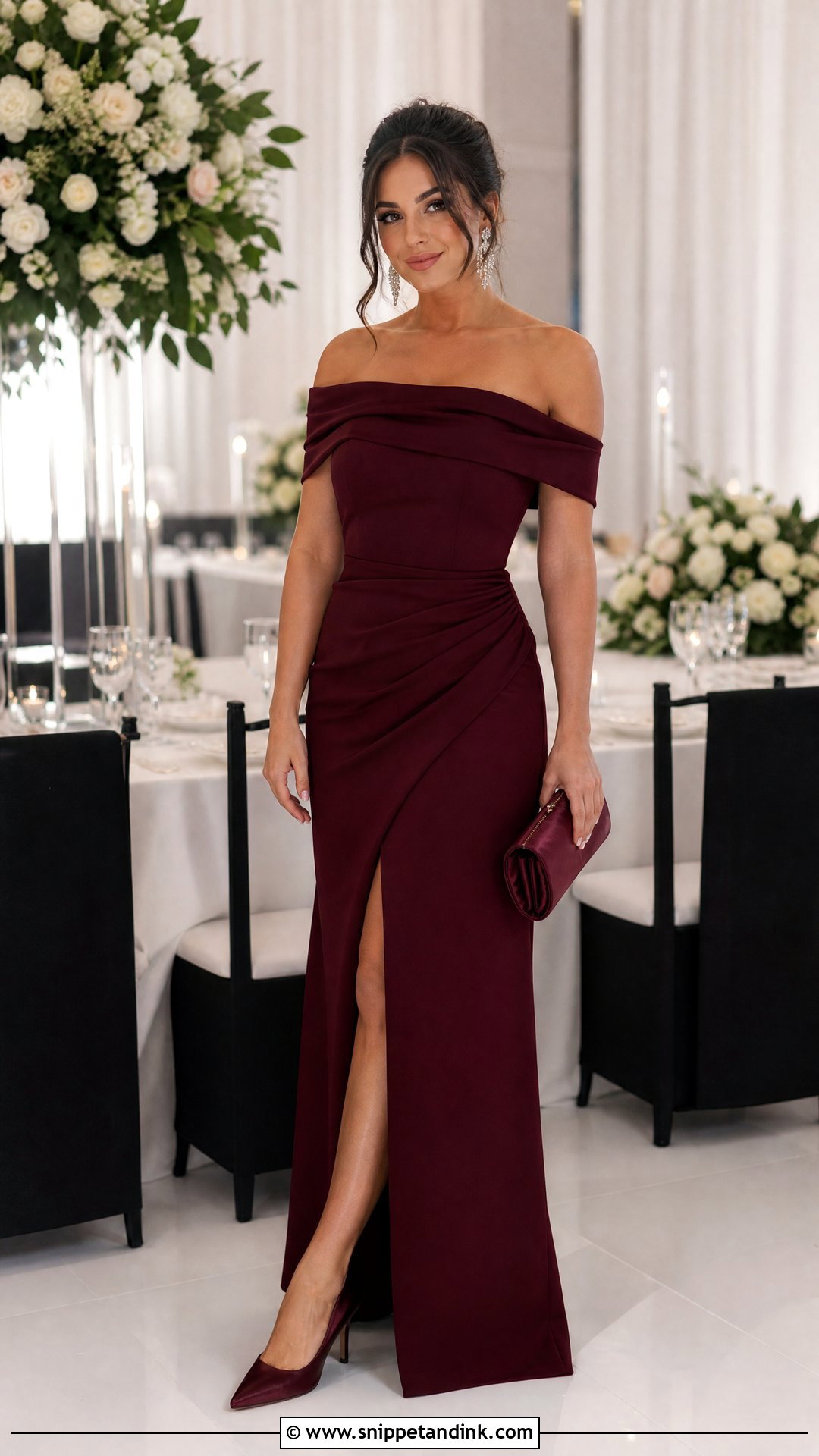
Off-the-shoulder necklines look graceful at black-tie weddings, but they have to stay up when you raise your arms. That’s the first thing I test: hug someone, lift a glass, reach overhead. Structured crepe with an internal band holds best. Deep blue, wine red and dark green suit an evening setting. Skip the necklace and wear chandelier earrings instead. A low chignon shows the shoulders and keeps hair tidy in photos. If the neckline needs constant tugging, it’s the wrong size, not the wrong style.
13. Cape-Sleeve Midi Dress for Sister’s Wedding
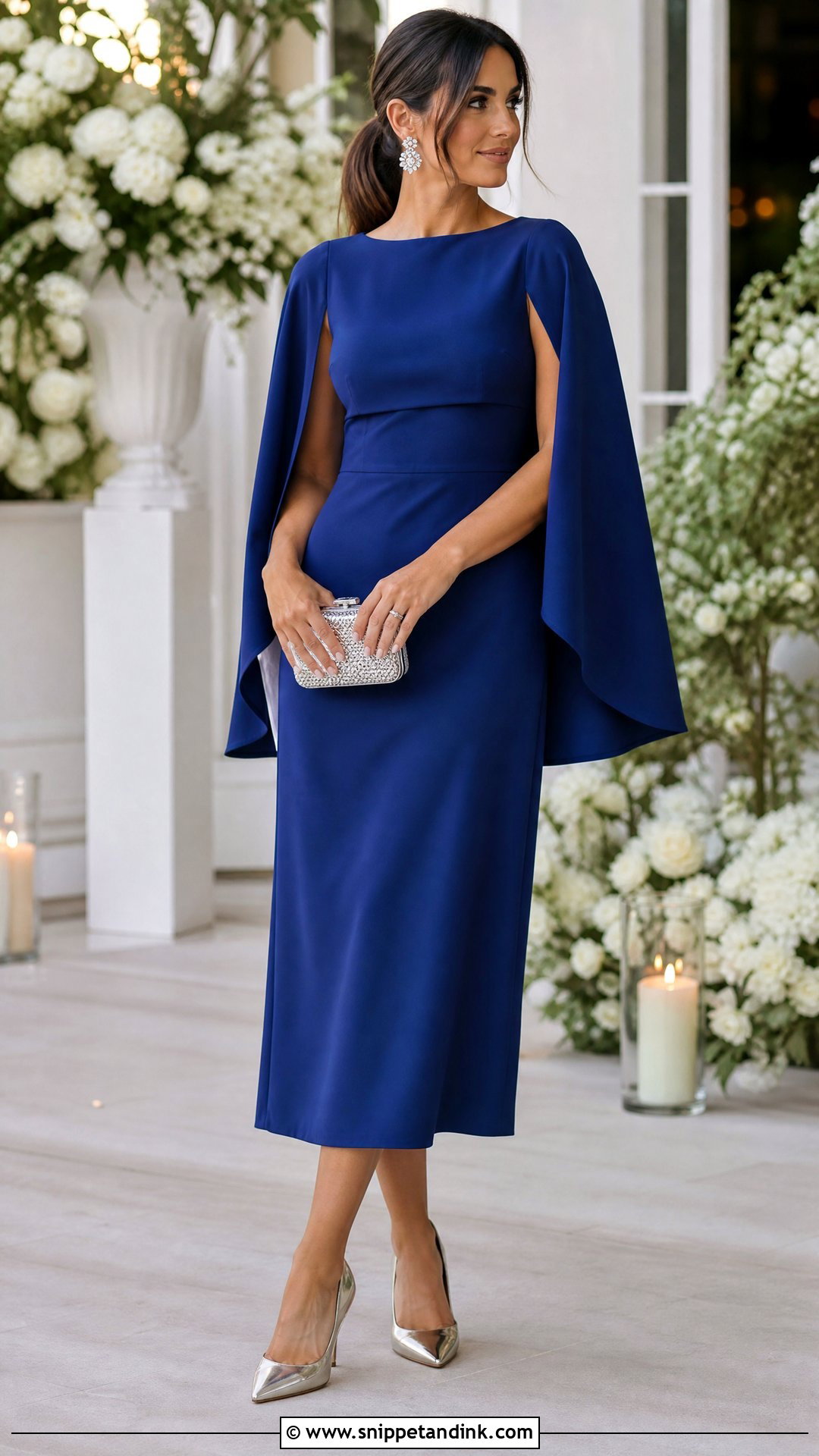
Cape sleeves give coverage and movement without a low neckline or a high slit, which many families appreciate for a sister. Smooth crepe in royal blue, fuchsia or plum keeps the shape crisp. Keep the skirt simple so the sleeves stay the focus. I’d leave bracelets off, since they catch on the cape edge. One practical check: eat a pretend meal at the fitting. Long capes drag through plates and candle flames, so you may want them shortened slightly. Pointed heels, a box clutch and small sparkly earrings are all it needs.
14. Sequin Midi Dress for Sister’s Wedding
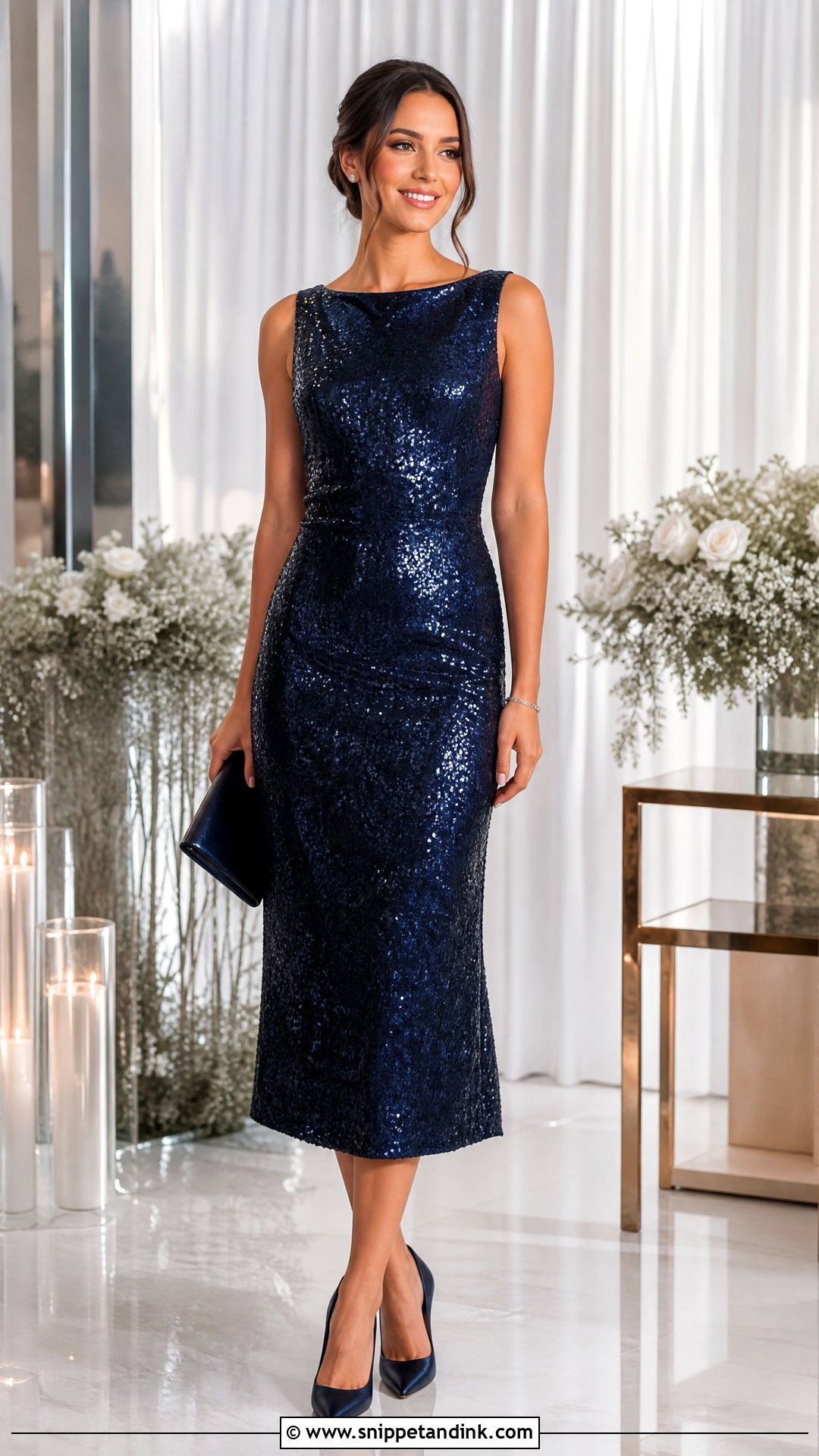
A sequin midi dress works at an evening reception when the sparkle stays controlled. Navy, bronze and emerald look festive without echoing bridal silver. A higher neckline or longer sleeves balance the shine. Run your hand along the inside of the arms and under the arms before you buy; cheap sequins scratch badly after a few hours of hugging and dancing. Satin pumps, a solid clutch and stud earrings are enough. Smooth hair and polished makeup keep it from tipping into costume.
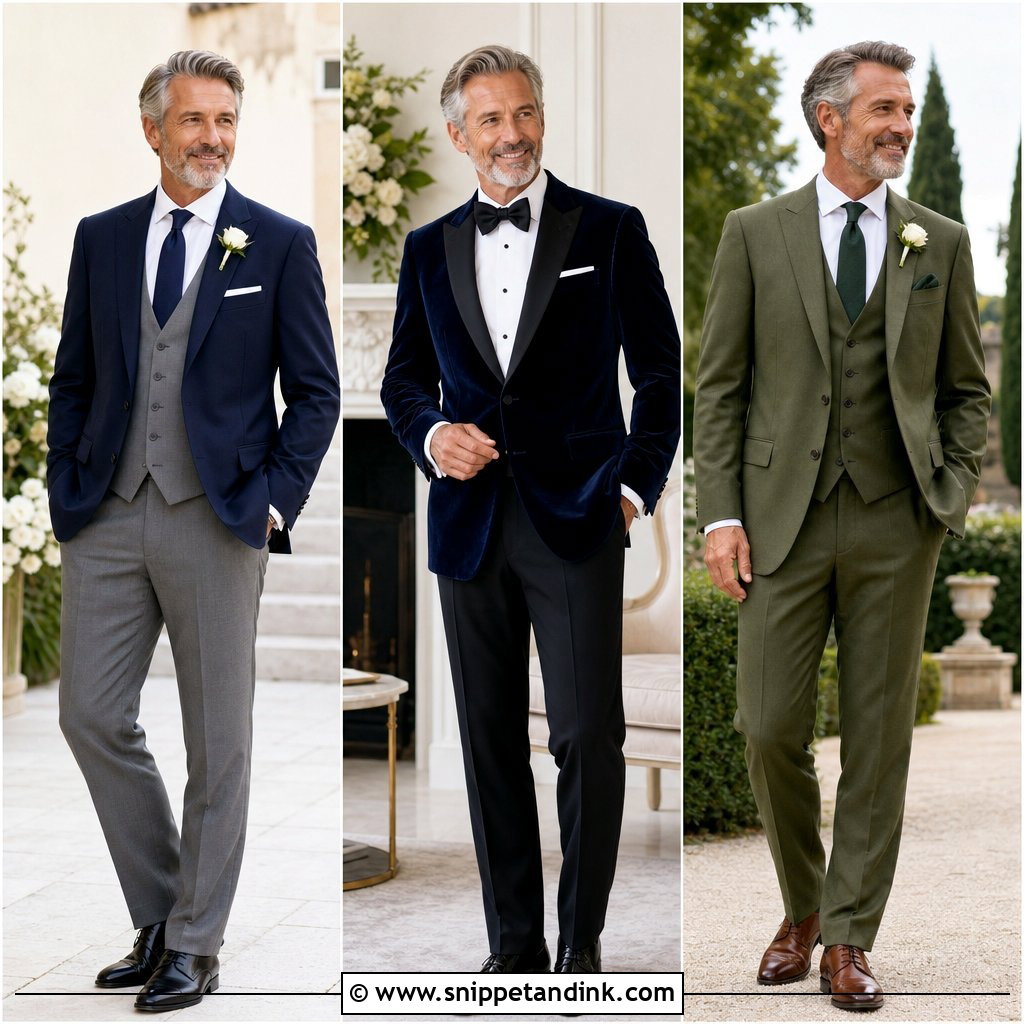
15. Matching Skirt Set for Sister’s Wedding
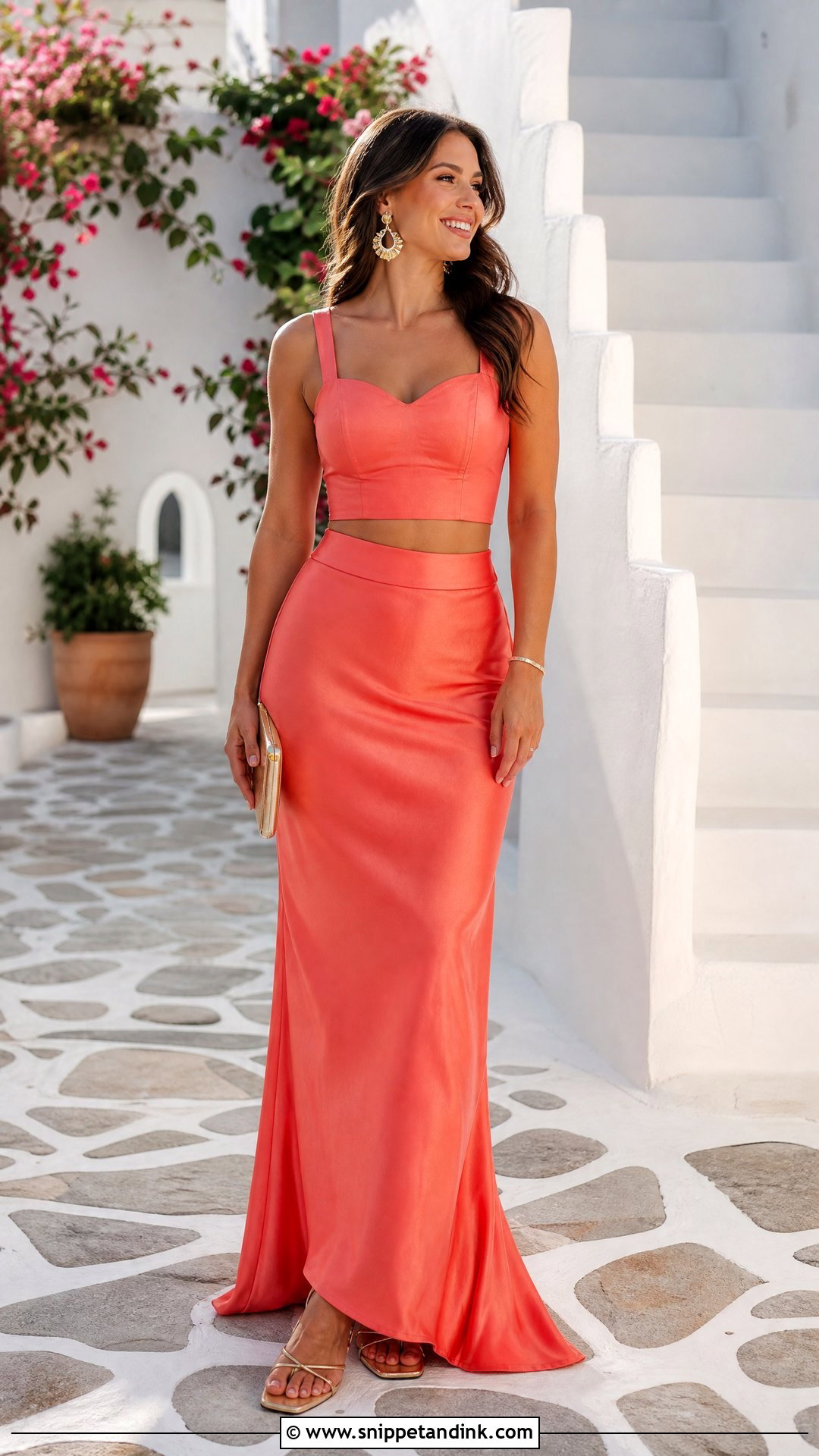
A matching skirt set looks like a dress but fits like separates, which helps if your top and bottom are different sizes. Crepe, jacquard and textured chiffon all look dressy. A fitted top with a high-waisted midi or maxi skirt creates a long line. If there’s a small midriff gap, sit down in it and check the gap in a mirror before deciding it suits the dress code. Monochrome sets in coral or berry photograph well. Afterward, the pieces work apart, so it’s money well spent.
16. Halter Maxi Dress for Sister’s Wedding
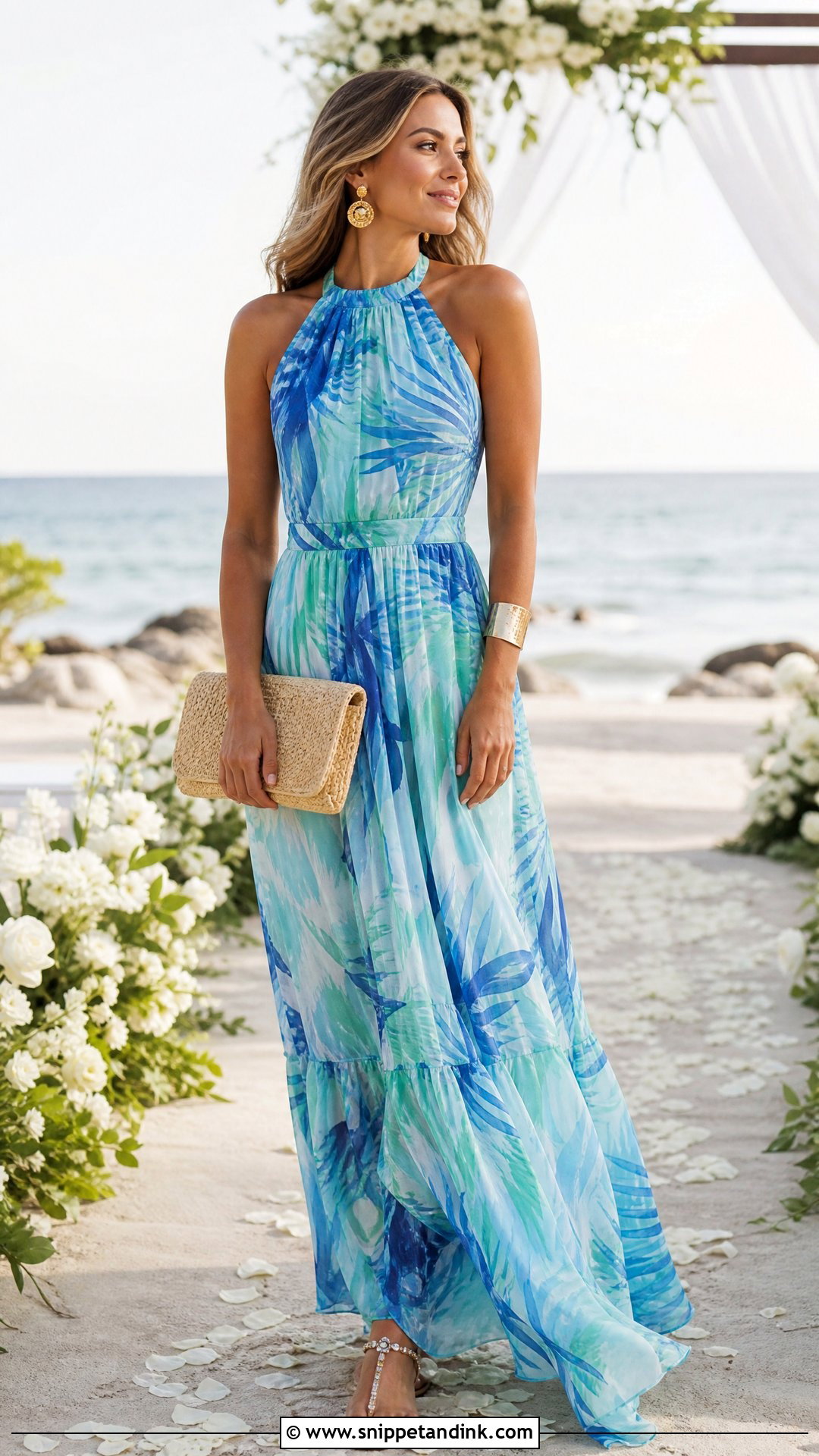
Halter maxis suit beach and warm-weather destination weddings because they keep the shoulders free and the fabric off the back of the neck. Choose chiffon or silk blend in coral, tropical blue or a botanical print. Avoid a train; it collects sand within minutes. Flat embellished sandals or low wedges are the only shoes I’d trust on a beach. A polished ponytail or braided updo keeps hair off the halter tie in humidity, and a light wrap covers you when the sea breeze picks up in the evening.
17. Long-Sleeve Floral Maxi Dress for Sister’s Wedding
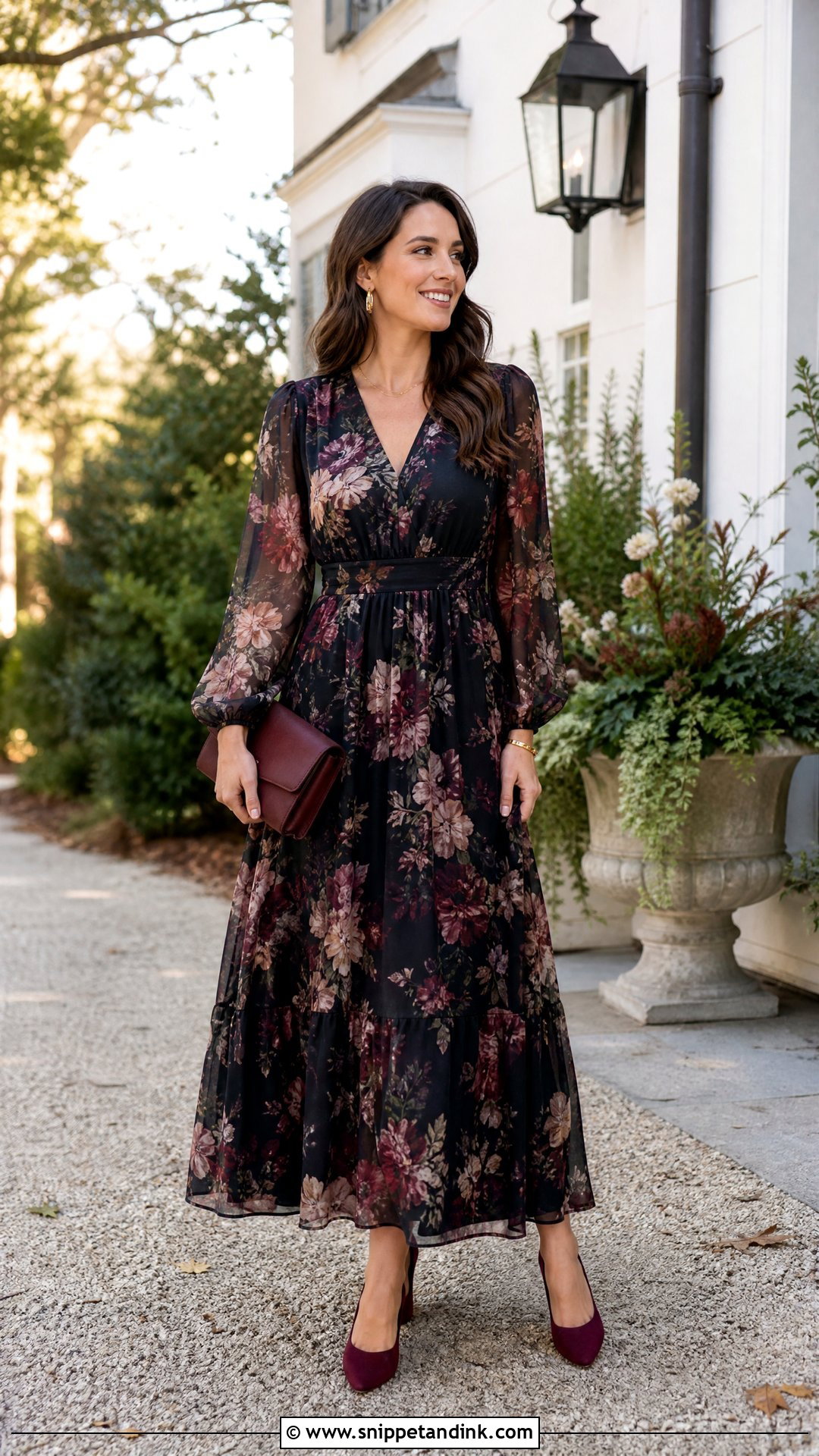
Fall weddings suit a long-sleeve floral maxi dress on a dark ground, with rust, berry or green flowers. A defined waist stops the print from swamping you, especially if you’re petite. Ankle boots work for barns and rustic venues; closed pumps for anything more formal. Keep jewelry gold and simple, and match the clutch to one color in the print. Bring a tailored coat in camel or navy for moving between ceremony and reception. Sleeves this long also mean no shawl shuffling during portraits.
18. Long-Sleeve Column Gown for Sister’s Wedding
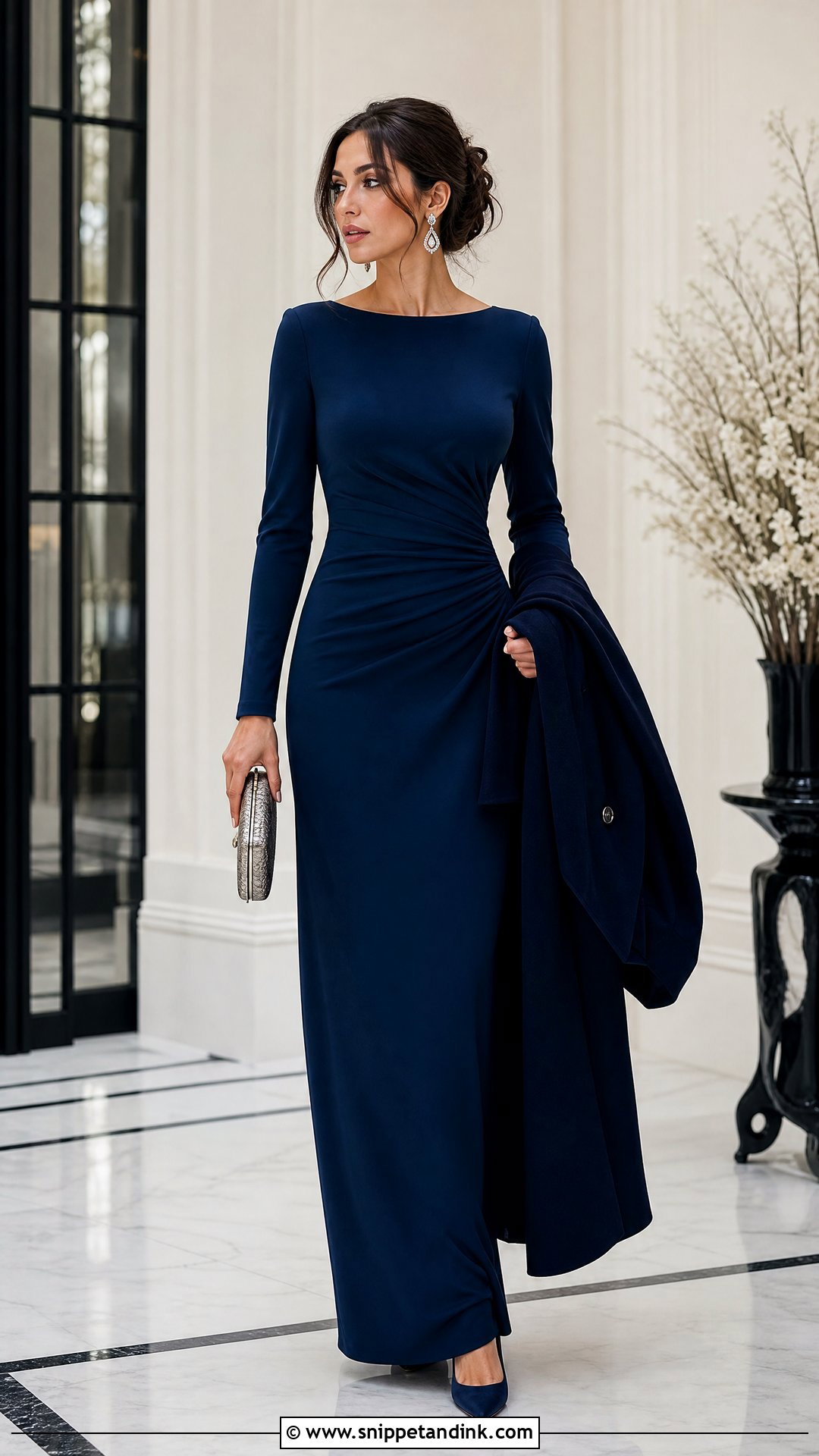
A long-sleeve column gown is the cleanest winter option on this list, and also the least forgiving of fit. Stretch crepe, velvet or lined jersey in sapphire or burgundy should skim the body, not grip it. Black is fine only if the couple has said so. Sleeve and hem alterations are not optional on a plain column; a sleeve that’s half an inch too long looks sloppy in every photo. Crystal drop earrings, a compact metallic bag and a full-length coat for outdoor portraits complete it. Wear a smooth updo if the neckline has detail.
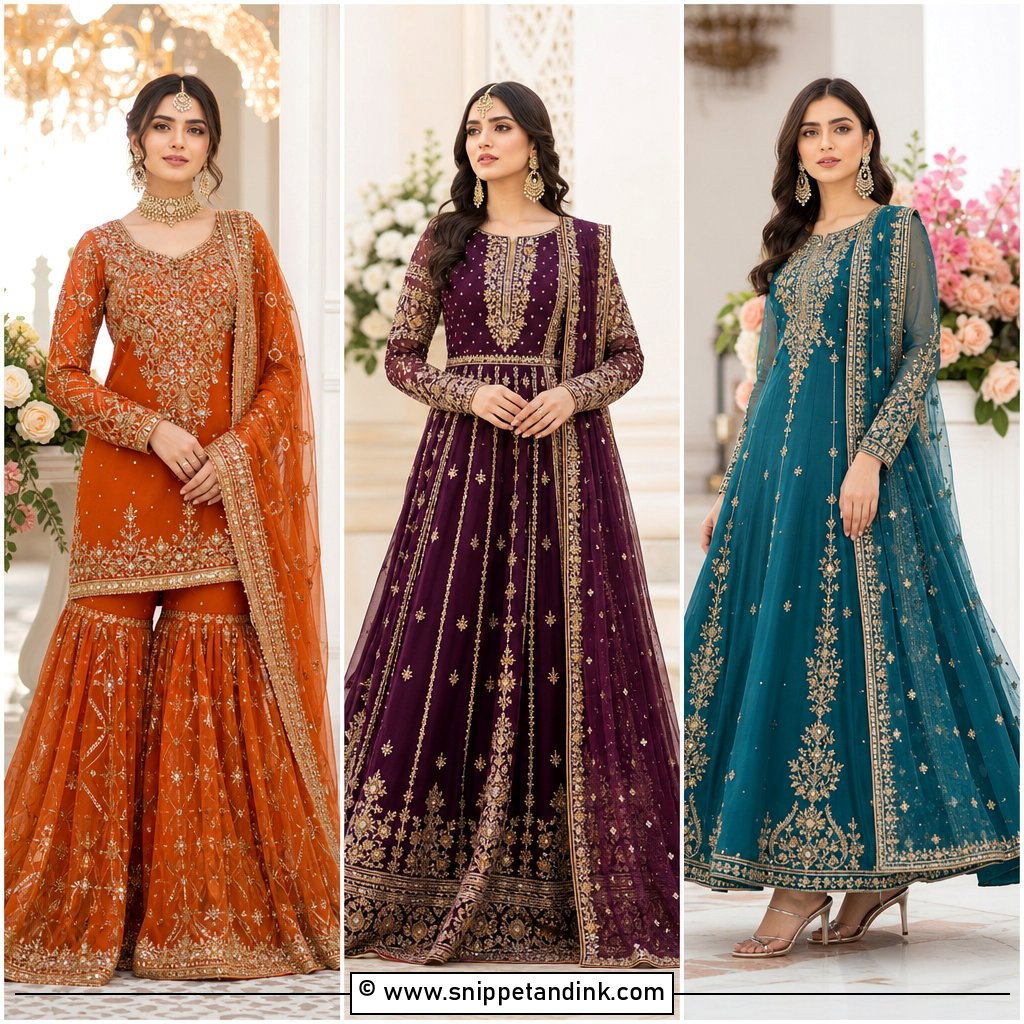
19. Embroidered Lehenga for Sister’s Wedding
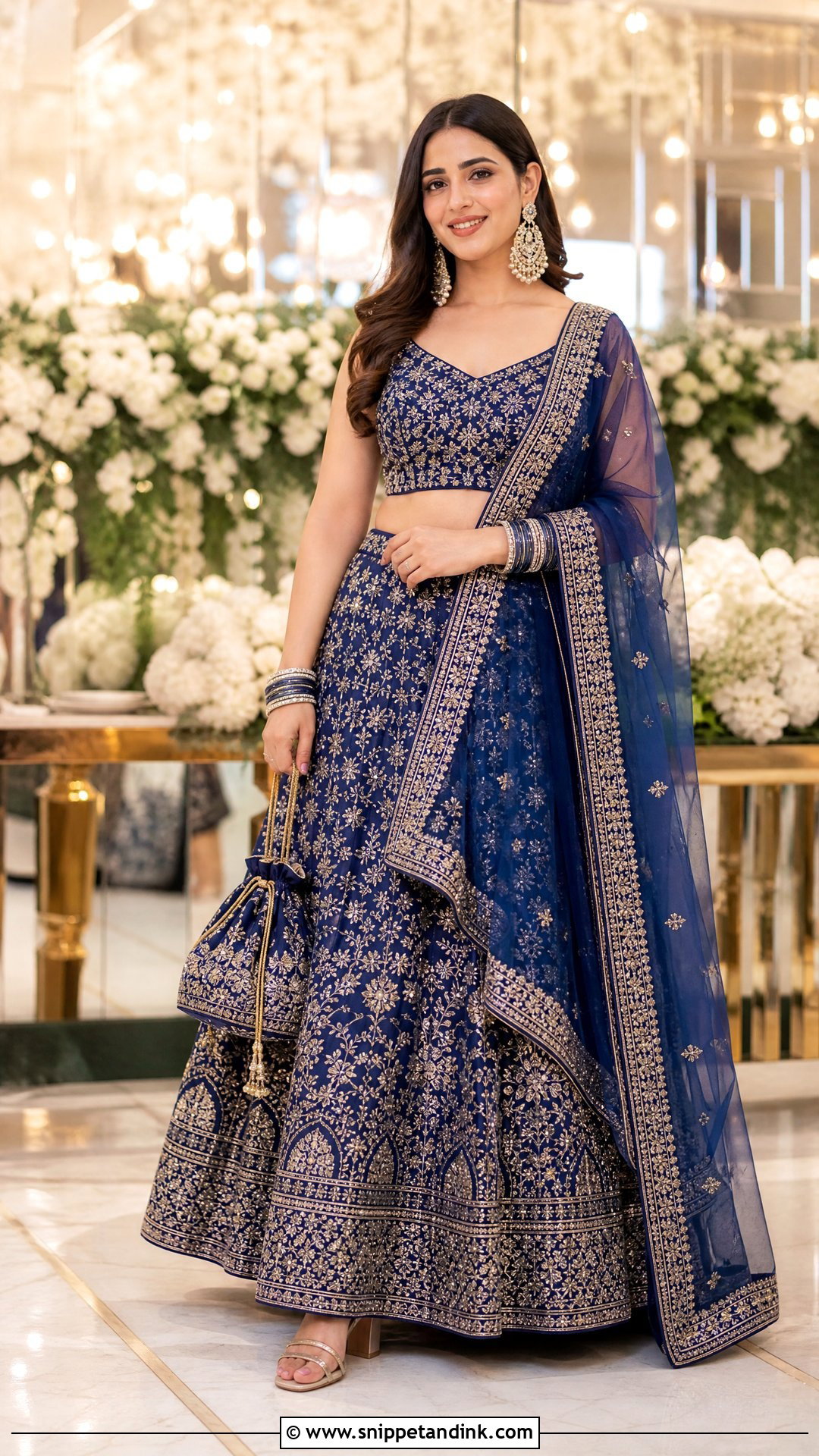
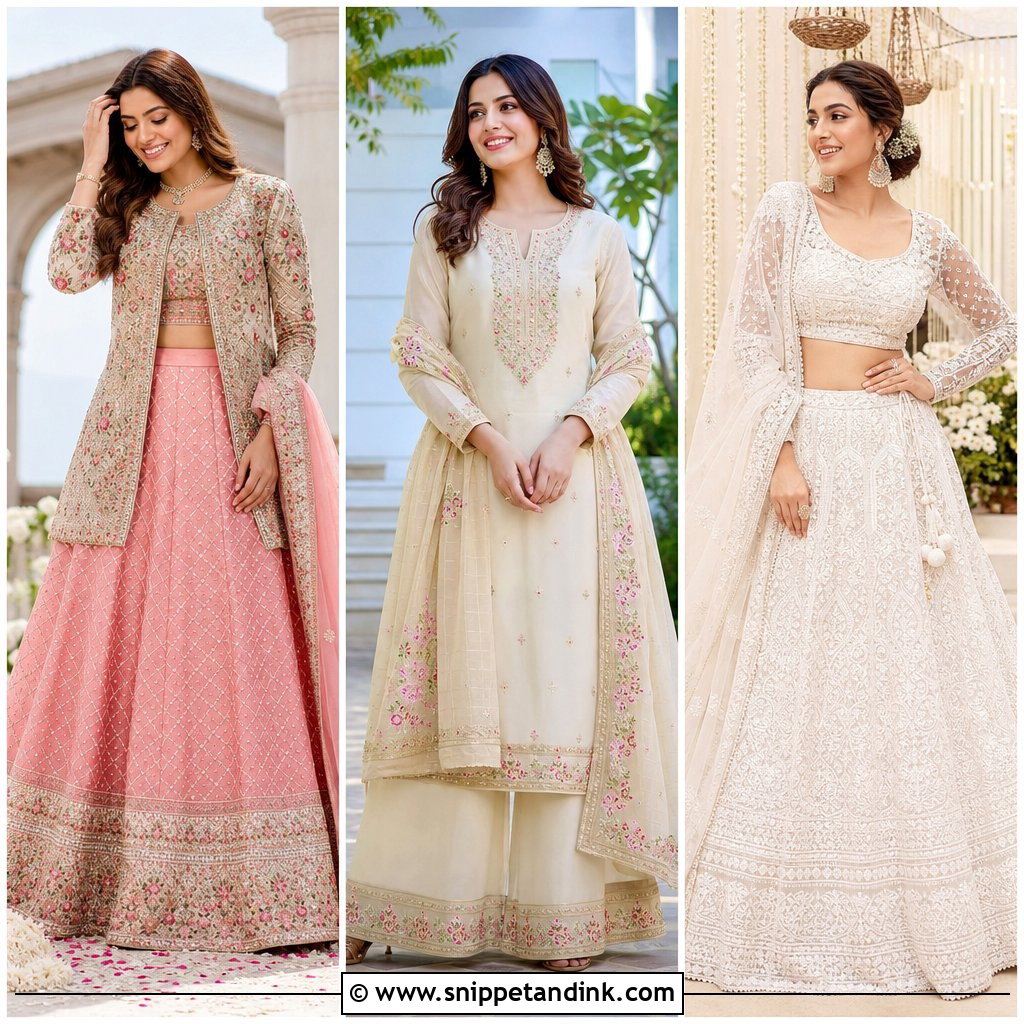
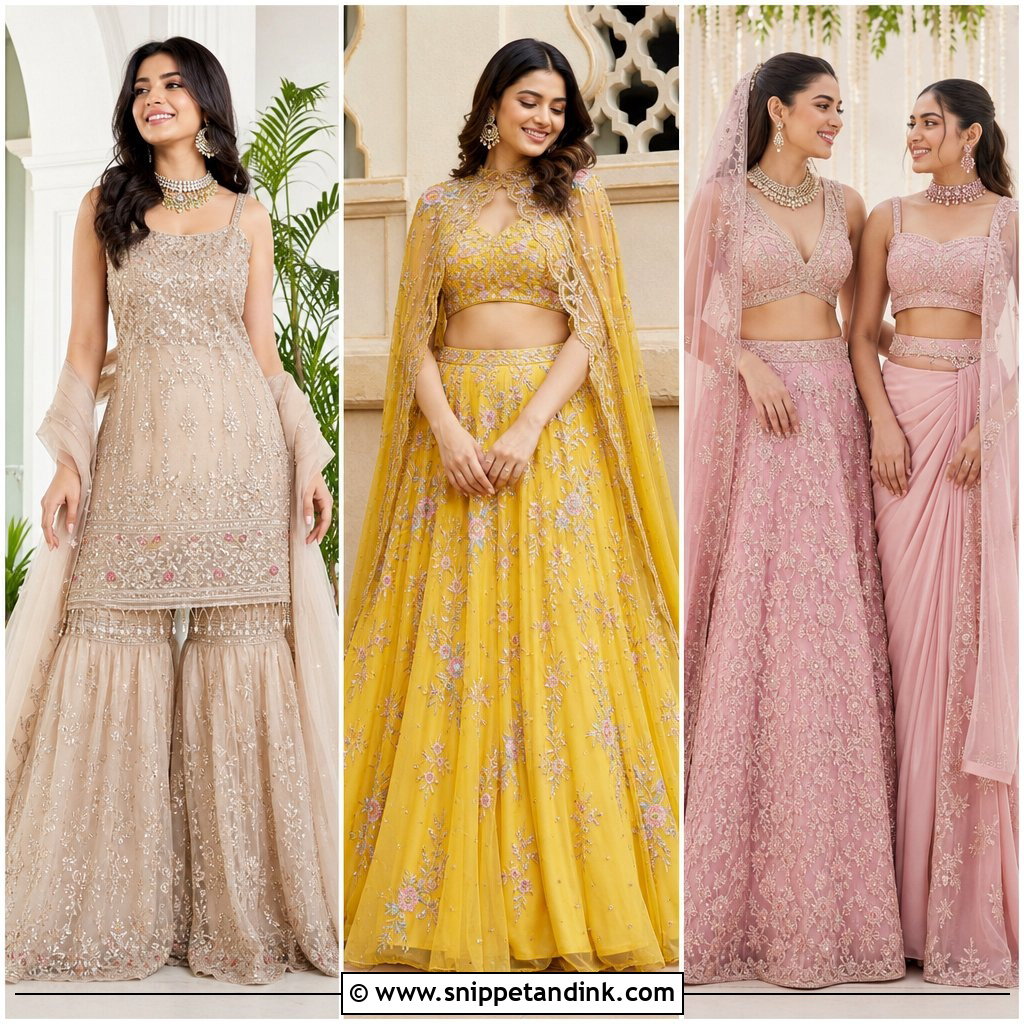
For a South Asian wedding, the sister’s lehenga is a family decision as much as a style one. Talk to the bride before you pick color or embroidery level, so you don’t end up matching or outshining her. Jewel-toned green, magenta or purple contrast well with traditional bridal red. The dupatta has to stay put while you greet guests and dance, so I pin it at the shoulder and again at the waist. Block-heel sandals, statement earrings, bangles and a small potli are enough. A polished braid or bun finishes it neatly.
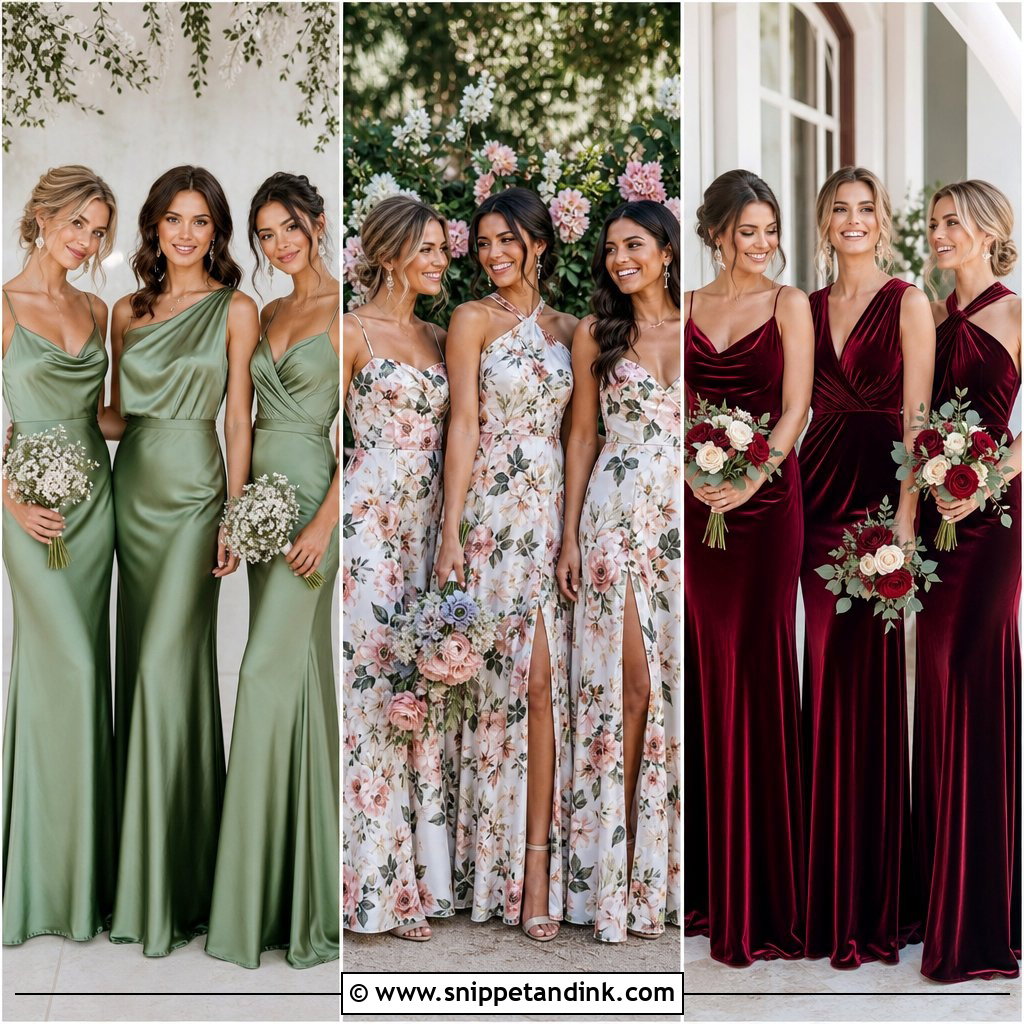
20. Silk Saree for Sister’s Wedding
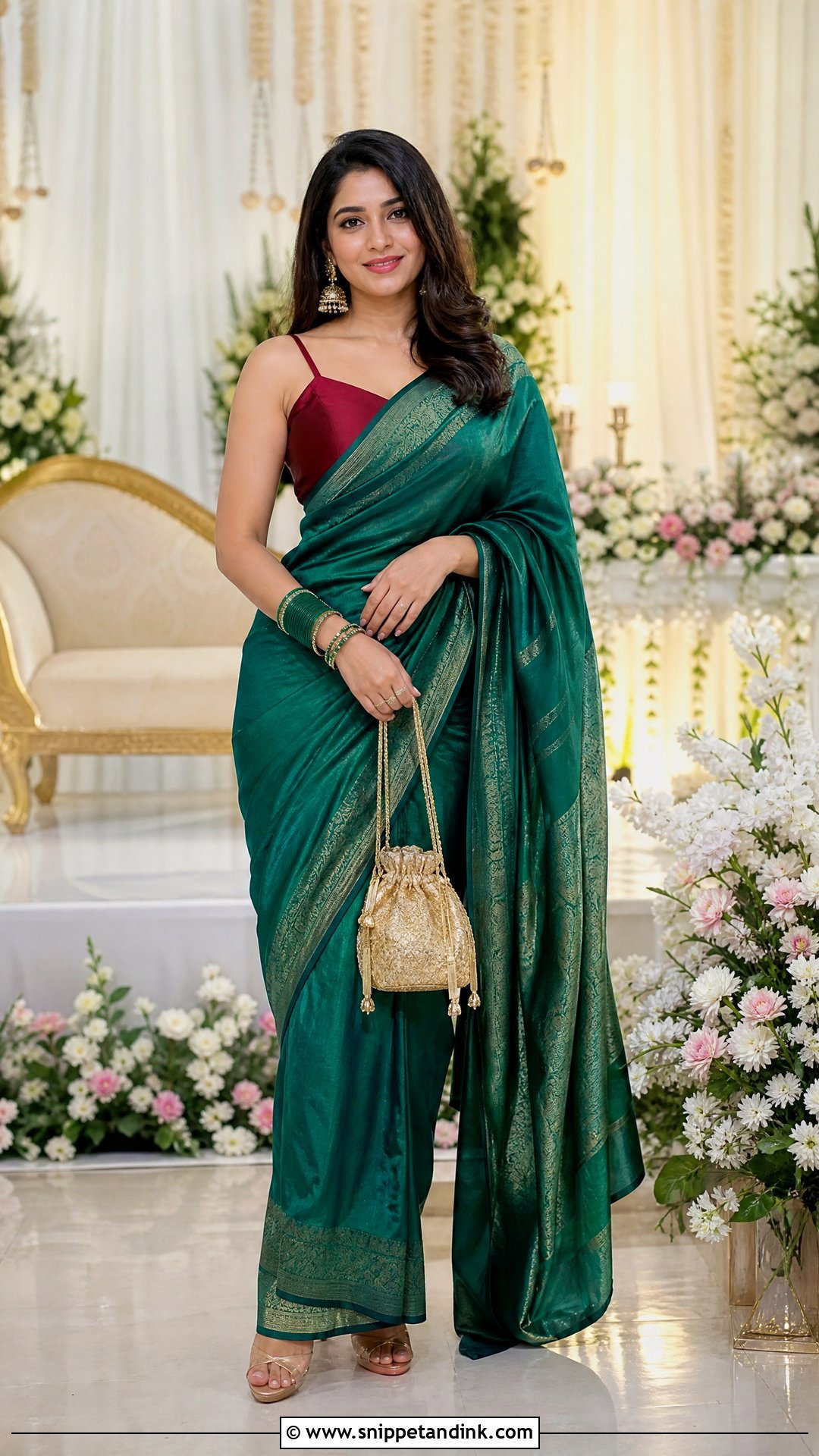
A silk saree is the most traditional choice here, and it needs the most preparation. The blouse should be fitted at least a couple of weeks before, with a neckline and sleeves you can move in. Emerald, royal blue or deep pink stay distinct from bridal shades. Have the pleats and pallu pinned by someone experienced, because you’ll be bending, carrying and dancing all day. A smooth saree underskirt or shapewear helps the drape sit flat. Traditional earrings and bangles finish it, with a low bun for a classic look.
You’ll Be Working All Day, So Dress for It
The sister of the bride is rarely just a guest. You might be fastening buttons, bustling the train, carrying the bouquet during the signing or crouching to fix a hem for photos. It’s common to choose a dress that looked right in the fitting room and then fight it for twelve hours. A few checks keep you comfortable:
- Kneel on the floor. If you can’t get down to straighten the bride’s train, the skirt is too tight or the slit too high.
- Reach overhead as if pinning a veil. Strapless and off-the-shoulder styles should stay put.
- Check for pockets or plan a small bag for her emergency kit: safety pins, blotting papers, a lip color and pain relievers.
- Wear your shoes around the house for a few evenings. New shoes on a twelve-hour day are where most blisters come from.
- Pack a change of shoes and a light layer for after dark.
None of this means choosing something plain. It just means picking the version of your favorite look that lets you help without thinking about your clothes.
Run Your Final Choice Past the Bride
Your outfit should feel like you and still sit comfortably within the couple’s dress code, colors and traditions. Treat the ideas above as starting points. A satin gown, a floral midi, a pantsuit or a timeless silk saree can all be right. Whatever you wear, get it tailored, break in your shoes and pick underwear that won’t let you down by the tenth hour. Then send your sister a photo before the wedding. It’s a small courtesy, and it saves any surprises in the family portraits.
You'll Like These Ideas:


Leave a Reply