
What goes under a wedding dress decides how the dress itself fits, and it’s the part of bridal styling most people leave until the last minute. The right underlayer depends on the gown: its neckline, how low the back goes, how thin the fabric is and how much structure is already sewn in. Lace, seams, boning and even the color of a bra can show through bridal fabric in ways you won’t notice in a changing room. Below I’ve worked through twenty underlayer and getting-ready combinations, from strapless and backless foundations to robes and honeymoon sets, with the checks I’d run on each one for different dresses and bodies.
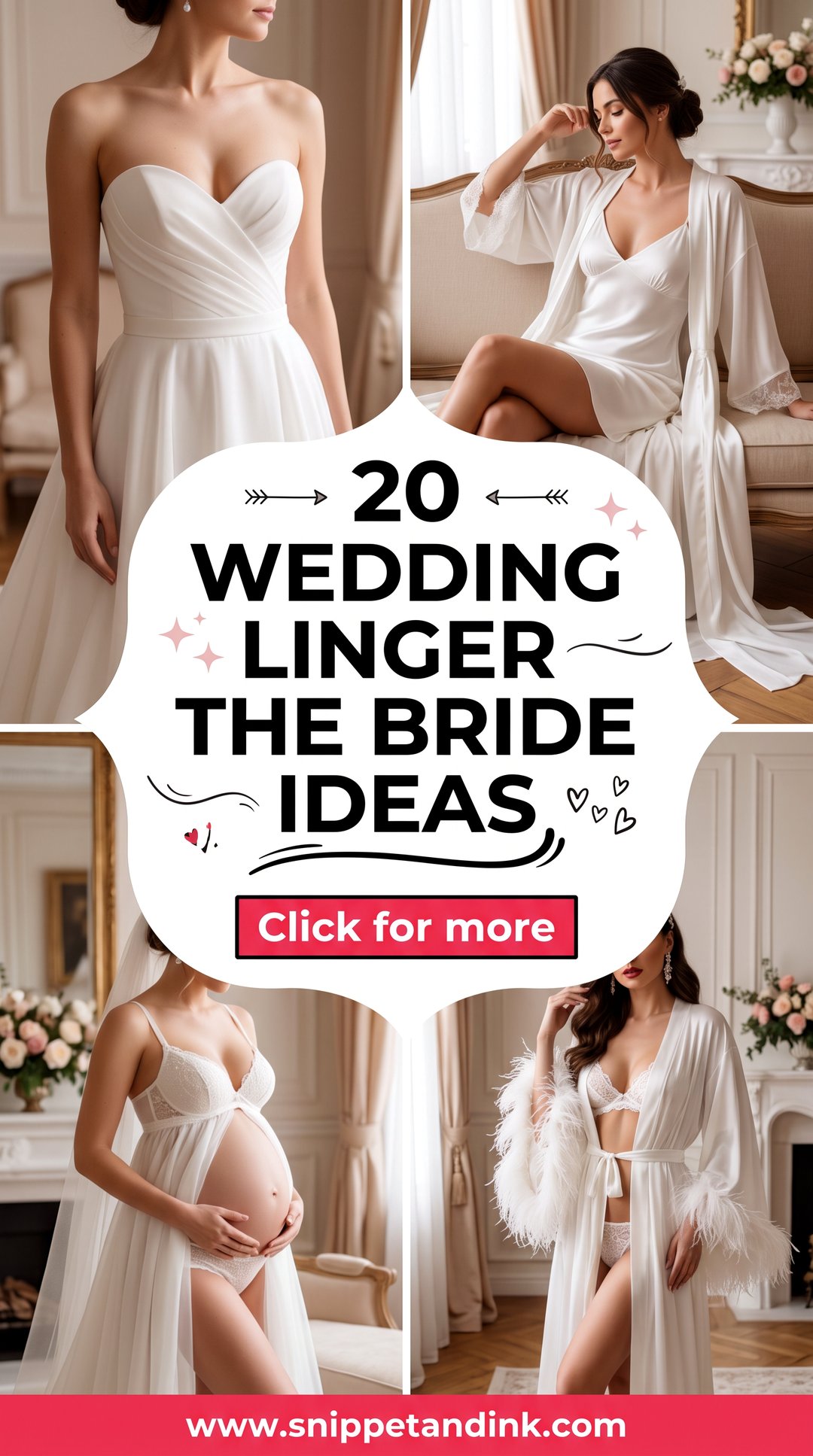
Buy the Underlayer Before Your First Alteration Appointment
The order matters more than most brides realize. A seamstress pins the gown to whatever you’re wearing underneath at that appointment. If you turn up in an everyday bra and buy a plunge bodysuit or shapewear a month later, the bust sits differently, the waist measures differently and the hem may change by a fraction because posture changes too. Then the dress has to be refitted.
So once you’ve ordered the gown, I’d get the foundation sorted next. Bring a photo of the dress’s neckline and back to a lingerie fitter, or ask your bridal shop what their gowns are usually worn with. Then wear the same pieces, along with your wedding shoes, to every fitting after that.
- Order two or three styles at once if you’re unsure, and return the ones that don’t work under the actual dress.
- Get professionally measured; many brides are wearing the wrong band size day to day and only find out when a strapless bra won’t stay up.
- Wash new pieces once before the wedding if the care label allows. Fresh elastic can feel stiff and itchy the first time it’s worn.
1. Seamless Bridal Lingerie Under a Satin Gown
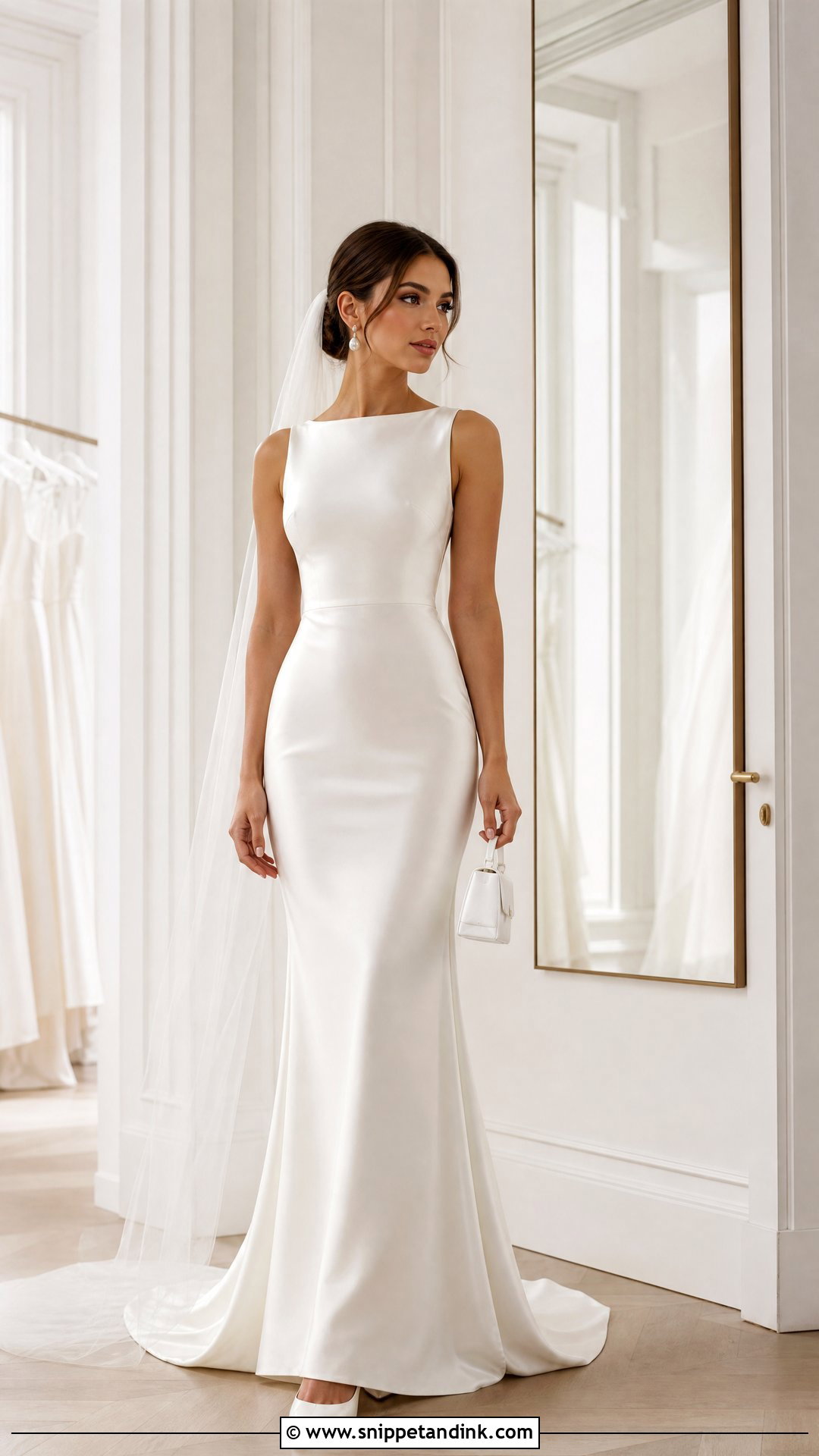
Satin is unforgiving. It reflects light off every raised edge, so a lace trim or an elastic leg line that’s invisible under crepe shows up immediately under a satin skirt. I start with a laser-cut bra and high-rise briefs with bonded edges, in the shade closest to your skin, not in white. White underwear under white satin almost always reads as a pale shape in daylight; skin-tone disappears. If the skirt clings at the hips, a light half-slip gives it something to glide over. Wear the whole set to a fitting and look at yourself by a window after you’ve walked and sat down.
2. Strapless Bridal Lingerie Under a Sweetheart Dress
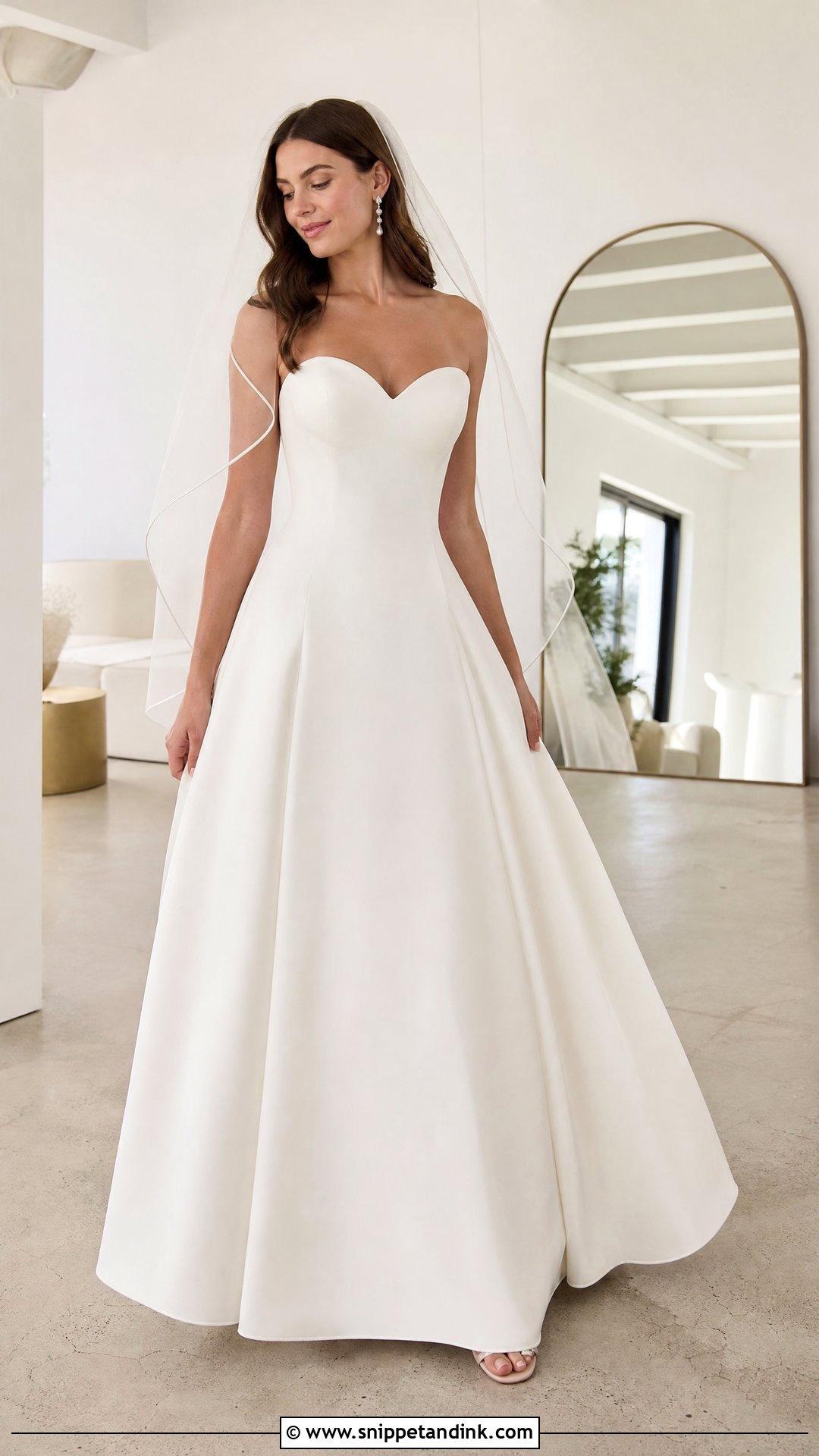
With a sweetheart neckline, the bra has to dip low at the center and stay hidden at the sides, which rules out most standard strapless styles. A strapless with a wide band is my starting point. If the bodice is boned with cups sewn in, you may not need a bra at all, and a tailor can often add stronger cups instead. Bigger full skirts and summer heat call for anti-chafing shorts under smooth mid-rise briefs. The most common mistake I see is buying a band size smaller for more grip; it digs in, creates a ridge under the bodice and hurts by dinner. Raise your arms and bend forward at the fitting to see whether everything stays put.
3. Low-Back Bridal Lingerie Under an Open-Back Gown
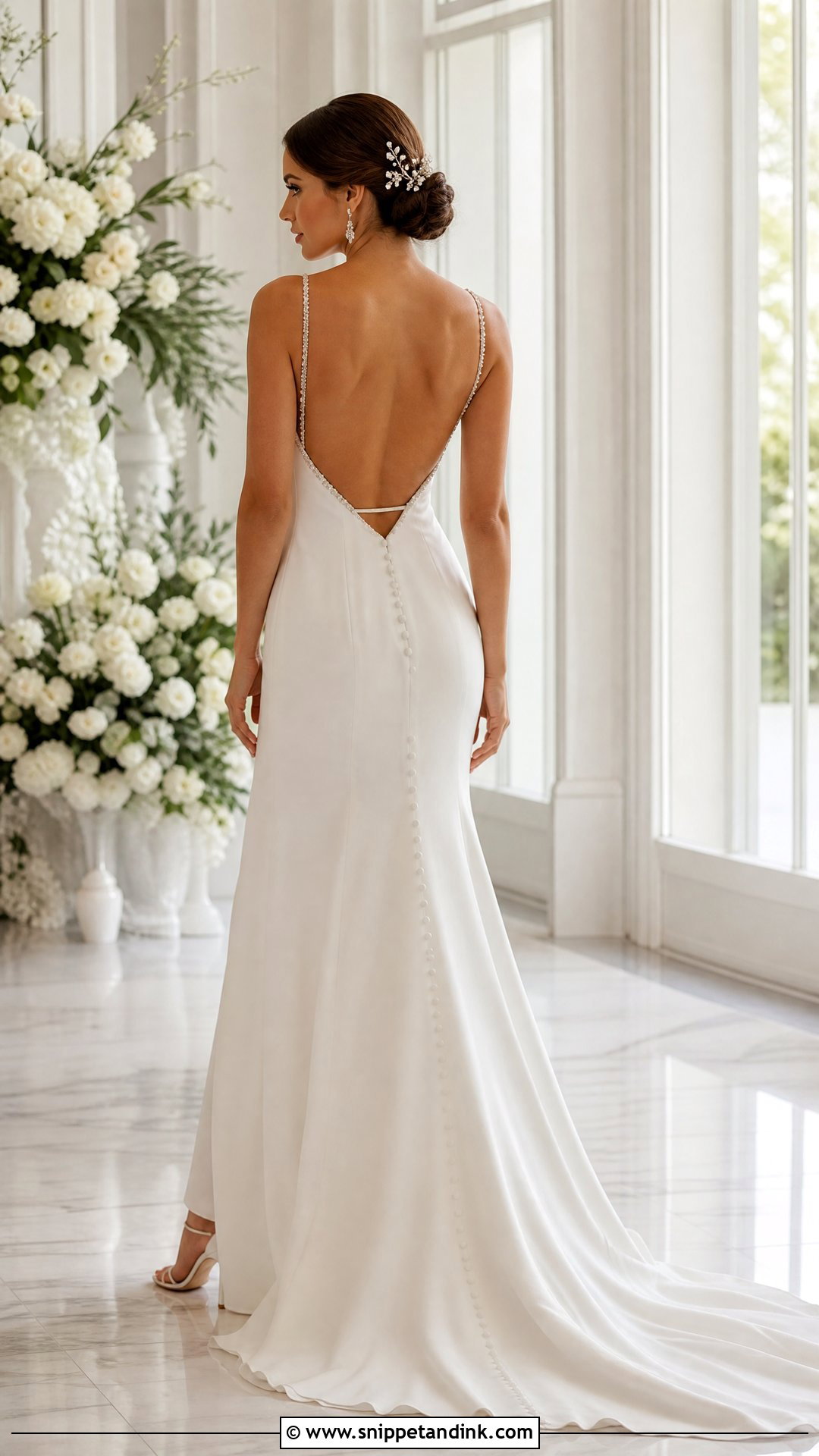
How deep the back goes decides the answer here. A back that stops at the shoulder blades often works with a low-back converter strap; one that drops to the waist usually needs adhesive cups or support built into the gown. Pair either with smooth briefs cut below any sheer back panel. I always ask the tailor to look at the bride from the side and behind, because the edge of an adhesive cup can peek out under the arm where your own mirror won’t show it. Never try a new adhesive for the first time on the wedding morning. Test it on clean, dry skin a few weeks out to check for irritation and to see how long it holds.
4. Plunge Bridal Lingerie Under a Deep-V Dress
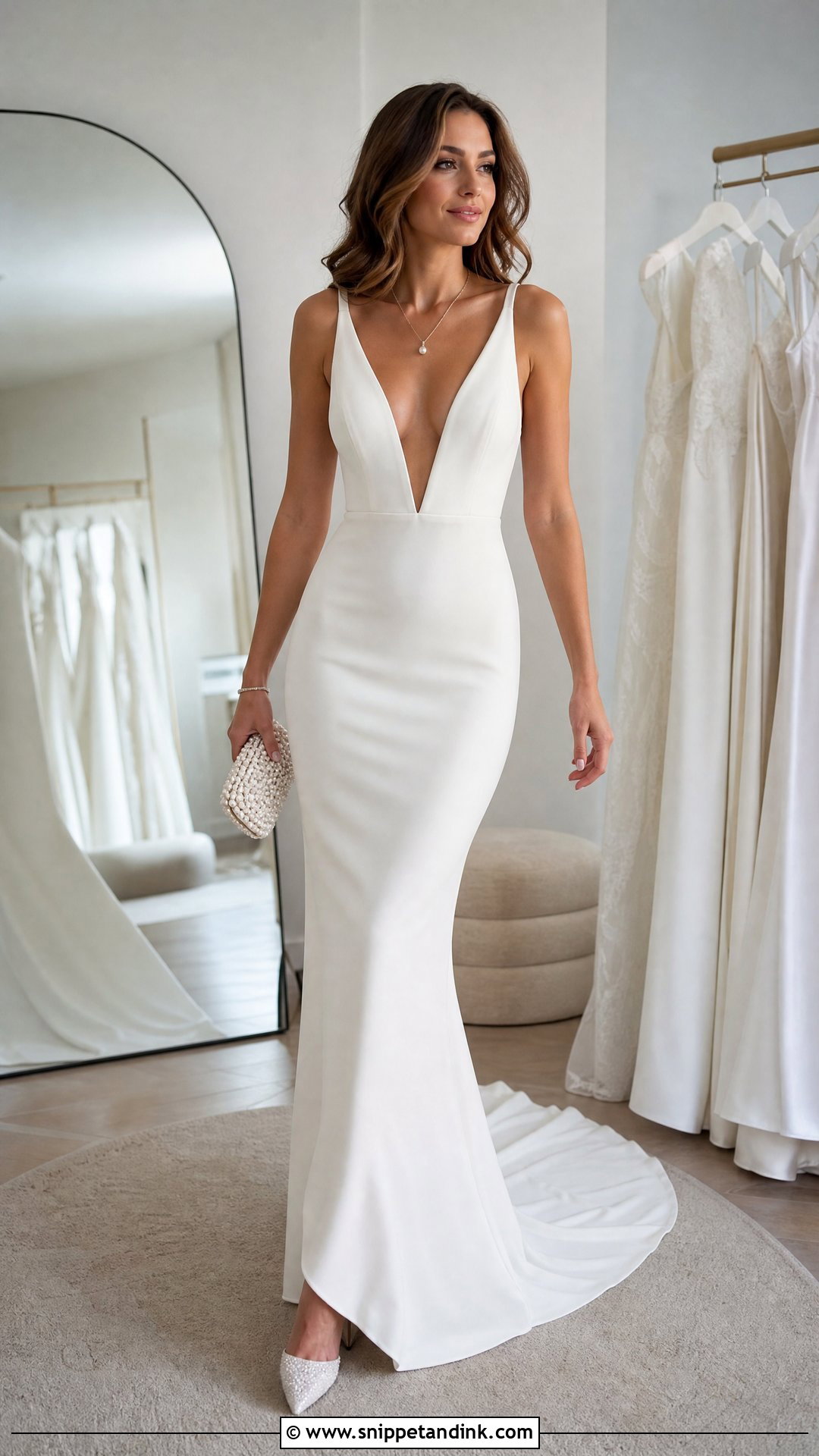
Deep-V gowns need a foundation built around the plunge, and lace cup edges are the first thing I rule out because they show through lightweight crepe and silk. A plunge bra, a U-shaped bodysuit or cups stitched in by the seamstress keep the neckline clear. High-cut briefs avoid a line at the hip. Fashion tape helps hold the edges of the V against the skin, but it’s there to back up good tailoring, not to replace it. Body heat and a few hours of hugging loosen tape, so test it at your fitting and plan to carry spare strips.
5. Bridal Bodysuit Under a Fitted Wedding Dress
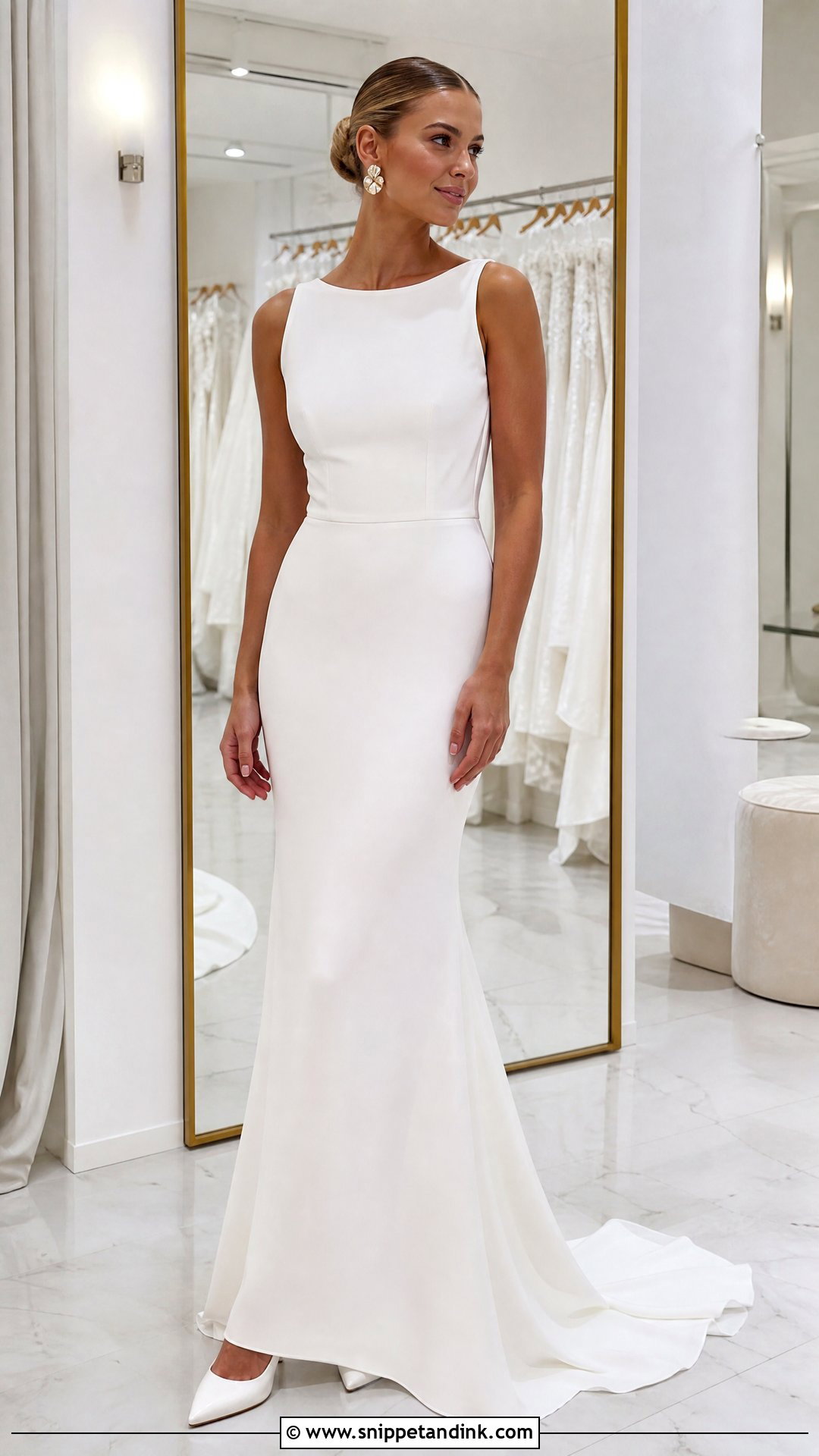
A bodysuit gives one continuous layer under a close-fitting dress, with no waistband to cut across the middle. I look for smooth cups, bonded leg openings, adjustable straps and a snap gusset, because you’ll be grateful for that snap later. The neckline and back of the bodysuit must sit lower than the gown’s from every angle. Light compression is plenty under crepe. Bodysuits are where sizing goes wrong most often: if the torso is too short, it pulls down on the shoulders and drags the gown with it, so buy by torso length and hips as well as bust.
6. Bridal Shapewear Under a Mermaid Gown
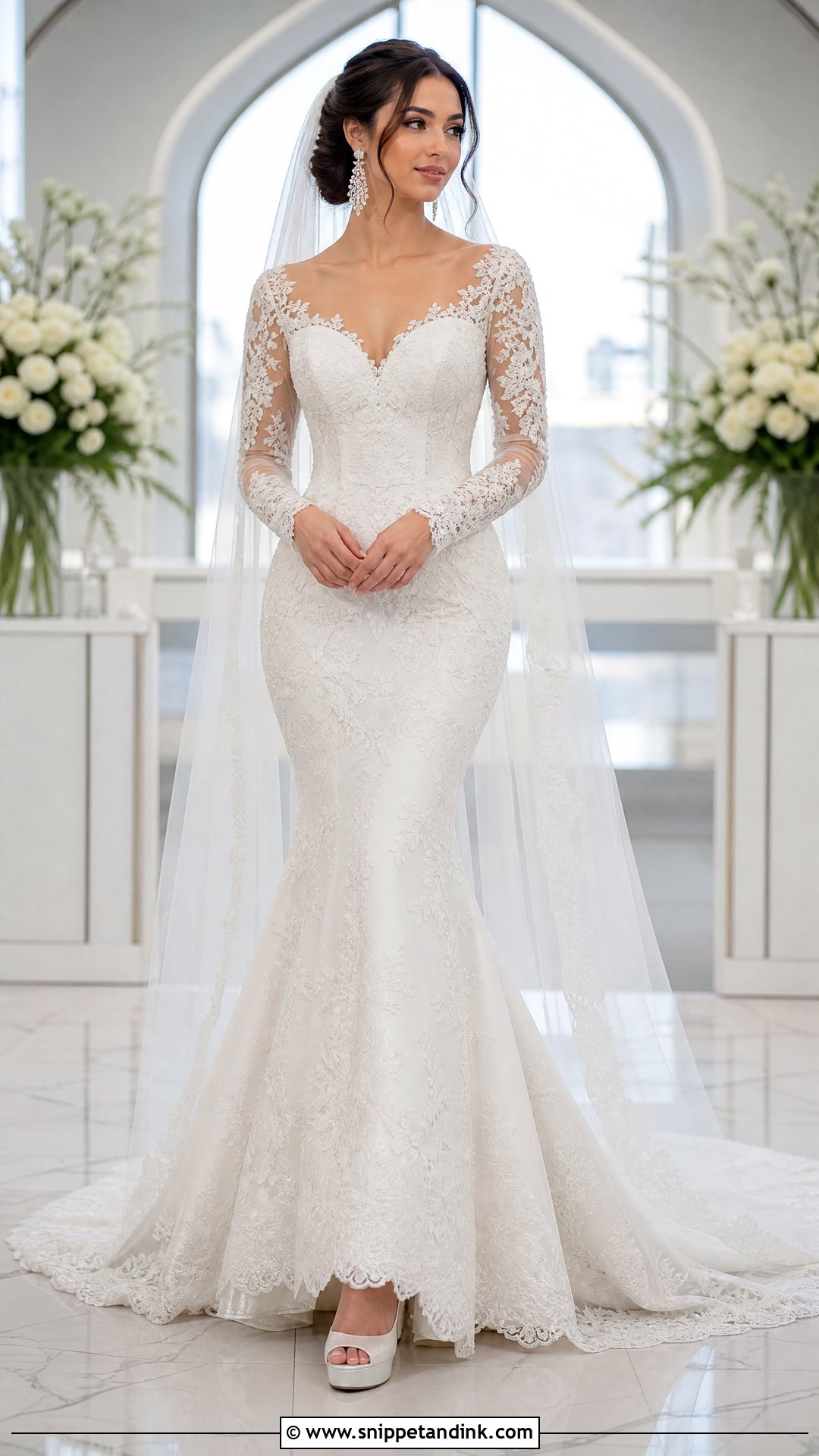
Mermaid gowns hug from bust to knee, so any bump, waistband or chafing shows and you’ll feel it. High-waisted shaping shorts give an even base and stop thighs from rubbing as you walk. The waistband has to finish either under a bodice seam or high enough not to roll at the waist. I’d steer you to moderate compression rather than the firmest you can find. Heavy shapewear changes your measurements, so if you add it after alterations, the dress fits differently, and you’ll have trouble sitting through a long dinner in a fitted skirt plus tight shorts.
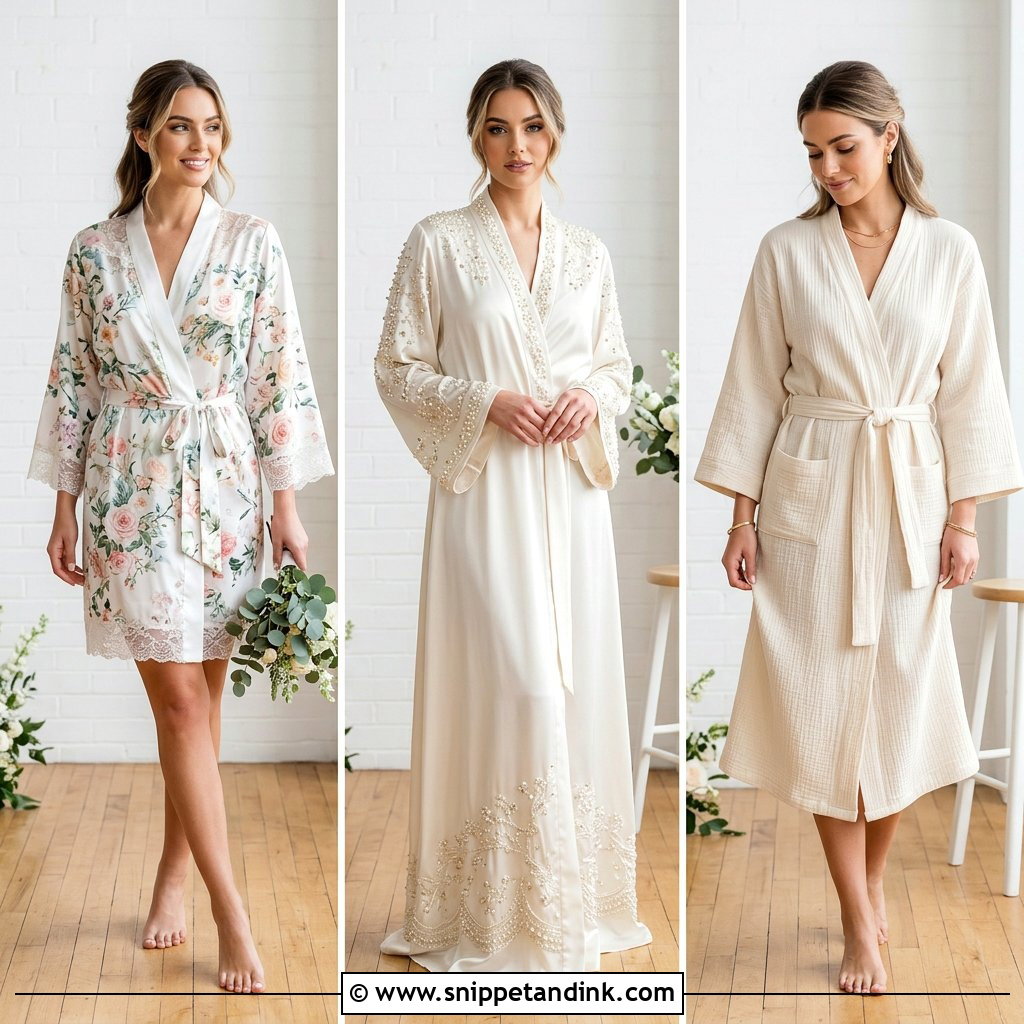
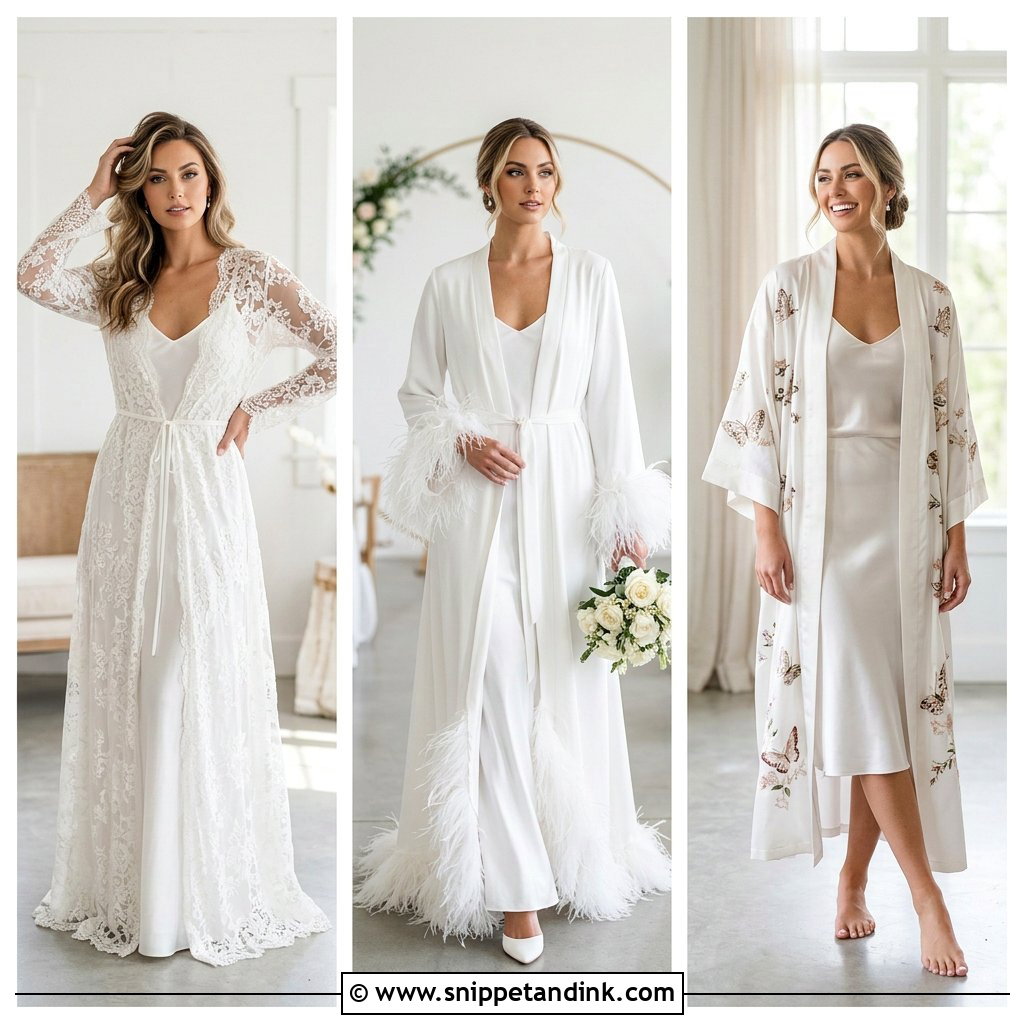
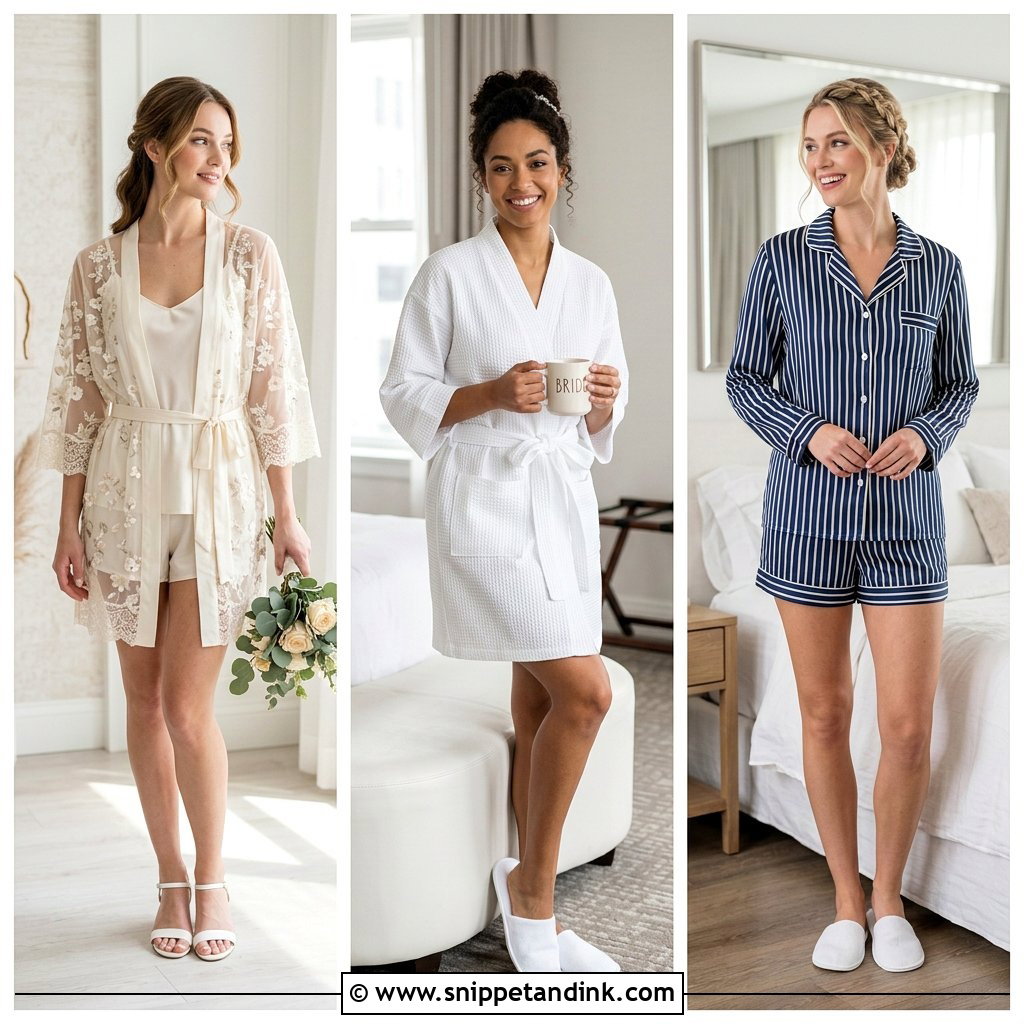
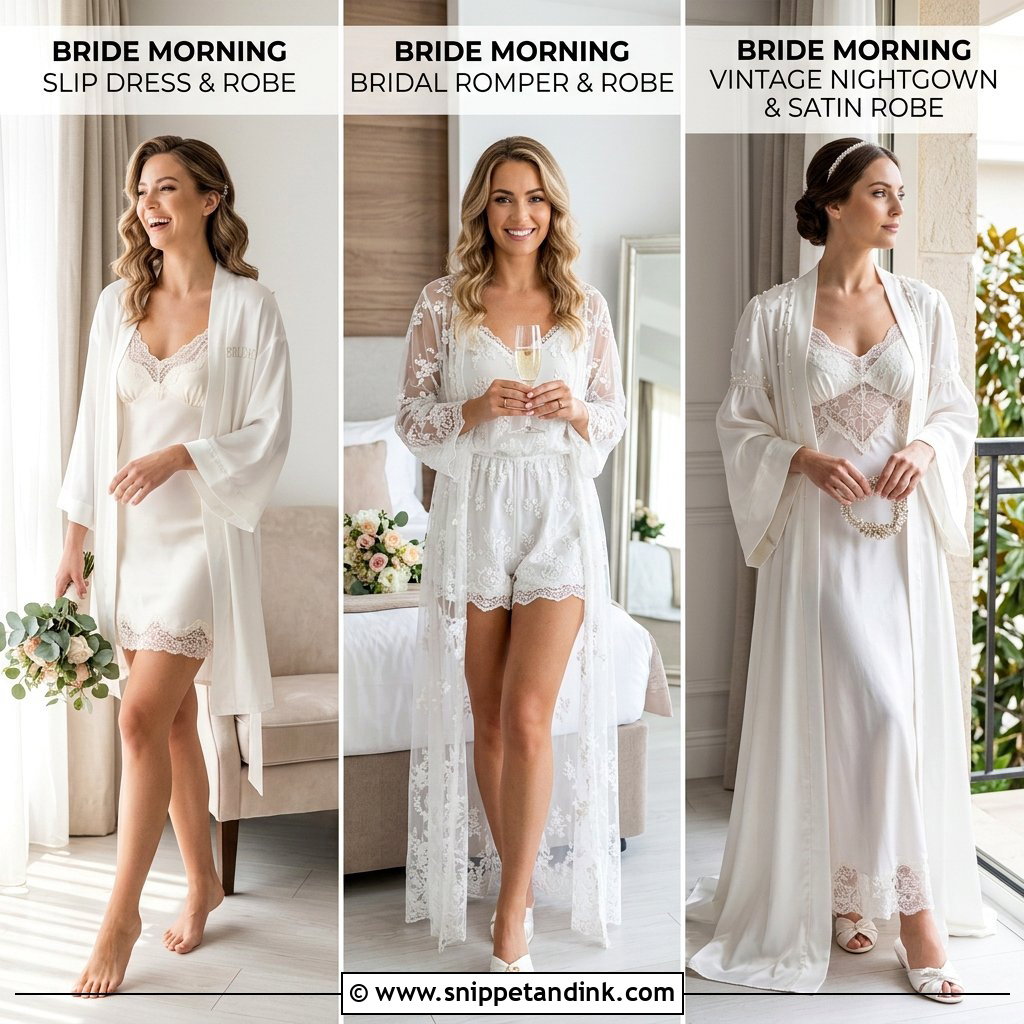
7. Lace Bridal Lingerie With a Satin Robe
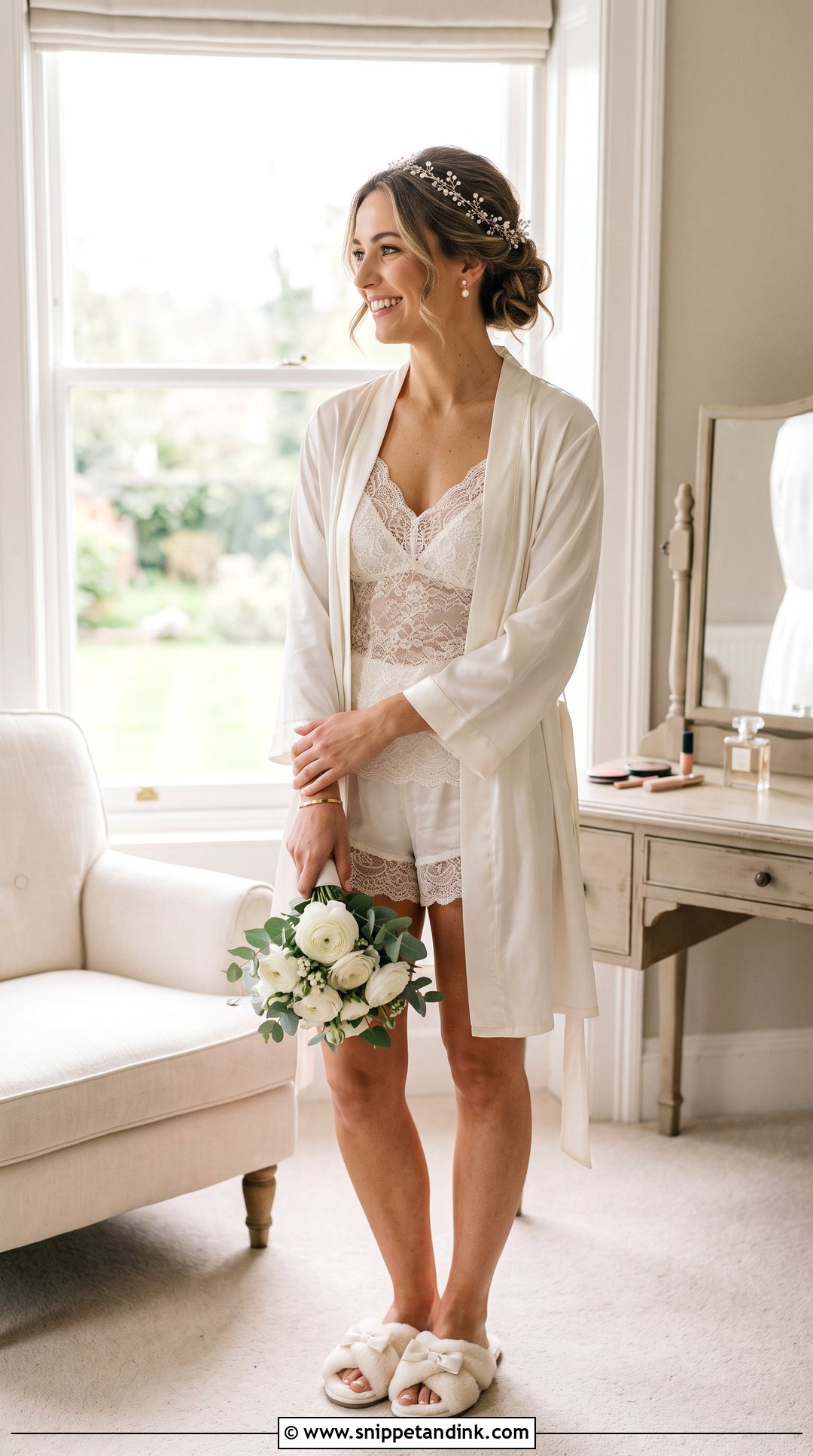
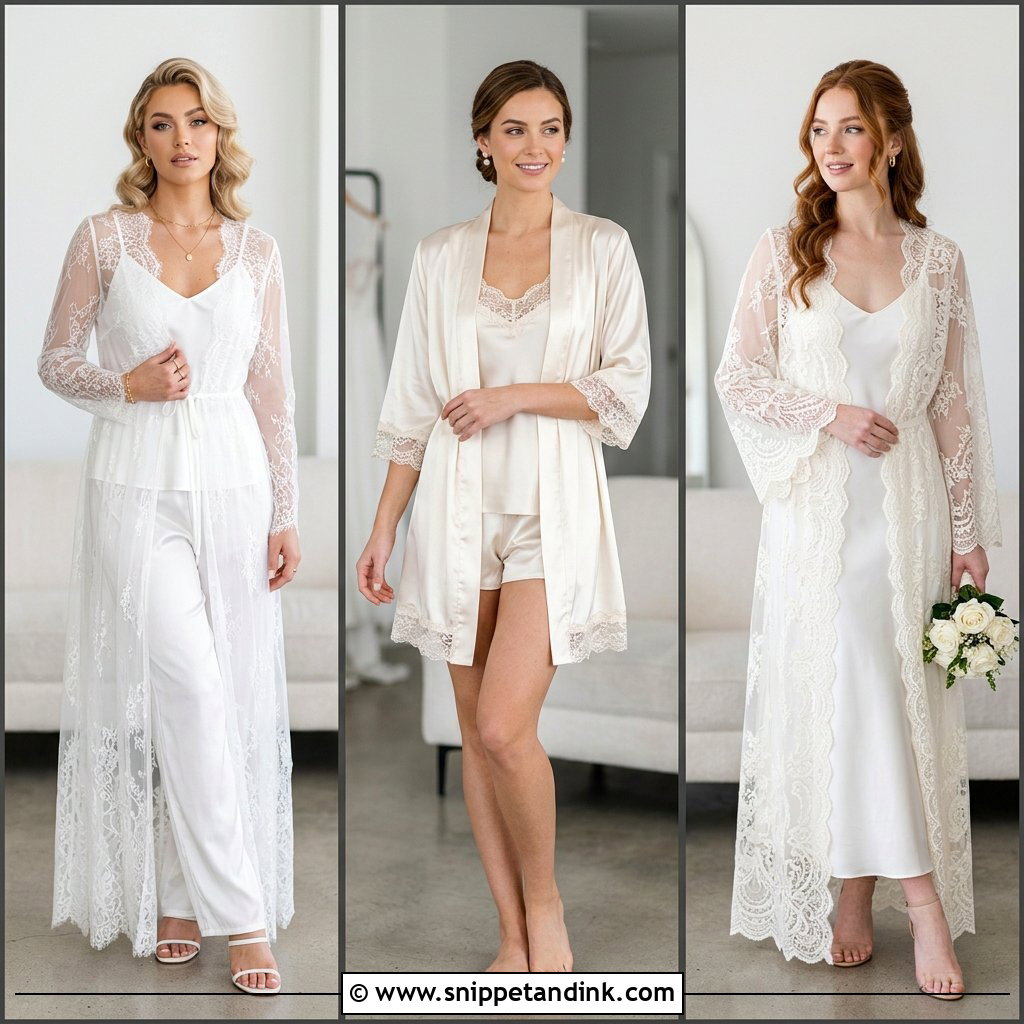
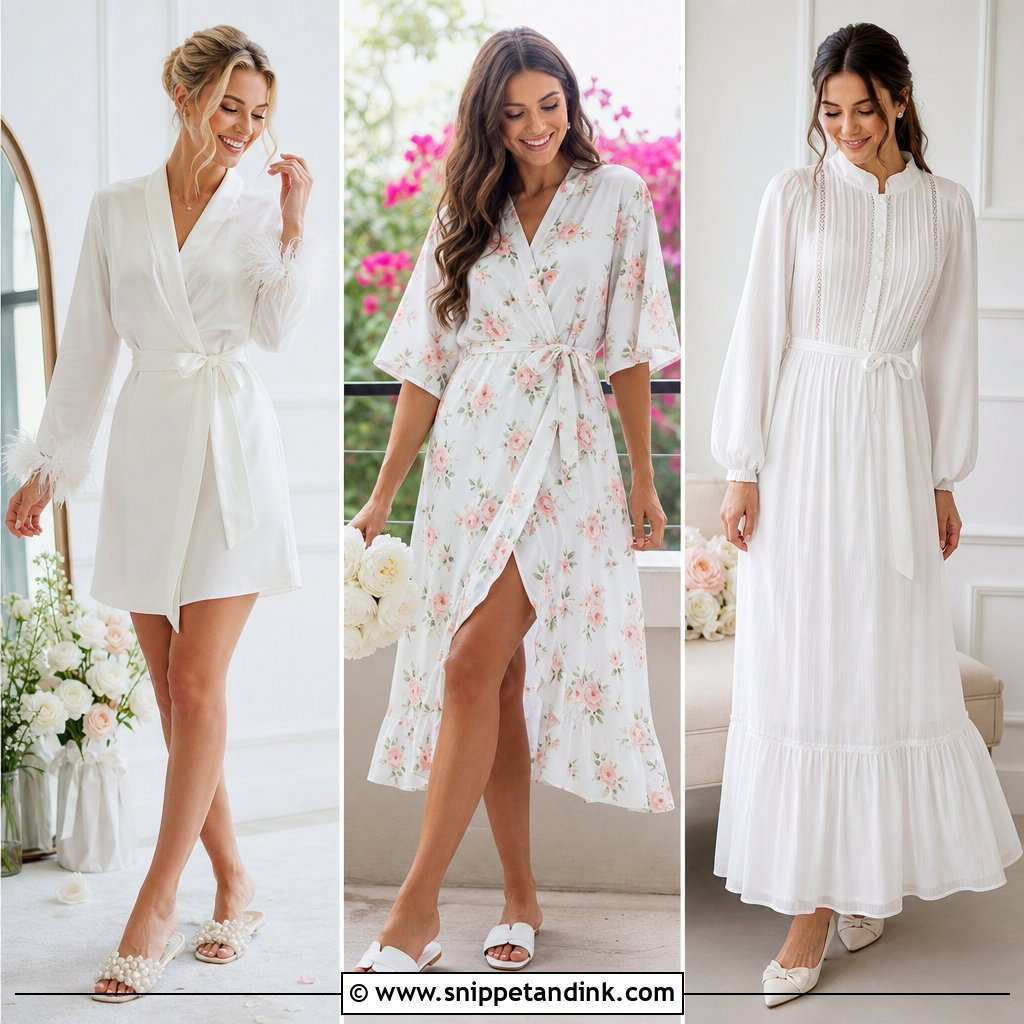
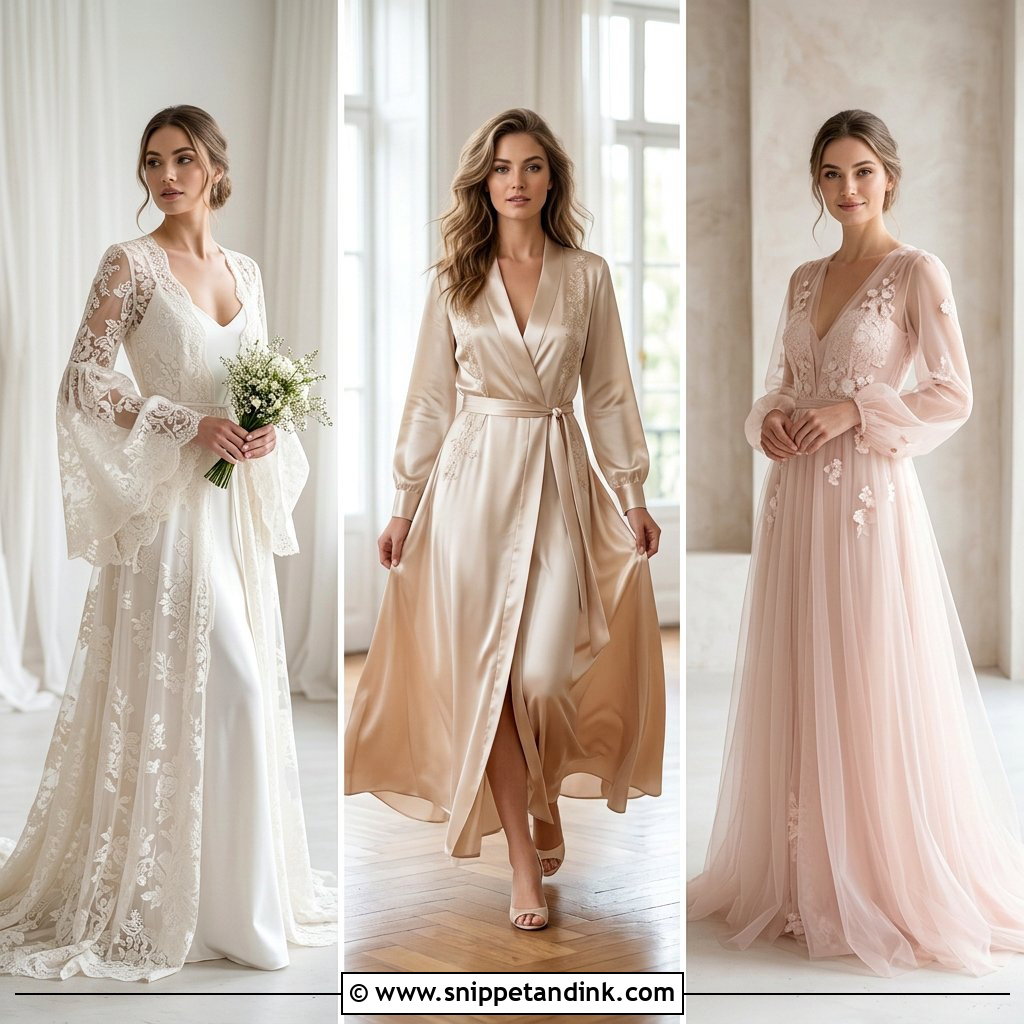
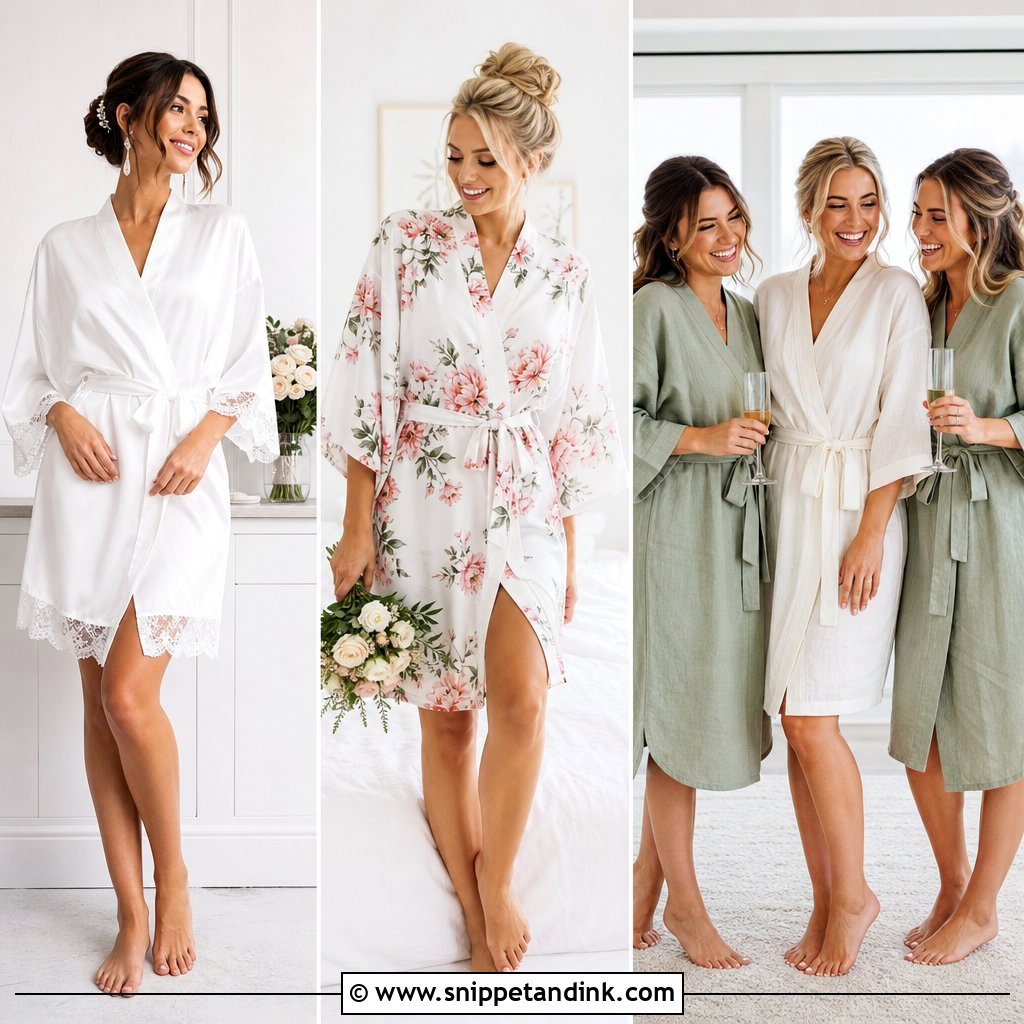
The getting-ready portion of the day is long and full of people and cameras, so what you wear needs to feel bridal and still cover you properly. A lined lace camisole with matching shorts under a knee-length satin robe does that. Pick a robe with inner ties and relaxed sleeves so the makeup artist can work on you without the fabric sliding over your face. Stand near the brightest window in the suite before guests arrive; robes that look opaque under a lamp can be quite sheer against daylight. Lined lace also stops the scratchy feeling on bare skin through a busy morning.
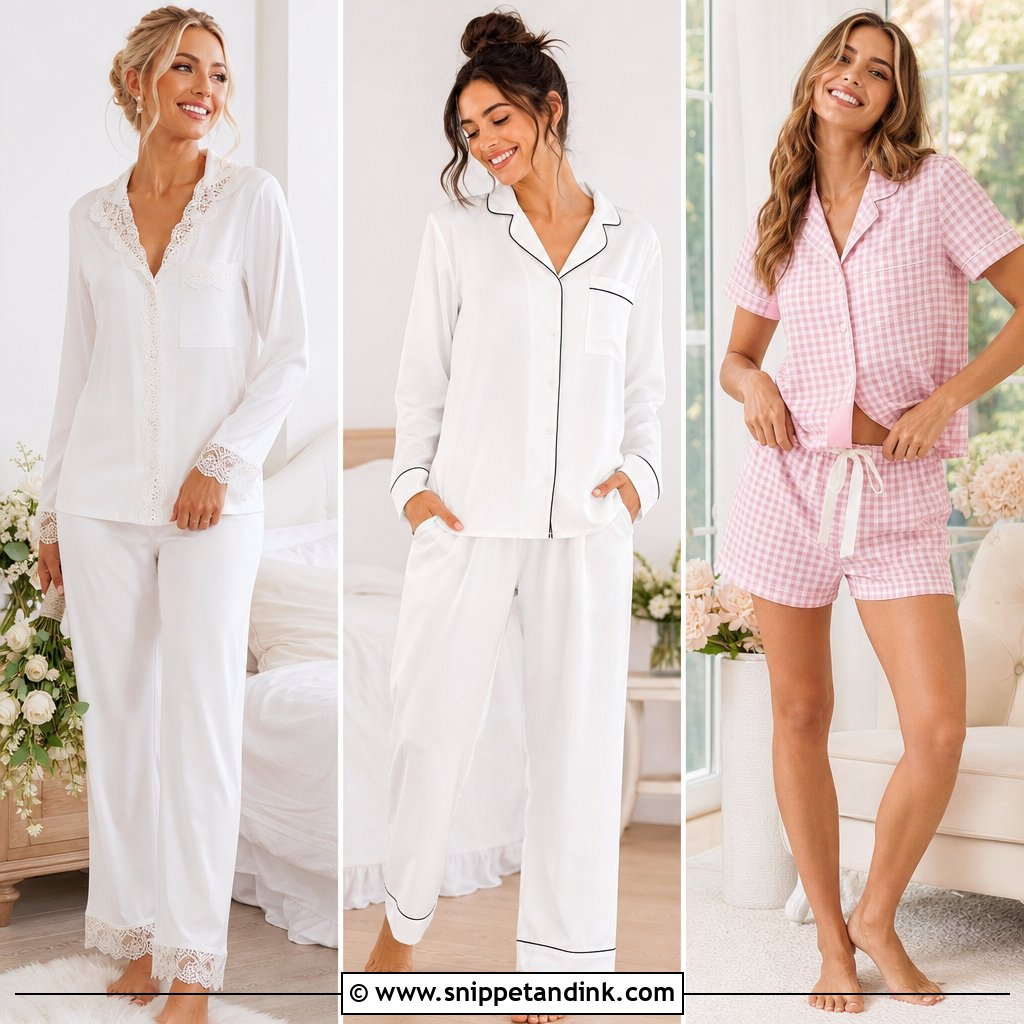
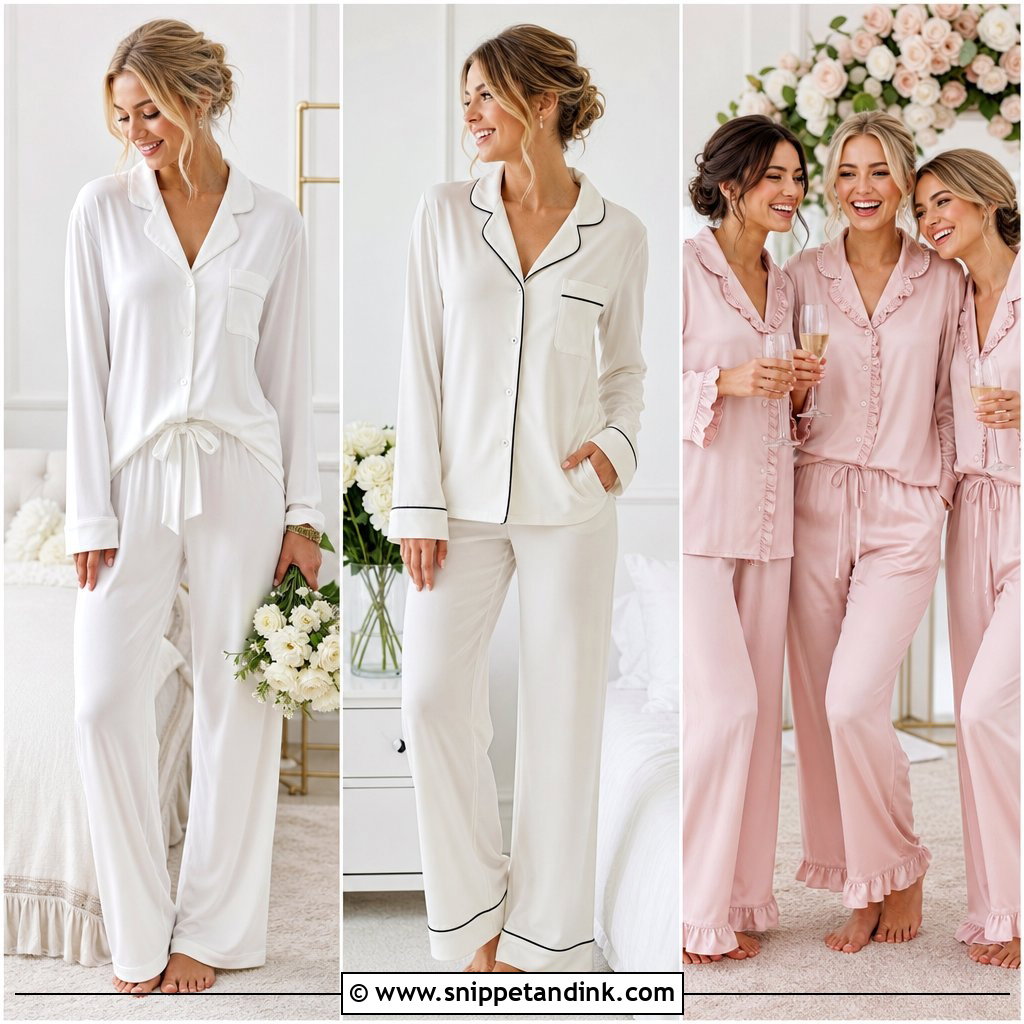
8. Silk Bridal Camisole and Pajama Set
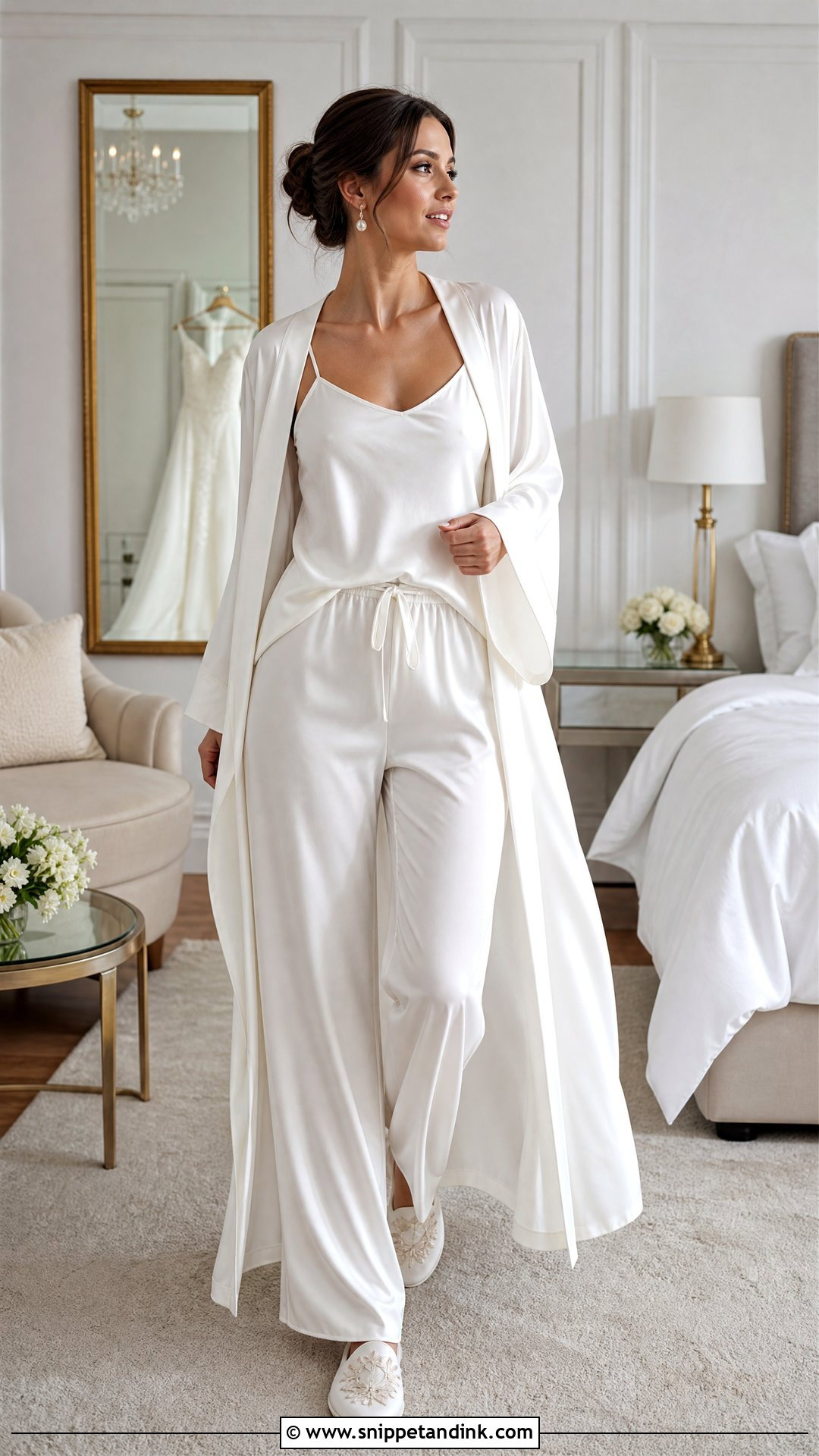
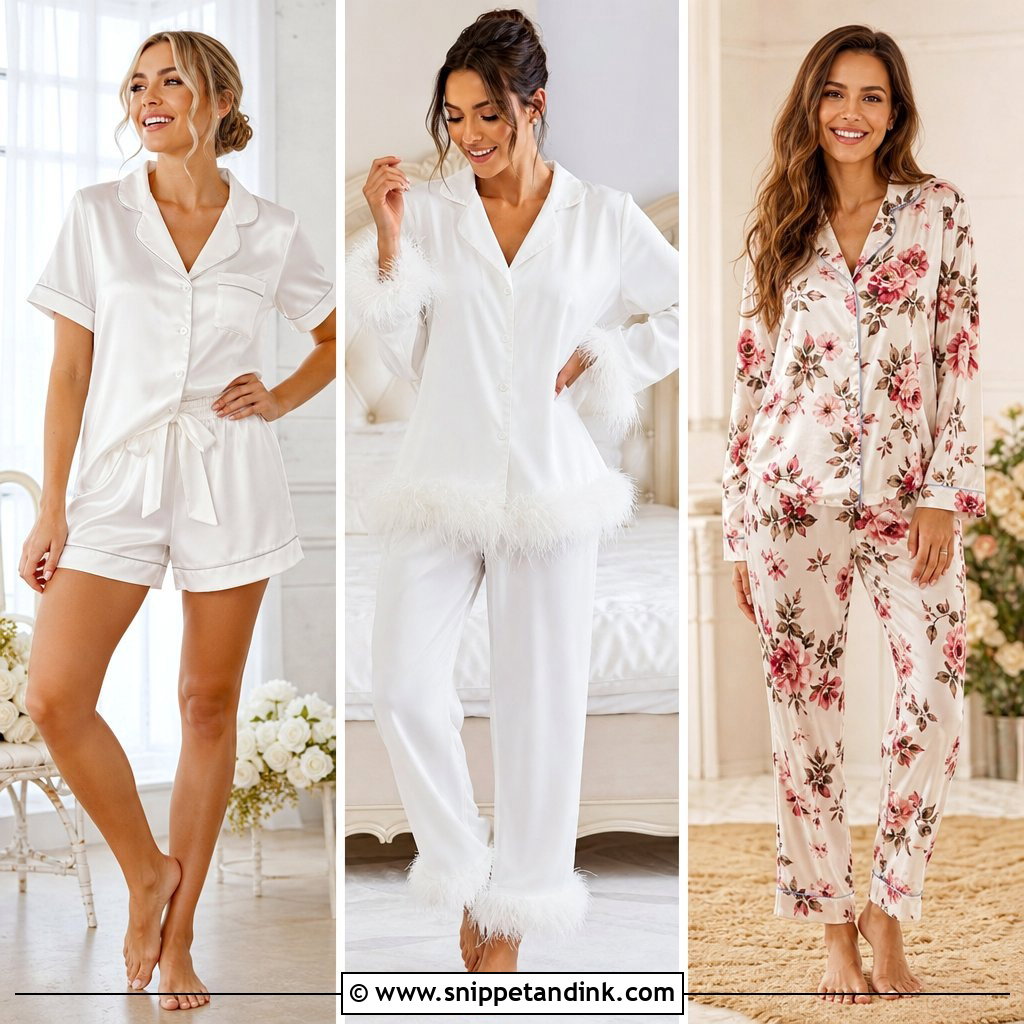
A button-front camisole with wide-leg pajama pants is the getting-ready outfit I suggest most for brides who don’t want to sit in a short robe all morning. The buttons matter: once your hair and makeup are done, nothing should go over your head. Steam the set the night before. Avoid tight elastic at the waist or ankles; it leaves red marks that can still show above a fitted bodice a couple of hours later. Swap the camisole for a short-sleeve pajama shirt if you’d like more coverage in front of family.
9. Bridal Slip Dress With a Lightweight Robe
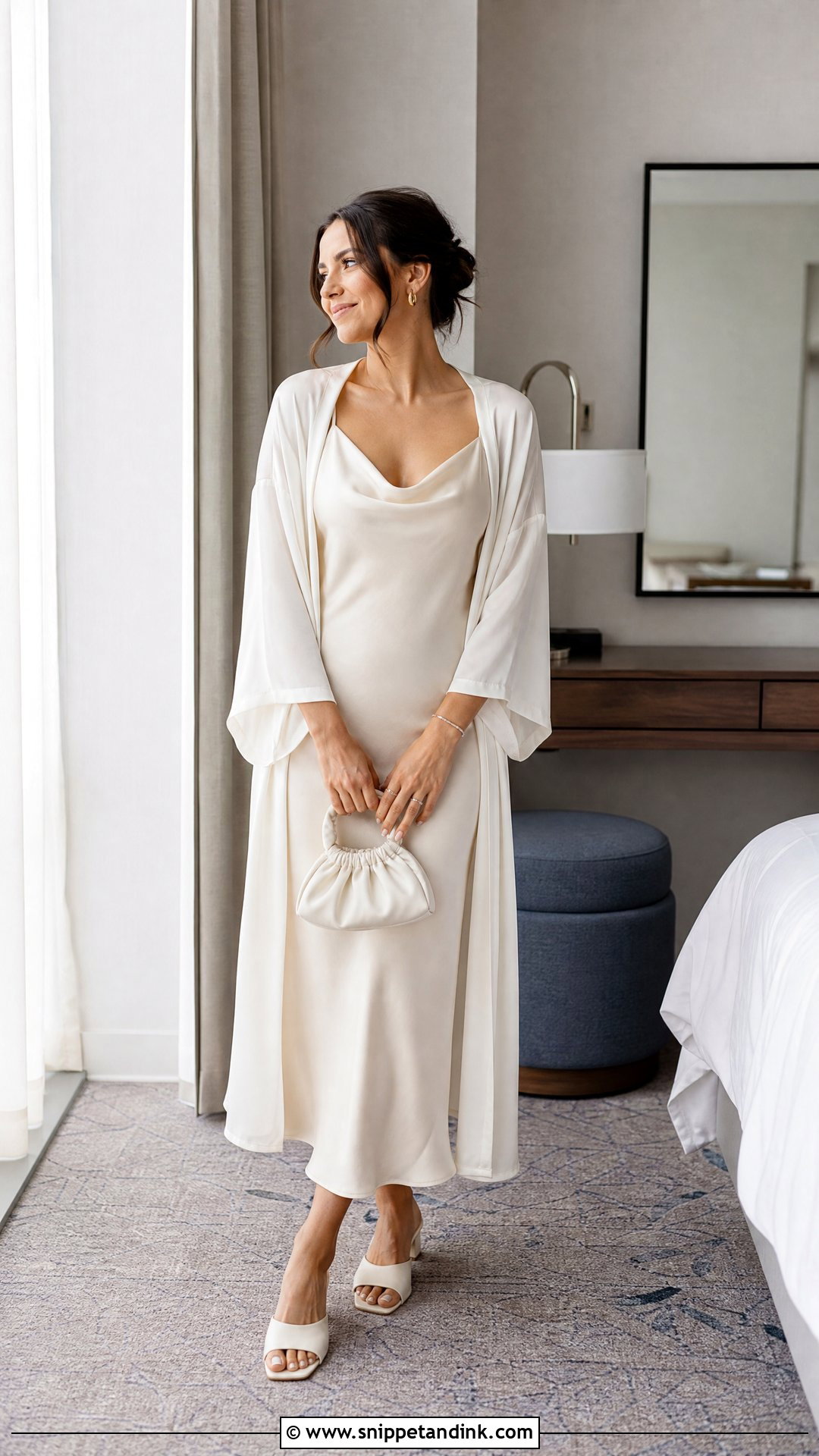
A midi slip dress pulls double duty as a getting-ready outfit, a rehearsal dinner look or a change after the reception. Choose an opaque, softly draped fabric with adjustable straps and room through the hips, and throw a light robe or long cardigan over it while the suite is busy. If you also plan to wear the slip under another dress, check that its straps and hem stay hidden. Length is the detail most people get wrong. Too long and it twists around your legs; too short and it creeps up when you sit.
10. Longline Bra Under a Ball Gown
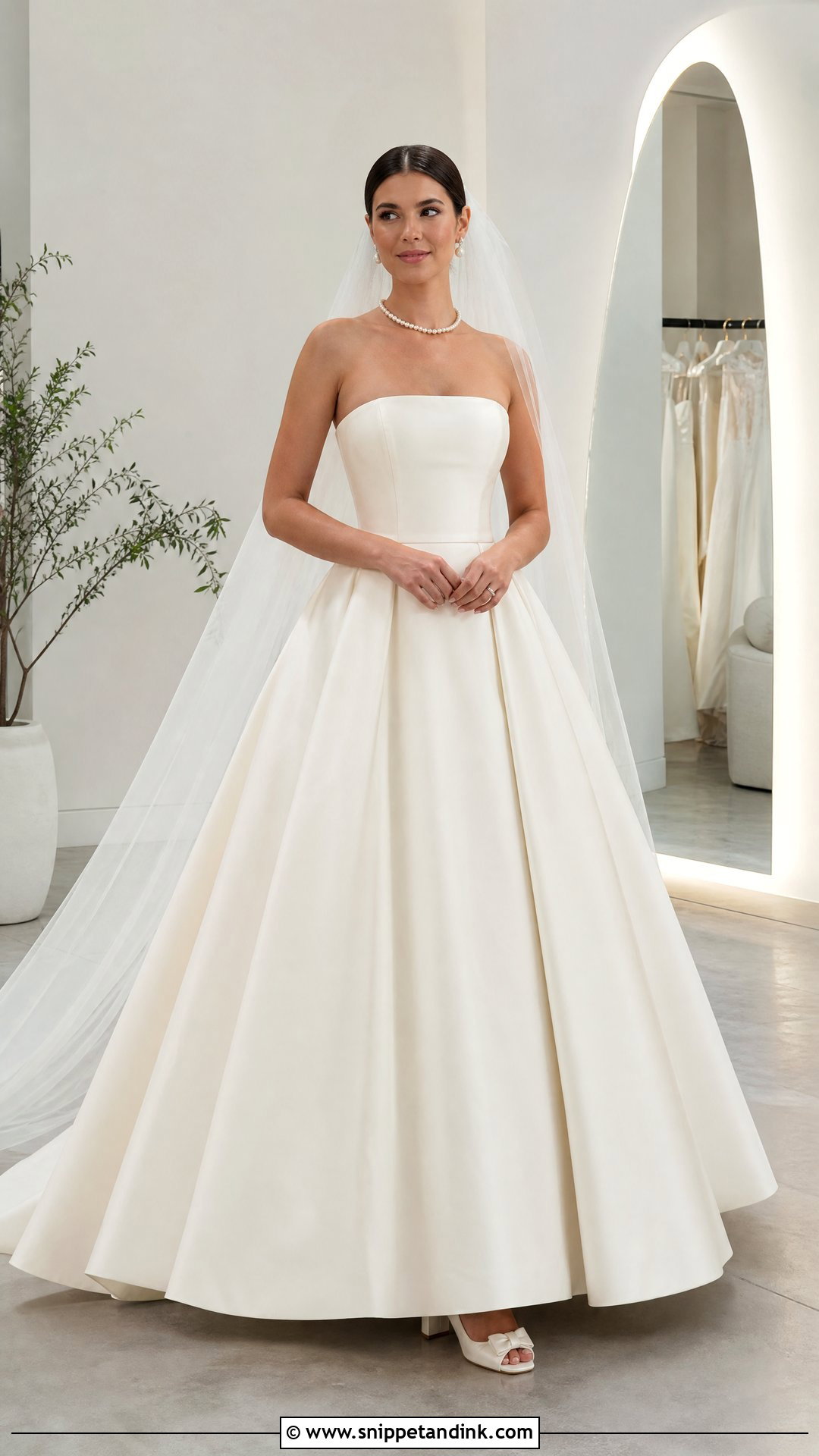
Strapless ball gowns put a lot of weight on the bodice, and a longline bra spreads support down the torso instead of hanging it all on one narrow band. I look for flexible boning that bends when you sit rather than poking into your waist. Smooth briefs or light shaping shorts go underneath, depending on how full the skirt is. Make sure the longline ends above the gown’s own waist seam, otherwise the two structures fight each other and you get a ridge. Many ball gowns already have strong internal corsetry, so ask at your fitting whether you need one at all.
11. Convertible Bra Under a One-Shoulder Dress
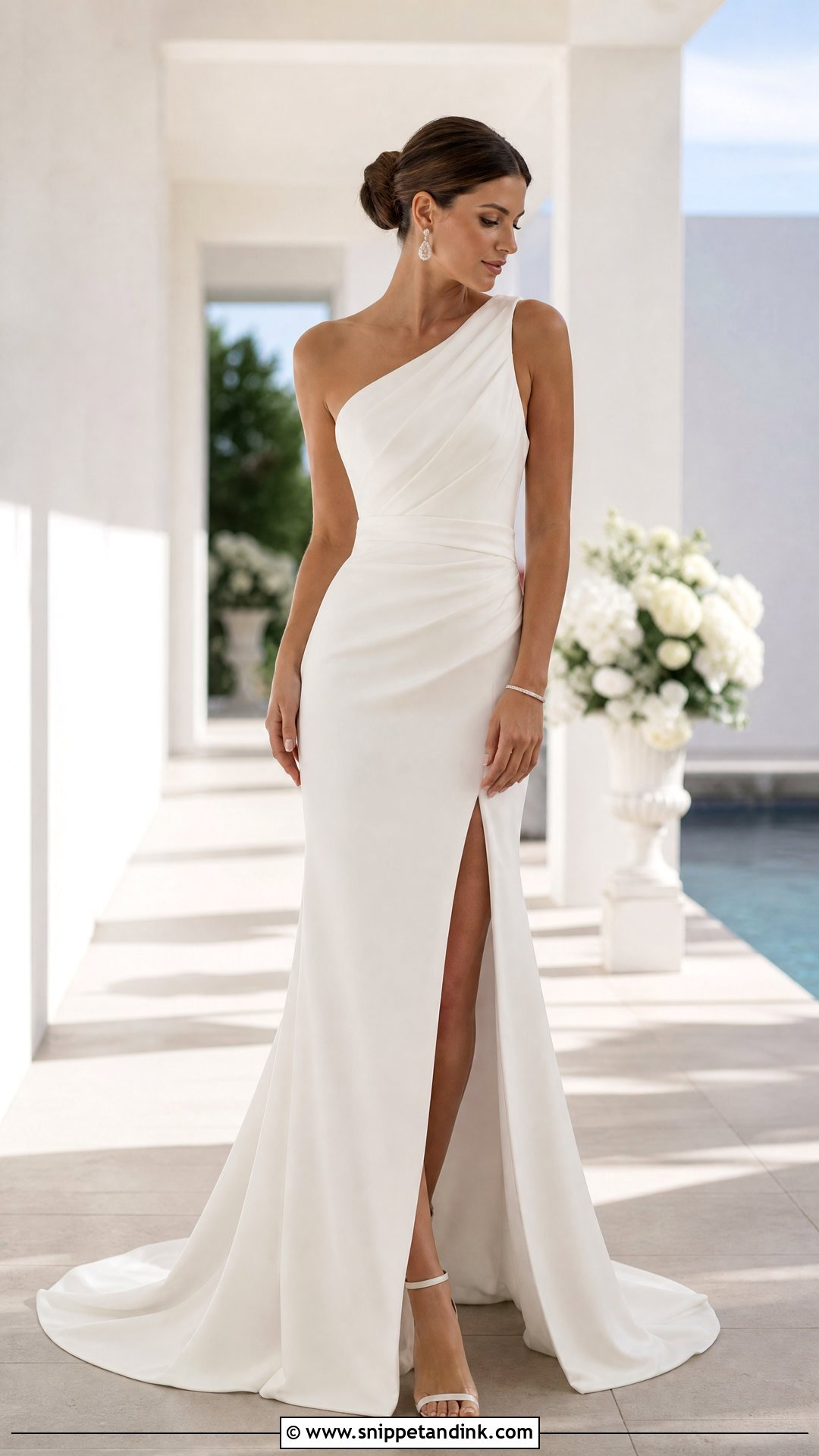
One-shoulder dresses sit asymmetrically, and the support has to follow that line. Convertible bras can be set up with one strap, as a halter or strapless. I check that the single strap hides completely under the shoulder of the gown and doesn’t drag the neckline toward the covered side. Bulky metal strap hooks show as bumps under fine fabric, so I go for low-profile ones. At the fitting, roll your shoulders and lift both arms several times. Everything should settle back into place on its own; if you’re tugging at it after each movement, it won’t last a reception.
12. Bralette Under a Relaxed Wedding Dress
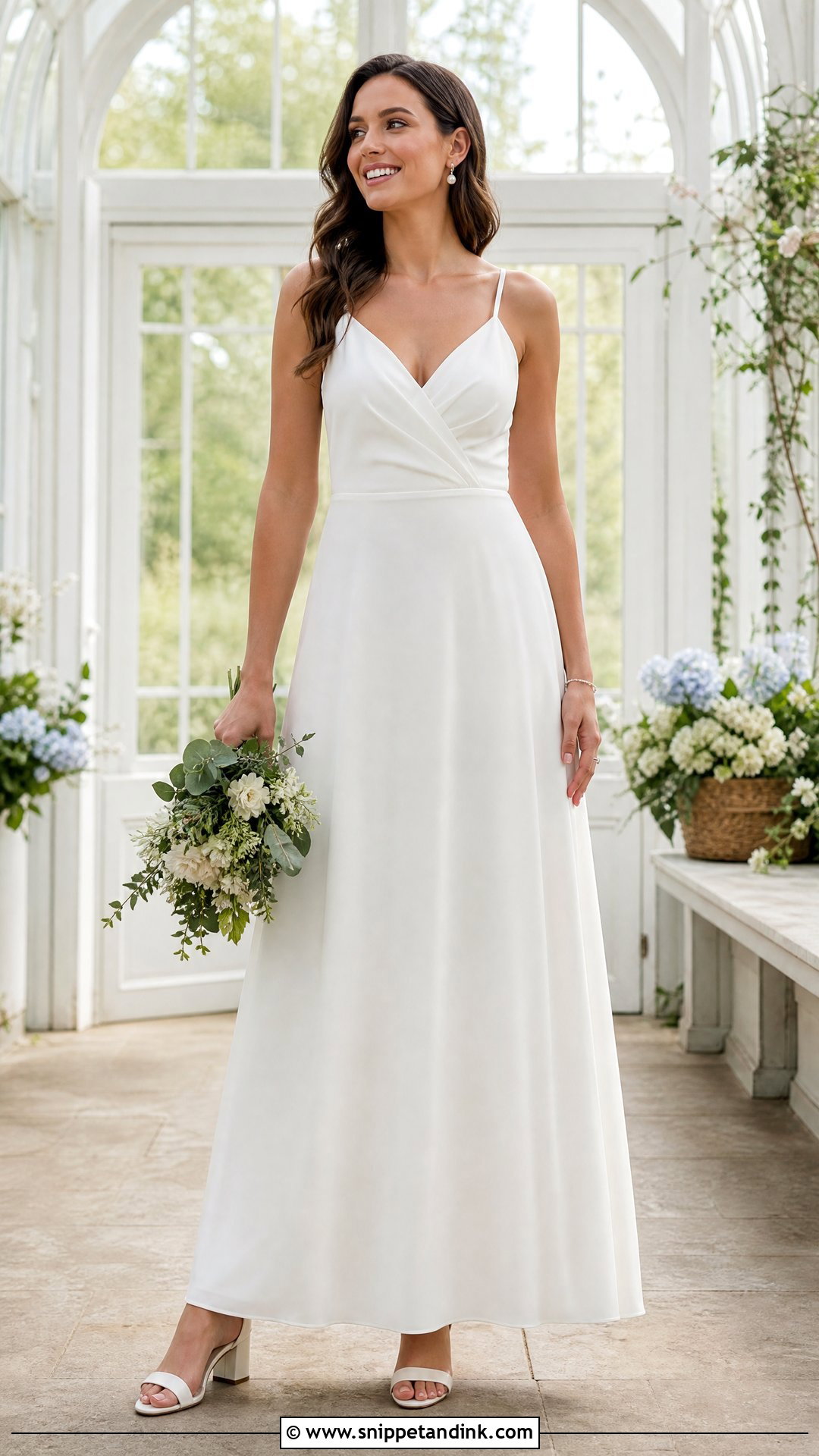
Bralettes are comfortable, but they only work under relaxed gowns with looser bodices, wide straps or layered fabric. I’d skip raised lace and go for smooth microfiber or a fine lined style, because lace texture prints through a soft bodice. Adjustable straps and a firm underband help with fit. The real check is leaning forward. Bralette necklines sit higher than you expect, and they peek out at the front of the gown when you bend to hug someone. Want more shape? Ask a tailor about removable cups in the dress rather than switching to something structured that changes how it drapes.
13. Bridal Corset Under a Structured Gown
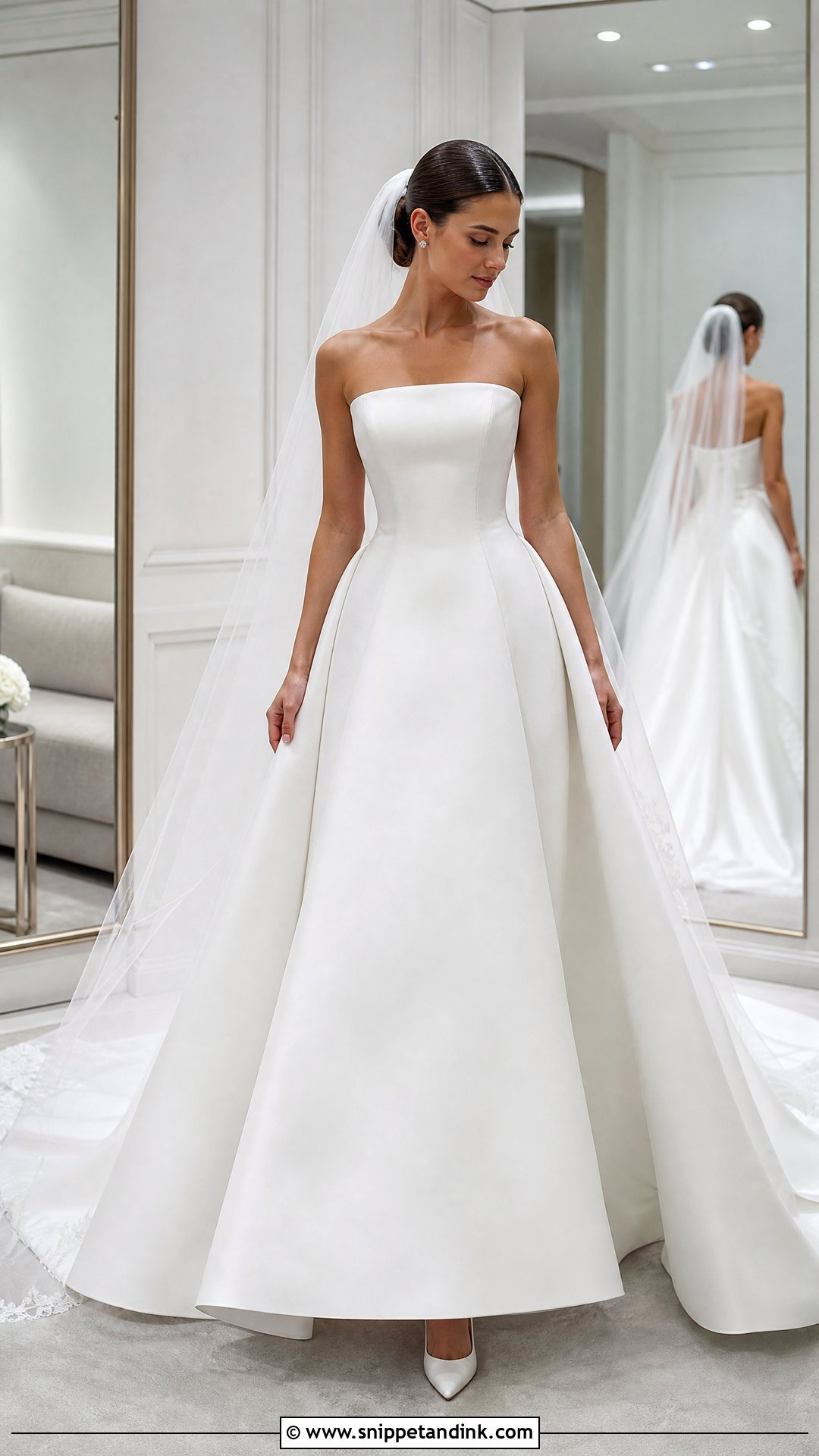
A corset under a structured gown has to be fitted together with the dress, as one system, or the two will pull against each other. Flexible boning, secure closures and a neckline that echoes the bodice are what I look for, and you should be able to breathe deeply and sit without pain. Bring it to every fitting, since a corset can take measurable inches off the waist and change where the bust sits. Plenty of structured gowns already have strong boning built in. When that’s the case, I’d usually suggest the seamstress add cups or a waist stay to the dress rather than layering a second rigid garment underneath.
14. Plus-Size Bridal Lingerie With Support
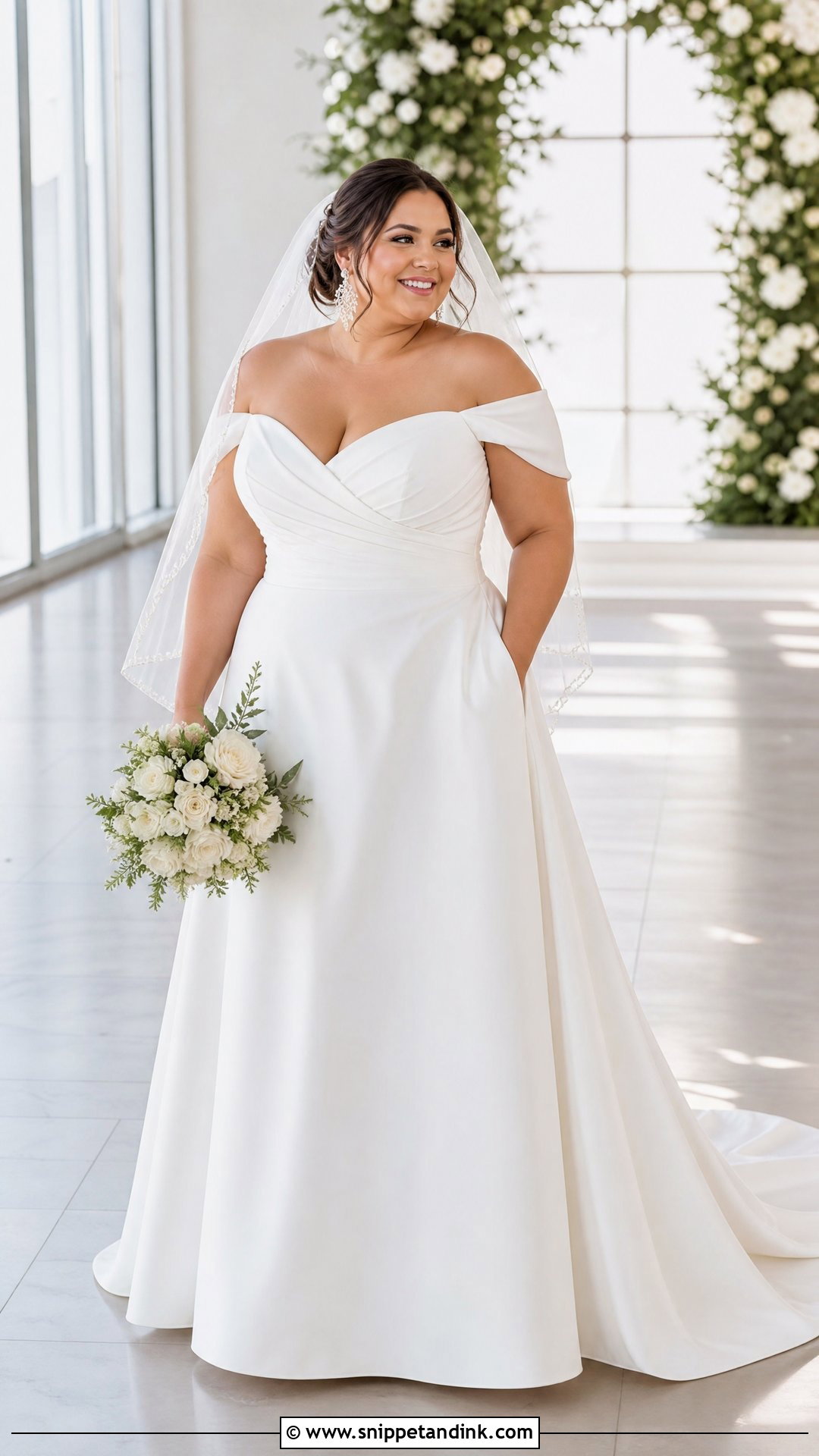
Good support on a fuller body comes from the right cup depth and band, not from the tightest compression you can find. Look for a bra with real side support and a comfortable band, then high-rise briefs or anti-chafing shorts that stay up without rolling. Raised lace tends to show through smooth gowns, so I keep it for the getting-ready set. Walk, sit, and take a flight of stairs in the full outfit at your fitting; rolling waistbands and chafing usually appear on stairs before anywhere else. Brands that offer a wide range of nude shades and adjustable straps make the fit much easier to get right.
15. Maternity Bridal Lingerie Under a Wedding Dress
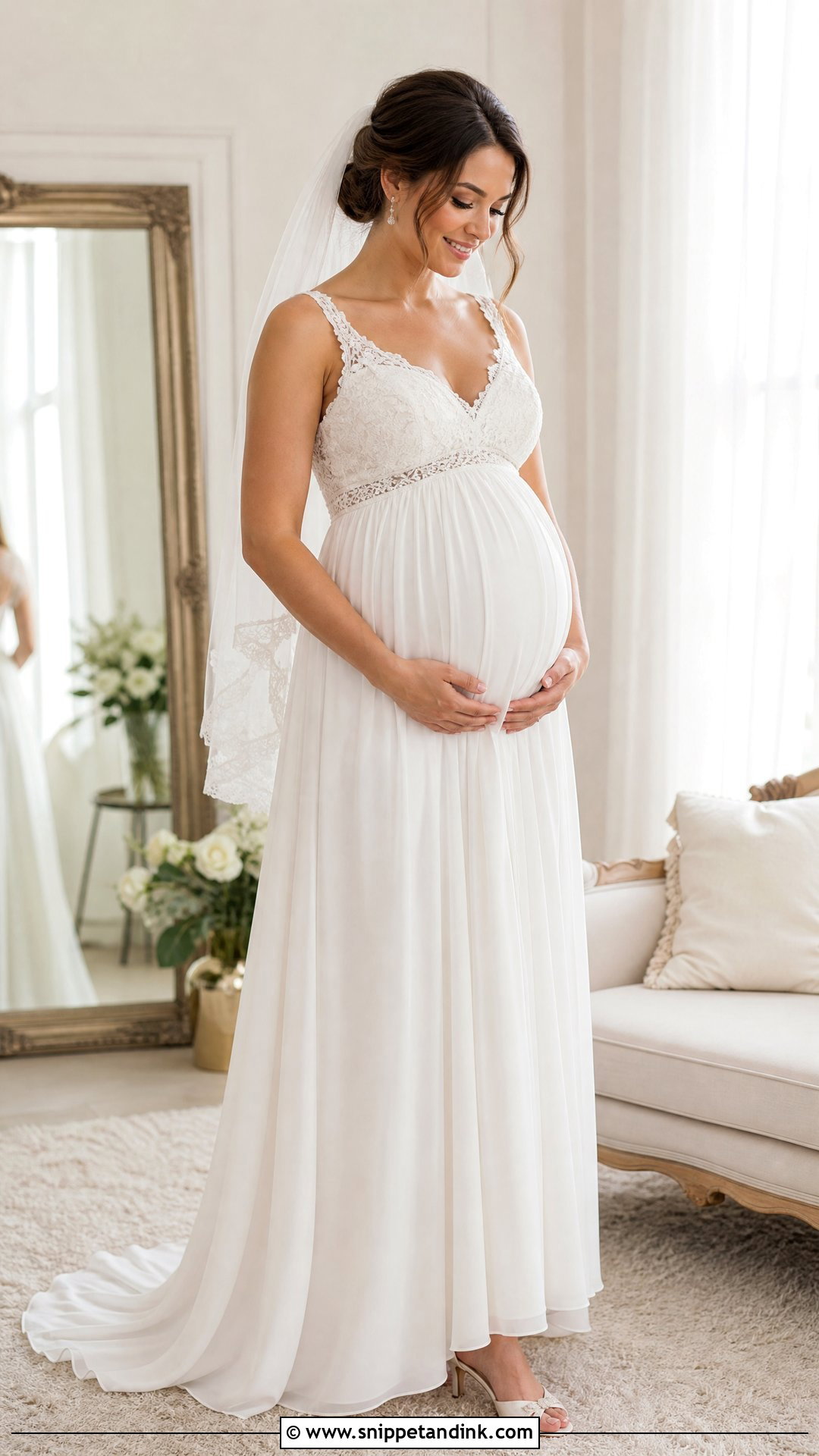
Maternity foundations need to change with your body, sometimes week to week. A wireless bra with stretchy cups adapts to size changes and gives gentle support. Choose over-bump or under-bump briefs by feel, and add soft anti-chafing shorts under a flowing skirt. Please skip waist trainers and rigid shapewear across the abdomen entirely. Schedule the final fitting as close to the day as your seamstress allows, since your measurements can shift a lot in the last month, and look for breathable fabrics with stretch panels for a long event.
16. Nude Bridal Lingerie Under a Sheer Gown
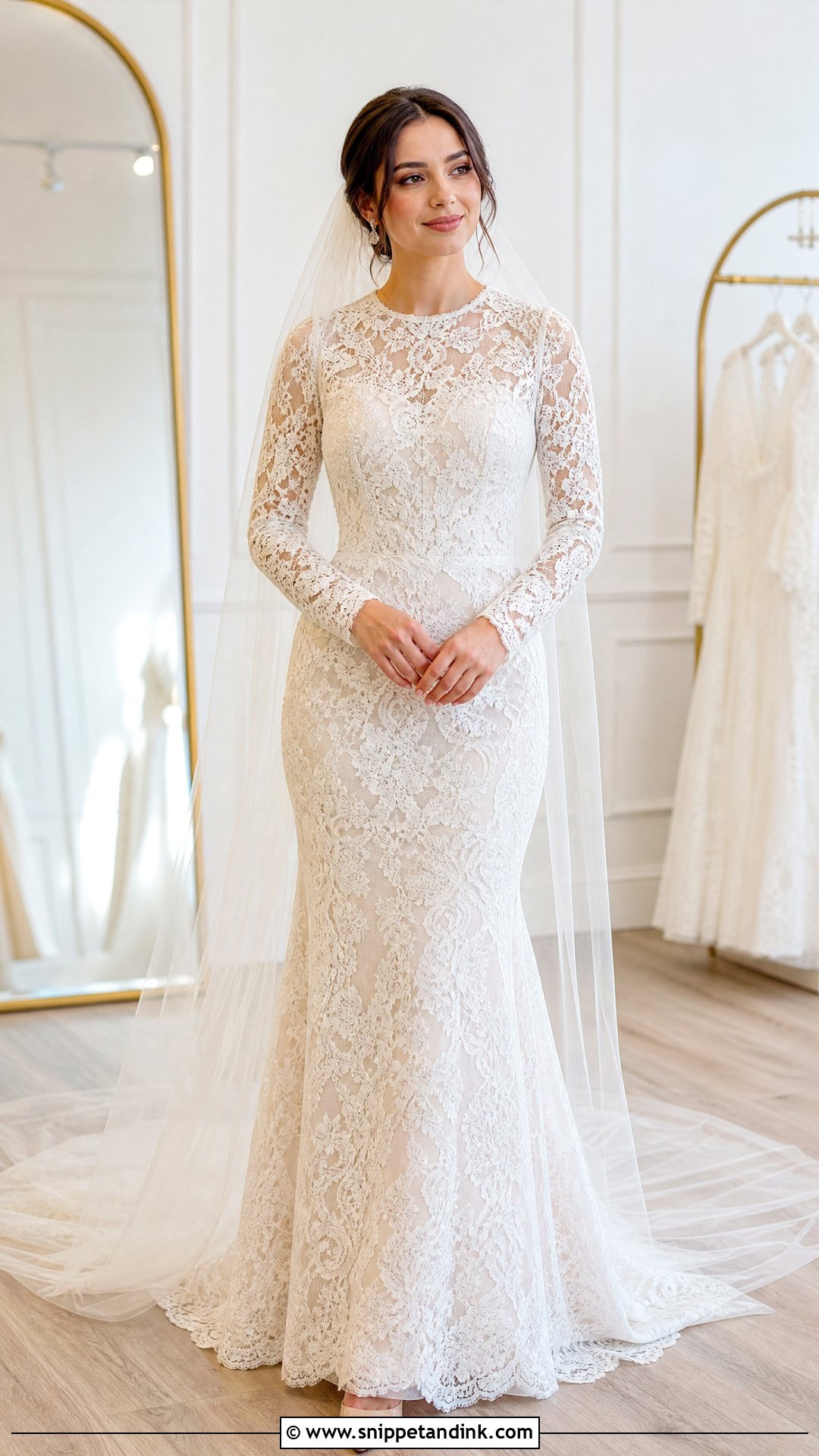
Illusion panels and sheer lace are where foundation color matters most. A bra labeled nude can be a full shade off your skin, and against a sheer panel that difference shows up as a block of color. I match the foundation to the bride’s skin and the gown’s lining, then check it in daylight, indoor light and with a camera flash, since flash in particular exaggerates mismatches. Bring a few shades to the fitting. On very detailed gowns, a custom lining sewn in by the seamstress often gives smoother, more consistent coverage than any separate underlayer.
17. Blue Bridal Lingerie for Something Blue
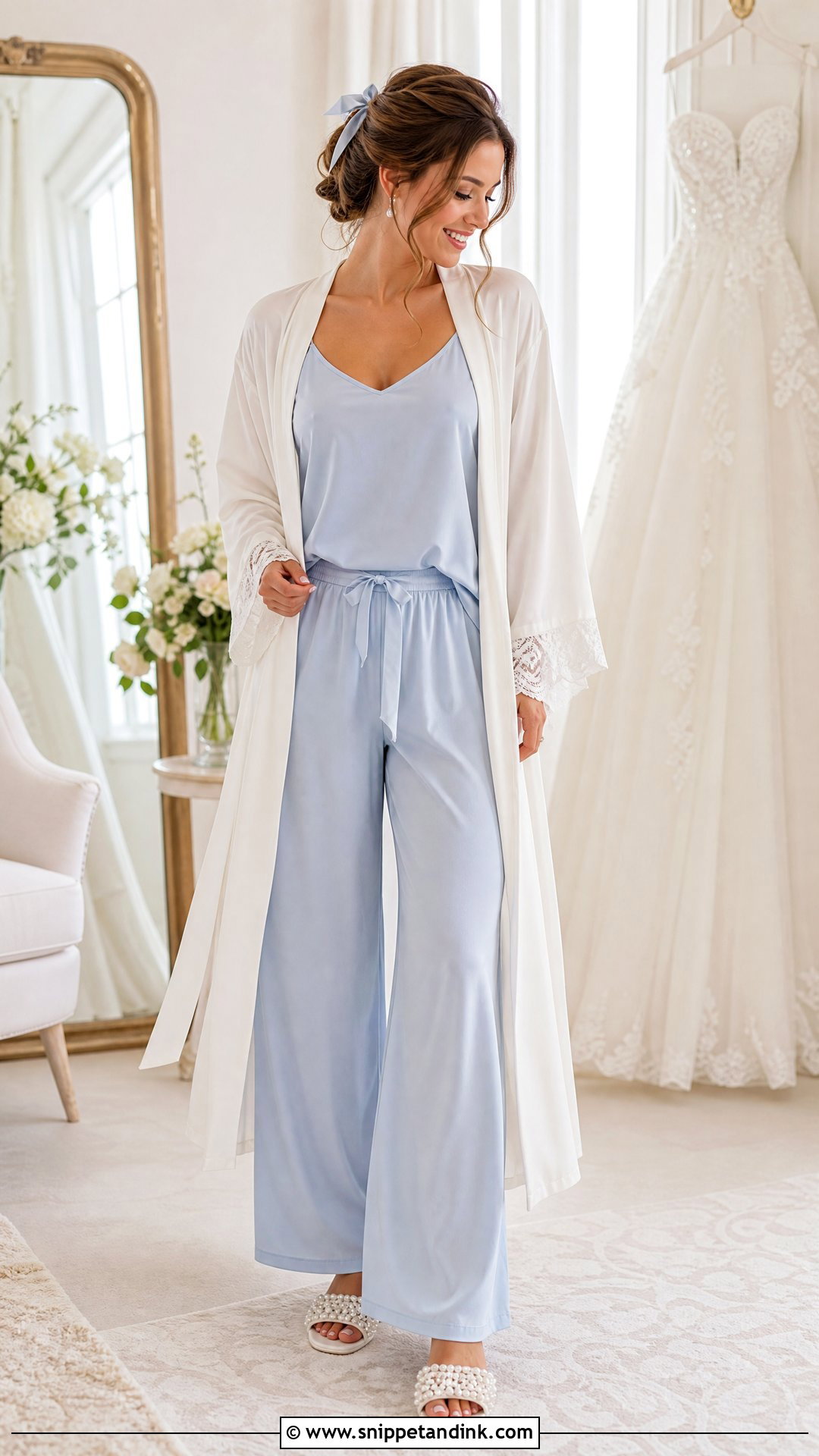
Pale blue underwear is a sweet way to carry your “something blue,” as long as it can’t be seen through the gown, which under a thin white dress it often can. Test it in daylight at a fitting. If it shows, I move the blue to the getting-ready outfit instead: a pale blue camisole and pants under an ivory robe, with pearl slippers and a hair ribbon, and wear skin-tone pieces under the dress. Some brides have blue initials embroidered inside a robe cuff, which keeps the tradition private. Soft blue suits cool white and silver accessories best.
18. Bridal Lingerie With a Feather-Trim Robe
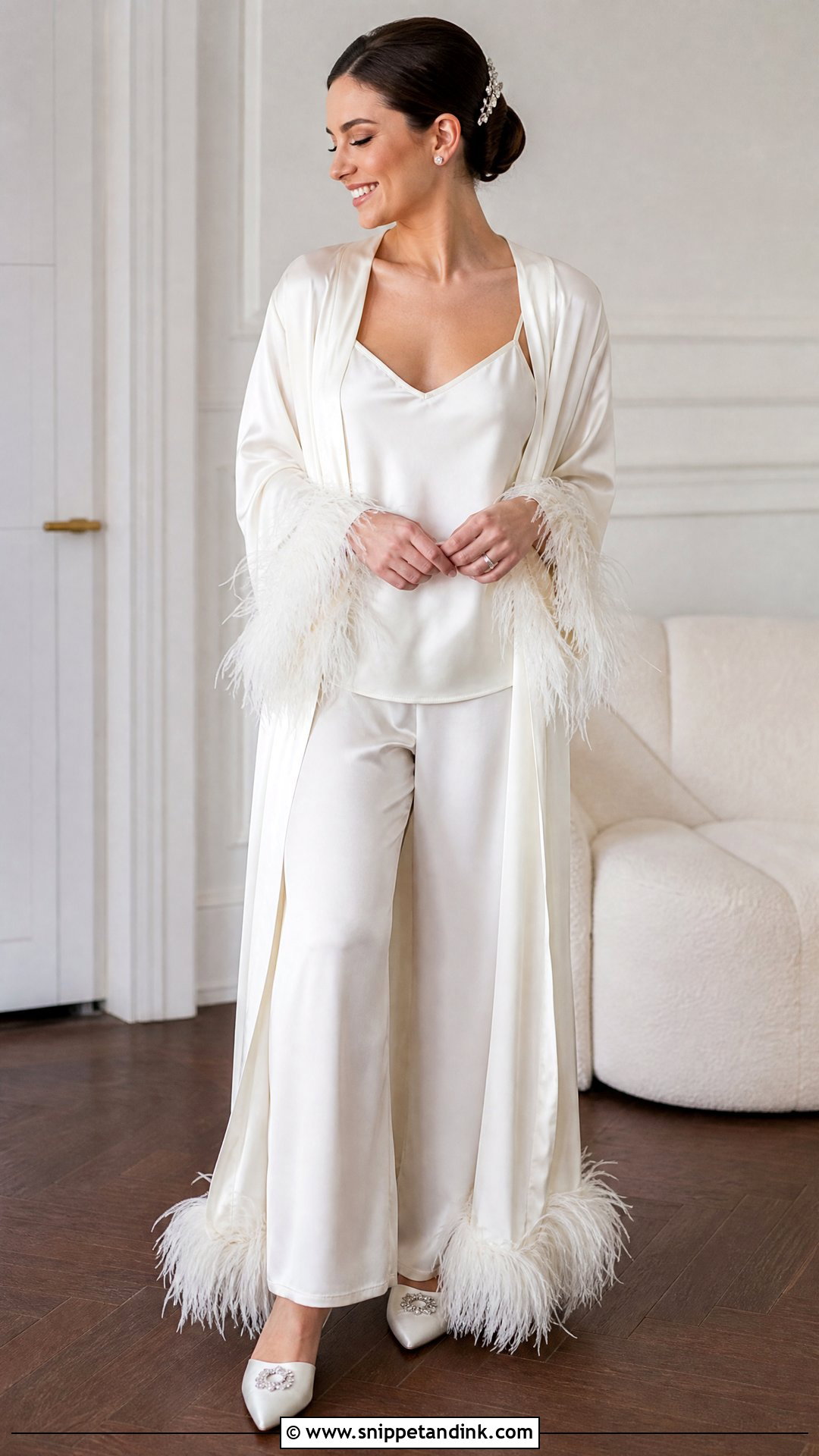
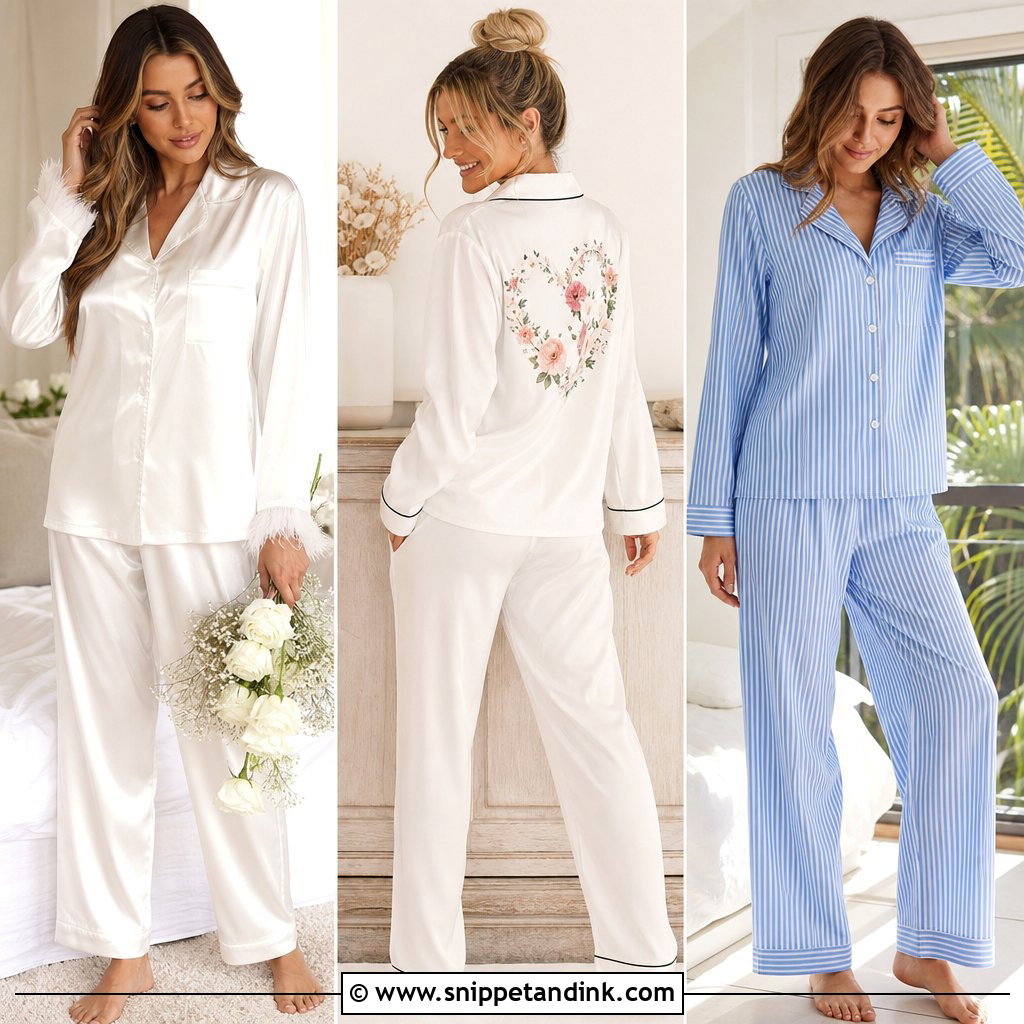
Feather trim is fun in photos and a nuisance in practice, so I keep it light and keep everything under it simple. Wear the robe over a fully lined satin camisole with wide-leg pants or tailored shorts. Trim at the cuffs only is easier to live with; full feather sleeves end up in foundation, hairspray and coffee. Pair it with sleek slippers, small crystal studs and a neat hair clip. Take the robe off while the makeup artist works on your face, and keep curling tongs well away from the feathers, which singe instantly.
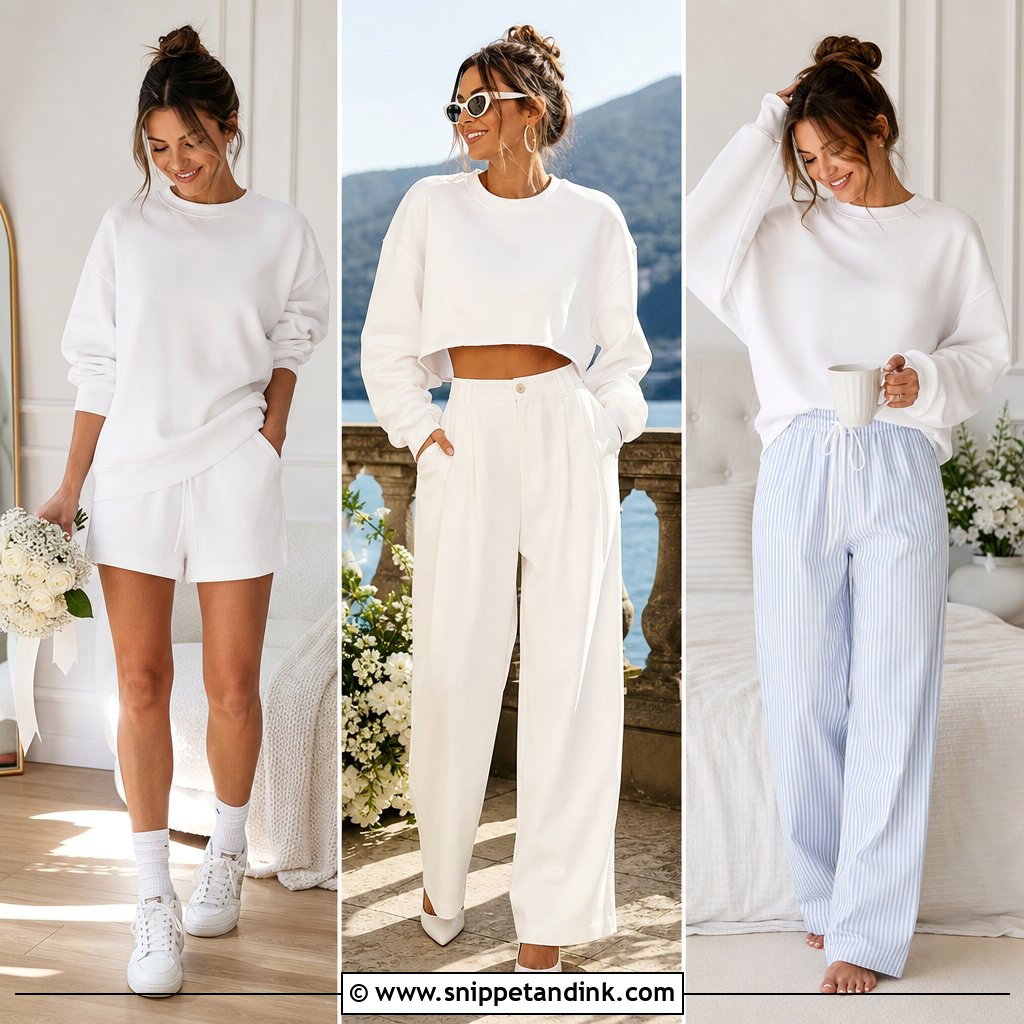
19. Bridal Lingerie With a Button-Down Shirt
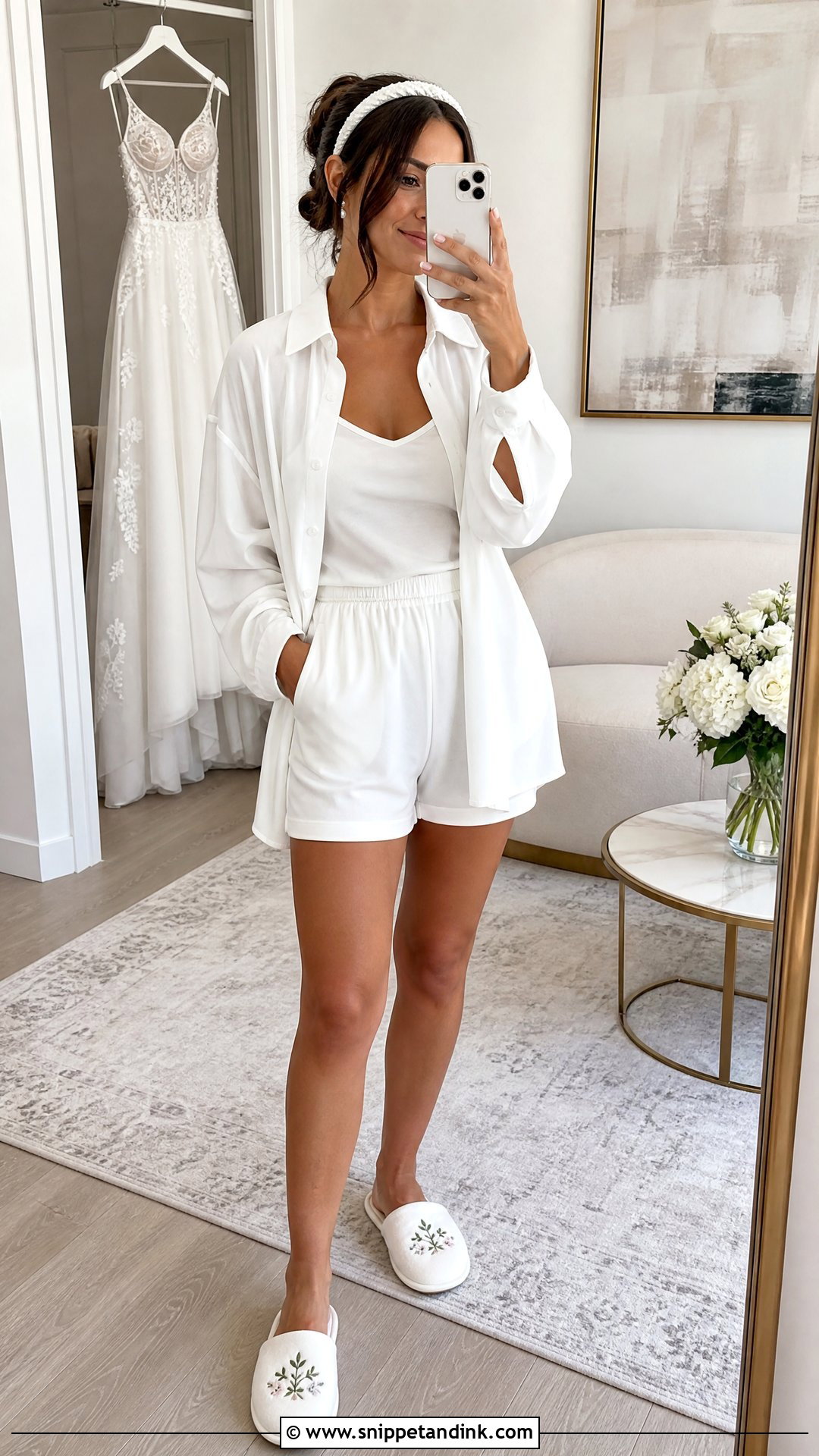
An oversized shirt is the easiest thing to wear on the wedding morning, because it unbuttons all the way and comes off without going near your hair or face. Choose an opaque white or pale blue shirt long enough to cover you sitting down, over a smooth camisole and shorts. Cotton looks crisp in photos; satin looks softer and dressier. Avoid tight sleeves and fussy cuffs, which get in the way when the stylist pins your hair or you put on bracelets. Afterward it goes straight into your normal wardrobe, worn open over swimwear or with jeans.
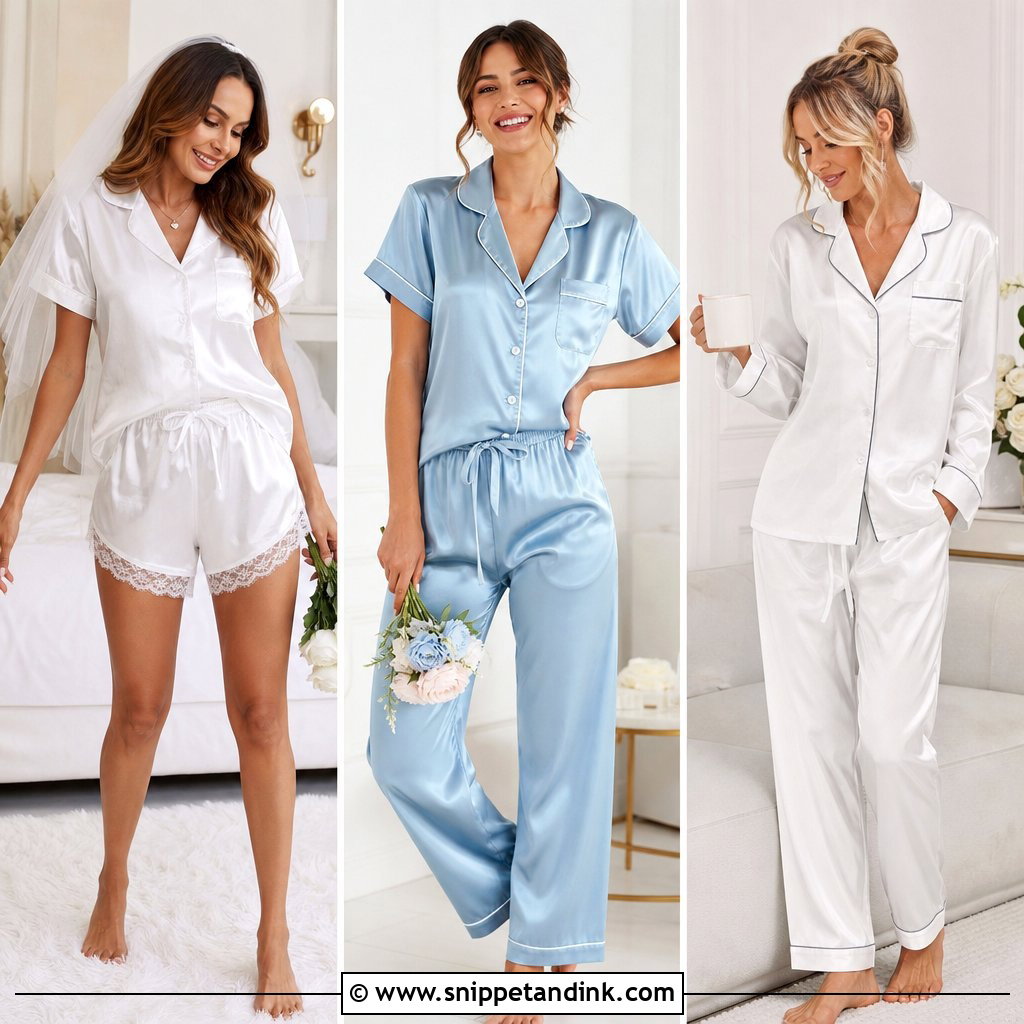
20. Bridal Lingerie With a Honeymoon Lounge Set
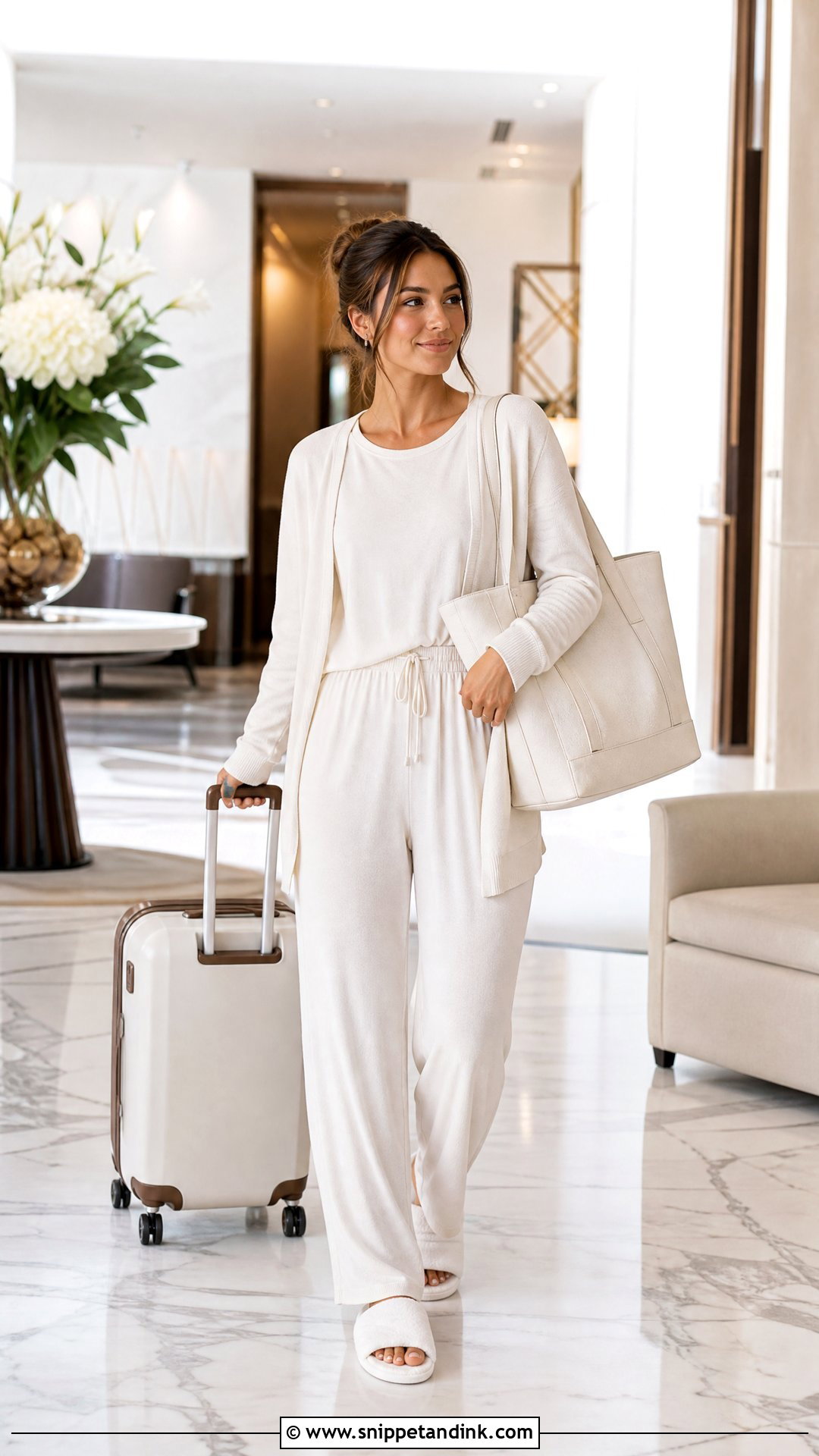
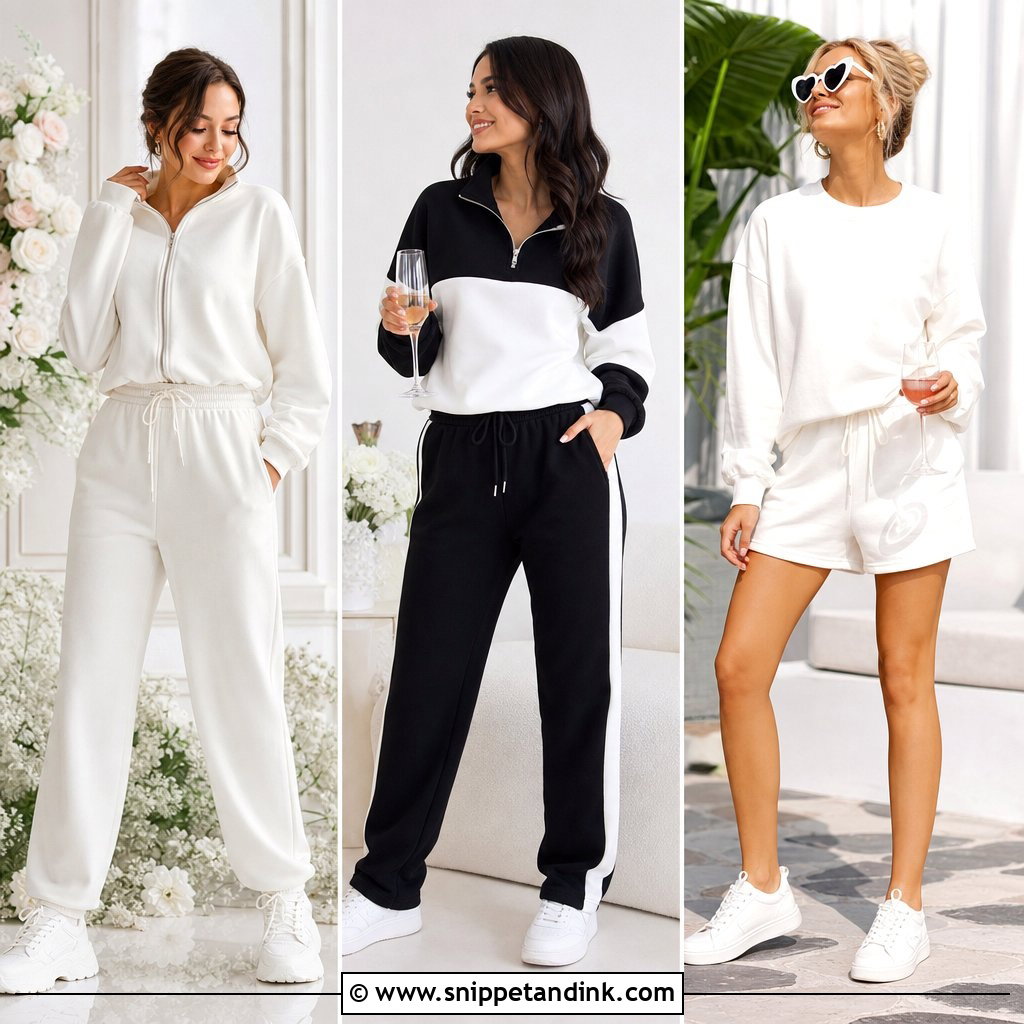
After the reception, comfort wins. A lined camisole or short-sleeve top with drawstring pants and a light cardigan makes an easy set for the wedding night or honeymoon travel. Modal and jersey pack well; washable silk and satin feel more special but crease, so think about where you’re going. Skip anything with complicated fastenings, especially if you’re still pinned and hairsprayed. A neutral set gets worn far more often, while ivory or blush keeps a little of the wedding in it. Check coverage for hotel breakfasts and airports before you pack.
What Fails First at Hour Six, and the Small Kit That Fixes It
Underlayers that felt fine at a twenty-minute fitting behave differently after a ceremony, photos, dinner and dancing. Adhesive cups lose grip as skin warms and sweats. Fashion tape lifts at the edges. Shapewear waistbands start to roll once you’ve eaten and sat for a while. Strapless bras slowly creep down when you hug people all evening, because every hug pulls the bodice.
I give brides a small kit to hand to a bridesmaid: spare adhesive cups, a strip of fashion tape, a few safety pins in skin and white, blotting papers, and a couple of anti-chafe wipes or a stick of balm. Clean skin is the single best thing for adhesives. Skip body lotion and oil anywhere tape or cups will sit on the wedding morning, since moisturizer is usually why they slide.
The bathroom question
It’s worth a practice run in the full gown before the day. A bodysuit with a snap gusset means you won’t need to undress, and a bridesmaid holding the skirt from behind while you face the cistern is the method most brides end up using with a full skirt. Long-line shaping shorts are the hardest to deal with, which is one more reason to go moderate on compression.
Underneath It All, the Dress Decides
Good bridal foundations hold the dress where it should be and let you forget about them for the rest of the day. Start from the gown: its neckline, its back, how sheer it is and what’s already built in. Then bring every underlayer to every fitting, look at yourself in more than one light, and practice sitting, walking and dancing. Smooth, skin-tone basics go under fitted gowns; robes, pajamas and lounge sets are for the hours before and after. Choose support and coverage by your own body and comfort rather than by any rule, and treat the ideas above as a starting point to adapt.
You'll Like These Ideas:


Leave a Reply