
A getting-ready robe has one real job: keep you covered and comfortable for four or five hours while people work on your face and hair, then come off without touching any of it. That is why I always start brides with a front-opening robe and build the rest around it: what goes underneath, what goes on your feet, and which small pieces of jewelry stay on for photos. Fabric matters more than people expect. Satin and silk catch window light, cotton and waffle knit breathe, and lace or embroidery adds texture but can snag. Knee and midi lengths are the easiest to live in; a floor-length robe is mostly for a few portraits. Below are twenty robes I’d actually put a bride in, with notes on where each one helps and where it gets in the way.
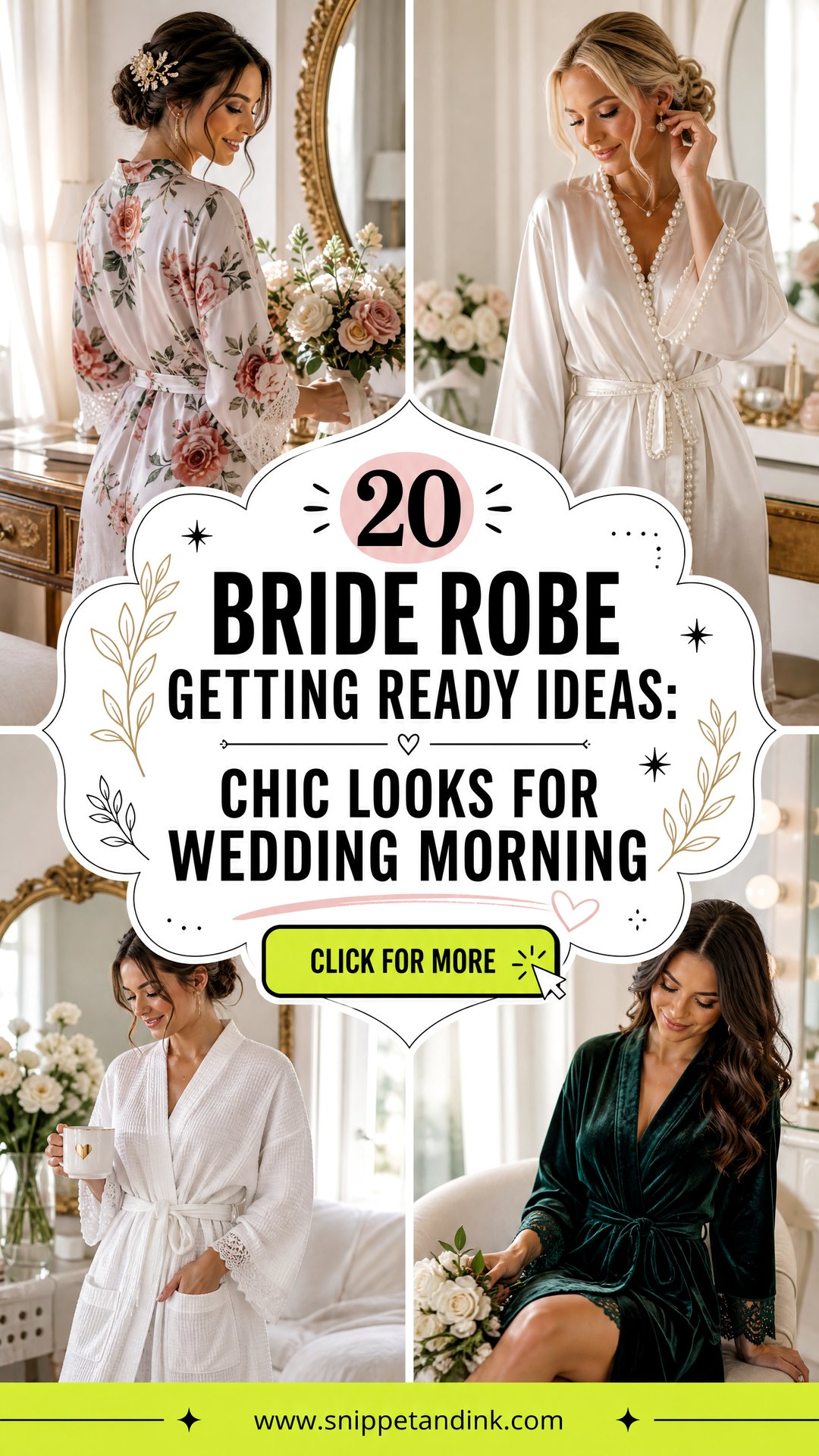
Fitting a Robe Around Four Hours in the Makeup Chair
Most brides choose a robe from a photo of someone standing up. You’ll spend most of the morning sitting, often with your arms raised or your head tipped back, so I judge every robe seated before anything else.
- Sit down in it and lean forward as if toward a mirror. If the neckline falls open, you need an inner tie or a slightly higher wrap.
- Raise both arms. Sleeves that ride up past the elbow are fine; sleeves that slide down over your hands get in the way of nail and jewelry shots.
- Check the collar height. A shawl or wide V keeps fabric off your jaw, so foundation stays on your face and not on the lapel.
- Look at the hem when seated. Midi and knee lengths behave; long robes pool on the floor and get stepped on by everyone passing.
- Size for coverage, not for a cinched waist. A robe that only closes when you stand will gape all morning.
Then think about color next to your skin, not on a hanger. Bright white can make fair skin look grey in the same frame as an ivory gown, and some blushes turn peachy under warm hotel lamps. Hold the fabric under your chin in daylight and again under a lamp before you commit.
1. White Satin Bride Robe
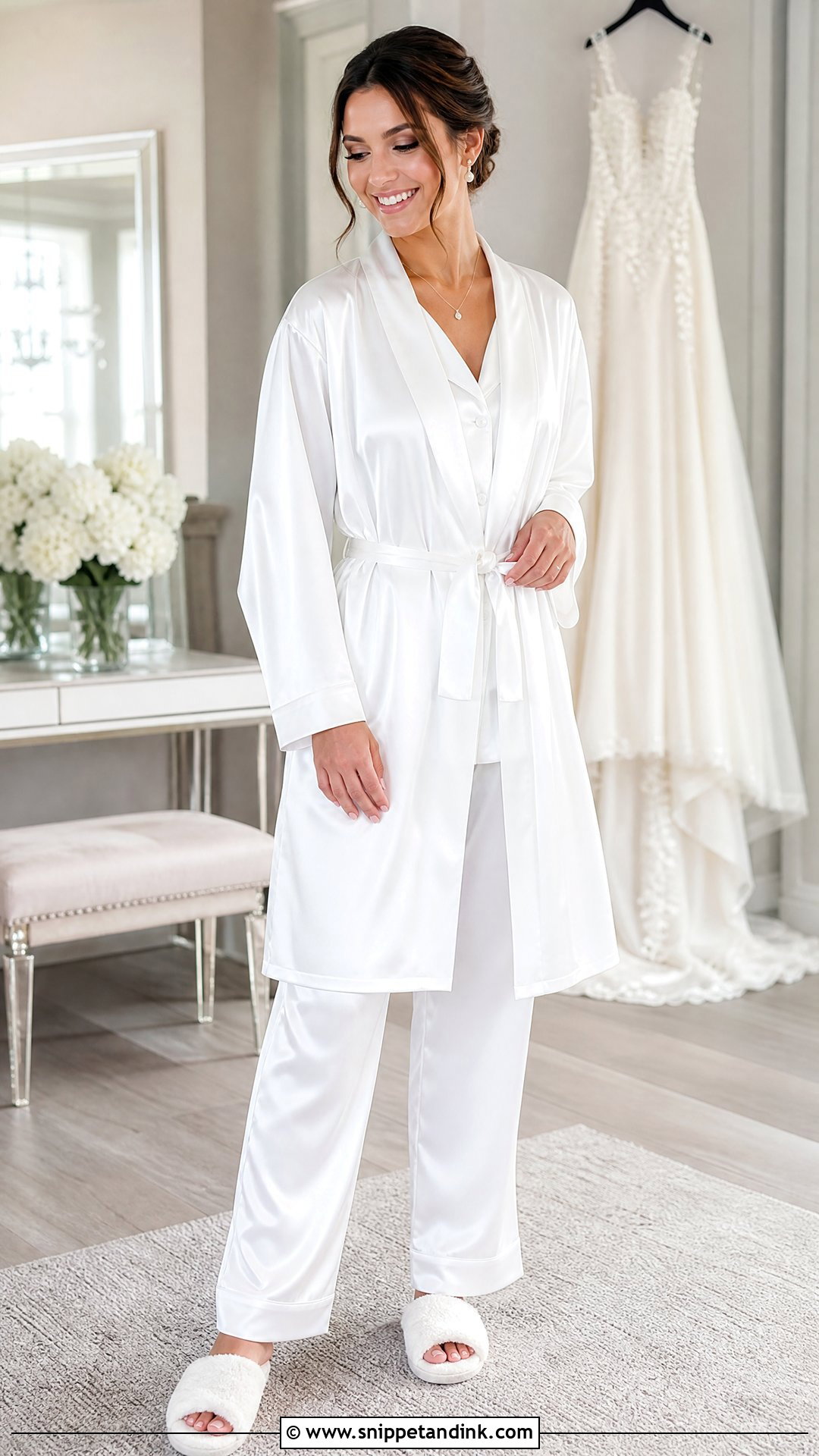
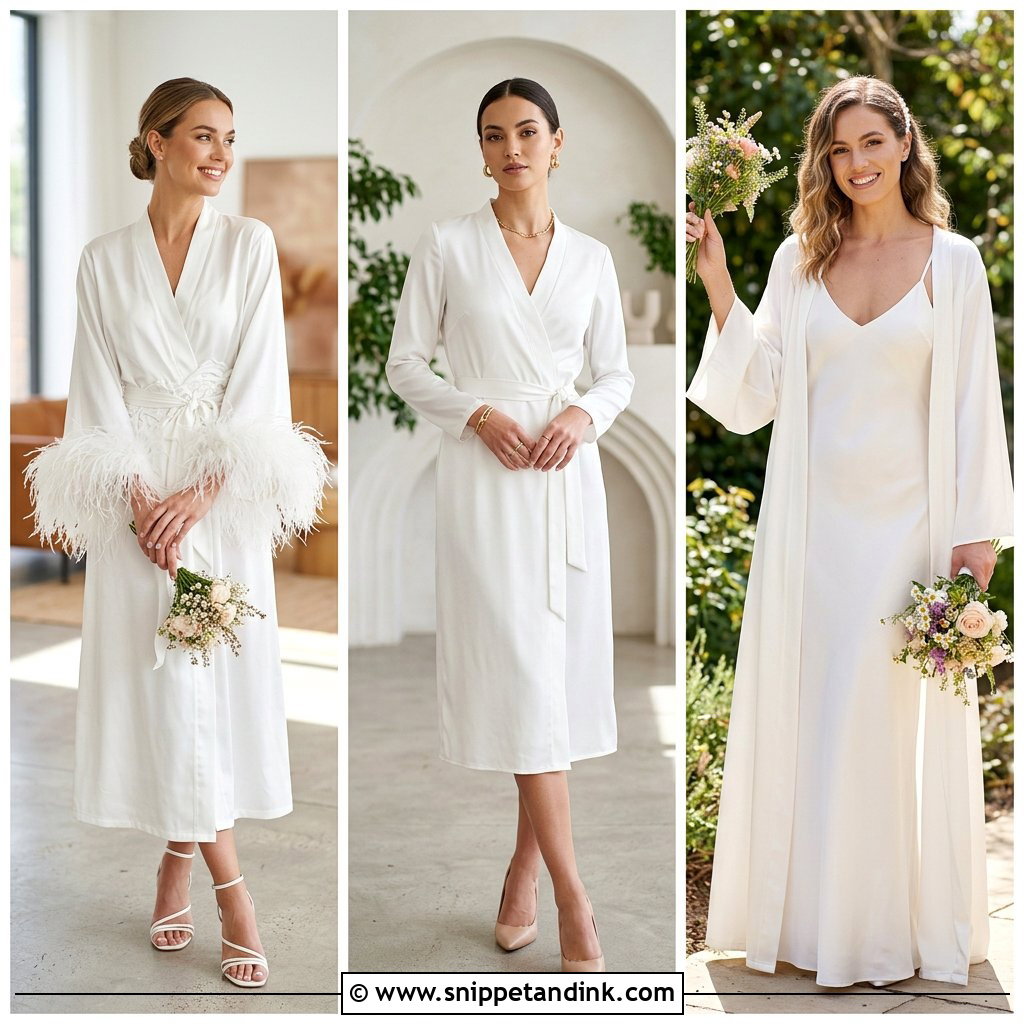
Plain white satin is the robe I reach for most, because nobody in the suite will mistake who the bride is. The detail I check first is the inner tie. Without it, satin slides open every time you lean toward the mirror, and the makeup artist ends up working around a clutched collar. Wide sleeves help too, since you can push them up while your hands are being done. Underneath, a white camisole and lounge shorts are enough. Pearl studs, white slides and a fine pendant finish it. Satin shows every fold from its garment bag, so steam it the night before and hang it on a padded hanger, not a wire one. Keep the jewelry quiet; the shine of the fabric is already doing the work.
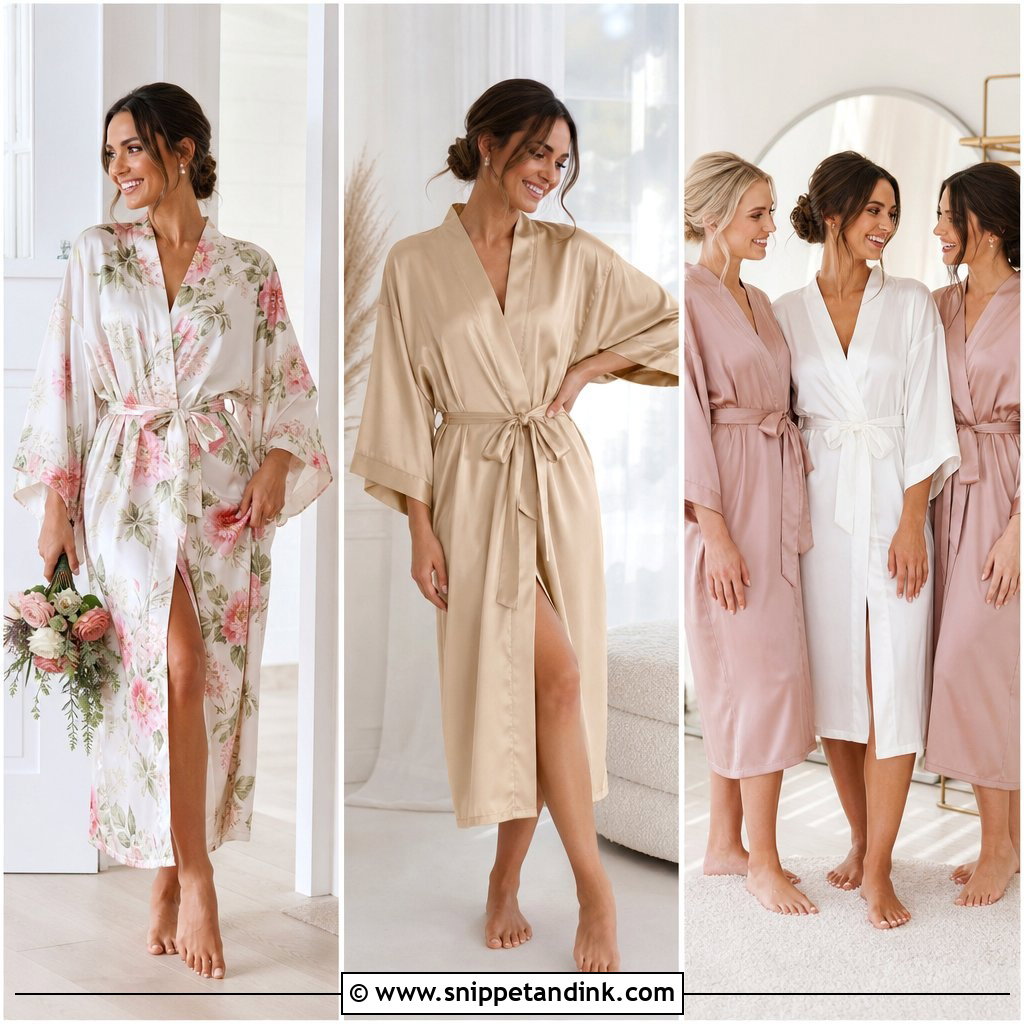
2. Ivory Silk Bride Robe
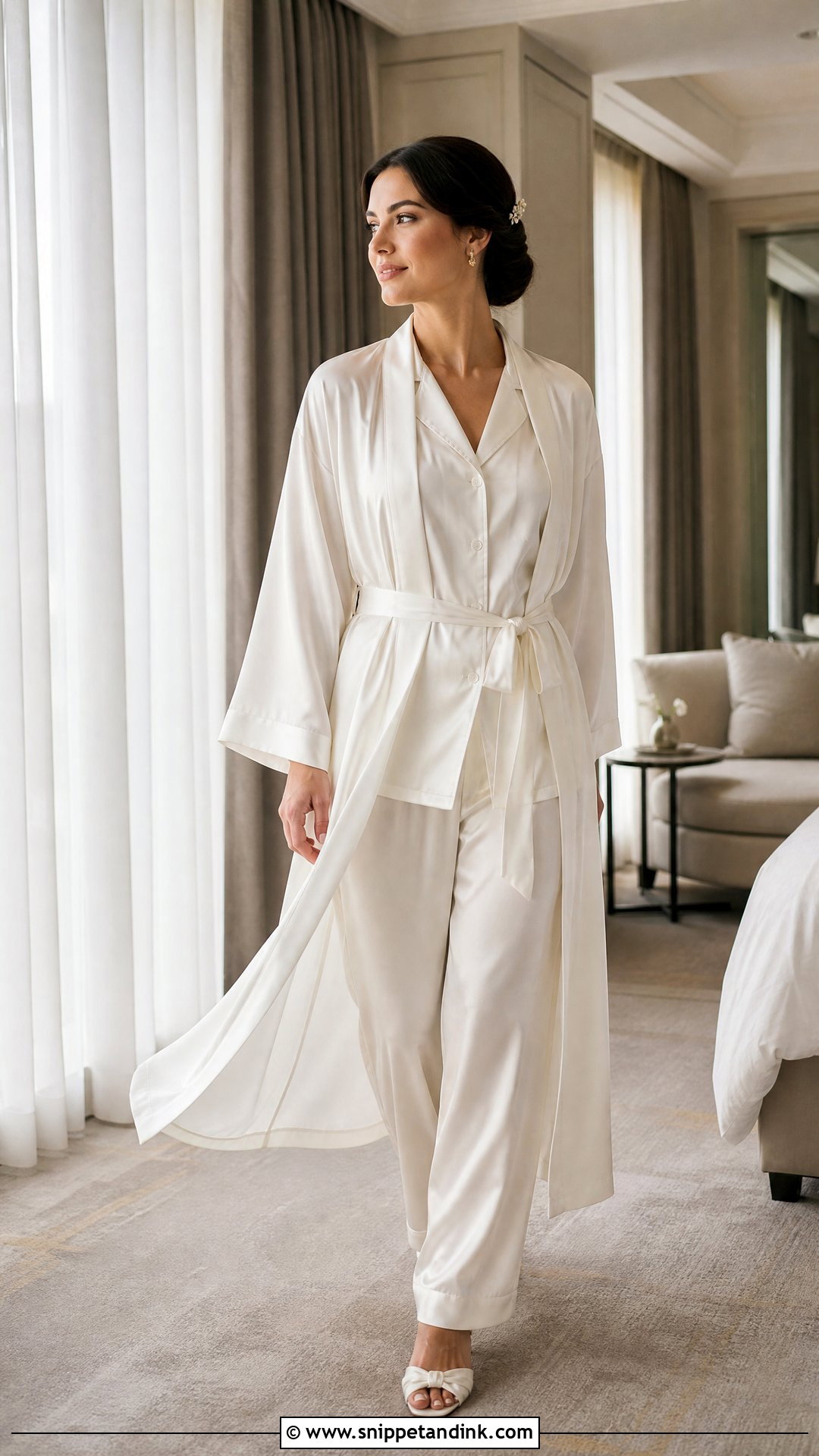
Ivory silk is my answer for brides who look washed out next to optic white, or whose gown is itself ivory and would look dingy beside a bright robe. A midi wrap with a fluid front sits well when you’re seated for makeup, and it doesn’t bunch at the hip. I pair it with an ivory silk camisole, relaxed shorts, low satin mules and small gold earrings, plus a flat clip to keep stray hair off the face before styling starts. Real silk creases the moment you sit, and some silks water-spot under a steamer held too close. Read the care label, steam from inside the garment, and hang it between wears.
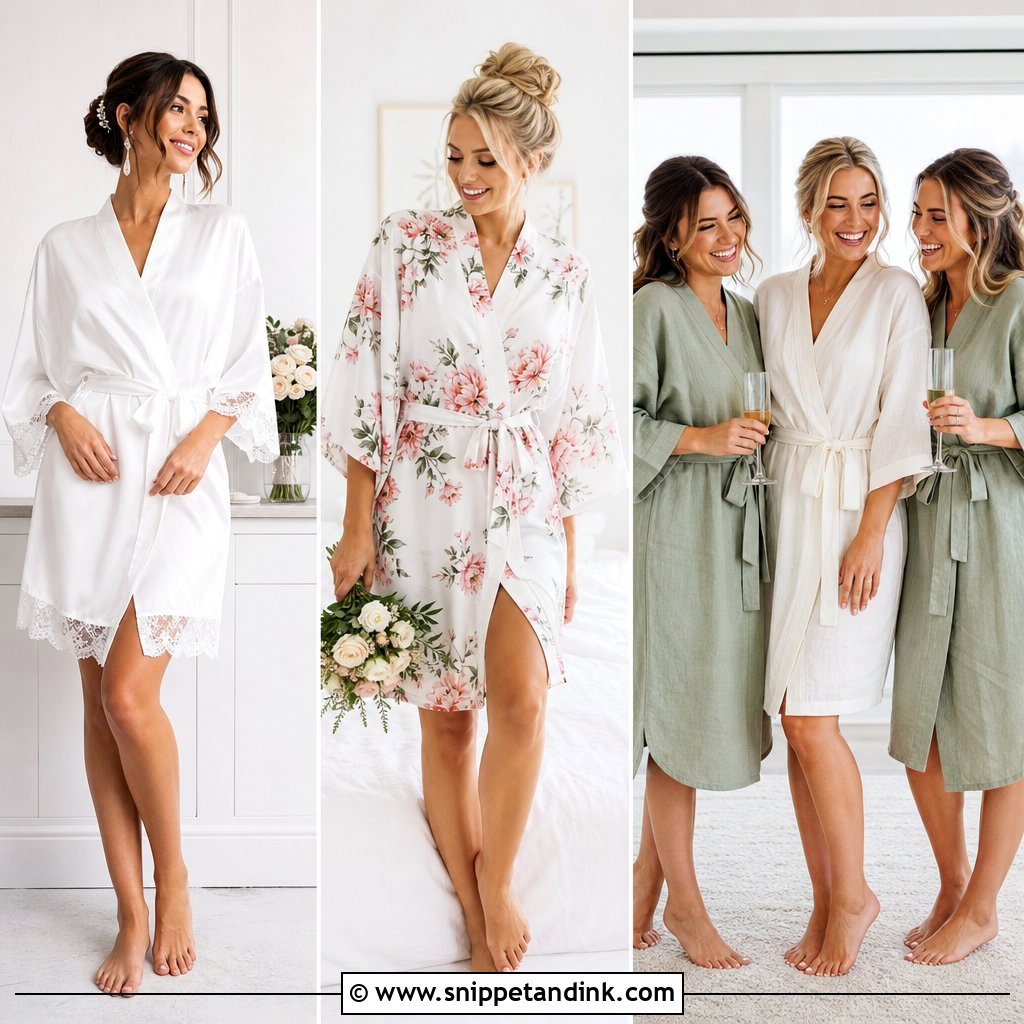
3. Lace Trim Bride Robe
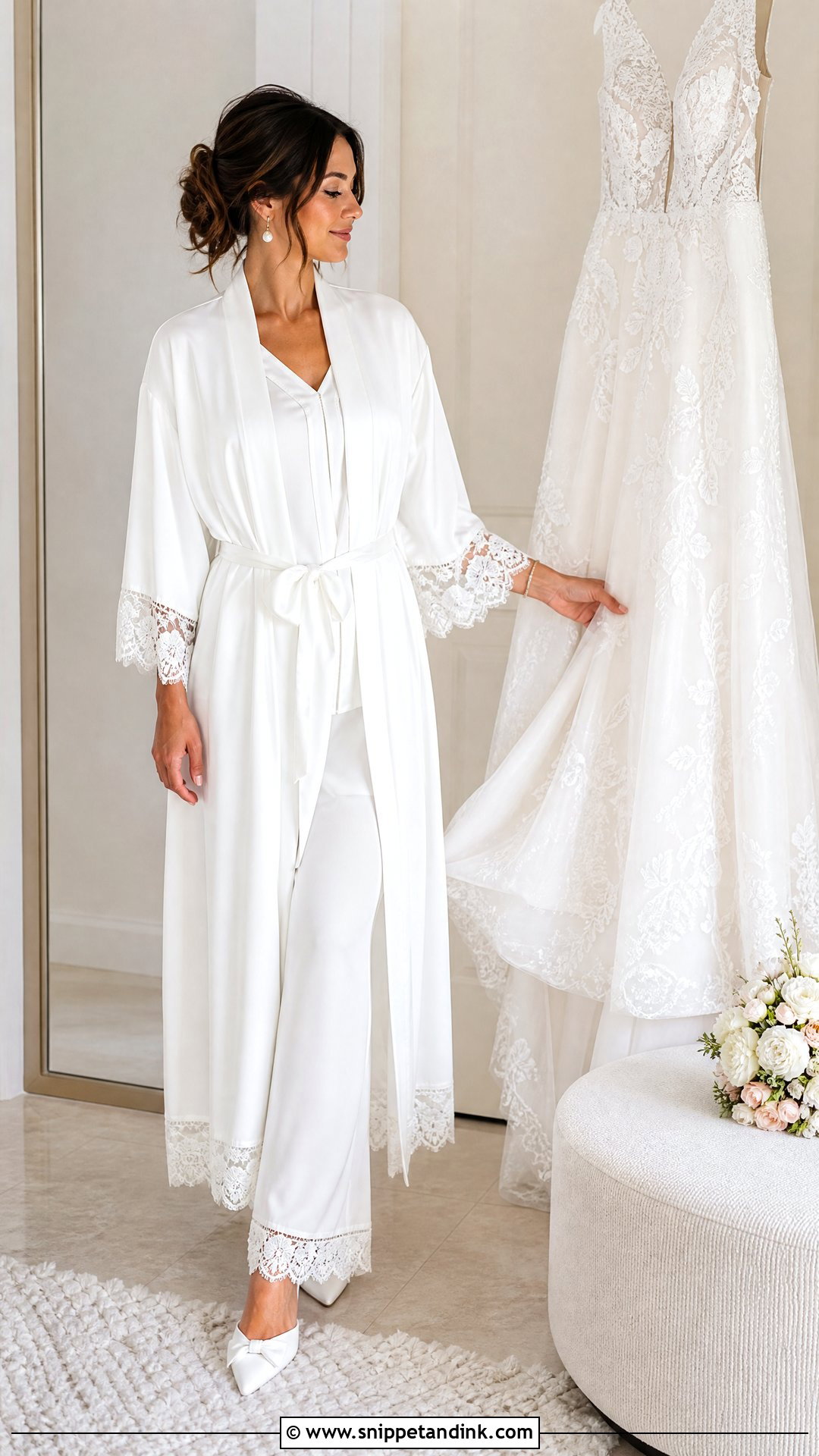
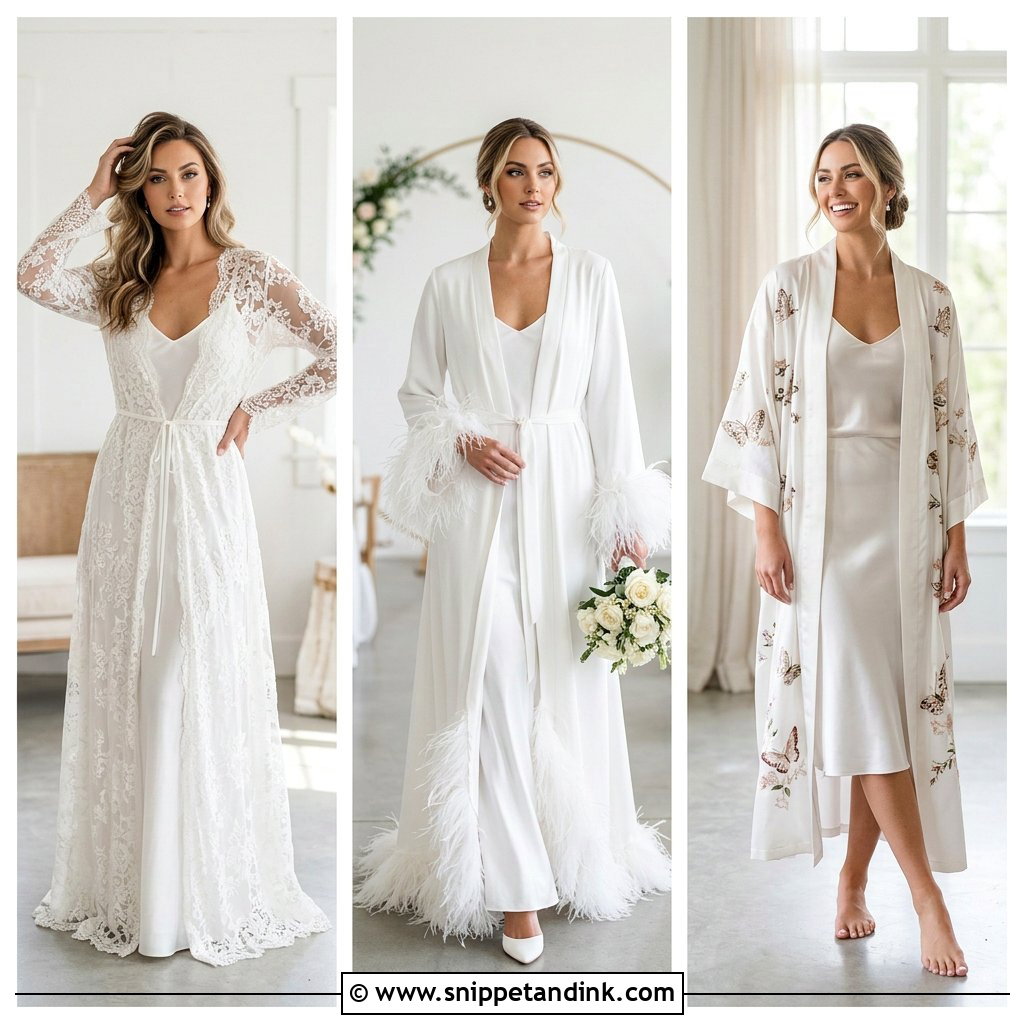
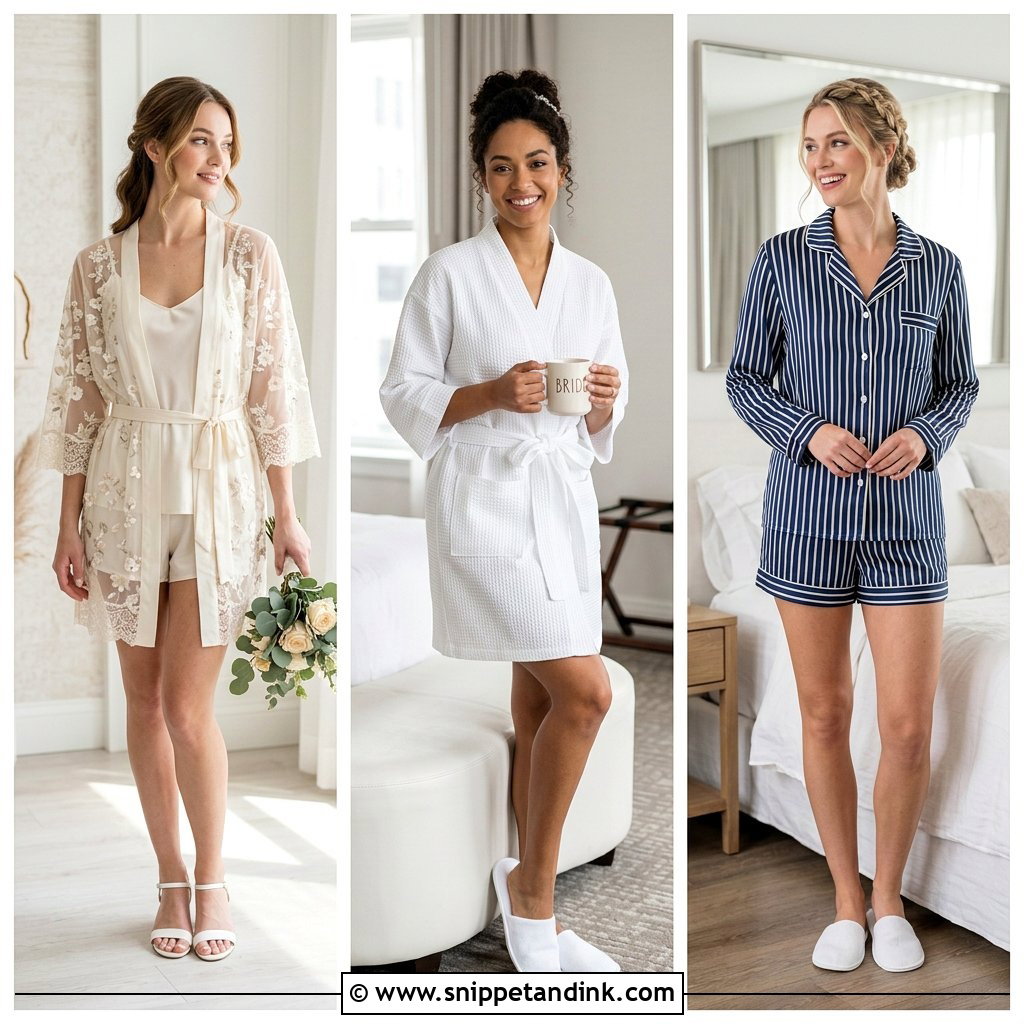
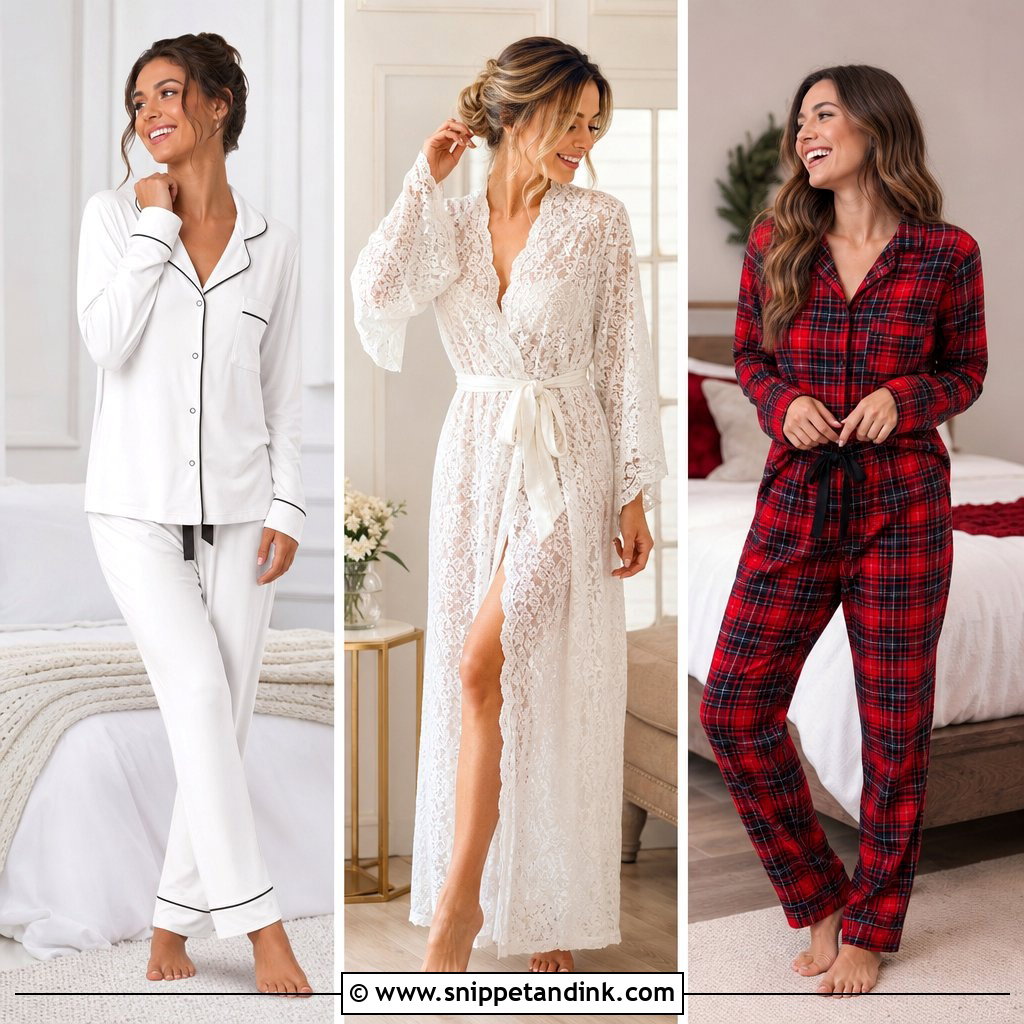
Lace at the neckline, cuffs and hem gives a robe some romance without turning it into a costume. I push brides toward lined satin or modal with lace edging rather than an all-lace robe, which is see-through in every window shot. A plain white tank and shorts underneath stay hidden by the wrap. Pointed flat mules, pearl drops and a slim bracelet are plenty. If you can, echo the lace of your gown: a floral lace for a botanical dress, a cleaner geometric trim for a modern one. Then stop adding. Lace cuffs also catch on rings and bracelet clasps, so I tell brides to put stacked jewelry on after the robe comes off.
4. Long Sheer Bride Robe
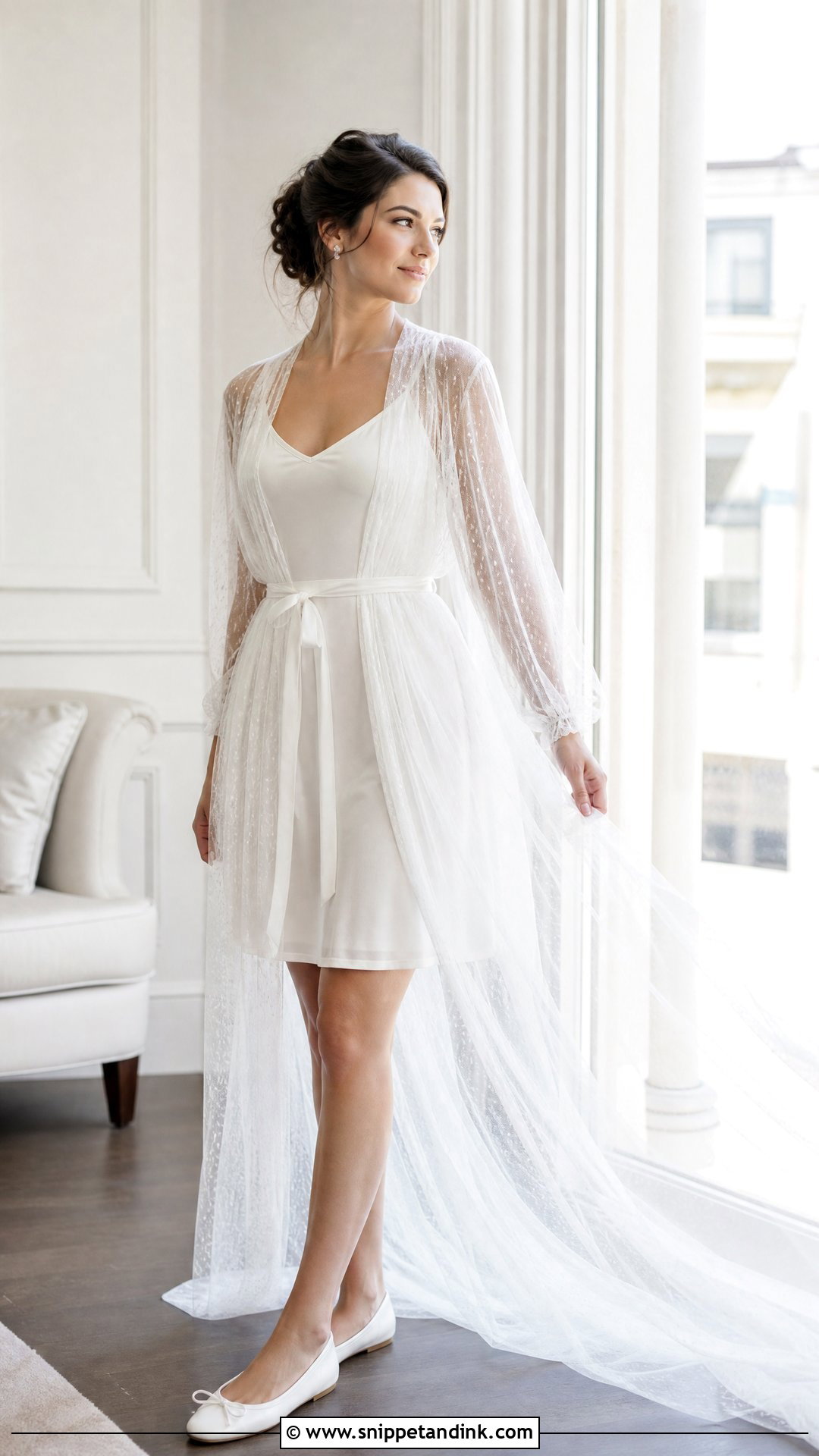
A long sheer robe only works when the layers under it are fully opaque, so build the base first. A structured white camisole with high-waisted lounge shorts, or a simple knee-length slip, keeps you covered while the tulle or organza does the dreamy part. Look for an open front and light sleeves that won’t drag across a freshly painted lip. Ballet flats, crystal studs and a low bun once hair is finished complete it. My non-negotiable is hem length: it must clear the floor when you walk in flats, because organza tears easily on a door threshold or a chair caster. Put this one on for ten minutes of window portraits, then change into something you can sit down in.
5. Feather Trim Bride Robe
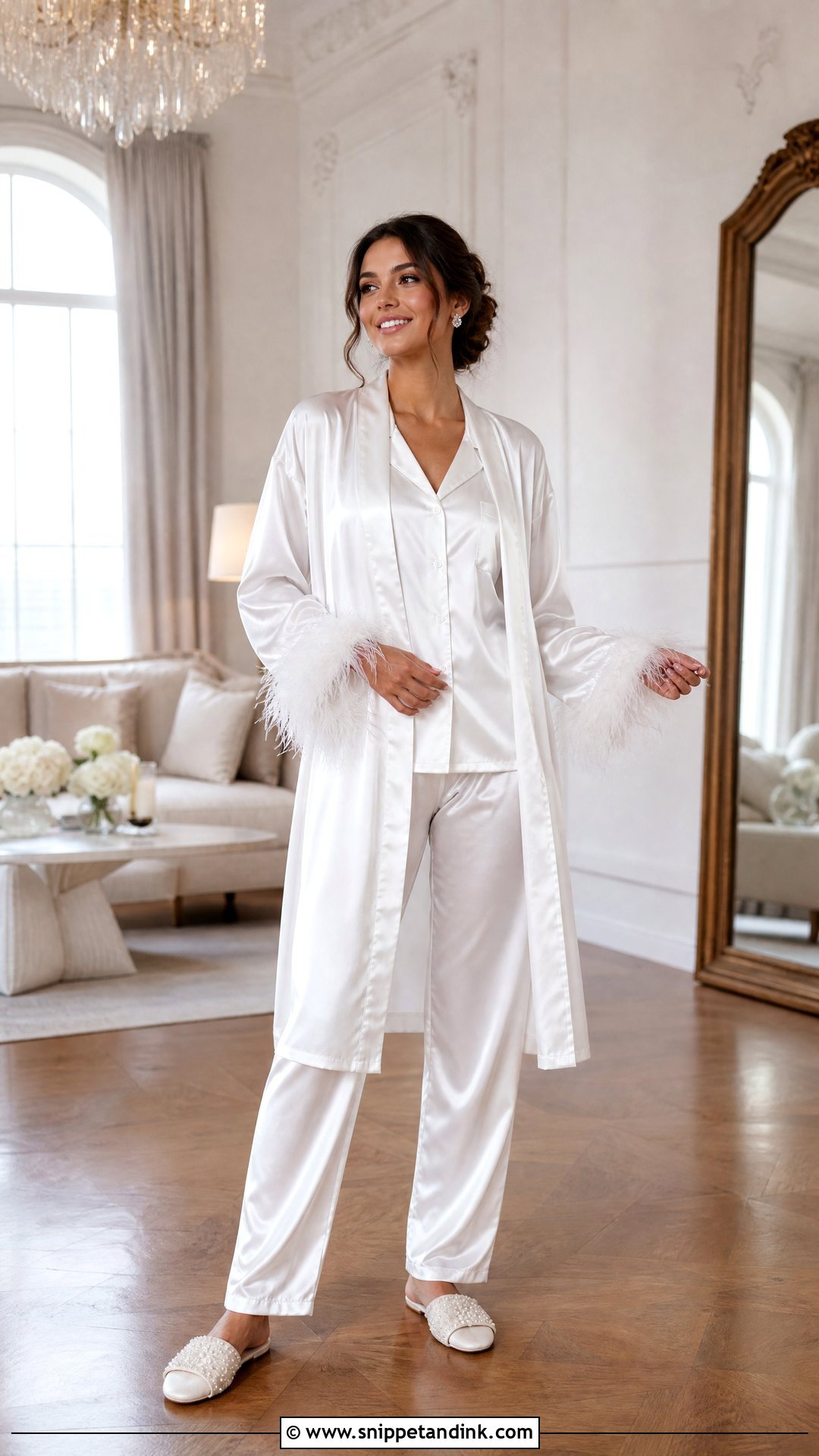
Feather trim is fun, but I’d keep it to the cuffs. Feathers around the whole neckline shed onto foundation, stick to lip gloss and end up in the hairstylist’s setting spray. A white satin robe with light feathered cuffs, a fitted tank, satin shorts, pearl-accented slippers and small crystal earrings is the version that survives a morning. If you’ll be wearing it while your hair is being curled, choose three-quarter sleeves so the trim stays clear of hot tools and product. Skip big jewelry; the cuffs are the statement. It suits a ballroom or a glossy hotel suite far better than a barn.
6. Floral Bride Robe
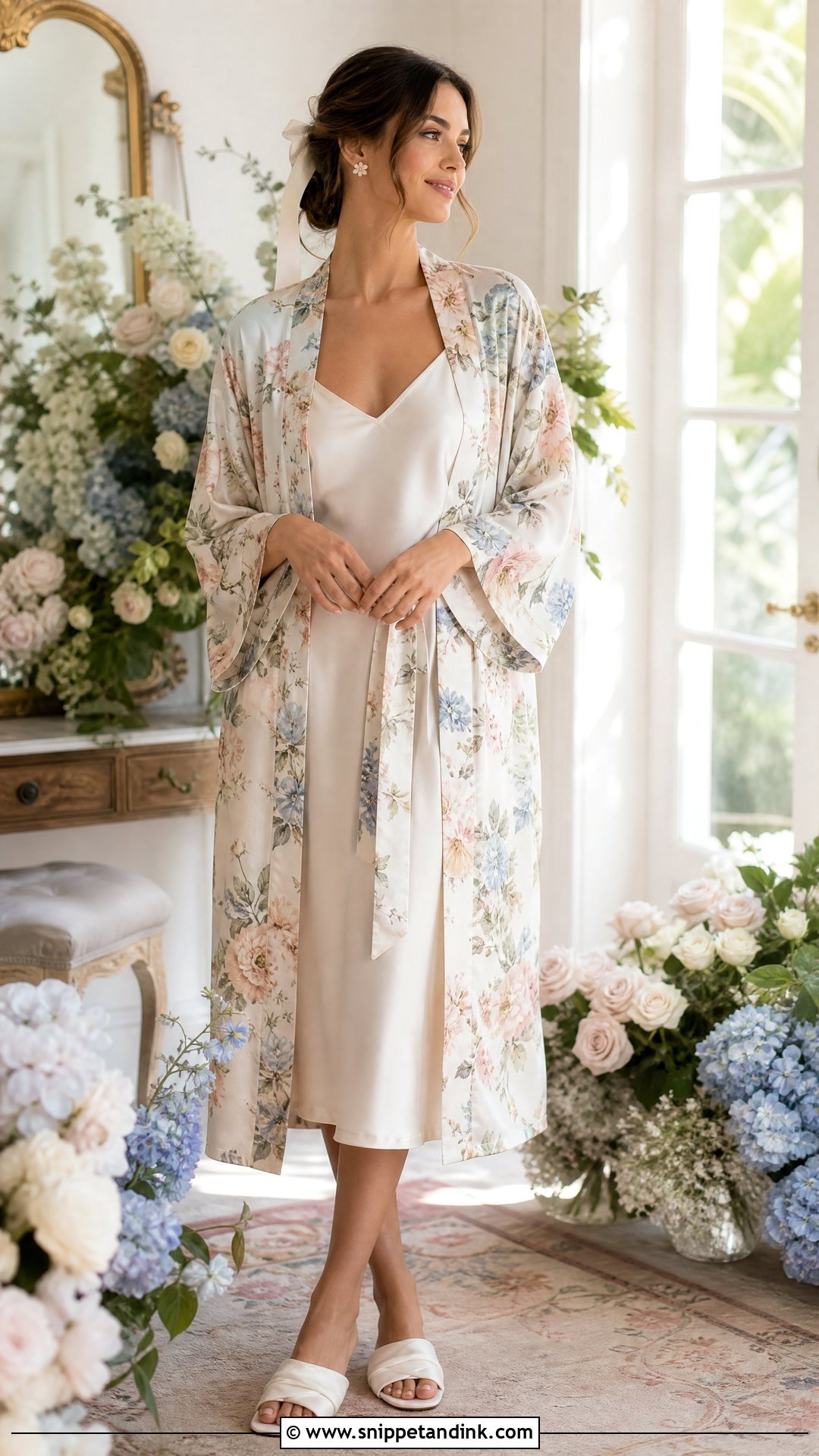
A floral robe is the easiest way to bring color into the morning while still looking like the bride. I like a print pulled from the actual flowers: ivory, soft blue or blush. Silk or cotton in a midi length gives comfort with enough coverage for sitting cross-legged on a hotel bed. Wear a solid camisole and shorts underneath; two prints fighting each other look messy on camera. Neutral slides, tiny floral earrings and a ribbon in the hair finish the outfit. For group shots, put bridesmaids in a single solid color lifted from your print. The room feels connected and your pattern becomes the focal point without anyone wearing the same thing.
7. Personalized Bride Robe
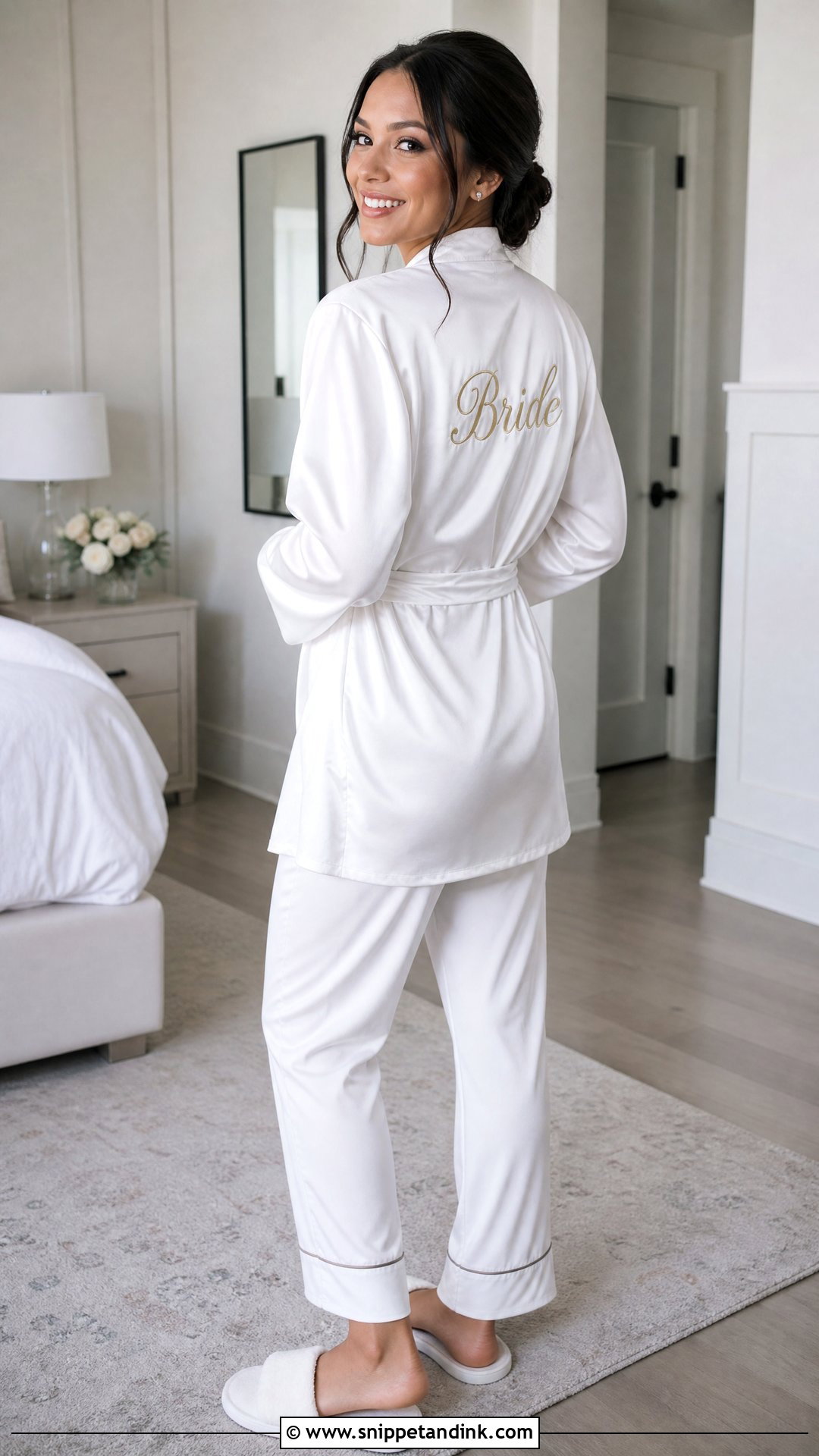
Personalized embroidery turns a robe into something you keep. I prefer the lettering on the back, where it reads in the shots taken as you look out of a window, rather than across the chest where it competes with your necklace. Tonal white, gold or pale blue thread on white satin looks more grown-up than multicolored script. Layer it over matching white pajamas or a camisole set, with plush slides and simple studs. Proof the spelling yourself before the order closes, especially a new surname, and allow extra production weeks; custom pieces are the ones that arrive late. Afterward it becomes the robe you pack for every trip.
8. Monogrammed Bride Robe
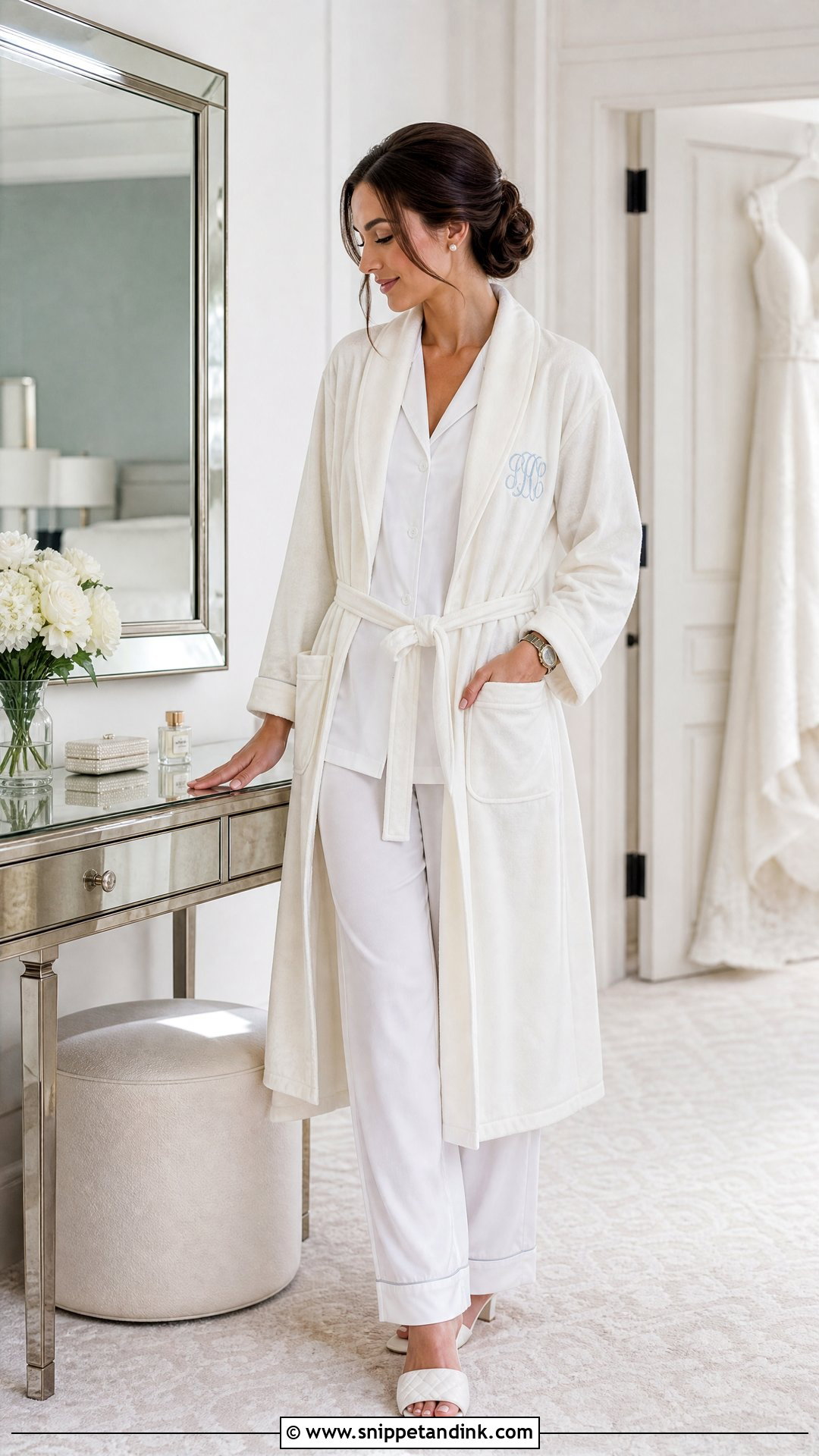
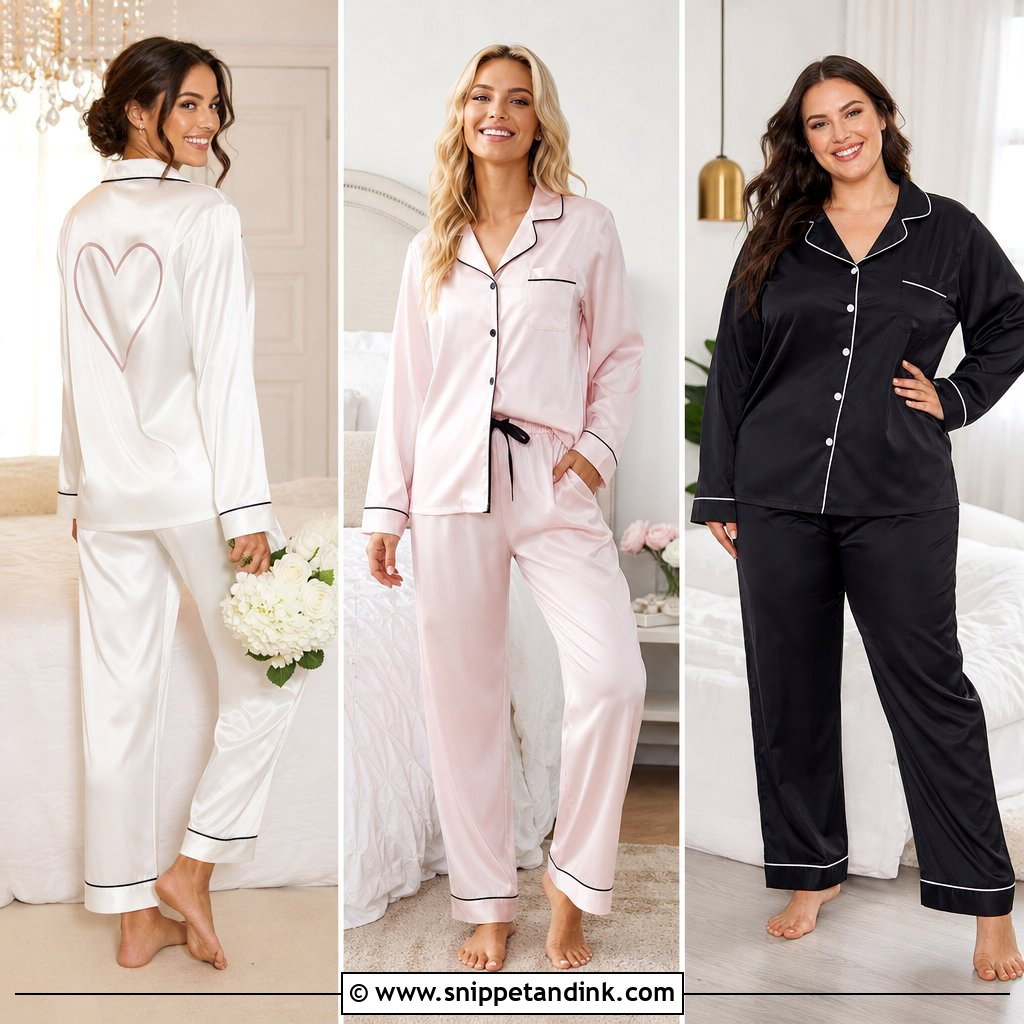
A small monogram is the quieter route if large “Bride” lettering isn’t you. On the chest, cuff or pocket it shows up in close-ups without taking over the frame. Ivory with white thread is classic; blue thread gives a discreet color note. I style it over a button-front pajama set with cushioned white mules, pearl studs and a slim watch you remove before dressing. When the bridesmaids also get monogrammed robes, change the bride’s robe color or move her monogram somewhere different. Matching sets look tidy in a lineup, but only if one person still stands out.
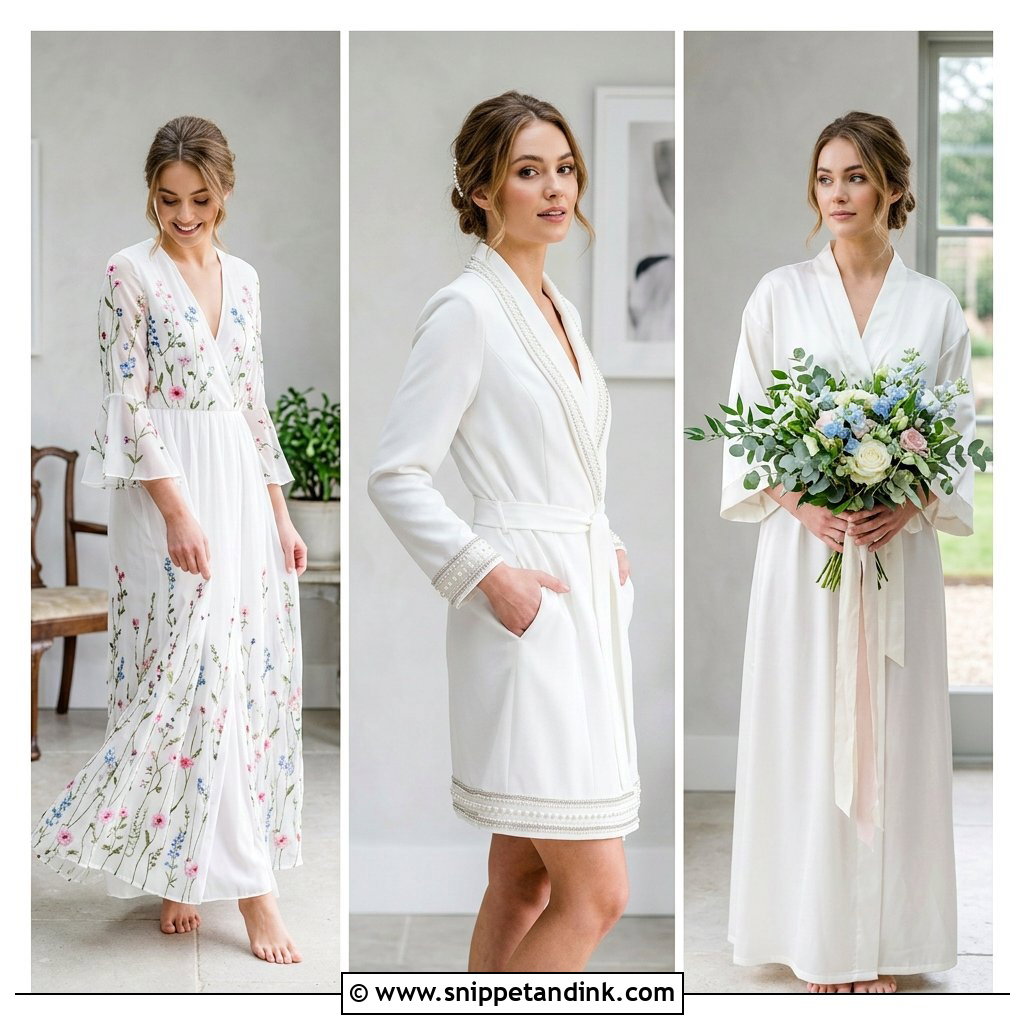
9. Pearl Bride Robe
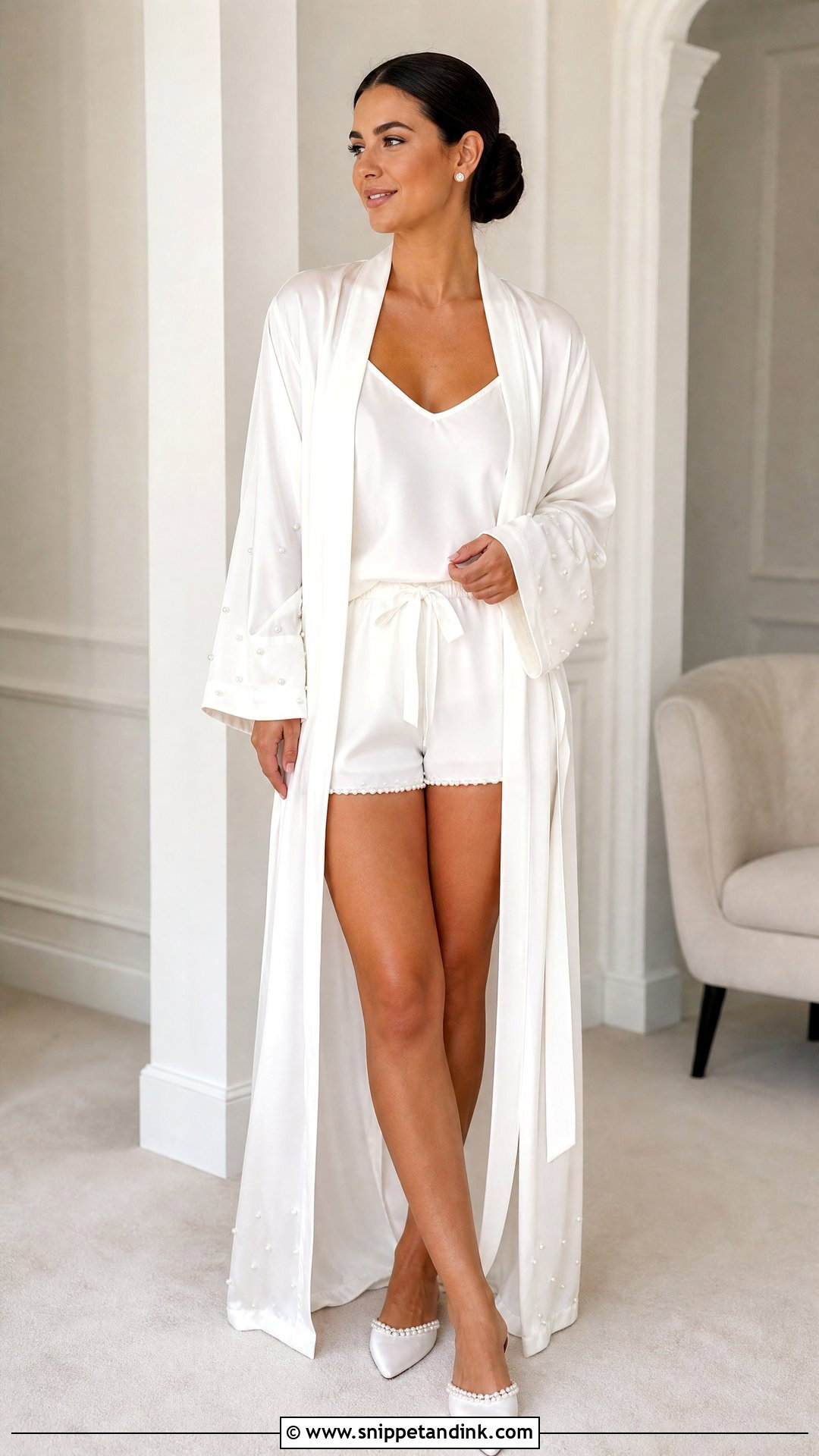
Pearl-studded robes look expensive, but where the pearls sit decides whether you can wear one for hours. Along the sleeves, shoulders or hem is fine. Pearls across the back press into you every time you lean against a salon chair, and I’ve watched brides perch on the edge of their seat all morning because of it. Pair it with a plain white camisole, satin shorts, pearl-trimmed flats and matching studs, and skip the necklace if the neckline is already beaded. Pull gently on the embellishments a week before; glued pearls pop off, and loose stitching is easy to fix then and not at 7 a.m. Shoot it in a pale, uncluttered room so the texture shows.
10. Embroidered Floral Bride Robe
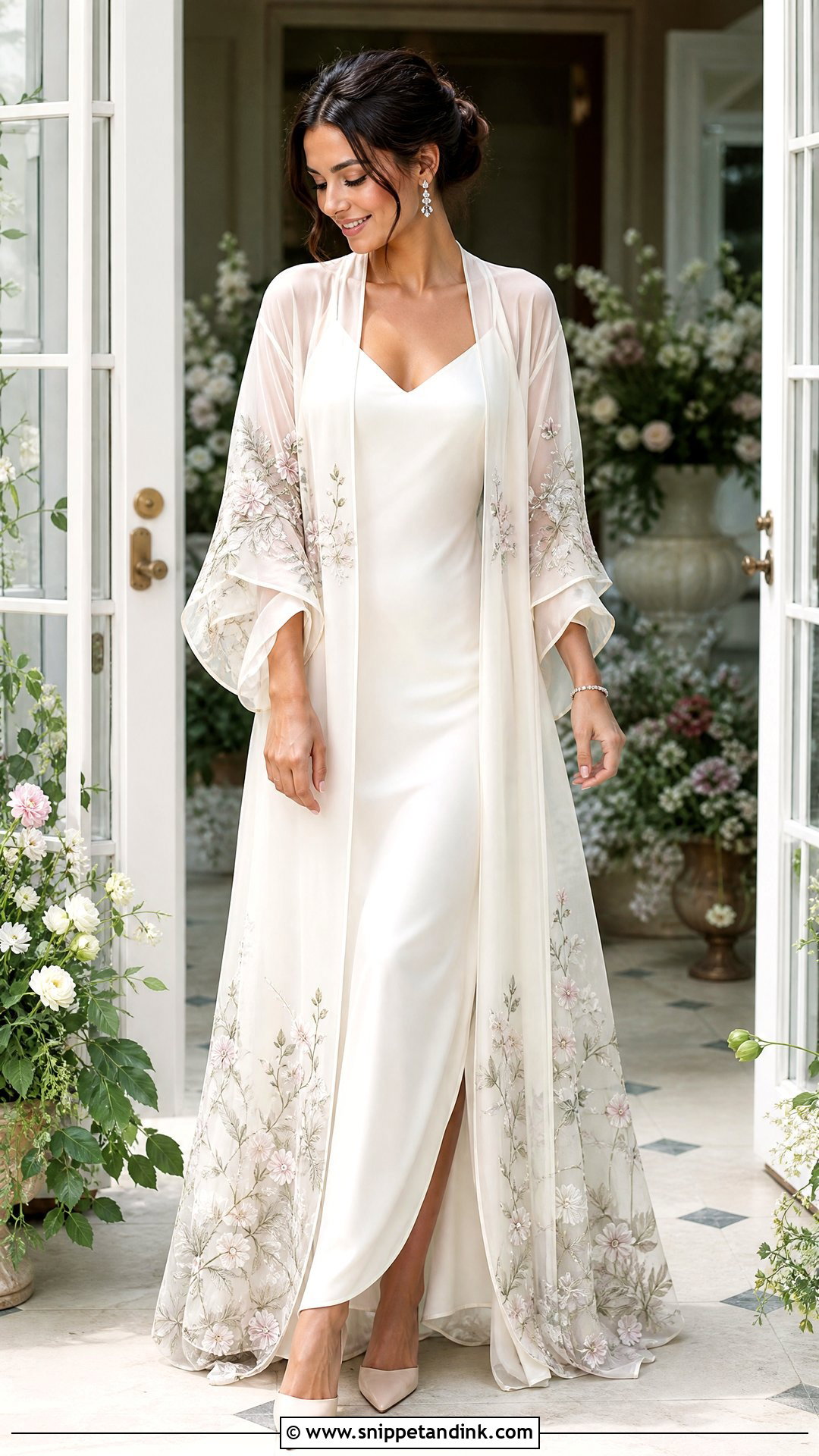
Embroidered flowers on satin, tulle or organza give real dimension, especially at the sleeves and hem. White on white reads as tonal and soft; pale botanical colors can pick up the bouquet. An opaque ivory slip or a coordinated camisole set goes underneath, with neutral pointed mules, small gemstone earrings and one fine bracelet. Embroidery thread snags easily on prong-set stones and stacked bangles, so I keep hands bare until the robe is off. It belongs naturally in a garden or greenhouse venue, though it softens a stark modern suite in winter just as well.
11. Appliqué Bride Robe
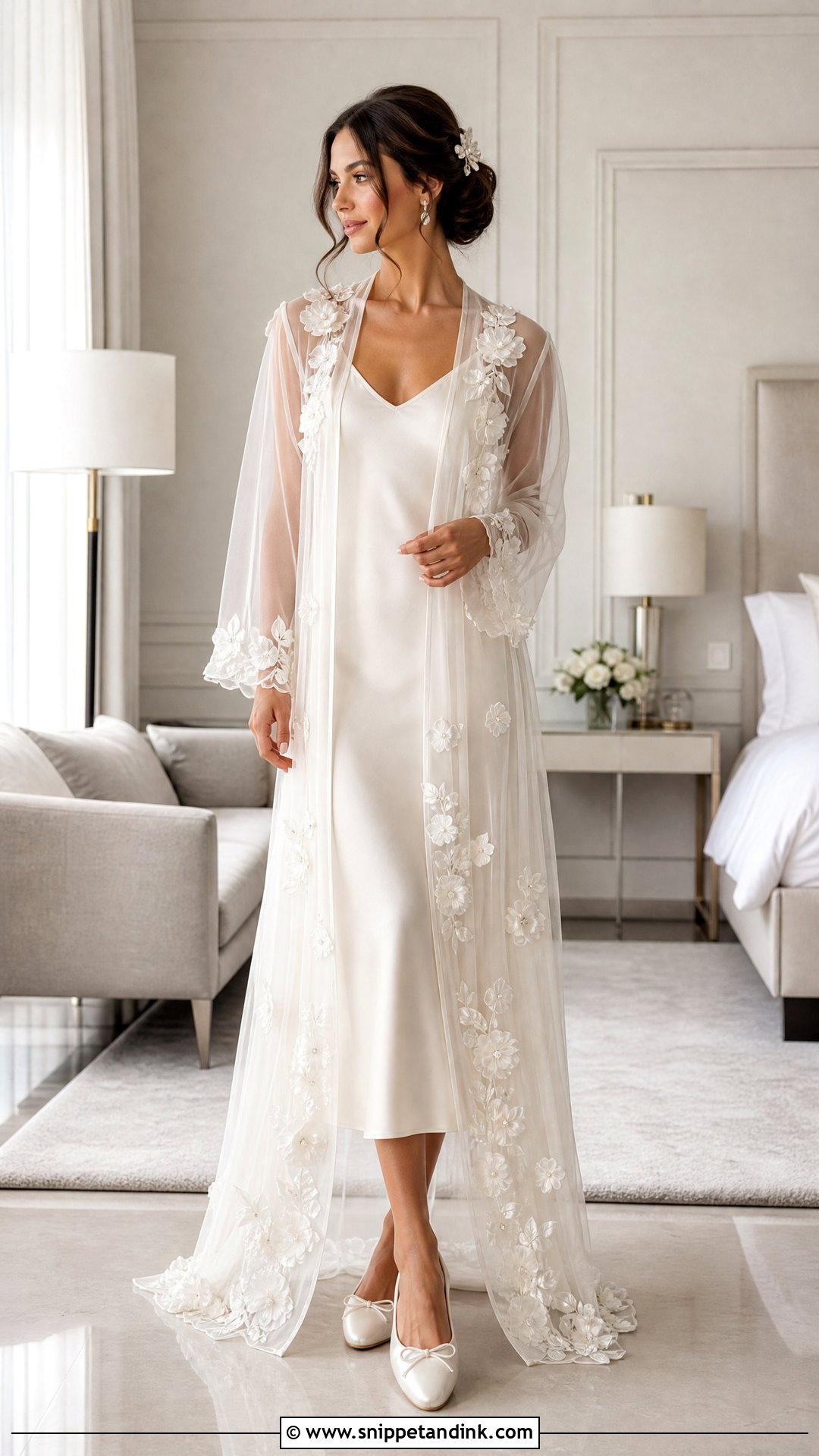
Raised appliqué flowers make a robe feel editorial, and they also make it the hardest to sit in. I look for designs with the appliqués on the shoulders, sleeves or outer skirt and a smooth front where you’ll actually be resting your arms. Depending on how transparent the base fabric is, wear an ivory midi slip or a modest lounge set underneath. Satin ballet flats, simple drops and a hair clip finish it, and that is enough; the flowers carry all the texture. If it’s long, lift the hem slightly when you walk so the appliqués don’t scrape the floor or catch a chair leg.
12. Cotton Bride Robe
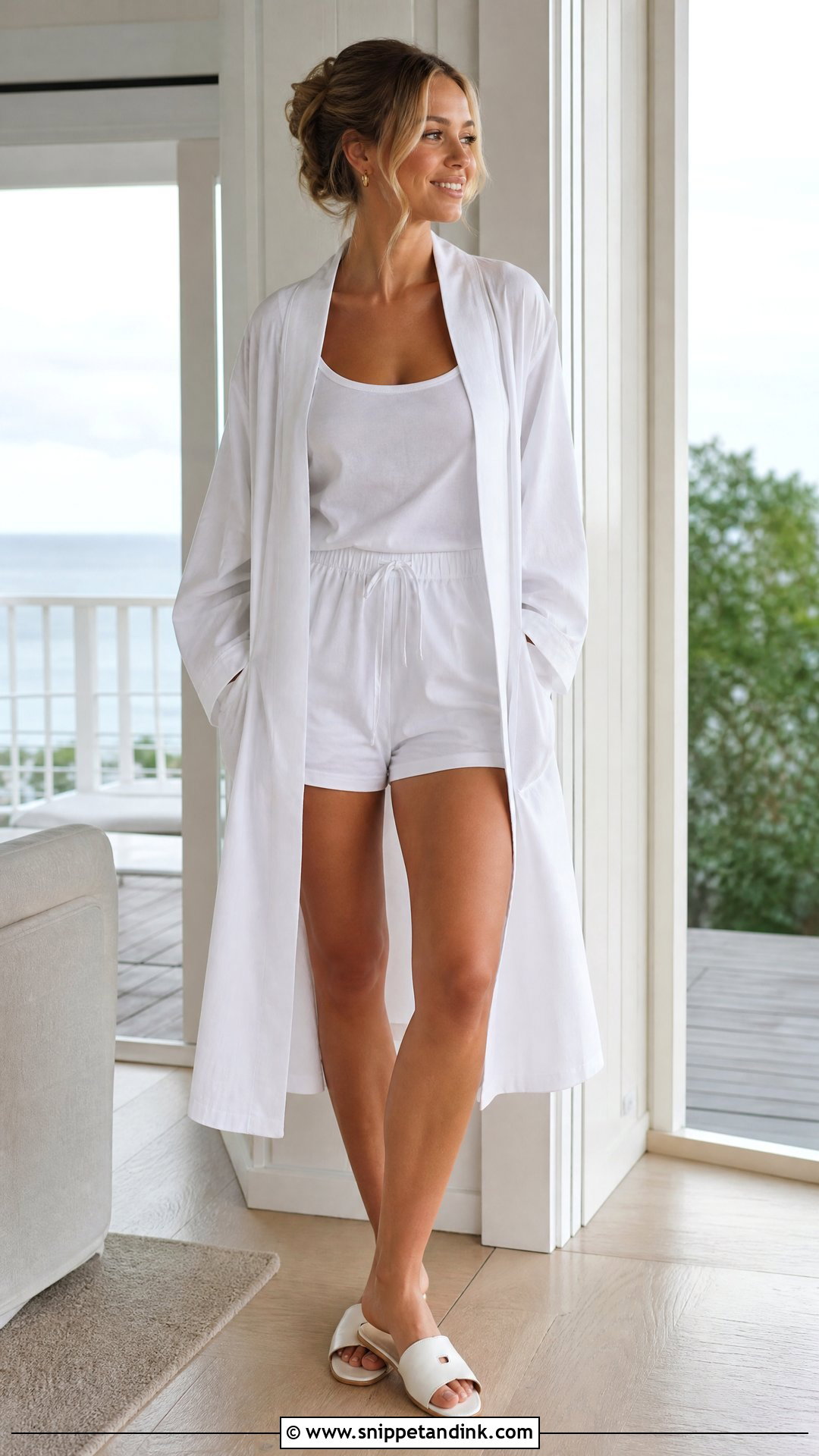
Cotton is my pick for hot mornings, crowded rooms and any bride who hates satin slipping off her shoulders. Crisp poplin looks structured; cotton voile is lighter and floatier. A matching tank and drawstring shorts make a comfortable base, with white leather slides and small hoops to finish. Cotton does crease as you sit, so start with it freshly steamed and hang it up whenever you get up from the chair. One honest drawback: matte cotton doesn’t glow in window light the way satin does, so the photos read relaxed rather than glossy. In a beach house, a farmhouse or a private home that is usually the right mood anyway.
13. Waffle Knit Bride Robe
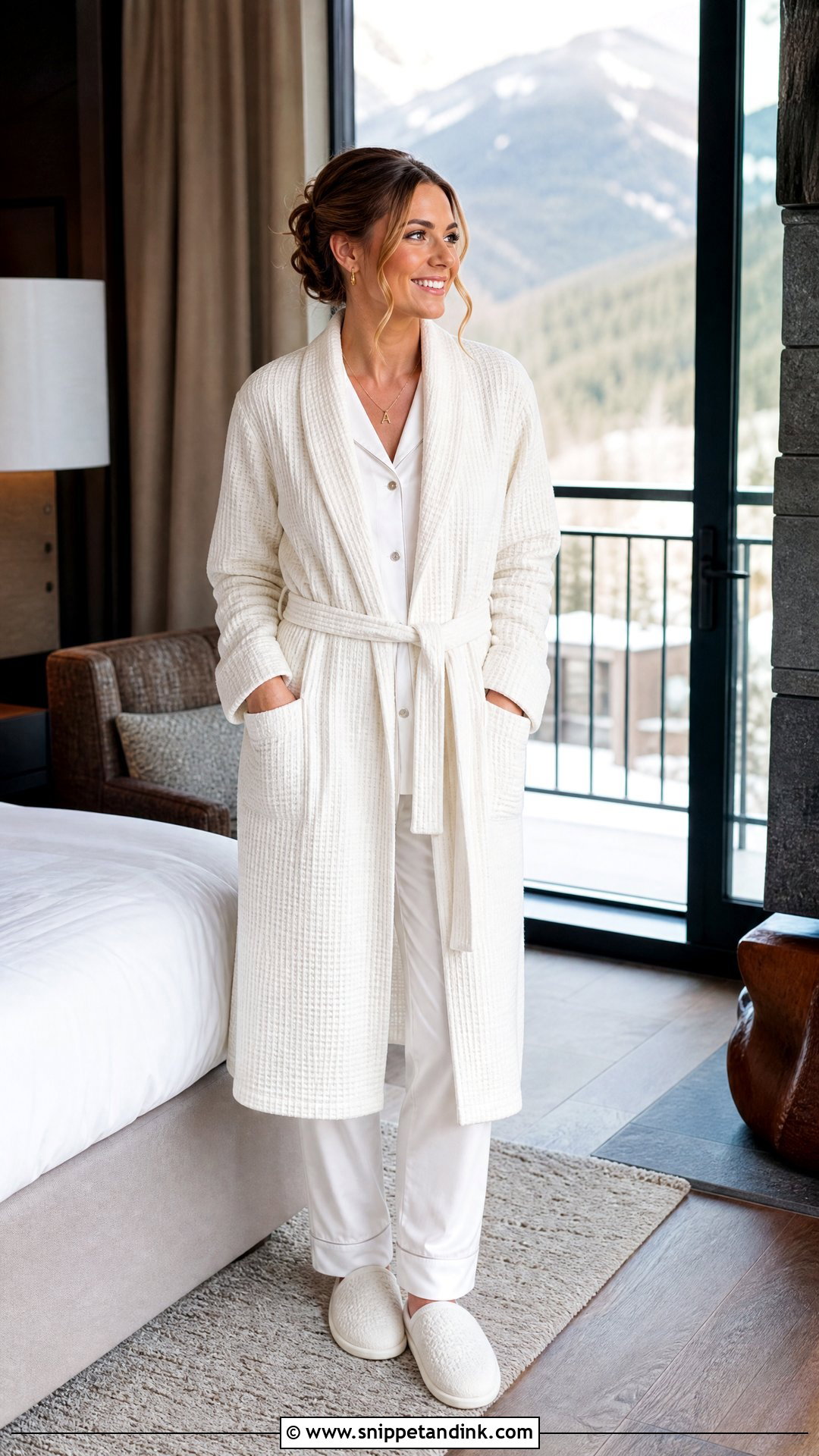
On a cold morning, a waffle knit bride robe keeps you warm without the bathrobe look, as long as it has shape. I look for a defined waist, a clean shawl collar and a knee-length hem in bright white or ivory, and I avoid anything oversized; bulk at the shoulders makes everyone look wider in group photos. Wear it over a button-front pajama set so nothing has to go over your head once hair and makeup are done. Closed-toe slippers, small gold hoops and an initial necklace complete it. Deep pockets earn their place here, holding blotting papers and lip balm while you move between rooms.
14. Velvet Bride Robe
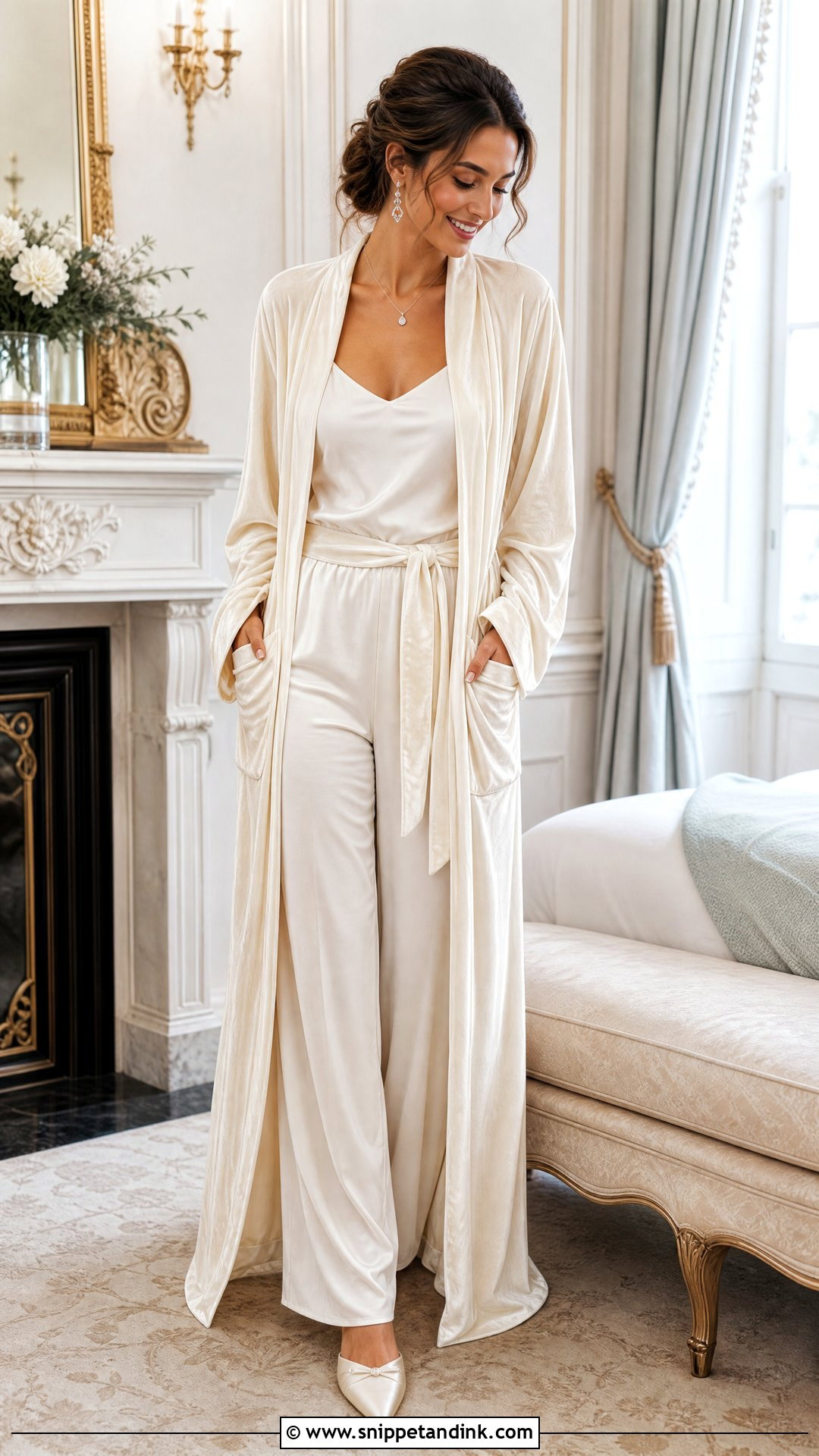
Velvet suits a winter wedding in a way satin never quite does. Choose lightweight stretch velvet in ivory or pale champagne; heavy, upholstery-weight velvet feels like a dressing gown and traps heat under lighting. Layer it over a smooth camisole and full-length lounge pants, with pointed satin slippers, crystal earrings and a simple pendant. Velvet pile looks lighter or darker depending on which way it’s brushed, so before group photos smooth it all in one direction with your palm. It also picks up face powder, so keep a lint roller nearby and ask your makeup artist to set powder before you put it on.
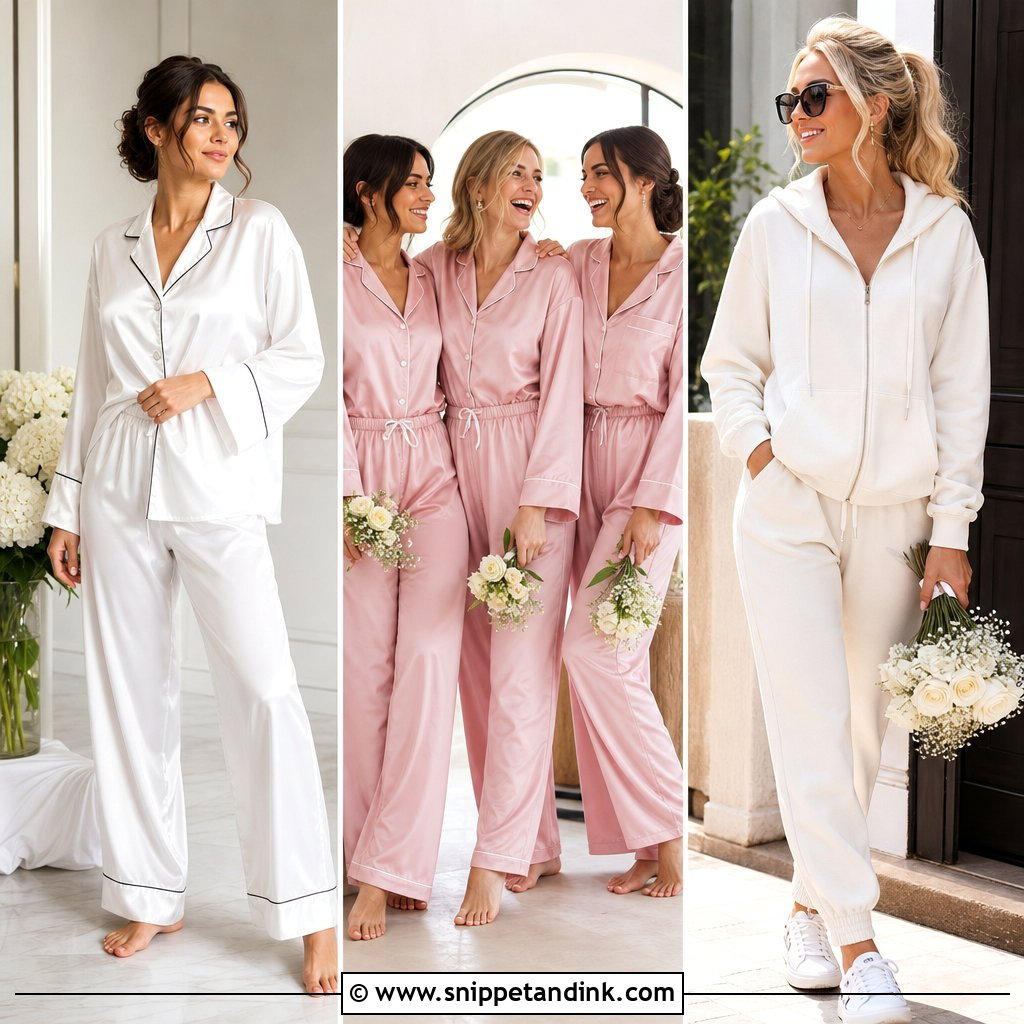
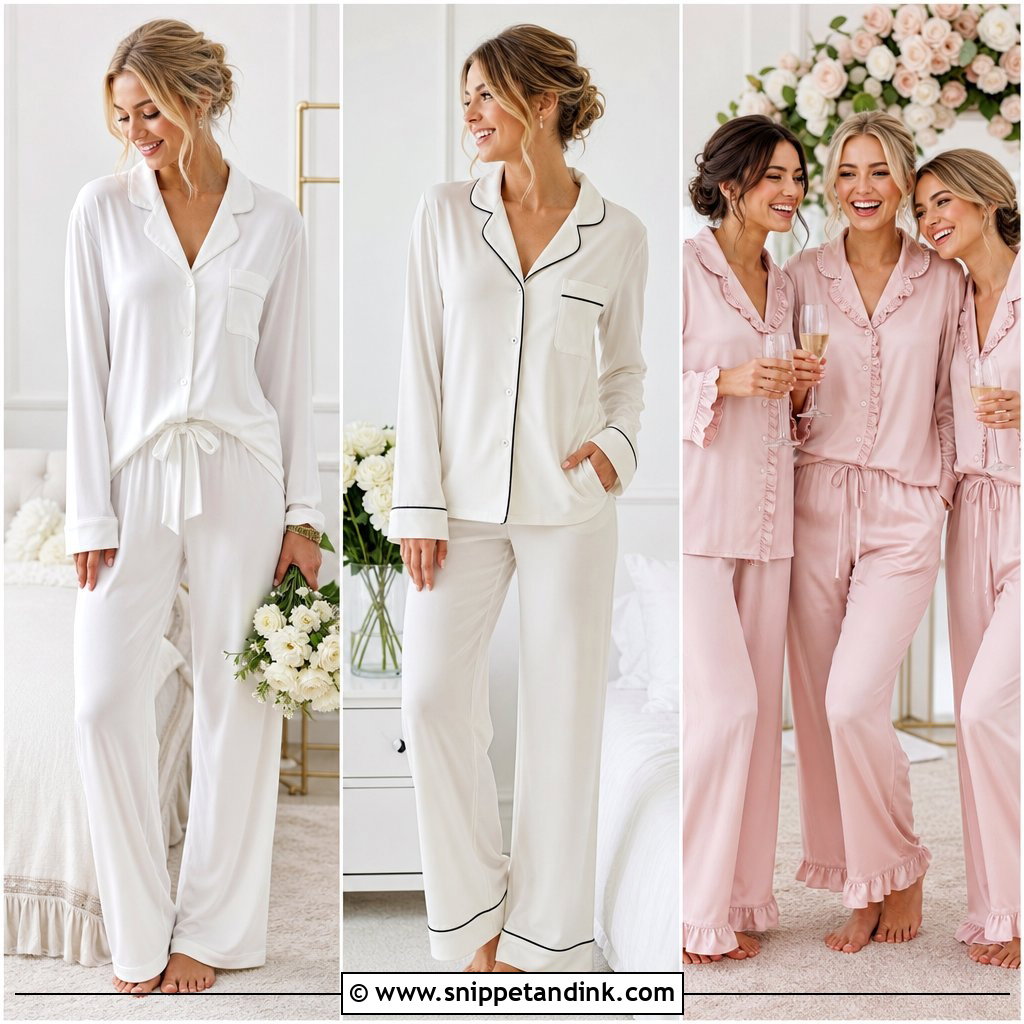
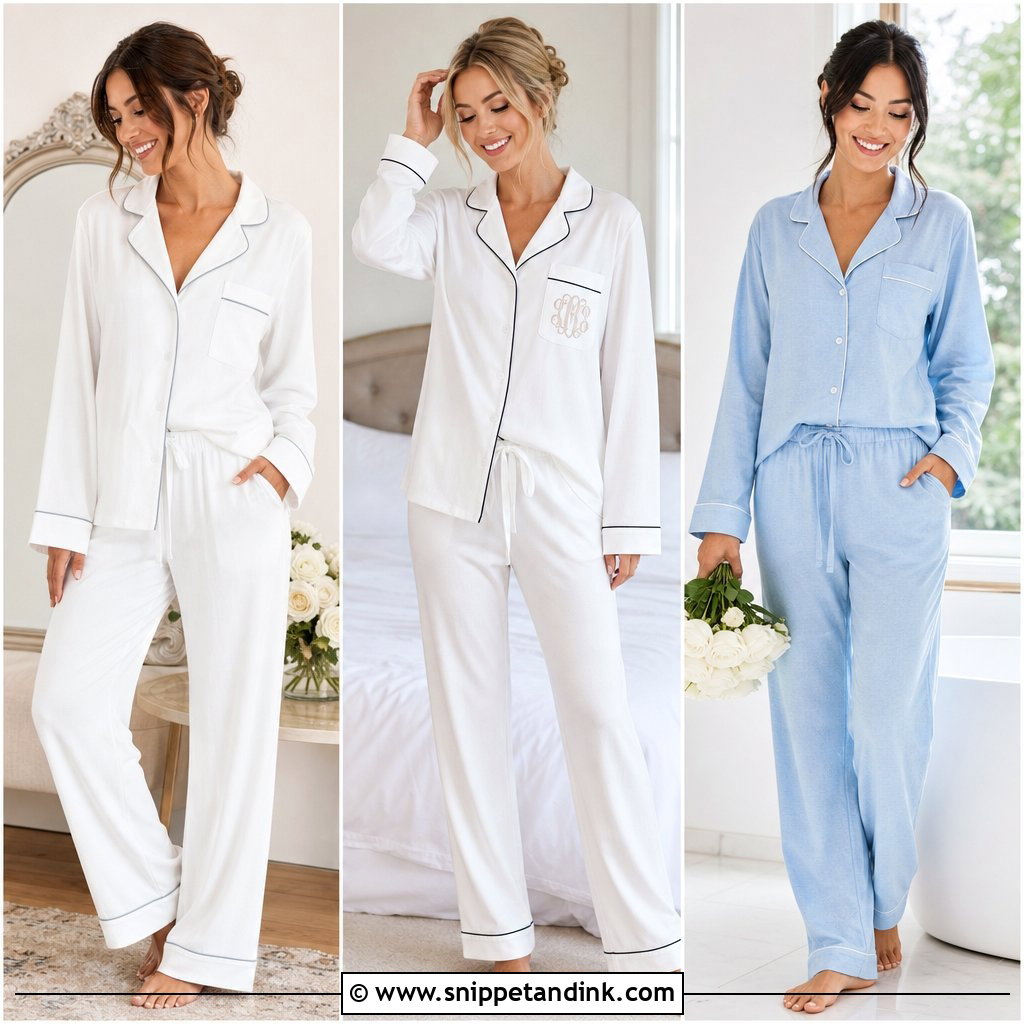
15. Short Kimono Bride Robe
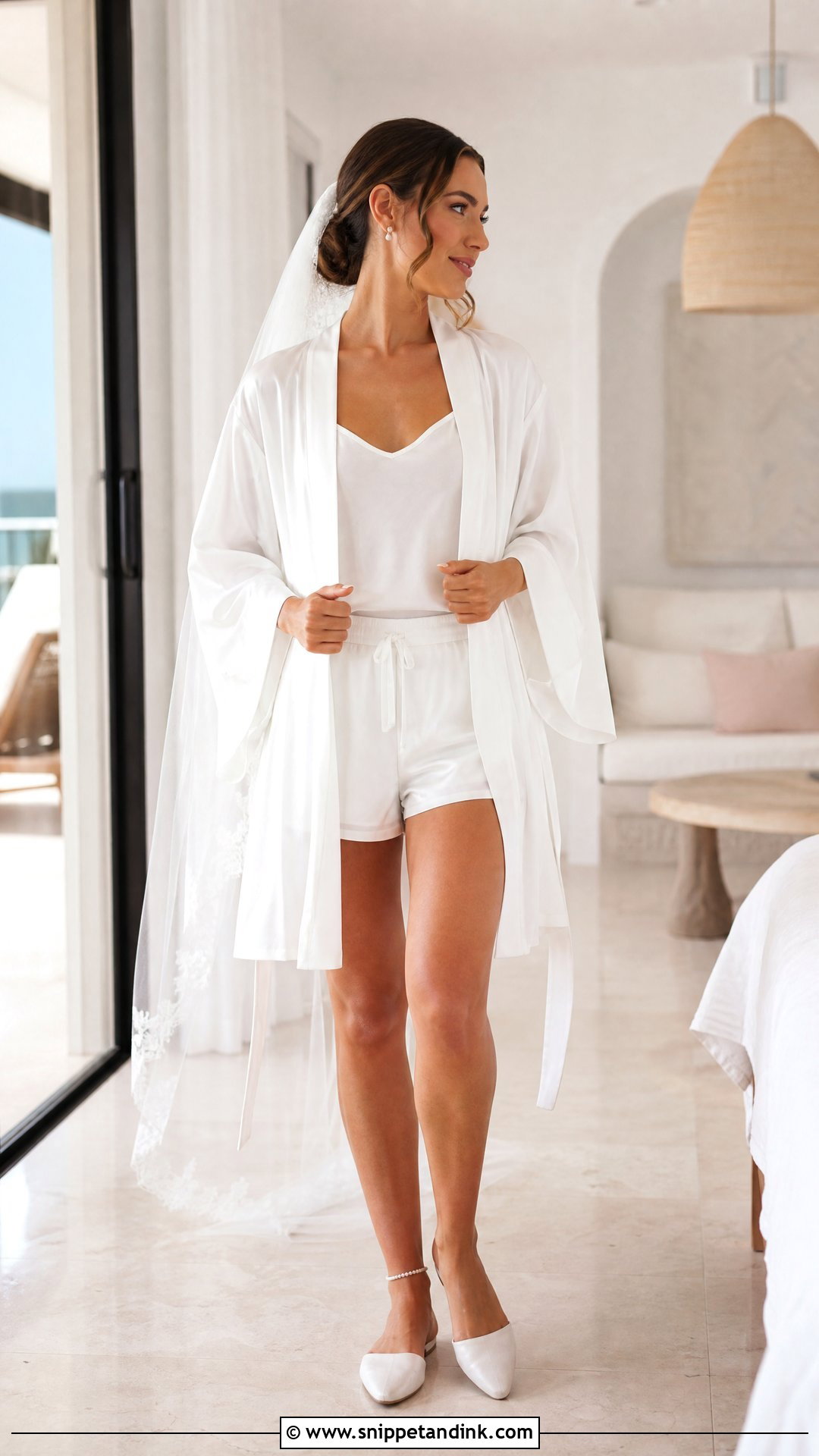
A short kimono is the robe I recommend for small suites and busy mornings with stairs. At mid-thigh it never drags, and wide sleeves leave your arms free. Look for both an inner tie and an outer sash; kimono fronts gape when you sit unless they’re anchored twice. Fitted lounge shorts and a soft camisole underneath keep you covered on the stairs, and flat white mules, pearl studs and an anklet if you like one finish the look. Pick matte satin, silk or cotton depending on the season. It also folds small into a carry-on, which makes it handy for destination weddings and honeymoon travel.
16. Floor Length Bride Robe
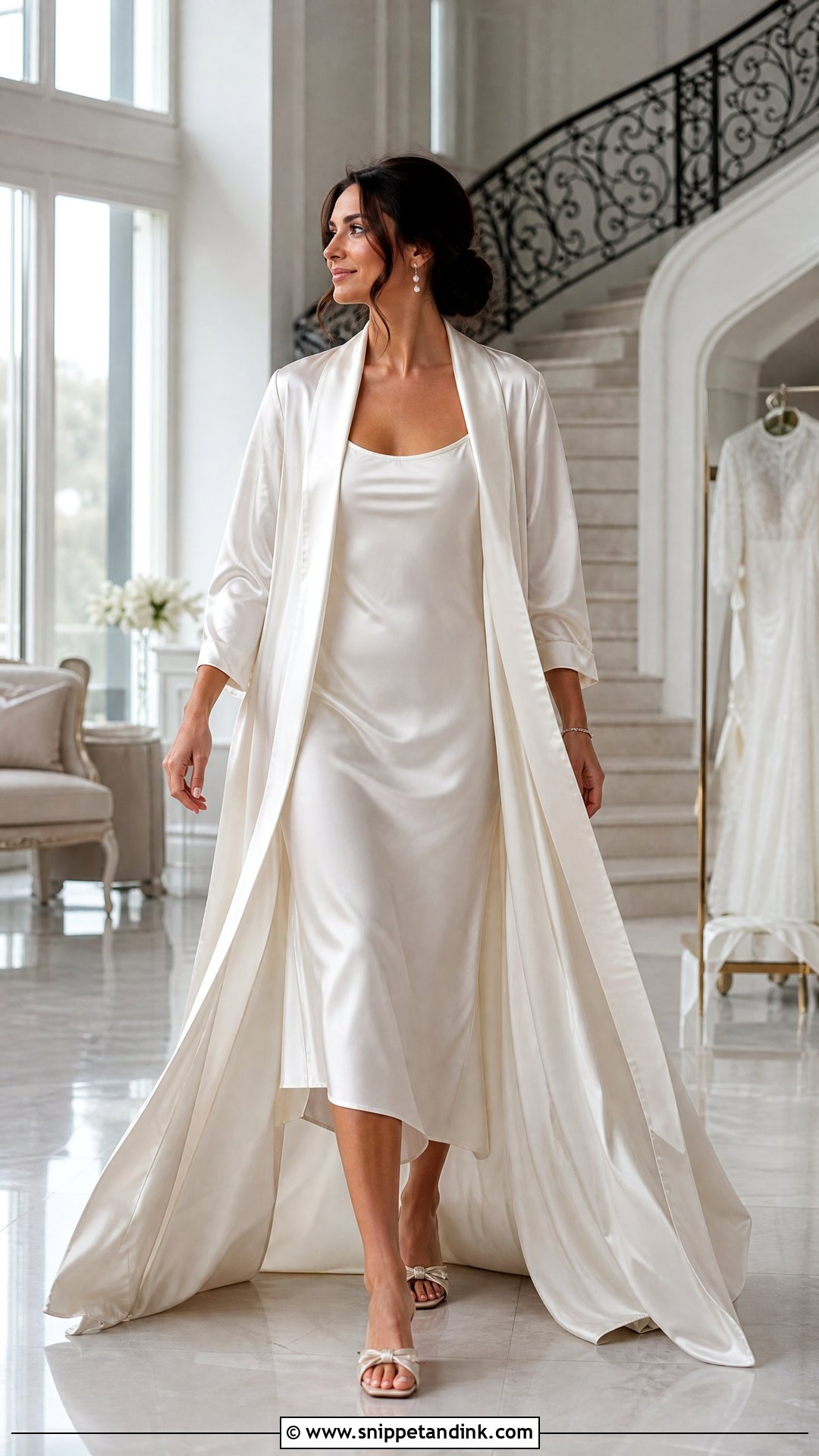
A floor-length robe is for portraits, and I’d plan it that way. Fluid silk, satin or chiffon with an adjustable wrap waist gives the long line; keep the sleeves short enough that they don’t cover your hands while you hold a glass or a bouquet. An opaque ivory slip underneath keeps the silhouette clean. Low block-heel mules, drop earrings and a slim bracelet finish it. Shoot the dramatic frames early, before anyone is rushing, then swap to flat slippers and a shorter layer for the rest of the morning. If it has a train, have it hemmed to your height in the shoes you’ll pose in.
17. Blush Pink Bride Robe
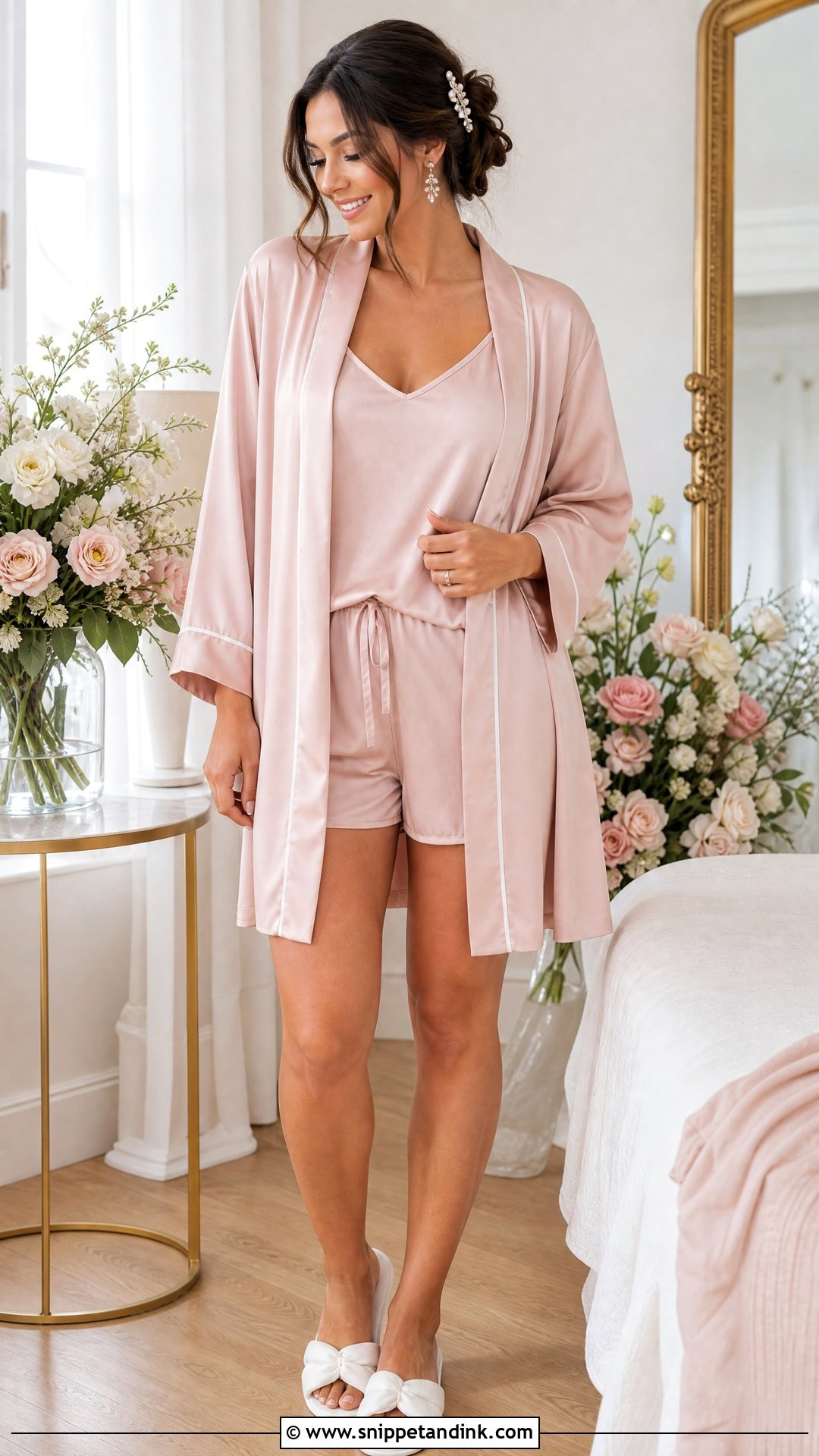
Blush still looks bridal while giving you a break from white. I steer brides toward a dusty blush rather than a candy pink; the dusty shades flatter far more skin tones in daylight. Ivory piping, lace cuffs or a white monogram keep it connected to the bride’s palette. Wear a matching blush camisole and shorts, with ivory slides, rose-gold earrings and a small pearl clip. If your bridesmaids are also in pink, put them a shade deeper or keep the ivory trim only on you. A side benefit: it gives away nothing about the color or cut of your gown.
18. Something Blue Bride Robe
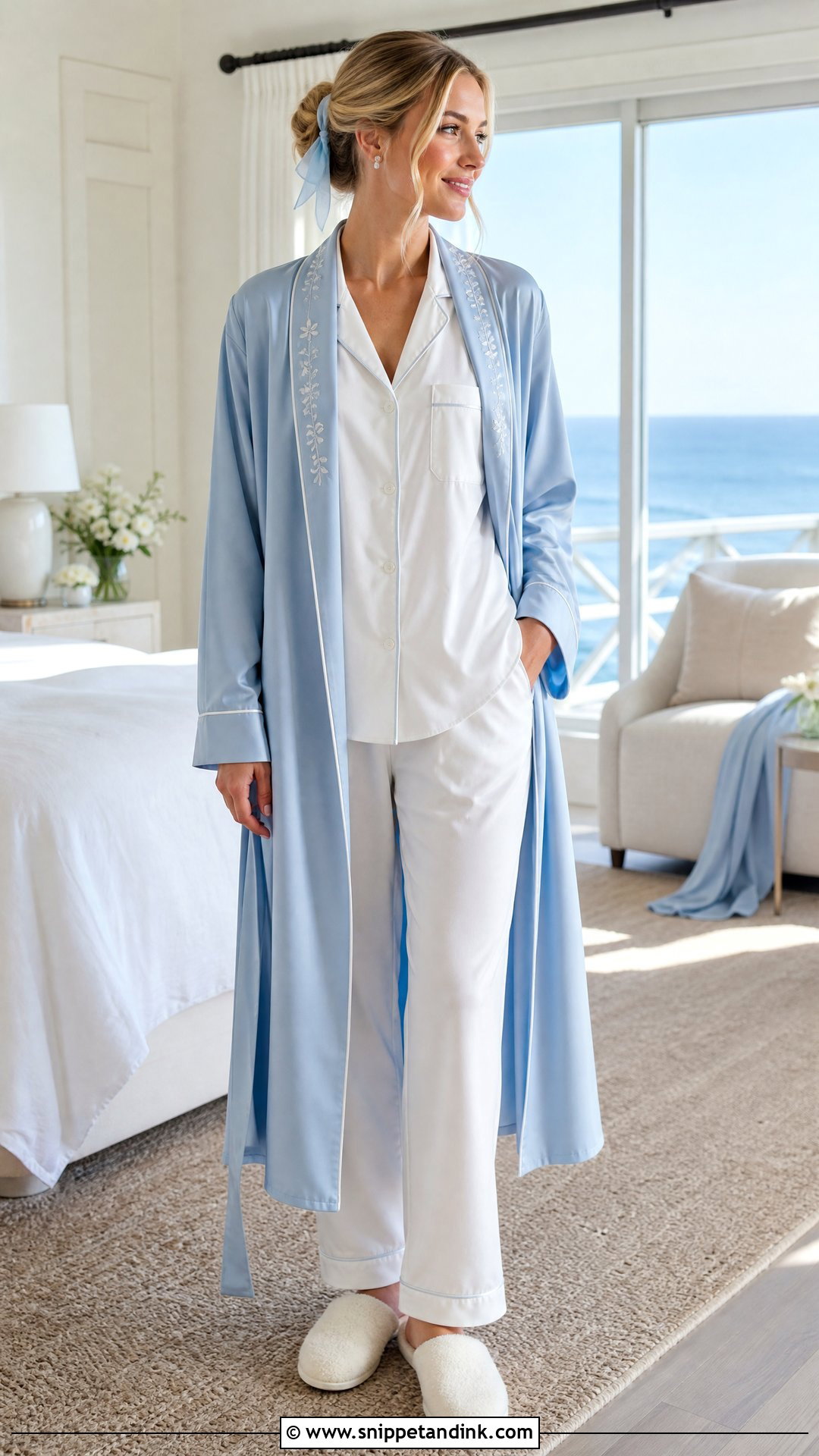
Pale blue makes an easy something blue, and it looks crisp in a bright suite. Powder blue silk or satin with white piping, floral embroidery or a small “Bride” monogram works over a white button-front pajama set for a clean two-tone outfit. Ivory slippers, silver studs and a blue ribbon in your hair finish it; take the ribbon out before styling starts so it doesn’t leave a dent. Bridesmaids can go deeper blue, grey or ivory. Keep your blue soft, though. A saturated cobalt robe stops reading as bridal and starts looking like loungewear. Coastal weddings and blue-and-white palettes suit it best.
19. Vintage Inspired Bride Robe
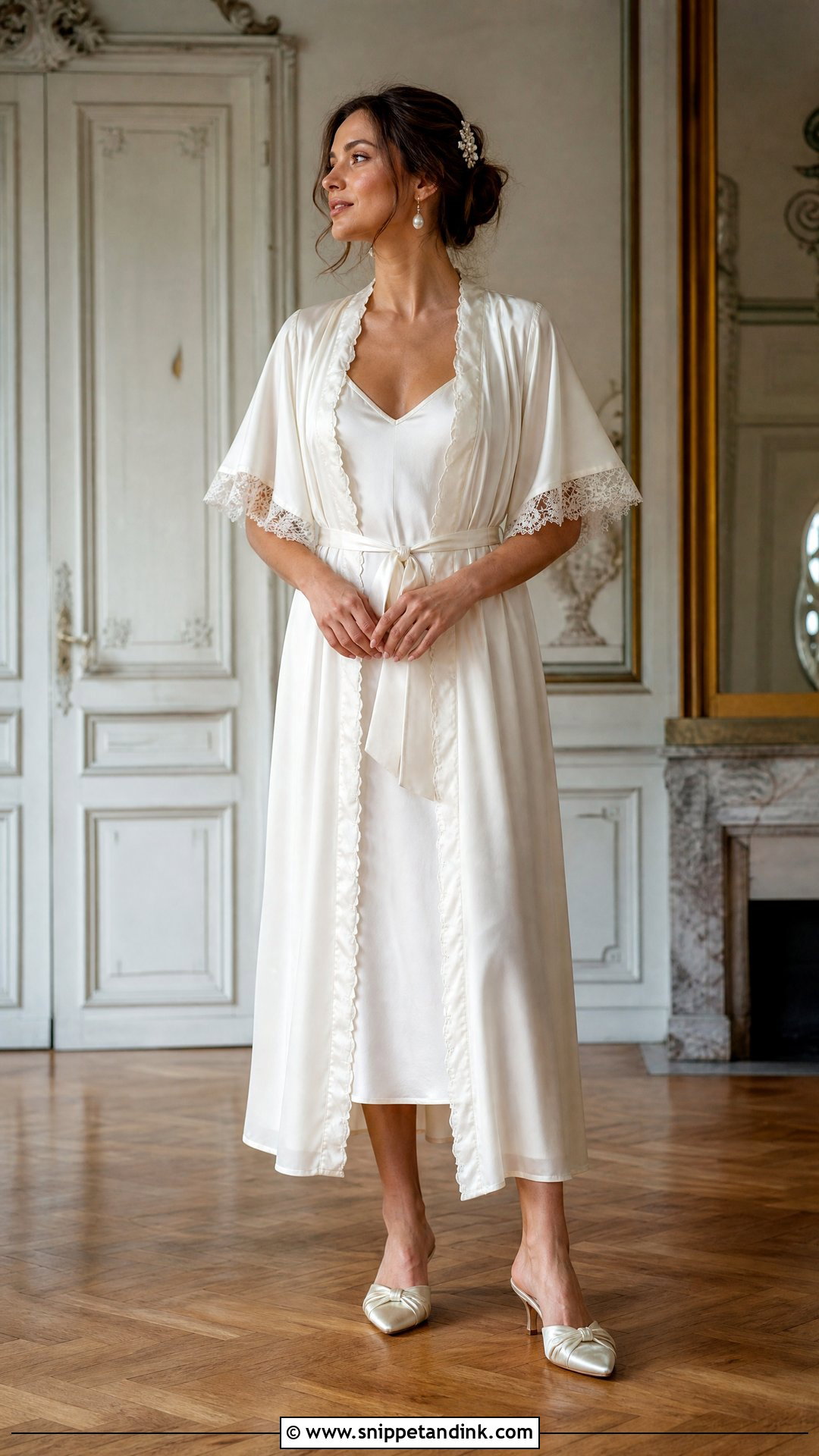
A vintage-inspired robe gives the morning some character without risking a fragile antique. New pieces with a gathered waist, scalloped lace, covered buttons or flutter sleeves carry the feeling well, worn over an ivory midi slip. Low satin mules, pearl drops and a decorative comb complete it. My one rule is to pick a single era. A bias-cut 1930s line or a 1950s lace finish looks intentional; mixing both looks like a costume rail. Covered buttons are slow to undo, so check you can get out of it quickly when the dress is waiting. It fits historic homes and classic hotels, and it pairs well with heirloom details such as a grandmother’s veil.
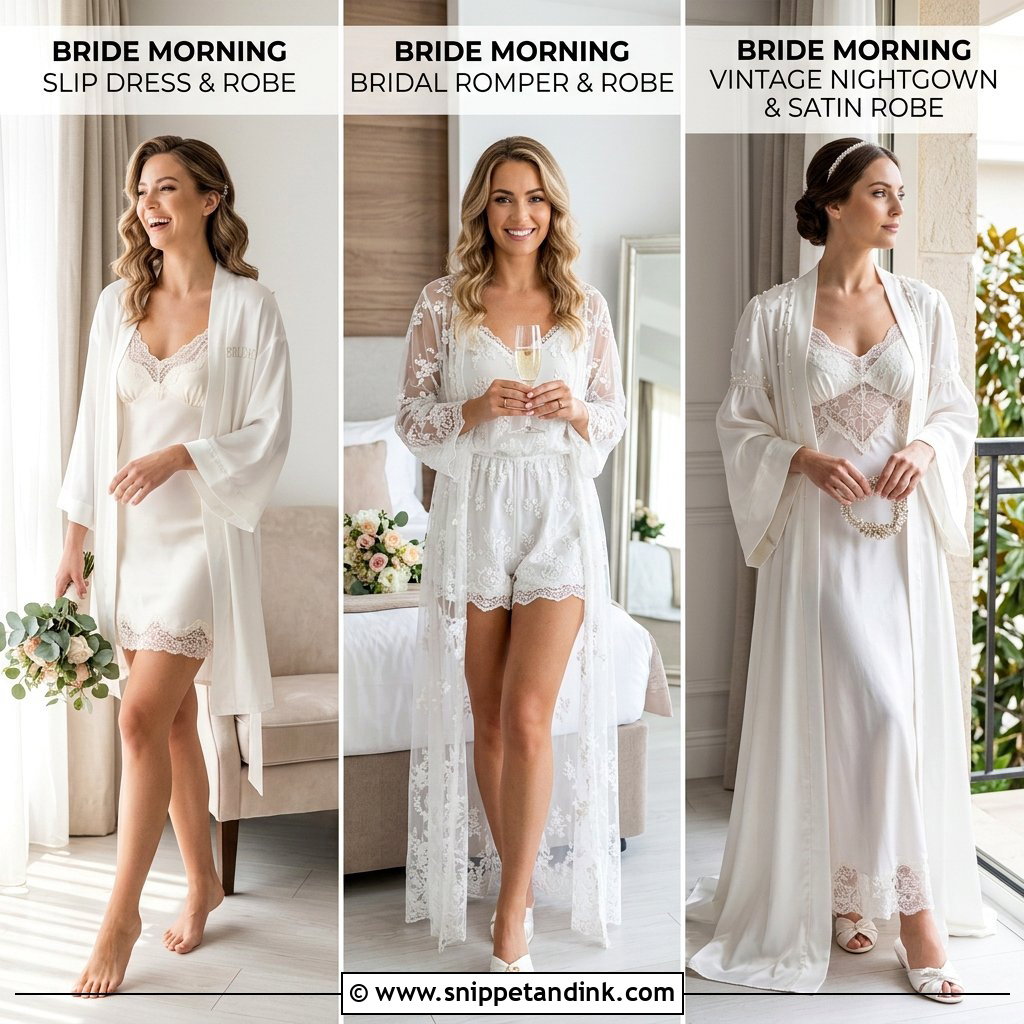
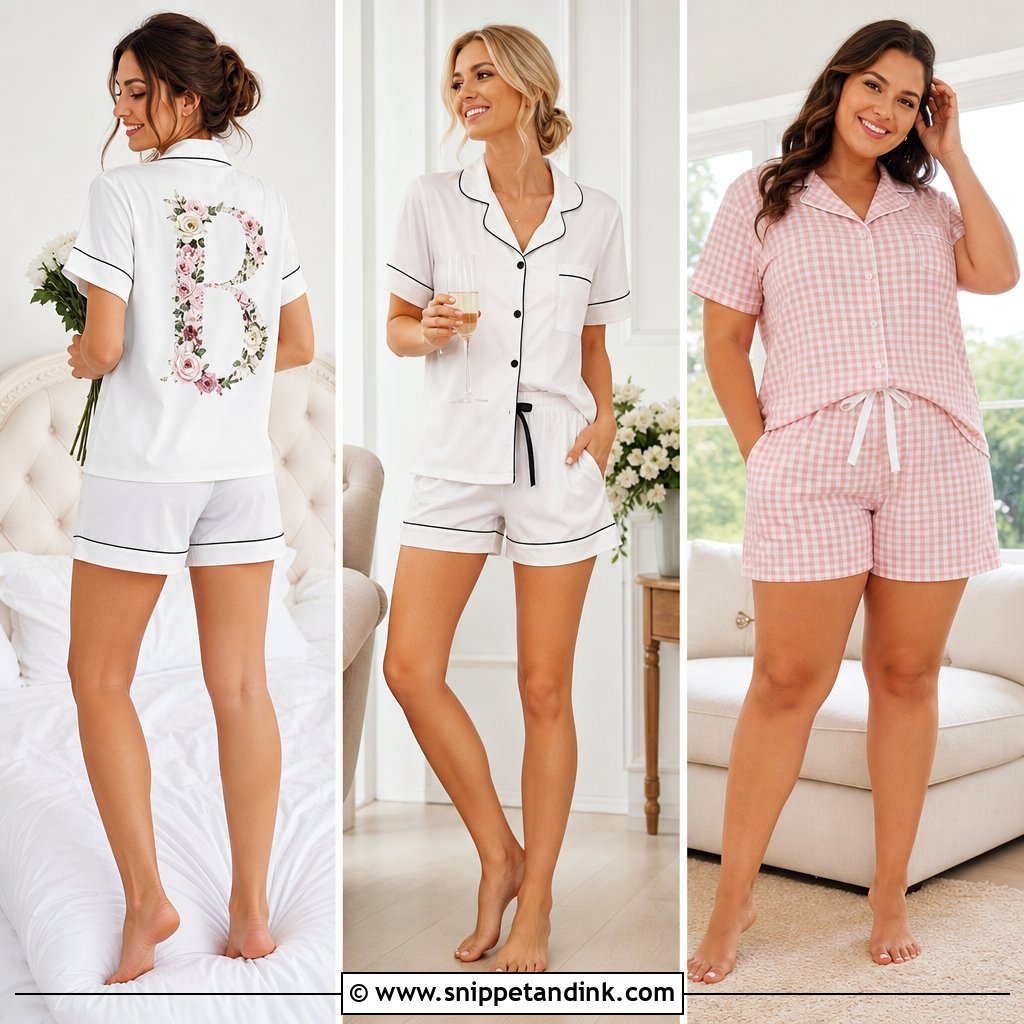
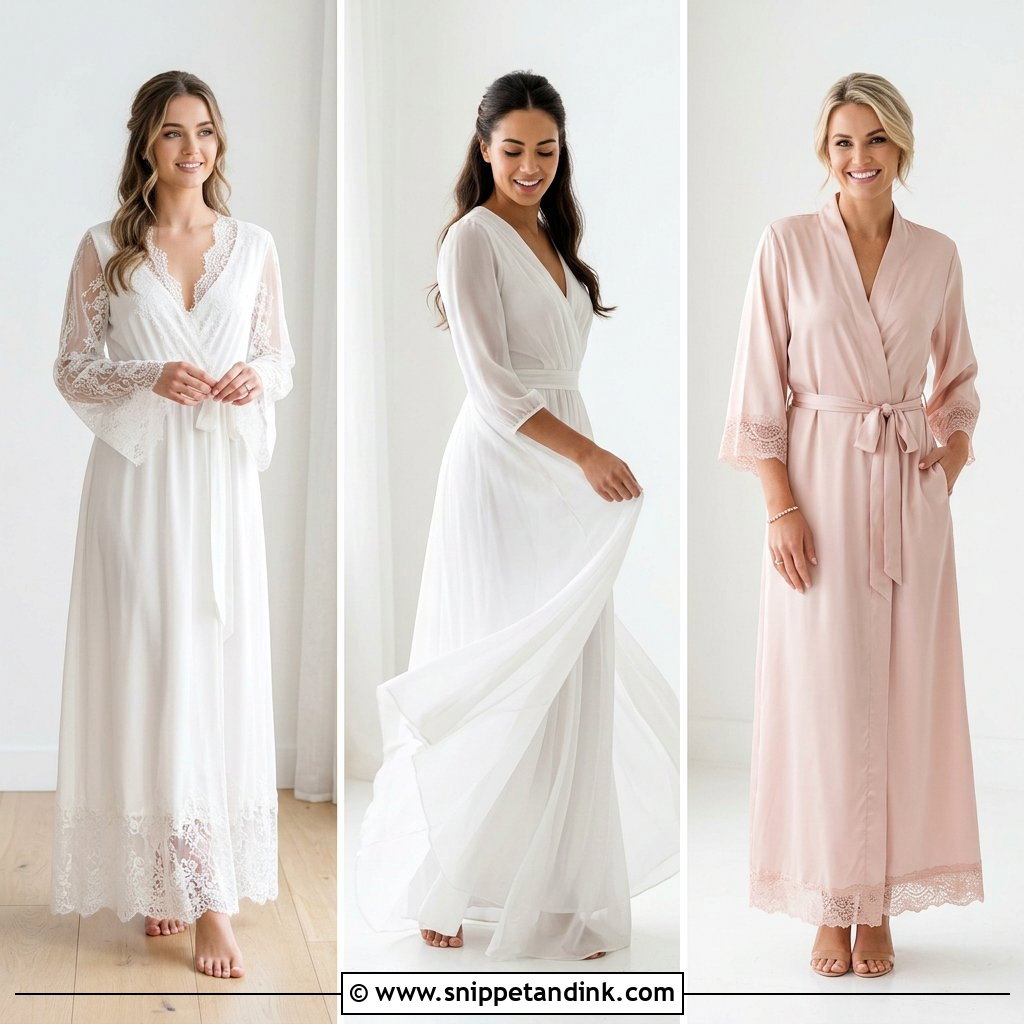
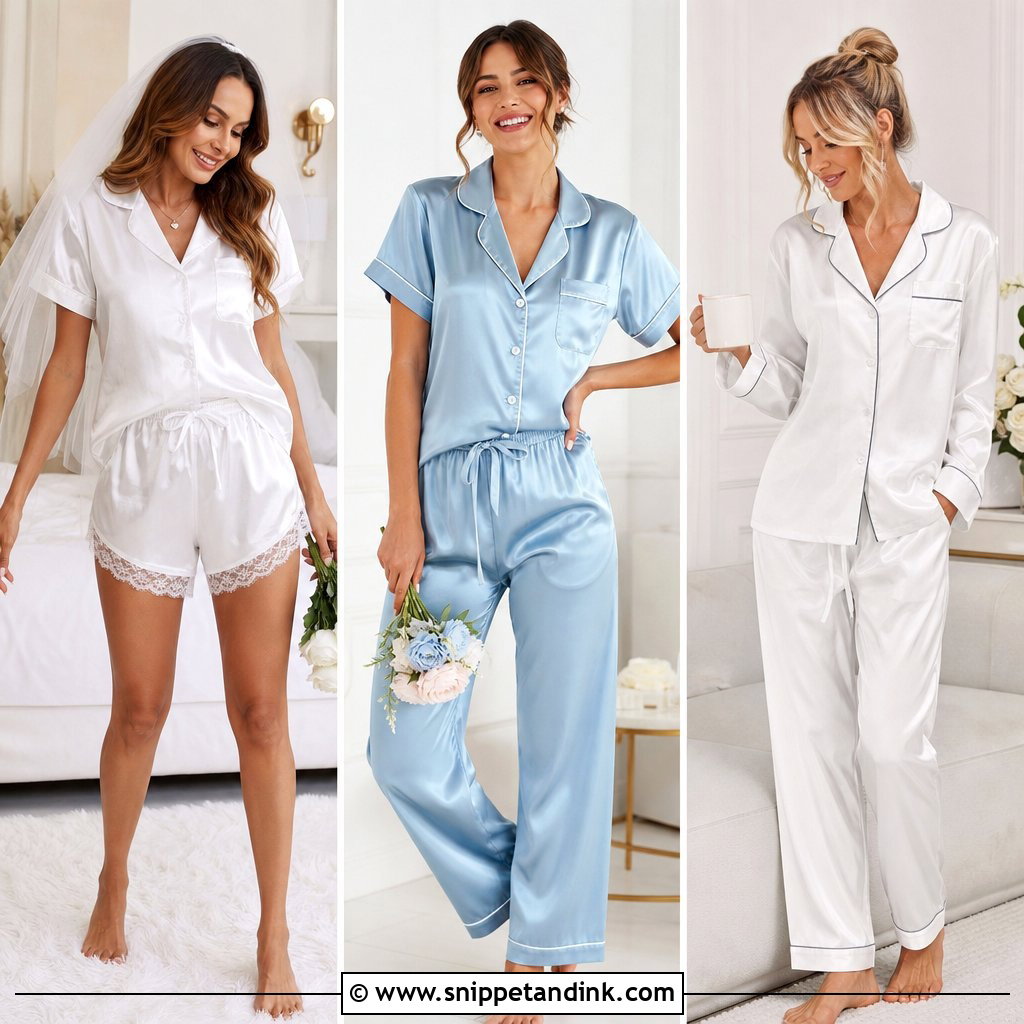
20. Matching Bride And Bridesmaid Robes
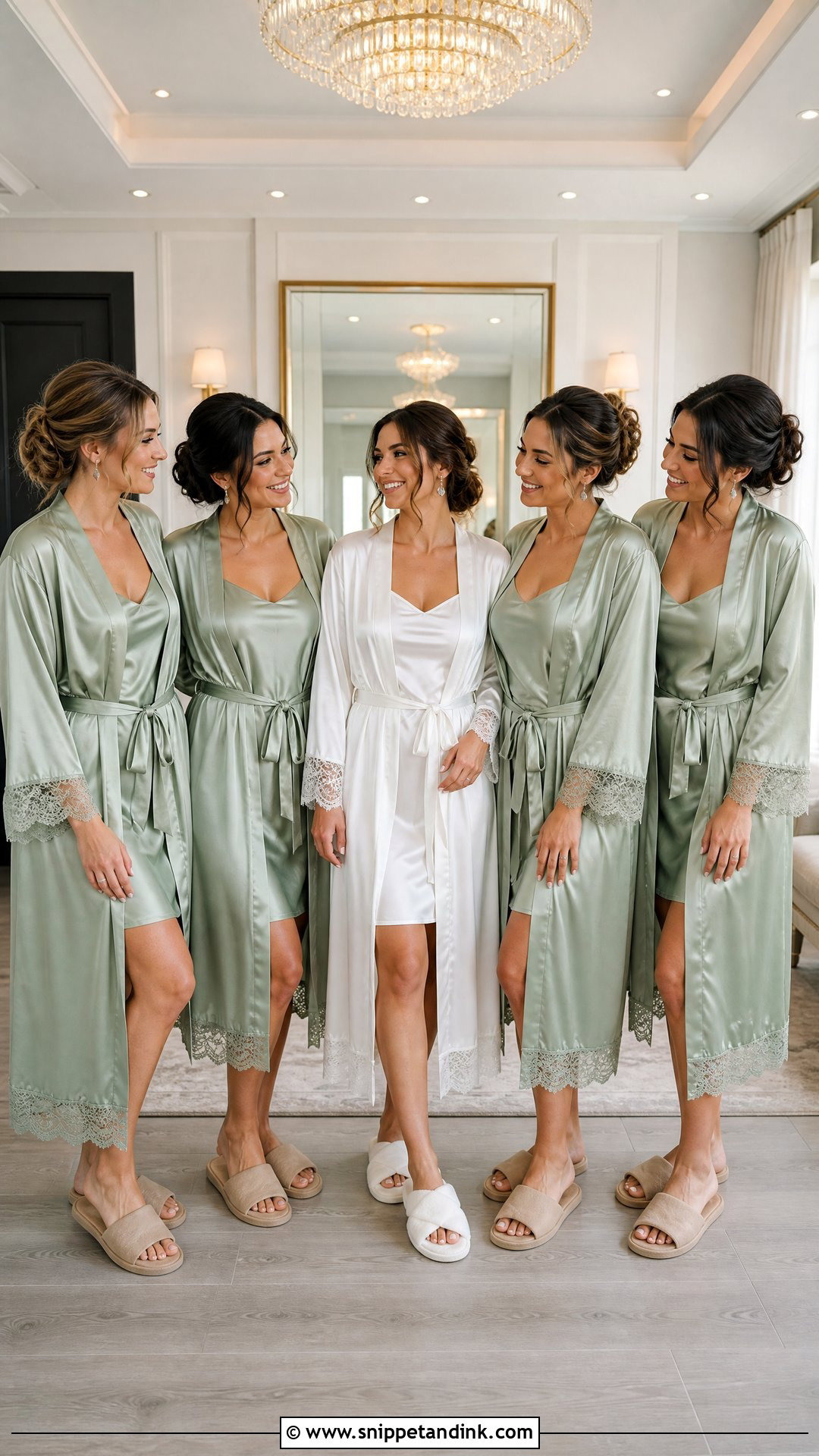
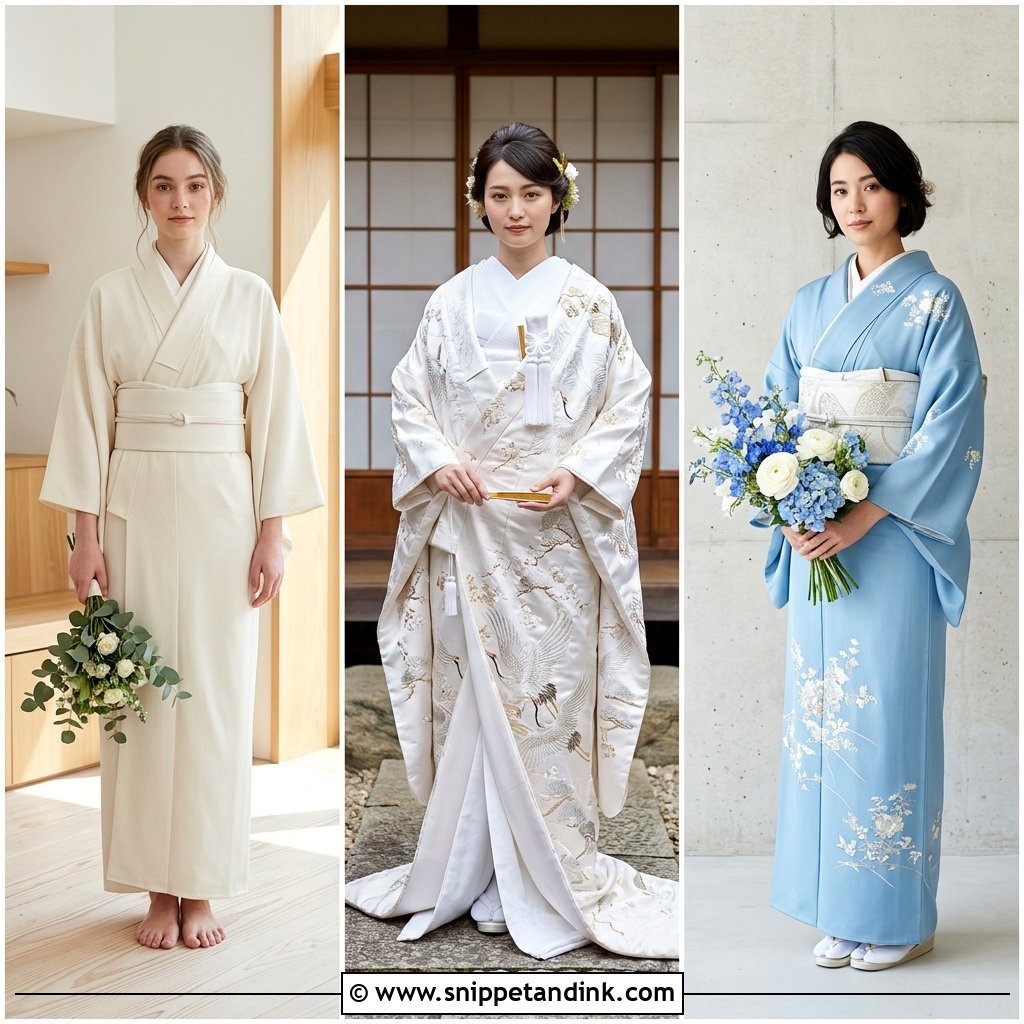
Matching robes make group photos look organized, but the bride still has to read as the bride at a glance. I put her in white or ivory satin with lace trim, then dress the party in bridesmaid robes in sage, dusty blue, mauve or another wedding color. Coordinated camisoles, shorts and neutral slides underneath keep the whole group consistent from head to toe. Give the bride pearl earrings and a personalized robe; attendants wear simpler versions. Robes are cut generously, but sizing still varies by brand, so order a range and let people swap before the day, with coverage as the priority. Steam every robe the night before, not just yours.
Getting Out of the Robe Without Smudging Anything
The moment the robe comes off is when most morning-of damage happens: a sleeve drags across a lip, a strap snags a curl, a camisole has to come over a finished updo. I plan that change before the morning starts.
- Wear only front-opening layers. Anything under the robe that pulls over your head will flatten hair or smear foundation.
- Put on the shapewear or bridal lingerie you’ll wear under the gown before makeup starts, so you aren’t changing underwear with a finished face.
- Leave earrings and necklace off until the robe is gone, since lace and embroidery catch on clasps and posts.
- Have someone slide the robe back off your shoulders while you keep your arms low, rather than pulling it forward over your face.
- Step straight into the gown from the floor; bending to pull a dress over your head with a veil comb already in place loosens it.
Packing the Robe Bag the Night Before
Hang the robe, steamed, on a padded hanger with its slippers, a spare hair tie, a lint roller, safety pins and a few blotting papers in the pocket. Satin and velvet show creases the moment they’re folded into a suitcase, so carry the robe on its hanger in a breathable garment bag. Pale fabrics pick up self-tanner and spray foundation, so if you’re having either, let it fully dry and put a dark towel over your shoulders until the setting spray has settled.
The Robe Is the Outfit You Wear Longest That Day
A robe earns its place on the wedding morning when it keeps you covered, lets you move, comes off without touching your hair or face, and still looks right in photos. Start from where you’re getting ready and the weather, then pick the length and fabric, then think about your bridesmaids’ colors. Add the base layers, a pair of slippers you can stand in for hours and two or three small pieces of jewelry, and stop there. White satin, cotton, tulle, blush or embroidery all work when they suit how you actually spend those hours, which is mostly sitting still and laughing with the people you love.
You'll Like These Ideas:


Leave a Reply