
A well-cut suit can feel as bridal as any gown, and it lets you sit, dance and hug without managing a skirt. I dress brides, guests, bridesmaids and mothers in tailoring, and the range now goes far past the standard pantsuit: tuxedo jackets, waistcoats, wide-leg trousers, skirt suits, textured cloth and colored separates. What turns a suit from office wear into wedding wear is mostly fabric, fit and the pieces around it. Match the cut to the dress code, season and venue, then get it altered properly. Each of the suits below comes with the top, shoes and accessories I’d put with it, plus the fit detail that tends to make or break it.
Buy for the Shoulders, Tailor Everything Else
Women’s suits are cut on fixed patterns, and very few bodies match one exactly. That’s normal. What matters is knowing which parts a tailor can change easily and which they can’t, so you buy the right size in the first place.
- Shoulders: buy for these. Rebuilding a jacket shoulder is complex, costly and rarely perfect, so the seam should land at your shoulder bone when you try it on.
- Sleeves, waist and side seams: straightforward to adjust. A sleeve should finish at the wrist bone so a bracelet or a little cuff shows.
- Trouser hem: always hem with the exact shoes you’ll wear. A wide leg should almost cover the shoe; a slim leg can stop at the ankle.
- The button: if the closed jacket pulls into creases around it, size up and have the waist taken in rather than squeezing into the smaller size.
A fitting schedule with room for a second try
I like a first fitting around two months out and a final one a couple of weeks before, with the shoes, the camisole and the bra you’ll actually wear. Bring a friend to watch from behind while you sit, reach for a hug and climb a step, because most fit problems only appear in motion. Tailors get busy in peak wedding season, so book the appointment when you buy the suit instead of waiting.
1. Classic White Tuxedo Wedding Suit
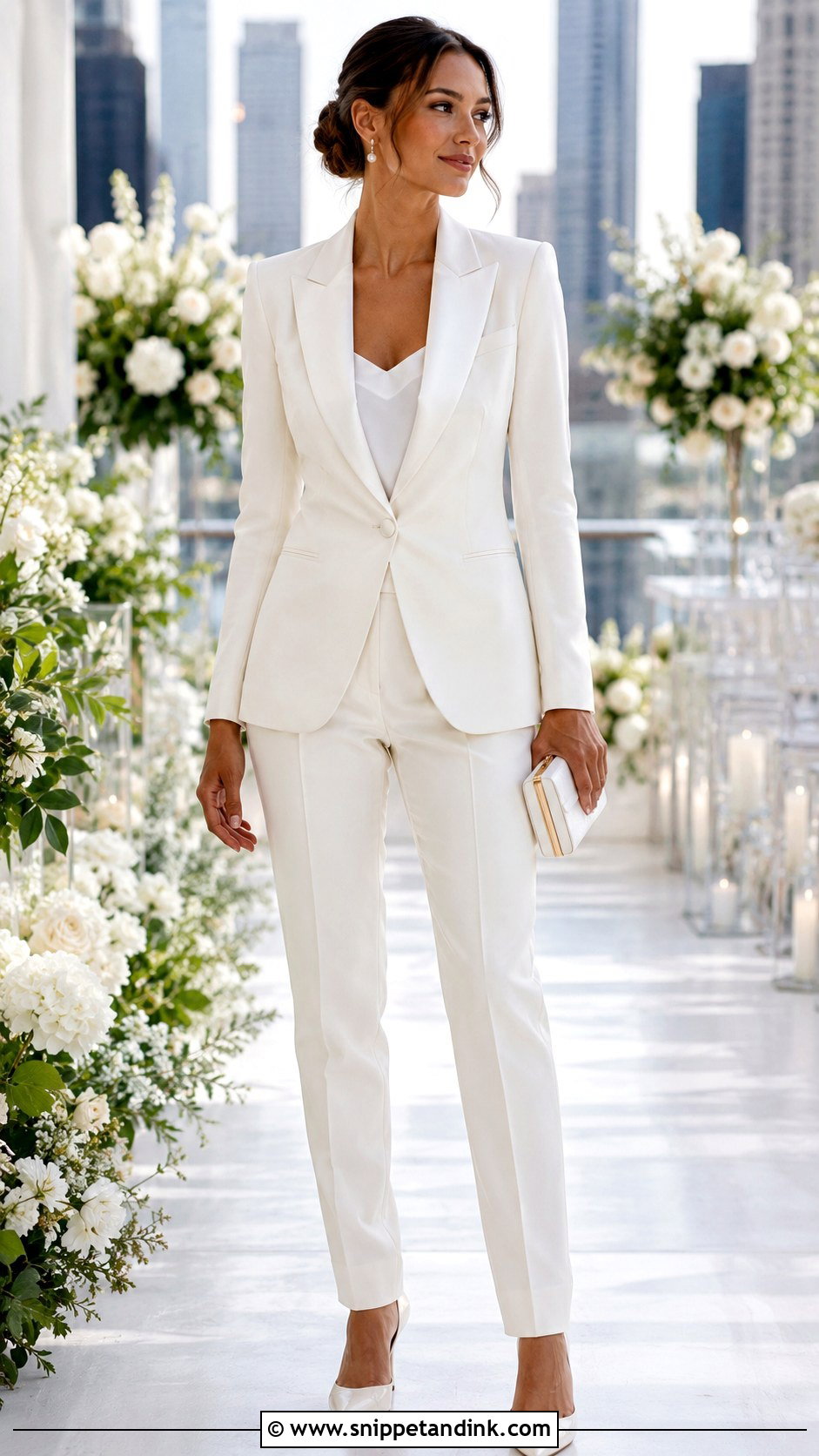
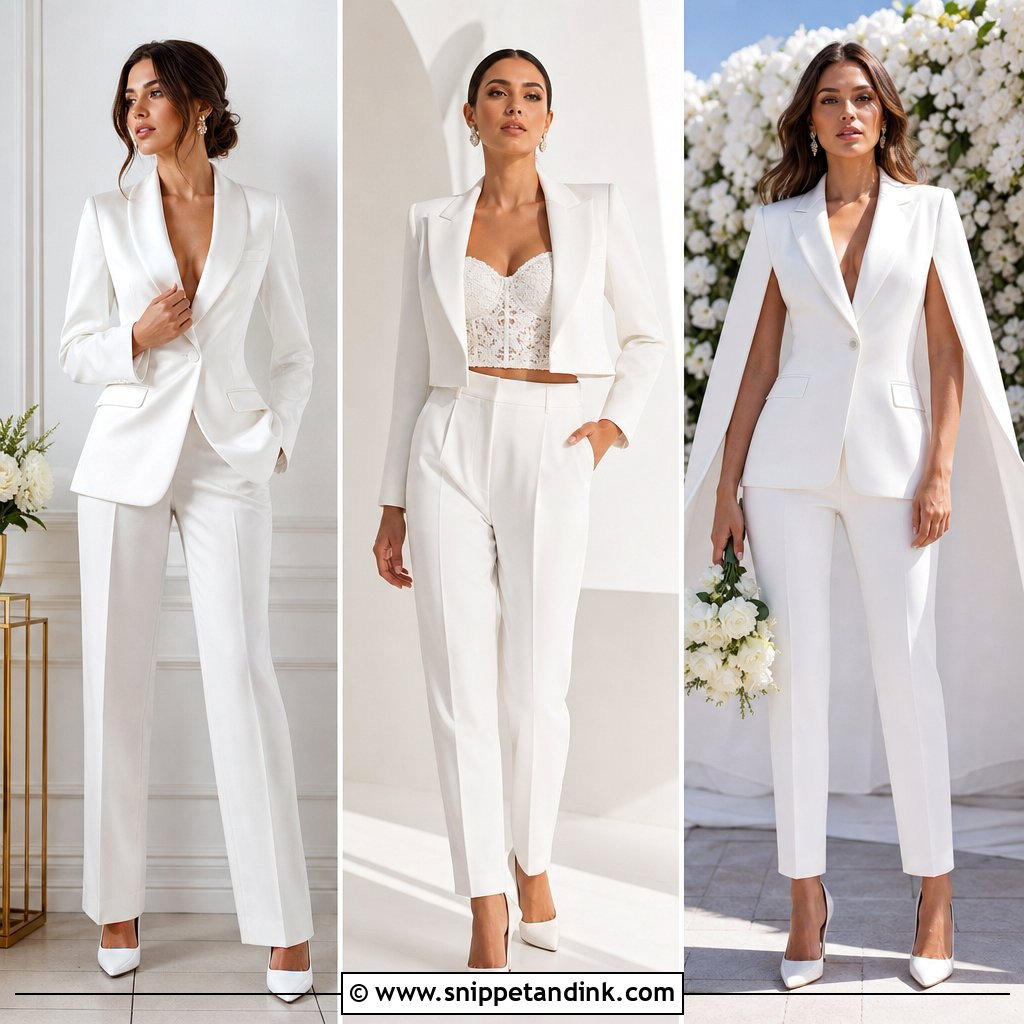
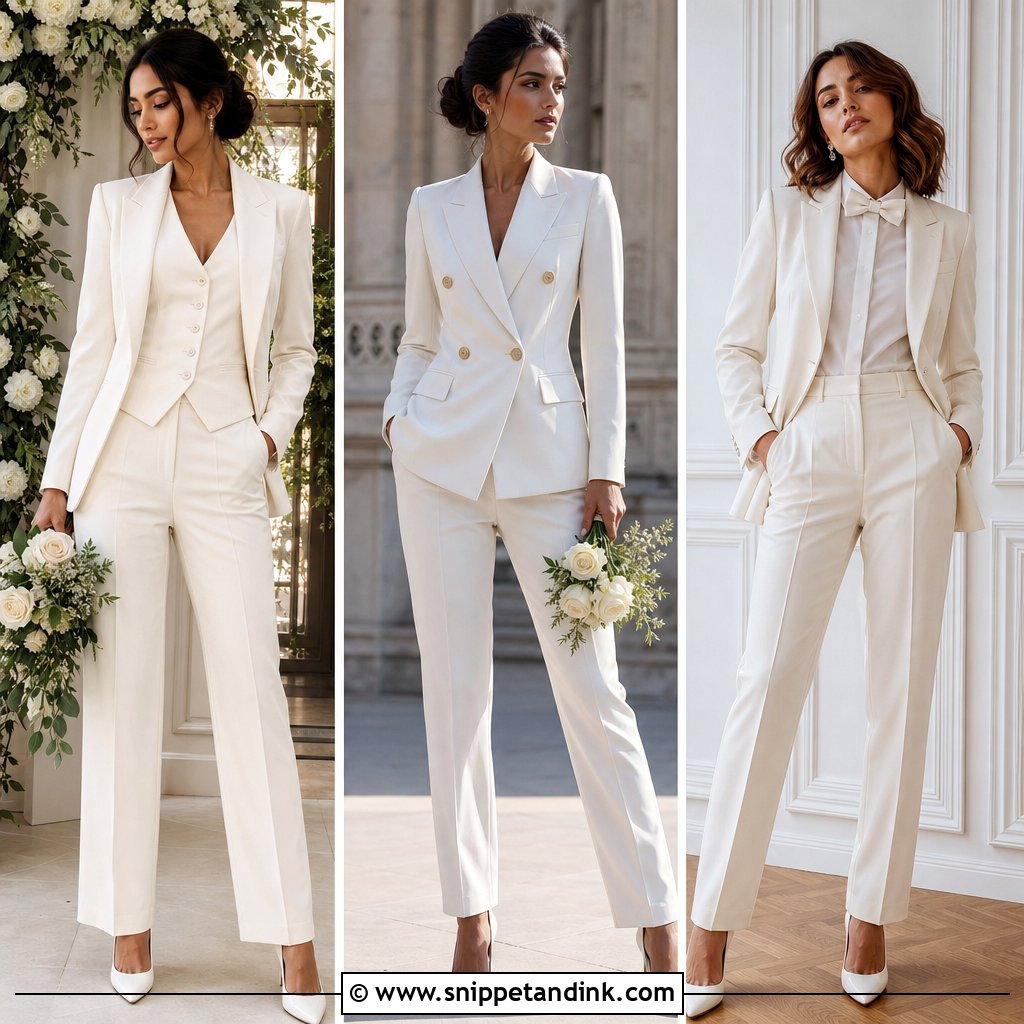
A classic white tuxedo needs no decoration, which means every fitting flaw shows. Go for a fitted single-breasted jacket with satin peak lapels and straight or gently tapered trousers, with a silk camisole, structured bustier or satin shell in the same white underneath. Pointed white pumps lengthen the leg, and pearl drops with a compact box clutch are enough jewelry. A small bouquet of white flowers and greenery softens the sharp lines. Two things I check in the mirror: the jacket must button without the fabric pulling into an X around the button, and the trousers should just skim the top of the shoe. City ceremonies, courthouse weddings, rehearsal dinners and modern receptions suit it, and it reads cleanly against architecture and plain interiors.
2. Ivory Double-Breasted Wedding Suit
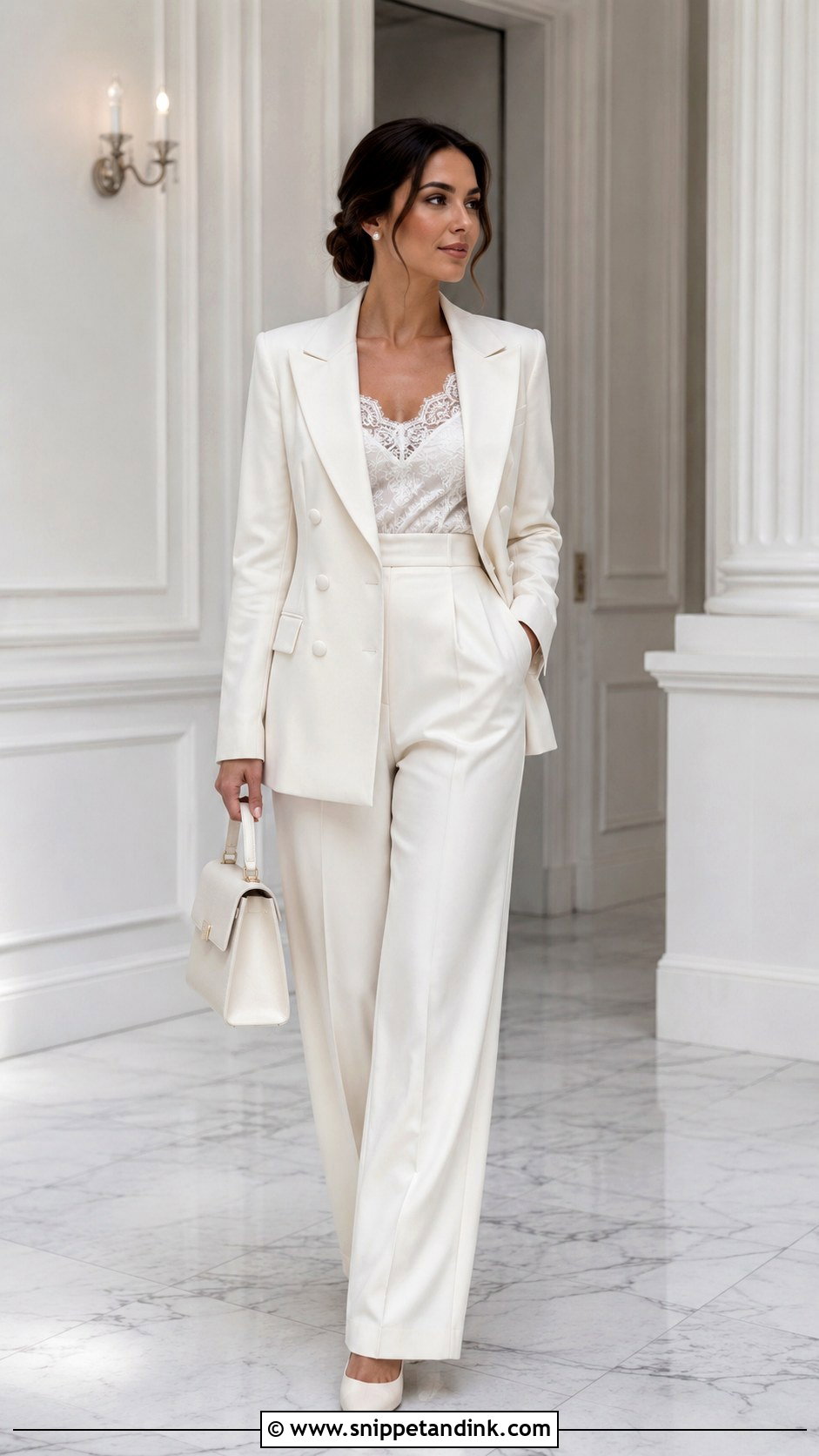
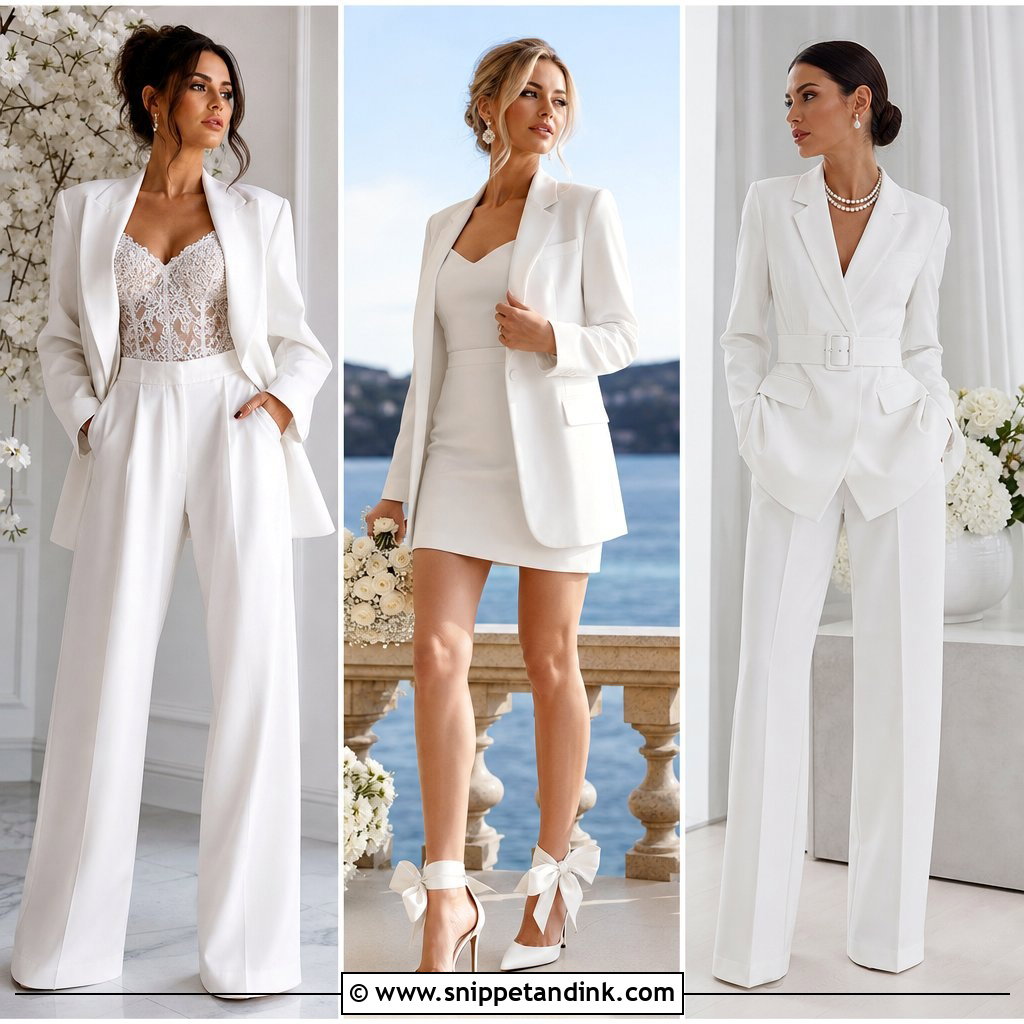
Ivory makes a double-breasted wedding suit warmer and more traditional than stark white. Look for a defined waist, structured shoulders and covered or metallic buttons, with high-waisted full-length trousers that fall straight from the hip. A lace-trimmed camisole adds texture without fighting the tailoring. Ivory pointed heels, pearl studs, a structured top-handle bag and a sleek low bun keep the deep neckline in view. Double-breasted jackets add width across the front, so if it feels boxy, have a tailor take in the side seams instead of buying a size down; the smaller size usually pinches across the shoulders. It’s formal enough for a ceremony and easy enough to dance in, and the weight suits fall, winter and formal indoor weddings.
3. White Three-Piece Wedding Suit
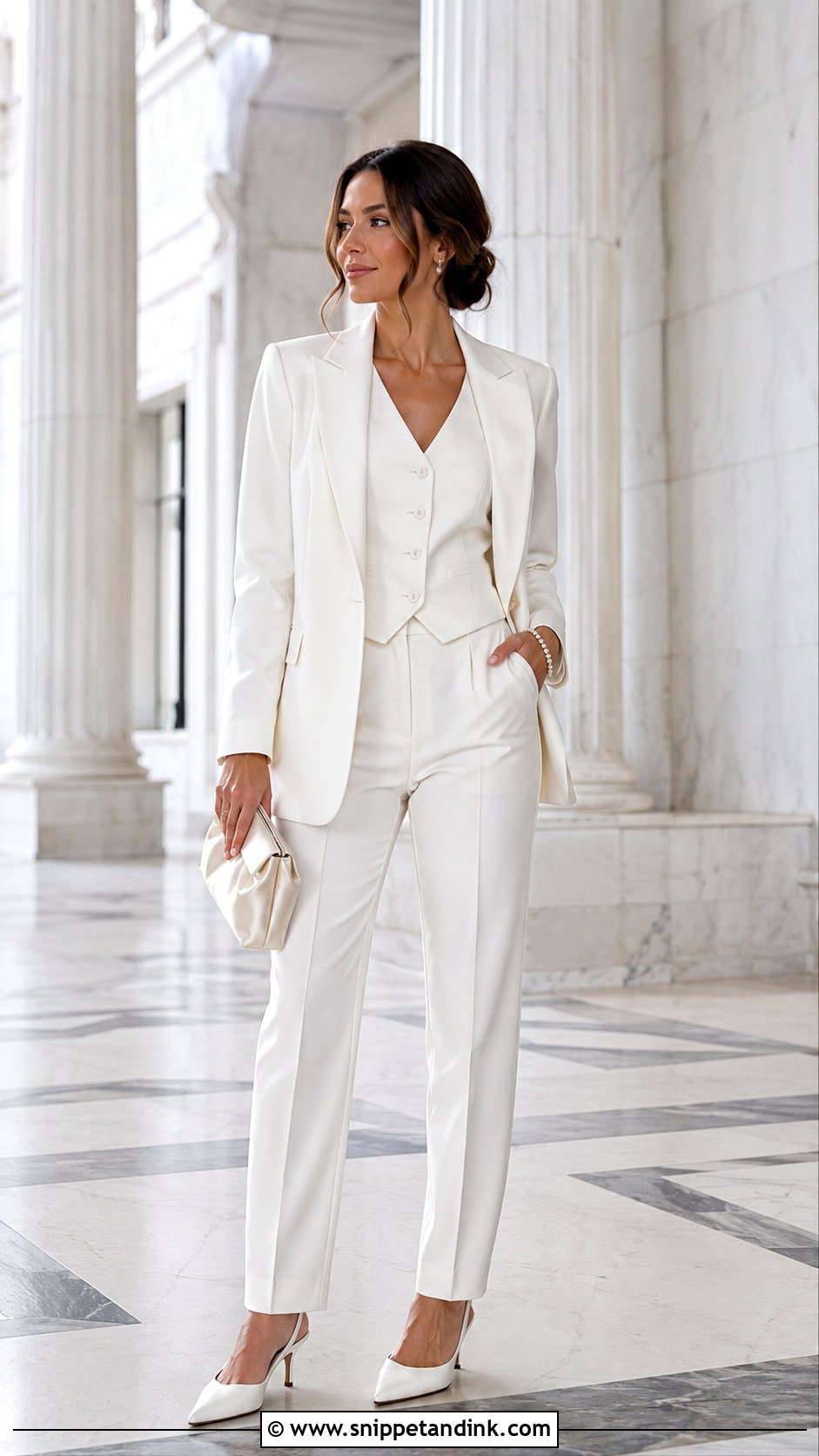
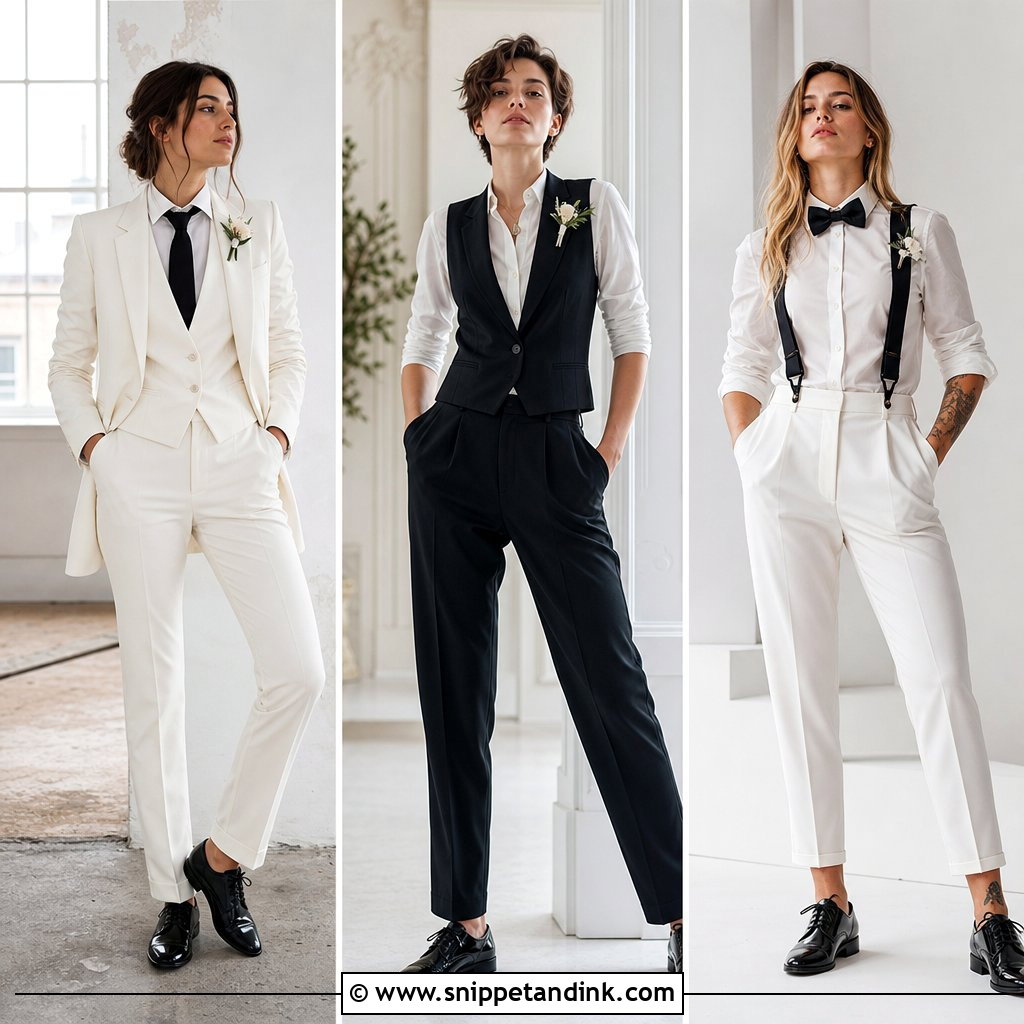
A three-piece gives you three outfits in one. Start with a fitted white waistcoat, then add a matching blazer and high-rise trousers with a straight or wide leg. Wear all three for the ceremony and lose the jacket at the reception. White slingbacks, a pearl bracelet and a small satin clutch keep it refined, while a crisp shirt and narrow silk tie push it toward menswear. Keep every piece in one shade so the line runs unbroken. The waistcoat is the piece that gives away a poor fit. It should sit close without gaping between buttons when you sit and reach, so I have brides sit down in it at every fitting. For a day that moves from a formal room to outdoor portraits to a loud dance floor, nothing here is more practical.
4. Wide-Leg Bridal Wedding Suit
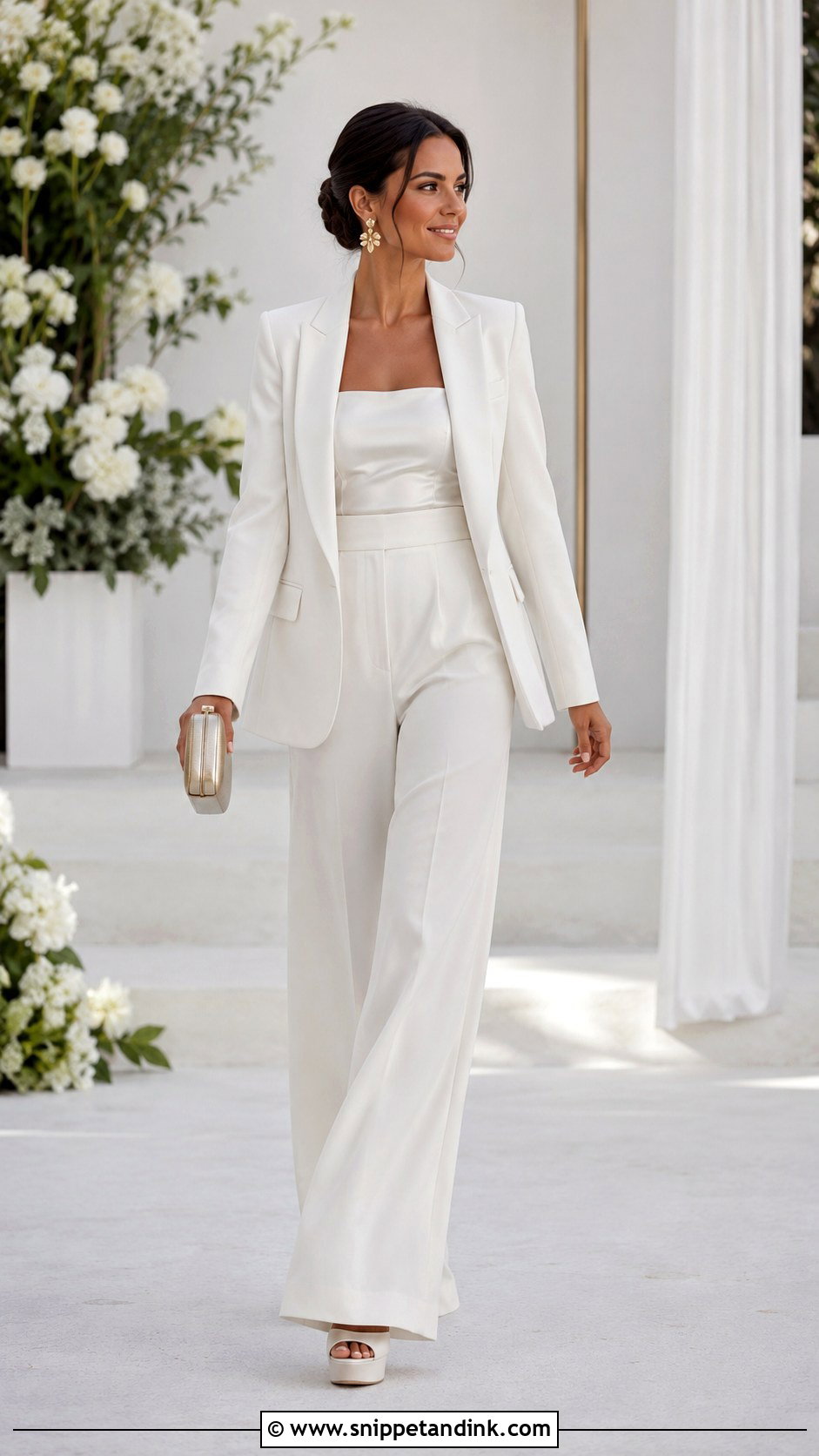
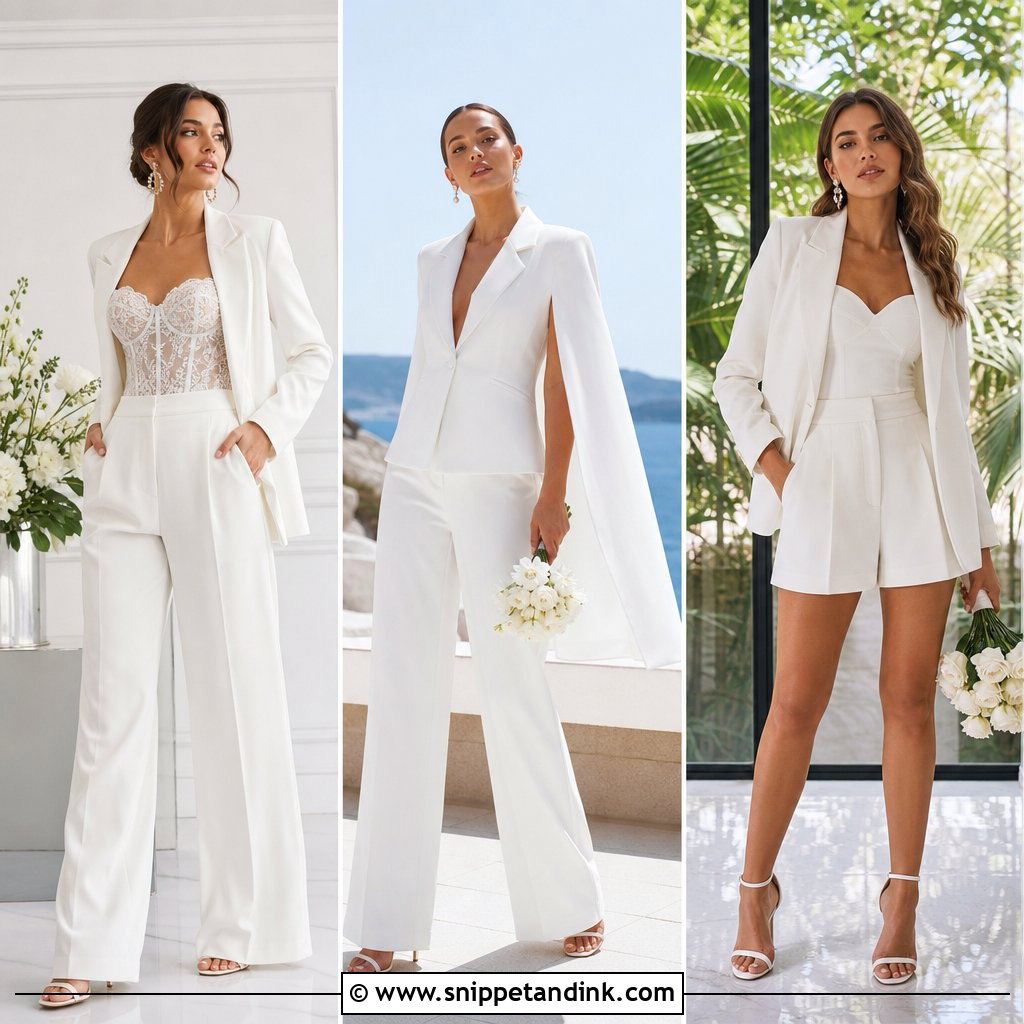
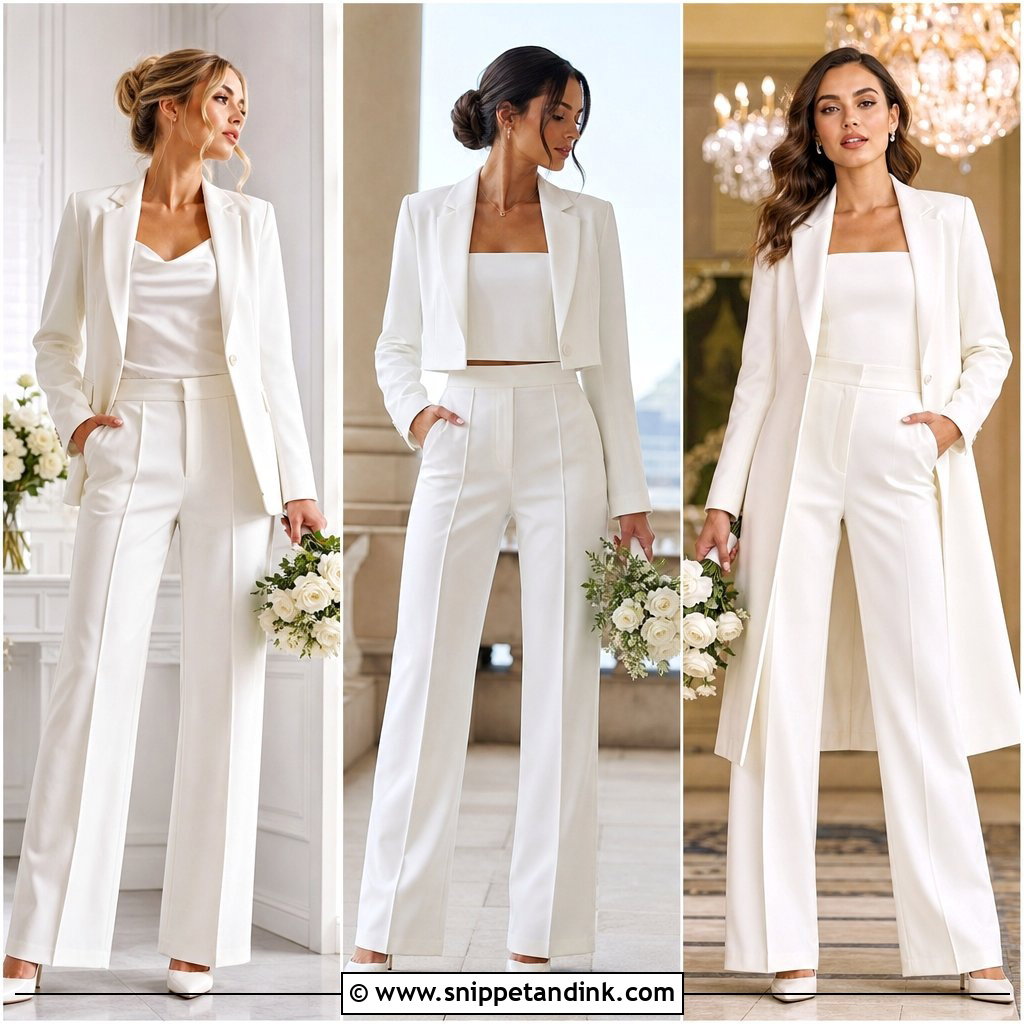
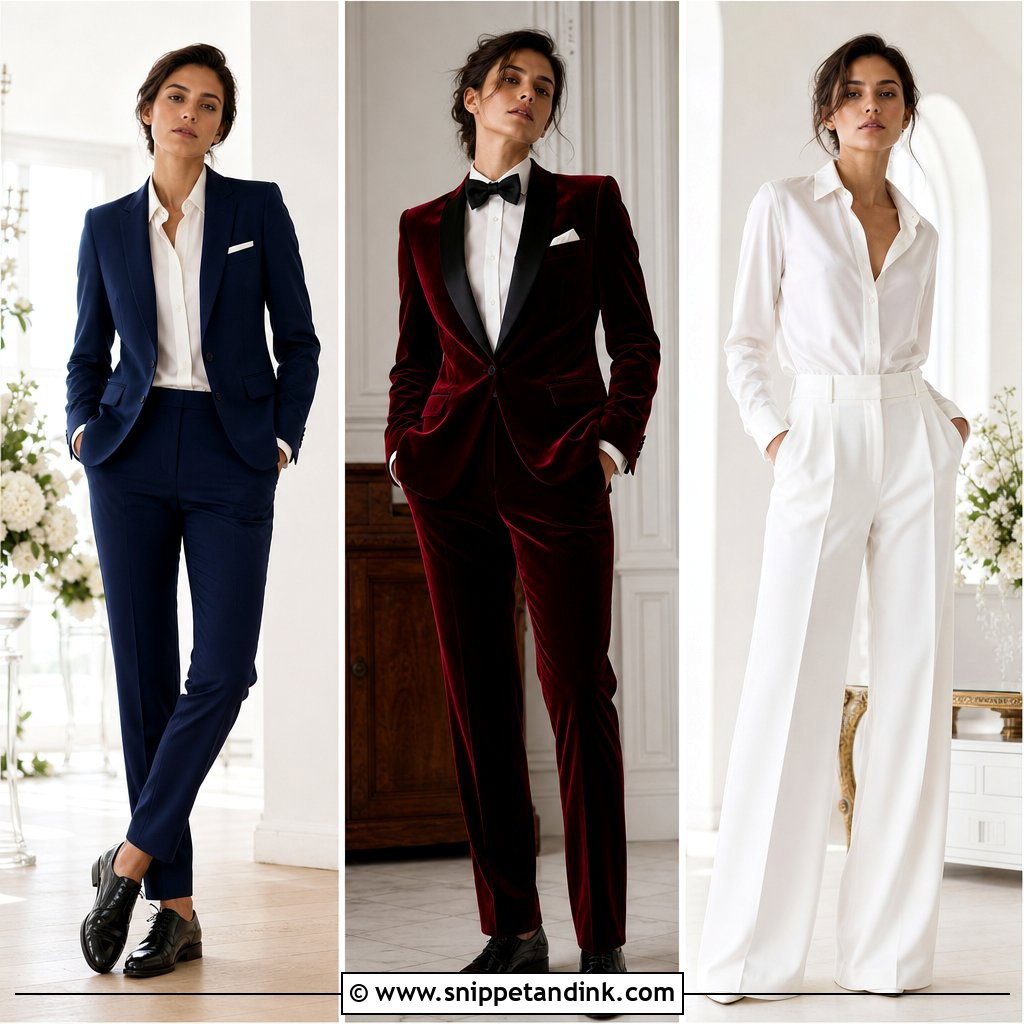
Wide-leg trousers bring movement to structured tailoring, and the hem length decides whether they look intentional. Choose a high-waisted pair in crepe, satin-backed fabric or light wool, balanced by a fitted blazer, with a tucked silk camisole or bodysuit so no extra fabric collects at the waist. The hem should cover the shoe and leave only the toe showing, which means hemming with your actual wedding shoes on. Platform heels or pointed pumps, sculptural earrings and a slim metallic clutch finish it. On a petite frame I keep the jacket shorter and the trousers fitted through the upper hip; taller women can carry a longline blazer. It moves well through the ceremony, portraits, dinner and dancing.
5. Slim-Fit Bridal Wedding Suit
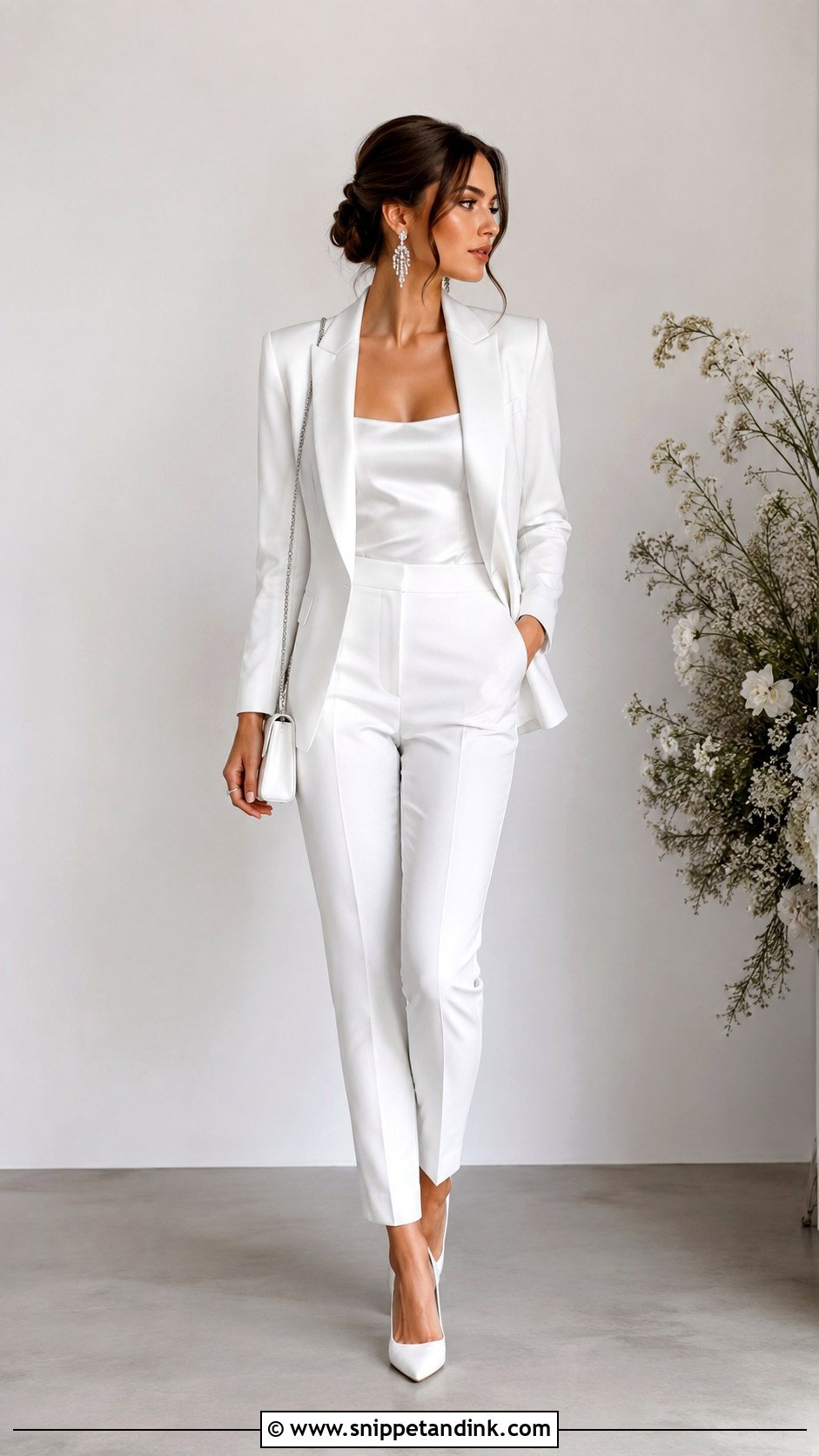
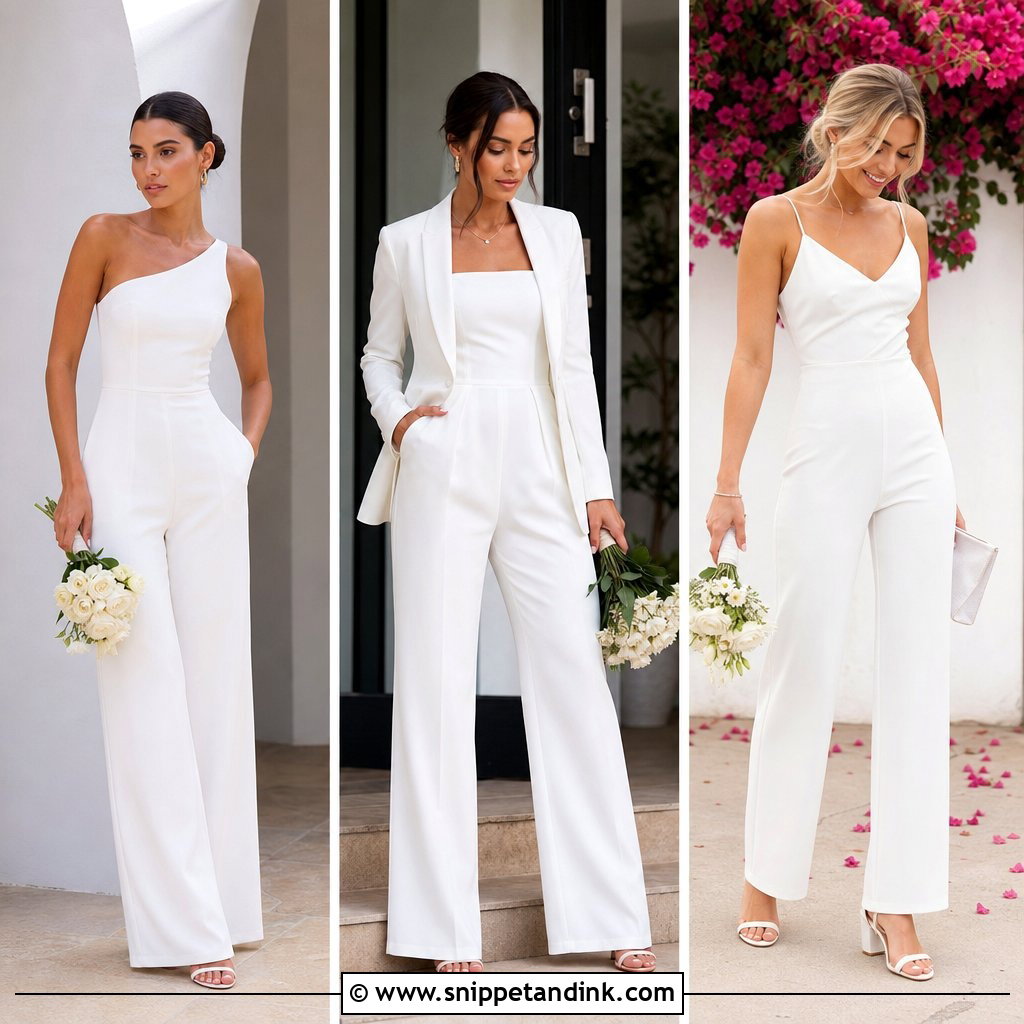
A slim suit is the least forgiving shape here. The blazer should follow the waist without restricting your arms, and the trousers should skim the leg rather than cling. A square-neck satin top gives some structure under the jacket, with pointed pumps, small crystal earrings and a white shoulder bag. Ankle-length trousers show off statement shoes, though full length reads more formal. Alterations aren’t optional with this cut. Tight sleeves, buttons straining at the front and fabric bunching behind the knee all show in photos, and a slim line magnifies each one. I’d steer minimalist brides toward it for small ceremonies, modern venues and a reception change.
6. Oversized Blazer Wedding Suit
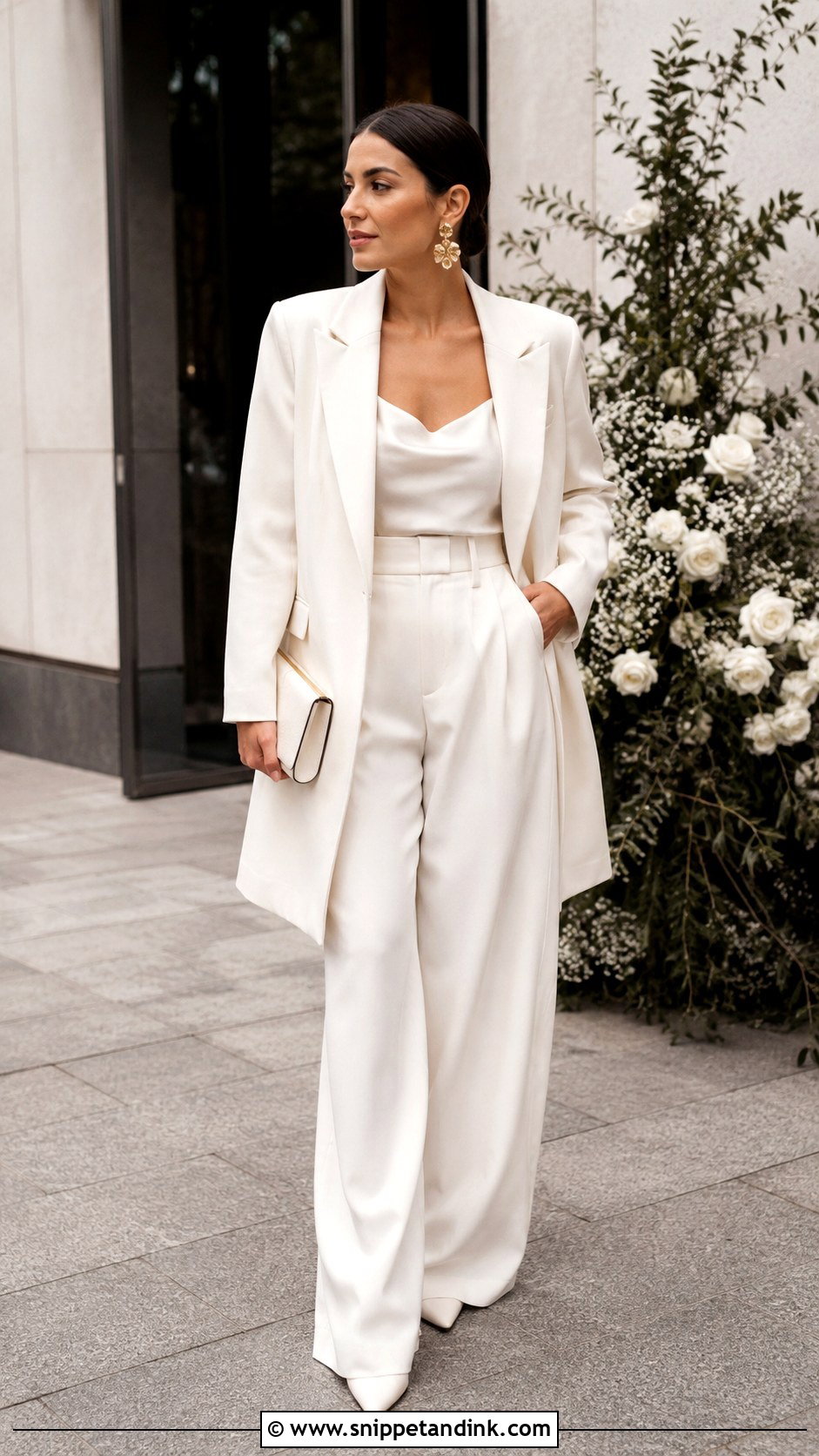
An oversized blazer still has to fit at one point, and that point is the shoulder. Choose a long blazer with clean shoulders that end at or just past your own, then add matching straight or wide-leg trousers. A fitted silk camisole or sculpted bandeau balances the volume, and high-waisted trousers keep some definition under the longer layer. Pointed heels, bold earrings and a sleek clutch make it dressy without overdoing it. Pushed-up sleeves look casual, so I either leave them full length or have them cut to the wrist bone. Fashion-forward brides and guests who like slightly androgynous tailoring wear it best. Pick a smooth fabric with some body, because limp suiting is what makes an oversized blazer look borrowed.
7. Satin Lapel Tuxedo Wedding Suit
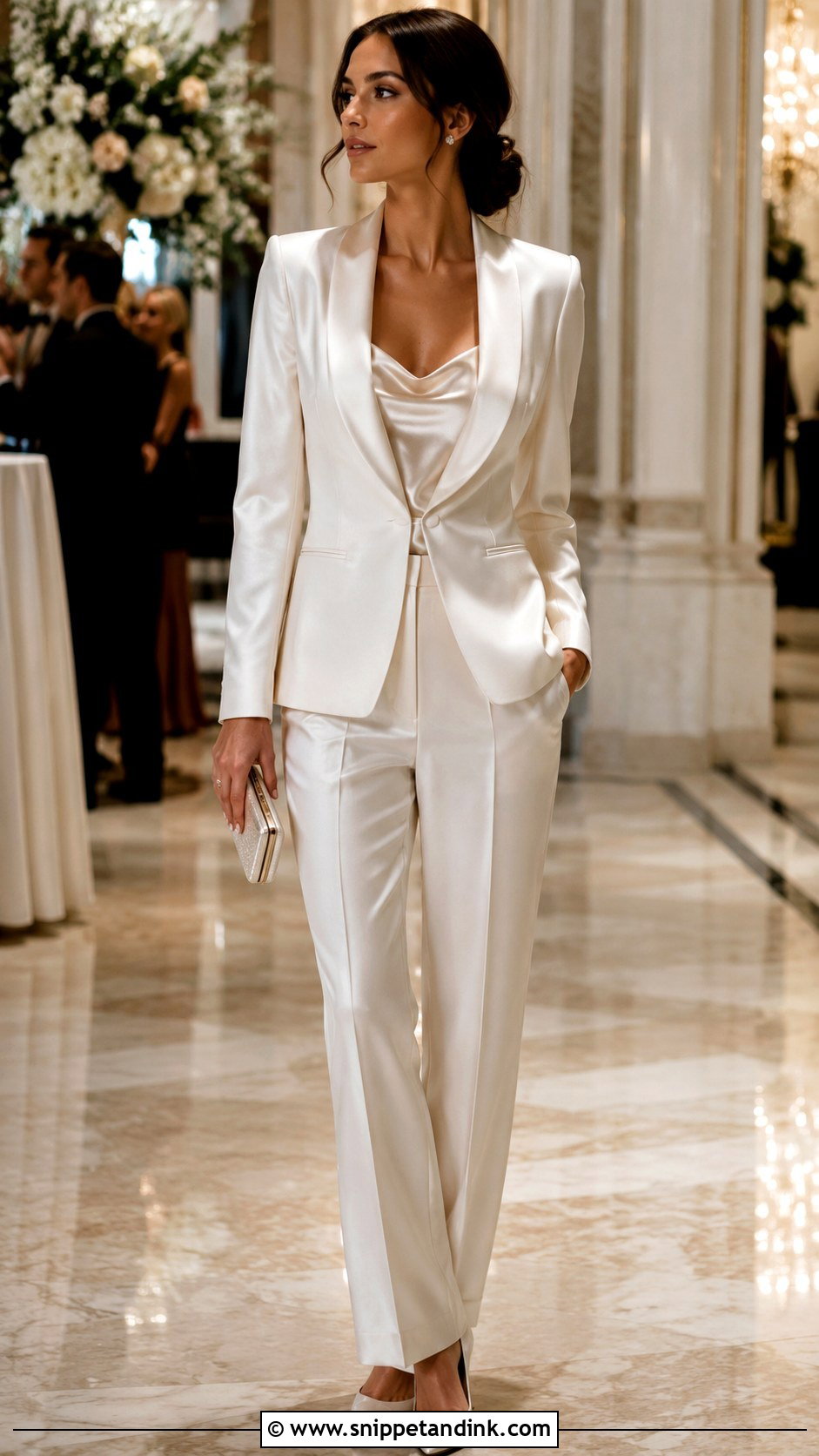
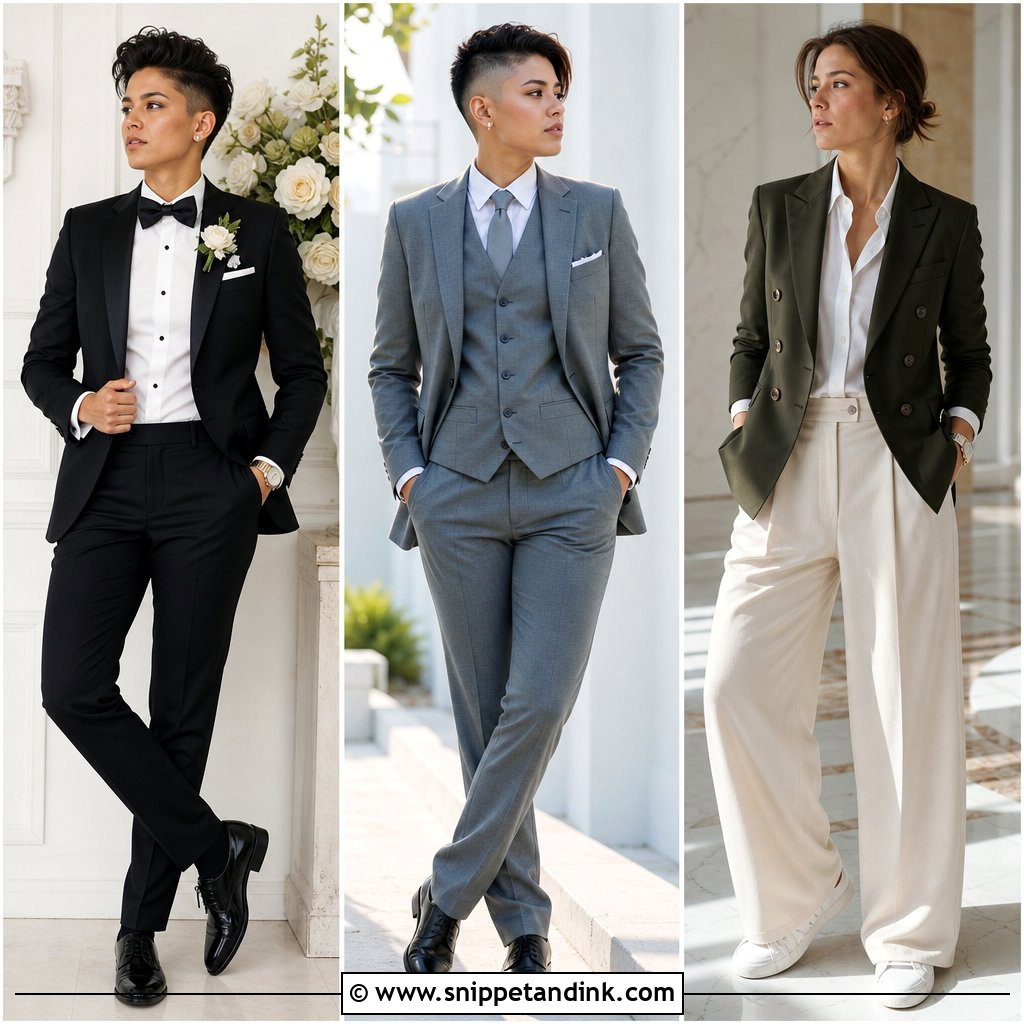
Satin lapels are the quickest way to tell a wedding tuxedo from a business suit. Choose a white, ivory, black or deep navy jacket with peak or shawl lapels and matching full-length trousers. Underneath, a satin camisole gives a soft tonal layer and a pleated shirt makes it more traditional. Pointed pumps or polished loafers, crystal studs, a refined watch and a small structured clutch complete it. Brides take white or ivory; guests can wear the darker shades if the dress code allows. Keep the extras minimal, since the lapel already provides contrast. One fit check: satin lapels should lie flat against the chest, and if they roll or buckle when buttoned, the jacket is too tight. Evening receptions, hotel weddings and black-tie events are its territory.
8. Cape Blazer Wedding Suit
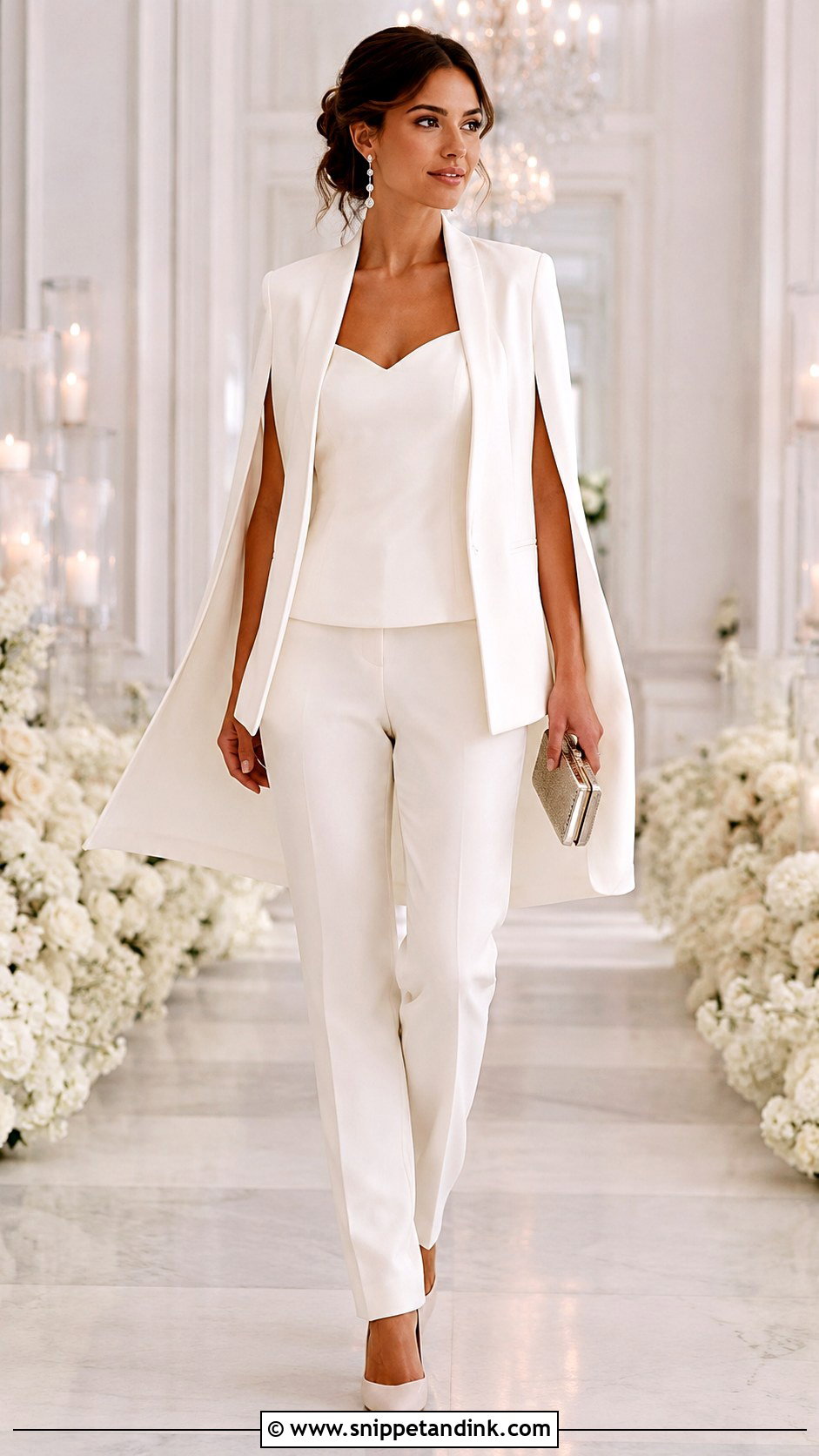
A cape blazer covers the arms without sleeves pulling when you lift them, which is why I like it for ceremonies with a lot of hugging. Wear it over a fitted sleeveless top with slim or straight trousers so the floating layer has a narrow base. Monochrome white or ivory reads bridal, and jewel tones suit guests and mothers of the couple. The cape should end near the hip or upper thigh; any longer and it swallows the trousers. Pointed heels, a small metallic clutch and drop earrings keep it formal. Skip shoulder bags entirely. A strap drags the cape out of shape and leaves a crease, so carry something handheld.
9. Lace Blazer Wedding Suit
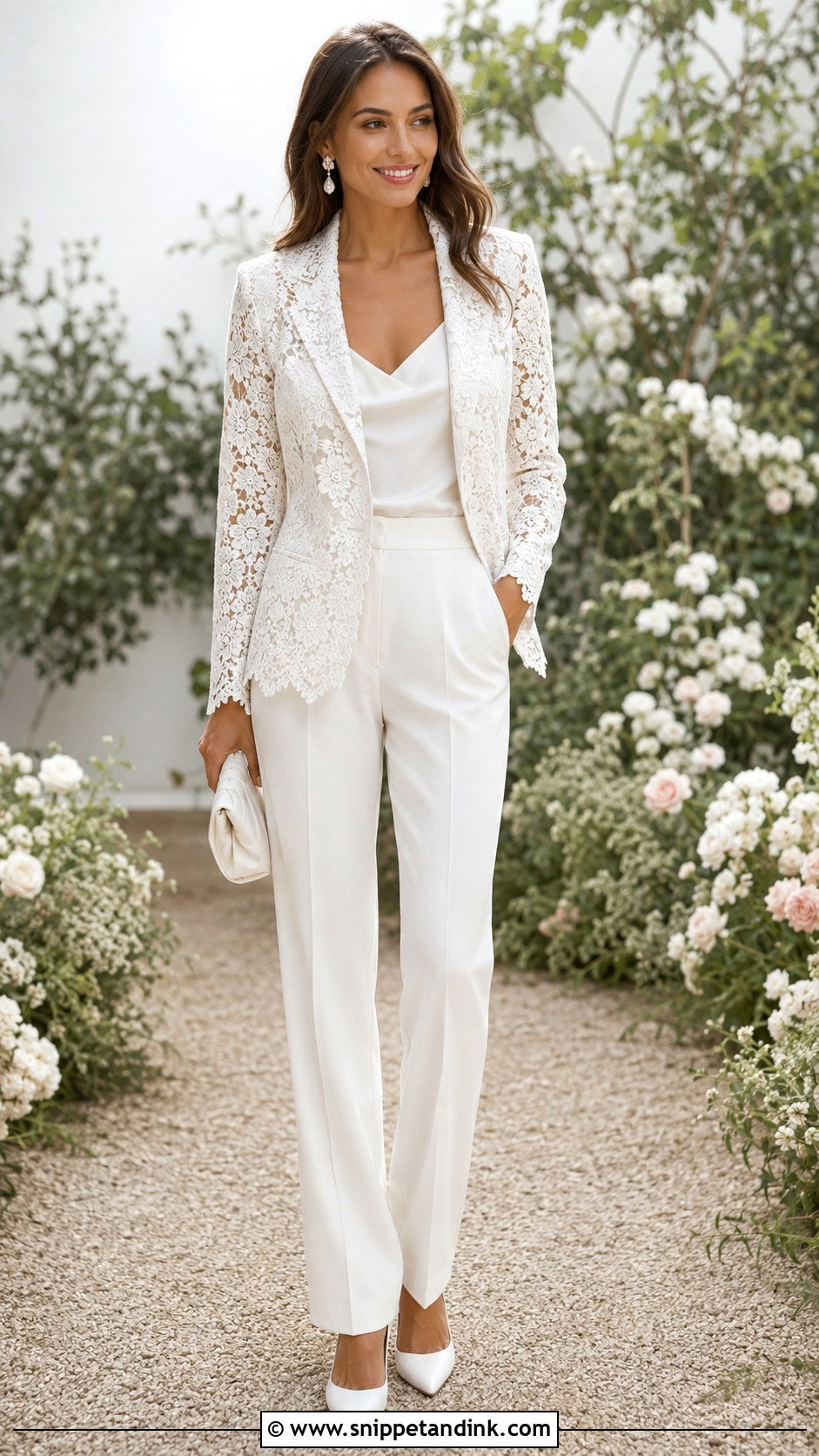
Lace turns tailoring romantic, but only on a jacket that fits with room to spare. Choose a lace blazer with a smooth lining, defined lapels and little see-through at the body, and keep the crepe trousers plain so the outfit doesn’t get crowded. A simple satin camisole underneath lets the pattern lead. Pointed ivory shoes, pearl earrings and a satin clutch finish it, and brides can add a short veil or a floral hair piece. Guests should choose colored lace rather than white. Lace distorts under strain: the motifs stretch at a tight sleeve and pull around buttons. If the jacket is snug, I’d size up and have it taken in. Garden weddings, spring dates and softer indoor venues suit it.
10. Pearl Embellished Wedding Suit
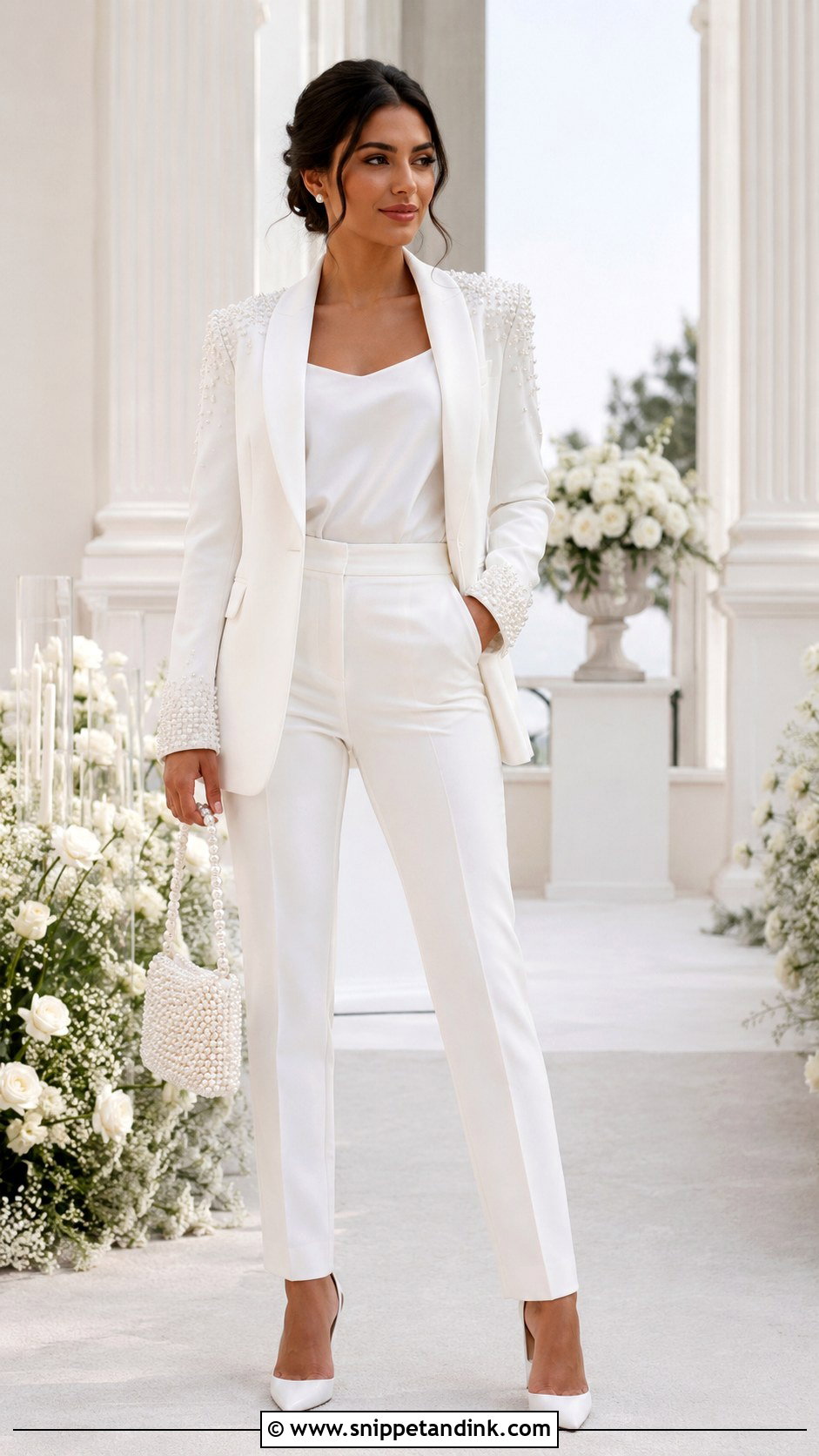
Pearls on a suit work when they’re placed, not scattered. I look for a blazer decorated along the shoulders, lapels, cuffs or pockets rather than covered all over, then keep the trousers high-waisted and plain with a simple satin shell. White pointed pumps and a compact pearl-handled bag repeat the idea once. Wear small studs or a fine bracelet instead of a heavy pearl necklace, which fights the jacket. Before the day, tug gently on each pearl and check the backs, since loose threads catch on the camisole and on bouquet stems. Up close the detail looks special, and from across the room the suit still reads clean, a good way to bring a traditional bridal element into modern tailoring.
11. Sequin Wedding Suit
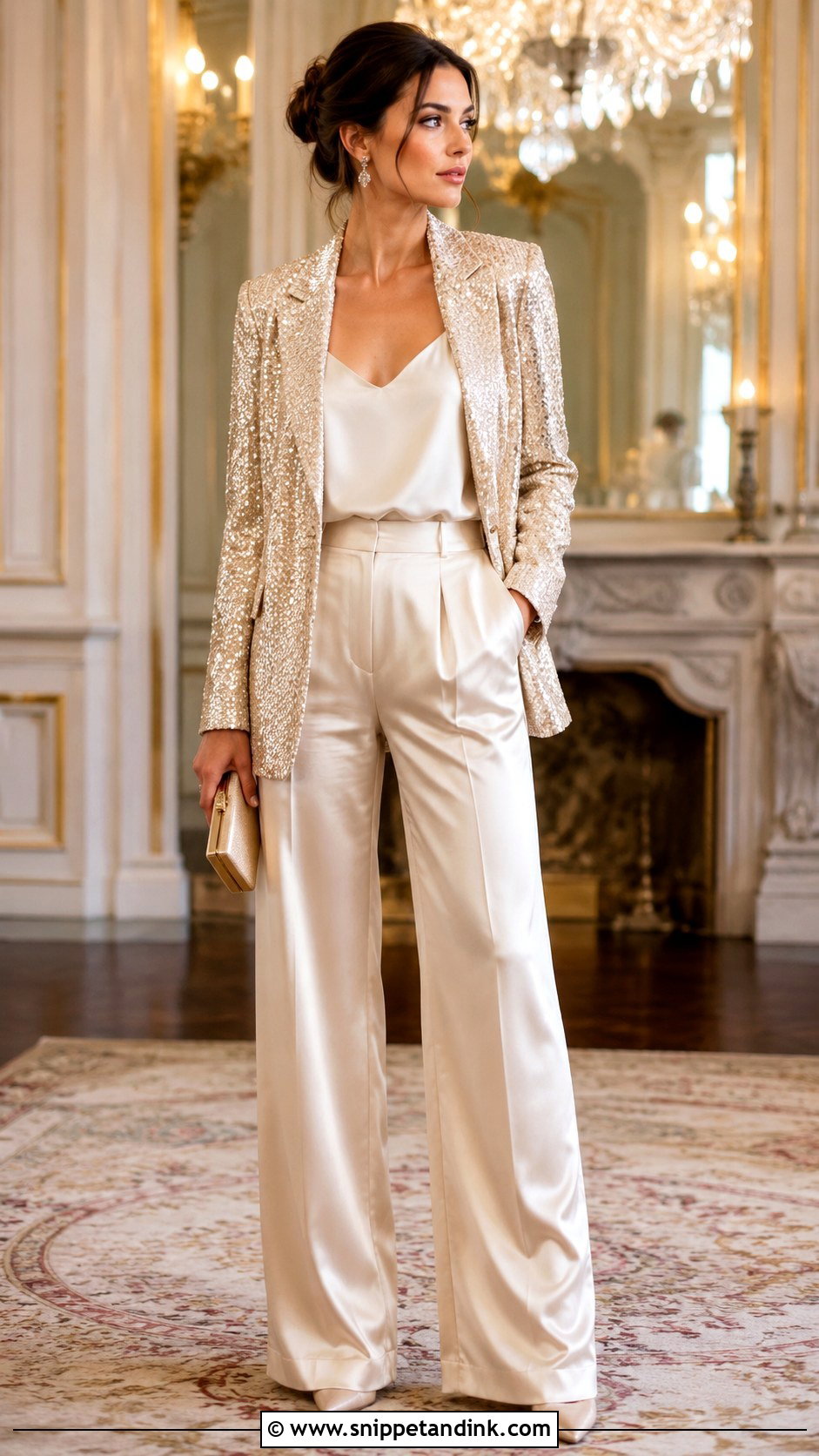
Sequins belong after dark: an evening ceremony, a reception change or a festive party. Fine sequins in silver, champagne, blush or a deep jewel tone look more polished than large paillettes. A fully sequined blazer sits best over plain satin trousers, while matching sequin trousers make a bolder head-to-toe statement. Keep the rest quiet with a smooth camisole, simple pumps, small earrings and a hard-case clutch, and skip embellished shoes and big jewelry. Sequined sleeves scratch the inner arm and sequined trousers scratch when you sit, so I always ask brides to sit in the suit for ten minutes at the fitting. Bright reception lighting is where it comes alive, since the fabric catches light every time you move.
12. Floral Jacquard Wedding Suit
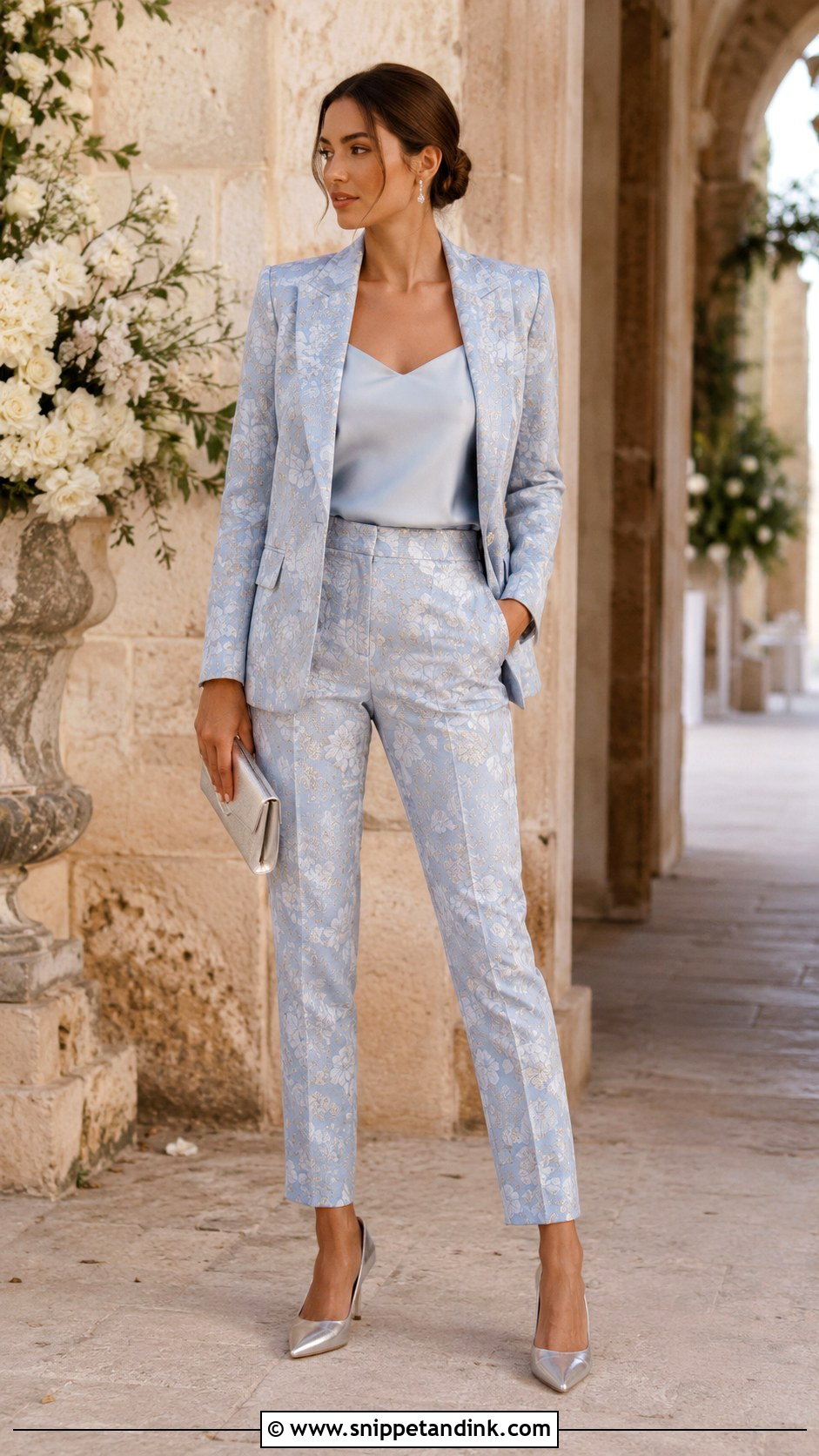
Jacquard has its pattern woven into the cloth, which looks richer than a print. A coordinated blazer and trousers in a soft pastel, metallic neutral or deep evening shade sit over a solid satin camisole. Large patterns look better on a streamlined trouser, while a small, subtle motif can take a wide leg. Pick shoes in one color from the weave, then add delicate earrings and a plain clutch. Brides can look at ivory-on-ivory jacquard; guests have blue, rose, green or gold. Jacquard is often a heavier, stiffer cloth, so reach your arms forward in the jacket before buying it. A stiff weave across the back gets uncomfortable by dinner. Formal daytime weddings and historic venues suit it.
13. Blush Pink Wedding Suit
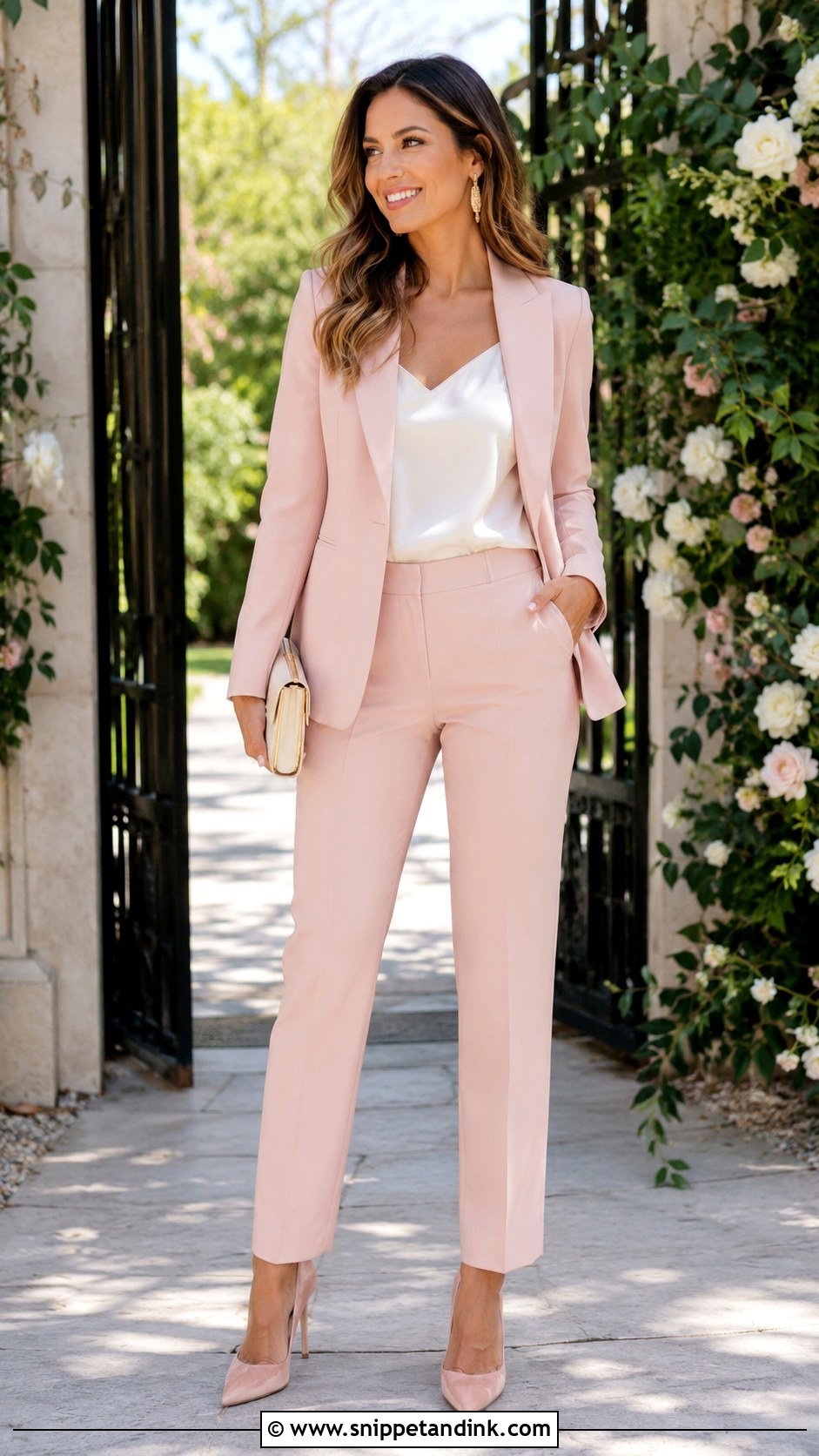
Blush gives a bride a soft alternative to white and gives guests a gentle color that still feels formal. Keep the blazer and high-waisted trousers in the same shade, with an ivory silk camisole for slight contrast or a matching pink top for one continuous line. Nude or rose pumps, gold earrings and a cream clutch add warmth, and a fabric flower brooch can give a plain cut a focal point. Fabric is what keeps it from looking like office wear. Casual cotton creases and reads as daywear, while crepe, satin or fine wool hold up. Check blush against your skin in daylight too; some shades wash out fair skin and need a slightly deeper rose. Spring ceremonies, garden venues and bridesmaids in suits are where I use it.
14. Pastel Blue Wedding Suit
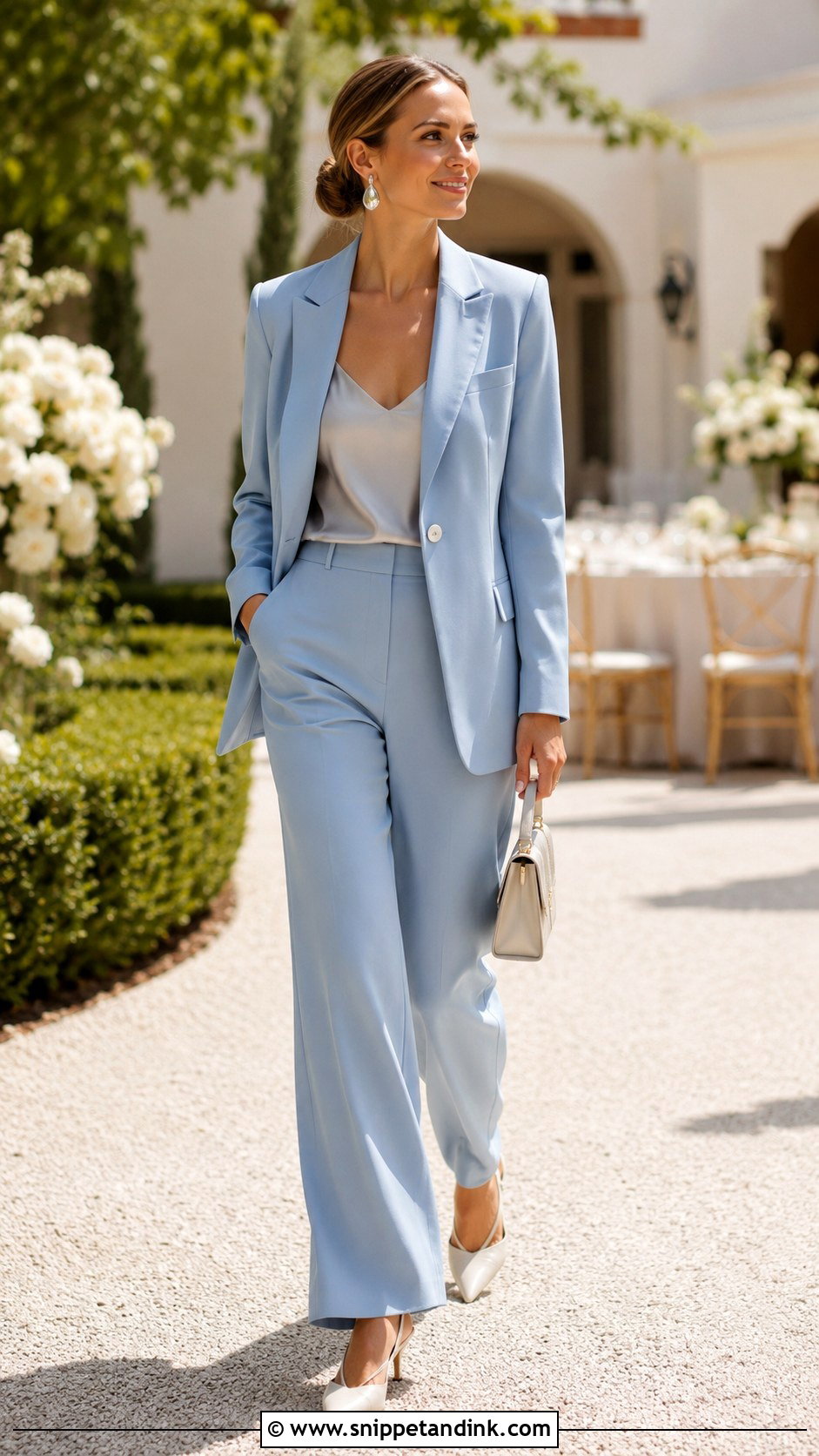
Pastel blue looks fresh and polished in daylight. A single-breasted blazer with straight trousers is the classic version, and wide-leg pants soften it. A white or pale silver camisole keeps the color clear, with ivory slingbacks, silver earrings and a compact neutral bag. Outdoors, choose a lighter cloth than standard suiting and keep the trouser hem off the ground, because pale blue shows grass marks immediately. Brides can treat it as their something blue, while guests and bridesmaids can wear it as a seasonal color. White, silver and pearl accessories sit well with it in natural light.
15. Sage Green Wedding Suit
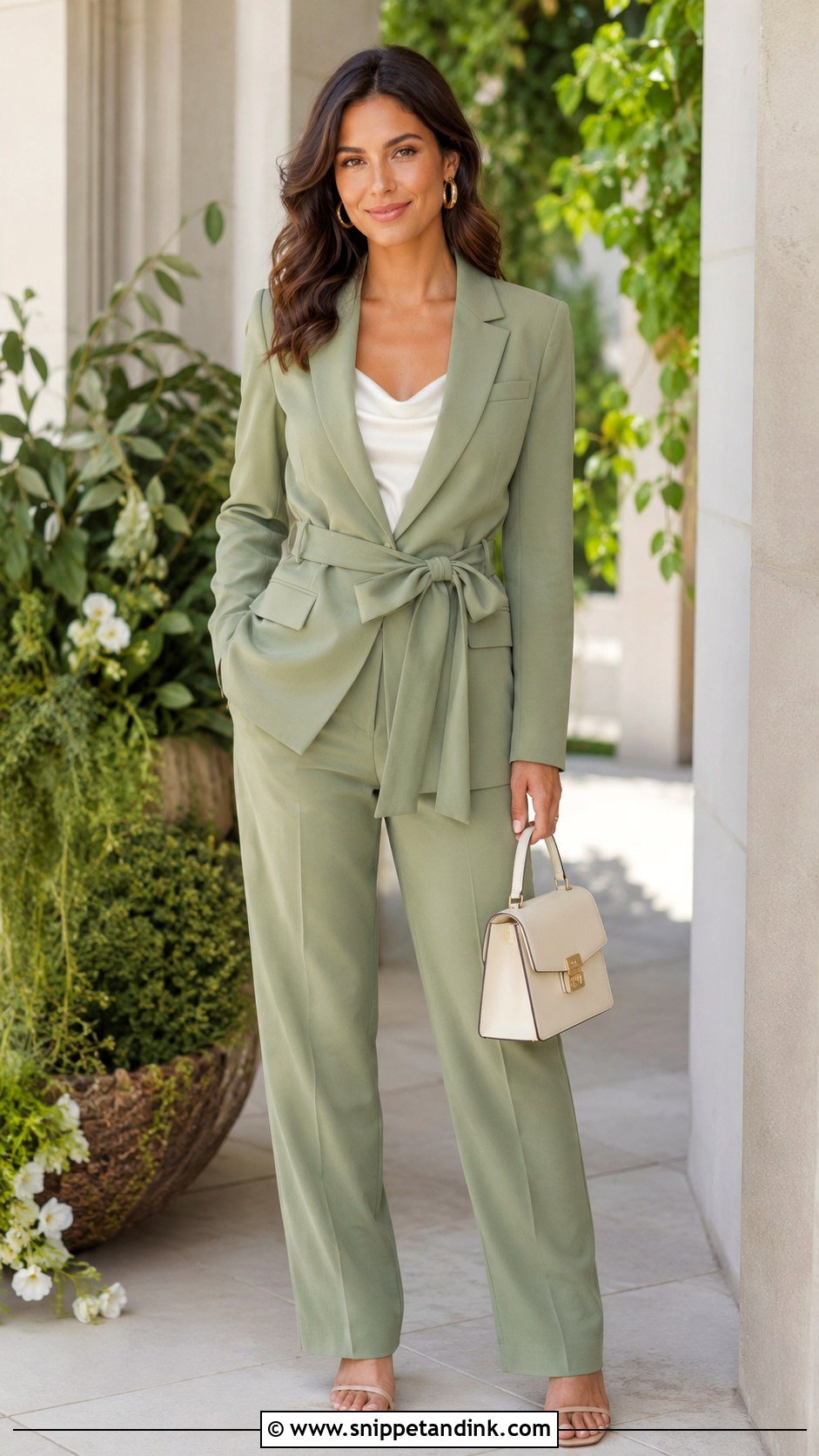
Sage green suits outdoor, destination and garden weddings because it sits so easily next to foliage. Start with a tailored blazer and full-length trousers in light crepe or a breathable linen blend, then add an ivory camisole or softly draped blouse to brighten the color near your face; muted greens can drain the complexion otherwise. Nude sandals, gold hoops and a structured cream bag are plenty. A belted jacket defines the waist, while a single button gives a cleaner line. Bridesmaids can wear matching suits with different tops for some individuality. Guests should make sure the fabric matches the formality on the invitation, since linen reads casual.
16. Navy Wedding Guest Suit
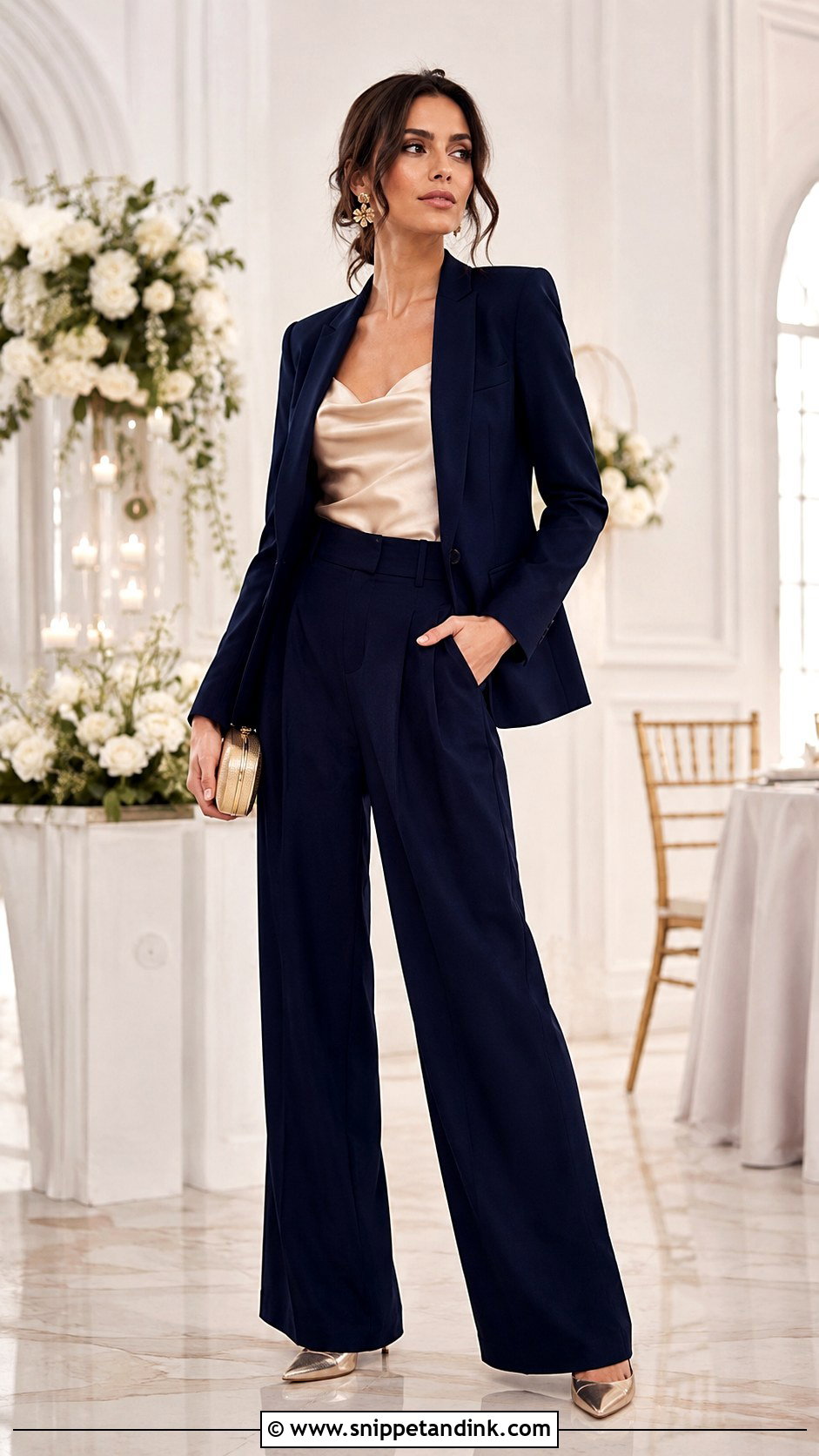
Navy is the most dependable suit color for a guest who doesn’t want a dress, at formal and semi-formal weddings alike. Choose a sharply tailored blazer with straight or wide-leg trousers and a satin camisole in champagne, pale blue or soft pink. Metallic heels lift the dark color, and statement earrings with a small silver or gold clutch make it festive. For evening I look for satin lapels or a subtle tonal texture; for daytime, a lighter fabric and a softer jacket. The fastest way to make navy look corporate is a work shirt and a practical tote. Swap those for a satin top and a dressy bag, and the same suit goes to weddings in any season.
17. Burgundy Velvet Wedding Suit
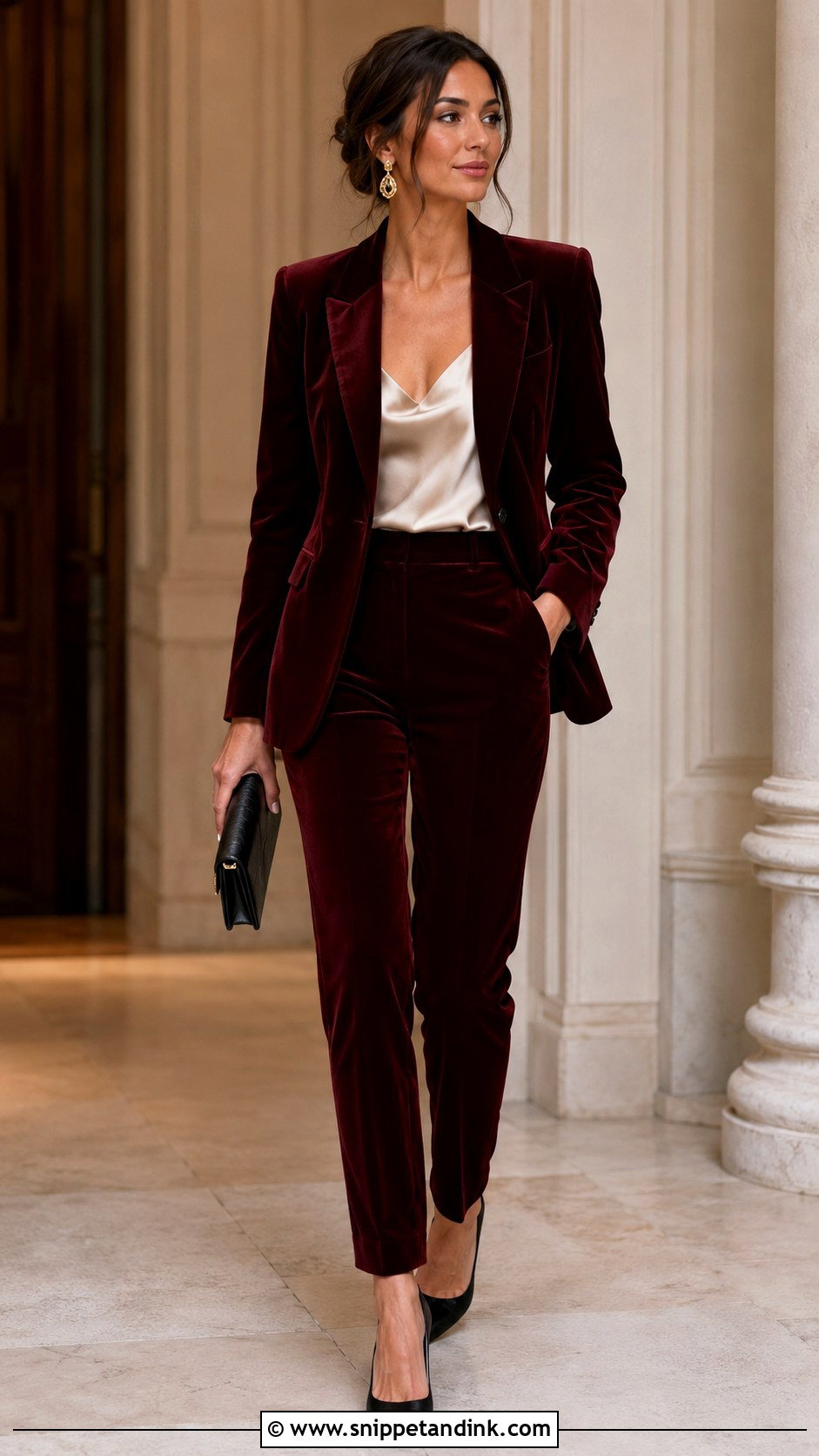
Burgundy velvet belongs to cool-weather weddings and formal evening receptions. Wear the velvet blazer with matching trousers, or with smooth crepe pants for a lighter finish. A black satin camisole adds depth, while a champagne top softens the color. Pointed black pumps, gold earrings and a structured clutch are enough, because velvet already carries a lot of texture. Velvet has a nap, so it shows a slightly different shade depending on which way the pile runs. Check the jacket and trousers side by side in daylight to be sure they match, and keep it away from hard pressing, which crushes the pile. A gently shaped jacket stops the heavy cloth from overwhelming a smaller frame.
18. White Linen Summer Wedding Suit
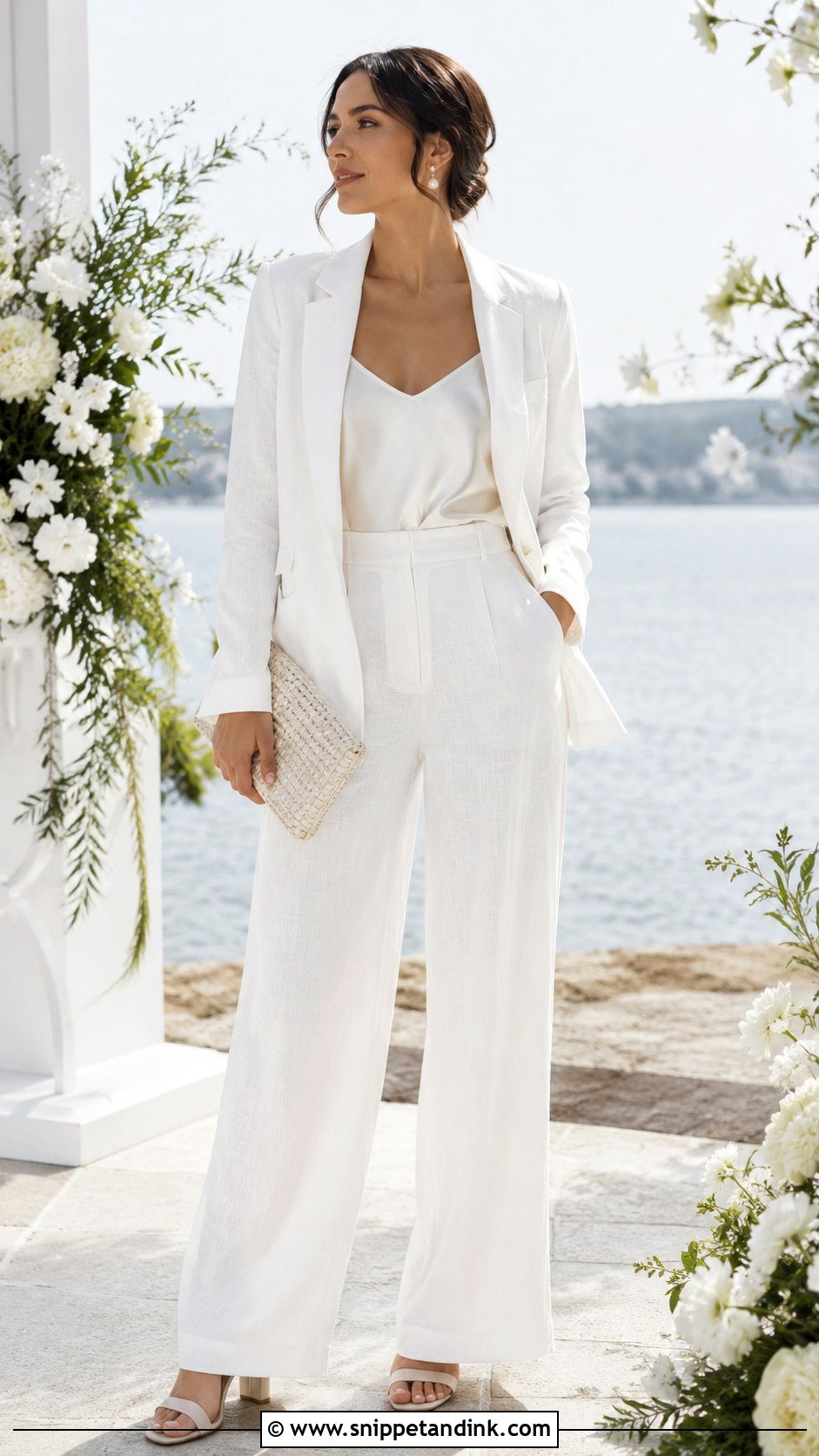
Linen is the coolest suit cloth for a hot ceremony, and it will crease. That’s part of its character, so I tell brides to expect it instead of fighting it. Choose a lined blazer with relaxed shaping, since a lining cuts down on both creasing and transparency, plus matching high-waisted trousers wide enough for air but tailored at the waist and hips. A silk or satin camisole keeps it from looking too casual against the slubby texture. Ivory block-heel sandals, pearl earrings, a woven clutch with refined detail, a simple bouquet and a low bun finish it. A linen blend holds its shape better than pure linen through a long day. Beach venues, outdoor ceremonies, courthouse weddings and warm-season receptions suit it.
19. Bridal Skirt Wedding Suit
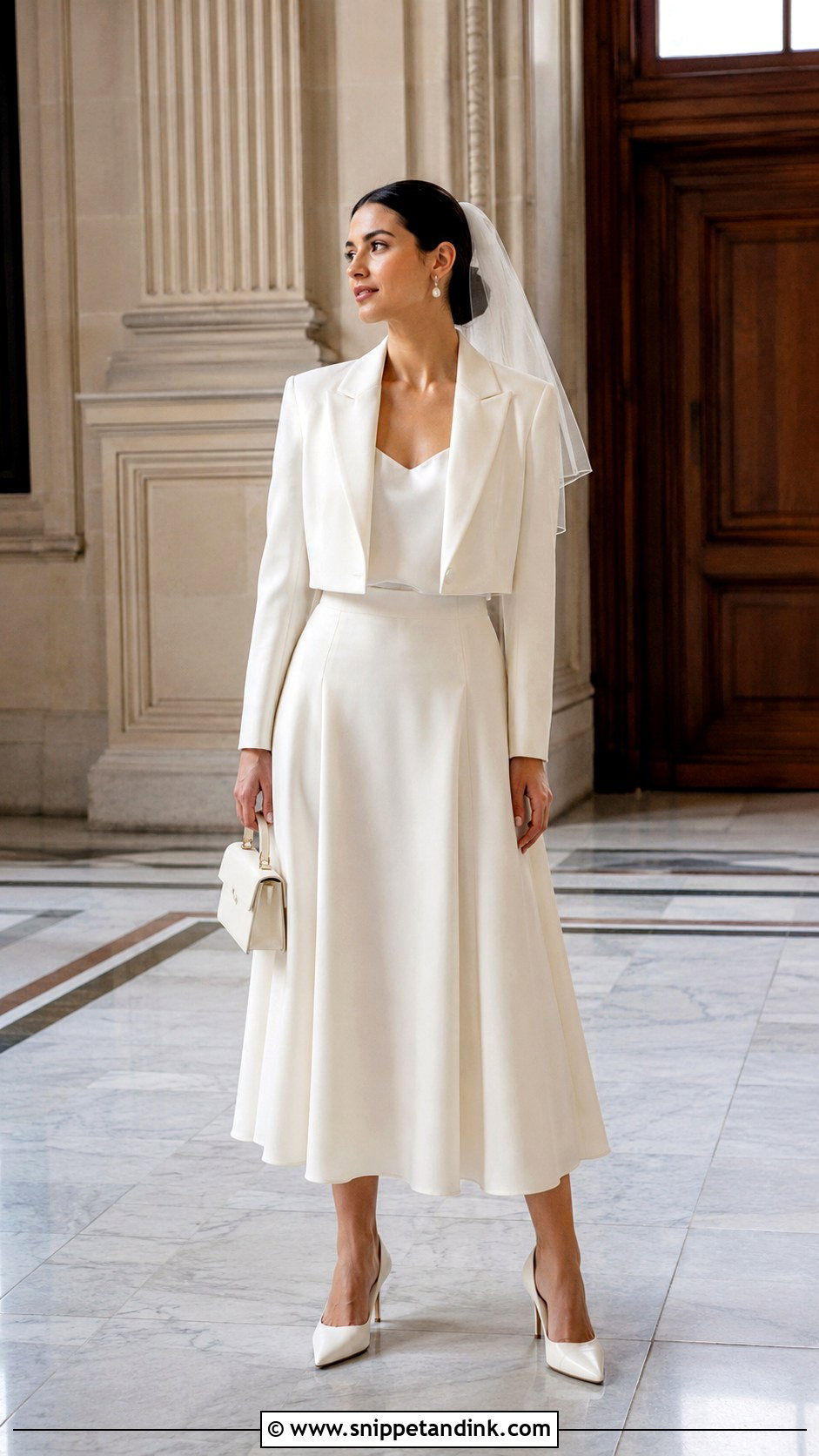
A skirt suit gives you tailoring with the swing of a skirt. Pair a fitted white or ivory blazer with an A-line midi, a sleek column or a softly flared ankle-length skirt, and a silk camisole or lace shell that lies smooth at the waist. Pointed pumps, pearl earrings and a structured mini bag keep it classic. Proportion matters here: a shorter blazer suits a fuller skirt, and a longer jacket suits a narrow column. Walk and sit in the skirt before it’s hemmed. Column skirts often twist around the body or need a small walking slit. Add a short veil for the ceremony and take the blazer off later. Civil ceremonies, small weddings and reception changes suit it.
20. Peplum Blazer Wedding Suit
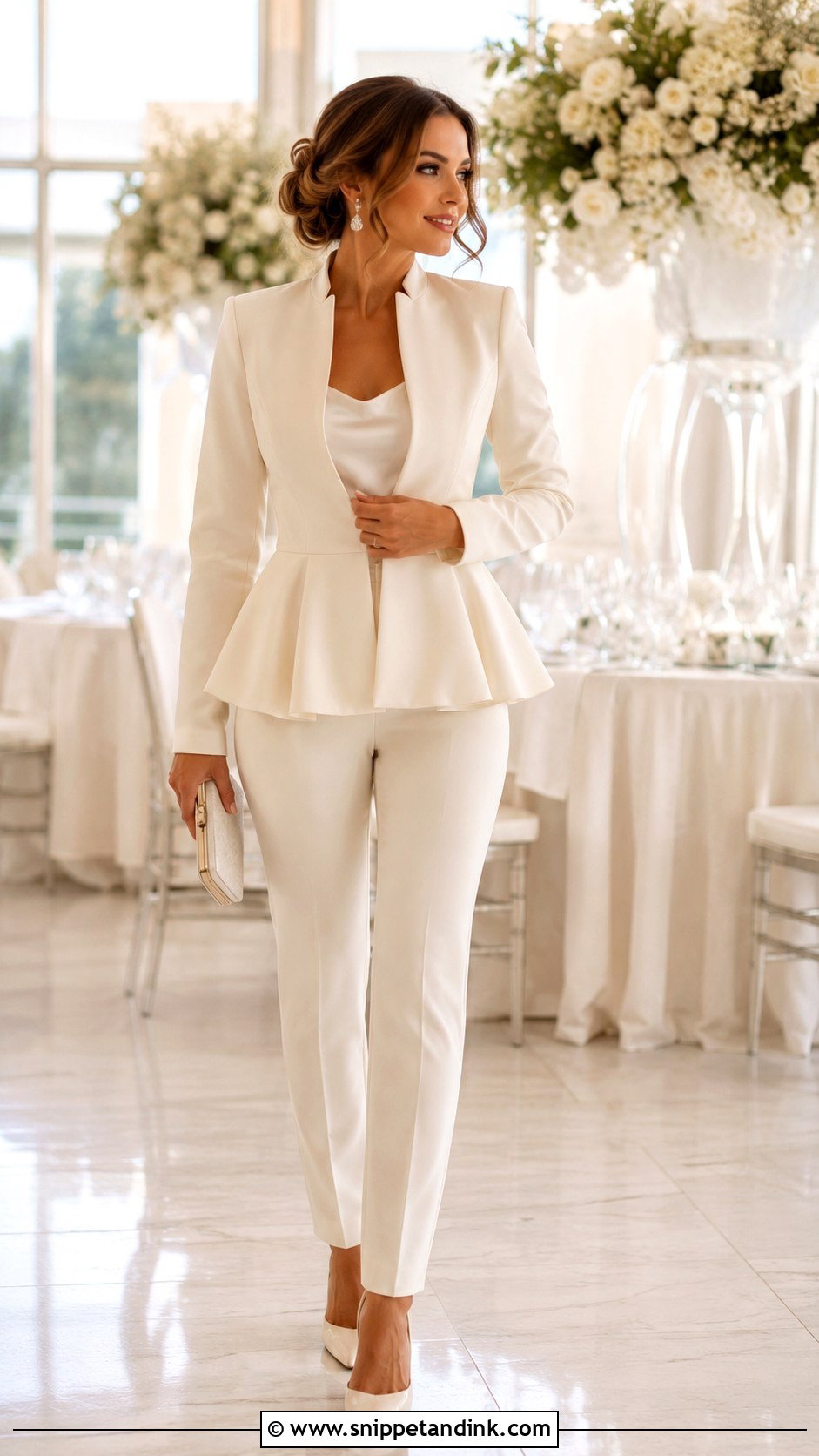
A peplum blazer defines the waist and still looks like serious tailoring. The jacket needs a smooth fitted bodice and a controlled flare starting right at the natural waist; if the flare starts too low, it widens the hips instead of shaping them. Pair it with slim, straight or gently bootcut trousers so the lower half stays quiet, and a simple camisole that covers you when the jacket is open. Pointed heels, small drop earrings and a structured clutch finish it. Brides choose white or ivory, and guests can go for jewel tones, pastels or subtle metallics. Have the peplum pressed flat before the day. It creases at the hip every time you sit, and those creases show up in portraits.
Wool, Crepe or Linen for the Month on Your Invitation
The weight of the cloth changes how the day feels more than the color does. A suit that looks right in a cool fitting room can be miserable at an outdoor ceremony in July.
- Summer and hot destinations: linen, linen blends, tropical-weight wool or light crepe. A half-lined or unlined jacket breathes far better than a fully lined one.
- Spring and autumn: medium crepe or a year-round wool, which holds a sharp trouser crease and doesn’t wrinkle much at the elbow.
- Winter and evening: velvet, heavier wool, satin and jacquard, which keep their depth of color under warm reception lighting.
A word for guests and mothers of the couple
White and ivory suits belong to the bride unless she says otherwise, and very pale cream or champagne can read as white in photos. As a guest, settle the color first and the cut second. For mothers, I check early what the other mother plans to wear, so the two outfits sit well together in family portraits without matching.
Fit Is What Turns a Suit Into a Wedding Outfit
A wedding suit should look like you and still match the season, the venue and the dress code. As the suits above show, tailoring can be romantic, glamorous, minimal, colorful or sharply modern. Start with a cut you’re comfortable in, then let a good tailor finish it. Hem trousers and skirts with your real shoes, and let the jewelry and bag support the suit instead of competing with it. Brides can bring in pearls, lace, satin or a little embellishment, and guests have pastels, jewel tones, jacquard and velvet to work with. A classic tuxedo or a peplum jacket only looks finished when every piece has been planned alongside the others.
You'll Like These Ideas:


Leave a Reply