
A suit can be the most honest thing a person wears to their own wedding, and it asks more of the tailoring than most gowns do. A gown can hide a loose waist under a sash; a jacket shows every gap at the collar and every pull across the buttons. Some of the brides I dress want something crisp, some want it relaxed, and a few want something nobody at the reception will see coming. Either way, my starting point is always the same: how it fits your shoulders and how it moves when you sit, hug and dance. The ideas below run from classic black tuxedos to velvet, linen and full color, with my notes on what each one needs to work in real life.
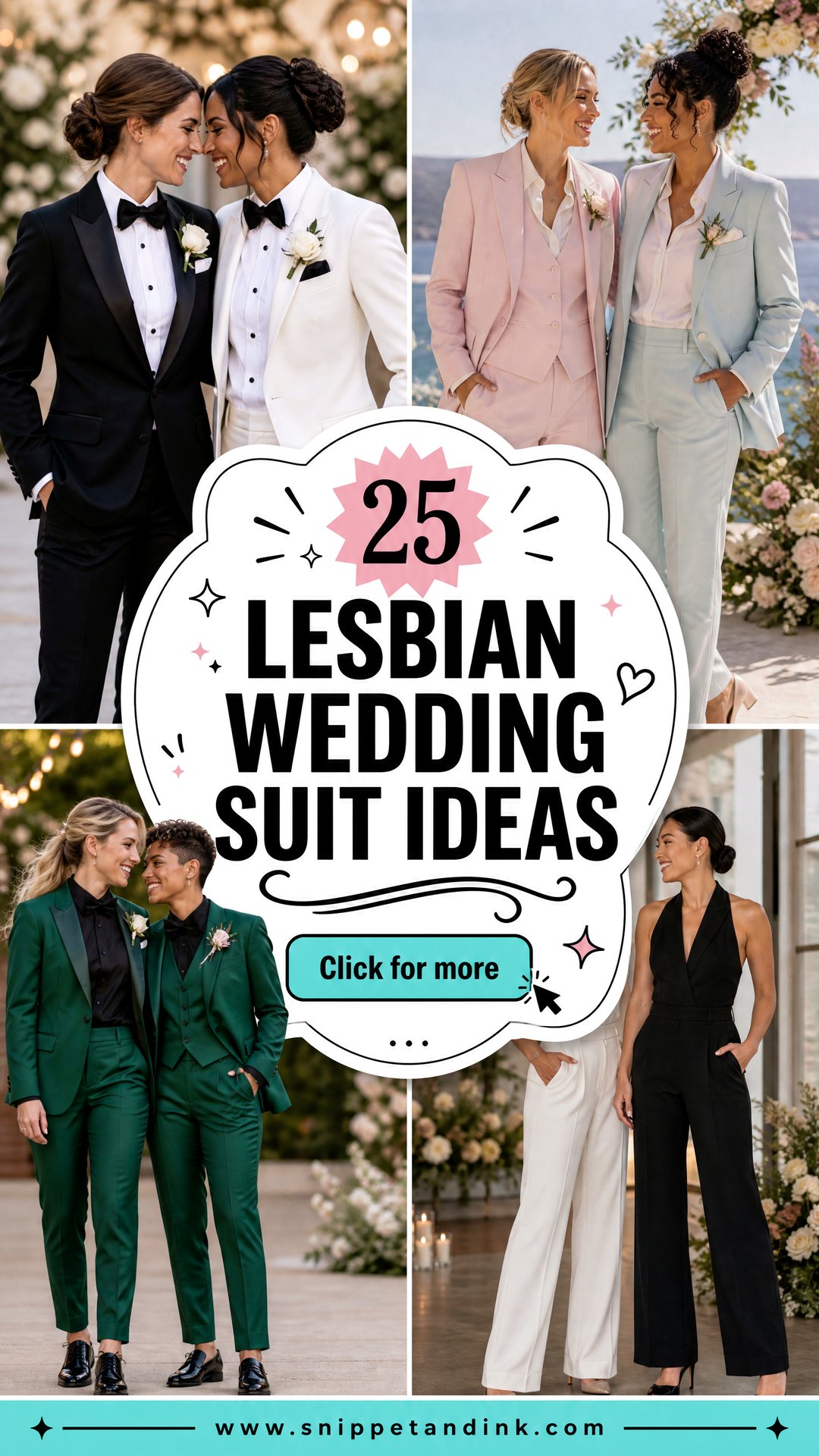
Shoulders Can’t Be Altered, So Buy for Them
When a client brings me a suit to assess, I look at the shoulders before anything else. A good tailor can take in a waist, shorten sleeves, taper trousers and move a button. Rebuilding a shoulder is a different job, often so expensive that it’s cheaper to start with another jacket. So the shoulder seam should end right where your shoulder bone ends, with no dent below it and no ridge of fabric hanging over.
Womenswear jackets are usually cut with room through the bust and a nipped waist. Menswear jackets are straighter, longer in the body and wider at the shoulder. If your build sits between those patterns, try both. A men’s jacket a size down sometimes fits better than any women’s cut, and the sleeves can be shortened. If the sleeves have working buttonholes, that shortening becomes harder, so check before you buy.
What I check at the first try-on
- Button the jacket and sit down. If it pulls into an X across the buttons, it’s too small.
- Raise both arms as if hugging someone tall. The collar should stay against your neck.
- Look at the back in a second mirror for a horizontal fold under the collar.
- Wear the bra or binder you’ll wear on the day, because it changes how the chest sits.
1. White Bridal Suit
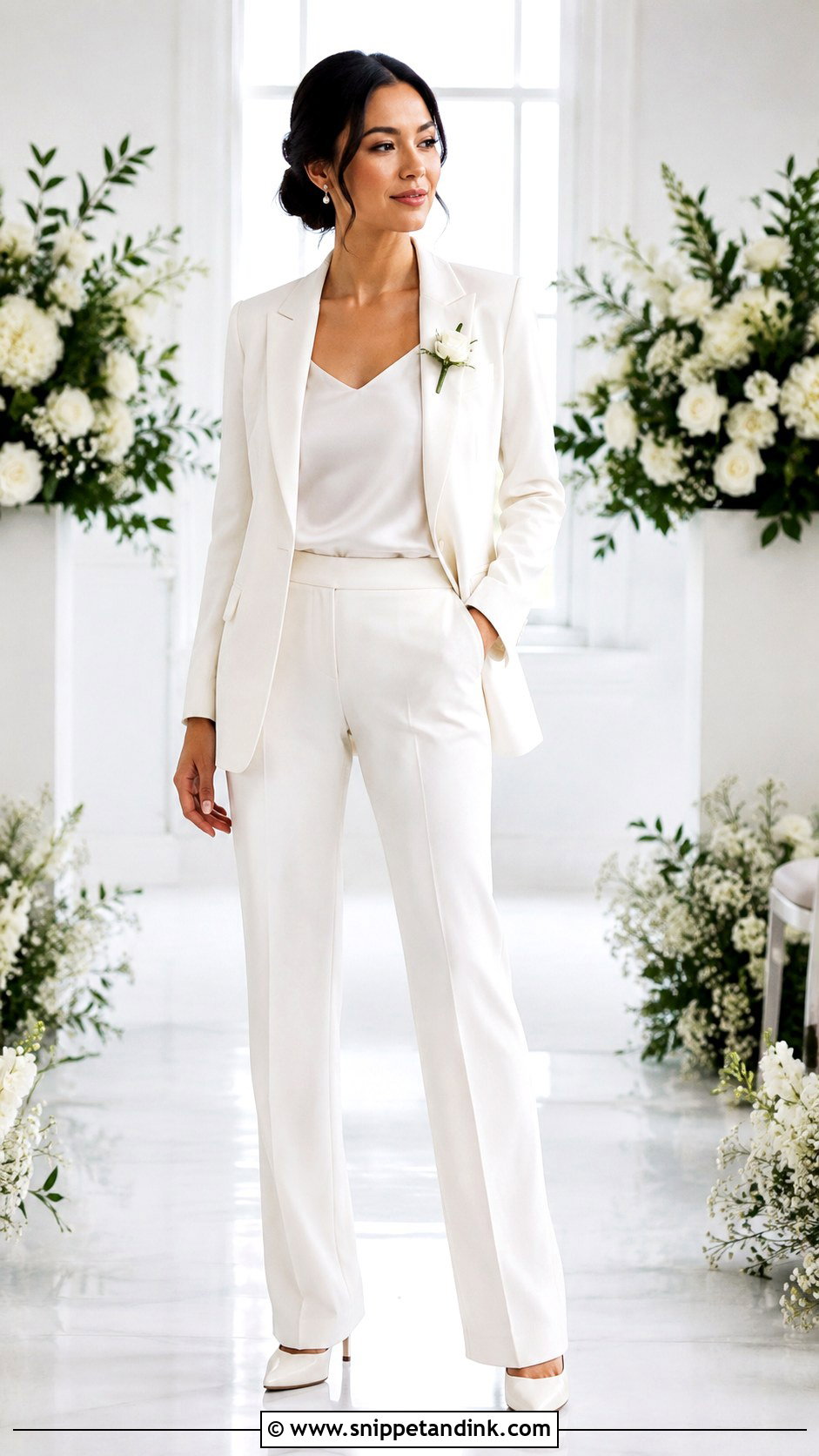
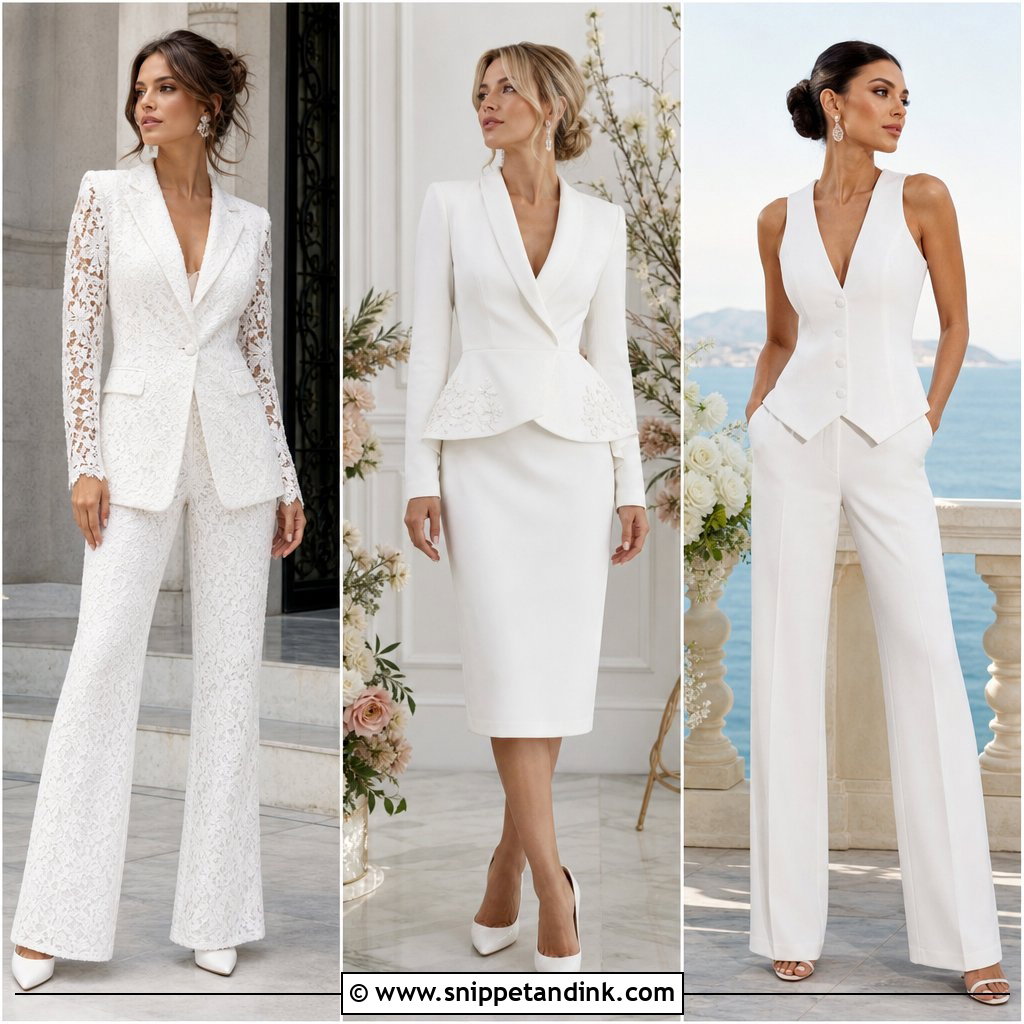
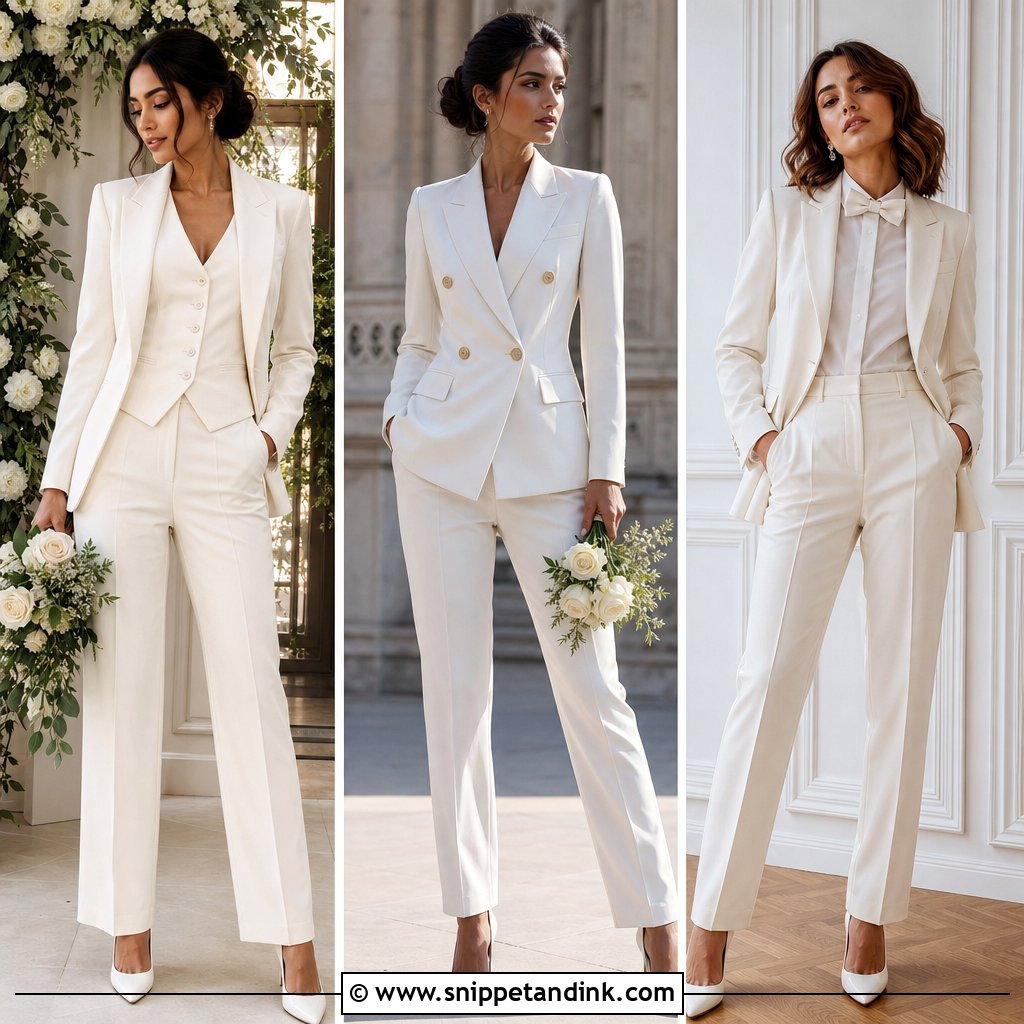
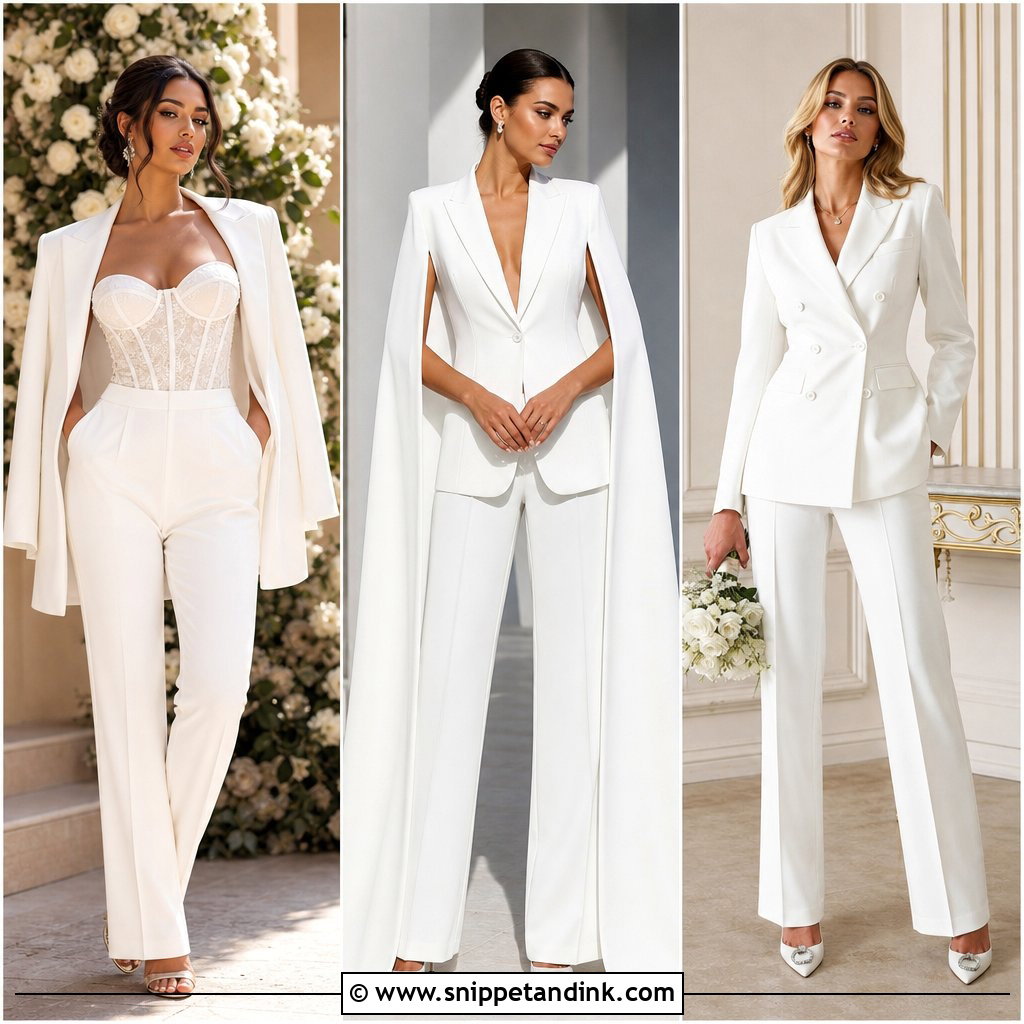
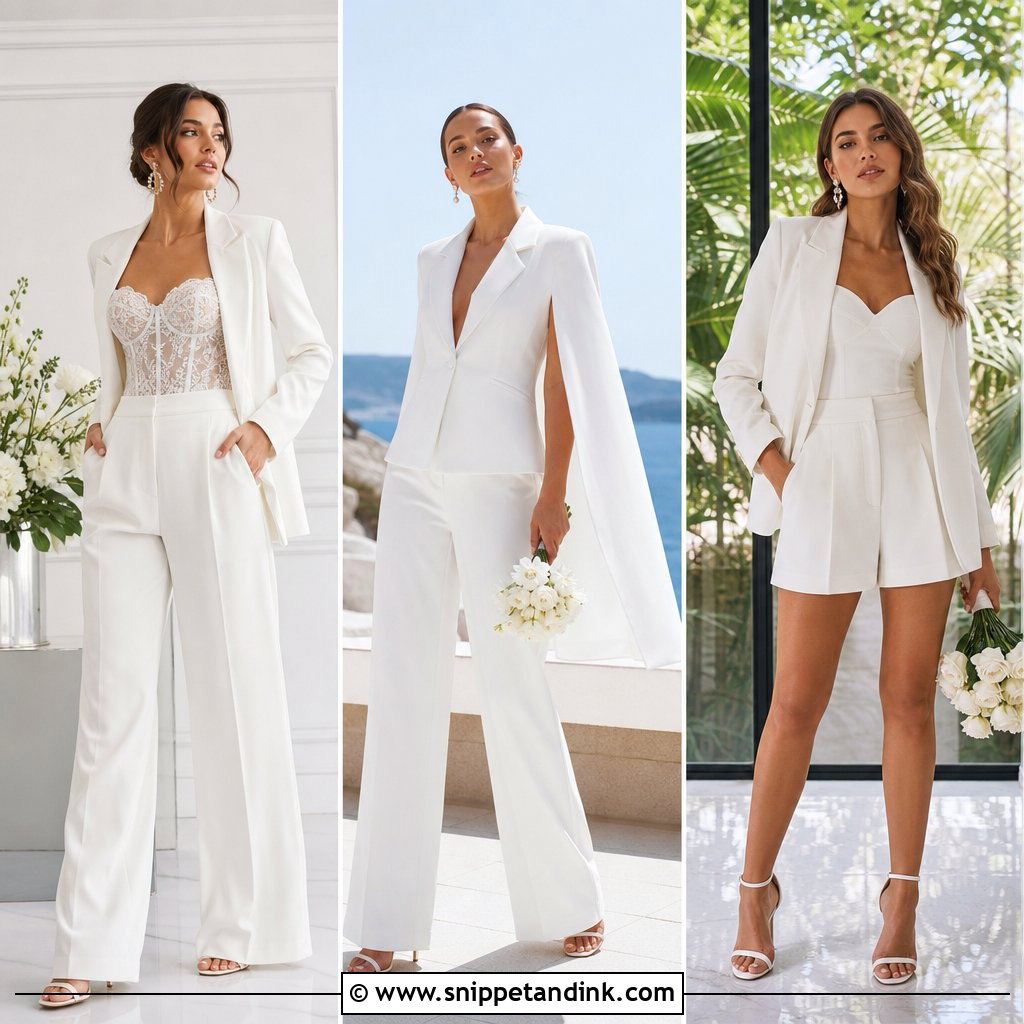
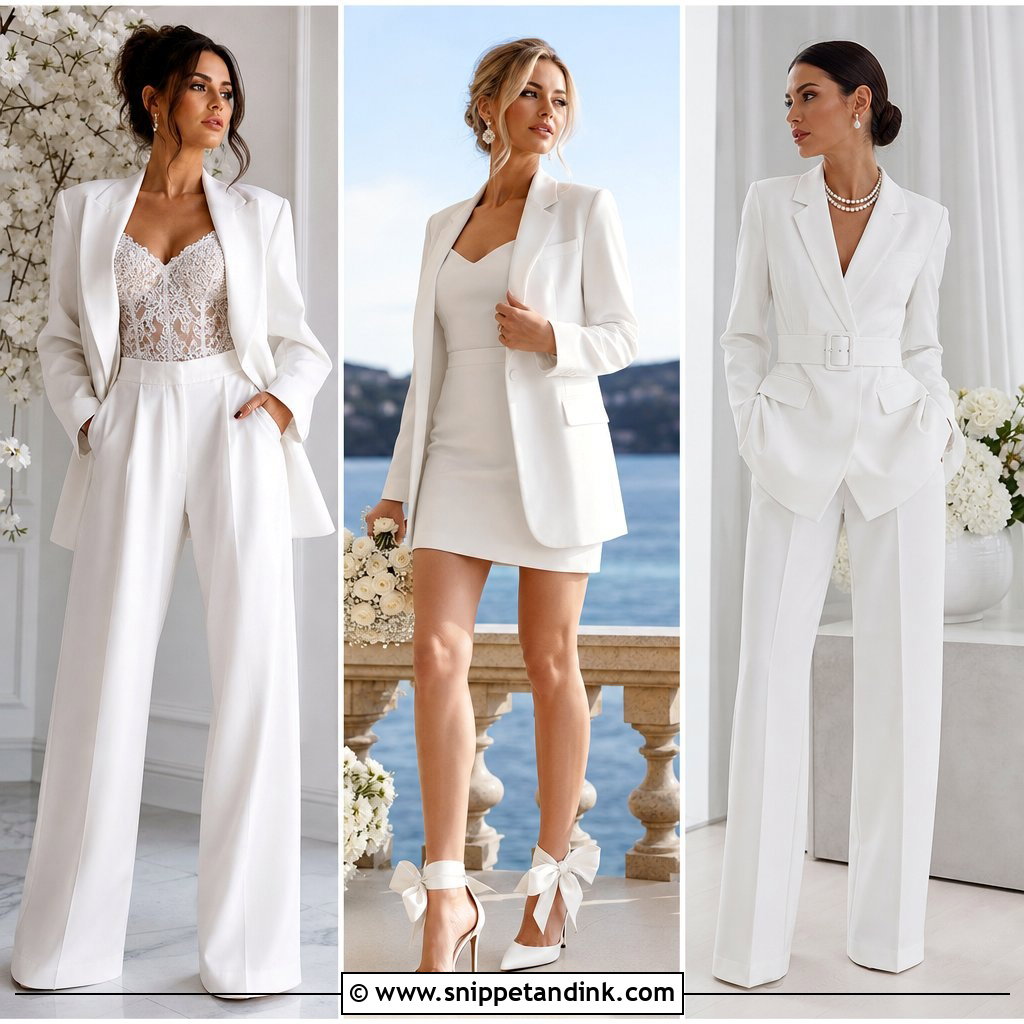
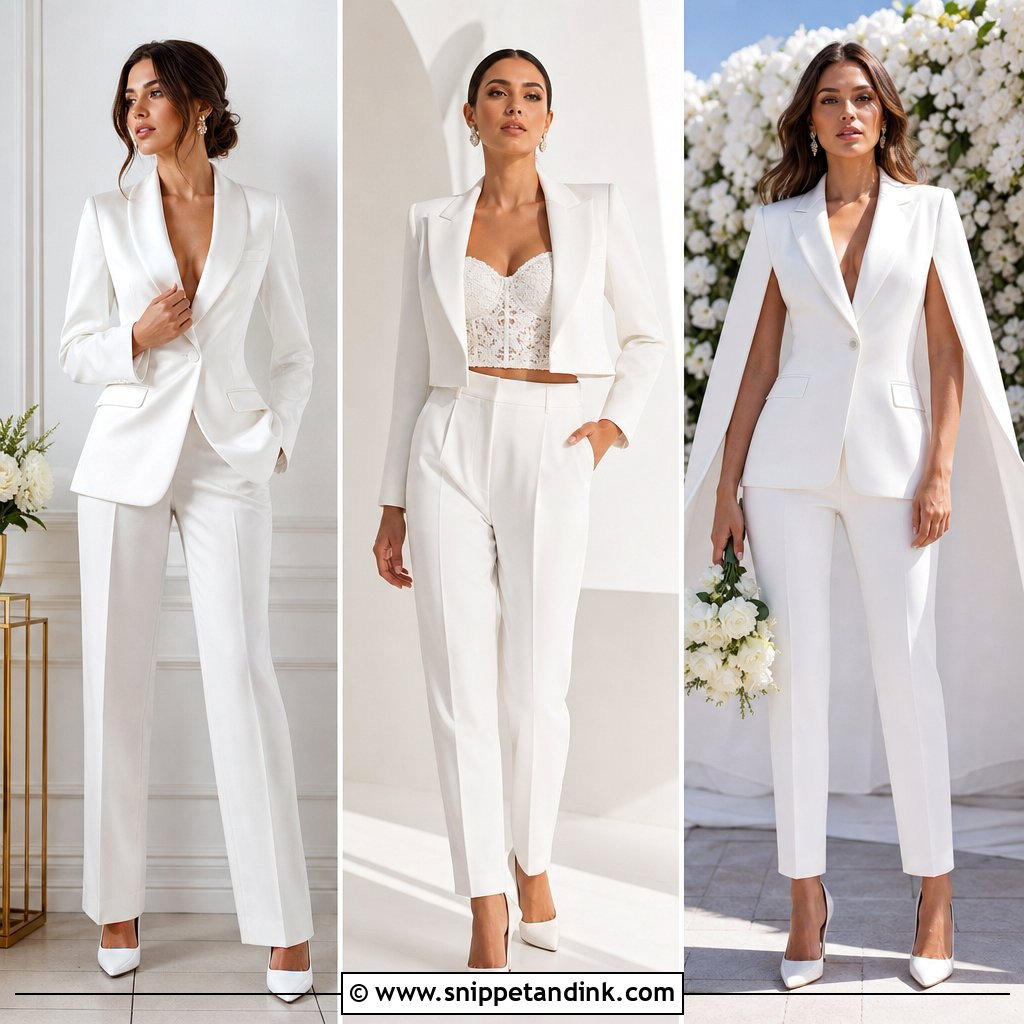
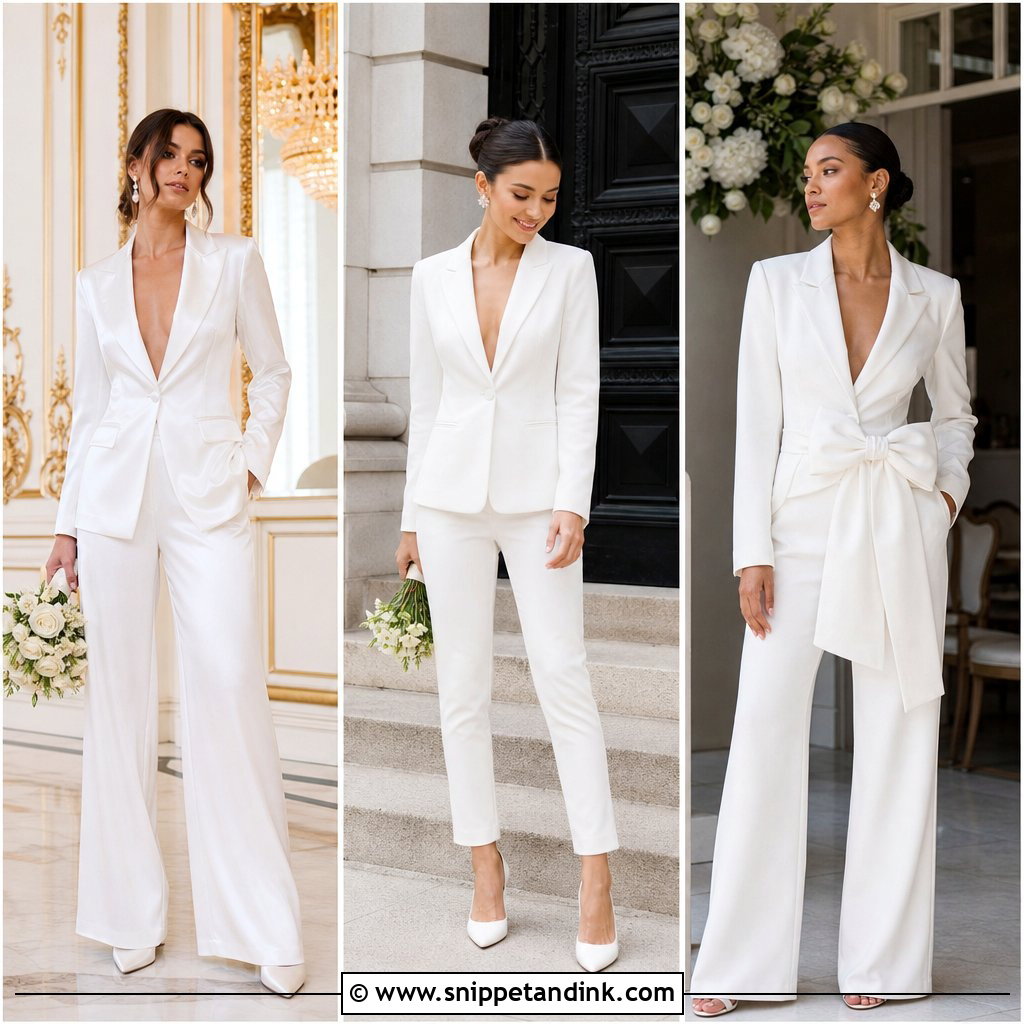
A white bridal suit gives you the ceremony feeling of a white dress with the structure of tailoring. The thing I check first is opacity: white suiting shows pocket bags, seam allowances and anything worn underneath, so I ask for a fully lined jacket and trousers, plus a skin-tone layer rather than a white one. A single-breasted jacket with slim trousers reads modern; wide legs with a softer jacket read more bridal. Hold the fabric against your face in daylight before you buy, because optic white and soft white can look like two different colors on different skin tones.
2. Black Wedding Tuxedo
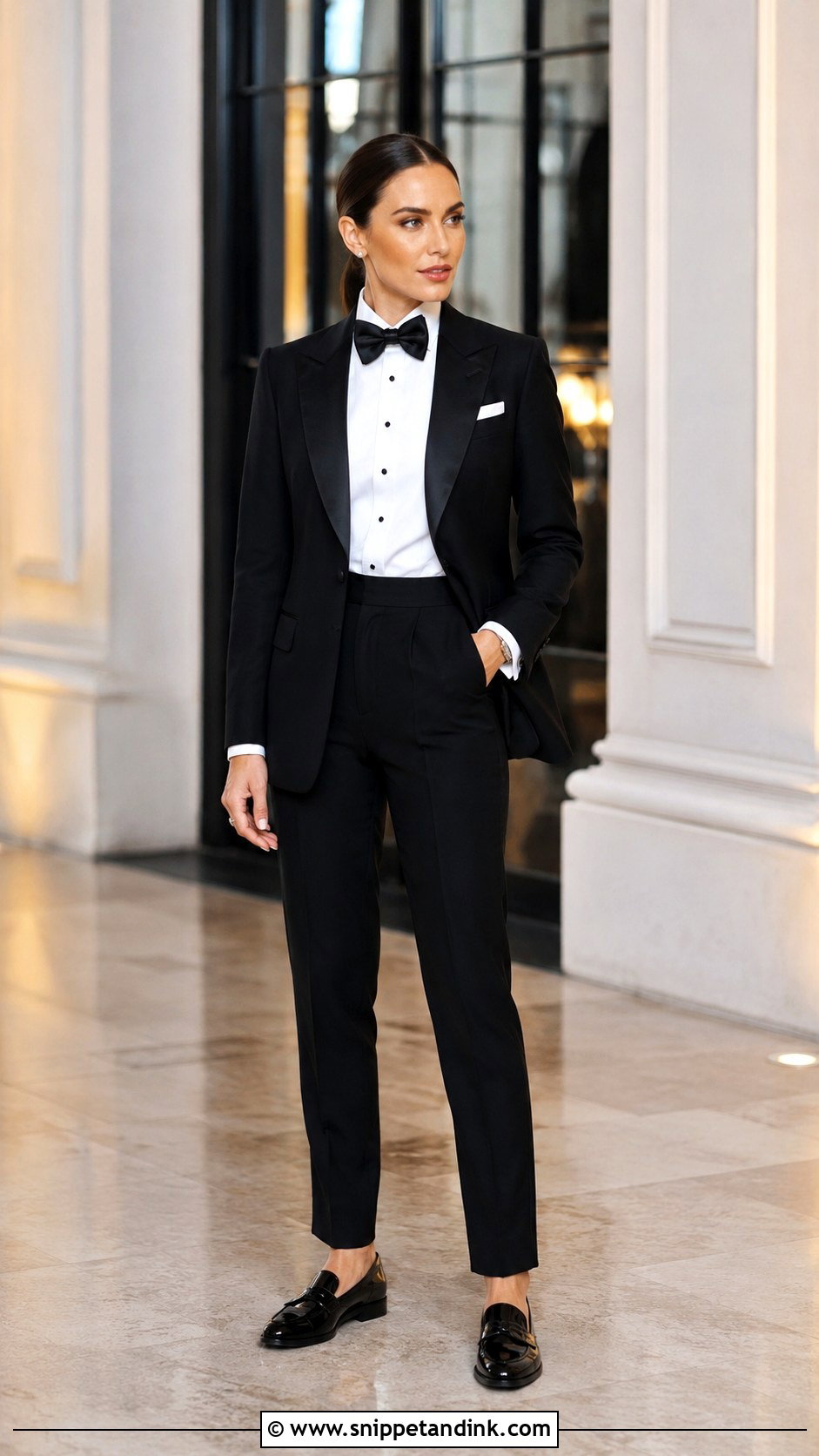
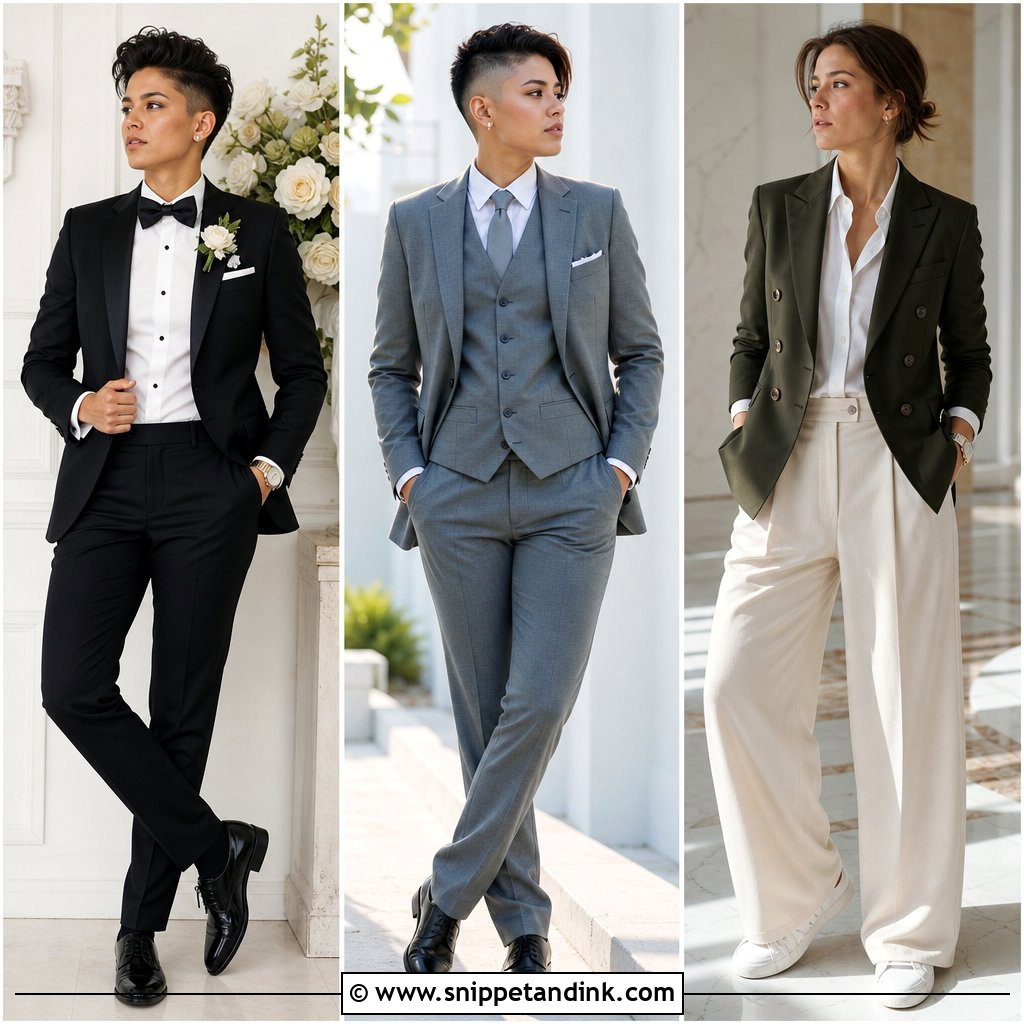
A black wedding tuxedo is the safest bet I know for photos that won’t date. Satin lapels, a crisp white shirt and trousers with a satin side stripe are the traditional build, and from there you can wear a bow tie, a slim tie or an open collar. My one warning: black shows lint, dog hair and pale makeup on the lapel more than any other color, so a lint roller goes in my kit for every black tux. Patent loafers keep it formal, and a white pocket square or pearl cufflinks bring in a bridal note for an evening ceremony.
3. Ivory Pantsuit
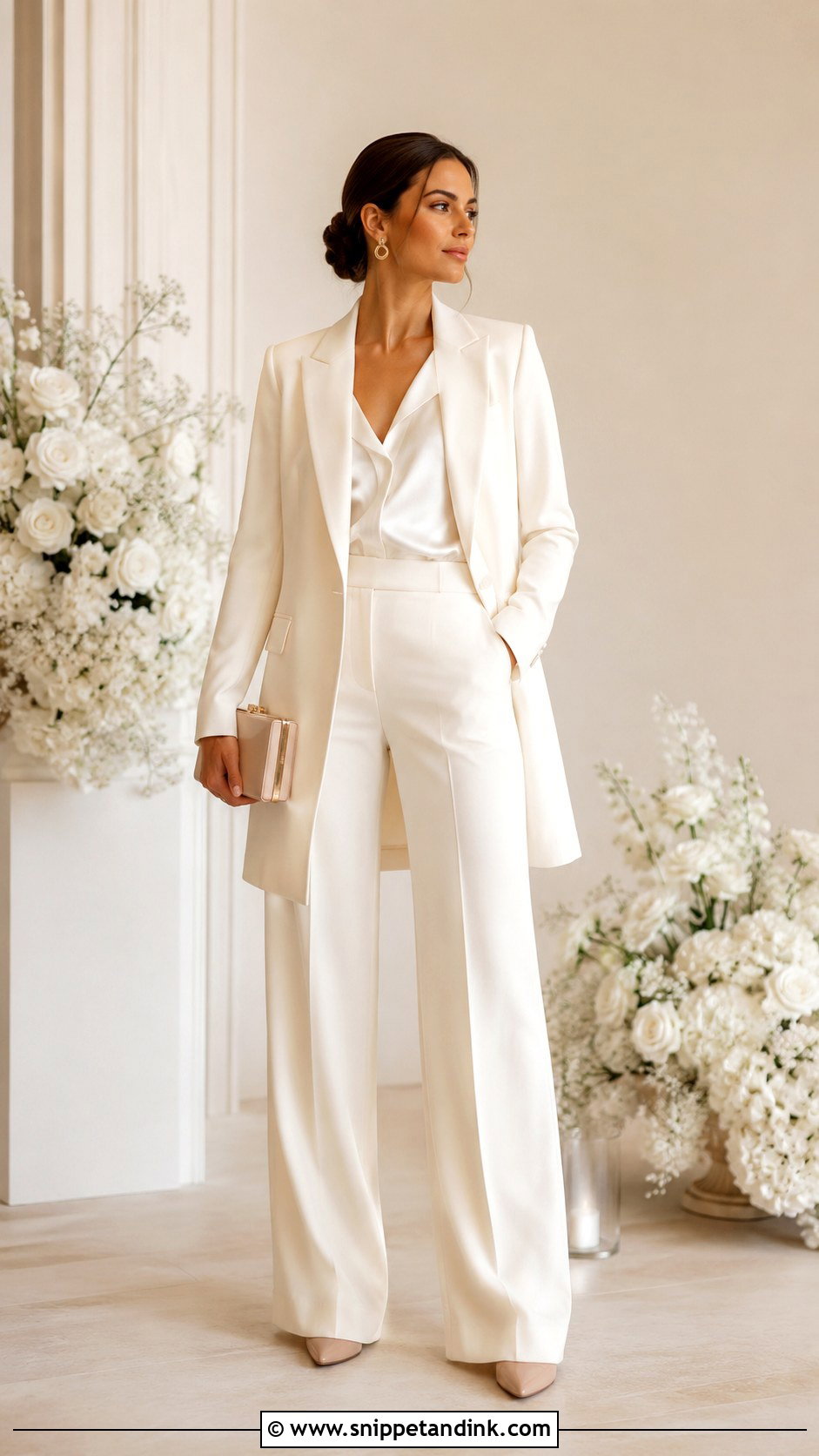
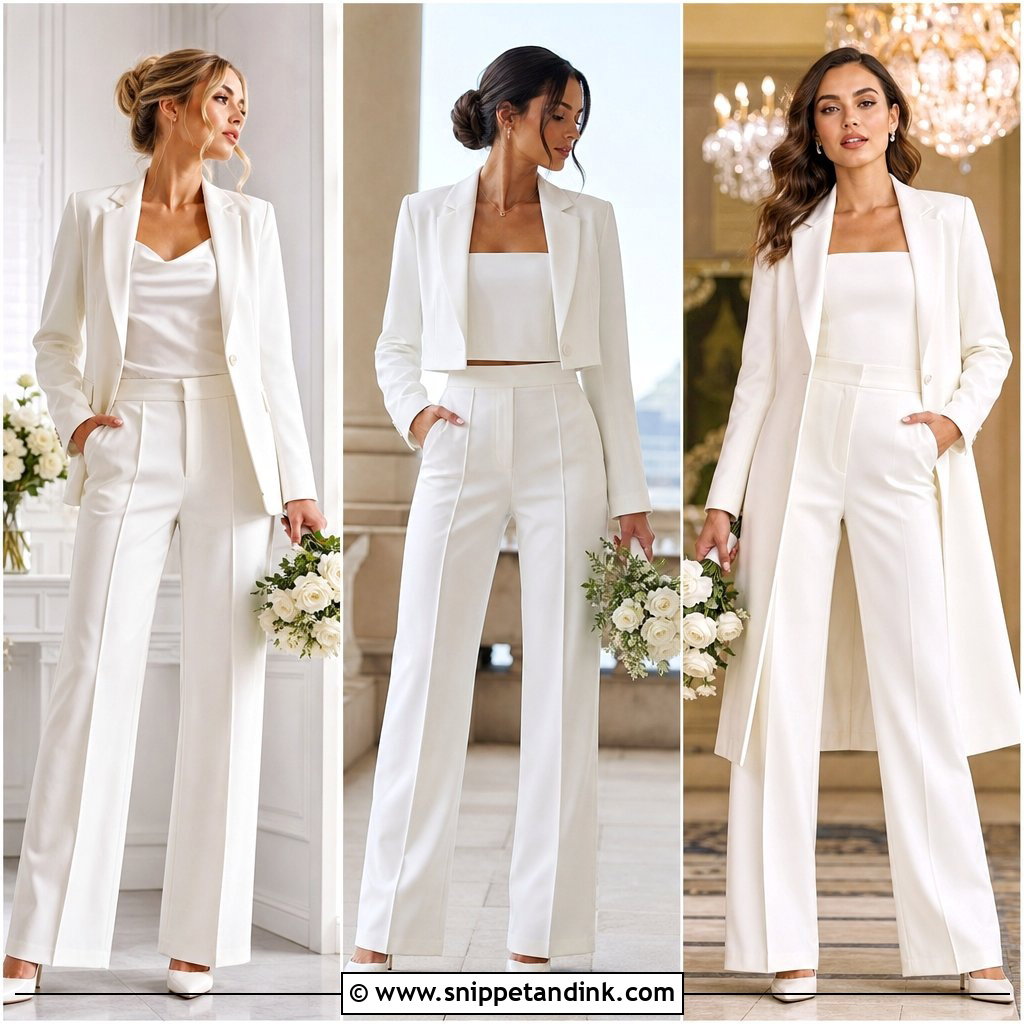
Ivory is the white I recommend most often, because it warms the skin instead of draining it. A longline blazer over high-waisted trousers gives a long, unbroken line, and a fitted vest underneath adds structure if you plan to take the jacket off. Ivory only looks rich when the cloth has some weight; thin polyester ivory goes slightly yellow under flash and wrinkles at the elbow within an hour. Gold hoops or a fine chain sit nicely against it, and nude heels or ivory loafers keep the outfit from feeling cut in half at the ankle. It suits garden ceremonies, rooftops and courthouse weddings alike.
4. Navy Blue Wedding Suit
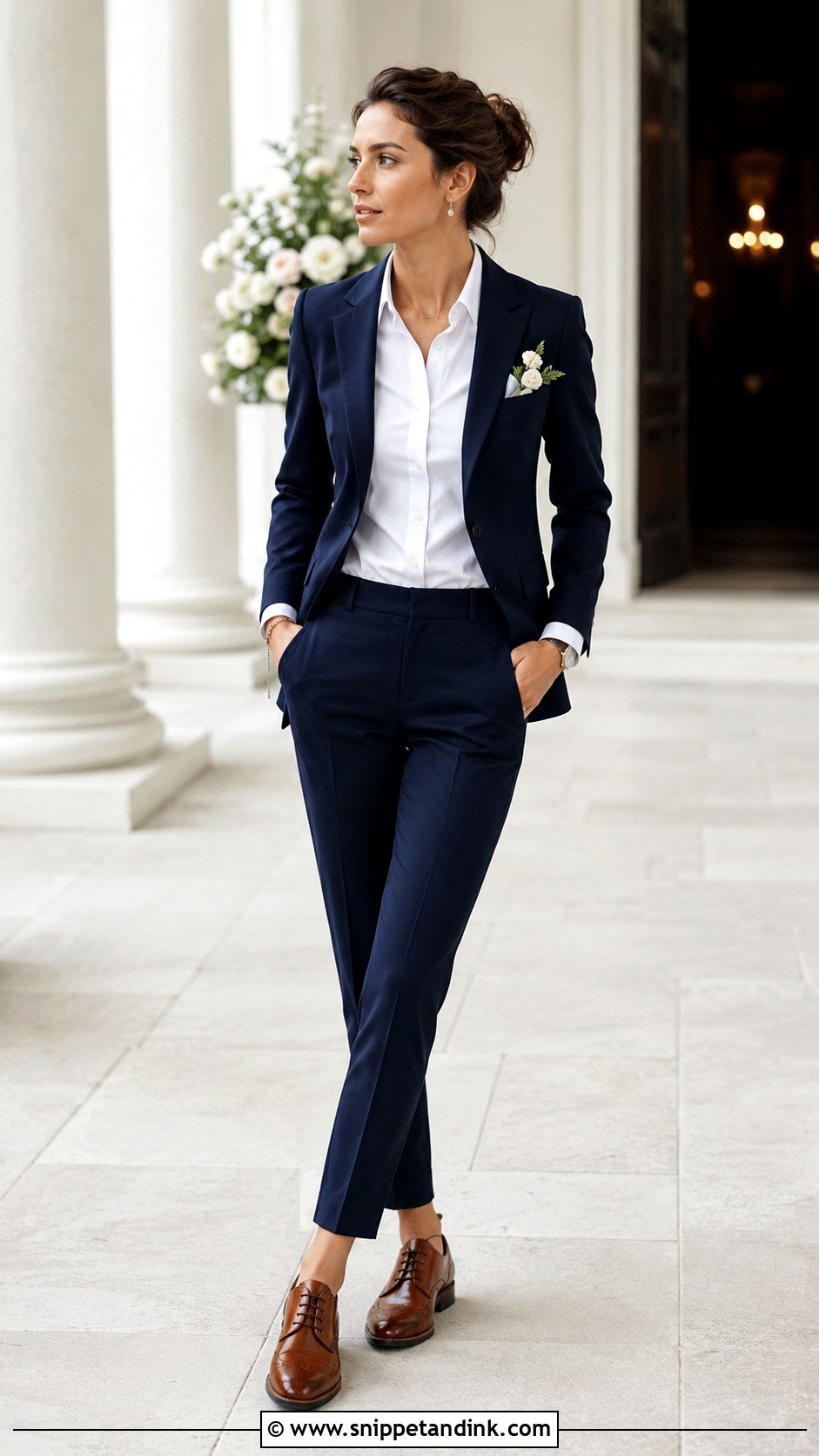
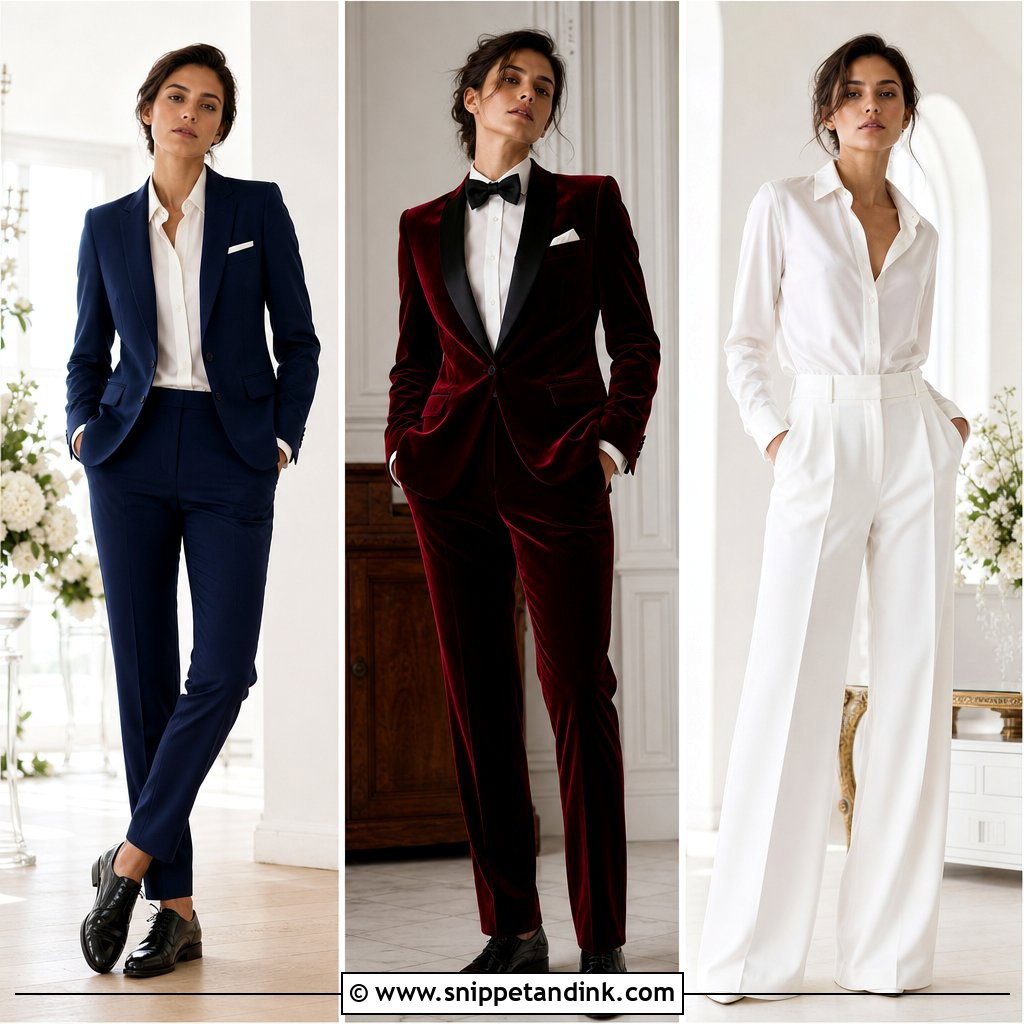
A navy blue wedding suit is softer than black and still formal enough for a ceremony. I like it for anyone who wants a classic suit but finds black too severe next to their coloring. Navy takes a white shirt, an ivory blouse or a champagne satin top equally well, and it gives you room to play with a patterned pocket square or a silk neck scarf. One practical note: check the navy in daylight and under warm indoor light, since some navies turn almost black indoors and lose the color you paid for.
5. Cream Three Piece Suit
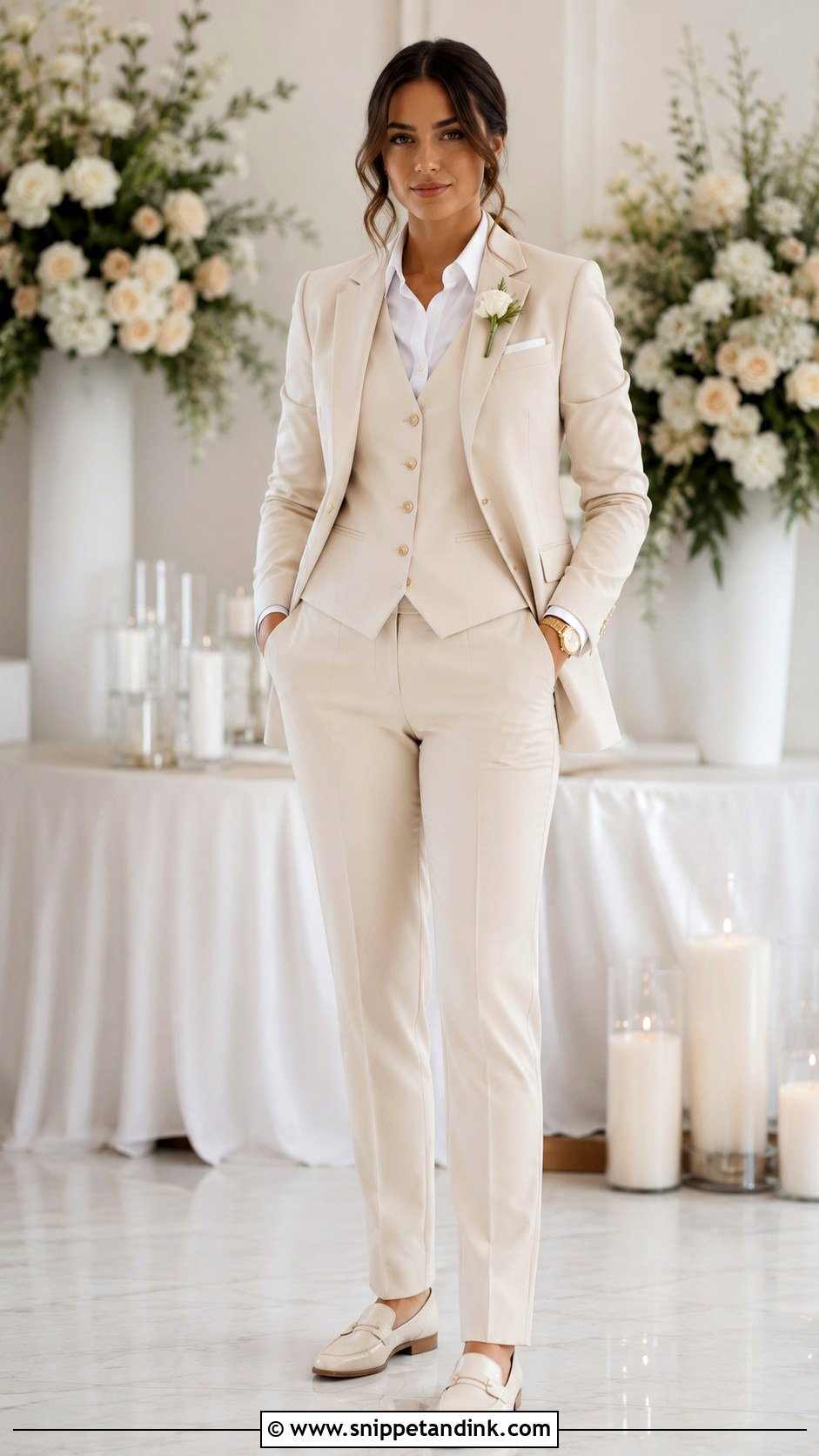
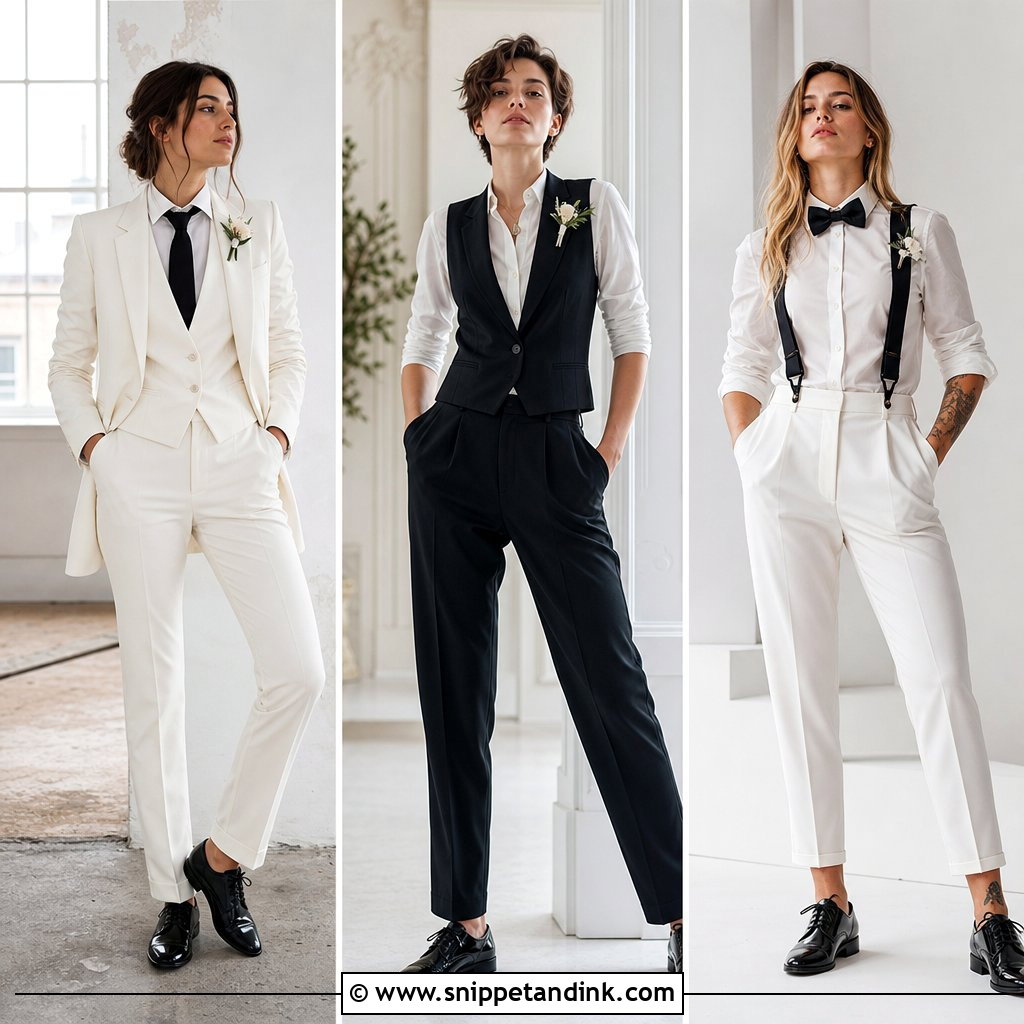
The vest is the reason I push three-piece suits for long receptions. You keep a finished outfit once the jacket comes off for dancing, and the vest smooths the line over the waistband. Cream reads softer than white in photos and forgives a little spilled champagne better. Under the vest, a white shirt keeps it crisp while a silk camisole feels more bridal. Have the vest fitted while you sit, too; one that’s perfect standing can ride up and gape over the trousers once you’re at the table.
6. Velvet Wedding Suit
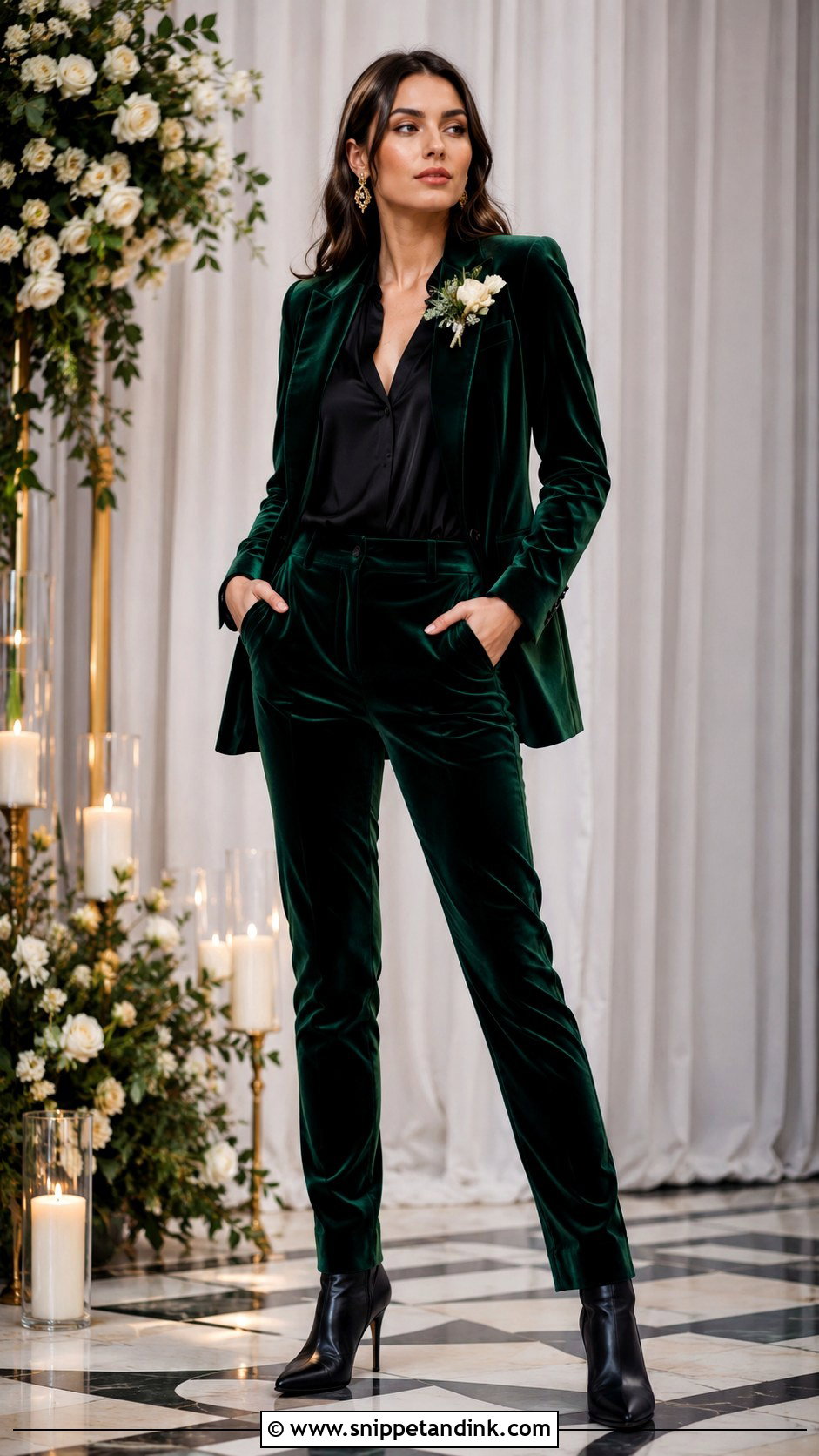
Velvet belongs to cold months and candlelit rooms. Emerald, burgundy, midnight, plum and black all look deep and expensive in it because the pile catches light at different angles. The catch is that velvet crushes: sitting through a long dinner leaves shiny pressure marks on the seat and the backs of the knees. I always steam it from the inside and never press it flat with an iron. Keep everything else plain, a white shirt or a fine knit, and let the fabric do the work.
7. Linen Wedding Suit
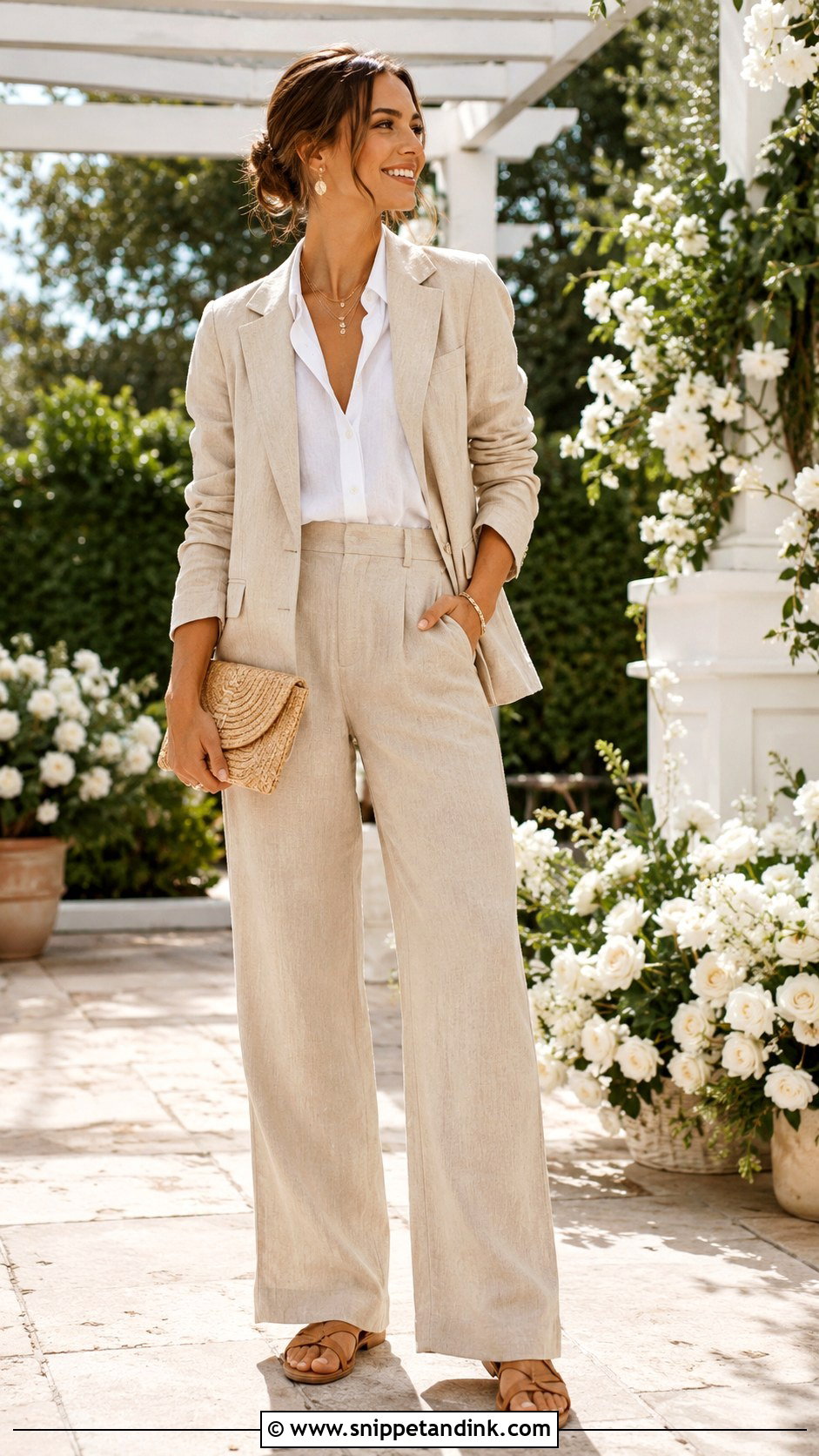
A linen wedding suit is the coolest thing you can wear to a hot outdoor ceremony, and it will crease. I tell every client to accept that before buying. A linen and wool or linen and cotton blend creases more softly and keeps its shape through photos, so I usually steer people toward a blend if the timeline has portraits late in the day. Sand, sage, white and pale blue all work. Leather sandals, espadrilles or loafers keep it grounded, and a breathable button-down under it is kinder than silk in real heat.
8. Double Breasted Wedding Suit
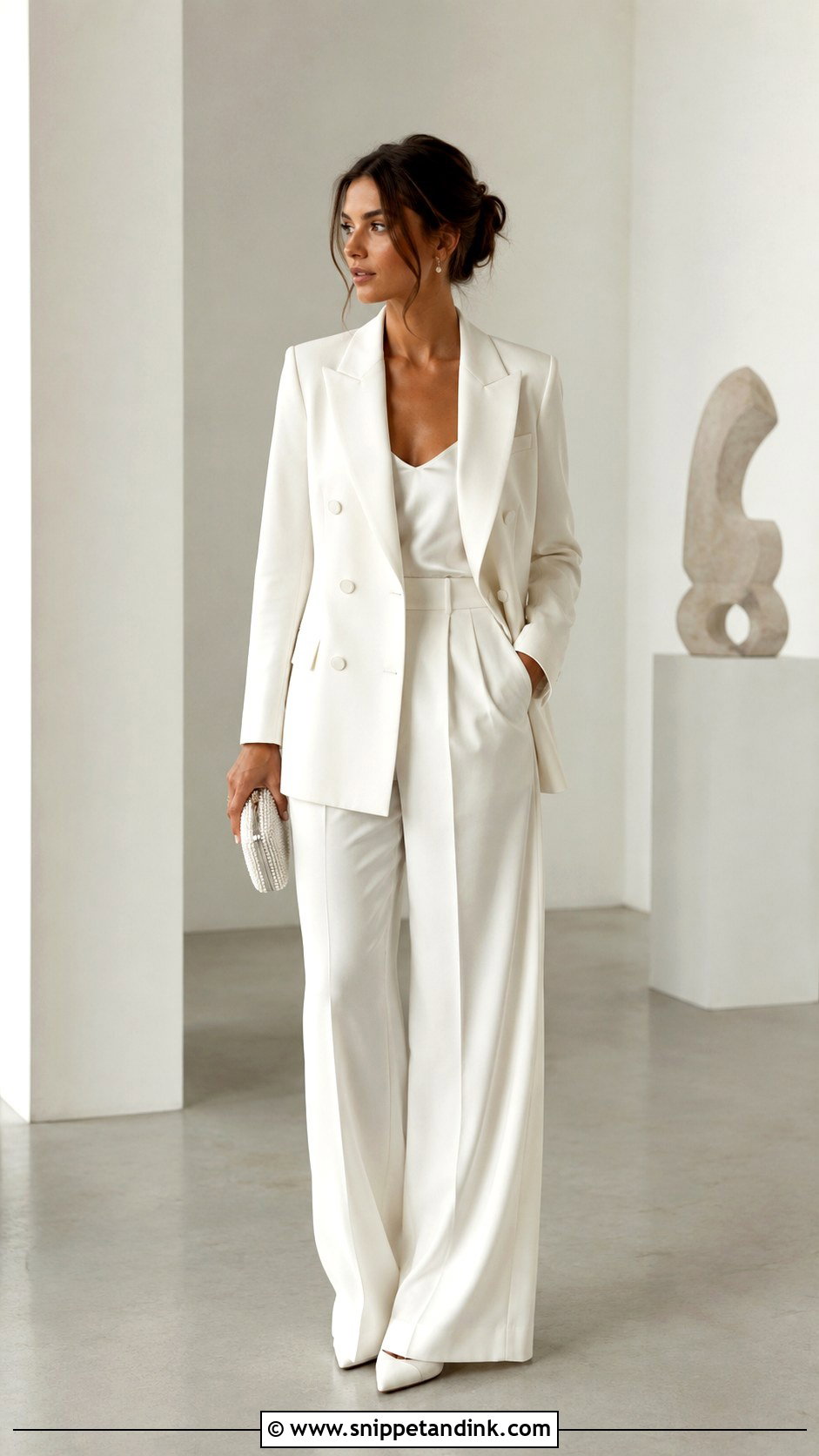
A double breasted wedding suit gives you a strong, structured front, but it is designed to be worn buttoned. Open, the extra panels flap and the look falls apart, so I only suggest it to people happy to keep the jacket fastened most of the day. Fitted trousers keep it sleek, while wide-leg pants push it toward fashion. Because the jacket is busy, the shirt should be quiet: a smooth camisole, a crisp collar or a fine turtleneck in winter.
9. Satin Lapel Tuxedo
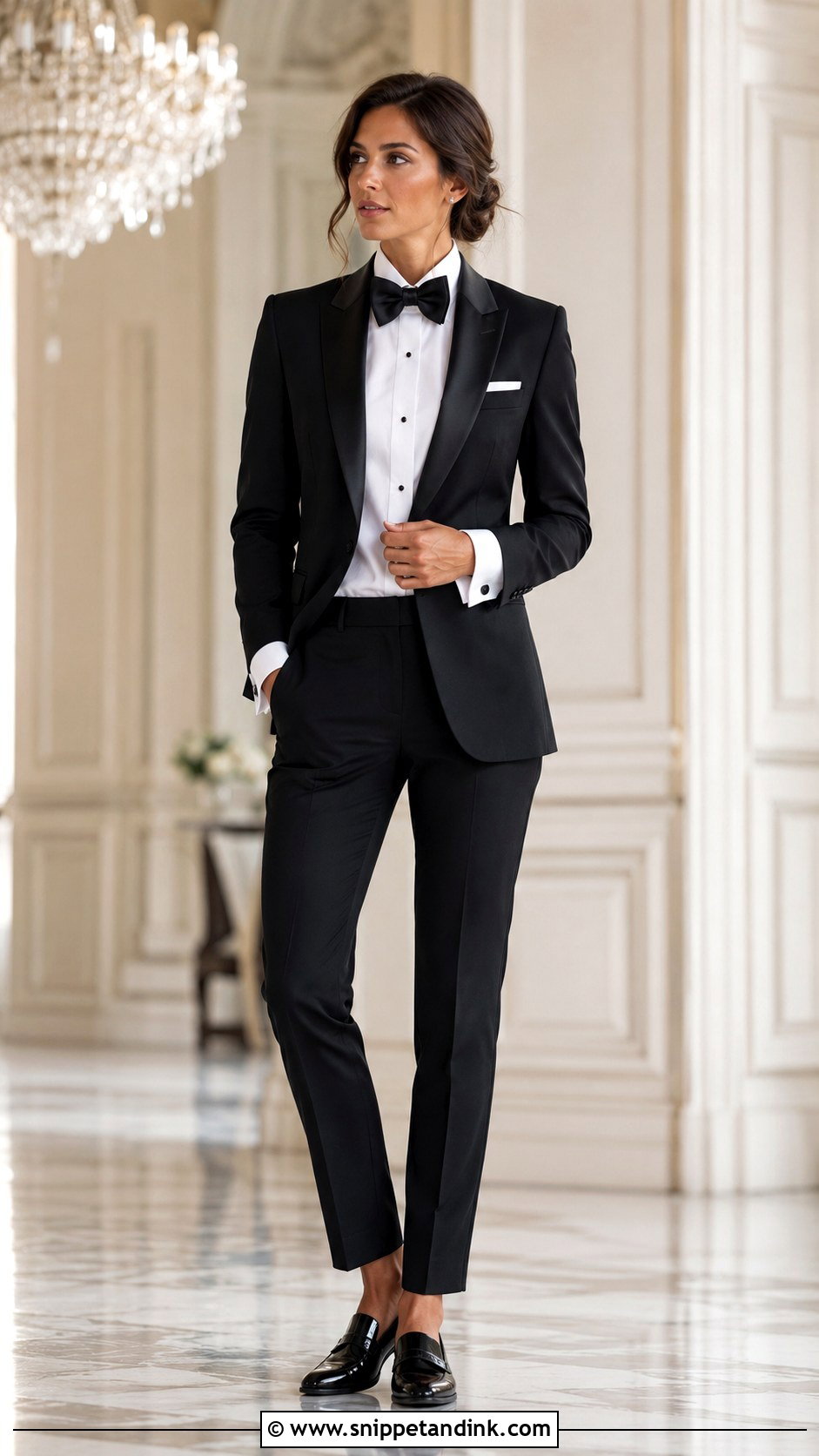
I love a satin lapel because of the contrast between matte cloth and a strip of shine right where the camera looks. Black is classic; ivory, midnight blue and bottle green are worth trying too. Satin does show every crease and every brush of foundation, so I pin a clean cloth over the lapel while makeup is being finished. A white shirt and bow tie make it traditional, a satin camisole makes it softer. Precise fit through the shoulder and waist matters more here than in any other suit, since the lapel line exaggerates any pulling.
10. Pastel Wedding Suit
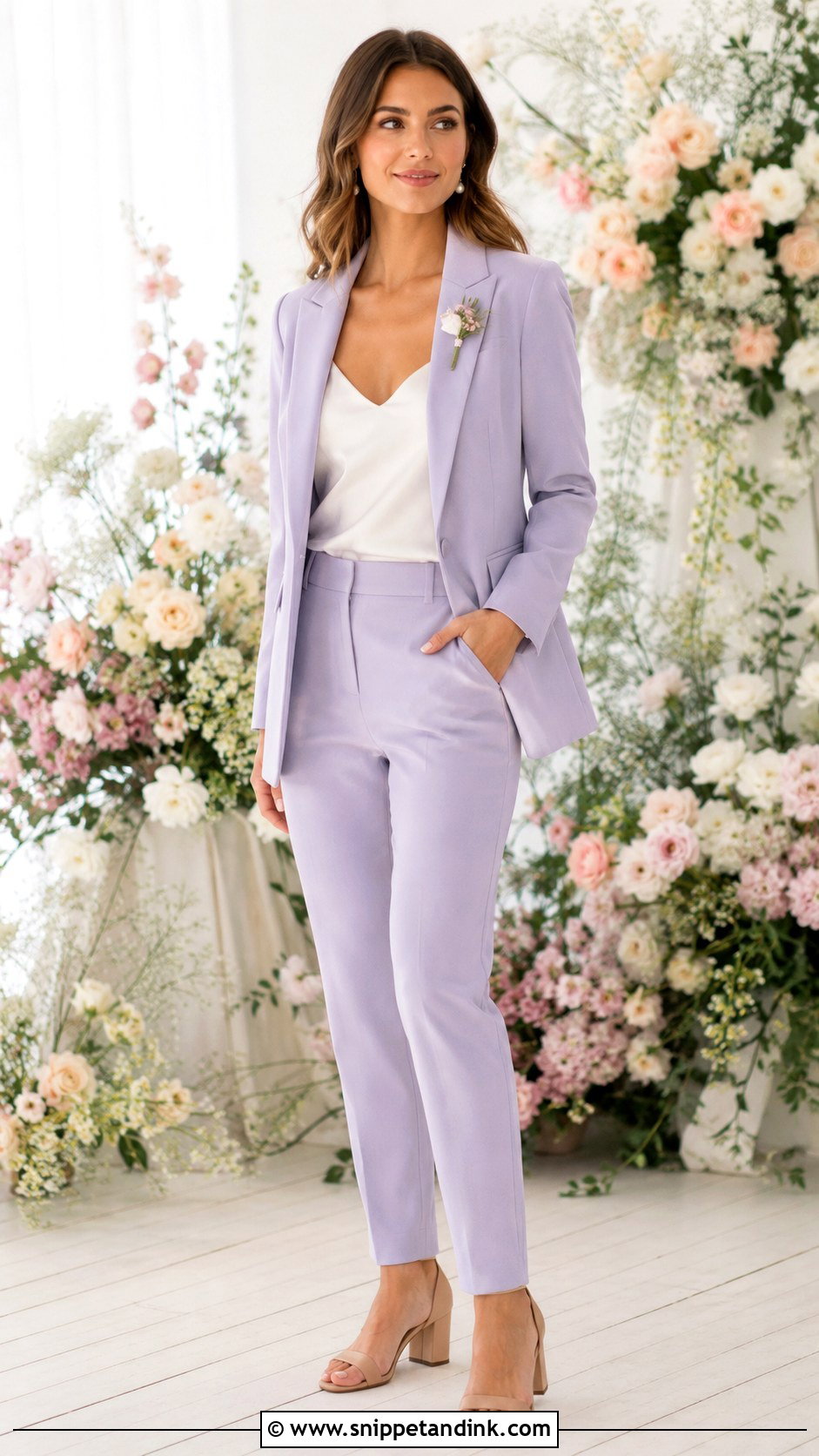
Pastel suits look grown-up only when the tailoring is sharp. Lavender, blush, pale blue, mint and butter yellow are friendly colors, and a loose cut can tip them into costume. I’d put the budget into a good alteration rather than a pricier fabric. A white blouse or a matching vest keeps the palette calm, and nude or white shoes stop the color stopping abruptly at the hem. Pale tones show sweat at the underarm, so a breathable lining is worth asking about for a spring or daytime wedding.
11. Burgundy Wedding Suit
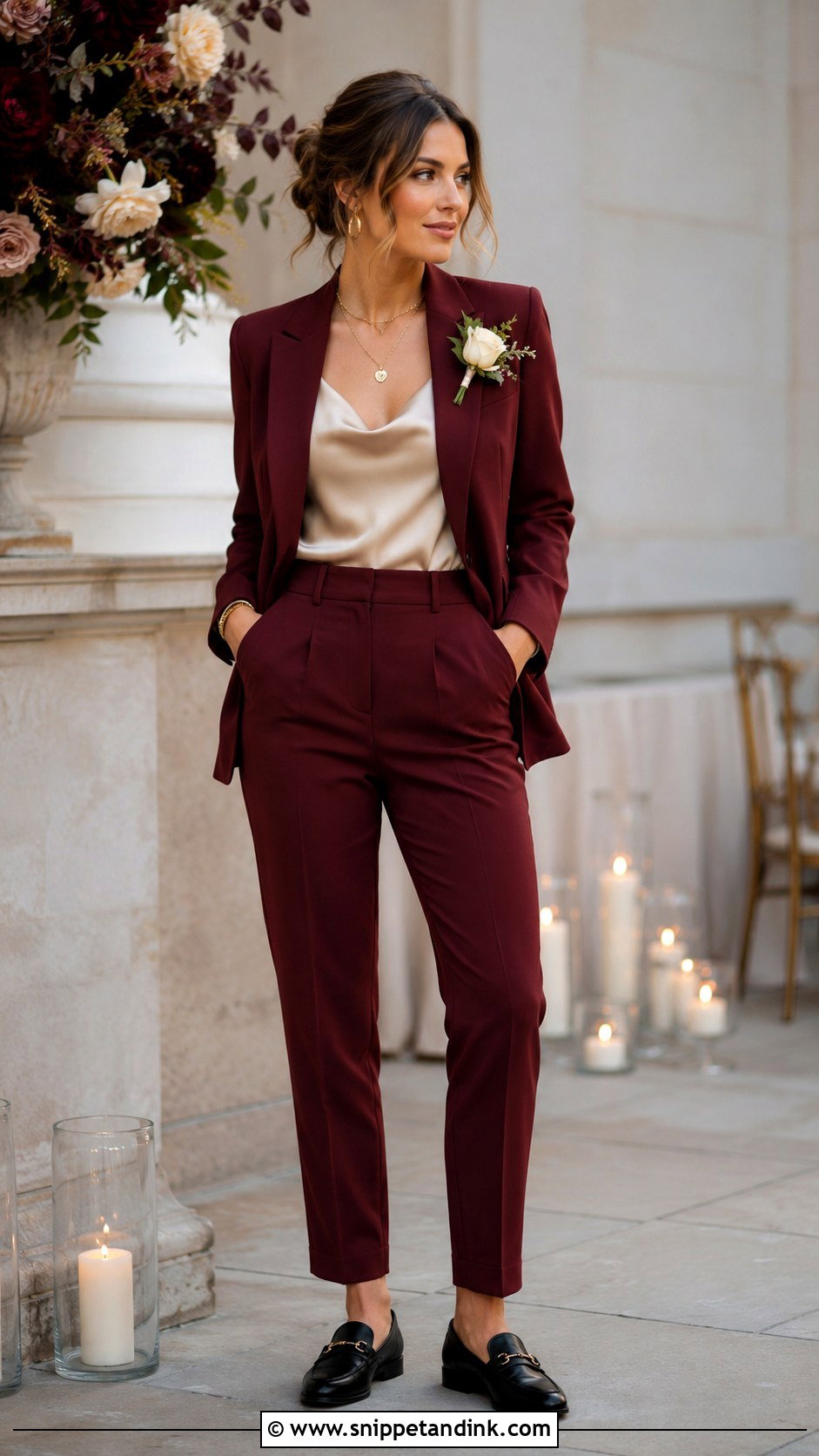
Burgundy brings color without the brightness, which makes it a natural fit for autumn, winter and formal evenings. It pairs well with a white shirt for contrast or a black blouse for a moodier look, and gold jewelry warms it further. For couples coordinating, burgundy sits comfortably next to ivory, navy or blush. I’d choose a cloth with some body, a wool or a wool blend; a thin, shiny burgundy can read cheap in flash photos even when it looks fine in the mirror.
12. Emerald Green Wedding Suit
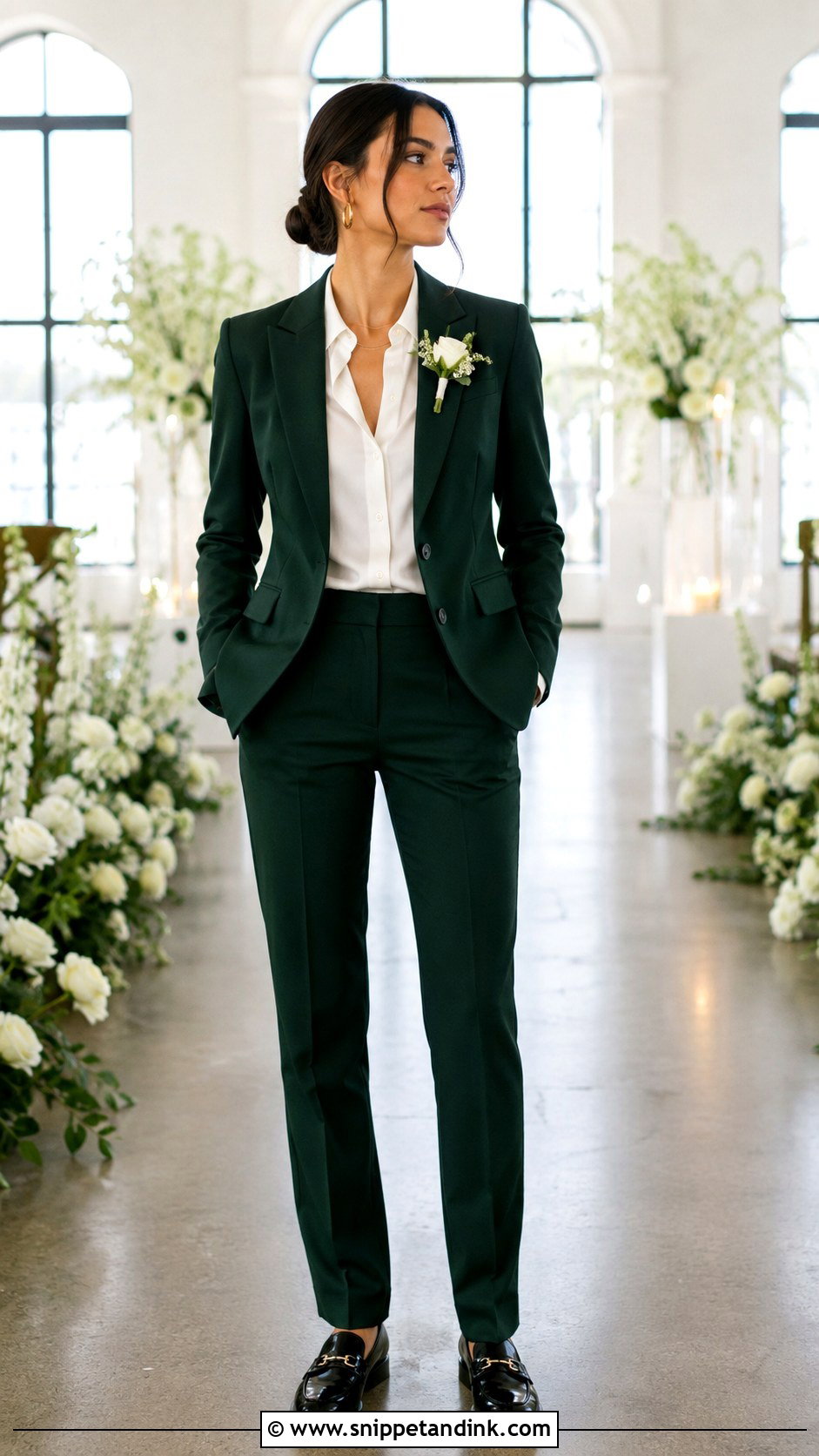
Emerald is the color I see people fall for at the first fitting and never regret. It works in velvet, wool, crepe or with satin trim, and it is rich enough to stand alone with a white shirt or go dramatic with a black silk top. Gold accessories suit it better than silver for most skin tones. A boutonniere in white or cream softens the whole thing. Keep the cut clean; the color is already doing plenty, and extra detail starts to fight it.
13. Gray Wedding Suit
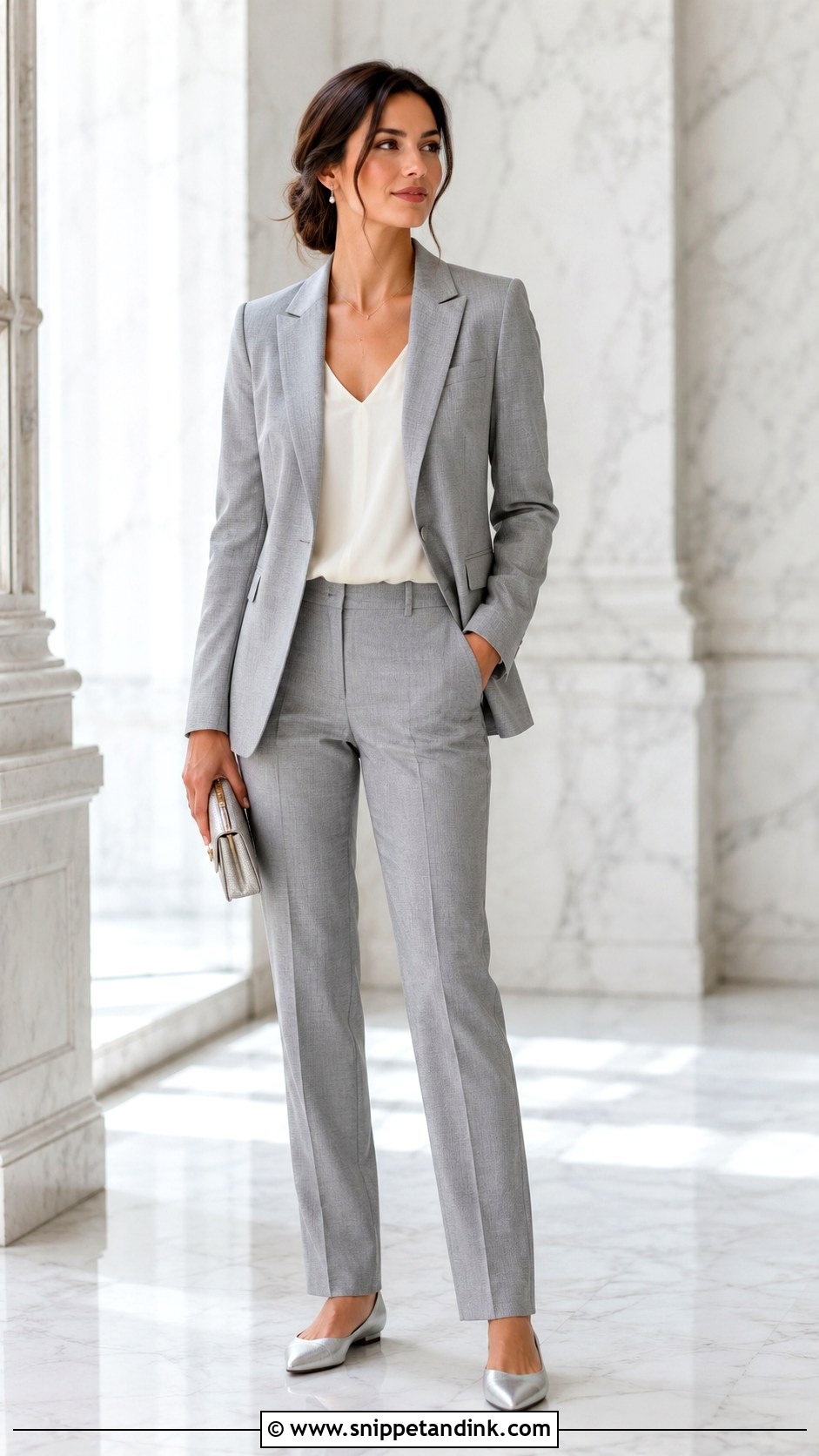
Gray is underrated. Light gray feels relaxed and modern, charcoal reads close to black tie without the harshness, and both sit quietly in a busy setting. It’s my usual suggestion for courthouse and city ceremonies. A soft blue shirt or an ivory blouse warms it up, black shoes sharpen it, silver lightens it. One thing I check: light gray in a smooth worsted will show a sweat mark long before a darker suit will, so plan for heat.
14. Beige Wedding Suit
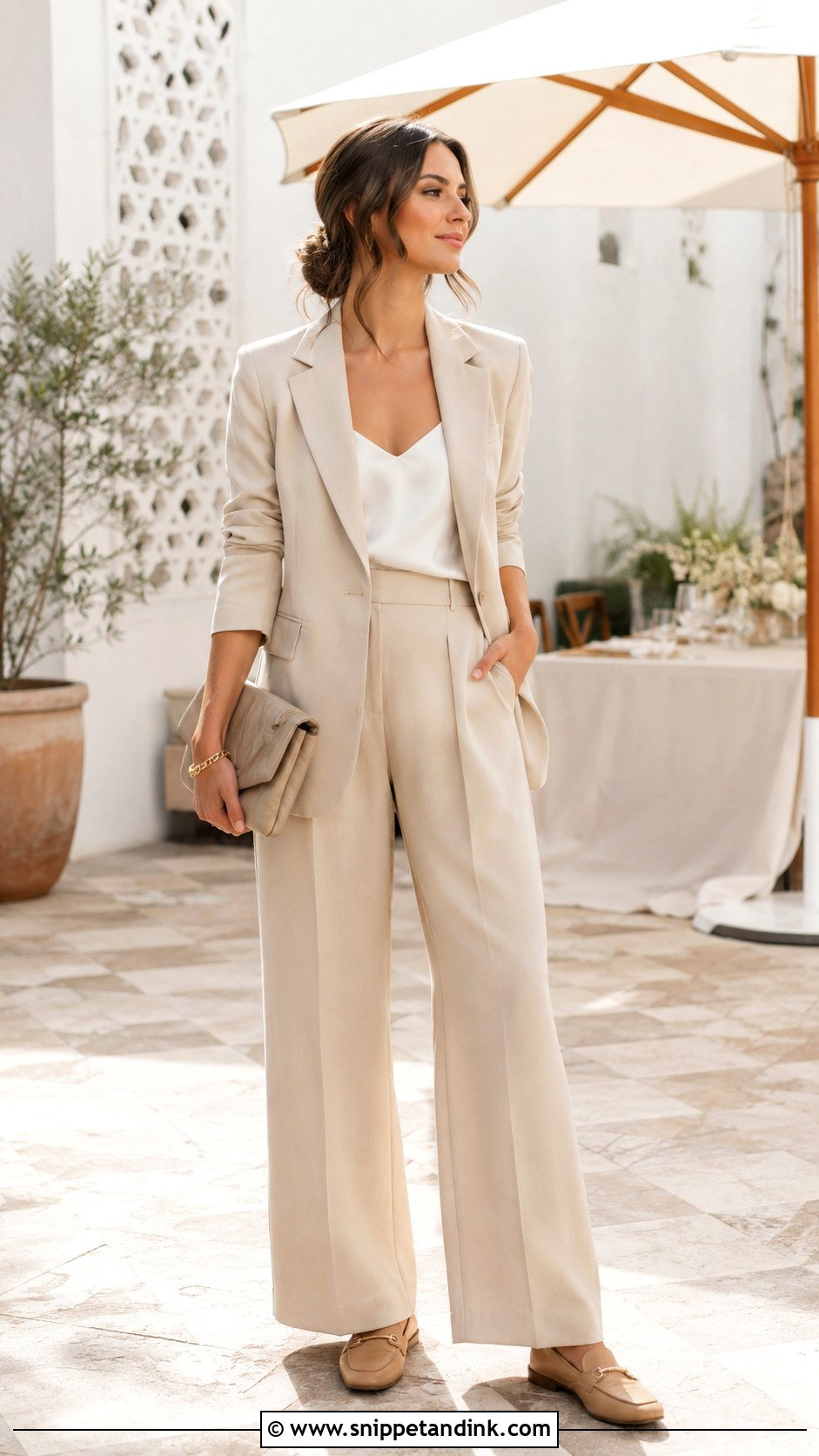
Beige is the neutral for people who don’t want white, black or gray. It looks warm with cream, tan, gold and soft brown, and a structured blazer with straight or wide trousers keeps it from going too casual. The fabric decides everything with beige. A cheap blend looks flat and slightly dusty; a good wool or linen blend shows depth. A silk camisole or an open-collar shirt makes it personal, and loafers or block heels handle a daytime outdoor ceremony on grass.
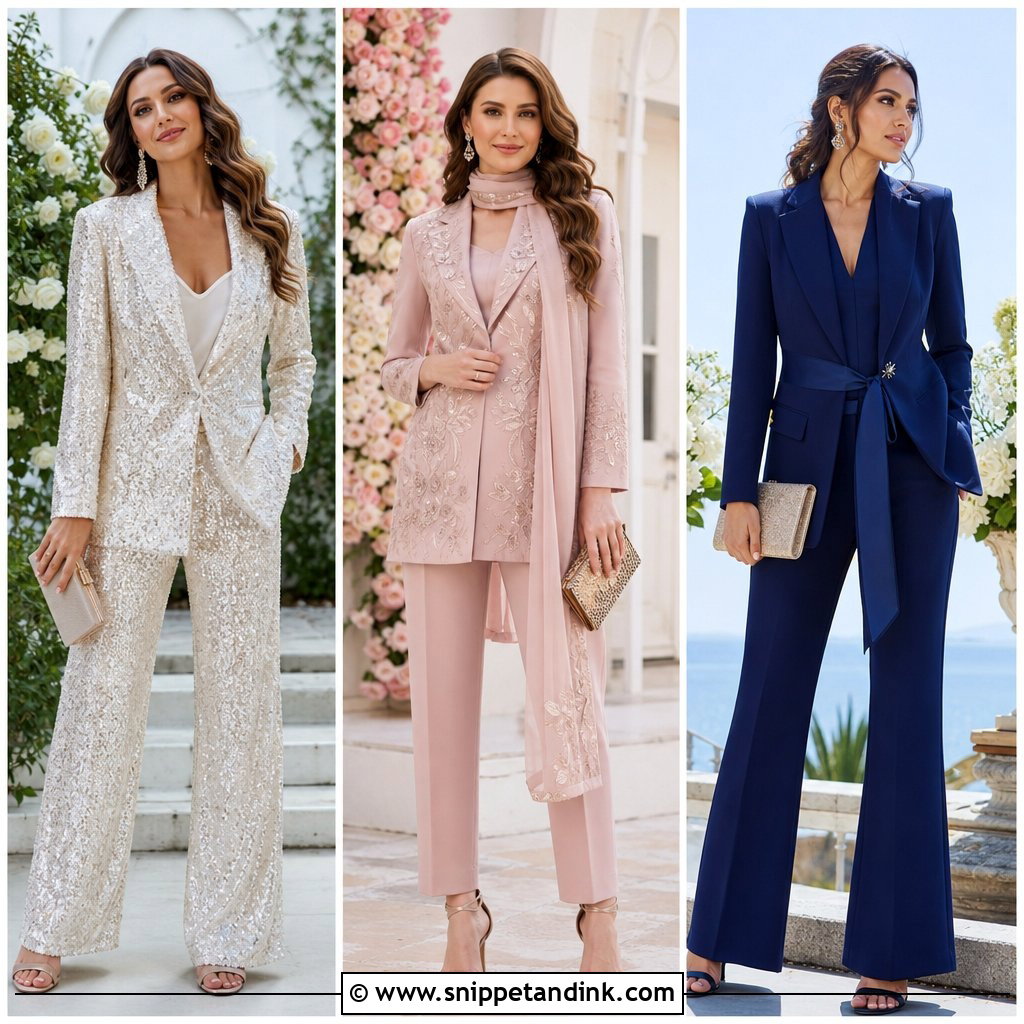
15. Pinstripe Wedding Suit
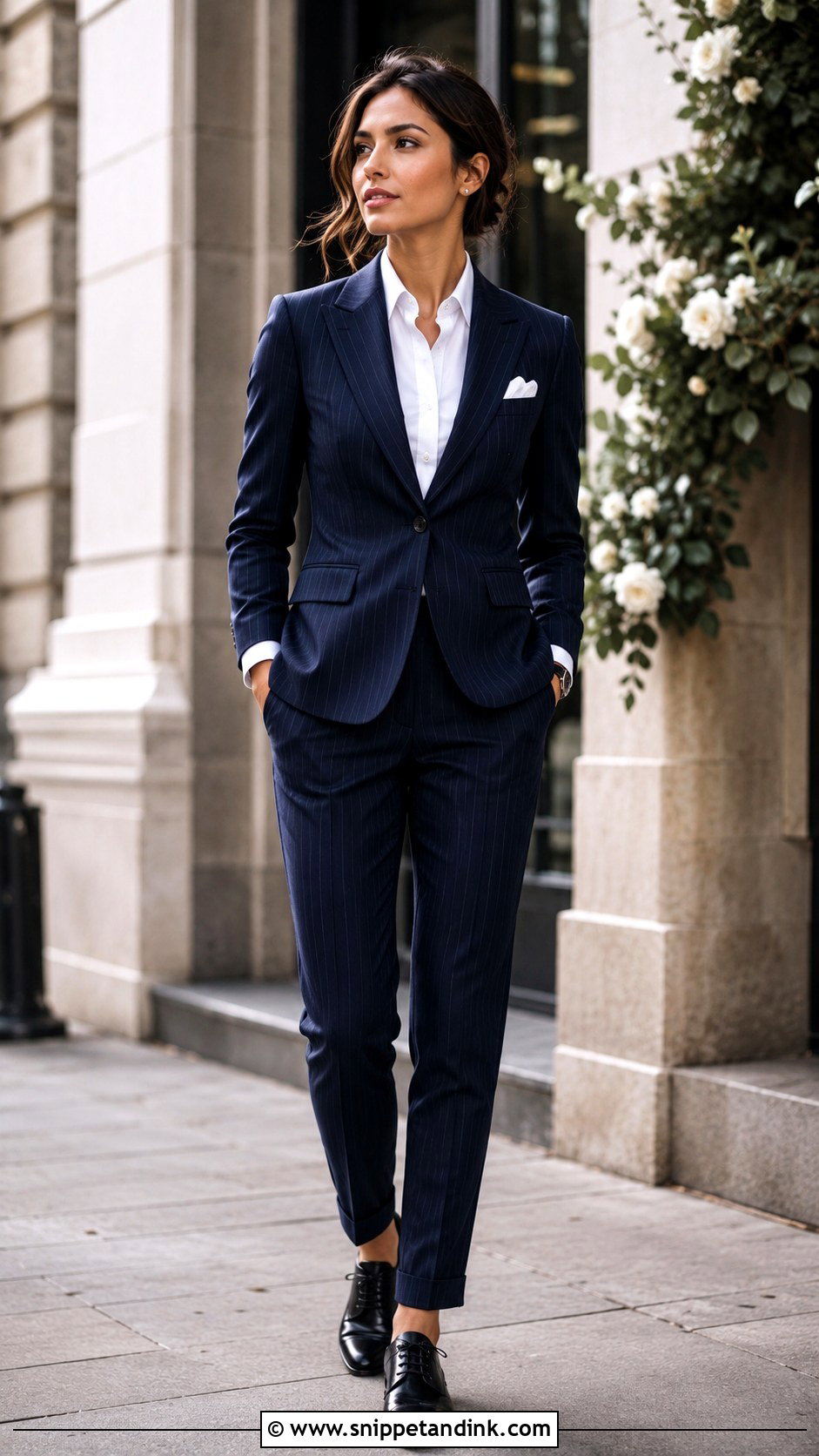
Pinstripes are for anyone who loves classic menswear details. Navy, charcoal, black and cream pinstripes all work, and a crisp shirt or a fitted vest keeps the outfit clean. Stripes are unforgiving about fit, though: a pull across the back or a twisted trouser leg shows straight away because the lines bend. I check the trouser break carefully at fittings, since stripes that pool at the shoe look sloppy. Polished oxfords or pointed heels suit it, and it shines at city weddings.
16. Wide Leg Wedding Suit
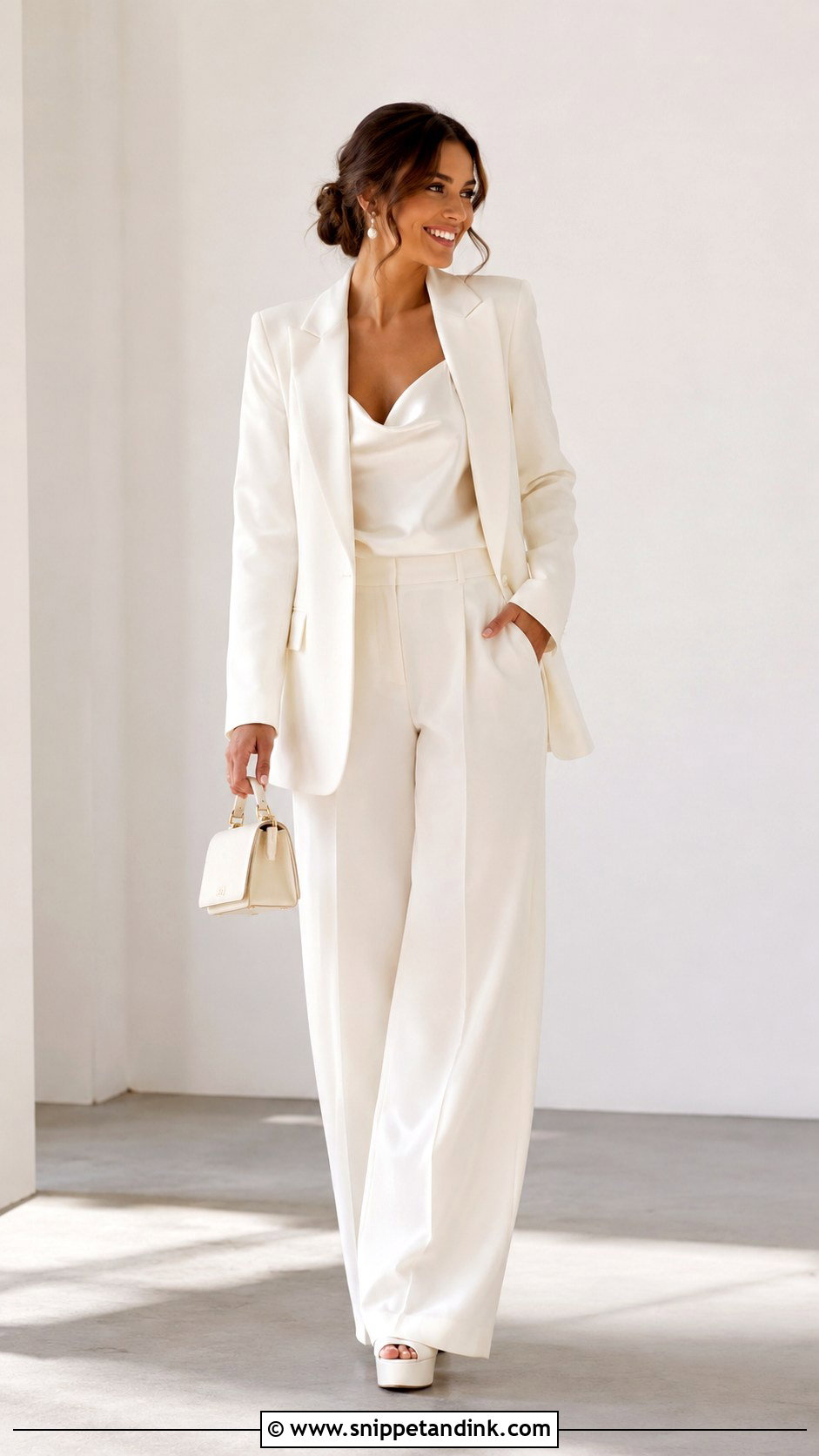
Wide leg trousers move with you and give a long line, especially high-waisted. The hem is the whole game. I have clients bring the exact wedding shoes to every fitting, because a wide leg hemmed for flats will drag on the floor in heels and look half-mast with loafers. A fitted or cropped blazer balances the volume below. White, ivory, black, navy and pastels all work. Plan for a little extra length if the ceremony is on grass or a beach, where heels sink.
17. Cropped Blazer Wedding Suit
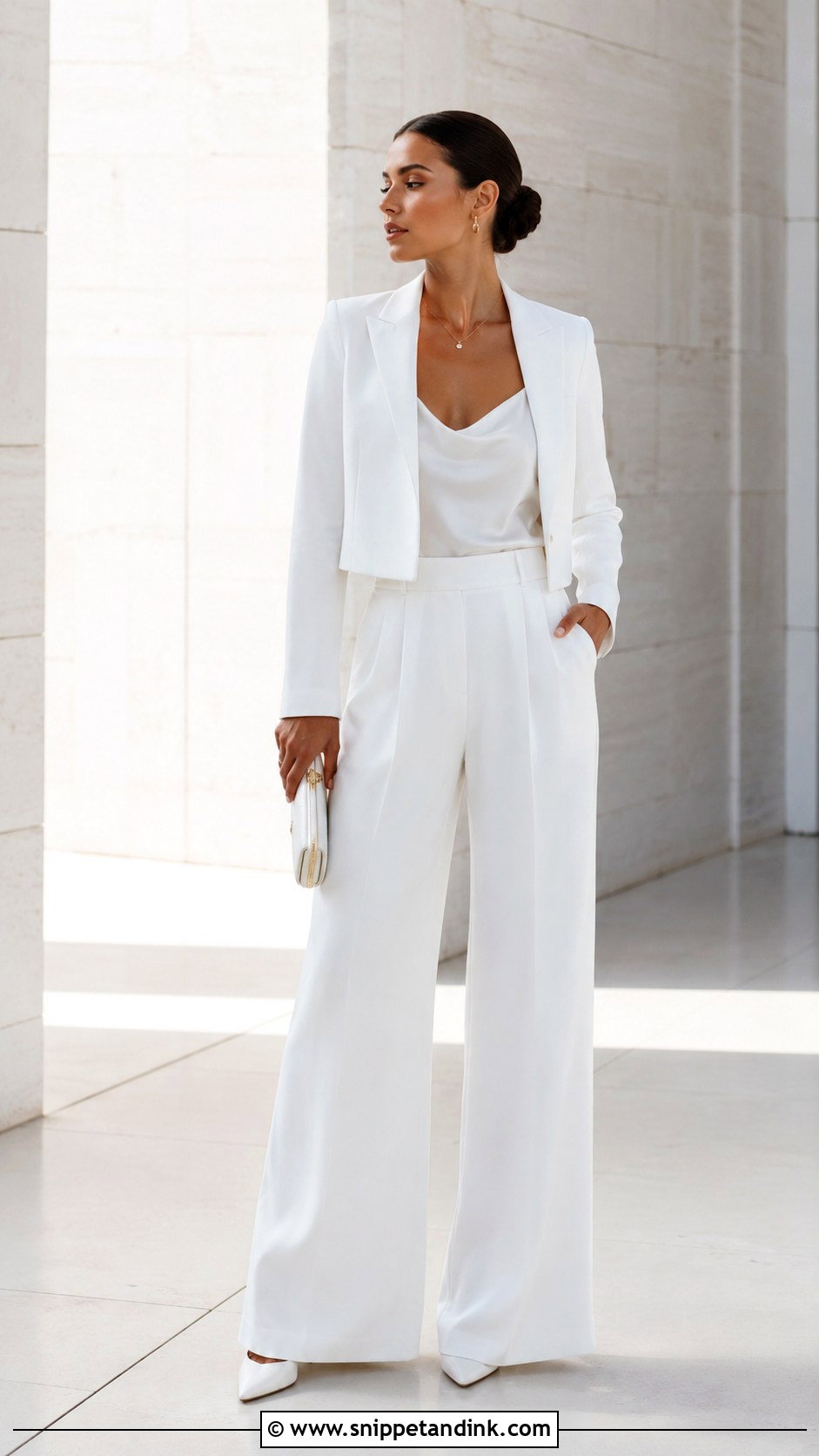
A cropped blazer wedding suit marks the waist and gives a sharp, current proportion when paired with high-waisted trousers. I’d pair it with wide legs for balance or slim trousers for a sharper outline. The thing to test is raising your arms: a cropped jacket can ride up and show the waistband or a strip of skin, which you’ll notice in every first-dance photo. White, ivory, blush, black and soft gray all suit the shape, with a satin camisole or a tailored vest underneath.
18. Jumpsuit Suit Look
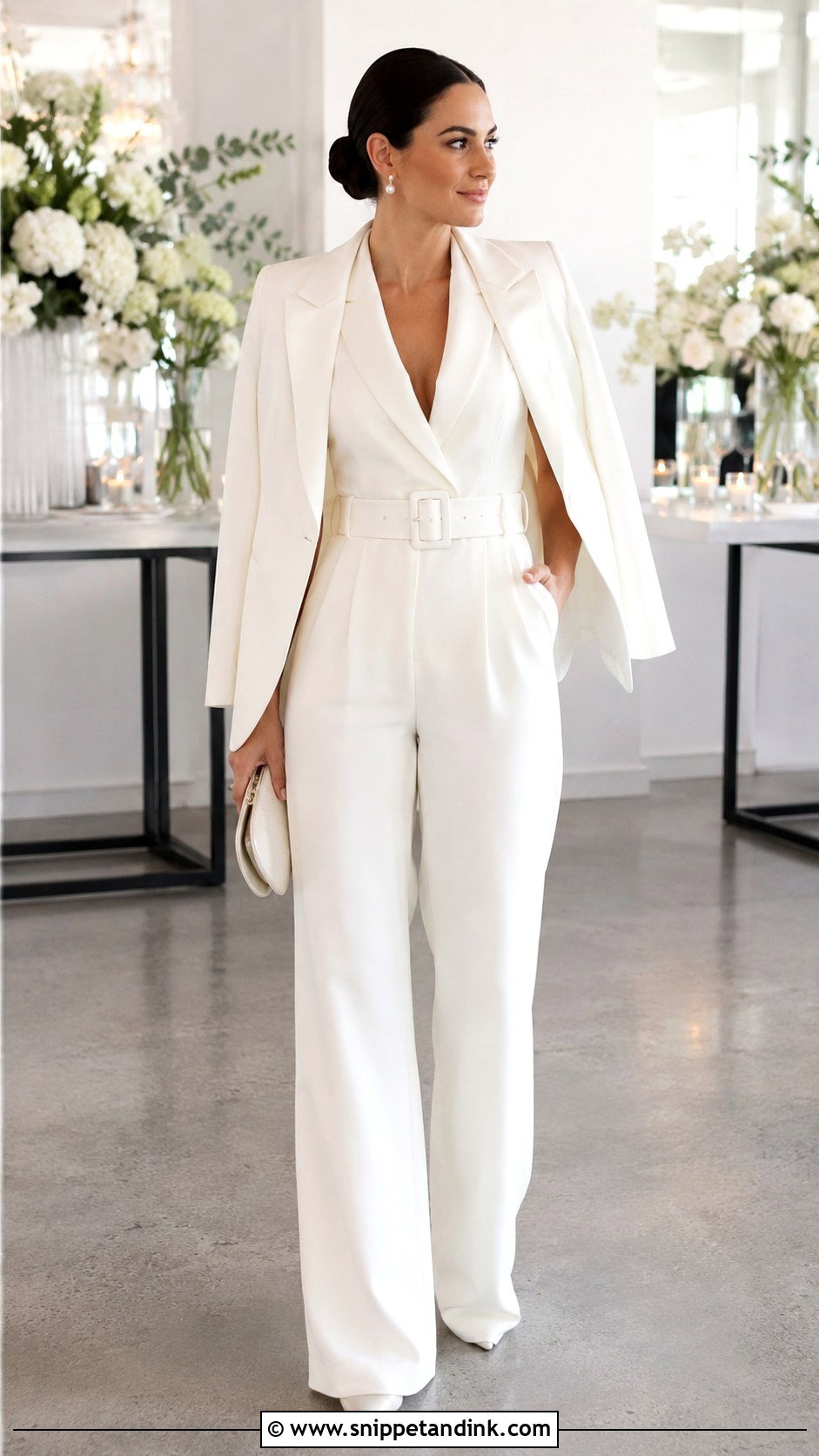
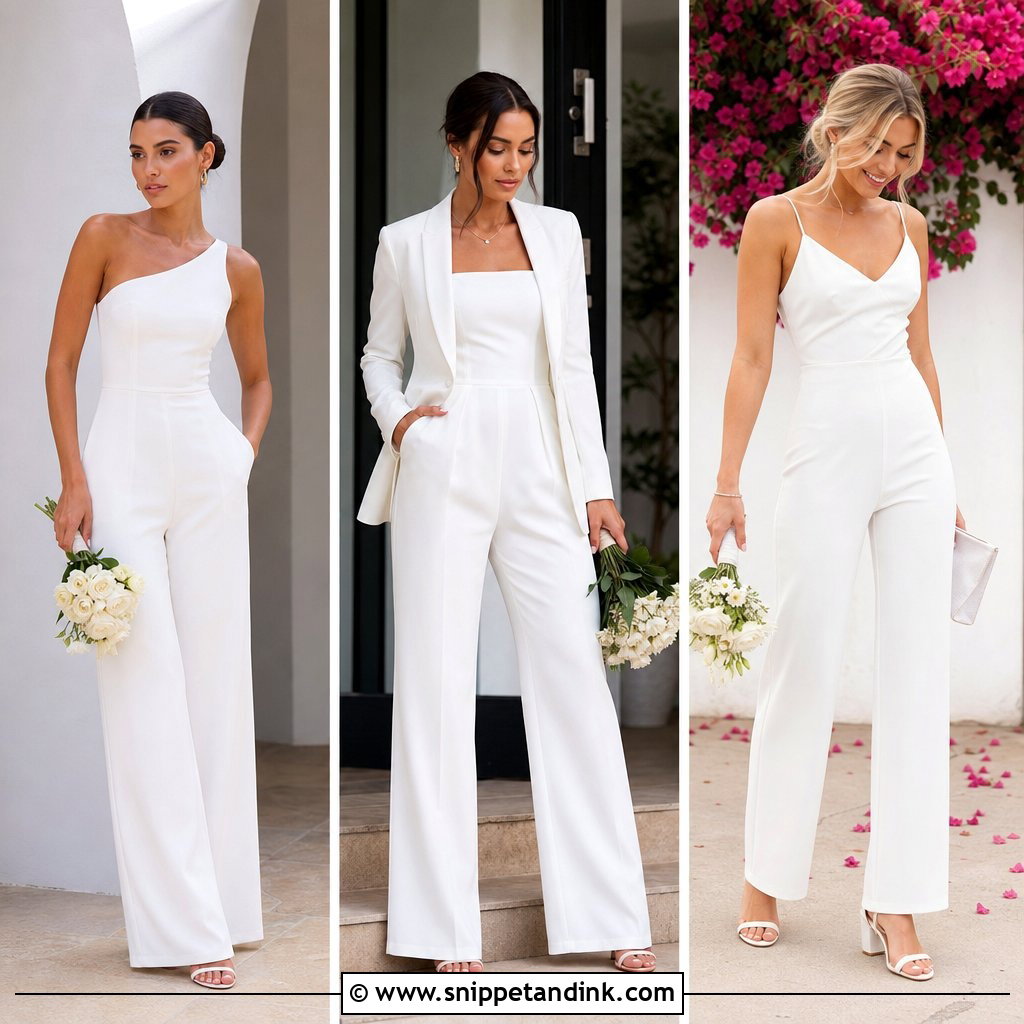
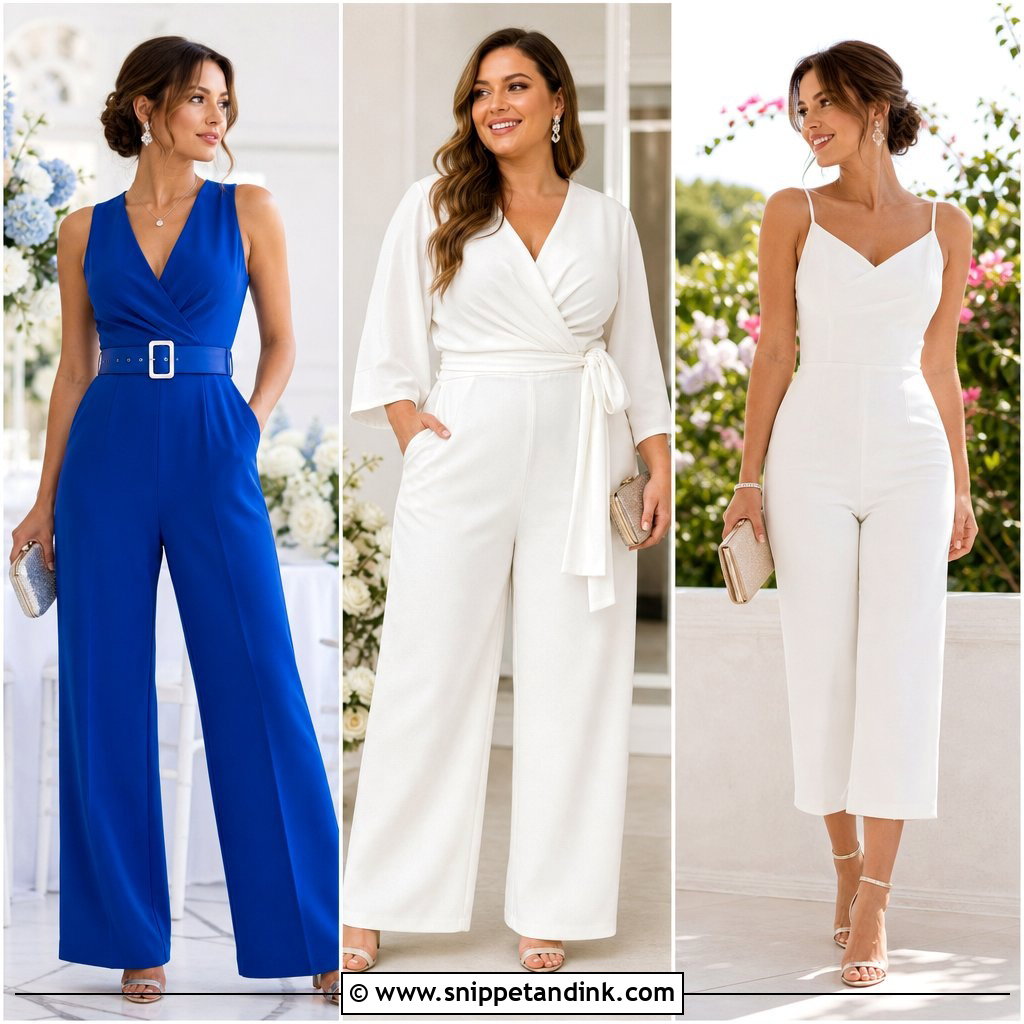
A tailored jumpsuit gives you the polish of a suit in a single piece, with lapels, a defined waist and wide legs. White and ivory feel bridal, black or emerald read sleek. Add a blazer for the ceremony and take it off for the reception. My honest caveat is the bathroom: getting in and out of a one-piece in a small venue restroom is a real consideration, so look for a long back zip that you can manage alone. Pointed heels or platform sandals keep it dressy, and a belt can make an off-the-rack piece look custom.
19. Suit With Bow Tie
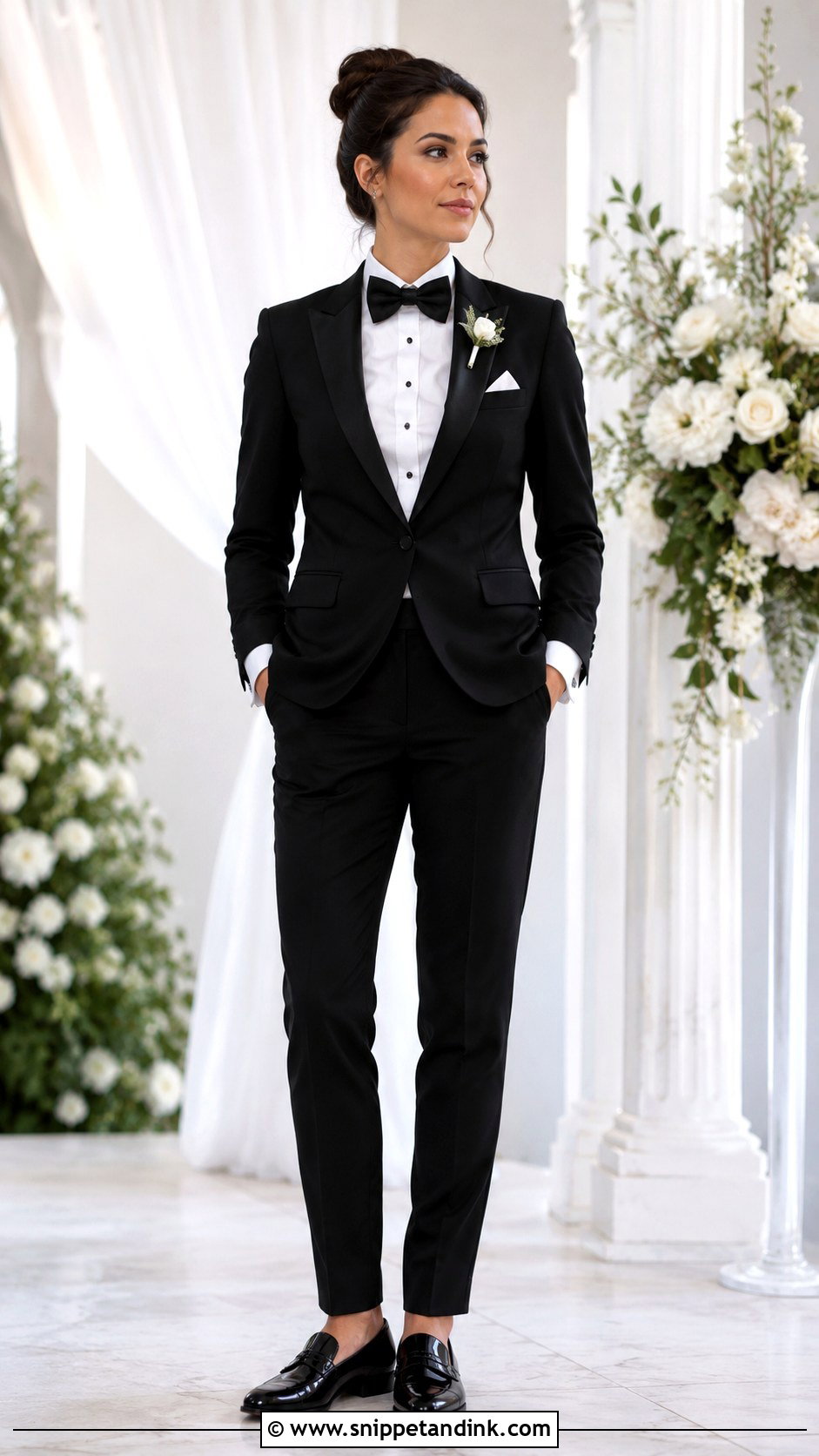
A bow tie works on a tuxedo, a three-piece or a plain two-piece suit. Black with a white shirt is the most formal; a velvet, satin or floral tie in your wedding palette adds personality. I always recommend a self-tie over a pre-tied one if you can learn it, because it sits flatter and looks lived-in by evening. The collar has to fit well too: a shirt collar that’s loose lets the bow drop and twist. Finish with loafers or oxfords and perhaps cufflinks.
20. Suit With Vest
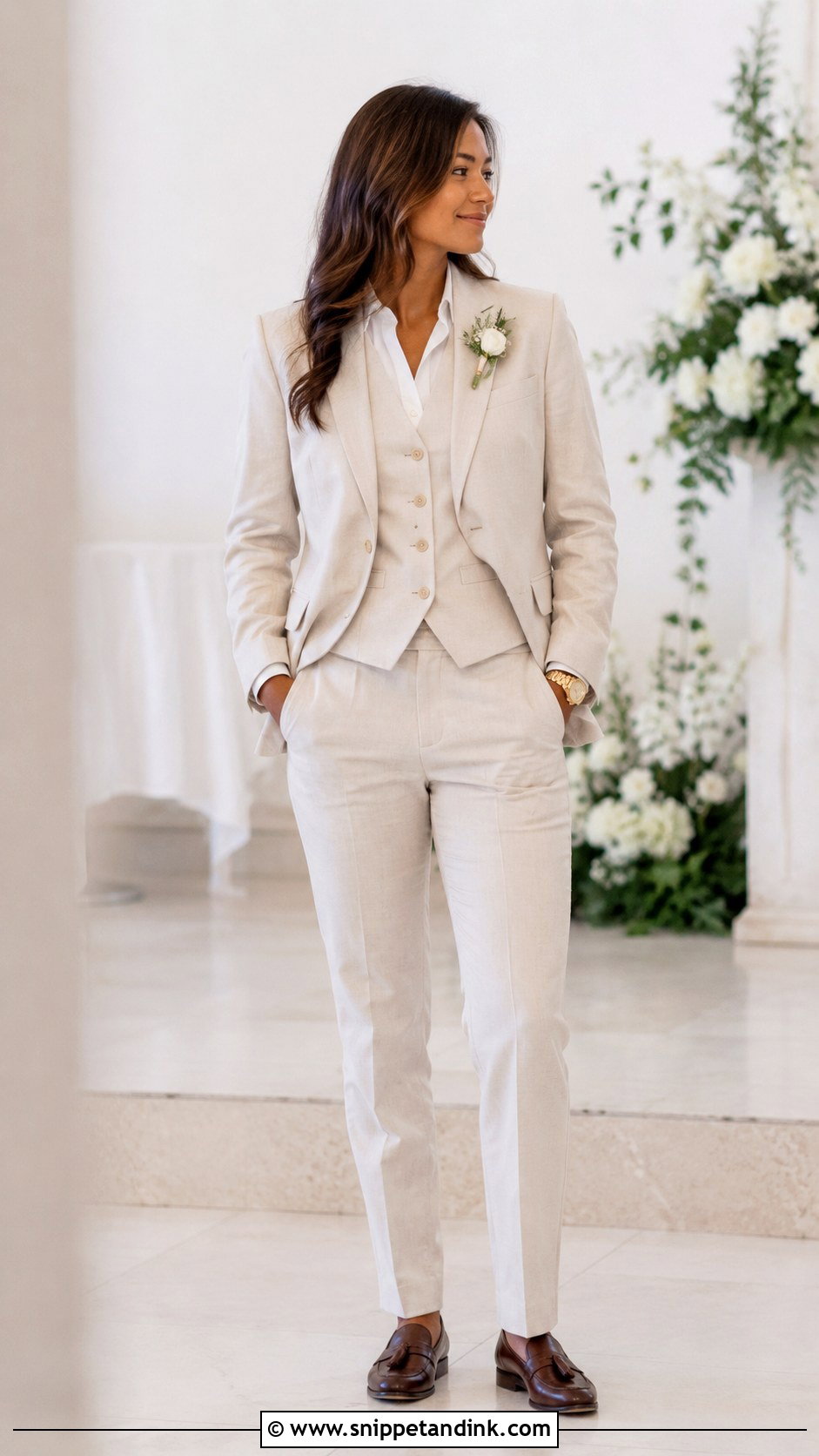
The vest is what keeps a suit looking finished after the jacket comes off. That matters at long celebrations and warm receptions where nobody wants to keep a blazer on through dinner. A matching vest makes a classic three-piece; a contrast vest makes a personal statement. Pair it with a tie, a bow tie or an open collar. The fit point I check is the buttons: a vest should sit close without the fabric pulling into creases between them, especially when you sit.
21. Monochrome Wedding Suit
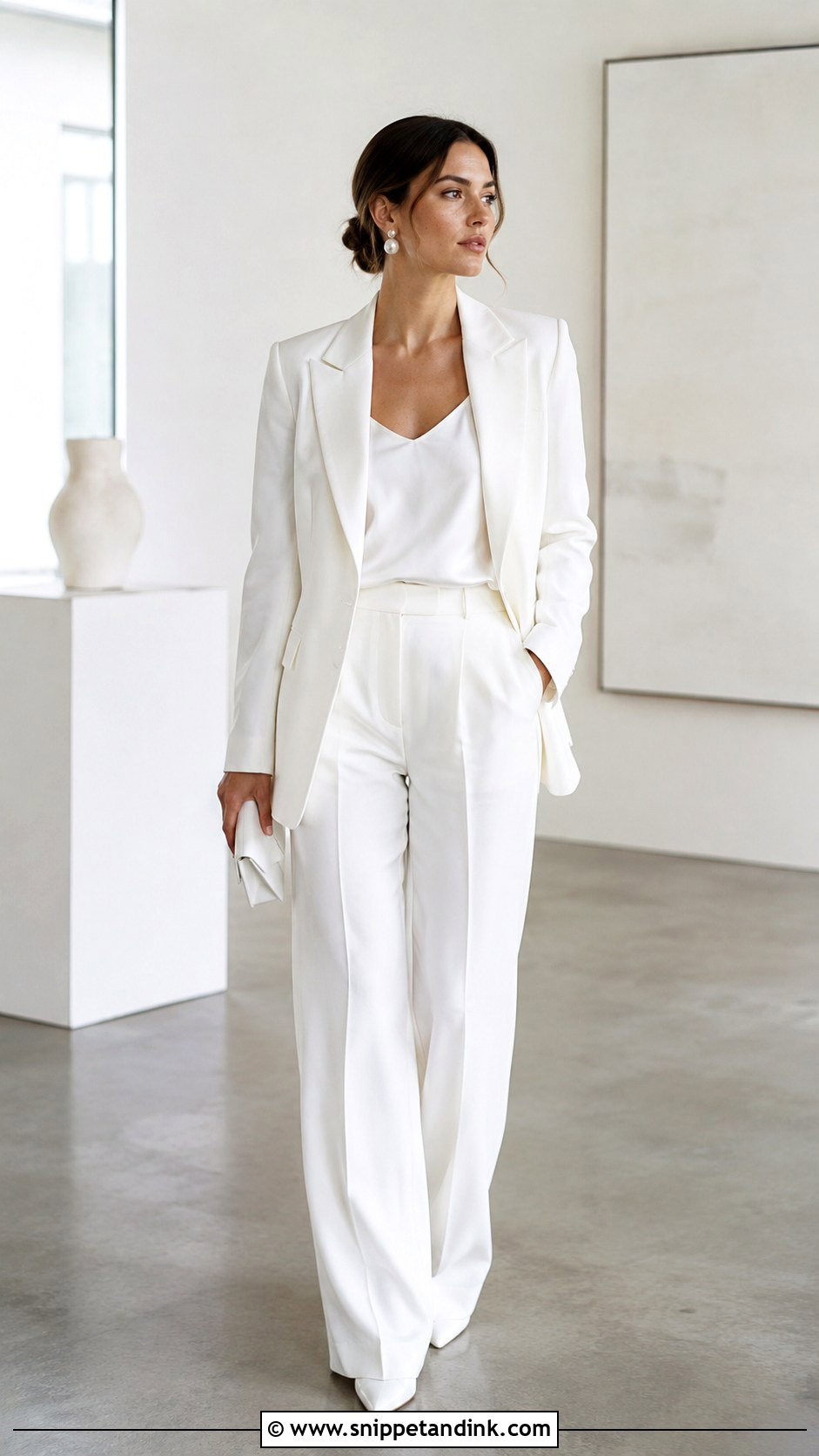
Monochrome means building the whole outfit in one color family, so white on white, black on black or beige on beige. It looks modern and clean, and it lengthens the body. The hard part is matching: two whites from different makers can clash badly in daylight, so I compare every piece side by side at a window before committing. Mixing textures helps, such as a crepe jacket over a satin top with wool trousers. Matching shoes stretch the line further, and one metallic accessory is enough.
22. Floral Wedding Suit
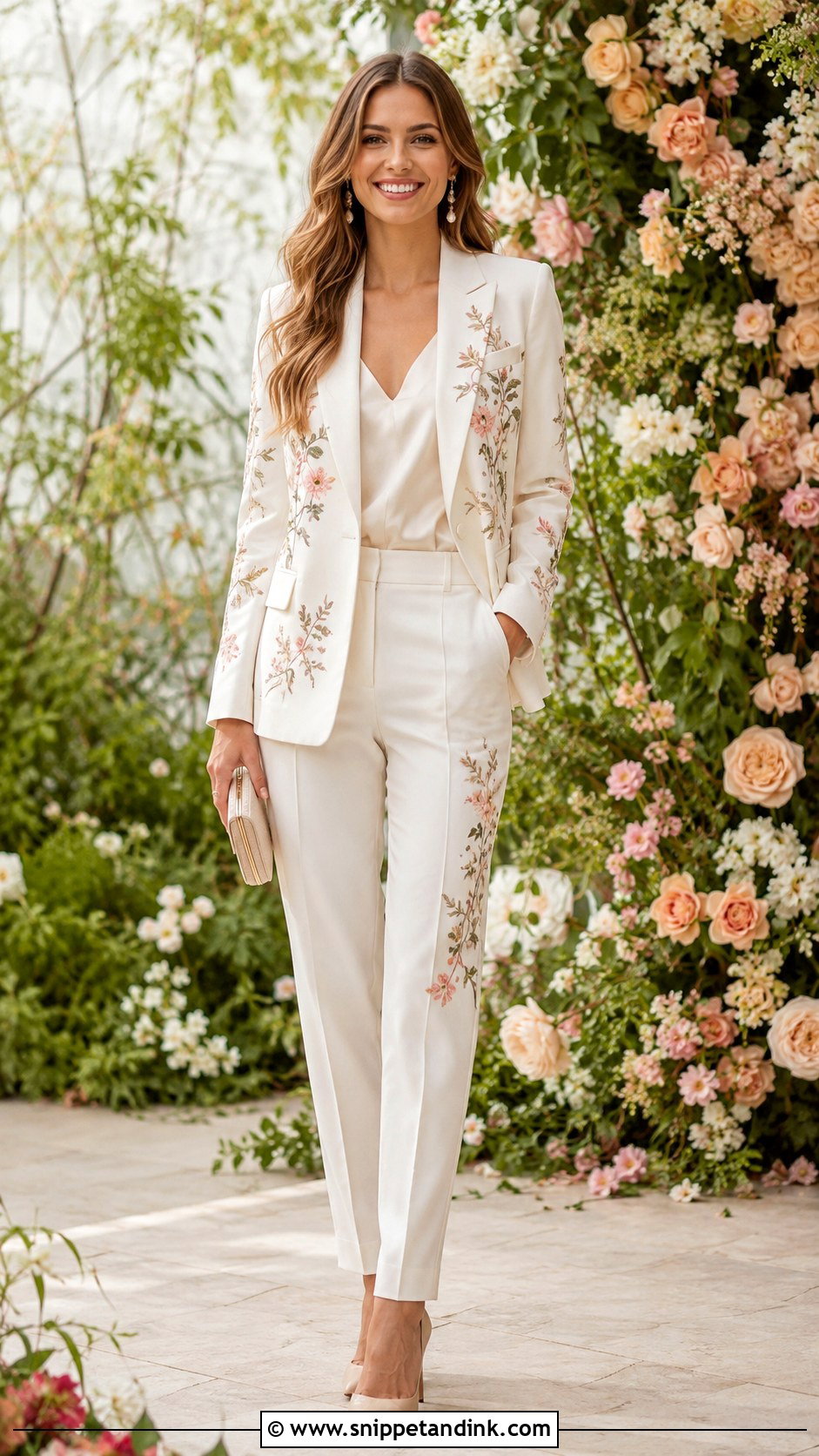
A floral suit gives romance without a dress. Allover prints, embroidered jackets and subtle floral jacquards all count. Keep the cut tailored so the print looks deliberate, and pair it with a plain shirt or vest. With a large print, I check where the pattern falls at fittings; a big bloom sitting right on the chest or hip can draw the eye somewhere you’d rather it didn’t. Neutral shoes and minimal jewelry let the print lead. For couples, one partner in florals beside a solid suit makes a good pairing.
23. White Tuxedo Jacket With Black Pants
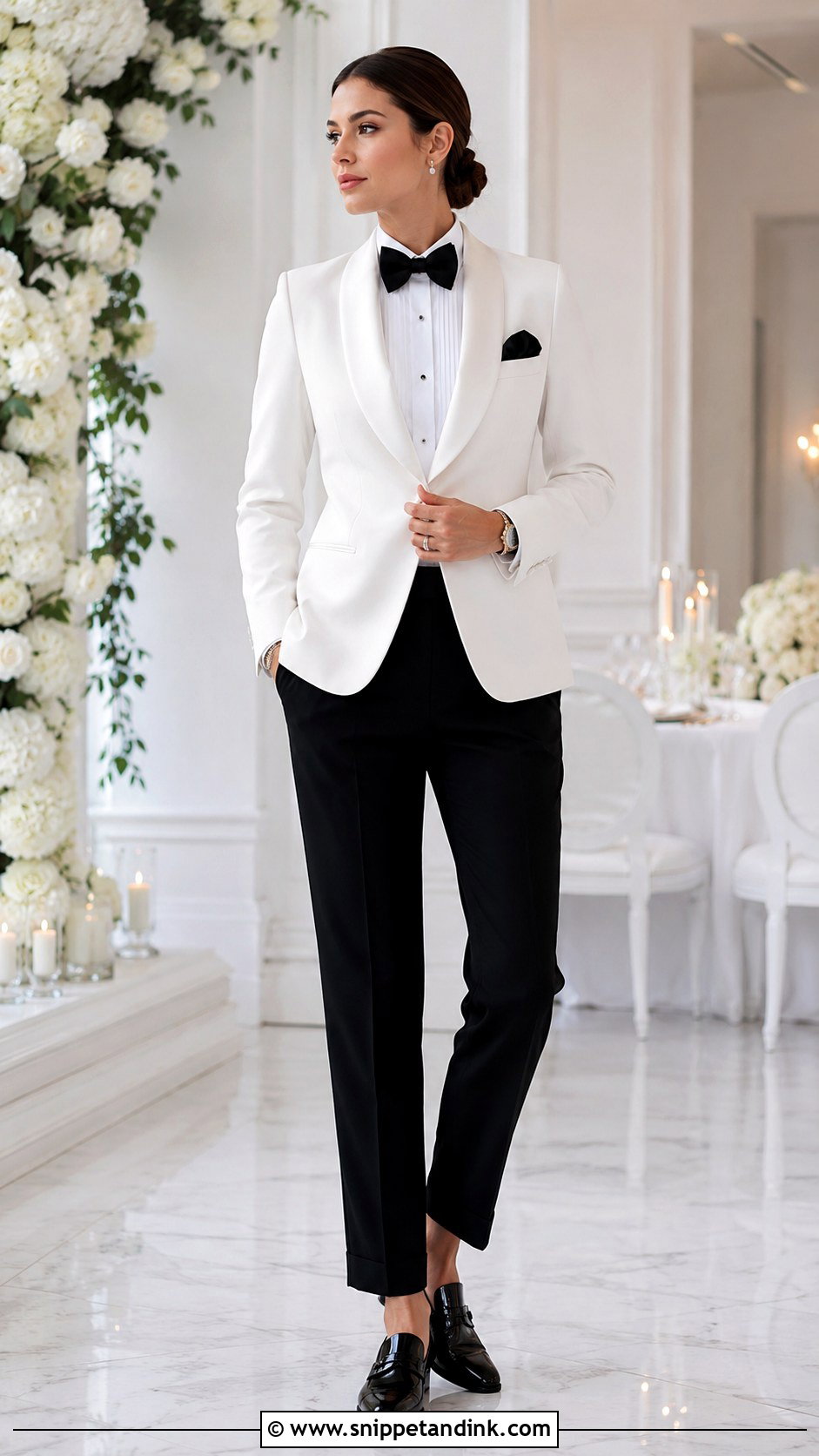
A white tuxedo jacket with black trousers is high contrast and reads formal without being a full black tux. The white jacket becomes the focal point, so it has to be pressed and spotless; I carry a stain pen for exactly this outfit. A black bow tie and black shoes keep it classic, while a silk camisole softens it. It suits evening weddings and city venues best, where the white jacket looks deliberate against dark surroundings.
24. Custom Tailored Wedding Suit
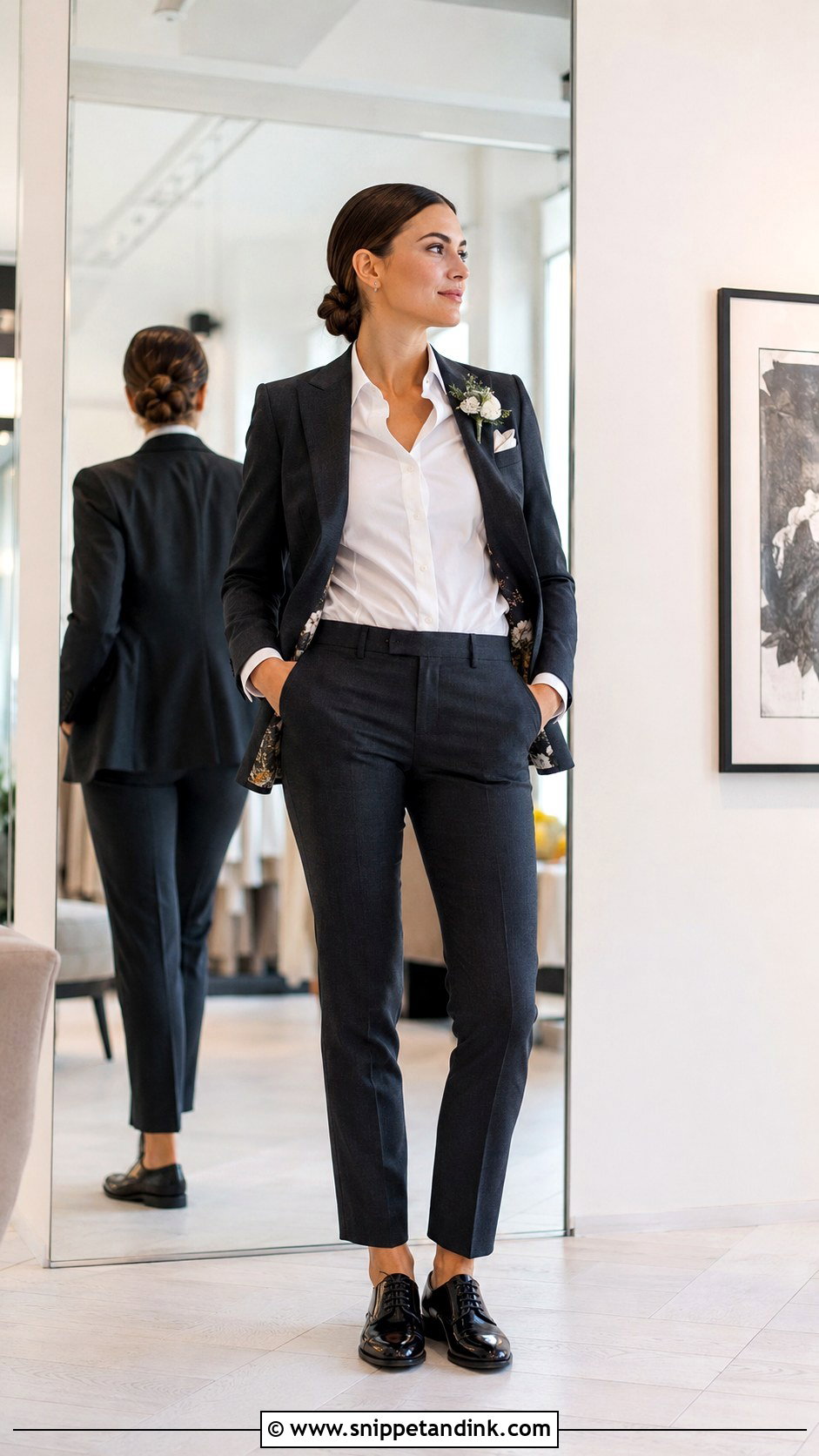
Custom tailoring is worth it when off-the-rack sizing has never fit, which is common when your build doesn’t match what womenswear or menswear patterns assume. You choose the cut, cloth, lining, buttons and lapels, and the silhouette can be masculine, feminine or somewhere between. Personal touches like stitched initials or a lining in your wedding colors are easy to add. Bring your shoes and the undergarments you’ll wear to every fitting. Custom costs more and takes longer, but the fit is the reason people do it.
25. Matching Couple Wedding Suits
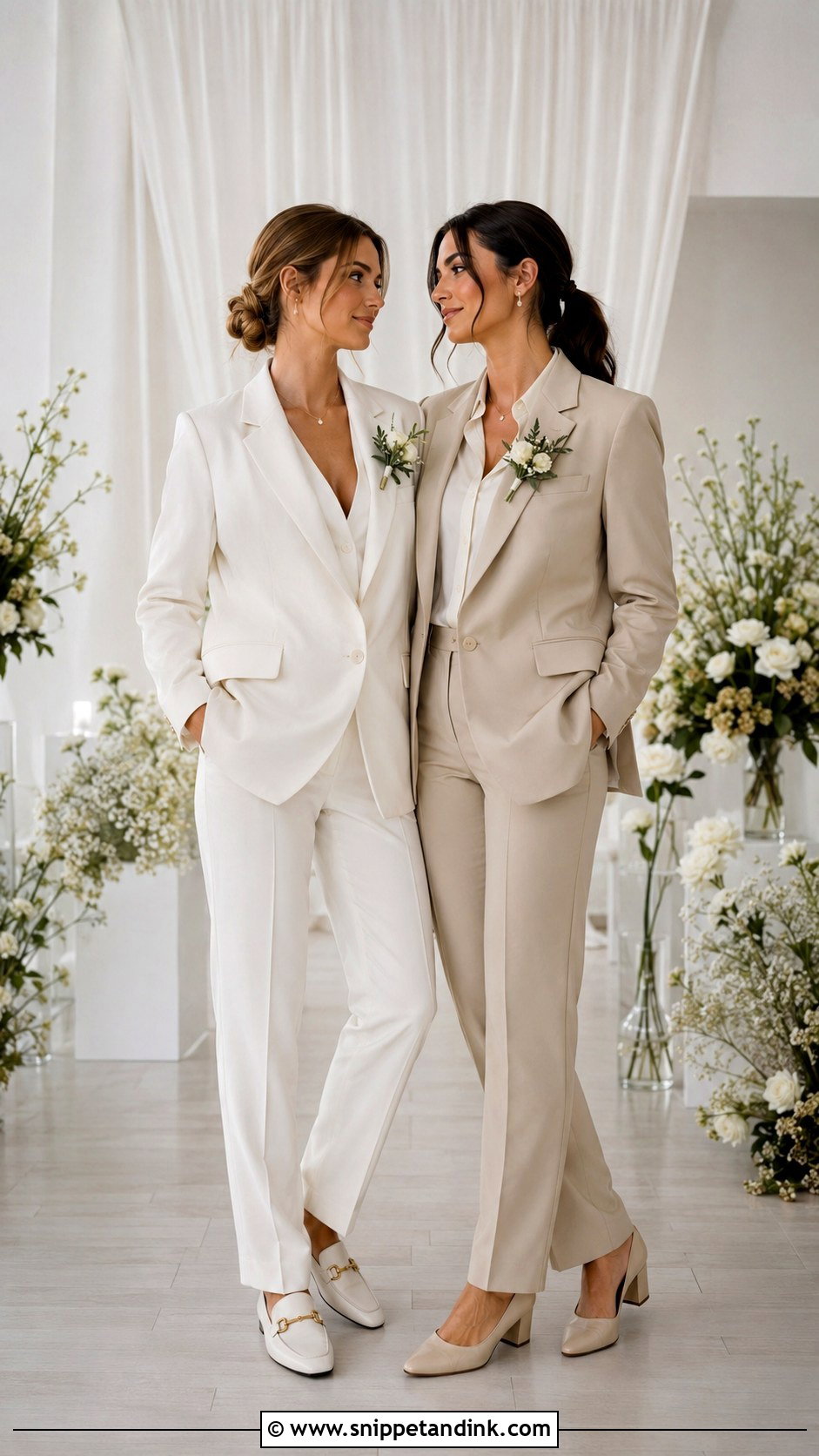
Matching couple wedding suits work when they look coordinated, not cloned. You might both wear white with different shirts, or the same color in different cuts, or pair complementary tones like ivory with beige or navy with cream. Small details tie it together: a shared pocket square, similar shoes, matching boutonnieres. My one rule is that both partners get fitted with the same care. A sharp suit next to a baggy one shows up in every photo of the two of you standing together.
A Fitting Calendar That Works for Two Suits
Two people in tailoring means two sets of fittings, and they rarely finish on the same day. I plan backward from the wedding. Made-to-measure usually takes several weeks to arrive after the order, and a fully bespoke suit needs longer, with more fittings. Off-the-rack suits still need alterations, and busy tailors book up in spring and early autumn.
- Four to six months out: order made-to-measure or bespoke, or buy off the rack and book a tailor.
- About two months out: first alteration fitting with your shoes, shirt and undergarments.
- Three to four weeks out: second fitting to check the hem and the sleeve length together.
- One to two weeks out: final fitting and collection, so a late weight change can still be handled.
Keep the finished suit on a broad, shaped hanger in a breathable cotton bag, not the plastic it came home in. Steam the morning of the wedding, never iron velvet or satin lapels, and pack a small kit with a lint roller, safety pins, a stain pen and a spare shirt button.
Fit Comes Before Color, Every Time
There isn’t one rule for lesbian wedding suit ideas, only a few practical truths. Fit the shoulders first, hem the trousers with your wedding shoes on, and choose a cloth that will still look composed after ten hours of sitting, hugging and dancing. A black tuxedo, an ivory pantsuit or an emerald velvet can all be right. If you can sit, raise your arms and walk across a room without fussing with the jacket, you’ve found the one.
You'll Like These Ideas:


Leave a Reply