
Most grooms I dress start by picking a jacket colour and then scramble to make the shirt, shoes and tie agree with it. It works far better the other way round: decide on the whole outfit at once, then buy the pieces. That’s how the looks below are laid out, each one with the jacket, trousers, shirt, shoes and finishing details together. You’ll find classic black, midnight and navy, velvet for winter, ivory for summer and a few patterned jackets for grooms who want something personal. Tailoring right now leans toward comfortable cuts with a little room in them, double-breasted jackets and rich fabrics. Whatever you choose should match the dress code and the time of day before it matches the flowers.
Rent, Buy Off the Rack or Go Made-to-Measure?
The way you source the tuxedo affects how good it looks more than the colour you pick. Here is how I explain the three routes to grooms.
Rental
Sensible for a groom who will never wear black tie again, and easy for groomsmen spread across different cities. The trade-off is fit: rental jackets come in set sizes and only limited alterations are allowed. Order a couple of months ahead, have everyone measured professionally rather than at home, and plan a try-on a week before so there’s time to swap sizes.
Off the rack, then tailored
If a ready-made jacket fits your shoulders, a tailor can fix almost everything else: sleeve length, waist suppression, trouser hem and seat. Shoulders are the one area that’s very hard to alter, so buy for the shoulders and alter the rest. Allow three or four weeks for alterations.
Made-to-measure
This is the route for unusual proportions, athletic builds, or anyone who wants a specific cloth like velvet or tartan. Timelines vary by maker, but several weeks for production plus a fitting or two is common, so start three to four months before the wedding. It costs more, though you get a tuxedo you’ll actually wear again.
1. Classic Black Peak Lapel Tuxedo
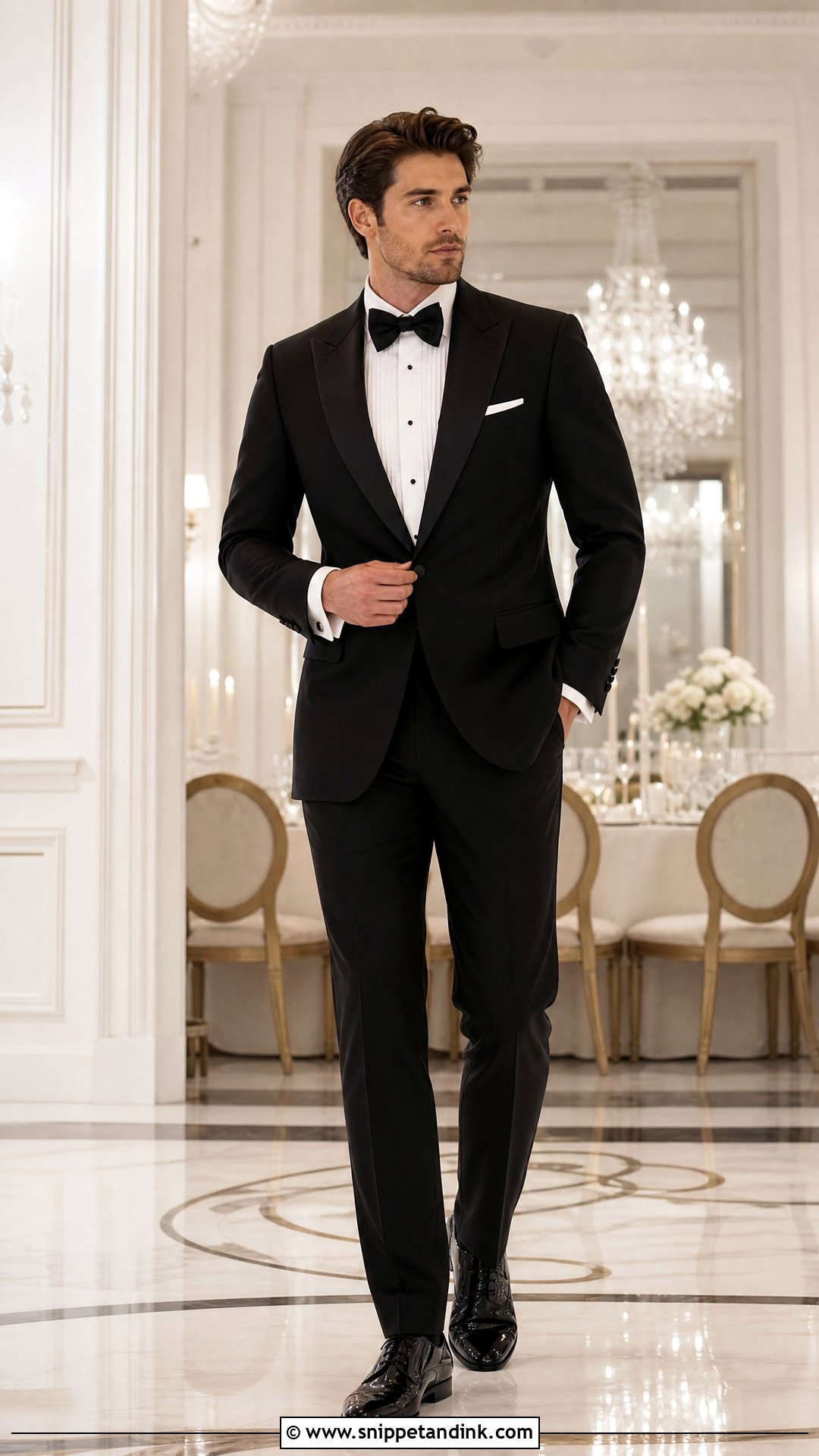
If a groom asks me for the safest formal choice, it’s a classic black peak lapel tuxedo. Peak lapels point up toward the shoulders and broaden the chest, which helps slimmer frames. Satin-faced lapels, trousers with a matching side stripe, a white pleated shirt and a self-tie black bow tie are the traditional set. Patent Oxfords, black socks and plain silver cuff links finish it. When I fit it, I look for about a quarter to half an inch of shirt cuff below the jacket sleeve and trousers sitting at the natural waist, not the hips. Keep the boutonniere small; the lapel shape is the statement.
2. Black Shawl Collar Tuxedo
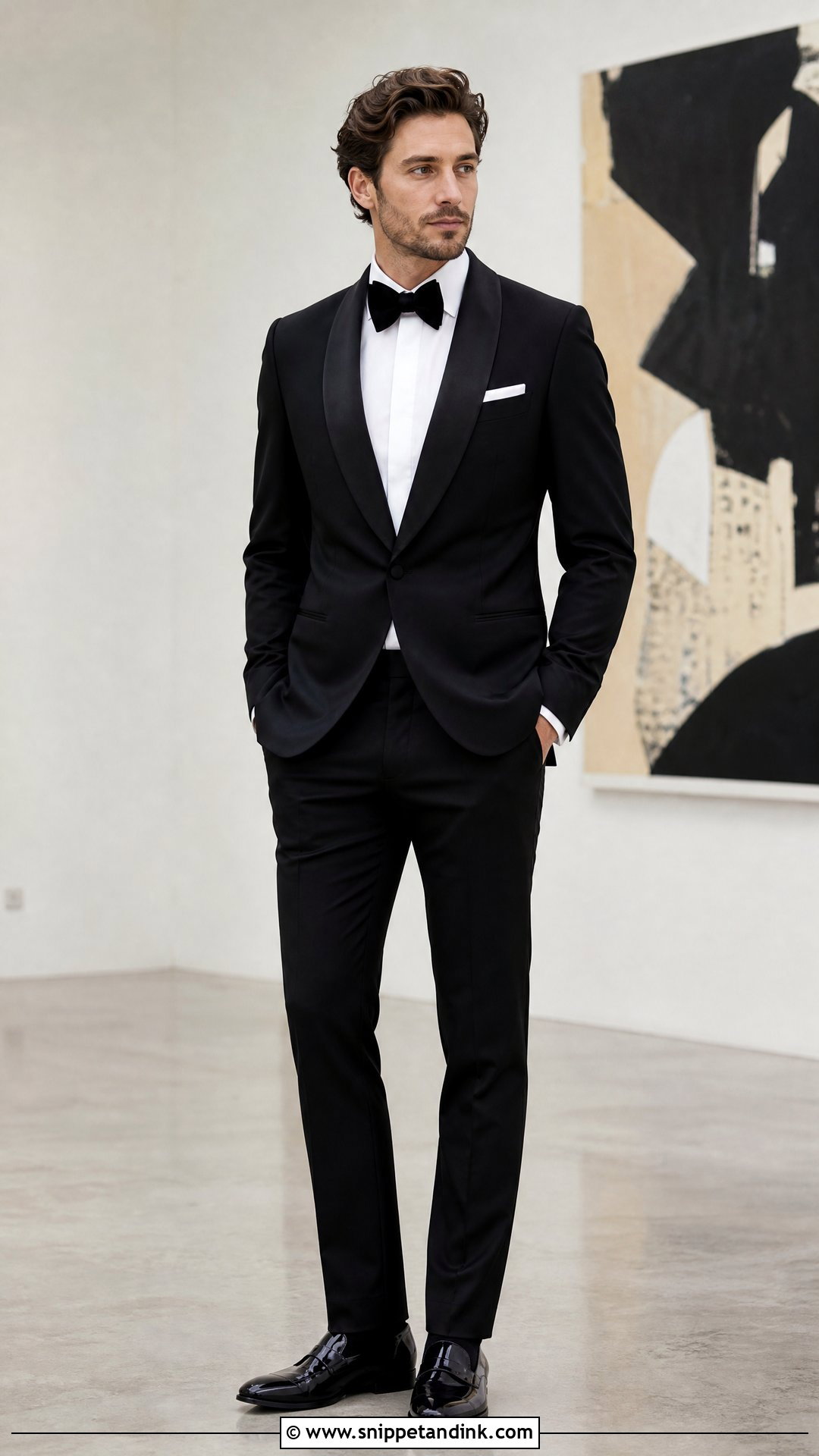
The shawl collar is a single rounded curve with no notch, and it softens the whole front of a black shawl collar tuxedo. It suits rounder faces and broader builds, where a sharp peak can look severe. I pair it with a concealed-placket white shirt so nothing interrupts the line, and a velvet or satin bow tie. Flat-front trousers with very little break, black loafers and a white silk pocket square keep it modern. Wear braces instead of a belt; tuxedo trousers traditionally have no belt loops, and a low-profile pair under the jacket keeps the waist clean.
3. Double-Breasted Black Tuxedo
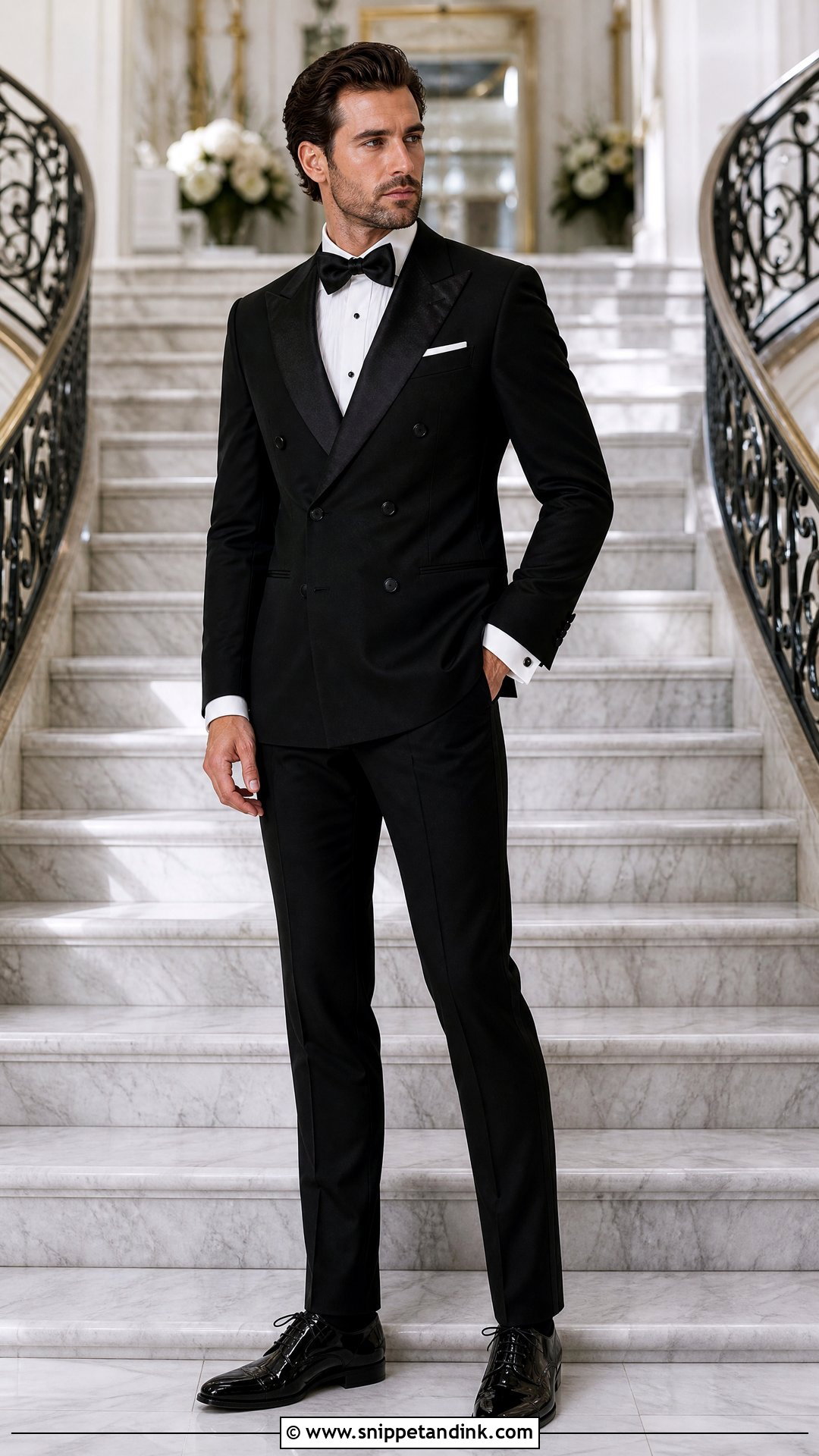
Double-breasted jackets have real presence, which is exactly why I fit them carefully. A six-button front with peak lapels is cut to be worn fastened all evening, so the chest needs enough room to button without the fabric pulling into an X. If it strains when you sit, it’s too tight. Higher-rise trousers keep the jacket’s lower edge from exposing the waistband. A white French-cuff shirt, black bow tie and patent whole-cuts or Oxfords complete it. Keep accessories to plain cuff links and a white square; the jacket already does a lot. This shape is back in favour, cut with easier proportions than the tight versions of a decade ago, and it belongs at a grand evening wedding.
4. Midnight Blue Tuxedo
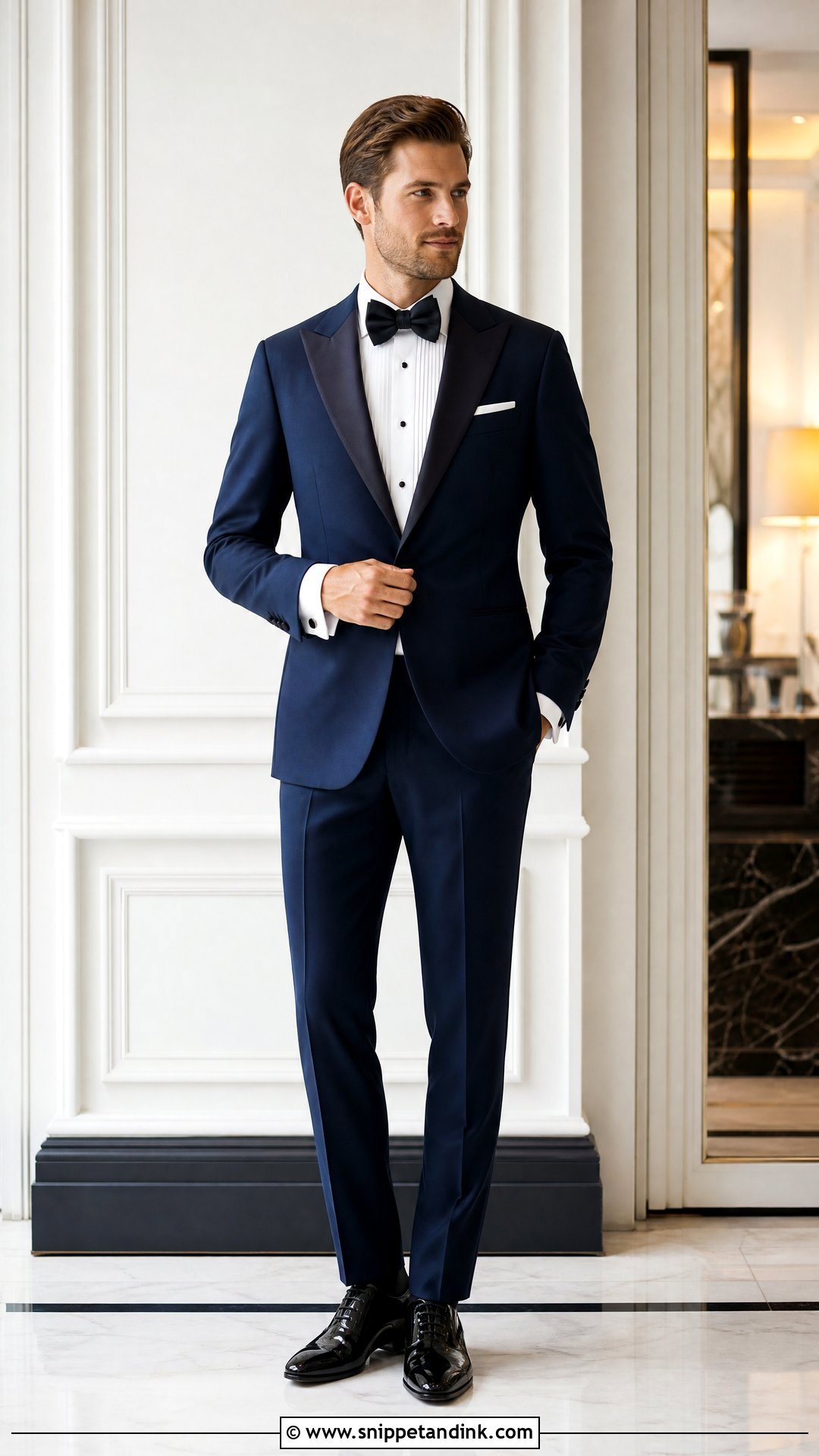
Midnight blue is the colour formalwear tailors have long reached for under artificial light, because a very dark navy can look richer than black after dark. Pair the jacket with black satin peak lapels and matching midnight trousers; the lapel contrast should be quiet, not obvious. White bib-front shirt, black silk bow tie, black leather shoes and onyx cuff links keep it formal. If the groomsmen are in black, it sets the groom apart gently. One caution: check the cloth outdoors before you buy. In daylight, some midnight blues read clearly navy, and a rental from a different batch can look mismatched in photos.
5. Navy Tuxedo With Black Lapels
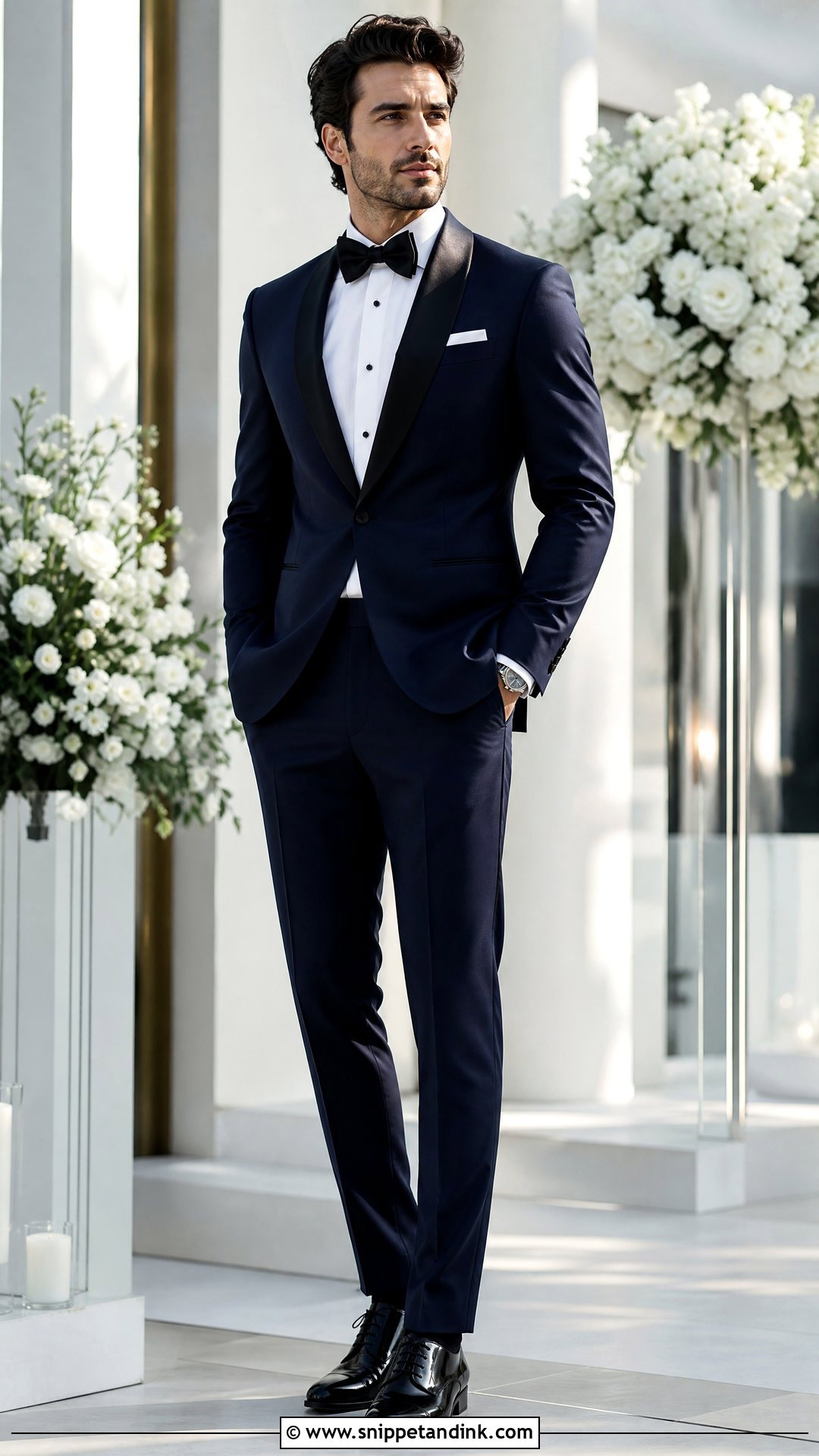
A navy tuxedo with black lapels is a lighter, friendlier blue than midnight, and it suits grooms who find black too stiff. Choose a rich navy with black satin peaks, a white spread-collar shirt and a black bow tie. Black loafers or Oxfords and dark socks keep the formality up. I’d steer you away from tan or light brown shoes here; they turn a tuxedo into a smart suit. A simple silver watch is enough jewellery. Navy pairs easily with blush, sage, blue and neutral palettes, so it’s a forgiving choice when the colour scheme isn’t settled yet.
6. Ivory Dinner Jacket Tuxedo
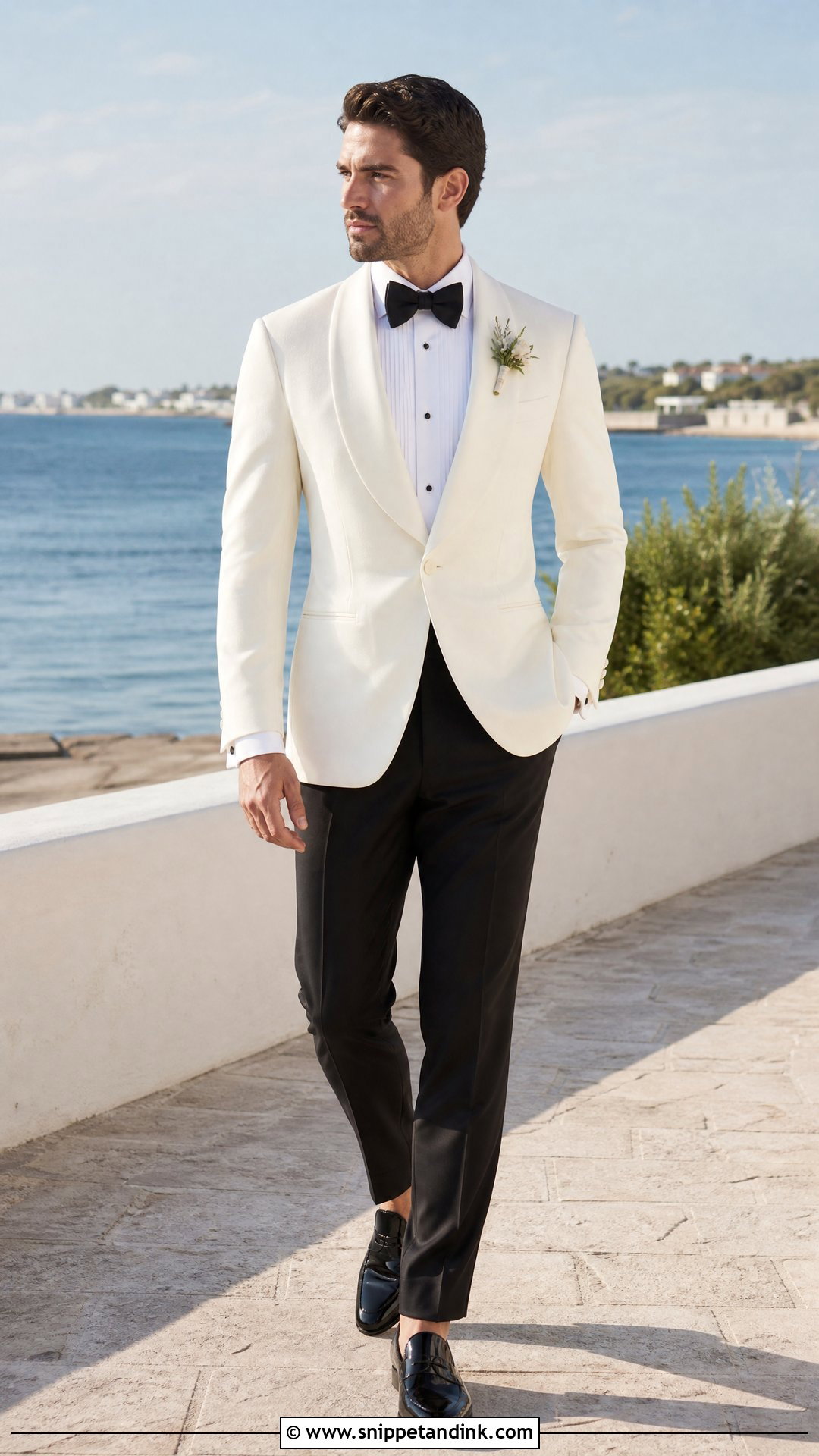
For a summer, coastal or destination wedding, an ivory dinner jacket with black trousers is the classic warm-weather formal look. Choose a breathable wool blend; polyester ivory jackets get hot and shine under flash. Shawl collar or peak lapels both work. A white shirt, black bow tie, black patent loafers and black cuff links tie the two halves together, and the trousers should carry a satin stripe to connect them to the jacket. Ivory reads softer than bright white on skin. Before you commit, hold the jacket next to a swatch of your partner’s outfit; two slightly different creams side by side can look like a mistake in photos.
7. White Tuxedo With Black Trousers
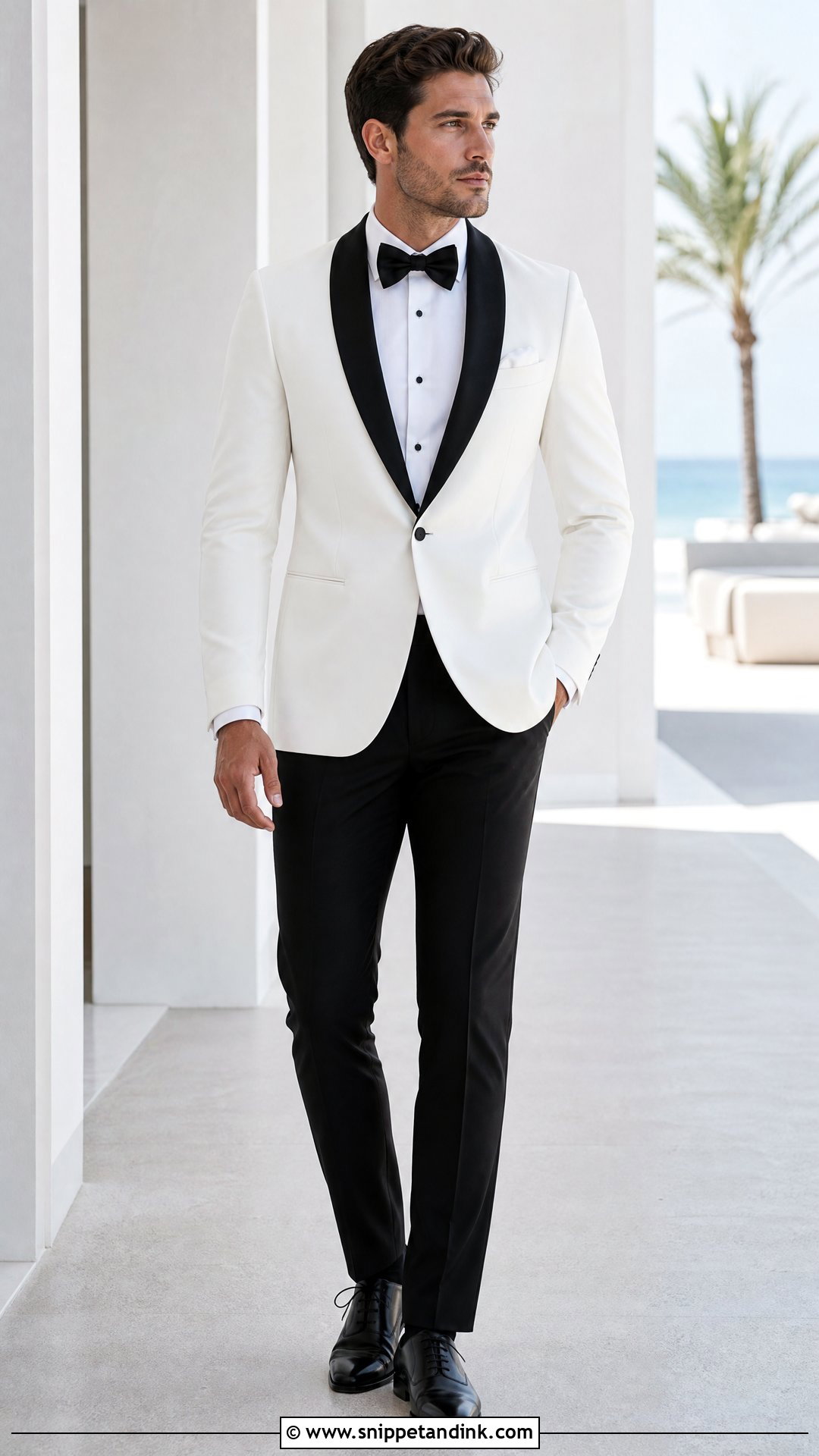
A pure white jacket with black shawl lapels and black trousers is the most graphic option on this list, and the groom becomes the easiest person to spot in every group photo. Keep the shirt white, and use black studs and a black bow tie for a strict two-tone. Black velvet loafers or polished Oxfords ground the jacket. White is honest about tailoring: every pucker at the shoulder and every sleeve that’s a touch long shows. I also warn grooms that white marks easily. Pack a stain pen and keep the jacket off during the meal if you’re seated near red wine.
8. Burgundy Velvet Tuxedo
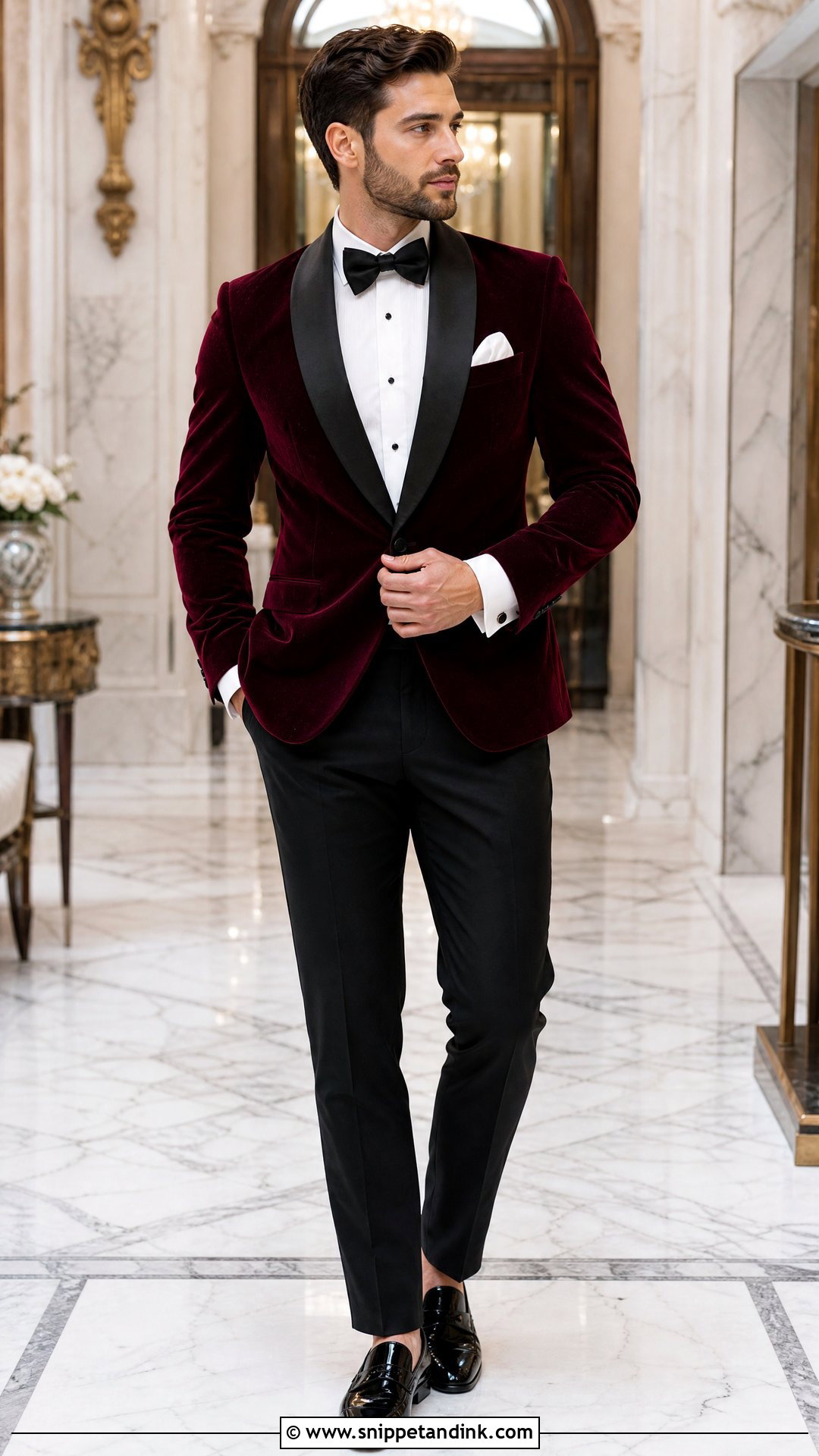
Burgundy velvet is my favourite cold-weather jacket for a groom who wants colour without loud pattern. Pair a burgundy dinner jacket with black satin shawl lapels and plain black trousers. A full burgundy velvet suit looks heavy; black wool trousers give the eye somewhere to rest. White shirt, black silk bow tie, black patent loafers and onyx links keep the rest classic. Velvet has a nap, so it looks lighter or darker depending on angle and light. That makes fit at the shoulders and waist more important, since any pulling shows as a streak of different colour.
9. Emerald Green Velvet Tuxedo
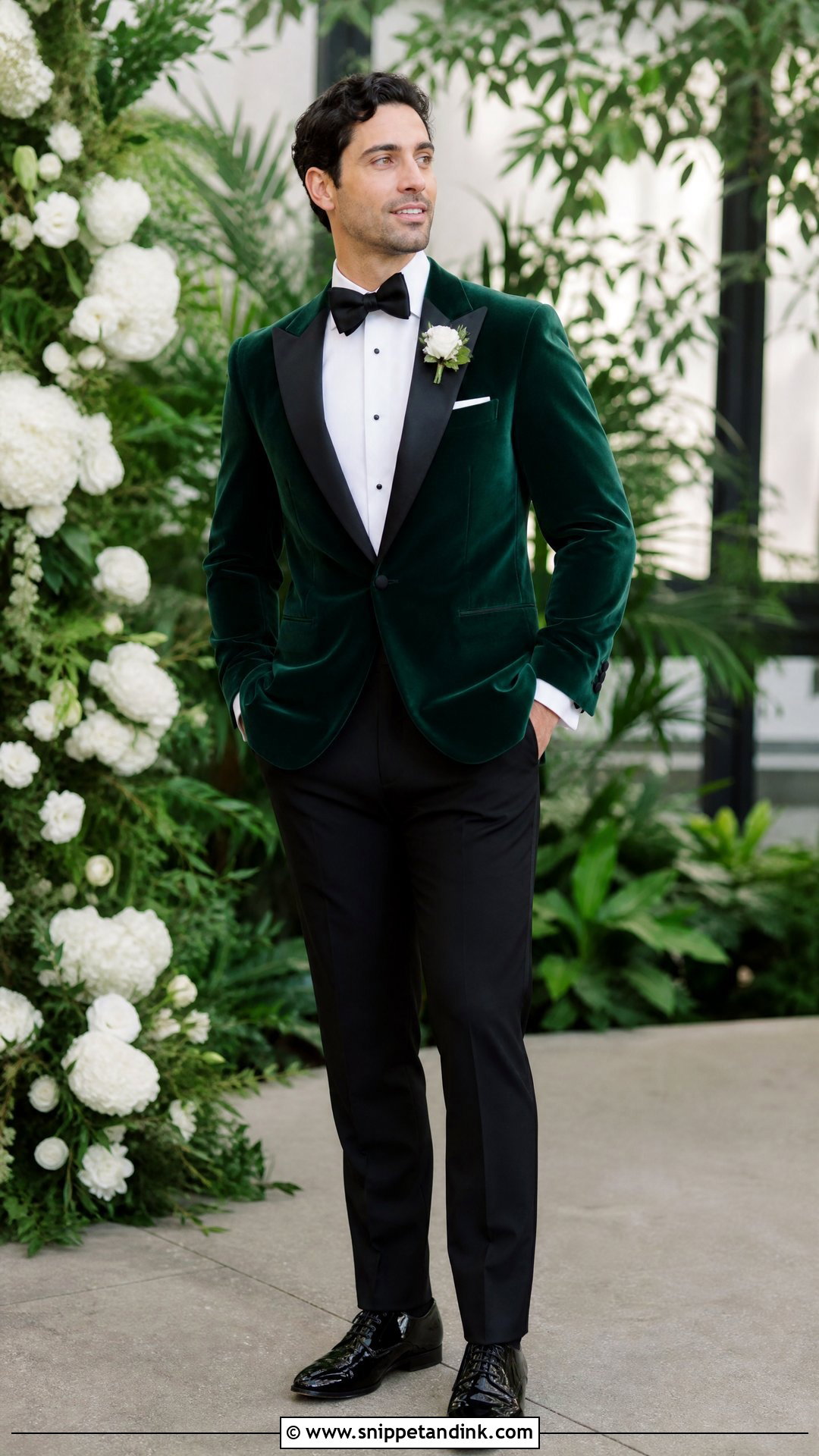
Emerald velvet works when everything around it stays traditional. Black lapels, black trousers, a white shirt and a black bow tie. The one mistake I see is a green bow tie to match the jacket, which drains the contrast and makes the outfit look themed. Choose a deep, saturated emerald rather than a bright one; bright greens look almost synthetic under evening light. Polished black Oxfords, dark cuff links and a white or greenery boutonniere finish it. It’s a good way for the groom to stand apart while the groomsmen wear black trousers and matching accessories.
10. Navy Velvet Tuxedo
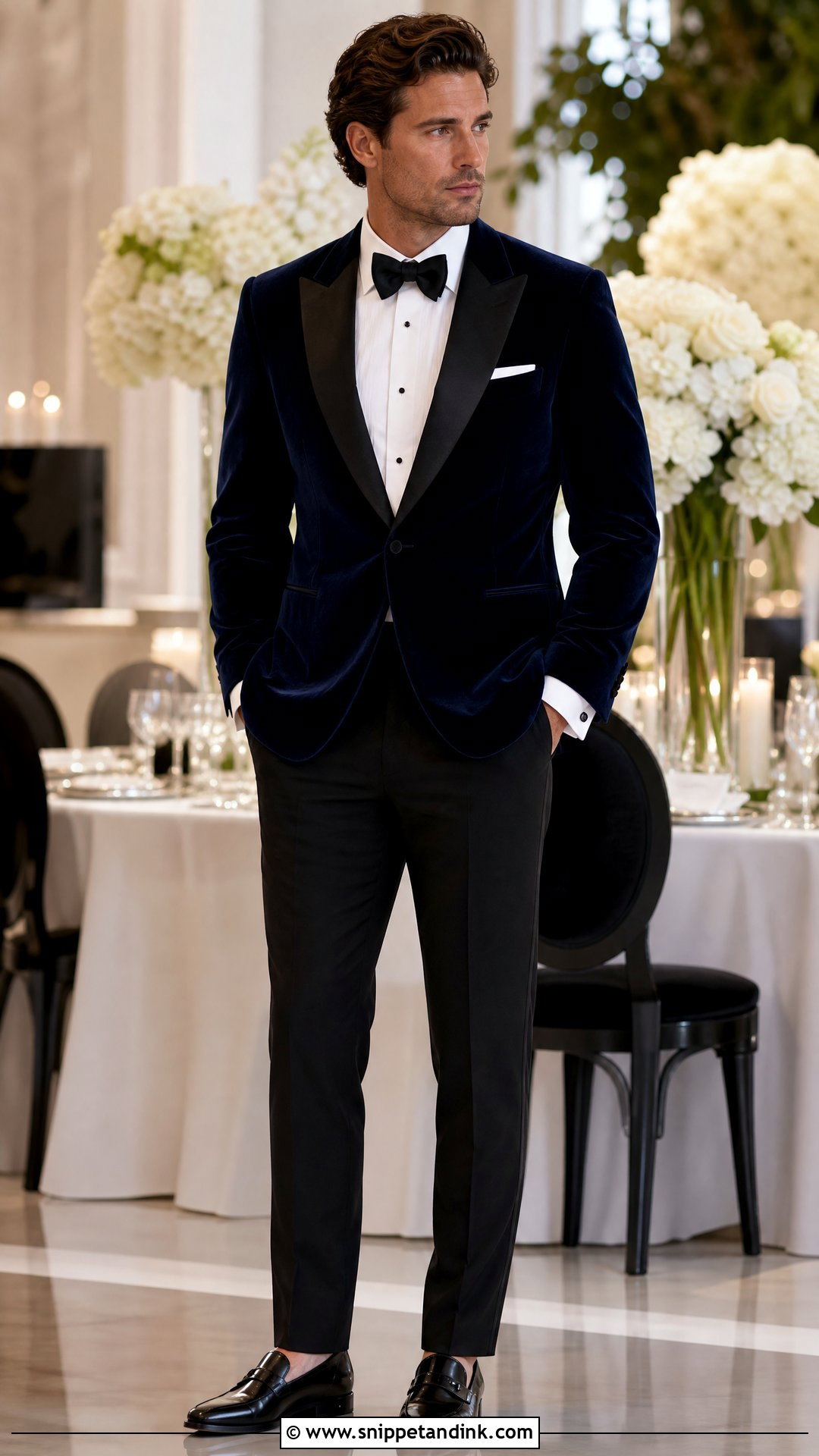
Navy velvet gives texture without the colour commitment of burgundy or green. A dark navy velvet dinner jacket with black satin peak lapels over black trousers is quiet in daylight and rich under candlelight. A white French-cuff shirt with a smooth or lightly textured bib, a black bow tie, loafers and dark socks keep the lower half streamlined. Leave chains and oversized lapel pins at home. Velvet shows strain more than wool, so when I fit it I check the button stance carefully; if the fabric dimples around the button, the jacket needs letting out.
11. Three-Piece Black Tuxedo
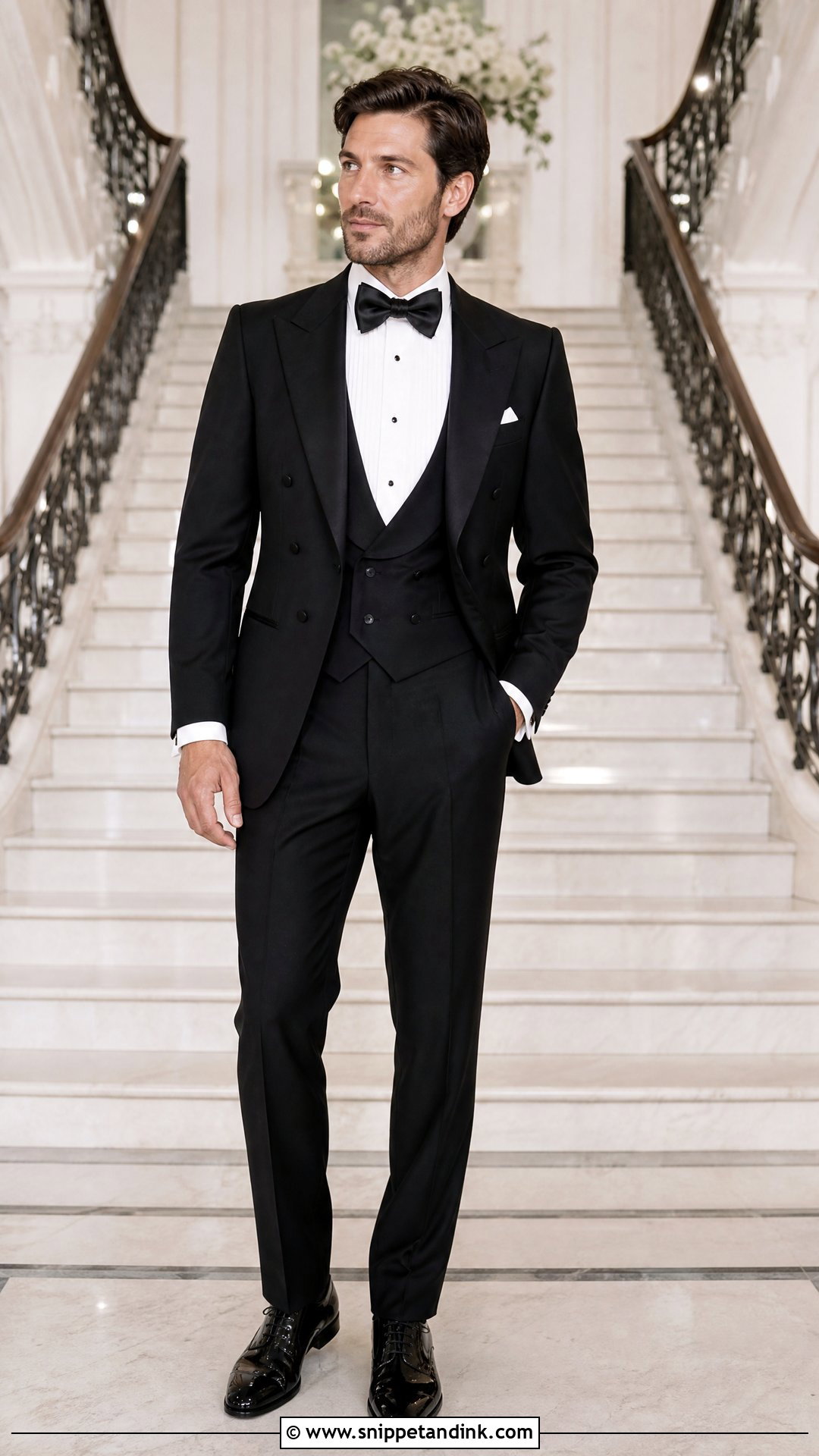
A three-piece black tuxedo adds a low-cut black waistcoat to the peak lapel jacket and trousers, and it gives you a finished second look when the jacket comes off for dancing. The waistcoat must cover the trouser waistband and should be cut low enough to show the shirt bib. Never pair it with a cummerbund; both exist to cover the waist, so wearing both is doubling up. A white formal shirt, black bow tie and polished Oxfords complete it. In a warm room the extra layer adds heat, so I suggest it mostly for autumn and winter.
12. Charcoal Gray Tuxedo
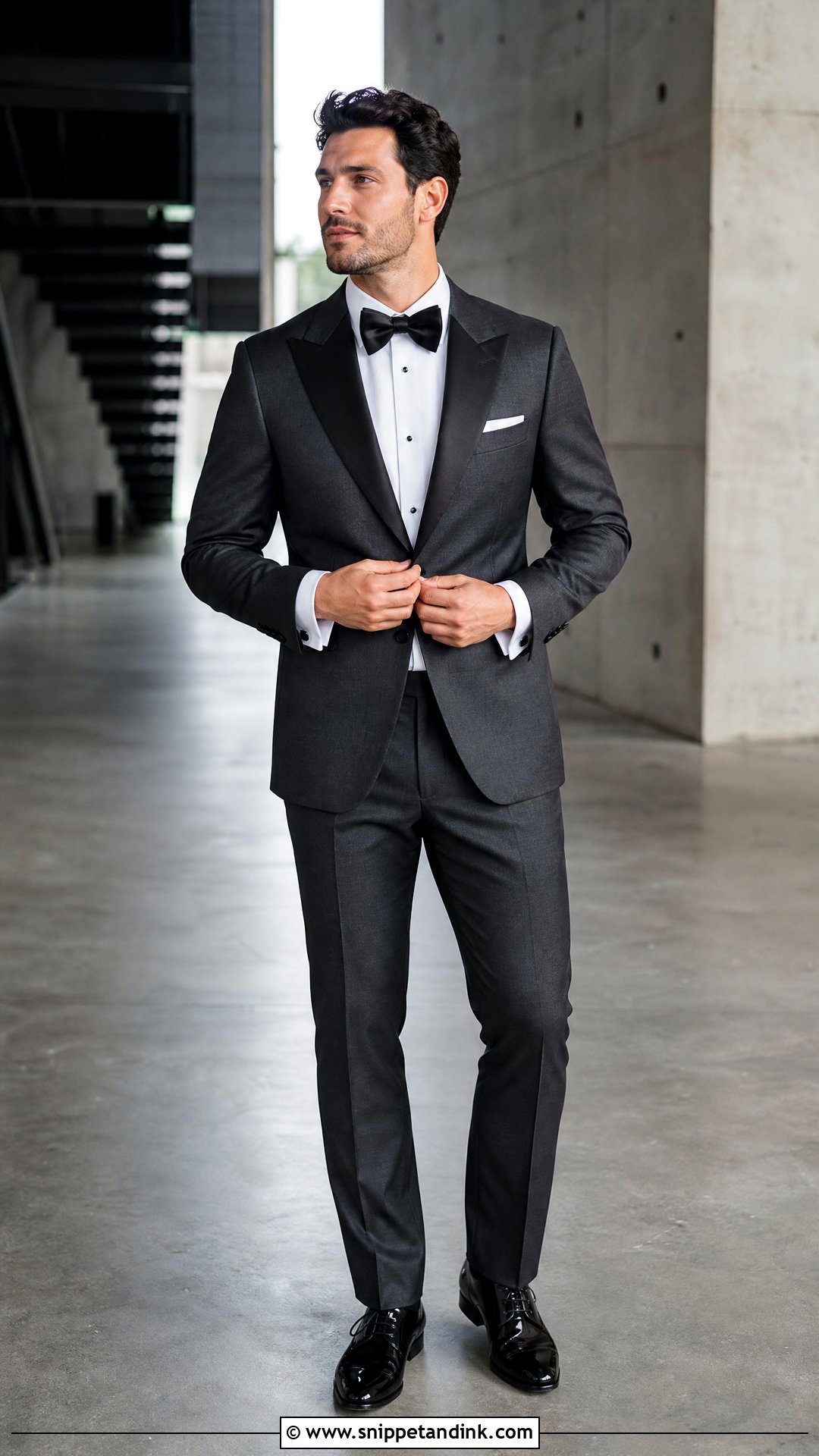
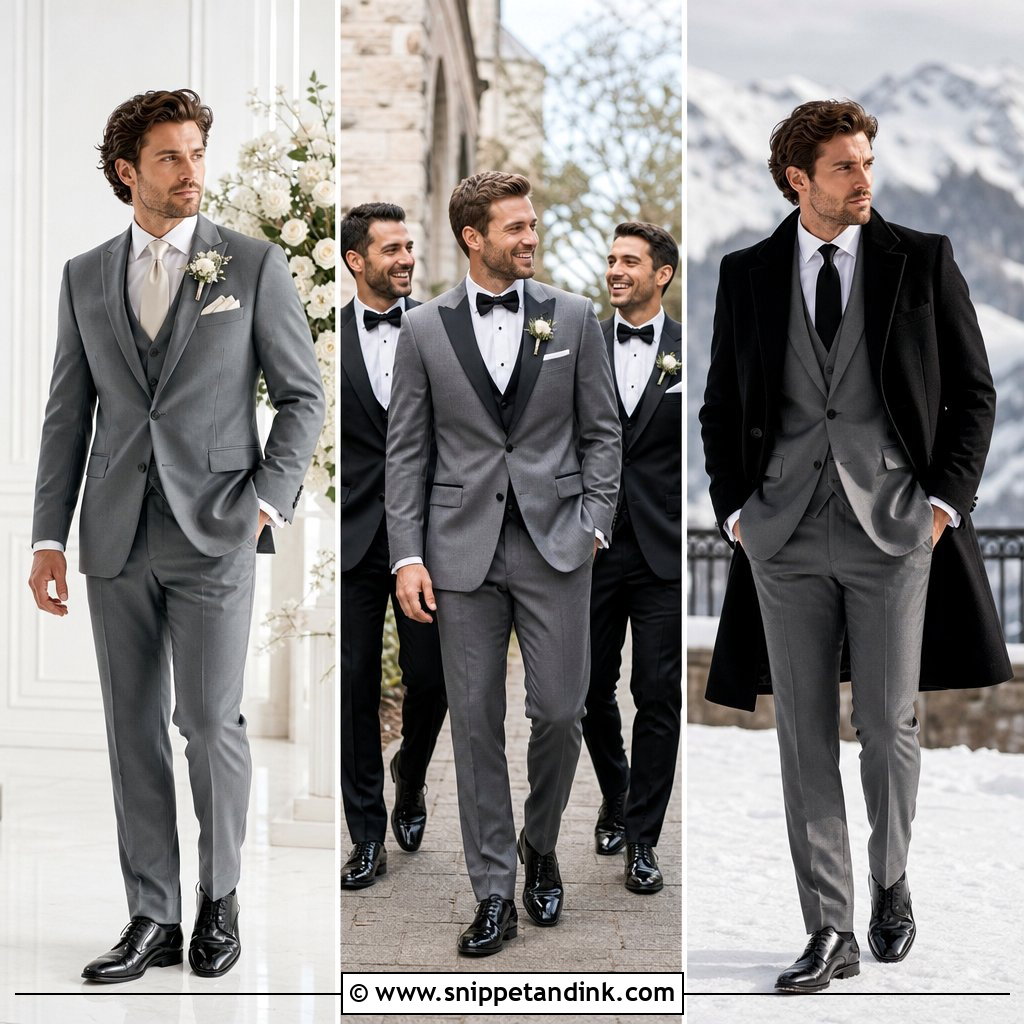
Charcoal is a softer alternative to black that still feels formal, as long as the grey is deep. Pair a dark charcoal jacket with black satin peak lapels and matching trousers, a white shirt and a black bow tie, plus black calfskin shoes. Avoid mid-grey; in that shade the satin lapels are the only thing separating it from an office suit. Wear over-the-calf socks so no leg shows when you sit. Charcoal sits comfortably next to groomsmen in black or lighter grey, and it suits industrial venues and city weddings in spring or autumn.
13. Chocolate Brown Tuxedo
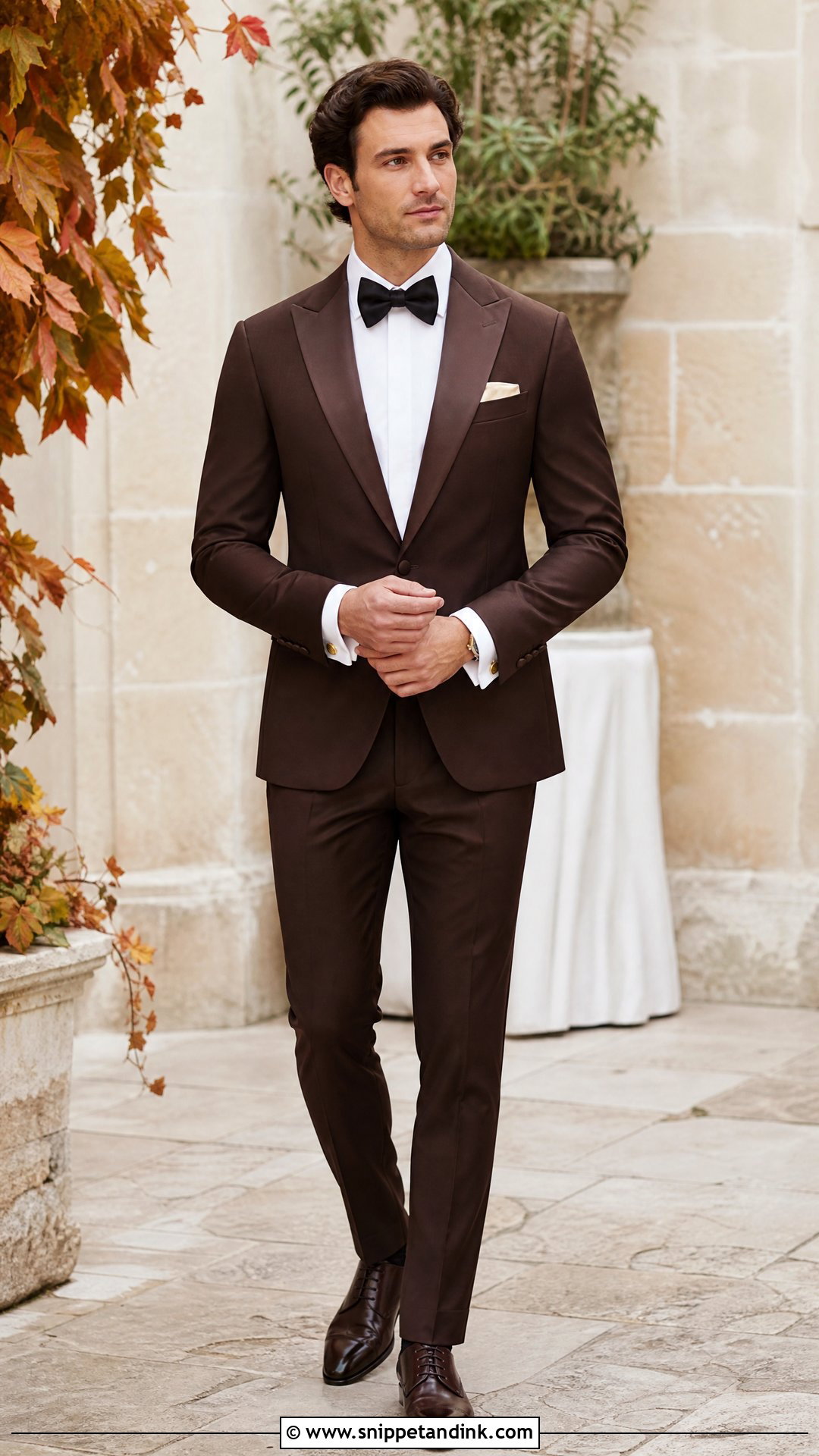
Chocolate brown sounds informal until you see it in a deep, even shade with matching satin peak lapels. It’s warm, and it looks at home among stone, wood and autumn landscapes. Pair it with matching trousers and a crisp white shirt. A black bow tie gives the strongest evening contrast; dark brown is softer. Dark brown whole-cuts, matching socks, gold-tone cuff links and a cream pocket square complete it. Stay away from mid-brown and tan cloth, which drift toward country casual. Keep the boutonniere neutral, white flowers or simple greenery, so brown is the only colour statement.
14. Cream Monochrome Tuxedo
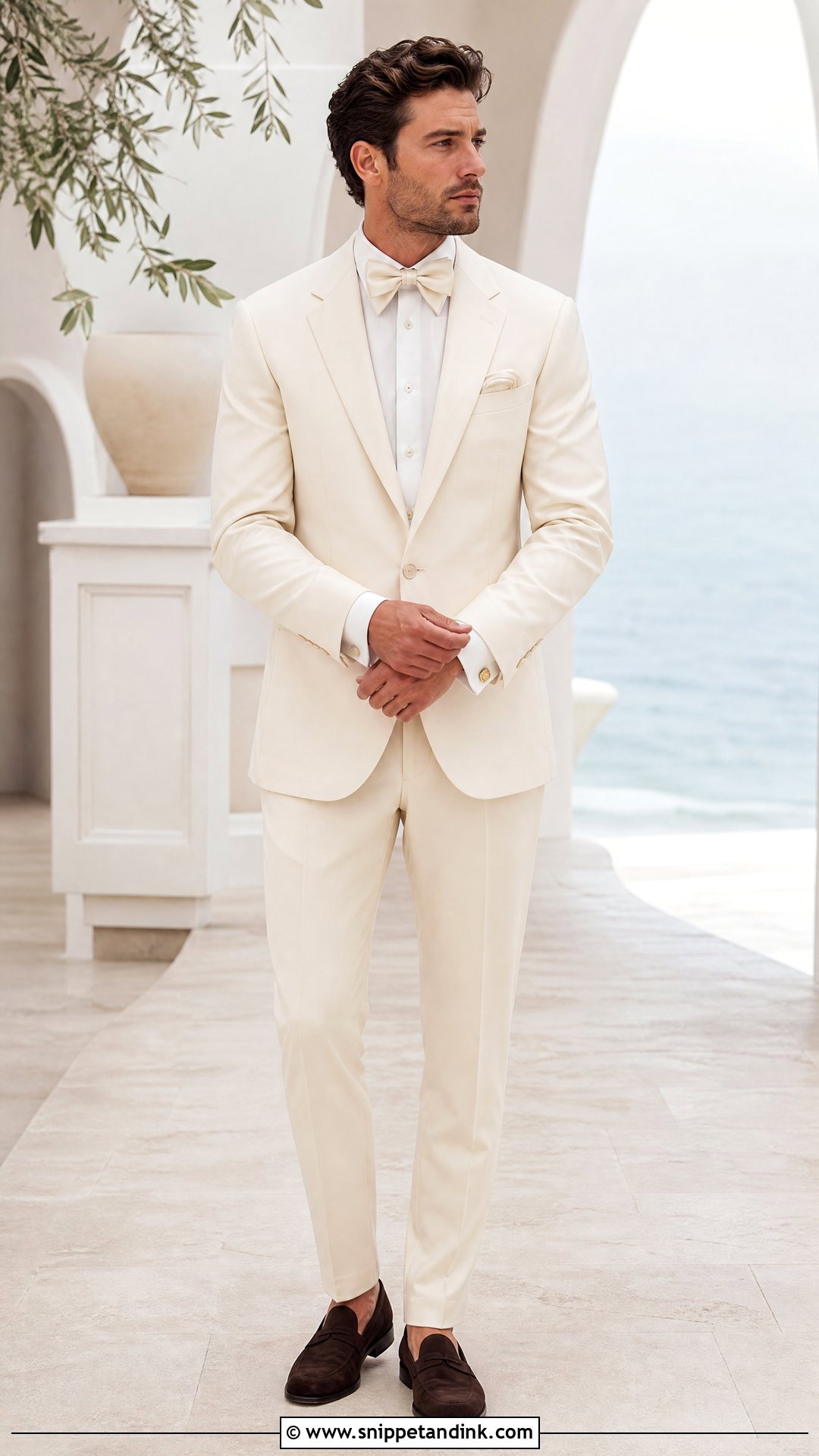
A cream monochrome tuxedo is a daytime look for warm destinations, where black would feel heavy. Jacket and trousers must be cut from the same bolt of cloth; cream from two different batches rarely matches in sunlight. Add an ivory shirt and a tonal cream bow tie. Then choose your contrast: dark brown loafers with a tan leather watch, or cream loafers if you want the whole outfit in one shade. Light cloth shows creases from a long car ride and every fitting issue, so I schedule the final alteration close to the wedding and have the suit pressed the day before.
15. Black Jacquard Tuxedo
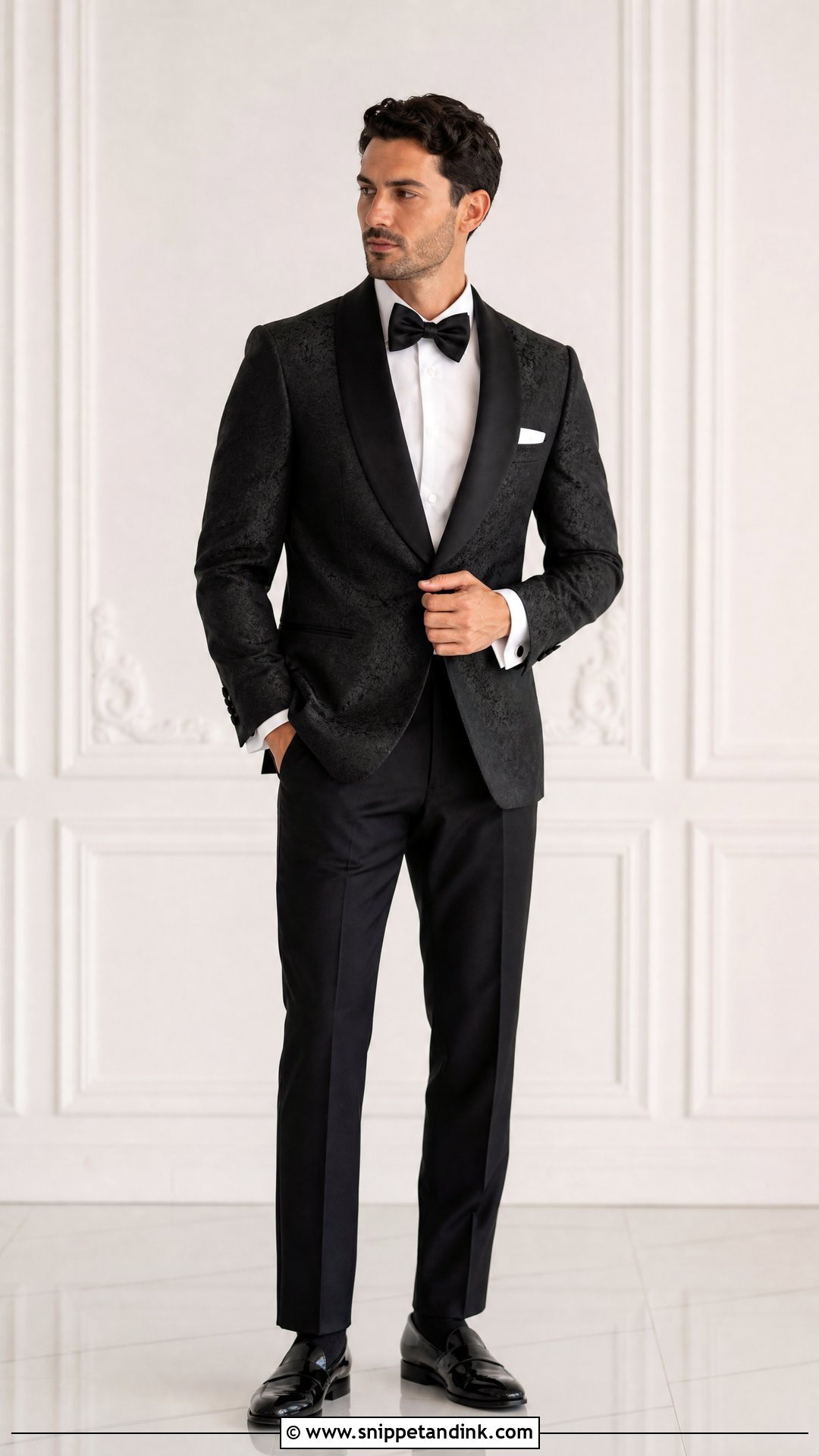
Jacquard weaves a subtle pattern into the cloth itself, so a black jacquard dinner jacket looks plain across a room and textured up close. That’s the effect to aim for. If the pattern is visible in a wide group photo, it’s too bold for a wedding. Pair it with black satin shawl lapels, plain black trousers and a smooth white shirt. A black silk bow tie, polished loafers and simple black cuff links keep it controlled. Skip patterned pocket squares. Fit matters more than usual: a patterned cloth distorts visibly when it pulls across the buttoning point.
16. Black Tuxedo With Tartan Dinner Jacket
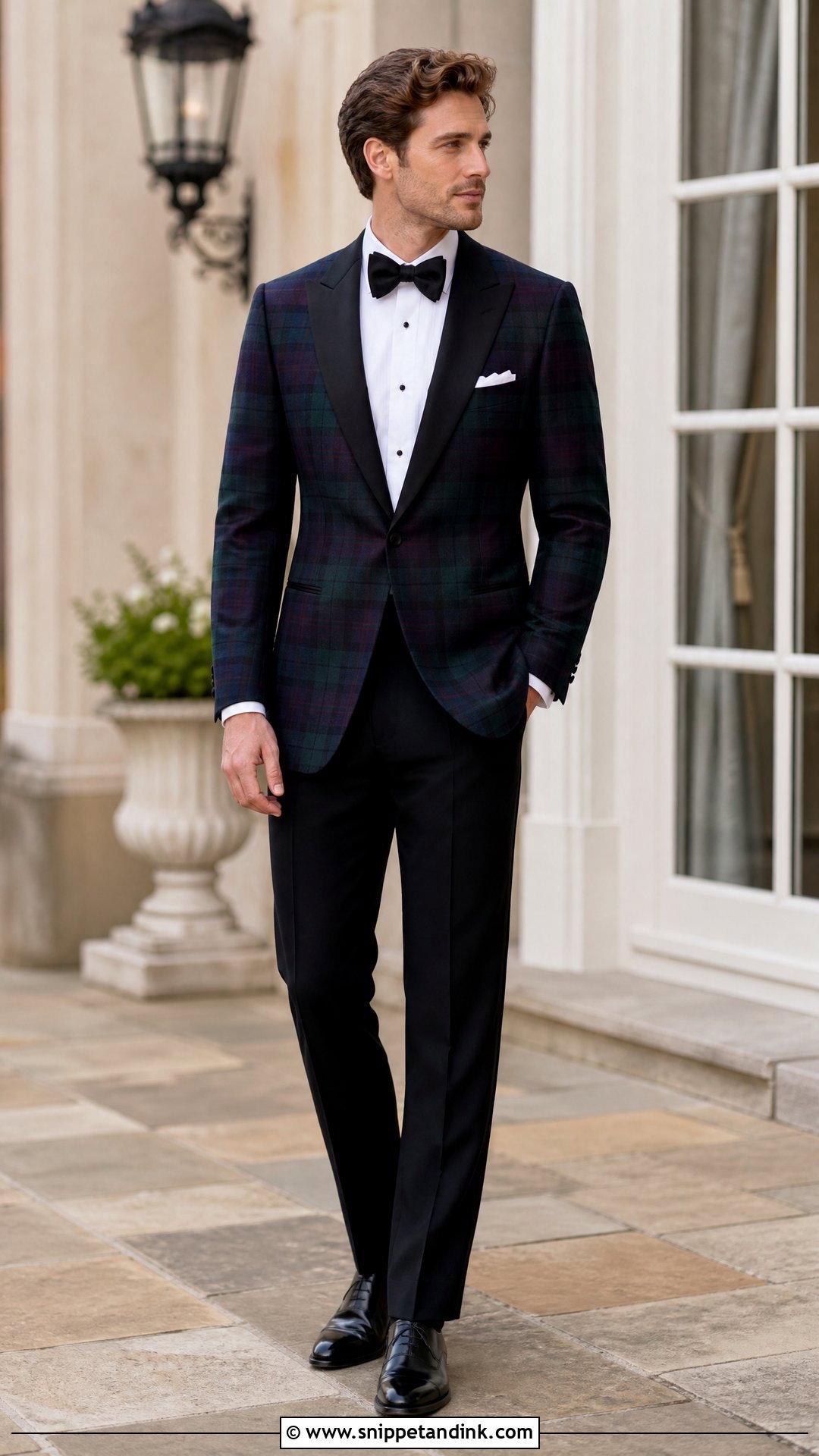
A tartan dinner jacket is the one place I encourage grooms to bring family history into their clothes. Choose a dark tartan jacket in black, navy, burgundy or forest green over plain black trousers, a white shirt and a black bow tie. A satin shawl collar frames the check and links it to the trousers. If the tartan belongs to your family or clan, use the authentic sett rather than a lookalike picked for its colours; relatives who know the pattern will notice. Black Oxfords, dark socks and a white square finish it. Don’t add a plaid tie or square on top.
17. Black Tuxedo With Straight Tie
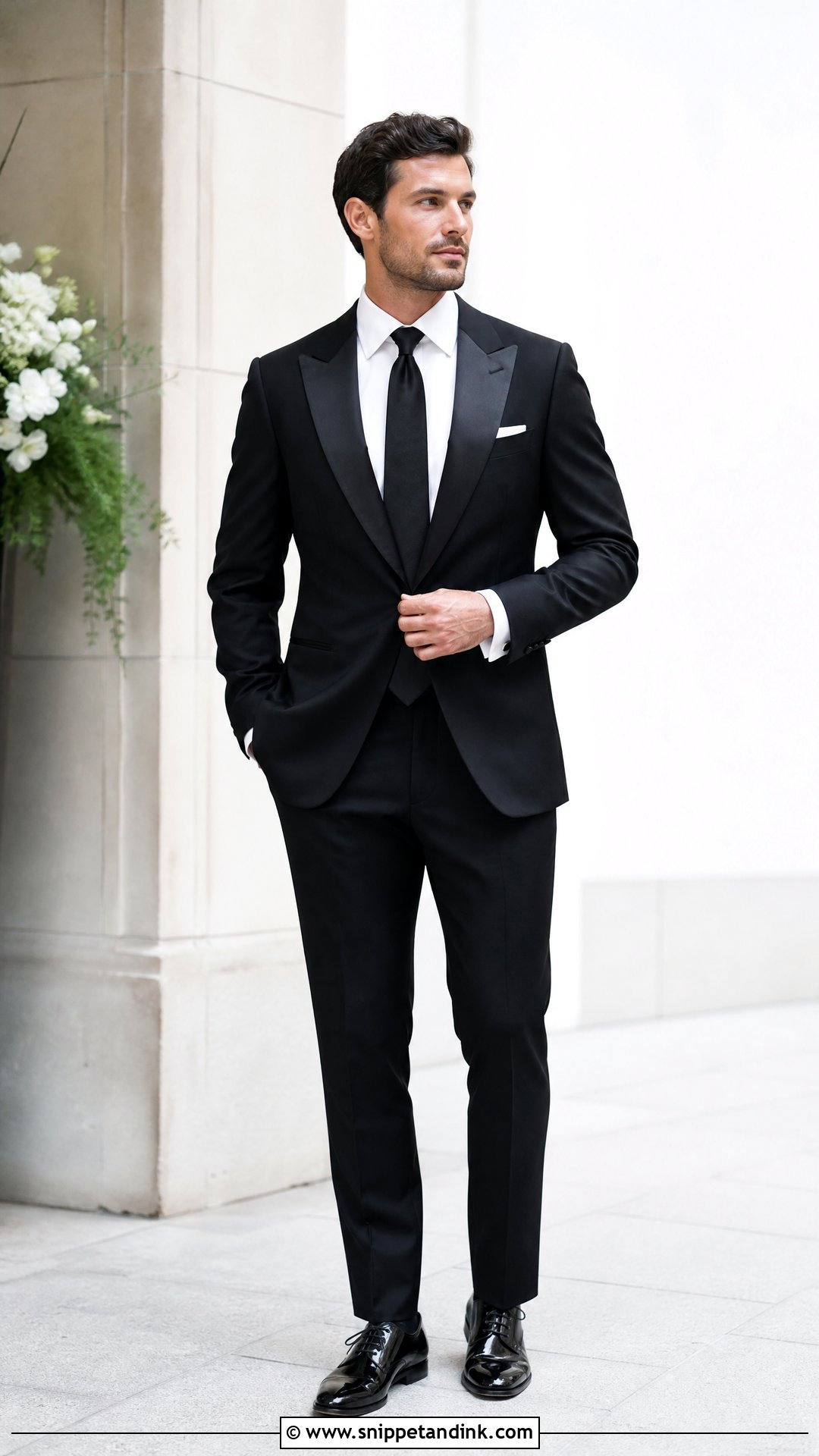
A slim straight tie in place of a bow tie gives a tuxedo a modern, slightly fashion-led feel. It suits black-tie-optional weddings better than strict black tie. Keep the tie solid black silk with a small knot, and pair it with narrow peak lapels and a spread-collar shirt. Watch the gap below the jacket button: without a cummerbund, the trousers need a high enough rise that no white shirt shows between waistband and button. Polished Oxfords, silver cuff links and a white square complete it. The satin lapels and trouser stripe still keep it a tuxedo, not a suit.
18. Black Tuxedo With Cummerbund
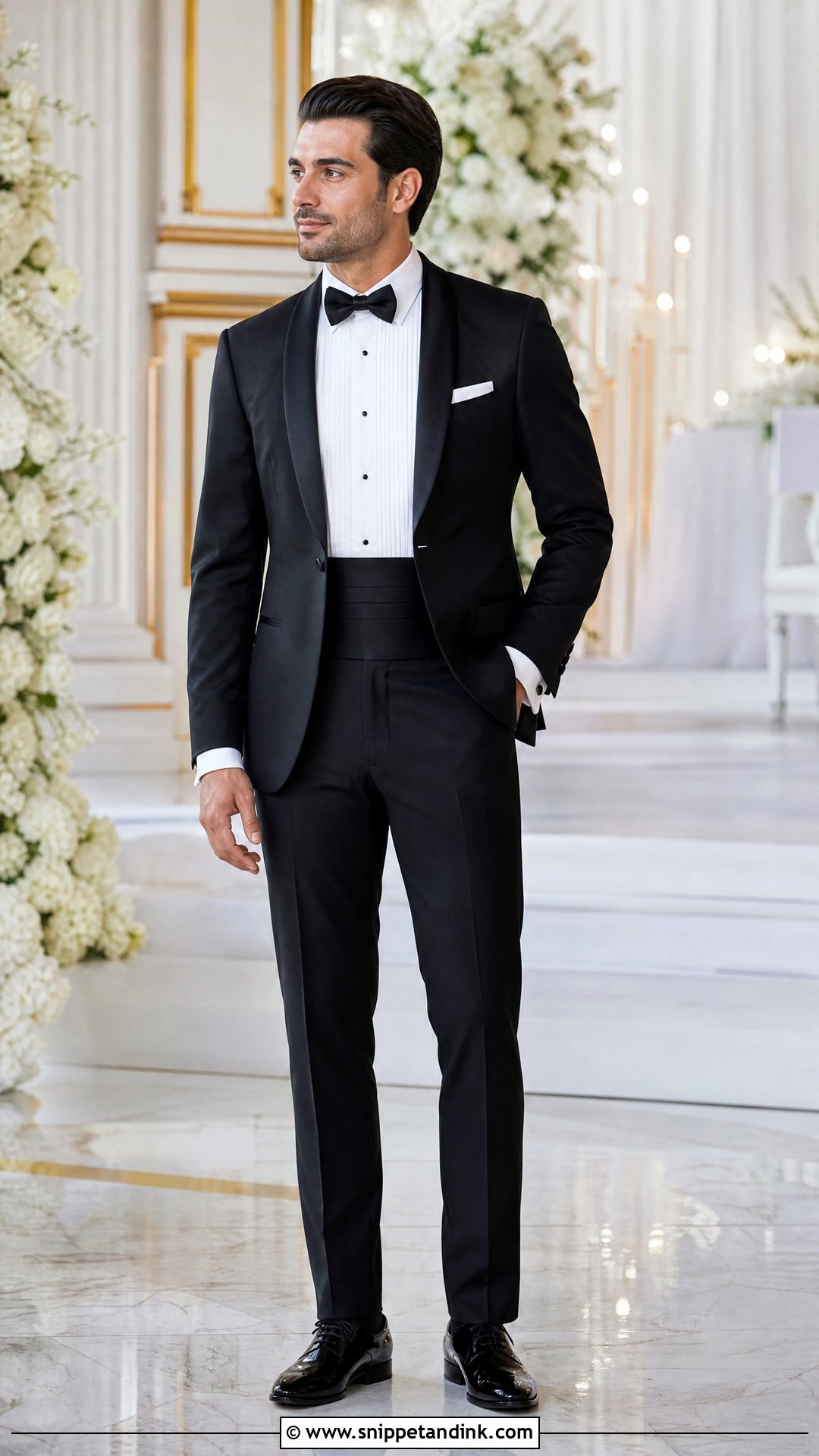
The cummerbund is the detail most grooms skip, and it’s the one that makes a tuxedo look fully traditional. Wear it over the waistband with the pleats facing up; the old story is that the folds once held theatre tickets. Pair it with a one-button black shawl collar jacket, high-rise trousers, a white pleated shirt and a black silk bow tie. No belt and no waistcoat with it. Patent Oxfords and over-the-calf black socks complete the set. With the jacket open, it bridges shirt and trousers cleanly.
19. Ivory Double-Breasted Tuxedo
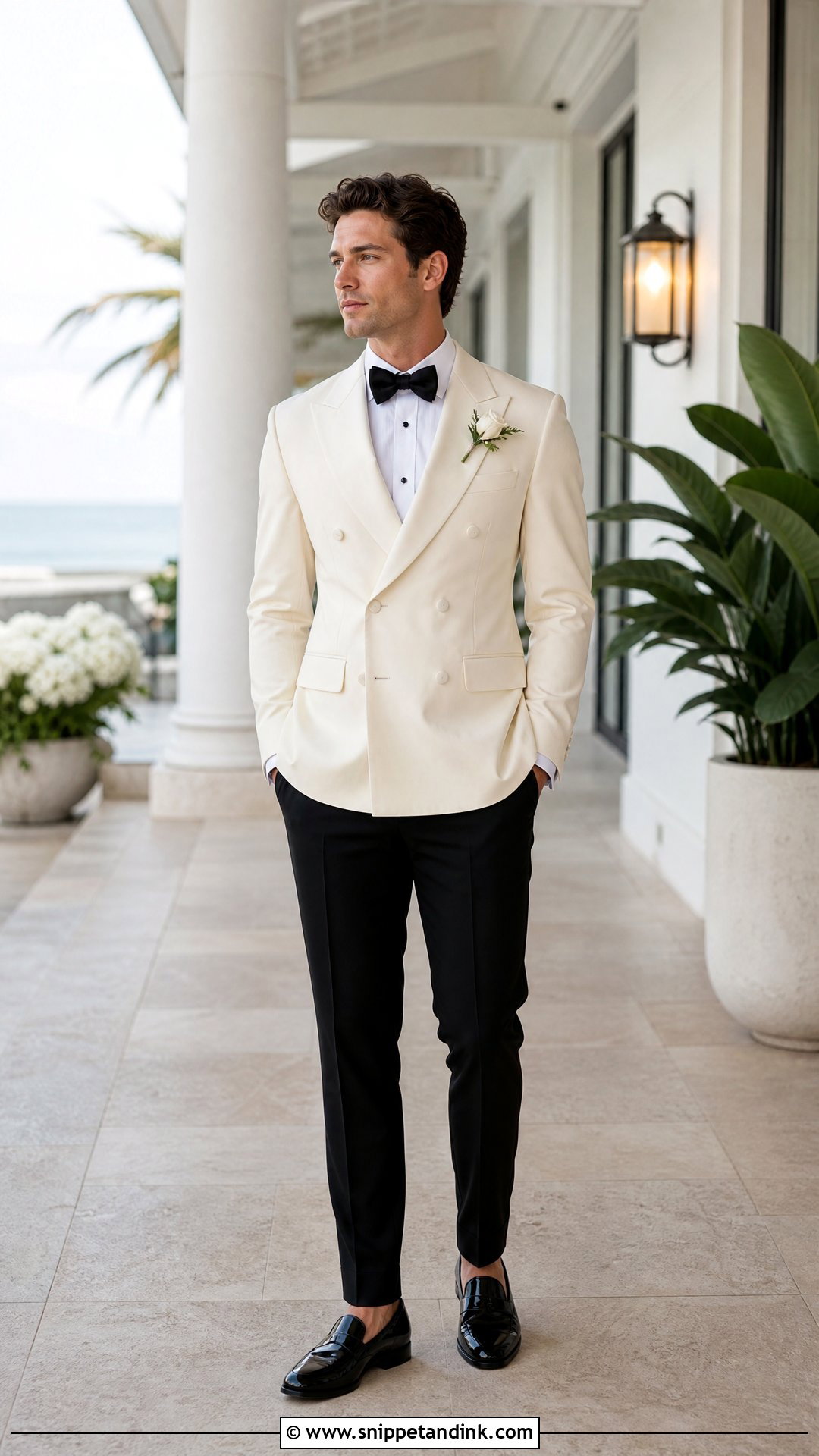
An ivory double-breasted jacket combines the brightest colour with the boldest cut, so it needs exact tailoring to look intentional. Choose six buttons with self-coloured or satin peak lapels, and pair it with black trousers, a white shirt, a black bow tie and black patent loafers. Shoulders should sit at your natural shoulder point and the waist should shape in when fastened. Remember the overlapping front is effectively a double layer across the stomach, so in summer I’d insist on a lightweight wool or wool-linen. It suits coastal venues and formal summer receptions.
20. Black Tuxedo With Velvet Bow Tie
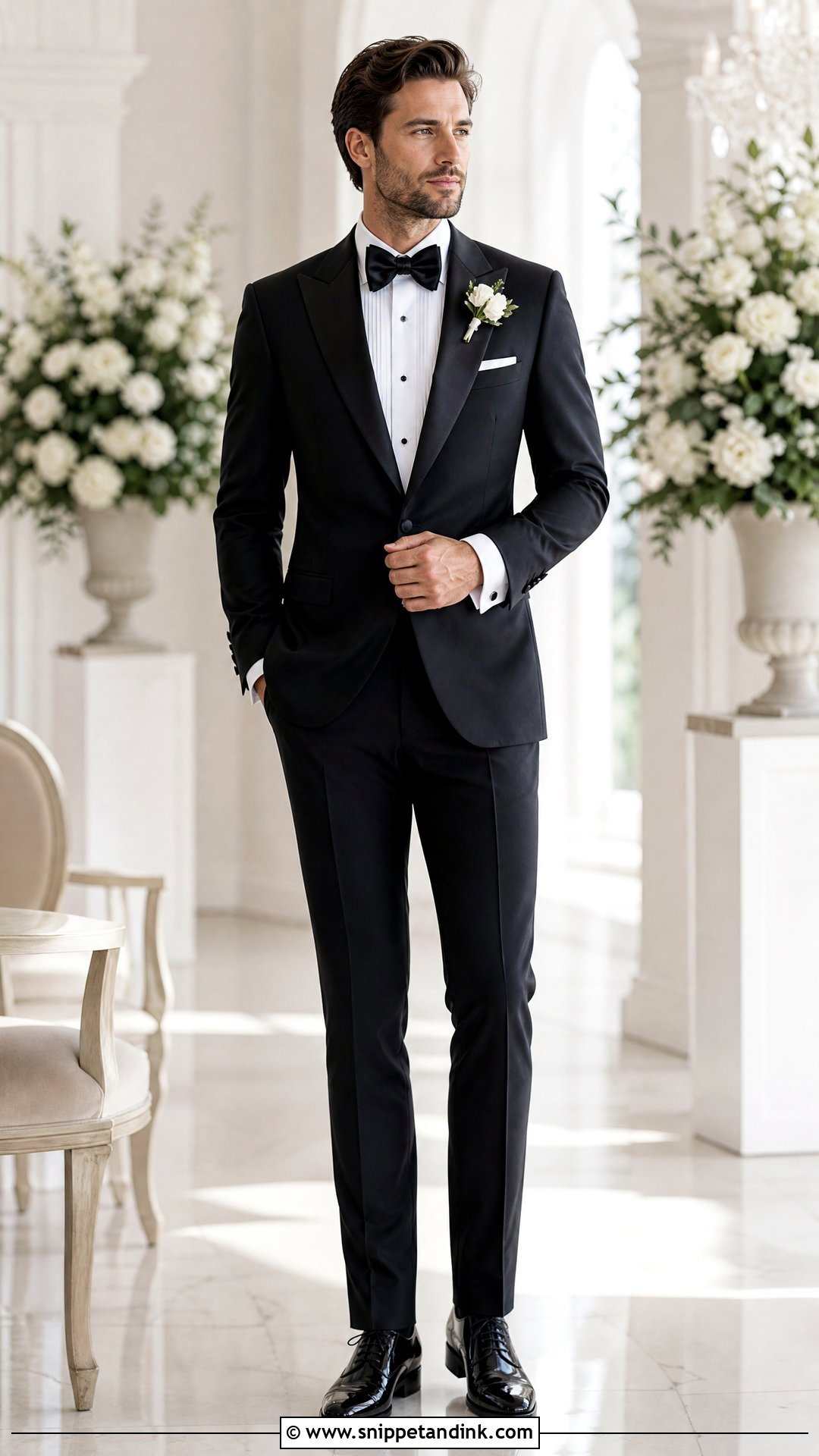
A velvet bow tie is the smallest change on this list and one of the most effective. Start with a tailored black peak lapel jacket, matching trousers and a white French-cuff shirt, then swap the satin tie for black velvet. Under evening light, the velvet absorbs rather than reflects, which gives depth beside the shiny lapels. Velvet loafers or patent Oxfords, onyx links and a white square finish it. If you wear velvet shoes too, keep the jacket in smooth wool so the textures don’t pile up. It suits any season and any groom who wants black with one personal touch.
Studs, Cuff Links and a Self-Tie Bow on the Morning
Formal shirts have more small parts than most grooms expect, and the morning of a wedding is a poor time to discover them. I go through this with every groom the week before.
- Insert shirt studs and cuff links before you put the shirt on. Fiddling with them on your own wrists while dressed takes far longer.
- Practise the self-tie bow tie at least three times in the days before. It’s the same knot as tying a shoelace, just around your neck, and a slightly uneven bow looks better than a pre-tied one.
- Adjust braces with the trousers on, so the waistband sits at your natural waist and the hem just touches the shoe.
- Put the jacket on last, button it standing, and unbutton it every time you sit down.
- Pin the boutonniere through the lapel buttonhole if there is one, or angled slightly toward the centre so it stays put when you hug guests.
Give your best man the spare collar stays, a lint roller and a few safety pins. Those three things solve most small wardrobe problems before the photographer notices them.
Does Your Tux Pass the Sit, Reach and Dance Test?
Colour, texture and lapel shape give you a lot of ways to make a tuxedo personal, from midnight blue and ivory to burgundy velvet and family tartan. But the choice that decides how you feel on the day is fit. A clean shoulder, trousers you can sit in through a long dinner, sleeves that show a sliver of cuff and shoes you’ve broken in matter more than any accessory. Match the outfit to the dress code, season and time of day first. Then at your last fitting, sit down, reach for a glass, raise your arms as if hugging someone and dance a few steps. If nothing pulls, you’re ready.
You'll Like These Ideas:


Leave a Reply