
A bride in a suit has nowhere to hide a poor fit. A full skirt forgives a lot; trousers and a jacket show every shoulder seam and hem. That’s the main thing I explain to anyone choosing tailoring over a gown. The fabric sets the mood: crepe holds structure, satin carries shine, lace brings romance and linen relaxes everything. The venue, season and dress code matter, and so does how much you plan to move. Below are twenty bridal suits I’d happily style, from pantsuits and skirt suits to tuxedo sets and separates, with notes on fit and the small details that make plain white tailoring look unmistakably bridal.
Off the Rack, Made to Measure or Fully Bespoke
The first question I ask a bride who wants a suit is how much time she has, because that decides which route is realistic. Timings vary a lot between makers, so treat these as rough guides and confirm dates in writing.
Off the Rack With Alterations
Fastest and usually the cheapest. Buy a suit that fits your shoulders and bust, since those are hard to change, and let a tailor handle sleeves, waist and hems. Allow at least a month for two fittings. Bridal-specific suits sell out in popular sizes, so shop early in the season.
Made to Measure
A standard pattern adjusted to your measurements, often with a choice of fabric, lapel and lining. Expect several weeks for production plus a fitting or two once it arrives. It suits brides whose proportions differ between top and bottom.
Bespoke
A pattern drafted from scratch, with a basted fitting and several adjustments. It gives the best fit but needs months, not weeks, and a tailor who is comfortable cutting for a woman’s body. Ask to see women’s tailoring they’ve made before you commit.
1. Ivory Wide-Leg Wedding Suit
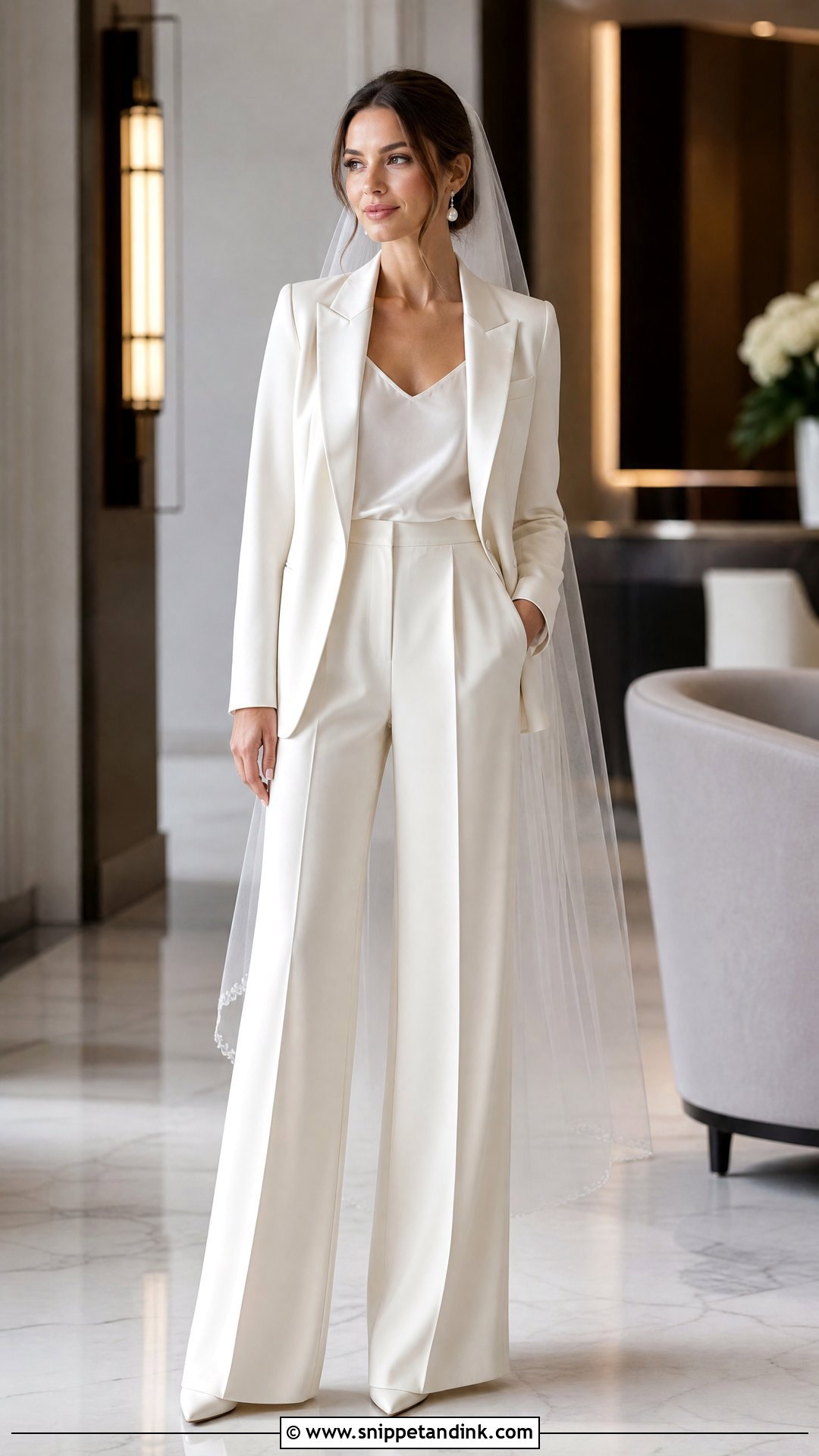
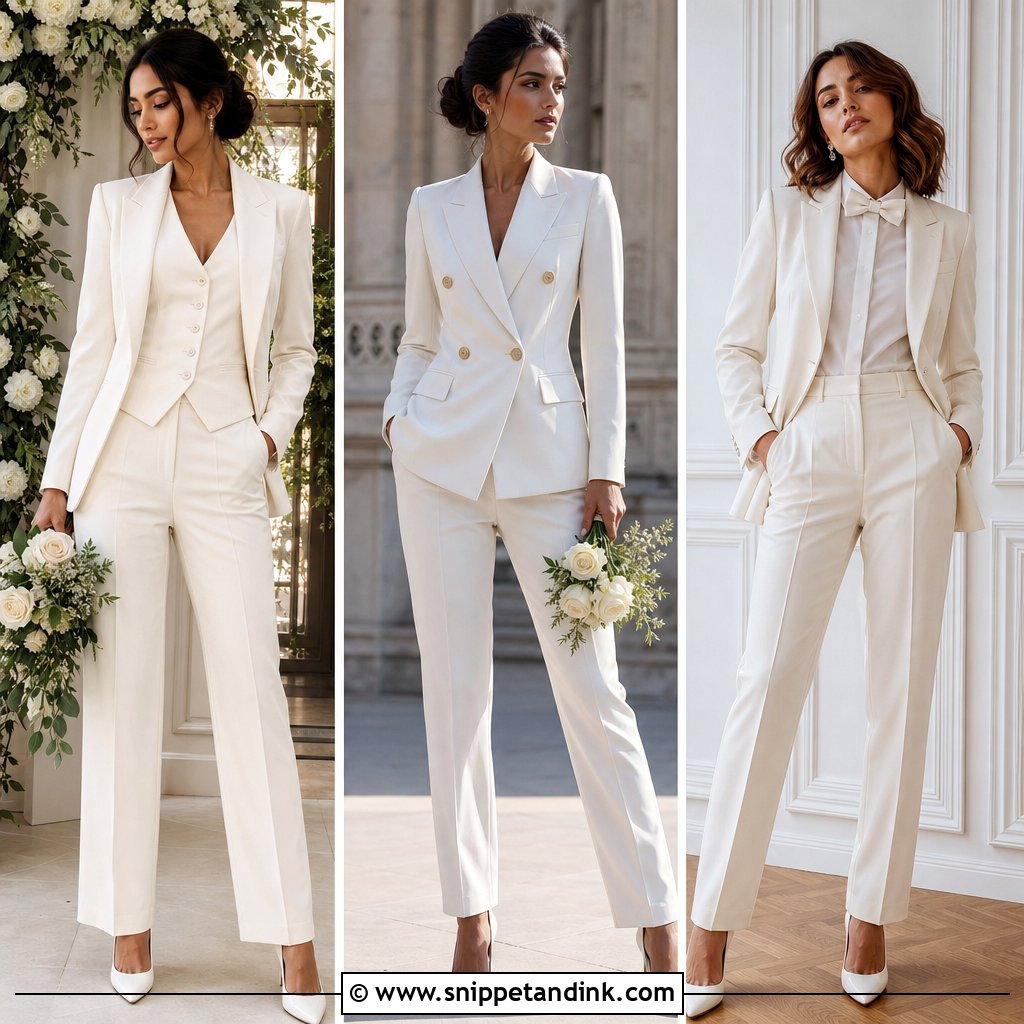
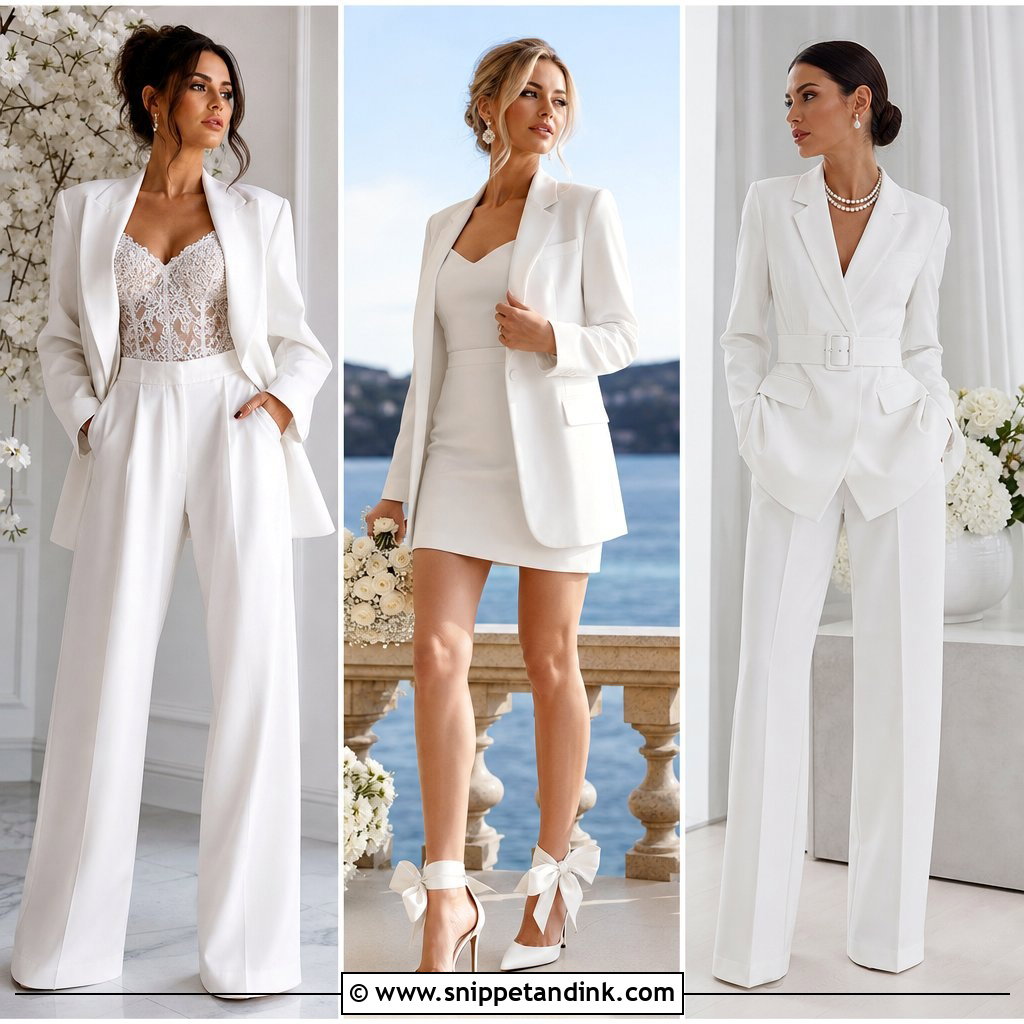
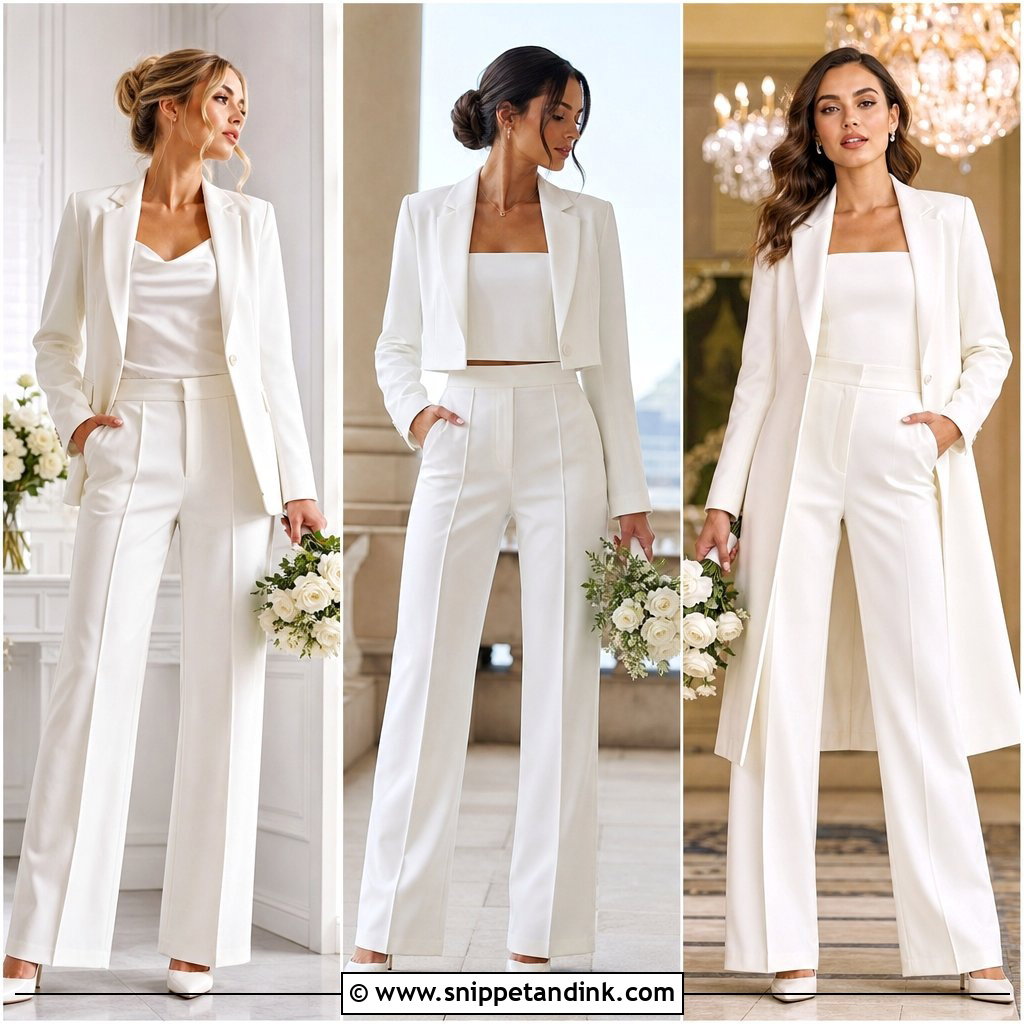
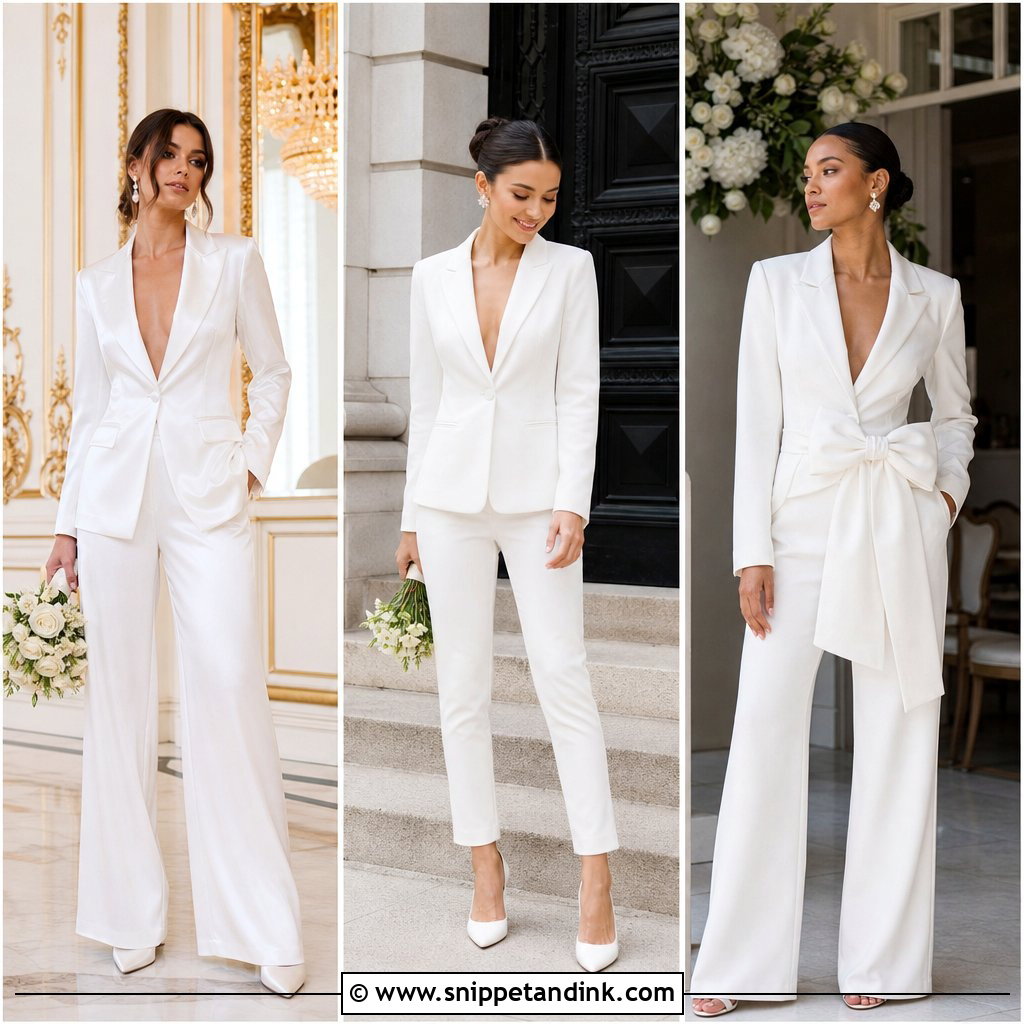
Wide-leg trousers move like a skirt when you walk, which is why this cut photographs so well on the aisle. Look for a high waist with trousers that skim the hip and fall almost to the floor, then a single-button blazer with satin lapels over a silk camisole or structured bustier. Hem the trousers to the exact shoe: pointed heels lengthen the line, platforms give more stability. On a petite bride, the defined waist does the heavy lifting so the volume doesn’t swallow her; taller brides can go wider still. Pearl drops, a small bouquet and a fingertip veil under a low bun finish it for a hotel or evening ceremony.
2. White Tuxedo Wedding Suit
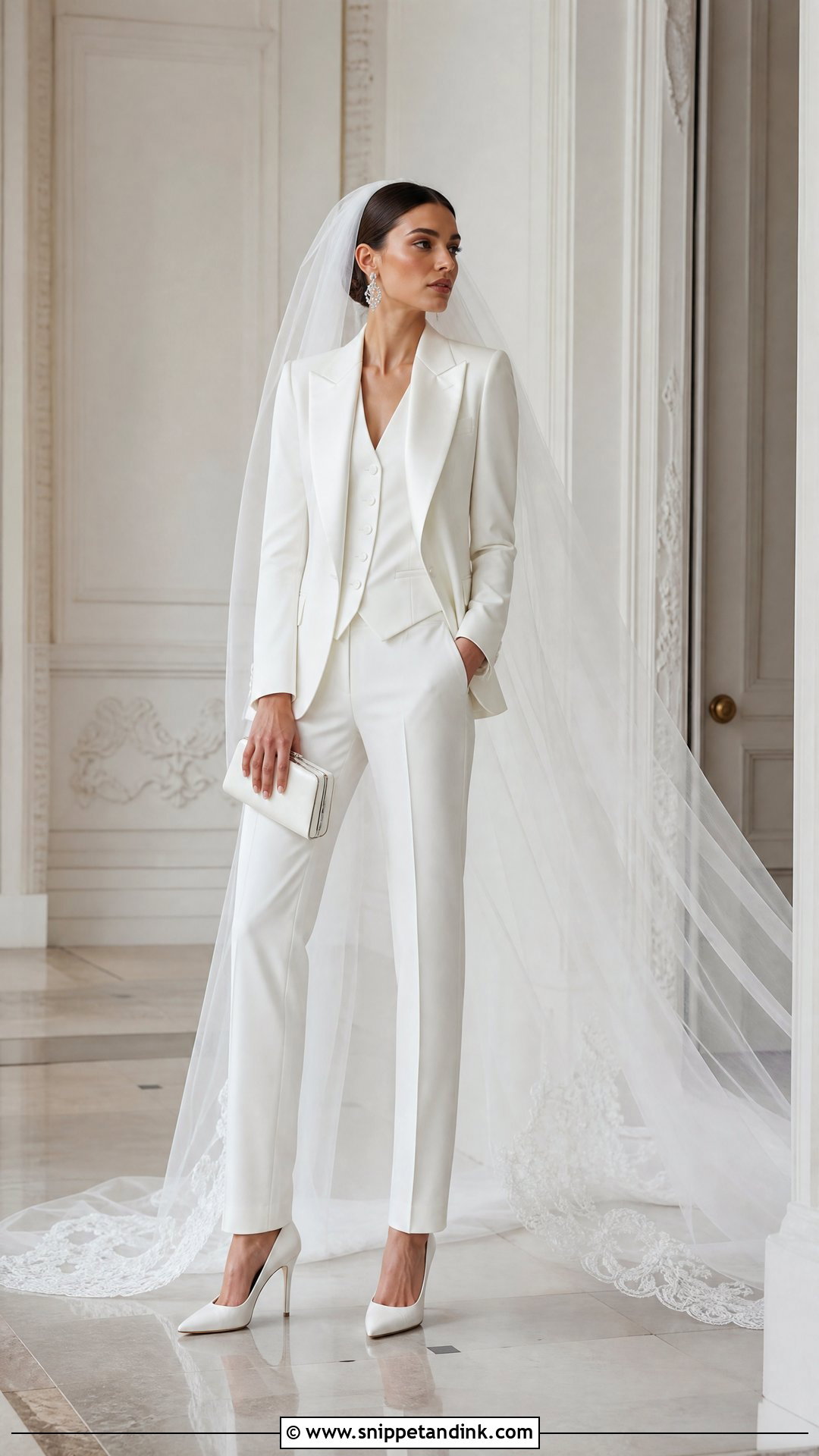
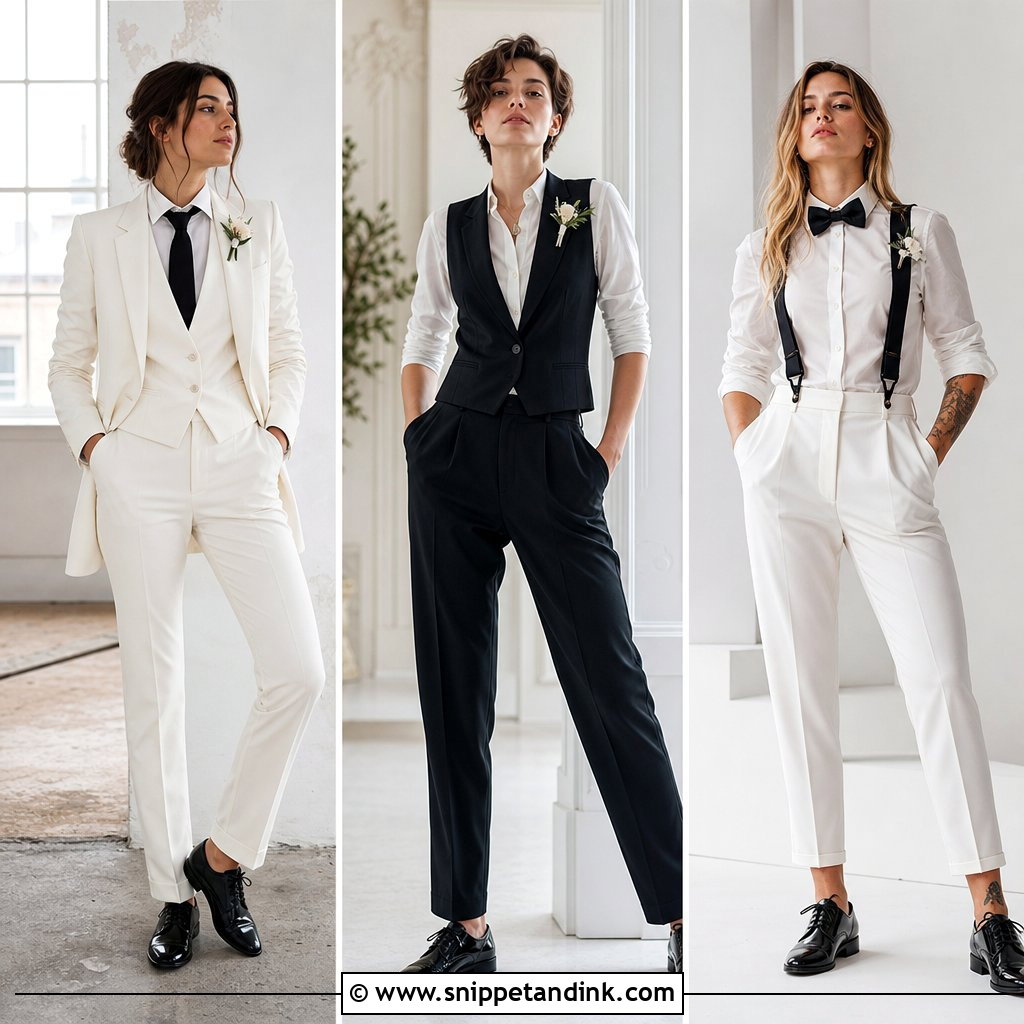
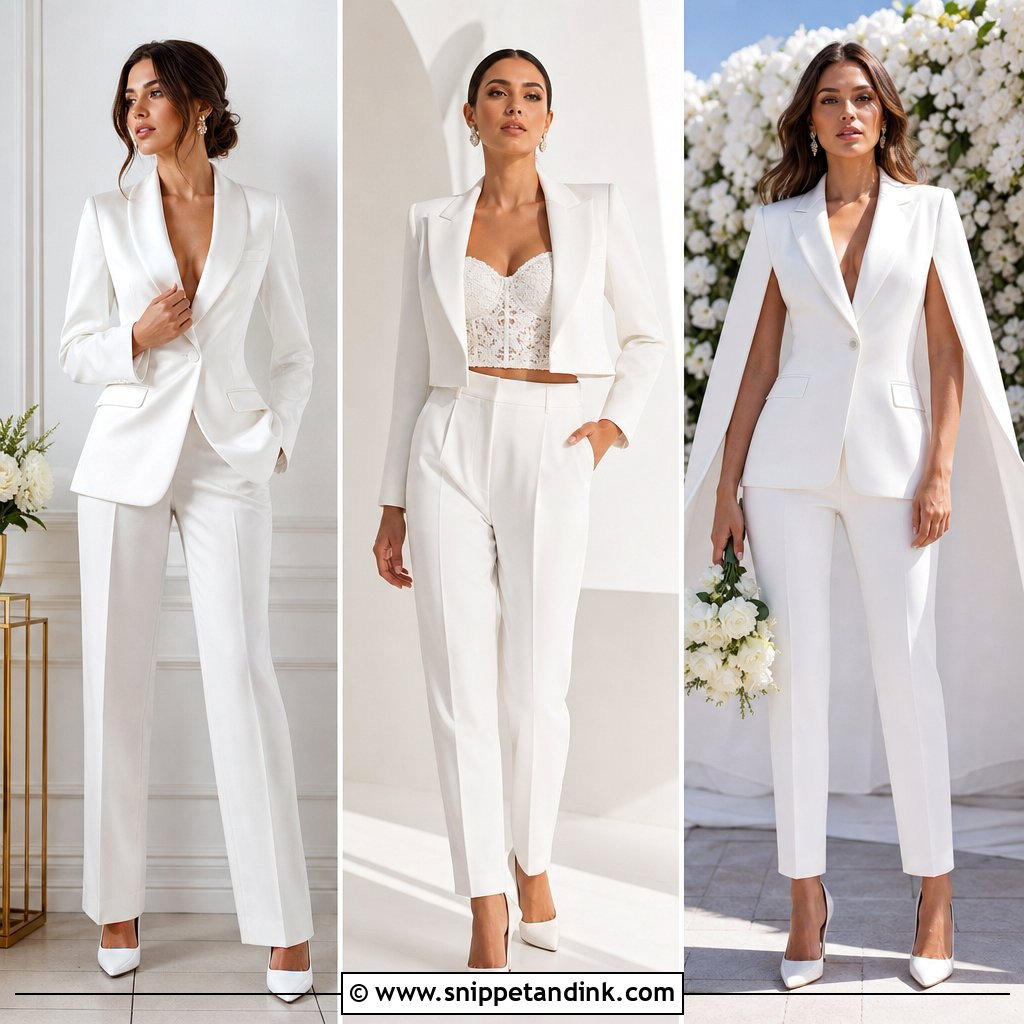
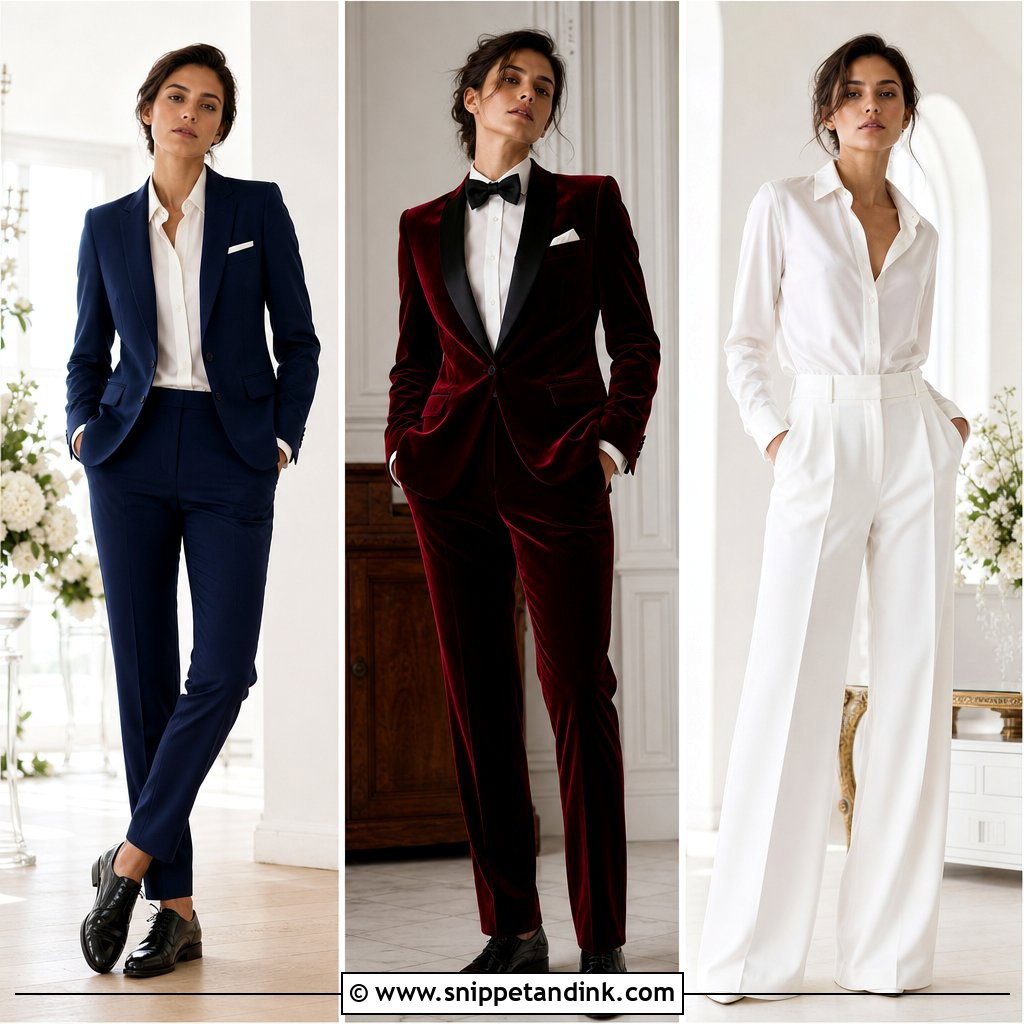
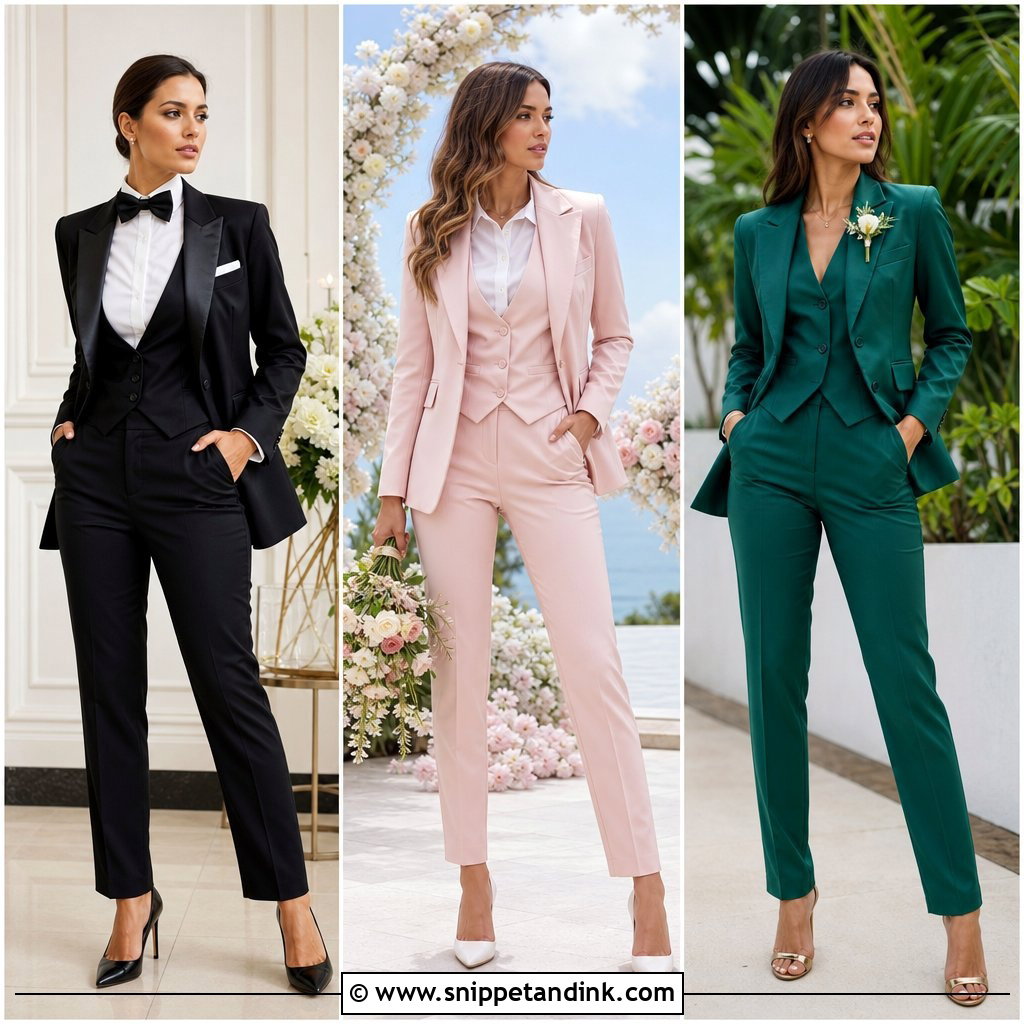
A white tuxedo wedding suit lives or dies on its lapels and shoulders. I look for satin lapels, covered buttons and lightly structured shoulders that sit flat without pads poking past the arm. Straight-leg trousers with a satin bandeau, silk shell or buttoned waistcoat keep it clean. Black trim gives graphic contrast, while all-white feels softer and more bridal. Pointed pumps, a structured clutch, crystal studs and a low ponytail suit it, and a cathedral veil brings gown-level drama to the ceremony. Swap the veil for statement earrings at the reception. Budget for real alterations; tuxedo tailoring shows every pull.
3. Lace Bridal Pantsuit
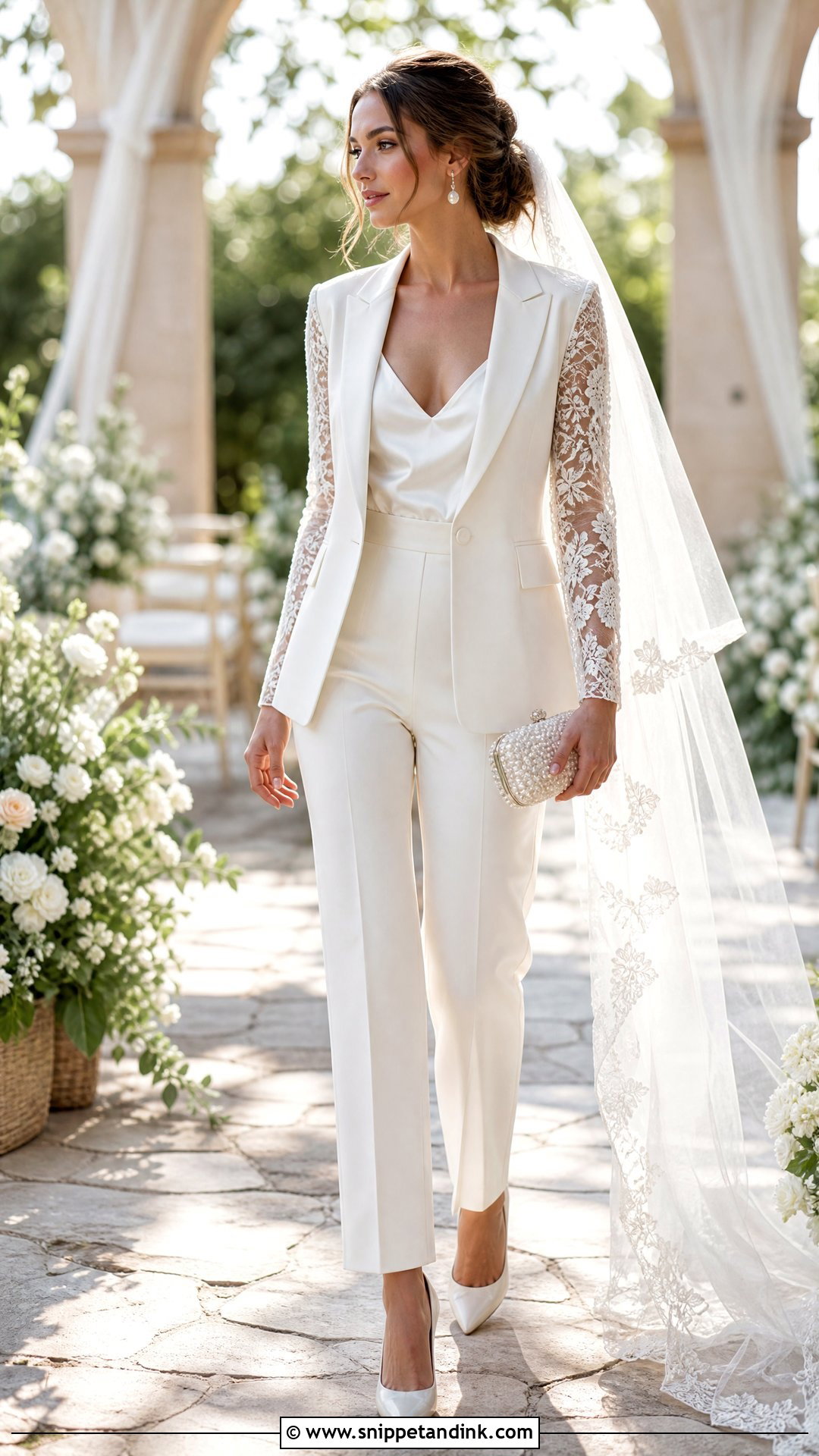
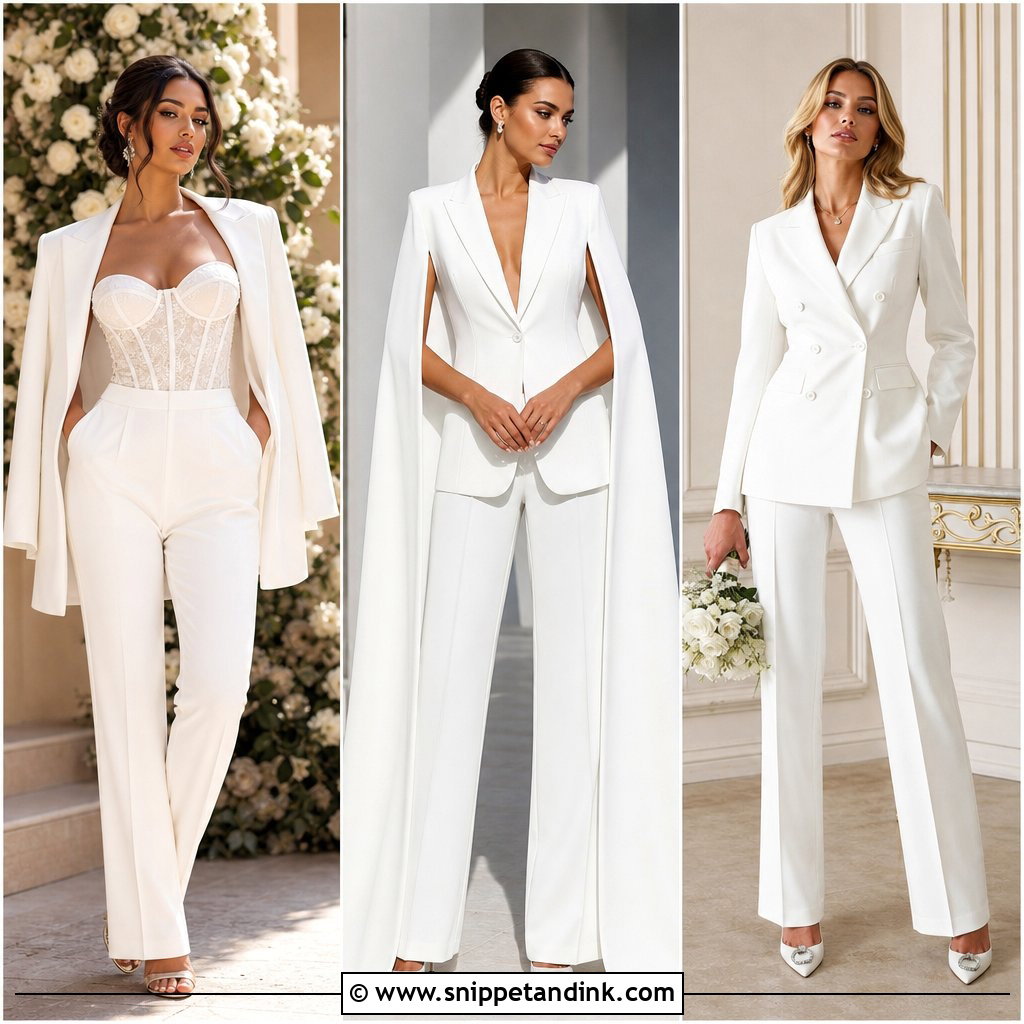
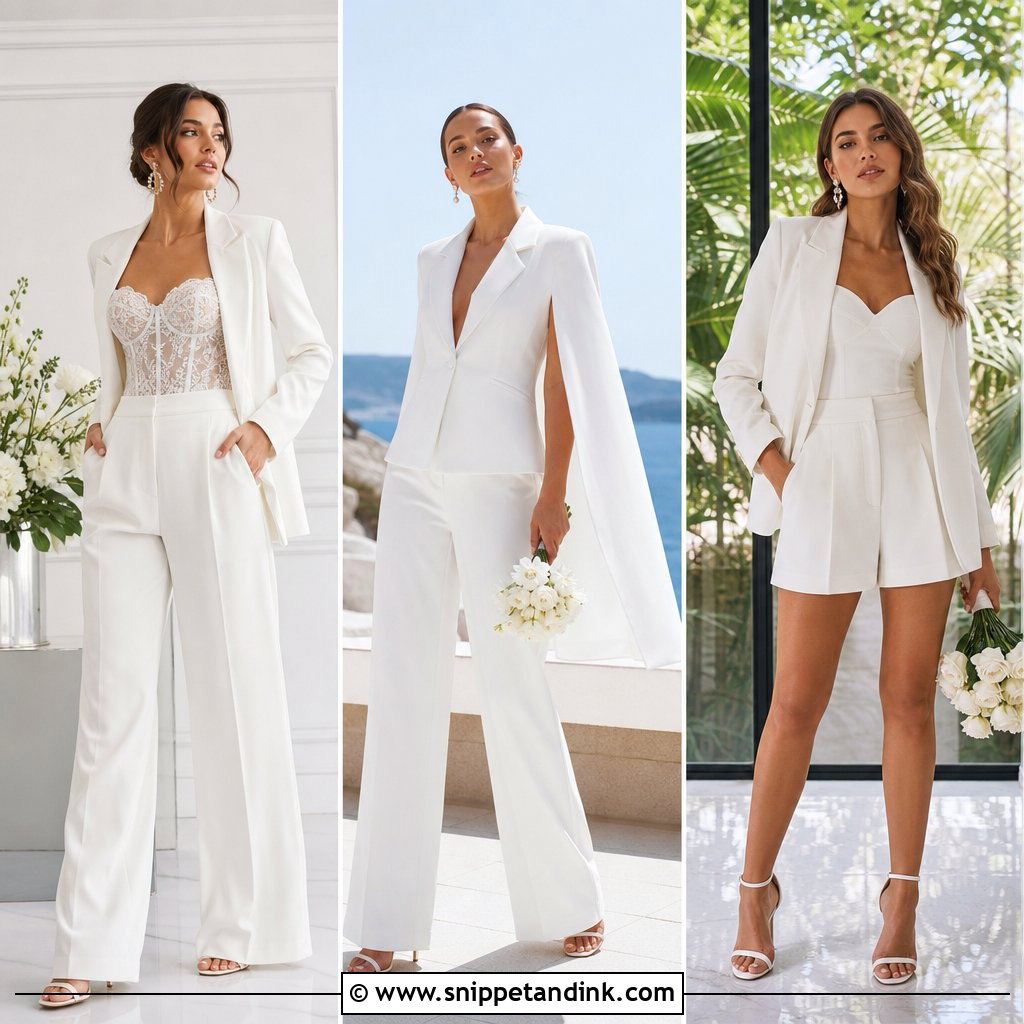
Lace on a pantsuit works best in one place, not everywhere. I put it in the jacket, as lace sleeves, appliqué or a sheer back, and keep the trousers in plain crepe with a satin camisole underneath. The reverse also works: a fitted lace bodysuit under a plain collarless jacket. Lace snags on clutch clasps and bracelet catches, so a pearl clutch with smooth edges is the safer choice. A shoulder-length veil with lace edging ties it together, and lined lace with full sleeves gives more coverage. Keep the trouser shape straight or gently flared for indoor or garden ceremonies.
4. Satin Wedding Suit
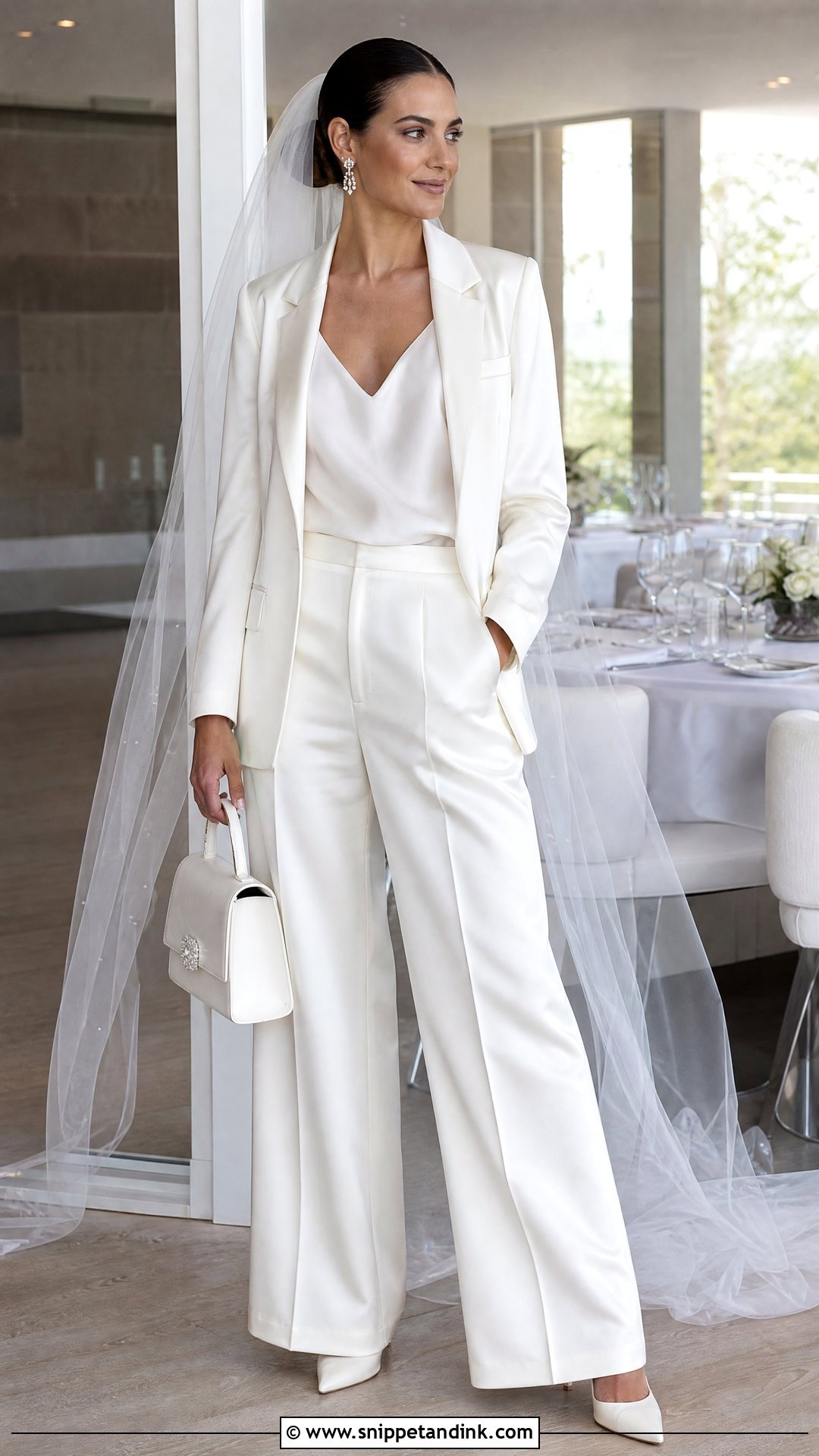
Satin shows everything. It reflects light off every pull at the button, every crease behind the knee and every seam that’s a touch tight, so the cut must be comfortable rather than snug. A softly structured blazer with fluid wide-leg trousers, plus a matte silk camisole underneath for contrast, is how I’d do it. Schedule final alterations close to the date and store it on a padded hanger until the morning. Keep accessories small: sleek pumps, crystal or diamond studs, a compact top-handle bag, a smooth bun and a light tulle veil, or a jeweled headband for evening. Champagne and soft ivory satin are kinder to most skin than bright white.
5. Crepe Wedding Suit With Corset
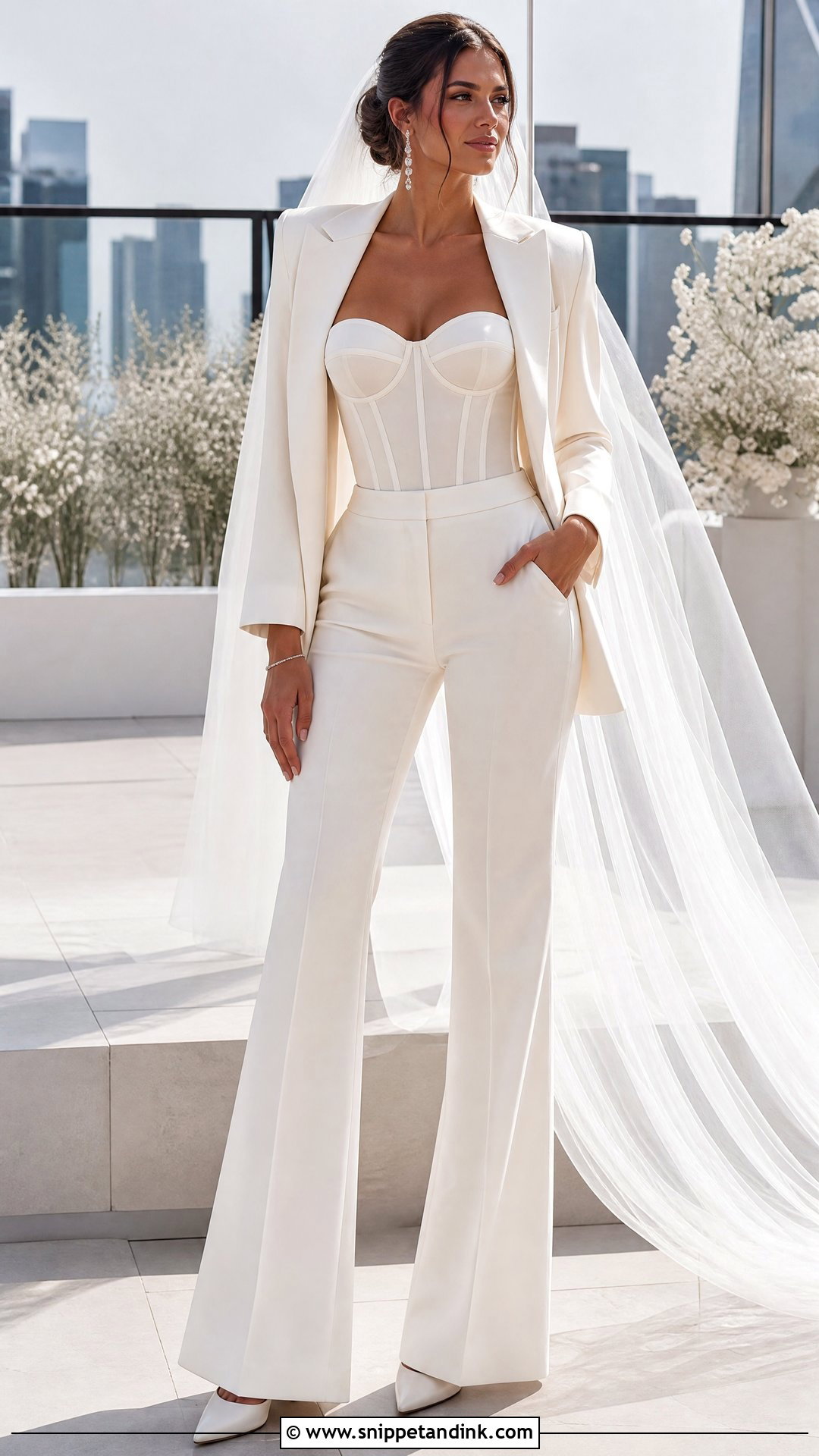
A corset under a crepe suit gives you a fitted shape with the jacket as a clean frame around it. Choose a bridal corset with light boning, a straight neckline and fabric matched to the suit, rather than heavy embellishment. High-waisted trousers sit right at the base of the corset and hold the line; wide-leg or slightly flared legs balance the close top. Before you commit, sit down, raise your arms and dance in it at a fitting. A corset that rides up or digs in when you sit will bother you through dinner. Pointed heels, a tennis bracelet, small drops and a long veil complete it.
6. Wedding Suit With Detachable Overskirt
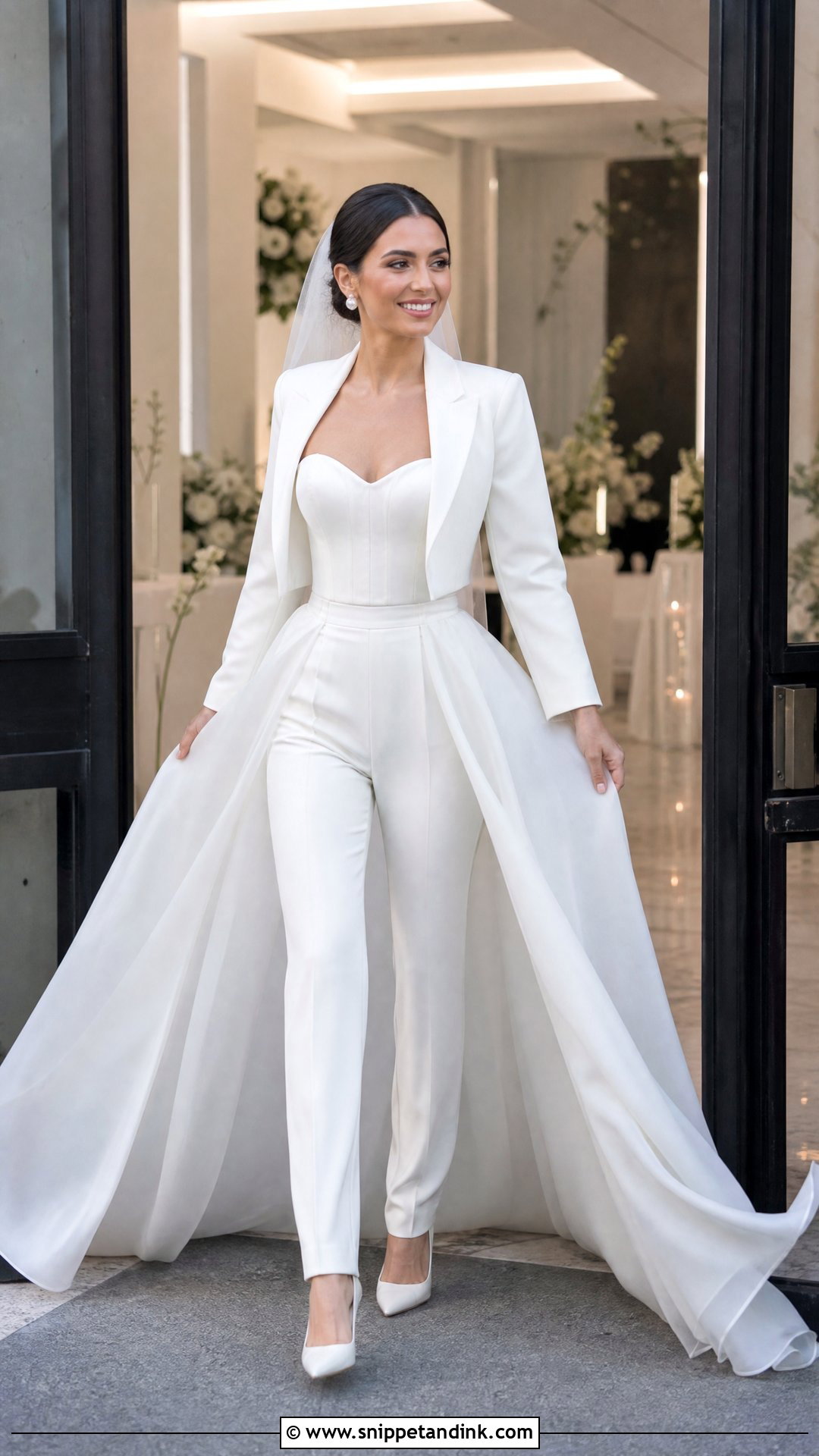
Can’t choose between a suit and a big bridal skirt? A detachable overskirt gives you both. Start with slim or straight-leg ivory trousers, a fitted bustier and a cropped blazer, then add a full skirt that fastens at the waist and opens at the front. Organza and tulle give movement without much weight; heavy satin can drag the waistband down. The fastening has to lie flat under the blazer, and I always have the bride practice removing it with a bridesmaid, because hooks are fiddly in a rush. Wear the skirt and veil for the ceremony, then take both off for dancing.
7. Peplum Bridal Skirt Suit
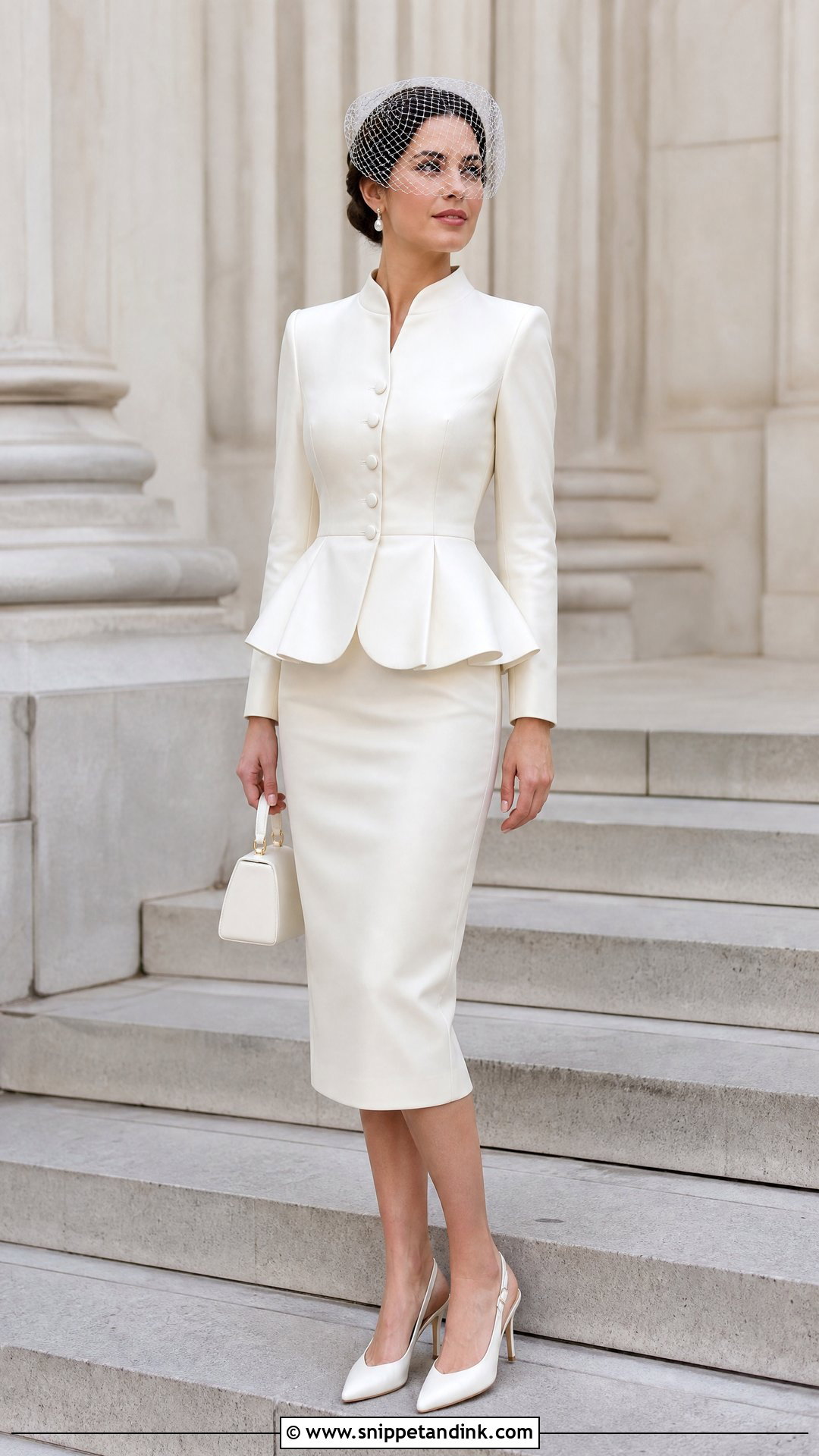
A peplum jacket nips the waist and flares over the hip, giving a soft curve without a gown. Pair it with a matching knee-length or midi pencil skirt in crepe, mikado or structured satin, fabrics firm enough to hold the peplum out. Soft fabrics make it droop. Covered buttons, a portrait collar or a touch of lace trim make it ceremonial. Check you can sit and climb stairs; a back vent or a little stretch in the skirt fixes most problems. Slingbacks, a compact bag, pearl earrings and a short birdcage veil give it a mid-century feel for a courthouse or small gathering.
8. Mini Skirt Wedding Suit
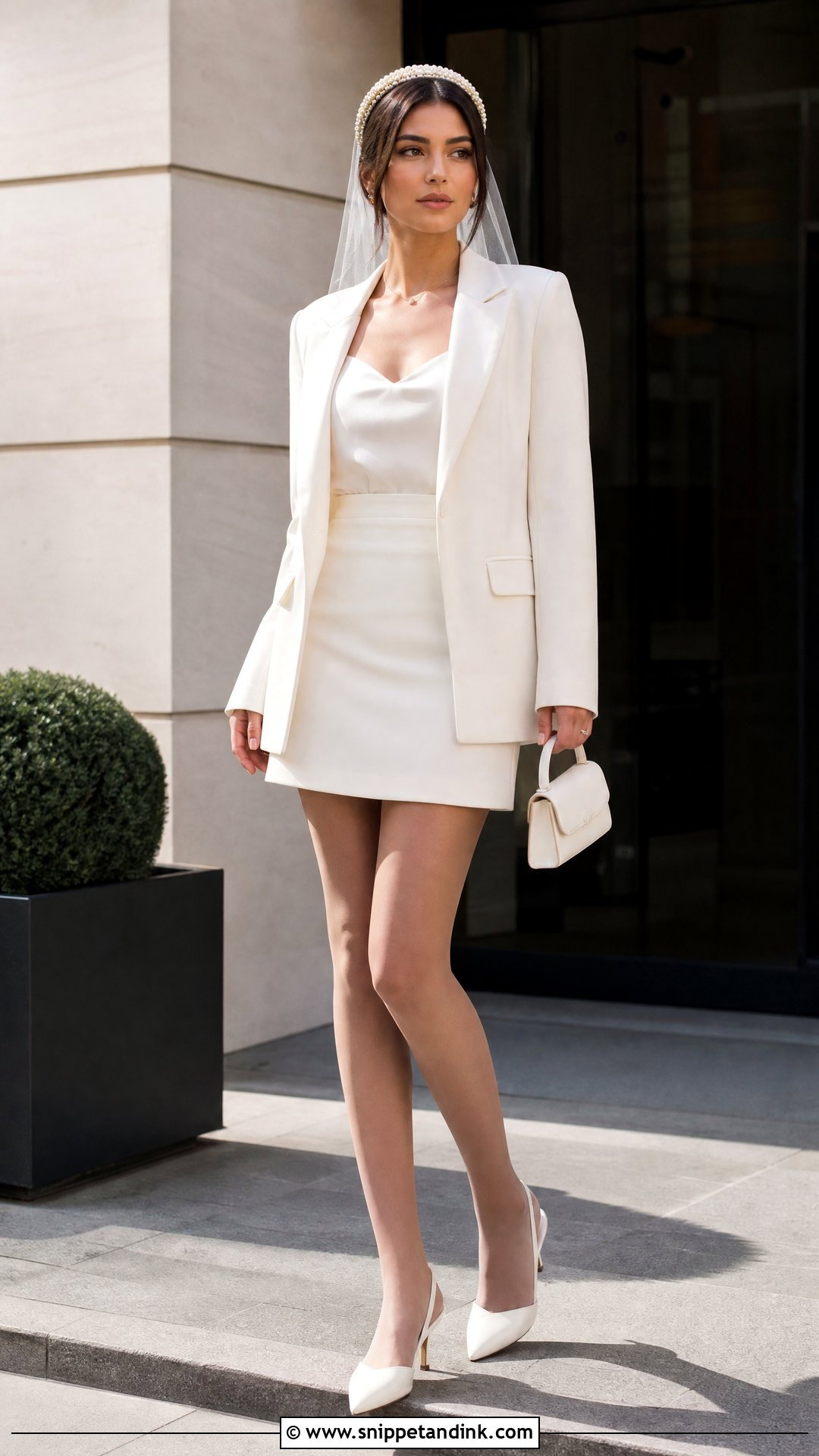
A mini skirt suit is fun, but proportion decides whether it looks bridal or like office wear. I balance the short hem with a slightly longer blazer and keep embellishment to a minimum elsewhere. Ivory crepe, satin or textured bouclé all work for a clean A-line or straight mini, over a silk camisole, bodysuit or buttoned vest. Pointed slingbacks, sheer hosiery and a structured mini bag finish it, with a short veil, pearl headband or big hair bow as the bridal signal. If you’d like more coverage, end the skirt a few inches above the knee. City ceremonies, welcome parties and warm-weather receptions suit it.
9. Midi Skirt Wedding Suit
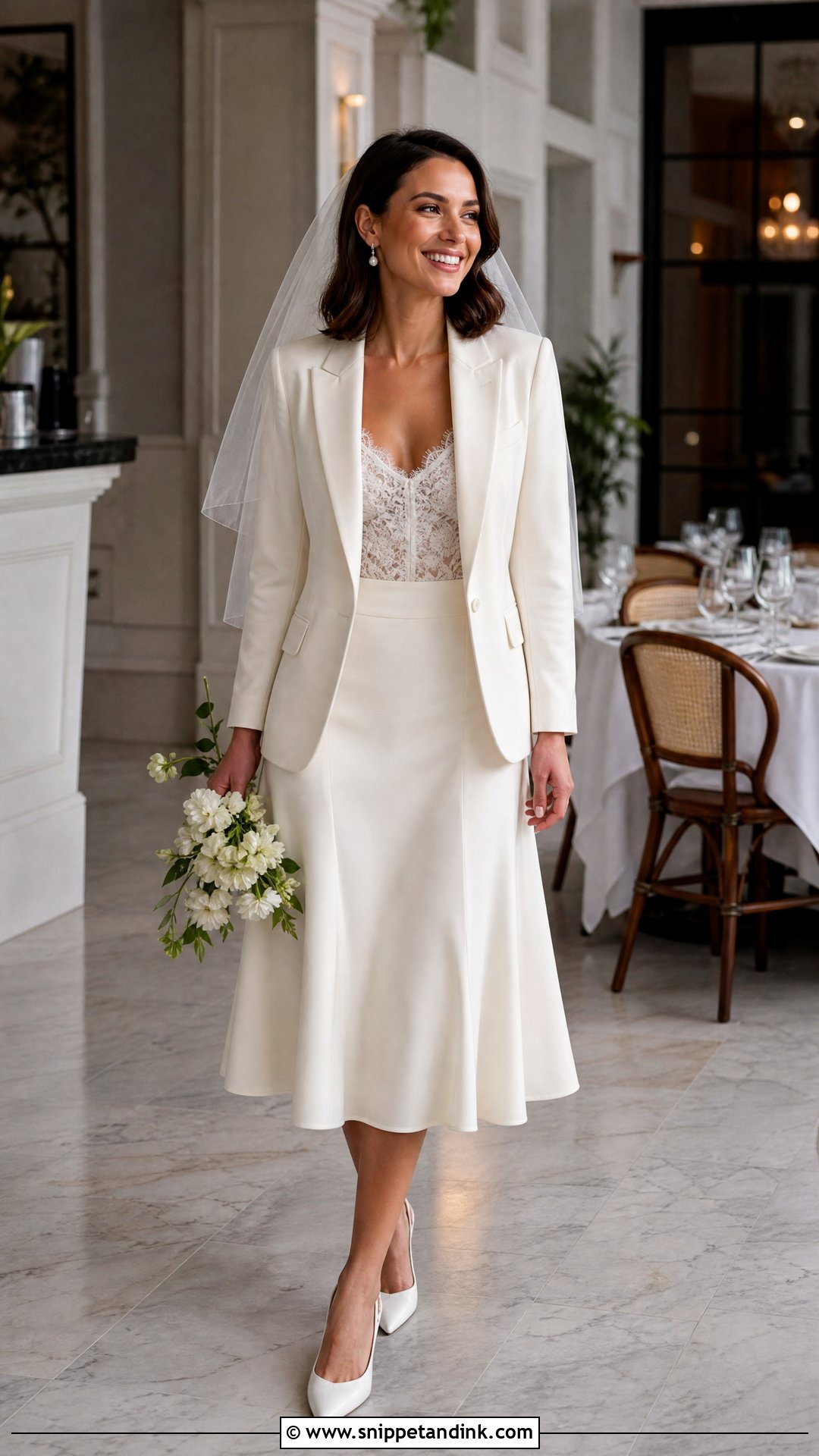
Midi length is where I see the most hem mistakes, because an inch too long makes the leg look short. A fitted blazer with a flared, pleated or bias-cut skirt landing between knee and ankle, over a silk shell or lace-trimmed camisole, moves from ceremony to lunch easily. Match shade and texture across every piece for a column effect. Slingbacks or ankle-strap sandals show the lower leg and lighten the length. Petite brides usually look best just below the knee; taller brides can carry a lower calf. Pearl earrings, a small bouquet and a shoulder-length veil suit civil ceremonies and smaller venues.
10. Long Skirt Wedding Suit
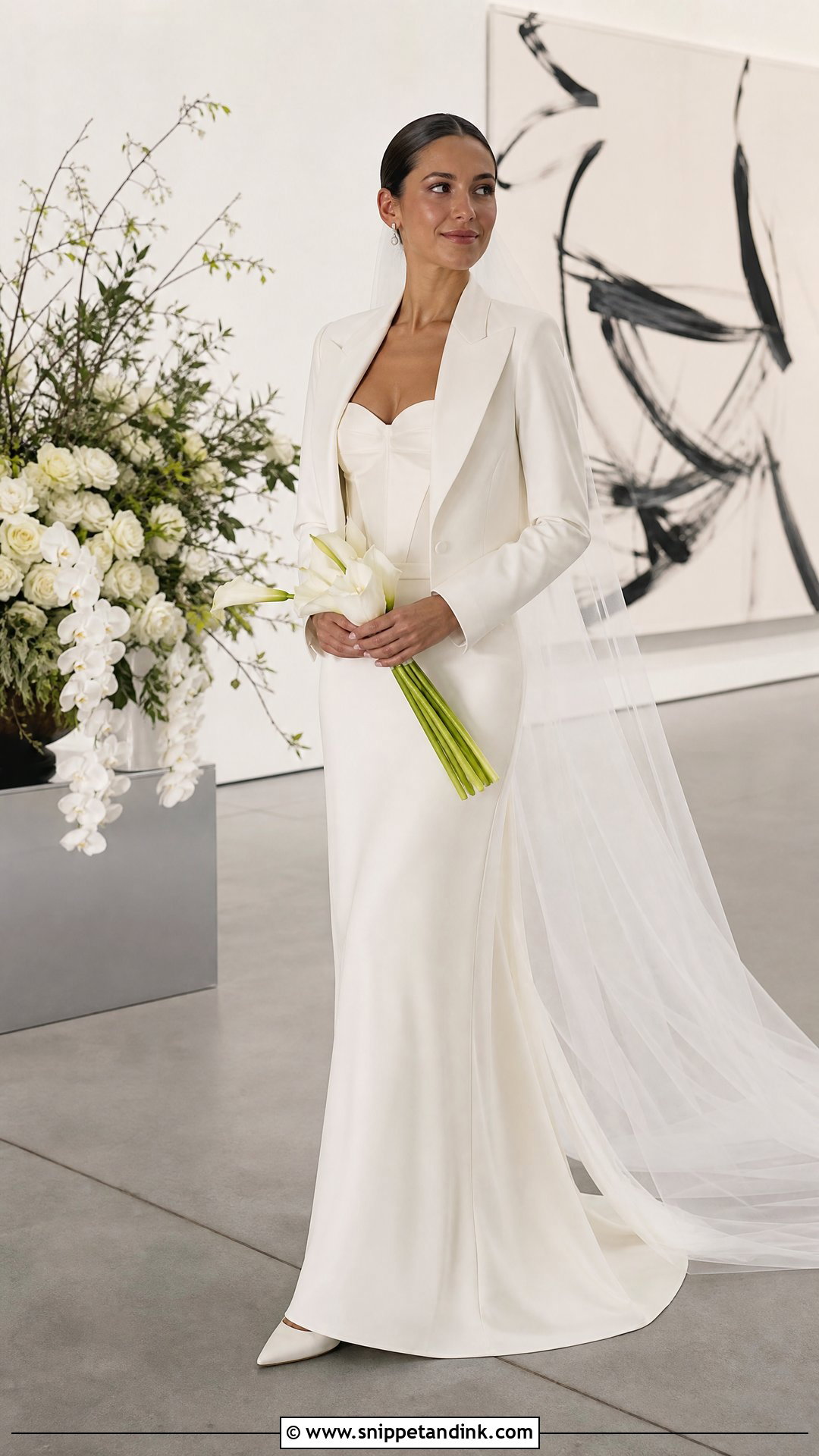
A floor-length skirt suit gives you the coverage of a gown with the crispness of tailoring. Pair a fitted blazer with a column, trumpet or gently flared skirt in matching ivory. A cropped jacket shows off the waist; a longer one gives a sleek, architectural line. Wear a satin camisole or corset underneath so the outfit still looks finished when the jacket comes off at dinner. Hem the skirt in your actual shoes; a floor-length hem marked in flats will trip you. Fuller hips are often happier in a skirt that flares away from the body. Delicate earrings, a long veil and a slim bouquet suit a hotel, gallery or black-tie setting.
11. Double-Breasted Wedding Suit
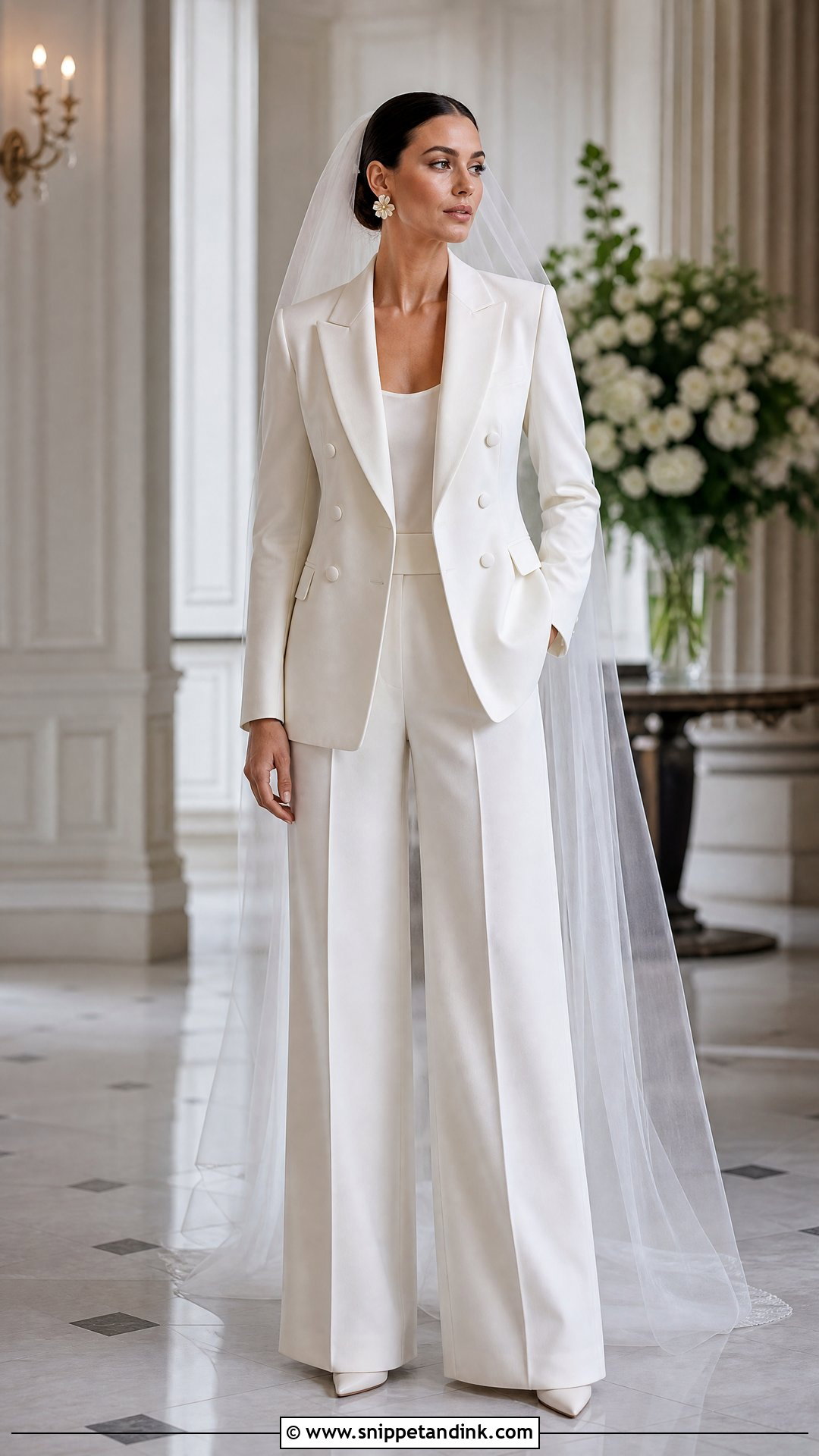
The double-breasted jacket is the one I fit most carefully, because the overlap pulls into an X across the stomach if it’s even slightly tight. Look for covered buttons, a gently shaped waist and room to fasten comfortably. Straight or wide-leg trousers balance the structured top, and a simple silk tank underneath avoids bulk. Wearing it open with a narrow bridal belt over the inner layer softens it. Shorter torsos do better with a cropped double-breasted cut. Pointed pumps, sculptural earrings and a low bun under a sheer veil keep it polished for vows, dinner and dancing.
12. Cape Blazer Wedding Suit
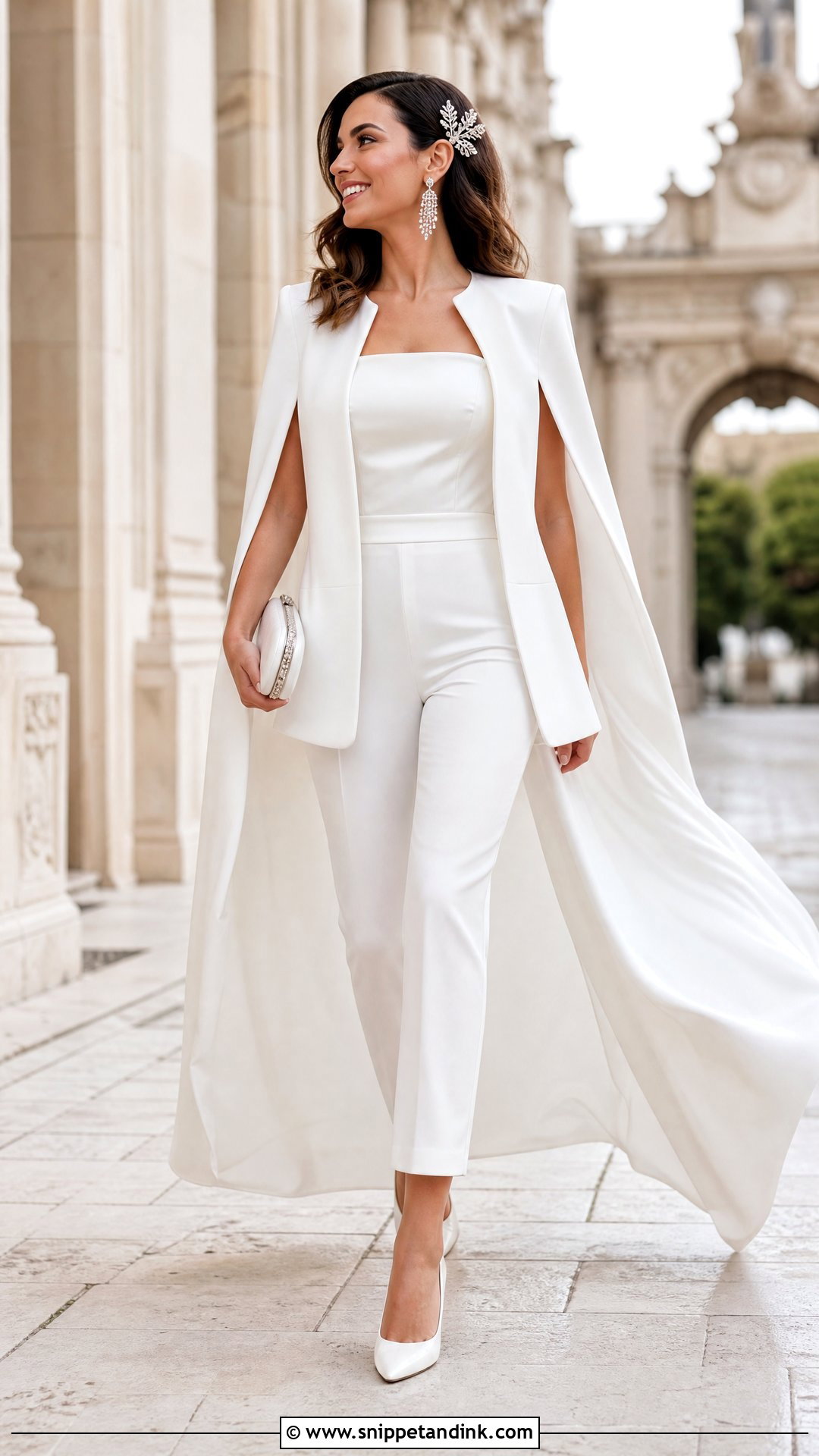
A cape blazer gives you an entrance without a train. The cape might fall from structured shoulders, split along the arms or hang behind like a soft panel. Keep everything else lean: fitted trousers with a satin camisole or strapless top, or wide legs if the cape is short. I usually skip a long veil here and use a comb or headband, since the veil and cape fight for the same space at the back. Raise your arms at the fitting; some capes pin the arms down and make hugging awkward. Sleek pumps, small crystal earrings and a minimal clutch, and the cape takes the attention in portraits and walking shots.
13. Three-Piece Bridal Suit
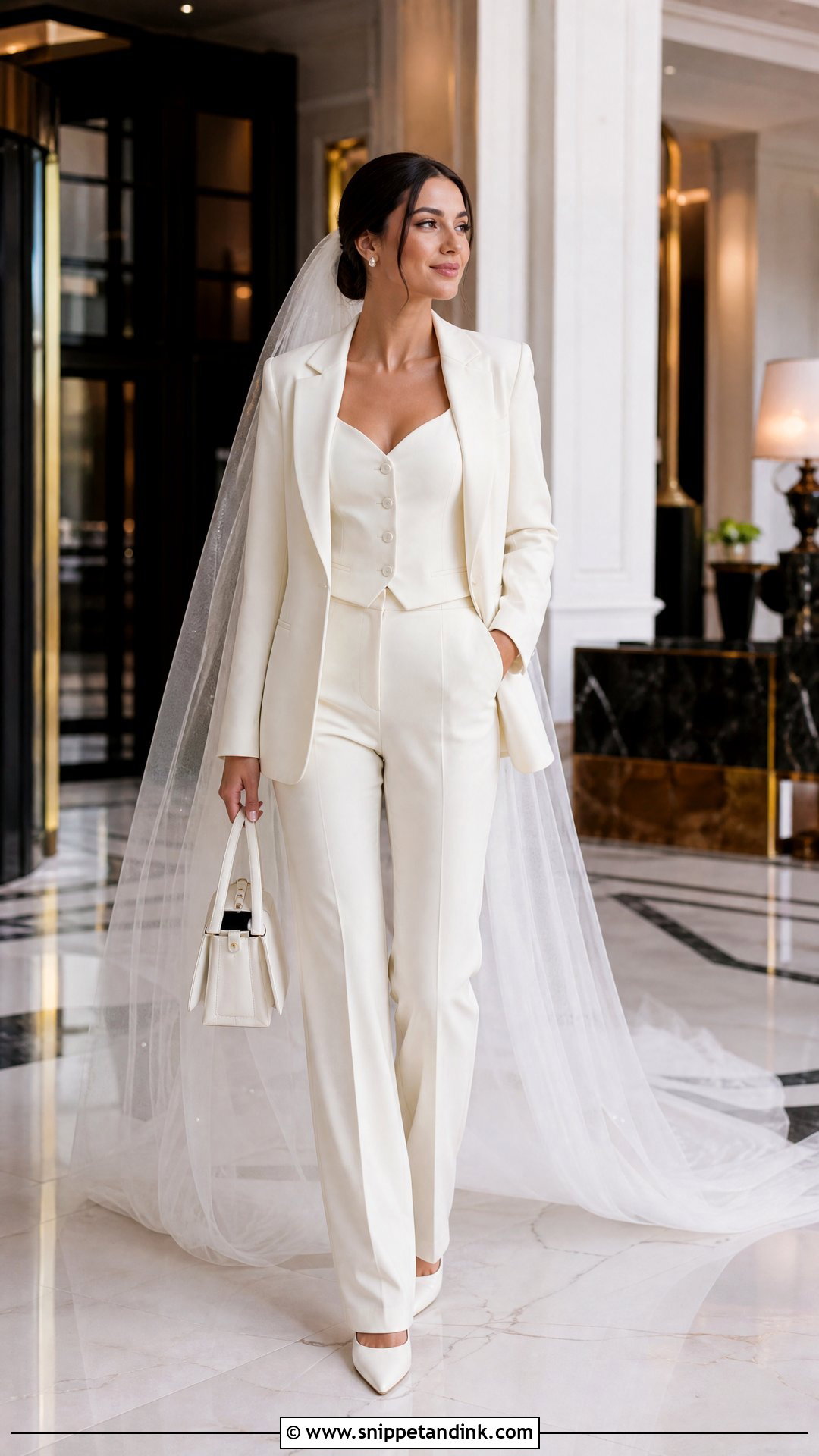
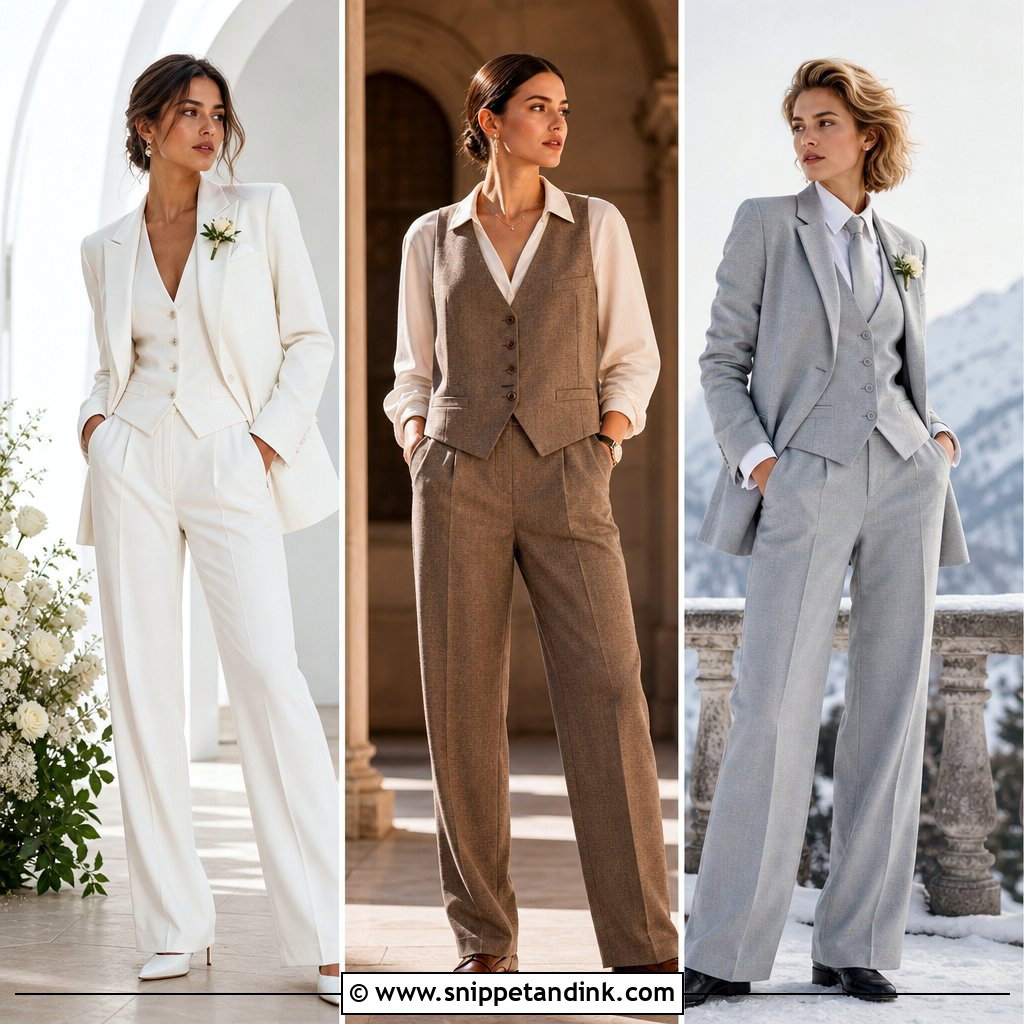
Three pieces give you three outfits: full suit for the ceremony, waistcoat and trousers for the reception, and separates long after the wedding. The waistcoat is the piece to get right. It should lie smooth across the chest and end at the trouser waistband with no gap showing. White, ivory or soft cream all work. Pointed heels or polished loafers, pearl studs and a small structured bag suit it, with a long veil to soften the tailoring. A waistcoat with a curved neckline or covered buttons reads softer. It’s one of the few bridal outfits that suits any season.
14. Sleeveless Vest Wedding Suit
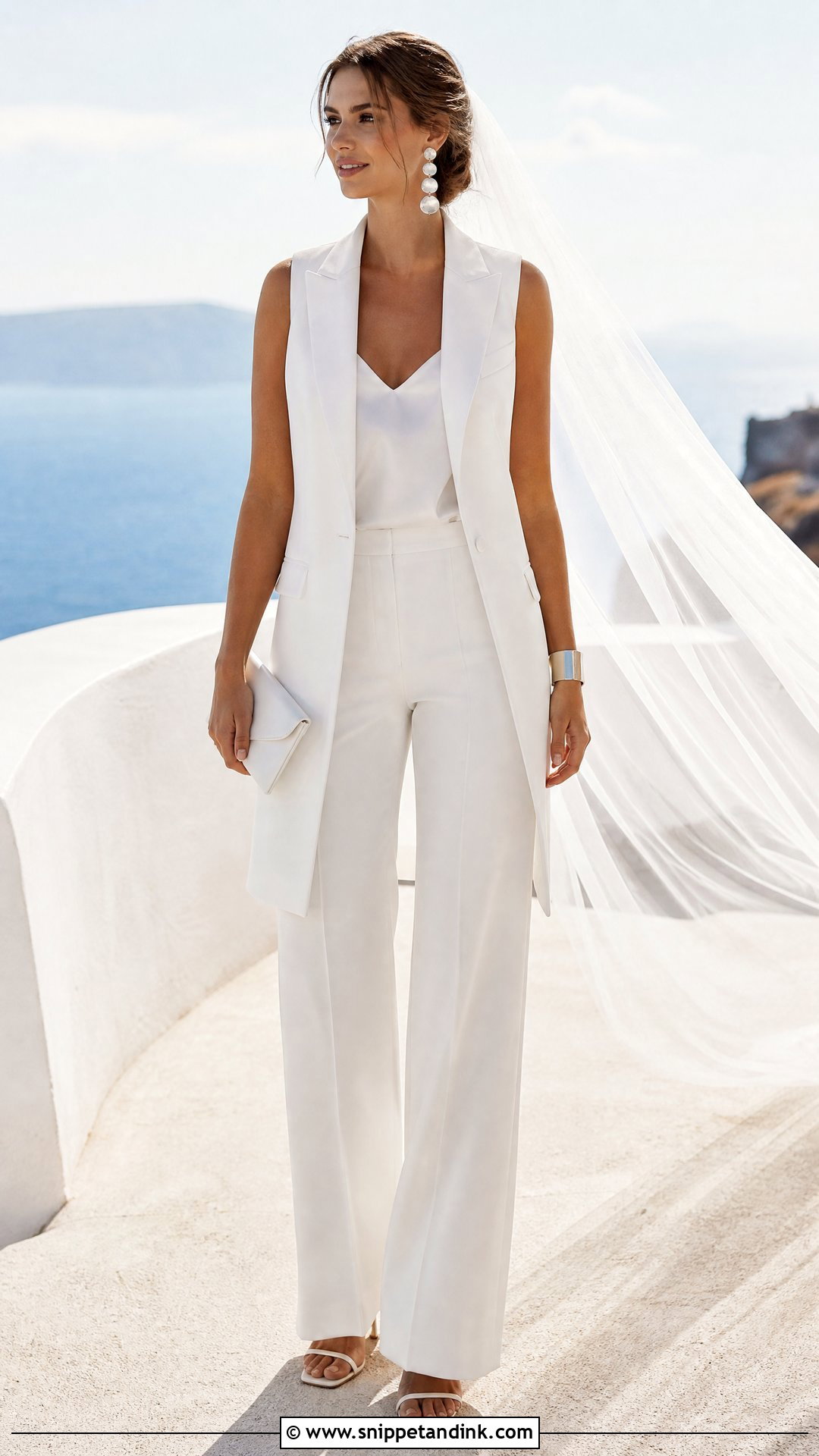
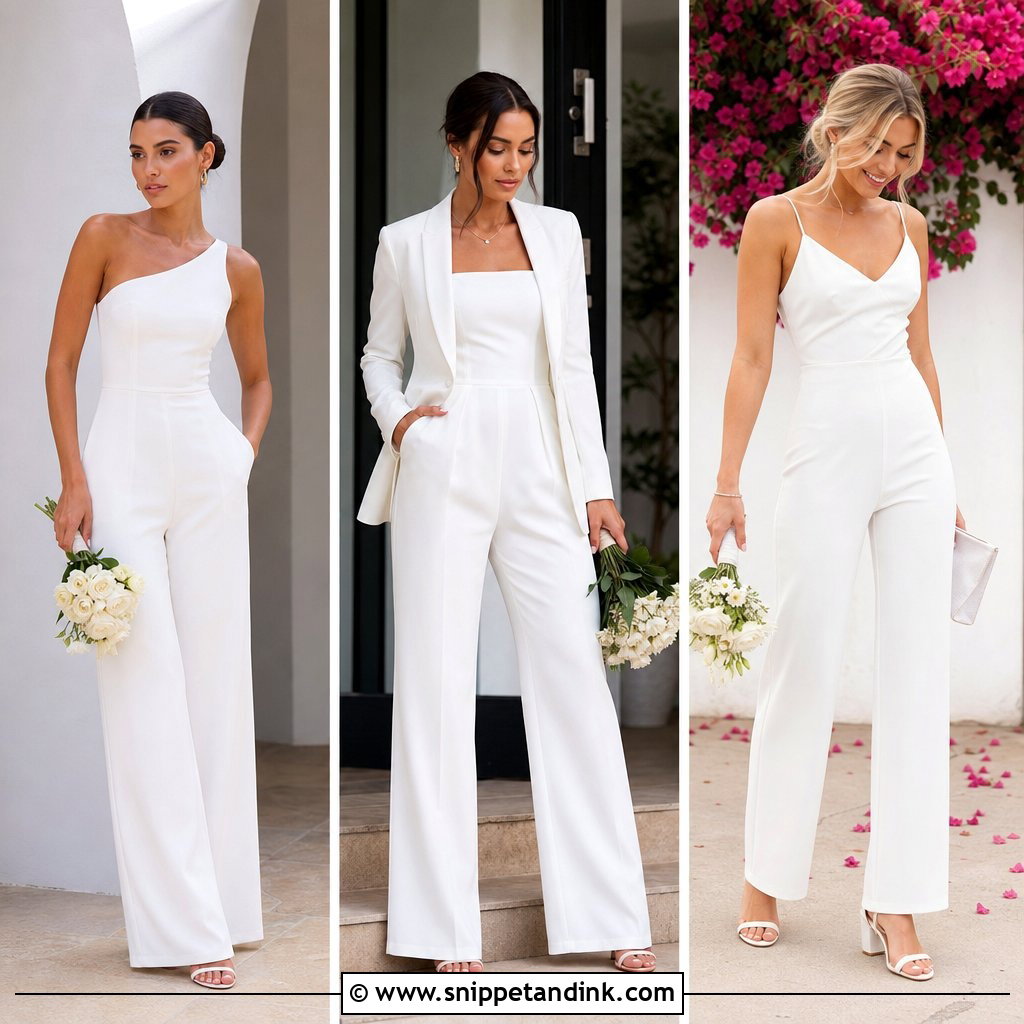
For summer, I drop the jacket altogether and build the suit around a longline or fitted vest with matching wide-leg trousers in breathable crepe, linen blend or tropical-weight wool. The vest can be the top on its own or sit over a silk camisole. A defined waist and well-placed buttons stop it looking like workwear. Brides with a fuller bust should check that the buttons don’t gape and the armholes aren’t cutting in; a tailor can add a hidden hook between buttons. Strappy block heels, sculptural earrings, a cuff and a light veil under a low bun finish it for warm or destination weddings.
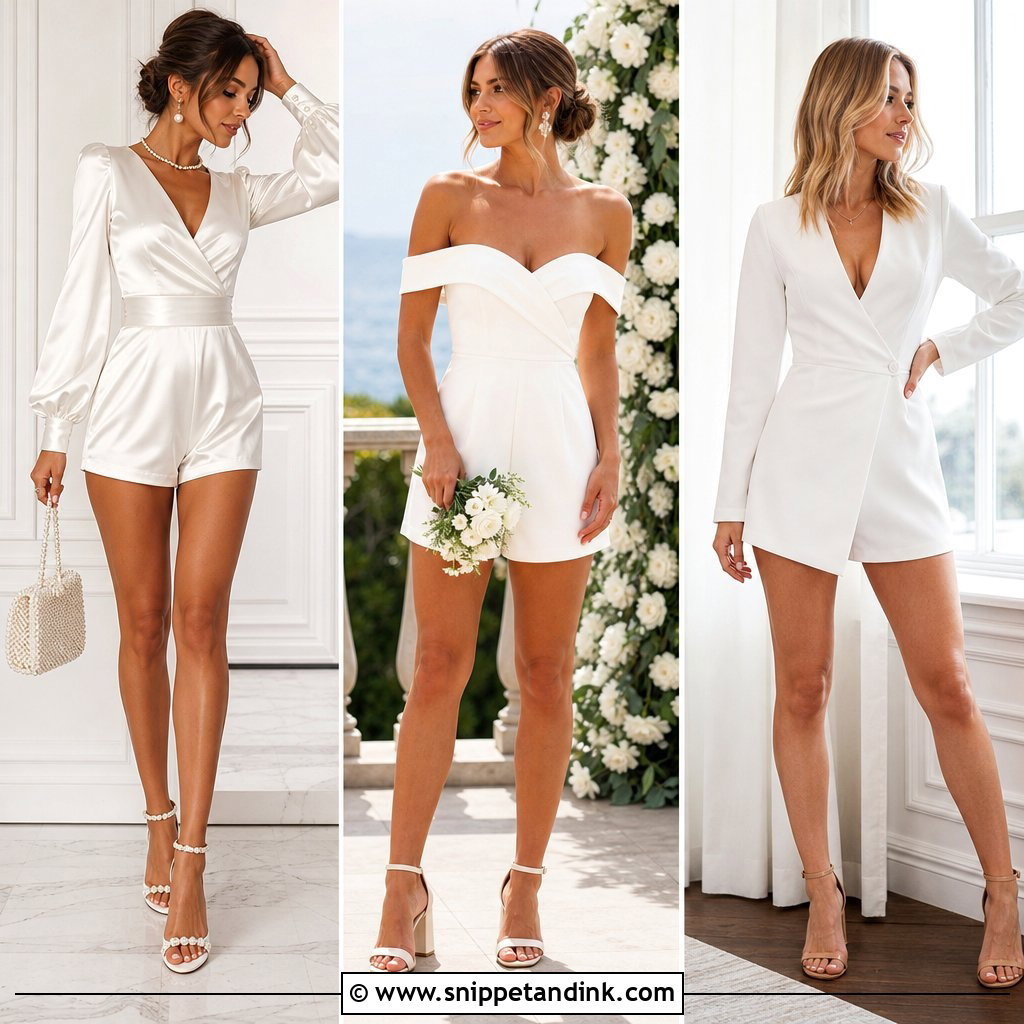
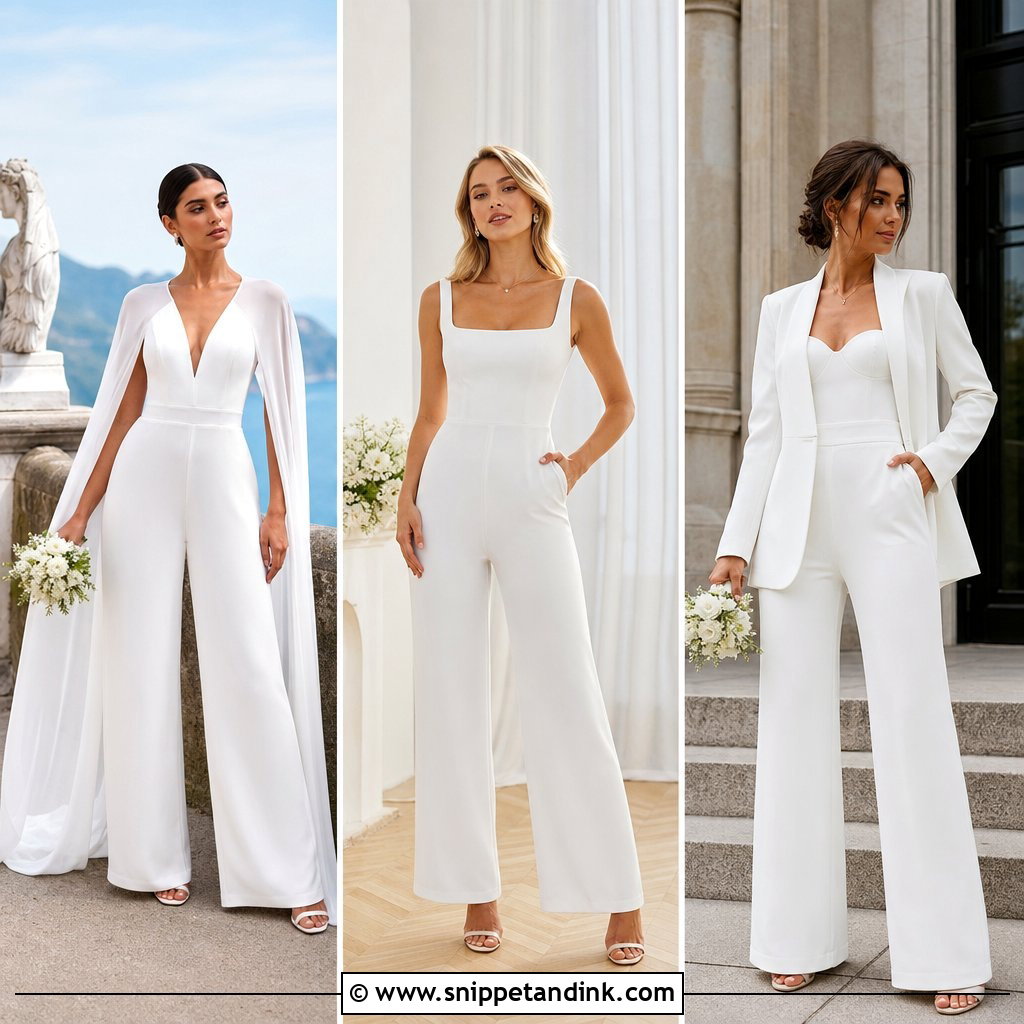
15. Off-Shoulder Wedding Pantsuit
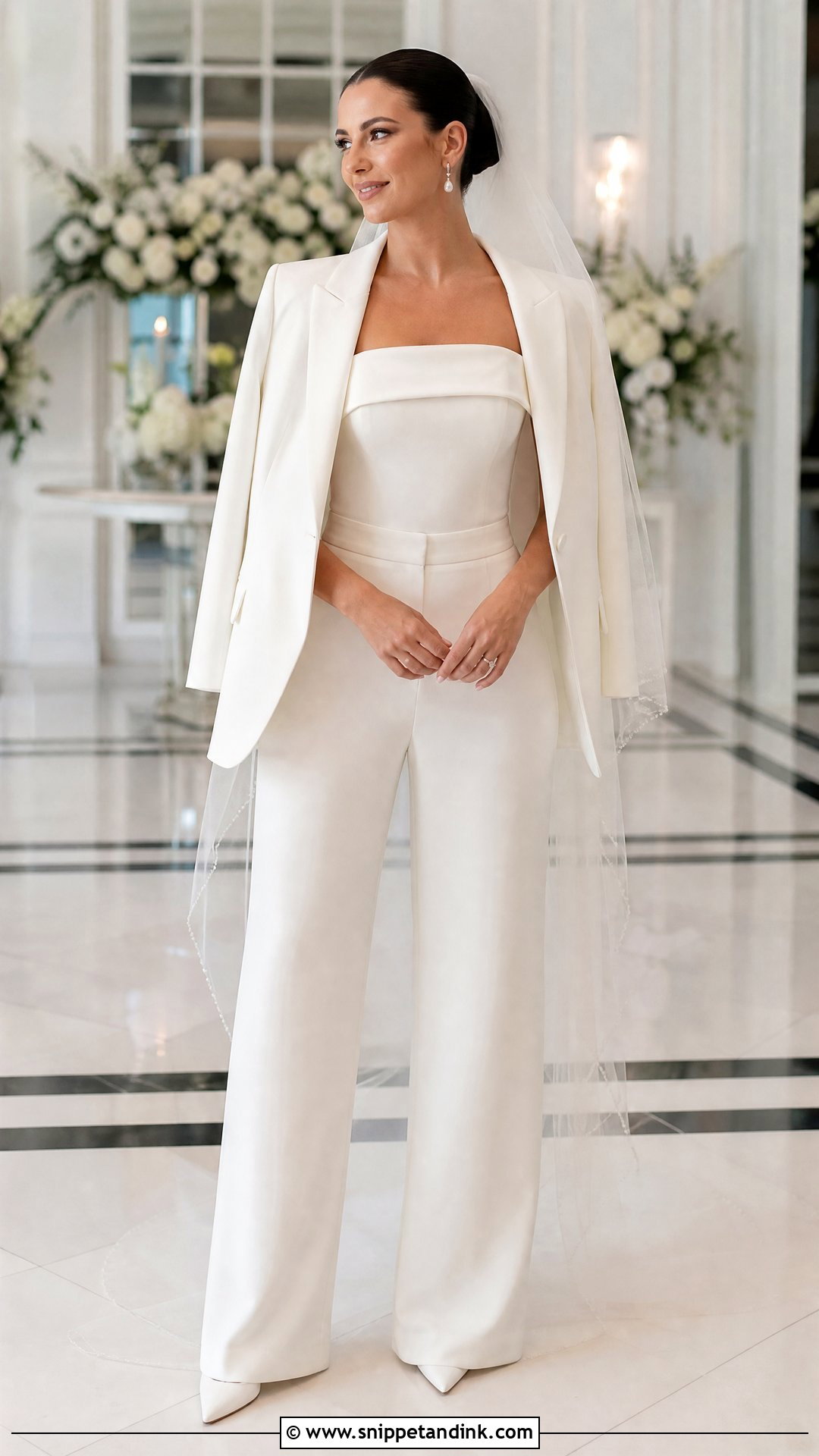
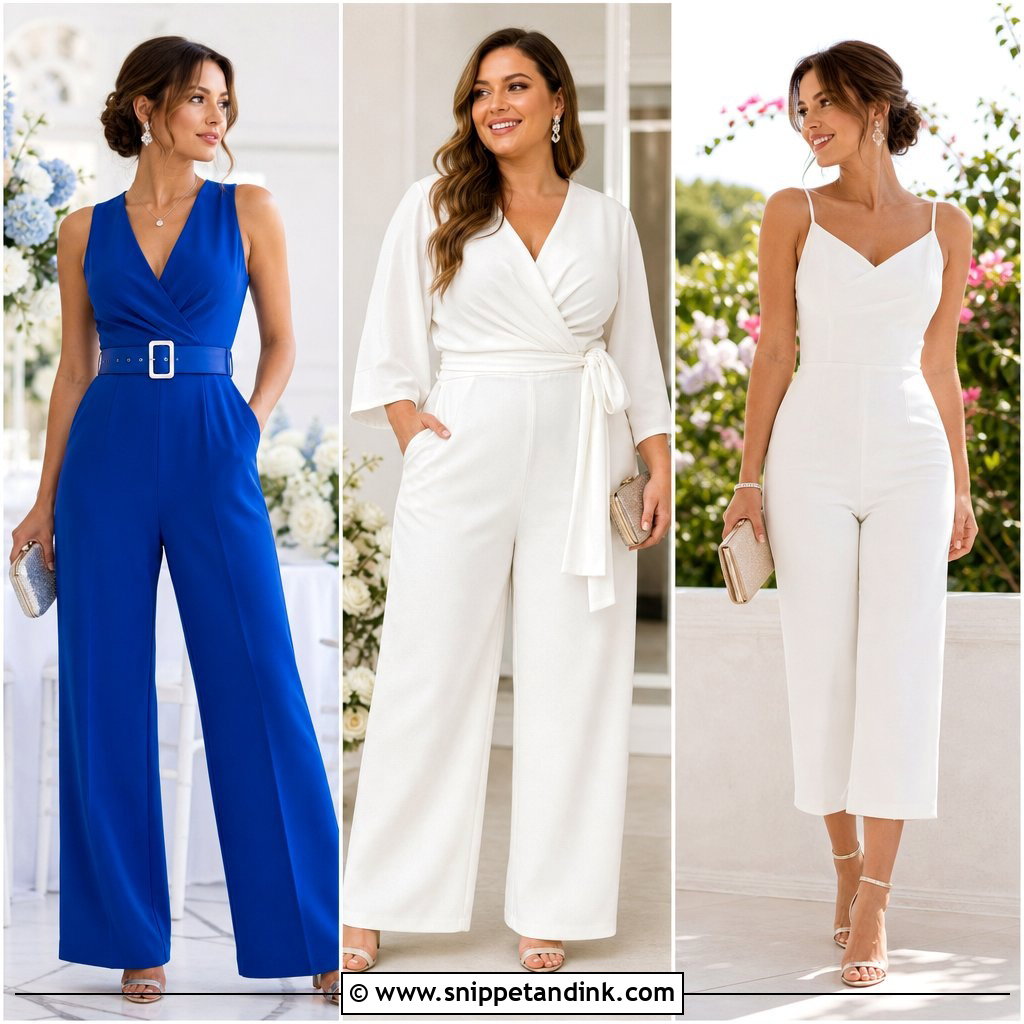
An off-shoulder top over trousers shows the collarbones and shoulders while the legs stay in clean tailoring. Pick a fitted off-shoulder top or bodysuit with a folded neckline, high-waisted wide-leg pants and a matching blazer to drape over the shoulders for portraits. Crepe holds structure; satin is softer for evening. The neckline needs testing: hug someone, raise both arms, and if it slips, ask for silicone gripper tape inside the band. Drop earrings, a smooth updo, pointed pumps and a fingertip veil pinned low at the back keep the shoulders clear.
16. Plus-Size Wedding Suit
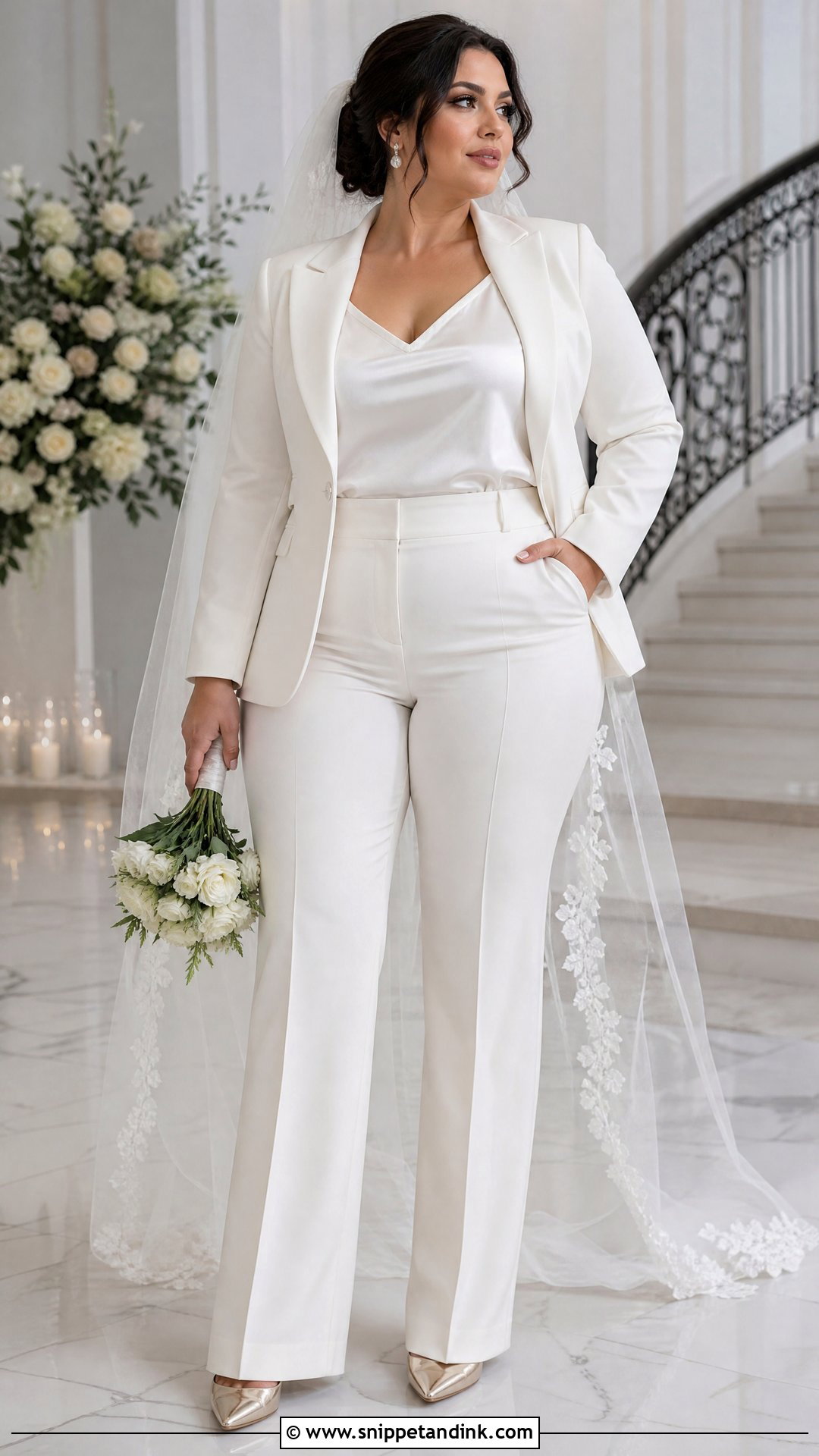
On a plus-size bride, I fit tailoring to the shape, never over it. The blazer has to close comfortably, follow the waist and let the arms move freely; I fit the shoulders, bust and arms first and ignore the label size. High-rise straight, bootcut or wide-leg trousers in substantial crepe drape without clinging. A V-neck satin camisole or structured corset gives a clean center line, and monochrome ivory keeps the silhouette unbroken. Bring personality through pearl earrings, metallic heels or a detailed veil. Separates help most here, since jacket and trousers can be bought in different sizes and altered independently.
17. Petite Wedding Suit
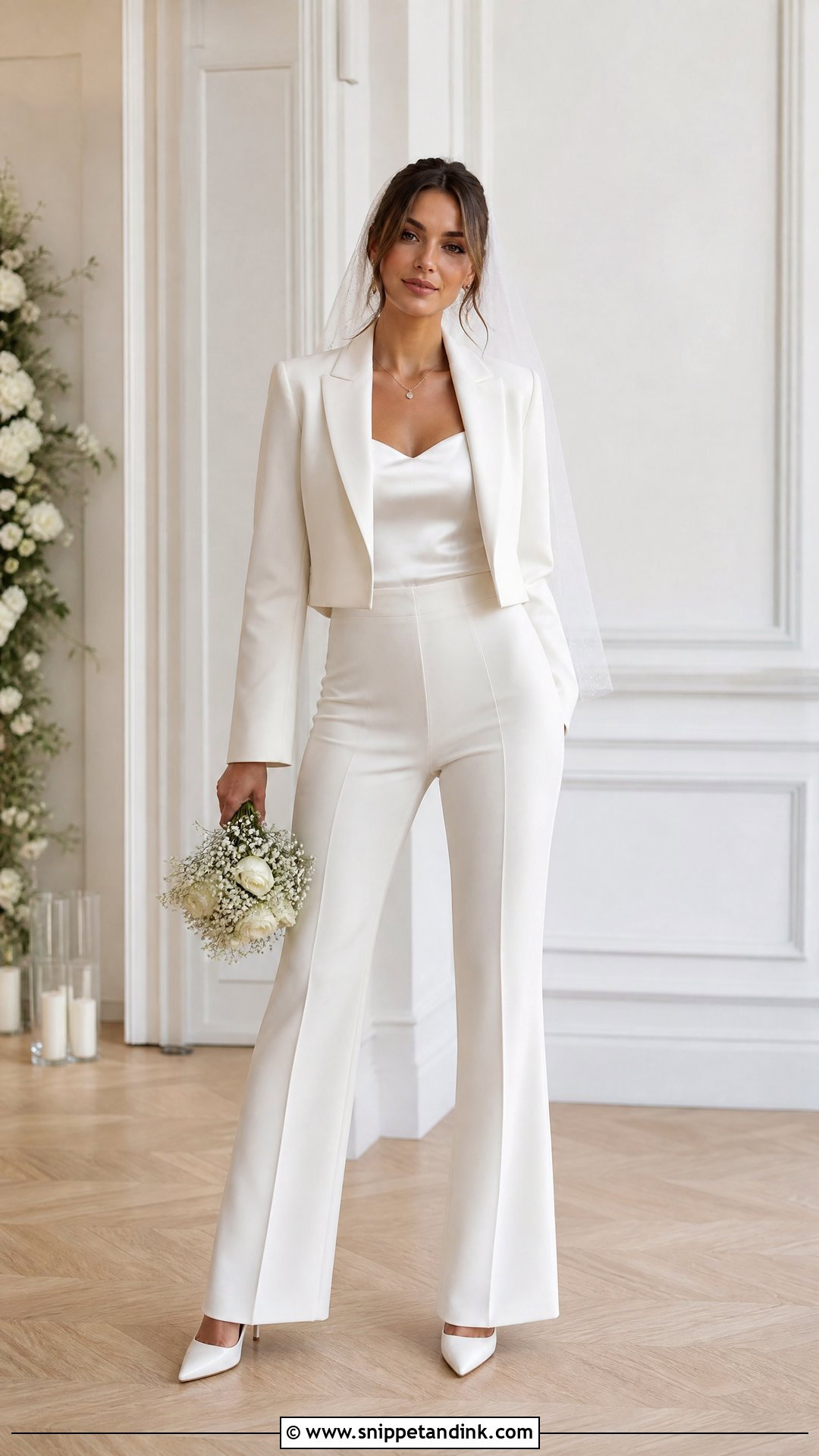
Proportion is everything on a petite wedding suit. A cropped or hip-length blazer, high-waisted trousers and a fitted inner top keep the waist visible. Straight or slightly flared pants that almost cover a pointed-toe heel lengthen the leg. Wide lapels, deep pockets and sleeves that cover the knuckles all make a small frame look lost. Monochrome white or ivory draws one long line from shoulder to shoe. Petite sizing is a good start, but I’d still have the sleeves and trouser hems altered. Fine jewelry, a small bouquet and a narrow fingertip veil finish it.
18. Linen Wedding Suit
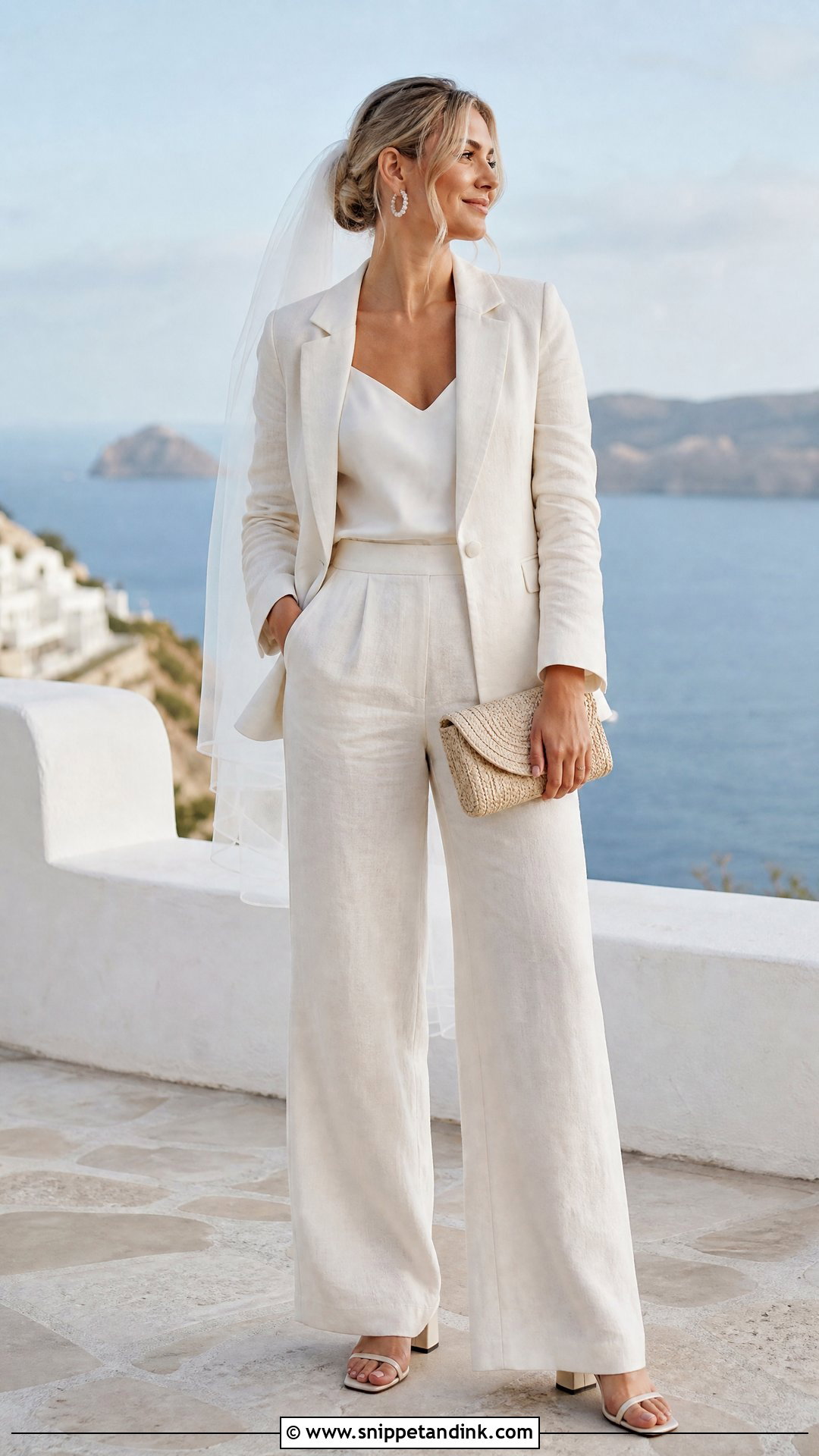
Linen is the honest choice for heat, as long as you accept some creasing. Pure linen wrinkles the moment you sit, so for photos and dinner I prefer a linen blend, which softens the creases while staying cool. A lined blazer with wide or gently tapered trousers in soft white, natural ivory or pale sand works for coastal and destination weddings, and a silk camisole adds a smooth contrast. Keep the cut relaxed but not oversized: trousers should clear the ground, and the shoulder line should still show. Block-heel sandals, pearl hoops, a woven or structured clutch and a light veil or flower pin complete it.
19. Beaded Wedding Suit
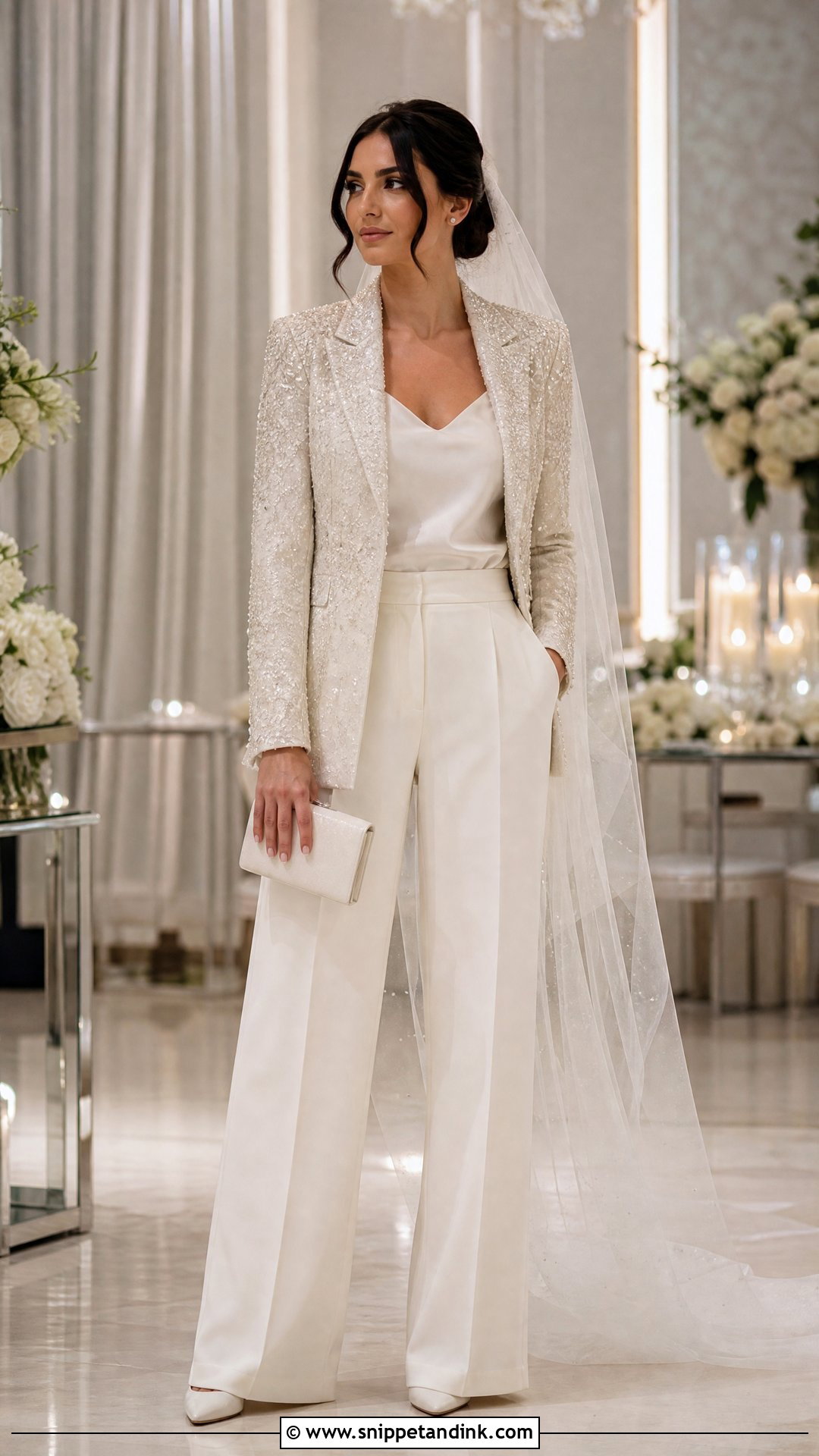
Choose one beaded piece and let the rest stay plain. That might be a crystal blazer, a pearl-trimmed corset or lightly beaded trousers, with everything else in crepe or satin. Beading adds weight, and a fully beaded jacket can pull the shoulders forward over a long evening. I like subtle shoulder beading on a fitted jacket with fluid wide-leg pants and a silk camisole. Understated pumps, small studs, a smooth clutch and a sheer tulle veil keep the balance. Check that beads won’t catch on trousers, the bouquet or loose hair, especially at the cuffs.
20. Jumpsuit And Blazer Wedding Suit
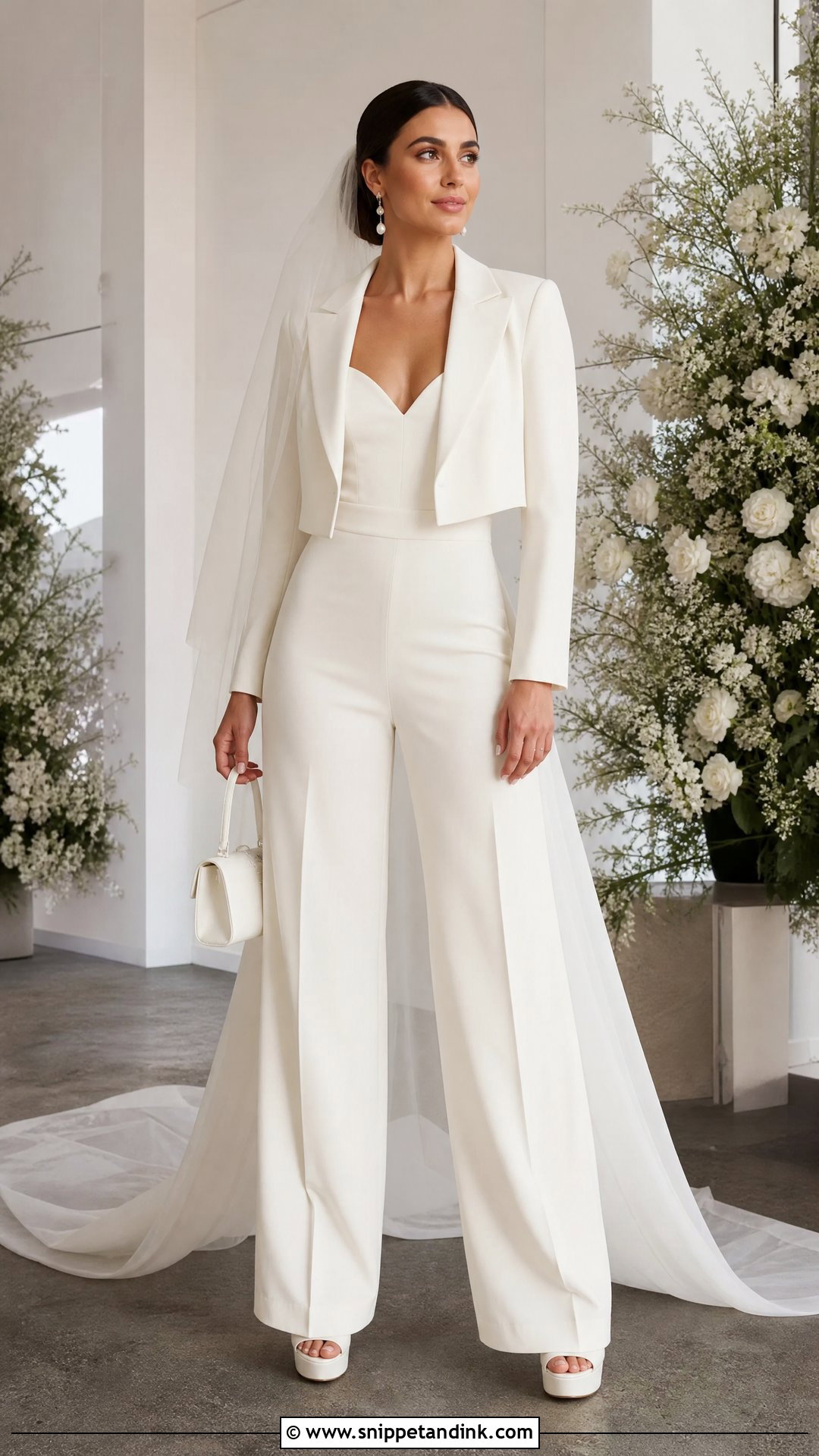
A bridal jumpsuit and matching blazer look like a suit but stay put as one piece, with no tucking or riding up. Look for a fitted bodice, defined waist and wide or straight legs in crepe, satin or mikado, then add a cropped blazer for waist definition or a longline one for a sleek line. The practical question is the fastening: a back zip you can’t reach alone makes every bathroom trip a two-person job, so check that before buying. Platform heels, pearl drops and a small top-handle bag suit it. A detachable train or sheer veil adds ceremony drama and comes off for the reception.
Where a Tailor Should Spend the Fitting Time
Alterations on a bridal suit are not all equal. Some changes are routine; others are so involved that you’re better off buying a different size. Here’s how I prioritize at a fitting.
- Shoulders first. If the shoulder seam sits past your shoulder bone or the sleeve head dents, that’s very hard to fix. Choose the jacket by its shoulders.
- Jacket closure next. Button it and look for an X of pulling around the button. A little can be let out at the side seams; a lot means the jacket is too small.
- Sleeves should show a sliver of wrist when your arms hang. Lace or beaded cuffs can’t always be shortened from the end, so ask how it will be done.
- Trouser hems last, with your wedding shoes on. Wide legs usually look best just grazing the floor at the back; slim legs need a cleaner break.
- Waist and seat. Sit on a low chair at the fitting. If the waistband gapes at the back or digs in, a tailor can adjust it.
Bring everything you’ll wear to the final fitting: the camisole or corset, the shoes, even the bra. A bustier under a jacket changes how the lapels sit, and a tailor can only fit what’s in front of them.
Tailoring That Feels Like Your Own Wedding Outfit
A bridal suit should feel comfortable and sound like you. Tailoring works for formal ceremonies, courthouse vows, destination weddings and reception changes alike. Start with the silhouette that gives you the coverage and movement you want, then sort out fabric, proportion and alterations. A veil keeps a traditional note, while statement earrings, polished shoes or a structured bag give a modern finish. Before the day, walk, sit and dance in the whole outfit. Romantic lace, crisp crepe, glossy satin or breathable linen can all look as bridal as any gown when the fit is right.
You'll Like These Ideas:


Leave a Reply