
A sculptural gown makes its point through shape instead of surface: folds that stand on their own, a corset curve, a bubble of skirt, a flower that seems to grow out of the bodice. When a bride tells me she wants a dress that looks like art, these are the gowns I pull, and the styling rule is always the same. The construction does the talking, so the heels, jewelry and veil get quieter. Below are twenty complete looks, from grand ball gowns to narrow columns and short reception minis, each with notes on how it behaves once you actually wear it at a gallery, a garden or a city hall.
Why Mikado Holds a Fold and Chiffon Never Will
A sculptural dress is only as sculptural as what it’s made of. When I show brides these gowns, I hand them the fabric before the dress, because the weight and stiffness explain the price and the comfort better than any picture.
- Mikado and duchess satin: heavy, slightly stiff, hold sharp folds and big skirts. Warm in summer, and they show creases where you sit.
- Gazar and silk organza: crisp but light and semi-sheer. Ideal for capes, bubbles and petals that need to stand away from the body without adding weight.
- Taffeta: holds volume and rustles audibly when you walk, which some brides love and some don’t.
- Crepe: drapes rather than stands. Great for columns and soft peplums, not for origami folds.
Hidden support matters just as much. Boning, interfacing, horsehair braid in hems and petticoats are what keep shapes from sagging by the reception. Ask the shop what is inside the dress; if a large shape has no internal support, it will look tired by the evening.
1. Basque Waist Ball Gown Wedding Dress
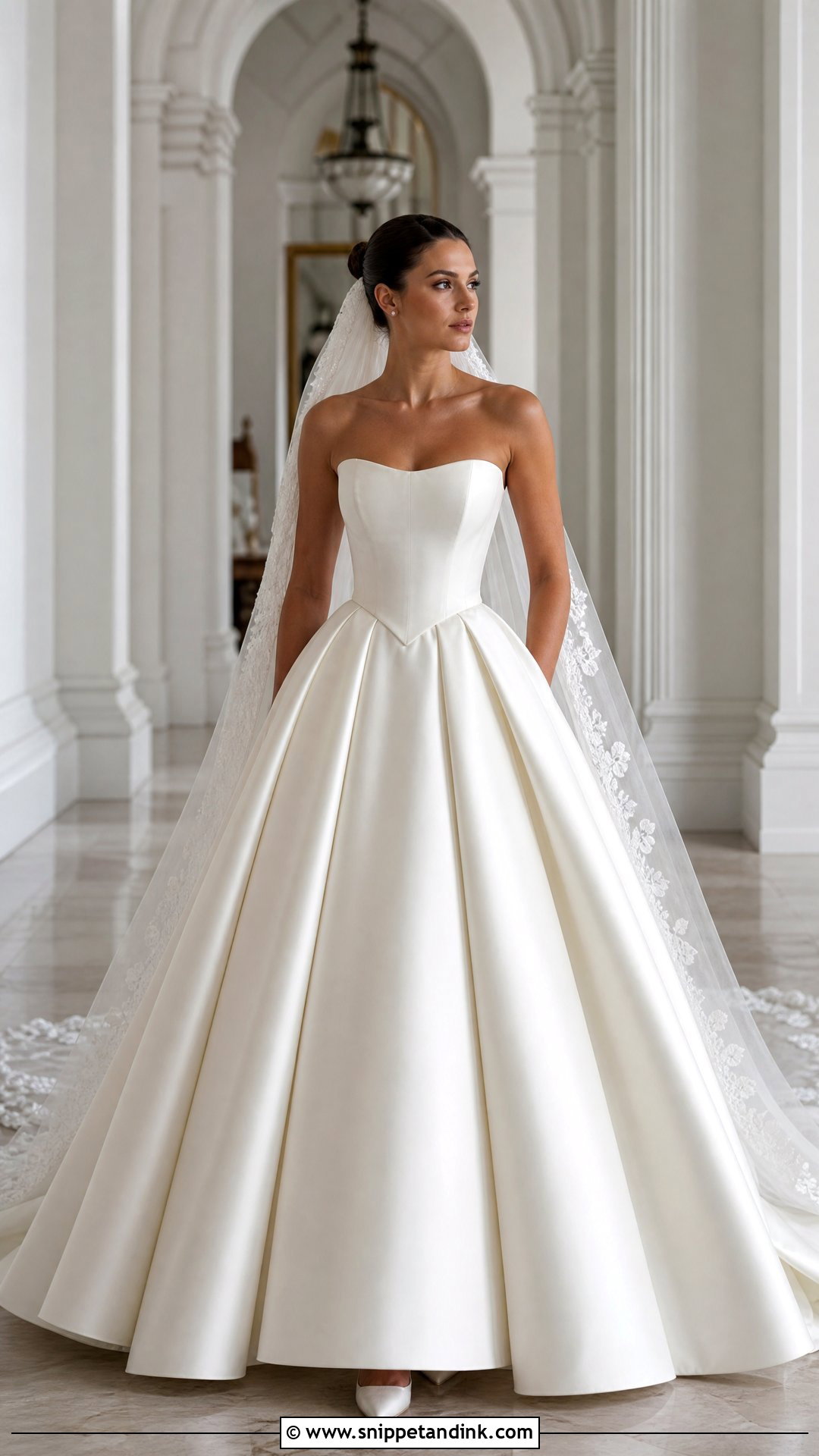
The point of a basque waist ball gown is the V that dips below the natural waist, and that V only stays crisp in a stiff fabric like mikado or heavy satin. On softer fabric it wrinkles at the point within an hour of sitting. I look for internal corsetry with spiral steel boning, because it bends with you while still holding the bodice flat. Strapless keeps the upper half clean. Pearl studs, pointed ivory pumps and a cathedral veil anchored under a smooth bun finish it; a necklace would only clutter what the waist is already doing. Save it for a grand indoor venue with room for the skirt.
2. Draped Corset Wedding Dress
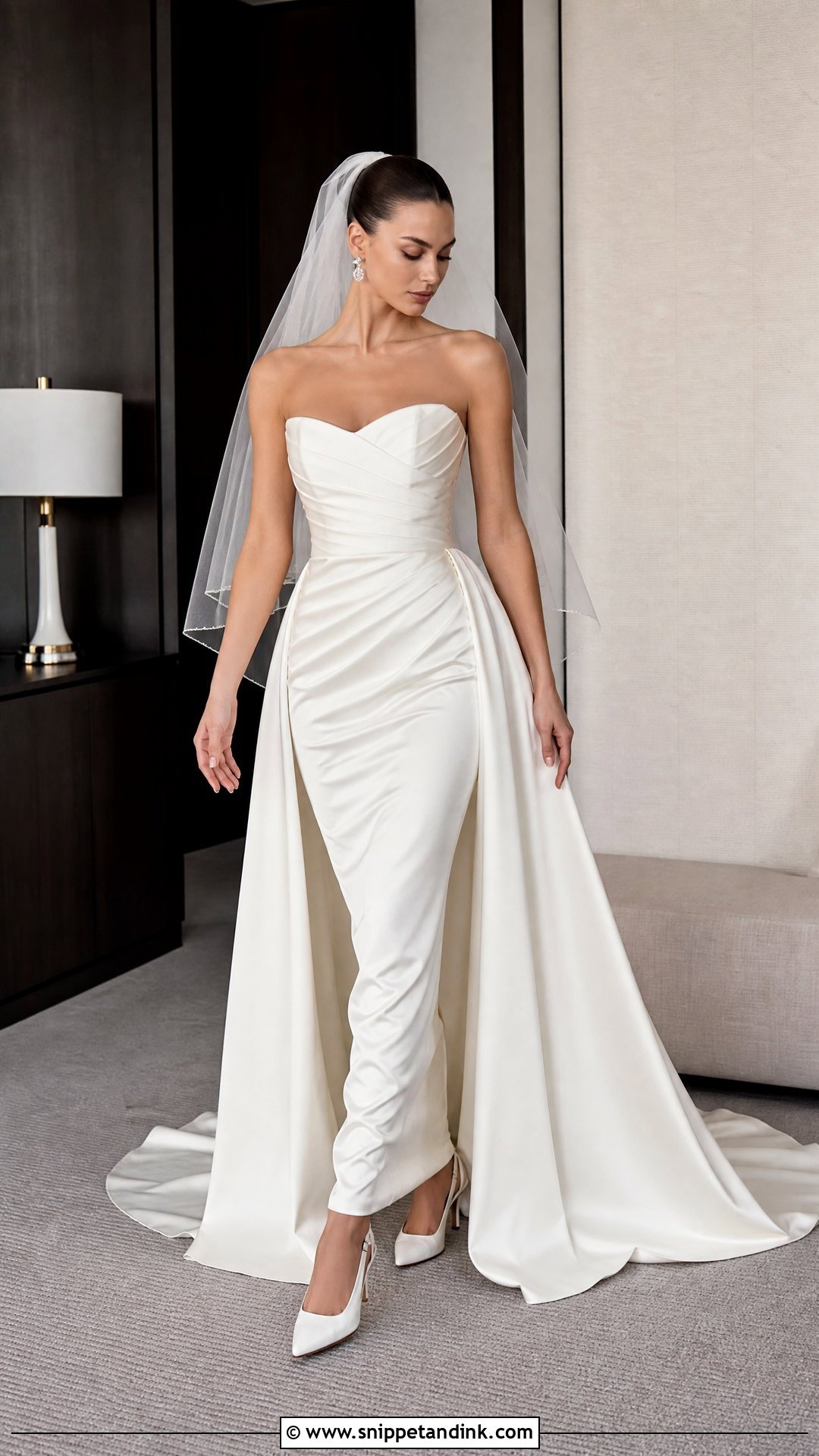
Draping over a corset is how a structured bodice stops looking severe. The boning does the work underneath while diagonal folds of silk, satin or light tulle soften the surface. When I fit one of these, I check that the drape is tacked down at several points; loose drapery shifts as you hug people and ends up lopsided in later photos. A straight or gently curved neckline lets the folds lead. Drop earrings, a low twisted bun and a plain fingertip veil suit it, with satin slingbacks. On a slim skirt, a removable ceremony train gives drama for the aisle and comes off for dancing.
3. Asymmetric Pleated Wedding Dress
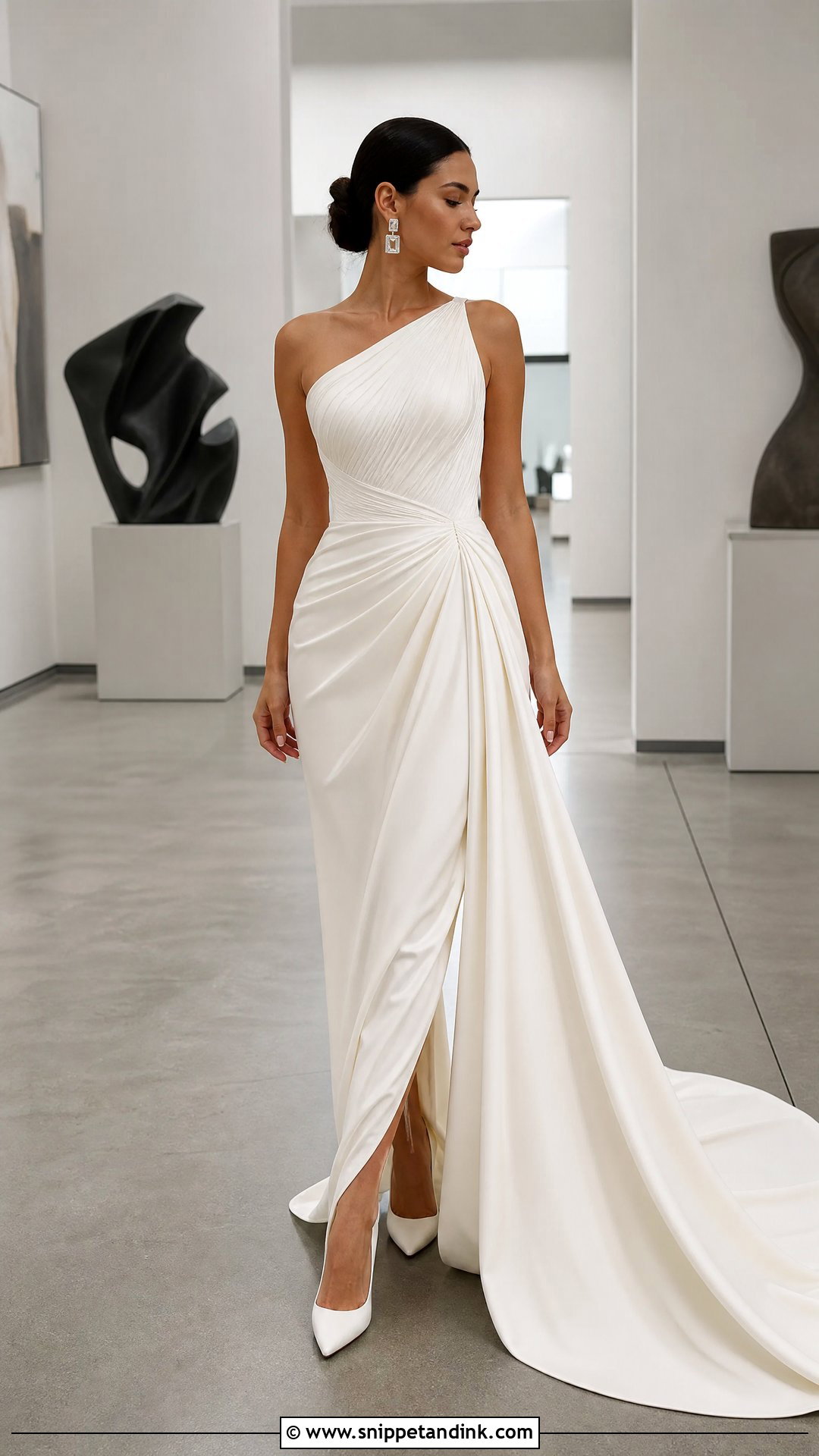
Pleats running diagonally across a bodice and into a gathered hip look different from every angle, which is exactly why this dress needs a 360-degree mirror check at fittings. One covered shoulder against one bare one sets up the asymmetry. Veils tend to hide the neckline here, so I usually suggest a sculptural hairpin or a short blusher instead. A sleek low ponytail, geometric earrings and clean white pumps on a moderate heel keep things sharp. Hold a narrow, simple bouquet. Pleated silk can shift if the pleats are only pressed rather than stitched, so ask how they are secured. It shines in a gallery or minimalist hotel.
4. Bubble Hem Wedding Dress
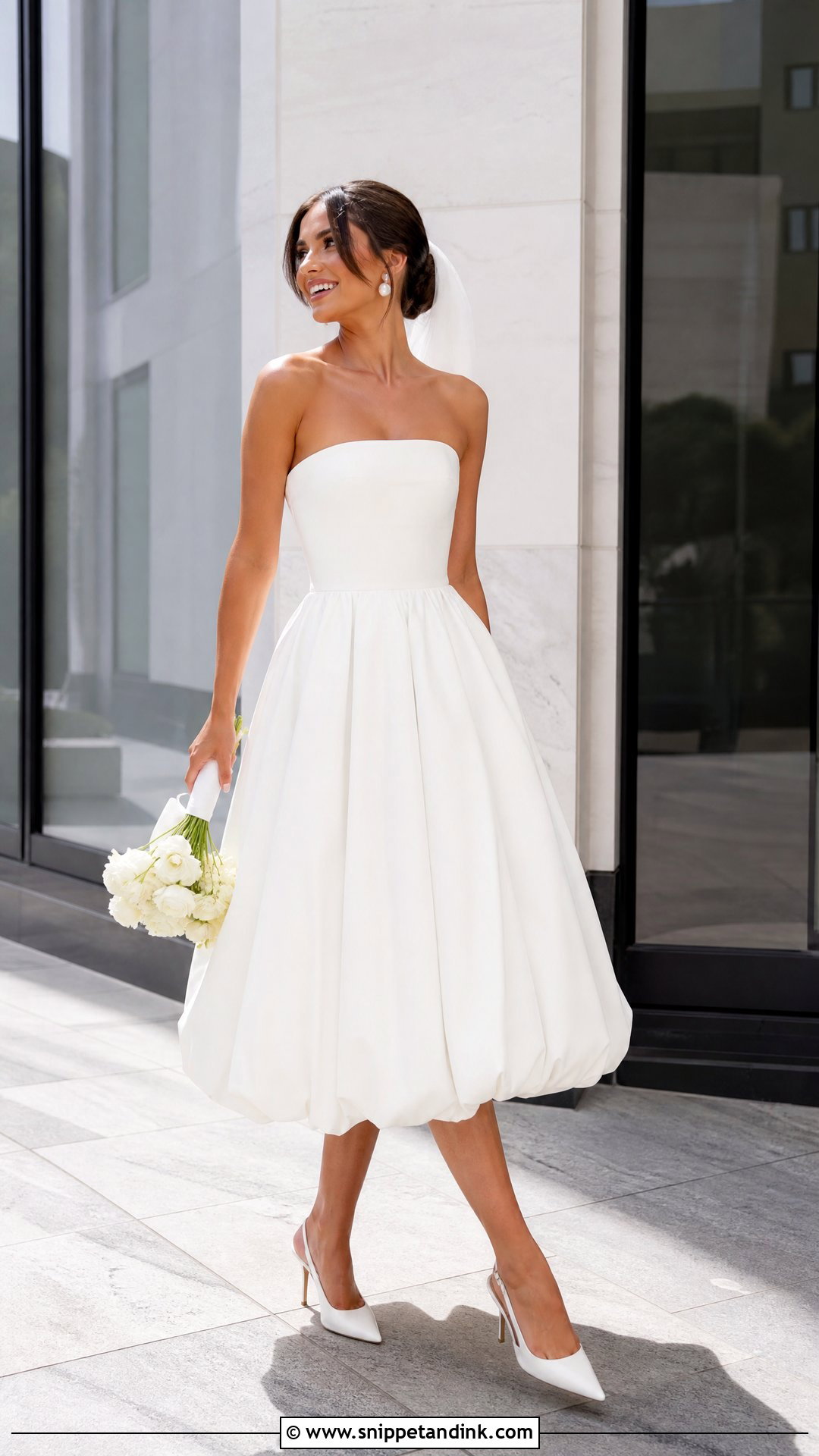
Bubble hems are the playful end of sculptural fashion, and they come as minis, tea lengths or full gowns with the volume gathered at the hem. The bubble is held out by an inner lining cut shorter than the outer skirt, so if the lining is wrong the whole shape deflates. A smooth fitted bodice with slim straps or strapless keeps the volume in check. Pointed slingbacks, pearl hoops and a short veil that stops above the skirt work best. Sitting is the catch: the bubble squashes and springs back, but it creases if the fabric is thin. Sheer ivory tights make a short version work in cooler months.
5. Sculpted Off Shoulder Wedding Dress
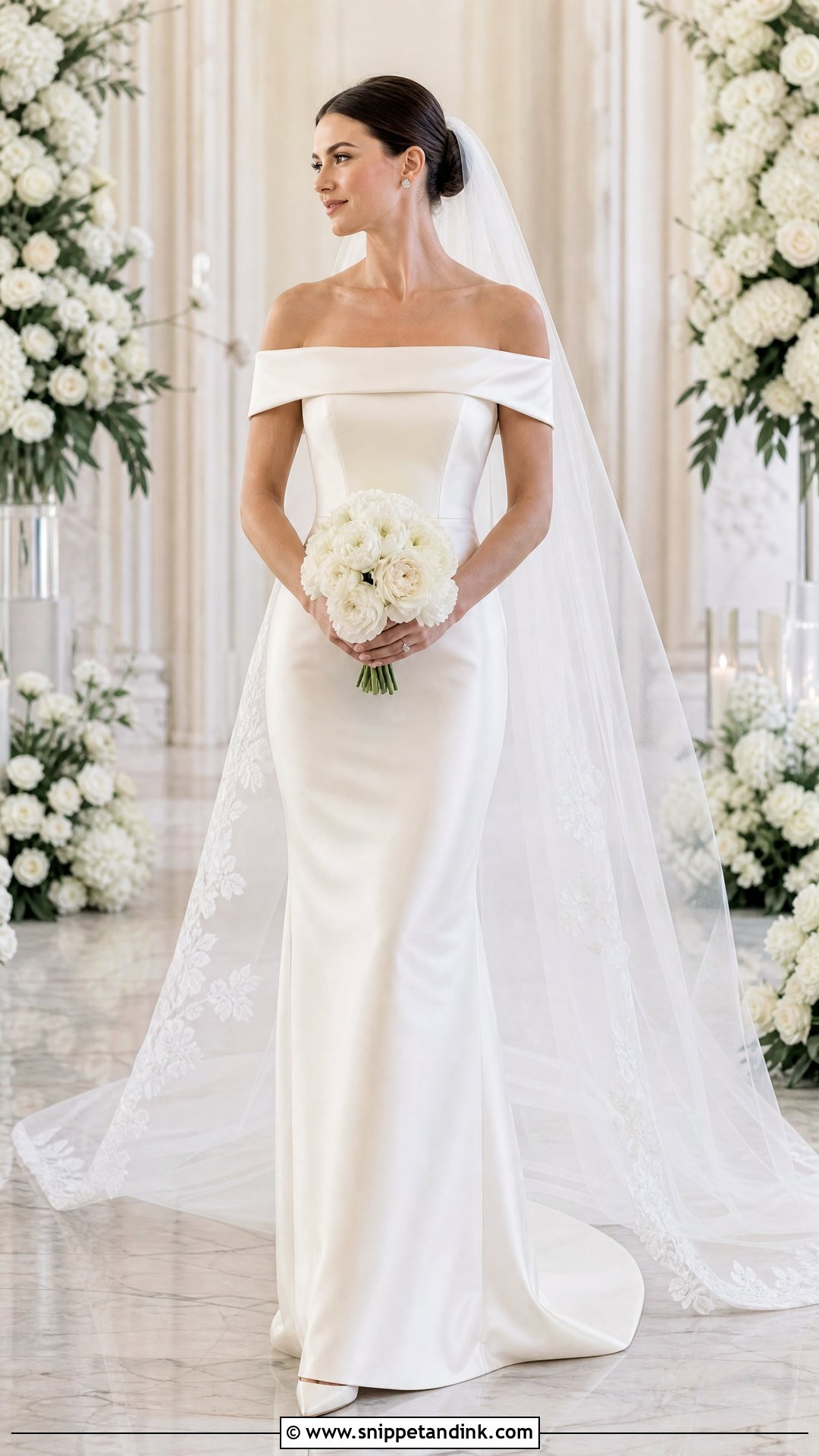
The difference between a sculpted off-shoulder neckline and an ordinary one is that the folded band is built to hold its curve on its own. Folded satin, taffeta or molded mikado sits across the upper arms, and I always check it with the bride’s arms raised and lowered; too tight and it cuts into the arm, too loose and it climbs up. A column skirt keeps it refined, a fuller skirt reads more formal. A smooth updo, glowing studs, pumps matched to the exact ivory, and a cathedral veil anchored low enough not to cover the neckline from the front. Skip the necklace entirely.
6. Peplum Column Wedding Dress
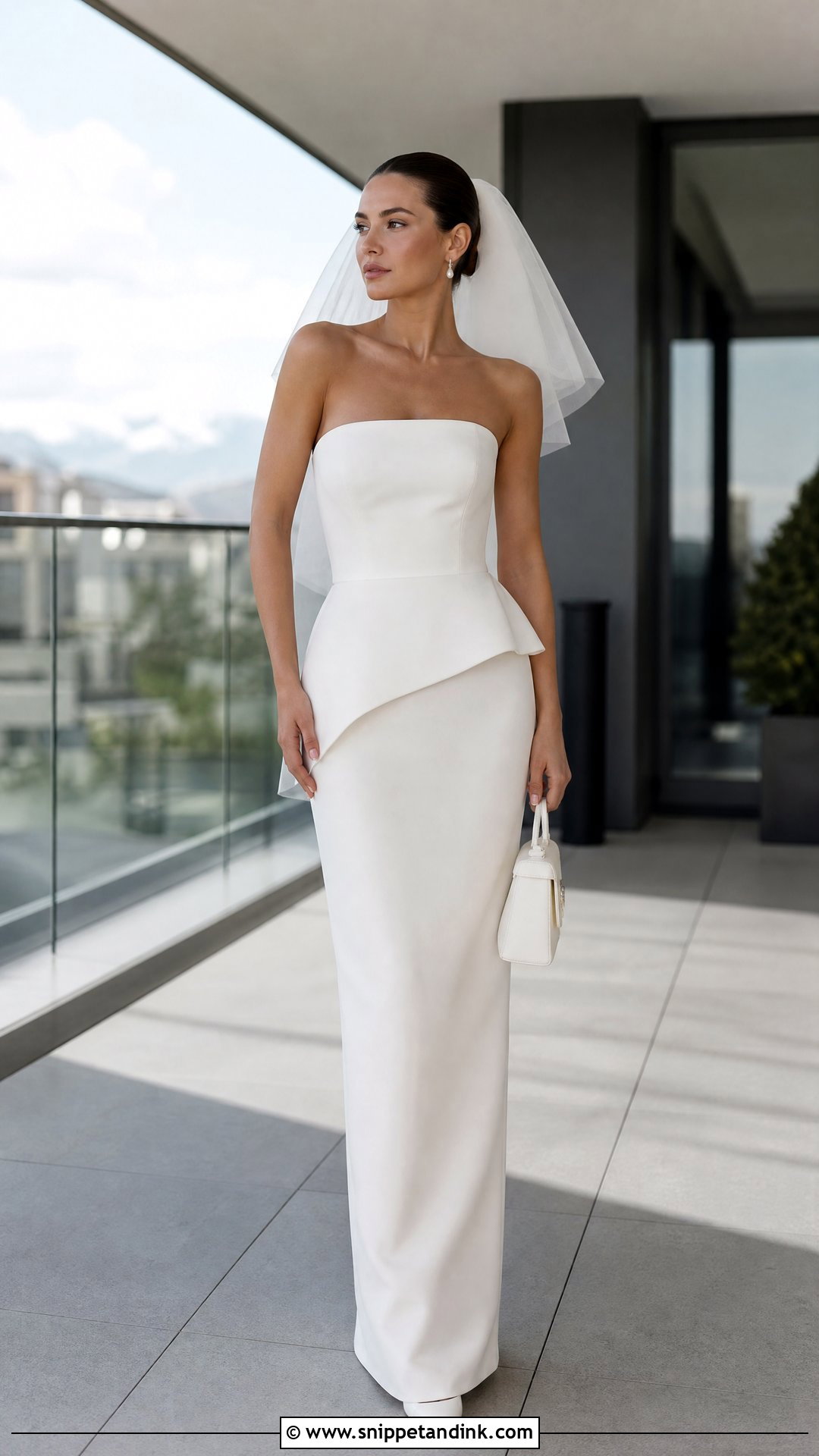
A peplum on a column skirt gives the waist all the definition, so the fit has to be exact. If the peplum sits even a little high, it stands out like a shelf; too low and it widens the hips. Crepe makes a softer curve, while satin or mikado holds a sharper, more architectural flare. Check that the column skirt has a walking slit or kick pleat, otherwise you shuffle down the aisle. Minimal drop earrings, slim pointed heels, a top-handle bag for reception bits and a short structured veil or sculptural comb finish it. It suits a hotel, rooftop, courthouse or restaurant wedding.
7. One Shoulder Sculptural Wedding Dress
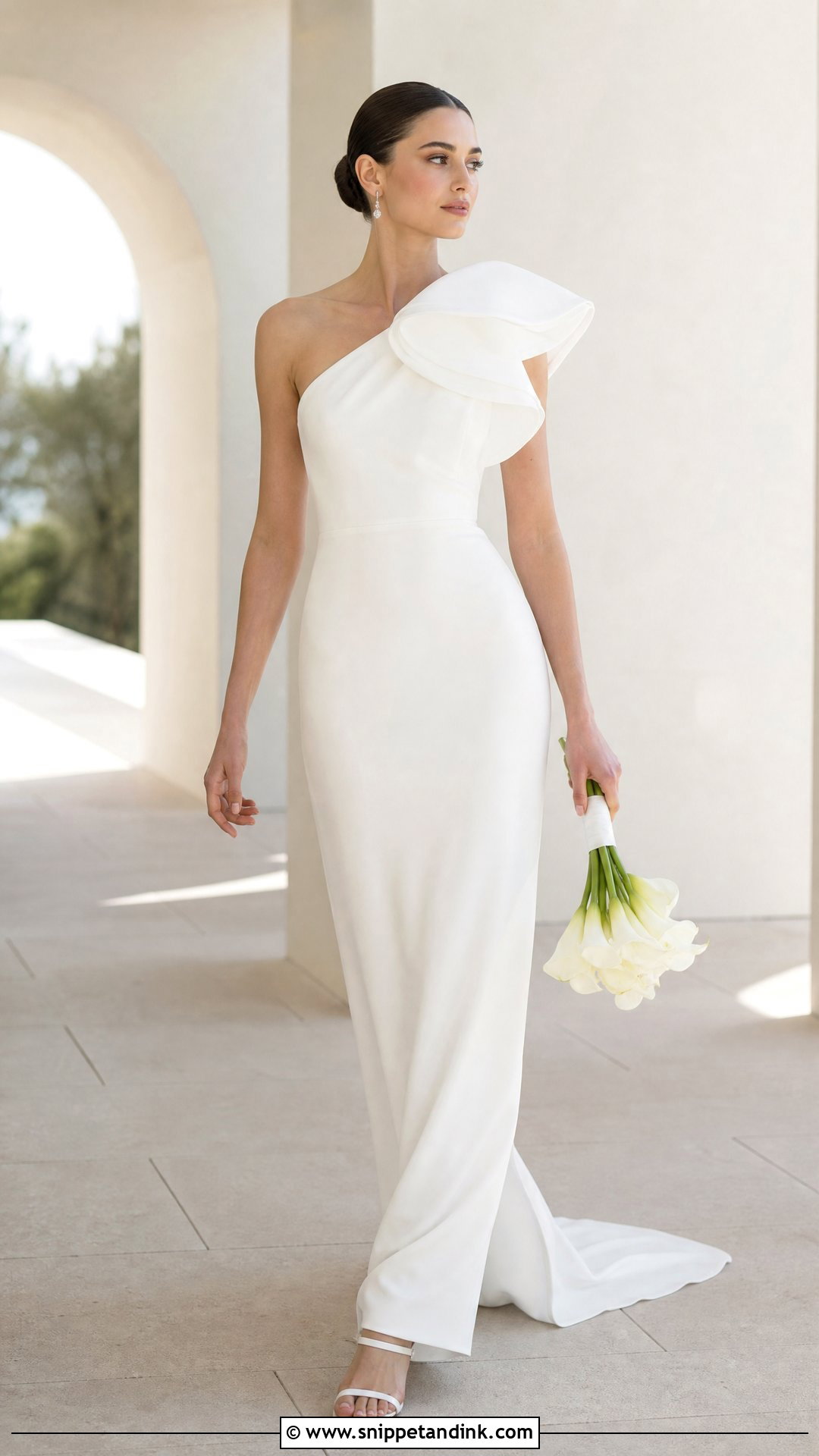
On a one-shoulder sculptural dress, the shoulder feature might be a folded satin panel, a sweeping bow or a curl of organza. Everything else has to stay sleek or the feature looks accidental. The detail I always check is weight: a large organza shape pulls the dress toward that side unless the bodice is anchored with boning and a grip tape at the waist. Pin a side-parted bun opposite the covered shoulder. Small crystal studs, an ivory metallic clutch and ankle-strap heels are plenty. Skip the full veil and go for a comb or a narrow veil attached low, and hold your flowers on the bare side.
8. Folded Mikado Wedding Dress
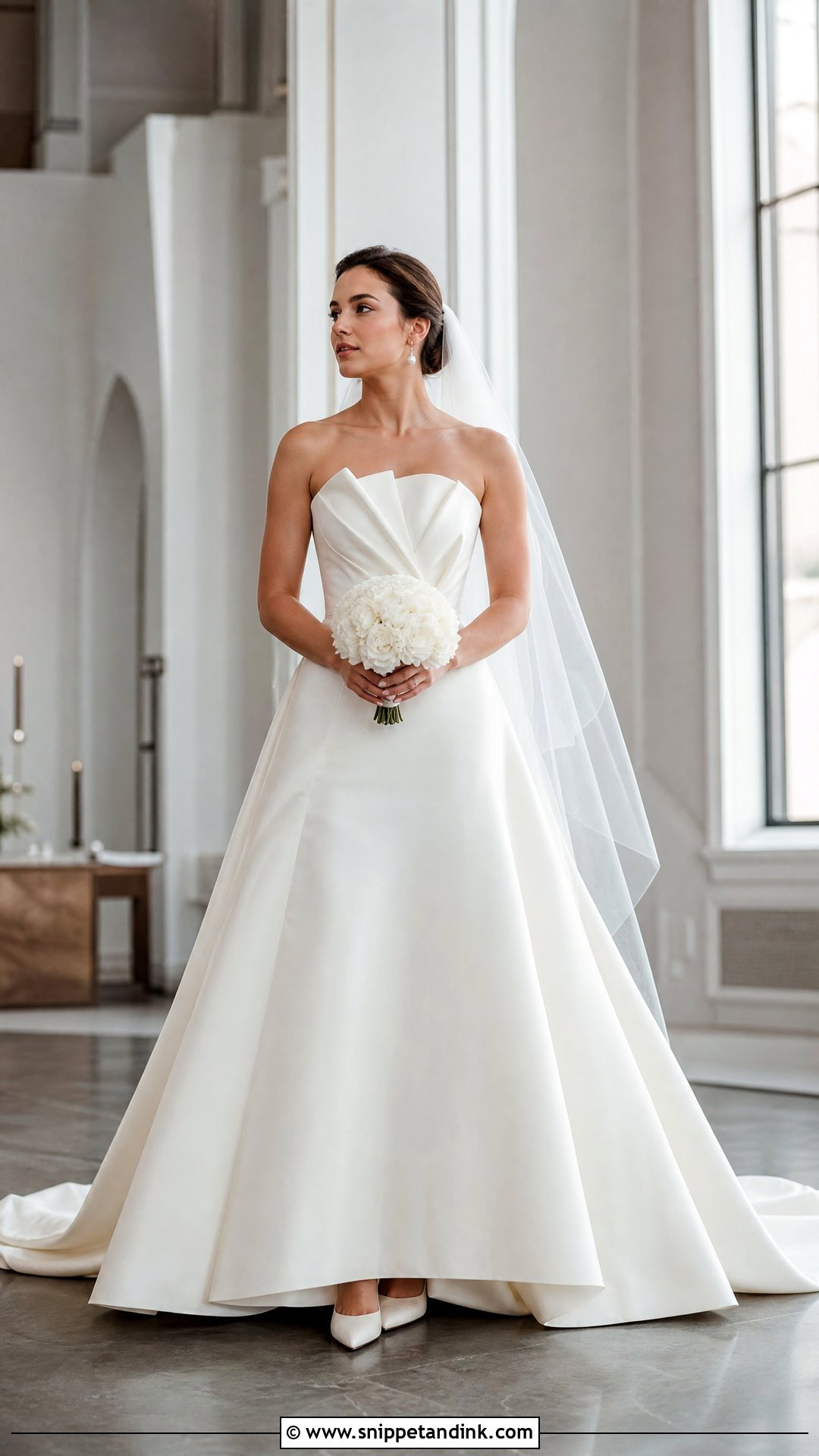
Mikado is the fabric I reach for when a bride wants origami. Its silk or polyester twill is heavy and stiff, so a fold made in it keeps a sharp edge instead of collapsing. A strapless gown with a folded bodice, folded hip panels and a controlled A-line skirt is the classic shape. The fabric already looks substantial, so keep accessories light: pearl drops, pointed satin pumps and a single-layer veil with no lace edge. A neat chignon keeps the bodice visible. Choose a small bouquet in one color; a wide arrangement covers the folds you paid for. High ceilings and plain walls show it best.
9. 3D Floral Wedding Dress
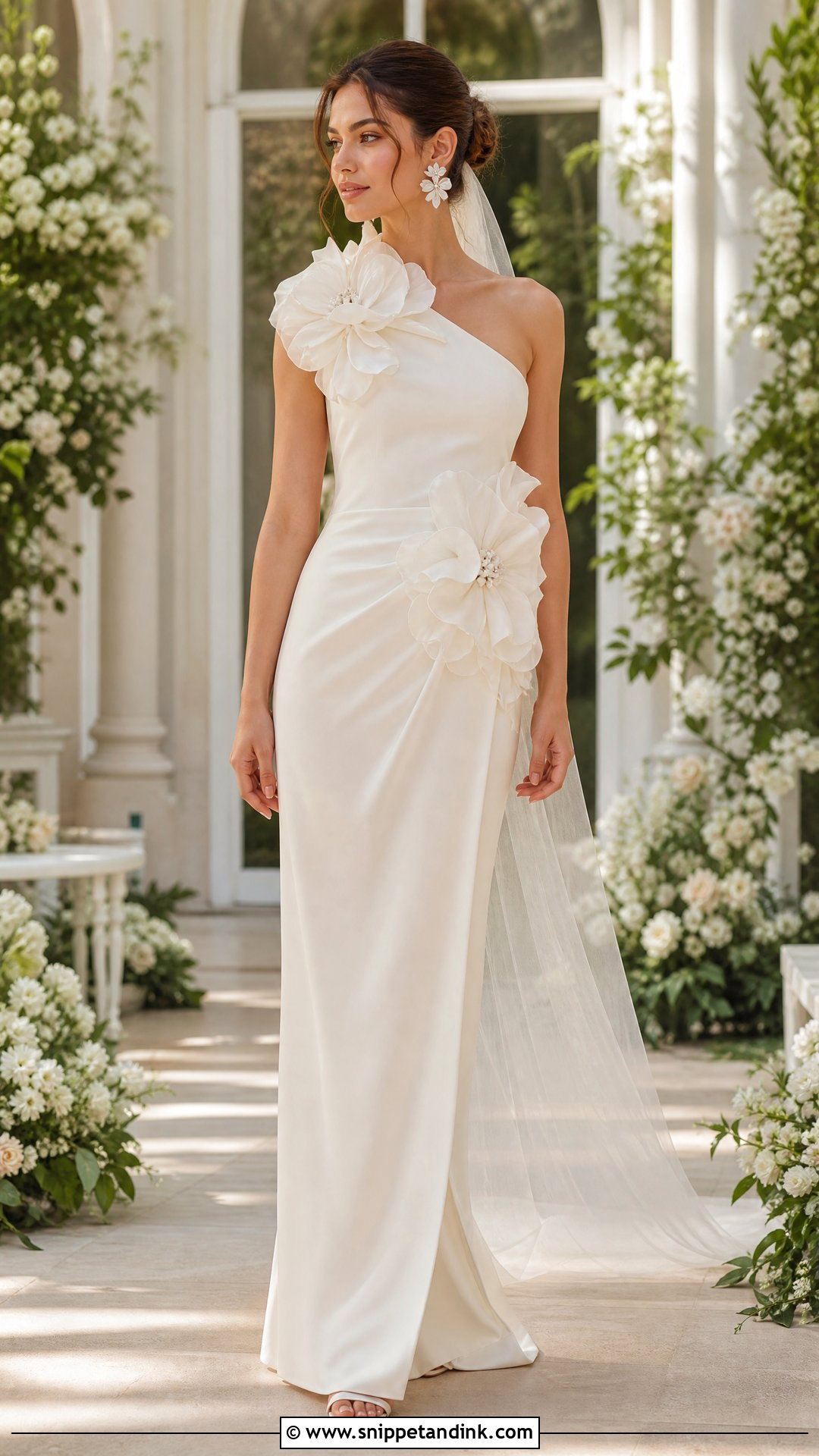
Three-dimensional flowers bring a garden into the dress without any color at all. The petals are usually cut from organza and shaped with heat, so they are lighter than they look, but they do crush. I advise brides to keep blooms clustered at one shoulder, the waist or along the skirt, not across the back where they get flattened against a chair. A fitted bodice and a simple A-line or column keep them the focus. Small flower earrings, ivory sandals, a plain tulle veil and loose polished waves or a low bun are enough. Carry one variety of white flower so the bouquet echoes the dress.
10. Cape Sleeve Sculptural Wedding Dress
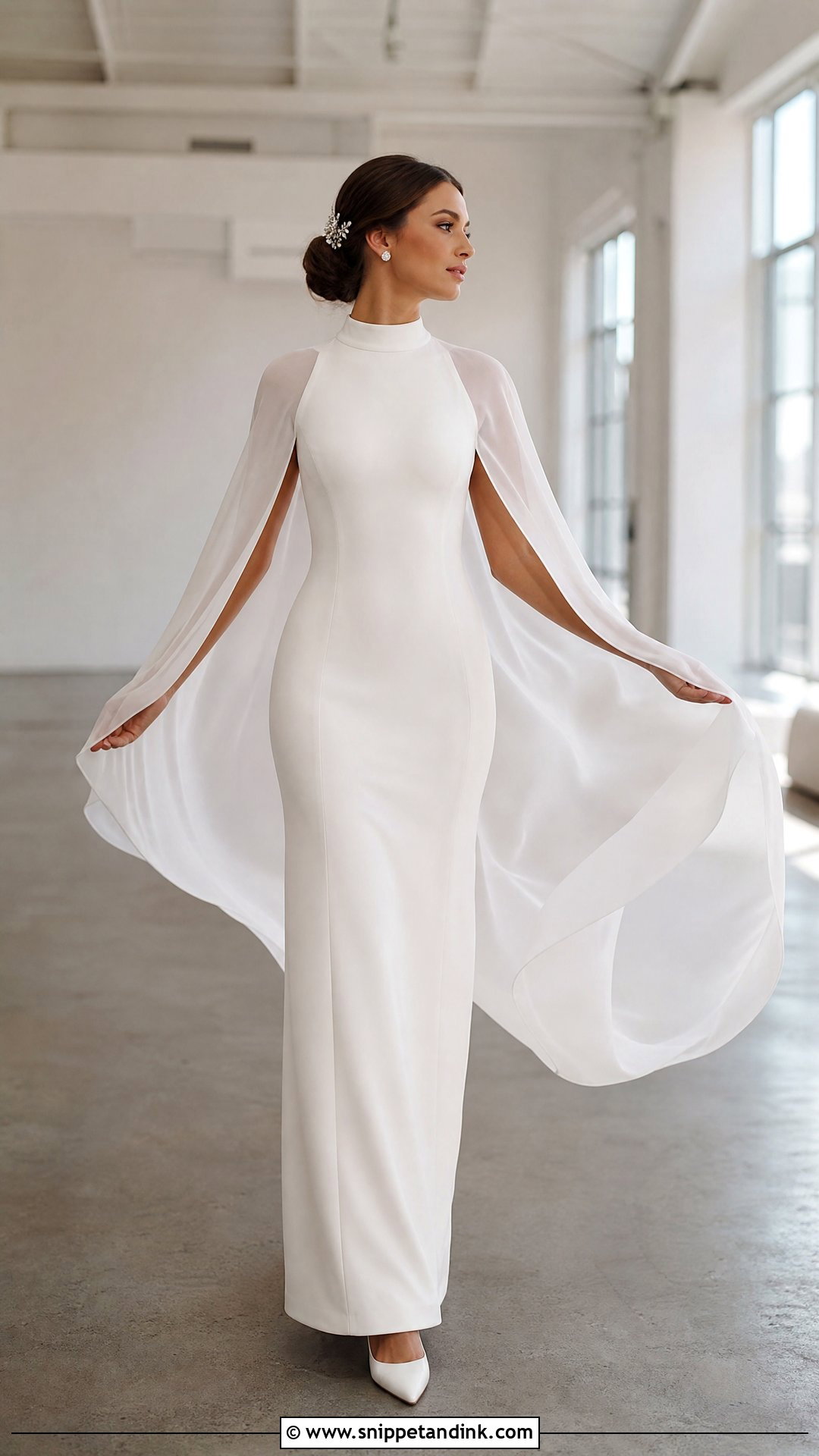
Cape sleeves give movement that a gown alone can’t, and the fabric decides how dramatic it gets. Crepe falls softly. organza or gazar stands out and holds its shape, especially as you walk. A clean column under the cape keeps the outfit balanced. I usually tell brides to skip the veil here; a cape and a veil together become a lot of fabric, and the veil snags on the cape edge. A polished hair accessory at the back, pointed pumps, subtle studs and a center-parted bun complete it. Hold the bouquet below the waist so the cape stays visible.
11. High Neck Column Wedding Dress
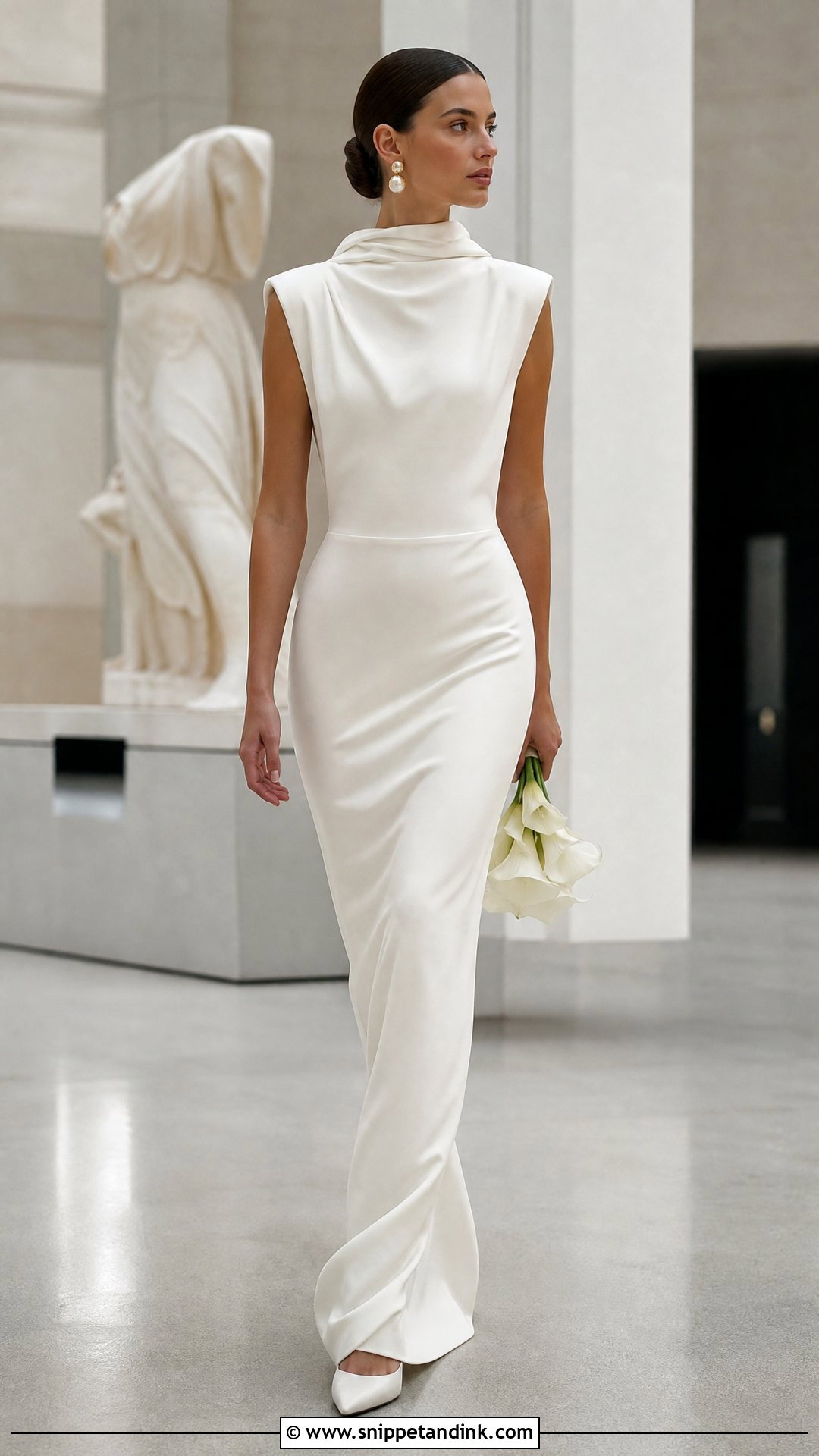
High-neck column gowns are sculptural in a quiet way, through curved seams, lightly padded shoulders or a draped collar. I check the neck first: a high neckline needs to clear the throat by a finger’s width or it feels tight after the first toast. A straight skirt with a back slit keeps movement easy. Sculptural gold or pearl earrings, closed-toe ivory heels and a low bun suit it. Instead of a long veil hiding the collar, try a short blusher or a slim headband. A narrow bouquet with long stems repeats the vertical line. It looks right in a museum, a city venue or a restrained indoor ceremony.
12. Structured Mini Wedding Dress
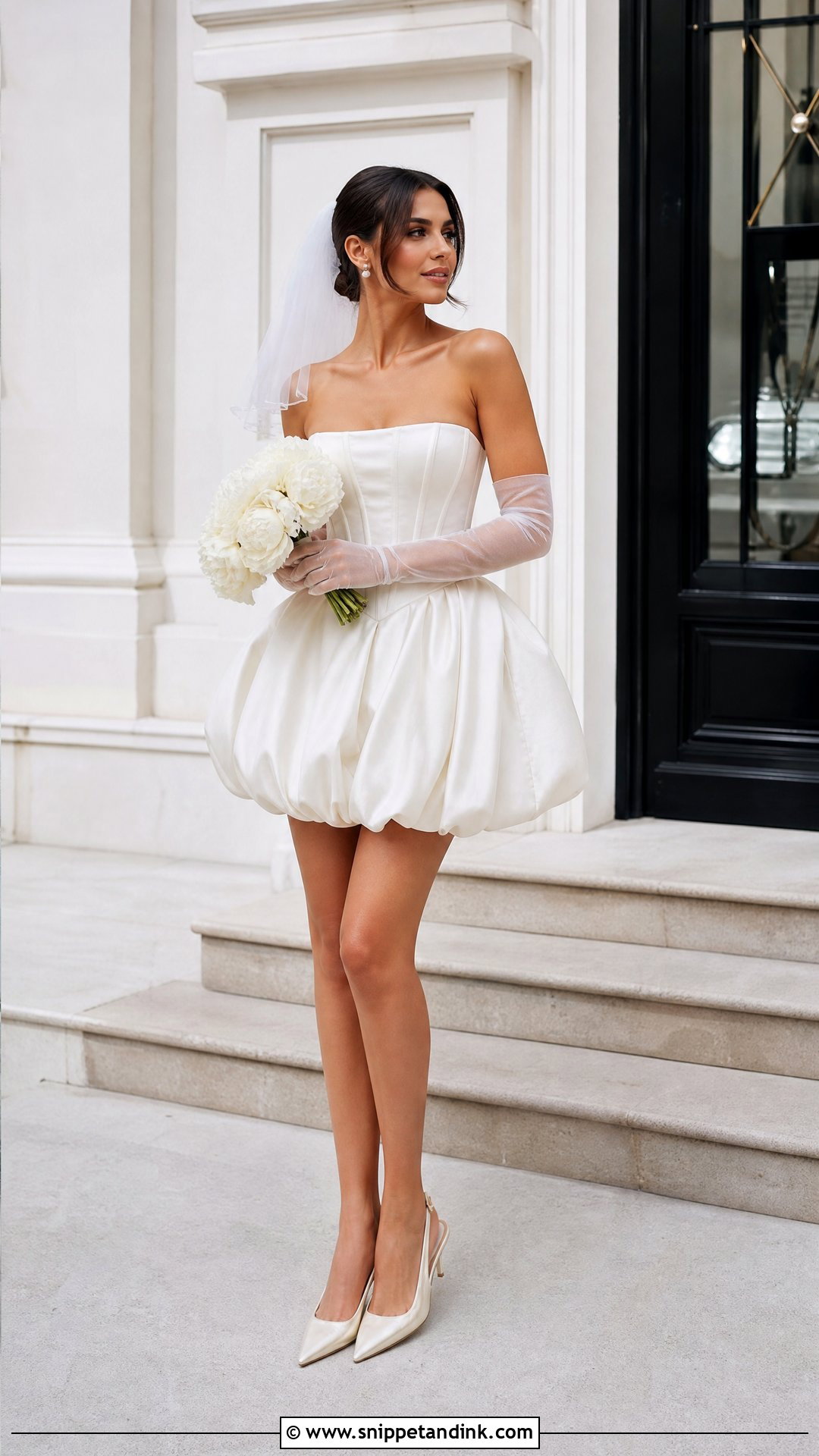
A structured mini gives a civil ceremony or a reception full bridal weight in a short length. Think corset top with a bubble skirt, flared peplum or a sharply pleated A-line. With this much leg showing, the shoes become half the outfit, so choose pointed pumps, slingbacks or platforms in matching ivory and break them in. Sheer gloves, pearl studs and a short veil tell everyone who the bride is. A sleek bun balances the volume. For a formal ceremony first, a removable floor-length overskirt covers the mini, then comes off for the party.
13. Drop Waist Wedding Dress
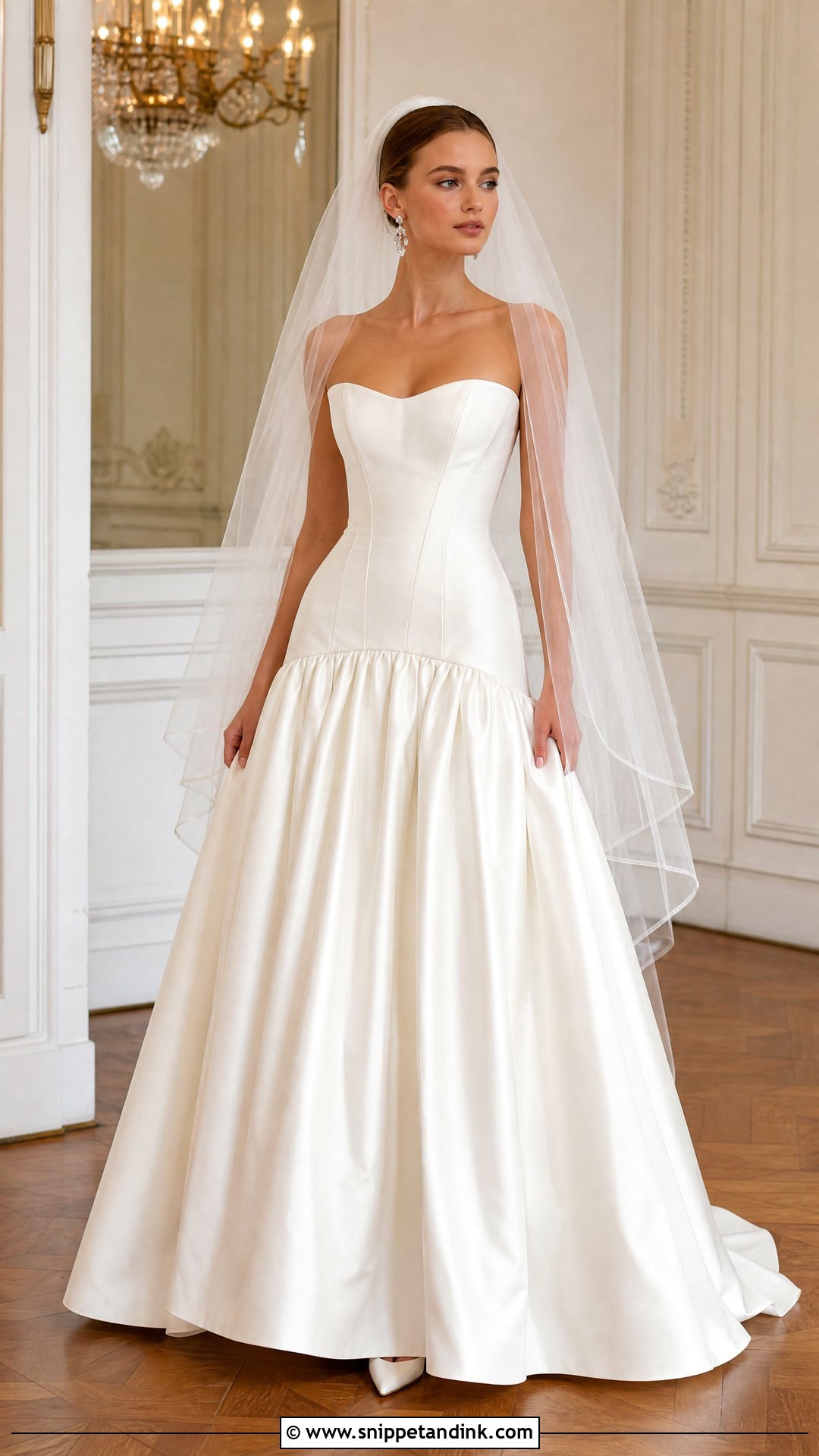
Drop waists are tricky because the long bodice has to sit exactly on your hips. I fit them standing and seated, since the bodice tends to ride up into folds at the hip crease when you sit, and visible corset seams or curved paneling help it stay flat. Satin moves more; mikado holds a sharper line where the skirt releases. A fingertip veil, drop earrings and shoes hidden under the skirt keep things simple. A center-parted bun or smooth ponytail repeats the long line. Keep the bouquet small so it doesn’t cover the bodice-to-skirt transition. The vintage proportion reads modern in a clean fabric.
14. Curved Neckline Mermaid Wedding Dress
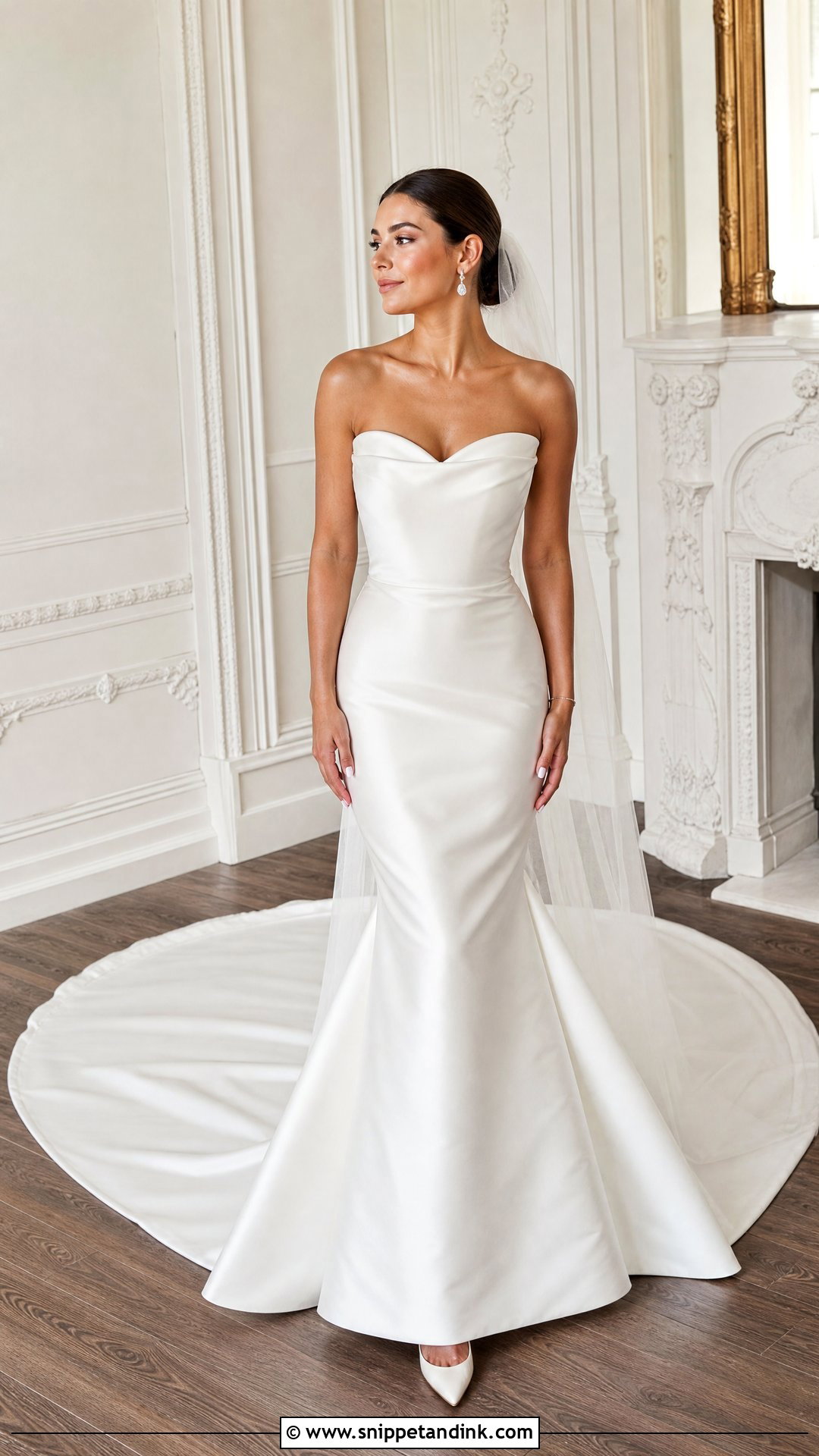
Repeating the curve of a mermaid skirt in the neckline is a quiet sculptural trick: a soft scoop, a wave edge or a folded satin band echoes the flare below. The skirt can flare through godets, layered organza or a circular train. A mermaid needs the flare point set at the right height for your legs, and I test it on a staircase, because set too high it stops you climbing steps. Teardrop earrings, pointed heels and a low veil under a polished bun suit it. No necklace. A narrow bouquet with curved stems repeats the line. It wants a formal room with space for the train.

15. Cocoon Skirt Wedding Dress
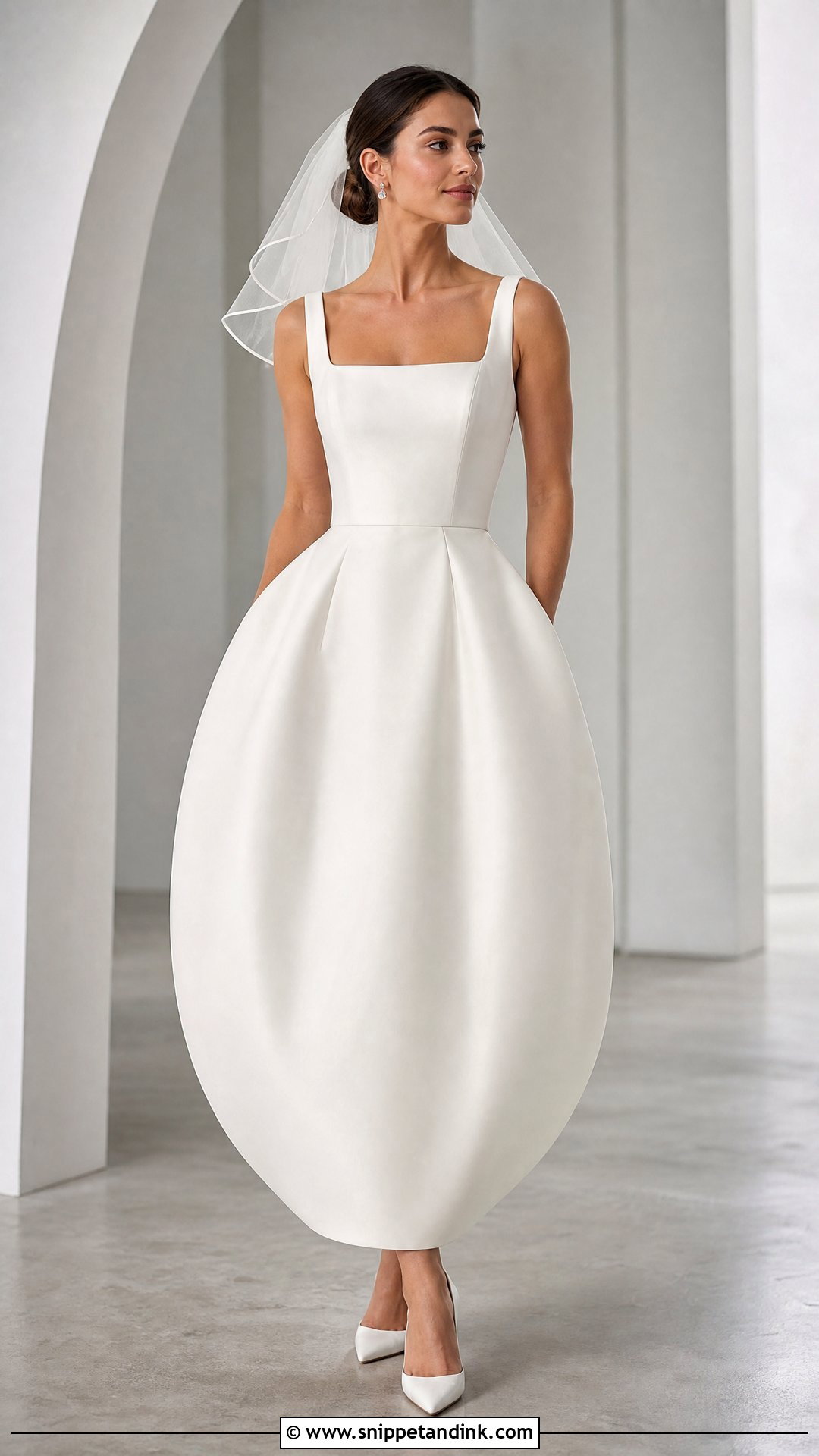
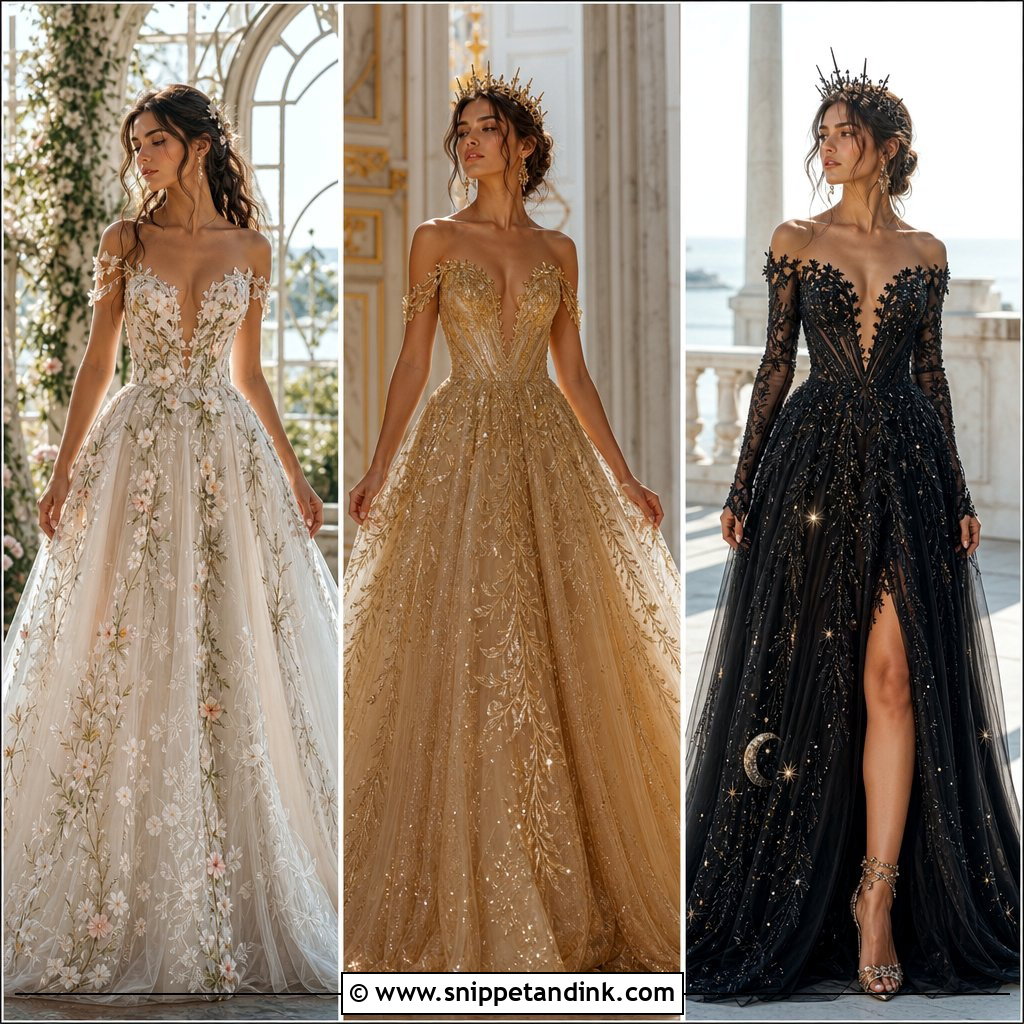
A cocoon skirt is rounded through the hips and narrows slightly toward the hem, and it looks oversized unless the bodice above it is fitted and plain. A strapless corset, a square neck or a slim halter design in the same crisp fabric keeps it cohesive. The narrowing hem is the practical problem: without a hidden slit or enough ease, it shortens your stride badly. Pointed pumps, petite earrings and a short structured veil that doesn’t cover the shape go with it, plus a smooth updo. Hold a compact bouquet at waist level. It’s for the bride who wants neither ball gown nor column.
16. Oversized Bow Wedding Dress
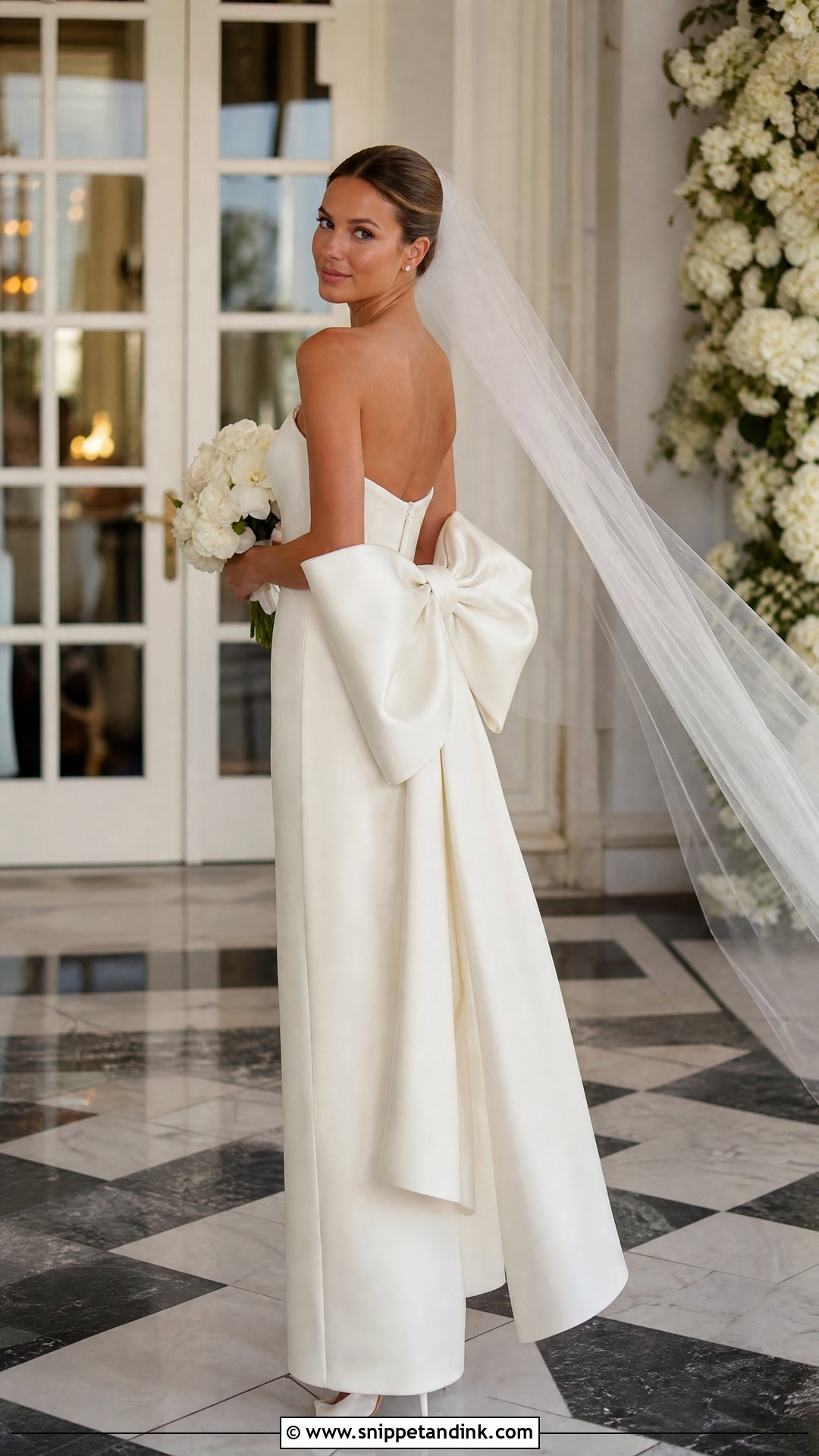
An oversized bow makes a plain gown sculptural in one move. Placement drives every other decision. A back bow means a veil you can remove after the ceremony, or nobody sees it in the photos, and it also means a chair you can perch on rather than lean into. A shoulder bow rules out necklaces. A waist bow should sit on a column or A-line to have room. Bows in stiff fabric are usually supported with interfacing or horsehair braid, which keeps the loops from wilting by evening. Studs, satin pumps, a polished bun, a small clutch and a compact white bouquet finish it.
17. Draped Sleeve Wedding Dress
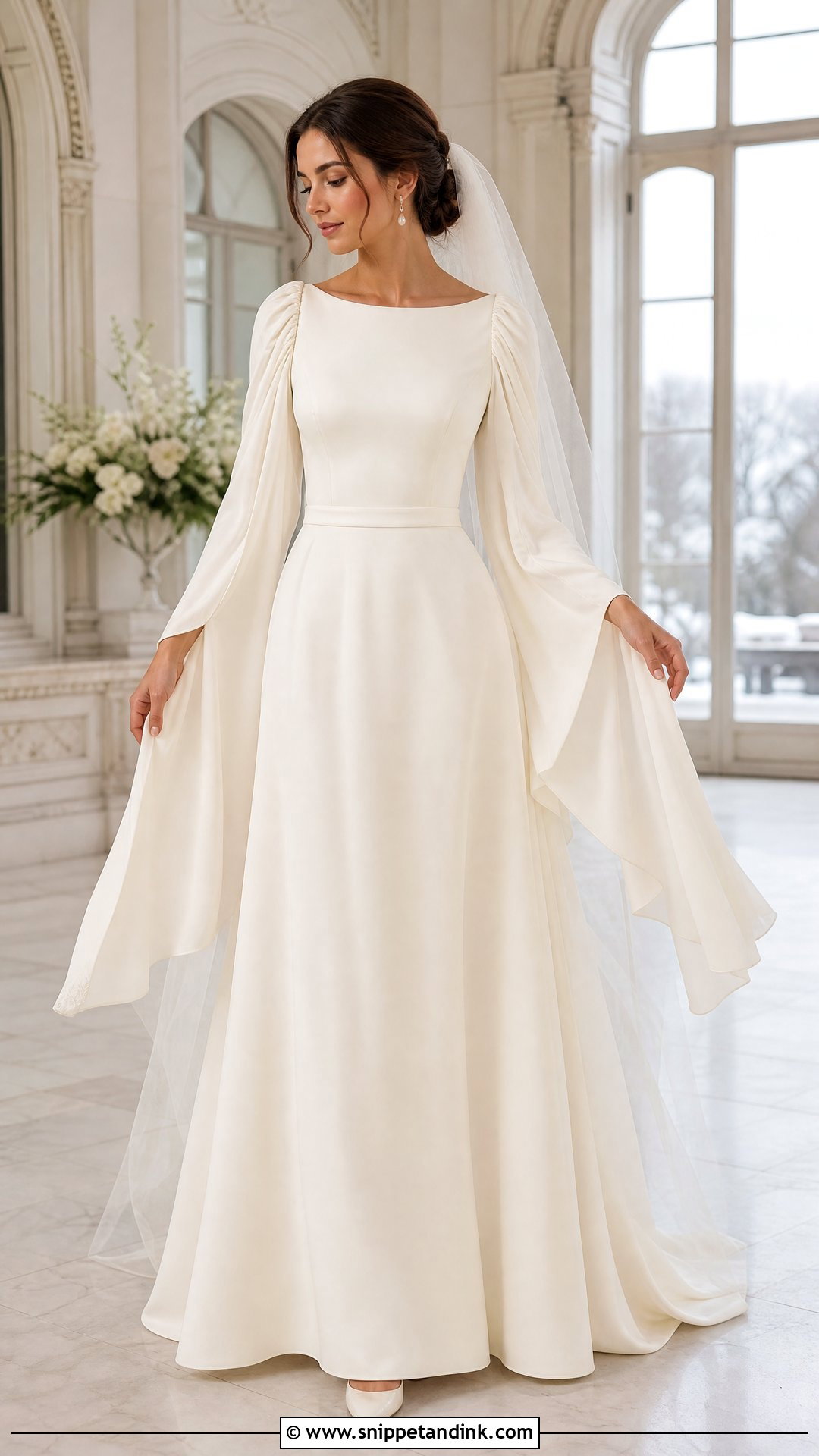
Draped sleeves soften a structured gown and add coverage, which is why I often show them for winter and for religious ceremonies. Sleeves can gather at the shoulder, fall into a gentle bell or end in narrow panels. The thing to test is reach: lift the bouquet, hug someone, raise a glass. Draped sleeves set into a tight armhole restrict all three. A fitted waist and a column or A-line skirt keep it balanced. A low bun, delicate earrings and closed-toe pumps suit it, and any veil should be lighter than the sleeves. Bracelets just catch in the fabric, so leave them off.
18. Sculptural Lace Wedding Dress
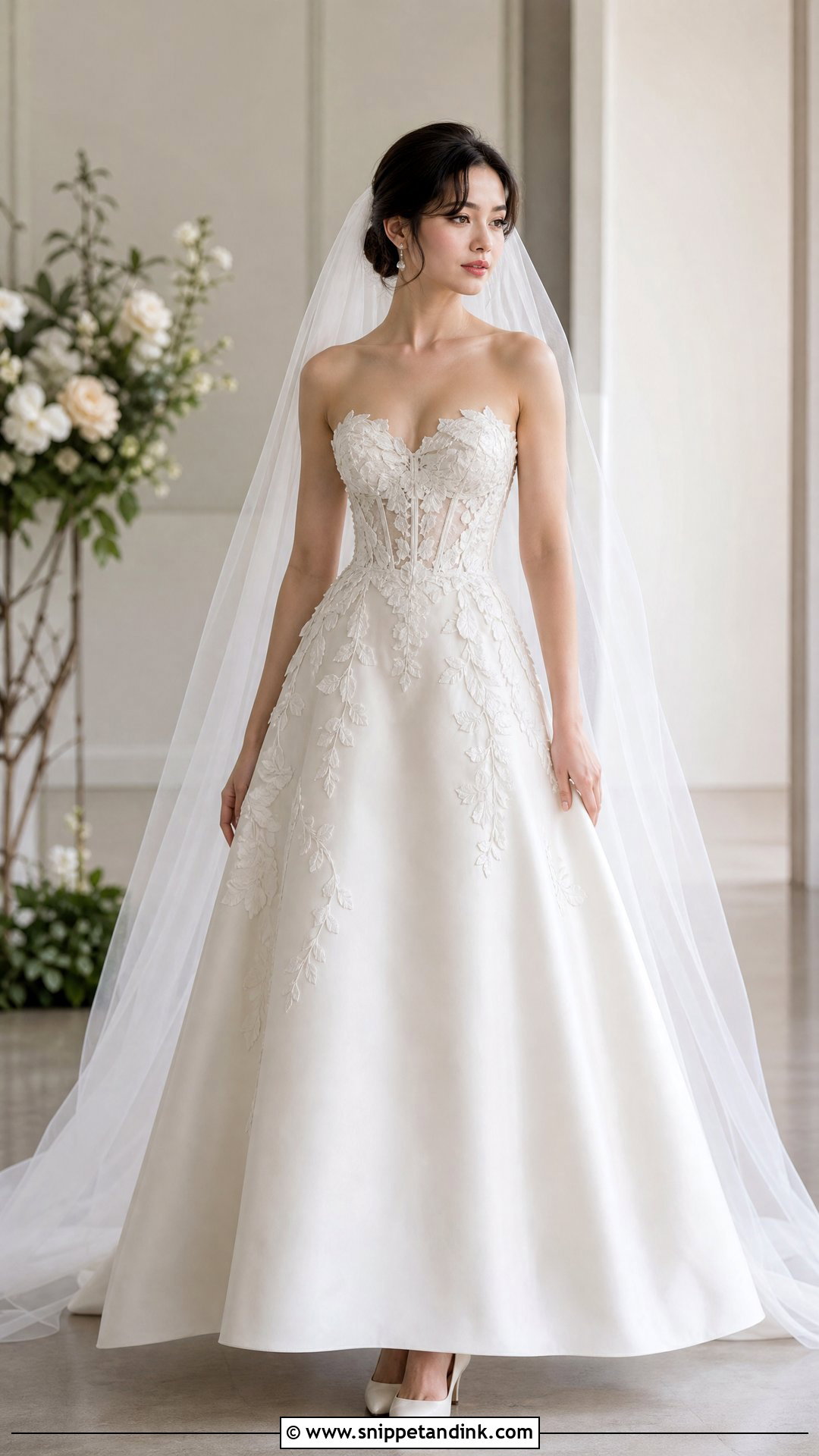
Lace turns sculptural when it is raised: corded lace with a thick outline, appliqués layered over each other, or petals that lift off the surface. A corseted bodice and a smooth skirt foundation keep that texture crisp instead of crowded. If a bride wants softness, I keep the lace to the neckline and waist and leave the skirt plain. Plain ivory pumps, small pearl earrings and a veil with little or no lace trim avoid a clash of patterns. Neat hair keeps the upper details clear. Raised lace snags on rough surfaces and jewelry prongs, so check rings and bracelets at your fitting.
19. Detachable Overskirt Wedding Dress
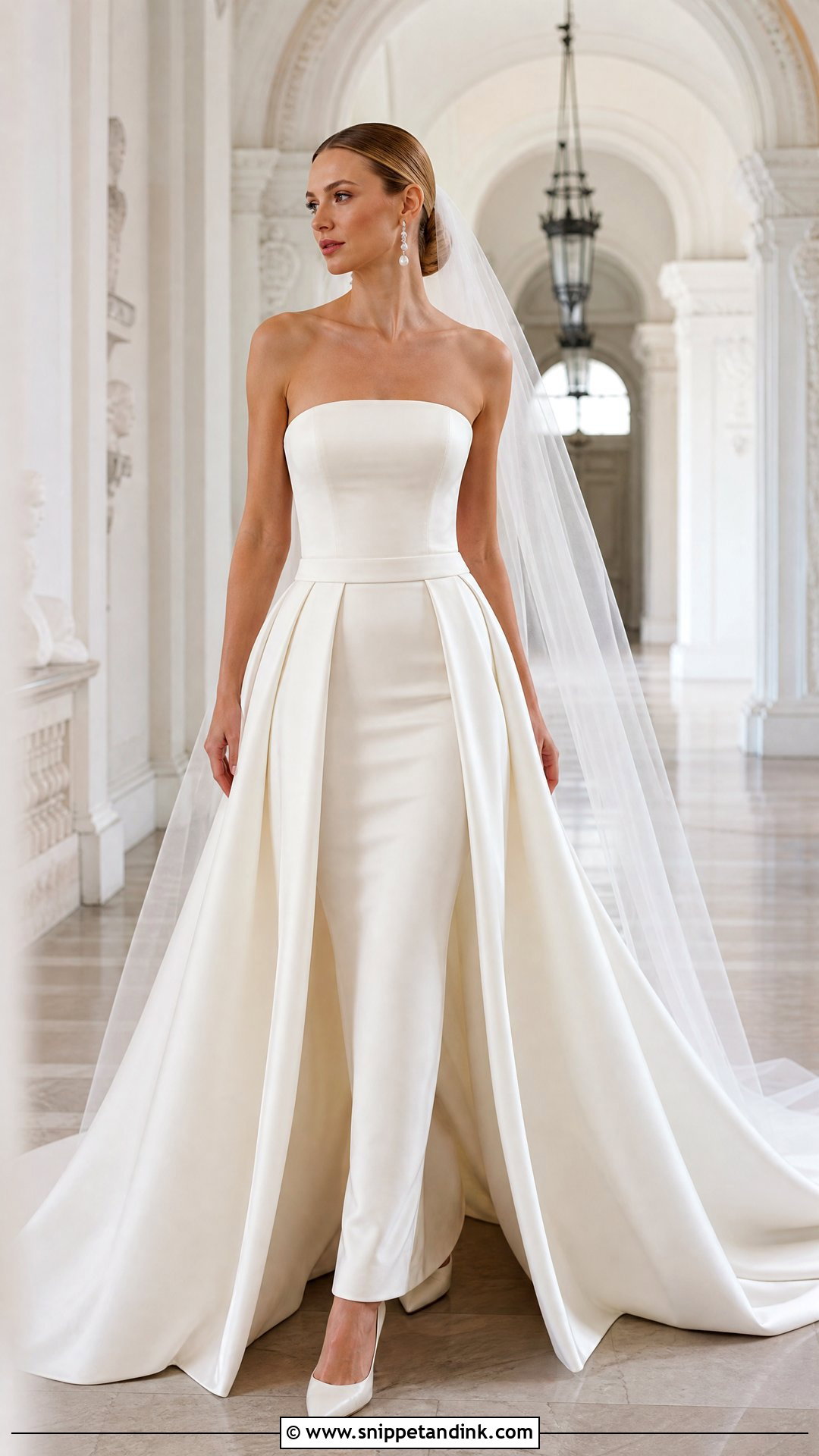
A detachable overskirt gives you two sculptural looks in one gown. Start with a fitted column, mini or trumpet dress, then add a full overskirt in mikado, satin or layered organza, with deep pleats, curved hip volume or an asymmetric opening. Wear it with a long veil, drop earrings and pointed pumps for the ceremony, then take it off for the reception with a clutch and bolder earrings. The attachment is what I test hardest. Hooks or snaps should hold through a walk down stairs, yet a bridesmaid should be able to release them in under a minute.
20. Blue Sculptural Wedding Dress
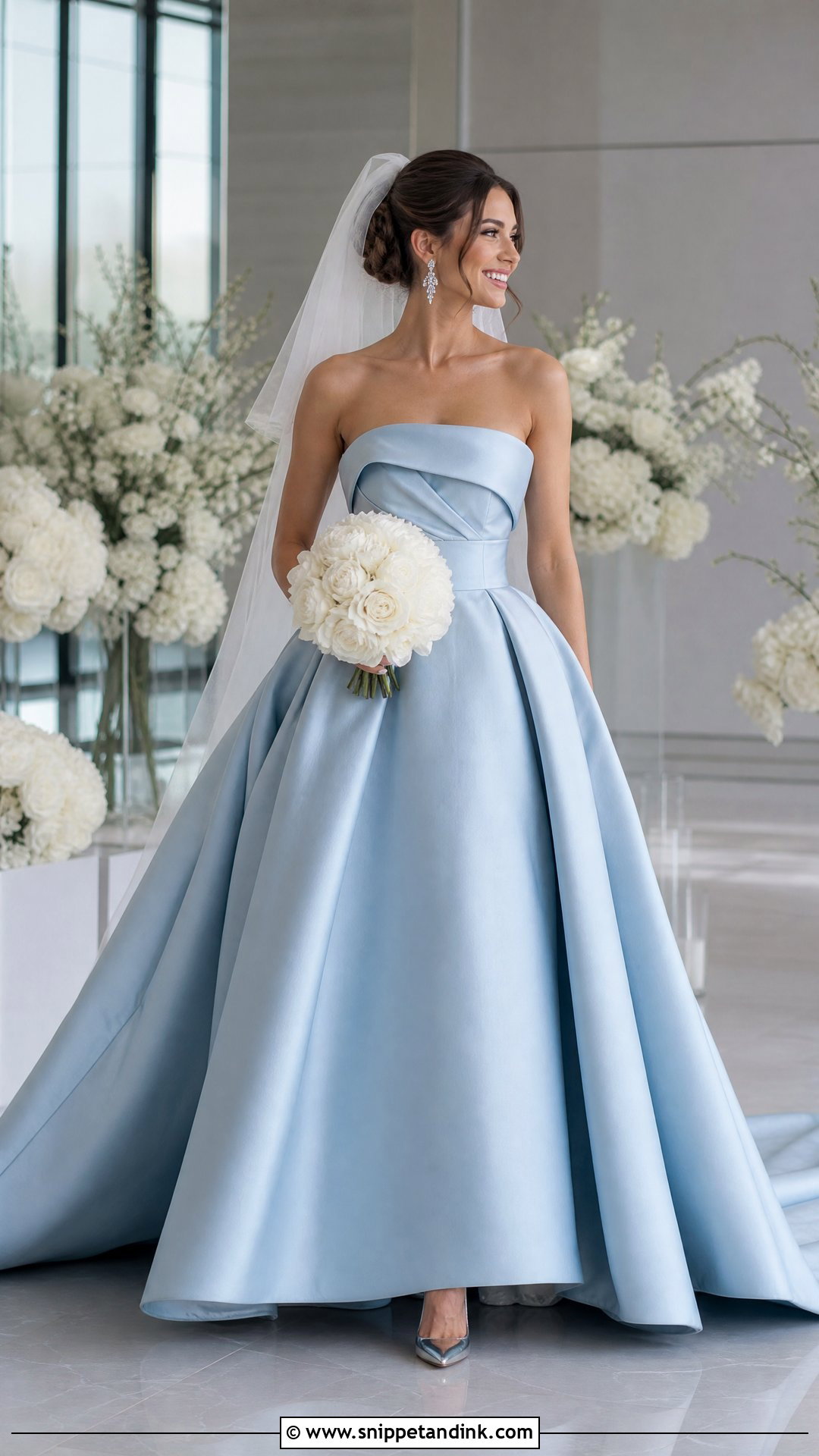
Pale blue is one of the few colors that keeps sculptural construction looking bridal. Icy blue satin, misty tulle or silver-blue mikado suits a basque waist, a folded bodice or a big skirt. Blues shift strongly under warm indoor light, so look at the fabric under both daylight and lamps before deciding. Keep accessories in the same cool family: silver earrings, pearl touches and cool ivory or metallic shoes. A sheer white veil gives contrast; a blue-edged veil coordinates. A sleek bun and white flowers with blue-gray greenery finish it. Clean construction matters even more with color, because fussy detail in blue reads as costume.
Fittings for a Gown That Can’t Simply Be Taken In
Structured gowns are harder to alter than soft ones. Folds, pleats and boning channels are built around a specific measurement, and moving them often means taking the bodice apart. That changes how you plan.
Give yourself more time
Made-to-order gowns commonly take several months to arrive, and sculptural pieces often need an extra fitting compared with a simple dress. I plan for around three fittings, the first a couple of months before the wedding, so there is room to fix a shape that isn’t sitting right. Timelines vary by designer and seamstress, so confirm them before you order.
Bring the real shoes and underwear
A basque point, a peplum or a bubble hem has to land at an exact height, and a two-centimeter change in heel moves everything. Bring the exact shoes and shapewear to every fitting.
Rehearse the car and the chair
Big structured skirts don’t compress like tulle. Ask how the gown should be gathered to get into a car, and practice sitting on a chair without arms. Someone in your bridal party should learn the bustle or overskirt release at the final fitting, not on the day.
Decide Which Detail Guests Should Notice First
Every gown above works best when one feature leads. Pick yours, whether it is a pointed basque waist, a folded neckline, a dimensional flower or a big skirt, and let the shoes, jewelry, hair and veil step back. At every fitting, look at the dress from the front, side and back, then move in it: walk, sit and lift your arms. Structure that looks perfect standing still has to feel right after hours of hugging and dancing, and good tailoring is what gets you there.
You'll Like These Ideas:






Leave a Reply