
After hours in a structured gown, most brides I dress want the opposite: something that moves with them, doesn’t dig in at the waist and still feels like an occasion. That is the brief behind every dress below, from satin maxis and lace-trim midis to slips under robes, modest long-sleeve gowns and a couple of soft knits. They were picked for comfort and coverage, not for how little they show. My test is simple. Can you sit on the edge of a bed, hug your mother goodbye and climb into a car without tugging at it? If you’d like more shades and shapes to compare, I’ve gathered them in these complete first night dress ideas.

Packing a Satin Slip So It Survives the Suitcase
Most first night dresses travel. They go in a bag to the venue, then on to a hotel, sometimes onto a plane. The fabric decides how well that goes. Crepe, jersey and fine knits shake out with almost no creasing, while silk, satin and linen blends crease wherever they are folded and need steam before you put them on.
- Roll rather than fold. I lay the dress flat on tissue paper, fold the sides in, then roll from the hem upward so there is no hard crease across the front.
- Carry it in a breathable garment bag, not the plastic cover from the shop, which traps moisture.
- Hang it as soon as you arrive. A bathroom full of shower steam relaxes light creases in satin while you get ready.
- Never put a hot iron straight onto silk or satin; it leaves a shiny mark that will not come out. A small travel steamer is safer.
- Hand the dress, shoes and robe to one bridesmaid with clear instructions, so nothing gets left behind in the bridal suite.
What Goes Under a Bias-Cut Slip, and Under White
The question I hear most at fittings is what to wear underneath, and it is where a good dress most often goes wrong. Satin and silk show every edge beneath them, and white fabric shows white underwear far more than it shows a skin-toned pair.
Pick underwear close to your own skin tone, never white. Laser-cut edges lie flatter than lace under satin. For low backs and halters, adhesive cups or a low-back convertible bra work; try the adhesive on your skin a week before, because some people react to it, and it grips poorly on freshly moisturised skin. Then do one sheerness check: stand by a window and take a photo with the flash on. A flash reveals lining gaps that your eye misses in the mirror.
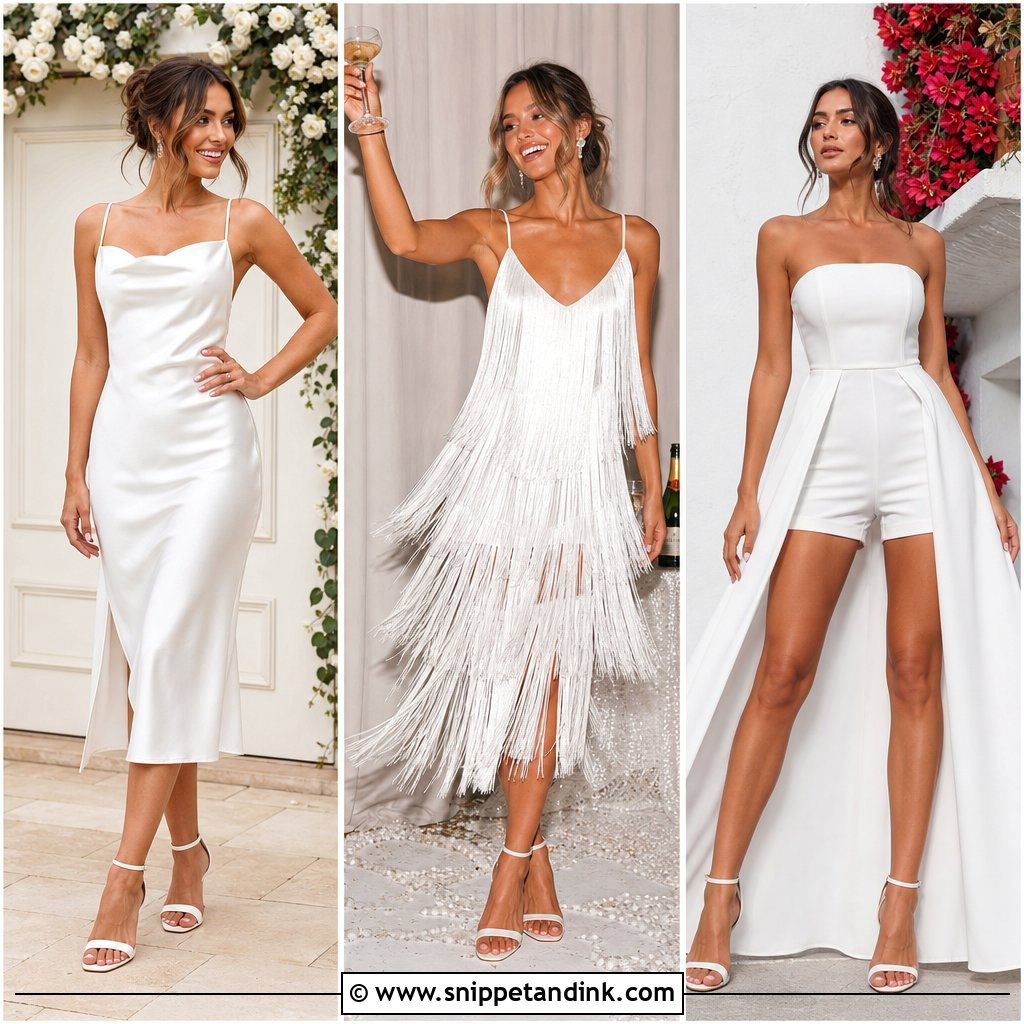
1. White Satin First Night Dress
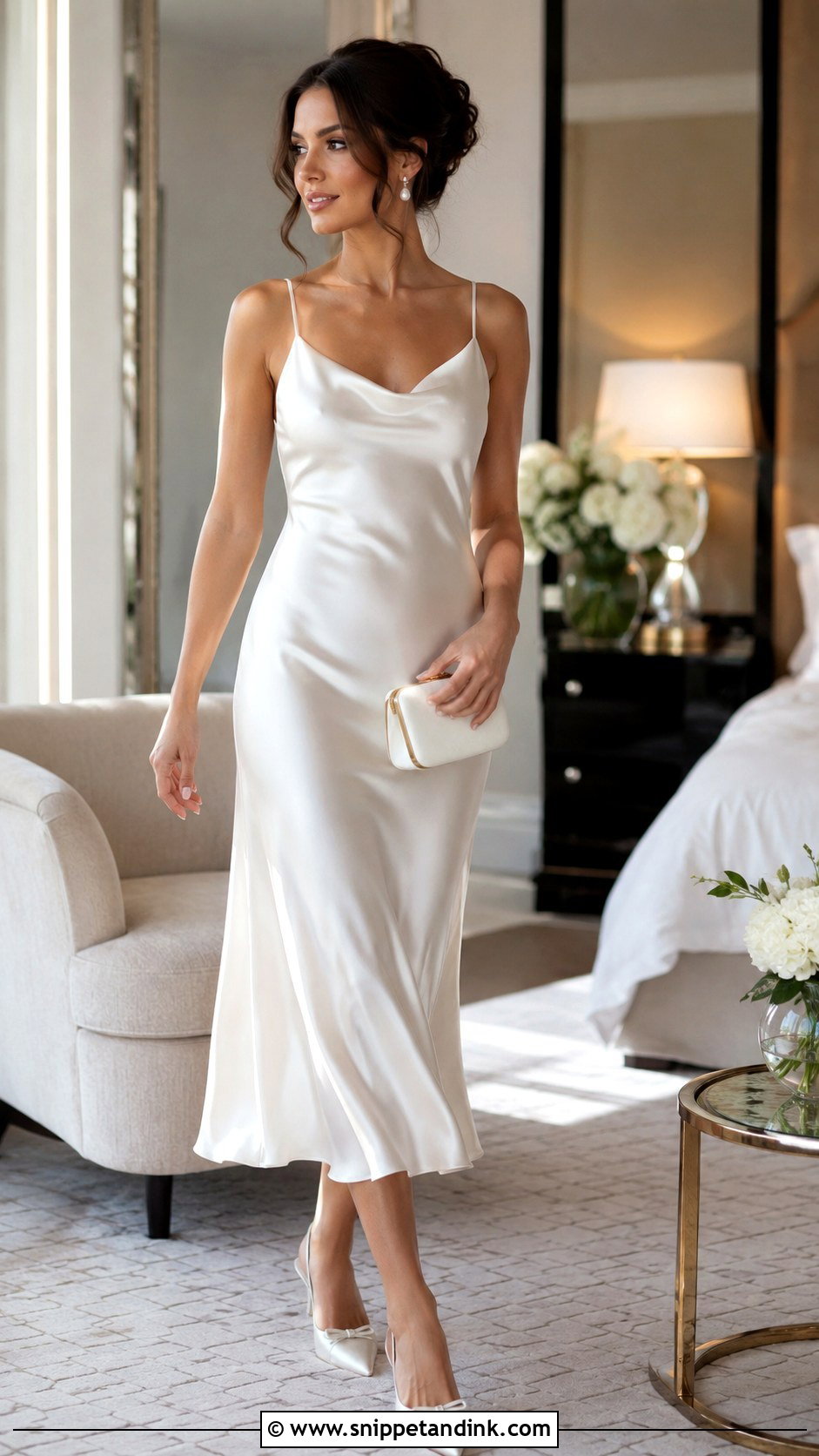
Satin is the fabric I reach for first after a wedding, because it reads as bridal with almost no styling. The catch is weight. Thin, shiny polyester satin clings to every line underneath and shows damp patches under the arms, so I look for a heavier, slightly duller crepe-back satin in a midi or ankle length with adjustable straps. Pearl studs and satin flats are all it needs. A cropped cardigan or matching robe adds coverage without hiding the fabric, and loose waves suit it better than a tight updo.
2. Ivory Lace First Night Dress
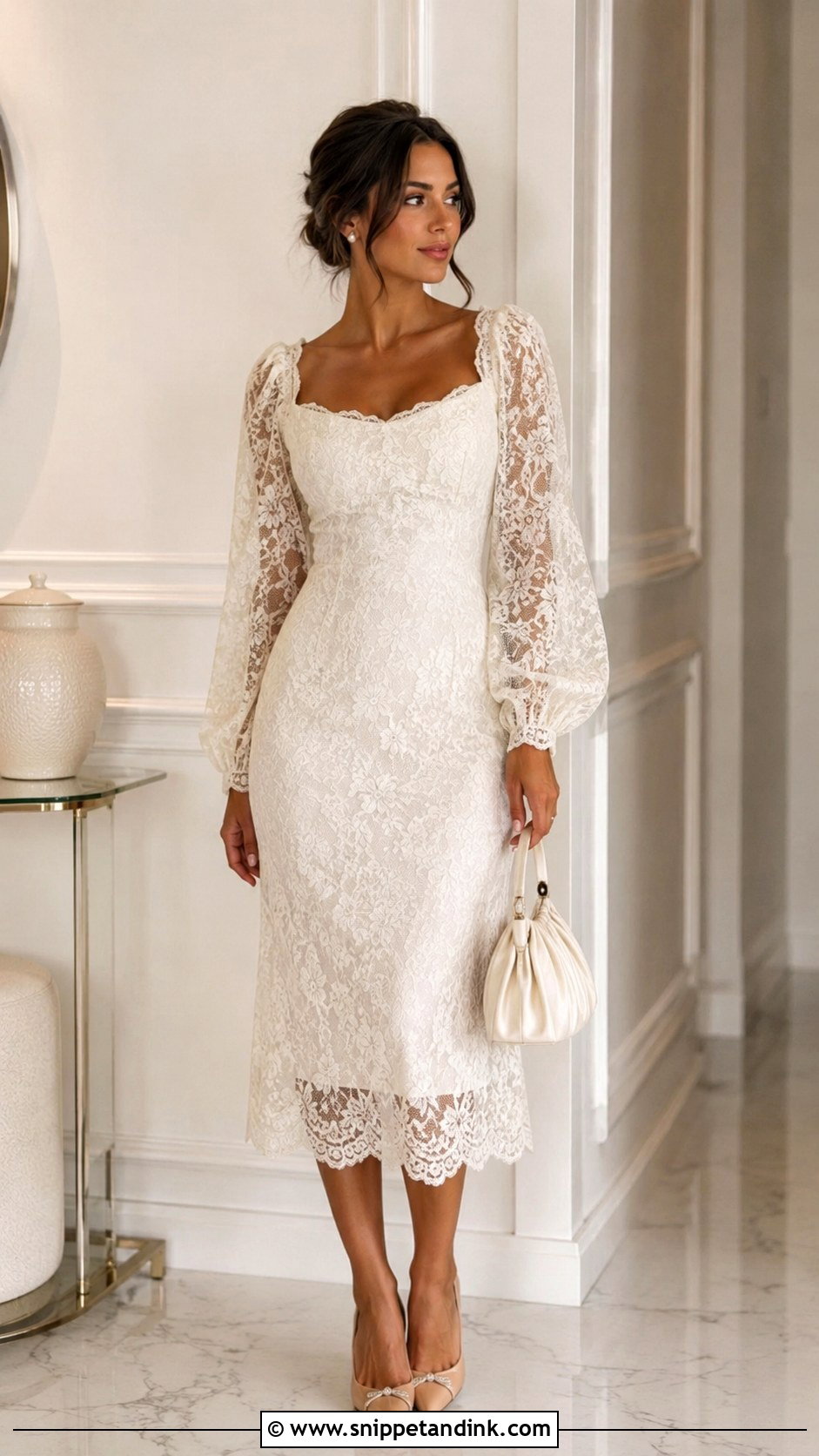
Lace is where I spend the most time looking at the inside of a dress. Cheaper lace is often scratchy along the seams and scalloped edges, and by evening your skin is already tender from boning and tape. I want a soft lace over a full lining, ideally knee or midi length with flutter or sheer-lined sleeves. Ivory is kinder than stark white on most complexions under warm hotel lamps. If your ceremony gown was heavily beaded, the change of texture feels fresh; keep it to pearl earrings and a small bag so the lace does the talking.
3. Blush Pink First Night Dress
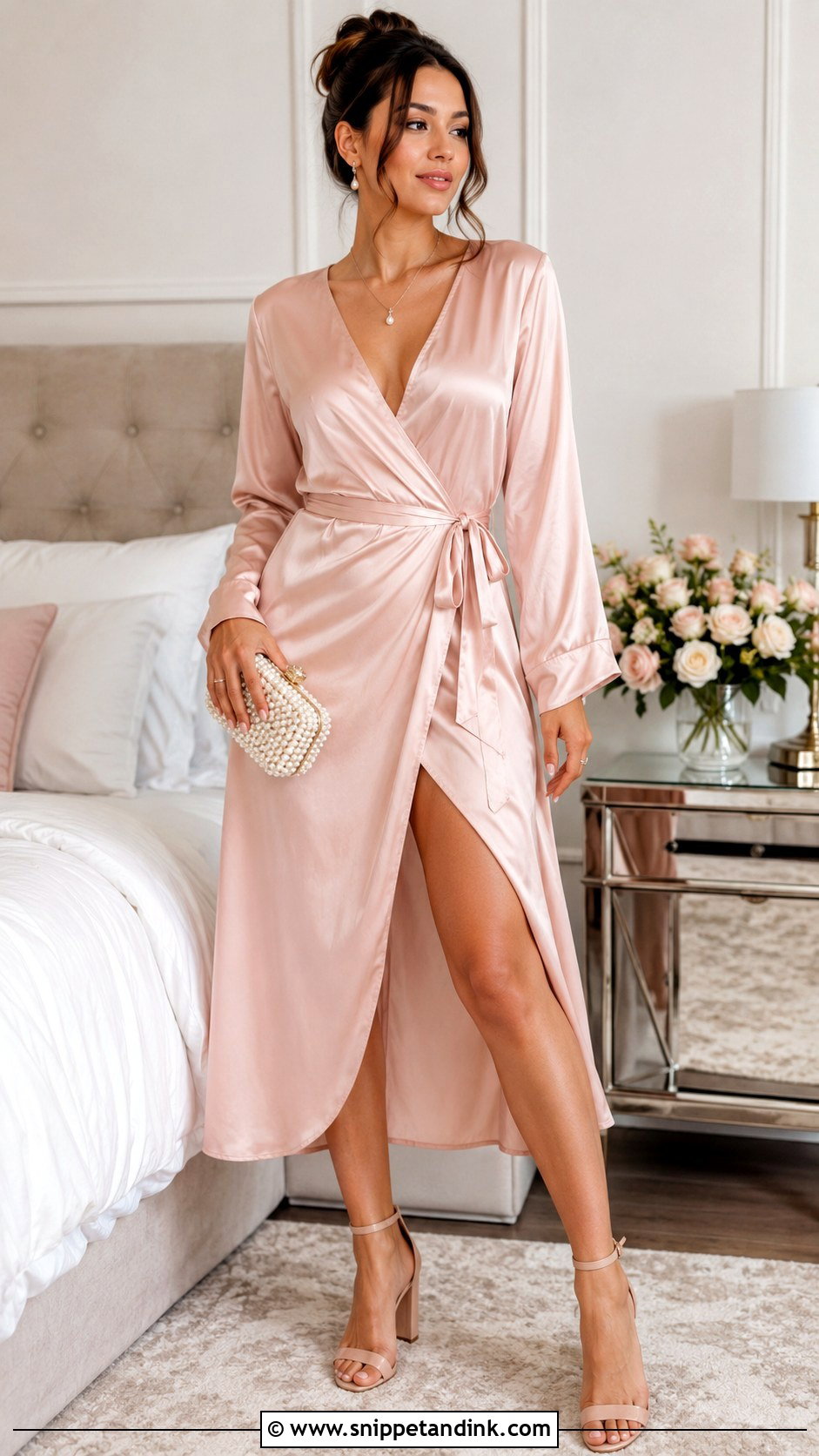
Blush is my usual suggestion when a bride tells me white feels finished once the vows are done. The exact pink matters more than the cut. Pinks with a little beige in them flatter warm and olive skin, while clearer, cooler pinks suit fair skin with pink undertones, so hold the fabric under your chin in daylight before you buy. A chiffon maxi with a defined waist or a satin wrap both work, with nude sandals and rose-gold jewelry. It’s also one of the easiest pieces here to rewear for dinners and anniversary trips, which makes the spend easier to justify.
4. Champagne Slip First Night Dress
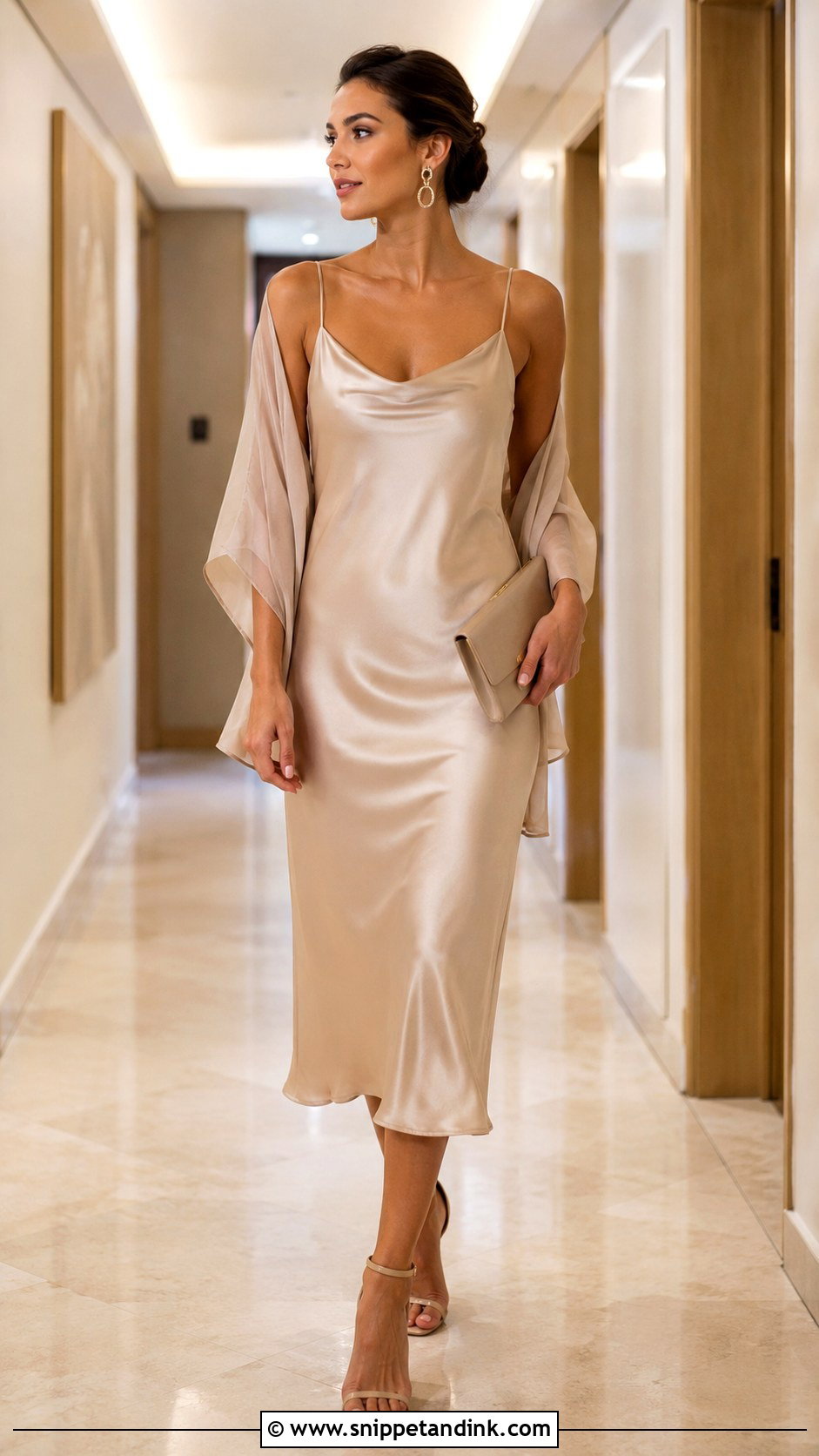
Champagne slips are the most minimal option on this list and the least forgiving. A bias cut skims the body, so every edge underneath shows; I only recommend one in a heavier satin that drapes rather than clings. Check the length sitting down too. A slip that hits mid-calf standing can ride above the knee on a low sofa. A light robe or shawl solves coverage, and warm neutral makeup with a sleek low bun keeps the color from washing you out.
5. Long Sleeve First Night Dress
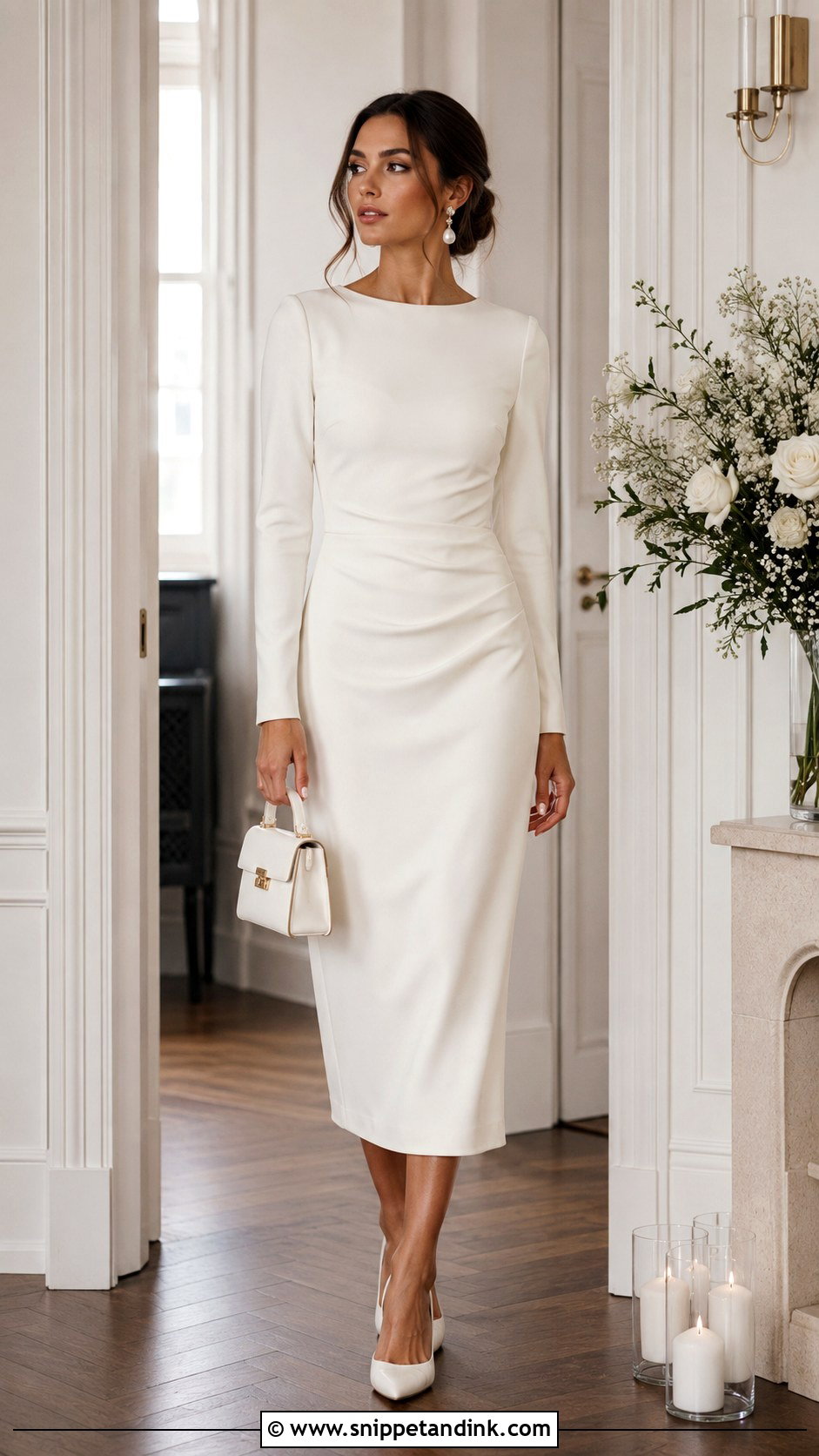
Long sleeves earn their place on cool evenings and in hotels where the air conditioning never switches off. The detail I check is the armhole. A sleeve set in too high pulls every time you reach or hug, and you’ll do a lot of both tonight. Jersey and crepe give the most stretch, while lace sleeves need a little ease built in. A wrap bodice adjusts after dinner. Closed-toe heels and pearl drops keep it polished, and hair pulled back shows off the sleeve line.
6. White Maxi First Night Dress
With a white maxi, the lining decides everything. Unlined white cotton or viscose turns see-through under a camera flash, so I hold every candidate up to a window before it goes in the suitcase. A flowing A-line or soft pleats give you room to relax; a narrow column looks sleeker but shortens your stride on stairs. Flat sandals are the honest shoe here, since a full-length hem catches on heels. Plain neckline? Add a small pendant. Embroidered one? Leave the neck bare.
7. Floral First Night Dress
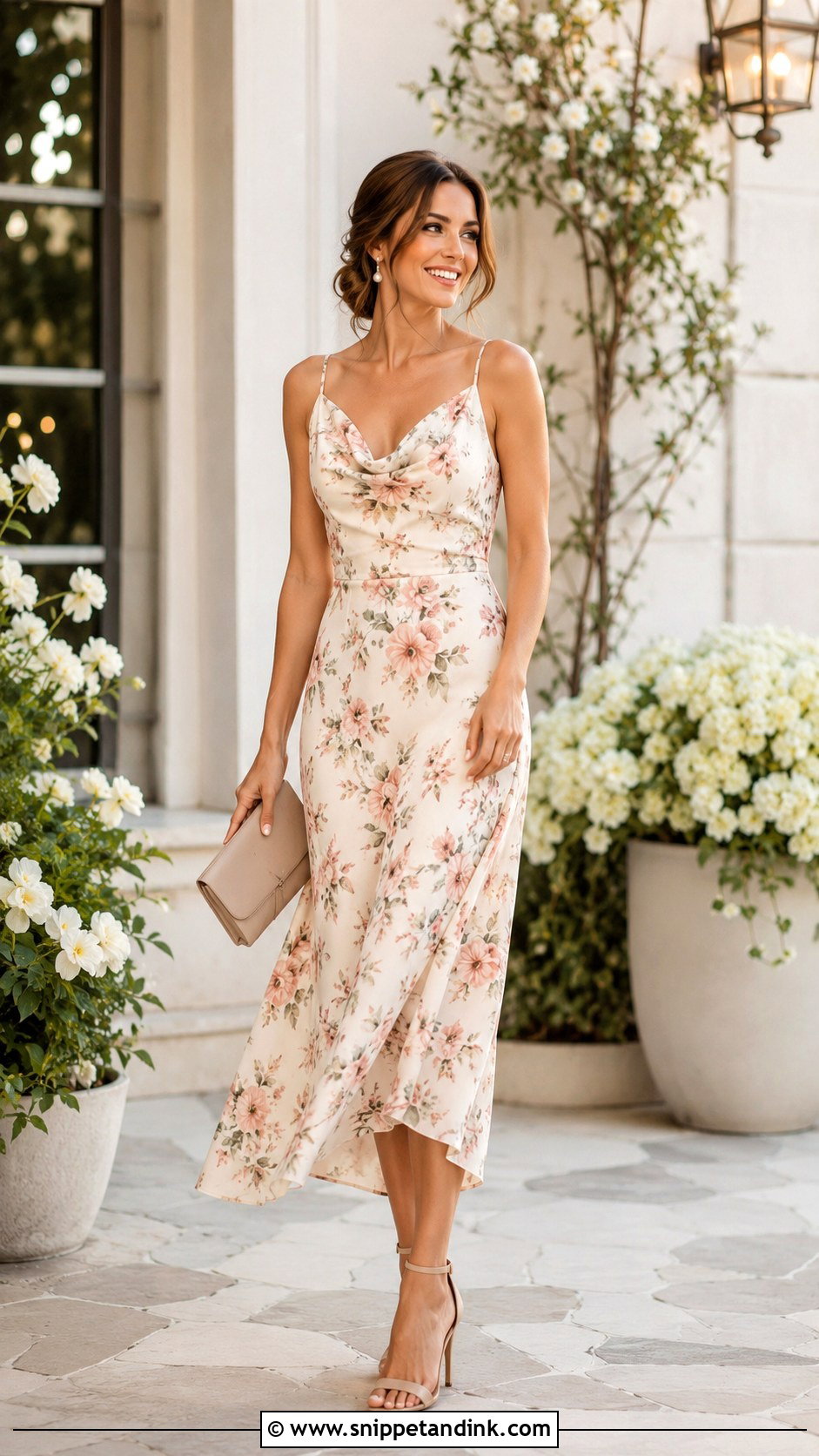
Florals look easy on a hanger and are harder to get right in photos. Large, high-contrast prints pull attention away from your face, so I steer brides toward small, tonal prints on an ivory or blush ground. A fitted waist with a gentle skirt keeps the shape romantic. This one makes the most sense after a garden or spring wedding, or for a warm honeymoon where you’ll wear it again. Pack a soft cardigan if you’re changing late, when the temperature drops.
8. Pearl Detail First Night Dress
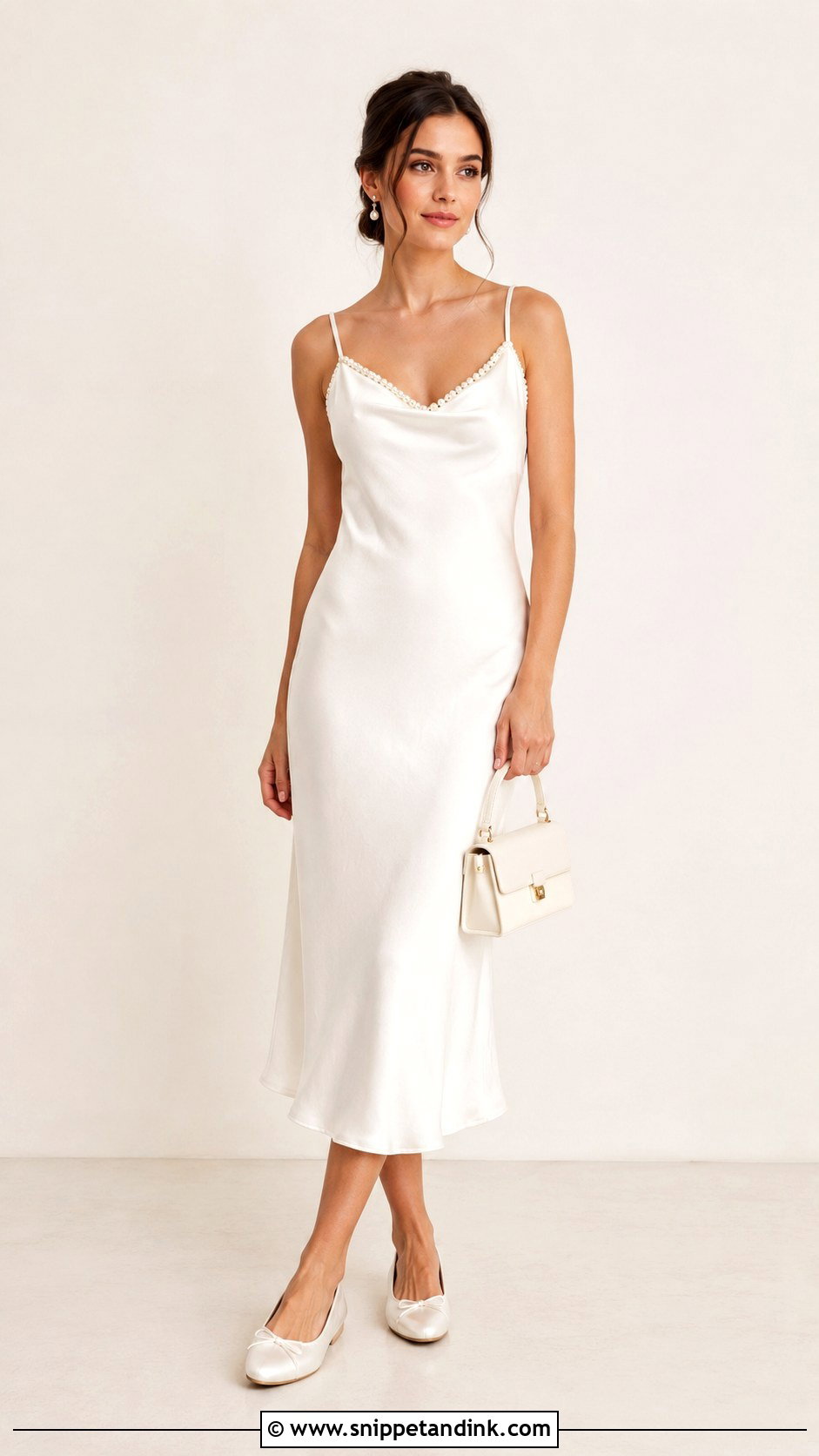
Pearl trim gives light without the scratch of beading, which matters on skin that has been under a corset all day. Look at how the pearls are attached before anything else. Glued pearls pop off in the wash and sometimes on the night itself; stitched ones stay put. Trim on the neckline or straps sits nearest your face and shows best in close portraits. Because the detail already finishes the dress, I stop at pearl earrings and satin flats, with a sleek bun or soft half-up style to keep the neckline clear.
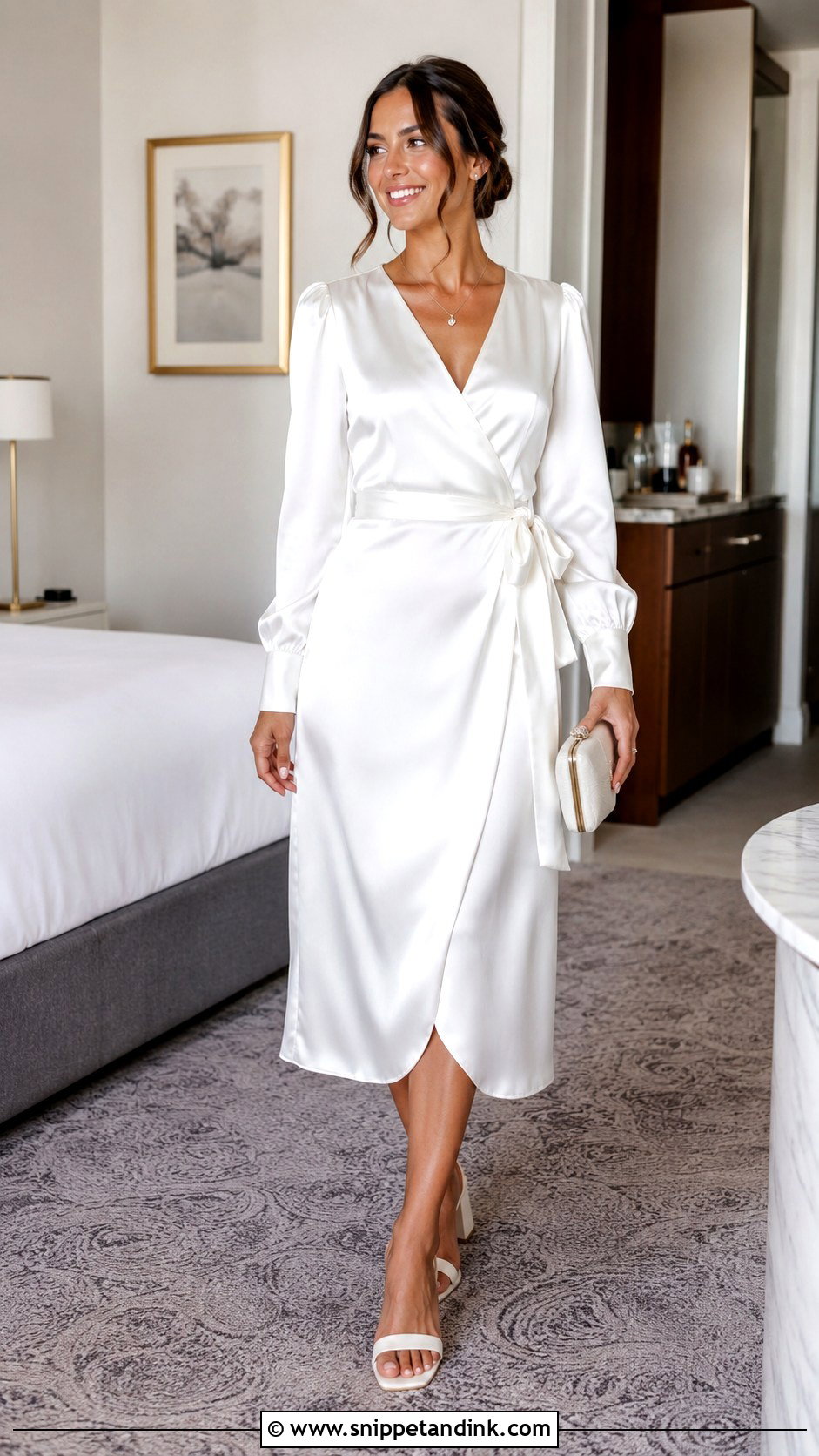
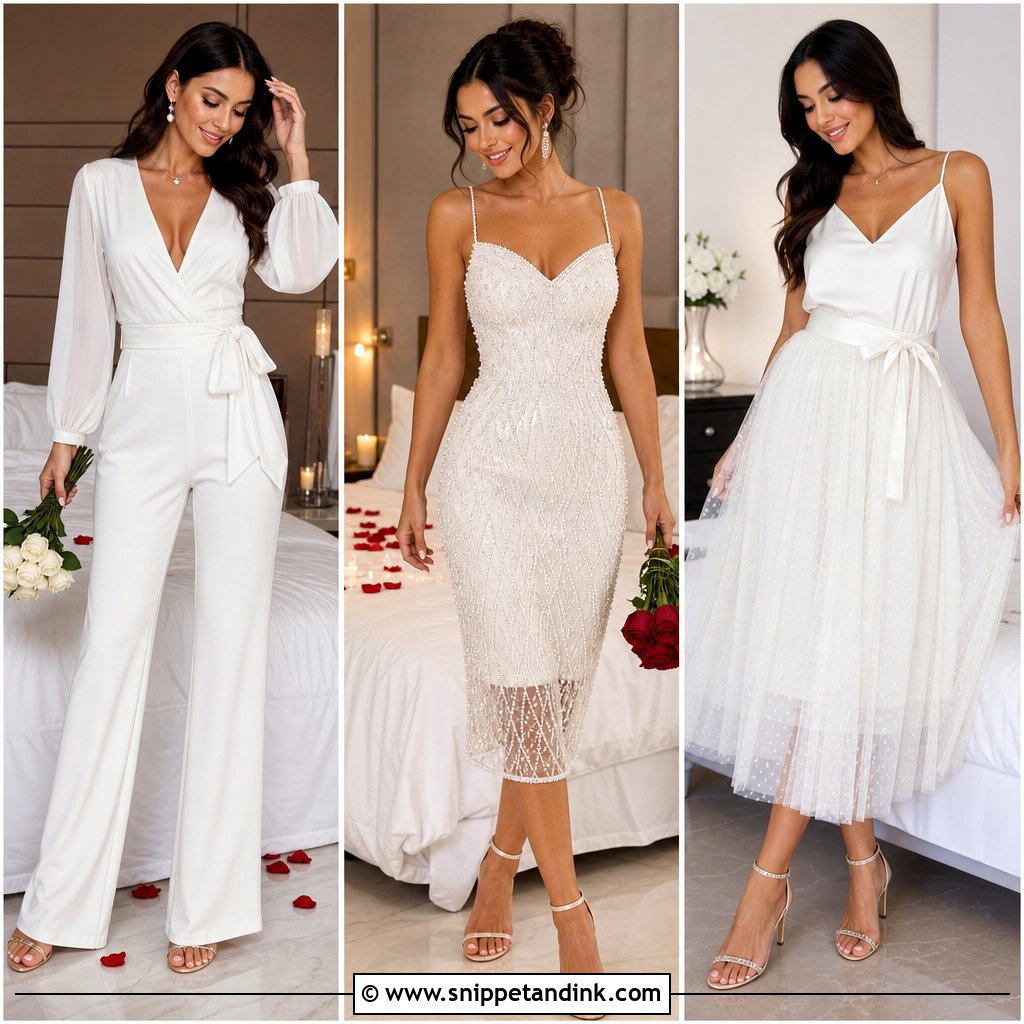
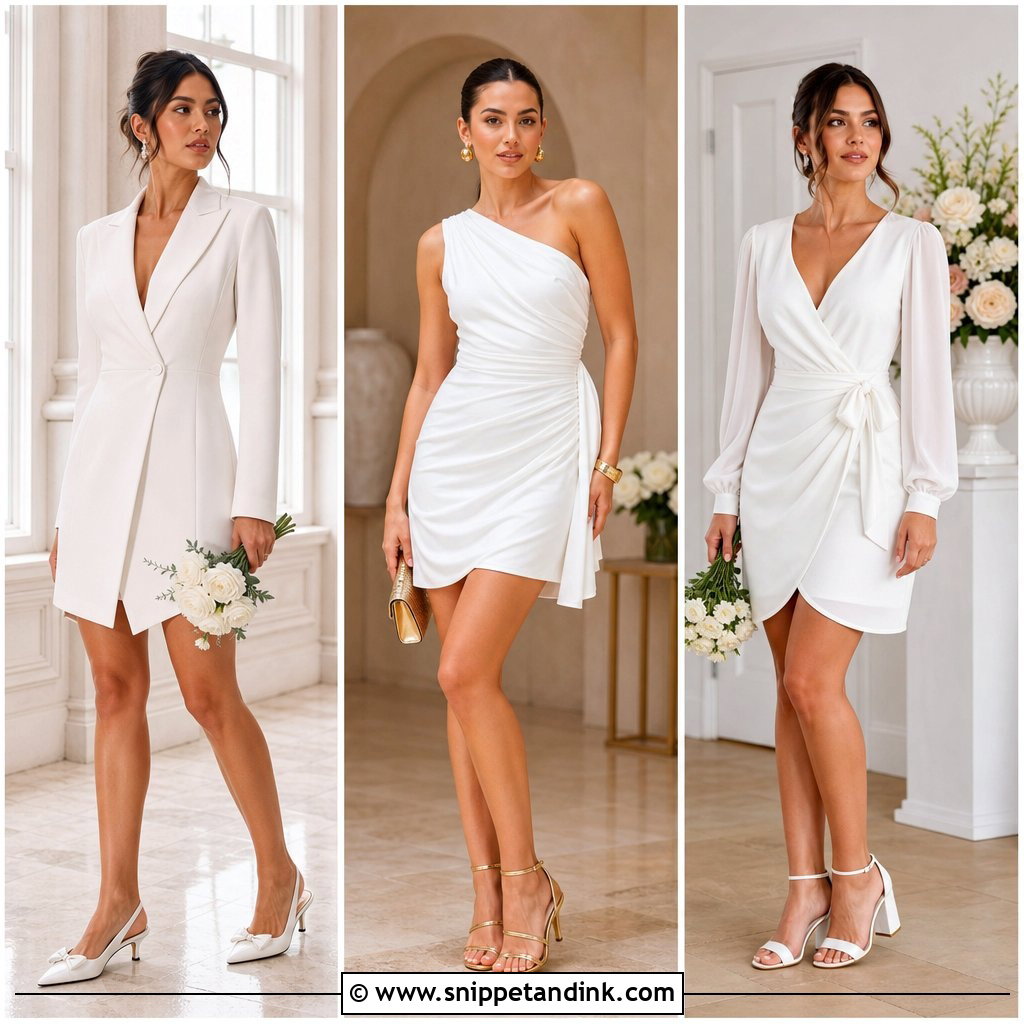
9. White Wrap First Night Dress
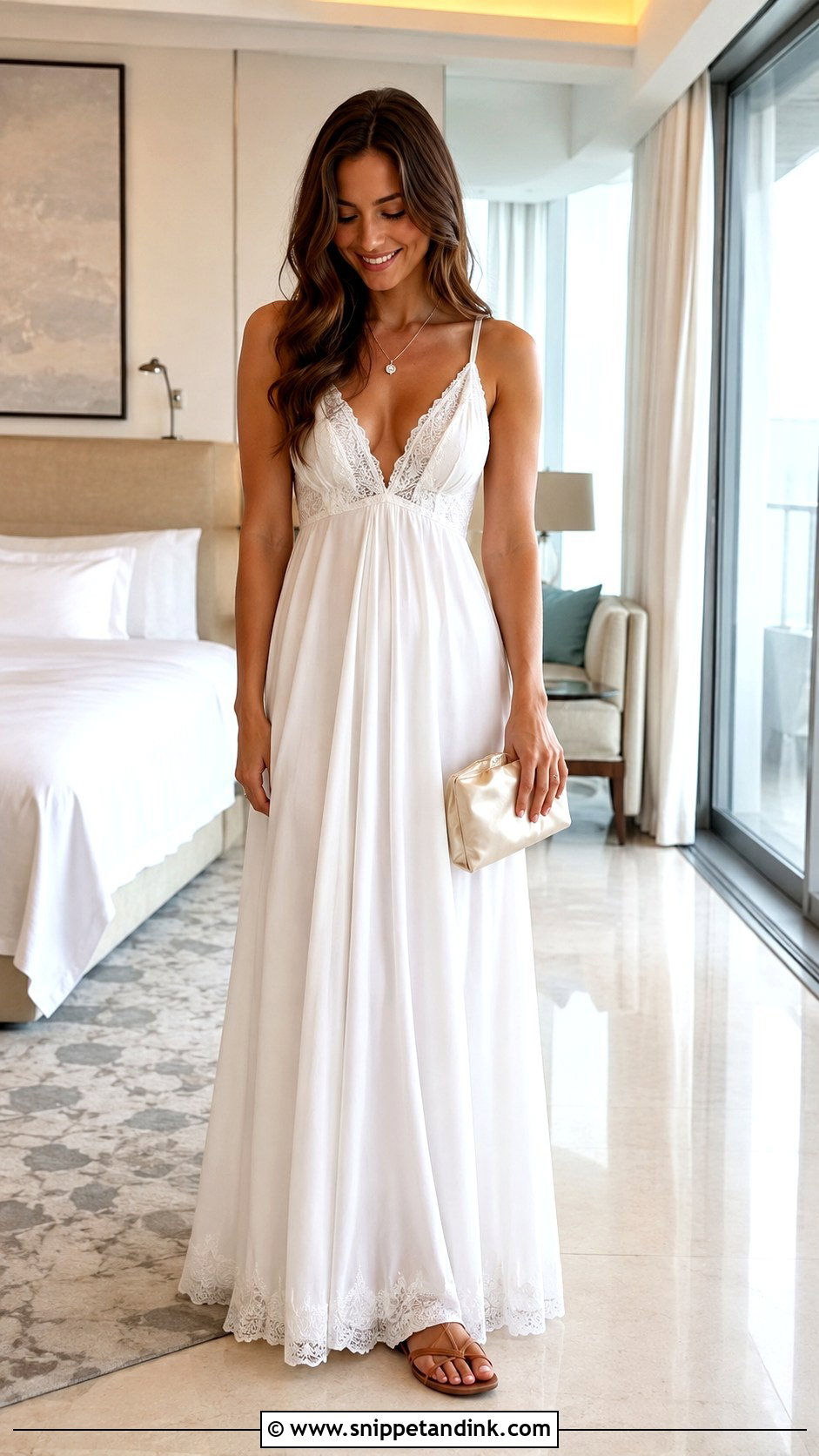
Of everything here, the wrap is the dress I trust most for a long night. The tie lets you loosen the waist after dinner, and because you set the fit yourself it suits a wide range of figures. Satin and crepe look dressier; soft jersey is the comfiest for the trip from reception to hotel. Its weak point is the cross-over gaping when you lean forward, so I always add a hidden snap or a strip of fashion tape there. Midi length looks neat, while a maxi needs a hand on the skirt on steps.
10. Silk First Night Dress
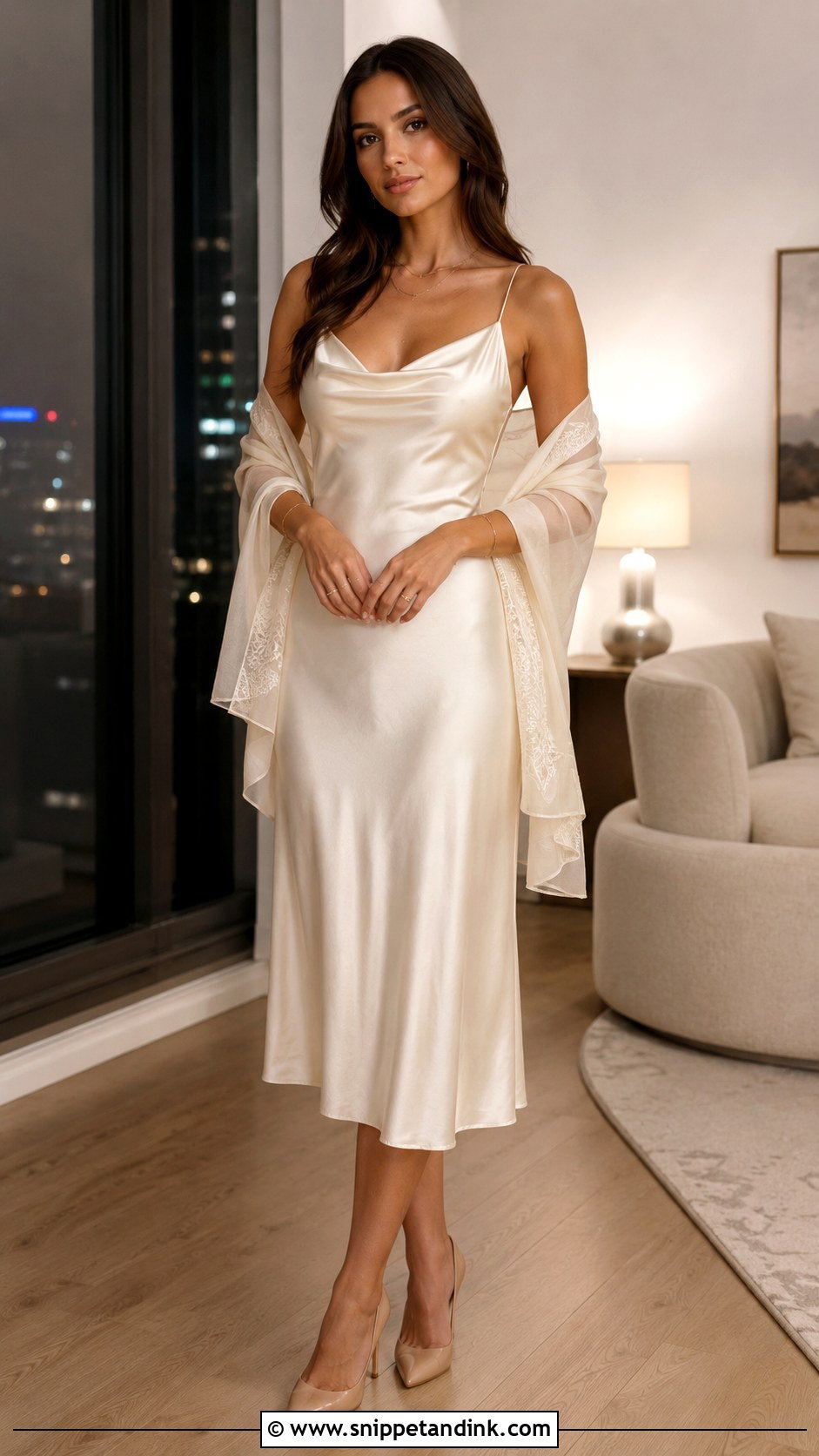
Real silk breathes, which is why it feels cooler than polyester after a warm, crowded day. It also water-spots and creases readily, so roll it in tissue for the journey and steam it once you arrive. If pure silk is outside your budget, a good silk blend or a matte satin gives a similar drape for less. Bias-cut maxis and simple slips in pearl white or soft rose suit it best. The appeal is how it moves, so skip stiff structured bags and let a soft robe finish it.
11. Modest First Night Dress
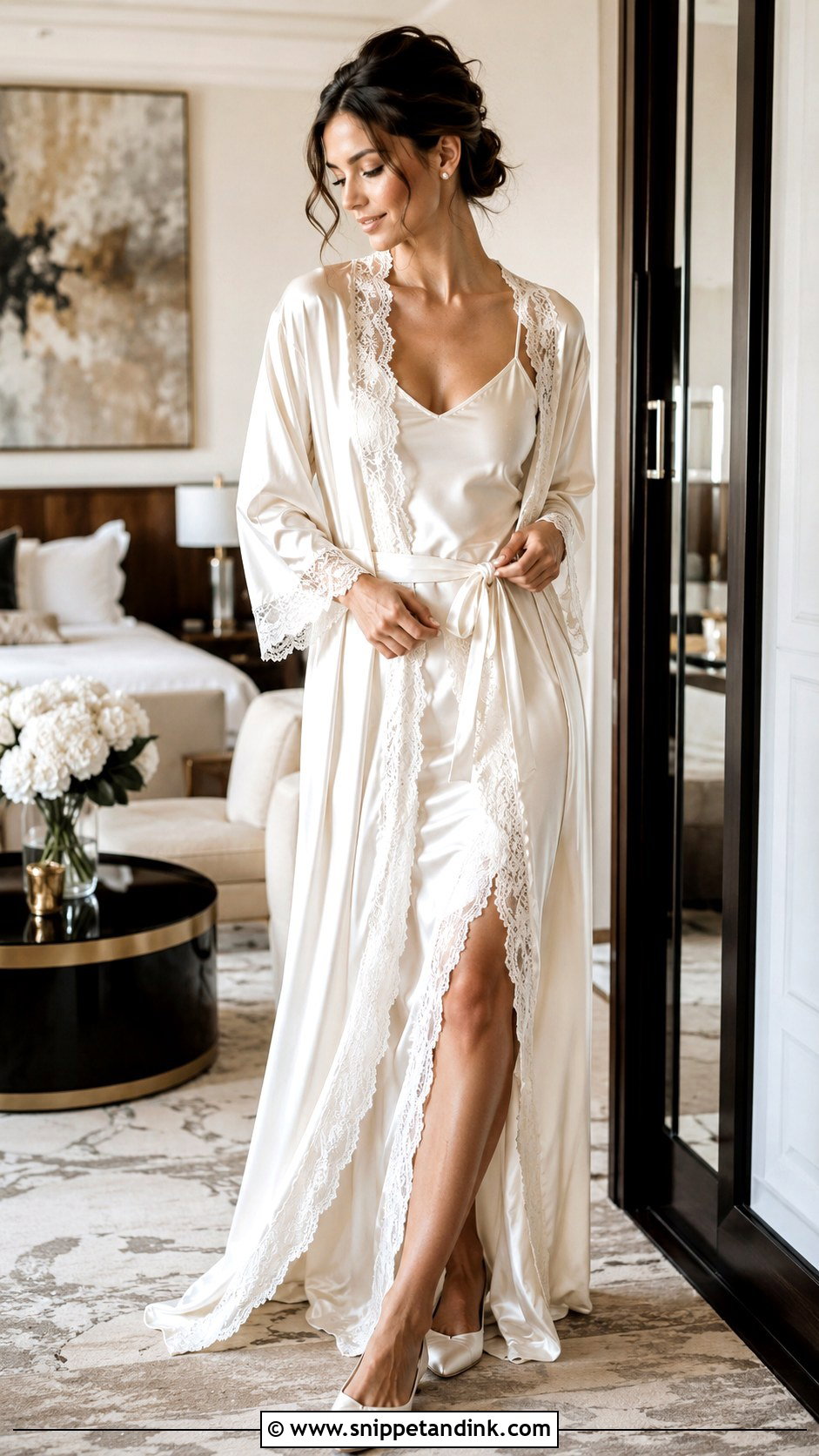
Modest doesn’t have to mean plain. I build these around a higher neckline, long sleeves and a midi or maxi length, then add shape with a waist tie or soft draping rather than tight tailoring. Lined lace, chiffon and crepe all stay light enough for a warm room. My practical test is raising both arms and then sitting down: the neckline and hem should stay exactly where they were. It also means you can pose for family photos before you leave without needing yet another outfit.
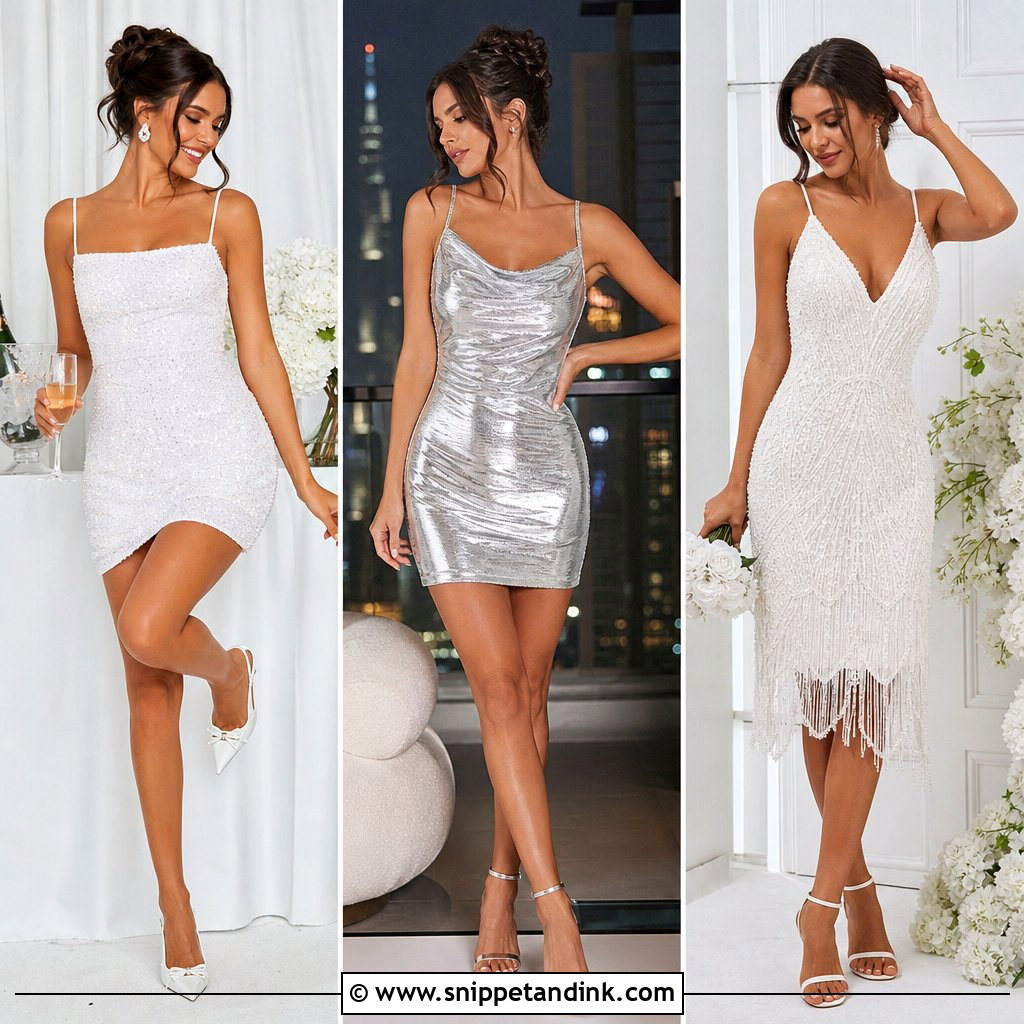
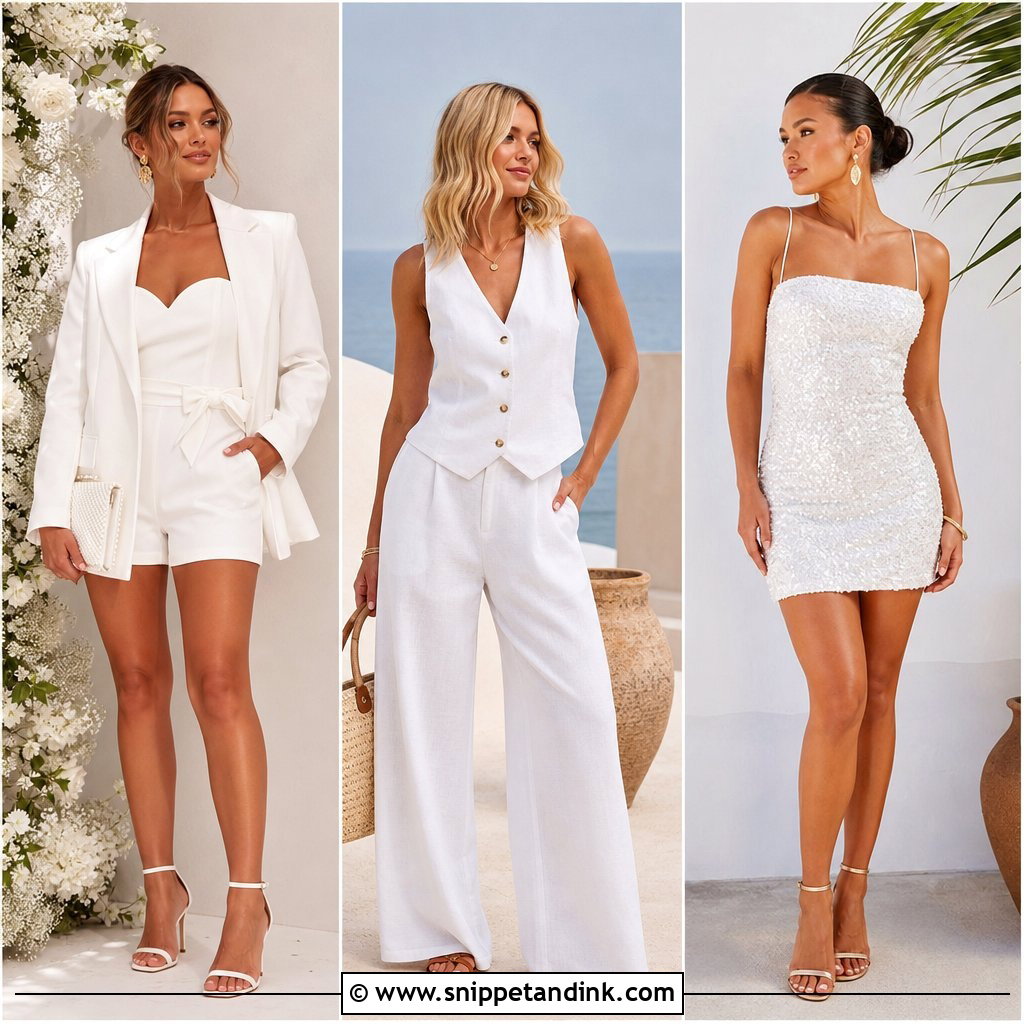
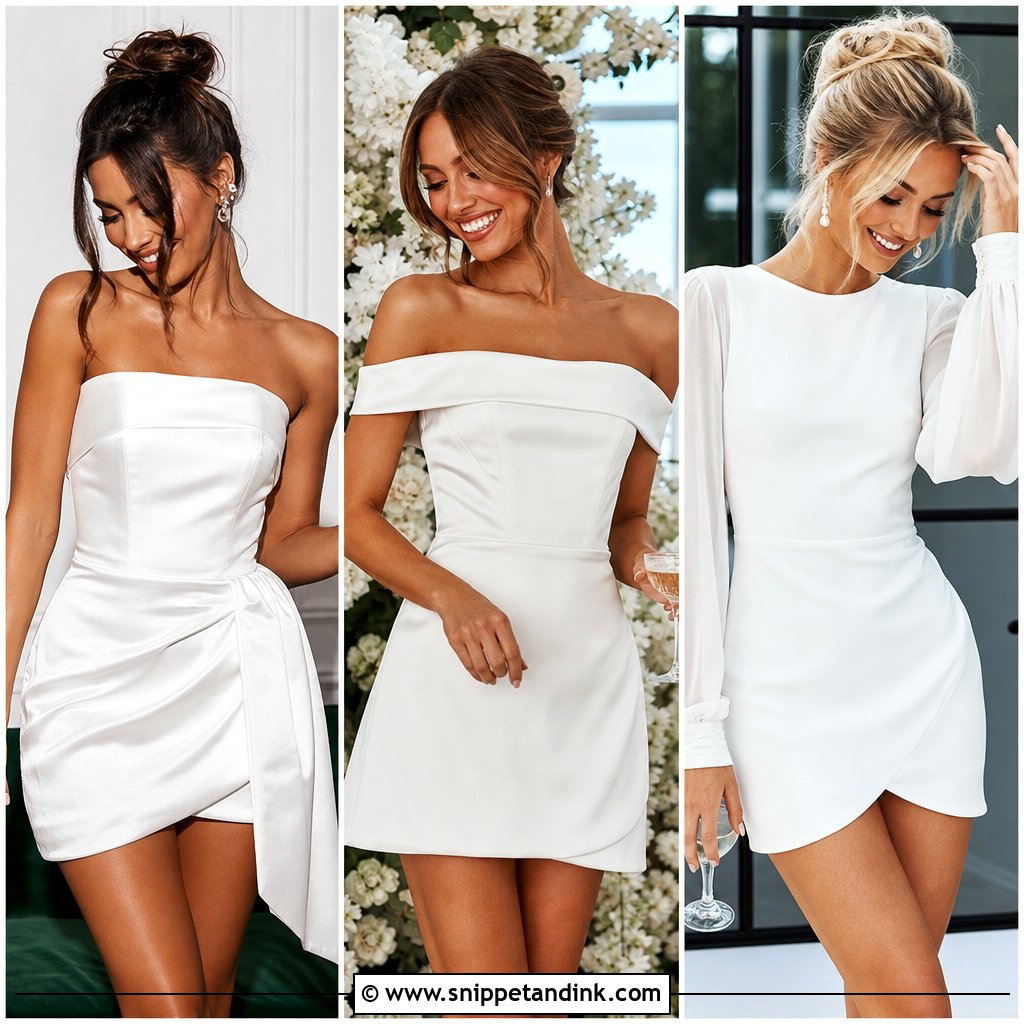
12. Short White First Night Dress
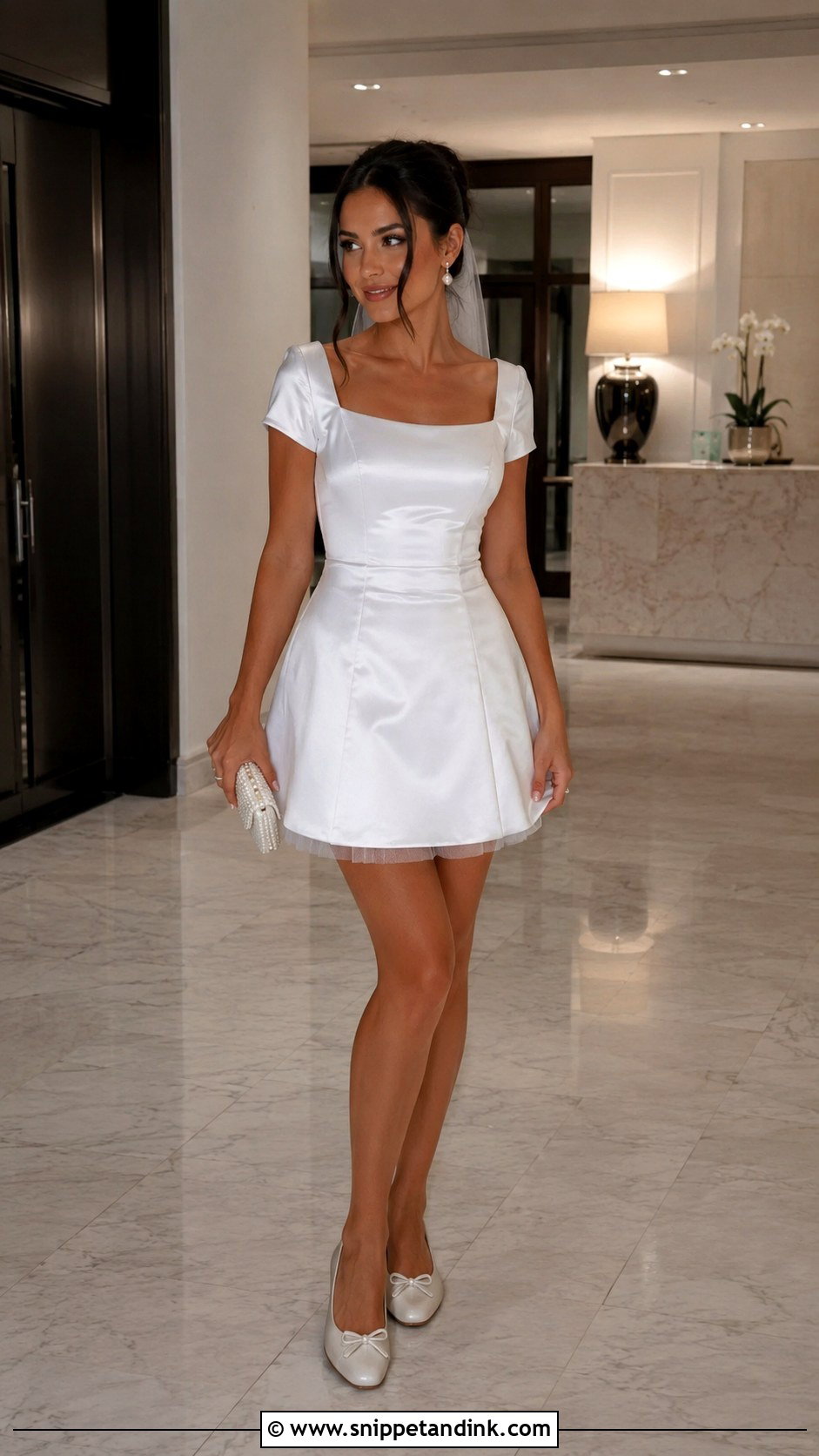
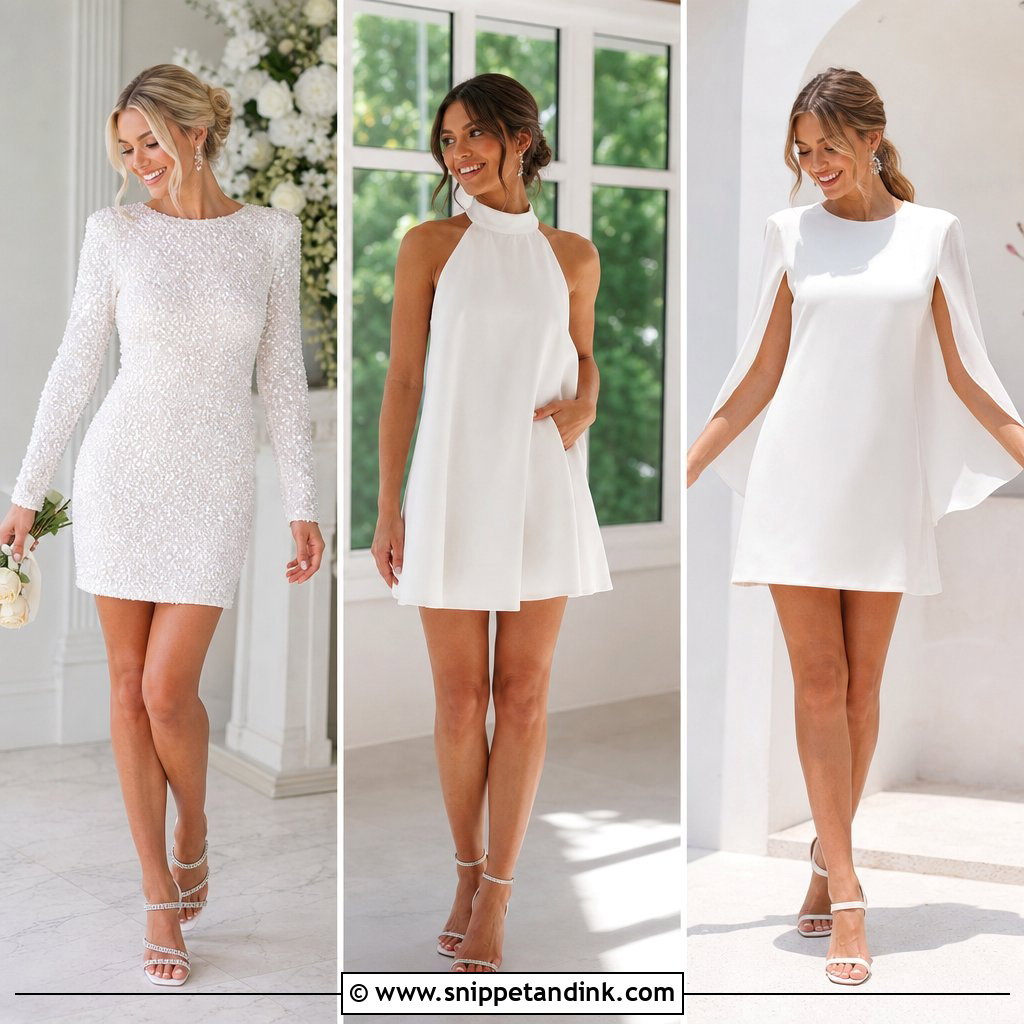
For a warm night in a hotel suite, a short white first night dress is the lightest change you can make. Shorter lengths need some structure to look bridal rather than casual, so look for satin, a pearl-button front, lace trim or a square neckline. Sit down in it before you buy. A mini that behaves standing can turn into constant tugging on a low sofa. Ballet flats and dainty earrings are enough.
13. White Midi First Night Dress
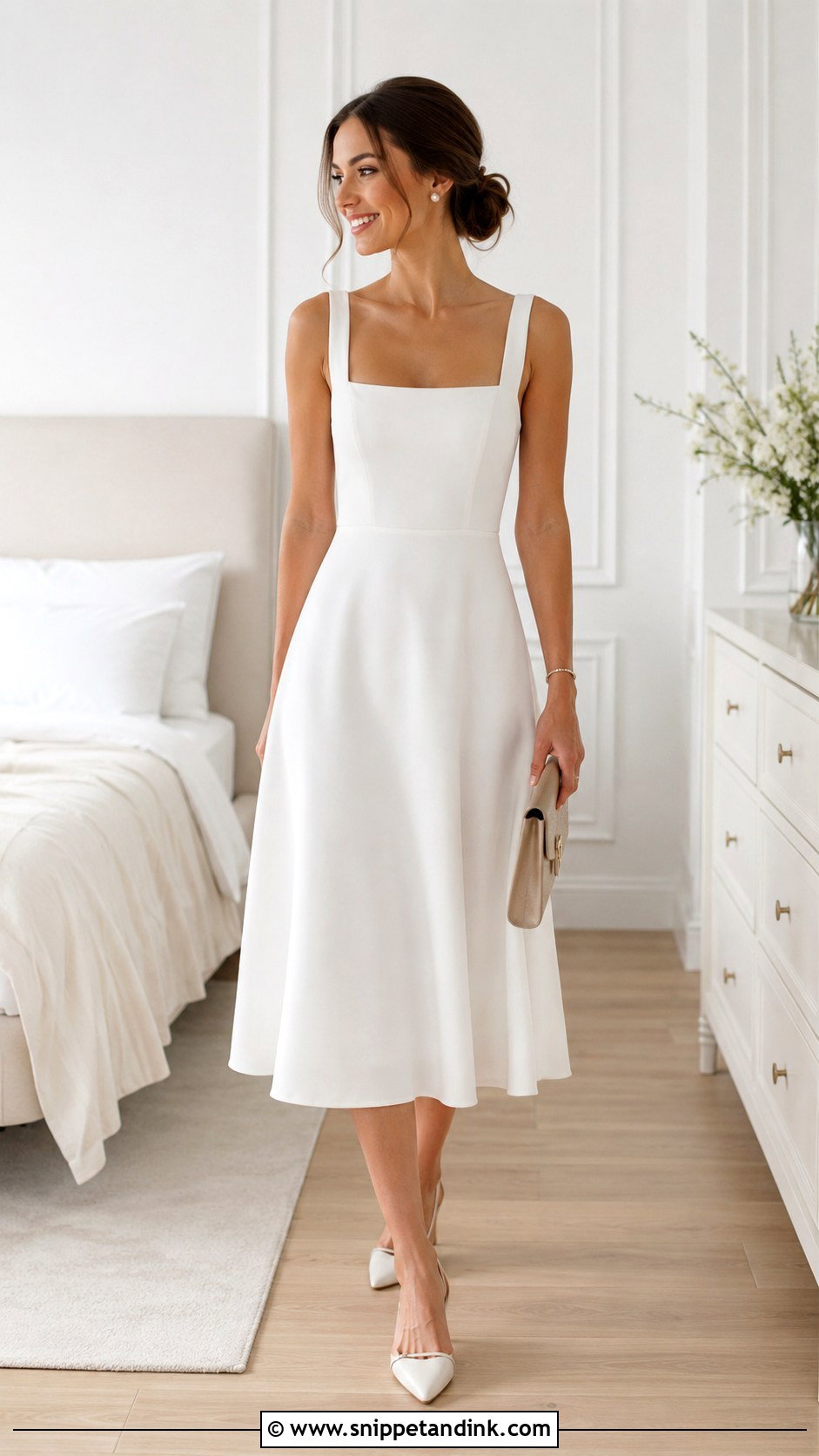
Midi is the length I recommend most to brides who want to wear the dress again, because it moves from wedding night to brunch to a friend’s engagement party without looking out of place. It shows your shoes, so choose them with the dress: pointed flats or a low block heel. A fitted bodice with an A-line skirt is the easiest silhouette, and a satin slip midi is the sleeker one. In full-length photos the proportion looks balanced rather than casual.
14. Chiffon First Night Dress
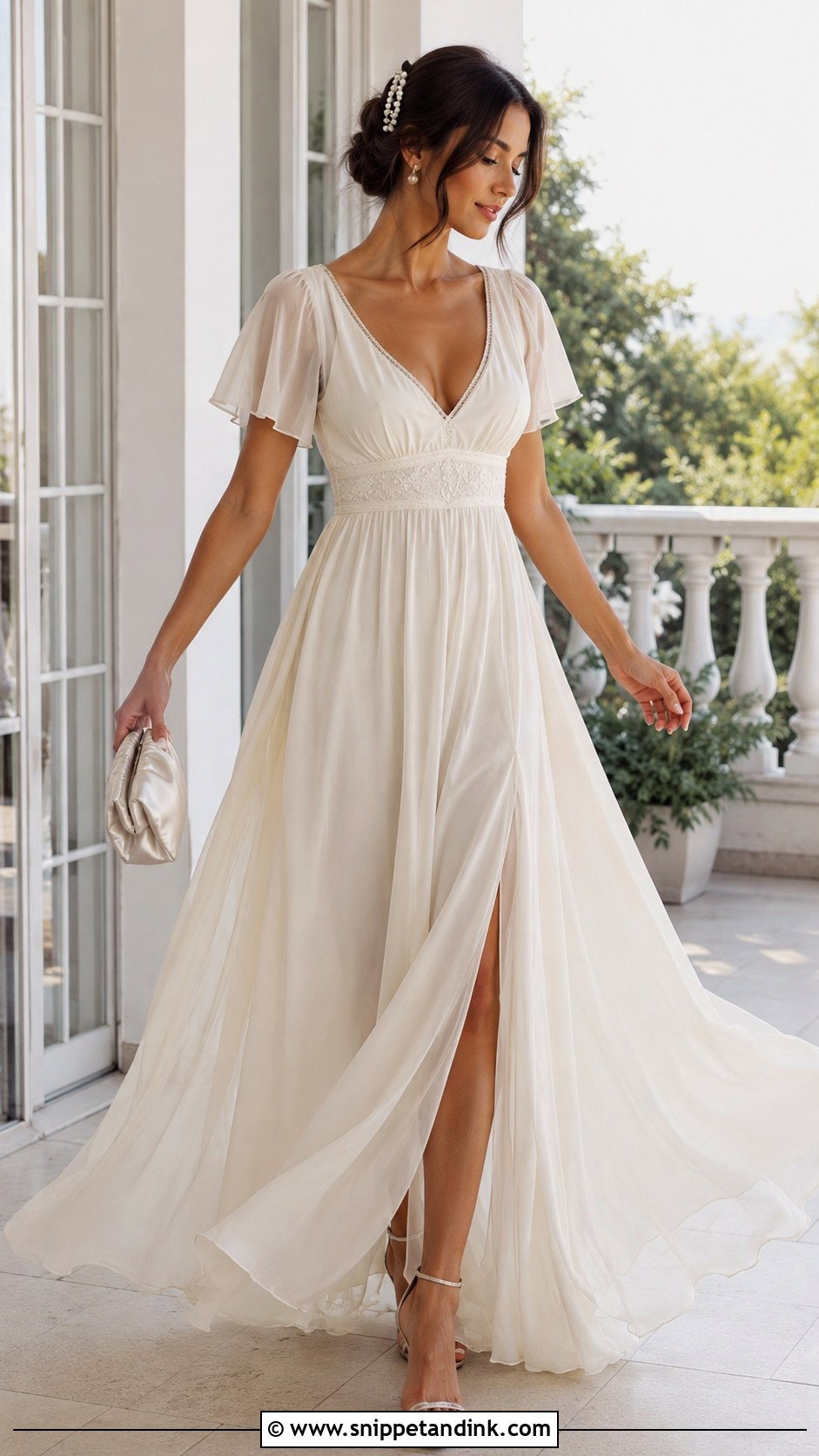
Chiffon floats, which makes it pleasant in heat and humidity. It is also sheer, and a lining that looks opaque in a shop can turn transparent against sunset light, so check it by a window in daylight. A lined midi or maxi with a wrap waist or soft pleats works well in ivory or dusty blue. Strappy low heels and a pearl hair clip keep it soft. One warning from practice: chiffon snags on beaded bags and bracelet clasps, so keep metal away from the skirt.
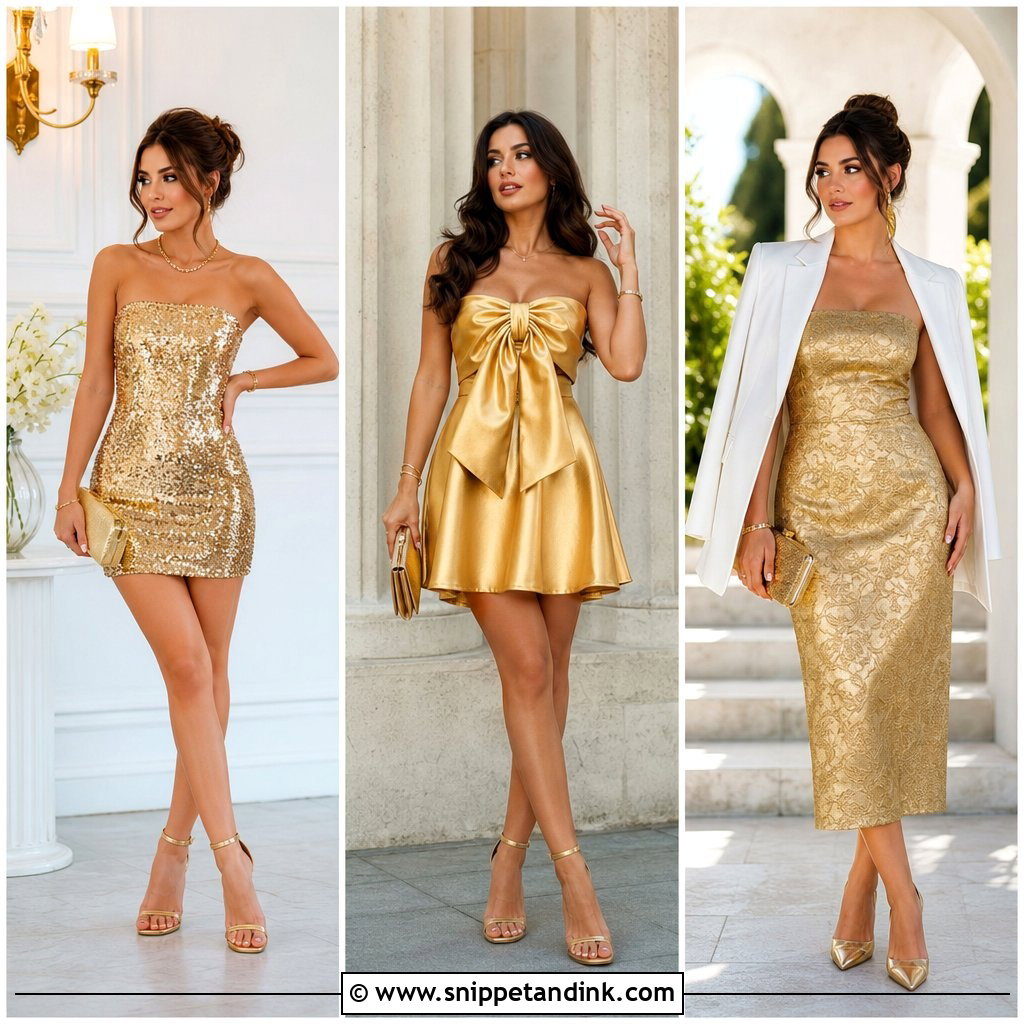
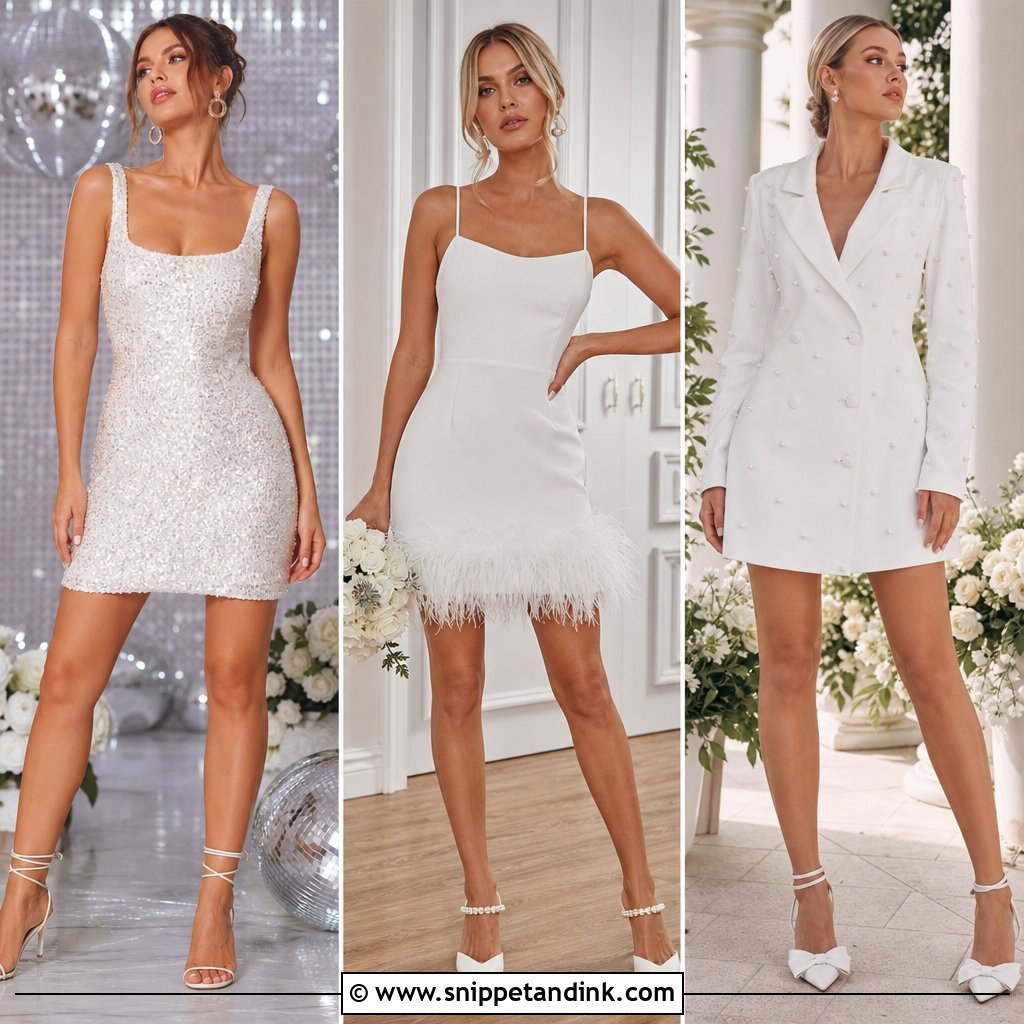
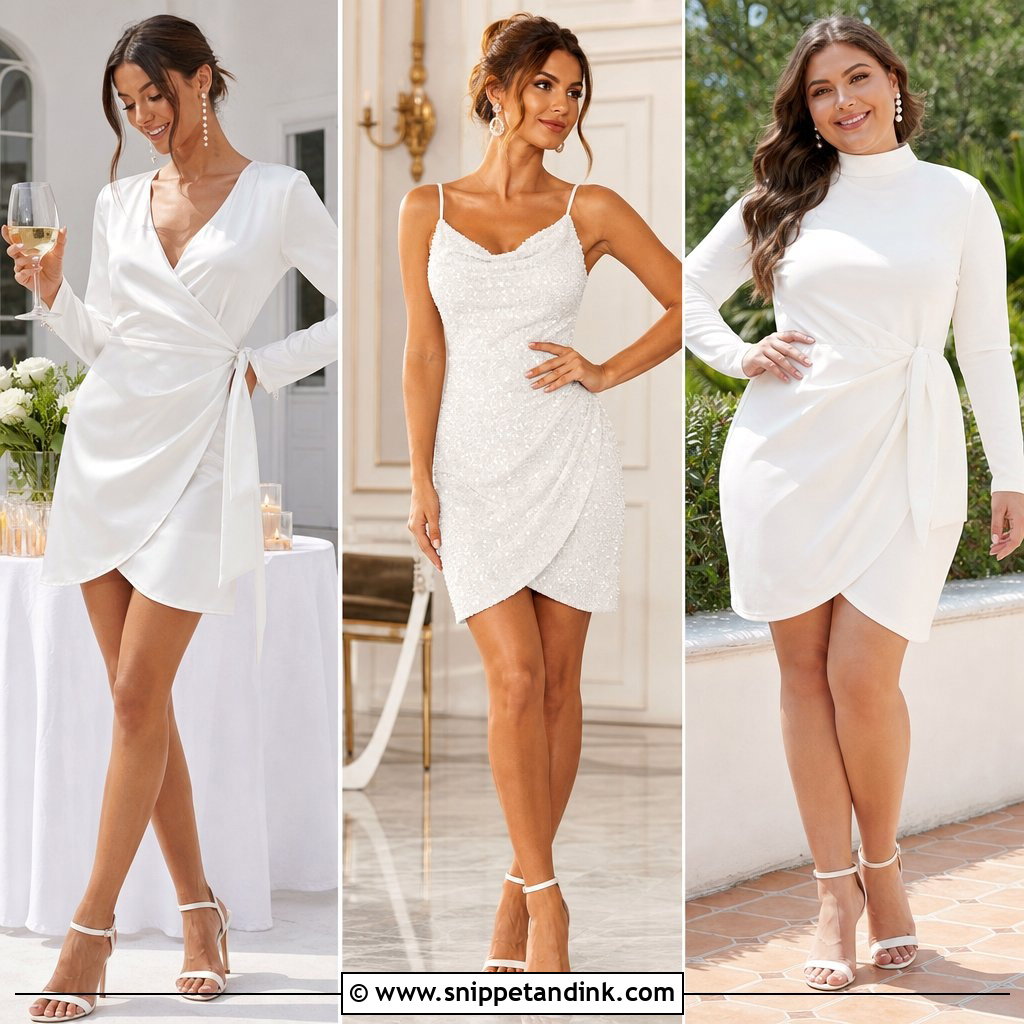
15. Bridal Robe With Slip Dress
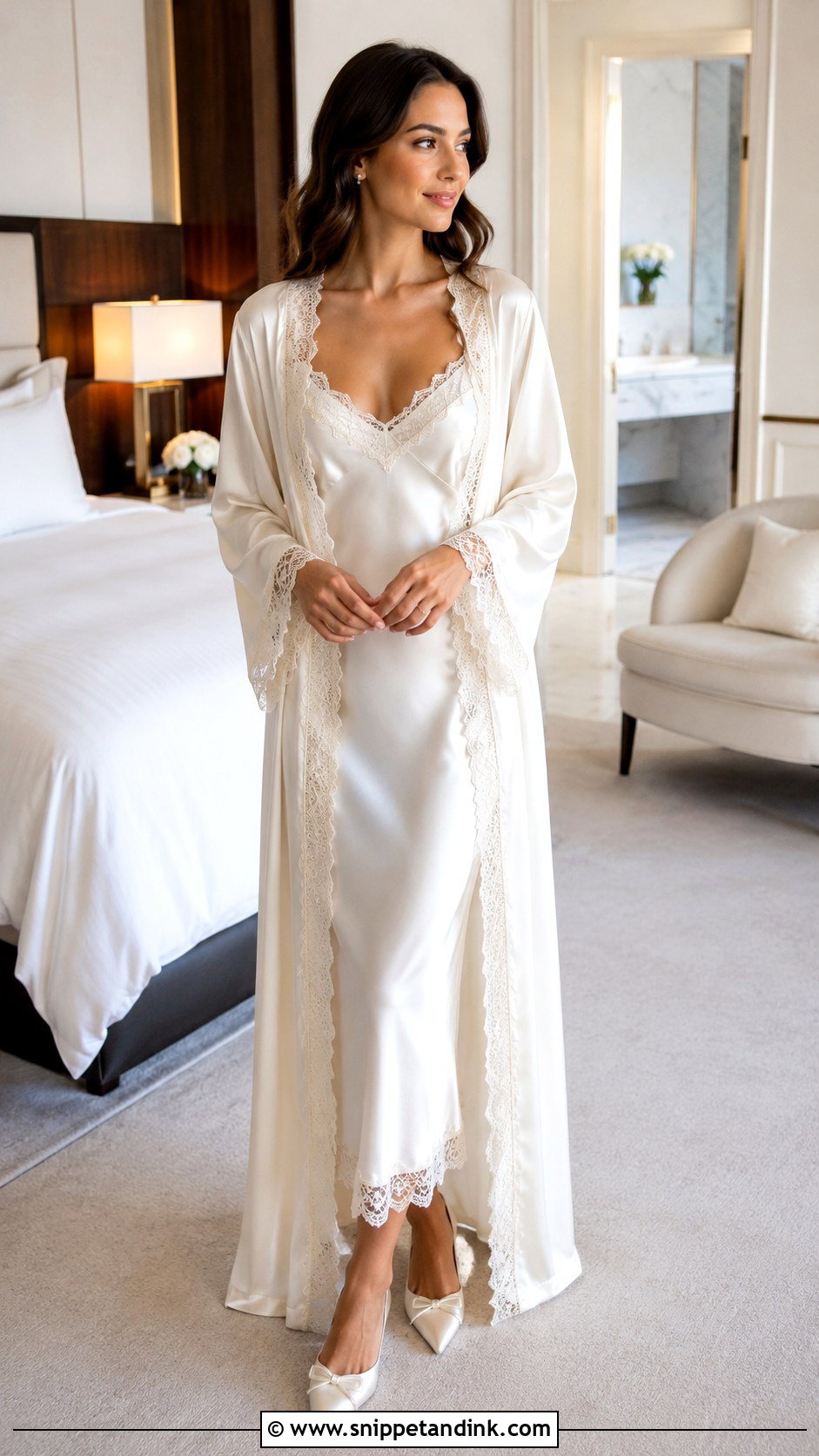
Layering is the most comfortable way I know to come out of a gown, and a bridal robe with slip dress gives you two looks in one. Start with a satin or silk slip, then a matching robe with lace trim or light embroidery for coverage. I always check that the robe has an inner tie as well as the outer belt; without it, the front slides open every time you sit. Satin flats or neat slippers keep it ready for a photo.
16. Embroidered First Night Dress
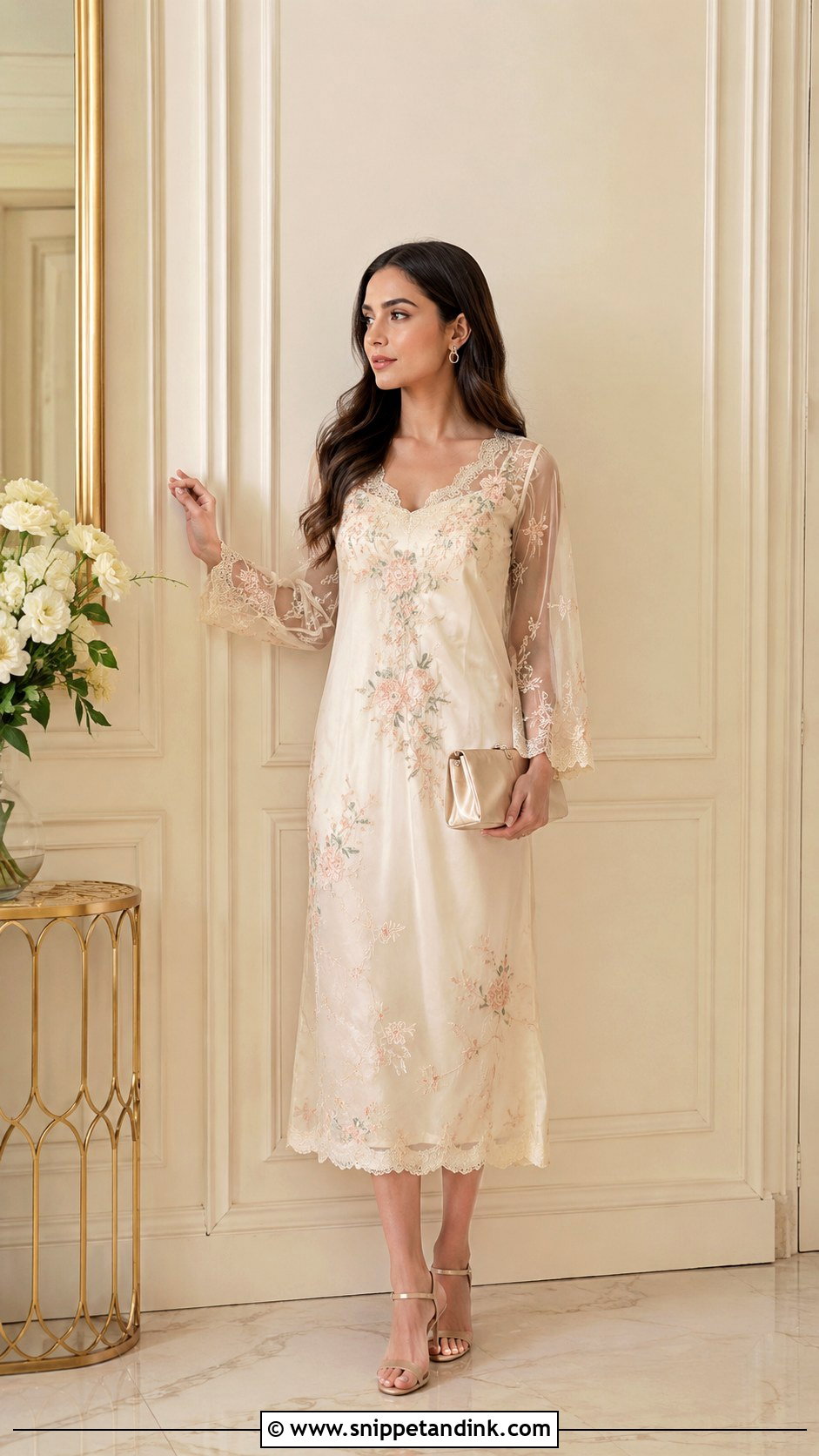
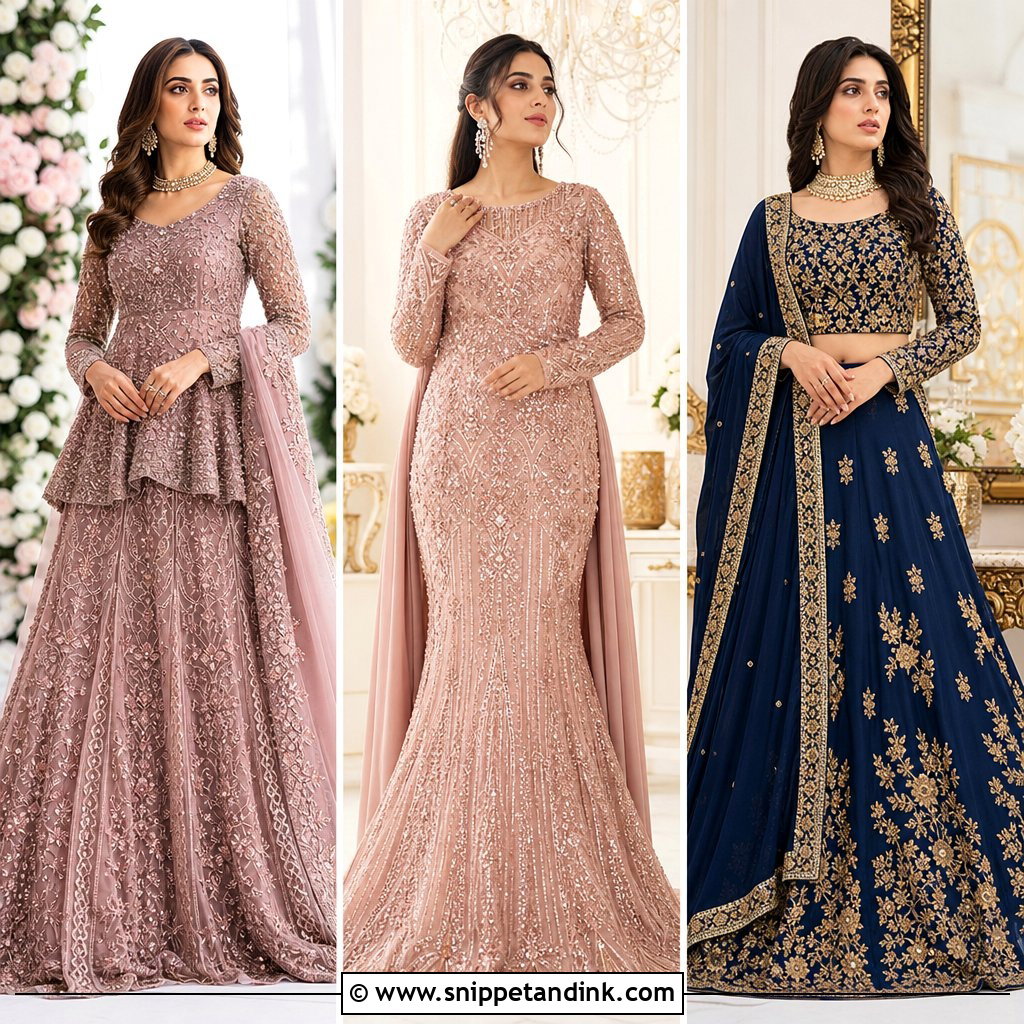
Embroidery gives detail without shine, and tone-on-tone threadwork is the quietest version of it. Turn the dress inside out before you commit. On cheaper pieces the reverse of the embroidery is rough and rubs, so a soft lining over it is not optional. Ivory, cream and champagne bases keep it bridal. When the work sits at the neckline, I skip the necklace and wear earrings only. It is a natural pick if your main outfit was rich in traditional handwork and you want a lighter echo of it.
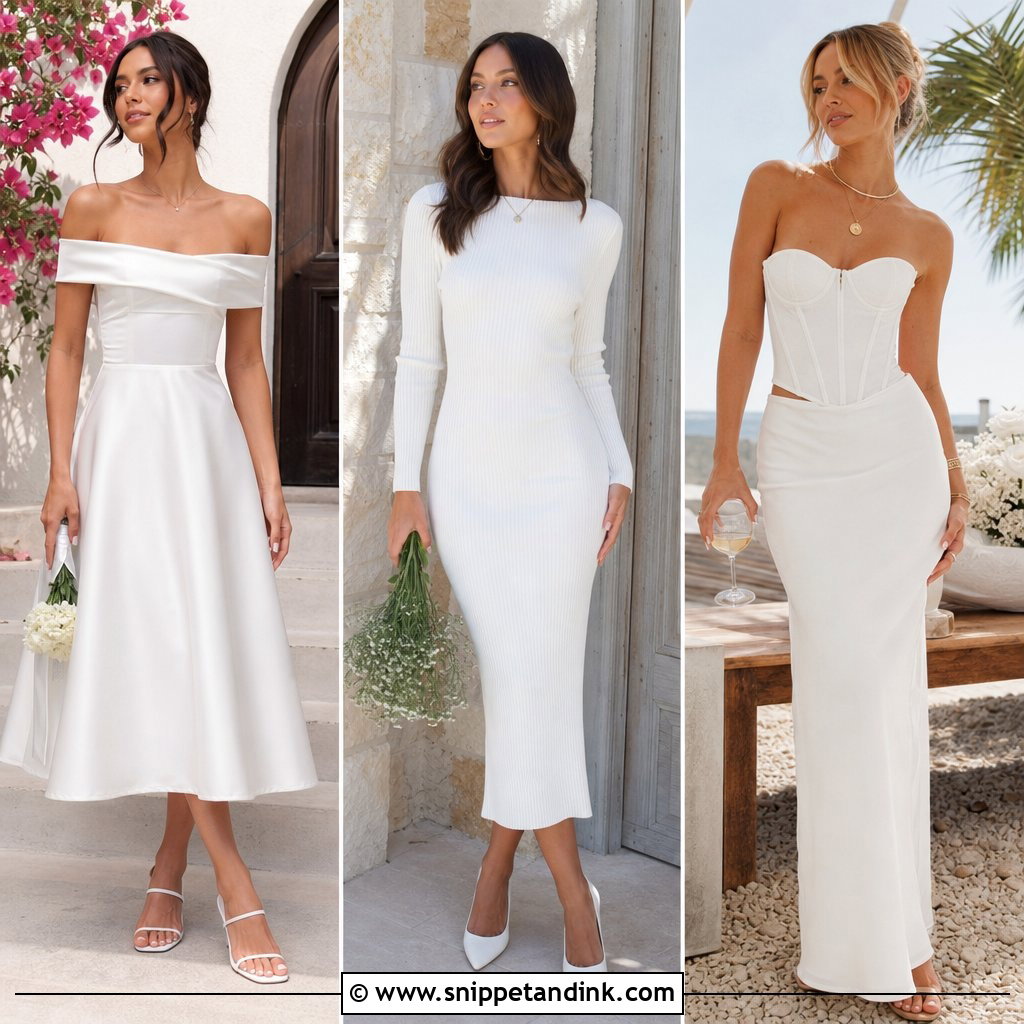
17. Cream Knit First Night Dress
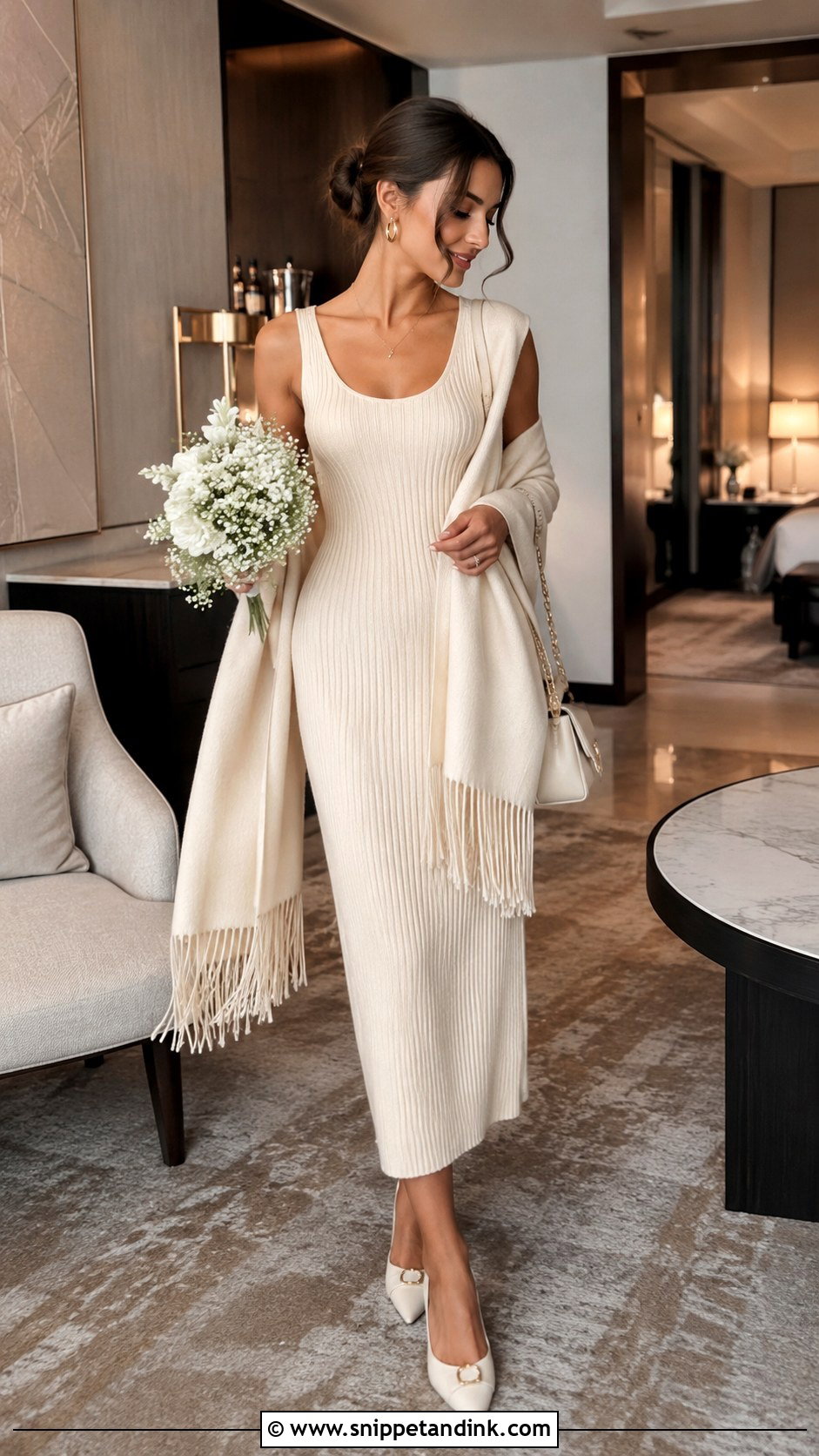
A fine knit is my pick for winter weddings and cold rooms. Ribbed knits hold their shape well; loose sweater knits can bag at the seat after an hour of sitting, so choose a fine gauge with a little stretch in it. Pointed flats or sleek ankle boots, gold hoops and a soft shawl finish it. It is less formal than satin, and honestly that is the point. This is a dress you can curl up in.
18. A Line First Night Dress
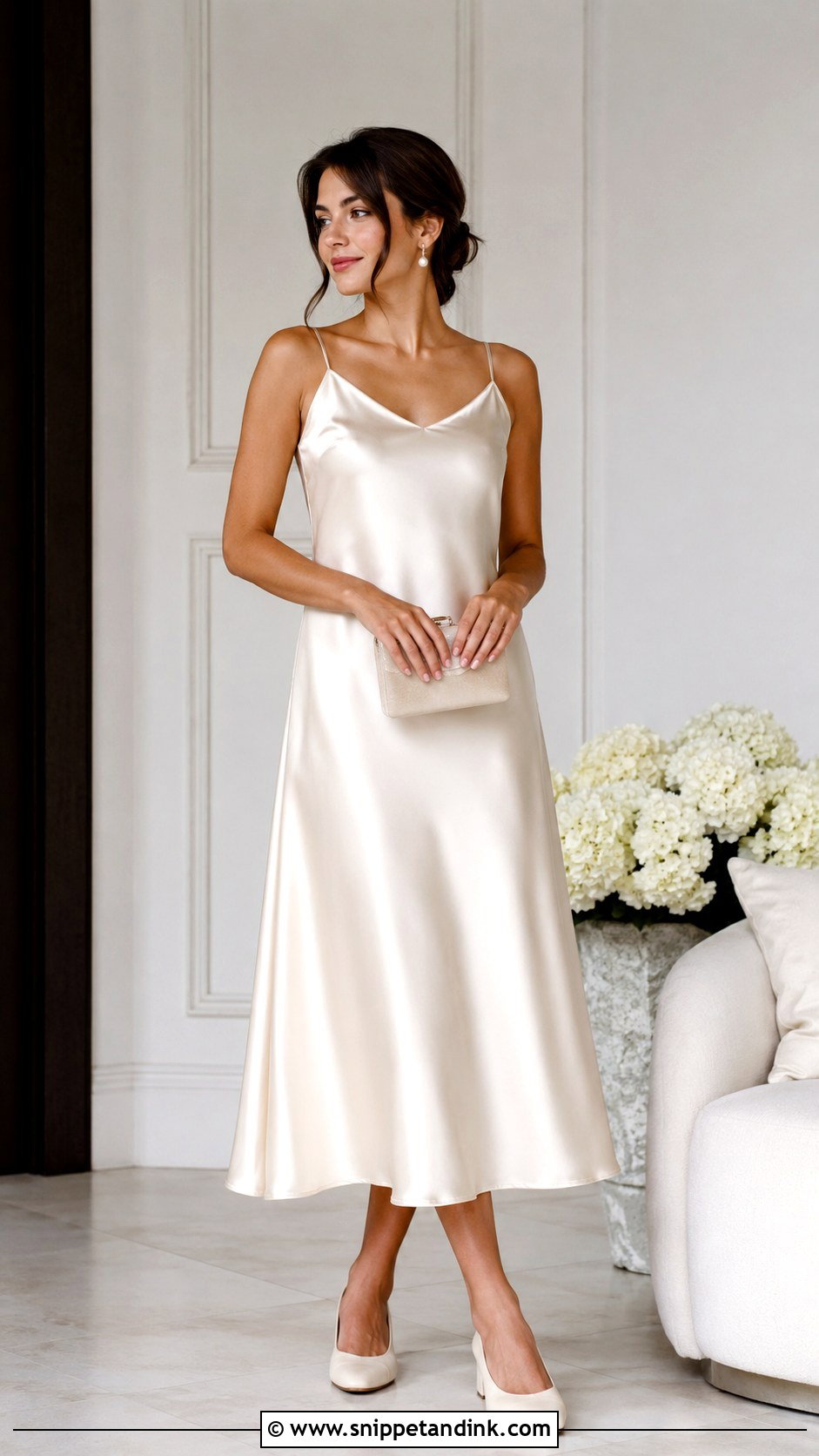
If you have little time for fittings, start with an A-line. A fitted top and a skirt that flares from the waist define your shape without restricting your legs, which is why it suits so many figures straight off the rail. Satin reads polished, lace reads romantic and crepe reads modern. A midi length shows off a low block heel, and pearl earrings with a small clutch are plenty.
19. Off Shoulder First Night Dress
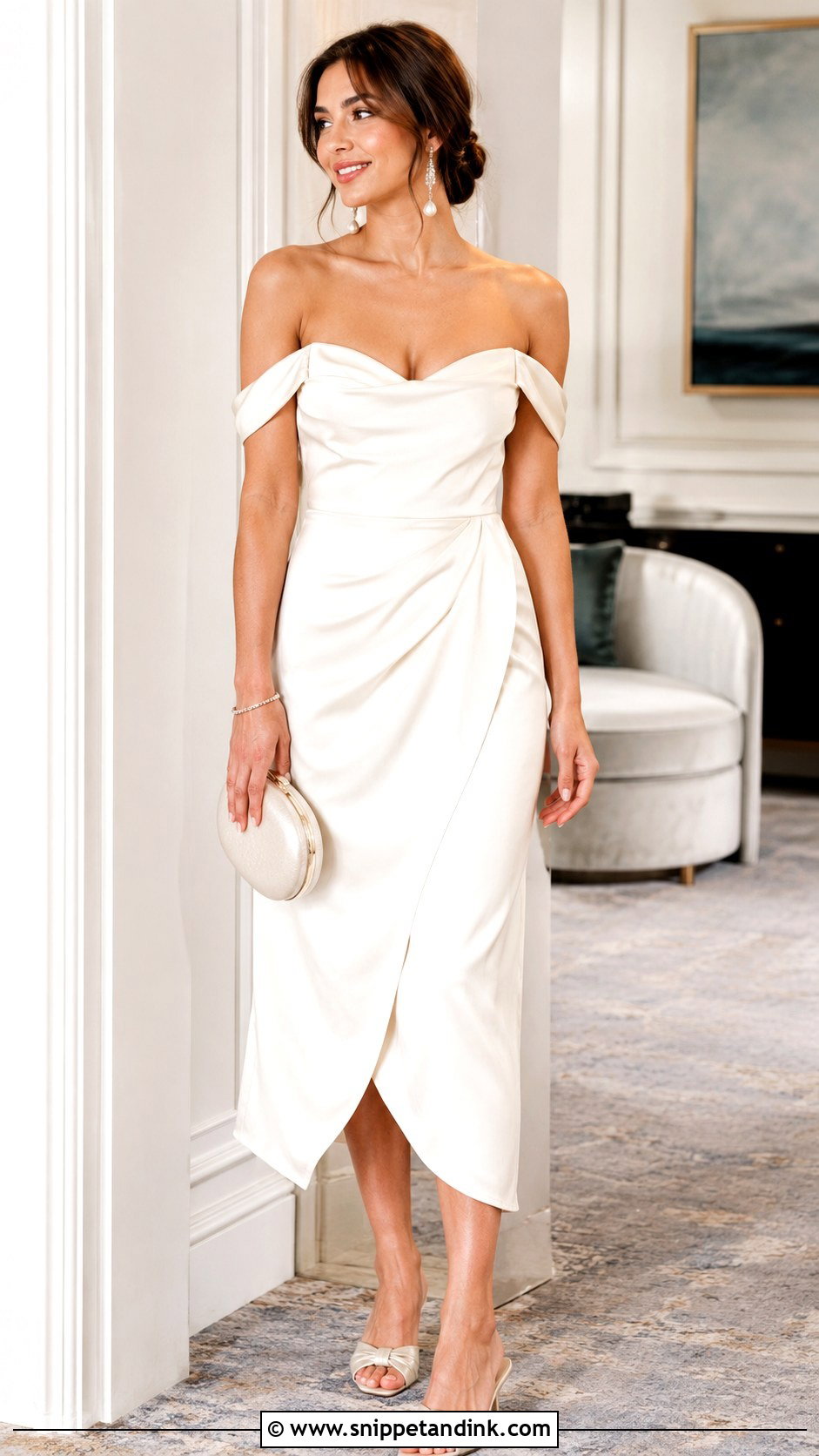
Off-shoulder necklines look soft, but they are the most likely to slip. I look for an elastic or silicone grip inside the neckline and enough structure that the sleeves stay down when you lift your arms. White, ivory and blush midis suit the shape. Drop earrings frame the shoulders; a necklace just competes. Expect the odd adjustment through the evening, and if that would drive you mad, choose the wrap instead.
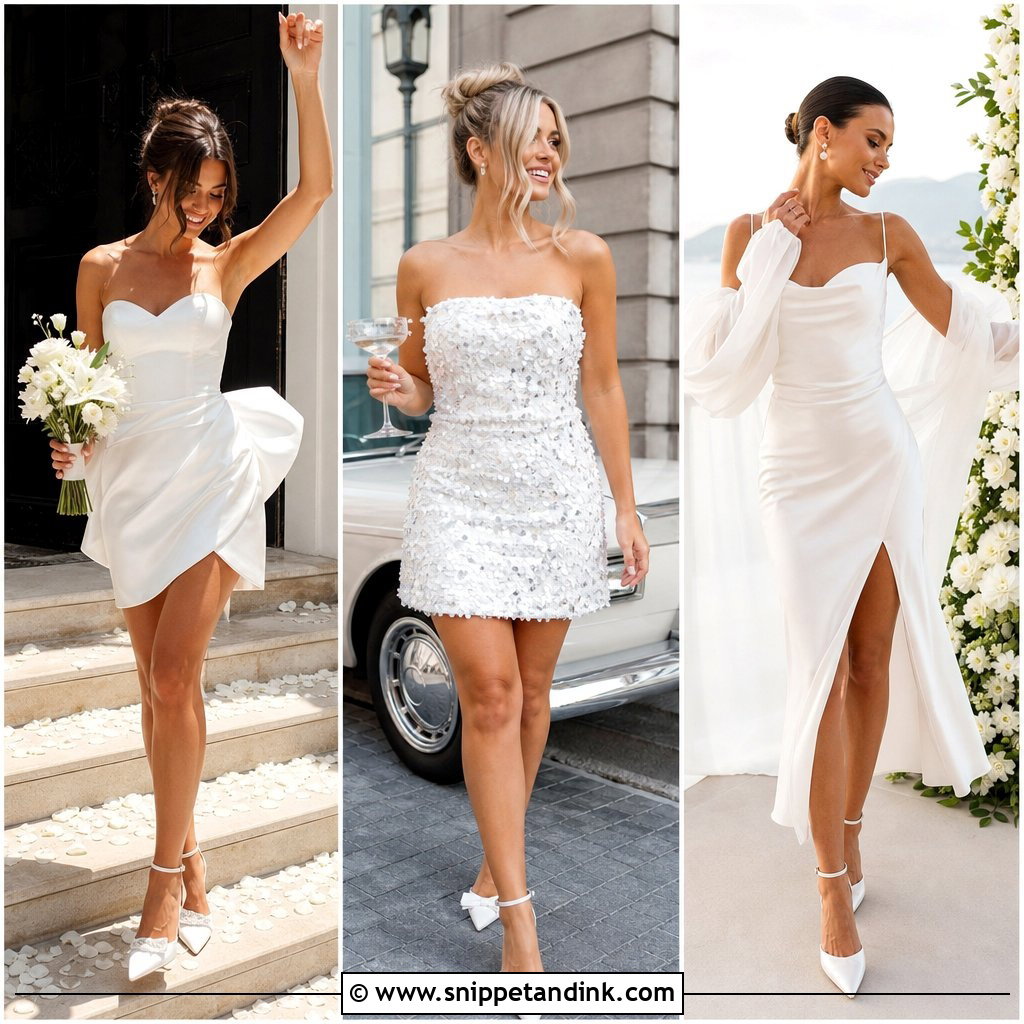
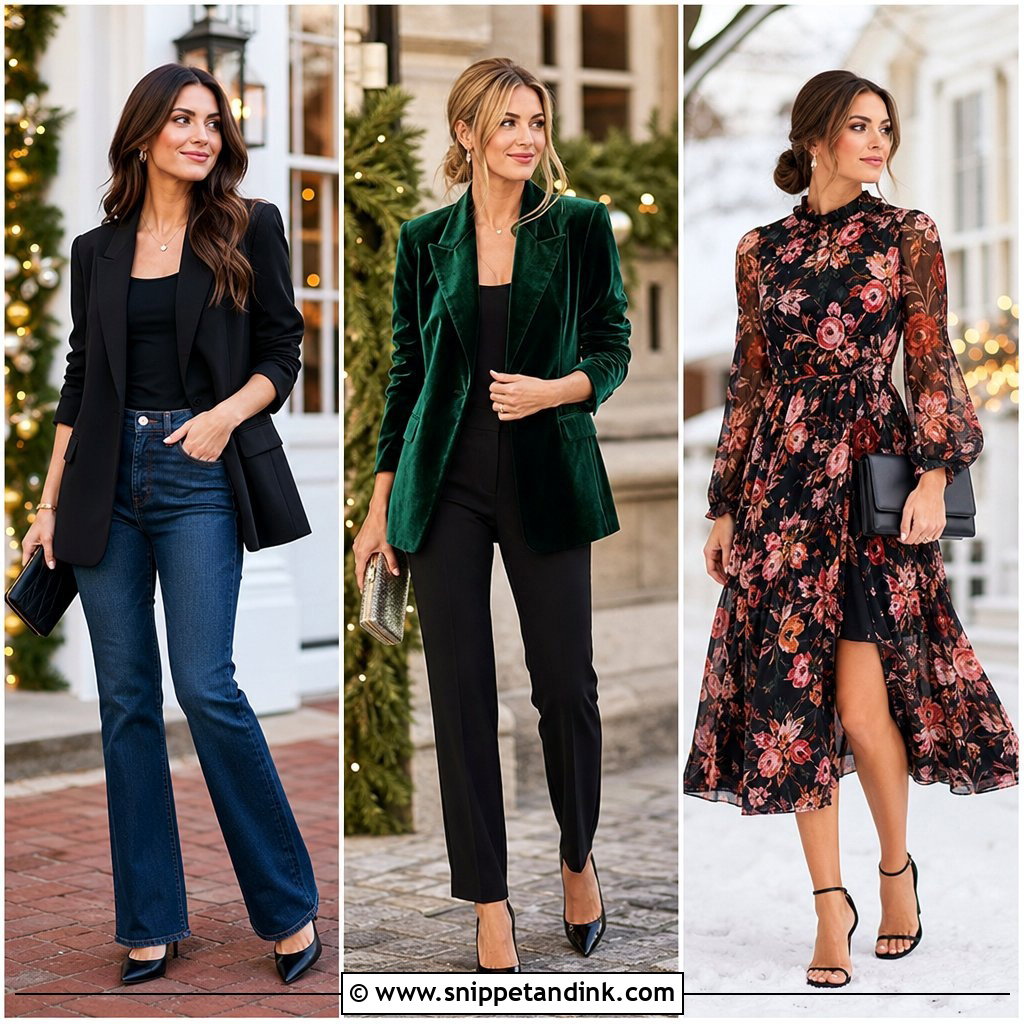
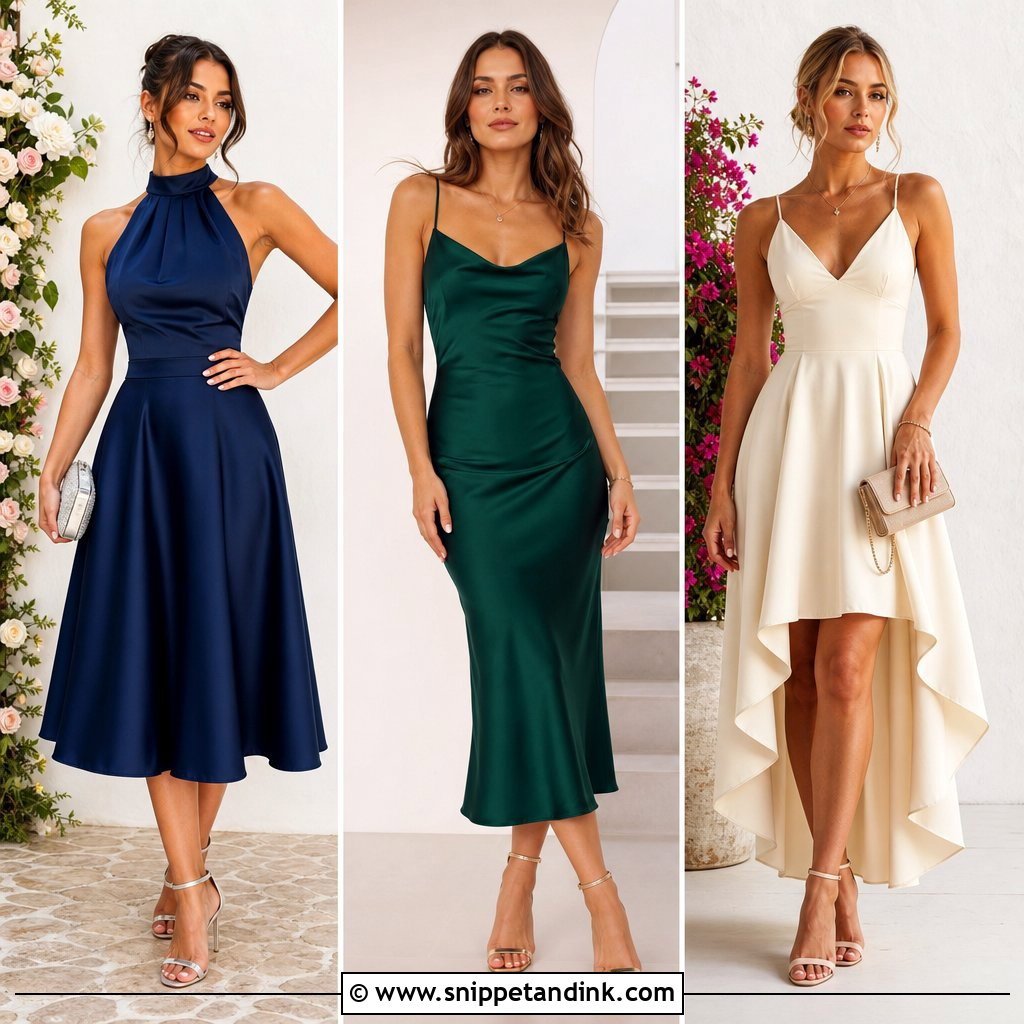
20. Halter First Night Dress
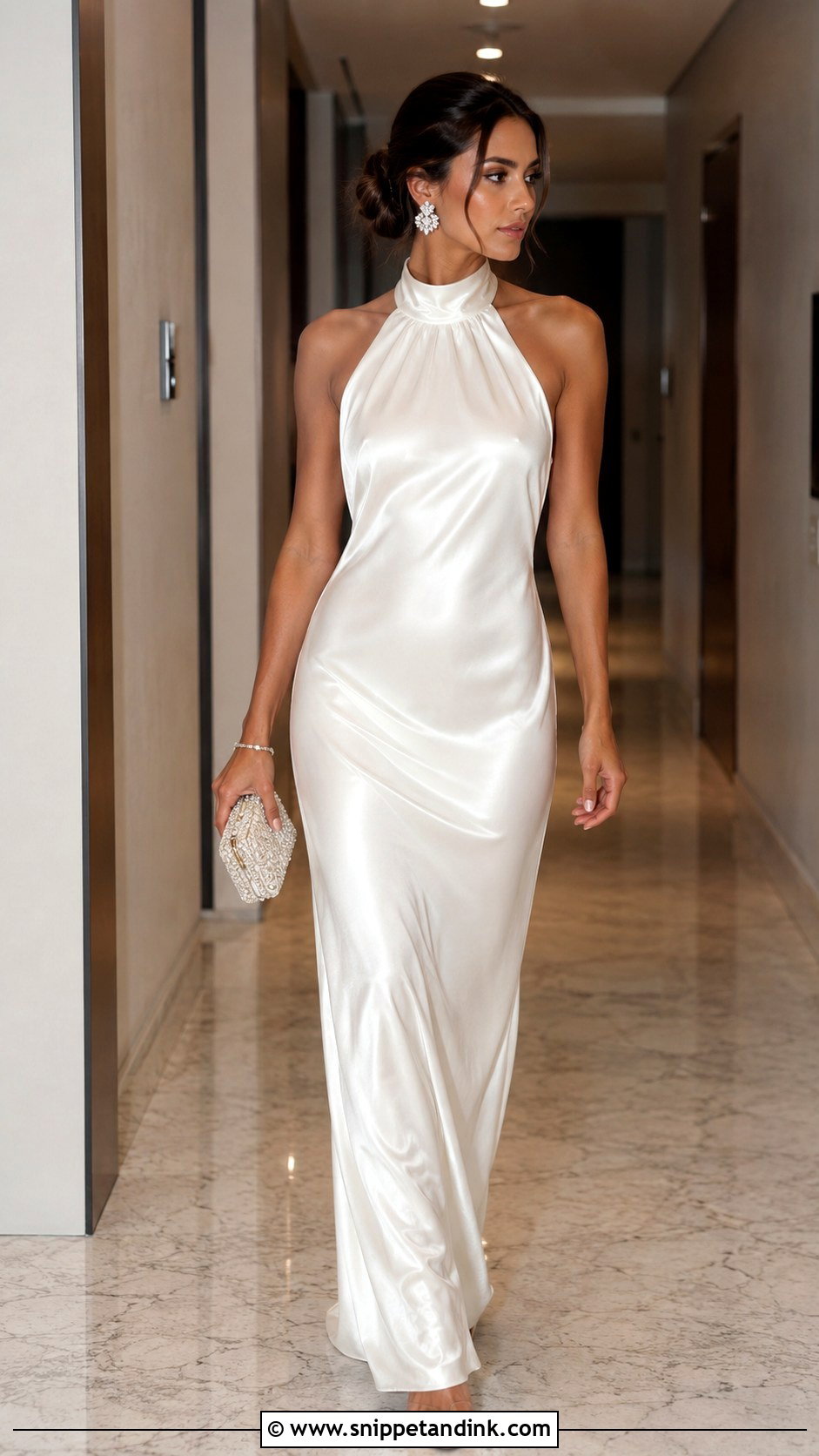
Halters suit brides with strong shoulders and look sleek in satin, crepe or soft jersey. The halter neckline draws the eye upward, so smooth hair and statement earrings work better than a necklace. One thing I flag at fittings: the strap behind the neck can drag after a few hours, especially in heavier fabric, so wear it around the house for longer than a minute before deciding. Nude heels or metallic flats keep the rest simple, and in warm weather it needs no extra layers.
21. Blue First Night Dress
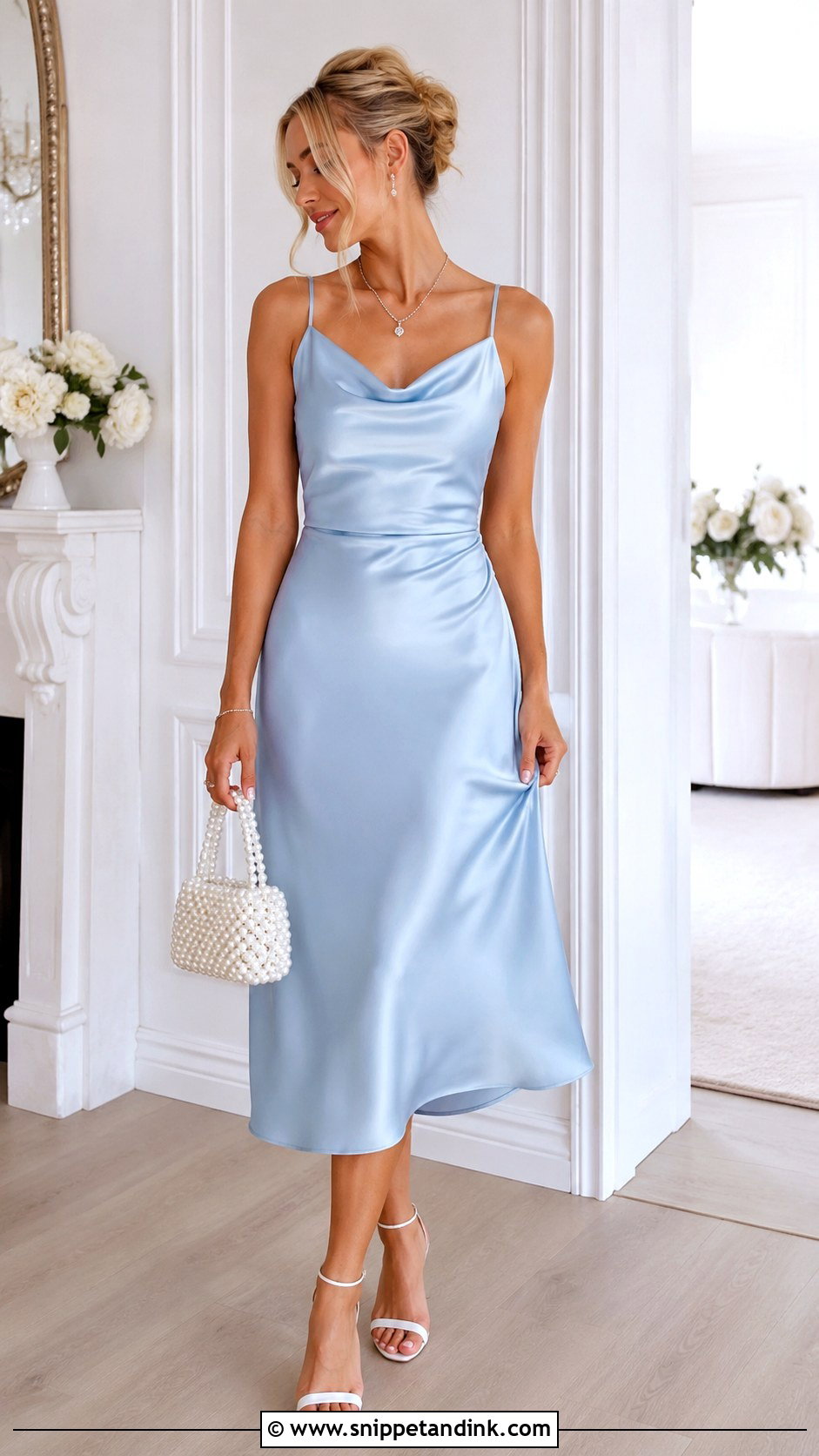
Pale blue is a gentle step away from white, with a quiet nod to something blue. Powder and dusty blues suit most skin tones, while brighter sky blues can look cold under yellow hotel lighting. A satin midi, a chiffon maxi or a lace-trim dress all carry the shade well. Silver jewelry and white heels keep it crisp. Let the color be the detail and keep the cut simple; you will wear it again for years.
22. Pastel First Night Dress
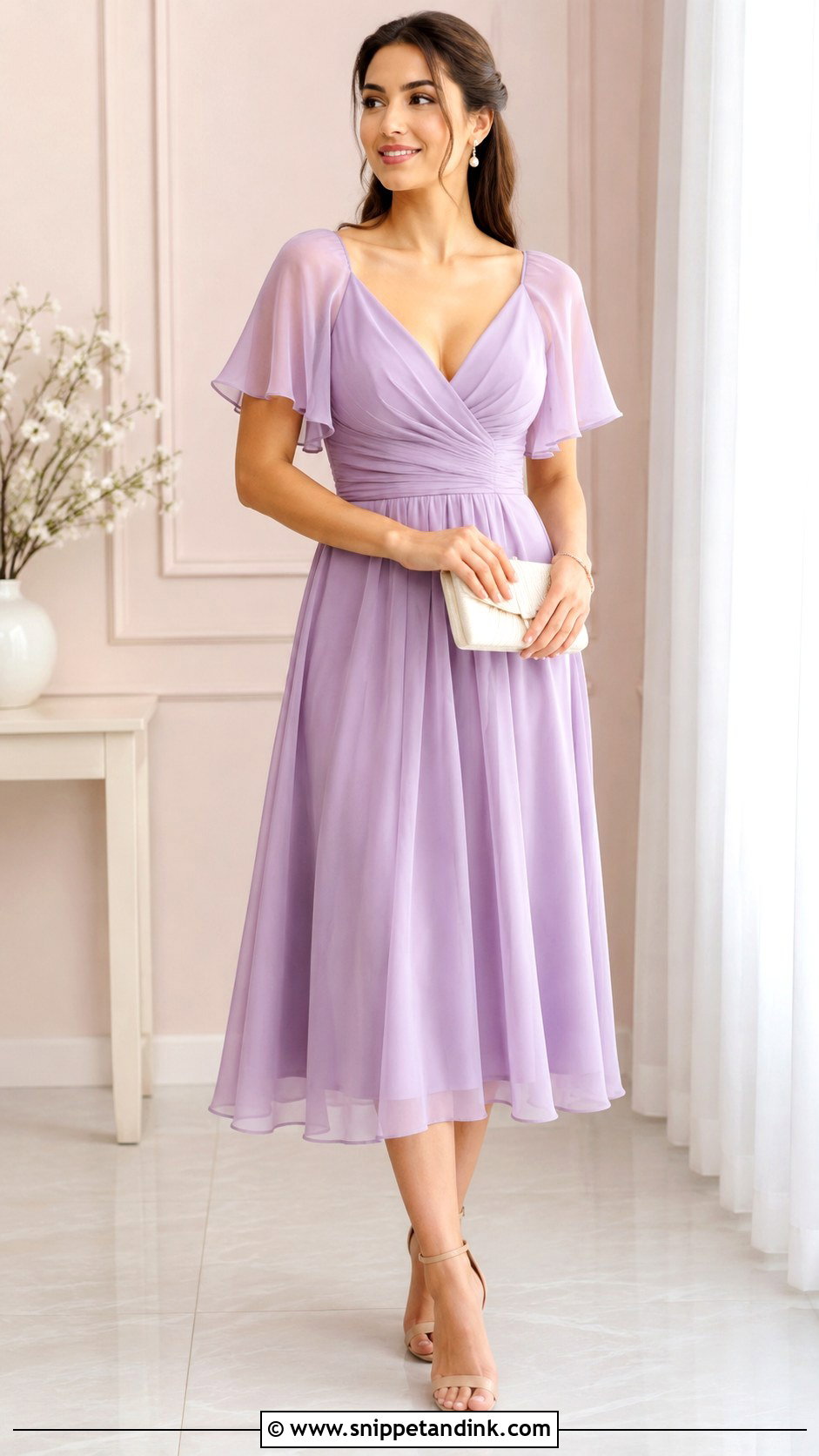
Pastels let you match the shade to your skin rather than to tradition. Lavender and pale pink tend to flatter cool undertones, peach suits warm ones, and butter yellow can make very fair skin look sallow, so test it near your face before you order. A midi or maxi with a graceful shape keeps the color soft. Pearl earrings and nude heels are the only accessories I would add. Spring and summer weddings suit this best.
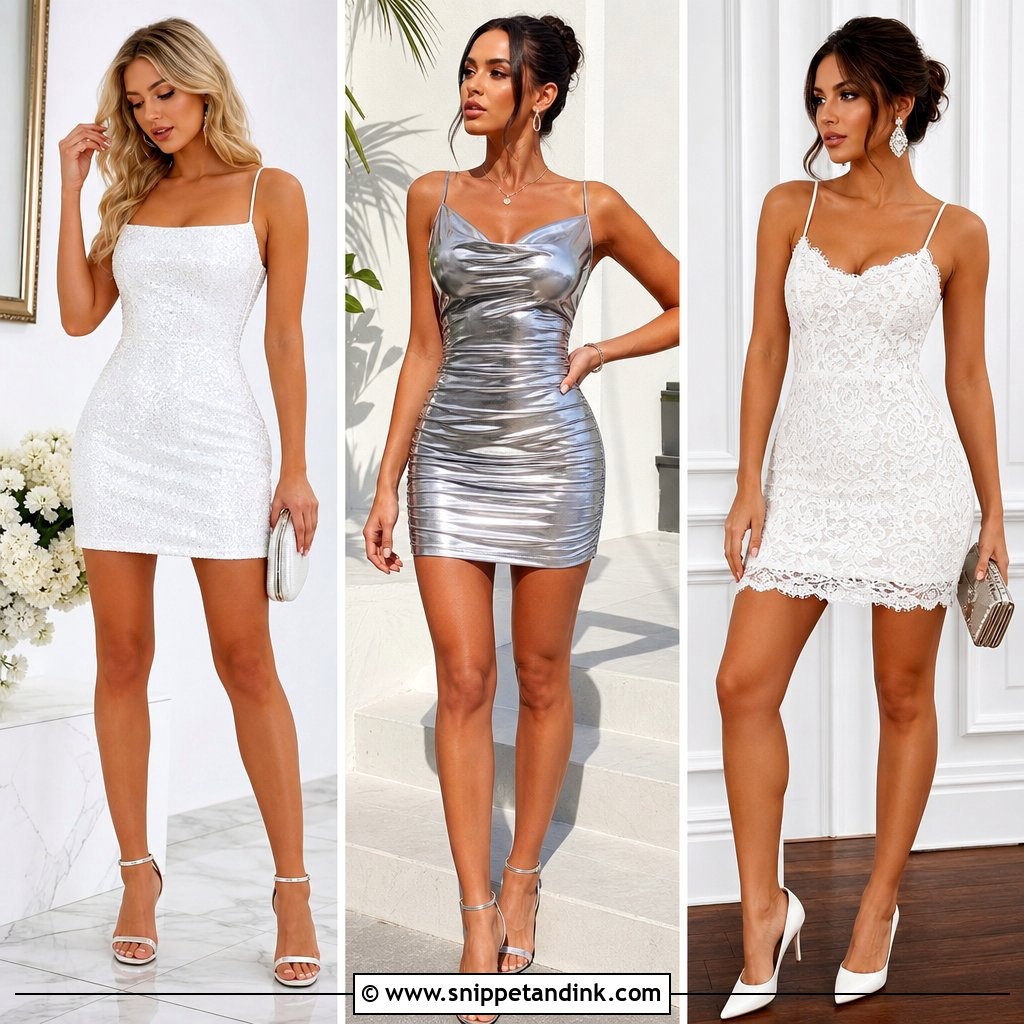
23. Sequin First Night Dress
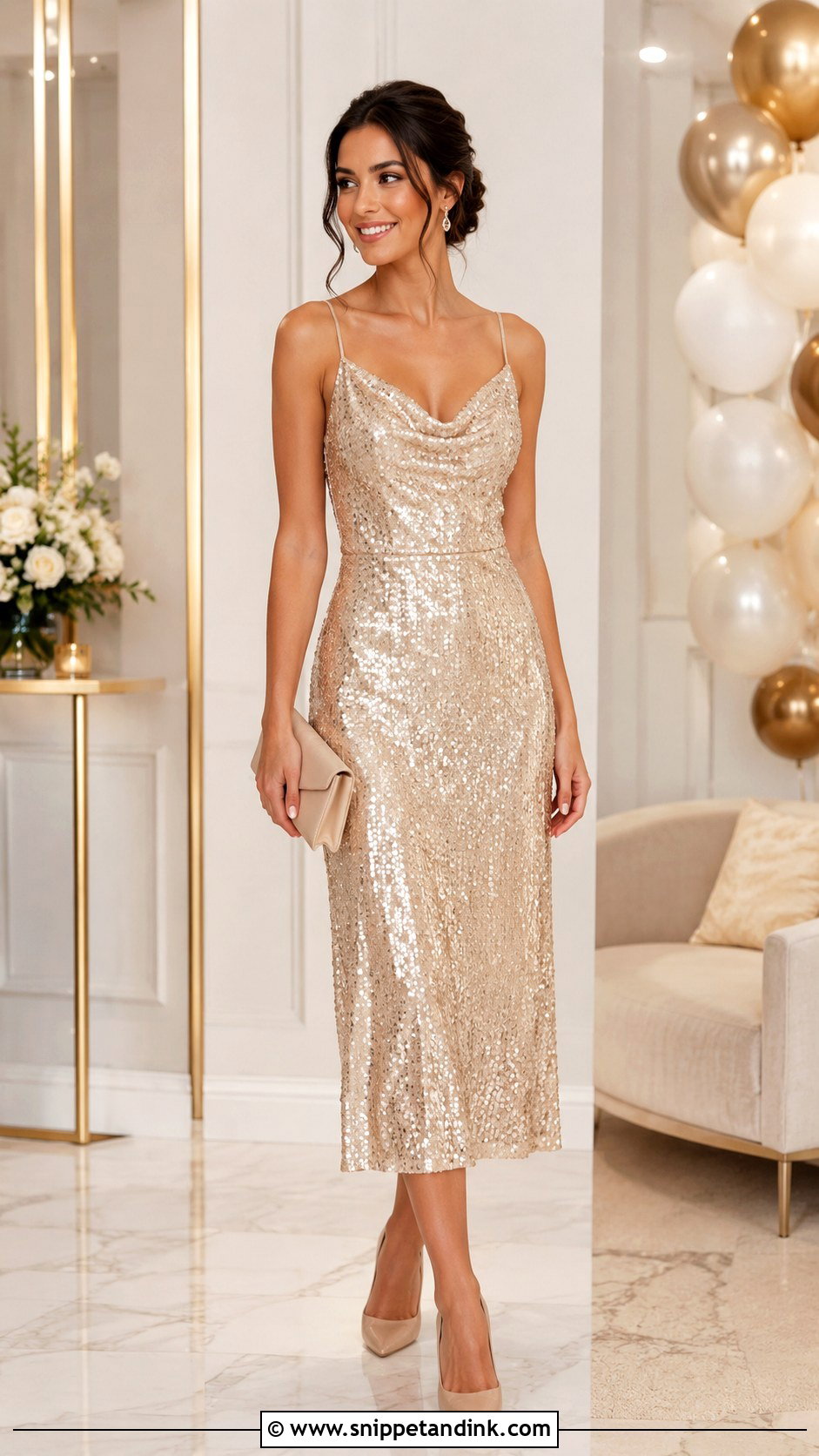
Comfort is the first thing I check on sequins. Sequins sewn onto unlined mesh scratch the inner arms within an hour, so look for a soft full lining, especially around the armholes and neckline, and small flat sequins rather than heavy cupped ones. Ivory, champagne and silver keep the sparkle bridal. A simple midi is far easier to sit in than a fitted mini. Plain heels and small earrings stop the shine from tipping into costume.
24. Velvet First Night Dress
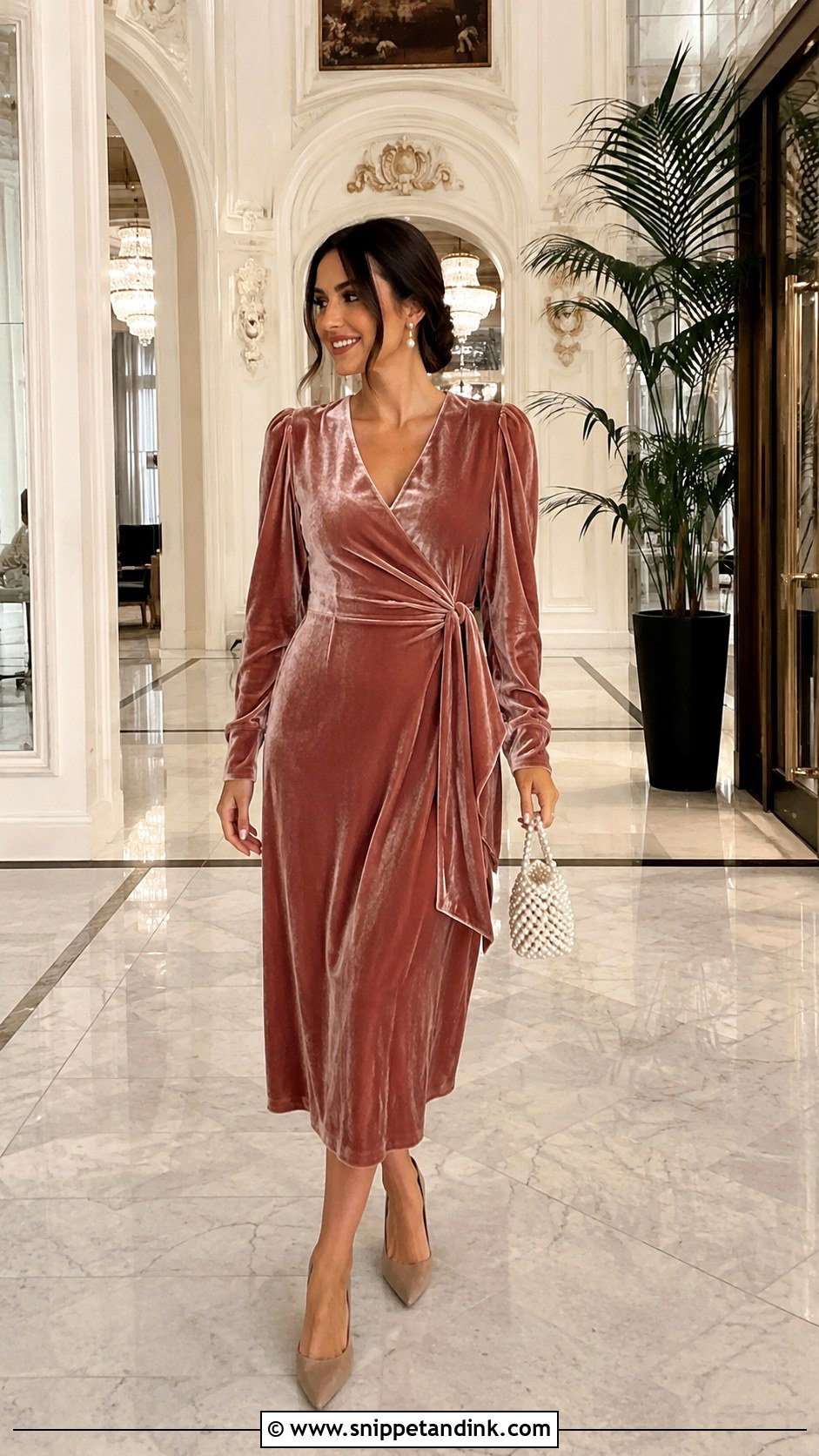
Velvet holds warmth, so on an autumn or winter evening you need fewer layers. Its trap is crushing. Velvet marks where you sit and where it has been folded, and those marks do not always steam out, so stretch velvet, which recovers better, is the safer buy. Ivory, dusty rose, deep blue and taupe can all tie back to your palette. A wrap or simple midi gives shape, and closed-toe heels with soft curls or a sleek low bun keep it refined.

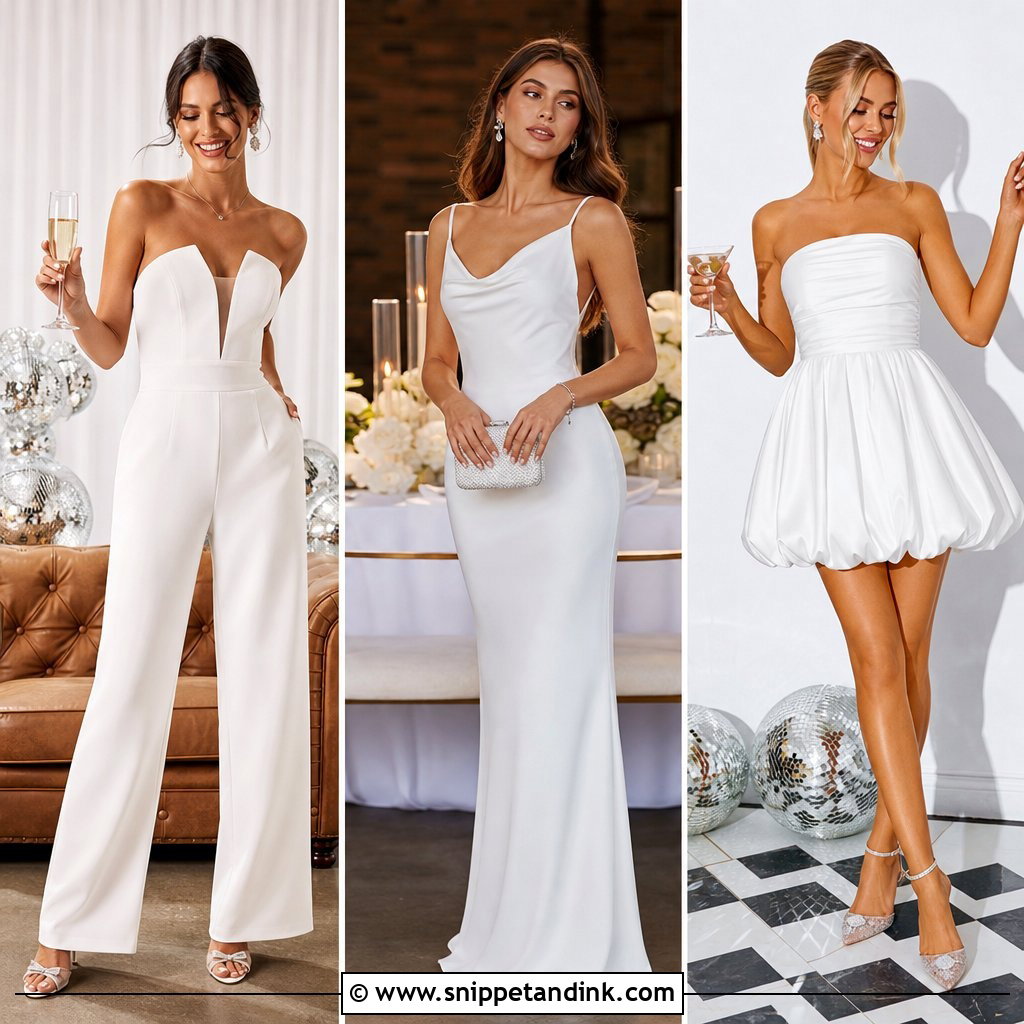
25. Simple White First Night Dress
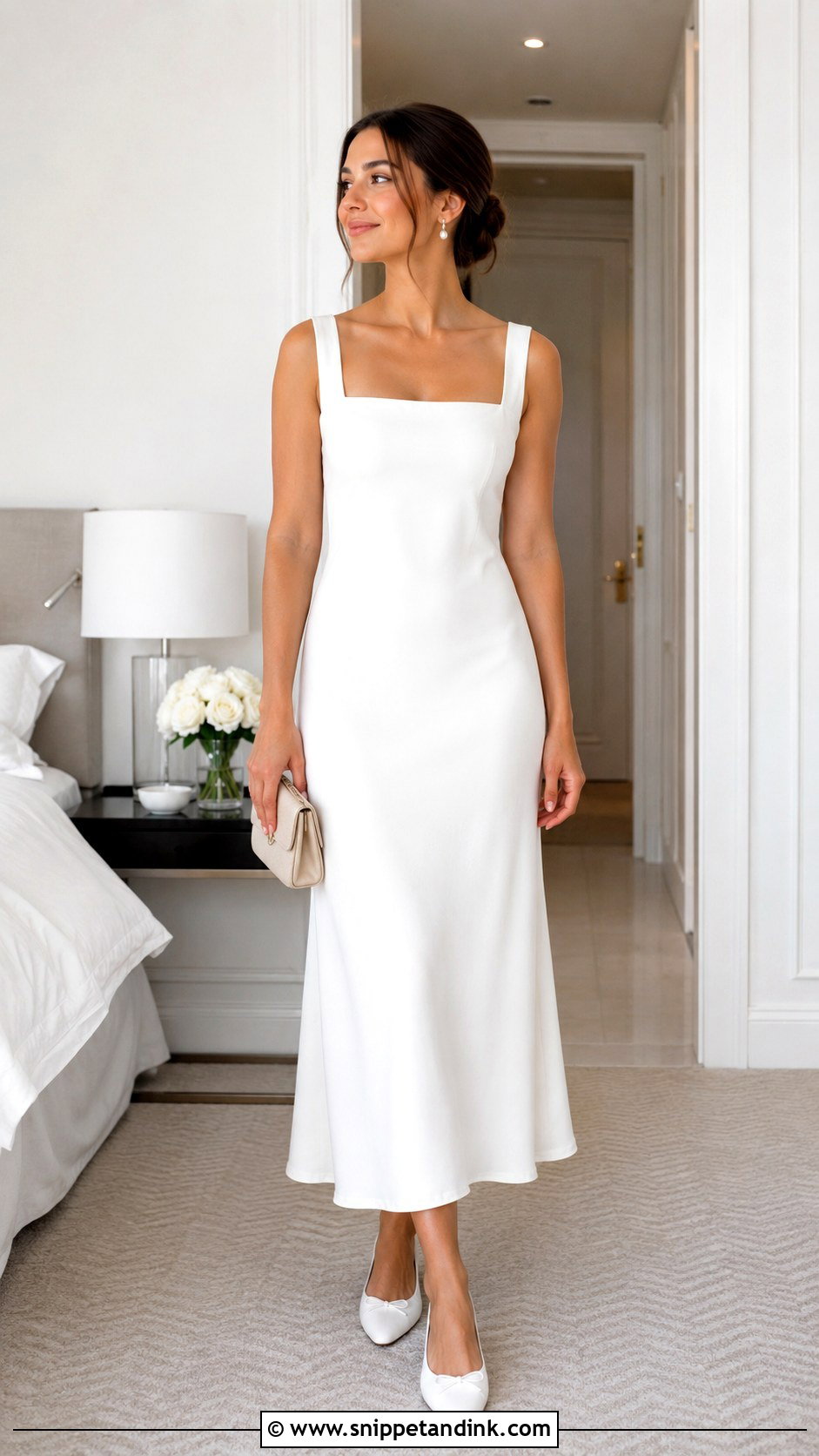
Sometimes the right answer is a well-cut white dress with nothing extra on it. Cotton sateen, crepe, satin and soft jersey all work if the fit is good. A square neckline or a wrap waist gives enough interest on its own. White flats, pearl earrings and a small bag finish it. It packs flat and gets worn again, and here fit and clean fabric matter far more than any trim.
Who Unhooks the Gown, and When to Change
Treat the change as a planned moment rather than an afterthought. Getting out of a corseted gown with a bustle, a lace-up back or a long row of covered buttons takes a second pair of hands and a good ten to fifteen minutes. Ask a bridesmaid or your mother to stay with you, and to bring a button hook if the back needs one.
Take the pins out of your hair before anything goes over your head, or choose a dress that steps in or zips at the side; pulling a slip over a set updo will drag it apart. If you are changing at the venue rather than the hotel, ask the coordinator for a room with a mirror and a hanging rail, and bag the wedding dress straight away so it is not left crumpled on a chair. Blot your face and add a touch of powder before you walk back out. By then you have usually been laughing, crying and hugging for hours.
Can You Sit, Hug and Travel in It?
None of these dresses depends on a rule. What I ask every bride is how long she will wear the outfit, where she will be and how warm the room is likely to be. Satin, lace, chiffon, silk, velvet and soft knits all work once the fit is right, and blush, champagne, blue and pastels are every bit as fitting as white. Get the lining, the seated length and one extra layer sorted, and the rest is simply your taste.
You'll Like These Ideas:


Leave a Reply