
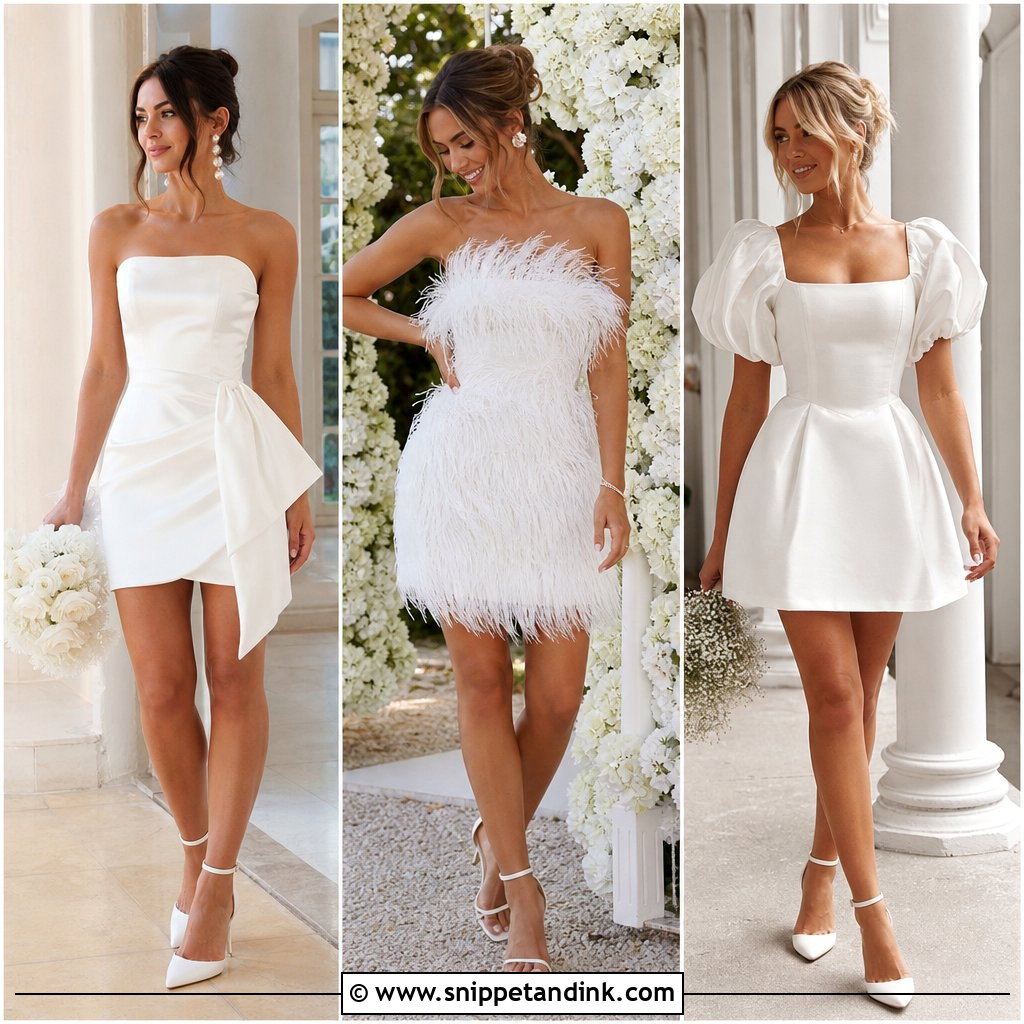
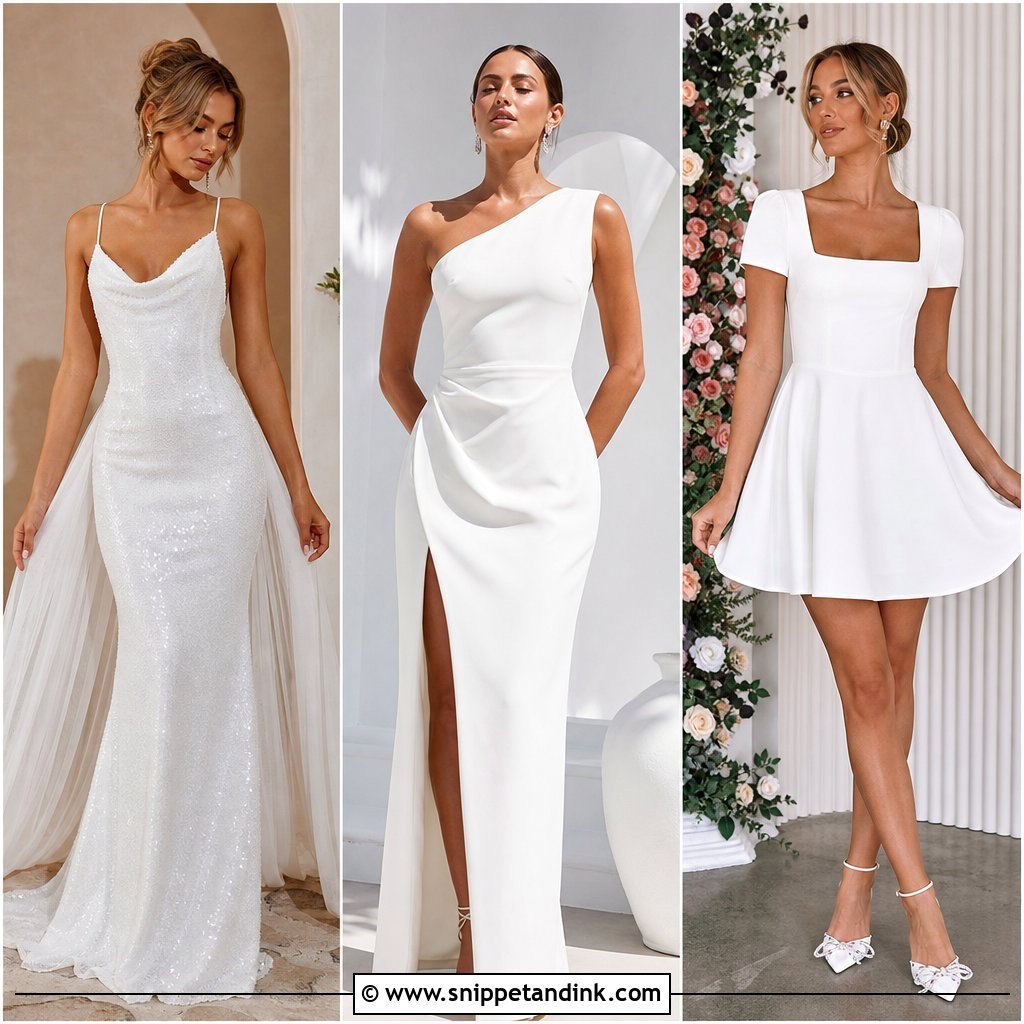
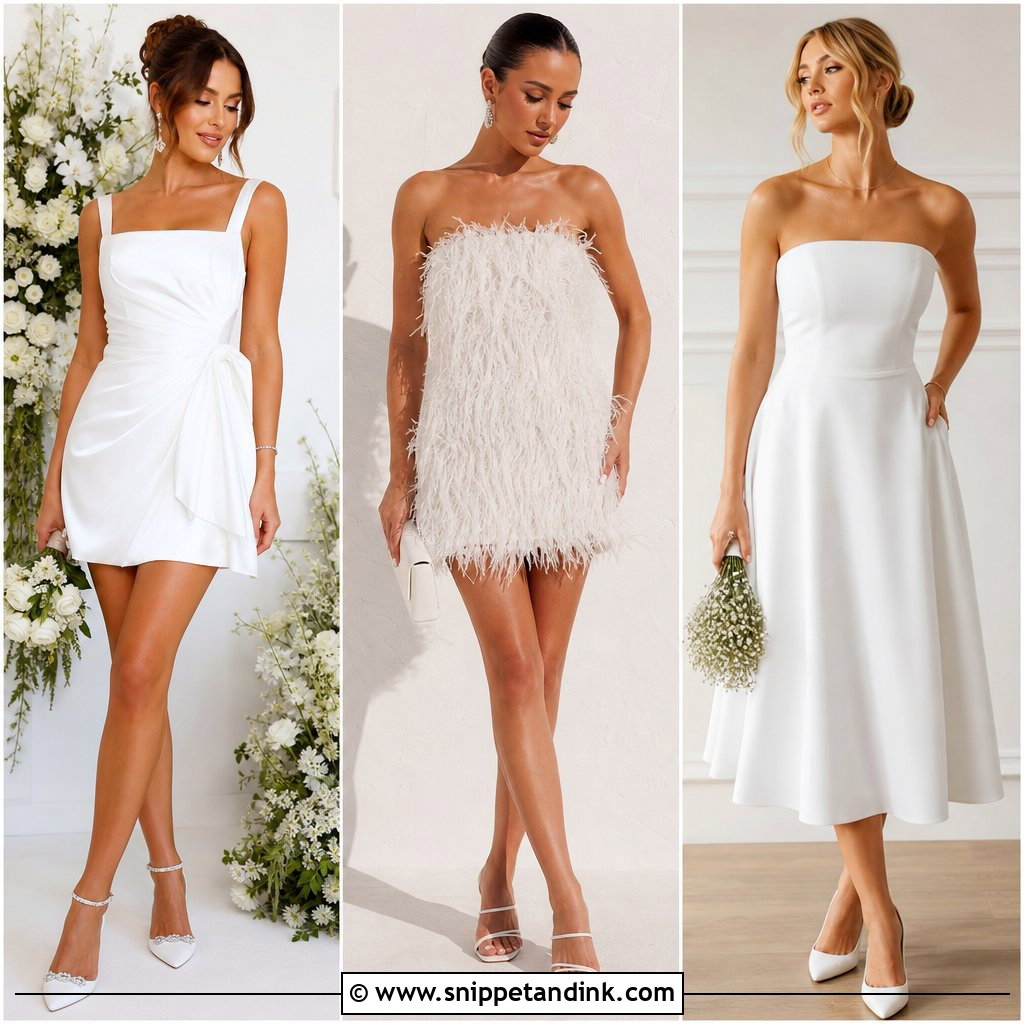
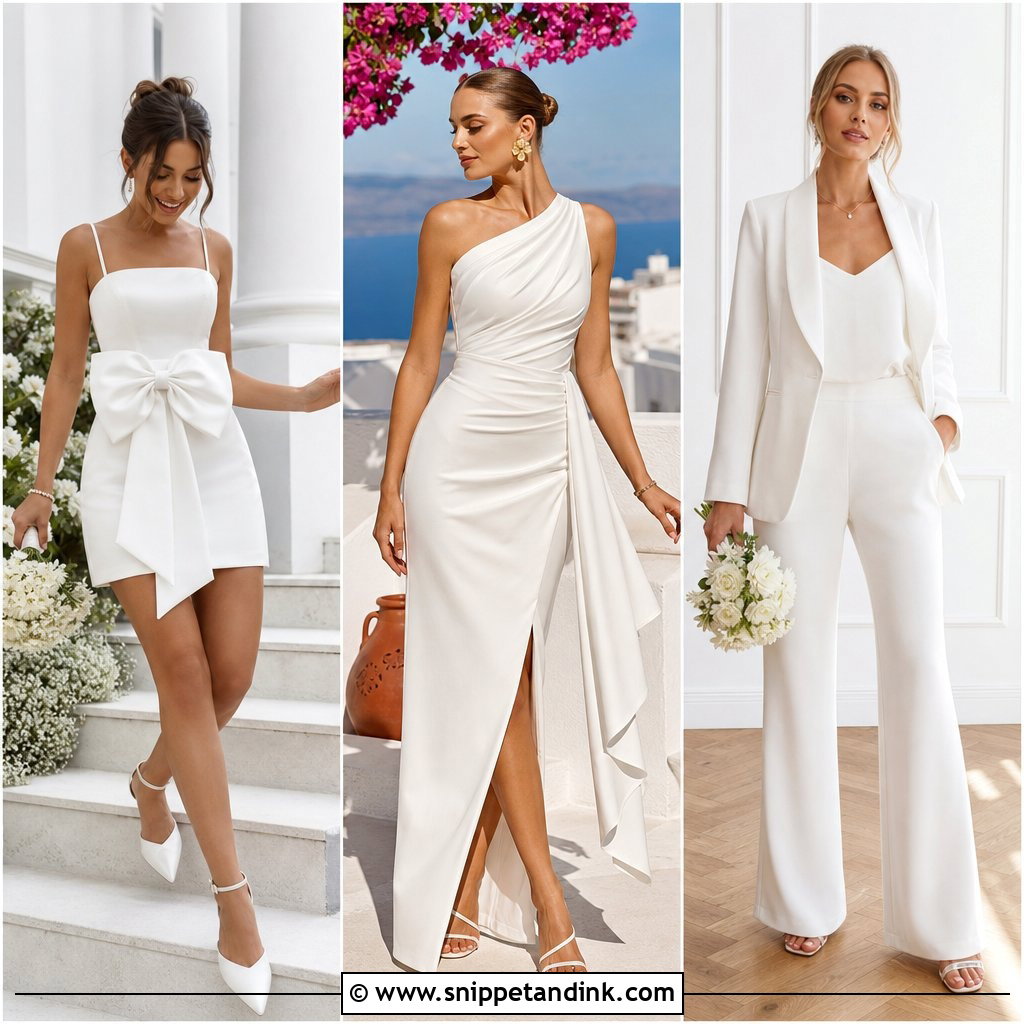
A short second dress solves a very practical problem. The gown that looked right walking down the aisle is often heavy, long and hot by the time the band starts, and a mini lets you dance, sit on the floor for photos and actually reach the bar. It also puts your shoes and accessories in front of people for the first time all day. The fabric can be polished satin, romantic lace, sequins or a playful bubble hem. What I tell every bride is that the second dress shouldn’t be a smaller copy of the first. It should feel like the next chapter. Think about the venue, the season, the dress code and how much you plan to move, and treat support and a secure hem as non-negotiable. Here are twenty reception dresses, each styled as a full outfit.

How the Second Dress Should Answer the First
I start with the ceremony gown, not the mini. The two dresses appear in the same album, often a page apart, so they should feel related without being twins. The easiest way is to keep one thing and change the rest.
- Keep the colour, change the texture. A lace ceremony gown pairs well with a smooth satin or crepe mini in the same ivory.
- Keep the texture, change the shape. A beaded ball gown can lead into a beaded shift.
- Keep a detail. A bow, a pearl button or a neckline shape repeated on the second dress ties them together.
Match ivories in daylight. Wedding whites vary from bright to creamy, and a stark white mini next to a cream gown makes the gown look yellowish in photos.
Shop for the second dress after the first is bought, but early enough for alterations. A short dress may need less work than a gown, yet the fit has to be just as precise, so allow time for at least one fitting with your reception shoes.
1. Strapless Satin Mini Wedding Dress
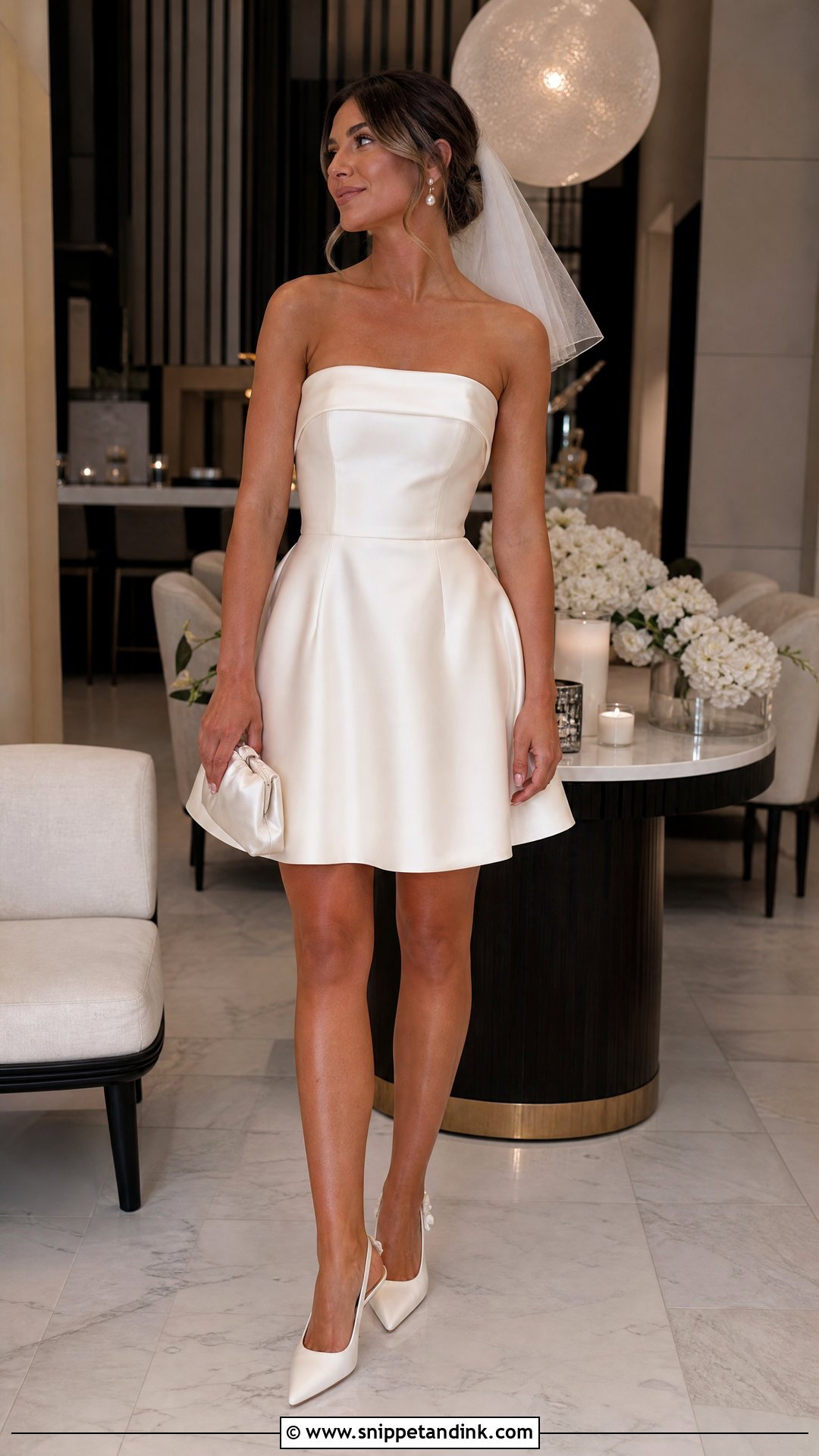
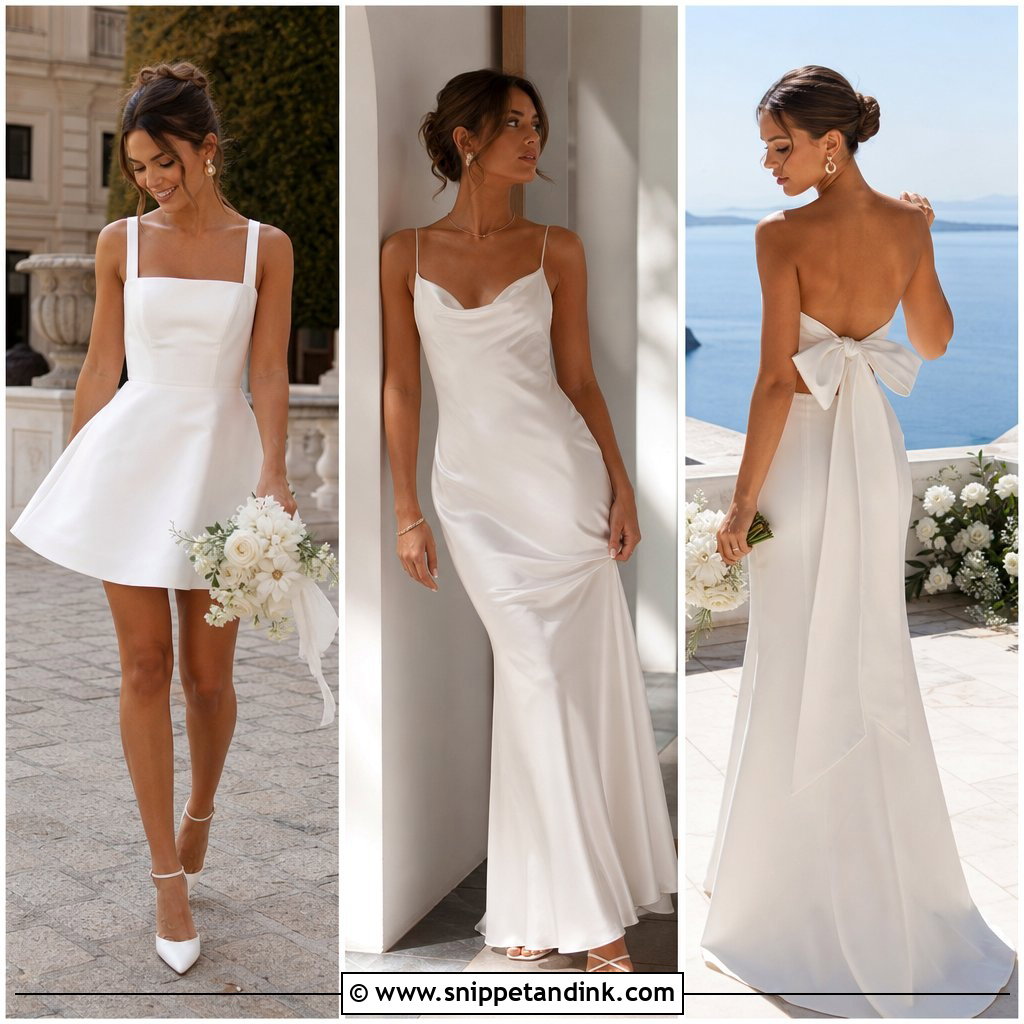
If the ceremony gown had lace, sleeves or a big skirt, a clean strapless satin mini is the cleanest contrast. Look for substantial ivory satin, a boned bodice and a gently fitted waist; an A-line skirt moves more easily than a pencil shape. Pointed slingbacks, pearl drops and a compact satin clutch, with a short tulle veil or an oversized bow for the entrance. Keep the hair sleek so the neckline shows. A strapless bodice that fits at 4pm can feel loose by 11pm after a hot room and a few hours of dancing, so I have it fitted snugly and a waist stay added. Cushioned block heels beat stilettos if you plan to dance for hours. Ballrooms, restaurants and modern rooms suit it.
2. Long Sleeve Lace Mini Wedding Dress
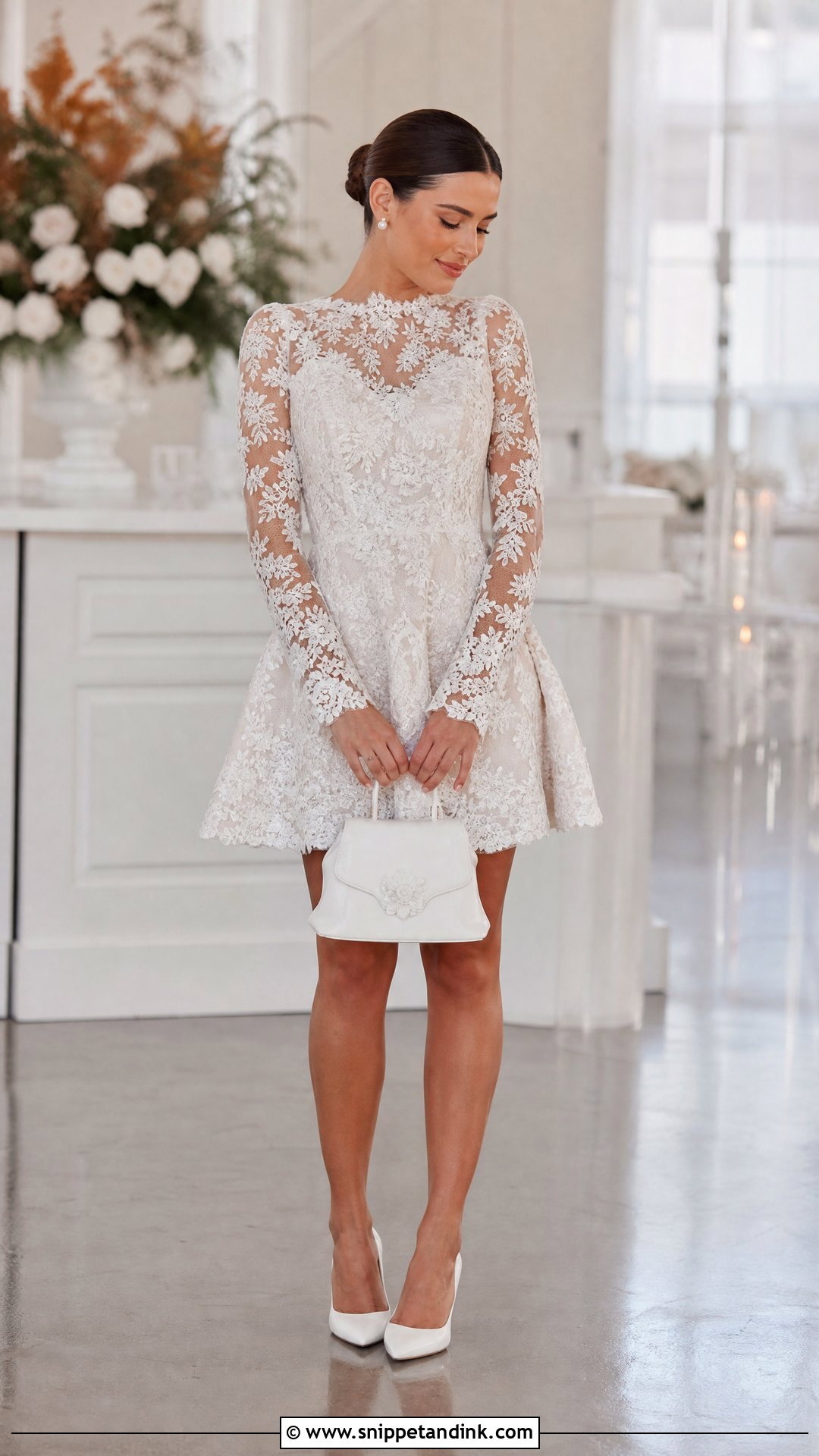
A long sleeve lace mini gives coverage with romance. Floral lace over a smooth ivory lining keeps the pattern clear in photos. A fitted bodice and lightly flared skirt give shape without trapping your legs. Pointed ivory pumps, pearl studs and a small structured bag, with a low bun or soft waves so the lace neckline isn’t crowded. Add a tailored white coat for cold arrivals. Bend your elbows fully before you buy. Lace sleeves without stretch dig in at the inner elbow, and you’ll feel it every time you lift a glass. Autumn, winter and formal receptions suit it.
3. Square Neck A-Line Mini Wedding Dress
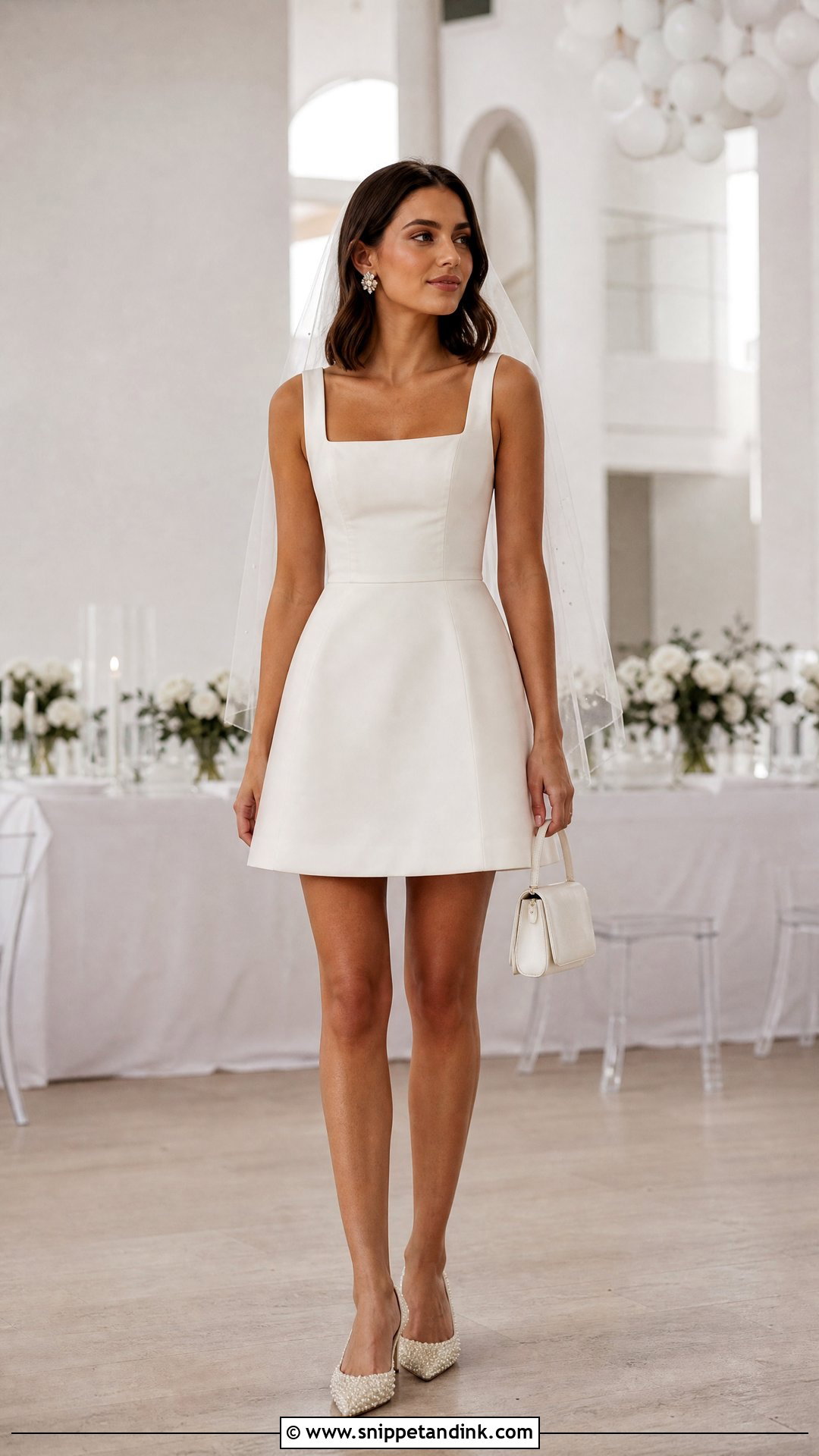
Square neck and A-line is the second dress I recommend most often to brides who don’t want to think about it all night. The neckline frames the collarbones, and wide straps hold far better than spaghetti straps once you start dancing. Matte crepe, satin or mikado keeps the skirt crisp until the end of the evening. Pearl-trimmed kitten heels, a top-handle bag and simple crystal earrings, with a shoulder-length veil if you want one. Curved waist seams or light boning add definition. It’s easy to accessorise, secure to move in and looks sharpest in bright, pared-back venues.
4. Off Shoulder Draped Mini Wedding Dress
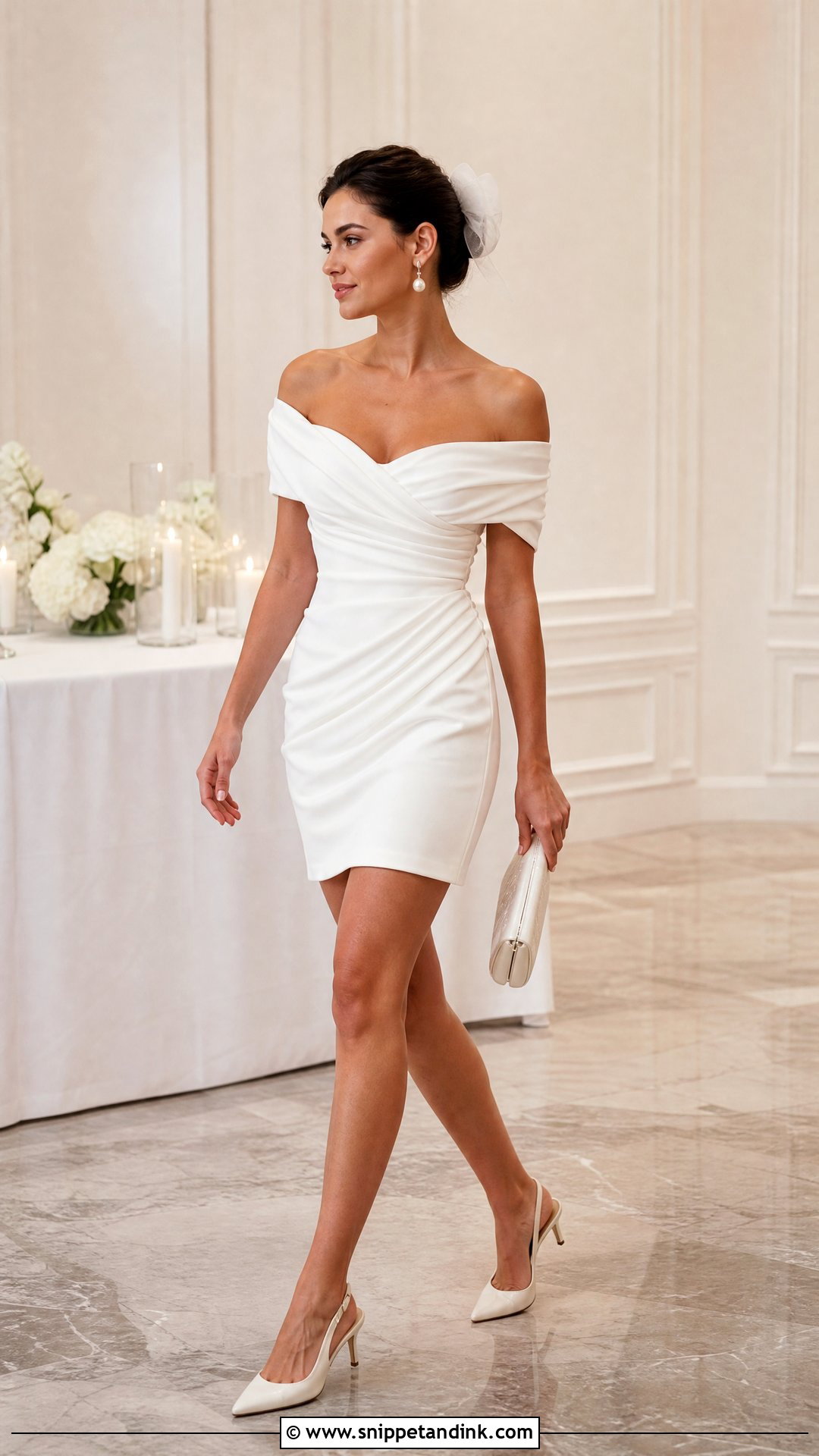
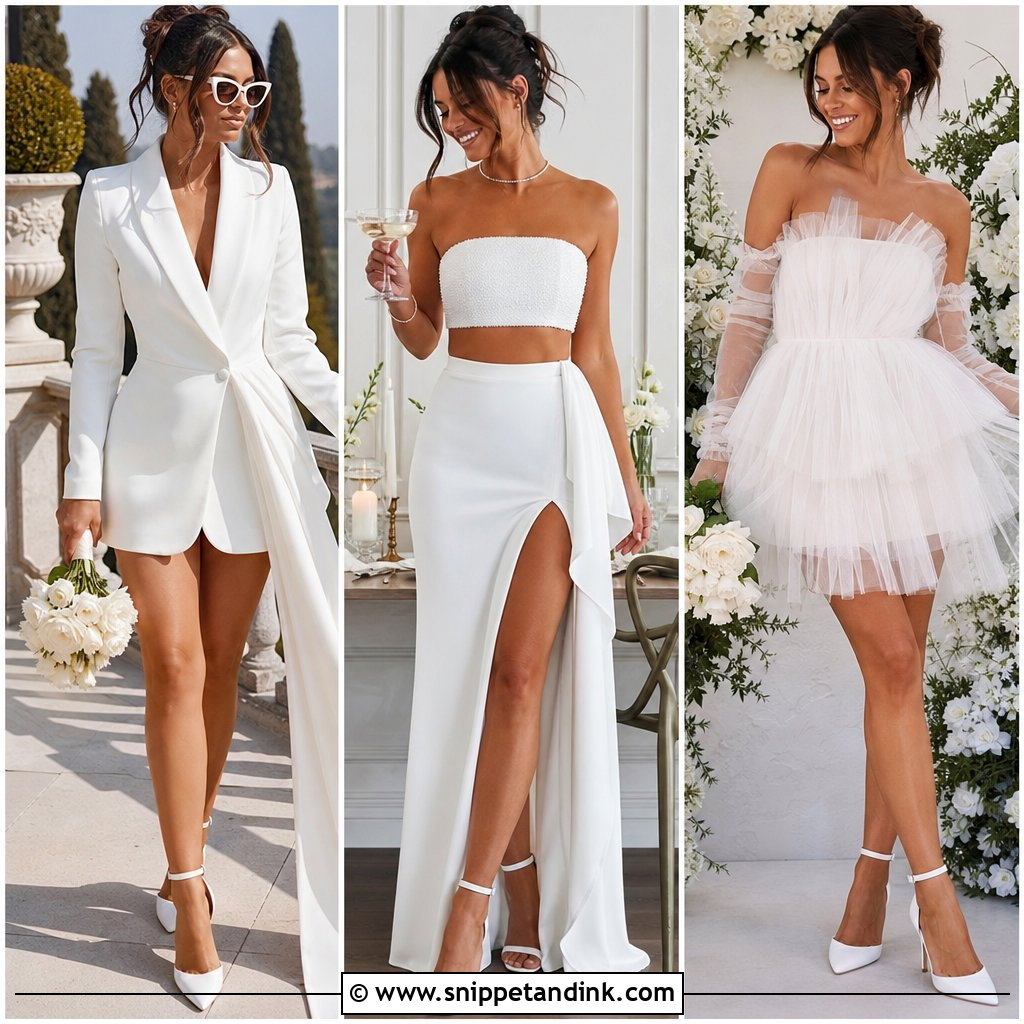
Draping turns an off-shoulder mini into something sculpted, and it’s a clear change from a high-neck or sleeved ceremony gown. Crepe with a little stretch, or satin with proper internal support, lets you move without hitching it up. Low slingbacks, a pearl clutch and fine drop earrings, with an updo so the folds stay visible. A small tulle bow or crystal comb replaces the veil. The test I insist on is the dance-floor arm raise: both hands above your head, then a hug. If the drape slips, a silicone strip inside the neckline usually fixes it. Upscale receptions suit it.
5. Sequin Mini Wedding Dress
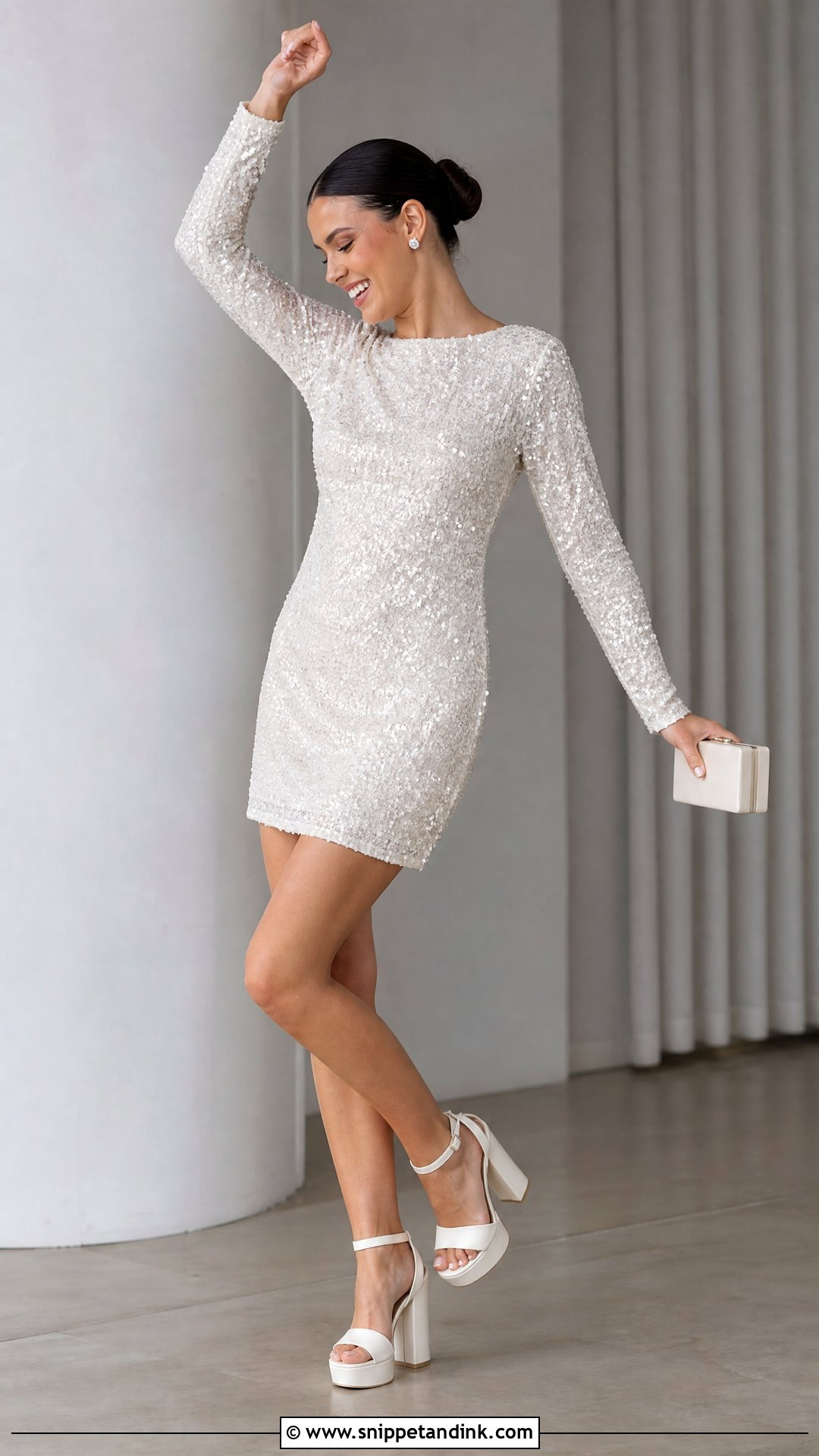
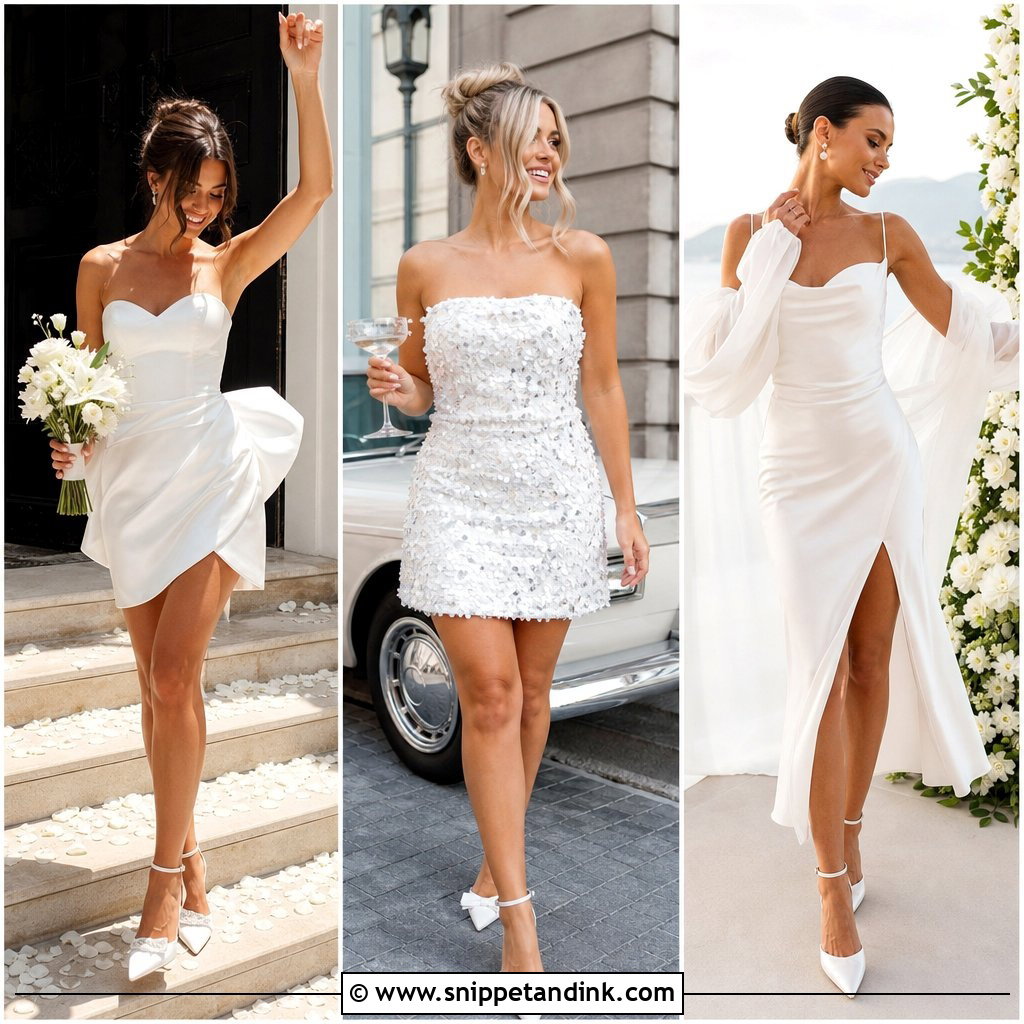
A sequin mini wedding dress tells everyone the party has started. Ivory, silver-white or soft pearl sequins look bridal; hard metallics read as a guest dress. A simple shift or fitted long-sleeve shape keeps the shine from getting busy. Smooth satin platforms, small crystal earrings and a plain white clutch, with a sleek ponytail or brushed waves. Sequins snag tulle and lace, so change only after your veil and ceremony pieces are packed away, and keep them apart in the bag. A soft lining is essential; scratchy underarms are the most common complaint I hear by midnight. Evening receptions and dance-heavy parties suit it.
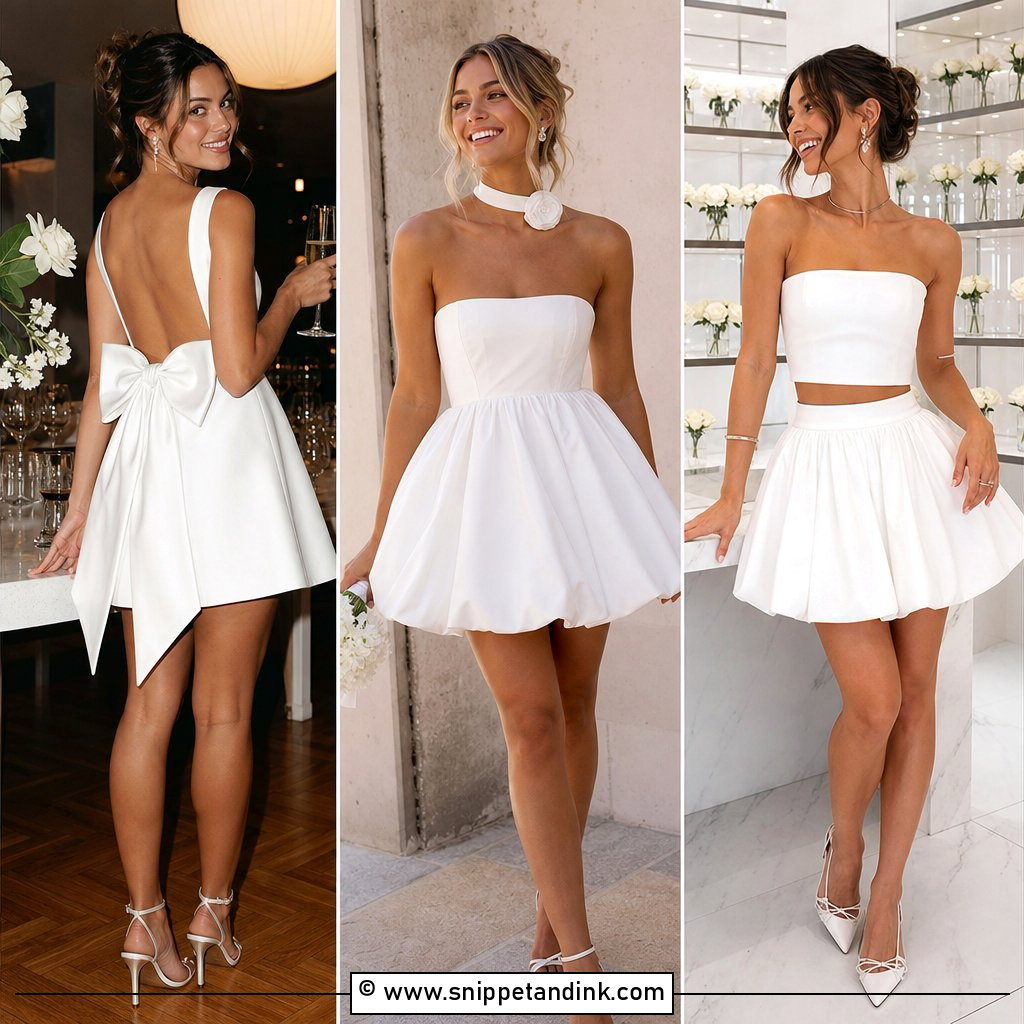
6. Bow Back Mini Wedding Dress
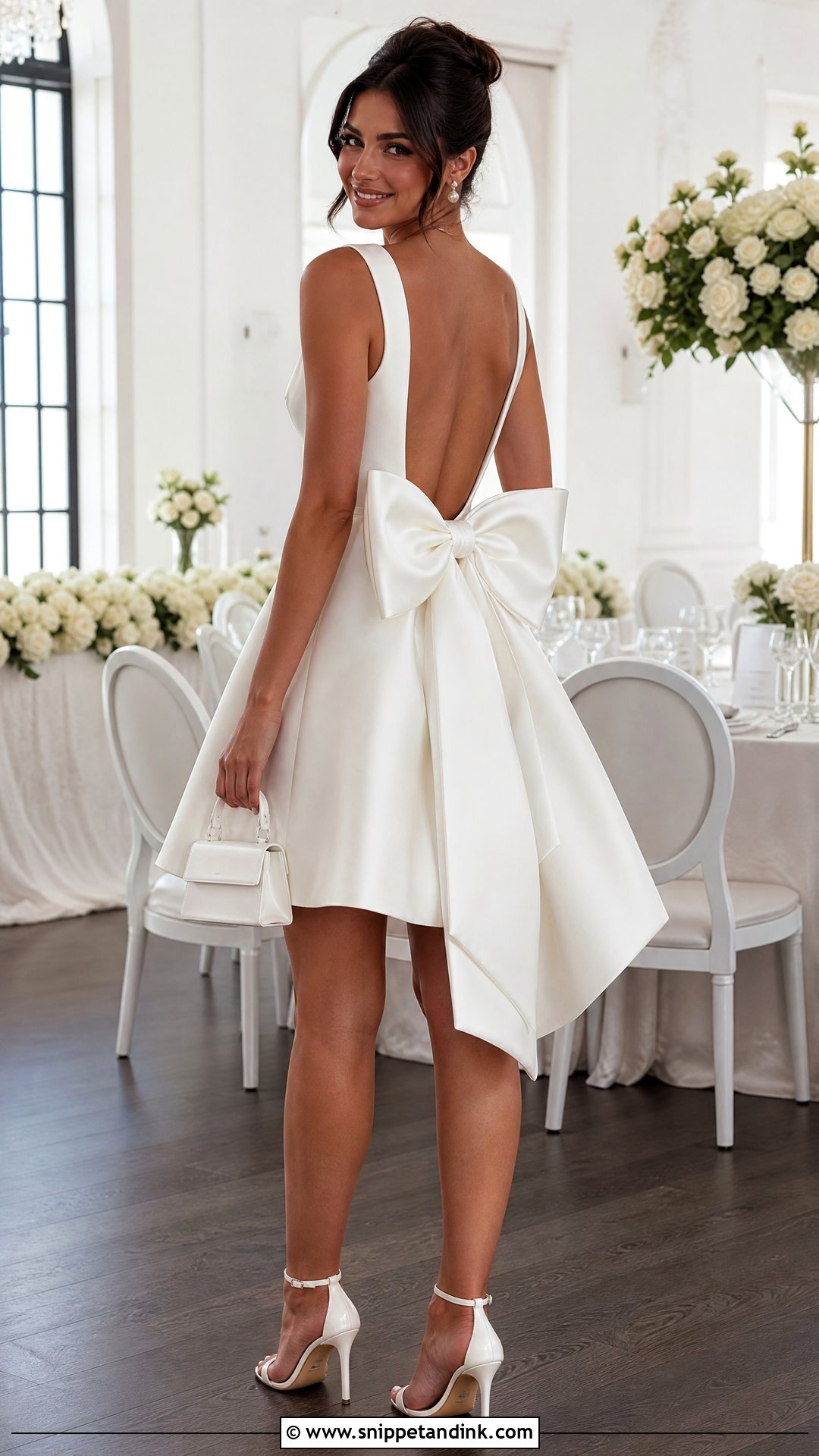
Nothing happens with a bow back mini until you turn around, and then it’s all anyone sees. A clean front keeps it sophisticated. Mikado or duchess satin holds a bow’s shape; softer satin collapses within an hour. Ankle-strap heels, pearl earrings and a tiny top-handle bag. Wear your hair in a bun, ponytail or swept to one side so it doesn’t cover the back. If a huge bow feels like too much, a removable or medium bow with trailing ends is gentler, but the ends should stop well above the floor or someone will step on them. Romantic receptions and exit photos suit it.
7. Halter Neck Mini Wedding Dress
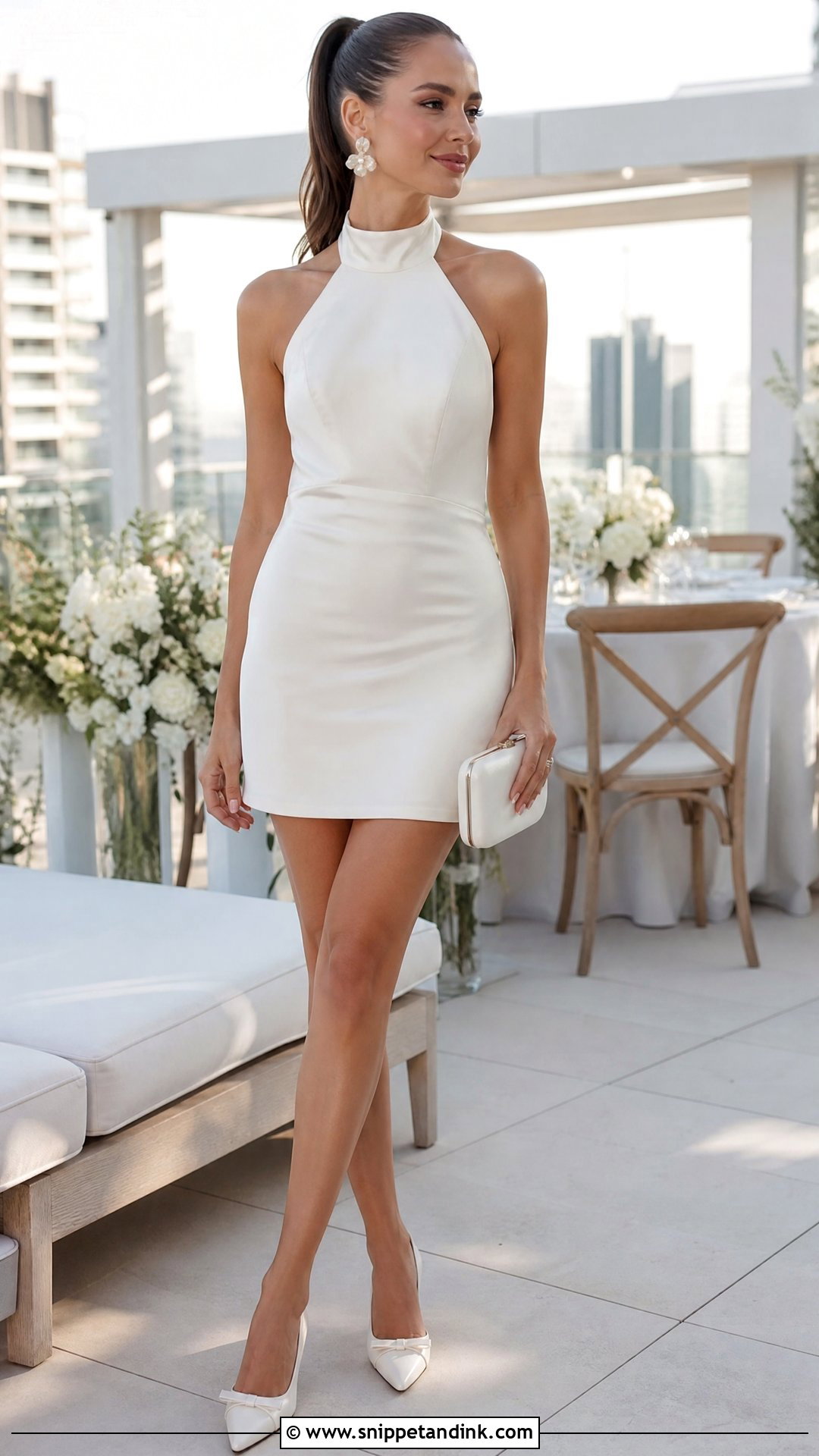
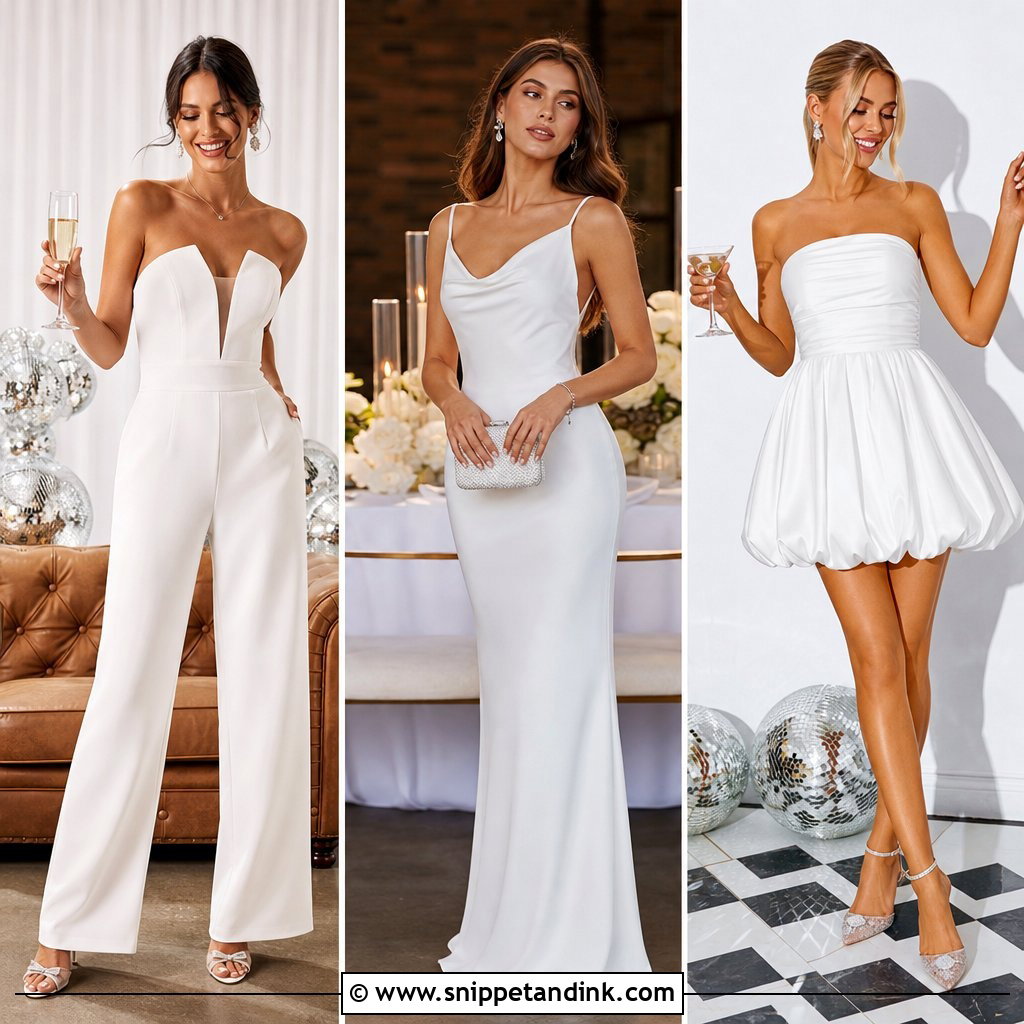
A halter neck mini wedding dress draws the eye up to the shoulders and face. Smooth satin or crepe looks sharp, and a gathered neckline adds a little movement. Pointed kitten heels, sculptural earrings and a small metallic or ivory clutch; skip the necklace. A high ponytail, braided bun or polished updo shows off the construction. For support, look for a fitted waist, a secure neck fastening and built-in cups. Gaping armholes are the giveaway of a poor fit on a halter, and they show badly in side-on dance photos, so check them in a mirror from the side. Rooftops and warm-weather receptions suit it.
8. Corset Mini Wedding Dress
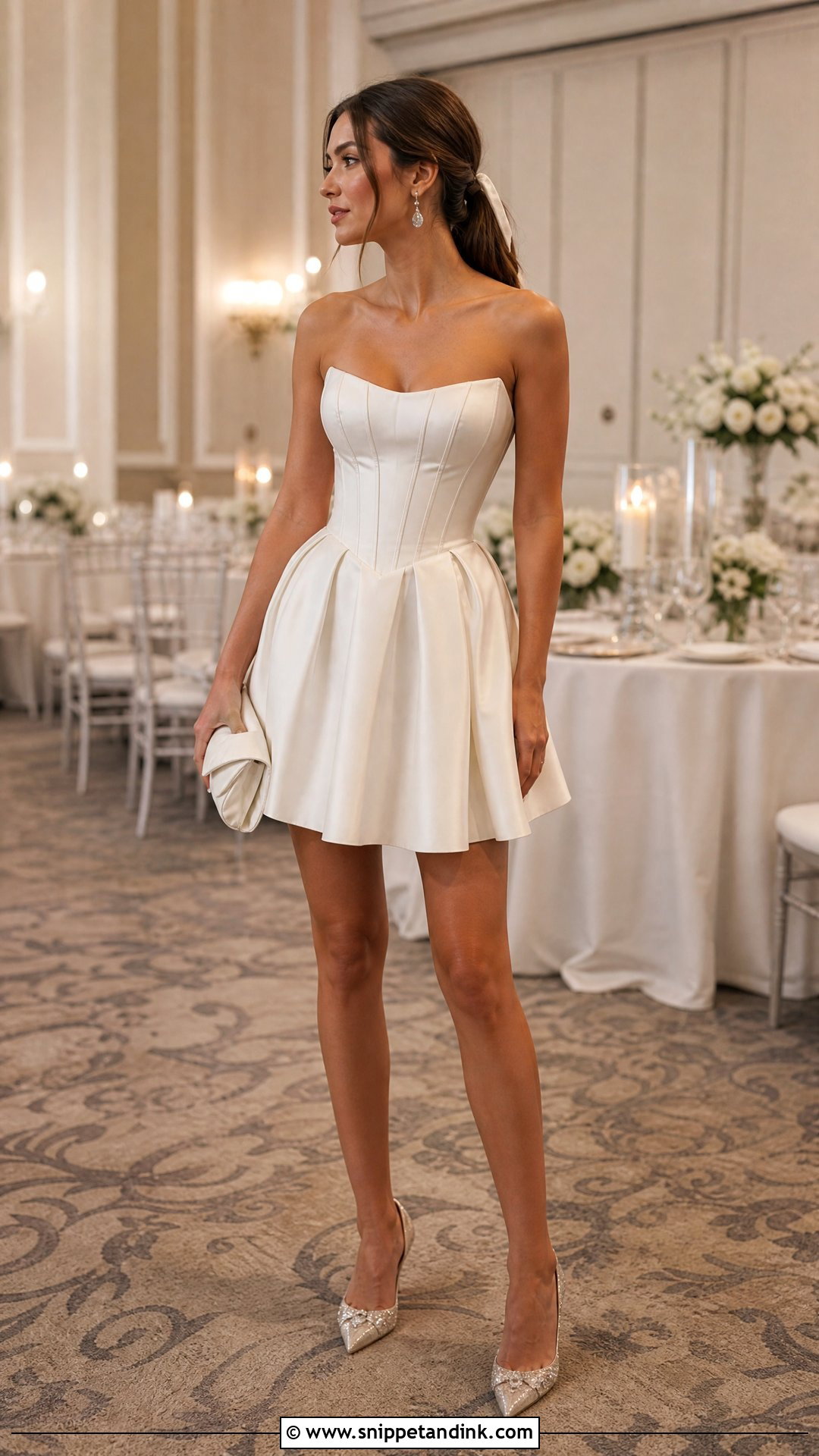
A corset mini gives shape and support in one. Flexible boning, secure cups and a softly curved neckline matter more than how tight the waist looks. An A-line or pleated skirt balances the structured top and leaves room to move. Crystal slingbacks, a satin clutch and short drop earrings, with a narrow ribbon in a low ponytail. I’d never size down to get a smaller waist. You’ll be eating, sitting and dancing in it for hours, and a corset that’s too small rides up and pinches under the arms. Keep accessories minimal if the seams show. Formal receptions suit it.
9. Feather Trim Mini Wedding Dress
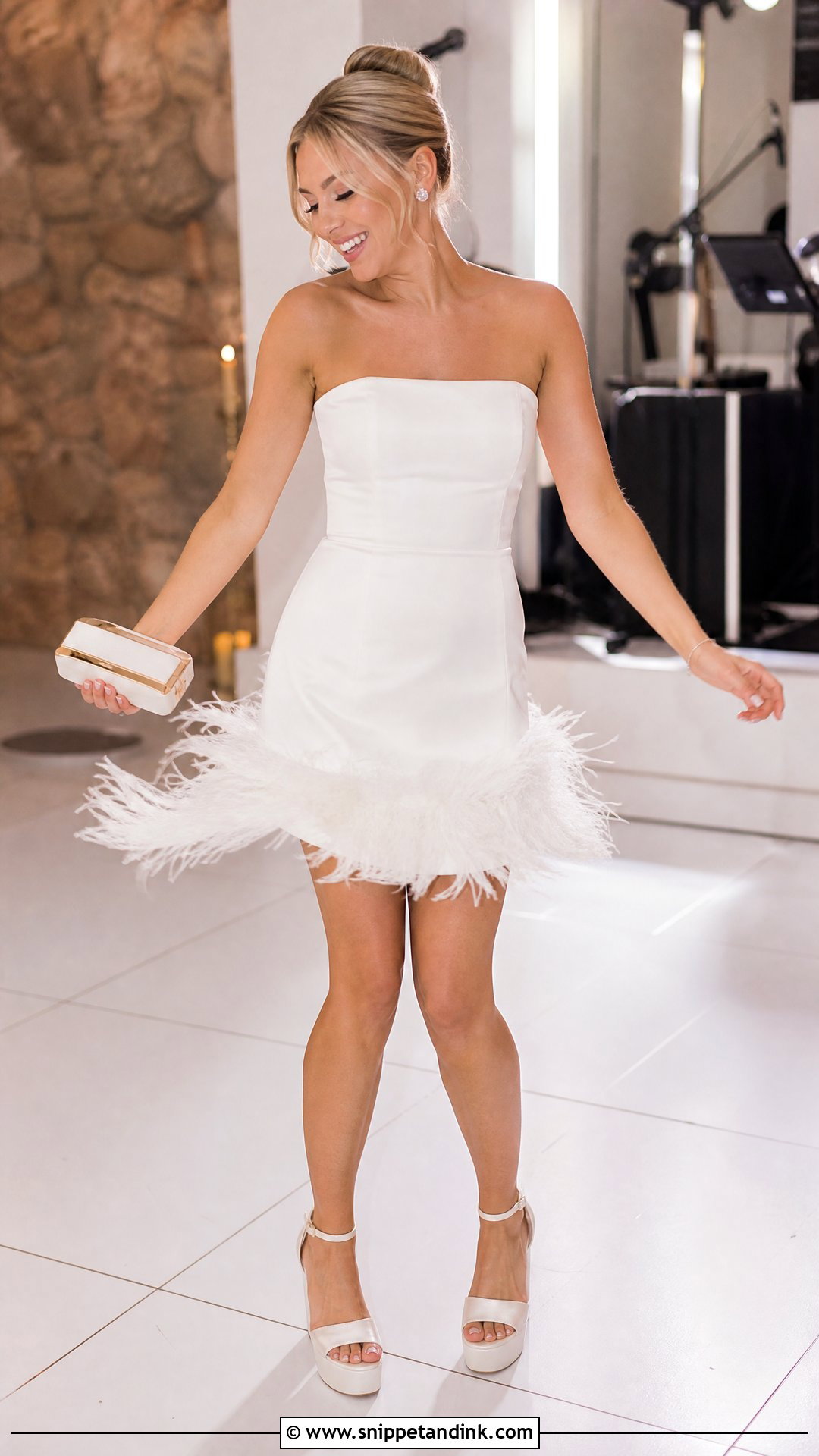
Feather-effect trim is a playful way to mark the change from ceremony to party. Keep the dress simple, a strapless shift or fitted crepe, so the trimmed hem or cuffs lead. Satin platform sandals, crystal studs and a clean box clutch, with a smooth bun or glam waves. Choose light trim that doesn’t shed or itch, and give it a shake before you buy. Fluffy edging makes a hem look shorter in photos, so I’d have the length set a little lower than you’d choose on a plain mini. Indoor evening receptions suit it, and it moves on the dance floor while keeping a bridal palette.
10. Beaded Fringe Mini Wedding Dress
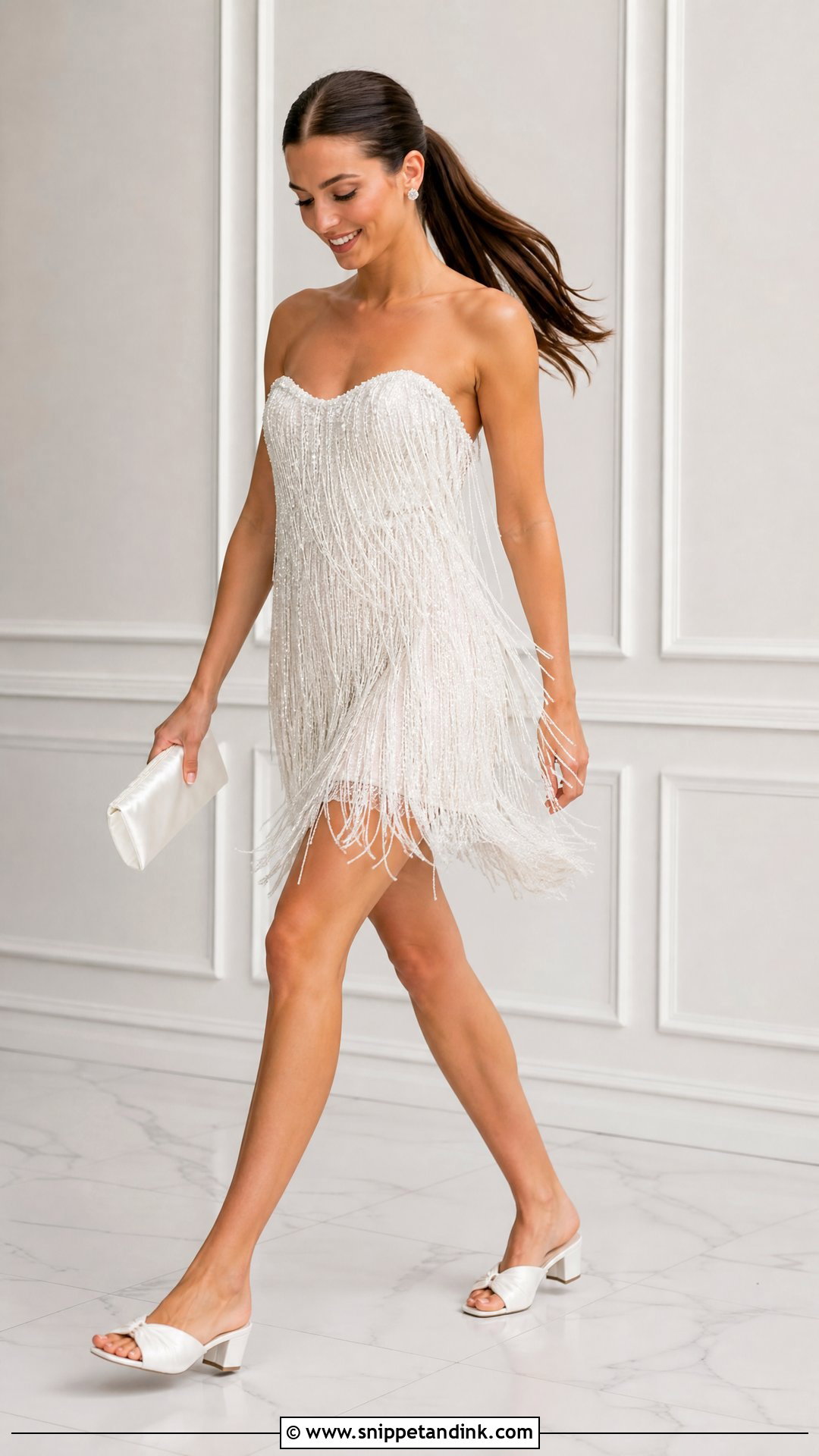
Every step moves a beaded fringe mini wedding dress, which is why it’s made for dancing. A smooth fitted lining under carefully placed fringe on the skirt or bodice. Ivory beads, clear crystals and pearls look more bridal than dark metallics. Low block heels, small studs and a slim clutch. A sleek ponytail or pinned waves stop hair tangling in shoulder beading. Pick the dress up before committing; dense beading is heavy and pulls on the shoulders after a few hours. A slightly relaxed fit usually moves better than tight bodycon. Festive evening receptions suit it.
11. One Shoulder Mini Wedding Dress
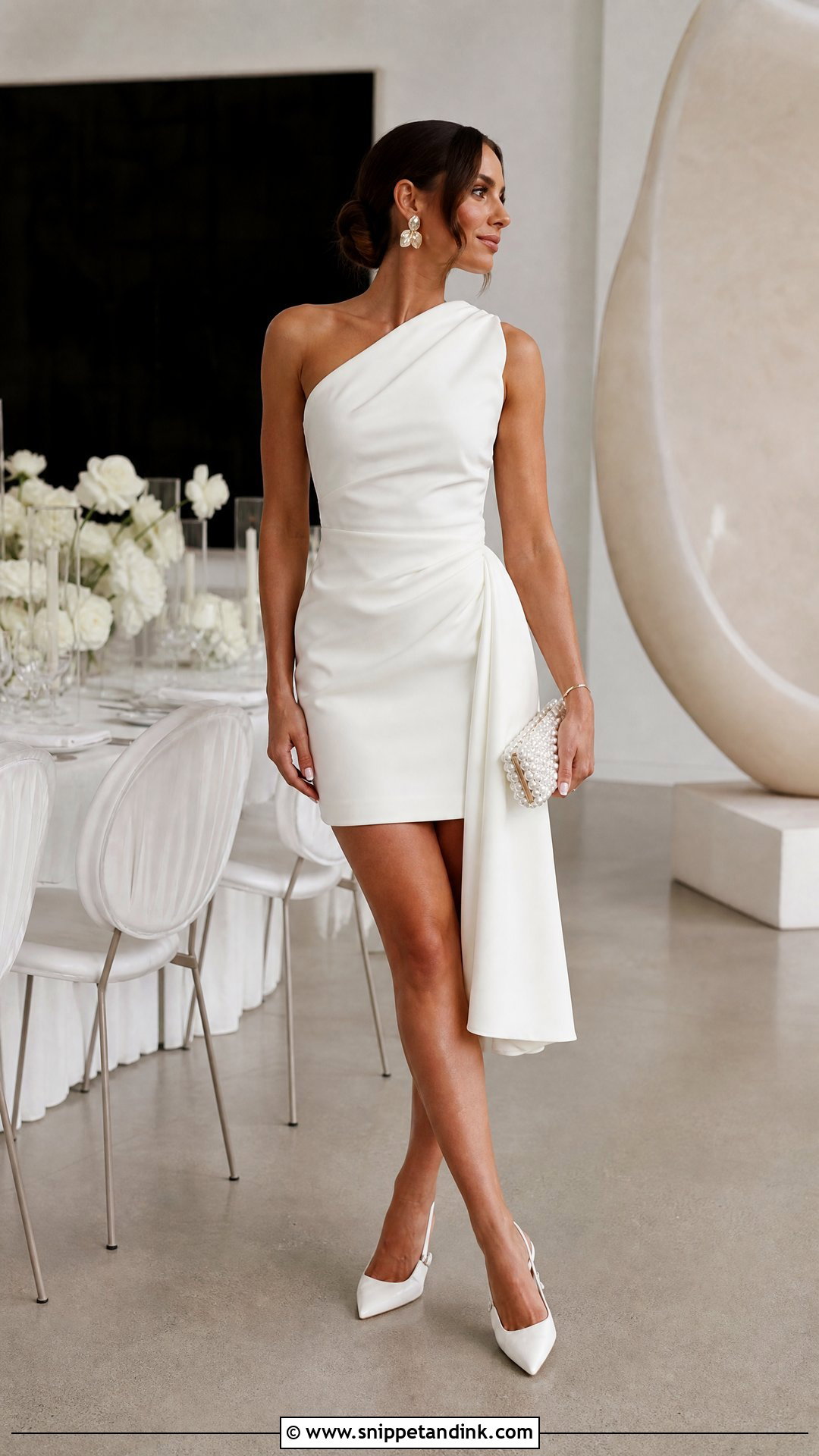
One shoulder gives an asymmetrical line that clearly differs from most ceremony gowns. A fitted crepe version looks streamlined, while satin with light draping is softer. Keep accessories simple: one sculptural bracelet, small earrings and pointed slingbacks, with an ivory or pearl clutch. Sweep your hair away from the bare shoulder or into a low bun. One-shoulder dresses tend to twist toward the strapless side as you dance, so I look for hidden support, a secure zip and a strap fitted snugly. Contemporary receptions and art-filled venues suit it.
12. Pearl Embellished Mini Wedding Dress
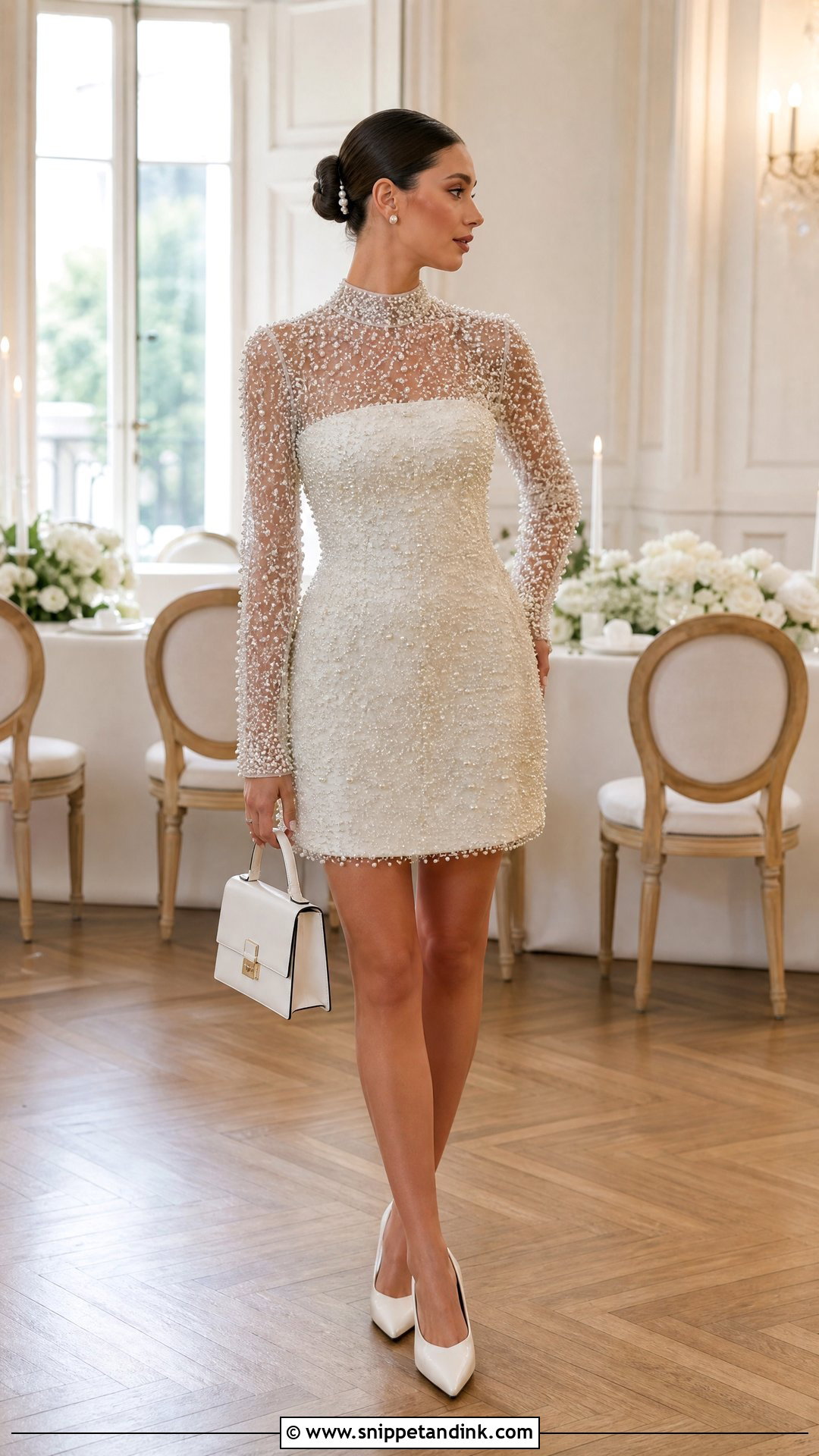
Tiny pearls turn a plain mini into a detailed second dress. They can cover sheer sleeves, a fitted bodice or the whole outer layer. A smooth lining keeps them off your skin. Plain satin pumps, pearl studs and a structured ivory bag; no beaded necklace, since the dress has enough. A neat bun with one small pearl pin is plenty. Look over the beadwork closely before the day and tuck a few spare pearls with a needle and thread into the emergency kit, because one or two always loosen against a chair back. Classic and formal receptions suit it.
13. Blazer Mini Wedding Dress
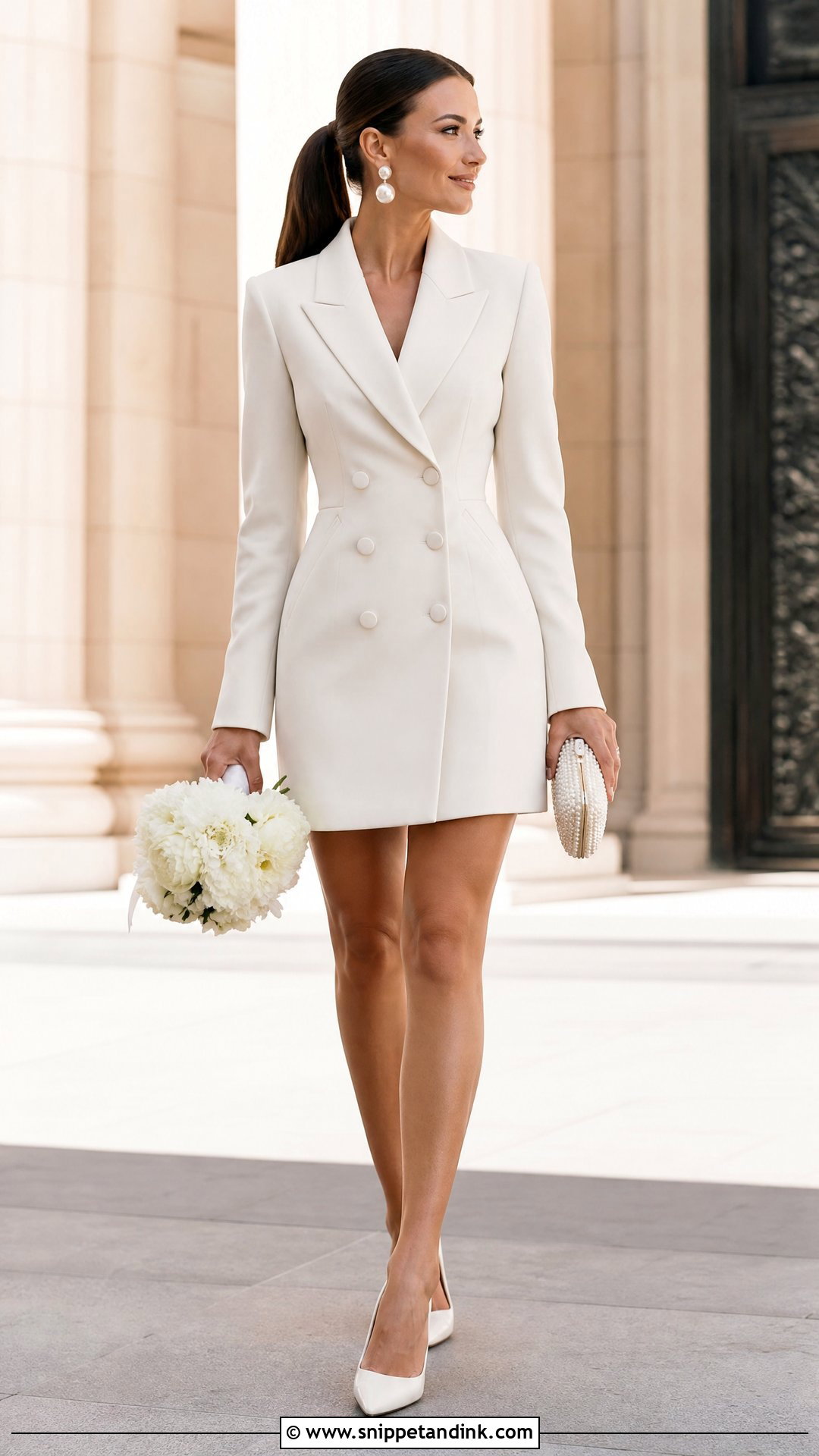
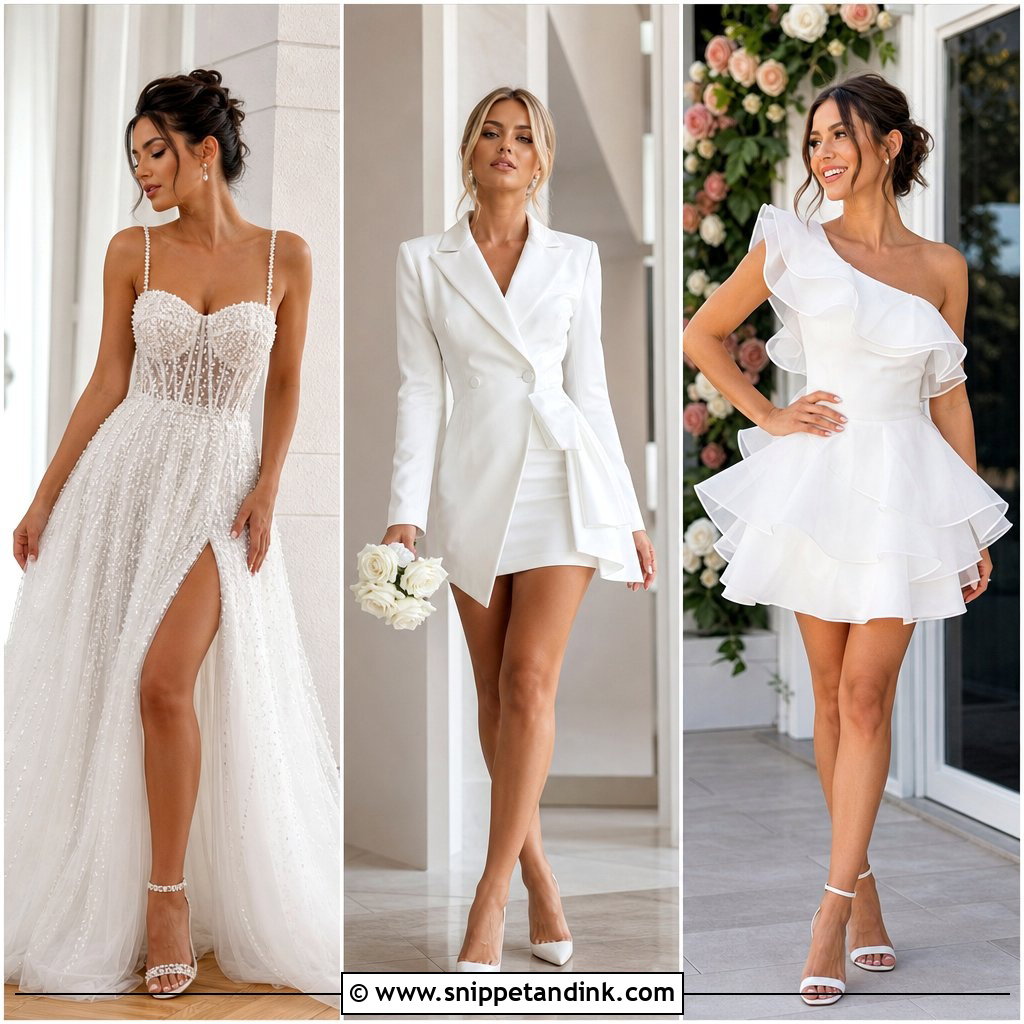
Tailoring makes a blazer mini wedding dress a sharp change from a romantic first gown. Double-breasted or wrap-front, with a defined waist and enough length to sit and dance. A light lining keeps it smooth without getting hot. Pointed pumps, a compact clutch and bold pearl earrings, with a sleek ponytail. Wear a smooth bodysuit or fitted slip beneath a low neckline. Sit down in it before you buy: a blazer dress that’s short on the body pulls open between the buttons when seated, and fashion tape only goes so far. City receptions and modern hotels suit it.
14. Bubble Hem Mini Wedding Dress
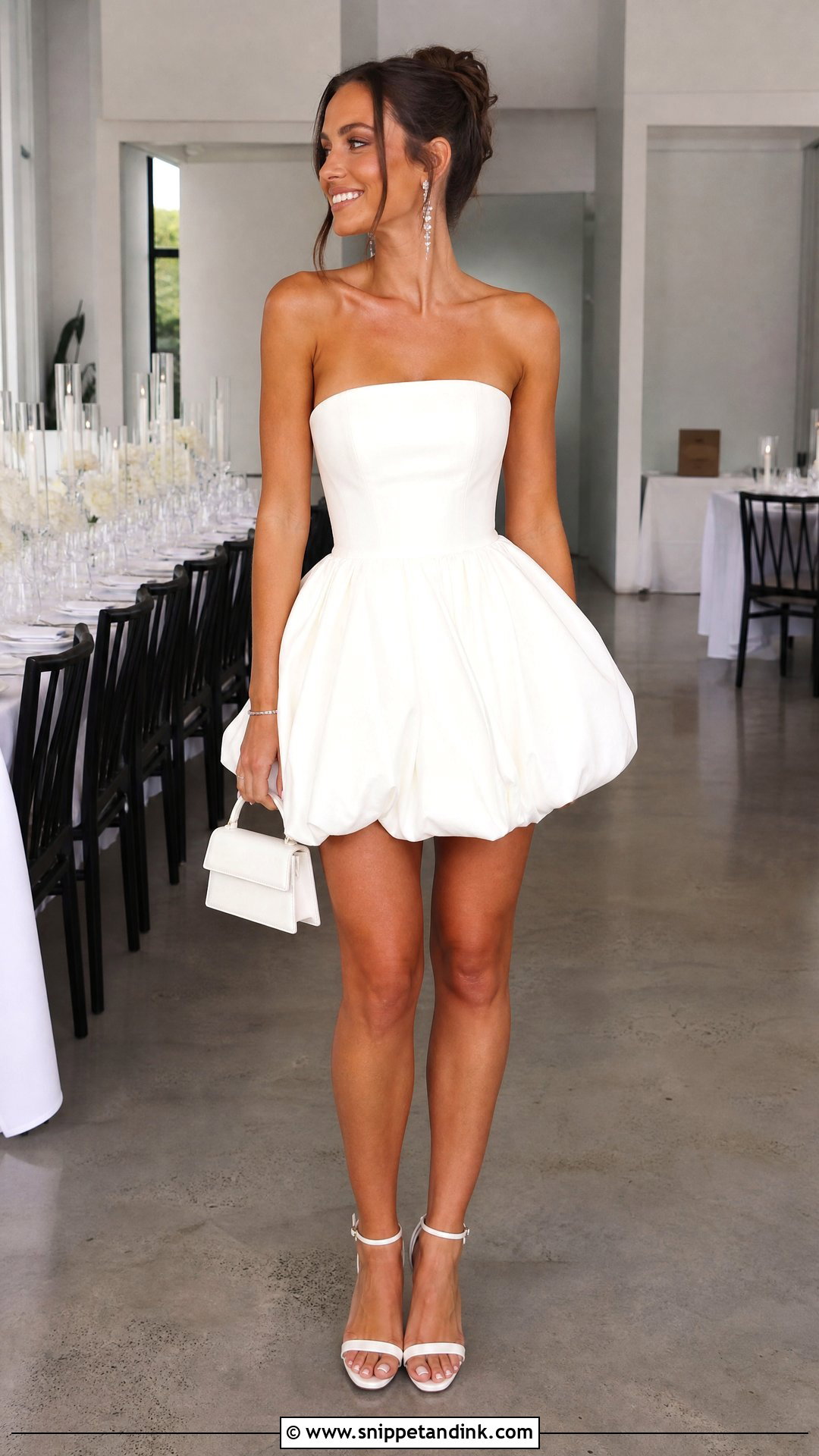
A bubble hem adds volume and a playful shape, and it works best over a simple fitted bodice. Crisp taffeta, mikado or satin hold the curve; soft fabric goes limp. Delicate ankle-strap heels, crystal studs and a small structured bag, with a sleek bun or half-up style. Bubble skirts stand away from the legs, so the inner lining and length need checking from every angle, including on stairs. Built-in shorts give confidence for dancing. Minimalist venues let the shape stand out, and it’s bridal enough while being fun to dance in.
15. Ruffle Shoulder Mini Wedding Dress
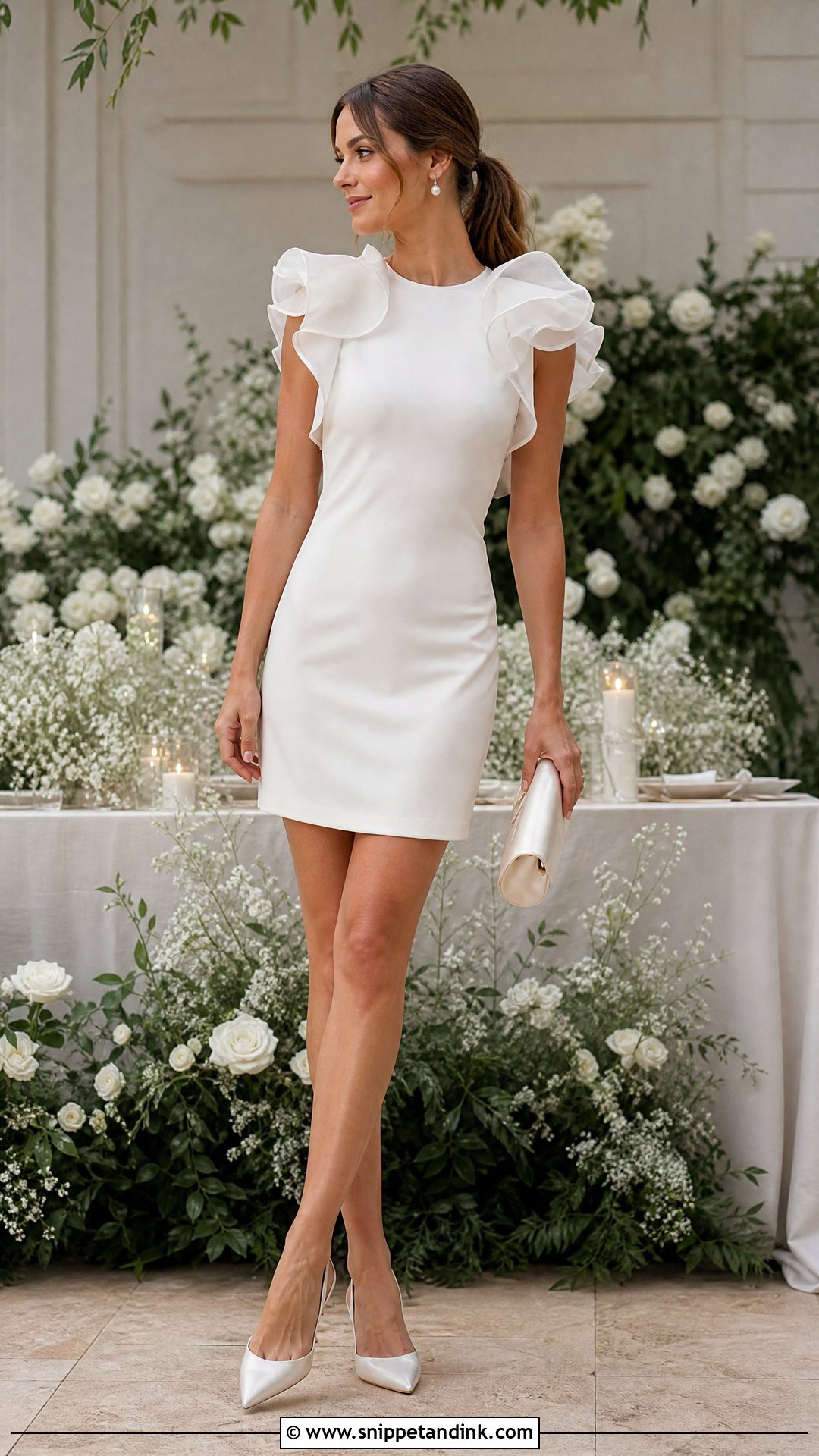
Ruffle shoulders give a simple mini a romantic focus. Light organza or tulle ruffles on a structured crepe or satin base keep it airy without losing shape. Understated slingbacks, pearl studs and a smooth satin clutch; skip the necklace. A low ponytail or swept-back style stops hair fighting the ruffles. If you have a fuller bust, I’d choose smaller ruffles and a supportive V-neck, as big shoulder volume on top of a full bust can make the upper body look wider than it is. Garden venues and soft, romantic receptions suit it.
16. Floral Applique Mini Wedding Dress
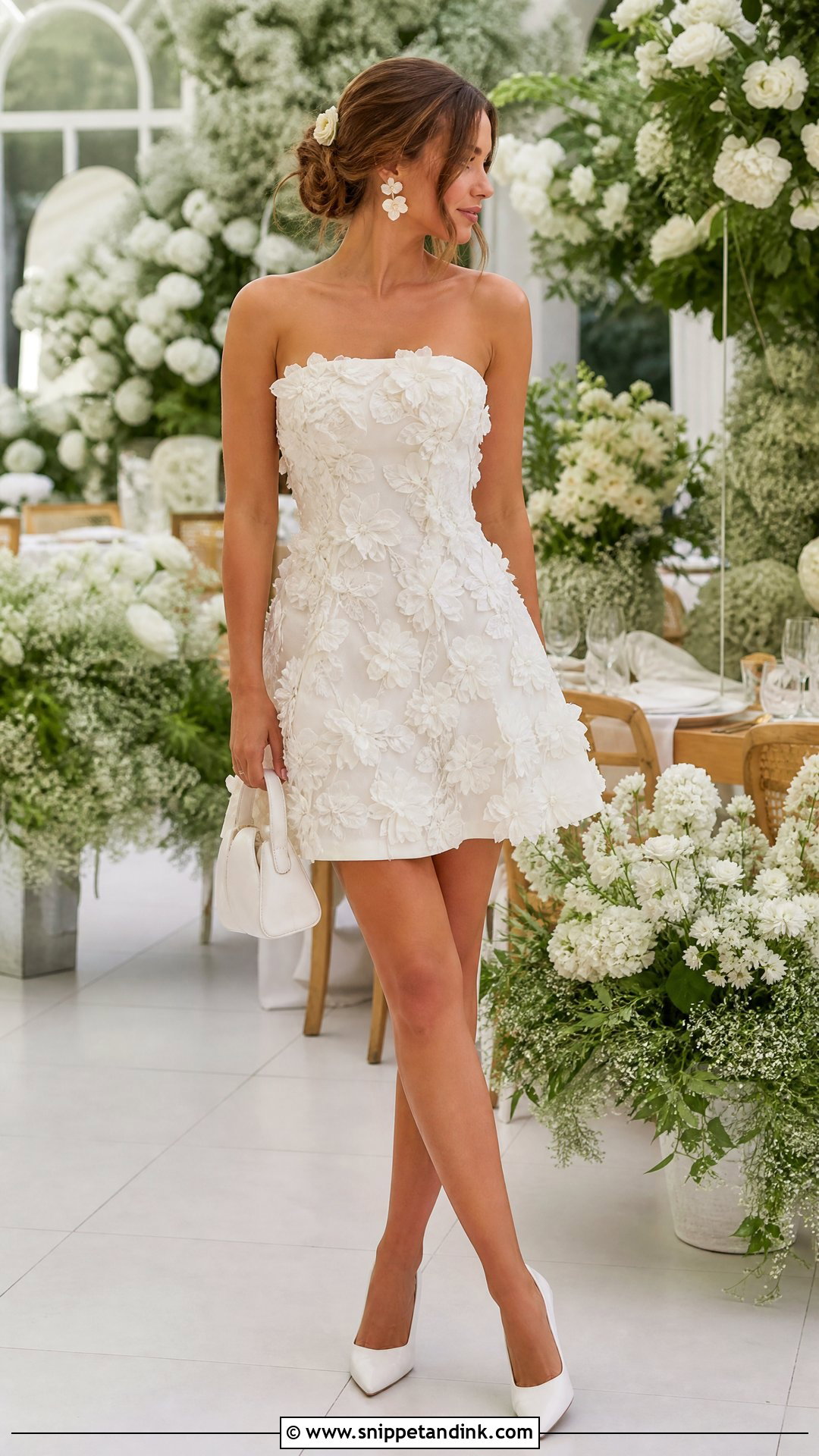
Three-dimensional flowers give a short second dress detail that shows in photos. Keep them to the neckline, skirt or sleeves so the silhouette still reads. Simple pointed heels, small floral earrings and an ivory bag, with a loose bun or polished waves and one floral pin. If the appliqués run past the hem, check they won’t catch on your heels when you spin. A fitted lining under a sheer floral overlay gives coverage while keeping the raised effect. Spring and summer receptions and botanical venues suit it, especially if you’d rather have texture than sparkle.
17. Cape Sleeve Mini Wedding Dress
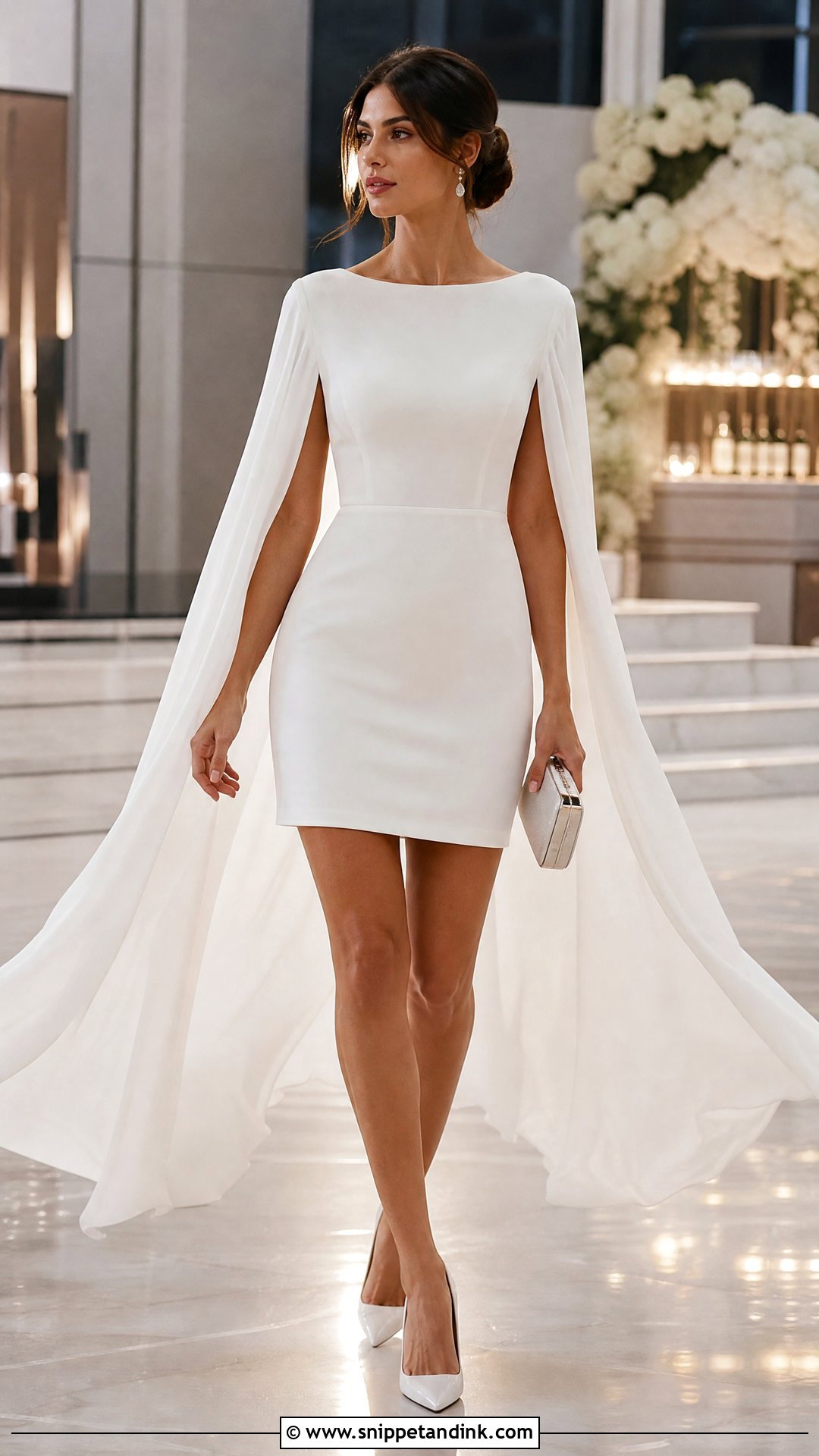
Cape sleeves give drama and cover at once. Panels attached at the shoulders flow like a cape while the dress stays short. Light chiffon over a fitted crepe or satin base keeps the weight down. Pointed heels, a structured clutch and minimal drop earrings, with hair up or tucked behind the shoulders. I keep the panels above the knee, because anything longer wraps around your legs on the dance floor. A removable cape gives you two looks. Grand reception entrances suit it if you want drama without another floor-length gown.
18. Tea Length Second Wedding Dress
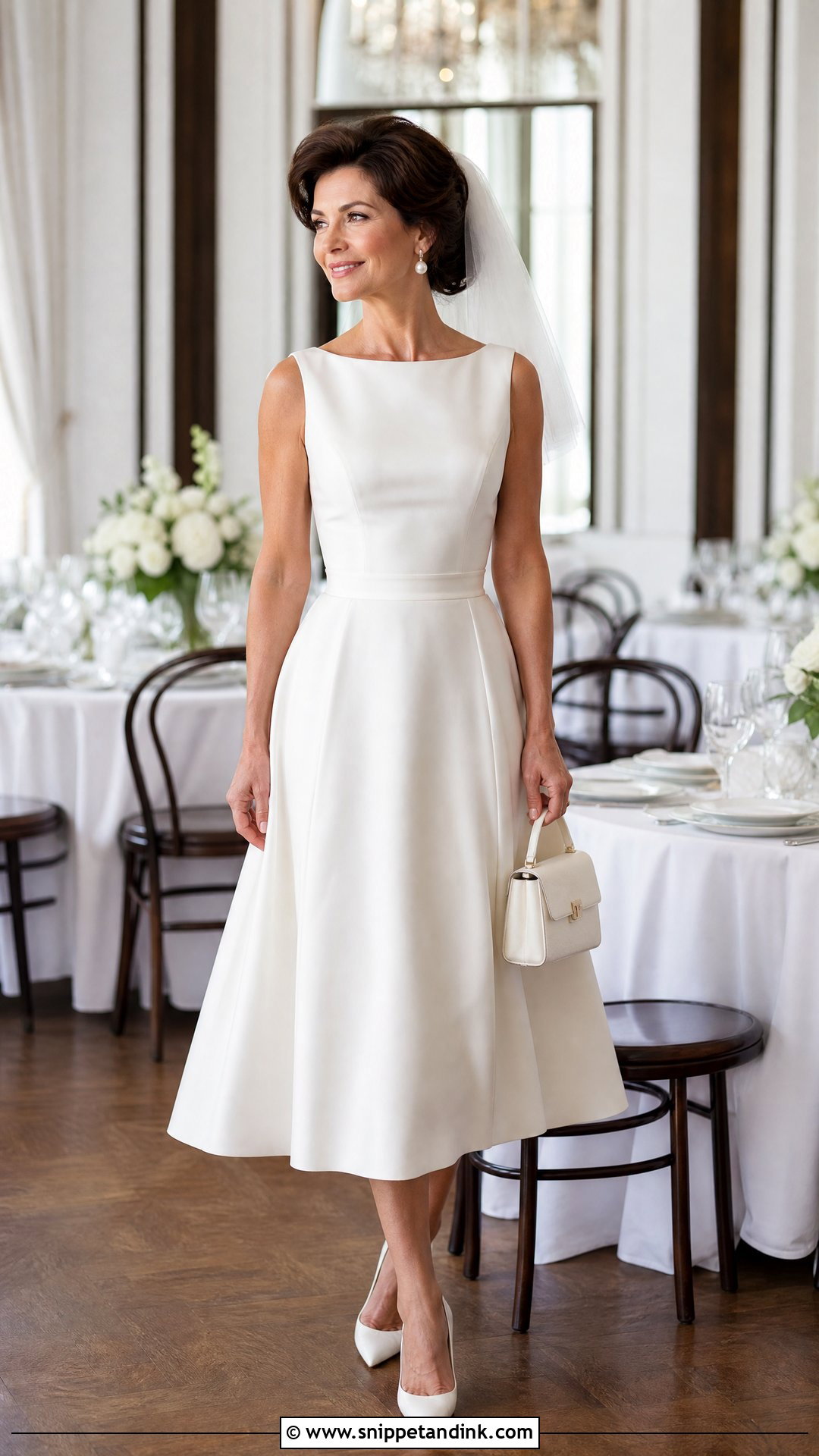
Not every short second dress needs a mini hem. Tea length falls around mid-calf with a vintage shape and more coverage. A fitted bodice and lightly flared skirt in satin, lace or structured organza. Pointed pumps or low block heels, since the shoes stay on show, with pearl earrings, a small top-handle bag and a short veil. A defined natural waist balances the longer skirt, which matters on petite brides. End the hem at a slim part of the calf. Daytime receptions and classic venues suit it, and so do brides who’d rather glide than wear a very short party dress.
19. High Neck Mini Wedding Dress
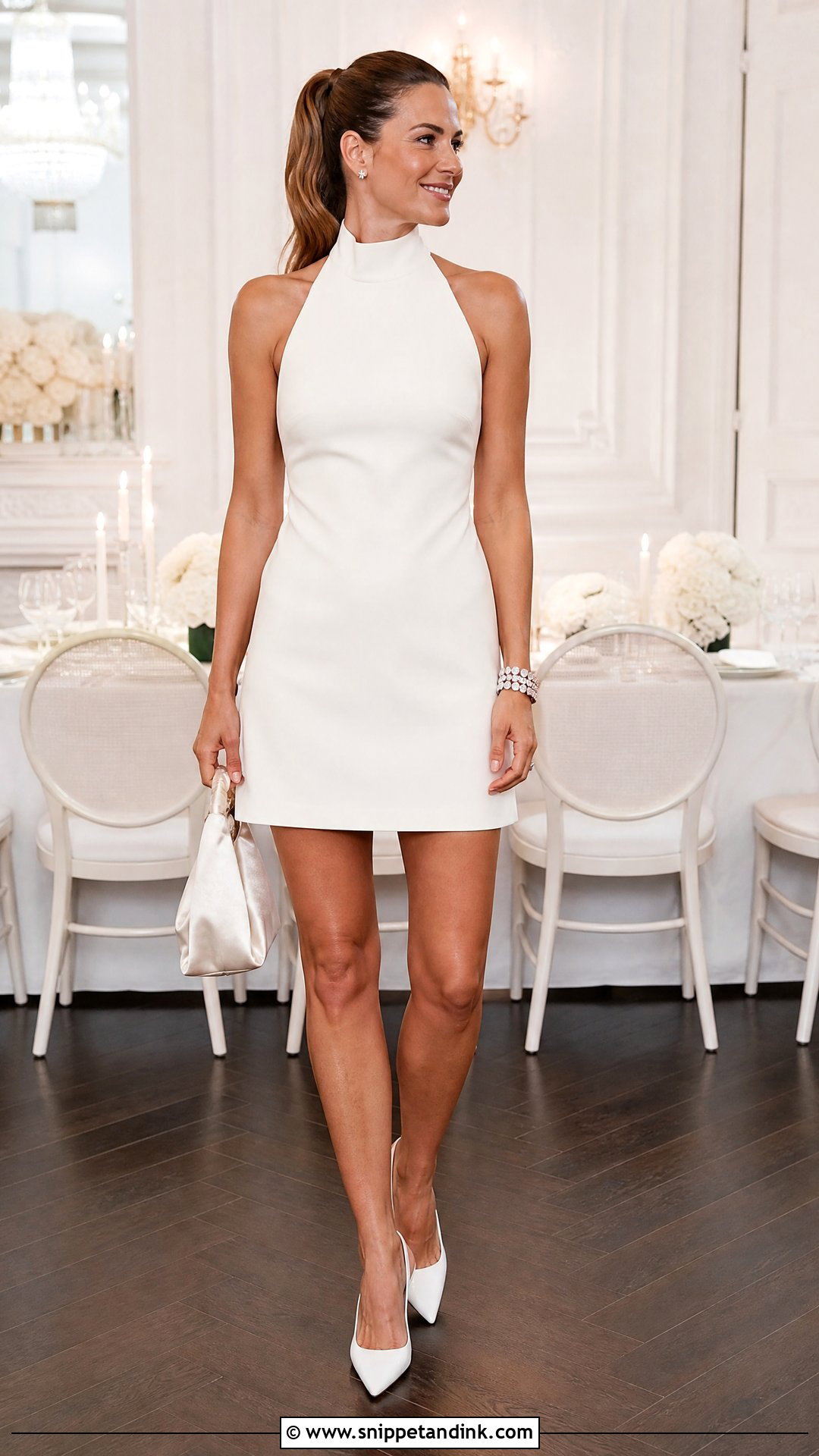
A high neck balances a short hem with a covered bodice. Smooth crepe looks clean and modern; lace or beading is softer. Slingbacks, a small satin bag and simple studs. Leave the necklace off and wear a crystal bracelet or a statement ring instead. A bun or high ponytail opens up the space around the collar. Sleeveless versions suit warm receptions, long sleeves cooler ones. High necks can feel tight once you’re warm from dancing, so I check there’s a finger’s width of room at the collar and an easy fastening someone can open quickly. Formal celebrations suit it.
20. Tulle Skirt Mini Wedding Dress
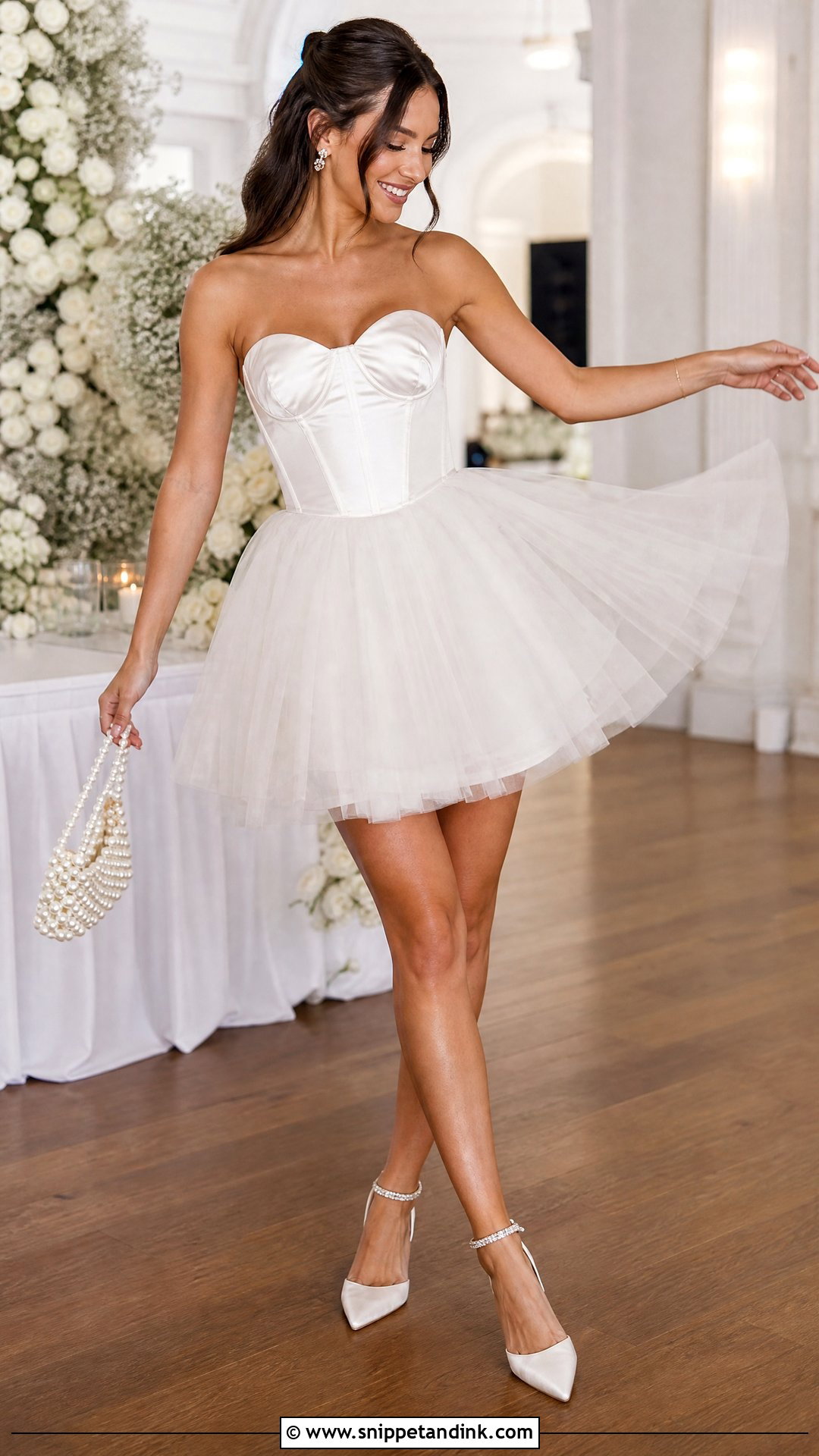
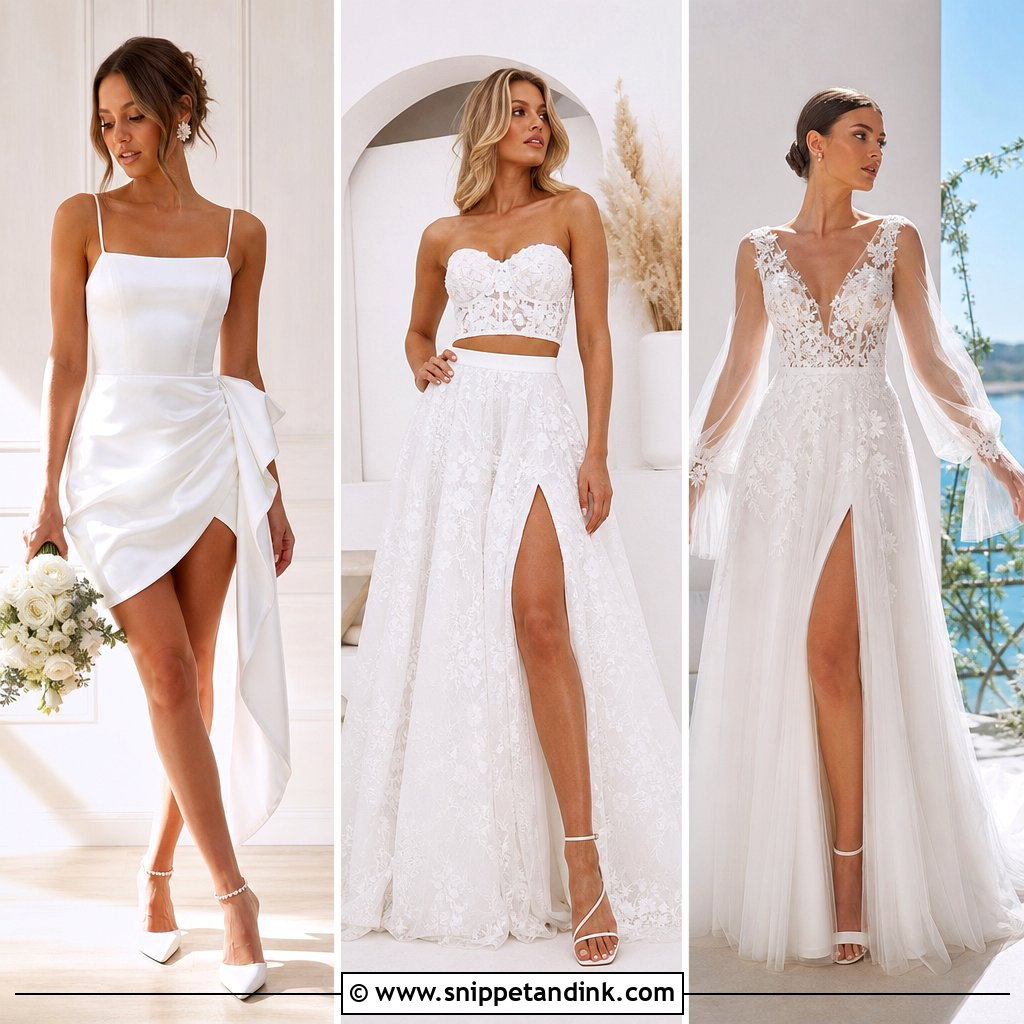
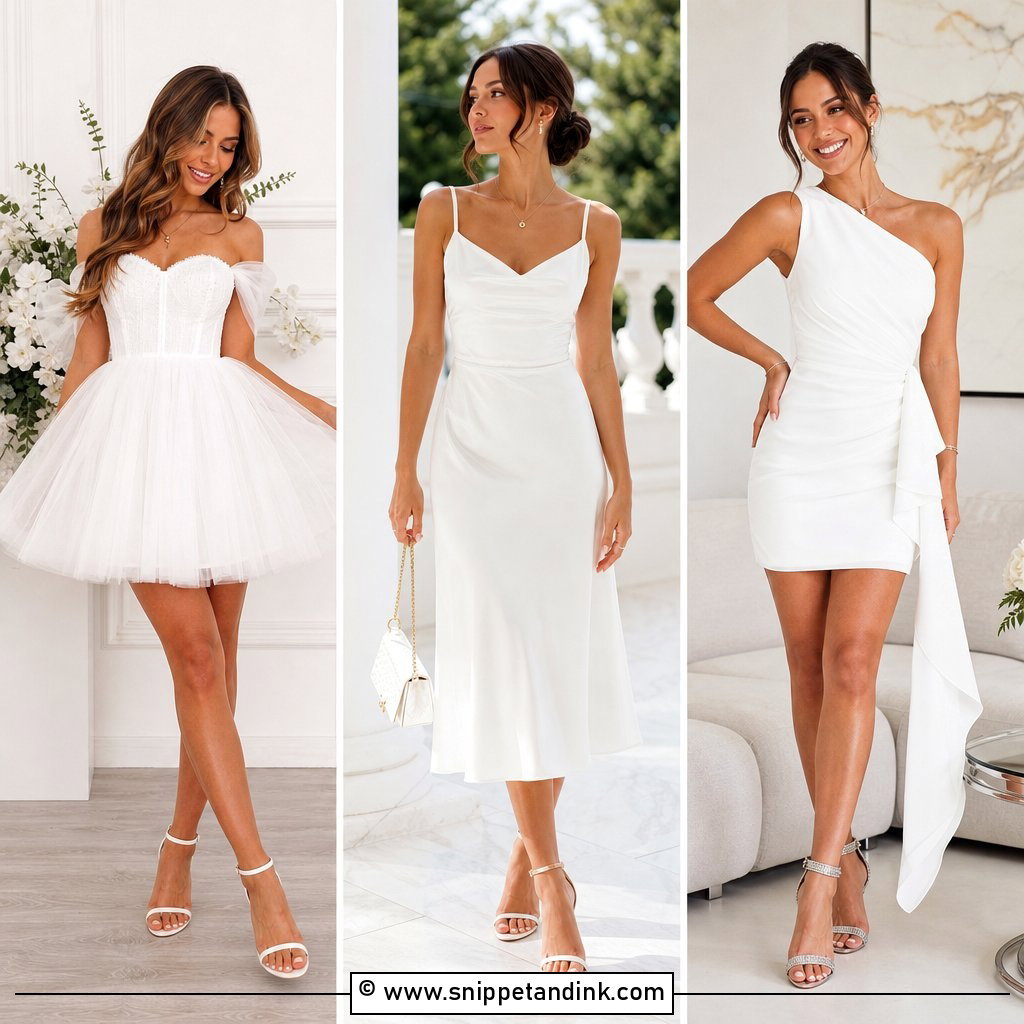
Tulle gives a mini a light, celebratory shape without the weight of a ceremony gown. A fitted satin, crepe or corset bodice over a short A-line skirt. Soft ivory tulle looks more refined than stiff net and moves well. Satin heels, crystal earrings and a small pearl bag, with a simple ponytail or half-up style. Check that the layers are lined and won’t cling to tights or catch on beading. With a lot of volume, keep shoes streamlined and jewellery minimal. If your first gown was a princess shape, this keeps the spirit in a form you can dance in.
When to Slip Away, and Who Comes With You
Most brides change after dinner and before the first dance or the open dance floor. That keeps the ceremony gown in the formal photos and the speeches, and saves the mini for the part of the night it’s built for. Some change right after the ceremony portraits instead, which suits hot days and gowns that are hard to sit in.
Allow more time than you think. Getting out of a gown with a corset back or a row of buttons is slow, and you may need to adjust hair and touch up makeup. Twenty to thirty minutes is realistic; the actual dress swap is the quickest part.
A small checklist for the swap
- Tell the planner or venue coordinator the time, so the photographer is ready to catch the re-entrance.
- Bring one bridesmaid who has practised your fastenings at least once.
- Hang the second dress in the changing room before the ceremony, steamed and with shoes and jewellery beside it.
- Have a hanger and garment bag ready for the gown so it isn’t left over a chair.
- Swap underwear if the necklines need different bras. It’s easy to forget until the mini is half on.
Decide in advance who takes the ceremony gown home. A family member with a car is safer than leaving it at the venue overnight.
The Dress You Change Into Should Make You Want to Dance
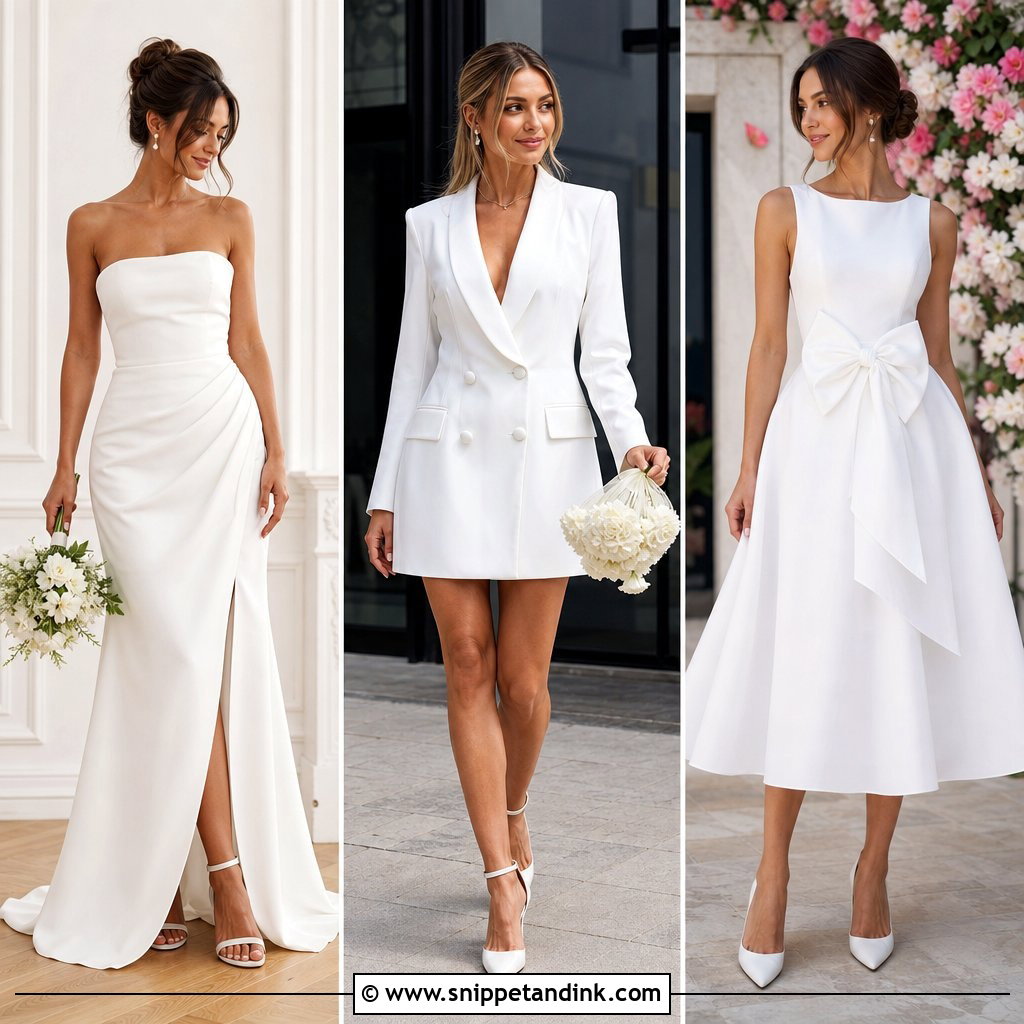
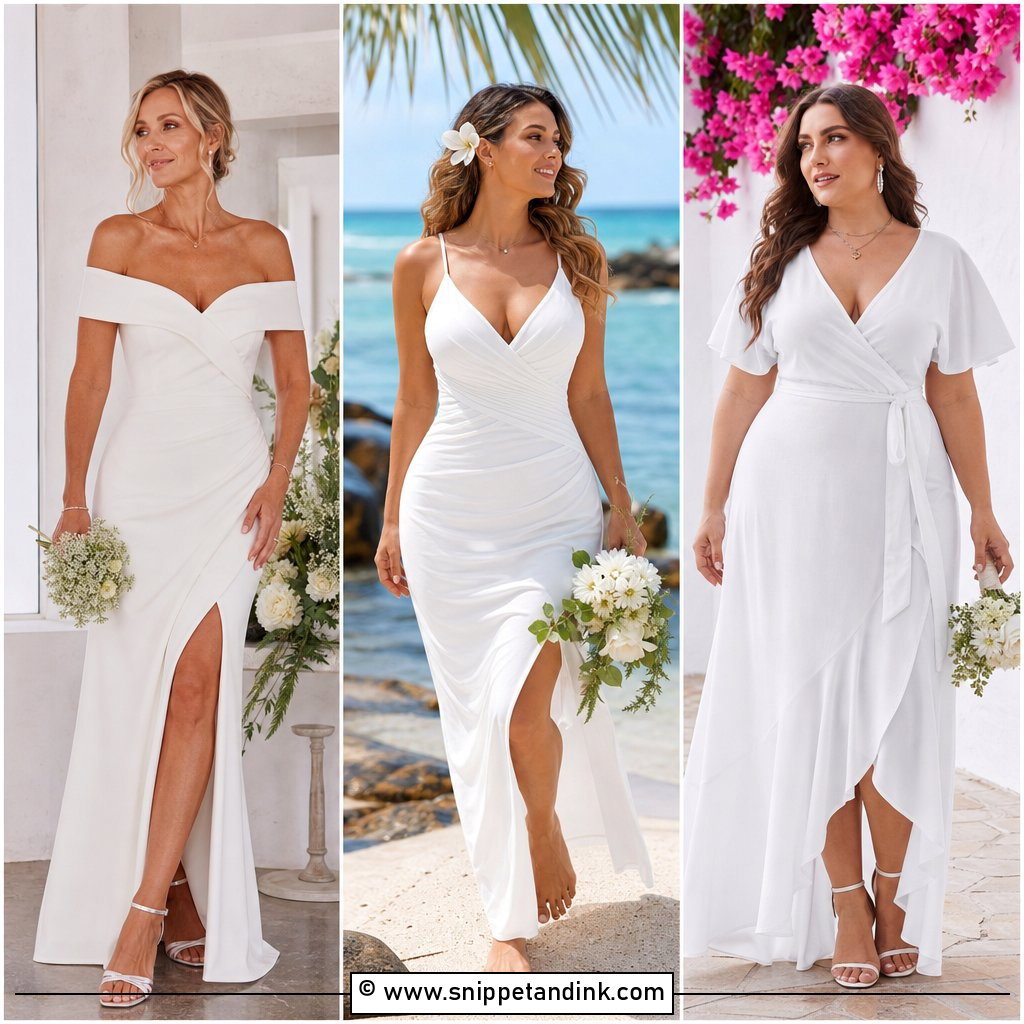
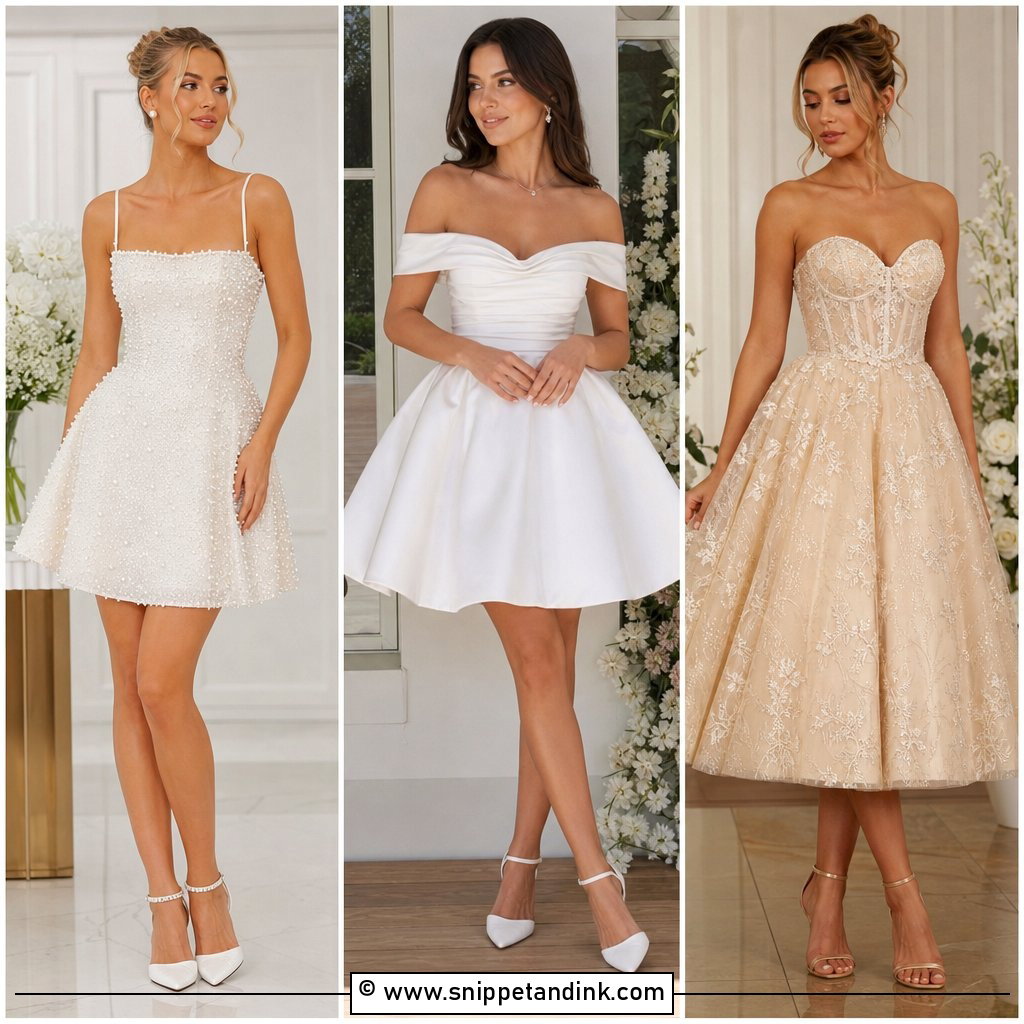
When you compare reception dresses, look past the photo. Check the lining, support, hem length, closures and how freely you can move, and choose shoes that suit the floor and the amount of dancing ahead. Clean satin, romantic lace, tailored shapes and sparkling party dresses are all here. Accessories can link the second look to the first without matching exactly; a veil, a bow, a pearl bag or crystal earrings is enough bridal detail. The right dress is the one you change into and immediately want to go and dance in.
You'll Like These Ideas:


Leave a Reply