
By the time the speeches are over, most brides I dress are ready to stop managing a train. That is where a night dress earns its place. This second outfit usually carries you through the cake, the first proper dance set and the exit, so I judge it on two things before looks: can you sit, lift your arms and climb a step in it, and does it still read as bridal under warm, low reception light. The ideas below run from satin minis to tailored blazer dresses, and for each one I’ve noted what I’d check in the fitting room and who I’d gently steer elsewhere.

Planning the Ten Minutes Between Gown and Night Dress
The change itself is where most second-dress plans fall apart. I build it into the timeline as a block of about fifteen minutes, usually after dinner or just before the first dance set, and I never let a bride do it alone. Someone needs to unhook the ceremony gown, someone needs to hold it off the floor, and someone should be standing by with a hairbrush.
- Pick a room close to the reception with a mirror, a hook high enough for a long gown and a door that locks.
- Decide your undergarments for both dresses at your first fitting. A strapless bra that works under a ballgown may show under a slip or a halter, and changing bras mid-evening wastes time.
- Bring the second dress fully steamed and hung, never folded in a bag.
- Ask one bridesmaid to collect the ceremony gown, bag it properly and take it to the car or the hotel room.
Order early as well. Even a simple ready-made mini often needs the hem or straps adjusted, and I’d want it in hand at least six weeks before the wedding so the seamstress can fit it at the same session as the main gown.
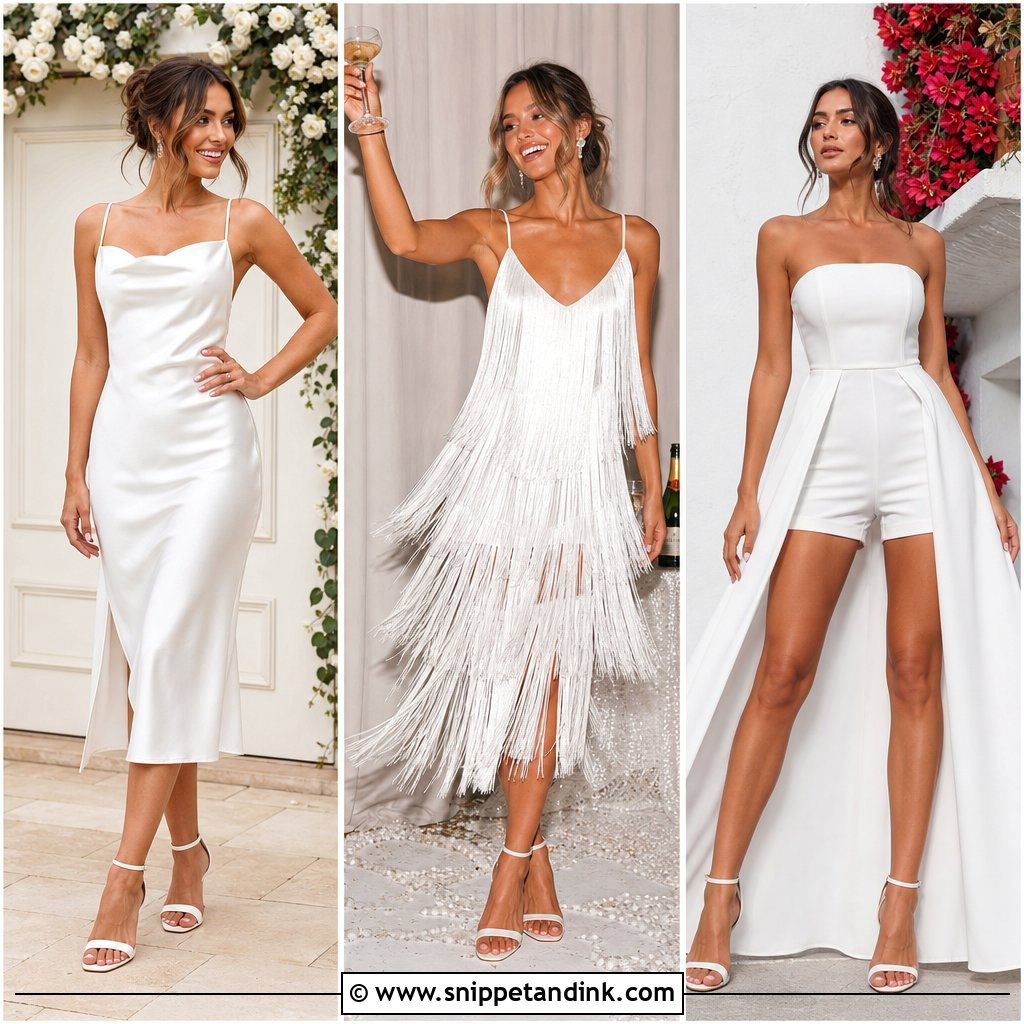
1. White Satin Mini Wedding Night Dress
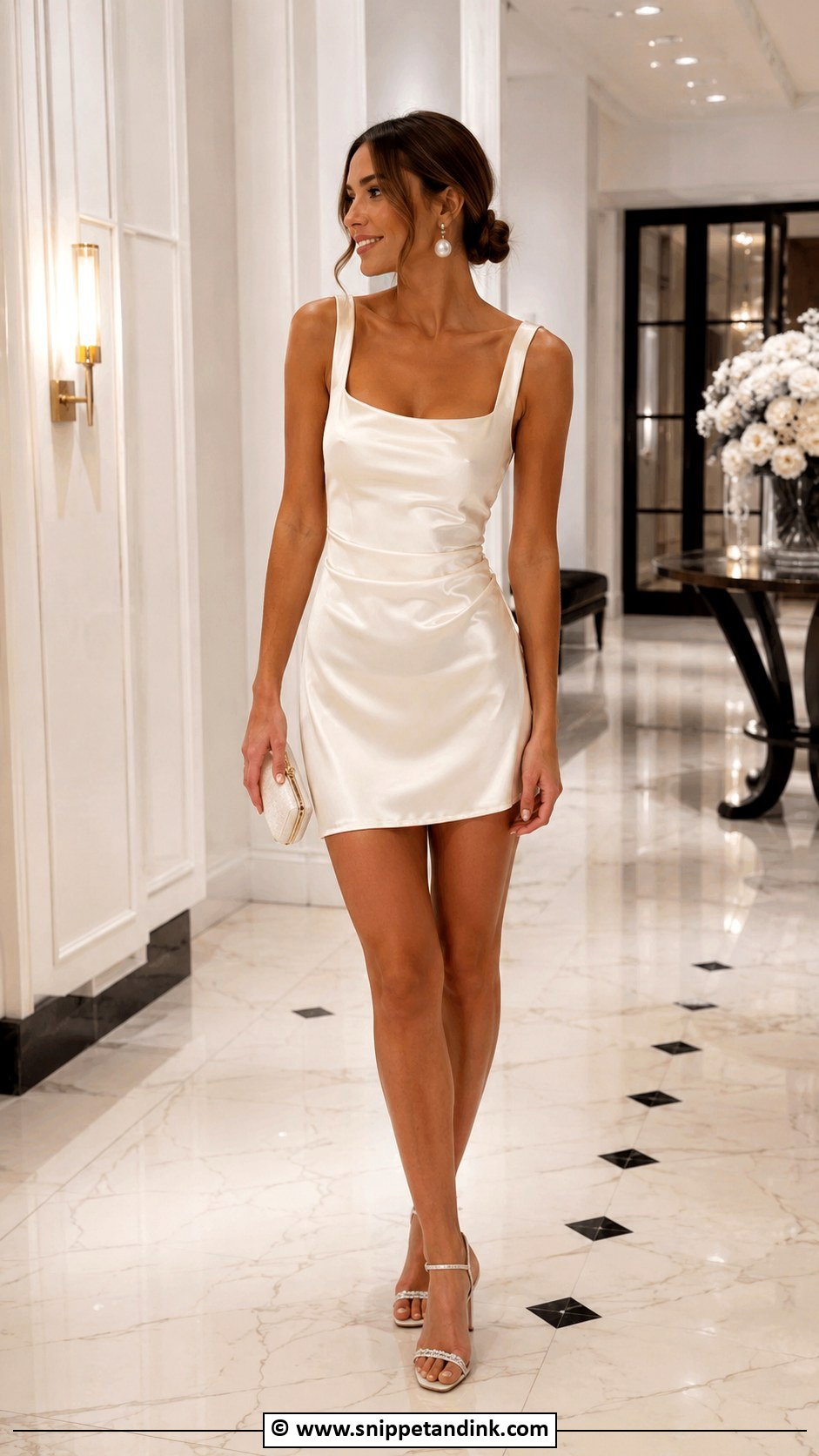
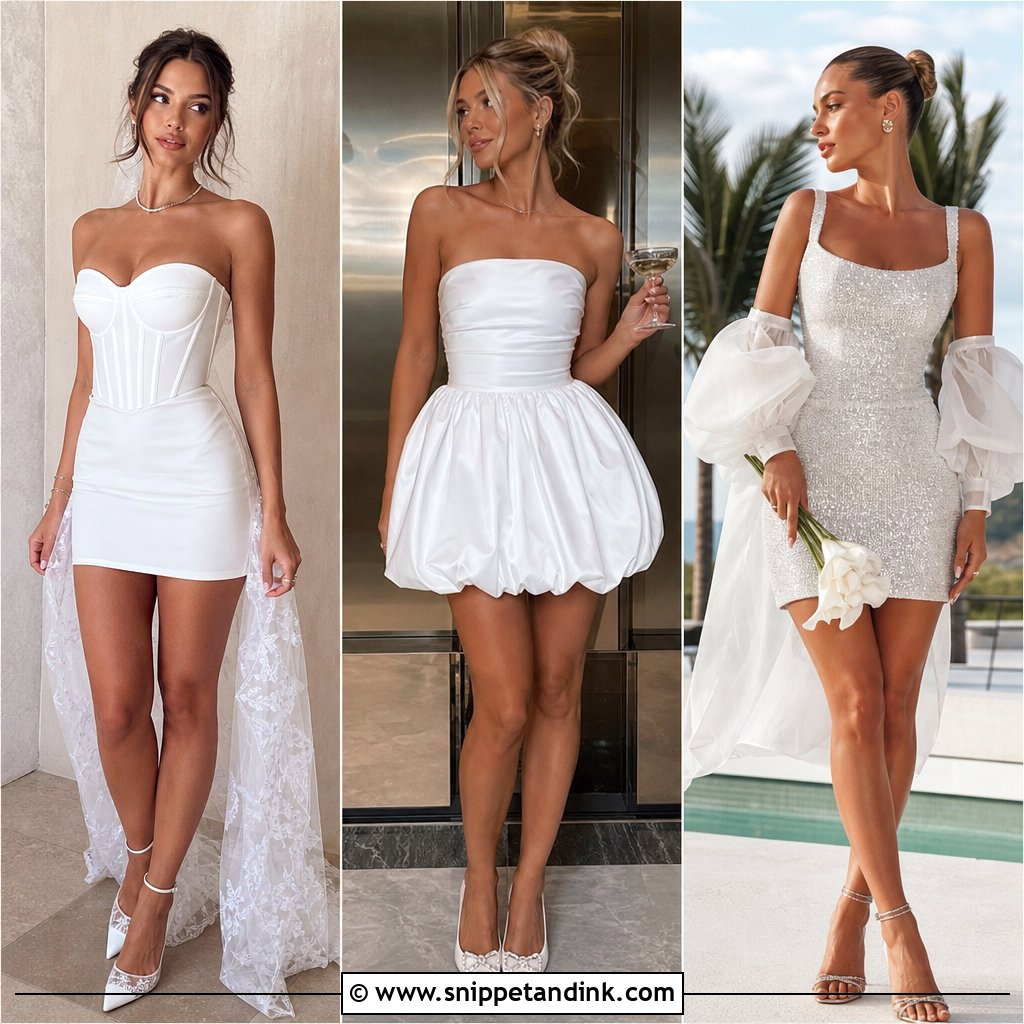
Satin is unforgiving at a short length, so the first thing I check is the hem with you seated. A mini that sits mid-thigh standing can ride up a good few inches on a banquette, and heavy duchess satin holds that crease once it forms. A square or cowl neckline keeps it modern; pearl studs, a small structured bag and a low block heel finish it without fuss. It works best as a contrast to a full or heavily detailed ceremony gown, especially at hotel or rooftop receptions where you’ll be on your feet.
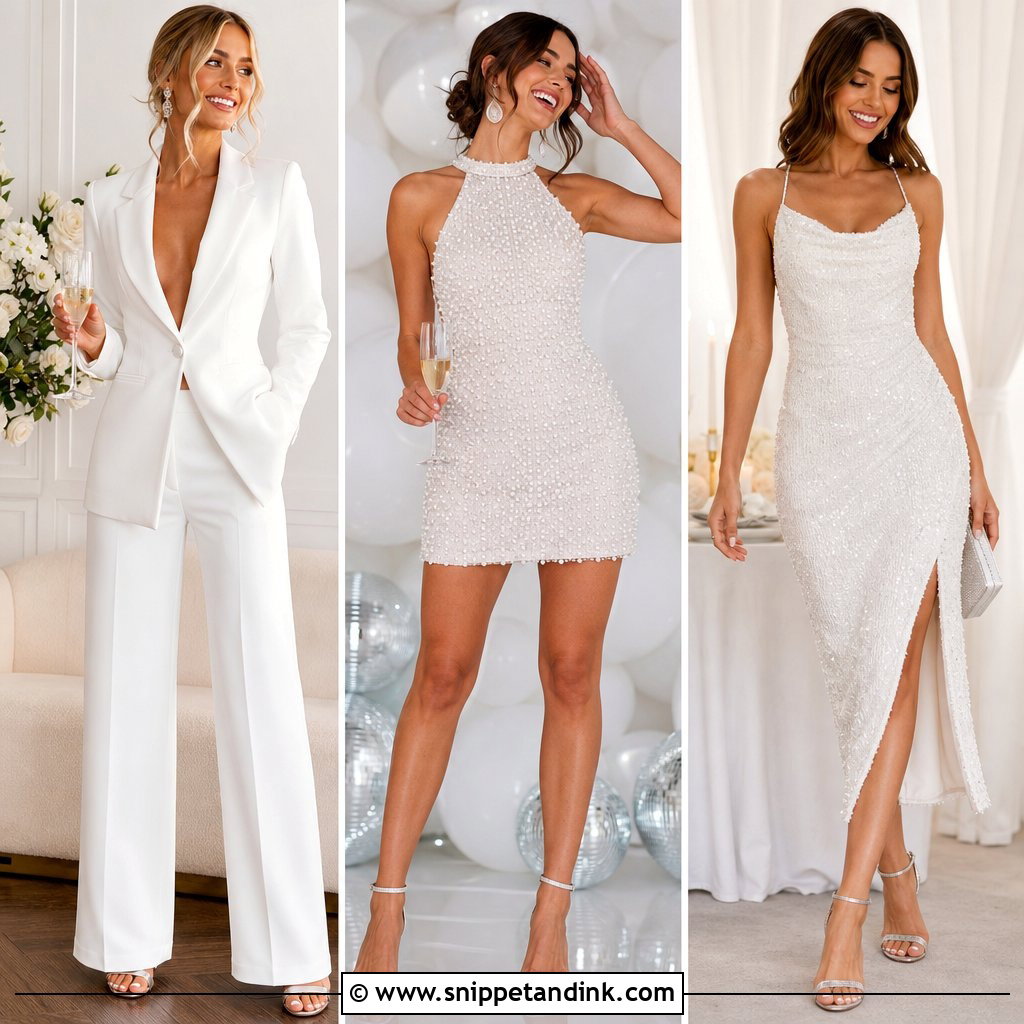
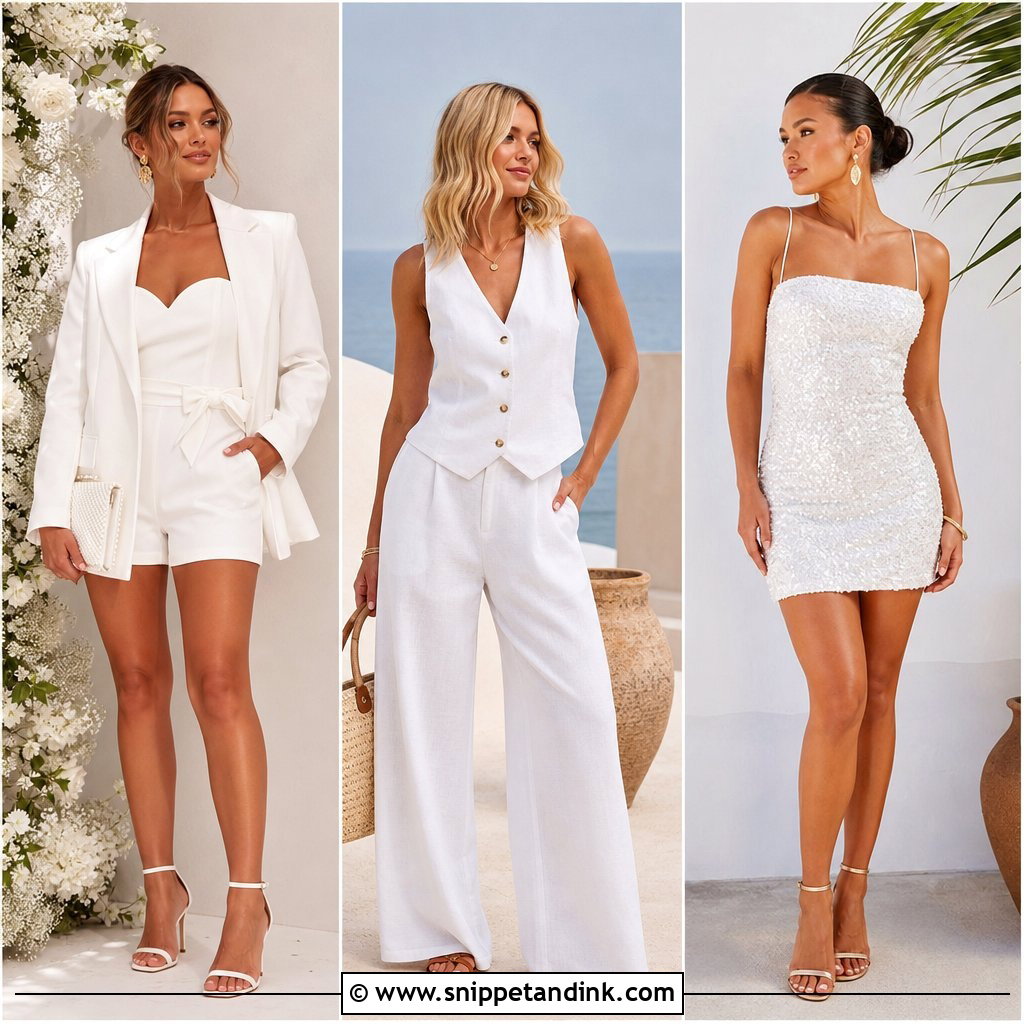
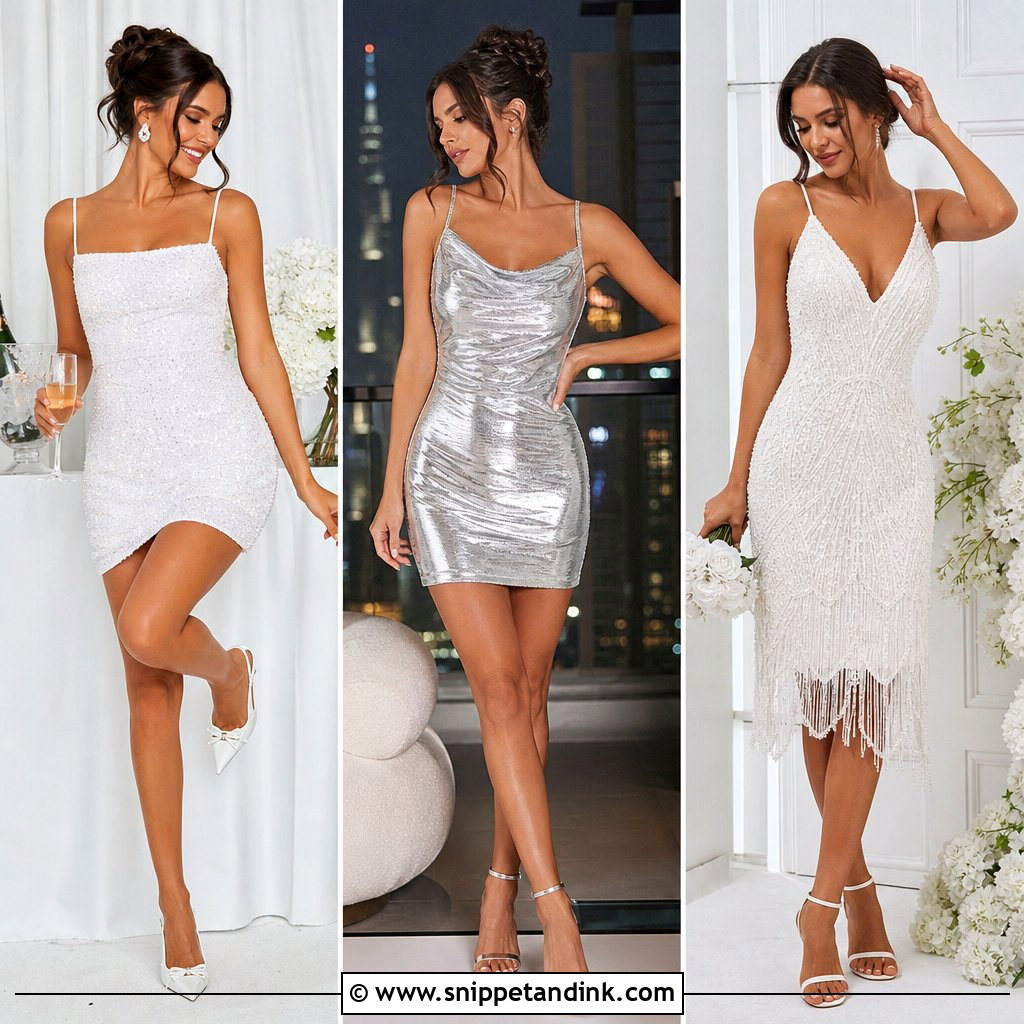
2. Sequin Mini Wedding Night Dress
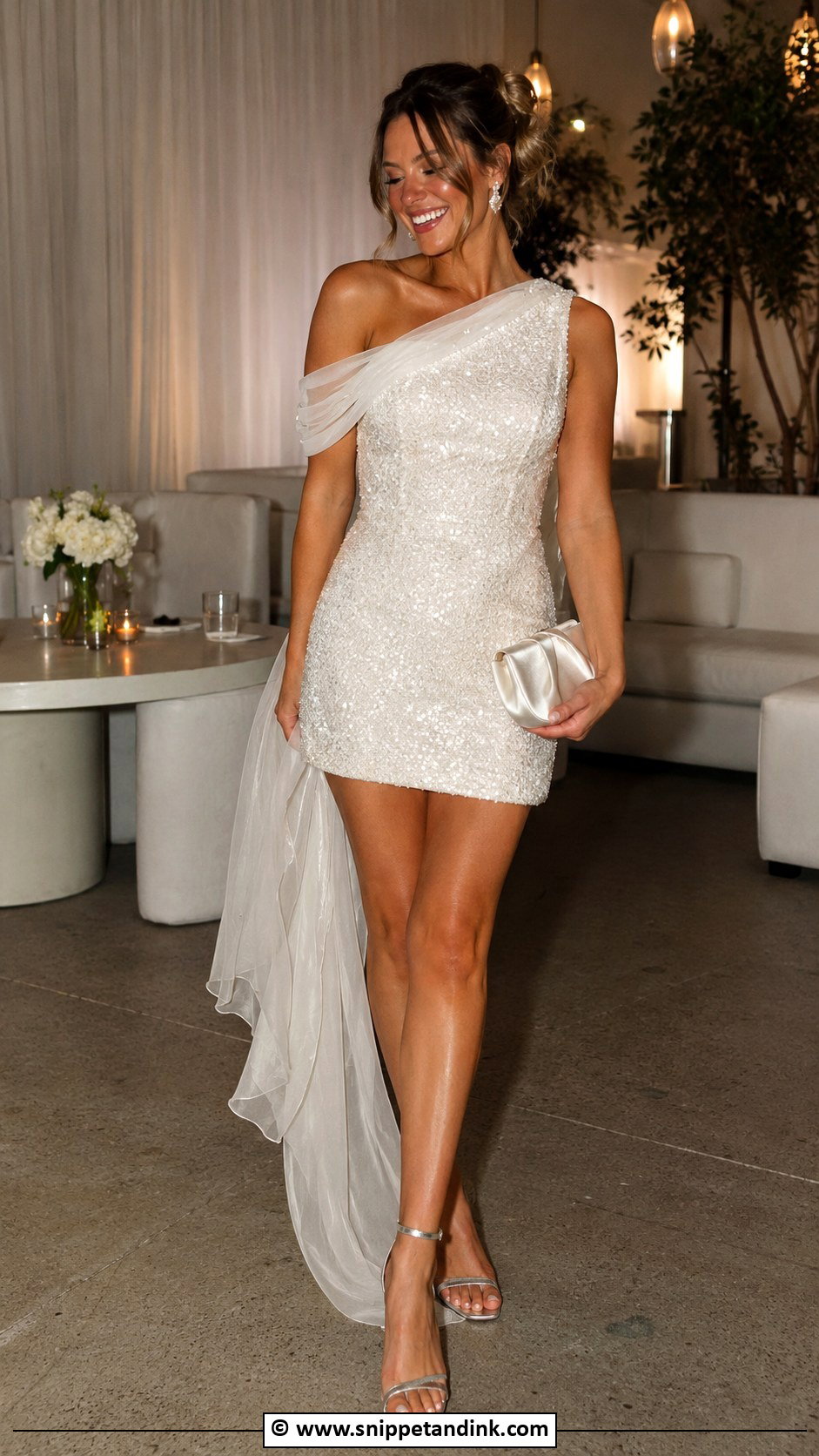
Sequins do half the photographer’s work for them, because every flash bounces off the surface. The catch is the lining. Cheap sequin minis scratch the inner arm and catch on a partner’s jacket during slow dances, so I always run a hand along the inside seams and underarm before a bride commits. Ivory and champagne sequins sit more gently against skin than bright silver. Keep the rest quiet: clear or metallic sandals, small studs, a sleek clutch, and let the dress carry the dance floor.
3. Feather Trim Wedding Night Dress
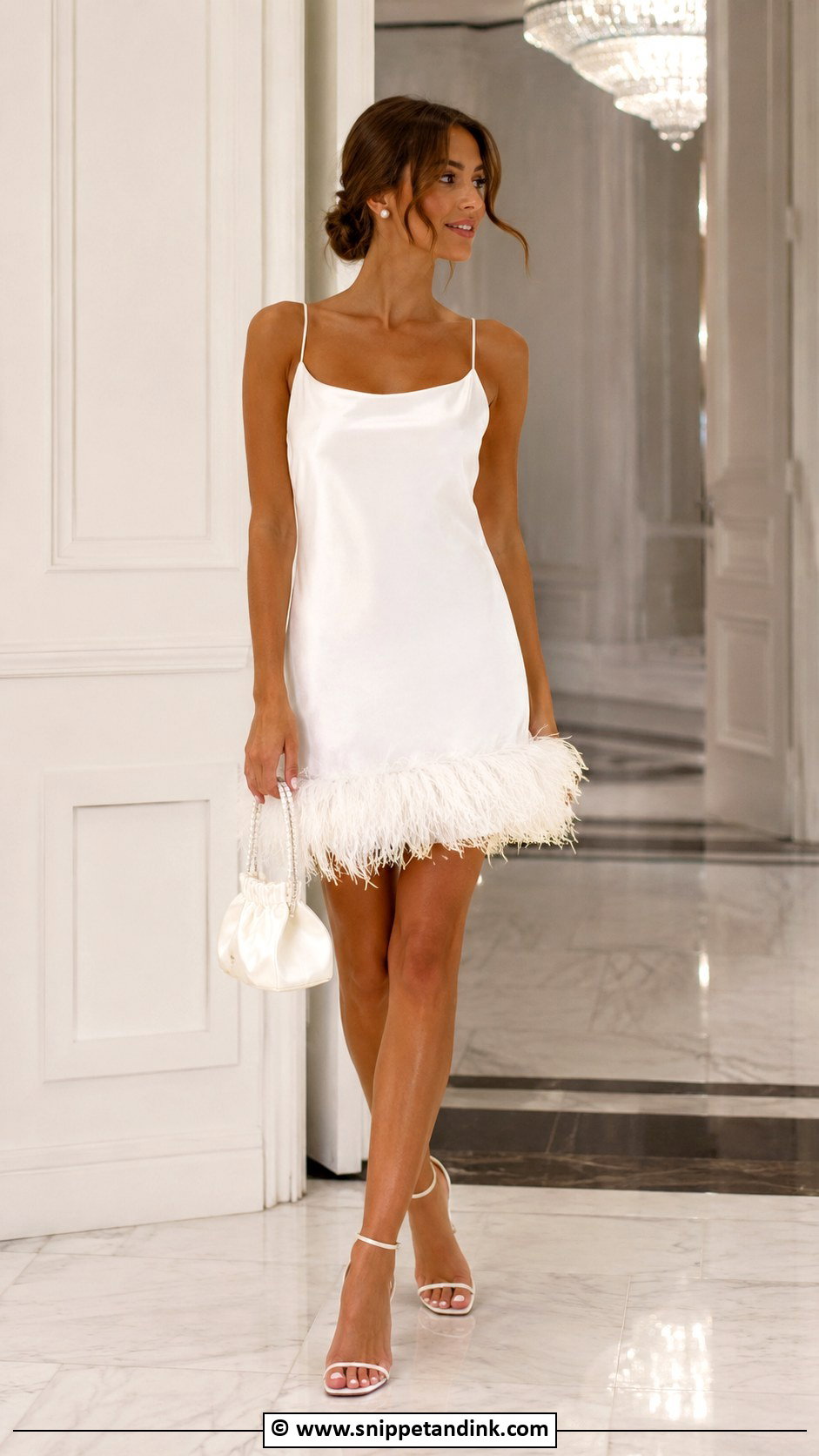
Feathers move every time you do, which is the whole appeal of a feather trim wedding night dress. I prefer trim at the hem or cuffs rather than the neckline, because ostrich fronds near the face tickle, shed onto makeup and fight with earrings. Choose a plain white mini or midi as the base so the trim is the only texture. Slim heels and a satin clutch are plenty. One practical note: feathers flatten in a garment bag, so hang the dress in a steamy bathroom for ten minutes and give it a gentle shake before you put it on.
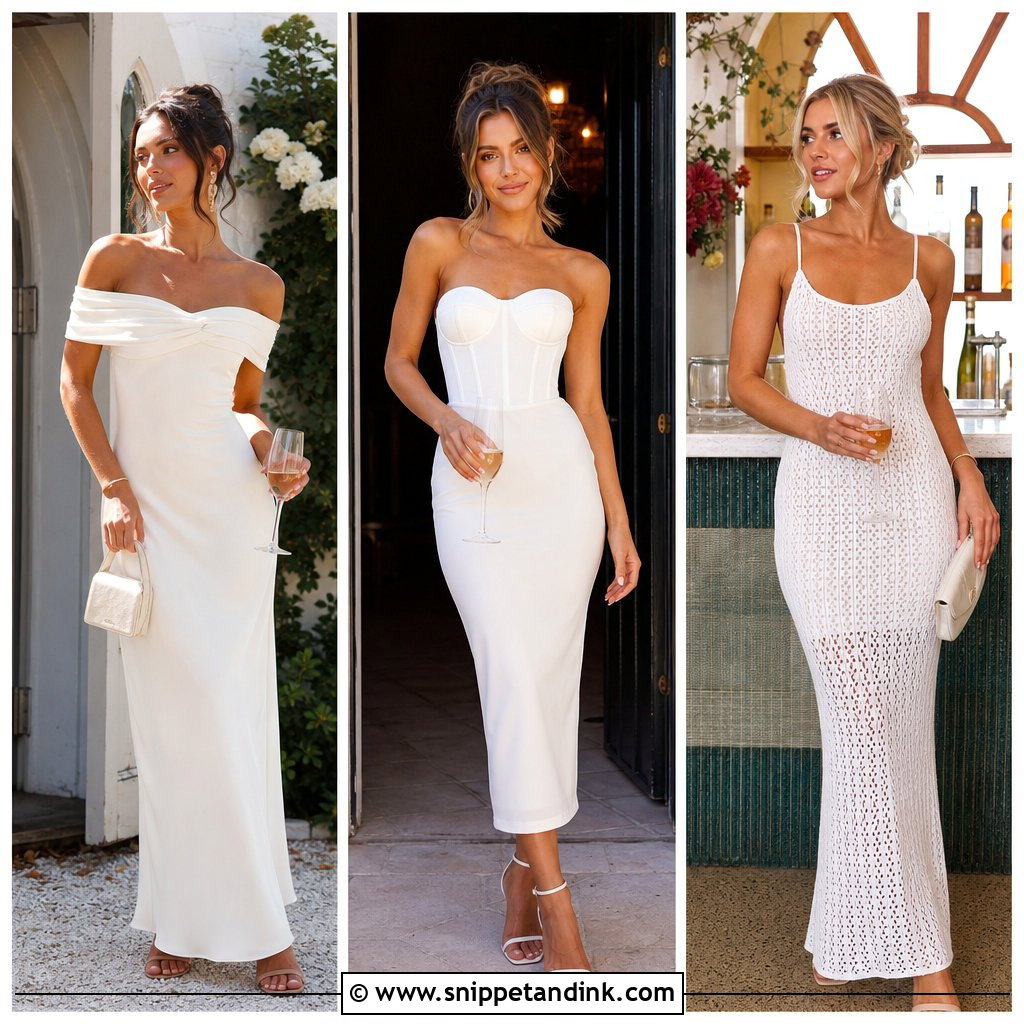
4. Strapless Midi Wedding Night Dress
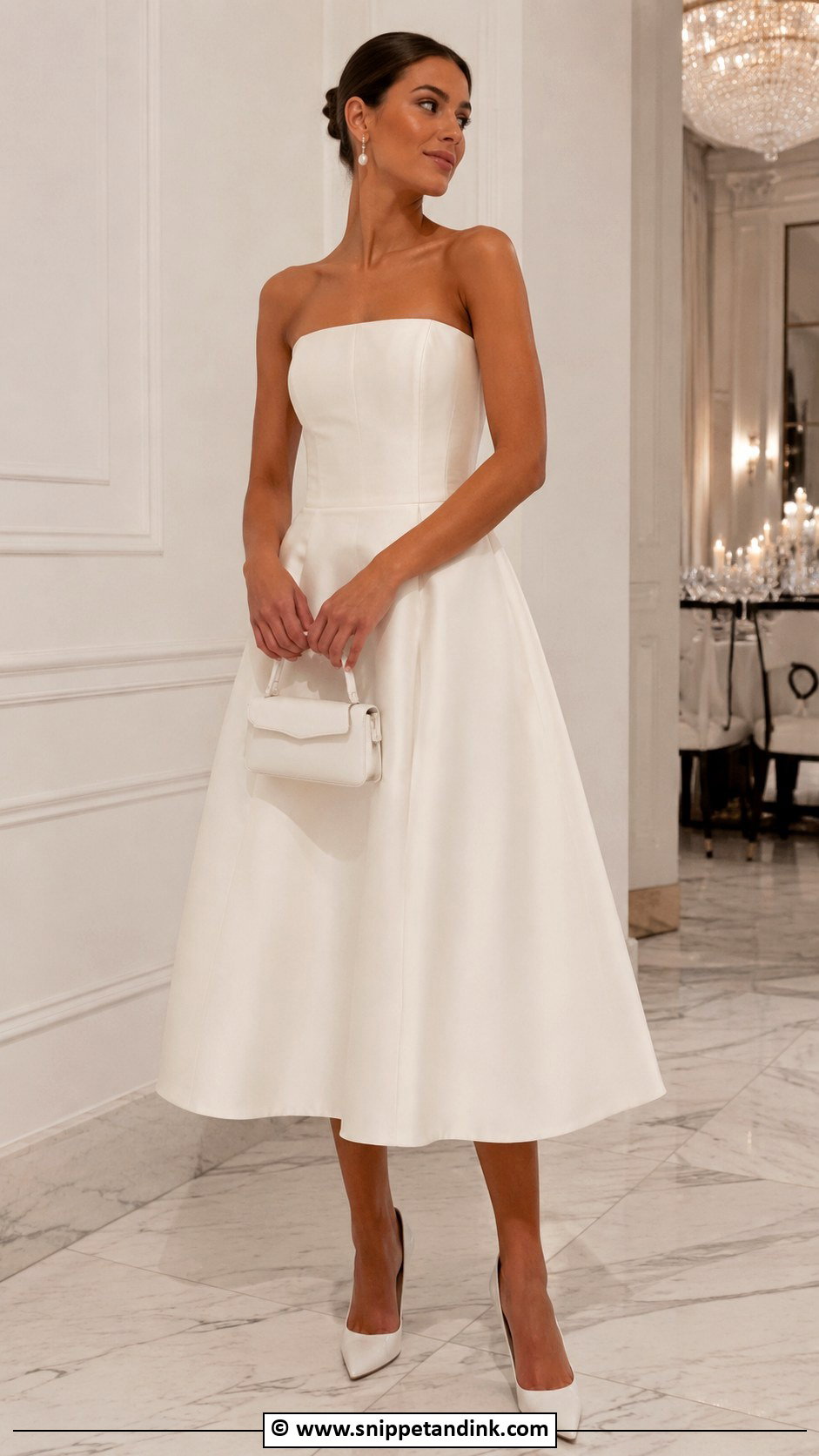
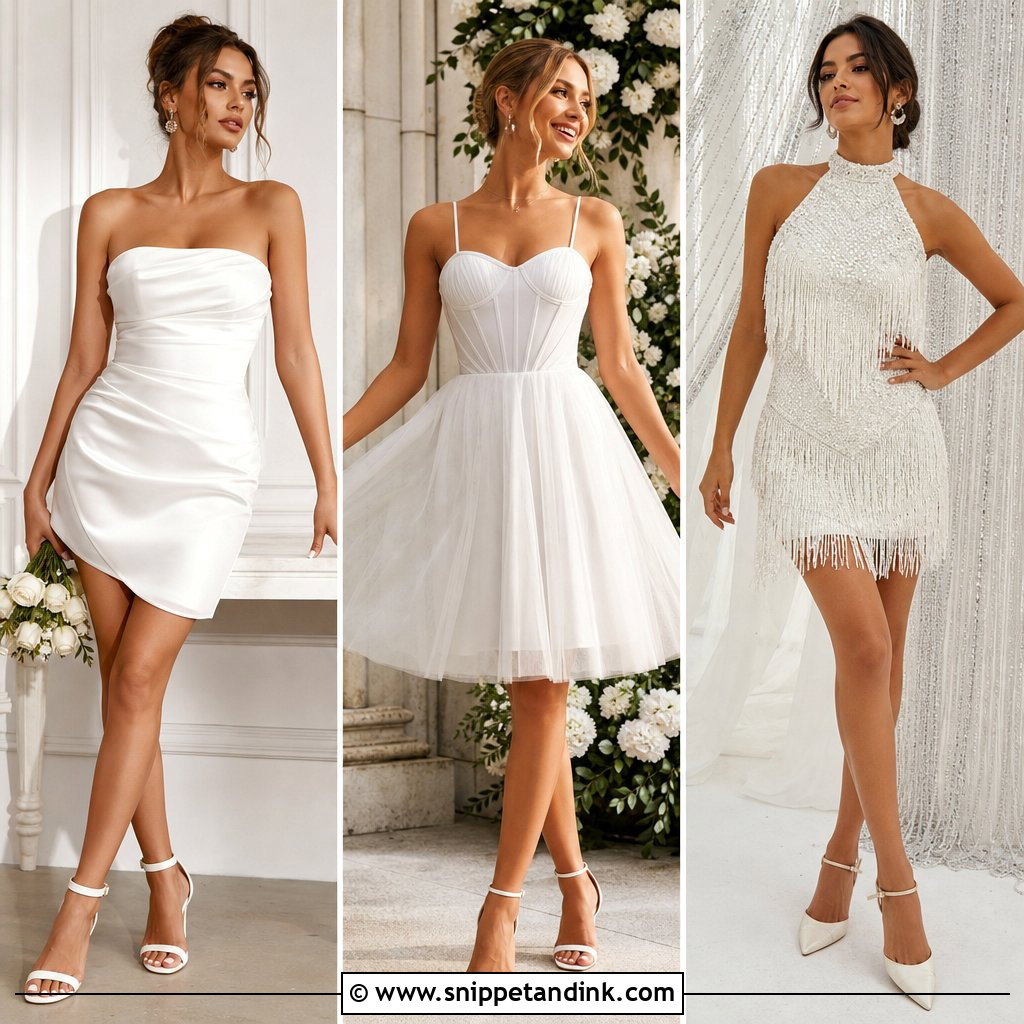
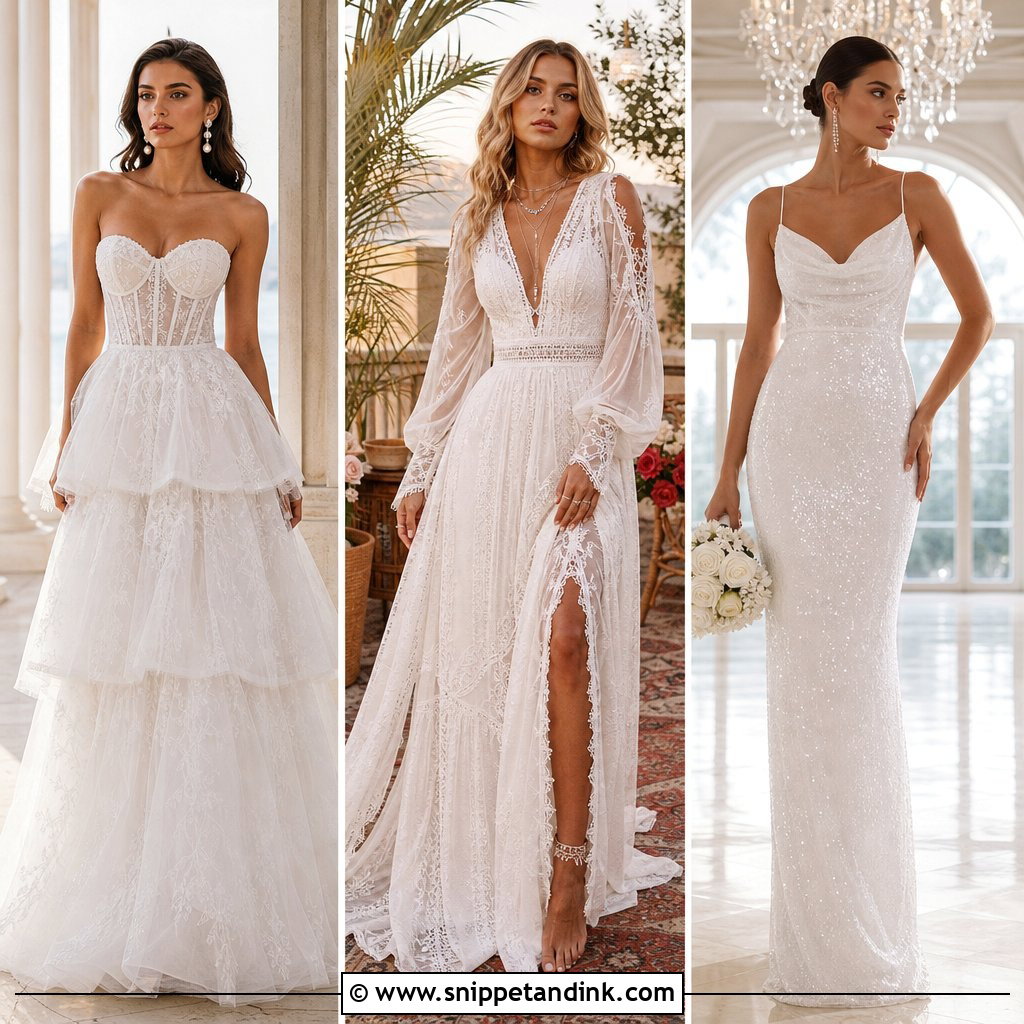
Strapless only works if the bodice does the holding, not your hands. When I fit a strapless midi I ask the bride to hug someone and reach up as if for a bouquet toss; if the top edge gaps or slides, it needs internal boning or a waist stay added by the seamstress. Get that right and the midi length looks properly formal in reception photos. A fitted bodice with a gentle A-line skirt flatters most figures. Pointed heels and either a pearl necklace or statement earrings, not both, keep the neckline clean.
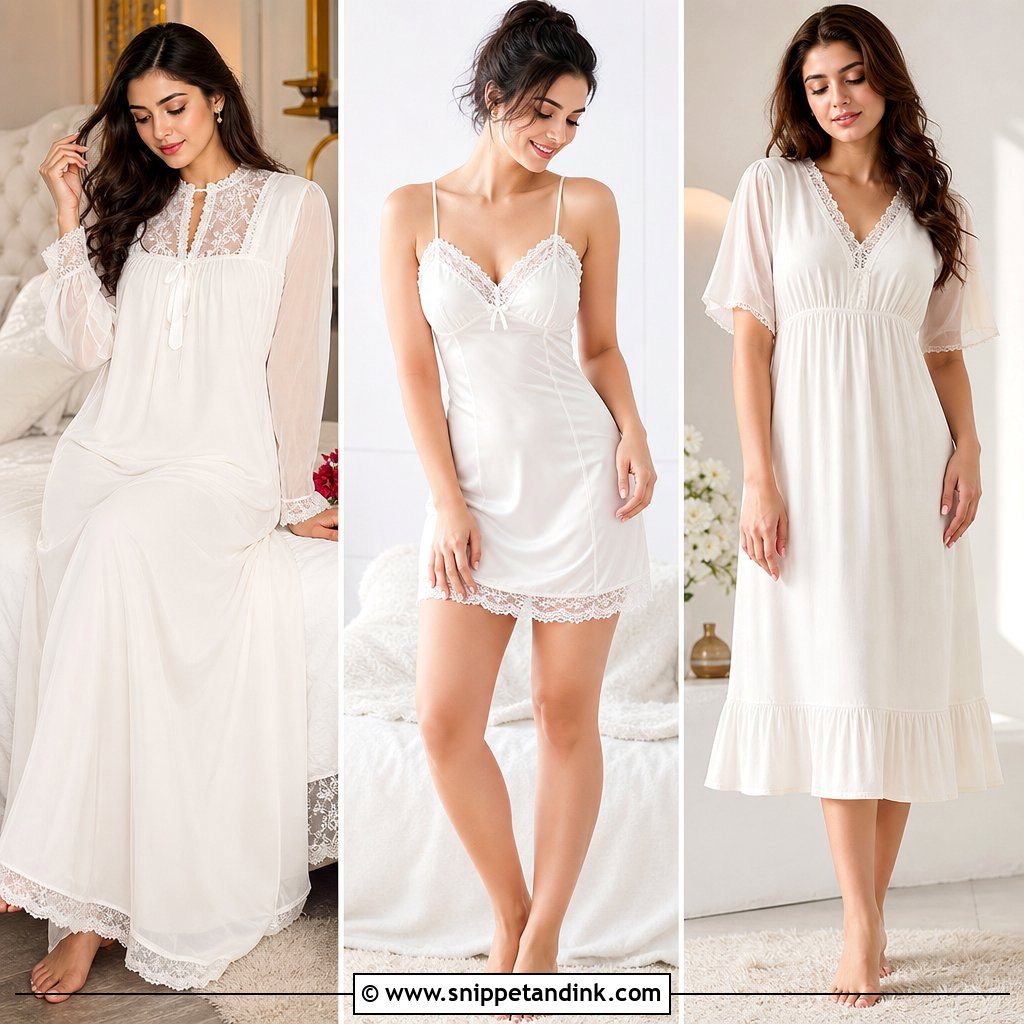
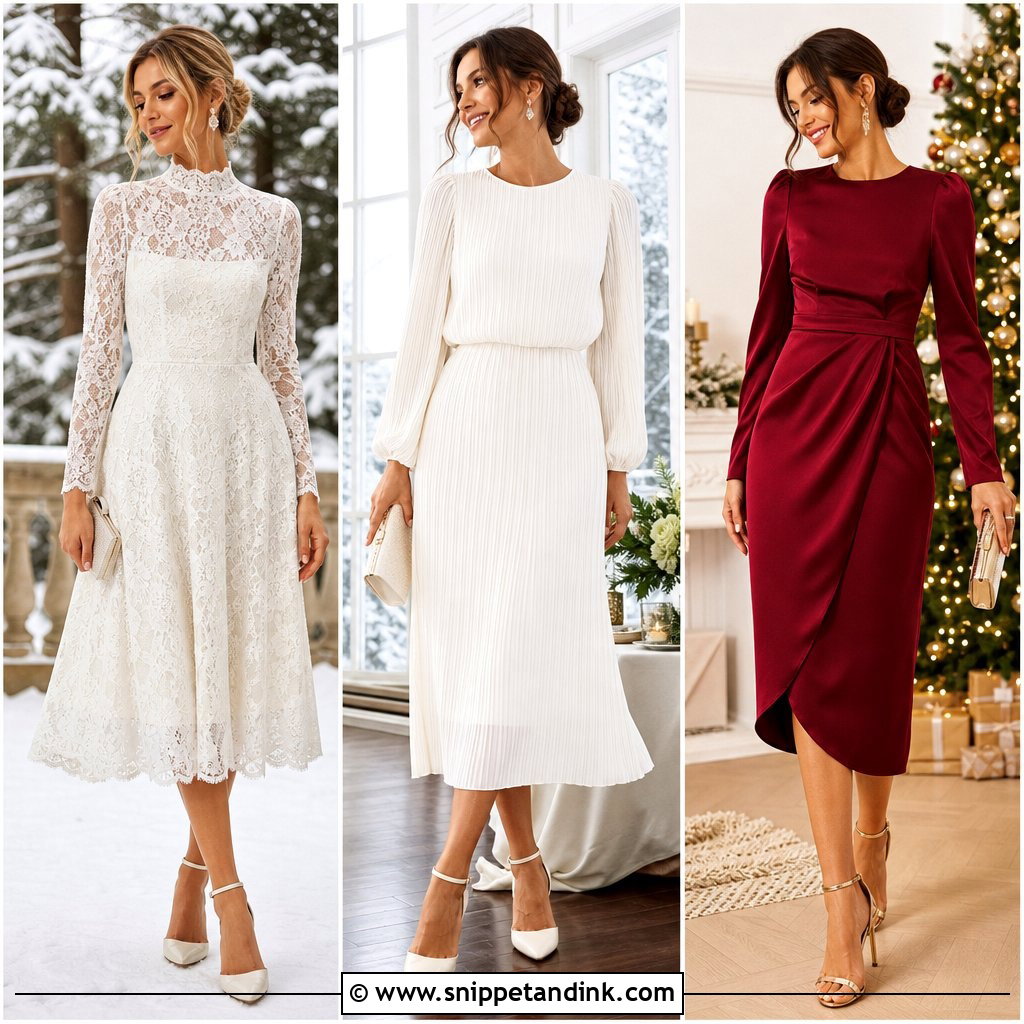
5. Lace Mini Wedding Night Dress
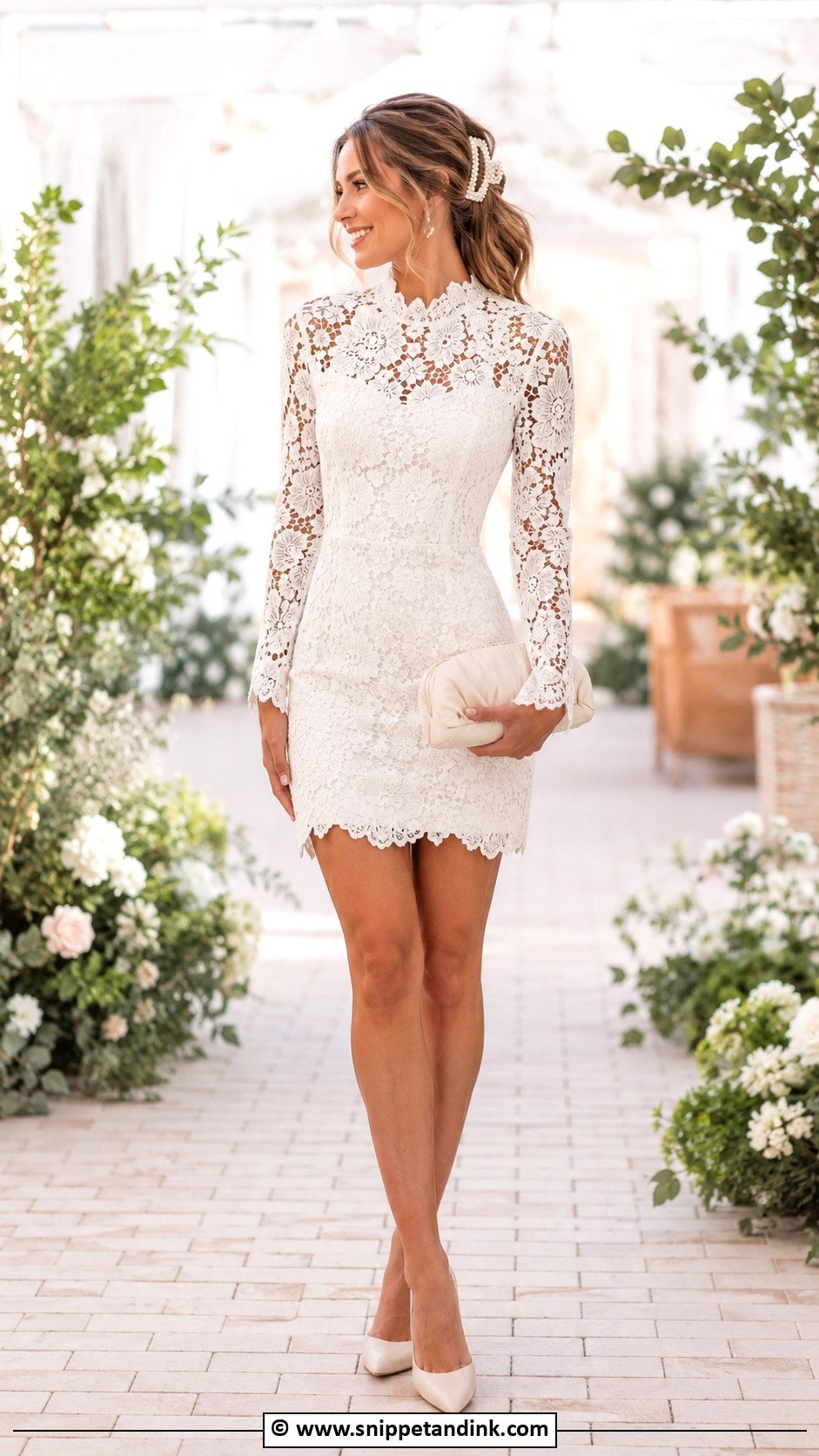
Lace keeps the romance of a traditional gown while the short hem makes the evening easier. Look closely at how the lace is finished: scalloped edges at the hem and sleeves look intentional, while raw-cut lace can fray after a night of dancing. A lined body matters too, since unlined lace under flash can show more than you expect. Ivory heels and a small pearl clip in the hair are enough. It sits most naturally in garden venues and classic ballrooms.
6. Silk Slip Wedding Night Dress
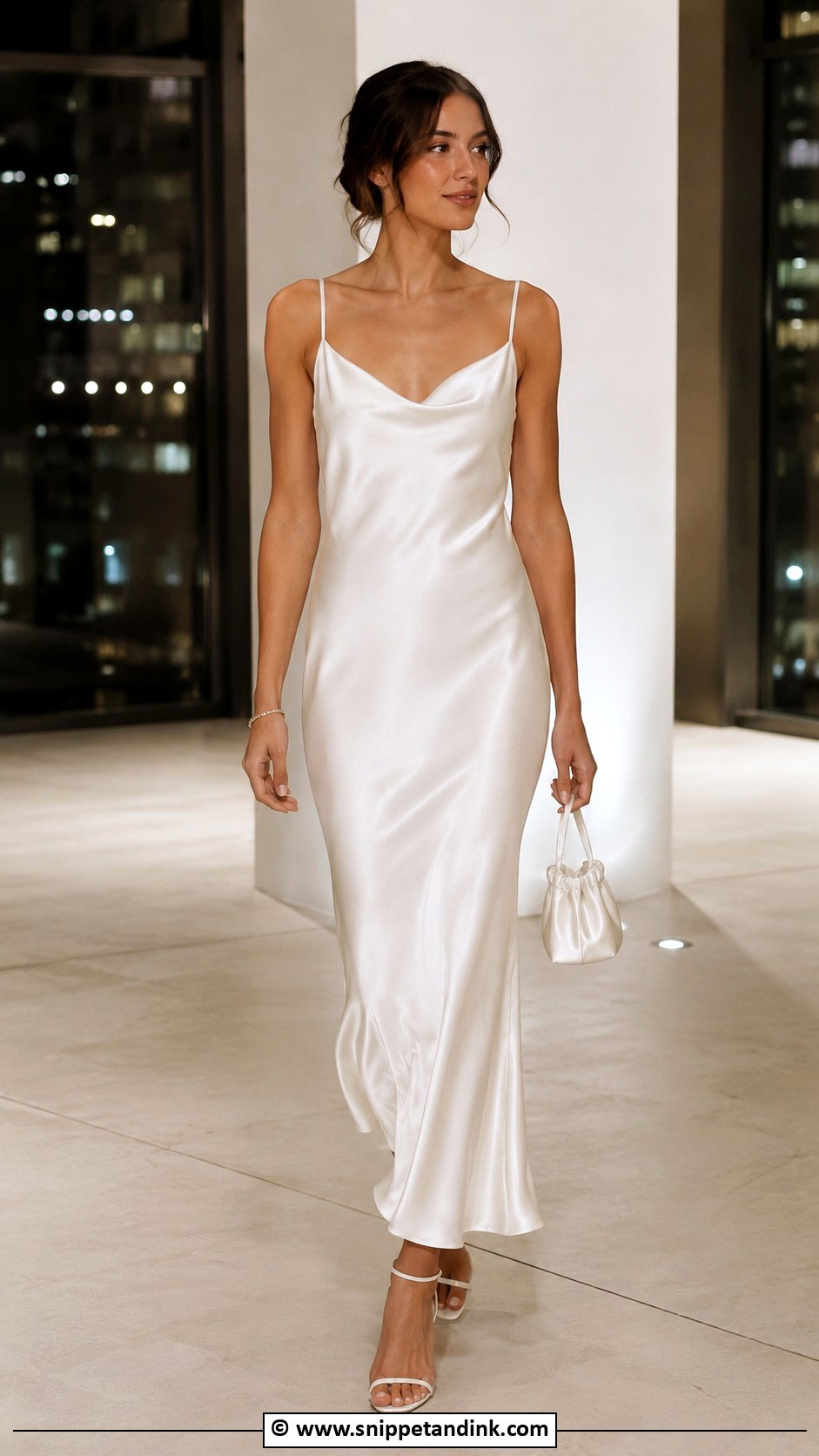
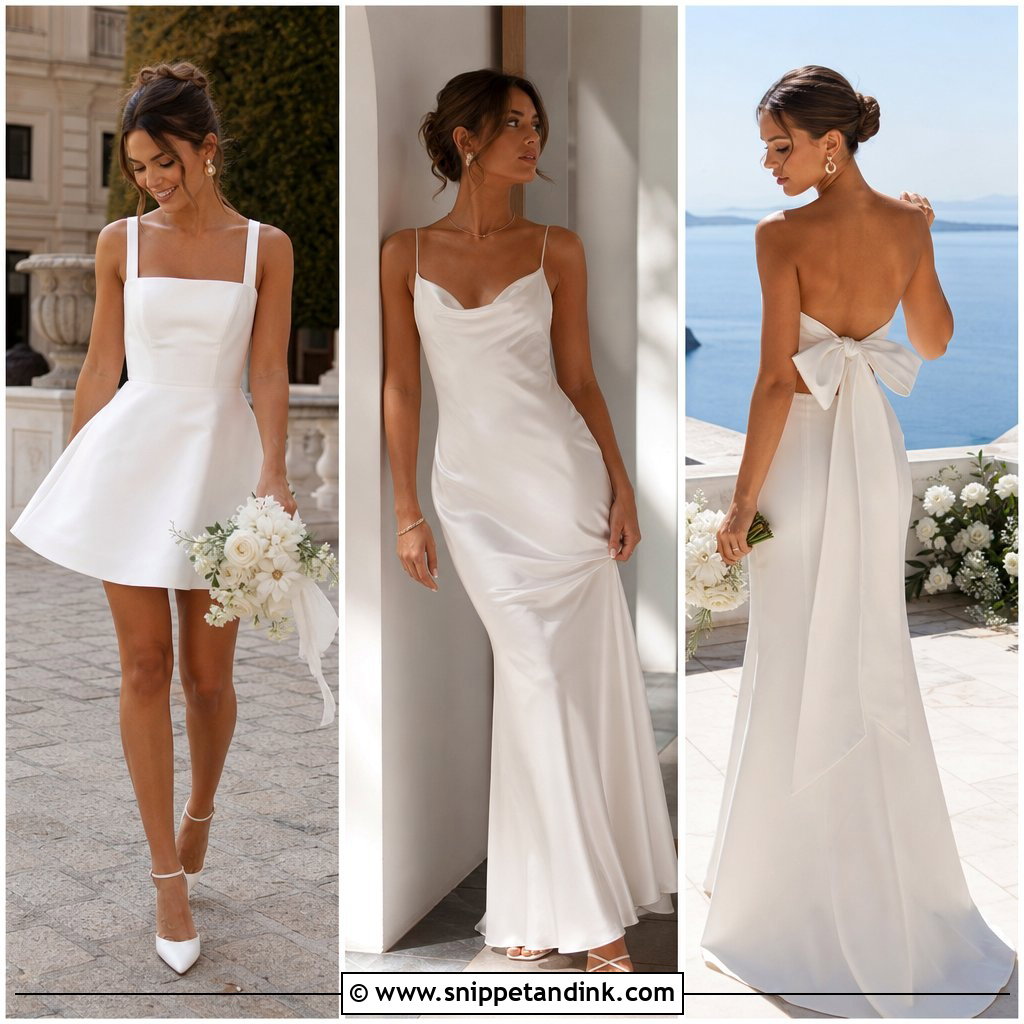
A silk slip wedding night dress depends almost entirely on the cut. A true bias cut drapes over the body and moves when you walk; a straight-cut slip in thin fabric shows every seam and line of underwear. I’d steer you away from it if you plan to sit for long stretches, because silk wrinkles across the lap within the hour. Ivory or pale champagne reads more bridal than bright white. Strappy heels and a small satin bag are all it needs, with a cropped blazer or sheer wrap if the room runs cool.
7. Pearl Embellished Wedding Night Dress
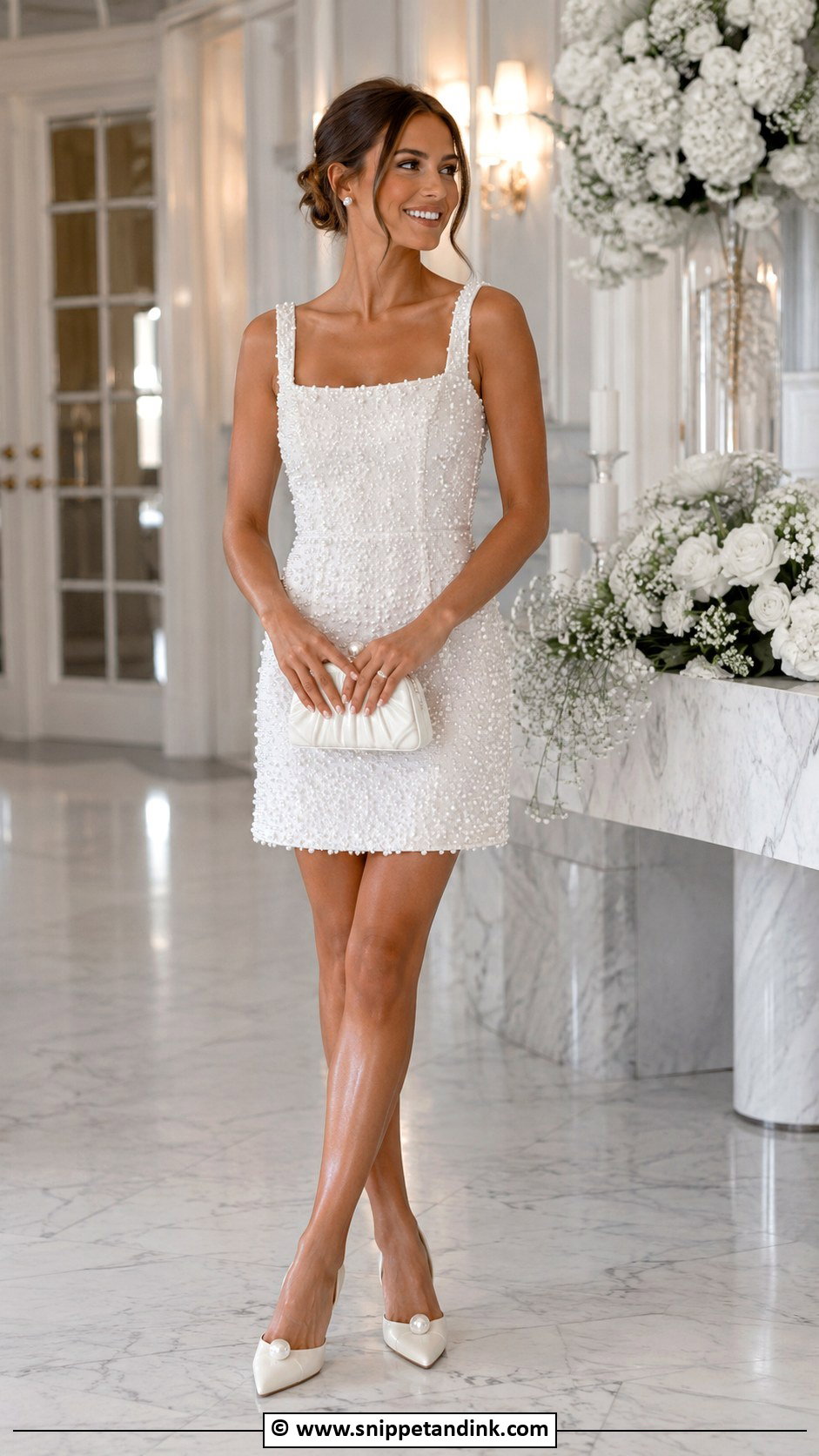
Pearls give dimension without the glare of crystals, which is why they suit candlelit rooms. Before buying an allover pearl mini, lift it: hand-sewn pearls add real weight and can drag a fine fabric downward by the end of the night. A pearl-trimmed midi or a dress with pearl straps is lighter and easier to wear for hours. Match the mood with pearl studs and ivory heels, and skip extra embellishment since the beading already does the job.
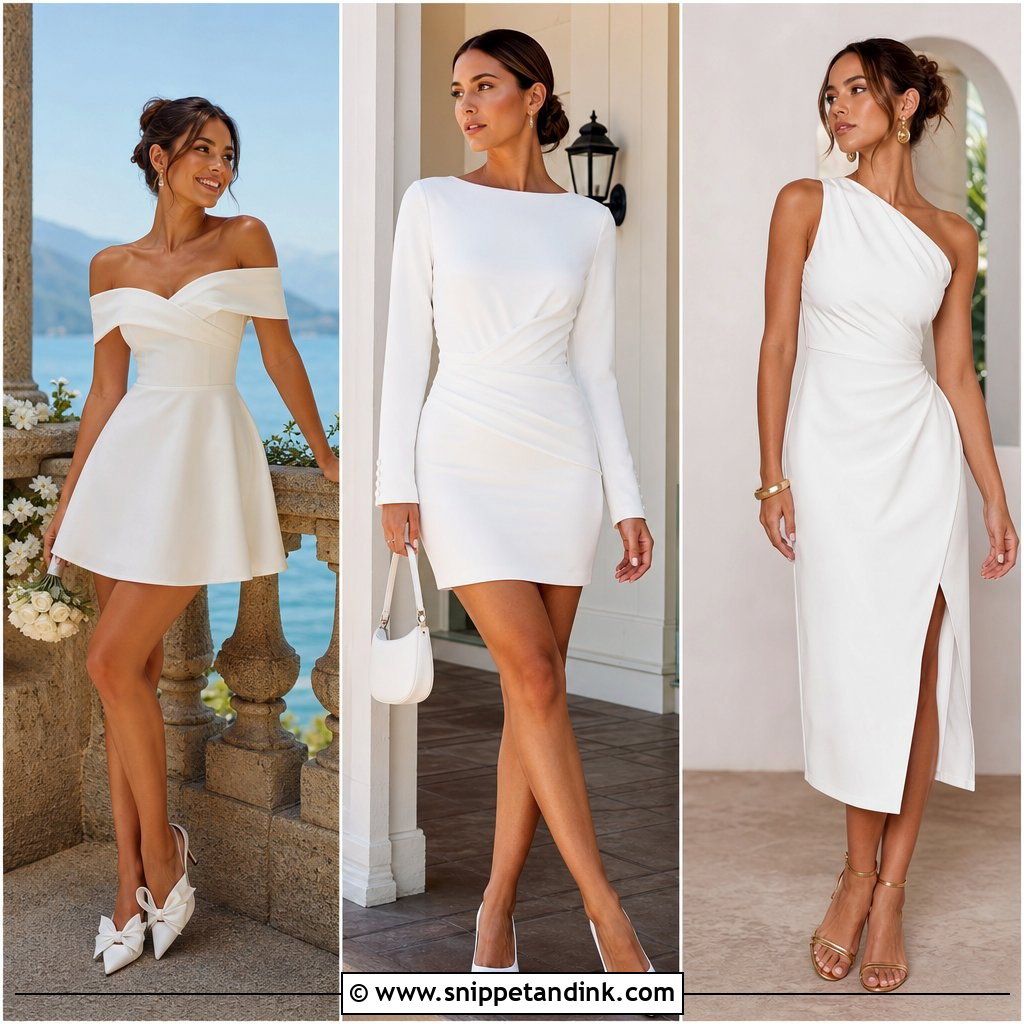
8. Off Shoulder Wedding Night Dress
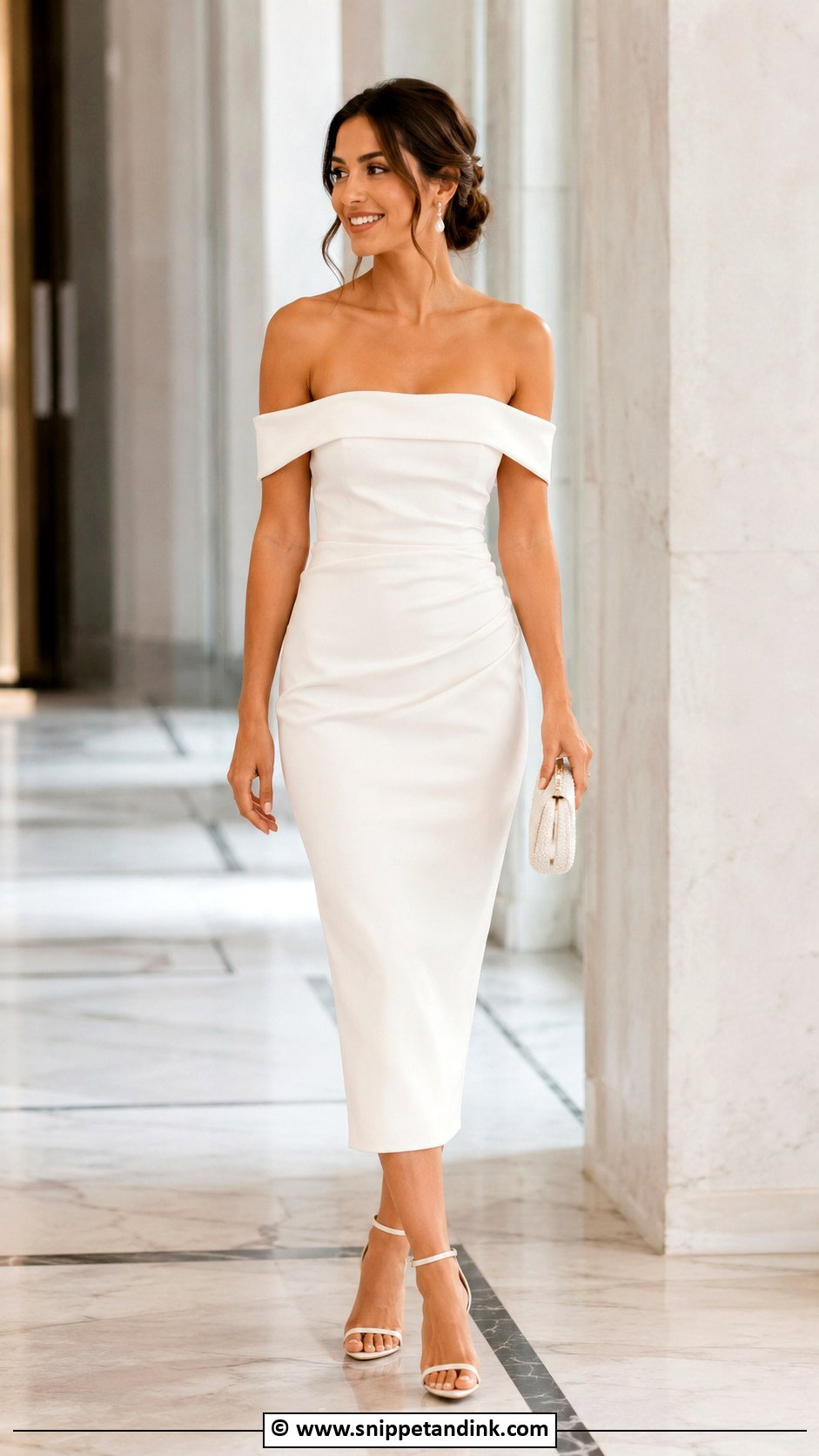
The off-shoulder line sits right across the shoulders, so it either stays put or creeps up all night. I look for an elasticated or silicone-gripped neckline, because without it you’ll be tugging it down in every candid. It’s a strong swap if your ceremony gown had a high neck or sleeves. A fitted mini feels playful, a midi more formal. Drop earrings and a smooth updo keep the collarbone on show; structured fabric gives more support than soft satin.
9. Long Sleeve Mini Wedding Night Dress
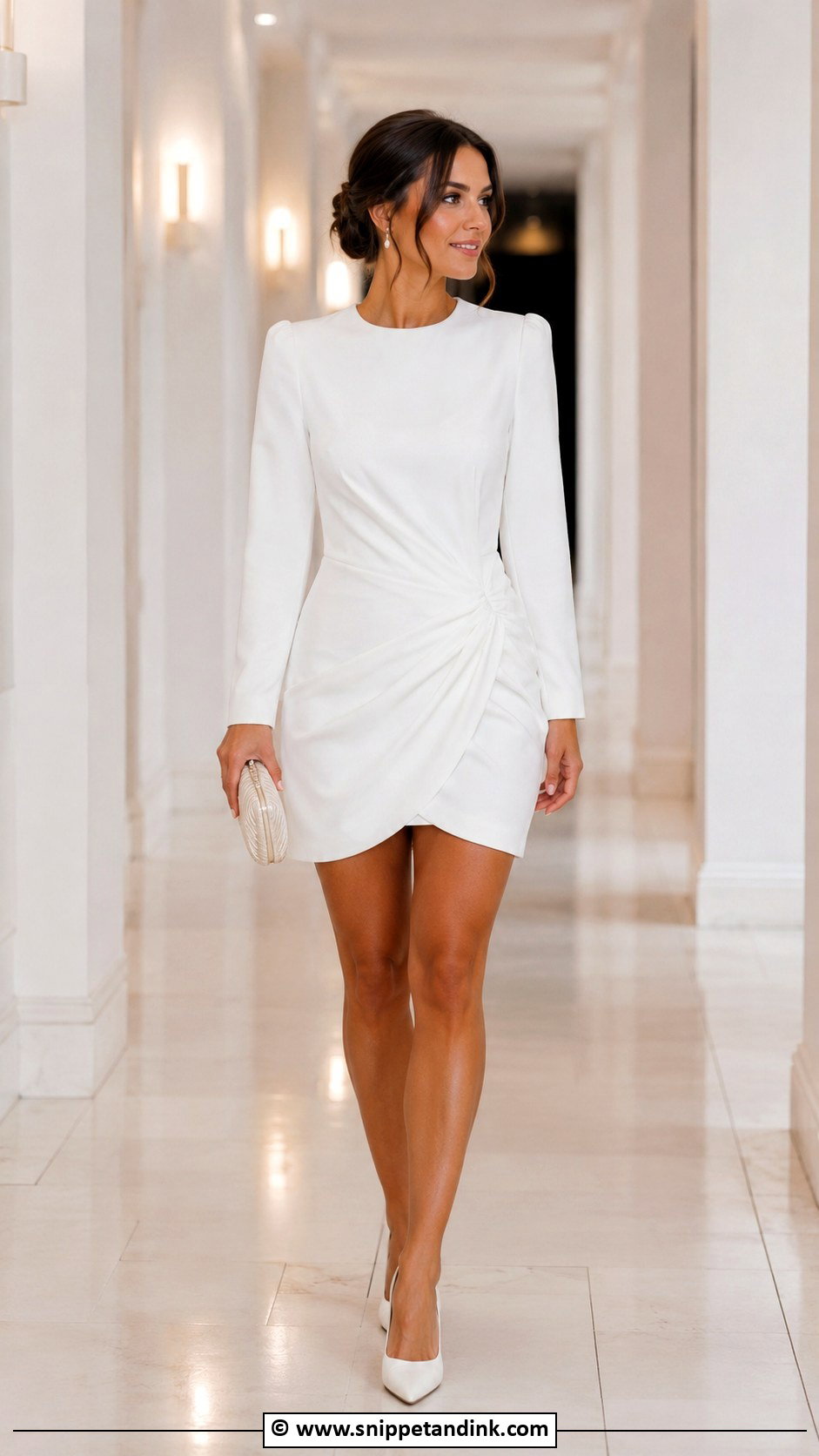
Long sleeves and a short hem balance each other, which is why this shape reads as polished rather than bare. Check the armhole before anything else. A tight, high armhole in a long sleeve stops you lifting your arms on the dance floor, and stretch crepe forgives far more than lace or satin here. Sheer sleeves soften a high neckline. Pointed heels and simple earrings finish it. I reach for this one most for autumn and winter receptions or venues with fierce air conditioning.
10. Halter Wedding Night Dress
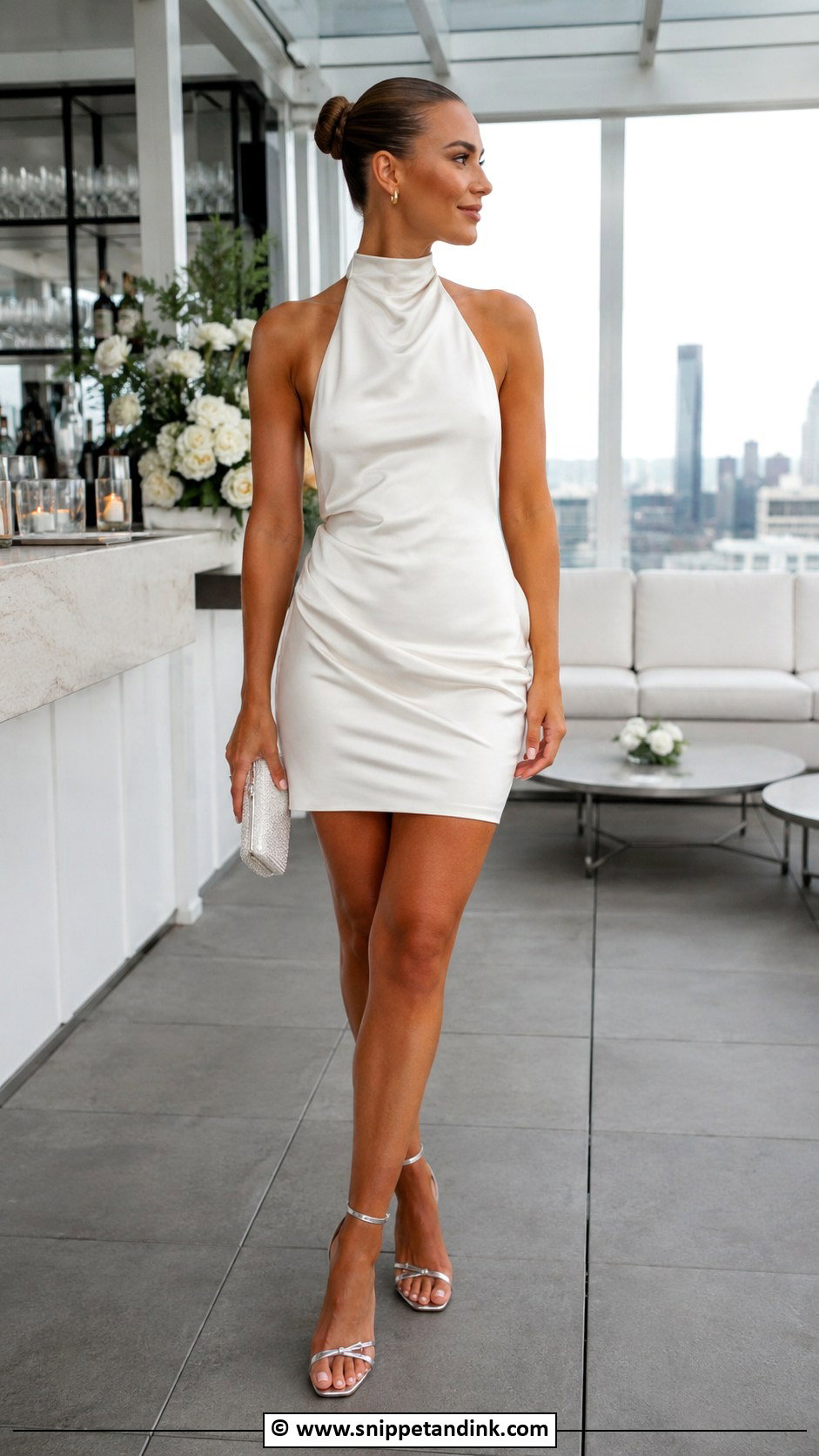
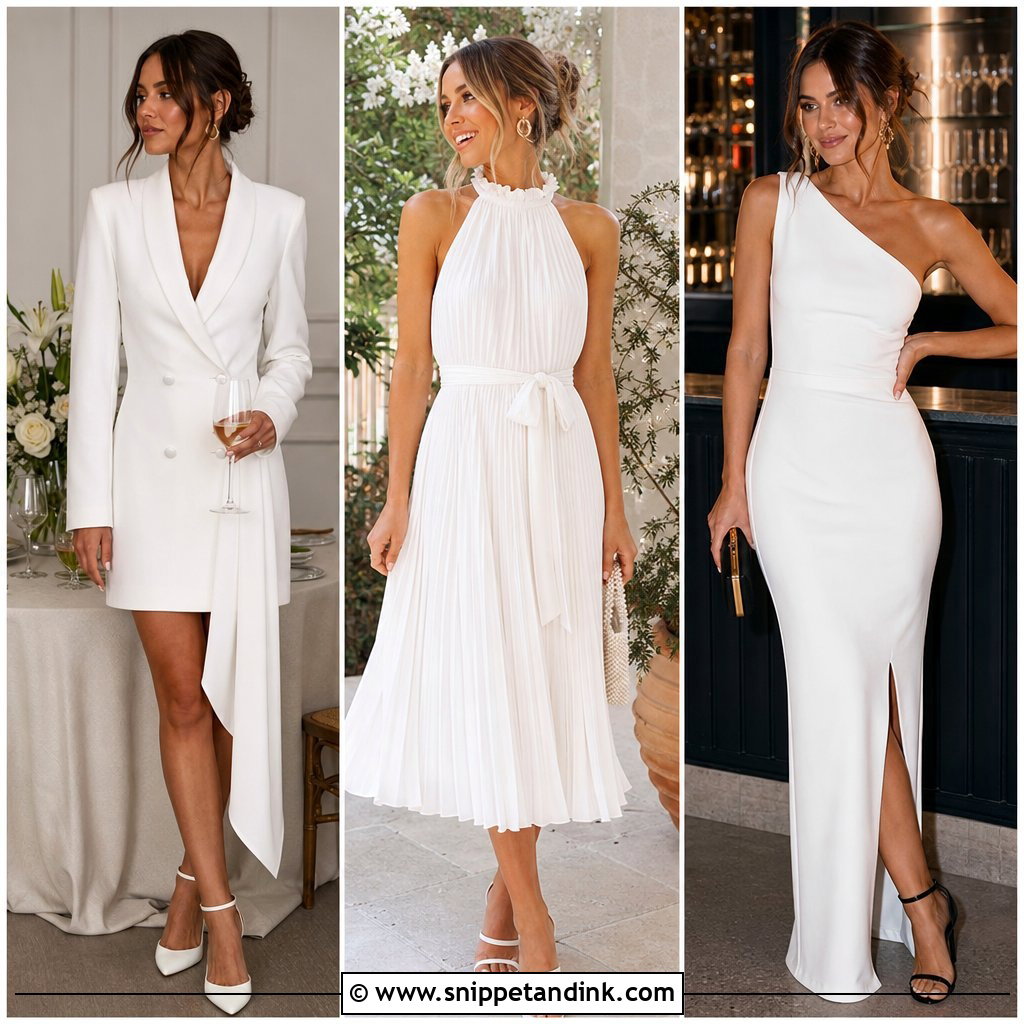
Halters are my quiet favourite for brides who dance hard. The neck strap carries the bodice weight, so it stays far more secure than strapless. The only real issue is the clasp at the nape: a heavy hook can dig in after a few hours, so I test it by having the bride turn her head side to side for a minute. Pair it with a smooth bun to show the line, minimal earrings, and metallic or ivory sandals. If the neck is high, move jewellery to the wrists.
11. Blazer Dress Wedding Night Dress
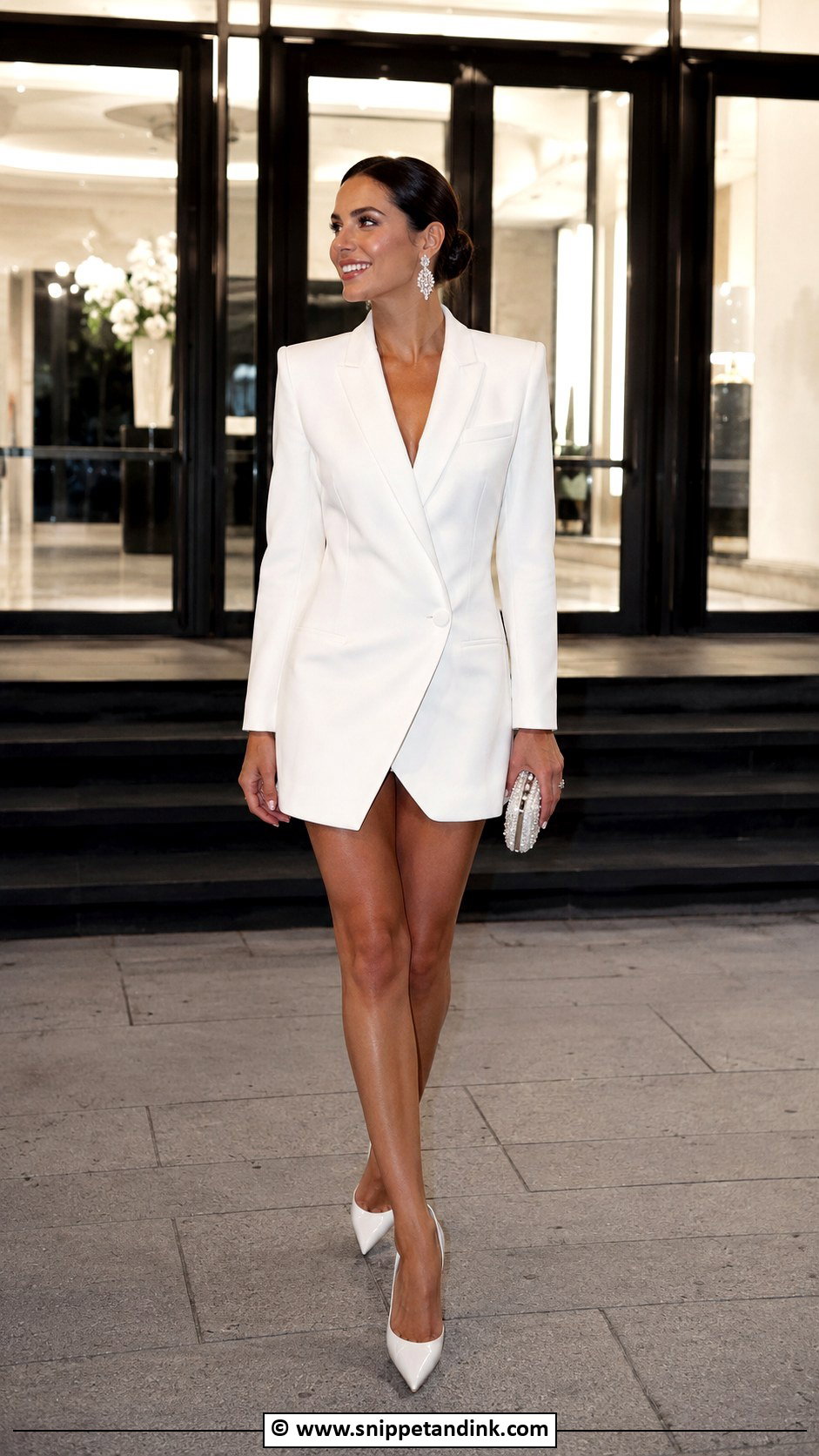
Tailoring changes the whole mood of the evening. A white or ivory blazer dress with a defined waist and clean lapels feels sharp, but the fit at the shoulder is non-negotiable; a jacket that’s even slightly wide in the shoulder looks borrowed. Most blazer dresses close with one or two buttons, so wear the dress for a full sitting test to make sure it doesn’t pull open at the chest. Pointed pumps and a mini clutch suit city venues and courthouse-style celebrations best.
12. Corset Mini Wedding Night Dress
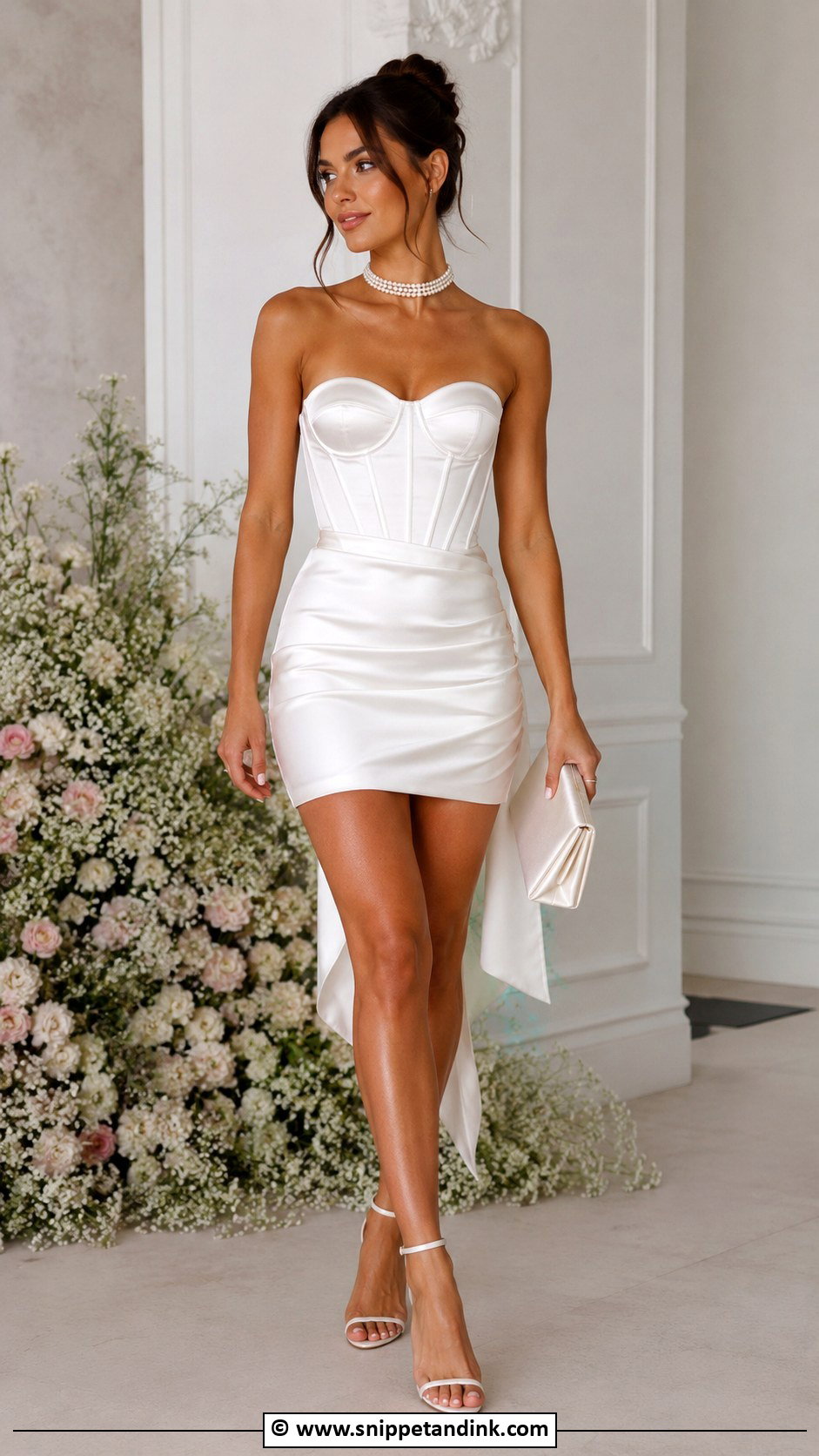
A corset mini wedding night dress shapes the waist, but the boning decides whether you’ll enjoy wearing it. Spiral steel bones bend with you; cheap plastic boning warps and pokes into the ribs once you’re warm. Leave room in the skirt for a full stride. Satin, taffeta and crepe all hold the corset structure well. Ankle-strap heels and simple drop earrings balance it, and softer hair keeps the overall effect from looking stiff.
13. Tulle Mini Wedding Night Dress
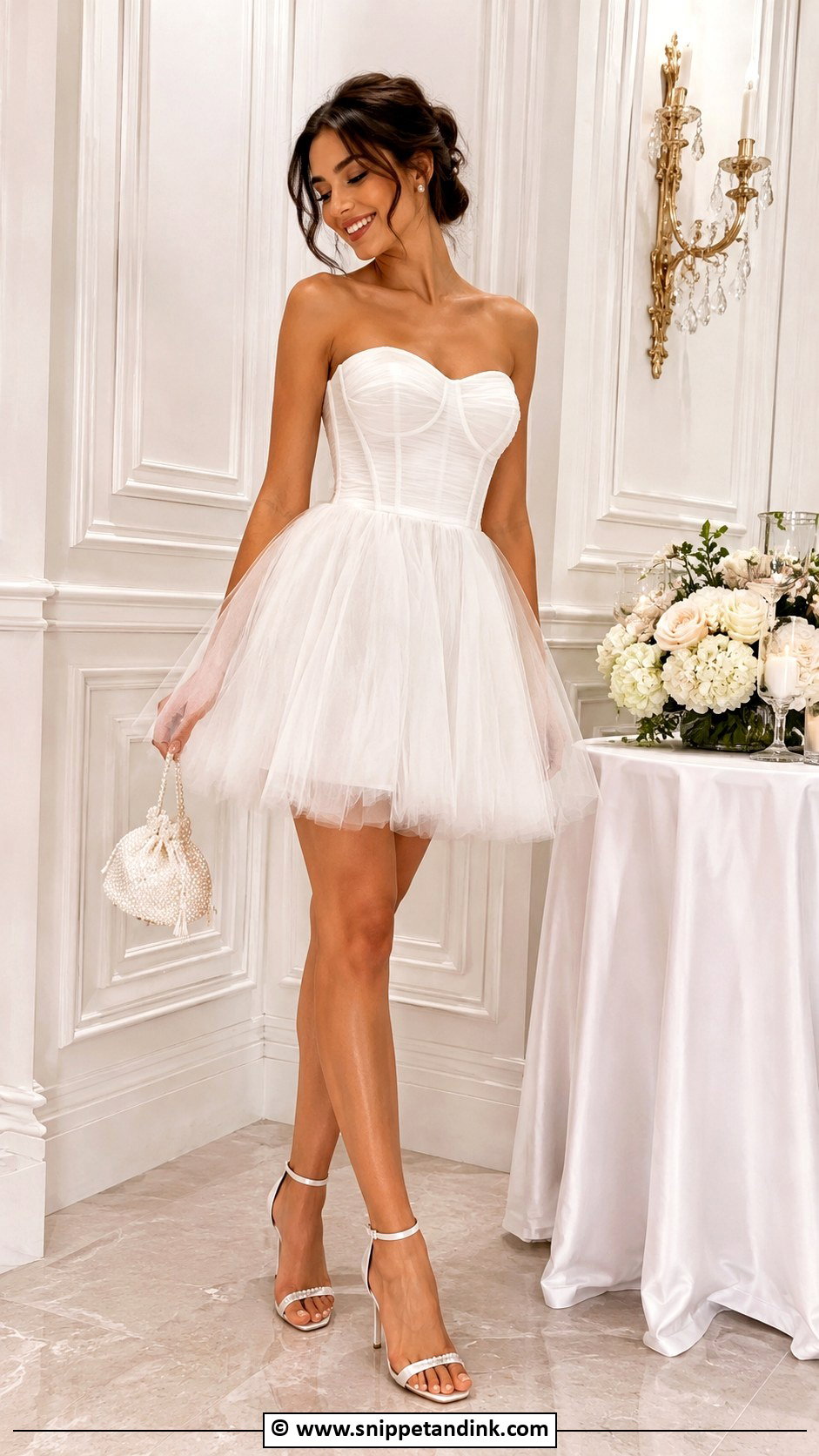
After a heavy ceremony gown, a tulle mini feels almost weightless. Layers of tulle add volume with very little bulk, and the skirt moves with every step. The trade-off is that tulle snags on rough surfaces like bark chairs, bead-trimmed clutches and some jacket buttons, so I ask brides to look at where they’ll actually be sitting. A fitted bodice keeps the shape balanced. Pearl studs and satin heels suit it best.
14. Beaded Wedding Night Dress
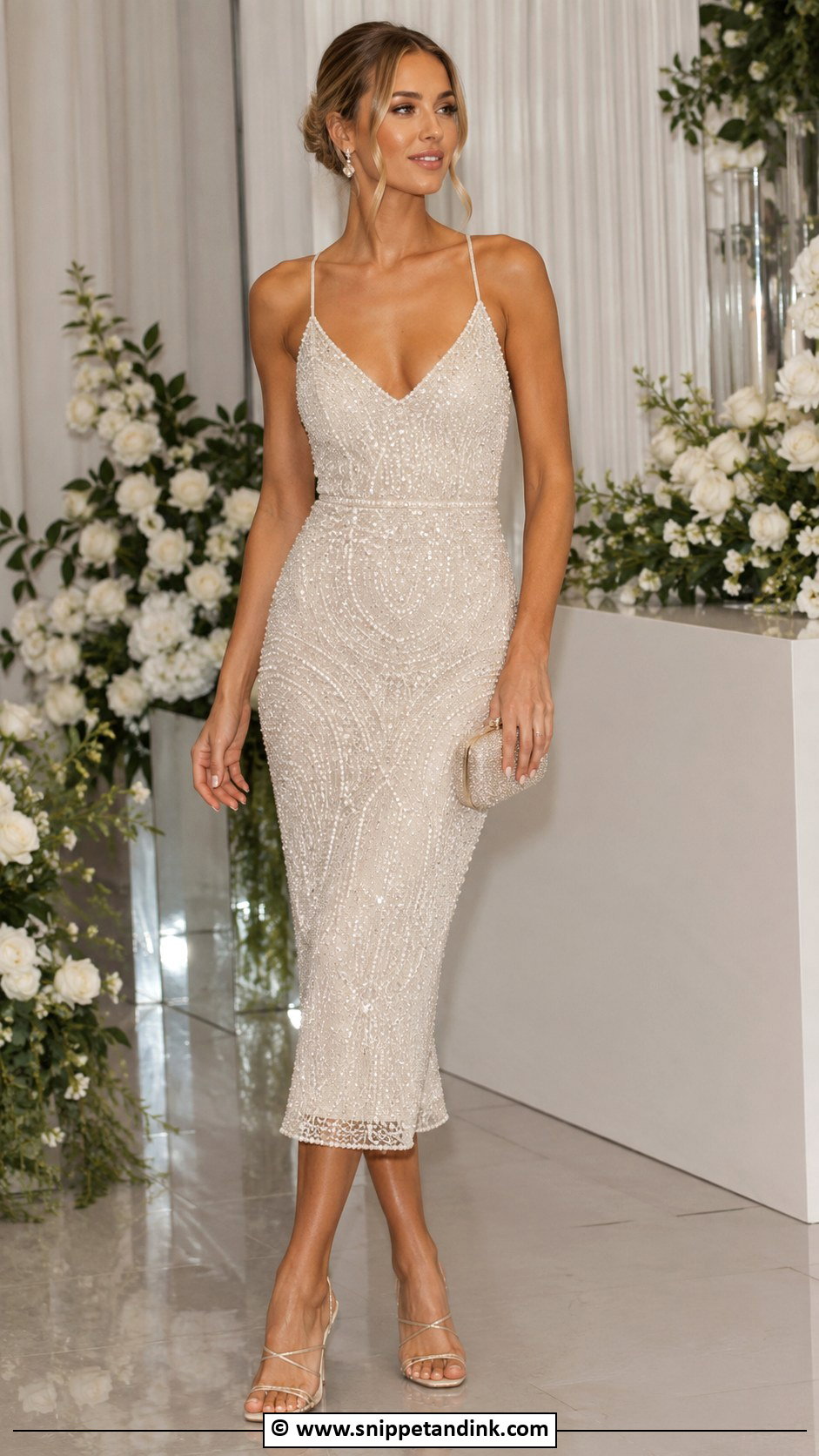
Beading is the richest-looking option here and the heaviest. A fully beaded mini can weigh more than you’d guess, and that weight pulls at the shoulder seams over a long night. I always ask a bride to wear the dress for twenty minutes in the shop before deciding. A beaded mini suits an after-party; a beaded midi works better for a formal dinner. Because the dress carries the shine, slim sandals and understated earrings are enough.
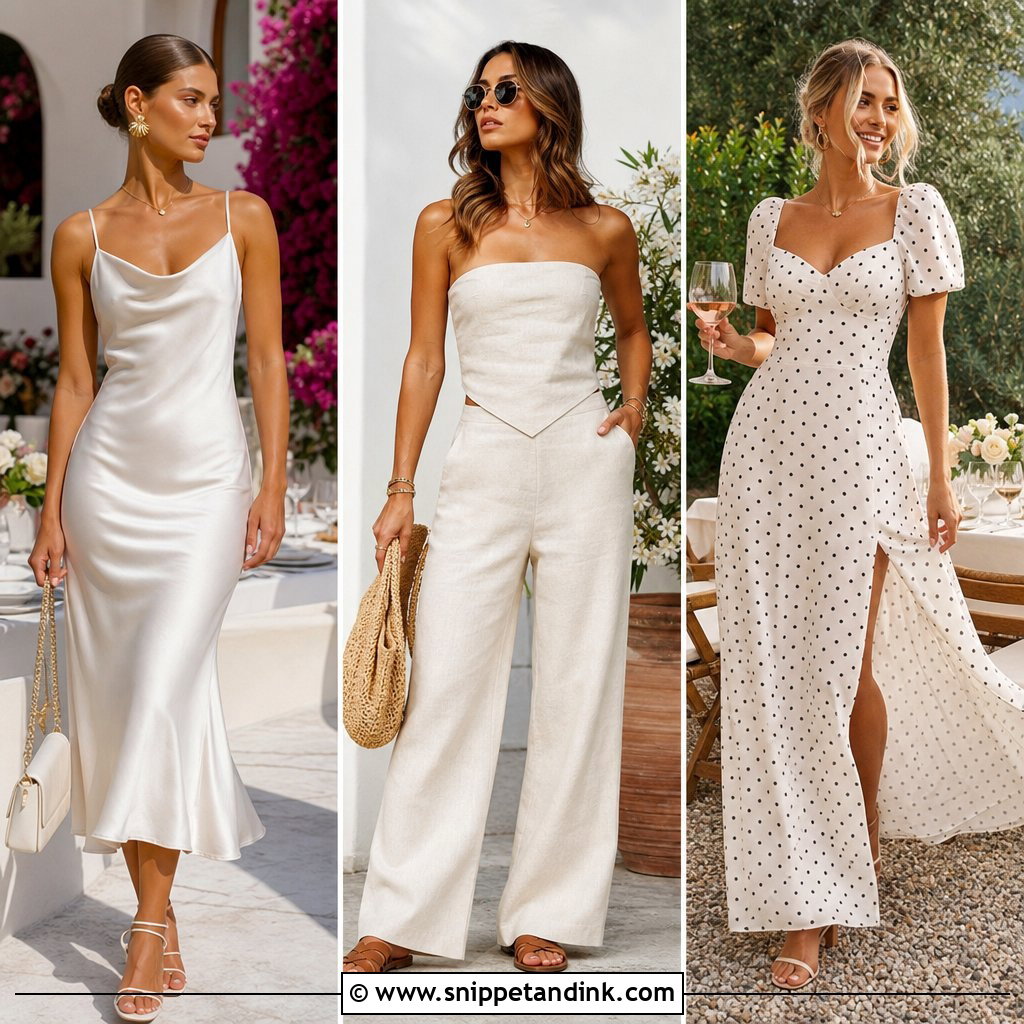
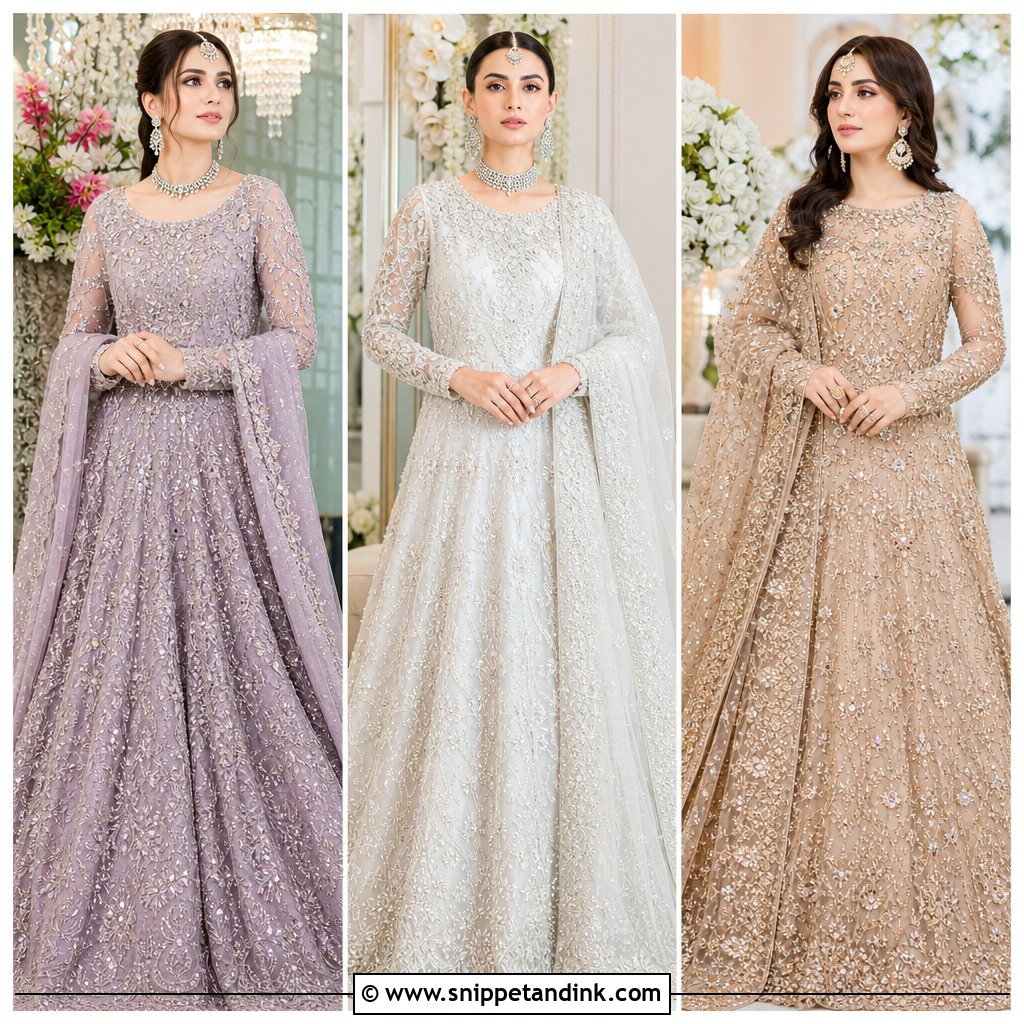
15. High Low Wedding Night Dress
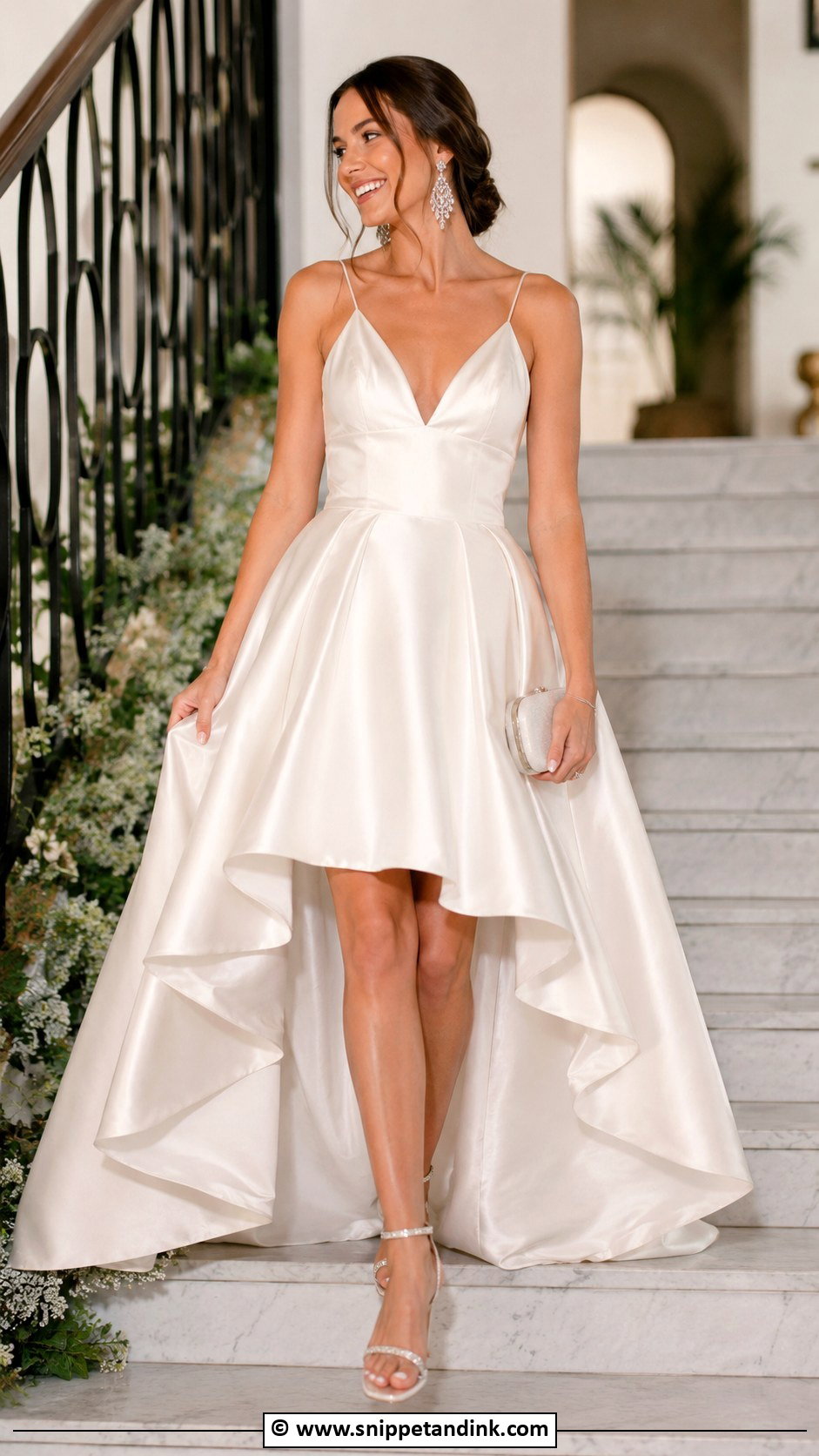
A high low hem gives you a bit of train drama without a train to manage. The front shows your shoes, so pick a pair worth seeing, and the back adds movement as you walk to the dance floor. Crisp organza or taffeta holds the curve of the hem; soft satin tends to collapse into an uneven line. It’s a good middle step for brides not ready for a mini. Keep accessories simple so the silhouette does the talking.
16. Bow Detail Wedding Night Dress
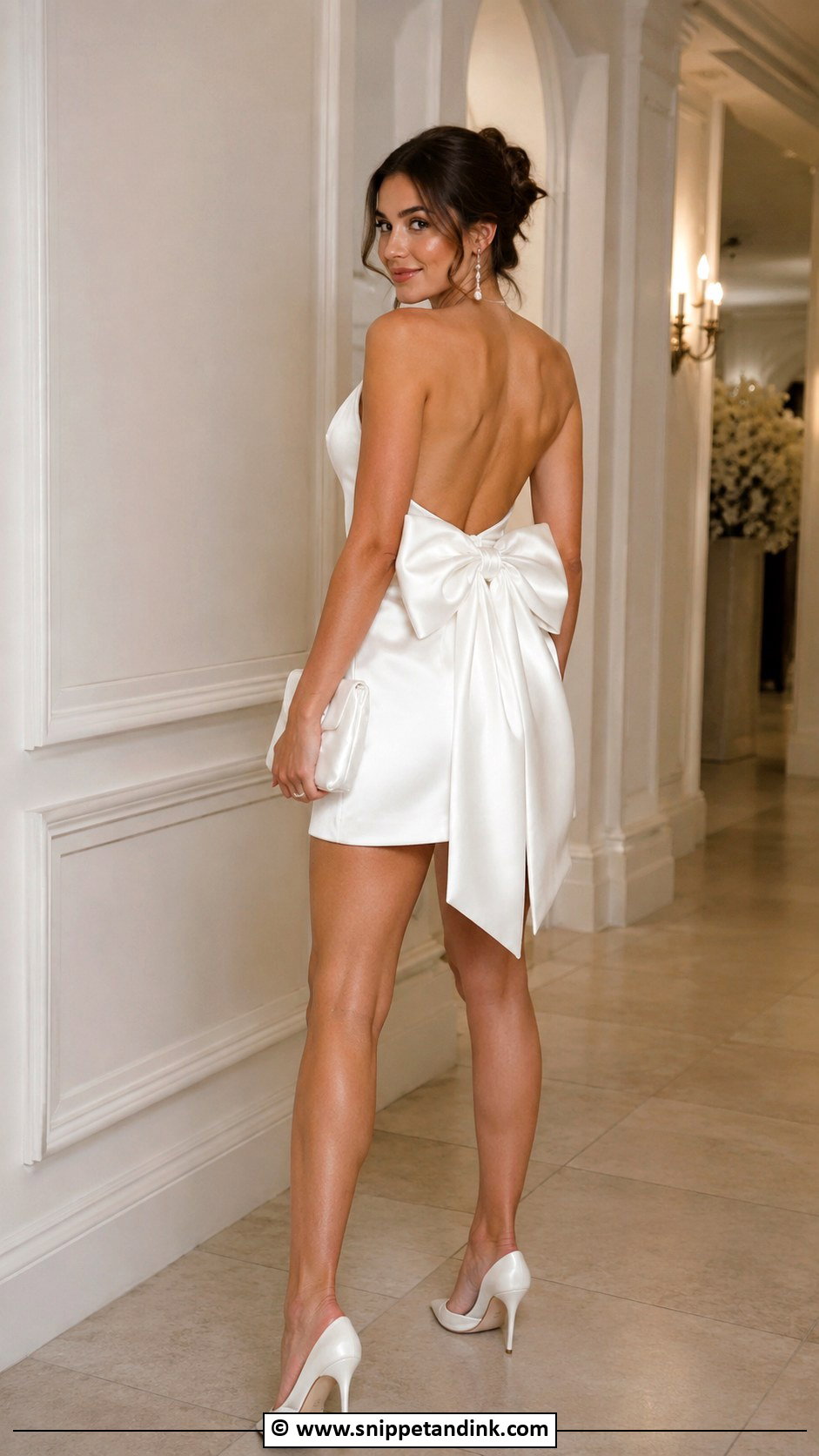
Bows are the most personal detail on this list because placement changes everything. A big back bow is made for exit photos, while small shoulder bows read softer and younger. Ask how the bow is attached: a stitched-down bow stays crisp, but a loose one droops after an hour of hugging. Keep the dress itself plain so the bow has no competition. Classic heels and pearl earrings are all you need.
17. Champagne Wedding Night Dress
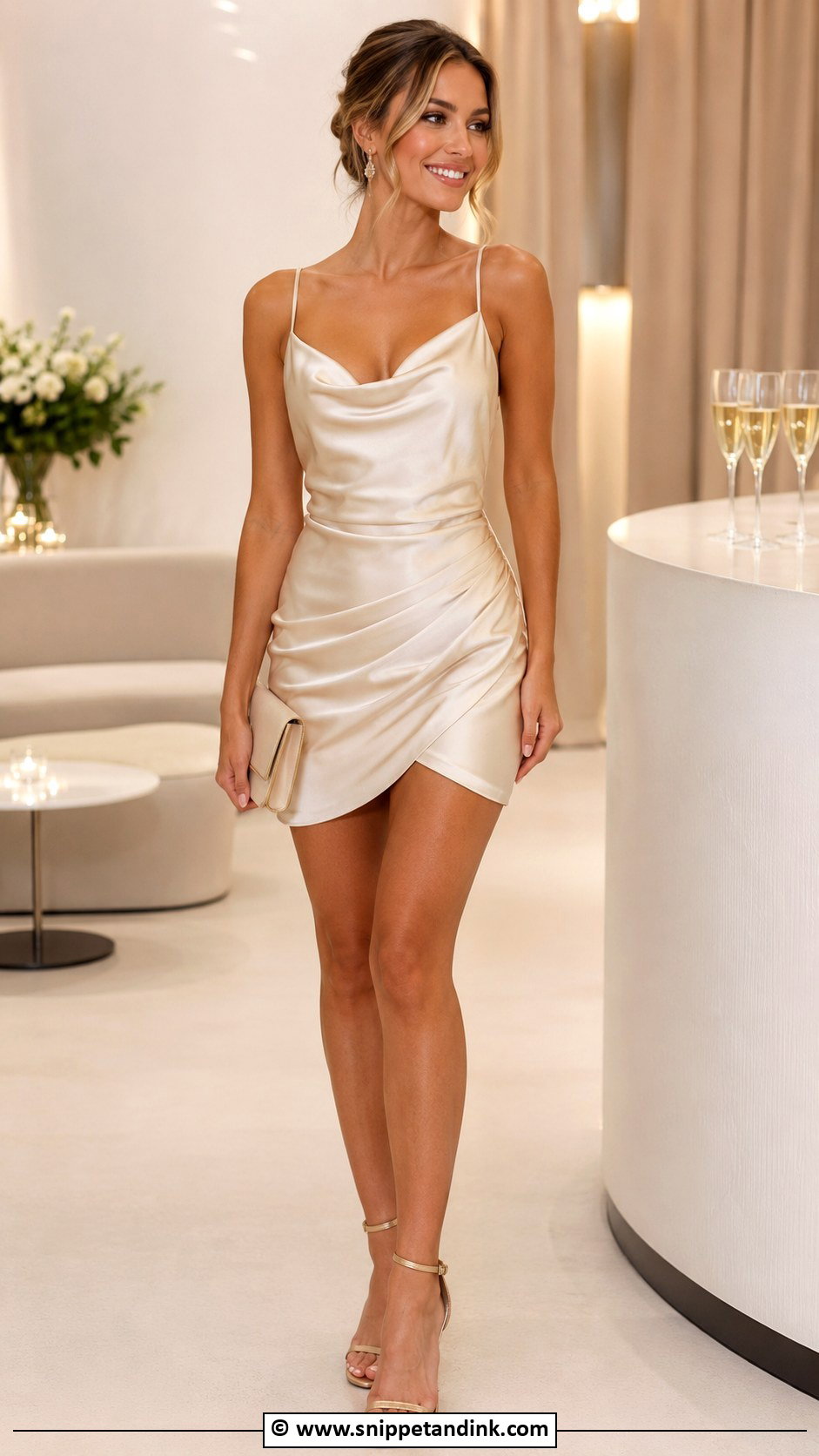
Champagne is kinder to most skin tones than stark white under warm reception bulbs, which is why I suggest it so often. It also signals a clear outfit change if your ceremony gown was bright white. The shade shifts with fabric: champagne satin looks golden, champagne sequins look almost bronze in flash. See it in daylight and in warm lamp light before you decide. Gold-tone accessories and nude heels finish it.
18. Silver Wedding Night Dress
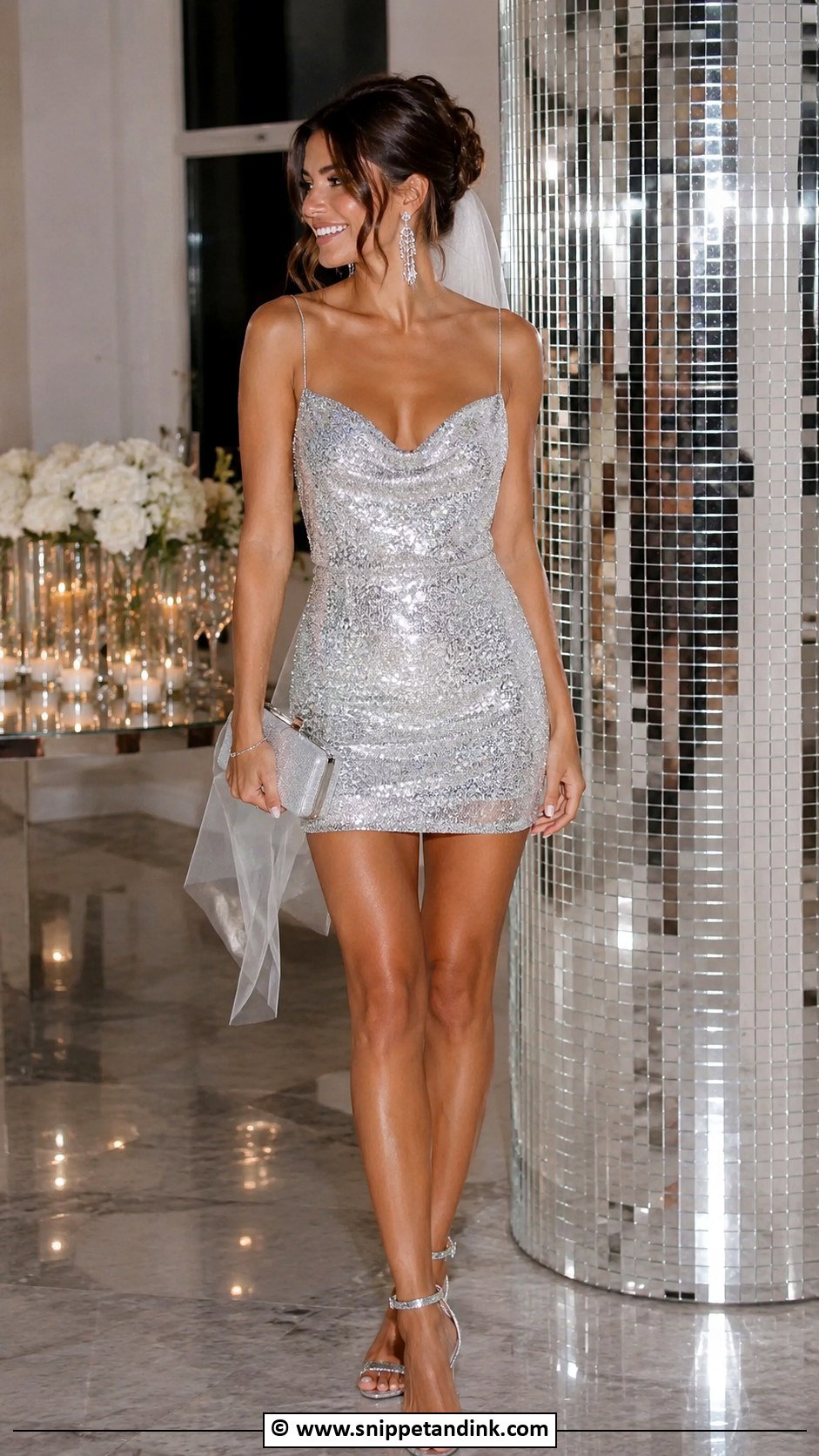
Silver is the cooler cousin of champagne and suits brides with pink or neutral undertones. Metallic satin looks sleek but shows sweat marks under the arms on a hot dance floor, so for a summer wedding I lean towards silver sequins or soft beading instead. Crystal earrings and silver sandals keep the palette consistent. Hold back on hair and makeup, since the dress already brings plenty of shine under flash.
19. Short Sleeve Wedding Night Dress
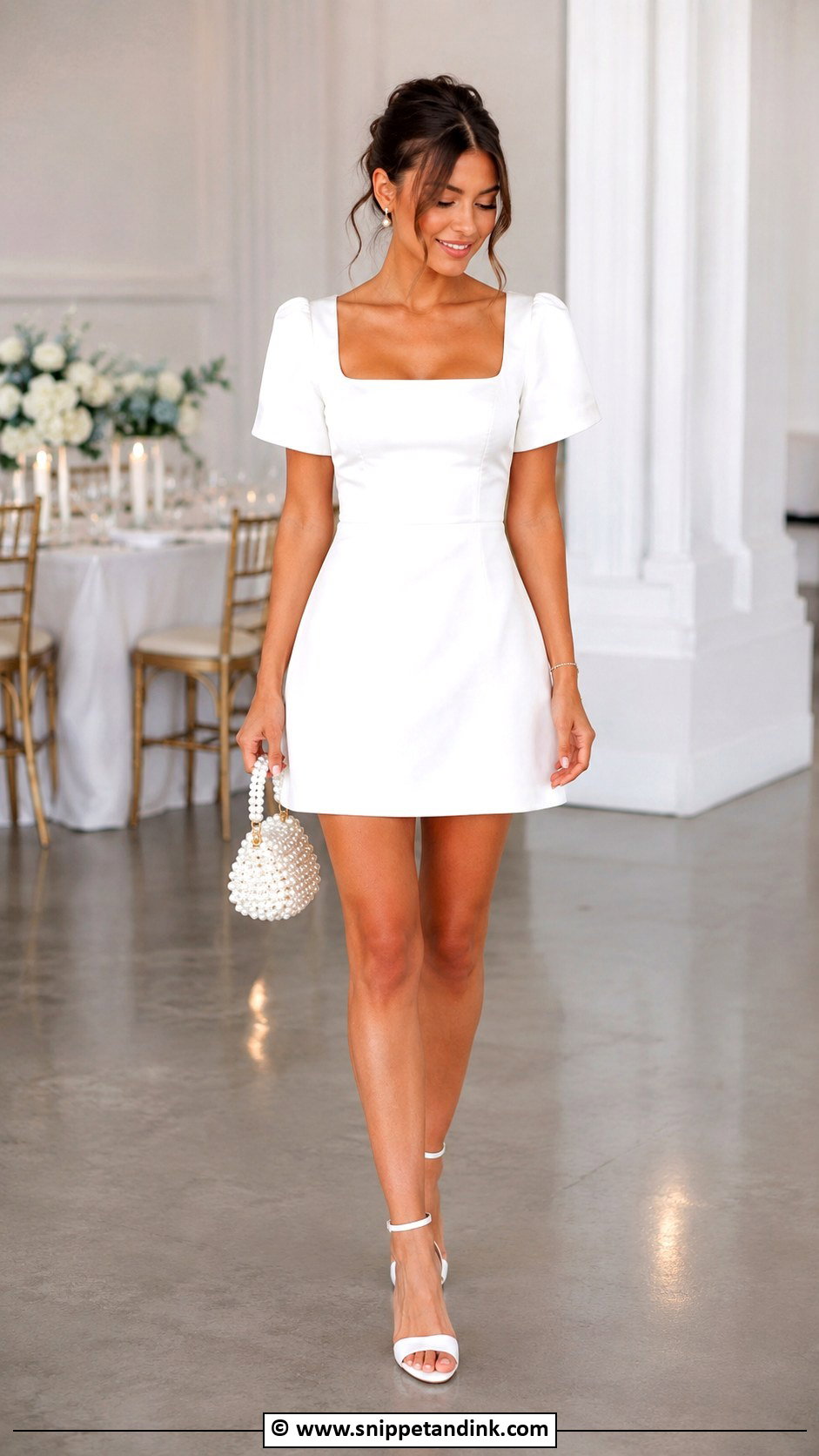
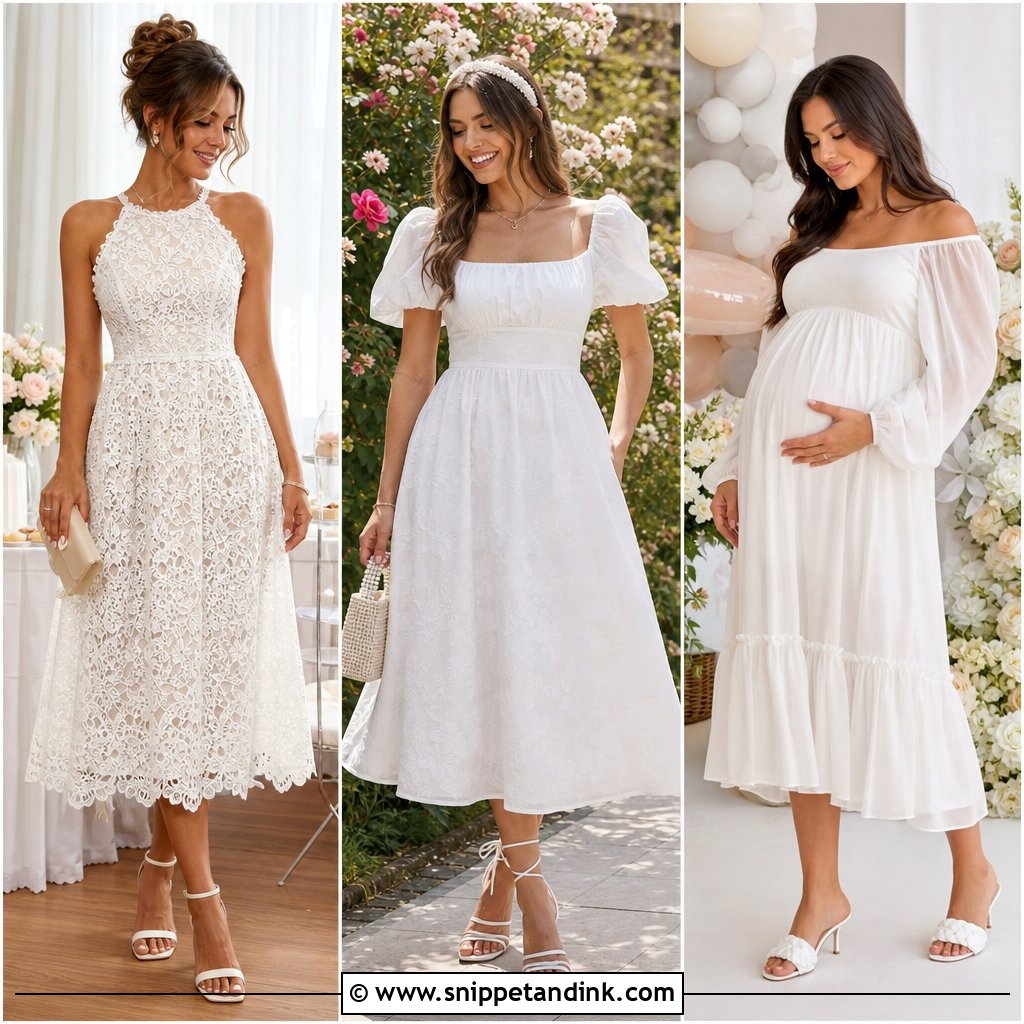
Sleeves solve the strap problem outright, which is why a short sleeve wedding night dress suits brides who hate adjusting all night. Puff sleeves read sweet, cap sleeves classic, tailored sleeves sharper. Lift both arms in the fitting room: puff sleeves set too low restrict movement more than you’d think. It’s especially comfortable for spring and summer receptions. Block heels and pearl earrings keep it grounded.
20. Ruffle Wedding Night Dress
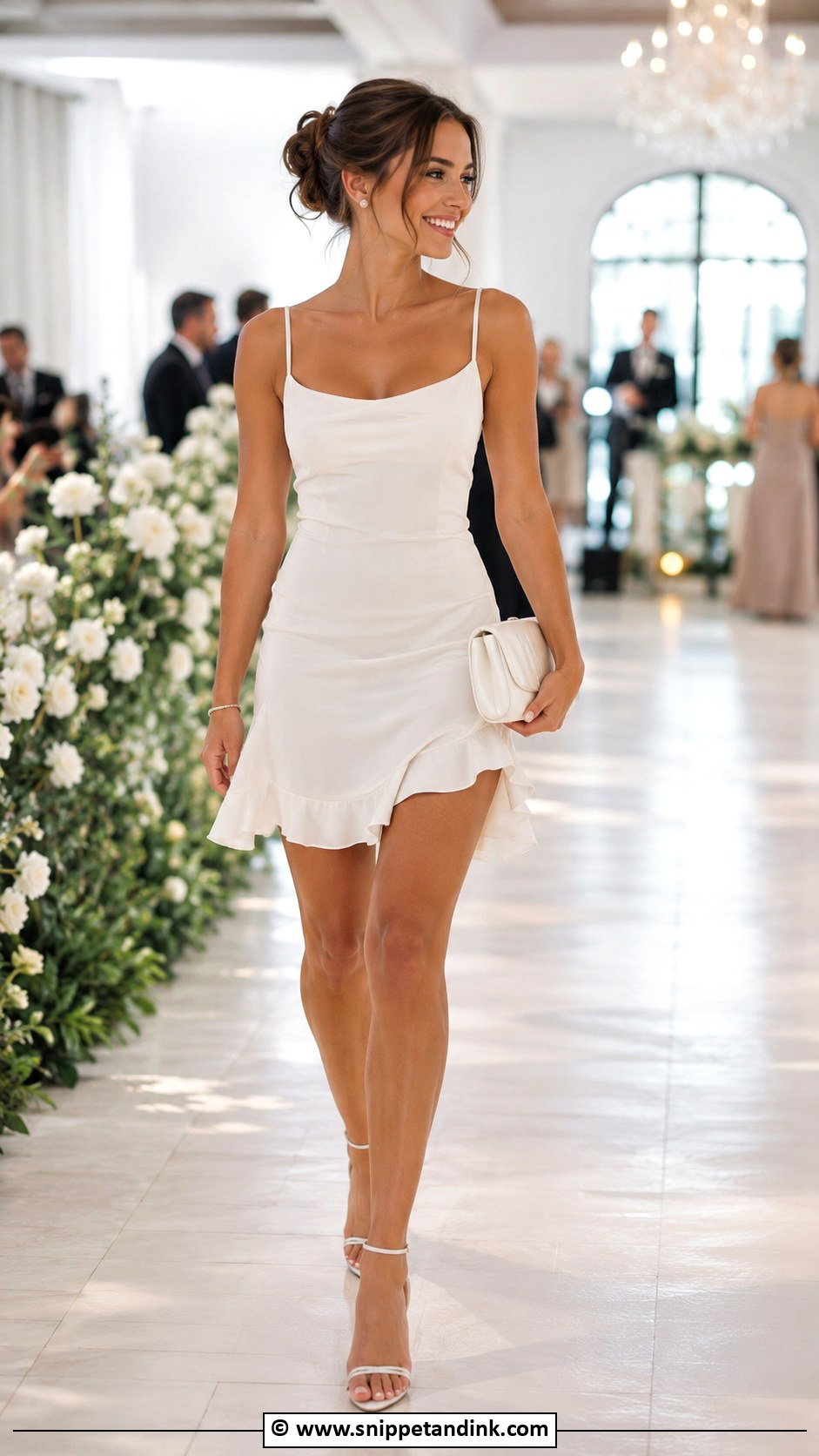
One ruffle is a detail; five ruffles is a costume. I keep brides to a single ruffled area, at the hem or the neckline, so a plain white dress gains movement without looking fussy. Ruffles in lightweight chiffon bounce when you dance, while stiffer fabrics stand out from the body. A ruffled mini wants slim heels and little jewellery; a ruffled midi can carry a structured clutch. If sequins feel like too much, this gives you energy in photos without any sparkle.
21. One Shoulder Wedding Night Dress
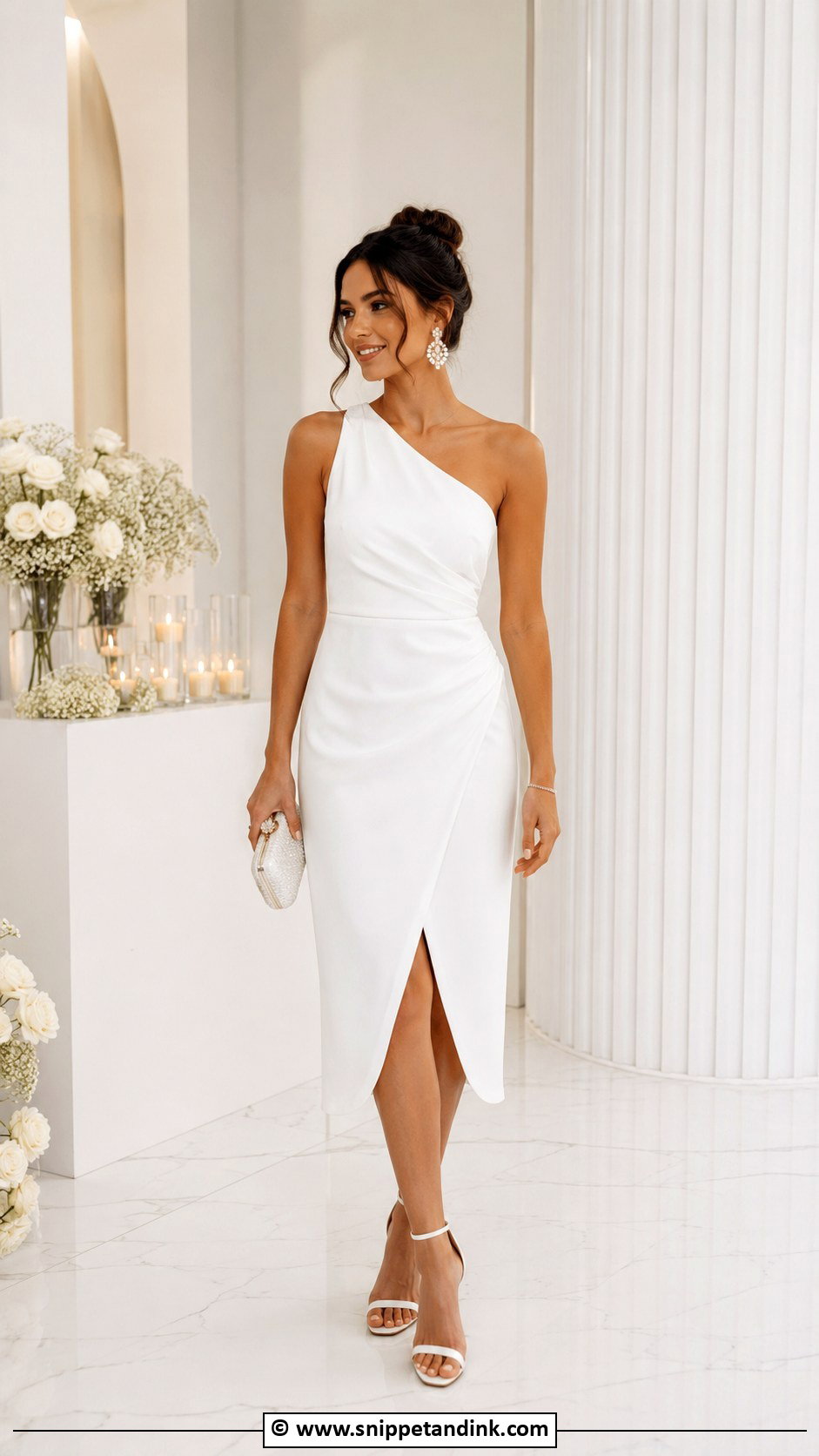
The single strap on a one shoulder dress takes all the weight, so it has to sit firmly without cutting in. I check it with the bride’s arms up and in a hug. The asymmetry does the decorating, so wear statement earrings on the bare side and skip the necklace. A fitted mini feels bold; a one-shoulder midi suits a formal reception. It makes a sharp, current contrast after a traditional ceremony gown.
22. A Line Wedding Night Dress
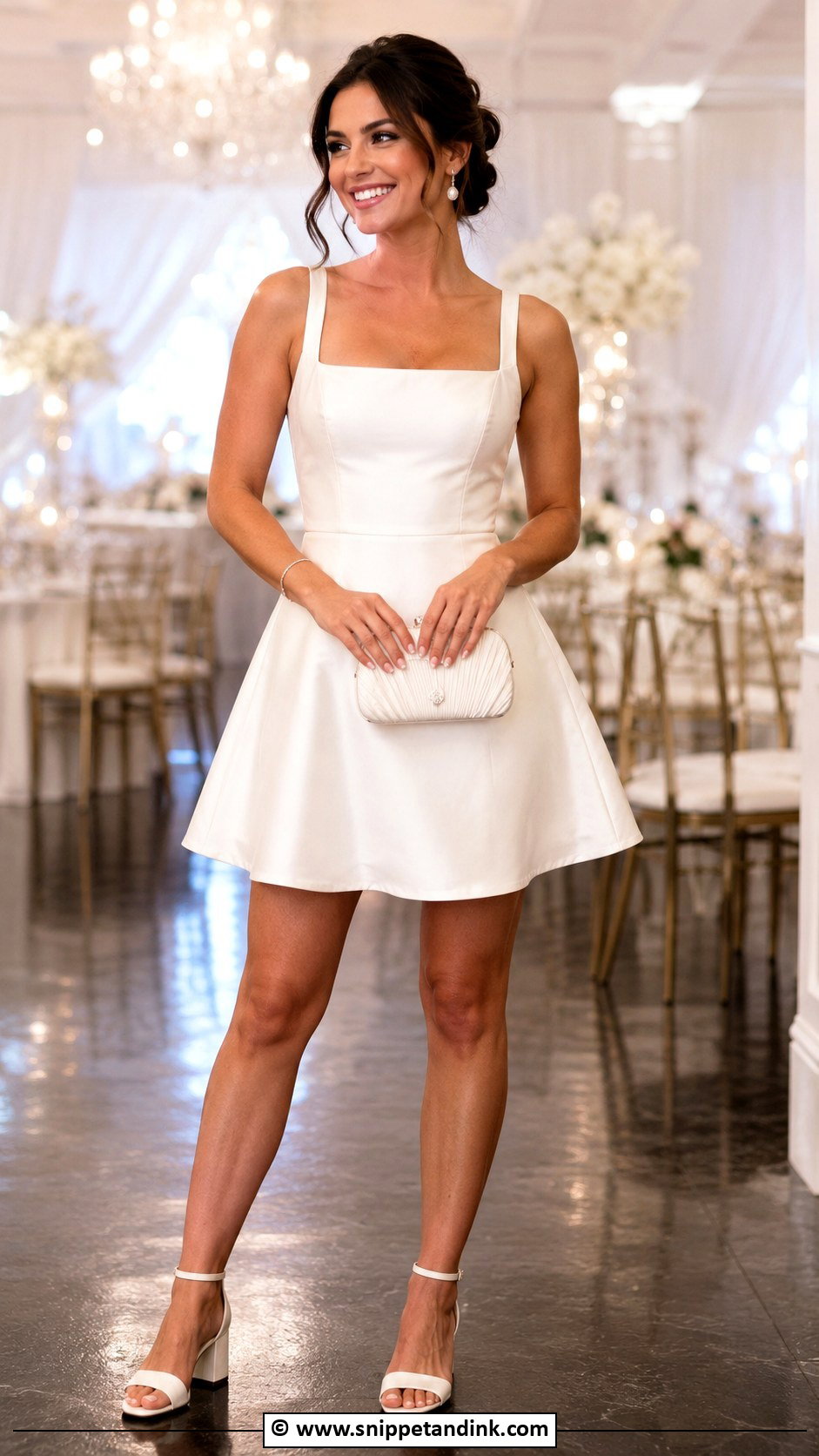
A fitted top and a softly flared skirt suit more body types than almost any other shape, which is why I start nervous shoppers here. The flare hides a full meal and lets you sit without the hem riding up. In crepe or satin it reads clean; in lace or tulle, softer. Block heels or low sandals work if comfort leads. A small pearl bag and simple earrings keep it bridal without overcomplicating it.
23. Tea Length Wedding Night Dress
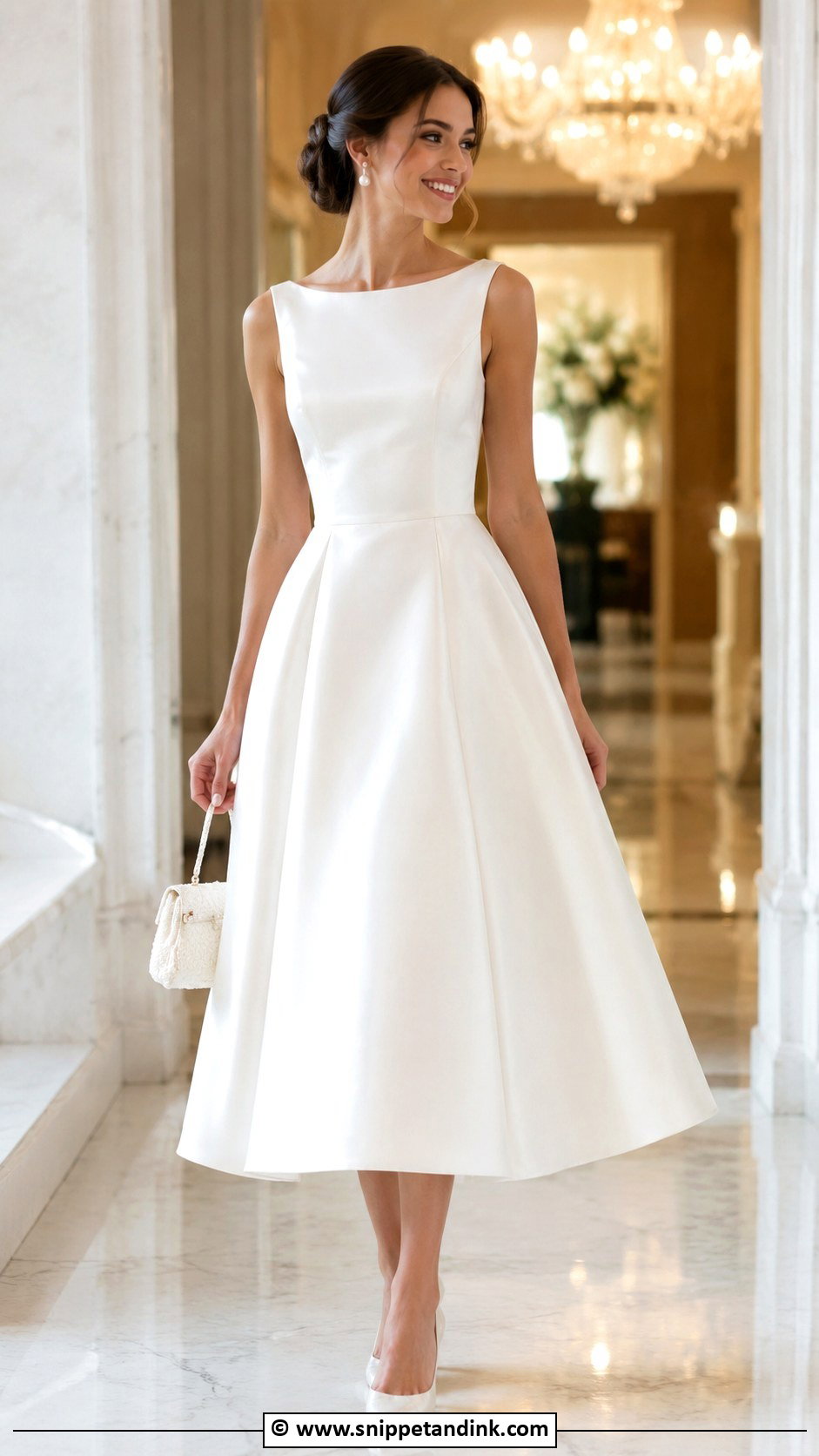
Tea length falls between knee and ankle, so it moves like a gown but never trips you on stairs. Because the hem stops above the ankle, your shoes are on show; satin pumps, bow heels or pearl sandals all suit it. A tea length silhouette looks most convincing with a fitted bodice and a full skirt supported by a light petticoat. Without one the skirt can hang limp in photos. This is my pick for vintage-leaning brides.
24. Two Piece Wedding Night Dress
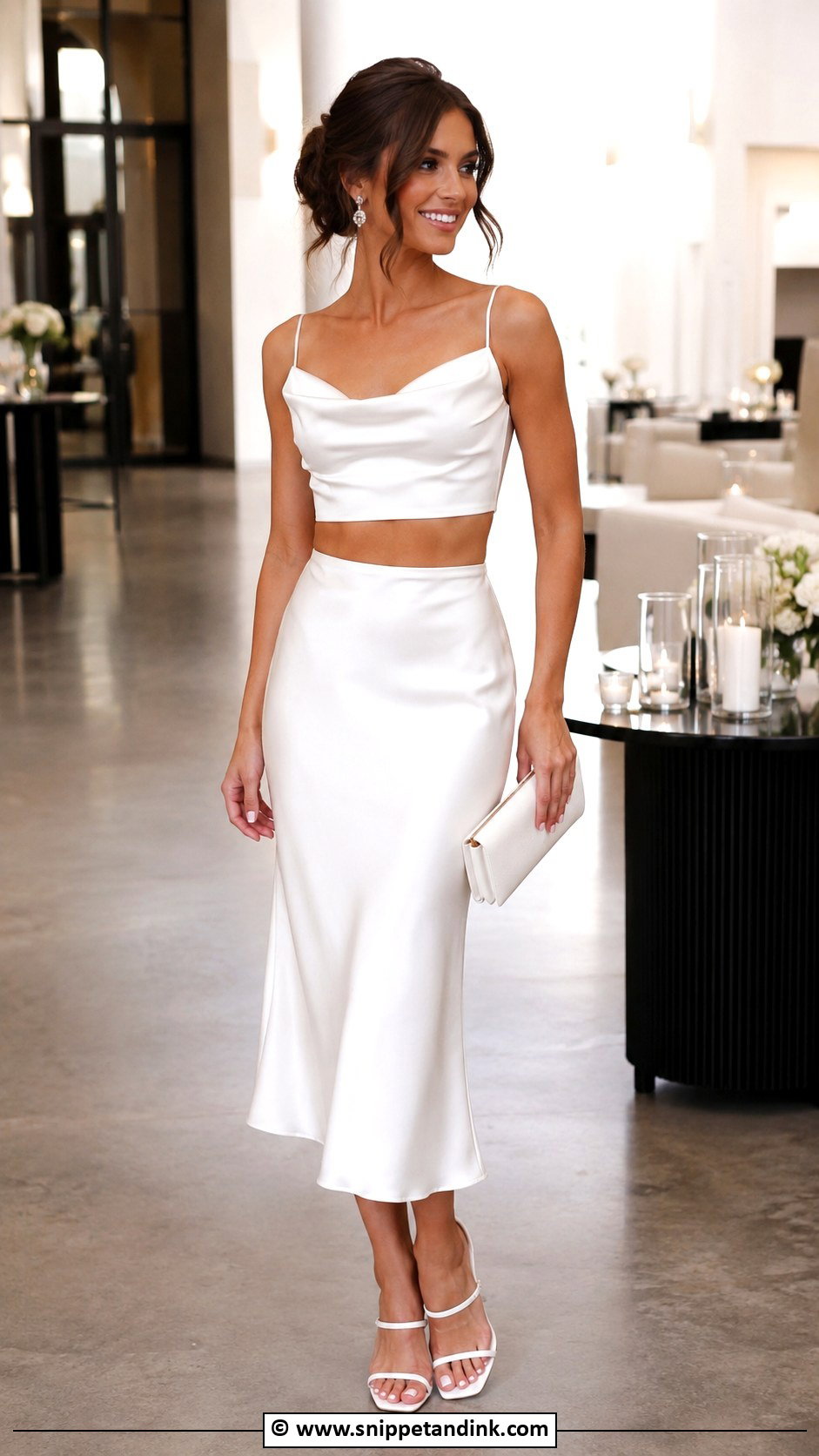
Two pieces give you room to move and to sit, but only if they match perfectly. Ivory from two different fabric lots rarely matches in daylight, so buy the top and skirt as a set, not separately. Watch the gap between the pieces too: a cropped top that clears the waistband standing may show more skin once you raise your arms. Satin sets look sleek, lace sets softer, beaded sets dressier. Strappy heels and simple jewellery are enough.
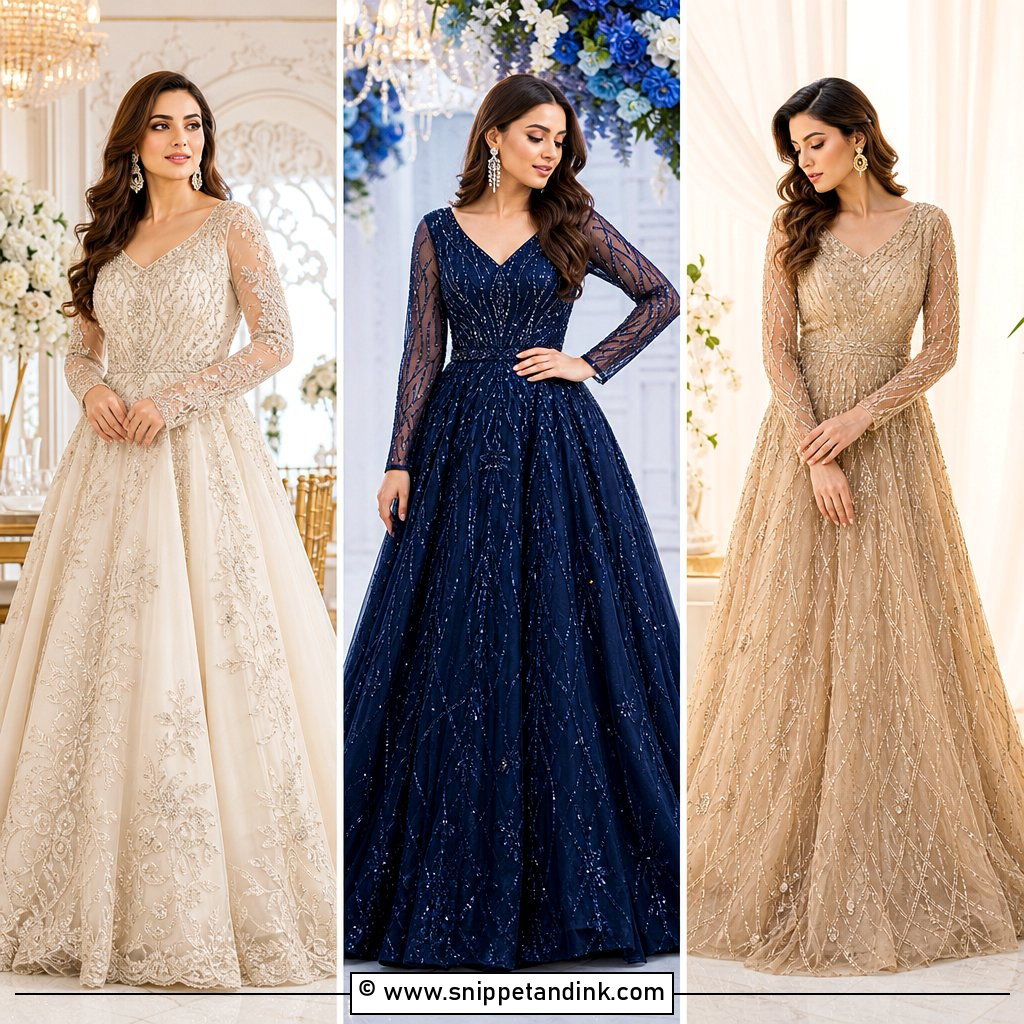
25. Simple White Midi Wedding Night Dress
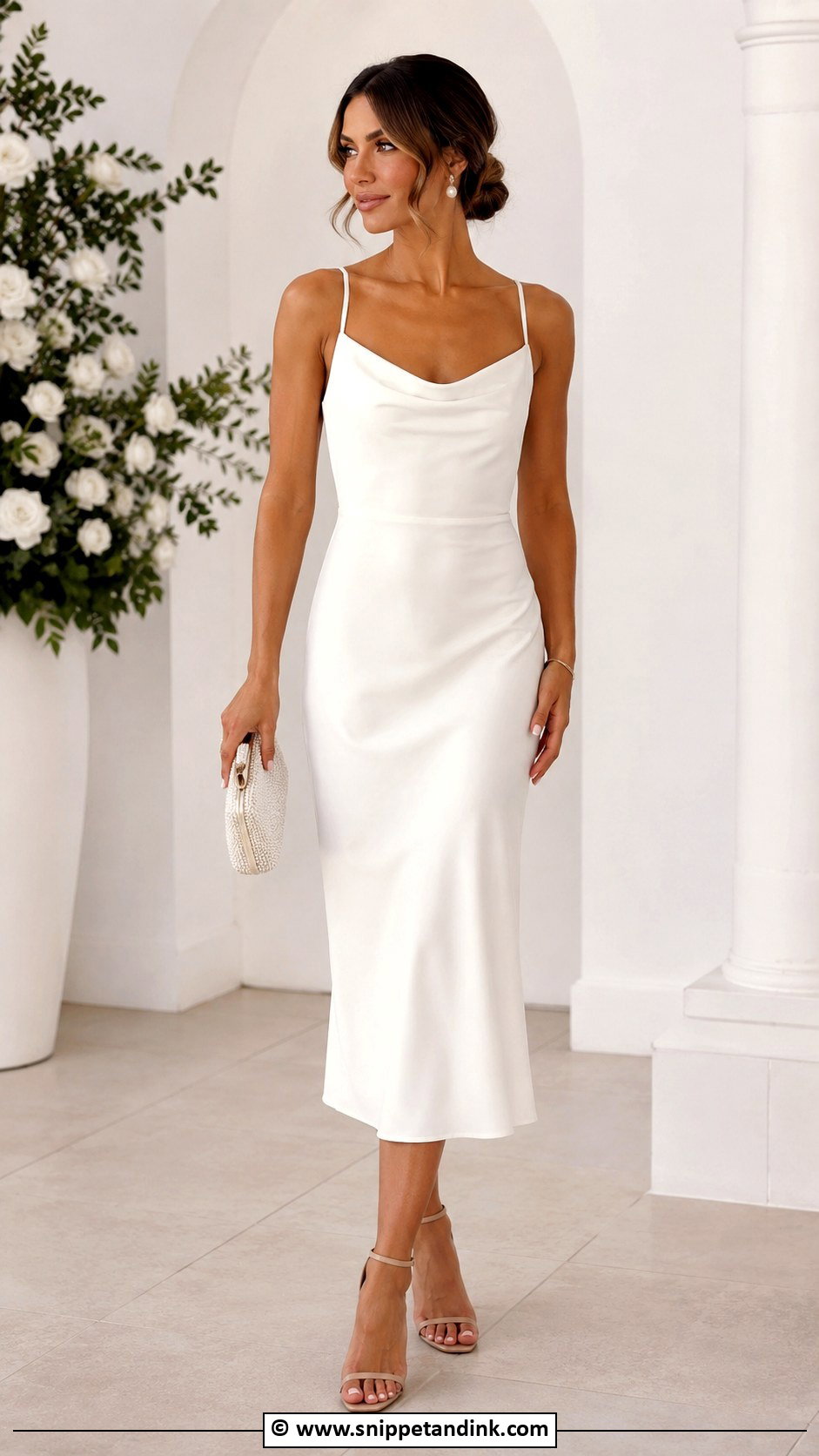
The plain white midi is the hardest dress to get right because nothing hides the fit. With no beading or lace to distract the eye, seams, darts and hem need to be precise, and a good tailor is worth more here than any embellishment. Look for crepe, heavy satin or structured stretch that holds its shape after sitting. Pearl earrings and nude heels finish it, with a short veil or bow clip if you want more bridal detail. You can wear it again afterwards, too.
Satin Creases and Sequins Snag, So Pack It Like This
Second dresses tend to travel badly because they get less attention than the gown. Each fabric needs its own small rescue plan, and none of it is complicated once you know what to expect.
Satin, silk and crepe
Hang these in a breathable garment bag with tissue folded loosely inside the skirt. On the morning, a hand steamer held a few inches away lifts most creases from crepe and satin. Never press silk with a dry iron, since it can leave a shiny mark that won’t come out. Keep a lint roller and a white cotton cloth in the change room.
Sequins, beading and feathers
Store embellished dresses flat or on a padded hanger, because their weight stretches the shoulder seams on a thin wire hanger. Turn sequin dresses inside out if they have to fold. Any loose bead should be secured with a few stitches before the day, not after it falls off on the dance floor.
Afterwards
Spot-treat drink spills that night by blotting with cold water, then take the dress to a cleaner who handles bridal fabrics within a couple of weeks. Sugary drinks can leave a stain that only shows up later as a brown mark, which is why I never let a night dress sit in the bag until after the honeymoon.
Matching the Dress to the Last Few Hours of the Night
The right second dress is the one you forget you’re wearing by eleven o’clock. Minis free you to dance, midis keep the evening formal, and embellished styles do the work under flash. If comfort leads, put secure necklines and light fabric first, then add shoes you can actually stand in. If photos lead, choose one texture or one strong line and let it carry the night. Try the dress seated, mid-dance and arms raised before you buy, and the rest of these choices fall into place around your venue.
You'll Like These Ideas:


Leave a Reply