
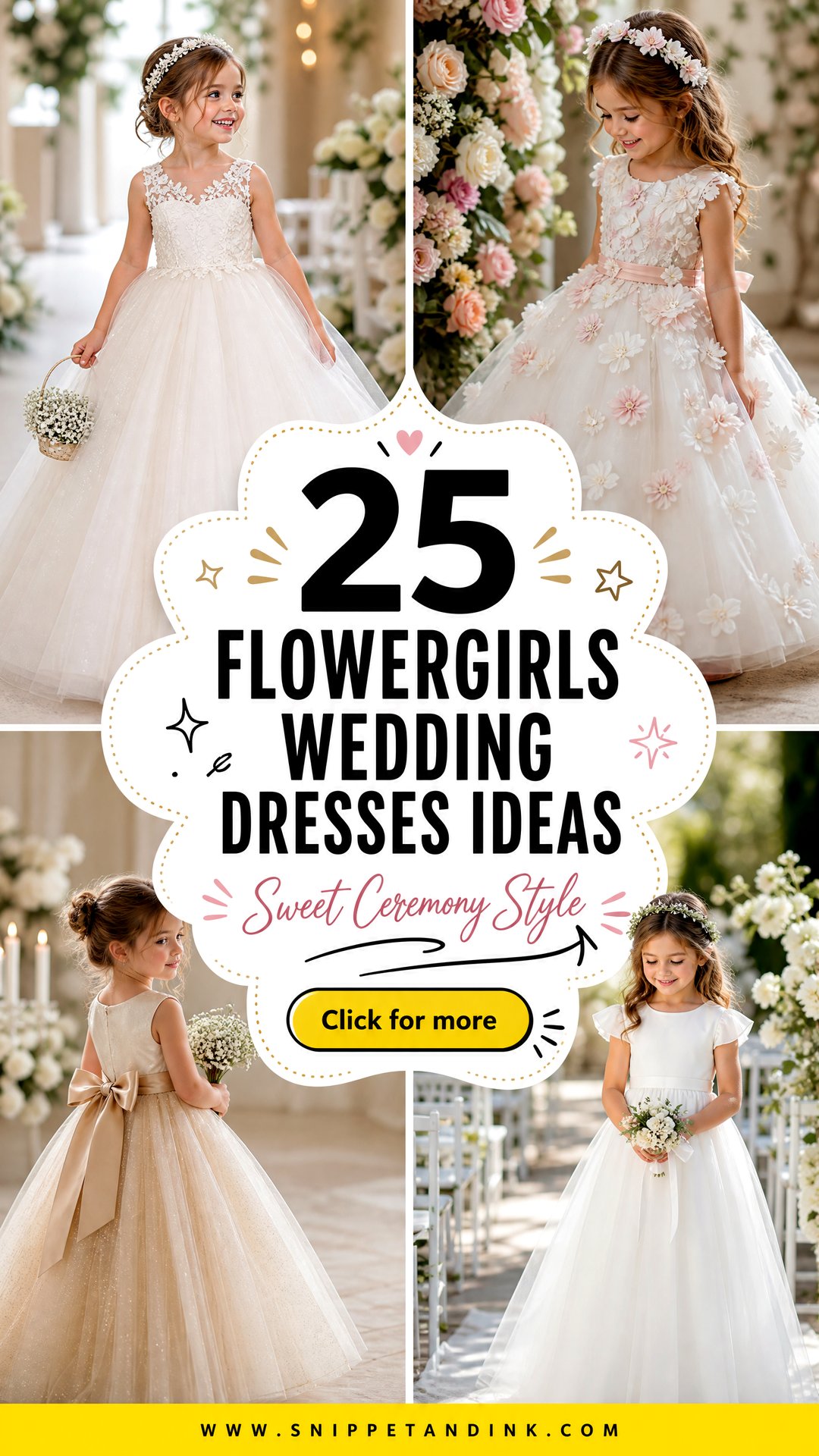
Dressing a flower girl is a different job from dressing anyone else in the wedding party. The dress has to look sweet in photos, but it also has to survive a four-year-old who will sit on the floor, spin in circles and tug at anything that itches. When I style the little ones, comfort comes first and prettiness second, because an unhappy child shows in every picture. Classic shapes are leading right now: puff sleeves, lace bodices, satin bows, layered tulle and a few 3D flowers. Ivory remains the safe choice, while blush, sage, champagne, dusty blue and soft florals suit garden, coastal and modern weddings. Below are the dresses I would put on a child, with what to check on each one.
Sizing a Dress for a Child Who Grows Every Month
Adult bridesmaid dresses are ordered by measurements that stay put. Children do not. A toddler can grow noticeably in three months, so the dress that fit at the shop can be short and tight by the wedding. I time the order with that in mind.
- Measure chest, waist and height at home with a soft tape, and compare against the maker’s own size chart rather than her usual clothing size.
- Ask how long the dress takes to arrive. Ready-made dresses can come within weeks, while made-to-order styles often need several months, so the order date depends on which you choose.
- If you are ordering early, size up slightly and have the waist taken in with stitching that is easy to let out again.
- Leave hem length until a final fitting a couple of weeks before the wedding, with the actual shoes on.
- Check that the bodice has a zip or buttons that let the dress go on without being pulled over a finished hairstyle.
1. Ivory Tulle Flower Girl Dress
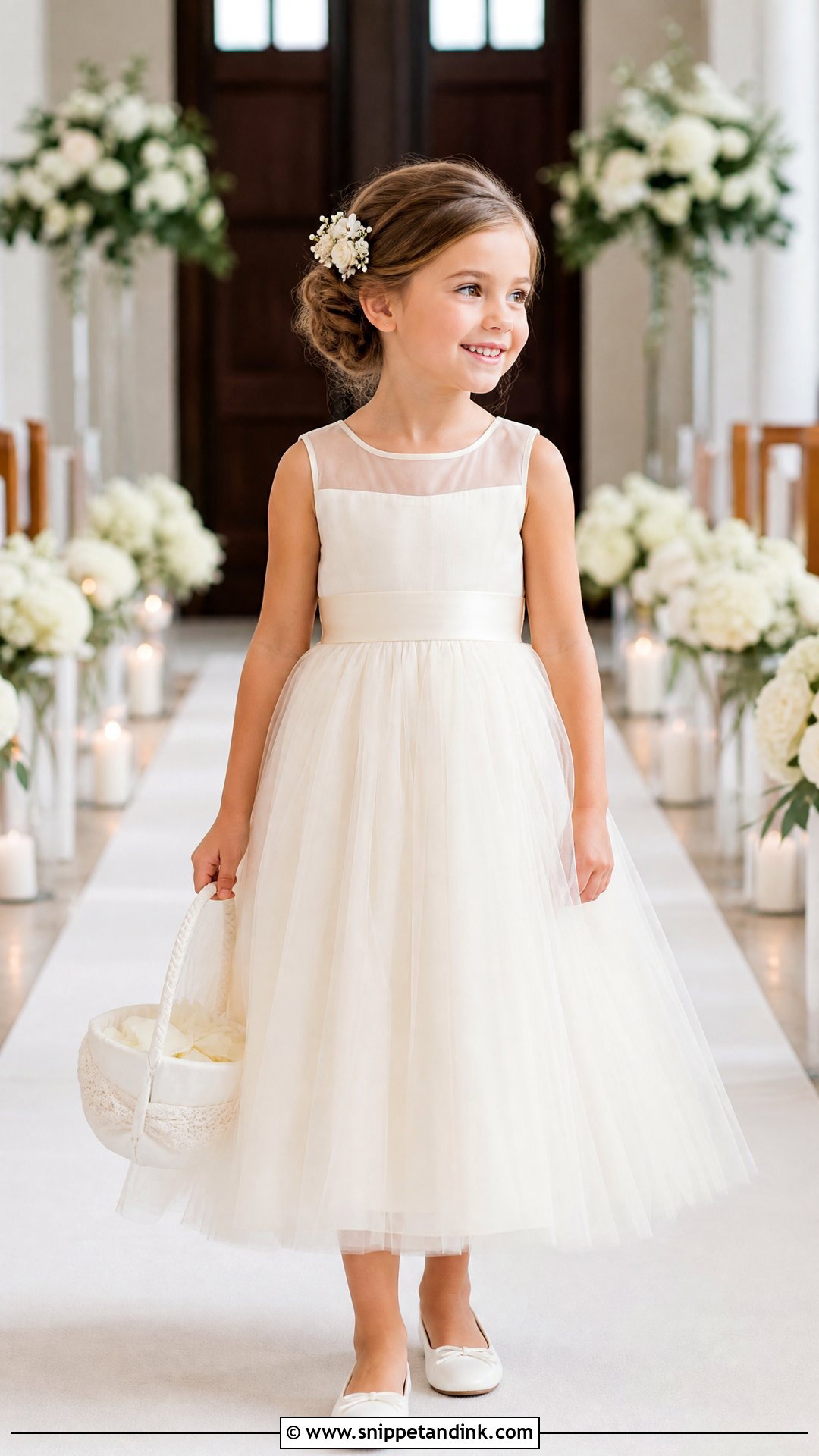
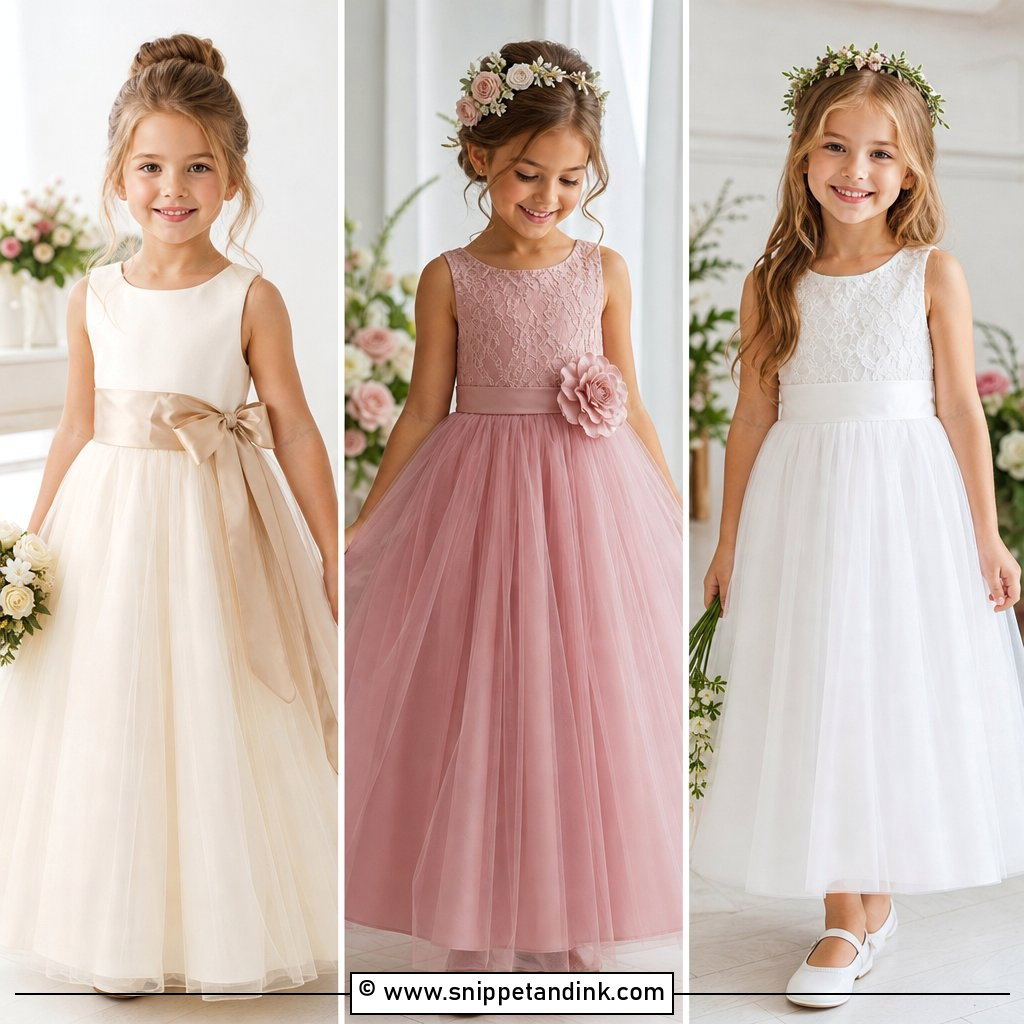
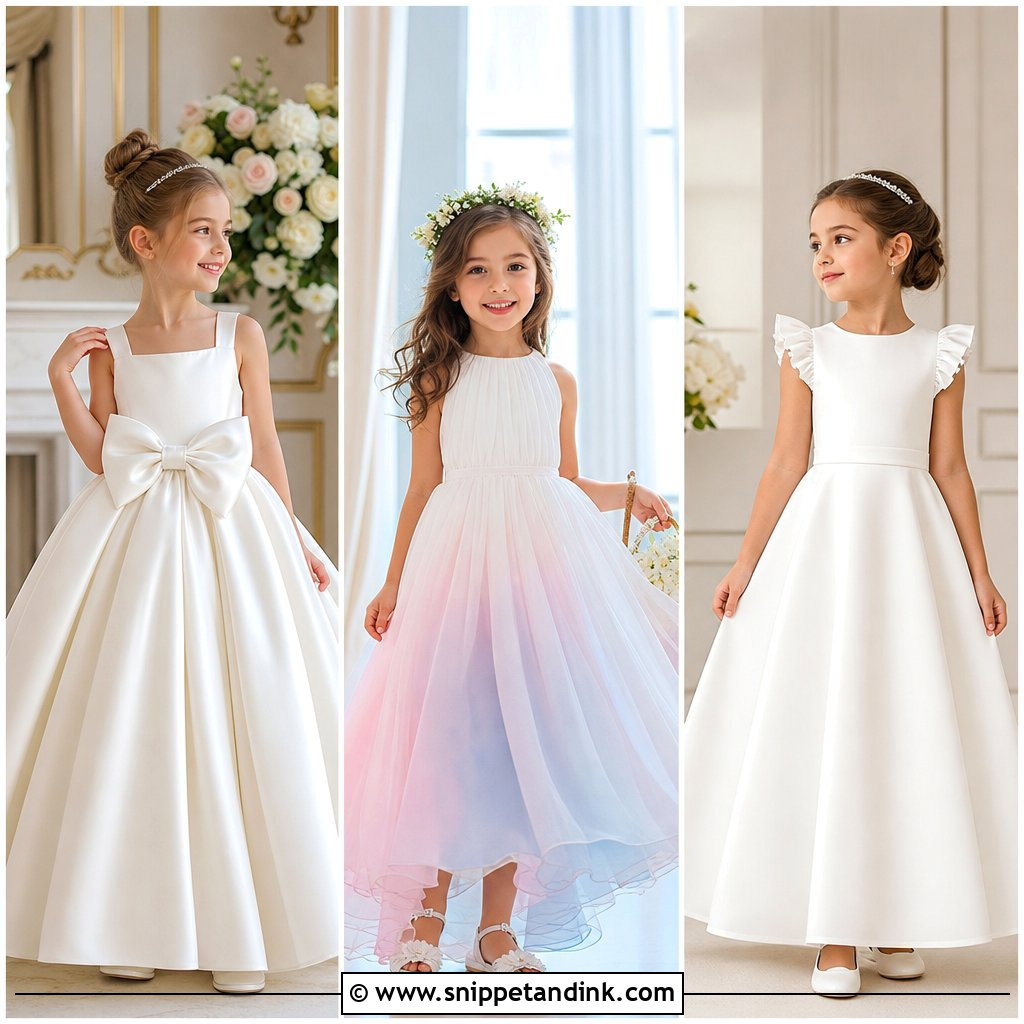
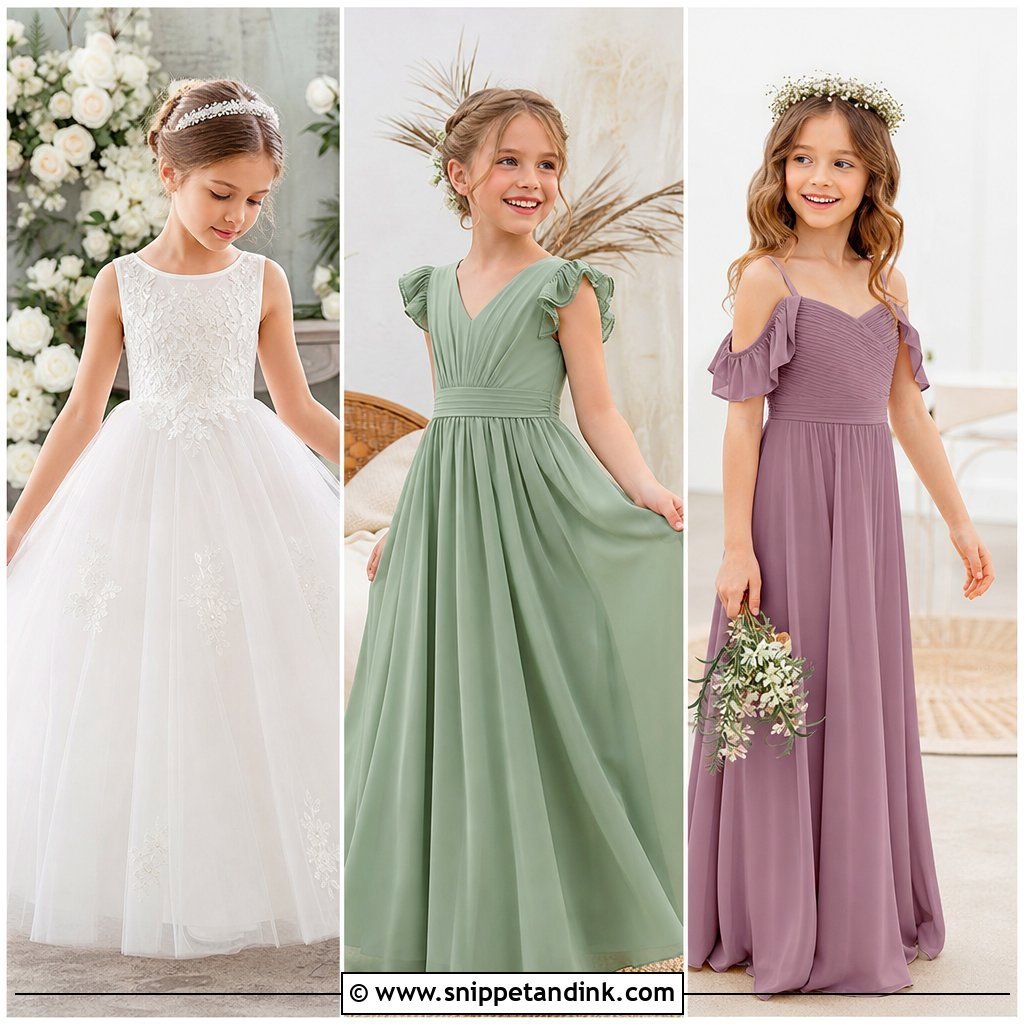
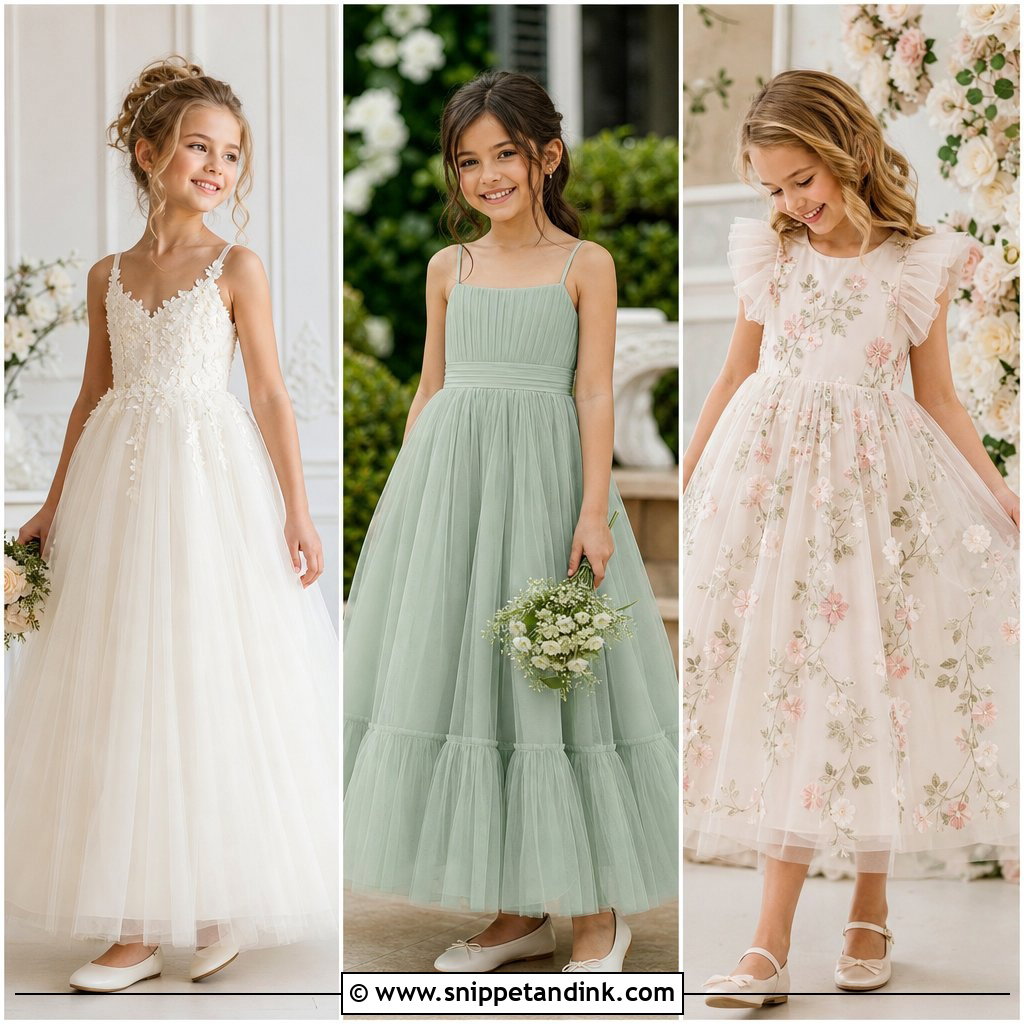
Ivory tulle reads bridal without the harsh brightness of pure white, and layers give the skirt volume without stiffness. What I check first is the lining. Tulle against bare legs scratches, and a child who is scratching will not walk calmly, so look for a soft cotton lining under every layer. A sleeveless or short-sleeve bodice suits warm weather, and a satin sash marks the waist without squeezing. White ballet flats, a small floral comb and a petal basket finish it, and it sits naturally next to an ivory or lace bridal gown.
2. Lace Flower Girl Dress
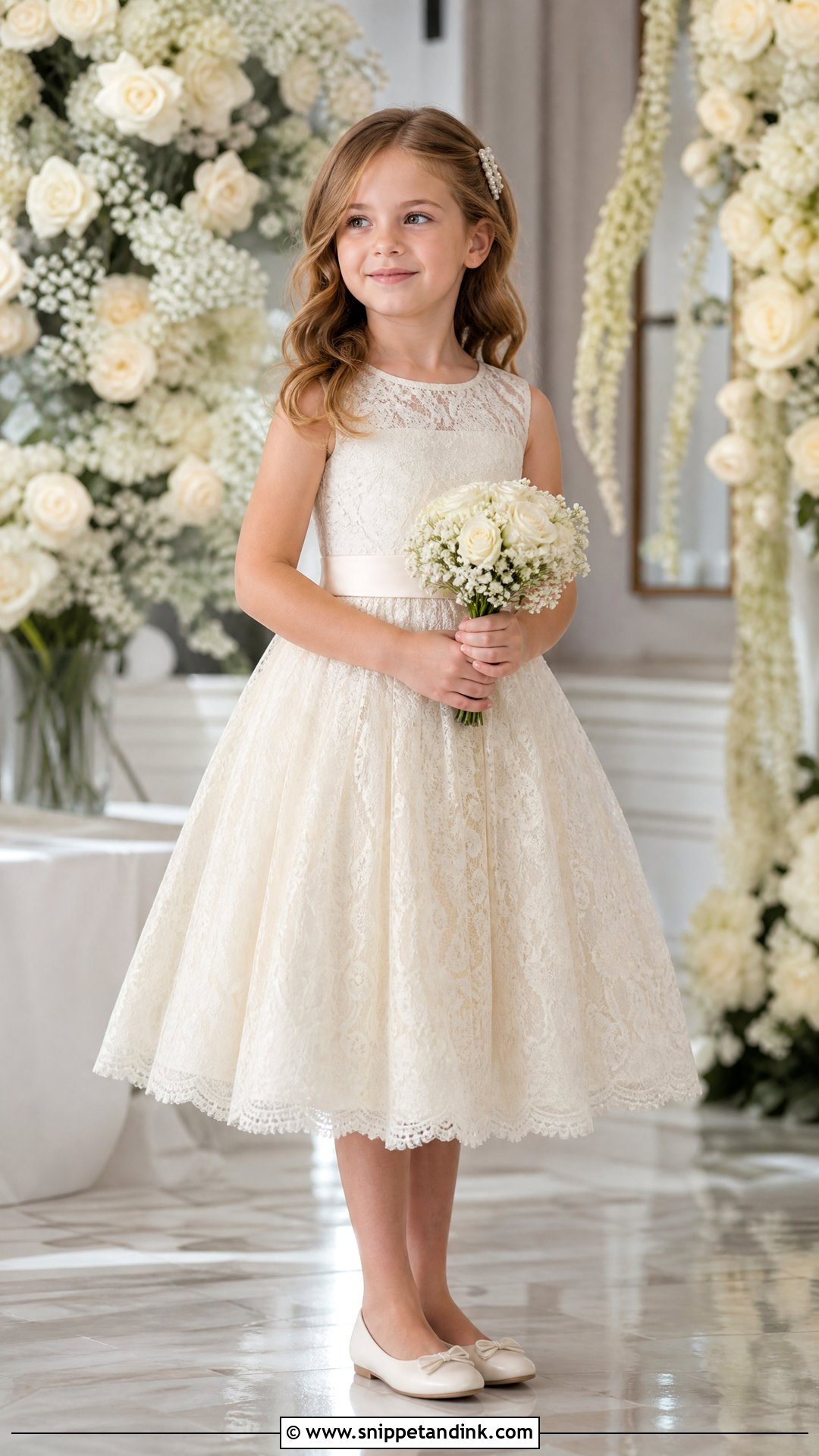
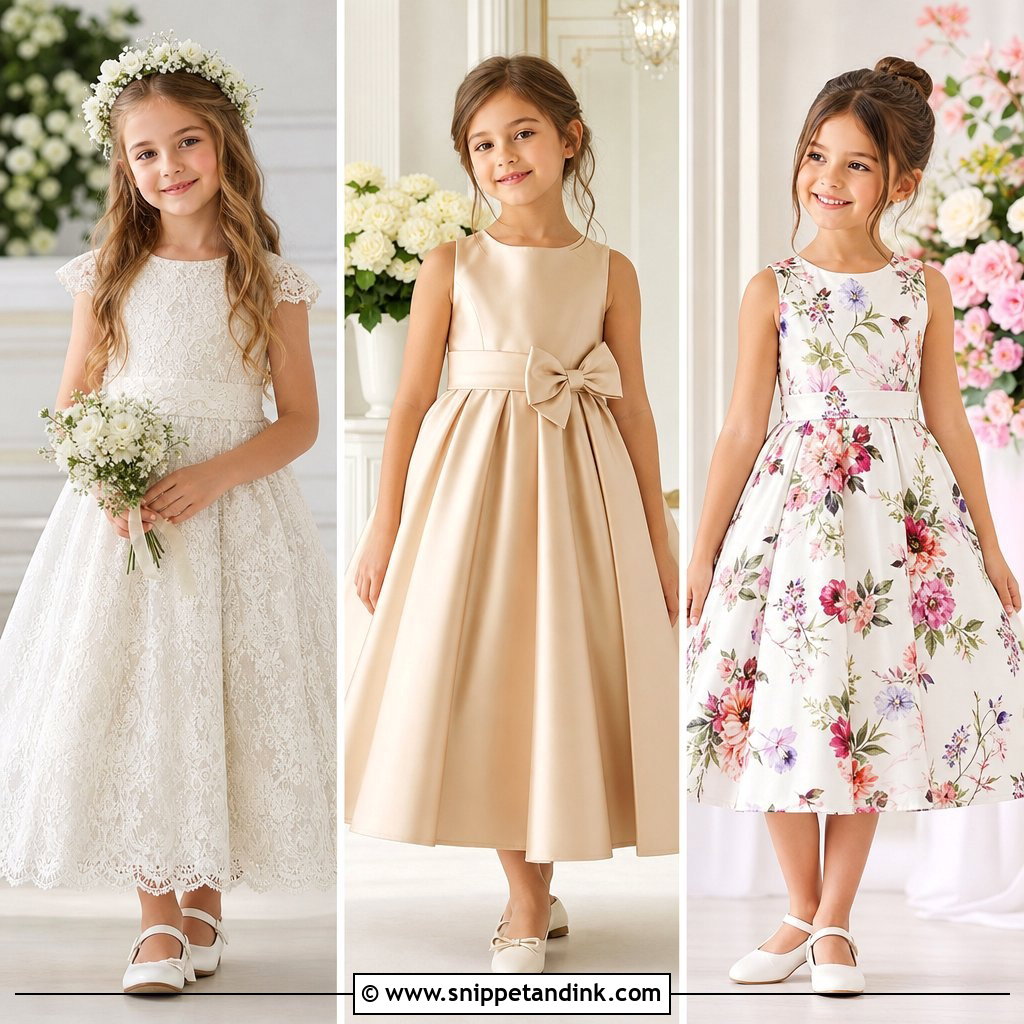
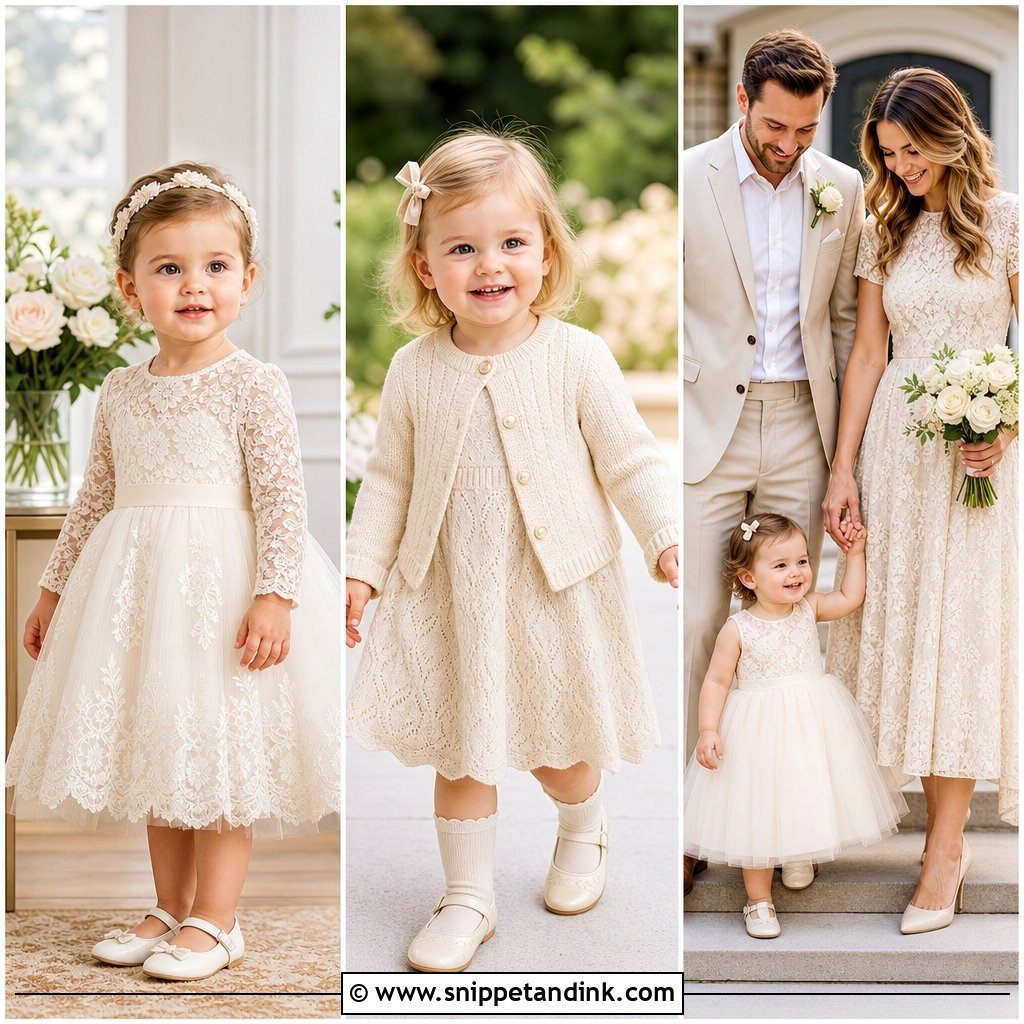
Lace gives texture without sparkle, which suits classic and vintage weddings. On a child, though, the inside matters more than the outside. Cheap lace has rough edges at the seams, so I run my fingers along the inner neckline and armholes before I suggest a dress. Knee or tea length is easy to walk in, and a satin ribbon at the waist keeps it neat. Pearl clips, ivory flats and a soft cardigan for a cool venue are all she needs. Next to bridesmaids in satin or crepe, lace gives a nice contrast in group shots.
3. Satin Flower Girl Dress
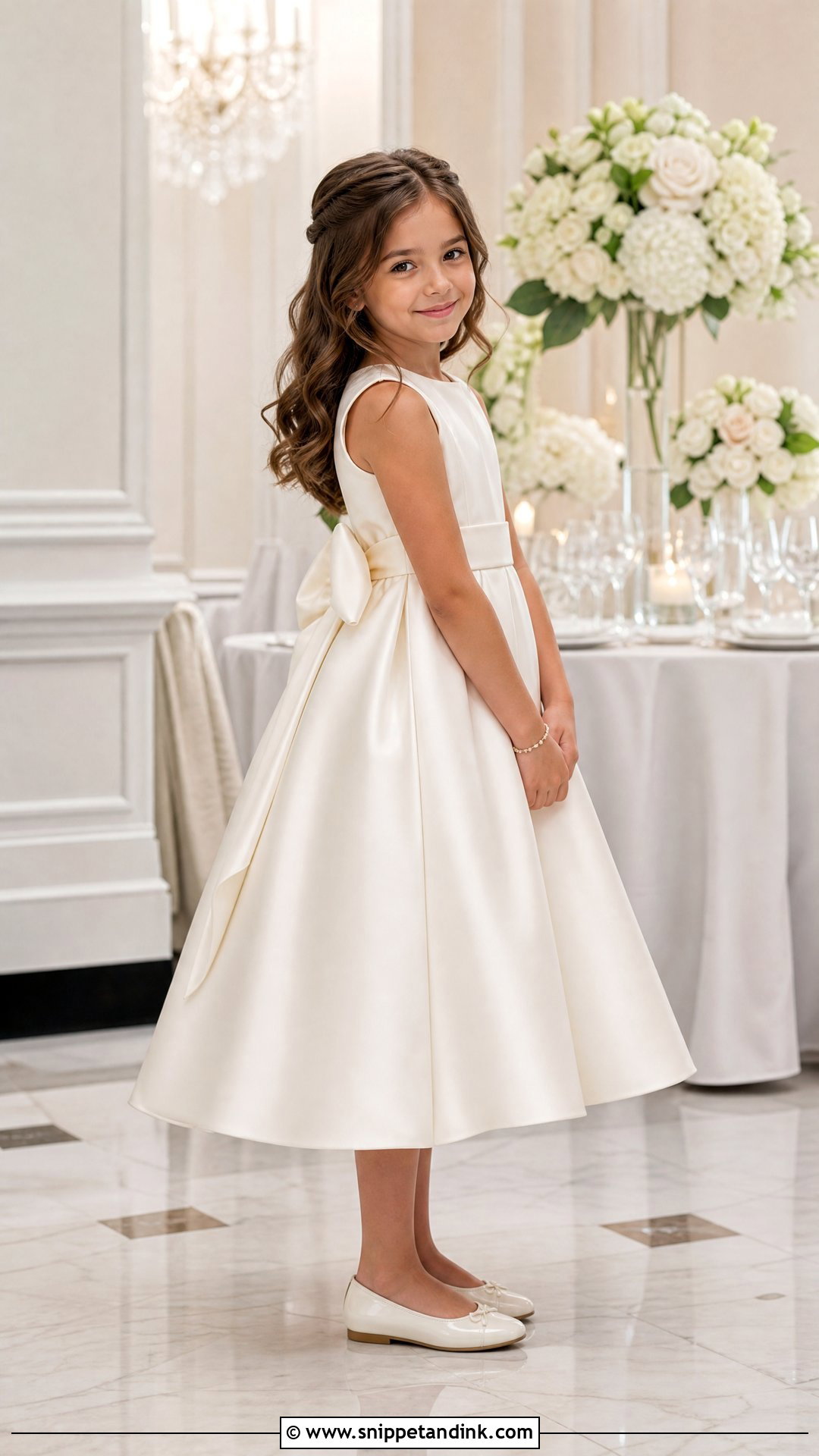
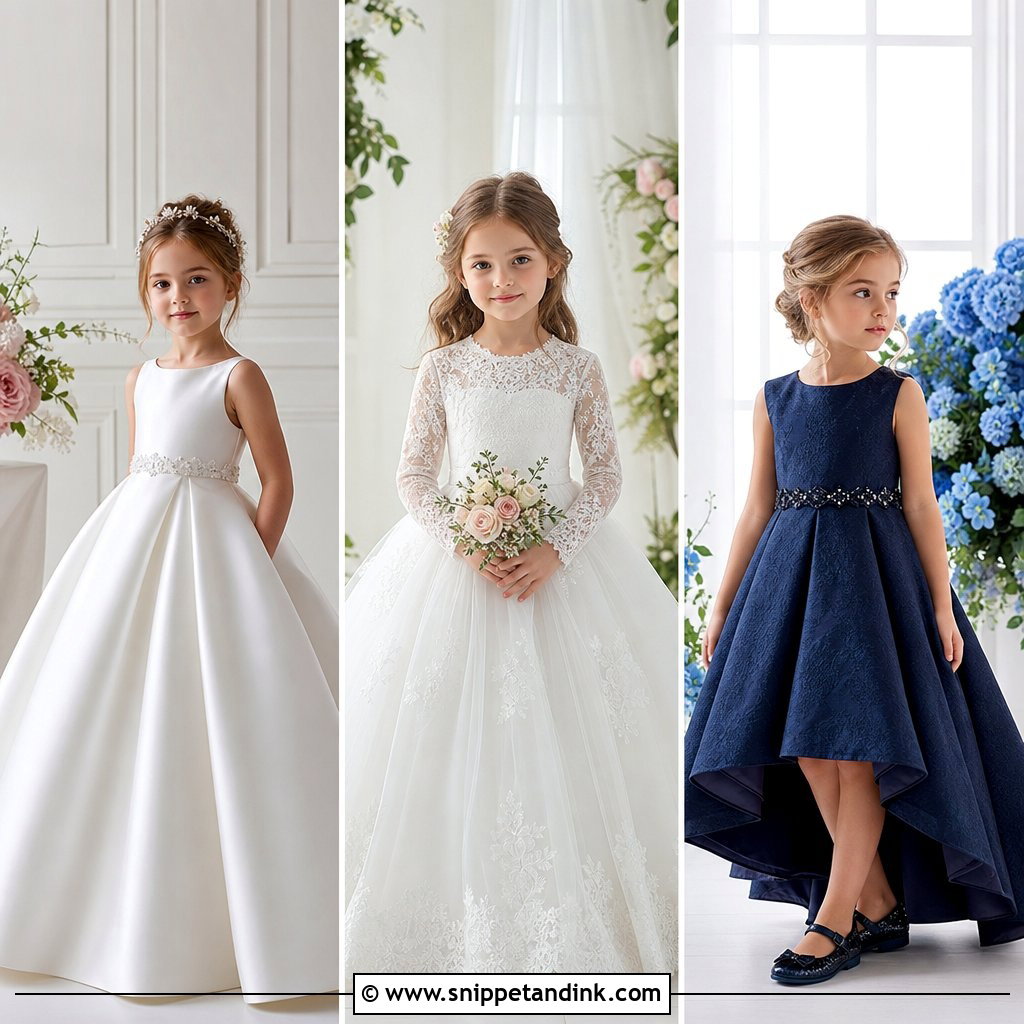
Satin gives a smooth, dressy shine that suits ballrooms, hotels and evening ceremonies. It is also unforgiving with stains and creases, which matters with small children. A simple A-line with a bow at the back looks refined without making a child look like a miniature adult. Leave room at the waist and shoulders, since children breathe from the belly and hate a tight bodice. Patent flats and a neat bun or soft curls complete it. It pairs best with bridesmaids in sleek, minimal gowns.
4. Blush Flower Girl Dress
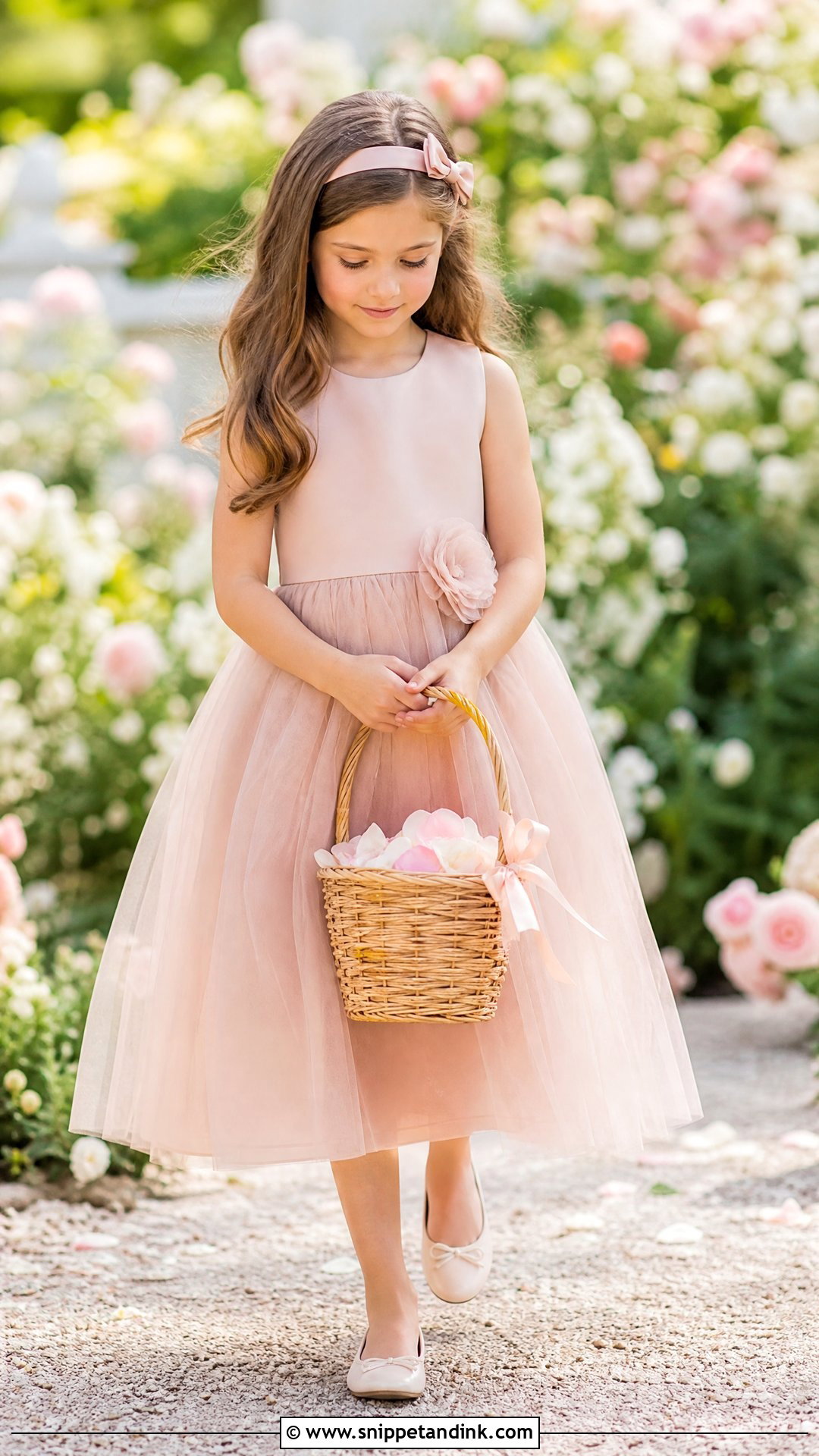
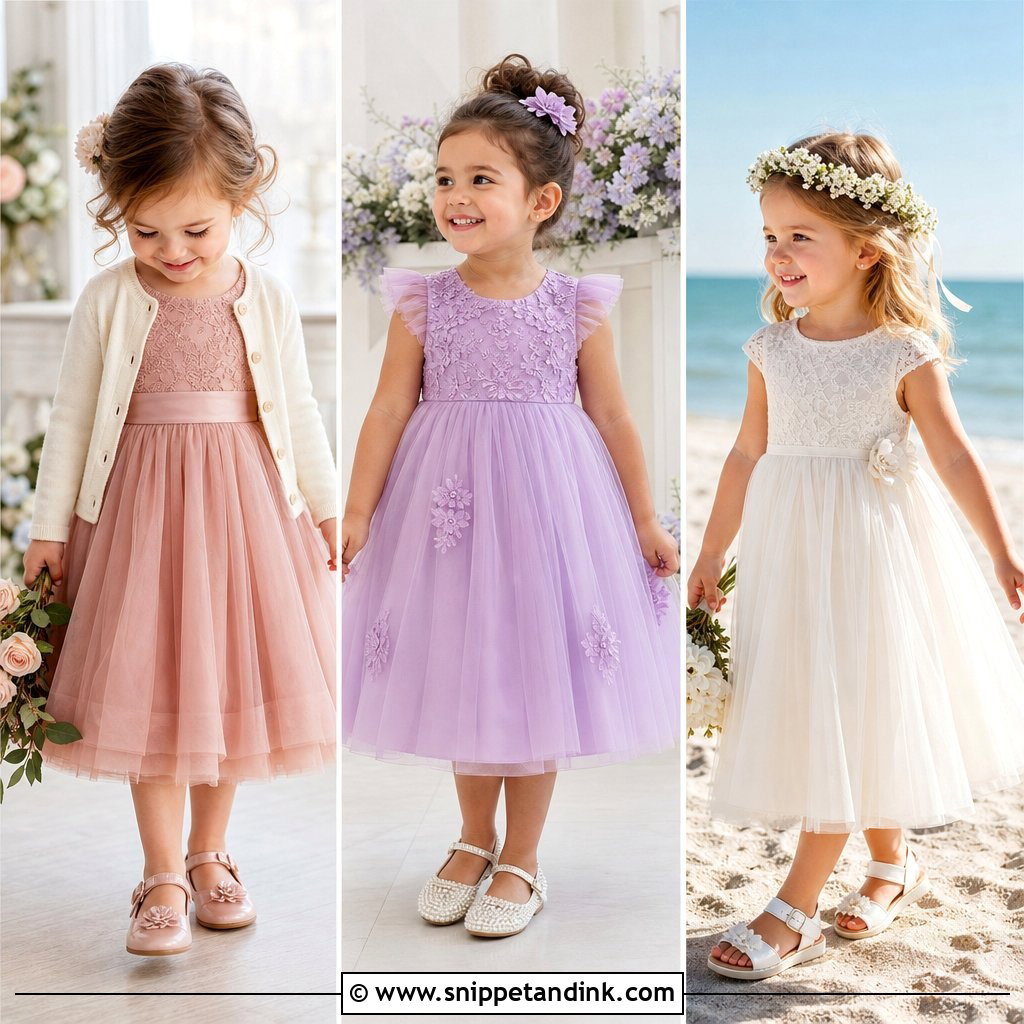
Blush is the easiest color to fit into almost any palette, sitting comfortably next to ivory, champagne, sage and gold. It suits spring, summer and indoor weddings, especially when the flowers include roses or peonies. A blush tulle skirt with a simple bodice looks sweet rather than loud. Ivory flats and a ribbon headband are enough. I like blush for practical reasons too: parents can put it on again for birthdays and family parties, which white rarely allows.
5. White Flower Girl Dress With Bow
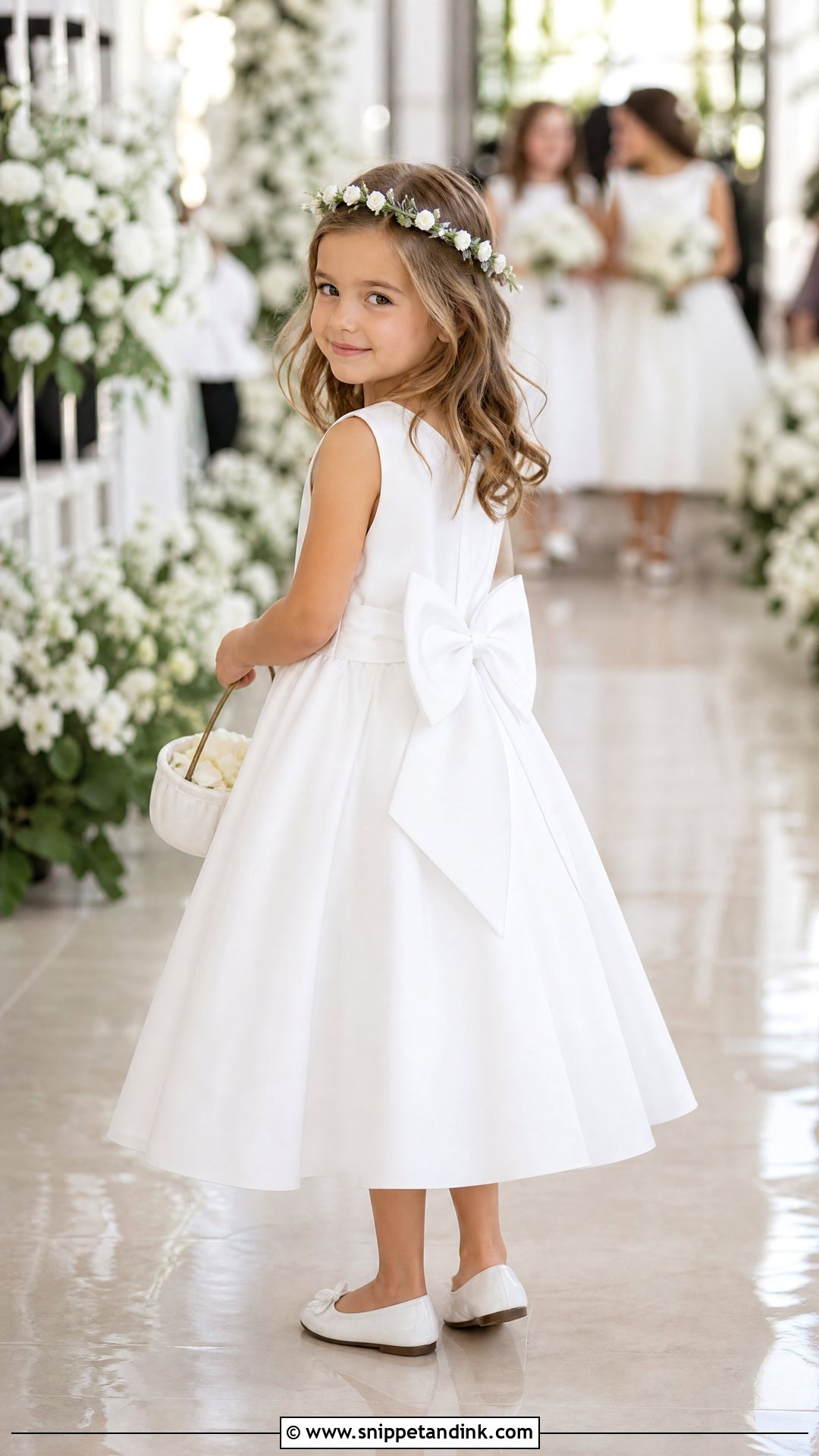
Bows on children’s dresses vary hugely in how they are made. A large back bow reads formal and photographs well walking away down the aisle; a small waist bow is quieter. My concern is always the stiffness. A heavily interfaced bow digs into the back when she sits against a chair, and she will pull at it. Choose a soft, sewn-on bow over a soft lining. White works best when the bride is in white and the palette is crisp, with white flats and a smooth hairstyle.
6. Long Sleeve Flower Girl Dress
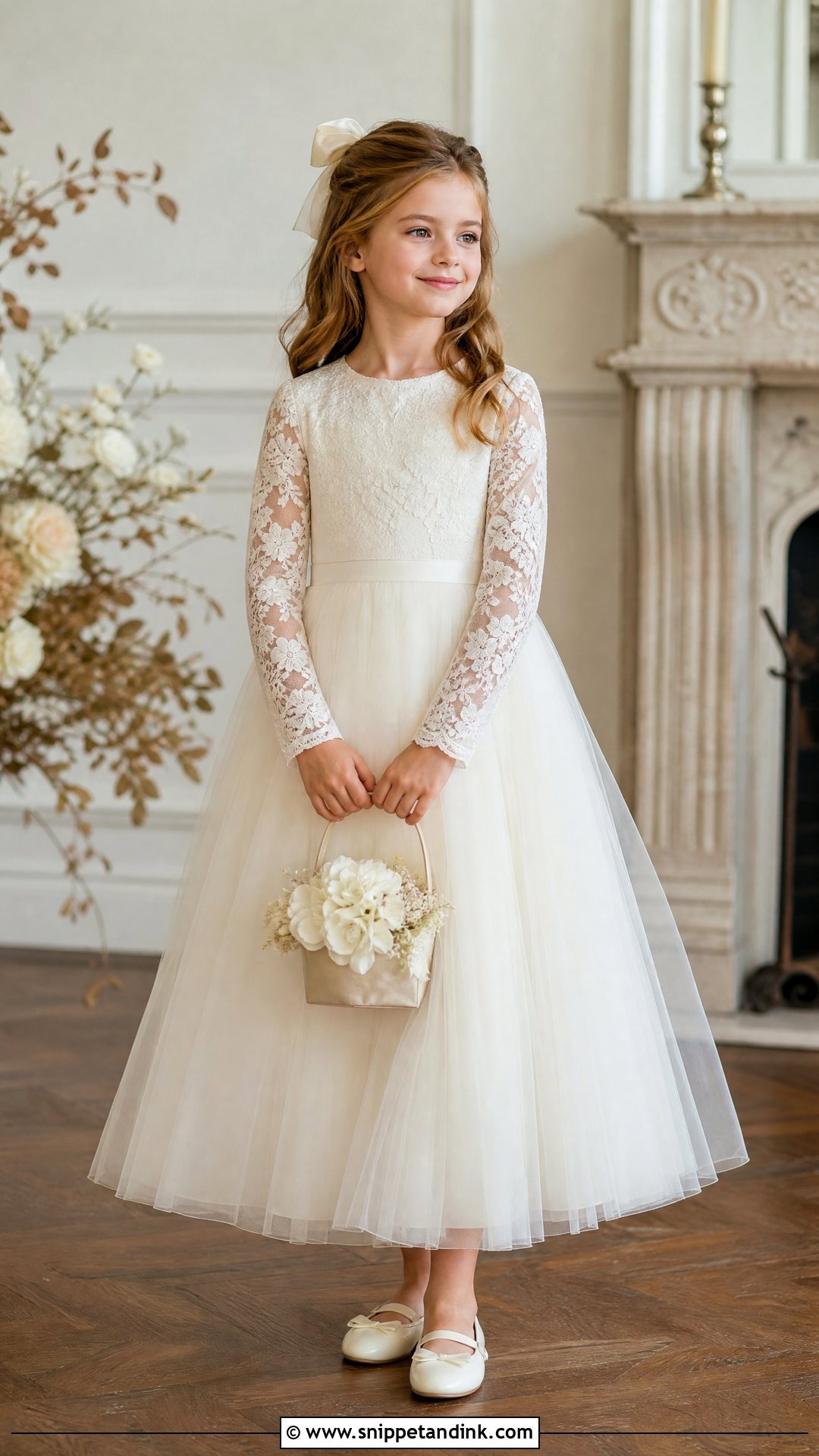
Long sleeves suit autumn, winter and venues with strong air conditioning. Sheer lace sleeves look delicate at formal ceremonies; puffed cotton sleeves are more vintage and more child-proof. The fitting point I watch is the armhole. Children raise their arms constantly, to wave, to throw petals, to be lifted, and a tight sleeve pulls the whole bodice up. Closed-toe flats and soft tights keep her warm, and a hair ribbon is enough. Sleeves also give a fuller skirt some balance.
7. Puff Sleeve Flower Girl Dress
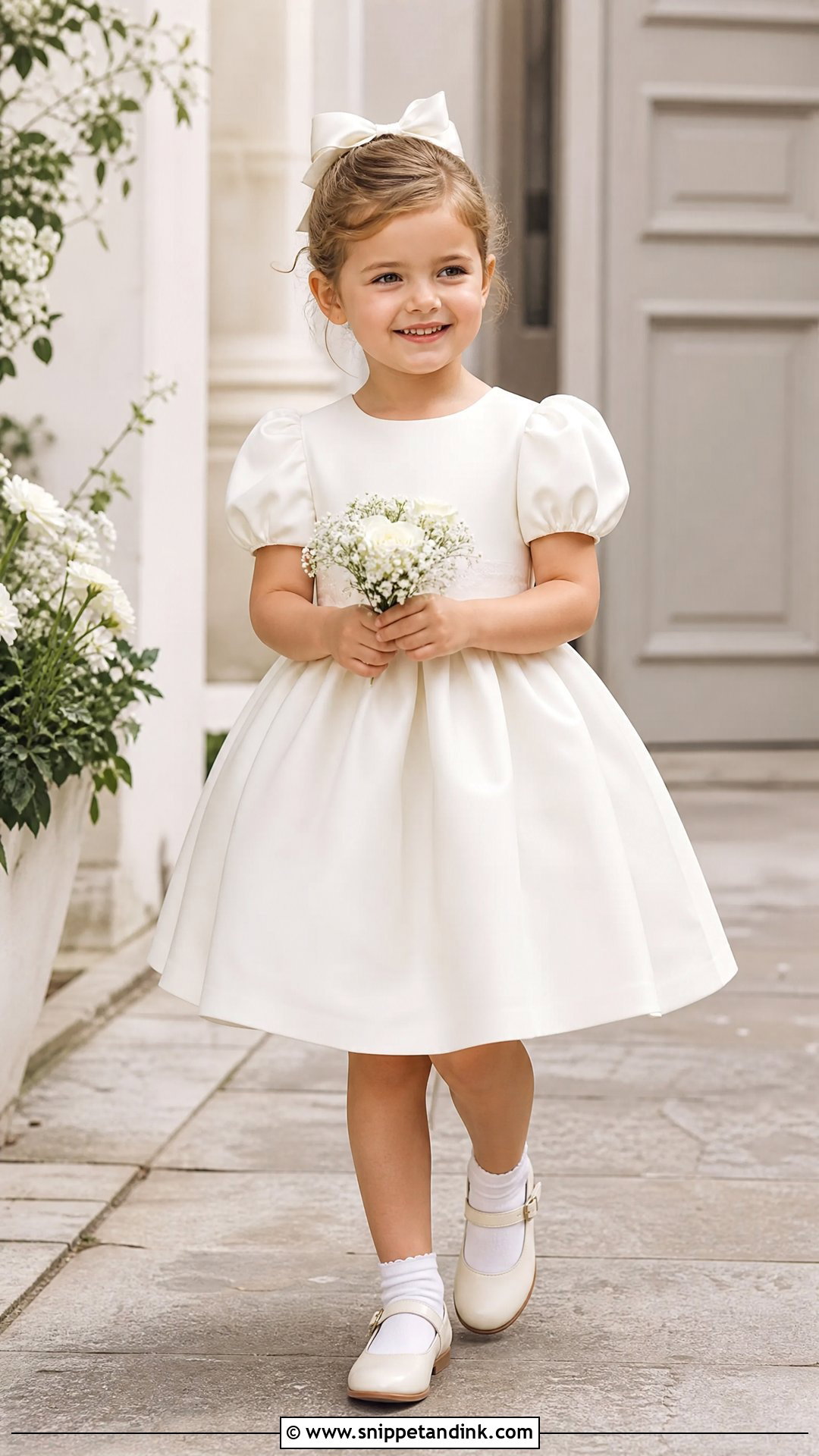
Puff sleeves have a vintage charm that does not need sequins or glitter. They hold their shape best in cotton sateen, organza or satin, and look prettiest in ivory, cream, blush or pale blue. The elastic at the sleeve edge is the detail to check. If it leaves a red mark on her arm after ten minutes, it will be miserable by the reception. Mary Janes, ankle socks and a simple bow in the hair give a polished, classic finish.
8. Tulle Ball Gown Flower Girl Dress
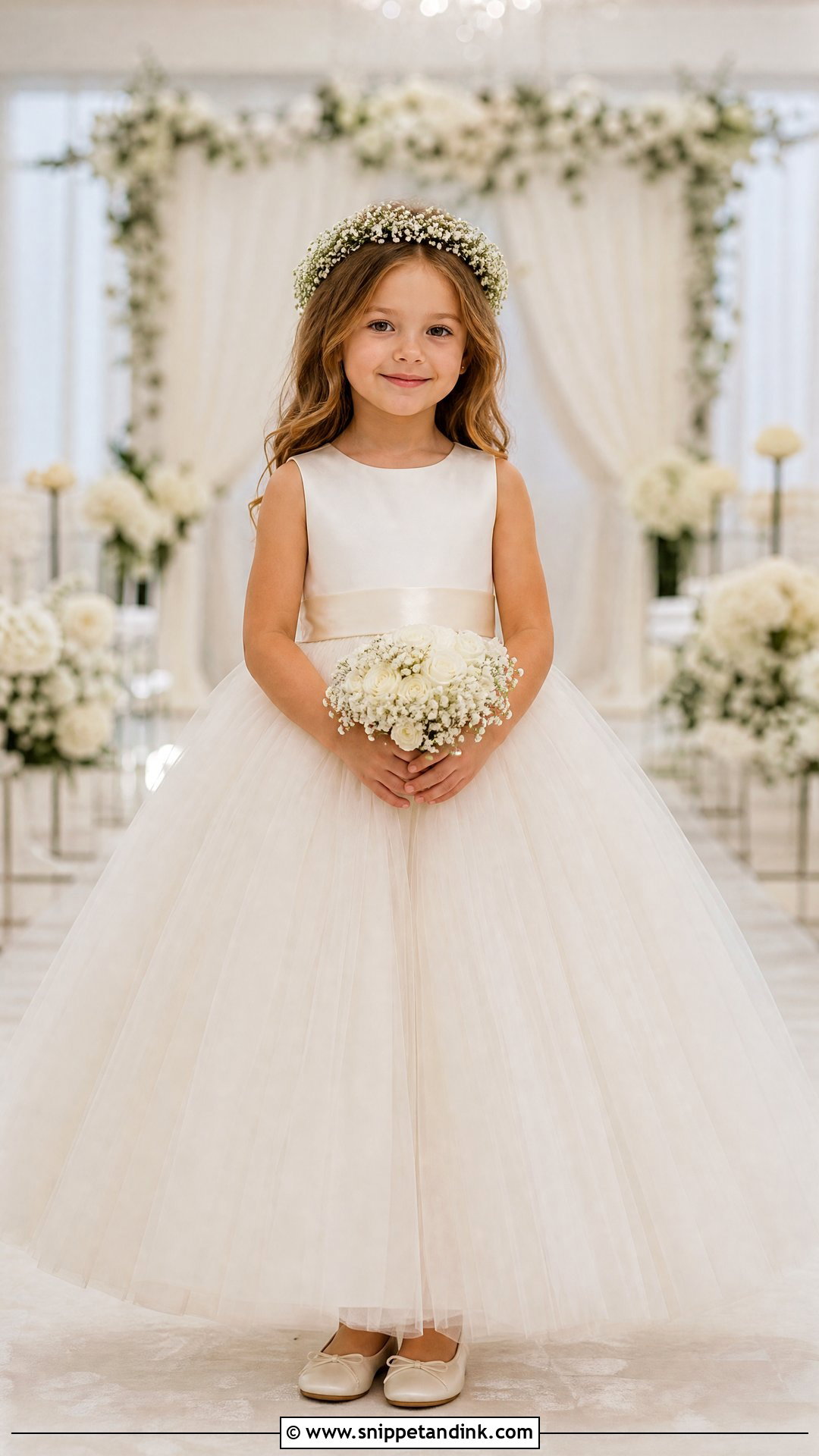
For a formal wedding with a long aisle, a tulle ball gown flower girl dress gives the fairytale moment. Lighter tulle layers are kinder than heavy, stiff ones, and a simple bodice keeps the volume in proportion. A satin sash can link the dress to the bridesmaids. I reserve full skirts for older flower girls who can manage the volume on steps; toddlers trip on them, and a shorter version is safer. Comfortable flats are not negotiable here.
9. Tea Length Flower Girl Dress
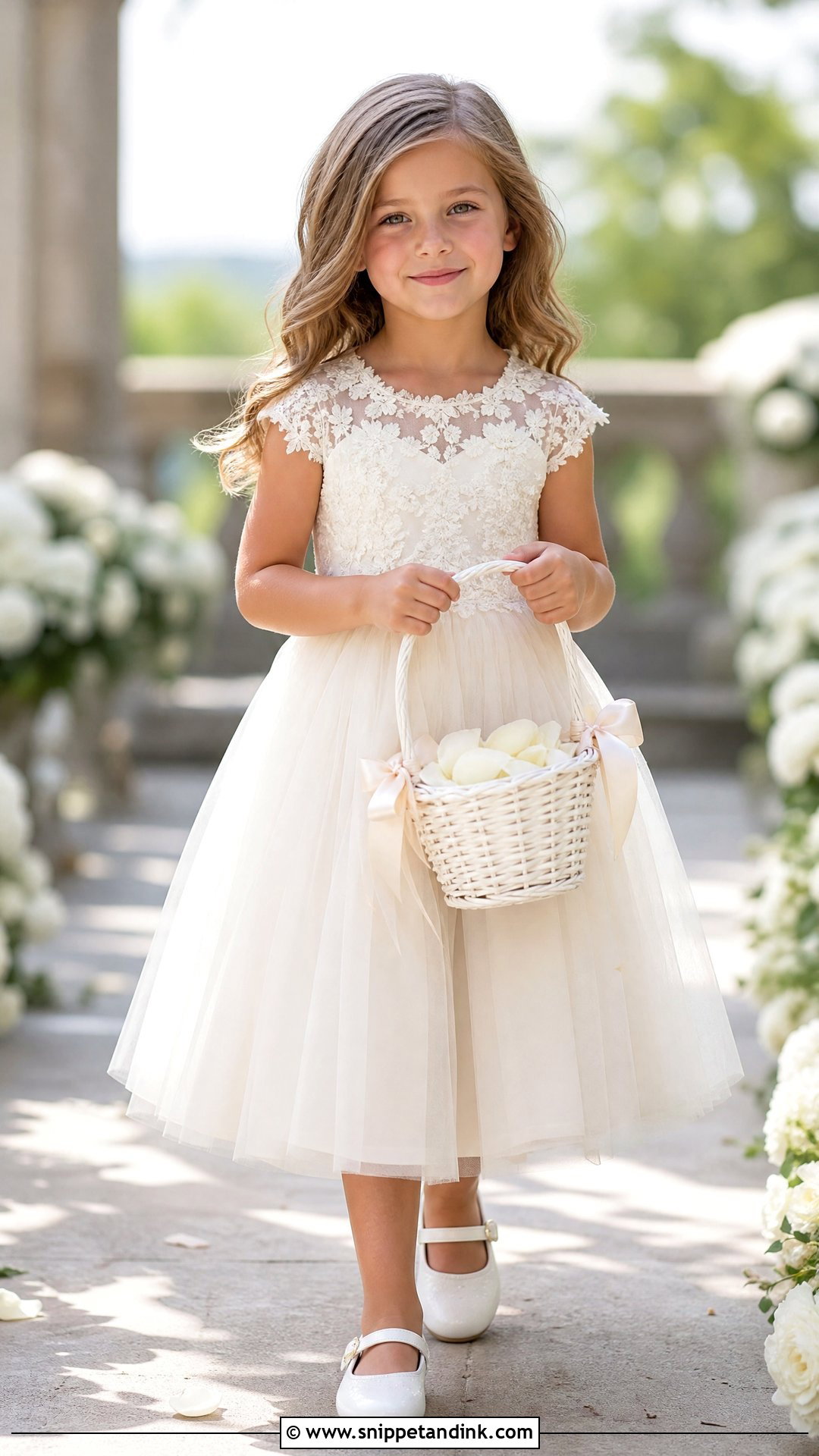
Tea length is the hem I recommend most for children. It falls between knee and ankle, so it feels special without dragging, and she can walk, sit and dance without anyone hitching up her skirt. It shows off ballet flats or Mary Janes, and works in tulle, lace, satin, chiffon or cotton. Outdoors, it also stays clear of wet grass and dirt. Add a small flower crown and soft curls, and she is ready.
10. Chiffon Flower Girl Dress
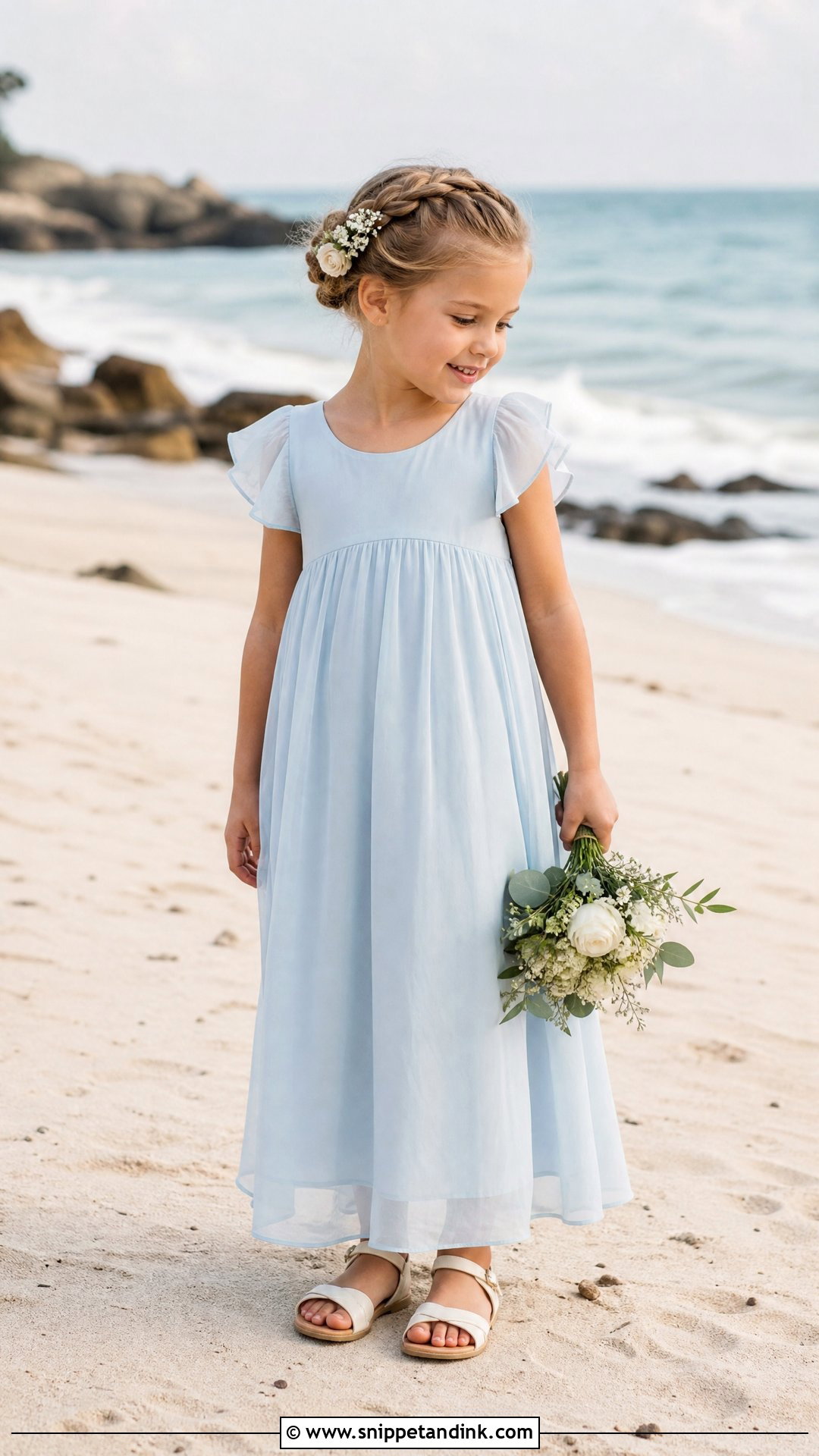
Chiffon moves softly when a child walks, which makes for natural photos at beach and summer weddings. Choose an A-line or empire waist so it does not cling. Chiffon is sheer, so the lining should be full and smooth; check it outdoors, where sunlight shows what a shop mirror hides. Pale ivory, blush, lavender or sage suit the fabric. Simple sandals and a braided hairstyle hold up in wind better than loose curls.
11. Organza Flower Girl Dress
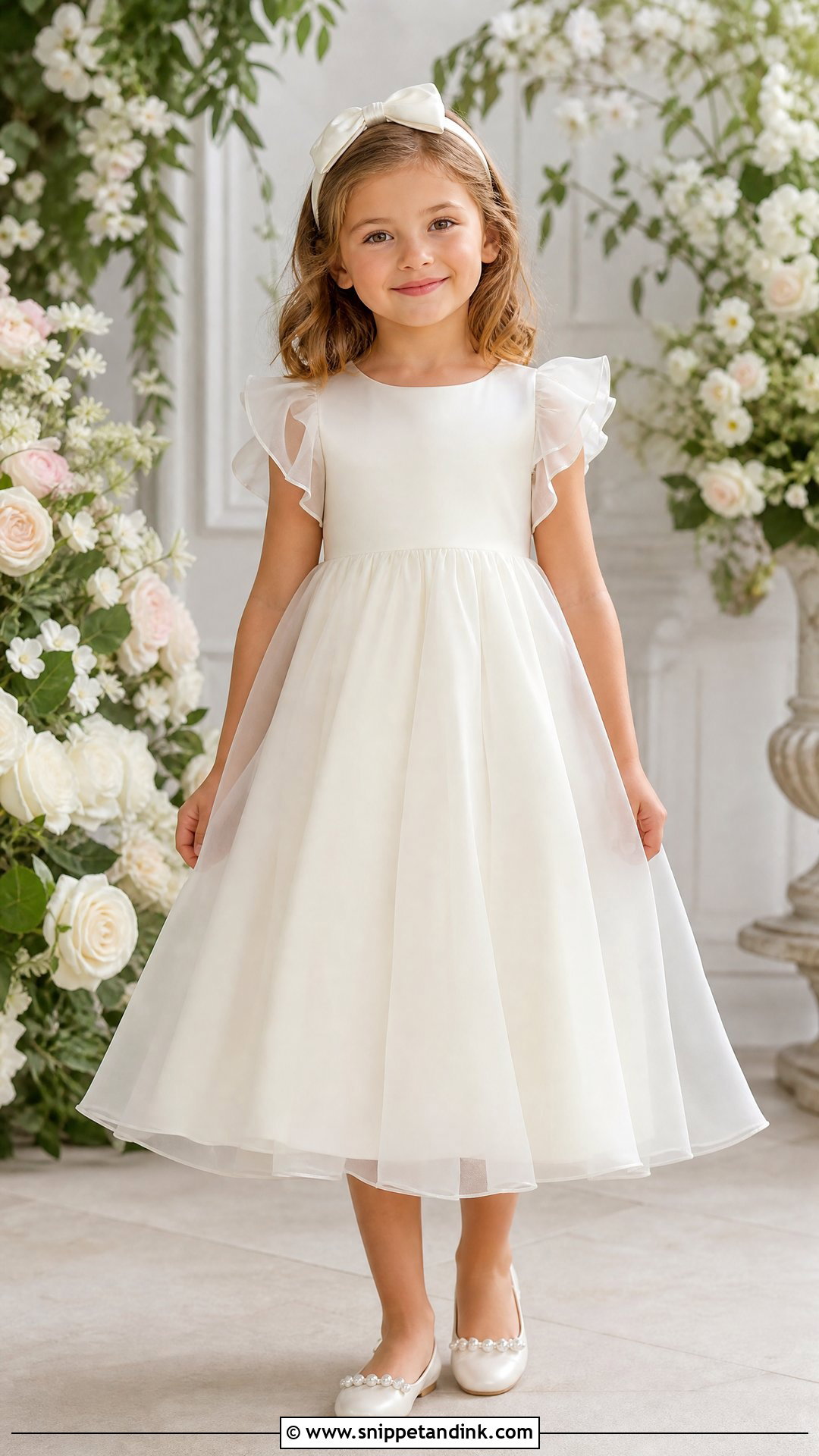
Organza is crisp and holds its shape in skirts, ruffles and sleeves while still looking light. That crispness can also scratch. For younger children I look for softer organza or an organza overlay with a satin lining, so nothing stiff touches the skin. The sheer fabric lets floral appliqués show well. Pearl flats and a small bow headband finish it for formal or garden weddings.
12. Floral Flower Girl Dress
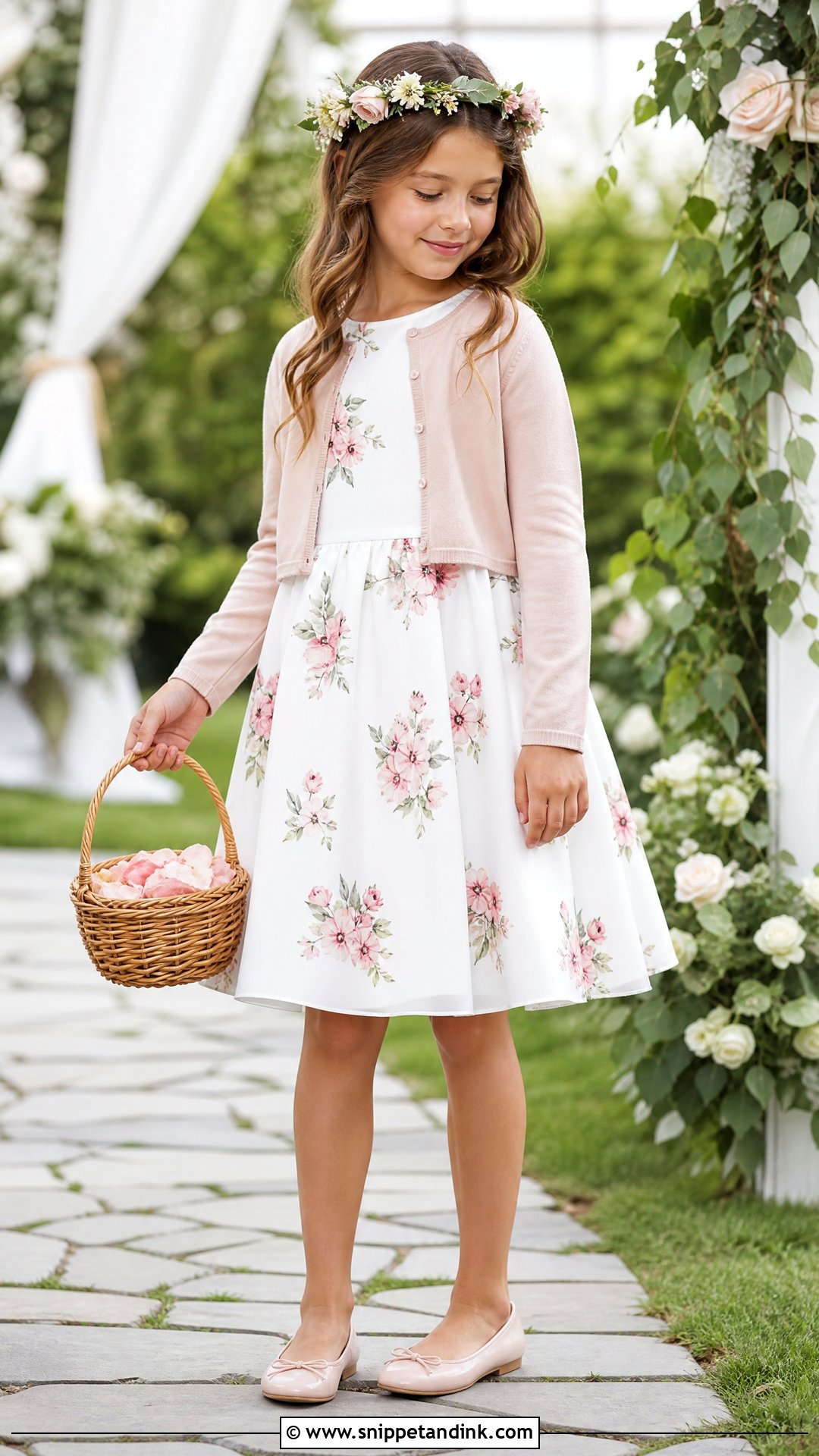
Floral prints are joyful and suit garden weddings and spring ceremonies, especially when they pick up the flowers or bridesmaid colors. A white or ivory base keeps the print appropriate for a wedding. Choose a flower crown that matches one color in the print, not all of them. Keep the shape simple, an A-line or tea length, so the print does the work. Families tend to rewear printed dresses far more often than ivory ones.
13. 3D Floral Flower Girl Dress
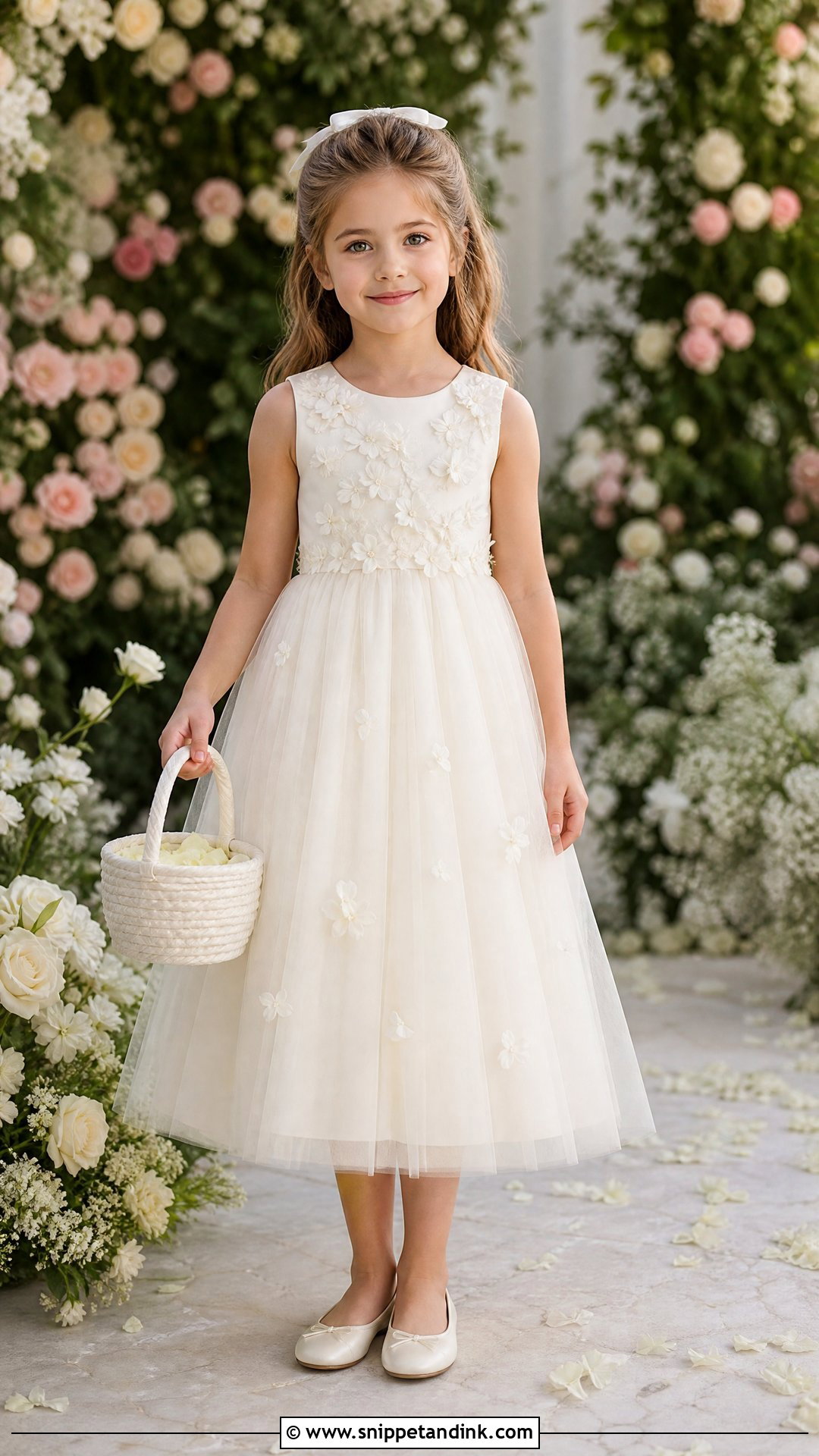
Tiny fabric flowers on the bodice or shoulders add texture without sparkle. Before anything else, turn the dress inside out. Appliqués that are glued or loosely stitched can come off during play, and the backing of some appliqués is rough against the skin. Ivory with subtle flowers is the classic version; blush or champagne softens it. Keep shoes plain and hair accessories simple so the flowers have the attention.
14. Boho Flower Girl Dress
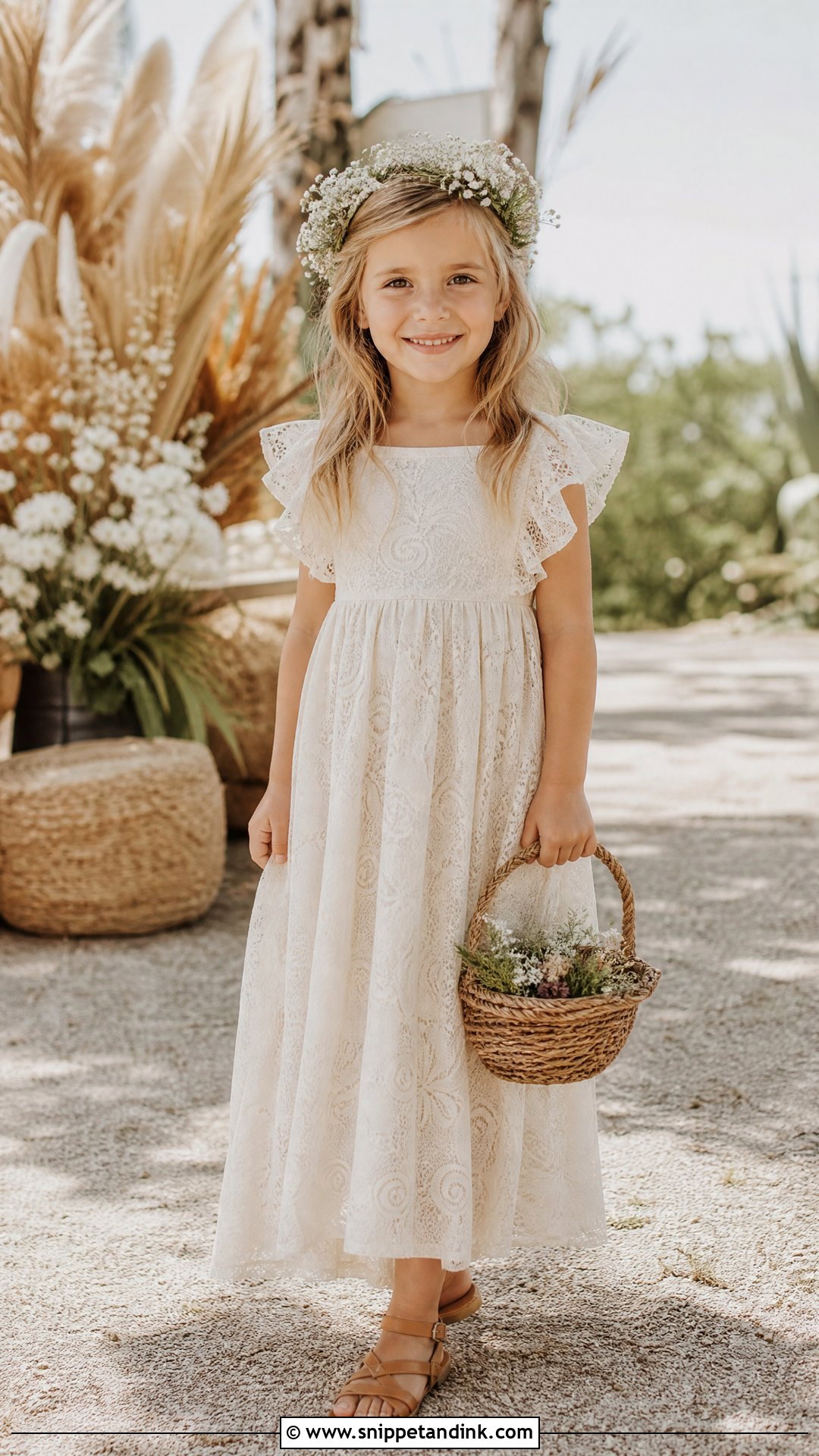
Boho styles suit outdoor weddings, barns, beaches and relaxed celebrations. Look for soft lace, crochet-style trims, flutter sleeves, tiered skirts or a flowing empire waist. Ivory, cream, beige and soft blush are easy colors. Comfort is the whole point here, so avoid heavy underskirts or stiff waistbands. Tan sandals, a wildflower crown and loose curls finish it. It sits well beside bridesmaids in mismatched neutrals, sage or terracotta.
15. Rustic Flower Girl Dress
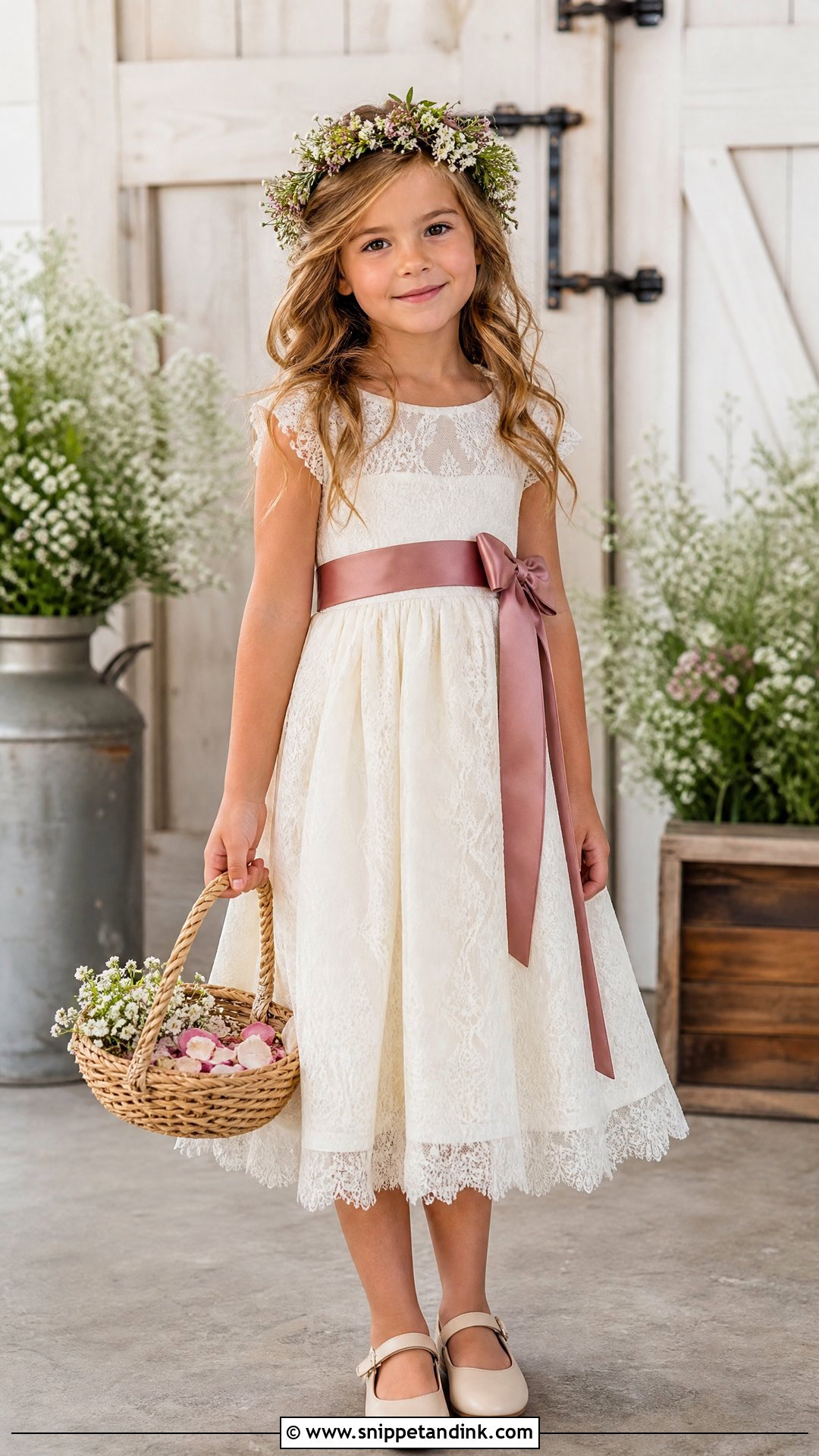
Rustic weddings call for natural fabrics: cotton lace, soft tulle, linen blends and simple satin ribbon. Ivory or cream is safe, and dusty rose or sage looks right among wood and greenery. I steer away from shiny fabrics here because they look out of place in a barn. Neutral flats or soft brown Mary Janes, a small crown and a woven basket complete it. Knee or tea length stays clear of grass and rough wooden floors.
16. Beach Flower Girl Dress
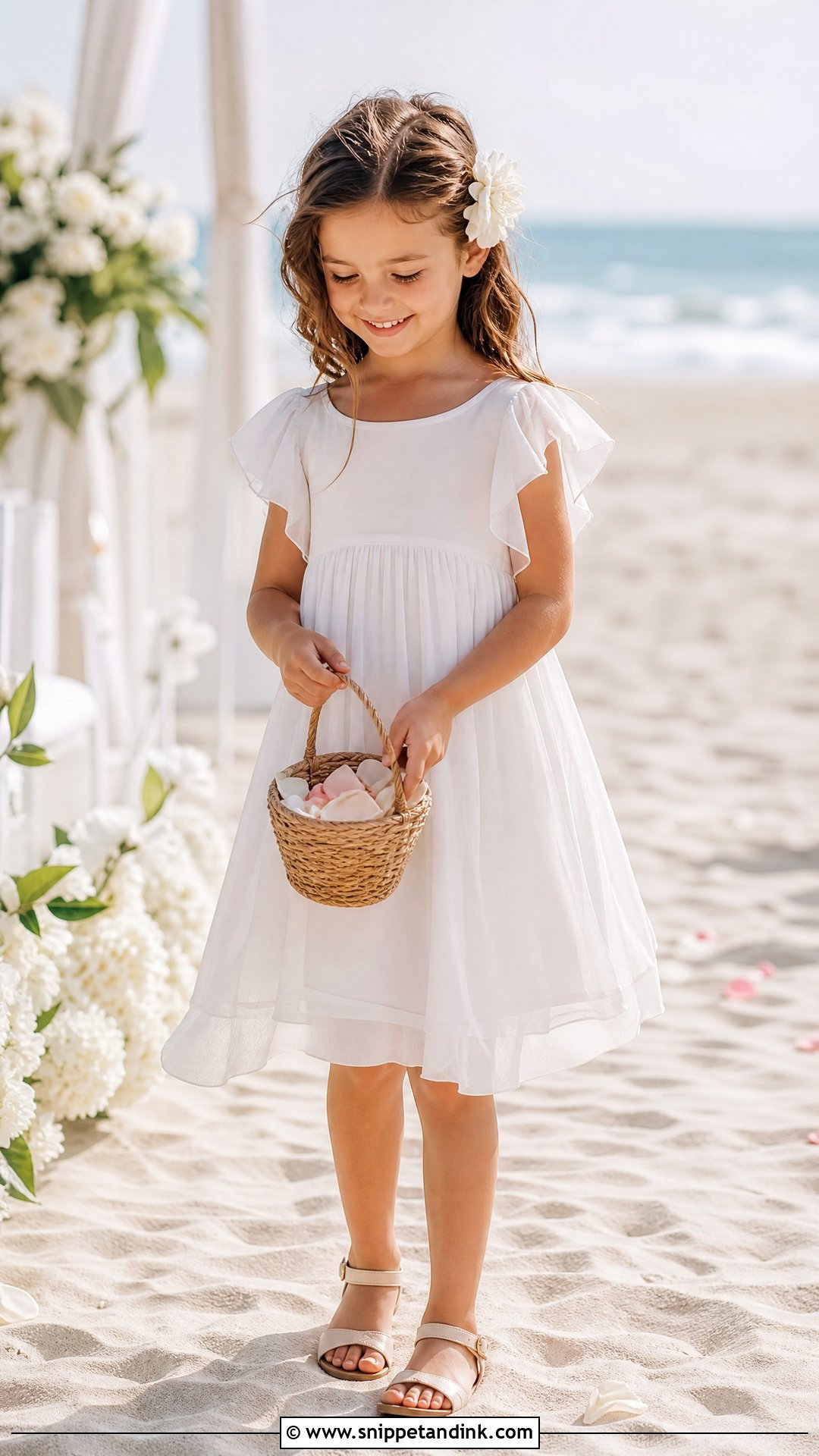
On sand, heavy satin and stiff skirts are hard work, so I go for chiffon, cotton, linen blends or soft tulle. White, ivory, pale blue and blush suit a coastal setting. Pick a shorter or tea-length hem, since a long one fills with sand. Sea wind is the other thing to plan for. It lifts light skirts and pulls hair loose, so I keep accessories minimal and secure, with flat sandals and a small floral clip pinned firmly.
17. Garden Flower Girl Dress
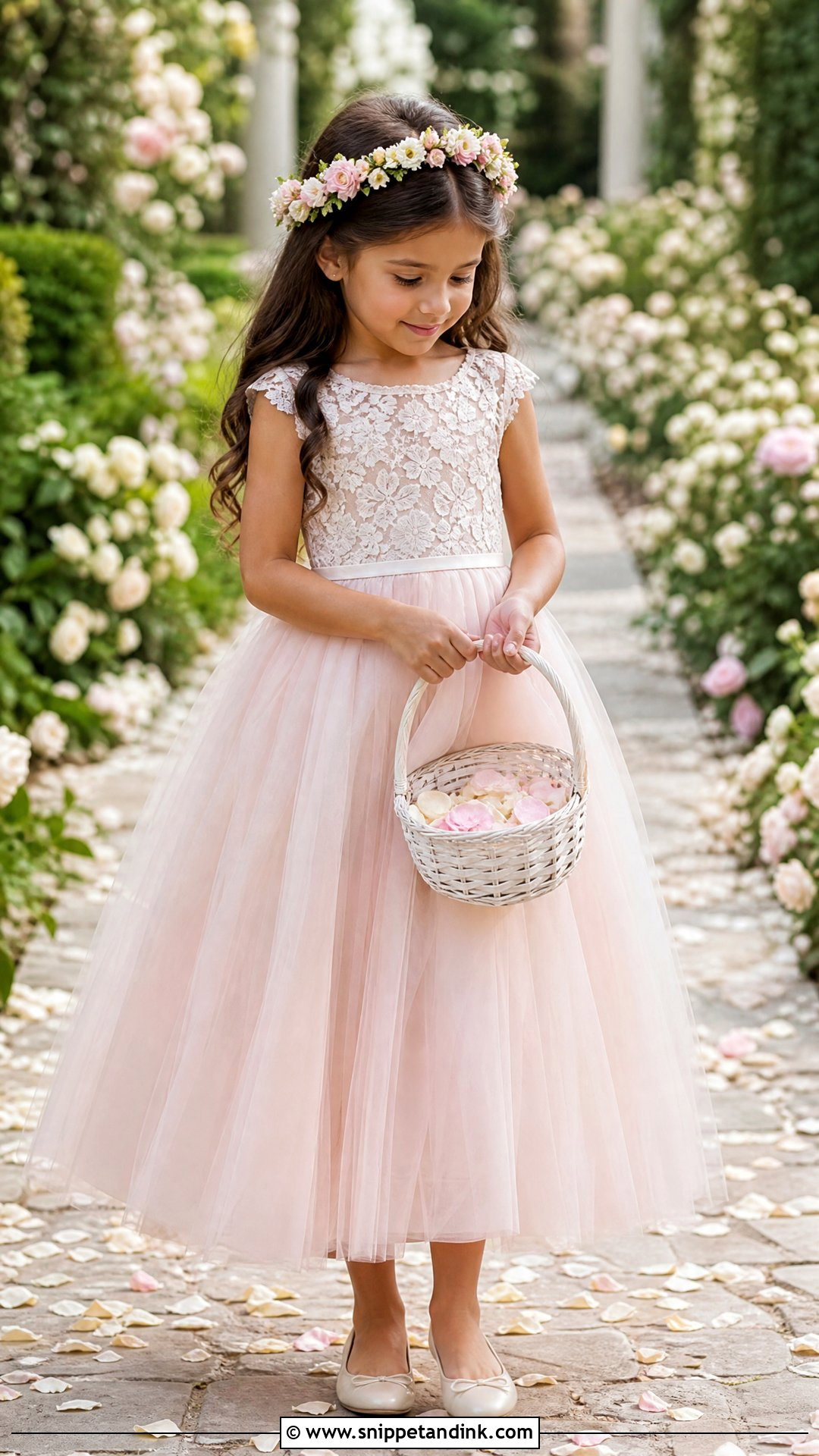
Garden settings suit soft prints, blush tulle, lace bodices and pastel sashes. Tea length lets her walk on grass and gravel paths without tripping. Sage, lavender, butter yellow and pale pink look right next to growing flowers. On a warm spring or summer afternoon, breathable fabric matters more than anything, so check that the lining is cotton rather than polyester. Ivory flats and a crown in the wedding colors finish it.
18. Champagne Flower Girl Dress
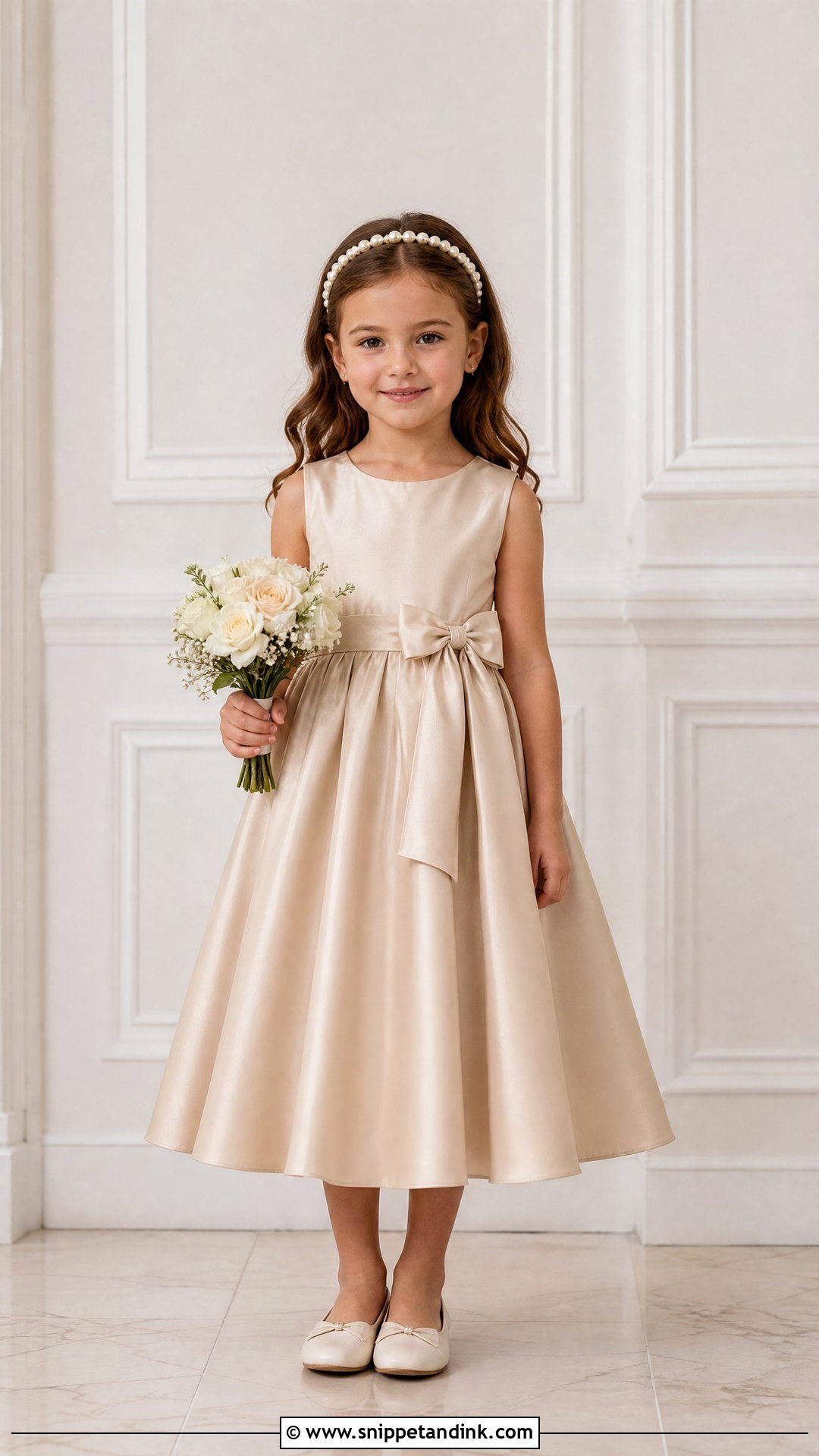
Champagne is warmer and more modern than bright white, and it sits well with gold accents and neutral bridesmaid dresses. Satin in this shade looks polished; tulle looks airy. In evening light it reflects warmly without glare. Keep the shape simple for a child, with one gentle detail such as a bow or flutter sleeves. Nude flats and a pearl headband are all I would add.
19. Sage Green Flower Girl Dress
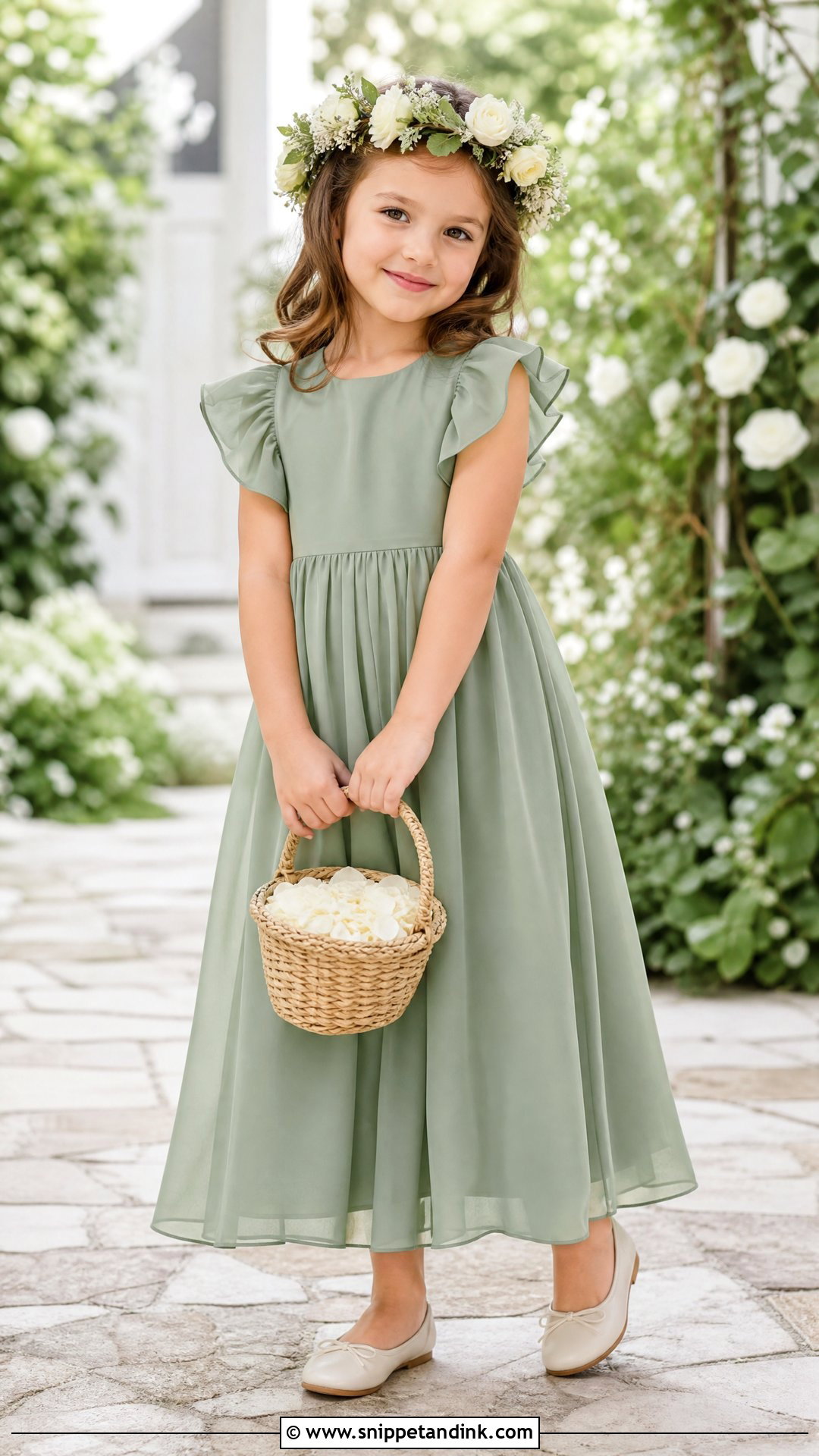
Sage is calm and natural, and it pairs easily with ivory, blush and dusty rose. A sage tulle skirt with an ivory bodice brings in color gently; a full sage chiffon dress with flutter sleeves is softer still. It is especially useful when the bridesmaids wear sage, because she can echo the palette without matching it exactly. Ivory flats, a cream crown and a small basket complete it.
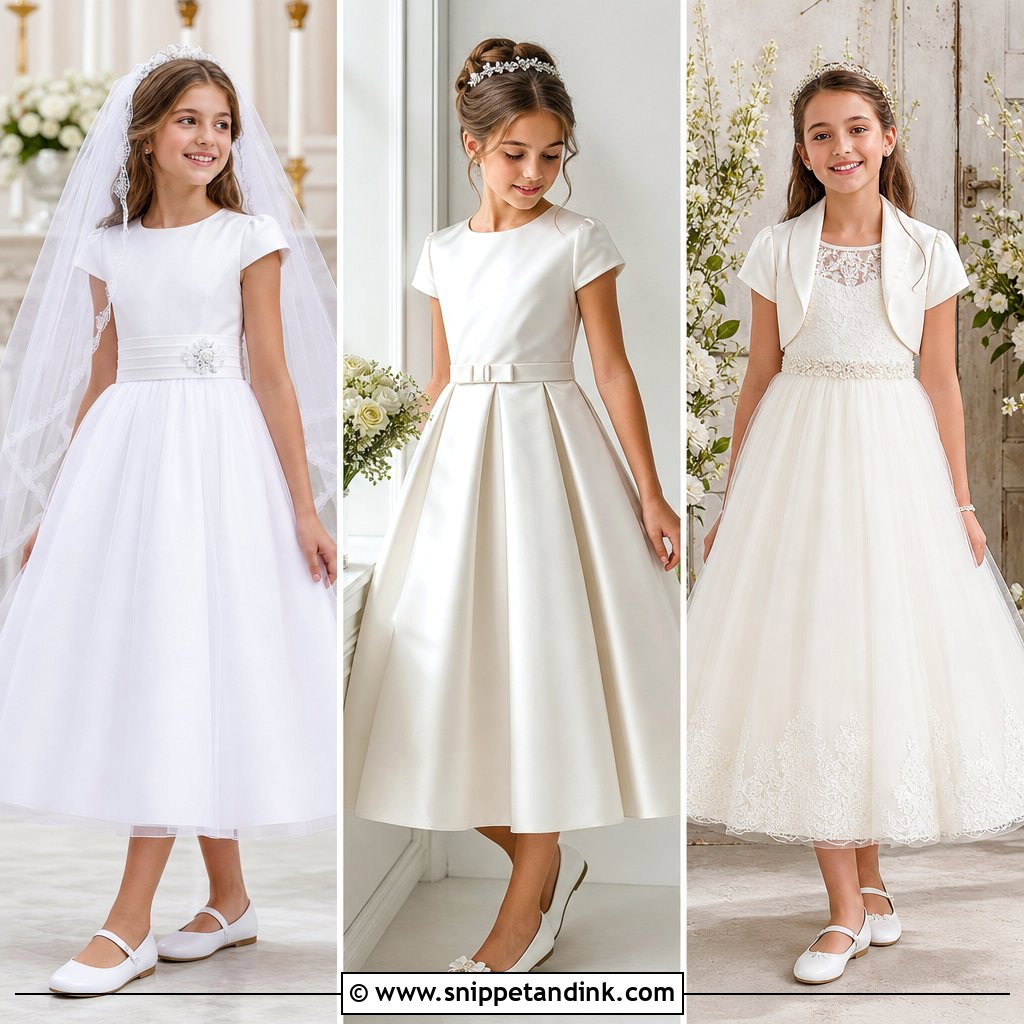
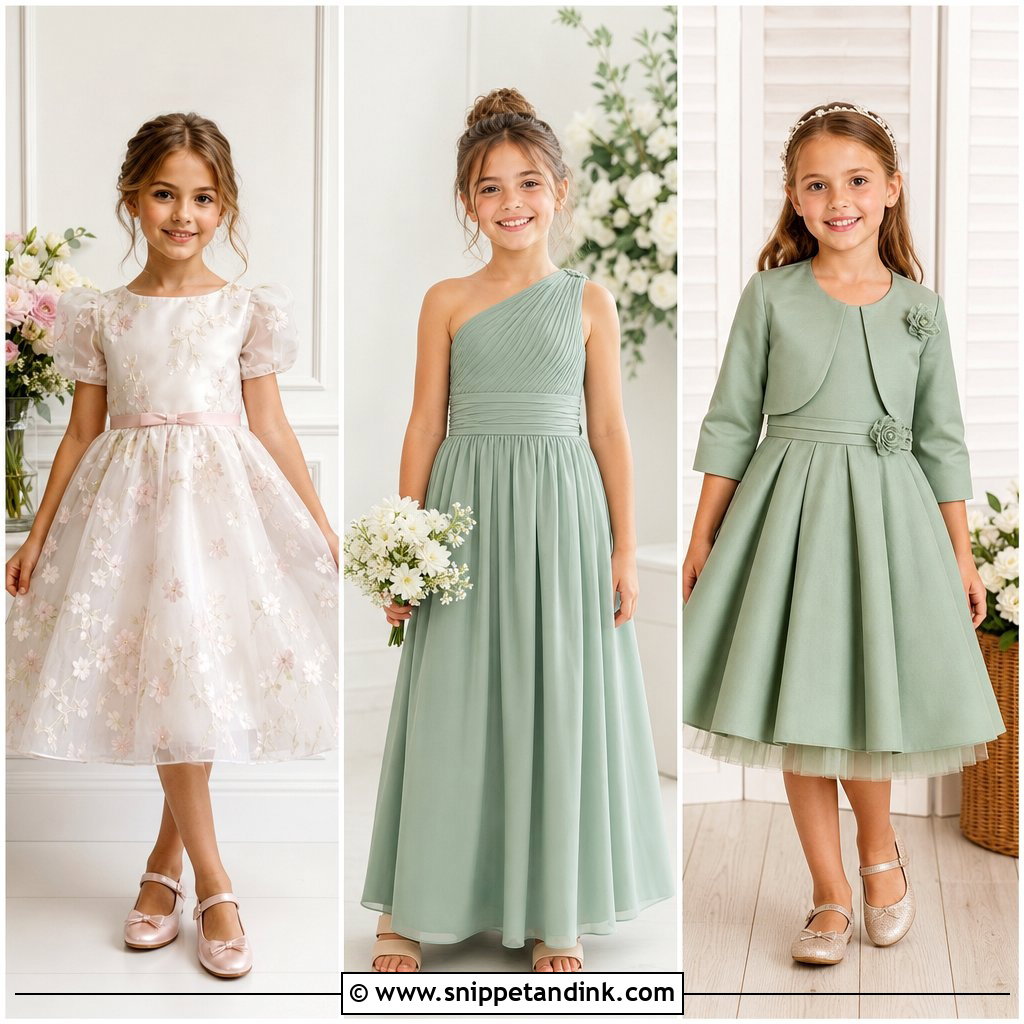
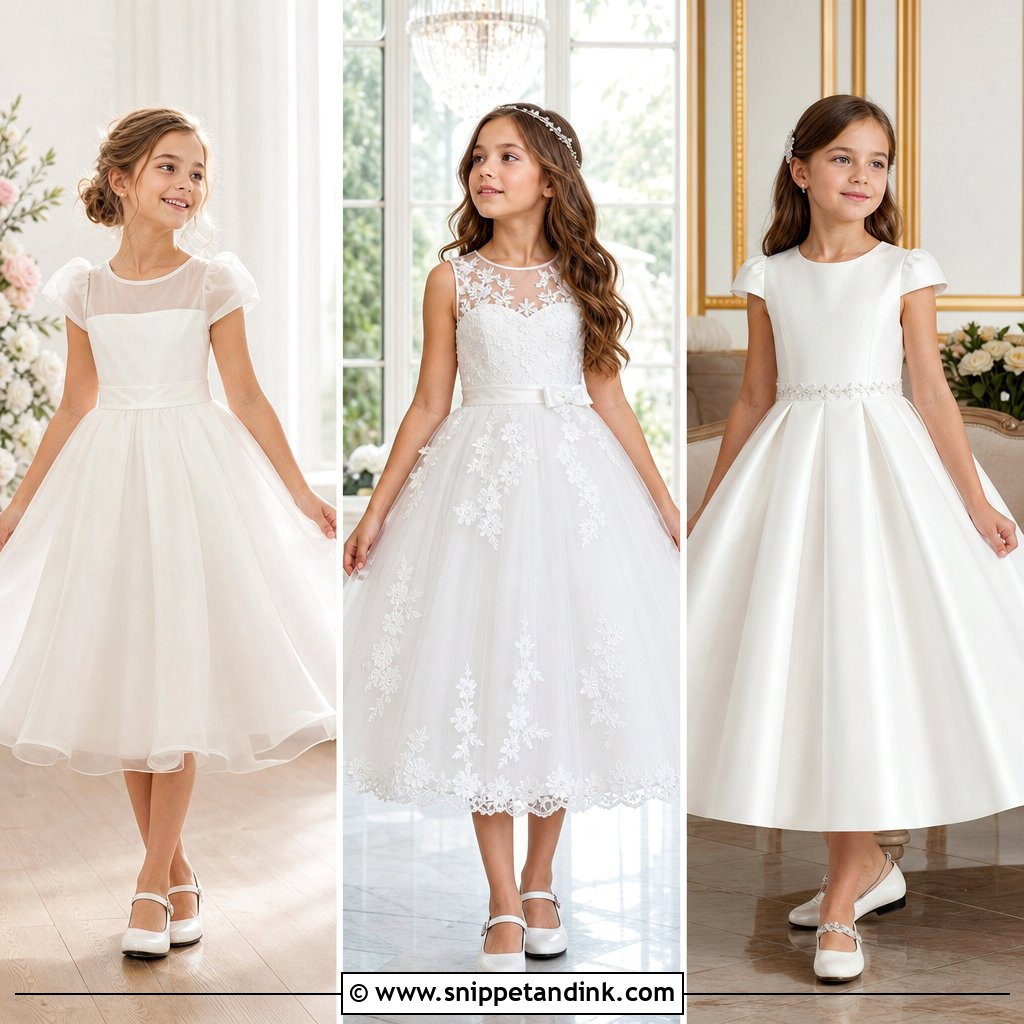
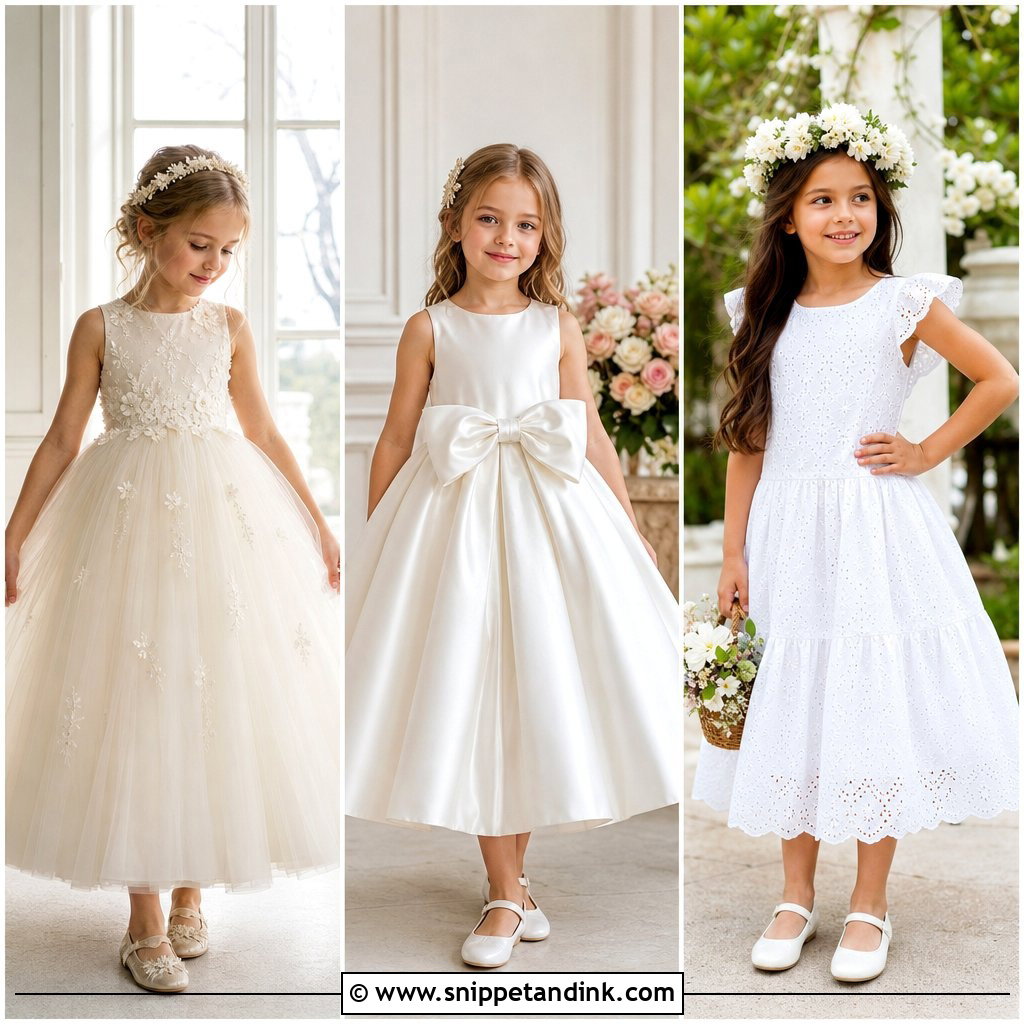
20. Dusty Blue Flower Girl Dress
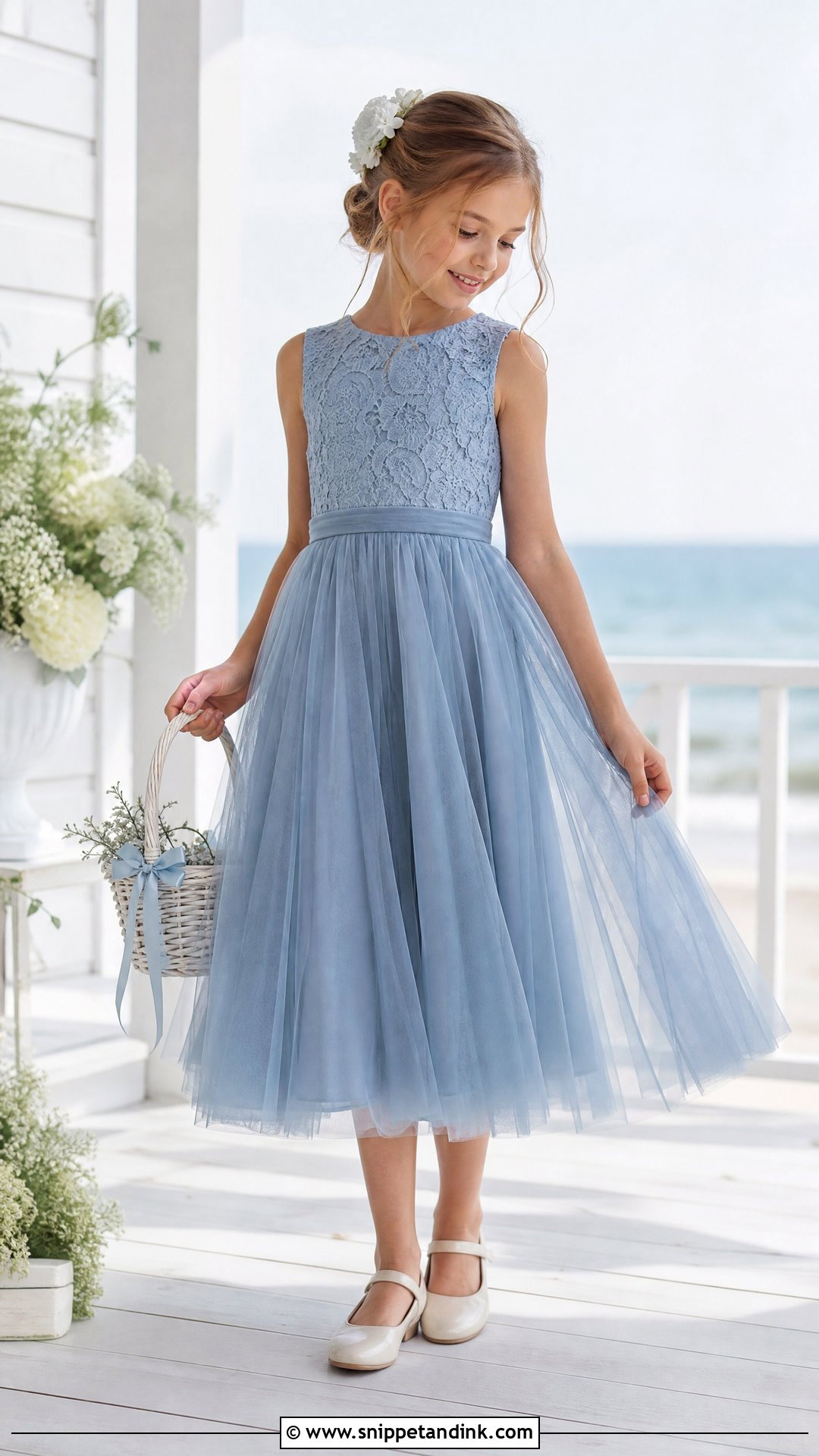
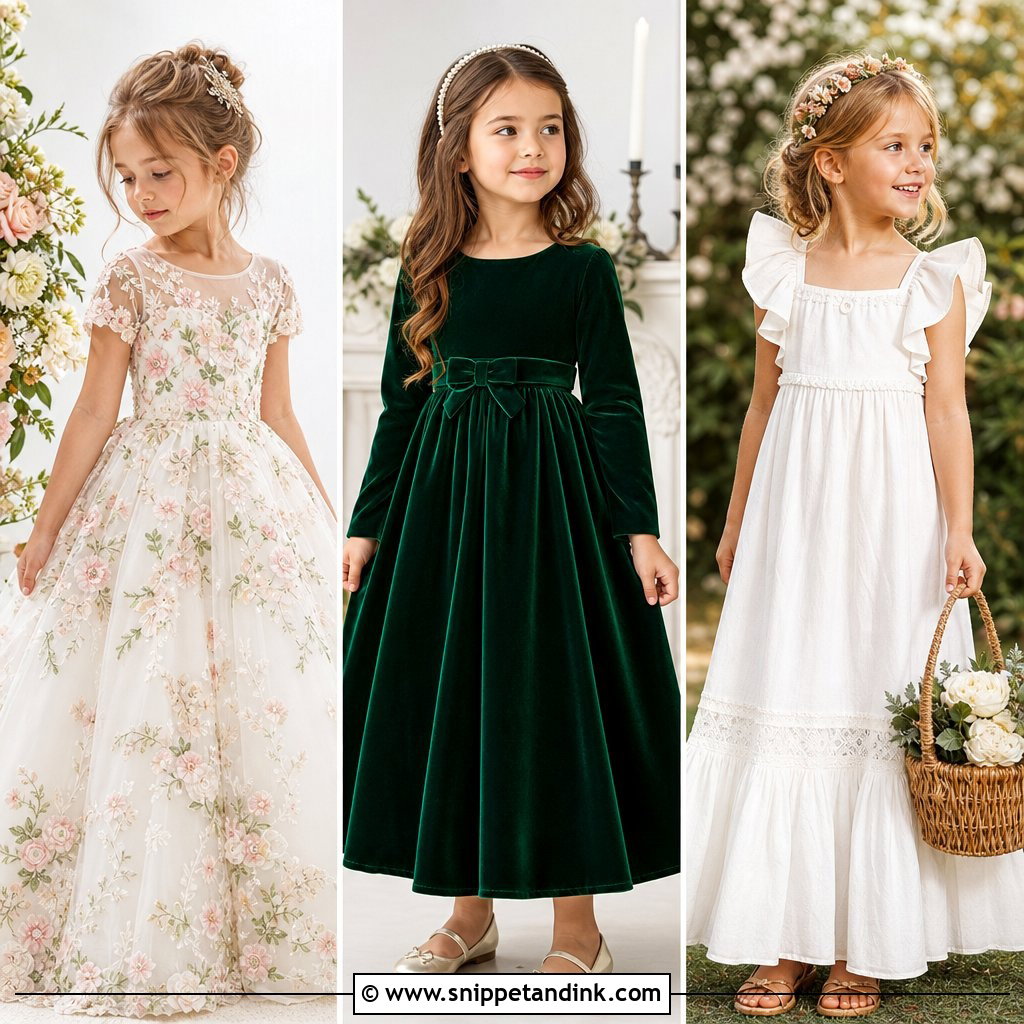
Dusty blue suits coastal weddings, spring ceremonies and blue-and-white palettes. Dusty blue tulle or chiffon looks gentle, and a lace bodice adds a classic note. Silver or ivory flats and a white floral clip are enough, with a basket tied in blue ribbon. It works next to bridesmaids in navy, slate or soft gray. Choose tea length and she will get more wear out of it afterward.
21. Lavender Flower Girl Dress
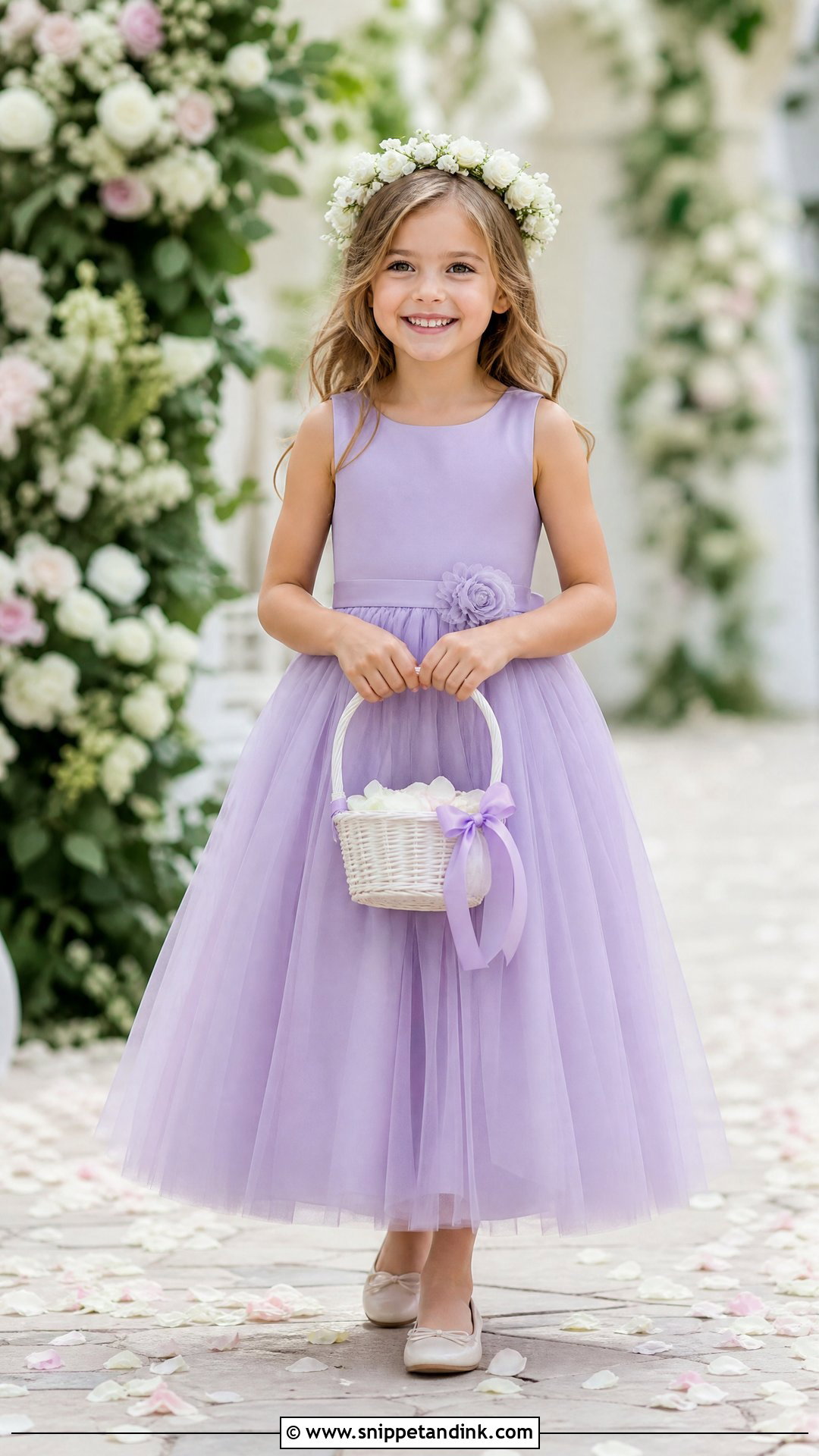
Lavender is playful and suits spring weddings and pastel palettes. Lavender tulle looks dreamy, while chiffon feels lighter. Because the color is already eye-catching, keep the shape simple: an A-line or empire waist. Ivory flats, a white crown and a petal basket with lavender ribbon finish it. Hold the fabric next to her face before ordering; some lavenders lean gray and can make pale children look washed out.
22. High Low Flower Girl Dress
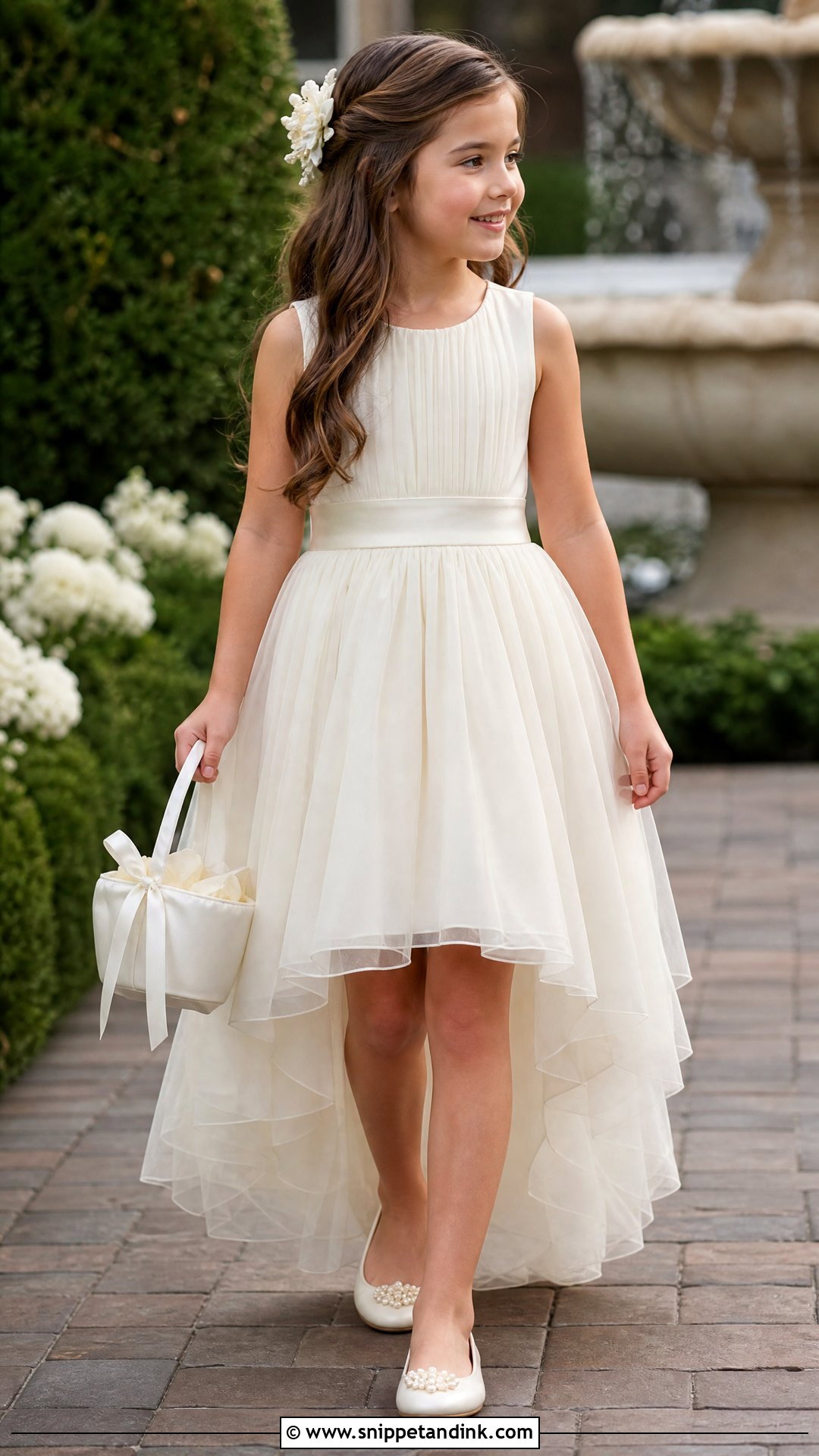
A high-low hem is practical for active children: the shorter front keeps her feet clear, while the longer back still looks dressy. It suits outdoor venues, beaches and receptions with plenty of dancing. Tulle, chiffon and organza all hold this hem well. The shoes are on show from the front, so choose them with care, and add a simple hair bow or floral clip to balance the look. For toddlers, keep the back short; a long tail is easy to step on.
23. Cotton Flower Girl Dress
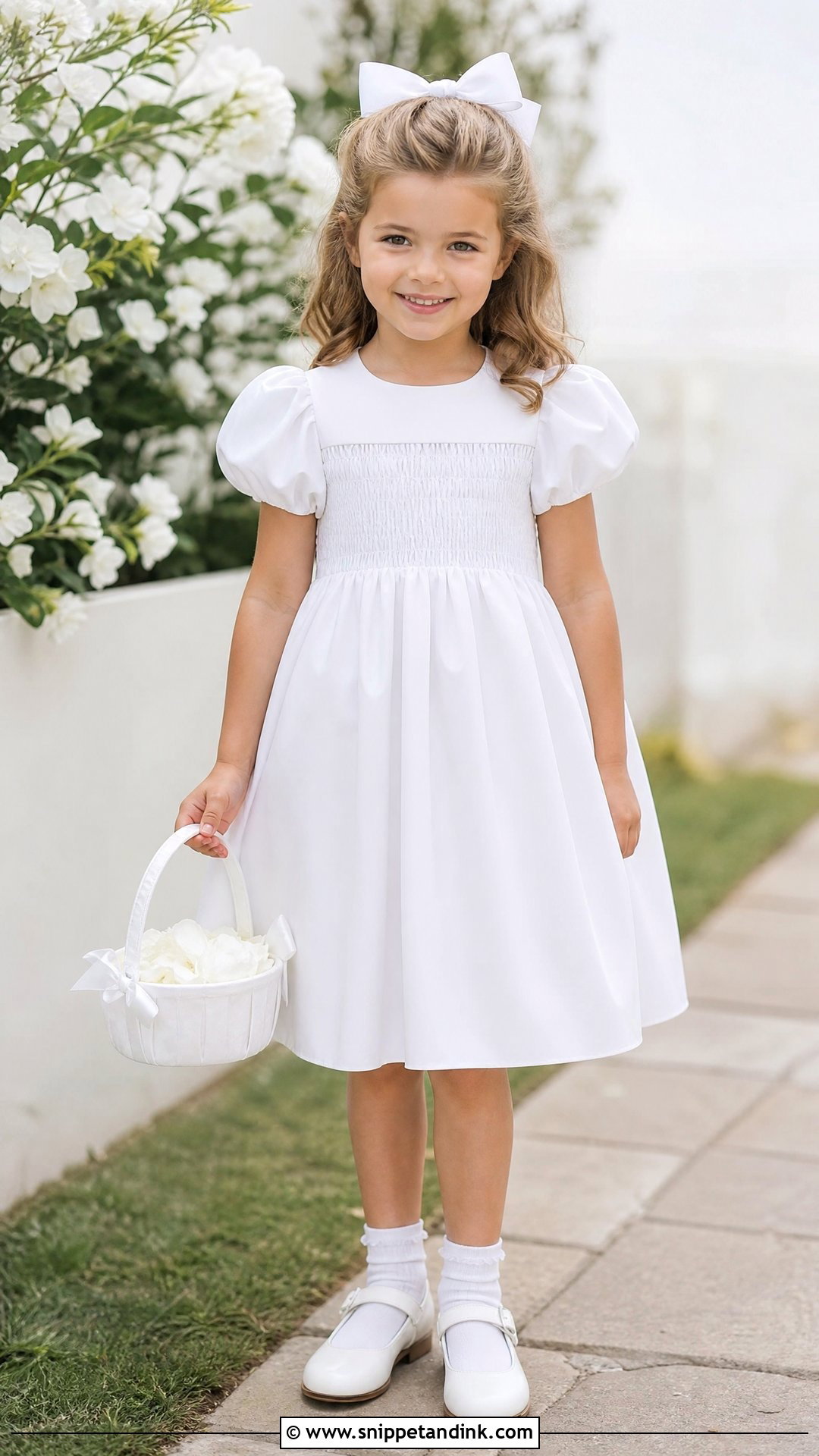
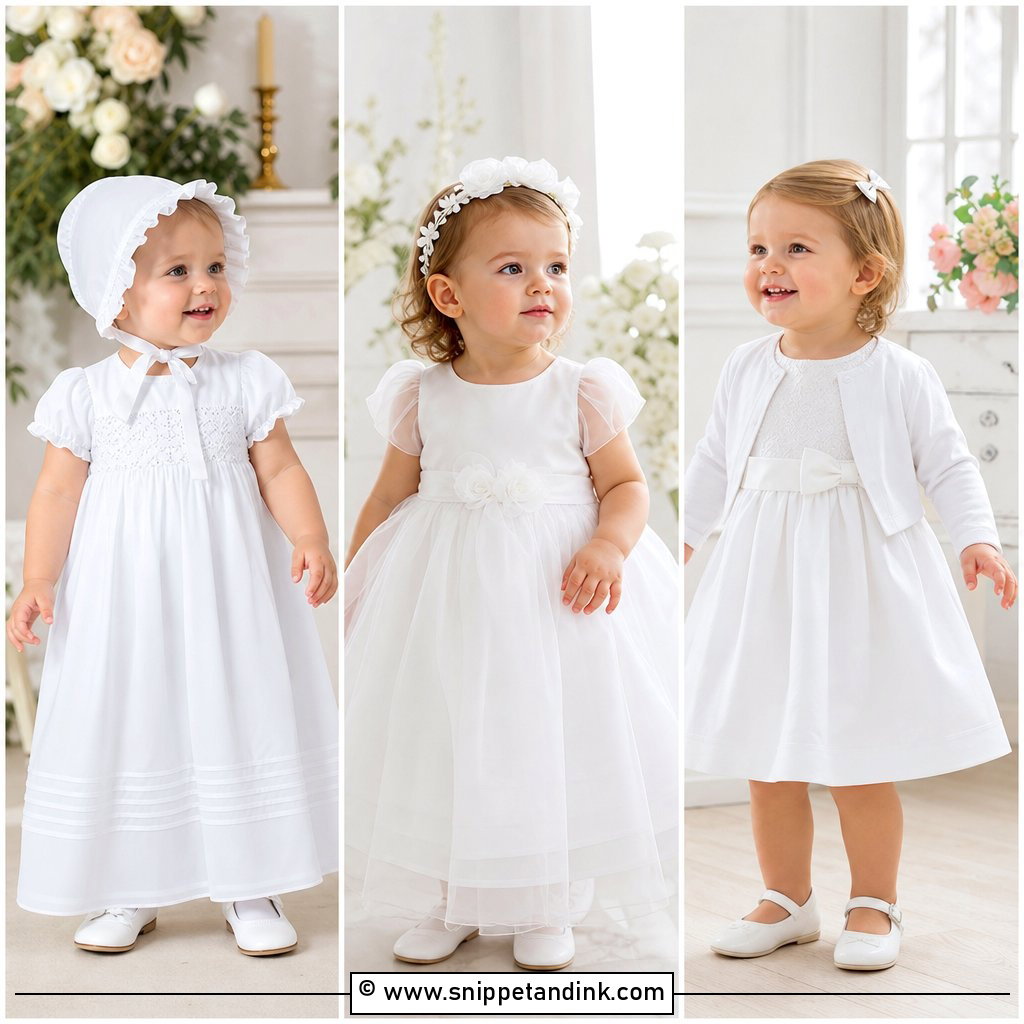
For warm weather and children who hate formal fabrics, a cotton flower girl dress is often the kindest option. Cotton sateen, embroidered cotton and cotton lace blends still look polished. A puff sleeve, smocked bodice or simple A-line keeps it classic. Mary Janes, ankle socks and a neat hair bow are enough, and a satin sash ties it to the wedding colors. Cotton also washes at home, which parents appreciate.
24. Vintage Flower Girl Dress
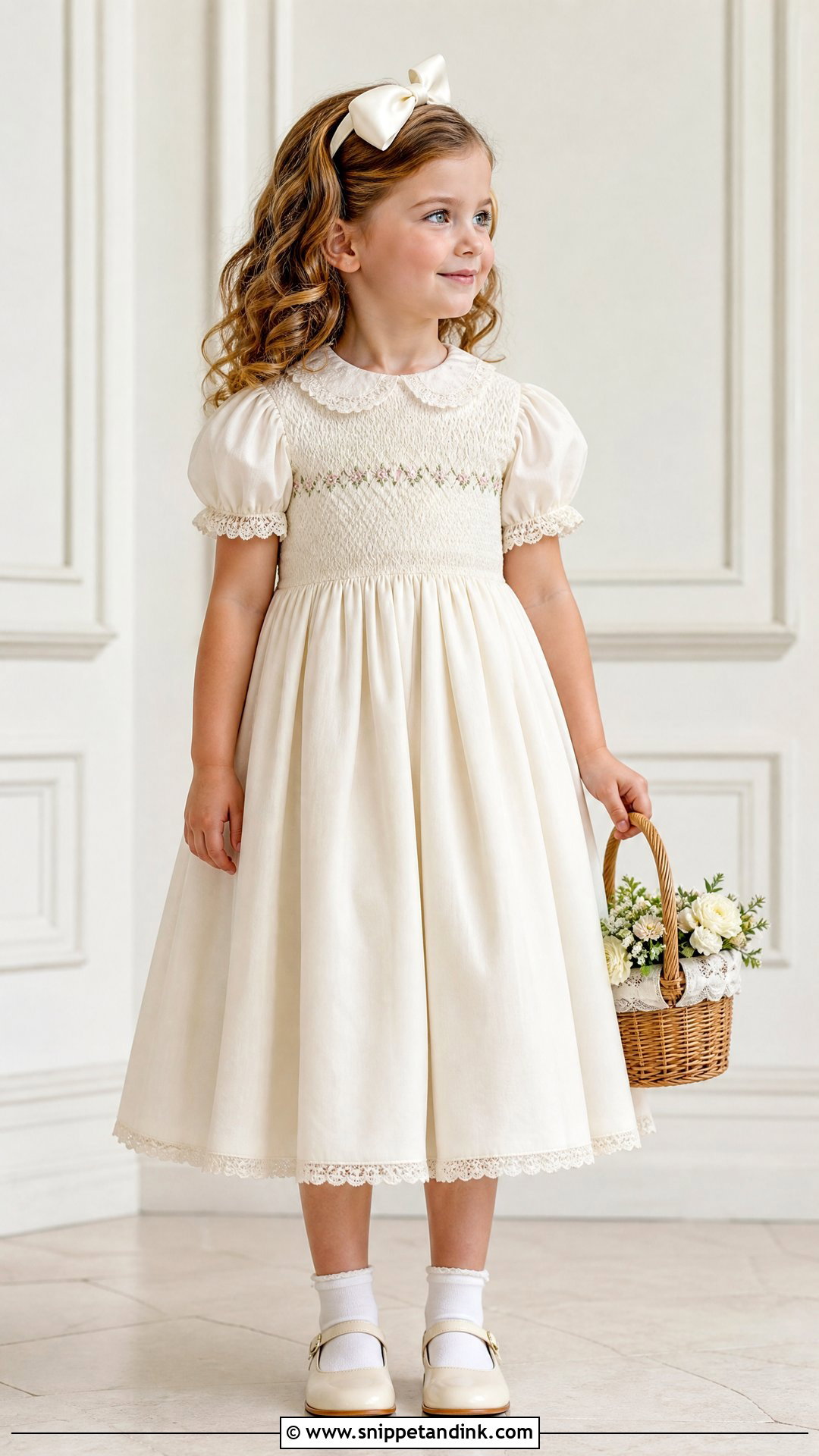
Vintage styling relies on smocking, puff sleeves, lace collars and tea-length skirts in ivory, cream, pale pink or powder blue. The line between charming and costume is thin, so I look for well-made, simple details rather than lots of them. Mary Janes with white socks, a satin bow and a small basket give a classic finish. For a very young flower girl, check that a lace collar is soft; stiff collars rub the neck.
25. Simple Flower Girl Dress
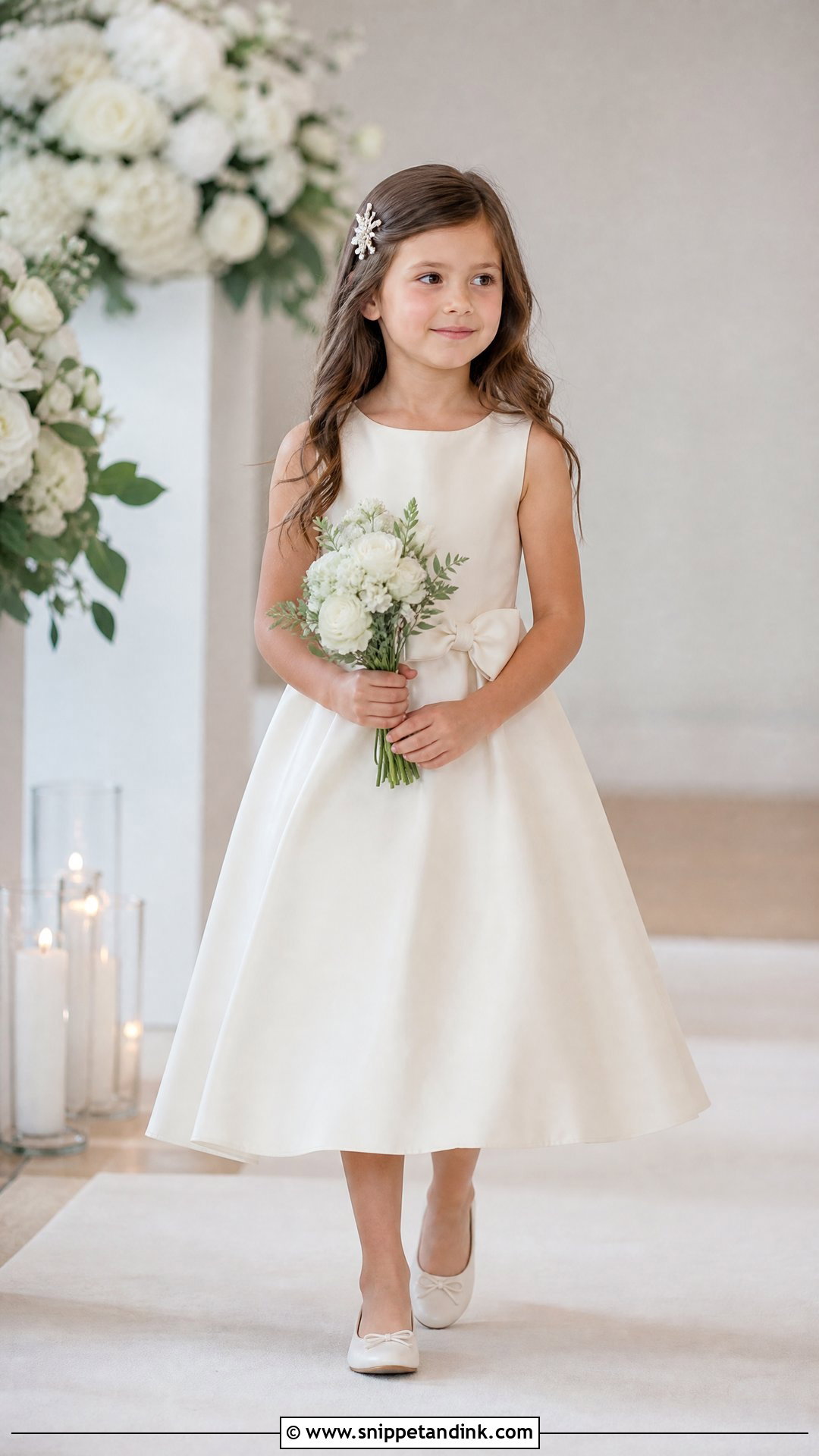
Sometimes the plainest dress works best. Clean lines, soft fabric and one detail, such as a bow or flutter sleeves, often look better than a heavily decorated gown. A plain ivory A-line, a soft chiffon dress or a satin tea-length dress all coordinate easily with bridesmaids and decor. Ballet flats and a delicate hair clip are enough. Children who dislike bulky skirts or scratchy trims are noticeably calmer in these, and calm children walk better.
A Practice Run at Home and a Spare Outfit in the Car
The dress is rarely what goes wrong on the day. The child is. A new dress that feels strange, shoes that slip and tights that sag can turn a confident four-year-old into a reluctant one at the top of the aisle. A practice run at home a week or two before fixes most of it.
Have her wear the full outfit, shoes included, for an hour while she plays. You will see which seams she pulls at and whether the sash slides. Scuff the soles of new shoes on a rough surface so they grip, and let her carry the empty basket so it feels familiar. On the day, cover the dress with an oversized T-shirt while she eats breakfast and gets her hair done.
Pack a small bag for her parents: wipes, a stain pen, spare tights, a cardigan and a comfortable change of clothes. Most flower girls are back in something soft by the end of dinner, and that is fine. The photos that matter have been taken.
Who Pays for the Flower Girl’s Dress?
Traditionally, the child’s parents buy the dress, the same way bridesmaids buy their own. When a couple wants a specific designer dress or an exact color, many choose to pay for it or contribute, and I think that is the fair approach. Whatever you decide, say so when you ask the family, along with a rough idea of the cost, so nobody is surprised by the bill later.
Comfort Is What Gets Her Down the Aisle
Every dress in this list comes down to the same balance: how it looks against how it feels to a child wearing it for hours. Tulle, lace, satin, chiffon, organza and cotton each give a different mood, and the venue and season will narrow the choice quickly. Ivory is always safe, while blush, sage, dusty blue, lavender and champagne make the palette more personal. Check the lining, hem length, sleeve elastic and shoes before you buy. A comfortable flower girl is the one who smiles all the way down the aisle.
You'll Like These Ideas:


Leave a Reply