
A gown for a flower girl, junior attendant or a child’s portrait session has a harder job than an adult wedding dress. It has to look formal while a six-year-old sits on church steps, climbs into a car and dances until she falls asleep on two chairs. When I dress children, I check the inside before the outside: lace, sequins and layered tulle all need a soft lining between them and her skin. I also keep younger girls in tea length or ankle length, because they simply trip less. Below are the silhouettes I reach for most, from plain satin to blush and champagne, with the shoes and hair pieces I’d put with each one.
Sizing a Child Who Will Grow Before the Wedding
Many children’s formal gowns are made to order, and lead times of several weeks to a few months are common, so I usually start looking four to six months out. The catch is that a five-year-old can grow a surprising amount in that time. I measure her, then order to the largest measurement, never to the age on the label, because children’s sizing varies a great deal from one maker to the next.
The measurements I take
- Chest at the fullest point, under the arms, with one finger slipped under the tape.
- Natural waist, which on a small child sits just above the belly button.
- Shoulder to floor while she stands in the shoes she’ll actually wear, which sets the hem.
- Height, since a lot of brands size by height rather than by age.
Book a final fitting two to three weeks before the wedding. That’s close enough to catch a growth spurt and still leaves a seamstress time to take in a bodice or shorten a hem. Taking a dress in is easy; letting out a bodice that’s too tight often isn’t possible at all, which is why I’d always rather start a little big.
1. Classic Satin Little Bride Ball Gown
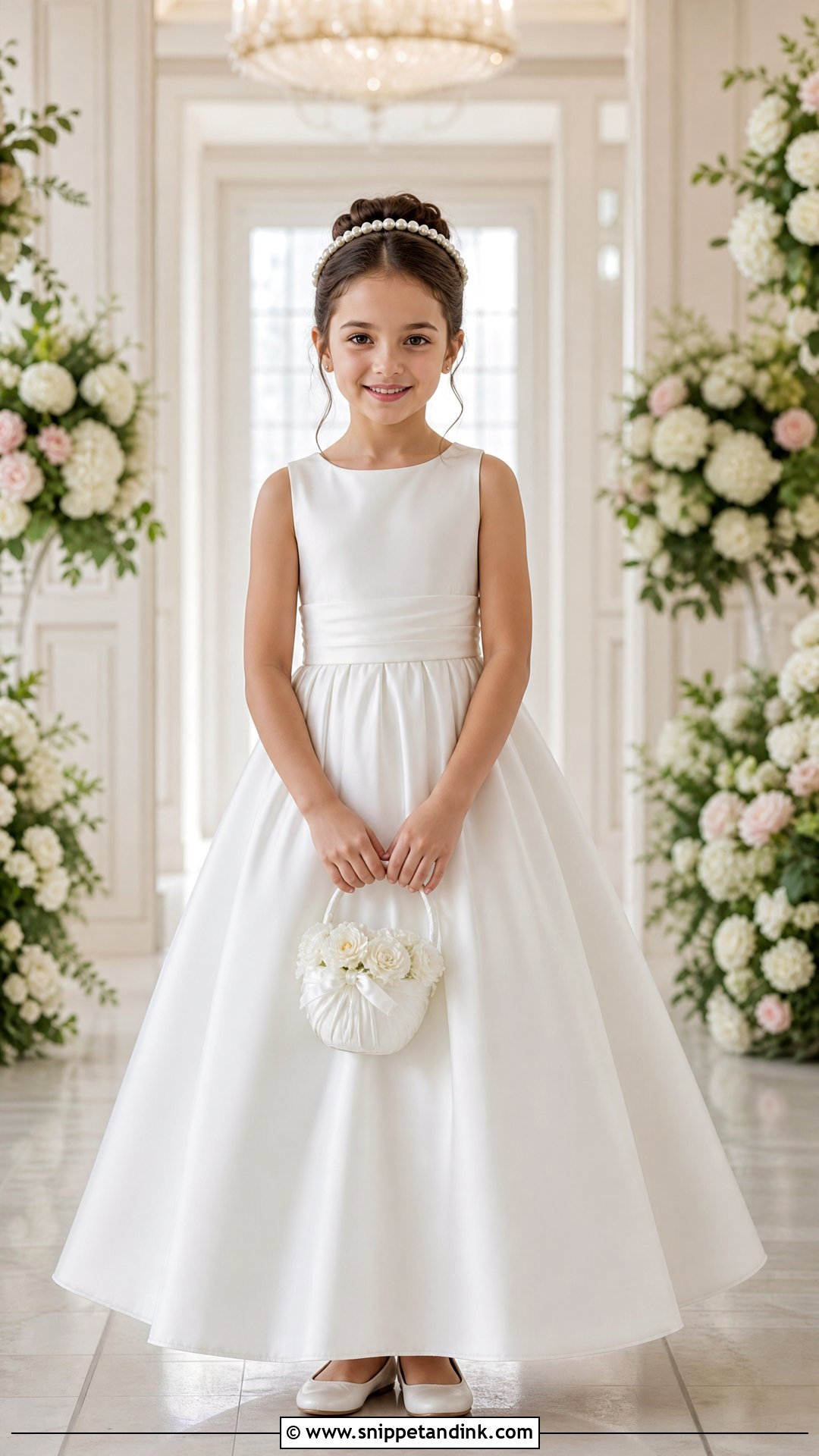
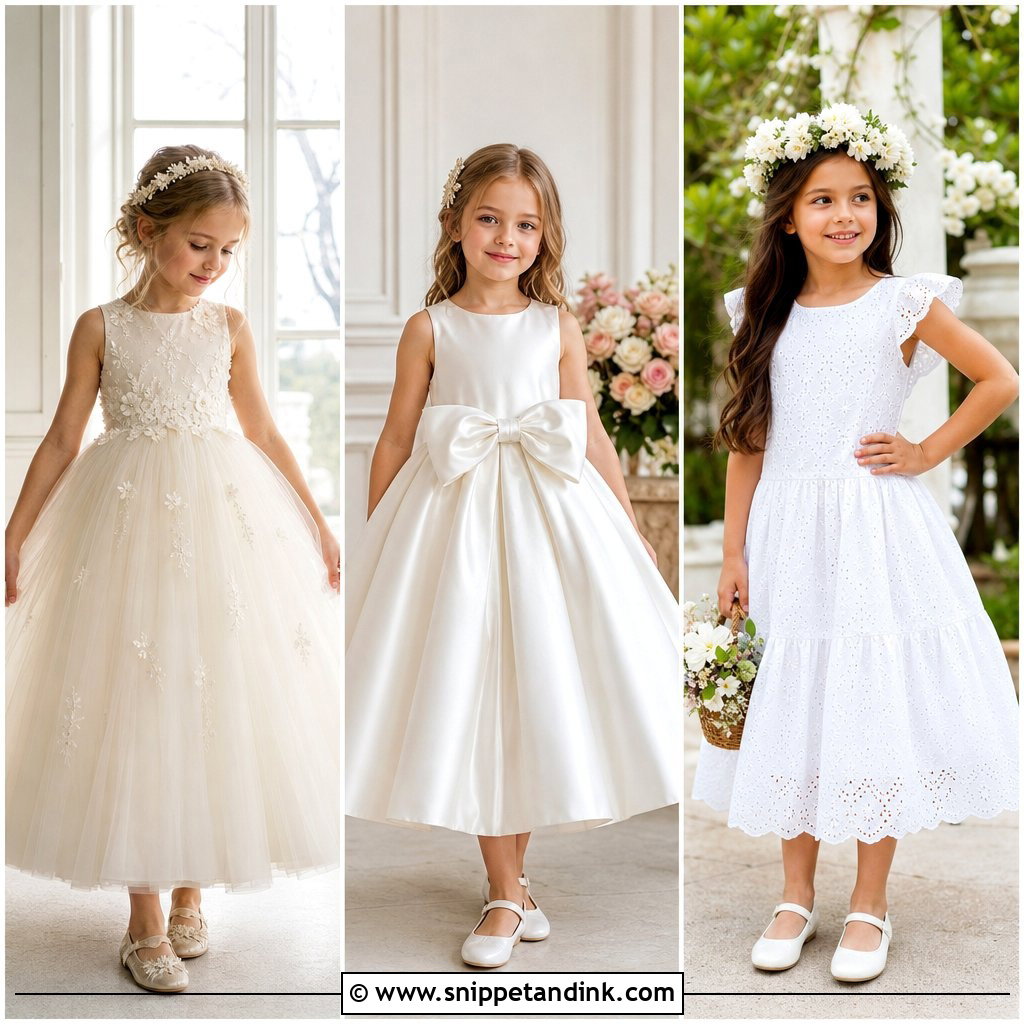
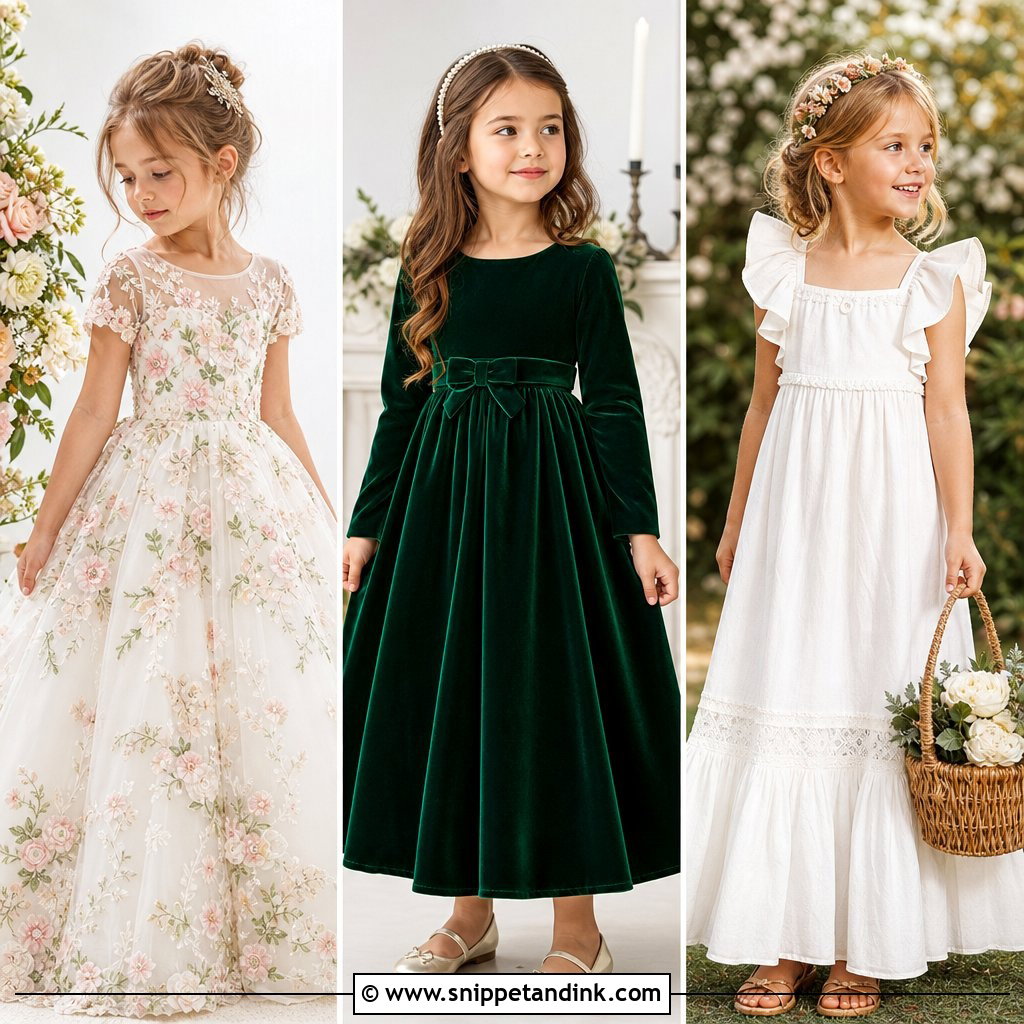
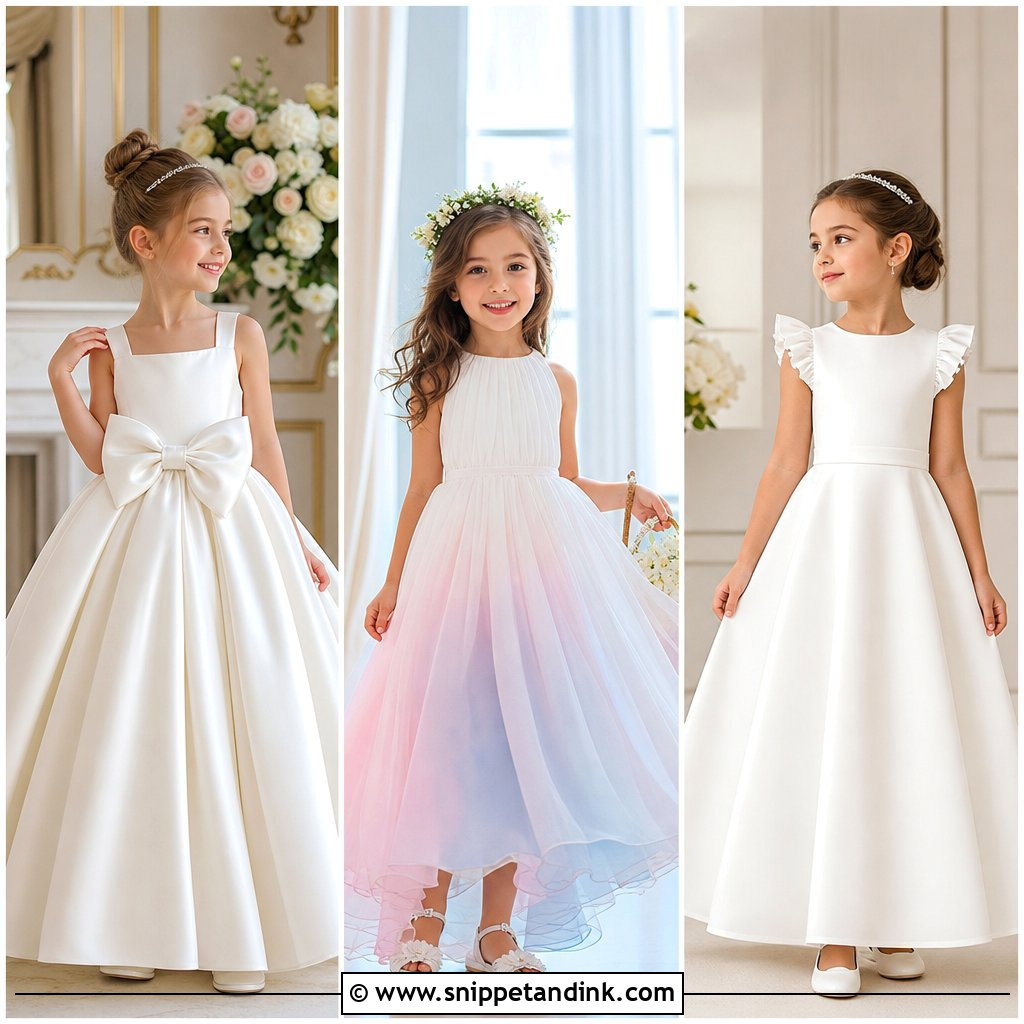
This is the most formal shape here, and the weight of the fabric decides whether a child tolerates it. I look for a lightweight satin with a cotton lining, a rounded neckline that doesn’t press on the collarbone, and a skirt that gets its fullness from a soft petticoat rather than a hoop. Heavy duchess satin is too much for most children under eight; they start tugging at the waist within the hour. Keep the hem at the ankle, add white ballet flats and a slim pearl headband, and use a detachable sash if you want the waist defined. Indoors under warm light, satin reads richer than anything else on this list.
2. Lace Applique Little Bride A-Line Gown
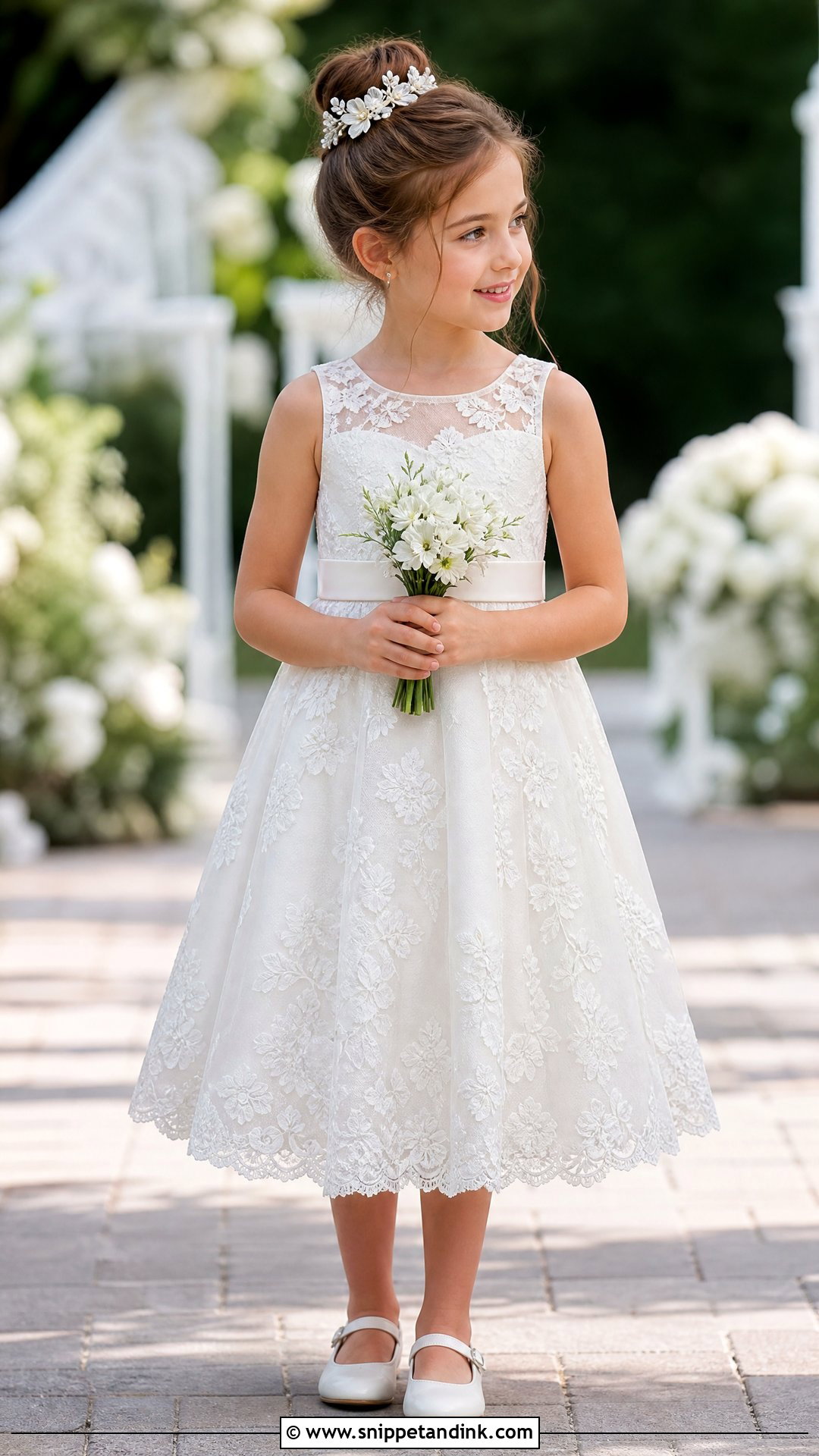
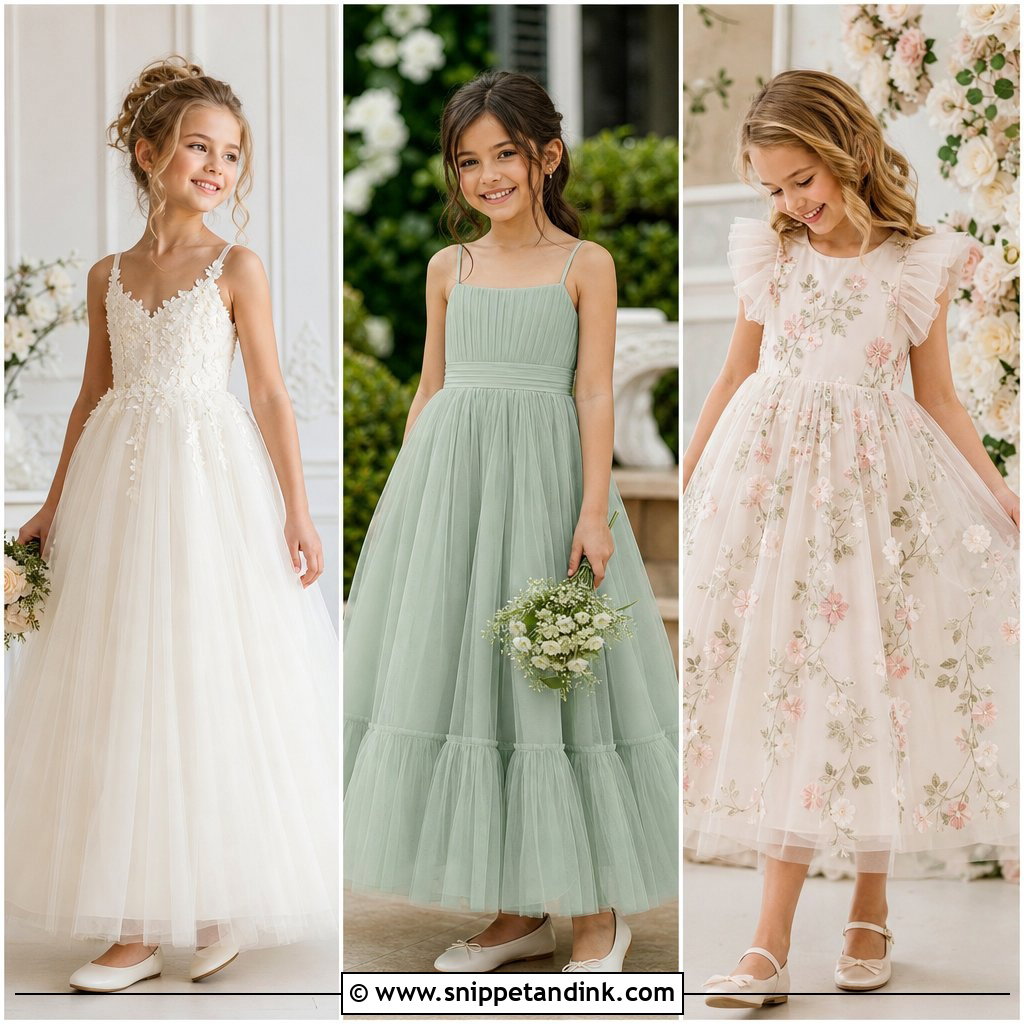
Lace appliques give an A-line real bridal detail without much volume, which matters when she has to sit through a long service. My first check is where the lace sits. Appliques stitched onto tulle are fine, but corded lace resting directly on bare skin leaves red marks by the reception. A satin waistband and a covered zip keep the back tidy in the photos taken as she walks away. Ivory Mary Janes and a small floral comb are plenty. Floor length suits a ten-year-old; a toddler should stay at tea length. For a girl who’d rather skip a dramatic princess skirt, this is the shape I’d show her first.
3. Tulle Princess Little Bride Gown
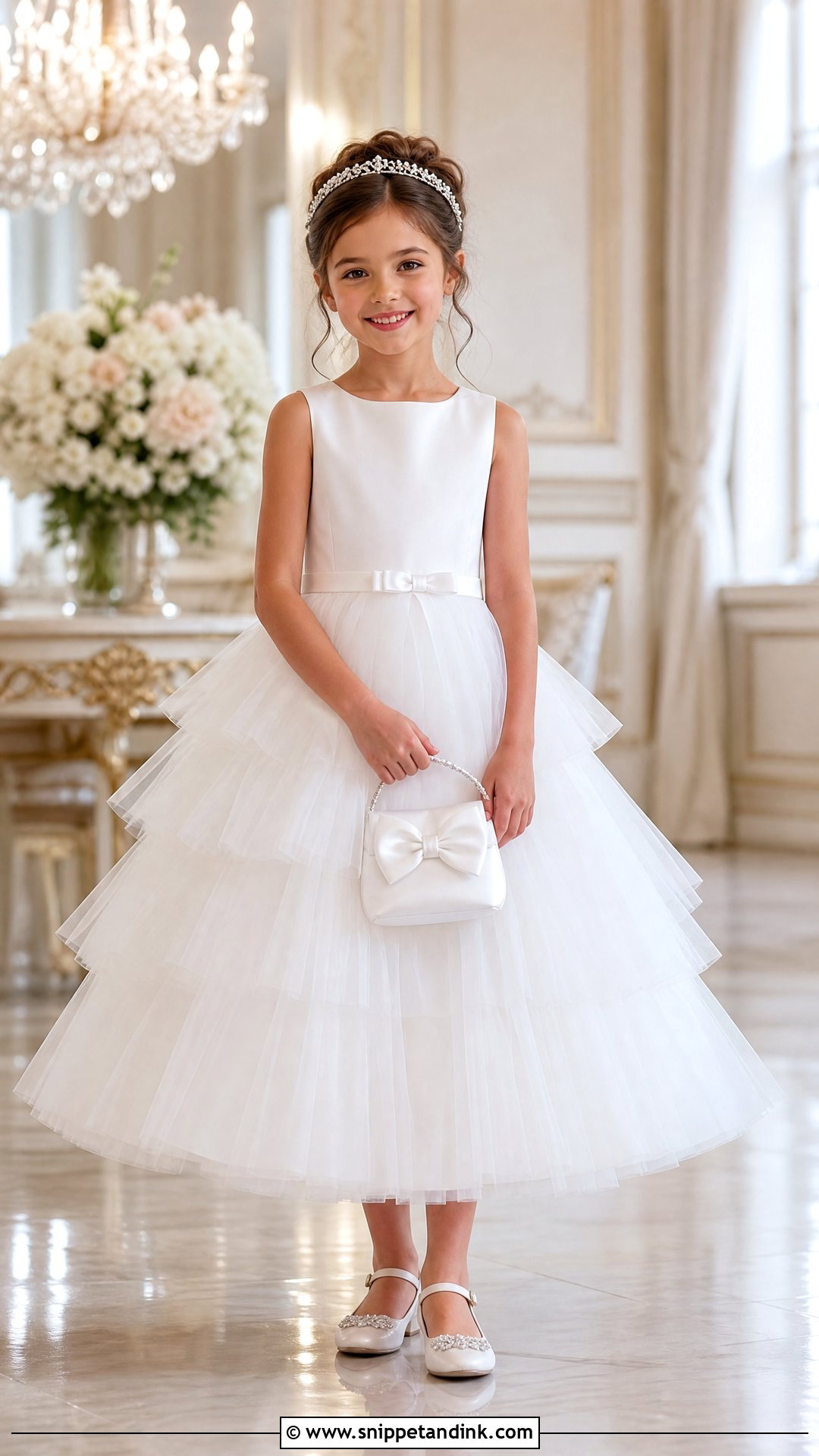
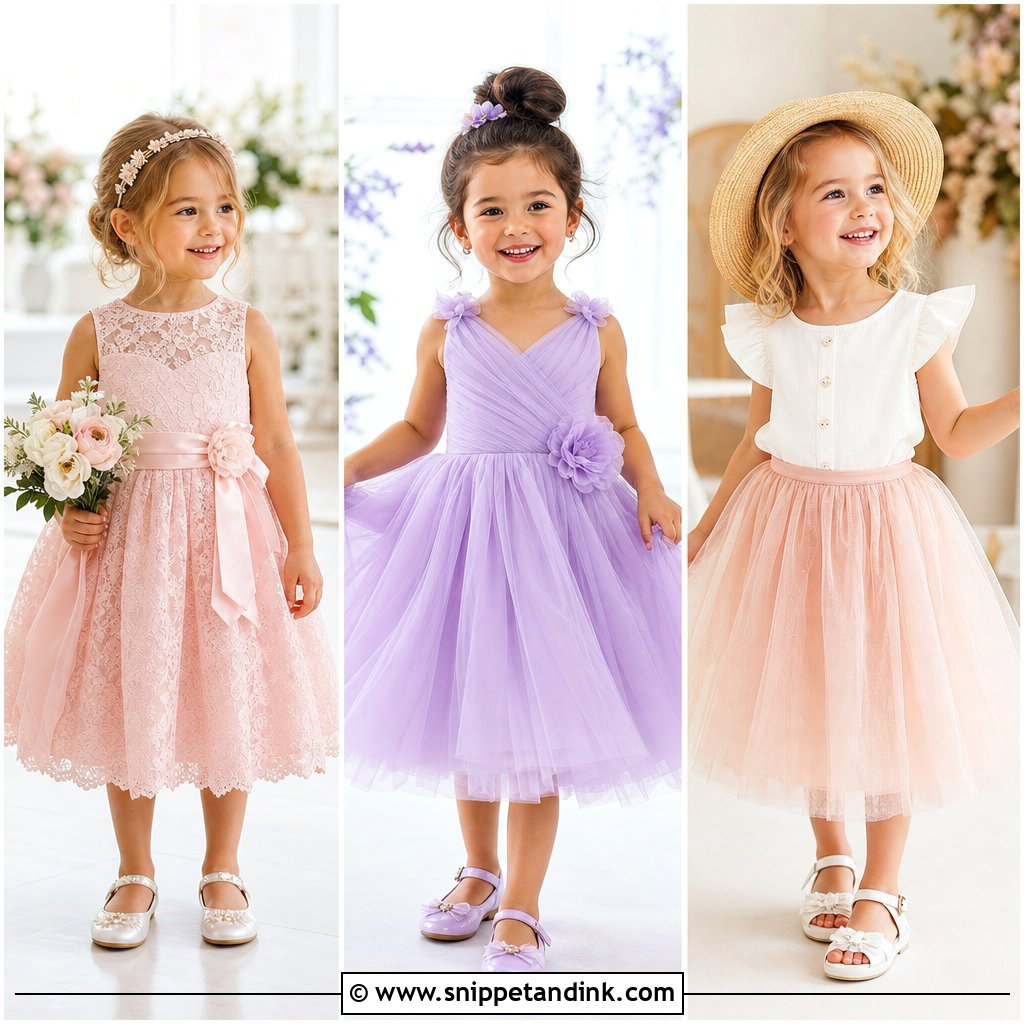
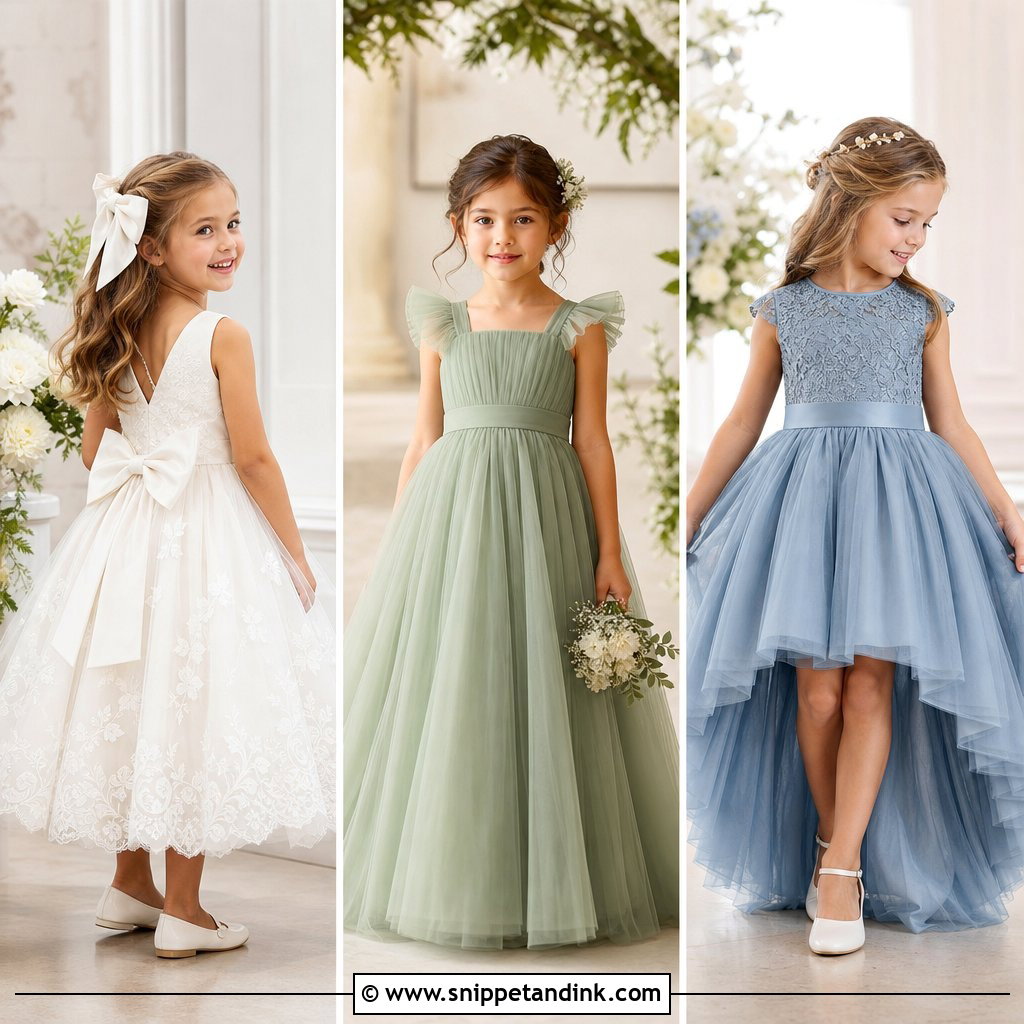
Twirling is the whole point of a full tulle skirt, so I’d only choose one for a child who actually likes volume. Fine, soft tulle compresses when she sits. Cheap stiff tulle springs up around her face in every seated photo, and she’ll spend the meal pushing it down. Every layer needs a lining beneath it, since bare tulle against the legs itches within minutes. Ankle-strap flats stay on through the spinning, a crystal-style headband and small satin purse finish it, and I hem these just above the floor rather than touching it. One fine sparkle layer is fine; loose glitter isn’t, because it ends up on the bride’s dress after the first hug.
4. Tea-Length Little Bride Gown With Satin Sash
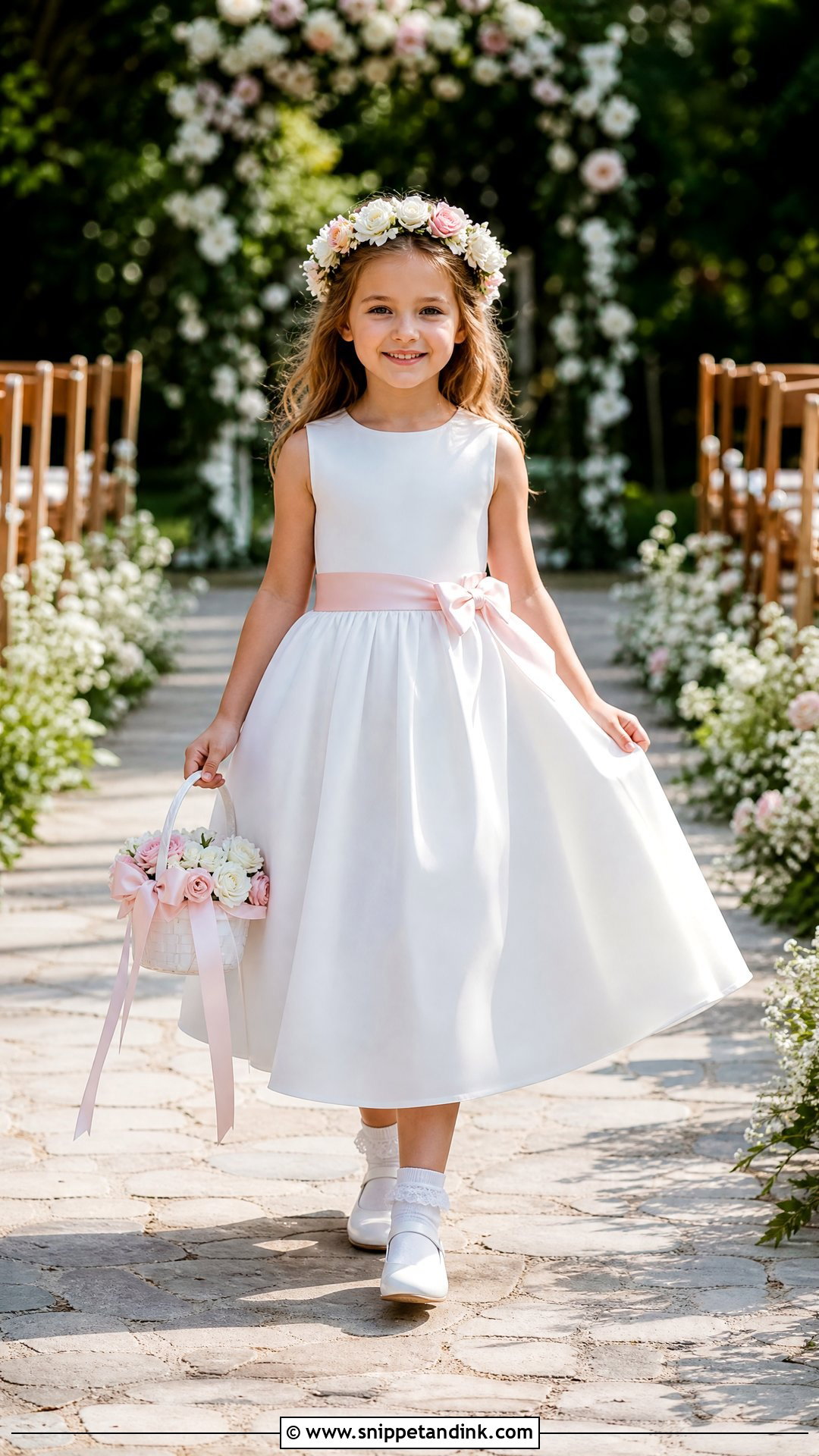
I suggest tea length for children more than any other hem. A mid-calf skirt shows her shoes, clears wet grass and doesn’t catch on steps, so she can walk the aisle without holding fistfuls of fabric. Pair a white or ivory bodice with a gathered skirt and a sash in the wedding color, and tie the bow flat at the back so it doesn’t dig into her spine when she leans against a chair. Rounded-toe Mary Janes, frill-edged ankle socks and a floral crown on a comb finish it. For toddlers it’s the safest length I know, since a shorter hem removes the most common reason little ones fall.
5. Cap-Sleeve Lace Little Bride Gown
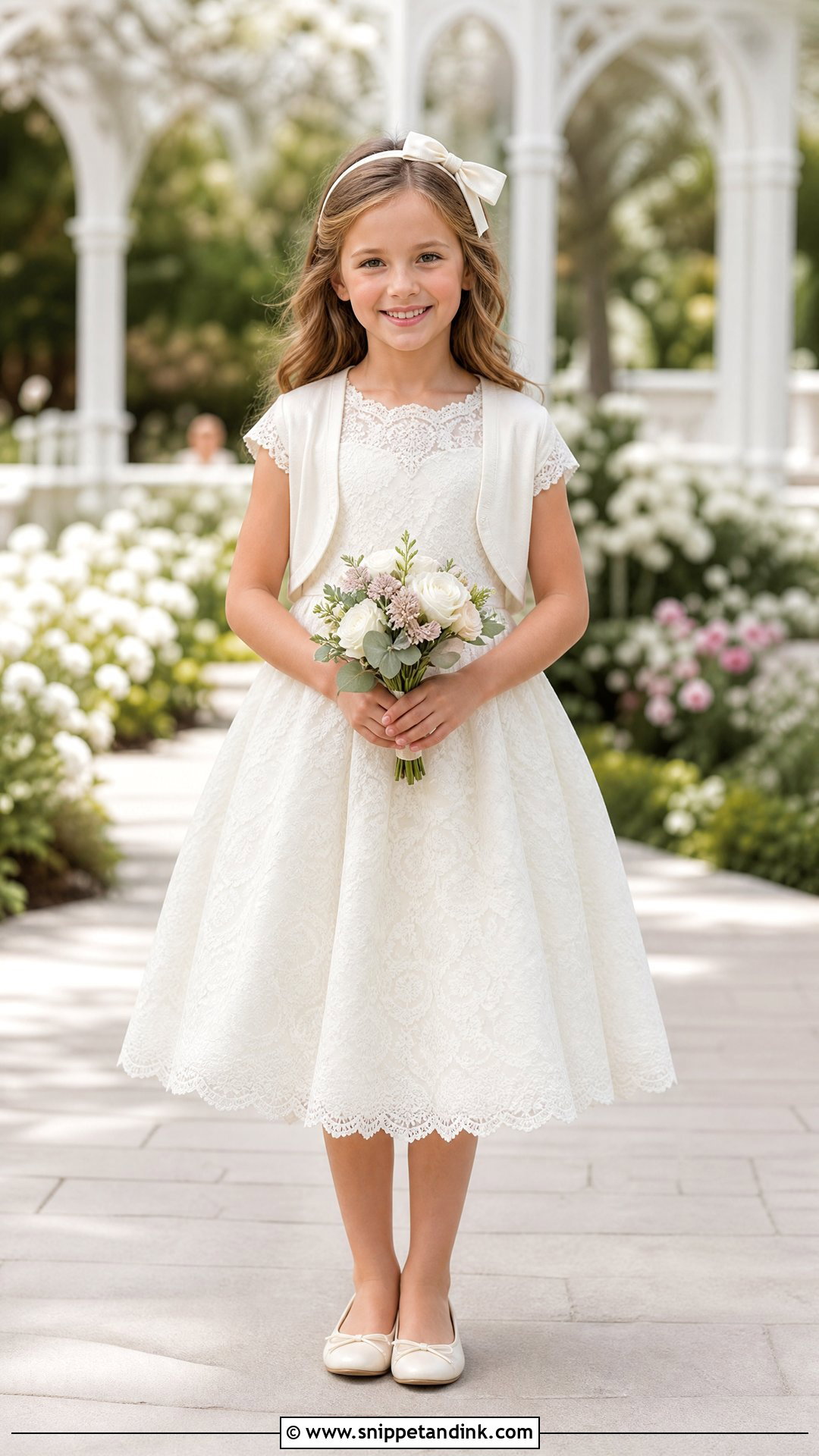
Cap sleeves fix a practical problem: thin straps slide straight off small, sloping shoulders. A lined lace bodice with a natural waist and a softly flared skirt needs no boning at all on a child, and scalloped lace at the sleeve and neckline gives enough detail that she won’t need jewelry. The edge I watch is the arm opening. Scallops can be stiff, and when she lifts a basket they rub the inner arm raw, so at the fitting I ask her to wave and reach. For an outdoor spring wedding, bring a fitted cardigan in the same shade instead of a coat.
6. Long-Sleeve Lace Little Bride Gown
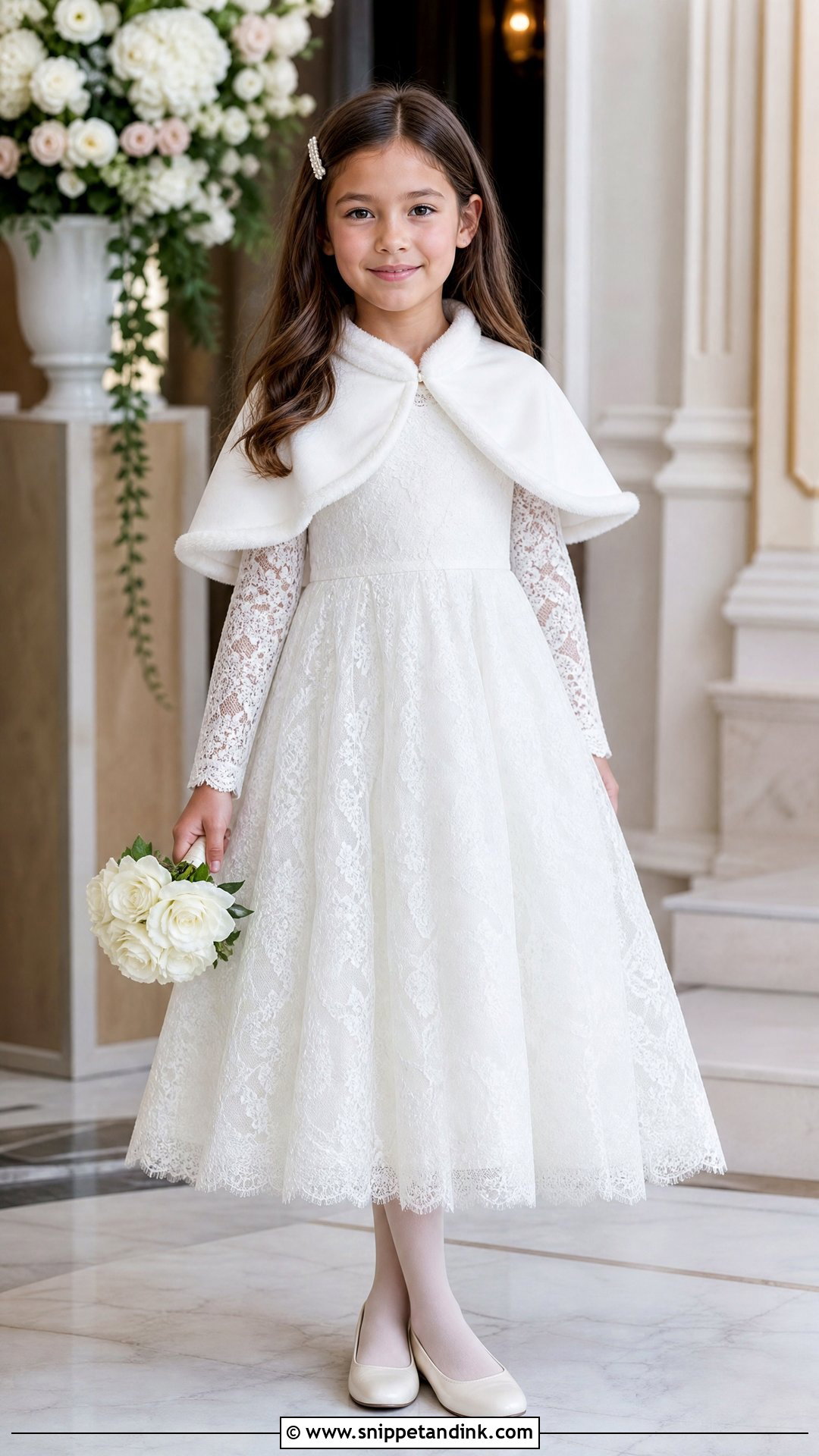
Long lace sleeves keep a child warm in a cold autumn church without burying the dress under a coat. The sleeve needs room at the elbow. Lace has very little give, and a sleeve that feels fine while she stands turns tight as soon as she bends her arm to hold flowers. A flowing A-line skirt balances the coverage. I add closed-toe ivory flats, soft tights and a pearl-effect barrette, plus a faux-fur capelet for outdoor photos that comes off indoors. Skip buttoned cuffs: small fingers can’t manage them and they snag tights.
7. Flutter-Sleeve Little Bride Chiffon Gown
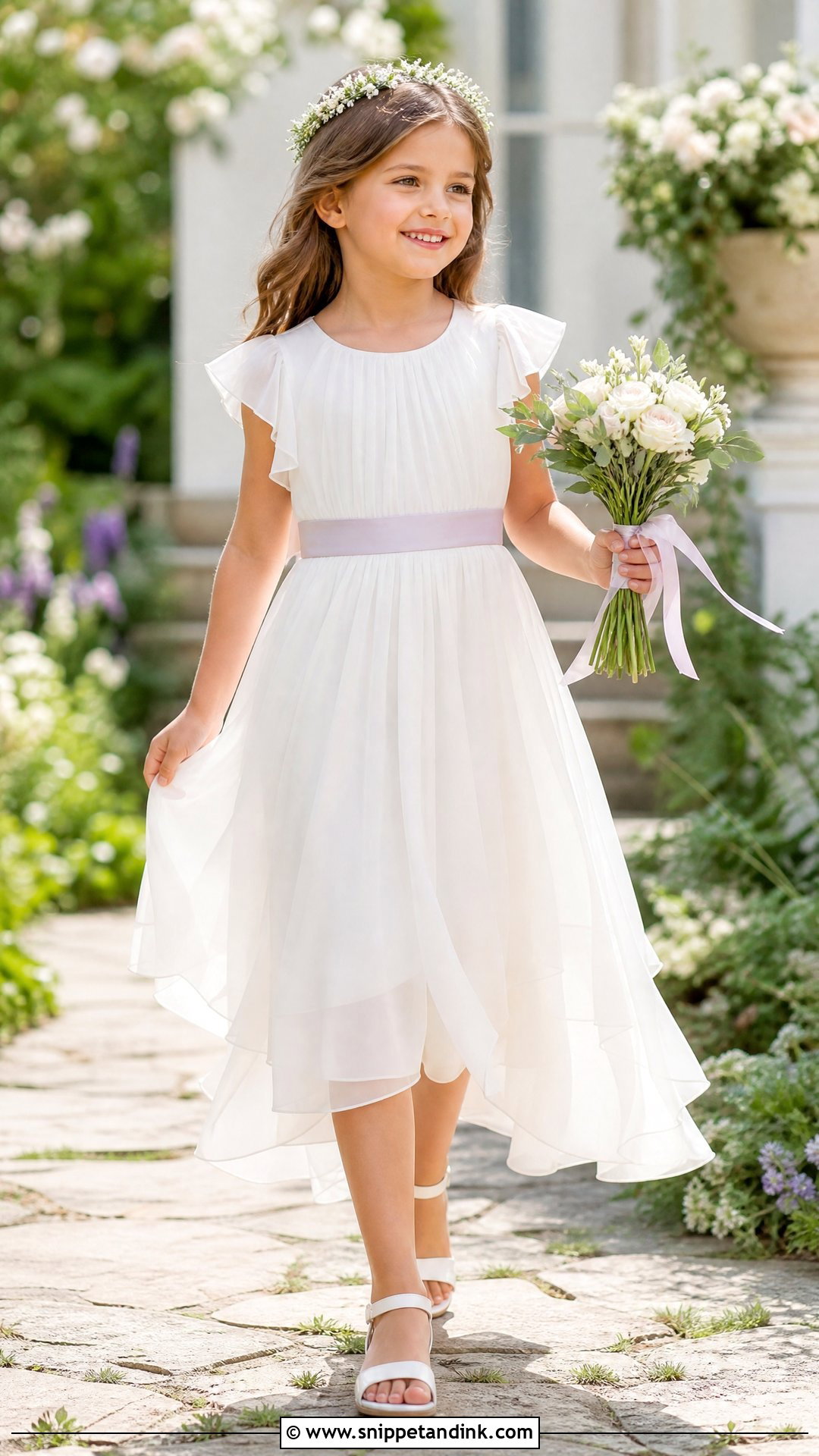
In real heat, chiffon is my pick. Flutter sleeves move with her, and a pleated bodice over a layered A-line skirt weighs almost nothing. Insist on opaque lining all the way down; in strong sun, unlined chiffon turns see-through in photos, and nobody notices until the gallery arrives. White sandals, a floral headband and a ribbon-wrapped posy keep it light for a beach or garden ceremony. Chiffon snags on Velcro straps, sharp bracelets and beaded bags, so I keep every accessory smooth and check that the shoulder seams are stitched firmly.
8. Victorian Little Bride Gown With High Neck
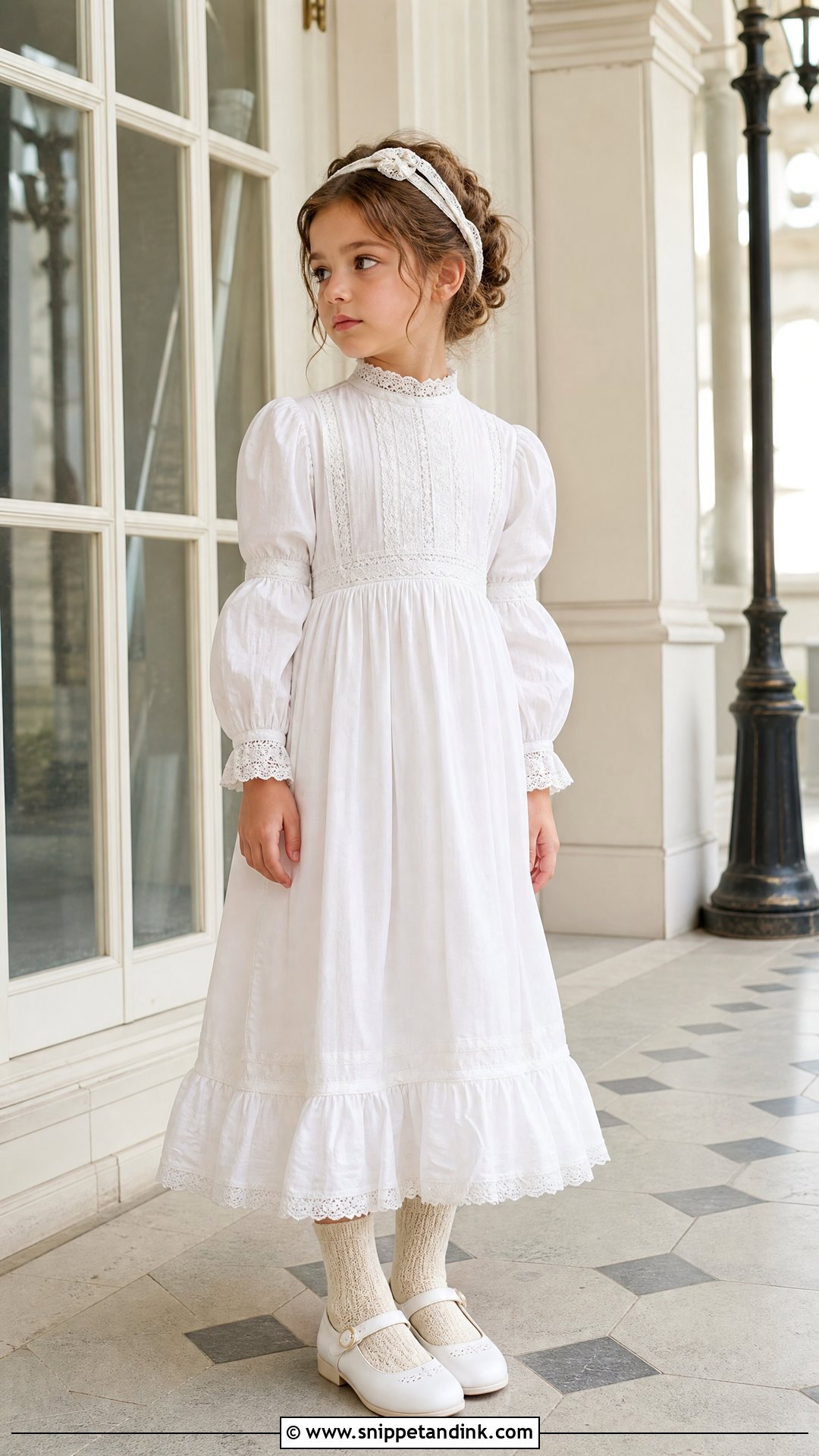
A Victorian-inspired gown gets its charm from the high neckline, small puff sleeves and lace trim. For a child I translate the period look into breathable cotton or cotton satin. Thick costume fabric is hot, and a stiff high collar becomes the first thing she pulls at, so I make sure it sits a finger’s width away from her neck. An ankle-length gathered skirt gives the right fullness without a sweeping hem. Covered buttons down the back look right, but I ask for a hidden zip underneath so dressing takes seconds. Mary Janes, textured socks and a ribbon headband are all it needs; leave the neck bare.
9. Pearl Beaded Little Bride Gown
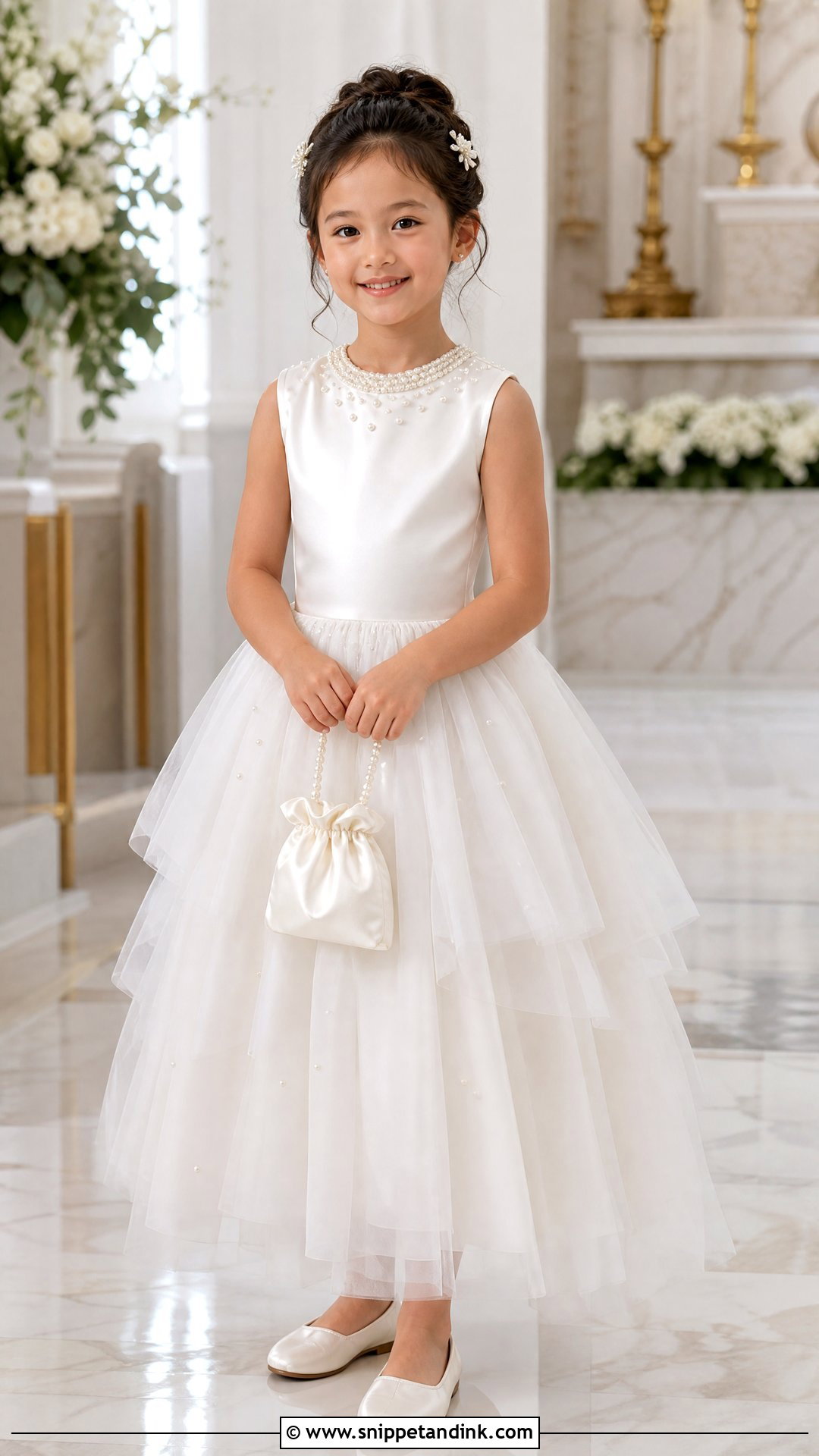
Pearl beading looks lovely up close and becomes a liability when it’s sewn badly. I keep it to the neckline or waist rather than the whole gown, which keeps the weight down and means she isn’t sitting on beads all evening. Before the wedding, I run my fingers along every strand and give it a gentle pull. Children chew, twist and pick at anything shiny, and a loose bead is a choking risk for the younger siblings at the table too. A sleeveless satin bodice over a tulle skirt balances the shine. Pearl clips and plain ivory flats are enough, and if the bodice is beaded, skip the necklace.
10. Floral Applique Little Bride Gown
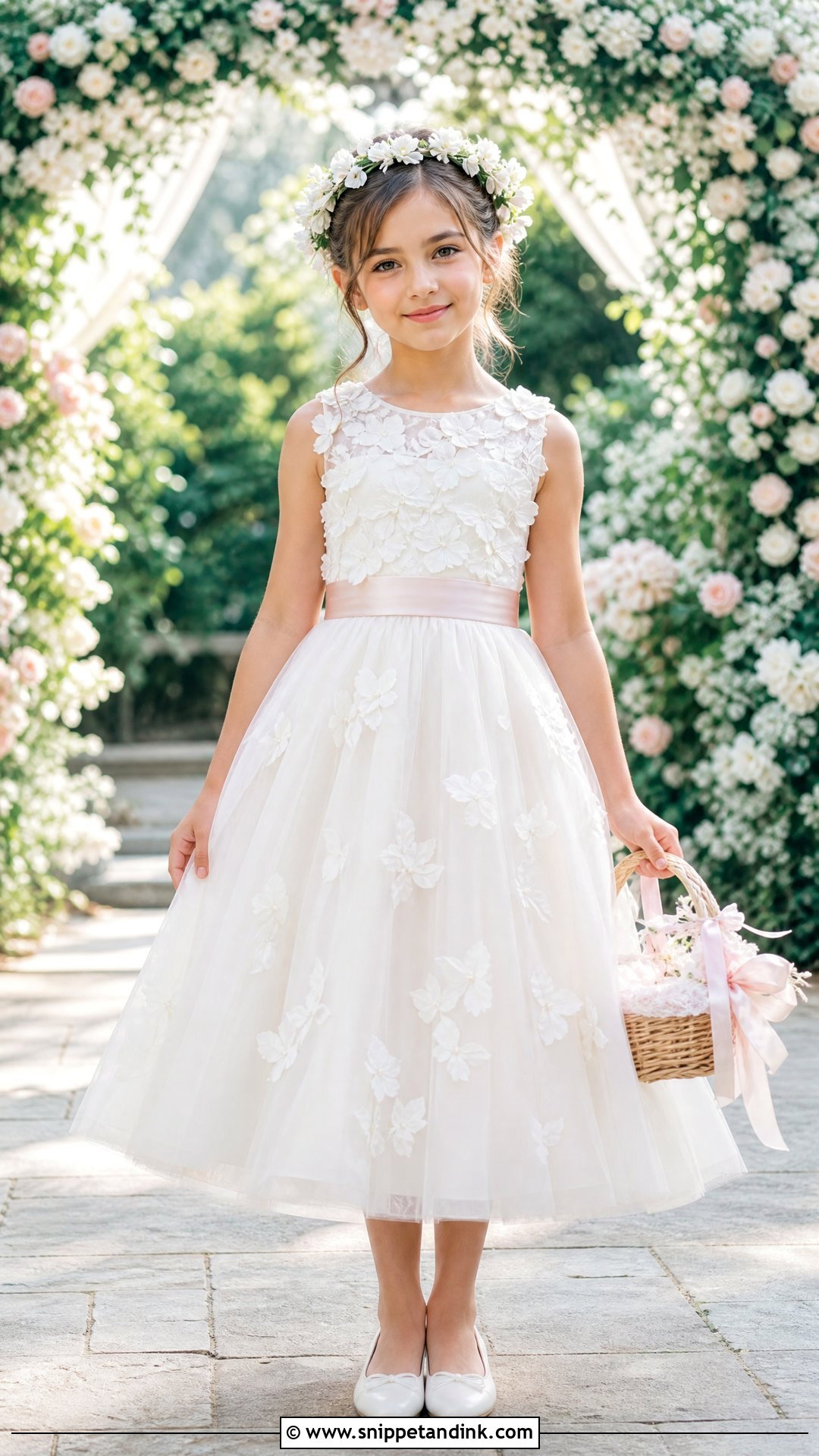
Dimensional flowers look best gathered toward the hem and kept small near the bodice. That placement also keeps petals away from her face and from little hands that love to pull them off. Tulle, organza and light satin all hold appliques without sagging. A pastel sash ties the gown to the florals, and a tea-length or ankle hem keeps the flowers off a wet lawn, where they soak up mud like sponges. The part I inspect hardest is the flower centers: beaded or plastic centers can have sharp edges, and they’re the first thing to work loose.
11. Bow-Back Little Bride Gown
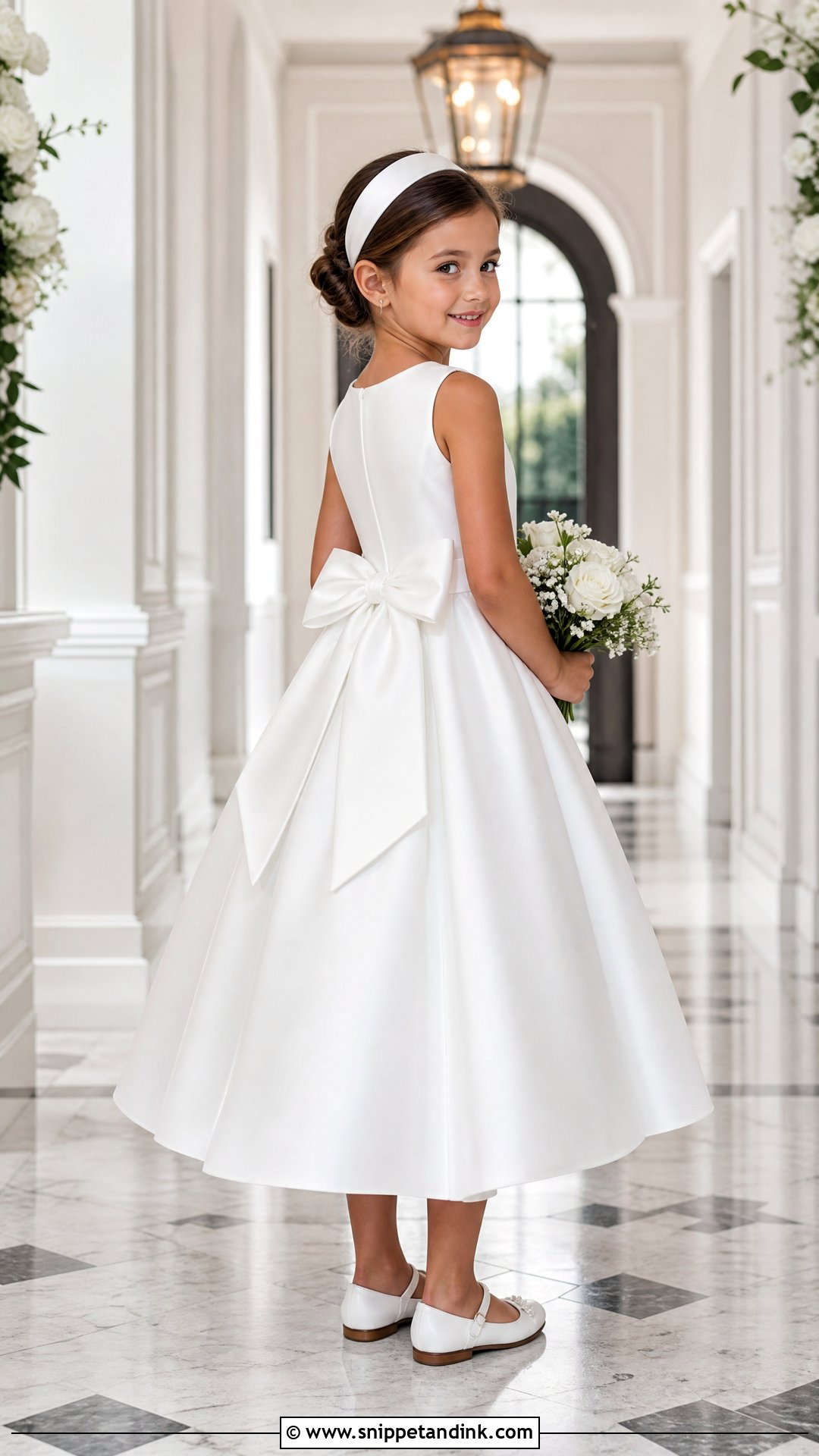
Guests see the bow as she walks away down the aisle, so its construction deserves attention. A flat, light bow at the waist works. A big wired one pushes her forward in her chair and is crushed within the hour. I like the bow removable, attached with hooks, so the gown can be pressed and the bow steamed separately. Keep the front plain, with a satin bodice, a modest scoop neck and a tea-length skirt, then add Mary Janes and a smooth headband. At the fitting, have her sit, bend and walk to see whether the bow drags the waistline backward.
12. Tiered Tulle Little Bride Gown
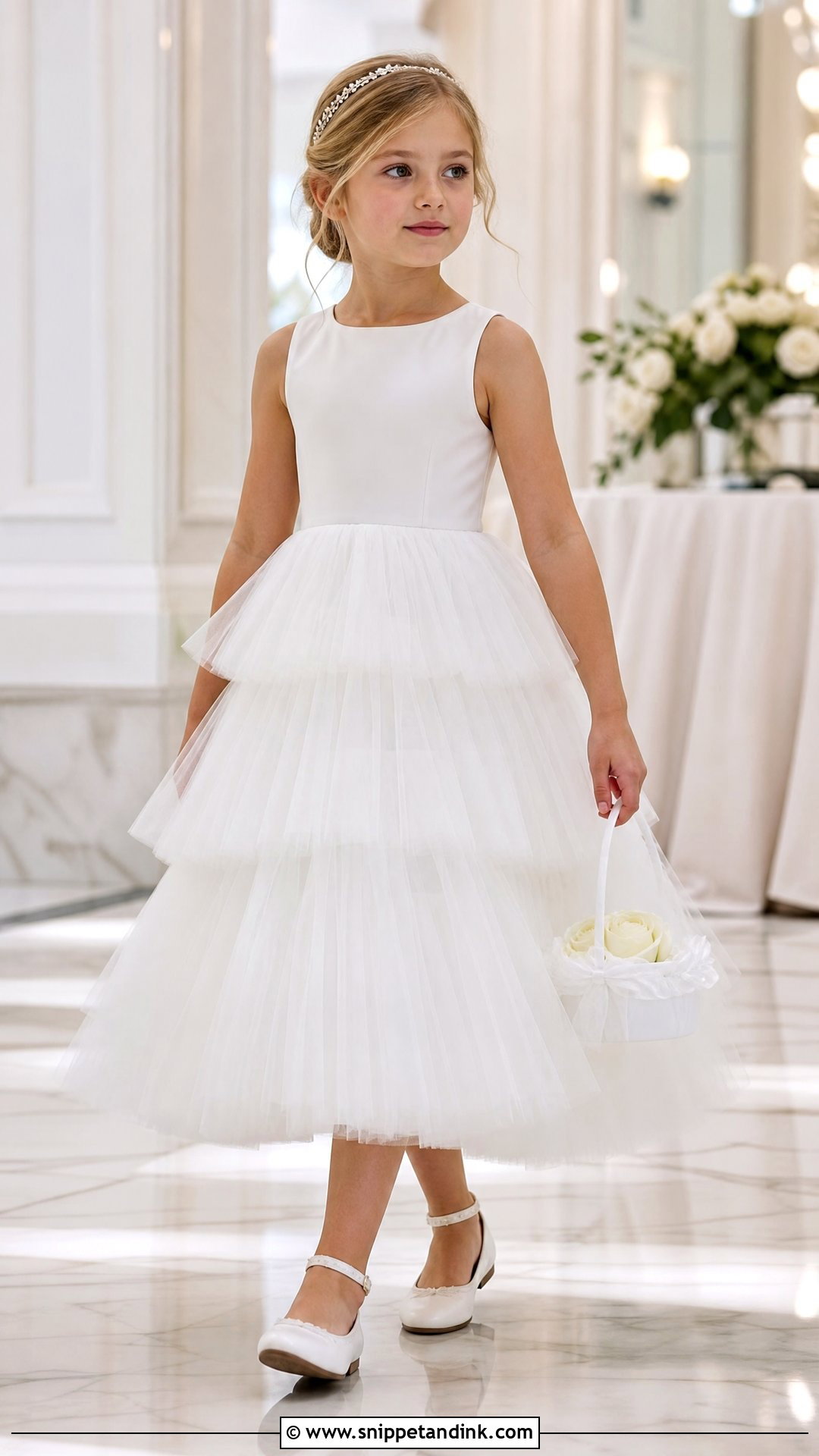
Two or three broad tiers give movement without a stiff underskirt. A dozen narrow ruffles add weight and look busy in photos. I pair tiers with a plain satin or crepe bodice so the skirt carries all the detail, then add ankle-strap flats, a slim headband and a simple basket, with no jewelry. Turn the skirt inside out before you buy. Each tier should be finished neatly, because one loose gathering thread can pull a whole tier down after a single round of musical chairs.
13. Organza Little Bride Gown With Ribbon Waist
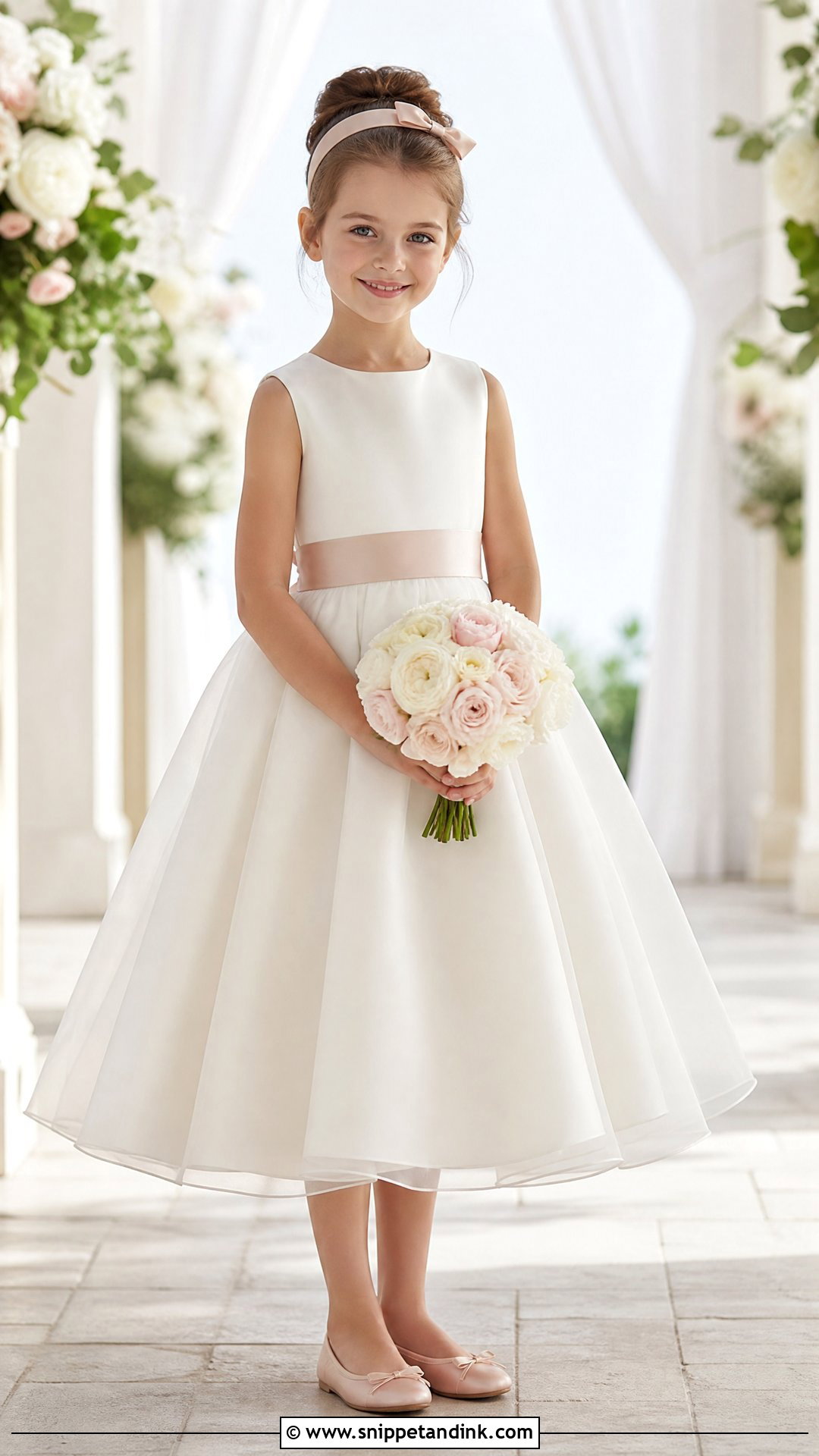
Organza holds its shape far better than chiffon and photographs crisp, which is why I use it for formal indoor venues. The trade-off is the feel. Organza is scratchy against bare skin, so a full lining and smooth seams aren’t optional. A wide grosgrain or satin ribbon at the waist in the wedding color does more than any trim, and a matching ribbon headband, ballet flats and a small round bouquet finish it. Steam organza rather than ironing it hot, or you’ll leave shiny press marks that flash picks up. In summer heat, choose a version with fewer layers.
14. Minimalist Satin Little Bride Gown
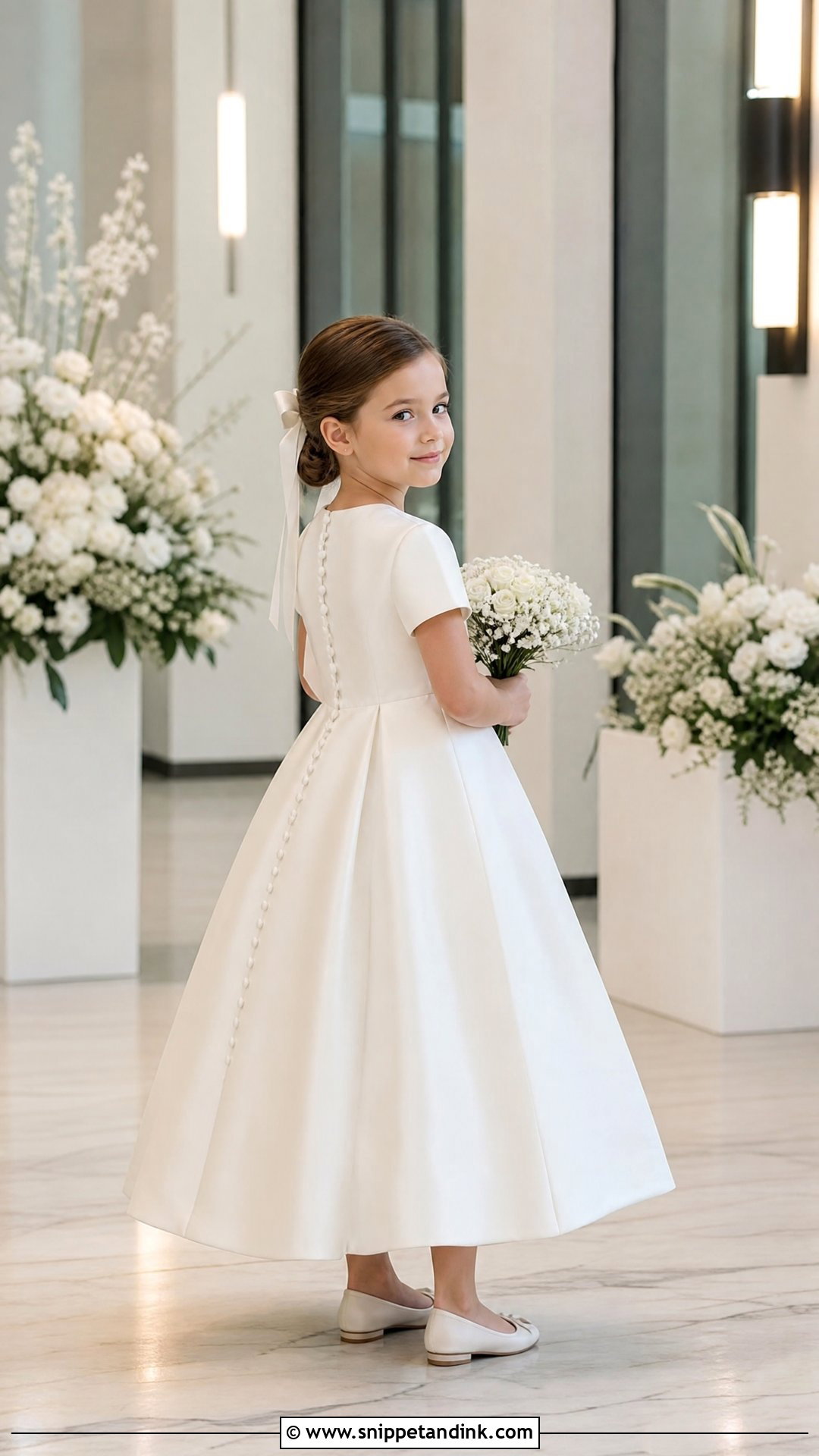
Plain satin suits the older girl who has decided she’s past princess dresses. A round or square neck, a fitted waist and an A-line skirt with almost no decoration looks grown up and sits comfortably with any wedding scheme. I’d allow one detail, such as covered buttons or a slim waist bow, and stop there. Matte or crepe-back satin is kinder in photos; high-shine satin bounces the flash and shows every crease from the car ride. Finish with ivory flats, a narrow hair ribbon and a small bouquet.
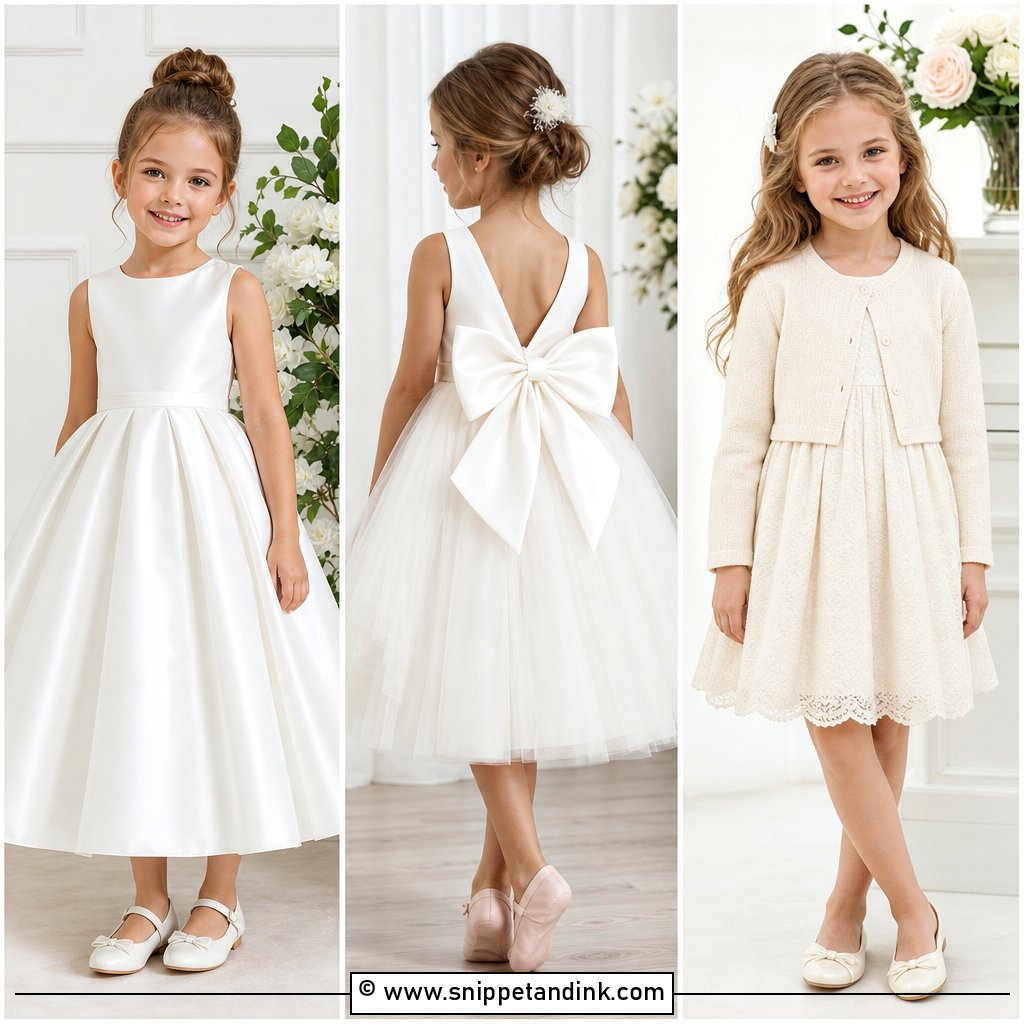
15. Square-Neck Little Bride Gown
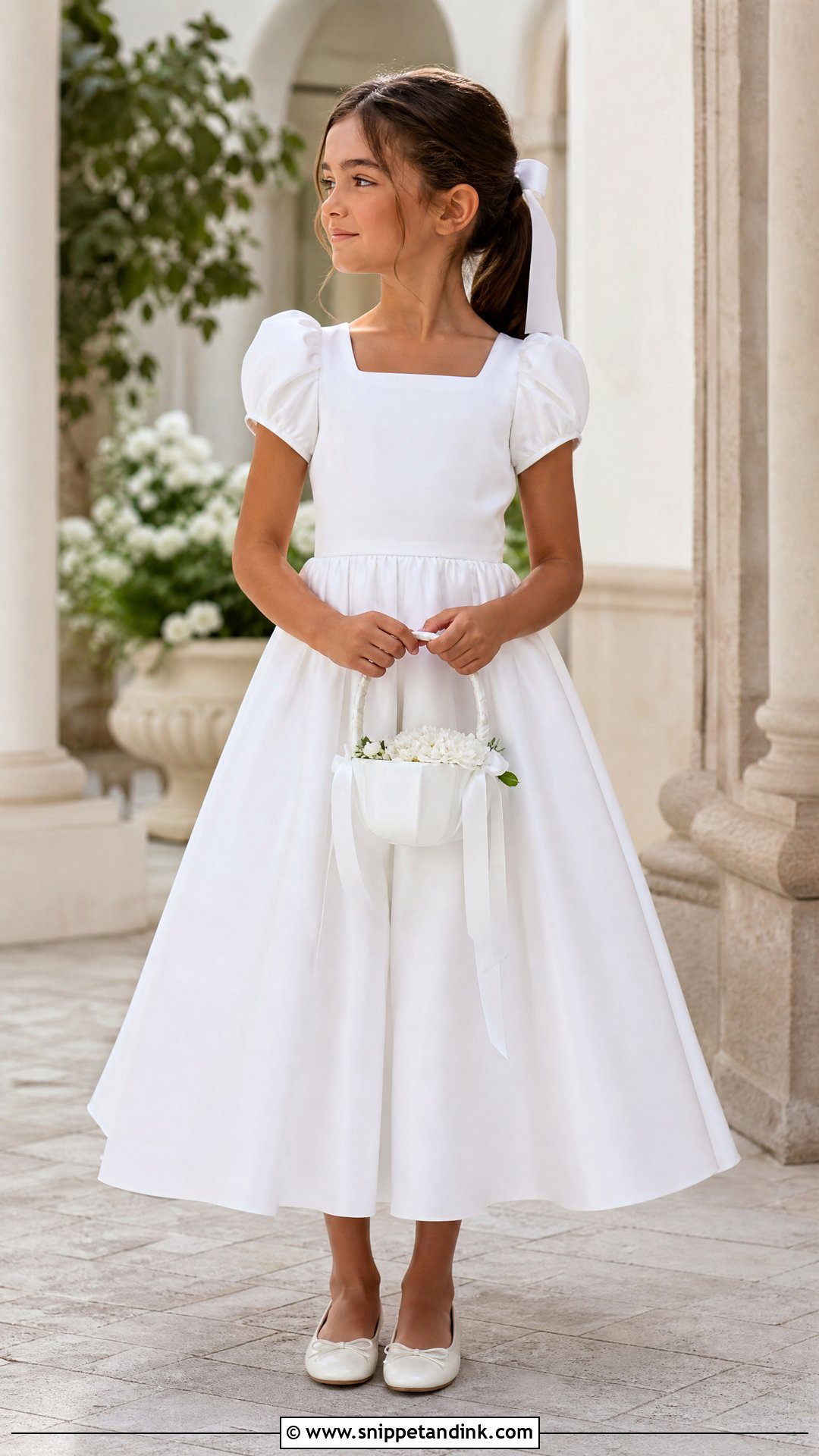
A square neckline frames a child’s face and leaves room for a ribbon or flower in her hair. It’s also the neckline most likely to gape if the size is off, because a straight edge shows every gap the moment she leans forward. So I fit the shoulders first and the waist second. Short puff sleeves help hold the neckline in place. Cotton satin, crepe and lined organza all suit it. Embroidered trim along the edge is fine; beads near the collarbone are not. Tea length balances this structured bodice best, with closed-toe flats and a low ponytail tied with ribbon.
16. Puff-Sleeve Little Bride Gown
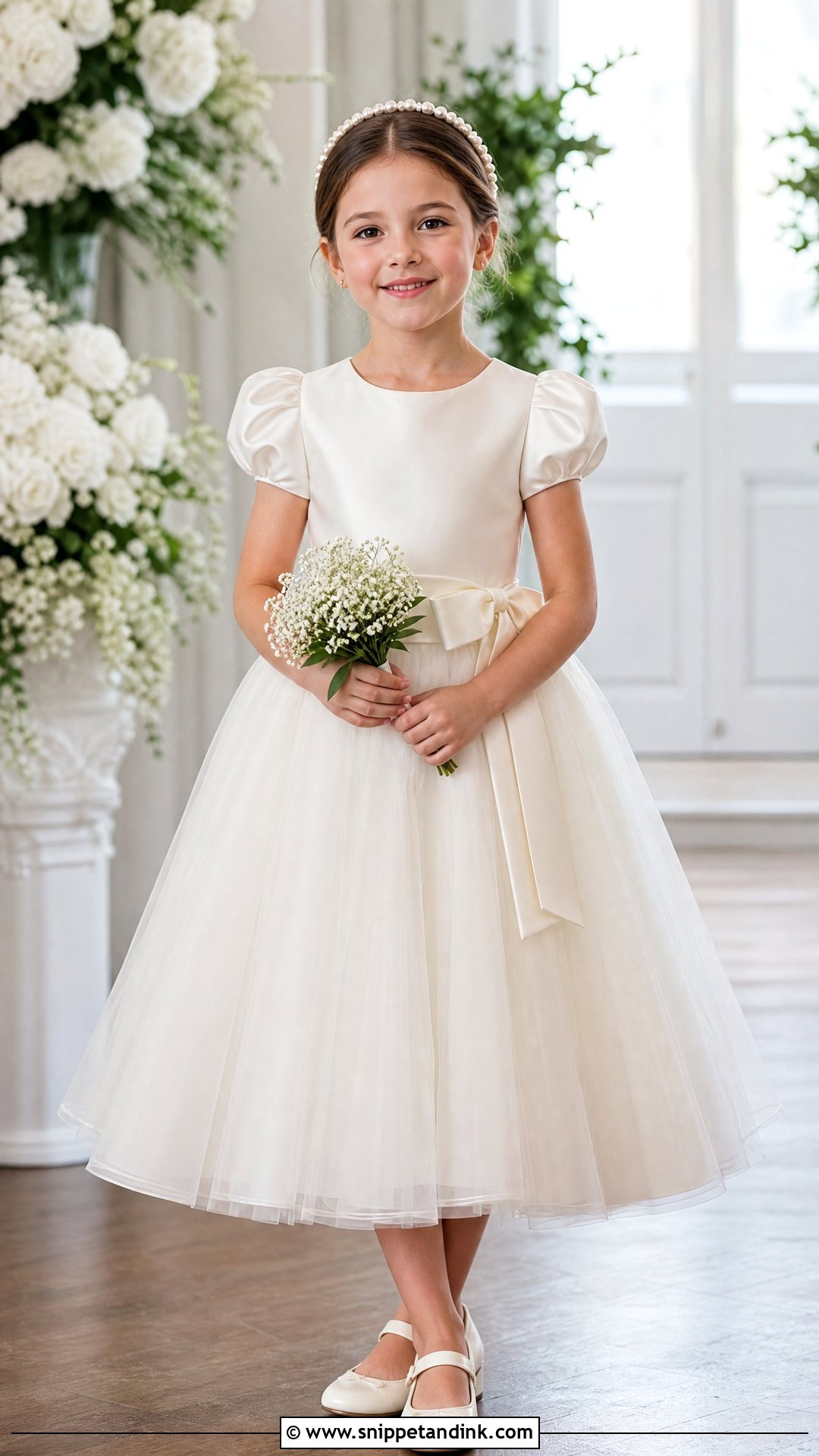
Puff sleeves are what most young girls picture when they say ‘princess’, which makes this an easy dress to love. Comfort fails at the sleeve bands. Tight elastic leaves red rings on small arms after a couple of hours, so I look for loose bands or wide, soft elastic. A fitted satin bodice and gathered tulle skirt keep the rest simple, with ivory Mary Janes and a pearl-effect headband. Keep her hair smooth so the sleeves stay visible. During the fitting, ask her to lift both arms overhead. If the bodice rides up, the armholes are cut too low.
17. Sheer-Yoke Little Bride Gown
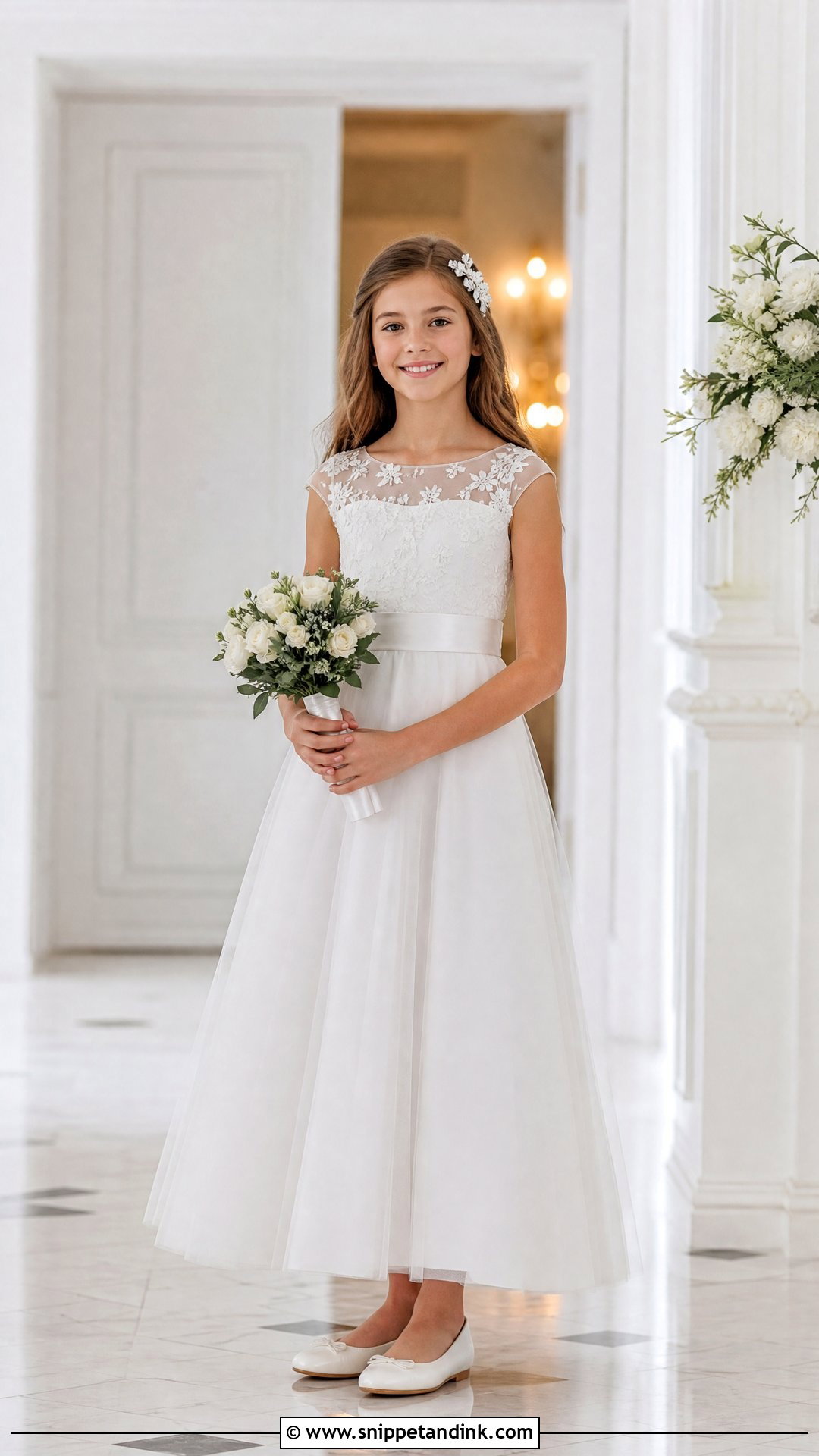
A sheer mesh yoke anchors the bodice at the neck, which stops a wide neckline from sliding off narrow shoulders. The mesh has to be soft with a little stretch and covered seams; stiff netting scratches the neck all day. I’d only put this on an older child who will be careful with it, since a toddler can tear mesh with one curious tug. Lace appliques at the collar, a satin waistband and an A-line skirt complete it, with white flats and a floral barrette. Leave out necklaces, which catch in the mesh.
18. Little Bride Gown With Detachable Cape
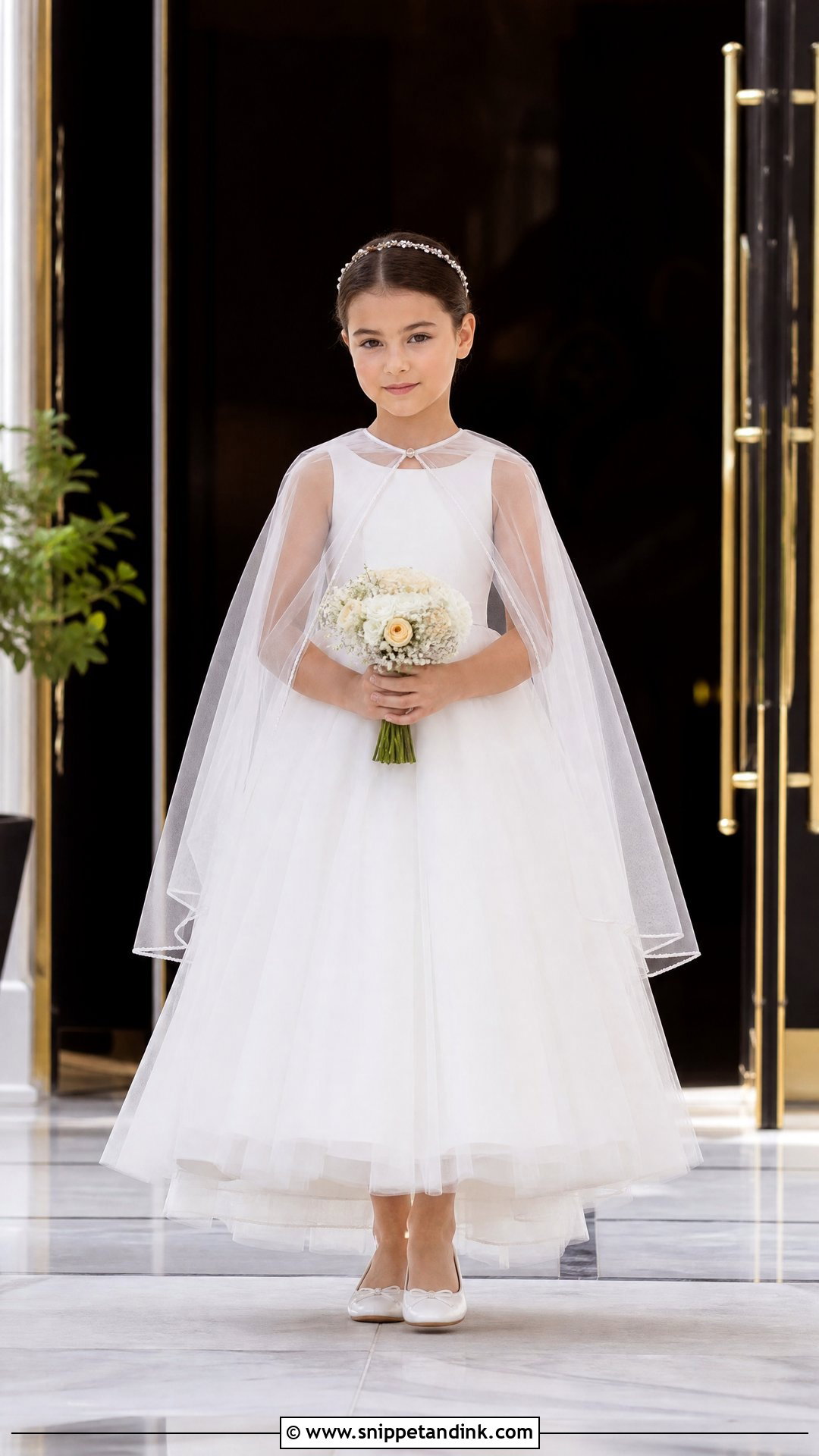
A cape gives you two looks: drama for the processional and outdoor photos, then a simple sleeveless gown for the meal and dancing. Keep it waist-length in soft tulle or chiffon. Anything longer gets stepped on, and capes that tie at the throat aren’t safe on a child who is going to run. I use a hook-and-eye or snap that an adult can open in one move, with no cords at all. Take it off before she eats. Ballet flats, a slim jeweled headband and a small posy are all the gown underneath needs.
19. Embroidered Little Bride Gown
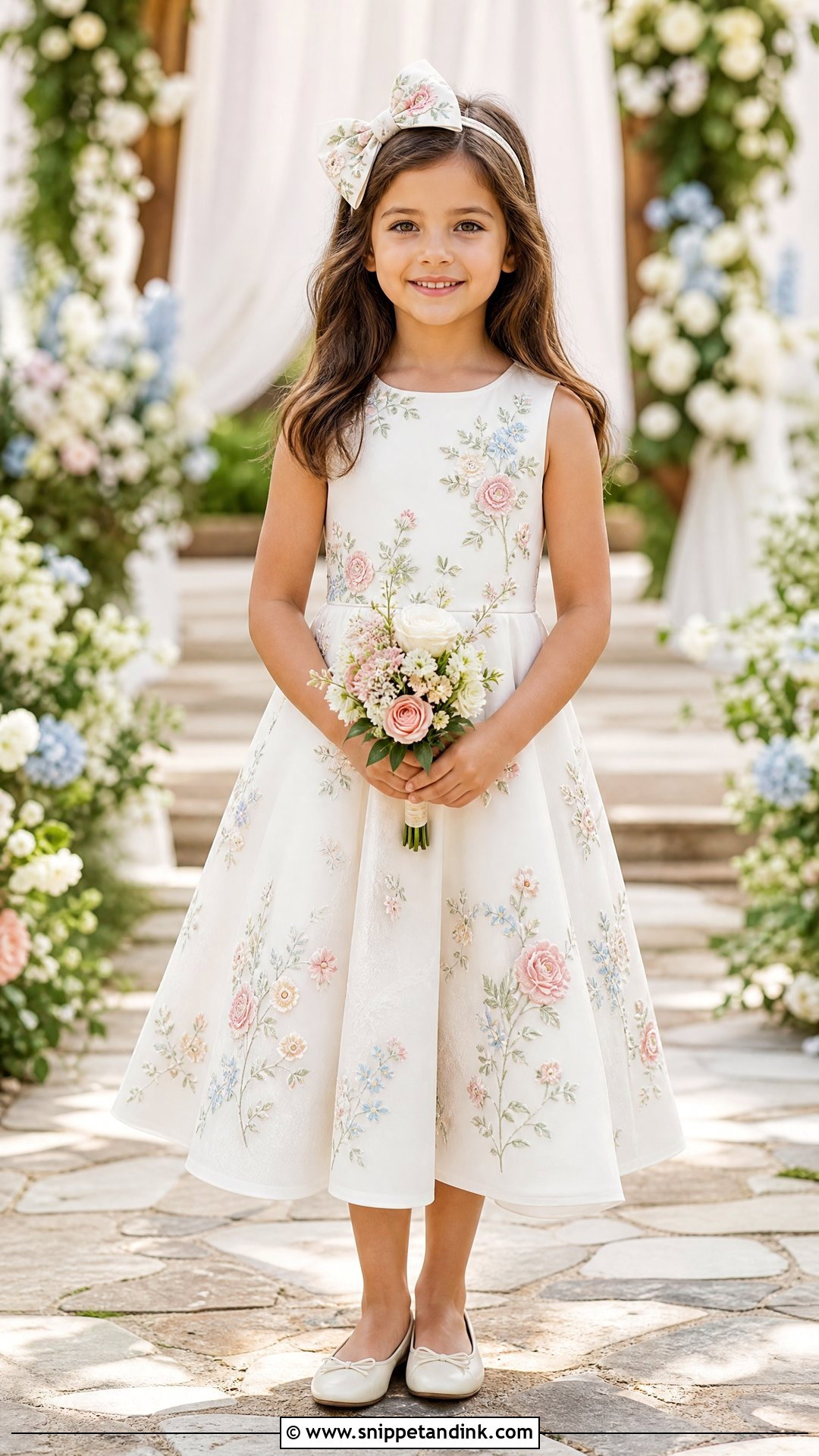
Embroidery adds texture with no weight and nothing to shed, which makes it one of my favorite finishes for children. Tonal white thread reads traditional; pastel thread feels younger. The reverse side of embroidery is rough, so I turn the bodice inside out and check that the lining covers every knot. A tea-length A-line keeps the work visible and easy to wear at a garden or daytime ceremony. Repeat one thread color in the hair bow or bouquet, and keep the shoes plain so the stitching isn’t lost.
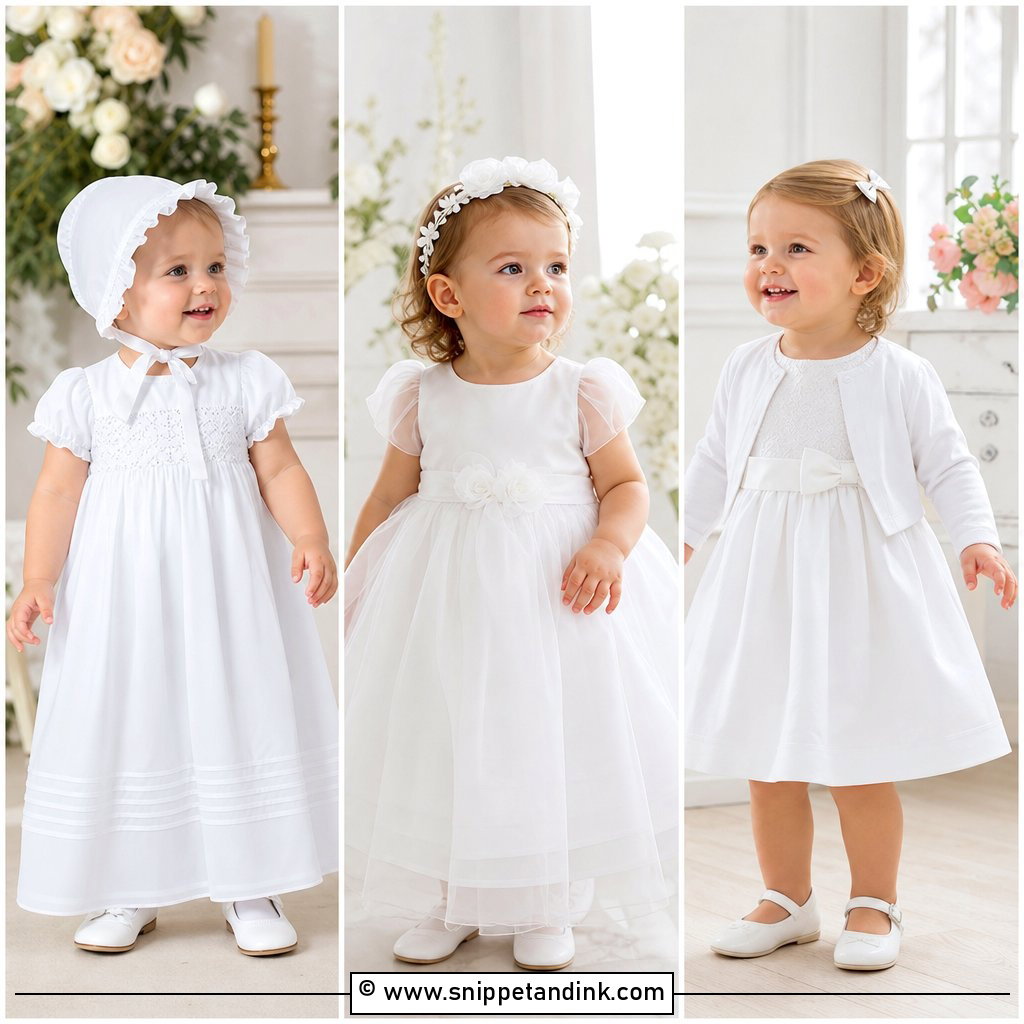
20. Blush Little Bride Gown
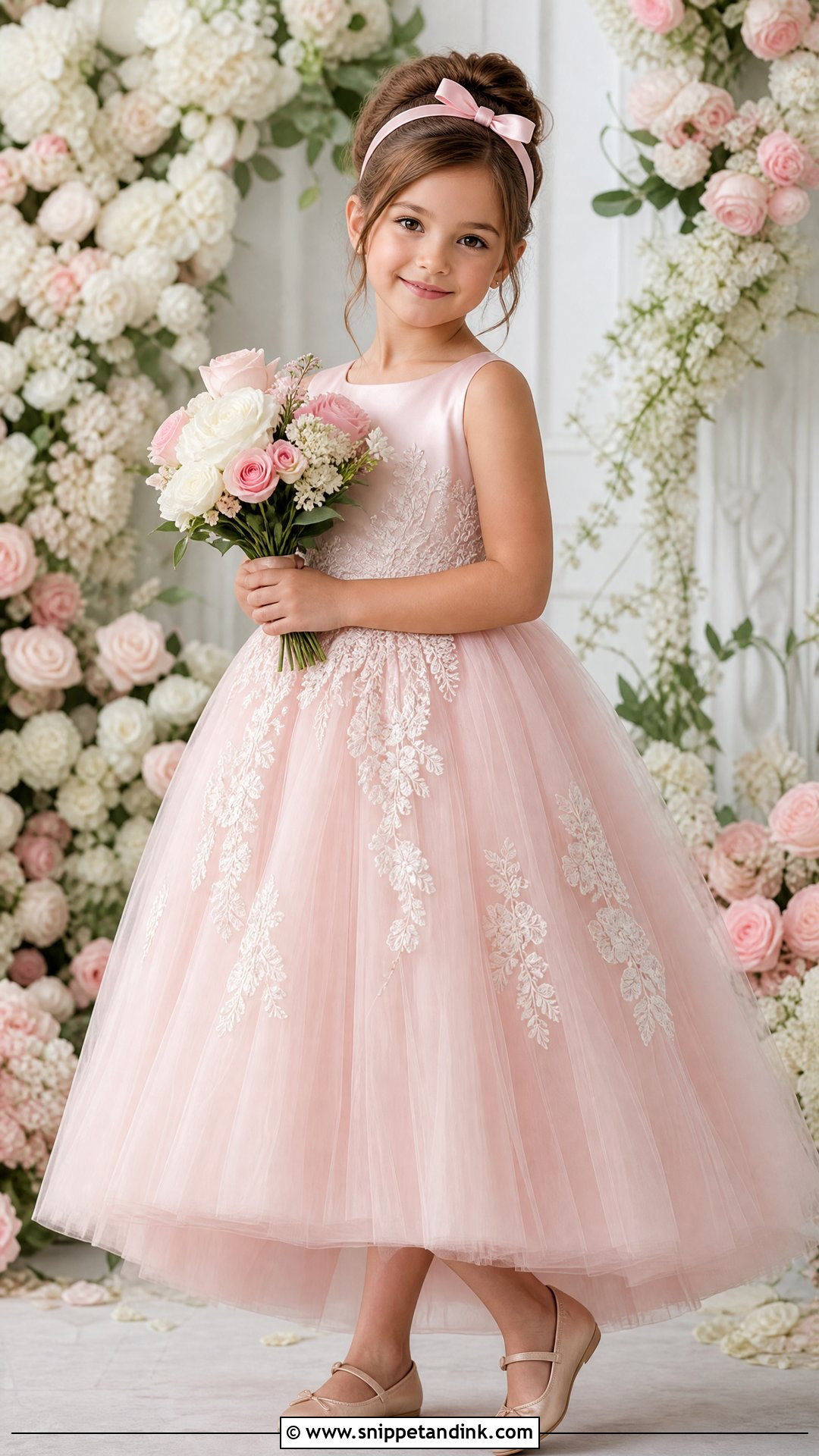
Blush is a good answer when the bride would rather the children not wear white. A pale pink satin bodice with a layered tulle or chiffon skirt works well, and ivory lace appliques keep a bridal thread running through it. Pinks are hard to judge on a screen, so I ask for swatches and hold them beside the bridesmaids’ dresses in daylight. Aim to coordinate, not to match exactly. Champagne flats, a blush ribbon headband and a white and pale pink bouquet finish it, with embellishment kept light so the color carries the look.
21. Ivory And Champagne Little Bride Gown
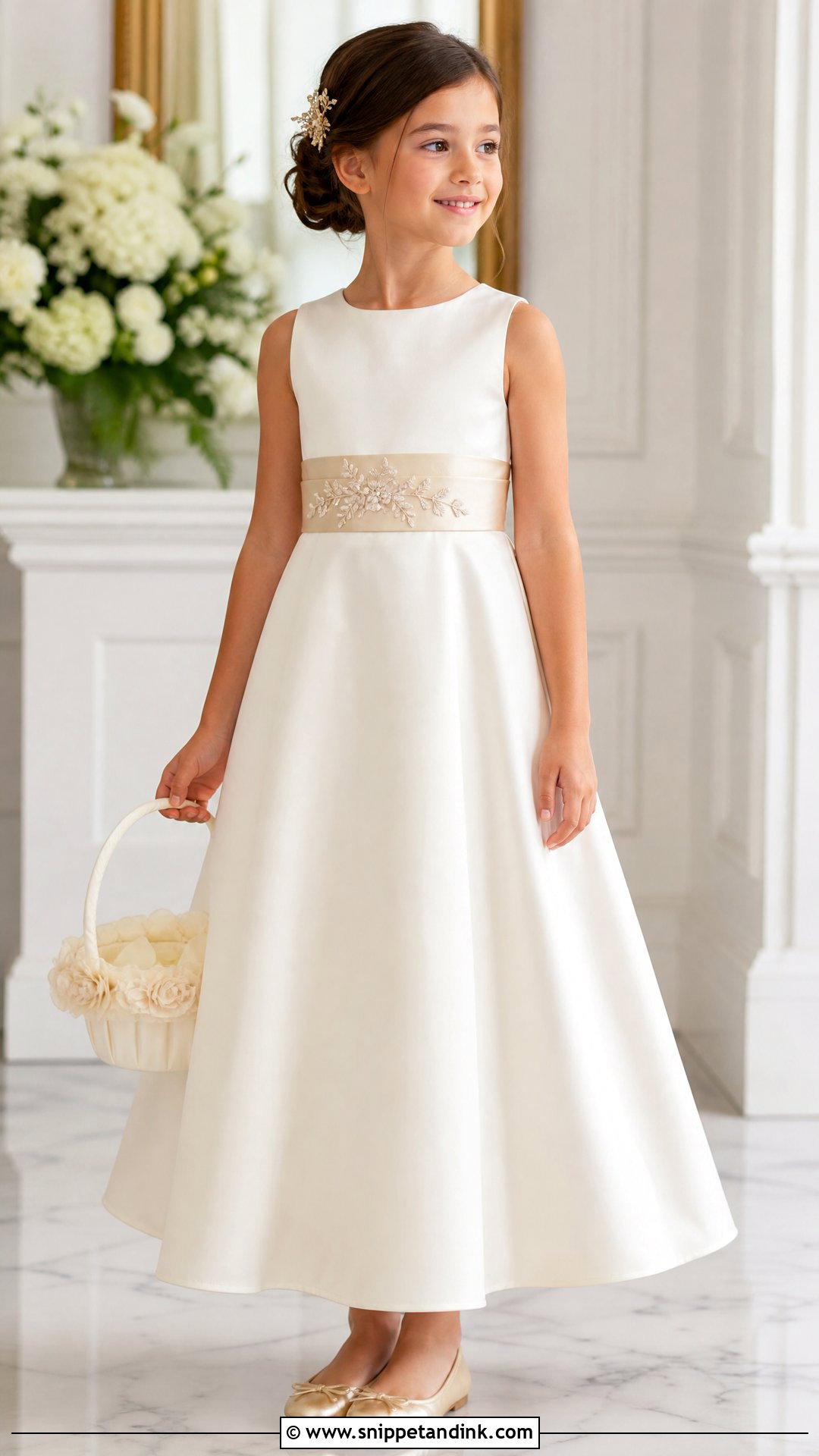
Ivory with champagne accents feels warm and grown up without bringing in a dark color. Start with an ivory A-line and add a champagne sash or a lightly metallic waist. Lay the sash on the gown beside a window before you buy: some ivories turn yellow next to a cool champagne, and that clash is obvious in photos. Soft lustre photographs more evenly than hard metallic fabric. Champagne flats, a small gold-tone comb and a cream basket complete it for an indoor venue in late summer or fall.
22. High-Low Little Bride Gown
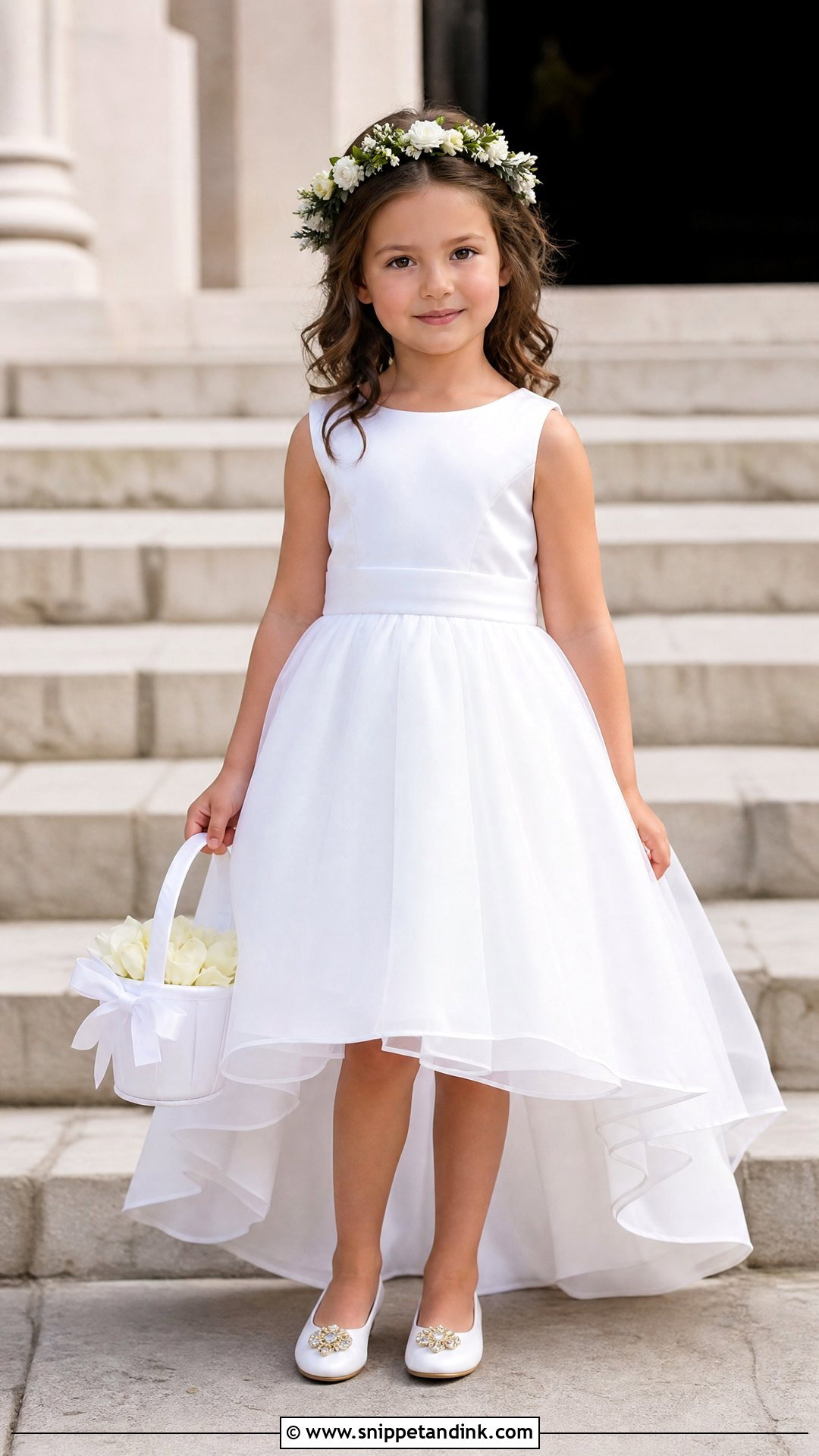
A gentle high-low hem keeps the front clear for walking while the back still reads as a long gown. Keep the drop modest, mid-calf in front and ankle at the back; a steep difference looks like a costume on a child. Because her shoes are on show, they need to be clean and secure, so I buy them early and let her wear them around the house. A satin bodice and lightly layered organza skirt balance the hem, with a small floral crown on top. Watch the back as she turns. If she can step on it while spinning, take it up.
23. Junior Bridesmaid Little Bride A-Line Gown
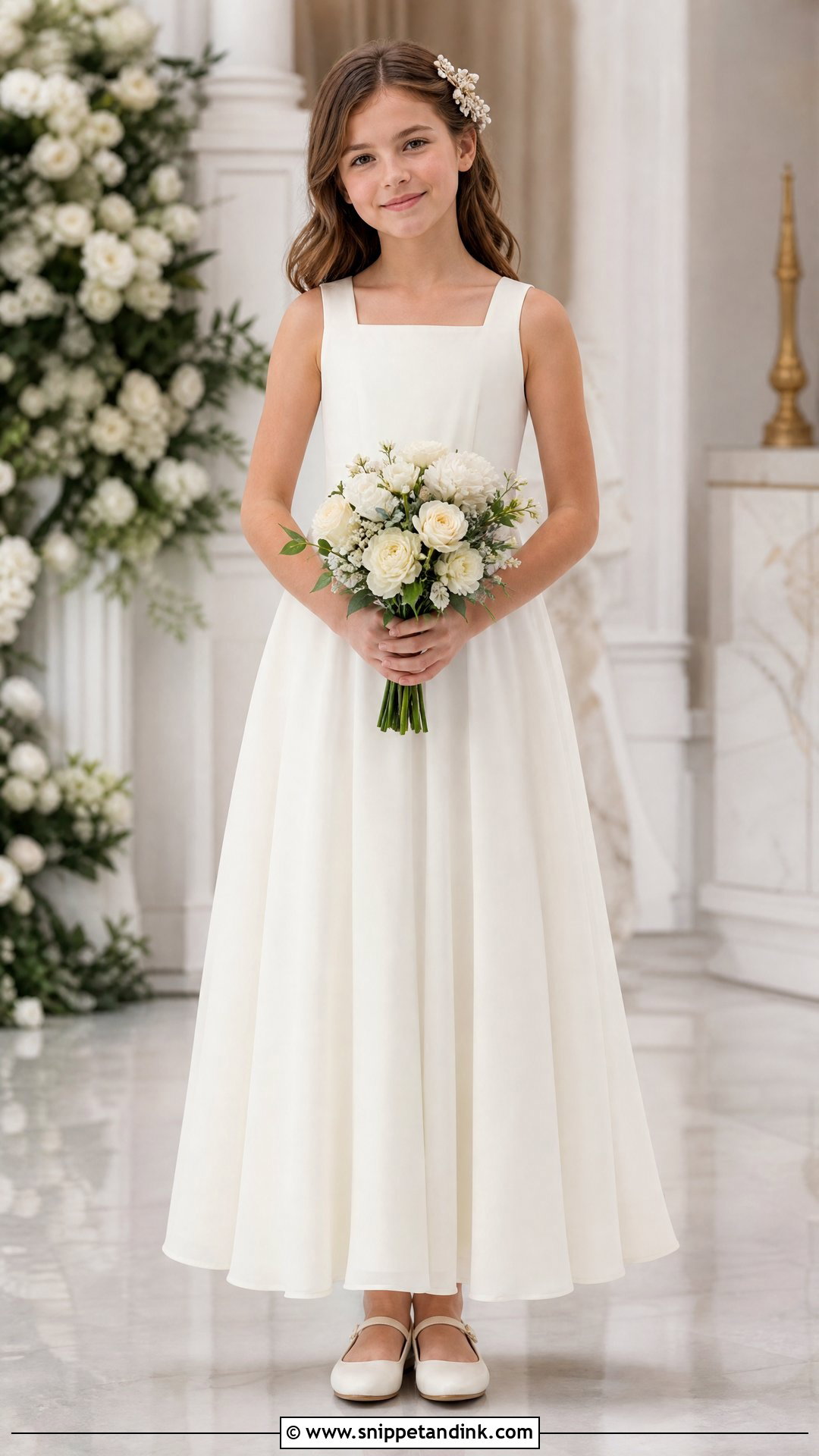
Girls of nine to twelve often want to look polished rather than princessy, and they will tell you so. A junior bridesmaid A-line design with a smooth bodice, a natural waist and little volume gives them that. I’d use lined chiffon, matte satin or crepe, with straps wide enough to stay put through the dancing. Closed-toe flats, a delicate comb and a bouquet echoing the adult bridesmaids keep it coordinated, and a narrow sash or lace panel connects her to the younger attendants. Give her a real vote at this age. A girl who chose her own dress stands taller in every photo.
24. Toddler Little Bride Ankle-Length Gown
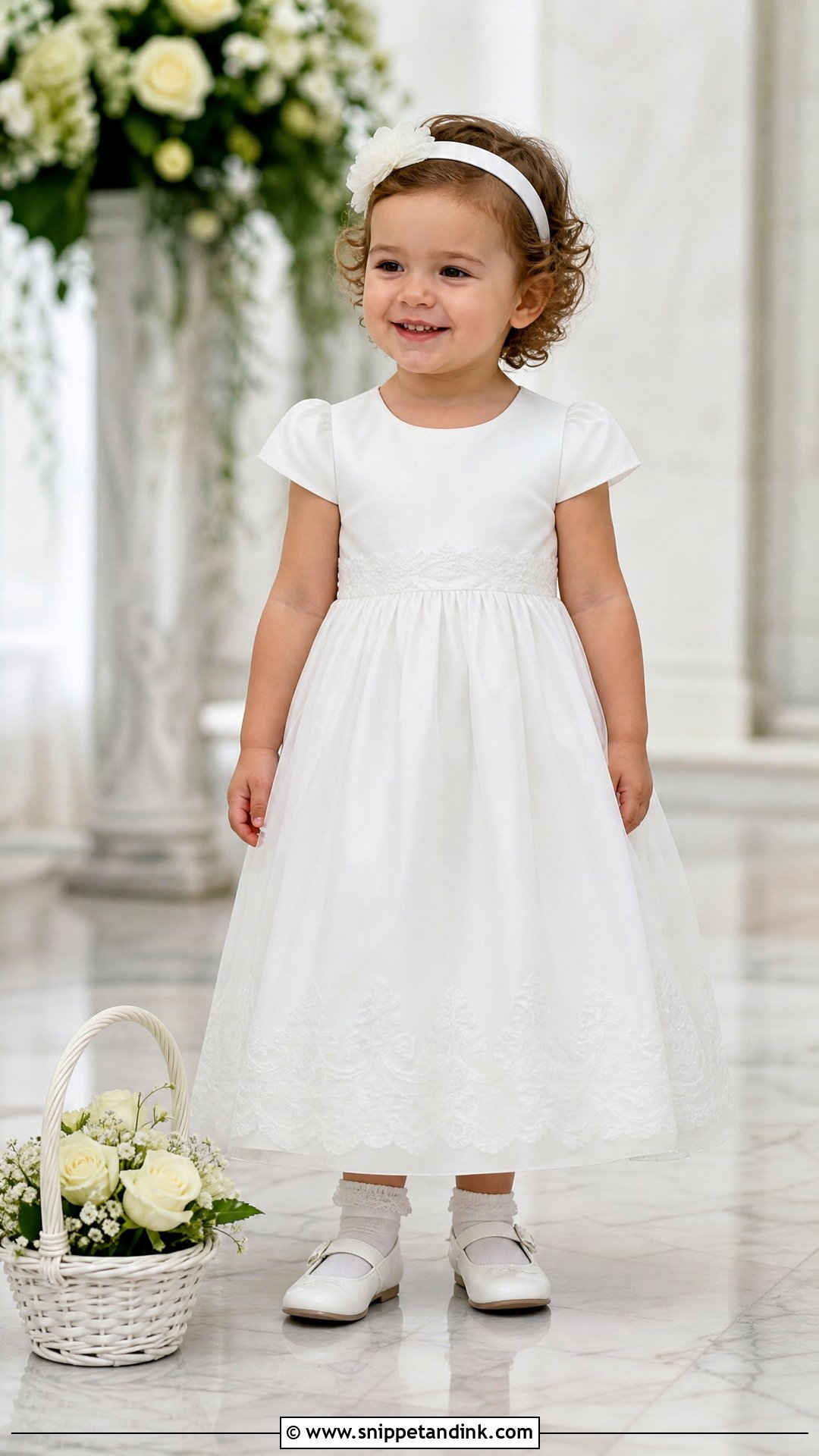
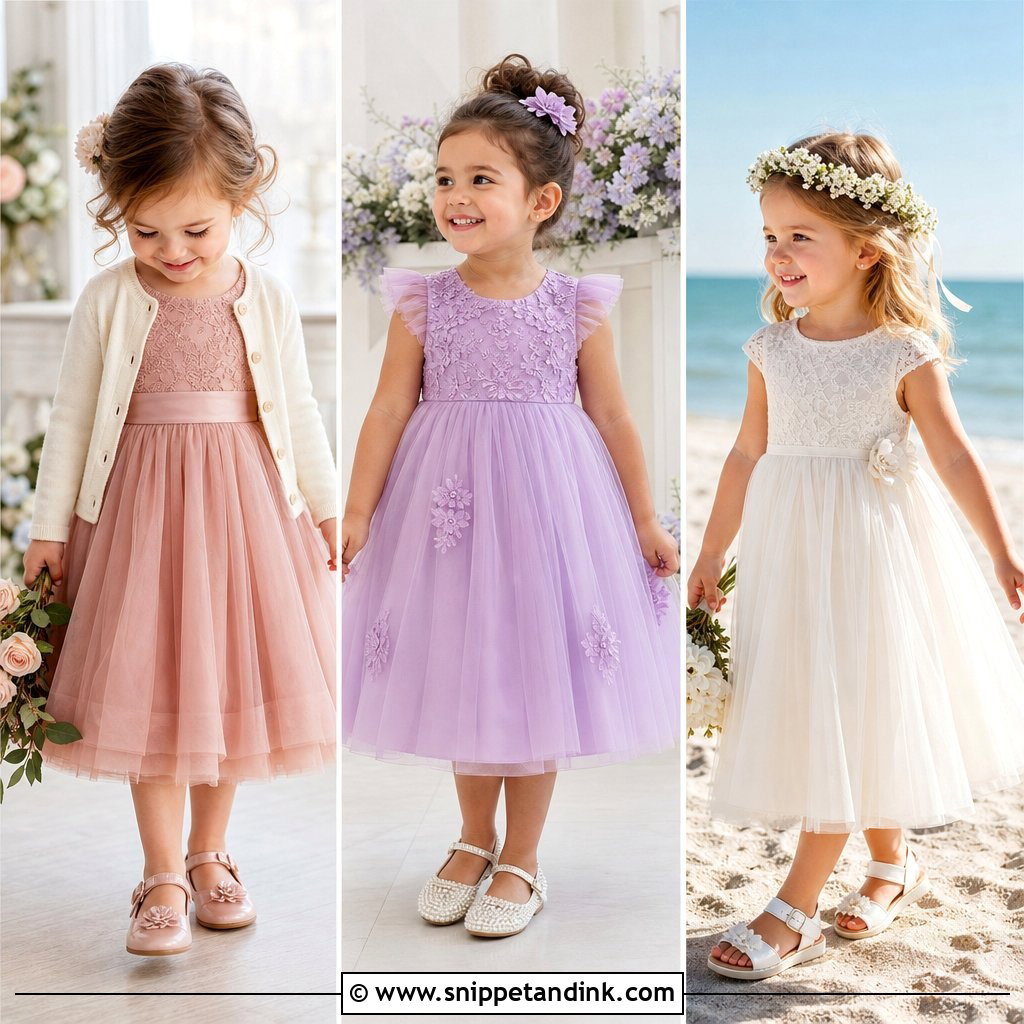
A toddler’s gown has to work around naps, diapers and a child who will sit on the floor whenever she likes. I choose an ankle-length skirt that clears her shoes, a bodice with some stretch, and short sleeves. A hidden zip or a few large buttons make diaper changes quick. Leave out capes, loose beads, hard hair clips and big back bows; toddlers lie down in their clothes, and anything stiff digs in. Secure Mary Janes, soft socks and a fabric headband are enough. Pack a backup outfit, because most toddlers are out of the gown by dessert.
25. Matching Mini Bride And Flower Girl Gown
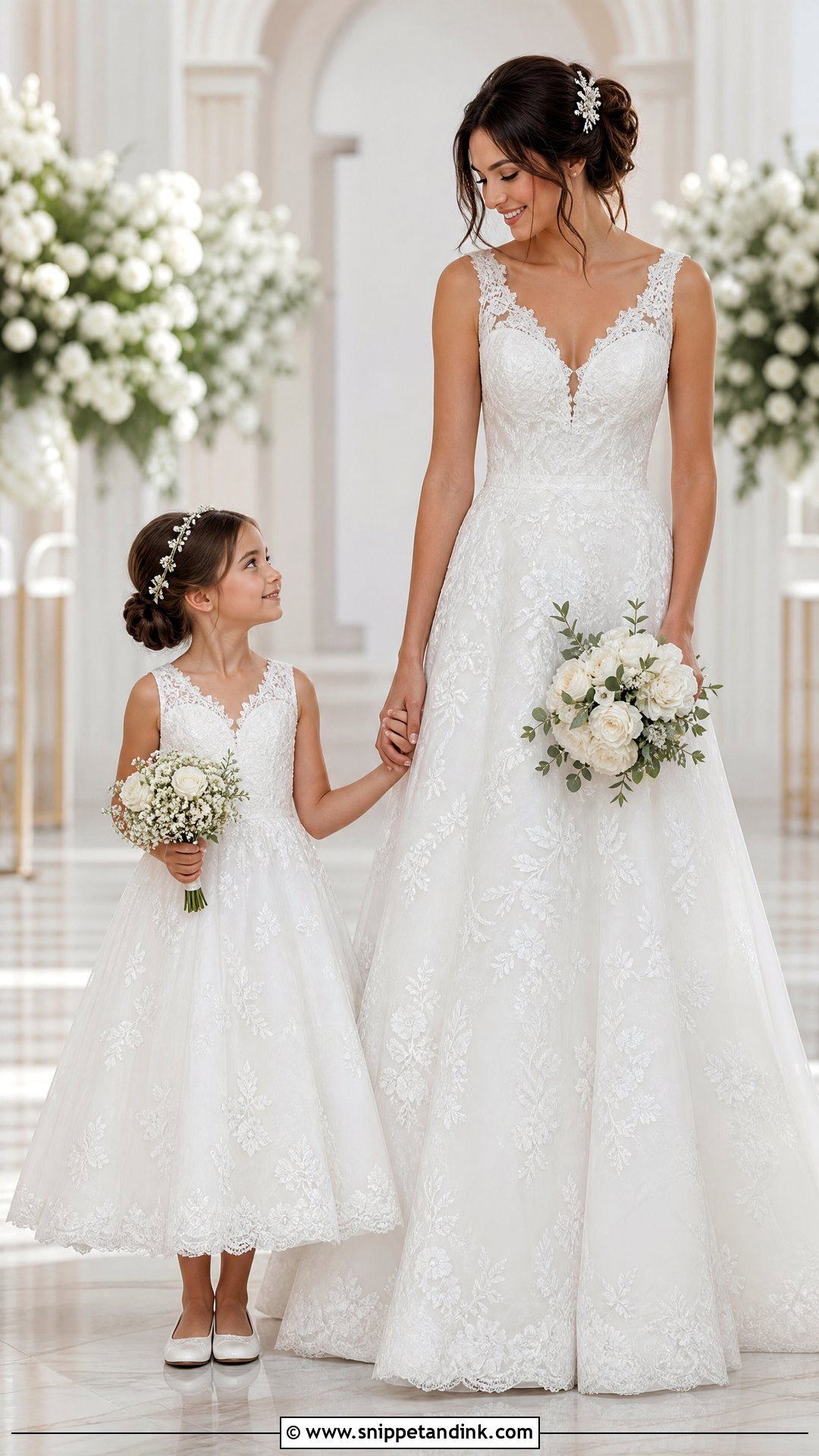
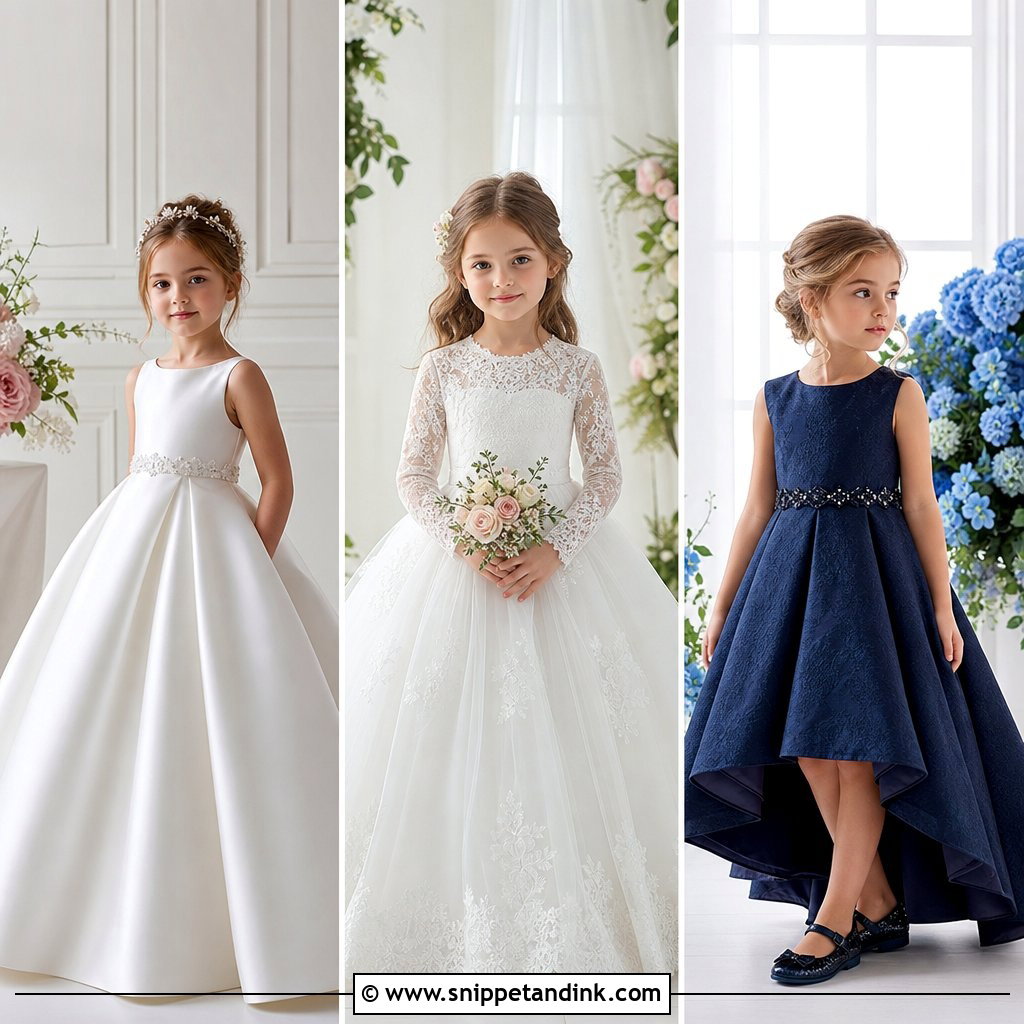
Matching a flower girl to the bride works when you repeat one or two details, perhaps the lace or the neckline shape, and nothing more. The child’s version should be shorter and lighter than the bride’s. I never copy a train, a corset or heavy beading onto a child: she can’t move in it, and it starts to look like fancy dress. Many gown makers offer simplified versions of their adult silhouettes for exactly this reason. White flats, a hair piece in the bride’s style and a child-sized bouquet finish it, and the family photos tie together without two identical dresses.
Getting a Six-Year-Old Through the Day in Tulle
Most gown problems happen after the portraits, not before them. A week or so ahead, I have her wear the full outfit at home for twenty minutes, shoes included. Itchy seams, a sash that digs in and shoes that slip all show up in that time, while there’s still a chance to fix them. Practice a bathroom trip too: a full skirt has to be gathered up and held, and a child who has done it once won’t panic in a strange restroom.
On the morning, dress her last, after hair and breakfast. At the meal, a big napkin tucked into the neckline or an old T-shirt over the bodice saves the white from tomato sauce. Plenty of parents change a young child into a play dress once the formal photos are done, and I think that’s the kindest choice for the dancing.
What goes in her parent’s bag
- A few small safety pins, plus a needle already threaded with white thread.
- A stain pen made for white fabric, tested first on the inside of the hem.
- Blister plasters for new shoes and a spare pair of socks or tights.
- A cardigan in the gown’s color and a change of clothes.
- Plain crackers or other snacks that won’t stain if they’re dropped.
Cleaning and Storing the Gown Afterward
Deal with grass and food marks the same night: blot, don’t rub, and don’t put heat on a stain you haven’t treated. Take the gown to a cleaner who handles formal wear and point out every spot, including clear ones like spilled juice. Sugar is invisible at first and turns yellow-brown over the following months.
Once it’s clean, store it in a breathable cotton garment bag rather than plastic, which traps moisture. Tulle and satin keep their shape best folded loosely with acid-free tissue in the creases, or hung from a padded hanger by the inner loops so the weight doesn’t stretch the shoulders. A well-kept gown can easily go to a younger cousin or sister for the next family wedding.
A Dress She Forgets She’s Wearing
A gown has done its job when a child forgets she’s wearing it. Check the lining, the closures, the sleeve openings and the hem before the wedding, and choose shoes that stay on through a full evening. Satin ball gowns give the most formal result; chiffon, tea length and A-lines give the most freedom. Lace, embroidery, pearls and appliques are all fine as long as they’re soft and stitched down. Above all, bring her into the decision. A child who loves her dress is far easier to get into it at nine in the morning.
You'll Like These Ideas:


Leave a Reply