
I’ve dressed enough flower girls on wedding mornings to know that the dress a child walks in matters less than the dress she’ll tolerate for six hours. A gown can look perfect on a hanger and still end up in a heap at the back of the venue because the waist pinched or the lace scratched her arms. So the kids’ wedding dresses below are judged on two things: how they look in the aisle and how they behave when a four-year-old sits on the floor, dances or needs the bathroom in a hurry. Soft tulle, satin bows, lace bodices, puff sleeves and pastels are all popular right now, and each works for a different child, venue and season.
Sizing a Child Who Will Grow Before the Wedding
Children can grow noticeably in a few months, and that catches out more families than any style choice. For most dresses, I’d order roughly two to three months before the wedding: close enough that she won’t outgrow it, far enough ahead for a return, a replacement or a hem. Custom or made-to-order children’s dresses need longer, often eight weeks or more, so check the lead time before you fall for one.
Measure chest, waist and the length from shoulder to where you want the hem to fall, and go by the brand’s chart, not the age on the label. If she sits between sizes, choose the larger one. Taking in a bodice or hemming a skirt is simple; letting out a tight bodice usually isn’t possible.
- Try the dress on with the actual shoes and any tights she’ll wear.
- Ask her to sit on the floor, crouch and lift her arms.
- Check the zip or buttons are ones an adult can do up quickly in a bathroom.
- Do a final try-on about two weeks before the wedding.
1. Ivory Tulle Flower Girl Dress
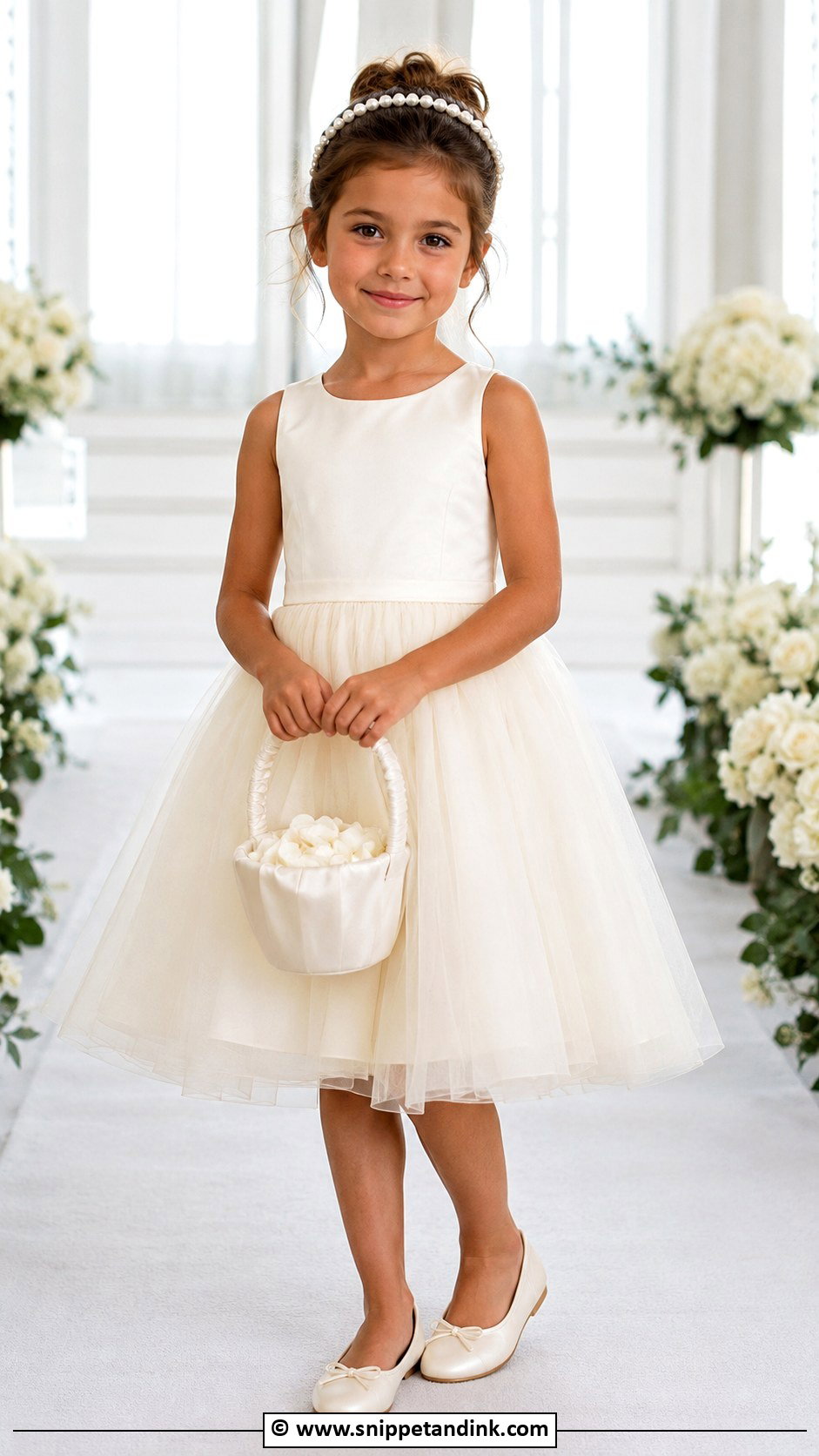
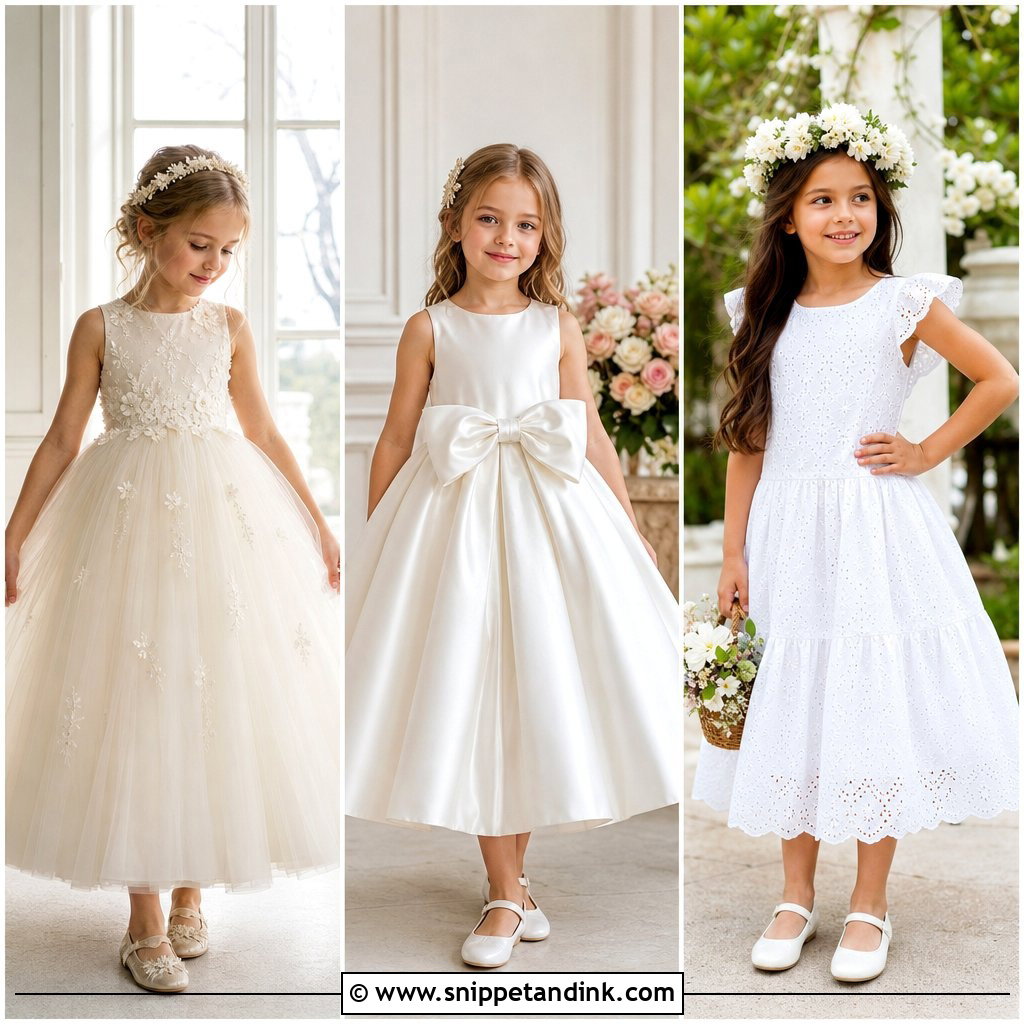
Ivory tulle is the dress I suggest when a couple can’t decide, because it sits next to almost any bridal gown without clashing. Pure white can look bluish beside an ivory bride; ivory avoids that. Check three things in the shop: a cotton-lined bodice, soft tulle rather than stiff netting, and a waist with a little give. Stiff net is what makes small children tug at their skirts all evening. Ivory flats, a small pearl headband and a basket finish it for ballrooms, gardens and indoor ceremonies.
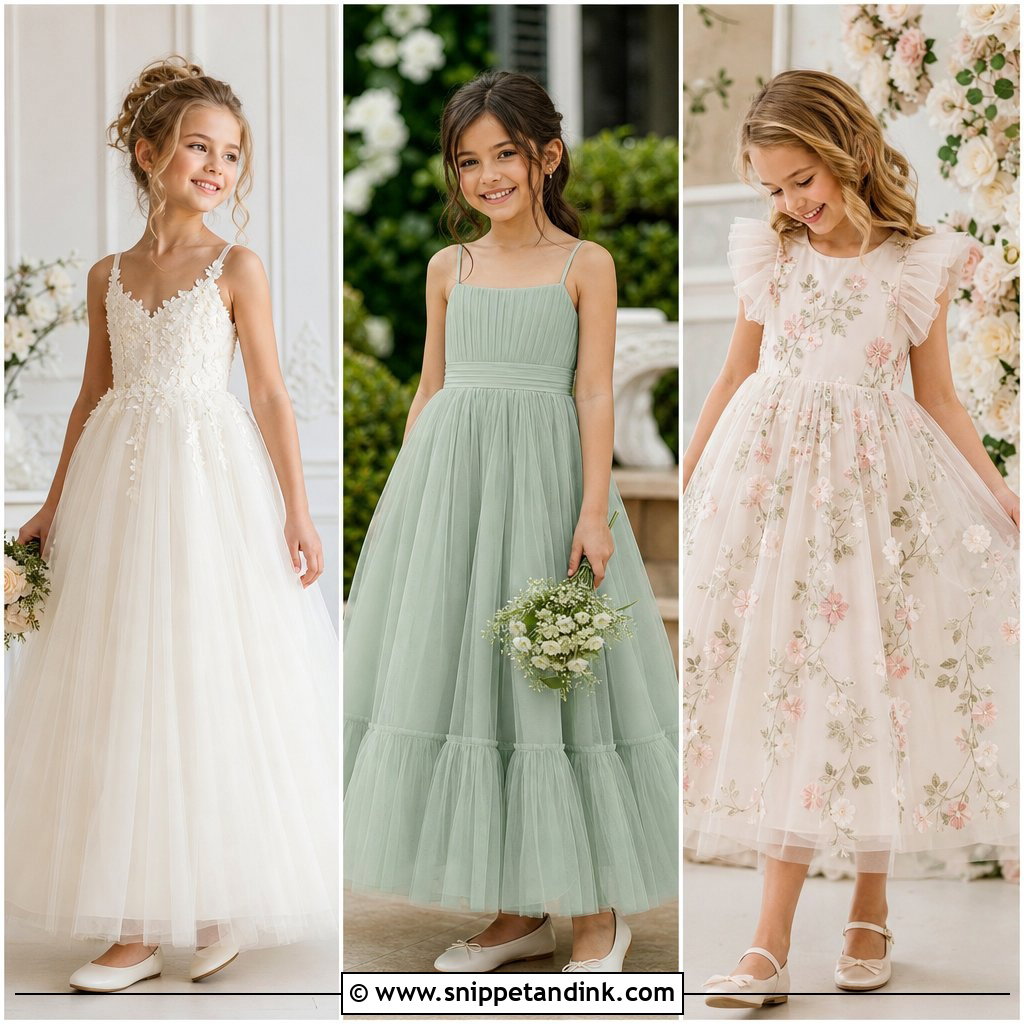
2. White Lace Flower Girl Dress
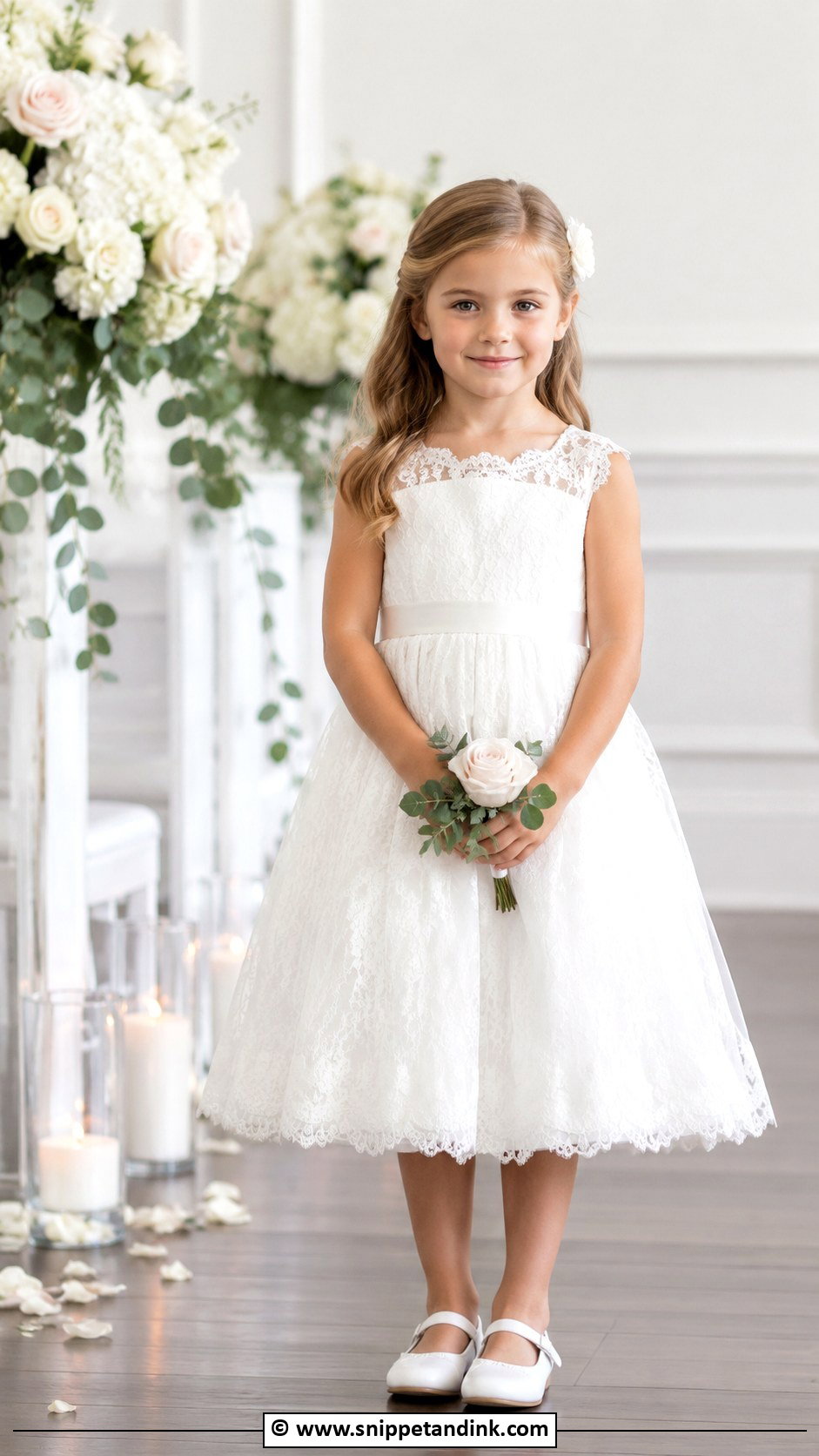
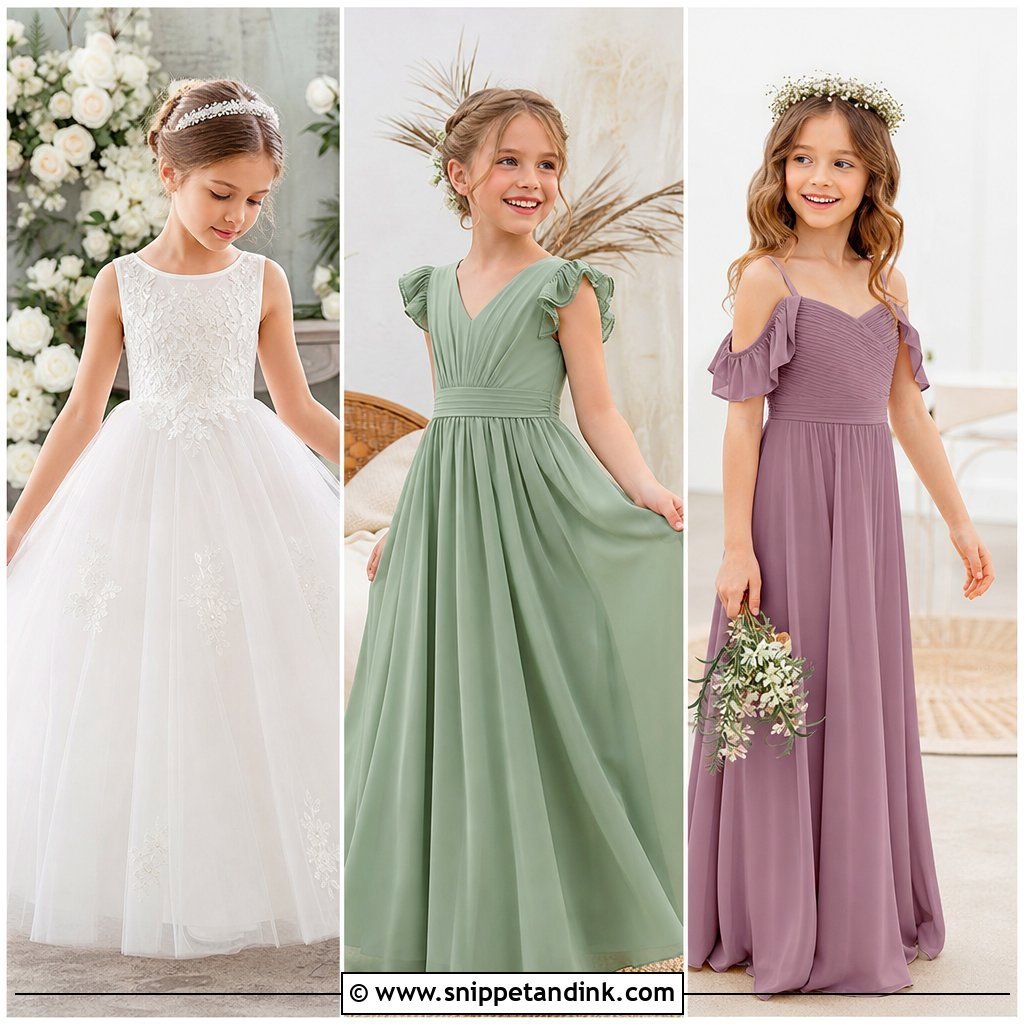
Lace gives a traditional, polished look, but lace on bare skin is the number one complaint I hear from flower girls. Turn the dress inside out and run your hand over the lining. If the lace is mounted on cotton or satin all the way through, she’ll be fine. Knee or tea length is easiest to walk in; floor-length lace is for formal ceremonies with older girls. White Mary Janes and a small floral clip are plenty. It’s a natural match when the bride’s gown has lace too.
3. Satin Flower Girl Dress
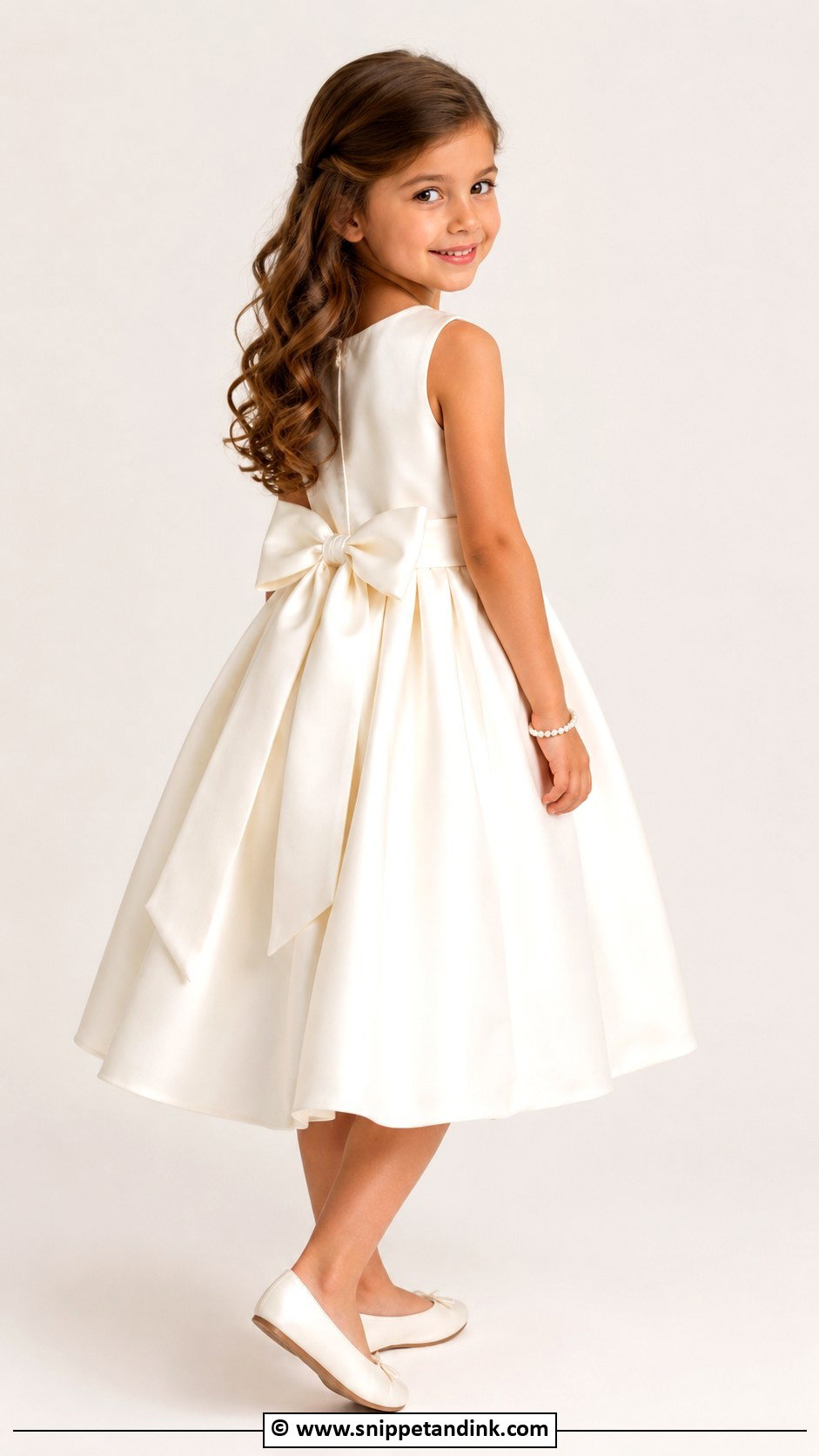
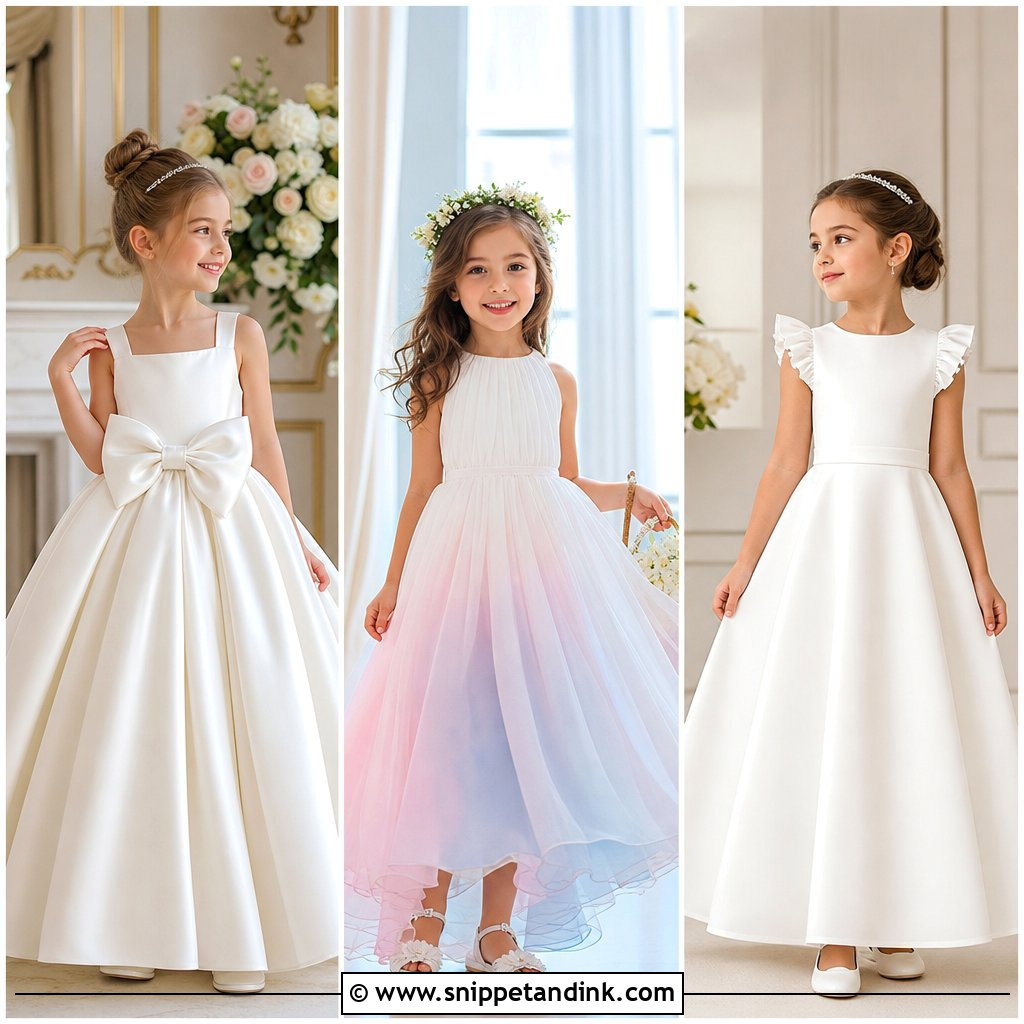
Satin has a clean shine that reads well in photos without any sparkle. It’s also less forgiving than tulle: it creases where a child sits, and those creases show. I steam satin flower girl dresses on the morning and keep the children standing or perched on a clean towel until the processional. A comfortable fitted bodice with a back bow suits most ages. Ivory, champagne and blush are easy to coordinate, and the fabric’s weight makes it a good pick for cooler months.
4. Blush Pink Flower Girl Dress
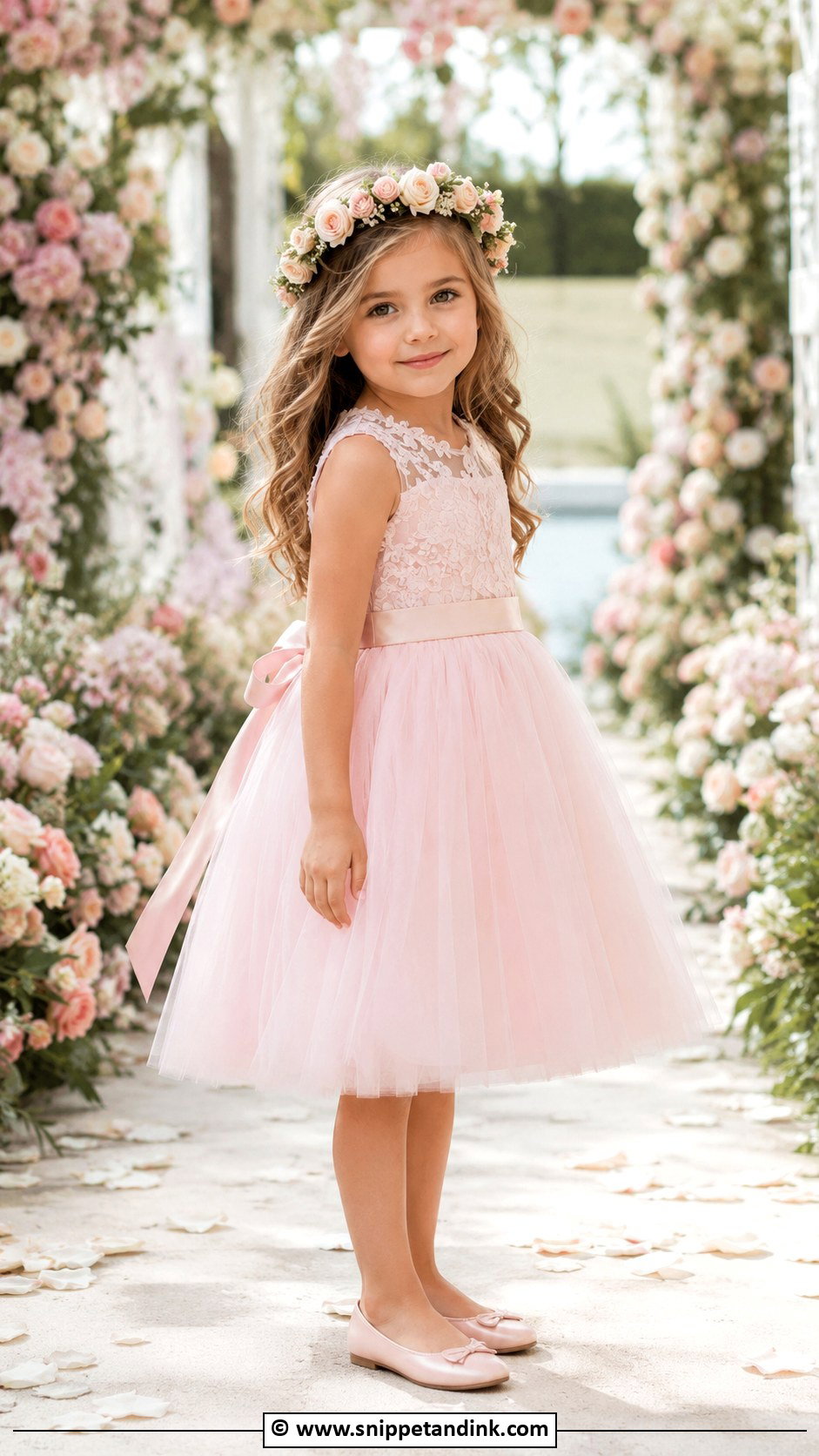
Blush gives a hint of color that blends with ivory gowns, neutral bridesmaids and dusty rose florals. One thing to know: blush varies a lot between brands, from peachy to almost lilac. If you’re ordering online, get a swatch or order early enough to return it. A tulle skirt with a lace or satin bodice keeps it age-appropriate. Nude ballet flats and a small flower crown suit it. It’s forgiving in photos and especially at home at spring and summer outdoor weddings.
5. Champagne Flower Girl Dress
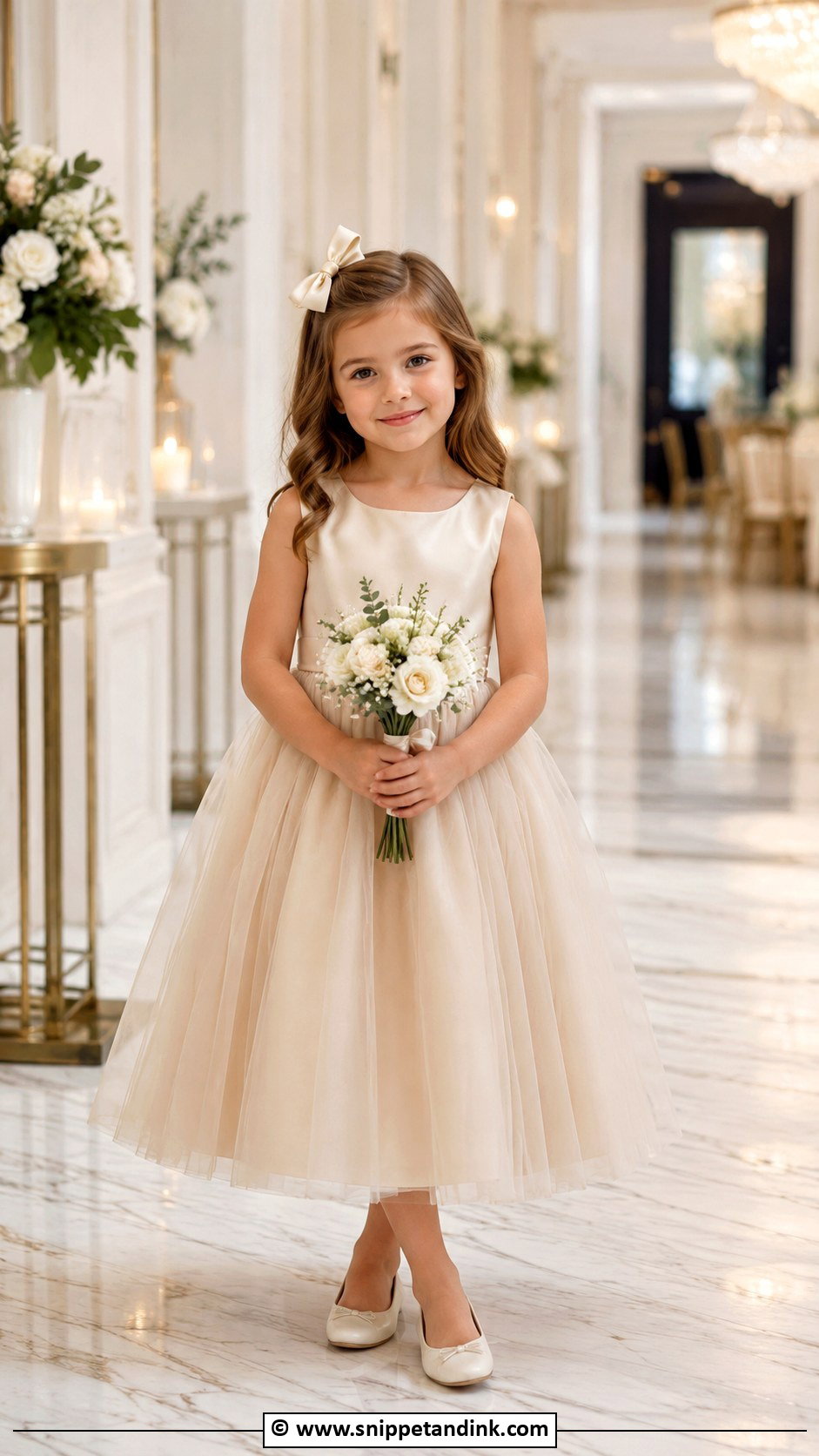
Champagne gives a warm glow that fits palettes built on cream, gold, taupe and beige. A champagne satin bodice with a tulle skirt looks dressy without being dramatic. For children with sensitive skin, I’d skip any sequins near the neckline or underarms; those are the spots that get rubbed raw by the reception. Ivory shoes, a cream bow and a bouquet that copies the bride’s flowers tie her into the party. It photographs warmly in natural light in any season.
6. Princess Ball Gown Flower Girl Dress
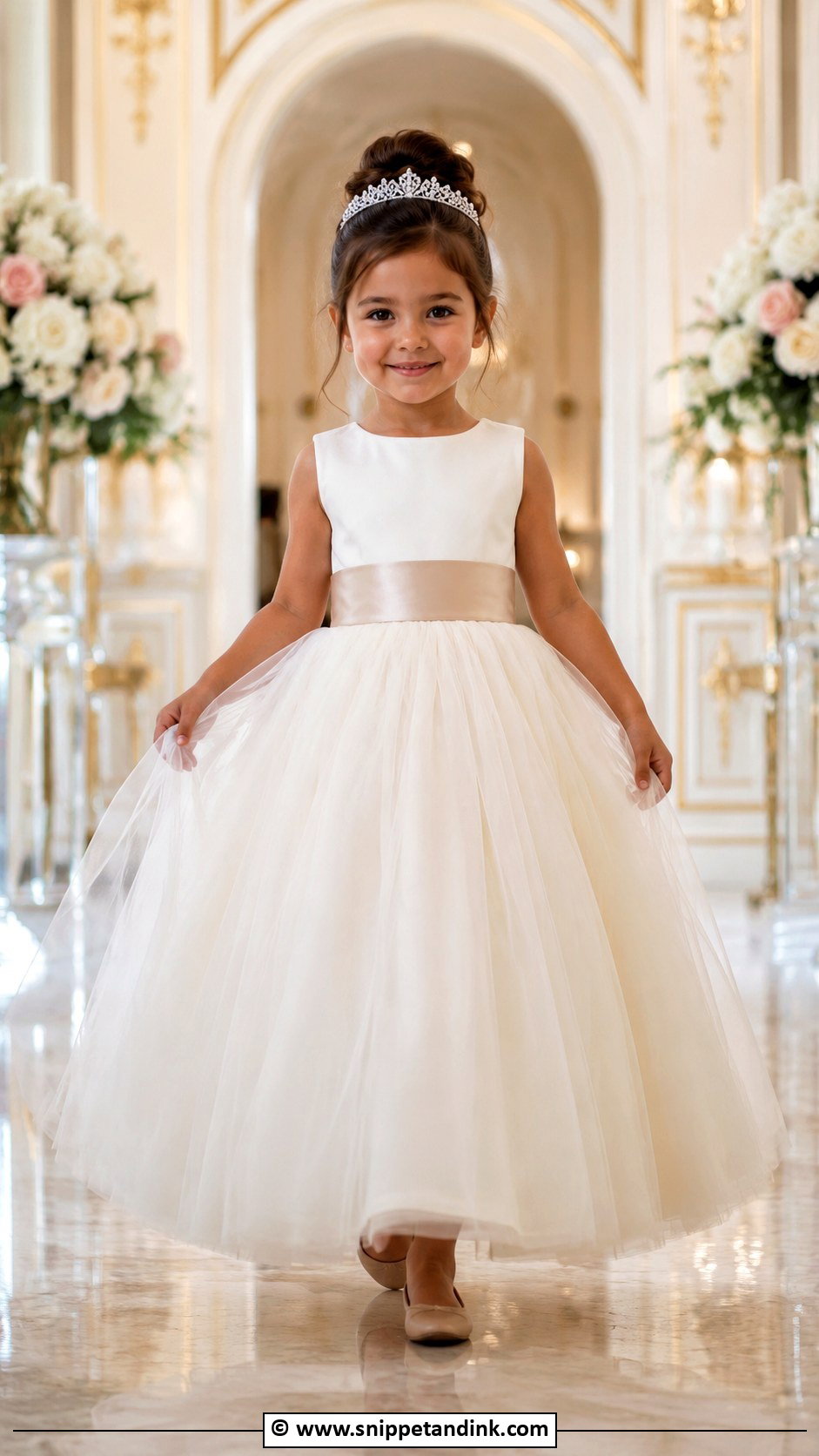
A princess ball gown flower girl dress gives you the fairytale entrance, but volume and walking don’t always mix. Have her walk across a room and up a step in it before you buy. Layers of soft tulle over a smooth lining are lighter than they look; heavy beading on the bodice is what tires small children out. A satin sash or a small appliqué is enough detail. Save this for larger venues where she has room to make that entrance.
7. Tea Length Flower Girl Dress
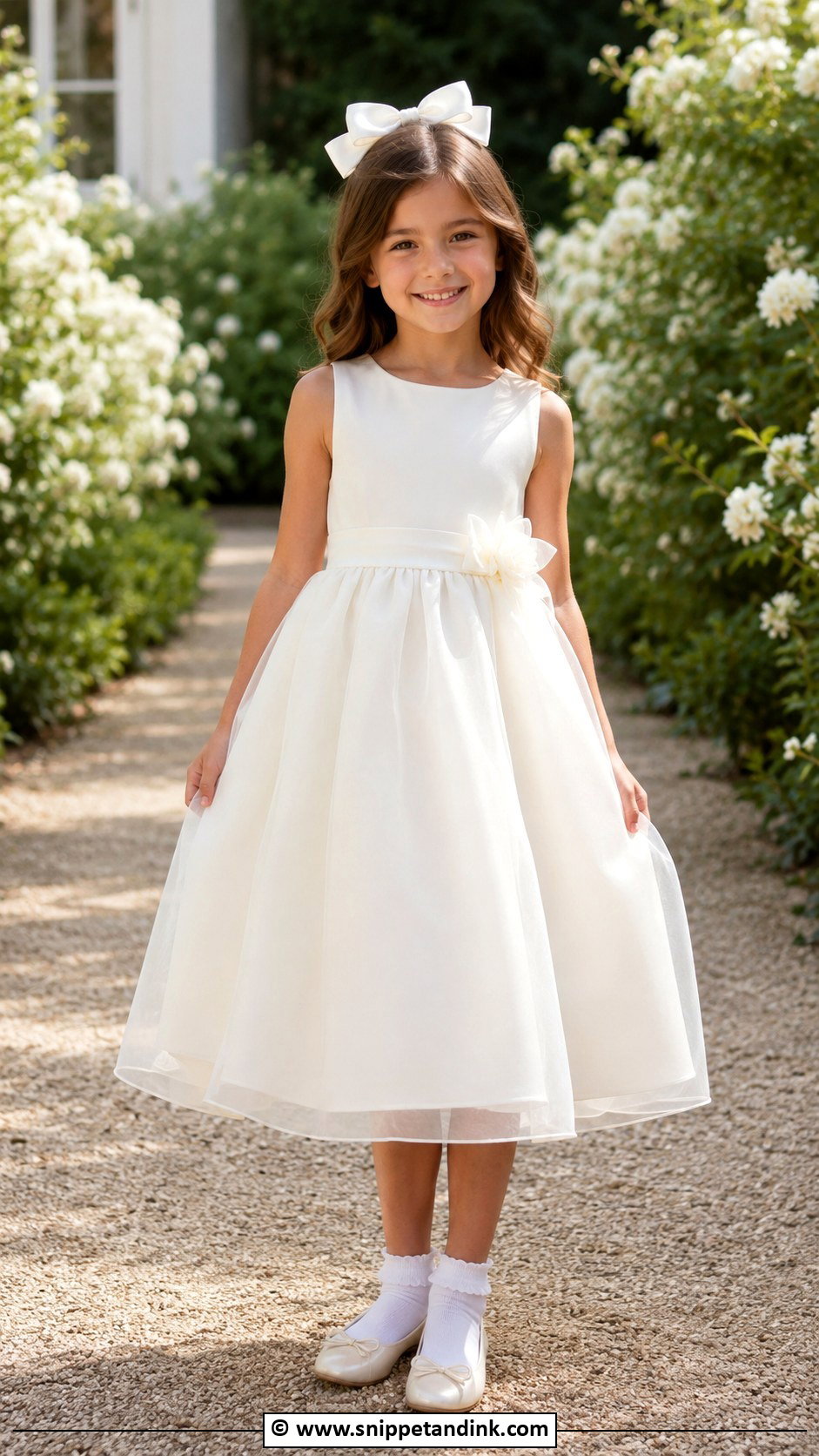
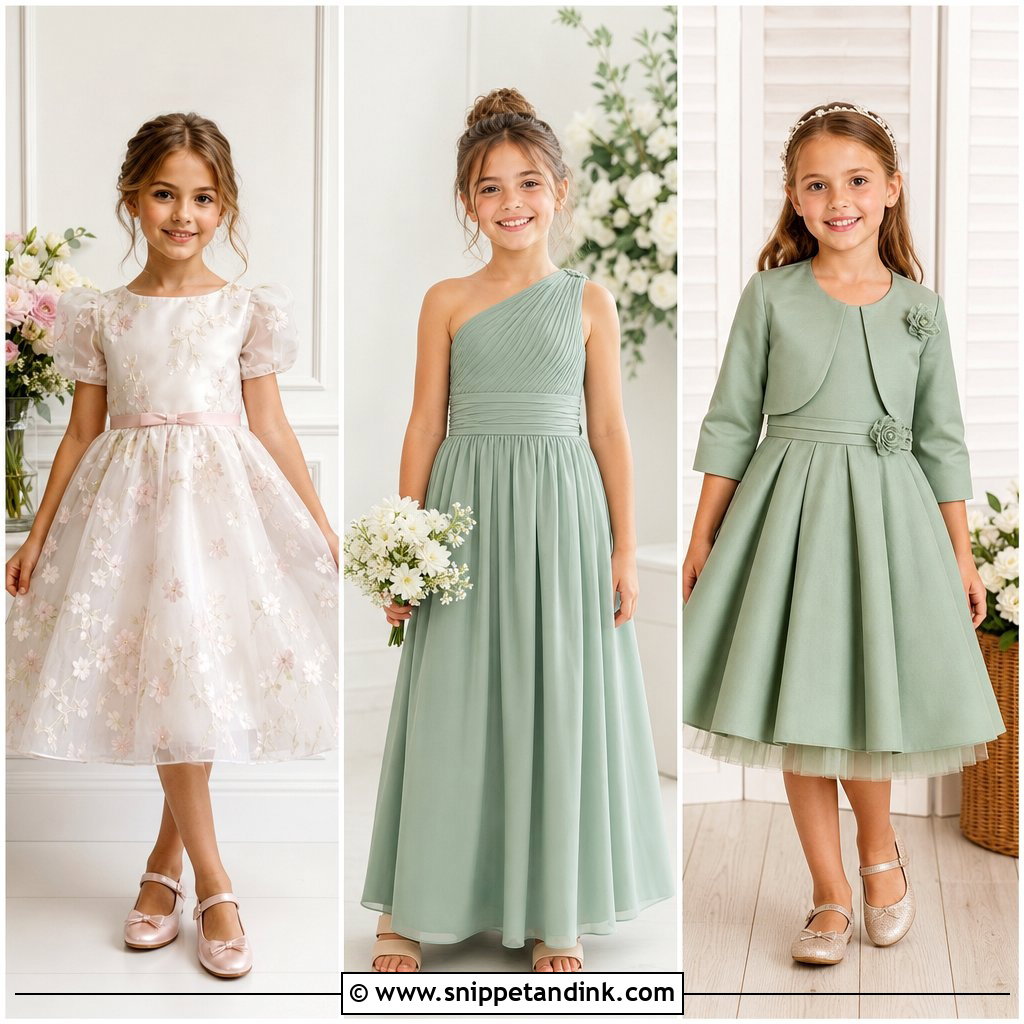
Tea length is the length I quietly push most families toward. The hem stops between knee and ankle, so there’s nothing to trip over on stairs, grass or sand, and it still looks formal. Toddlers and busy kids do noticeably better in it. Tulle, organza, satin and lace all come in this cut. Ballet flats, ankle socks if she wants them and a matching hair bow complete it. It’s also the length most likely to make it through the dancing in one piece.
8. Long Sleeve Flower Girl Dress
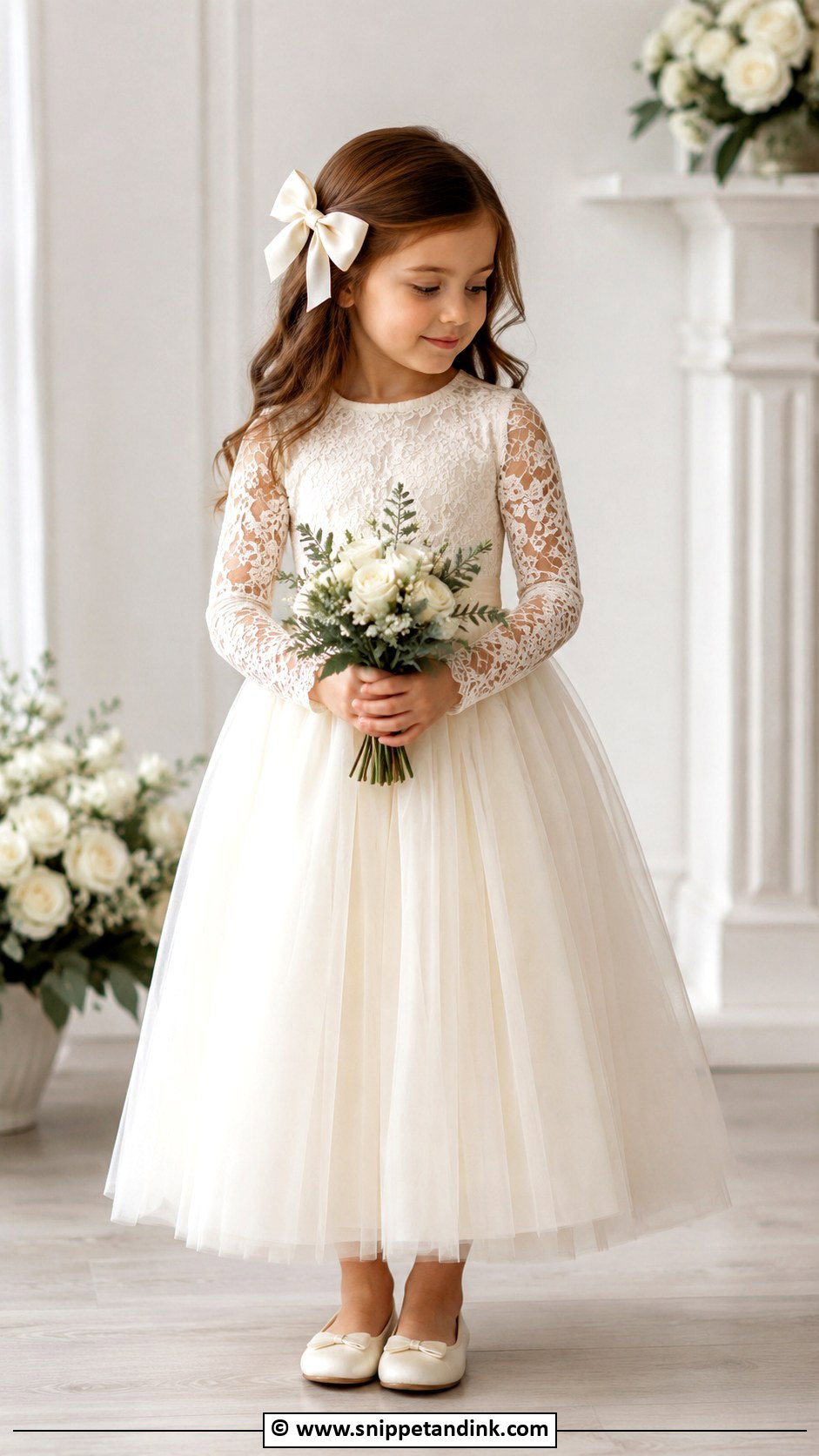
Long sleeves suit winter ceremonies, formal churches and families who prefer more coverage. The problem with most children’s long-sleeve dresses is that the sleeves are cut slim and don’t stretch. Have her raise her arms and hug you in the fitting; if the seam pulls at the armpit, size up or choose a stretch lace. Closed-toe flats, a velvet or satin bow and a small cardigan for outdoor photos keep her warm. A simple A-line or softly layered tulle skirt balances the sleeves.
9. Puff Sleeve Flower Girl Dress
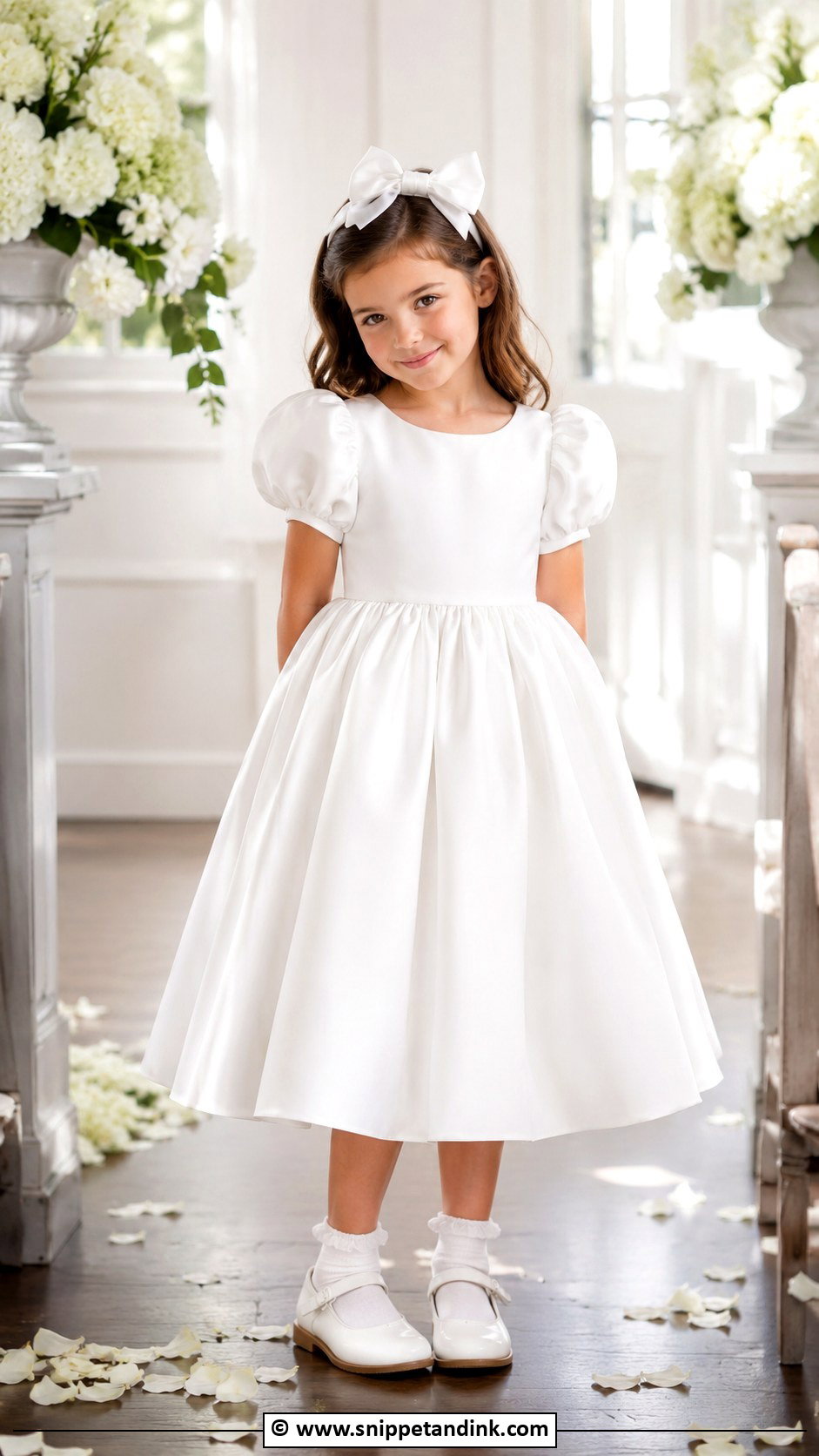
Puff sleeves have come back for children’s wedding outfits, and they suit kids better than they suit adults because they look playful rather than costume-like. Short puffs work in summer, longer ones in cooler months. Cotton sateen holds the shape well and breathes; organza puffs can collapse in humidity, so check them after a day in their garment bag. Mary Janes, a bow headband and white ankle socks complete a neat, classic outfit.
10. Floral Applique Flower Girl Dress
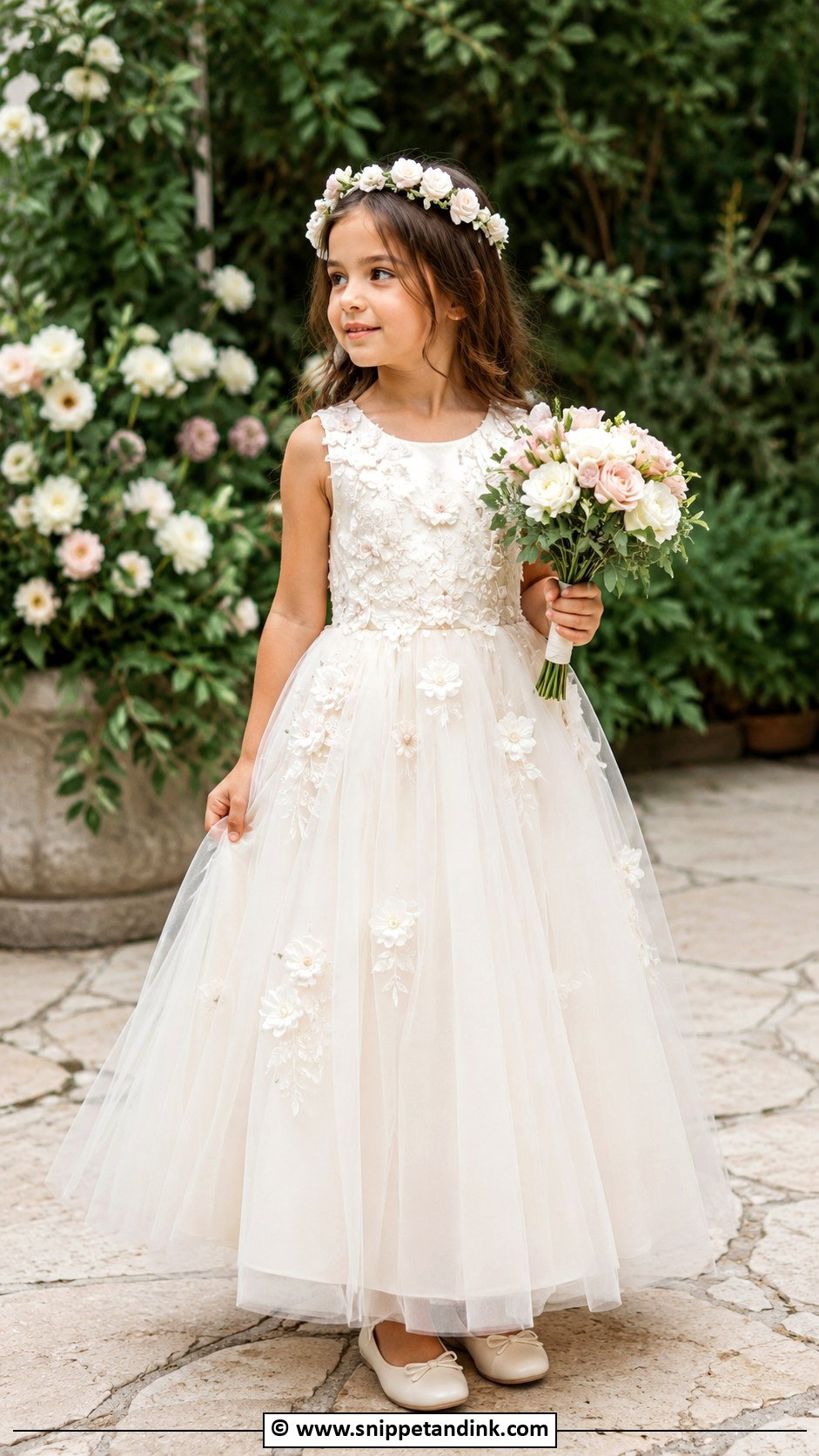
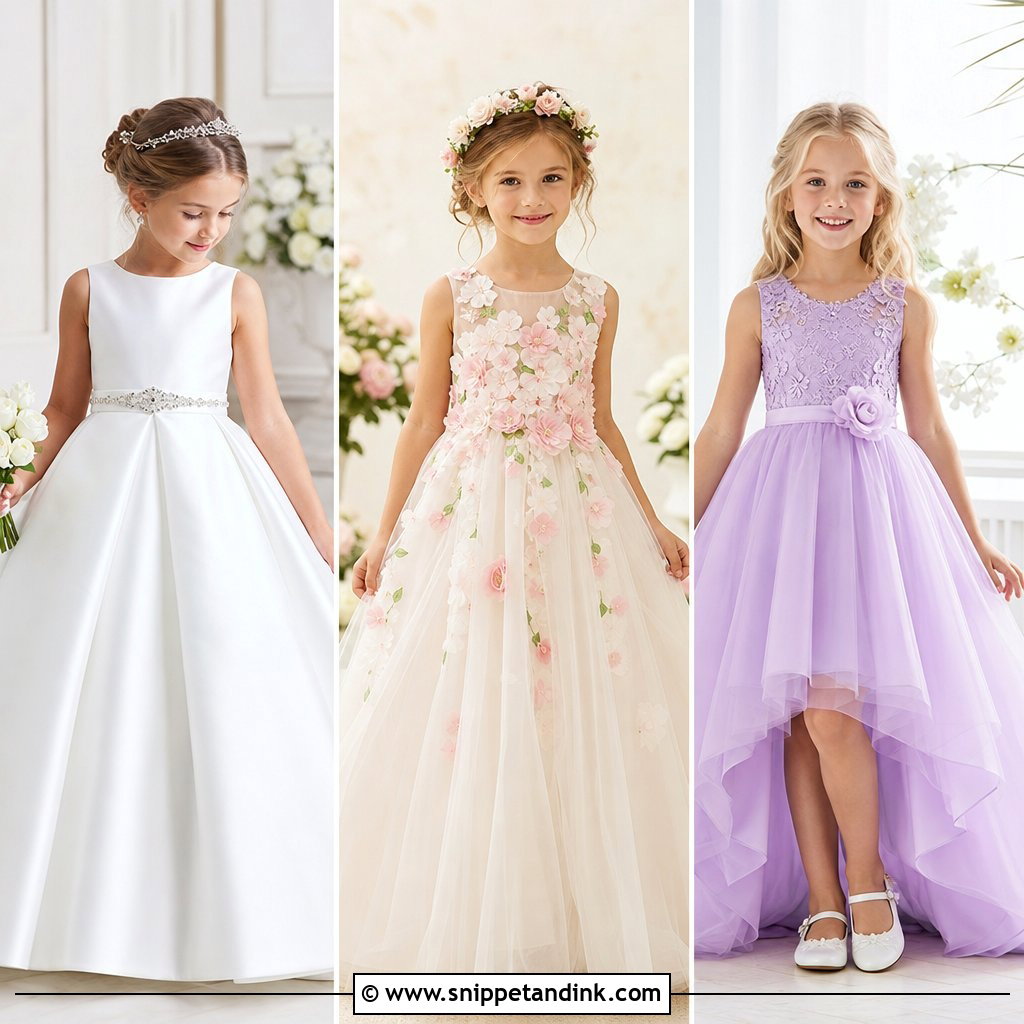
Floral appliqué gives texture without glitter and suits romantic or garden weddings. Flowers placed around the bodice and waist look balanced; flowers scattered across the whole skirt add weight that small children feel by the end of the evening. Ivory tulle with pale pink or white flowers is delicate. Make sure the appliqué is backed and lined inside, since the stitching can scratch. Simple flats and a bouquet that echoes the dress detail are plenty.
11. Boho Flower Girl Dress
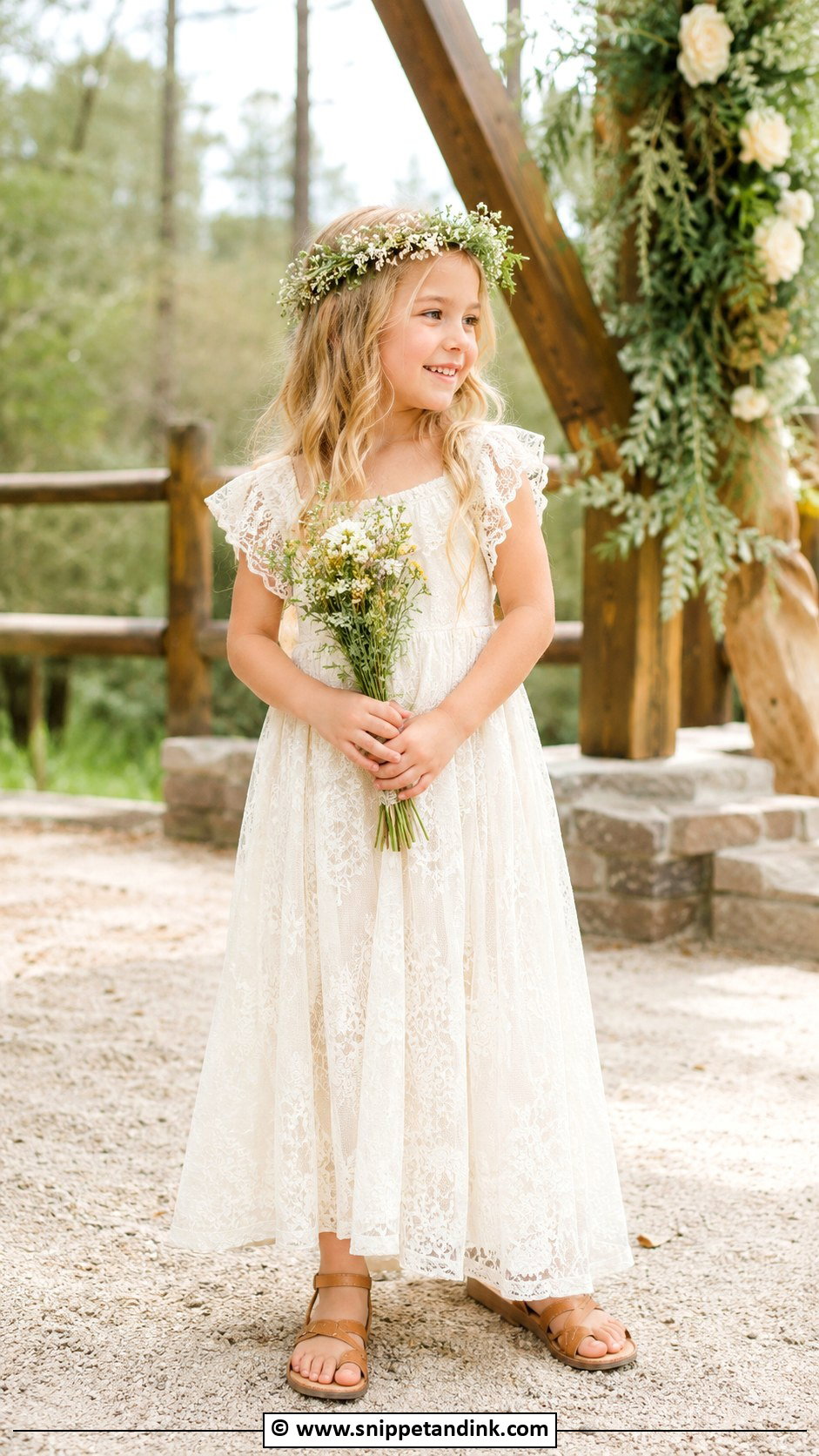
Boho dresses fit backyards, barns and relaxed outdoor ceremonies. Soft lace, flutter sleeves, a flowy A-line or light chiffon all move naturally. Keep the hem above the ankle if she’ll be on grass or uneven ground; long boho skirts collect burrs and mud fast. Cream, ivory, beige and soft blush work. Tan sandals, a flower crown and loose natural hair finish it. Flower crowns often get pulled off by small hands, so have the florist make a spare or use one with a soft elastic band.
12. Beach Wedding Flower Girl Dress
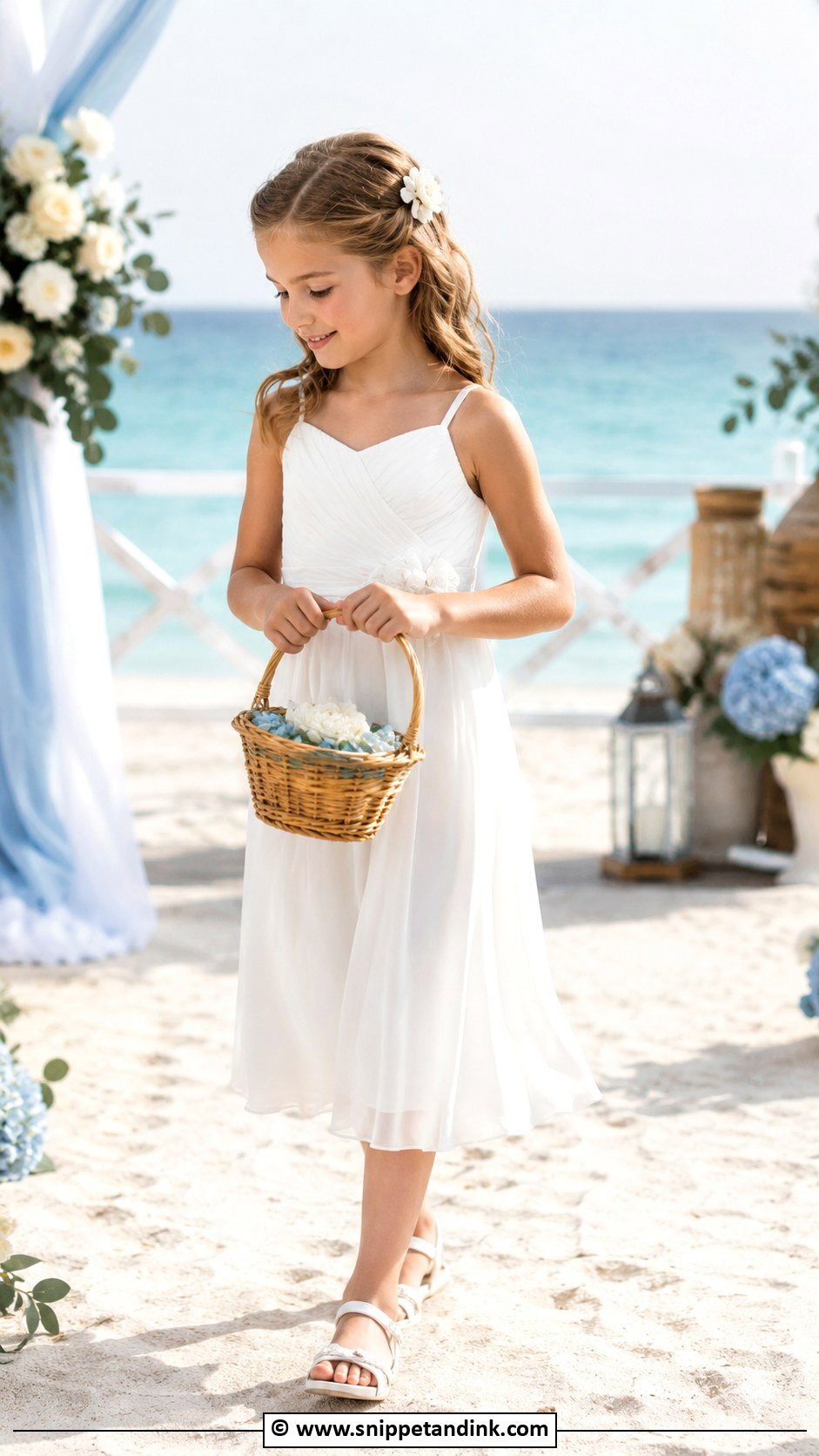
A beach wedding flower girl dress has to cope with sand, wind and heat. Chiffon, cotton, soft tulle and light organza breathe; satin and heavy ball gowns are miserable at noon on a beach. Knee or tea length keeps the hem out of wet sand. White, ivory, pale blue and soft peach suit the setting. Flat sandals, a simple clip and a small woven basket are enough. Wind will blow a light skirt around, so a lined skirt saves embarrassment in photos.
13. Garden Wedding Flower Girl Dress
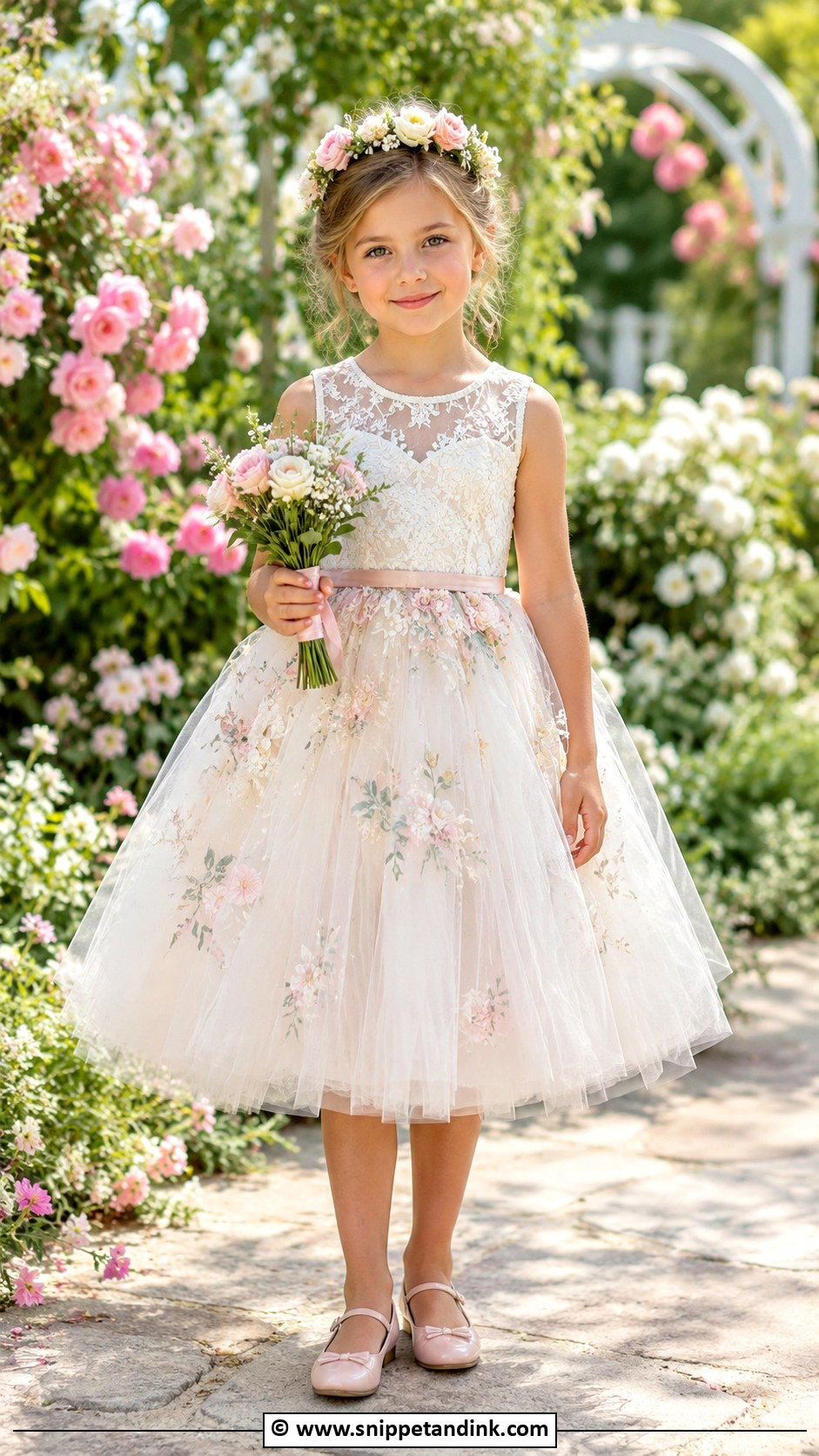
Garden weddings suit floral prints, pastel tulle, lace bodices and small flower appliqués. A tea-length skirt stays clear of damp grass and flower beds. Blush, sage, lavender, ivory and dusty blue all look at home outdoors. I’d always choose soft straps or sleeves over a strapless bodice for a child, because strapless dresses slip down on small bodies and get hitched up all day. Ballet flats, a floral crown and a bouquet in the wedding colors finish it.
14. Rustic Wedding Flower Girl Dress
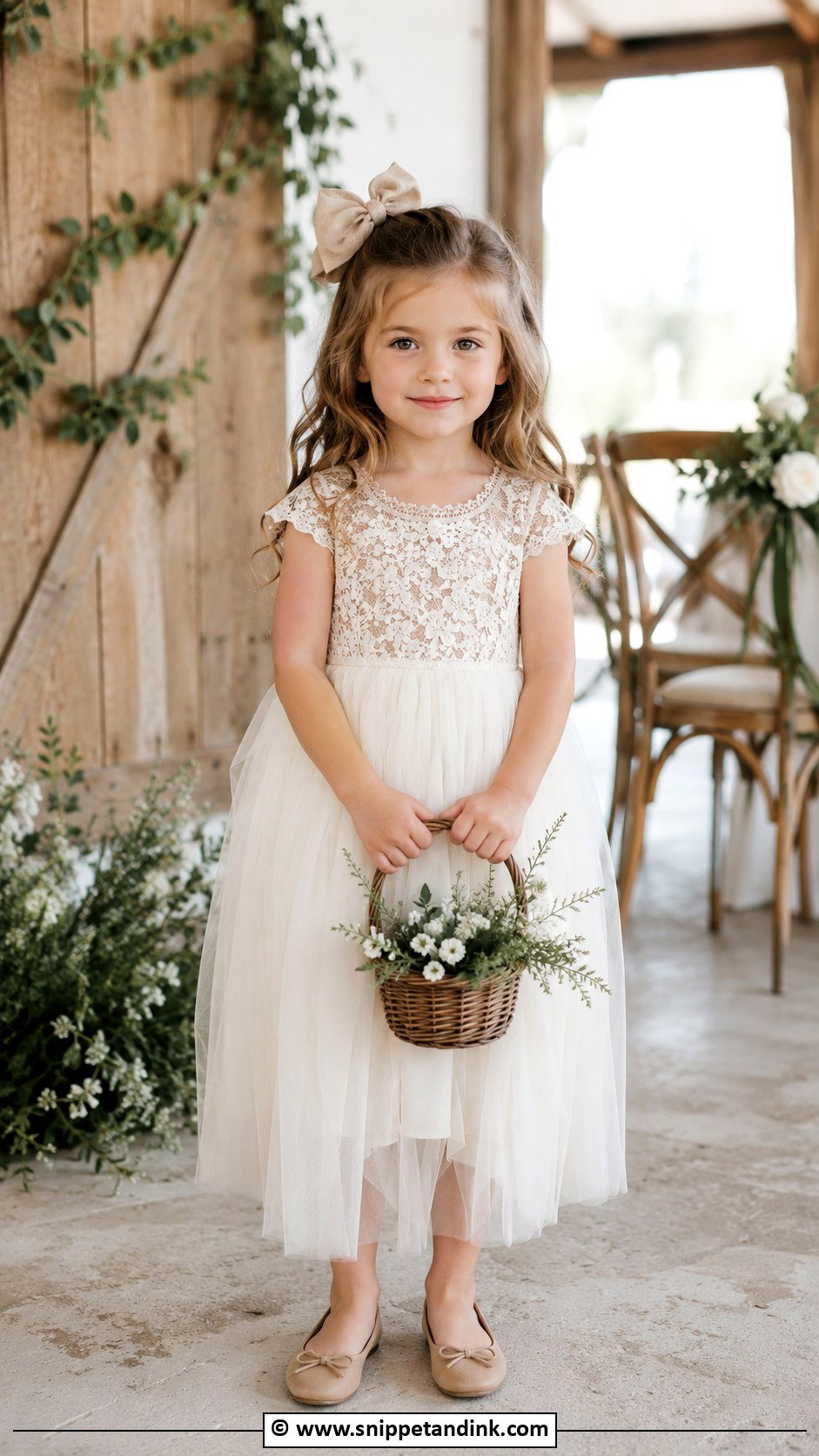
Rustic venues call for softness over shine. Cream lace, ivory cotton, light tulle or a plain dress with a satin sash suits barns, farms and wooden halls; glossy fabrics can look out of place there. A lace bodice with a flowy skirt sits between dressy and relaxed. Tan flats, a linen bow and a basket of loose garden flowers suit the setting. Barn floors can be uneven and dusty, so pick shoes with a grippy sole and expect the hem to need a wash.
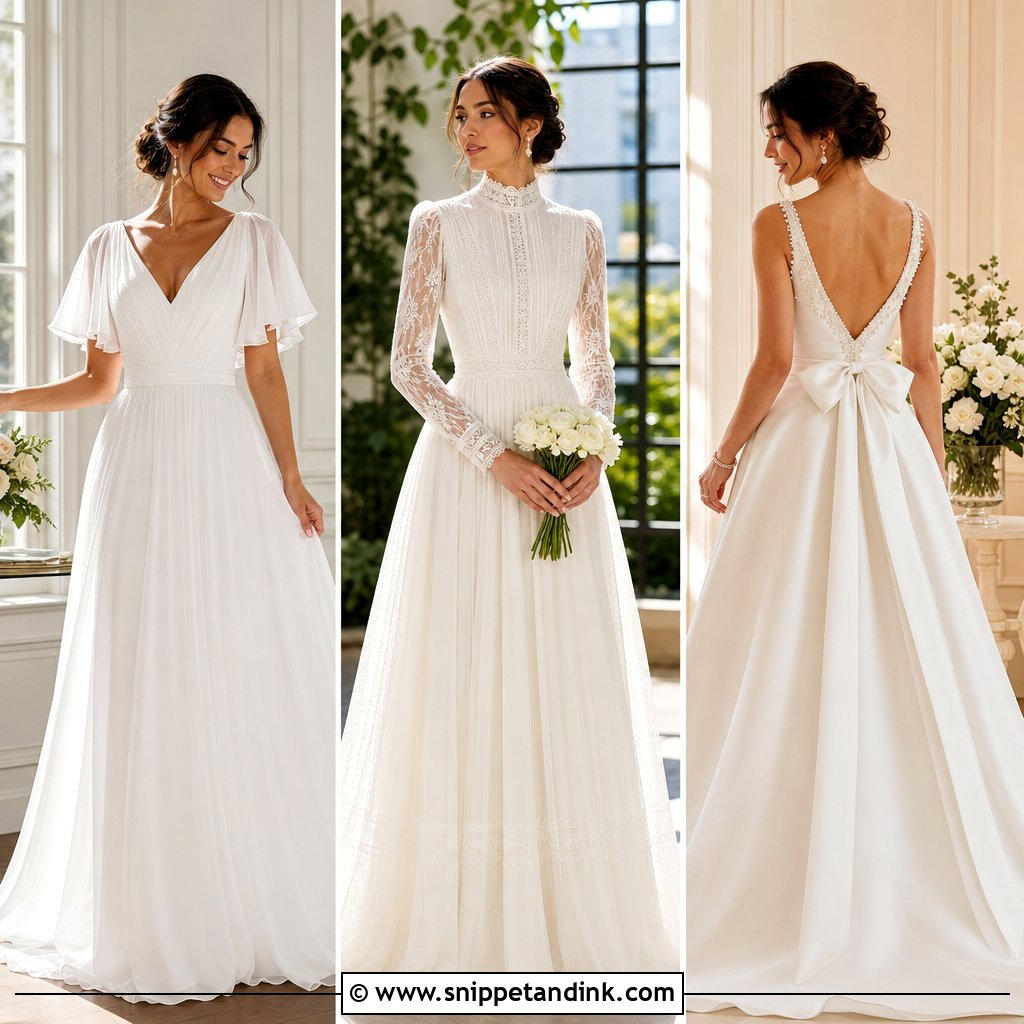
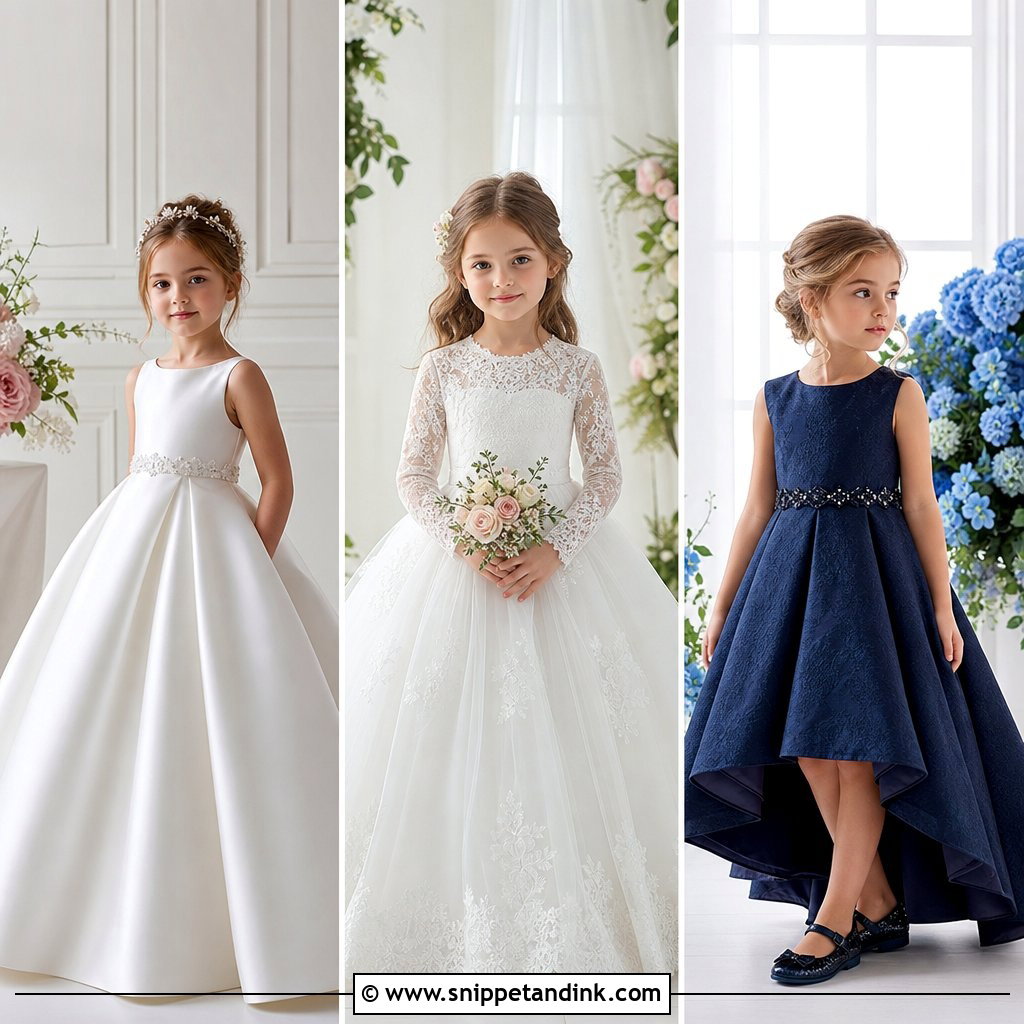
15. Simple White Flower Girl Dress
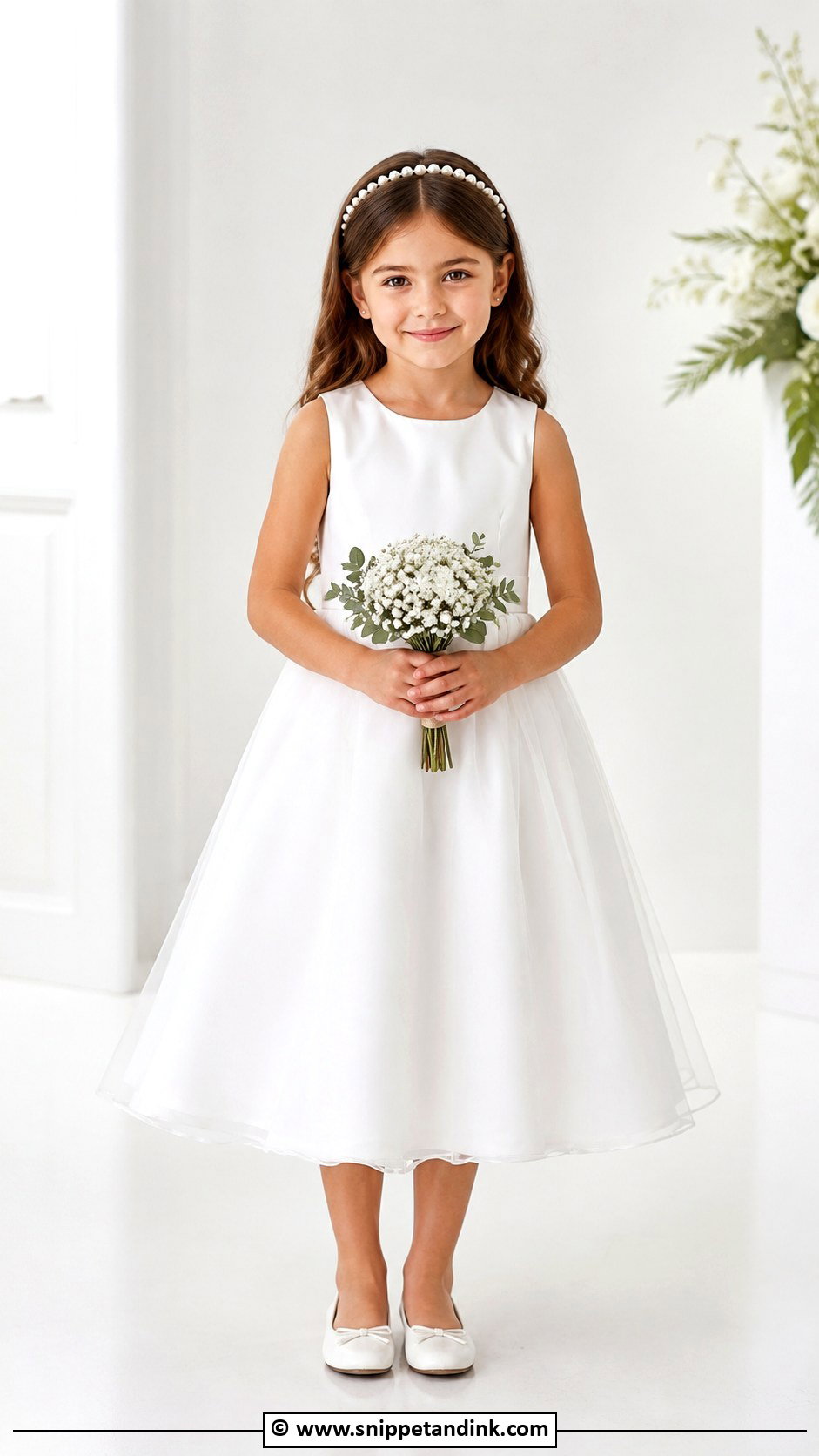
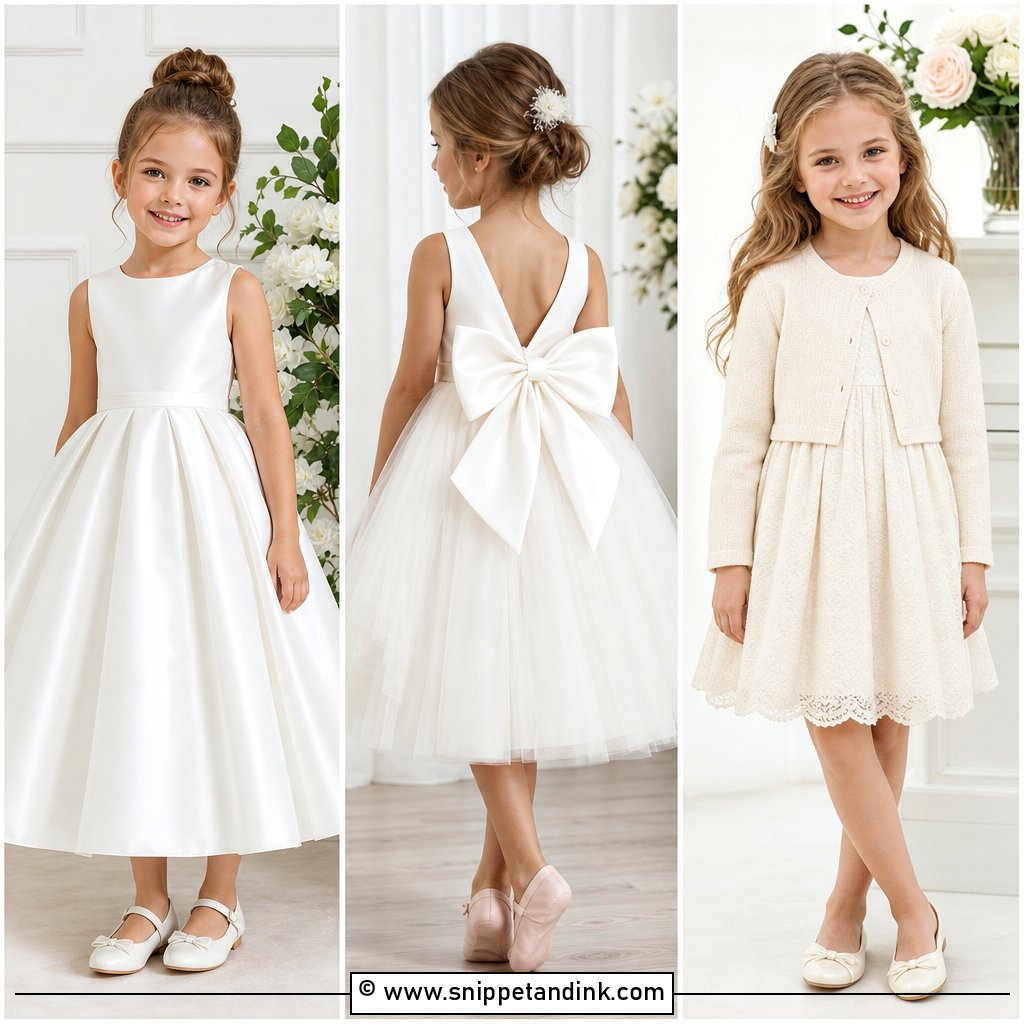
A plain white dress depends entirely on fit, which is why it can look more expensive than a heavily decorated one. A smooth bodice, soft A-line skirt and small bow are enough for clean, modern or minimal weddings. Choose a fabric that resists creasing, like a polyester satin blend or layered tulle, if she’ll be sitting in the car or at the getting-ready suite before the ceremony. White flats and a pearl headband complete it, and the dress can be worn again for other events.
16. Ivory Dress With Satin Sash
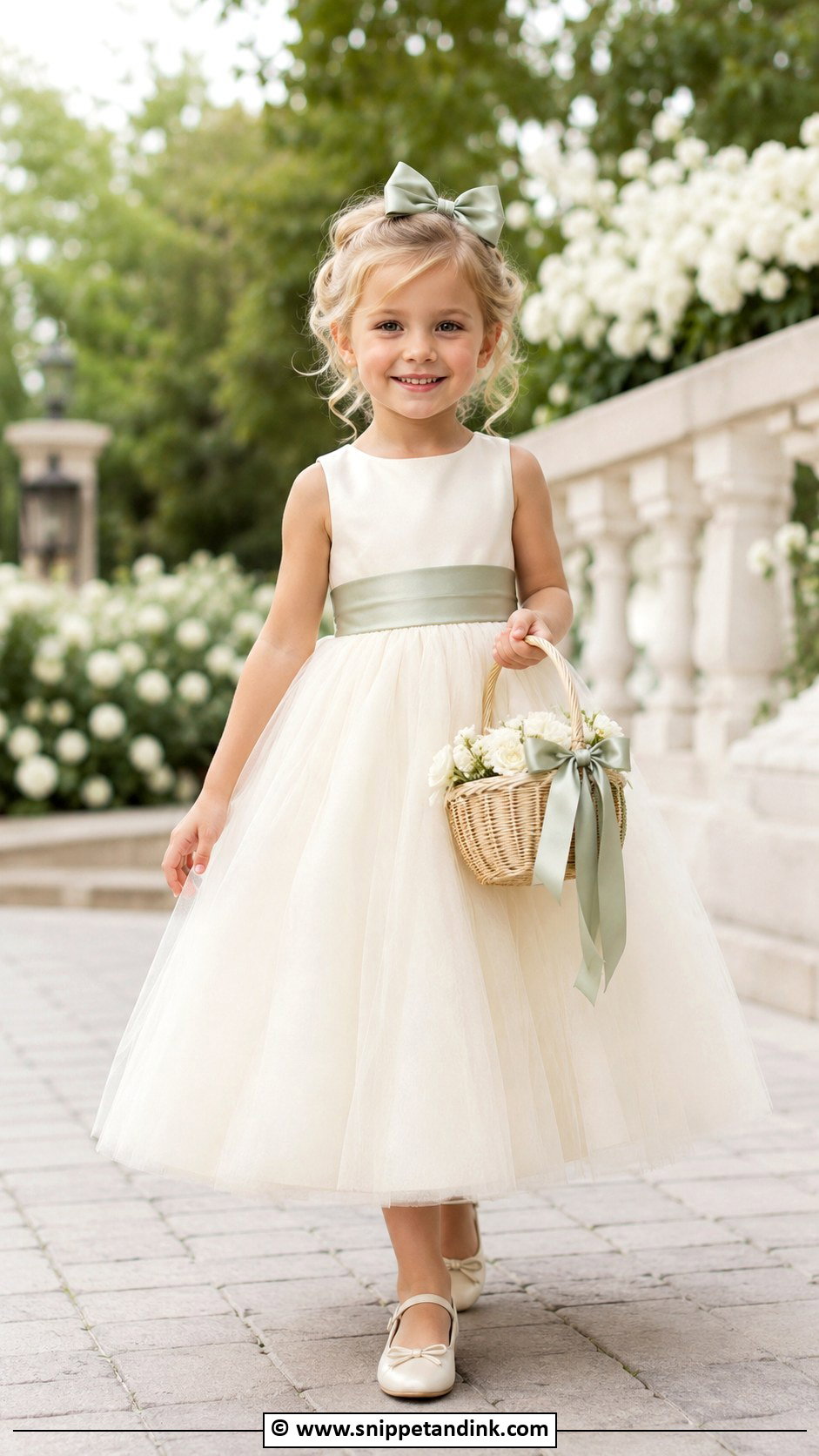
An ivory dress with a separate satin sash is the most flexible option I know, because the sash carries the wedding color while the dress stays neutral. Blush, sage, dusty blue, champagne or burgundy ribbon all work. Tie the bow at the back and tack it with two stitches so it can’t come undone or slide around. This is the simplest way to make multiple flower girls look like a set even if their dresses come from different shops; matching ribbon on their baskets helps too.
17. Tulle Dress With Bow Back
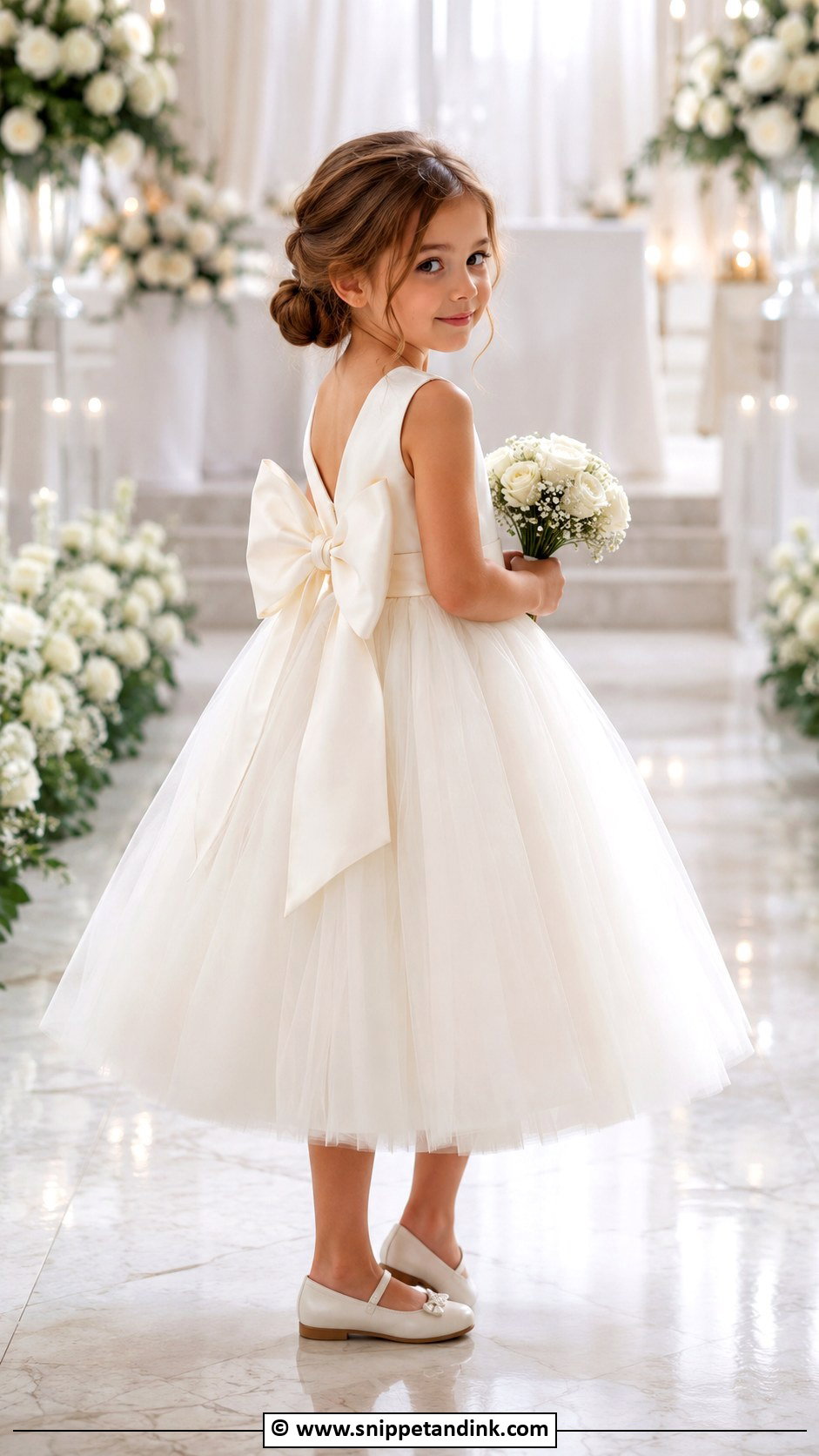
The bow back is the detail guests actually see, since the flower girl walks away from them down the aisle. Too big a bow drags the dress backward on a small child, so look for one attached at the waist seam, not just pinned on. A lined bodice and a zip with a fabric guard behind it keep her comfortable. Ivory, white, blush and champagne are the most versatile. Keep the hair neat and low so the bow stays the focus in back-view photos.
18. Organza Flower Girl Dress
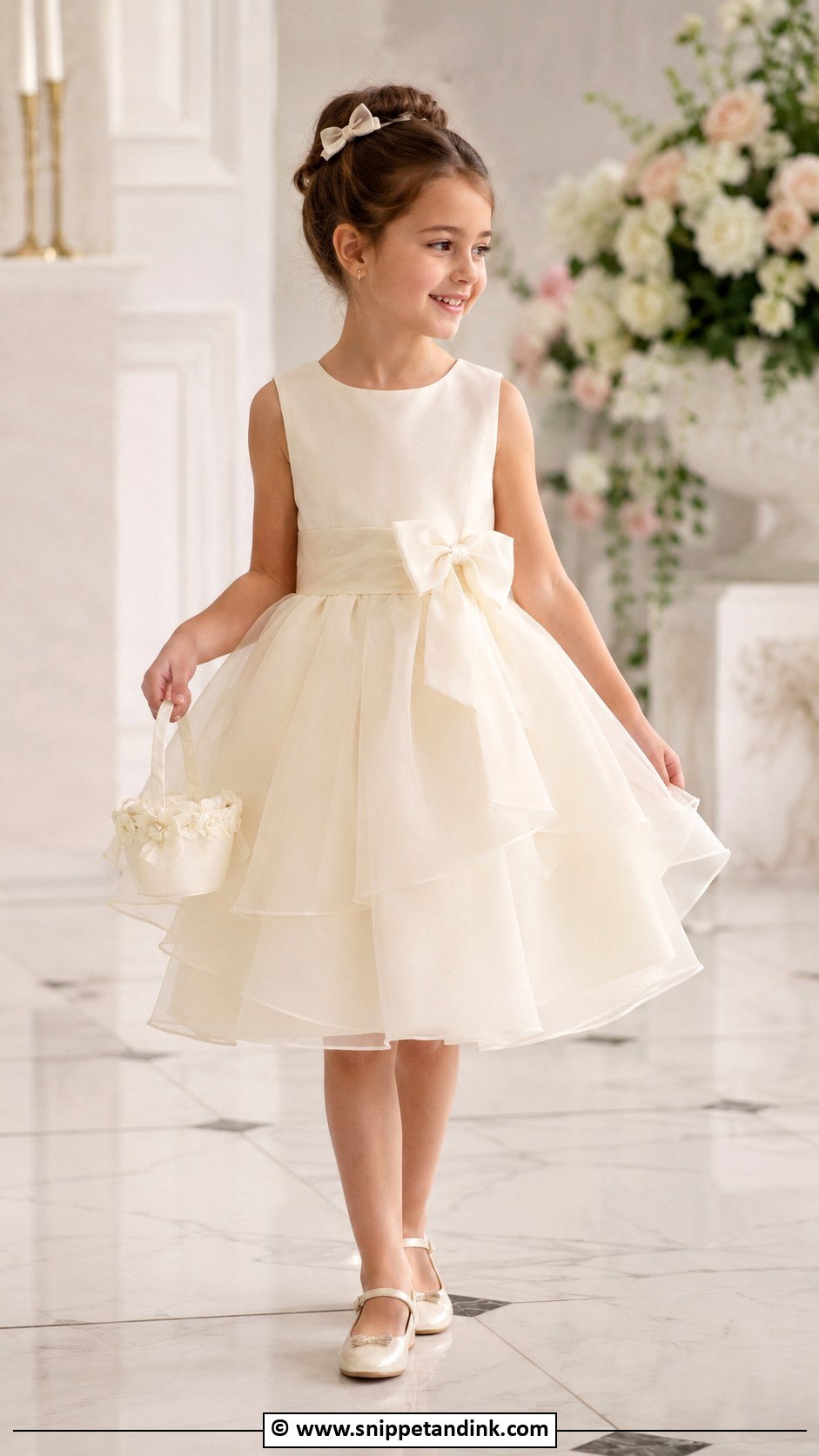
Organza sits between chiffon and satin: crisp enough to hold volume, lighter than it looks. A layered organza skirt gives fullness without heaviness. Its weakness is the inner seams, which can be scratchy, so check that the bodice is lined and seams are bound. Ivory flats, a small bow clip and a wrist corsage suit it. Pale ivory, blush, white and soft blue look fresh in organza for spring, summer and bright indoor rooms.
19. Chiffon Flower Girl Dress
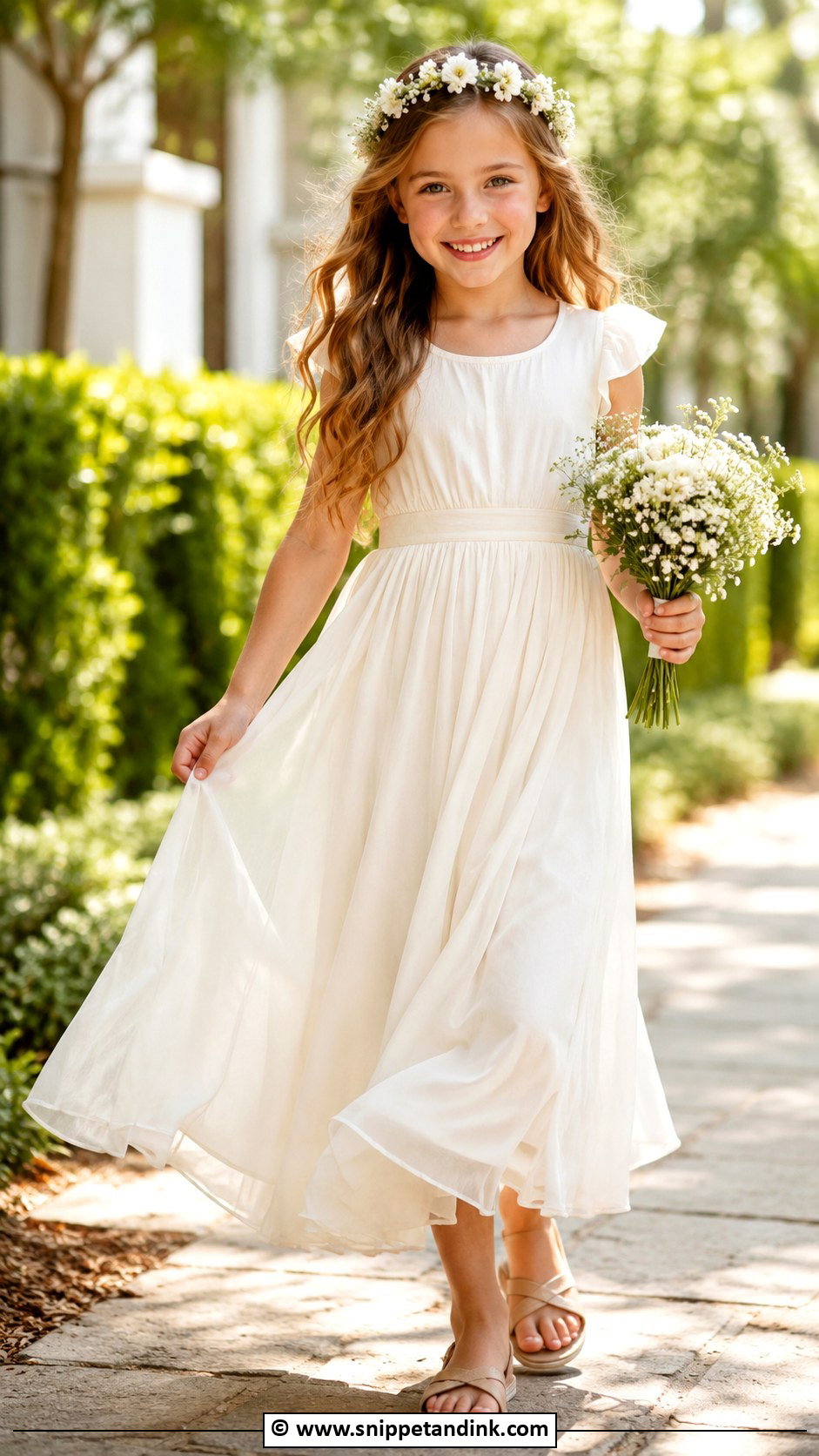
Chiffon is my pick for heat. It drapes and moves, feels lighter than tulle and doesn’t trap warmth, which matters for beach and destination weddings. A flowy A-line with flutter sleeves or a soft elastic waistband is easy to put on and take off quickly. Because chiffon is sheer, the lining must reach the hem; hold the dress up to daylight to check. Flat sandals and a flower crown finish it. Pastels and dusty tones look soft in this fabric.
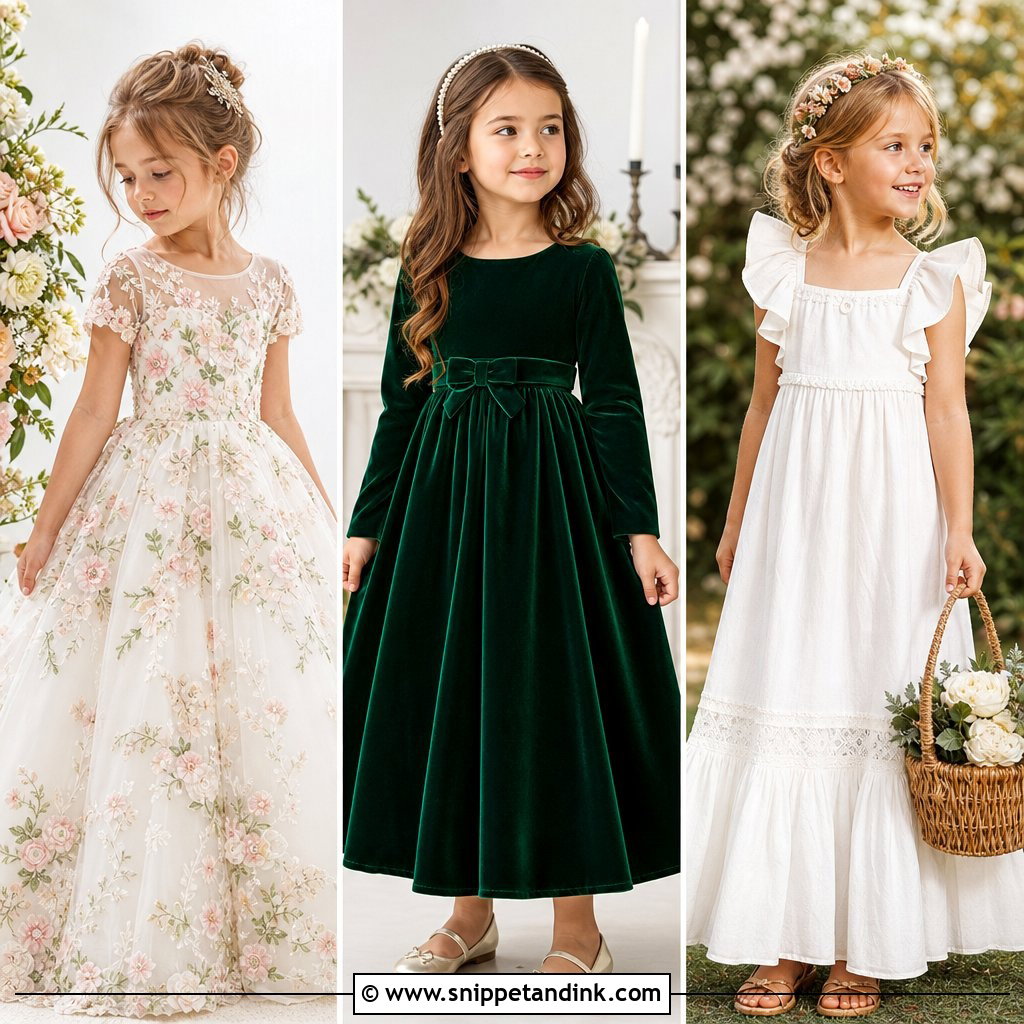
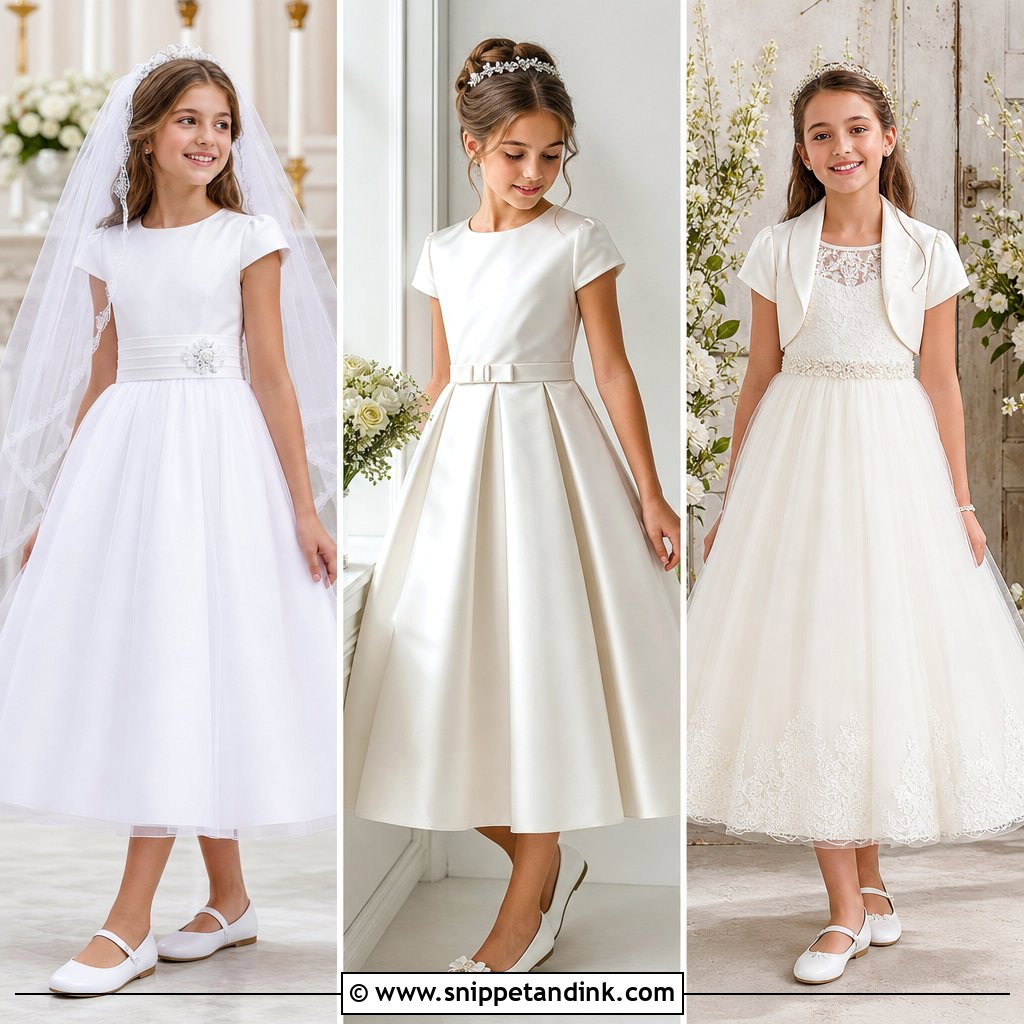
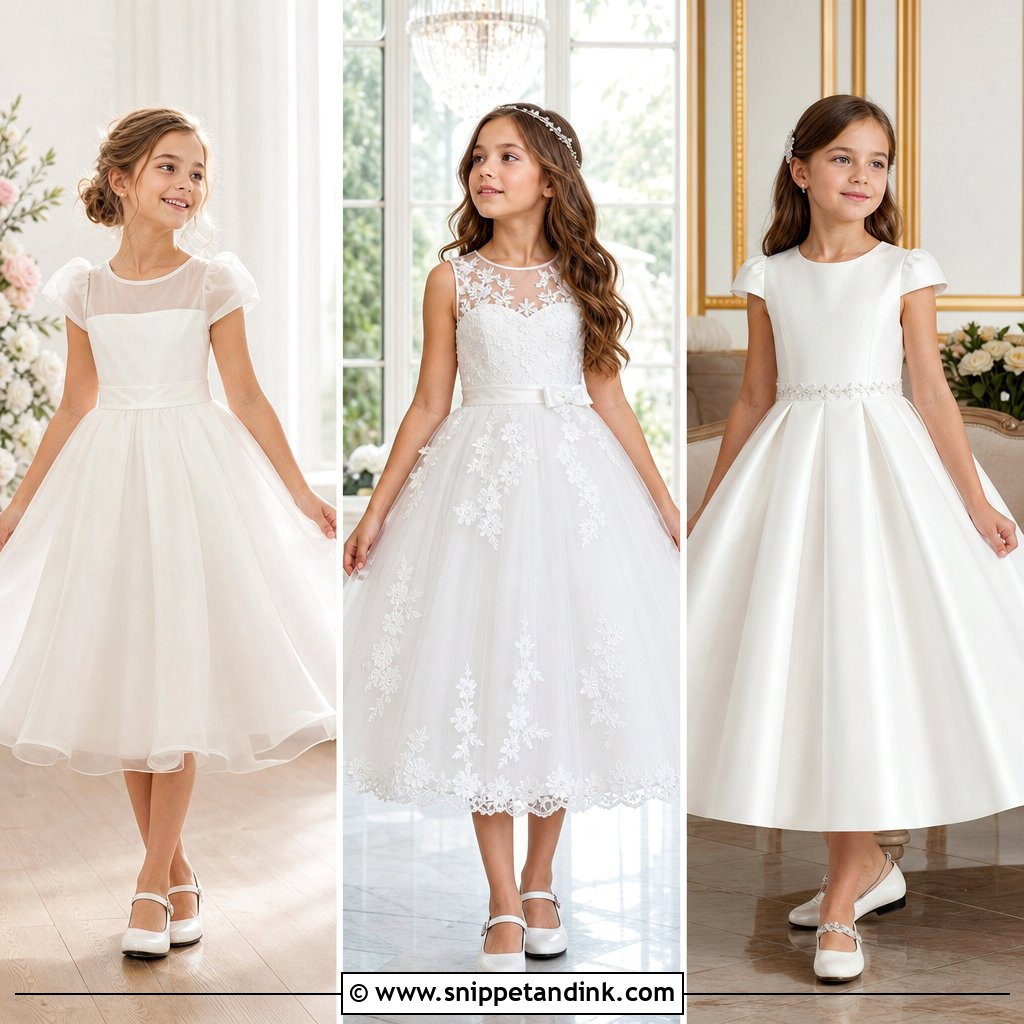
20. Sequin Bodice Flower Girl Dress
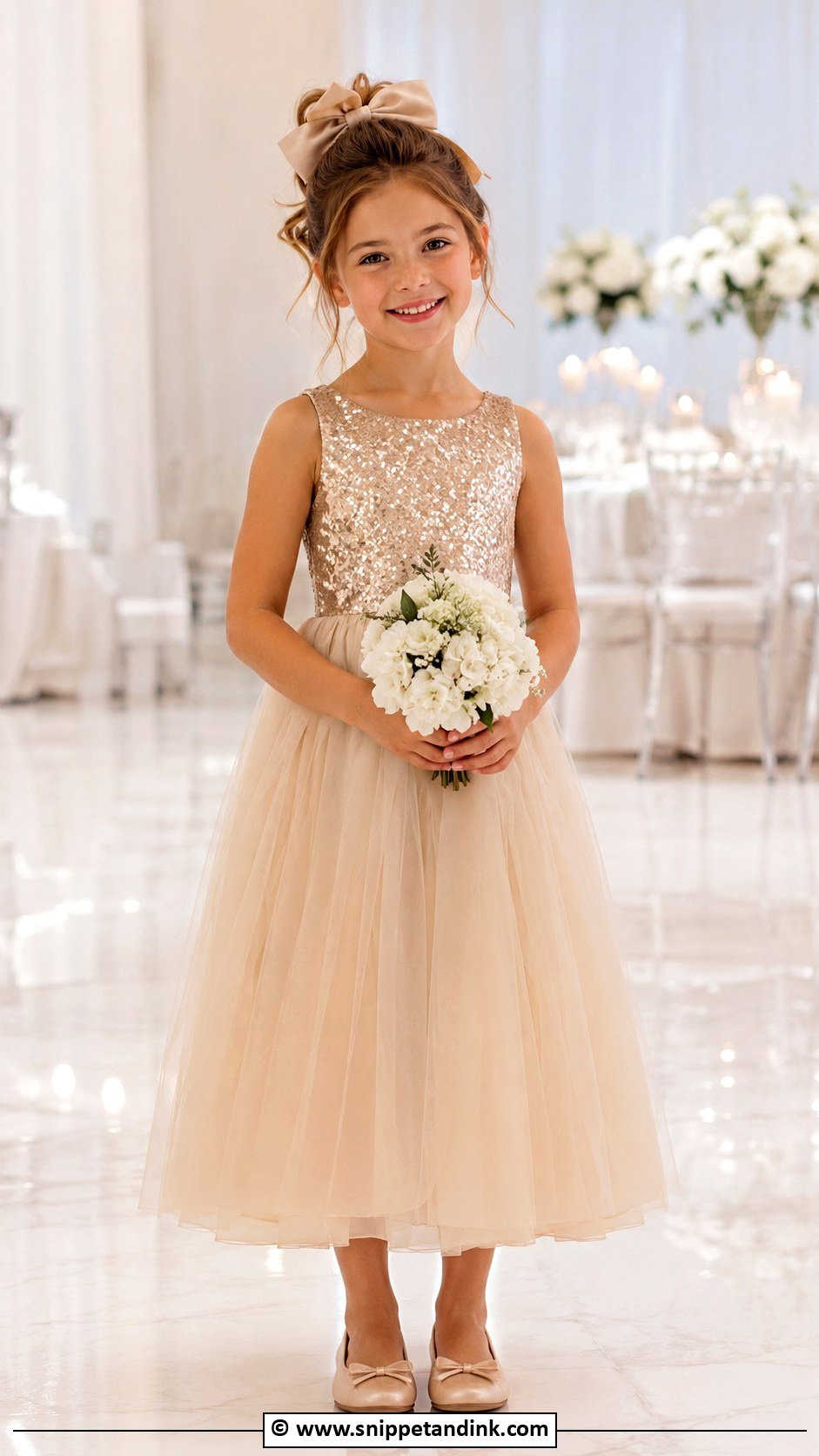
Sequins on a child’s dress should be small and soft. Tiny matte or pearl-finish sequins look festive without the harsh glitter of larger ones. Keep the skirt plain tulle or organza so the outfit doesn’t overwhelm her. The lining is non-negotiable: sequins scratch at the arms and neckline within an hour. Simple flats and a plain bow are enough. This suits evening receptions and dressier venues, where a little sparkle fits the room.
21. Pearl Detail Flower Girl Dress
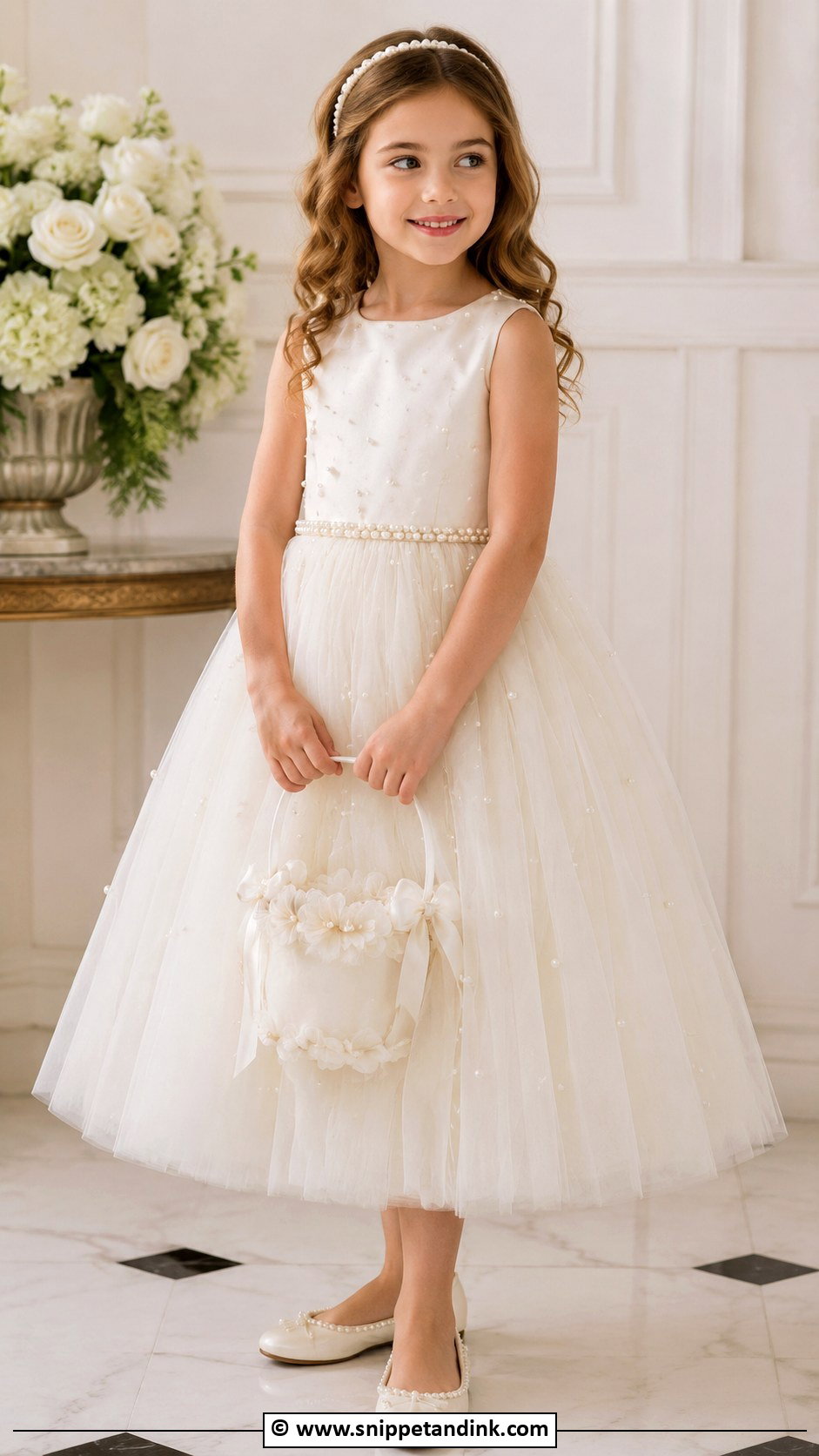
Small pearl accents along the neckline, waist or sleeves look refined and sweet. Placement matters, though. Pearls sewn on the back of the skirt get sat on, pop off and end up on the floor, and loose pearls are a choking risk for younger siblings at the table. Keep them to the bodice and check they’re stitched individually. Pearl-trim flats and a simple headband match the theme. Ivory and white are traditional; blush or champagne feel softer.
22. Embroidered Flower Girl Dress
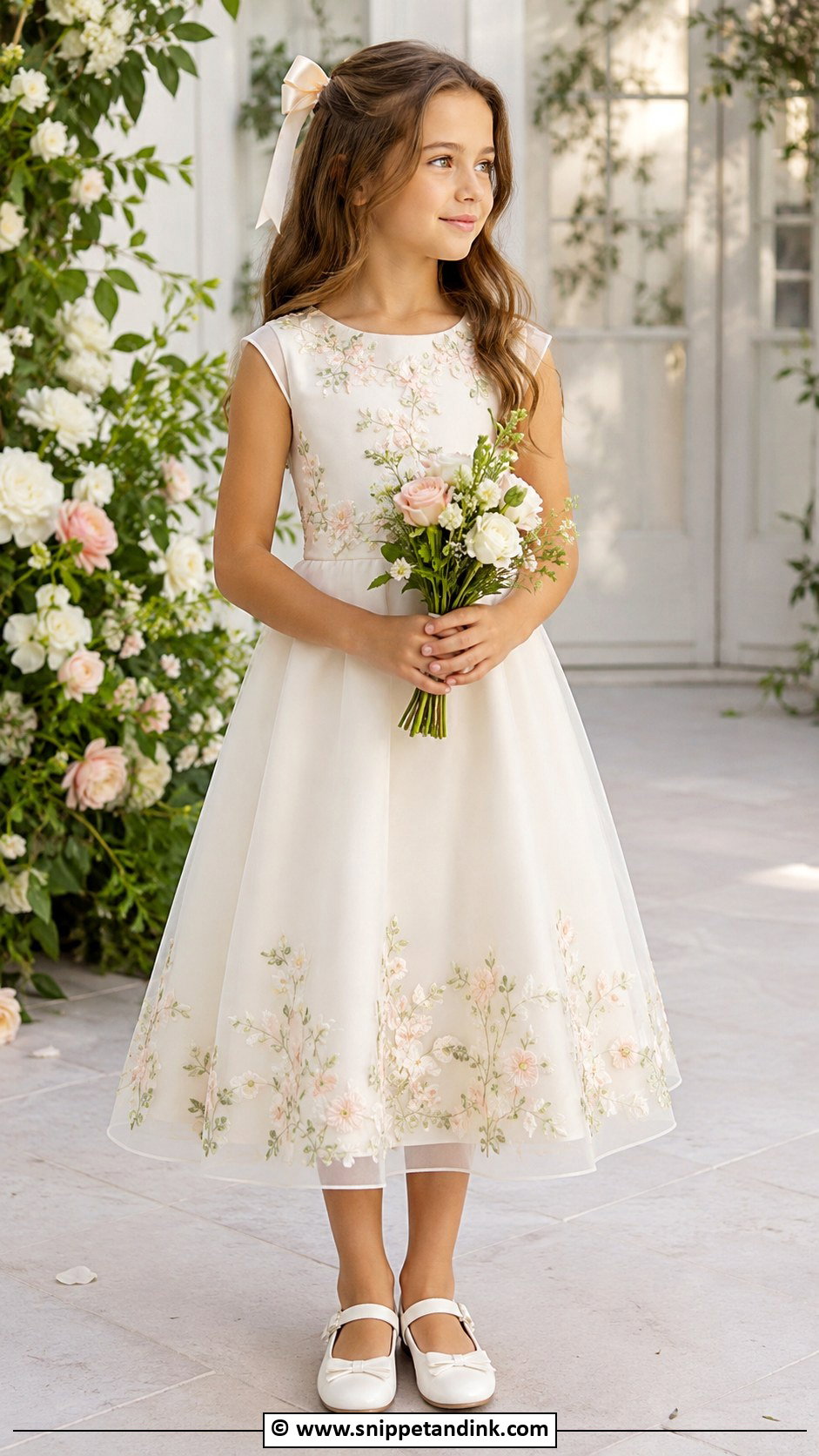
An embroidered flower girl dress brings detail that ties in with bouquets, garden décor and pastel palettes. Embroidery on the bodice, hem or a sheer overlay keeps the dress light; all-over embroidery gets stiff. Turn it inside out: the back of embroidery can be rough, and that rough side should sit against lining, not skin. Ivory on ivory is classic, while blush, sage or blue thread gives it a more personal touch.
23. Pastel Blue Flower Girl Dress
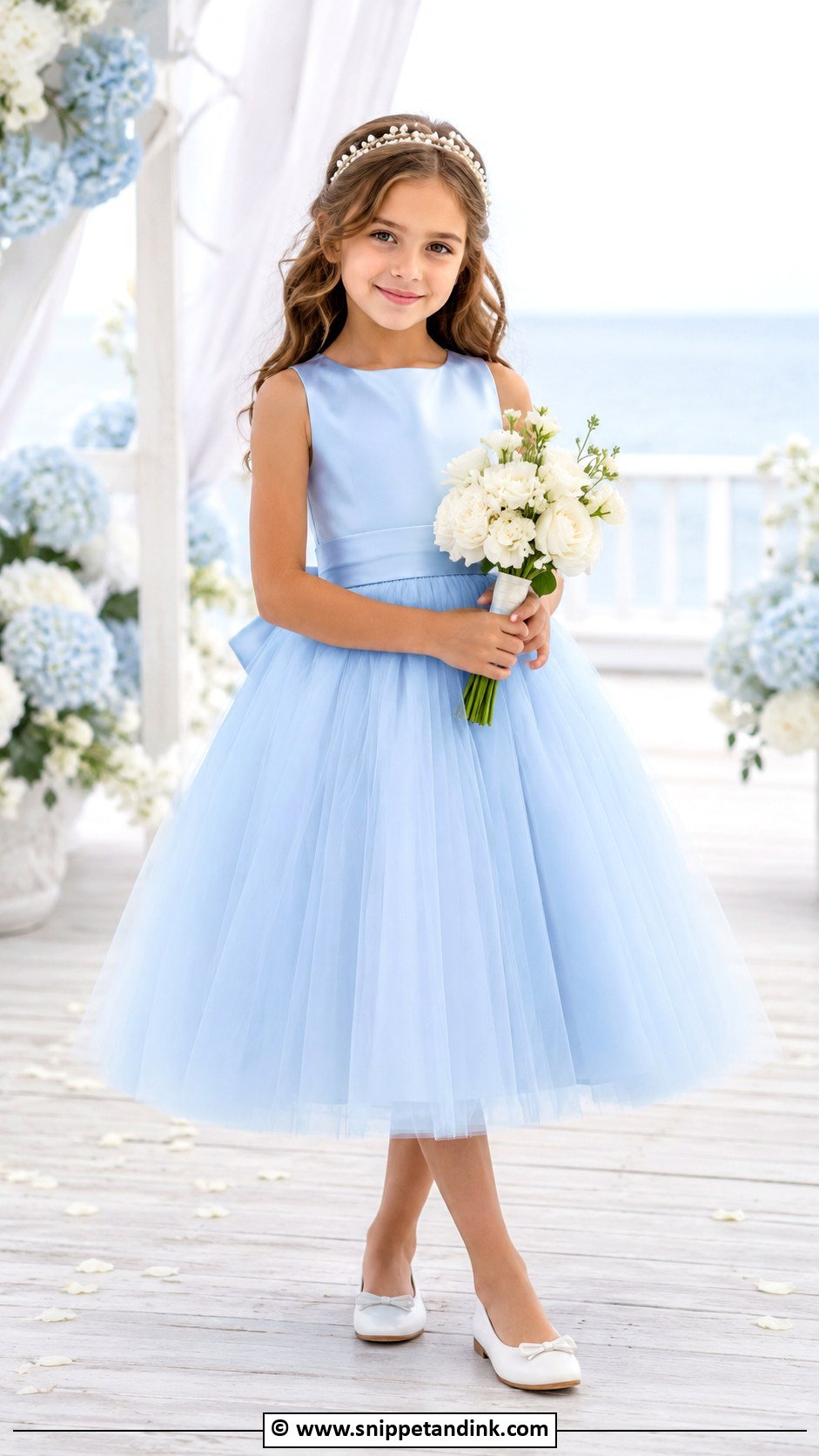
Pastel blue stands apart from ivory and white while staying gentle, which suits coastal and spring weddings. A tulle skirt with a satin bodice is formal; chiffon is relaxed. It pairs well with grey suits, white flowers, silver accents and dusty blue bridesmaids. Pale blue fabric can turn slightly grey on overcast days, so compare it to your bridesmaid swatches outdoors. White flats and a pearl headband keep the color the main feature.
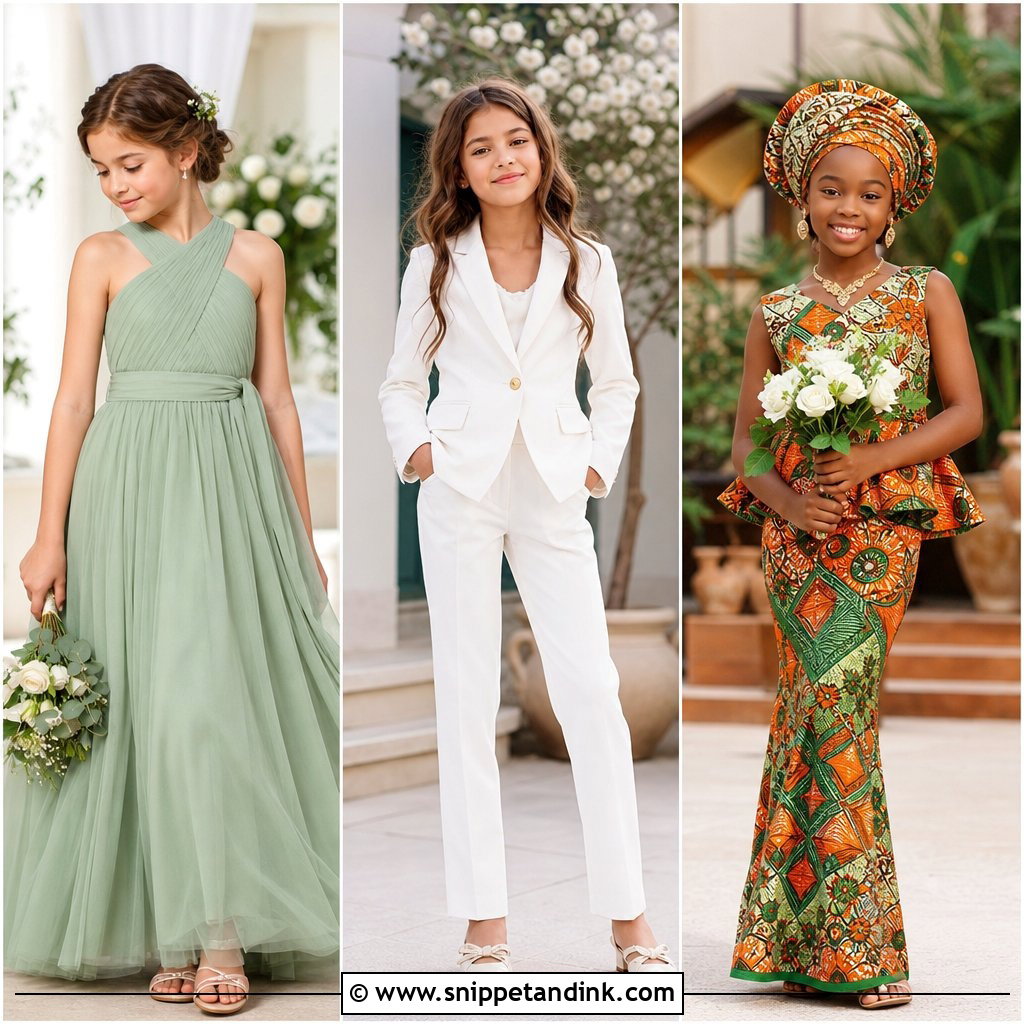
24. Sage Green Flower Girl Dress
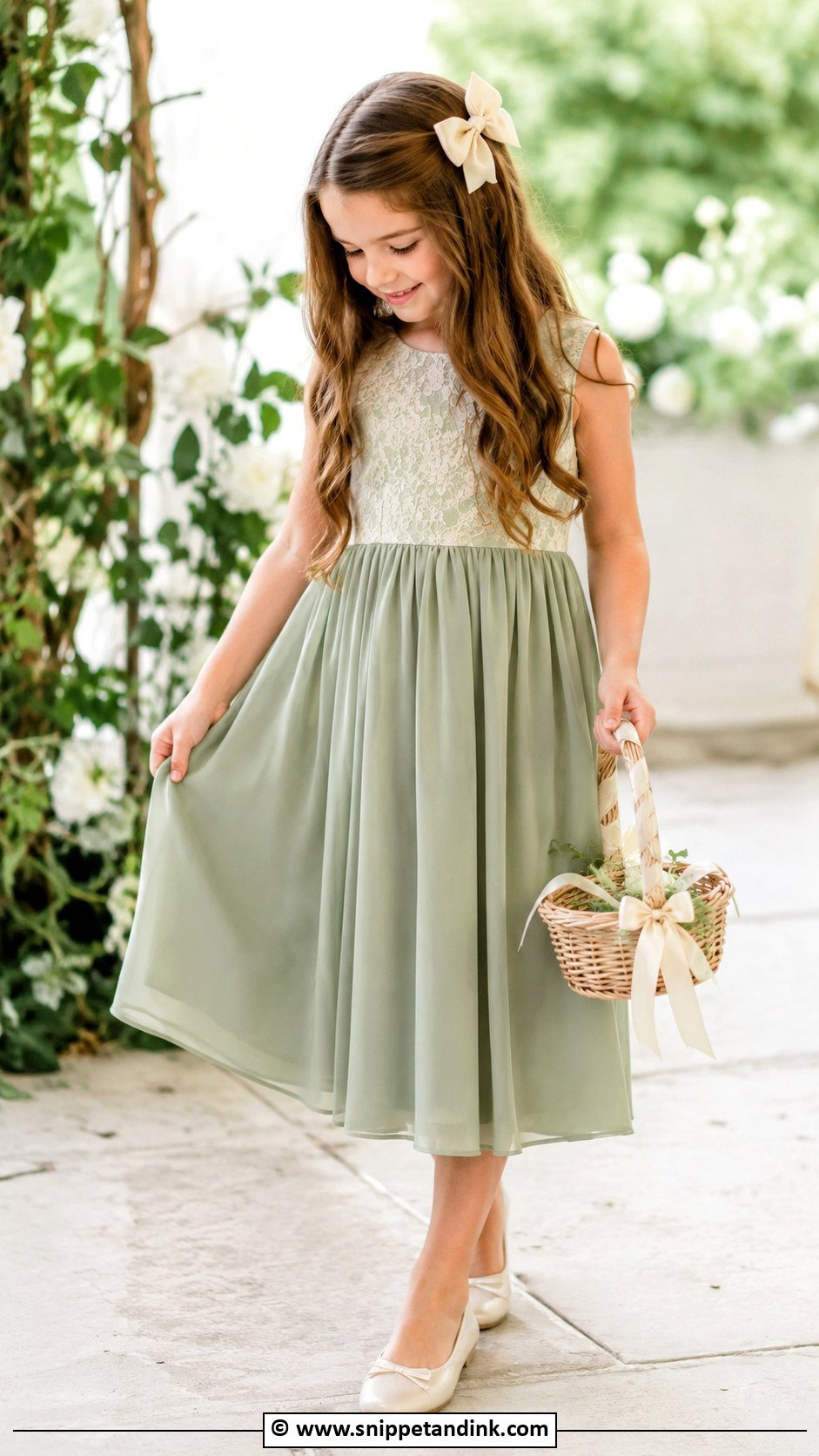
A sage green flower girl dress fits nature-led weddings and blends easily with greenery and ivory flowers. Tulle, chiffon or satin depend on how formal the day is. If the couple wants a touch of color, a sage skirt under an ivory lace bodice is a gentle way to do it. Sage dye lots differ noticeably between brands, so order all the children’s dresses from the same place at the same time. It’s also a color she’ll happily wear again.
25. Lavender Flower Girl Dress
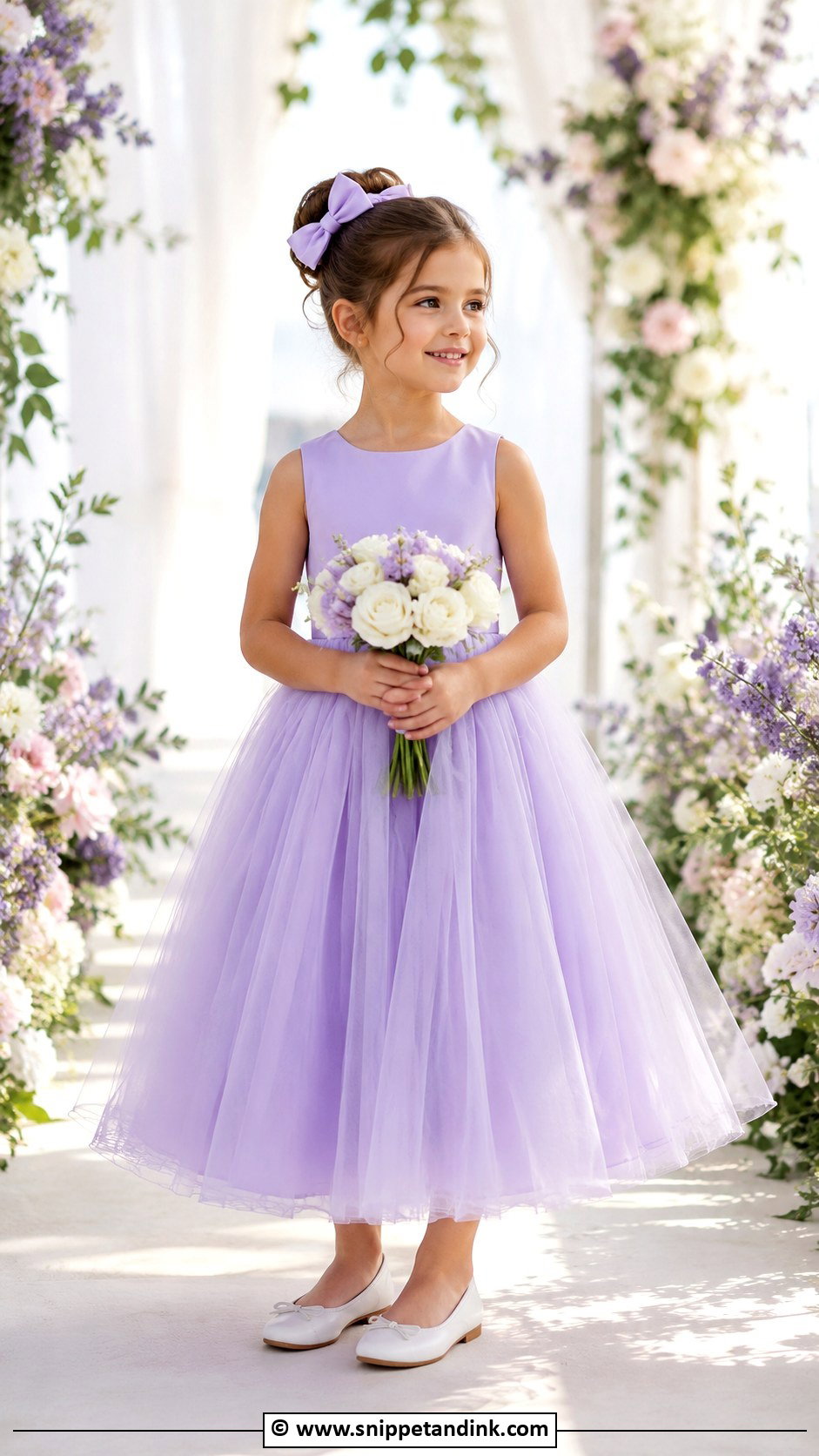
Lavender gives a soft, dreamy touch and fits purple, pink, ivory, silver and sage florals. A tulle dress with a plain bodice suits formal weddings; chiffon works outdoors. Lavender shows grass and juice stains quickly, so pack stain wipes. White or silver flats, a matching bow and a small bouquet of pale flowers keep it delicate. It gives the flower girl her own look while still matching the party.
26. Dusty Rose Flower Girl Dress
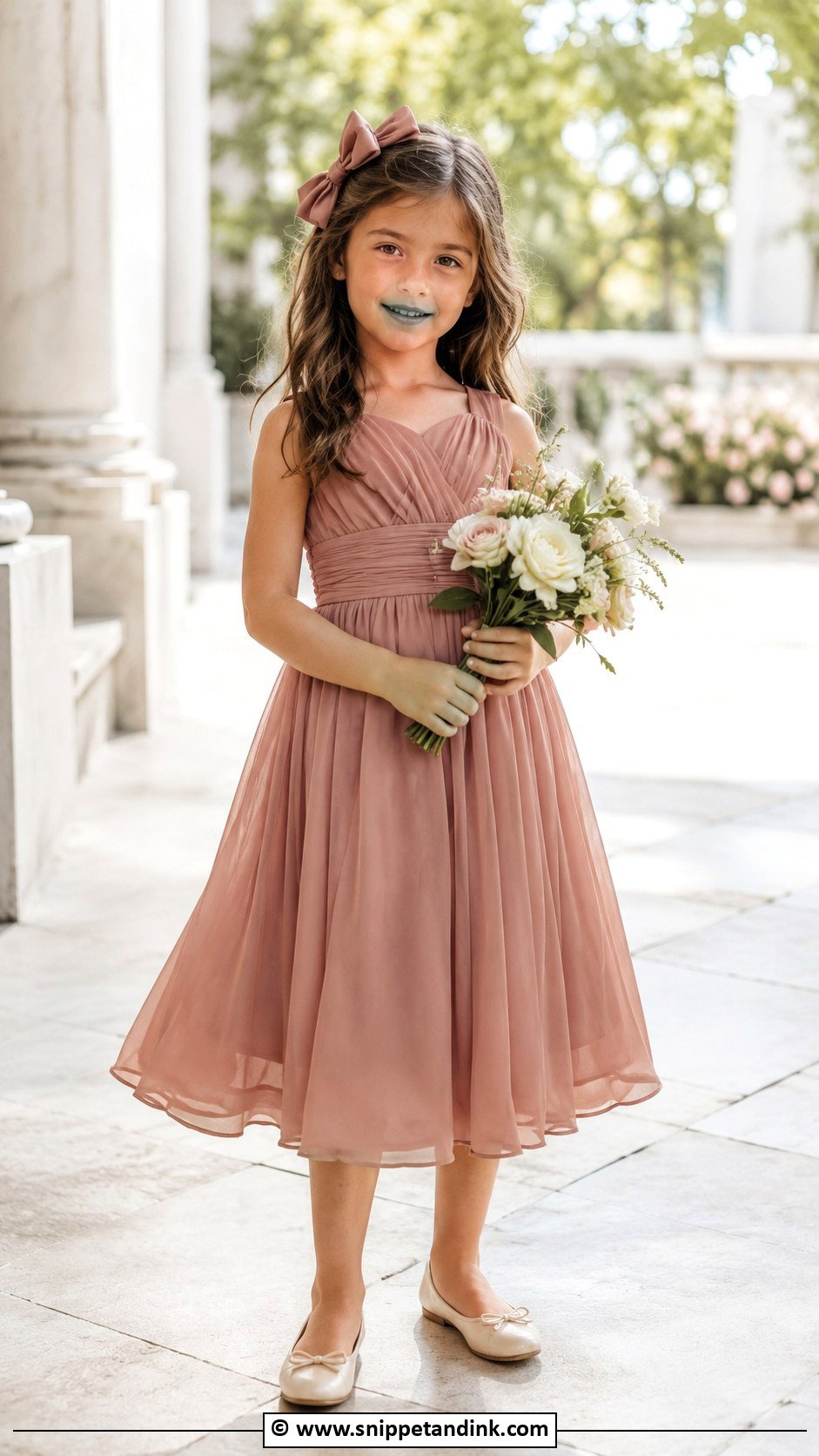
Dusty rose is a deeper, more grown-up pink that still suits children, and it fits vintage or muted palettes with champagne, sage, taupe and mauve. Keep the details simple so the color stays rich: tulle, chiffon or satin without much sparkle. Nude or ivory flats and a bouquet of cream flowers balance it. It looks warm in late summer and autumn light and is one of the few pinks that doesn’t fade beside a burgundy or rust palette.
27. Toddler Flower Girl Dress
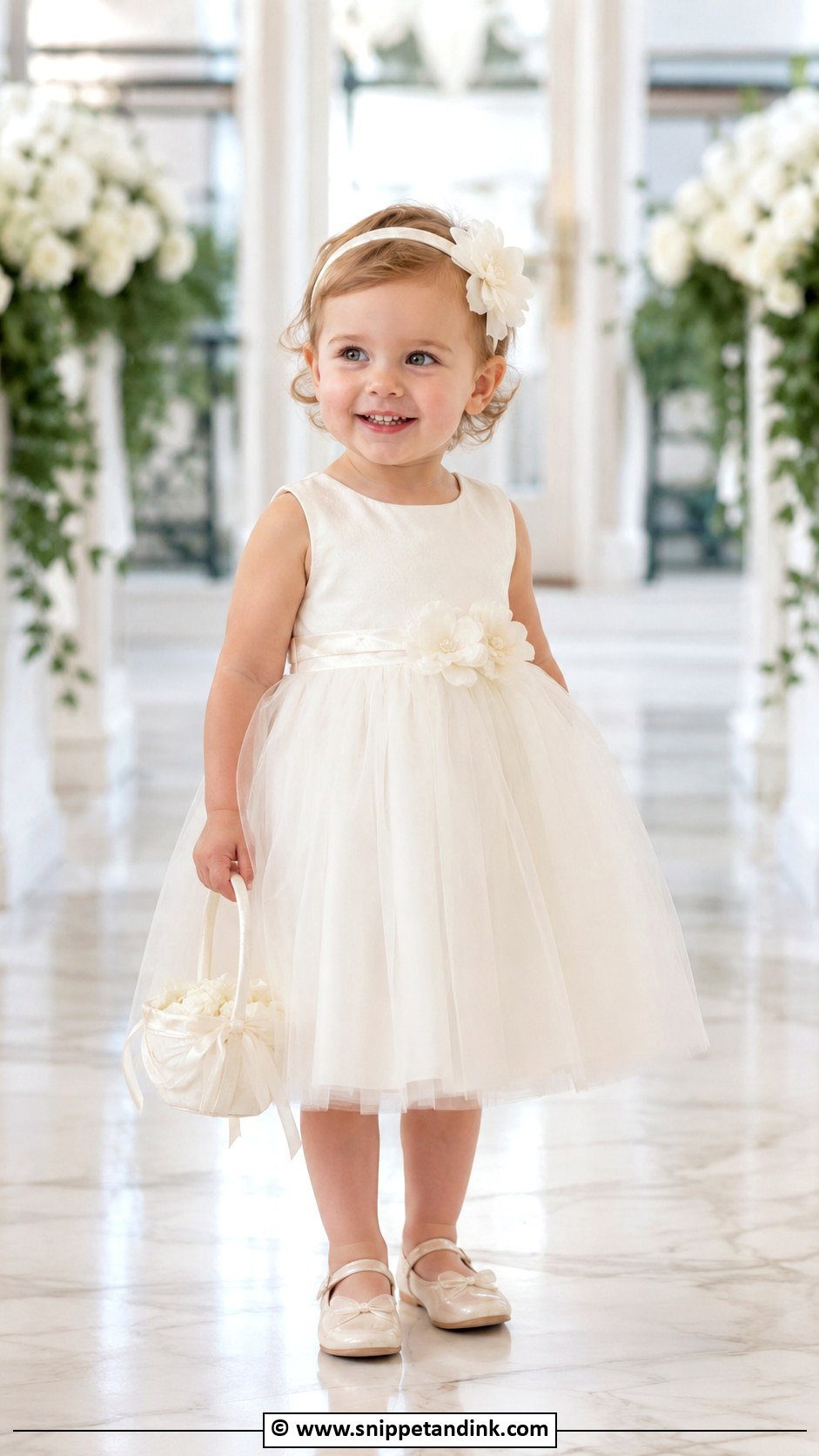
Toddlers need a dress that’s safe before it’s cute. Soft lining, a simple zip or snaps, light fabric and a hem above the ankle are the basics. No long trains, scratchy lace or heavy beading. A tulle skirt with a cotton bodice, puff sleeves or a satin sash looks sweet without stiffness. Shoes need flexible, non-slip soles; venue floors are often polished and slippery. Choose a soft headband, or skip hair accessories altogether, because most toddlers pull them off before the vows.
28. Junior Flower Girl Dress
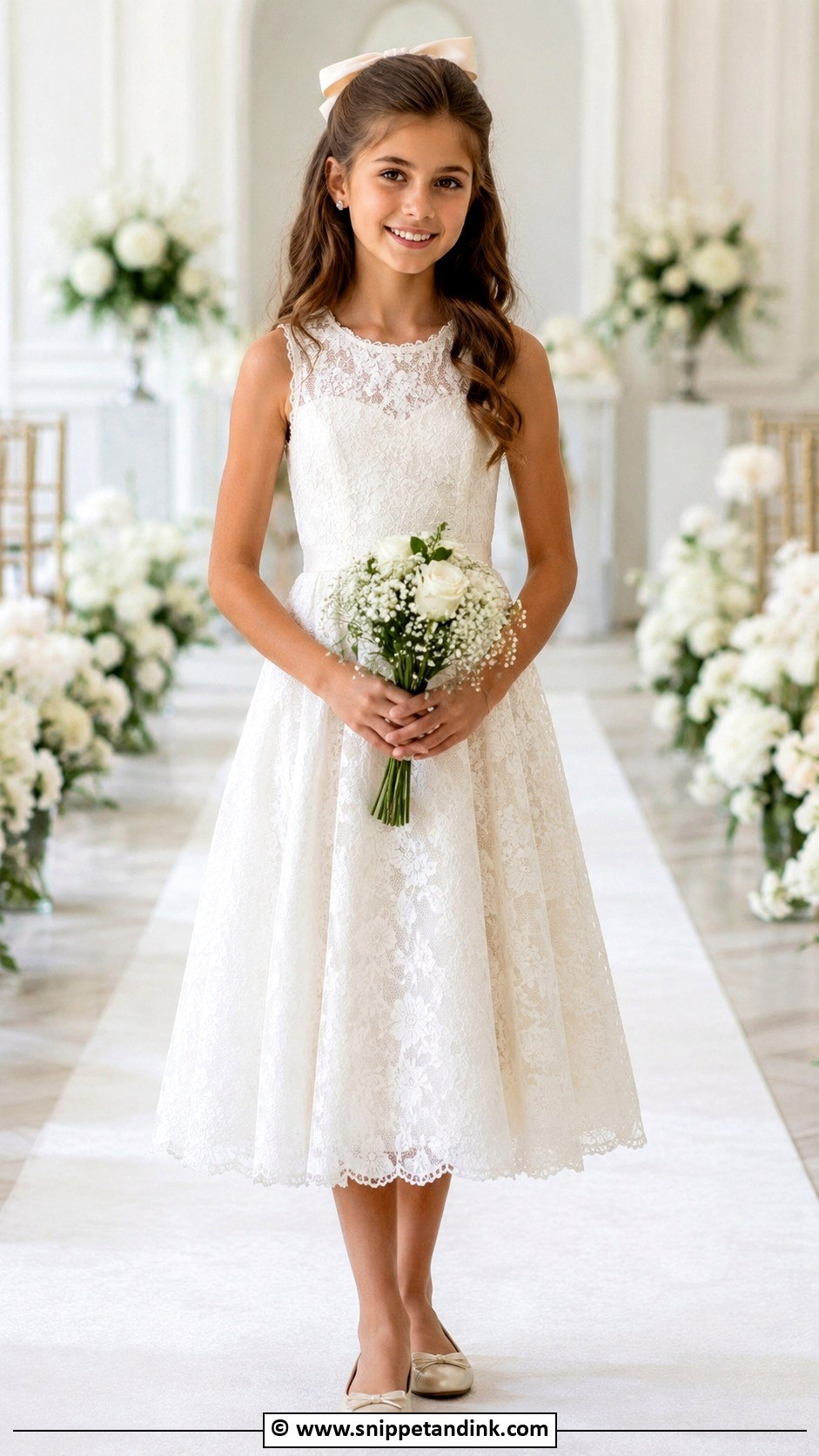
A junior flower girl dress is for the in-between age, usually around eight to twelve, when a child doesn’t want to look little anymore. A simple lace A-line, satin midi or chiffon gown with clean lines works. Let her have a real say in the choice; older girls who chose their dress tend to wear it happily all day. Tea or ankle length both work. Ballet flats or a low block heel, a neat bow and a small bouquet finish it. Ivory, champagne, dusty rose and sage are colors older girls usually prefer.
29. Matching Sisters Flower Girl Dresses
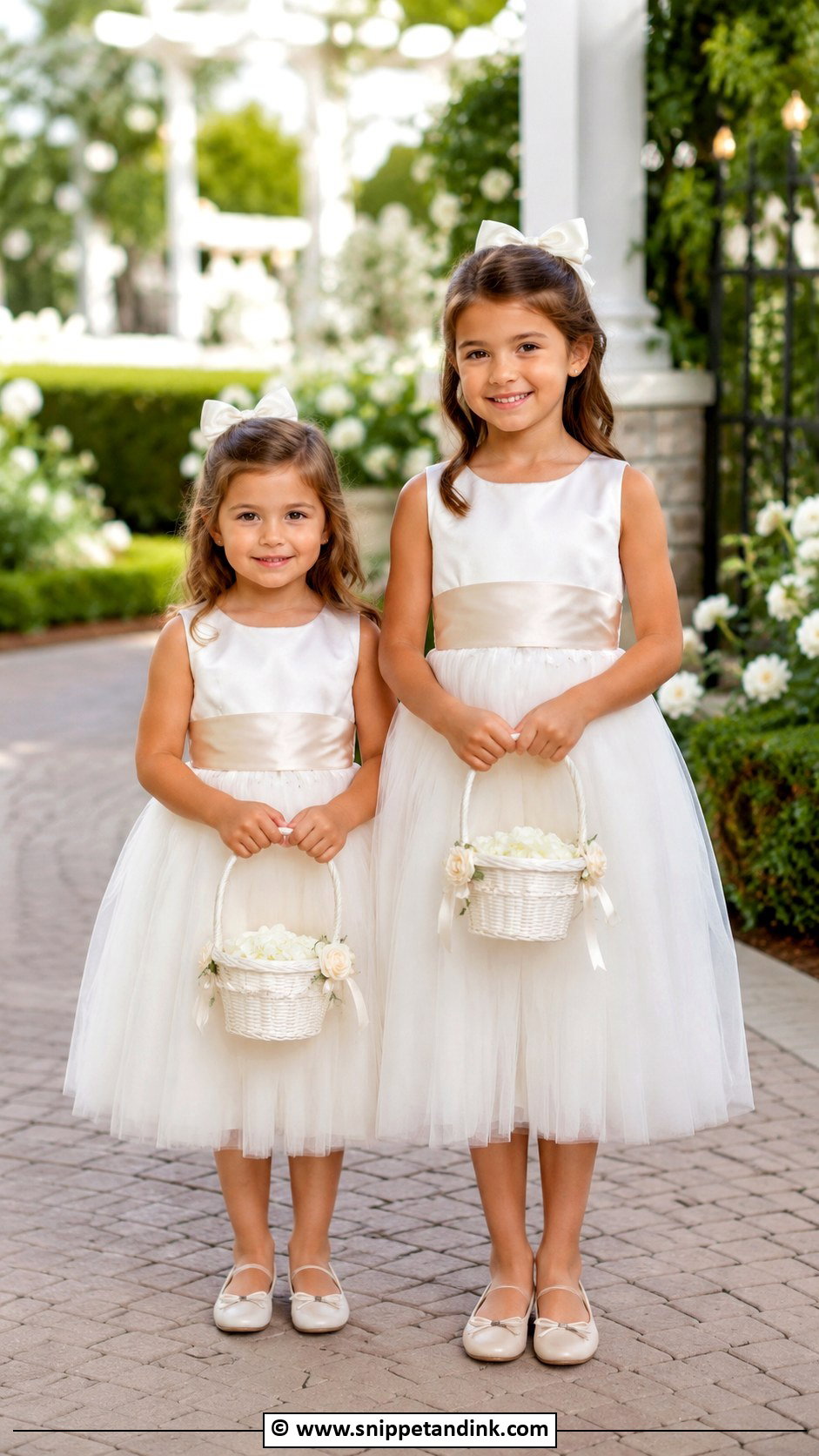
Matching sisters don’t need identical dresses, just a shared color, fabric or detail. A toddler might wear a knee-length ivory tulle dress while her older sister wears a tea-length version with the same satin sash. That way each child is comfortable in a cut suited to her age. Keep the younger child’s hem shortest, since she’s the one most likely to trip. Matching shoes and similar bows complete the set for the processional and family photos.
30. Budget Flower Girl Dress
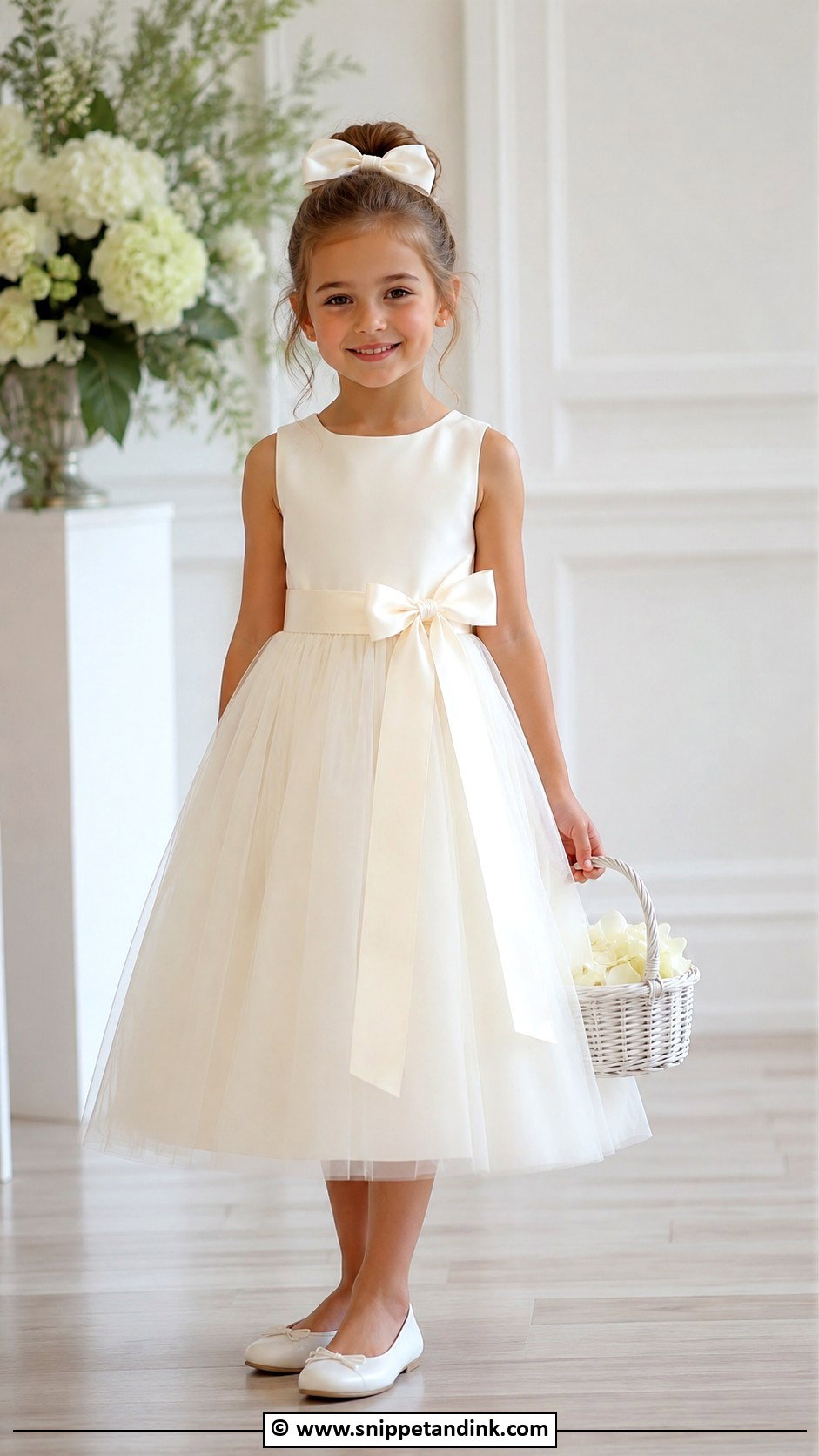
A budget flower girl dress can look polished if you spend on fabric and fit rather than decoration. Many affordable dresses come in tulle, satin, lace or chiffon in classic shapes. Check the lining, seams and waistband before anything else. Clean ivory, white, blush or champagne designs tend to look more expensive than busy ones. Buying closer to the wedding helps with sizing, since children grow fast, but leave enough time for a return or a quick hem.
What I Pack for Flower Girls on the Morning
A small bag set aside just for the children saves a lot of wedding-morning stress. Most of what goes wrong for flower girls is predictable: a grass stain, a lost shoe, tiredness after the ceremony. I put the parent or a named adult in charge of this bag so the bridal party isn’t chasing it.
- Stain wipes and a white towel to sit on before the ceremony
- Spare tights or socks and a plaster for rubbing shoes
- Clear, non-staining snacks and water with a straw
- A few bobby pins and a spare hair tie
- A comfortable change of clothes for later in the evening
Feed children before they get dressed, and keep them in a robe or old T-shirt until close to photos. A short practice walk at the rehearsal, with the same basket, makes the real one much calmer.
Washing, Storing and Passing It On
Treat stains as soon as you get home rather than leaving the dress folded in a bag overnight. Most tulle and polyester satin flower girl dresses can be gently hand-washed in cool water with a mild detergent, but anything with pearls, sequins or appliqué is safer with a cleaner who handles formalwear. Dry it flat or on a padded hanger, then store it in a breathable cotton bag rather than plastic, which can trap moisture and yellow ivory fabric over time. A well-kept dress is easy to hand down to a younger cousin or sell on.
A Dress She Forgets She’s Wearing Is the Goal
The best flower girl dress is the one nobody has to think about once the ceremony starts. When you’re comparing wedding dresses for kids, weigh comfort, venue, season, palette and the child’s age before the photos you’ve saved. Nothing should be scratchy, heavy or hard to sit in. Soft tulle, smooth satin, breathable chiffon, lined lace and organza all work when they’re made well. Ivory and white are always safe, and blush, sage, lavender, dusty rose or pastel blue add personality. If she’s still dancing in it at ten o’clock, you chose right.
You'll Like These Ideas:


Leave a Reply