
Victorian bridal dress is about structure first: high collars, boned bodices, full skirts, bustles, long sleeves and a lot of lace. When I style a bride in this direction, I think in whole outfits rather than single gowns, because a high neck changes the earrings, a bustle changes the veil and a corset changes how you sit through dinner. Below are the versions I’d actually put together, from strict historical shapes to lighter modern takes, with notes on fit, fabric and what each one asks of the person wearing it.
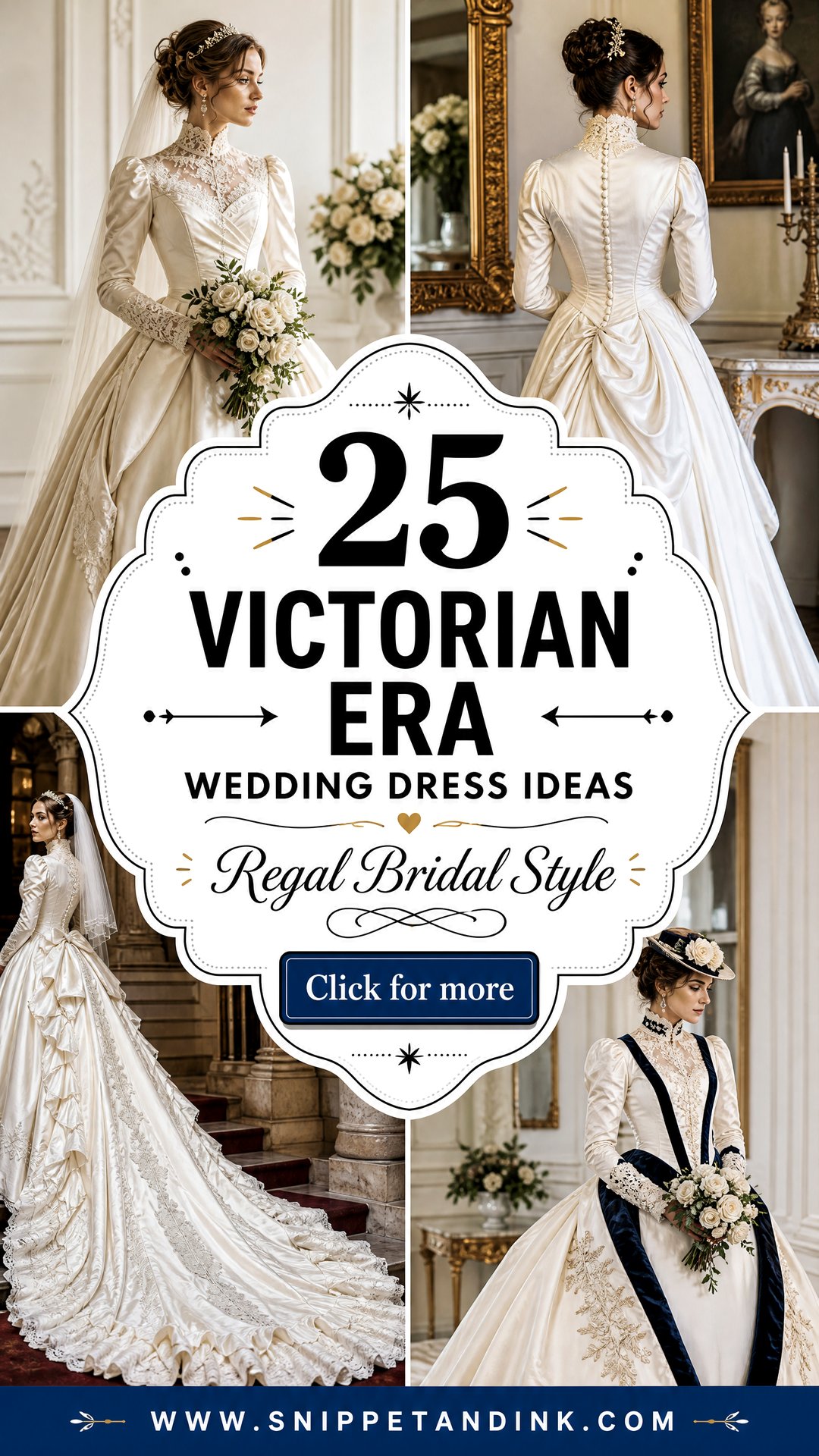
How Close to History Do You Want to Go?
The Victorian period ran for over sixty years, and fashion changed a lot in that time. When a bride tells me she wants a Victorian dress, my first question is which part of it she’s picturing, because the shapes are very different.
- Early in the reign: dropped shoulders, a pointed bodice and a wide bell skirt over petticoats. The white satin and lace gown worn by the young queen herself made white popular for brides.
- The middle decades: very wide skirts over crinoline hoops. Spectacular, but hard to fit through doorways and into cars.
- The bustle years: the volume moves to the back, with a flatter front and draped layers behind.
- The 1890s: big puffed sleeves, a narrow waist and a smoother, bell-shaped skirt.
You don’t need to match a decade exactly, and most of my brides don’t. But knowing which period you’re drawn to keeps the outfit coherent. I’d also ask yourself how much structure you’re happy to wear. A modern gown with a high lace collar is a gentle nod; a laced corset with a bustle is a commitment that affects how you sit, eat and dance all day.
1. Victorian High Neck Lace Wedding Dress
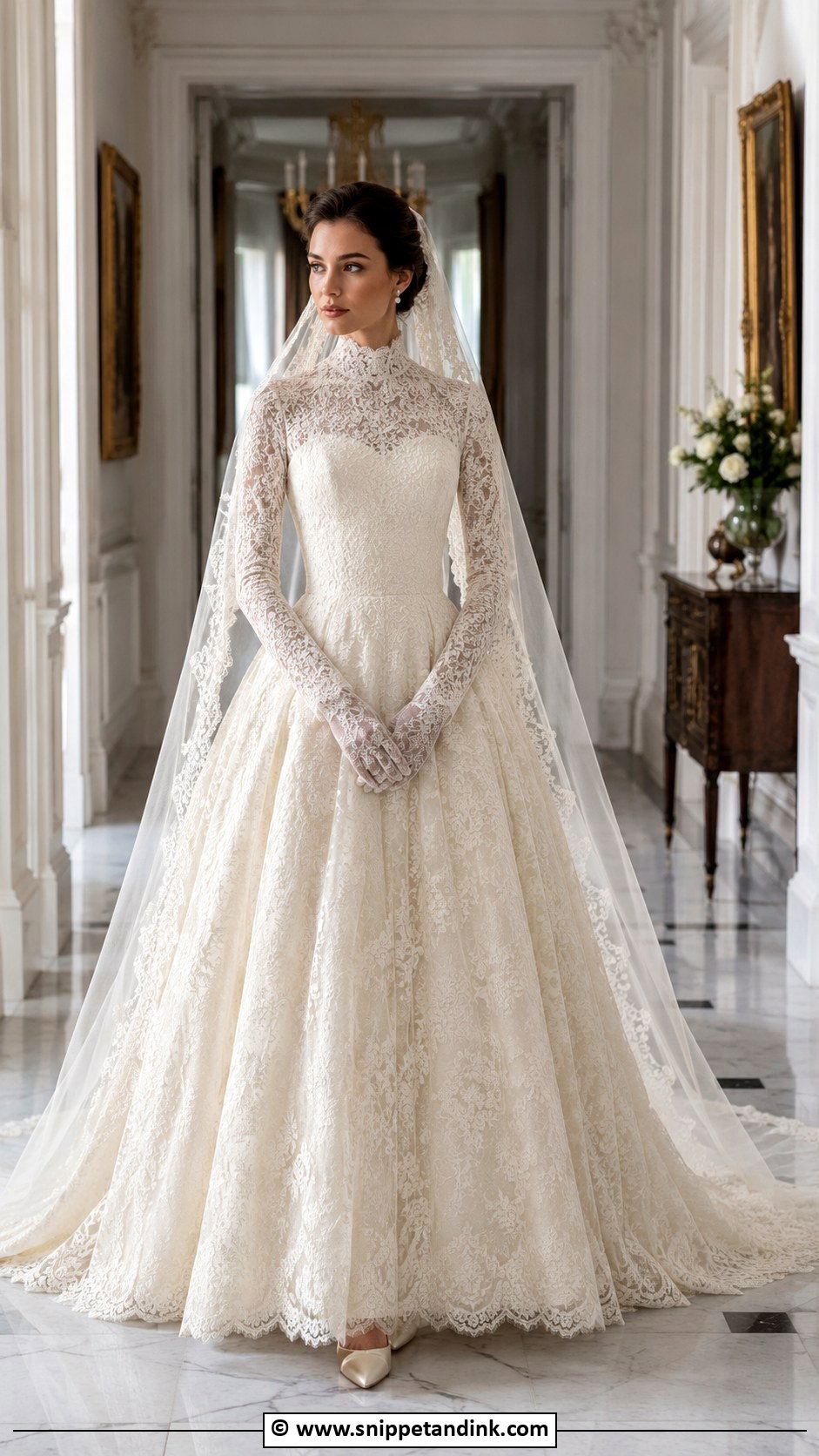
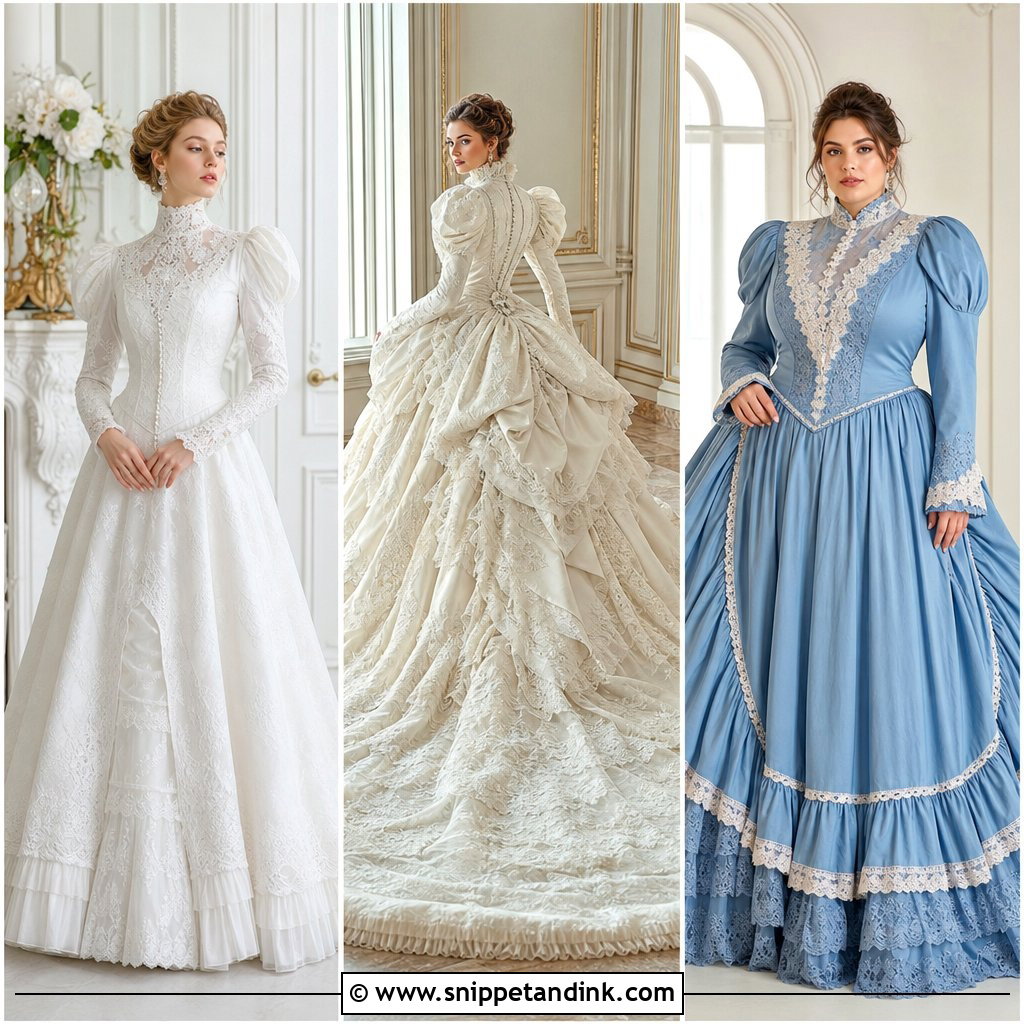
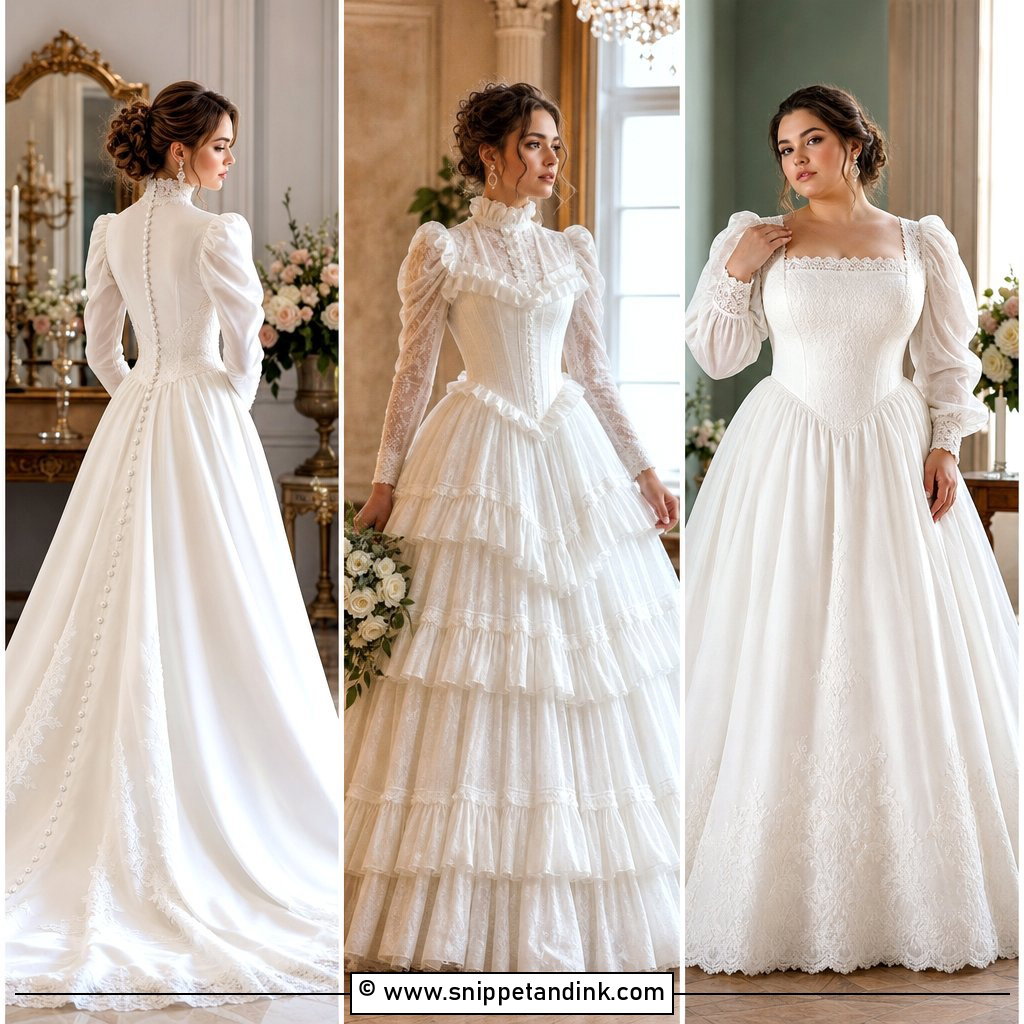
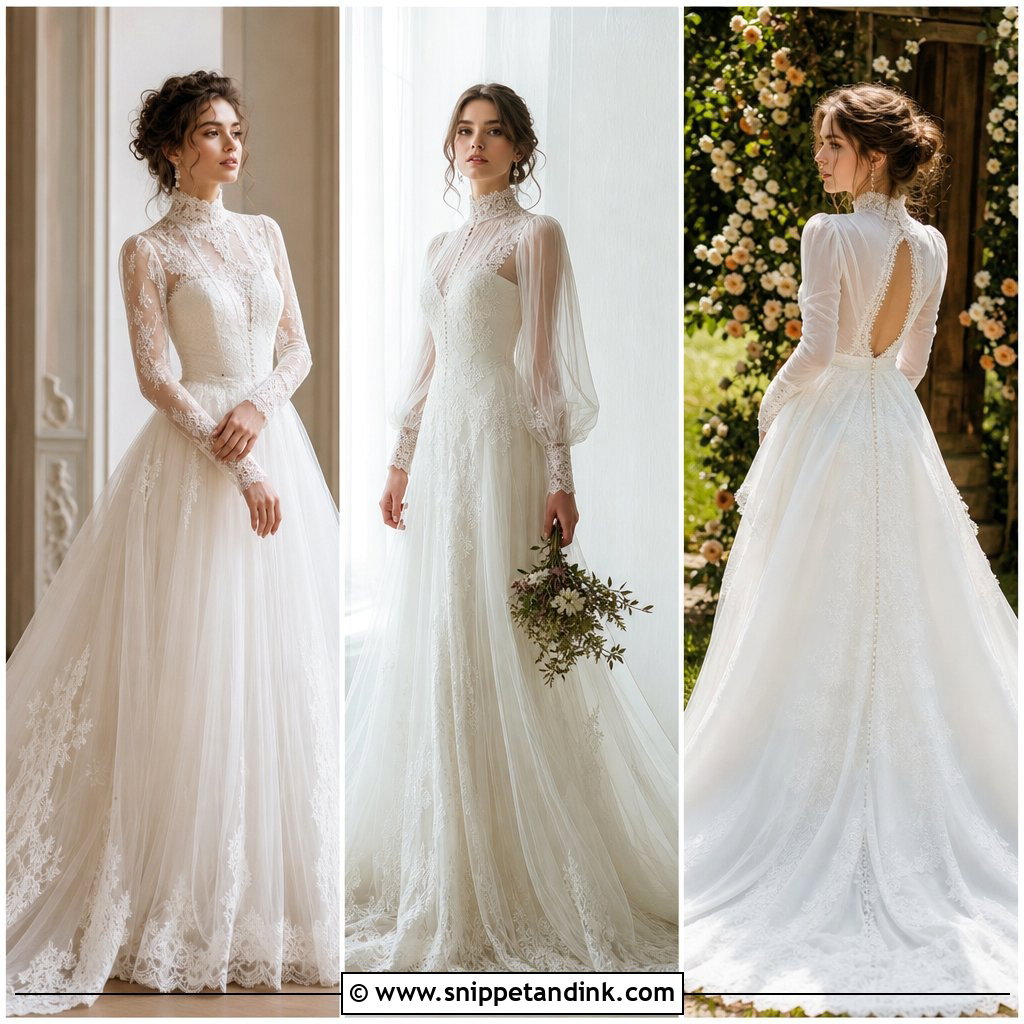
The high lace neck is the image most people picture when they hear “Victorian bride”, and the collar height is the thing I adjust most at fittings. Too high and it presses under the jaw every time you look down; a centimetre lower and you forget it’s there. Ivory satin beneath the lace gives the dress body, and covered buttons, long sleeves and a full A-line or ball gown skirt complete the shape. With the neck this busy, I keep earrings to pearl drops and the hair in a low bun so nothing fights the collar. A cathedral veil with lace edging finishes it.
2. Victorian Corset Ball Gown Wedding Dress
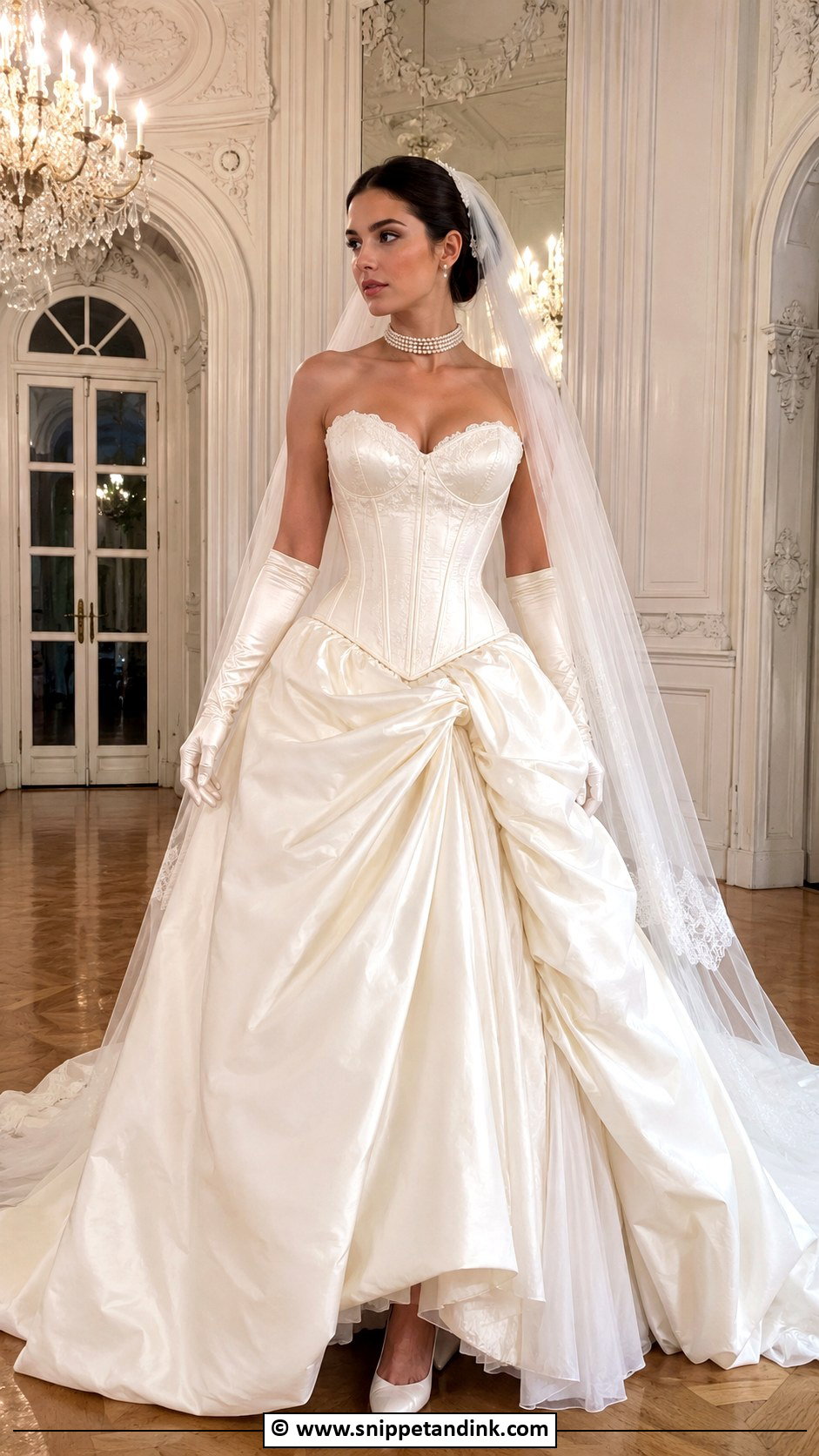
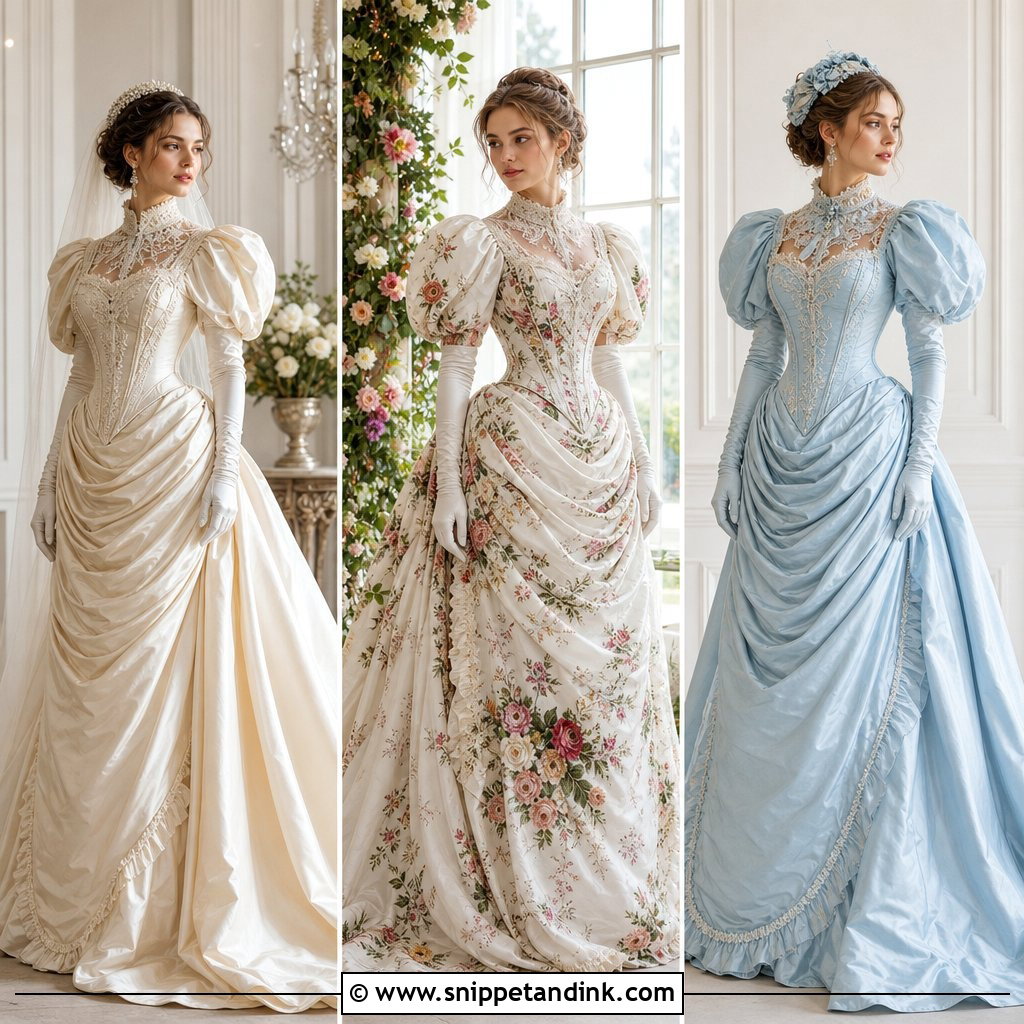
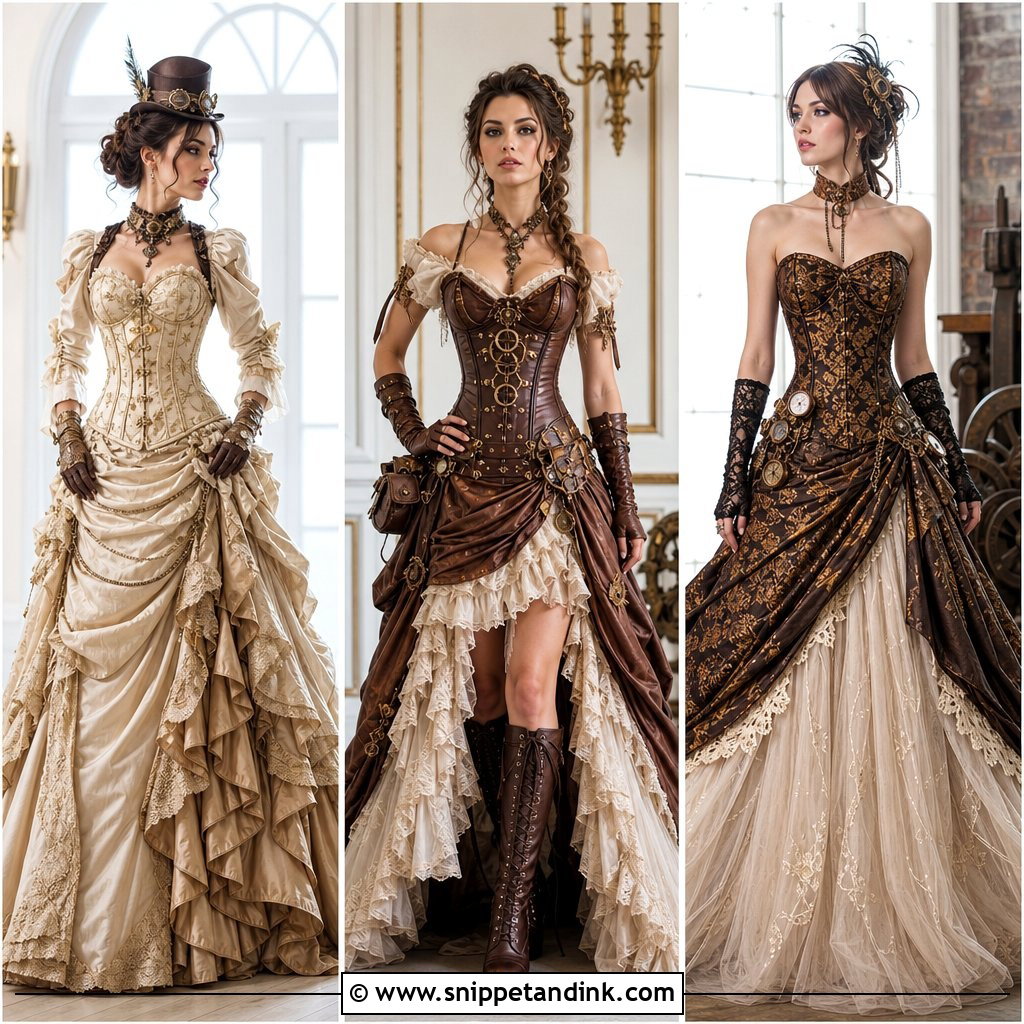
For real drama at the waist, the corset ball gown is the shape. Silk satin, taffeta or a softly patterned brocade keeps it formal, and a lace-up back plus a basque waist push it closer to period dress. The point of the basque dips below the natural waist, which lengthens the torso and suits brides with a shorter body. I lace these at the final fitting with the bride seated, since lacing set while standing feels too tight by the speeches. Smooth, lifted hair, a pearl choker, white gloves and satin pumps keep the bodice on show.
3. Victorian Bustle Wedding Dress
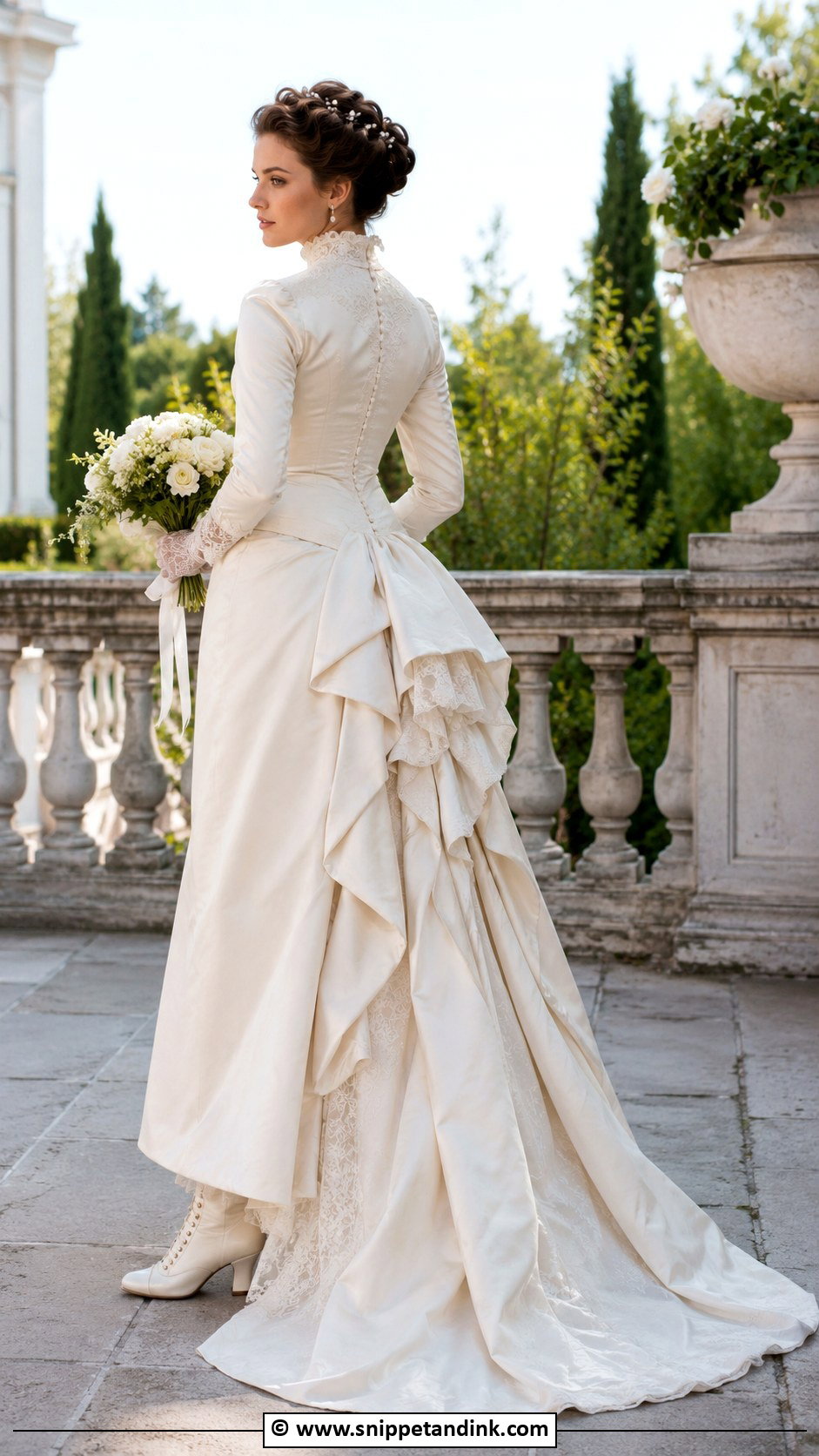
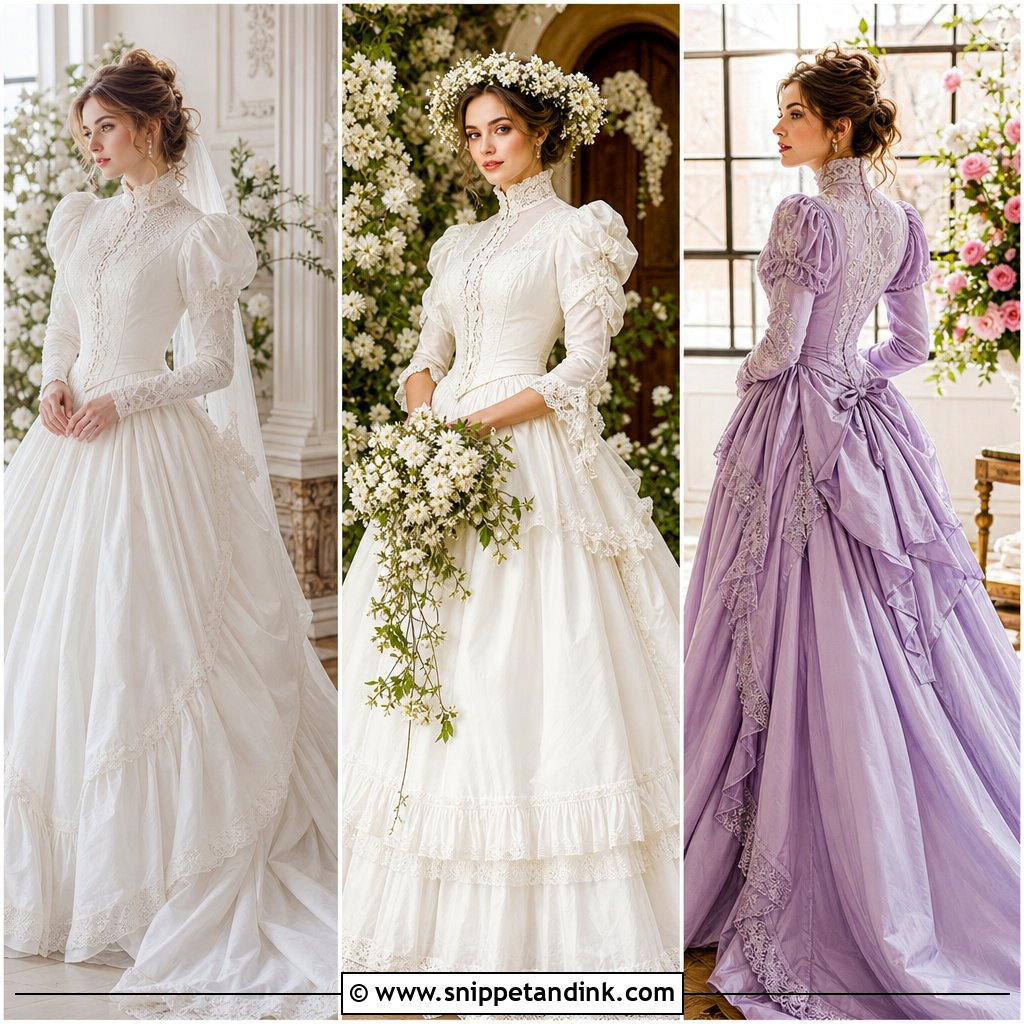
A bustle pushes the volume to the back, which is very 1870s and 1880s, and it gives you a side profile unlike any modern gown. The front skirt stays smooth while draped layers gather behind and fall into a train. I keep the bustle proportionate to the bride’s frame; too much and it looks like an add-on. Lace, satin and organza all drape well here. Buttoned ankle boots or satin heels, pearl pins and a simple veil set above a soft updo are enough. Check the bustle sits right when you sit, because some structures need you to perch forward.
4. Victorian Long Sleeve Satin Wedding Dress
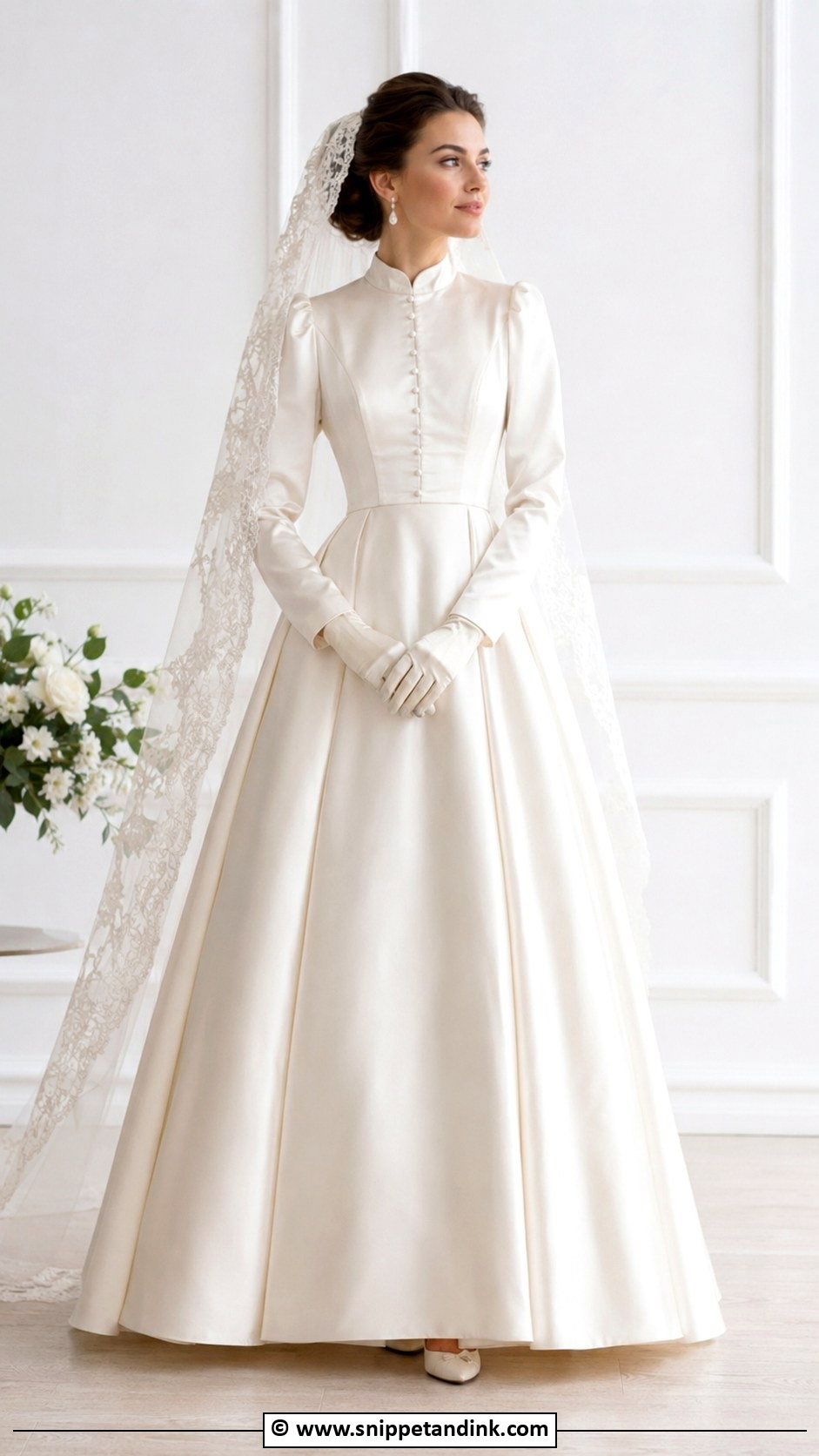
Satin with long sleeves is the plainest Victorian route and, honestly, one of the most forgiving to wear. A high collar or shallow square neck reads period; a fitted bodice, defined waist and full skirt with a modest train complete it. The thing to watch is sleeve fit at the elbow. Satin doesn’t stretch, so if the sleeve is narrow you can’t raise your arms to hug anyone, and I’d ask for a slightly bent sleeve pattern. Add pearl earrings, a small comb, satin gloves and closed-toe heels. A lace veil adds texture to a very simple dress.
5. Victorian Puff Sleeve Wedding Dress
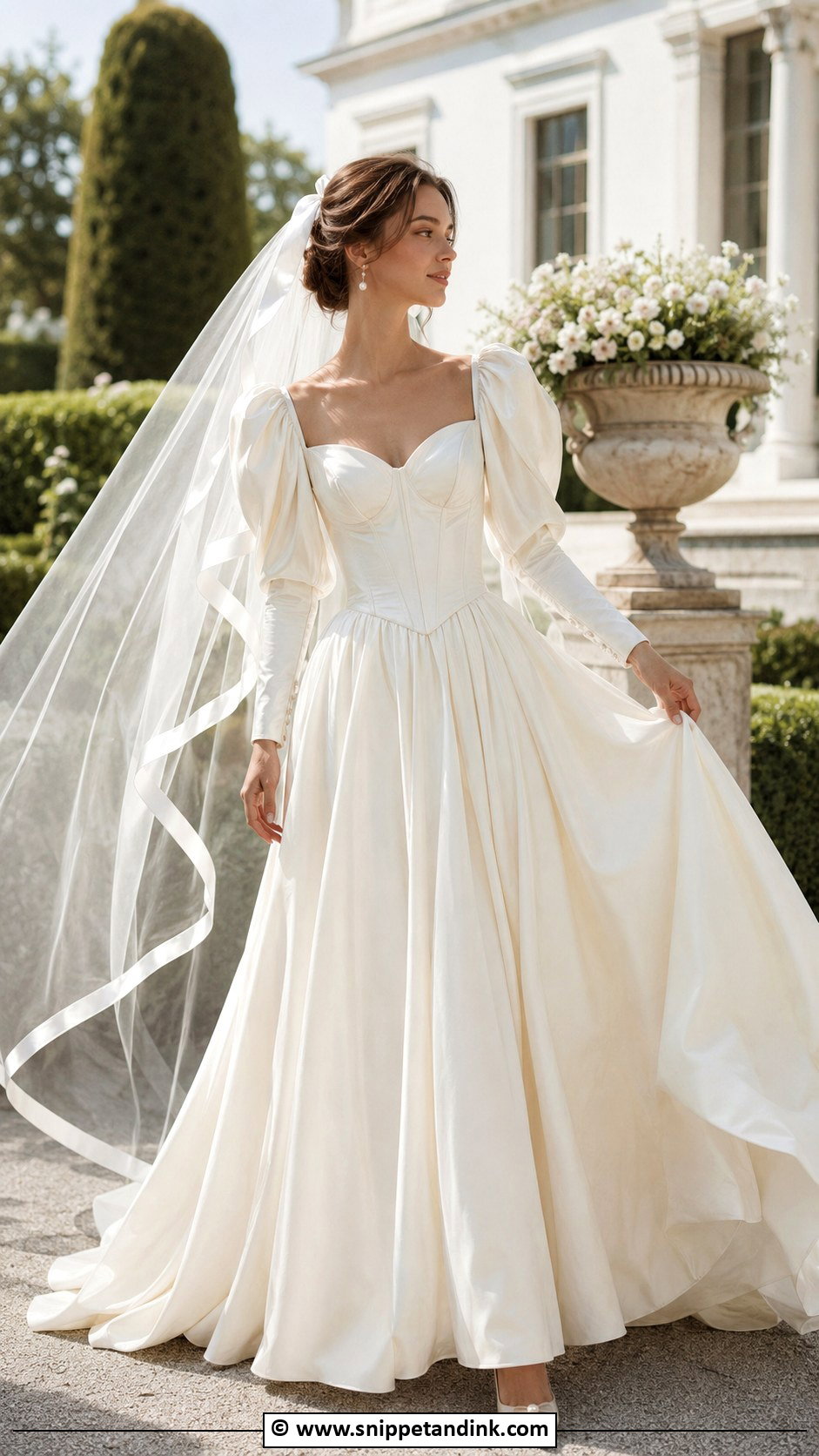
Big shoulders came in late in the era, and a Victorian puff sleeve wedding dress leans into that 1890s silhouette. Sleeves that are full at the top and taper to the wrist look balanced; sleeves that stay wide the whole way can overwhelm a small frame. Tulle, lace overlay or silk organza keep the volume airy, while heavy satin puffs can tip into costume. Under a corset bodice and full skirt, I keep jewellery to pearl studs, add a ribbon-trim veil and choose a compact bouquet so the arms aren’t hidden.
6. Victorian Lace Collar Wedding Dress
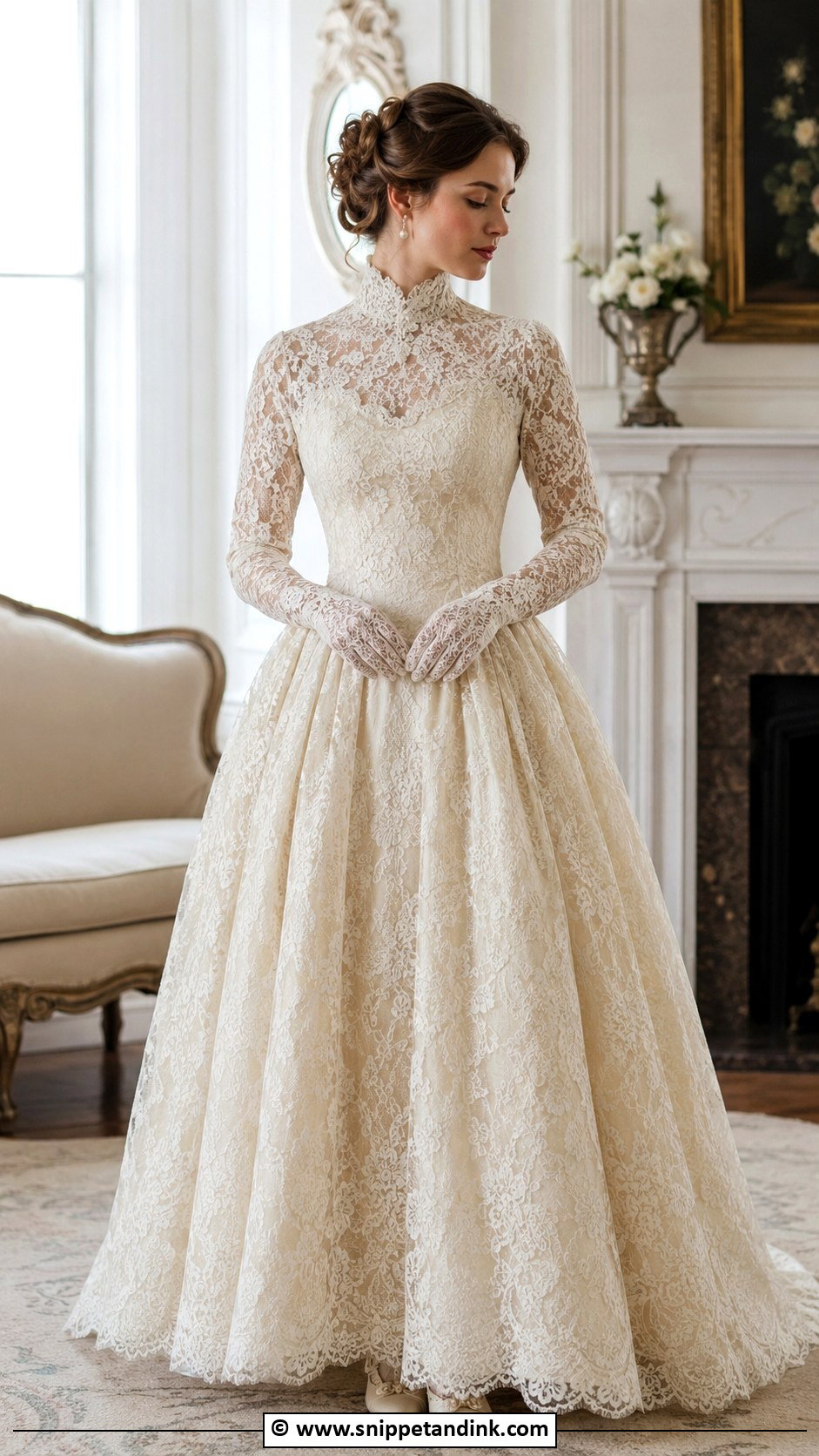
A Victorian lace collar wedding dress puts the detail right under the face, which is why I look at it in portraits before anything else. Scalloped and slightly ruffled collars soften a strong jaw; a stiff, straight-edged collar suits a long neck. Ivory lace over champagne lining gives a warm depth that works on most skin tones. Long fitted sleeves, a corseted waist and a flowing skirt balance it. Sleek bun, pearl earrings, lace gloves. A fingertip veil stops the collar area getting crowded.
7. Victorian Square Neck Wedding Dress
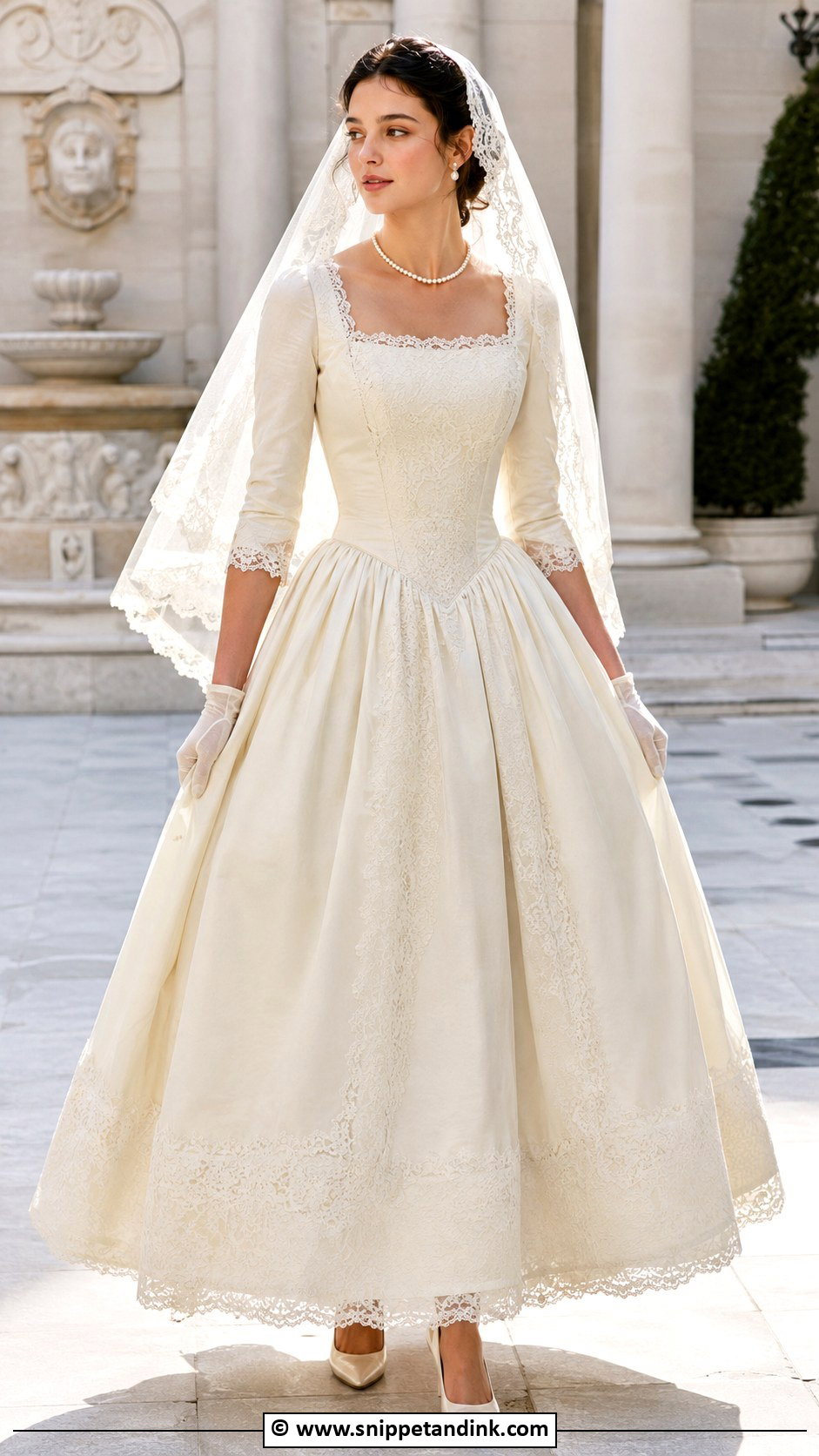
Not every bride wants her neck covered, and a square neckline is the period-friendly compromise. It frames the collarbones and suits brides with broader shoulders, since the straight line looks deliberate rather than revealing. Lace trim or a fine piping edge keeps it Victorian. Long or three-quarter sleeves, a fitted bodice and a gentle train hold the outline. A pearl necklace has room to sit here, which it doesn’t on a high neck. Add a low chignon, lace veil and satin heels, with gloves if the sleeves are shorter.
8. Victorian Off Shoulder Wedding Dress
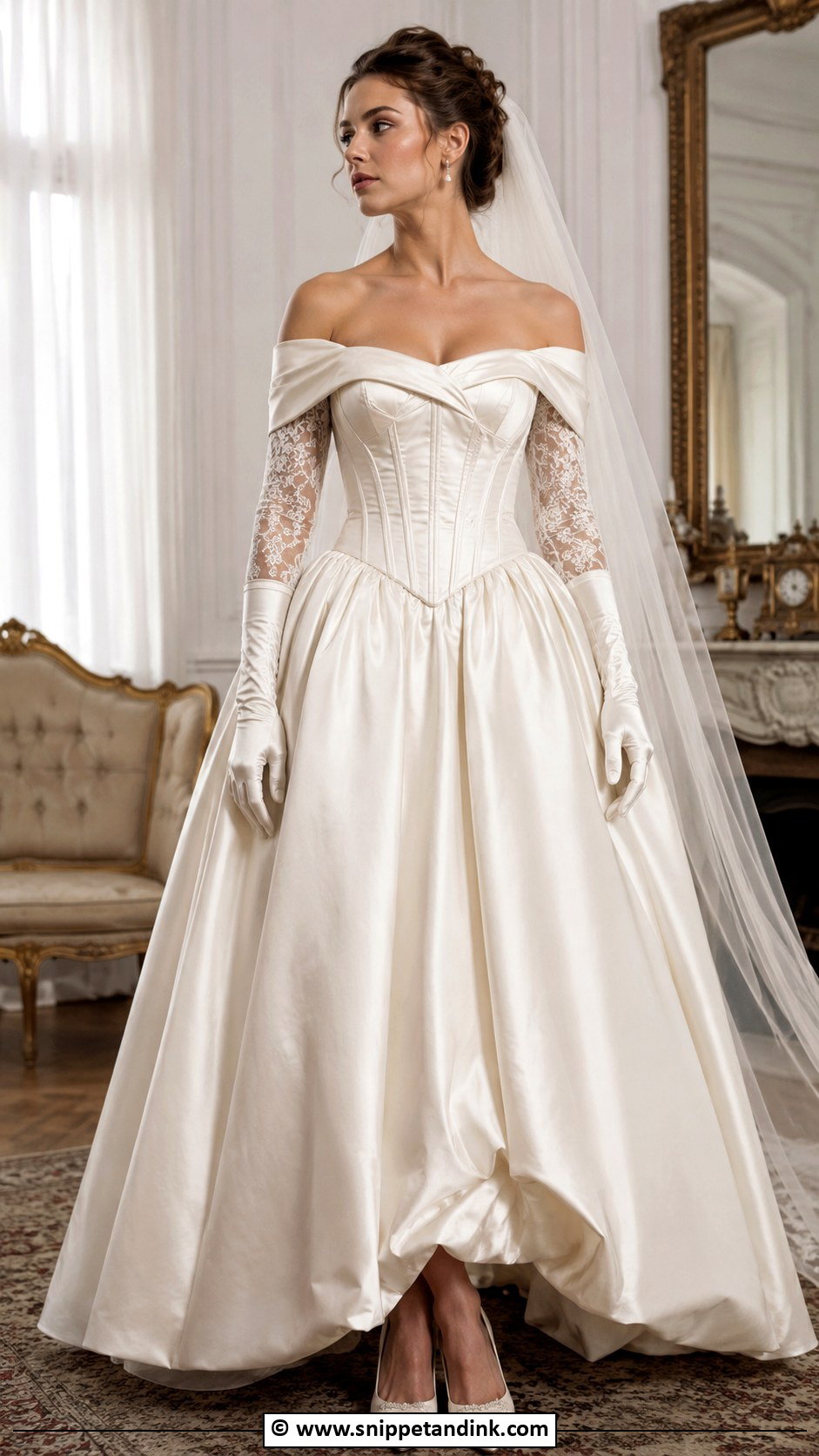
Victorian women bared their shoulders for evening, so an off-shoulder neckline is less of a stretch than people think. Keep the build structured: a corset bodice, a folded satin neckline and a full skirt. My fitting concern with any off-shoulder gown is the arms; if the band is tight, you can’t lift them, and if it’s loose, it slides. I want it snug but with room to raise a glass. Satin gloves echo formal evening wear of the time. Pearls, a long veil, and either pinned waves or a smooth updo.
9. Victorian Tulle Ball Gown Wedding Dress
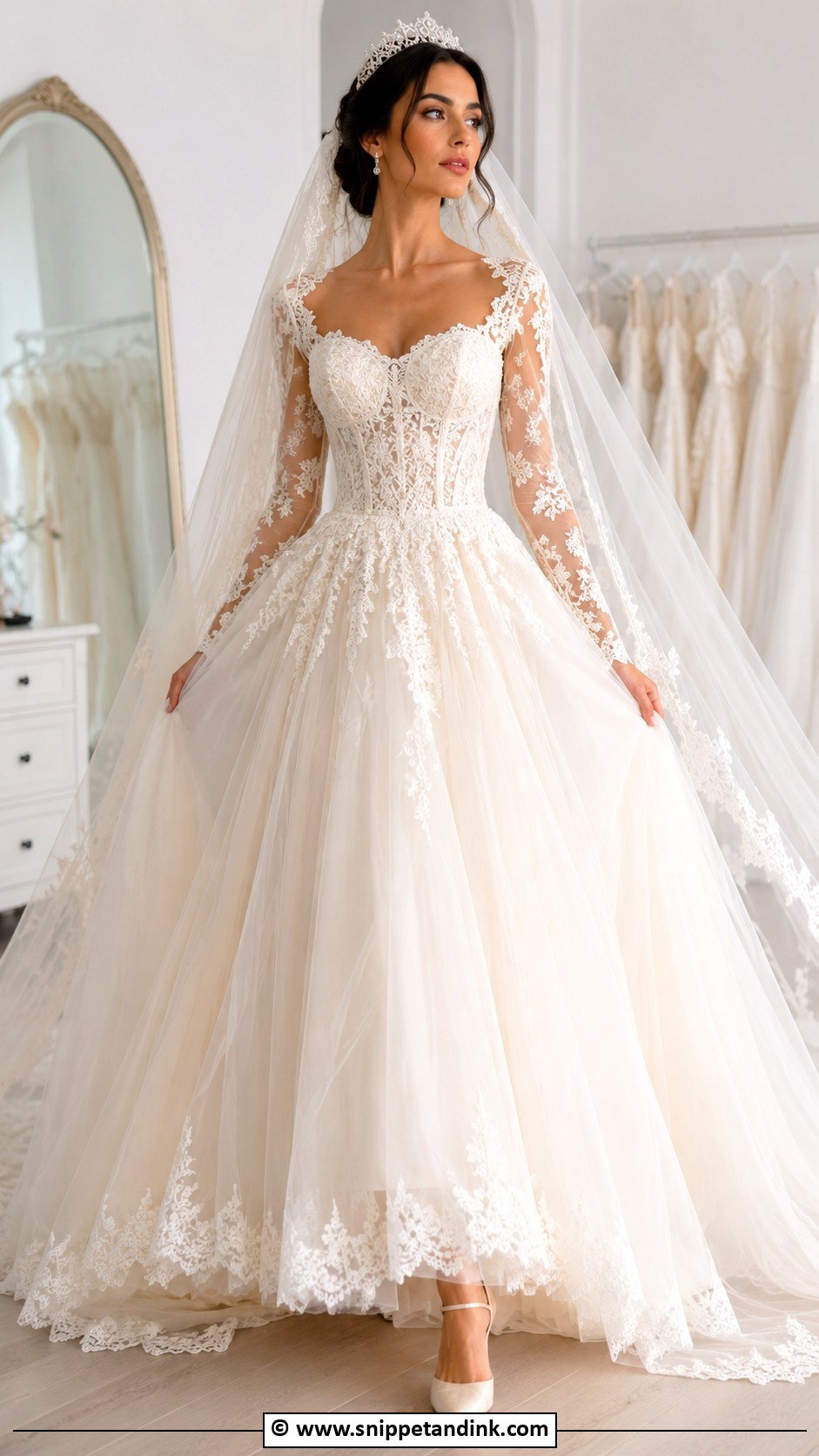
Tulle gives you the period’s volume without the weight of layered silk, and that matters over a long day. A corset bodice with lace appliqué anchors the airy skirt; long sleeves, a high neck or a lace yoke add more history. The trade-off is that tulle catches on rough surfaces like gravel, brick and bouquet stems, so I check the venue floors. A delicate tiara, pearl earrings and a long veil suit it, and the makeup should stay classic so the dress remains the focus.
10. Victorian Brocade Wedding Dress
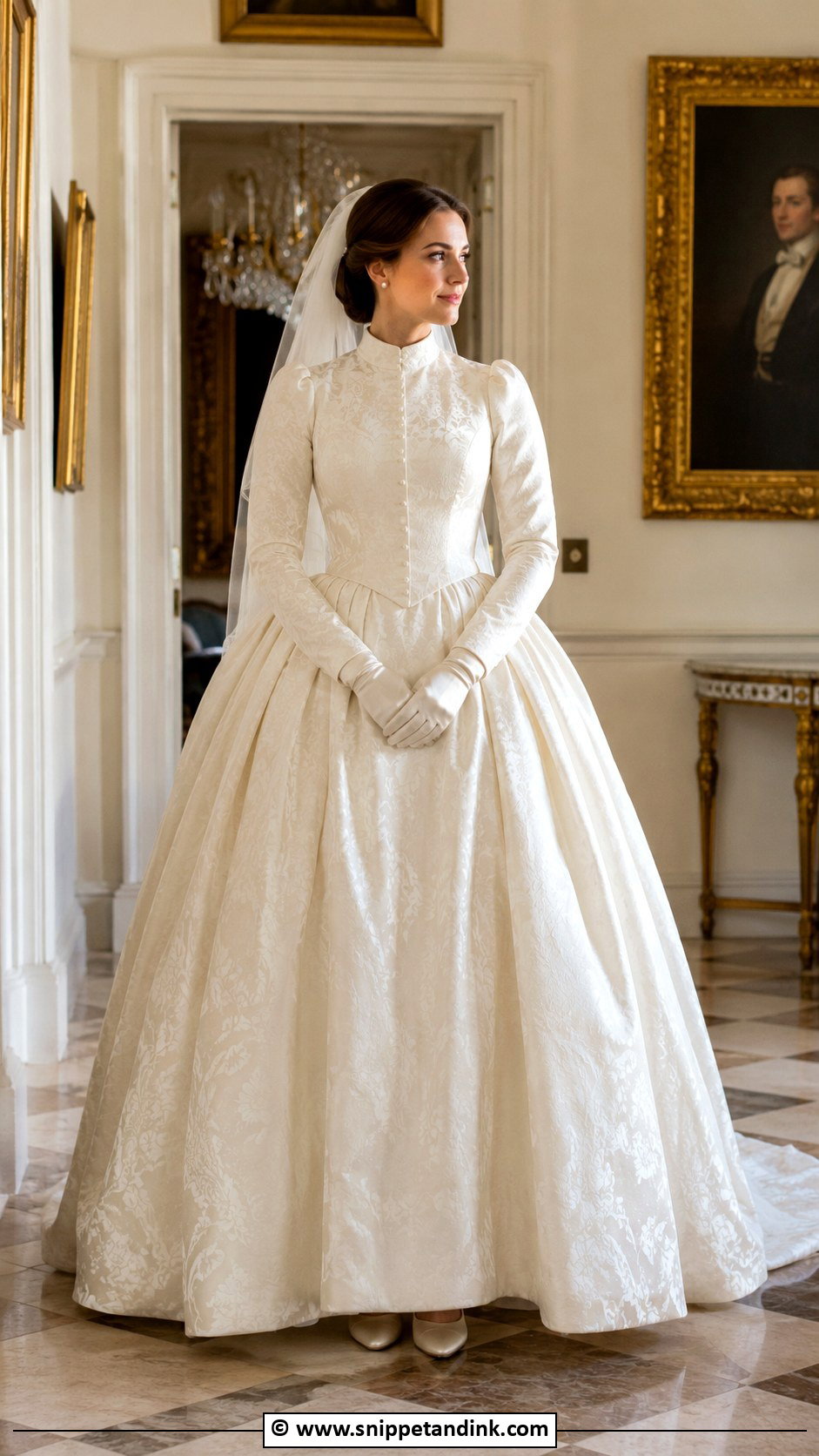
Brocade is woven, not printed, so the pattern has real texture and shows in raking light. It’s heavy and warm, which is why I’d keep it for autumn and winter weddings or cool historic buildings rather than a July garden. Ivory, cream or antique white keeps it bridal. A fitted bodice, long sleeves and a full skirt let the weave show. With so much pattern, I’d choose a plain veil, pearl studs, satin gloves and simple closed-toe shoes.
11. Victorian Tea Length Wedding Dress
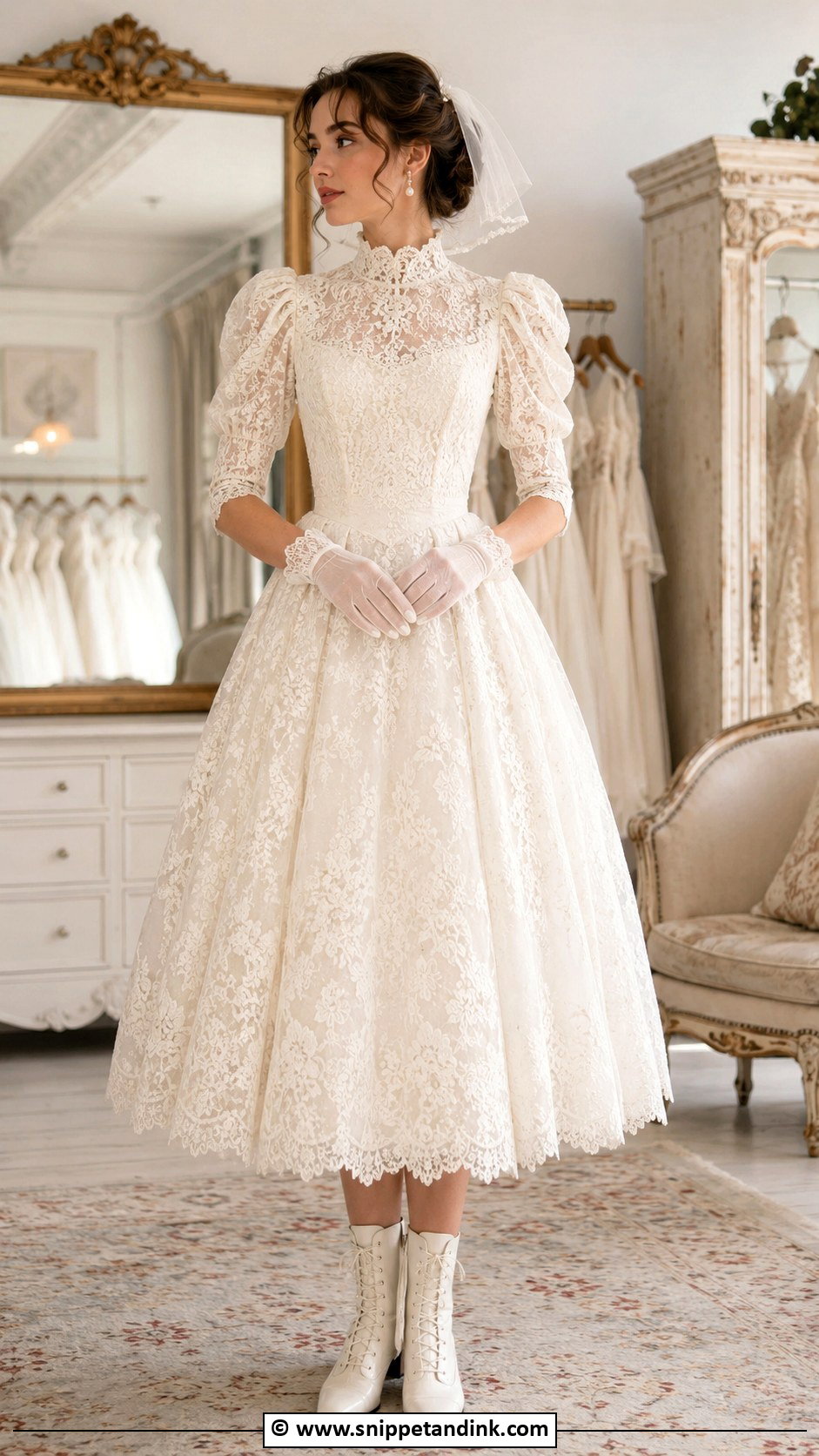
Shorter hems are a practical way into this style. To keep it reading Victorian, I’d hold on to a high lace neckline, a fitted bodice, puff or long sleeves and a structured skirt that ends below the knee. Ivory lace over satin keeps it bridal. Lace-up boots are the natural shoe here and are far comfier than heels for dancing. A small veil or bridal hat suits smaller celebrations. If you also like antique style from just after this era, the tea length sits nicely between the two.
12. Victorian Cape Wedding Dress
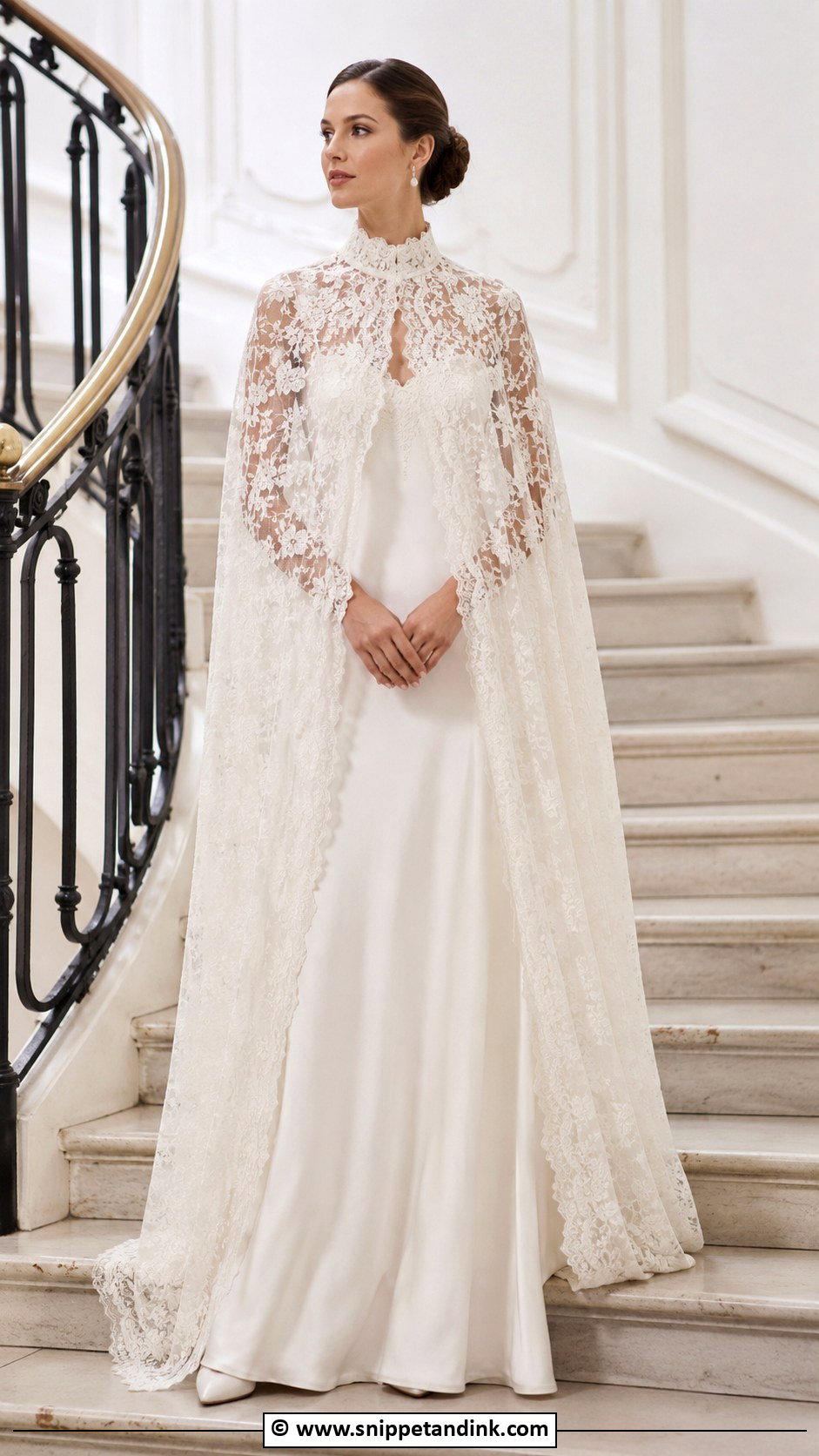
A cape changes the whole outfit without touching the gown underneath, and you can take it off for dancing. Sheer lace capes, organza capelets and full-length bridal capes all work over a simple satin or lace dress. Under a high neck, the cape’s lines fall cleanly; over a deep neckline it can look cluttered. I check the fastening, because hooks pulling at a lace collar will distort it. Pearl earrings, a smooth updo and covered heels are all it needs.
13. Victorian Ruffle Skirt Wedding Dress
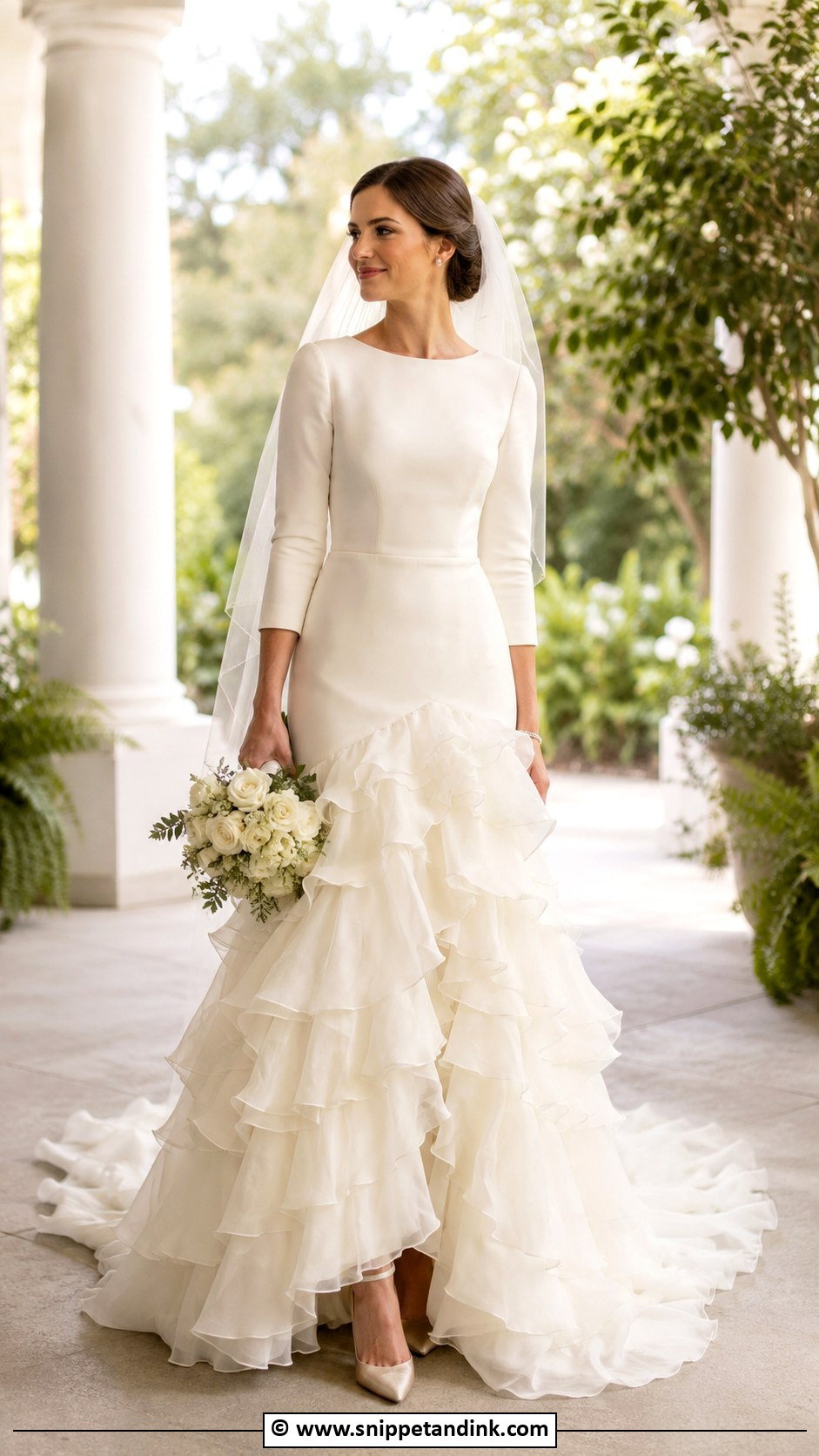
Ruffles bring the movement to the hem and train, so they’re best seen walking and in full-length photos. Tiered, gathered or edge-only ruffles all suit the era. I keep the bodice and sleeves plain to stop the dress looking busy. Organza and lace ruffles stay soft; satin ruffles stand away from the skirt and look more structured. One practical point: deep hem ruffles pick up grass and dust fast, so a bustle or a steady hand helps on outdoor ground.
14. Victorian Button Back Wedding Dress
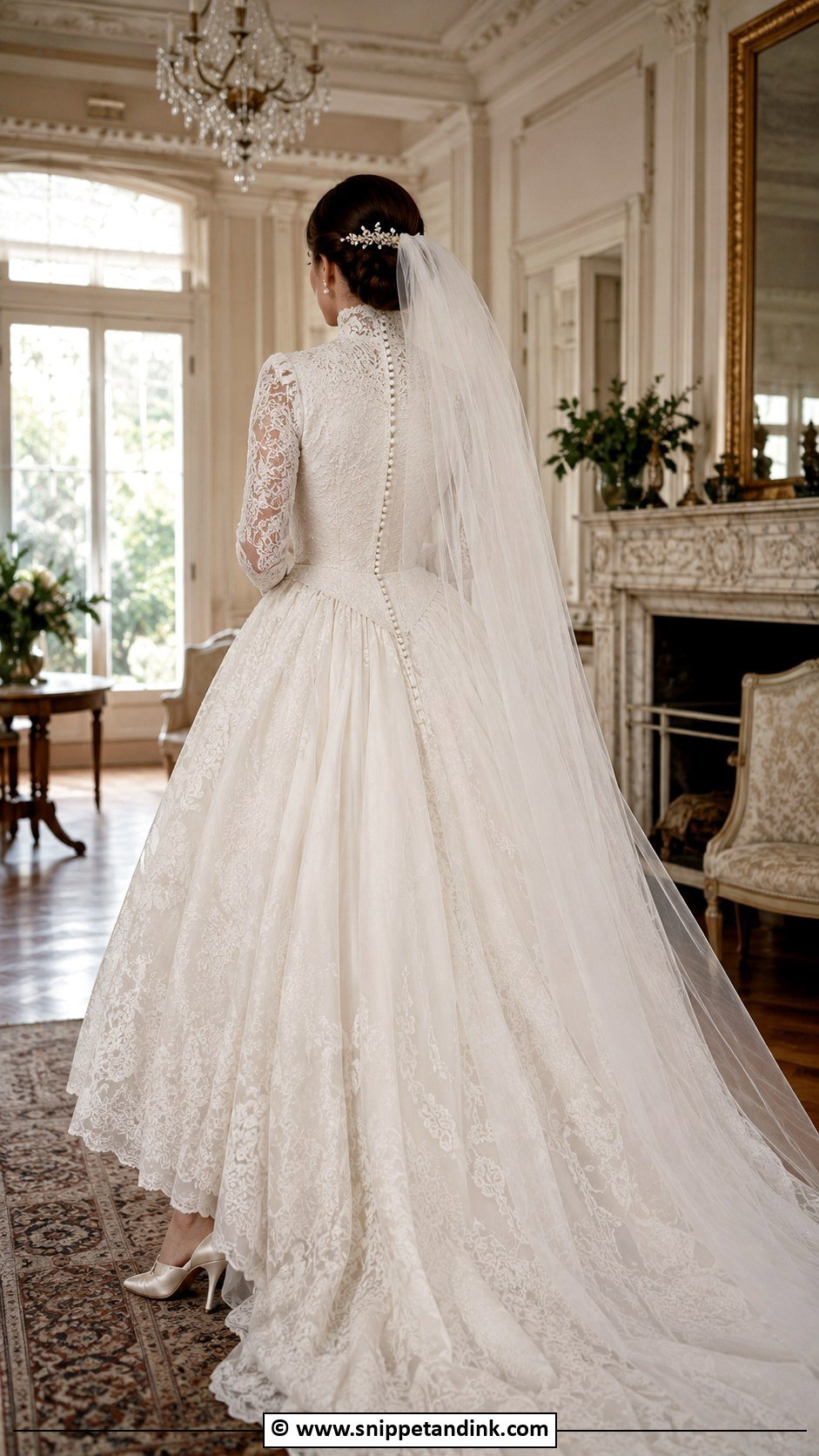
Covered buttons running from the collar to the waist, or further down the train, make the back the main event. They also take time. A long row of loops can take ten minutes or more to close, so I build that into the morning schedule and make sure two people know how. Many brides add a hidden zip under the buttons for speed, which I’d recommend. A fitted bodice, long sleeves and a full skirt suit this, and a sheer veil lets the buttons show through. Keep necklaces minimal on a high neck.


15. Victorian Embroidered Wedding Dress
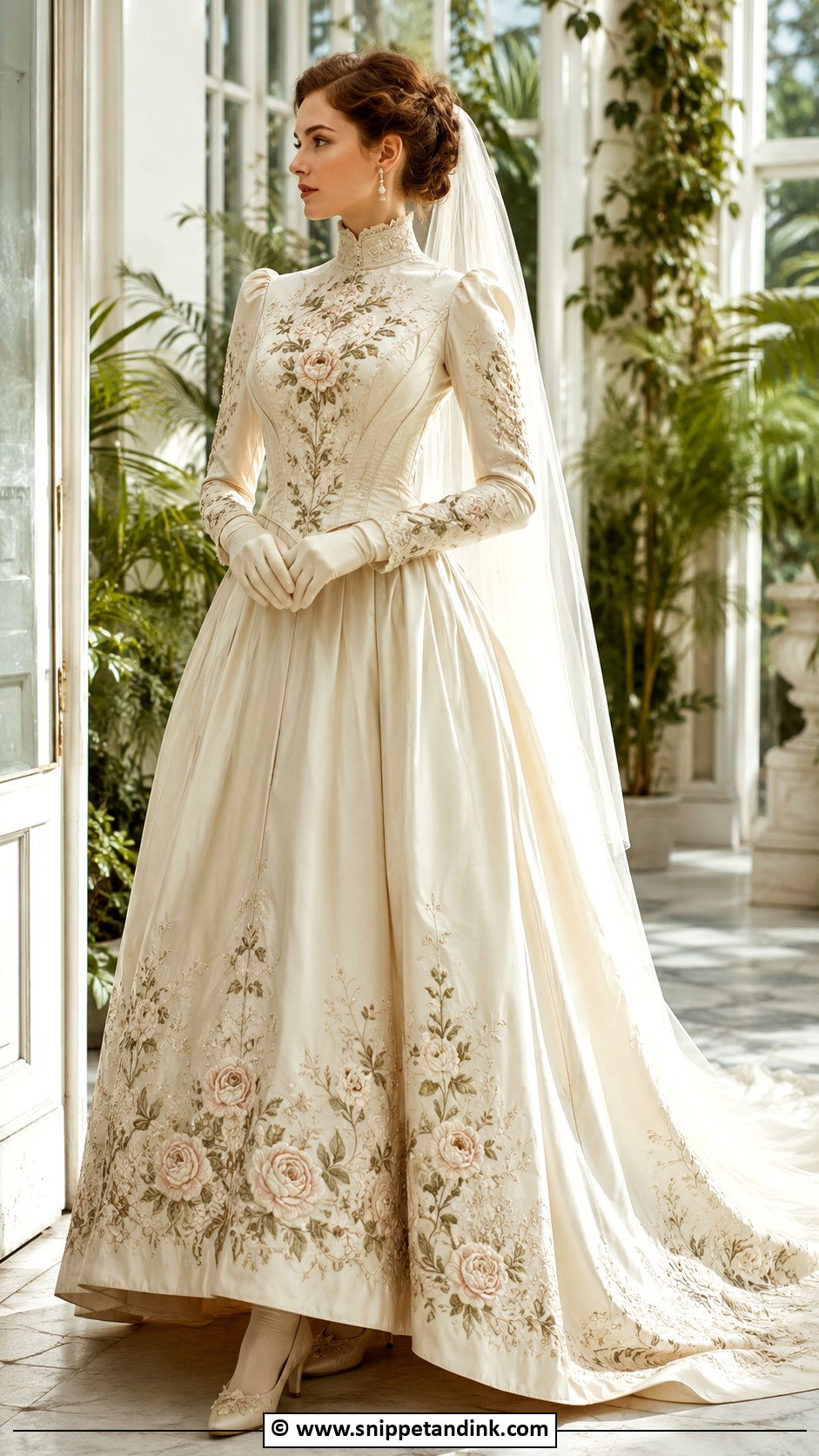
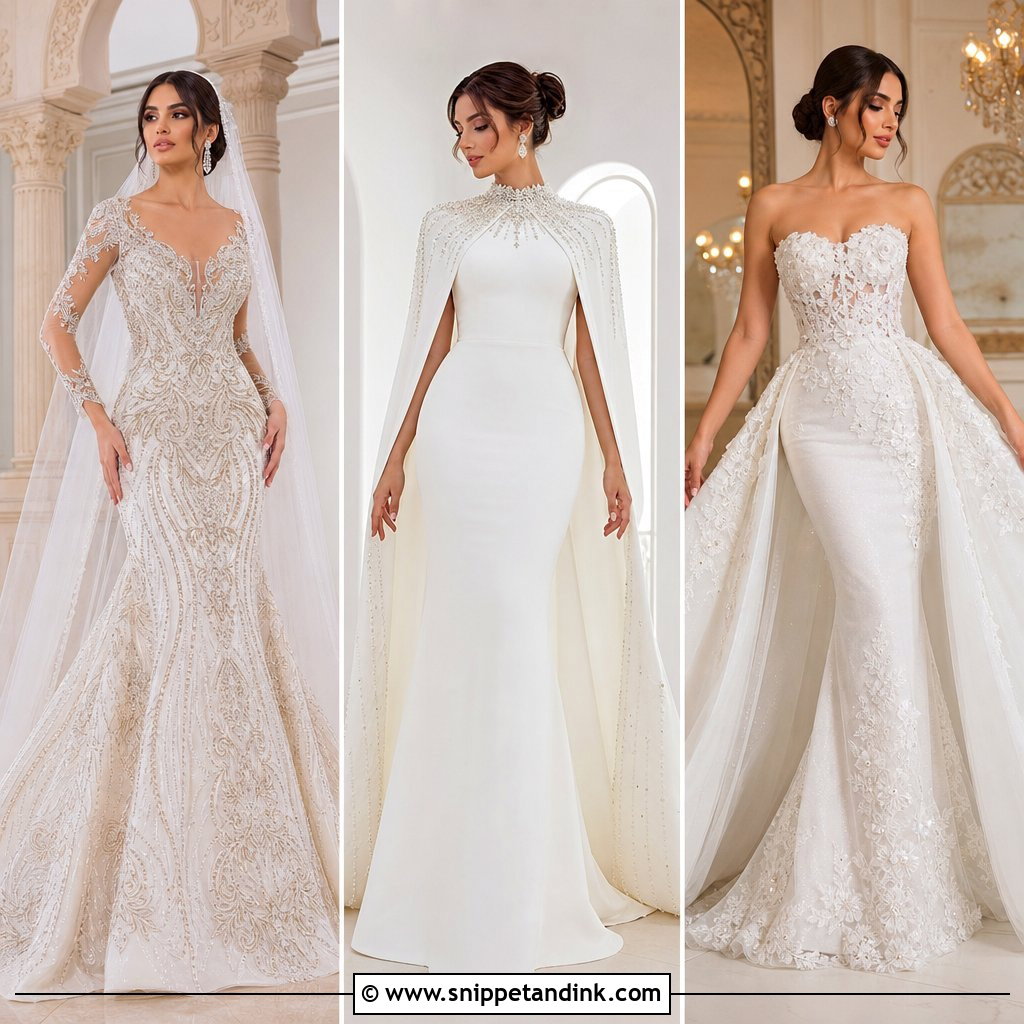
Embroidery gives a gown that heirloom feeling. Floral sprays, vines and scrollwork read handmade, and I’d place them in one or two zones, such as bodice and hem or sleeves and train, rather than everywhere. That leaves the eye somewhere to rest. A corseted waist and full skirt carry the shape. If you love the motif, echo it once in a floral hair comb and keep the veil plain.
16. Victorian Princess Line Wedding Dress
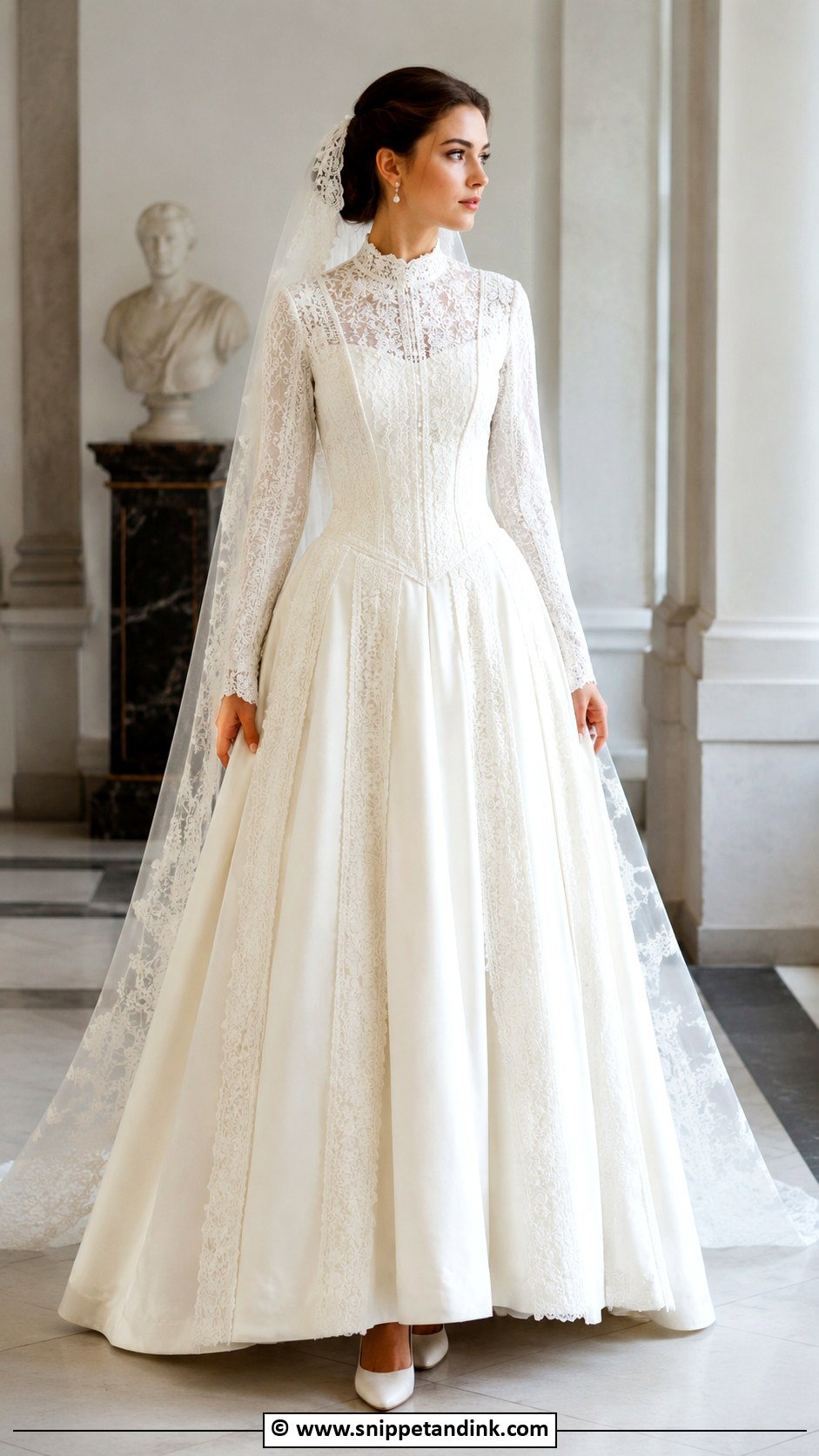
Princess seams run vertically from shoulder or bust to hem, so the dress shapes the body without a horizontal waist seam. That’s the reason I suggest it to brides who want structure but find corsets uncomfortable. The long line flatters most heights and lengthens a shorter torso. A high neck, fitted sleeves and a gently flowing skirt keep it Victorian, and lace panels, satin or soft brocade give texture. Pearl drops, a lace veil and ivory pumps complete it.
17. Victorian Two Piece Wedding Dress
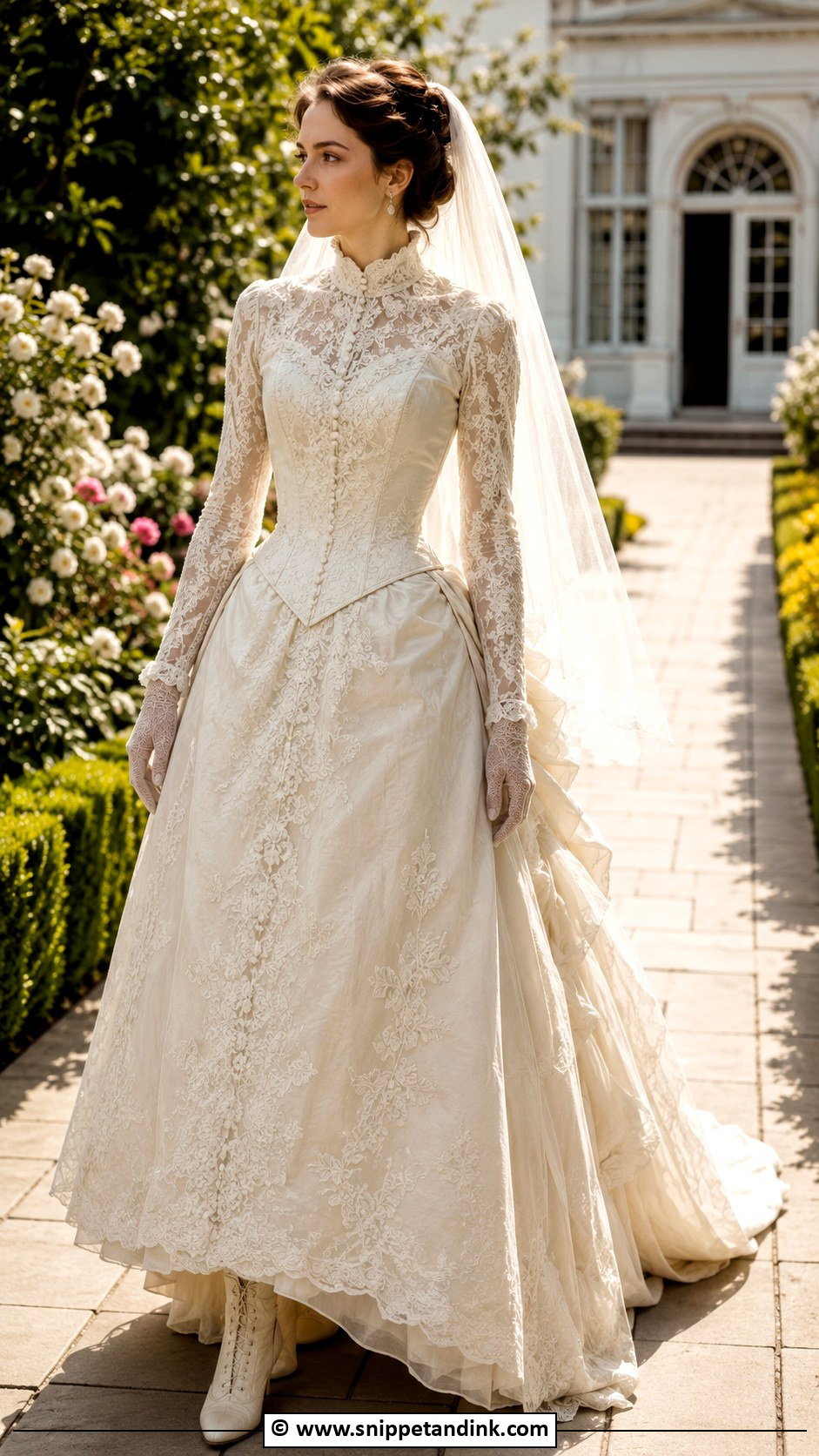
Separates are more historically accurate than many people realise, since period gowns often had a separate bodice and skirt. A fitted lace or satin bodice with a high neck and long sleeves over a matching full skirt is the base. A pointed front or basque waist makes it more convincing. The fit bonus is that each piece can be sized separately. A small bustle or train adds ceremony, and lace-up boots or satin heels plus gloves finish it.
18. Victorian Ivory Silk Wedding Dress
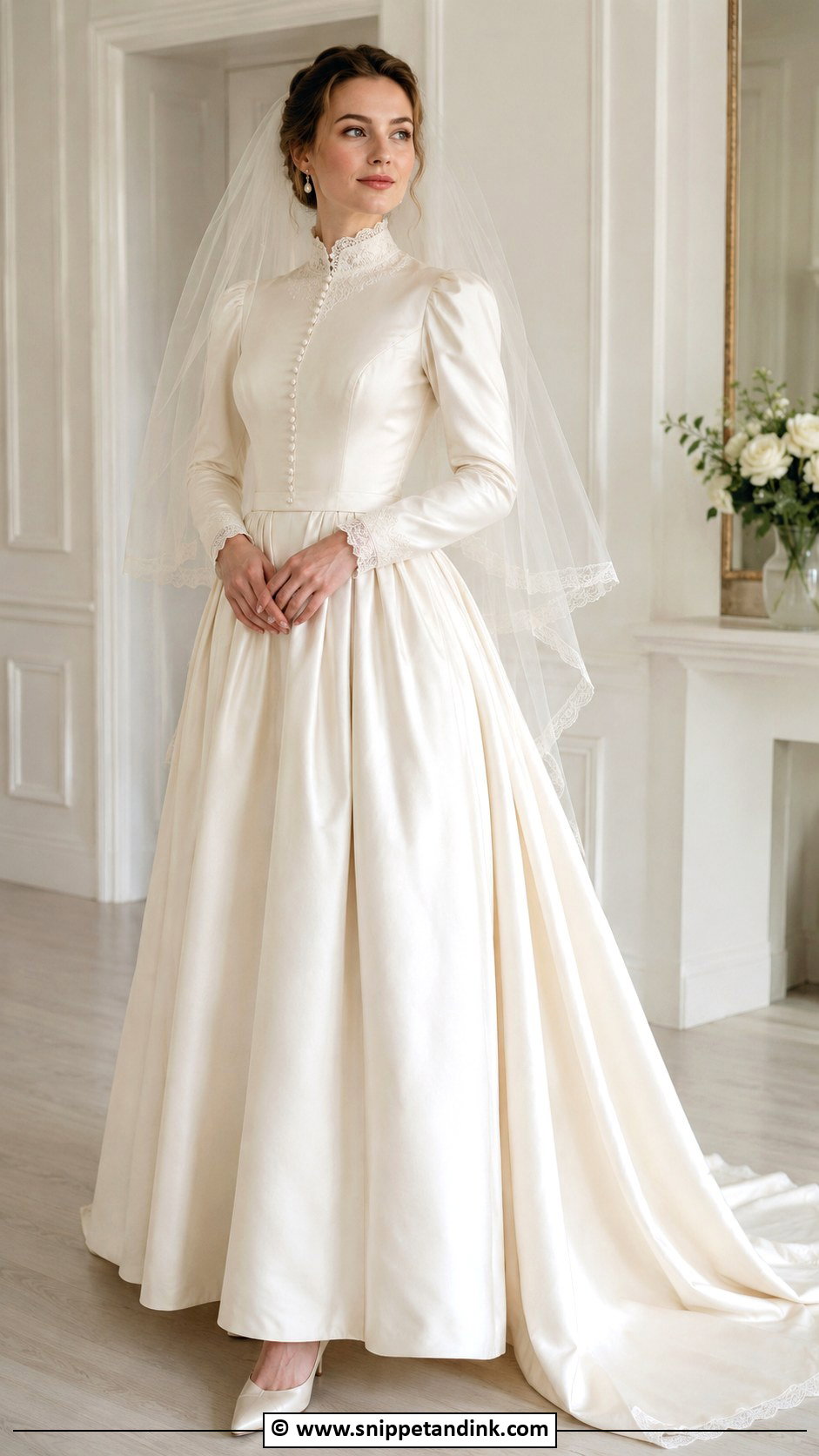
Silk has a soft glow that makes a plain gown look expensive, and real silk breathes better than synthetic satin on a warm day. It also marks with water, so I keep tissues away from it and blot rather than rub any spill. A fitted bodice, long sleeves and a full skirt with soft pleats is enough, with a lace collar, covered buttons or a modest train for period detail. Pearl earrings, a silk veil and satin pumps. Keep the bouquet small.
19. Victorian Full Skirt Wedding Dress
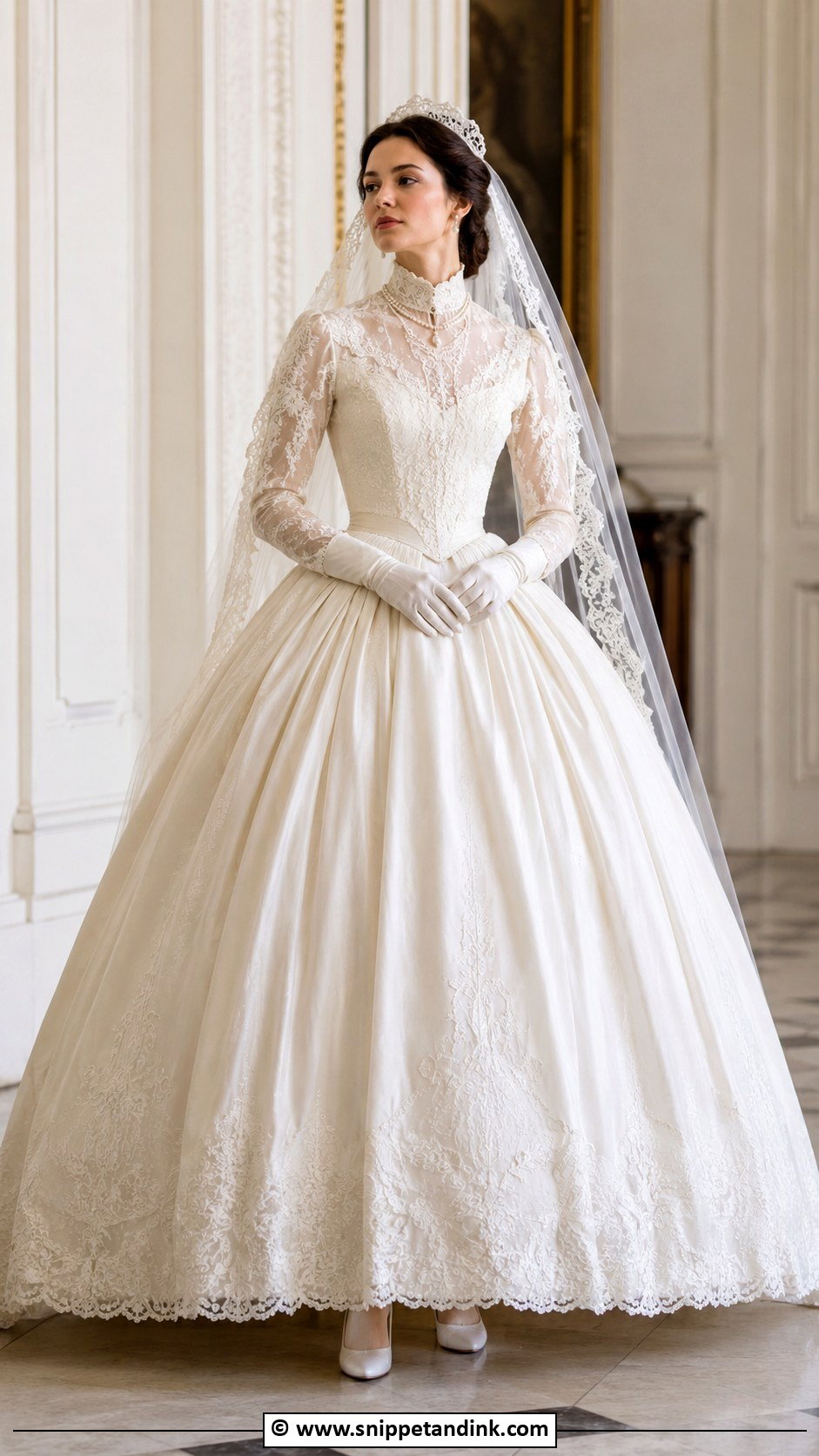
Volume comes from what’s underneath. Petticoats, layered tulle or a structured fabric each give a different fullness, and I fit the skirt with the actual petticoat on, never without. A fitted bodice keeps the waist defined, while long sleeves, lace trim and a high collar pull it toward the era. For petite brides, I’d choose softer volume rather than a very wide skirt, which can make you look shorter. Pearls, a long veil and closed-toe heels complete it.
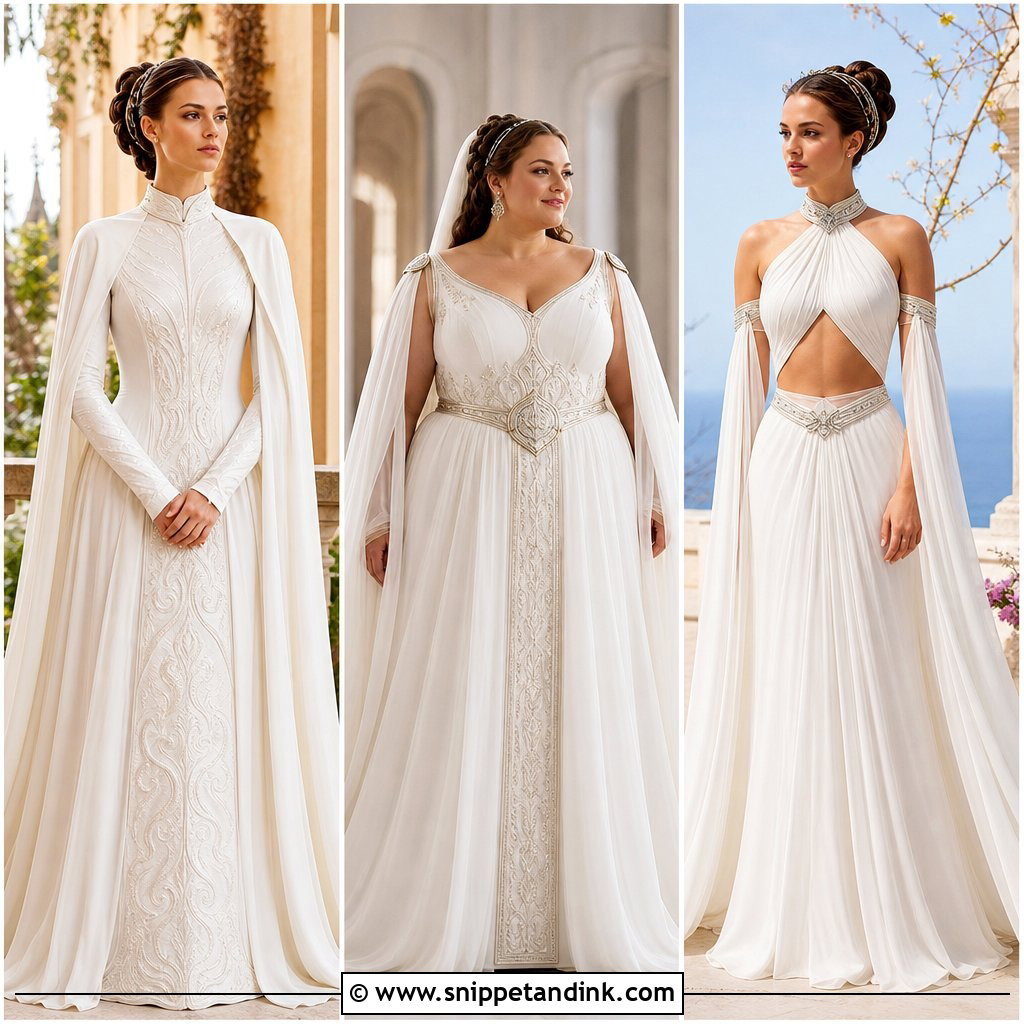
20. Victorian Train Wedding Dress
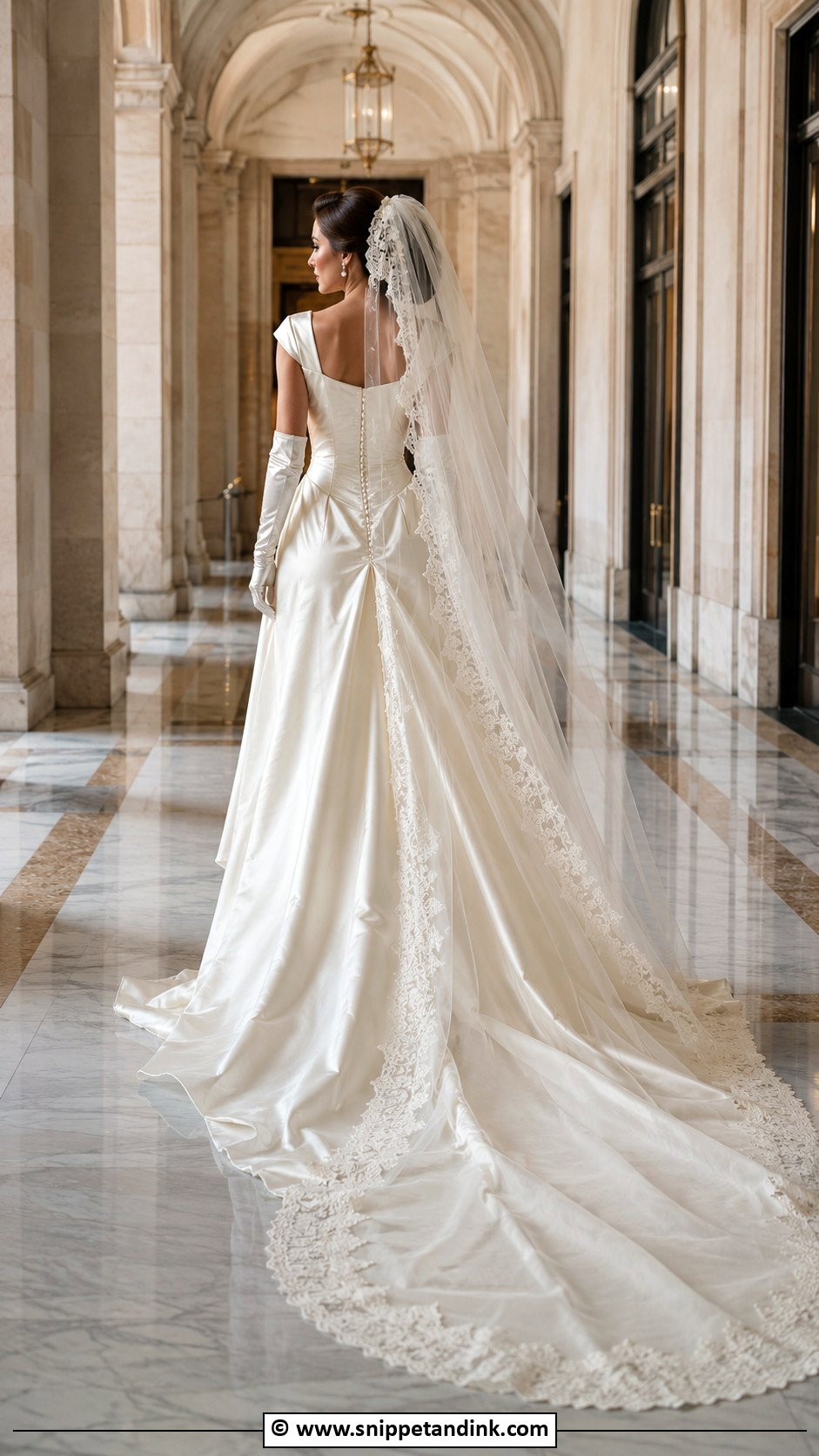
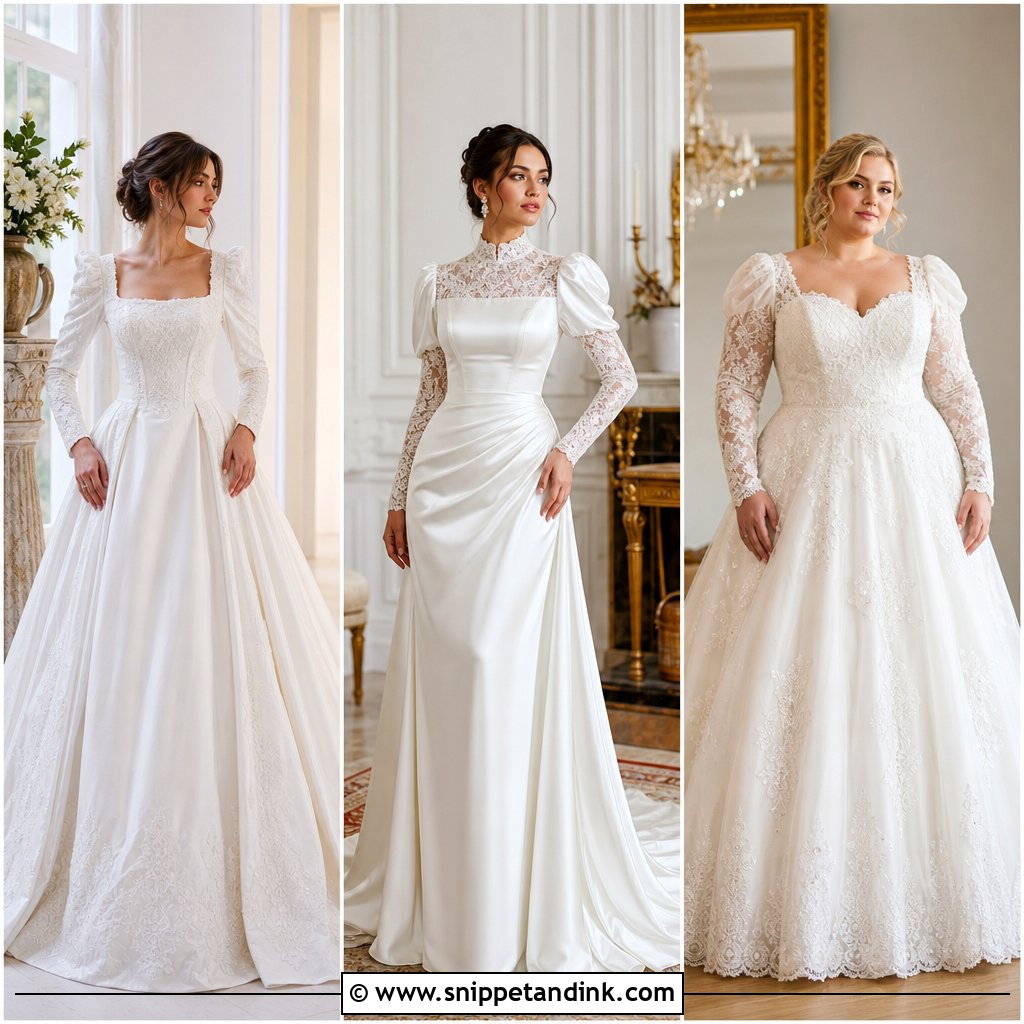
Court, chapel and cathedral trains each suit a different aisle. A long train in a small registry room just pools awkwardly; in a church with a long aisle it’s spectacular. A structured bodice and smooth skirt help the train lie flat, and lace edging or satin trim adds detail at the hem. The bustle is the bit people forget. Ask your seamstress to add one and show your maid of honour how it works, because after portraits you’ll want to walk freely. Gloves, pearls and secure heels finish the look.
21. Victorian Pearl Wedding Dress
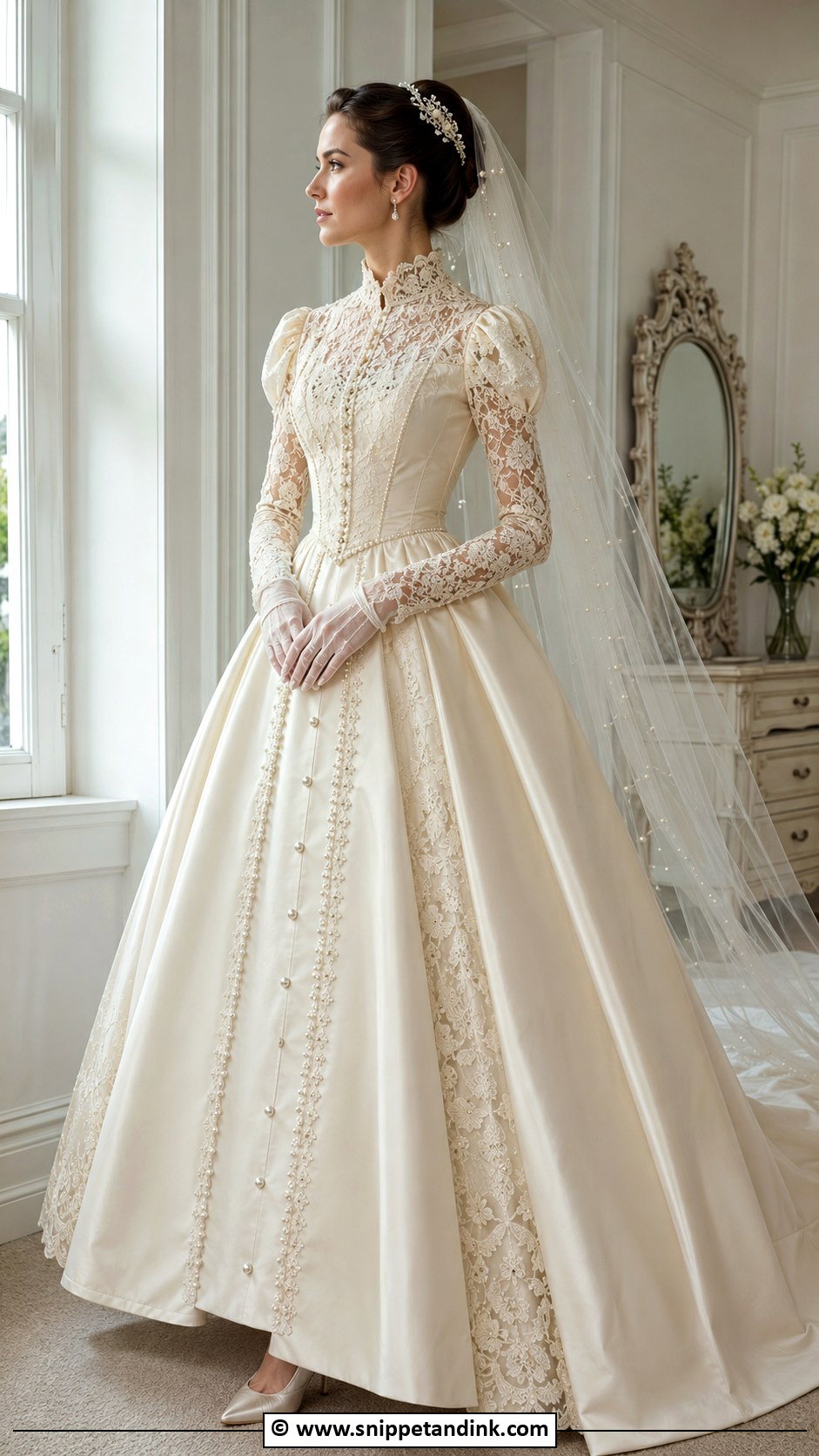
Pearls give glow without the flash of crystals, which keeps the look historical. Pearl buttons, pearl trim along the neckline, or fine pearl beading on bodice and sleeves all work with lace and satin. I’d stop at pearls and not mix in sequins if you want it to stay vintage. Glass pearls can be heavy en masse, so check the sleeves don’t drag. Pearl drop earrings, a pearl hair comb and a sheer veil with tiny pearl accents complete it.
22. Victorian Velvet Trim Wedding Dress
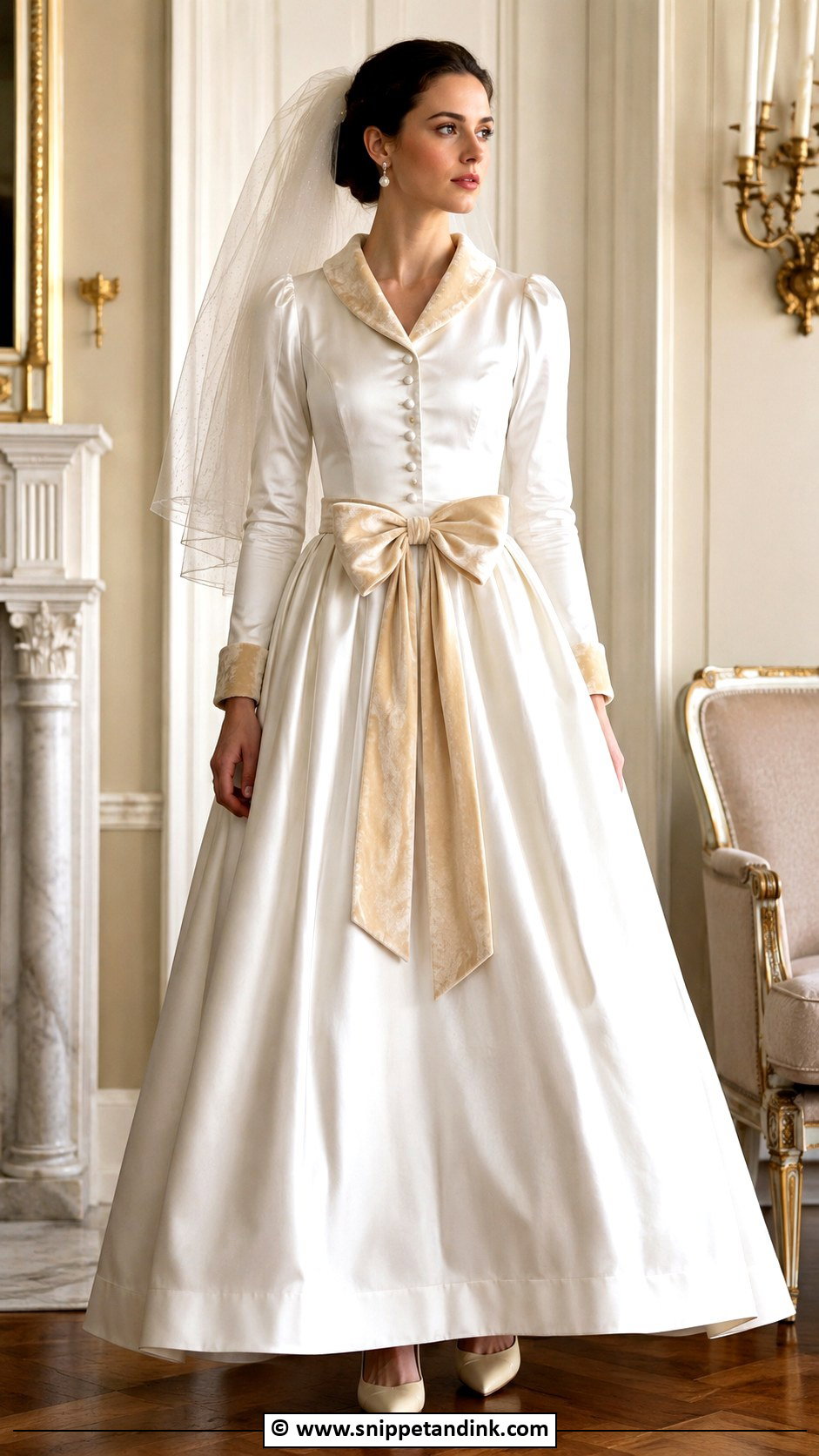
Velvet trim adds depth at the waist, cuffs, collar or a bow. Cream velvet on ivory satin is subtle; pale blush or antique gold creates more contrast. Velvet crushes when pressed, so I steam it from the back and never iron the pile. A fitted bodice, long sleeves and full skirt keep it polished, and with velvet already adding weight, a plain veil is the better partner. It suits winter weddings and formal indoor rooms.
23. Victorian Lace Sleeve Wedding Dress
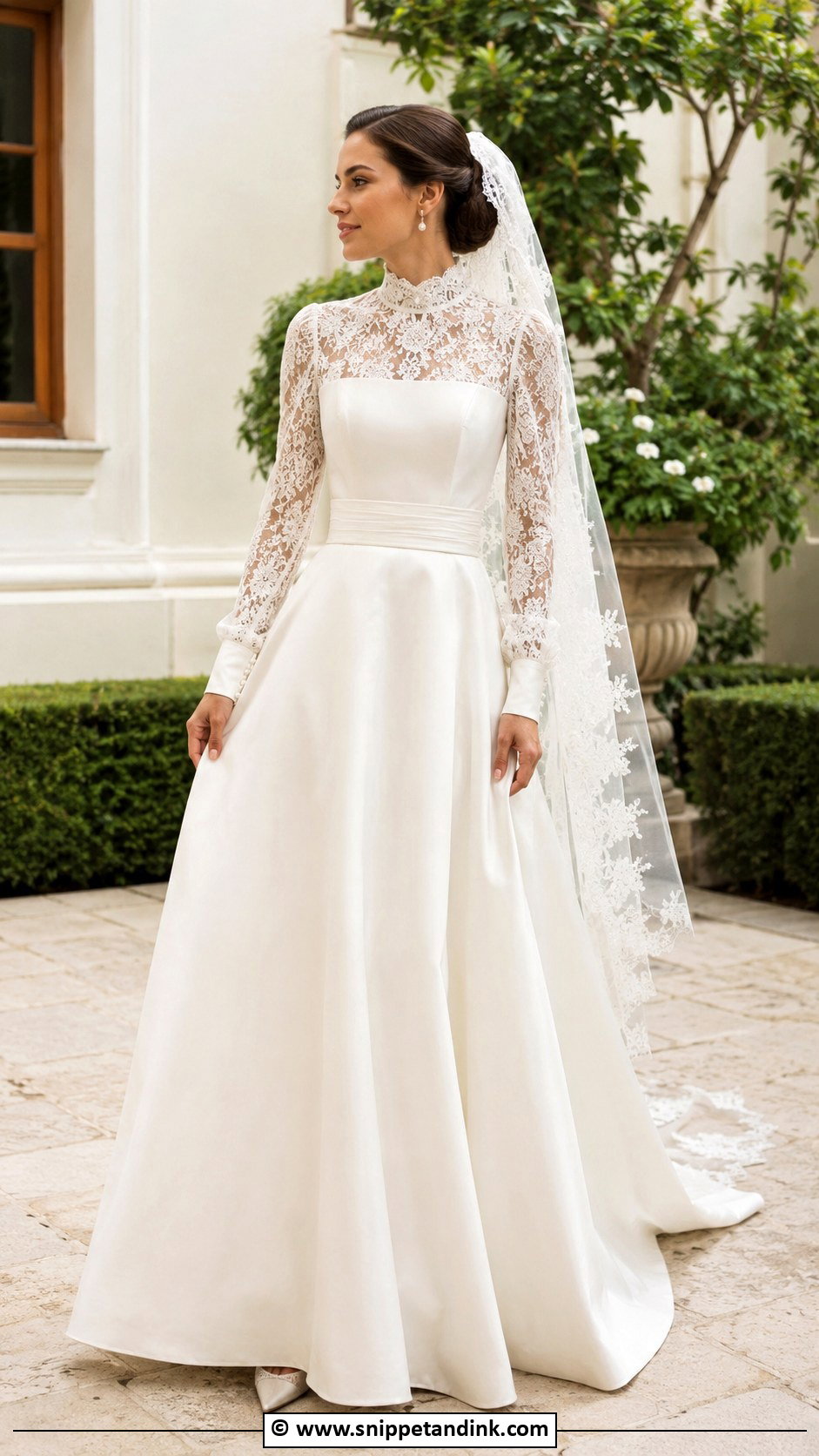
Sheer lace sleeves give coverage while staying lighter than a lined sleeve, so they’re a good compromise for a warm day. Over a satin bodice with a defined waist and flowing skirt, the contrast between matte lace and shiny satin is what makes it work. Lace tones vary a lot, from bright white to deep champagne, and I match the veil to the sleeves rather than the skirt, since they sit side by side in photos. A high neck, button cuffs or scalloped edges add more history.
24. Victorian Bonnet Veil Wedding Dress
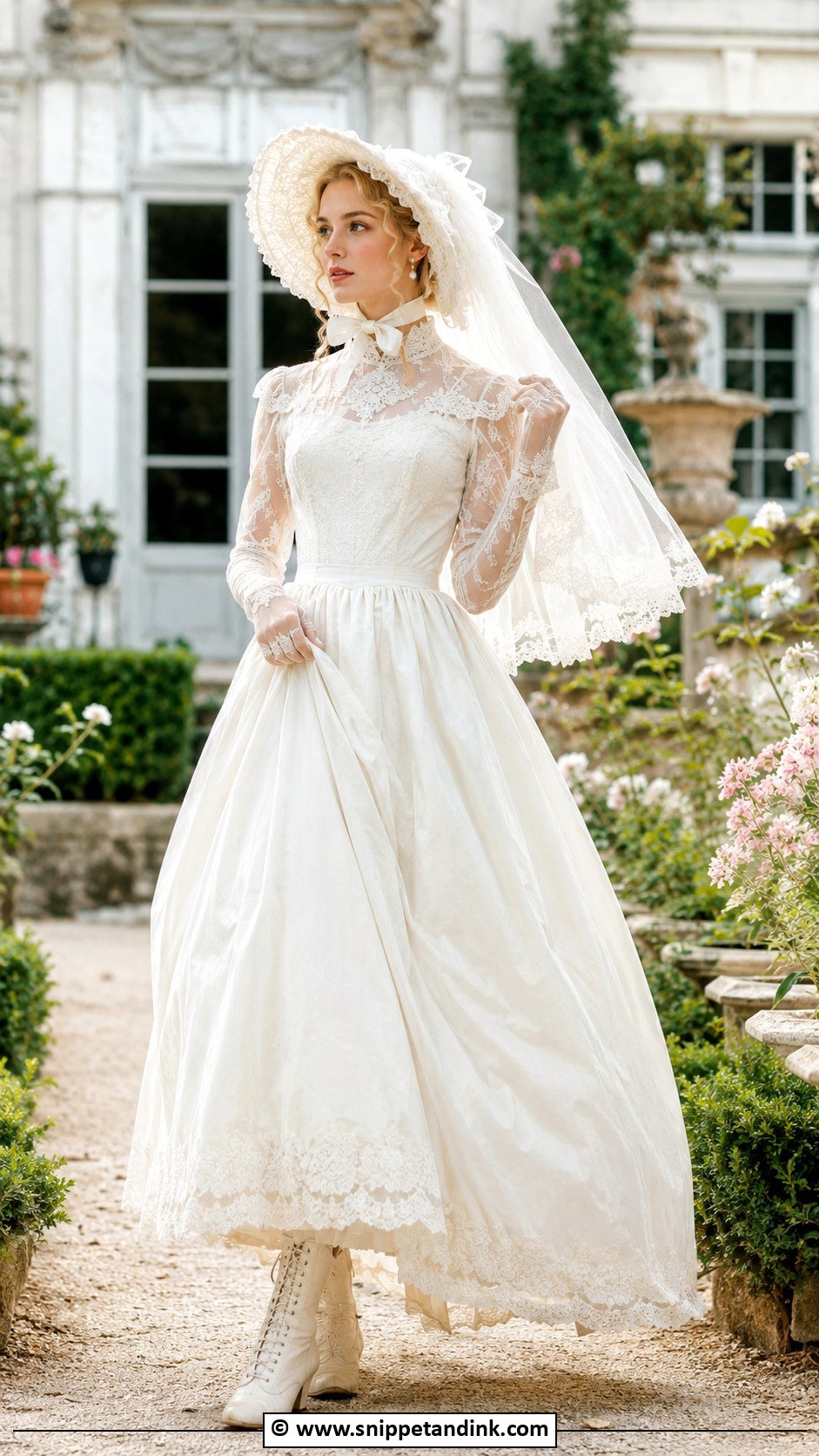
A bonnet or lace cap with veiling attached is the most historical headwear on this list, and it divides people. I’d suggest it only to brides who are fully committed to a period look, because on a modern gown it reads as fancy dress. Paired with a high-neck lace gown, long sleeves and a full skirt, it looks intentional. Lace-up ivory boots and pearl earrings carry the theme. Have the hairstylist plan around it; bonnets sit over a low bun and flatten volume at the crown.
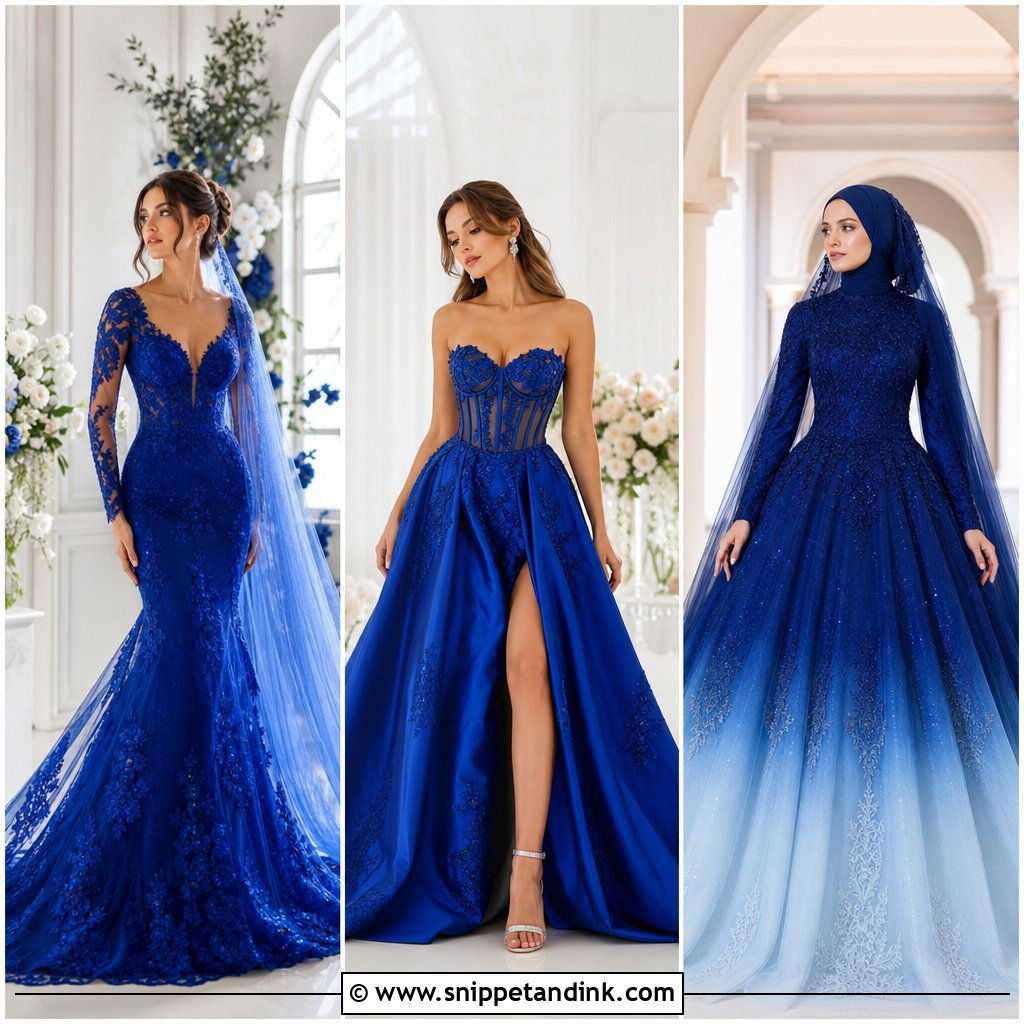
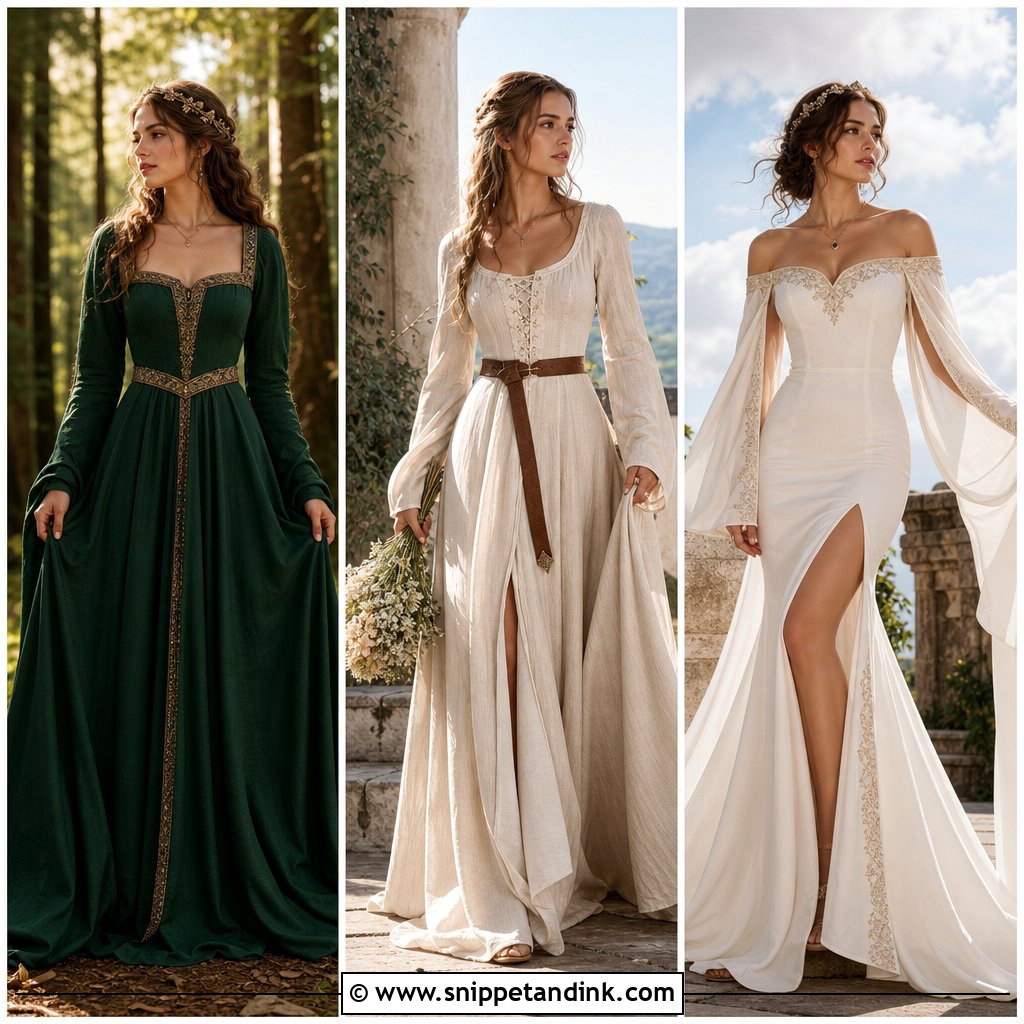
25. Victorian Garden Wedding Dress
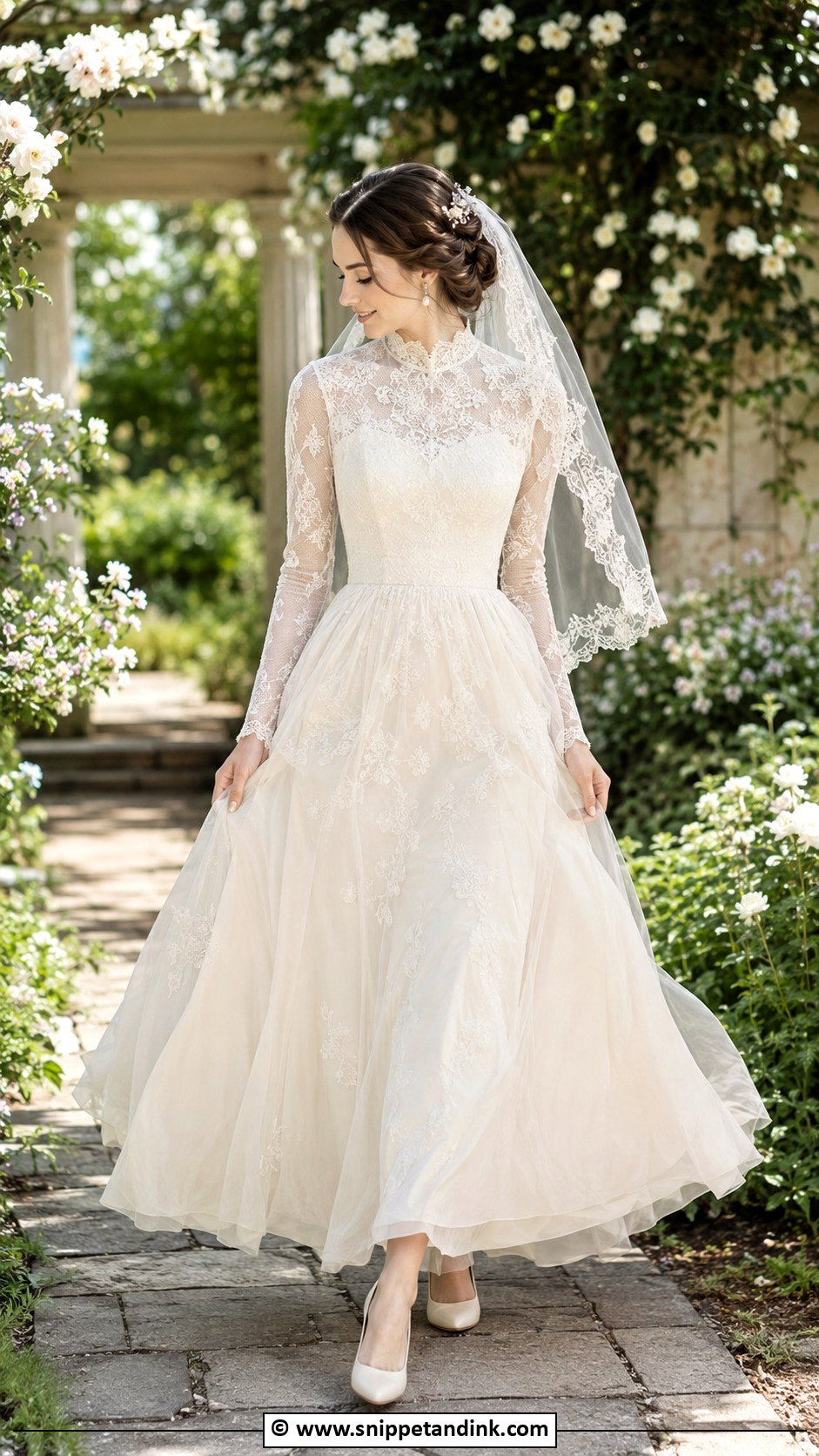
Outdoors, I swap heavy satin for lace, tulle or organza, because a heavy gown in sun gets uncomfortable fast. A high lace neck, fitted bodice, long sheer sleeves and a soft skirt give the look without the weight. Keep the train short enough that it doesn’t collect leaves on grass. Ivory ankle boots or a block heel stop you sinking into lawn. A floral hair comb and a fingertip or lace-edged veil suit garden light well.
Petticoats, Stairs and the Car Ride
Full Victorian skirts look wonderful and create real logistics. I walk every bride through these before the day, because they catch people out.
Getting in and out of the car
Sit first, backwards onto the seat, then swing your legs in while someone gathers the skirt in after you. Ask for a car with a wide rear door, and know that a hoop or several petticoat layers may not fit in a small saloon at all.
Stairs and steps
Lift the front of the skirt a few centimetres with both hands as you go up, so your toe doesn’t catch the hem. Coming down, the train follows you, so let someone guide it. Ankle boots are steadier than a slim heel on old stone steps.
The bathroom
With a full skirt and petticoat, I’d plan for one helper. The easiest method is to face the toilet and step backward while the skirt is gathered up in front of you. Practise once in the dress before the day.
Caring for Old Lace and Antique Pieces
If you’re wearing heirloom lace, a family veil or a true antique gown, treat it gently. Old fabric becomes brittle, and it can split along fold lines. I’d store it flat or rolled in acid-free tissue, away from light, rather than folded on a hanger. Don’t wash it yourself; take it to a cleaner who handles vintage textiles and ask before they use any chemicals. Yellowing can sometimes be lightened by a specialist, but it isn’t always safe to try, and some brides prefer the warm tone as it is. Before the wedding, have a seamstress check every seam and reinforce weak spots on the inside, where repairs won’t show.
Which Victorian Details Will You Keep?
High necks, corsets, bustles, pearls and long trains can be mixed in many ways, and the best Victorian outfits pick a few strong elements rather than all of them. Decide which details matter most to you, then build sleeves, fabric, veil, shoes, gloves and jewellery around those. Wear the full outfit at least once, sitting and walking, before the day. Historical shapes ask more of the body than modern gowns do, and you’ll want to know how yours feels after several hours, not just in the mirror.
You'll Like These Ideas:





Leave a Reply