
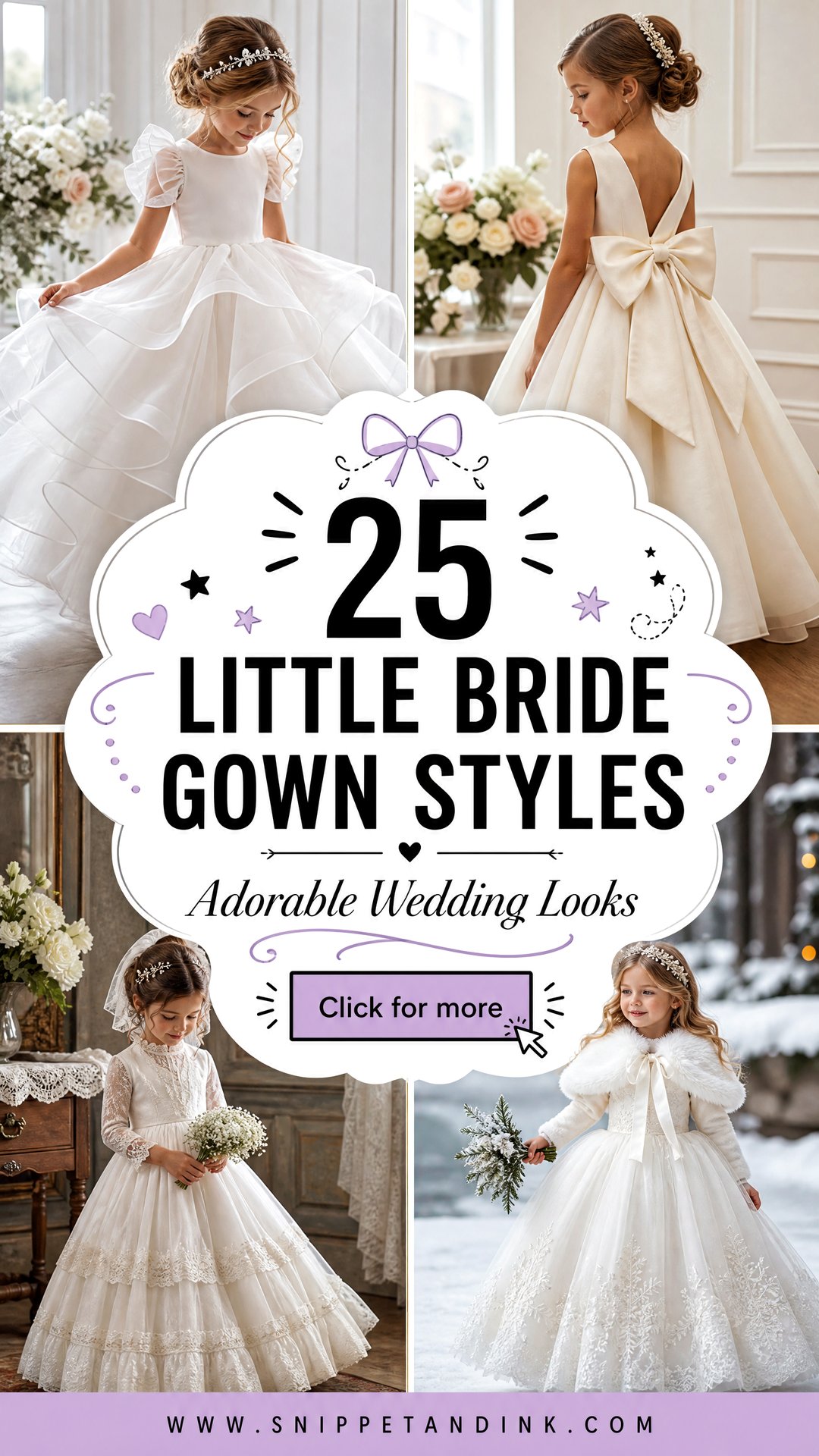
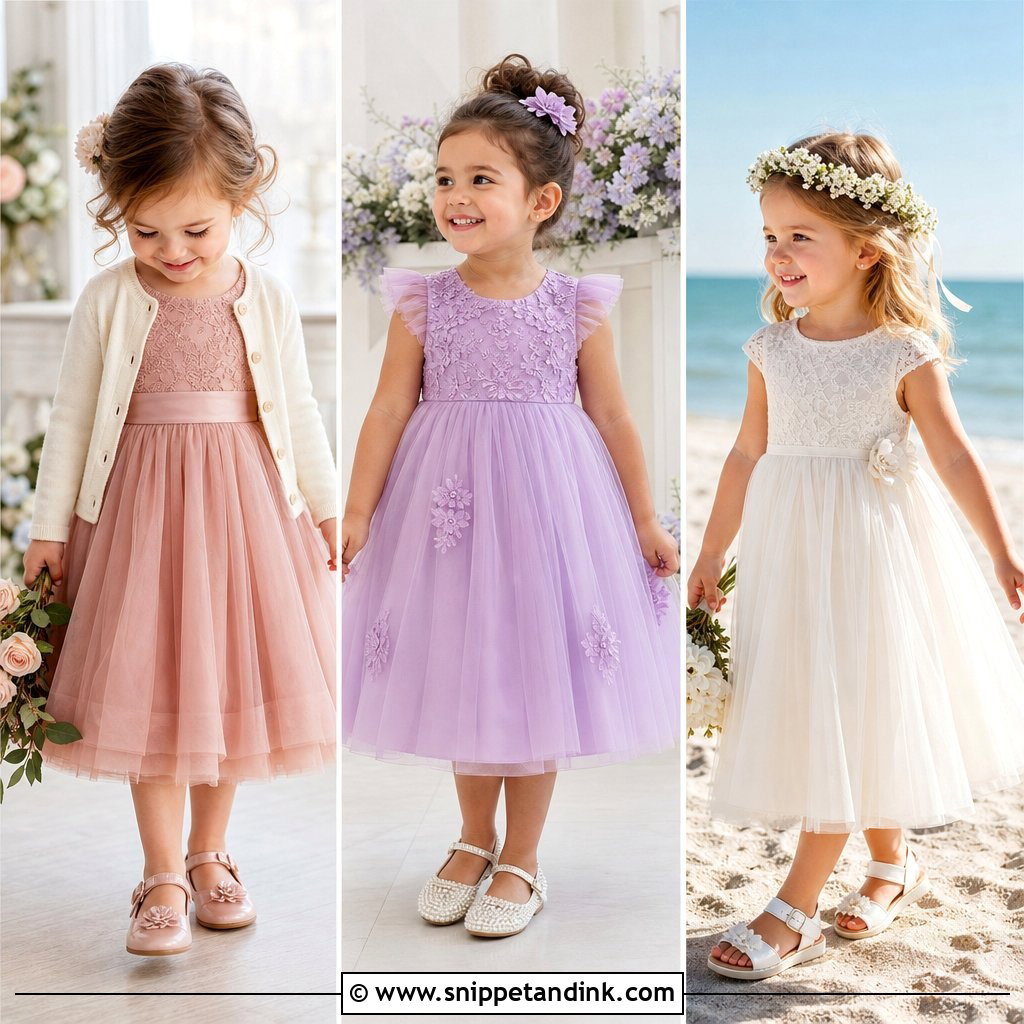
Dressing the youngest girl in the bridal party is a different job from dressing the bride. She has to walk the aisle, sit through the vows, stand still for family portraits and then run around at the reception, usually in the same gown. Current flower girl fashion borrows heavily from bridal shapes: tulle skirts, puff sleeves, pearl trim, small versions of the bride’s own gown. I love all of that, but when I style a little bride I judge every dress on two things first: whether the lining is soft against her skin, and whether she can climb a step without lifting the hem. The styles below are grouped so you can see what each one asks of a small child as well as how it looks.
Sizing a Gown for a Child Who Keeps Growing
Ordering a gown for a small child is a timing puzzle. Many children’s formal dresses are made to order and take several weeks to arrive, but a young child can also grow noticeably over a few months. I usually suggest ordering around three to four months before the wedding, then booking a fitting four to six weeks out so there’s still time to take in a waist or let down a hem.
Size by measurement, never by age label. Brands cut very differently, and a dress marked for a five-year-old can fit a tall three-year-old or a slim seven-year-old. These are the measurements I take:
- Chest, measured over a thin vest, since the bodice is the hardest part to alter.
- Waist, at the natural crease when she bends sideways.
- Hollow of the neck to the floor, in the shoes she’ll wear, for the true hem length.
- Height, as a cross-check against the brand’s chart.
When she falls between sizes, I go up. A bodice can be taken in and a hem shortened easily; there is almost nothing a seamstress can do with a dress that’s too small across the chest. Adjustable lace-up backs are worth a lot for exactly this reason.
1. White Tulle Little Bride Gown
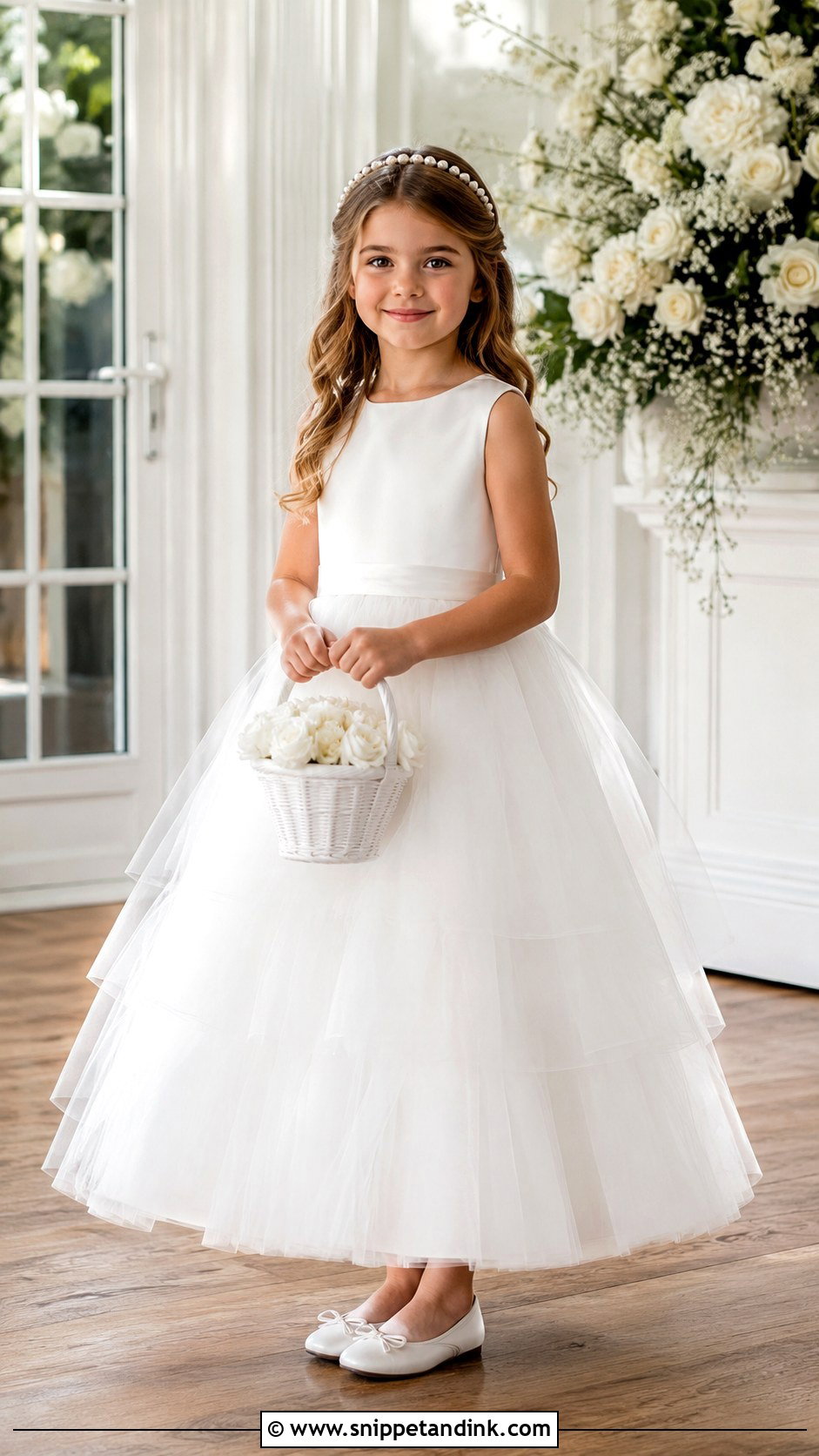
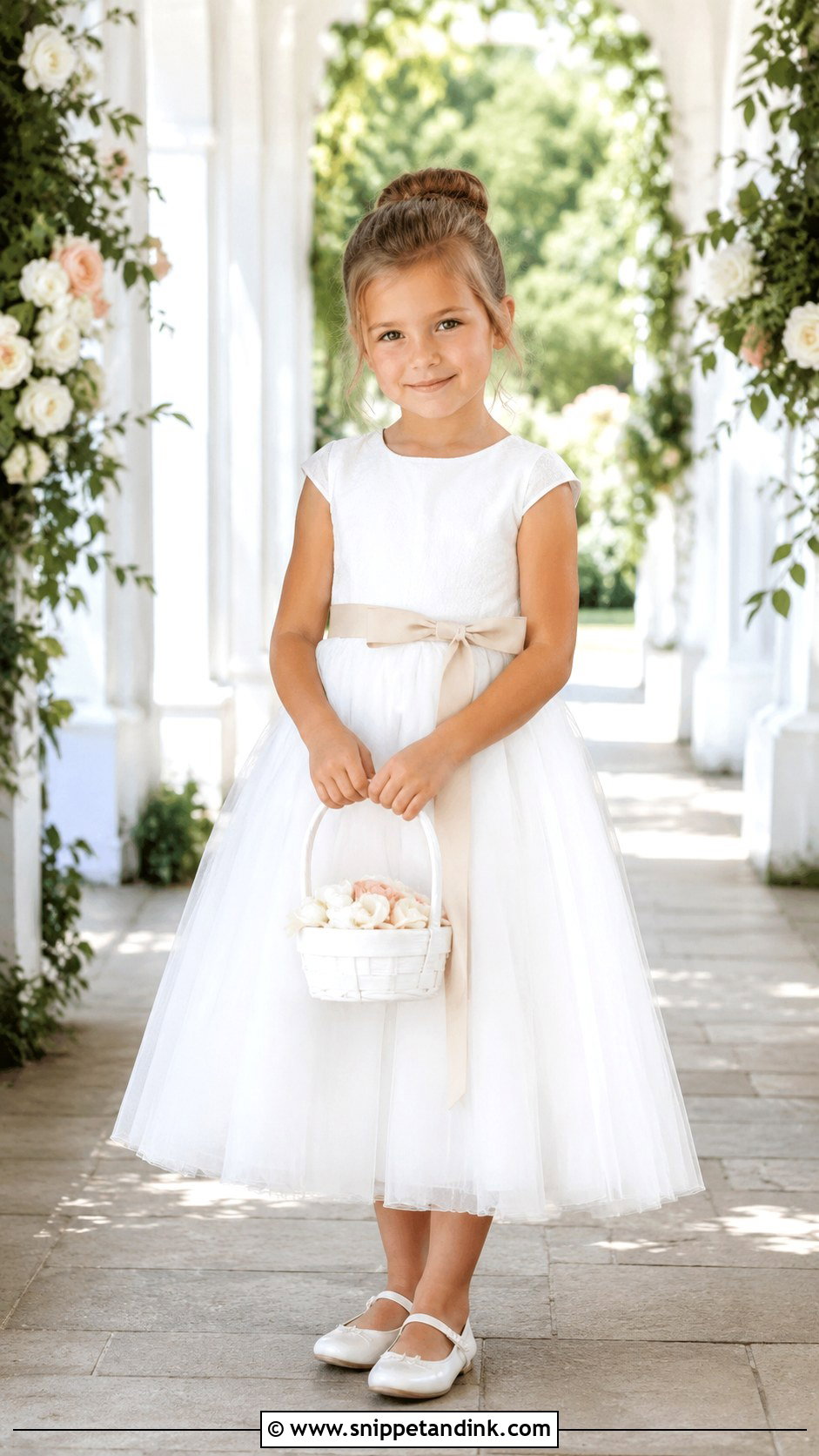
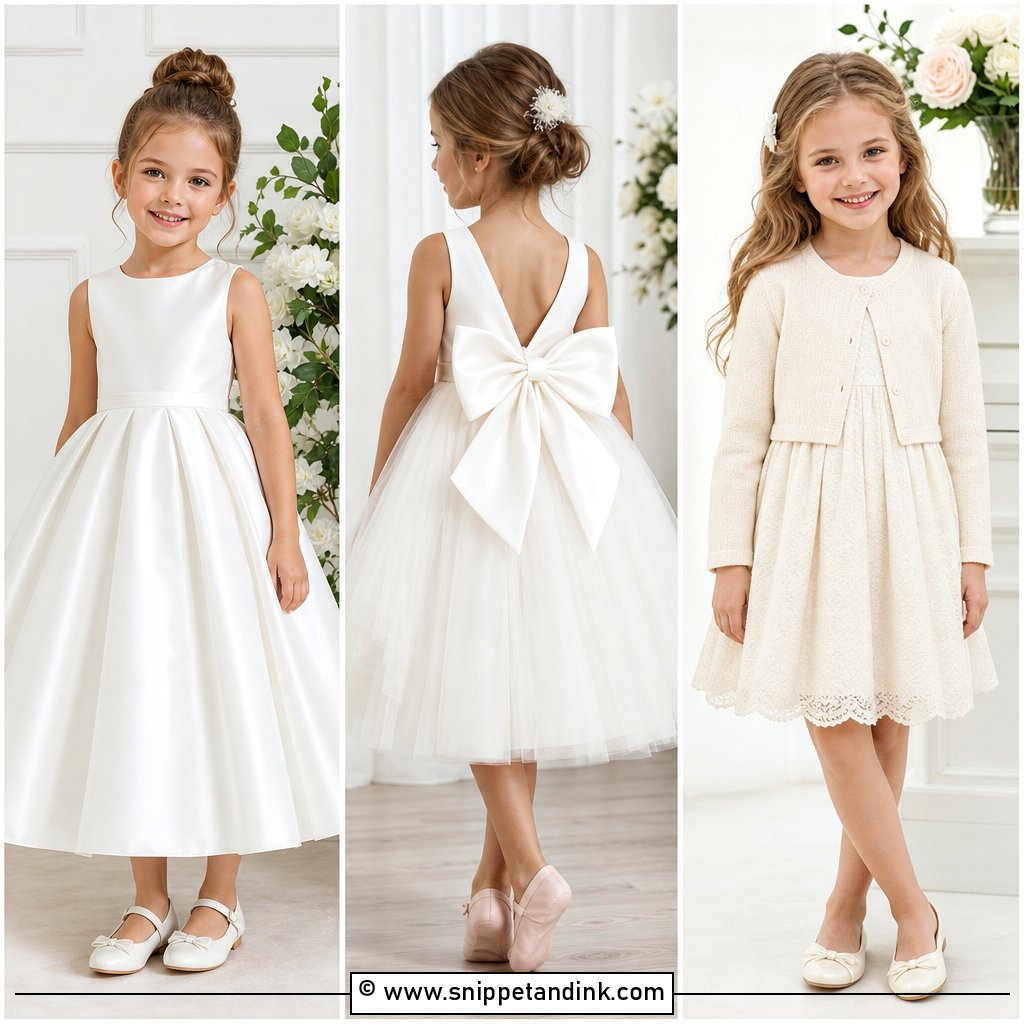
White tulle is the safe classic, and it suits almost any bridal palette. The detail I check is underneath: a cotton-lined bodice and a soft slip under the tulle, because bare tulle on a child’s legs itches within the hour. Mary Janes with a strap stay on better than slip-on ballet flats for small feet. Next to an ivory bridal gown, a bright white tulle skirt can read slightly blue in photos, so I hold the two fabrics side by side in daylight before committing.
2. Lace Little Bride Gown
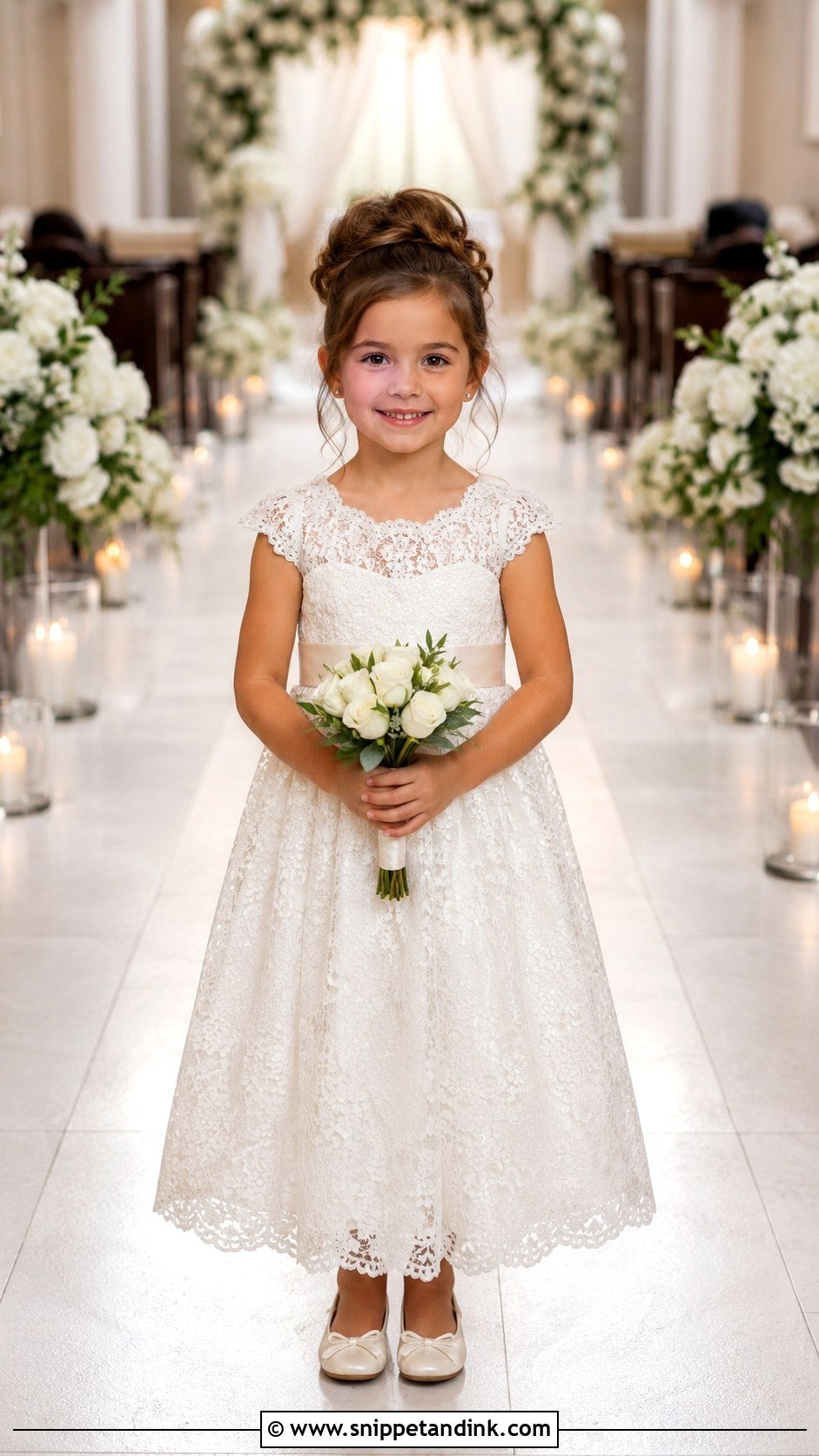
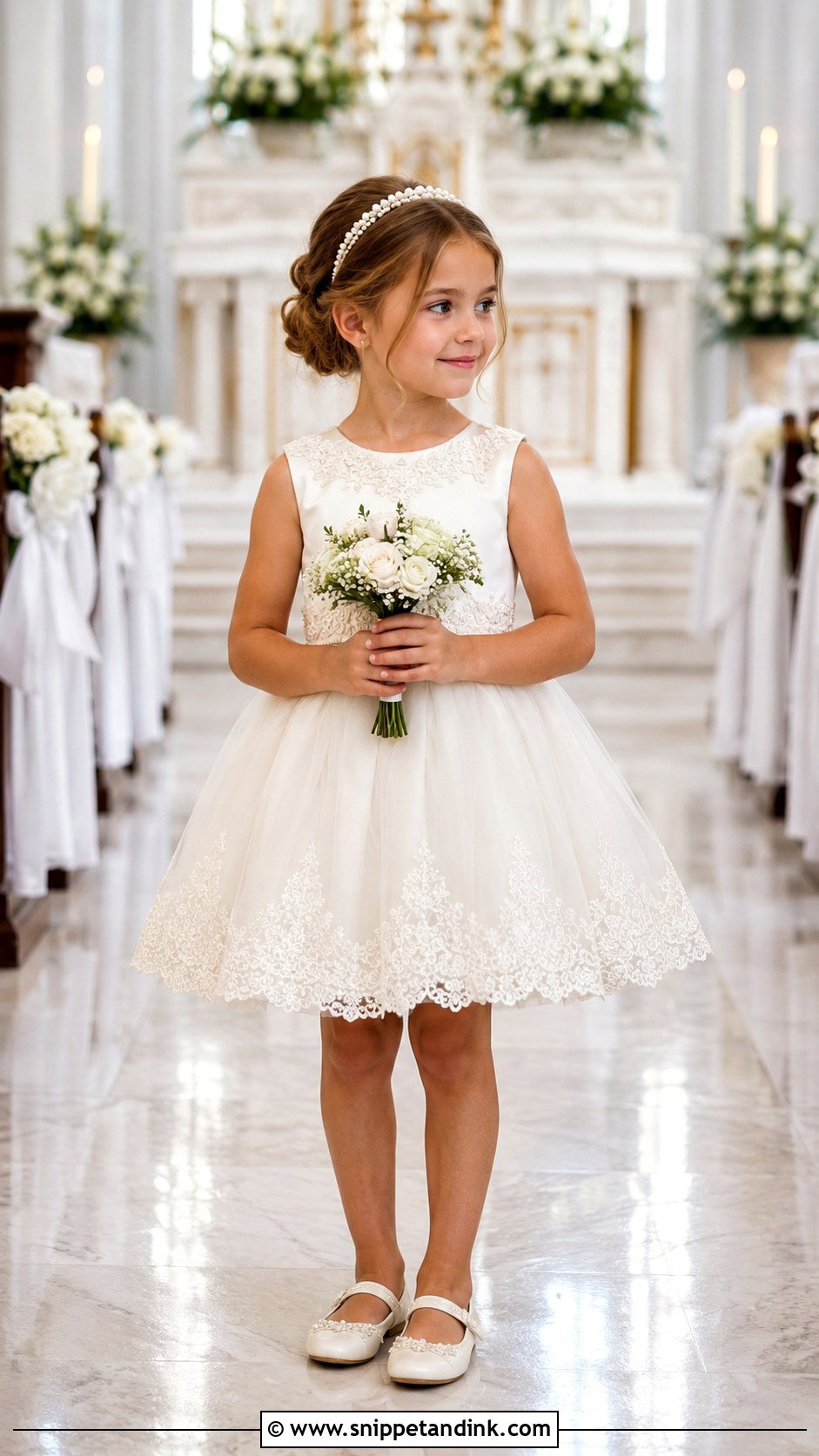
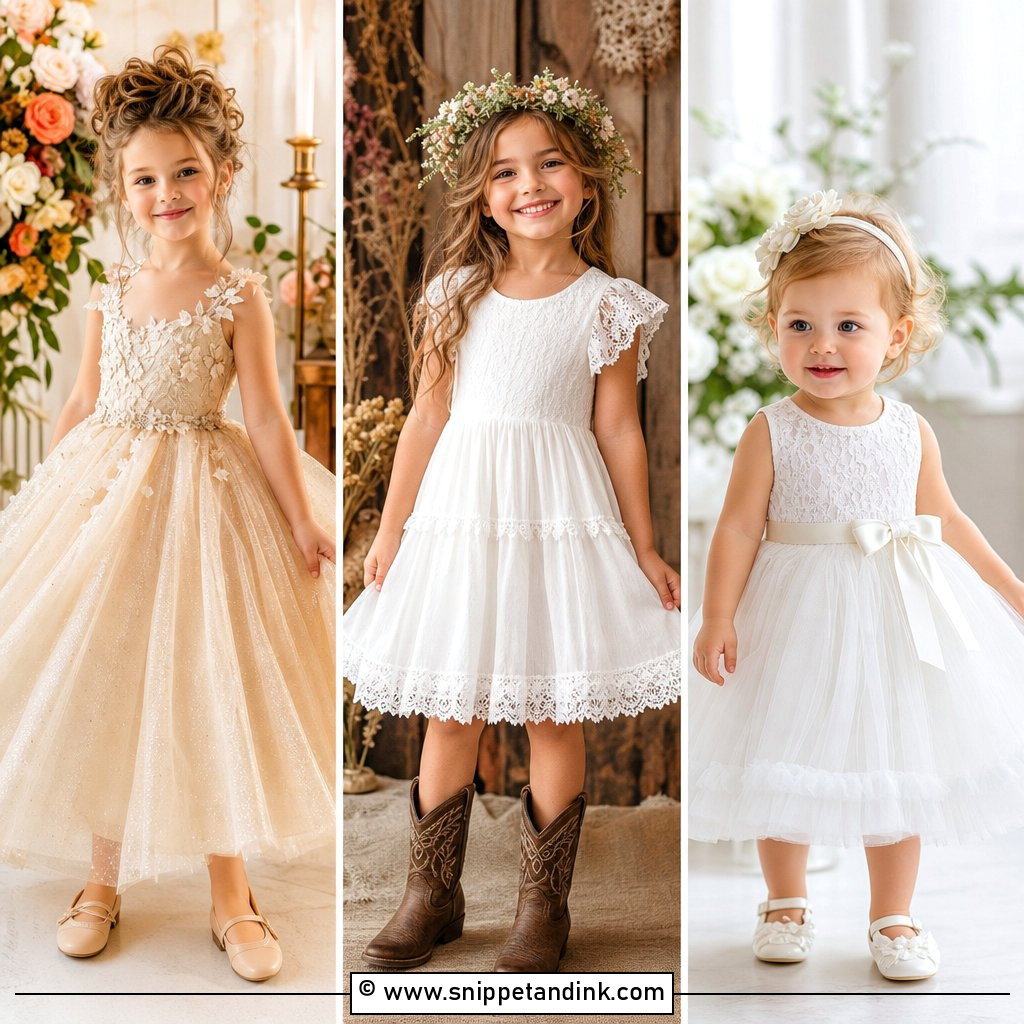
Lace gives a little bride a dressed-up look that still feels young, provided it sits over a full lining. I prefer cap sleeves or a short sleeve to an illusion neckline on a child, since illusion mesh tends to shift and gape when she wriggles. A satin sash is the easy way to pull in the bridesmaids’ color, whether that’s sage or dusty blue. Watch for corded lace with a stiff edge at the armhole; that’s the spot that rubs.
3. Satin Little Bride Gown
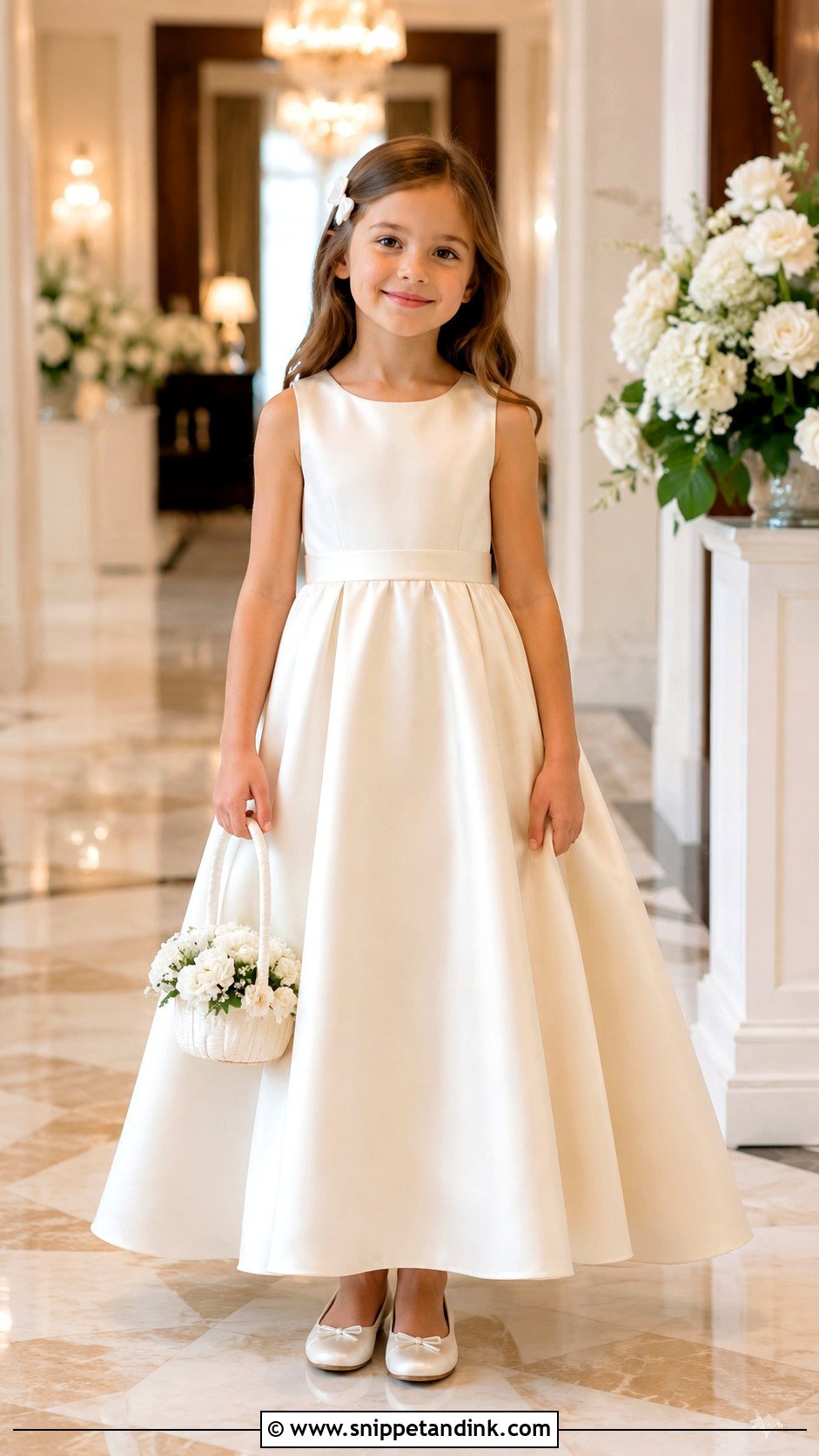
Satin looks crisp and formal, and an A-line cut with a gently flared skirt keeps it from feeling too grown up. The honest drawback is creasing. Satin marks the moment a child sits in a car seat, so I steam the gown at the venue rather than at home and keep her standing until the processional if I can. Ivory and soft champagne are the most forgiving shades next to a bride. A small bow clip and a petal basket are all the styling it needs for a hotel or evening ceremony.
4. Princess Ball Gown Little Bride Gown
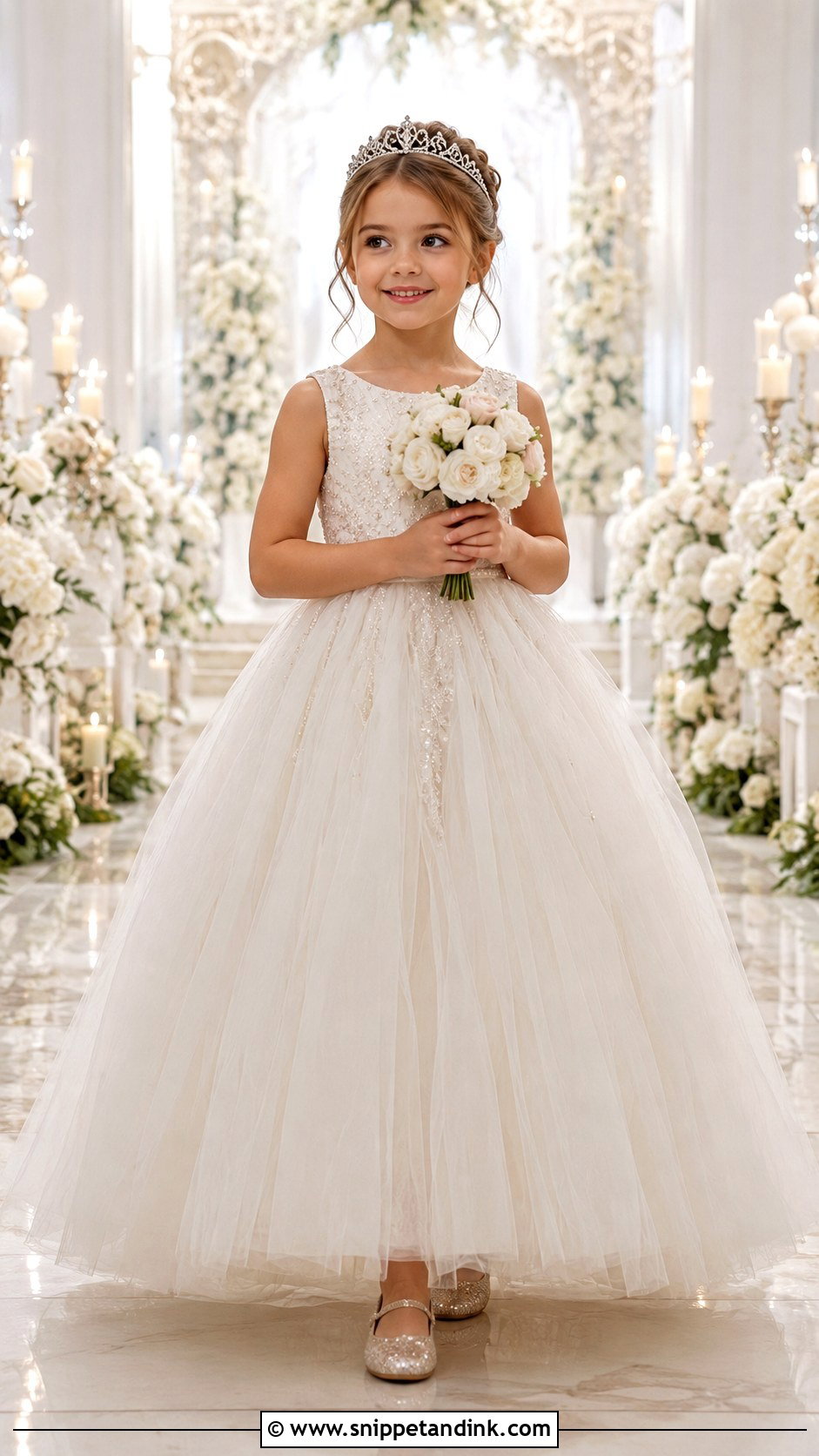
A princess ball gown is the fairytale option: fitted bodice, full skirt, several layers of tulle or organza. The weight is what I worry about. Layered skirts can get surprisingly heavy, and a heavy skirt on a four-year-old means a tired, cross four-year-old by the first dance. I look for a skirt built on a light netting rather than a stiff hoop, and I keep the tiara headband small so the volume stays the main event.
5. Long Sleeve Little Bride Gown
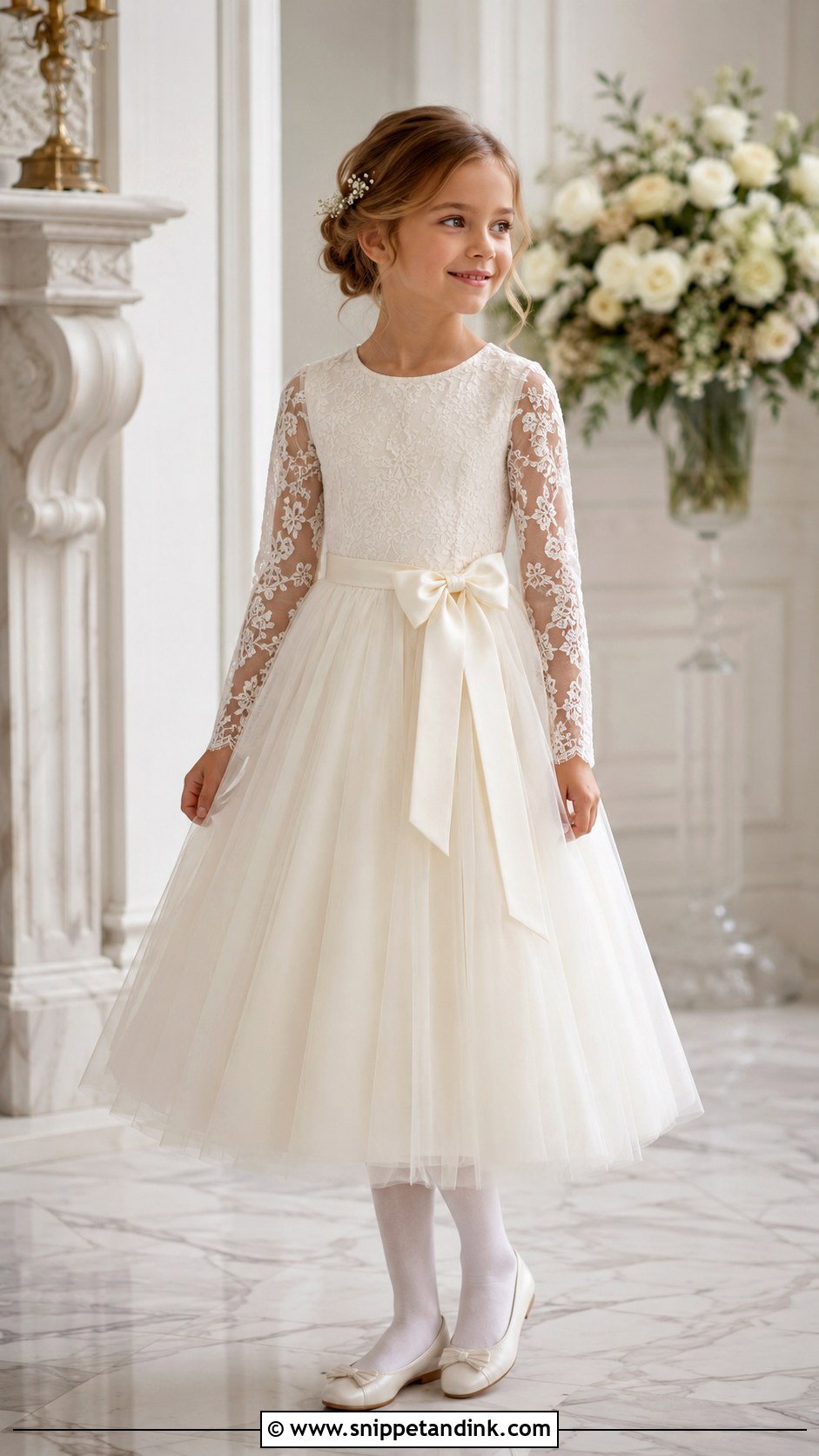
Long sleeves make sense for autumn and winter weddings and for venues where the air conditioning runs hard. Sheer lace or tulle sleeves give coverage without bulk. The fit check I always do is arms raised above the head: if the bodice rides up when she reaches for a hug, the armholes are cut too low and the sleeves will pull all day. A long-sleeved little gown also mirrors a bride in sleeves very neatly, and it’s that echo that makes the portraits feel planned.
6. Puff Sleeve Little Bride Gown
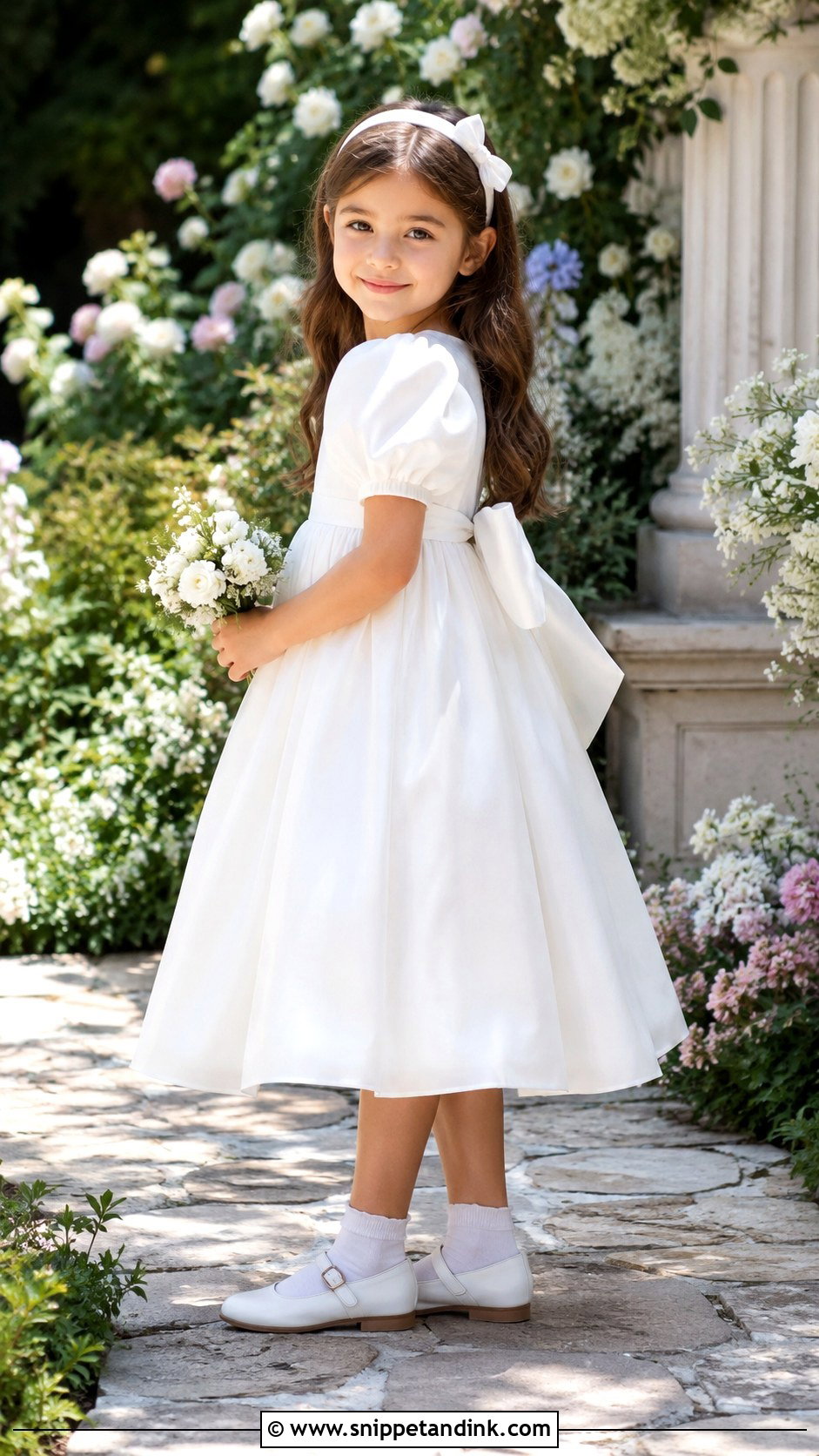
Puff sleeves are probably the most child-friendly shape on this list. They soften the shoulders and give a young girl a proportion that looks right on her rather than borrowed from an adult. Organza puffs hold their shape all day; tulle puffs collapse a little after a few hours, which some parents prefer. Keep the skirt at knee or tea length, add white Mary Janes and ankle socks, and the outfit stays sweet without chasing a trend.
7. Tea Length Little Bride Gown
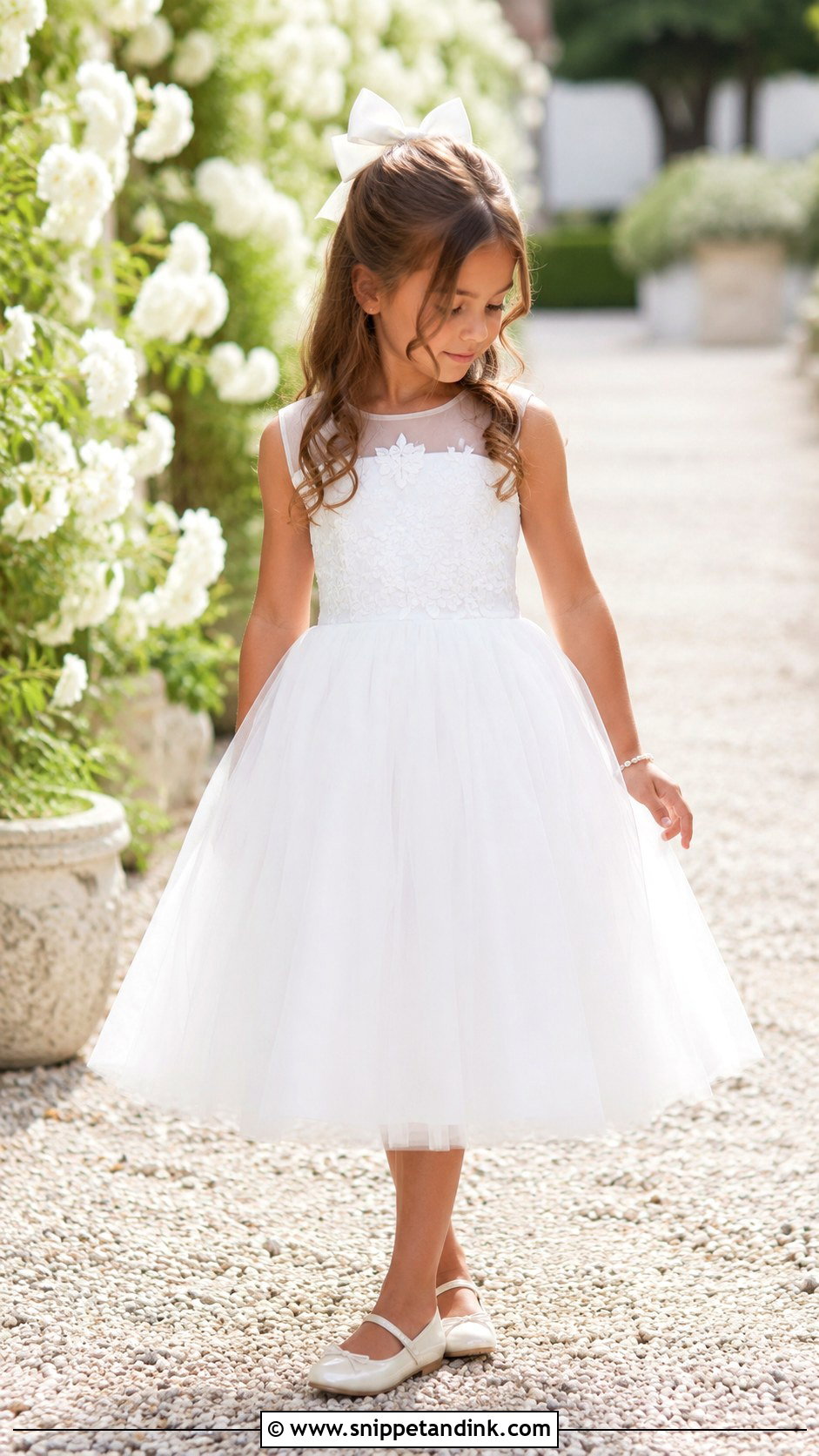
If you asked me to pick one length for a child under six, I’d pick tea length. The hem sits between knee and ankle, so she can walk, sit cross-legged on the floor and dance without tripping on the front of her skirt. It keeps clear of grass and sand at outdoor ceremonies, and it doesn’t bury a small girl the way a floor-length skirt can. Tulle, satin, lace and organza all work at this length.
8. Floral Applique Little Bride Gown
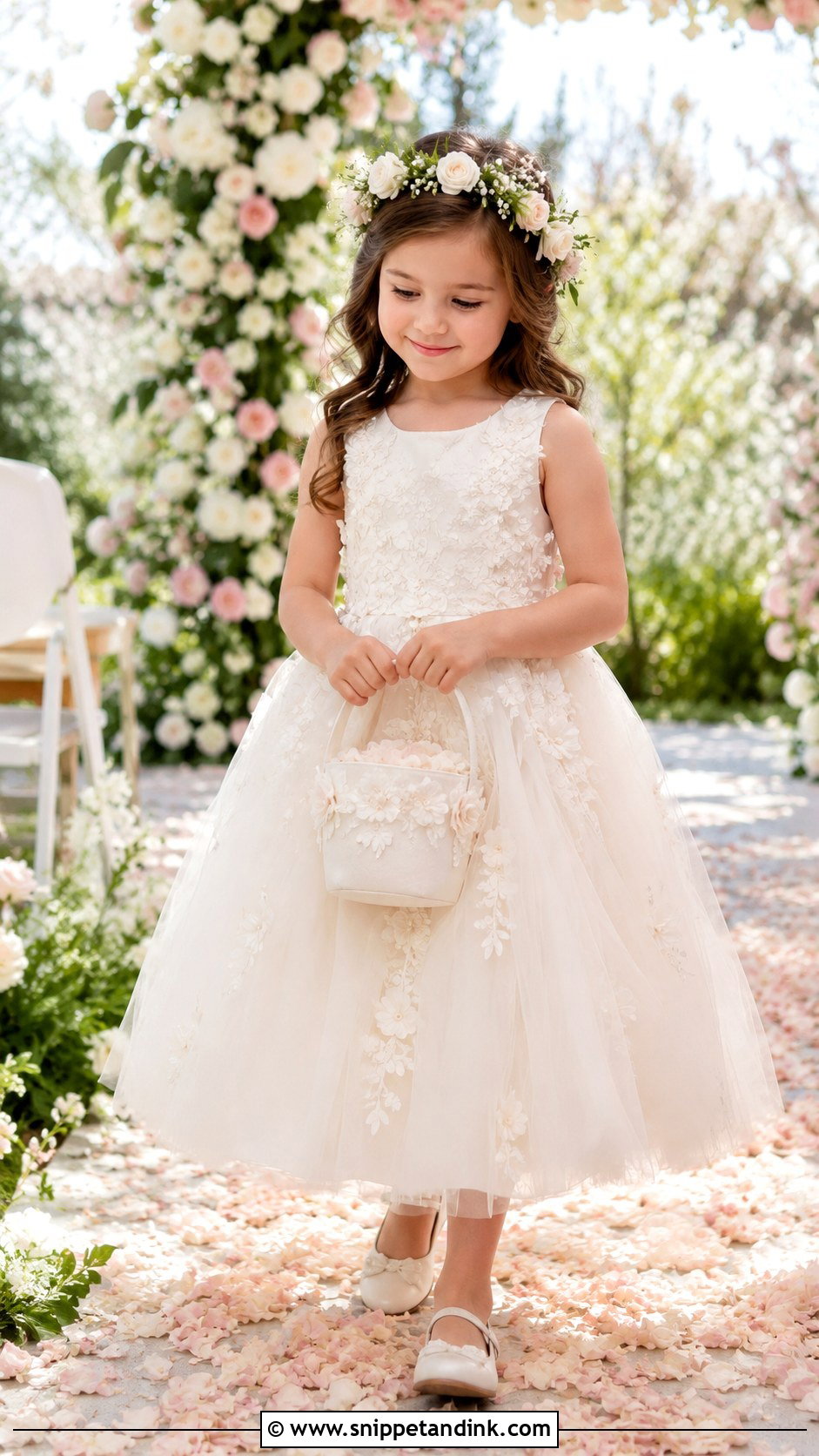
Floral appliqué adds texture without needing color. Small 3D flowers scattered over the bodice or skirt look like a garden in miniature, and I like to match the appliqué flower to the bouquet if a dress allows it. One practical thing to check: turn the bodice inside out and run your fingers over the back of each appliqué. Glued or roughly stitched backs scratch, and on a sleeveless dress they sit right against the skin. Keep the shoes plain so the flowers stay the focus.
9. Pearl Detail Little Bride Gown
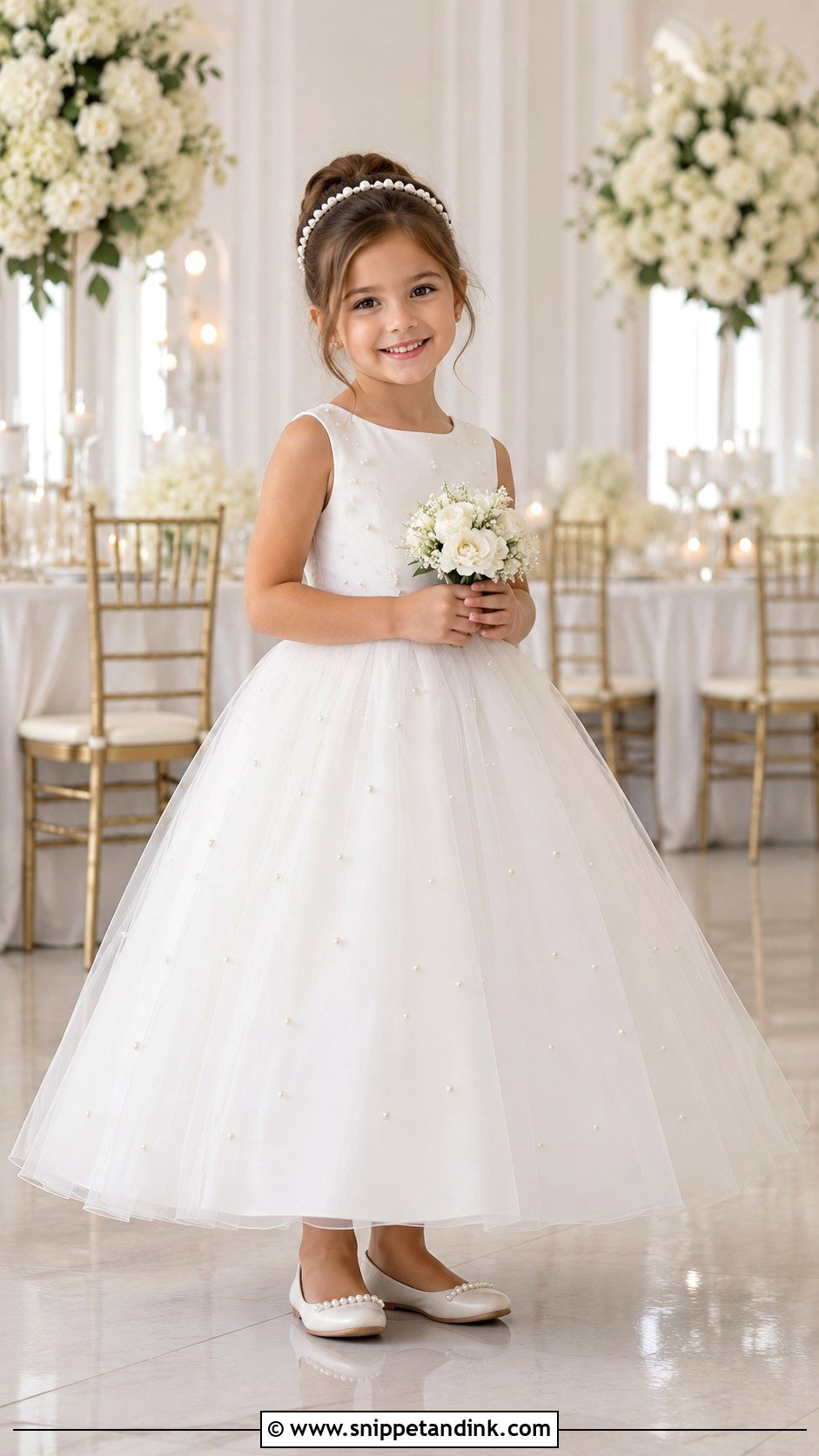
Pearls give a soft polish, but restraint matters more here than anywhere else. A line of pearls at the neckline or waist reads classic; a skirt covered in them gets heavy and starts to look like costume. I also give each sewn pearl a gentle tug at the fitting. Loose pearls are a choking hazard for younger siblings at the reception, and any that wobble get restitched before the day. A pearl-trimmed headband is usually enough to tie the look together.
10. Organza Little Bride Gown
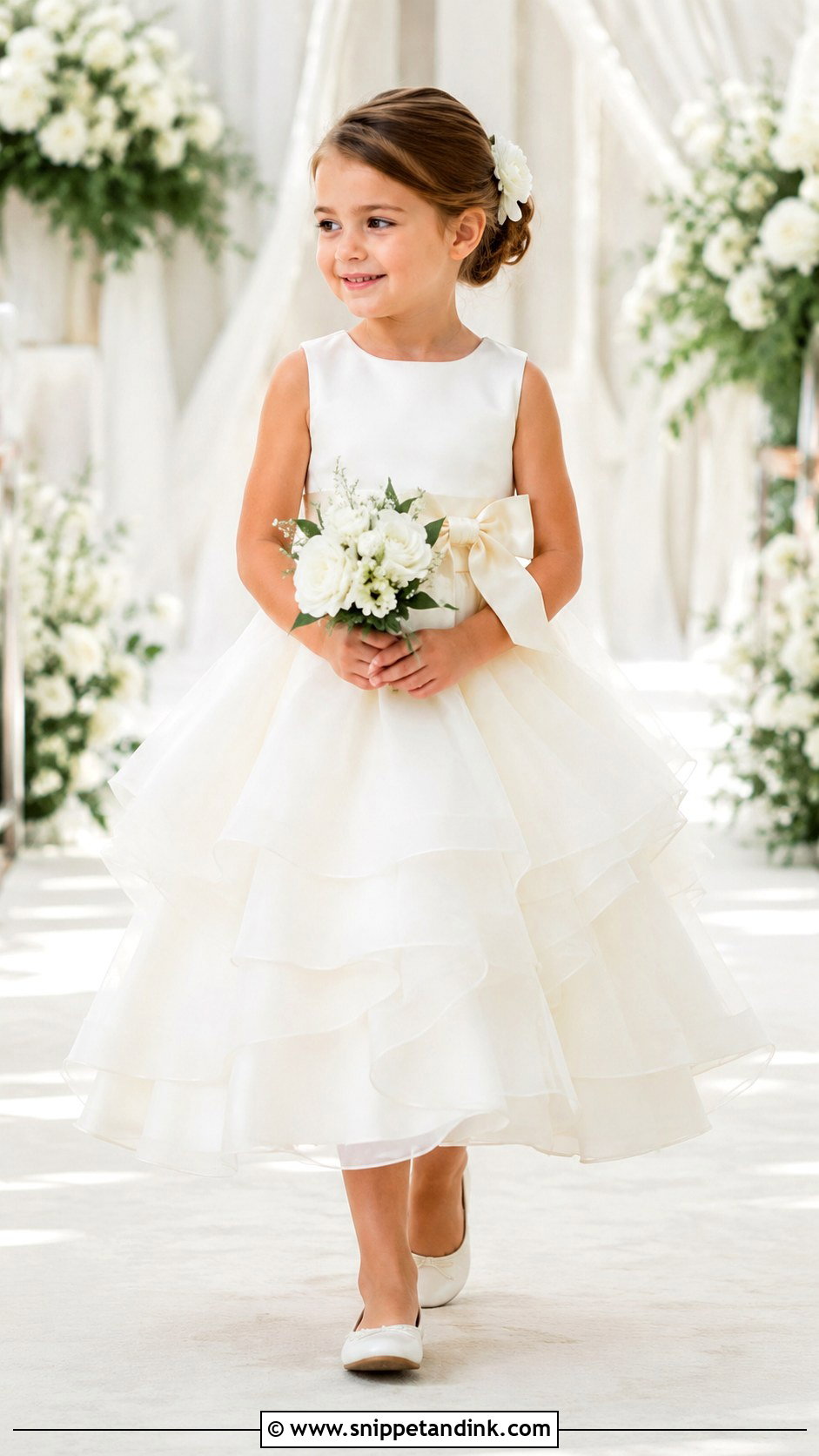
Organza is crisp and airy, so it gives a skirt real shape without the weight of satin. That makes it a strong choice for warm weather, as long as the bodice is lined in cotton; unlined organza is scratchy and doesn’t breathe. A fitted bodice, a layered skirt and a bow sash is all the design it needs. In ivory it floats in photos, and in pale blush it warms up a romantic palette.
11. Off White Little Bride Gown
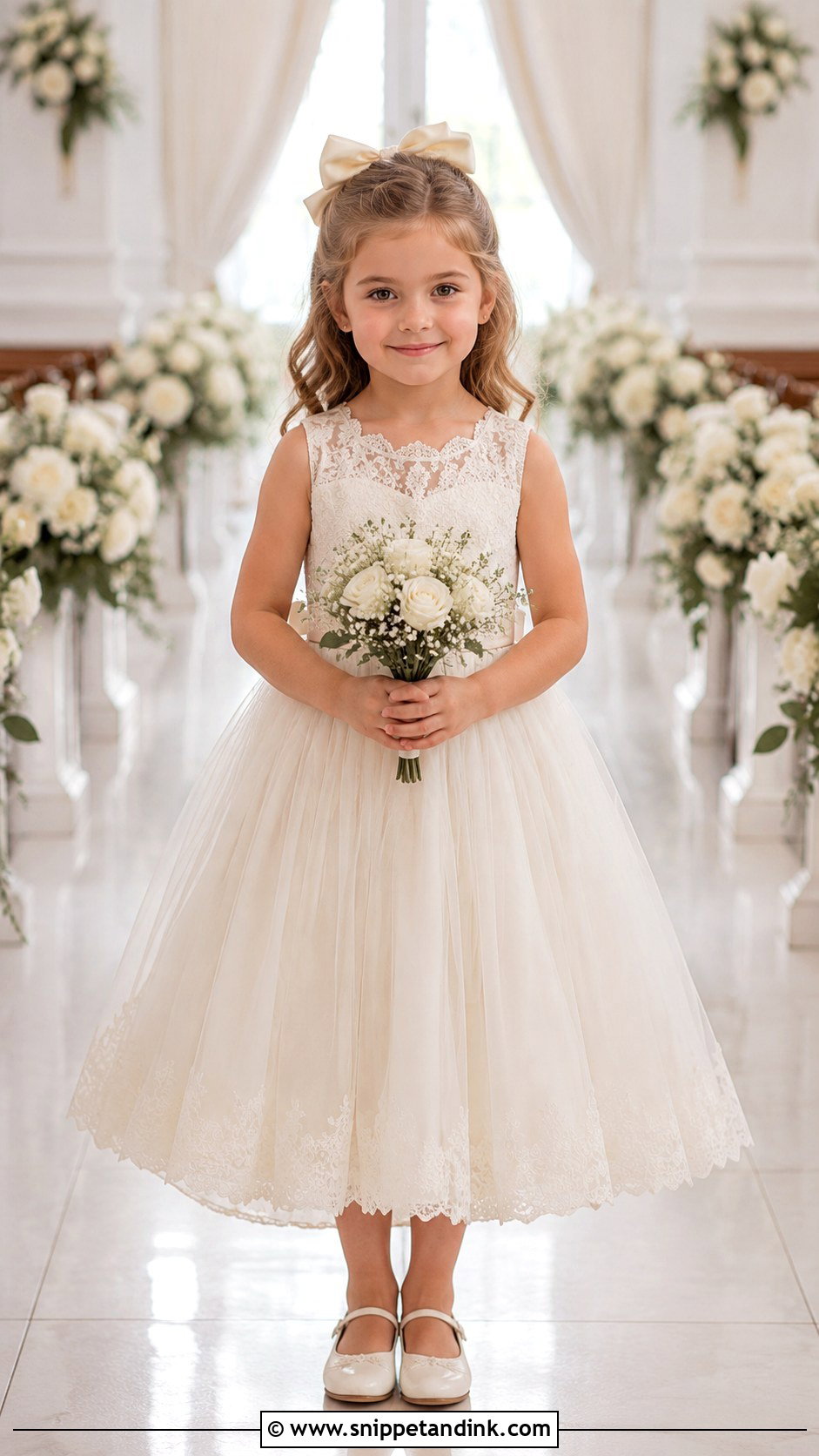
Off white is my usual suggestion when the bride is in ivory, cream or champagne. A bright white child’s dress next to a warm bridal gown makes the bride look yellow in pictures, and off white avoids that. It’s also kinder to most skin tones and softer in outdoor light, especially late afternoon. A simple lace or satin silhouette, ivory shoes and a small posy matched to the ceremony flowers finish it.
12. Blush Little Bride Gown
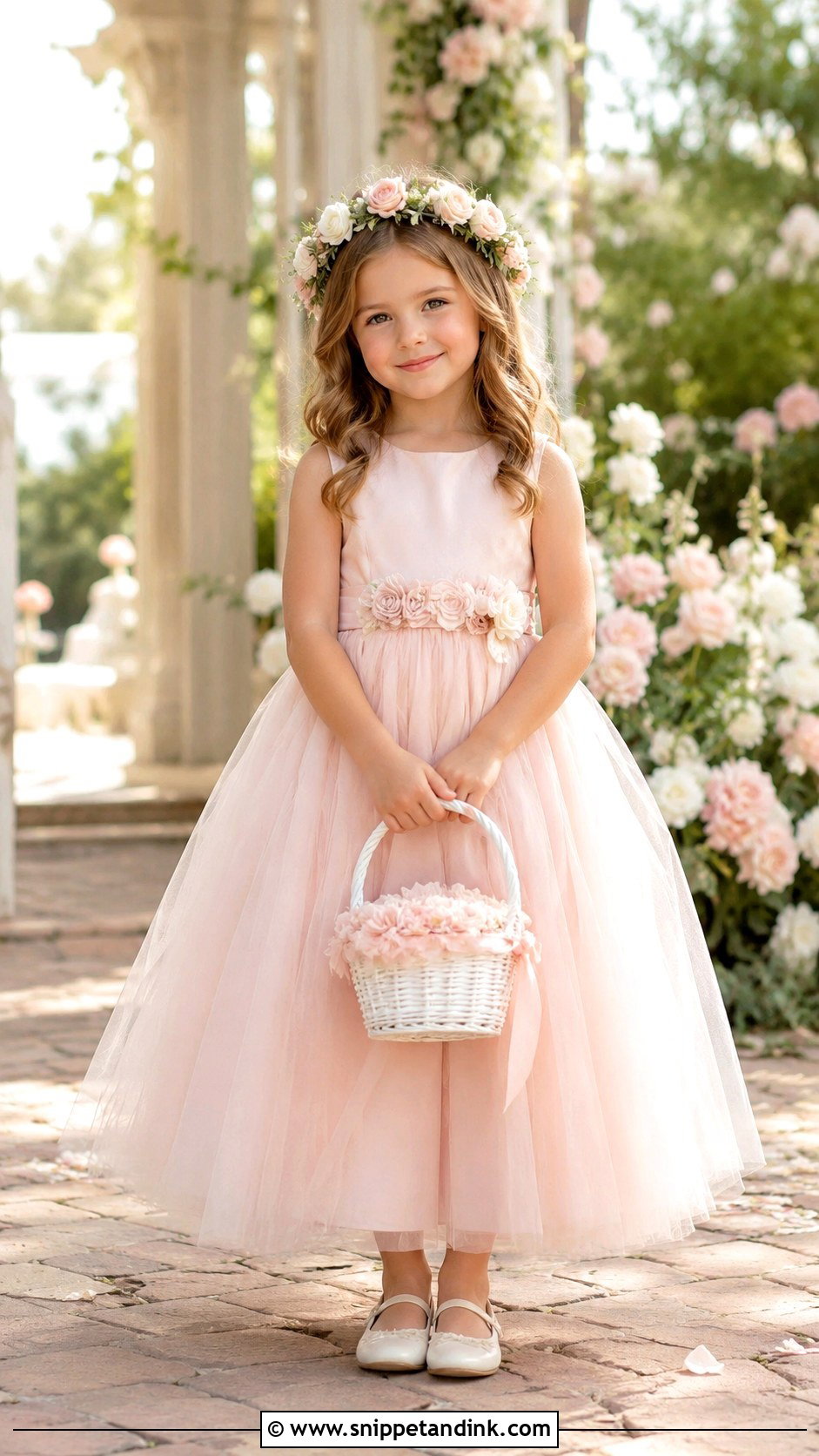
Blush solves a common family question: the bride wants the little girl to look bridal but not in full white. Pale pink works with spring palettes and with bridesmaids in mauve, rose or champagne. The mistake I see is going too deep. Once the pink moves past a whisper it reads as a party dress rather than a bridal one, so I compare swatches against the bride’s fabric before ordering. Tulle gives the softest effect, satin a smarter one.
13. Champagne Little Bride Gown
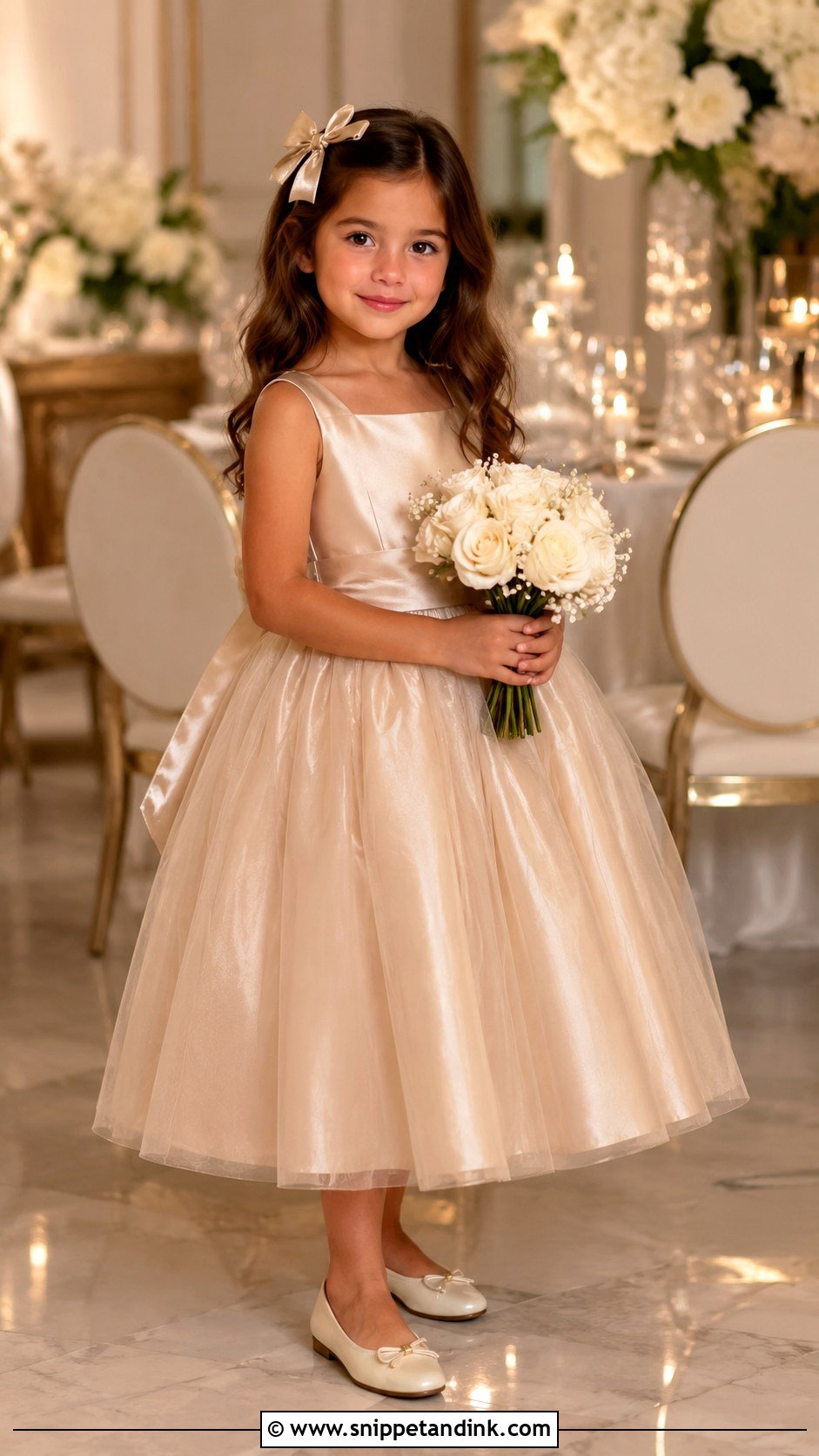
Champagne is a little more formal than white or blush and sits well in evening light and against gold or beige décor. It flatters a bride whose own gown has warm undertones, because the two shades read as related rather than matched. Satin in champagne can look brassy under strong flash, so I lean toward lace or tulle in this color. Ivory flats and a cream or pale peach posy keep the outfit calm.
14. Ivory Little Bride Gown With Bow
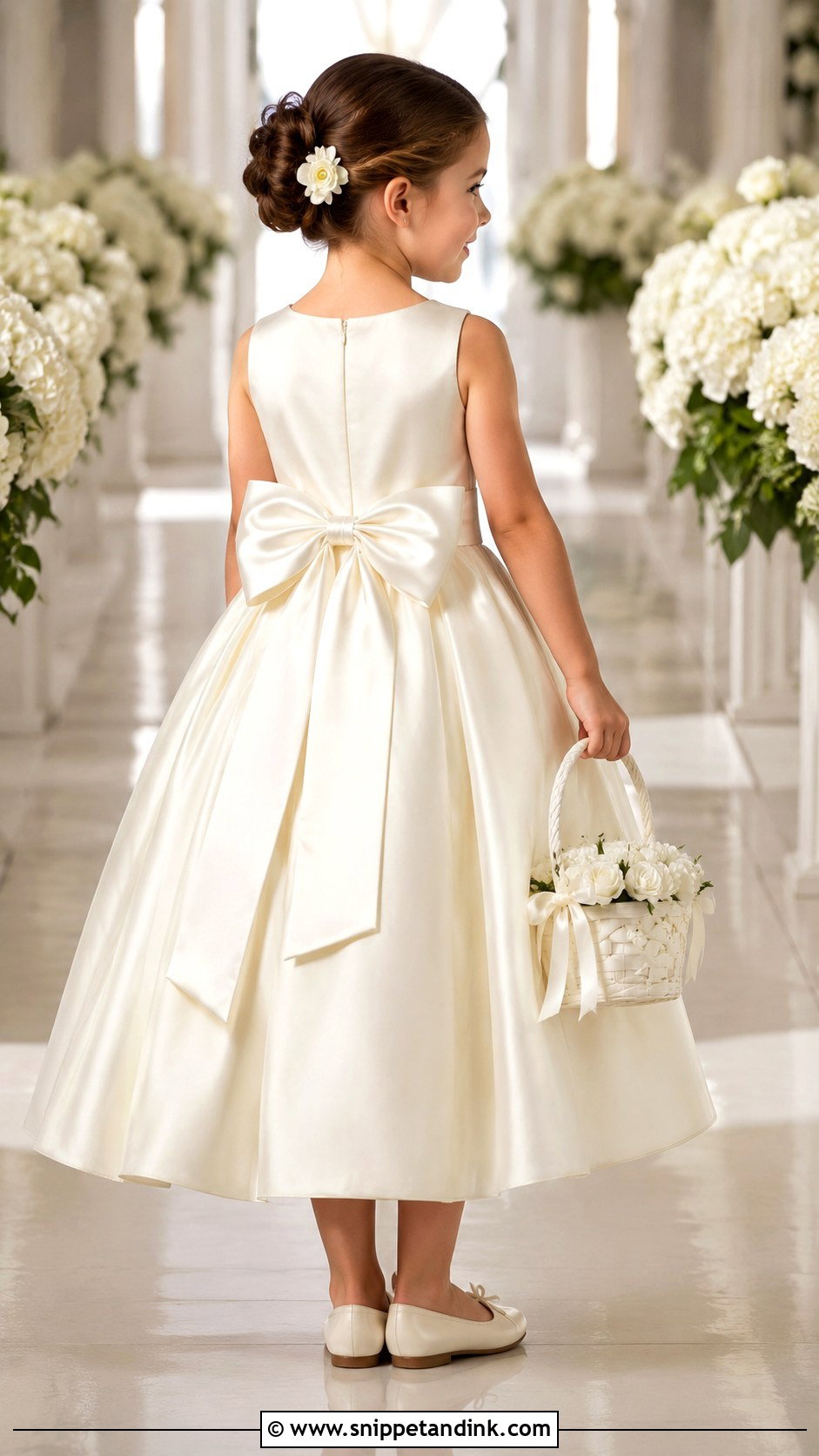
A bow does a lot of work on a simple ivory gown. Set at the back waist, it gives the dress personality from behind, which is the angle most guests see during the processional. Satin bows hold their shape; tulle bows look airy but flatten if she leans back in a chair all evening. I tack the bow tails down with a couple of hidden stitches so they can’t be untied by curious hands. A neat bun and ivory flats are all the rest of the look needs.
15. High Low Little Bride Gown
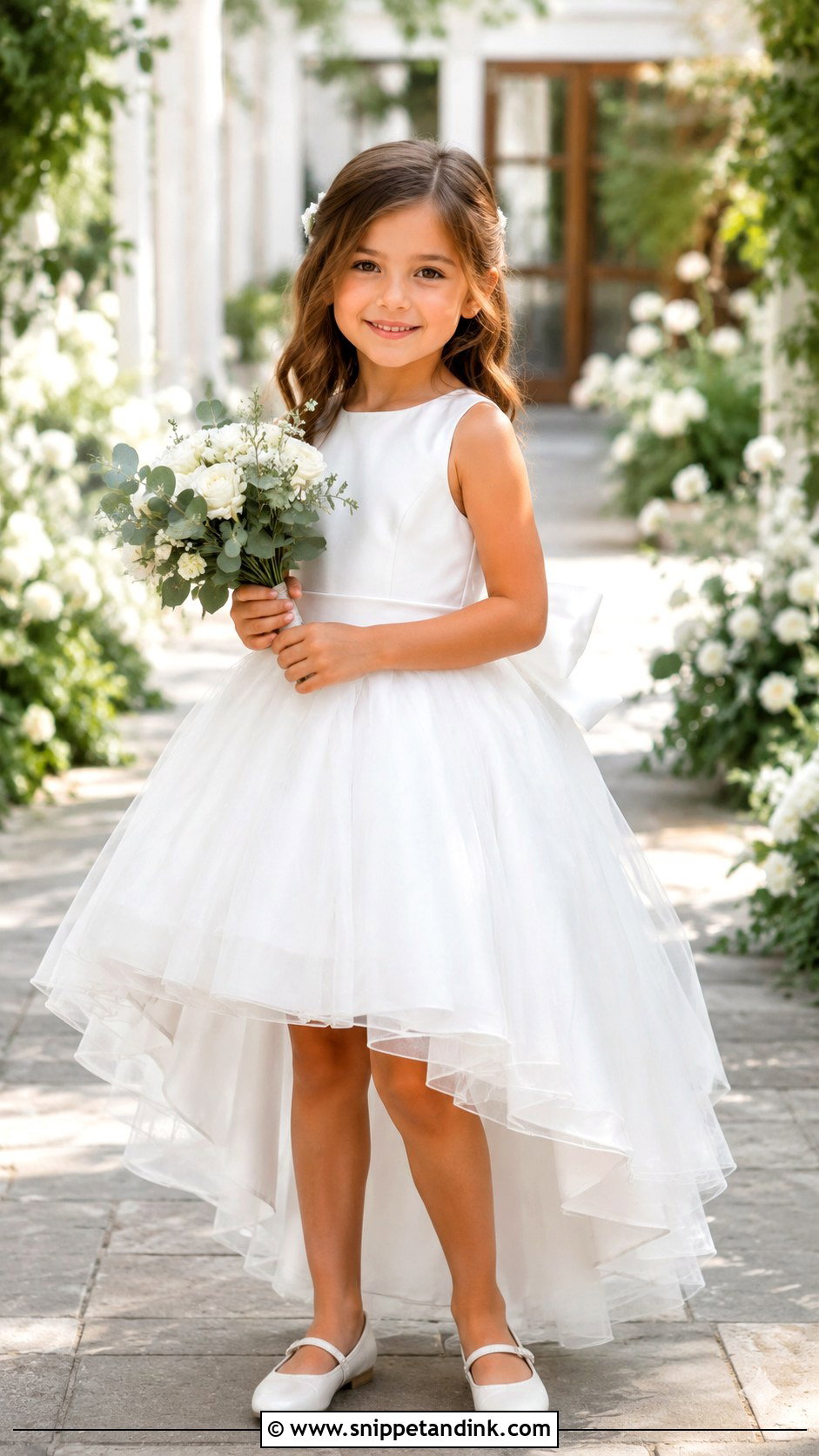
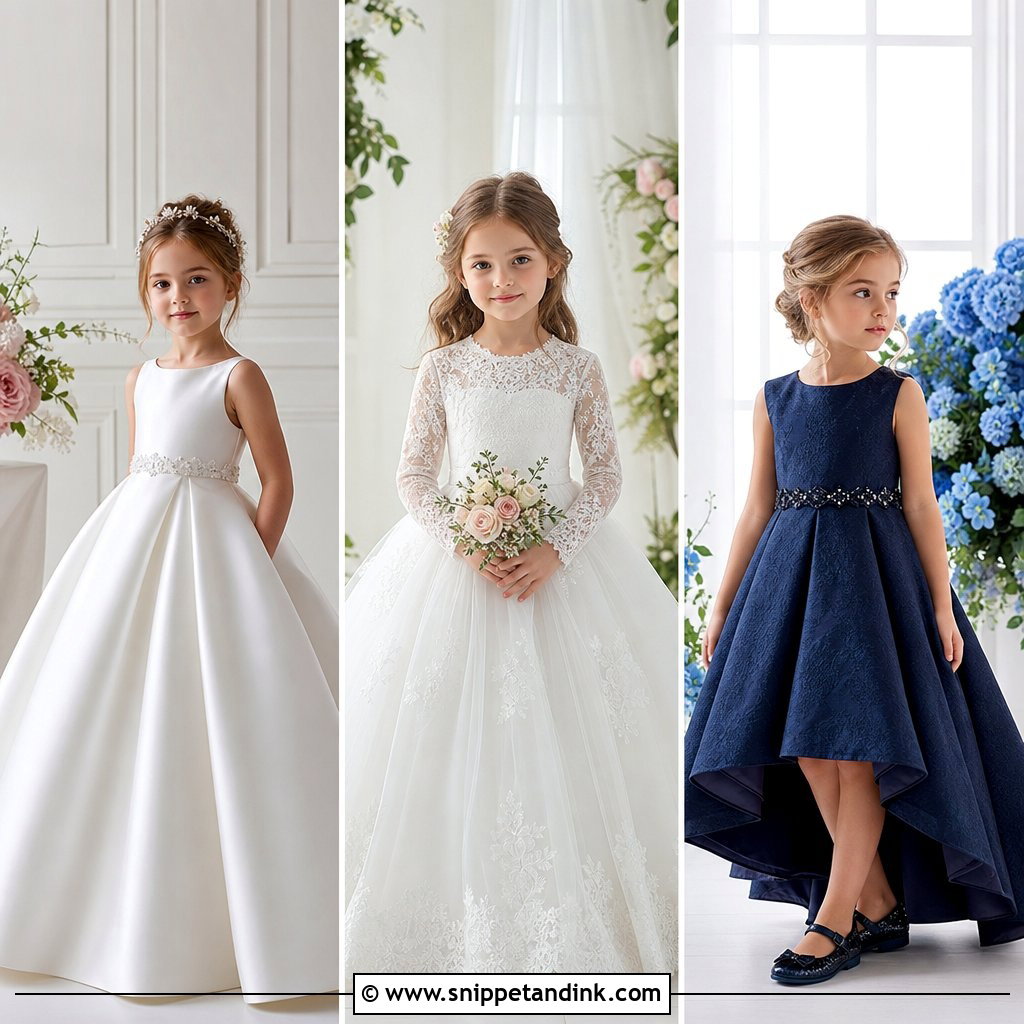
High low gowns give the formality of a long back hem with a front that stays clear of the floor. That shorter front is genuinely useful on uneven outdoor ground. The trade-off is that shoes become part of the outfit, so scuffed school shoes won’t do here. I check the back hem when she sits: a long back on a small child gets sat on, crumpled and stepped on, so I keep the drop modest.
16. Ruffle Little Bride Gown
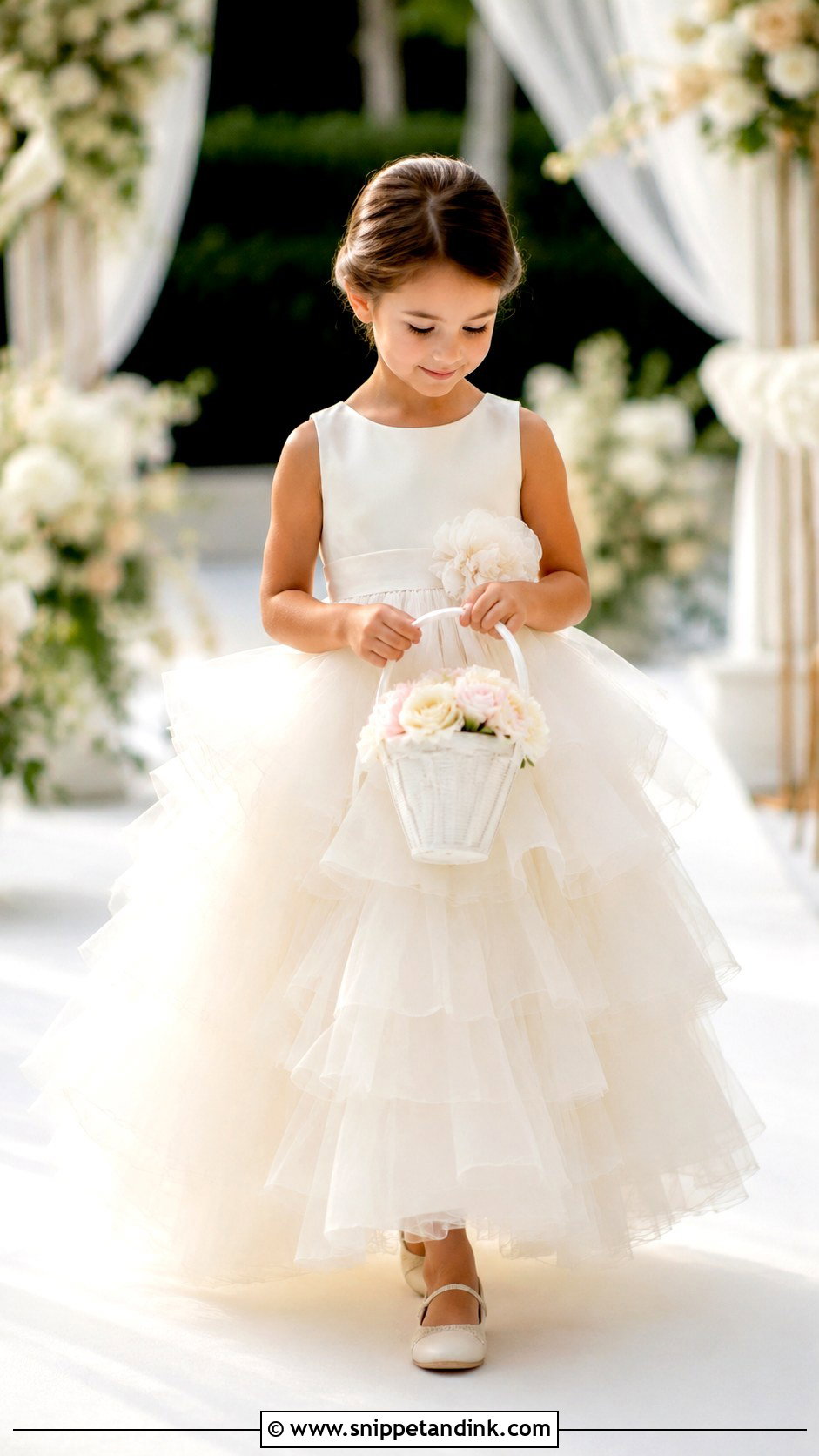
Ruffles bring movement, and children love how they bounce when they walk. The scale has to stay small, though. Oversized ruffles on a little girl look heavy and can swamp her face in photos, especially at the neckline. Tulle ruffles are soft and forgiving; organza ruffles are crisper but can crush in a car seat and need a quick steam at the venue. Keep the hair smooth and skip jewelry so the dress has room.
17. Sequin Bodice Little Bride Gown
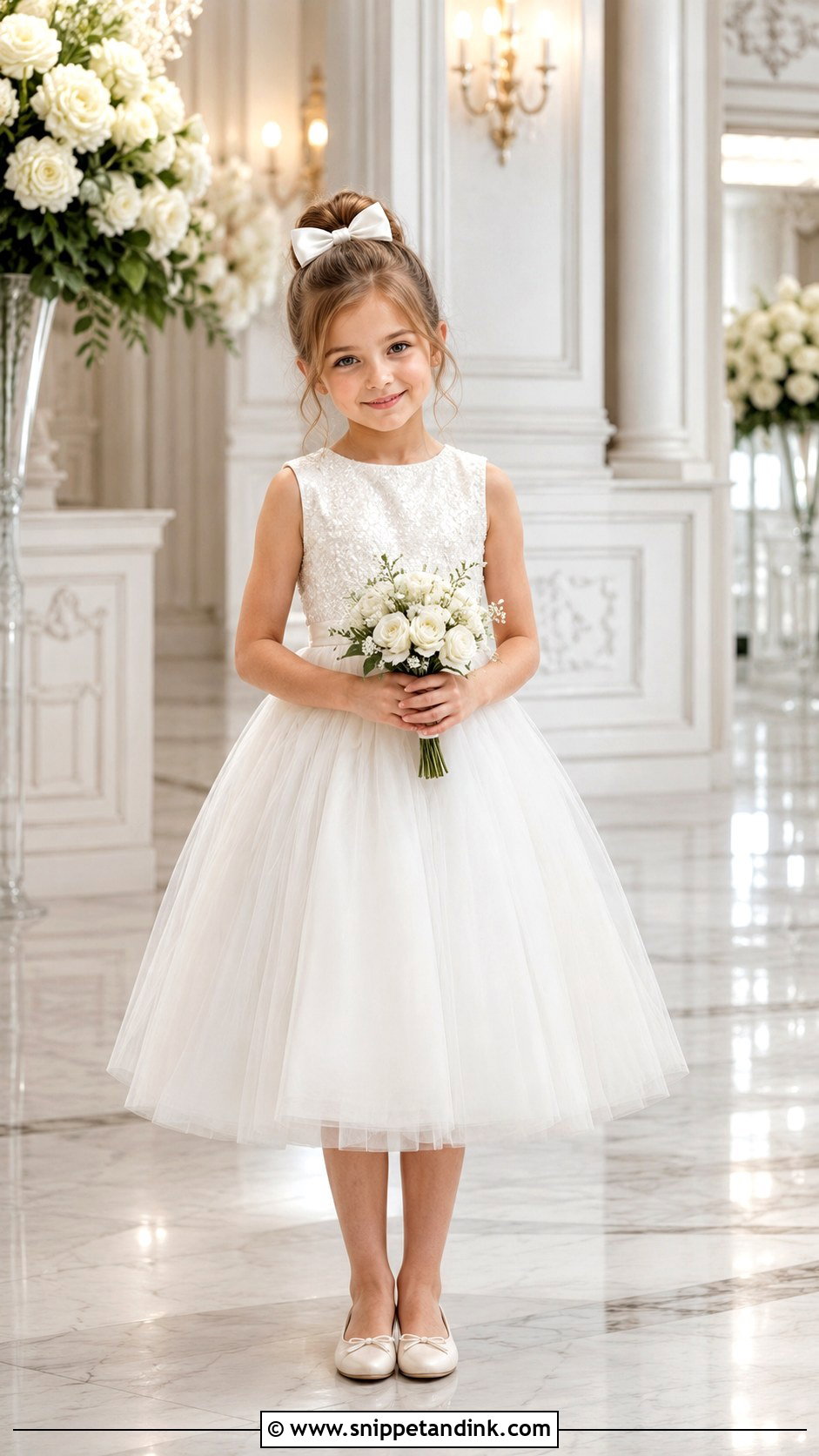
Sequins suit an evening or ballroom wedding, as long as they stay on the bodice and the skirt stays plain. The real check is the inside. Sequin bodices often have rough thread backs and sharp edges at the armholes, so I only consider ones with a full soft lining and no sequins under the arm. Plain ivory flats and a simple bow stop the sparkle from competing with anything else.
18. Minimal Little Bride Gown
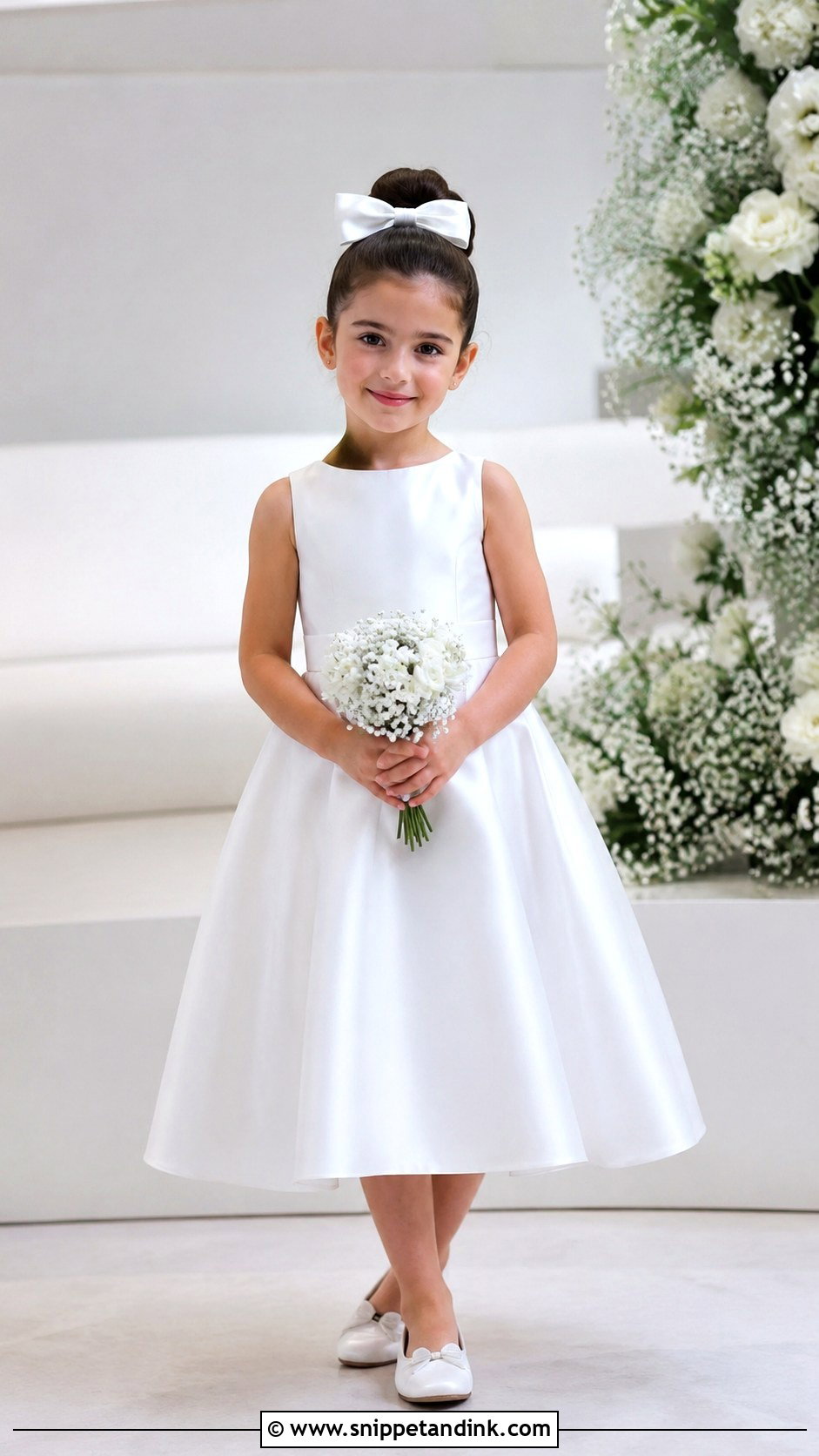
Minimal gowns rely completely on fit and fabric, so this is where cheap construction shows first. Smooth satin, cotton sateen or a crepe in a clean A-line with a modest neckline is the formula. Because there’s no tulle to hide a poor hem, I check the hem is level all the way round and the side seams sit straight. It pairs neatly with a modern bridal gown or a courthouse ceremony, and children tend to find it the most comfortable dress of all.
19. Vintage Little Bride Gown
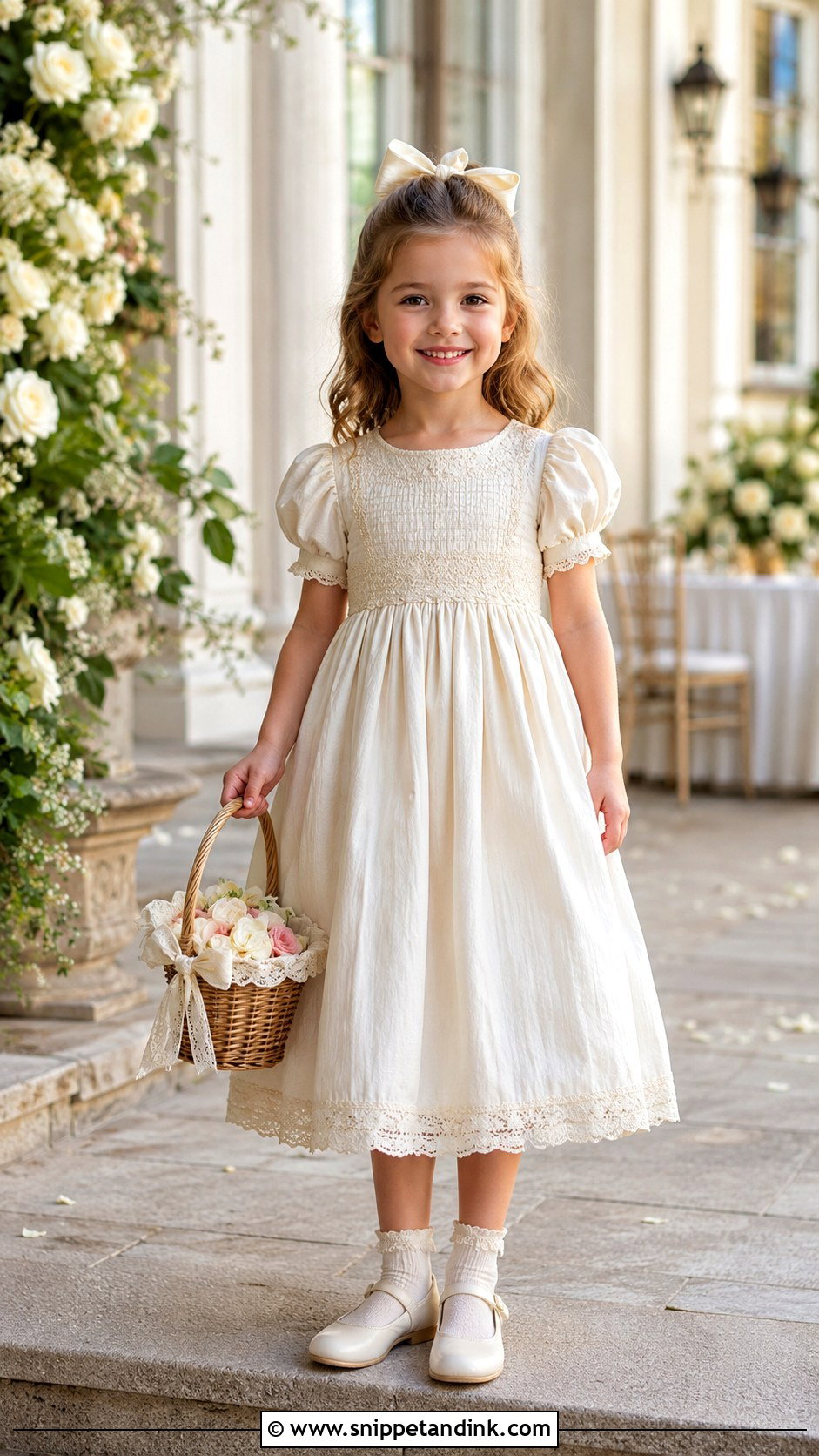
Vintage styling for a little bride means smocking, puff sleeves, lace trim, scalloped hems or embroidery, usually at tea length. Smocked bodices are wonderfully comfortable because they stretch, which makes them a good choice for an active child. Mary Janes, ankle socks and a ribbon in the hair complete it. Done simply, the dress will look like a treasured heirloom in the album rather than a period costume.
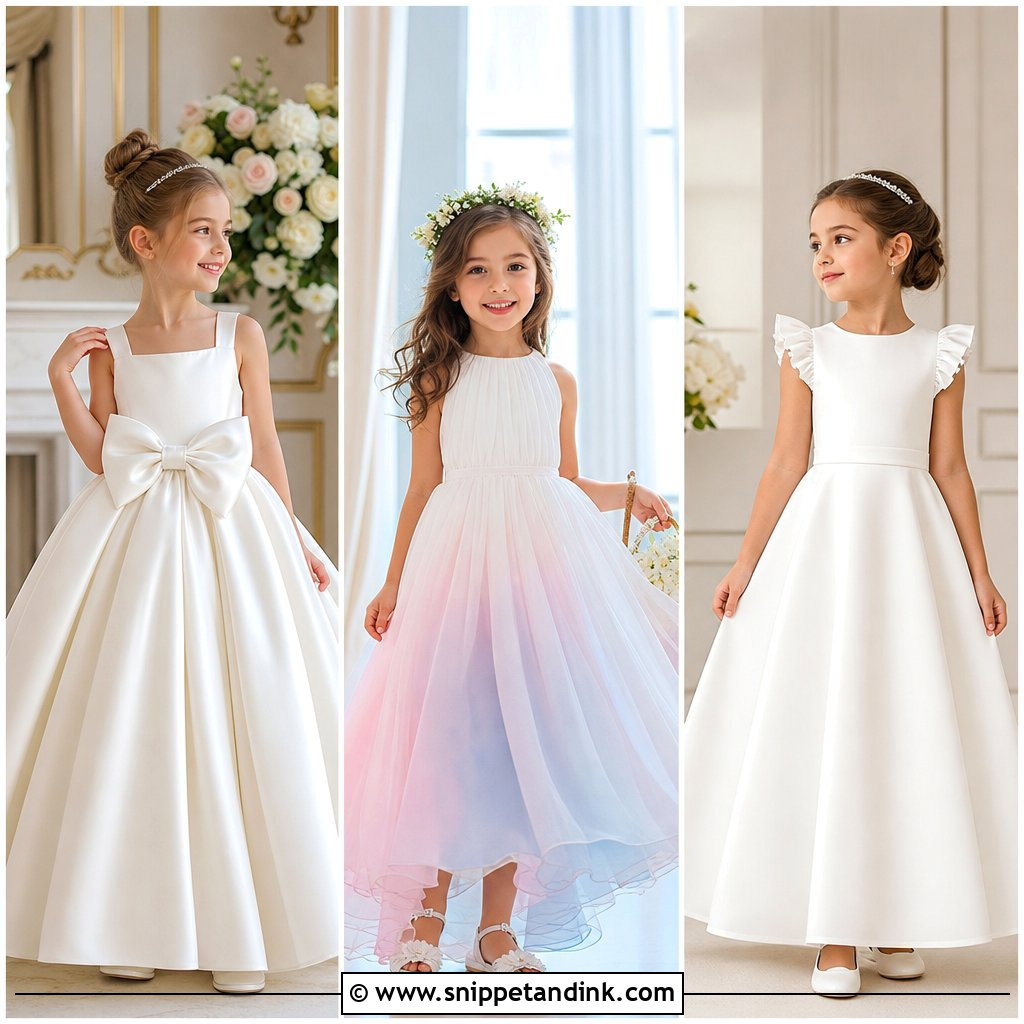
20. Boho Little Bride Gown
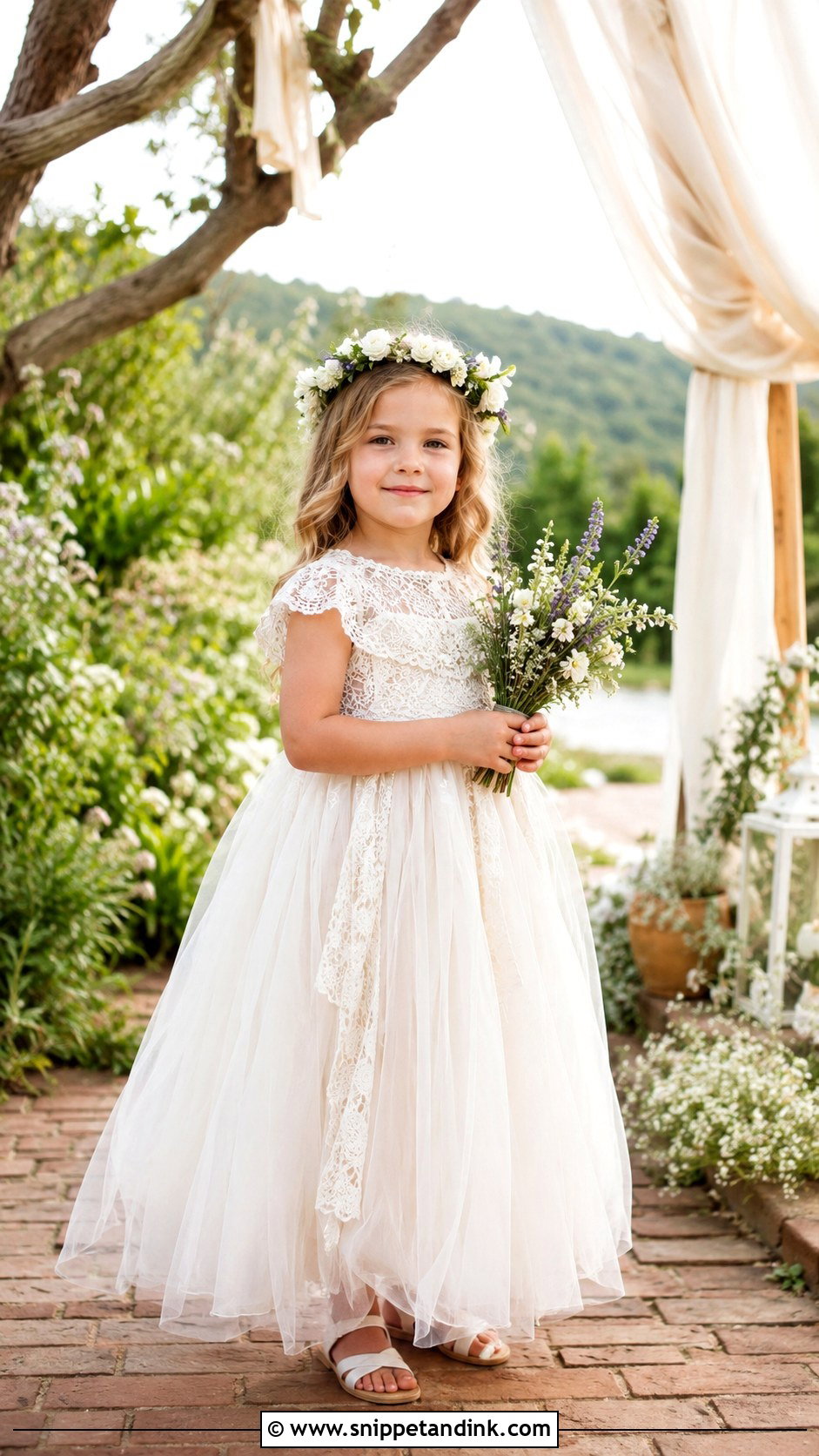
Boho dresses suit beaches, gardens and barns: crochet lace, flutter sleeves, an empire waist, a flowing skirt in ivory or soft beige. Because the whole idea is ease, I steer away from boho dresses with heavy beading or stiff underlayers. Flat sandals and a flower crown are classic here. If you go for a crown, have her wear it at home for an afternoon first; some children won’t keep anything on their heads.
21. Garden Wedding Little Bride Gown
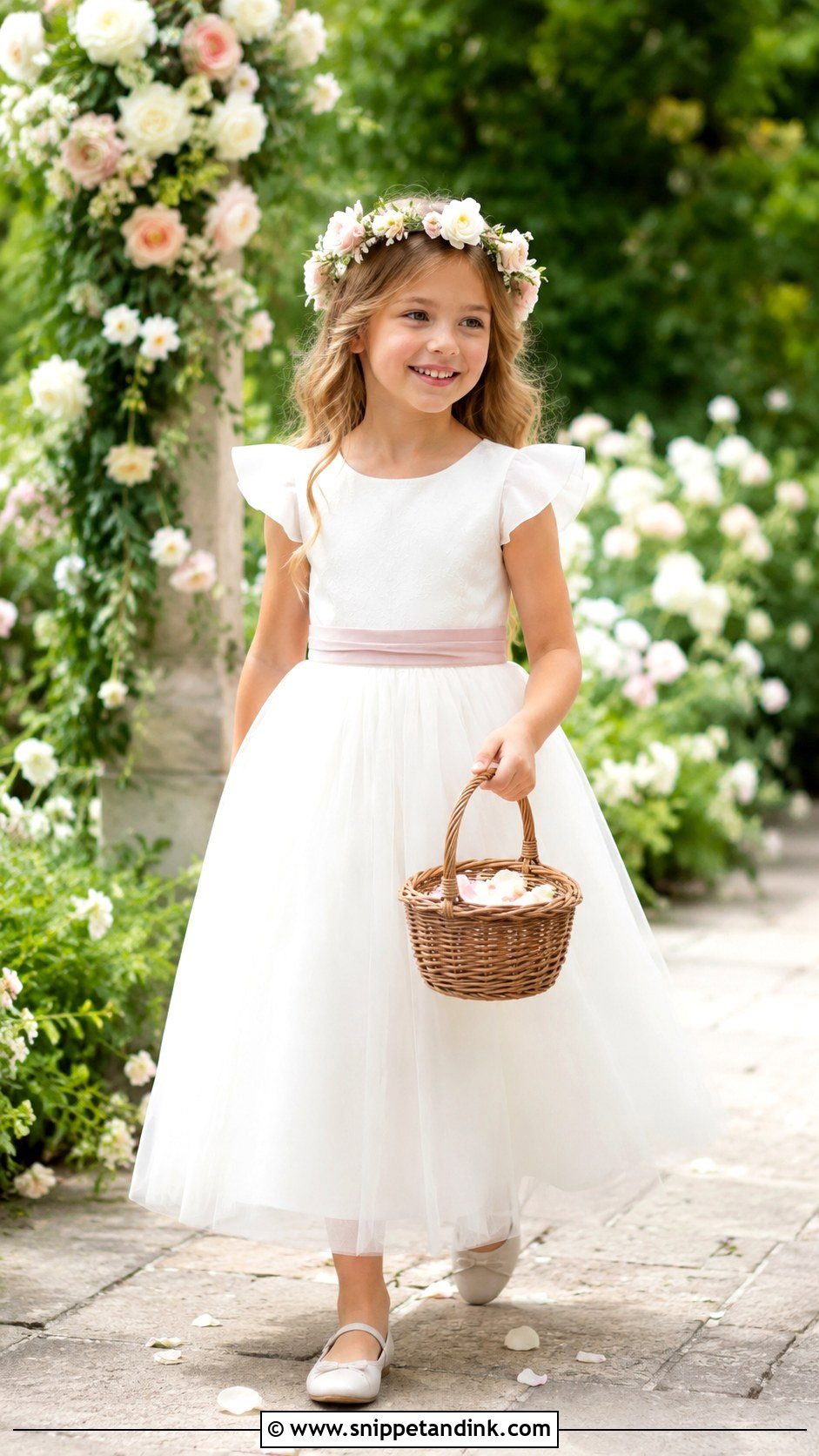
In a garden, the dress meets grass, gravel and garden benches. A tea-length hem keeps the skirt off damp lawn, and soft tulle forgives the odd brush with a hedge better than satin does. Floral appliqués, flutter sleeves and a pastel sash suit the setting. Flats are non-negotiable on lawns, since any heel sinks. Bring a small towel for the moment she inevitably sits on a damp step.
22. Beach Wedding Little Bride Gown
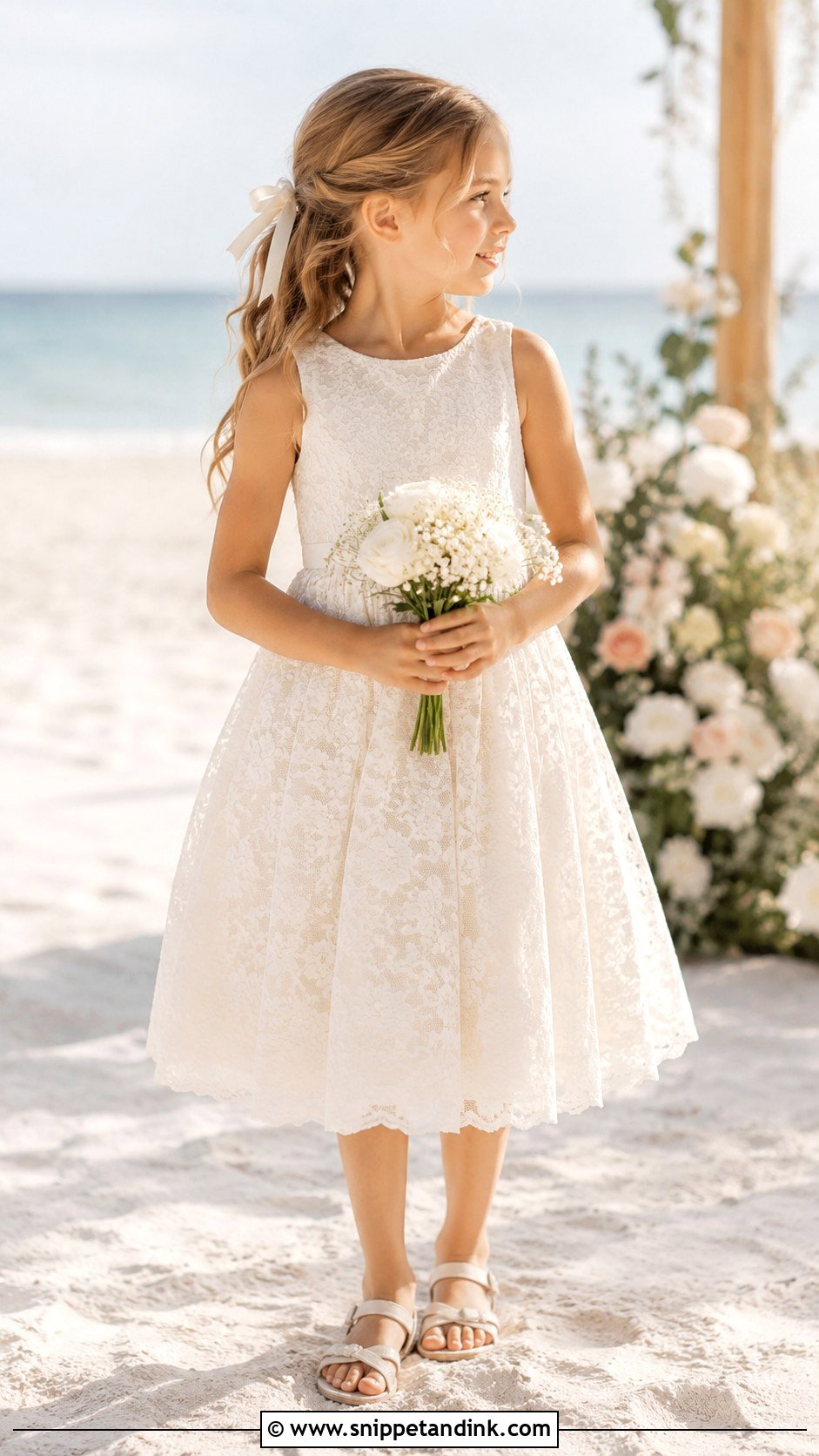
For a beach wedding, swap the satin and layered skirts for soft cotton, chiffon, light tulle or a simple lace. A knee-length or tea-length dress won’t drag through wet sand, which ruins a hem faster than anything. Flat sandals, or bare feet if the couple allows it, beat formal shoes on sand. White and pale blush both look fresh near the water, and a shell clip is the only accessory I’d add.
23. Winter Little Bride Gown
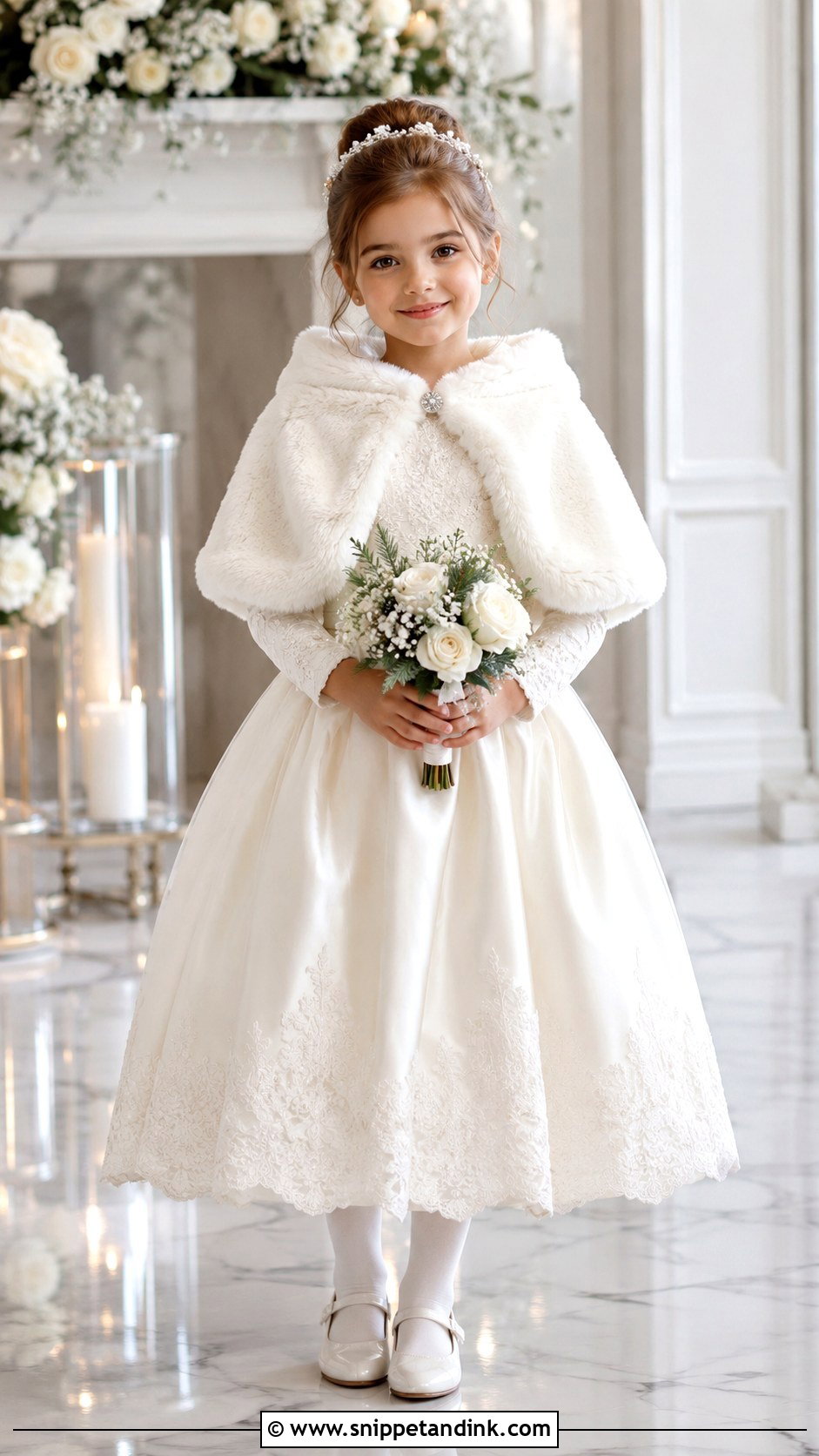
A winter little bride gown needs warmth without bulk. Long sleeves, satin or velvet accents and lace overlays all suit cold weather, with white tights and closed-toe flats underneath. I always pack a soft faux-fur cape or a knit cardigan for the walk between car and venue, and take it off only for the processional and the portraits. Keep any sparkle subtle; heavy sequins and a wool cape snag on each other.
24. Summer Little Bride Gown
Heat is hard on children in formalwear. Sleeveless, cap sleeve, flutter sleeve and tea-length styles help, but the lining matters more than the cut. A polyester lining traps heat; a cotton one lets her stay comfortable through a long afternoon. Tulle and soft lace work in summer if the skirt isn’t built from too many layers. Pale yellow accents or a fresh ribbon in the hair suit the season.
25. Matching Bride Little Bride Gown
A mini version of the bride’s gown makes a sweet portrait, and it doesn’t need to be a copy. I pick one element to echo: the lace, the sleeve, the bow or the skirt shape. If the bride wears a ball gown, the little girl gets a smaller tulle skirt; if the bride wears sleek satin, a simple satin A-line. The connection reads clearly in photos without the child looking like she’s in costume.
A Dress Rehearsal at Home Saves the Processional
The most useful thing a parent can do is let the child wear the whole outfit at home for an hour, a week or two before the wedding. Shoes, headband, tights, everything. Children tell you very quickly what scratches, and an hour on the sofa will show you which seams need a soft tape backing and whether the shoes rub at the heel.
While she’s wearing it, I’d check a few things that only show up in motion:
- Can she use the bathroom alone, or does the back fastening need an adult? Plan who helps.
- Does the headband slide forward when she runs? A couple of small clips behind the ears fix that.
- Can she climb stairs without stepping on the front hem?
- Does the sash stay tied after twenty minutes of play?
On the day, dress her last, as close to the ceremony as you can, and keep an oversized shirt over the gown for snacks. A small kit with wet wipes, a lint roller, safety pins and a spare pair of tights covers most emergencies.
Grass Marks, Juice Spills and Storing It Afterwards
Something will land on the dress. Blot, never rub, and use plain cold water on a white cloth for most food and drink; rubbing tulle pills it and spreads the stain. Grass and chocolate are better left for a professional cleaner than attacked at the table.
After the wedding, have the gown cleaned before storing it, because sugar stains you can’t see turn yellow over time. Store it flat or loosely folded with acid-free tissue in the folds, in a breathable cotton bag rather than the plastic it arrived in. If the family plans to pass it down, that small effort keeps the white from going cream in a cupboard.
The Little Girl Has to Be Happy in It Too
Every style here can work, from sleek satin to a full tulle skirt, but the dress only succeeds if the child is comfortable in it for hours. Walk, sit, raise her arms, check the lining and the trims, and only then worry about the bow and the pearls. Start with the venue, the weather and the bride’s gown, and the right little dress usually becomes obvious.
You'll Like These Ideas:


Leave a Reply