
A short sleeve is the compromise I suggest most often in fittings. It gives a little arm coverage for a church or a cool evening, it hides a bra strap, and it doesn’t trap heat the way a long sleeve does. What brides rarely expect is how much the sleeve changes the dress around it: a structured mikado sleeve makes a gown look formal, a loose flutter makes the same bodice feel like a garden party. Below are thirty versions across silhouettes, fabrics and venues, with the fit and wear notes I’d give you in the fitting room.
Where the Hem of the Sleeve Lands on Your Arm
The single thing that changes how a short sleeve looks is where it ends. Before we look at fabrics, I stand a bride in front of the mirror and hold a strip of fabric at different points on her upper arm.
- Just over the shoulder bone: the cap sleeve. Lightest and coolest, but it shows a bra strap unless the neckline covers it.
- Mid-upper arm: the classic short sleeve. Avoid ending exactly at the widest point of the arm; an inch higher or lower is usually kinder.
- Just above the elbow: closer to a three-quarter feel, good for church ceremonies and cooler venues.
Then check the armhole. A high, close armhole lets you lift your arms without the bodice rising, while a deep one looks relaxed but pulls the whole dress up when you hug someone. It’s a small detail that decides whether you can throw your arms up on the dance floor.
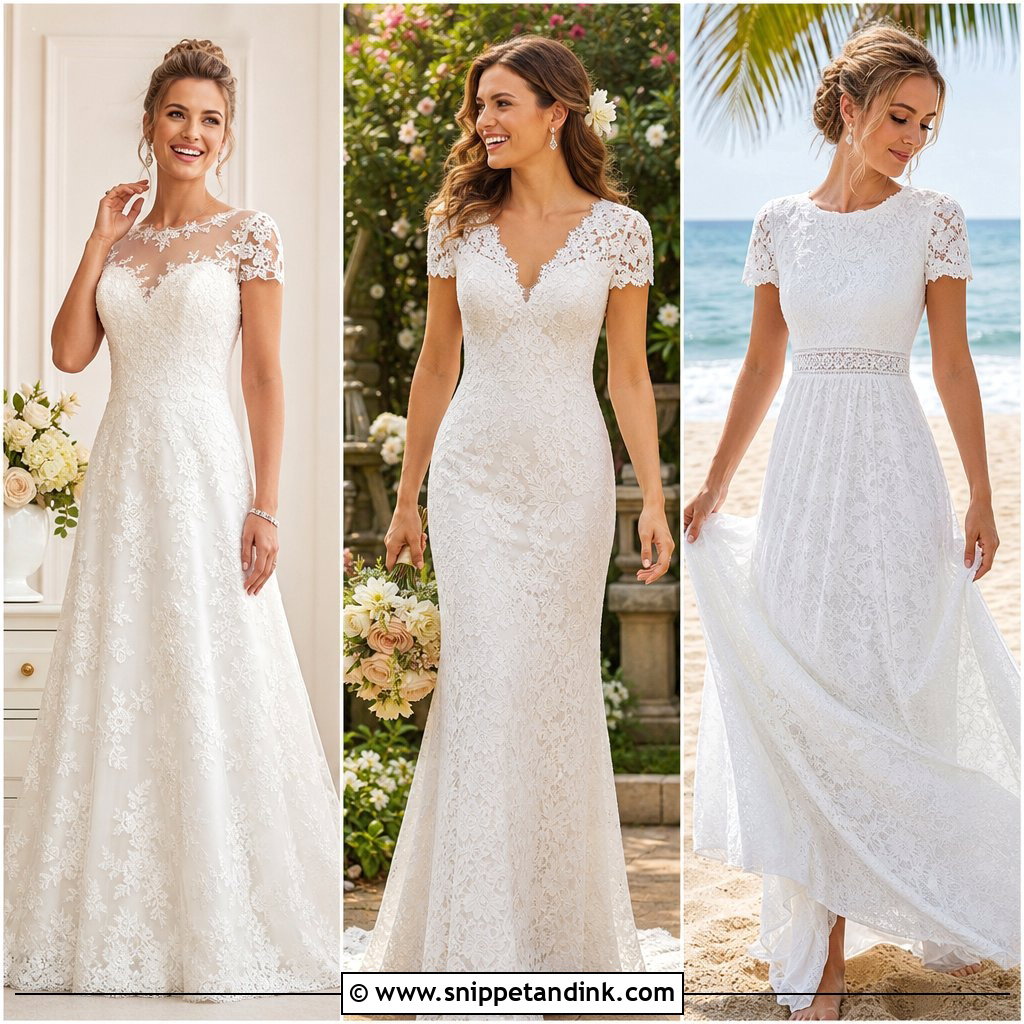
1. Short Sleeve Lace Wedding Dress
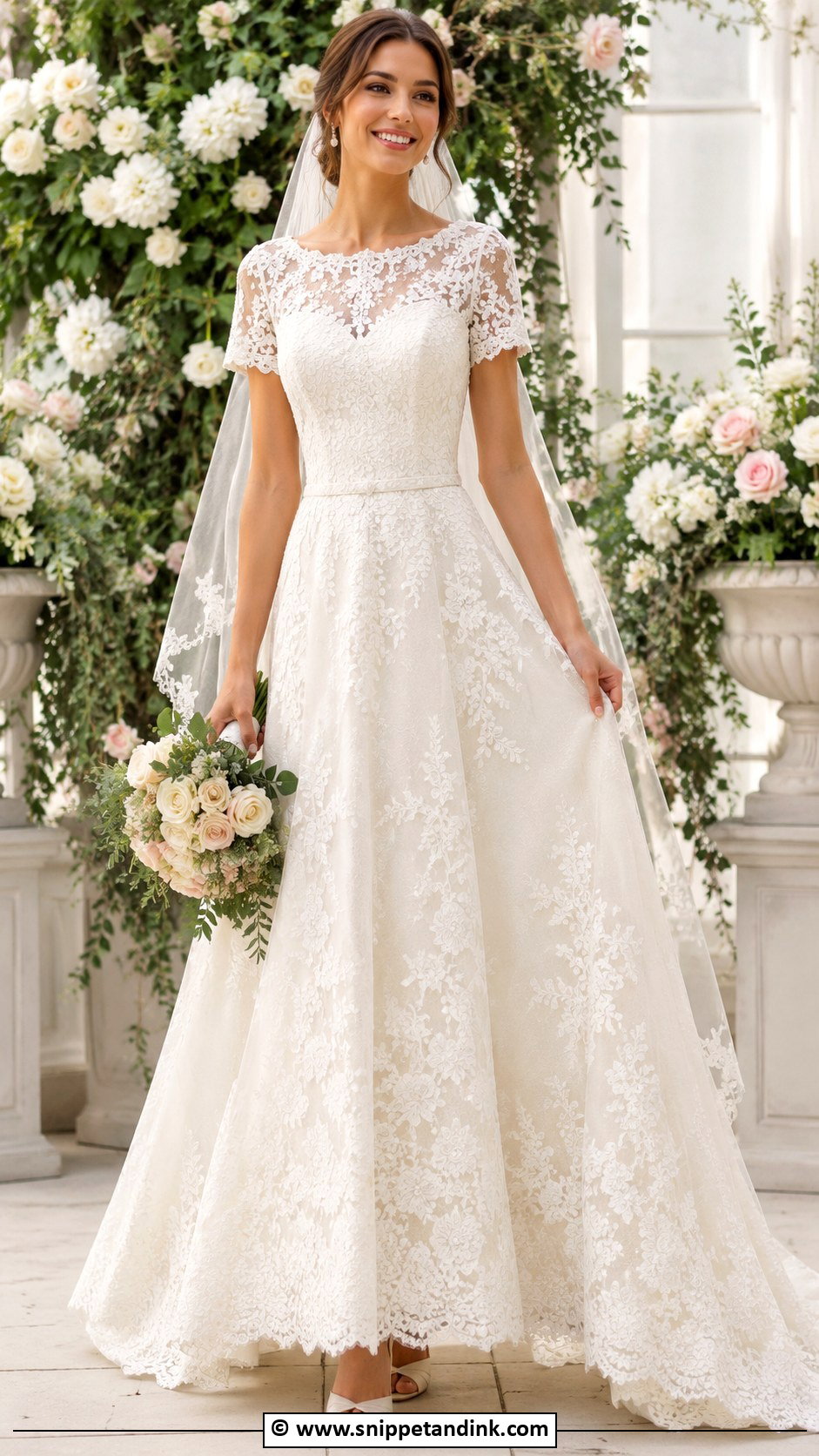
Lace is the most forgiving fabric for a sleeve because it has a little give and the pattern disguises the seam where sleeve meets bodice. I check one thing first: whether the lace motifs are matched across that seam. On a good dress they flow over the shoulder; on a cheaper one the pattern stops in a hard line. A fitted lace sheath reads clean, an A-line moves more. Pearl earrings and soft waves suit it, and an illusion neckline keeps the lace from looking heavy.
2. Short Sleeve Satin Wedding Dress
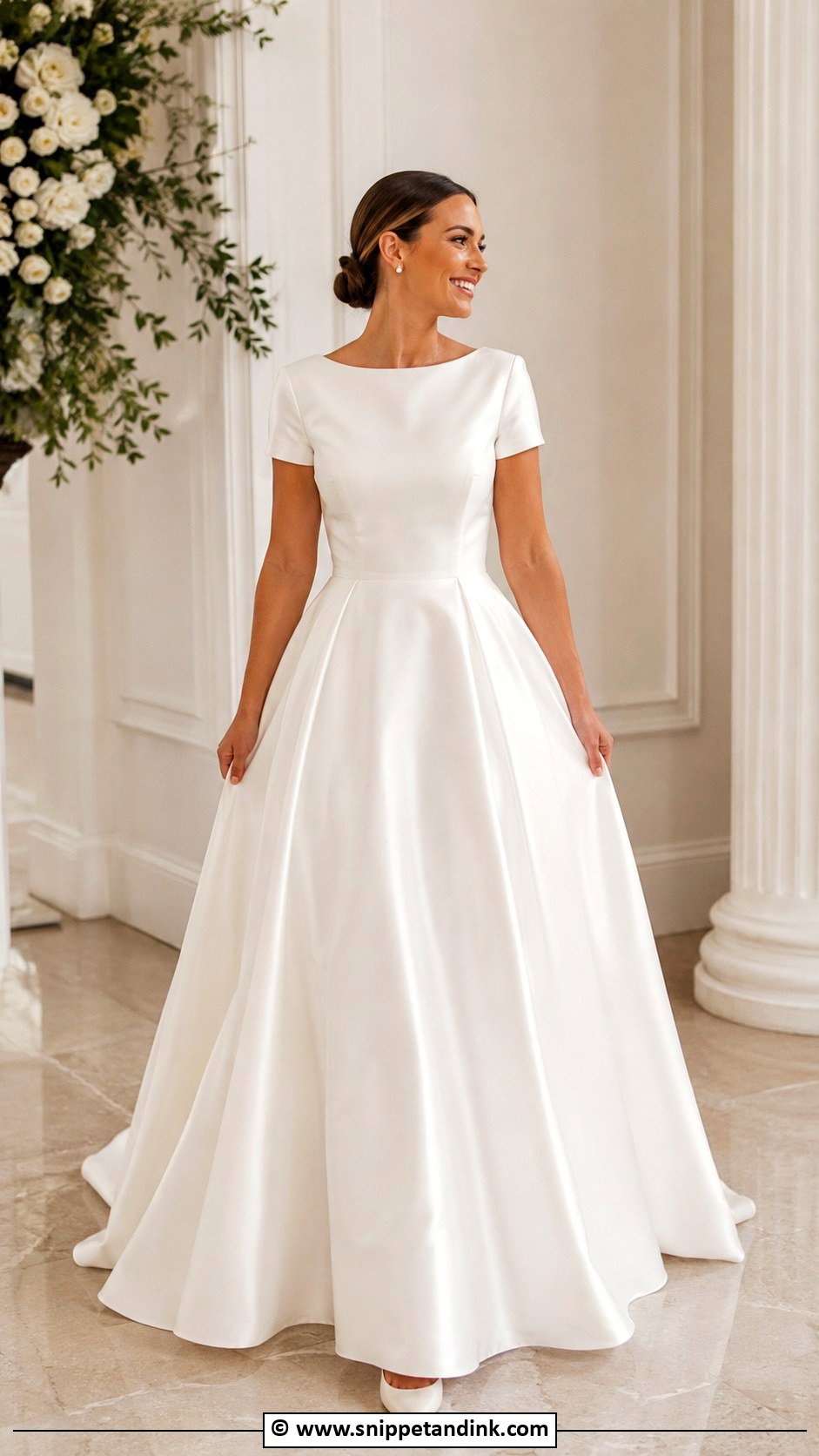
Satin doesn’t stretch, so a satin sleeve has to be cut with care or it pulls the moment you raise your arm. When I try a bride in satin, I ask her to reach up as if hugging someone taller. If the bodice lifts, the sleeve needs a gusset or a higher-cut armhole. Satin shows creases at the inner elbow less than long sleeves do, which is a quiet advantage of keeping it short. A low bun and pearl studs keep the line clean.
3. Short Sleeve A Line Wedding Dress
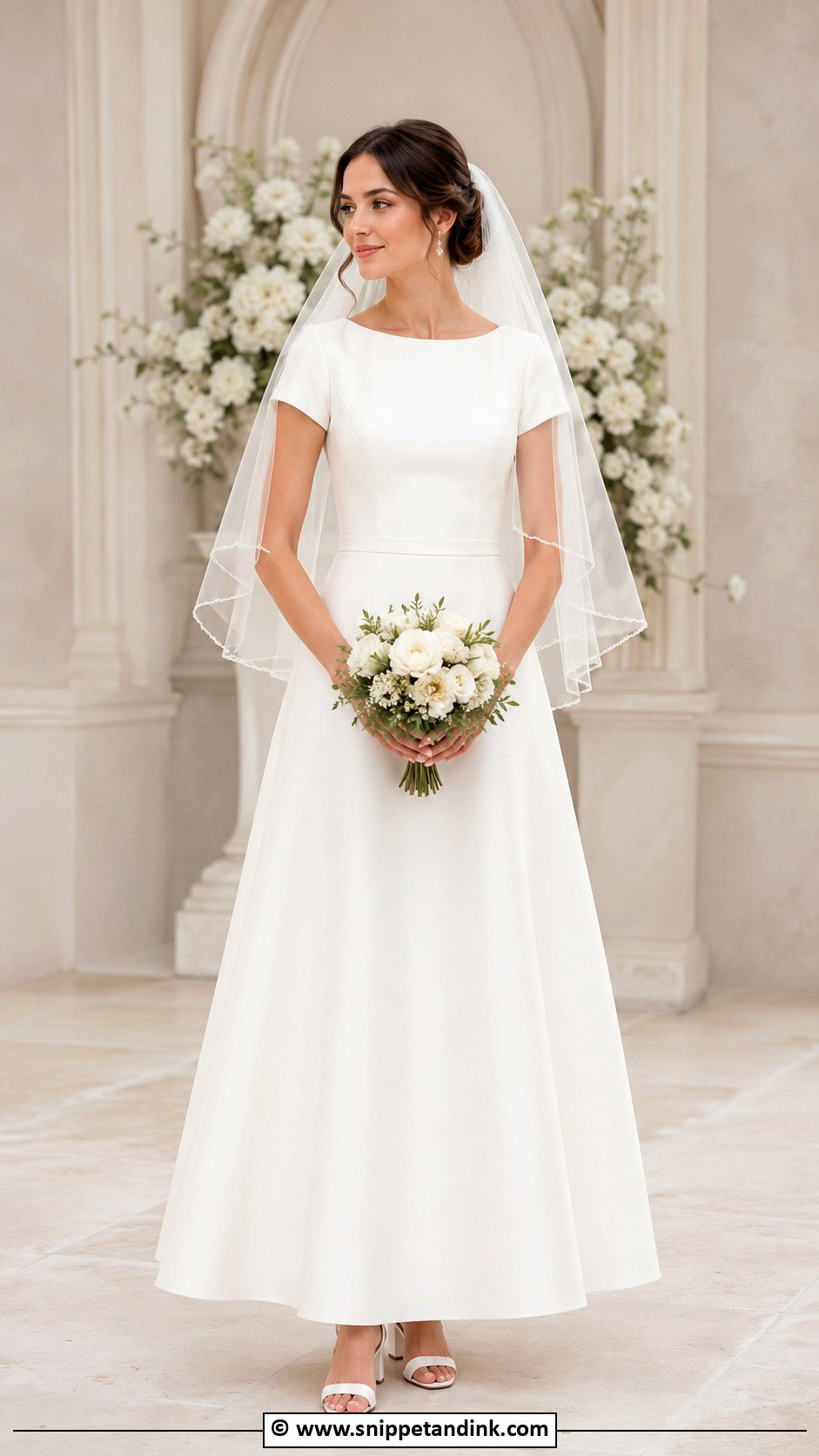
An A-line fits at the bodice and widens gently from the waist, so it suits most figures and allows a full stride. A short sleeve balances the top half, especially with a square or soft V neckline. Lace feels romantic, chiffon breezy, mikado more structured. The thing I watch on A-lines is where the sleeve ends: if it finishes exactly at the widest part of the upper arm, it can make the arm look wider, so I usually shift it up or down an inch.
4. Short Sleeve Ball Gown Wedding Dress
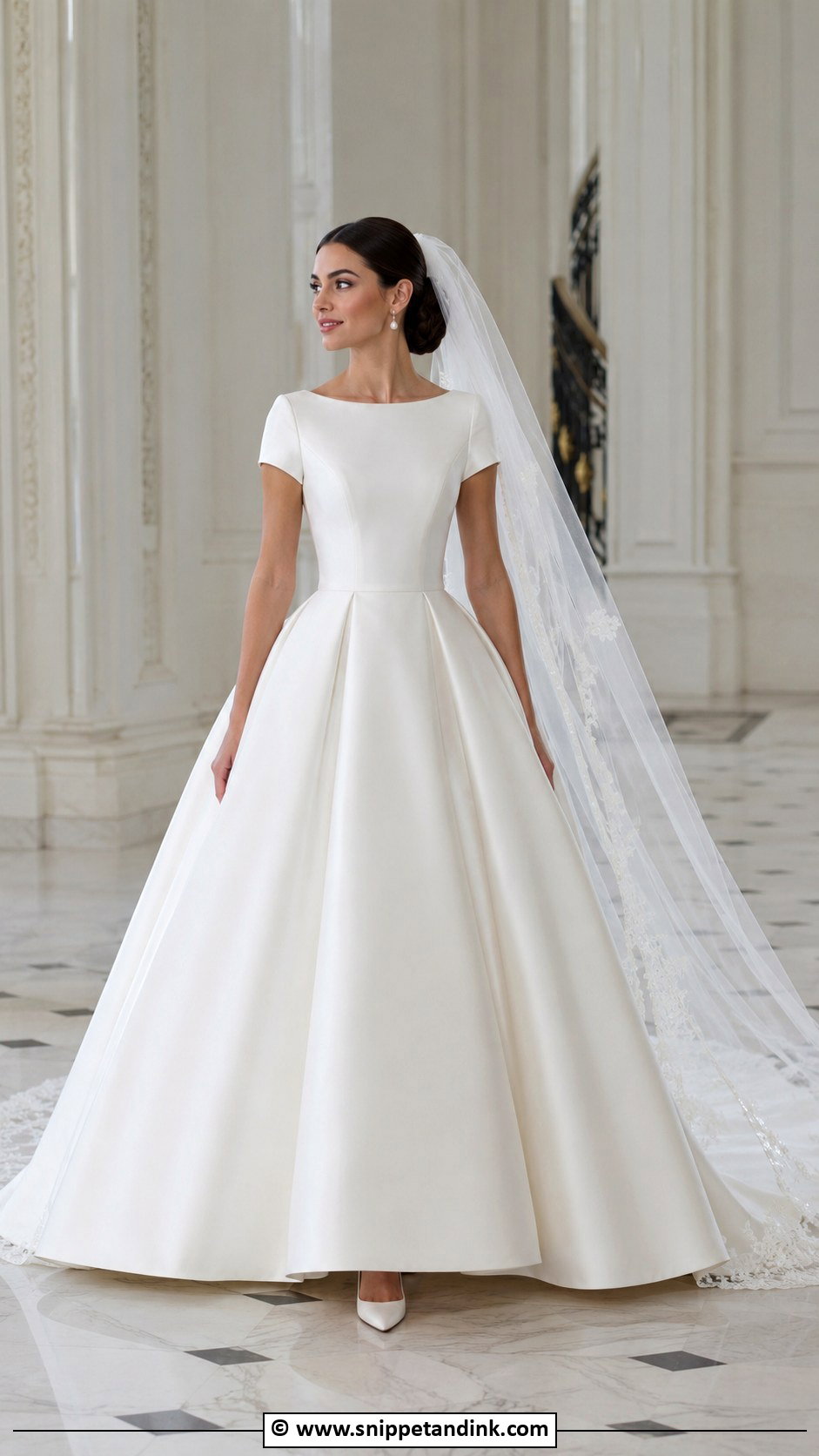
A full skirt gives you that classic bridal entrance, and a short sleeve stops all that volume from swallowing the top half. Mikado and satin hold the shape best; layered tulle is lighter but needs a stiff petticoat. A bateau neck with short sleeves looks regal. Ball gowns are heavy, so the sleeve should never be carrying weight. If the shoulders feel dragged down at a fitting, the bodice needs a firmer waist stay, not tighter sleeves.
5. Short Sleeve Mermaid Wedding Dress
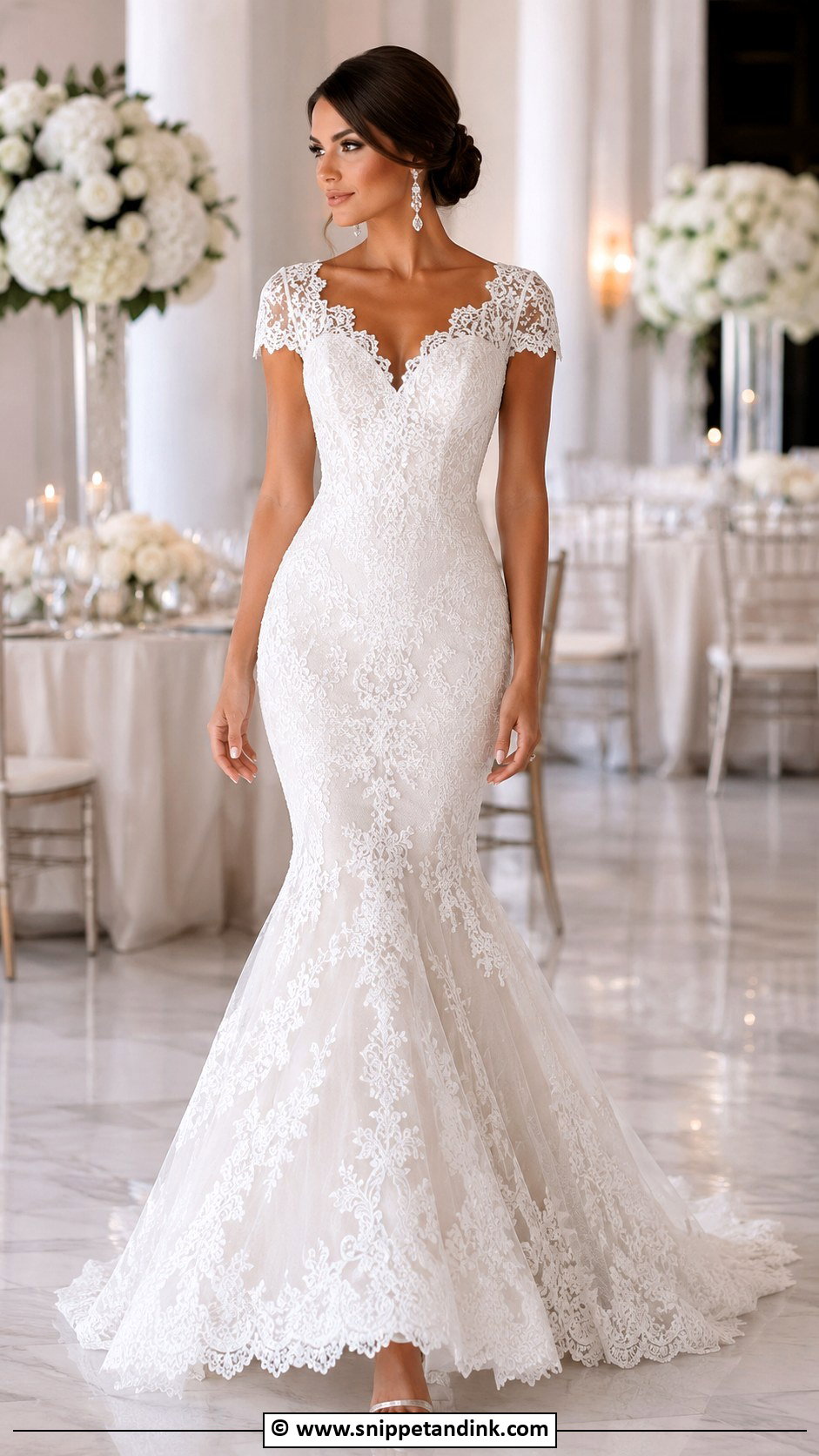
Mermaid gowns fit through the hips and flare at or below the knee, and that fitted section limits your stride more than any other shape here. I’d only suggest one if you’ve walked, sat and climbed a step in it. Short sleeves soften the look. Lace feels romantic; crepe and satin look sleek. Getting the flare point right is a tailoring job, and so is the sleeve, because a fitted body shows any pull at the shoulder seam.
6. Short Sleeve Sheath Wedding Dress
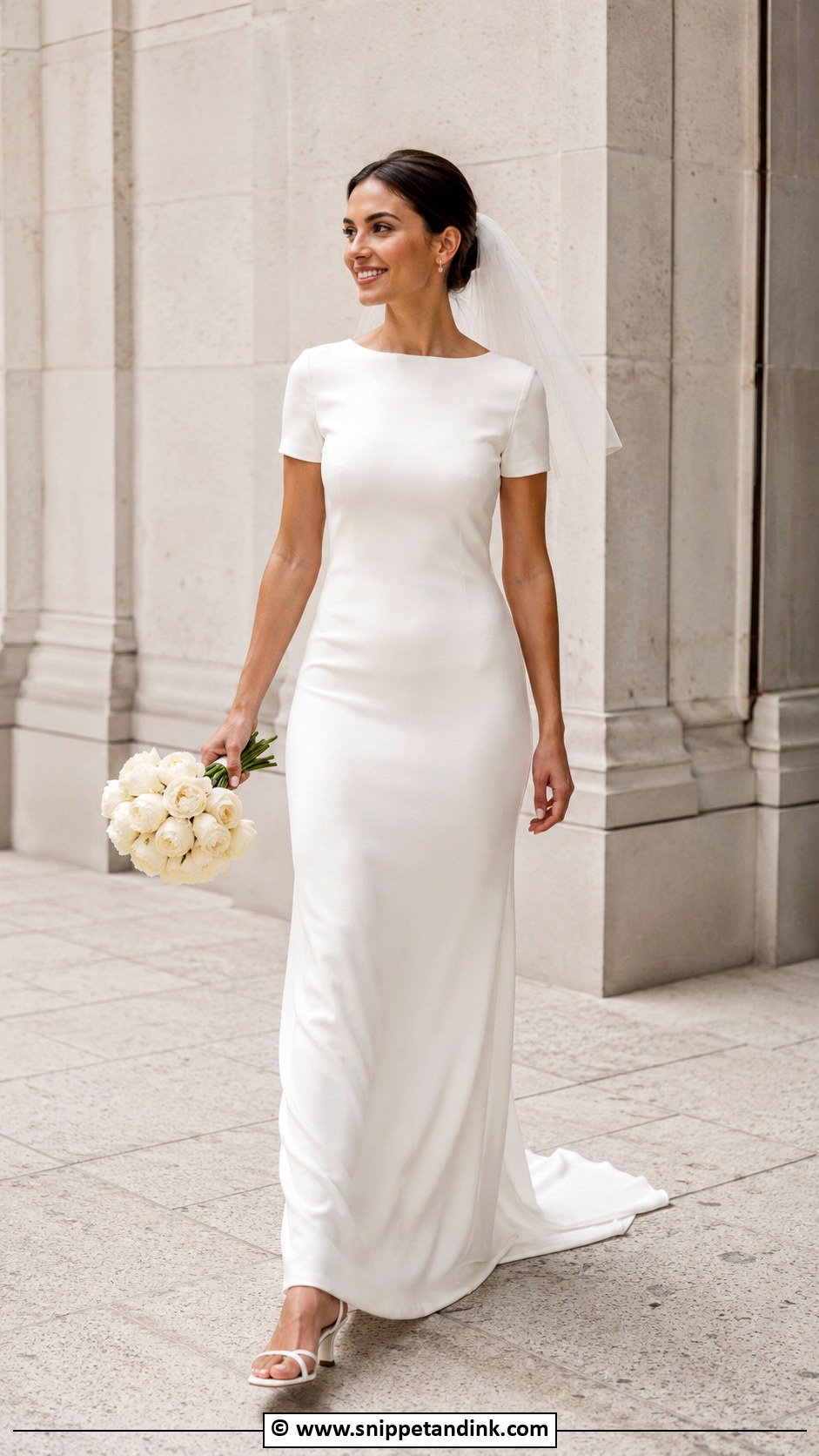
Sheaths skim the body without a full skirt, which makes them easy for city ceremonies, rooftops and small receptions. With a short sleeve, the whole dress reads polished rather than bare. The fabric is the decision: heavy crepe smooths, thin satin shows everything underneath. A plain version wants pearls and slingbacks; one with lace appliqué or a low back needs very little else. Take a few long strides at the fitting to check the hem allows walking.
7. Short Sleeve Tea Length Wedding Dress
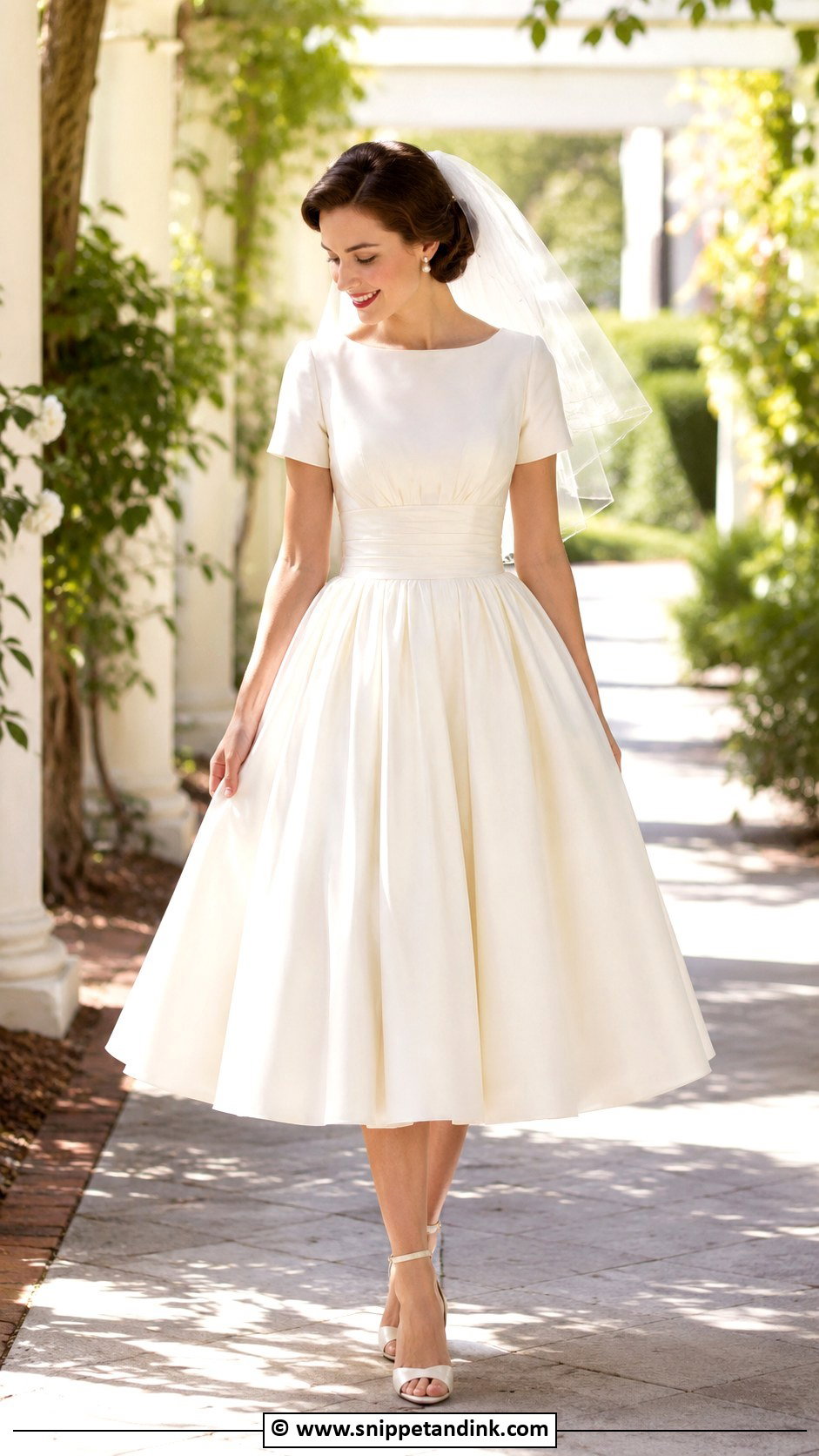
A short sleeve tea length wedding dress falls between the knee and ankle, and it’s a fifties shape at heart, a fitted waist over a full skirt. Because the hem shows your shoes, pick them early and hem the dress in them. A petticoat underneath gives the skirt its bounce; without one, a tea-length skirt can look limp. Satin, tulle and organza all work. A short veil and a neat bun fit the era.
8. Short Sleeve Mini Wedding Dress
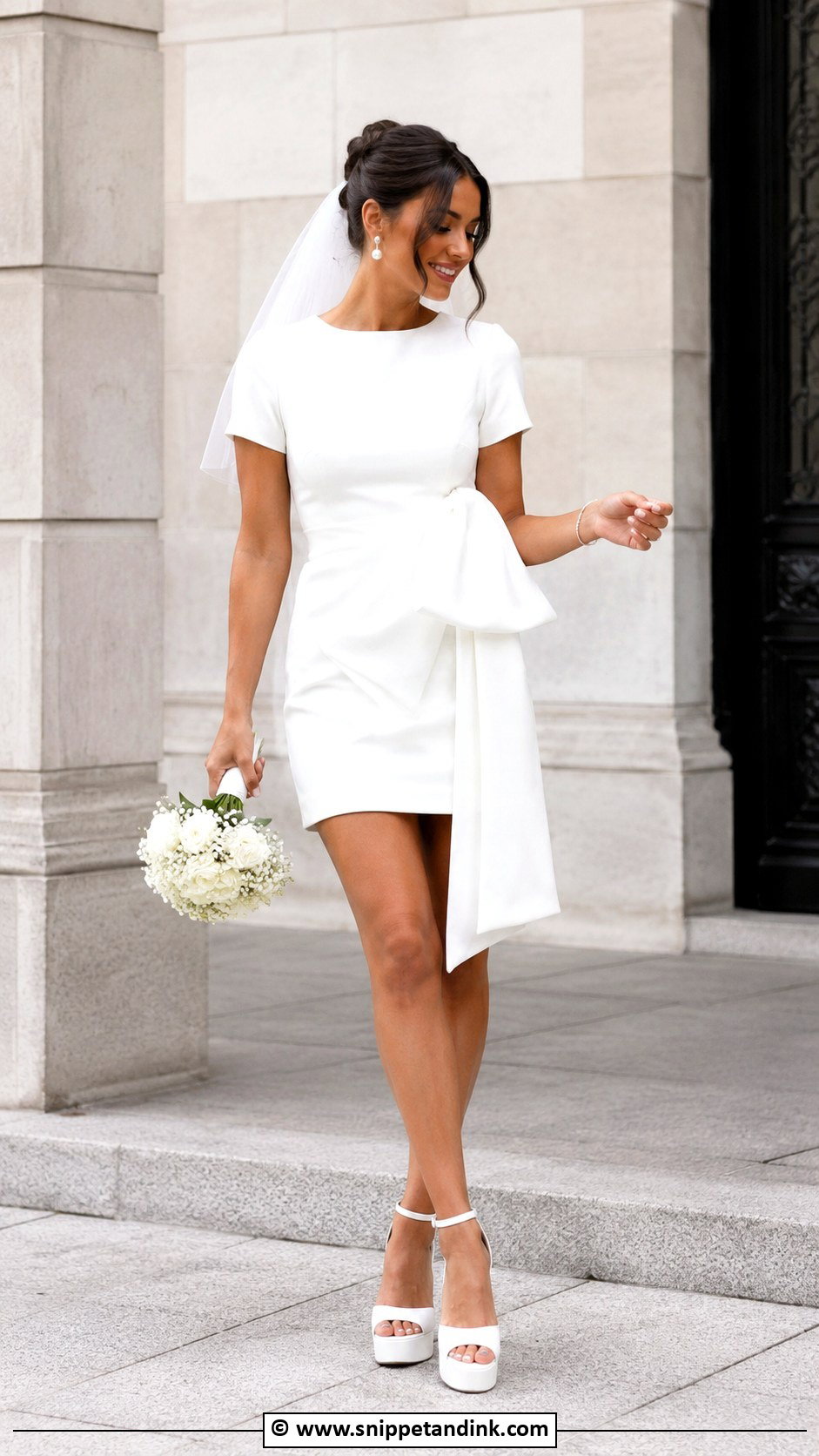
Minis are for elopements, civil ceremonies and after-parties, and sleeves make them look finished rather than like a party dress. Fabric needs body: structured satin or crepe holds the shape, while thin lace above the knee can look casual. With bare legs, shoes take centre stage, so pointed pumps or platform heels do a lot of work. Check how far the hem rides up when you sit, especially in photos taken from a low angle.
9. Short Sleeve Midi Wedding Dress
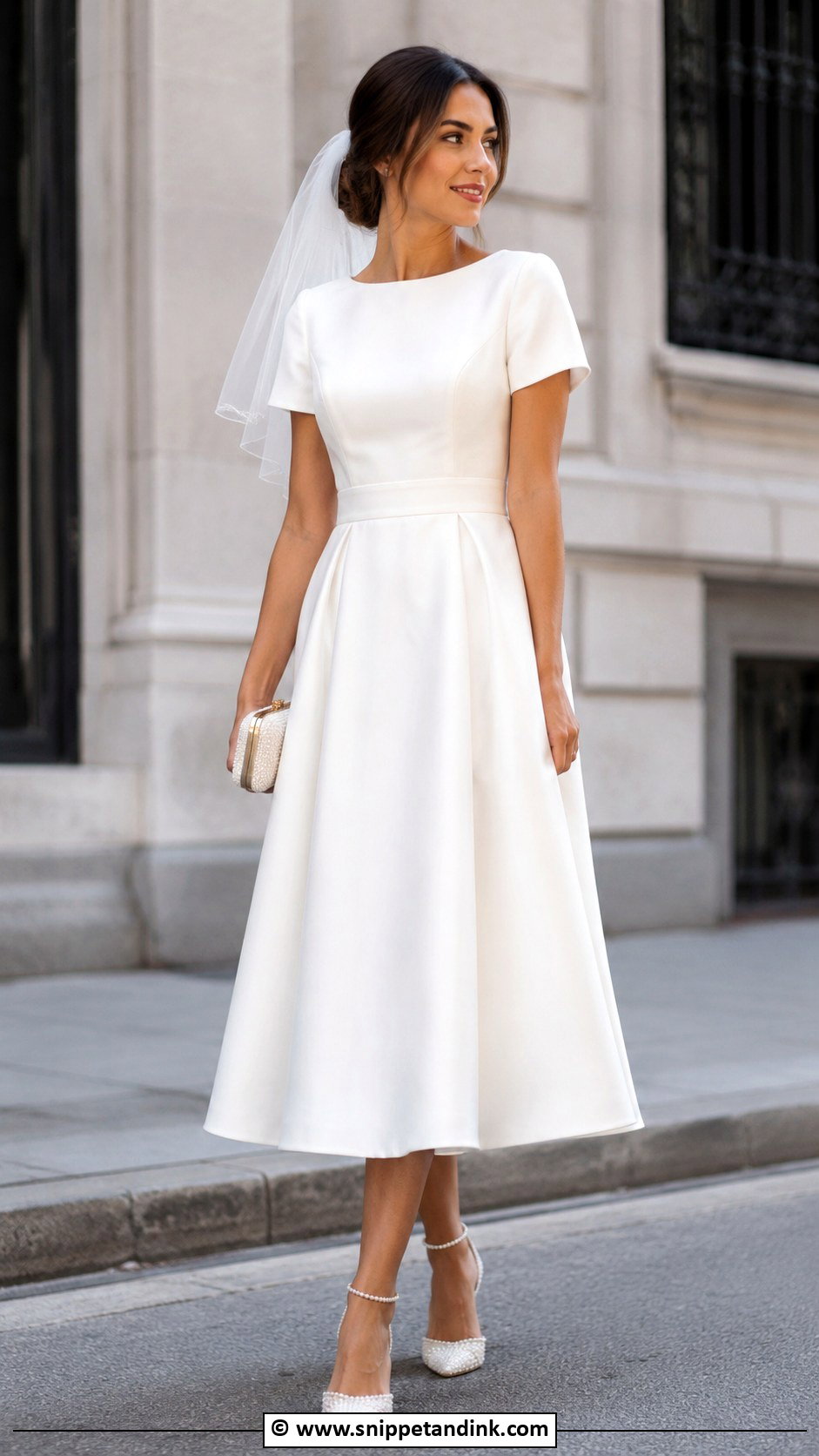
Midi lengths sit mid-calf, which is relaxed without looking casual. I’m careful about the exact hem point, because ending at the widest part of the calf visually shortens the leg. A fitted midi looks sleek; a fuller skirt reads vintage. The short sleeve means you won’t need a jacket or shrug. Pearl heels and a smooth clutch suit city weddings and restaurant receptions.
10. Short Sleeve Square Neck Wedding Dress
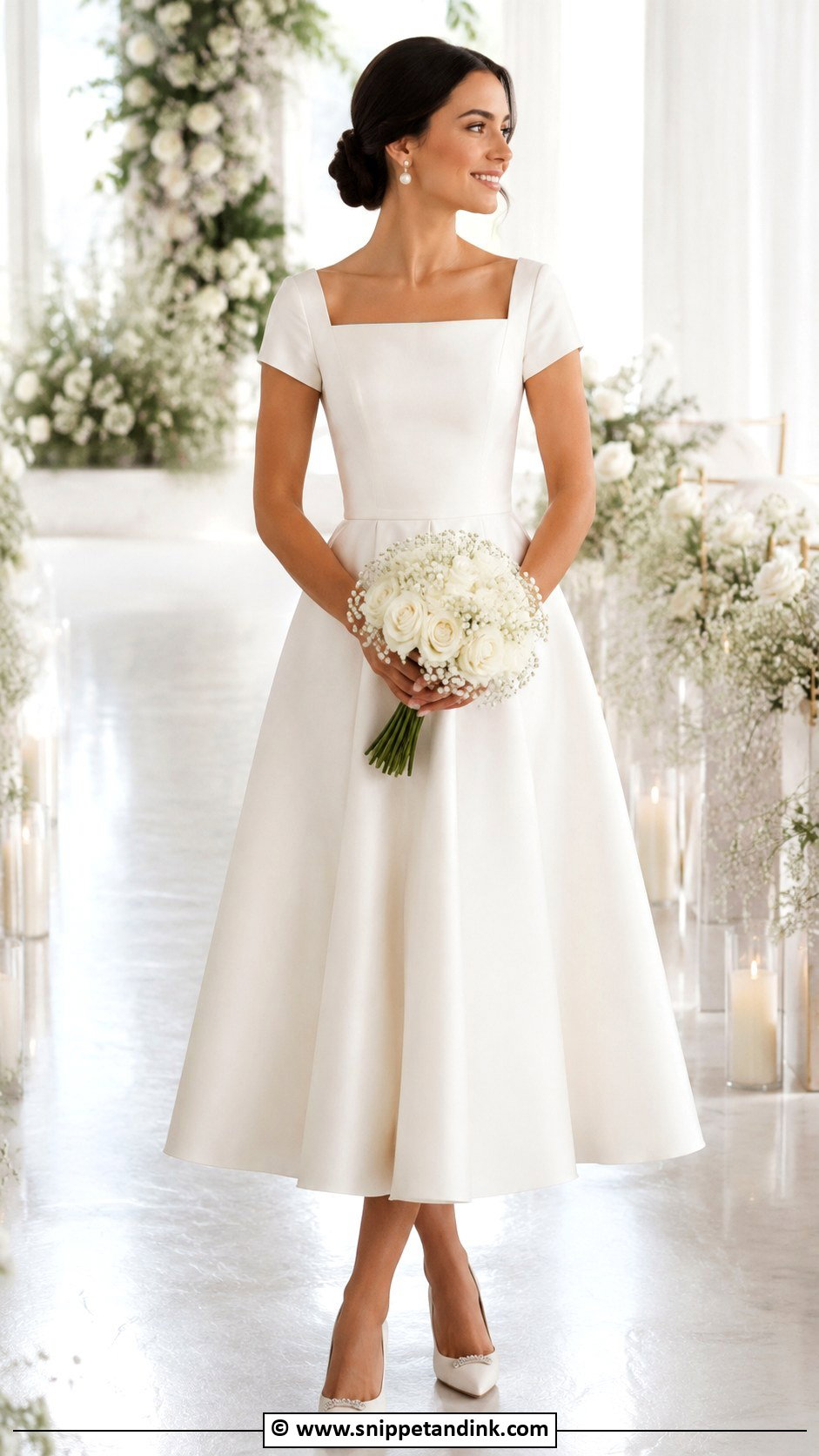
Square necklines frame the collarbone, and with short sleeves the whole bodice looks neat and architectural. Check the corners at the fitting; they should sit flat without gaping when you lean forward. Satin, crepe, mikado and lace all hold the straight edge well, though soft chiffon tends to lose it. Skip a necklace or keep it tiny. A low bun and soft veil let the shape speak.
11. Short Sleeve V Neck Wedding Dress
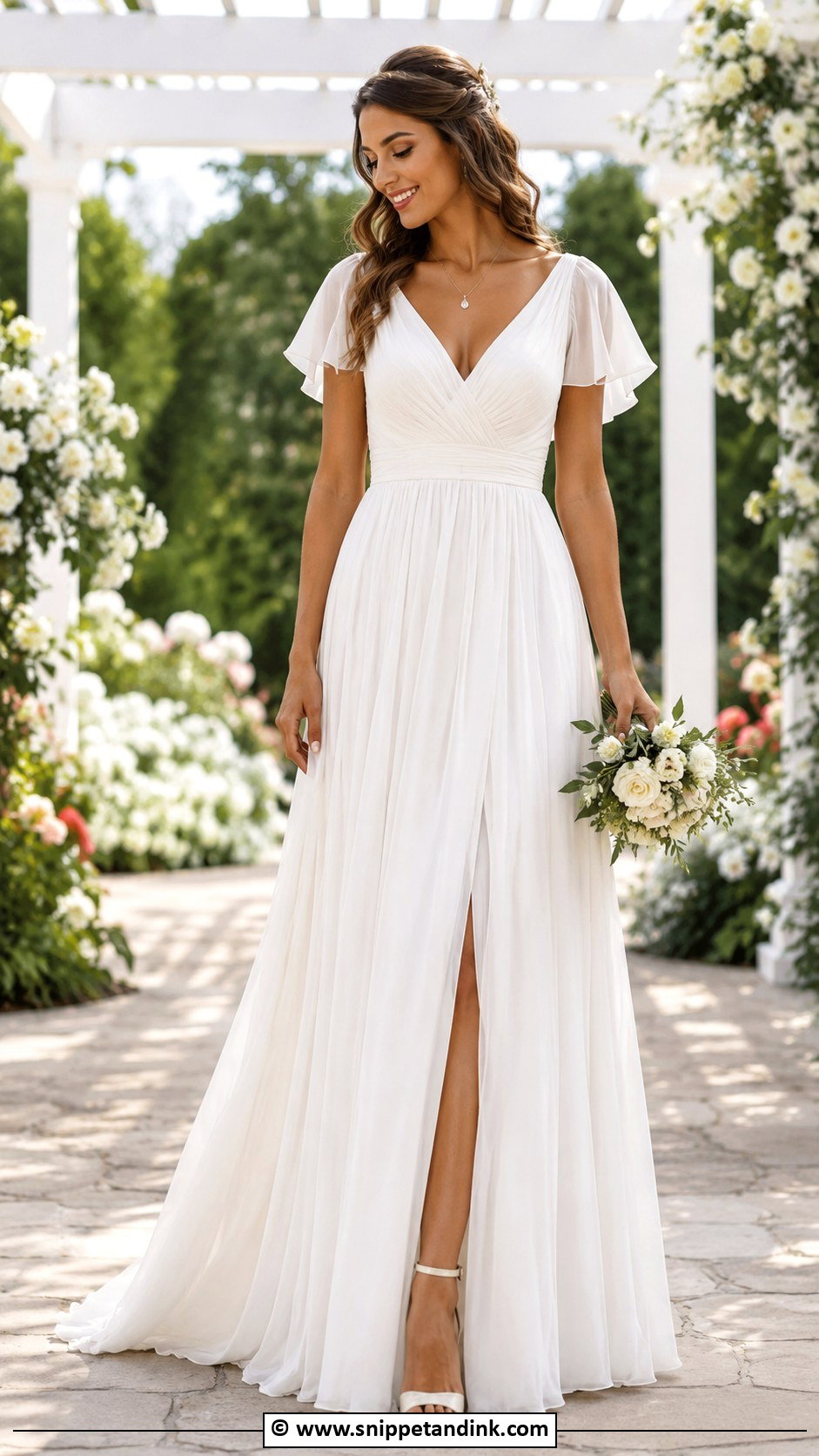
A V neckline lengthens the torso, while the short sleeve keeps arm coverage. The depth is a comfort and venue choice; a deep V in a church may need a mesh panel, while a beach ceremony can carry more. If you’re bending to sign a register or hug children, test it in the fitting room. Simple crepe can take a pendant; lace or beaded bodices usually look best with earrings alone.
12. Short Sleeve High Neck Wedding Dress
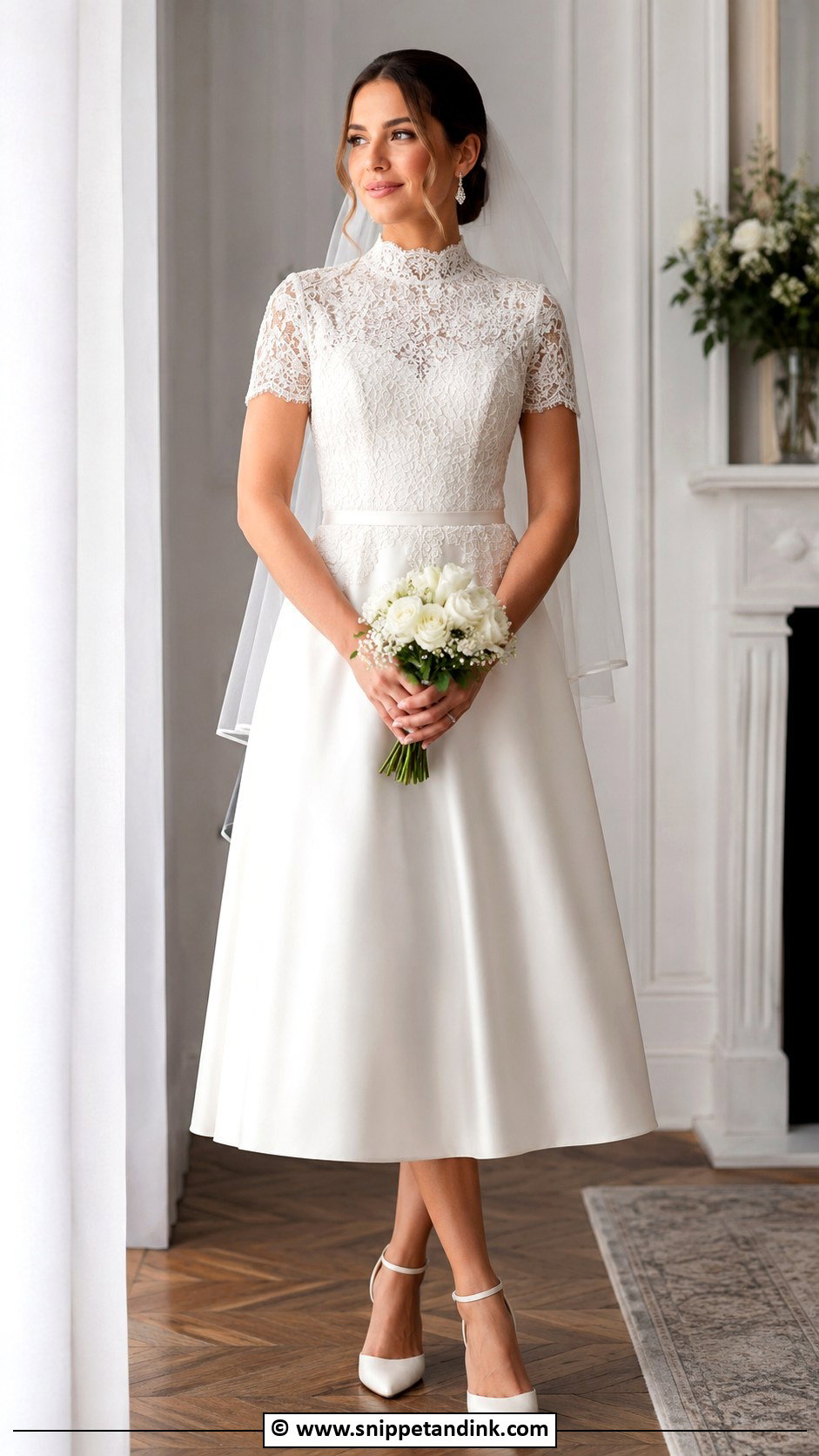
High necks cover more, so they’re a frequent request from brides marrying in a mosque, temple or traditional church. Pair one with a short sleeve and you keep comfort without losing modesty. Lace and embroidered tulle feel lighter than crepe at the throat. I balance the formality with a softer skirt and hair, and I skip necklaces entirely. A slim veil, satin heels and a simple bouquet finish it.
13. Short Sleeve Off Shoulder Wedding Dress
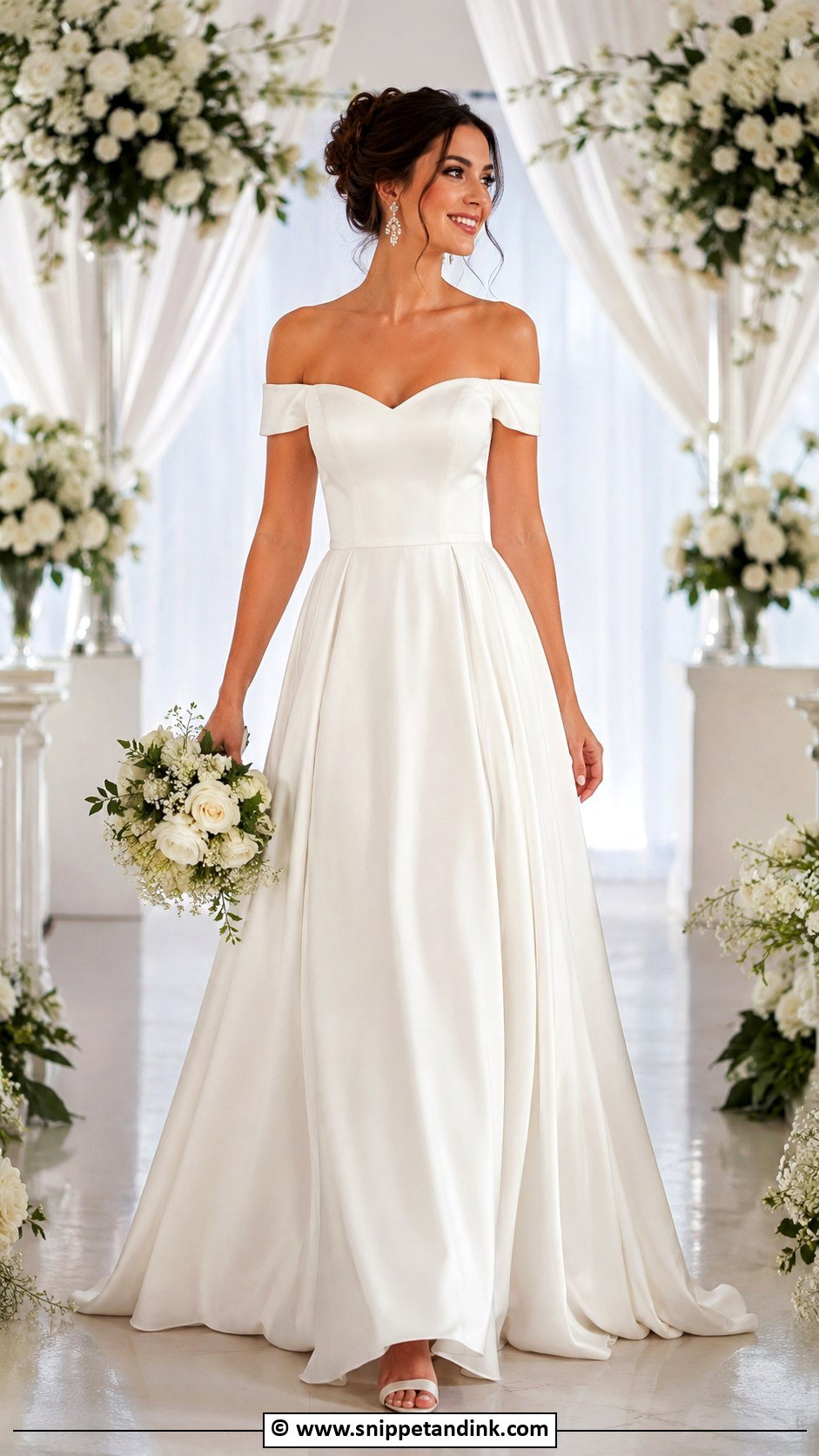
Off-shoulder sleeves sit below the shoulder line, which shows the neck and collarbones. They also limit how high you can lift your arms, because the band across the upper arm holds the bodice up. I ask brides to practise a hug and a bouquet toss before committing. Satin ball gowns and lace mermaids both work. A soft updo keeps hair off the neckline, and a choker or drop earrings frame it.
14. Short Sleeve Puff Sleeve Wedding Dress
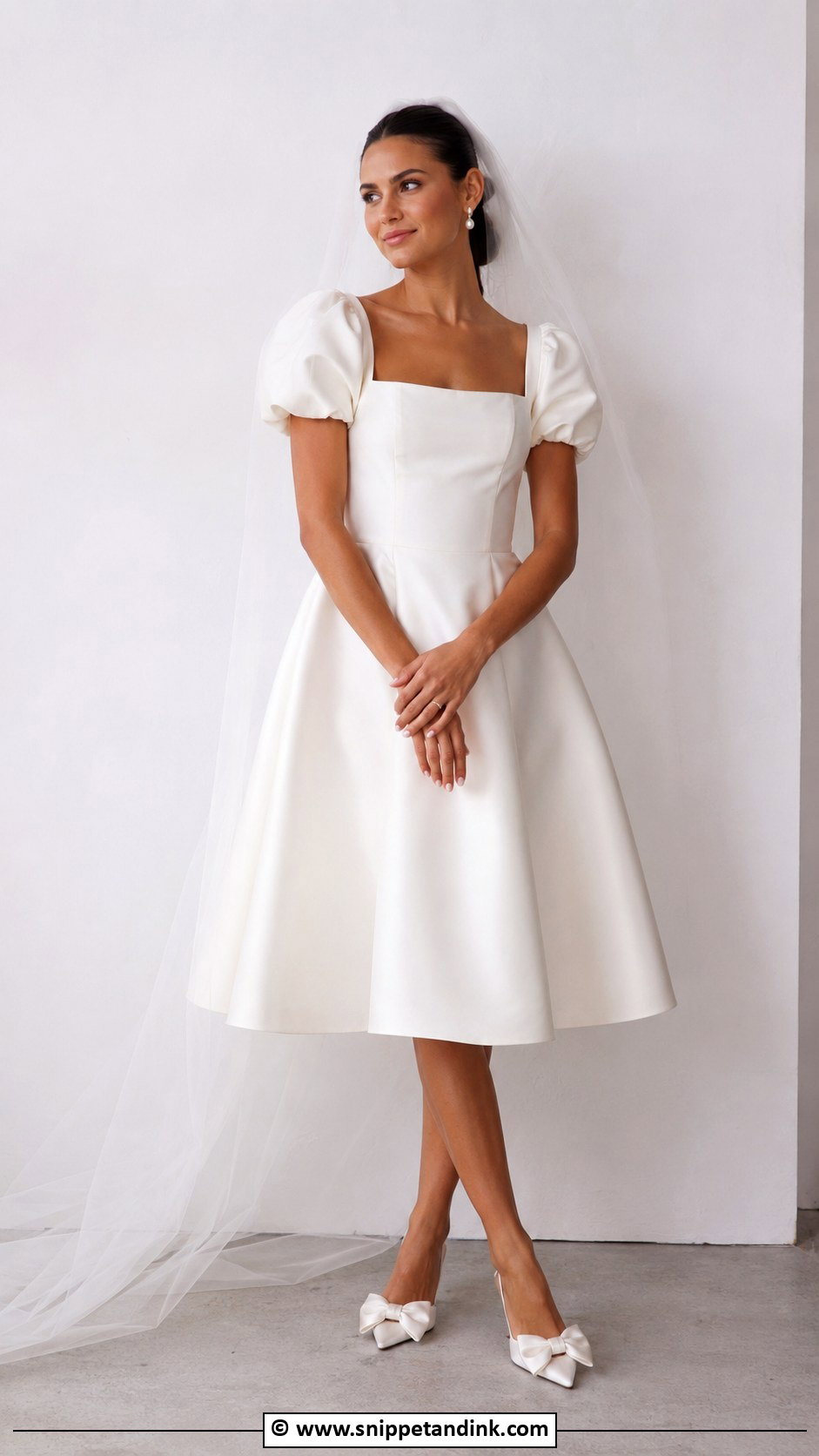
Puff sleeves range from soft gathers to big sculptural shapes, and the larger the puff, the more everything else should calm down. I balance a full sleeve with a simple neckline and plain skirt. Organza holds volume without weight; satin gives a firmer puff; tulle collapses in humidity, which matters for an outdoor summer wedding. On a mini they look playful; on a floor-length gown, editorial. Pearl studs are enough jewellery.



15. Short Sleeve Cap Sleeve Wedding Dress
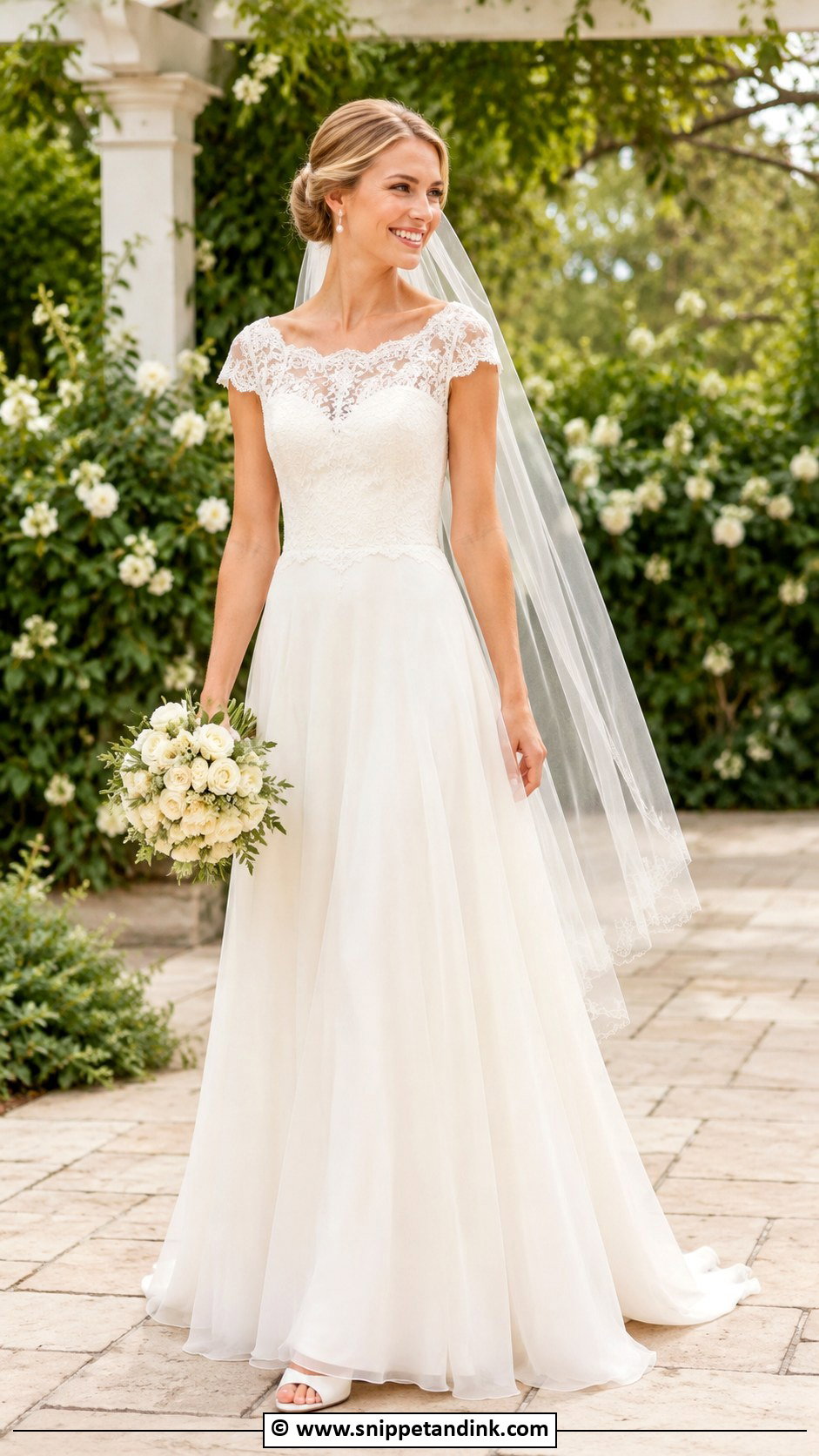
A short sleeve cap sleeve wedding dress is the lightest sleeve there is, just a small piece of fabric sitting over the shoulder bone. That makes it easy to wear in heat, and it’s the subtlest way to soften a fitted sheath or mermaid gown. The fit point is crucial: if the cap sits even a little too far out, it juts away from the shoulder. Lace bodices and illusion necklines suit it best.
16. Short Sleeve Flutter Sleeve Wedding Dress
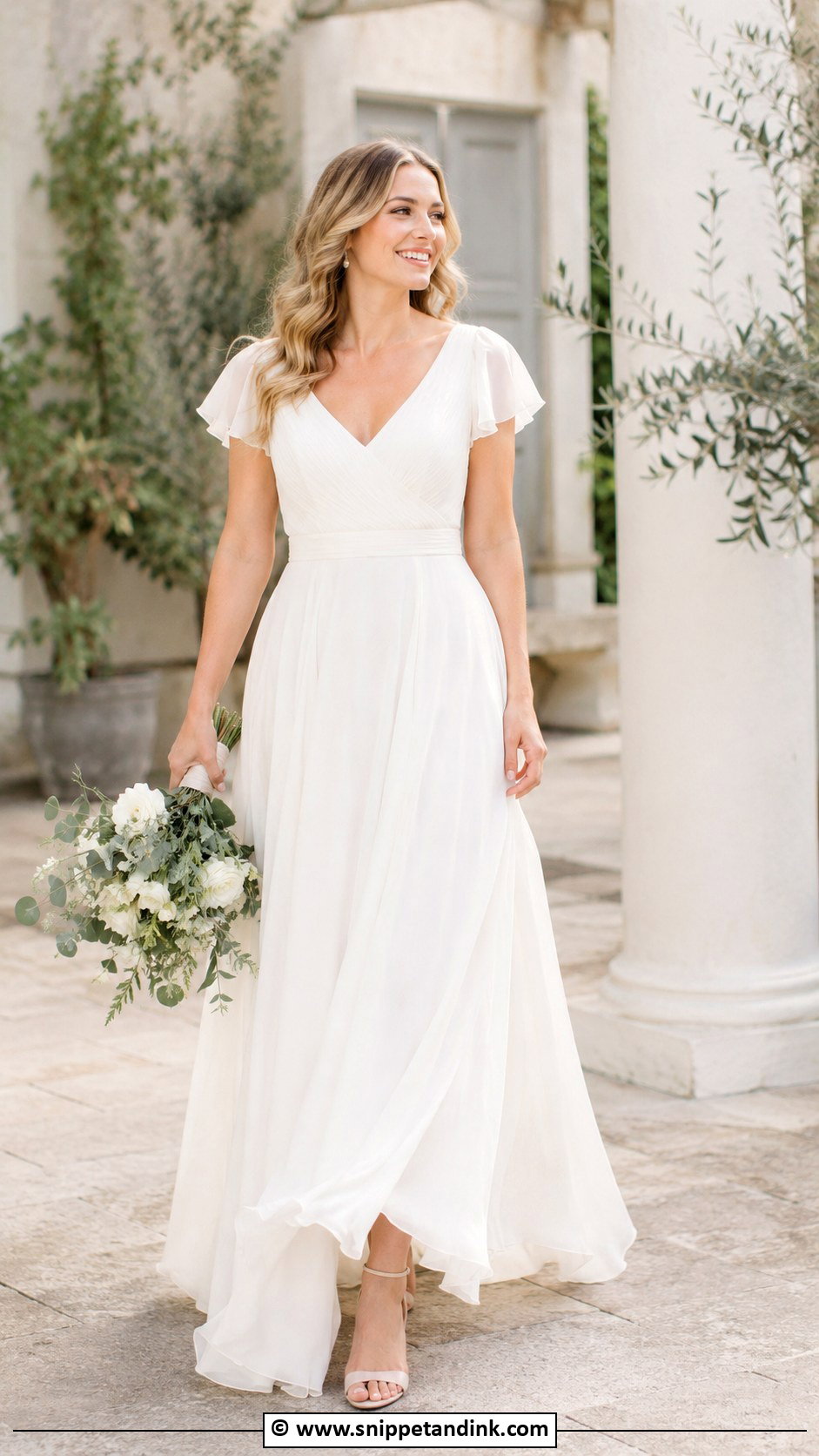
A short sleeve flutter sleeve wedding dress has loose, unstructured sleeves that move with you, which makes it the kindest choice for a bride who dislikes anything tight on the arm. Chiffon and soft tulle flutter best. I’d keep this one for outdoor or warm-weather weddings, since in a formal ballroom it can read too casual. Loose waves and simple sandals suit the relaxed mood.
17. Short Sleeve Beaded Wedding Dress
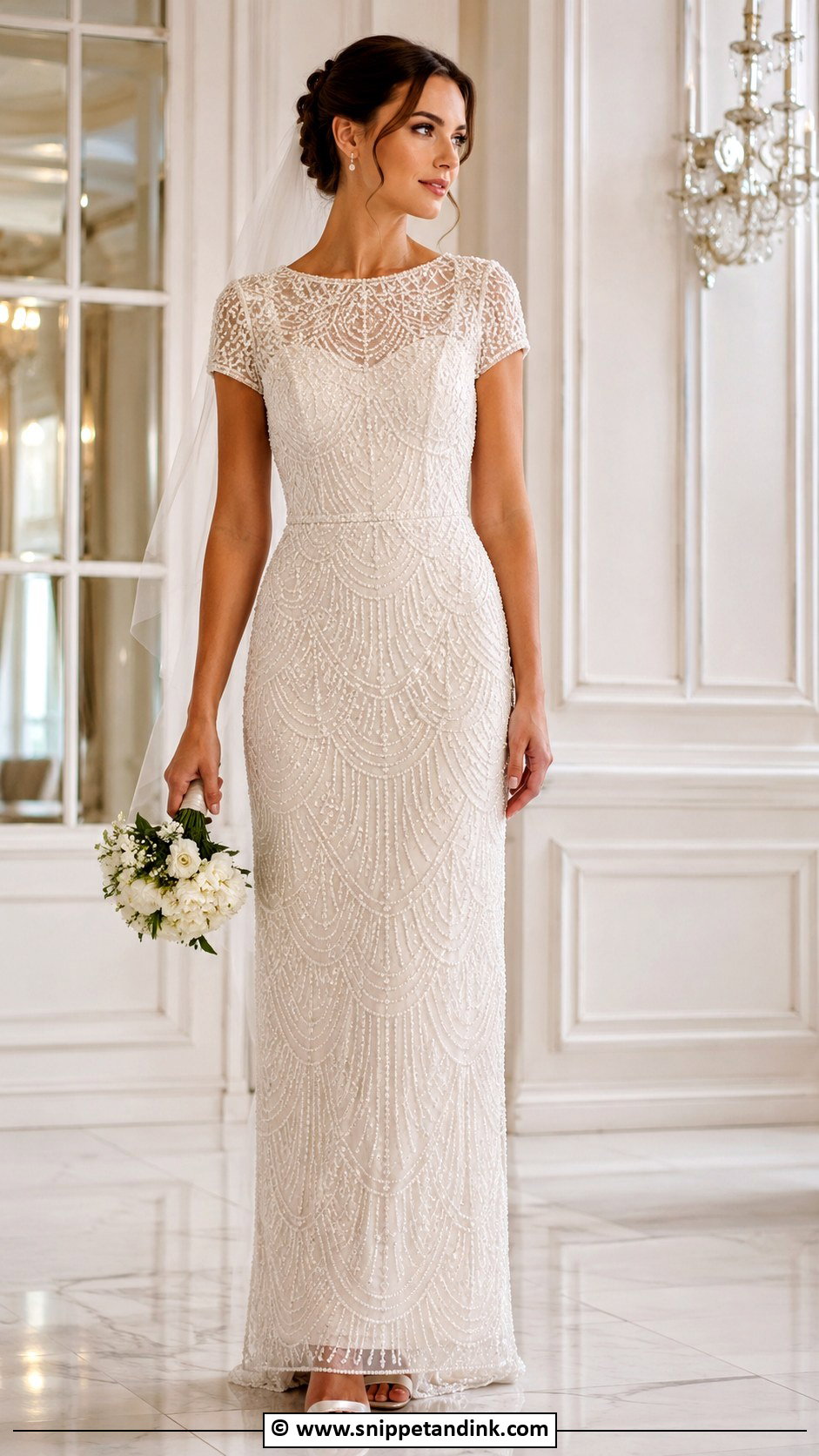
Beading catches light, so this dress belongs at evening receptions and formal venues. On a short sleeve, I check the inner arm. Beads or sequins there rub against the bodice with every movement and can scratch skin raw by the end of the night. A beaded sheath looks glamorous, a beaded A-line more classic. Keep shoes and jewellery quiet. Satin heels and small earrings are enough.
18. Short Sleeve Pearl Wedding Dress
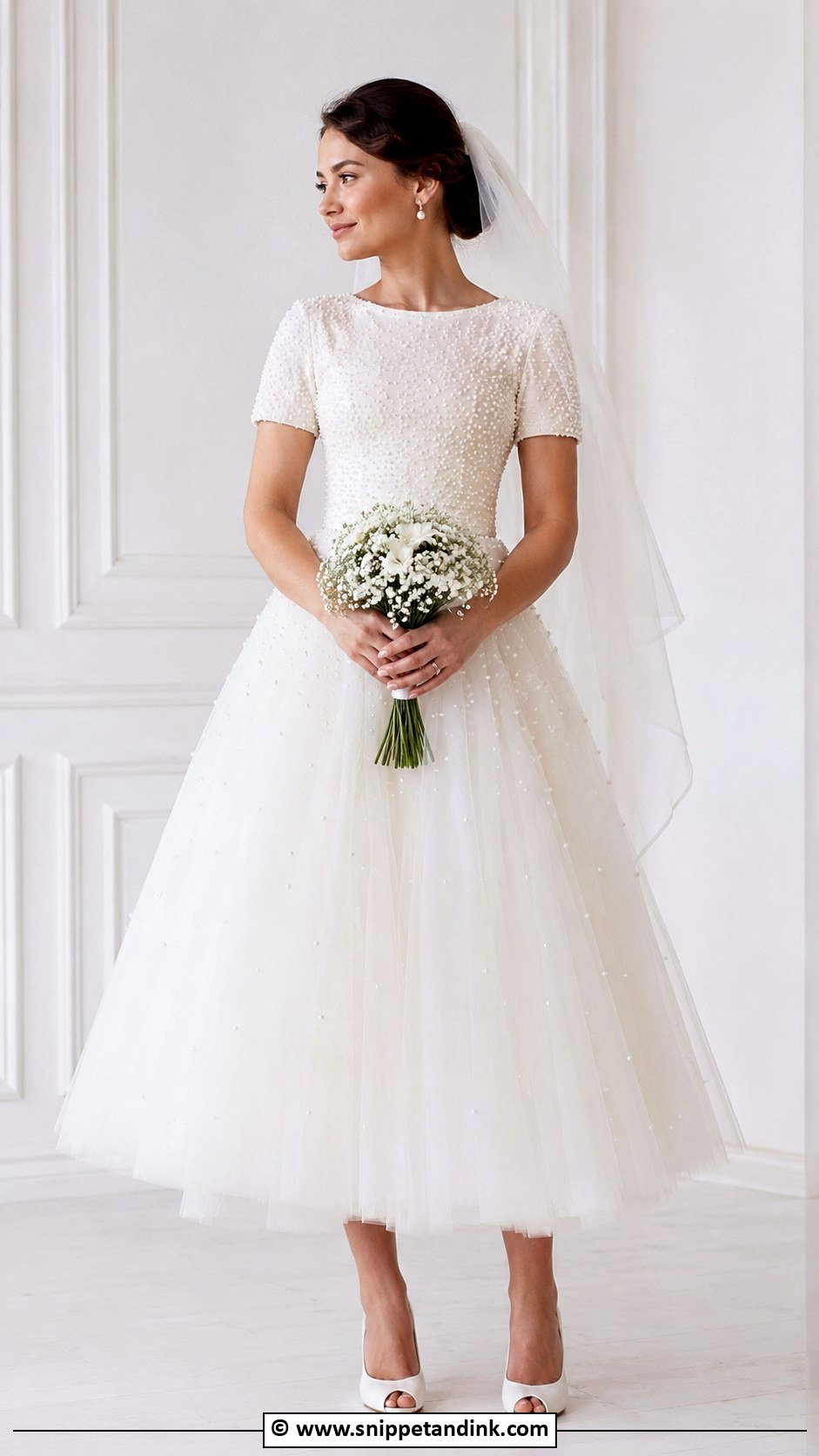
Pearls add texture without sparkle, which is why I suggest them for daytime ceremonies where crystal can look out of place. They might trim the sleeve hem, scatter across the bodice or cover tulle entirely. Ask whether they’re hand-sewn or glued, since glued pearls come off with hugs. A pearl mini feels fun, a pearl A-line classic. Pearl earrings and satin shoes match without competing.
19. Short Sleeve Tulle Wedding Dress
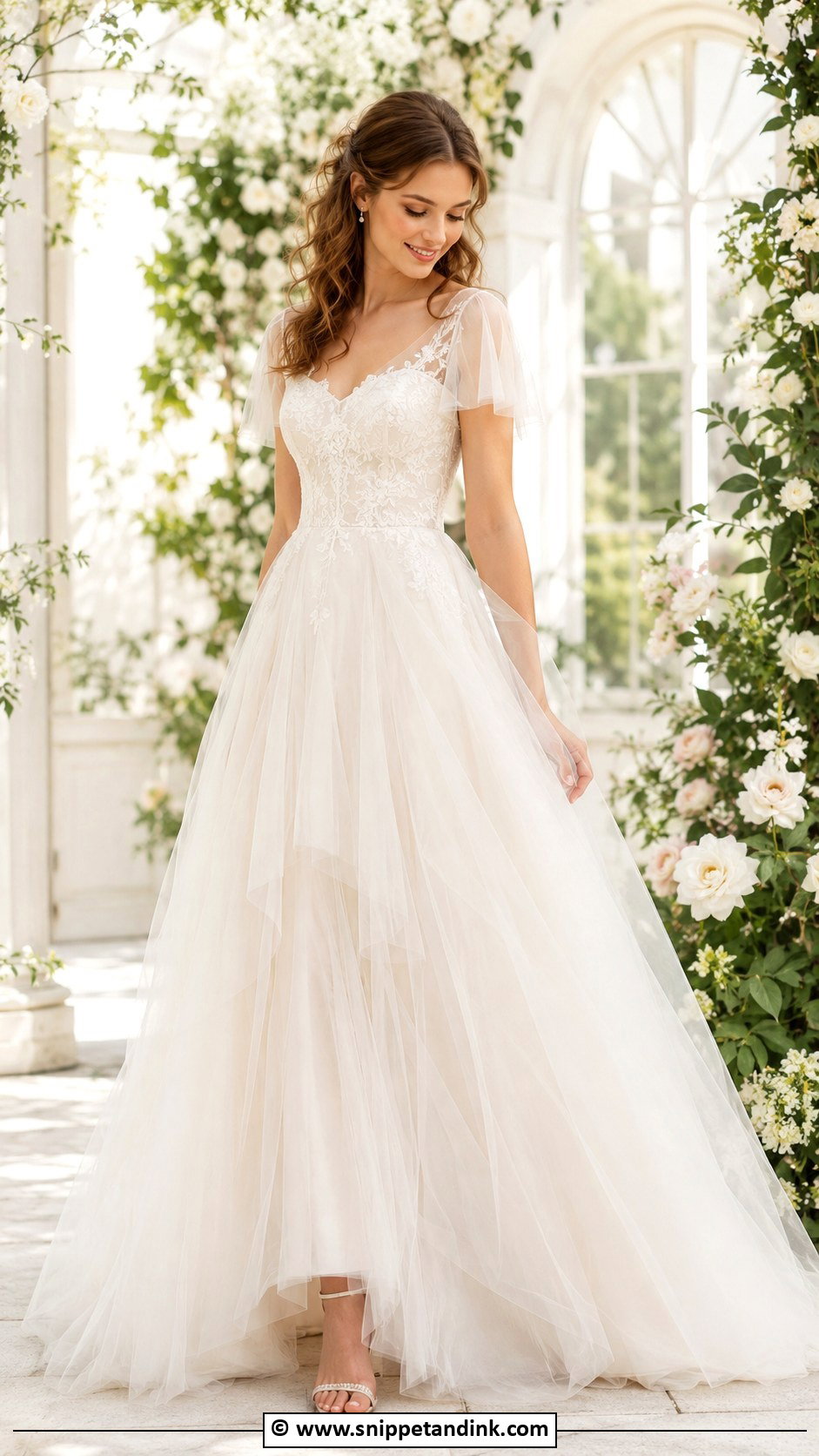
Tulle is light, layered and soft, and a tulle or illusion-mesh sleeve almost disappears on the skin. It’s the easiest way to get a dreamy look without a heavy gown. Tulle snags on rough jewellery and bouquet wire, so I warn brides about bracelets and loose stems. It also flattens in rain. Simple earrings and dainty heels keep the look light.




20. Short Sleeve Chiffon Wedding Dress
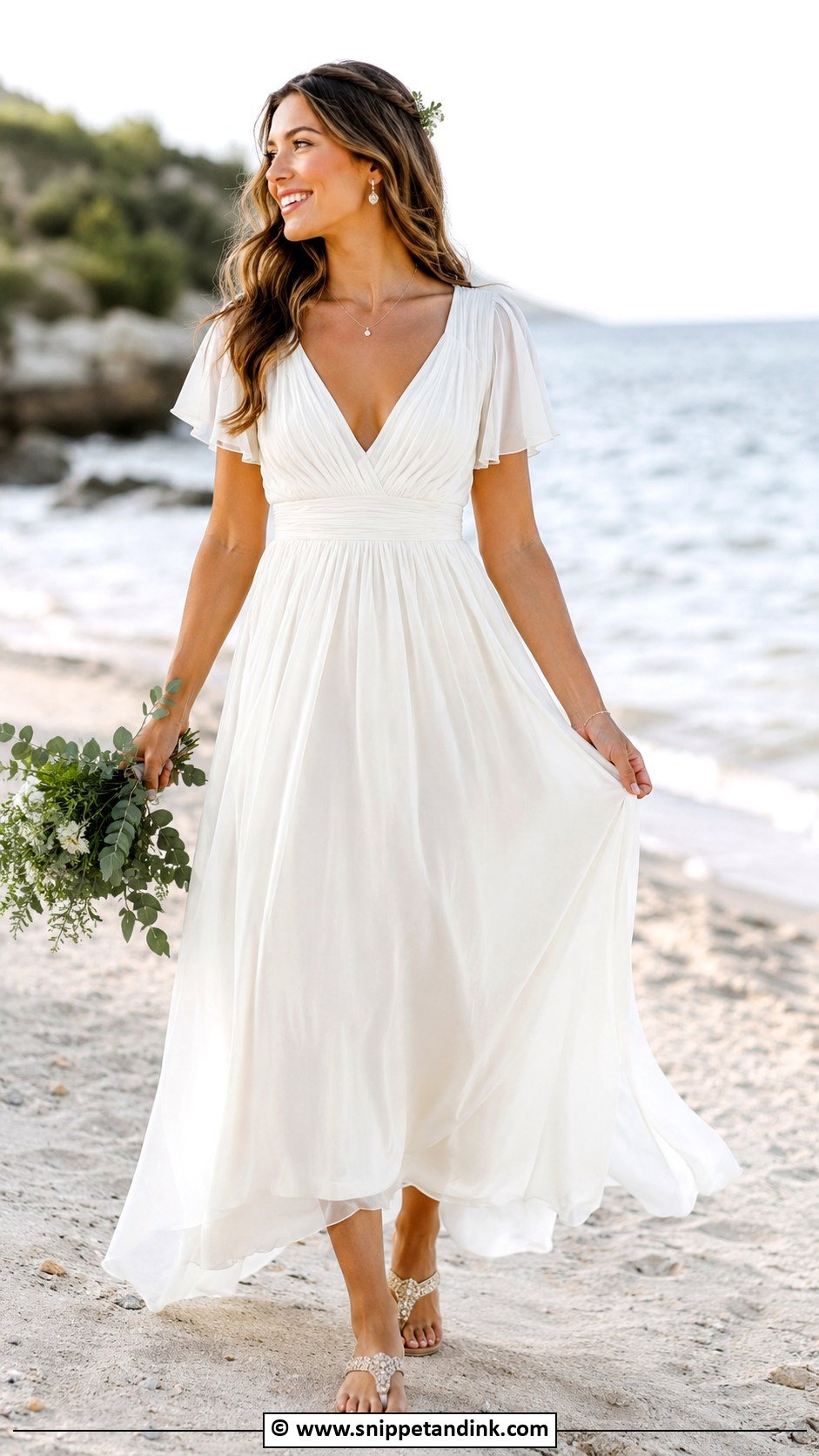
Chiffon is soft, sheer and floaty, the fabric I go to for beach and summer garden weddings. It doesn’t hold structure, so sleeves are usually gathered, sheer or fluttery rather than shaped. Its weakness is water and stains: chiffon shows sweat and spills more than you’d think. I’d suggest a pale ivory over bright white, which hides more. Low heels or sandals suit it.
21. Short Sleeve Crepe Wedding Dress
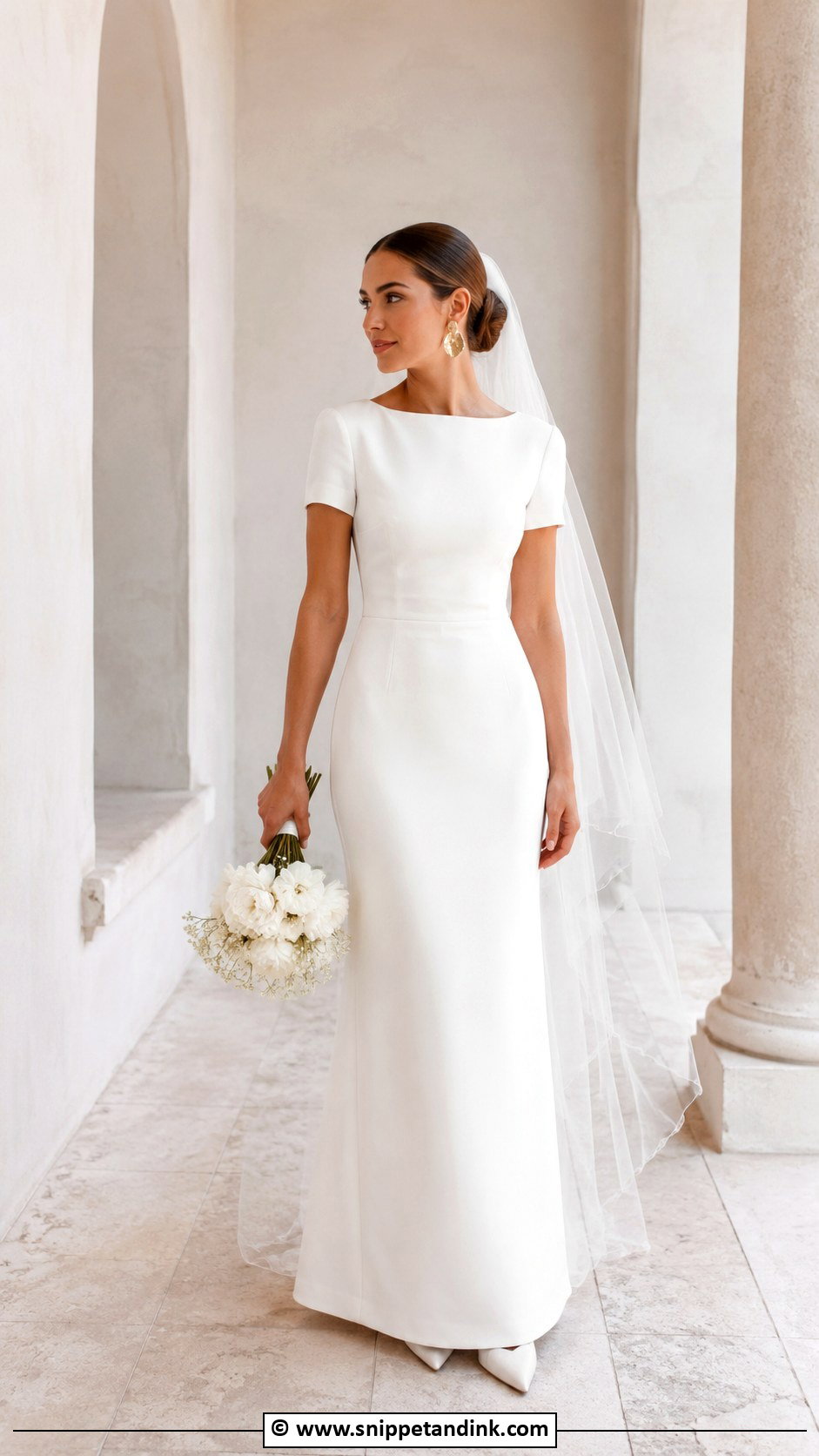
A short sleeve crepe wedding dress relies on tailoring, because crepe is matte and plain enough to show every seam. I check fabric weight first: heavy crepe gives a sculpted line, while light crepe clings. Short sleeves add structure. Sheaths, fit-and-flare and column gowns all suit it. A low back, covered buttons or a small train gives you one detail without clutter.
22. Short Sleeve Mikado Wedding Dress
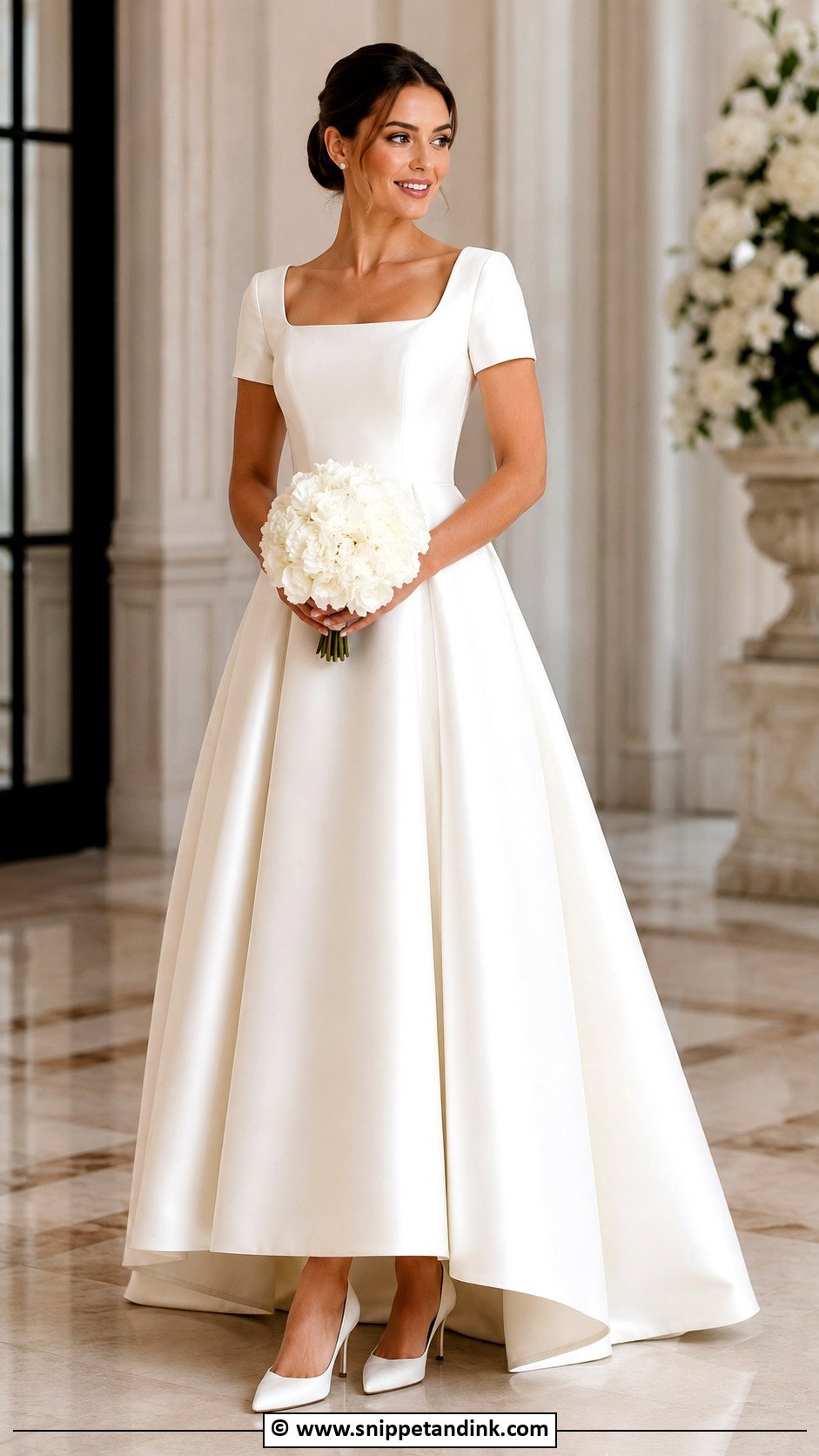
Mikado is a heavy, slightly stiff silk blend with a soft sheen, and it holds clean shapes better than almost any other bridal fabric. That’s why it works for ball gowns and architectural A-lines. It also creases sharply where you sit, so a steamer before photos is essential. Short mikado sleeves look crisp with a square or bateau neckline. Because the fabric already looks rich, you need very little extra: a smooth updo and pearl studs.
23. Short Sleeve Organza Wedding Dress
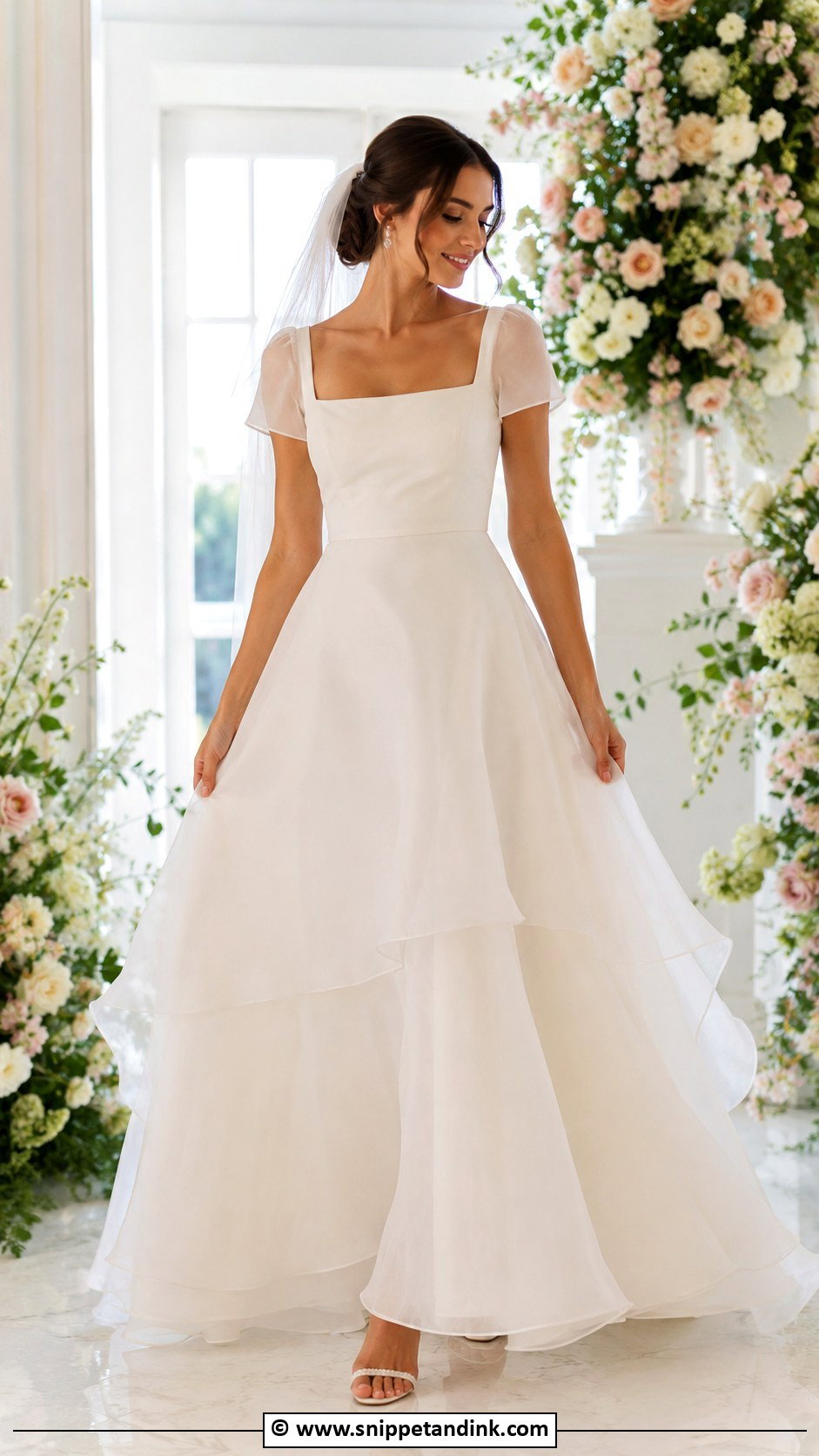
Organza is crisp and sheer, so it holds volume better than chiffon while looking almost as light. That makes it the natural fabric for puff sleeves, overskirts and layered skirts. It wrinkles, though, and those wrinkles don’t fall out on their own the way chiffon’s do. Spring and summer weddings suit it best. If the skirt is full, keep the bodice clean and the veil lightweight.
24. Short Sleeve Embroidered Wedding Dress
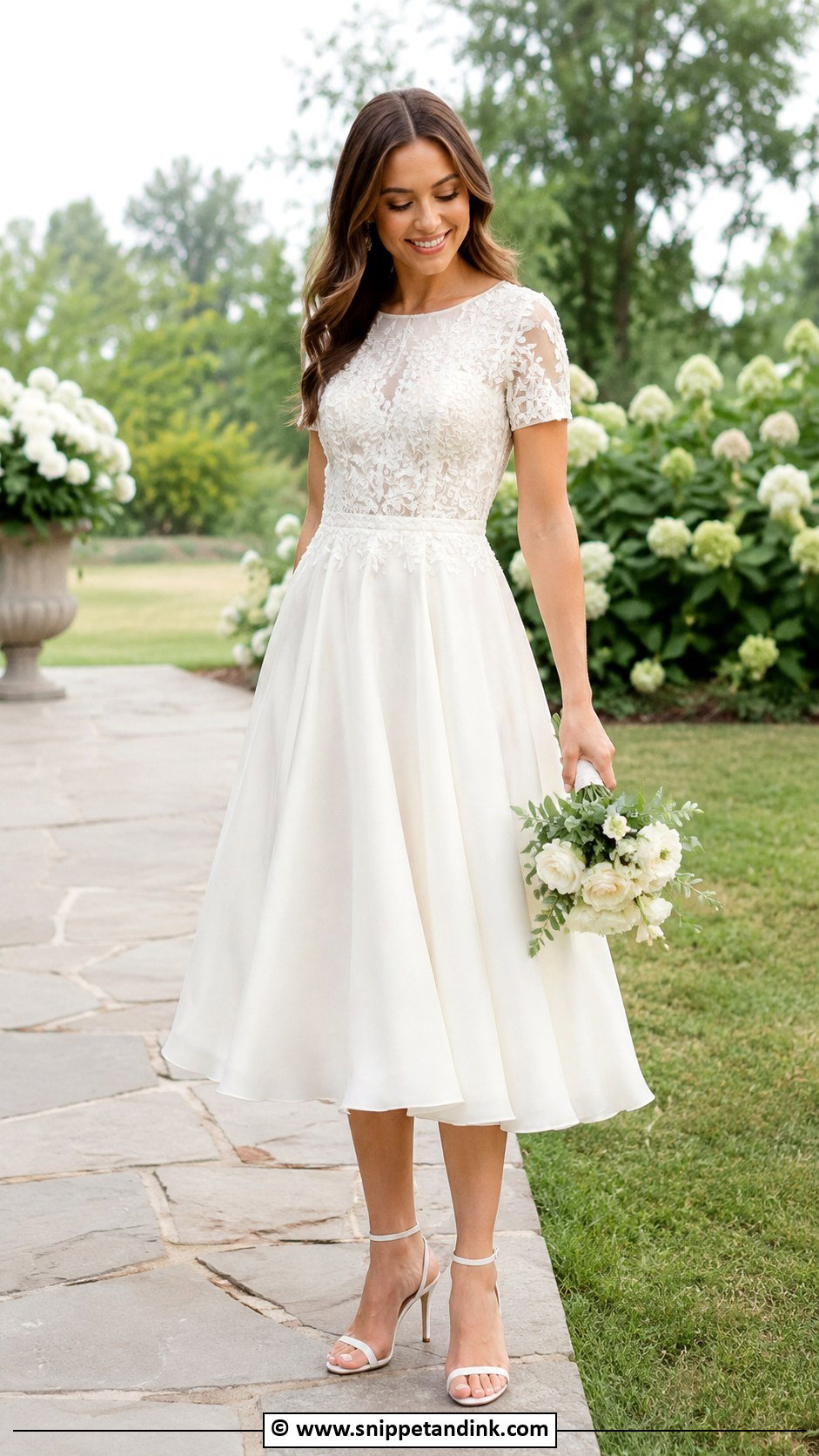
Embroidery stitched directly into the fabric, florals, vines or tonal patterns, gives a dress texture that feels personal. On a short sleeve, I like the embroidery to continue from the neckline across the shoulder so the sleeve doesn’t look added on. A soft A-line suits romantic stitching; a fitted sheath reads more modern. Keep jewellery minimal so the work stays the focus.


25. Short Sleeve Floral Wedding Dress
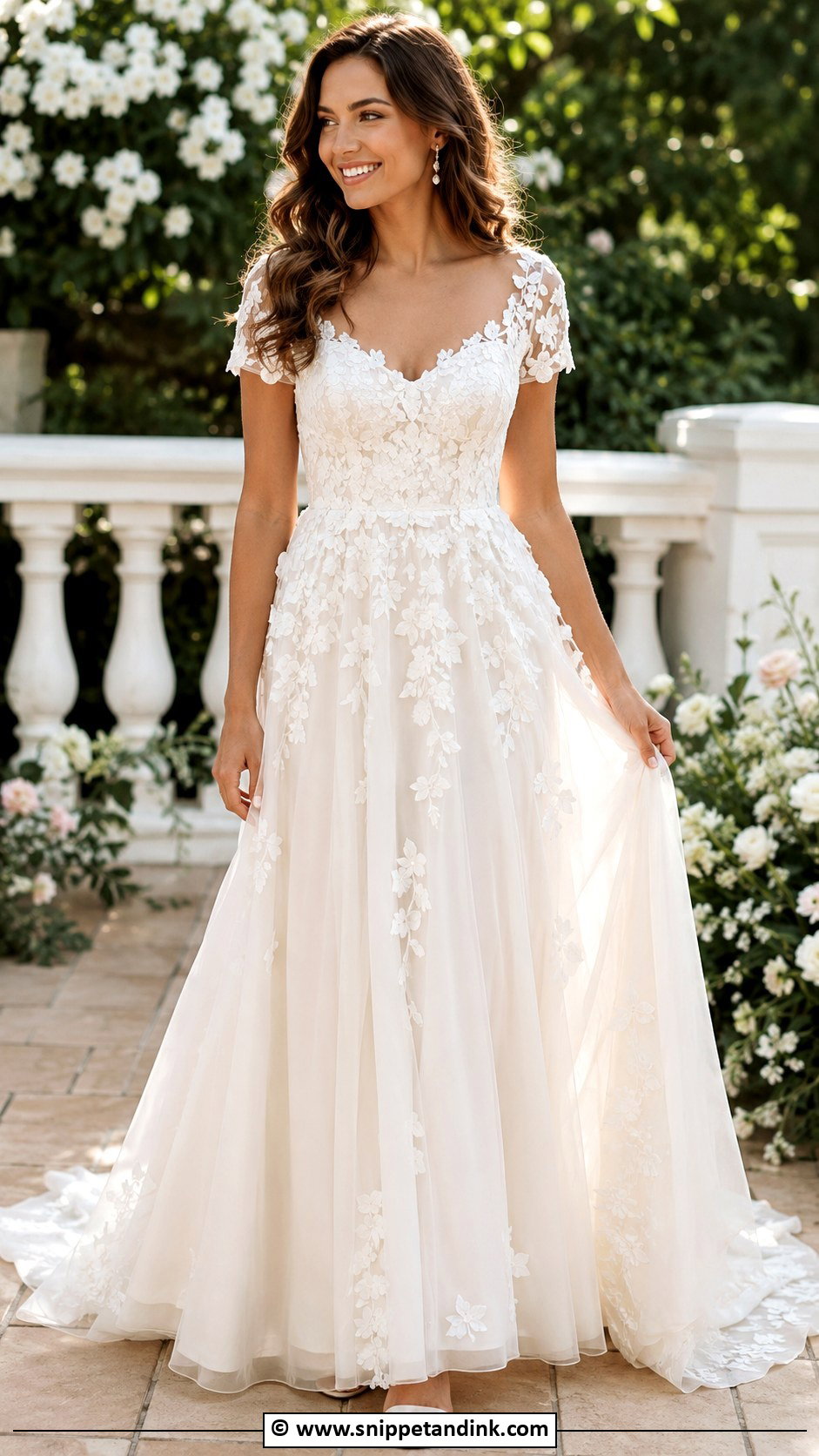
Florals on a wedding dress can be lace appliqué, embroidery, 3D petals or a soft print, and the scale matters more than the type. Dimensional petals on sleeves look charming in photos but crush when you’re hugged and sat beside, so I’d keep 3D flowers to the skirt or shoulders rather than the inner arm. Ivory floral lace is the quieter route. Soft curls and simple sandals suit garden venues.
26. Short Sleeve Boho Wedding Dress
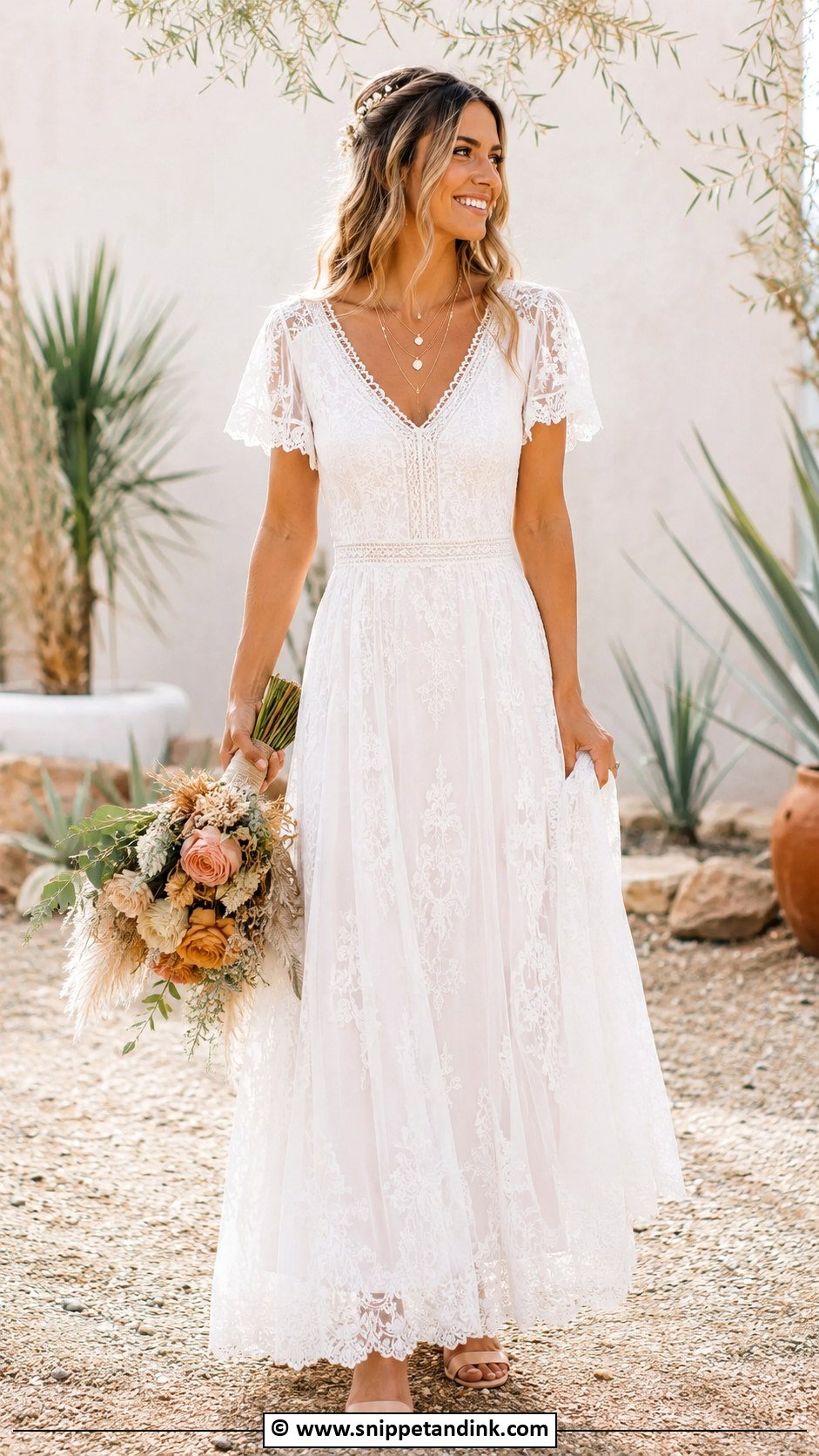
Boho dresses are meant to look relaxed: soft lace, crochet details, open backs and flowing skirts. The sleeve is usually loose or fluttery. Fit still matters, because a loose dress that doesn’t fit at the shoulder just looks oversized. Empire waists and A-lines are the comfortable silhouettes here. Loose waves, layered delicate jewellery and block heels on grass suit beach, desert and garden ceremonies.
27. Short Sleeve Vintage Wedding Dress
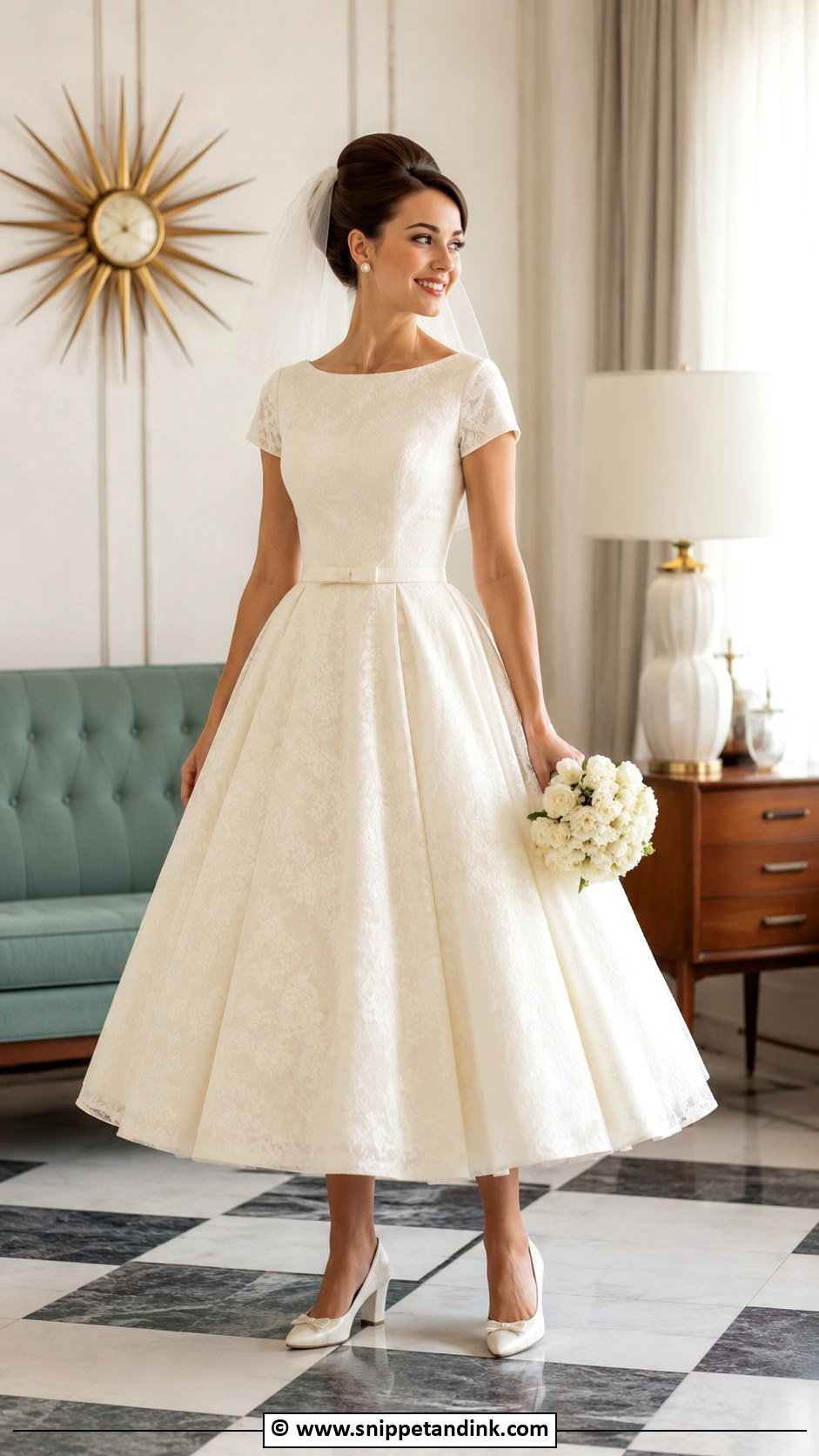
A short sleeve vintage wedding dress takes its cues from the forties, fifties or sixties: tea-length skirts, lace bodices, satin buttons, bateau necklines and cap sleeves. Pick one era rather than mixing them, or the dress loses its point. These shapes are often easier to move in than modern formal gowns. A short veil, pearl earrings and block heels fit the period, with a soft, muted lip.
28. Short Sleeve Courthouse Wedding Dress
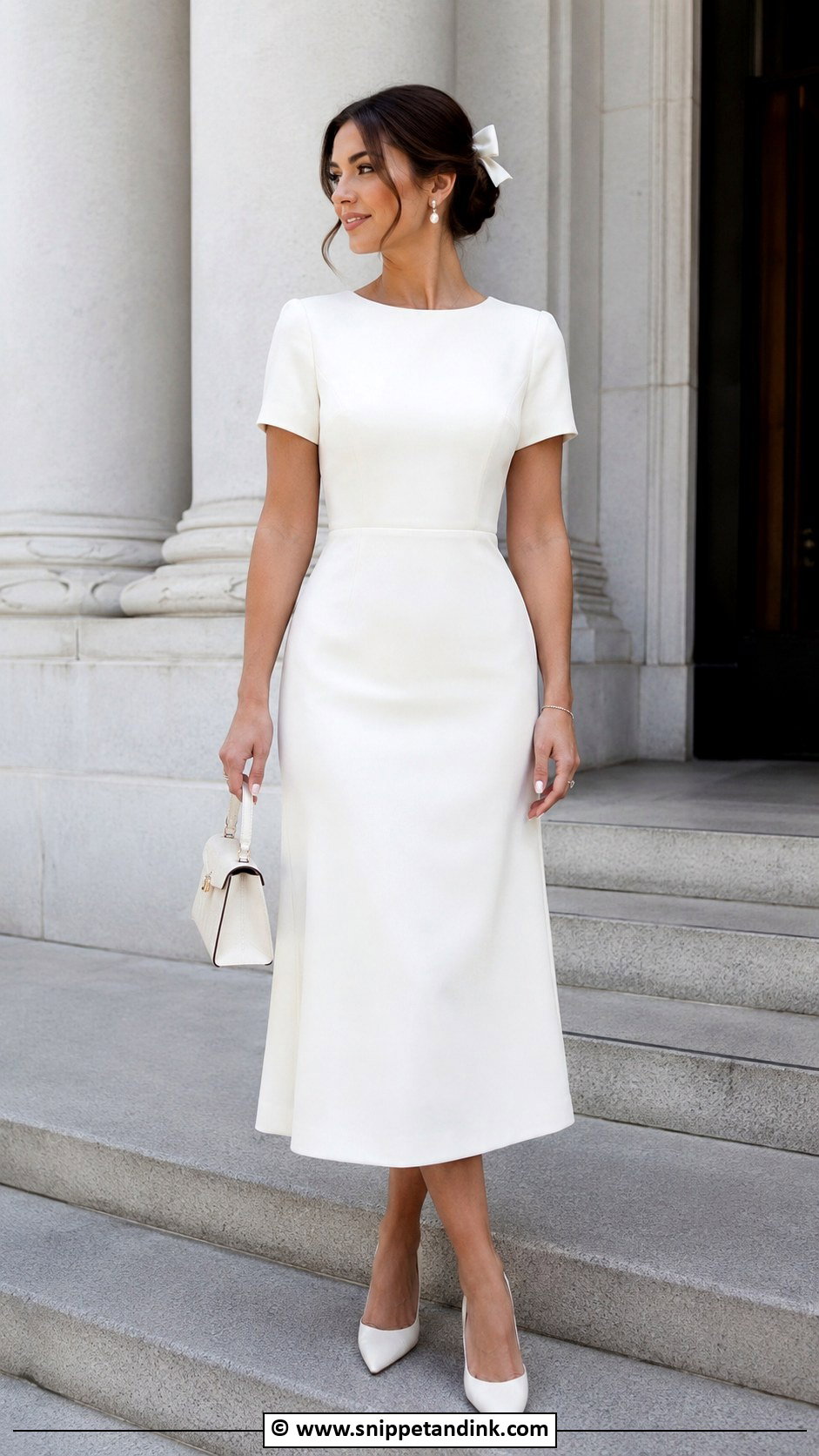
Courthouse weddings involve standing, walking corridors and portraits outside, often in one afternoon. A midi, a tailored mini, a sheath or a simple satin A-line all work, and short sleeves mean you won’t need a jacket indoors. Plain ivory under fluorescent light can look flat, so a fabric with some sheen or texture helps. Pointed heels, a small bag and a hair bow or short veil finish it.
29. Short Sleeve Beach Wedding Dress
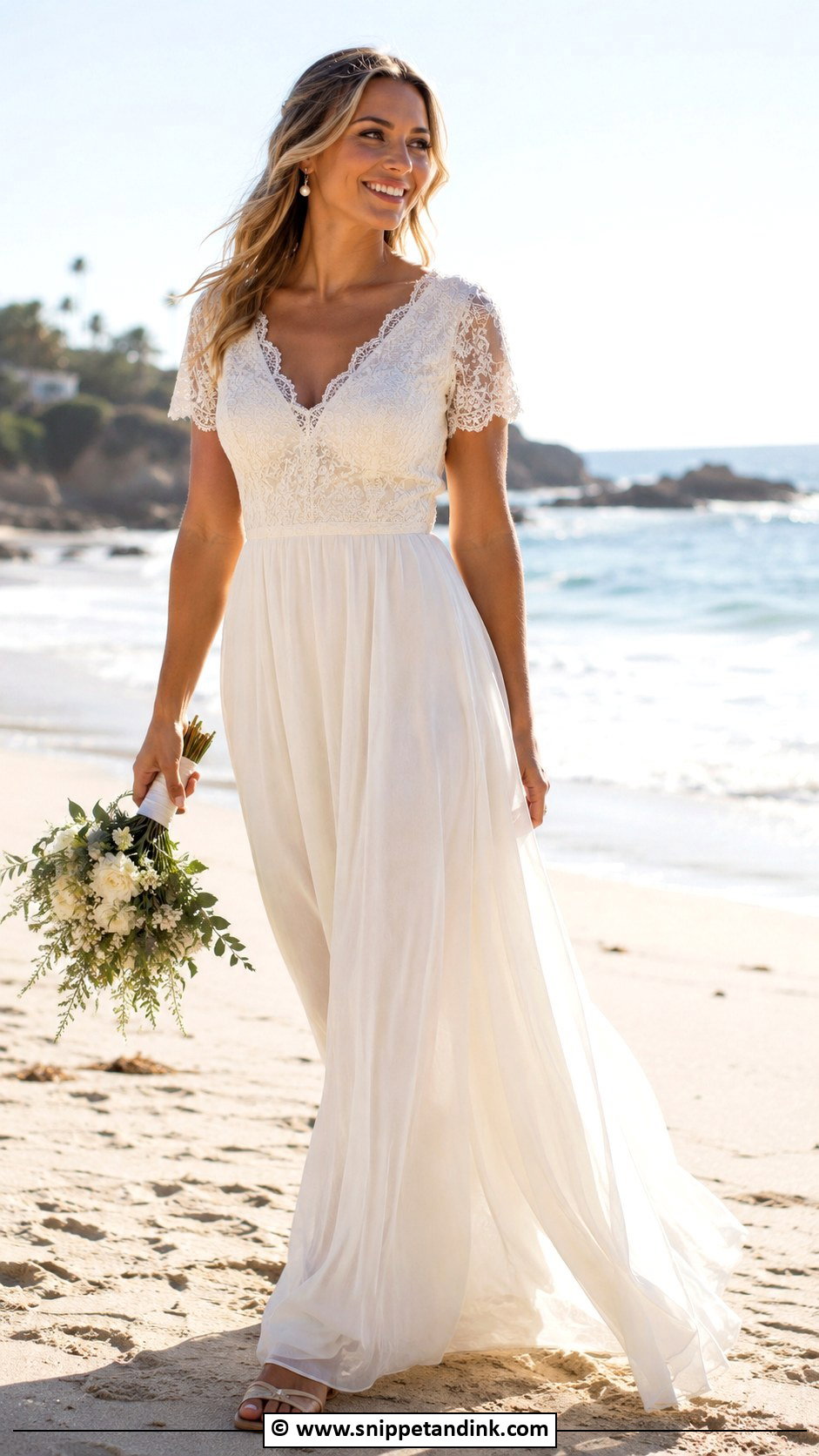
On a beach, I’d choose light fabrics like chiffon, soft lace or thin crepe and skip a heavy ball gown altogether. A short sleeve gives coverage from the sun without heat. Trains and sand don’t mix, so I’d keep the hem just off the ground in flat sandals. Wind is the other factor; long veils and loose sleeves blow around, so a short veil or none suits a breezy ceremony.
30. Short Sleeve Reception Wedding Dress
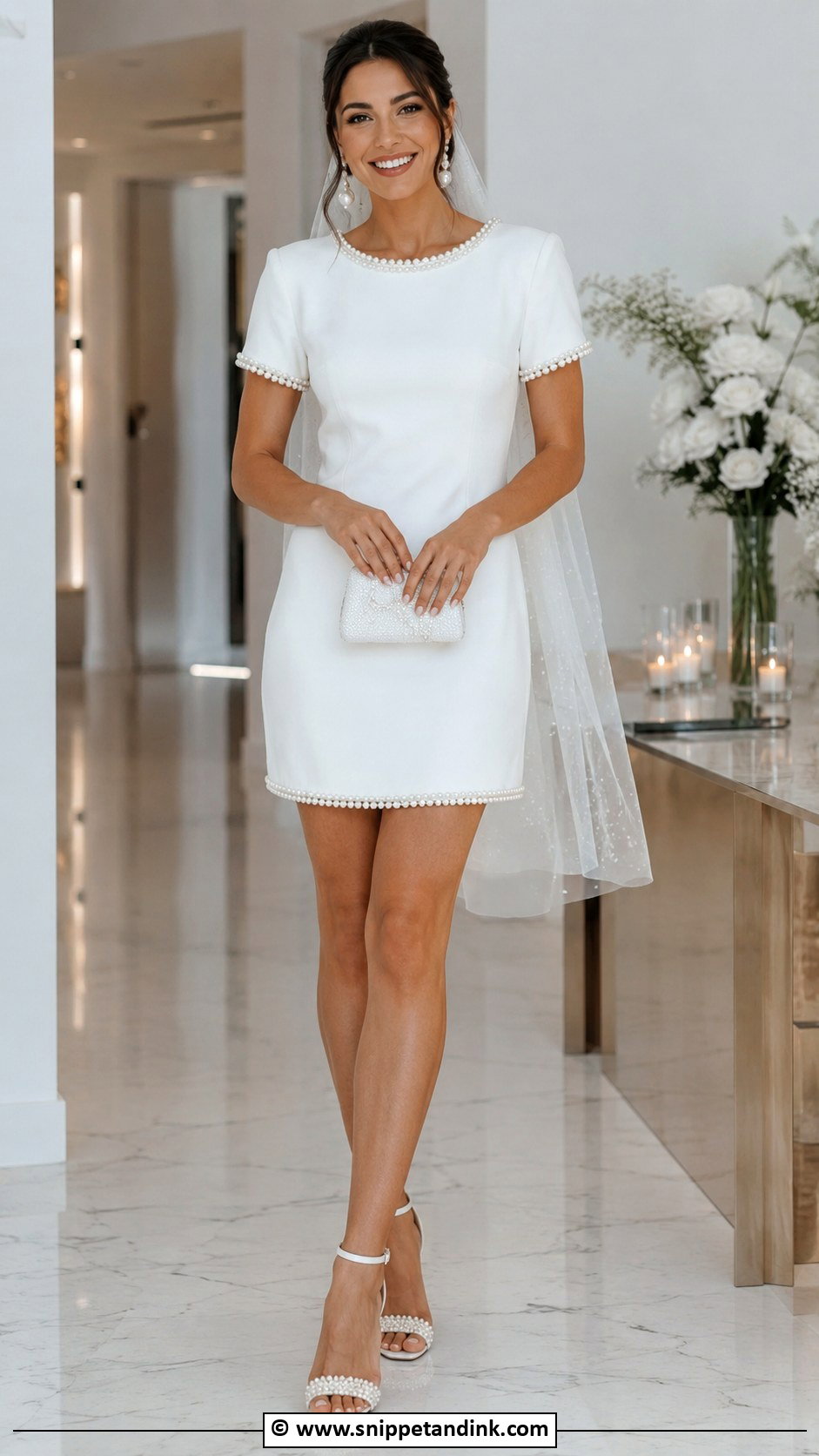
A second dress for the reception is about dancing, eating and moving around a crowded room. Shorter lengths, midis and light sheaths all work, and short sleeves keep it bridal. A bow, pearl trim or a bit of satin adds a special touch. Comfortable heels matter more here than anywhere else in the day. Plan where and when you’ll change, and who will help with the fastenings.
Can Sleeves Be Added to a Dress You Already Love?
Yes, and it’s one of the most common alteration requests I see. A good bridal seamstress can add sleeves to a strapless or strappy gown, usually in lace, tulle or a fabric matched to the dress. The easiest additions are illusion-mesh sleeves with lace appliqué, because the mesh is close to invisible and the lace hides the join.
Matching fabric exactly is the hard part. Ivory shades vary a lot, so bring the dress, not a photo, when choosing. Detachable sleeves are a softer option, as they can come off for the reception. Either way, allow extra weeks for alterations, since sleeves are a bigger job than a hem.
Heat, Sweat and the Inside of the Sleeve
Short sleeves sit right in the underarm, and that’s where a long day shows. Satin and silk mark easily with sweat, which can leave visible rings in photos. I suggest a clear antiperspirant applied the night before and again in the morning, left to dry fully before dressing, and soft underarm shields stitched or stuck into the lining.
Deodorant marks are another issue. White residue on a dark lining wipes off with a clean nylon stocking or a dry microfibre cloth; don’t use water on silk. If your venue will be warm, a breathable lace or chiffon sleeve is far kinder than structured satin.
Let the Sleeve Follow the Dress, Not Lead It
A short sleeve is one of the most comfortable ways to wear a wedding dress, and it adapts to almost any style, from modest to modern to vintage. I’d always choose the silhouette first, A-line, sheath or ball gown, and then the sleeve that suits your shoulders and arms. Fabric decides the rest: lace and chiffon soften, mikado and satin structure. Try each option moving, not just standing, and the right sleeve usually makes itself obvious.
You'll Like These Ideas:







Leave a Reply