
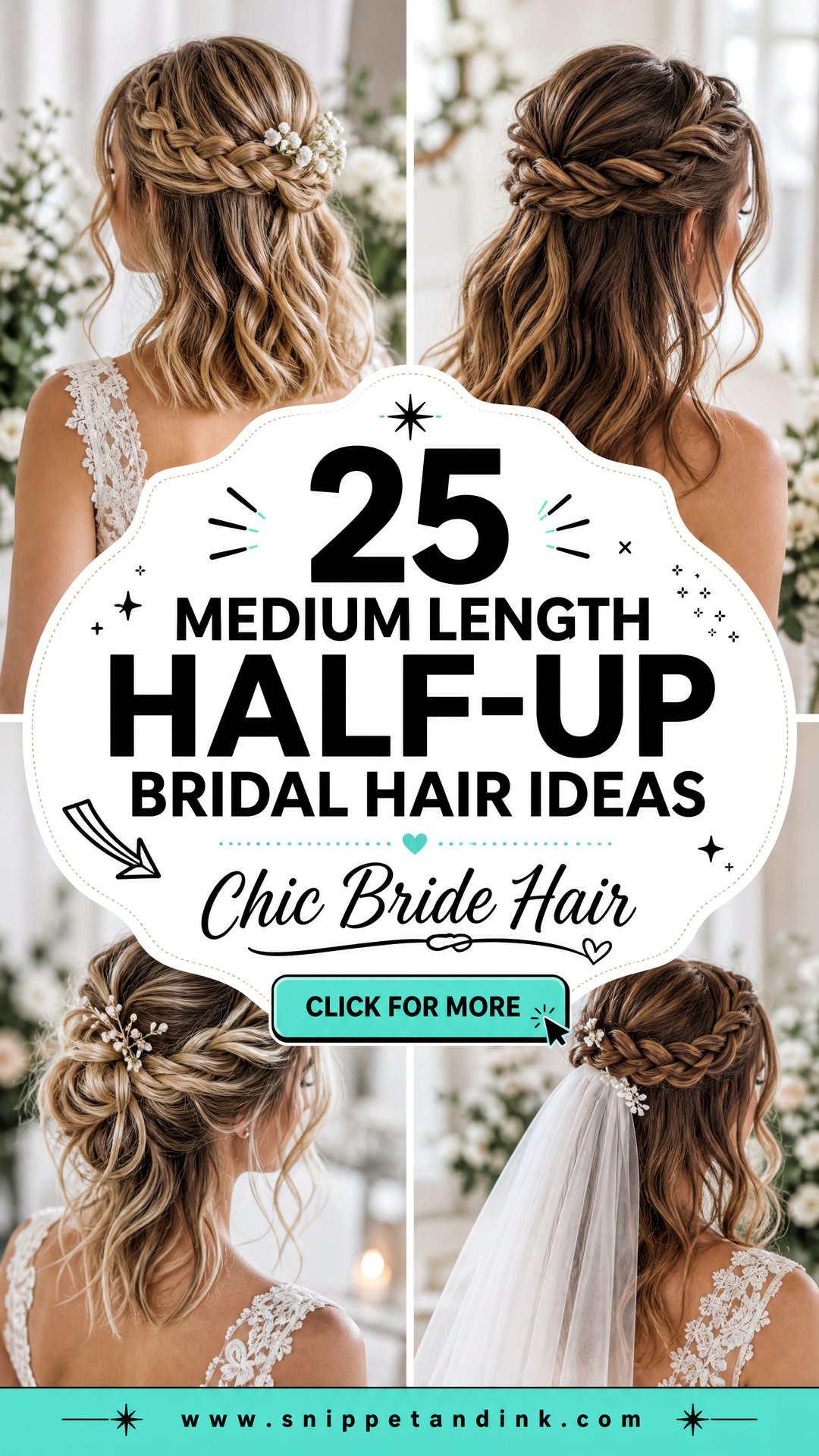
Medium hair, somewhere between the shoulders and the top of the bust, is the length I’m happiest to see for a half-up. There’s enough to twist, braid and pin, and what’s left hanging still moves when you walk instead of just sitting there. The catch is that every section you take up shortens what stays down, so with this length the planning matters more than the styling. Below are 25 half-up ideas I’d actually build on medium hair, with notes on how each one holds, who it suits and where it tends to go wrong.
How Much Hair Goes Up When There Isn’t Much to Spare
On long hair I can take half the head up and nobody notices the loss. On medium hair, a heavy top section can leave the bottom looking thin and short, especially once it’s curled. So the first thing I do at a trial is decide where the parting line runs, not which style we’re doing.
- For most medium lengths I section from just above the ear to the crown. Anything lower takes too much.
- Fine hair: take less up and add volume with texture spray at the roots of the bottom section, so the down half doesn’t look sparse.
- Thick hair: you can take more up, and you’ll need it, because a thick bottom half can look bulky beside a small twist or braid.
- Layered cuts: short top layers may not reach the gather point. I pin them separately or leave them as face-framing pieces rather than forcing them back.
If your hair falls just above your shoulders, curls will pull it up another inch or two. That’s fine for a braided crown, but tell your stylist if you want the down section to touch your collarbones, so she curls looser.
1. Half-Up Braided Crown for Medium Hair
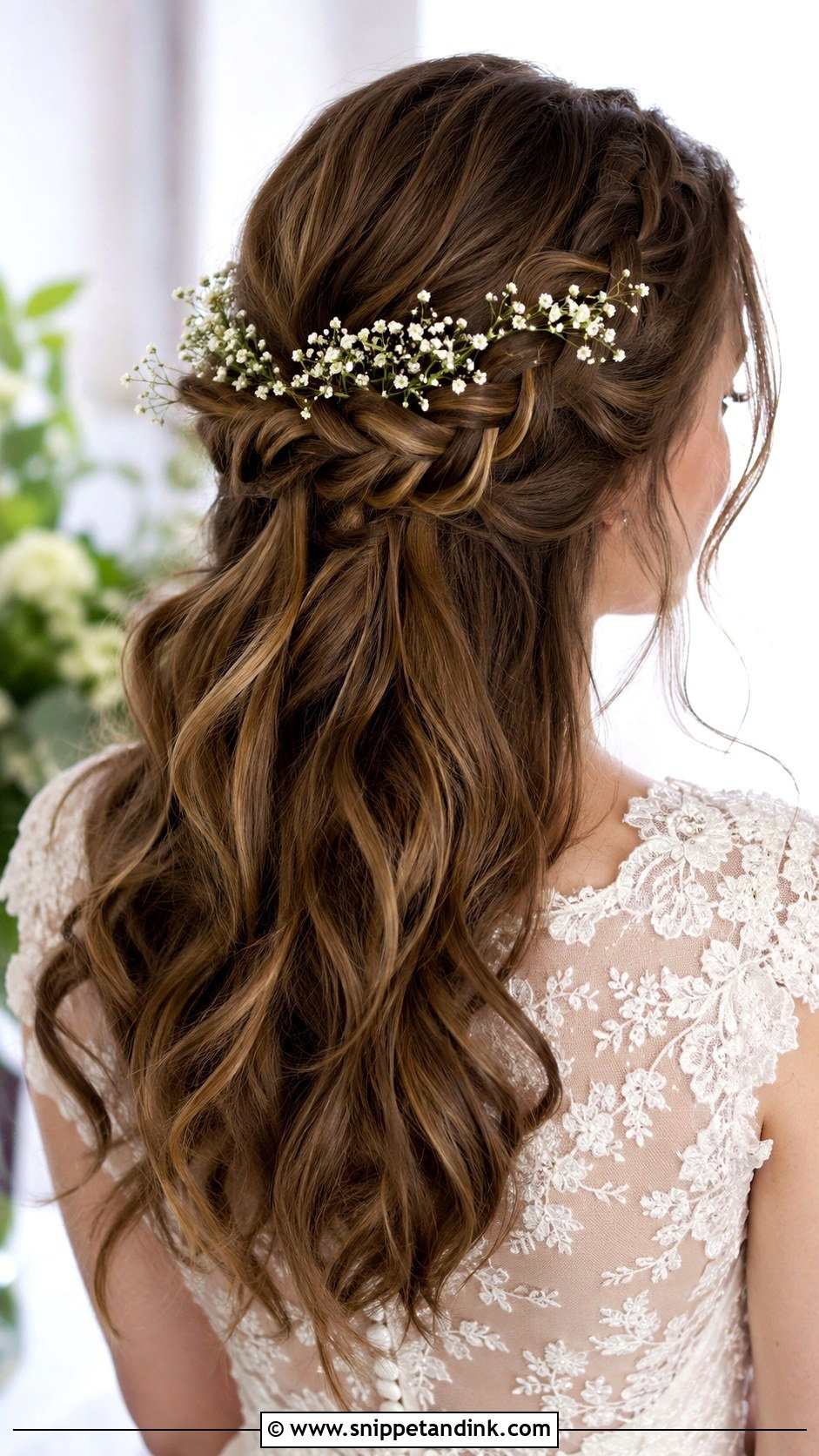
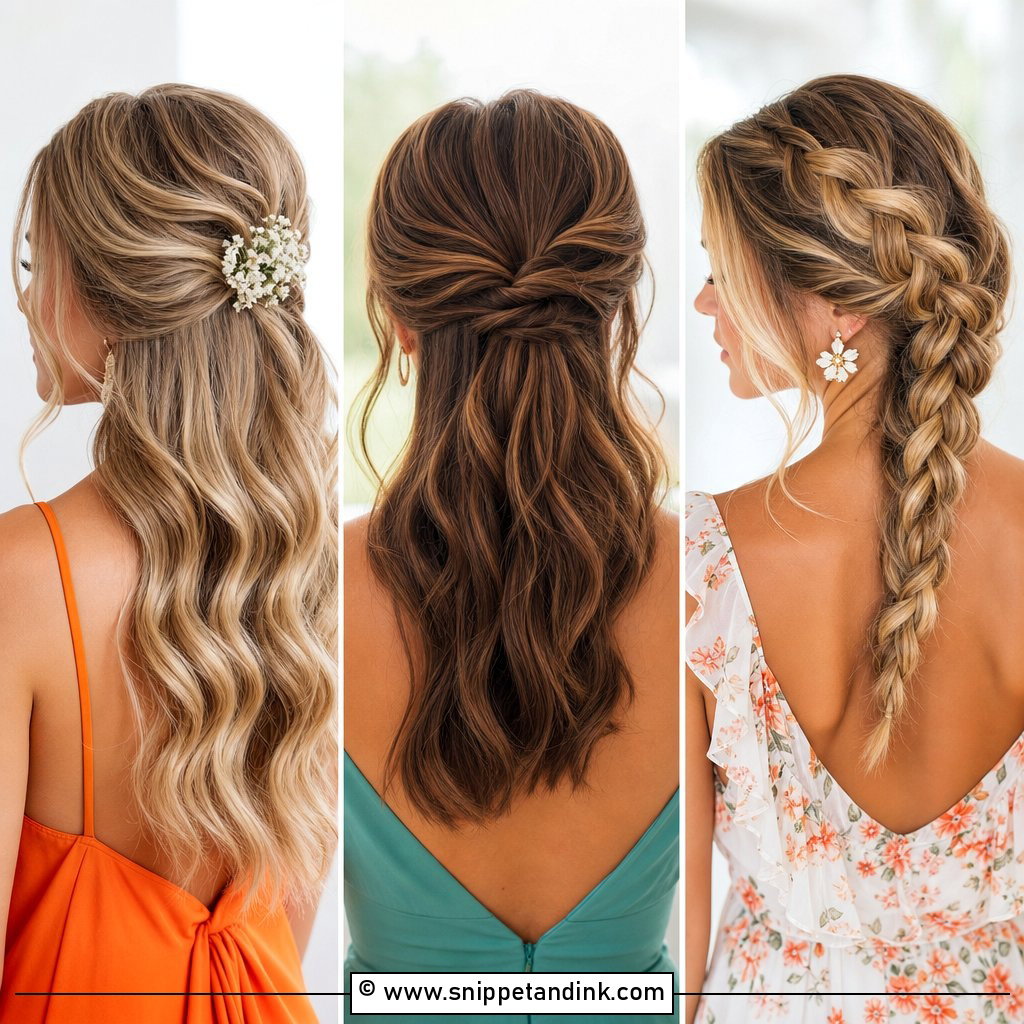
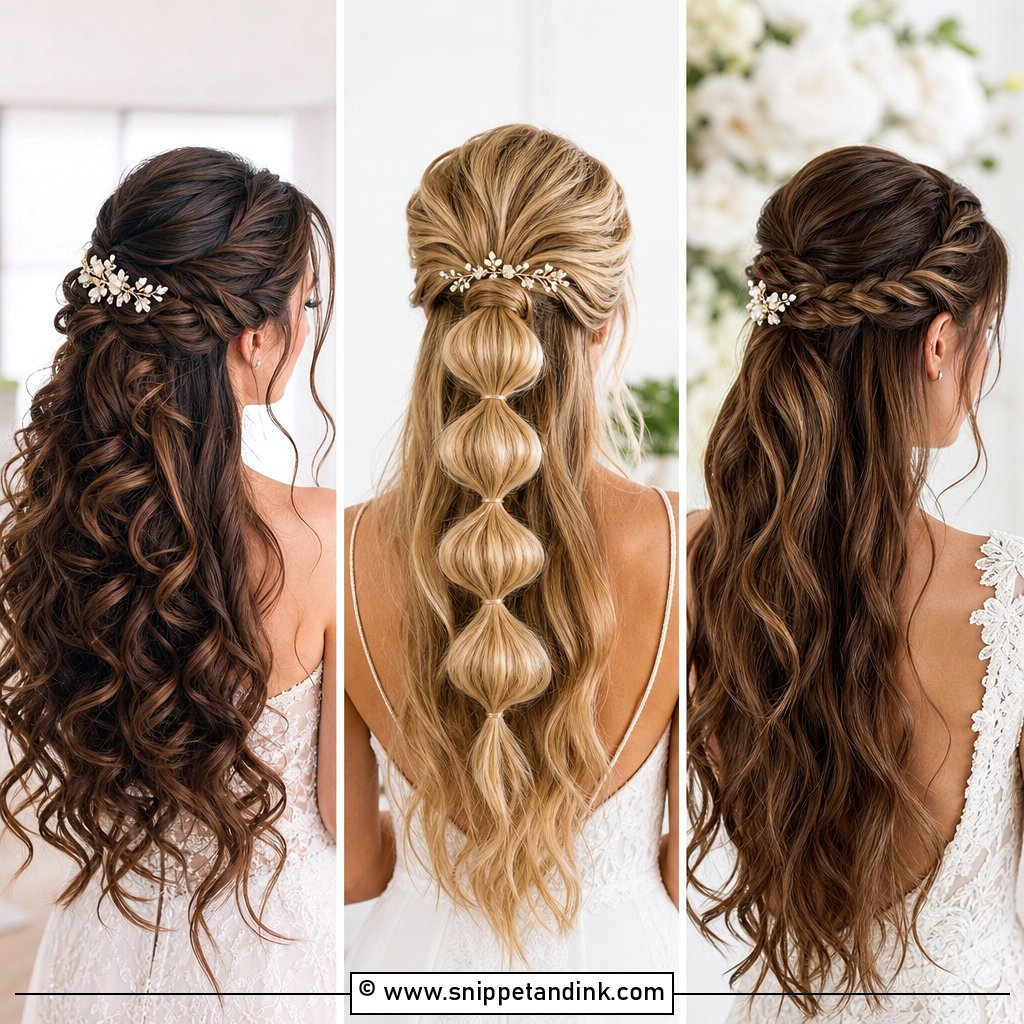
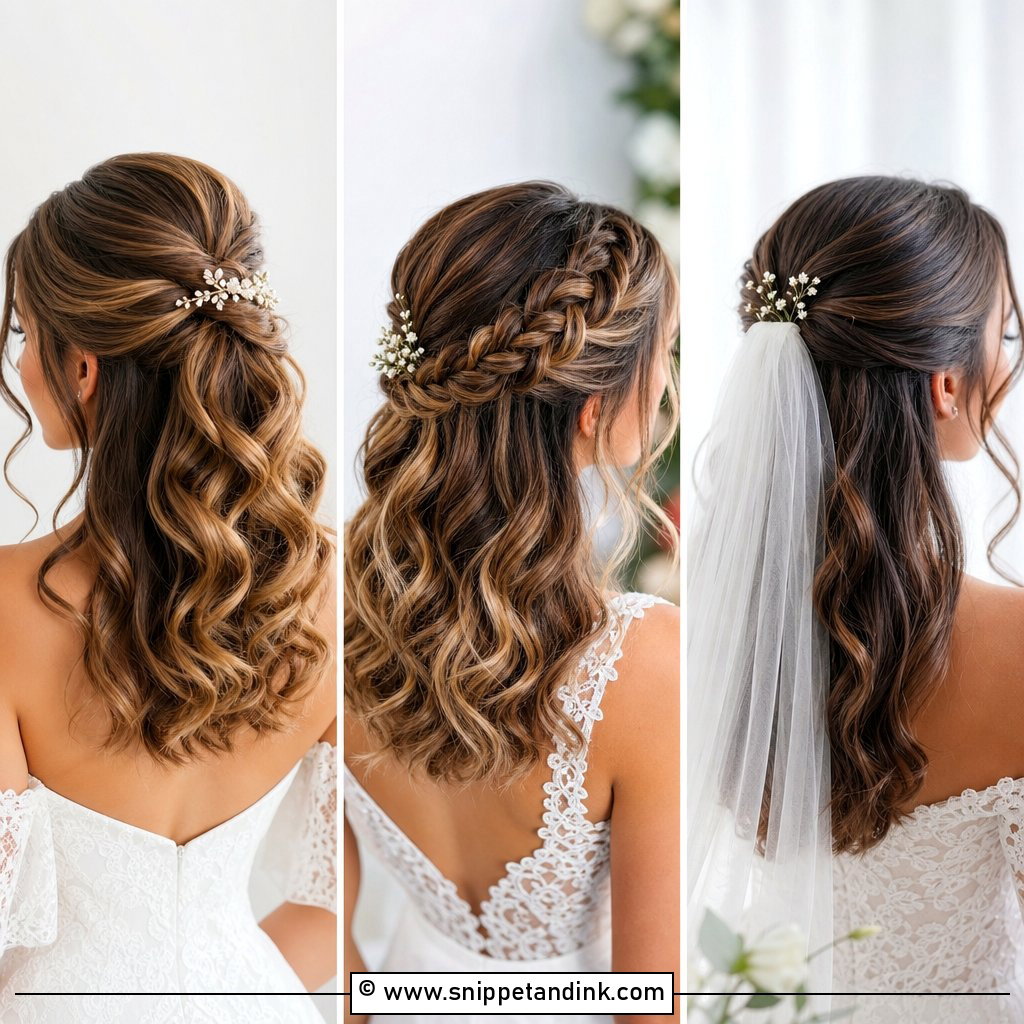
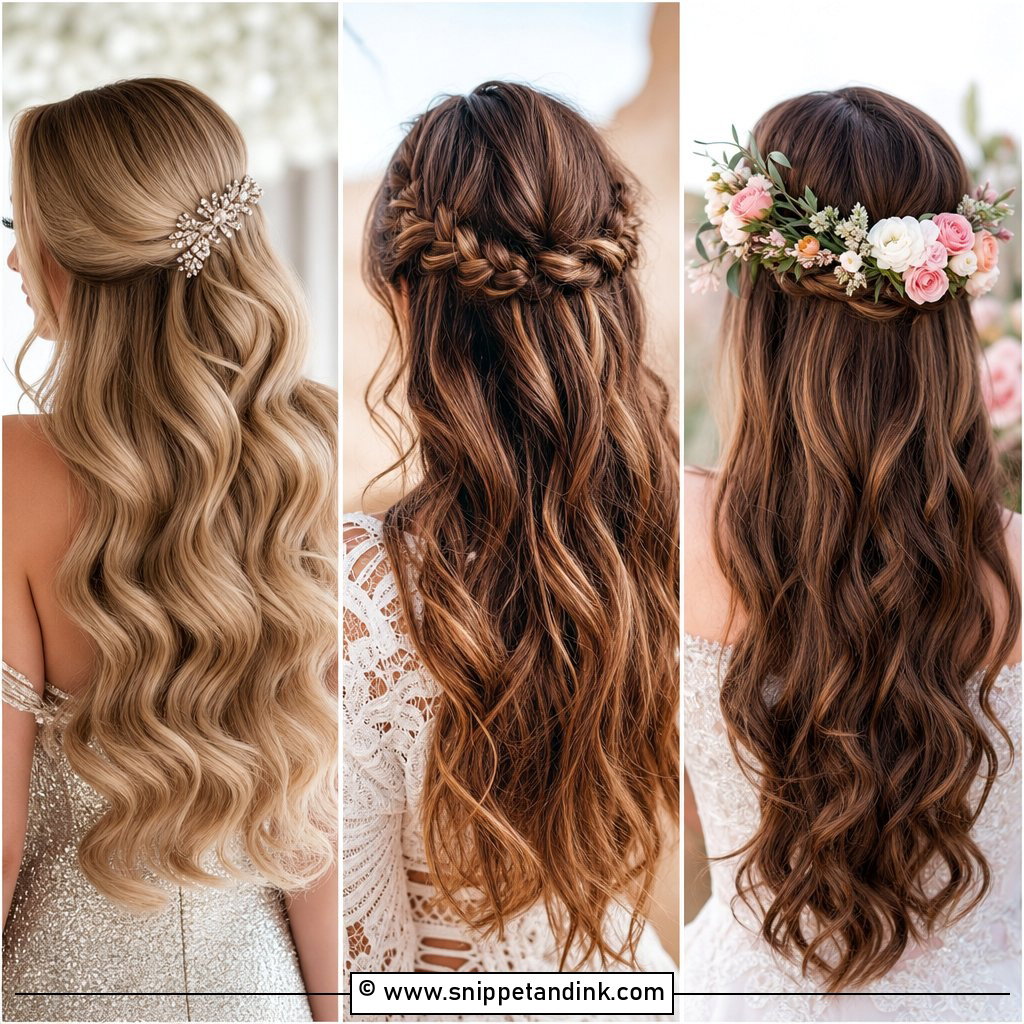
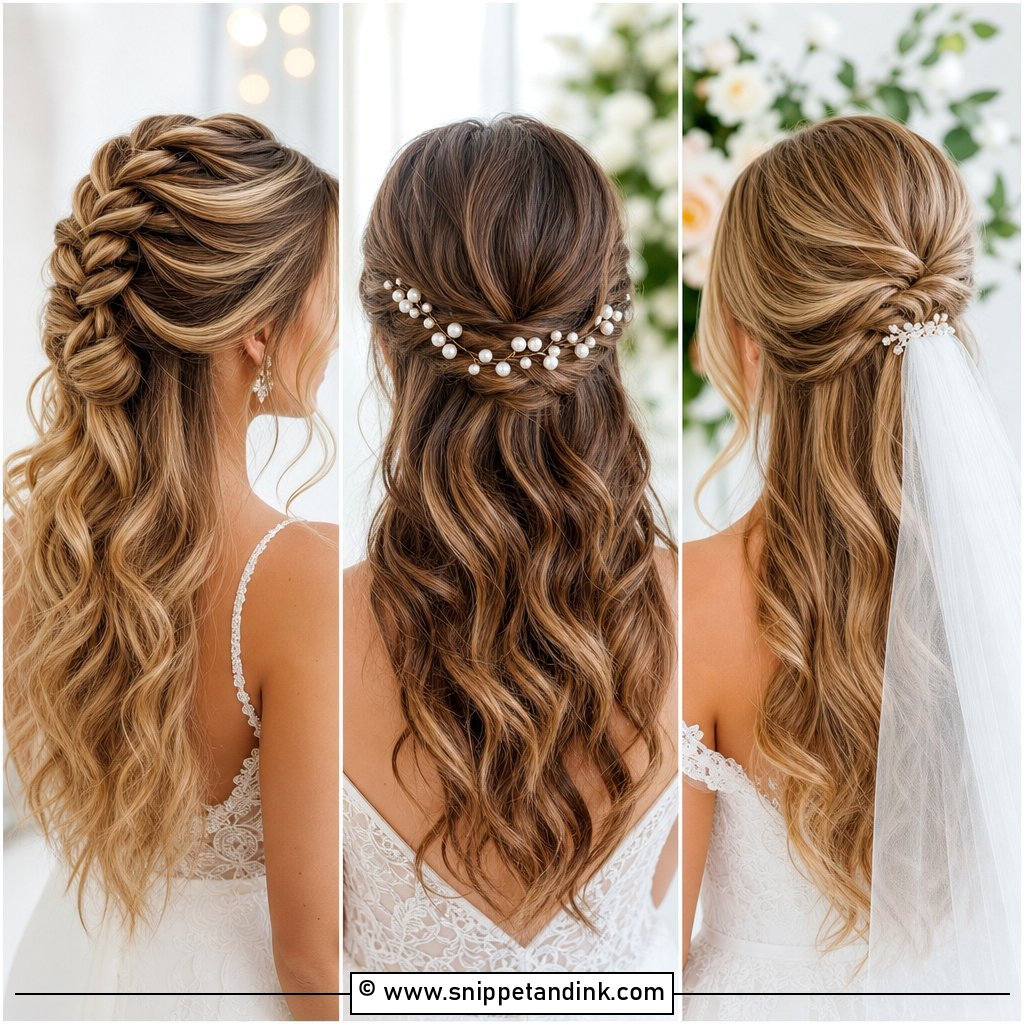
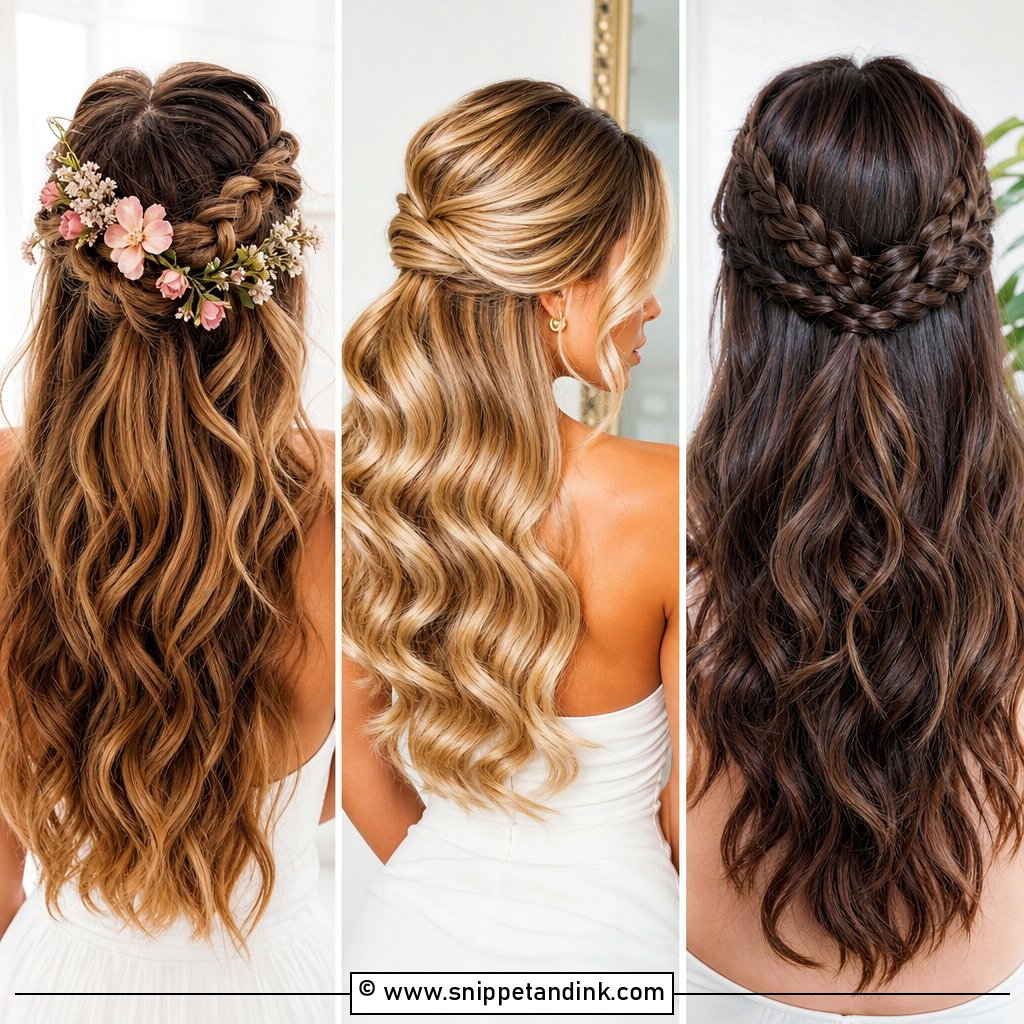
I build a braided crown from two side sections, one Dutch braid each, crossed and pinned just under the occipital bone so the weight sits on the strongest part of the head. Pancaking the braid wider after it’s pinned is what makes it look generous on fine hair; on fine to medium density it can look thin otherwise. Tuck sprigs of baby’s breath or small pearl pins into the outer loops, not the centre, so they don’t snag a veil.
2. Half-Up Twisted Waves
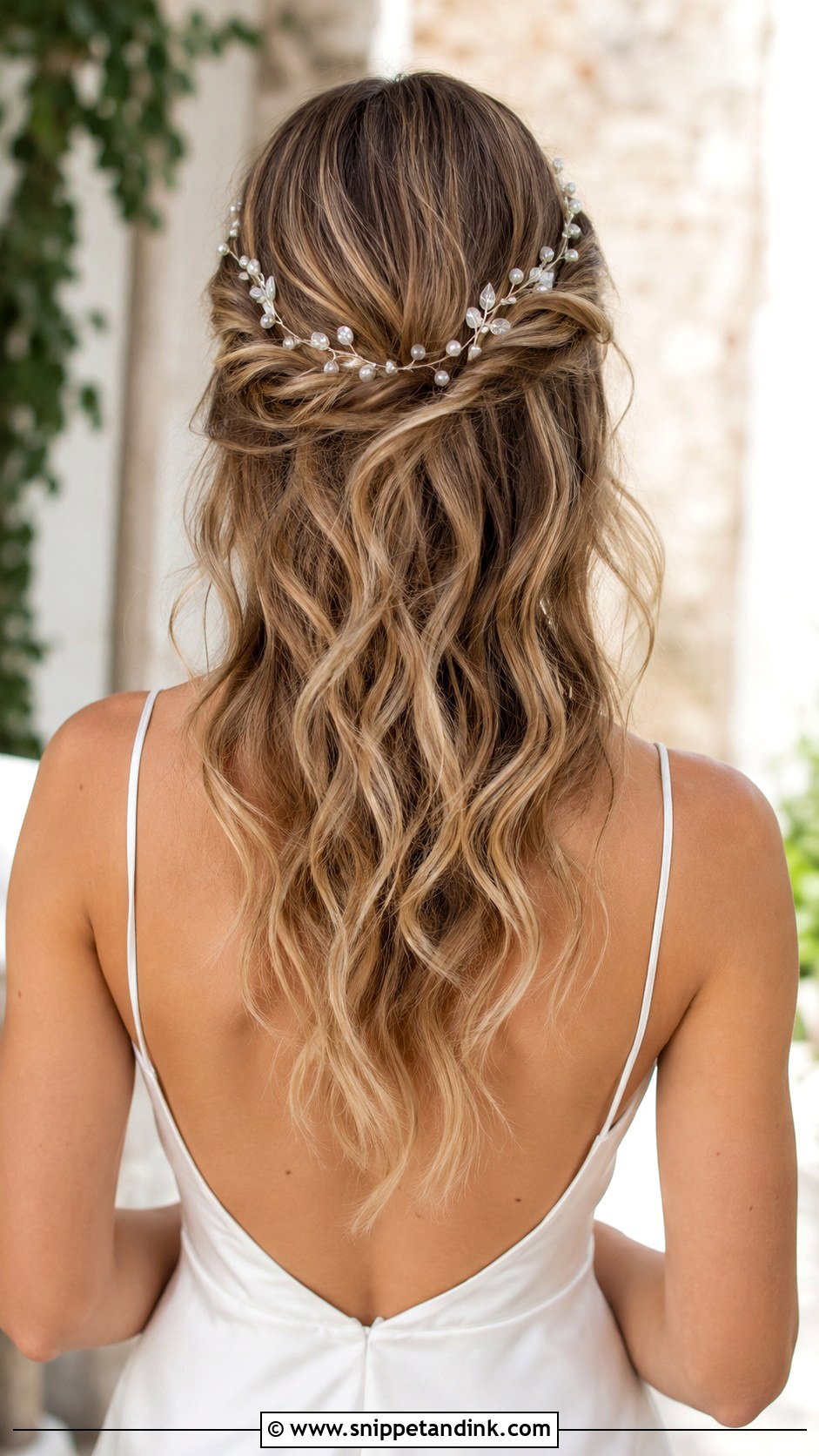
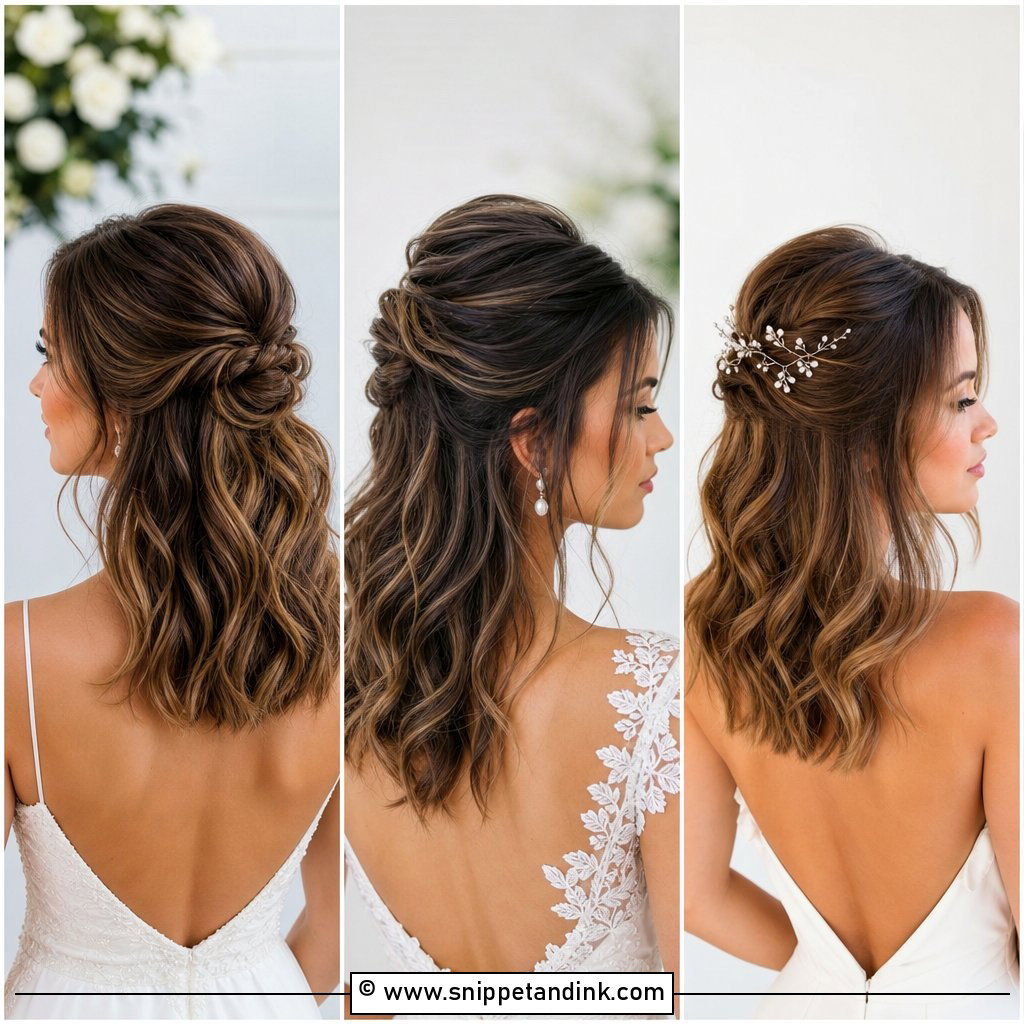
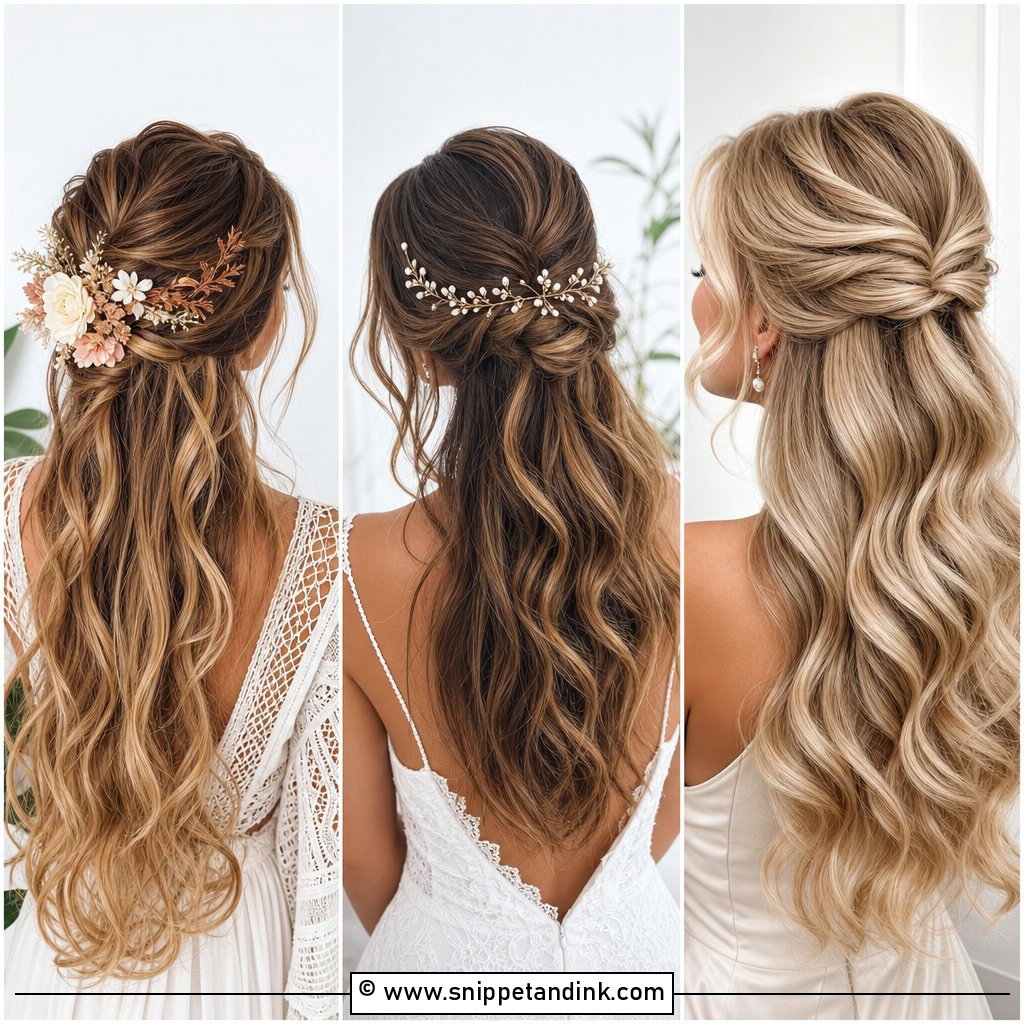
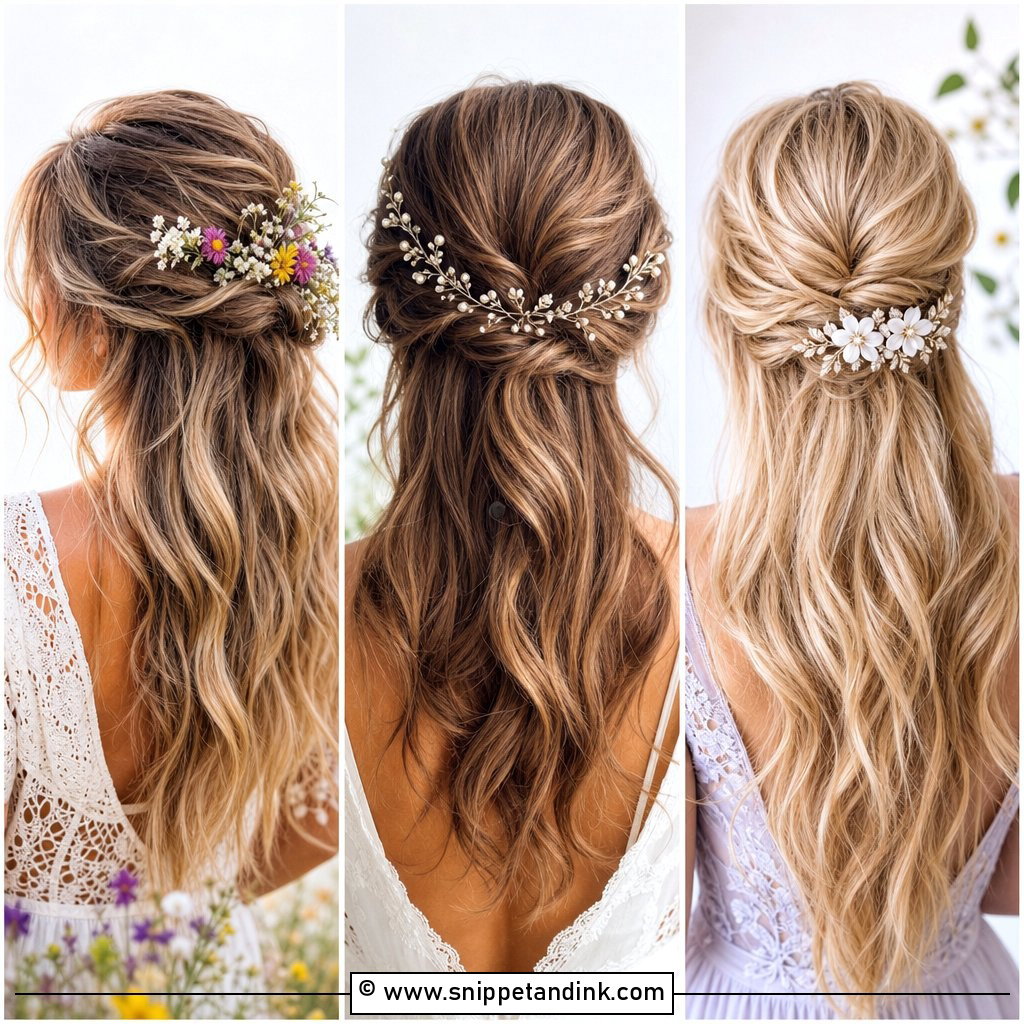
Two side sections twisted back and joined with a pair of crossed pins is about the quickest half-up I do, and that’s why I like it for a bride who hates fuss. Twist each section away from the face, never toward it, or it unravels within the hour. Below, the hair can be left in soft, tousled waves. If you add a hair vine, wire it over the join so it hides the pins rather than sitting on top of them.
3. Half-Up French Twist with Cascades
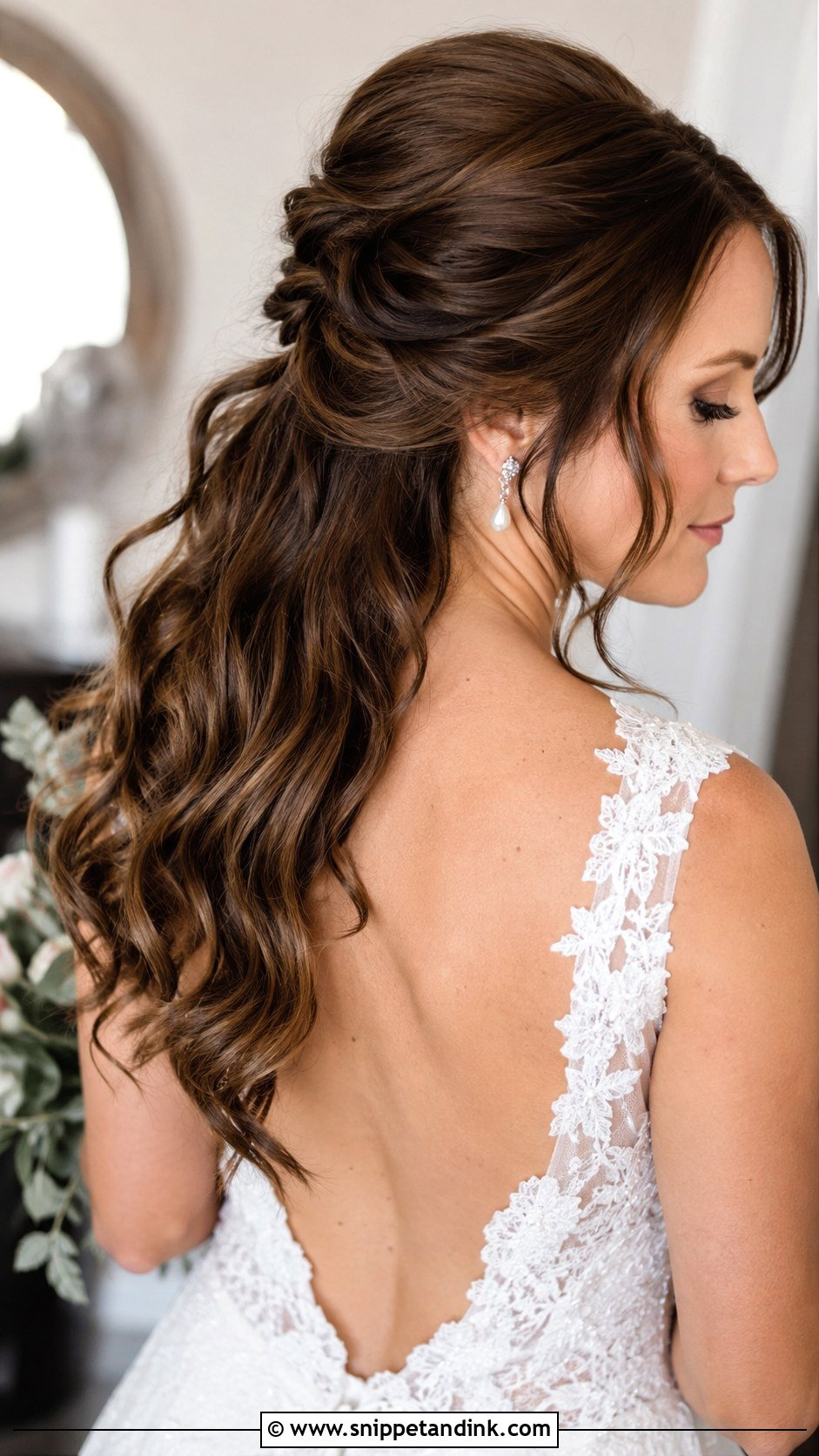
A French twist on the upper half gives structure that the bottom waves don’t have, and the contrast reads well from the back pews. On medium hair I keep the twist short and tuck the ends inside it, because a full-length twist eats too much of what should fall below. A small bump at the crown adds height without drama. A veil comb slides straight into the seam of the twist, which is about the most secure anchor a half-up can give you.
4. Half-Up Waterfall Braid
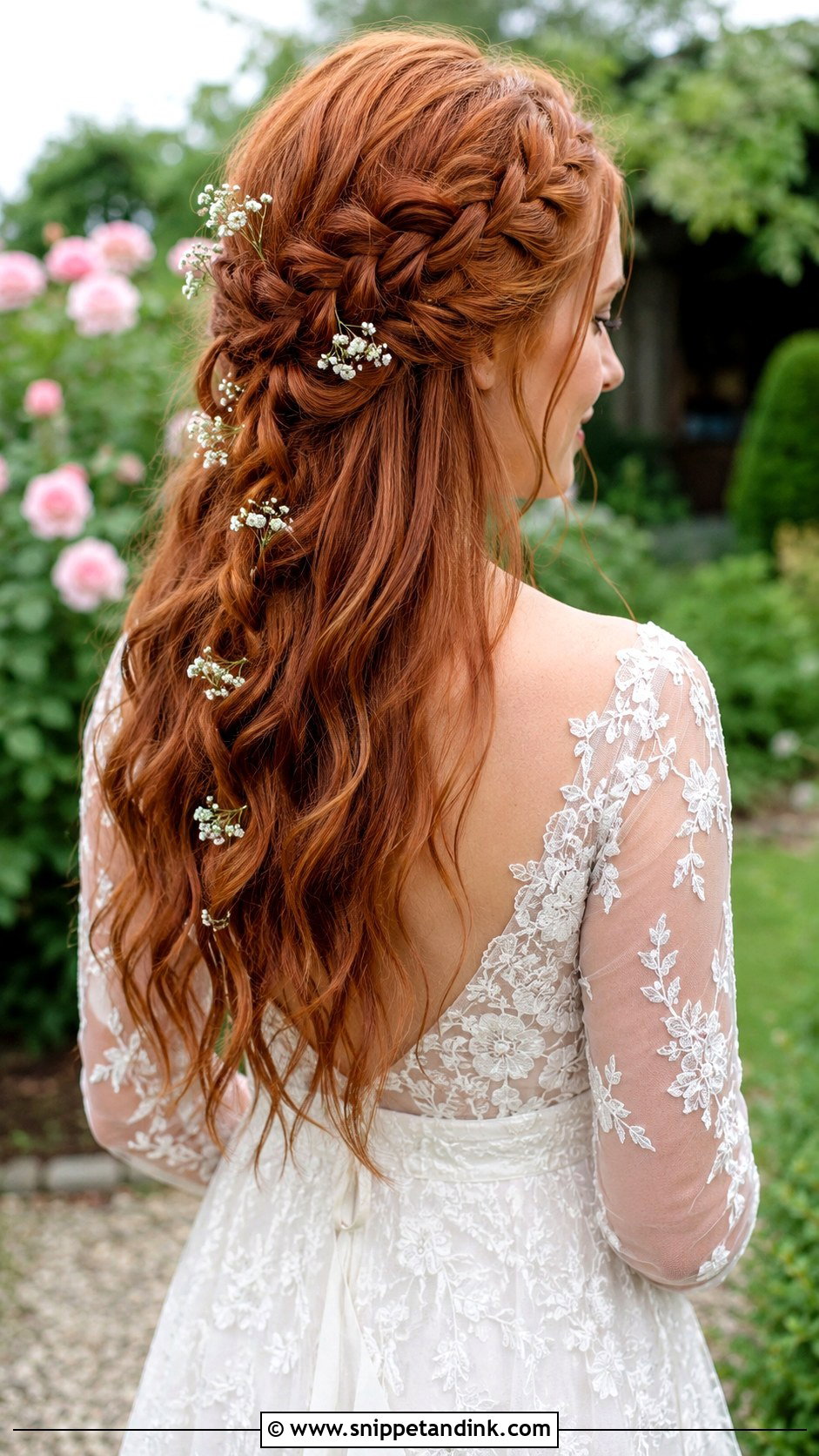
A waterfall braid drops a strand out with every crossing, so it looks intricate while taking very little hair. That’s useful at this length, where you want most of it left below. It holds poorly on slippery, freshly washed hair, so I ask for second-day hair or prep with a texture spray first. Tiny flowers can go in the braid, though I’d leave them out if you’ll be outdoors in wind; the dropped strands already give it movement.
5. Half-Up Half-Down Curls
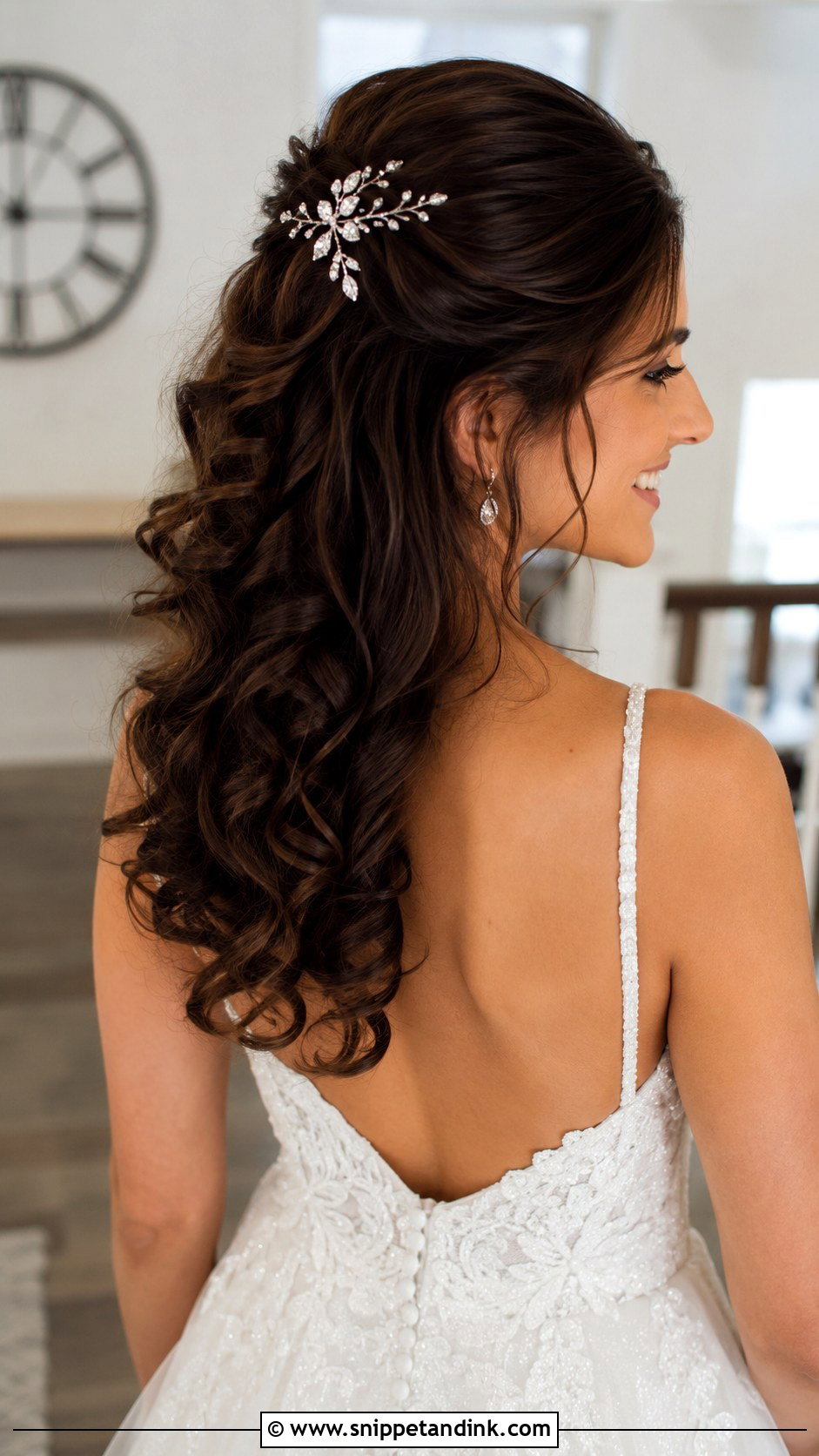
Curls on medium hair shrink by an inch or two once they bounce up, so a half-up curl style can end up shorter than you expected. I set curls with a 1.25 inch iron, pin each one while it cools, and only brush them out after the hair is completely cold. Tight curls hold longer; brushed-out ones look softer but drop first in humidity. A jewelled clip at the back covers the elastic and gives the photographer something to focus on in rear shots.
6. Half-Up Boho Braid with Loose Waves
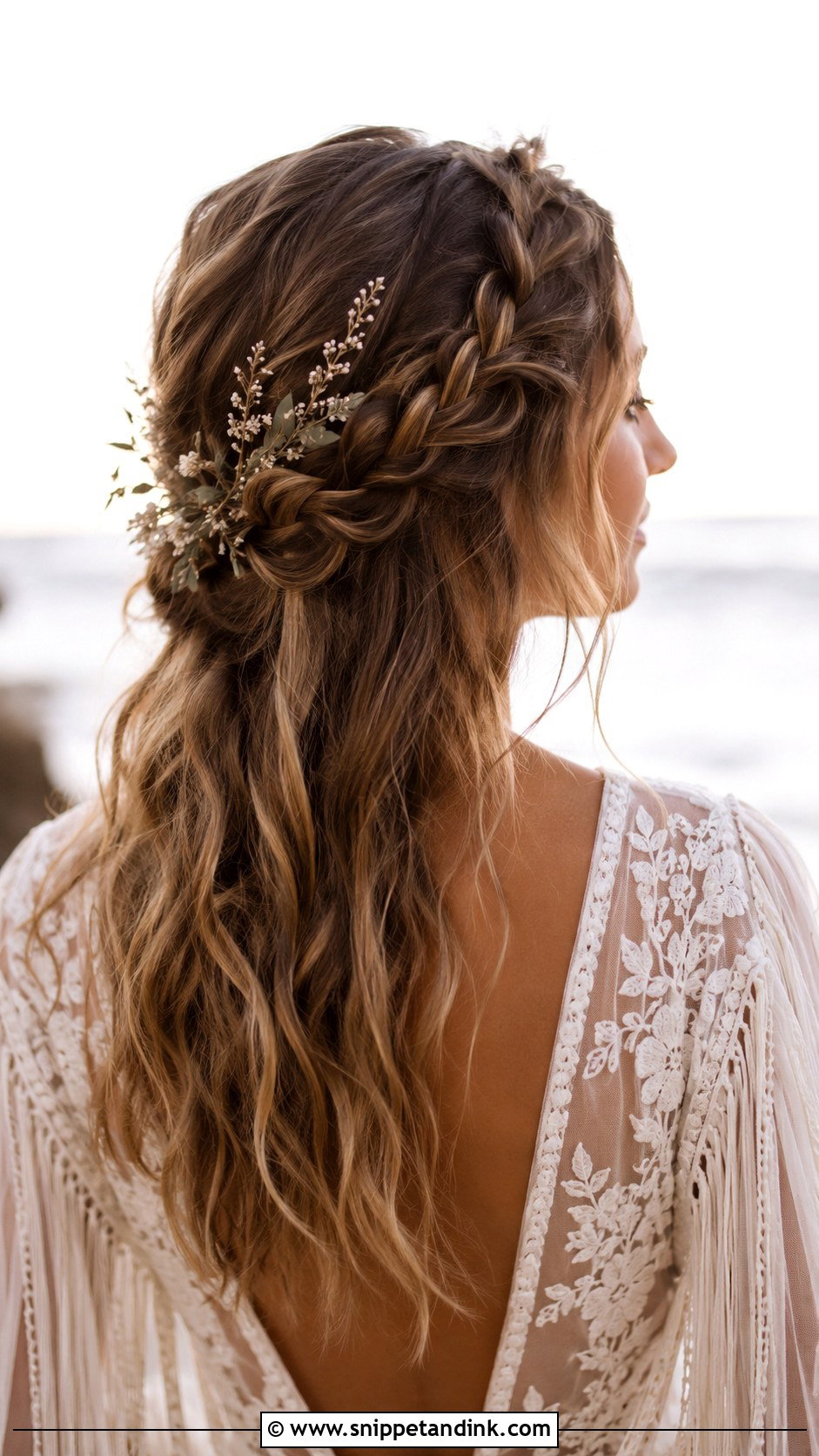
This is the braid I loosen most. I plait the top section fairly snug, then pull the edges out with my fingers until it’s almost twice as wide, which hides any gaps on finer hair. Beachy waves underneath come from a flat iron twist rather than a curling iron, so they stay a little undone. Dried flowers tuck in better than fresh ones for a beach or garden wedding, since they won’t wilt by the first dance.
7. Half-Up Sleek Ponytail
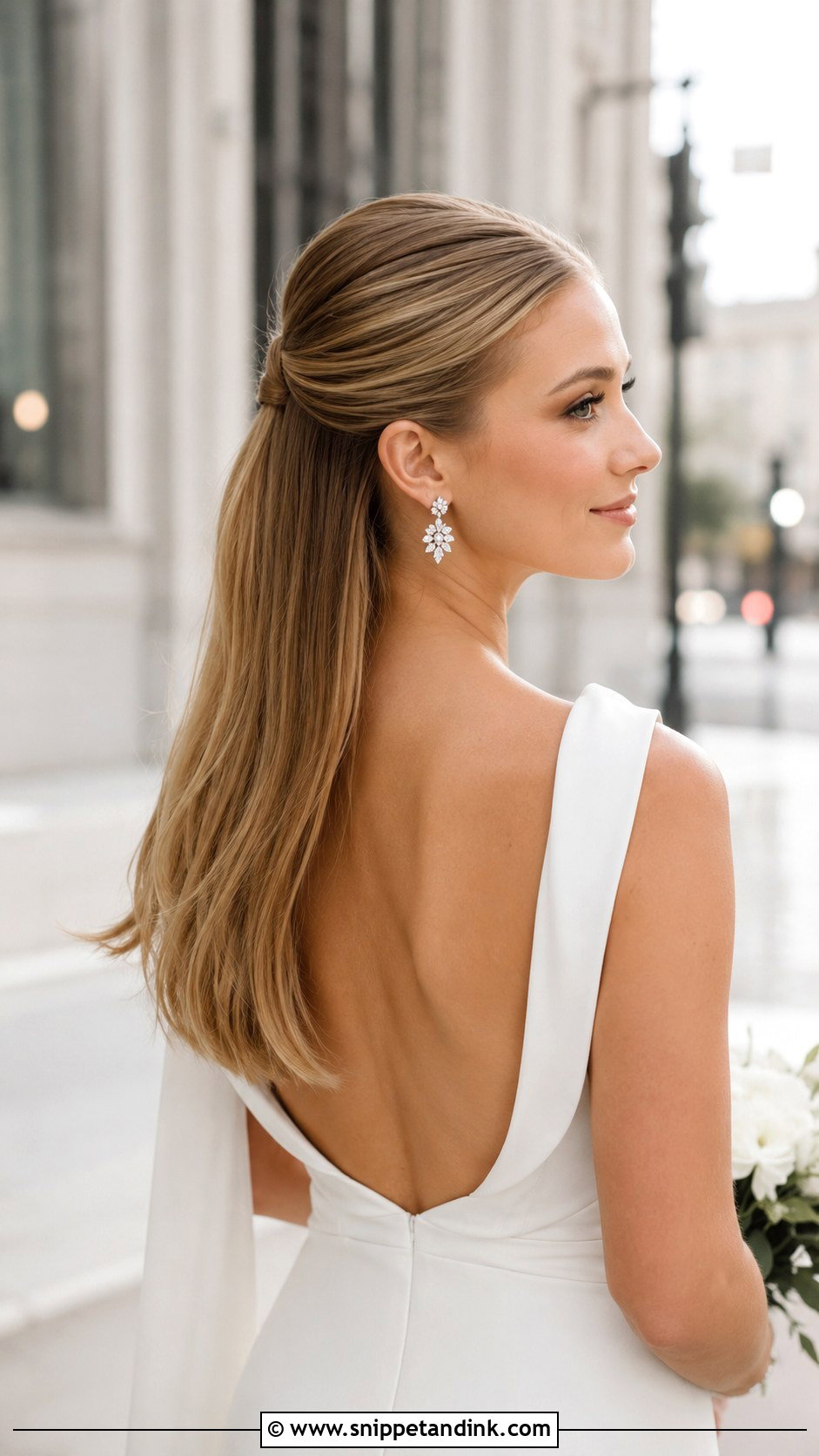
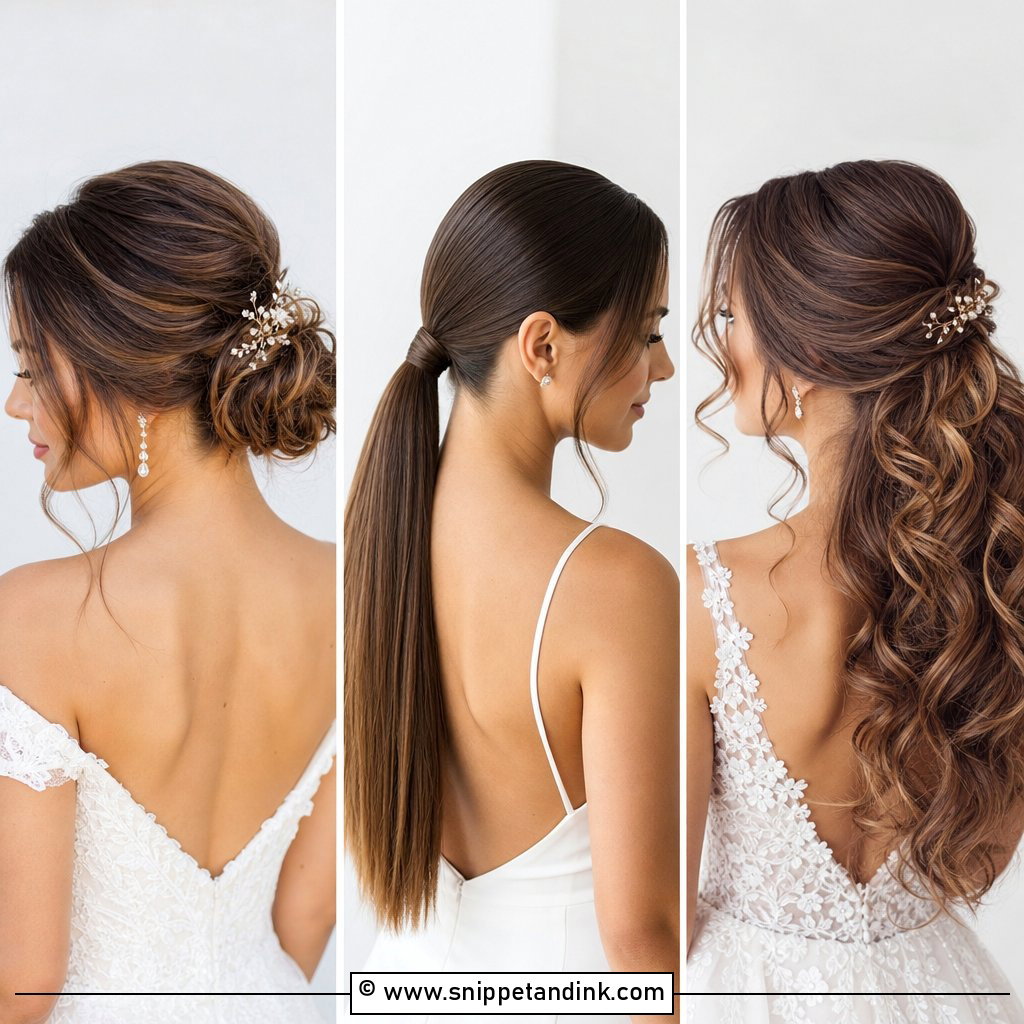
A sleek half-pony is less forgiving than it looks. Any bump or flyaway shows, so I smooth the top with a boar bristle brush and a light gel before securing, then wrap a thin strand around the elastic and pin it underneath. Medium length keeps the pony from looking heavy. I’d skip this one if you have a cowlick at the crown, because it fights a tight pull all day. Pair it with bold earrings since there’s nothing else competing for attention.
8. Half-Up with Twisted Rope Braid
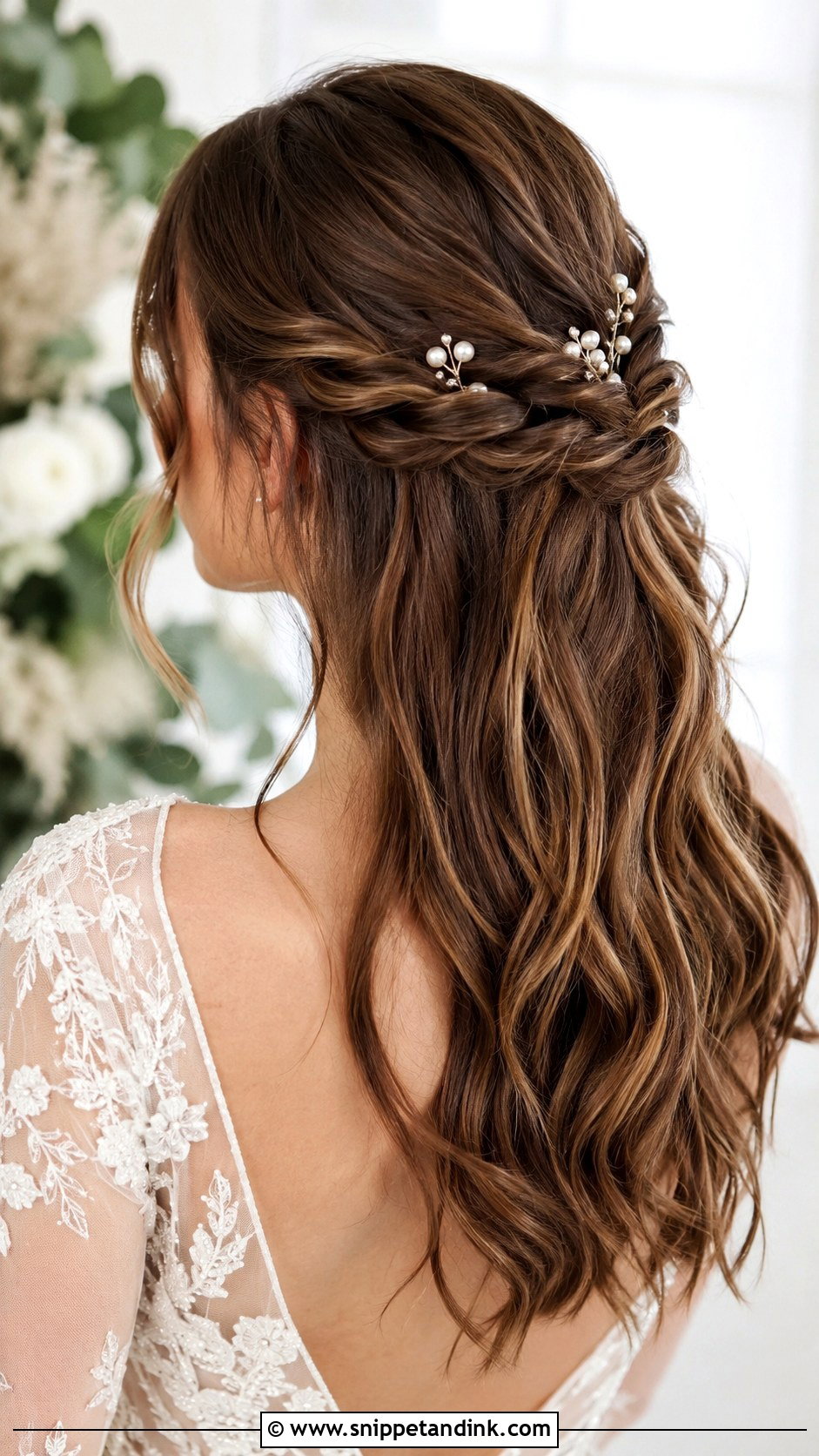
A rope braid is just two twists wound around each other in opposite directions, so it holds better than a single twist and asks for no braiding skill. The opposite-direction wind is the whole trick: twist each strand right, wrap them left, and it locks. Pulled back into a half-up on medium hair, it gives you texture without bulk. Pearl pins along the rope sit well because they grip the grooves.
9. Half-Up Bun with Soft Waves
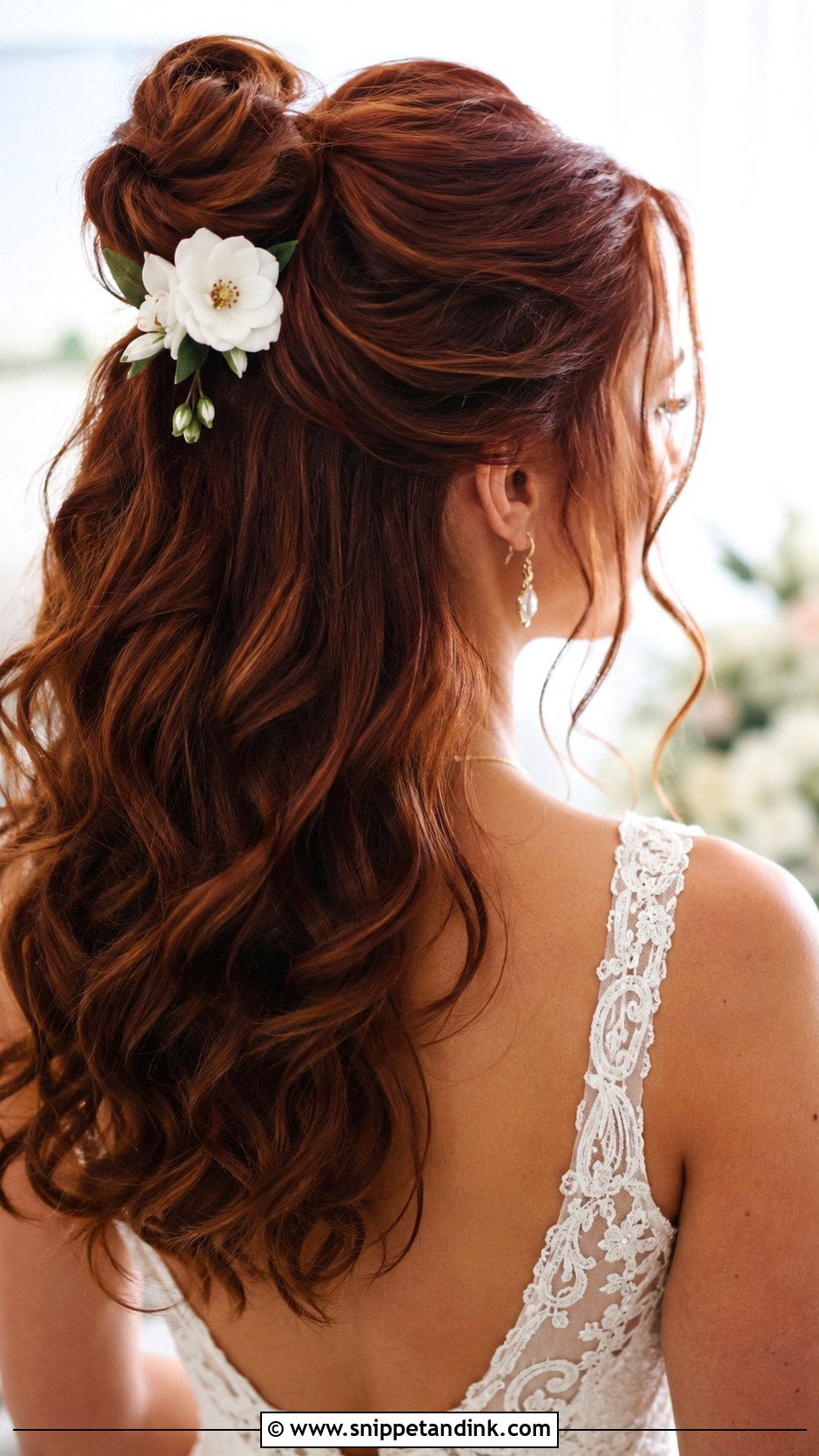
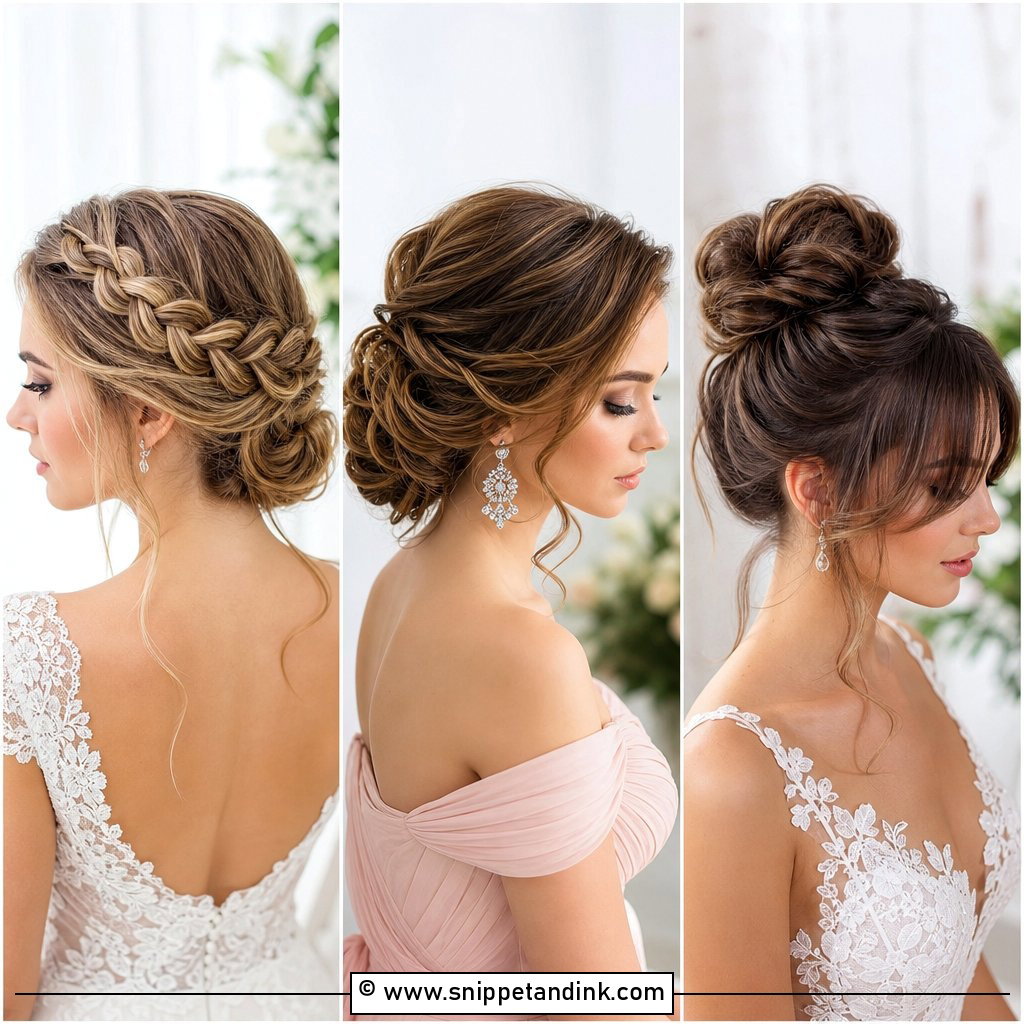
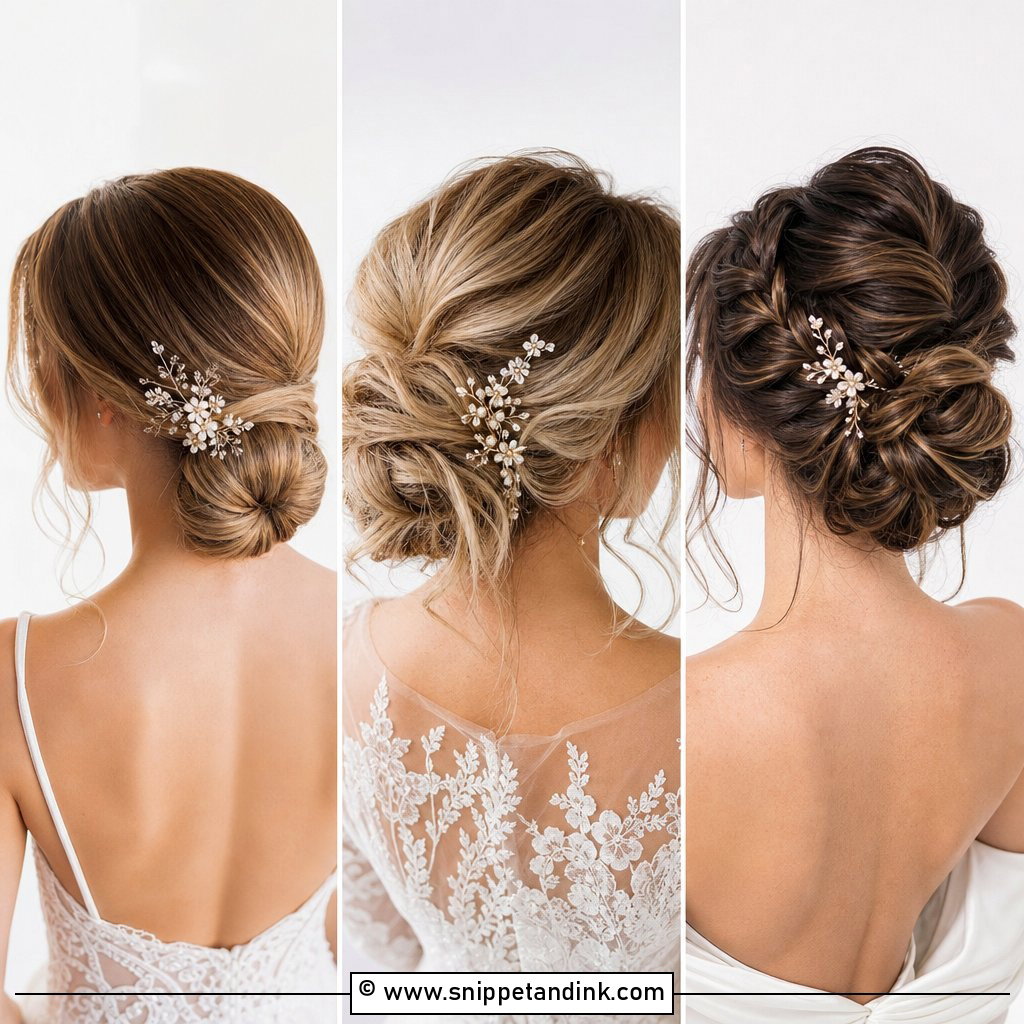
The small top bun is the most secure half-up I know, because the bun works as an anchor for everything else. I make it from a ponytail at the crown, wrapped loosely and pinned with U-pins, which hold volume better than bobby pins. Keep it small on medium hair; a big bun takes so much length that the waves below look sparse. A fresh bloom or decorative pin beside it covers any gaps.
10. Half-Up Halo Braid with Curls
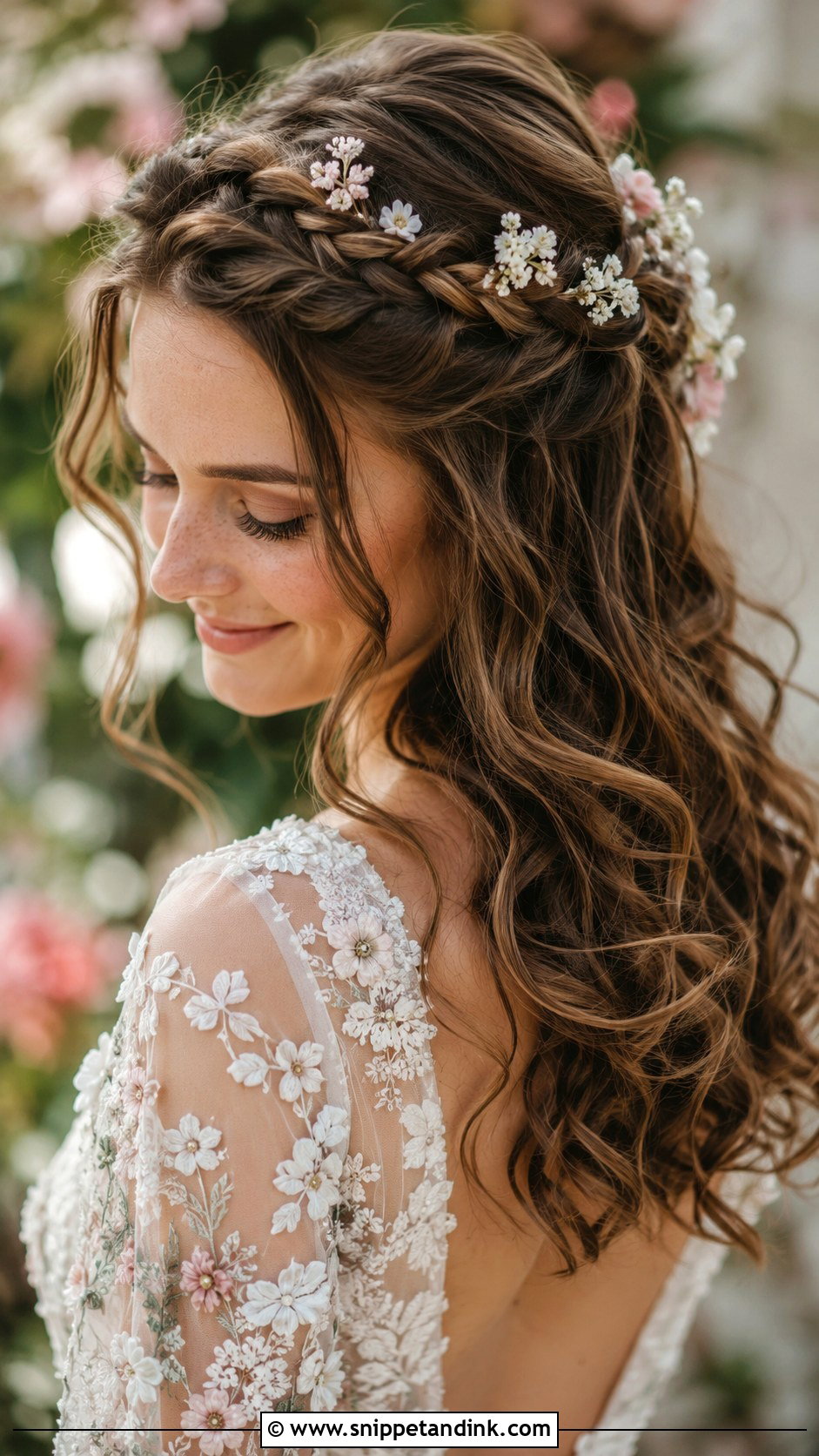
A halo braid circles the head, so I only take the outer ring of hair into it and leave the centre and underneath down for curls. That ring is what lets it work on medium hair without losing all your length. The weak point is the join at the back, where the two ends meet; I tuck one end under the other and cross two pins over it. Small flowers placed along the sides rather than the top look intentional in photos taken from the front.
11. Half-Up with Side Braid
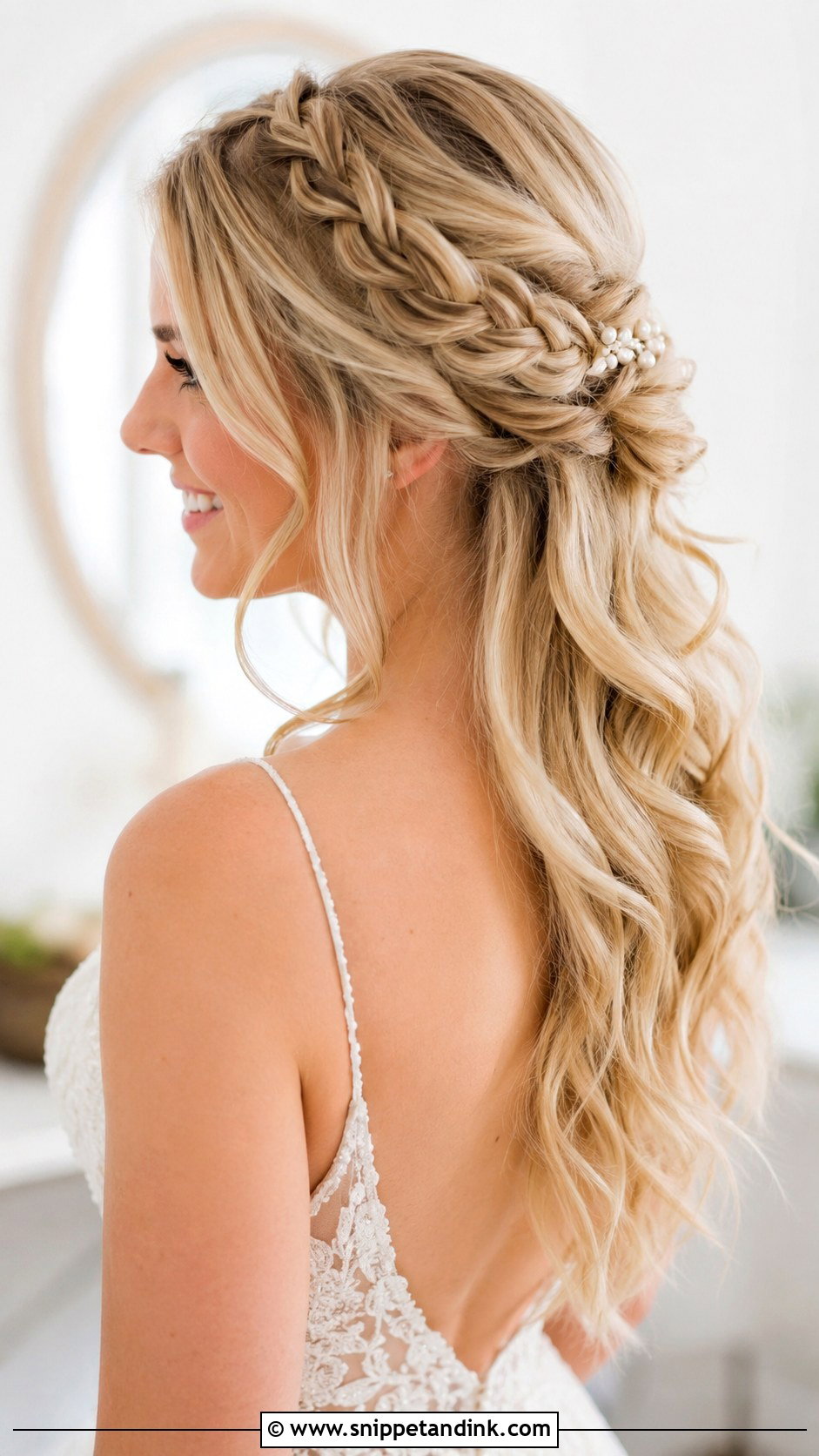
A single side braid shifts the weight to one side, so I always ask which side your partner will stand on. The braid should face the guests, not be hidden against a shoulder in every ceremony photo. On medium hair I start it near the temple and keep it loose, then pin the tail behind the opposite ear. Florals or pearl pins along it give the eye a path to follow.
12. Half-Up Vintage Waves
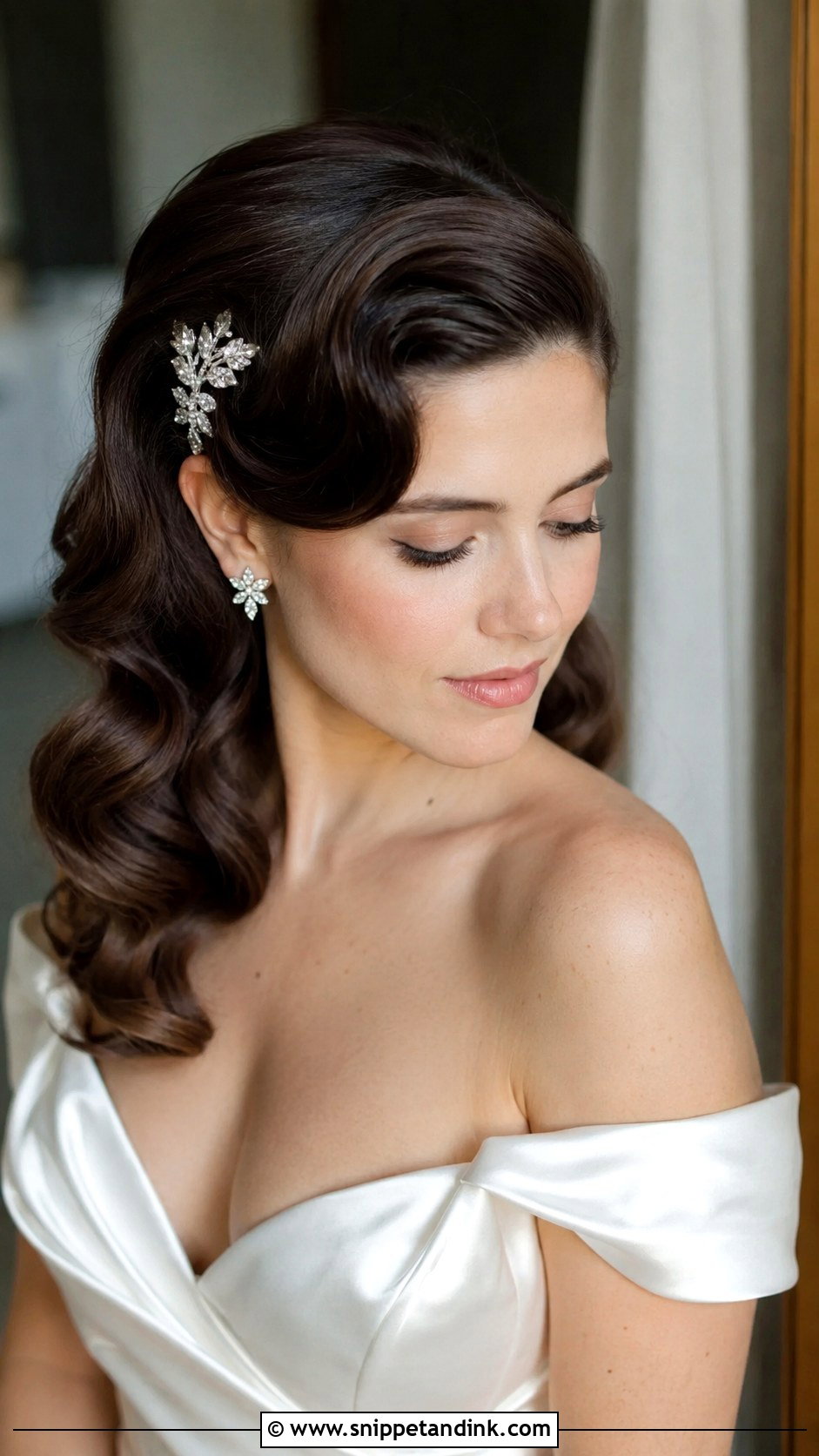
Vintage waves are set, not just curled. I curl everything in the same direction, pin the curls flat to cool, then brush them into one connected wave and clip the ridges for a few minutes. Medium hair holds that shape better than long hair, which pulls the waves flat with its own weight. A deep side part matters more than the accessory, though a jewelled comb tucked behind the part finishes it. I’d keep this for indoor or evening weddings; humidity loosens the ridges fast.
13. Half-Up Floral Crown Style
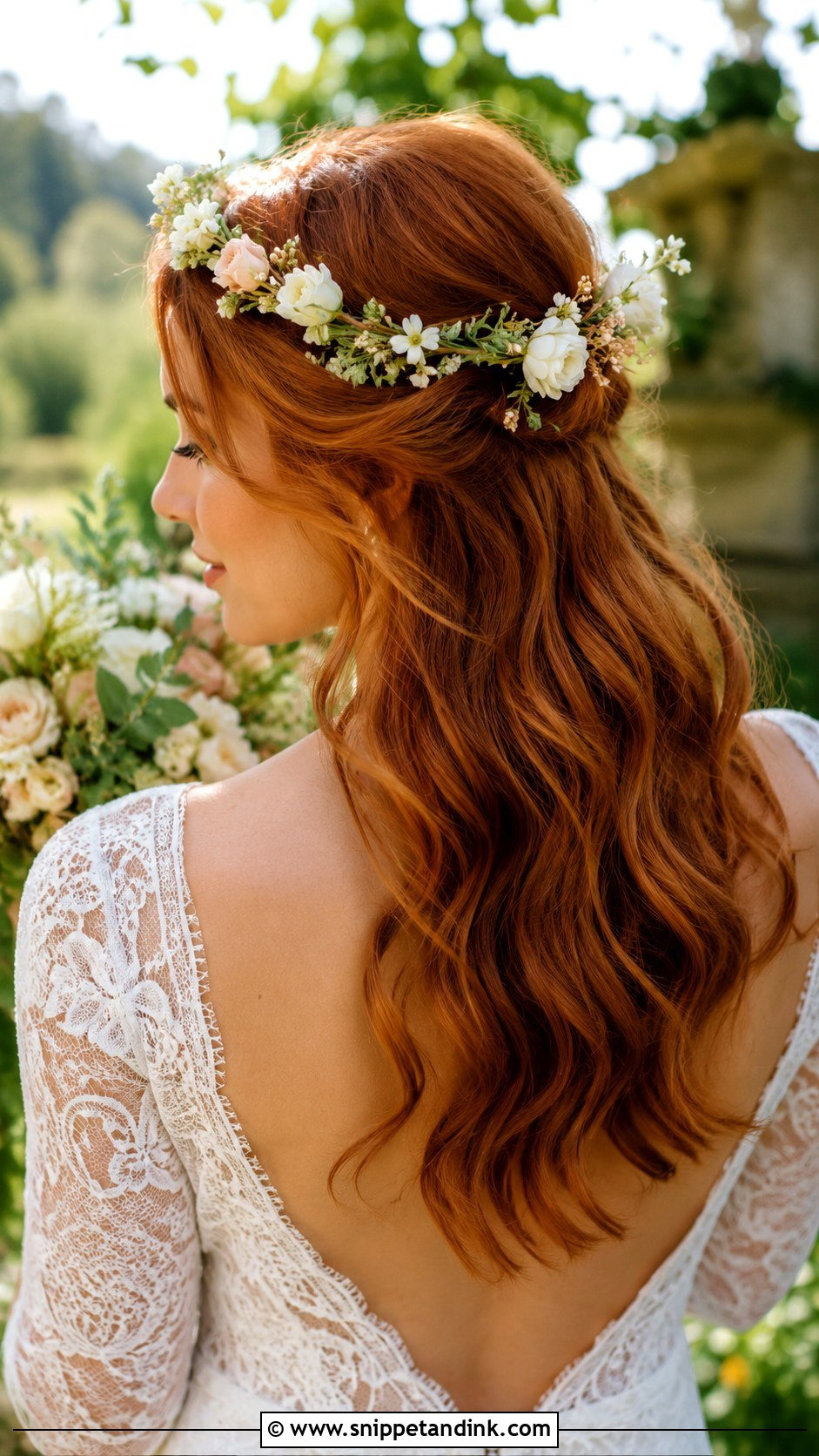
Real flowers in hair need a plan. I ask the florist for blooms that cope out of water, such as spray roses, waxflower or small orchids, and have them wired onto a thin band rather than pinned stem by stem. The band then sits on the half-up and is secured with bobby pins crossed over the wire. Match a bloom or two from the bouquet, not all of them; a full crown competing with a full bouquet looks busy in photos.
14. Half-Up Knotted Style
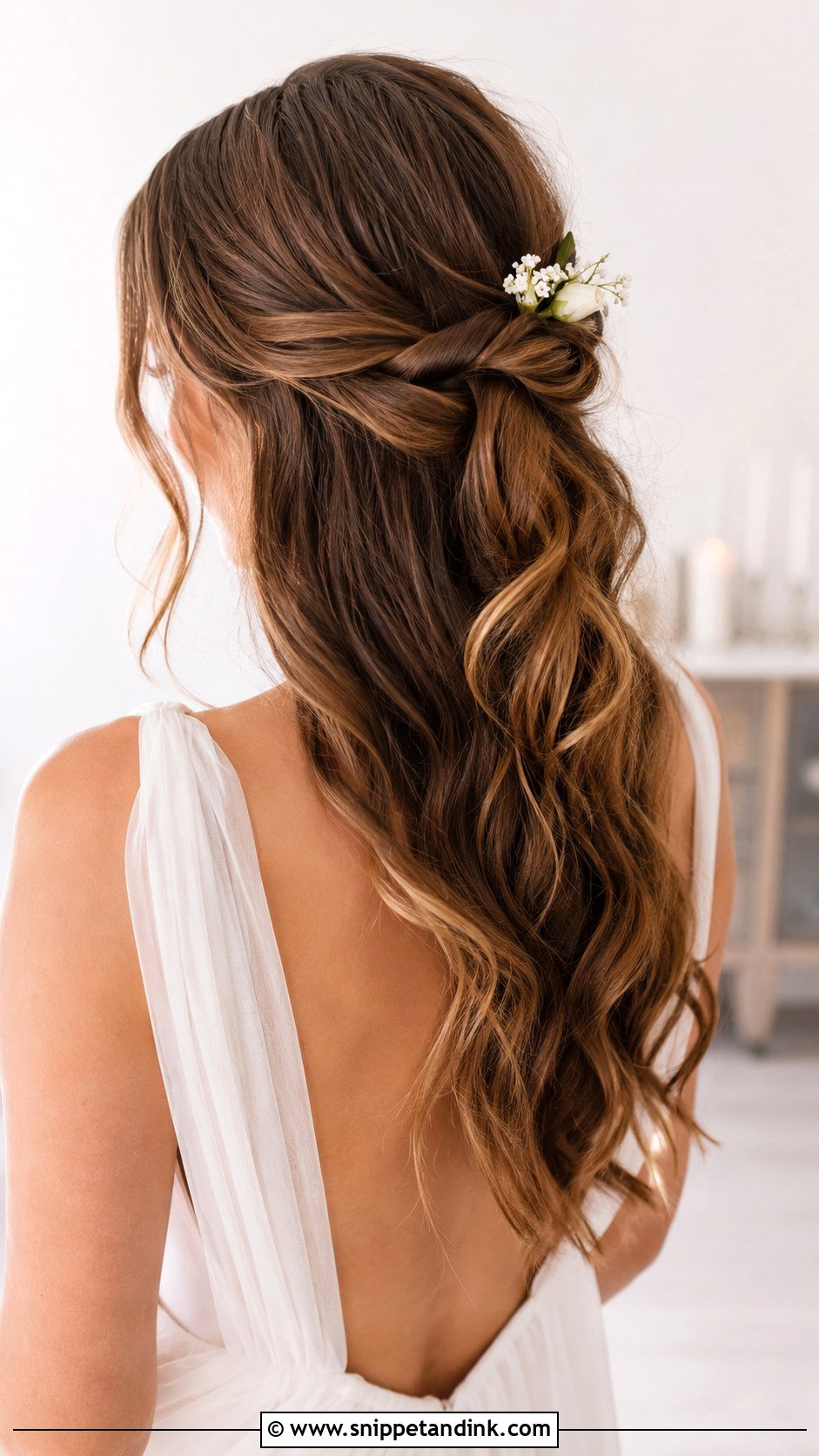
The knot is two sections from above the ears tied once, exactly like a shoelace’s first step, then pinned flat. It sounds too simple for a bride, but on medium hair it holds surprisingly well because the knot itself grips. It fails on very fine, silky hair, which slides straight back out, so I’d add texture spray first or choose a twist instead. A small pin beside the knot covers the bobby pins underneath.
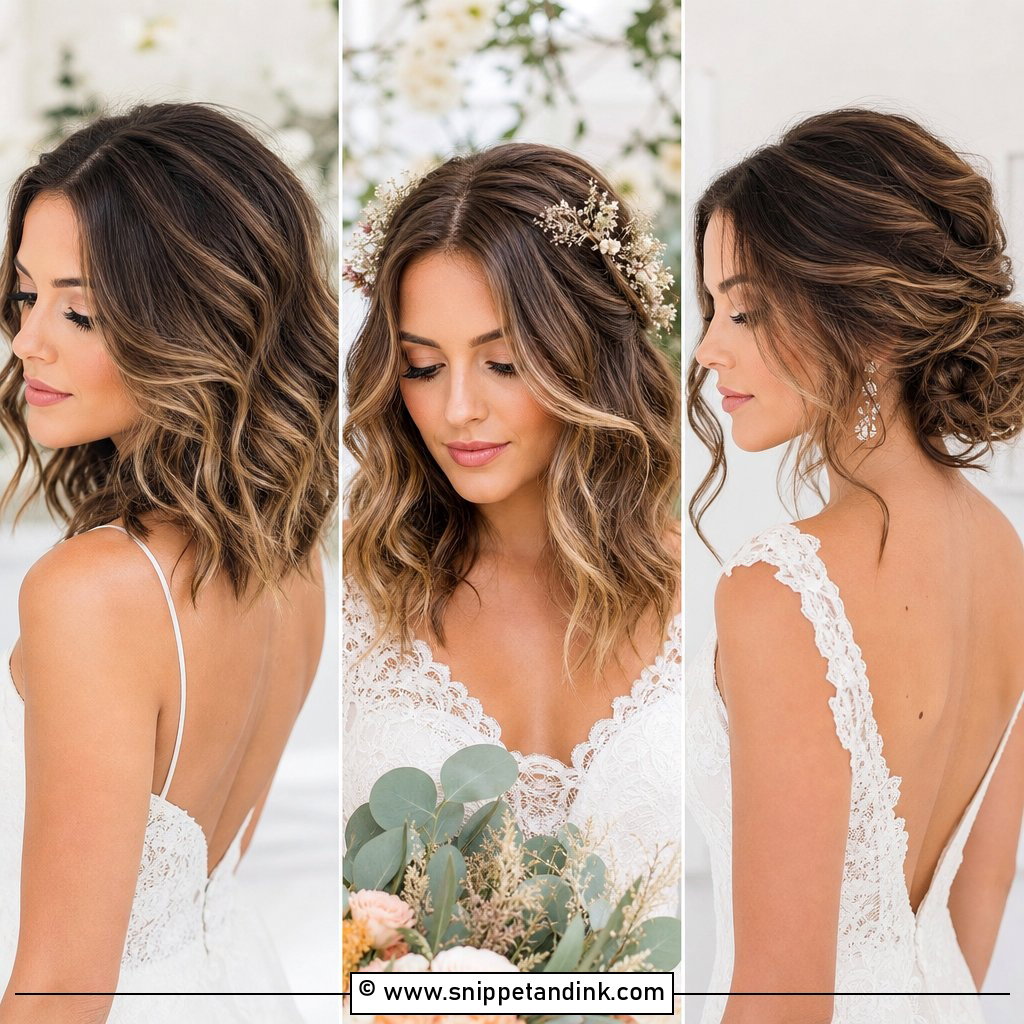
15. Half-Up Bubble Braid
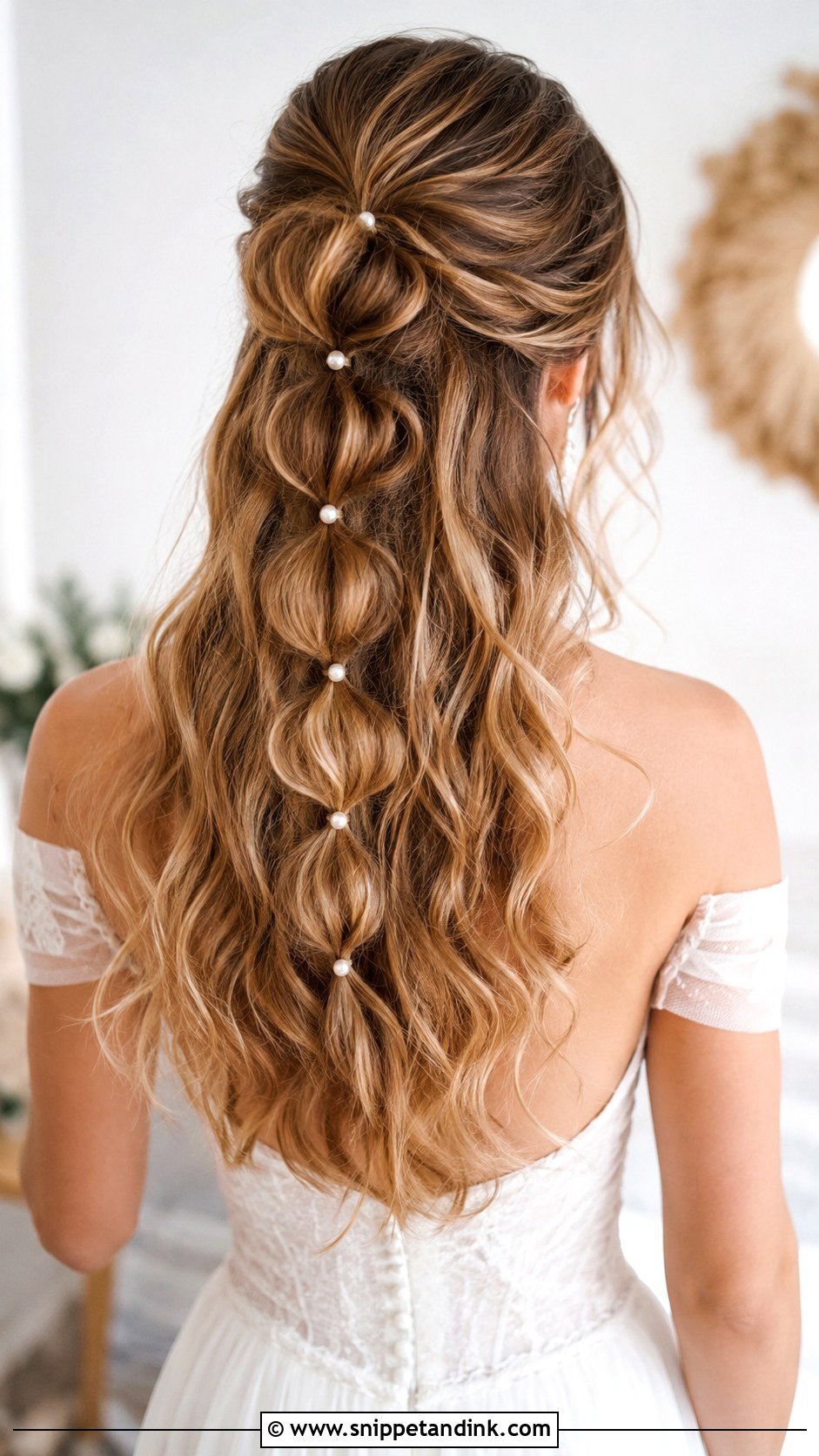
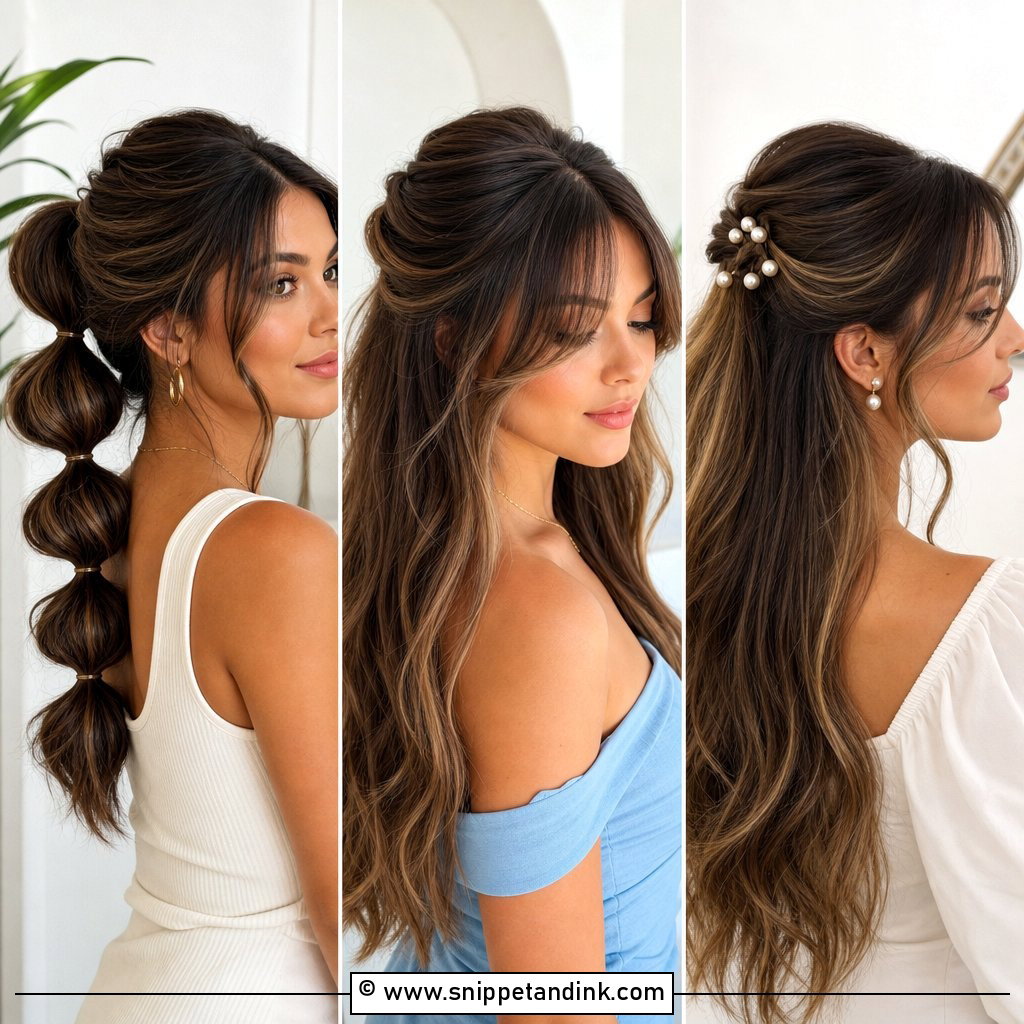
Bubble braids are clear elastics placed every inch or two, with each section gently pulled wider. On medium hair you’ll get four or five bubbles in a half-up, which is about right; any more and it looks like a ponytail. Use small elastics in your hair colour and pull the bubbles evenly, or one lopsided section draws the eye. It’s a playful look, so I’d keep it for a relaxed or modern wedding rather than a cathedral one.
16. Half-Up with Curtain Bangs
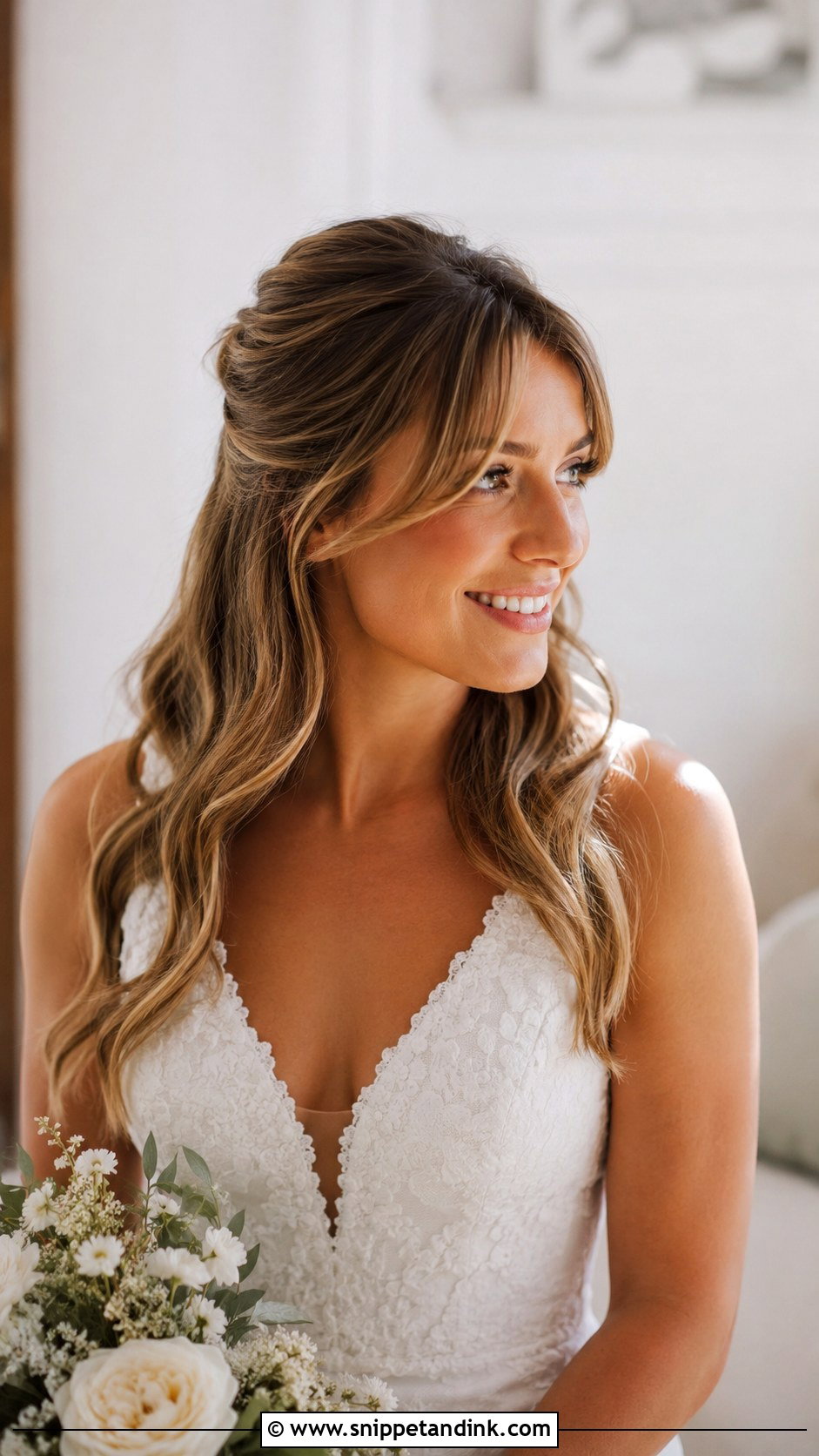
Curtain bangs change how a half-up looks from the front, since the bangs, not the pinned section, become the frame. I curl them away from the face with a large round brush rather than an iron, which keeps them soft and stops them splitting into two stiff wings. If your bangs are freshly cut, have the trim at least two weeks before the wedding so they’ve settled.
17. Half-Up Pearl Embellished Style
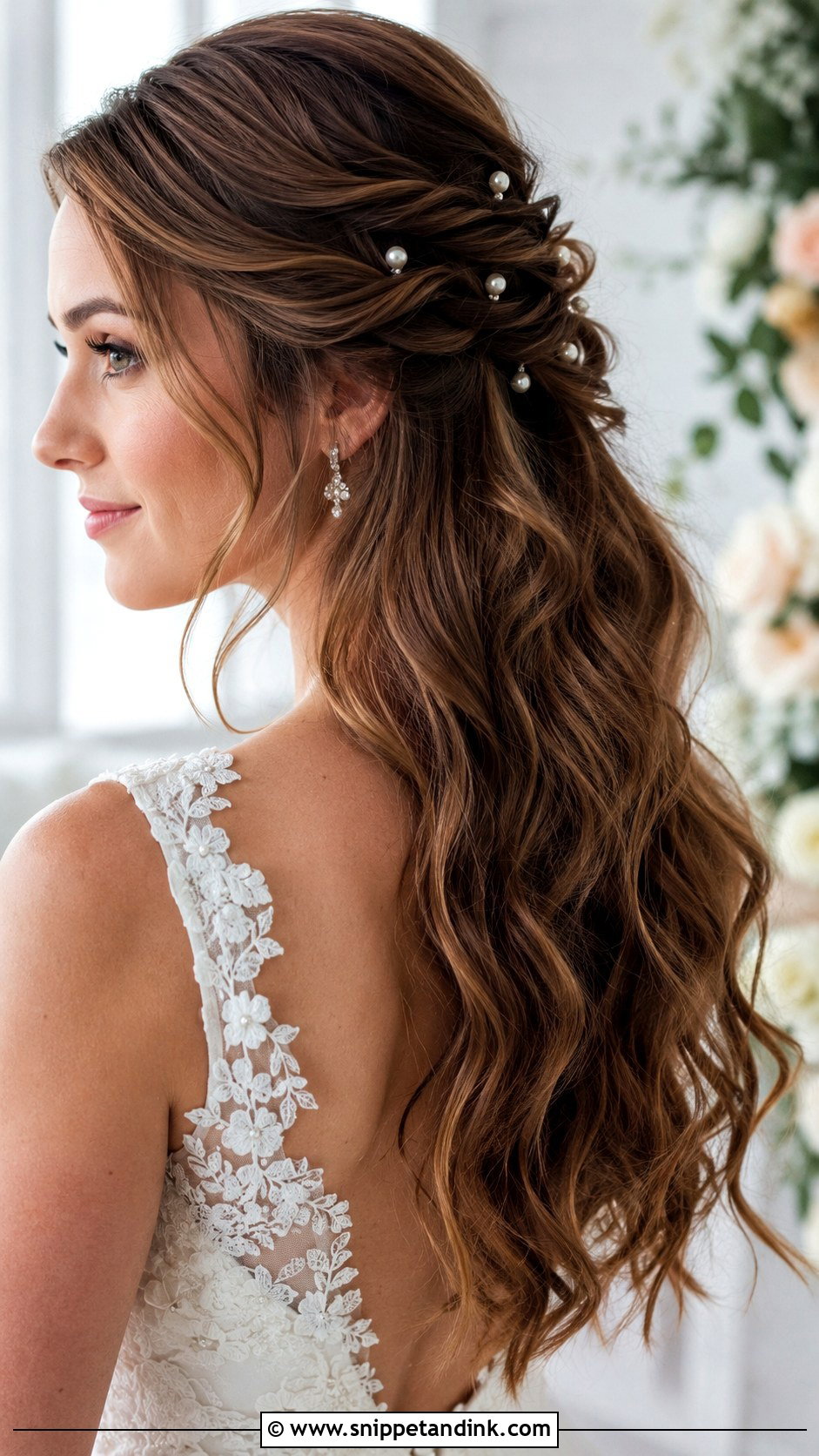
Pearls look best scattered, not lined up. I place them at uneven spacing along twists or waves, a few clustered near the gather and fewer as they move outward. Use pins with a coiled or crimped shank; smooth ones slip out of soft waves within hours. This turns a plain half-up into a finished bridal look with very little hair taken up, which matters at this length.
18. Half-Up Twisted Halo
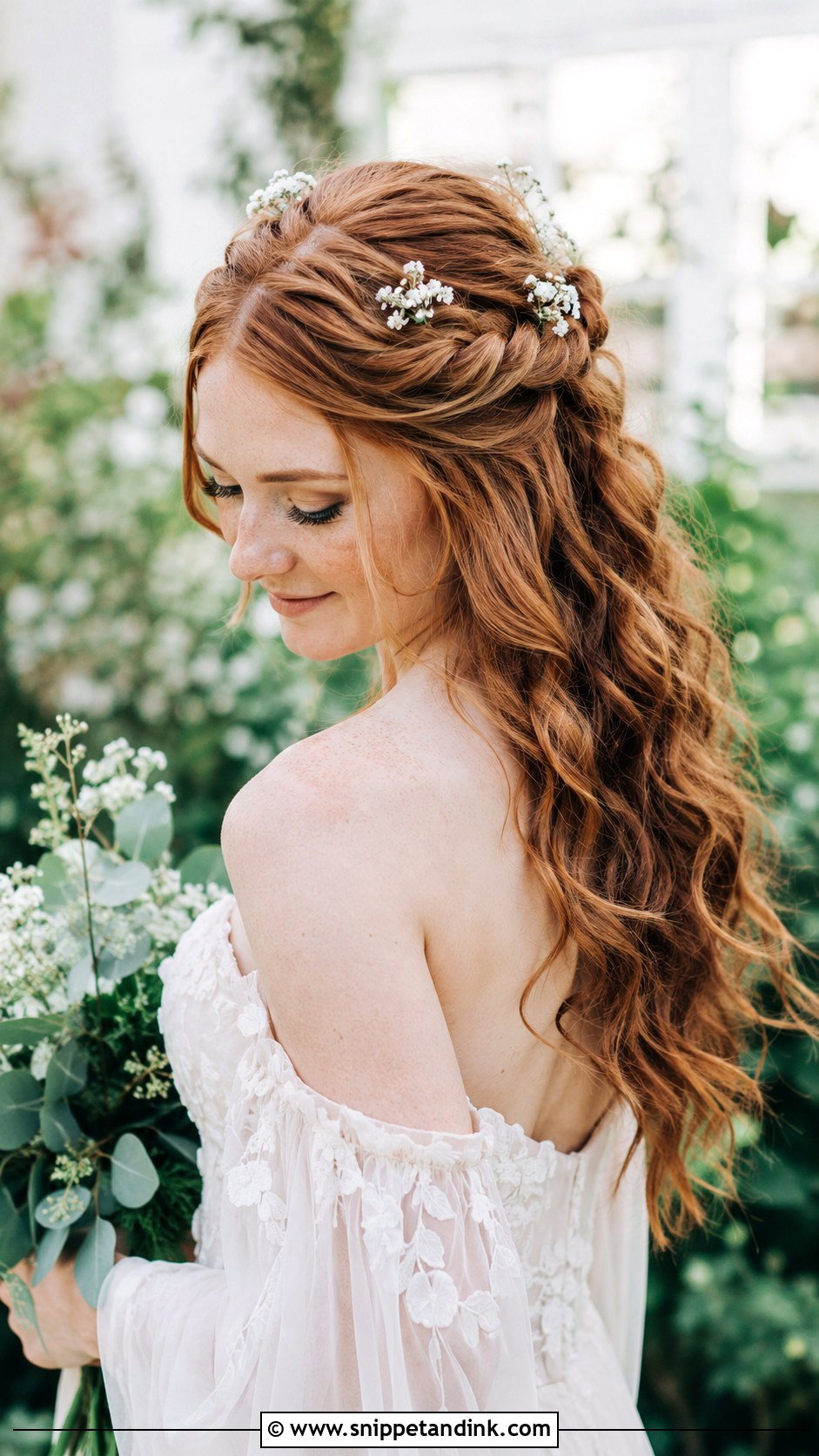
A twisted halo is easier to wear than a braided one and less obvious from the front. I twist small sections from each side, pinning as I go so the tension stays even, and stop where they meet at the back. Medium hair gives enough length that the twists overlap rather than just touch. I’d stud the twists with small flowers or pearl pins only on the sides, where they’ll be seen in a profile shot.
19. Half-Up Messy Updo
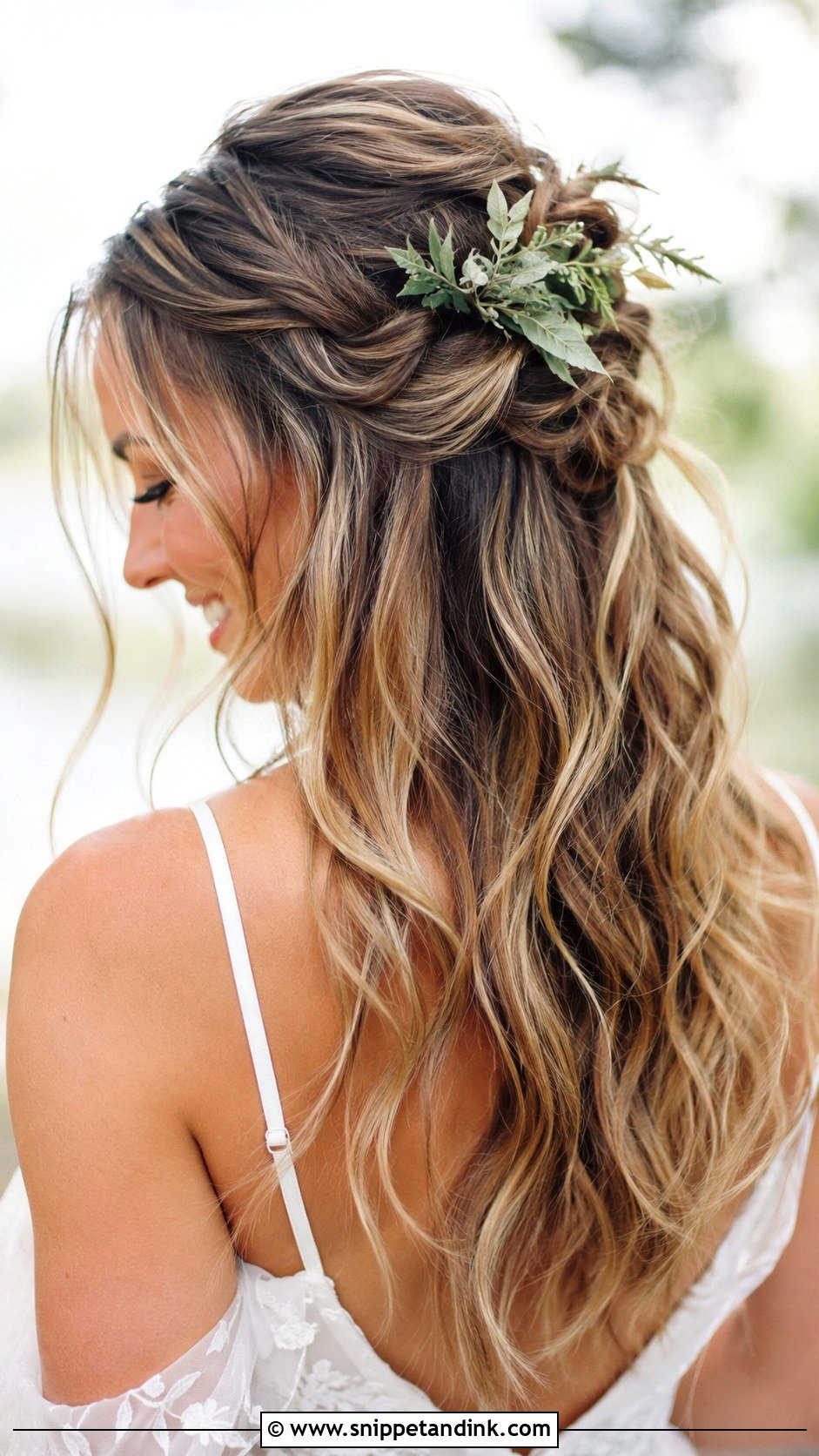
A messy half-updo is the hardest to get right, because undone has to look chosen. I create texture first with a texturising spray, gather the top loosely, then pull pieces out on purpose rather than waiting for them to fall. Hair that falls on its own by evening looks tired; hair pulled out deliberately looks relaxed. A sprig of greenery helps on a boho or outdoor day, but rosemary and eucalyptus hold up better than soft leaves.
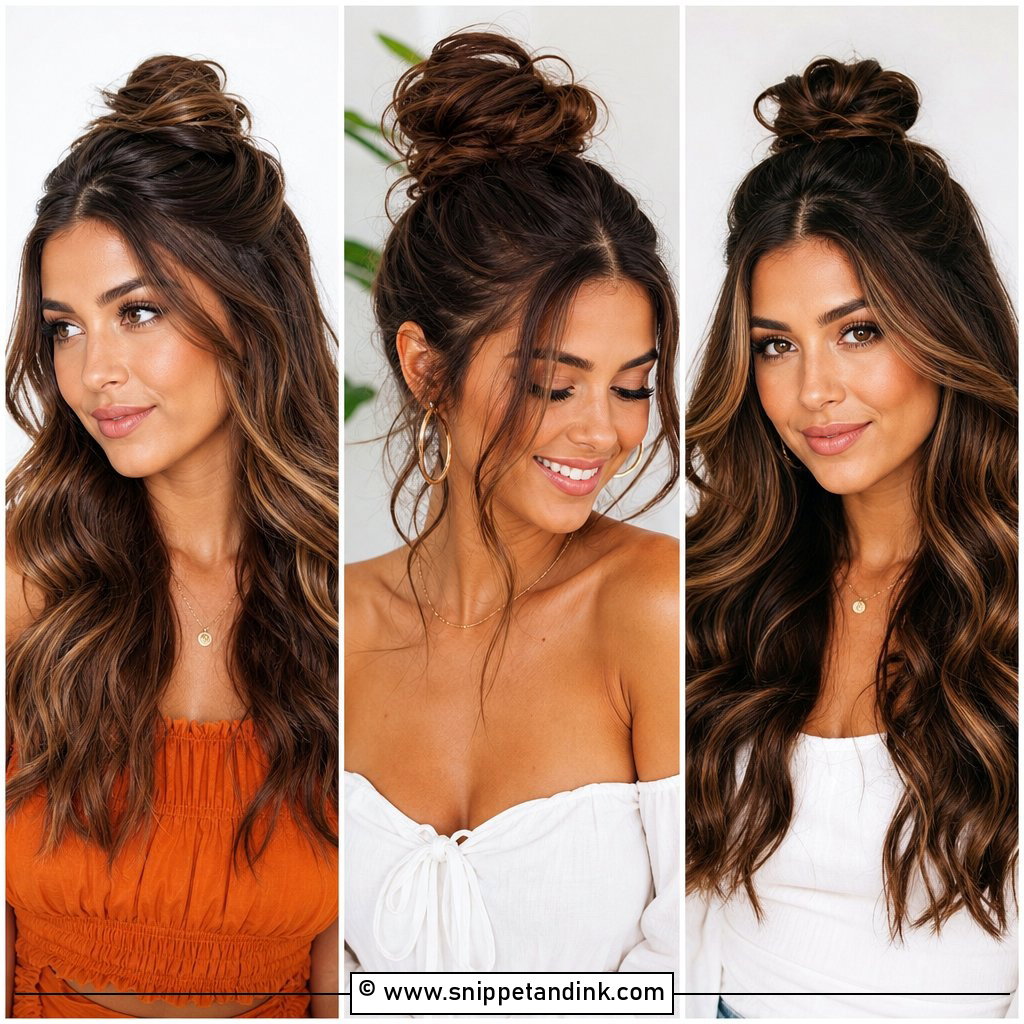
20. Half-Up with Accent Braids
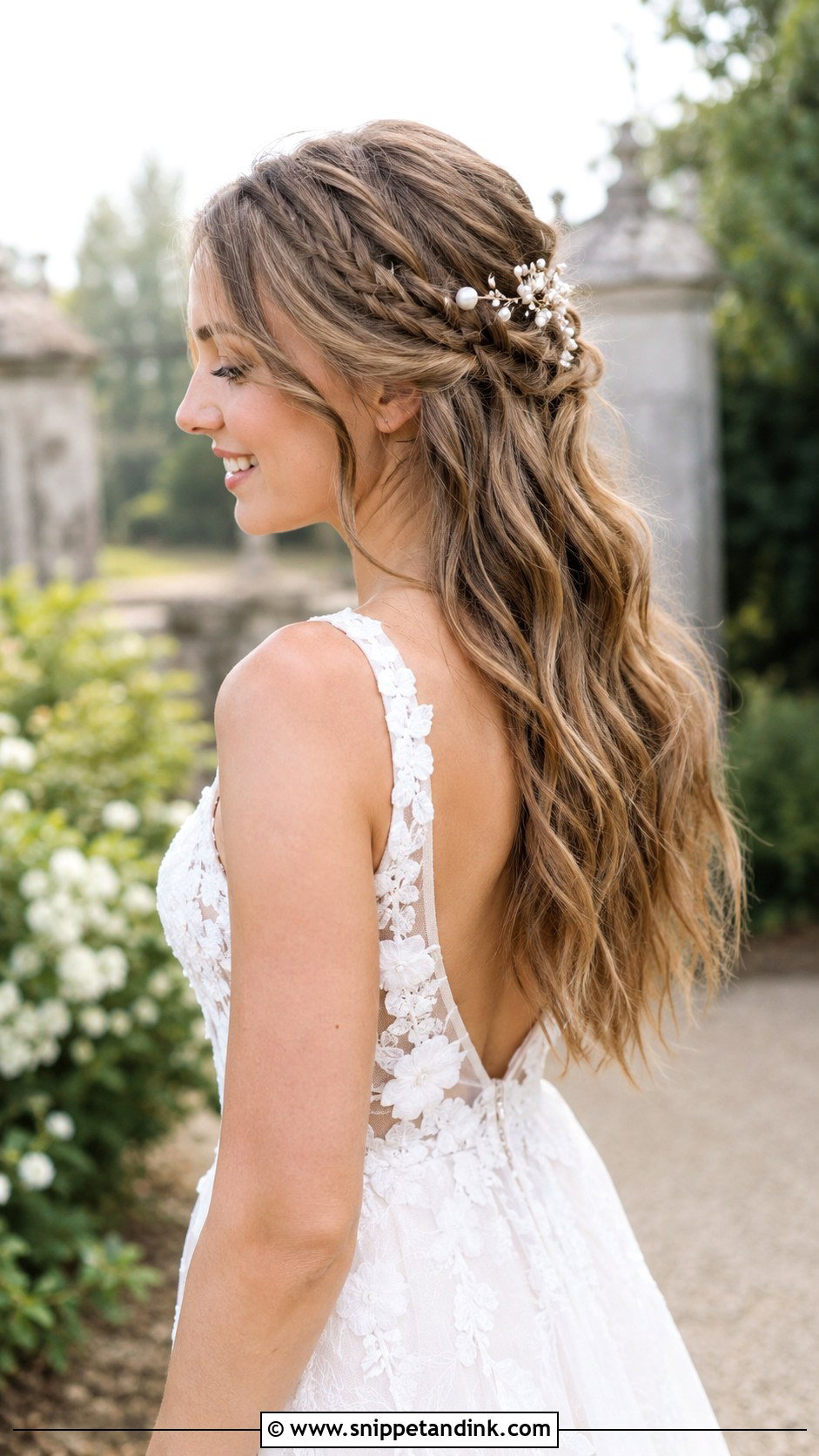
Three or four thin braids woven back among loose waves add detail without the weight of one big plait. I take them from the top layer only and keep them small, around the width of a pencil, so they read as accents. They pin flat and stay tidy all day, which surprises brides who expect braids to loosen. Tiny flowers or pearl pins can sit between them.
21. Half-Up Sleek and Straight
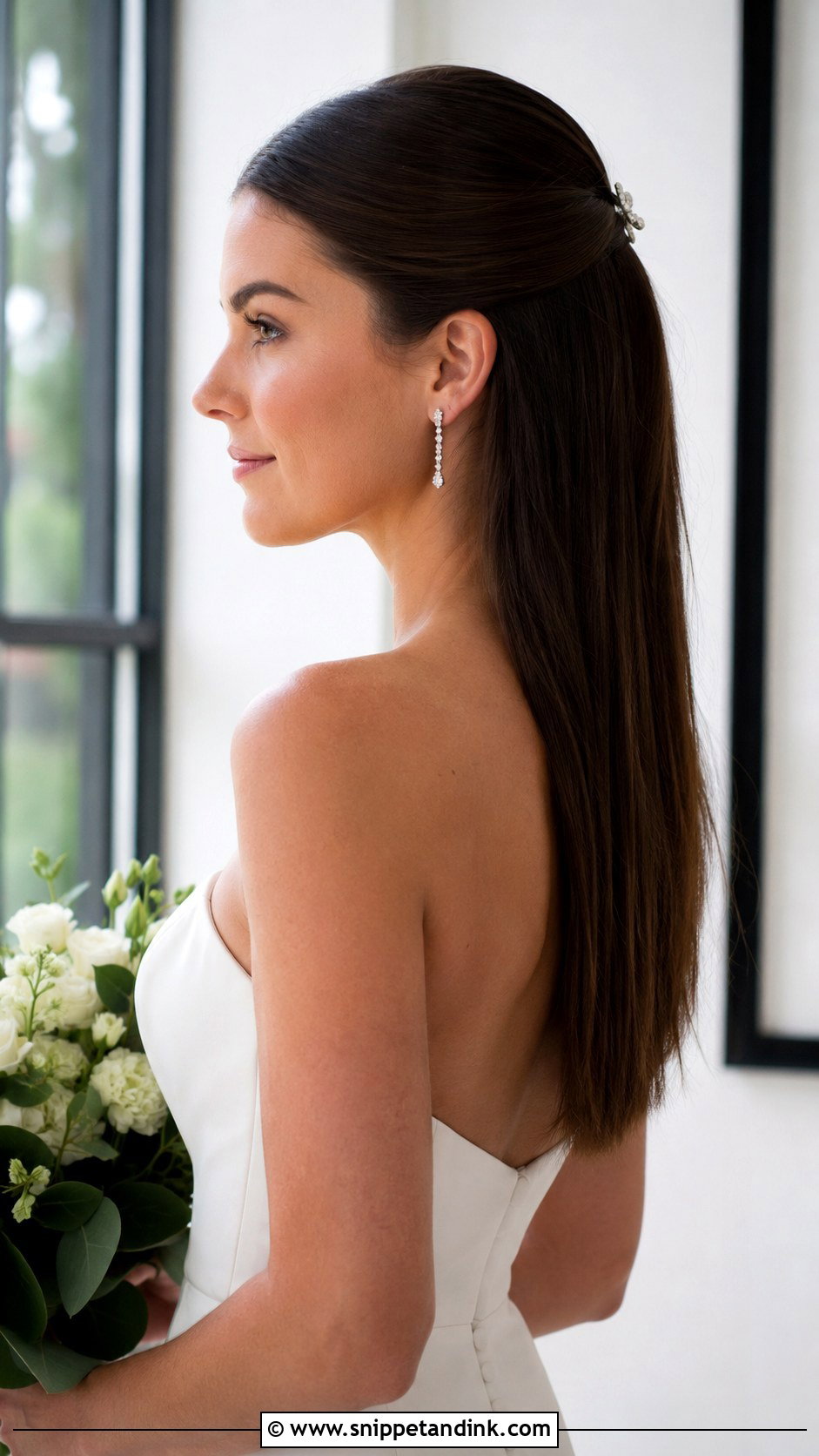
Straight hair is less forgiving than curls. Every crease or kink shows, so I flat iron in small sections and finish with a shine serum on the ends only. The top section goes back smooth and is pinned flat, with no lift. I’d steer you away from this one if your hair frizzes easily or you’re marrying somewhere humid, because straight hair is the first to puff up. In a cool city venue, though, it suits clean, modern dresses.
22. Half-Up with Loose Tendrils
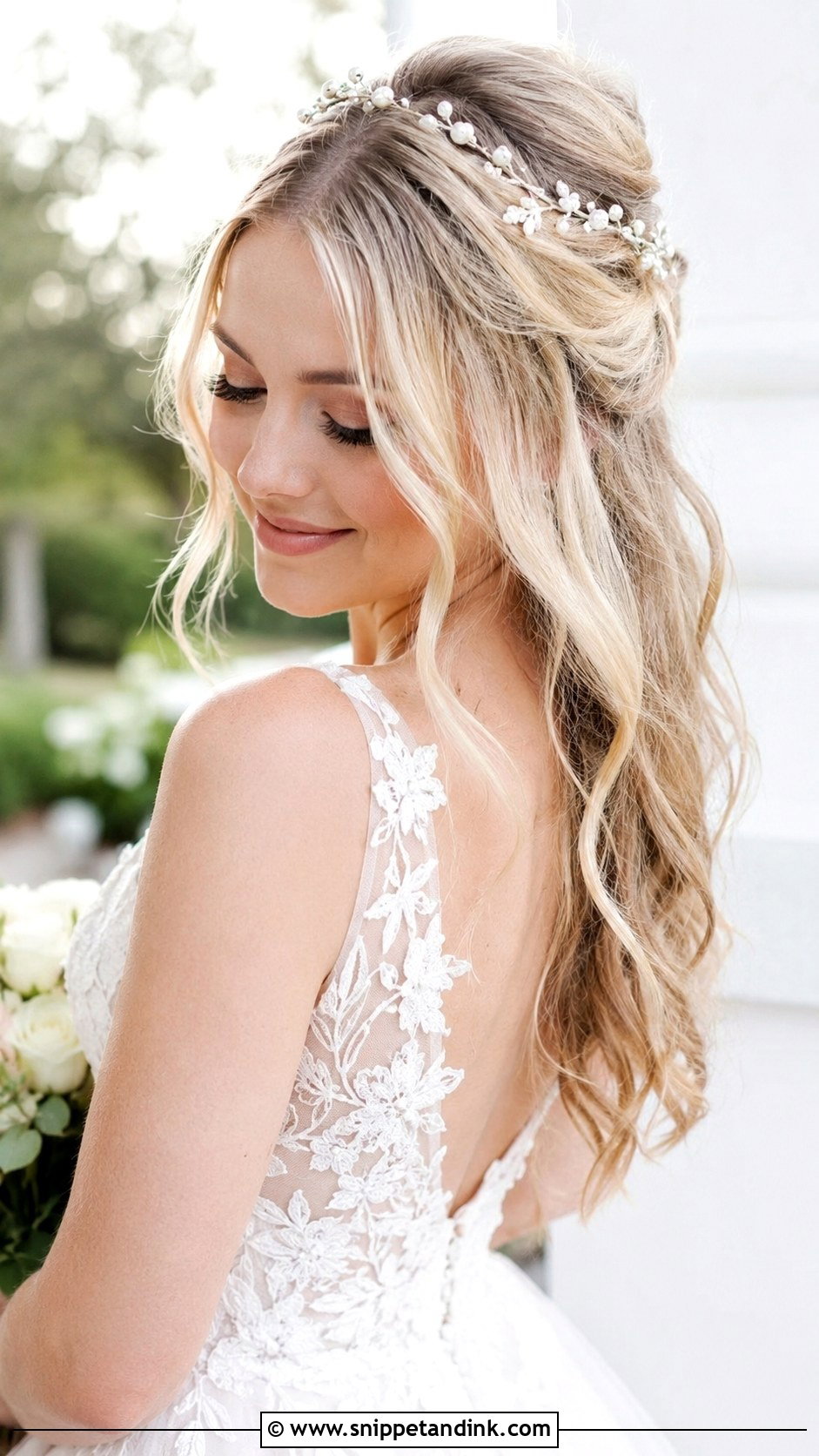
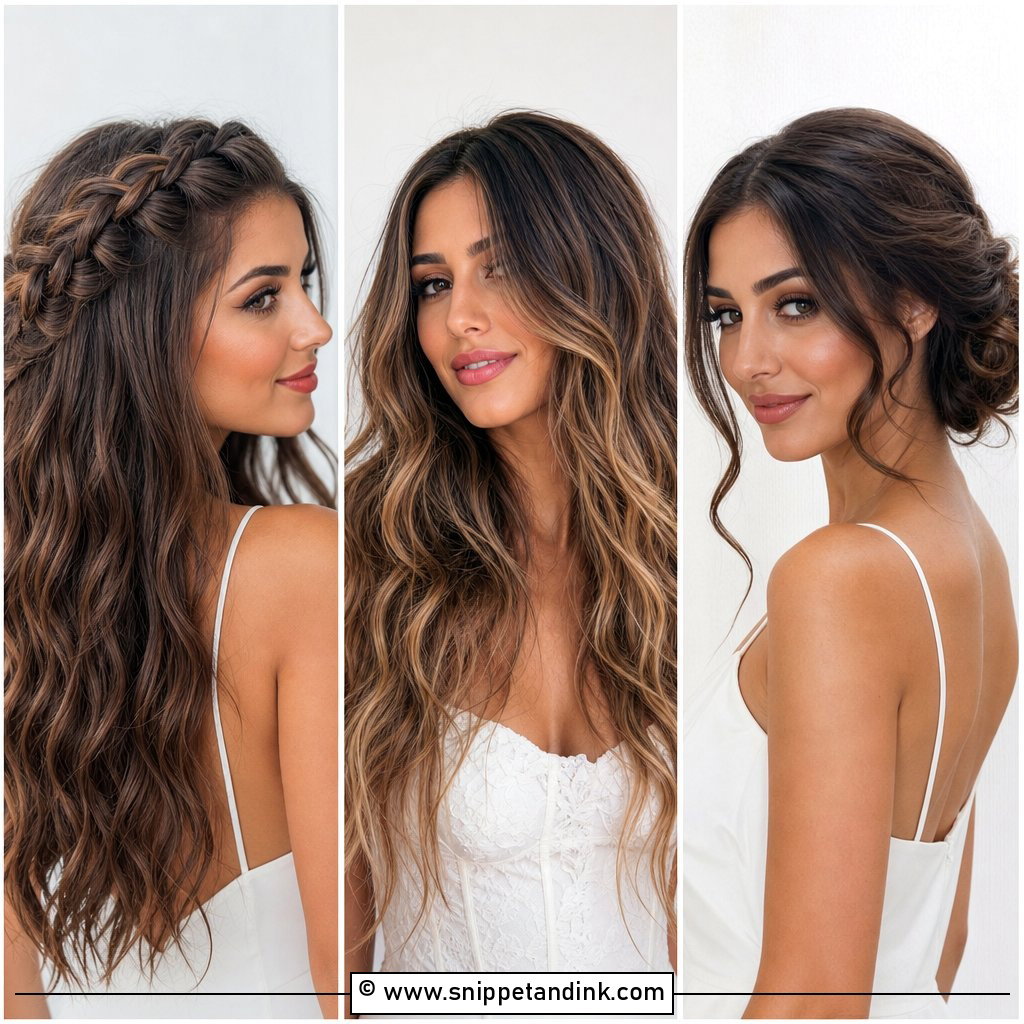
Soft tendrils framing your face are often what make a half-up flatter you, but they need control. I pull them before I set the rest, decide how many will stay out, and curl them away from the face so they don’t fall into your eyes or stick to lip gloss. Two or three per side is plenty. Any more and the style starts to look like it’s coming down.
23. Half-Up Crown Braid with Veil
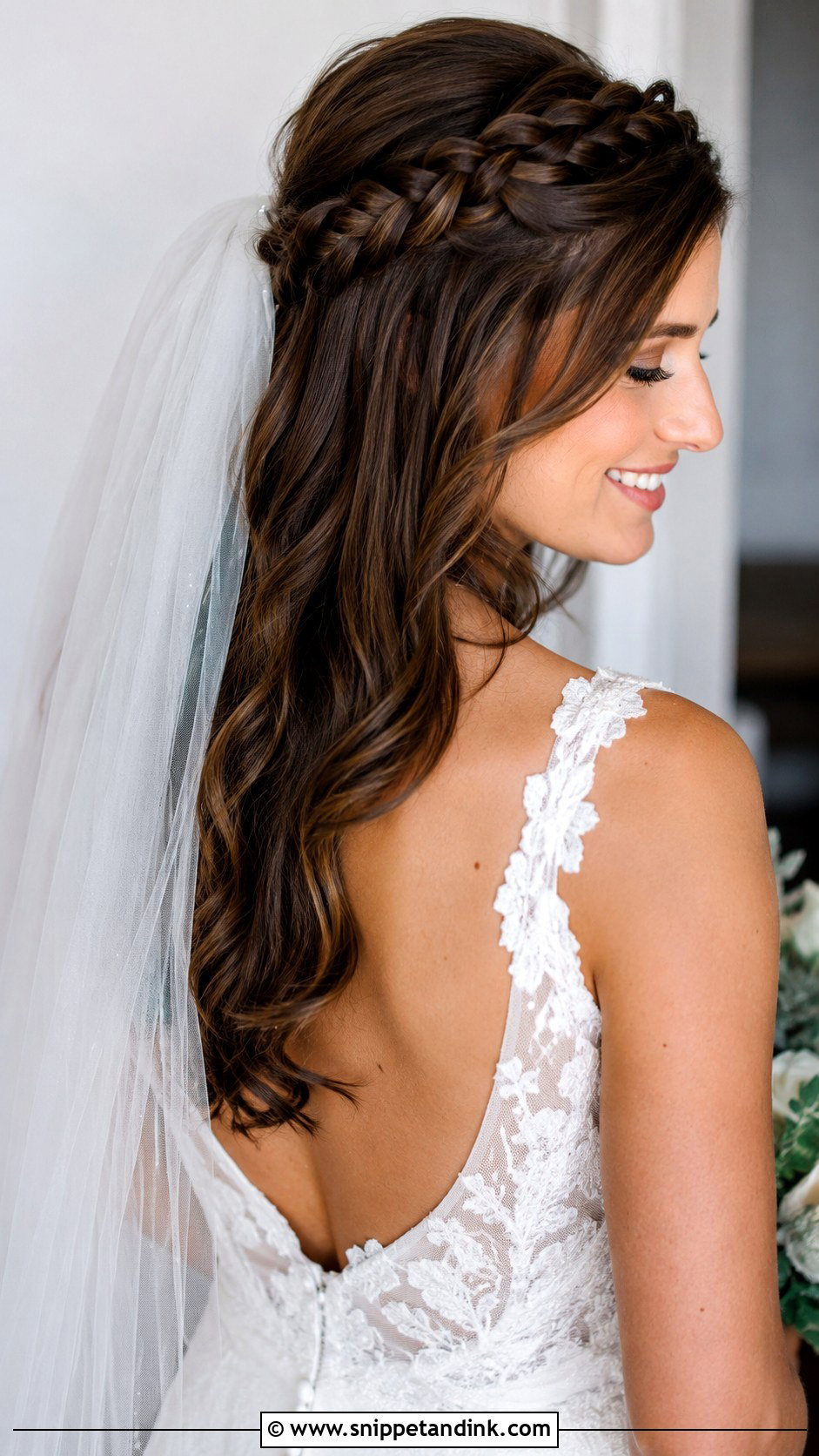
A crown braid paired with a veil is the classic church combination, and the braid gives the veil comb something solid to grip. I sink the comb just under the braid, teeth facing up, then pin through the comb’s edge into the braid itself. Once the veil comes off at the reception, the braid still holds the look together. Waves below the braid keep it from feeling stiff.
24. Half-Up Twisted Low Style
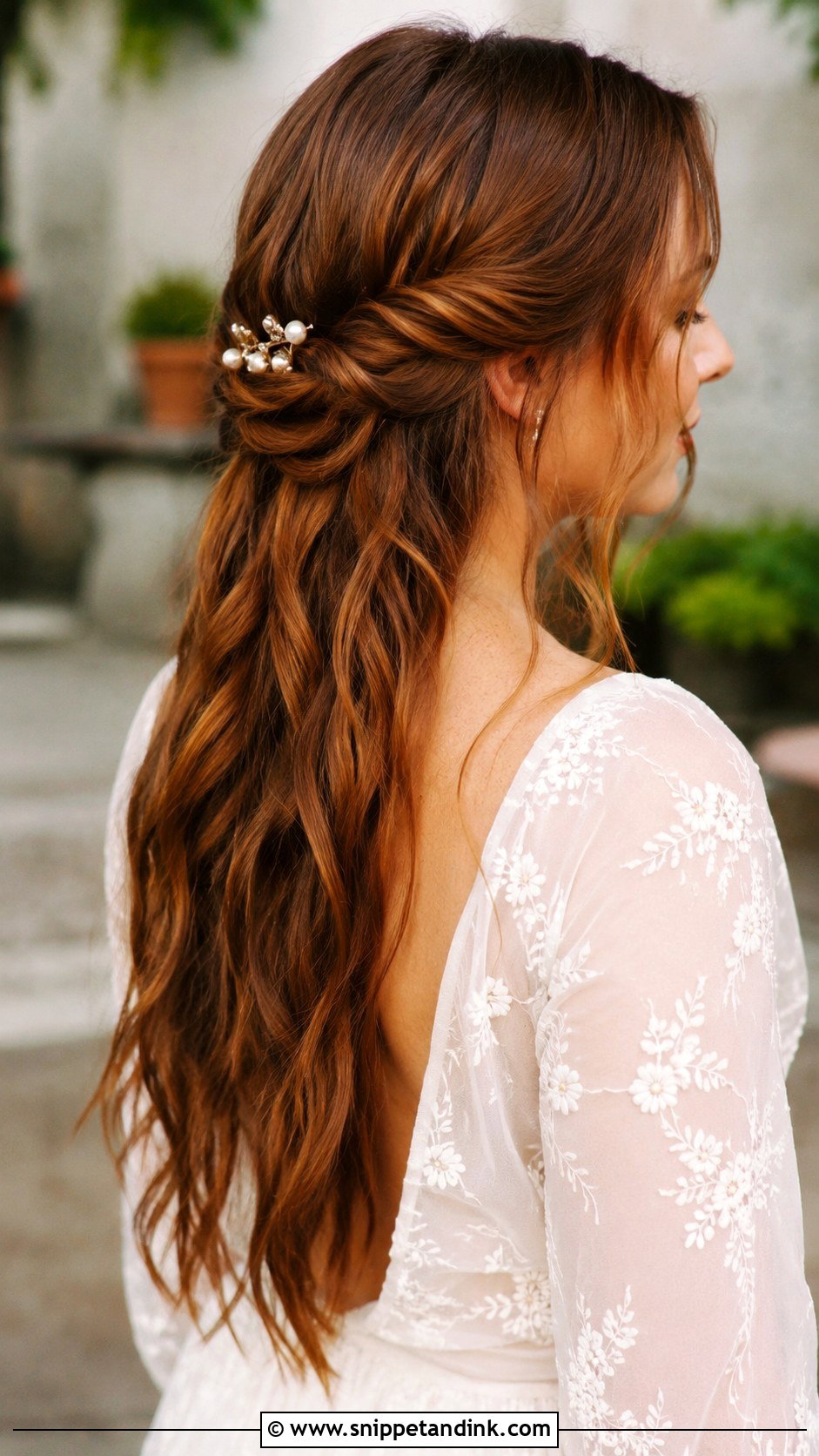
Pinning twists low, around ear level at the back, makes a half-up feel quieter and lets the hair sit better with a high-necked dress. Low placement also means the pins sit on denser hair, which holds them longer. I leave a couple of face-framing pieces out and add pearl pins or a small flower right at the twist. It’s a good option if you’d rather the hair didn’t compete with an ornate veil or headpiece.
25. Half-Up with Hair Vine Accent
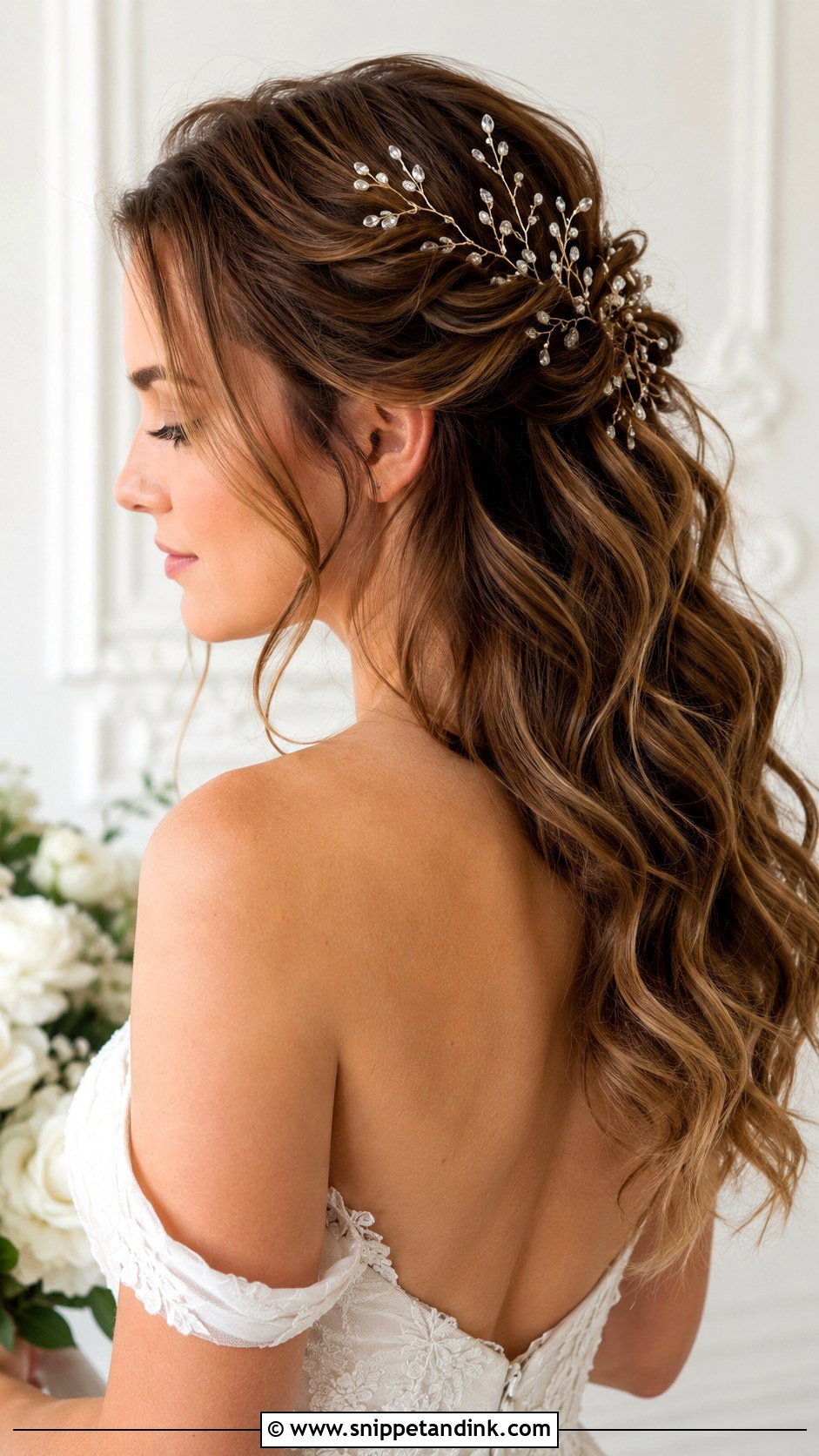
A delicate hair vine threaded through a half-up adds shimmer without needing much hair. I wire the vine in place with bobby pins hooked over the wire every few inches, then bend it to follow the shape of the twists. Too many pins and it looks stiff, so I hide them under loose sections. Keep the rest in loose waves and the vine becomes the detail people notice.
Why the Down Half Goes Flat by the Speeches
With a half-up, the pinned part almost never fails. It’s the loose hair that gives up, because it carries all the curl and none of the support. Most of what I do to stop that happens before a single pin goes in.
- Wash the day before, not the morning of. Slightly lived-in hair grips curl and pins far better than squeaky-clean hair.
- Skip heavy conditioner on the lengths that morning. It makes curls slide out.
- Let every curl cool fully, pinned in its coil, before it’s touched. Brushing warm curls is the fastest way to lose them.
- In humid weather, keep the curls a little tighter at the start. They’ll relax into the look you wanted by evening, rather than dropping straight.
Veil Placement on a Half-Up
A veil comb needs something to bite into, and loose waves aren’t it. I put the comb directly into the gathered section: under a braid, into the seam of a twist, or just below a small bun. Placed above the gather, the veil frames the style; placed below it, the veil hides most of the detail at the back. Decide that at the trial, with the actual veil, because a long cathedral veil weighs far more than a fingertip one and pulls a half-up backward over the day. If the veil comes off for the reception, ask your stylist to show a bridesmaid how to remove the comb without taking pins with it.
Medium Hair, Half Up, and Still Holding at Midnight
Medium hair is the length where a half-up works best, as long as you remember the trade: what goes up comes off what hangs down. Start with the style that suits your hair’s density and your venue’s weather, then bring photos to your trial and test it with your dress neckline and veil. A half-up that’s right for you should still feel secure after the dancing, not just at the first look.
You'll Like These Ideas:


Leave a Reply