
Half-up is the style I’m asked for most by brides with medium hair, and it’s easy to see why. It sits between an updo and wearing everything down, keeps your face clear for the vows and still shows the length you’ve grown. The catch is that half-up styles have one weak point, the gathered top section, and how it’s anchored decides whether it lasts until the last dance. Below are twenty variations, from twisted halos to braids, pearls and sparkling accessories, each with notes on how I build it and what to watch for.
How Much Hair Goes Up, and How Much Stays Down
The proportion of a half-up style changes everything about how it looks on medium hair. Take too much up, and the hair left below looks thin and short. Take too little, and the top section won’t hold a twist or braid.
- For a simple pinned-back look, I take a section from roughly the outer corner of each eyebrow back to the crown.
- For braids, twists or a small bun, I take a little more, from the temples back, so there’s enough hair to build the detail.
- Fine hair needs a smaller top section than thick hair, otherwise the lower half looks sparse in photos.
- If your layers are short at the top, pick a style that uses them, such as twists or tendrils, rather than a sleek half-up.
At your trial, look at the back in a hand mirror. That view tells you whether the proportion is right far better than the front does.
1. Half-Up Twisted Halo With Soft Waves
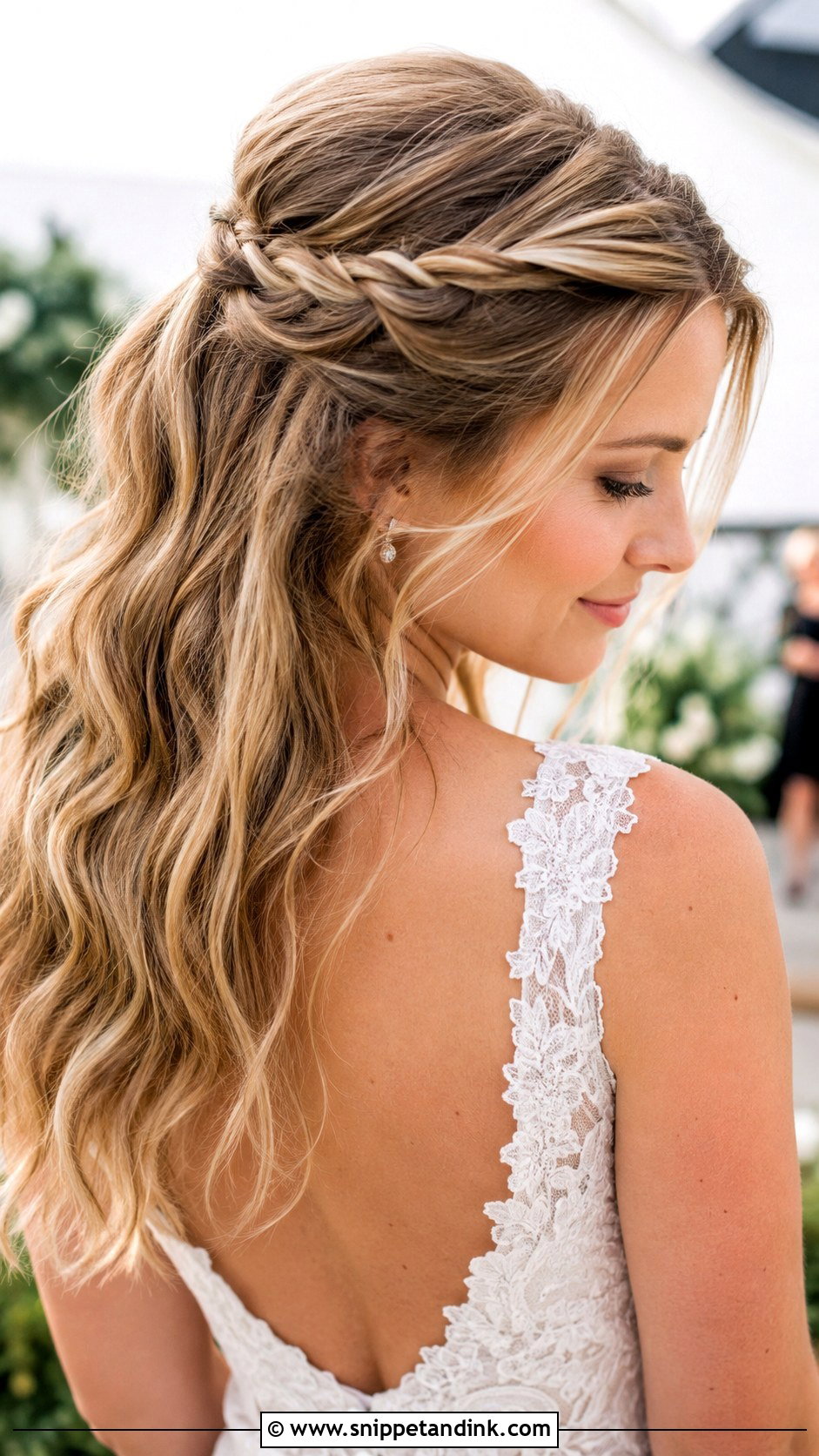
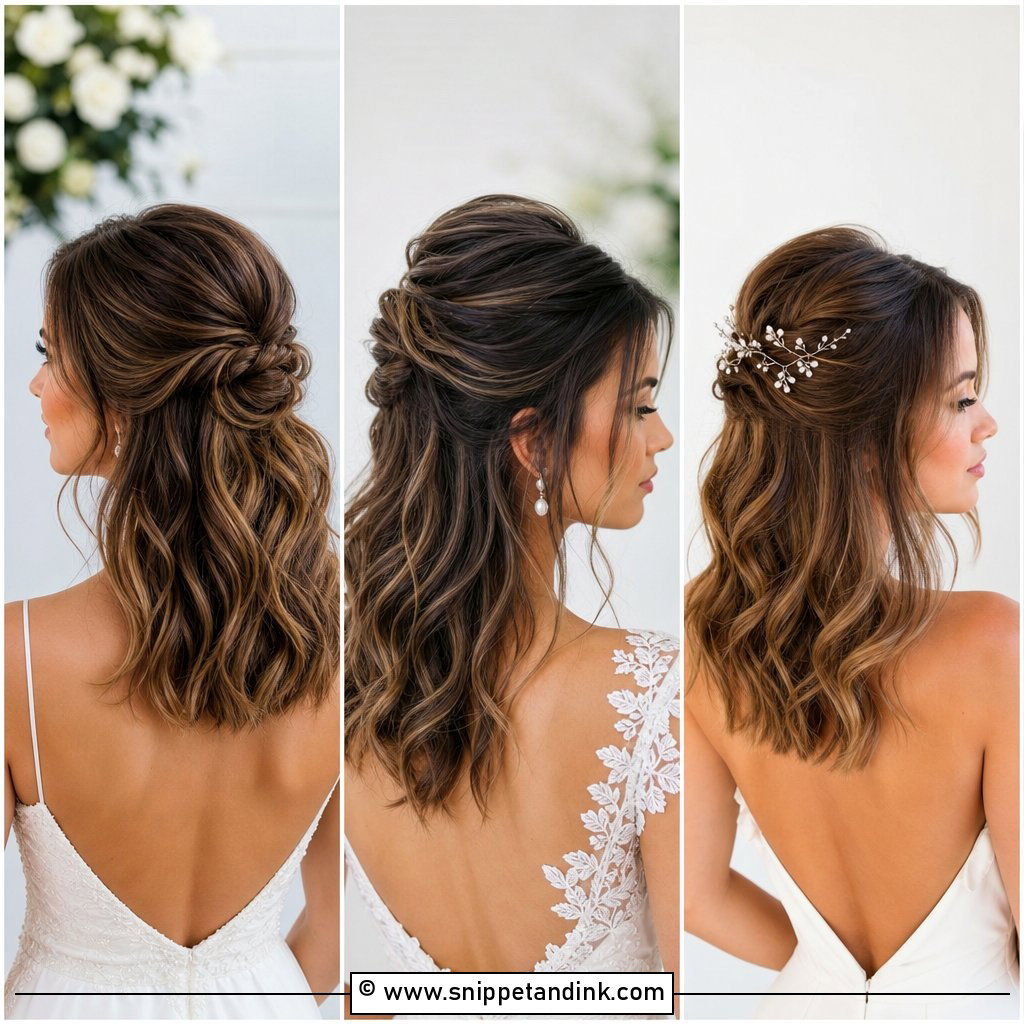
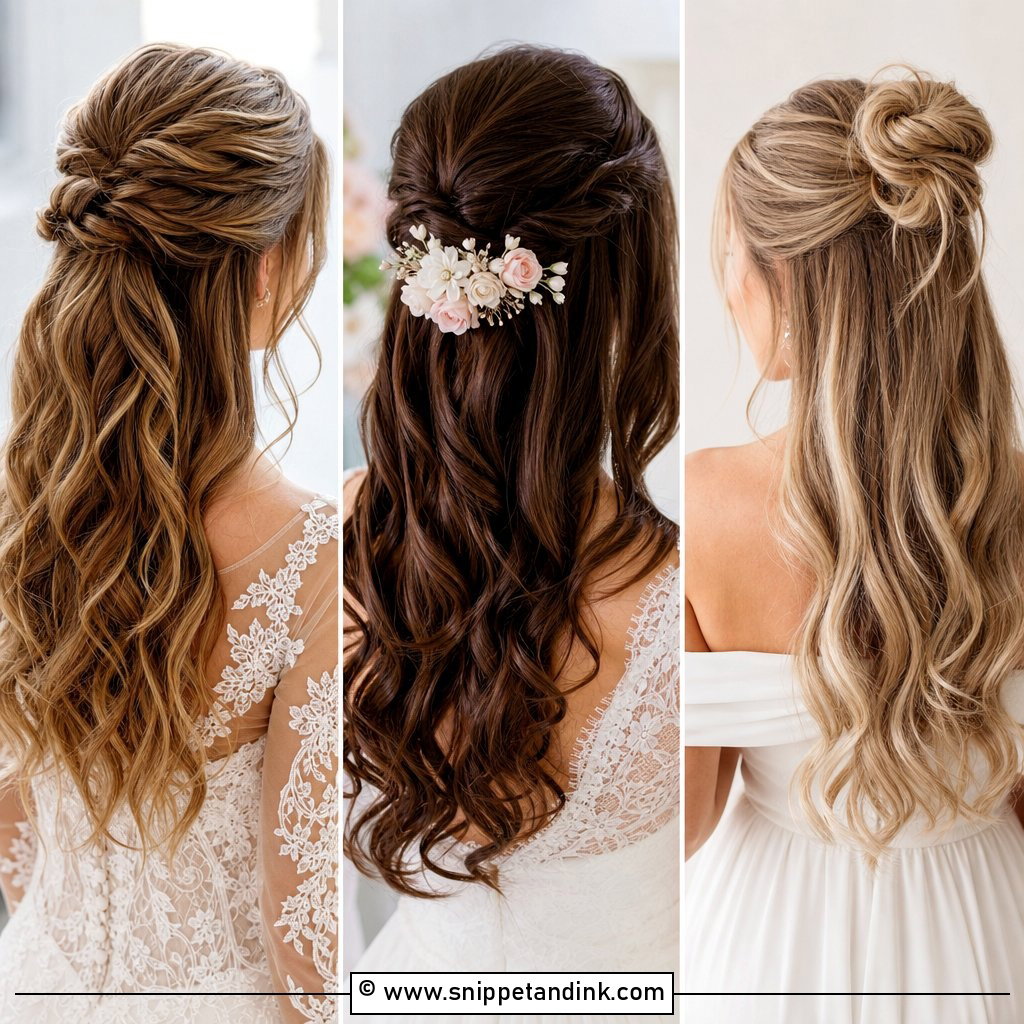
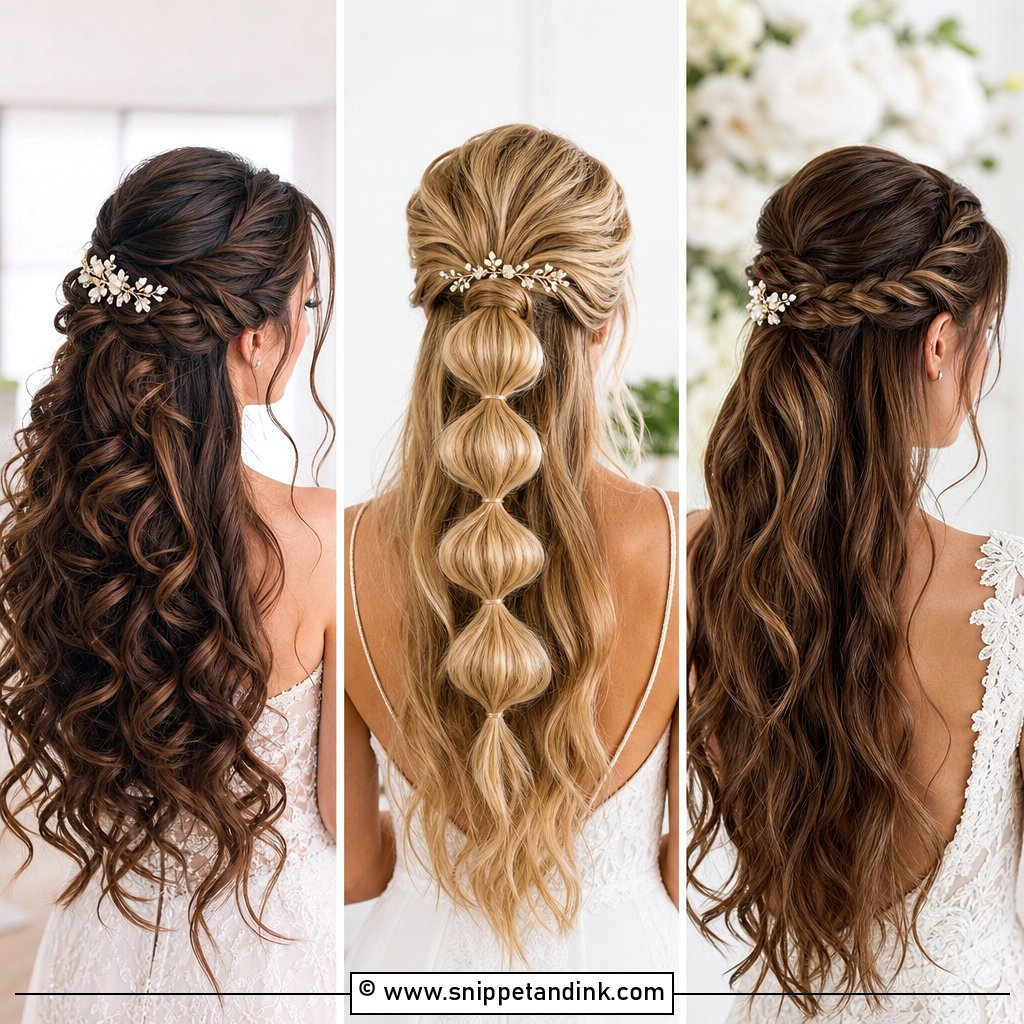
A twisted halo is two rope twists drawn from the temples and joined at the back, so they circle the head like a loose crown. I twist each side away from the face and pin them over each other in an X, which locks the join. The waves below need to be set firmly, because medium hair carries less weight and will lift into curls rather than fall. A veil comb or a few fresh flowers can sit where the twists meet. On very silky hair I mist each twist with hairspray as I go, otherwise they slowly unwind through the evening.
2. Half-Up With a Braided Crown
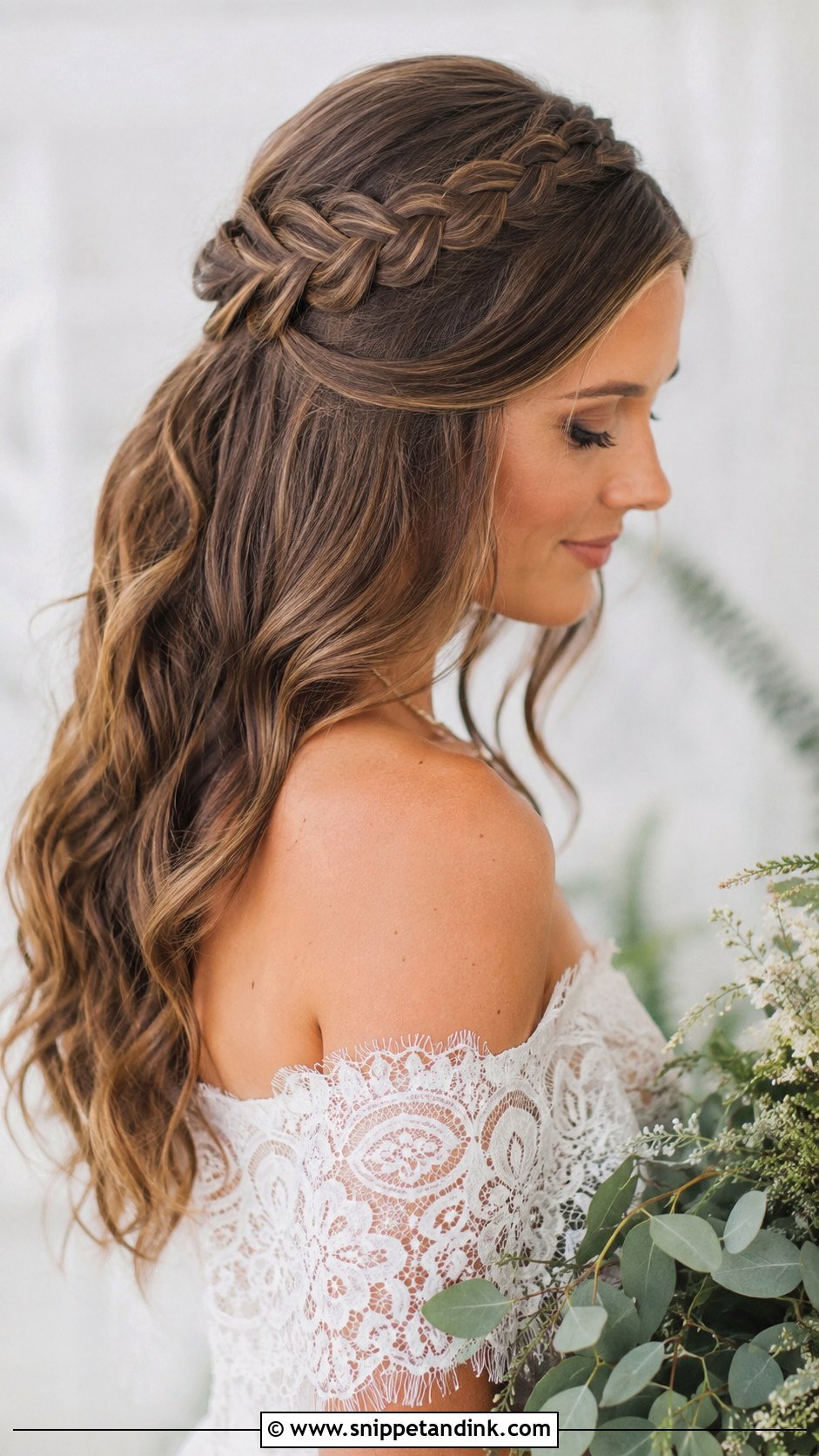
One braid wrapped across the top of the head looks delicate, and it’s sturdier than it looks, because a braid can’t unravel the way a twist can. I start it at one temple and work it back over the crown, pinning the tail under the opposite side. Sleek suits a polished dress; loosened suits a garden. Greenery or tiny buds slide into the braid’s loops. On medium hair, the braid may only reach two-thirds of the way across, so I usually pin the end beneath a flower rather than pretending it continues.
3. Half-Up Half-Down With Loose Curls
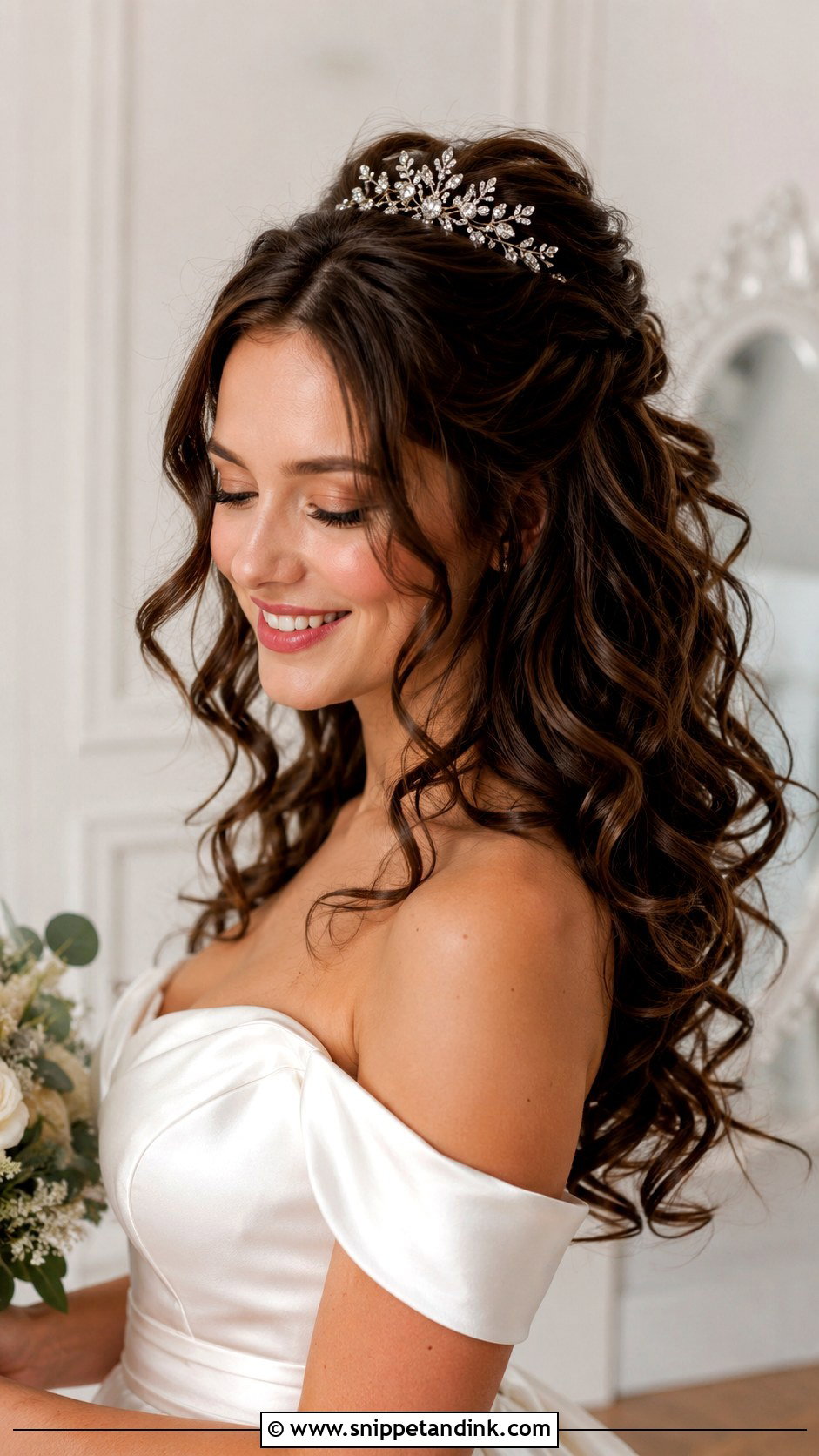
Loose curls with the top pinned back are the plainest half-up style, and plain means every detail shows. I set the curls with a 1 to 1.25 inch iron and pin each one up to cool before releasing, which makes them last hours longer. The pinned top section needs two crossed bobby pins under any decorative clip, since the clip alone will slip. Round, oval and heart-shaped faces all suit the soft frame. Expect the curls to loosen into waves by evening, especially in humidity, so start tighter than you want to finish.
4. Half-Up With a Waterfall Braid
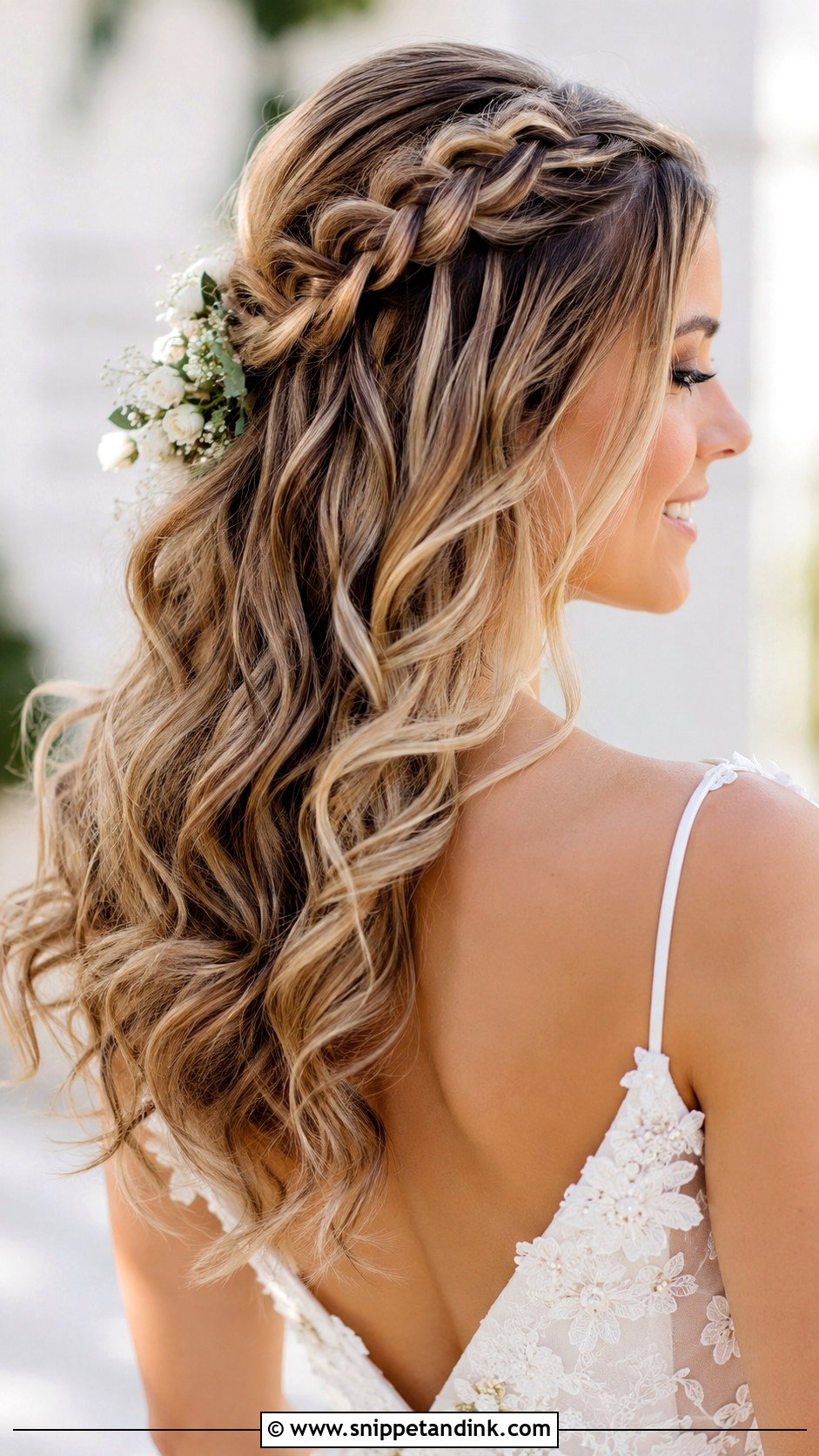
In a waterfall braid, strands drop out of the braid as you go and become part of the waves below, which gives that cascading look. I work it across the crown from one temple to the opposite ear, then pin the end out of sight. It’s best on hair with some grip; very silky hair lets the dropped strands slide loose, so I prep with texture spray first. The braid is one of the most detailed looks from behind, which matters, since guests watch the back of your head for most of the ceremony. A few blooms or nothing at all.
5. Half-Up French Twist With Cascading Waves
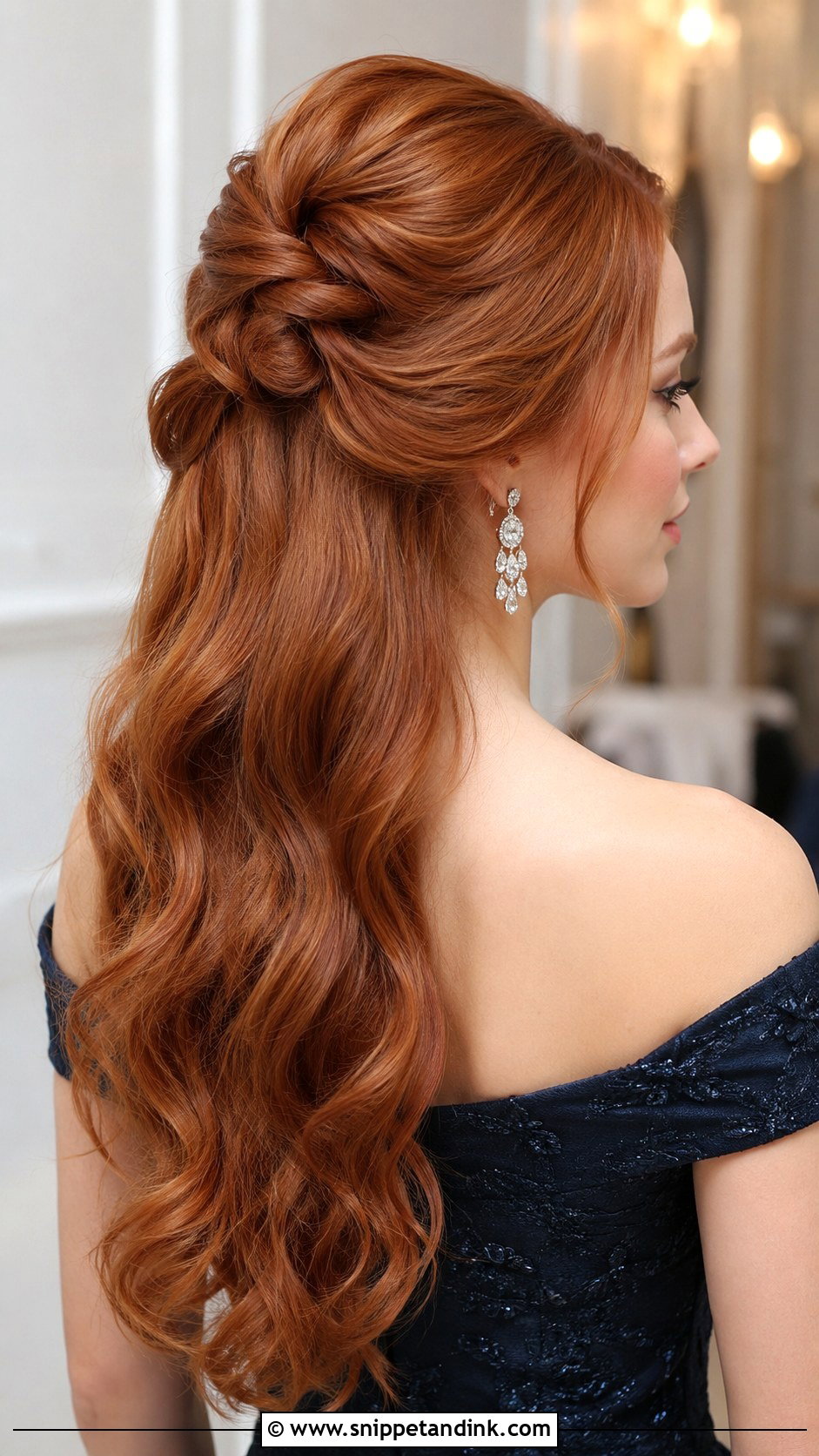
A half French twist gathers the top section in a smooth vertical roll at the crown, and a slight bump at the front adds height. I tease the root of the front section lightly, smooth the top layer over it, then roll and pin. This structured version works best with formal ballroom or church weddings and pairs with statement earrings or a delicate tiara. The tiara goes just in front of the bump, so the twist holds it. Waves below soften the shape. I’d avoid the bump if your face is long, as extra height lengthens it further.
6. Half-Up With Pearl Hair Accessories
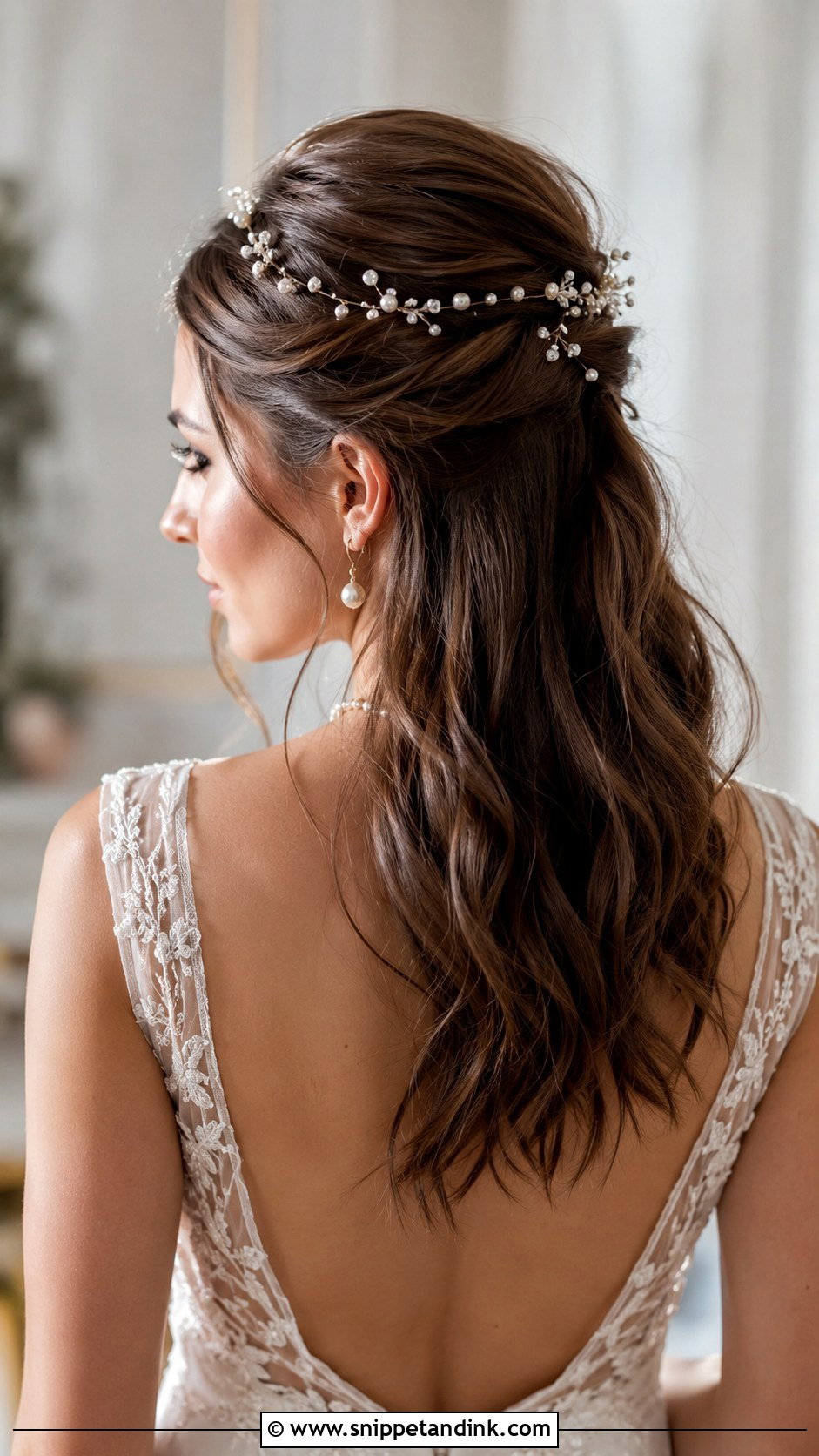
Pearl pins dotted across the crown need something to grip. I build the half-up with plain bobby pins first, then slide each pearl pin into the gathered section at an angle, so it catches hair underneath rather than sitting on top. A single pearl-encrusted clip is easier to secure than a dozen small pins. Waves or soft curls fall below. Pearls suit classic gowns and pearl jewelry, and a scattering of pins gives a subtle sparkle that reads well in photos without any flash of crystal.
7. Half-Up With Twisted Sides
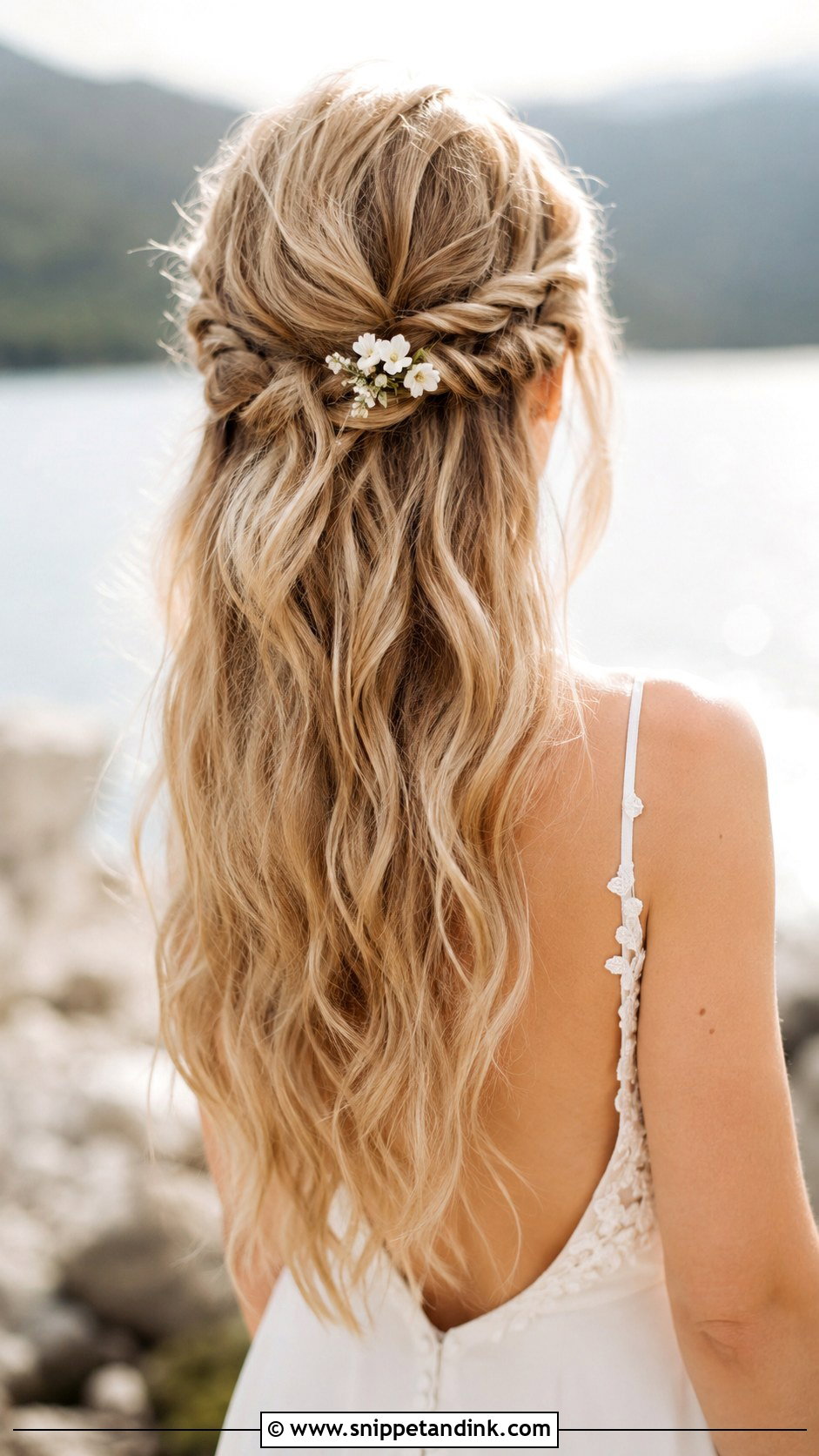
Twisting the side sections before you pin them back is the easiest way to add detail to half-up hair. Take a section from each side, twist it away from the face, and pin the two at the back with crossed pins. The twists sit on top of the hair and hold the shape better than straight sections. A small floral pin or sparkling barrette covers the join. This is quick enough for a bride styling her own hair, and it suits intimate ceremonies and relaxed outdoor weddings.
8. Half-Up Boho Braid With Flowers
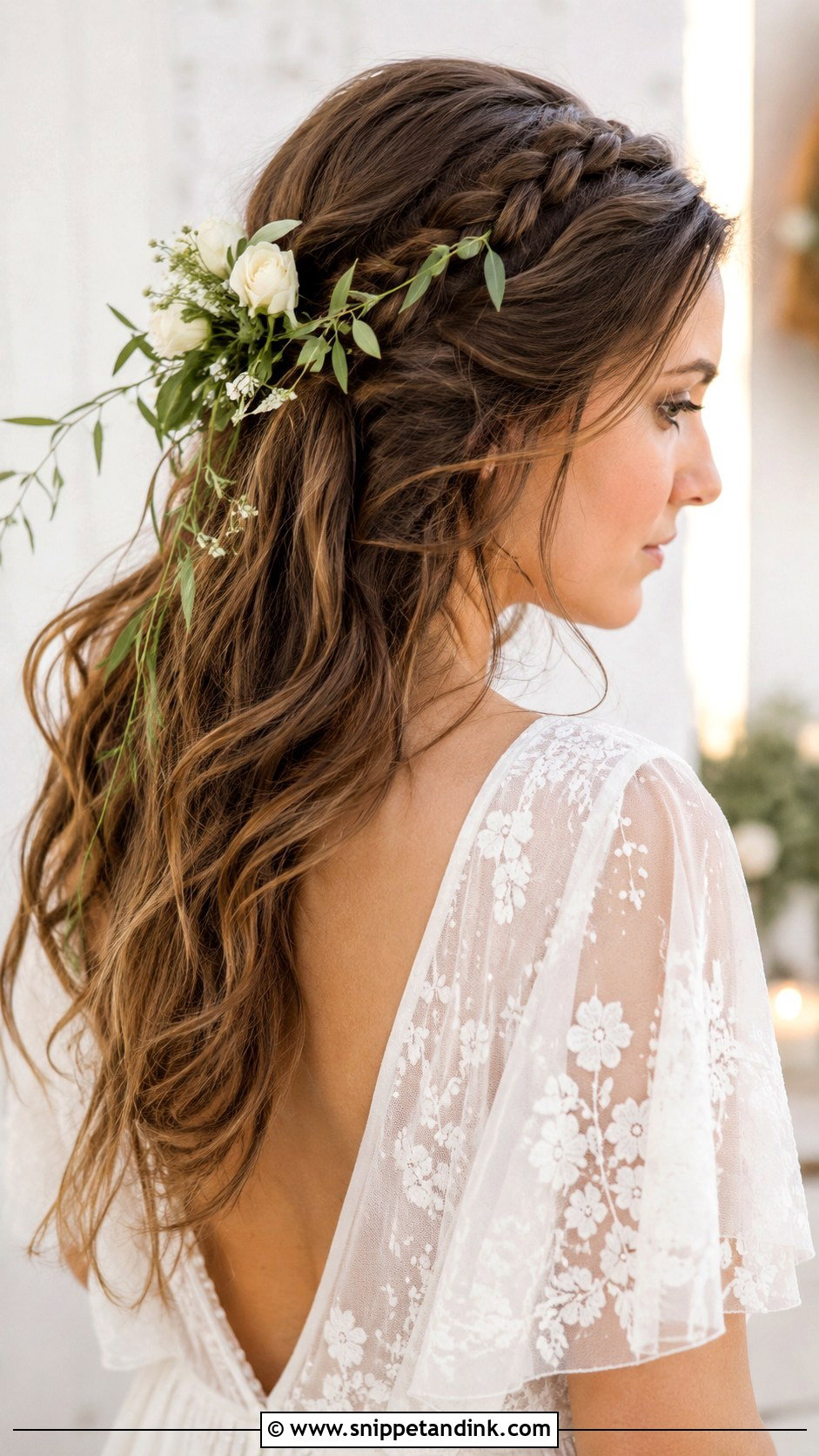
Fresh flowers in a braid are heavier and more fragile than people expect, so I wire each bloom and pin it through the braid rather than tucking it in loose. The braid itself is loose and slightly messy, worked across the crown, with tousled, beachy waves below. Match the flowers to your bouquet and ask your florist for blooms that cope with warmth out of water; delicate ones wilt against the head within hours. Garden, beach or woodland settings all suit it.
9. Half-Up With a Tucked Veil
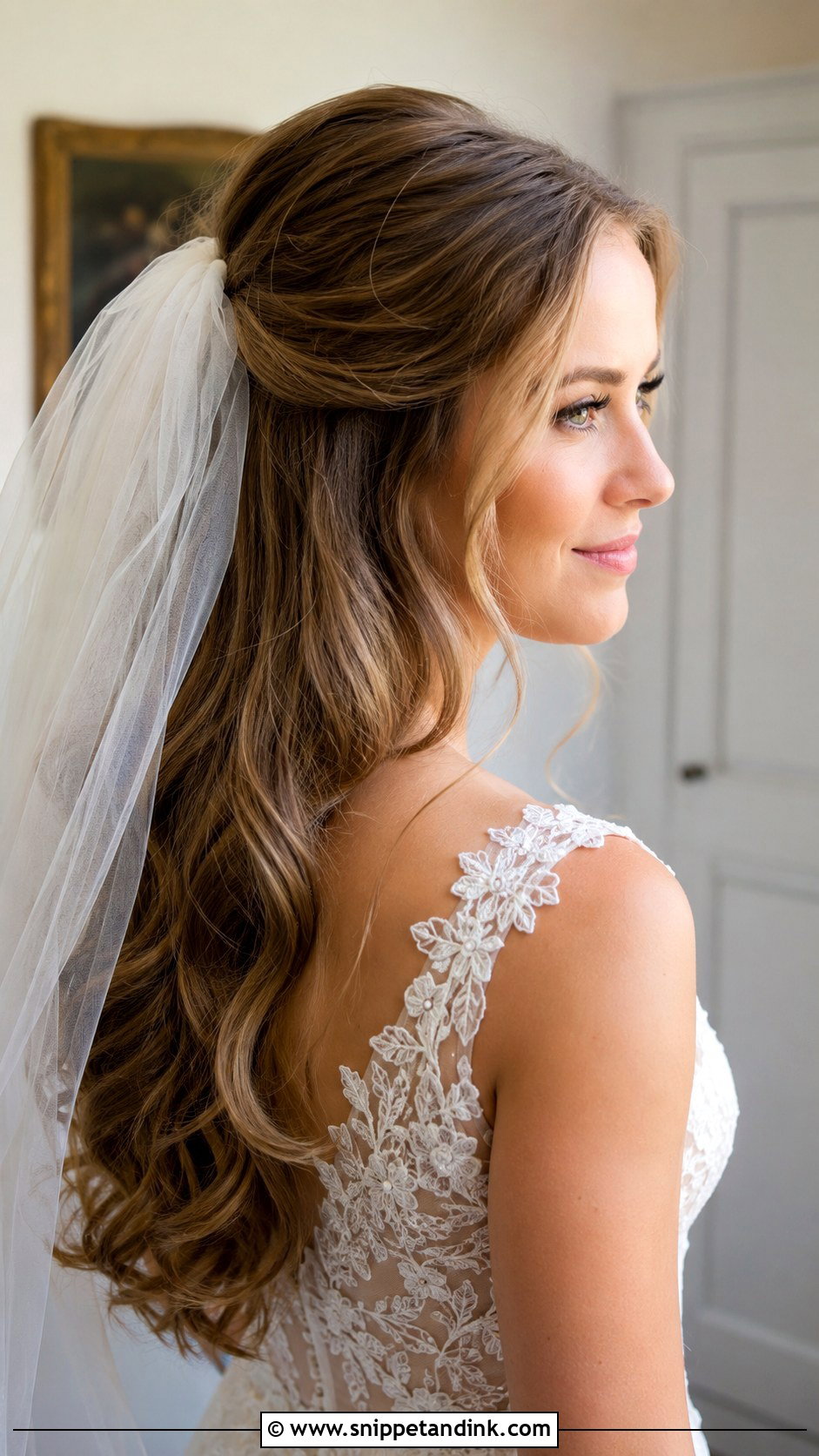
A veil tucked beneath the half-up section is one of the most secure ways to wear it. I pin the top section back first, then slide the veil comb in just under the gathered hair, so the weight sits on the pins and not on loose waves. A couple of extra bobby pins crossed over the comb’s teeth stop it lifting in wind. When the veil comes off after the ceremony, the half-up style is untouched and ready for the reception. It suits traditional and formal weddings.
10. Half-Up With Face-Framing Tendrils
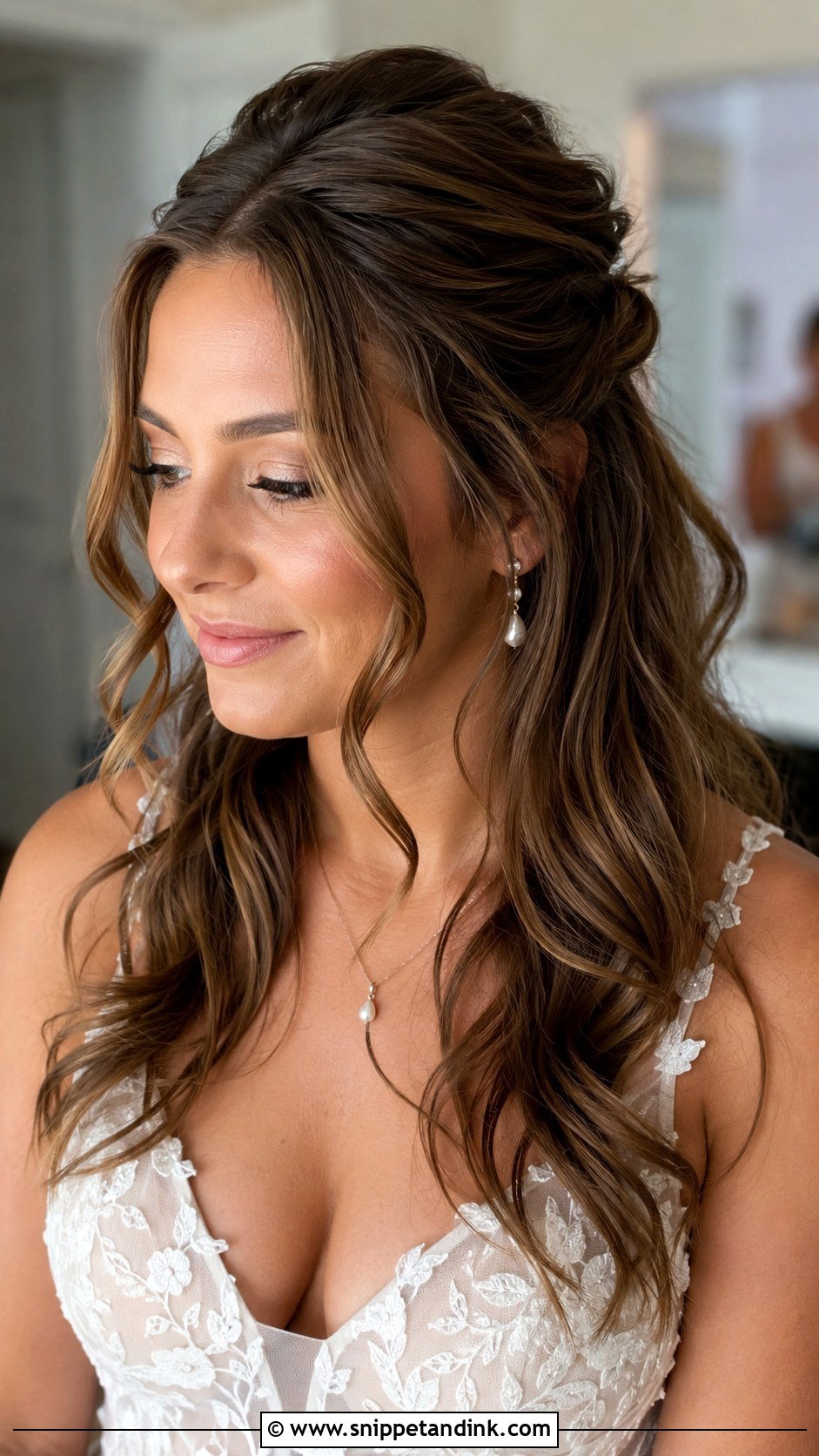
Tendrils are planned, not leftovers. I choose the face-framing pieces at the start, before anything is pinned, and curl them separately with a smaller barrel so they hold a softer bend than the hair below. Too many, and they turn limp and stringy by the speeches; two at each temple is usually enough. The crown is gathered back, and medium waves fall below. Simple earrings let the face-framing detail show. Close-up portraits are where tendrils show best, so let your photographer know they’re intentional.
11. Half-Up Bubble Braid
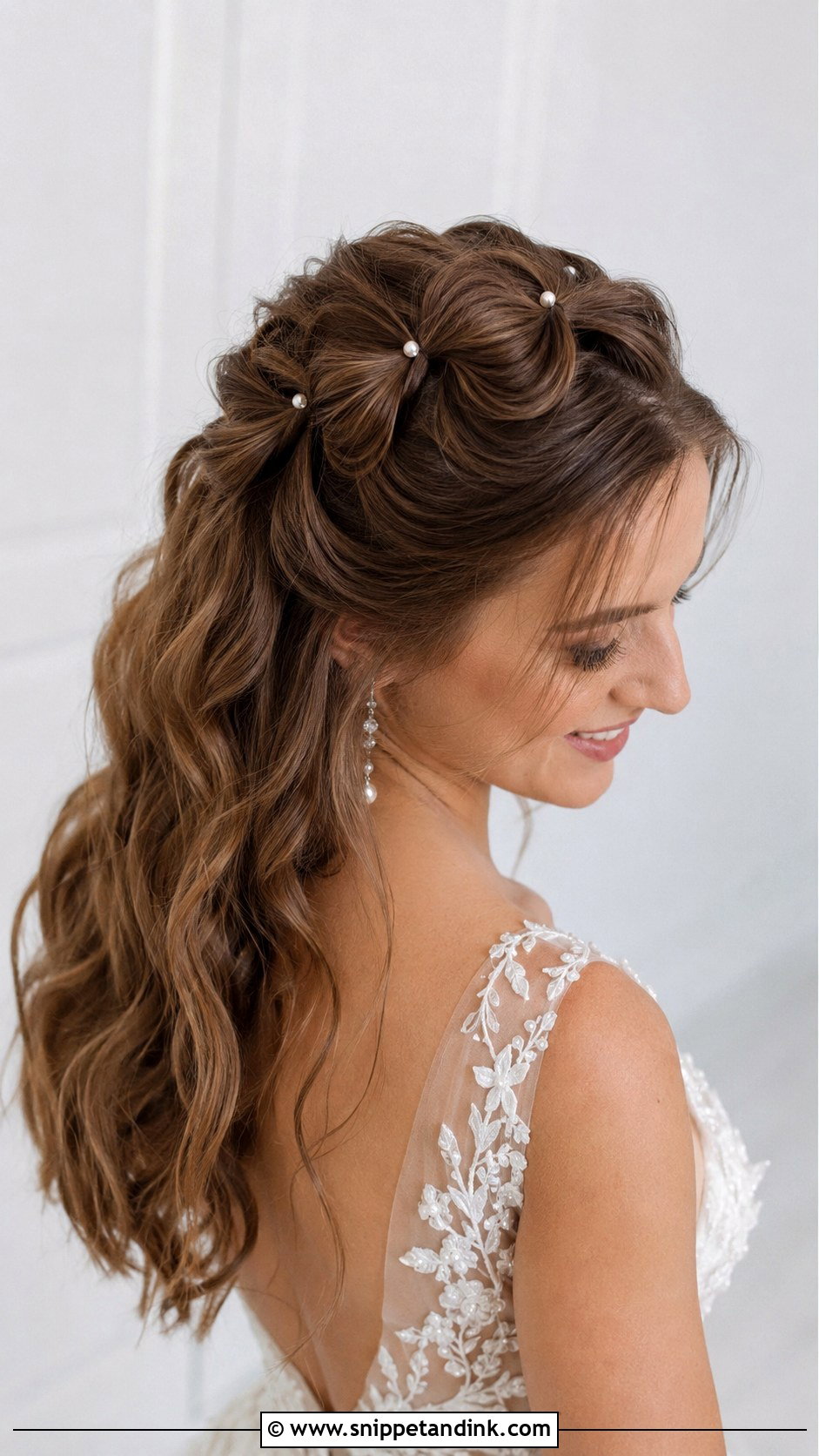
A bubble braid gathers the top section into a ponytail, then spaces small clear elastics down it and gently puffs each segment. On medium hair you’ll get three or so bubbles, so I keep the gaps short. The rest falls in soft waves. Tiny pearl pins or flowers can sit between the bubbles. It’s playful and modern, and I’d keep it for a relaxed or contemporary wedding. Since each elastic holds its own section, it barely moves through the day.
12. Half-Up With a Low Twisted Bun
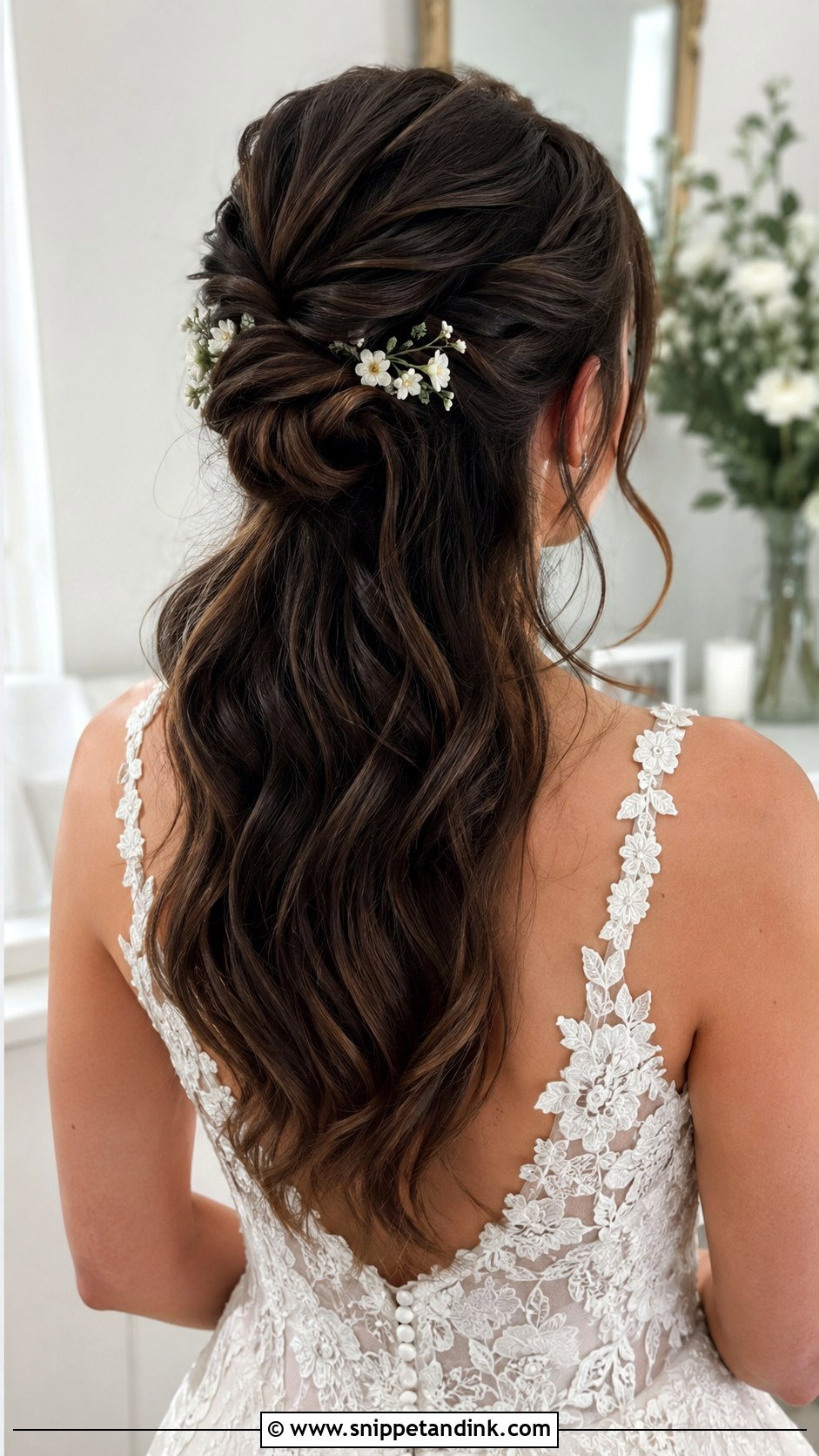
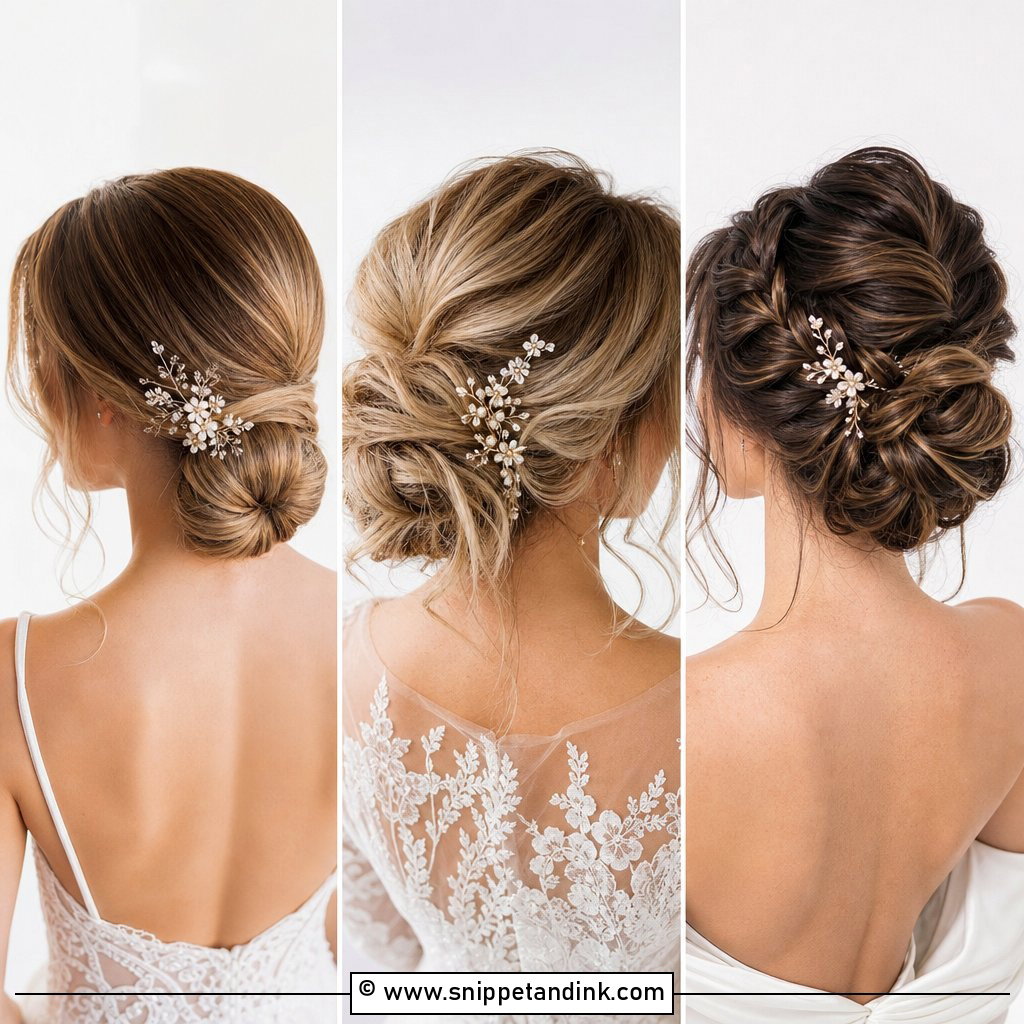
Twisting the top section into a small low bun at the back of the crown is one of the most secure half-up options. I gather the top half with a clear elastic, twist it, coil it into a bun and pin it with U-pins, which grip a coil better than bobby pins. The low placement keeps it soft. A few delicate pins or small flowers go around the bun. It’s a good choice for both formal and semi-formal weddings, and it holds even when the waves below relax.
13. Half-Up With Glam Hollywood Waves
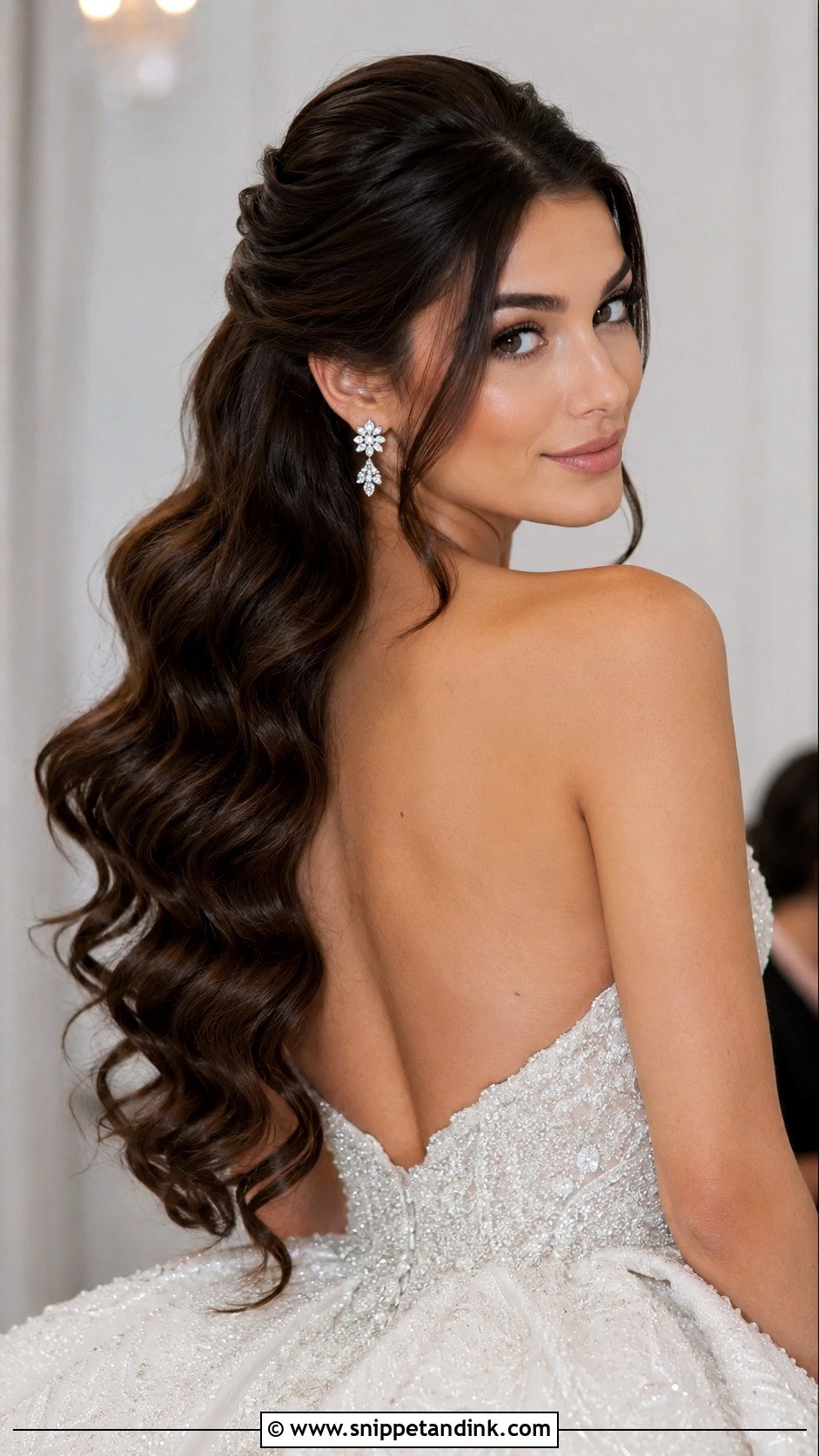
Hollywood waves on a half-up need the top swept smooth and the rest curled all in one direction. I curl each section away from the face, let them cool, then brush them out until they merge into deep, glossy S-shapes. The top section is smoothed back and pinned, and a sparkling clip or jeweled pin covers the anchor. It pairs with statement earrings and a sleek, structured gown at a ballroom wedding. Humidity is its enemy, so I’d skip it for an outdoor summer ceremony.
14. Half-Up With a Double Braid
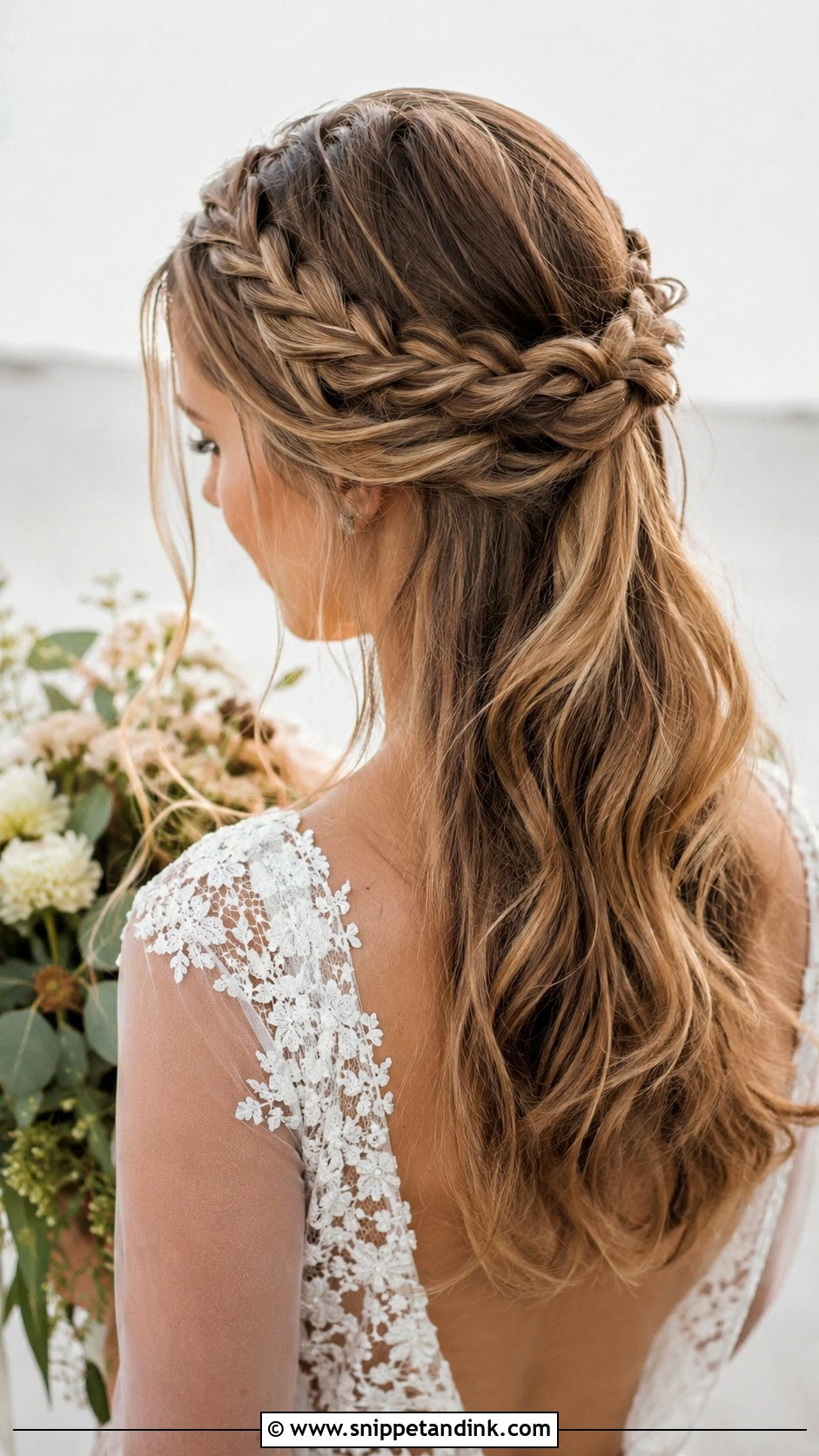
Two thin braids, one from each side, meeting at the back give a symmetrical half-up. I braid each one with a bit of tension near the scalp, then pancake them slightly once they’re pinned together. The rest of the hair flows in waves. Tiny flowers or greenery can be woven in. Loosened, it suits boho or rustic weddings; kept sleek, it looks tidier. Fine hair benefits most from the pancaking, which makes the braids look fuller than they are.
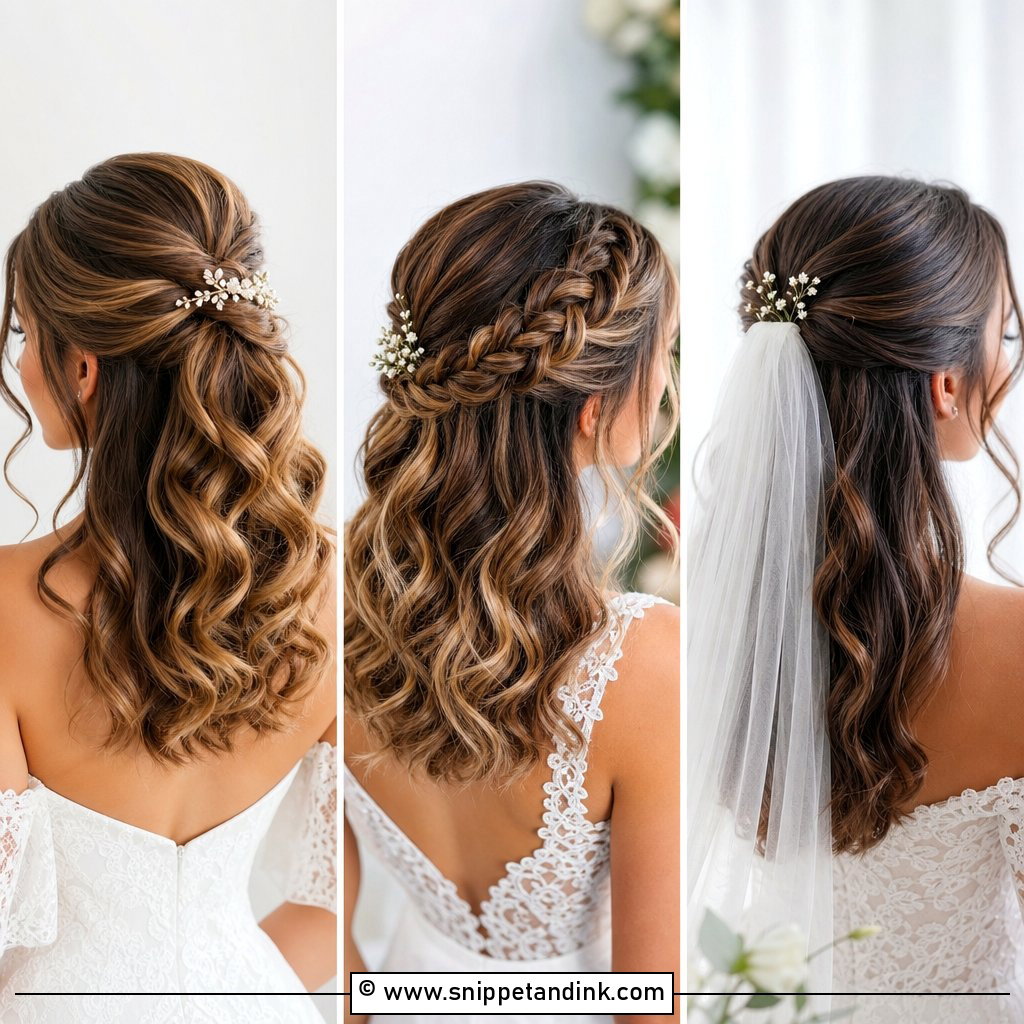
15. Half-Up With a Sparkling Hair Vine
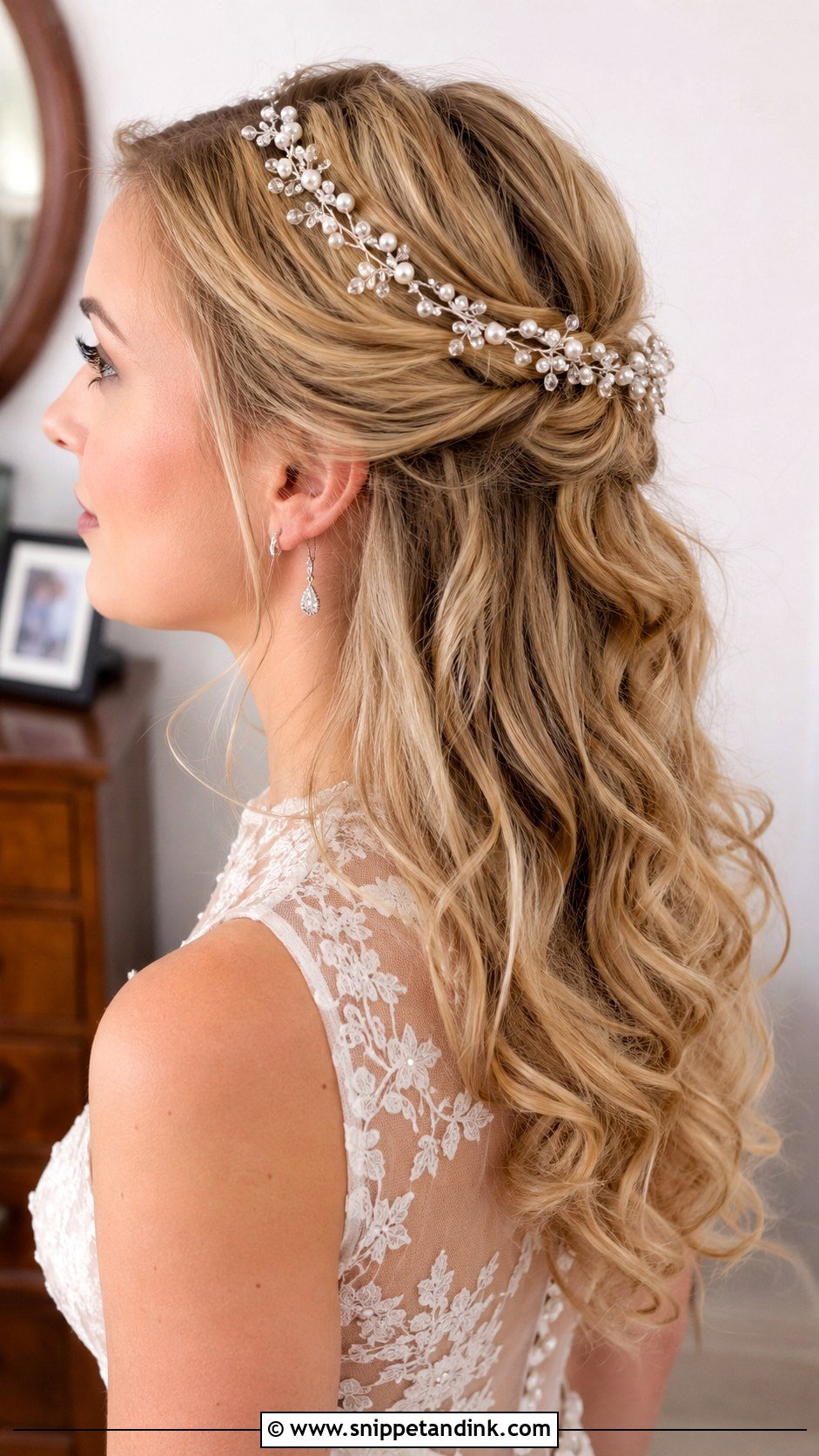
A delicate hair vine laid across the crown of a half-up style adds shimmer without the weight of a tiara. I pin the top section back first, then lay the vine across it, pinning at each end and in the middle with bobby pins threaded through the wire. Crystal vines suit formal weddings; pearl or leaf designs suit boho ones. Soft waves or curls go below. Wear the vine at home for an hour first; the wire ends can scratch behind the ears.
16. Half-Up With Textured Beach Waves
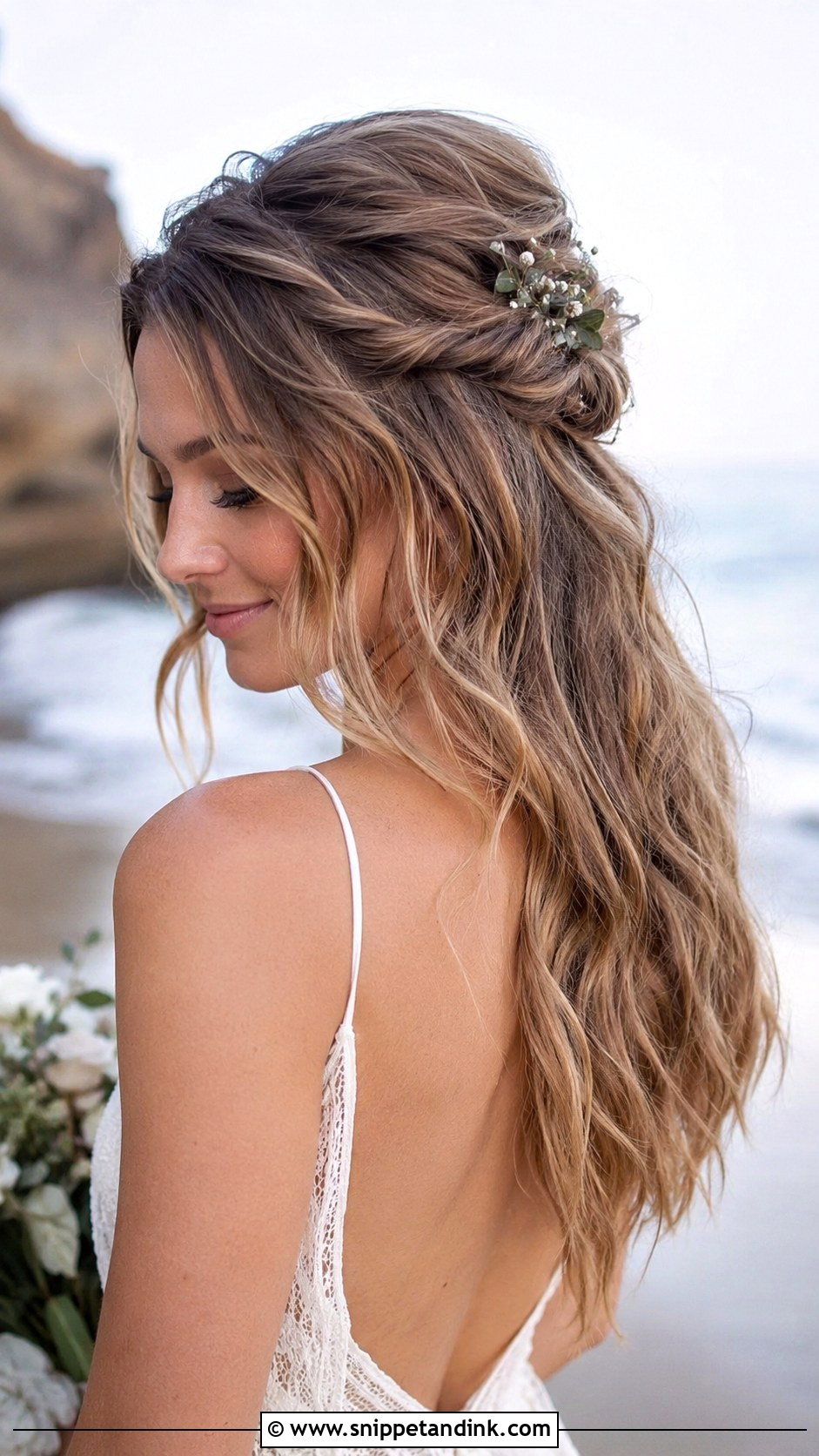
Beach waves on a half-up look relaxed but need the right base. I wave the hair with a flat iron, leaving the ends straight, then tousle with fingers and add a texturizing spray for a lived-in finish. The top section is pinned back loosely, with two crossed pins doing the work underneath. It suits seaside, garden and casual outdoor weddings, and handles wind better than a sleek finish. A small floral pin can sit at the crown, or nothing at all.
17. Half-Up With a Bouffant Crown
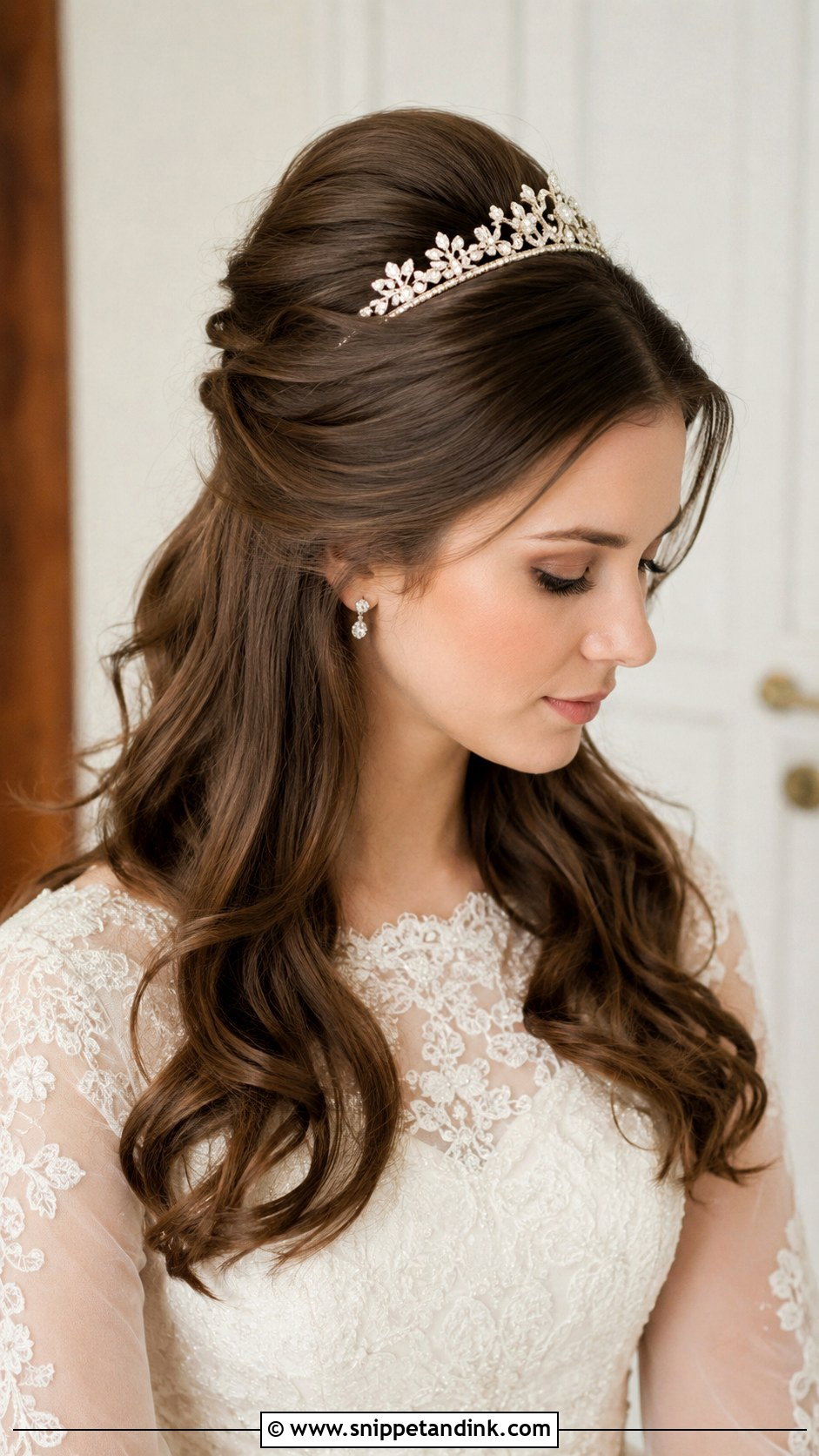
A bouffant crown half-up takes its volume from backcombing at the root of the top section. I tease small sections close to the scalp, then smooth a clean top layer over them and pin it back with hidden pins. The height lengthens the face and frames it, and it sits nicely in front of a veil or under a tiara. Soft waves below balance it. It suits formal and vintage-themed weddings. If you have a long face, ask for a softer lift.
18. Half-Up With a Knotted Detail
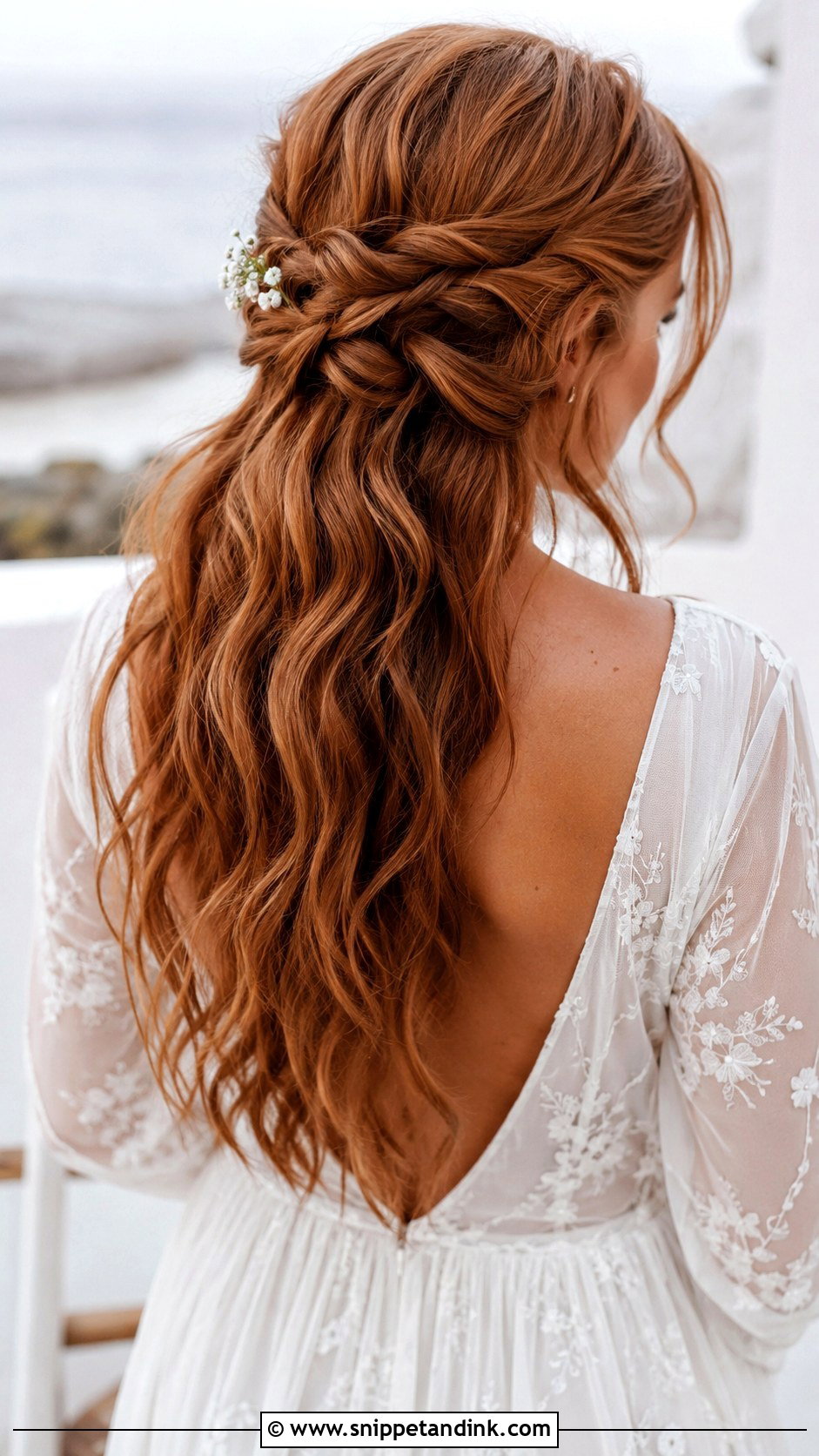
Knots are a neat alternative to braids if you want detail without much skill. I take a section from each side and tie them into a simple knot at the back, then pin the ends beneath it. The knot holds itself, so it’s sturdier than a twist. Loosen it slightly for a softer finish. A delicate pin or small flower adds detail. It suits relaxed and boho weddings, and keeps hair off your face while the rest of your length falls in waves.
19. Half-Up With Curtain Bangs
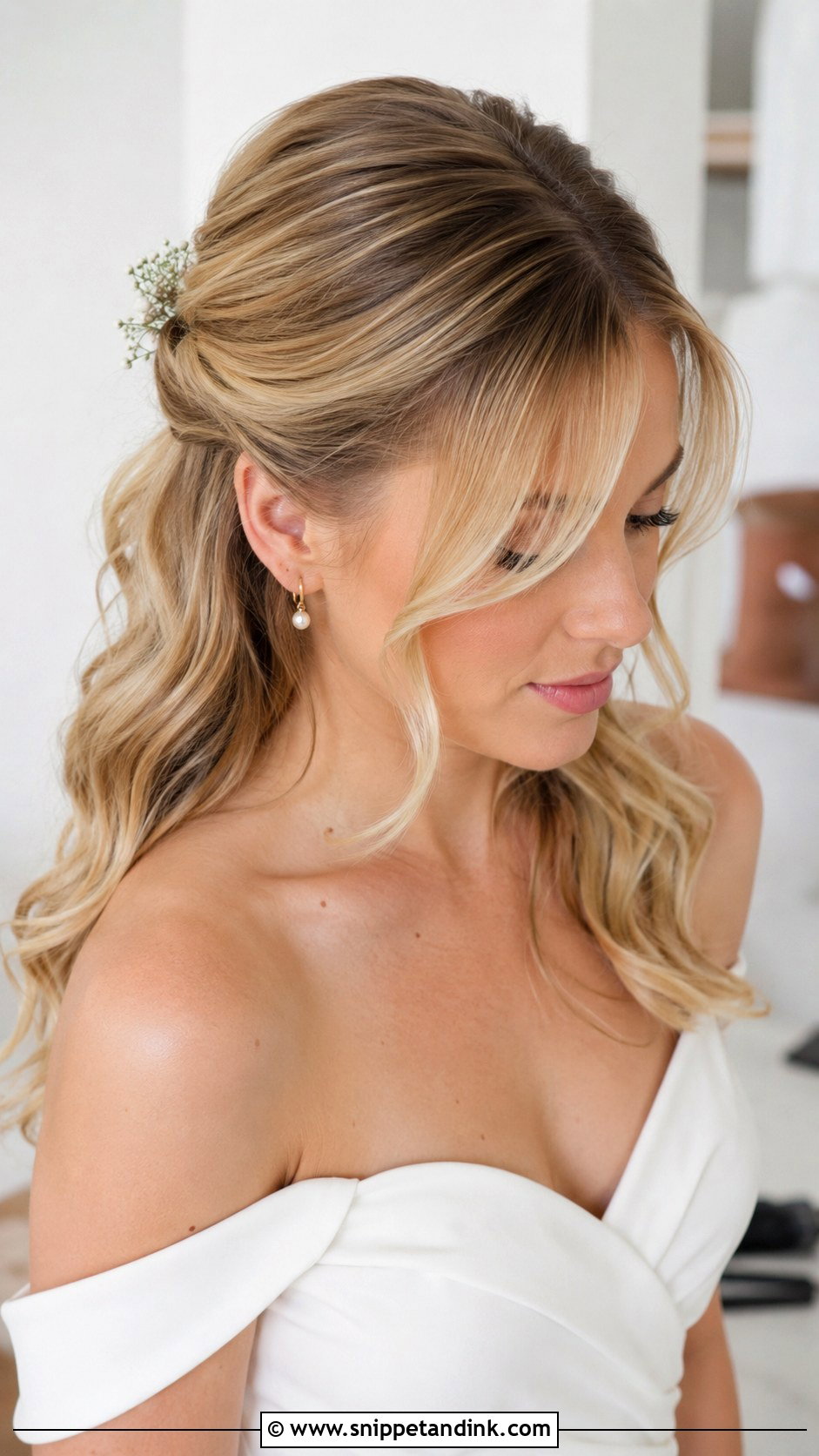
Curtain bangs need their own styling: I blow-dry them over a small round brush, rolling each side away from the face, and set them before doing the rest. The crown is pulled back while the bangs sweep gently to each side. They frame the face and give a modern feel. Medium waves fall below. If you’re growing bangs out for the wedding, don’t trim them in the final week, since freshly cut bangs sit stiff and short for a few days.
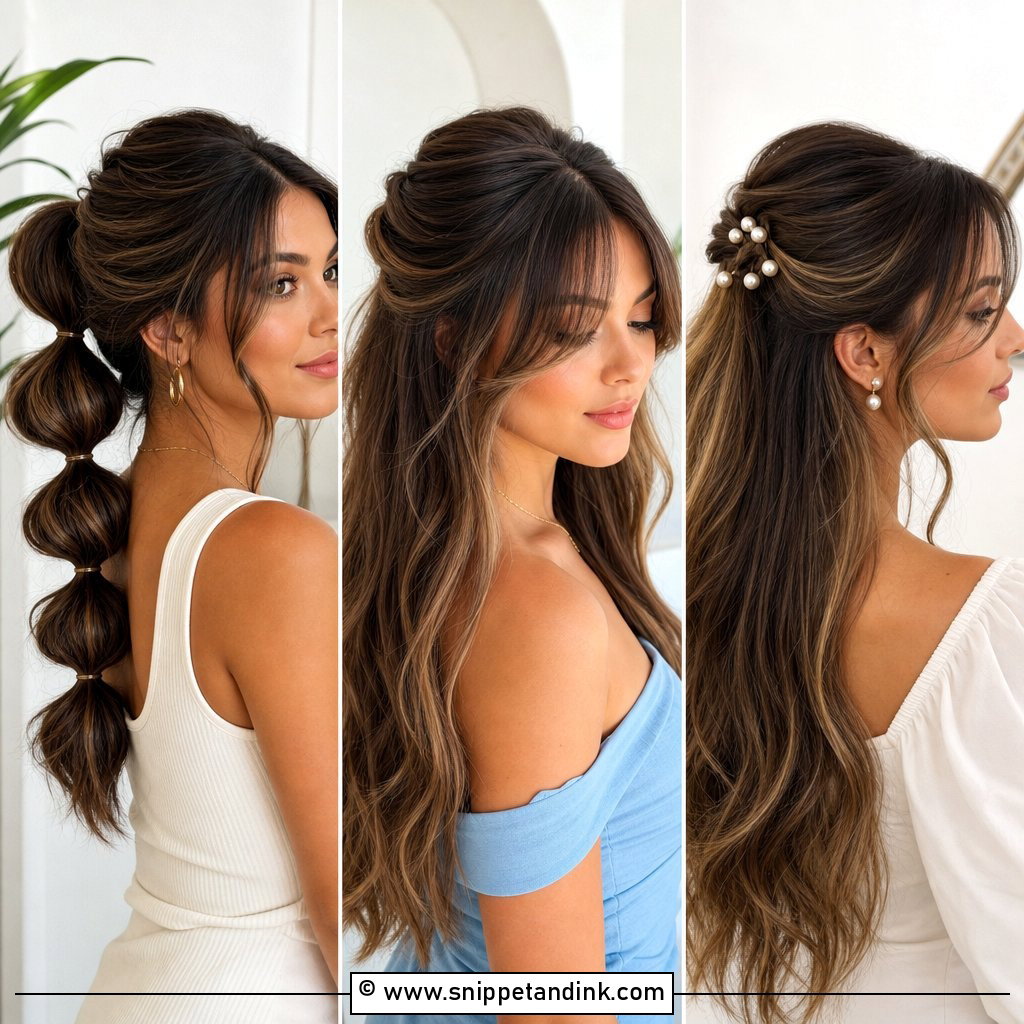
20. Half-Up With Twisted Rope Braid
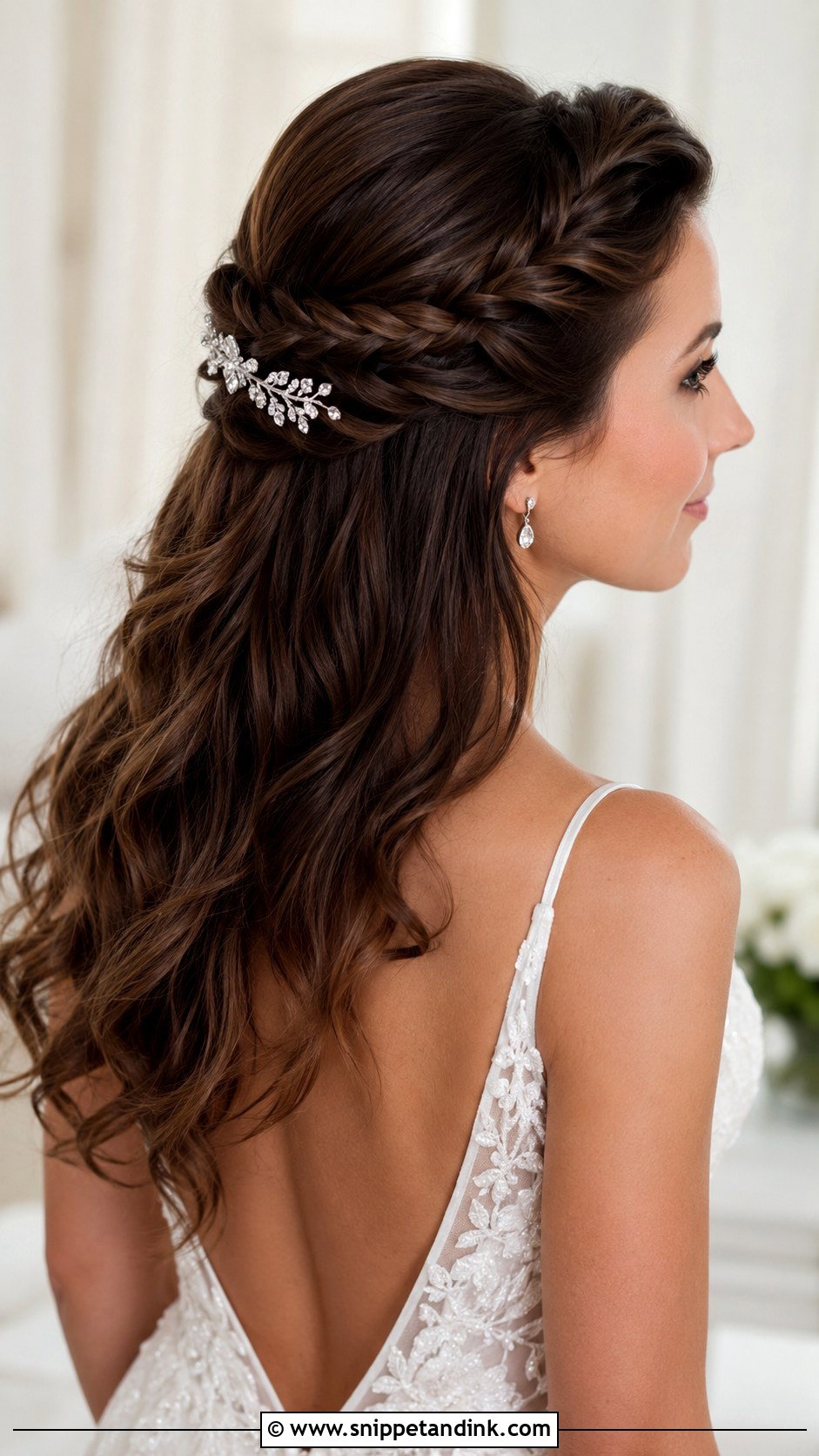
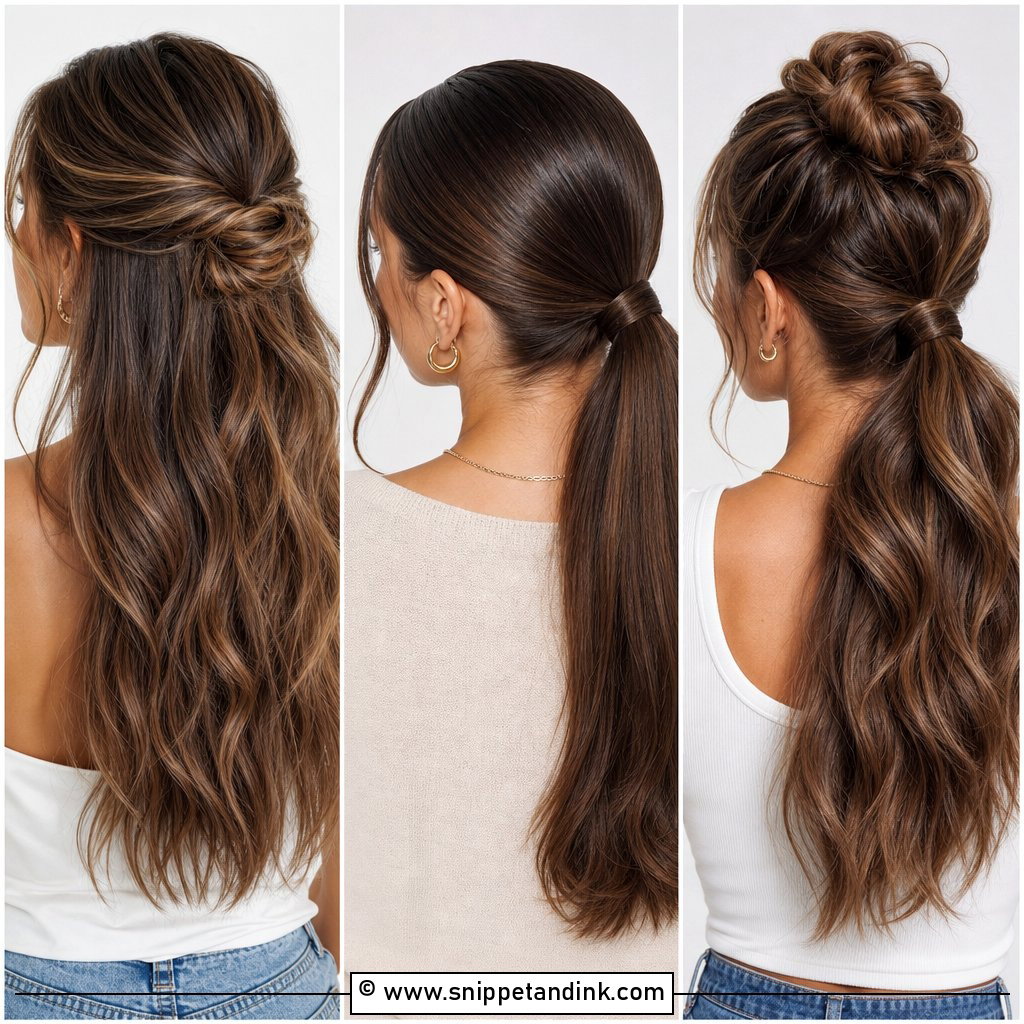
A rope braid is two sections twisted around each other in the opposite direction to the individual twists, which locks the pattern. I twist each strand to the right, then wrap them together to the left, working across the crown, and pin it where it meets. It looks sleek and refined, and it photographs especially well from behind. A sparkling pin or fresh flower can sit where the braid ends. It suits formal and relaxed weddings, and keeps hair off your face while the waves fall below.
Stopping the Top Section From Sagging by the Speeches
Every half-up style has the same weak point. The gathered section sits on loose hair, so it slides down slowly as the day goes on. These are the habits I rely on.
- Prep with texture. Dry shampoo or texture spray at the roots gives pins something to grip.
- Hide a small elastic. I gather the top section with a clear elastic before any twist or braid goes on, then pin the decoration to that.
- Cross every pair of pins. Two bobby pins in an X hold far better than any number of single pins.
- Set the curls below firmly, because loose hair relaxing pulls the top section down with it.
Veil Placement on a Half-Up
With a half-up style, the veil can go in one of three places, and each changes how it looks. Under the gathered section is the most secure and hides the comb completely. Above it, at the crown, gives more height and shows the veil framing your face, but needs a firm anchor. Through a braid or twist is neat for lightweight veils only, since a long cathedral veil will pull the braid down. I’d decide at your trial, wearing the actual veil, rather than on the morning.
The Top Section Does All the Work
Half-up hair works so well on medium length because it balances structure and movement: the top keeps your face clear, the length below gives softness. From twisted halos and braids to Hollywood waves and curtain bangs, the right choice depends on your dress, your veil and the weather on the day. Bring your veil and accessories to the trial, and ask your stylist to show you how the top section is anchored. If it’s pinned well, everything else follows.
You'll Like These Ideas:


Leave a Reply