
Wedding makeup has two audiences: the people in the room and the photographs you’ll pull out decades from now. The faces that still look right in old albums share a few habits. The skin looks like skin, the color suits the person wearing it, and the eyes keep their shape after the vows and the speeches have done their work. That leaves plenty of room. Clean nudes, a classic red, soft smoky eyes or a simple pink flush can all age well. What dates a face is heavy contour, chunky glitter and brows drawn harder than the bride’s own. Below are 25 looks I come back to often, with what each one needs to hold up.

Flash, Daylight and Candlelight on the Same Face
Most brides judge their makeup in a bathroom mirror, and that is the least useful light of the whole day. Over a wedding, the same face gets photographed in direct sun, open shade, indoor tungsten, candlelight and on-camera flash. Each one exaggerates something different, so I build a look to survive the harshest of them rather than look perfect in one.
- Flash shows shine on the forehead and nose, and it can bounce off mineral sunscreen and some silica-heavy setting powders, leaving a white cast under the eyes. I test any powder with a phone flash at the trial.
- Midday sun makes dark shadow look darker and turns strong highlighter into what looks like wet patches. Softer edges and less shimmer hold up better outdoors.
- Open shade and overcast skies flatten color, so blush and lips often need to be a shade brighter than feels natural in person.
- Candlelight is warm and forgiving. It suits deeper lips and lets you get away with more.
If your ceremony and reception happen in very different light, tell your artist. I’ll often build the base for daytime and plan a deeper lip and a fresh press of powder for the evening, rather than asking one face to do both jobs.
1. Natural Wedding Makeup

Natural makeup is the one I spend the longest on, oddly enough, because every product has to disappear. I use a skin tint or a thin foundation and conceal only where there is redness or shadow, usually around the nose and the inner corner of the eye. Cream blush in peach or rose puts back the color that foundation takes away. Eyes get beige or taupe shadow and a thin brown line pressed into the lashes rather than drawn above them, and a satin nude finishes the lip. The catch is that natural makeup shows everything about your skin, so it rewards a good skincare month far more than a full-coverage face does.
2. Soft Glam Wedding Makeup

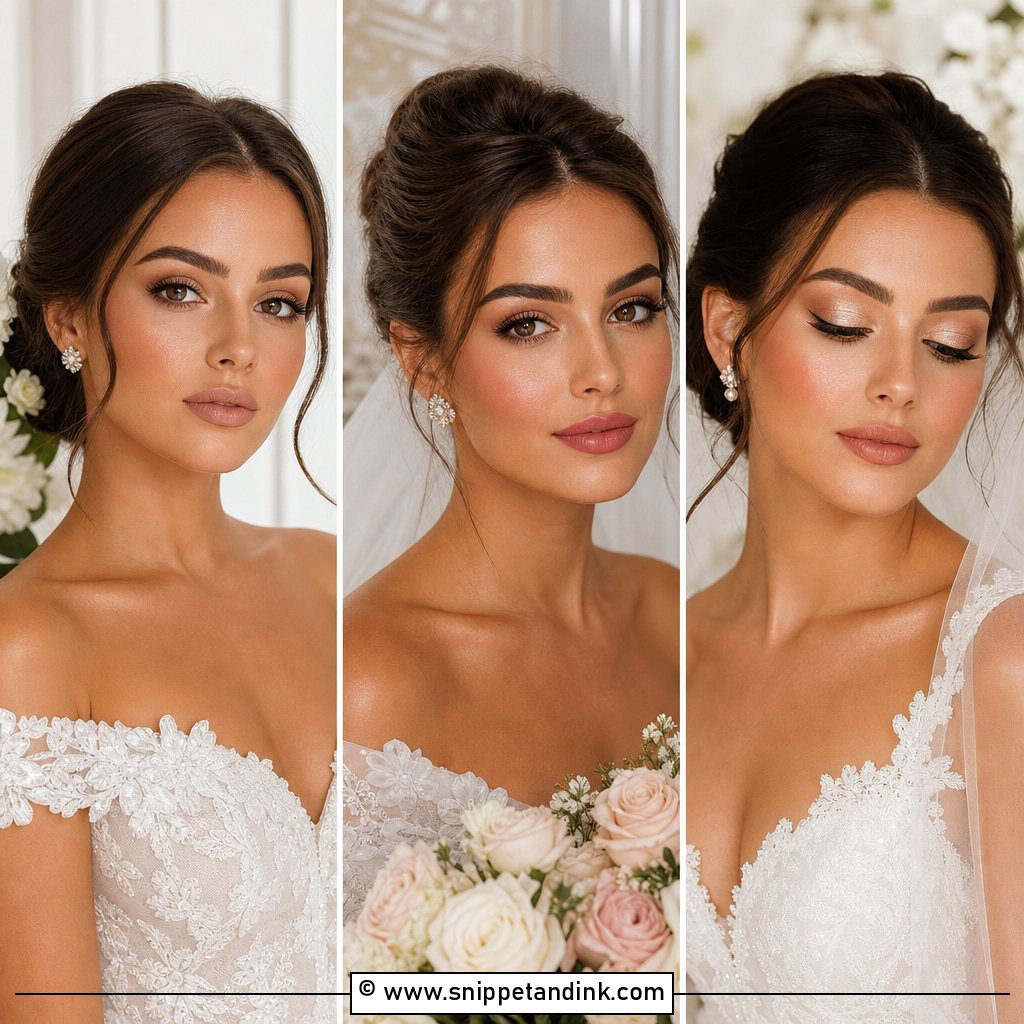
Soft glam sits one step up from natural: medium coverage, sculpted cheeks, blended shadow, defined lashes and a nude or rosy lip. Blending is the whole job. When soft glam looks dated in photos, it is nearly always a contour line or a brow tail that was left too crisp. On the lids I lean on warm browns, a little champagne shimmer and muted rose, because those tones give dimension without reading as color. A soft matte or satin base gets through the ceremony with only a blot. It’s the look I suggest most often to brides who can’t decide, since almost no gown or neckline fights with it.
3. Dewy Wedding Makeup

Dewy skin is easy to get wrong because glow and grease look the same to a camera flash. I hydrate first, then use a radiant primer under a long-wear foundation with a natural finish, so the light comes from the skin rather than a top layer of oil. Cream blush and a liquid highlighter go on the high points only: cheekbones, brow bone, a touch on the cupid’s bow. The T-zone still gets a light press of powder, every time. Brown liner, wispy lashes and a glossy nude lip suit it. I’d steer very oily skin away from this finish in July, since by the reception the glow tends to spread to places it wasn’t put.
4. Matte Wedding Makeup

For oily or combination skin, long ceremonies and warm weather, a matte base is the practical answer. The modern version shouldn’t look flat. I prep with a hydrating layer even on oily skin, then use a soft-matte foundation and set only the areas that shine, so the cheeks keep some life. Powder blush, a whisper of bronzer and a satin highlight bring back the dimension that matte takes away. Taupe, brown or soft plum go on the eyes, with a matte rose, nude or mauve lip. The one place I’m careful is dry patches around the nose and chin; a fully matte formula settles into them and cracks by mid-afternoon.
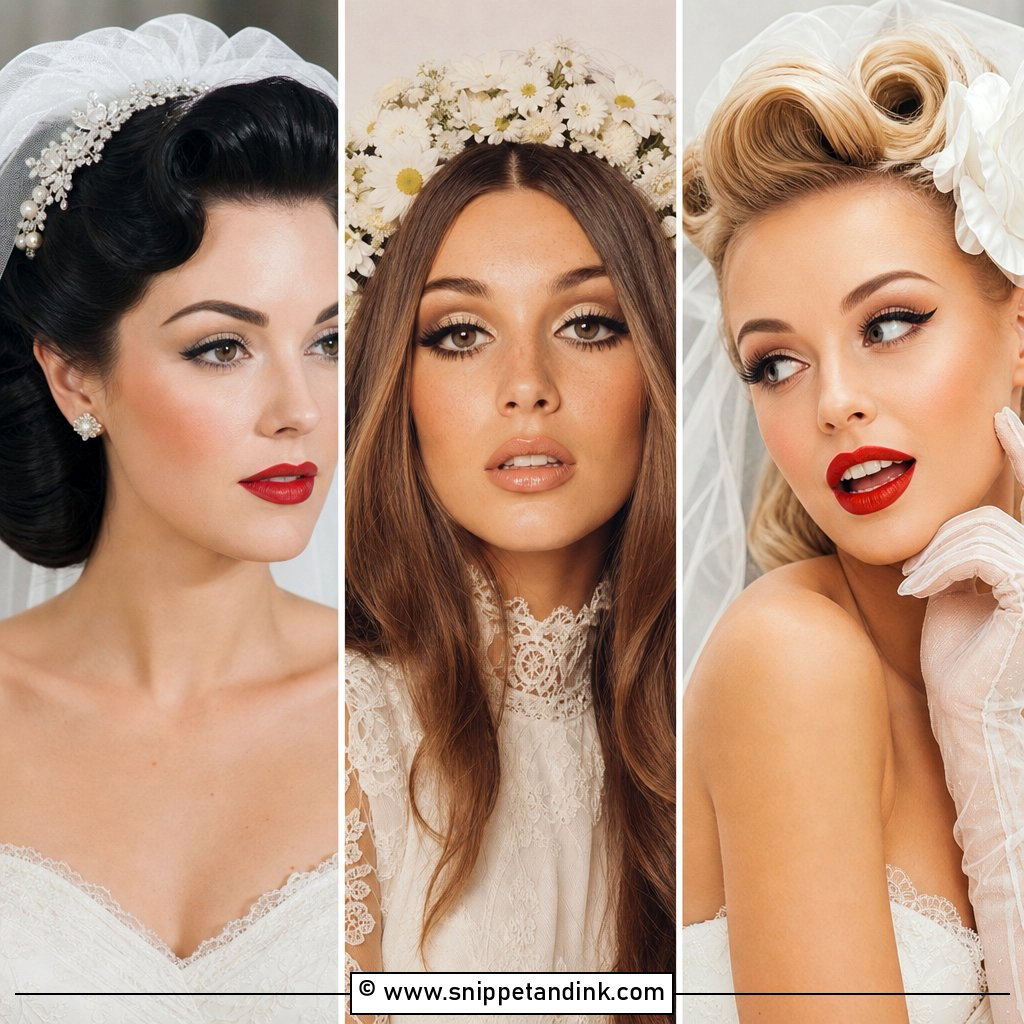
5. Classic Red Lip Wedding Makeup

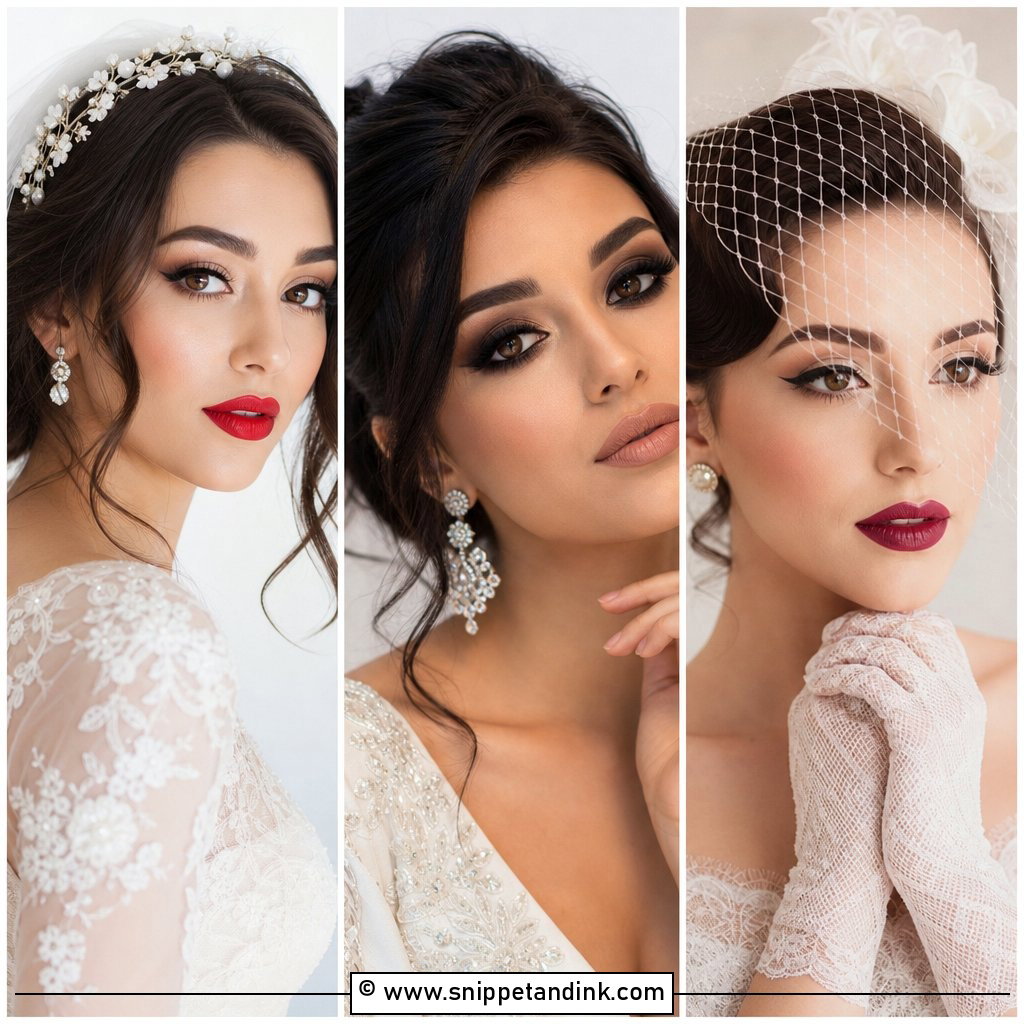
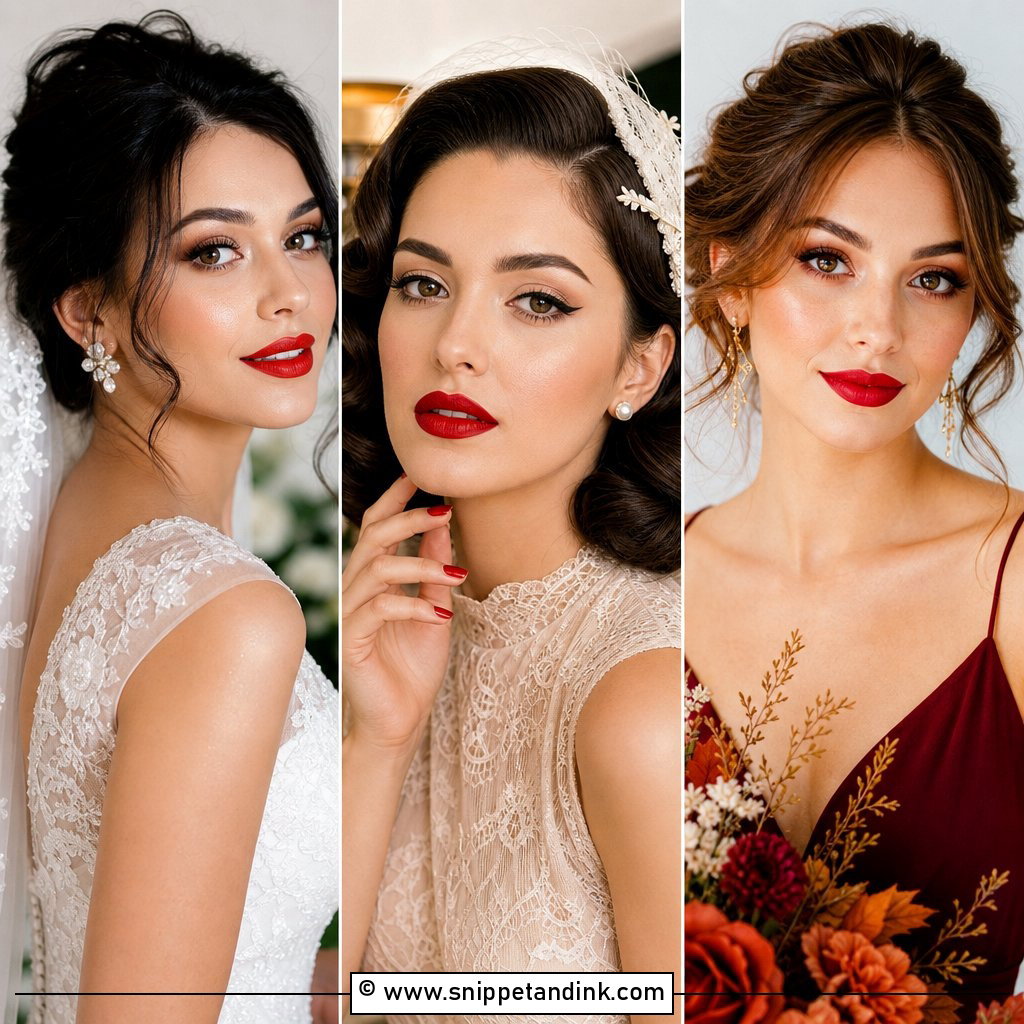
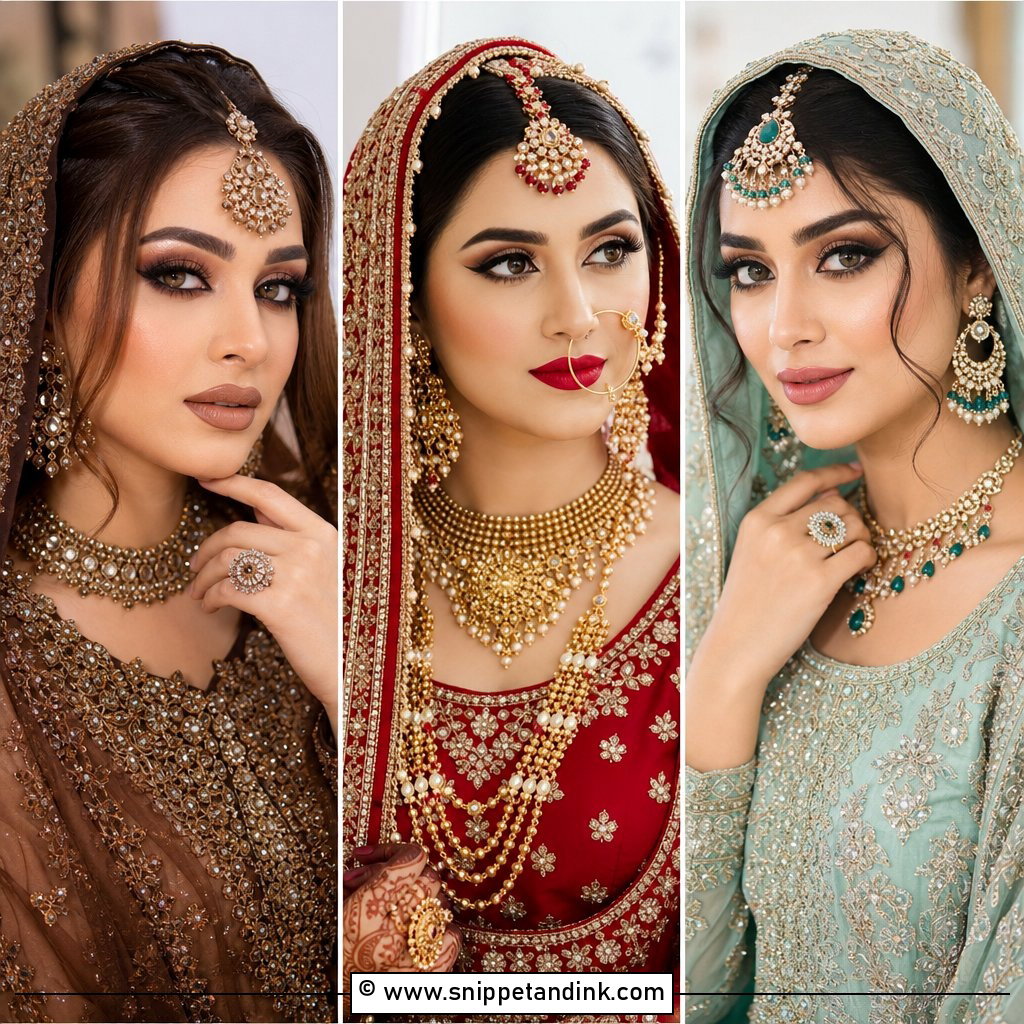
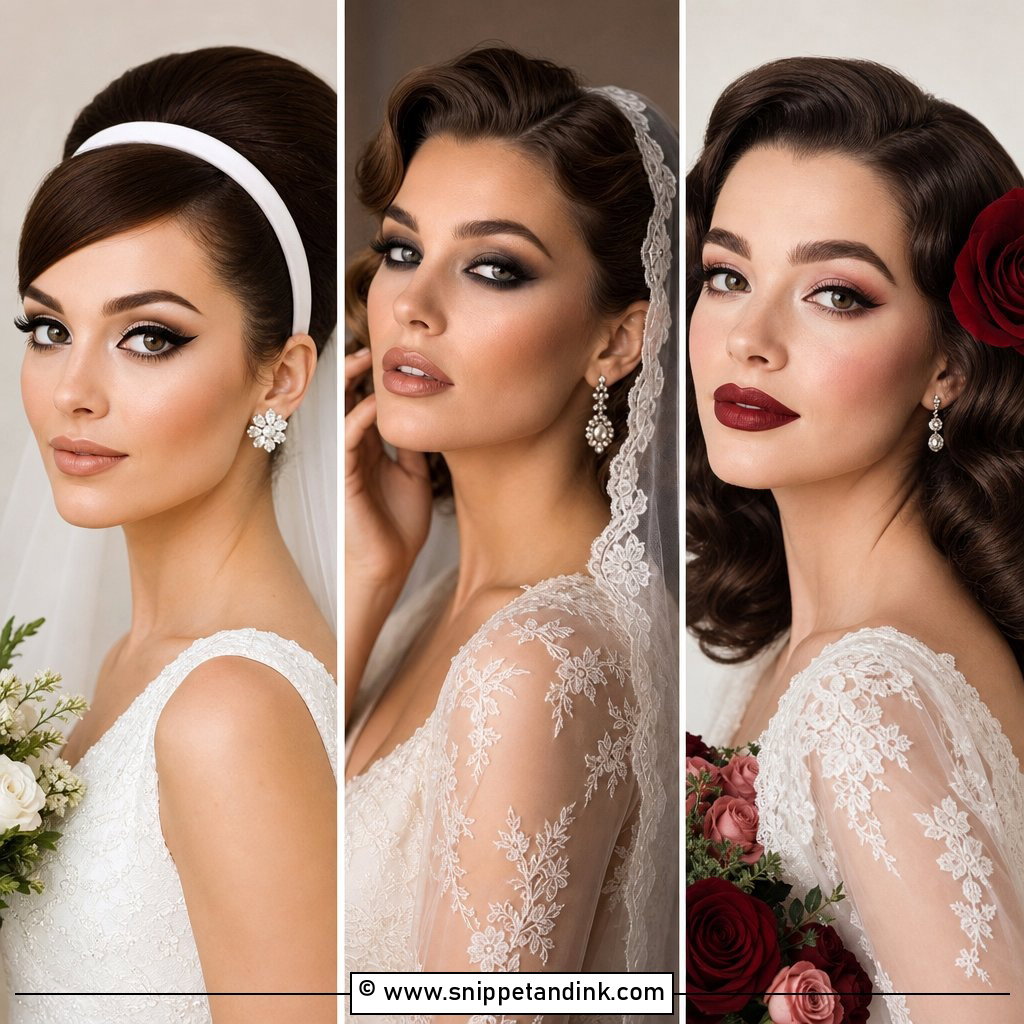
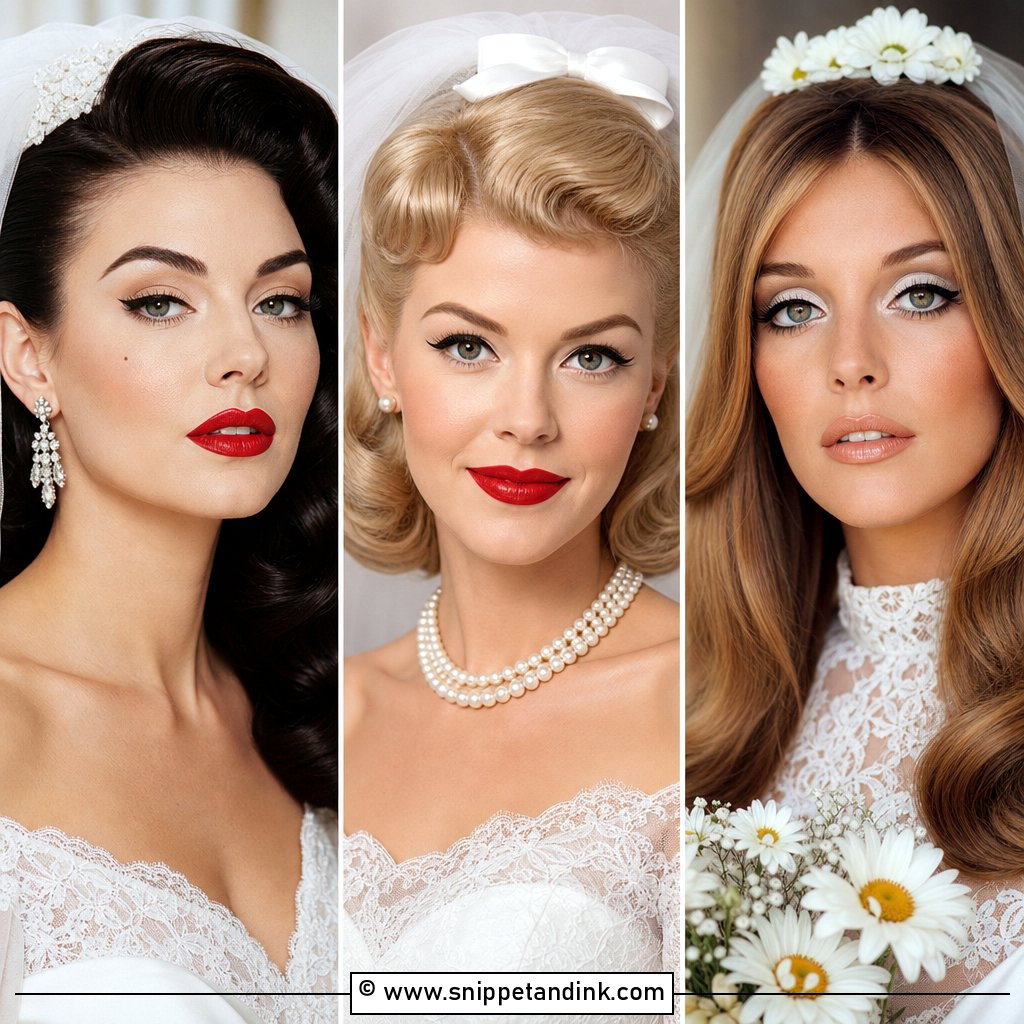
A red lip only works when everything else steps back. I keep the skin smooth and softly matte, the eyes to a champagne lid with brown or black liner and lifted lashes, and the blush in the same family as the lipstick so the face reads as one decision. Undertone matters most here. Blue-reds suit cool skin and make teeth look whiter, true red sits well on neutral skin, and brick red flatters warm skin. I line and fill the whole lip with liner before the lipstick, which keeps the shape when the color wears down during dinner. Satin gowns, vintage-style dresses and city weddings all suit it.
6. Nude Lip Wedding Makeup

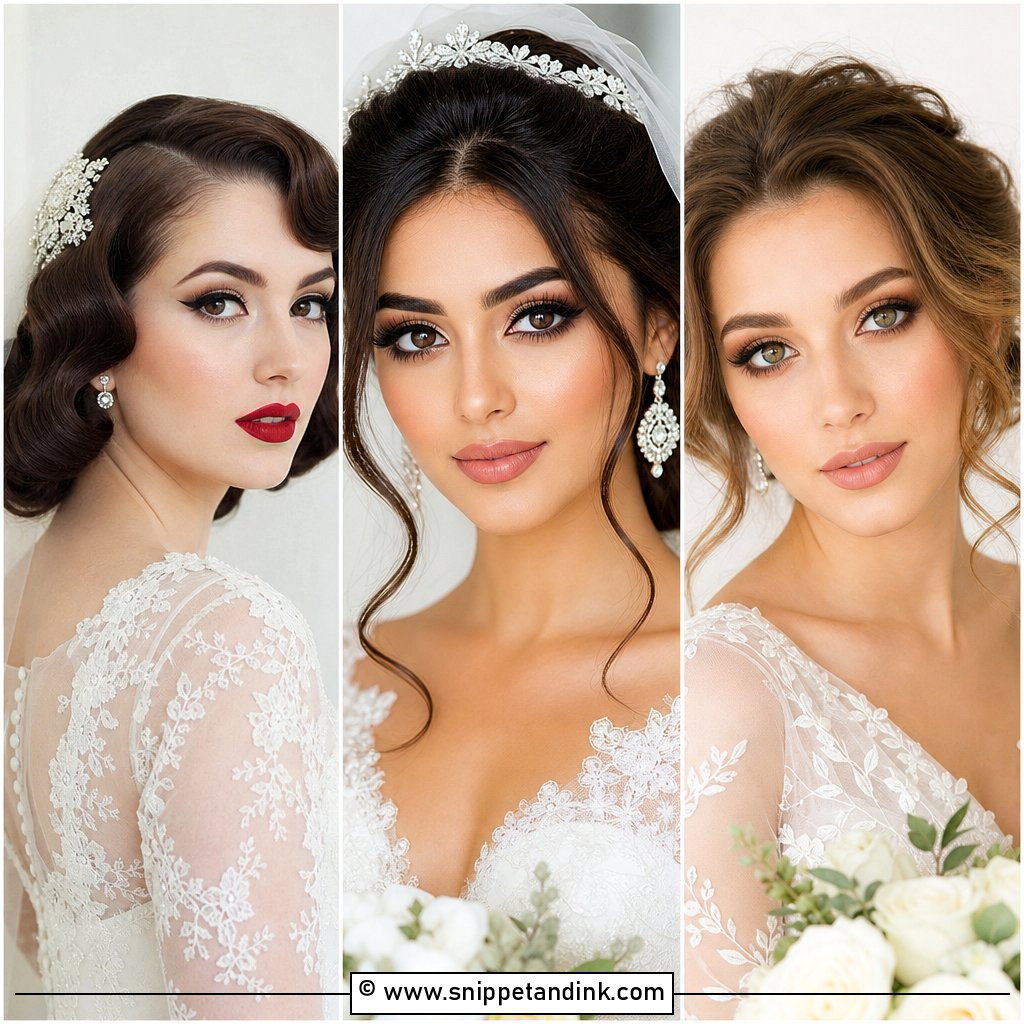
The most common mistake I see with a nude lip is going too pale. In photos, a nude that matches your skin makes the mouth vanish and leaves the face looking tired. The right bridal nude carries pink, peach, caramel or brown depth, roughly a shade or two deeper than your natural lip. A liner slightly darker than the lipstick shapes the edges and stops the color from disappearing in wide shots. Around it I’ll do softly sculpted cheeks, satin or glowing skin, and warm brown or champagne eyes with natural lashes. It works from beach to ballroom and keeps attention on the dress and jewelry.
7. Smokey Eye Wedding Makeup

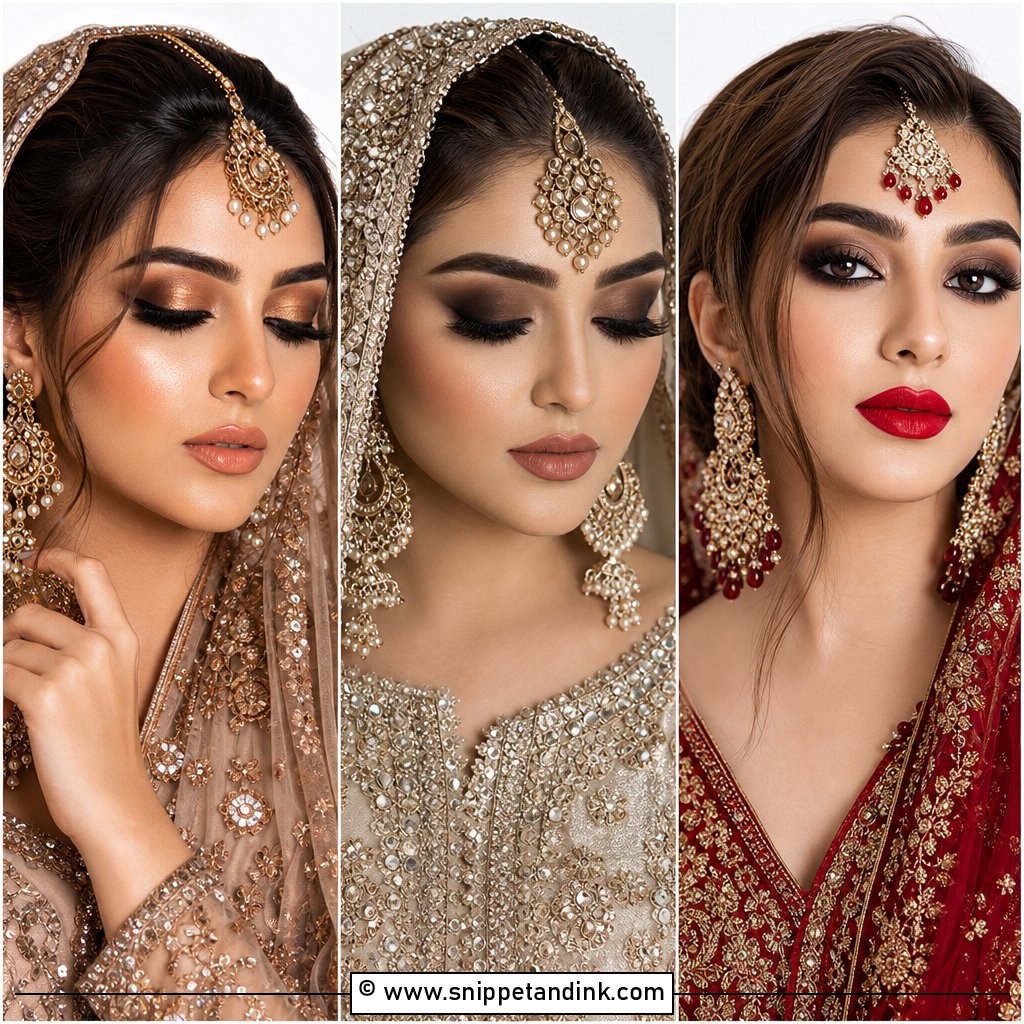
A bridal smokey eye should be lifted and soft, not a black lid. I build it in charcoal, espresso, bronze, or taupe, keeping the deepest shade tight to the lash line and diffusing it up and out toward the tail of the brow. Waterproof liner and individual lashes hold the definition through tears, which strip the inner corners first. Keep the skin smooth but not shiny, and the lips neutral in beige, rose or soft mauve. Evening ceremonies and formal venues suit it best. In bright midday sun it photographs heavier than it looked in the mirror.
8. Brown Smokey Wedding Makeup

If a black smokey eye feels like too much, brown does almost the same job with half the risk. Medium brown goes through the crease, espresso near the lashes, and bronze or champagne shimmer on the center of the lid. I line in brown so the edge stays diffused, then use black mascara for contrast. Bronzed cheeks, peachy blush and a warm rose or nude lip balance it. Blue, green, hazel and brown eyes all wear it well. It also holds up in daylight photos, where black shadow often turns into a hard ring around the eye.
9. Rose Gold Wedding Makeup

Rose gold dates quickly when it’s done with chunky glitter, so I use fine shimmer only, pressed onto the lid with a fingertip rather than swept on with a brush, which cuts down on fallout. The eyes carry the color in rose, champagne and warm metallic shades, while fresh skin, rosy blush and a pink-nude or soft mauve lip keep the rest quiet. Spring and garden weddings suit it, and it warms up an indoor ceremony too. It makes the most sense when the dress, jewelry or flowers already include blush, ivory or champagne, so the eyes echo something real instead of introducing a new color.
10. Champagne Eye Wedding Makeup

Champagne on the lid is the closest thing I have to a no-risk eye. The shimmer catches light in close-ups and opens the eye, while matte taupe or soft brown in the crease gives it shape. A thin liner along the lashes and wispy lashes or individual clusters finish it, with satin skin, peachy-pink blush and a nude rose lip. One caution for hooded lids: shimmer placed only on the mobile lid disappears once the eye is open, so on those brides I take the champagne slightly above the natural crease. Any dress, metal tone or season works with it.
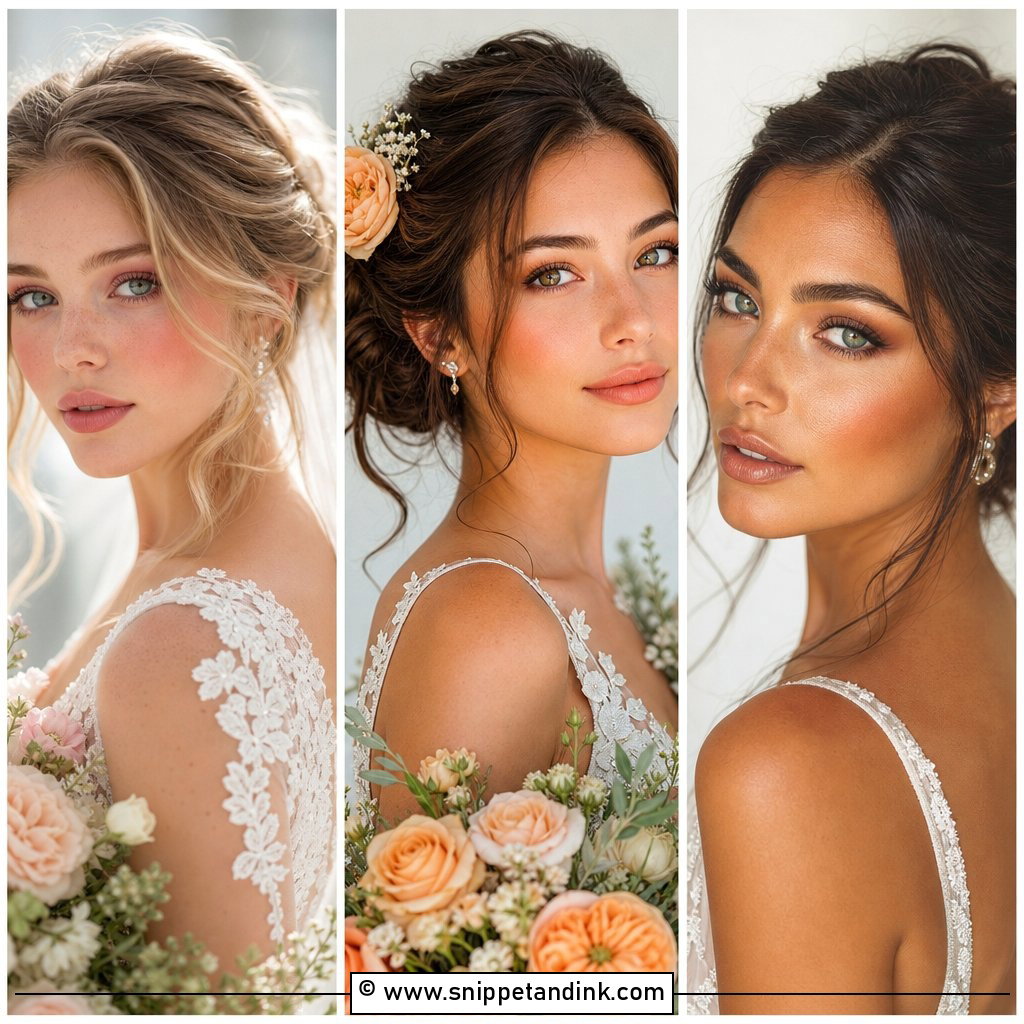
11. Bronze Wedding Makeup

Bronze makeup adds warmth and shape at once, which is why I use it so much for summer weddings and outdoor ceremonies. I put bronze eyeshadow on the lids, warm brown in the crease and a soft liner at the lashes. Bronzer stays where the sun would naturally hit, around the forehead, upper cheeks and jaw, blended until there’s no edge. Peach or terracotta blush adds warmth without competing with the eyes, and the lip goes caramel, peach or warm rose. On fair, cool skin I go lighter than you’d expect, because too much bronzer turns muddy next to a white gown.
12. Peach Wedding Makeup

Peach is the color I reach for when a bride wants to look rested more than made up. The blush is the center of it, blended across the cheeks and up toward the temples. Eyes get peach-beige, warm tan or soft gold with brown liner, and the lip goes peach nude or coral-pink over a natural complexion with a gentle highlight. Ivory gowns and relaxed hair like waves or low buns sit well with it. On very cool, pink-toned skin, peach can turn slightly orange; a rose-leaning peach usually fixes that.
13. Pink Blush Wedding Makeup

A pink flush makes a face look awake and happy, which tired brides need by the reception. The shade depends on depth: baby pink on fair skin, then rose, warm pink and berry-pink as skin gets deeper. Light pinks turn chalky on deep skin, so matching the depth is the main thing I check. I blend it slightly upward for lift over a smooth, natural base, with soft taupe or rosy brown on the eyes and a pink nude, rose or sheer berry lip. Daytime weddings suit it best. A layer of cream blush with a little powder blush pressed on top lasts far longer than either alone.
14. Mauve Wedding Makeup

Mauve is my answer when a bride asks for color that still feels restrained. It sits between pink, rose and plum, so it adds depth without shouting. I use mauve-brown in the crease, a soft shimmer on the lid and brown or plum liner at the lashes, then a rose-mauve blush and a matching satin lip over satin or softly matte skin. It’s a cooler palette, which is why it pairs so naturally with fall weddings, formal venues, silver jewelry, lace and dusty rose bouquets. On warm, golden skin it can look grey. Adding a touch of warmth to the blush keeps it alive.

15. Berry Lip Wedding Makeup

Berry gives you richness without the commitment of red. It can be sheer, satin or matte, and I usually let the bride choose by how much she wants to think about her lips during the day: a sheer stain needs almost no touch-ups, while a matte holds well but shows any dryness. Eyes stay simple with taupe shadow, soft liner and lifted lashes, and the blush sits in the same berry or rose family. A liner one shade deeper keeps the edges clean through photos and kissing. Fall and winter weddings and evening ceremonies are its natural home.
16. Winged Liner Wedding Makeup

Winged liner wedding makeup lasts in photos because the shape is so clean. I keep the wing thin to medium and angle it toward the tail of the brow, so it lifts rather than drags down. On hooded eyes I draw it with the eyes open, since a wing drawn on a closed lid folds and breaks when she looks up. Around it go a soft neutral lid, a matte crease, curled lashes and satin skin, with a nude, pink or red lip. The liner must be waterproof. Anything less will print onto the upper lid by the first dance. Sleek buns, clean gowns and pearls are its natural partners.
17. No Makeup Wedding Makeup

No-makeup makeup is careful enhancement, not bare skin. I use sheer foundation or a skin tint, spot concealer, cream blush, tinted brow gel and brown mascara, plus a little cream highlight on the high points. Eyes get a skin-toned shadow and a tightline only if the lashes need it, and a tinted balm goes on the lips. This look lives or dies on skin prep, because there is nothing covering texture. It’s also the hardest face to keep through a long day, so I suggest it mostly for courthouse weddings, elopements and short beach ceremonies, or for brides happy to accept some shine in the later photos.
18. Full Glam Wedding Makeup

Full glam can age well when the palette stays classic and the blending stays soft. That means long-wear foundation, sculpted cheeks, defined brows, dramatic lashes and dimensional shadow in brown, gold, bronze or champagne, with a nude, rose or soft brown lip to balance the eyes. Sharp contour and heavy glitter are what date it. The question I ask first is whether the bride wears glam normally. If she does, it will feel like her. If she doesn’t, she may spend the day feeling masked, and I’d talk her toward soft glam instead.
19. Vintage Wedding Makeup

Vintage-inspired makeup needs restraint or it tips into costume. Satin skin, softly arched brows, defined liner, elegant lashes and a red, rose or berry lip are the core. I keep the lids plain beige or taupe so the liner and lip carry the look, then add blush for life and a light dusting of powder. Lace, tea-length gowns, Hollywood waves and classic updos all belong with it. What usually ruins it is a brow drawn too thin or too arched for the face, so I follow the bride’s natural brow and only soften the arch.
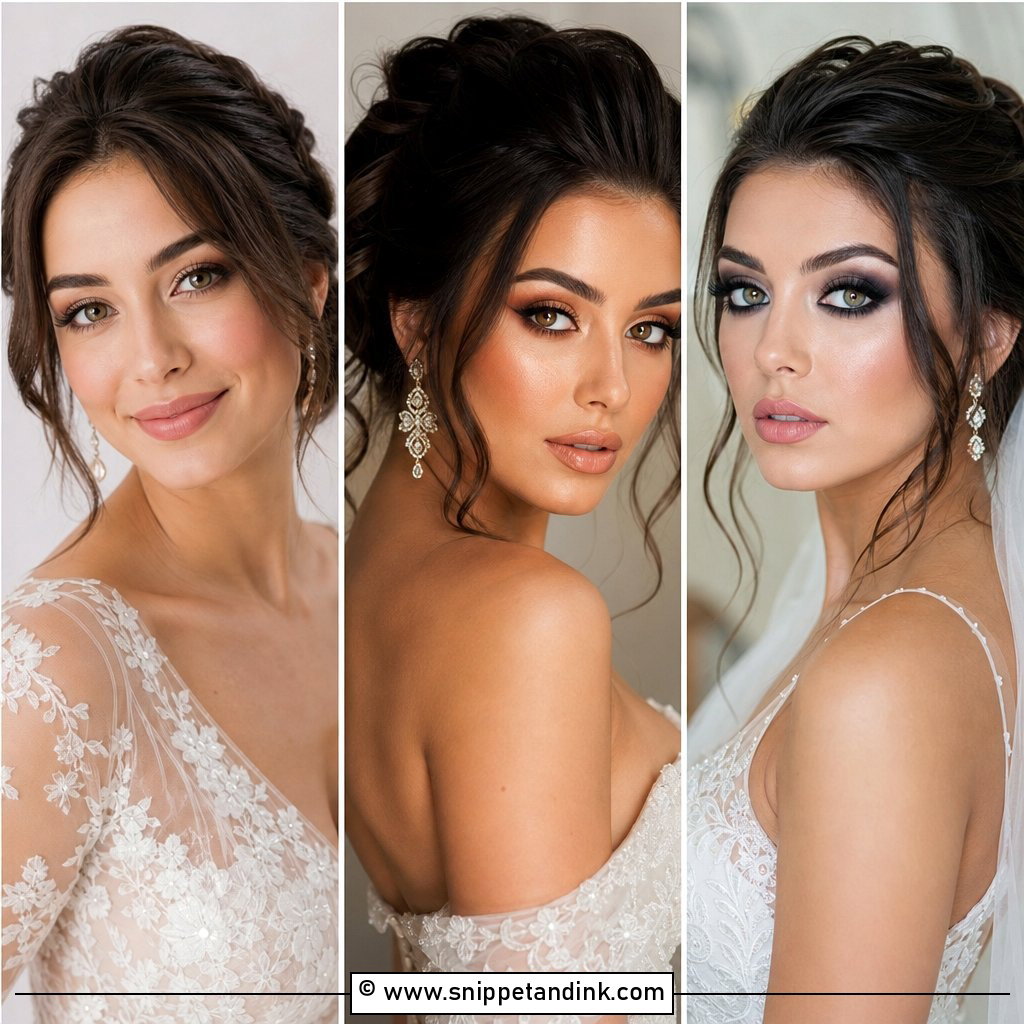
20. Beach Wedding Makeup

Beach makeup has to survive humidity, wind and sunlight that shows every layer. I keep products few and light, because heavy layering is what separates first in humid air. A radiant base, cream bronzer, peach blush and a soft highlight, then waterproof mascara and liner with simple champagne, sand or bronze shadow. A lip stain is more practical than gloss, which collects hair in the wind. Watch the sunscreen too: mineral formulas with zinc or titanium can bounce flash and whiten the face in evening photos, so if the reception will use flash I keep them for the neck, chest and arms. Loose waves and simple dresses fit the setting.
21. Garden Wedding Makeup

Garden ceremonies are lit by the sky, which is kind to soft makeup and unkind to heavy powder. I use cream products for a skin-like finish and set only where needed. The cheeks go rosy, the eyes are lightly defined in soft brown, champagne or rose, and the lips stay pink, rose or peach. A little highlighter on the cheekbones adds dimension, but dappled shade under trees makes it look patchy, so I keep it subtle for anyone marrying under a canopy. Floral gowns, lace, low buns and soft curls all fit.
22. Winter Wedding Makeup

Winter skin is drier, and indoor heating makes it worse, so I hydrate more than usual before a satin or soft matte base. Powder clings to dry patches in cool outdoor photos, so I use less of it and press it in rather than sweep. Rose, mauve or berry blush gives color, and taupe, brown, plum or champagne define the eyes. A berry, rosewood, nude or classic red lip can work depending on the dress and bouquet. Candlelit receptions are warm and low, which flatters a deeper lip. Sleek updos, long sleeves and satin gowns suit the season.
23. Fall Wedding Makeup

Fall wedding makeup borrows earthy tones, and the risk is using all of them at once. Bronze, copper-brown, caramel or warm taupe go on the eyes with brown liner and fluttery lashes, over satin skin with soft bronzer and warm rose, peach or terracotta blush. Lips can be nude brown, rosewood, cinnamon or soft berry. I pick one feature to go deep and keep the other two lighter, because deep eyes, deep cheeks and a deep lip together read heavy in photos. Ivory, champagne and off-the-shoulder gowns sit well with it.
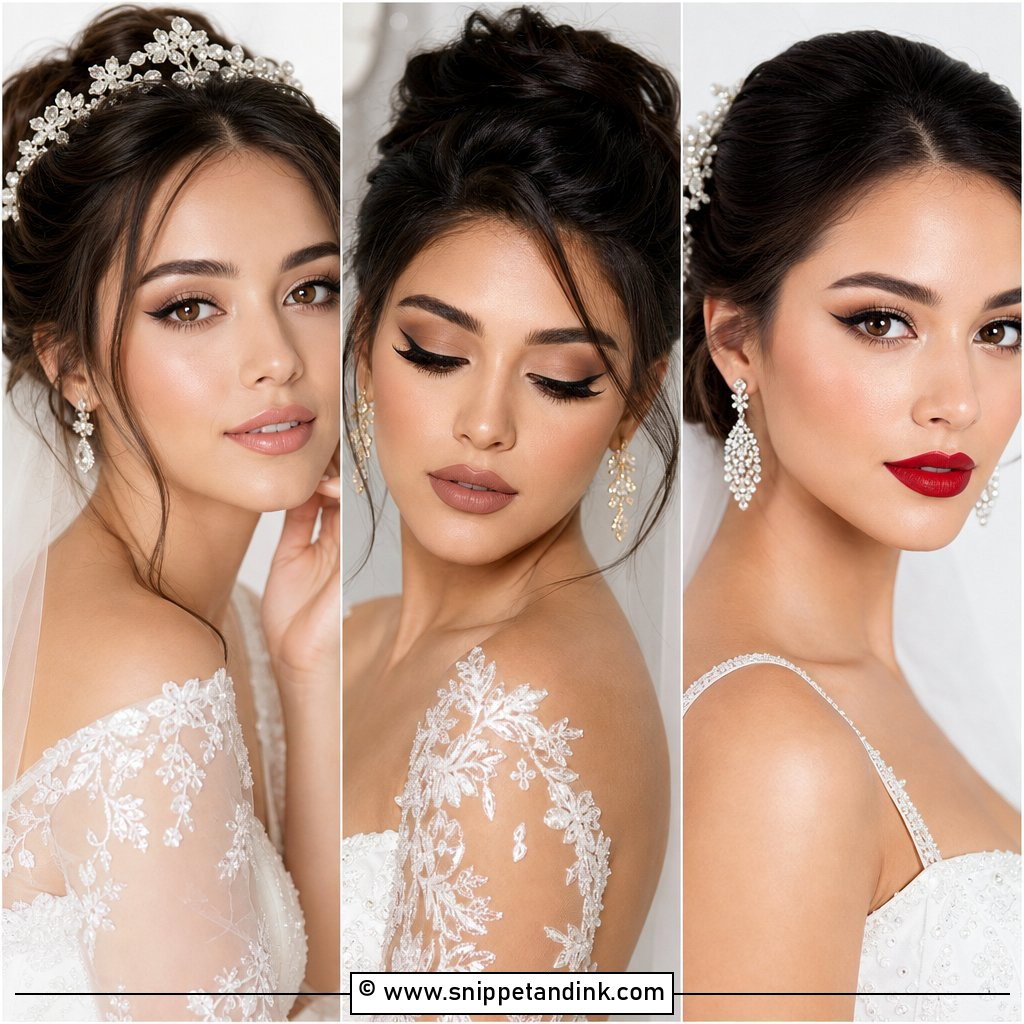
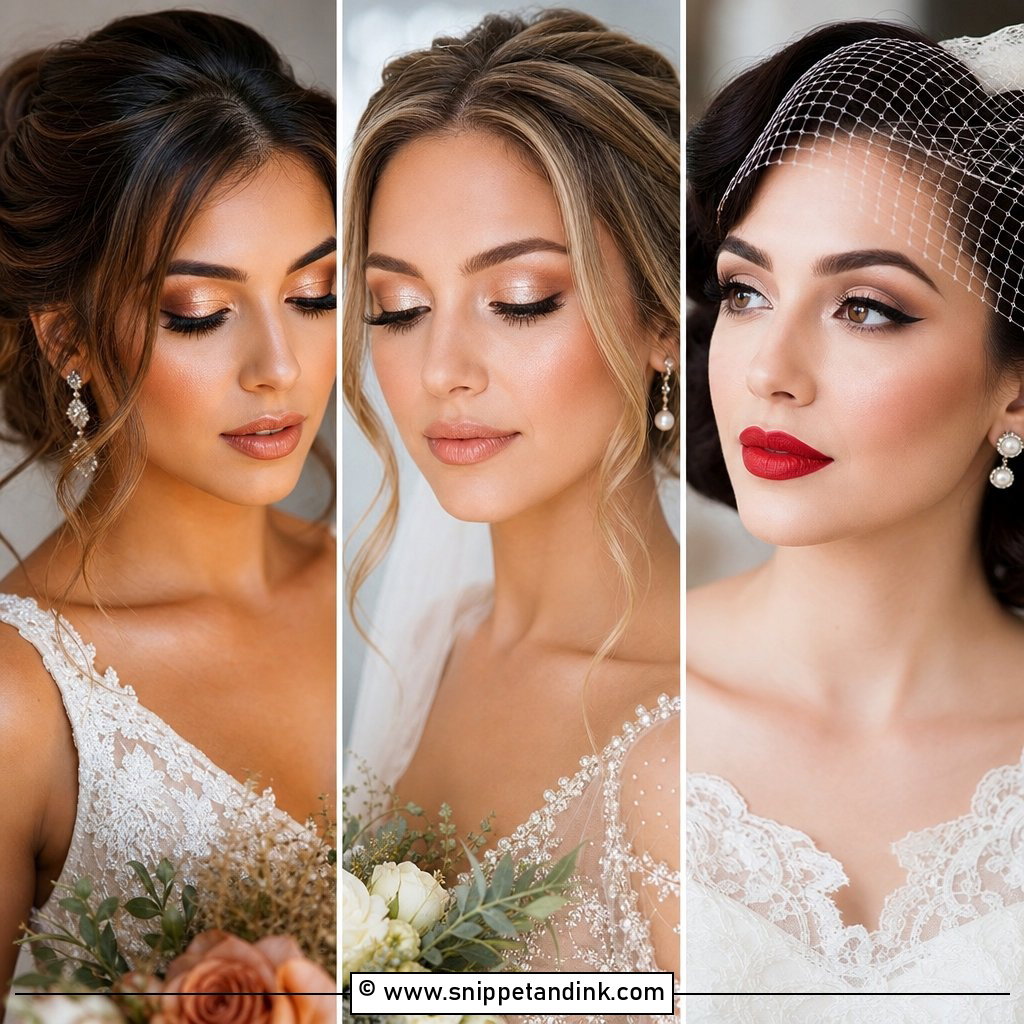
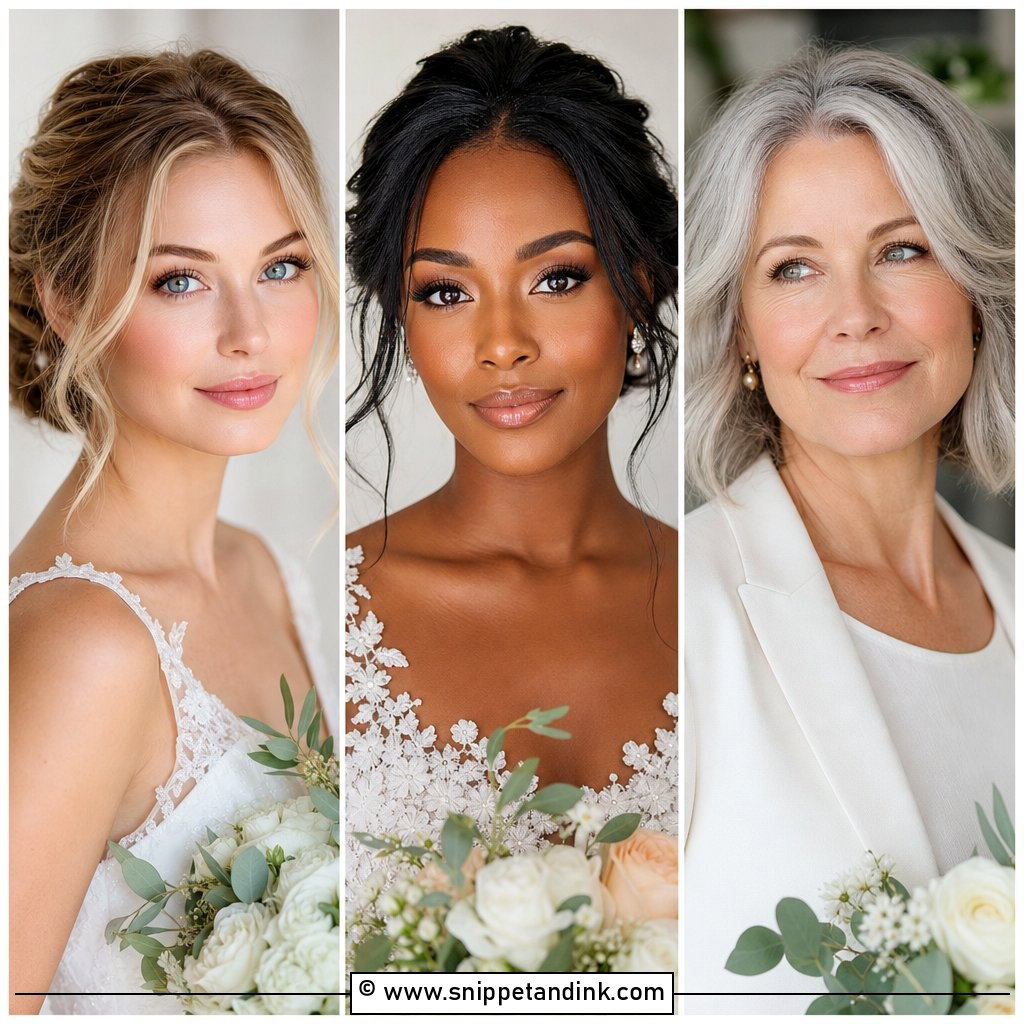
24. Wedding Makeup For Brown Eyes

Brown eyes can wear almost anything, so the job is choosing what brings out their depth. I put champagne or bronze on the lid, warm brown in the crease and espresso liner close to the lashes. A tiny bit of shimmer at the inner corners brightens the eye in close-ups. Glowing or satin skin, soft bronzer, rose or peach blush and a nude pink or caramel lip complete the face. Very dark brown eyes can look almost black in evening photos, and a slightly lighter, warmer lid shade helps the iris read as brown.
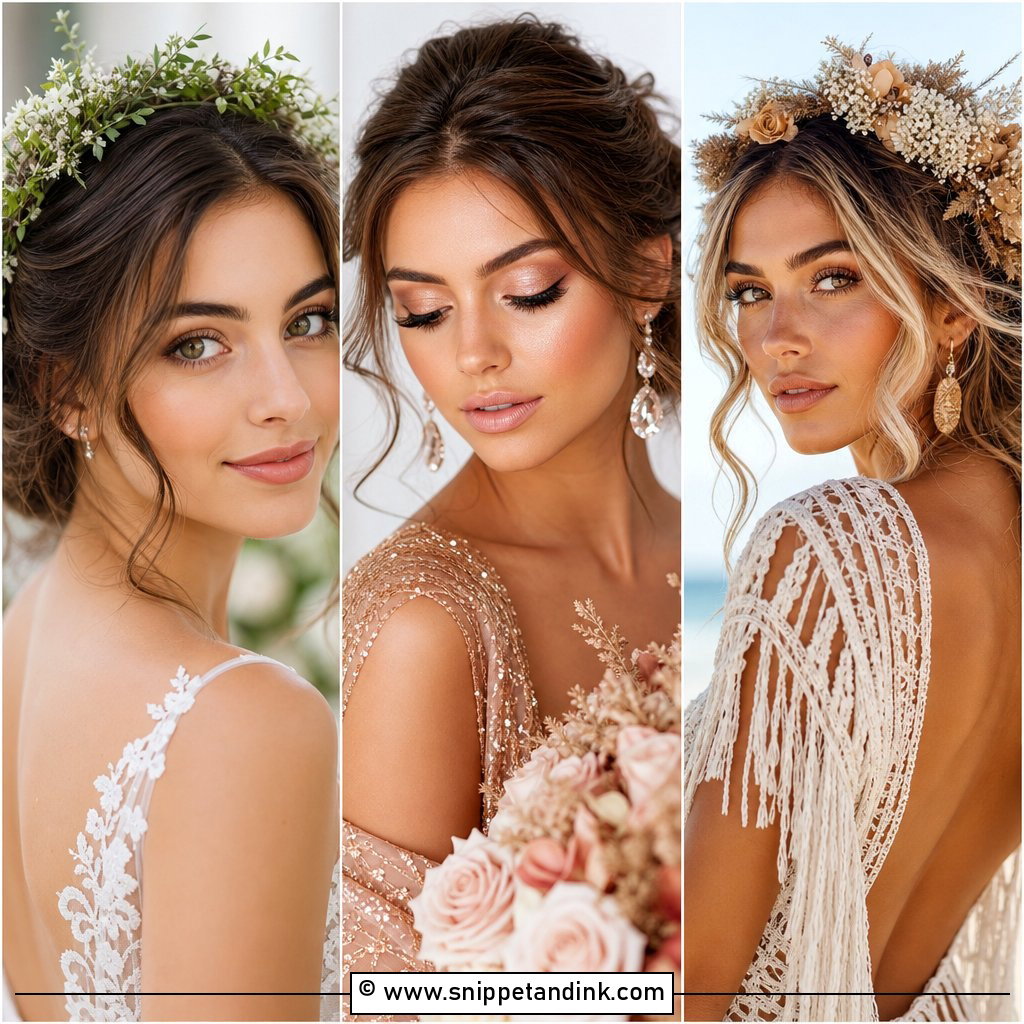
25. Wedding Makeup For Blue Eyes

Blue eyes look brightest next to warm neutrals, since orange-leaning tones sit opposite blue on the color wheel. Soft bronze, taupe, champagne, peach and warm brown shadows do the work without any bold color. I usually choose brown liner over black for a softer edge and curl the lashes well before mascara. Smooth skin, pink or peach blush, subtle bronzer and a satin nude or rosy lip finish it. I avoid blue shadow on blue eyes. It competes with the iris instead of showing it off.
Facials, Retinol and the Month Before the Wedding
Makeup sits on whatever skin you bring to the chair, and the last month is when good intentions cause the most trouble. This is the timing I give my brides.
- Stop introducing new products about four weeks out. A reaction two days before the wedding is very hard to hide.
- Pause retinoids and strong acid exfoliants a week or more ahead. Flaking is the one texture foundation makes worse, not better.
- Have your last facial at least a week before, ideally two, and skip extractions on that visit, since they can leave redness or breakouts for days.
- Shape or tint brows a few days early rather than the morning of, so any redness has time to settle.
Lipstick After Dinner, and What to Carry for It
Lips are the first thing to go. Eating, drinking and kissing wear away the center while the liner at the edges stays, which leaves that familiar ring. I hand every bride her exact lipstick and liner and suggest a small kit for whoever is holding her bag:
- The lipstick and liner used in the look, not a near match from home
- Blotting papers, which lift oil without piling on more powder
- A small pressed powder for the nose and forehead only
- Cotton buds to clean mascara from under the eyes after the speeches
- Lash glue, if she is wearing strip lashes
The best moment for a touch-up is right after dinner and before the first dance, because that is when the evening photos begin. Five minutes in a well-lit restroom is plenty.
Classic Means It Still Looks Like You Later
A classic face is not the plainest face. It’s one where the products last, the blending is soft, and the colors suit your skin, eyes, dress and season. Natural, soft glam, a red lip, a smokey eye, dewy or matte skin can all look right in twenty years if they’re done with intention. Book a trial, photograph it with flash and in daylight, and keep it on for the rest of that day. What you notice at hour six tells you more than anything you see in the mirror at hour one.
You'll Like These Ideas:




Leave a Reply