
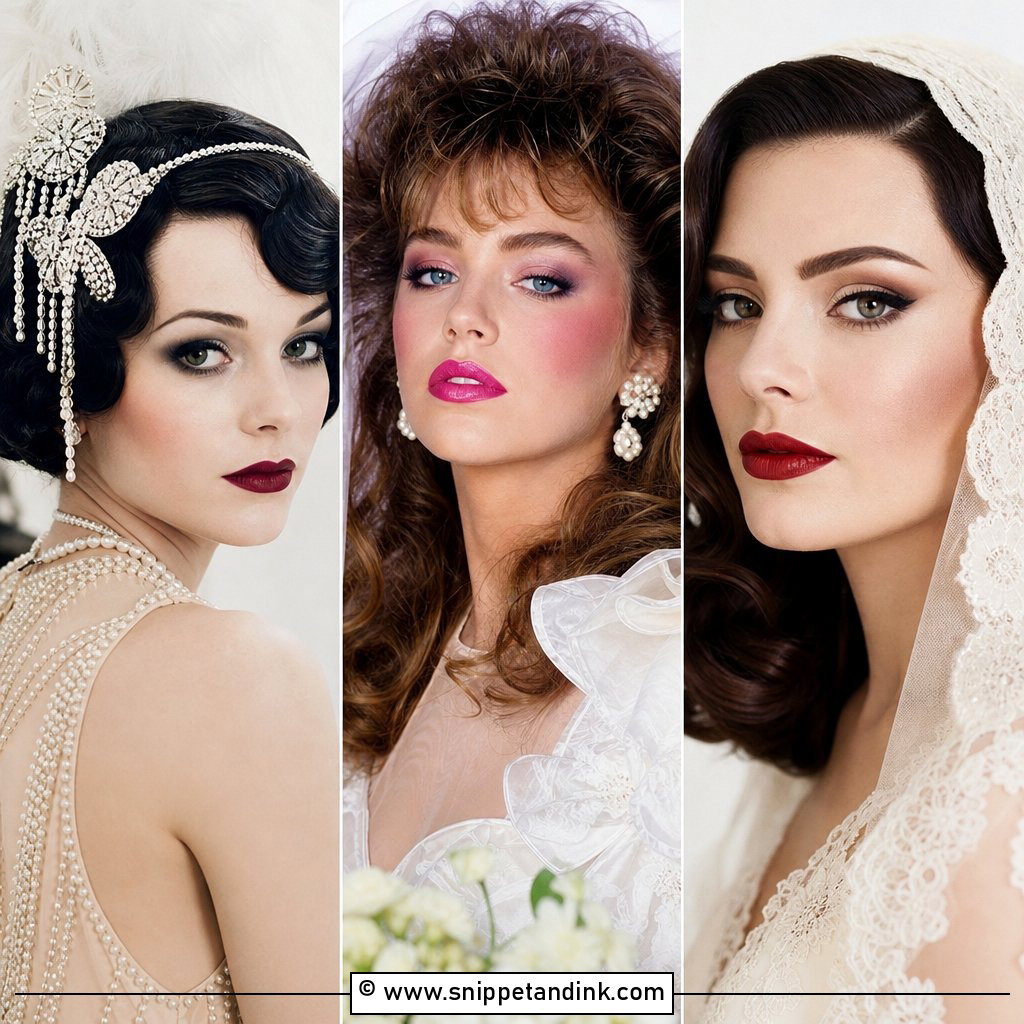
Every decade left a signature on the face. The twenties had a dark, rounded mouth, the forties a clean red lip, the fifties a flicked liner, the sixties wide eyes and pale lips. When a bride brings me 1920s berry lips or a winged-liner screenshot, my job is to keep that signature and drop the rest, so the look flatters her skin, her eye shape and the light she’ll be photographed in. Below are twenty period-inspired faces, each with notes on the eyes, skin, lips and hair they pair with, and on how I adapt them so they still look right at the last dance.
Taking a Look From a Film Still to Your Own Face
Most period references come from black-and-white film stills or heavily retouched portraits. Real makeup of those eras was often thick, very powdered and designed for studio lighting. Copy it exactly and you’ll look like you’re in costume, especially in modern high-resolution photos.
What I take from the reference is the shape: where the liner ends, how the lip is drawn, where the blush sits. Then I use today’s formulas, which are lighter and wear longer, and keep the skin looking like skin. If you’re bringing reference photos to your trial, bring a couple of the era you love and one photo of yourself on a day you felt your makeup was right. That second photo tells me more about what you’ll be comfortable in than any film still.
One more check for flash photography: some sunscreens and setting powders can bounce back white in flash photos. If you’ll be photographed with flash, skip a heavy SPF on the wedding morning and test your powder with a phone flash at the trial.
1. Old Hollywood Wedding Makeup
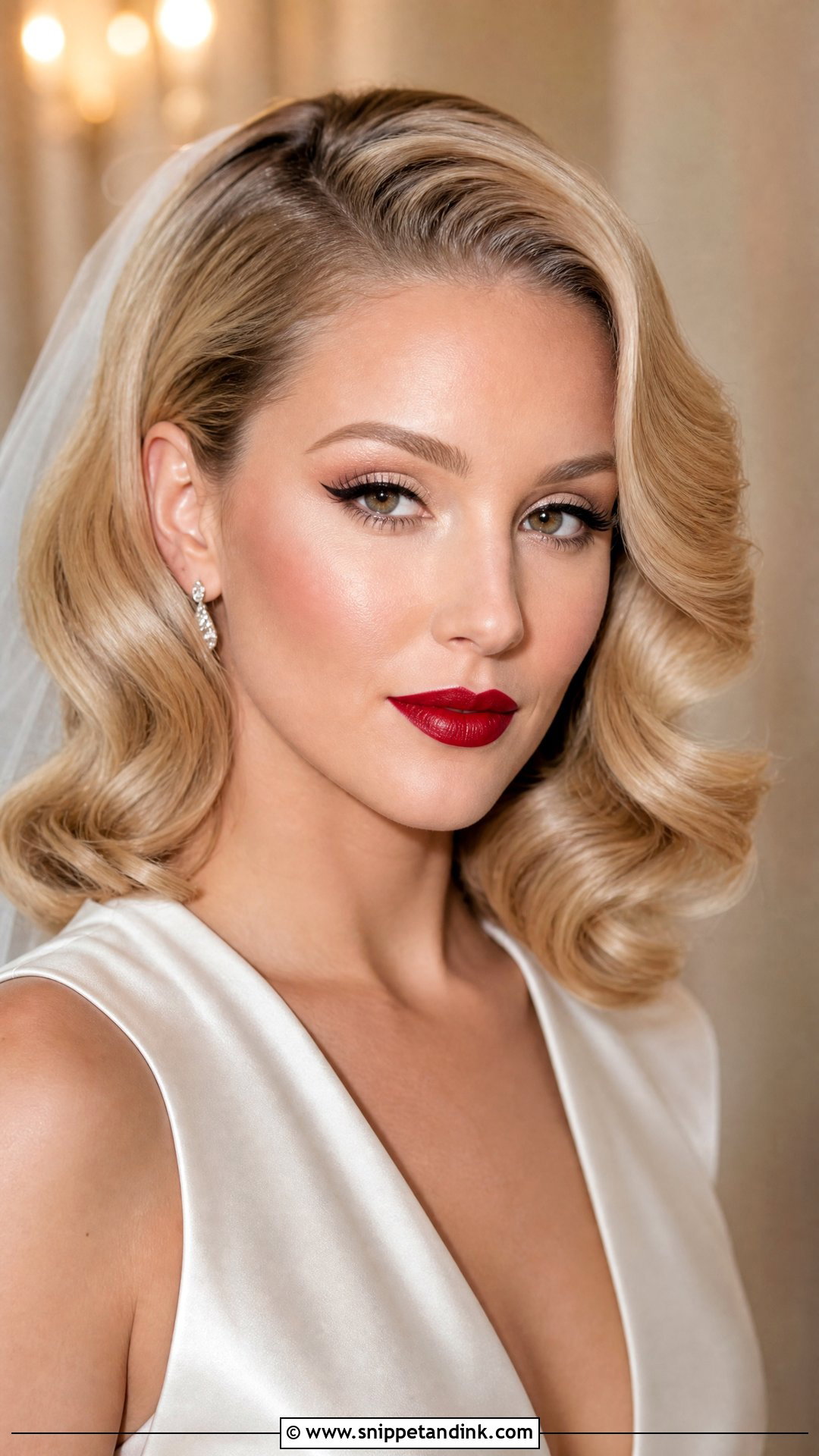
Old Hollywood rests on three things: satin-matte skin, a sharp black wing and a clean red mouth. Everything else stays quiet. I keep the lids to champagne or taupe so the lip leads, and I sculpt the cheeks softly rather than contouring hard, because heavy contour reads muddy in daylight. A transfer-resistant red lipstick is non-negotiable here, applied over a liner that’s drawn first around the full lip, not just the edge. Side-parted waves and pearl earrings finish the picture. If you rarely wear red, wear it for a full day before the wedding, so it feels like you and not a costume.
2. 1920s Wedding Makeup
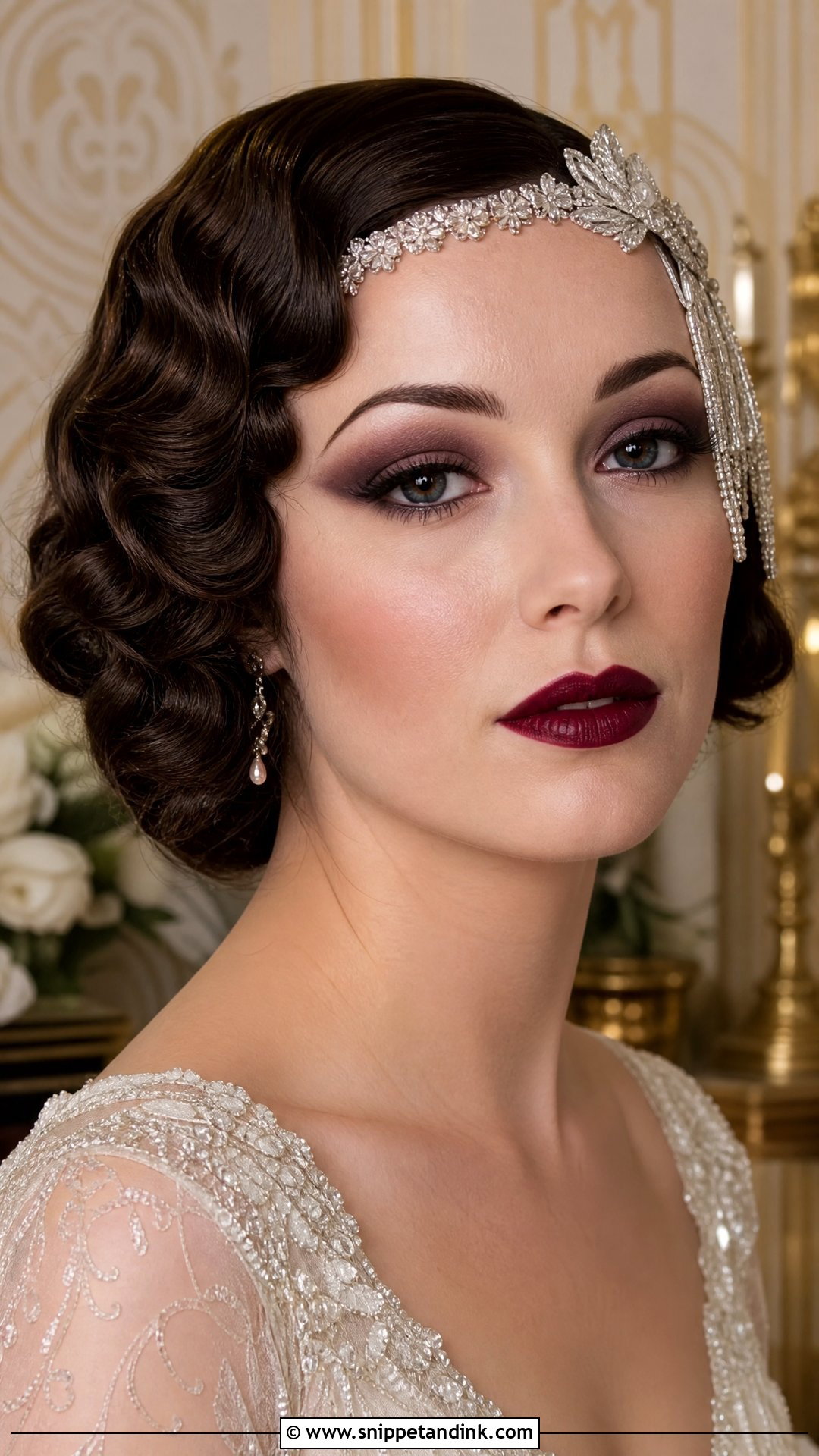
The twenties eye is rounded and smoky, with colour packed around the whole lash line instead of winged out. I diffuse soft charcoal, cocoa or plum so it smoulders without looking bruised, and I place a muted rose blush slightly higher on the cheek than usual. The real trick is the mouth. Period lips were drawn small with an exaggerated bow, which looks odd on most modern faces, so I keep a deep berry or wine shade but only soften the bow a little. Finger waves and beaded gowns carry the rest of the era.
3. 1930s Wedding Makeup
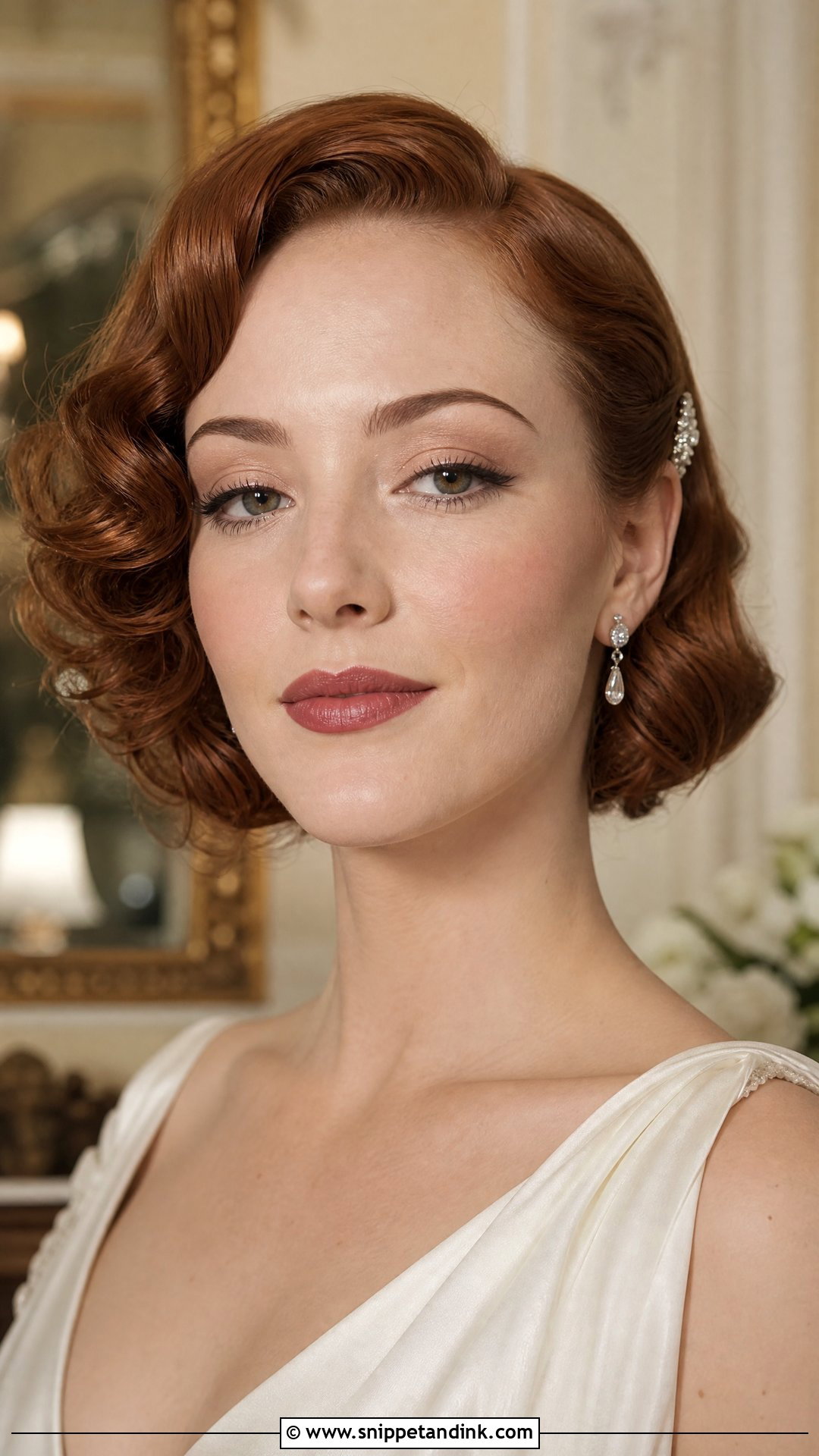
Thirties makeup is gentler than the twenties: satin skin, a peach or dusty pink flush, lids washed in beige or grey-taupe and a thin line pressed close to the lashes. Brows of that decade were plucked very thin. I don’t recreate that, but I do keep them clean and slightly lifted at the arch. A rose-red or muted brick lip suits bias-cut silk especially well, since the gown is already doing the drama. It sits naturally with sculpted waves or a low chignon.
4. 1940s Wedding Makeup
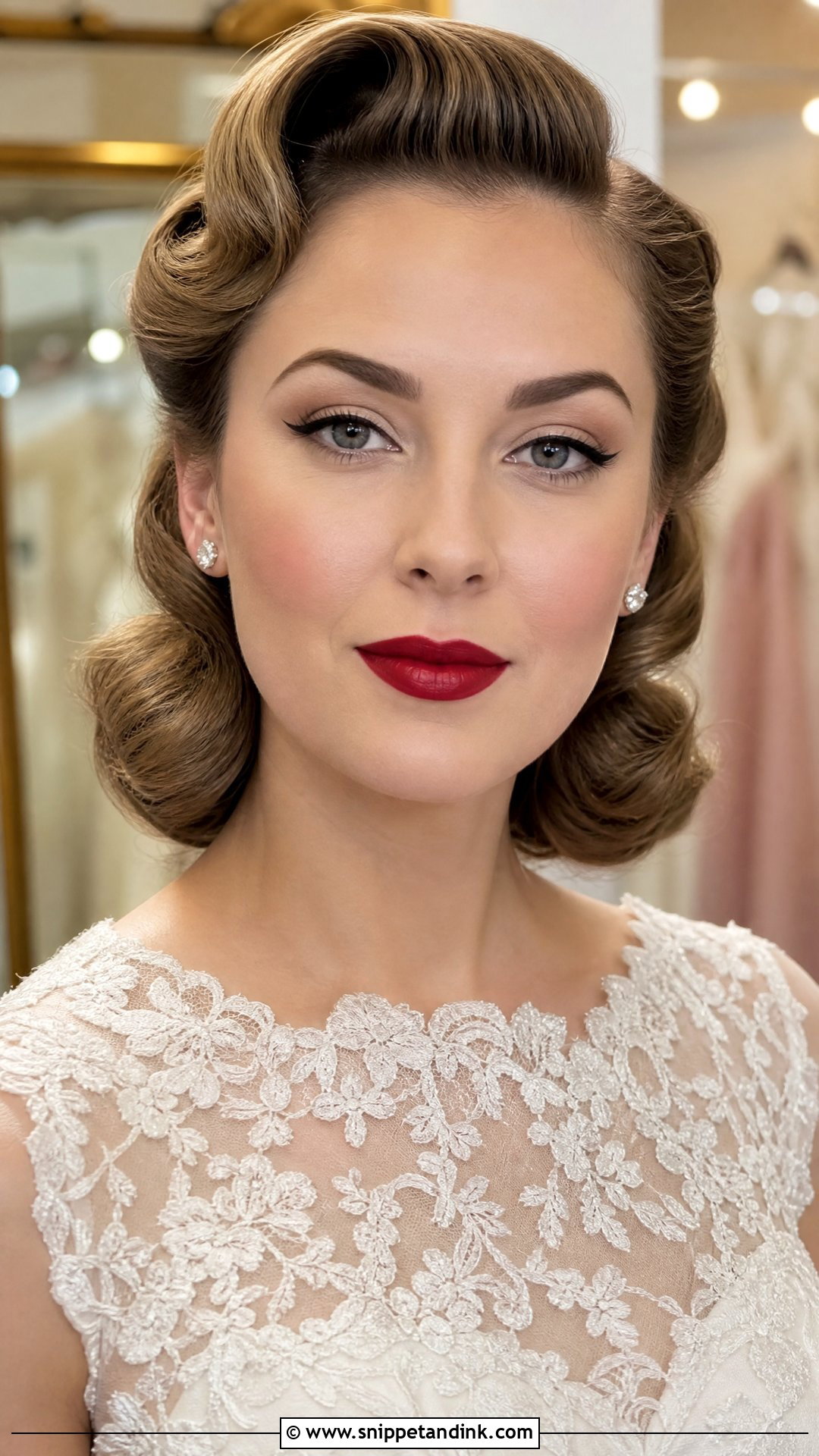
In the forties, the lip was the makeup. I keep skin even and softly matte, lids neutral, a slim black or brown wing, and lashes lifted and separated rather than thick. Then the red goes on. Pick it by undertone: cooler reds with a blue base on pink-toned skin, warmer, slightly orange reds on golden skin, raspberry if you sit in between. Victory rolls and brushed waves are the natural hair match. This is one of the easiest vintage looks to wear for a full day, because there’s little on the eyes to crease.
5. 1950s Wedding Makeup
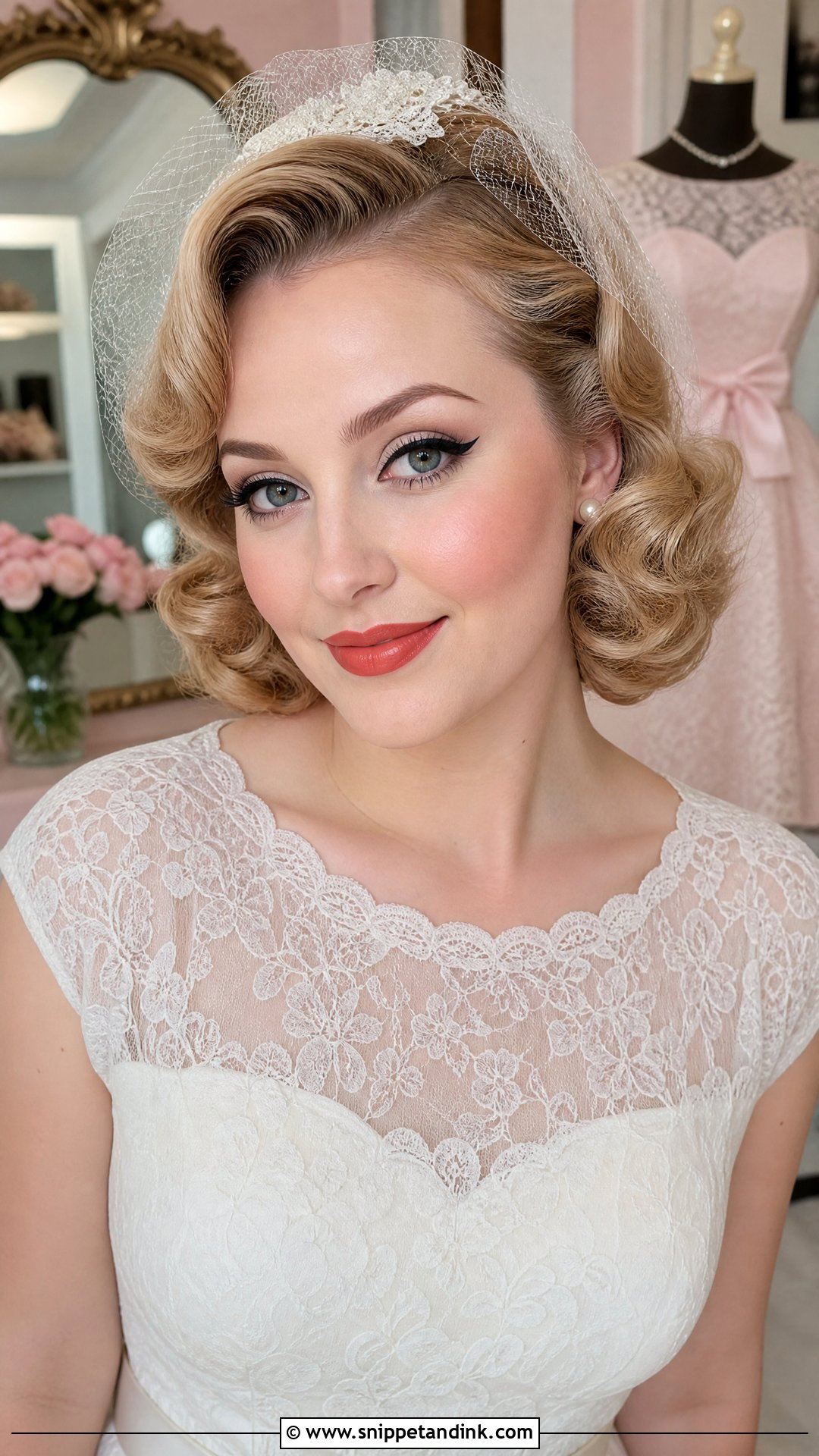
The fifties look most brides picture: a flicked liner, full lashes, rosy cheeks and a pink, coral or red lip. On smaller or hooded eyes, a thick fifties wing swallows the lid, so I keep the line thin at the inner corner and only build it at the outer third. Ivory or champagne on the lid with a warm brown crease keeps it bridal. The skin of the era was very powdered and flat, which photographs dull today, so I add a little glow to the high points instead. Tea-length dresses and short veils love this face.
6. 1960s Wedding Makeup
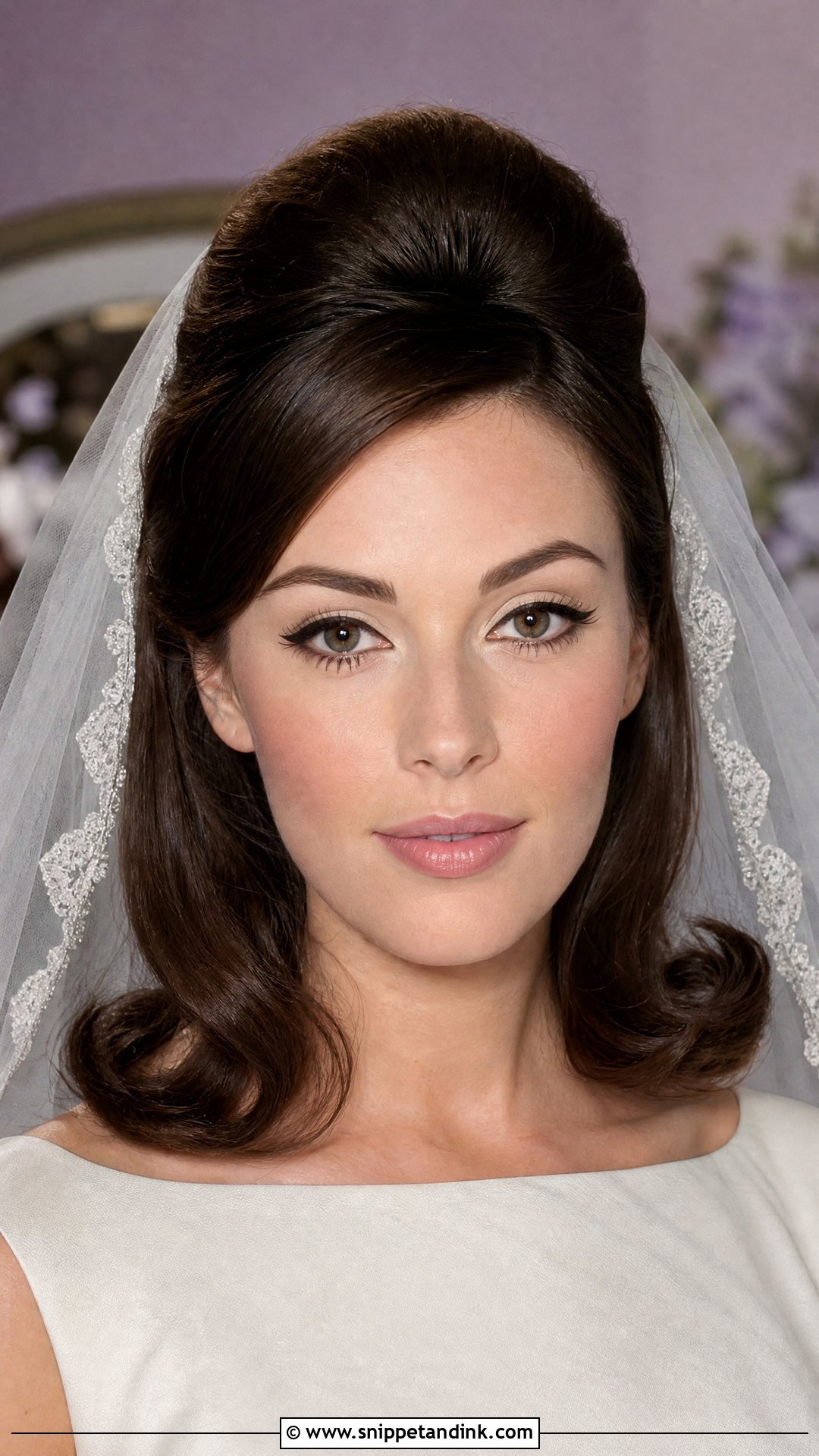
Sixties makeup is all about making the eyes look bigger. Pale lids, a defined crease in taupe or cool brown, a thin wing and separated lashes give that doe-eyed shape. A few individual lower lashes add to the mood, but keep them sparse; a full strip on the lower line looks theatrical up close. Lips stay quiet, in pale pink, peachy nude or soft rose. This one suits a bouffant or half-up hair, and it’s a good fit for brides who don’t enjoy a heavy lip.
7. 1970s Wedding Makeup
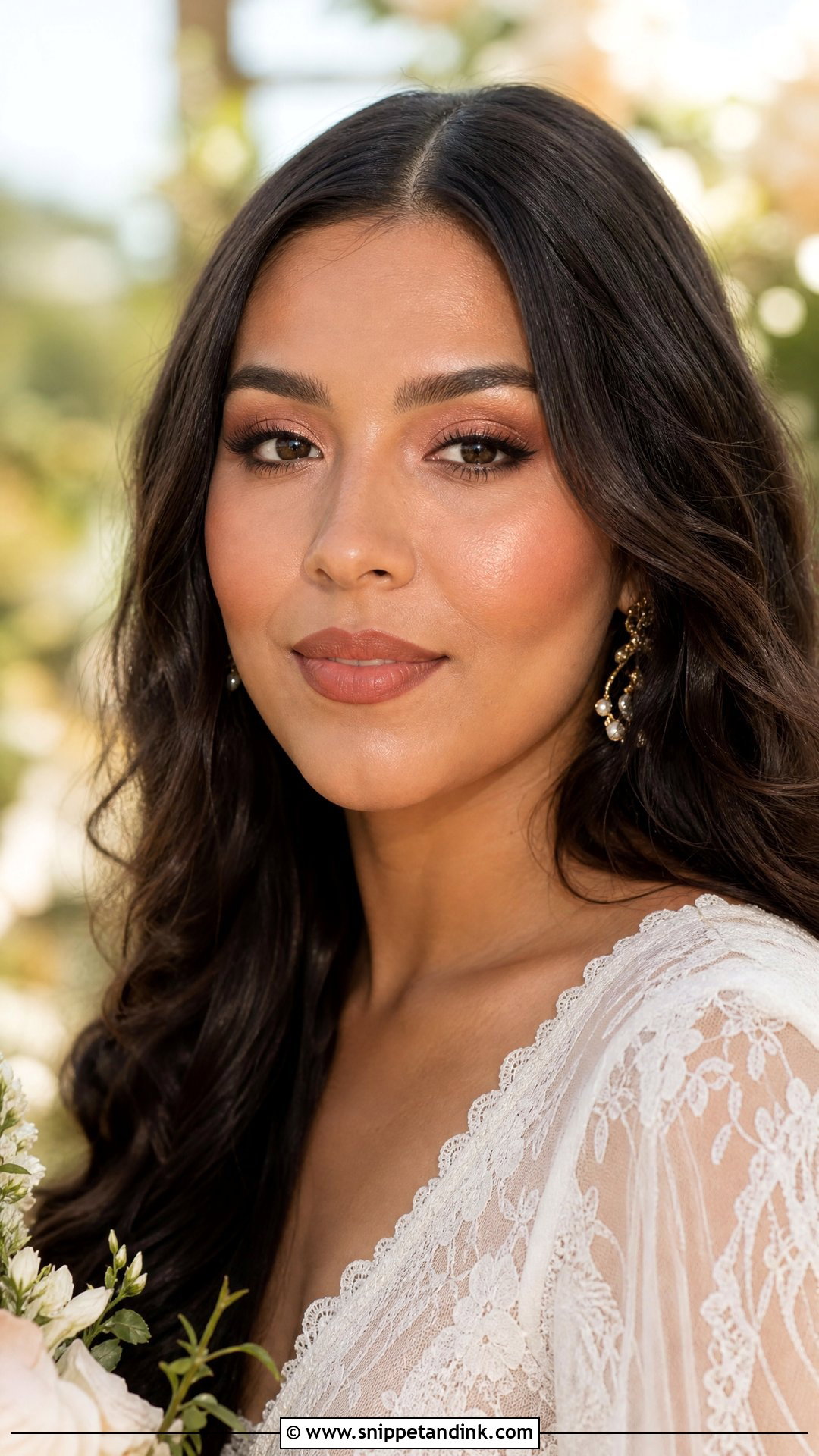
Seventies brides wore far less foundation, and that’s the part worth keeping. A sheer base, warm bronzer, peach blush and a soft golden highlight let real skin show. Bronze, copper, olive or warm brown on the lids, blended in a rounded shape, with brown liner. Brushed-up brows and fluffy lashes keep it fresh. Lips in caramel nude, peach or soft terracotta. I’d suggest this for outdoor daytime ceremonies with loose waves and a lace or chiffon gown. One caution: sheer coverage means any redness will show, so prep the skin well.
8. Vintage Red Lip Wedding Makeup
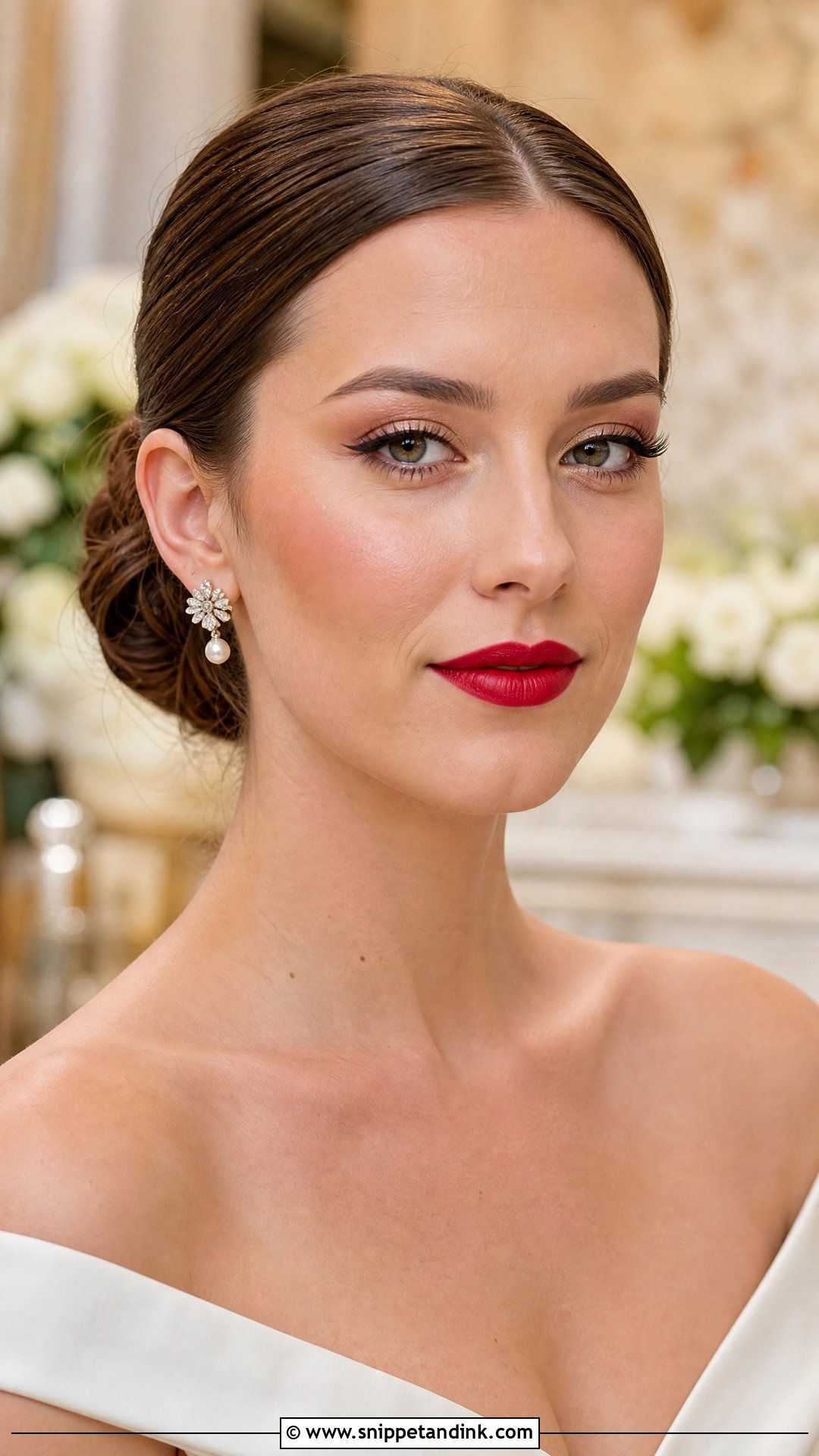
One bold feature can carry the entire face, and a red lip does it better than anything. Keep skin smooth, add light contour and a rosy blush, and keep the eyes plain with neutral shadow and tightlined lashes. Match the red to your undertone: blue-reds for cool skin, orange-reds for warm skin, a balanced true red for neutral. Liner is essential. I line and fill the whole lip with pencil, apply lipstick, blot through a tissue, and apply again. That layering is what keeps a red on through the meal.
9. Vintage Winged Liner Wedding Makeup
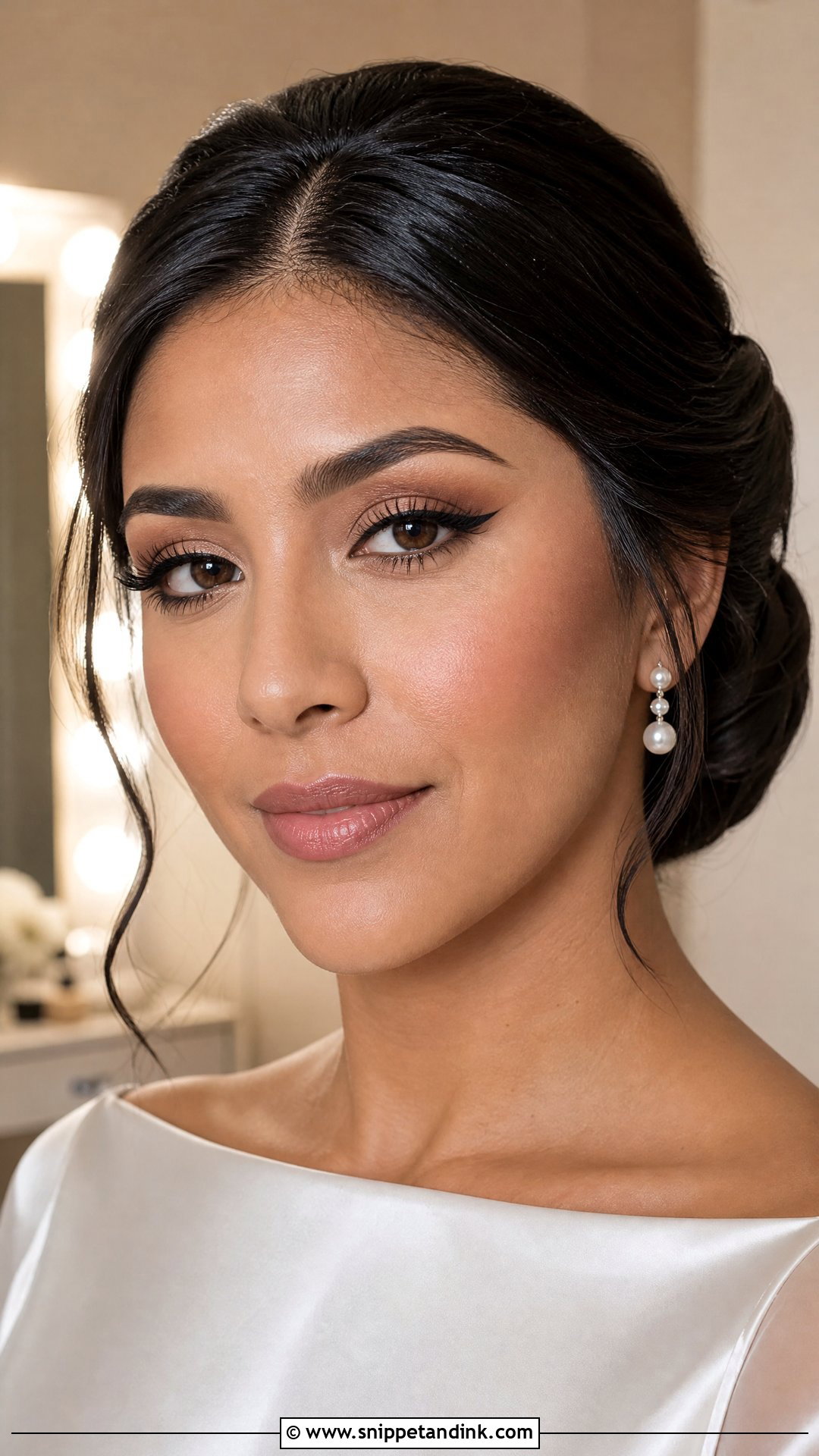
If you’d rather skip the bold lip, put the definition in the liner. The shape matters more than the colour. For hooded eyes I keep the wing thin and angle it outward, close to horizontal, rather than flicking it up. On round eyes I extend it a touch further to elongate. I always draw the wing with the bride’s eyes open and looking straight ahead, because a wing drawn on a closed lid often disappears into the fold. Soft champagne lids, a pink or peach blush and a nude rose lip keep the rest calm.
10. Vintage Smokey Eye Wedding Makeup
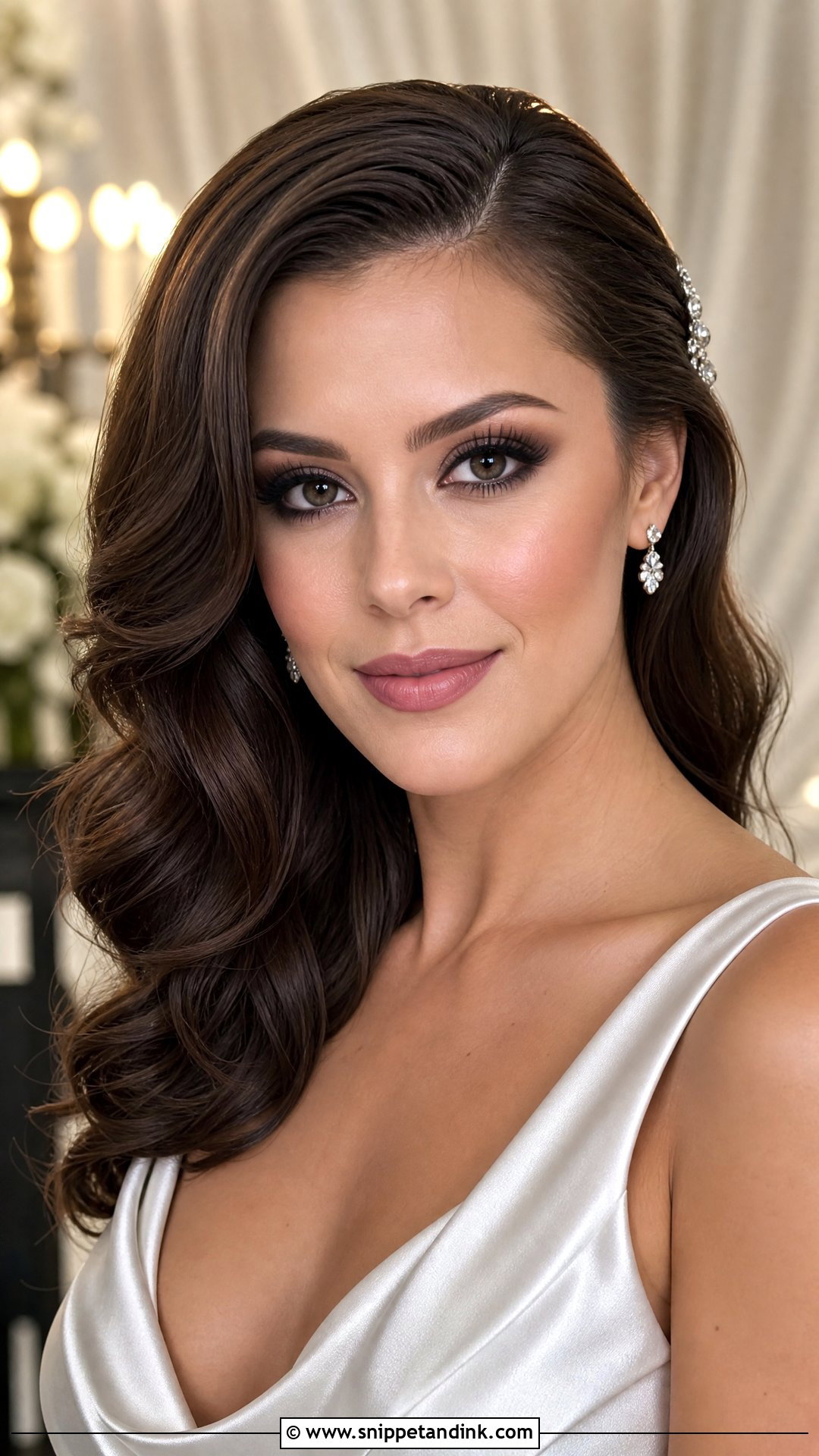
Vintage smokey eye wedding makeup swaps harsh black for softer period shades: chocolate, charcoal, plum, espresso or bronze. I build it close to the lash line first and blend upward, so the darkest colour sits where it lifts the eye. The common problem is fallout. Dark shadow drops onto the under-eye, so I do the eyes before the foundation on smoky looks and clean up underneath. Keep the lips muted, in nude rose or brown-pink. It’s an evening look, and it suits satin gowns and dramatic veils.
11. Vintage Soft Glam Wedding Makeup
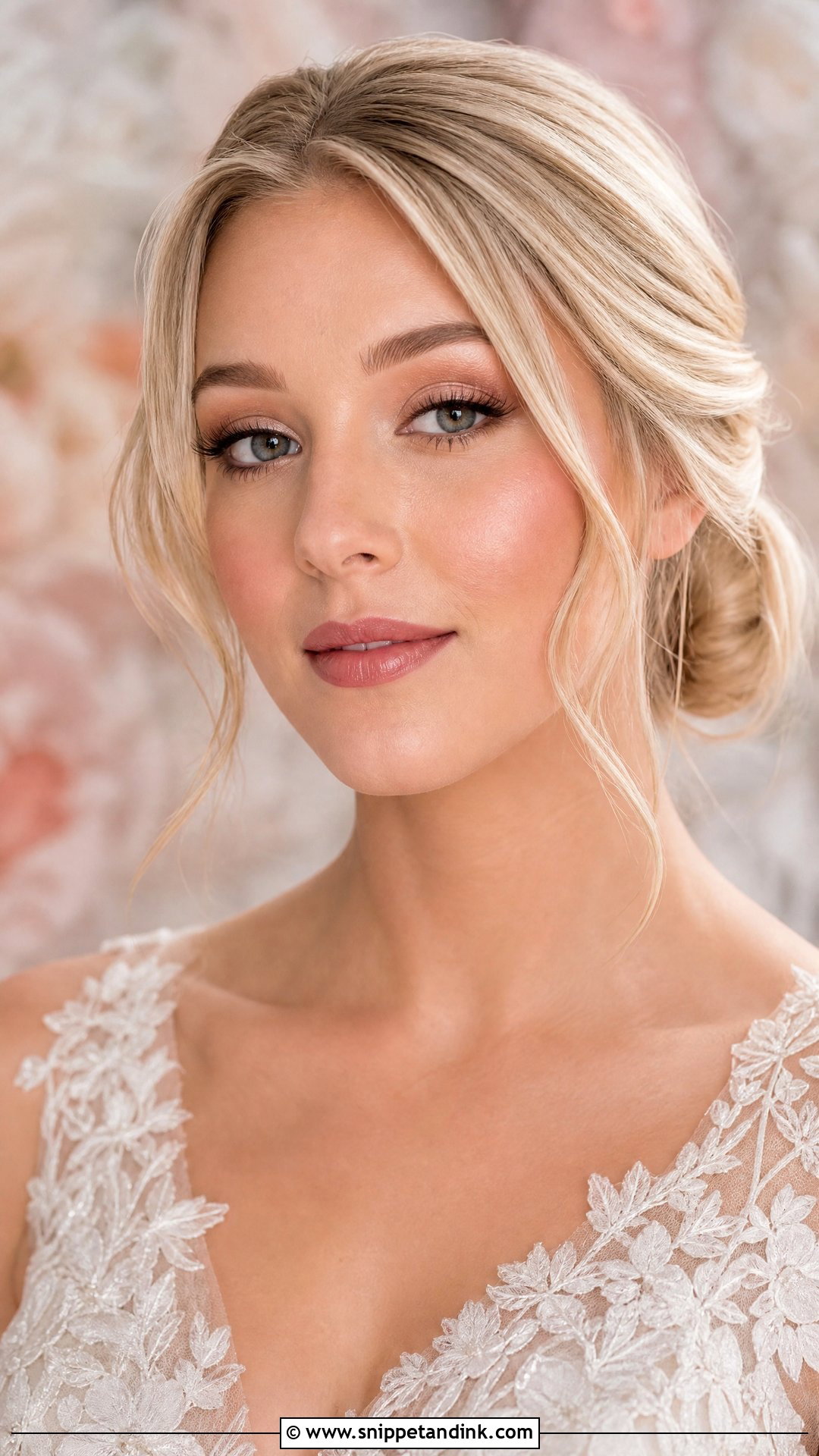
Soft glam is vintage polish without a single loud feature. Champagne or pearl lids, a warm taupe crease and brown liner, individual lashes for lift, a rosy or peach flush and a pink-nude or rosewood lip. Nothing competes, so it holds up across very different light, from a church to a dark dinner room. This is the look I suggest when a bride can’t decide between eras. It reads as old-fashioned glamour without pinning her to one decade.
12. Vintage Natural Wedding Makeup
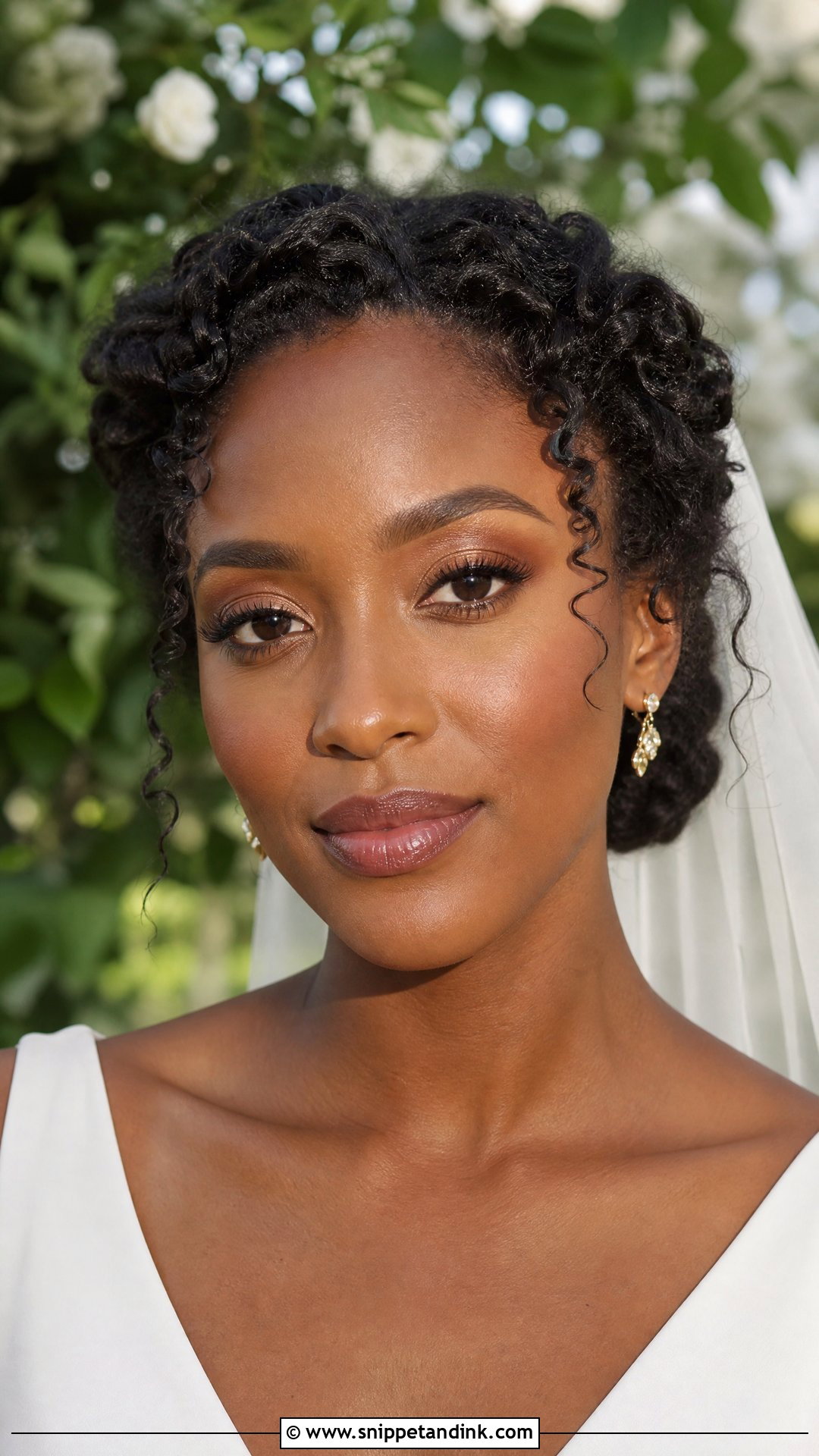
Natural doesn’t mean bare. It means everything is placed where it’s needed and nowhere else. I use a thin, skin-like base and concealer only on redness and under the eyes, cream blush in rose or soft peach, and brown liner pressed into the lash line rather than drawn on top. Lashes are curled, brows brushed. A satin nude or tinted balm finishes it. The vintage feel comes from grooming and neatness rather than colour. It suits courthouse weddings and lace dresses, and brides who rarely wear makeup.
13. Vintage Matte Wedding Makeup
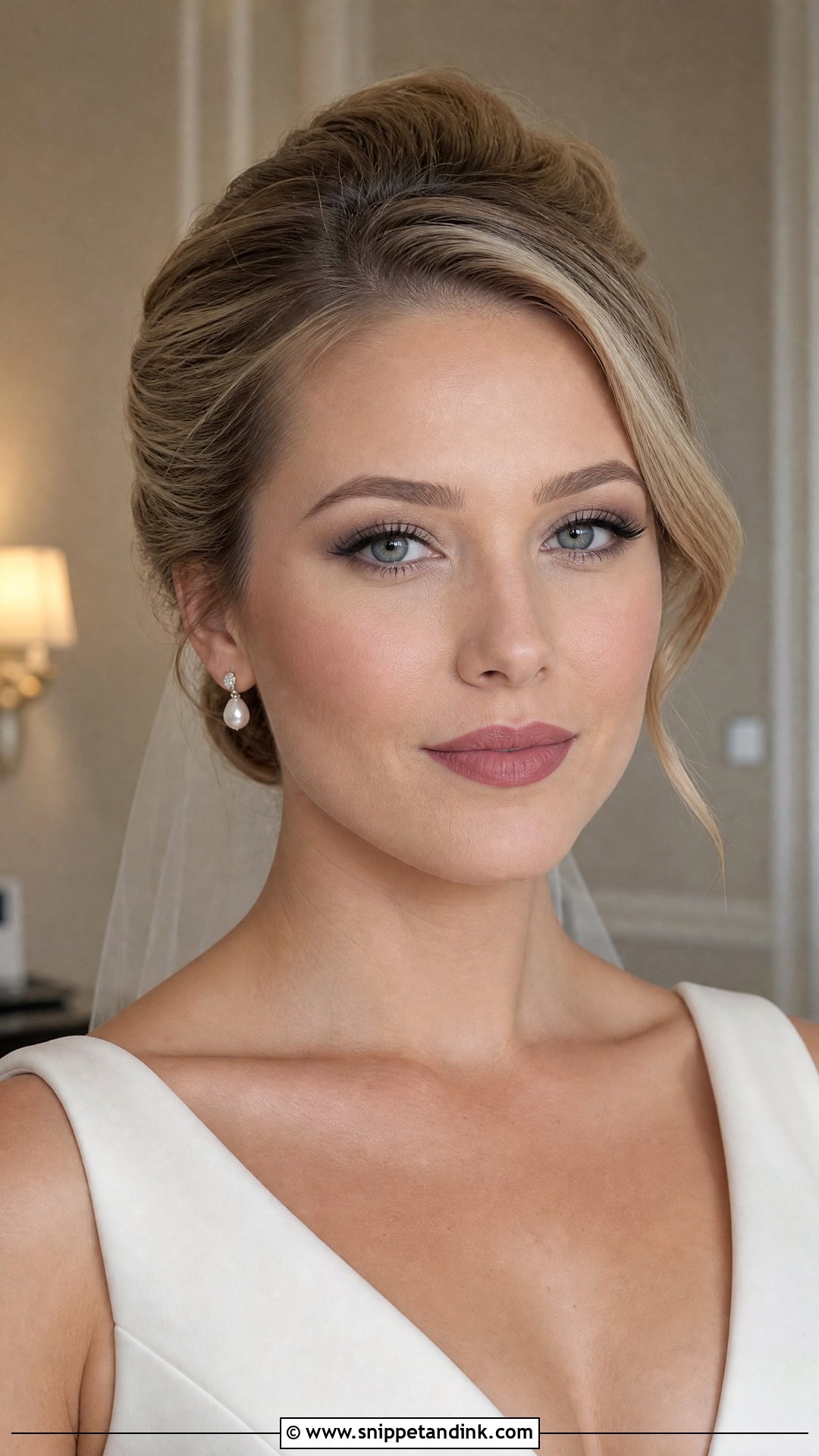
Matte skin was the norm for most of the last century, and it still makes sense for oily skin, hot weather and long ceremonies. The trick is matte, not dry. I use a soft matte foundation, set only the areas that crease or shine, and leave the cheeks with a little life. Powder blush and gentle contour give back the dimension that matte foundation removes. Taupe lids, a wing, and a matte rose, red, mauve or nude lip complete it. A whisper of satin highlight on the cheekbones stops it looking flat in flash photos.
14. Vintage Dewy Wedding Makeup
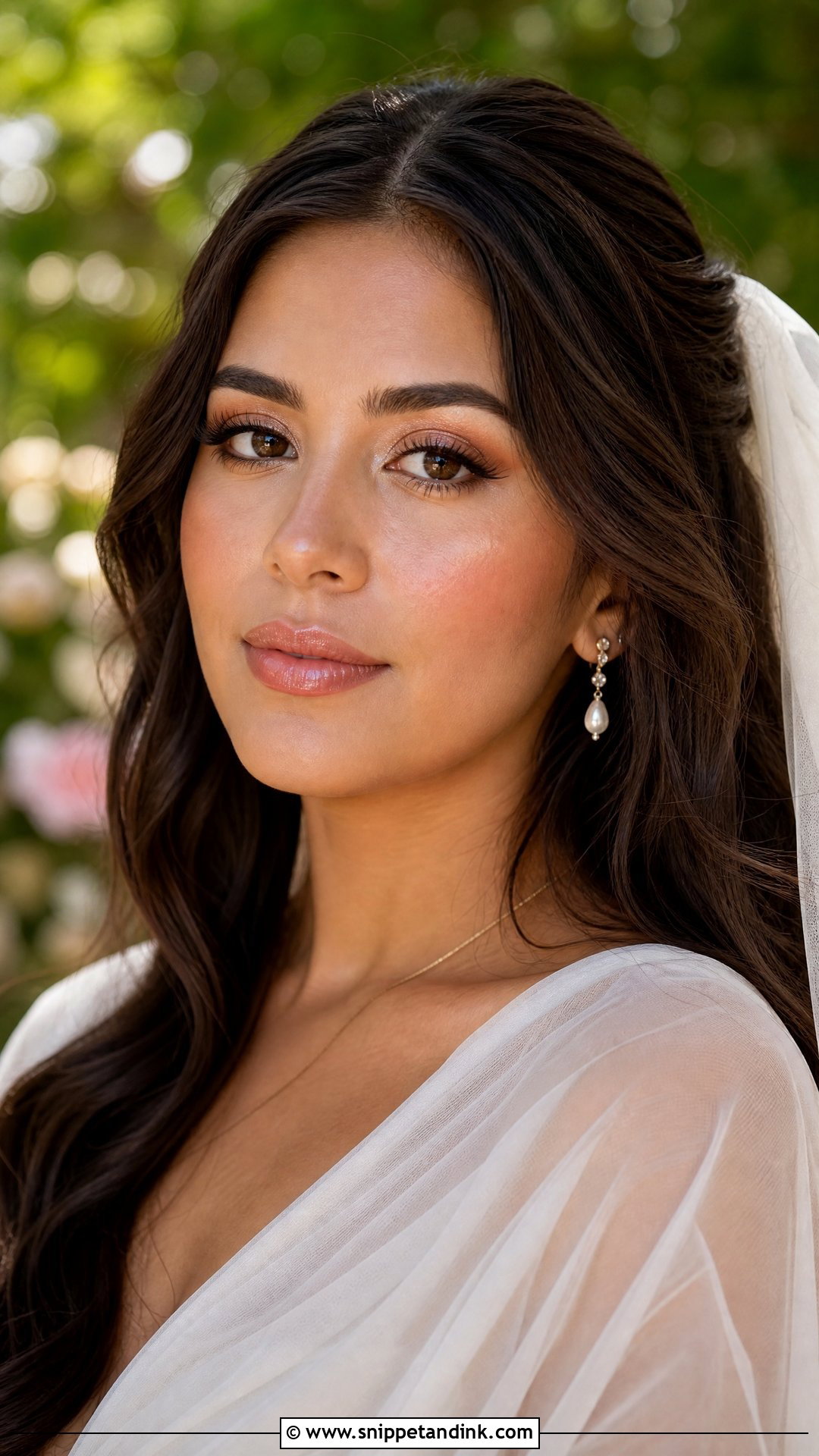
Vintage dewy wedding makeup borrows the shapes of the past and puts them on fresh, hydrated skin. I prep with moisturiser and give it time to sink in, then use a luminous base and cream blush placed high on the cheeks. Pearl, champagne or soft brown shadow with delicate liner, natural brows and a glossy rose or sheer red lip keep it light. Dewy skin turns shiny by mid-afternoon, so I set the T-zone only and pack blotting papers in the bride’s bag. It’s a natural pick for spring and outdoor portraits.
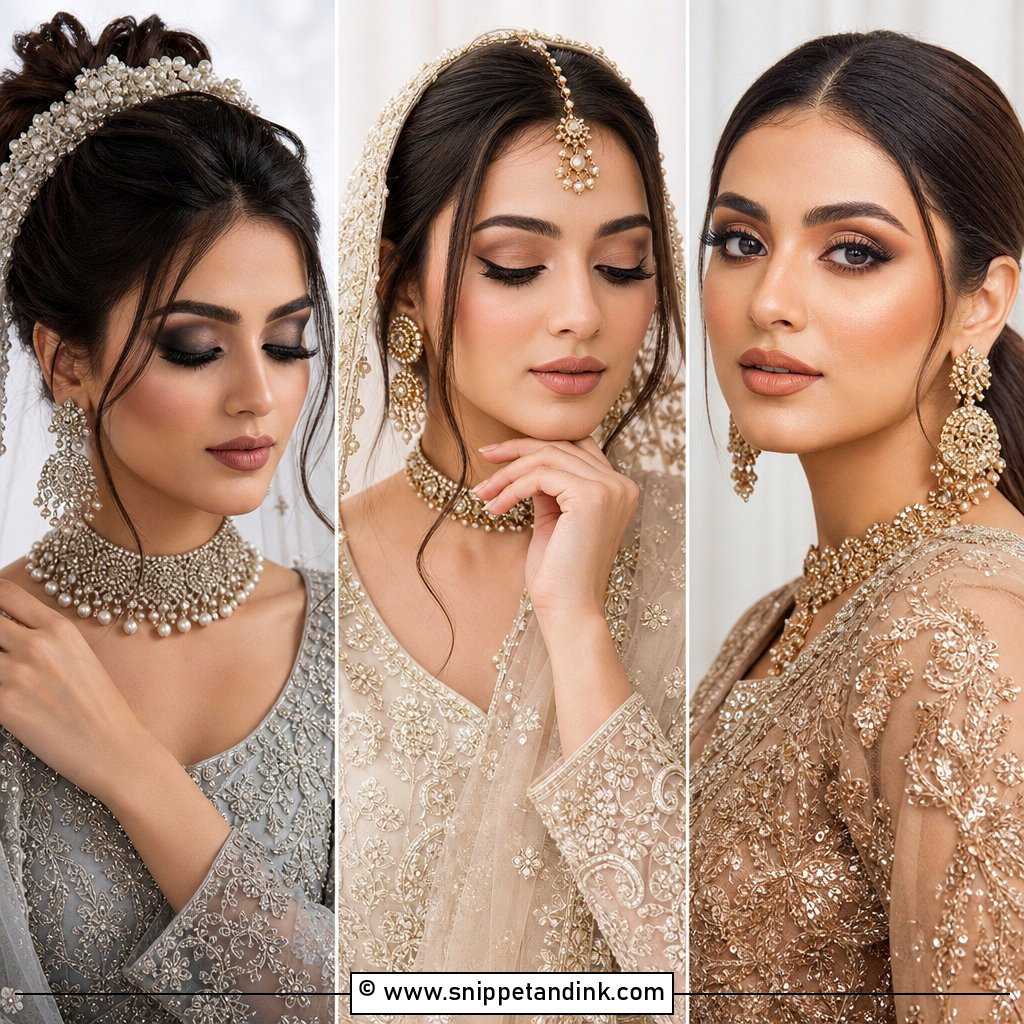
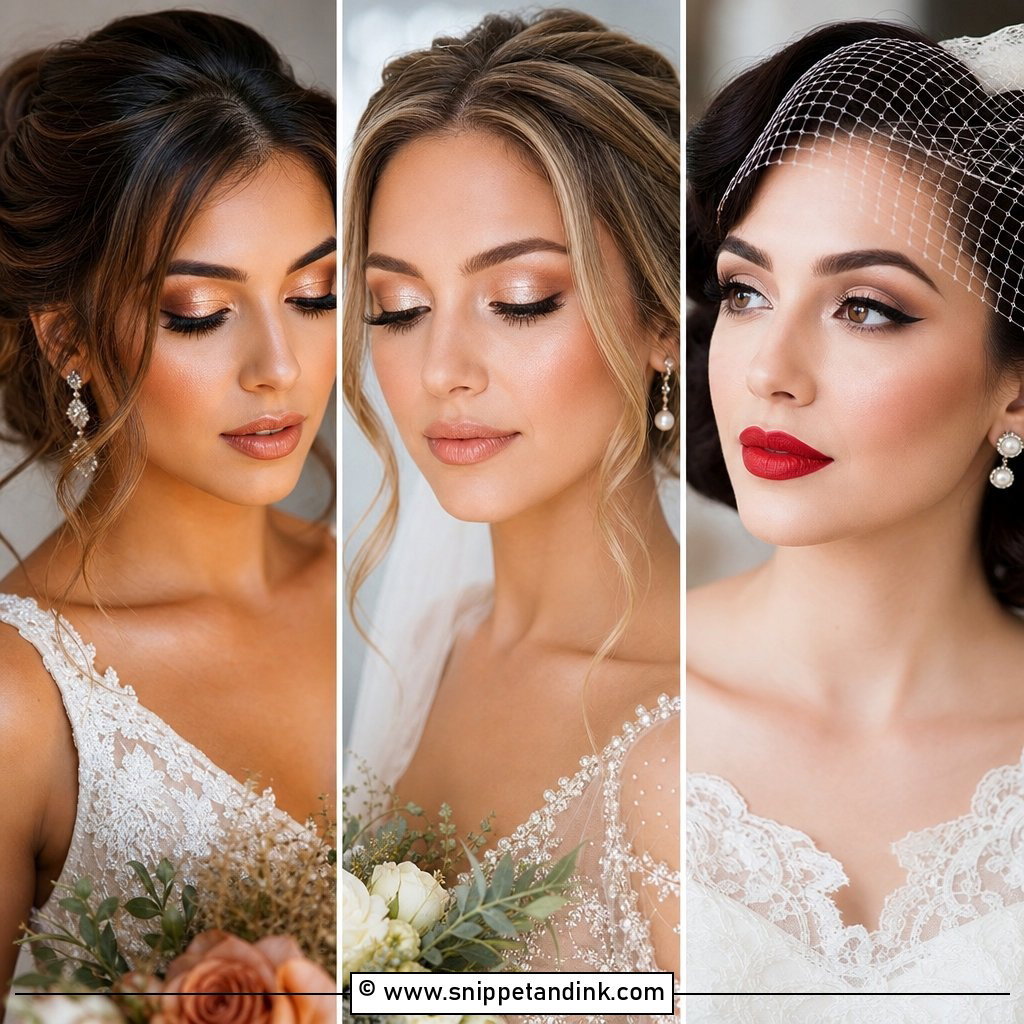
15. Vintage Rose Wedding Makeup
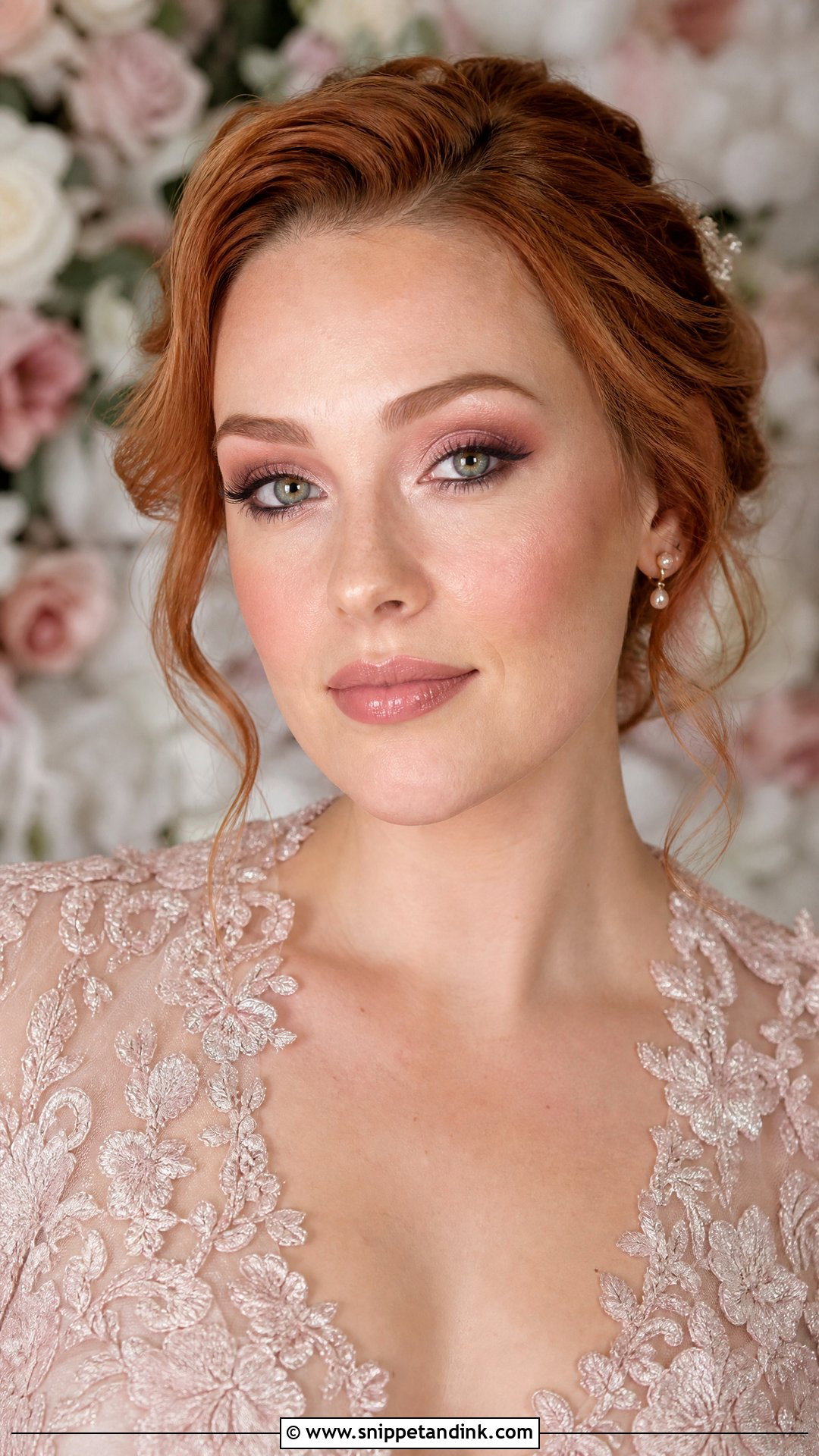
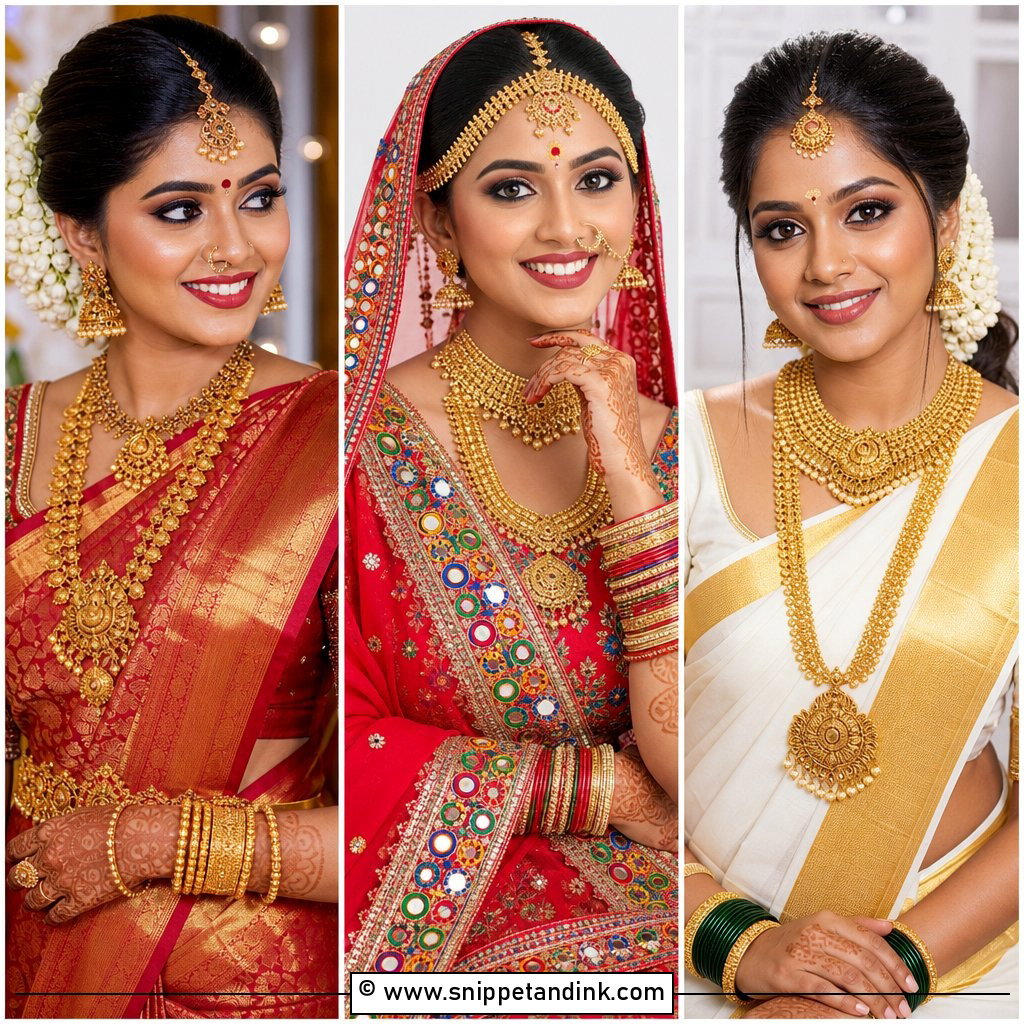
Rose shades flatter a wide range of skin tones, as long as each area of the face gets its own depth. I use a dusty rose blush, a mauve-brown in the crease, a little rose shimmer on the centre of the lid and a satin rose lip, with brown liner for warmth. If every product is the same pink, the face goes flat, so I vary the depth deliberately. Skin should be smooth with soft radiance and light contour. It pairs with floral lace, blush gowns, pearls and soft curls.
16. Vintage Peach Wedding Makeup
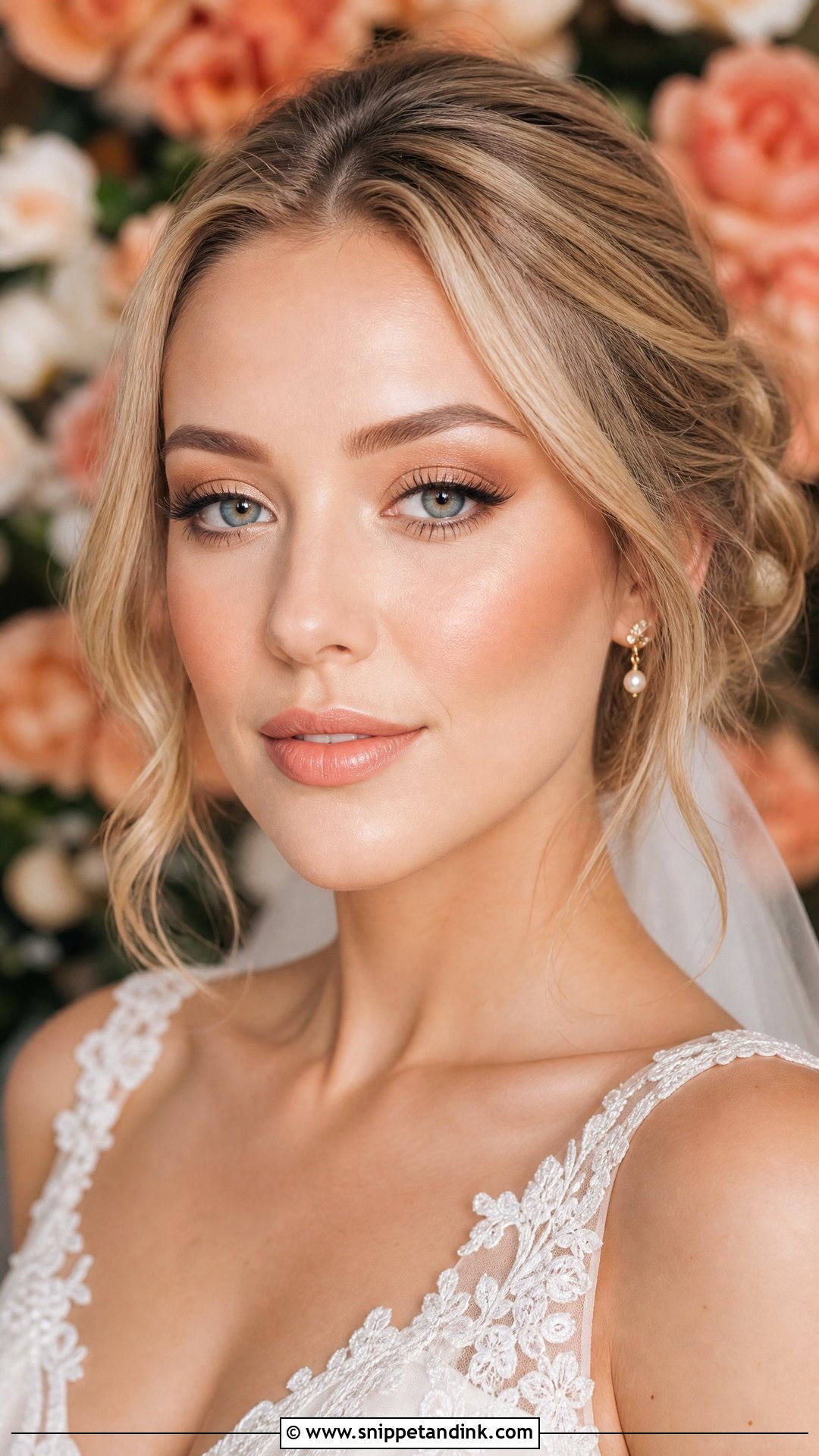
Peach brings warmth to the face in daylight and is kind to golden and olive undertones. I place the blush on the apples and sweep it upward so it lifts rather than widens the face. Ivory, apricot or warm brown on the eyes with brown liner, curled lashes and soft brows keep it gentle. A peach nude or coral pink lip ties it together. On very pale or very cool skin, peach can look orange in photos, so I’d test it in daylight first. Ivory gowns and gold jewellery suit it.
17. Vintage Burgundy Wedding Makeup
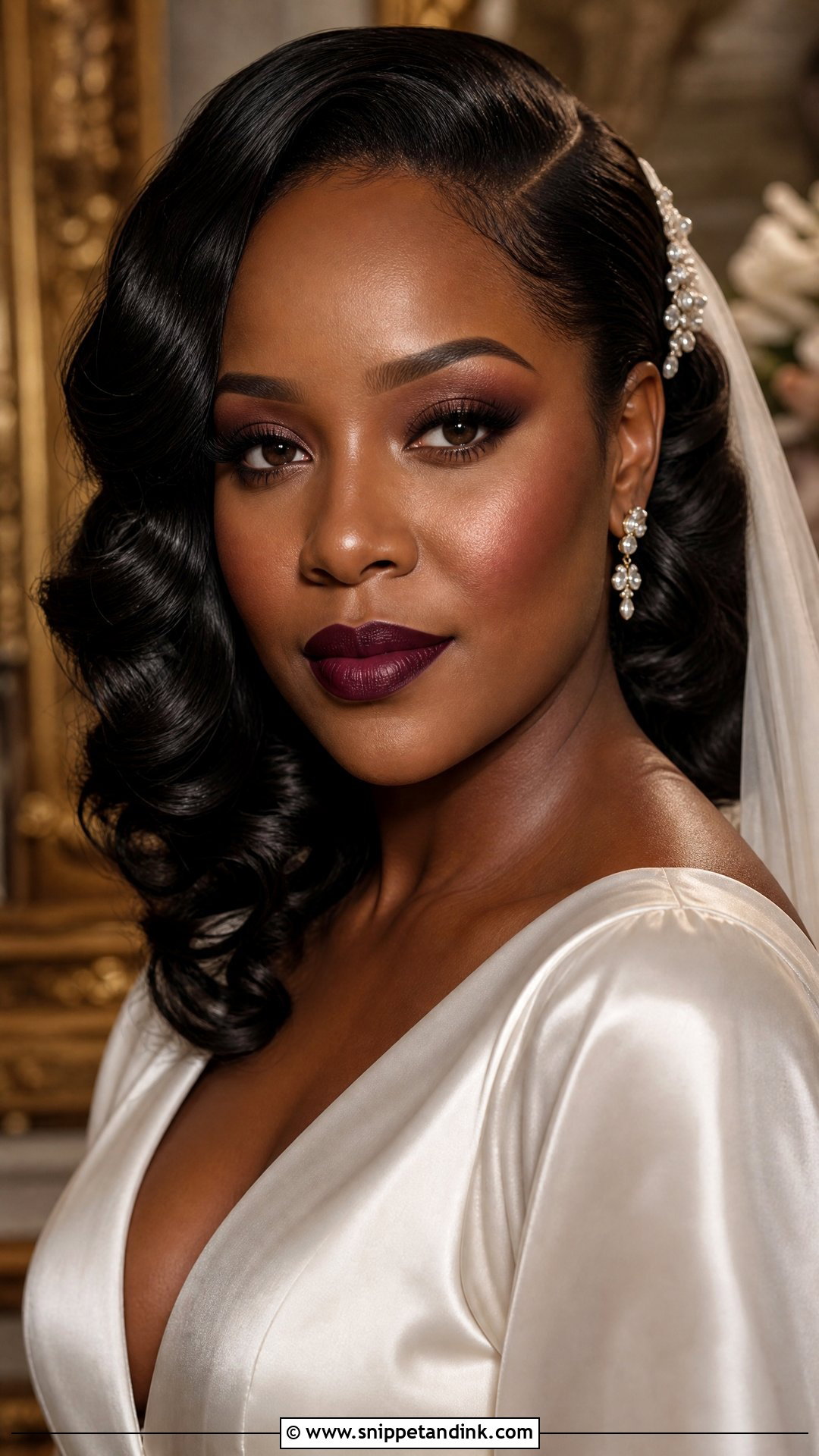
Burgundy needs one focus. For a classic version, I pair satin skin, soft taupe eyes and a burgundy lip. For something moodier, I move the depth to the eyes with plum-brown shadow and soften the lip instead. Doing both at once usually looks heavy. Dark lips also show every flaw in the edge, so liner and a precise brush matter more here than with any other colour. With undertone adjusted, this works on fair, olive, tan and deep skin. It’s a natural fit for autumn and winter weddings.
18. Vintage Gold Wedding Makeup
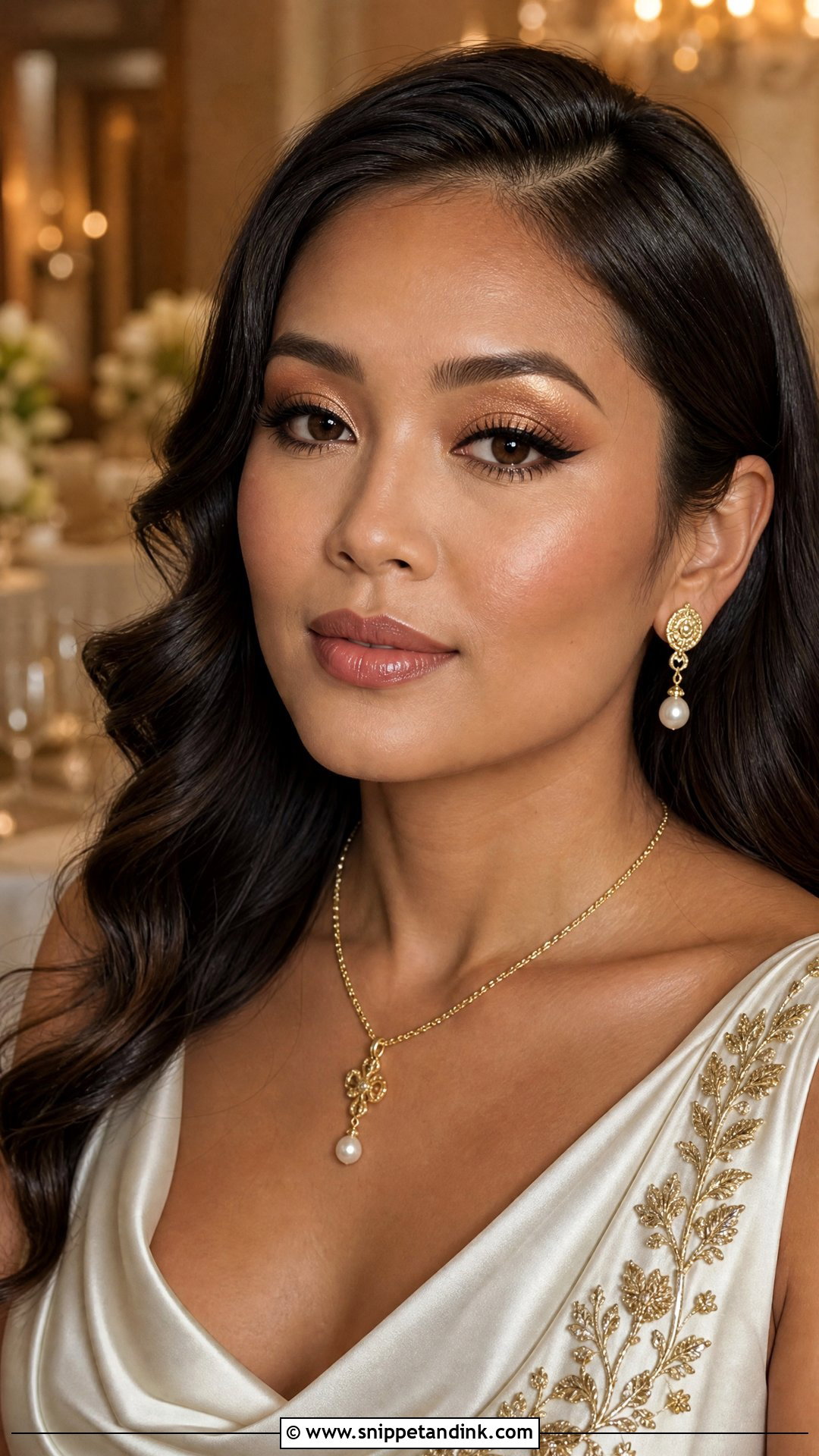
Gold works best as a warm wash, not glitter. I use a golden champagne on the lids, warm brown in the crease, a thin liner, then bronzer, peach blush and a soft gold-toned highlight on the cheekbones. Lips stay balanced in caramel nude, warm rose or brown-pink. Chunky glitter catches the flash and looks like specks on camera, so I stick to finely milled shimmer. Gold jewellery, champagne gowns and warm bouquets make it feel cohesive.
19. Vintage Pearl Wedding Makeup
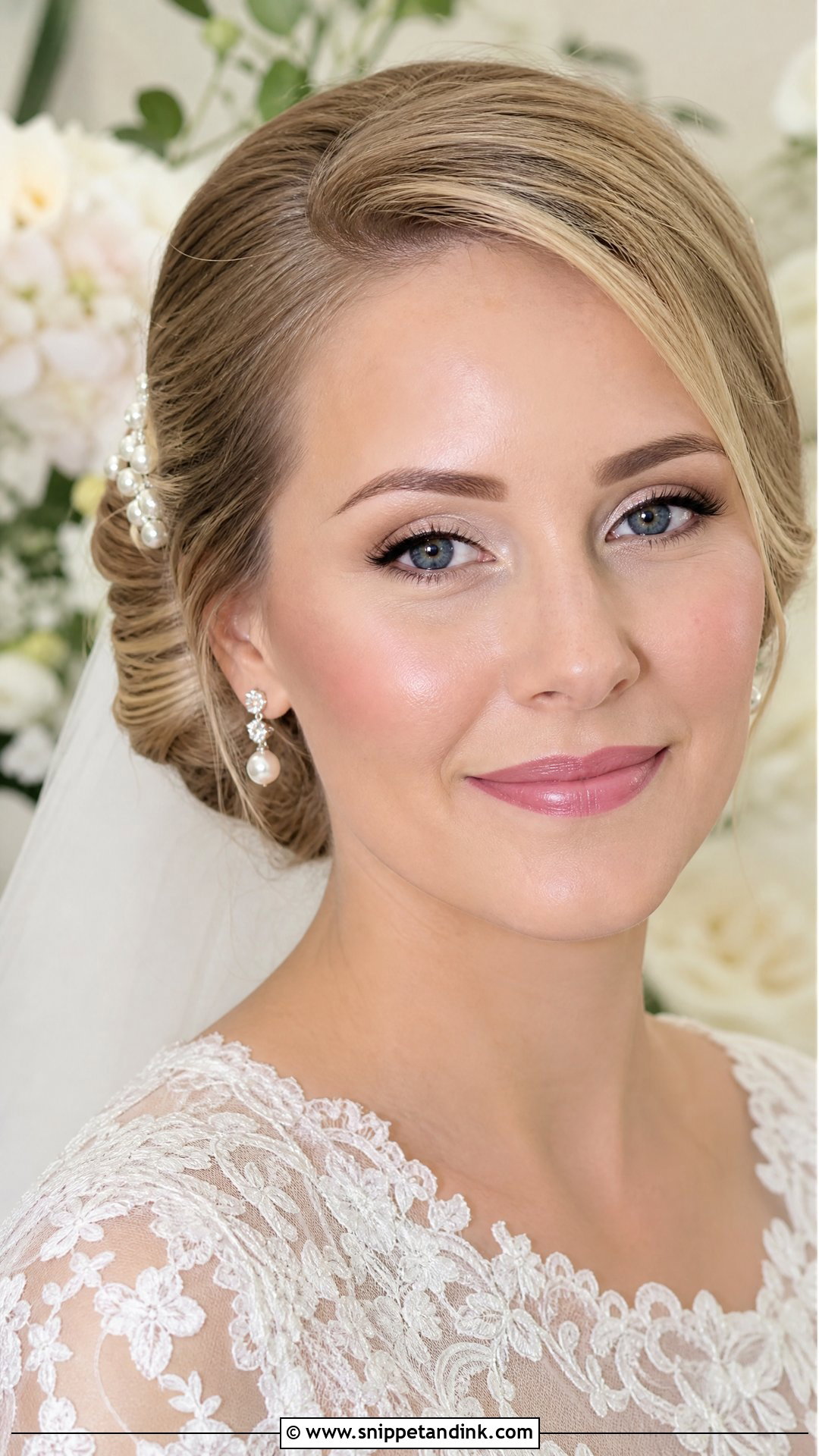
Pearl makeup is about sheen in the right places. Creamy skin, pearly lids, softly defined lashes and a satin pink or nude lip. I use ivory, shell pink or champagne on the lids, with a light taupe crease so the eye keeps its shape, and a soft highlight on the cheekbones, brow bone and inner corners. Too much highlight makes skin look oily in flash photos, so I place it only where light naturally hits. Pale rose blush keeps it gentle. Pearl earrings and a sleek bun suit it.
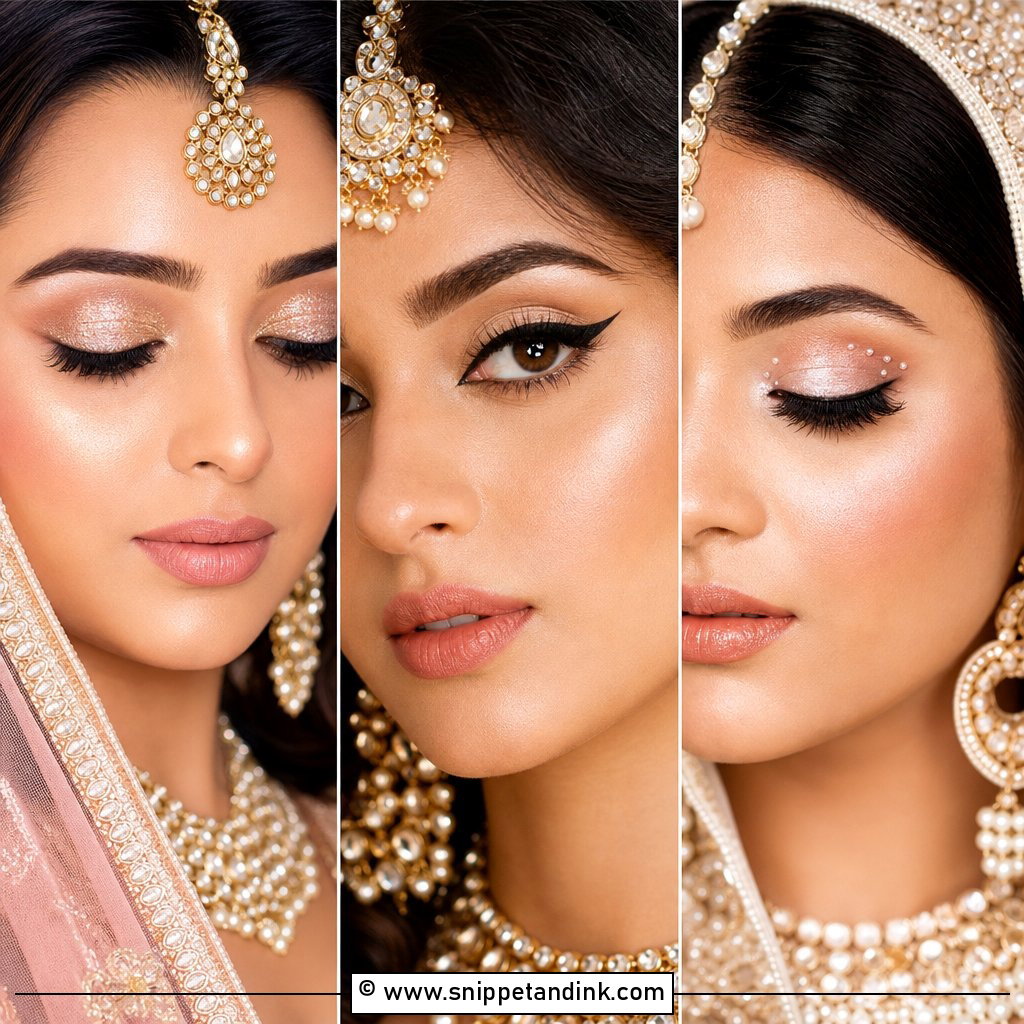
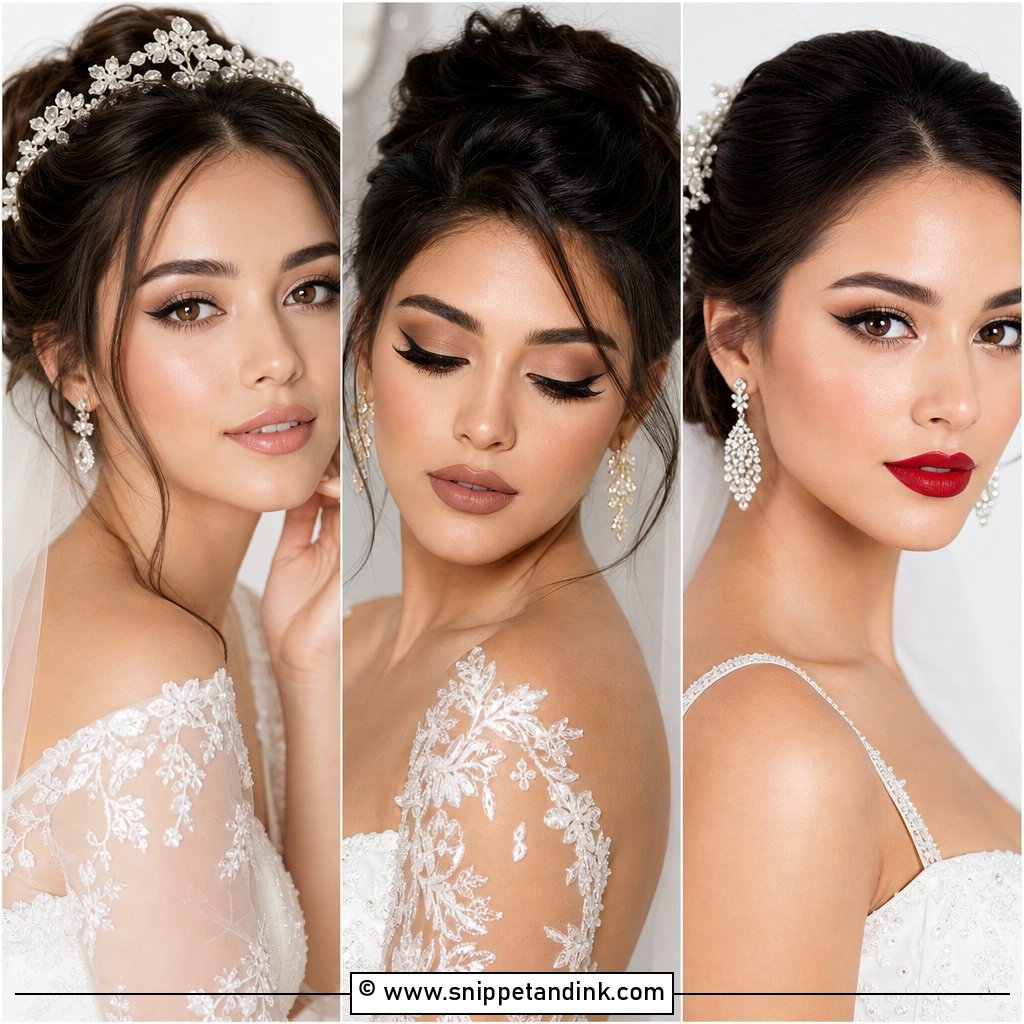
20. Vintage Bridal Makeup For Brown Eyes
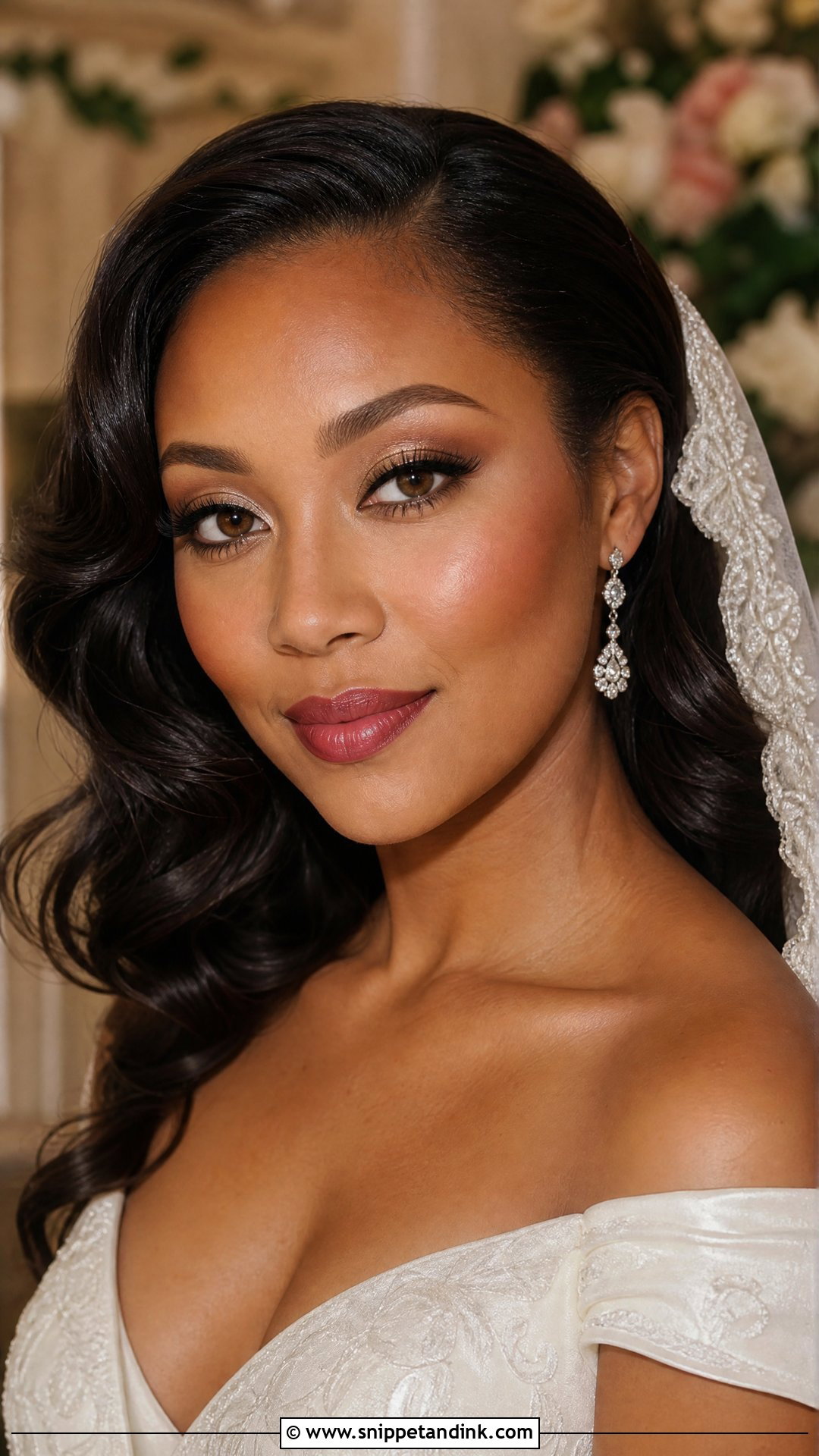
Brown eyes can carry almost any shade, which is why bridal makeup for brown eyes is so flexible. Bronze, gold, plum, espresso, taupe and soft grey all add depth. For a classic wedding version I use champagne on the lid, warm brown in the crease, espresso or black liner and fluttery lashes. Plum and purple tones bring out warmth in brown irises especially well. A winged liner lifts and defines them too. Choose the lip by mood: red, nude rose or berry. Polished waves or a classic chignon finish it.
A Red Lip That Survives Kissing, Dinner and a Champagne Toast
Red is the colour that appears in half these looks, and it’s the one brides worry about most. It can last, if it’s built in layers.
- Exfoliate gently and use a light balm the night before, not right before application, so the lips aren’t slippery.
- Line and fill the entire lip with a matching pencil. It gives the lipstick something to grip and leaves a stain if the top layer wears off.
- Apply lipstick with a brush, blot through a tissue, then apply a second coat.
- If you choose a liquid matte, know that it’s very transfer-resistant but can feel dry. A thin, clear balm only in the centre of the lips helps, though it will cut the wear time.
- Run a finger through your lips and out after applying. Lipstick on the inner rim is what ends up on your teeth.
For the bag a bridesmaid carries, I pack the lipstick, the liner, a small brush and blotting papers. A quick touch-up after dinner and before the first dance is usually all a well-built red needs.
Adapting a Cat Eye for Hooded Lids and Mature Skin
Hooded eyes fold over the lid, so a wing drawn with the eye closed folds away when it opens. I draw it with the eye open and looking straight ahead, and sometimes build a slightly bat-shaped line that only looks like a clean wing when the eye is open. Matte shadow in the crease gives back the depth the hood hides.
On mature skin, I use less powder and more cream, because powder settles into fine lines and makes them more visible. Liner works better smudged a little than razor-sharp, and a soft brown is often more flattering than black. The vintage character survives just fine. It’s the shape that matters, not the hardness of the line.
Pick a Decade, Then Make It Yours
These looks last because they’re built on shape and balance rather than trend products. Start with the one era or feature that excites you, such as a red mouth, a flicked liner or rosy cheeks, and adapt it to your skin tone, eye shape, dress and venue. Test the whole face at your trial in daylight and with a phone flash, then wear it for a few hours to see how it settles. With long-wear formulas and a small touch-up kit, a vintage face looks as fresh at the final dance as it did in the first photo.
You'll Like These Ideas:


Leave a Reply