
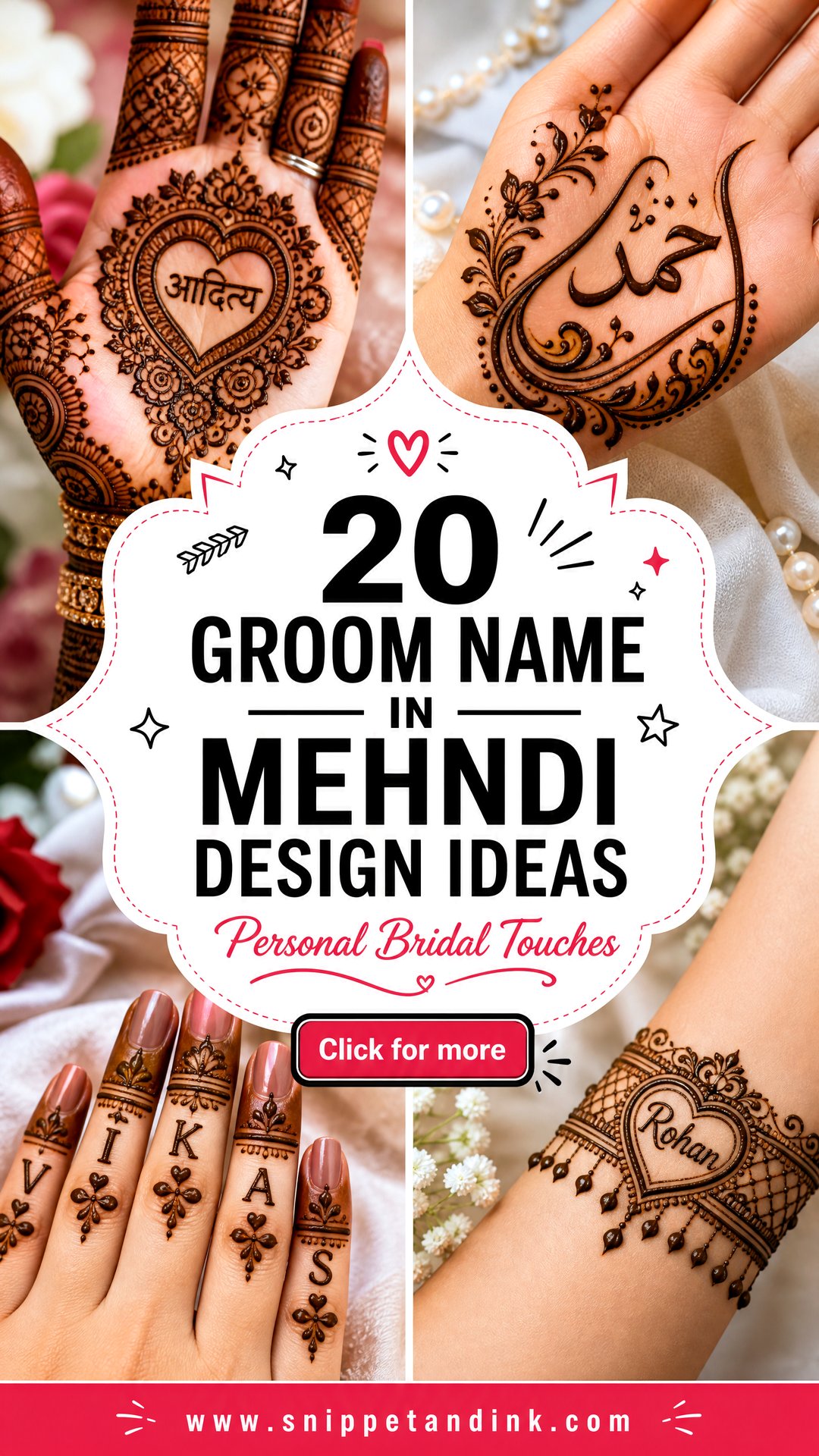
Hiding the groom’s name in the bride’s henna is one of my favorite requests, partly because it changes how the bride looks at her own hands. Some brides want his name written boldly where everyone can read it. Others want it buried in paisleys, jaali or a mandala so he has to hunt for it on the wedding night. Initials, dates and tiny love-story details can go in too. Where the name sits, how big I write it and which script I use decide whether it reads as part of the art or as a label stuck on top, and the ideas below cover all three.
Checking the Spelling and Script of His Name Early
The most common problem I see with name designs has nothing to do with drawing. It is spelling. Families spell the same name several ways, and the bride is often too busy to double-check in the moment. Henna cannot be erased once it has stained, so I ask every bride to message me the name, in the exact script she wants, a few days before the appointment.
- Send it written out by hand or typed in the chosen script. For Urdu, Arabic or Hindi, ask someone fluent to check it, because a missing dot can change a letter.
- Count the letters. A long full name on narrow fingers will be cramped, so plan for initials or a wrist band instead.
- Decide on visibility before you sit down. Hidden names change how I draw the whole hand around them.
- If you want the date as well, choose the format in advance: numbers, Roman numerals or words.
Size matters for a reason people rarely consider. Henna lines spread very slightly as the stain develops, so letters drawn too small lose the open space inside them and the name blurs. I keep each letter tall enough that its loops stay visible after the stain darkens over the next two days.
1. Hidden Groom Name Bridal Mehndi
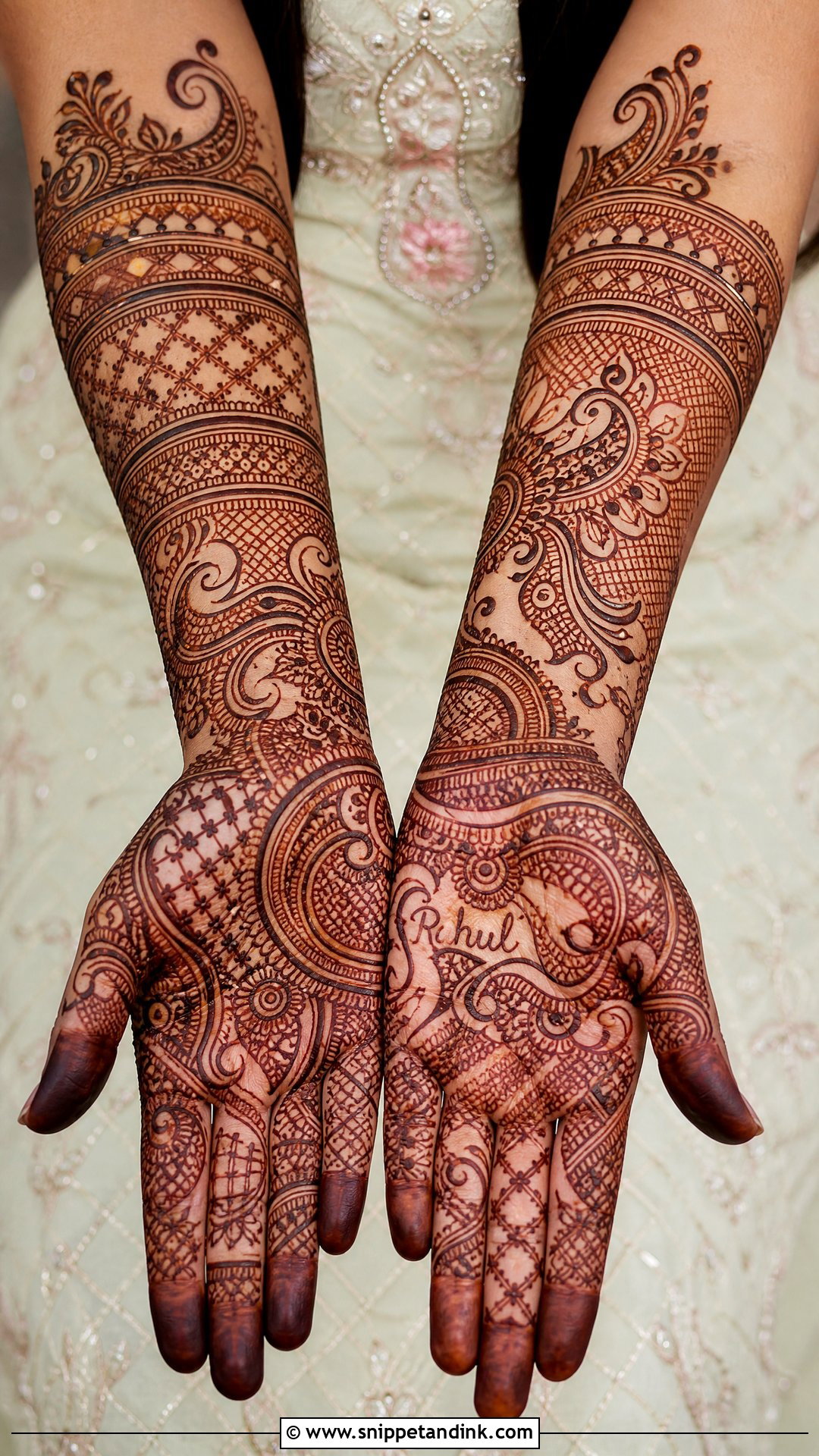
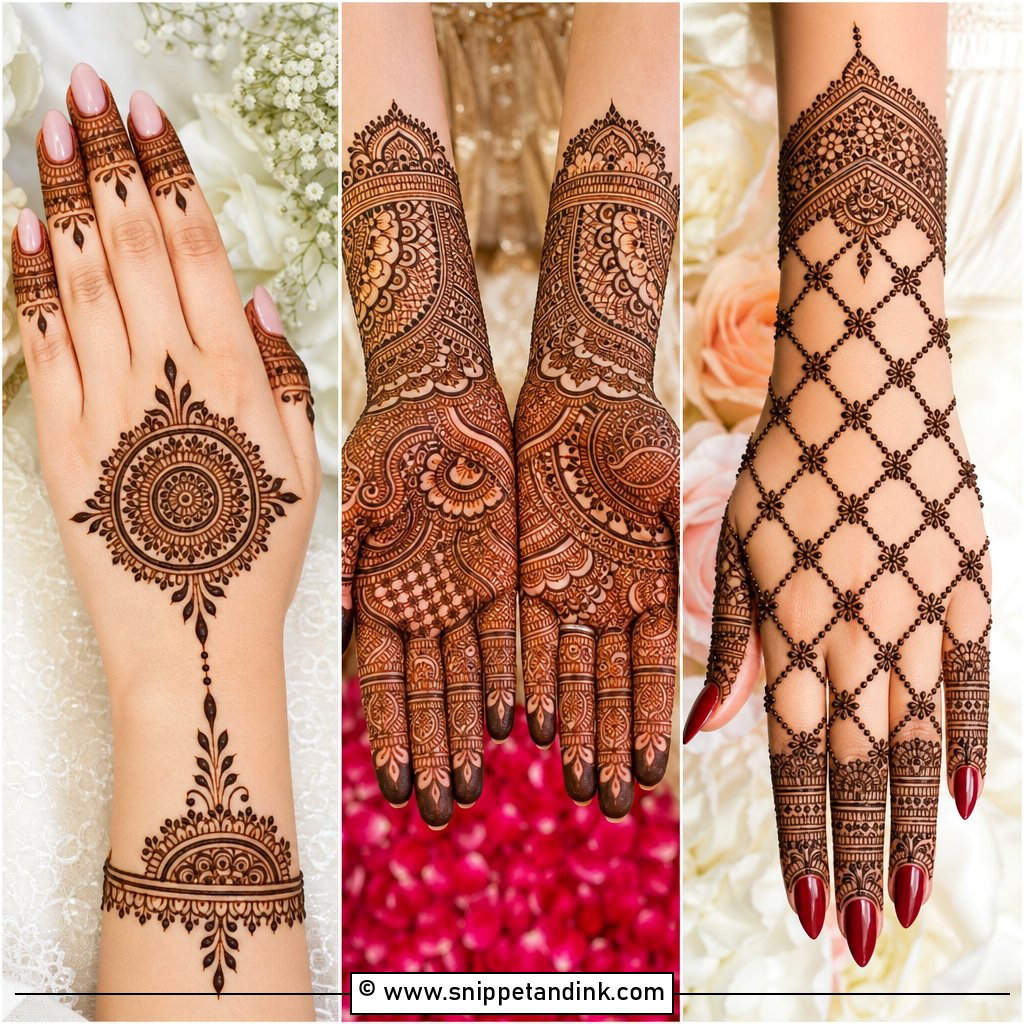
Hiding a name properly is harder than writing it. On a densely covered hand I tuck the letters inside paisleys, between floral vines, near the wrist band or along a mandala’s curve. The trick most people don’t expect is that I thicken the outlines of the motifs around the name, never the name itself, so the eye is pulled away from it. If the letters are drawn heavier than their neighbors, he finds them in ten seconds. It works on palms, back hands, and wrist-to-forearm layouts, as long as the surrounding pattern is busy enough to hide in.
2. Groom Name In Full Hand Mehndi
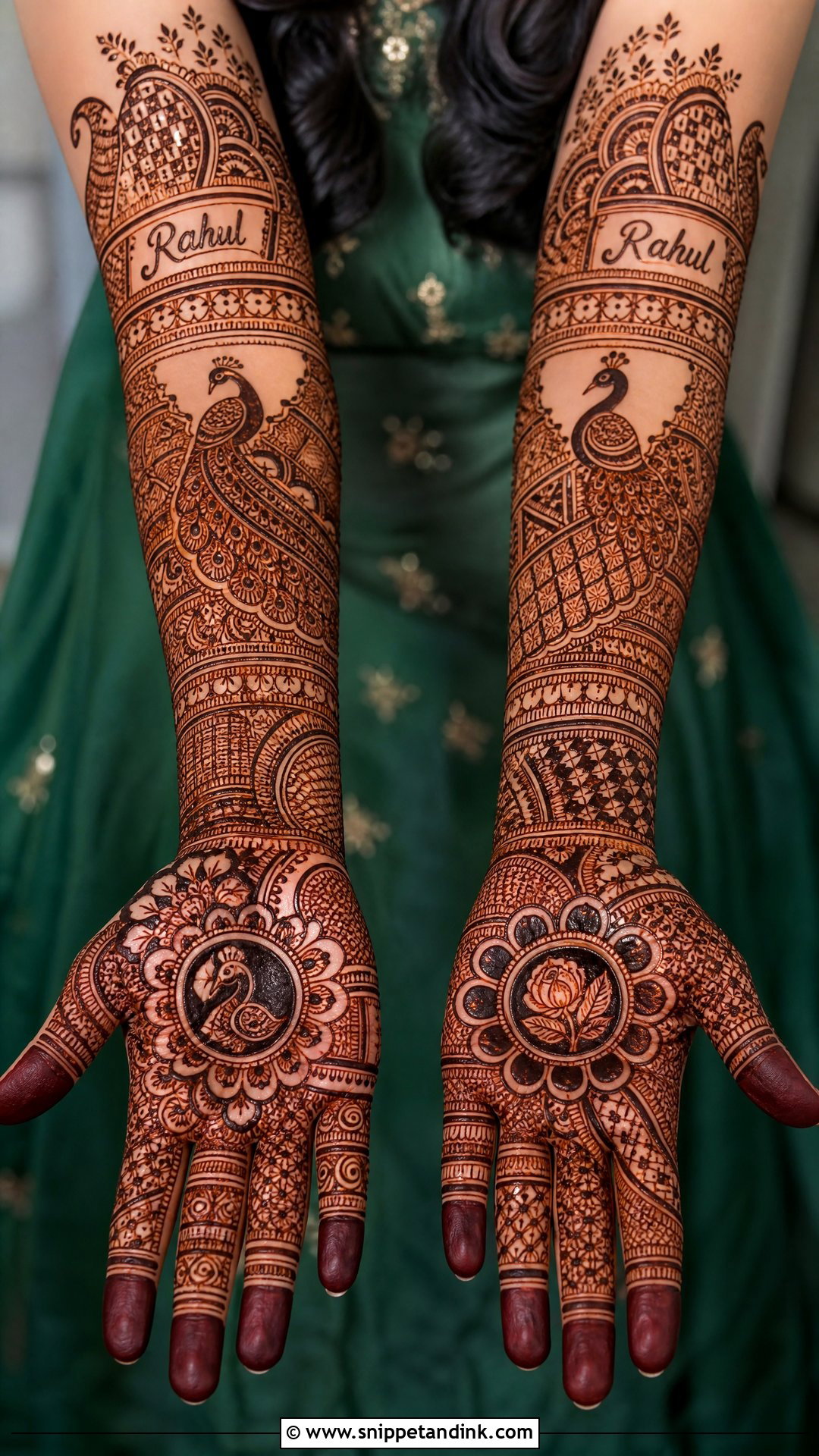
Groom name in full hand mehndi gives me the most room: a detailed palm center, packed florals, paisleys, peacocks, jaali and wrist cuffs, with space left for his full name, initials and even the date. I usually write it across the lower palm, inside the forearm pattern or as a curved vine near the thumb. I aim for medium-sized letters. Too small, and the stain fills the gaps inside letters like ‘a’ and ‘e’ so the name smudges into a blot. Too big, and it fights the bridal work around it.
3. Groom Name In Palm Mehndi
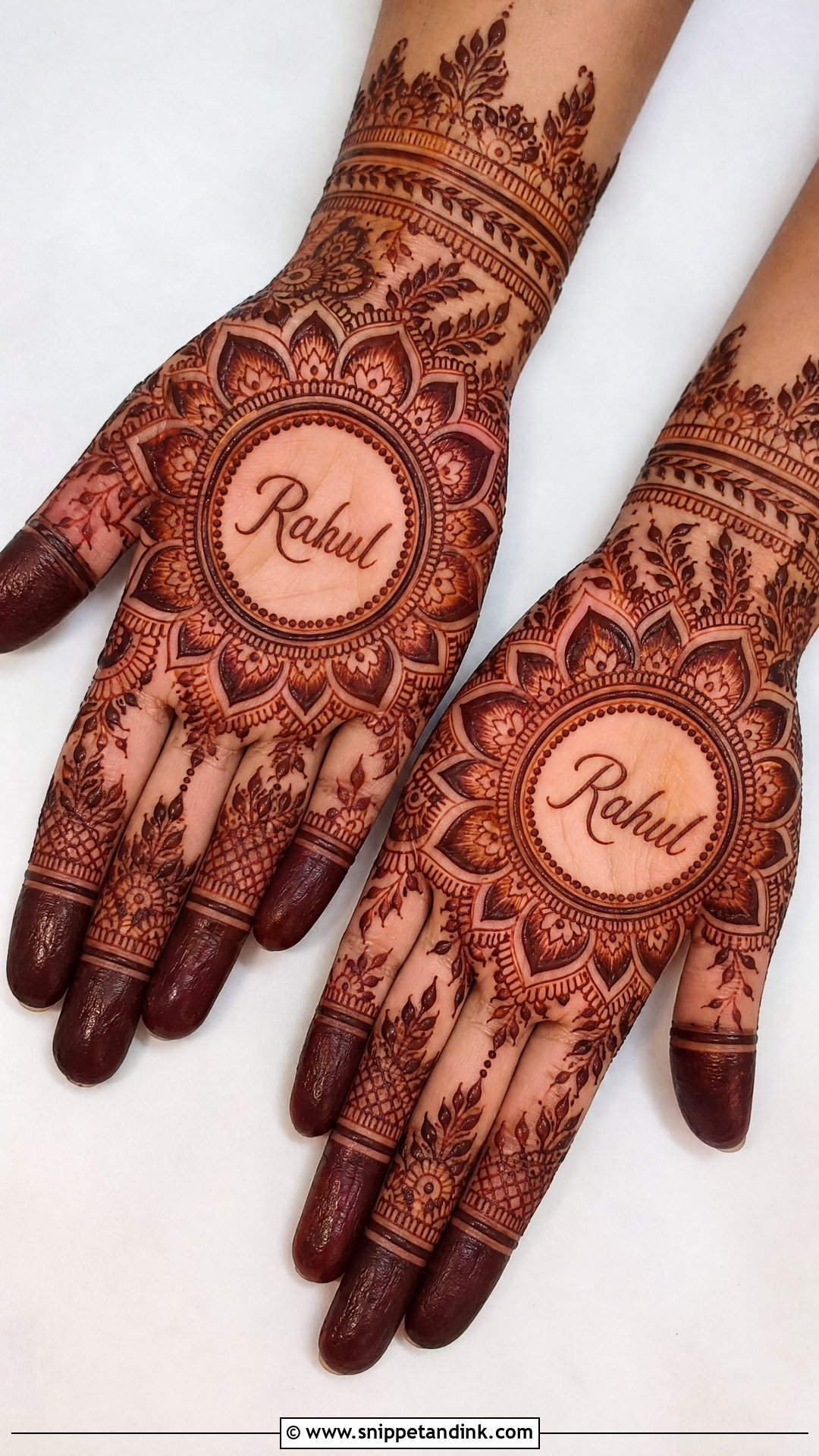
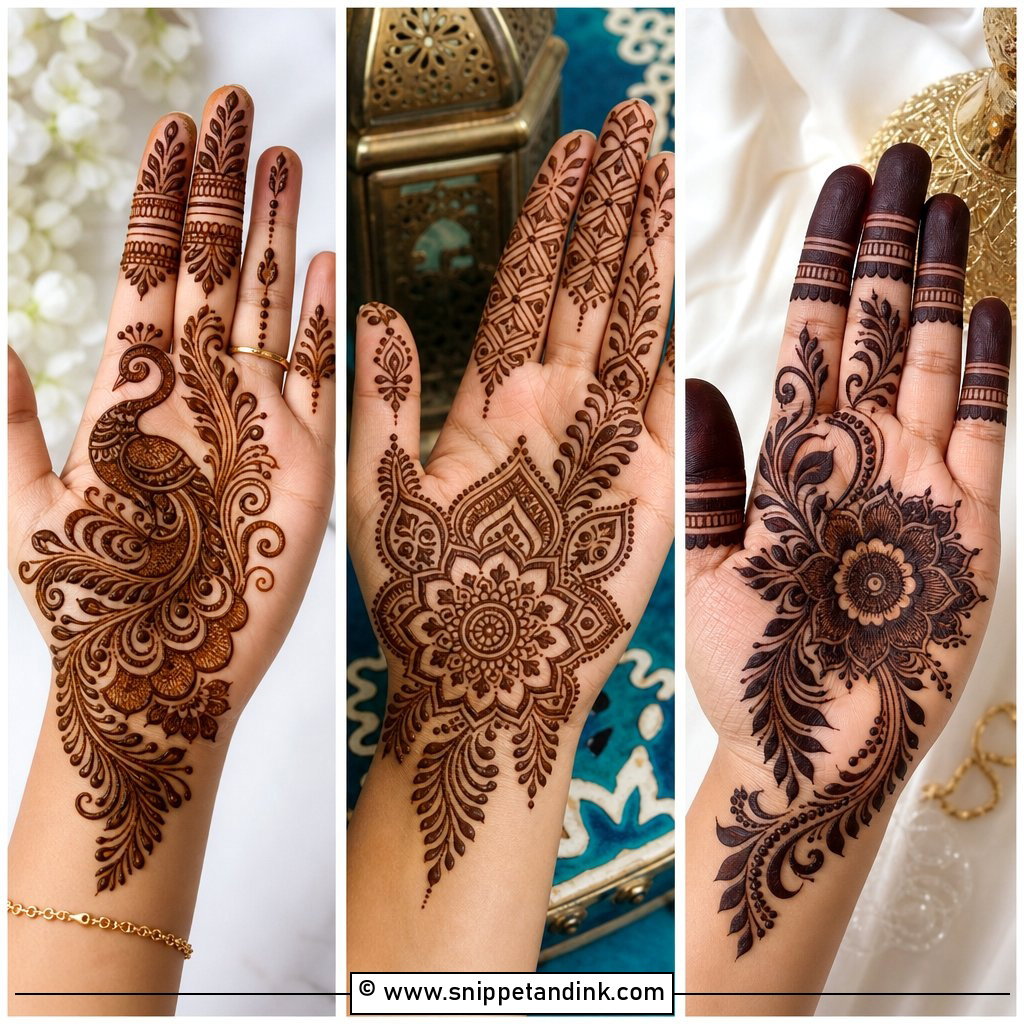
The palm stains darkest of anywhere on the hand, so a name placed there reads crisply. I frame it inside a round mandala, lotus circle or paisley, and run matching leafy lines and fine dots up the fingers. Palms are easy to catch during ring shots and rituals, which is a nice bonus if you want the name seen. Prefer a hidden effect? I can curve the letters around the mandala’s border instead of centering them.
4. Groom Name In Back Hand Mehndi
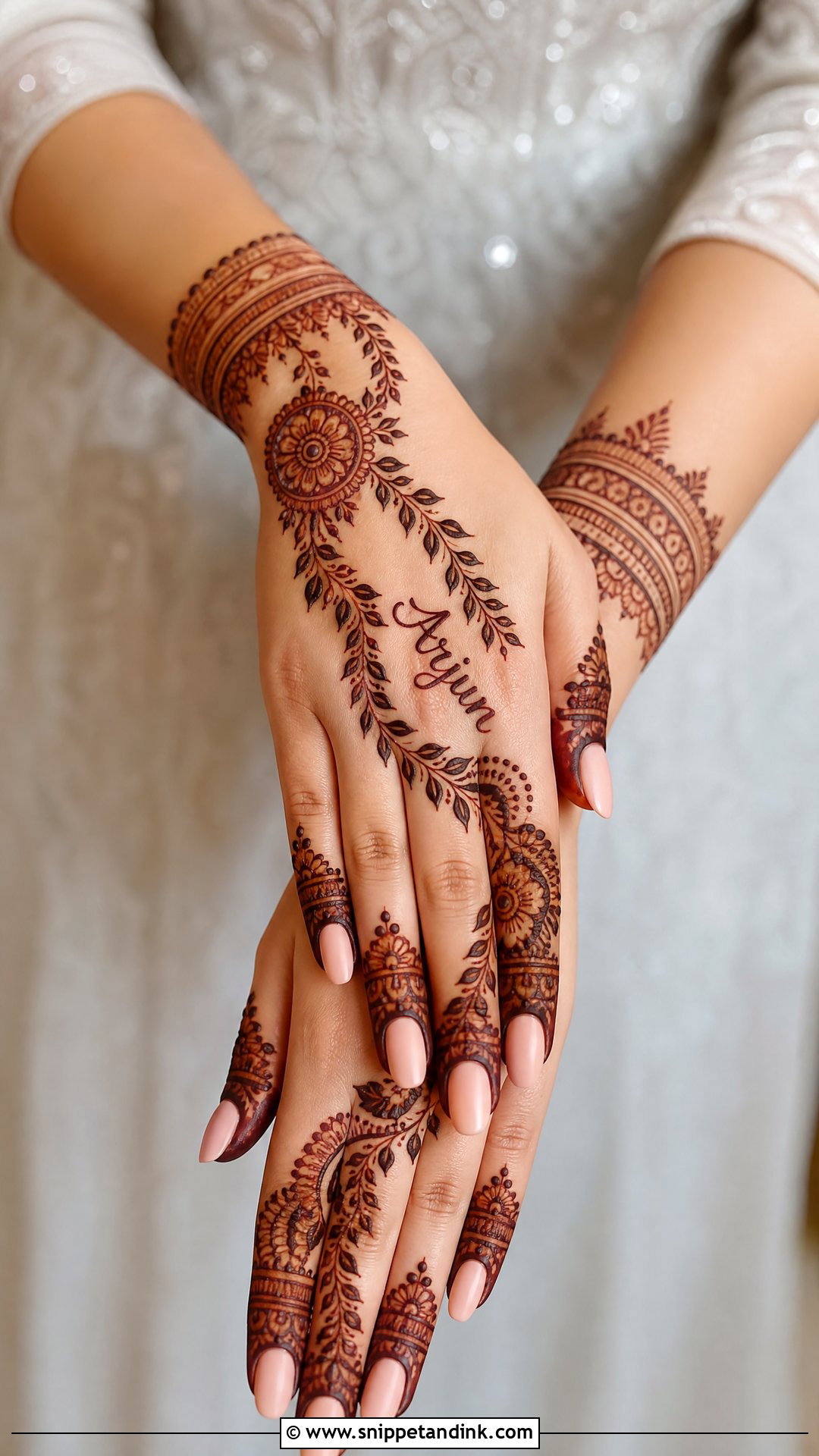
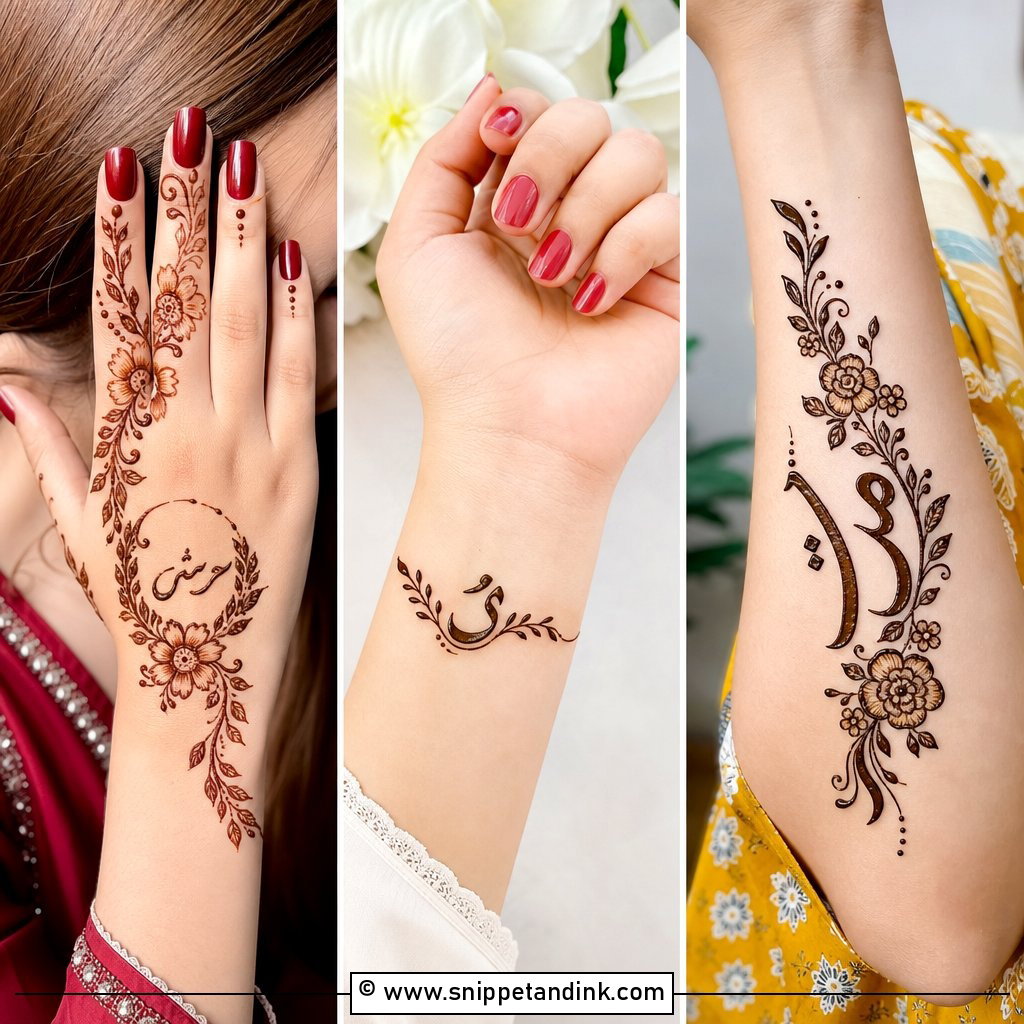
Groom name in back hand mehndi suits brides who want their palms lighter but still want the personal detail. The back of the hand is a clean canvas for Arabic trails, bracelet patterns or a mandala, and the name can run along a diagonal vine, sit inside a wrist bracelet or circle a central motif. Bear in mind that back-hand skin stains a shade lighter than the palm, so I write the letters a touch bolder there. I keep the fingers detailed and find a calm area for the name where it doesn’t interrupt the flow, which is why this layout turns up so often at nikahs and receptions.
5. Groom Name Arabic Mehndi
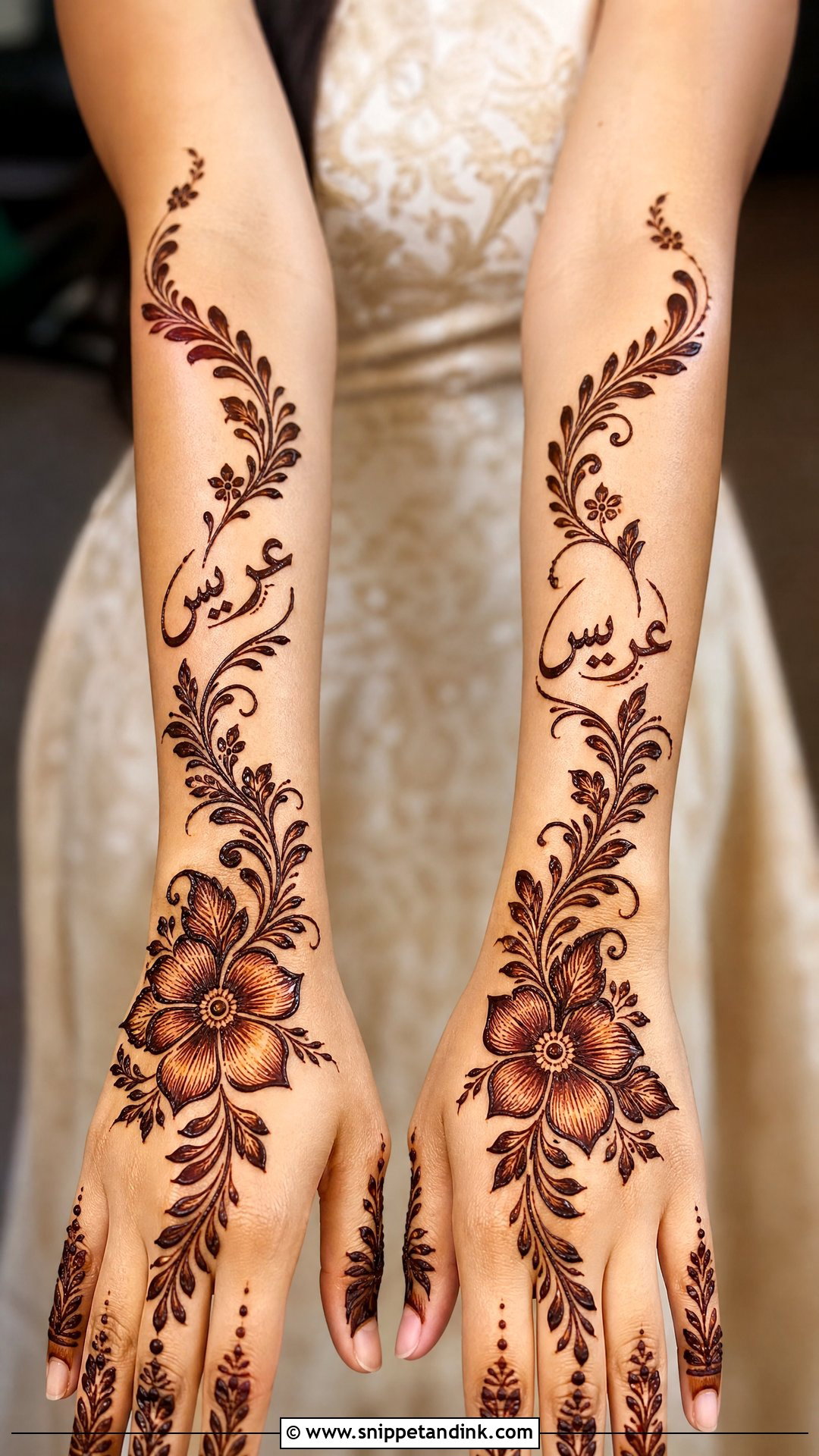
Arabic layouts are the easiest place to make a name readable, because the open skin between motifs gives the letters room. Diagonal trails, large flowers, leafy stems and shaded petals carry the design, and the name runs along the vine or tucks into a petal cluster. I avoid shading too close to the lettering, since shading darkens and crowds it. Back hands, palms or a single wrist-to-forearm trail all work.
6. Groom Name Indian Bridal Mehndi
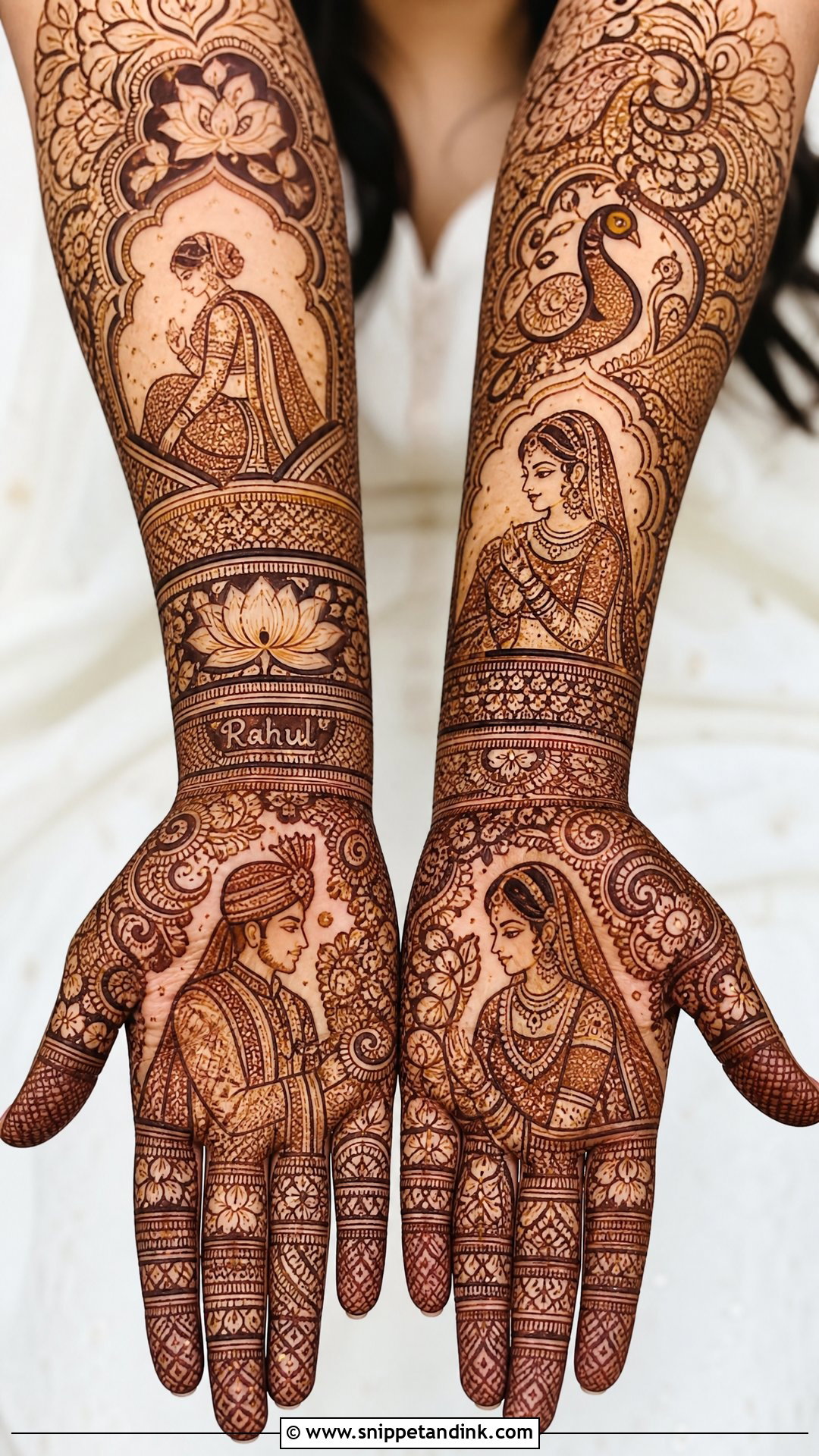
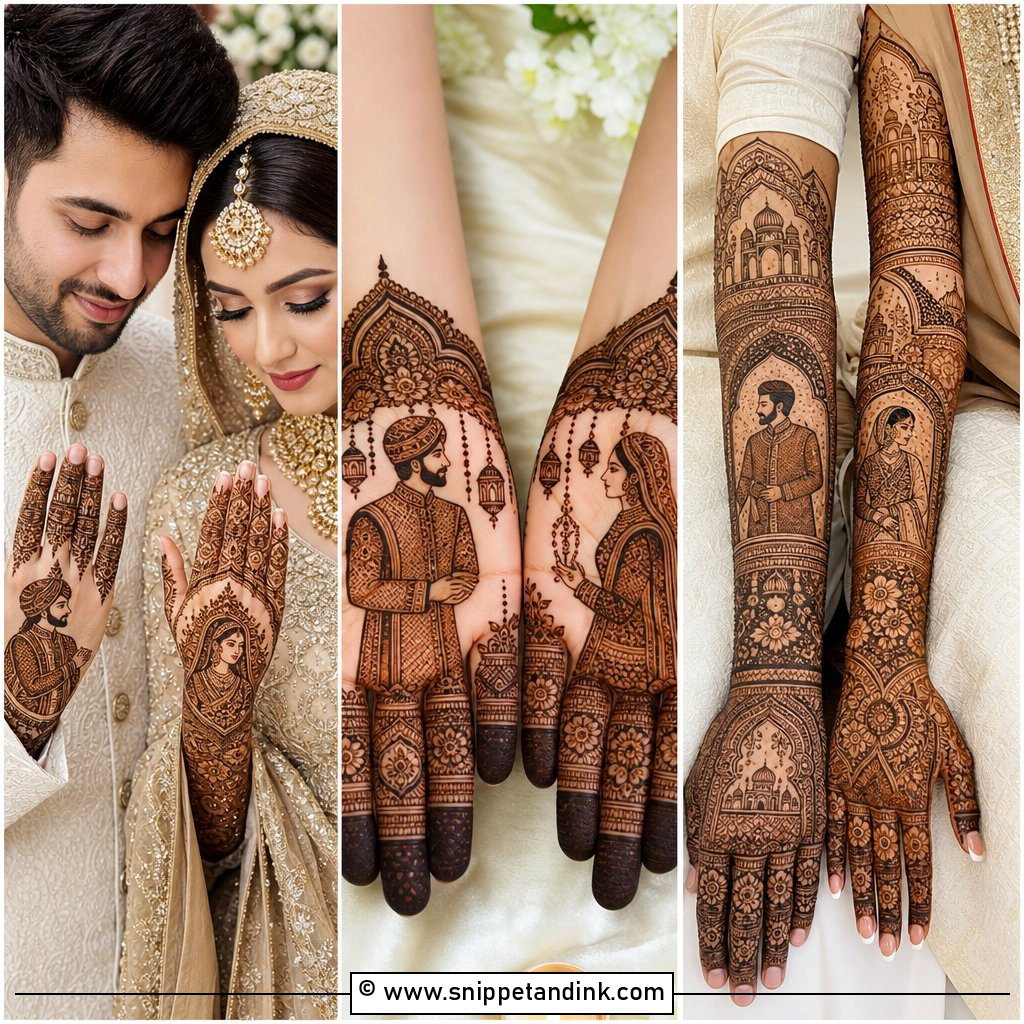
Peacocks, lotus flowers, kalash motifs, bride and groom figures, paisleys and packed fillers all belong in Indian bridal henna, which means there is very little empty skin left by the time I finish. That is exactly why I plan the name’s position before drawing anything else. Usually it goes in the forearm section or a decorative border near the wrist. If I try to squeeze it in at the end, the letters end up cramped and disappear completely once the stain develops.
7. Groom Name Indo Arabic Mehndi
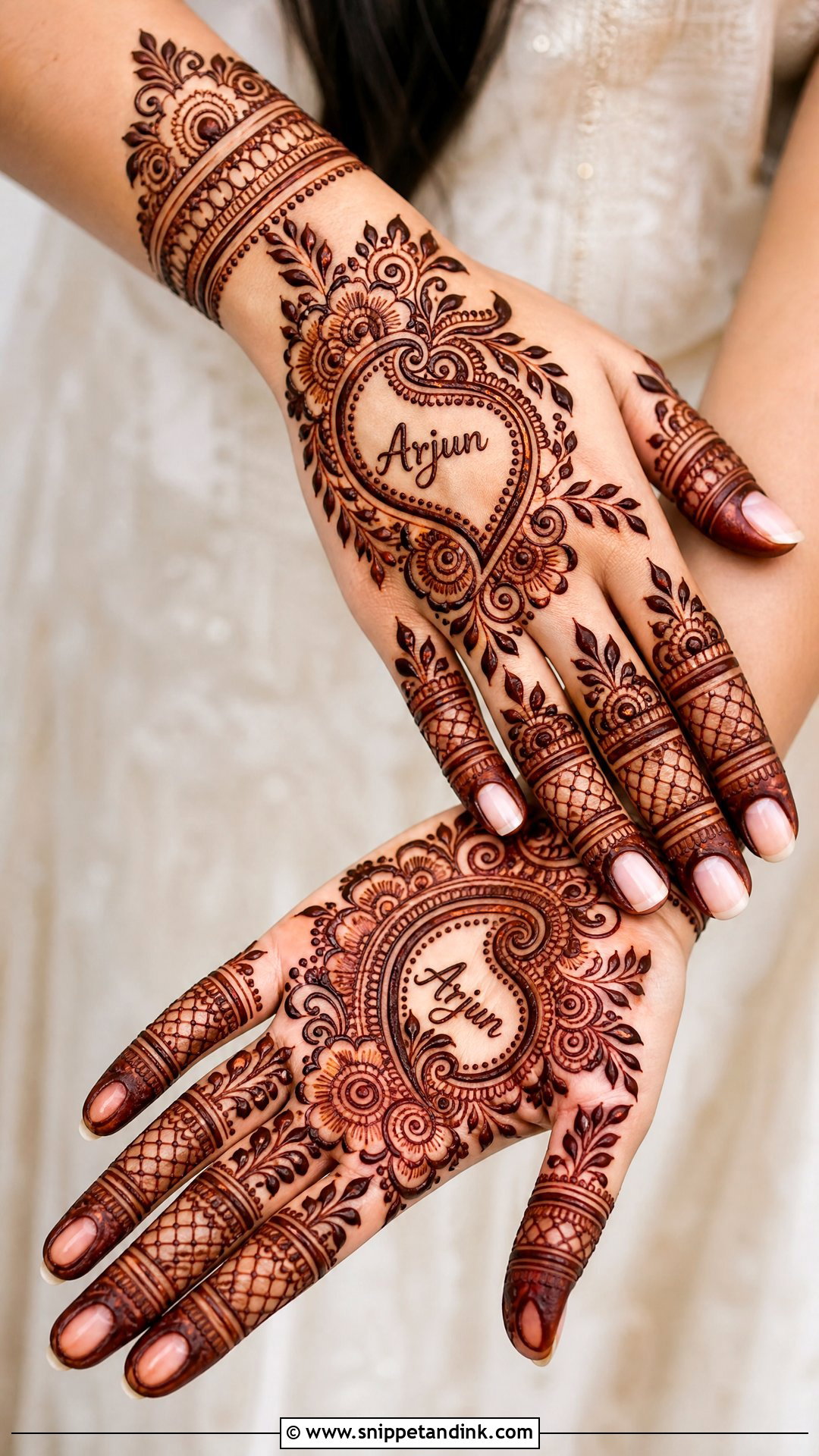
Groom name Indo Arabic mehndi mixes Indian detail with Arabic breathing space: bold flowers, curved paisleys, shaded leaves, mandalas and a few jaali sections. The name fits neatly inside a paisley, along a vine or between the wrist bracelet and the hand pattern. I like this style for brides who haven’t decided how heavy they want to go, because I can push it toward dense or semi-heavy on the day depending on the outfit. The open areas also give the name a clean frame without much effort.
8. Groom Name Mandala Mehndi
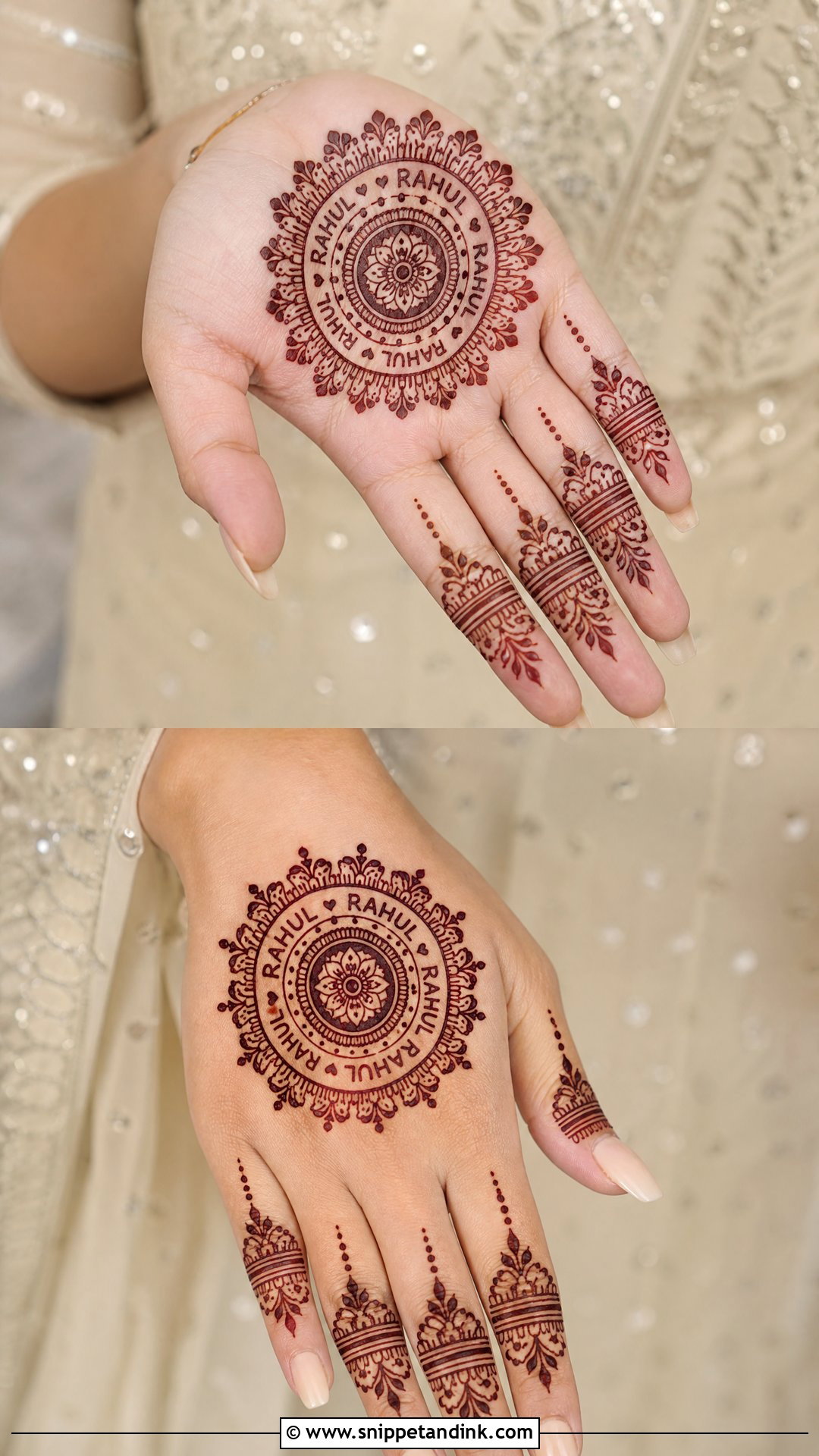
A mandala gives a name an obvious, organized home. The letters can sit inside the center, curve around the outer ring or hide as tiny characters between the petal layers. Curving lettering around a circle is a skill on its own: I mark where the first and last letter go with a dot before writing, so the name doesn’t run out of room halfway around. It can stay minimal with bare skin around the circle or grow into filled fingers, wrist bands and forearm extensions.
9. Groom Name Finger Mehndi
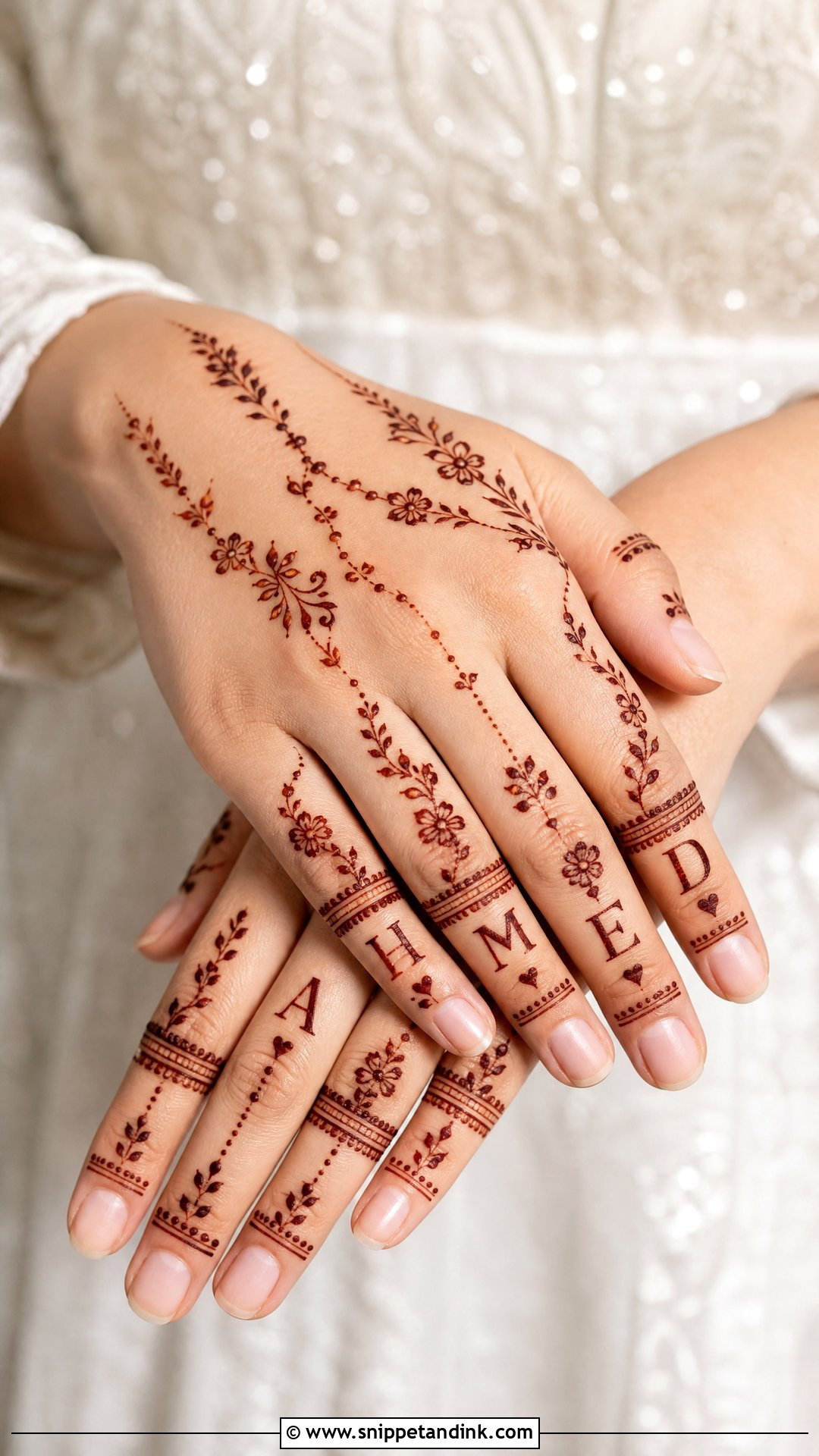
Fingers are narrow, so finger placement suits short names, nicknames or initials. I split the letters one per finger, write an initial beside a ring-finger band, or hide the name inside a finger vine. Expect the letters to be small, and keep the surrounding work delicate, with leafy trails, tiny florals and ring shapes, or the name gets swallowed. It pairs naturally with engagement henna or a lighter bridal set.
10. Groom Name Wrist Mehndi
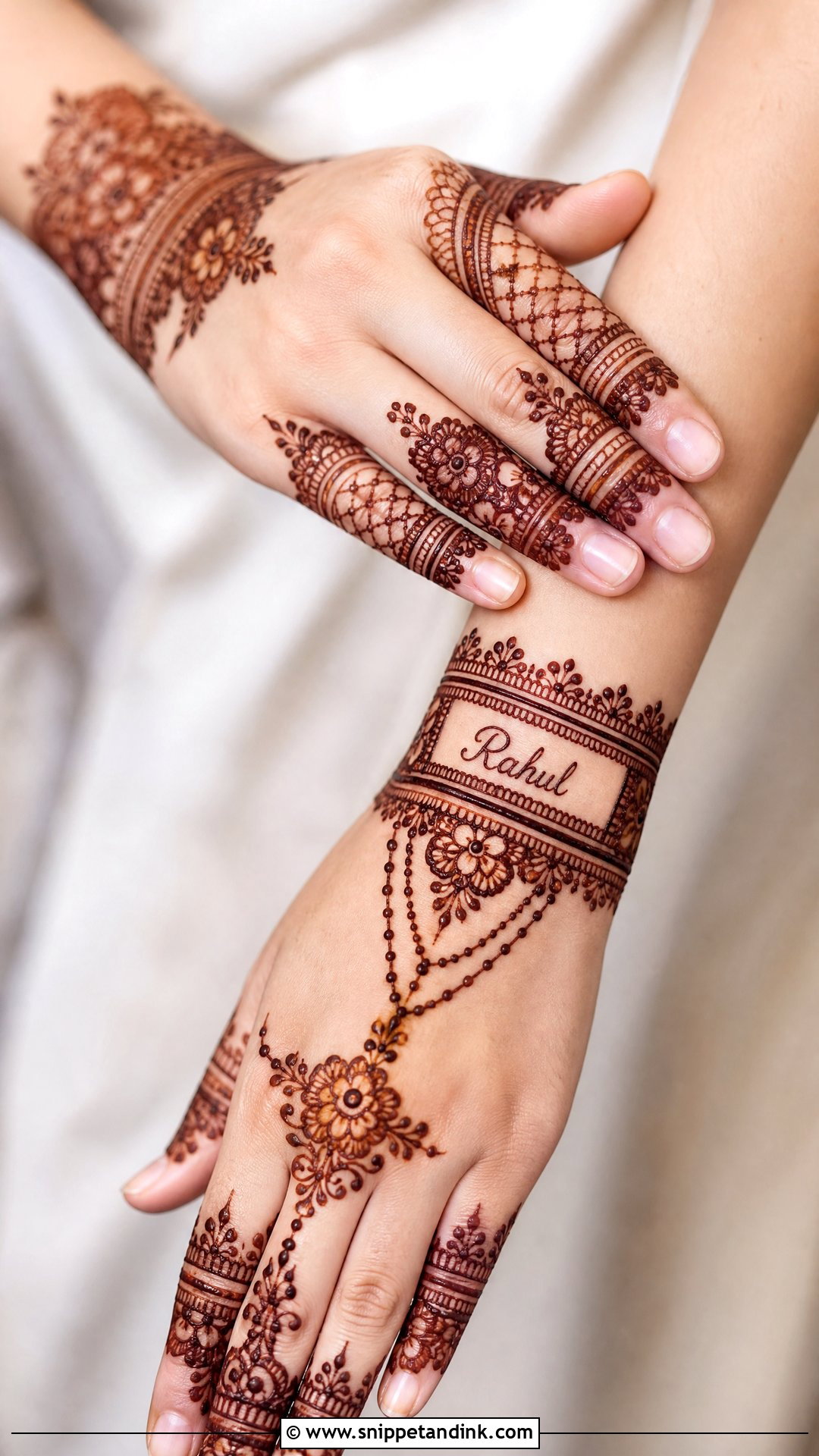
A wrist band already looks like a bracelet, so a name written inside a cuff, between two floral borders or as part of a chain-style band blends straight in. It is also the one placement you can choose to show or hide, since bangles slide over it. Brides who want the palm kept purely traditional often move the personal detail down here. I’ve written short names and initials in this spot, including names written in Hindi, Urdu, Arabic, or English, then finished the edges with small dots and lace-like scallops.
11. Groom Name In Jaali Mehndi
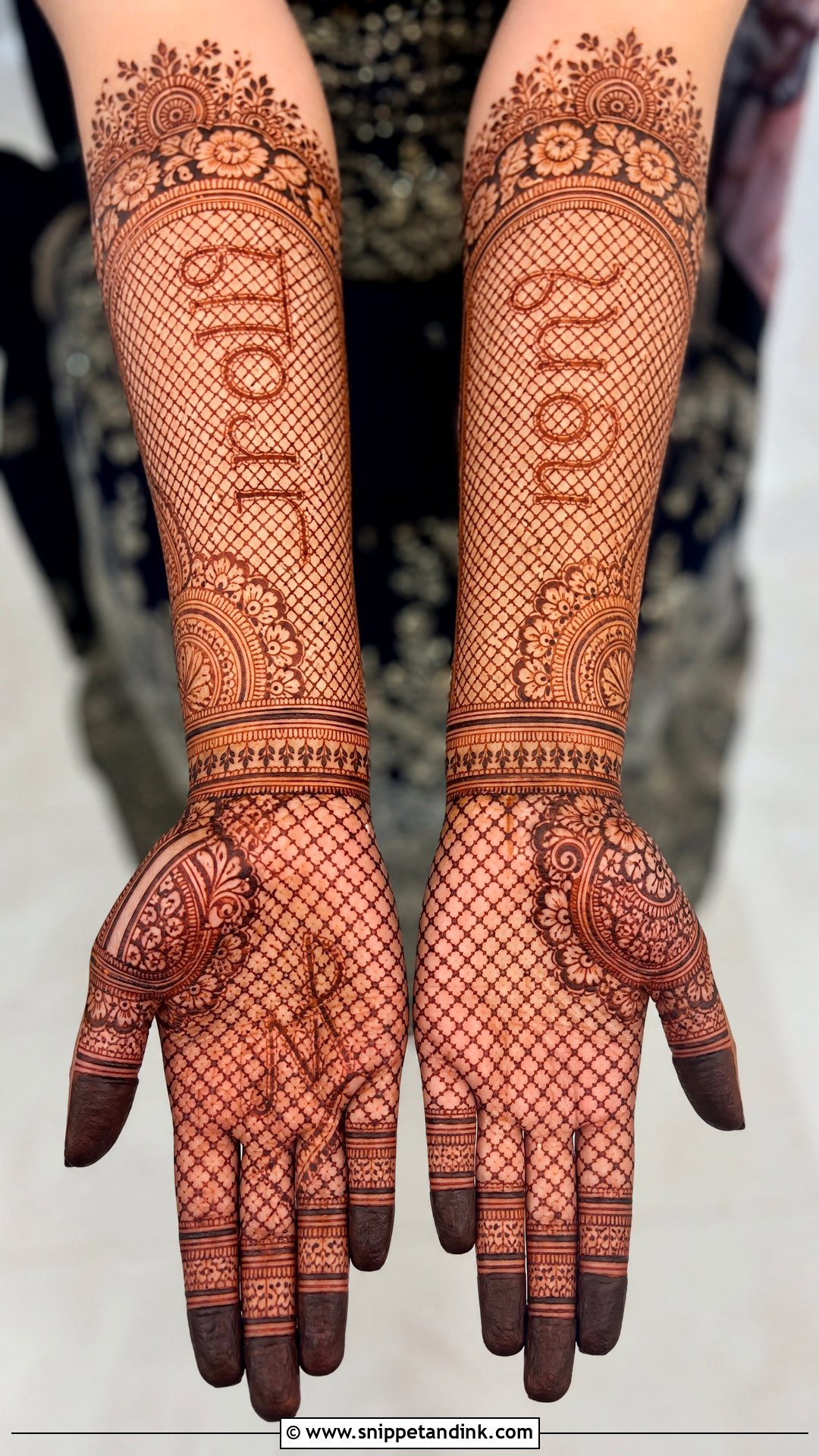
Jaali is the cleverest hiding place I know. The letters follow the grid lines or sit in tiny empty cells of the mesh, so they become part of the texture rather than standing alone. I limit the name to one jaali area and surround it with florals or paisleys. If the whole hand is covered in mesh, even I would struggle to point to the name, and the groom gives up instead of enjoying the search.
12. Groom Name Floral Mehndi
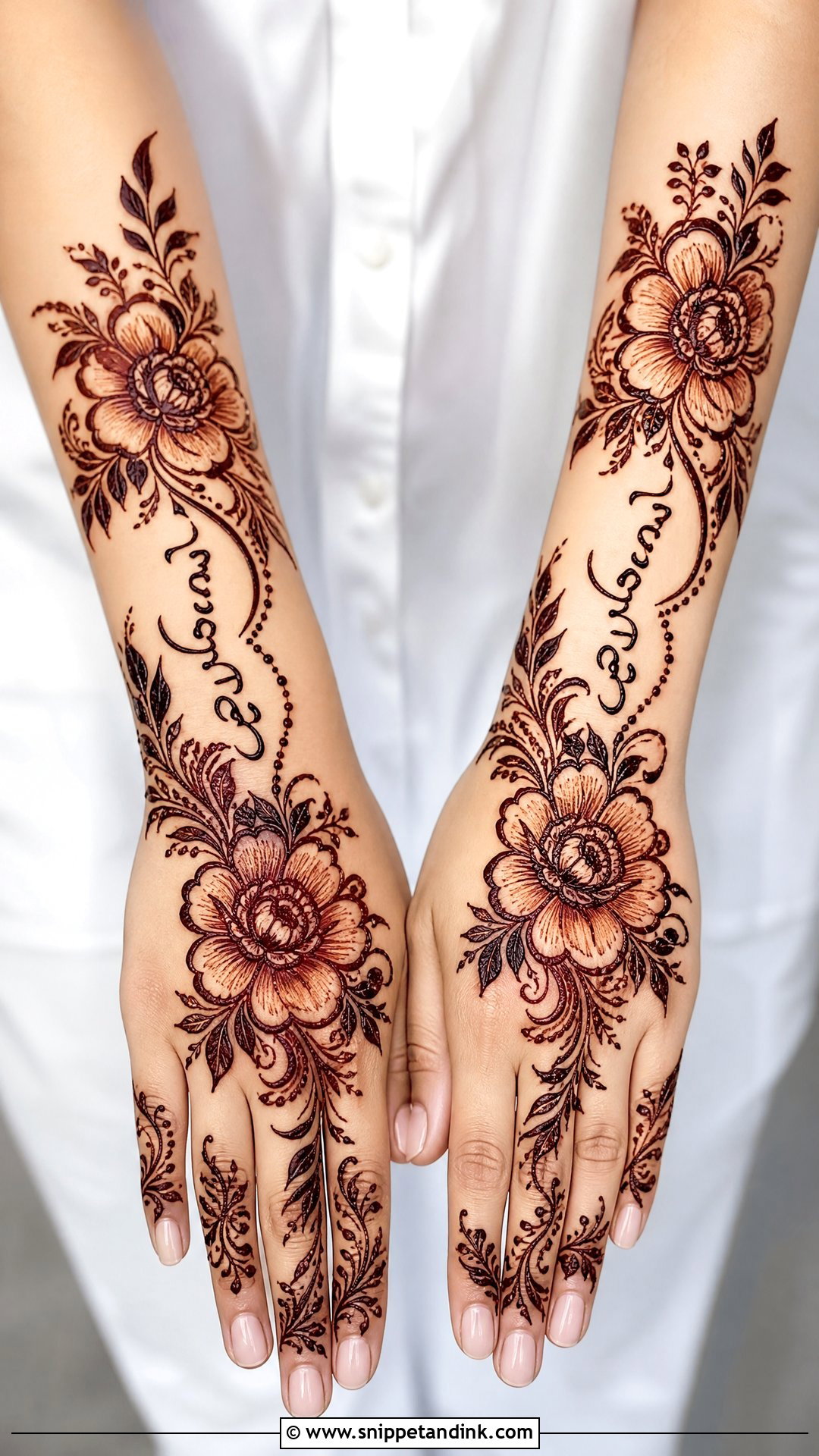
Flowers offer endless spots for lettering: petal curves, stems, blossom centers or a long vine across the hand. A full name works well written along a trailing stem, while initials sit neatly in the center of a small flower. I mix large blooms with tiny filler flowers so the name looks tucked in rather than crowded. The style flexes from bold Arabic to detailed Indian to minimal modern, and it is especially flattering from the back of the hand up the forearm.
13. Groom Name Paisley Mehndi
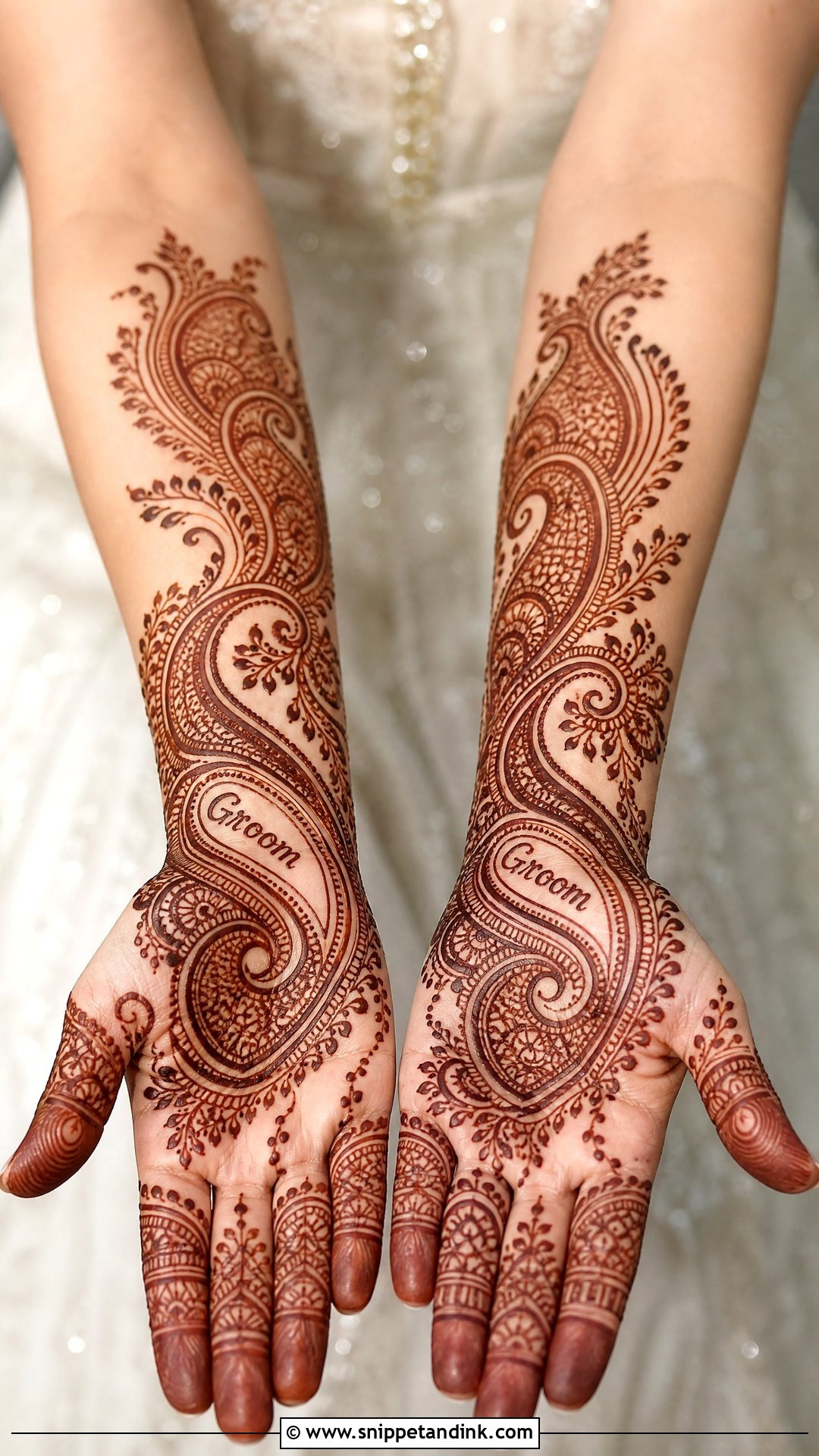
The inner curve of a paisley practically asks for a name. I write along that curve, inside a paisley cluster or between layered paisley borders, and I usually make one paisley slightly larger than the rest to act as the name’s frame. Paisleys join easily to vines, dots and lace fillers, so this works across full palms and forearms. It is a strong traditional choice for brides who don’t want portraits or large figures on their hands.
14. Groom Name Peacock Mehndi
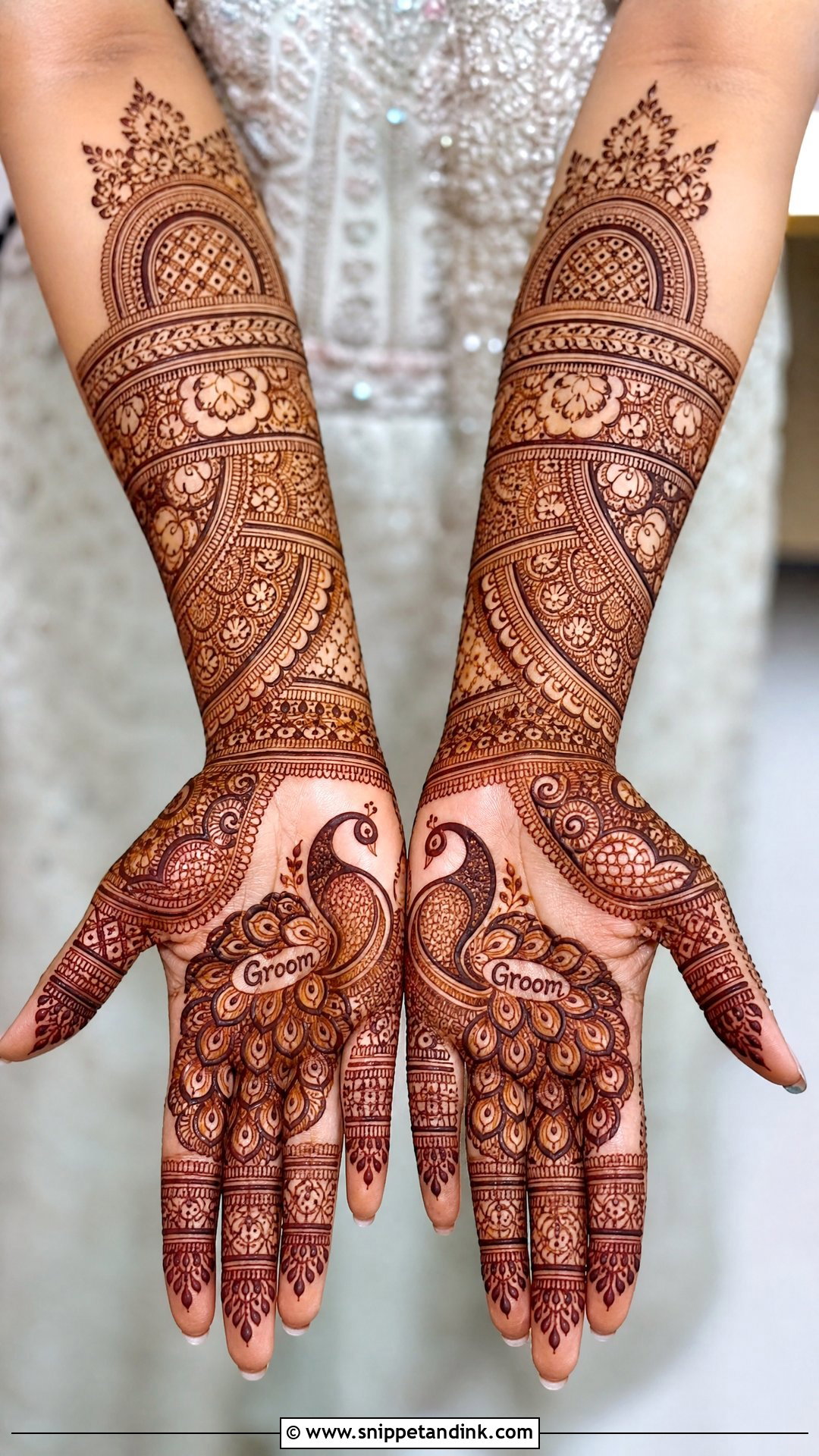
A peacock gives me several places to work a name in: the feathers, the neck curve and the base of the motif. Hidden lettering goes into the feather detail, where the repeated strokes disguise it well. Visible lettering sits under the bird like a small signature. Peacocks belong naturally with Indian bridal henna, alongside paisleys, mandalas and dense filling, and they suit palms, forearms and full-hand coverage.
15. Groom Name Portrait Mehndi
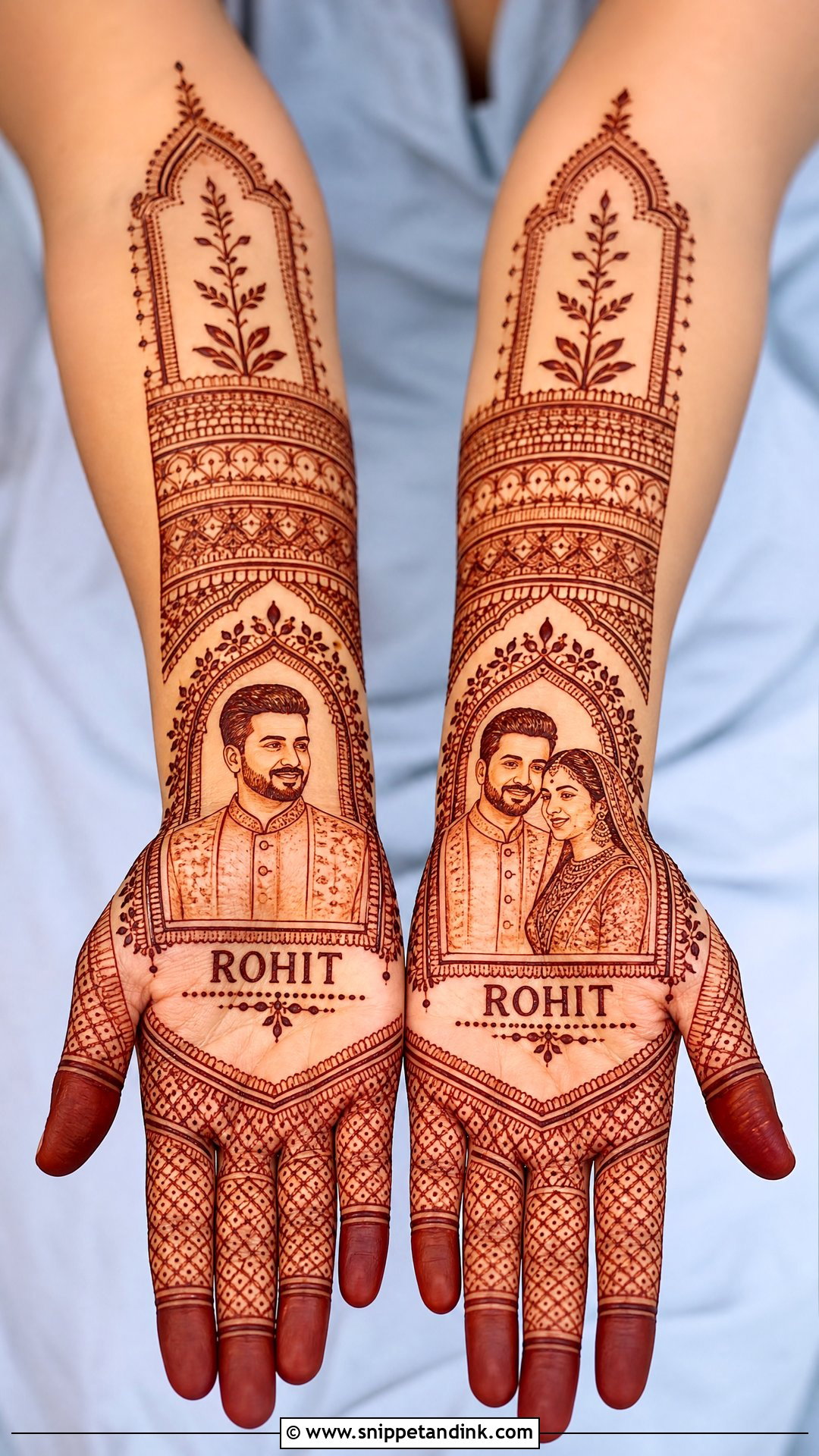
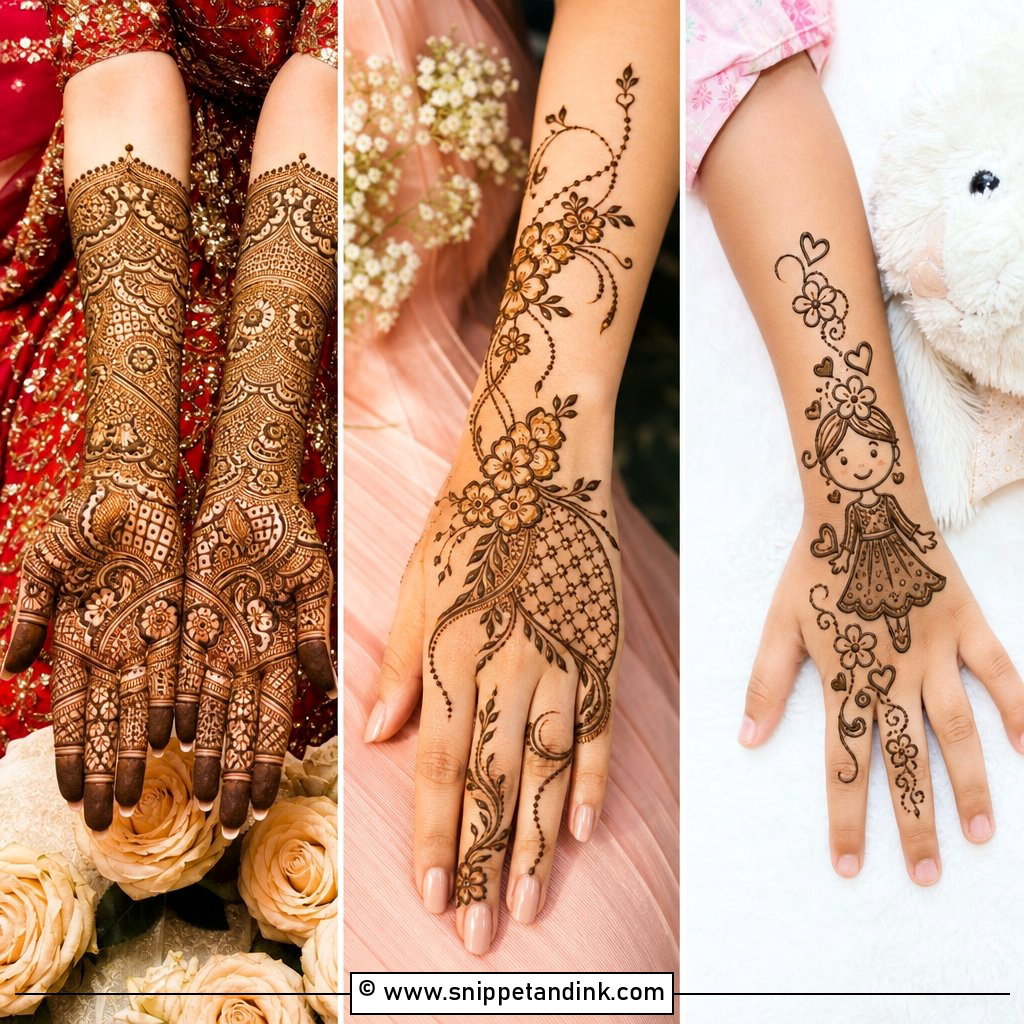
A portrait design already tells a story, and the name completes it. Small bride and groom figures, a wedding entry, a varmala moment or just a couple silhouette can carry the name below the scene, inside a frame or hidden in the surrounding border. Be honest with yourself about your artist here. Faces, outfits and letters all have to stay clean in a tiny space, and portrait work is a separate skill from pattern work, so ask to see photos of her portraits after the stain has developed, not just fresh paste. Forearm or palm placement gives enough room, with florals, dots and arches supporting the scene.
16. Groom Name Initial Mehndi
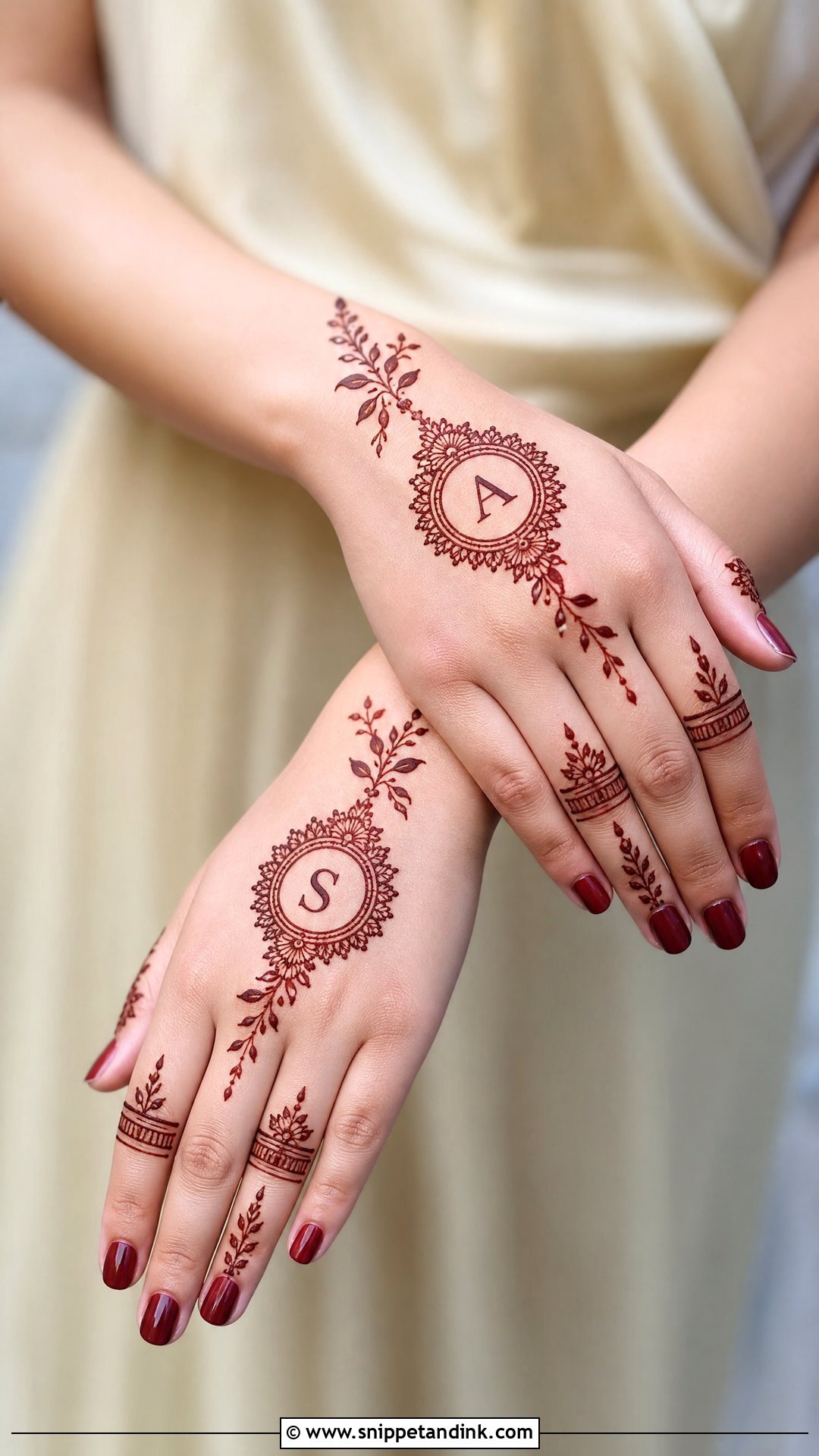
Sometimes one letter says enough. A single initial fits inside a mandala, on the ring finger, near the wrist or in a tiny floral heart. I suggest it whenever the groom’s name is long or awkward to fit cleanly, since a crisp initial beats a squeezed full name every time. Delicate vines, a bracelet band or a small paisley border around it keep the hand light and easy to read.
17. Groom Name With Wedding Date Mehndi
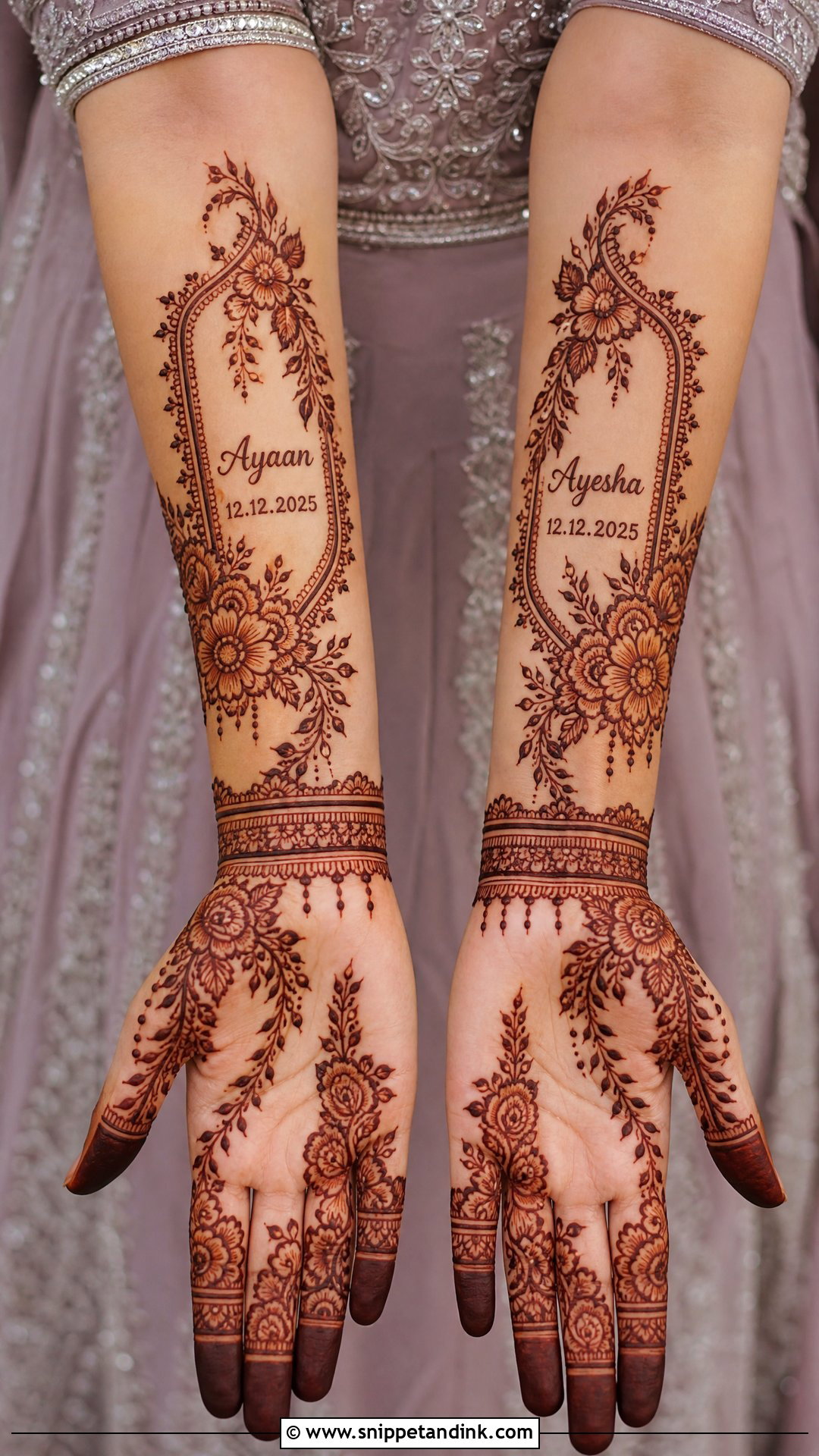
Adding the date turns the design into a keepsake. I put the name on one hand and the date on the other, or frame both together in a wrist-to-forearm panel. Roman numerals, simple numbers or traditional script all work, though Roman numerals take more space than people expect, so count the characters first. A small date format in a clean band or floral border keeps it from pulling attention away from the main bridal pattern.
18. Groom Name Minimal Mehndi
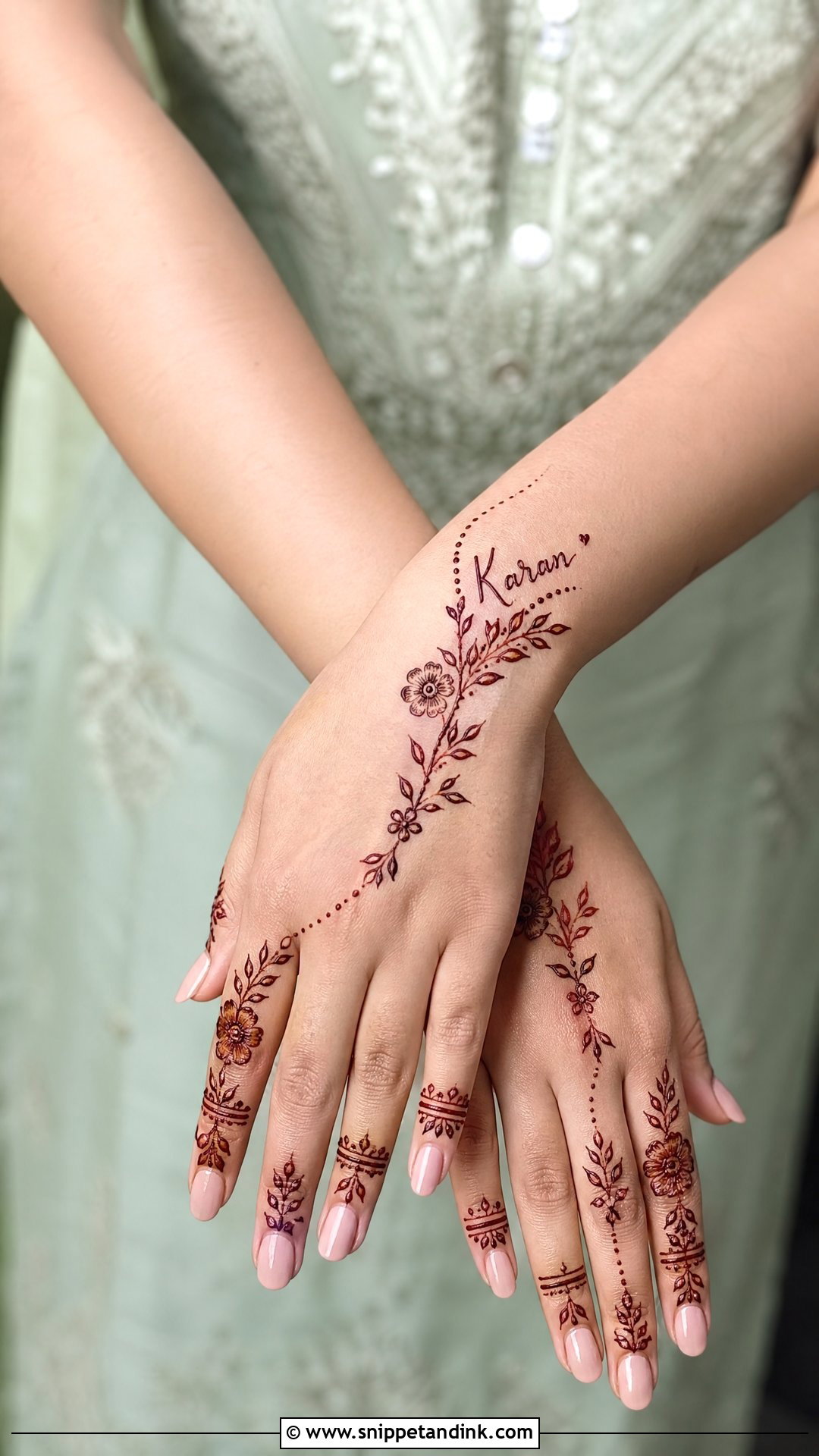
With minimal henna, placement does all the work. The name sits in a slim wrist band, a single floral trail, a small back-hand mandala or a neat finger pattern. This is the version where the name is meant to be read, so I keep the lines thin and the spacing generous. A few leaves, dots and tiny flowers frame it. It suits destination weddings and simple ceremony looks especially well.
19. Groom Name Heart Mehndi
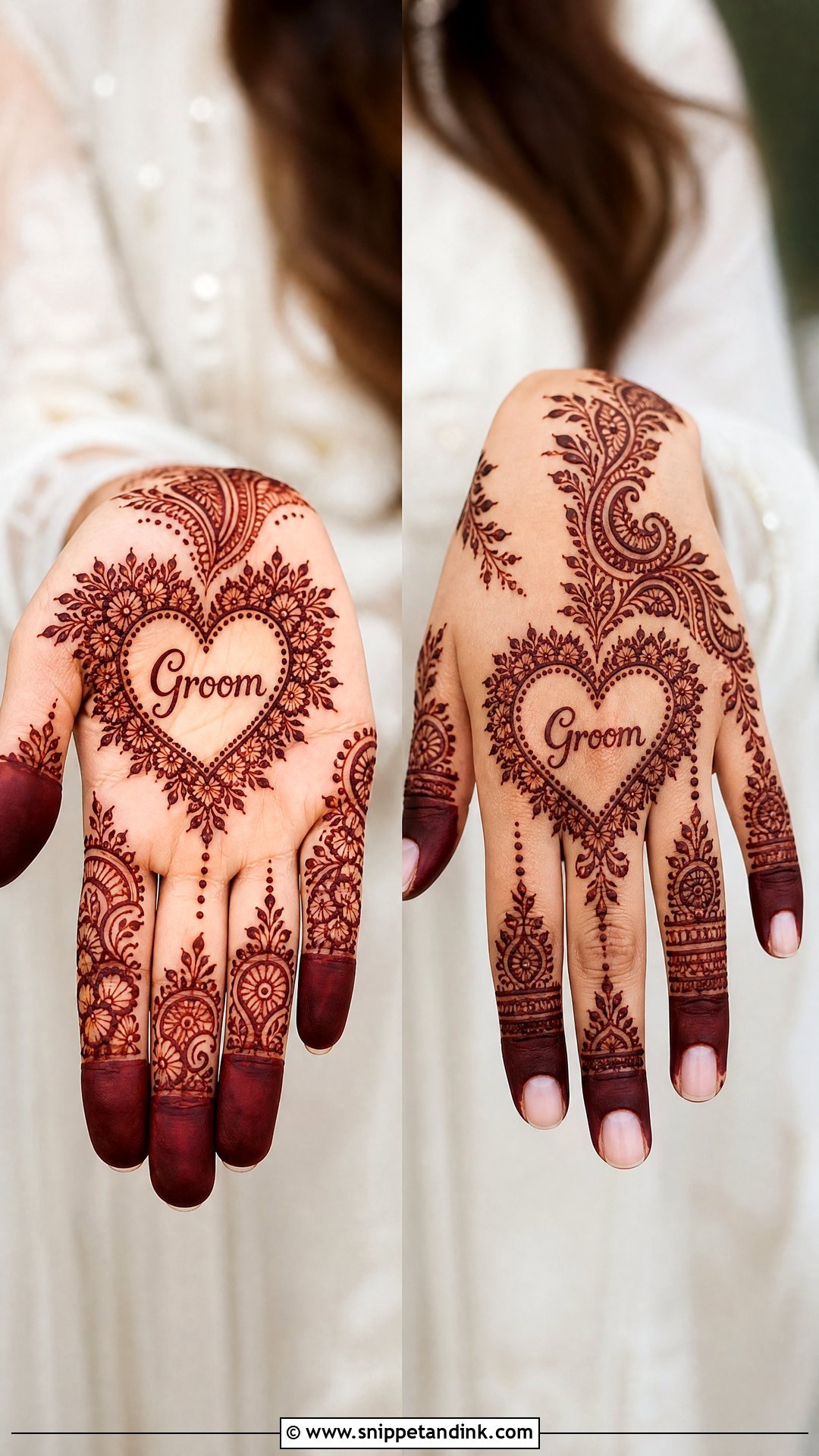
Hearts are popular, and they can tip into looking childish if they float on bare skin. I put the name inside a small heart on the palm, between two mirrored hearts or within a floral heart on the back of the hand, then surround it with grown-up patterns: paisleys, lace borders, leafy vines and fine dots. A medium heart leaves room for initials, a nickname or a short name, and it pairs easily with a date or ring motif.
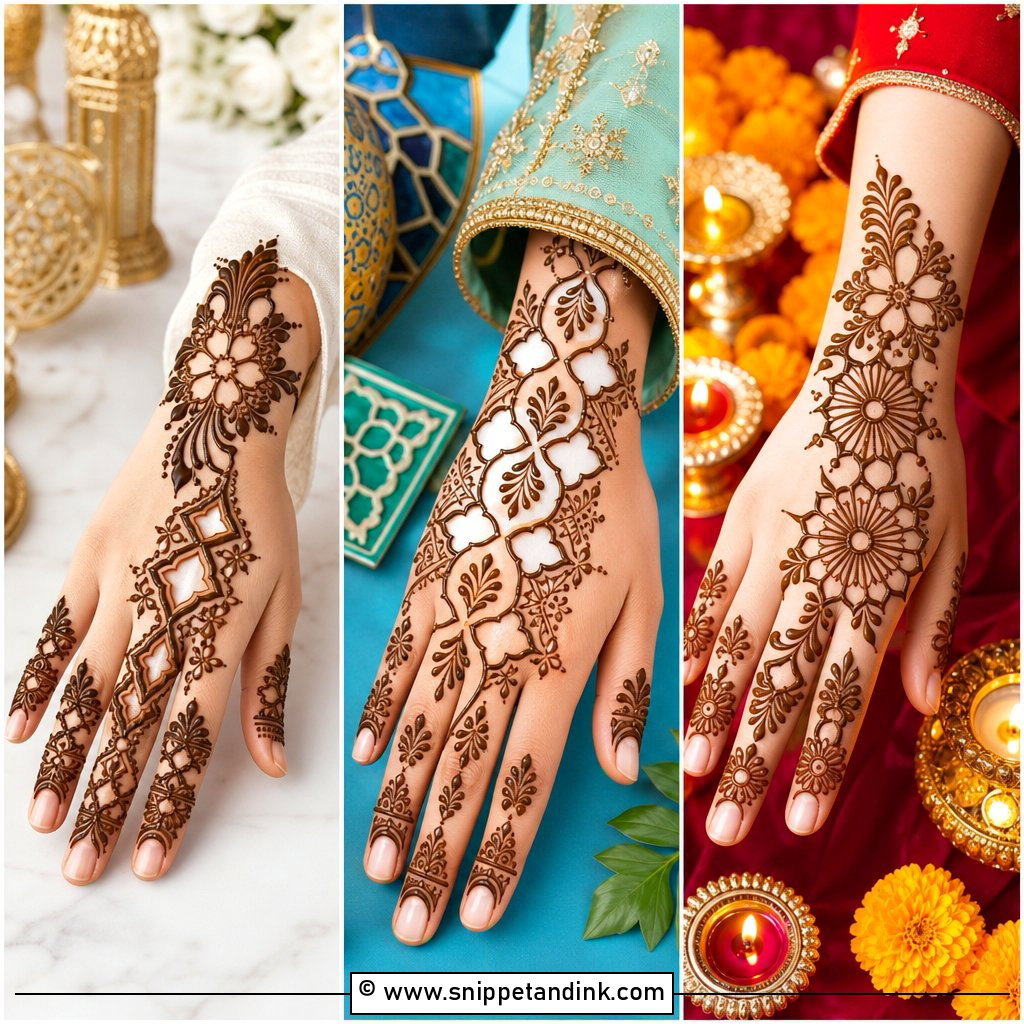
20. Groom Name Bracelet Mehndi
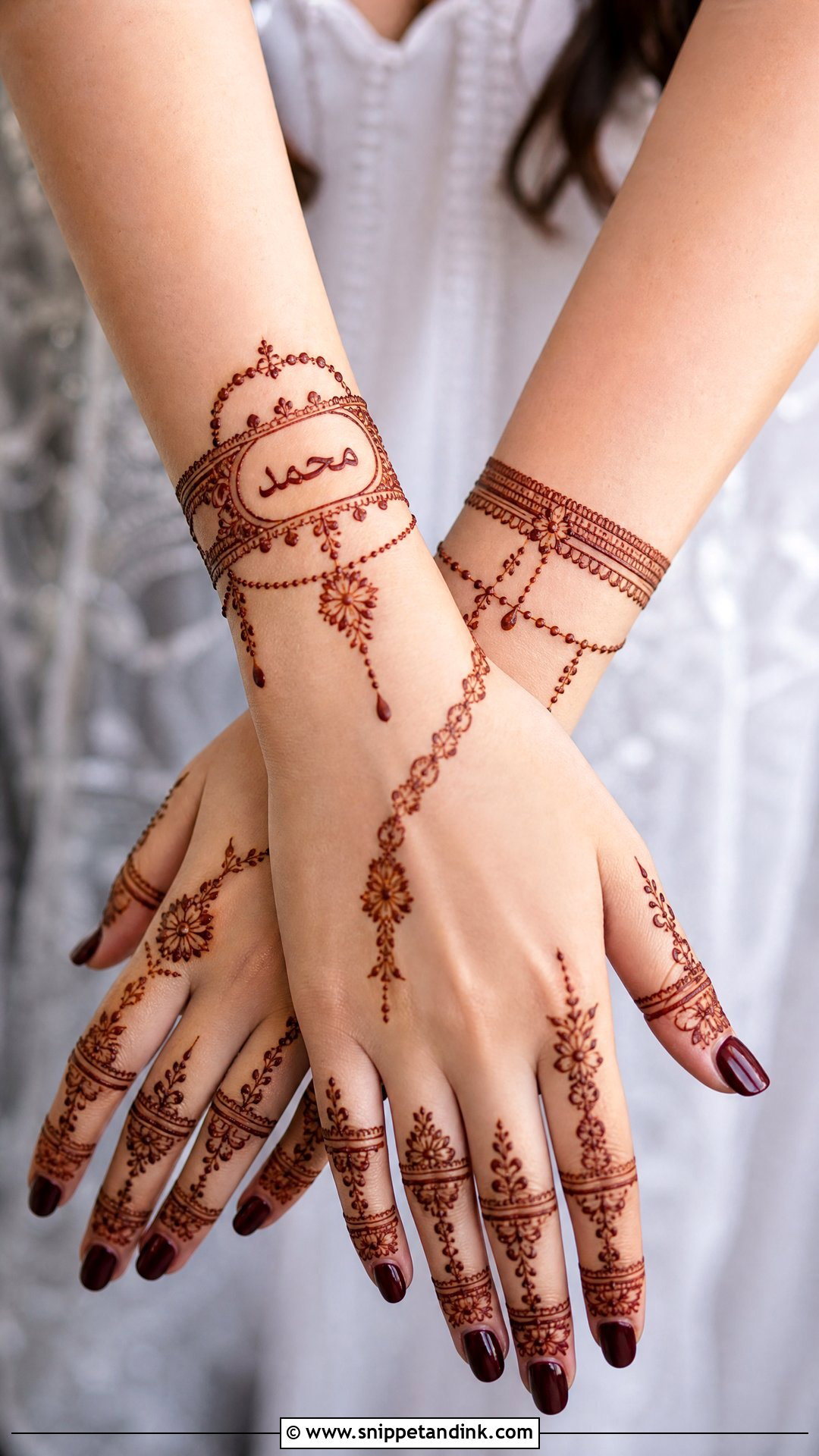
Writing the name inside a henna bracelet gives it a natural border, which is why it blends so easily. From the wrist band I connect finger rings, chains or a central back-hand motif. I’ve drawn this both ways for engagement, sangeet, or wedding events: minimal with thin chains, or bridal with flowers, jaali bands and shaded leaves. Small hanging drops under the wrist band finish it off. Keep the chains evenly spaced, because uneven links are the first thing a close-up photo exposes.
Playing the Name Hunt Without Hurt Feelings
In many families the groom is asked to find his name in the bride’s henna, often on the wedding night or after the ceremony, and if he can’t find it he owes her something. It is a sweet custom, and it works best when everyone agrees on a few house rules beforehand.
- Agree on the forfeit in advance: a gift, a promise or simply the right to tease him all evening.
- Set a time limit. A few minutes keeps it fun; an hour of squinting does not.
- Tell your photographer when the hunt is happening. His face when he finds it is the shot you’ll want.
- Have a hint ready, like ‘left hand’ or ‘near a flower,’ so the game ends with a laugh rather than frustration.
One practical point: the hunt is far easier on day two than on day one. A fresh orange stain hides lettering well, but as it deepens to maroon, the letters become clearer. If you want to give him a real challenge, ask your artist to hide the name the moment she plans the layout, not at the end.
Hidden for the Hunt or Written for Everyone?
Start with one decision: do you want his name hidden as a game, or written clearly for everyone to see? That answer points you toward dense Indian work, paisleys, peacocks and jaali for hiding, or toward Arabic trails, bracelets, finger details and minimal back-hand designs for reading. Then think about the script, the length of his name and where your photographer will be standing during the rituals. Settle those, and the right placement usually becomes obvious before you even sit down with your artist.
You'll Like These Ideas:



Leave a Reply