
Planning the perfect mehndi for your Nikah usually means planning for several days, not one. The stain has to look good at the nikah, still hold at the rukhsati and not look faded by the walima, and the design has to sit comfortably with your sleeves, your jewellery and your family’s preferences. Muslim bridal work draws on florals, paisleys, jaali, mandalas, hidden initials and clean modern layouts, in styles from heavy Pakistani coverage to open Gulf patterns and white body art. I’ve gathered twenty of them below, with notes from the chair on how each one wears.
Timing the Henna Around Several Wedding Functions
Many Muslim weddings stretch across a mehndi or mayun evening, the nikah, the rukhsati and the walima. Natural henna doesn’t show its real colour straight away: it comes off orange, darkens over roughly two days, then holds for about a week before fading. So I work backwards from the event you most want photographed.
- If the nikah is the main event, apply one to two days before it. The mehndi night itself often falls at the right time for this.
- If the nikah and rukhsati are on the same day and the walima follows a day or two later, that same timing keeps the stain strong for all three.
- If the nikah is days before the main reception, consider a lighter design for the nikah and fuller bridal work timed for the reception, or accept a slightly faded stain at the later event.
- Leave the whole evening free after the session. Paste needs hours on the skin, and the bride needs someone to help her eat.
Gulf families often hold a separate henna night with its own traditions and guests. If yours does, tell your artist early so the bridal design and the guests’ designs can be planned for the same evening without rushing the bride.
1. Full Hand Muslim Bridal Mehndi Design
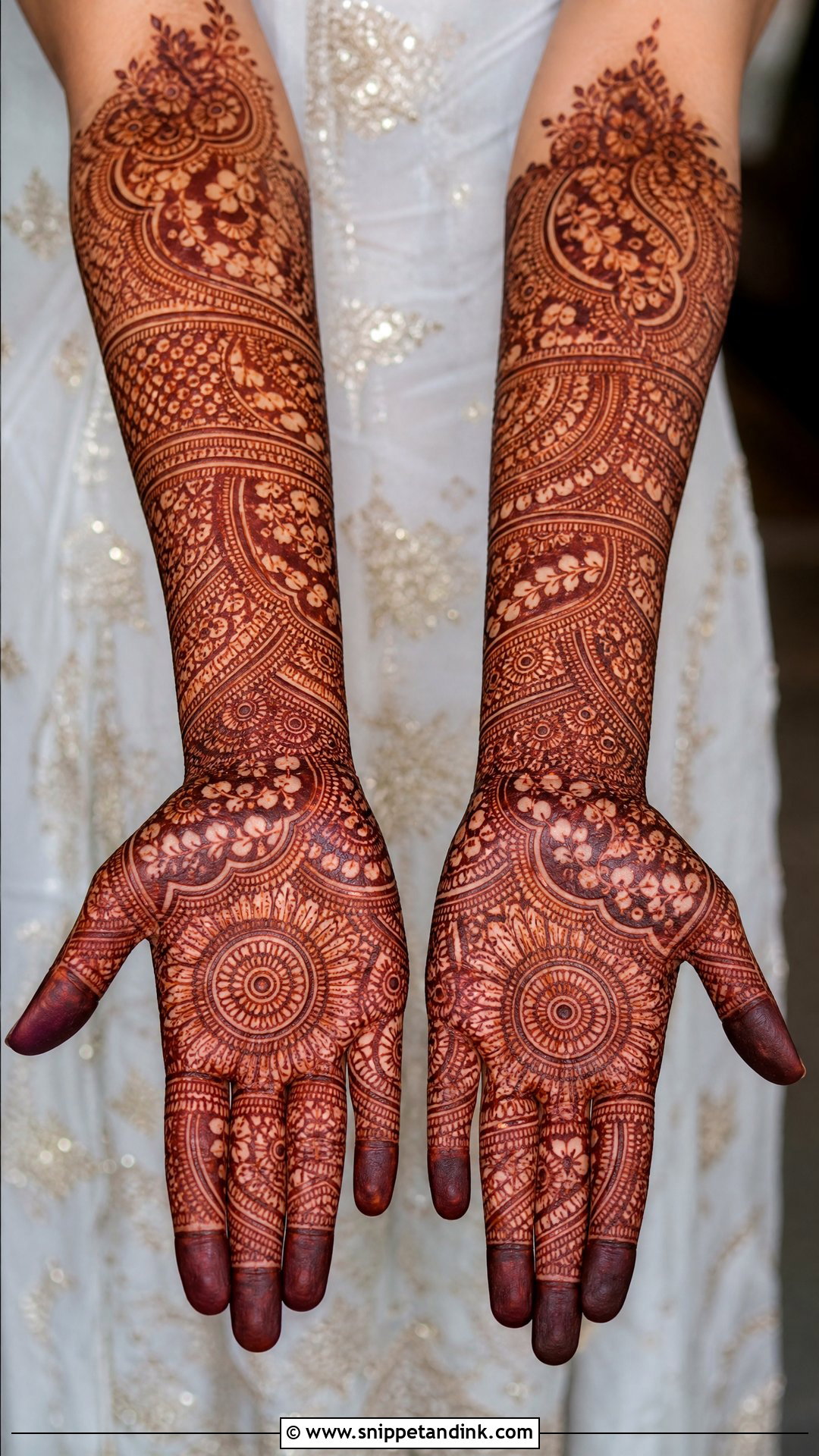
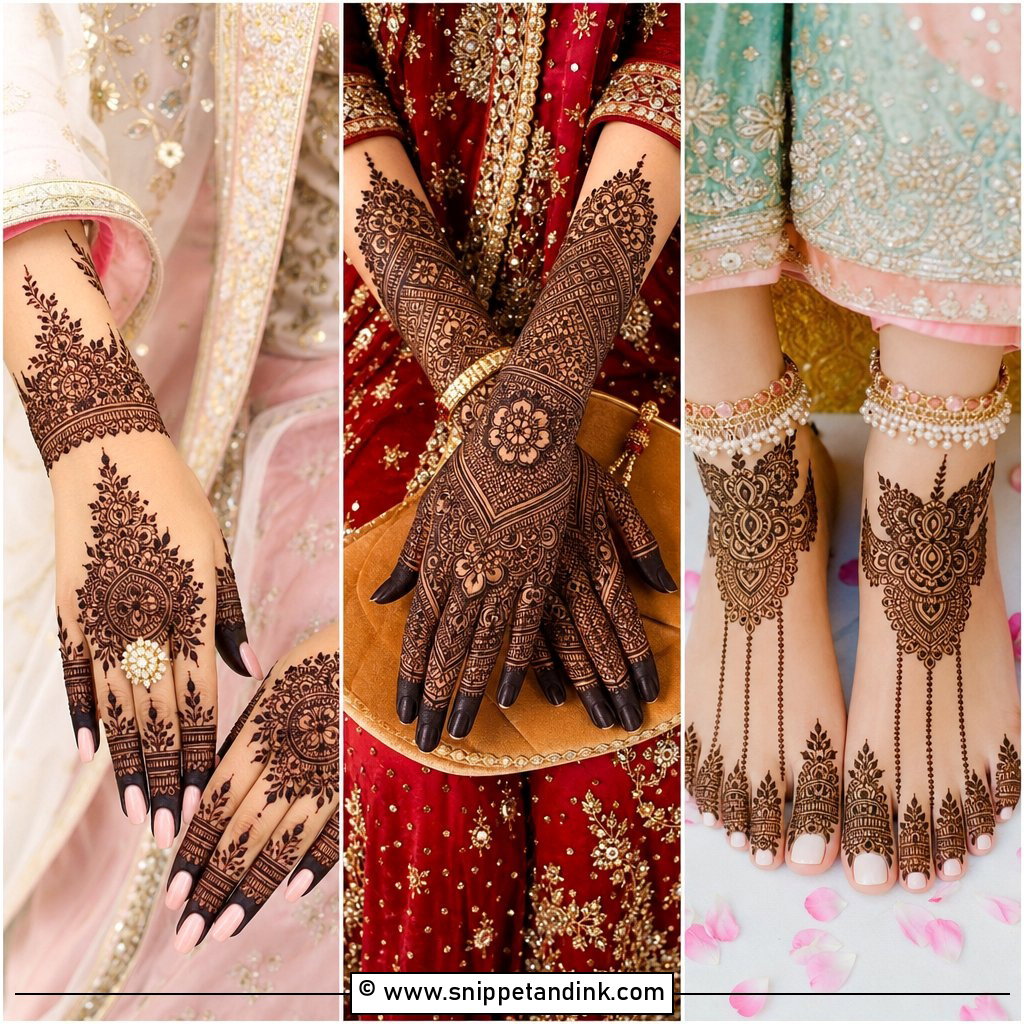
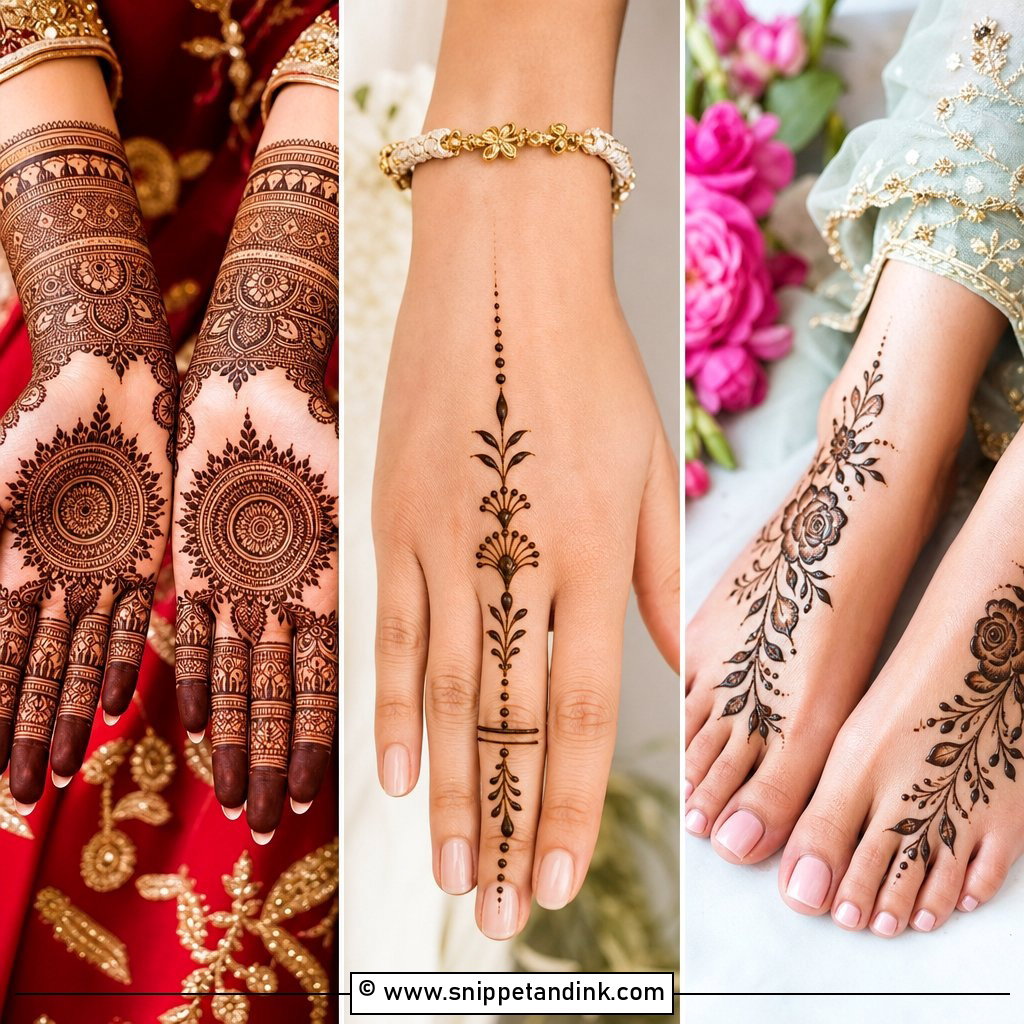
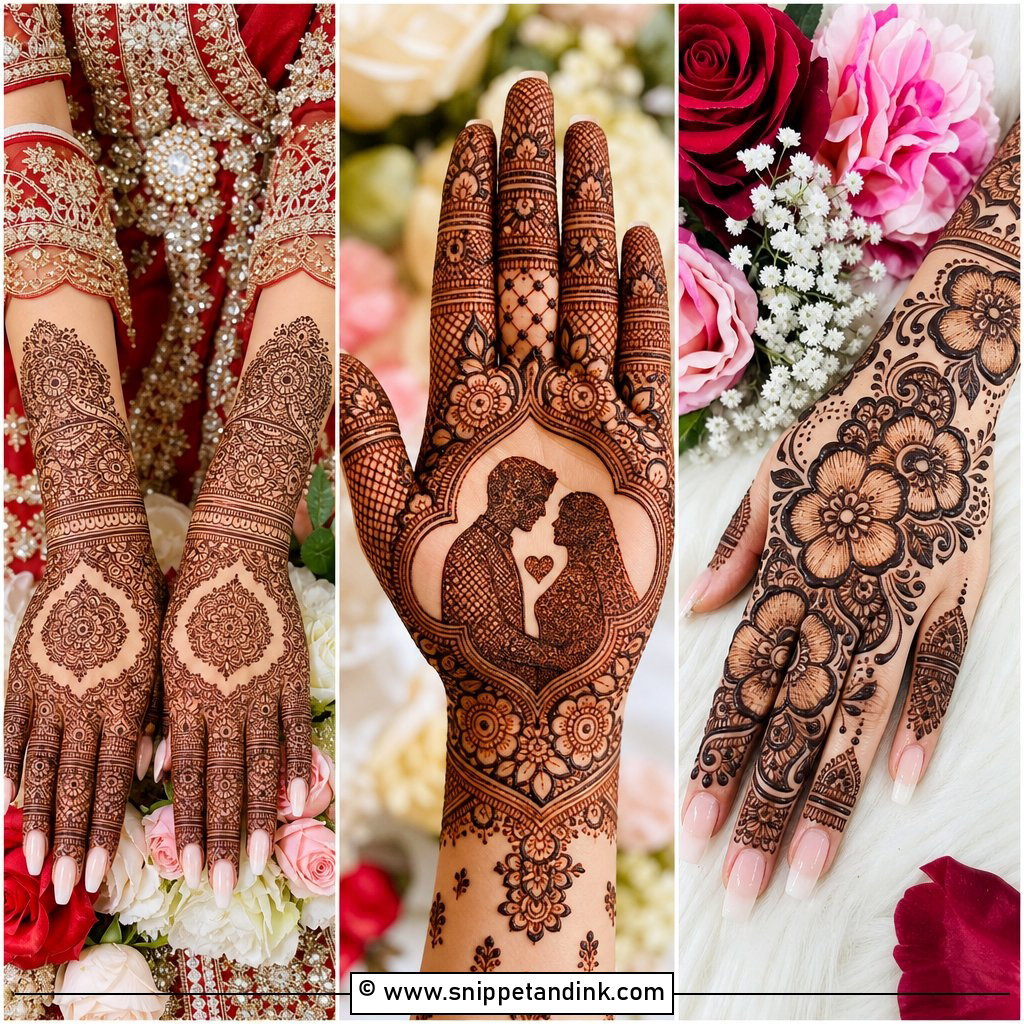
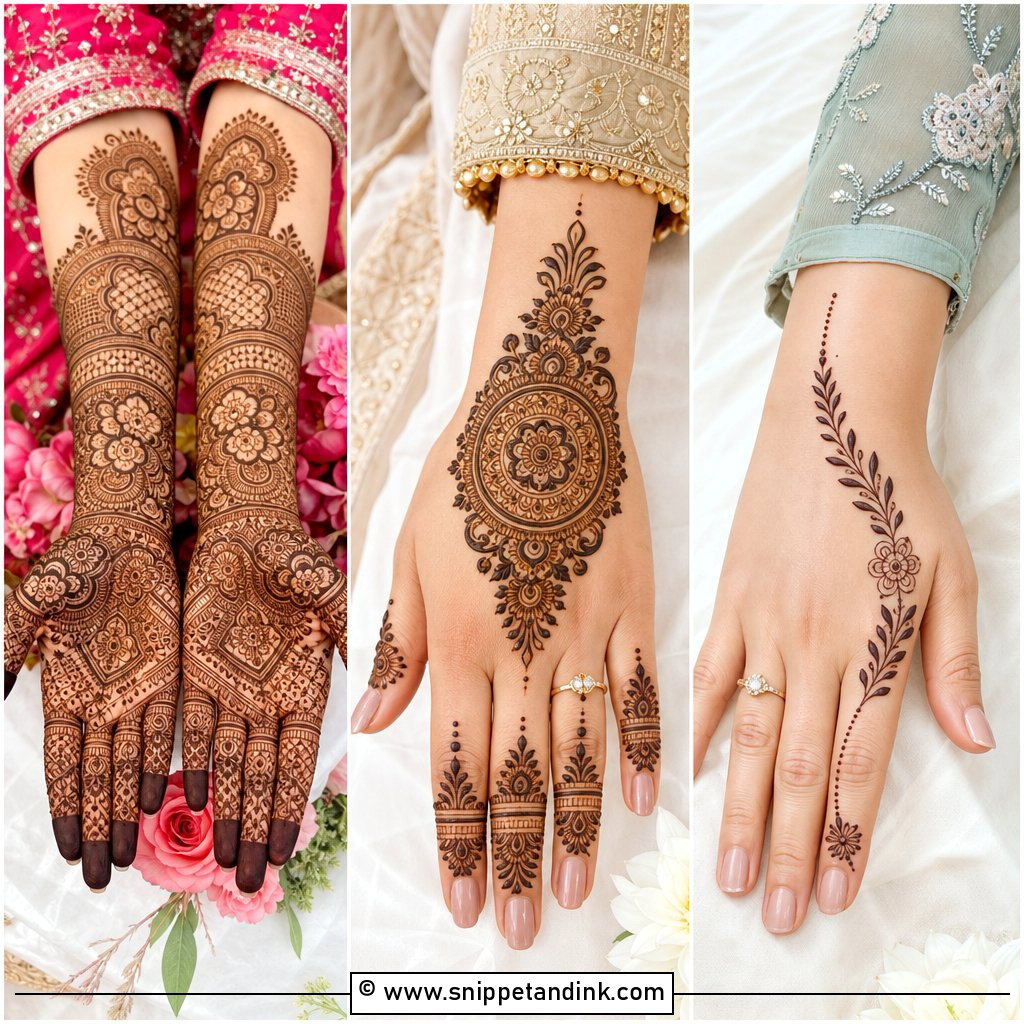
Full hand work runs from the fingertips to the forearms on palms and backs, with dense florals, paisleys, vines and fine filler. I usually give each palm a central mandala and the backs matching floral grids that end in bracelet bands at the wrist. Fully lined fingers with leafy tips and small dots are what make it look finished. Heavy outfits, gold jewellery and long functions suit it, and because coverage is so complete, it still reads well as it fades toward the walima.
2. Arabic Muslim Bridal Mehndi Design
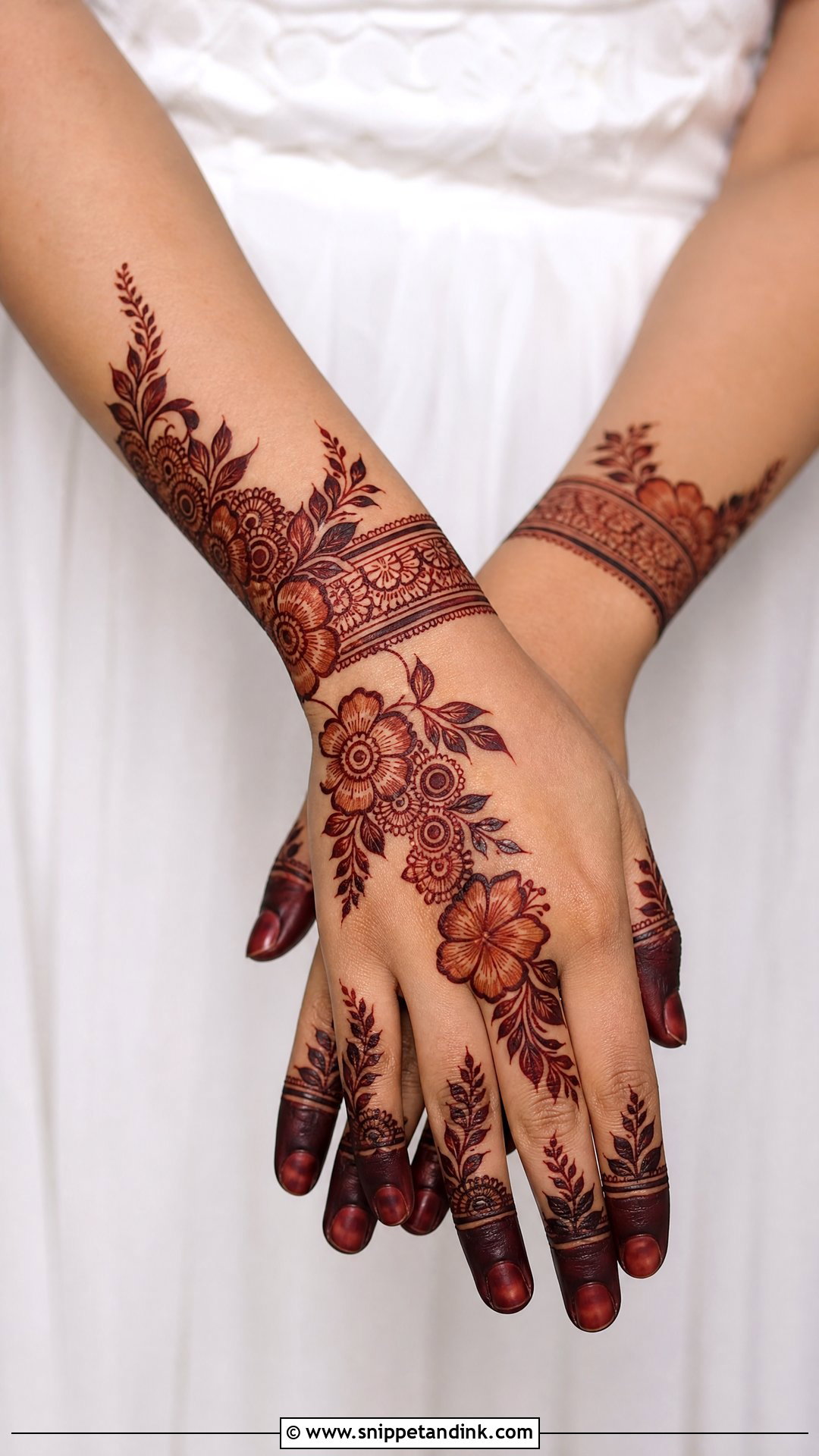
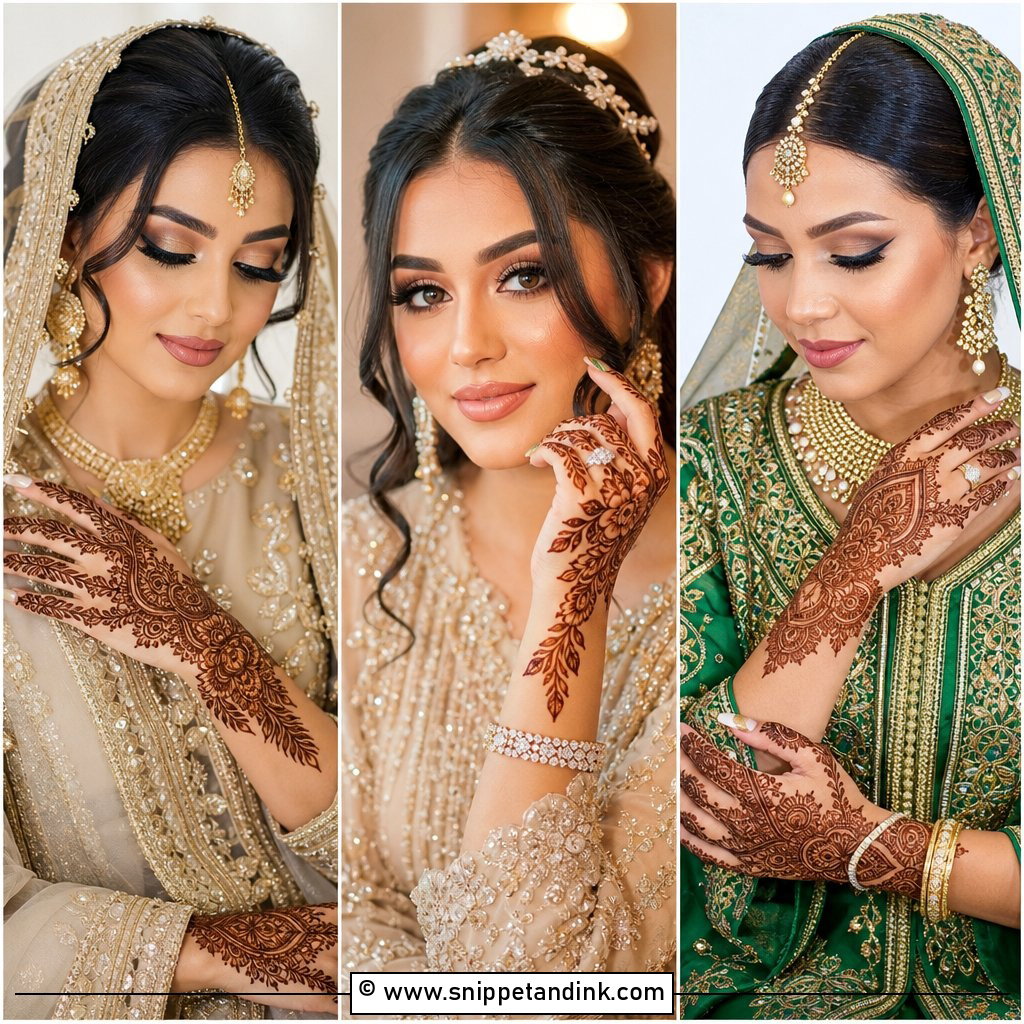
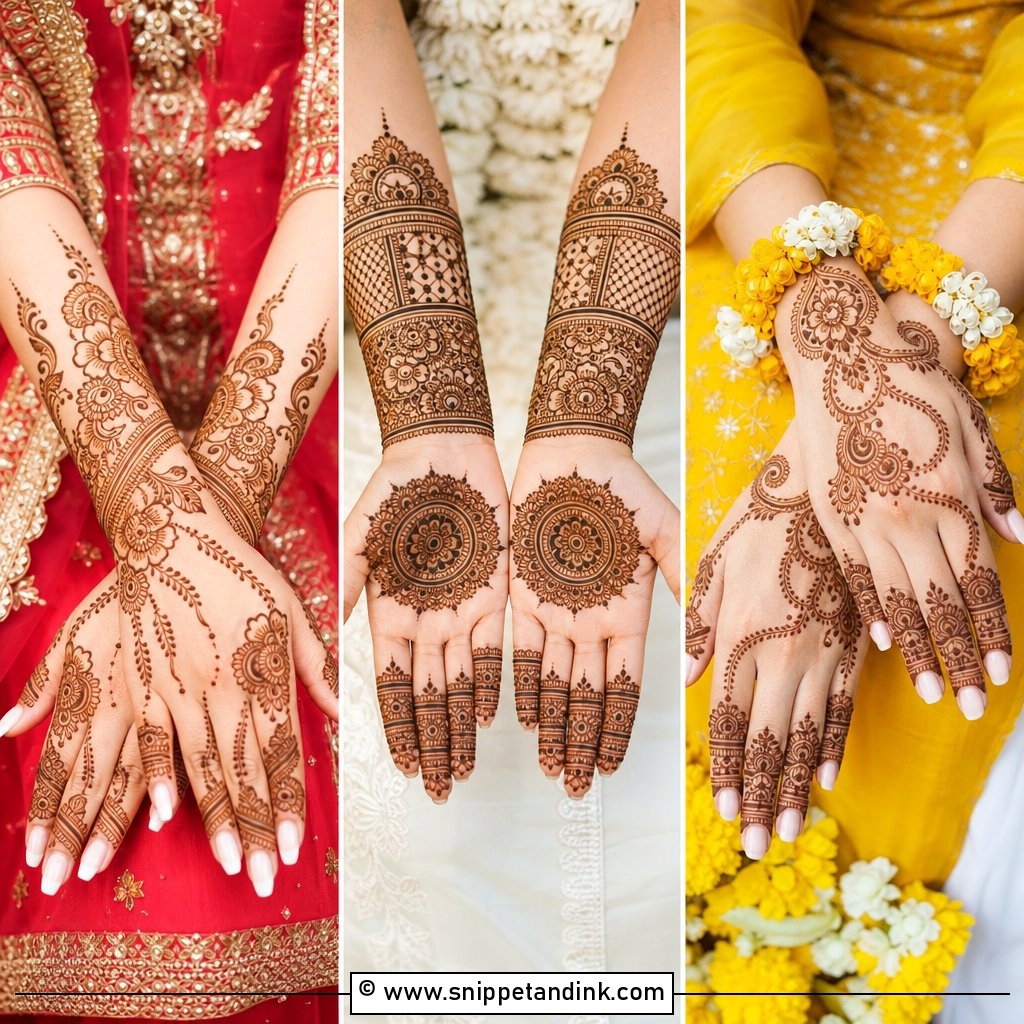
Arabic designs sweep a bold trail of flowers, leaves, paisley curves and shaded petals diagonally across the hand, from one side of the wrist across the palm toward the index or middle finger. The back hand gets a similar trail, decorated fingertips and a cuff at the wrist. If you’re wearing full sleeves, this is the style I’d suggest first. Only the hand shows, and an Arabic trail looks complete on the hand alone, whereas dense Indian work that disappears under a cuff looks cut off.
3. Pakistani Muslim Bridal Mehndi Design
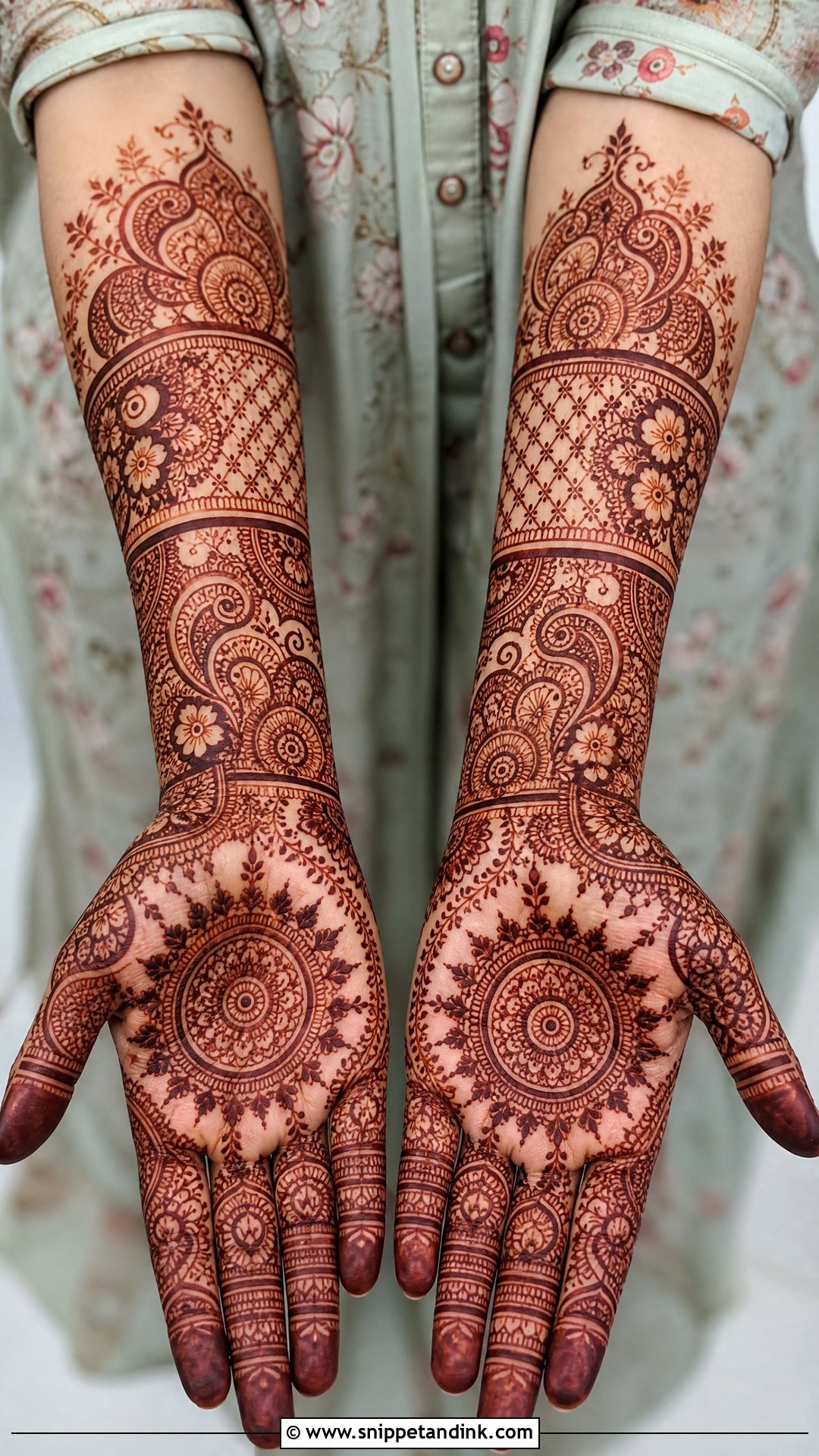
Pakistani Muslim bridal mehndi design balances fine detail with bold flow. Palms carry round mandalas, paisley clusters, floral panels and small jaali sections, and the back hands run from wrist to forearm with bracelet bands, leafy strings and finger detail. It suits sharara, gharara, lehenga and anarkali outfits. Initials or the nikah date fit neatly into the paisleys. Because it’s festive without being packed, it works for the mehndi night and still looks right in wedding portraits a day or two later.
4. Indian Muslim Bridal Mehndi Design
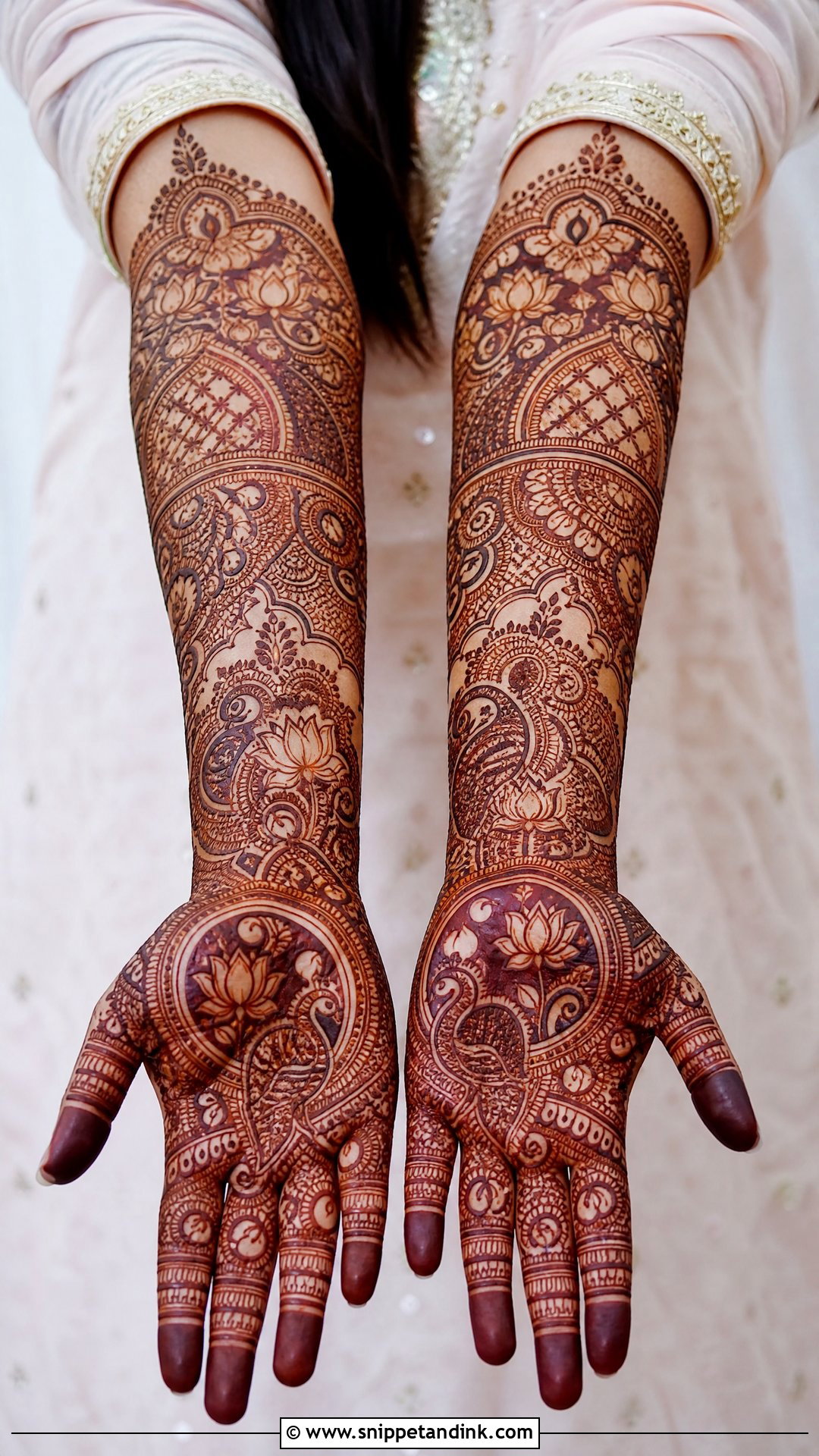
Indian-style bridal work for a Muslim bride is detailed and symmetrical: paisleys, lotus, mandalas, jaali mesh and shaded finger caps, often running toward the elbow when sleeves are short or sheer. Some families prefer to leave out figurative motifs, so I check that before suggesting peacocks or portraits. Dense areas need breathing room between them, or the lines merge into a muddy patch once the stain darkens. A deep maroon result is what this style is built for.
5. Indo Arabic Muslim Bridal Mehndi Design
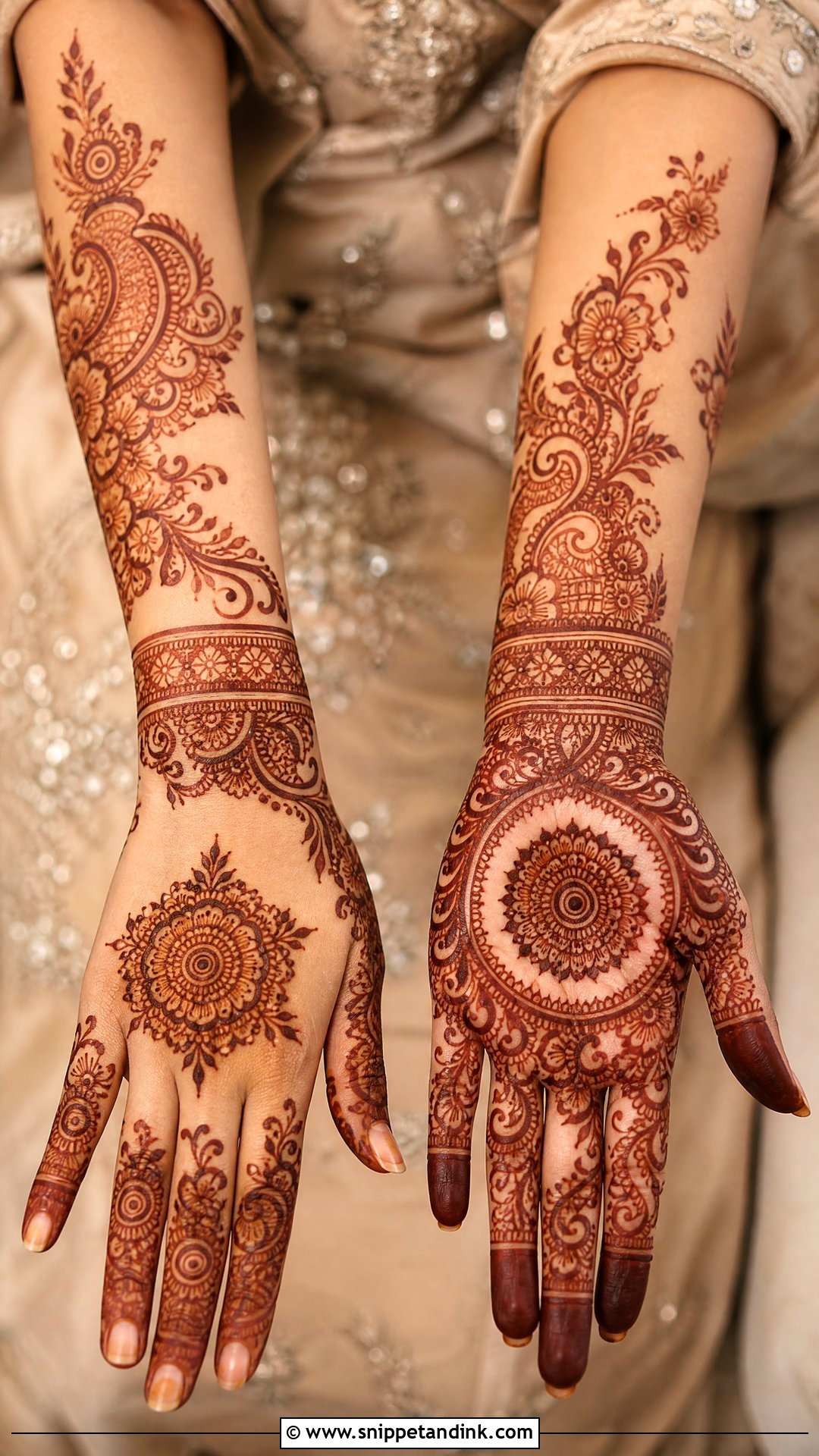
Indo-Arabic keeps fine Indian fillers but leaves Arabic gaps. On the palm I’ll place a central mandala ringed by paisleys and small vines, with one side left a little open for contrast, and the back hand gets diagonal floral trails, finger ornaments and a wrist cuff. It adapts to light and heavy outfits alike. I coordinate the two hands without copying them line for line; a slight difference between them is what tells you it was drawn freehand.
6. Gulf Muslim Bridal Mehndi Design
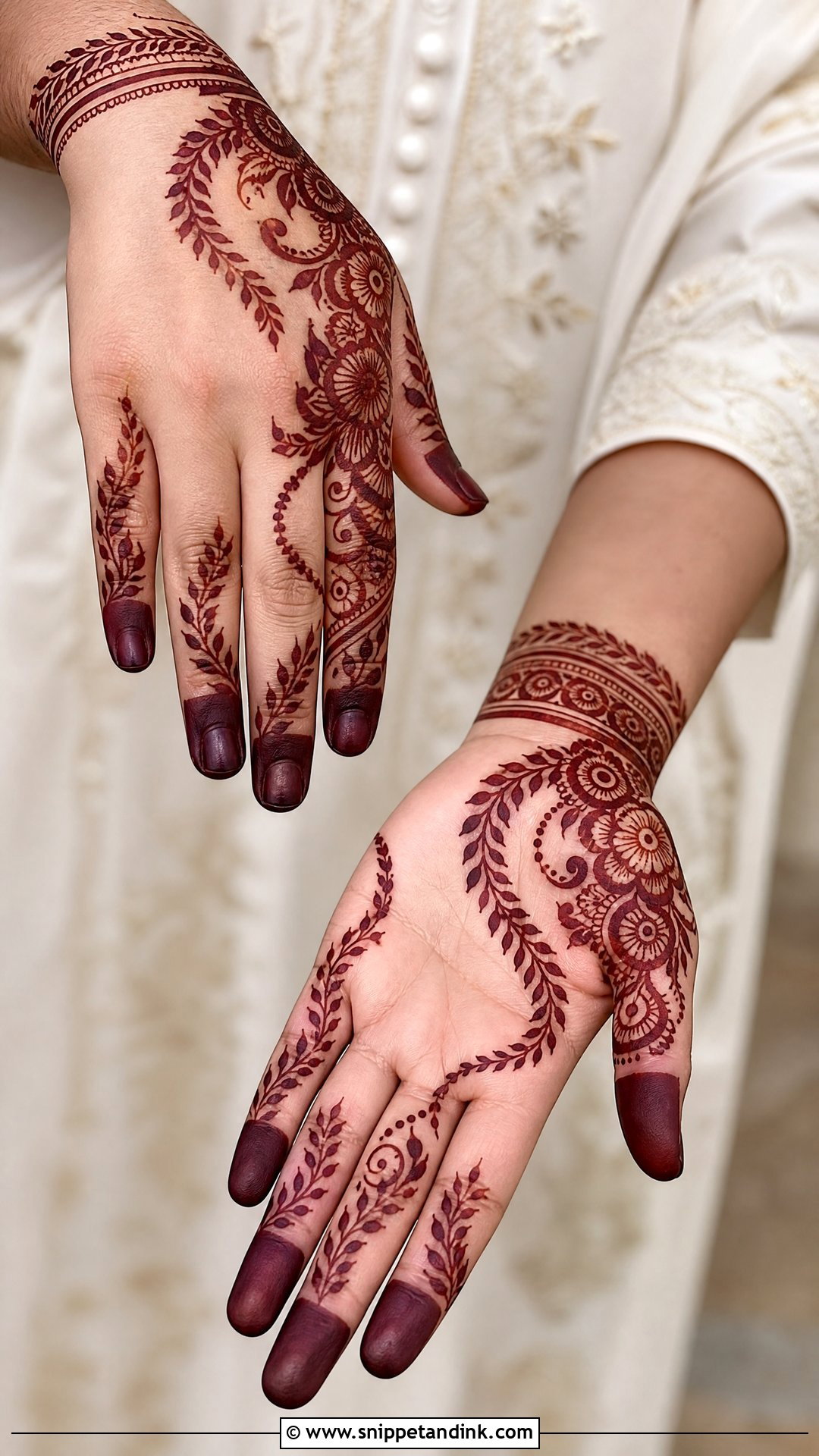
Gulf designs use large flowers, thick leaves, curved vines and clean negative space, concentrated on the backs of the hands and fingers, with lighter palms carrying a floral circle or a vine linking to the bracelet. Thick lines put more paste on the skin, so the stain comes out deep and even, and it doesn’t depend on tiny details that blur. It looks right with abayas, kaftans, modest gowns and embroidered dresses, and it reads clearly from across the room in family photos.
7. Moroccan Muslim Bridal Mehndi Design
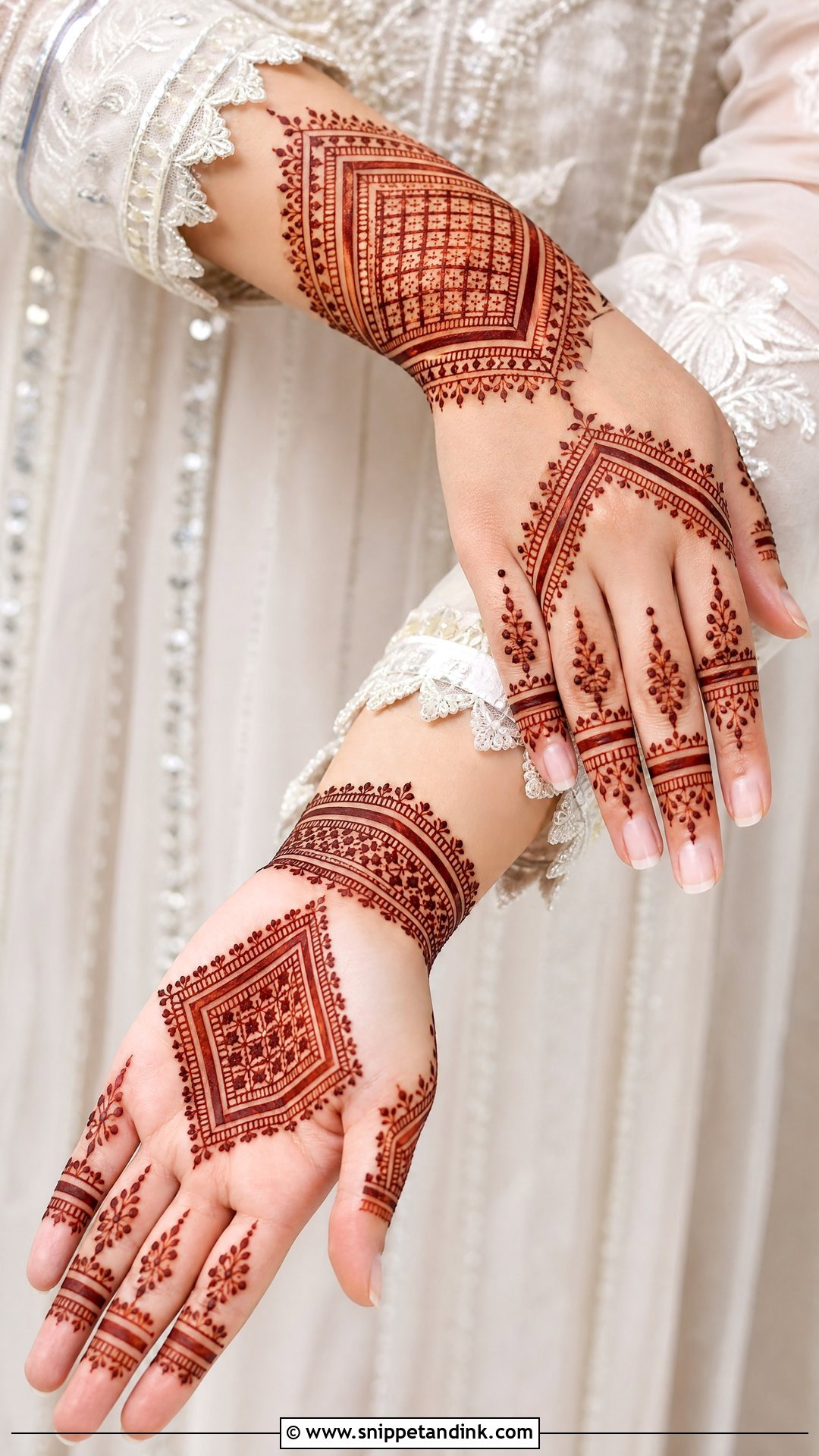
Moroccan work replaces florals with diamonds, chevrons, grids, triangular bands, dotted lines and structured cuffs. A bold geometric shape anchors the palm, fingers get rings, lines and filled tips, and the back hand reads like jewellery. It sits well with modern modest outfits and satin gowns, where the henna adds texture. Geometric lines are unforgiving; a slightly crooked grid is obvious. Look at an artist’s straight-line work specifically before you book her for this.
8. Minimal Muslim Bridal Mehndi Design
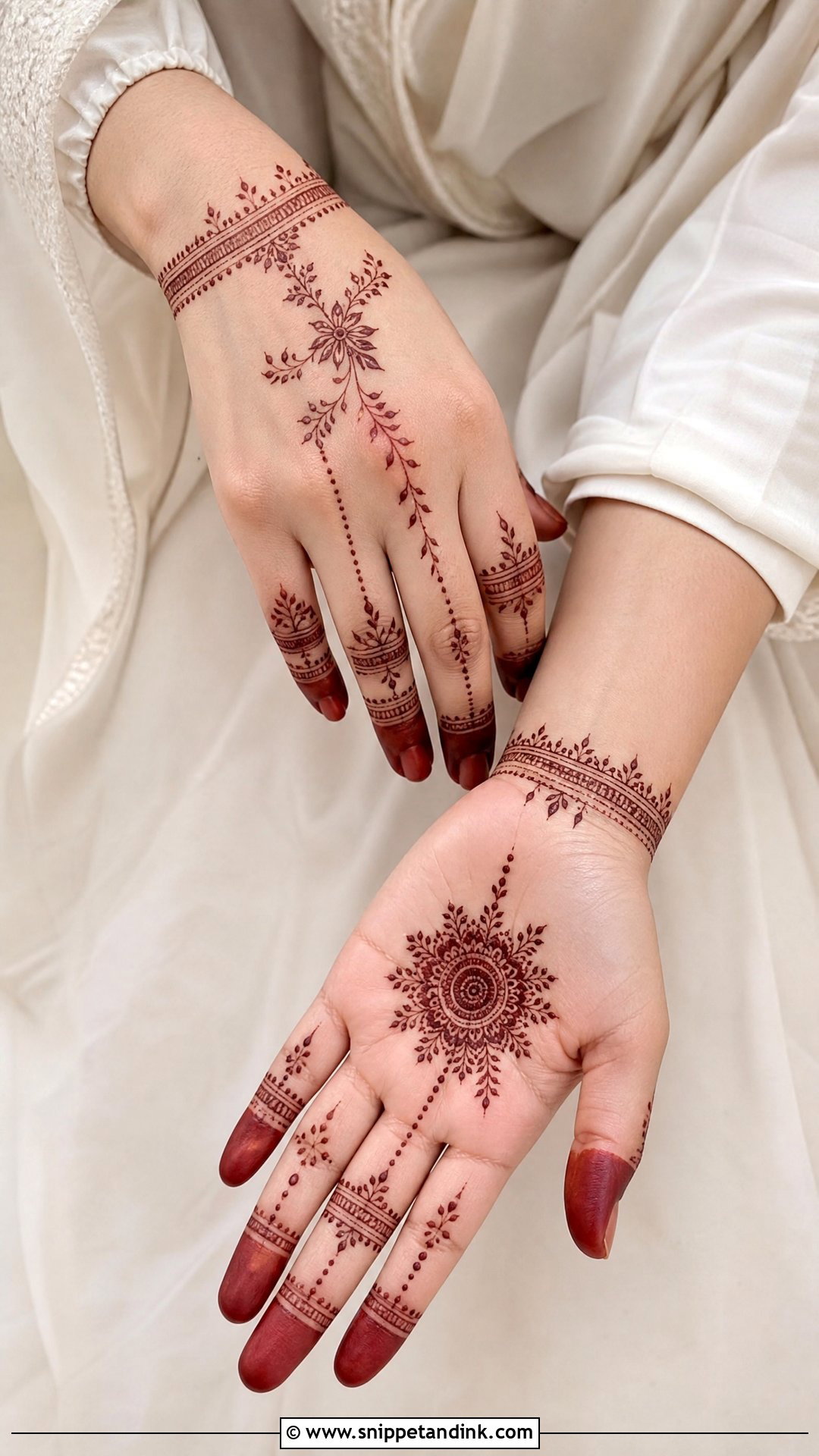
Minimal bridal mehndi might be a small palm mandala, fine finger details, a thin bracelet and a soft vine at the wrist, with a simple chain on the back hand linking the wrist to one or two fingers. It suits intimate nikahs, courthouse ceremonies and pared-back styling with pearls and pastels. With so little on the hand, neat spacing and balanced fingers carry the whole design. I always finish the wrist properly, since an abrupt end there is what makes minimal work look unfinished.
9. Heavy Muslim Bridal Mehndi Design
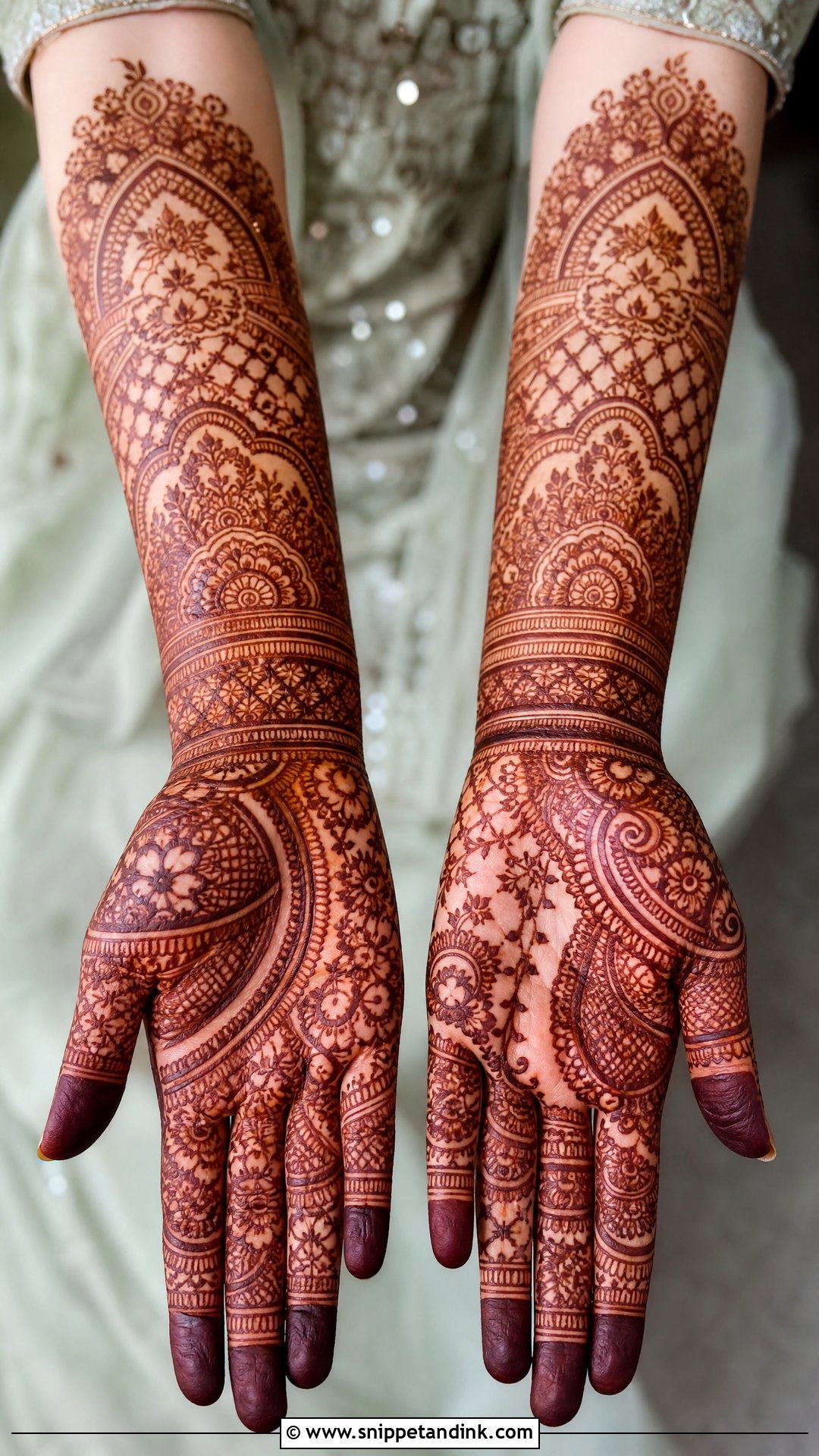
Heavy coverage fills palms, backs, wrists and forearms with dense paisleys, floral vines, jaali, mandalas and layered borders, and fully detailed fingers give a dark, rich stain. It belongs with traditional jewellery and heavily embellished outfits. Full doesn’t have to mean chaotic: I set a larger focal motif on each palm and back hand first and only then add the tiny fillers, which is what keeps it readable in photos. Expect a long session, ideally on a calm day rather than squeezed into a busy mehndi night.
10. Simple Muslim Bridal Mehndi Design
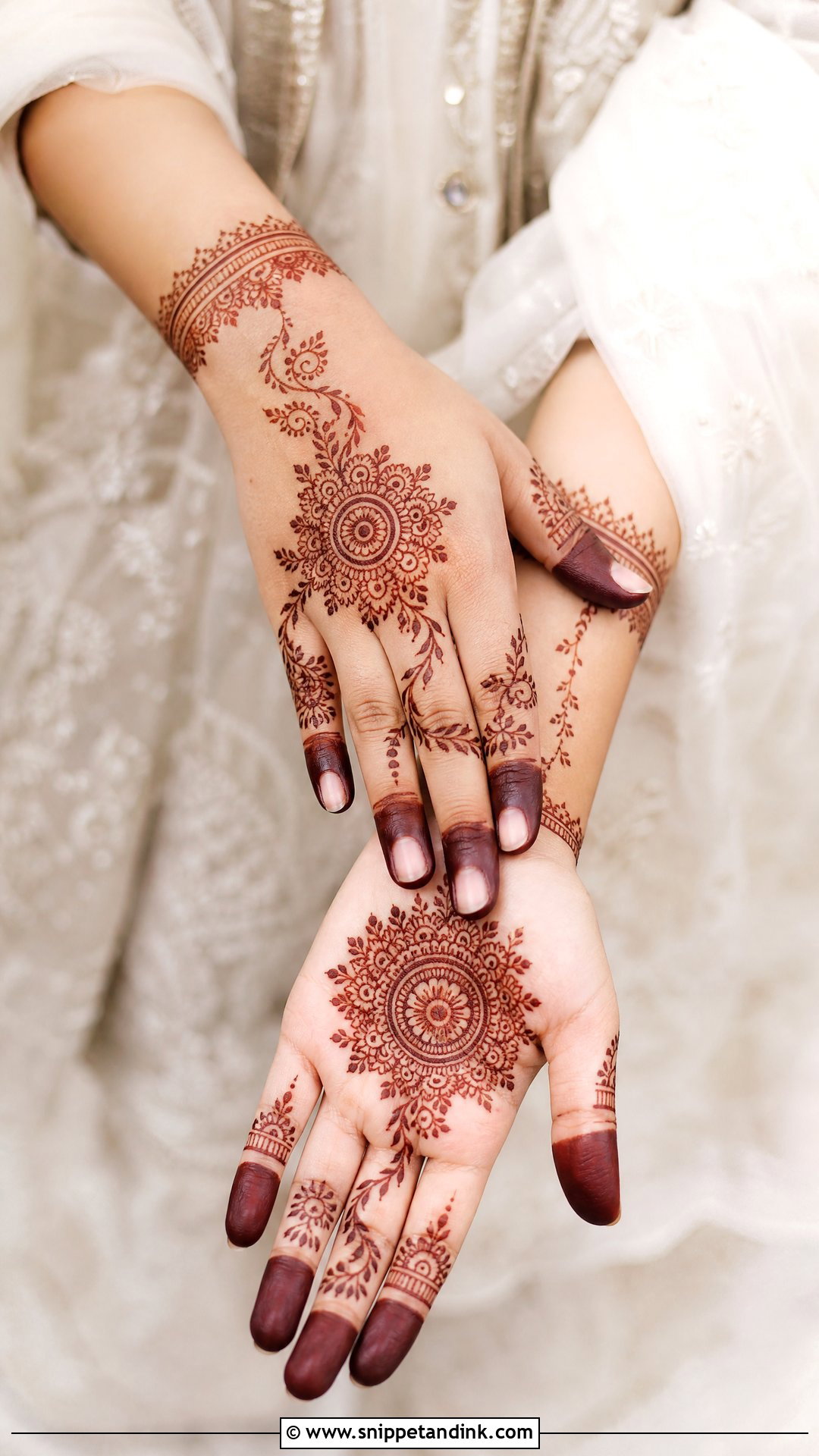
Simple Muslim bridal mehndi design looks bridal when the few elements are placed with care: a palm mandala, a slim paisley trail, decorated fingertips and a neat wrist band, with a floral vine and ring-like finger details on the back. It’s comfortable to live with after the wedding and doesn’t overwhelm smaller hands. I keep lines clean and spacing even, and I take the most time over the wrist, because that’s where a simple design either looks polished or looks rushed.
11. Front Hand Muslim Bridal Mehndi Design
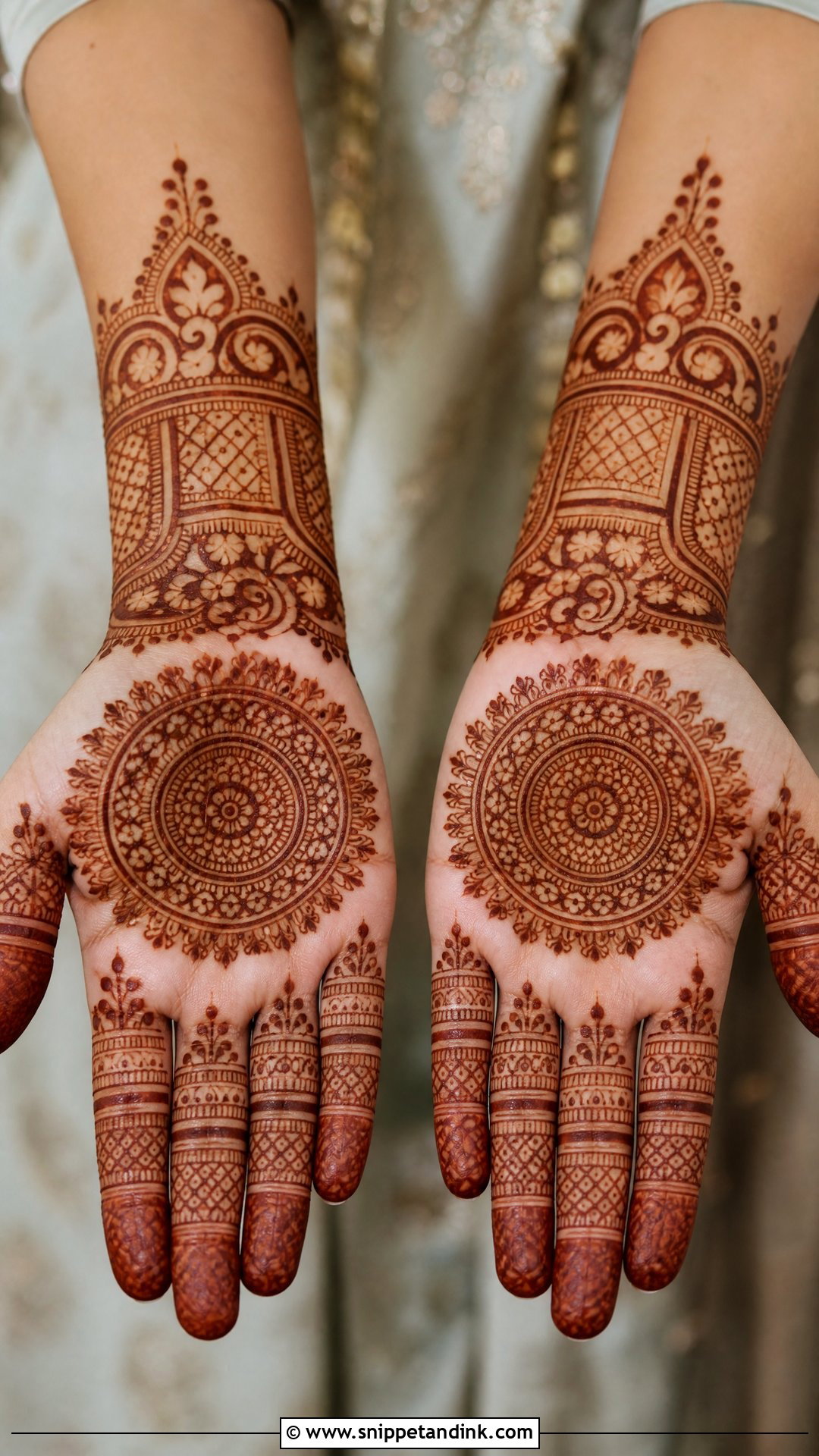
Palms stain darkest because the skin there is thickest, which makes the front of the hand the place for your strongest design. I give each palm a clear centre, such as a mandala or floral panel, then fill the edges with vines, dots and mesh and cap the fingers in detail. This is the side that shows when you hold a dupatta, a bouquet or prayer beads. I carry the pattern a little way onto the wrist so it doesn’t stop abruptly, and match the finger patterns on both hands while letting the palms differ slightly.
12. Back Hand Muslim Bridal Mehndi Design
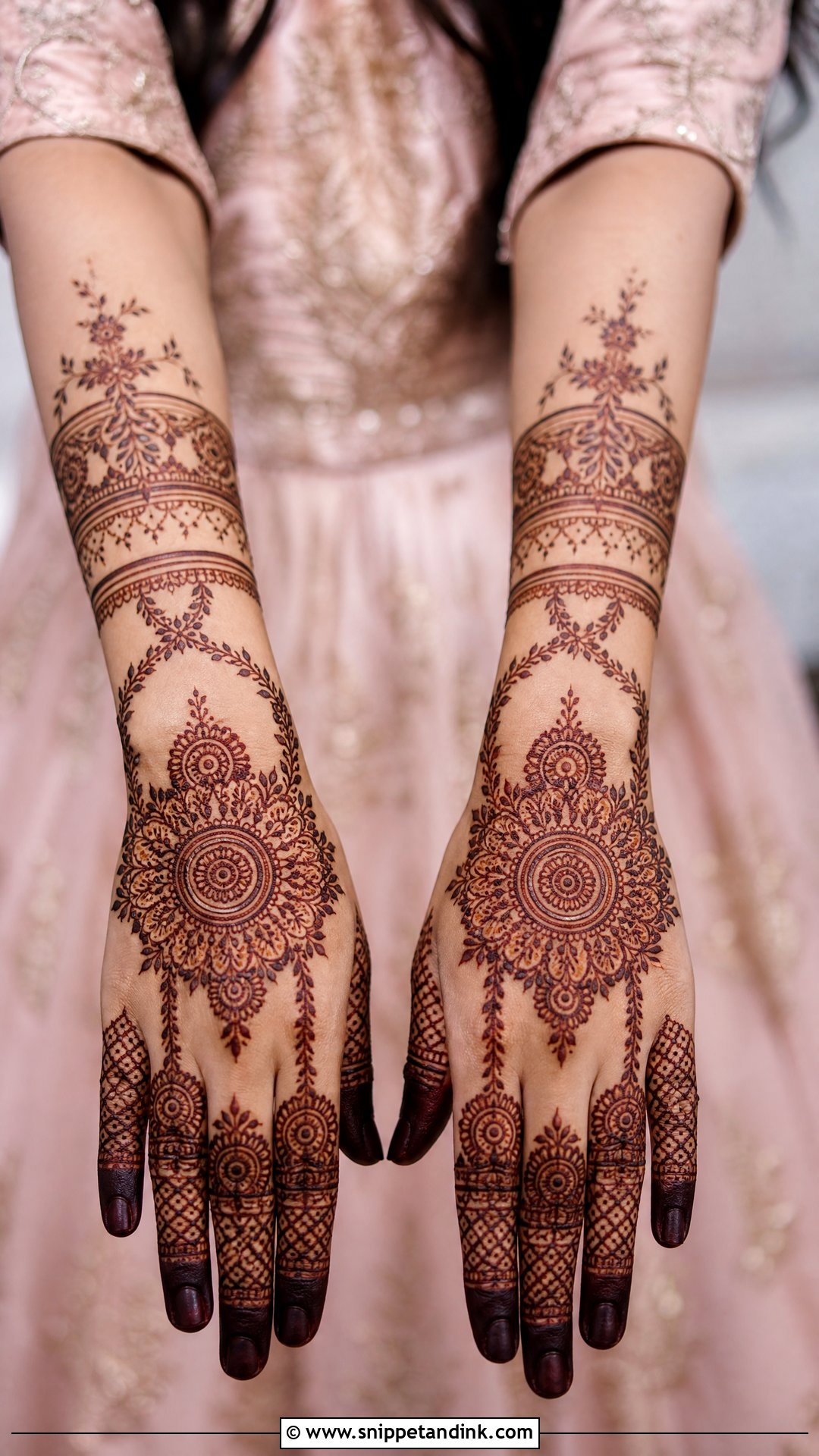
Back hand Muslim bridal mehndi design matters because it’s what shows in ring photos, bangle shots and portraits, and with long sleeves it’s often the only henna anyone sees. A central mandala, floral vines, bracelet cuffs, finger chains and fine net patterns are typical. Some brides want a haath phool layout joining wrist to fingers; others want florals reaching up the forearm. The back of the hand stains a shade lighter than the palm, so I make the wrist band and fingertips rich enough to hold their colour.
13. Finger Muslim Bridal Mehndi Design
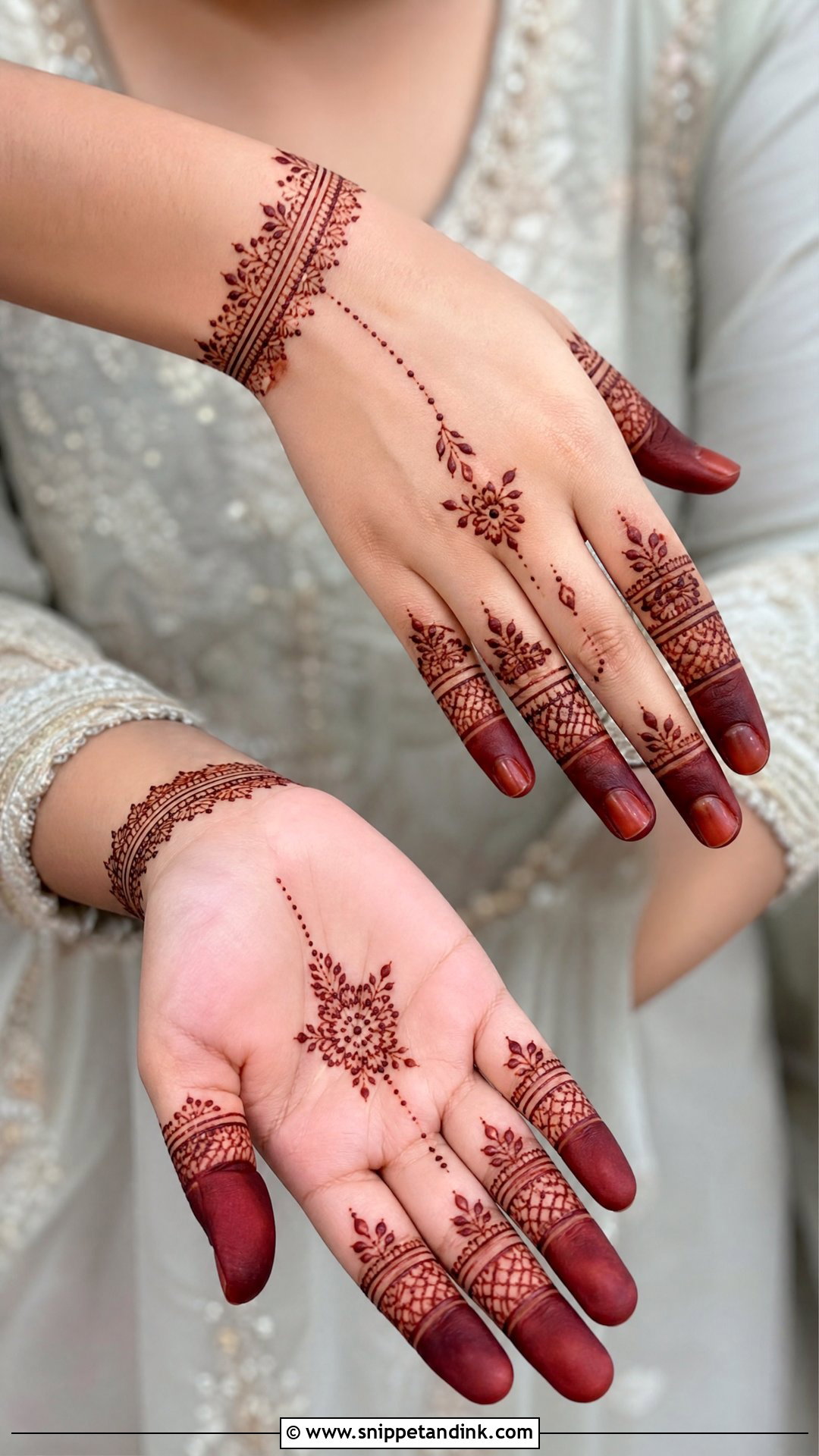
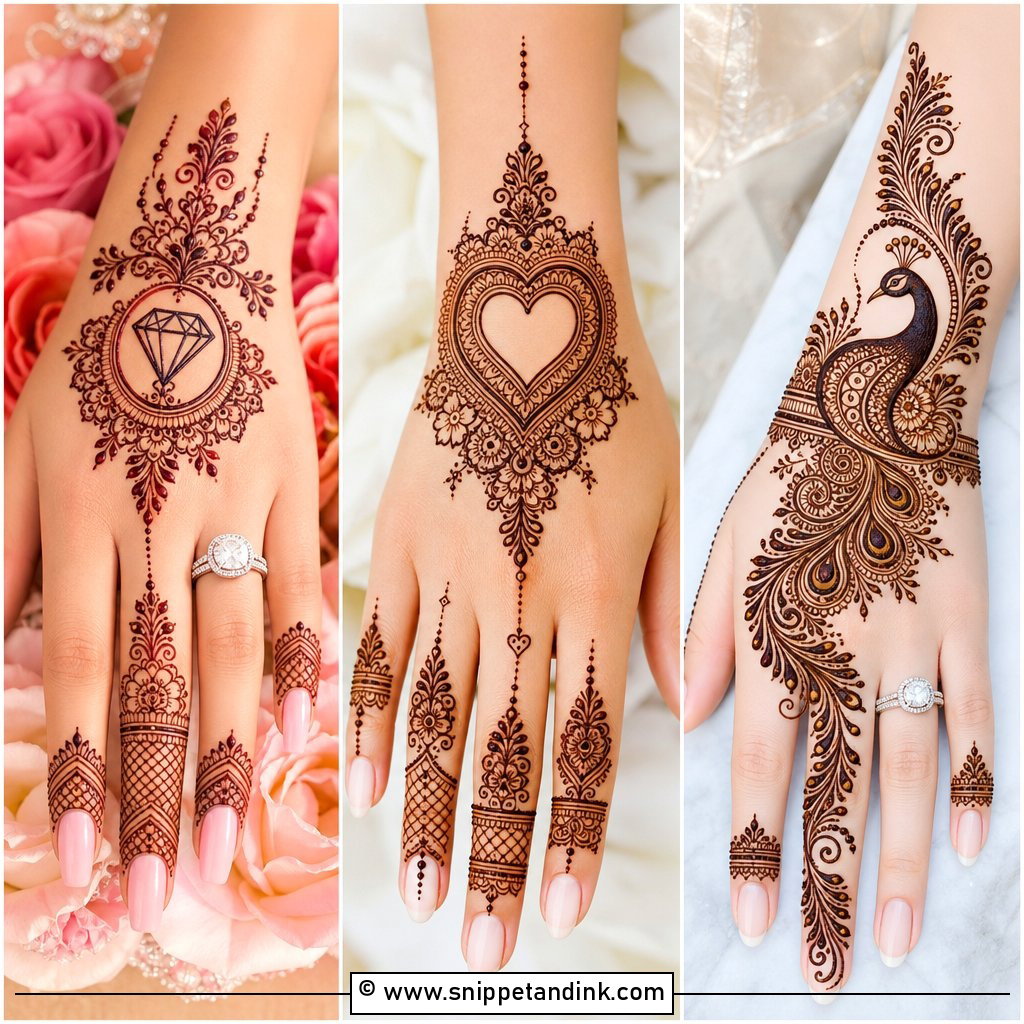
Finger Muslim bridal mehndi design works as part of a whole hand, not finger art on its own. I fill the fingers with leafy bands, tiny florals, ring shapes, dots and shaded tips, keep the palm or back lighter with a small mandala or curved vine, and finish with a thin cuff at the wrist. Rings, nail colour and jewellery stand out against it. Consistent fine lines lengthen the fingers visually, while thick uneven bands make them look shorter.
14. Mandala Muslim Bridal Mehndi Design
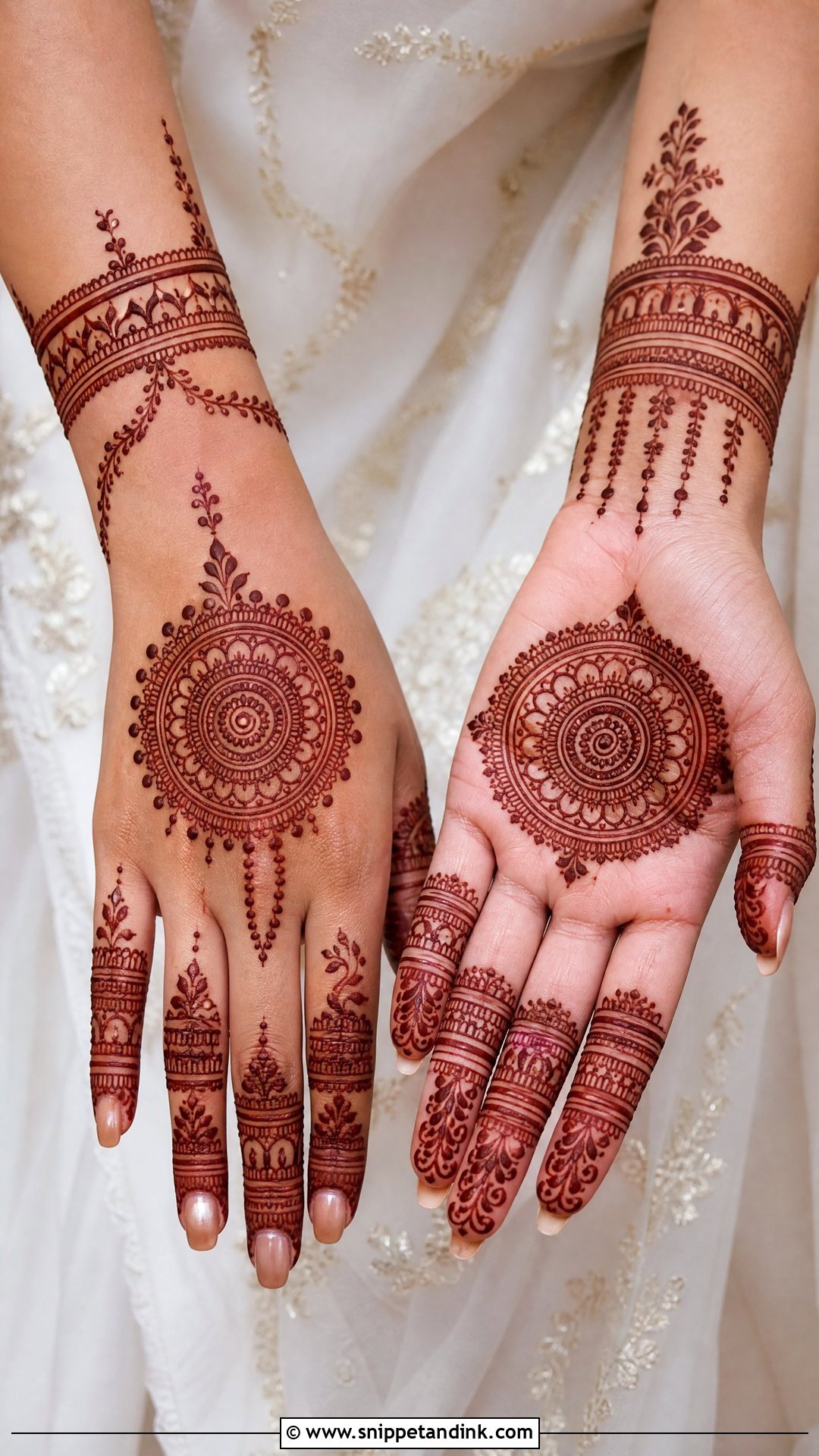
Mandala hands centre a large circle on the palm with petals, dots and fine rings, matching bands on the fingers and a bracelet finish at the wrist. The back hand takes a smaller mandala linked to the fingers with delicate chains. Symmetry gives it a calm look, and circles draw the eye immediately in photos. For a more bridal version, I extend it up the forearm with soft florals or paisley borders drawn in the same line weight as the mandala.
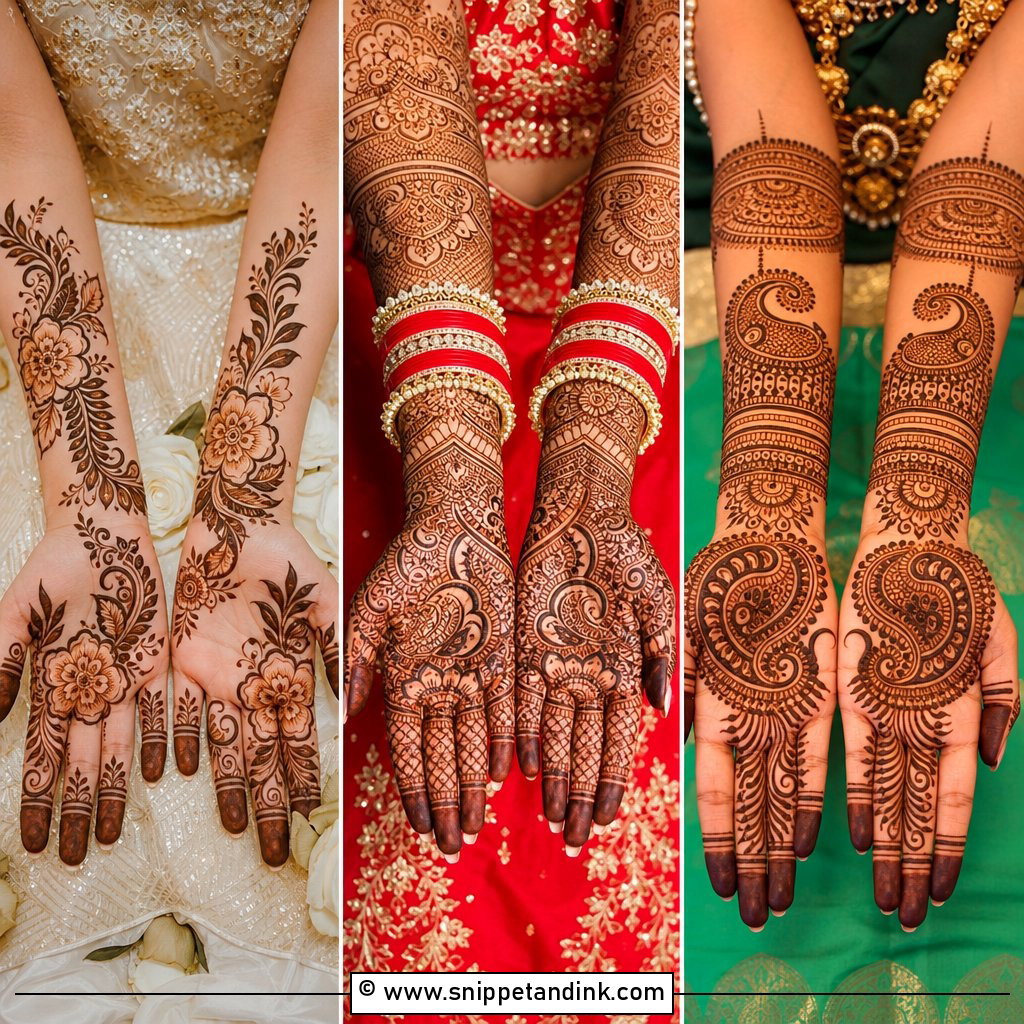
15. Floral Muslim Bridal Mehndi Design
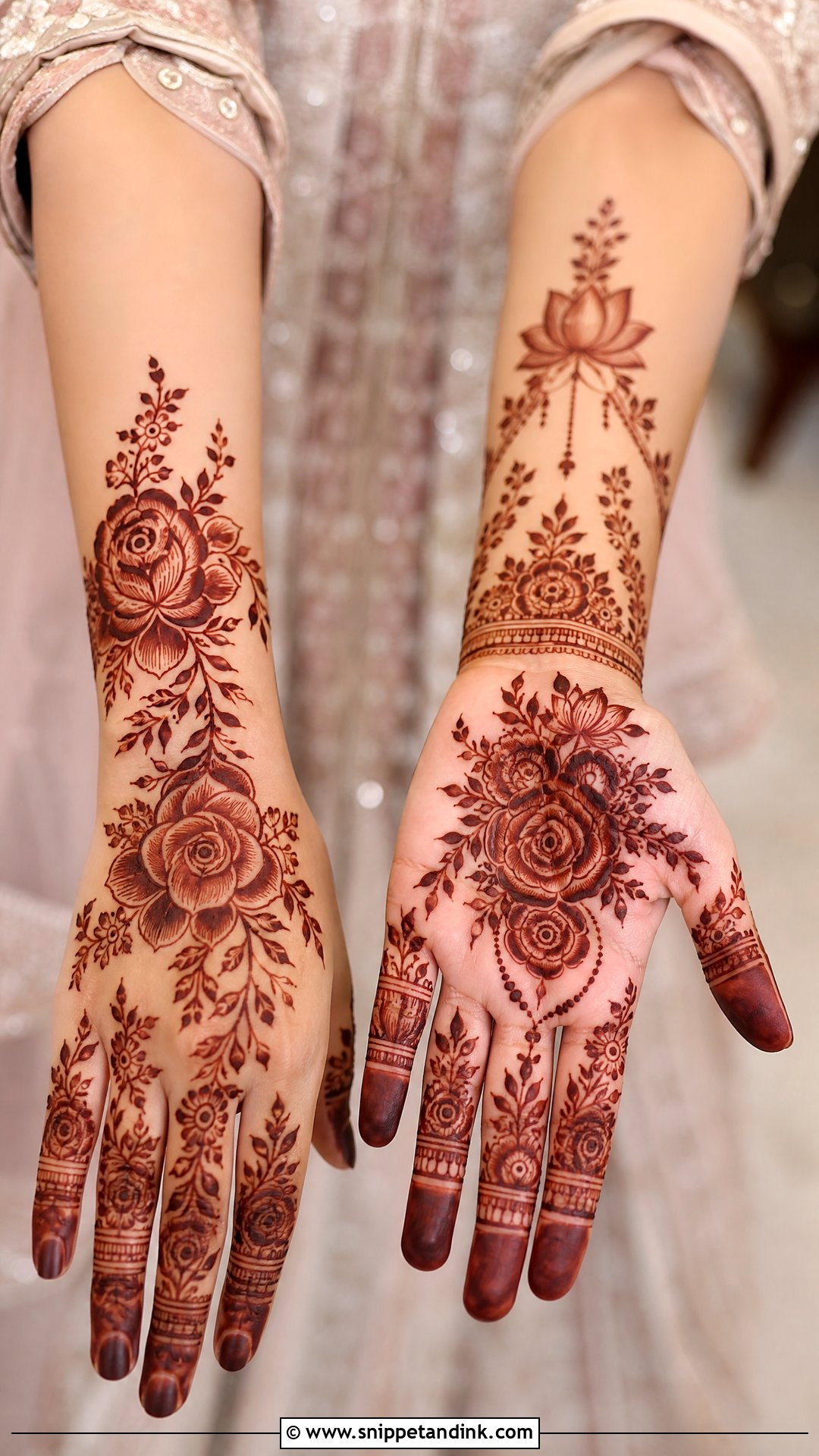
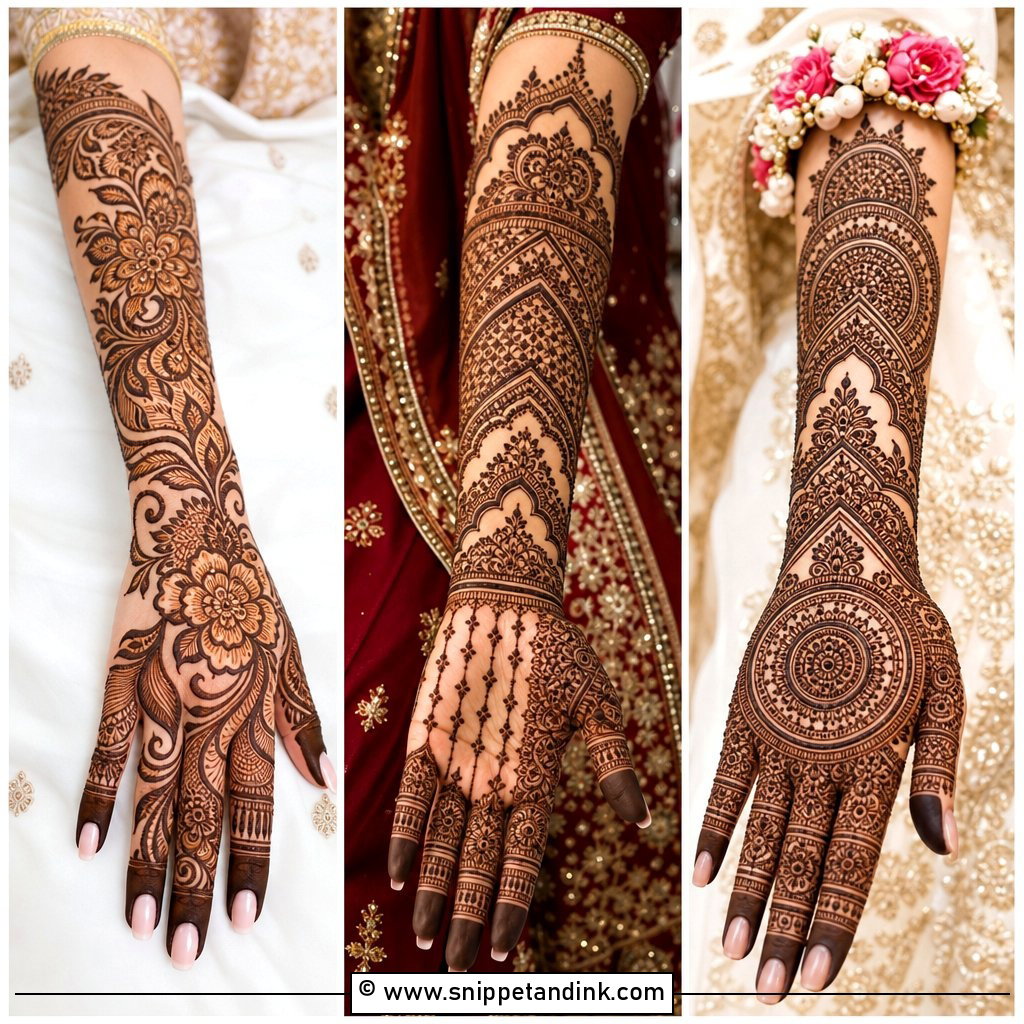
Floral designs take roses, lotus, small blossoms, leafy trails and shaded petals across palms and backs, flowing diagonally Arabic-style or sitting in structured Indian panels. They suit pastel, ivory, blush, green, maroon or gold outfits. I size the blooms to the hand; large flowers on small hands crowd the fingers, while tiny ones on long hands look lost. Filled fingertips, wrist cuffs and a few paisleys make it bridal.
16. Paisley Muslim Bridal Mehndi Design
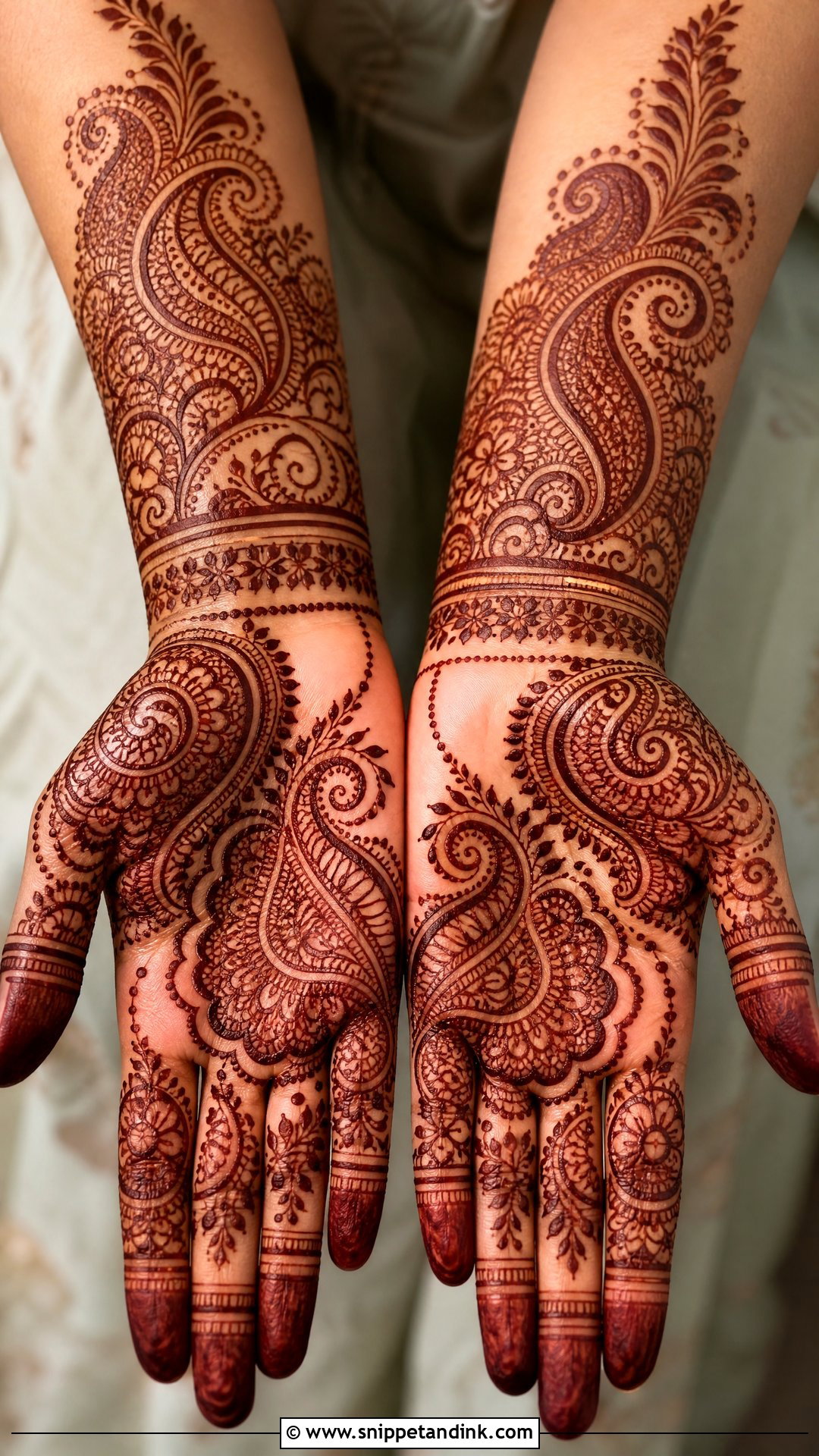
Paisleys give a hand movement. In a bridal layout I put large paisleys on the palms, smaller ones along the wrists and leafy vines round the fingers, with the back hand carrying either a diagonal trail or a full symmetrical pattern. They work with Indian and Pakistani outfits and scale easily from light to heavy. For a rich version, fill each paisley with tiny lines, dots, petals and mesh; the curves come alive once the reddish-brown stain develops.
17. Jaali Muslim Bridal Mehndi Design
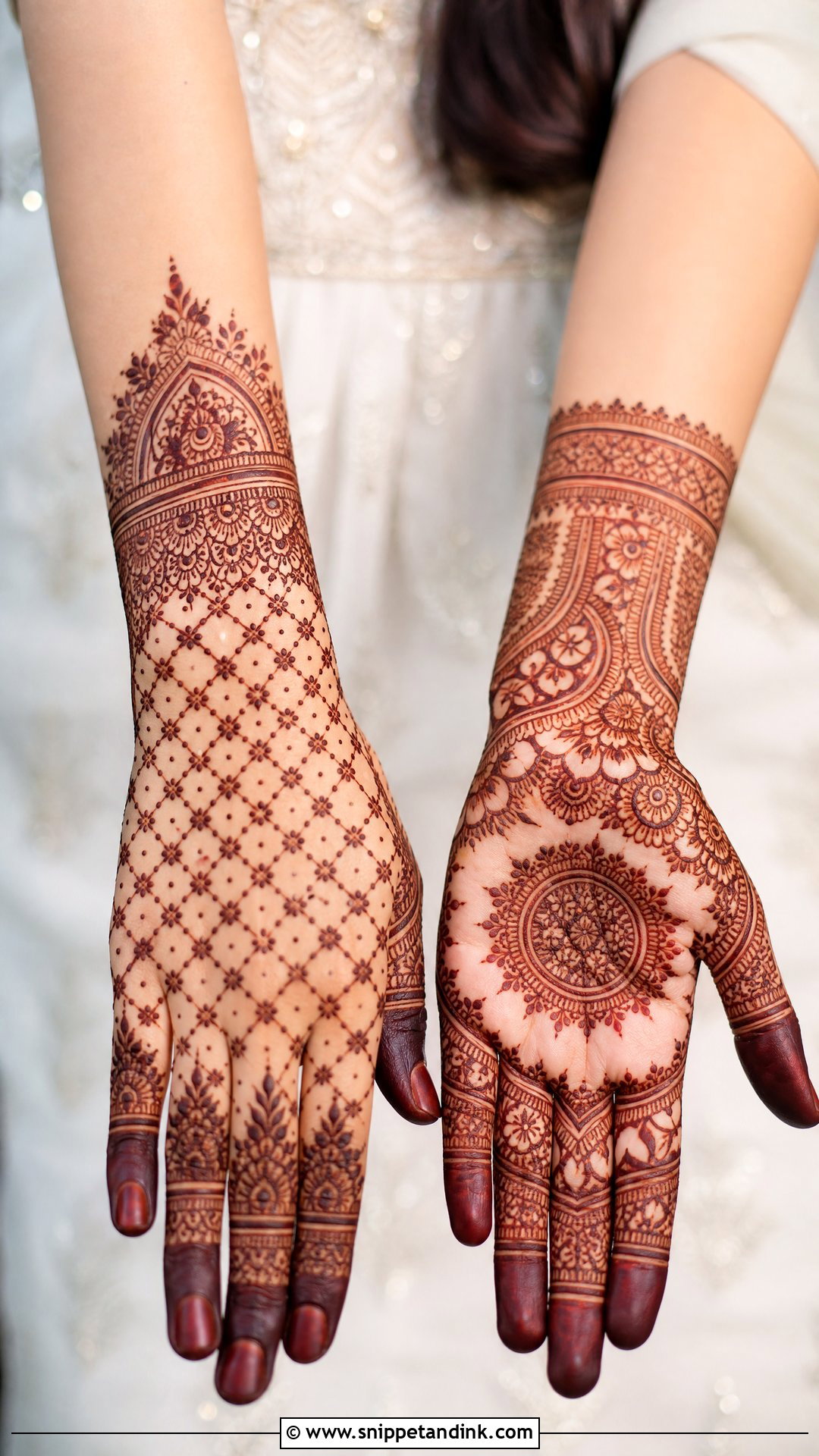
Jaali is net work: diamond mesh, tiny dots and floral corners on the back hand ending in bracelet cuffs, and on the palm combined with mandalas, paisleys or panels so it doesn’t look flat. It echoes embroidered sleeves, lace and fine stonework nicely, and it looks dressed without needing solid colour everywhere. Precision is everything. Even lines and clean dots look expensive; uneven ones look rushed. Filled fingertips add contrast and depth.
18. Peacock Muslim Bridal Mehndi Design
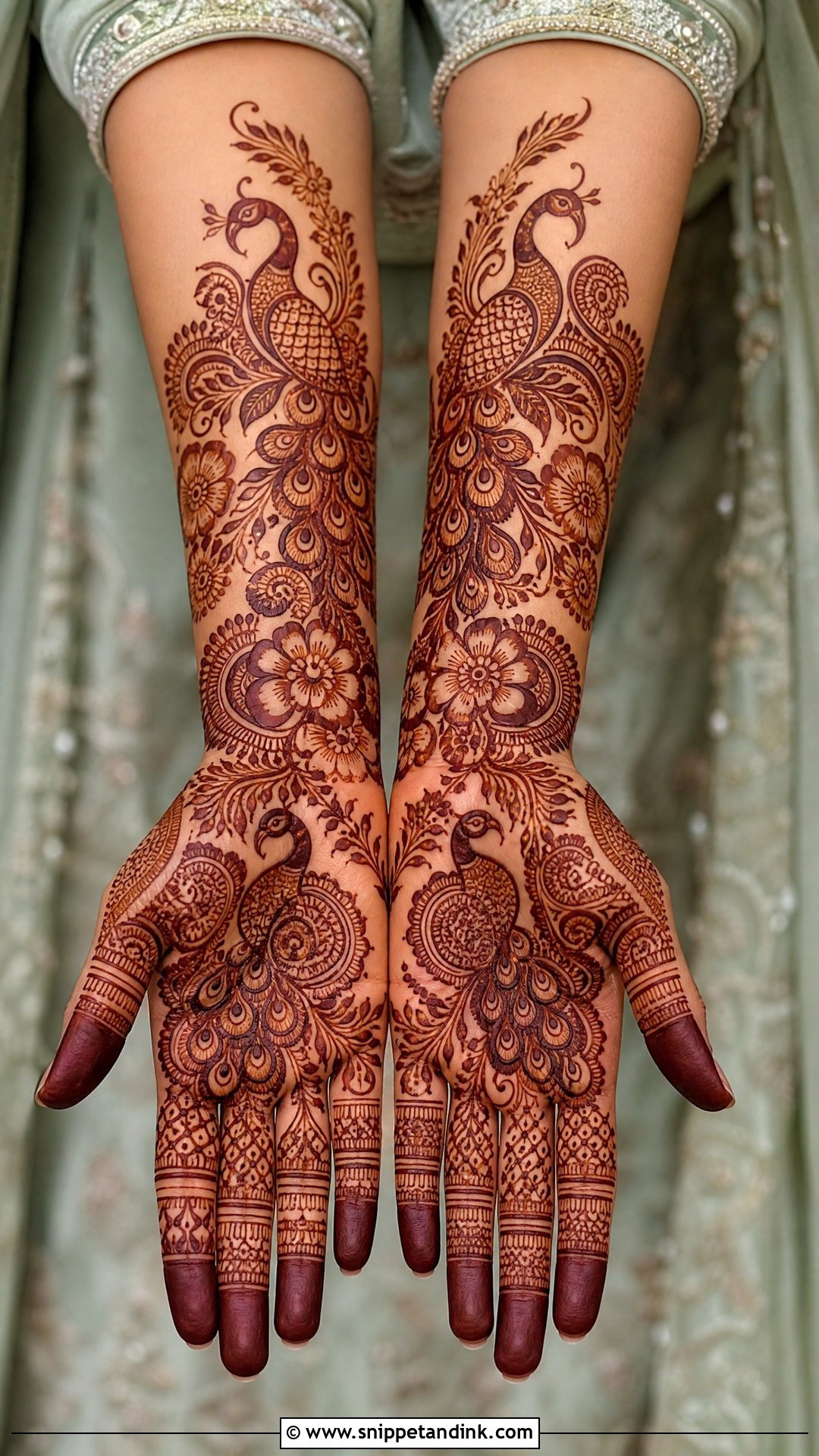
Peacocks can sit on the palm, curve along the wrist or fill the back of the hand among florals and paisleys, and the feathers leave room for fine lines, dots and shading. They blend easily into Indian and Pakistani layouts. Because some families prefer to avoid animal and human figures, I always ask before drawing one; if there’s any hesitation, a paisley shaped like a feather gives a similar curve without the bird. Paired with florals and bracelet bands, it stays graceful rather than theatrical.
19. Personalized Muslim Bridal Mehndi Design
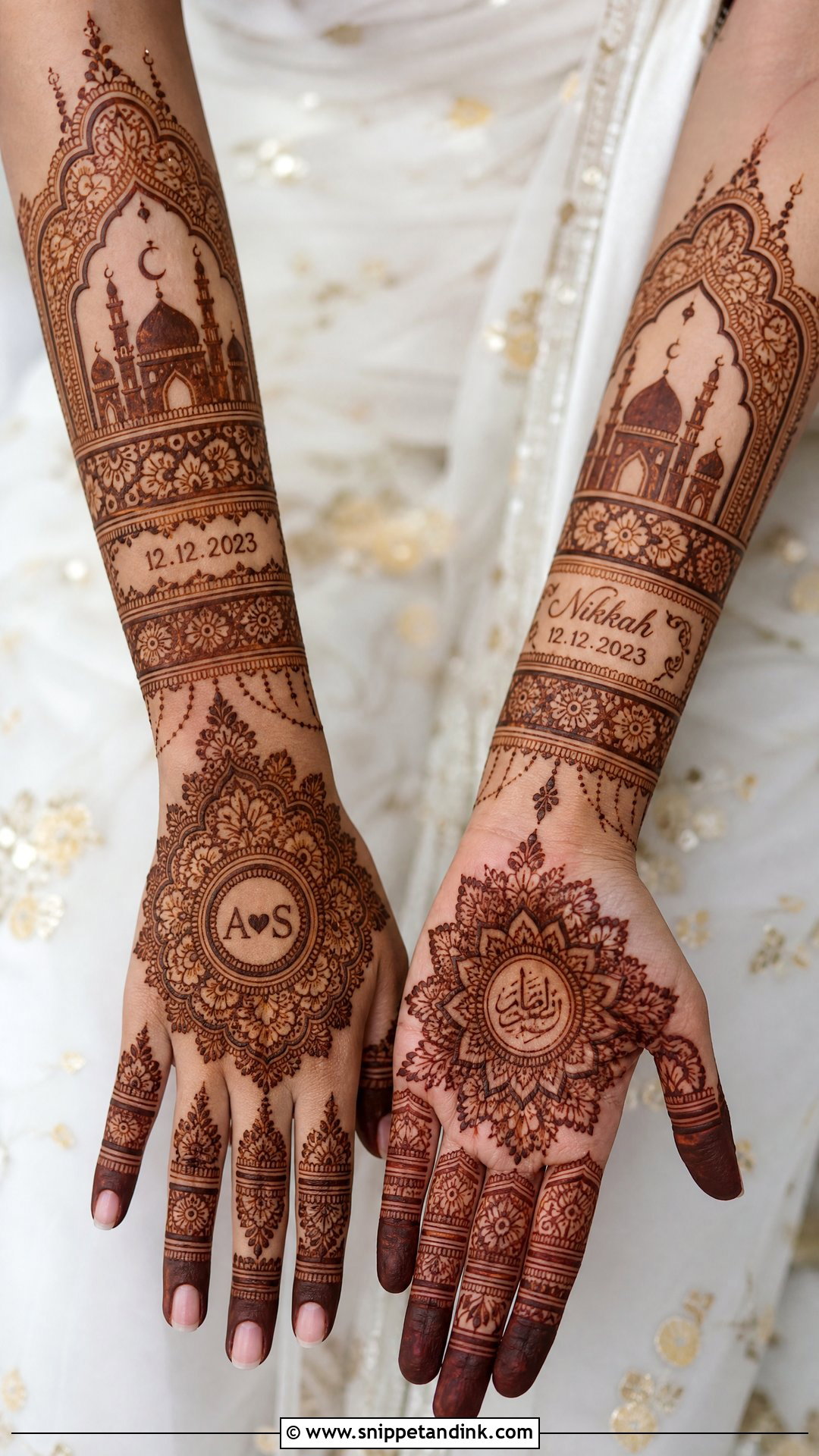
Personalized Muslim bridal mehndi design hides meaningful details in the pattern: initials, the nikah date, a small arch shaped like a mosque doorway, or a symbol tied to the couple’s story, tucked inside paisleys, mandalas, cuffs or vines. The rest of the design has to stay balanced so the personal touches don’t look random. I place them where the camera will catch them, usually the palm edge or the wrist band, but in the same line weight as the filler so they blend in.
20. White Muslim Bridal Mehndi Design
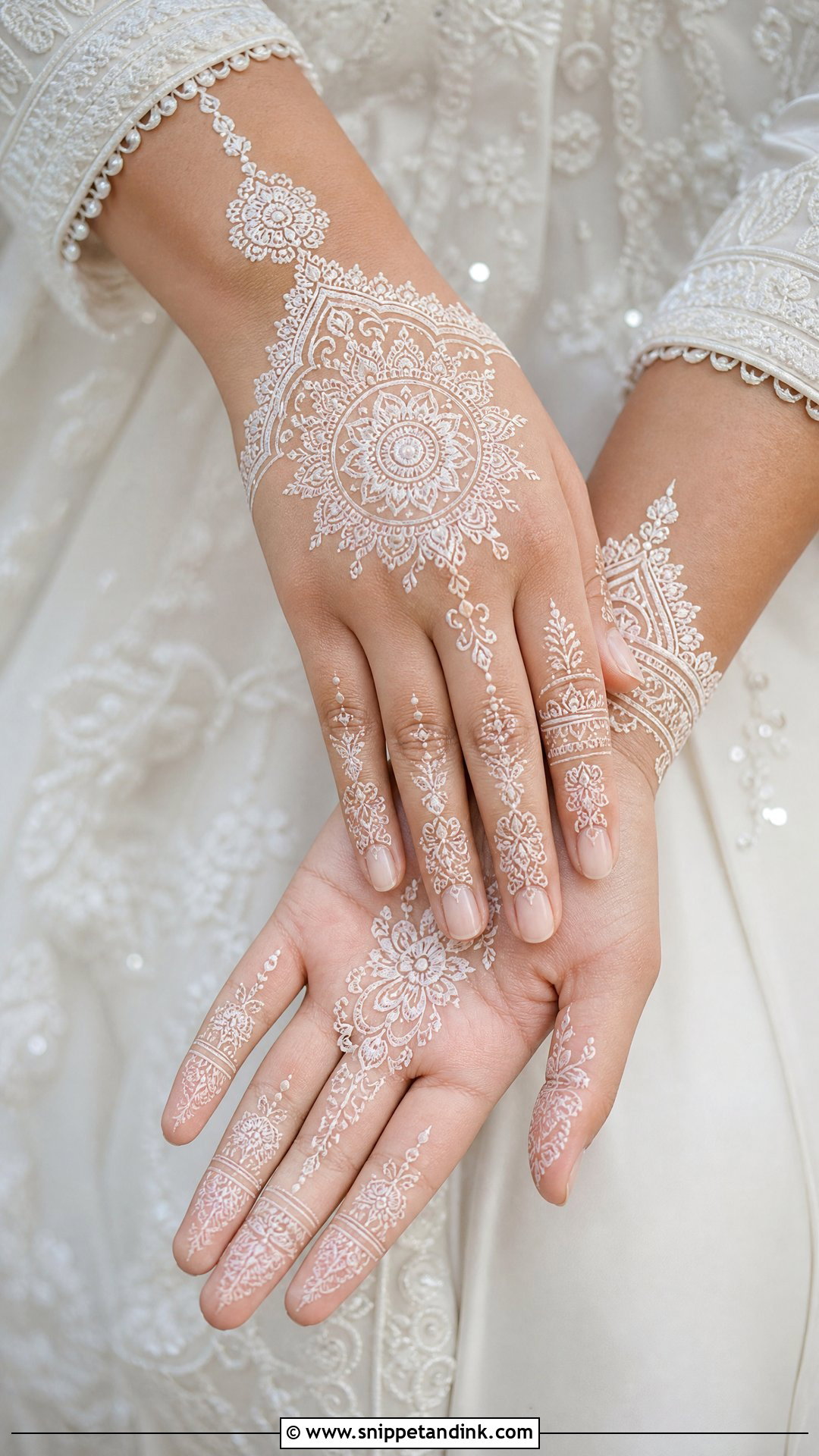
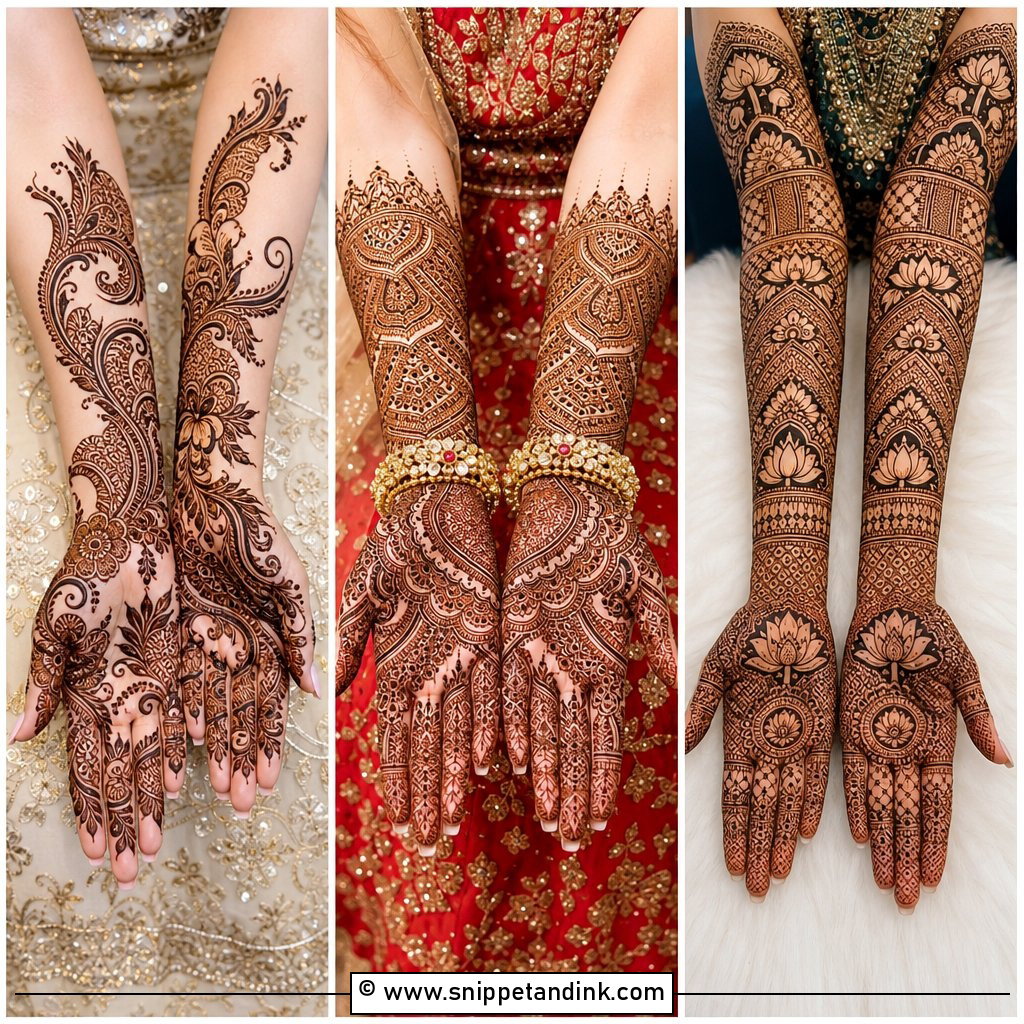
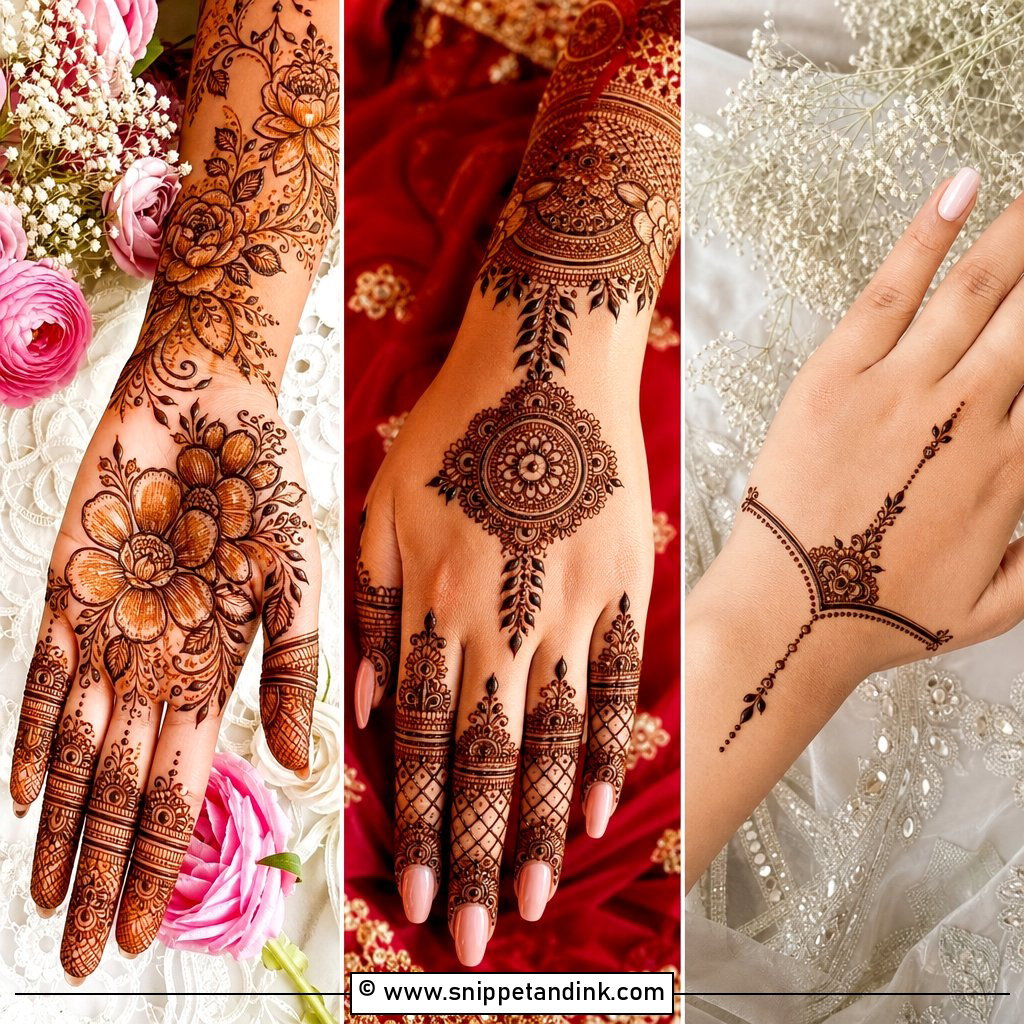
White mehndi isn’t henna at all; it’s body paint, usually applied with a cosmetic adhesive, so it sits on the skin as a bright lace-like layer instead of staining. White florals, mandalas, finger chains, cuffs and delicate back-hand patterns work well with ivory, silver, pastel and pearl-detailed outfits. It lasts about as long as a single event, so it suits the nikah photos rather than a week of functions. Leave space between the lines, and patch-test the adhesive a few days before if your skin reacts easily.
Wudu, Figures and Other Questions Families Raise
Can you pray with fresh henna?
Once the paste is removed, natural henna is only a stain in the top layer of skin, so it doesn’t form a coating over it. That’s why so many brides are comfortable making wudu with a henna stain. White mehndi and glitter or glue-based body art are different, since they sit on the skin as a layer. If prayer during the wedding days matters to you, plan white designs for a single photo event and remove them afterwards, or stick to natural henna.
Leaving out faces and animals
Preferences about figurative designs vary a lot between families. I simply ask at the booking. Arches, domes, lanterns, crescents, florals and lettering give a personal, celebratory design without any faces, and they photograph just as well.
Covered arms and modest sleeves
With full sleeves, effort spent on the forearm is wasted. I’d rather put that time into richer fingers, a strong wrist cuff that peeks out from the sleeve edge, and a palm design you’ll see every time you lift your hands.
From Mehndi Night to Walima on One Stain
The right design comes from your outfit, the ceremonies you’re planning, how long you can sit and what you like looking at. Some brides want heavy full hands with paisleys and jaali; others want Arabic trails, a minimal mandala or white detailing for photos. All of them can look bridal as long as the design feels complete. Before you settle, save reference photos, look closely at your artist’s line work, and decide how far up your arms you want it to go, keeping your sleeve length in mind.
You'll Like These Ideas:





Leave a Reply