
A small cake can hold a room as well as a tall ballroom cake, but only if the display does the work the missing tiers would have done. Height, texture, color, light and the right stand are what turn one petite cake into the reception’s focal point. The cakes I make most for small weddings lean on personal details, vintage piping, sculptural shapes, fresh fruit, sugar flowers, or a simple cutting cake beside other desserts, and every one of those needs a slightly different setup. These are the displays I’d plan for an elopement, a micro wedding, a backyard reception or a dessert table, along with what I check before each one goes out.
How Many People Will a Small Cake Really Feed?
The first question I ask any couple wanting a small cake is whether it has to feed everyone or only star in the photos. That decides the size, and it’s where most budgets go wrong in one direction or the other.
Wedding portions are narrower than party slices, usually about an inch wide and two inches deep, cut from a cake around four inches tall. Cut that way, a rough guide looks like this, though every baker’s charts differ slightly:
- 6-inch round, single tier: about 10 to 12 wedding portions
- 8-inch round, single tier: around 20 to 24
- 6-inch on 8-inch, two tiers: somewhere in the mid 30s
- Square cakes give a few more portions than a round of the same width
If your guest count is well above what the display cake covers, I’d rather add a kitchen cake or cupcakes in the same flavor than push the display up a tier. And if you’d like to keep the top for an anniversary, take it out of the serving count before you order.
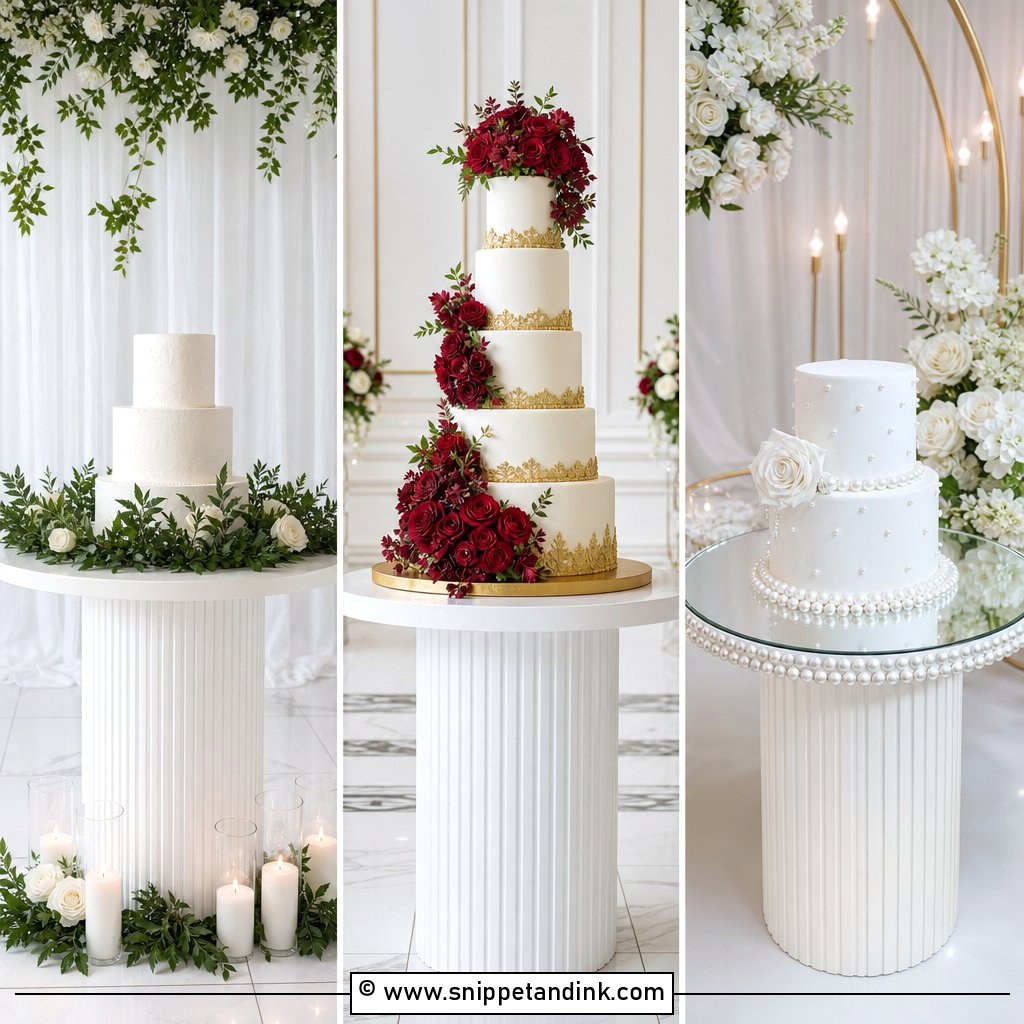
1. Small Wedding Cake On Pedestal Stand
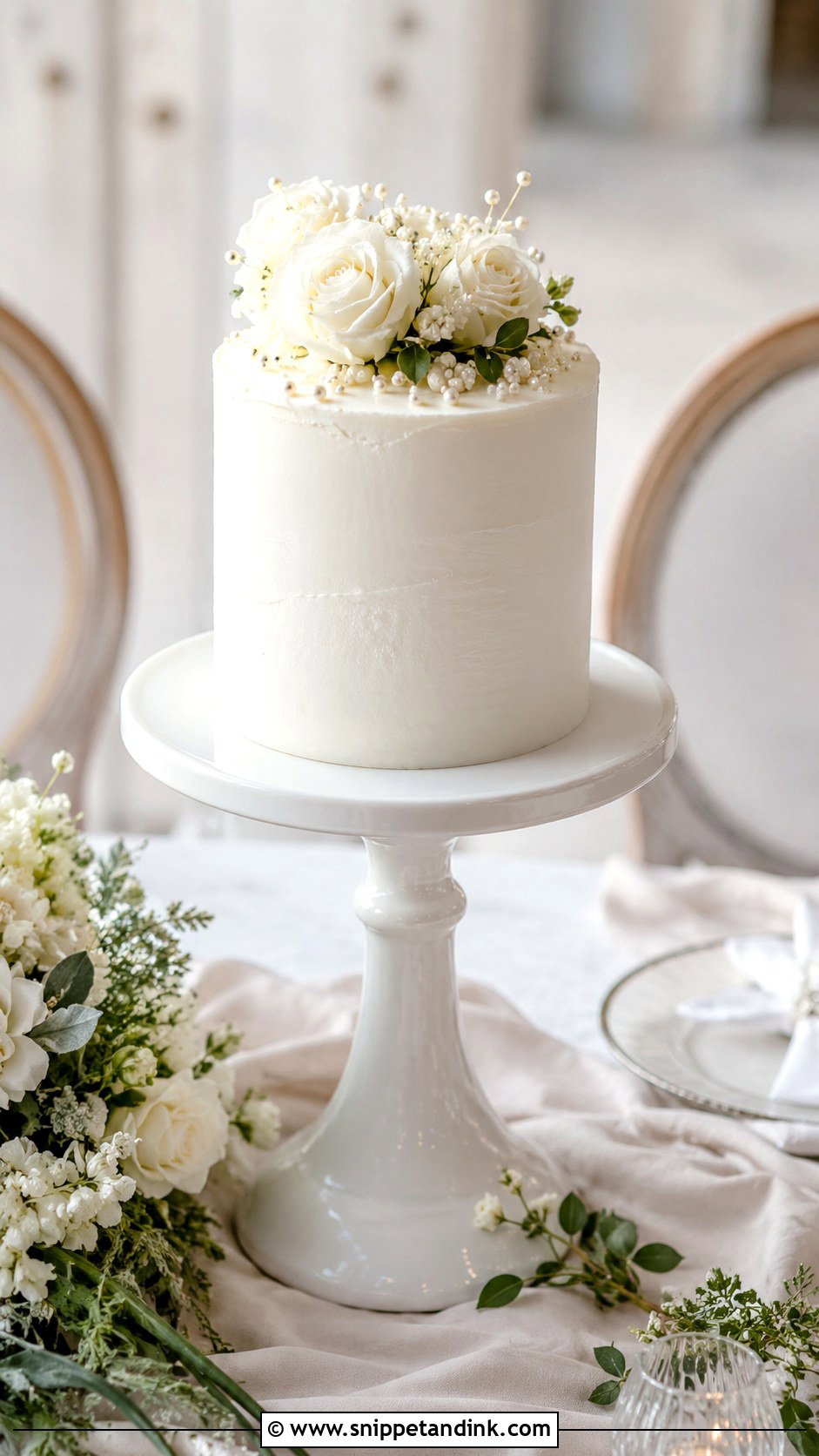
Nothing lifts a small cake faster than a pedestal. It raises the cake off the table so it reads in photos instead of sitting flat among the glassware. A white buttercream cake on ceramic, marble or glass lets the piping or texture carry the look. When I set one up, the cake board has to sit fully on the stand’s top with a little rim showing; an overhanging board looks precarious and can tip when someone leans in with a knife. A few flowers at the base are plenty.
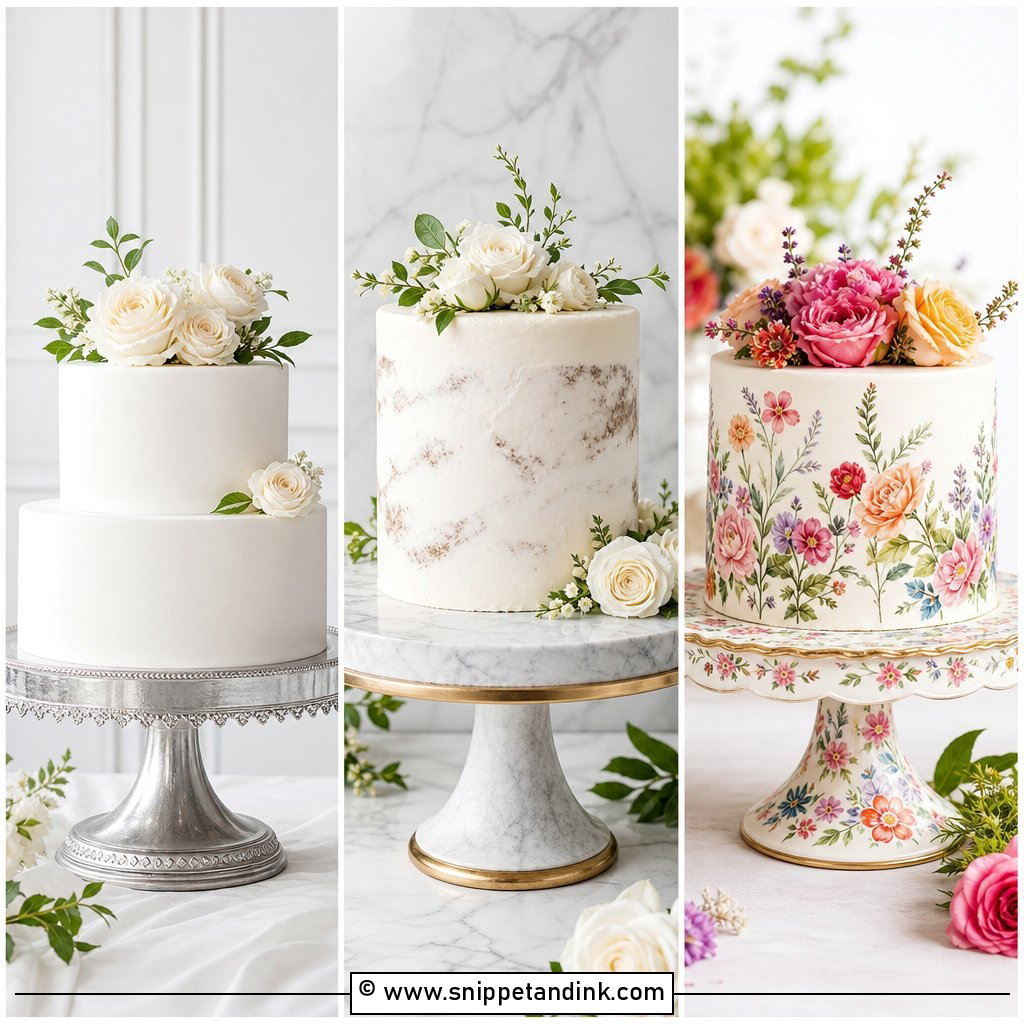
2. Small Wedding Cake With Fresh Flowers
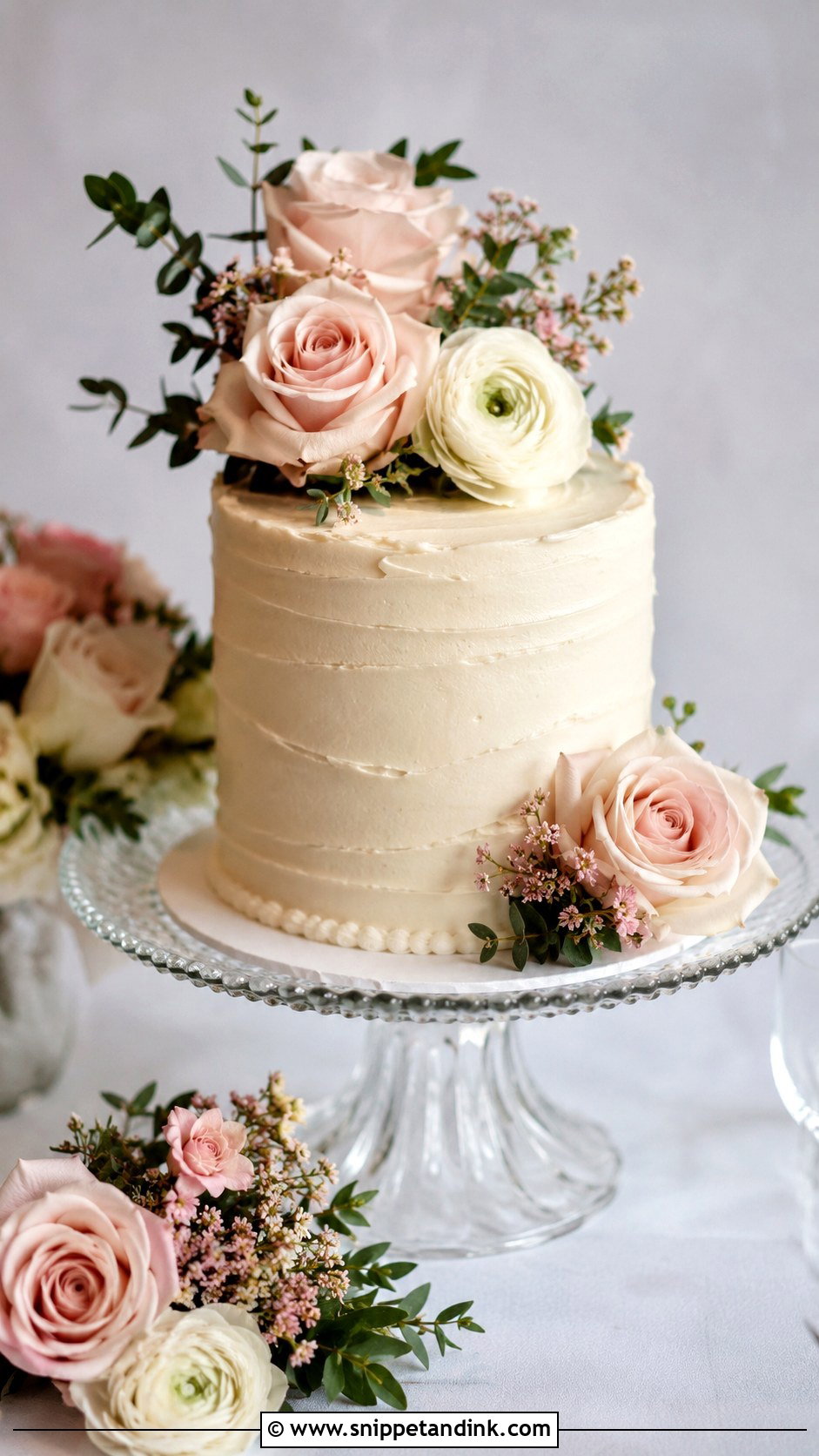
Flowers soften a small cake quickly, and they crowd it just as quickly. I match them to the bouquet or table flowers, then keep them to one cluster on top and a smaller accent near the base, which looks more considered than blooms scattered everywhere. Not every flower is safe near food, so whoever places them should know which varieties to avoid and should wrap or sleeve every stem before it goes into frosting. Set on a plain stand with linen underneath, the table looks finished.
3. Small Wedding Cake With Greenery
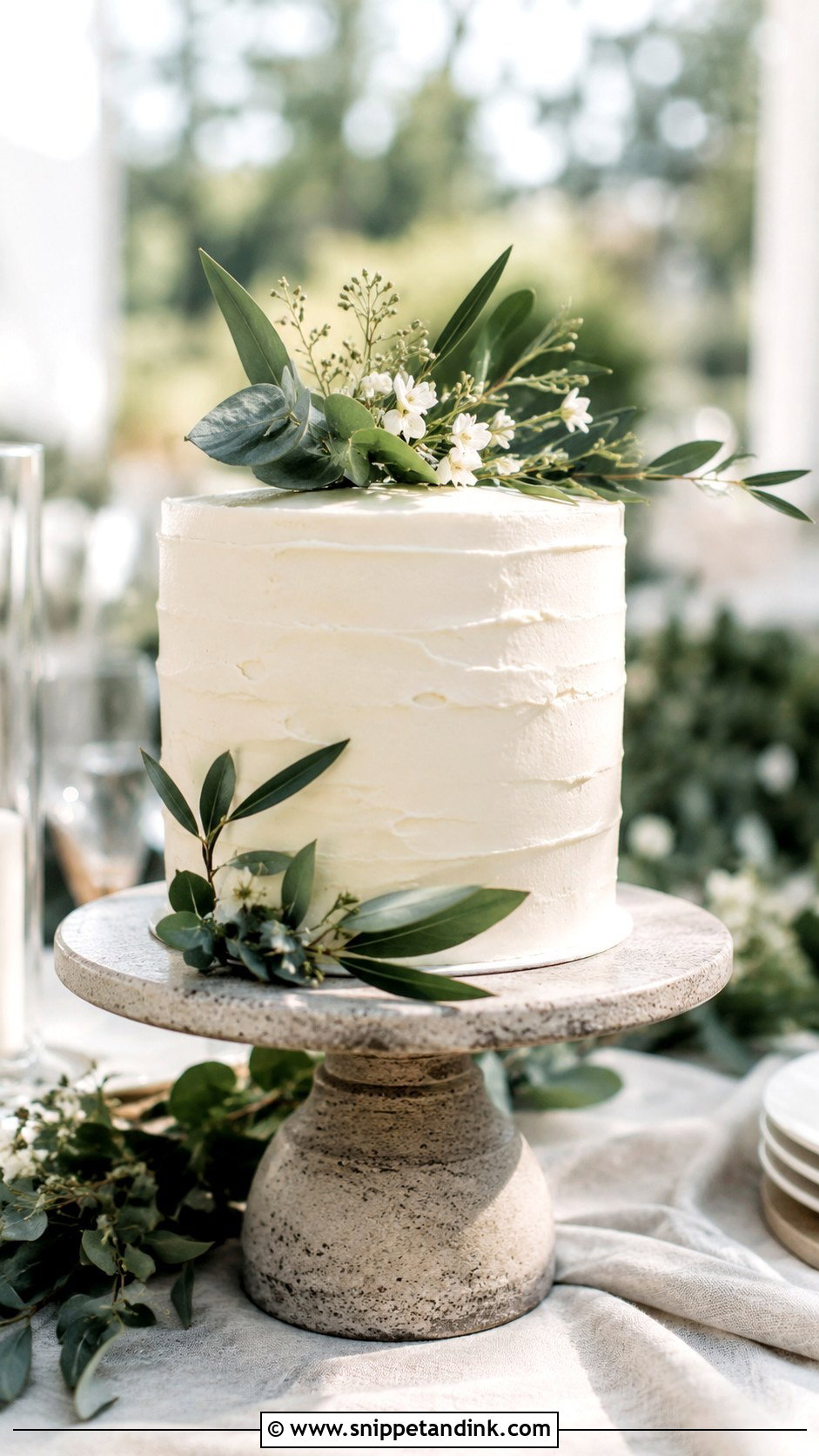
Eucalyptus, olive branches, rosemary or a little fern frame a cake without adding much color, which suits rustic, garden and woodland weddings. Smooth white or ivory frosting gives the leaves something to contrast against. Keep it light: a small wreath around the stand, a few sprigs on top, or one trail down a side. Eucalyptus is one I never press straight into the cake; it sits on a barrier or around the stand, since it isn’t something you want touching what guests eat.
4. Small Wedding Cake With Vintage Piping
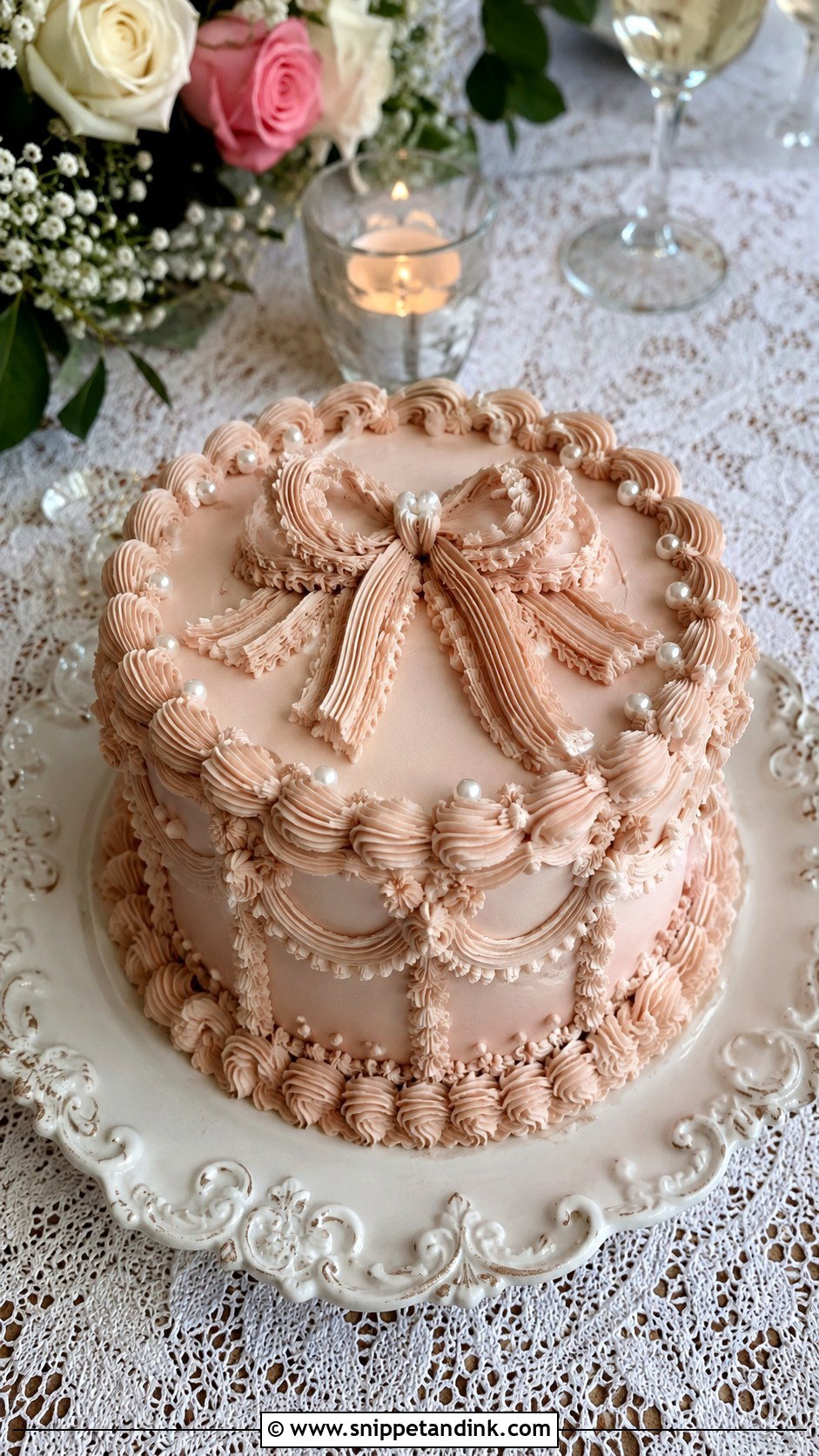
Buttercream shells, pearls, swags, bows and fine borders can make a single tier look dramatic, so this style needs very little around it. Soft ivory, blush, butter yellow or pale blue keeps it romantic rather than loud, and a vintage plate, lace linen or gold stand finishes the scene. My practical warning is heat. All that delicate overpiping is buttercream, and in a warm marquee the fine edges soften first, so I’d keep this cake indoors or bring it out late. Couples who love classic, nostalgic photos tend to fall for it.
5. Small Wedding Cake With Pearl Details
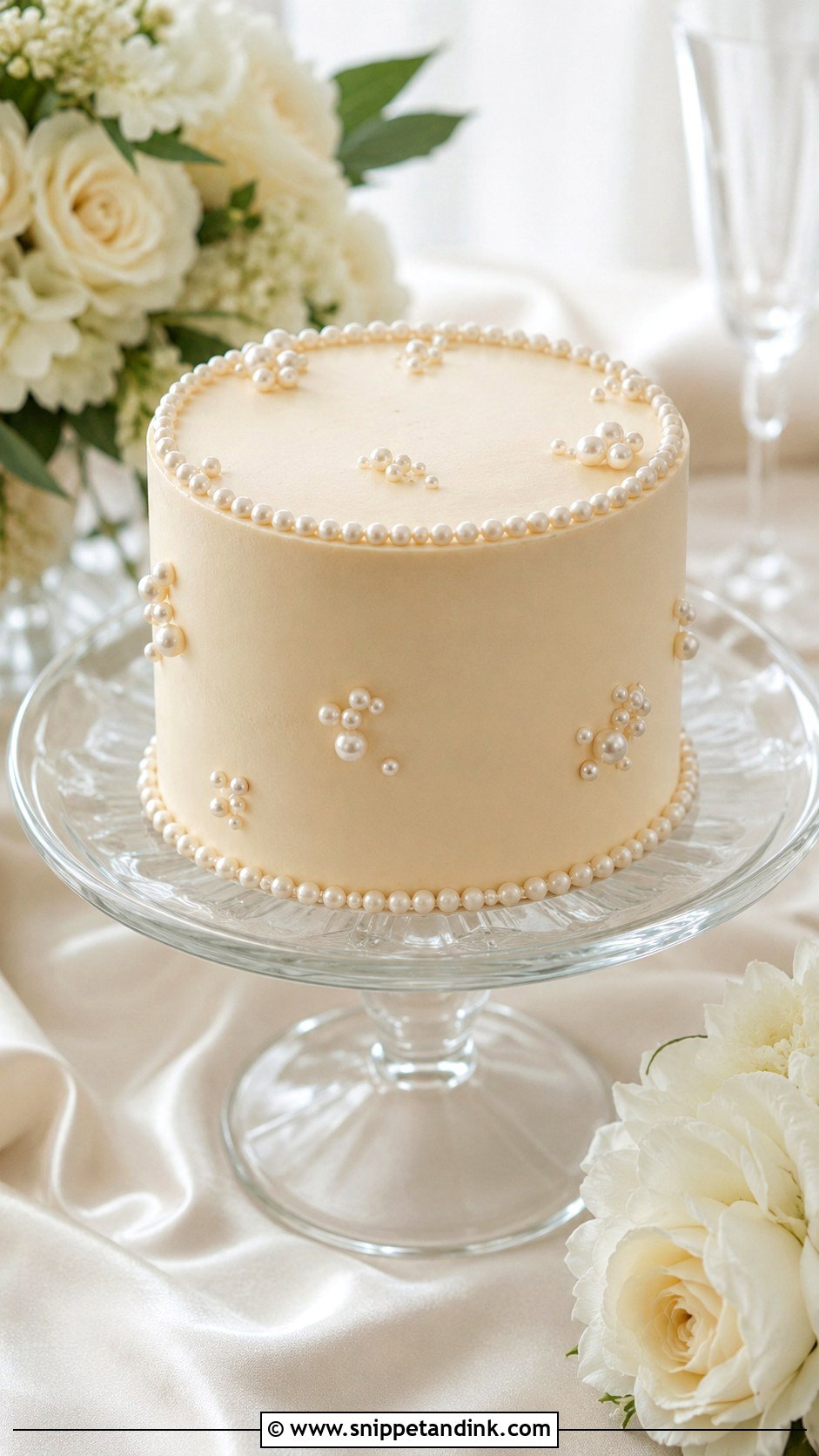
Tiny edible pearls on smooth buttercream or fondant add texture that looks polished and expensive up close. They can ring the base, scatter across the sides or run in clean lines for a modern take, and they suit ivory, champagne or white-on-white. Sugar pearls are hard, so I tell couples to warn the caterer and keep them to a reasonable density on the slices that get served. A glass stand, a little satin and a few delicate flowers complete a table that holds up well during the cake cutting and in detail shots.
6. Small Wedding Cake With Bow
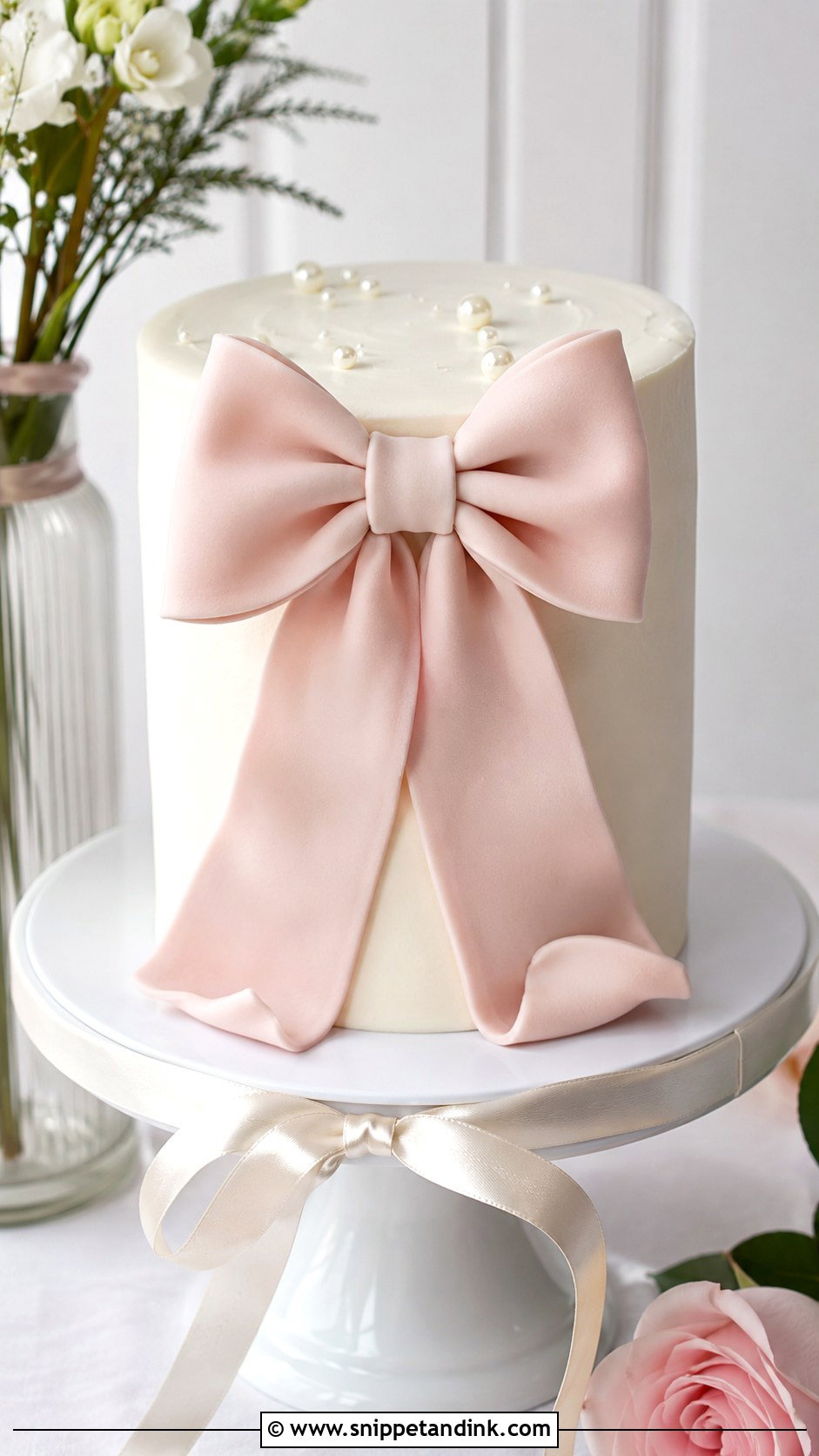
A bow gives the cake a fashion-led finish, especially one statement bow rather than several small ones. It can be fondant, buttercream, silk or a food-safe fabric ribbon around the base, and black, ivory, blush or sage against white frosting suits anything from a city wedding to a garden party. If you choose real ribbon on buttercream, ask your baker to back it, because butter seeps into fabric and leaves greasy patches by the time the cake is cut. Fondant bows need several days to firm up, so they’re made well ahead. Keep the stand simple so the bow stays the point.
7. Small Wedding Cake With Fruit
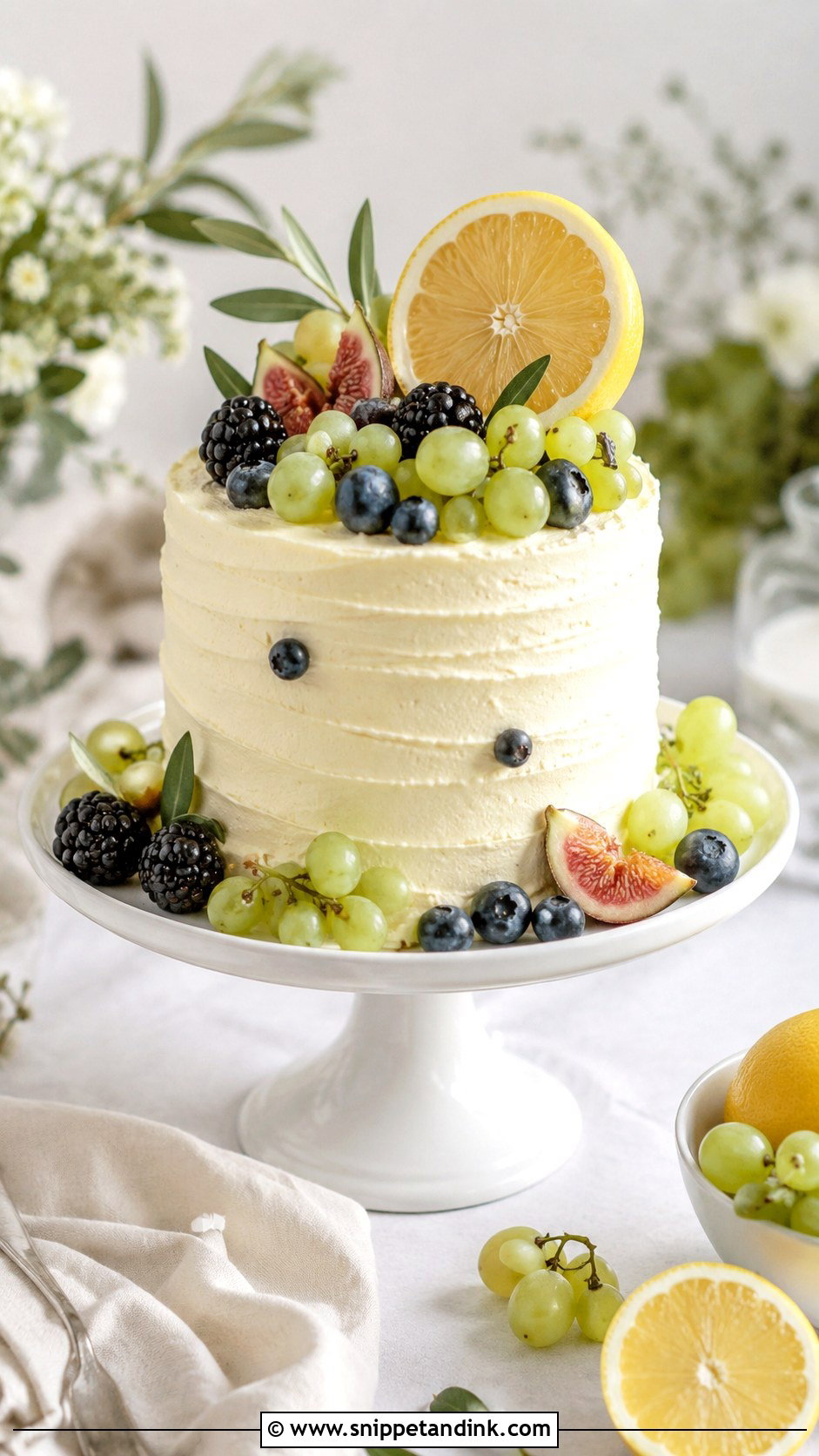
Berries, figs, grapes, citrus slices or small stone fruit make a small cake look generous and seasonal, and Fresh fruit sits naturally against whipped frosting or lightly textured buttercream. Cut fruit weeps juice into frosting, so I use whole berries where I can and add anything sliced as close to serving as possible. A few matching fruits around the stand tie the table together. Keep the arrangement tidy, or it starts to look like a casual dessert rather than a wedding cake. It suits spring, summer and outdoor menus already full of bright flavors.
8. Small Wedding Cake With Cake Dome
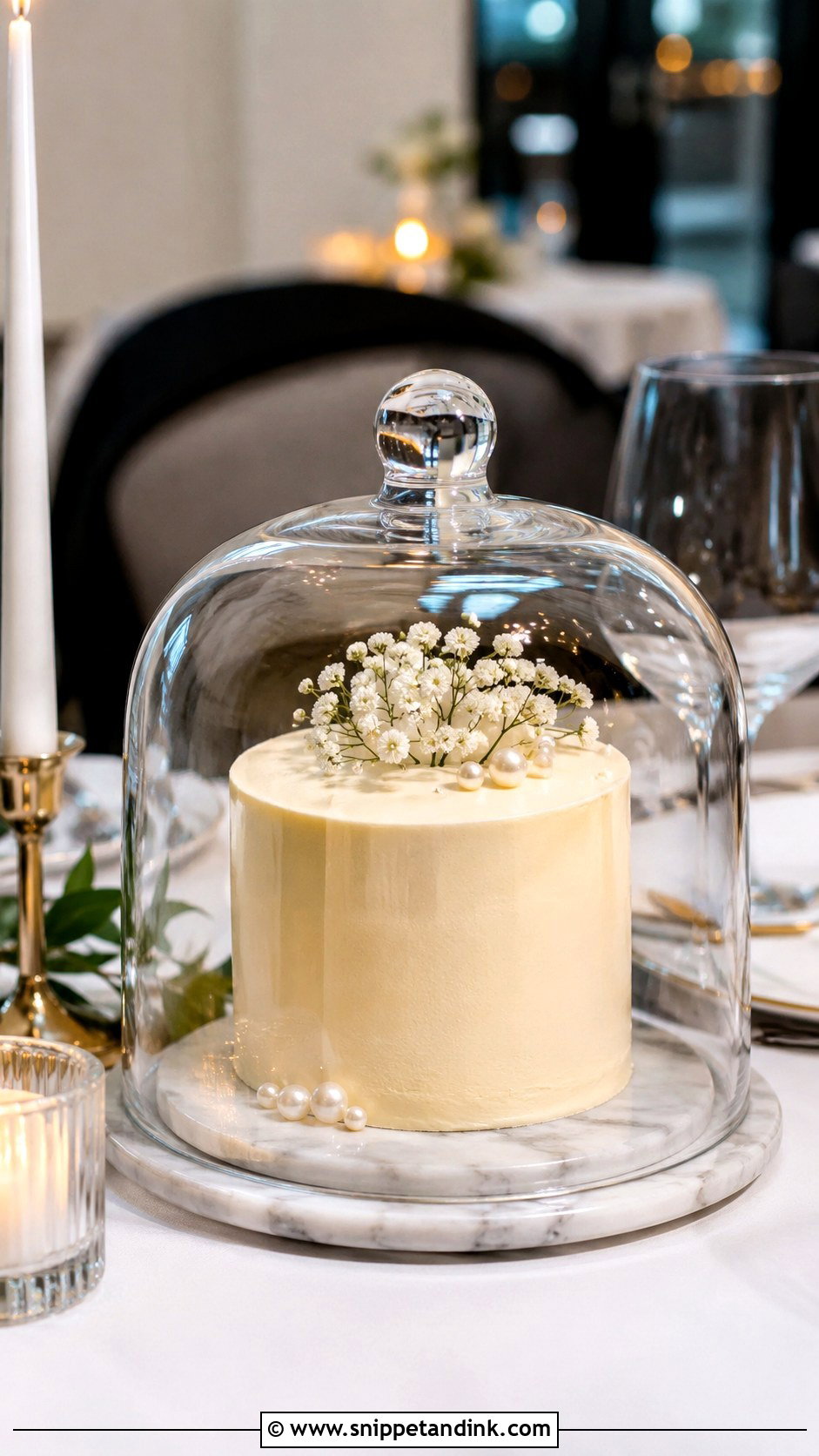
A glass dome turns the cake into a display before it is served, protecting it and adding a bit of shine. Clean decoration suits it best: smooth buttercream, tiny florals, pearls or a small topper. Choose a dome with real clearance above the topper. The thing people don’t expect is condensation. A cake brought straight from a fridge into a warm room will fog the glass from inside, so I let it come to room temperature before the dome goes on. A wooden board, marble base or vintage stand underneath sets the mood, and the setup suits elopements and restaurant receptions where the cake table is small but on show.
9. Small Wedding Cake On Wooden Stand
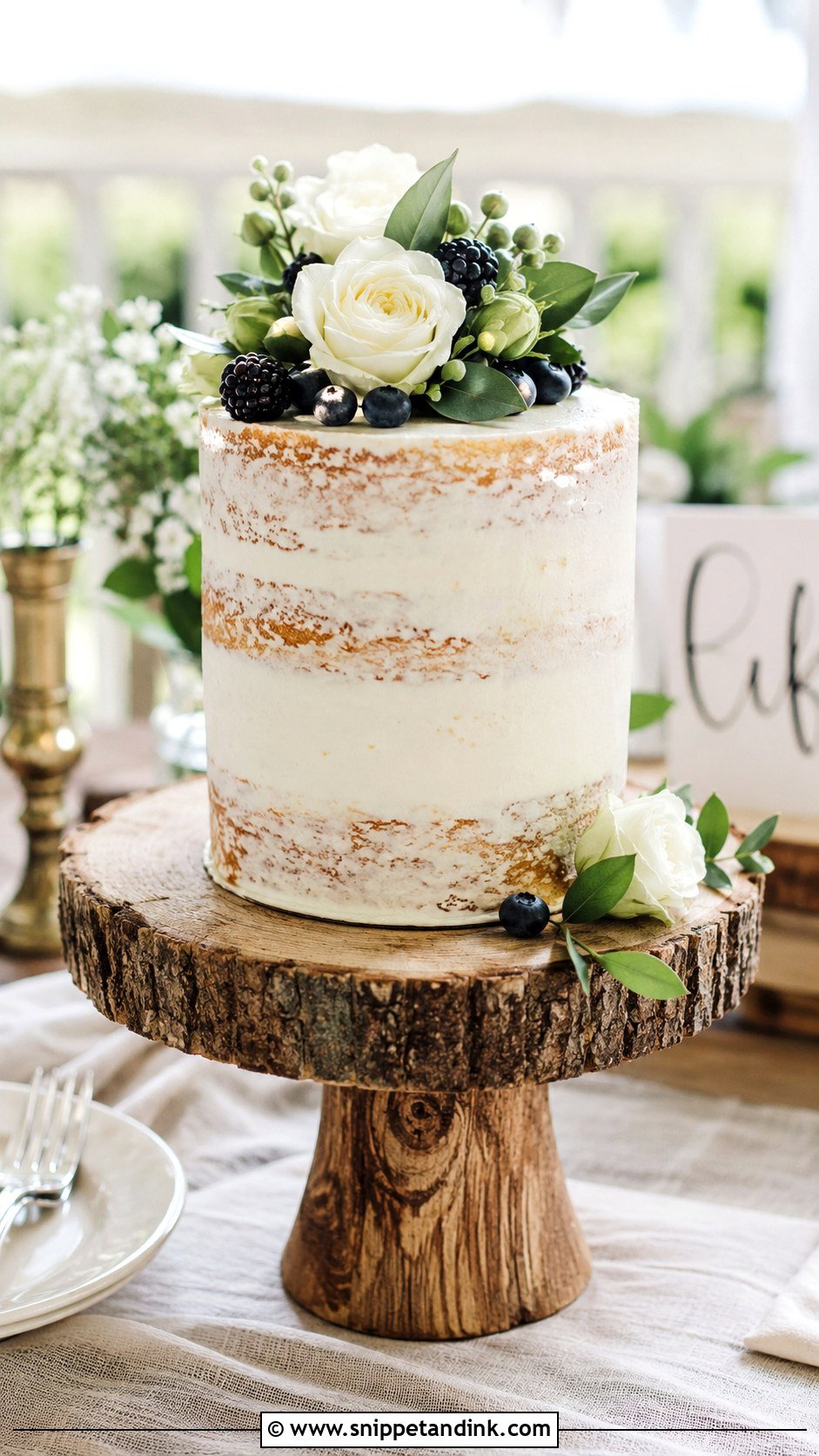
Wood brings warmth to barn weddings, backyard receptions, mountain elopements and garden parties, and a semi-naked, textured or simple ivory cake looks at home on it. Raw wood slices aren’t food-safe surfaces on their own, so I always put the cake on its own board on top, never directly on the bark. The stand must be level and sturdy; a log slice that rocks will crack a small cake as easily as a big one. Keep the table styling to linen, candles or a few petals, with greenery, white flowers or berries to tie it to the setting.
10. Small Wedding Cake On Acrylic Stand
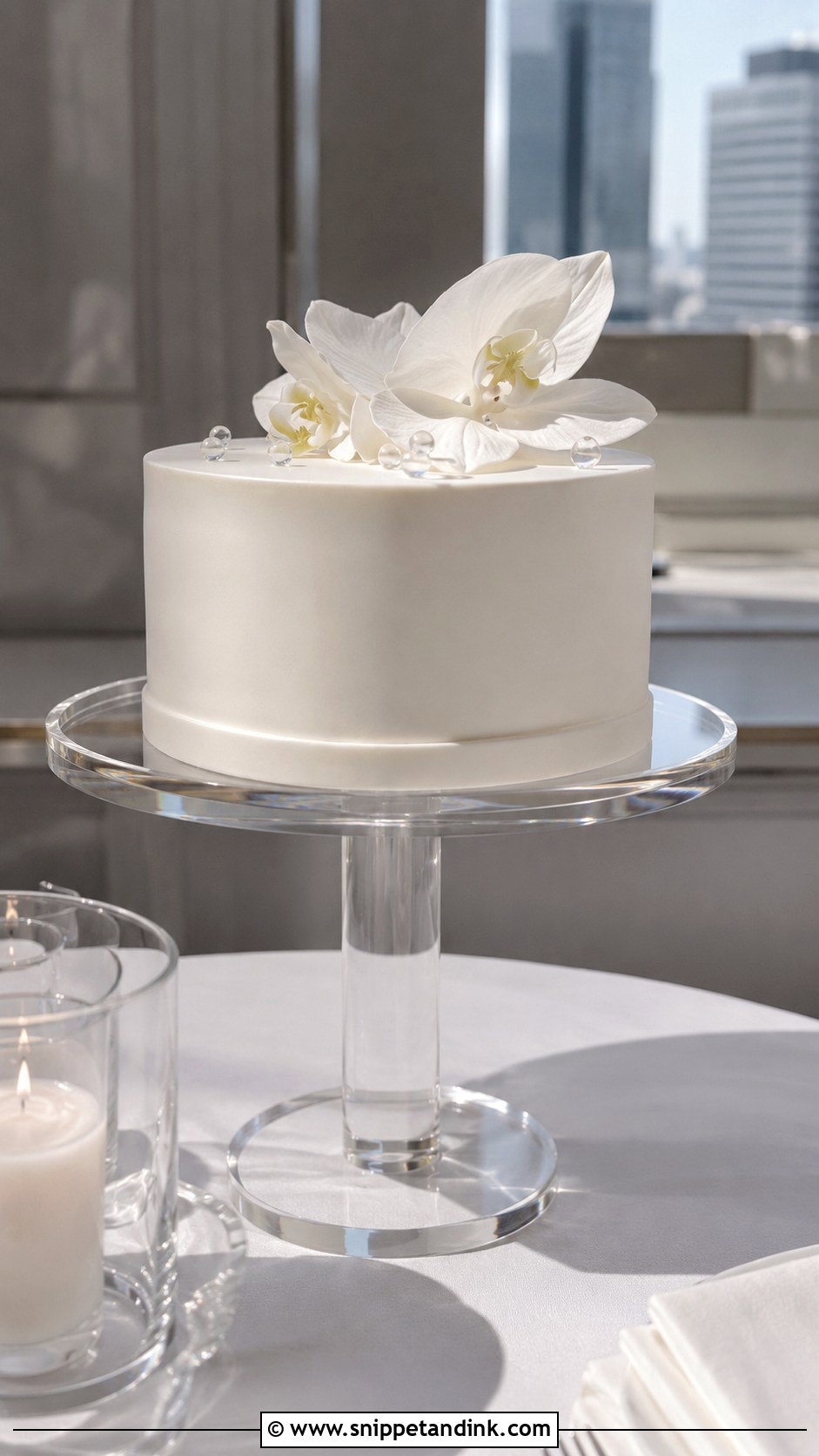
Clear acrylic adds height without visual weight, so the cake seems to float, which suits sleek venues, rooftops and city spaces. Smooth fondant, white buttercream or a monochrome cake looks sharp on it. Flowers can sit underneath or the base can stay bare for a gallery feel. Do check the stand’s load and stability before the day; thin acrylic risers flex more than you’d think under a dense cake, and every fingerprint shows, so I wipe it down after placing the cake.
11. Small Wedding Cake With Dessert Table
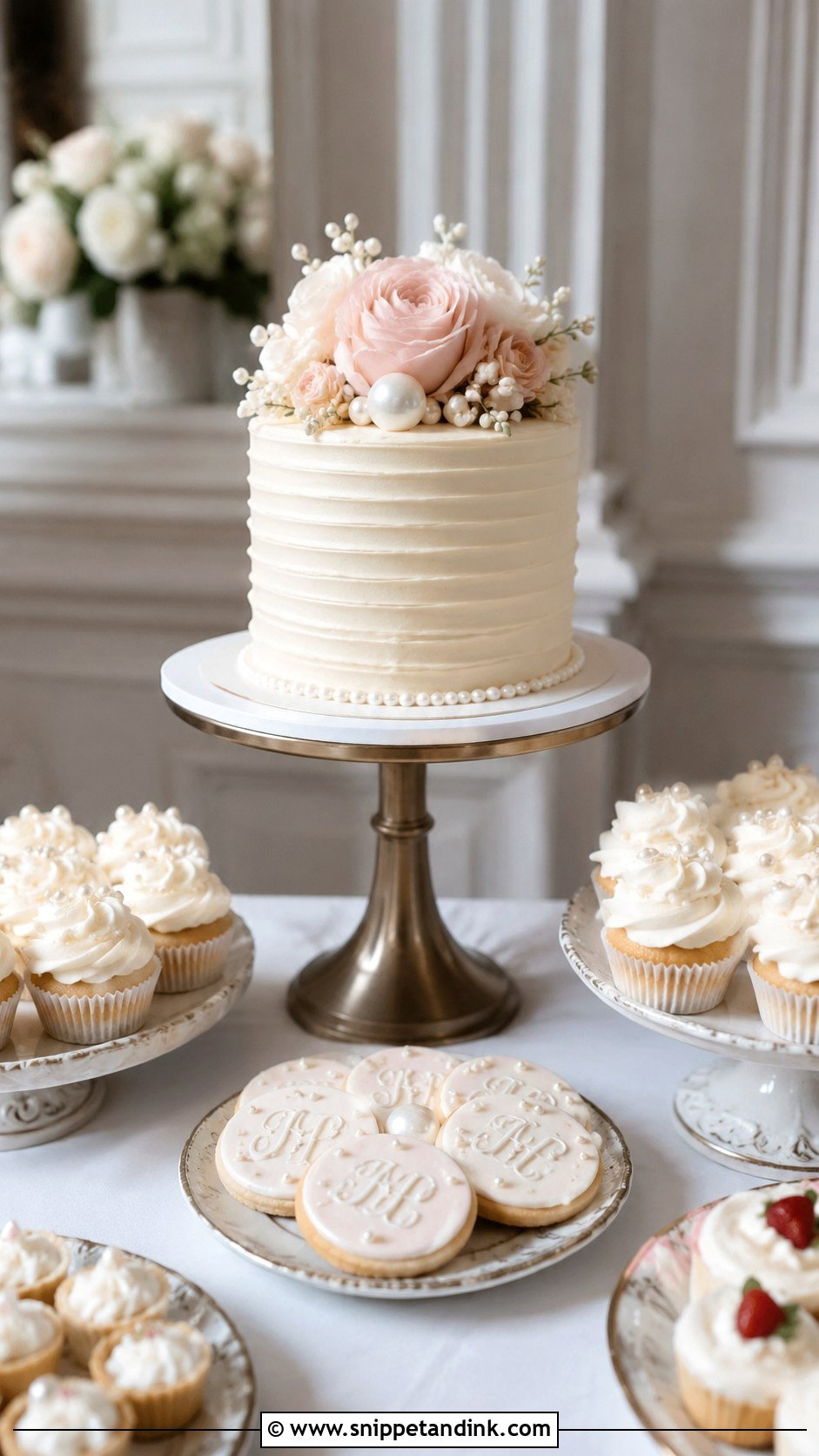
Set up with balance, a small cake makes a natural centerpiece of a dessert table. I put it in the center or slightly raised at the back, then arrange cupcakes, macarons, cookies or mini tarts around it, always keeping the cake’s stand taller than everything else so it still reads as the wedding moment. Matching colors, labels and trays stop it looking cluttered. The cake handles the cutting photos while the other desserts feed a bigger crowd and give guests more flavor choices.
12. Small Wedding Cake With Cupcakes
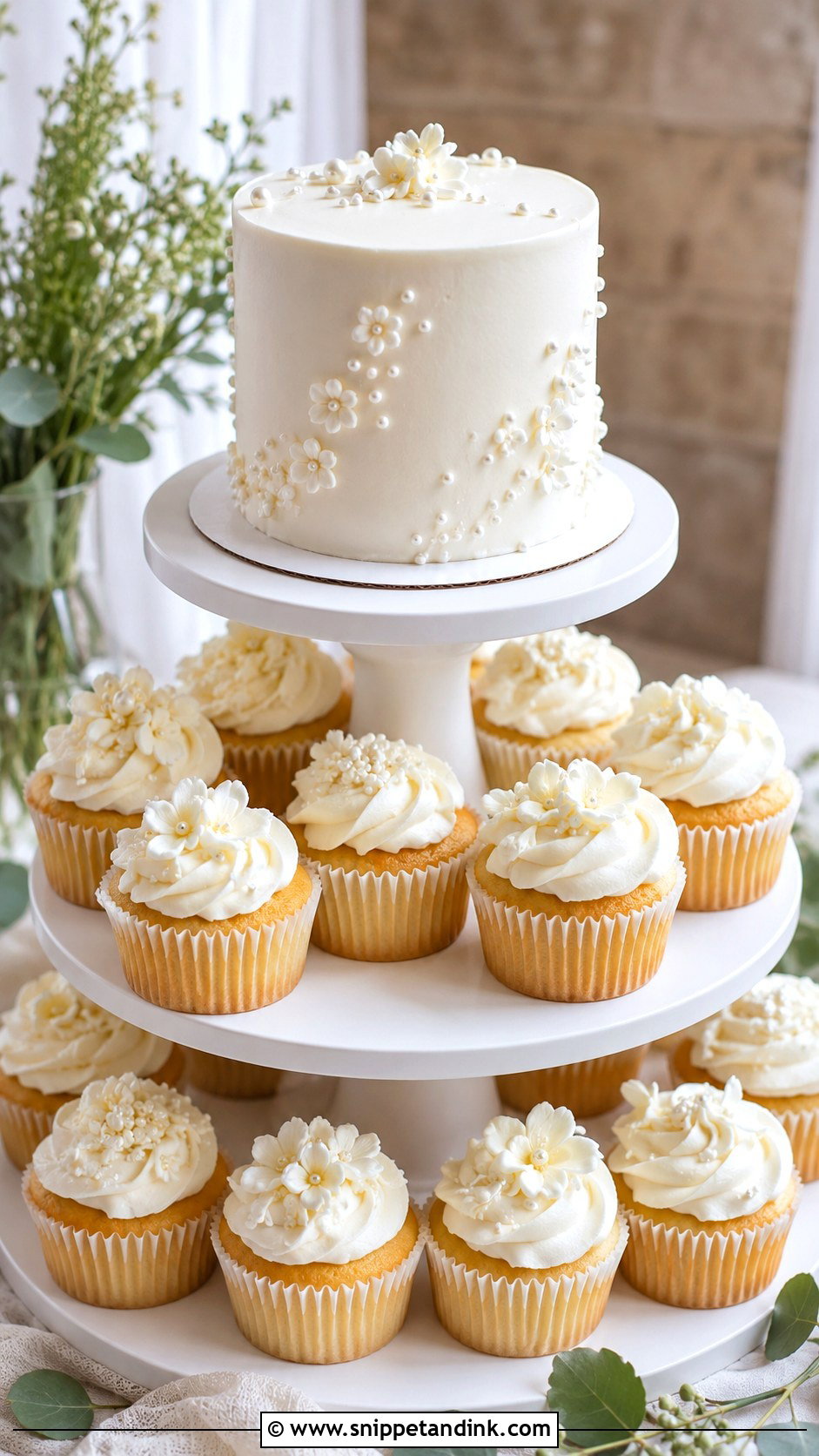
Cupcakes keep service fast while the small cake stays the star. The cake goes on a stand in the center and the cupcakes sit on lower trays around it, sharing its frosting color or one decoration, such as tiny flowers, pearls or fruit. Ask for them to be baked in the same flavors as the cake so guests don’t feel they got the lesser dessert. The cake can be kept for the couple or sliced for a few people while cupcakes cover everyone else, which suits casual and outdoor receptions.
13. Small Wedding Cake With Mini Cakes
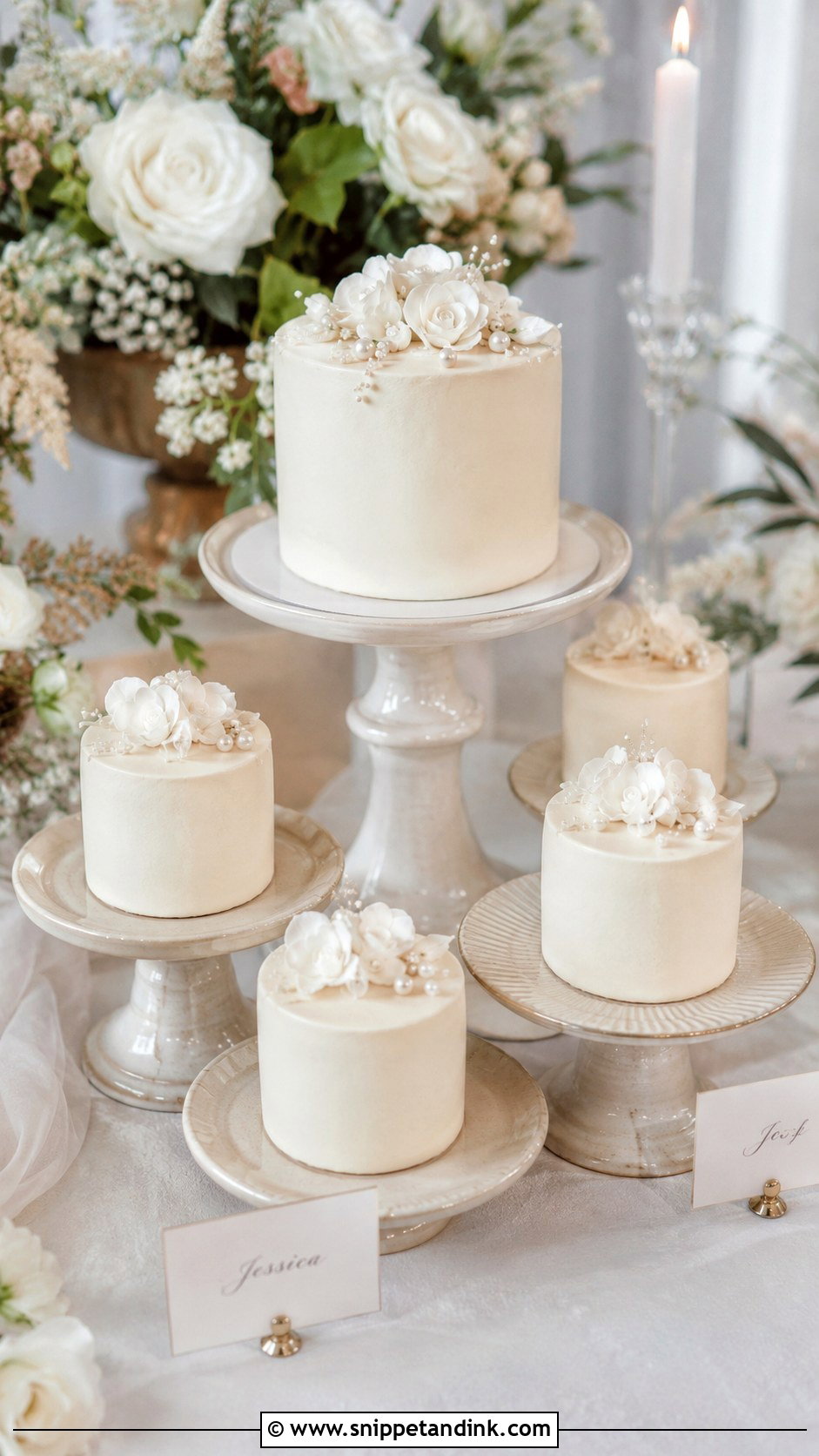
One small cutting cake on the highest stand, with single-serve mini cakes on trays or smaller pedestals around it, gives every guest an individual dessert. Be aware that minis take far longer to decorate than slices of one cake, because each needs its own board, finish and box, and that time is reflected in the quote. Keep colors and frosting style consistent and vary flavors quietly with labels, ribbons or small markers. It suits intimate receptions and picnics where couples want something more personal than a standard dessert table.
14. Small Wedding Cake With Macarons
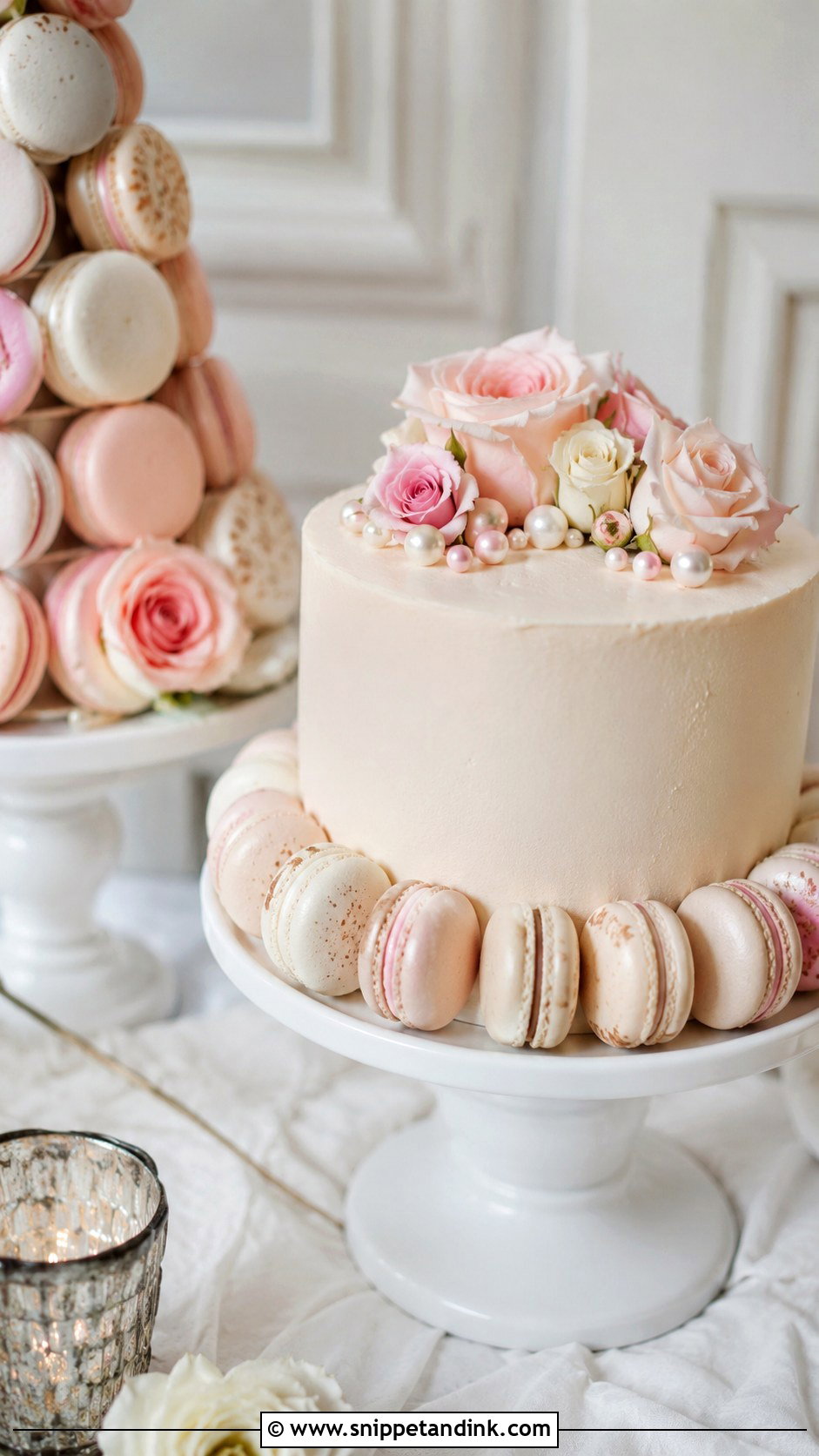
Macarons bring height, color and texture without taking over, whether stacked on a nearby tower, scattered on a tray or set as a border around the stand. Ivory, blush, lavender, sage or champagne shells read as wedding colors, and they look best matched to the cake palette. Humidity is their weakness: shells go soft and sticky on a humid day outdoors, so I bring them out close to serving. The table gets a French feel while the small cake remains the focus.
15. Small Wedding Cake With Candles
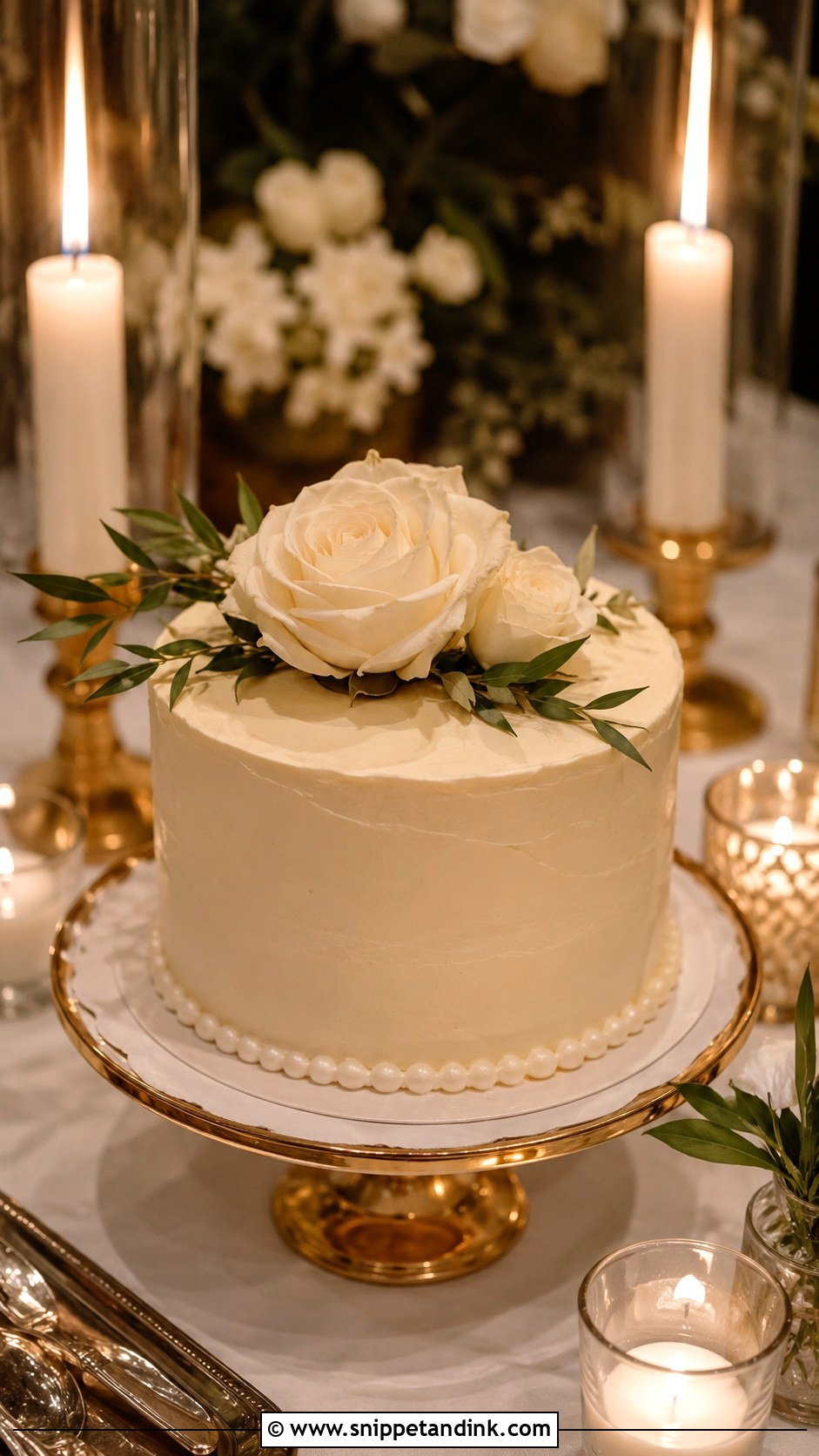
Candles warm a small cake display, especially at evening receptions. I’d go flameless if the venue has fire rules or the table sits near fabric, florals or passing guests. Real flames also throw heat, and buttercream a few inches from a cluster of votives will soften on that side, so leave generous space. Smooth ivory buttercream, subtle piping or pearls look soft in candlelight, and hurricanes, votives or taper holders can follow the wedding style.
16. Small Wedding Cake With Floral Arch
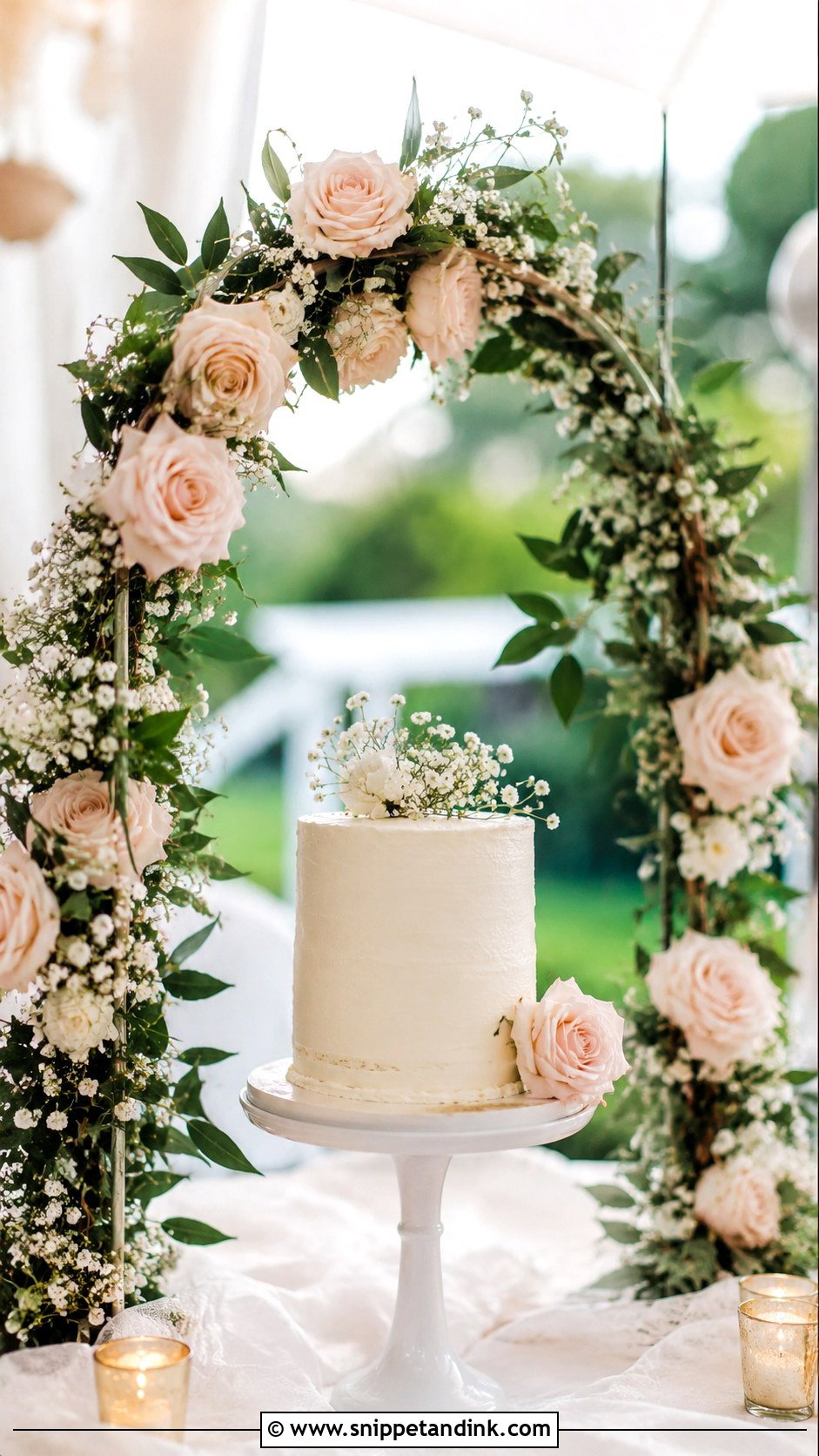
A floral arch, even a small tabletop frame, makes a petite cake feel larger because it frames the whole table. Center the cake beneath it on a stand and keep the rest of the table plain; smooth white or ivory frosting lets the arch carry the drama. I always ask the florist to keep pollen-heavy blooms and anything that drops petals away from directly above the cake, since lily pollen in particular stains frosting. It suits garden weddings and spring receptions, and it makes the cake part of the decor rather than an afterthought.
17. Small Wedding Cake With Neon Sign
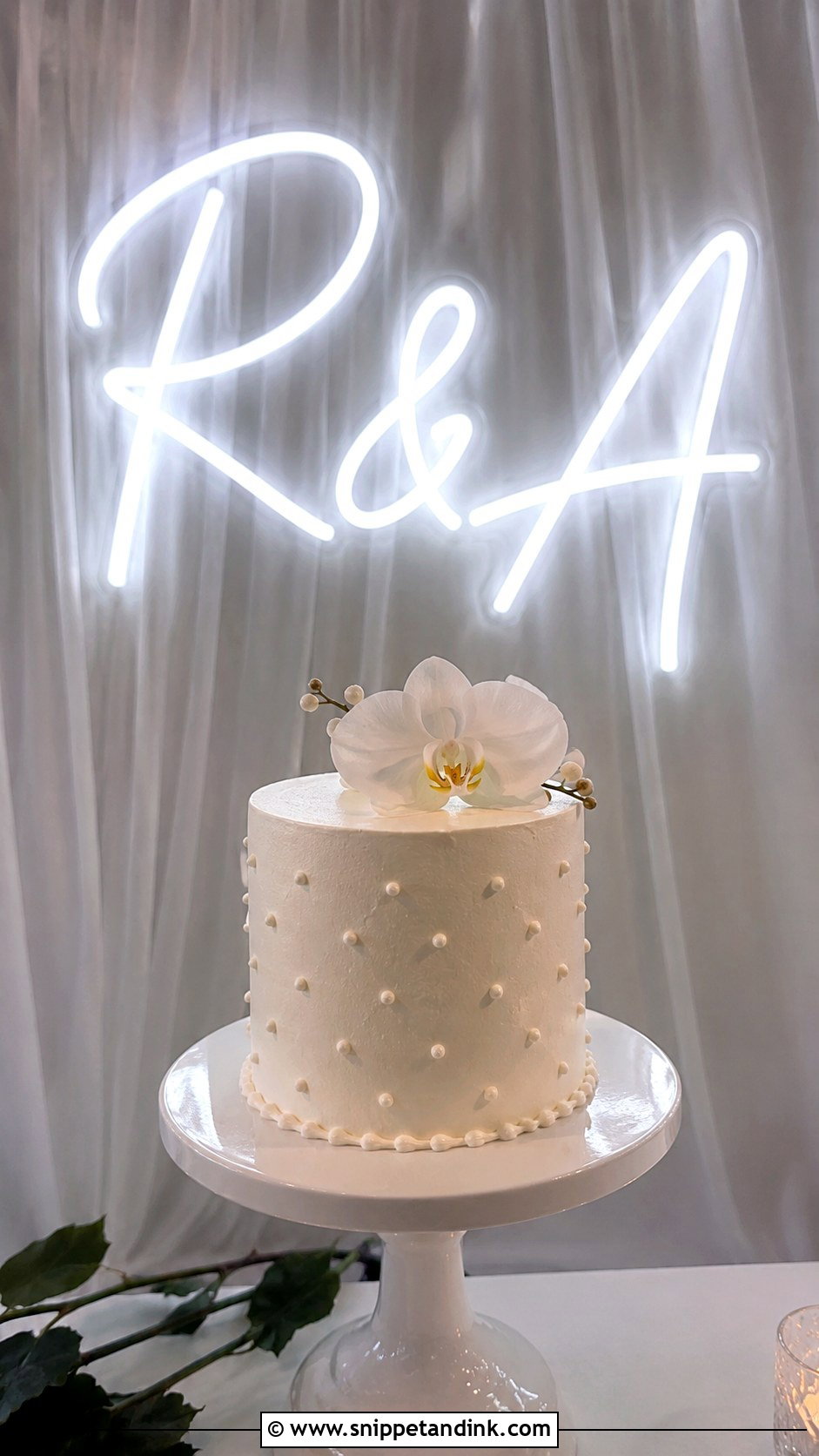
A neon sign behind the cake brings a party mood, so the cake itself should stay clean: smooth buttercream, pearl accents or one floral cluster. Choose the couple’s names, initials or a short phrase, and place it far enough back to avoid glare. One thing to test: colored neon tints white frosting, so a pink sign can make an ivory cake look pink in photos. A plain wall, greenery wall or draped fabric behind it works, and it suits lofts and receptions that turn into dancing.
18. Small Wedding Cake With Backdrop
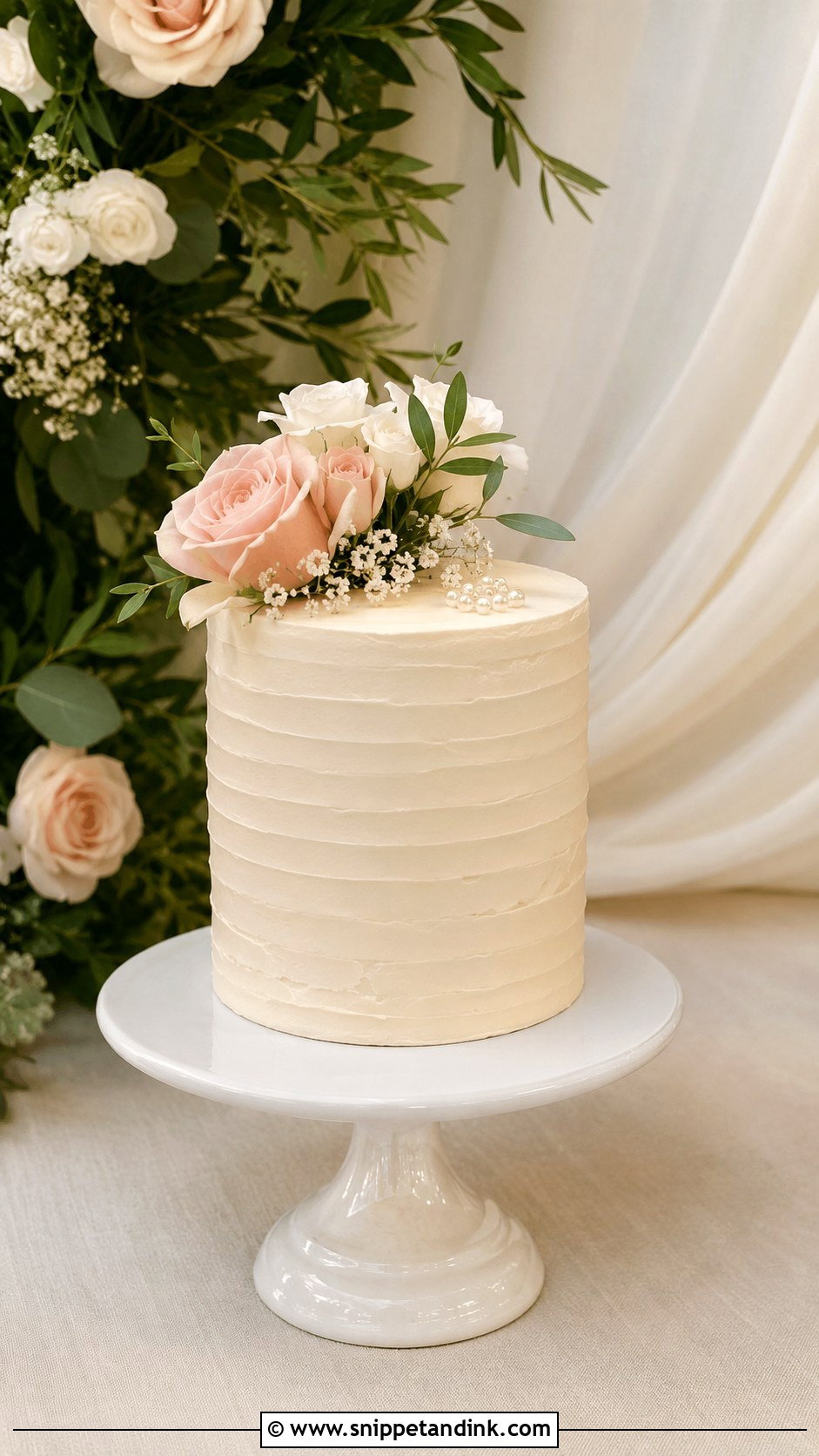
In a large room, a small cake can vanish against the wall. Fabric draping, a painted panel, a floral wall, a wooden screen or a simple arch defines the cake area and gives the photographer a clean frame. I set the cake slightly forward on its stand so it doesn’t merge with the background, and I pick up one backdrop color in the cake’s accents. A small cake with smooth buttercream and fresh flowers looks complete with the right background behind it.
19. Small Wedding Cake With Mirror Tray
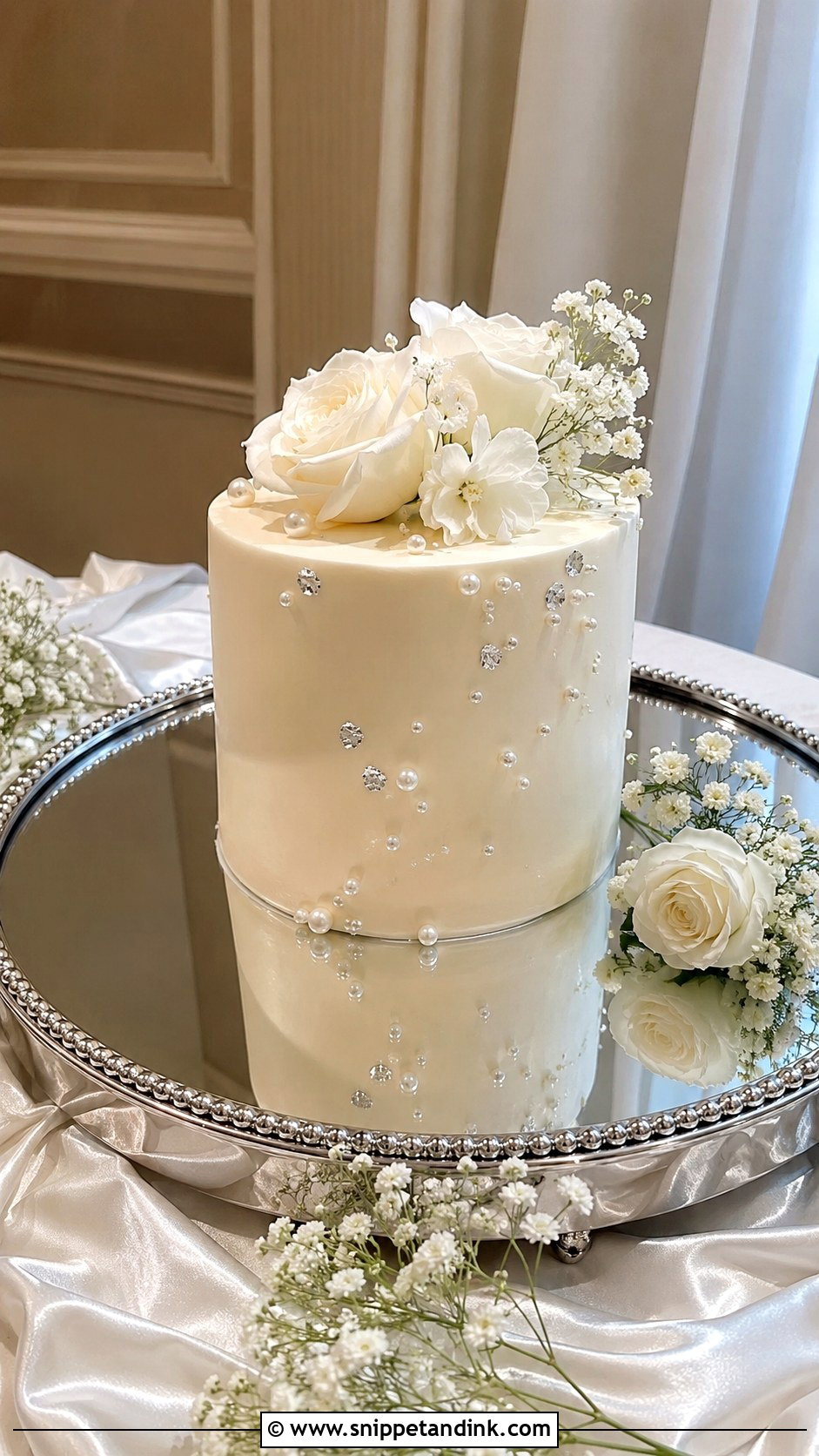
A mirror tray doubles everything, which is its charm and its catch. The reflection makes the cake look layered and adds polish, especially with pearls, white frosting, silver accents or delicate flowers. It also doubles crumbs, stray petals and fingerprints, so I keep loose decorations to a minimum and wipe the glass once the cake is in place. A round tray under a round cake looks balanced, and a rectangular tray suits a square or sheet-style cake in hotel and dinner settings with soft lighting.
20. Small Wedding Cake With Gold Stand
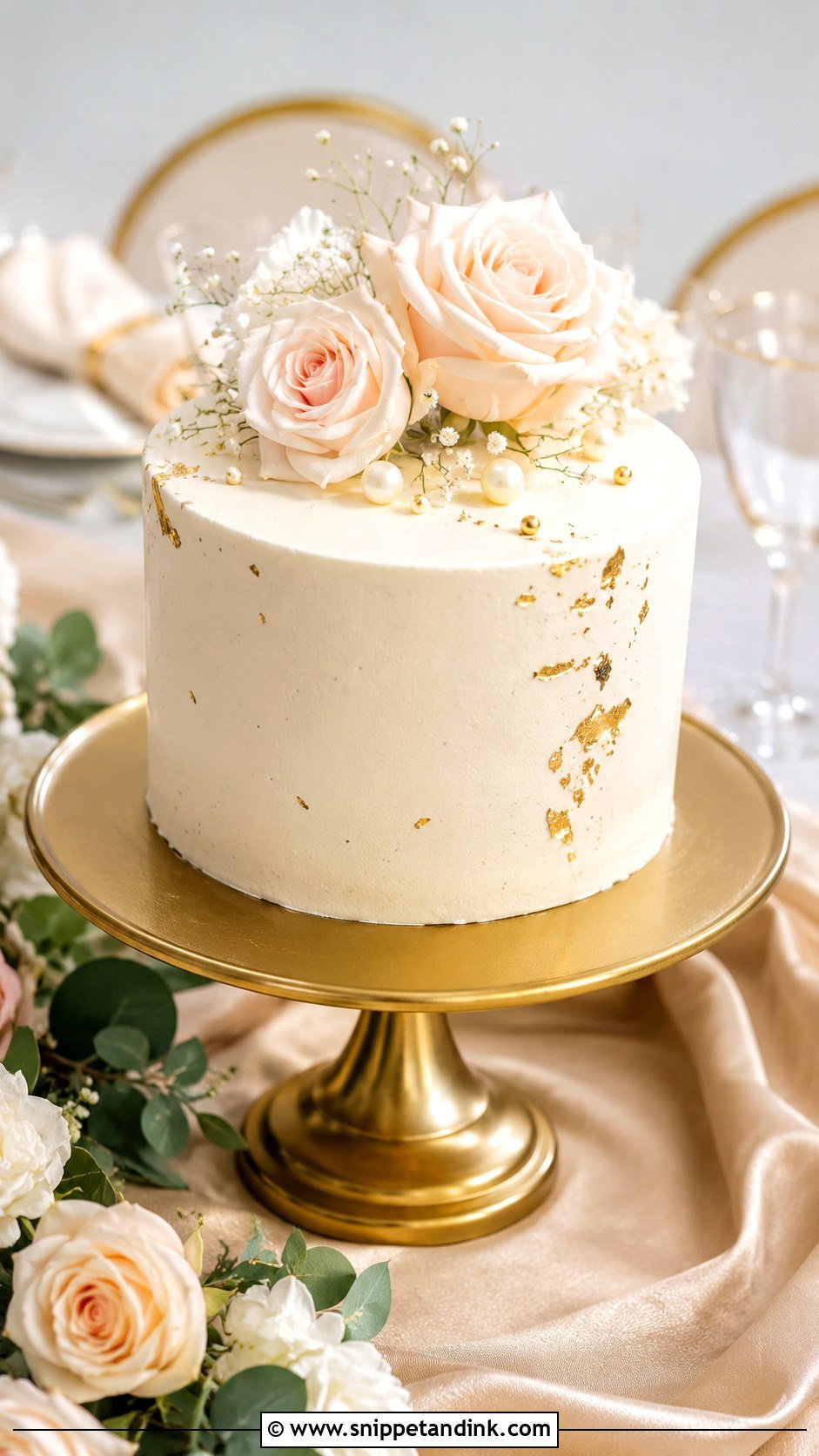
Gold warms the cake and makes it feel formal, pairing easily with ivory buttercream, champagne tones, blush flowers and pearls. Fit matters most. A stand much wider than the cake makes it look lost, so I choose one only slightly larger than the cake board. A touch of gold leaf, a thin ribbon or gold-edged flowers can link cake and stand without becoming flashy, and even a plain cake gains presence at a classic dinner or ballroom reception.
21. Small Wedding Cake With Black Stand
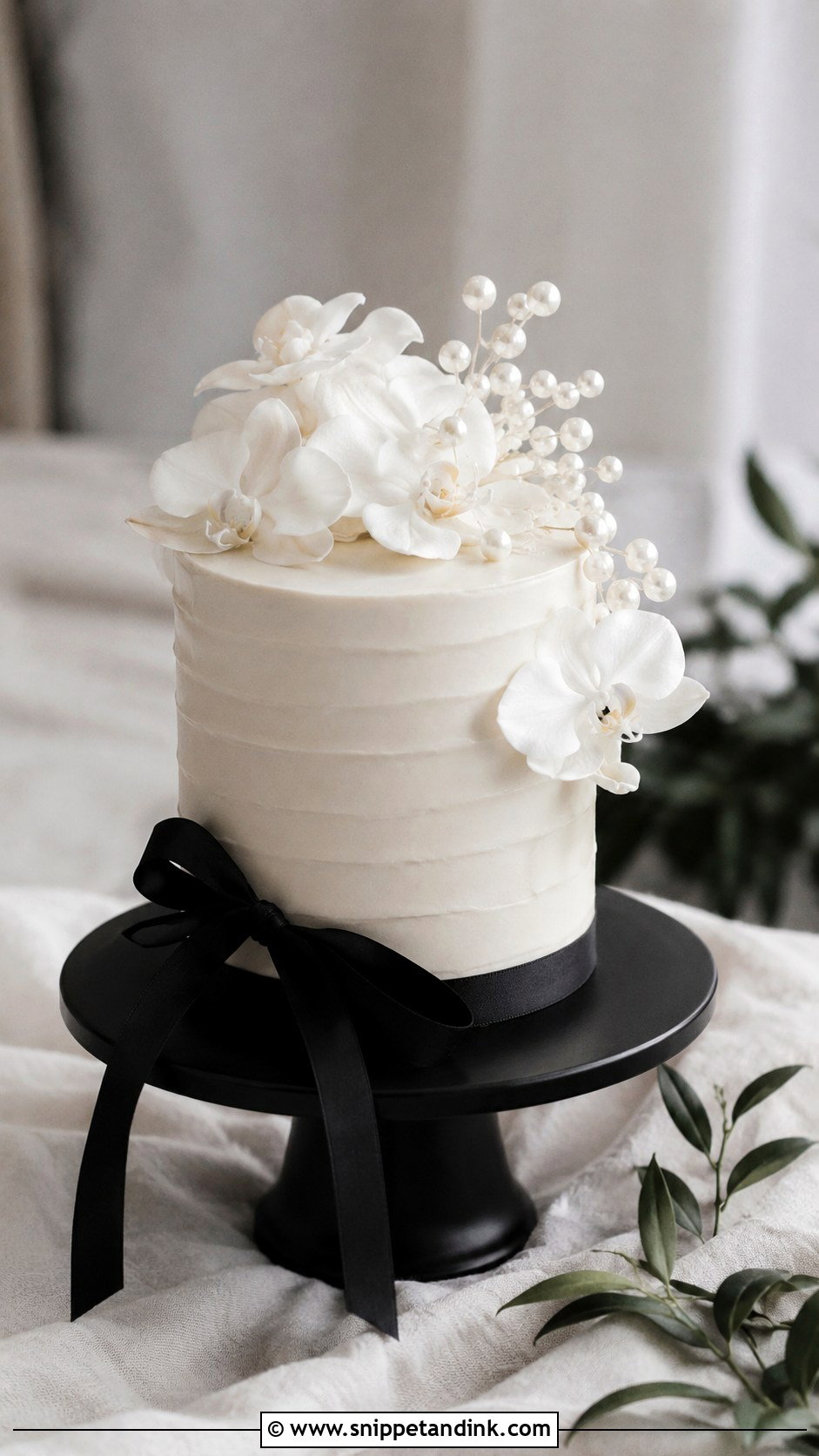
A black stand gives strong contrast with white buttercream, clean fondant or a cake finished with black ribbon, dark florals or minimal piping. Keep linens neutral so the stand anchors the table, and soften it with a few white flowers or greenery if needed. Black is unforgiving of crumbs and frosting smears, so I pipe and place the cake before it goes on the stand, then check the rim before photos. It suits gallery venues and evening receptions with black in the decor.
22. Small Wedding Cake With Sheet Cake
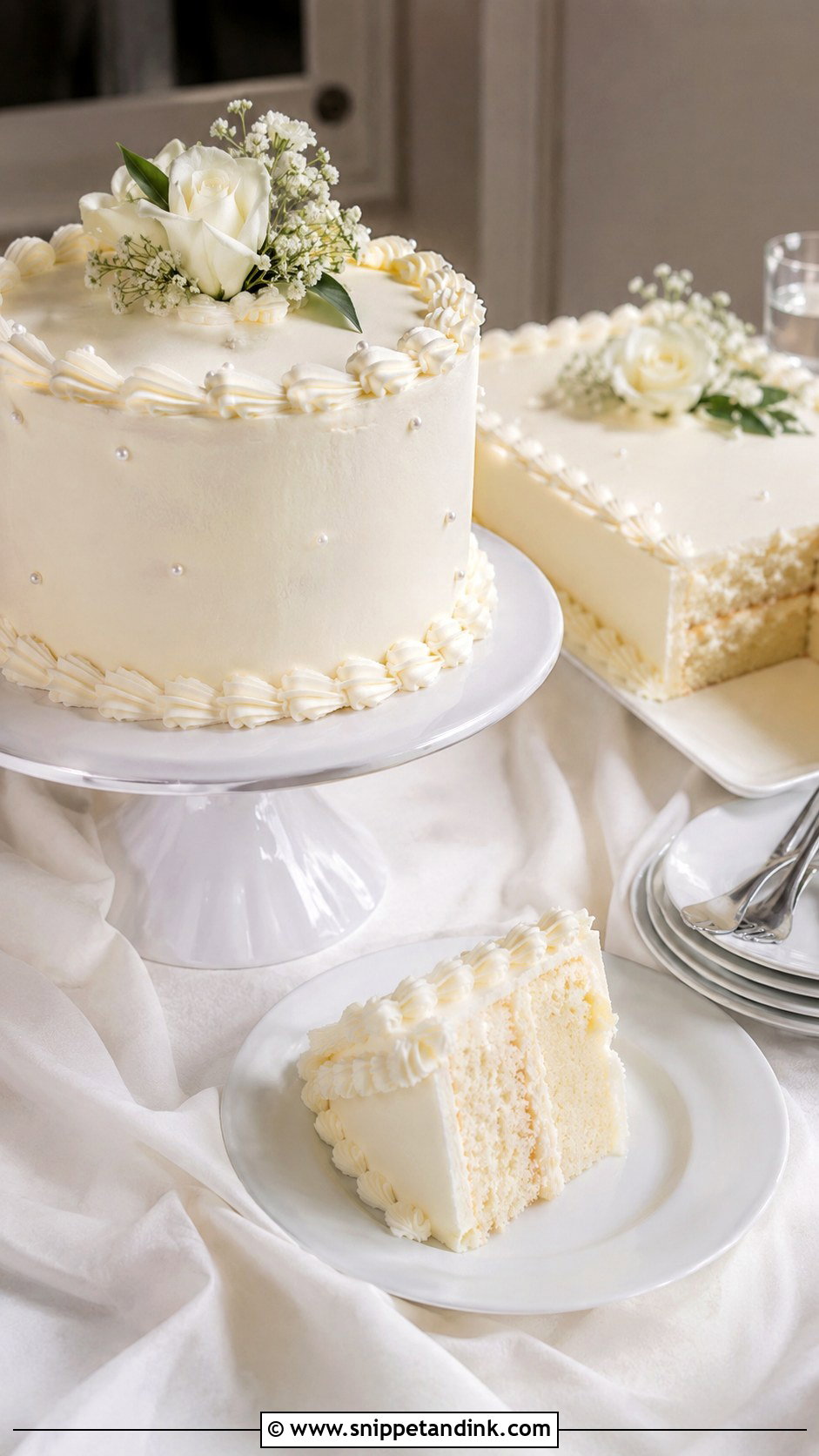
Pairing a small display cake with a kitchen sheet cake is the practical answer for a bigger guest list. The small cake gets the cutting moment, while the sheet cake is sliced out of sight and served quickly. I’d dress the display cake properly with flowers, textured buttercream and a good stand, and bake the sheet cake in the same flavor and frosting so guests have a consistent dessert. It controls budget and waste without losing the moment.
23. Small Wedding Cake With Cutting Cake
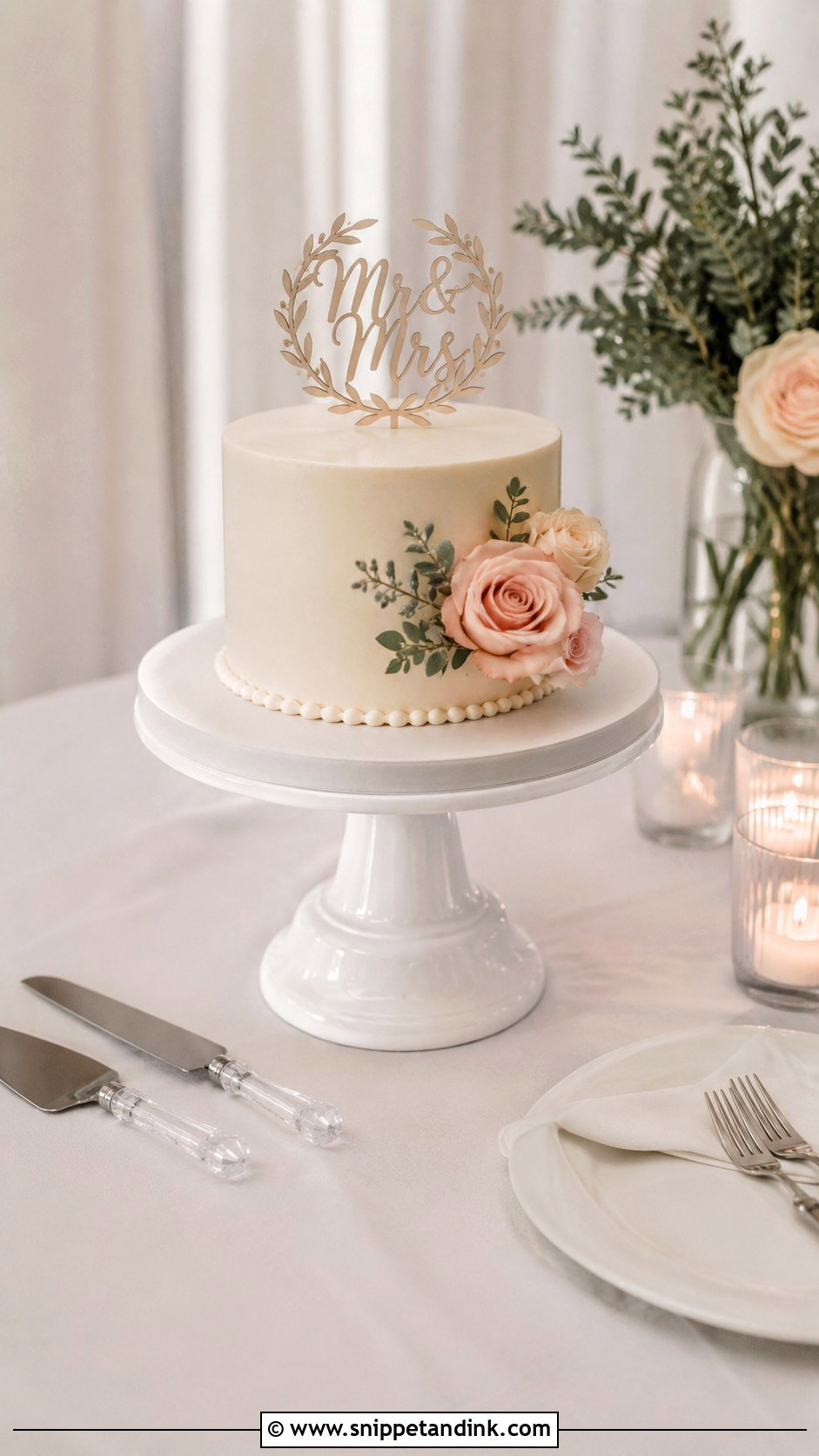
A cutting cake exists for the photos, so treat its placement seriously. Put it on a stable stand where the light is flattering and leave room for the couple to stand beside it. A one- or two-tier cake with smooth buttercream, soft flowers and a clean topper is enough when other desserts are feeding the guests. I also tell couples where to make the cut, usually low on the back of the bottom tier, where the knife meets cake rather than a hidden support.
24. Small Wedding Cake With Two Tiers
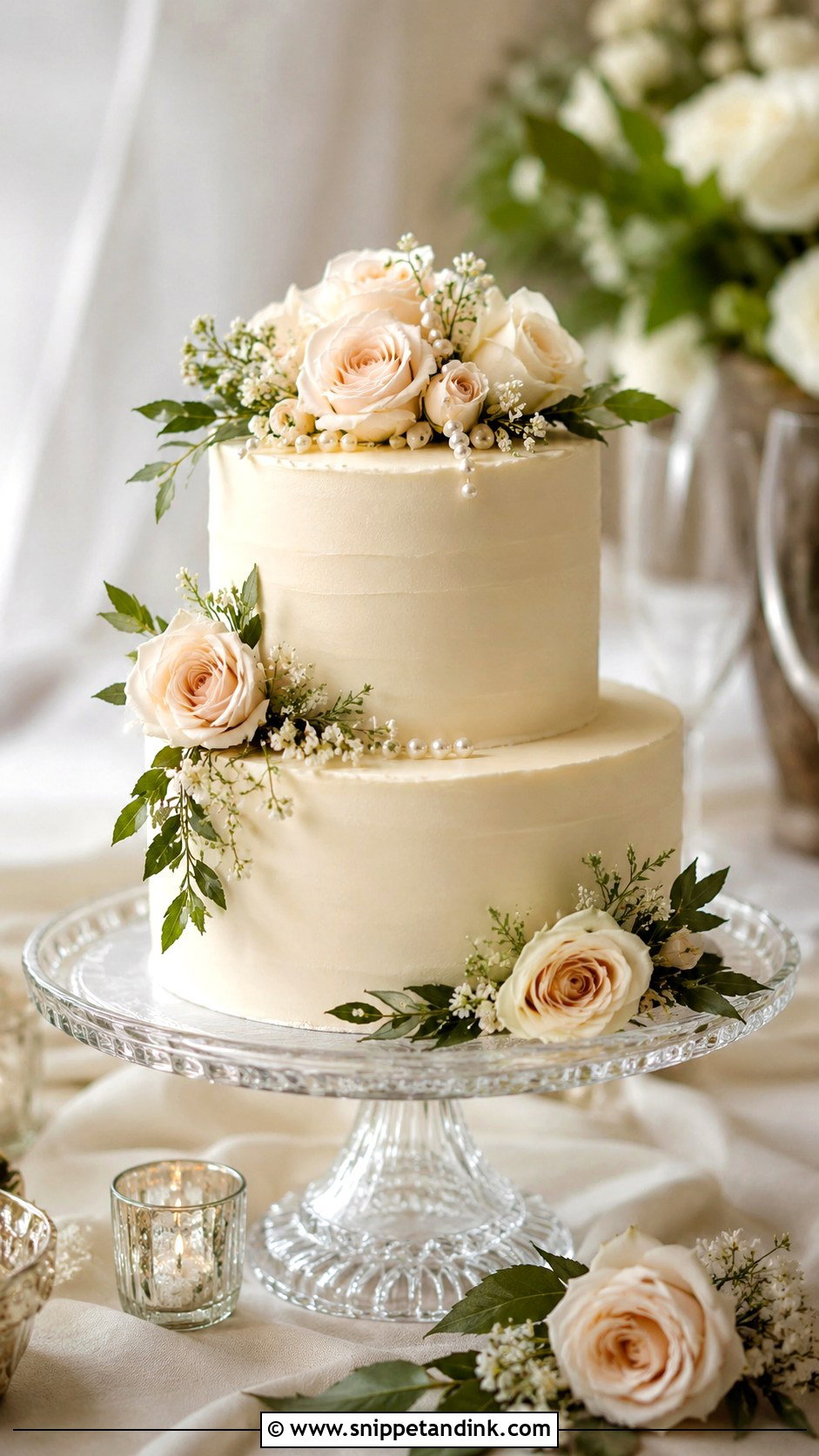
Two petite tiers give a classic wedding silhouette and extra height for guest counts where one tier would look too small. Even at this size, the top tier needs internal supports, because without them it slowly sinks into the one below over a few warm hours. Smooth buttercream with a floral cluster between the tiers is a reliable choice, or use light texture, pearls, ribbon or a simple topper. Choose a stand tall enough to show the tiered shape.
25. Small Wedding Cake With One Tier
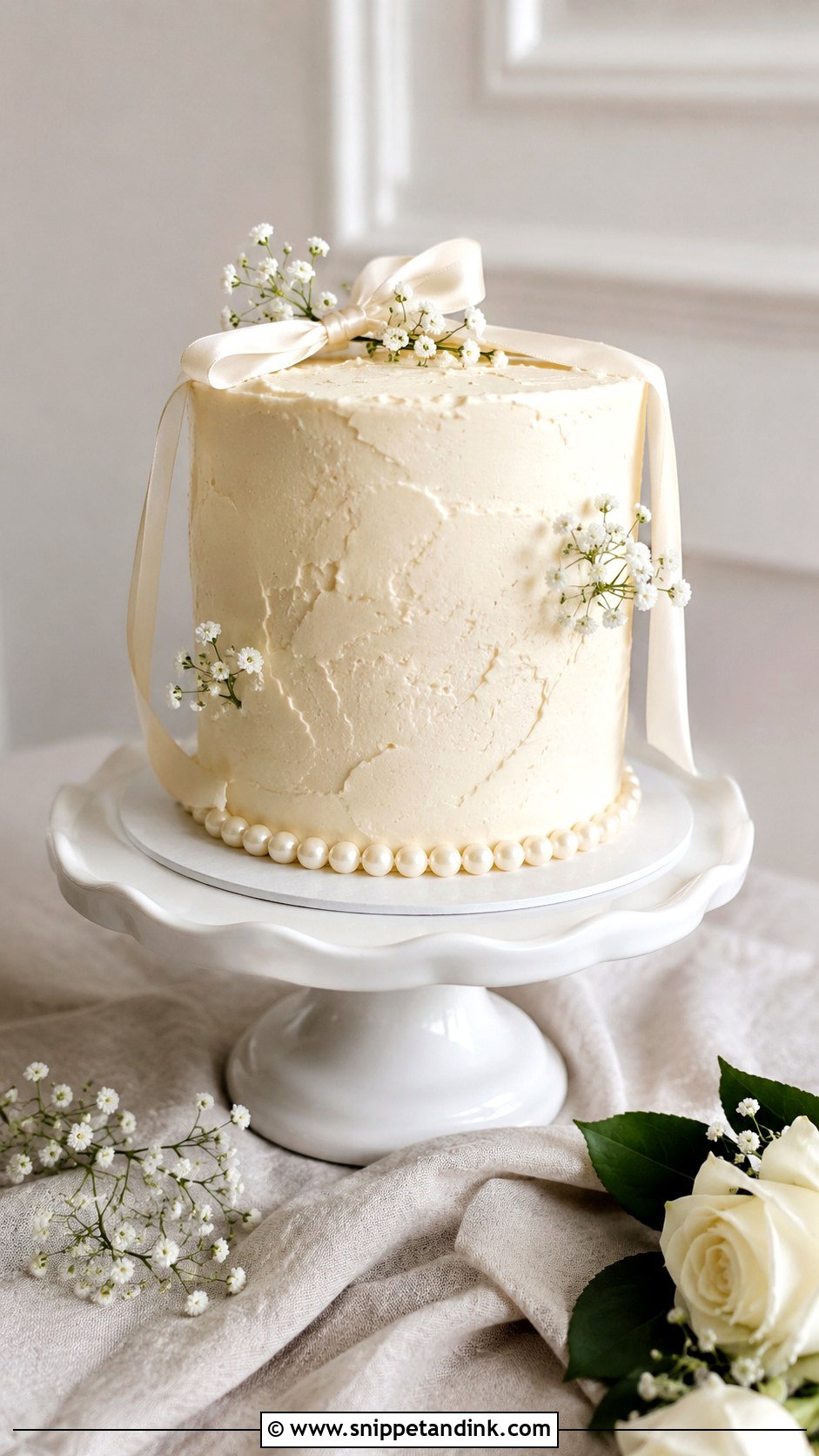
With no tiers adding height, a single tier relies entirely on a raised stand, a clean backdrop or a well-styled table. It can be round, square, heart-shaped or oval, and buttercream texture, vintage piping, flowers, fruit or pearls make it feel complete. Keep the decoration focused, or a one-tier cake slips into birthday territory unless that’s the playful look you want. Elopements, micro weddings and restaurant receptions suit it well.
26. Small Wedding Cake With Heart Shape
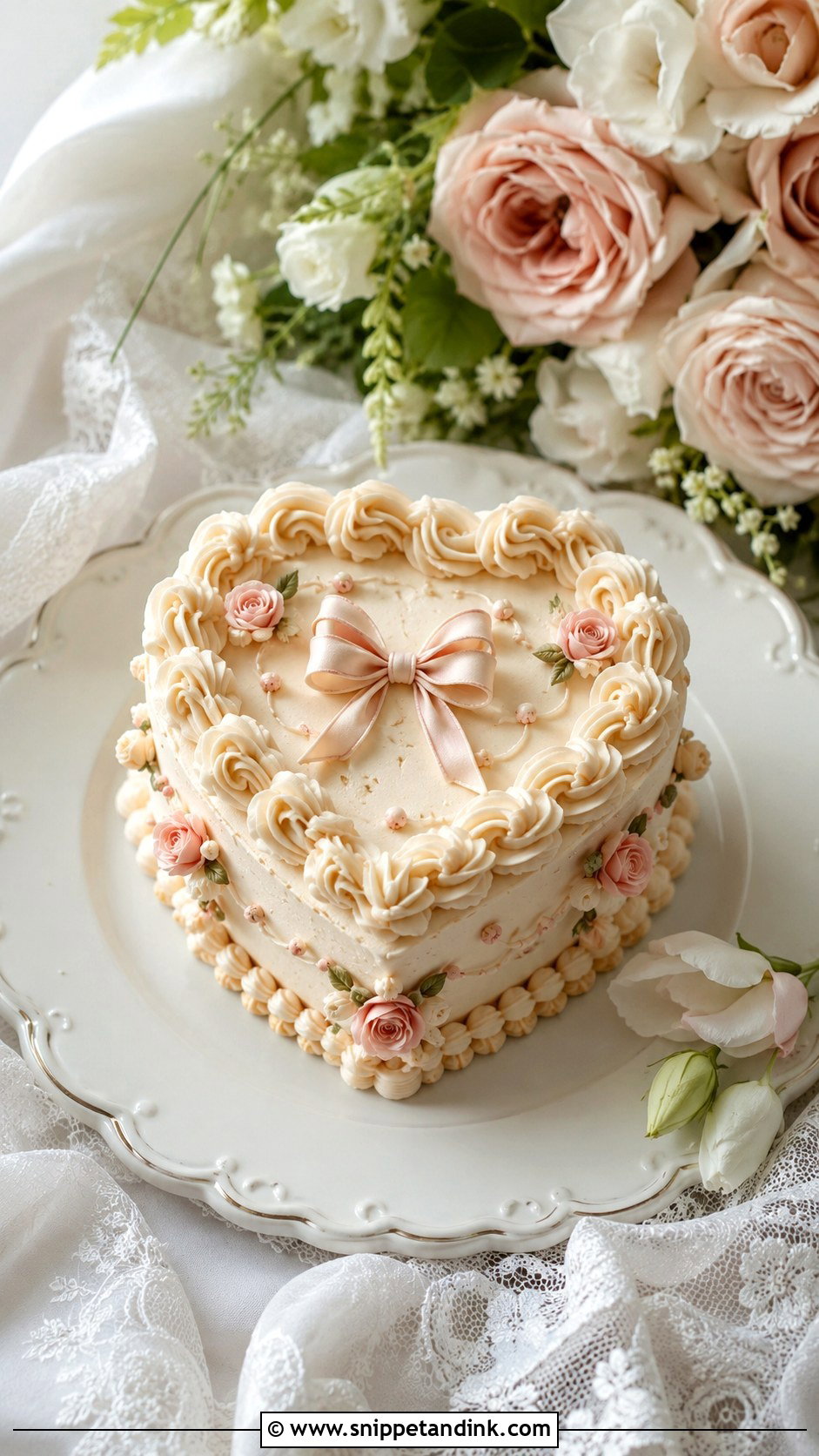
The heart shape does most of the work, so pair it with simple decoration: vintage piping, a pearl border, soft frosting or one small floral accent, on a white pedestal with lace or satin nearby. It’s sweet for elopements and courthouse weddings. Ask your photographer to shoot it from above before anyone cuts, since the outline only really reads from that angle. Hearts also cut into awkward portions at the points, so I size them a little generously for the number of guests.
27. Small Wedding Cake With Square Shape
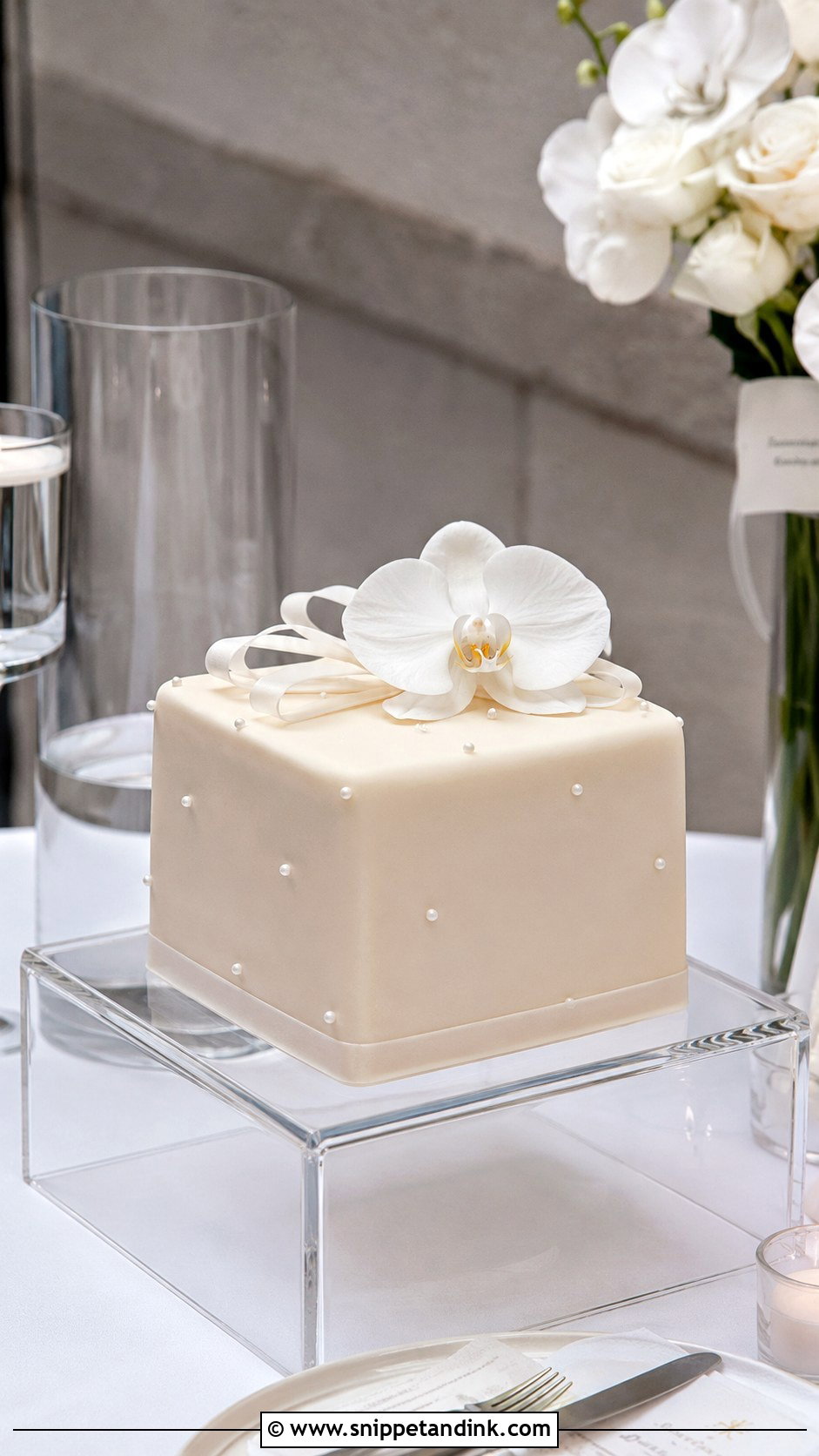
Crisp corners make a square cake look modern, and the shape only works when those corners are sharp, which is why smooth fondant or very neatly finished buttercream suits it. Getting clean square edges in buttercream is slow, careful work. One floral corner, a ribbon band or a few pearls keeps it bridal. A square also gives slightly more portions than a round of the same width. Display it on a rectangular tray, acrylic stand or modern pedestal for city and minimalist receptions.
28. Small Wedding Cake With Dome Shape
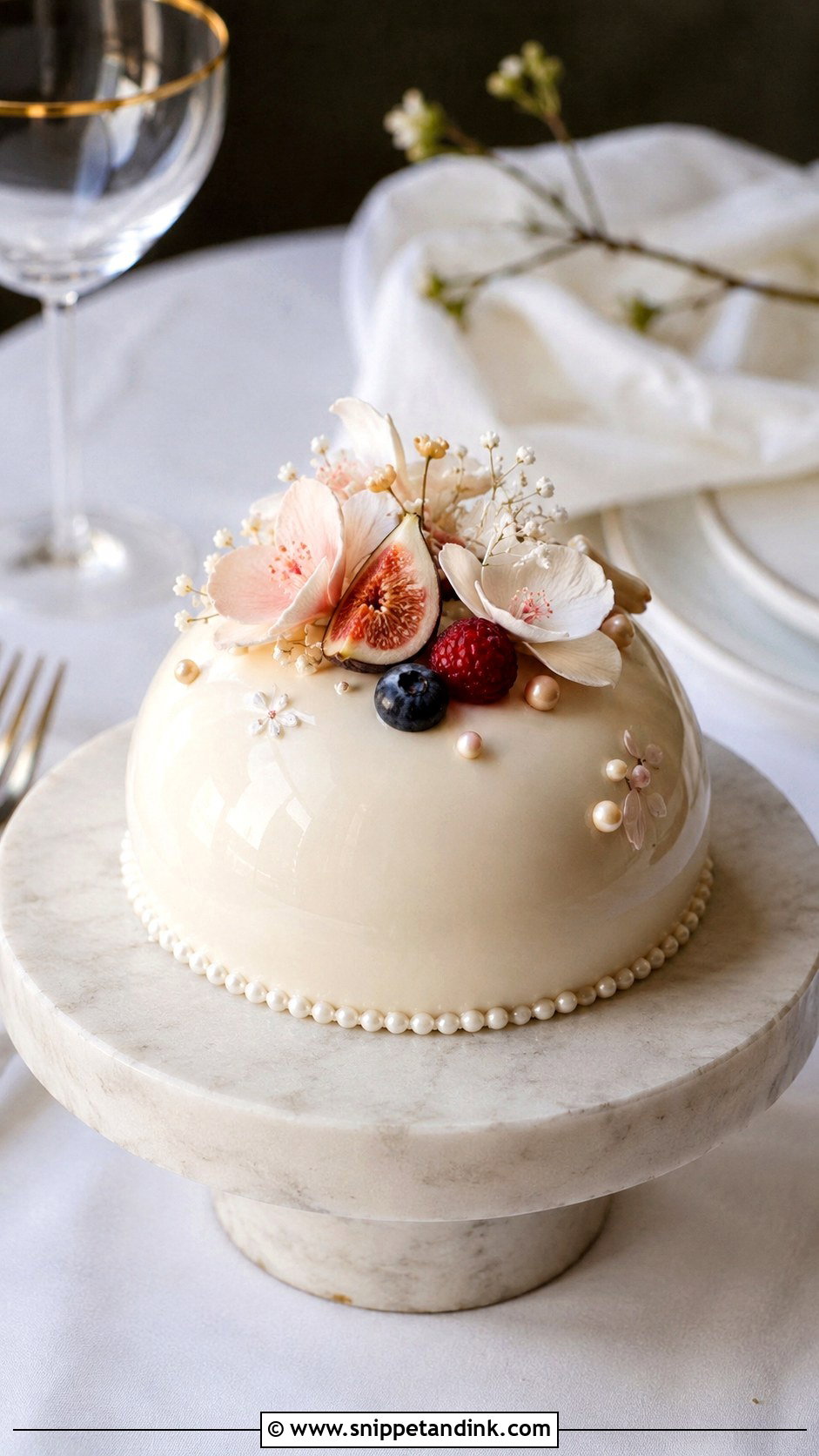
Dome cakes are often built as mousse cakes rather than sponge layers, finished in smooth buttercream, mirror glaze or fondant. They feel sculptural and different from a tiered cake. A mirror glaze needs to stay chilled and shows every fingerprint, so this is a cake I deliver last and place carefully, never one that sits out for hours. Keep decoration minimal, with sugar flowers, tiny pearls or fruit at the base, and display it on a low pedestal or sleek tray so the curve stays visible.
29. Small Wedding Cake With Pressed Flowers
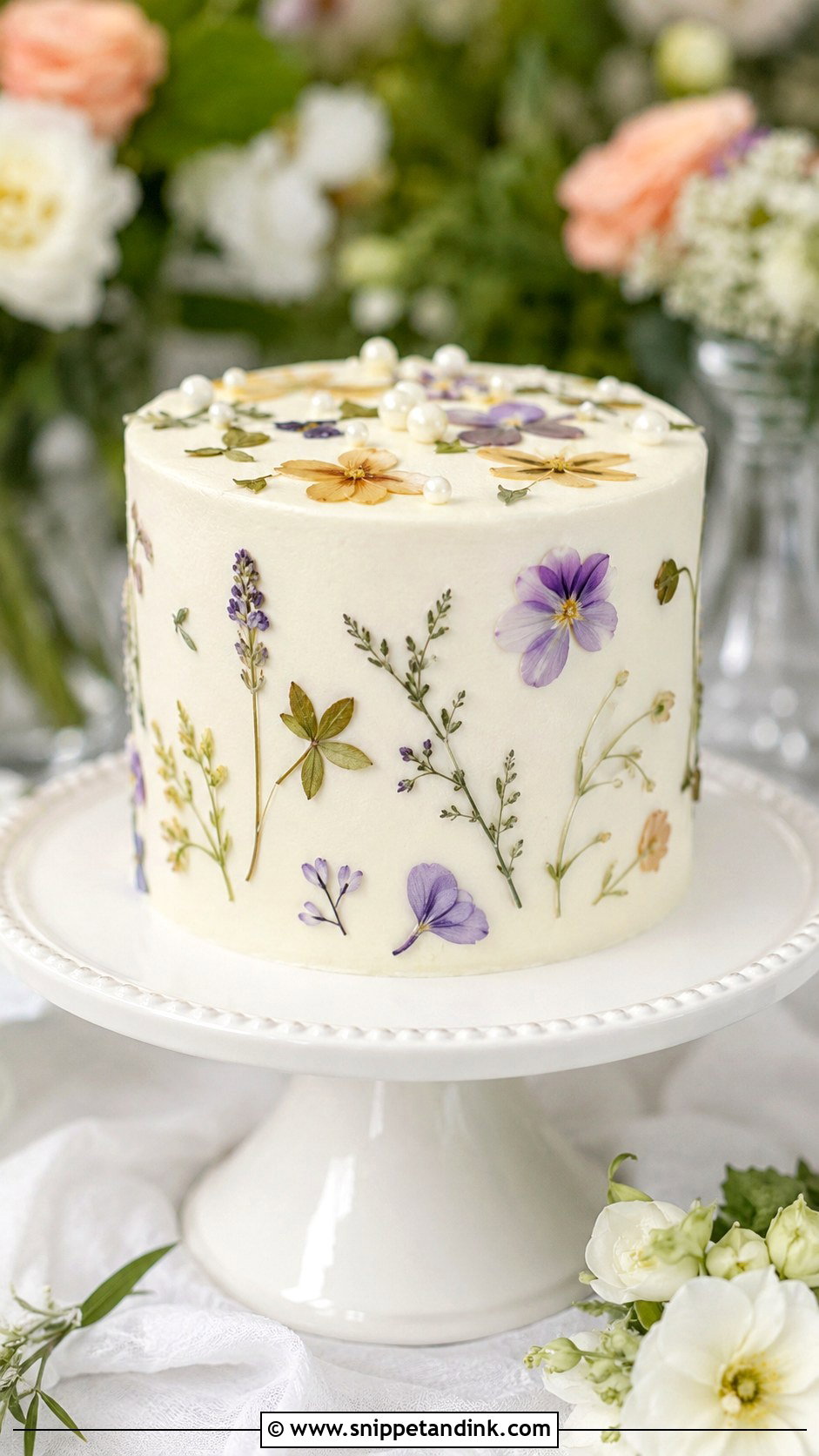
Pressed flowers sit flat on smooth buttercream or fondant and create a soft botanical pattern that looks handmade. They have to be edible varieties, pressed and dried properly, and chosen to match the palette. I apply them close to delivery, because moisture from buttercream can make petals darken and curl if they sit on it too long, and strong sun fades them. One tier covered this way looks full without extra height. Keep the stand and props minimal so the pattern stays clear.
30. Small Wedding Cake With Monogram
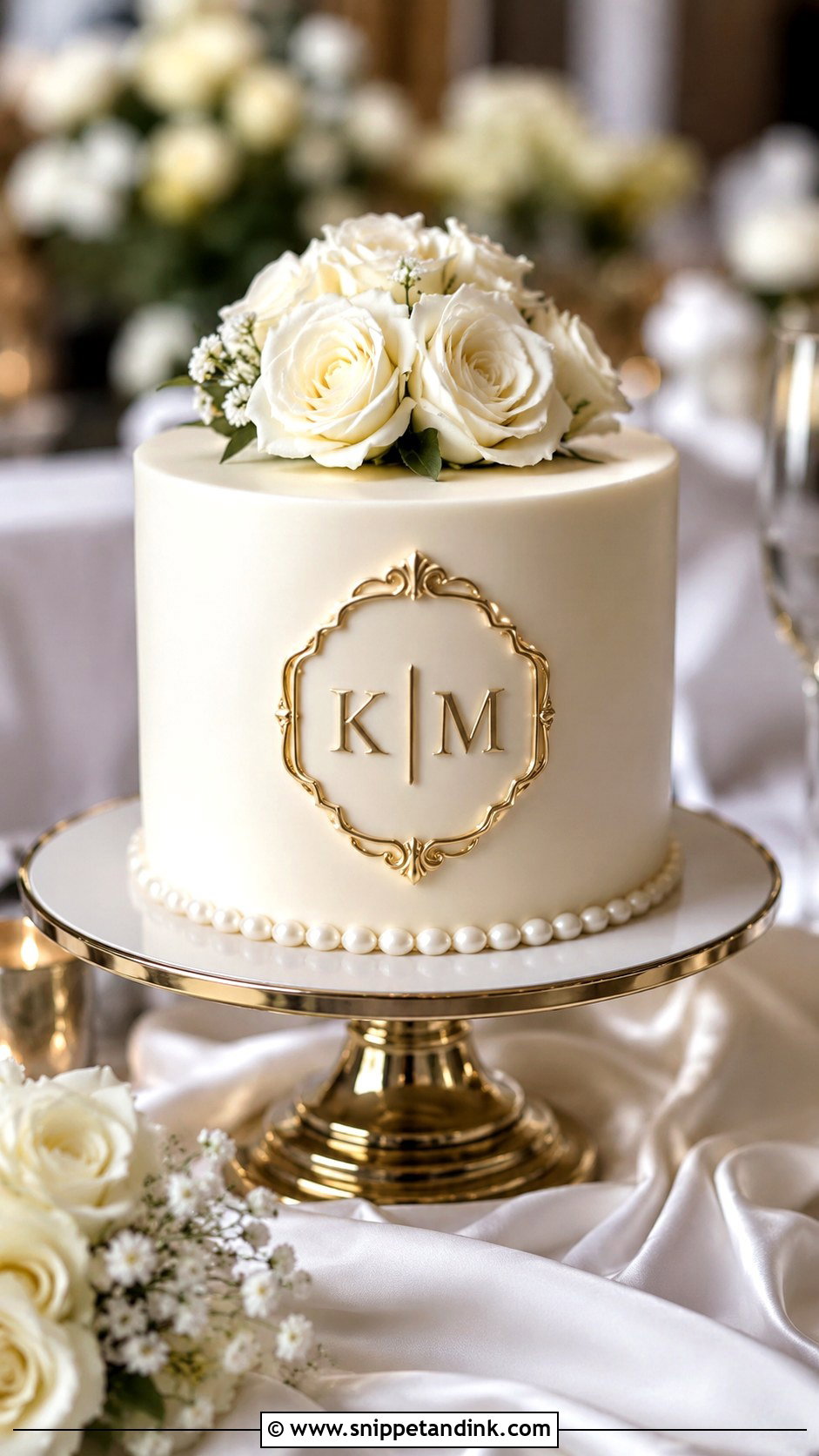
Initials can be piped in buttercream, added as a topper, stamped into fondant or set on a small plaque, giving the cake a custom detail. Keep everything else simple so the monogram stays readable: smooth ivory frosting, a thin ribbon, a pearl border or a small flower cluster. Freehand script lettering is a skill in itself, so ask your baker to show you a sample of their lettering before you commit. Place the cake facing the room, where guests see the front clearly, never tucked into a corner.
Heat, Sun and a Wobbly Table
When a small cake goes wrong on the day, it’s rarely the decoration. It’s almost always where the table stands.
Keep it out of direct sun
Buttercream softens as soon as it warms up, and a cake table by a sunny window or under a marquee roof can be far hotter than the room feels. Meringue-based buttercreams are silky but especially soft in heat. For an outdoor summer reception, I’d set the cake in shade, bring it out as late as the timeline allows, and ask your baker whether a firmer frosting or a fondant finish makes sense.
Check the table before the cake arrives
A small, light table on grass or uneven paving tips more easily than people expect. Put the cake table against a wall or in a corner away from the dance floor and the main walkway, make sure it’s level, and leave space for the couple and the photographer at the front. I also need a clear route from the van to the table and about half an hour to set up, so let your venue know when I’ll arrive.
A Petite Cake Needs a Stand, a Light and a Reason
Every detail on a small cake table should have a reason to be there. The cake doesn’t need size; it needs the right stand, a balanced table, good light and decoration that fits the wedding. A pedestal adds height, flowers add softness, candles add warmth and a backdrop gives the cake a frame. If you need more servings, add cupcakes, mini cakes, macarons or a kitchen sheet cake rather than more tiers, and a petite cake will look intentional rather than undersized.


Leave a Reply