
The cake requests I get now are far more personal than they were a few years ago. Some couples still want a white tiered cake with flowers; others arrive with screenshots of heavy vintage piping, a sage cake piled with figs, or a tiny two-tier for twelve people. All of them can be done well. What makes a design work is how it suits the room, the season, the menu and how it will be served, more than how it looks on a phone screen. Here are twenty looks I see most, with what I’d tell you about each before you commit.
Turning a Saved Photo Into a Cake Brief
Inspiration photos are a great start, but a picture alone doesn’t tell your baker much. Many styled shoot cakes are dummies made of foam, photographed under studio light, with no one ever cutting them. Before a consultation, I ask couples to send three or four images and a line about each.
- Say exactly what you like in each photo: the piping, the color, the height, the flowers.
- Give your guest count and whether there is also a dessert course.
- Describe where the cake will stand, indoors or out, and the season.
- Mention any allergies or dietary needs early, since they change the recipes.
- Share a rough budget so the design can be scaled to it honestly.
A good designer will tell you which details travel well and which only work in a photo. That conversation saves more disappointment than any mood board.
1. Classic White Wedding Cake
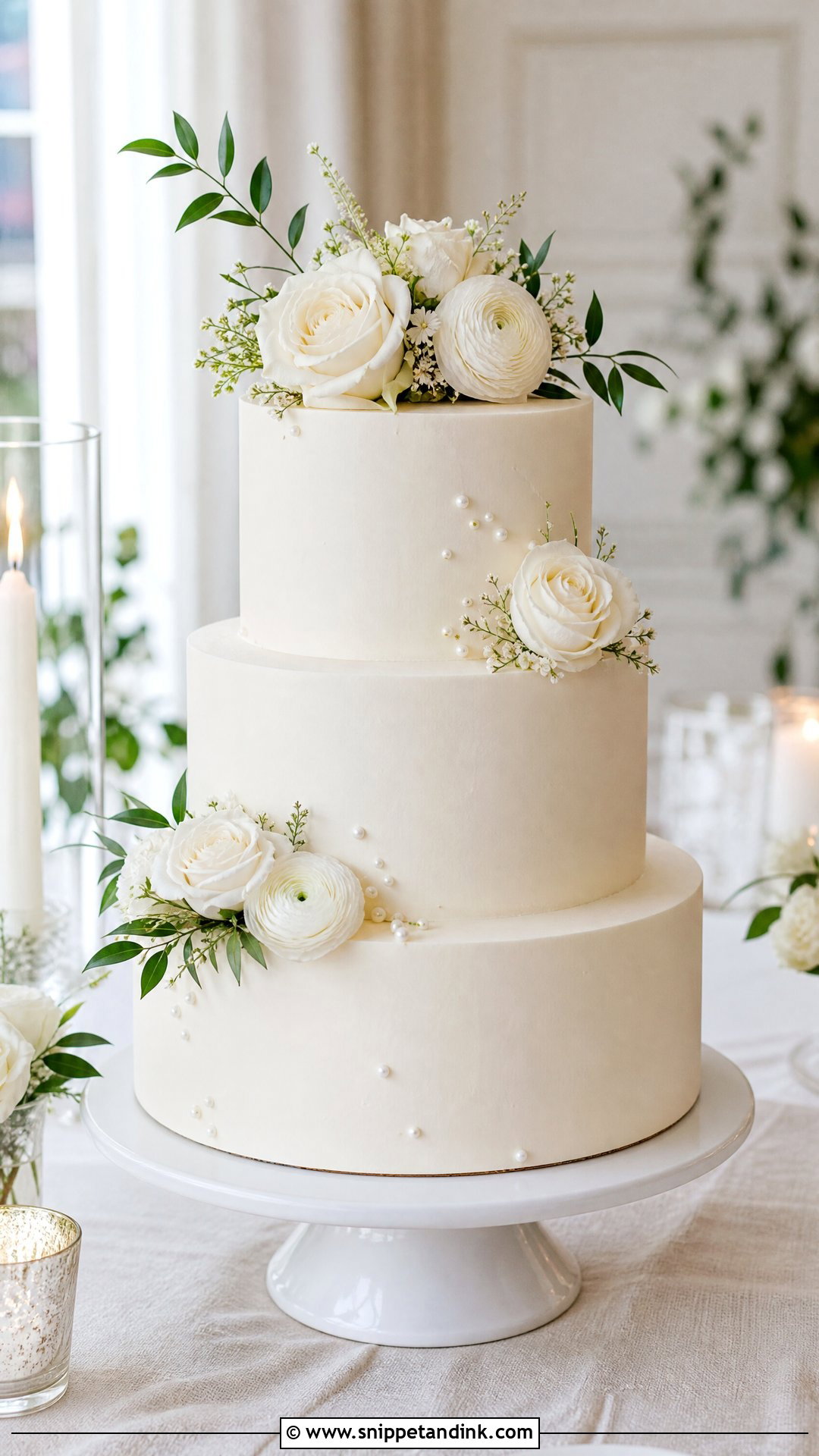
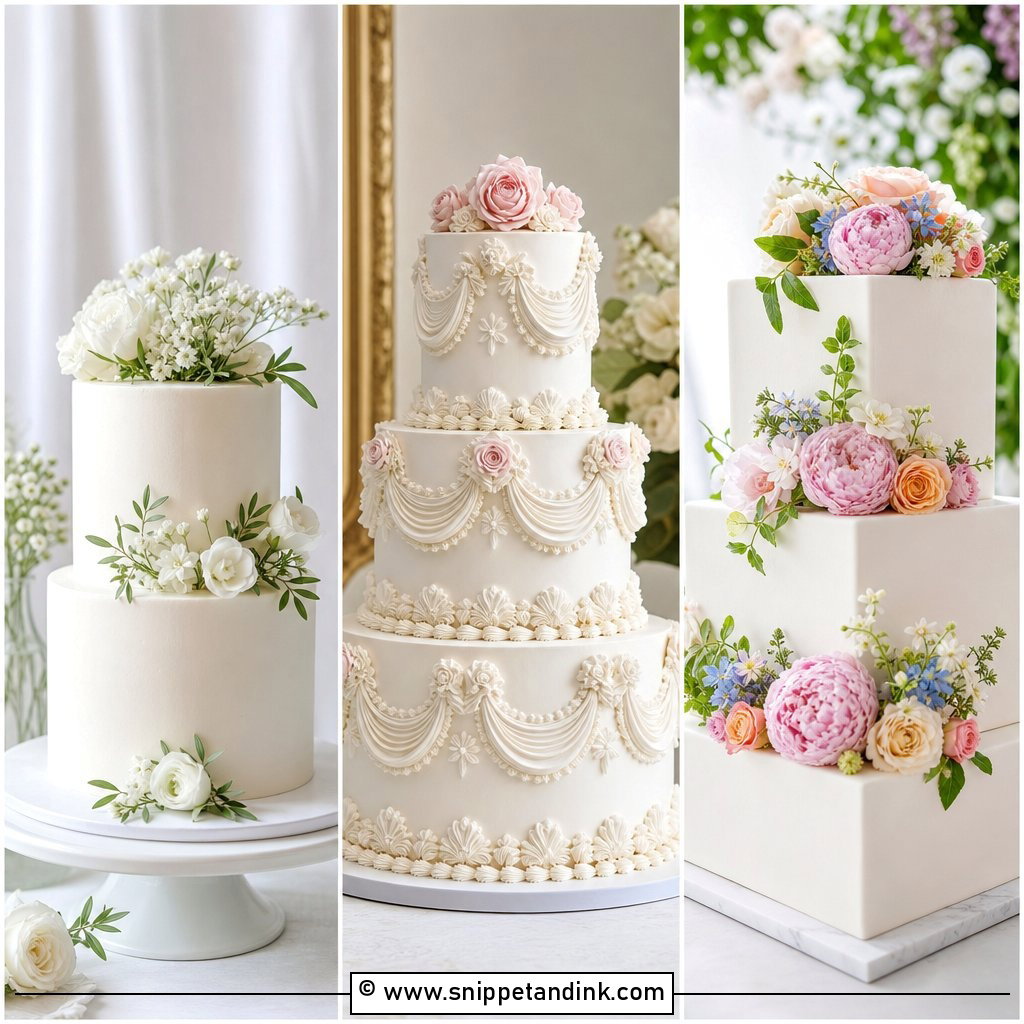
Plain white is where good technique shows, because there is nothing to hide behind. I aim for crisp top edges and level tiers, then add just a few clusters of white roses or ranunculus so the frosting still reads as the design. Baby’s breath looks sweet but some suppliers warn it should not touch food, so I keep it on a pick or leave it off. Light buttercream ridges or a line of piped pearls at each base give interest without adding color.
2. Vintage Wedding Cake
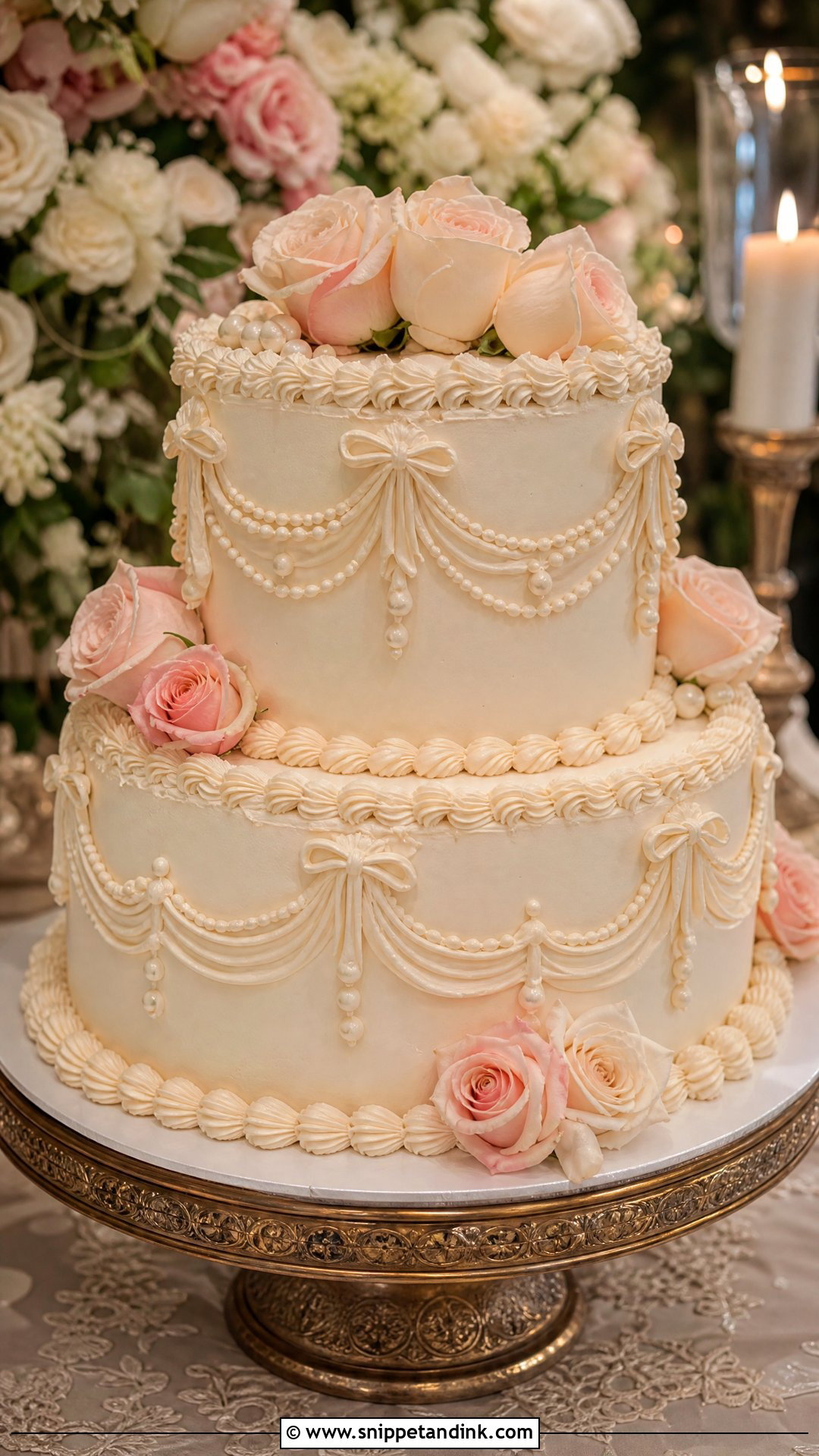
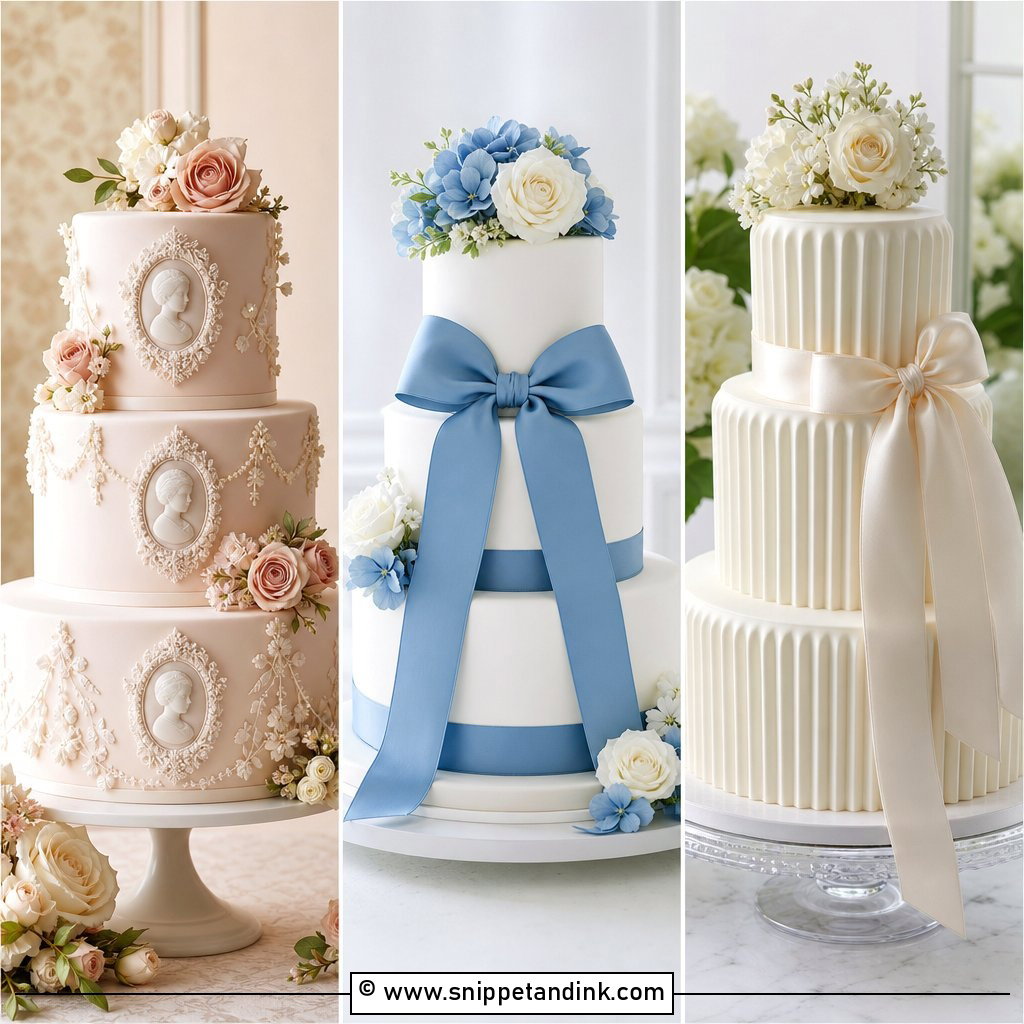
Old-school piping is having a real revival, and it is slow, skilled work. Shells, swags, bows and ruffles all come from different piping tips and a steady hand, so the decorator matters more than the recipe. Pale blue, butter yellow and blush suit the style, and a heart-shaped top tier makes it even more nostalgic. In a warm room soft buttercream piping loses its sharp edges, so I’d keep this cake indoors and away from candles. Let the piping be the only decoration on the table.
3. Pearl Wedding Cake
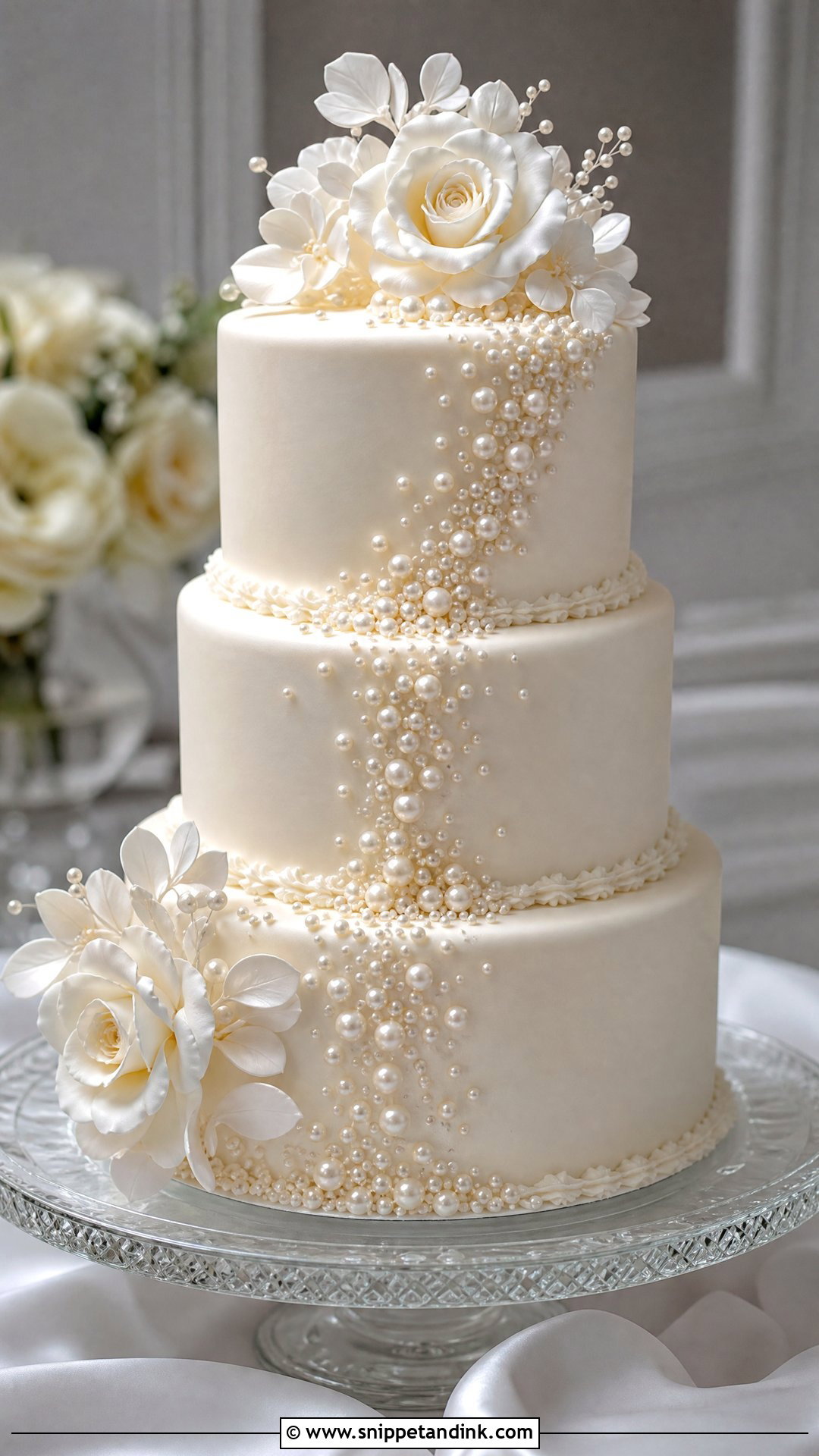
There are two ways to get pearls on a cake, and they behave very differently. Piped buttercream pearls are soft, edible and survive most conditions. Hard sugar pearls shine more, but they are crunchy, can crack a filling, and humidity makes them sticky. For a satin dress and a pearl veil, I like a gradient of piped pearls fading up the tiers; for a classic look, a single row at each base with a few small white flowers.
4. Floral Wedding Cake
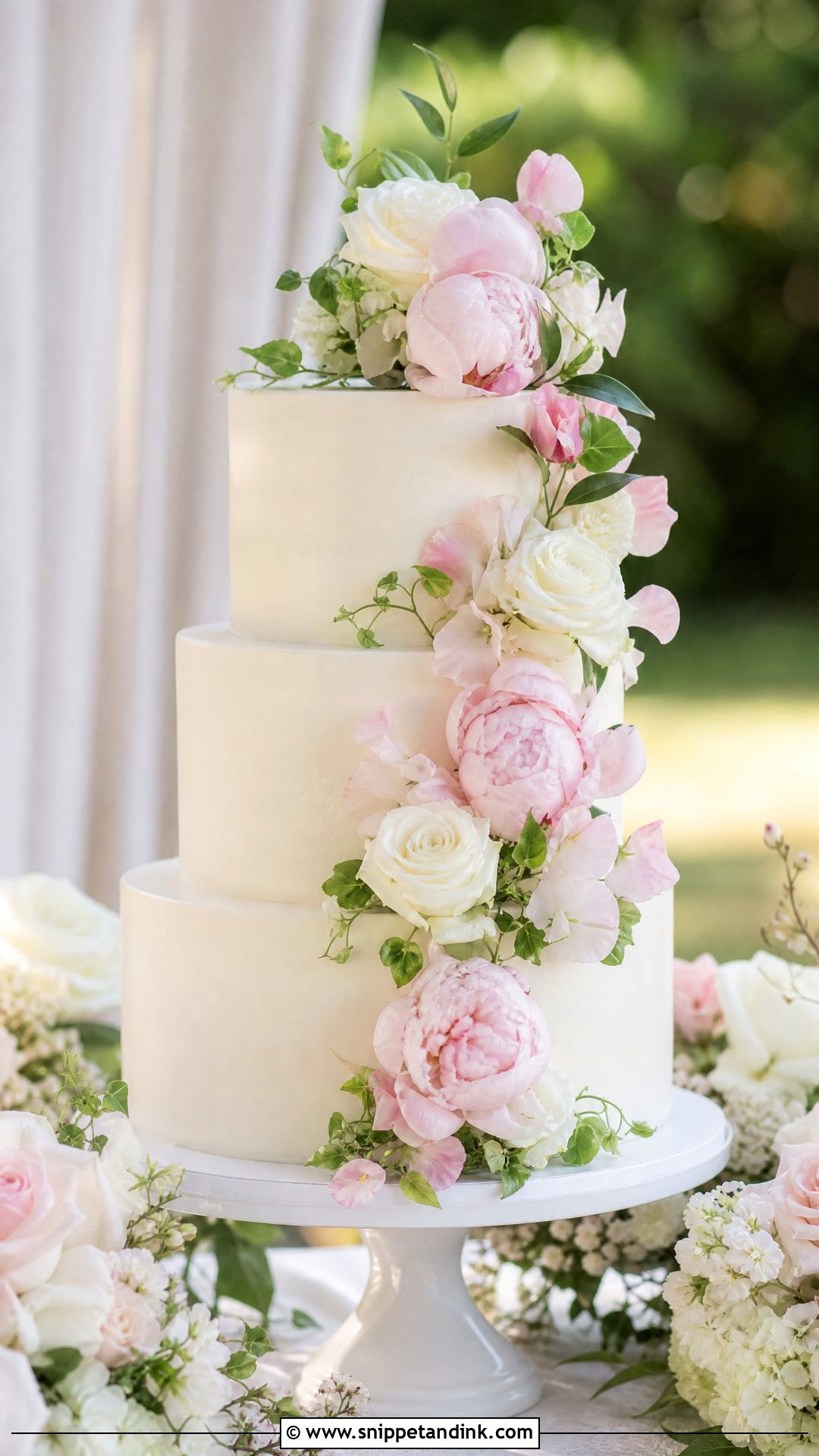
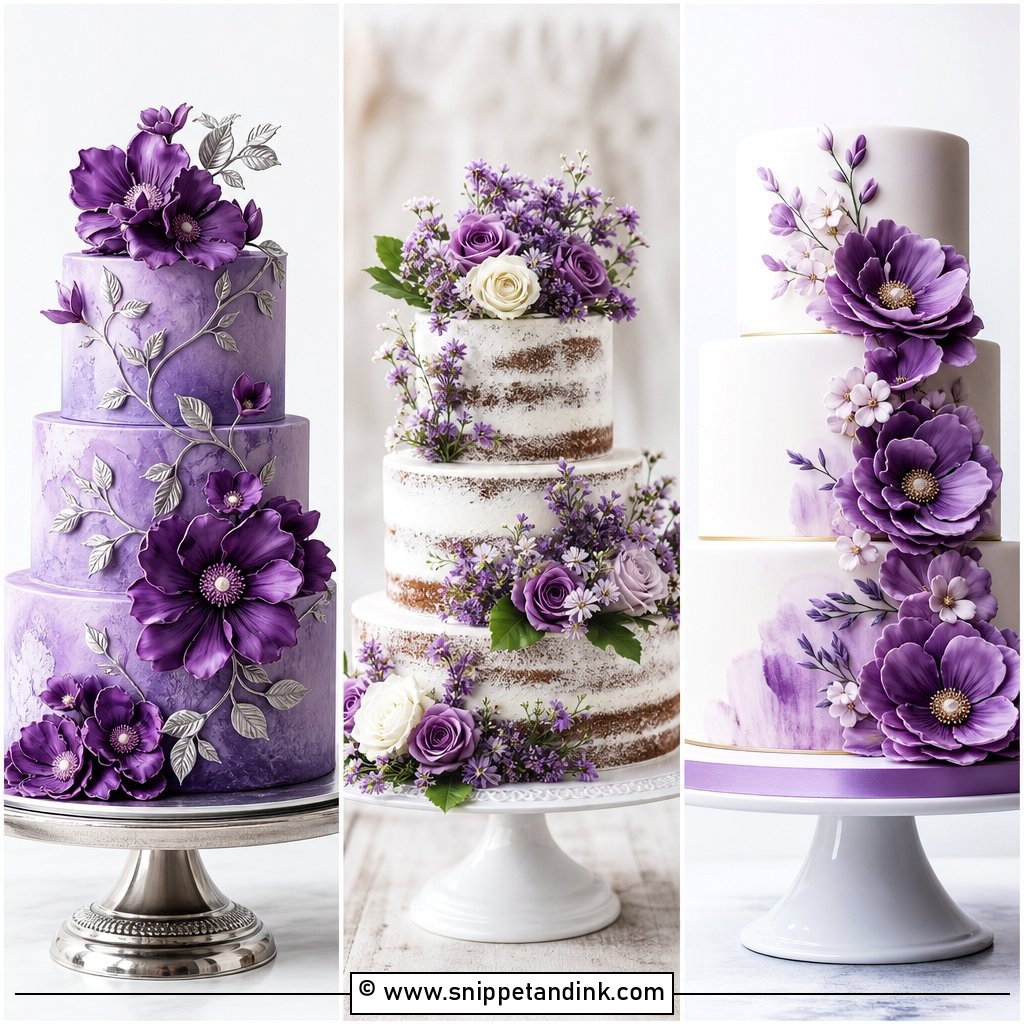
Using the same flowers as your bouquet or centerpieces ties the cake into the room, and it’s the request I hear most. White roses, blush peonies, orchids and sweet peas all work, but they need to be grown without pesticide sprays and kept off the sponge with tape or picks. I agree placement with the florist early: cascade, base wreath or small clusters between tiers. Fewer, better placed stems look fresher than a crowded cake.
5. Buttercream Wedding Cake
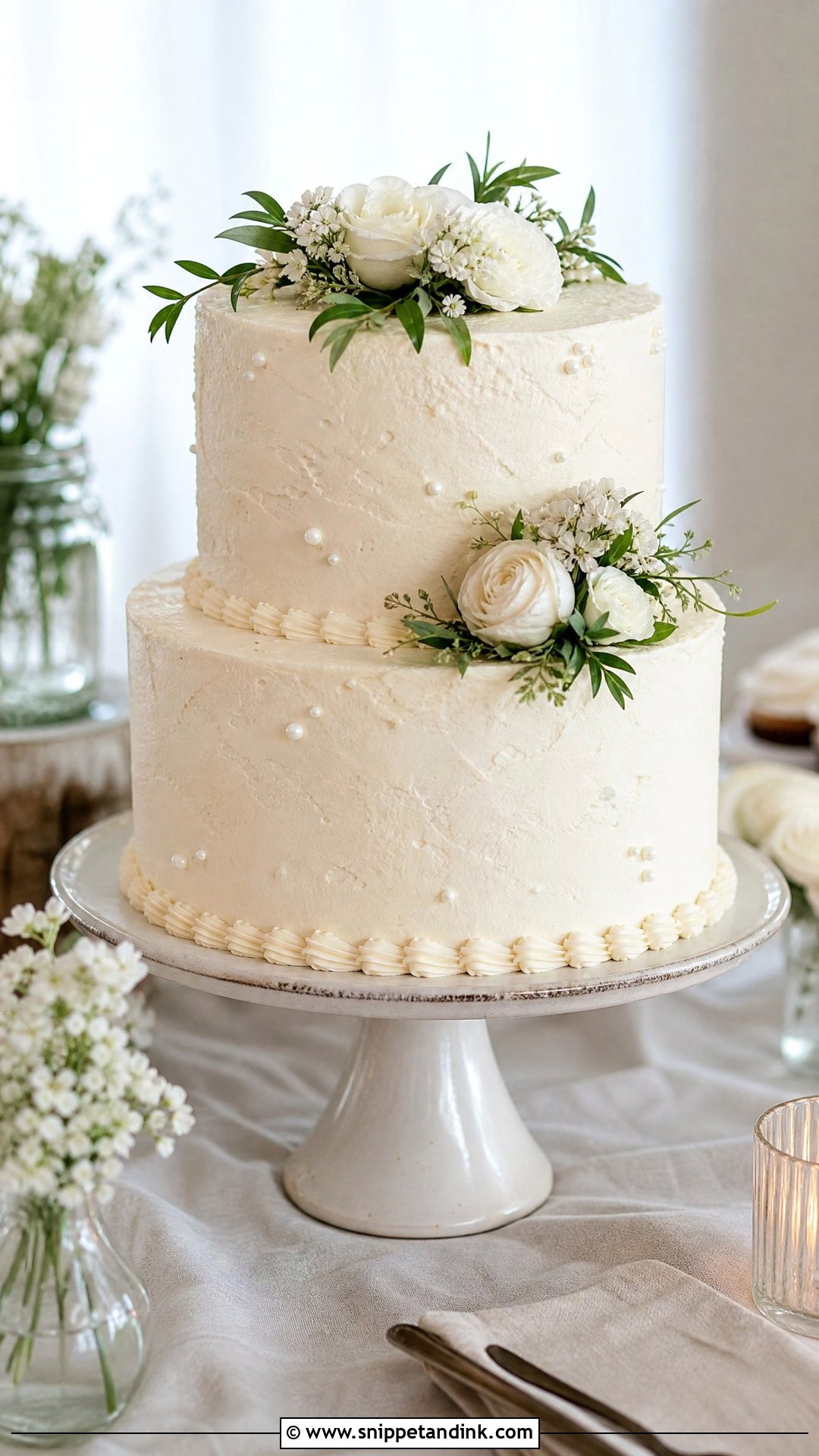
Most guests prefer the taste of buttercream to fondant, which is reason enough to choose it. Smooth sides look modern; combed or spatula texture reads handmade and also hides small marks from transport. Fresh flowers, fruit and simple piping all sit well on it. The weak spot is warmth, so for a summer wedding ask your baker how long the cake can stand out and plan the display time around that answer.
6. Minimalist Wedding Cake
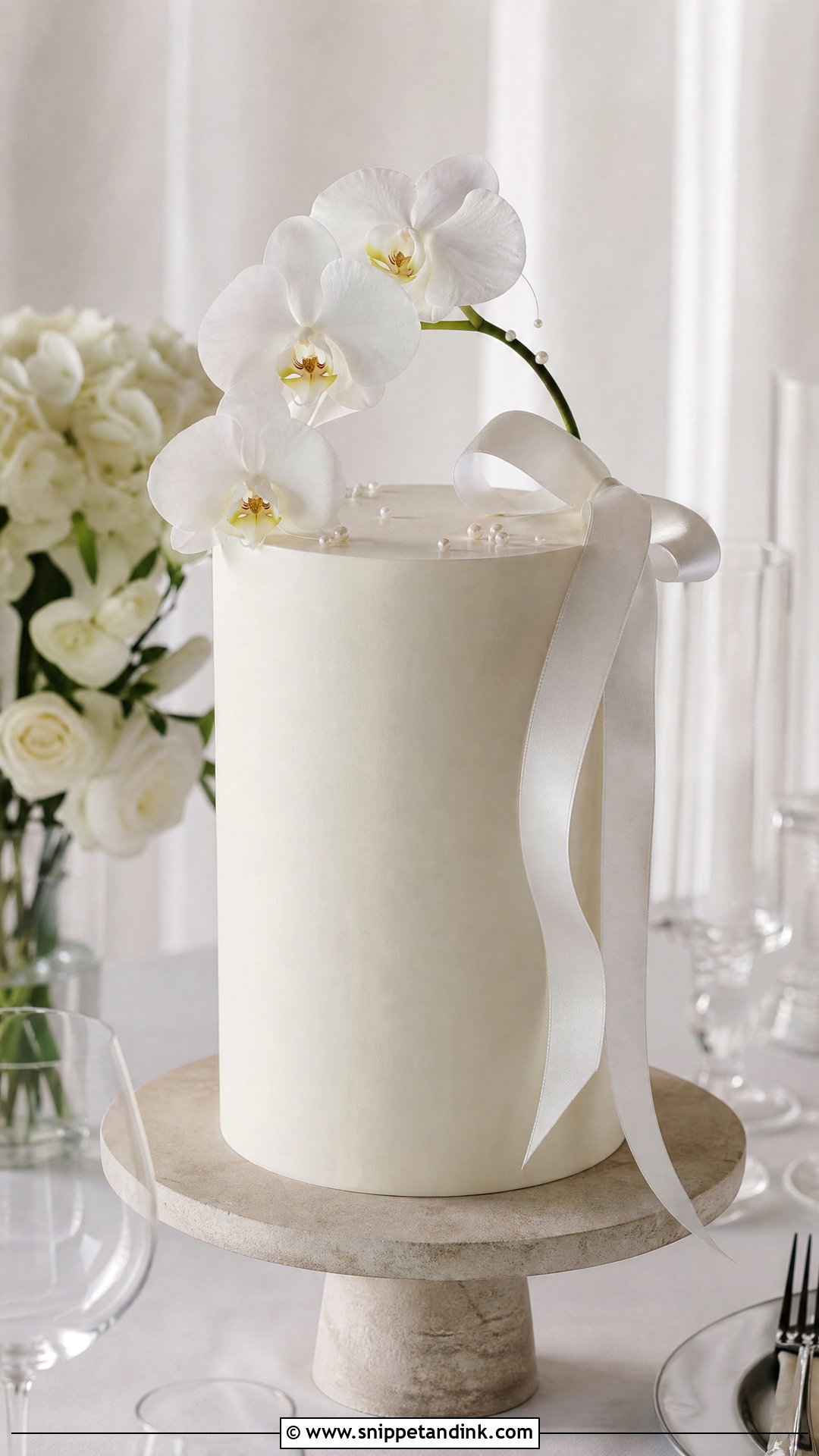
Edited, not empty. That’s the difference between a minimal cake that looks expensive and one that looks unfinished. I give it one feature, maybe a single orchid stem or a silk ribbon, and put my time into razor-sharp edges. A tall single tier, often called an extended-height cake, looks very chic but needs a board and dowels halfway up because sponge that tall can’t support itself. A plain pedestal and a quiet wall behind it finish the look.
7. Modern Wedding Cake
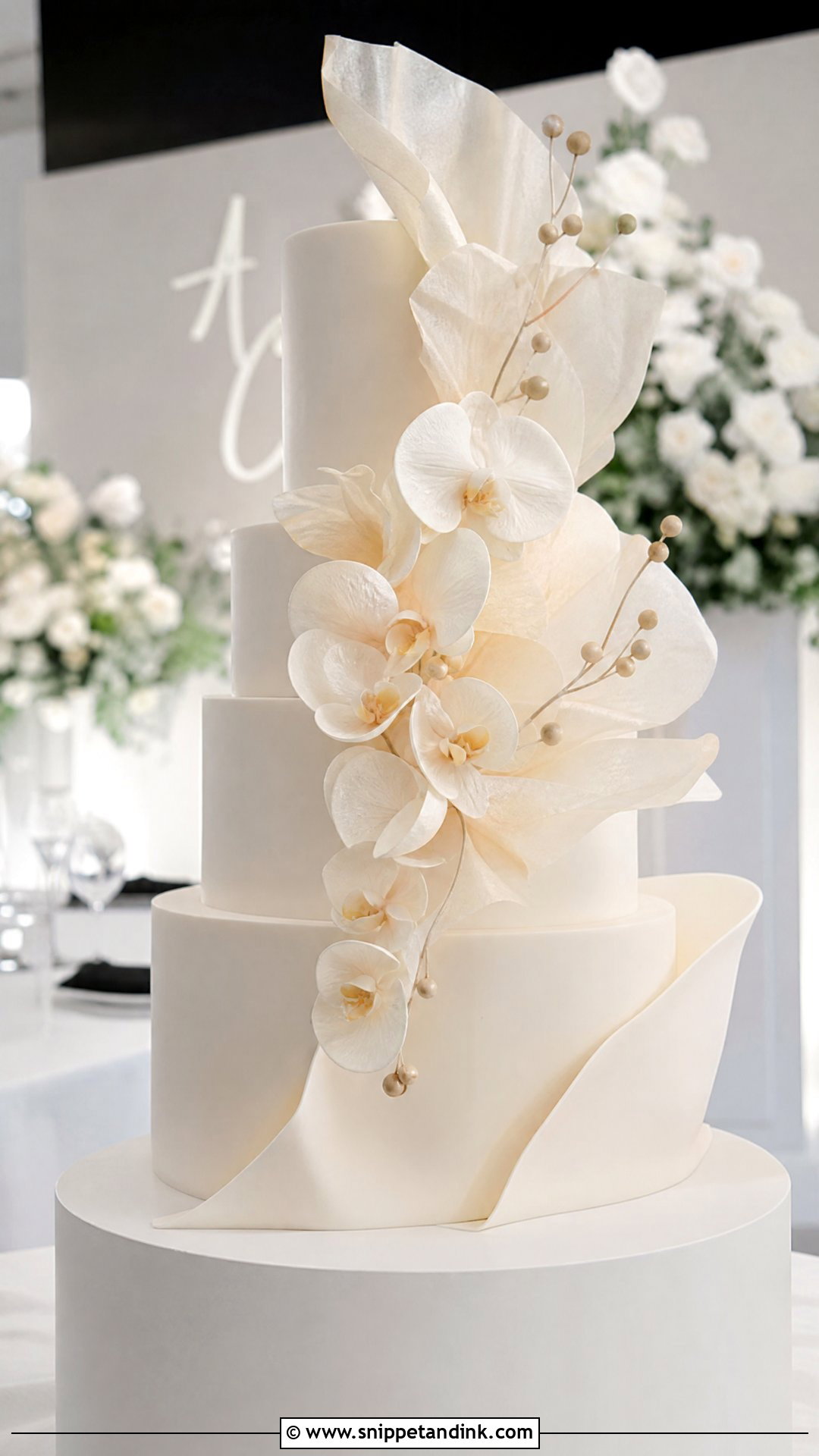
Modern cakes lean on shape: asymmetric tiers, curved edges, wafer paper sails, pressed texture. Wafer paper is light and holds dramatic forms, but it wilts in humid rooms, so I add it on site and steer clear of it for a beach or poolside wedding. Clay, sage and touches of black look current next to ivory. Leave space around every detail; crowding kills the sculptural effect.
8. Lambeth Wedding Cake
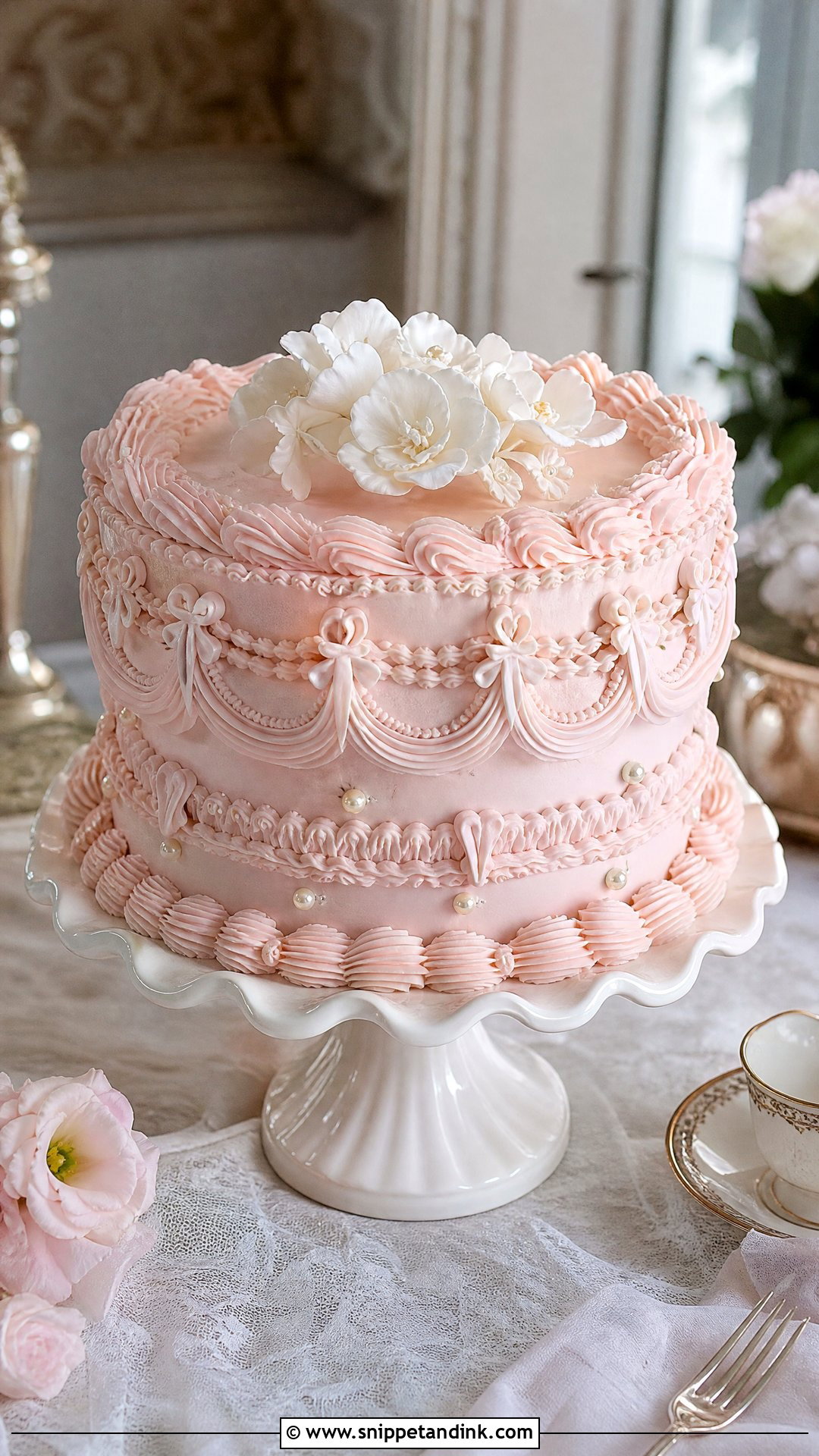
Lambeth piping stacks line on line to build depth, and that layering is what separates it from ordinary vintage piping. White on white is the most bridal; pink, blue or butter yellow feels more like a party. Cherries make it retro, bows and pearls softer. It is time-consuming work, so ask for photos of the decorator’s own Lambeth cakes, and keep the stand plain so the piping is the only texture.
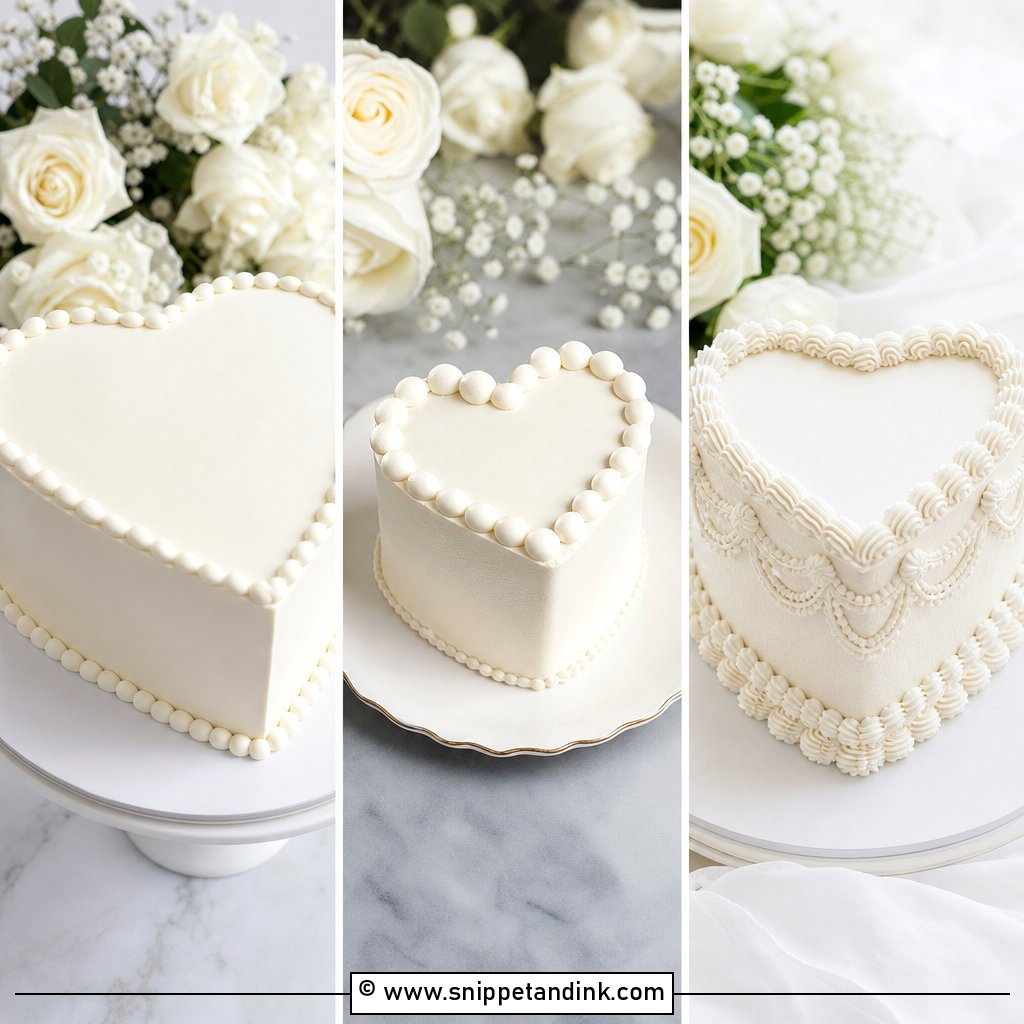
9. Heart Wedding Cake
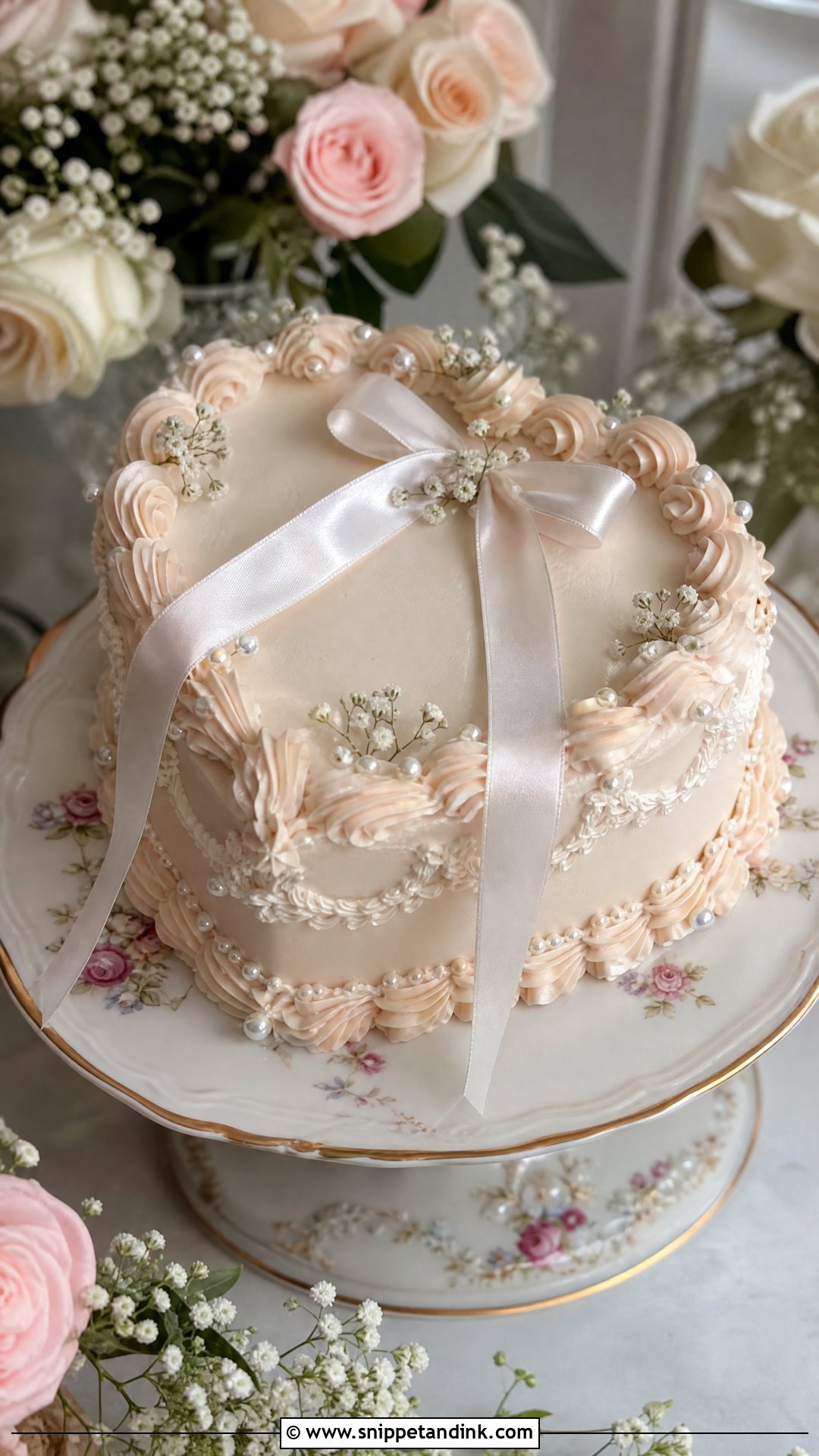
I love a heart cake for an elopement or a small dinner, where it can sit right in front of the couple. Piped borders and a short message on top suit it best. Stacking two hearts is possible but needs careful support near the point, which is the weakest area. Red is fun but stains mouths, so I usually suggest blush or ivory with red details.
10. Oval Wedding Cake
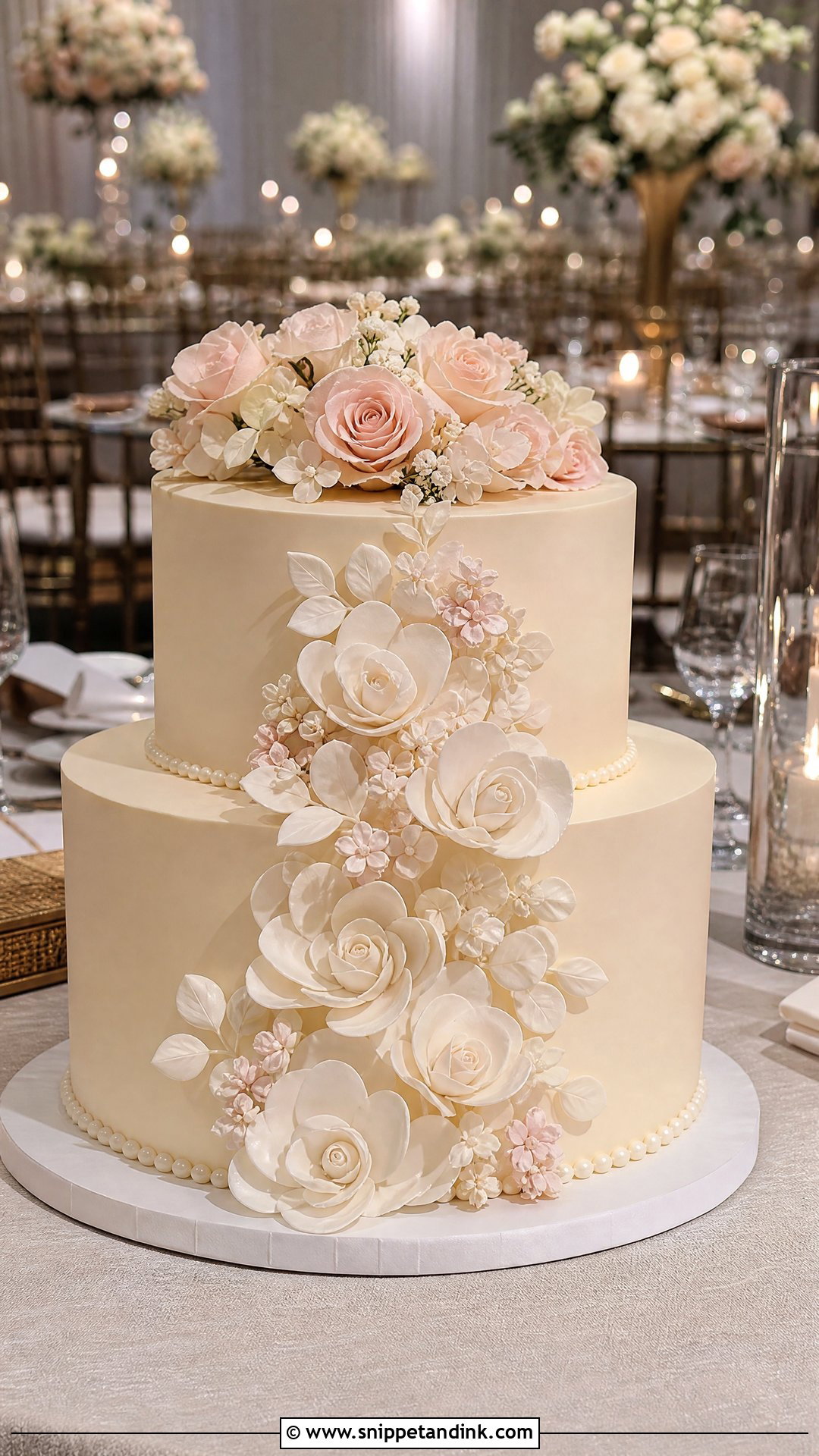
Oval tiers give a wider face toward the guests, which is useful for a monogram, a floral spray along one side or painted detail. They sit naturally on long banquet tables where a round cake can look lost. Expect fewer stock pans and stands for ovals, so not every bakery offers them. Smooth buttercream with flowers on one end looks soft; ivory fondant with sugar petals looks more fashion-led.
11. Square Wedding Cake
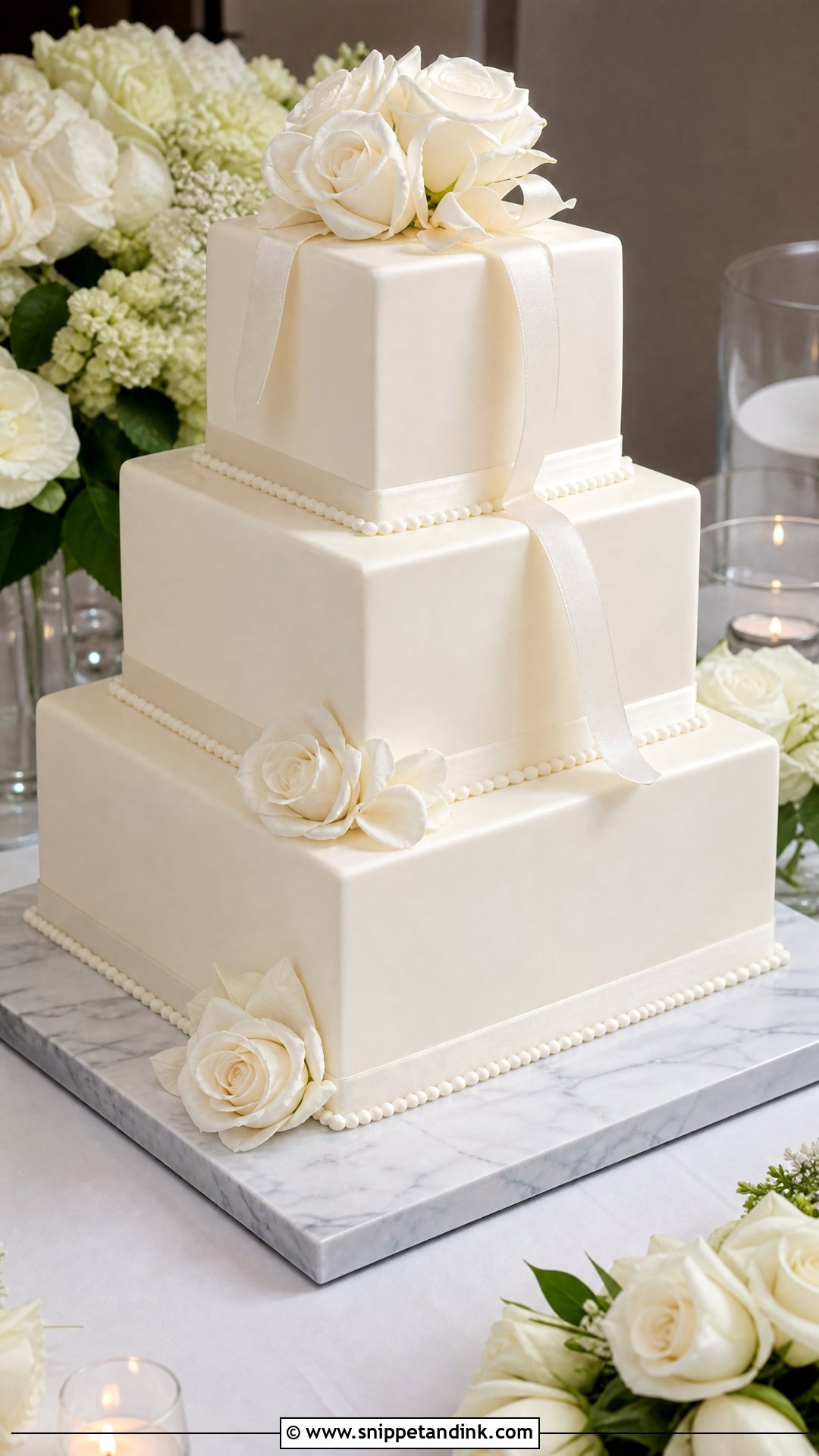
Sharp corners are the whole point, and they take time. Covering square tiers in fondant without tearing at the corners is a skill, and buttercream corners need repeated chilling and scraping. Black ribbon makes it graphic, sugar flowers on alternate corners make it romantic. Square tiers also cut into more portions than round tiers of the same width, which helps with big guest lists.
12. Garden Wedding Cake
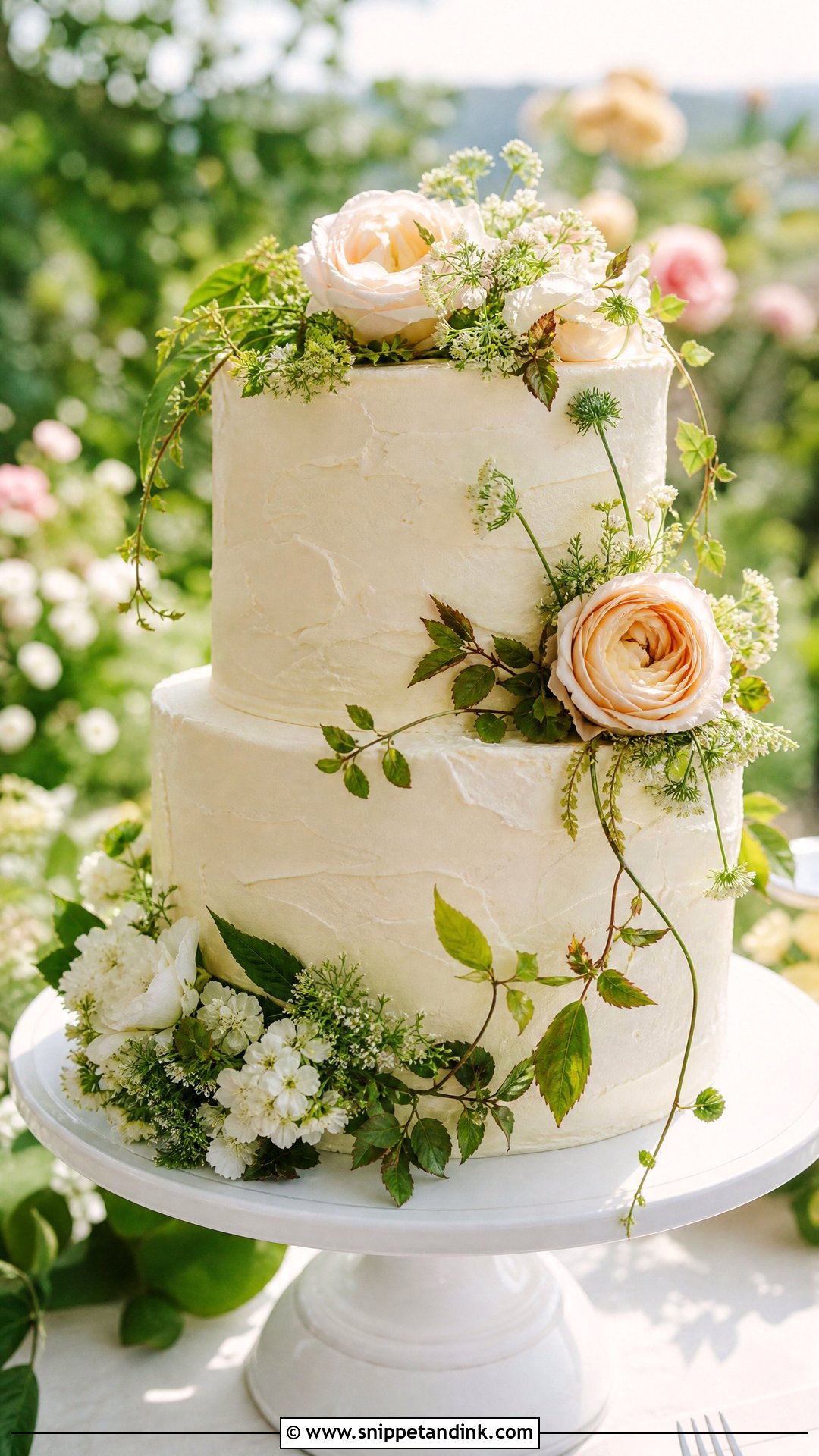
A garden cake should look gathered rather than arranged. I let loose blooms and trailing vines run down one side instead of making a symmetrical ring, and I match the flowers to what is actually growing at the venue that month. Lemon, almond or strawberry sponge suits it. Outdoors, keep the cake in shade until cutting; buttercream and petals both suffer in direct sun.
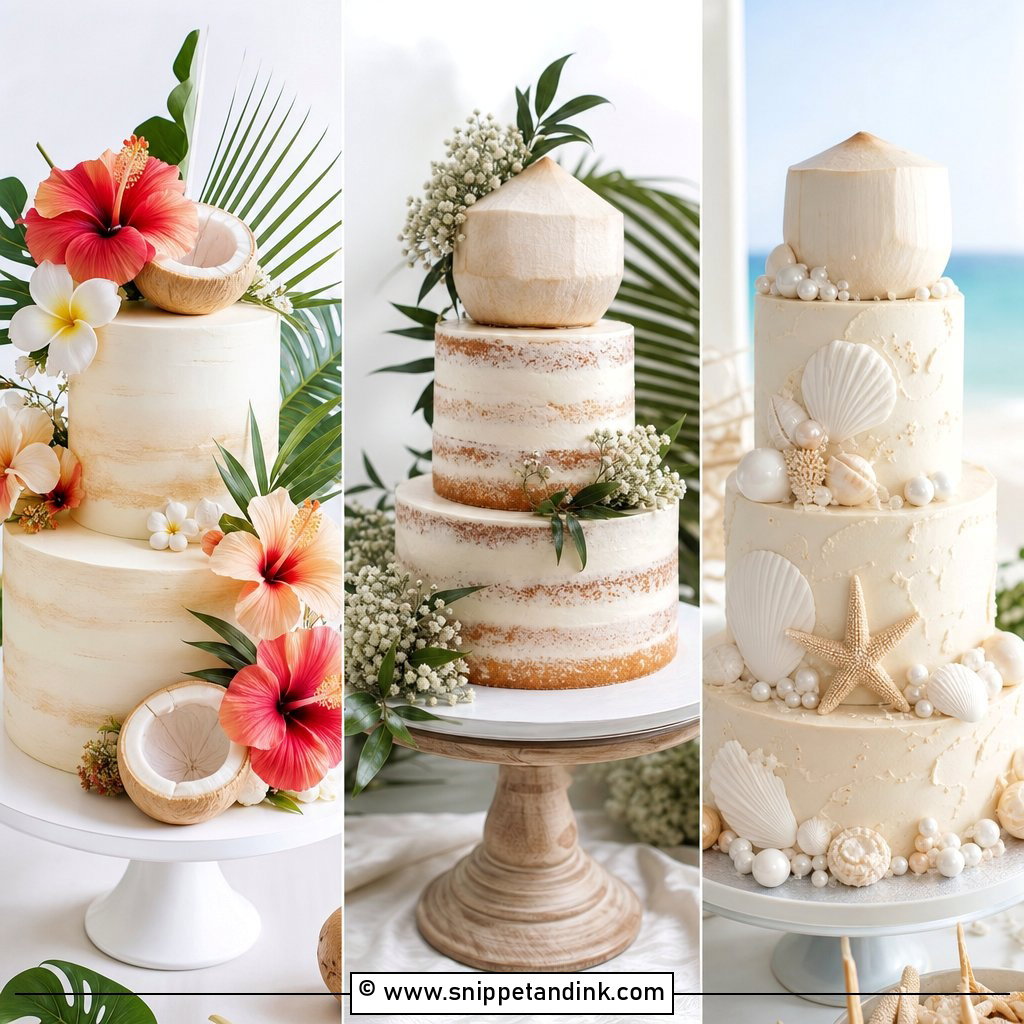
13. Beach Wedding Cake
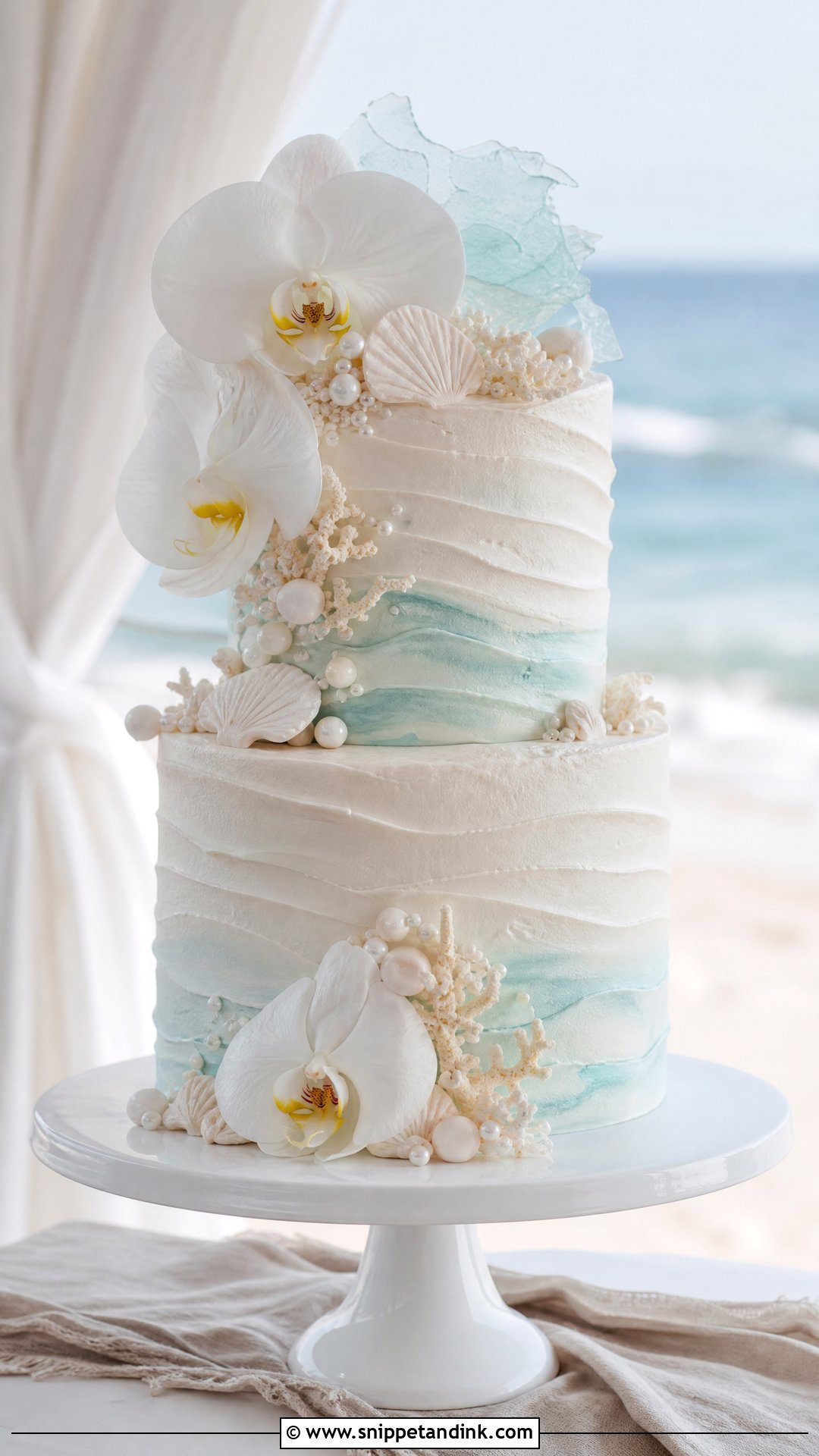
Heat, wind and salt air are the real challenges of a coastal cake, so I design for the weather first and the theme second. Textured white buttercream can suggest waves; pale blue brushstrokes, white orchids and a few sugar shells finish it without tipping into a novelty cake. Coconut, lime and passion fruit flavors feel right by the sea. Set it on a clean white stand under cover, not on the sand.
14. Rustic Wedding Cake
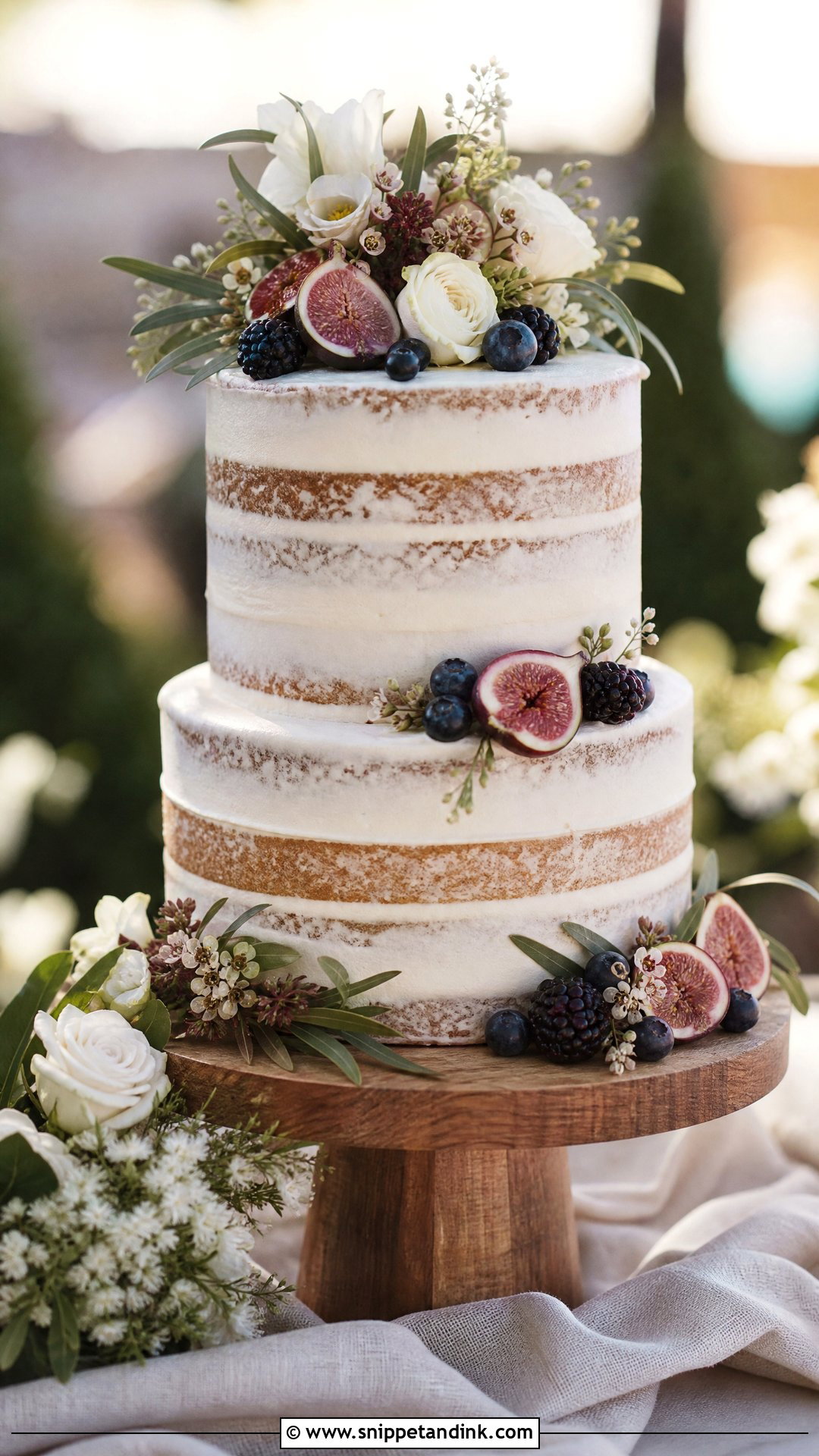
Semi-naked buttercream is the classic rustic finish, and it is also the quickest to dry out, so I soak the sponge with syrup and assemble late. Fresh berries, figs, herbs and simple flowers add color, but cut fruit weeps, so it goes on near serving time. For barns, farms and orchards, a smooth ivory finish with pressed texture is the more polished option. Carrot, spice or lemon berry sponge suits the homemade feel.


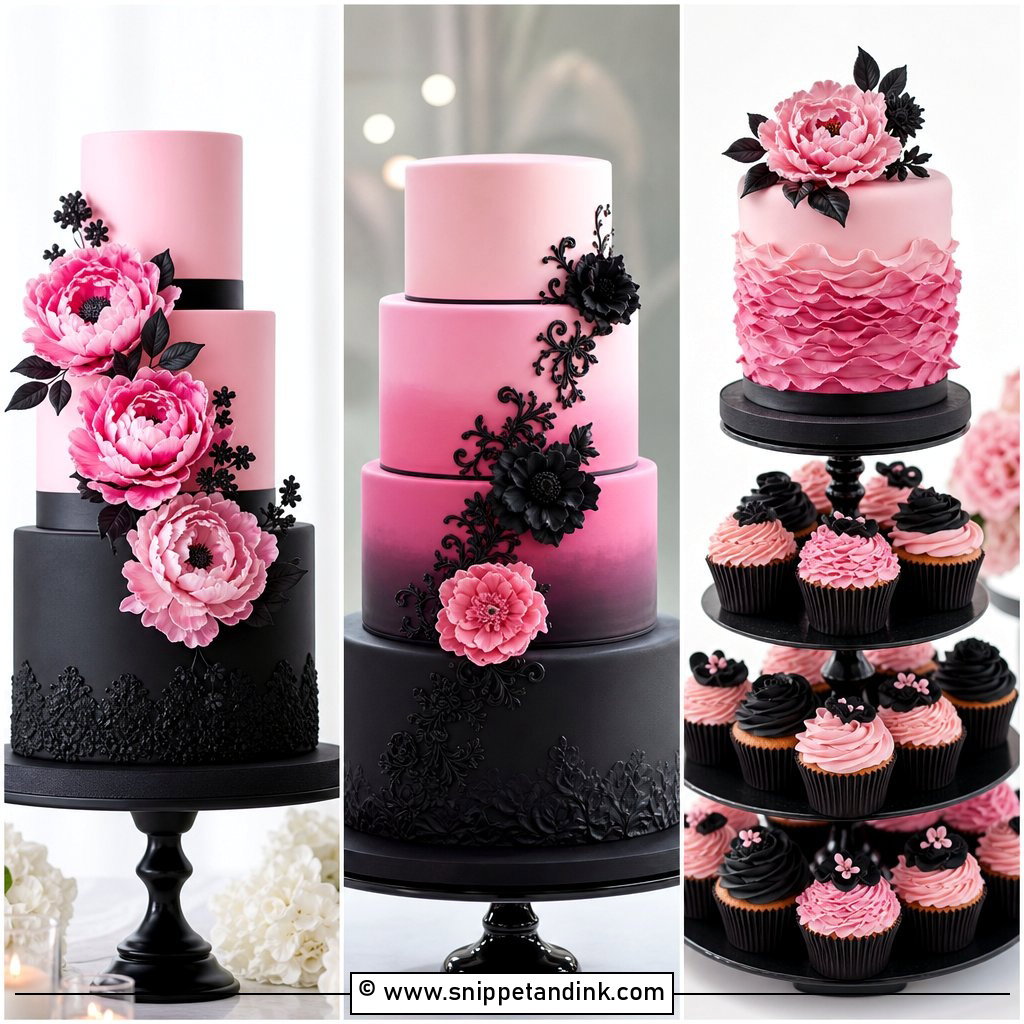
15. Black And White Wedding Cake
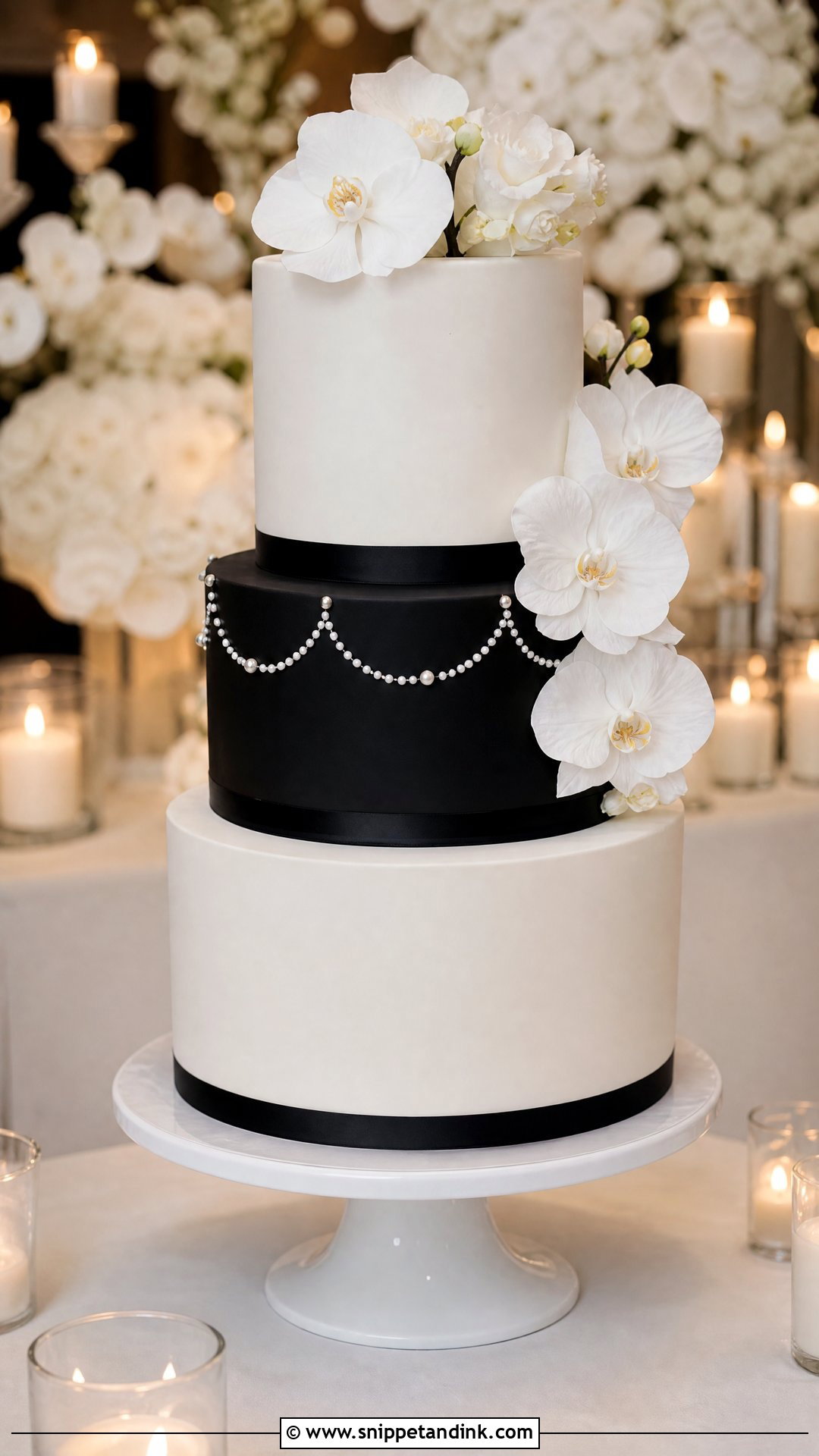
Keep the black thin. Fine ribbon, piped black bows or a single black floral silhouette on white fondant reads elegant; large black areas need so much coloring that taste and teeth suffer. One black base tier under white upper tiers is the boldest version I’d recommend. Charcoal is a kinder shade if you want softer contrast, and white orchids or pearls keep it bridal.
16. Blue Wedding Cake
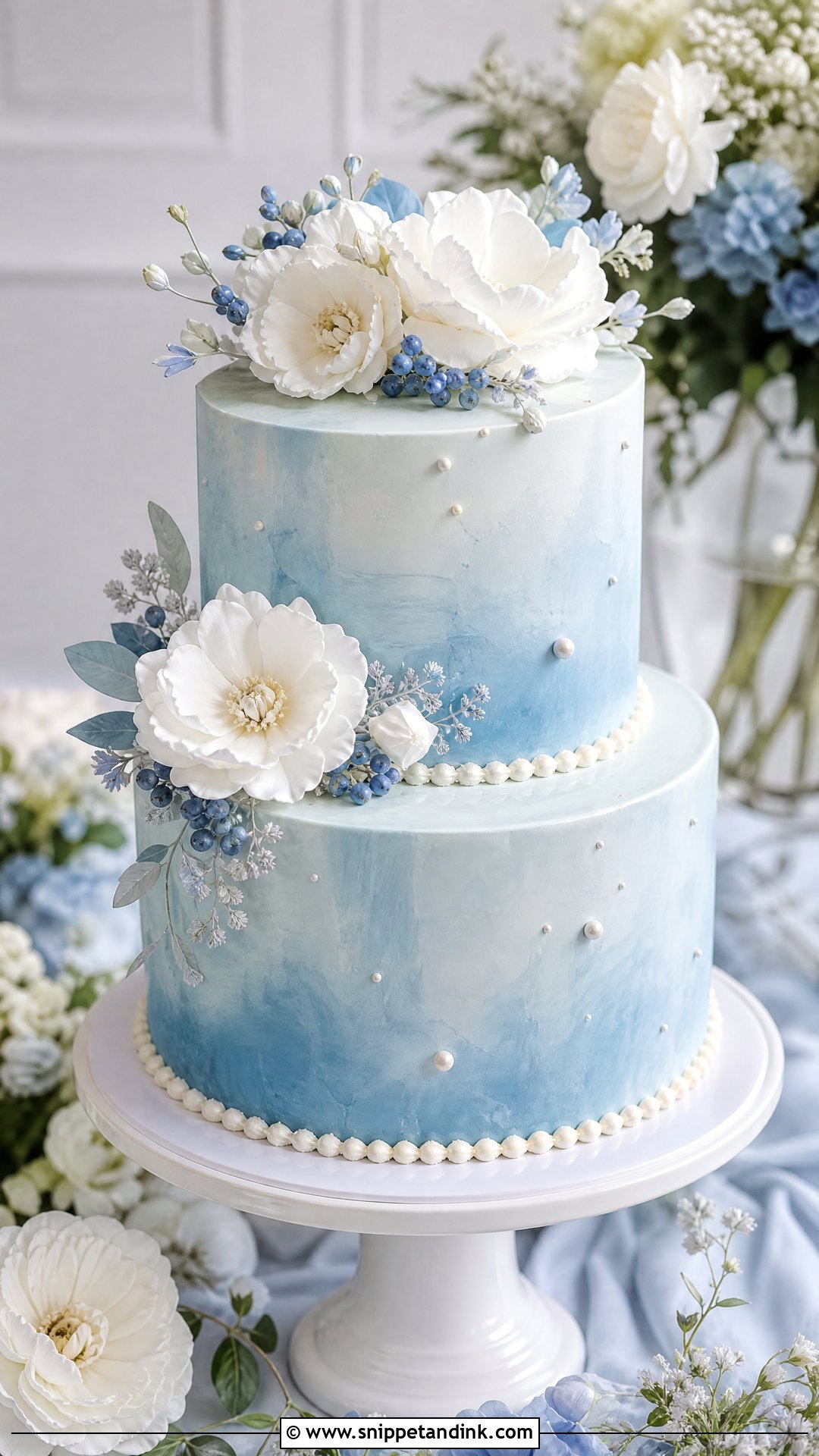
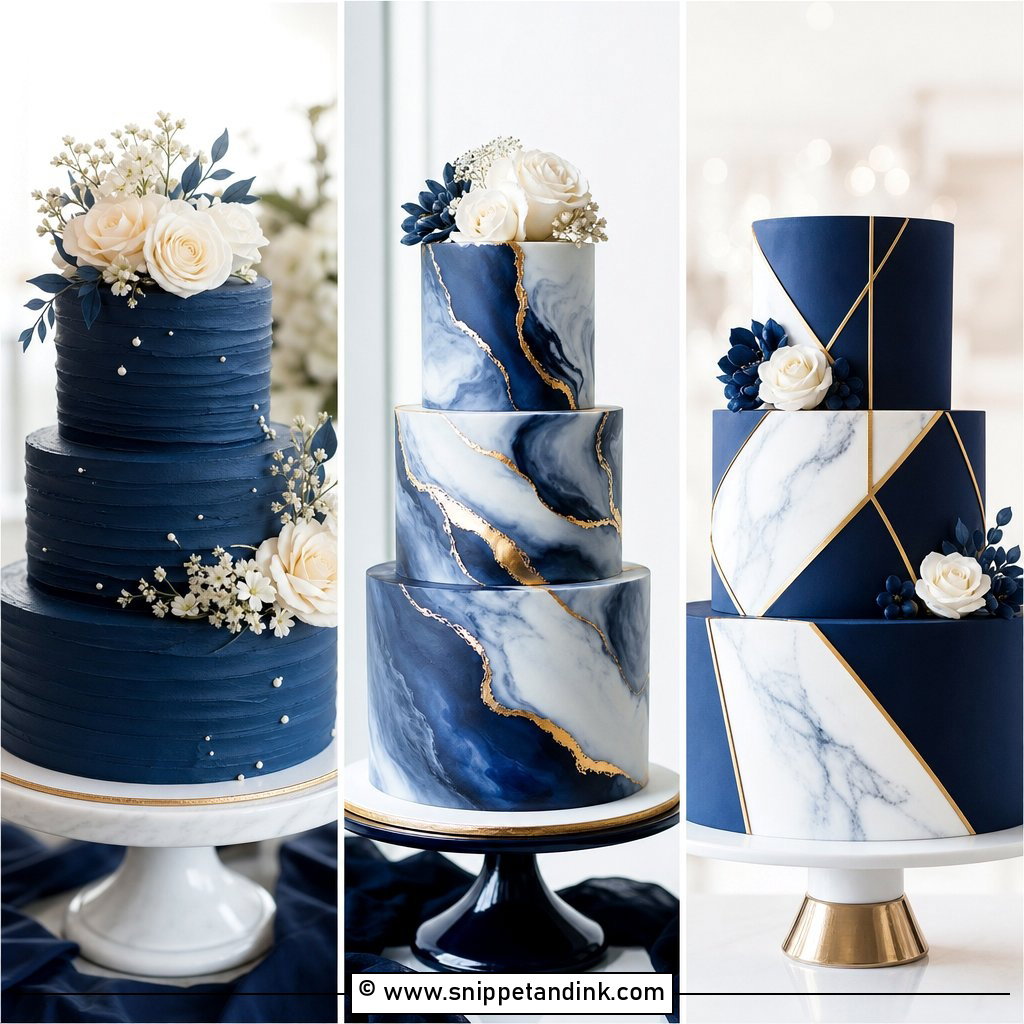
Blue is the color I test most carefully, because yellow butter pulls blue buttercream toward green. Dusty blue, powder blue and pale French blue are the most forgiving shades. I often start from a whiter frosting base and correct the tone before adding blue. Brushstrokes over white are subtle; full blue tiers with white sugar flowers make a stronger statement.
17. Green Wedding Cake
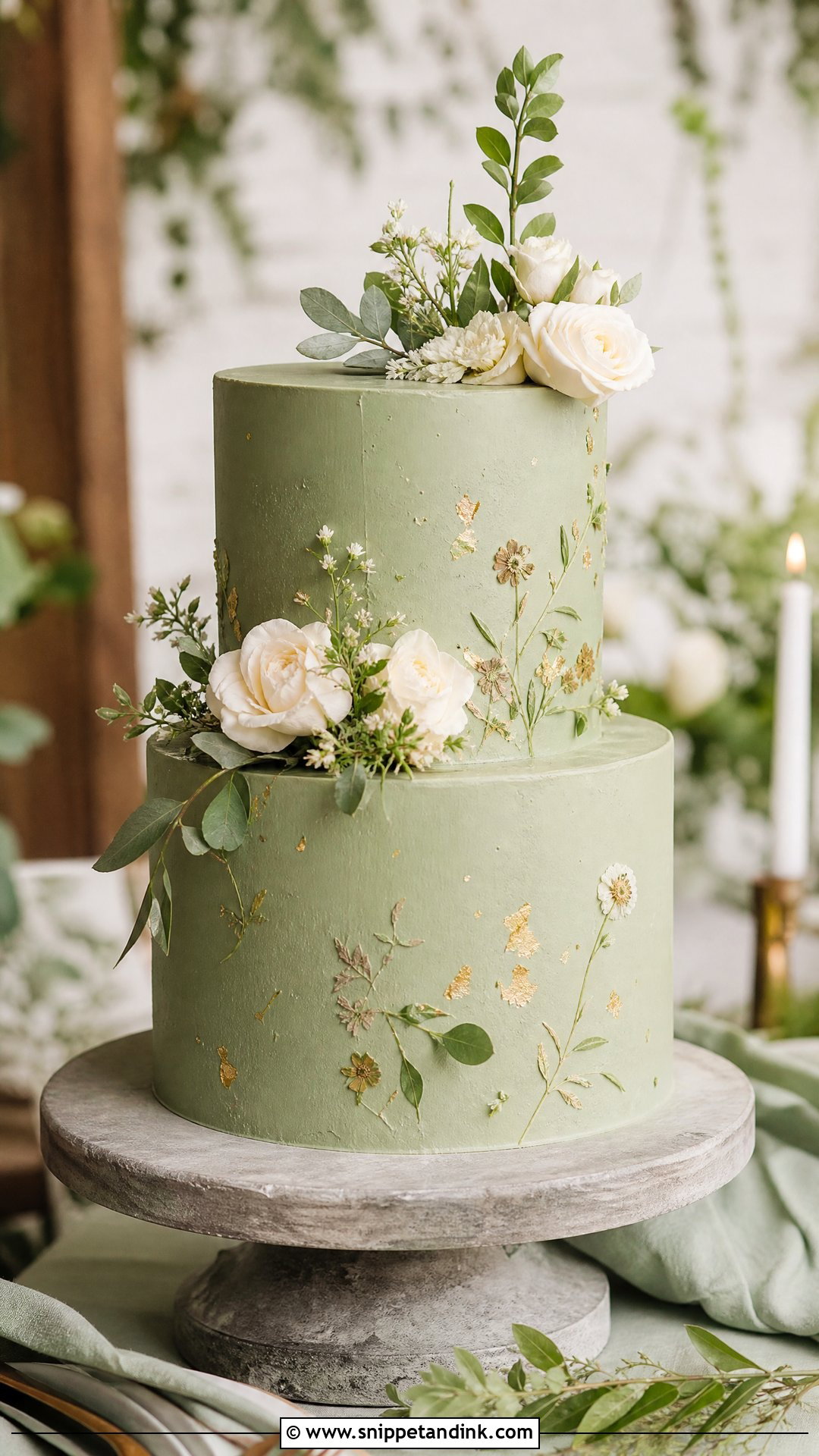
Sage is the safest green: it sits well beside ivory flowers and gold, and it does not fight with greenery in the room. Pistachio, matcha or lemon sponge can echo the color naturally, though real matcha tastes quite bitter to some guests, so I always include it in the tasting. Pressed herbs or white blooms on sage buttercream look handmade. Keep linens neutral so the green stays the only color.
18. Fruit Wedding Cake
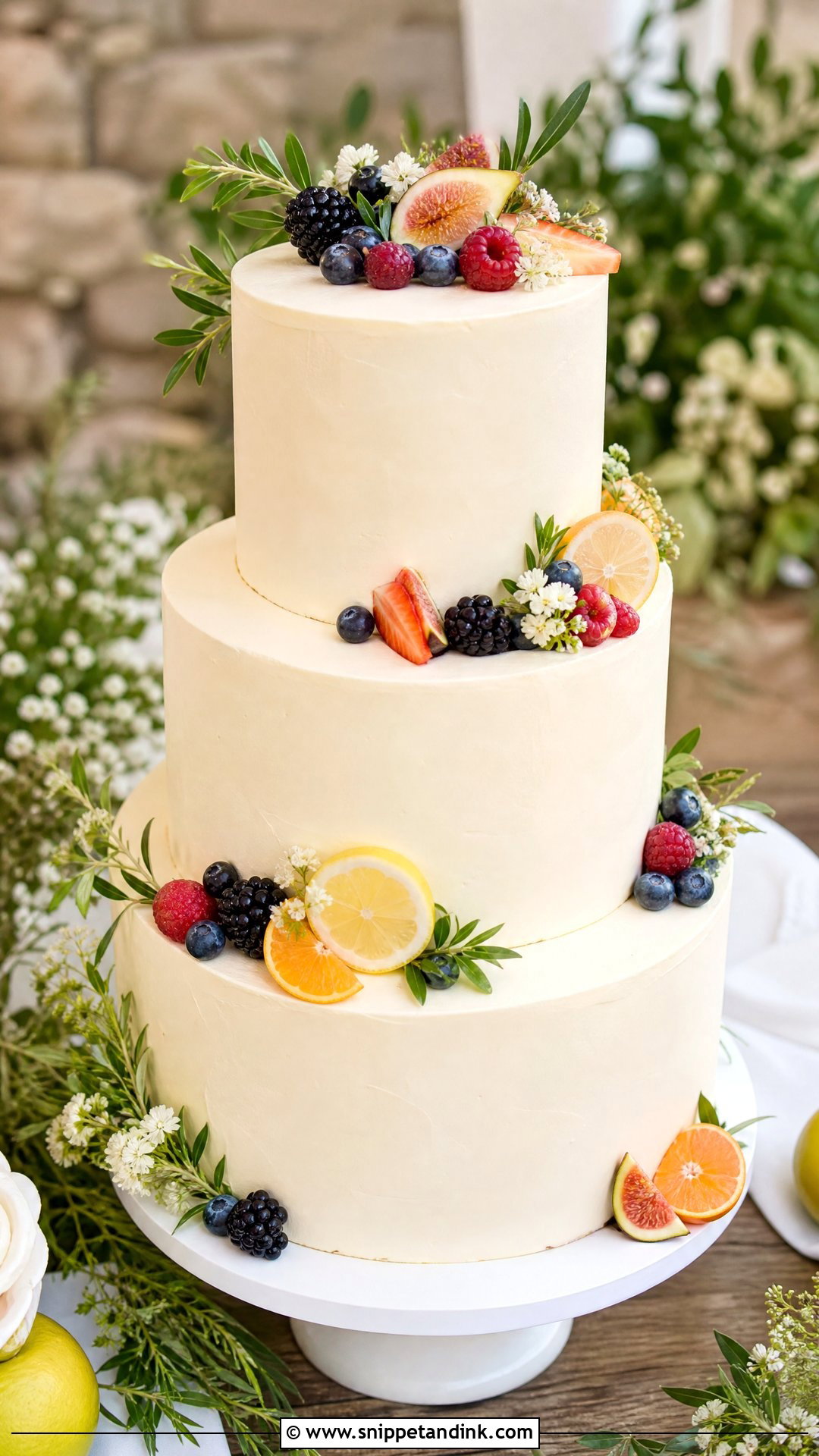
Fruit looks best when it is in season and placed with restraint. Berries, figs and stone fruit can sit in small clusters with a few flowers, but anything cut releases juice, so I add halved fruit at the venue and sometimes brush it with a little glaze to stop it drying. Whole berries last much longer. Olive oil, almond and lemon cakes pair especially well with fruit.
19. Small Wedding Cake
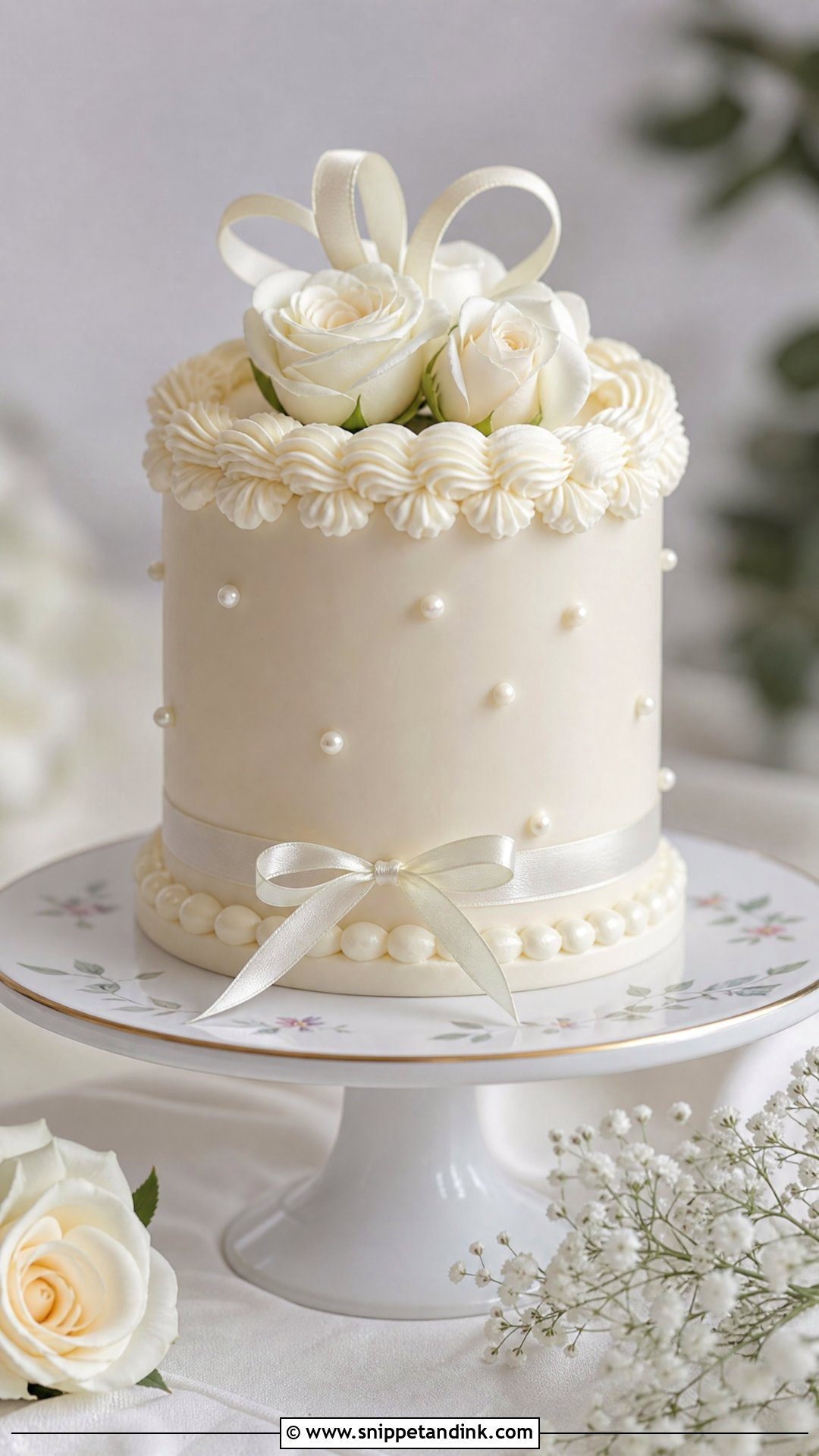
Small cakes let you spend on detail rather than size. One tall tier or two petite tiers can carry fine piping or sugar flowers that would be costly across a big cake. They suit elopements and micro weddings, or a larger wedding where plain cake is cut in the kitchen. A raised stand and a few flowers keep it from disappearing on a long table.

20. Sheet Wedding Cake
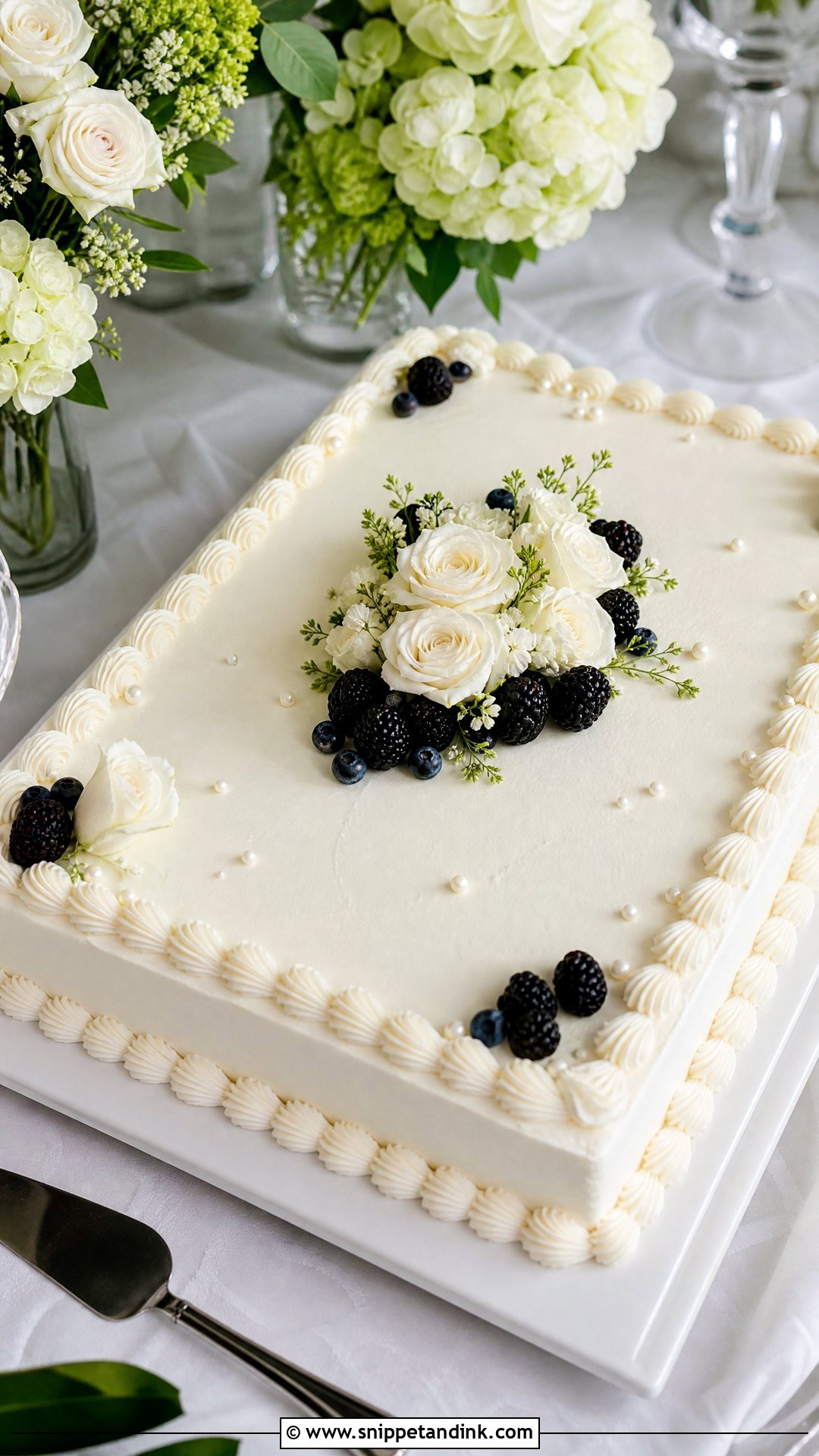
Sheet cakes are easy to slice, transport and serve, and a sheet wedding cake can look genuinely pretty with smooth buttercream, a piped border and fresh flowers. The flat top is perfect for a monogram or a pressed floral pattern. Plenty of couples pair one with a small display cake for the cutting photos. Just make sure the board is rigid; a long cake on a flimsy board can crack when lifted.
Why Pale Colors Shift in Buttercream
Butter is yellow, so buttercream starts slightly yellow, and that base changes every color you add to it. Blue drifts toward teal or green, lilac can turn grey, and pale pink can look peachy. Bakers correct this with a whiter frosting base or a tiny amount of violet to cancel the yellow before the main color goes in.
Light also changes the result. A shade that looks right in a bright studio may look darker under warm reception lighting. If color matters to you, ask to see a sample on a small cake and photograph it in light similar to your venue’s.
Saving the Top Tier for Later
Many couples keep the top tier for their first anniversary. It can be done, though frozen cake is never quite as good as fresh.
- Remove flowers, toppers and any non-edible supports first.
- Chill the tier until the frosting is firm, so wrapping doesn’t mark it.
- Wrap it closely in several layers of plastic wrap and foil, then box it.
- Thaw it slowly in the fridge, still wrapped, so condensation forms on the wrap and not the cake.
Fresh cream and fruit fillings freeze poorly. If you plan to keep the top tier, ask for a buttercream or ganache filling in that tier, or order a small fresh anniversary cake from your baker instead.
Save the Photos, Then Trust the Tasting
A cake that looks good online still has to suit your room, your weather and how guests eat. Classic white is always safe, while piping, pearls, fruit and color make it feel more like yours. Bring your favorite saves to the consultation, say what you love about each, and let your baker adjust the design to your guest count and budget. The tasting will tell you the rest.
You'll Like These Ideas:





Leave a Reply