
The plate under a wedding cake gets less thought than the flowers on top, yet it decides how the whole cake table reads from across the room. It sets the height, gives the bottom tier a frame, and either echoes your linens and place settings or fights them. When I deliver a cake, the first thing I look at is what it will sit on, because a lovely plate that wobbles or runs too tight to the bottom tier is a problem I have to solve on the spot. Below are twenty plate styles, with what each one does well and where it can let you down.
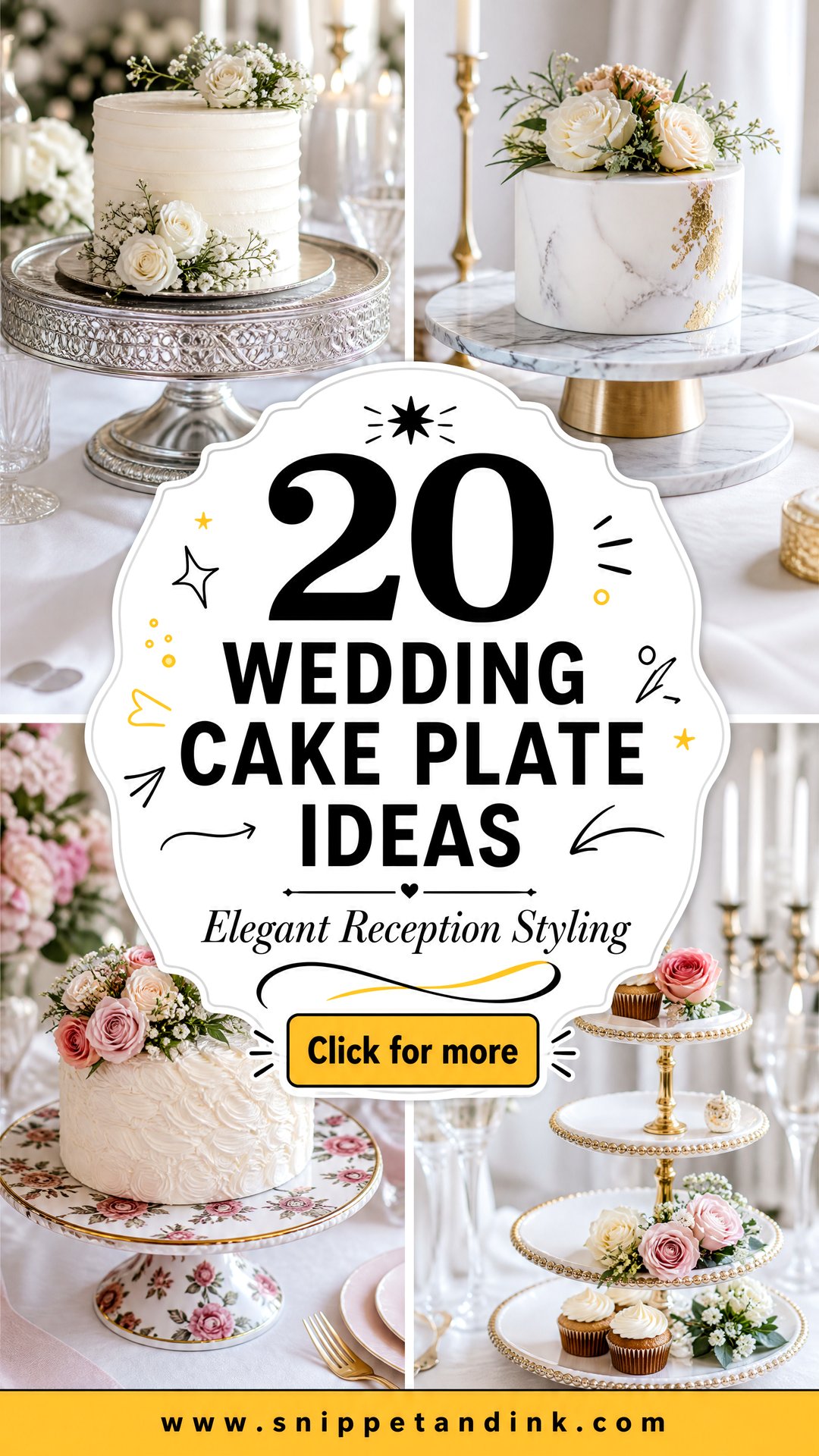
Measure the Bottom Tier Before Falling for Any Plate
Every plate decision starts with one number: the diameter of your bottom tier. Ask your baker for it in writing, because a cake listed as 6, 8 and 10 inches usually sits on a cake drum that adds another inch or two. I look for a plate that leaves a visible border of about two to four inches all the way around. Less than that and the cake looks squeezed; much more and a small cake looks stranded.
The second number is weight. A stacked cake with internal dowels is far heavier than it looks, and the plate carries all of it on one small point if the base isn’t flat. Here’s what I check before I agree to build on someone’s plate:
- It sits flat on a table with no rocking when you press each edge.
- The top surface is level; a small spirit level tells you in seconds.
- Pedestal stands have a solid joint, not a glued seam or a loose screw.
- The surface is food-safe, or you’re happy for the cake to sit on its own board.
- There are no chips or hairline cracks, especially on glass and antiques.
If a plate fails any of these, it can still go on the table as decor for cupcakes or a cutting cake. It just shouldn’t carry the main cake.
1. Gold Wedding Cake Plate
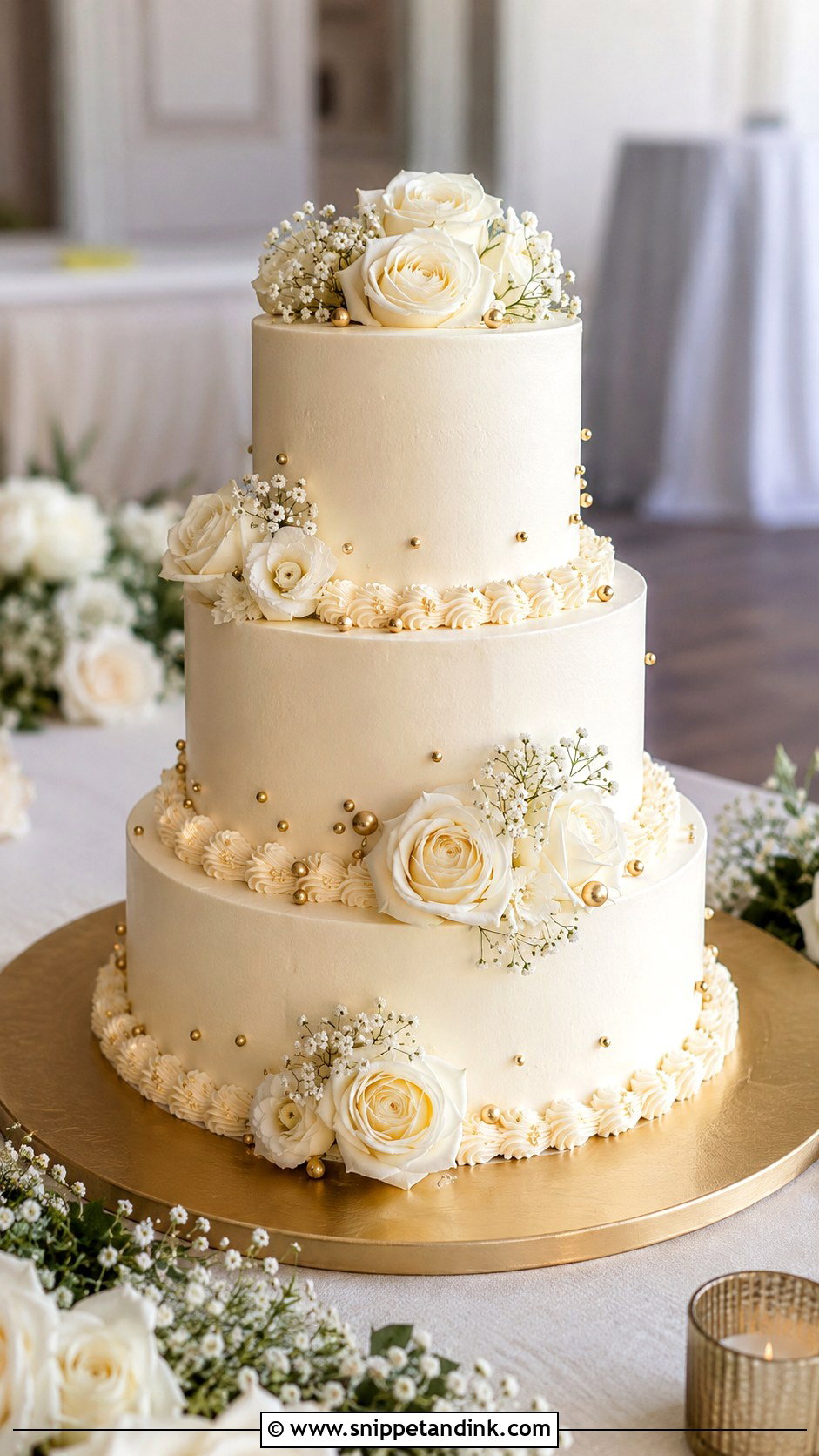
Gold is the warmest metal you can put under a cake, and candlelight makes it glow rather than glare. It sits easily under ivory buttercream, champagne flowers and pearl piping. I ask for a plate about two to four inches wider than the bottom tier so the cake has a visible border of gold around it. A thin rim reads current; a carved or scalloped edge leans traditional. With this much warmth in the base, keep the rest of the table quiet.
2. White Wedding Cake Plate
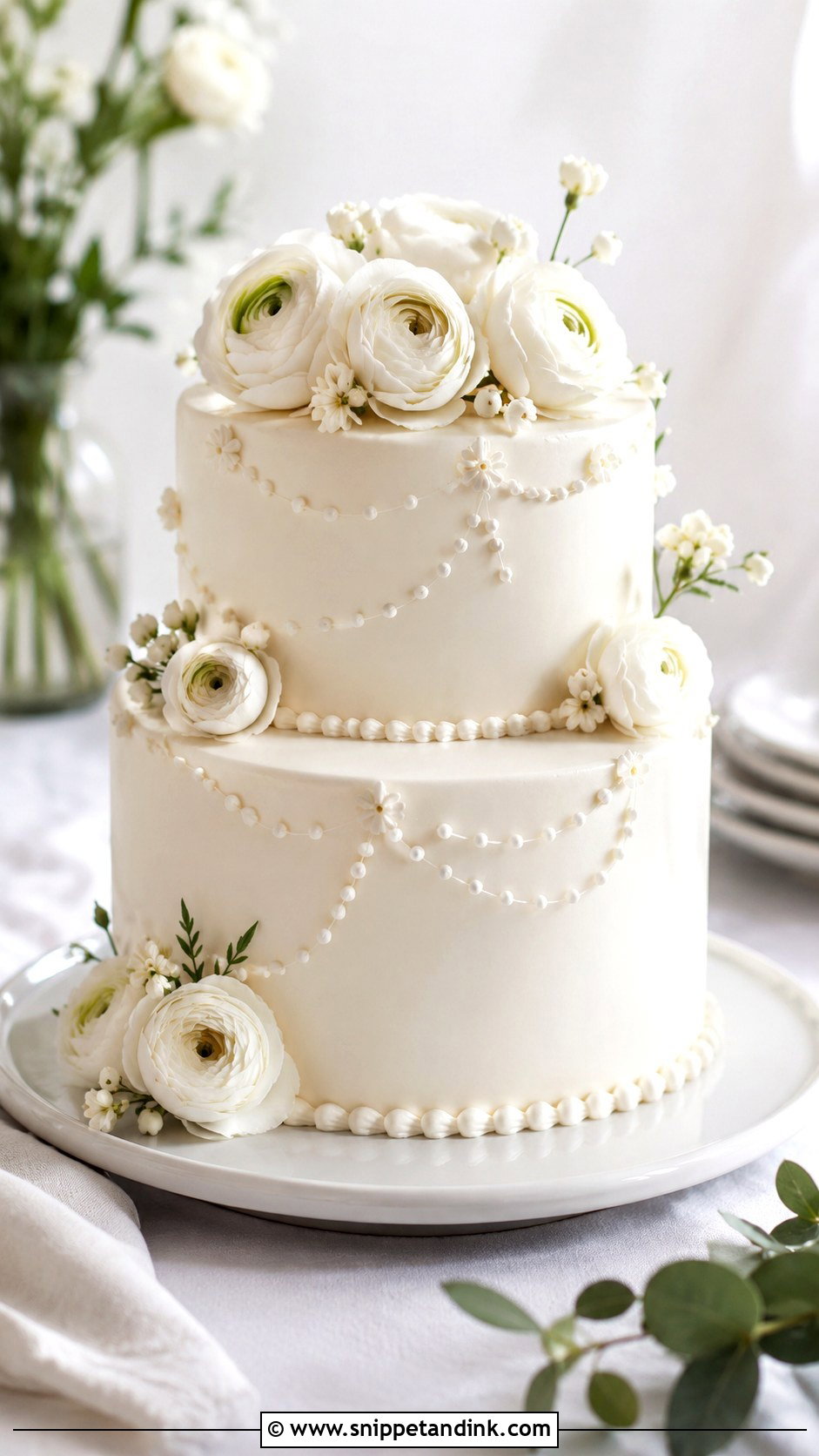
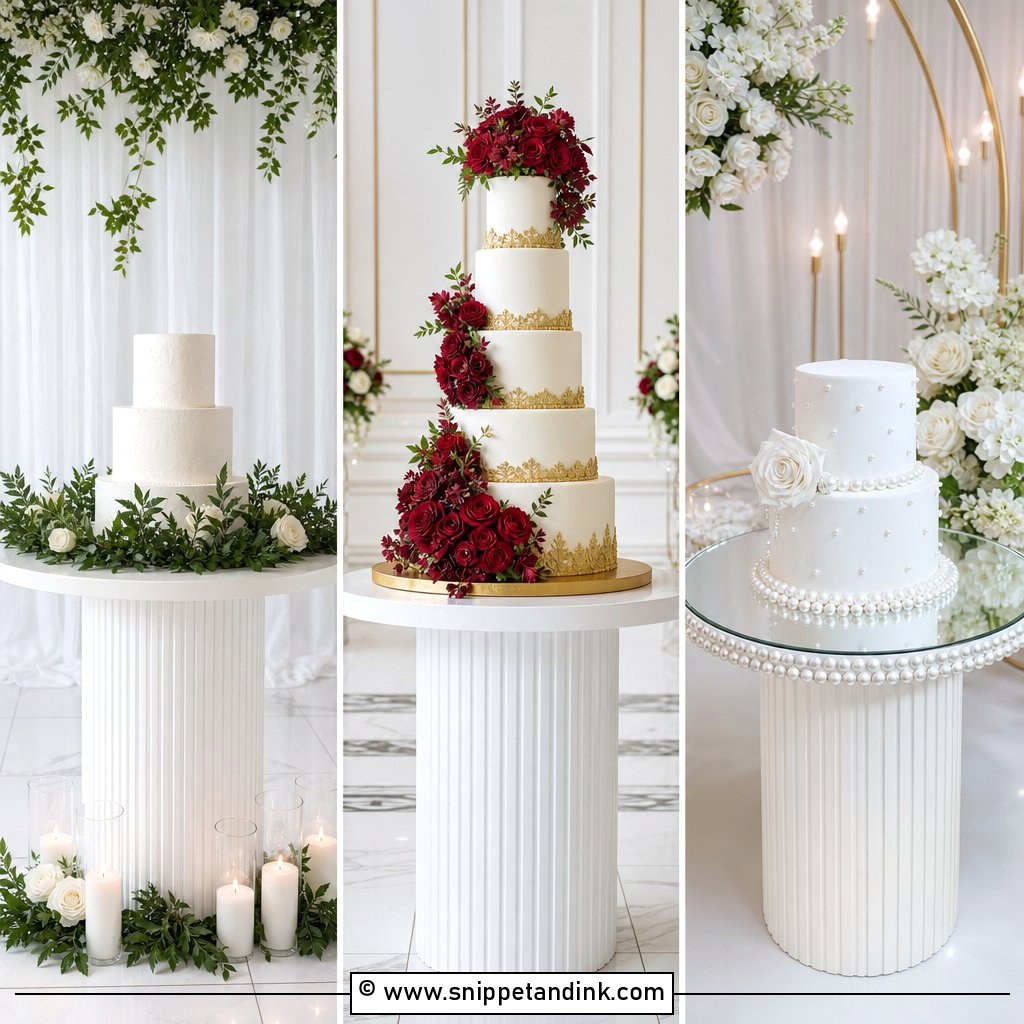
A white plate disappears under a white cake, which is exactly why some couples choose it and others regret it. If your cake is smooth ivory or white, I’d add texture somewhere so the edge doesn’t vanish in photos: ribbon at the base, a ring of greenery, or a frosting finish with ridges. It suits sugar flowers, pressed floral details and fine piping. Glossy ceramic looks crisp; matte white is softer and hides fingerprints better. Of all the styles here, it is the easiest to match to any theme.
3. Glass Wedding Cake Plate
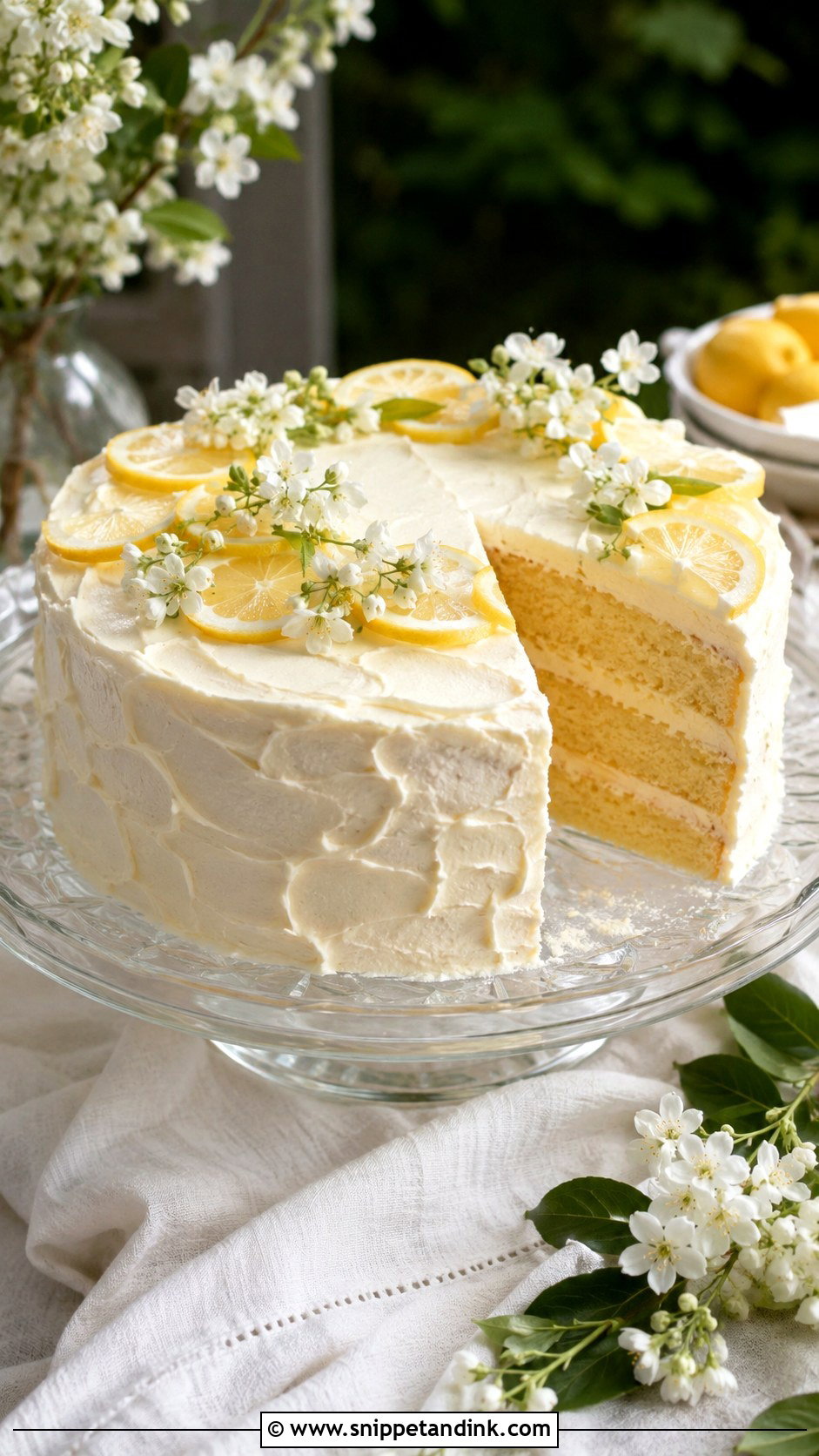
Clear glass lets the cake float, so the frosting does all the talking. The catch is strength. Thin decorative glass is fine for a single cutting tier, but for anything stacked I want thick, tempered glass with a flat, unwarped base, and I check that by laying a level on it before the cake goes down. Glass also bounces light into the lower tier, which brightens white frosting in daytime photos. Keep the linens pale and the styling simple so the clarity reads as intentional.
4. Crystal Wedding Cake Plate
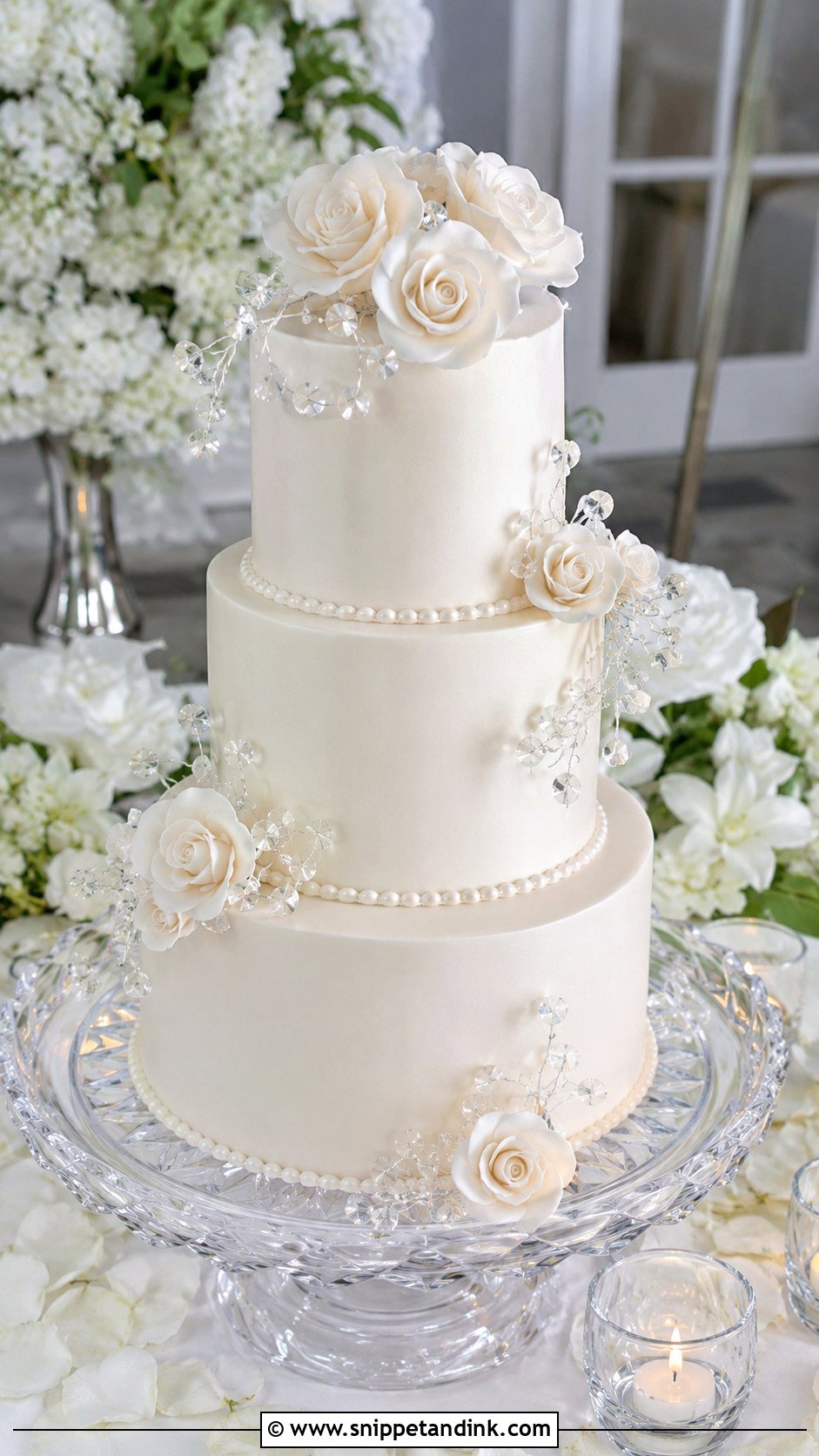
Cut crystal throws sparkle across the table on its own, especially under evening lighting and votives. That means the cake should hold back: smooth fondant, pearl piping, a few white roses or sugar flowers. Crystal pieces are often family heirlooms, and the faceted surface can make a cake board sit unevenly, so I put a thin non-slip mat between board and plate. Clear votives and polished silver nearby carry the shine without competing.
5. Silver Wedding Cake Plate
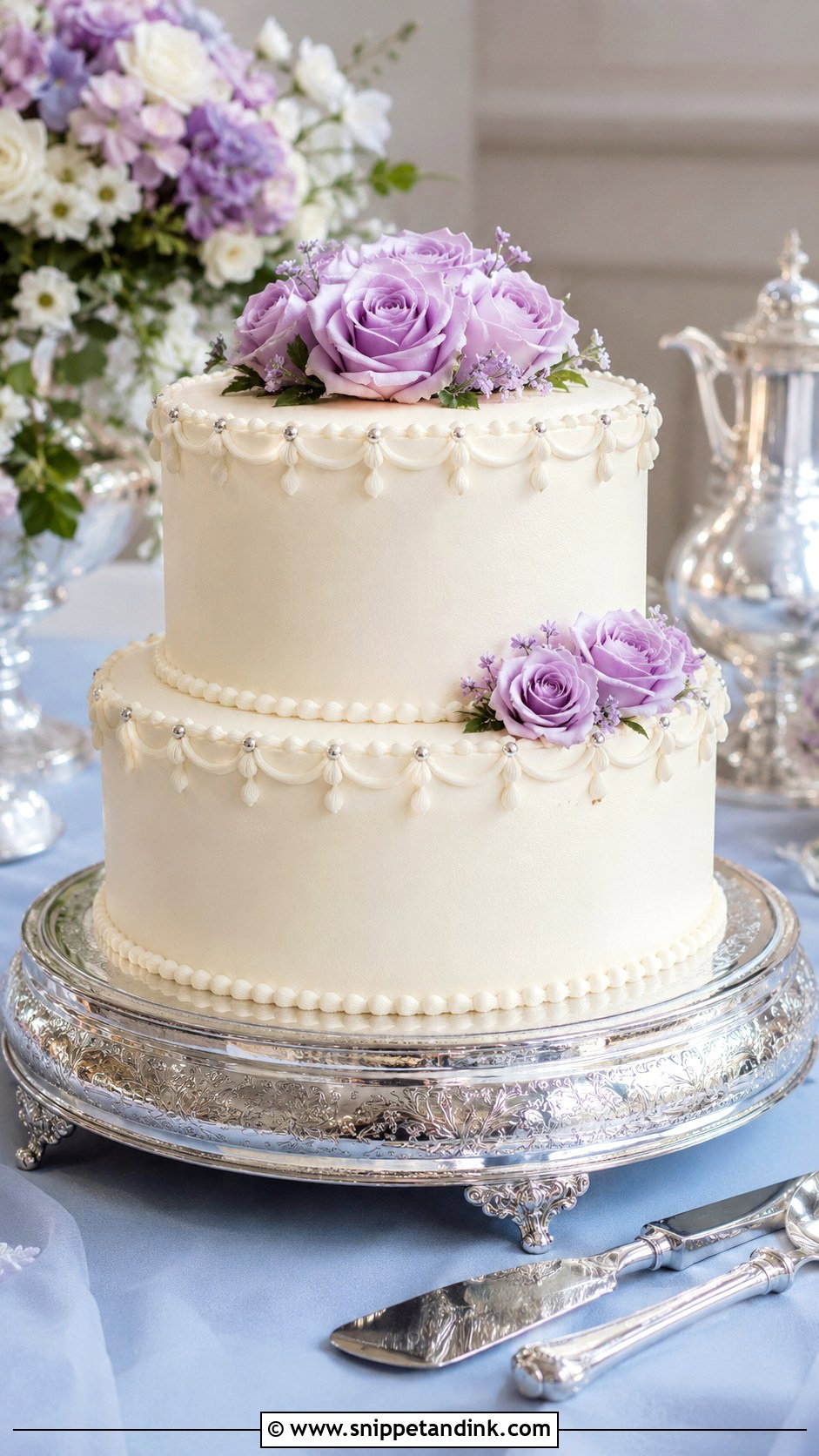
Silver reads cooler and more formal than gold, and it flatters a wider range of cake colors than people expect: ivory, blush, pale blue and lavender all look clean against it. A plain polished plate looks modern, while an engraved or beaded edge feels vintage. I’d repeat one or two silver notes elsewhere, in the vases or the cake knife set, so the plate doesn’t look borrowed from another table. Polish it a day ahead; silver tarnishes quickly in a humid venue.
6. Marble Wedding Cake Plate
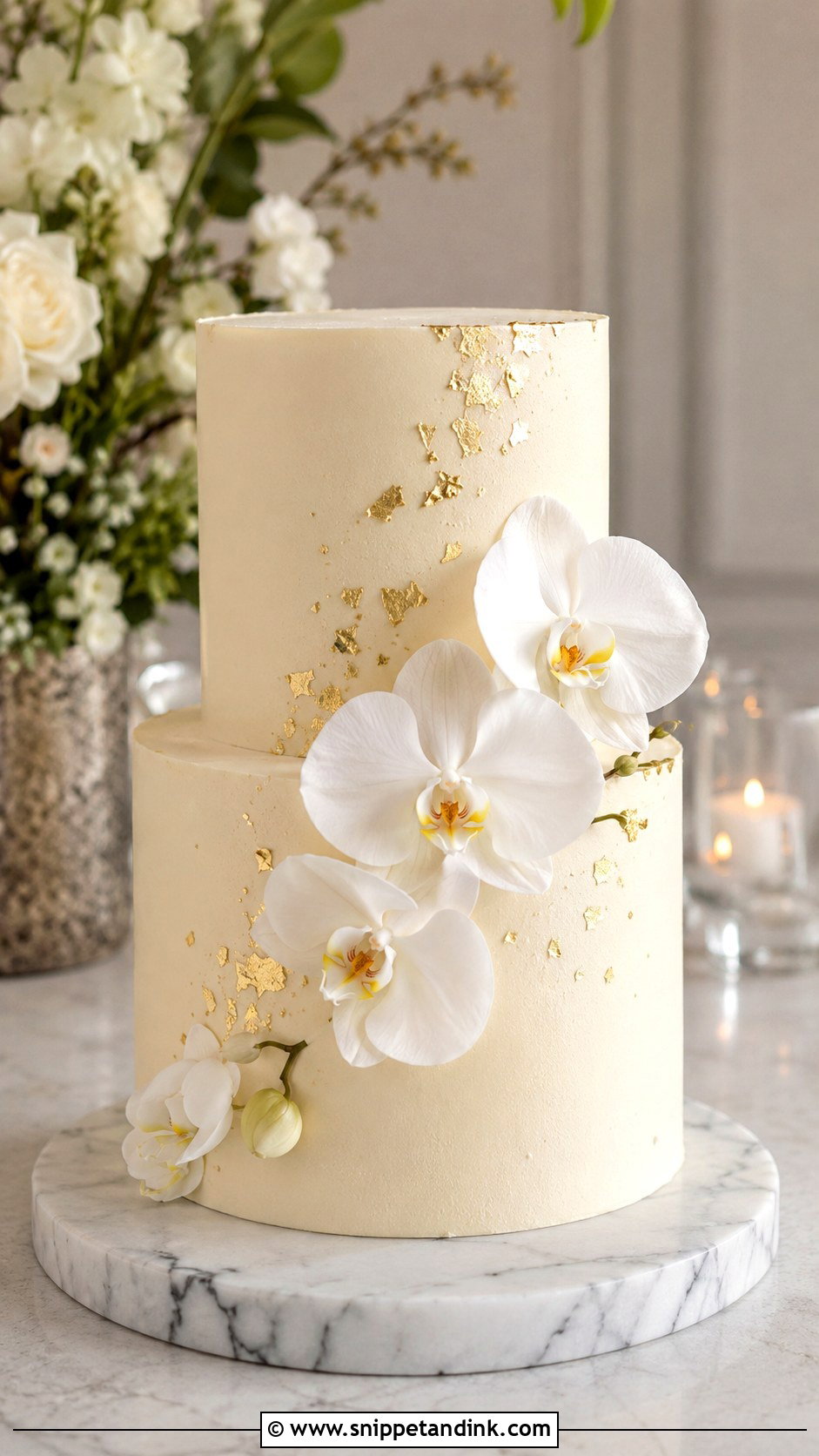
Marble gives a minimal cake an expensive finish. White marble with grey veining sits quietly under ivory buttercream, while black marble turns a plain white cake into the focal point of the room. Because the stone already has pattern, I’d keep cake decoration to one element, such as a few orchids or a clean ribbon edge. A real marble slab is heavy and can be uneven on the underside, so check it sits flat on the table before anything goes on top. Marble also stays cool, which genuinely helps buttercream in a warm room.
7. Wooden Wedding Cake Plate
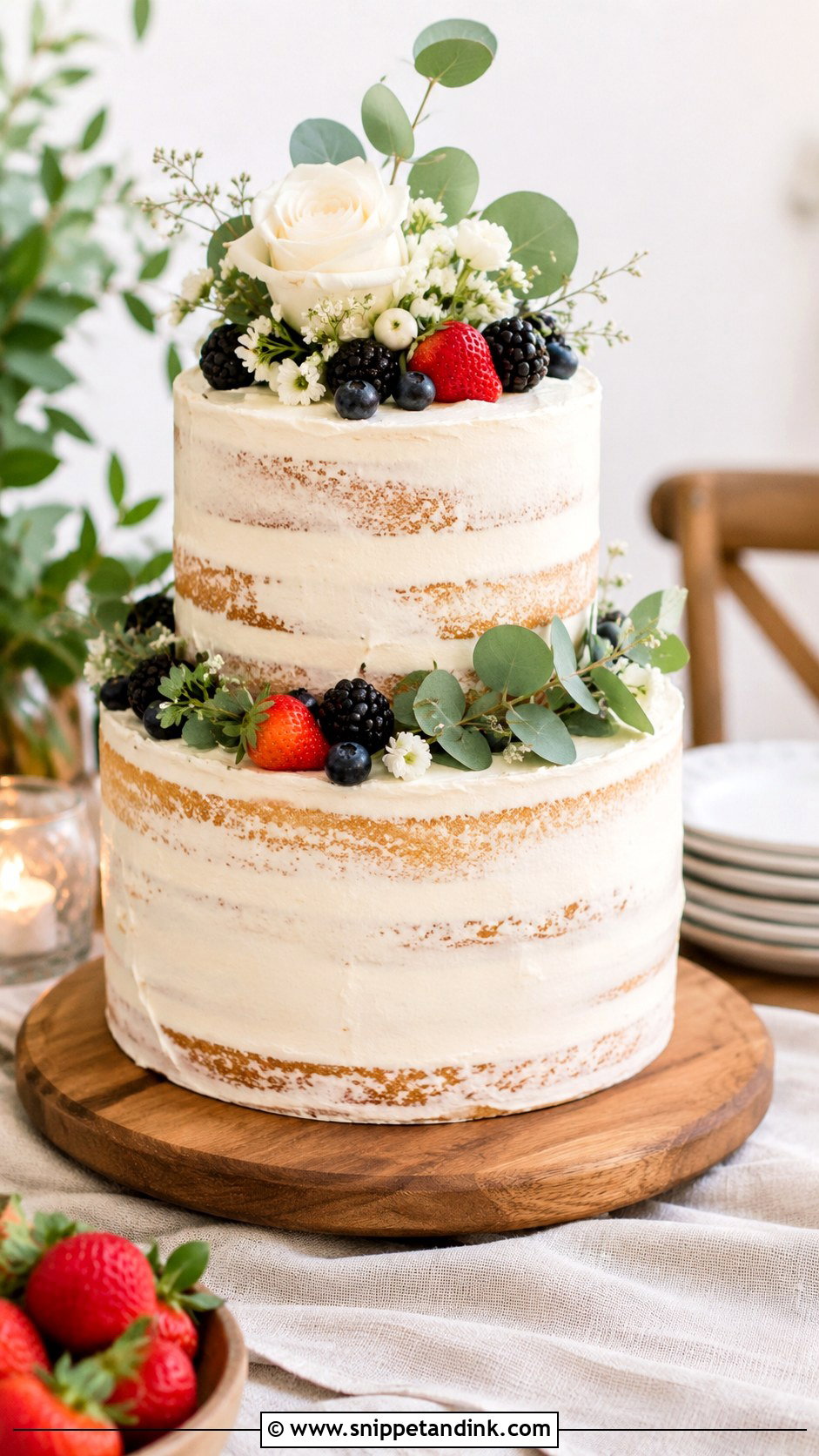
Wood suits barns, gardens and outdoor receptions, and it pairs naturally with semi-naked cakes, berries and greenery. A smooth turned round looks finished; a live-edge slab is more relaxed but often rocks, so test it on a flat surface first. Raw wood absorbs grease, so I never put frosting straight onto it. The cake always goes on its own board, and the wood should have a food-safe oil finish. Linen and loose greenery around it make the material feel deliberate rather than casual.
8. Acrylic Wedding Cake Plate
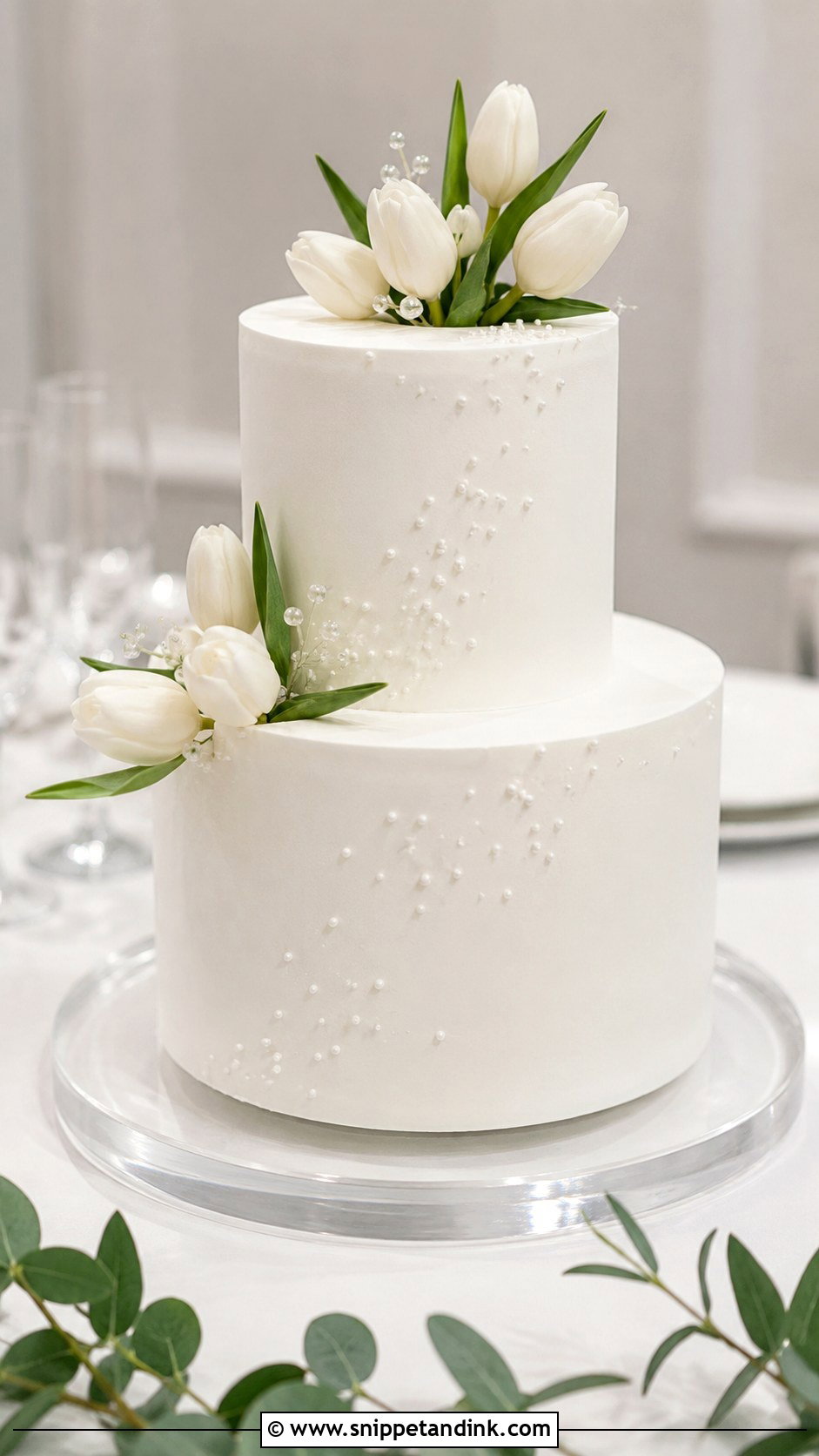
Thick clear acrylic gives a cake that slightly floating, modern look without competing with bright colors. It sits well on rooftop and contemporary tables, and it’s light enough to use across dessert tables too. Choose at least a half-inch thickness; thin acrylic bows under a stacked cake. Sharp buttercream edges suit it best. The one thing I always do on site is wipe it with a microfiber cloth after setup, because every fingerprint shows in close-up shots.
9. Mirror Wedding Cake Plate
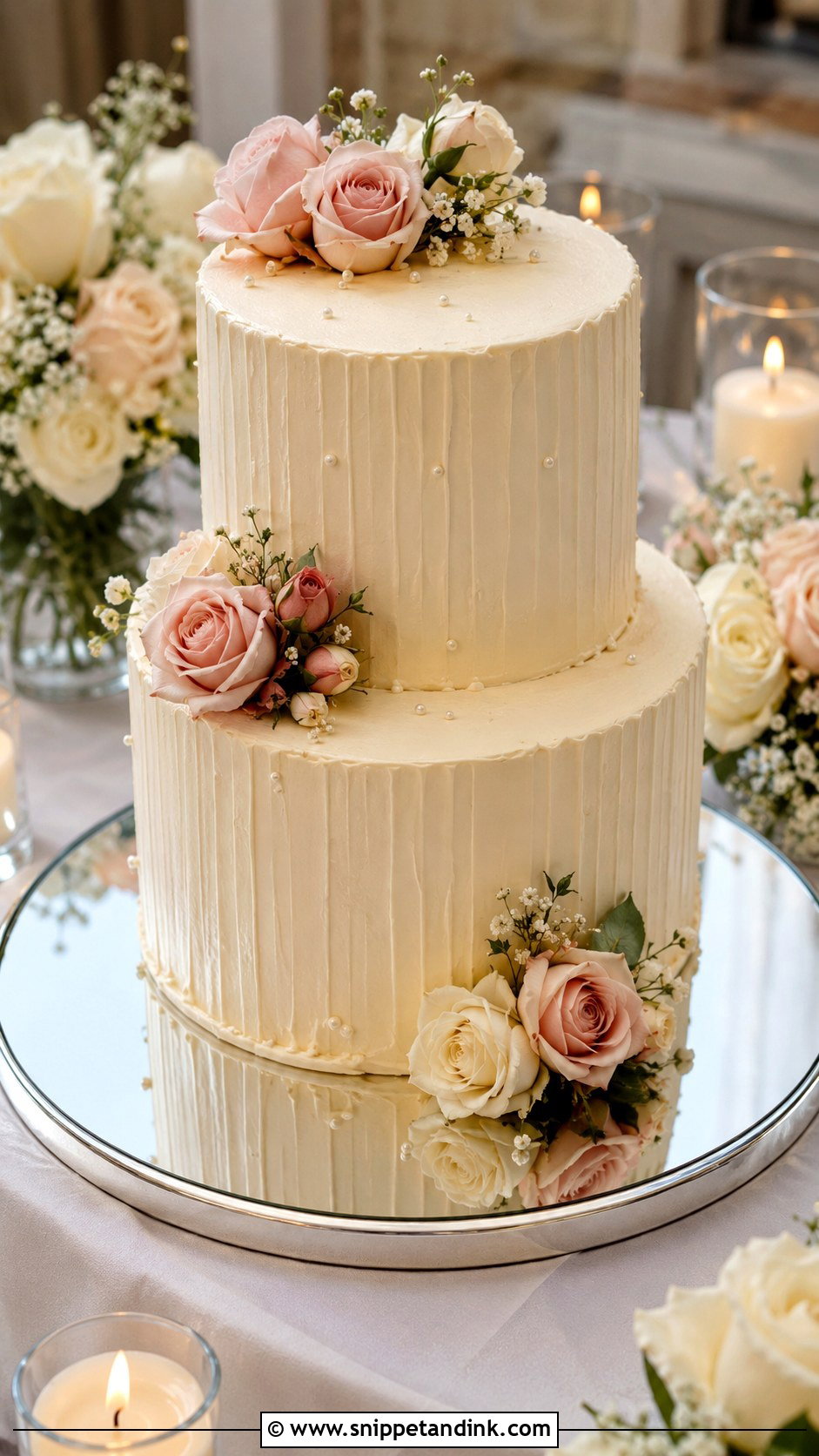
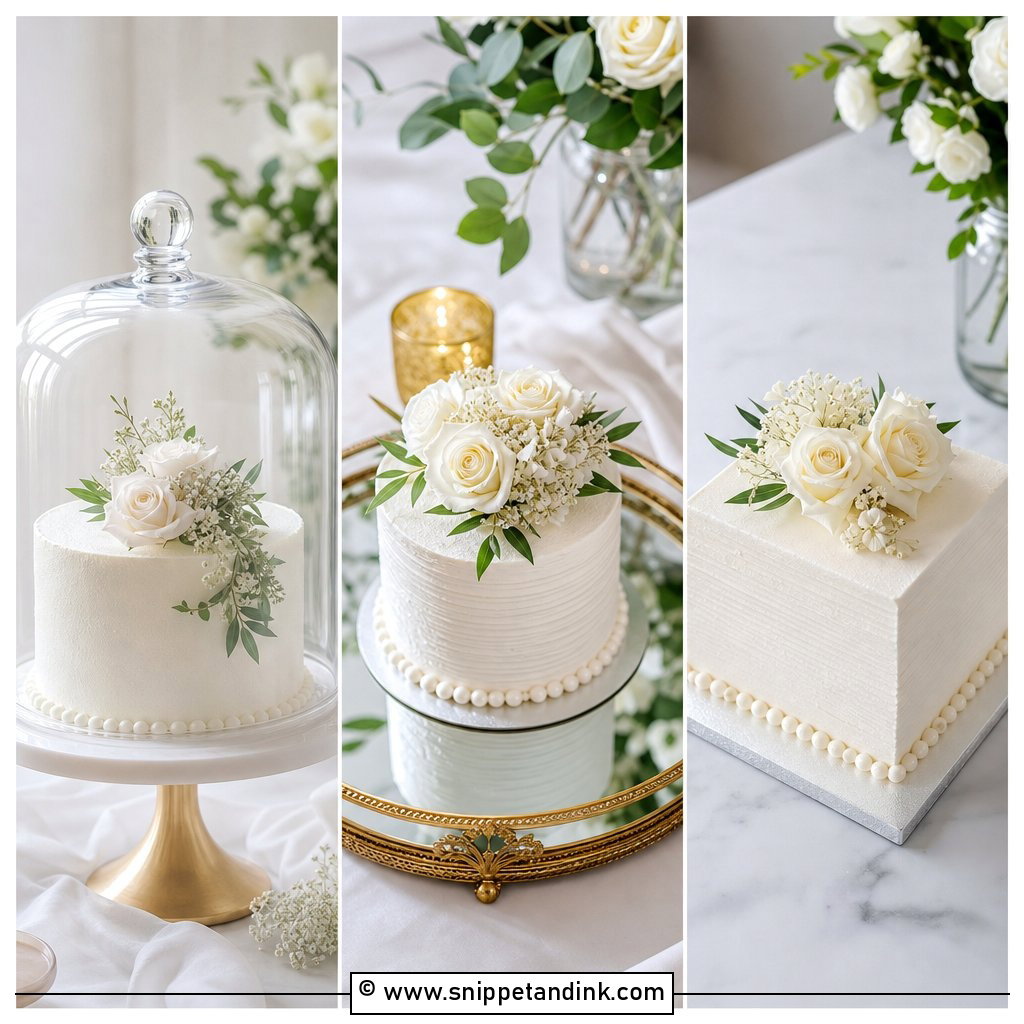
Mirror doubles everything: the cake, the flowers, the candle flames. That reflection makes a smaller cake look bigger, which is why mirror bases are common under single tiers at evening receptions. It also doubles every crumb and smudge. I place the cake on a board trimmed flush, clean the glass last thing before guests come in, and keep surrounding decor sparse so the reflection stays readable. White frosting and soft roses suit it; busy sugar work turns into visual noise.
10. Ceramic Wedding Cake Plate
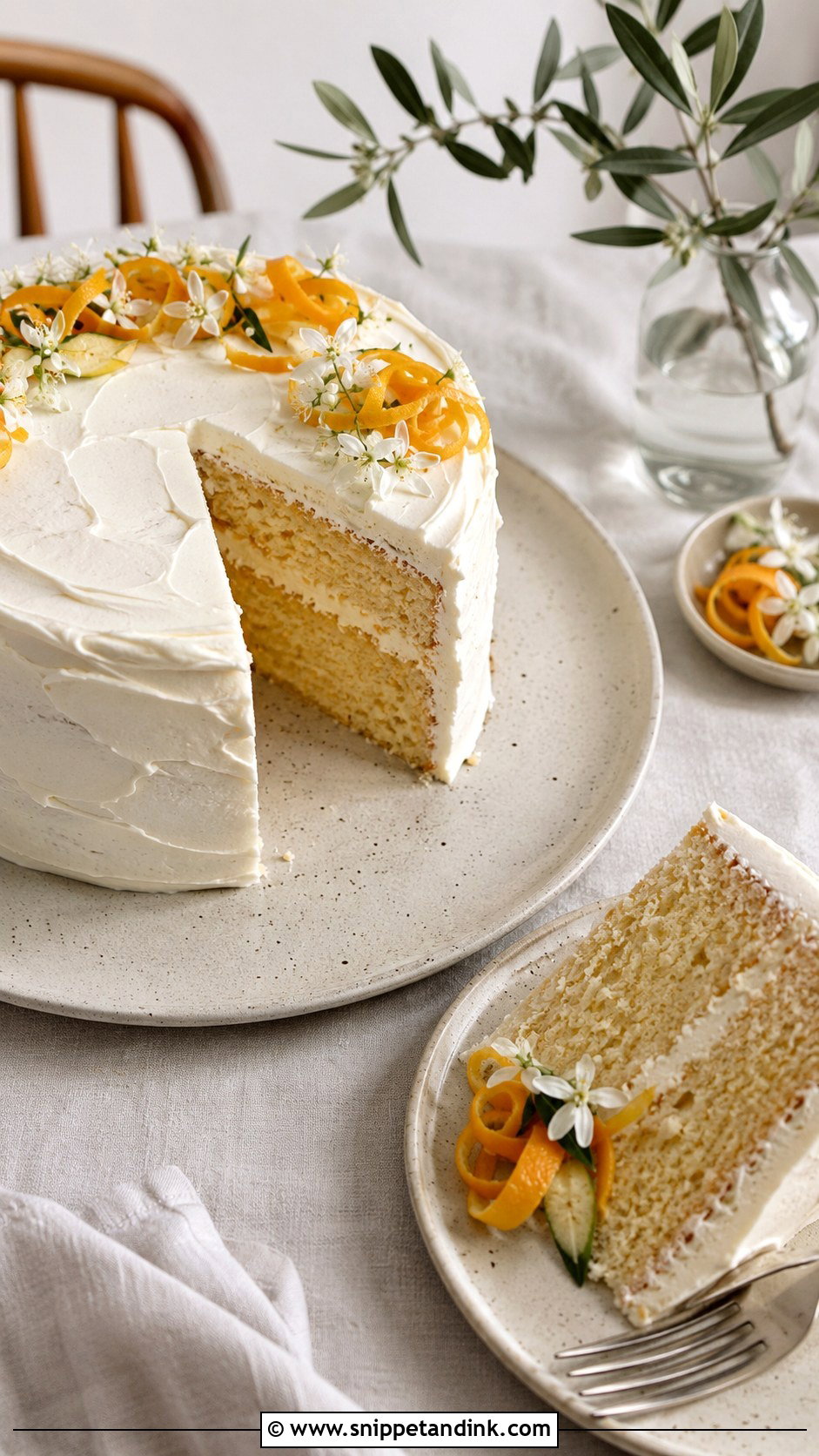
Ceramic brings a handmade warmth that metal and glass can’t. Speckled stoneware suits brunch receptions and garden parties, while glossy white ceramic leans modern. A wide ceramic platter is best under a single tier or a small two-tier cake. Before you commit, run a hand across the center. Many handmade plates dip slightly, and even a slight dip will tilt a stacked cake. Soft buttercream, citrus slices or a little fresh piping sit naturally on it.
11. Vintage Wedding Cake Plate
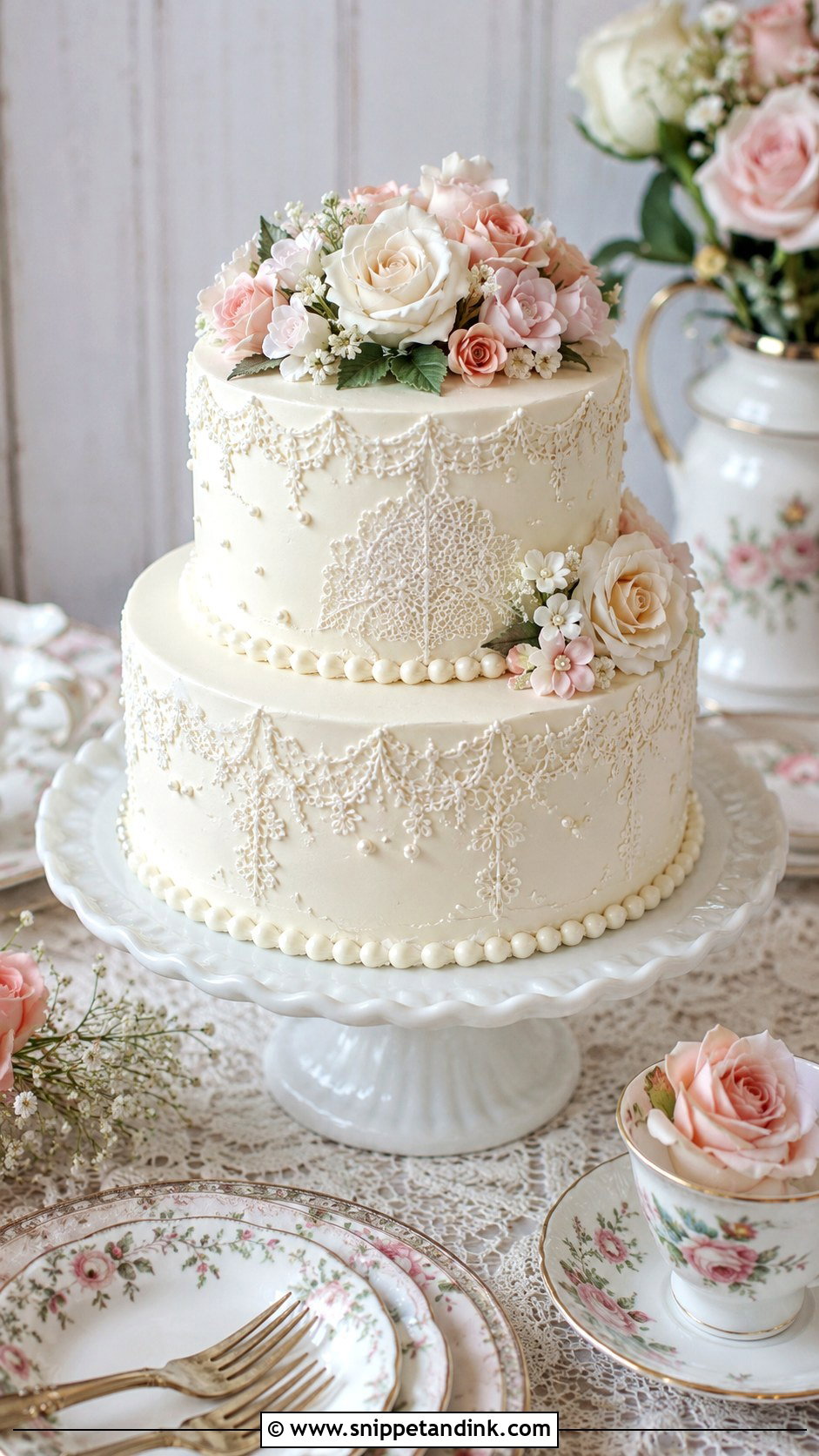
Scalloped milk glass, old silver, painted china and pedestal stands give the table a sense of history, and they suit tea-style receptions and heirloom decor. Pair them with buttercream piping, small sugar flowers and pastel blooms. My worry with vintage is always strength. Old pedestals have hairline cracks you can’t see until there’s weight on them, so I’d only put a light cutting cake on an antique and keep the main cake on something newer. A piece borrowed from a grandmother means more than one bought for the look.
12. Black Wedding Cake Plate
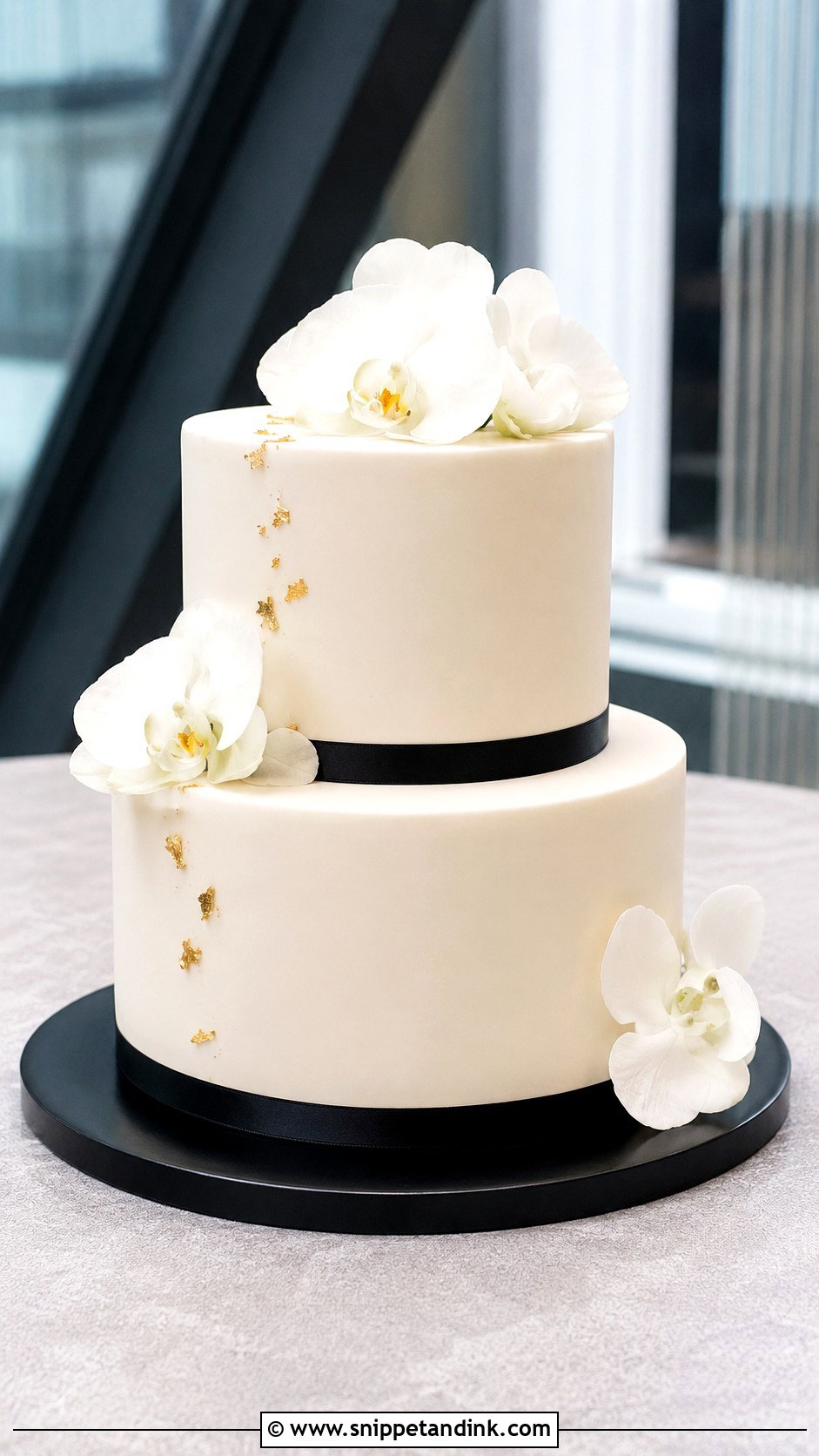
Nothing makes a white cake look whiter than a black base. It grounds the display and suits gallery spaces, city venues and minimalist tables, especially with anemones, orchids, black ribbon or a little gold leaf. Matte black is soft and modern; gloss is more dramatic but shows every crumb. I’d keep decoration restrained here, since heavy flowers on top plus a heavy base can make the cake look squat.
13. Floral Wedding Cake Plate
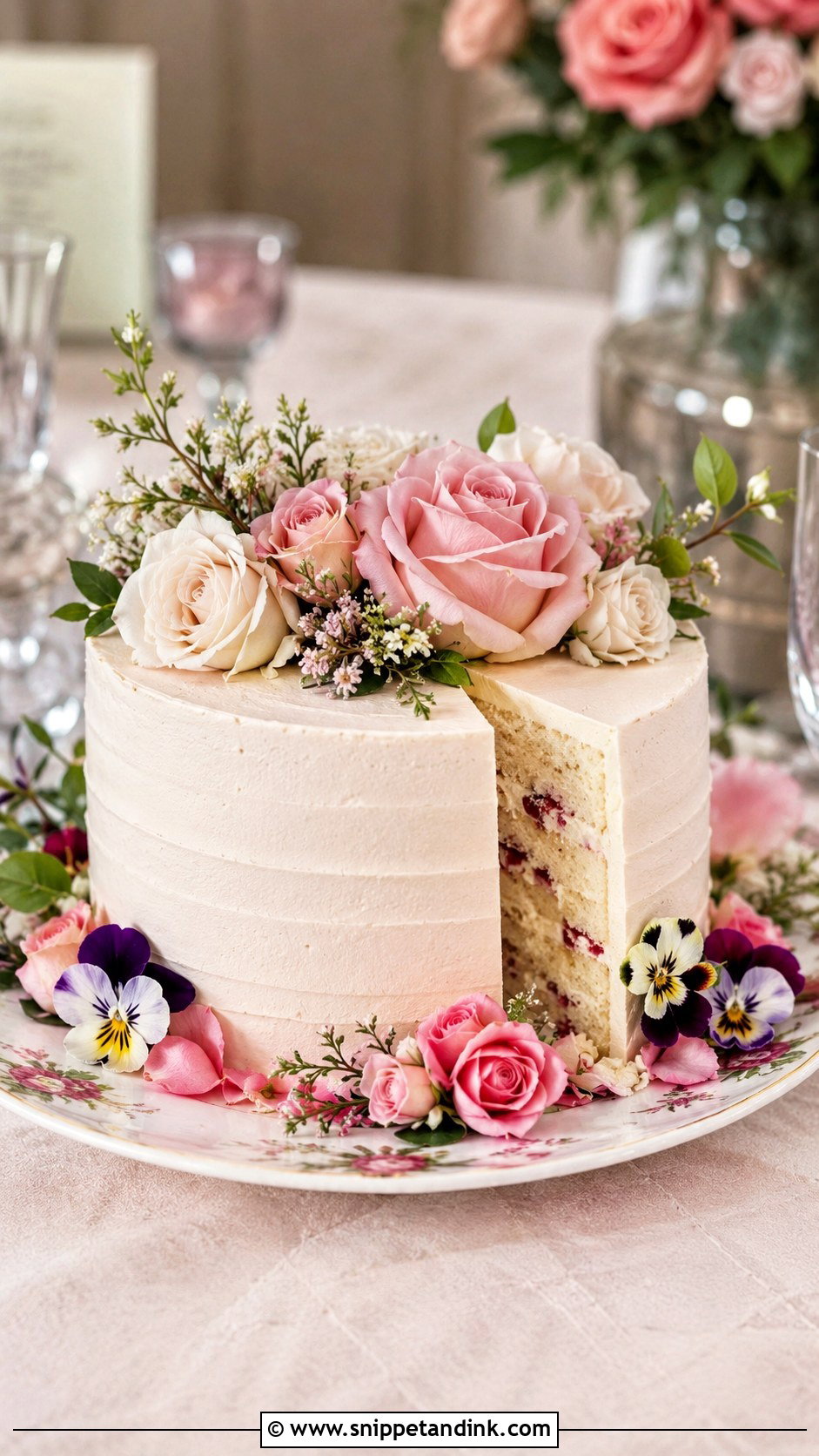
A floral plate can mean a hand-painted pattern, a ring of fresh blooms around the board, or a platter dressed with flowers at the base. All three suit spring and garden weddings. If you use real flowers, tell your florist they’ll touch the cake. Some common blooms are toxic or sprayed, so I want them pesticide-free and kept off the frosting with a barrier. Match them to the bouquet, and keep the cake itself simple so the base and cake read as one piece.
14. Pearl Wedding Cake Plate
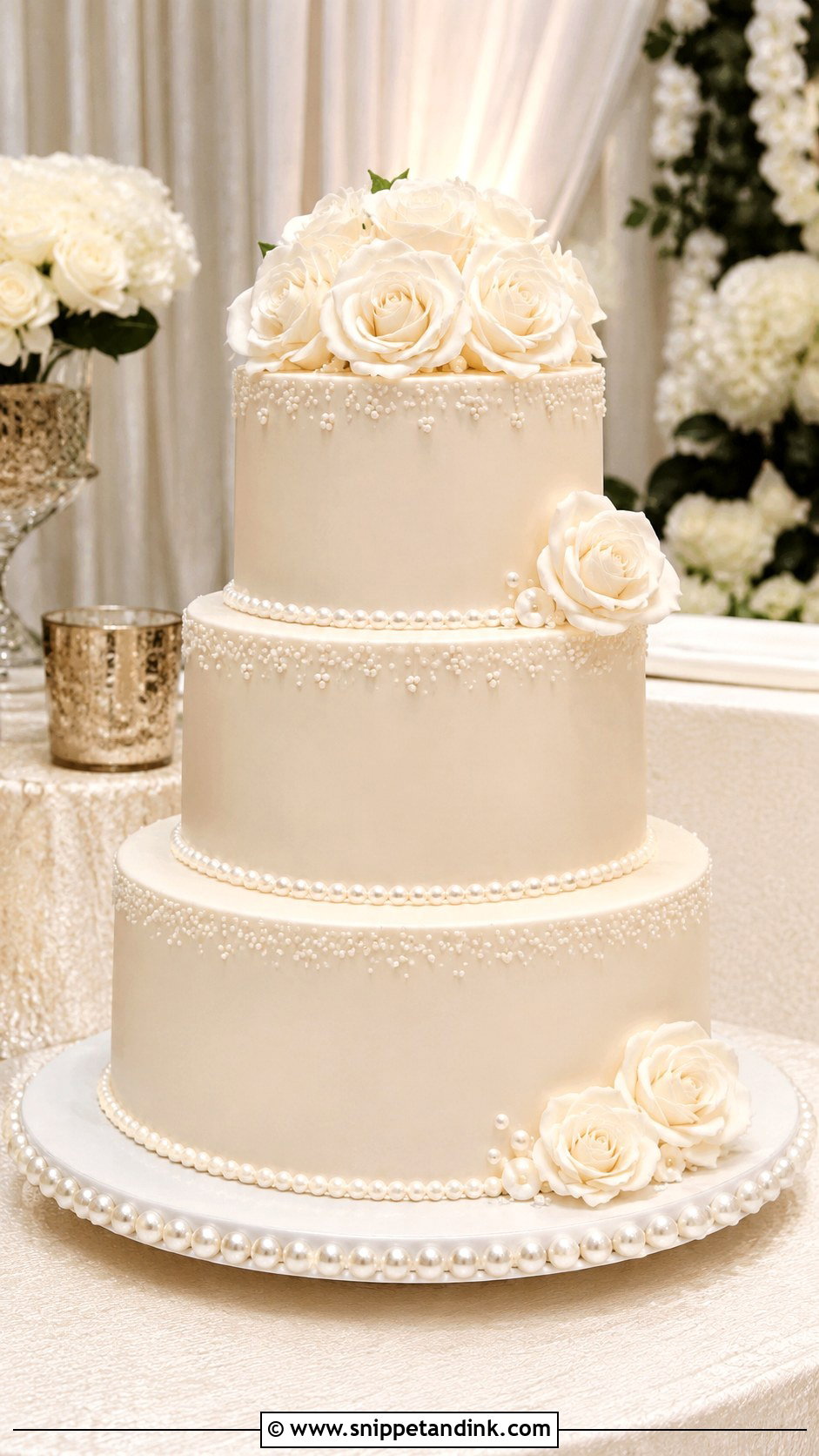
Pearls at the base suit a cake that already carries pearl piping or satin ribbon. That can be a pearl-trimmed rim, a beaded edge, or a plain white plate with a strand of pearls laid around the board. Ivory buttercream, white roses, ranunculus and lace-style piping all belong here. I’d keep the cake graceful rather than bold, so the pearls look like part of the design and not an add-on. Glue nothing to the cake itself; loose strands lift off cleanly when it’s time to cut.
15. Ruffled Wedding Cake Plate
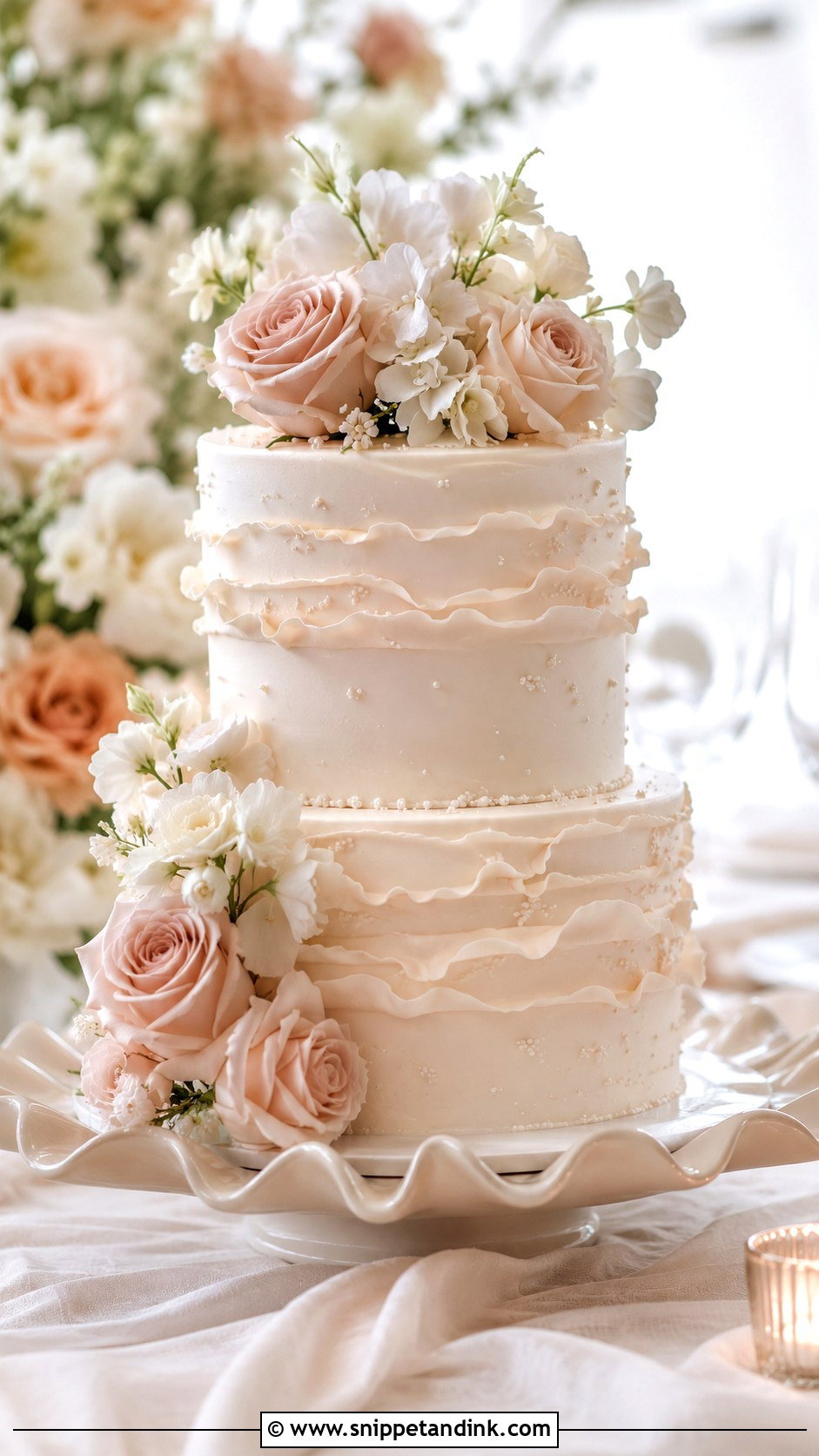
A wavy ceramic edge or scalloped rim adds movement under the cake, and it shows best beneath one or two tiers, where the rim stays visible. Blush flowers, ivory frosting and light greenery suit it. The trap is texture on texture: if the cake is already covered in buttercream ruffles, a ruffled plate turns into a blur, so I’d choose a plain plate color and let only one of them move.
16. Minimalist Wedding Cake Plate
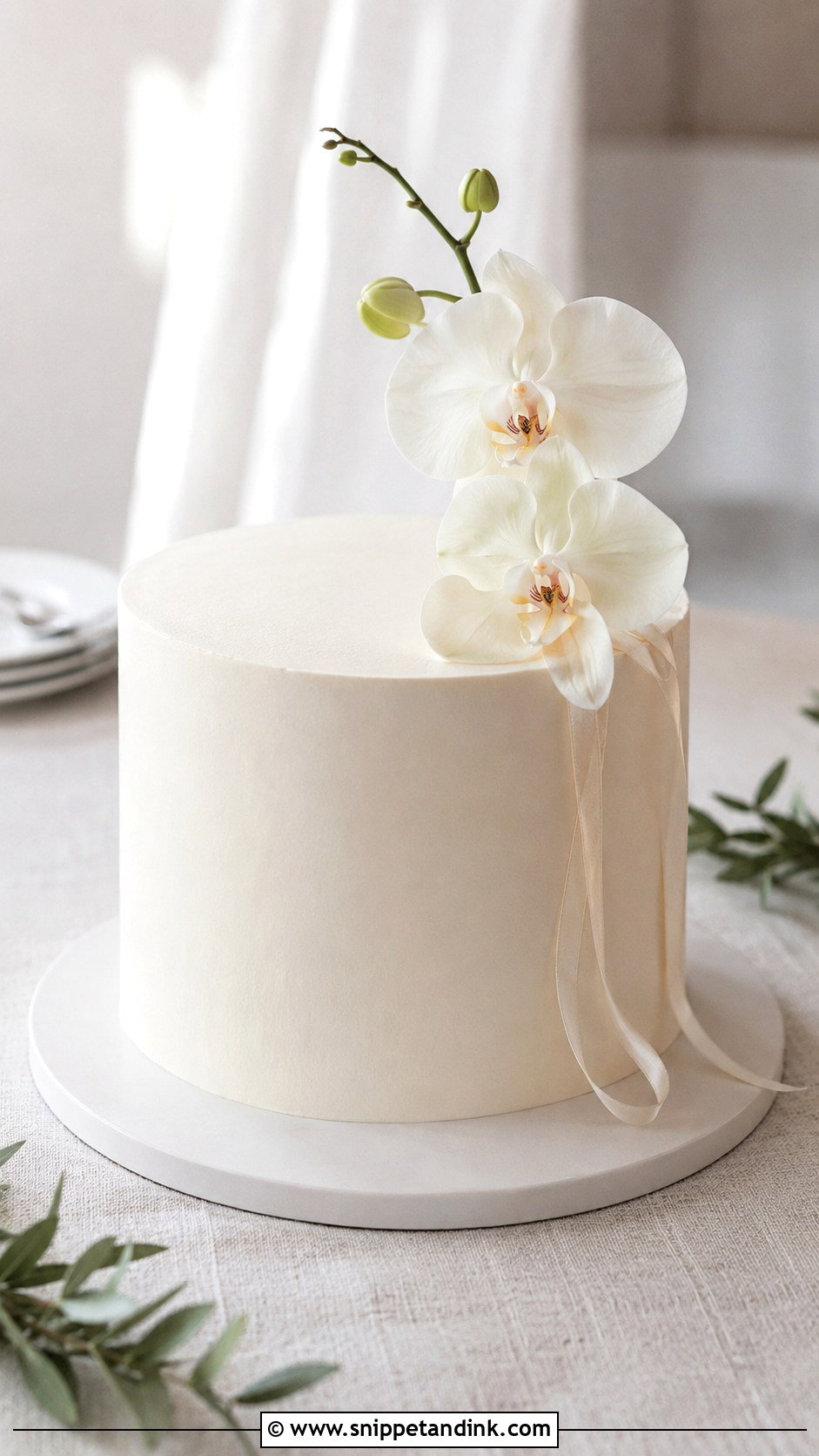
Minimalism lives or dies on proportion. A flat white plate, matte stone, clear acrylic or plain metal works only if the width is right, because too big looks empty and too small looks cramped. I aim for a border of roughly two to three inches showing past the bottom tier. Pair it with smooth buttercream or crisp fondant and one small detail, then keep the linen and table decor equally quiet.
17. Rustic Wedding Cake Plate
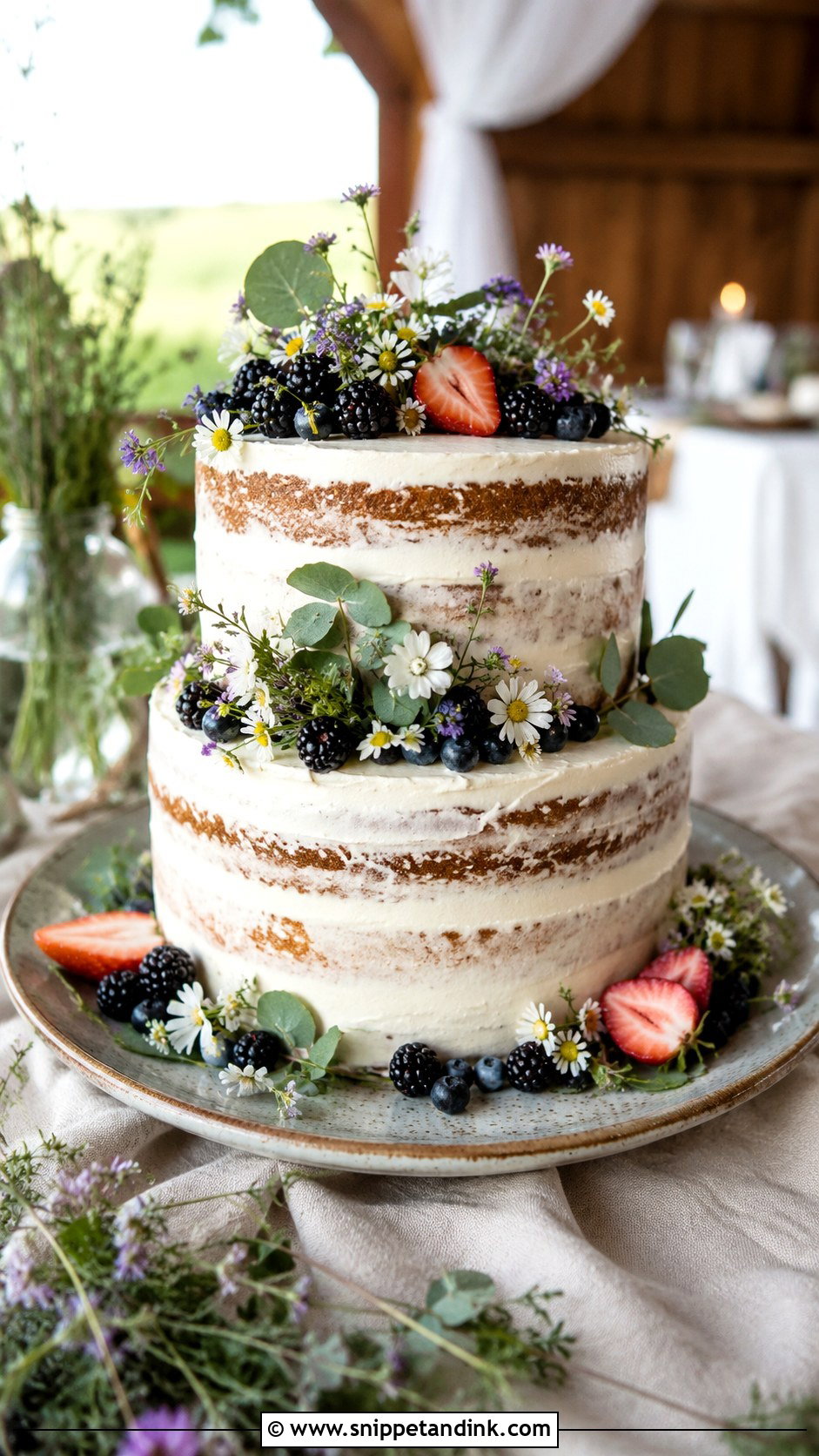
Wood slices, stoneware, woven trays and warm-toned ceramic all give a relaxed, welcoming base for barn and outdoor weddings. They suit semi-naked cakes, textured buttercream, berries and wildflowers. My rule is one rustic material per table; a wood slice on a woven runner next to galvanized buckets starts to look like a prop shop. Woven trays flex, so I set a rigid board inside them before the cake goes on.
18. Modern Wedding Cake Plate
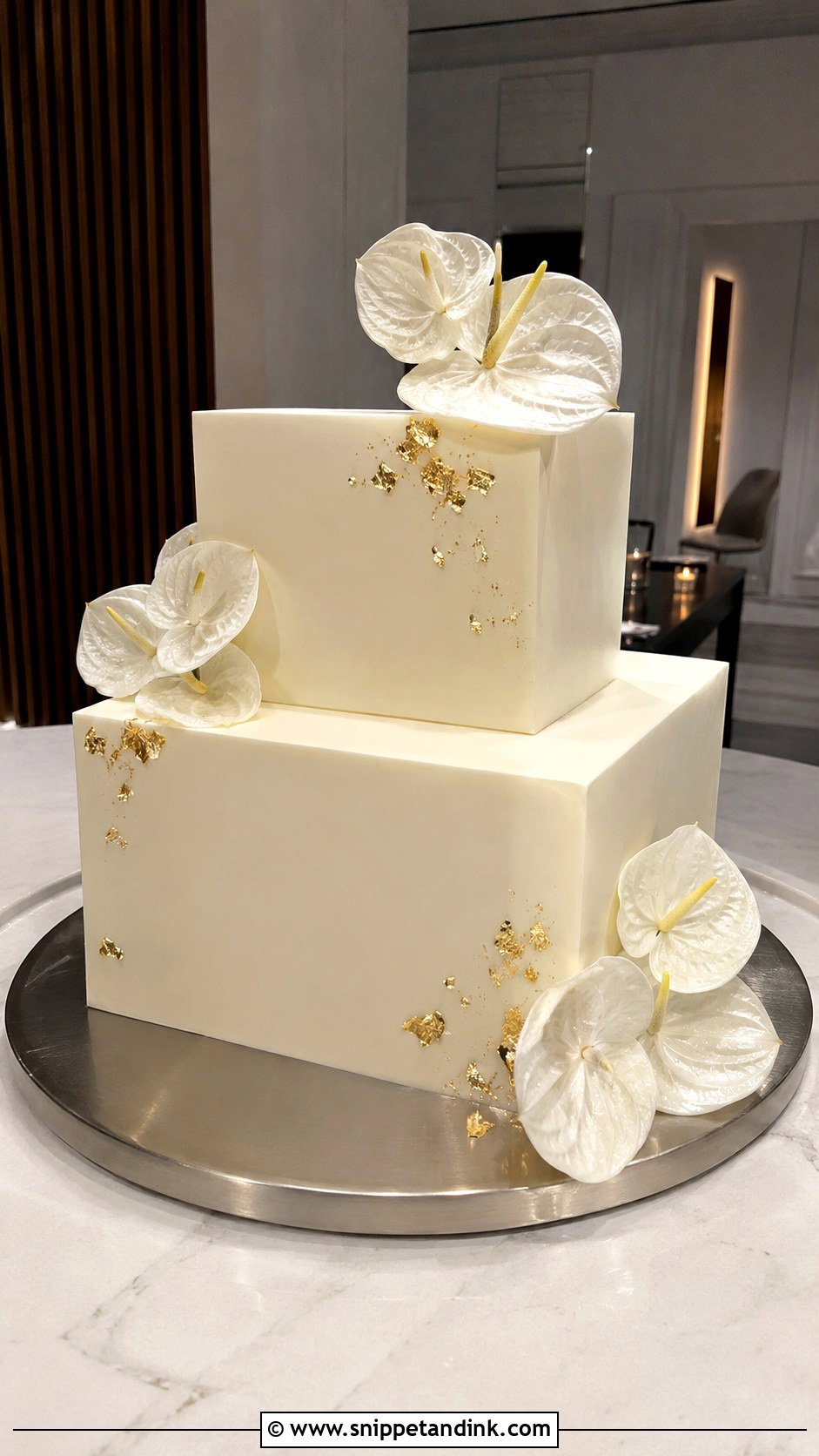
Modern plates rely on clean shapes and sharp contrast: a square acrylic plate, a matte black platter, white marble or brushed metal. They suit cakes with smooth frosting, geometric detail or a single dramatic floral cluster, and they make sense in venues with architectural lines or city views. A square plate under a round cake can look off unless the corners are clearly intentional, so I’d mock it up with a cake dummy first. Edit the table hard so the cake stays the focus.
19. Tiered Wedding Cake Plate
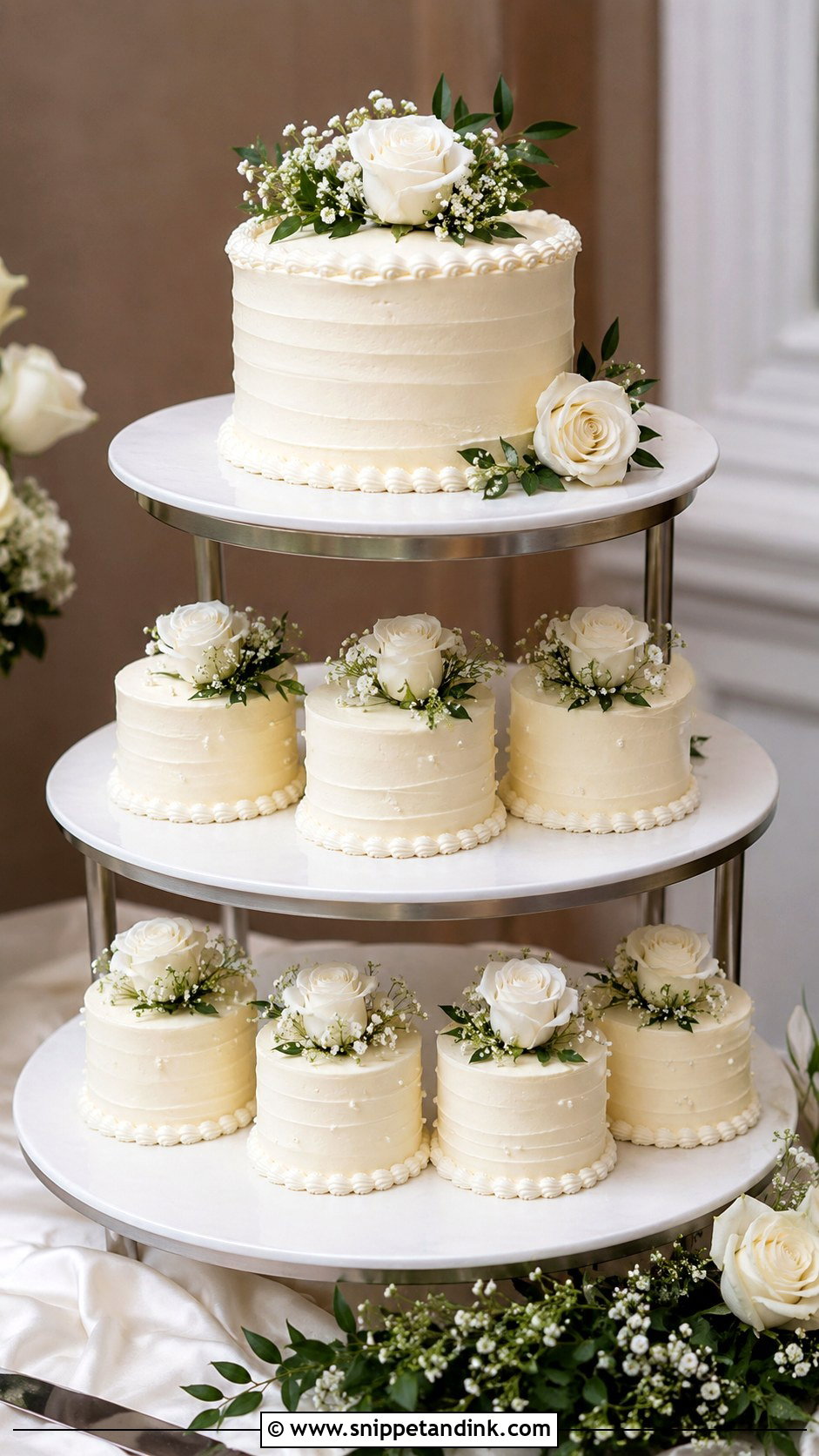
A tiered stand builds height without a huge stacked cake, which is why small weddings like it. It can hold a cutting cake on top with cupcakes, mini cakes or sweets below, or separate small cakes on each level. Check that every level sits straight and that the center post screws in tight, because a loose post is how these stands topple. Tie the levels together with one frosting color or one flower, and leave a little space between pieces so guests can lift them without knocking the rest.
20. Personalized Wedding Cake Plate
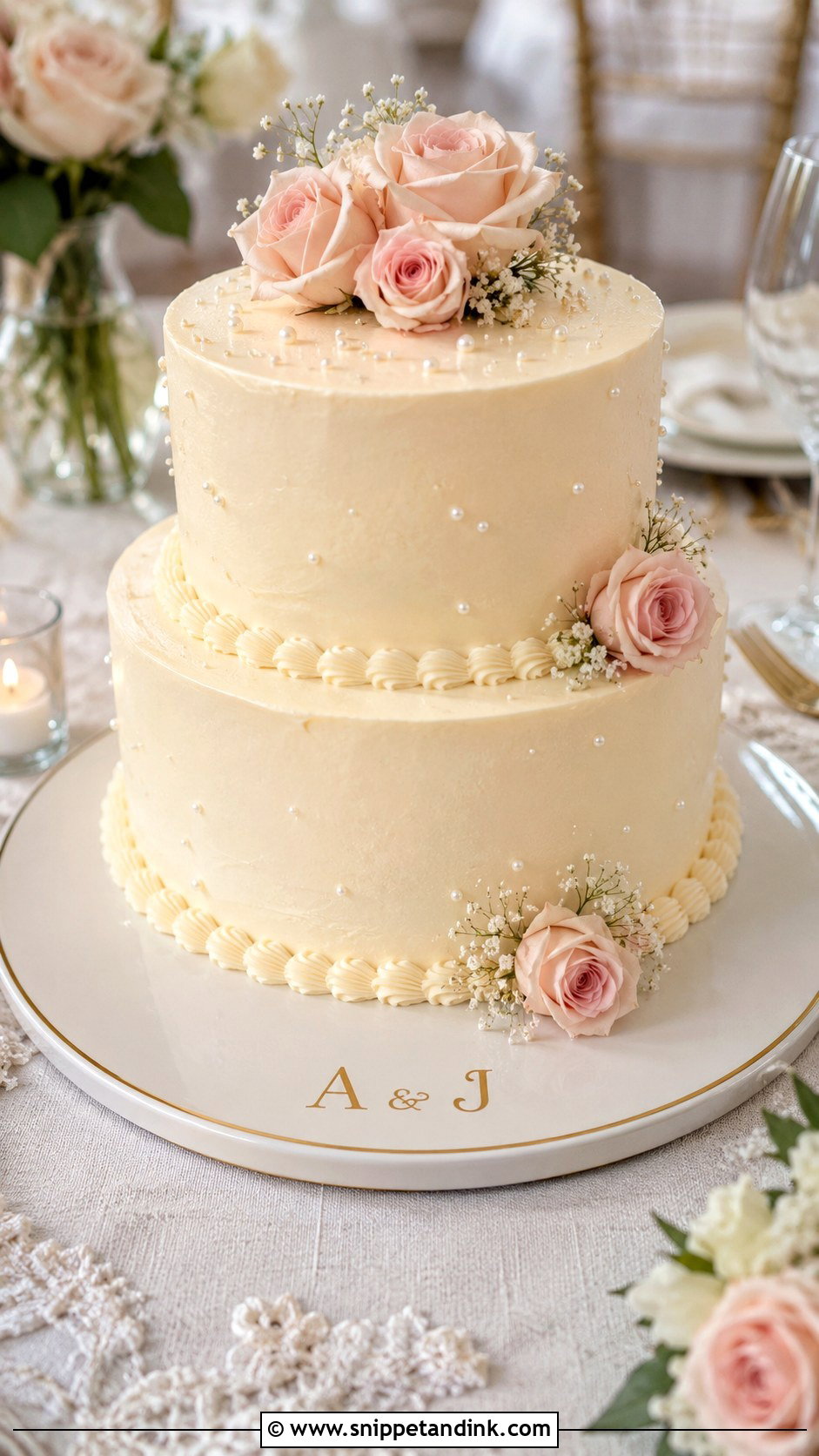
Initials, a wedding date, an engraved rim or a plate tied to a family tradition turn the base into something you keep. A white plate with gold lettering, an engraved wooden board or a custom ceramic platter all look right. Keep the lettering near the rim, where the cake won’t hide it, and order it early. Personalized pieces often take several weeks to make, and I’d want it in hand before the final cake consultation so the design can account for it.
Getting Your Plate to the Baker, and Getting It Back
Most bakers build the cake on a strong drum in the kitchen and transfer it to your plate at the venue, so the plate needs to arrive there before the cake does. I ask couples to drop it off at the venue or with the planner, clearly labeled with their names and a phone number, a day or two before. If you want the cake built directly on your plate, ask first. Some bakers will, many won’t, because a plate that cracks in a van takes the cake with it.
Rented plates often come with a damage deposit and a return deadline, so put someone in charge of collecting it at the end of the night. For heirlooms, tell the caterer up front. Cutting usually happens in the kitchen after the first ceremonial slice, and a heavy plate carried through a busy back corridor is the most common way family china gets chipped.
What a Cake Knife Does to Glass, Mirror and Marble
The ceremonial cut looks gentle, but a serrated knife dragged across glass, mirror or polished marble leaves marks. I always leave the cake on its own thin board, trimmed so it doesn’t show, so the knife meets cardboard and not your plate. It also lets the caterer slide the whole cake off in one move.
Outdoors, think about heat as well. Metal plates in direct sun get hot enough to soften the bottom of a buttercream tier within the hour, while stone and ceramic stay cooler. If the cake table will catch afternoon sun, choose marble or ceramic, or ask for shade over that corner.
The Plate Is Part of the Cake Design
Treat the plate the way your baker treats the frosting: as part of the design, decided early. Confirm the bottom tier diameter, the delivery plan and the table setup before you buy anything, then match the plate to the room rather than to a photo. A sturdy, level base in a material that suits your venue will do more for the cake than the most expensive plate on the shelf.


Leave a Reply