
A big wedding cake is a structural project as much as a pretty one. Once you go past three tiers, or add hanging crystals, heavy sugar flowers or a black fondant finish, every decision affects how the cake is built, transported and served. The current mood leans toward vintage piping, pearl finishes, sugar flowers, sculptural shapes, draped fondant, metallic leaf and dramatic cake tables. Below are 20 showpiece designs, with notes from the decorating side on what each one demands, where it struggles and what to ask your baker before you commit.
Height Without Feeding Three Hundred People
Most extravagant cakes are taller than the guest count needs. Bakers have a few honest tricks for getting the look without paying for cake nobody eats.
- Dummy tiers: styrofoam rounds decorated exactly like the real tiers. They’re lighter, safe to stack high, and nobody can tell from the dance floor. Only the real tiers get cut.
- Kitchen cakes: a plain sheet cake in the same flavour, kept in the back and sliced for guests while the display cake stays intact for photos.
- Separators and tall stands: crystal or acrylic separators between tiers add inches of height and a lot of sparkle without adding cake.
- Fewer, deeper tiers: an extra-tall tier, made from two stacked cakes, looks modern and gives more servings per tier.
Ask your baker which approach suits the design. Some decorative finishes, like delicate ruffles, behave differently on a dummy than on real cake, so the two may need slightly different handling.
1. Tall White Wedding Cake
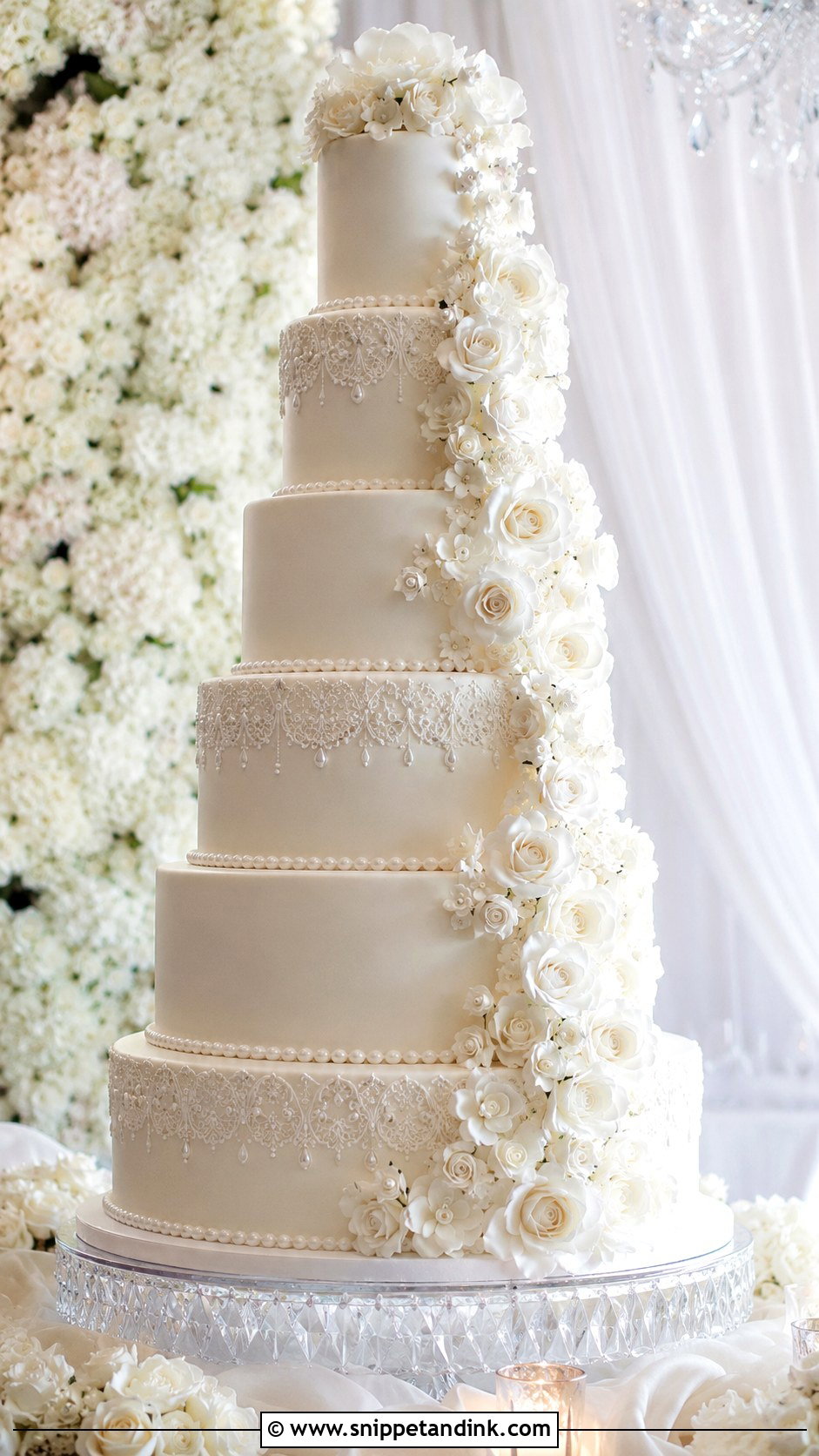
A tall white cake gets its drama from proportion, not decoration. Four to six tiers in smooth white fondant or buttercream, with each tier stepping down by about two inches in diameter, keeps the silhouette clean. Anything taller needs a central dowel running through the whole stack, which your baker will usually insert on site. To make it feel grand, add oversized sugar flowers, pearl piping or a cascade that follows the tiers. White is less forgiving than people expect: under warm venue lighting a pure white fondant can look slightly grey next to an ivory dress, so I often tint it a shade warmer.
2. Pearl Wedding Cake
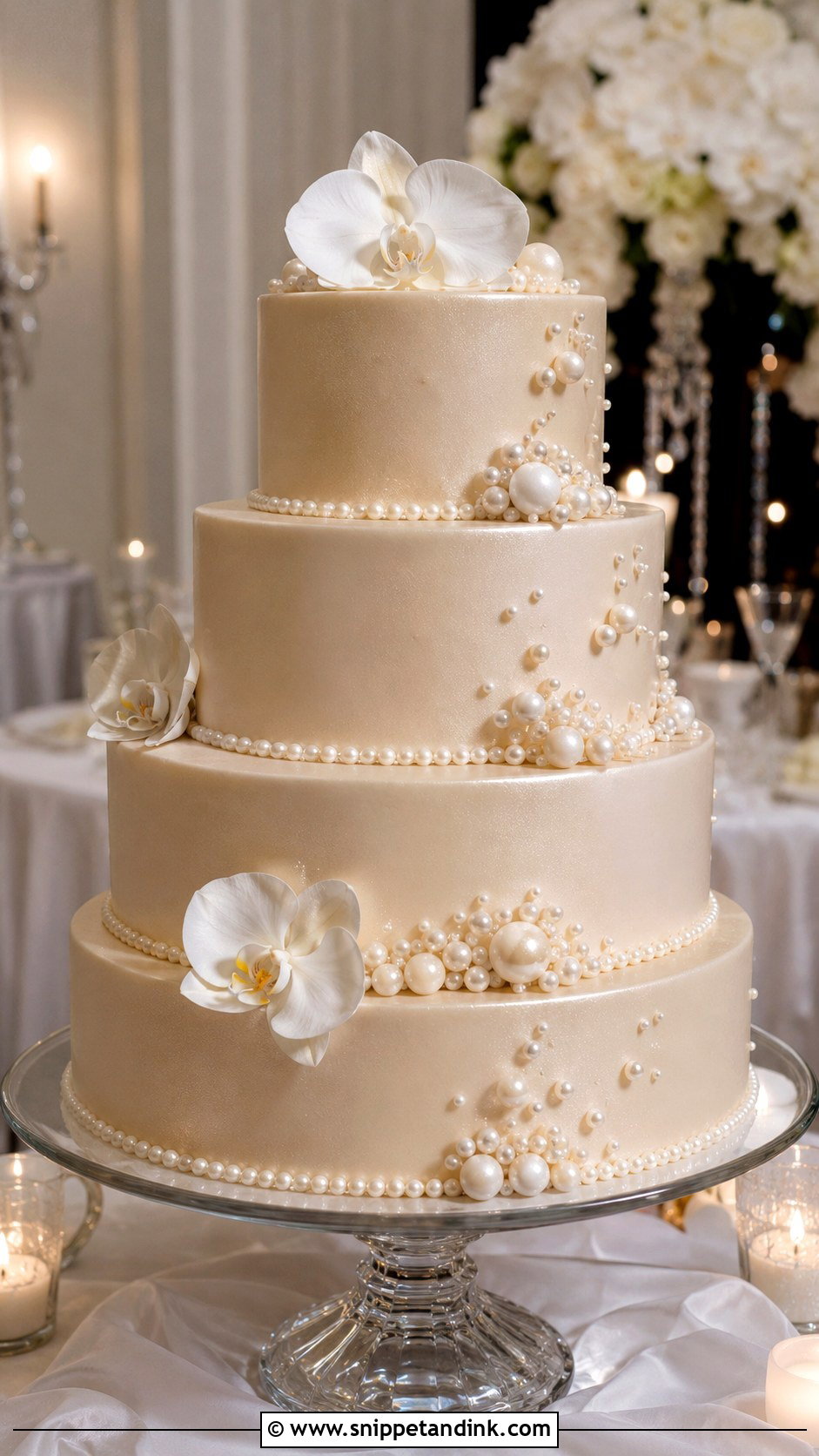
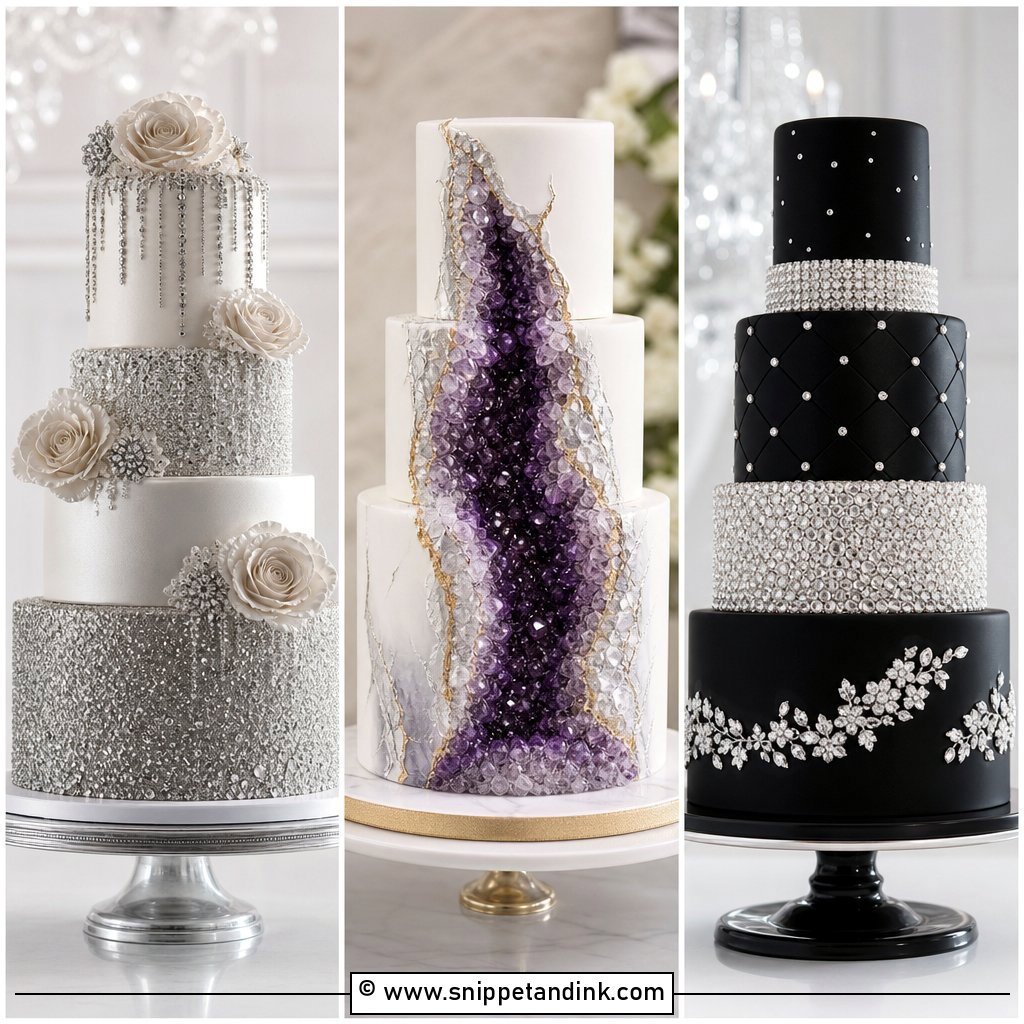
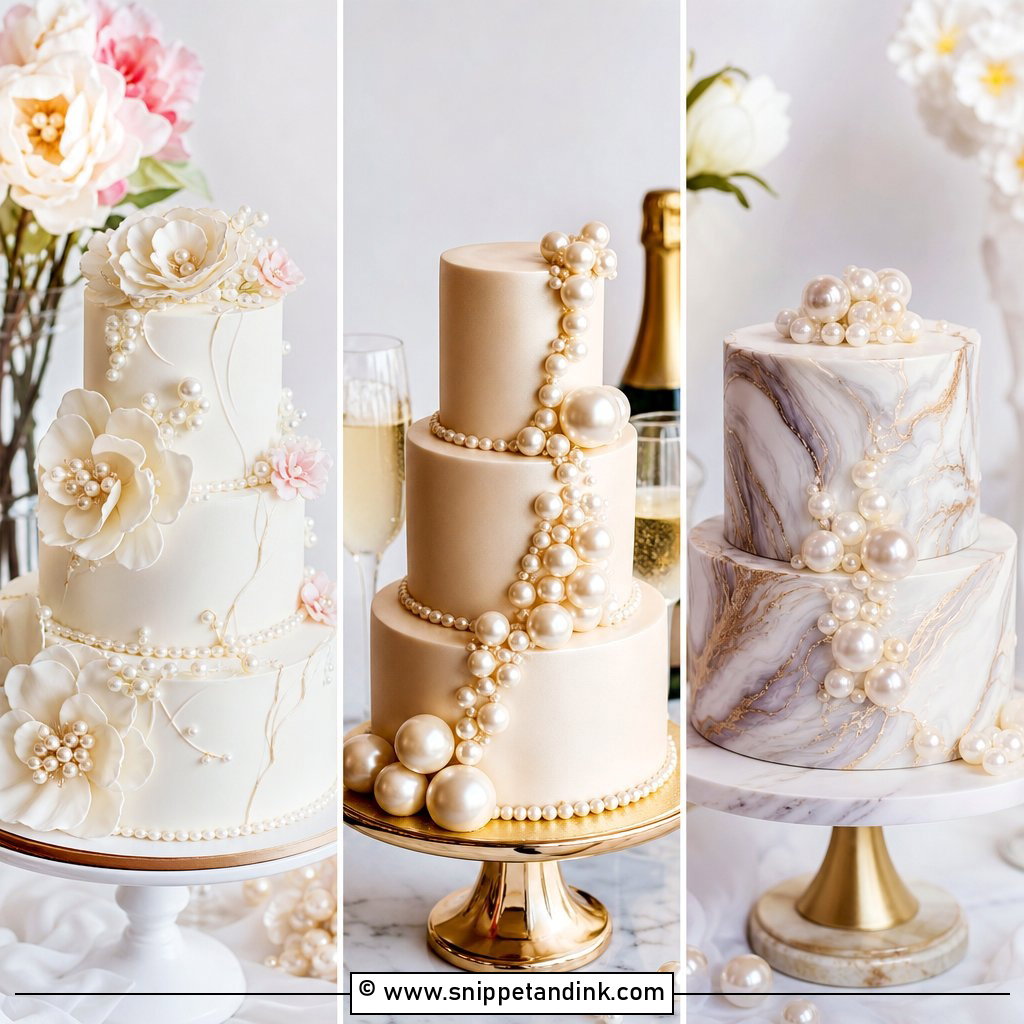
Pearl cakes get their glow from texture rather than colour. Edible pearls, pearlised fondant, shimmer dust and fine piping do the work, ideally on ivory, champagne or blush. Covering a whole tier in tiny sugar pearls is slow, painstaking work, so expect it to be priced as decorating hours. A scattered pattern fading upward gives a similar effect for less time. Hard sugar pearls are also unpleasant to bite into, which is why I keep them off the tiers that will be cut for guests and on the display surfaces instead.
3. Lambeth Wedding Cake
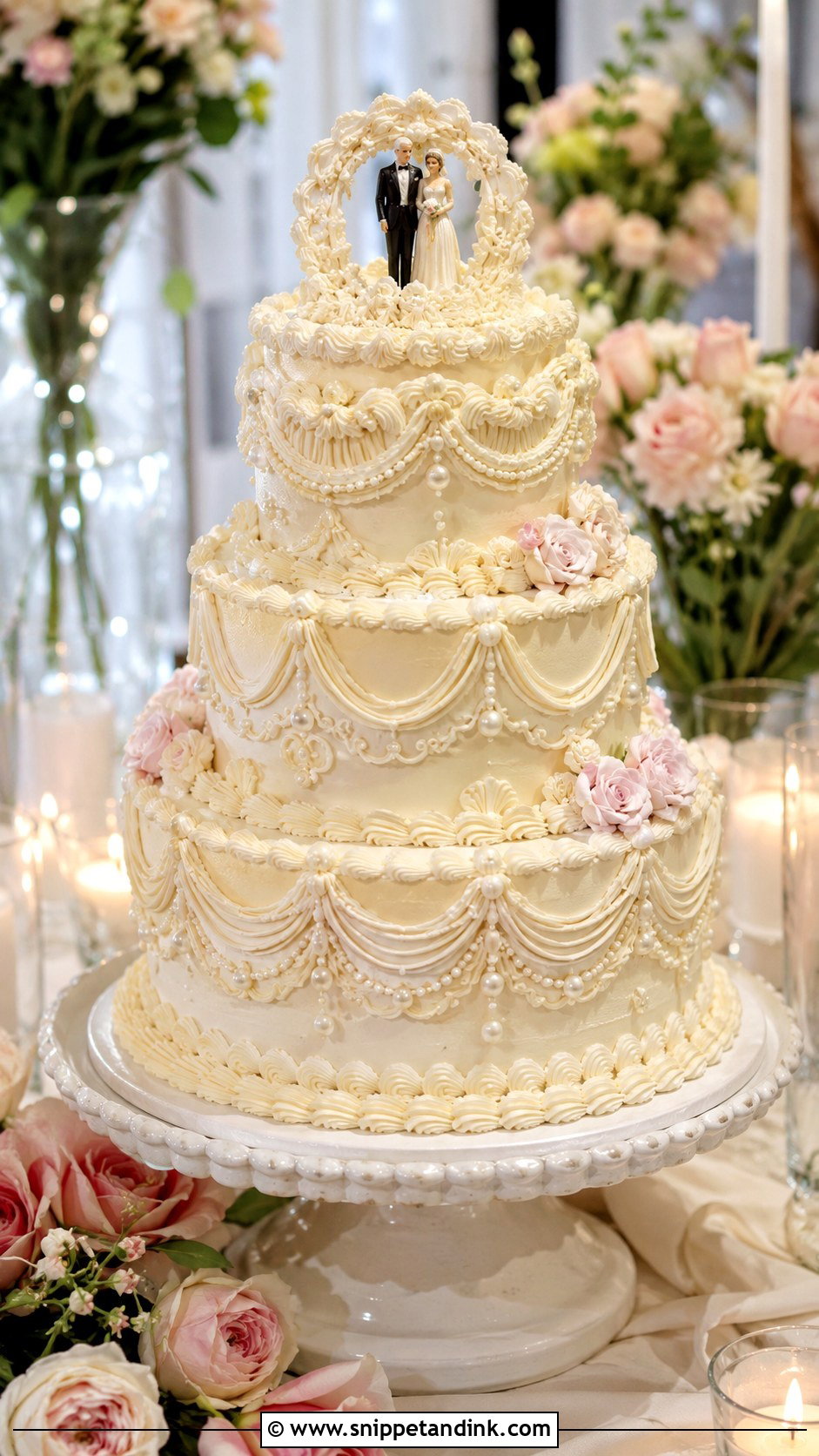
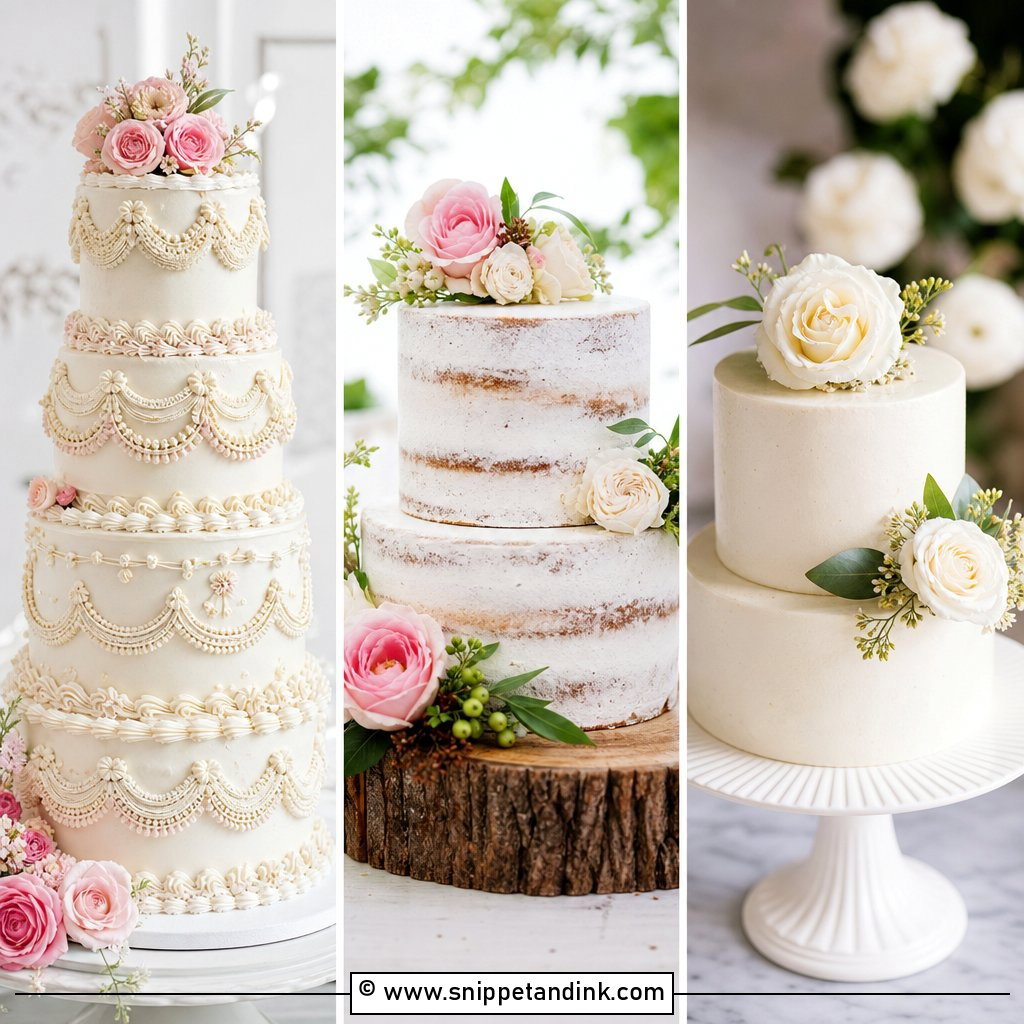
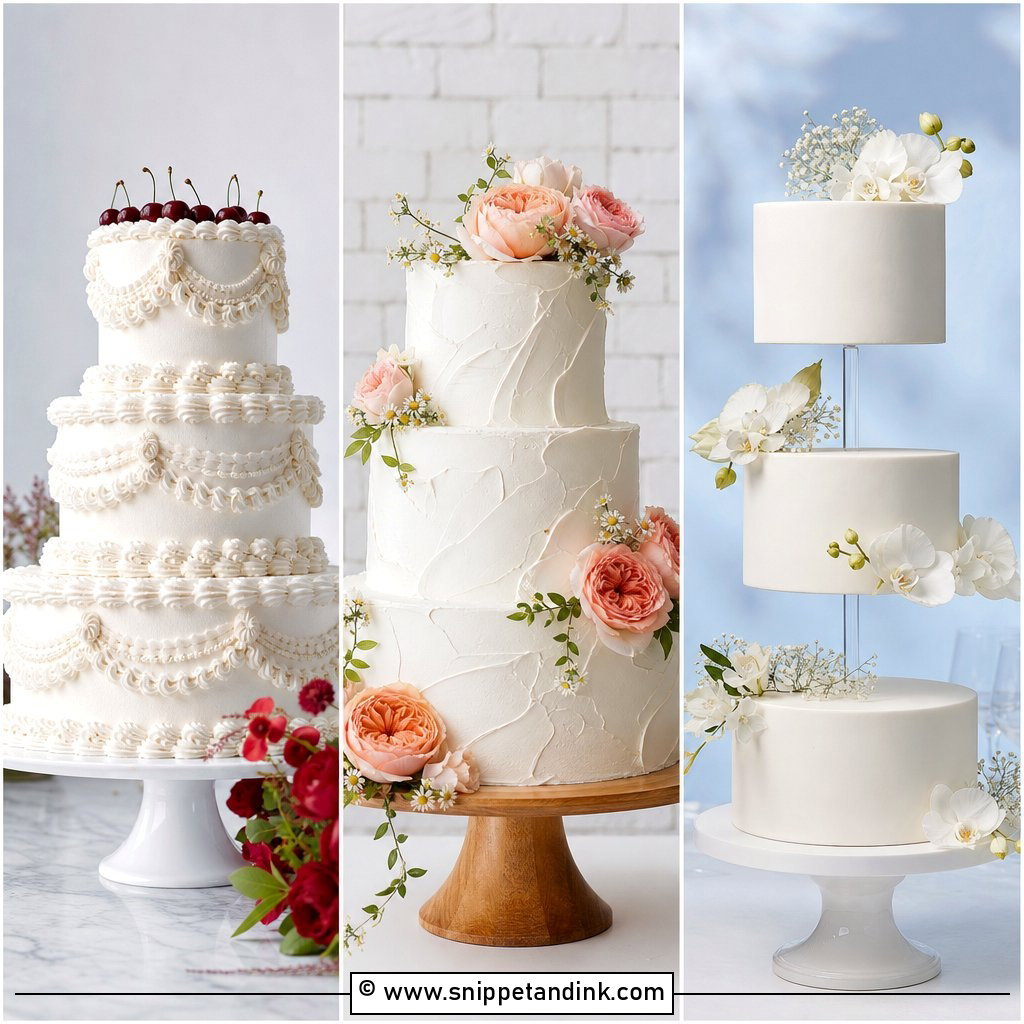
A Lambeth cake is the most piping-heavy design here, with layered shell borders, swags, scrolls and drop lines built up in layers. It reads romantic in ivory and playful in pastel blue, blush or butter yellow. The thing to know is that true overpiped Lambeth work is traditionally done in royal icing, which sets hard and holds detail, while buttercream versions soften in a warm room and the fine drops can sag. For a summer reception, ask which medium your baker will use. Keep the piping rhythm consistent across three or more tiers, then add cherries, sugar roses or pearls.
4. Floral Wedding Cake
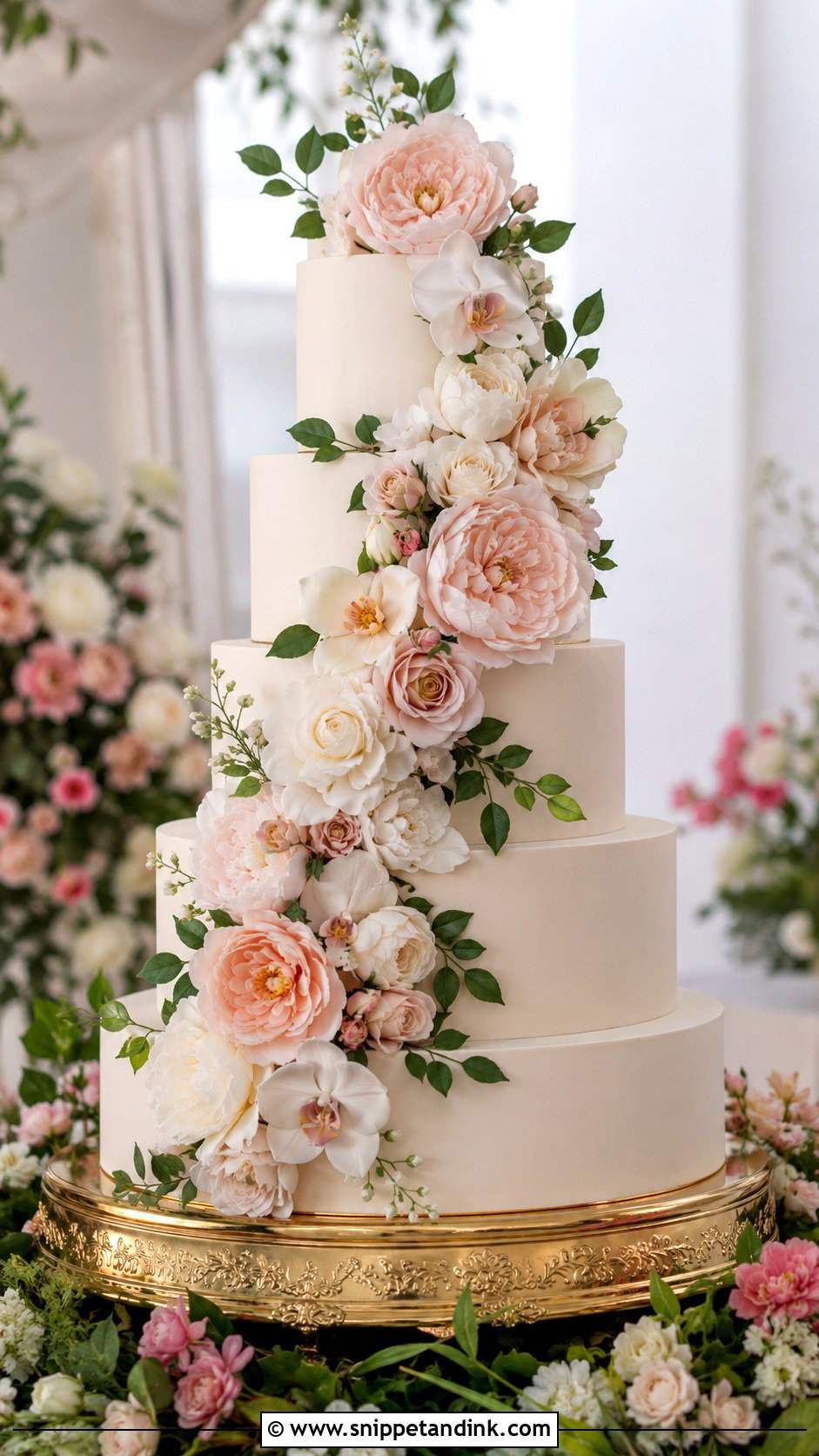
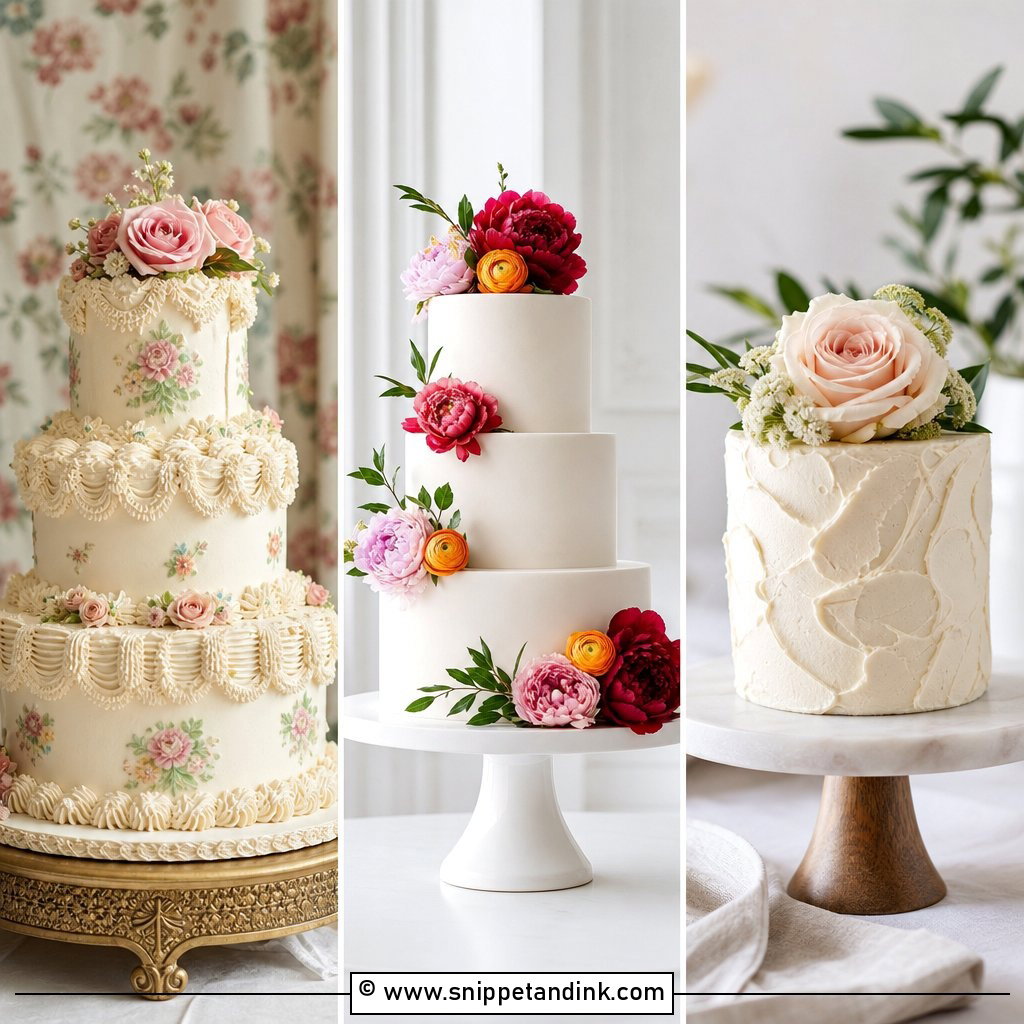
Flowers become extravagant when they’re placed with scale and movement: wrapping around the tiers, climbing up one side or spilling down the front. Sugar flowers match the palette exactly and won’t wilt. Fresh flowers can work too, but only if they’re food-safe and pesticide-free, and the stems are wrapped or set in a barrier so they never touch the cake. Roses, orchids, peonies and ranunculus are common picks. Sweet peas look lovely but are toxic, so I recreate those in sugar instead. Keep the frosting plain so the arrangement leads.
5. Gold Wedding Cake
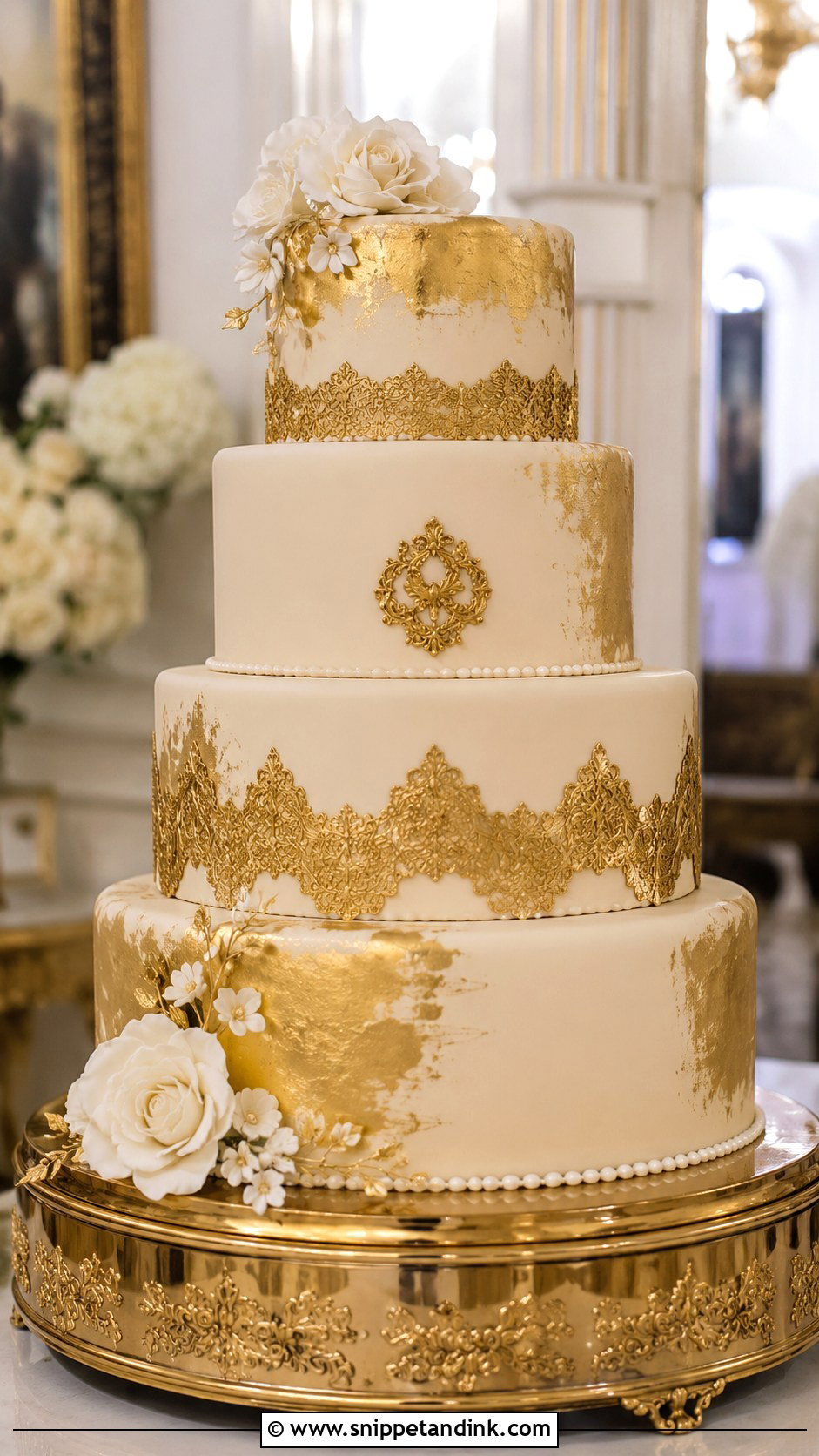
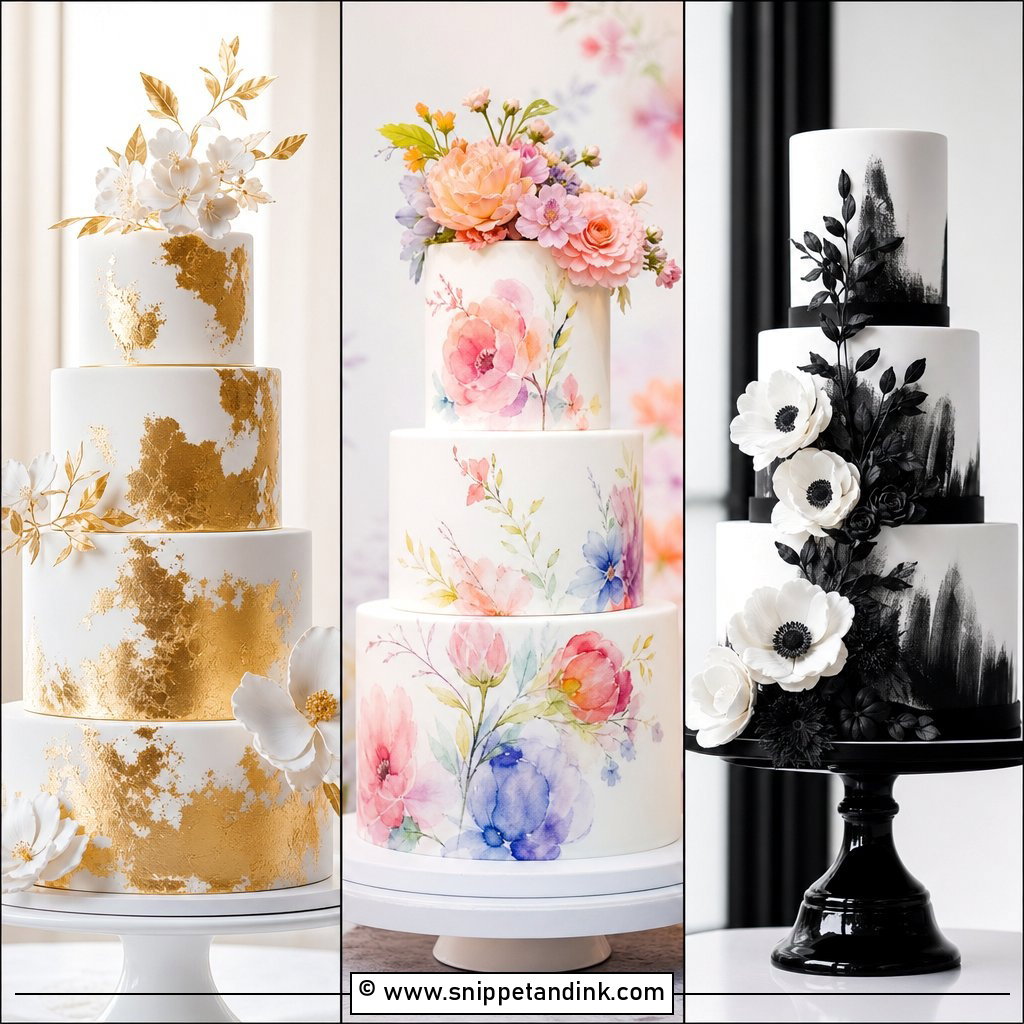
Gold needs restraint. Brushed gold leaf on one or two tiers, thin metallic borders or ivory tiers with gold sugar flowers look rich; a whole cake of gold can look like a trophy. One technical point couples rarely hear: not every gold product on the market is edible. Some lustre dusts are only labelled non-toxic and are meant for decorations that get removed. Real gold leaf is edible, and I only use that on surfaces that will be served. A single full gold tier between clean white ones is a strong look, especially under warm lights in an evening ballroom.
6. Black And White Wedding Cake
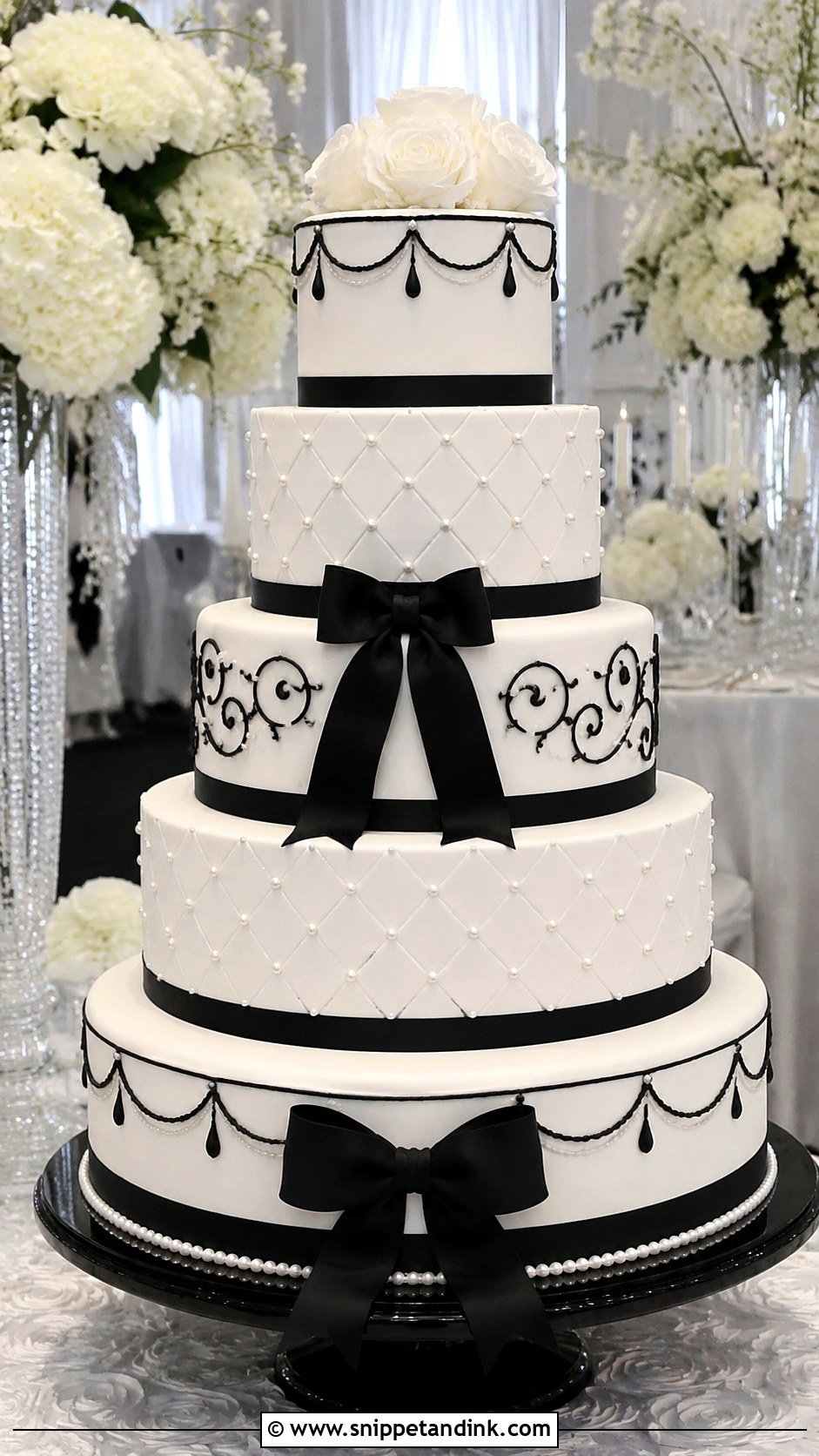
Black and white is formal and graphic. The usual approach is white tiers with black fondant bows, black piping or one sleek black tier for contrast. Deep black fondant is heavily coloured and can stain lips and teeth and taste bitter, so I keep black for decoration and the base tier, and serve from white tiers or a kitchen cake. White sugar roses, velvet ribbon and pearl accents soften the contrast. It suits black-tie and city receptions, styled simply with white florals and candlelight.
7. Marble Wedding Cake
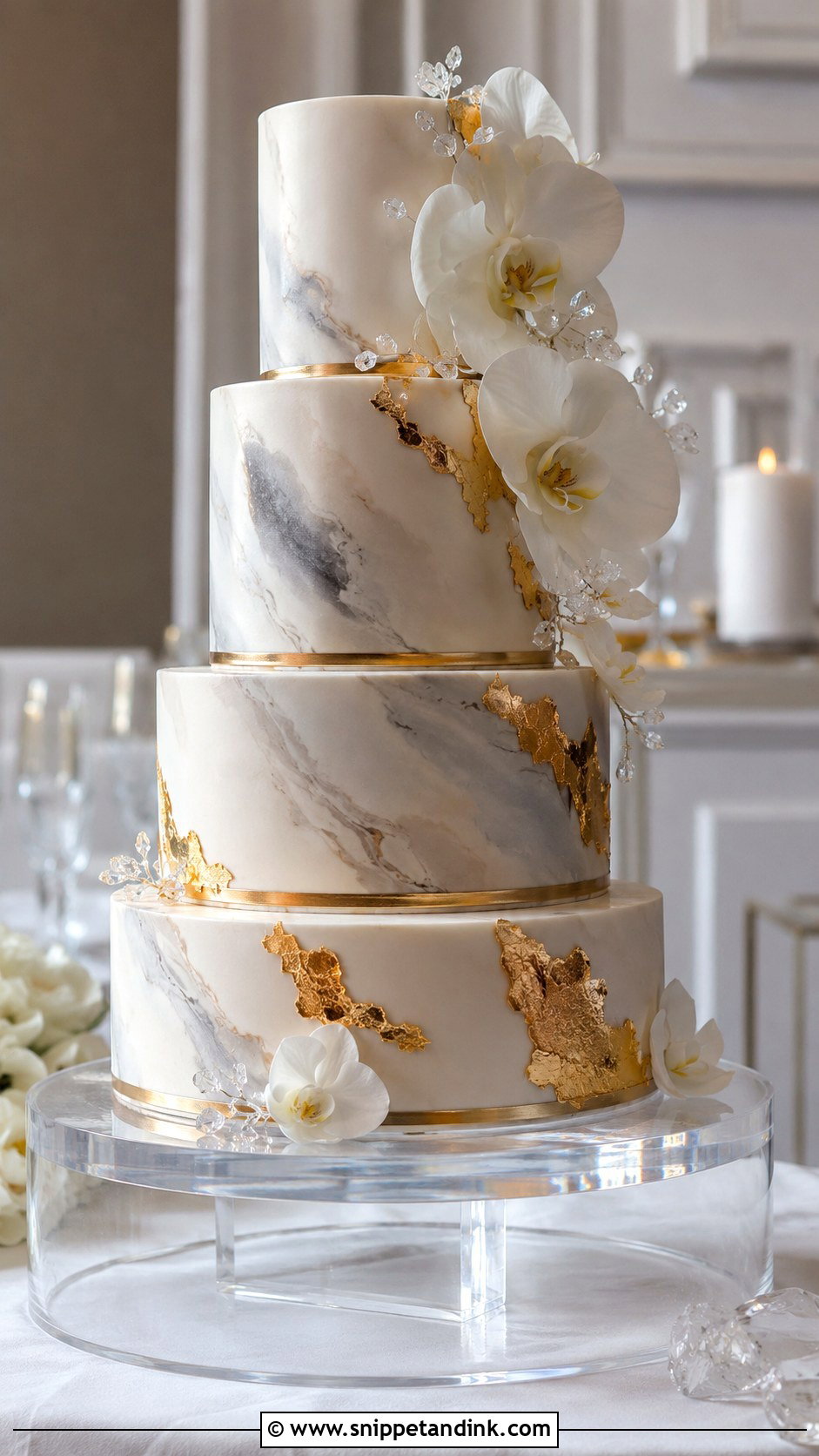
Marble gives an upscale, stone-like finish, from soft grey and blush veining to bold black and gold. It needs smooth fondant, because marbling is created by folding coloured paste into white before rolling, and buttercream won’t hold a crisp vein. Each tier comes out different, which I like, but it means you can’t specify an exact pattern in advance. Torn gold leaf edges or slim metallic borders add drama. It’s a strong option for couples who want luxury without florals, set on an acrylic stand in a modern room.
8. Ruffle Wedding Cake
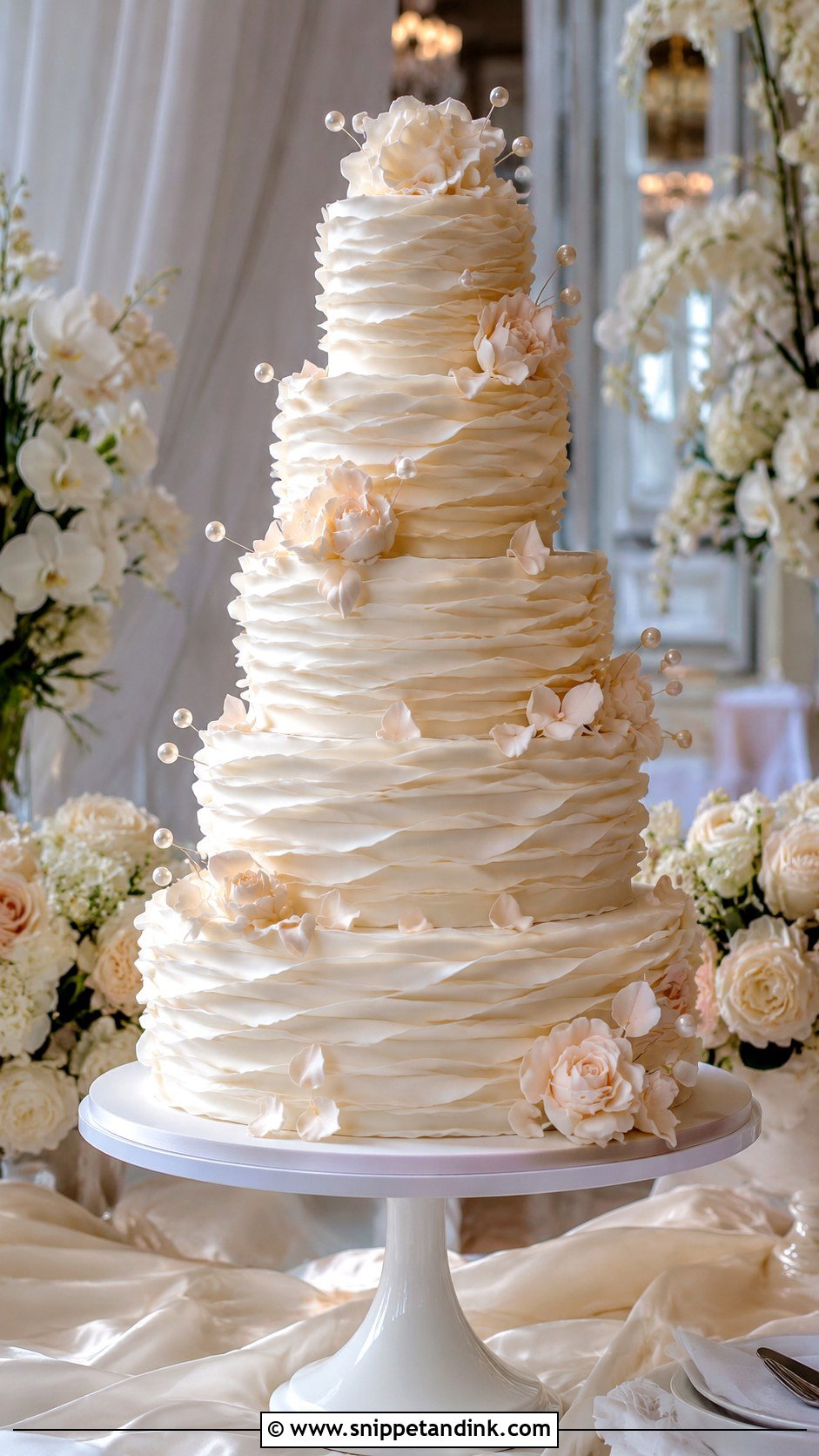
Ruffles echo a gown, and they’re one of the most labour-intensive finishes in the trade. Fondant ruffles, buttercream waves, wafer paper petals or sugar fabric all give movement, with one smooth tier often left for contrast. Each medium has a weakness: buttercream ruffles slump in heat, wafer paper goes limp in humidity, and fondant frills can crack in very dry air. I pick the medium based on the venue, not just the photo. White and ivory are classic, with blush and pale blue close behind.
9. Sugar Flower Wedding Cake
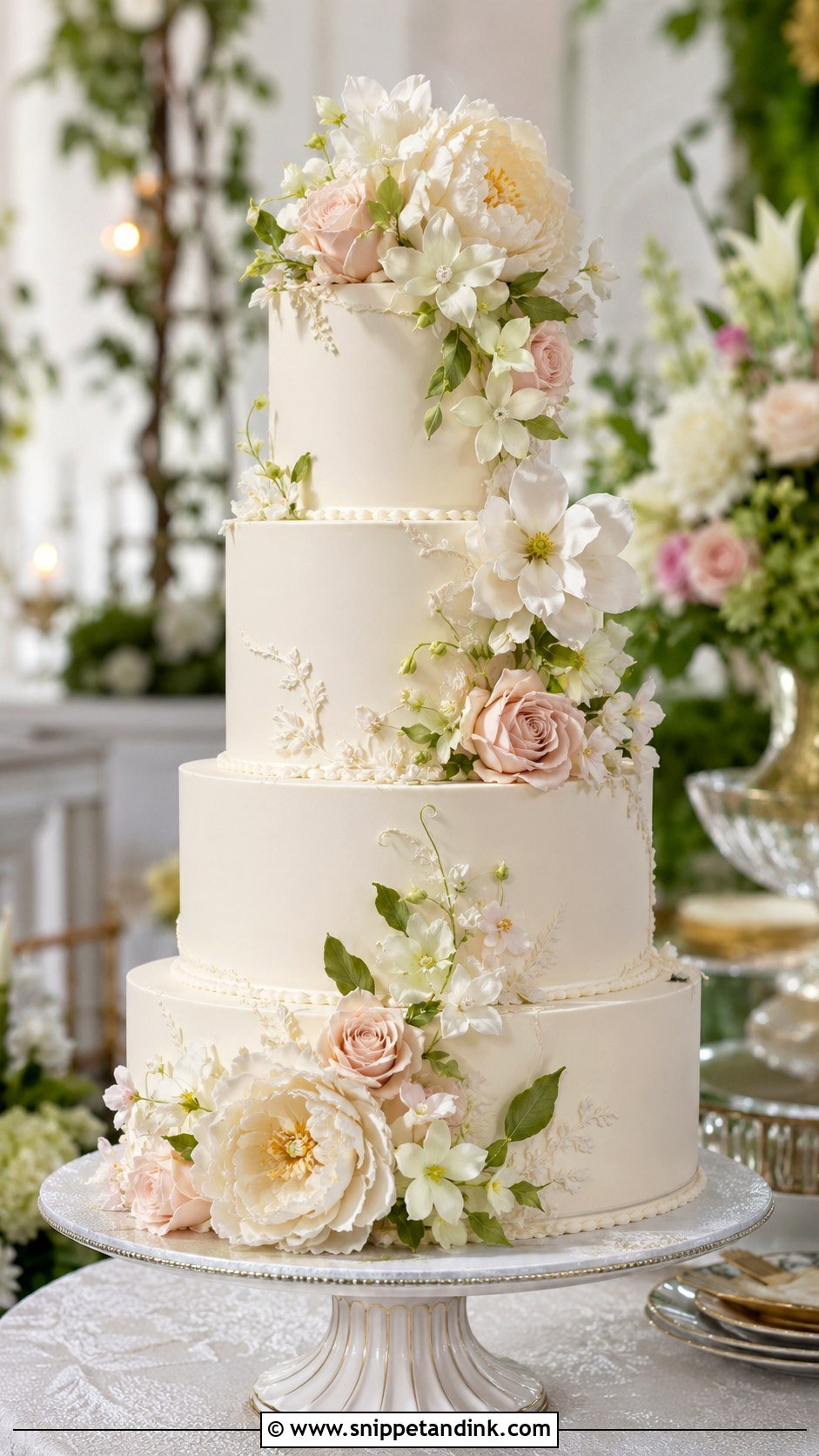
Sugar flowers are handmade petal by petal, wired, dried and dusted, and a large peony can take hours. That’s why they’re expensive and why they need booking early. They won’t wilt or leak moisture onto the cake, and they can match the palette exactly. Humidity is their enemy, since sugar absorbs moisture and petals can droop, so on a muggy day they should stay boxed in air-conditioning until set-up. Mix large blooms with small fillers and leaves so the arrangement looks grown rather than placed, and keep the cake itself white or ivory. Many couples keep the flowers afterward, as they last for years under a dome.
10. Draped Wedding Cake
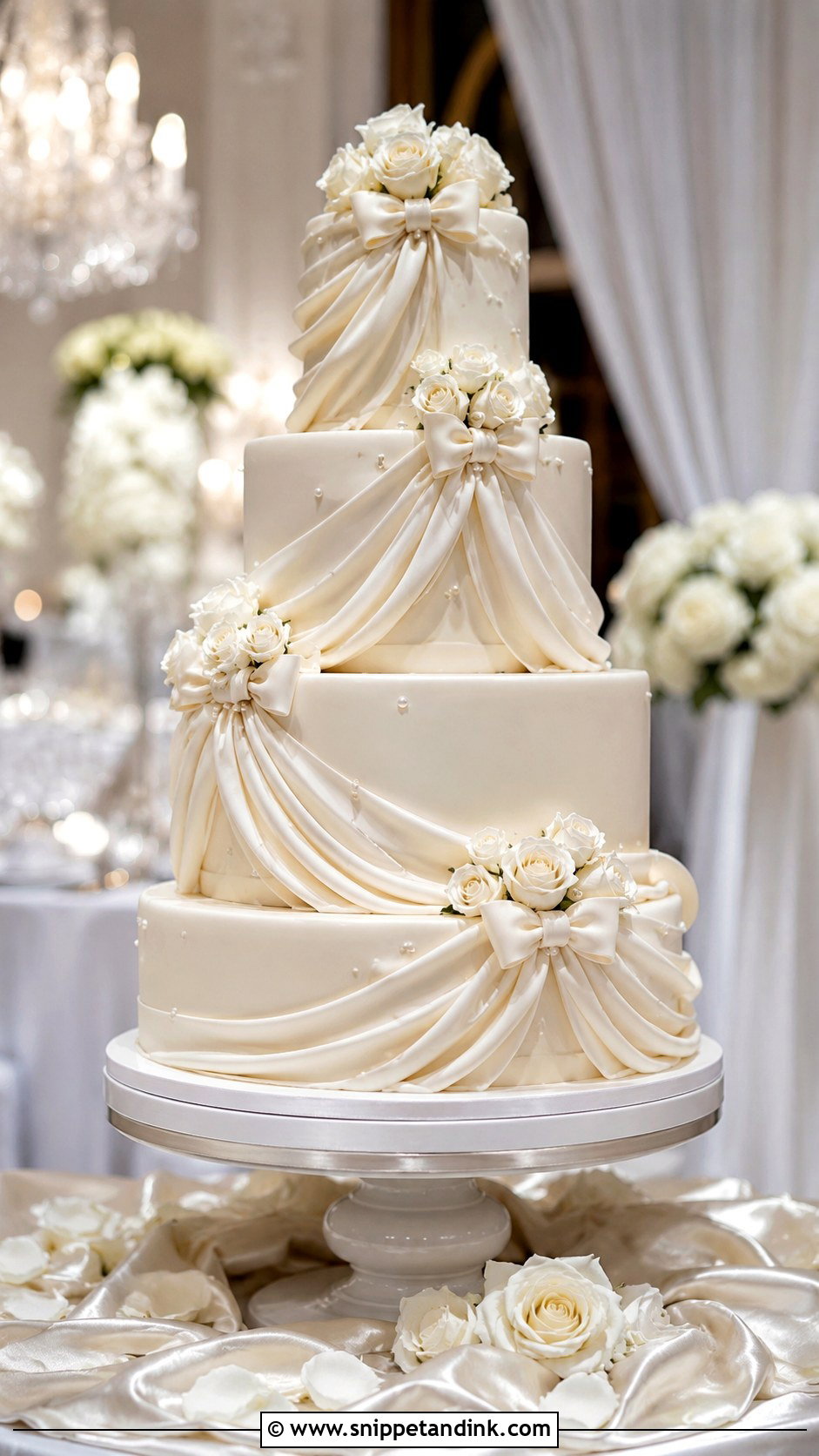
A draped wedding cake borrows from gowns and fabric folds. Smooth fondant tiers are dressed with sugar drapes rolled thin enough to fold like silk or chiffon. Thin drapes dry and crack quickly, so they’re applied fast and fixed at gathering points, which is exactly where pearl pins, sugar bows or a few flowers belong. It reads refined with very little else added. Ivory, soft white, blush and champagne show the folds best, since shadows disappear on darker colours.
11. Chandelier Wedding Cake
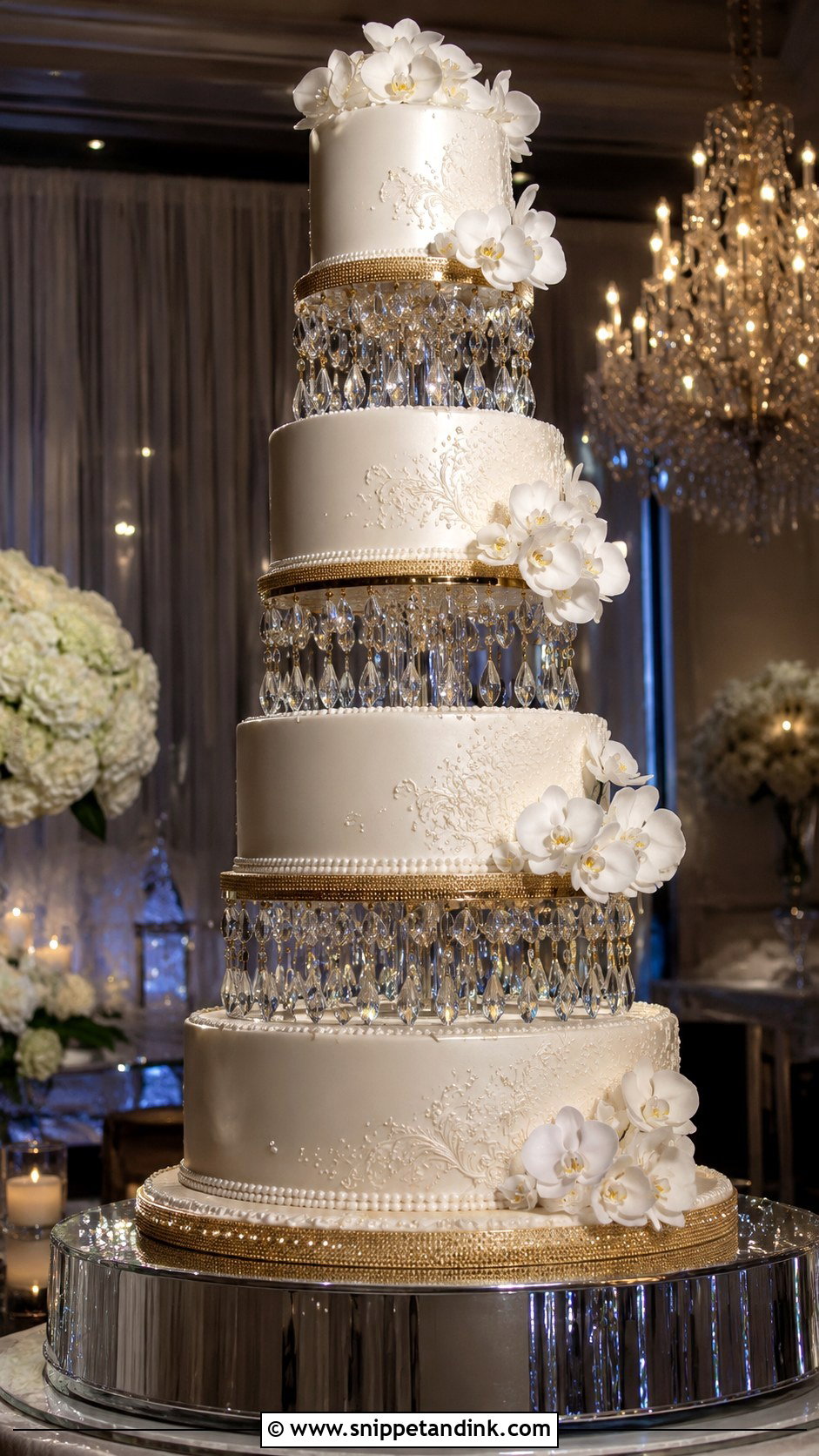
A chandelier cake is a showpiece built around height and sparkle, often with crystal separators, hanging sugar crystals or a raised stand. The cake can stay white while the structure does the glittering. Separators and hanging elements mean the cake has to be engineered rather than simply stacked, and suspended designs need a rigging point and venue approval, so this is a conversation for early in planning. Add pearlised fondant, gold trim and floral clusters between tiers for more drama. It belongs in a ballroom or hotel, where the crystals pick up the room’s light.
12. Castle Wedding Cake
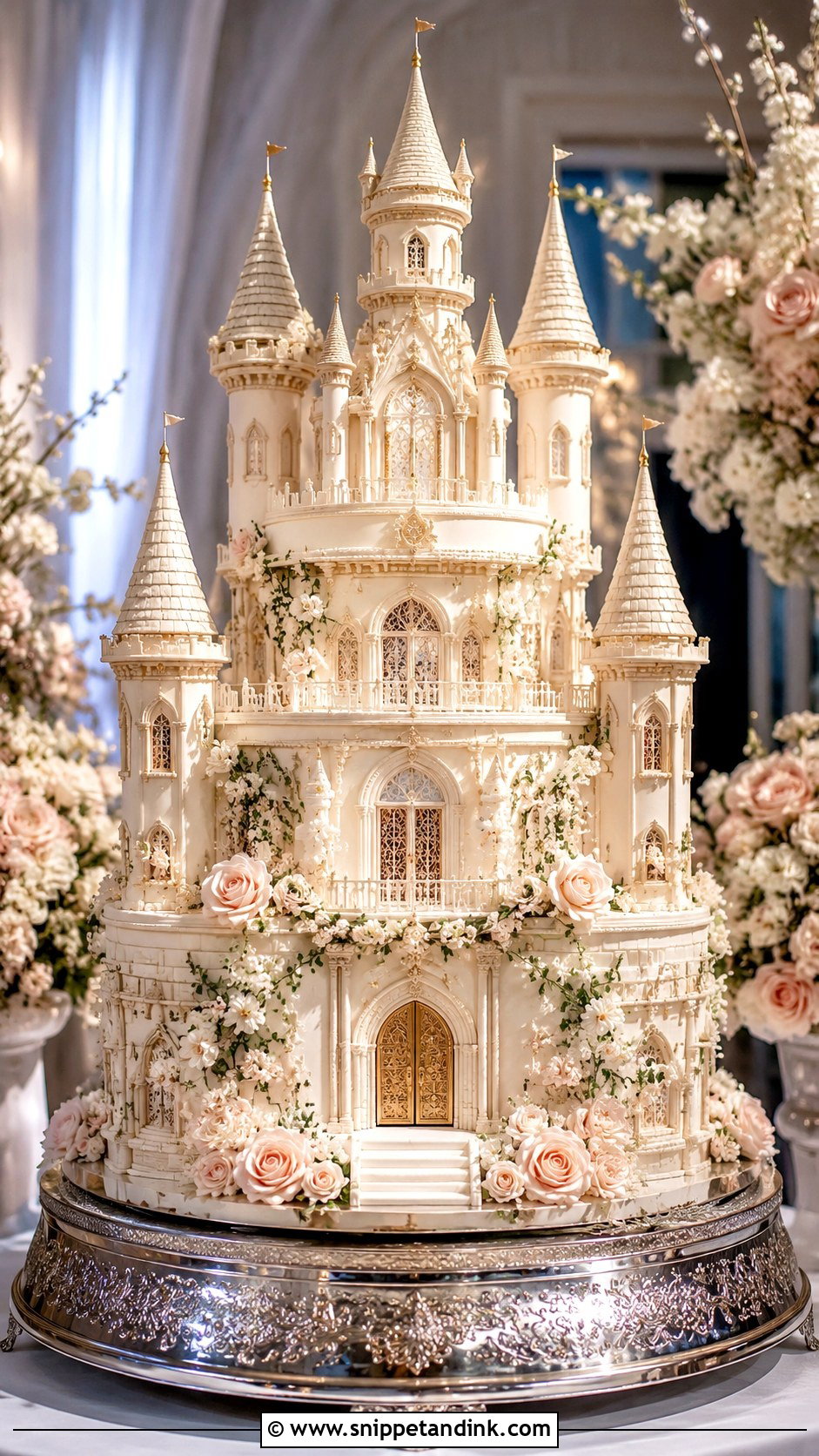
A castle cake is a fairytale statement, with turrets, arched windows, piped stone texture, sugar balconies and floral vines. Turrets are usually built from cake on internal supports or from sugar-coated forms, so they need careful engineering and, often, assembly at the venue. Ivory, pale blush, soft grey or champagne keep it grown-up rather than childish. A little shimmer, pearls and sugar flowers at the base finish it. Give your baker plenty of lead time, and expect a structural sketch before anything is baked.
13. Bow Wedding Cake
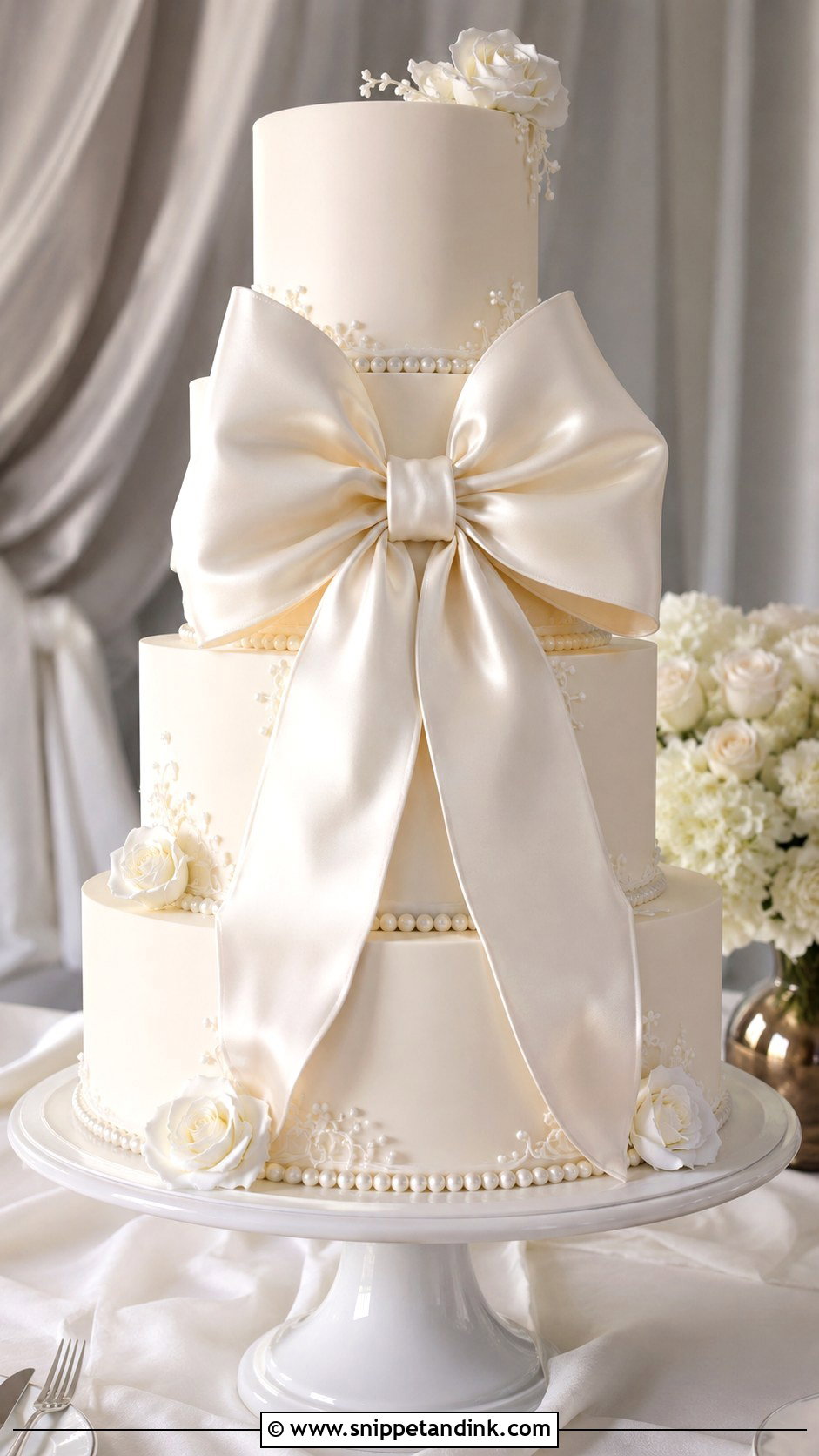
A bow wedding cake looks current when it’s restrained. One oversized bow on the front of a tall cake, or small bows between tiers for a vintage feel. Large fondant bows are made in advance and left to dry hollow, often stuffed with tissue to hold their loops, so they’re lighter than they look. Ivory and white are classic, black bows read formal. I like it most when the bow echoes a detail on the dress, such as bows at the back, draping or structured shoulders.
14. Lace Wedding Cake
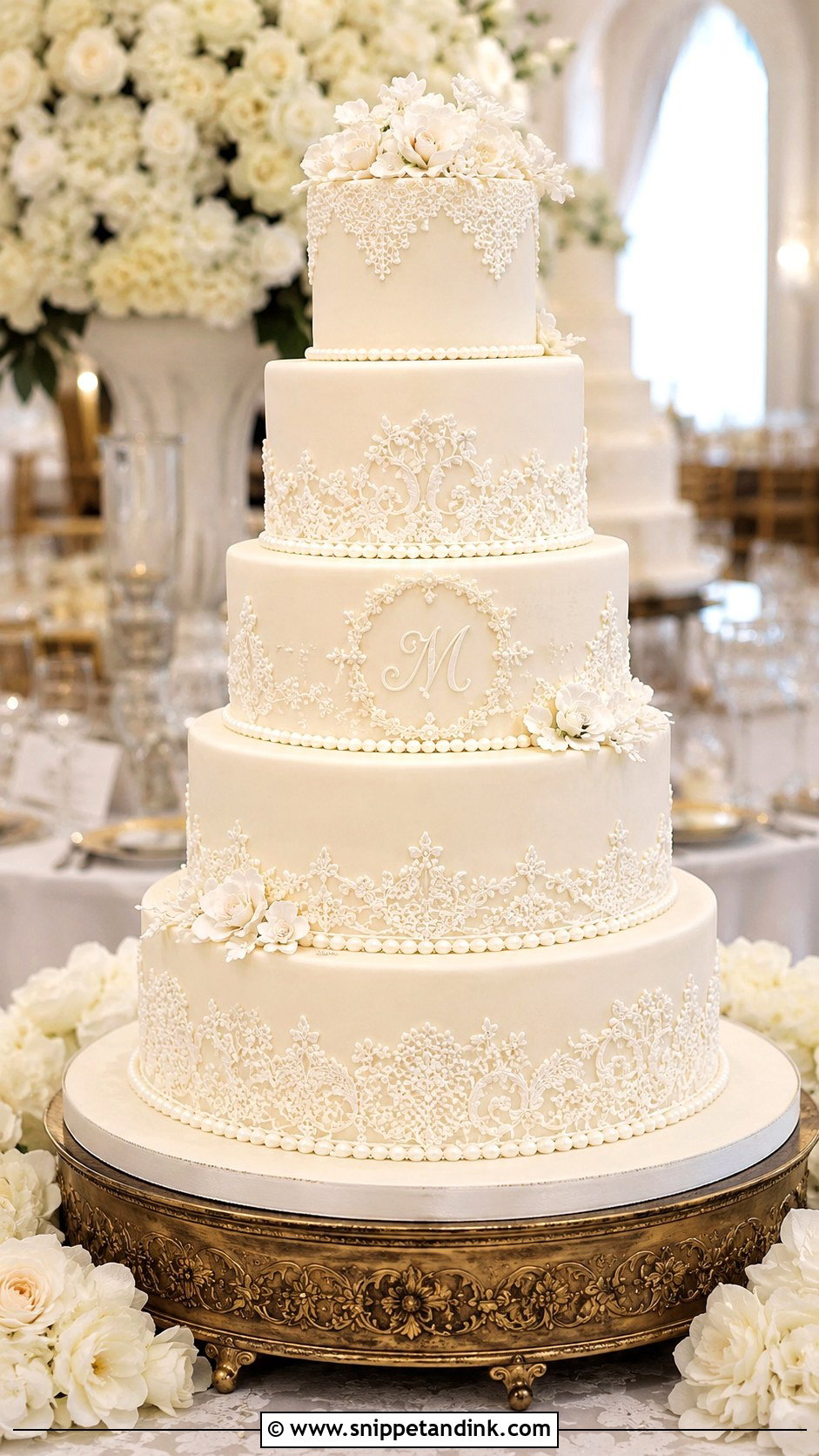
Lace cakes mirror the gown, and there are several ways to make them. Piped royal icing gives the finest detail, fondant appliqués give a bolder pattern, edible lace mats produce flexible sheets, and hand painting looks softest. If you want a match to your dress, bring a swatch or a close-up photo of the lace, as florals, scallops and geometric patterns need different techniques. Use a different texture on each tier for depth, keep the palette ivory on ivory or white with champagne, and finish with a monogram or small sugar flowers.


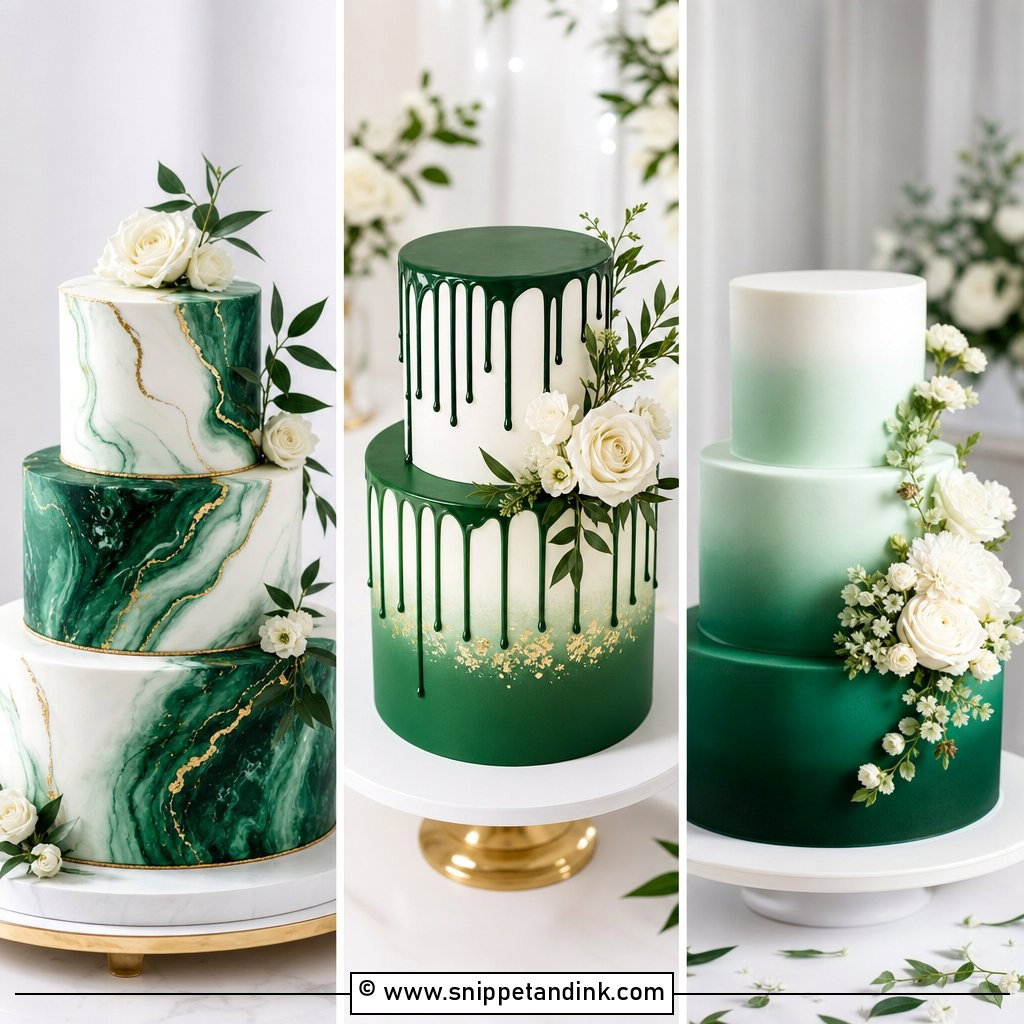
15. Modern Sculptural Wedding Cake
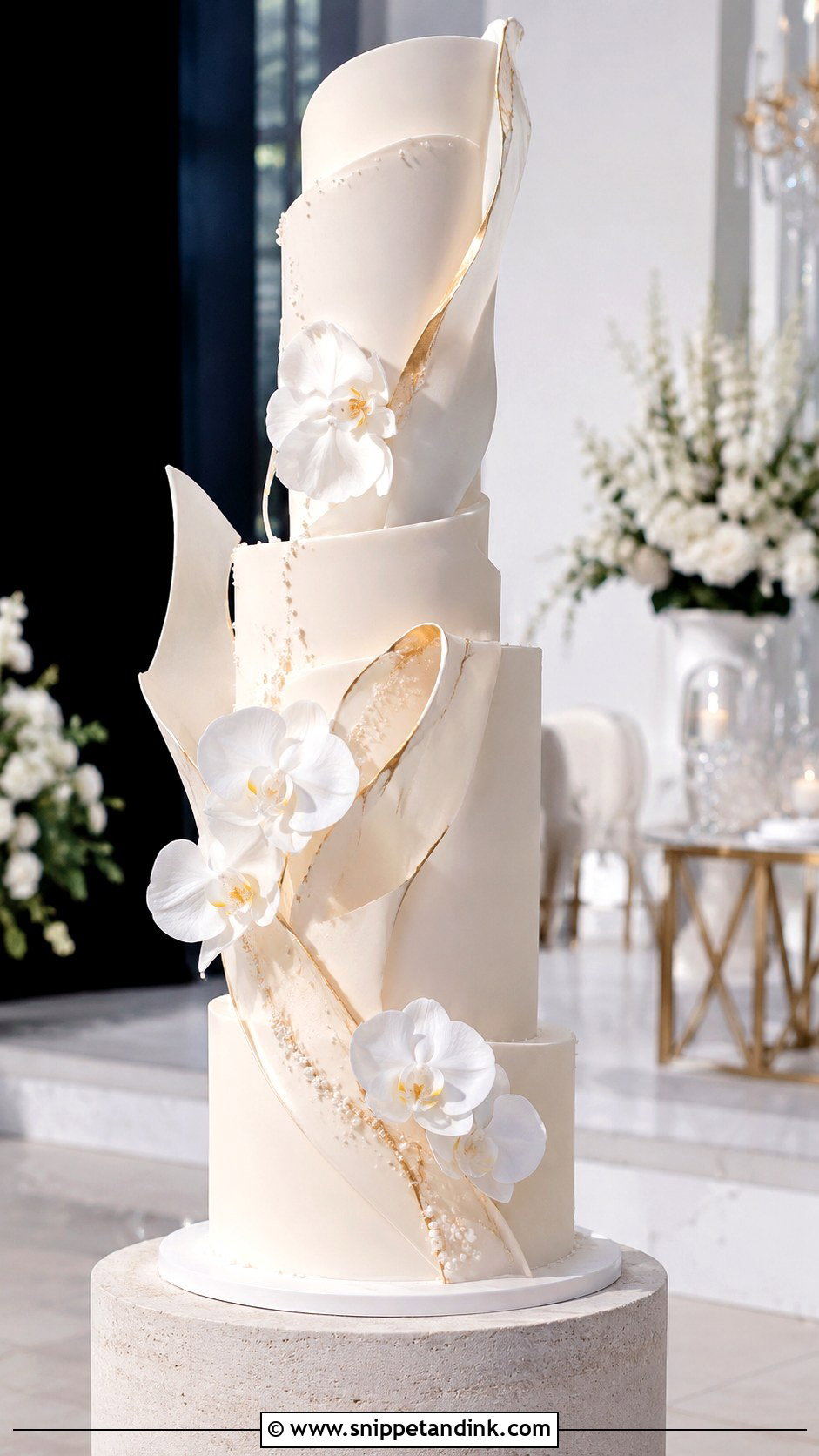
Sculptural cakes are edible art: offset tiers, curves, angular panels, floating effects and abstract sugar pieces. Offset and floating tiers rely on hidden supports, so the baker needs to plan the internal structure before choosing flavours, and lighter sponges are sometimes swapped for a firmer crumb that can carry the load. Keep the palette controlled, white, nude, taupe or black and white, and soften the shapes with sugar orchids or a touch of metallic. It looks right in galleries, rooftop venues and minimal rooms.
16. Greenery Wedding Cake
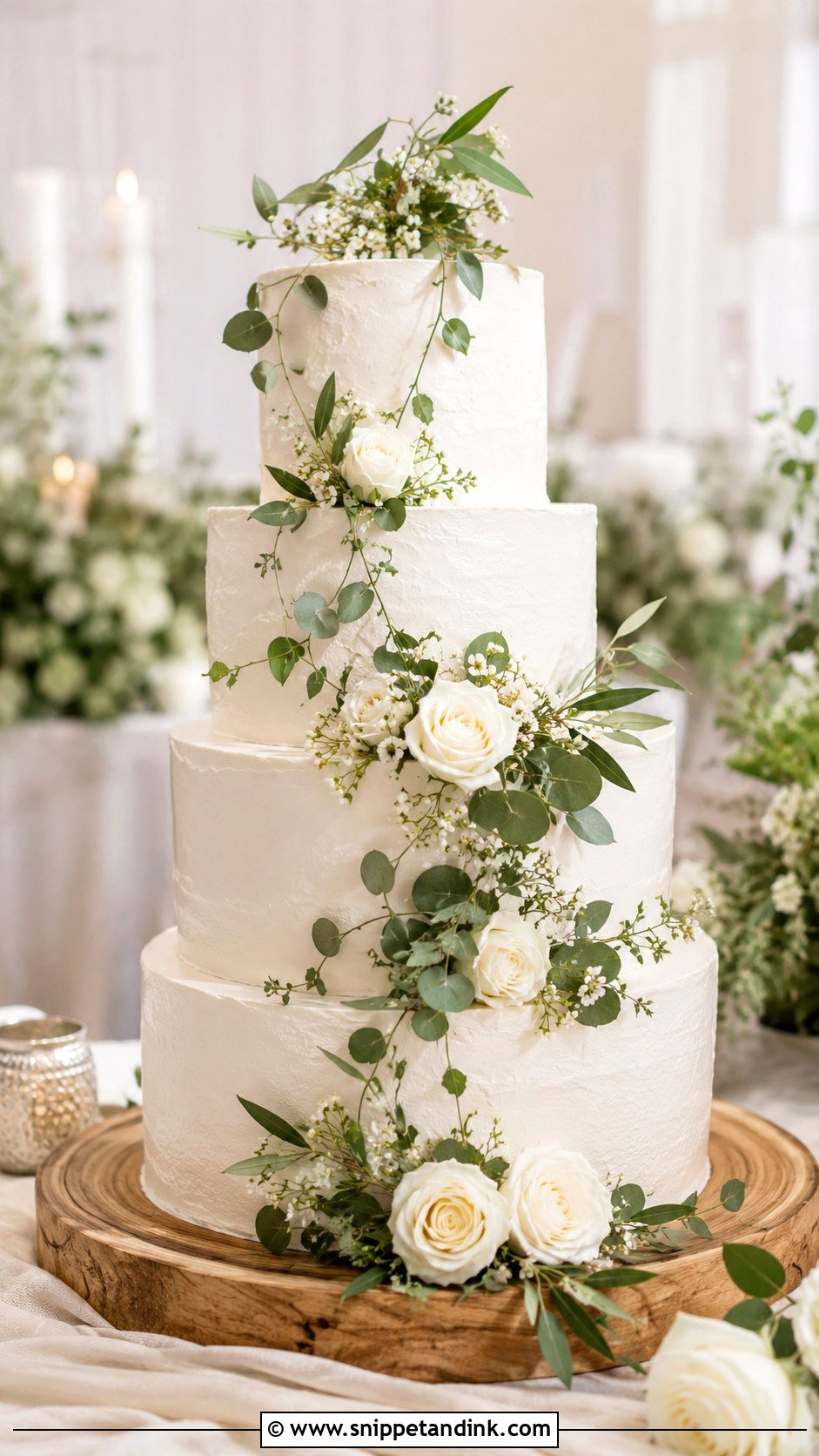
Greenery can be extravagant if it has real scale: vines, olive branches, eucalyptus, sugar leaves or garden foliage wrapped around the tiers. Eucalyptus is very common on cakes but isn’t food-safe, so the stems must be wrapped and kept off the surface, or the leaves recreated in sugar. A white or ivory buttercream base with a little texture gives a handmade feel, and white roses or orchids add luxury. It suits garden and greenhouse venues and sits naturally on wood or stone stands.
17. Blush Pink Wedding Cake
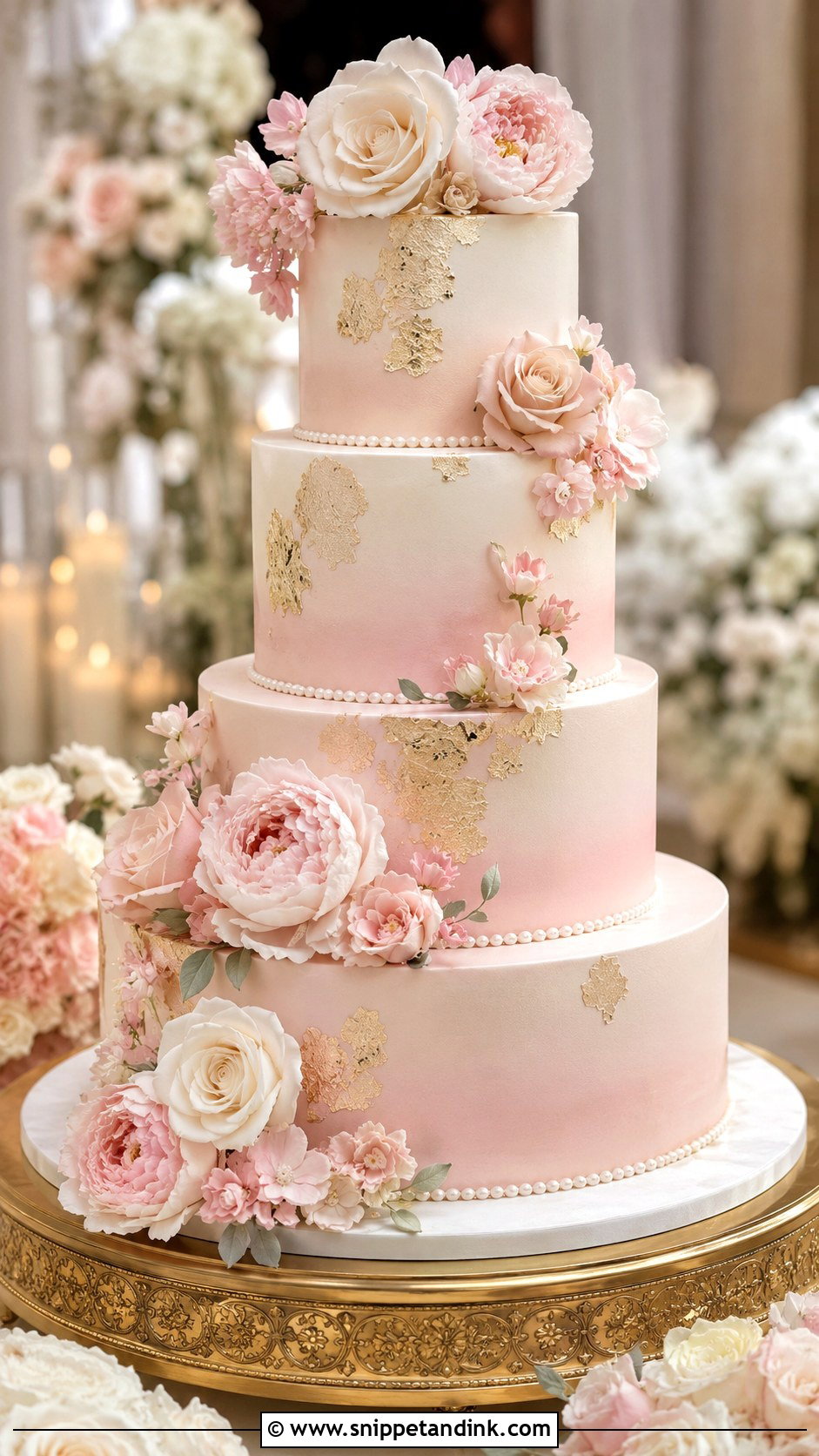
Blush adds warmth without overpowering a room, from barely-there to a deeper rose. Pink can shift under warm lights and fade if the cake sits in direct sun, so I mix the colour a touch deeper than the swatch and keep the cake out of bright windows. It suits smooth buttercream, fondant panels, floral piping or sugar flowers. Pearls, gold leaf or an ombré fading to white give it a luxury finish. It sits easily with ivory, sage, gold, mauve and champagne palettes.
18. Blue Wedding Cake
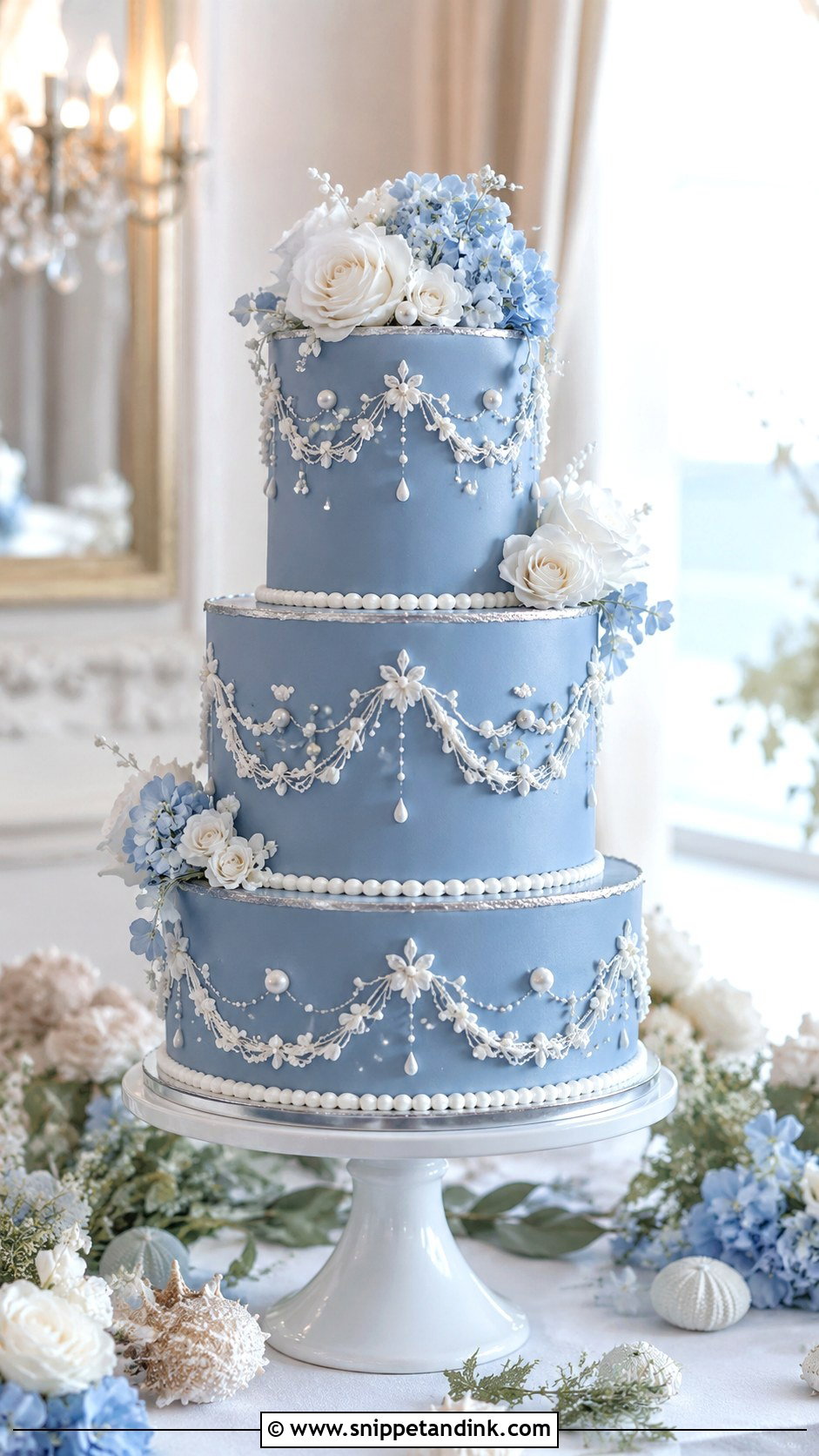
Blue feels calm and a little unexpected, especially in powder, dusty or slate shades. Combine blue tiers with white piping, pearls, sugar flowers or fine silver accents. A blue Lambeth cake feels vintage and playful, while smooth blue fondant with orchids feels modern. Pale blue icing can drift grey or green if the base isn’t a pure white, so I start from a whitened buttercream or white fondant before colouring. It suits coastal and garden weddings and cool-toned palettes.
19. Long Wedding Sheet Cake
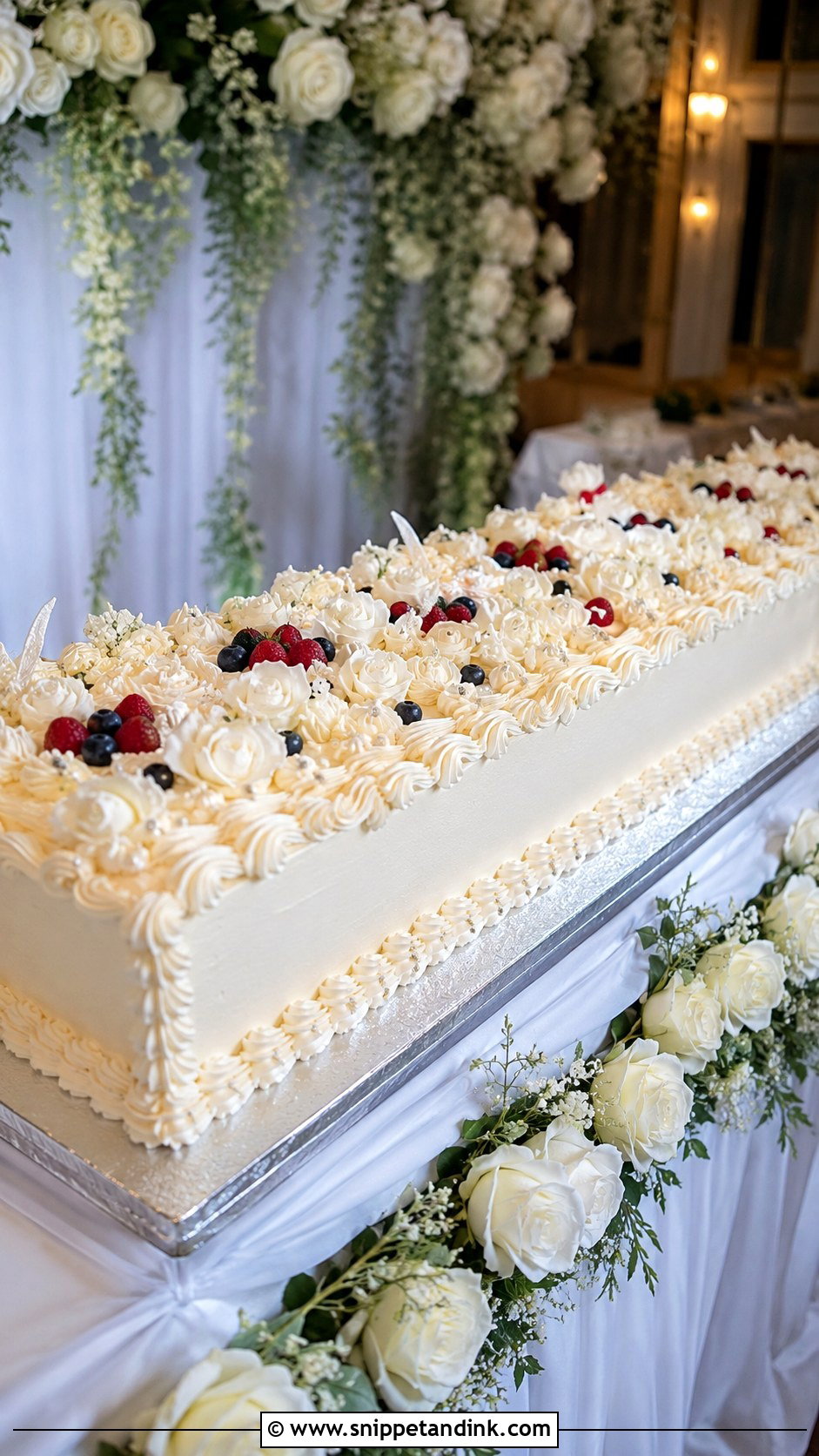
A long sheet cake swaps height for length, and it can be surprisingly impressive. Picture piped borders, fresh flowers, sugar pearls, berries and textured frosting running along a raised table. It’s also the most practical design here for large guest counts, because it cuts into neat, even slices quickly. The trade-off is transport: a long cake is harder to move without flexing, so it’s often made in sections and joined on site. Ivory buttercream with a floral garland suits a relaxed, abundant reception.
20. Multi Cake Wedding Table
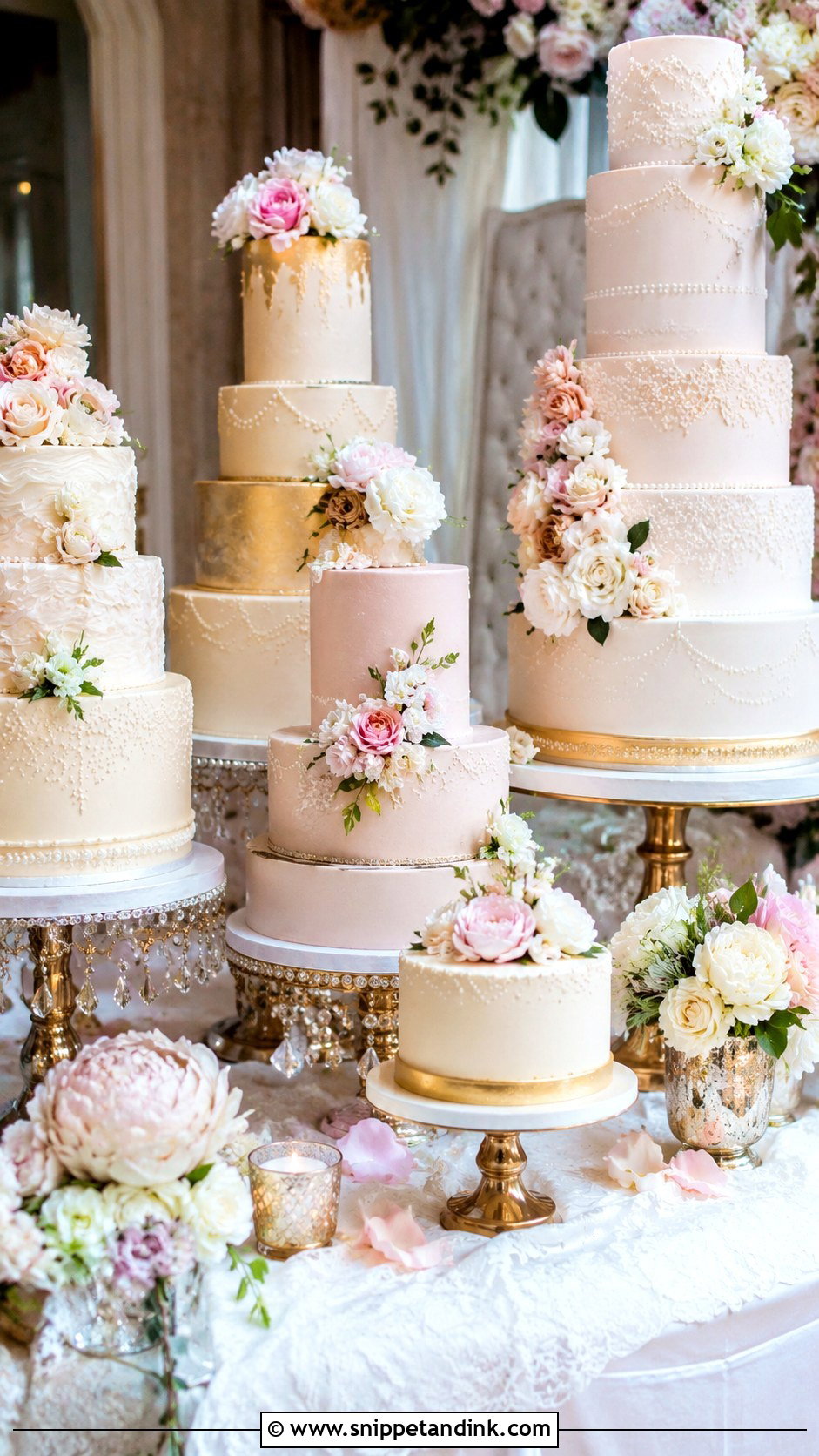
A multi cake wedding table uses several complete cakes in different heights, flavours and finishes as one display. A tall white centrepiece surrounded by smaller floral, pearl and textured cakes works well. Keep a connecting palette and matching stands so it looks planned, not like a bake sale. From the kitchen side, smaller cakes are easier to transport and serve, and you can offer different flavours without one oversized structure. The display does need a sturdy, level table with room for every stand.
Lead Times, Delivery and the Cake Table on the Day
Showpiece cakes take longer to plan than people expect. Designers who specialise in sugar flowers and structural work often book up many months ahead, so start enquiring as soon as the venue and date are set. Tastings usually happen a few months out, and sugar flowers are made weeks before the wedding so they have time to dry.
Questions worth asking at the tasting
- Will the cake arrive stacked, or be assembled at the venue? Tall and sculptural cakes are almost always finished on site.
- How long can it sit out at the venue’s temperature? Buttercream softens in a warm room, and fondant can sweat when a chilled cake meets humid air.
- Who removes non-edible supports, wires and flowers before cutting? The caterer needs a short briefing.
- Does the venue have a level, sturdy table and space away from heaters, sunny windows and the dance floor?
On the day, the cake table should be in place and dressed before delivery. A wobbly folding table under a five-tier cake is one of the few things I genuinely worry about.
Which of These Cakes Will Survive Your Venue?
The right cake is the one that suits your venue, your guest count and the conditions on the day, as well as your mood board. Pick the design you love, then let your baker tell you what it needs to stand up in that room, at that temperature, for as long as it’ll be on display.
You'll Like These Ideas:










Leave a Reply