
A dress that looks perfect in a bridal shop can fight you on a beach. Wind lifts the veil, sand drags at the hem, and bright sun turns unlined fabric see-through. So when I dress a coastal bride, I think about the weather first and the silhouette second. Chiffon, soft lace, satin slips and organza all have a place here, along with sleeves for breezy cliffs and pearls that suit the sea. Below are 25 dresses for formal resorts, barefoot ceremonies and tiny elopements, each with notes on how it copes outdoors.

Salt, Sun and Humidity: How Coastal Air Treats Bridal Fabric
Before you fall for a fabric, think about what the coast does to it. Humidity makes silk and satin cling and lets wrinkles set quickly. Sweat and sea spray can leave tide marks on shiny satin. Strong sun behind you turns unlined chiffon, lace and tulle partly transparent, which only shows up in photos afterwards.
- Ask for a full lining in the skirt, or at least a slip, whenever the main fabric is sheer.
- Hold the fabric up against a bright window at the shop to see how much shows through.
- Choose matte or textured fabrics in very hot, humid places; they hide damp and creasing better than glossy ones.
- Keep heavy beading to a minimum, as it adds both weight and heat.
Wind is the other factor. Light fabrics will move; that’s half their charm. A veil secured with a comb and a couple of hidden pins, or a cape attached to the dress, gives you photos that look windswept rather than chaotic.
1. Chiffon Beach Wedding Dress
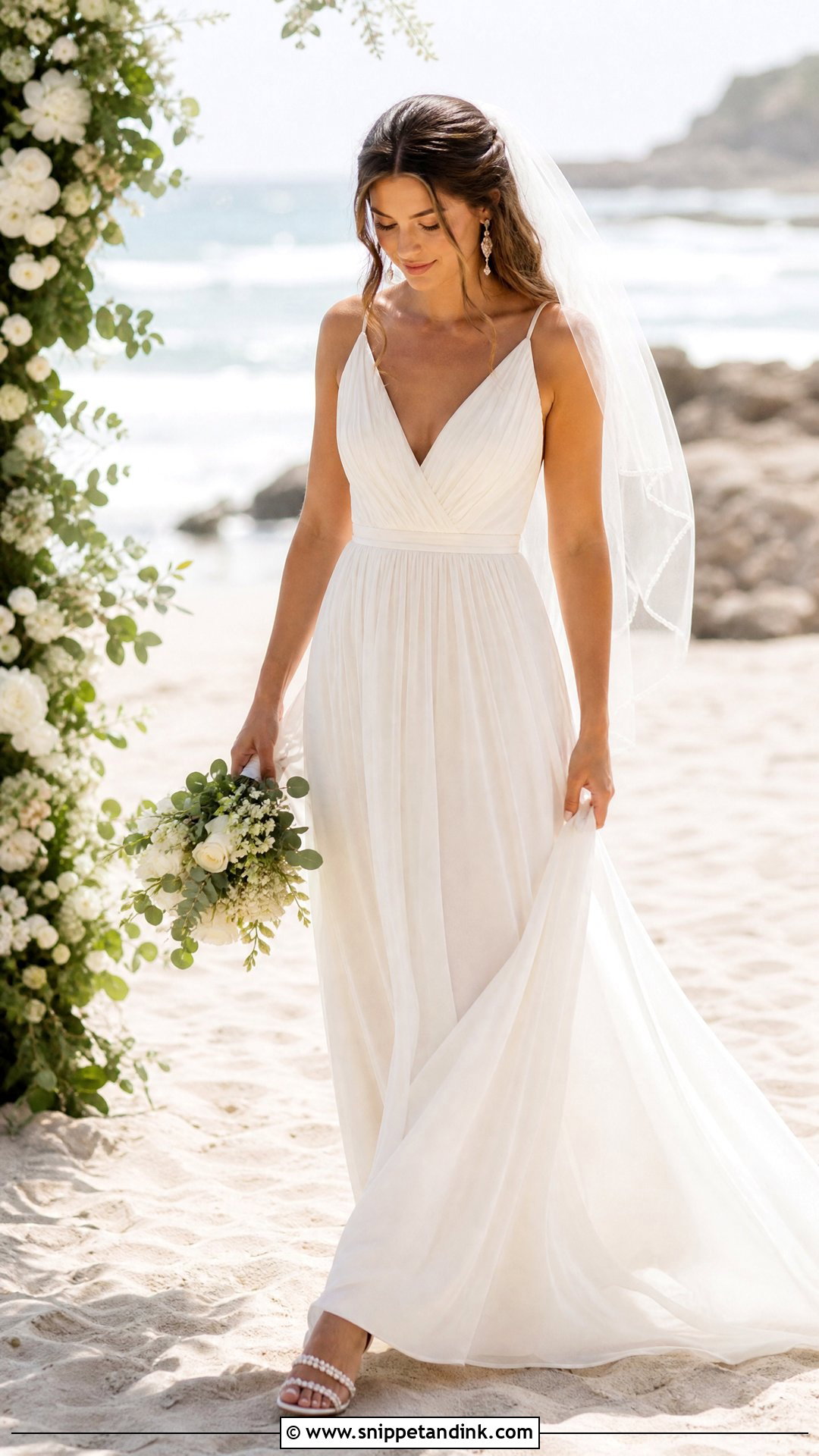
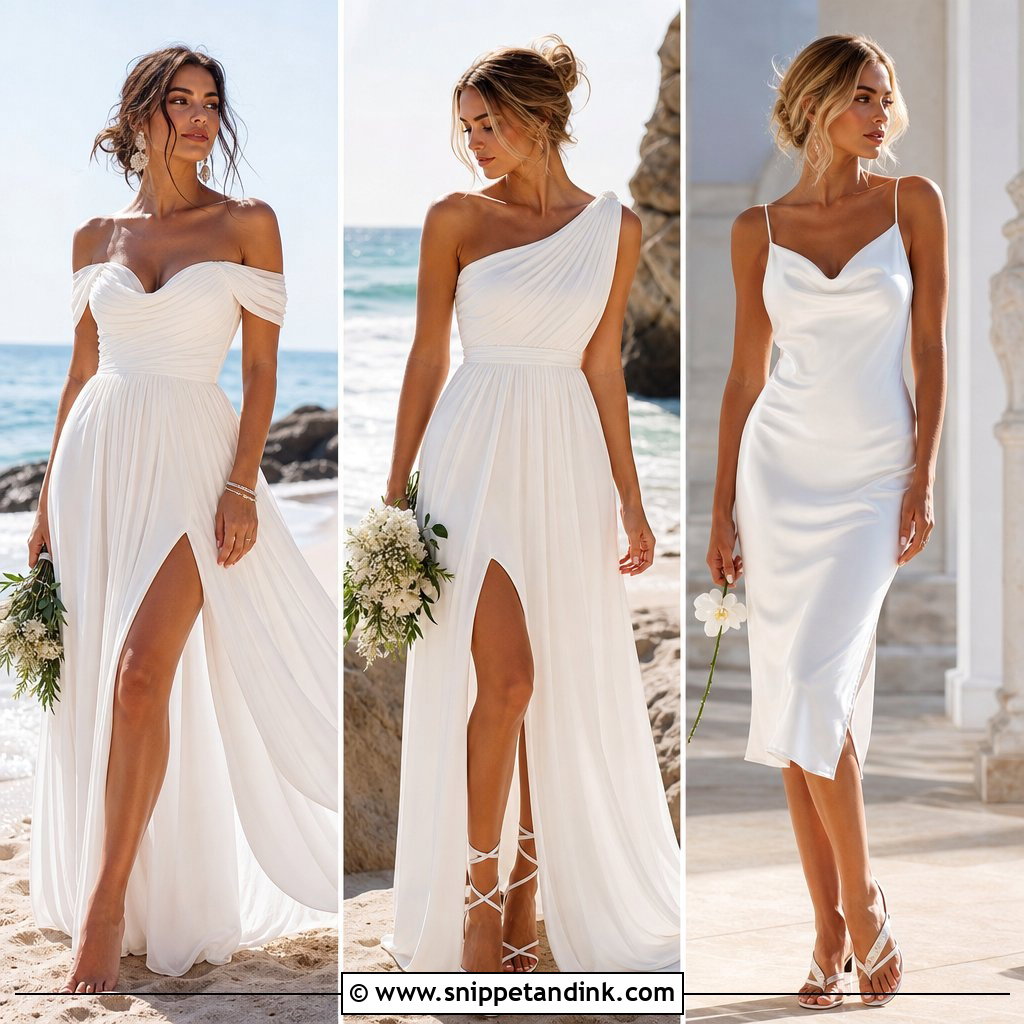
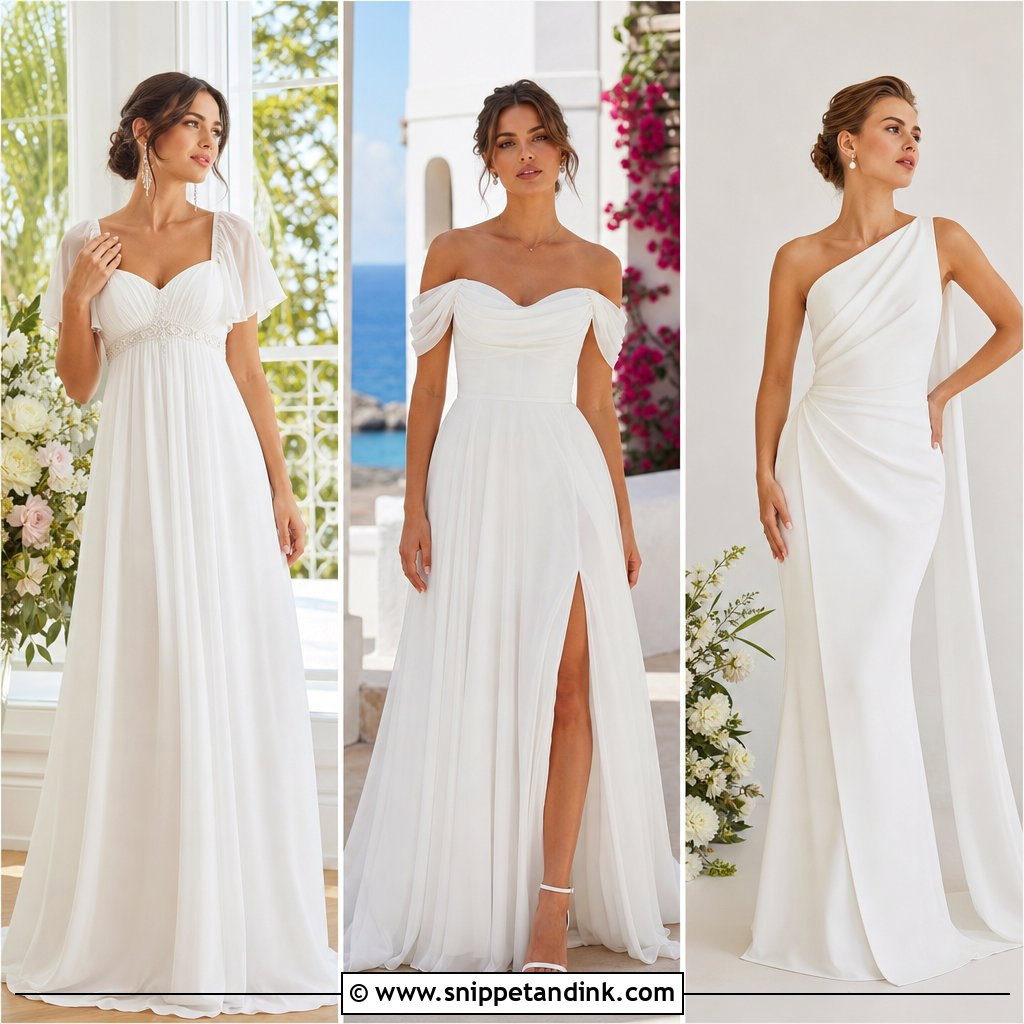
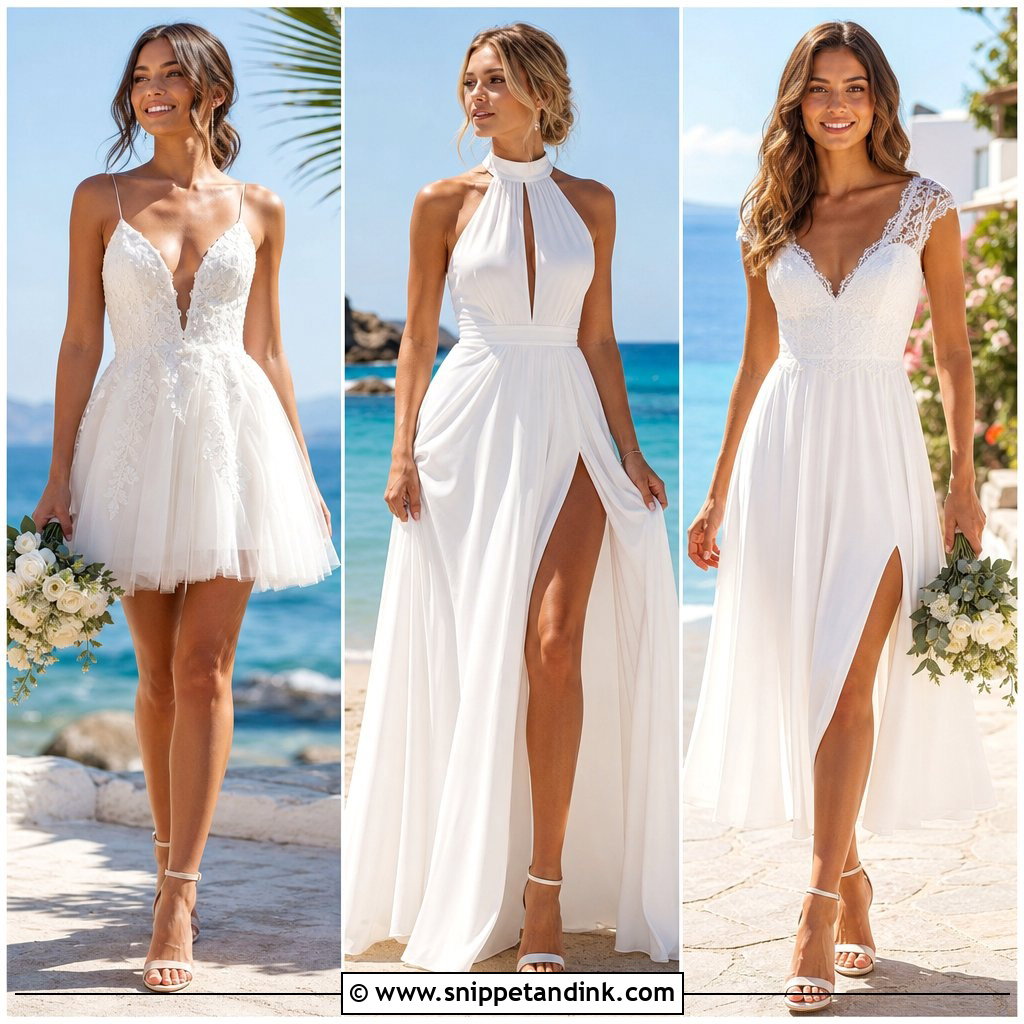
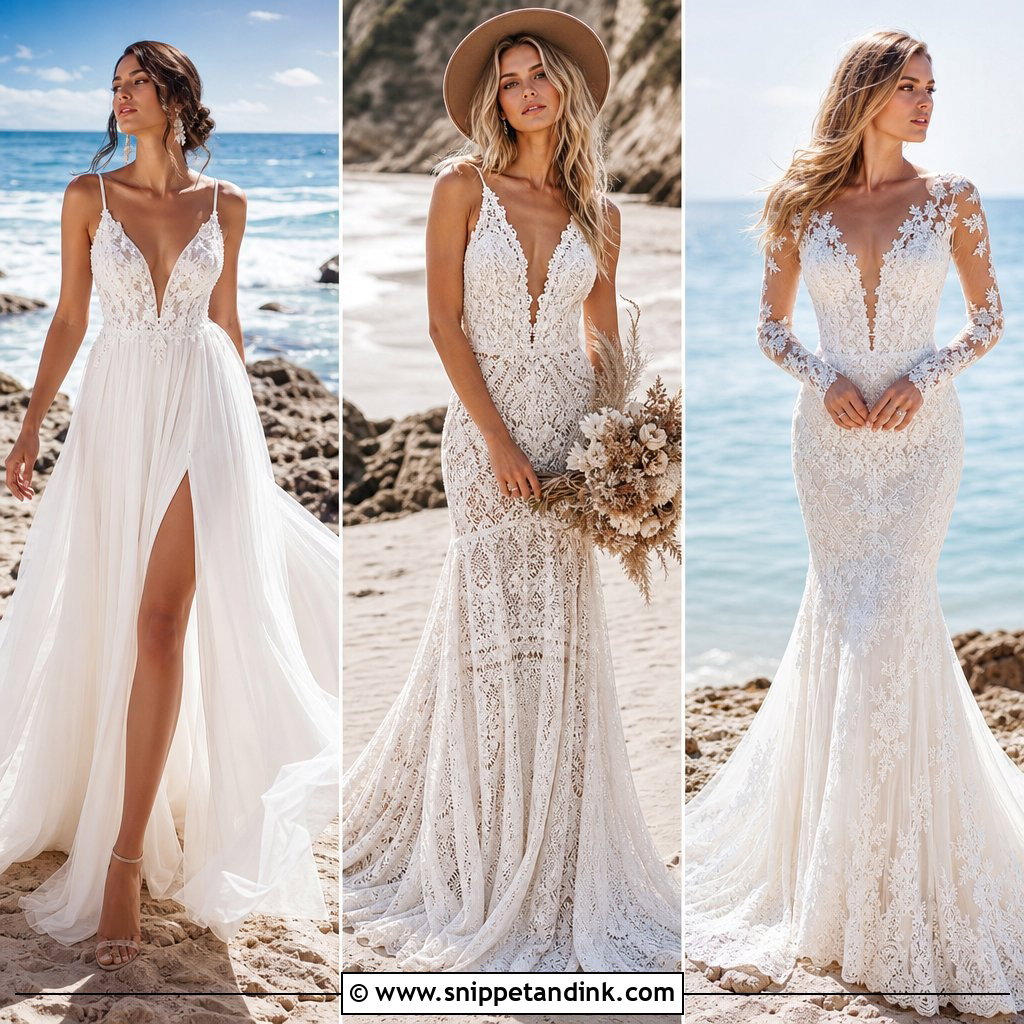
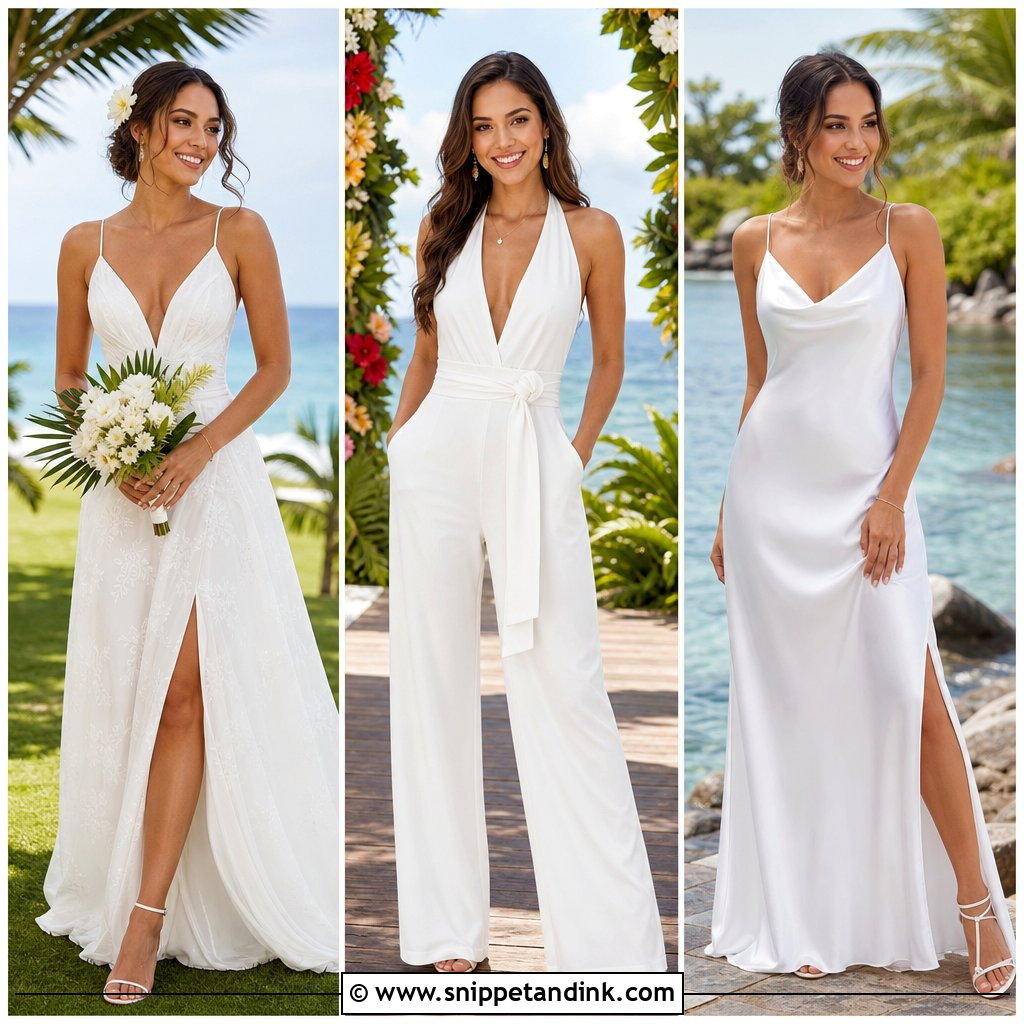
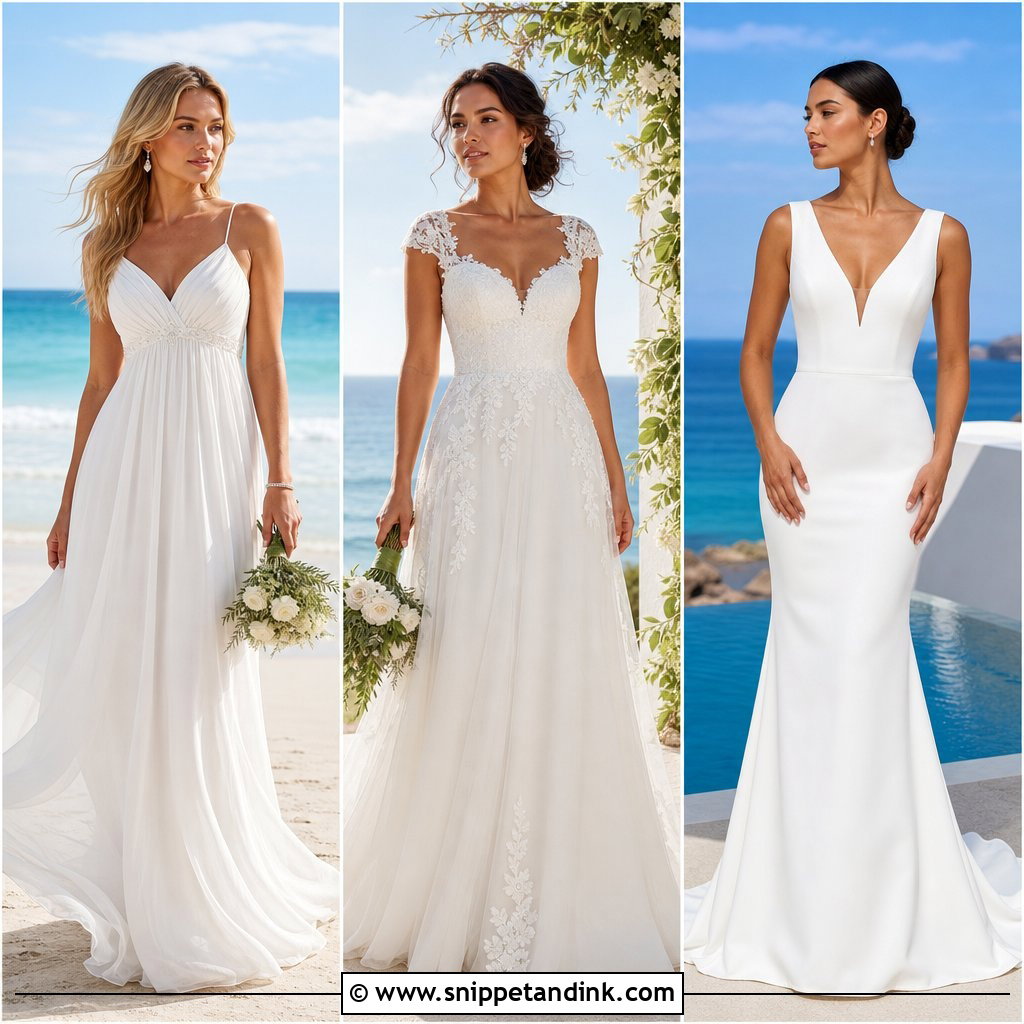
If I had to pack one fabric for a beach, it would be chiffon. A chiffon beach wedding dress breathes in heat and moves with the wind instead of against it. An A-line or empire waist keeps it comfortable through the hips, and a V-neck or flutter sleeve keeps the top light. Have it hemmed for bare feet or flat sandals, never for heels, or you’ll trip on it the moment you step onto sand. A fingertip veil behaves far better than a cathedral one outside.
2. Satin Slip Coastal Wedding Dress
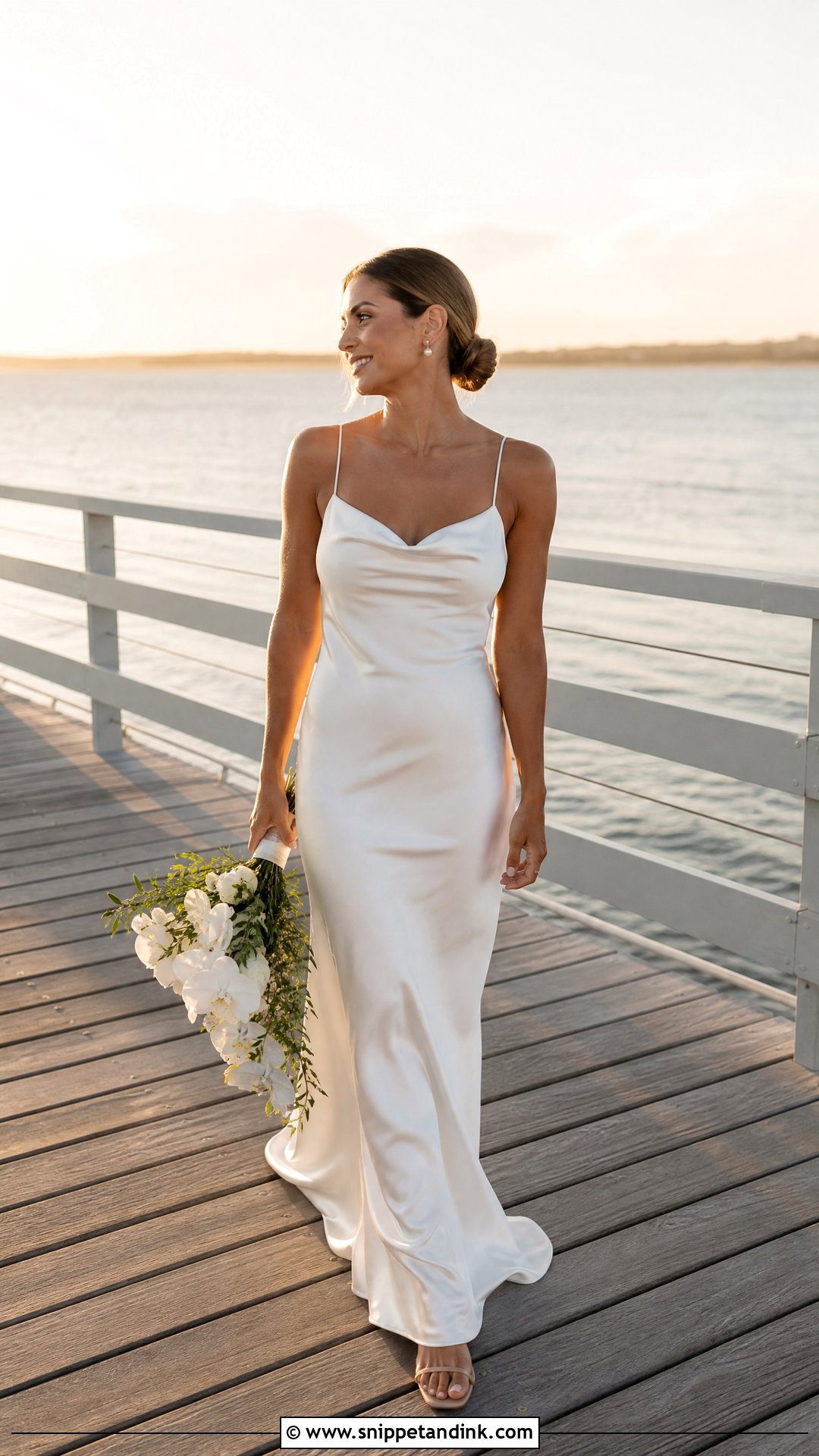
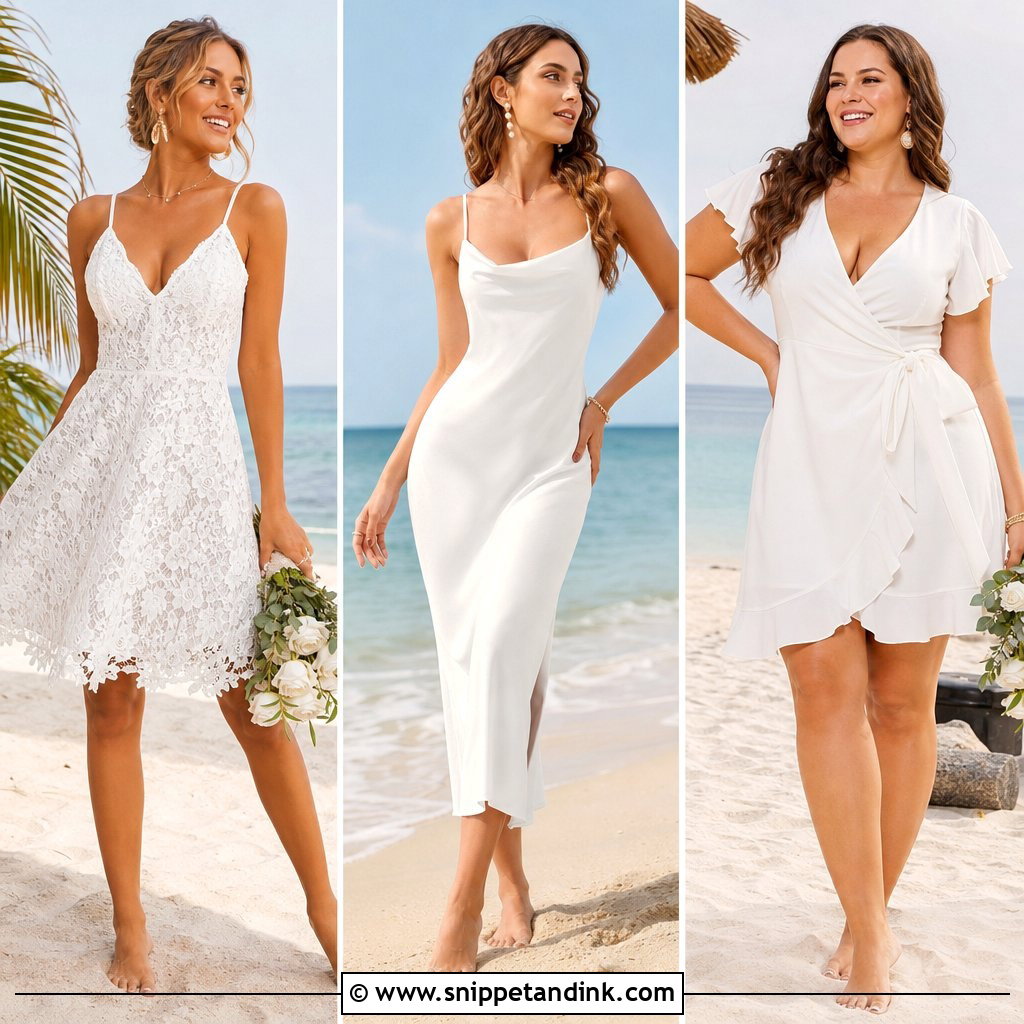
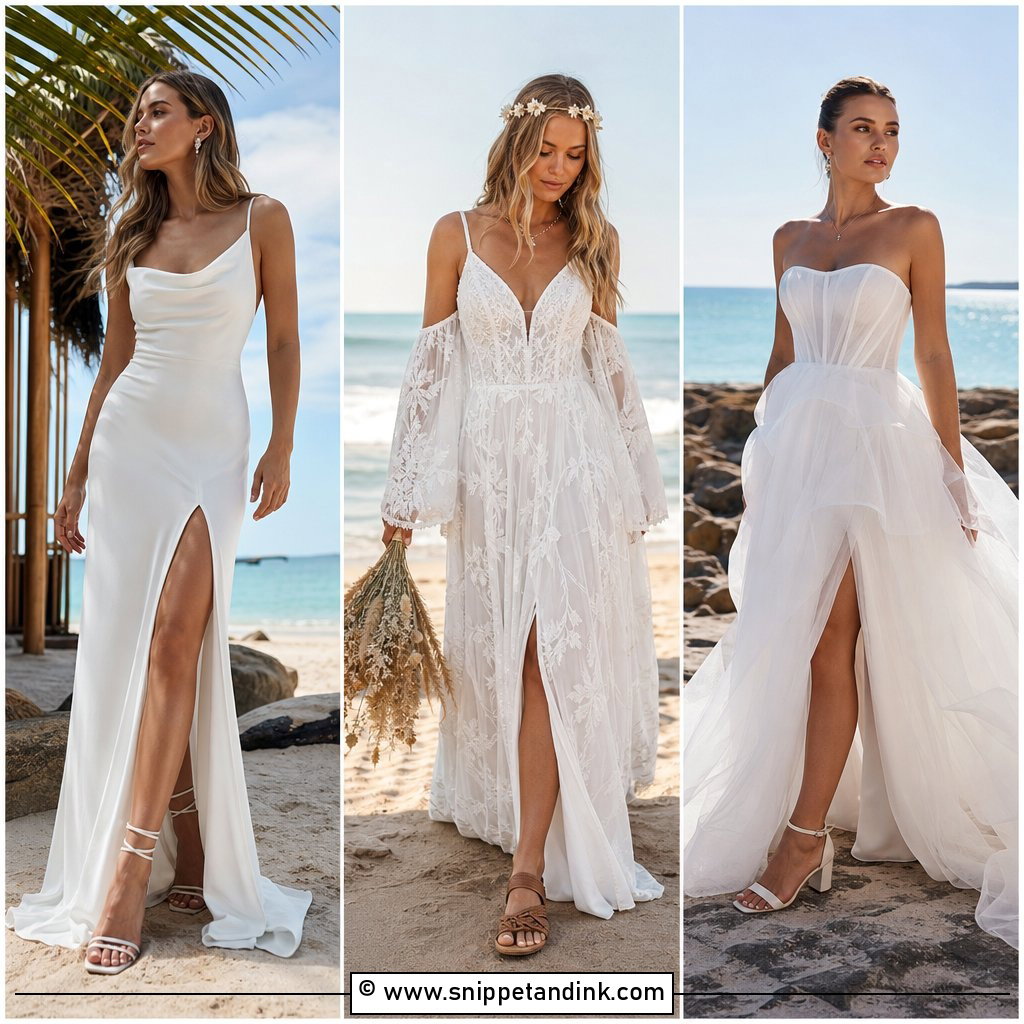
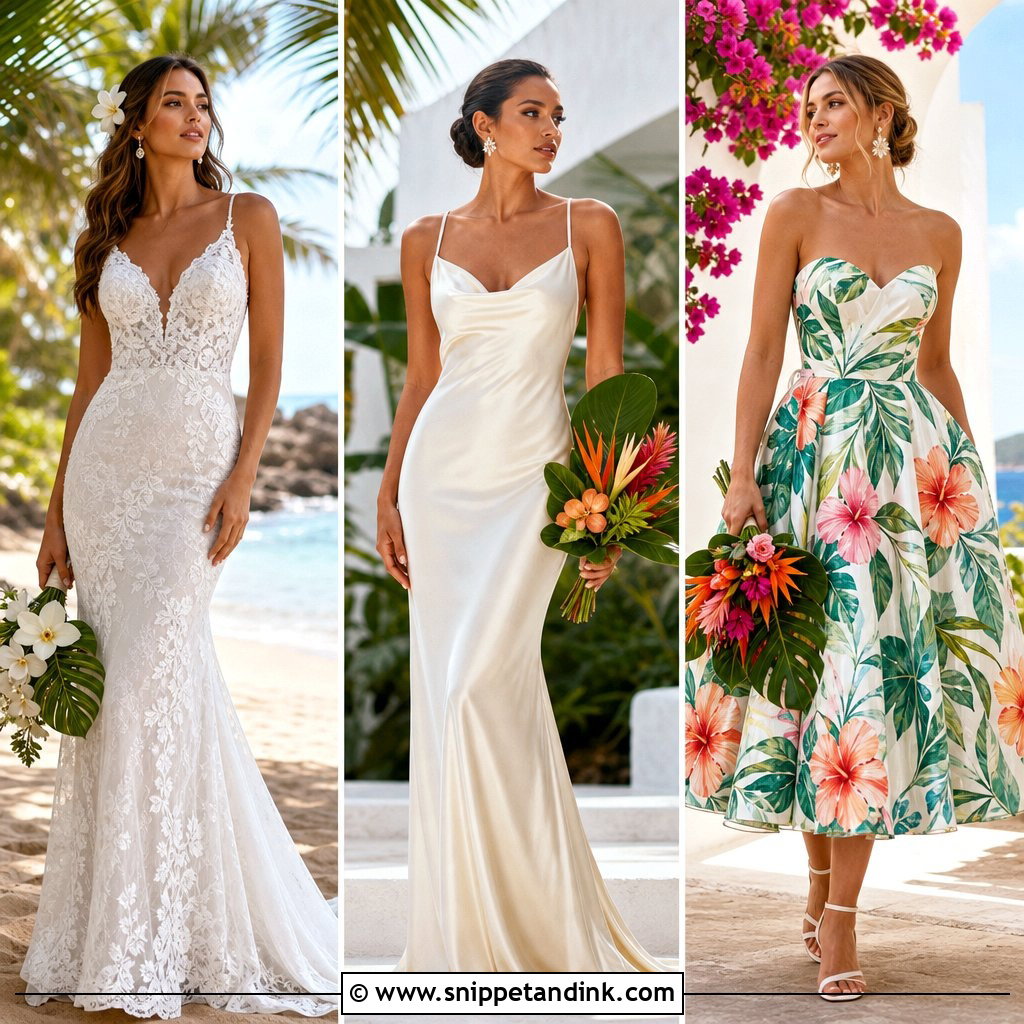
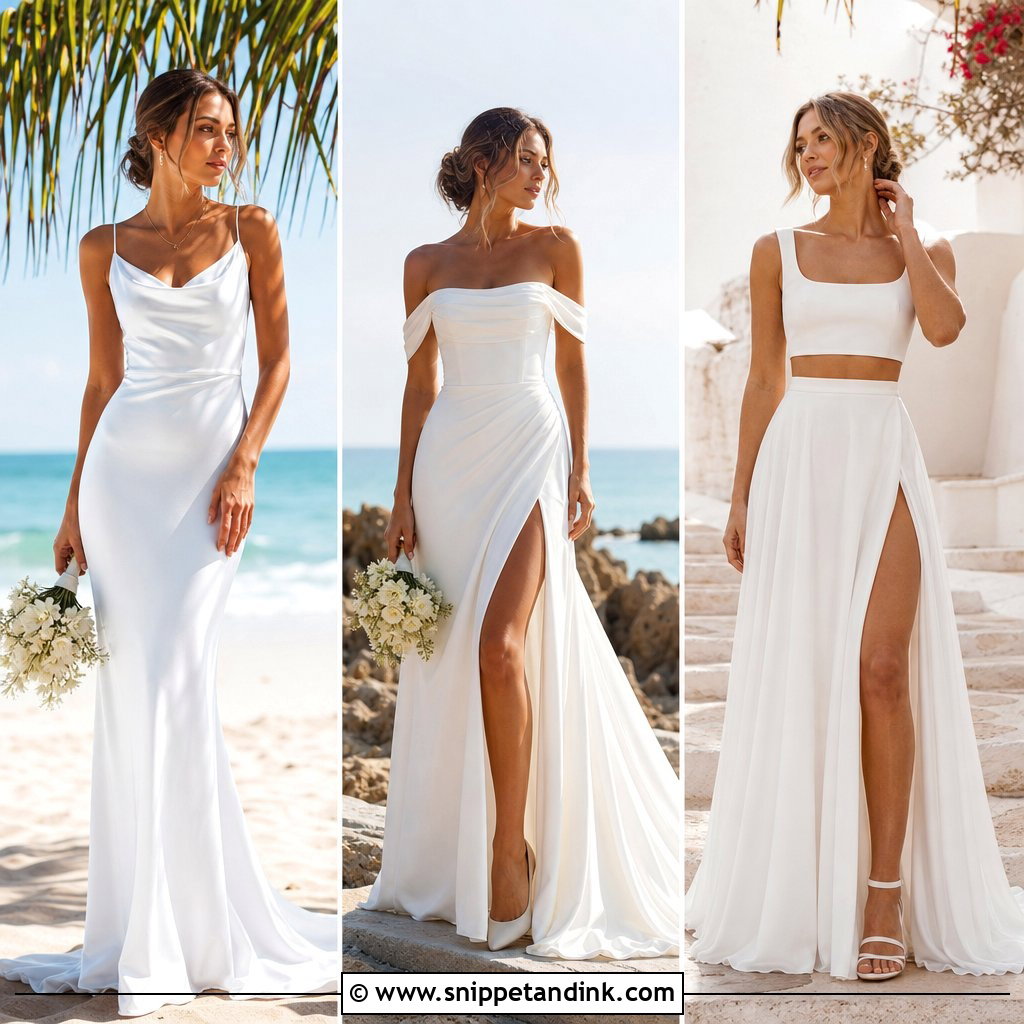
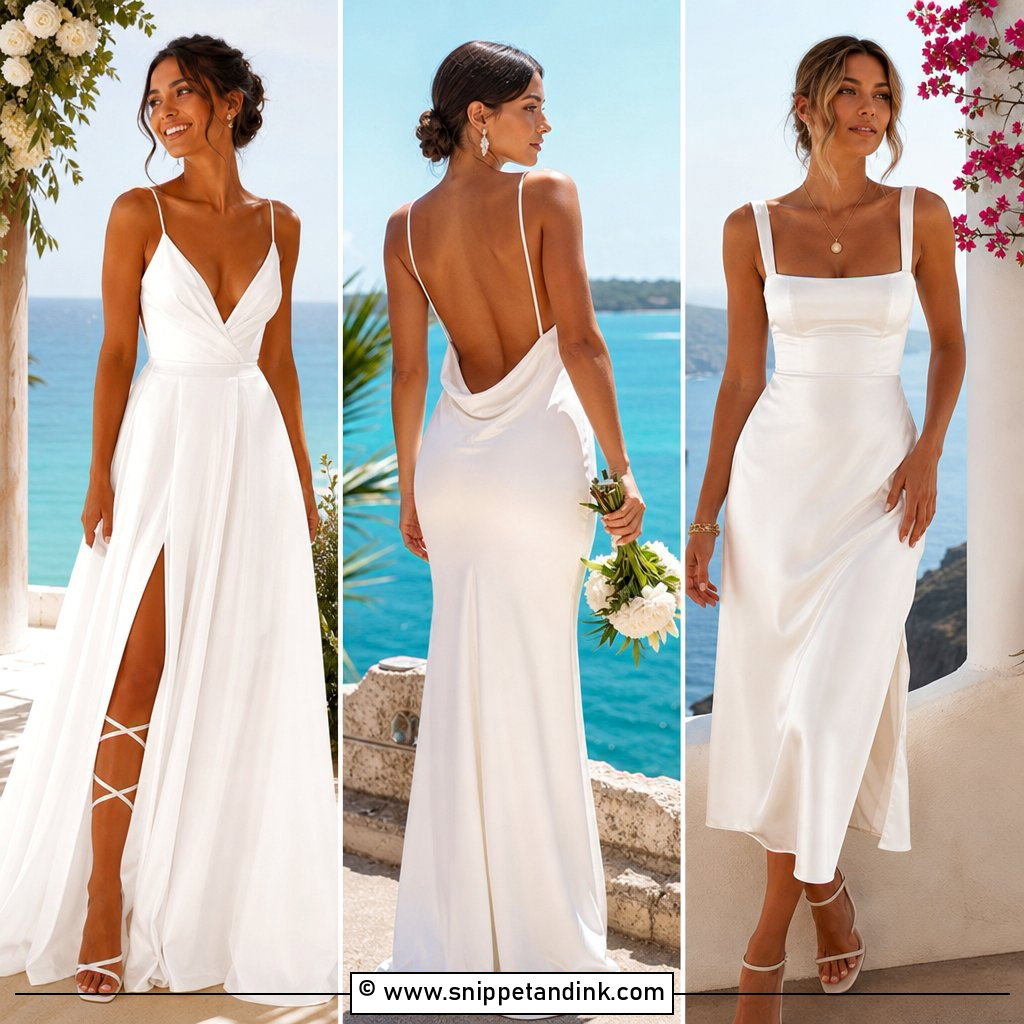
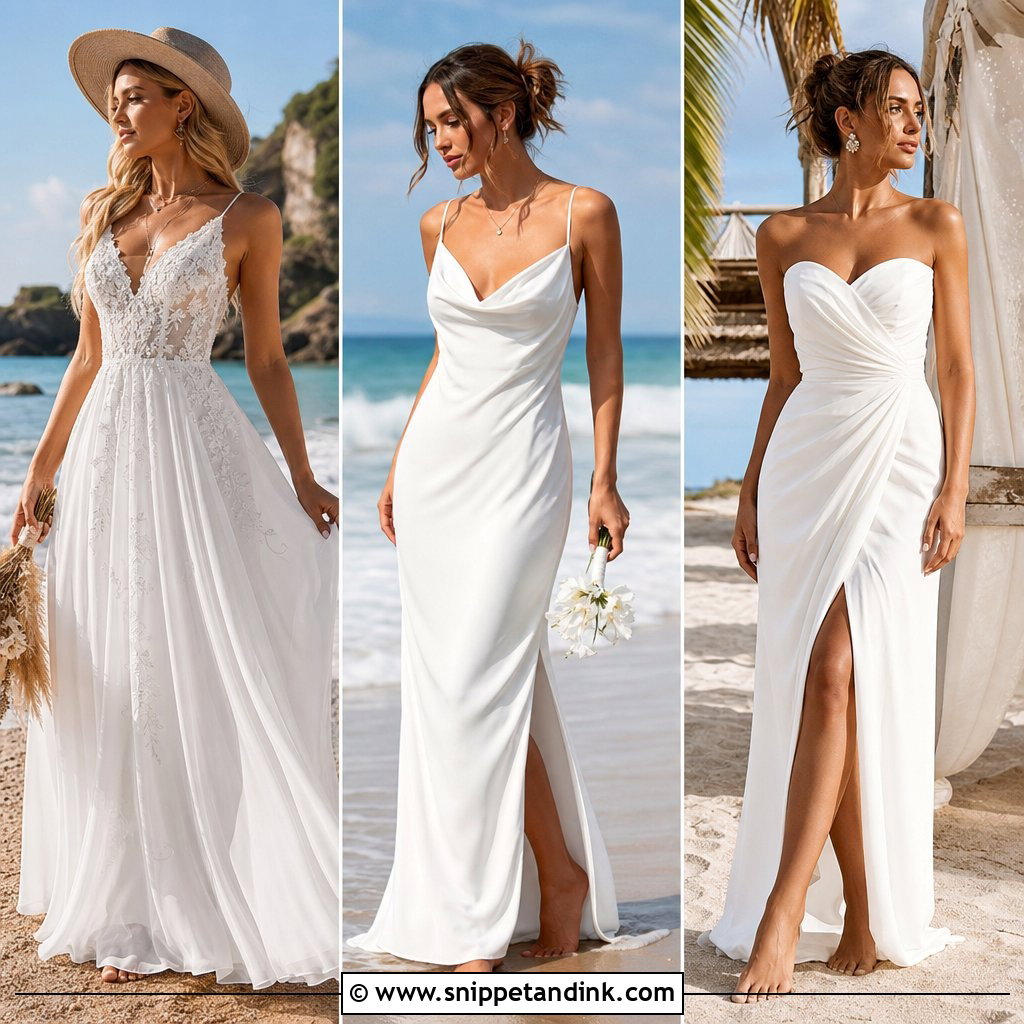
Satin slips look clean against water, but satin is honest about two things: wrinkles and damp. Sweat and sea spray can leave visible marks on thin satin, so I steer brides towards a midweight, matte-backed satin and away from very shiny, light versions. A bias cut skims the body; a cowl neck or low back adds just enough detail. Barely-there sandals, pearl studs and a sleek bun suit sunset vows and small waterfront dinners.
3. Lace Boho Beach Wedding Dress
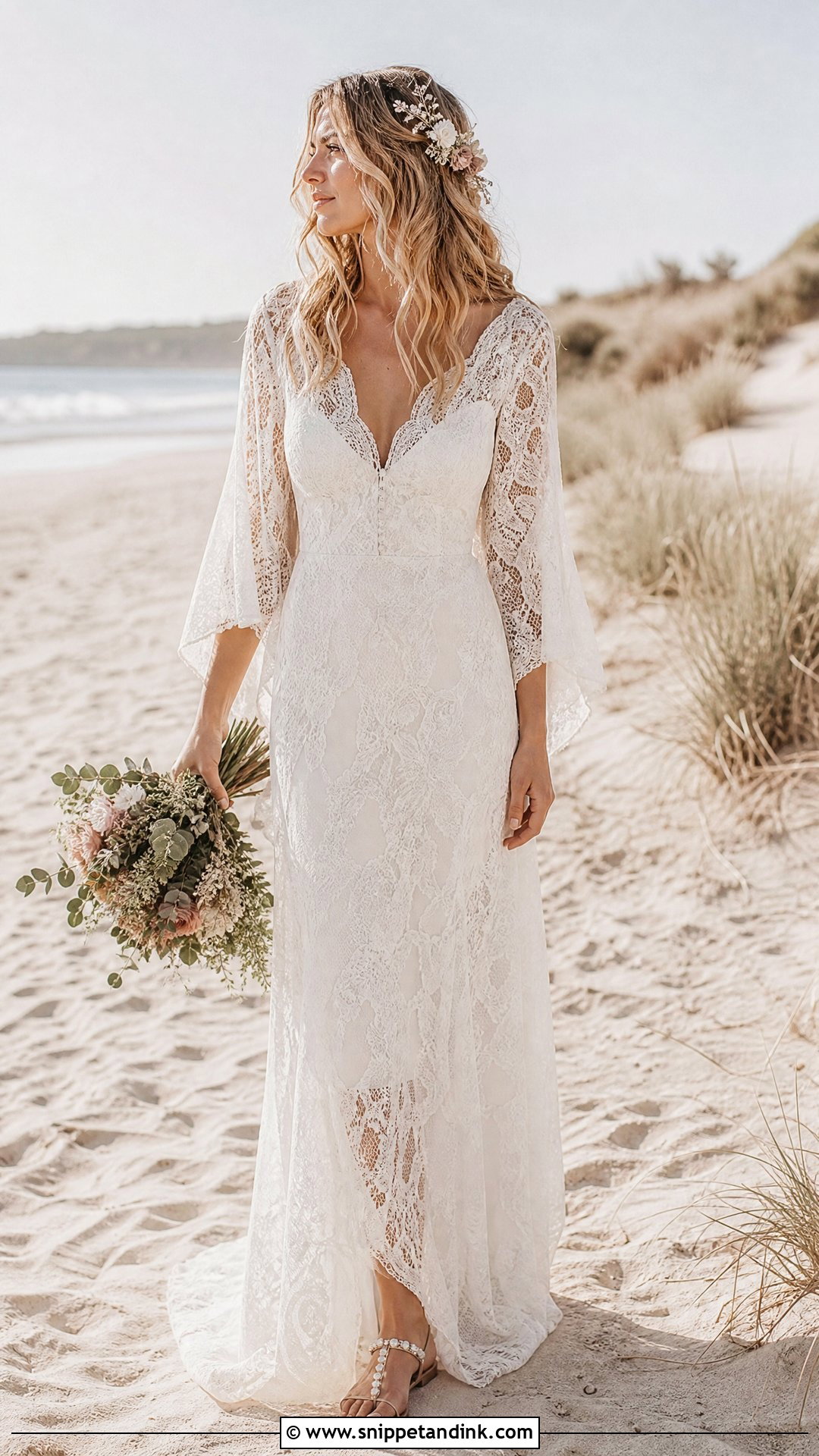
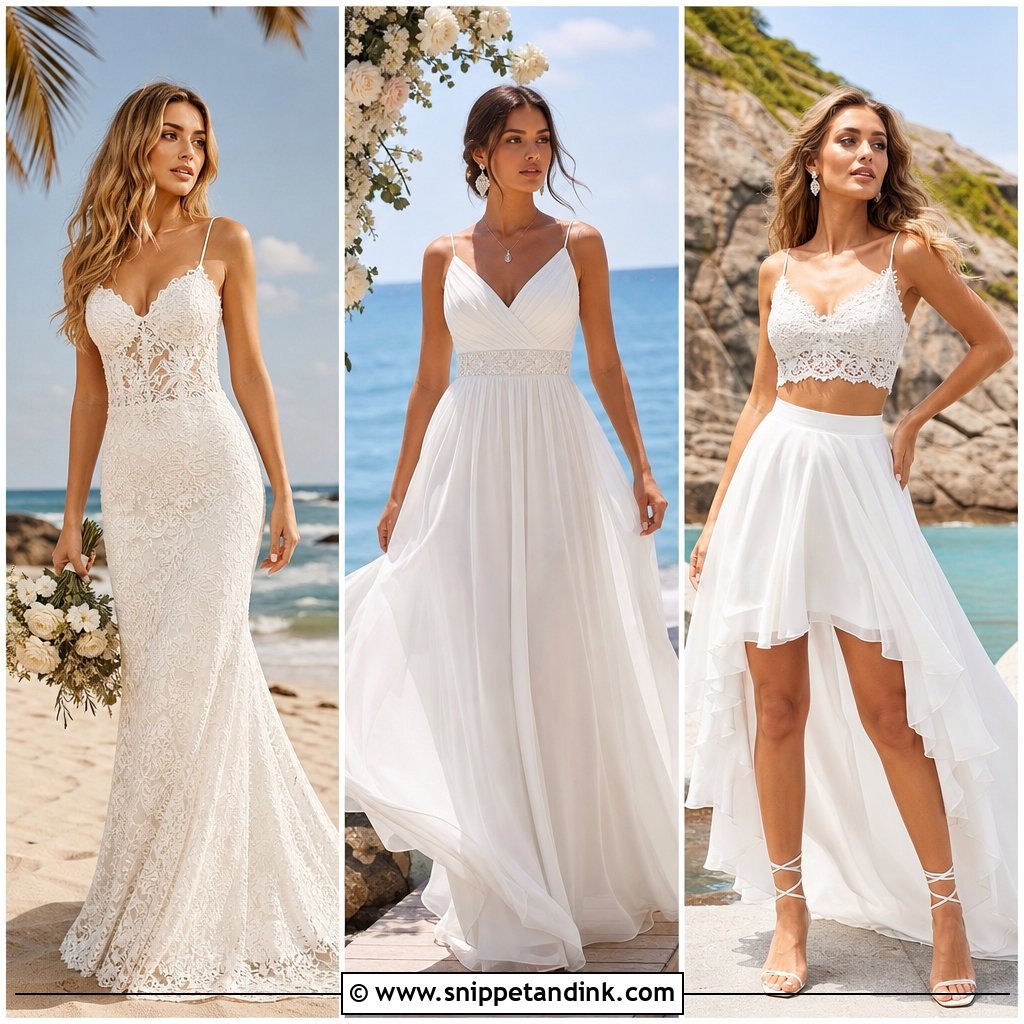
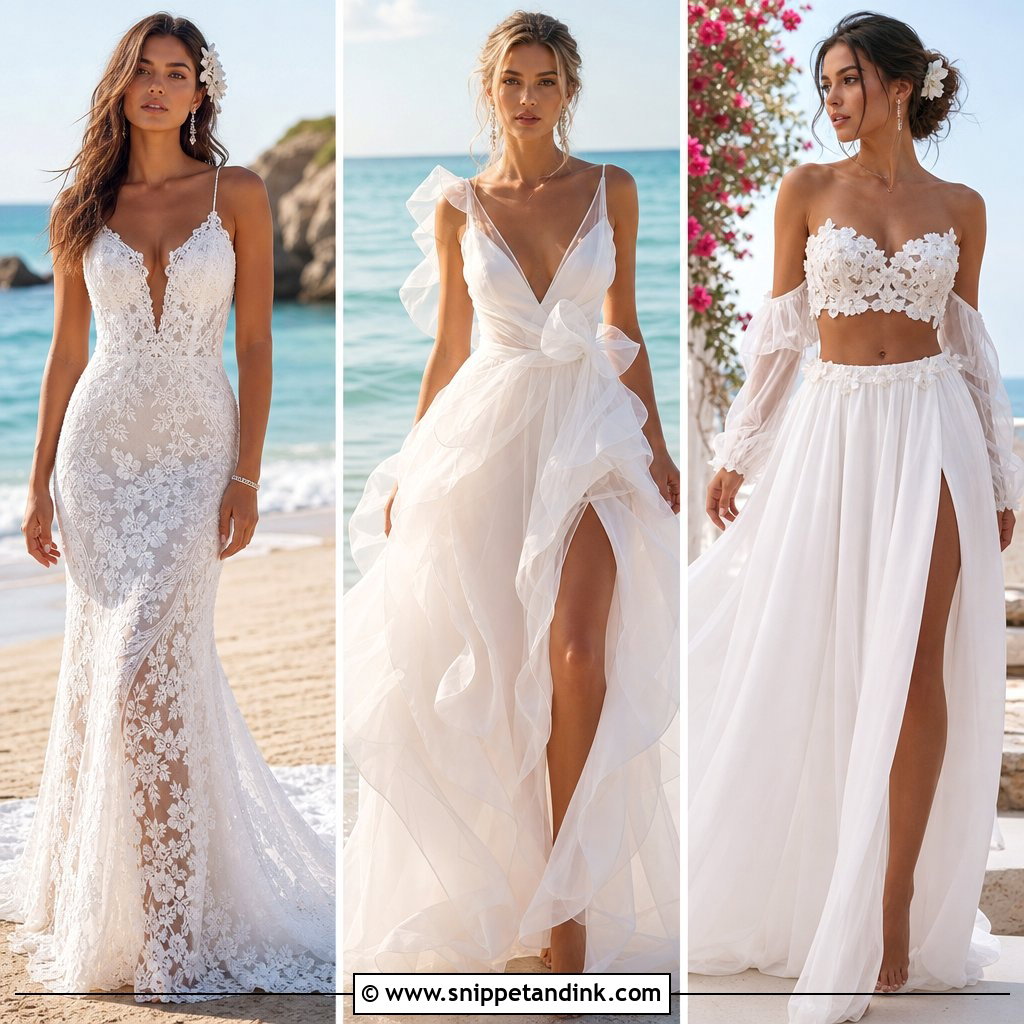
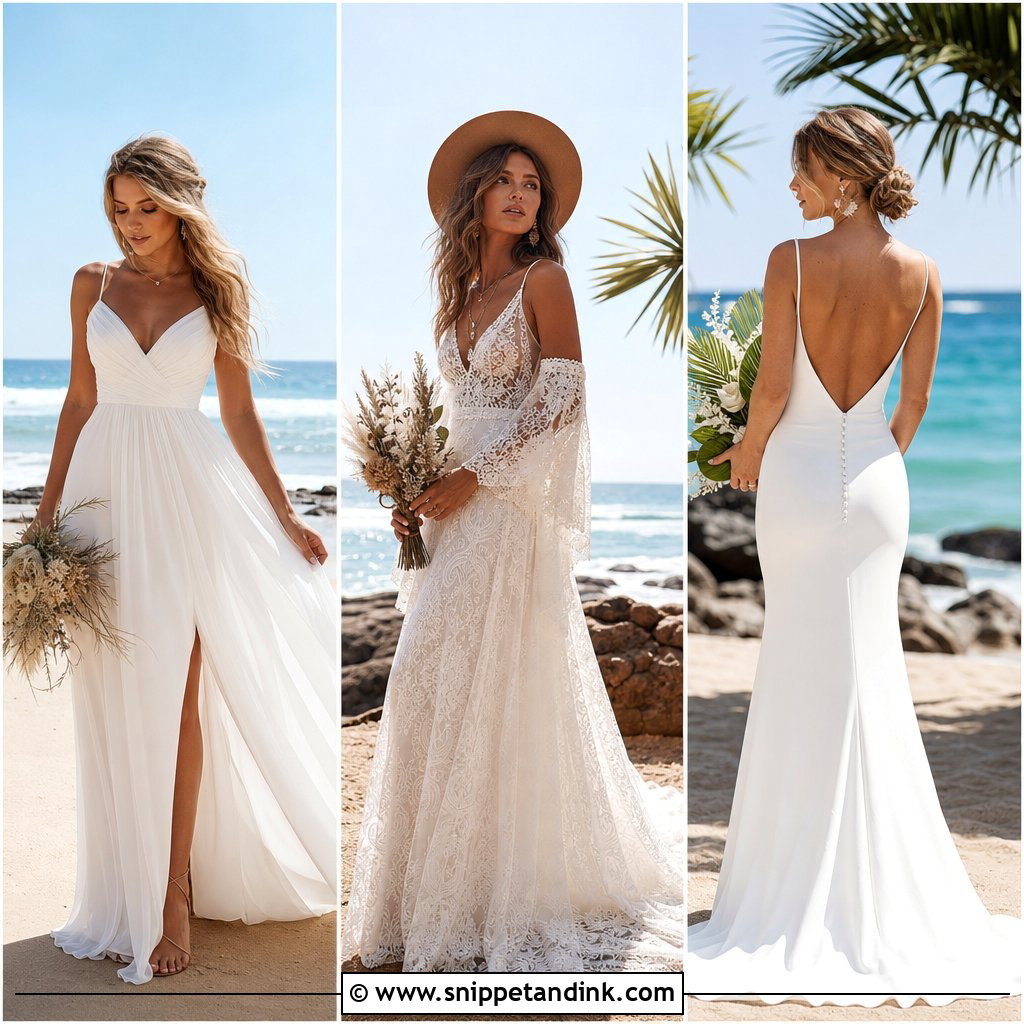
Boho lace only feels relaxed if the lace is soft. Cotton lace, crochet-style lace or a floral lace with a cotton or fine knit lining sits comfortably in heat; stiff synthetic lace scratches and traps warmth. A relaxed sheath, fit-and-flare or tiered skirt all work. Long lace sleeves are lovely for a cool evening, but I’d go sleeveless for a midday ceremony in strong sun. Leather or pearl flat sandals, loose waves and a small flower comb finish the look.
4. Off Shoulder Beach Wedding Dress
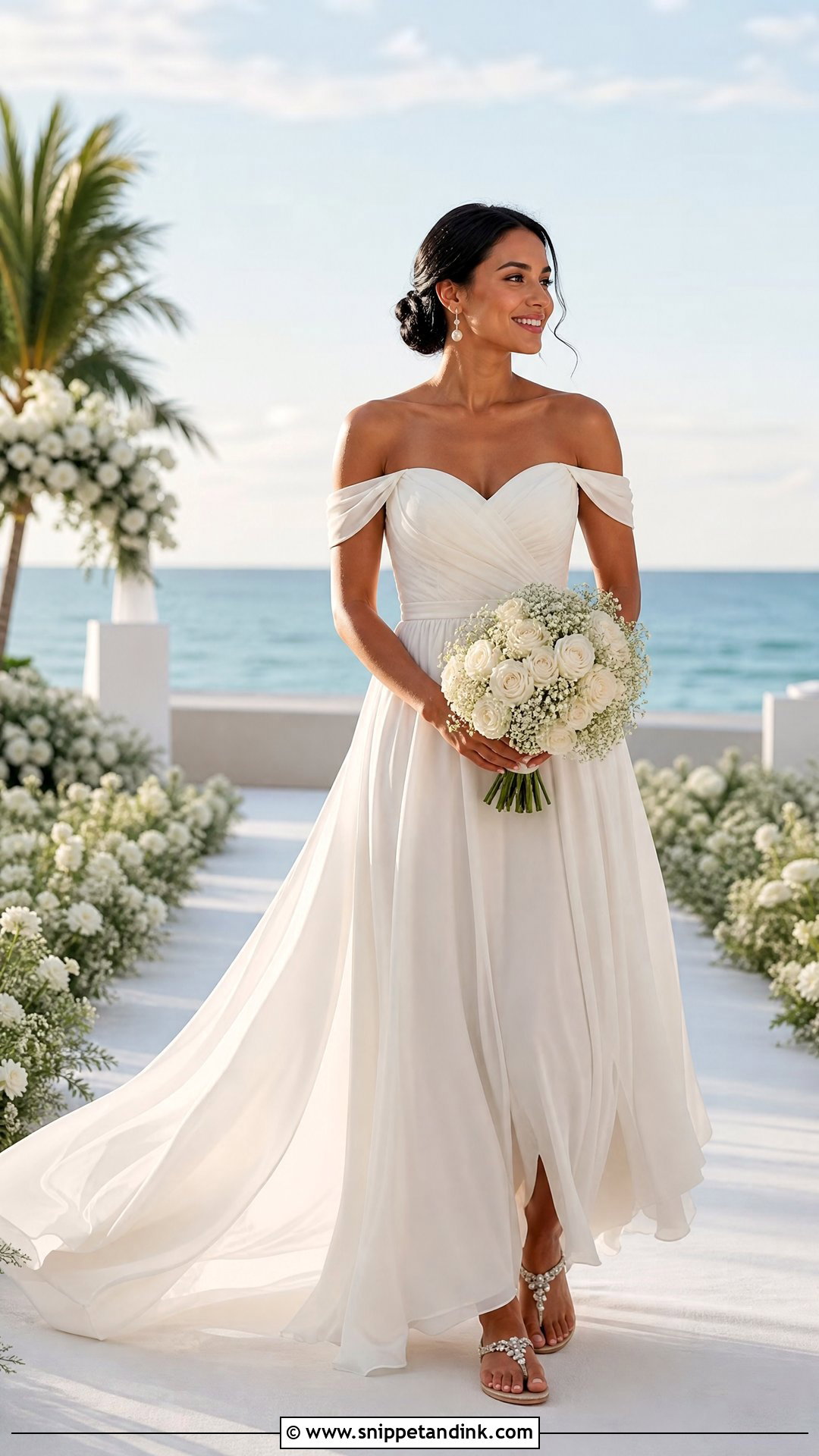
Off-the-shoulder necklines show the collarbones without relying on thin straps, which is useful in wind. The trade-off is movement: the band across the upper arms limits how high you can lift them. Try hugging someone in the fitting room. If it rides up, ask for elastic grip inside the band. A chiffon or crepe skirt keeps it light. Block-heel sandals suit a deck or patio, and embellished flats suit sand.
5. A Line Coastal Wedding Dress
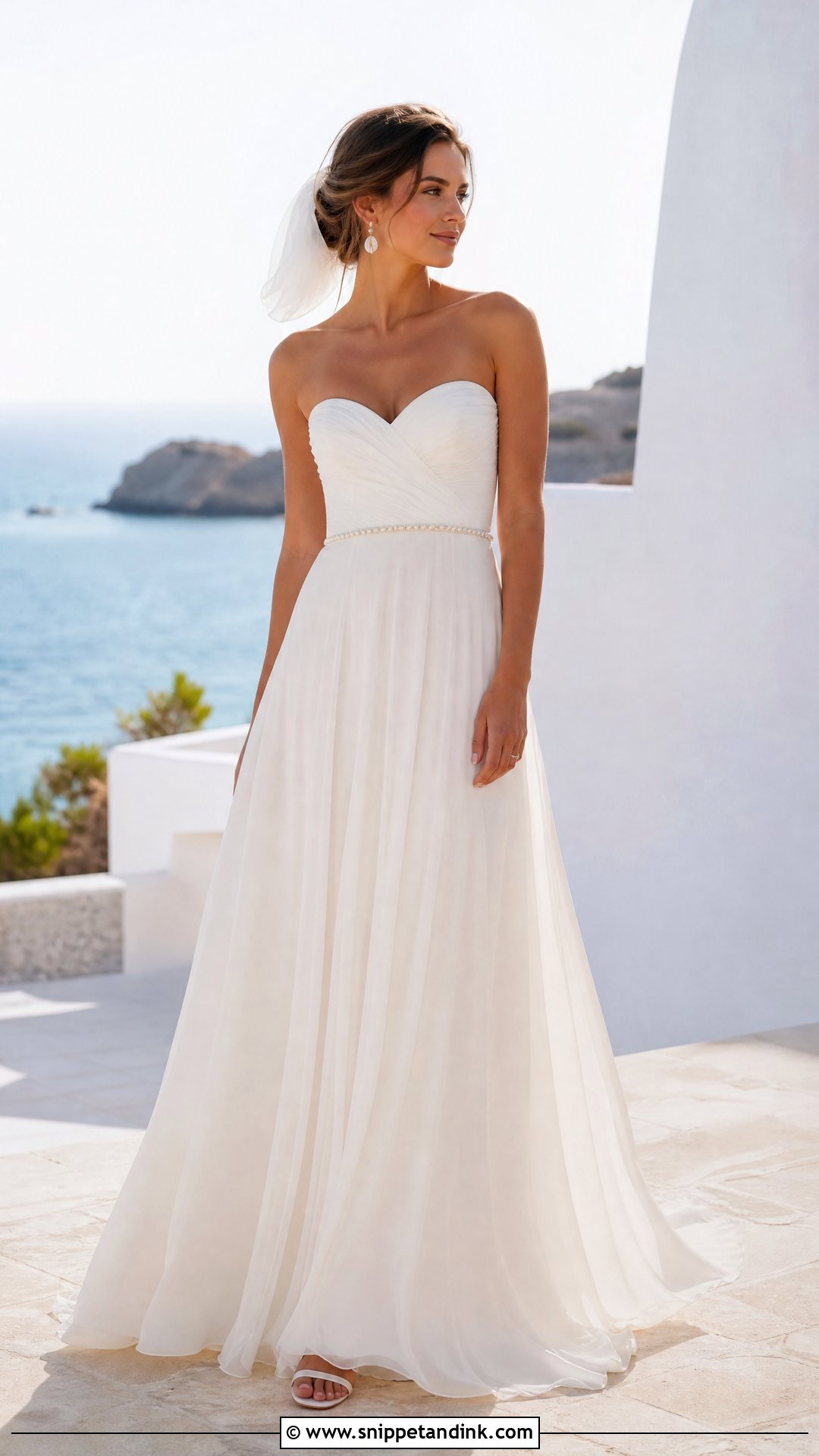
An A-line suits most bodies, and on a beach it has another advantage: the skirt floats rather than clings, so damp air doesn’t stick it to your legs. Choose tulle, chiffon, organza or soft crepe rather than heavy satin or several thick layers. Sweetheart, square or V-necklines all work. A short veil, shell pearl earrings and neutral sandals keep it relaxed. A thin pearl belt can add definition at the waist.
6. Simple Crepe Beach Wedding Dress
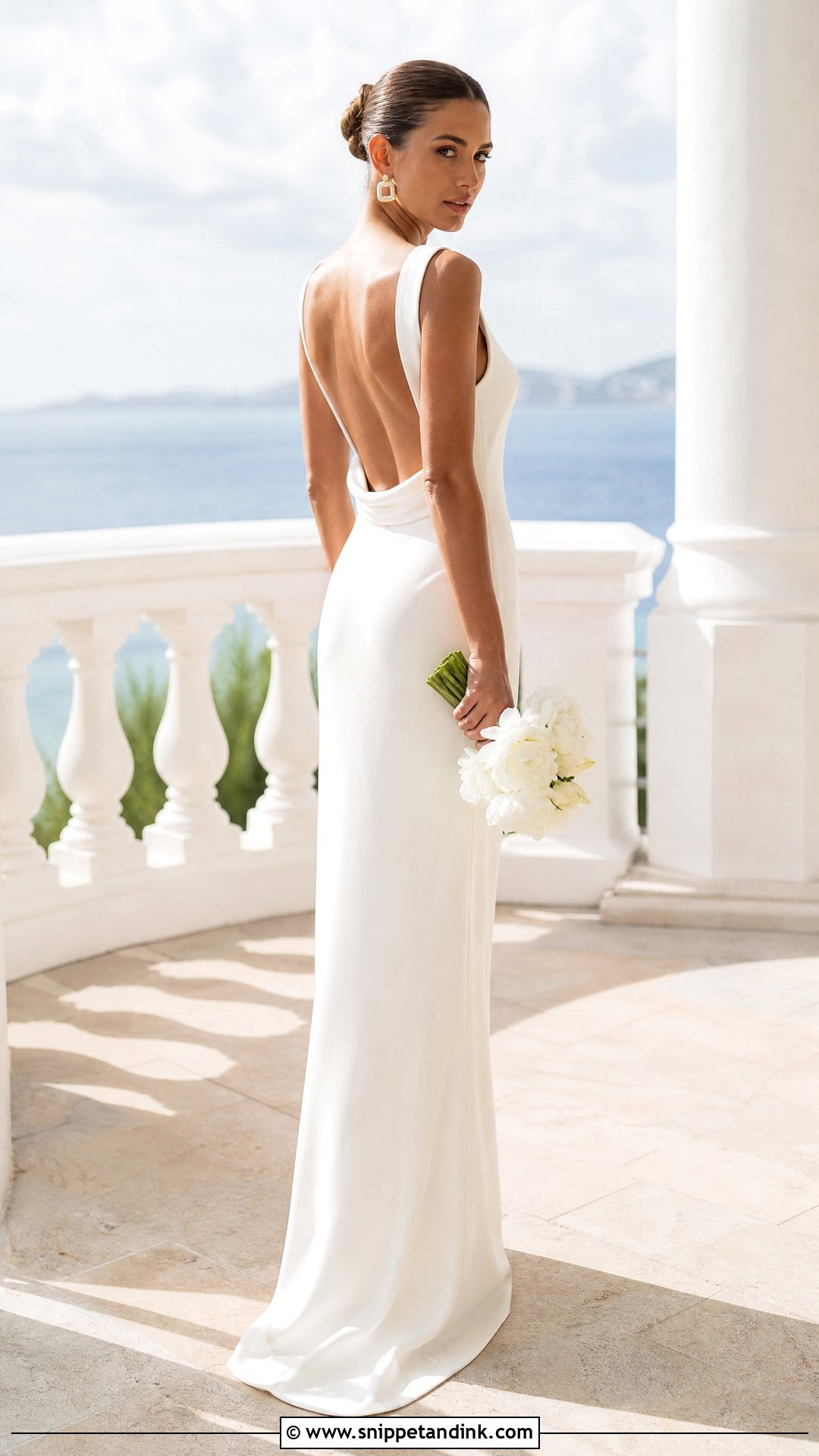
Crepe gives more structure than chiffon or satin, and its matte surface doesn’t shine in strong sunlight, which makes it photograph cleanly at midday. A fitted sheath, soft mermaid or column shape looks sharp beside water. Look for an open back or side slit, both for style and for walking. Heavy crepe can feel warm, so ask for the lightest weight the designer offers. Sculptural earrings and a smooth low bun suit its minimal lines.
7. Short Beach Wedding Dress
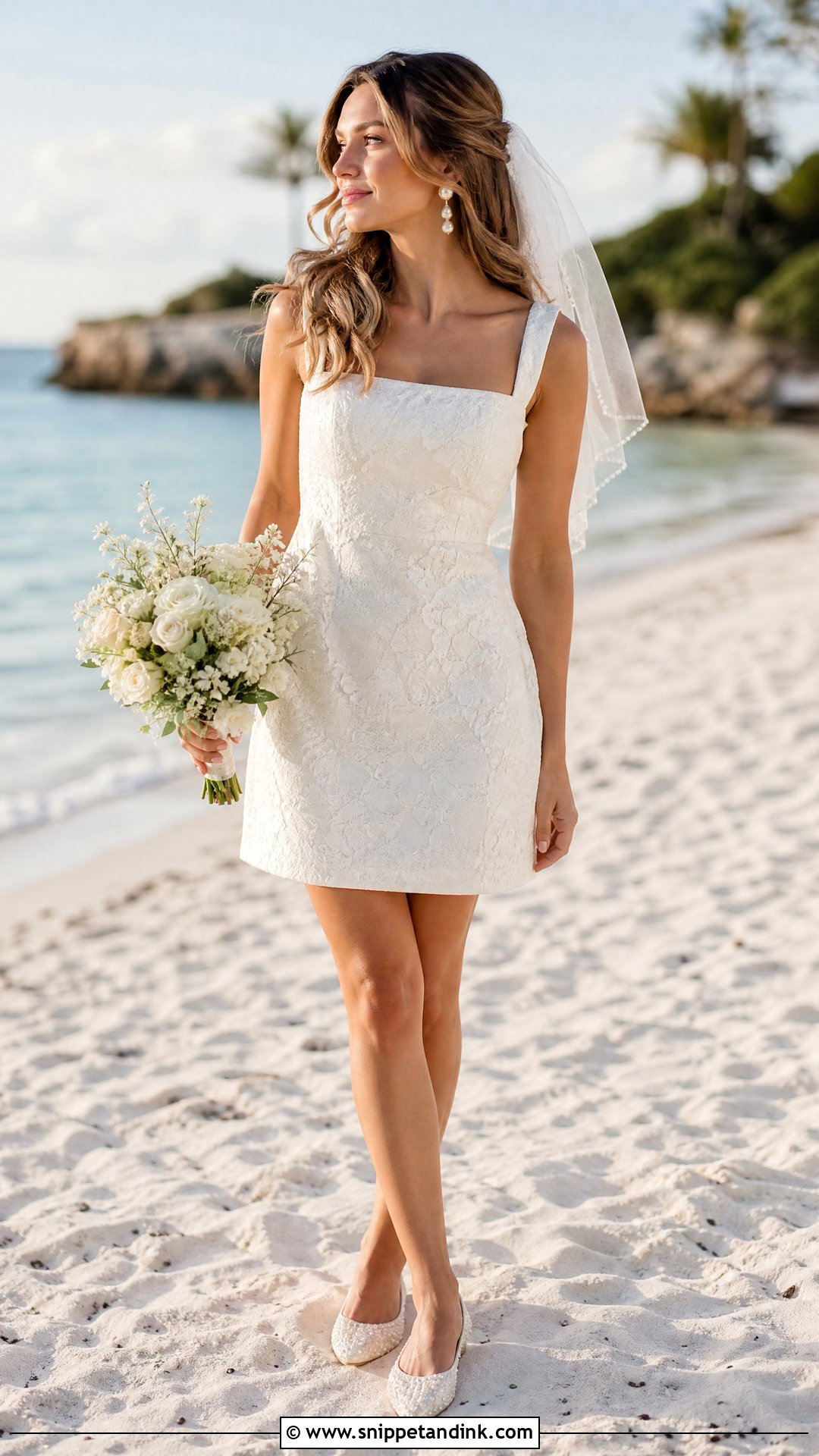
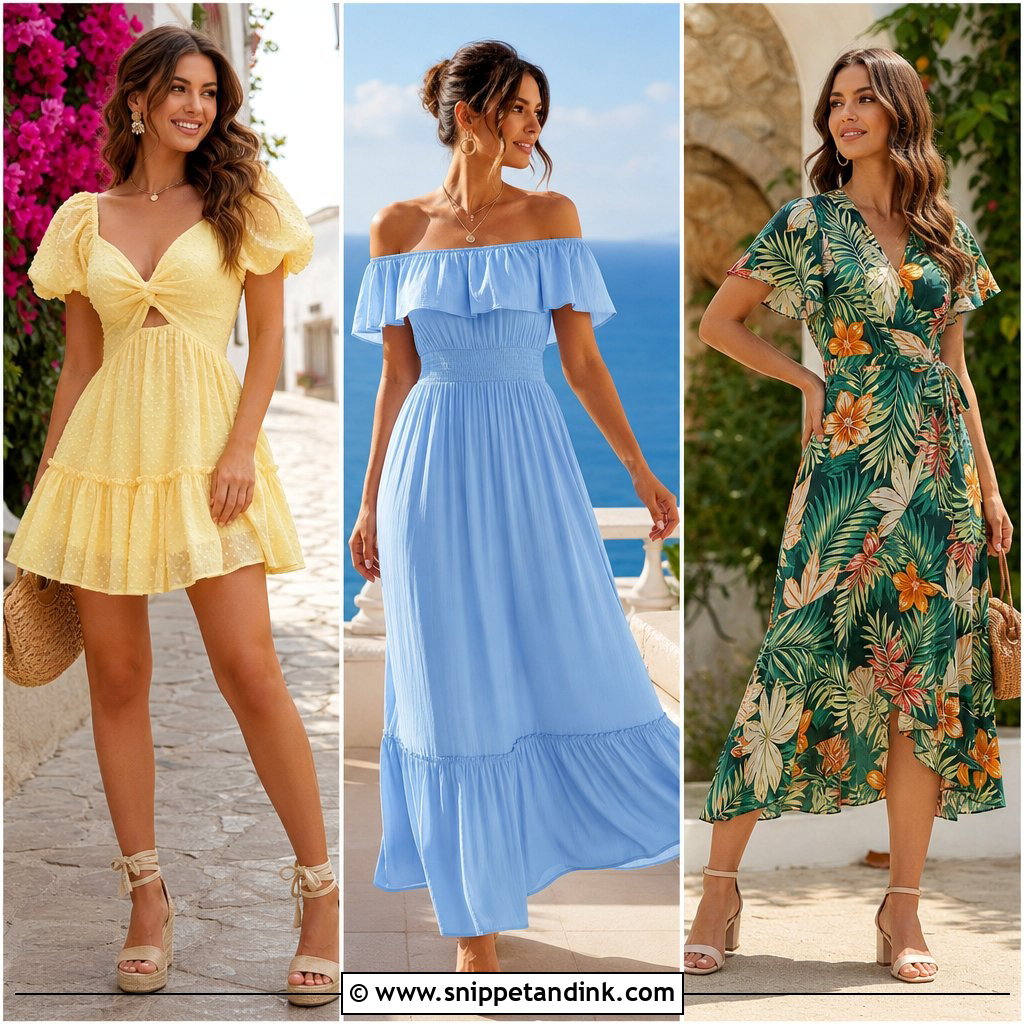
Short dresses solve the sand problem completely. A mini or knee-length dress stays dry and clean, so you can walk to the water’s edge for photos without a second thought. A tailored shift, lace mini, satin halter or puff-sleeve dress all work. Add a short veil or a bow to make it read as bridal. Many brides wear one as a second outfit for the reception, a boat send-off or the welcome party.
8. High Low Coastal Wedding Dress
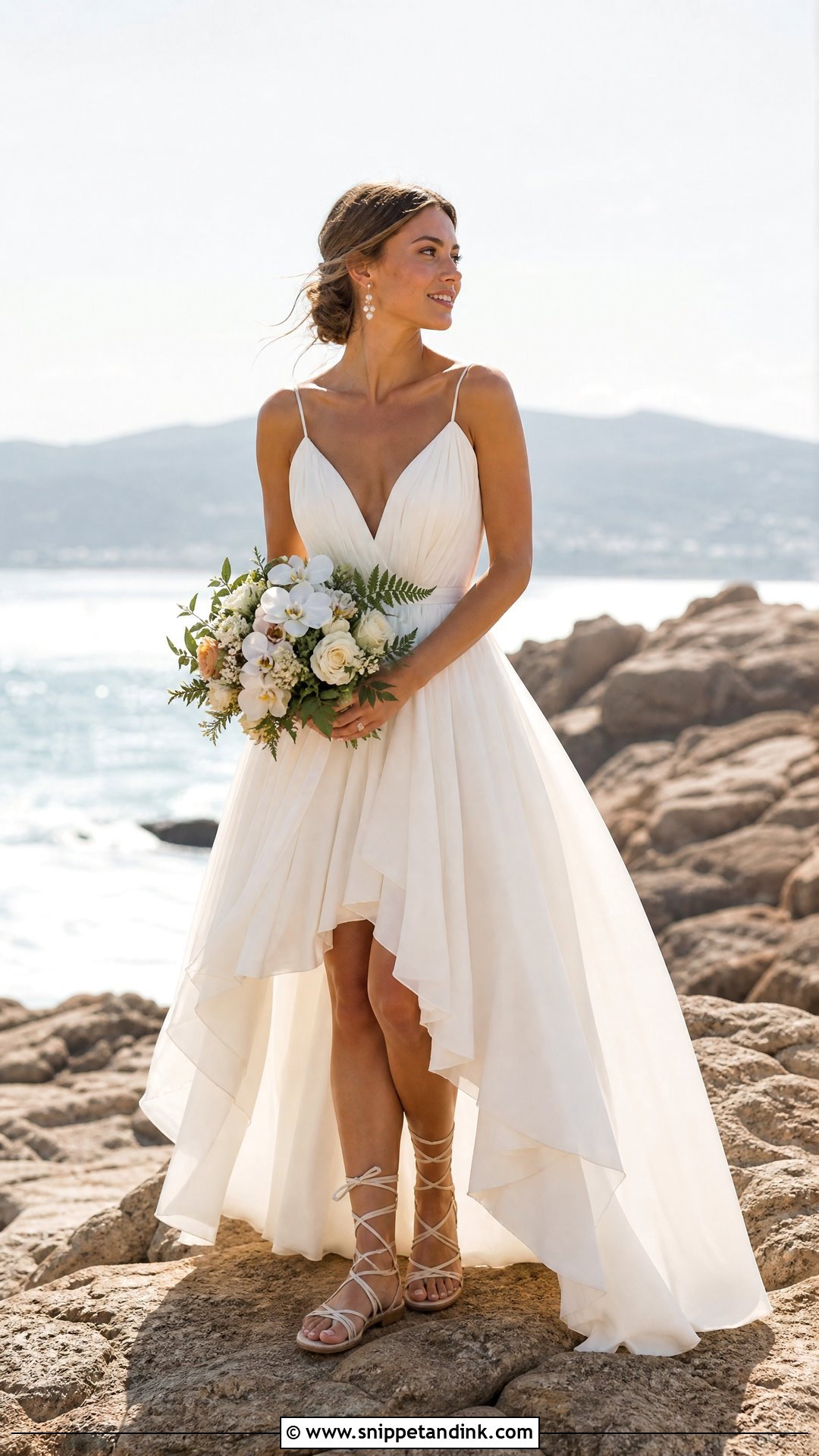
A high-low hem gives you a train at the back and a clear front, so you can see your feet on uneven ground. The front should hit somewhere between mid-calf and ankle. Soft organza, chiffon or lace moves best; stiff fabrics make the hem flip awkwardly in wind. Lace-up sandals and pearl earrings suit it, and a windswept updo looks intentional rather than ruffled by the breeze.
9. Halter Beach Wedding Dress
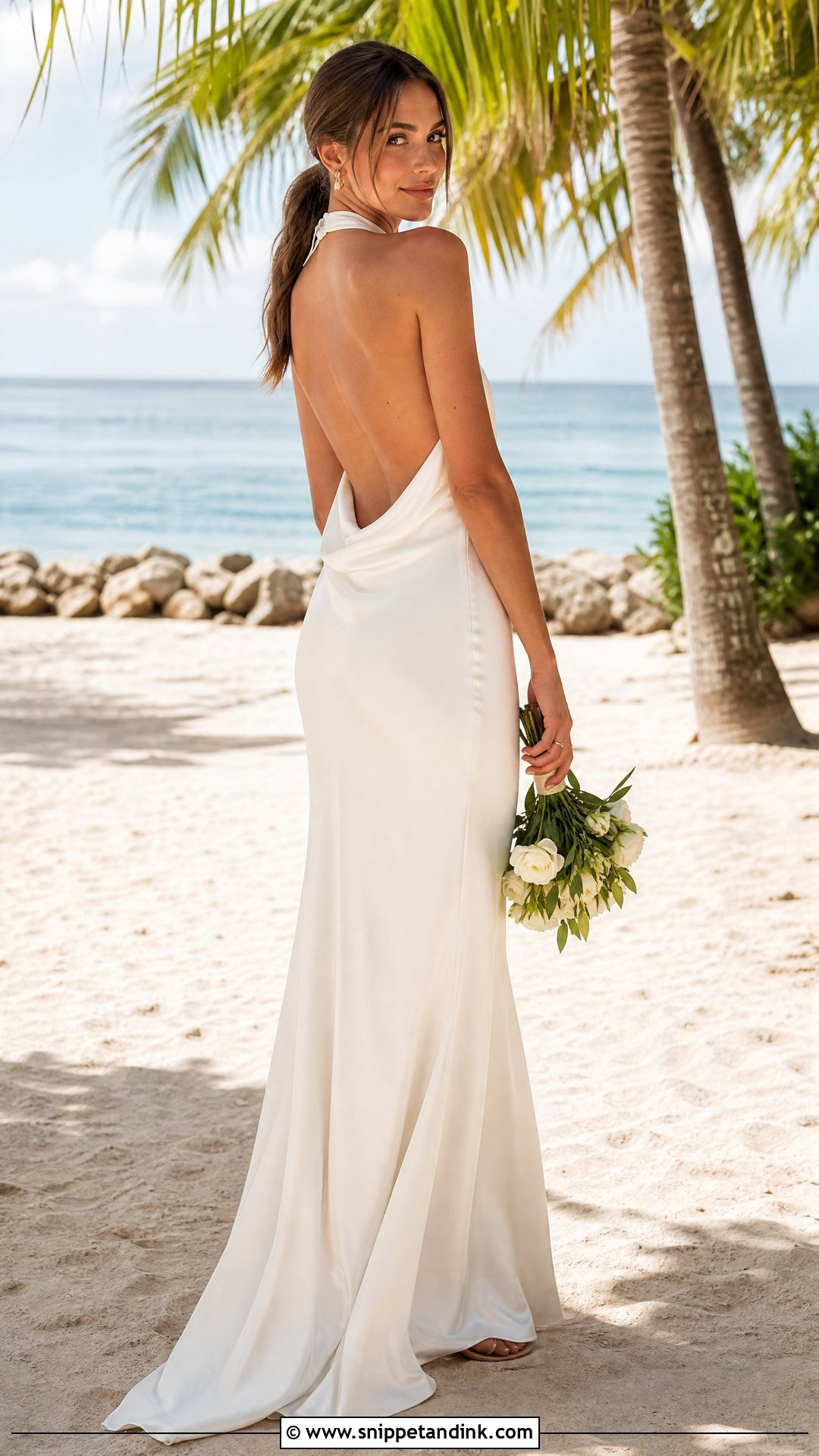
A halter neckline is one of the most secure options for wind. The strap around the neck holds the bodice in place, so you’re not pulling up a strapless top in every photo. A satin halter slip looks sleek, a chiffon halter gown softer. Look for a tie neck or an adjustable strap, since a fixed halter can drag on the neck by evening. Simple earrings and a low ponytail keep the line clean.
10. Long Sleeve Beach Wedding Dress
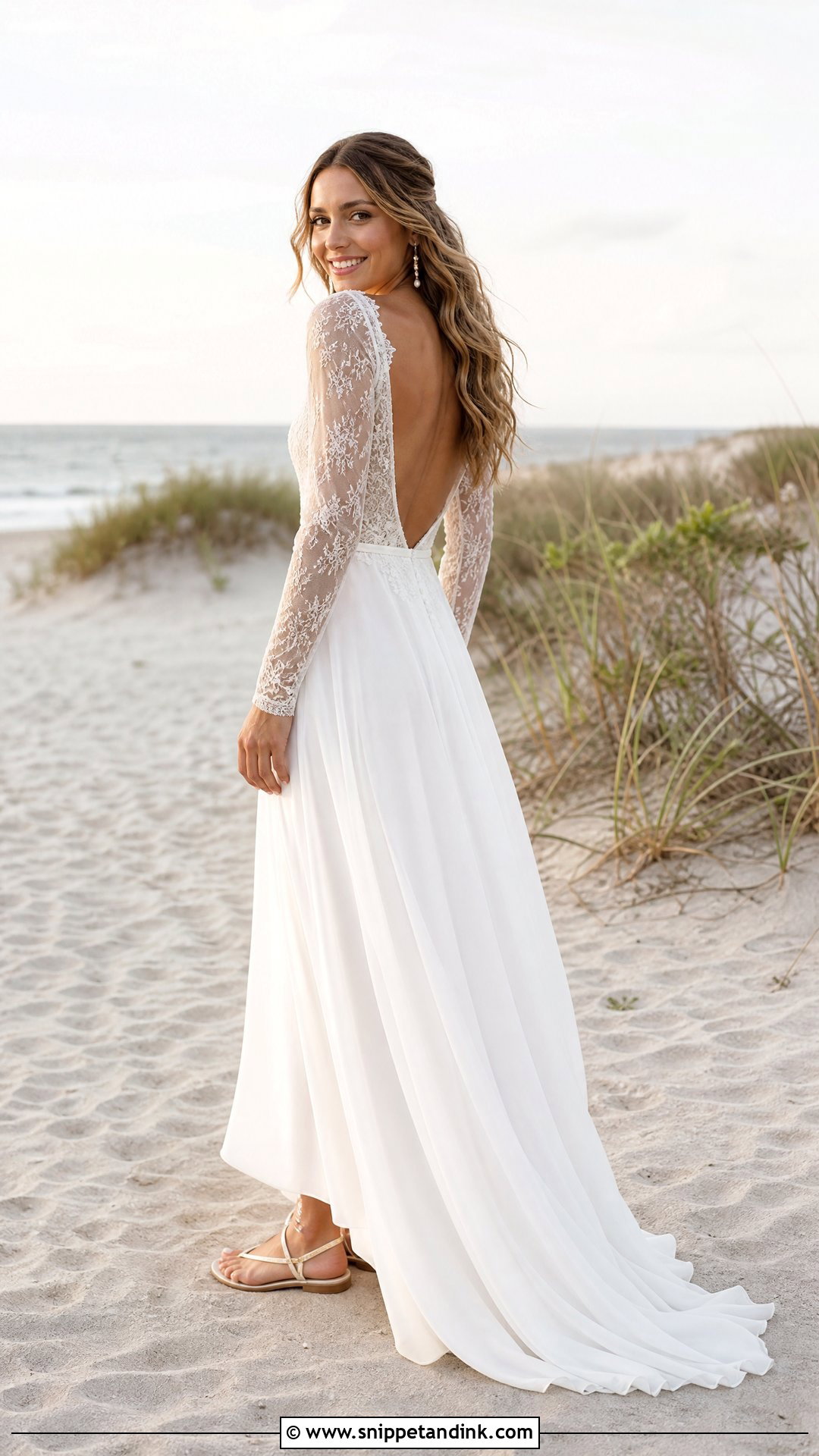
Long sleeves at the coast sound odd until you’ve stood on a cliff at sunset in October. Sheer lace or soft tulle sleeves give warmth without bulk. Fitted illusion sleeves look classic; bishop sleeves look more relaxed. Keep the skirt light and the back open so the whole dress doesn’t feel wrapped up. In wind, fitted sleeves behave better than wide ones, which billow.
11. Backless Coastal Wedding Dress
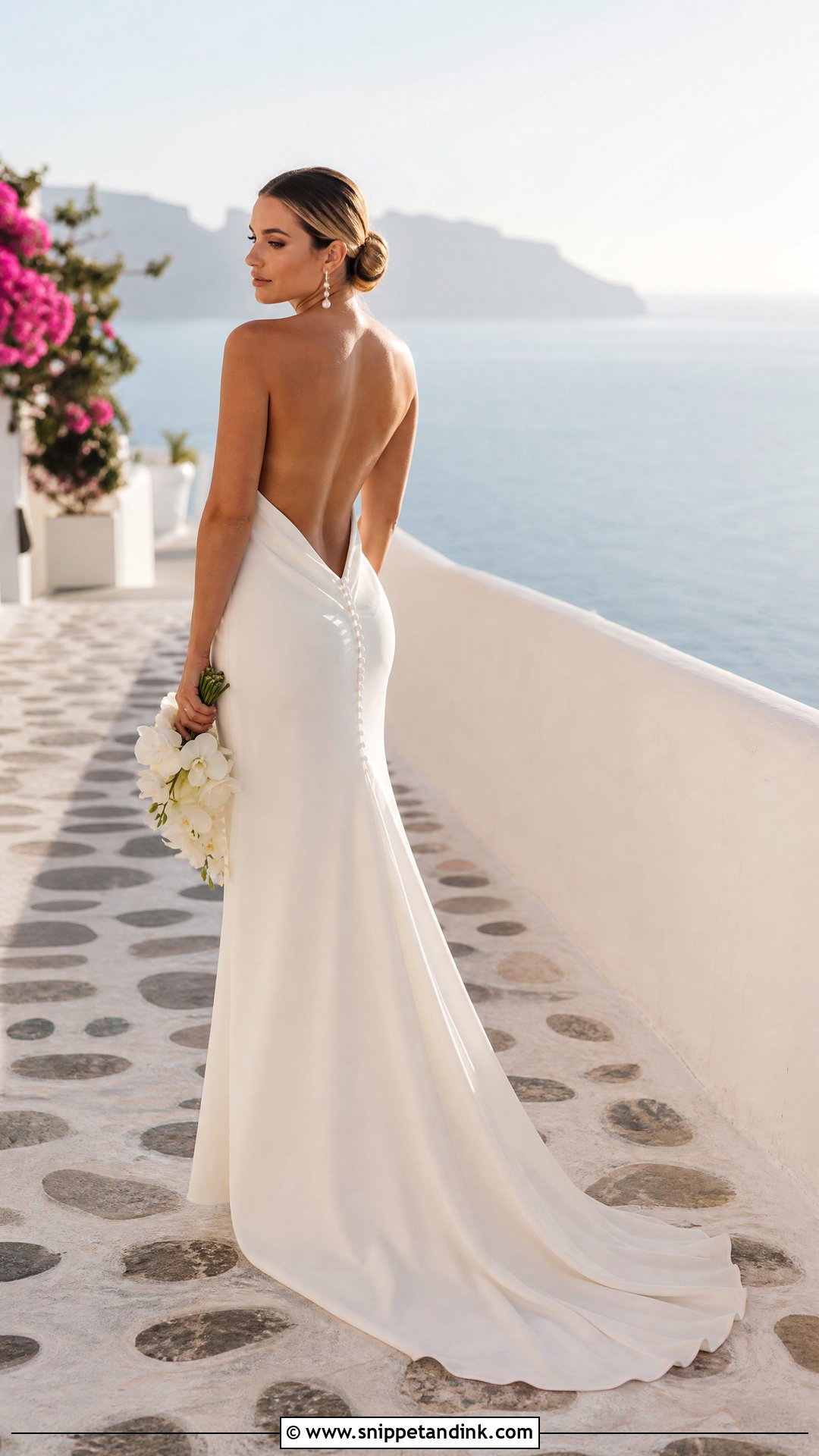
Backless dresses suit coastal ceremonies because so many photos are taken from behind as you face the water. Crepe, satin, chiffon and lace all drape well. Underwear is the first thing to plan: stick-on cups or a bra built into the dress, decided before the first fitting so the seamstress can work around it. Back-drop pearl earrings and a low bun show off the line, and a high or simple front keeps the balance.
12. Strapless Beach Wedding Dress
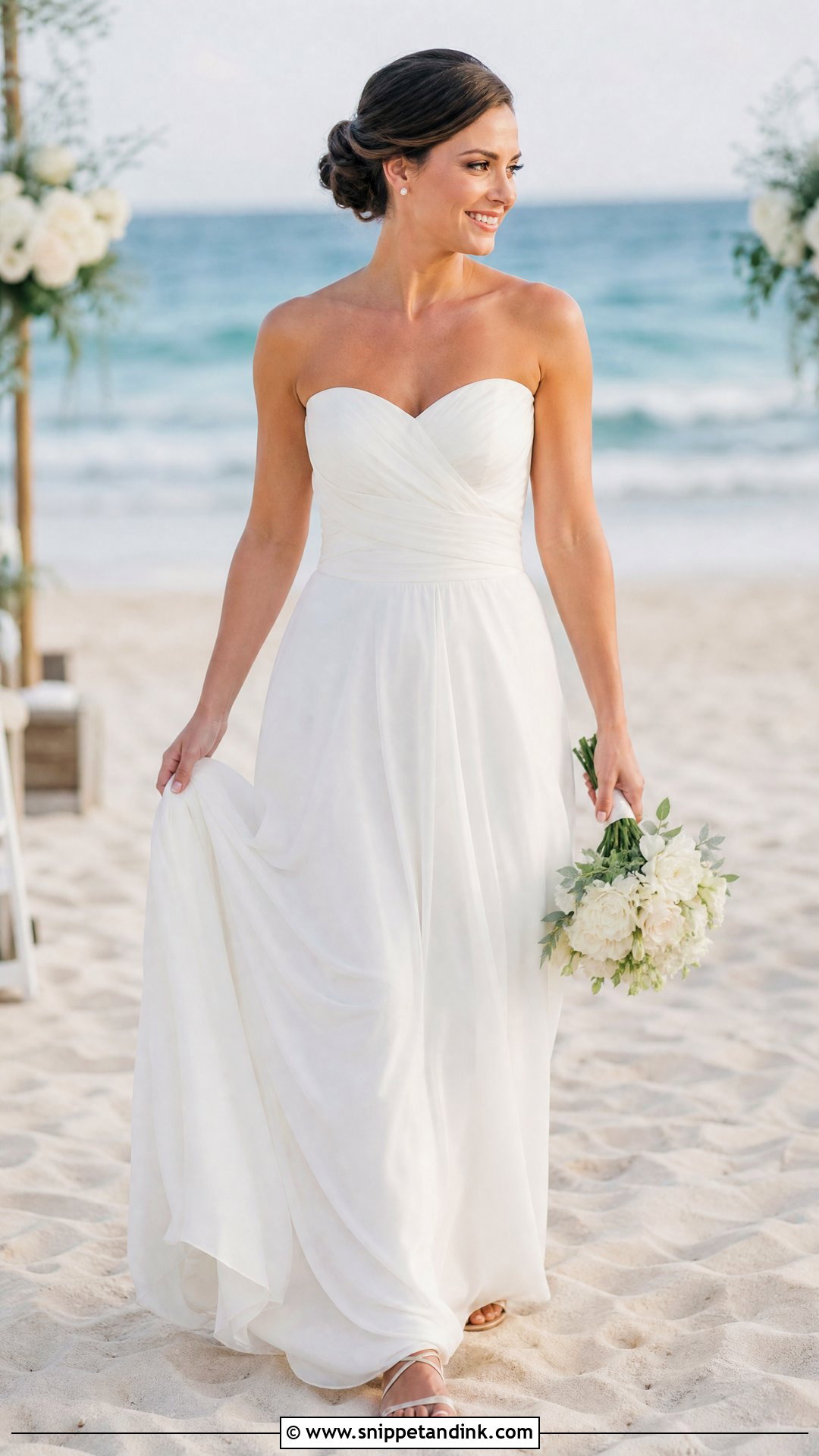
Strapless works near the water only if the bodice is properly built. Boning and an inner corset should hold it up on their own; if you’re tugging it within minutes, it needs taking in. A strapless A-line, column or soft fit-and-flare all suit. Gentle draping or floral appliqué adds a coastal touch. If it’s windy, skip the long veil and wear a hair comb, as a strapless dress plus a flying veil means two hands busy all day.
13. Tulle Coastal Wedding Dress
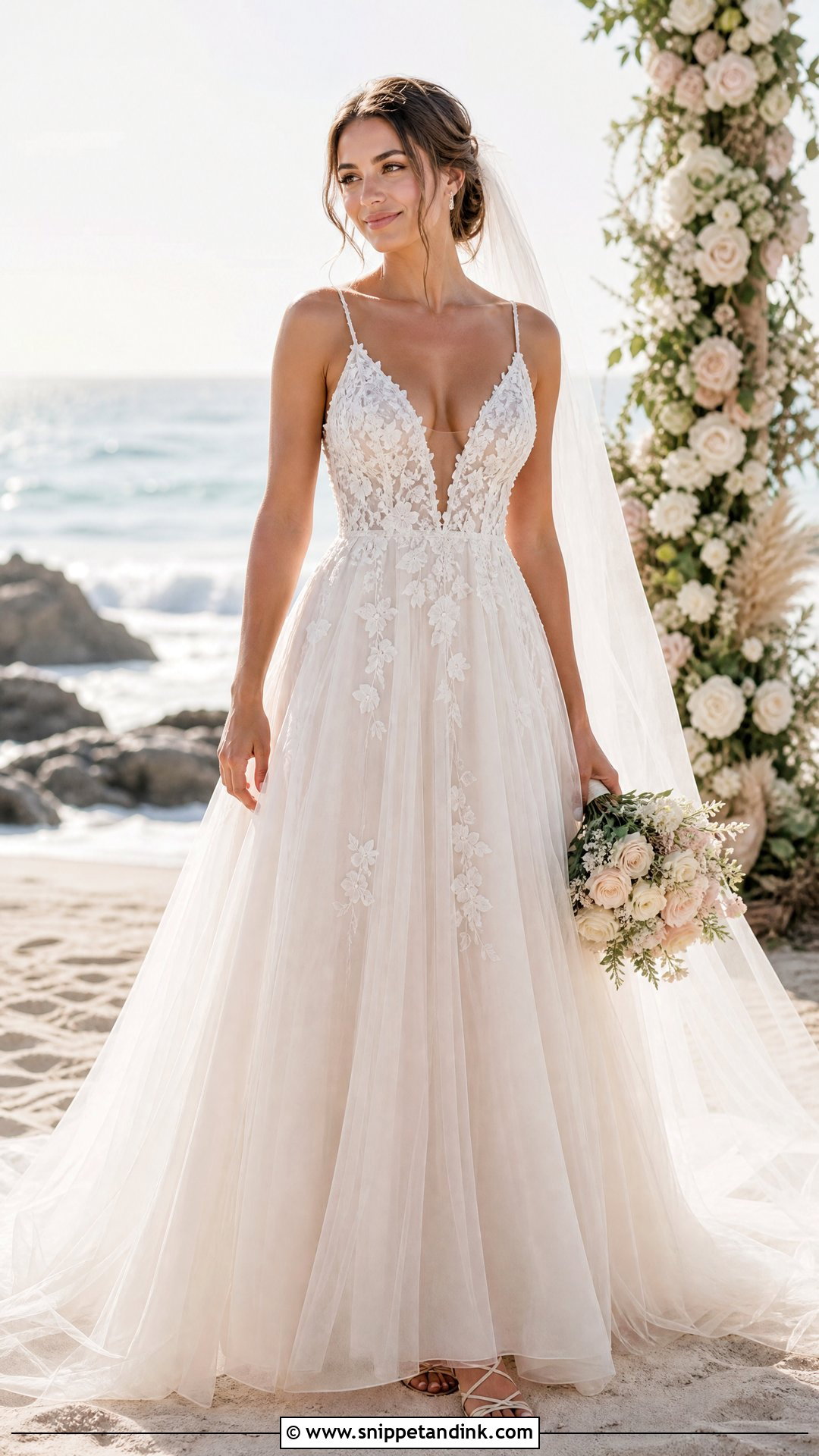
Tulle gives volume without much weight, which suits a coastal bride who wants a fuller skirt. Two or three soft layers float; more than that starts to feel heavy and hot. A sheer overlay with tiny floral appliqués or a few pearls looks modern. Keep the train short or chapel length on sand, since tulle collects it easily. A sheer veil and soft pink or ivory makeup keep the look light.
14. Organza Beach Wedding Dress
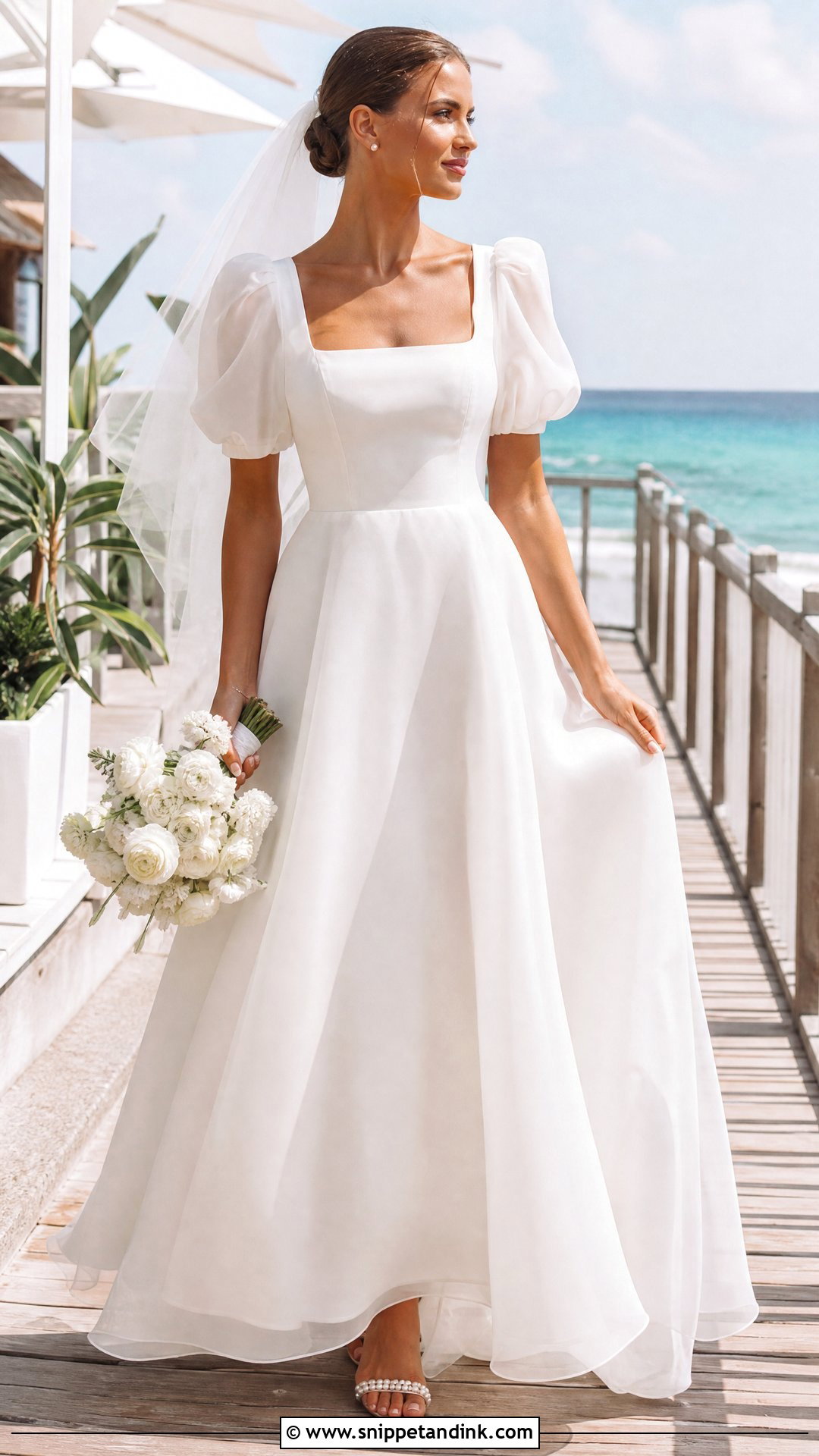
Organza holds shape far better than chiffon, so I use it when a bride asks for puff sleeves, a fuller skirt or sculpted details without the weight of satin. It is crisp, though, so it can rustle and crease where you sit. A simple organza A-line with a fitted bodice is the most wearable version. A square neckline or off-the-shoulder sleeve looks modern. Resort weddings and boardwalk ceremonies suit it better than barefoot sand.
15. Mermaid Coastal Wedding Dress
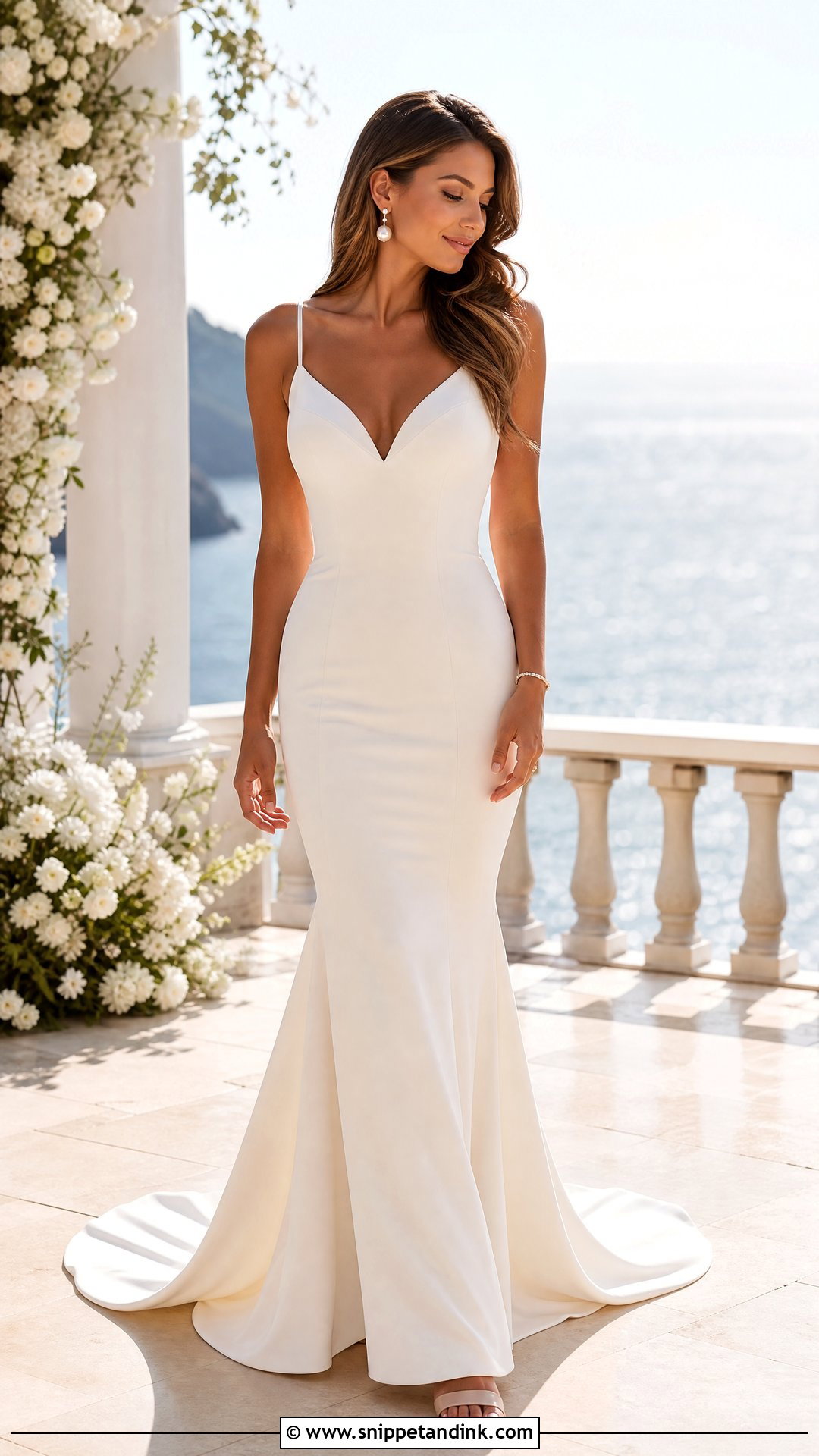
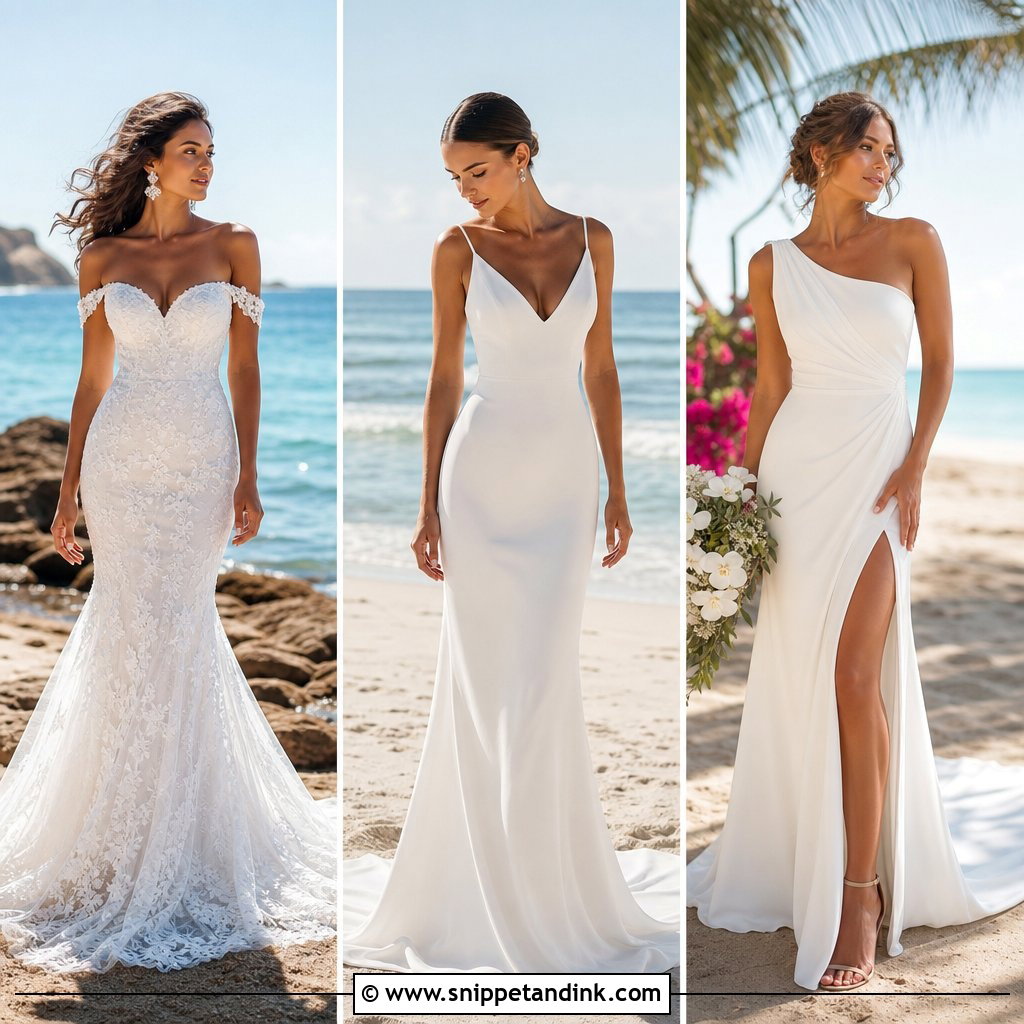
Mermaid gowns can work at the coast if the fabric is light and the train is short. Stretch crepe, soft lace or lightweight satin move with the body; heavy satin and long trains do not. Practise walking in the actual shoes on an uneven surface, because a fitted knee and soft sand make for slow, careful steps. Low block heels suit a deck, embellished flats suit the beach. Side-swept waves and pearl earrings finish it.
16. Two Piece Beach Wedding Dress
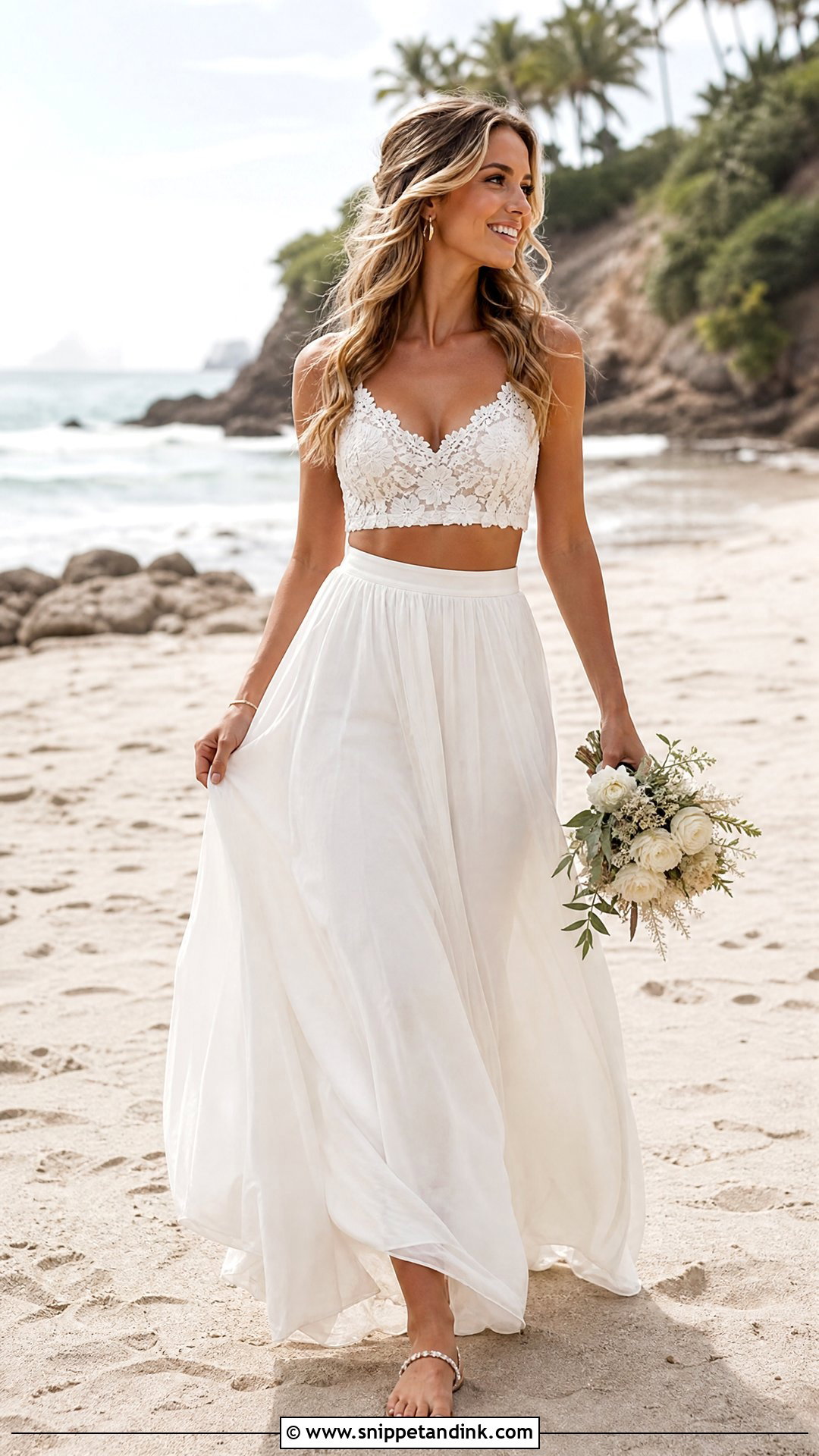
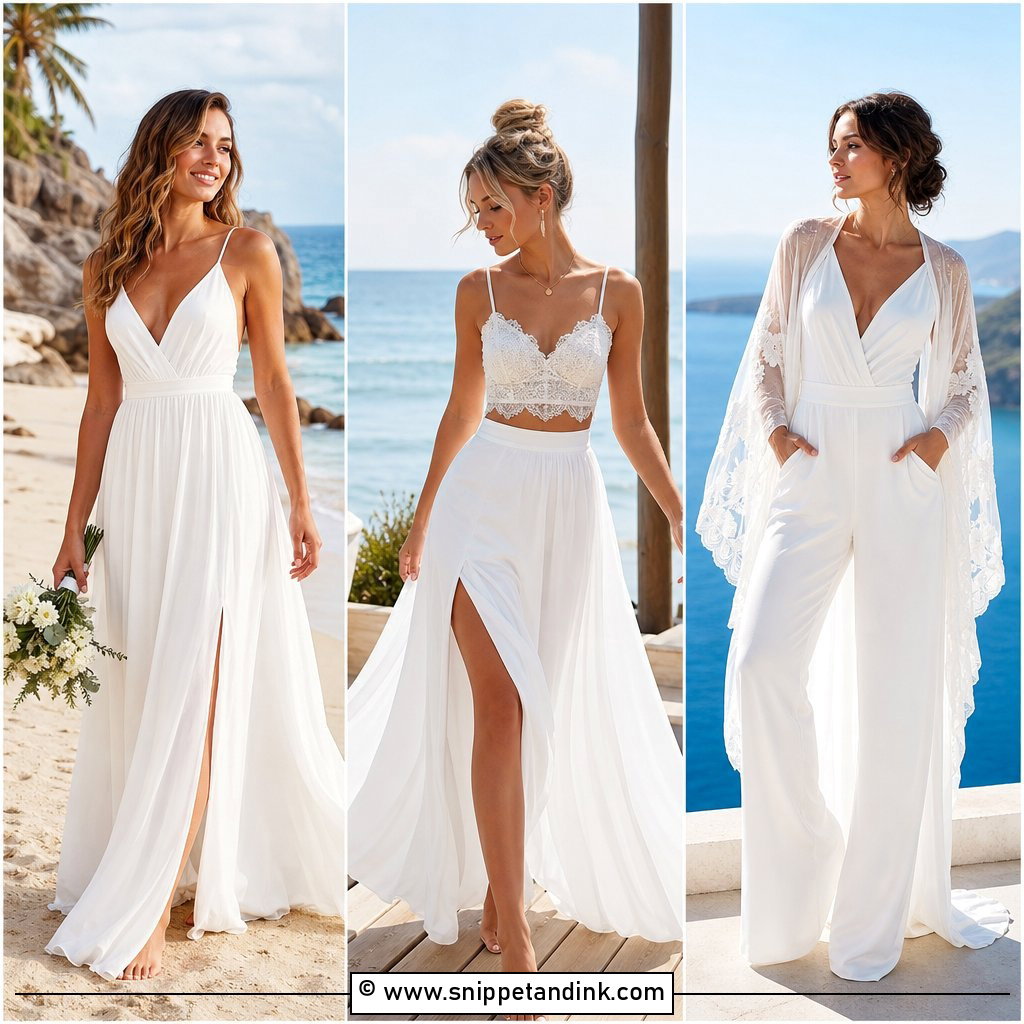
Two-piece outfits travel and alter more easily than one long gown, which is a real advantage for destination weddings. A crop top with a flowing skirt looks bridal without being traditional. Lace over chiffon feels boho, and satin with a column skirt looks cleaner. Check the gap between the pieces while sitting and lifting your arms; what looks like a sliver standing can become several inches in movement. Flat sandals and small hoops suit it.
17. Floral Applique Coastal Wedding Dress
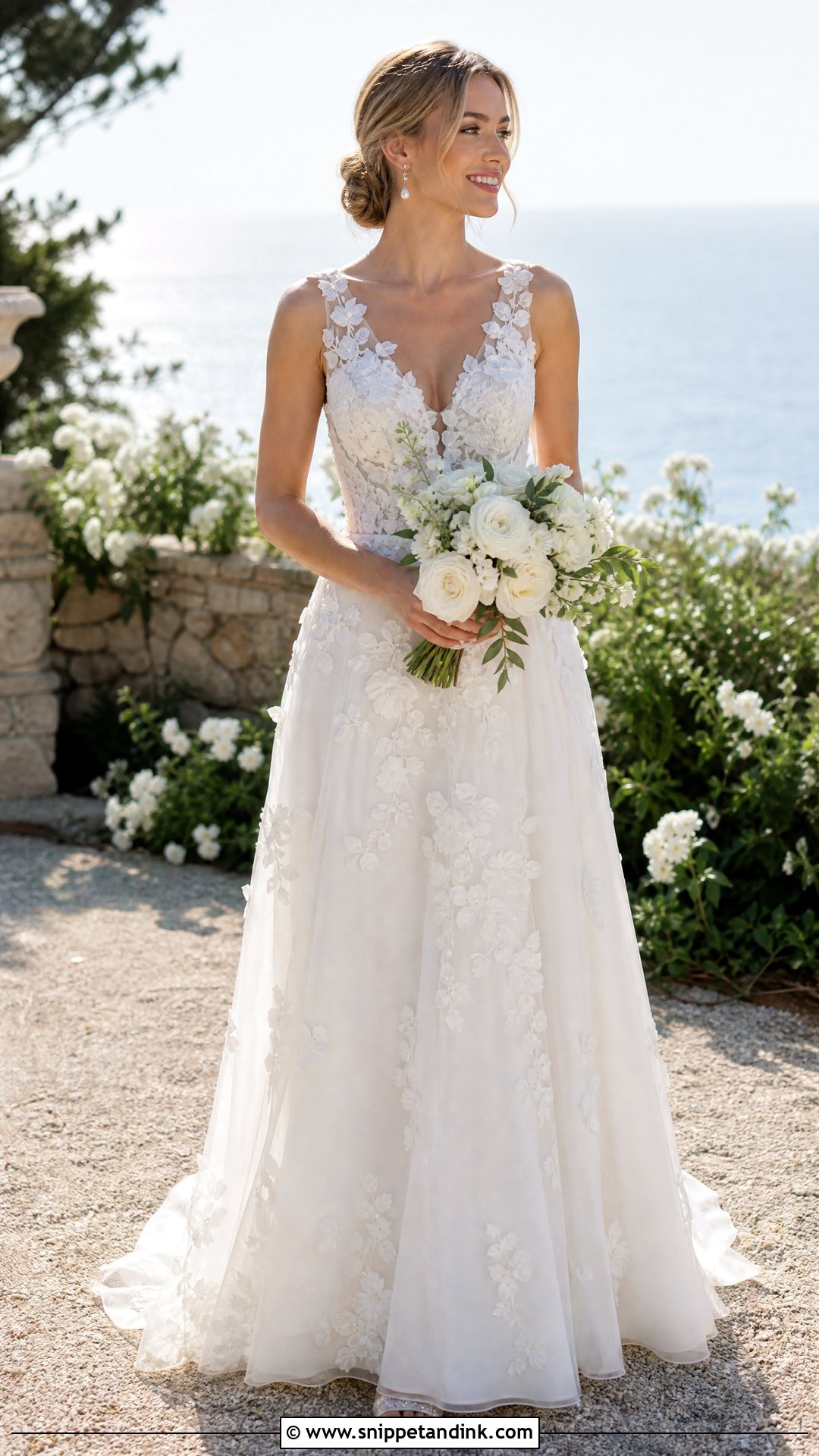
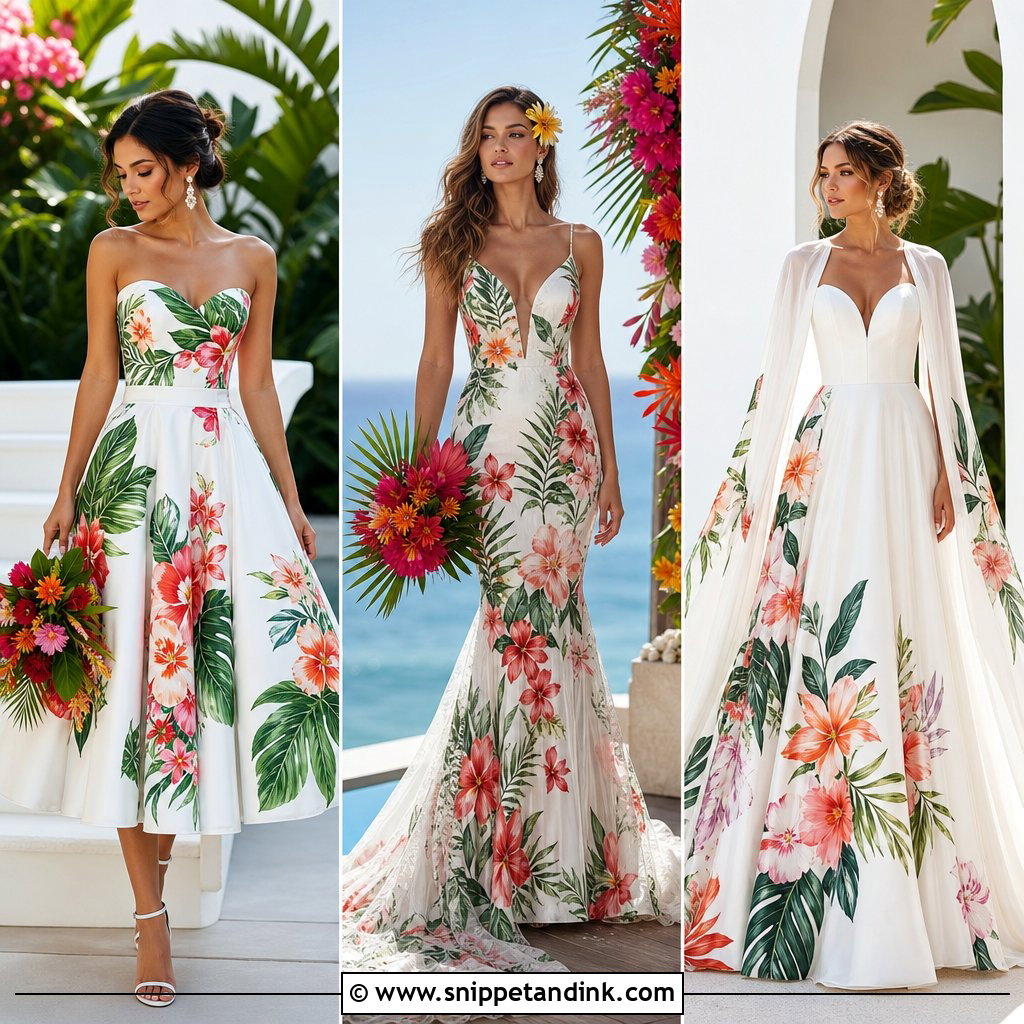
Appliqué flowers give texture without sparkle, and soft 3D blooms or embroidered vines echo the outdoor setting. A sheer overlay makes the flowers appear to float. Keep the shape simple, such as an A-line, sheath or relaxed fit-and-flare. Check that raised appliqués are securely stitched, as they can catch on a bouquet or a hug. Pearl drop earrings, a loose low bun and ivory flats suit it.
18. Pearl Detail Beach Wedding Dress
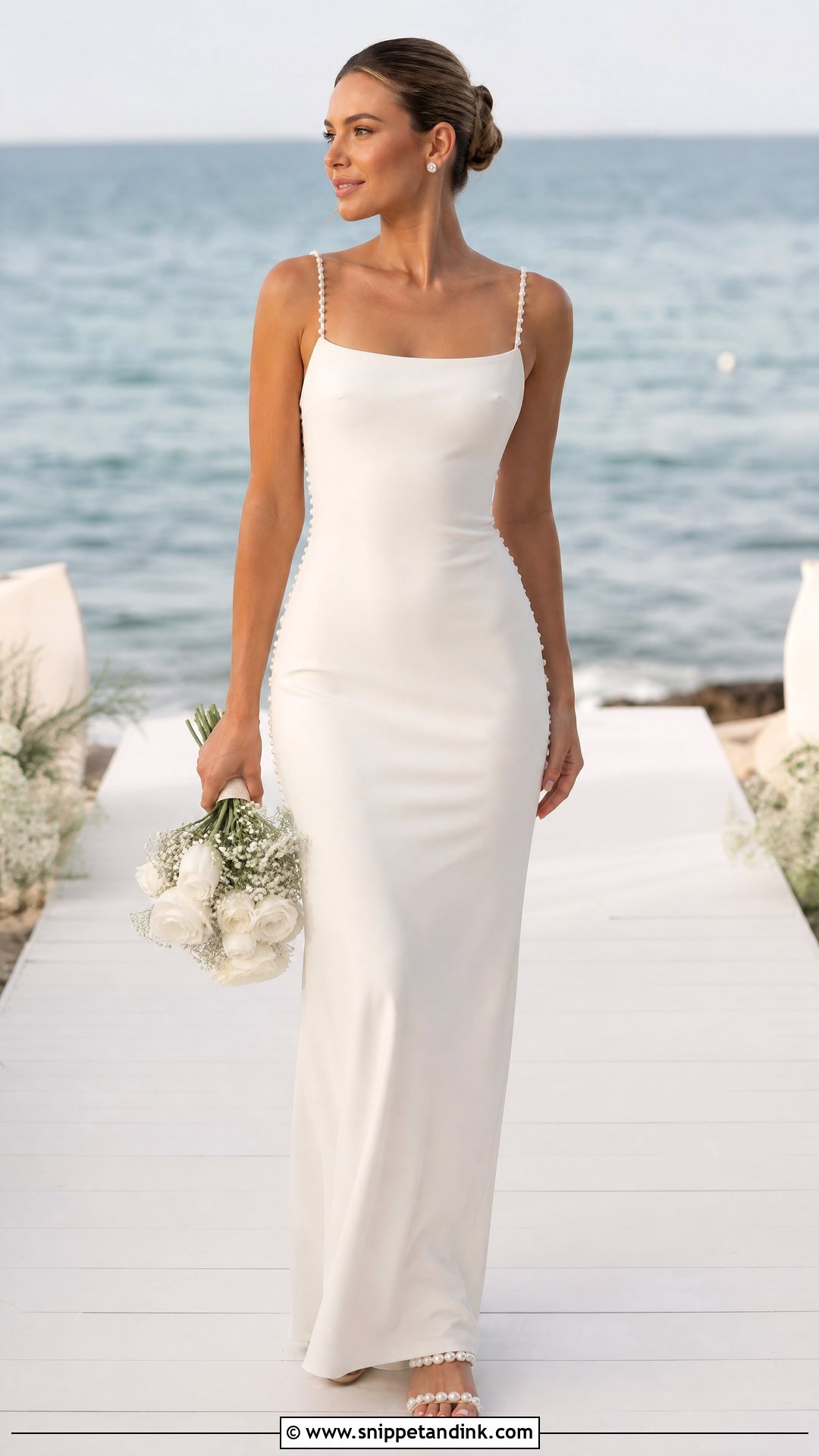
Pearls and the sea belong together, so this detail feels natural at a coastal wedding. Keep it light: scattered pearl straps, a pearl-trimmed neckline or a few pearls on tulle stay breathable, while all-over beading adds weight and heat. A simple slip, sheath or A-line with pearl details works best. Pearl sandals and studs finish it, but stop there; too many pearl accessories alongside a pearl gown looks heavy. Yacht clubs and polished oceanfront venues suit it best.
19. Blue Coastal Wedding Dress
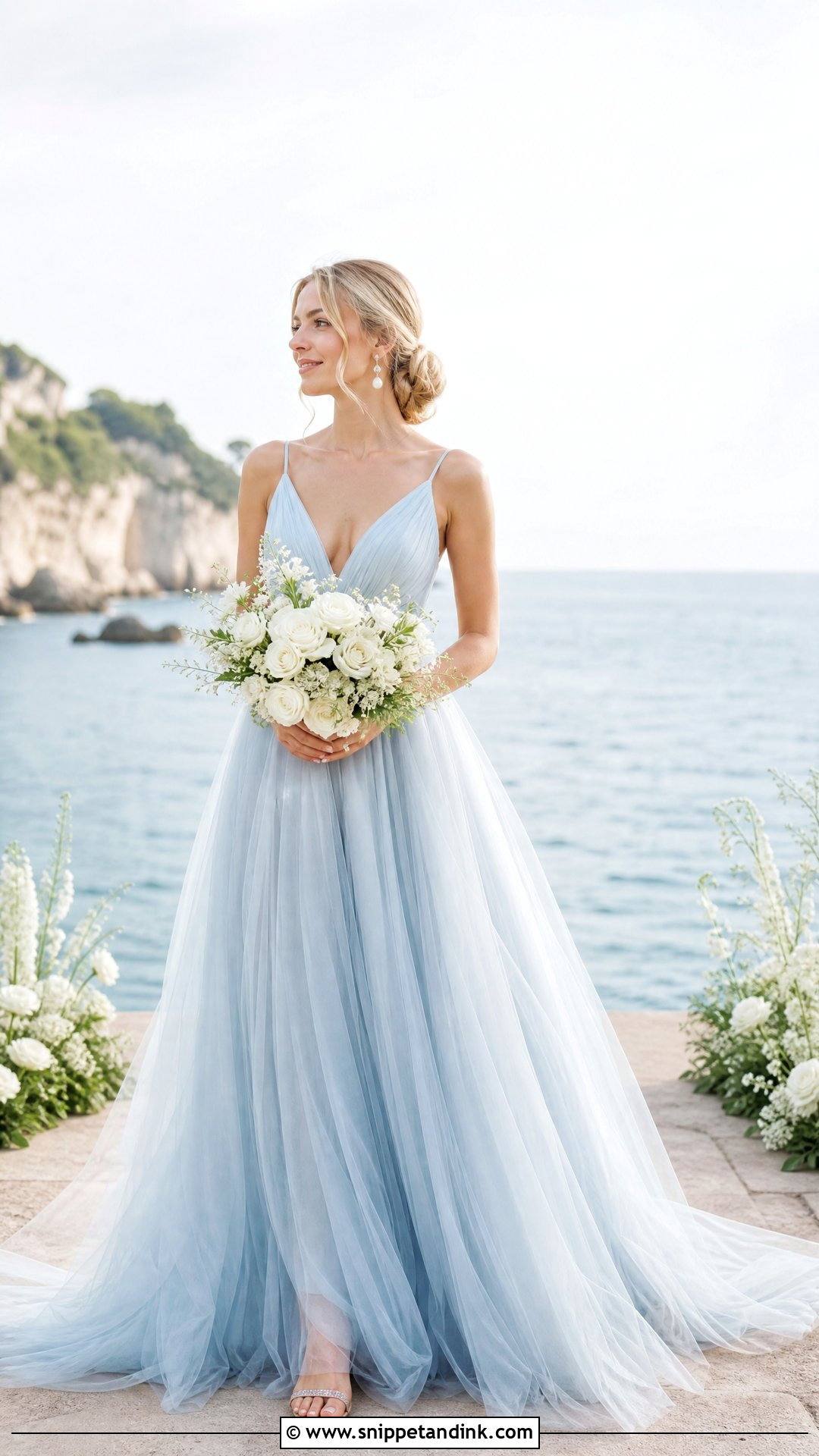
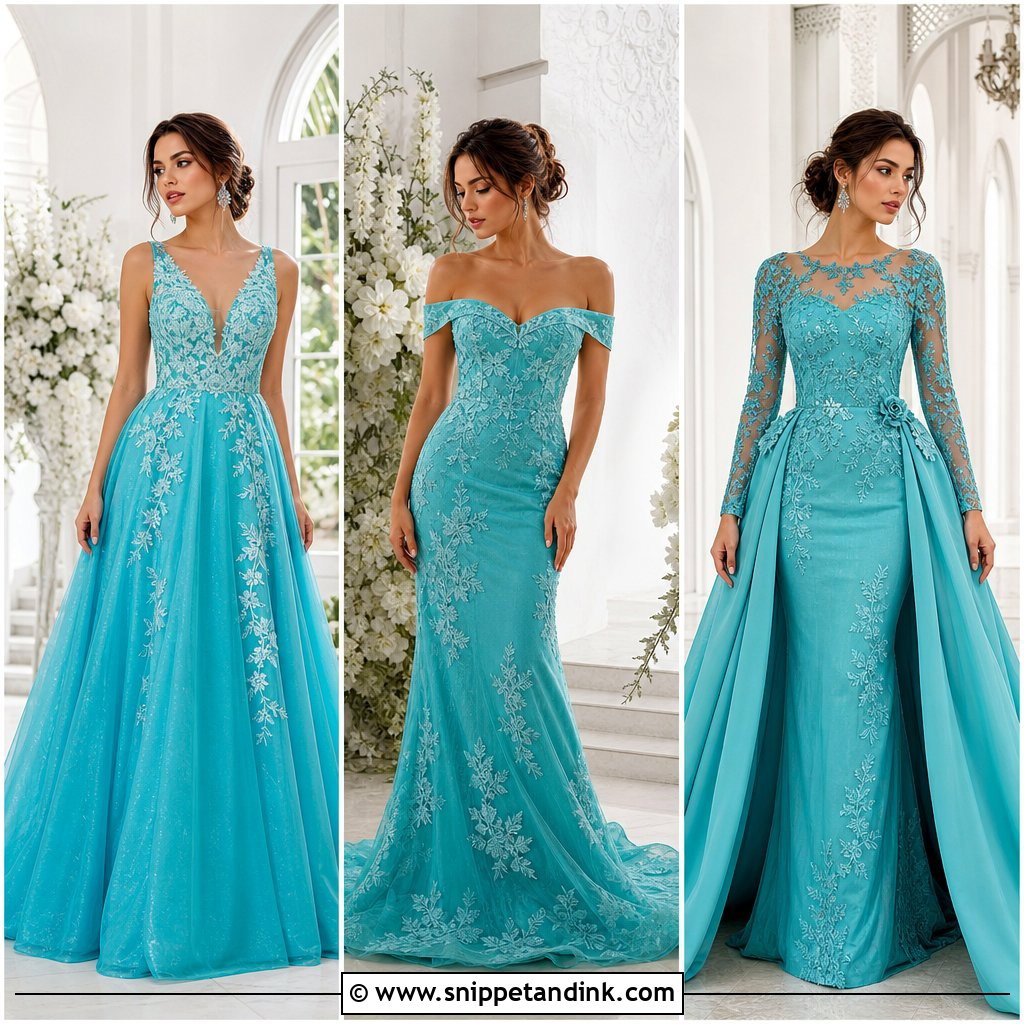
Blue is the bravest choice on this list and one of the most personal. Pale blue, misty grey-blue or barely-tinted tulle still reads as bridal in photos, especially near water. Keep the shape simple, like a slip, A-line or soft tulle gown, so the colour is the main point. Hold the fabric against your skin in daylight first, since some blues can drain colour from fair skin. Silver sandals, pearl earrings and a white bouquet keep it balanced.
20. Tea Length Beach Wedding Dress
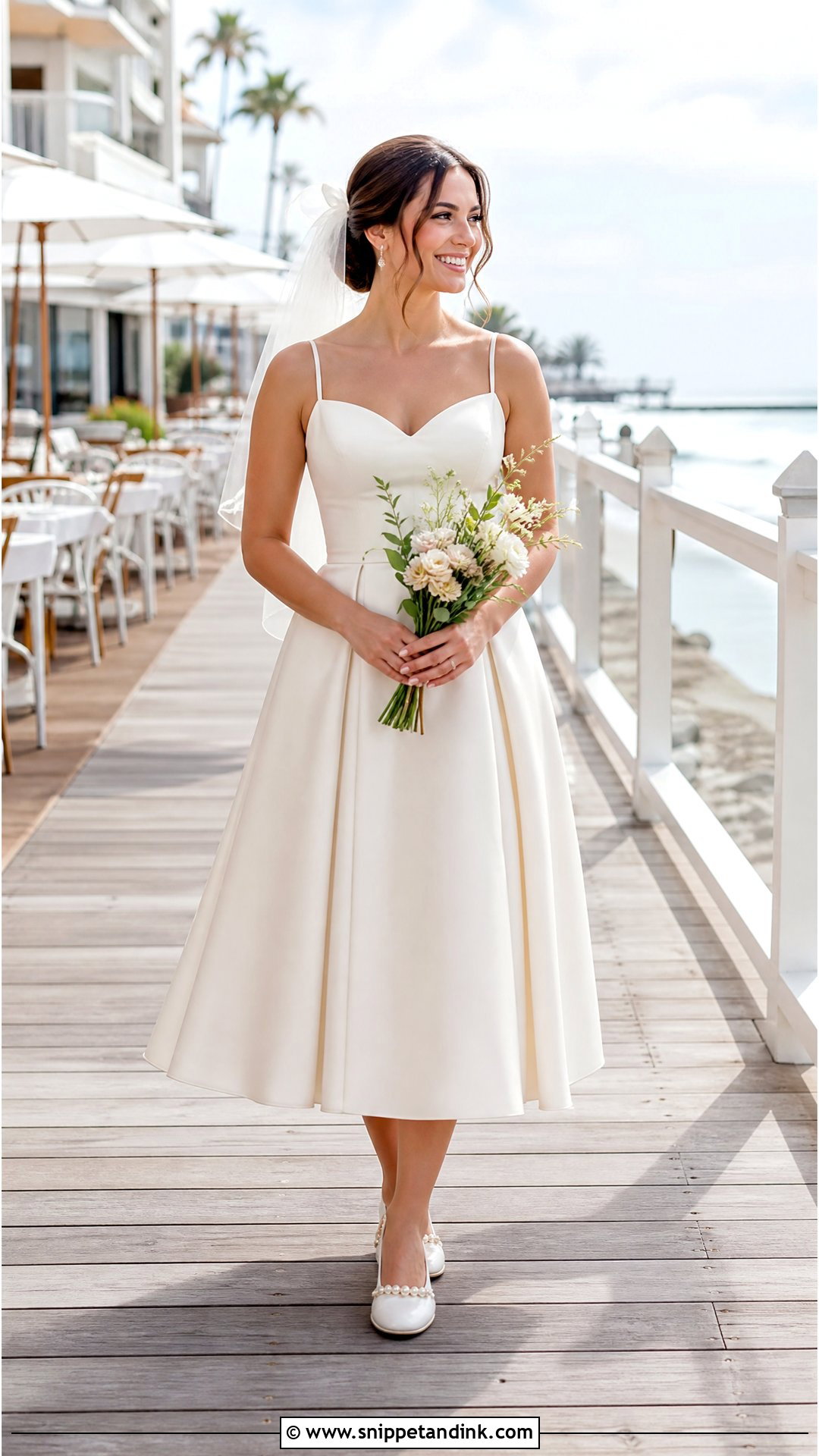
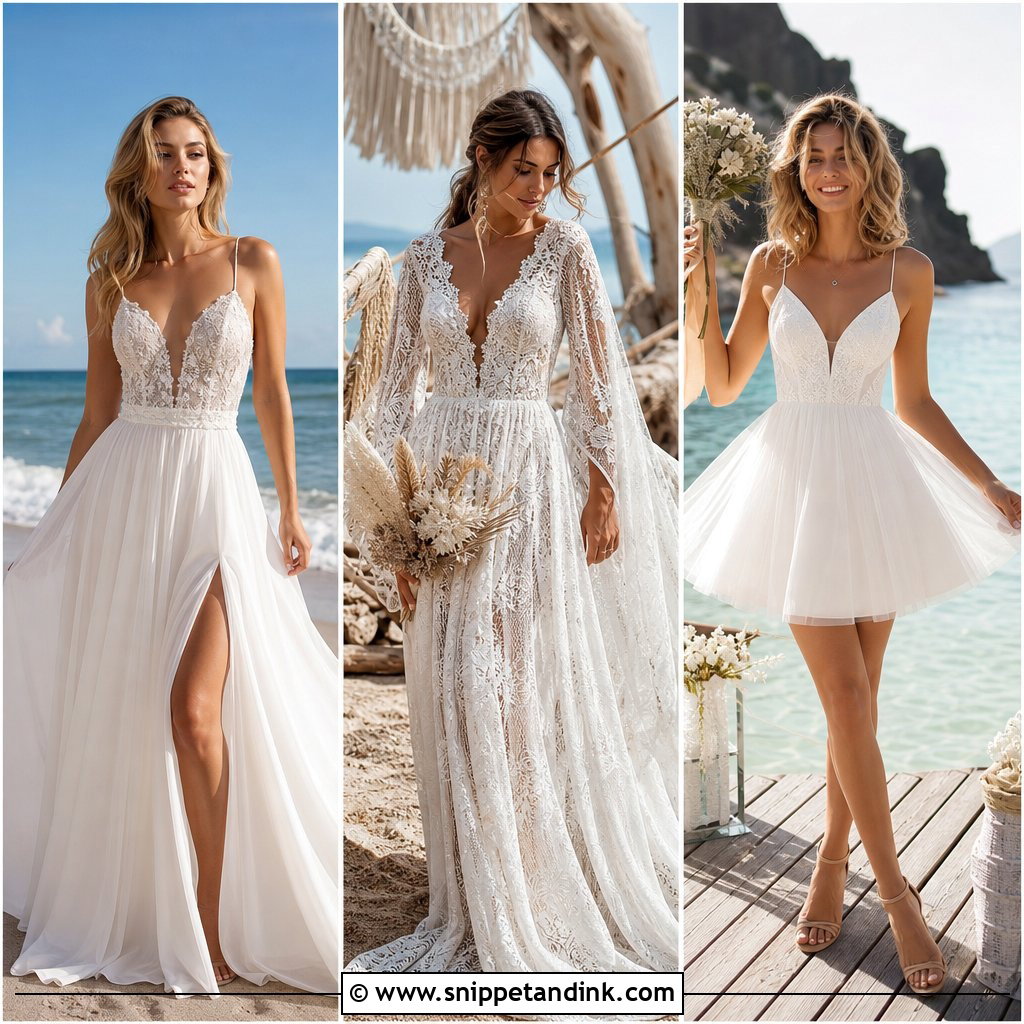
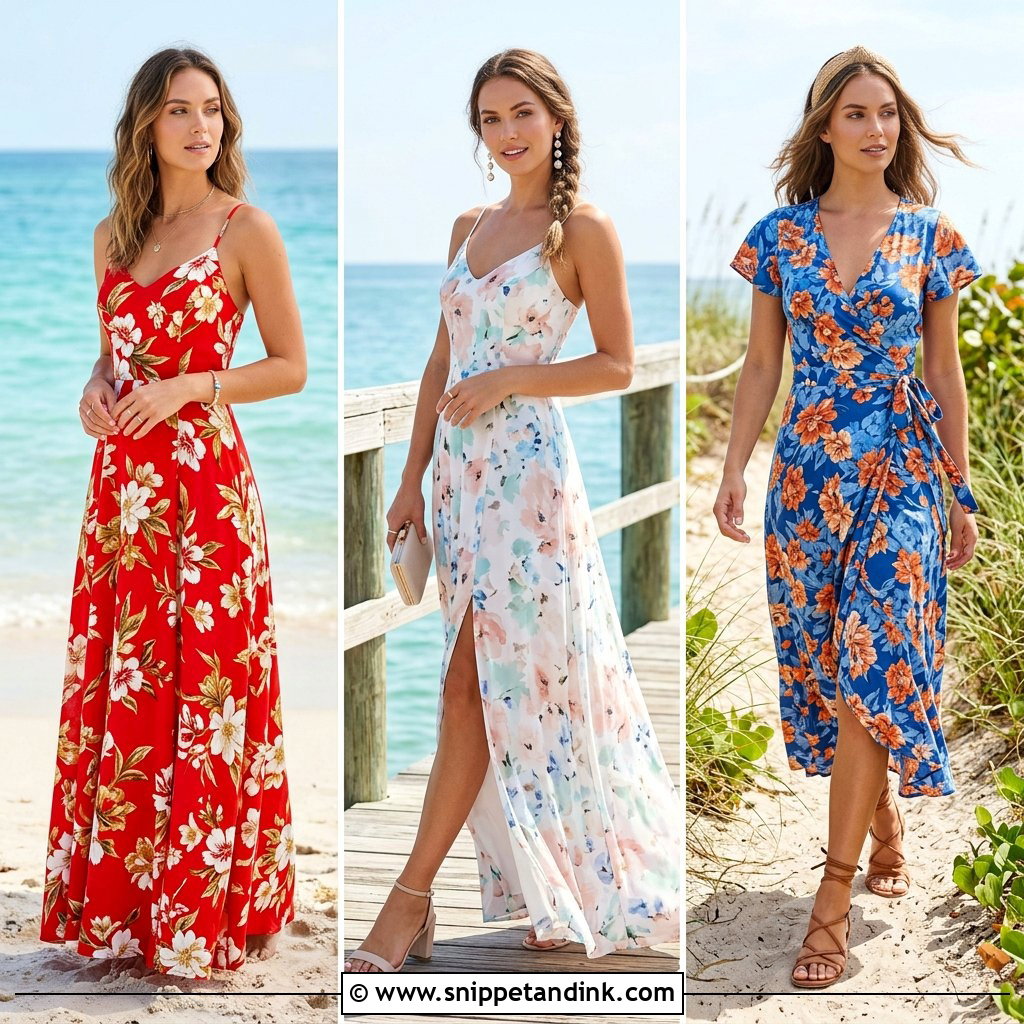
Tea length is the practical middle ground: dressy enough to feel bridal, short enough to keep the hem off the sand. Tulle gives a vintage look, satin or lace a more modern one. Your shoes become part of the outfit, so try pearl flats, low slingbacks or block-heel sandals on the surface you’ll actually walk on. A birdcage veil or hair bow suits a retro mood. Brunch receptions and casual ceremonies suit it best.
21. Square Neck Coastal Wedding Dress
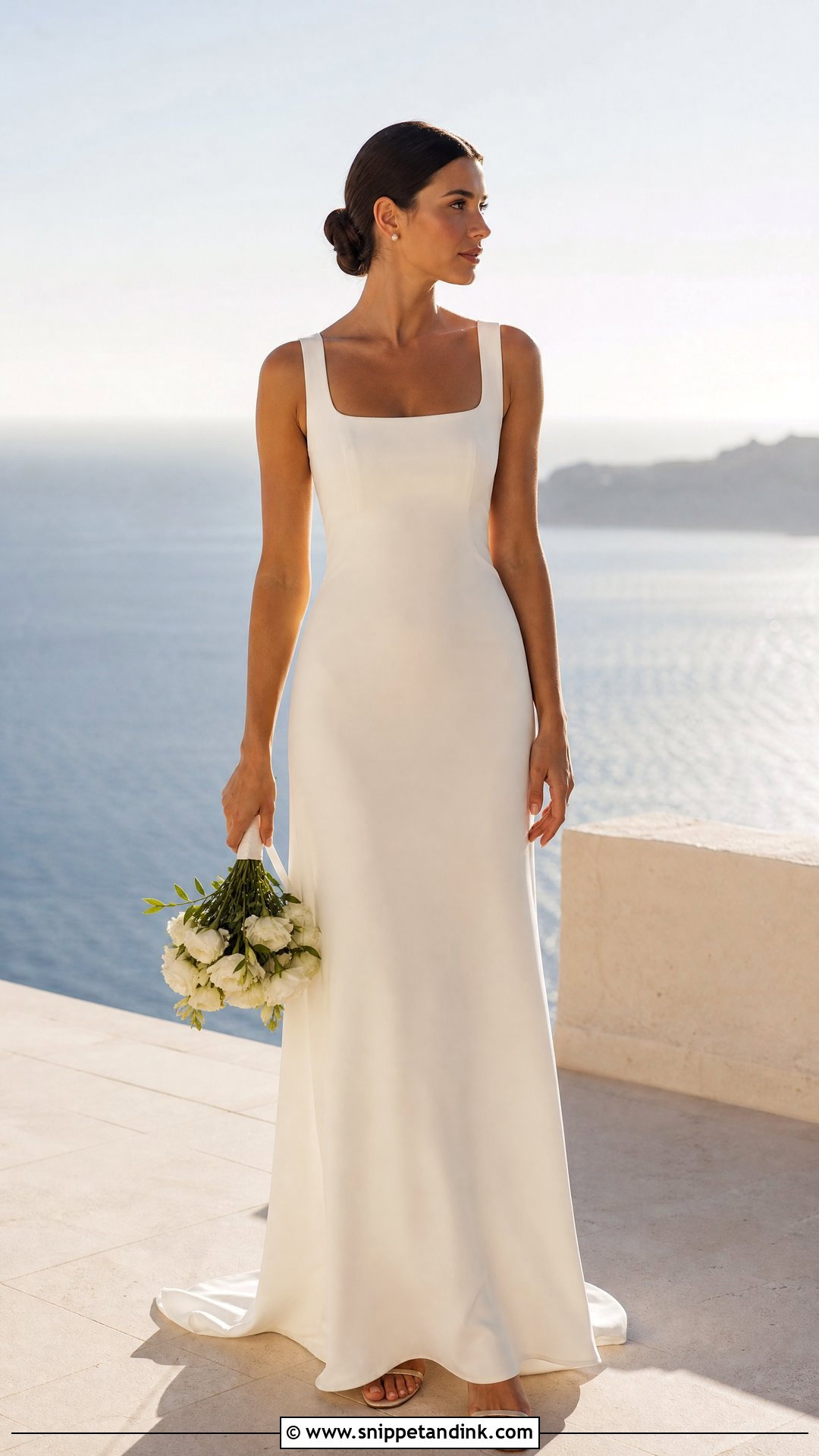
A square neckline frames the collarbones and shoulders neatly. The wide straps that usually come with it are useful outdoors, since they support the bodice in wind and movement without a strapless bra. It looks good on crepe columns, chiffon A-lines, satin slips and simple lace gowns. A short veil or sheer cape softens the straight neckline. A low bun and pearl studs finish it.
22. Tiered Beach Wedding Dress
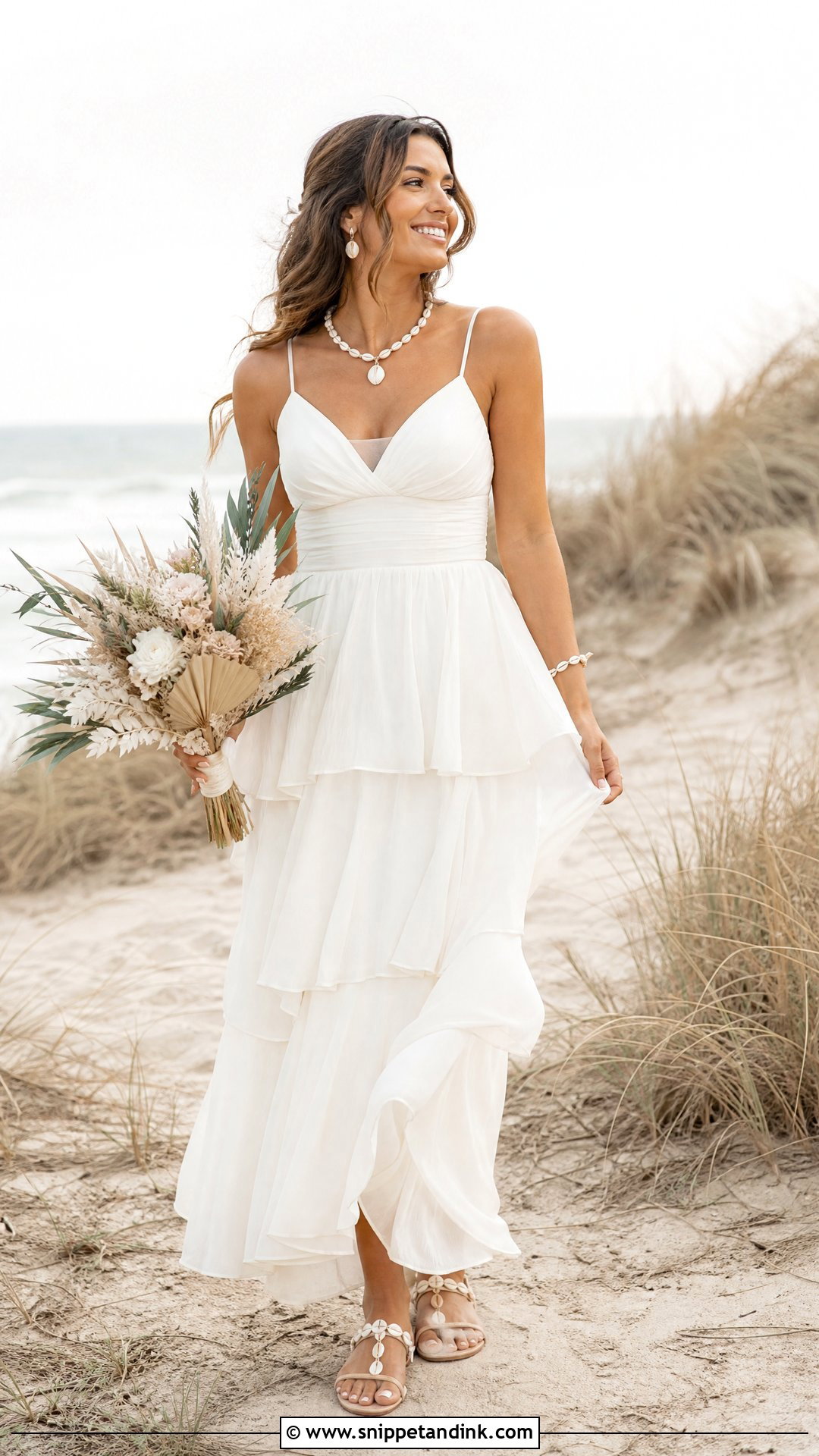
Tiers add movement and a relaxed feel, and in a breeze they ripple rather than billow. Chiffon, tulle or light lace tiers keep the weight down; heavy tiers add bulk at the hips. A simple bodice balances the skirt. Skip a long veil, as the skirt already moves enough. Flat sandals, loose curls and natural pearl or shell jewellery suit tropical and boho weddings.
23. Minimalist Coastal Wedding Dress
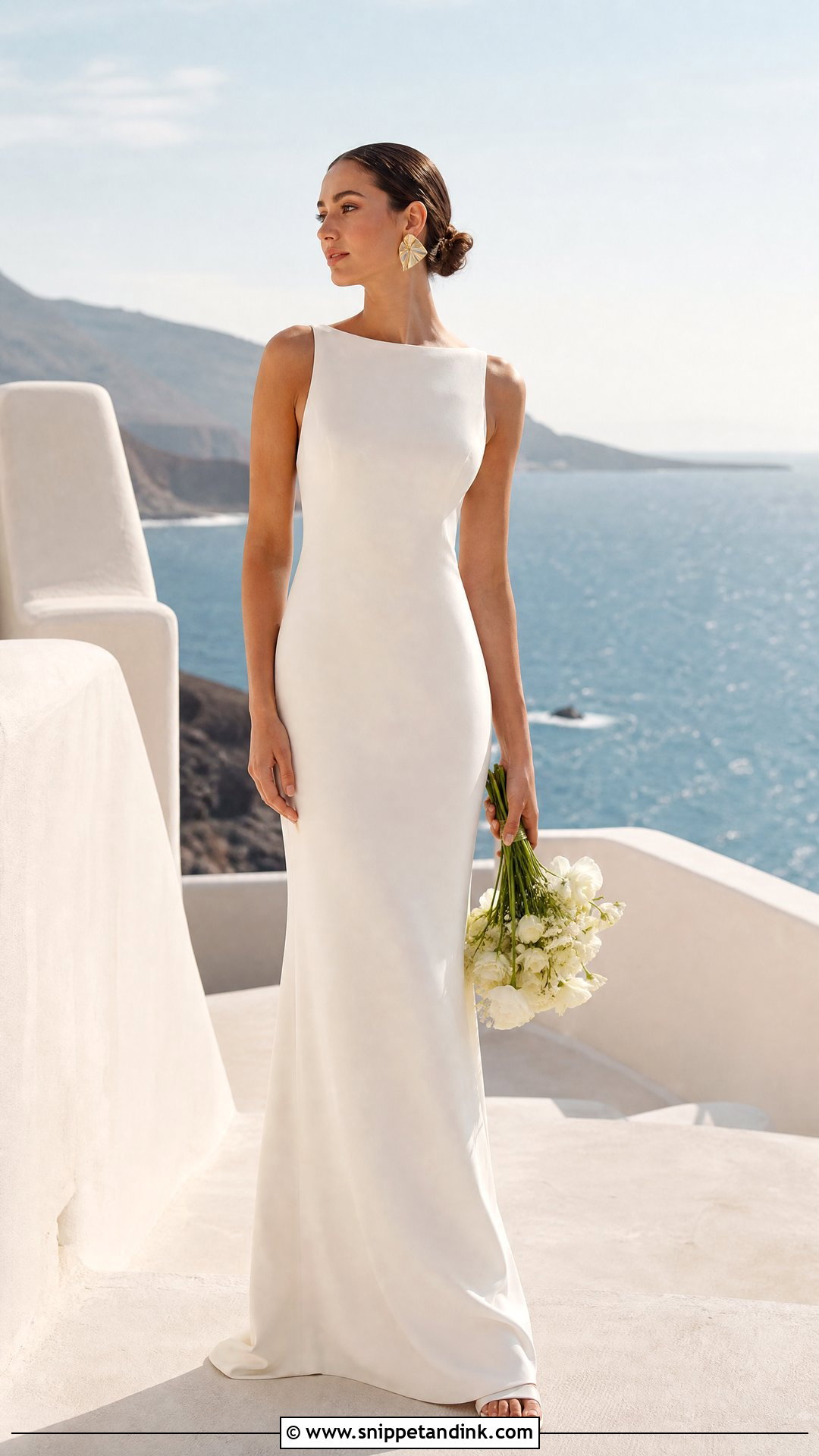
With a minimalist dress, the fit and fabric quality have to carry everything. A satin slip, crepe column, square-neck gown or plain A-line all qualify. Because there’s no detail, a mismatched seam or a poor hem shows straight away, so I’d spend money on alterations before accessories. Sleek sandals, sculptural earrings, a polished bun and a small bouquet complete it. It suits modern beach weddings and cliffside elopements.
24. Ruffle Beach Wedding Dress
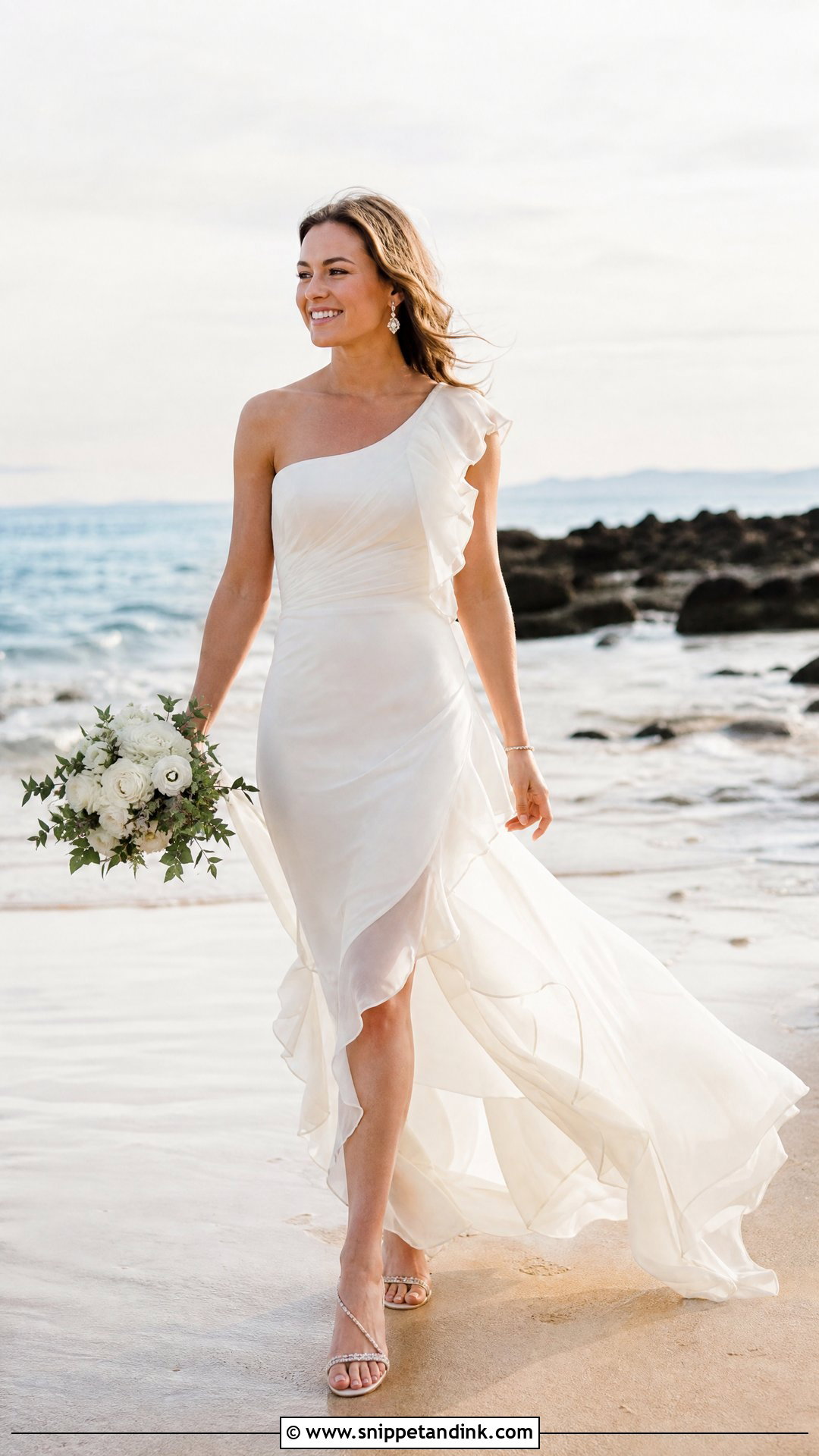
Ruffles look playful by the sea, but weight is everything. Chiffon and organza ruffles lift in the breeze; heavy satin ruffles just hang. Place them along the neckline, hem, straps or skirt rather than everywhere. A one-shoulder ruffle dress looks modern, and a ruffled A-line looks romantic. Keep jewellery minimal so the ruffles stay the focus. Delicate sandals and soft waves suit it, and it looks lively in photos taken while you walk.
25. Cape Beach Wedding Dress
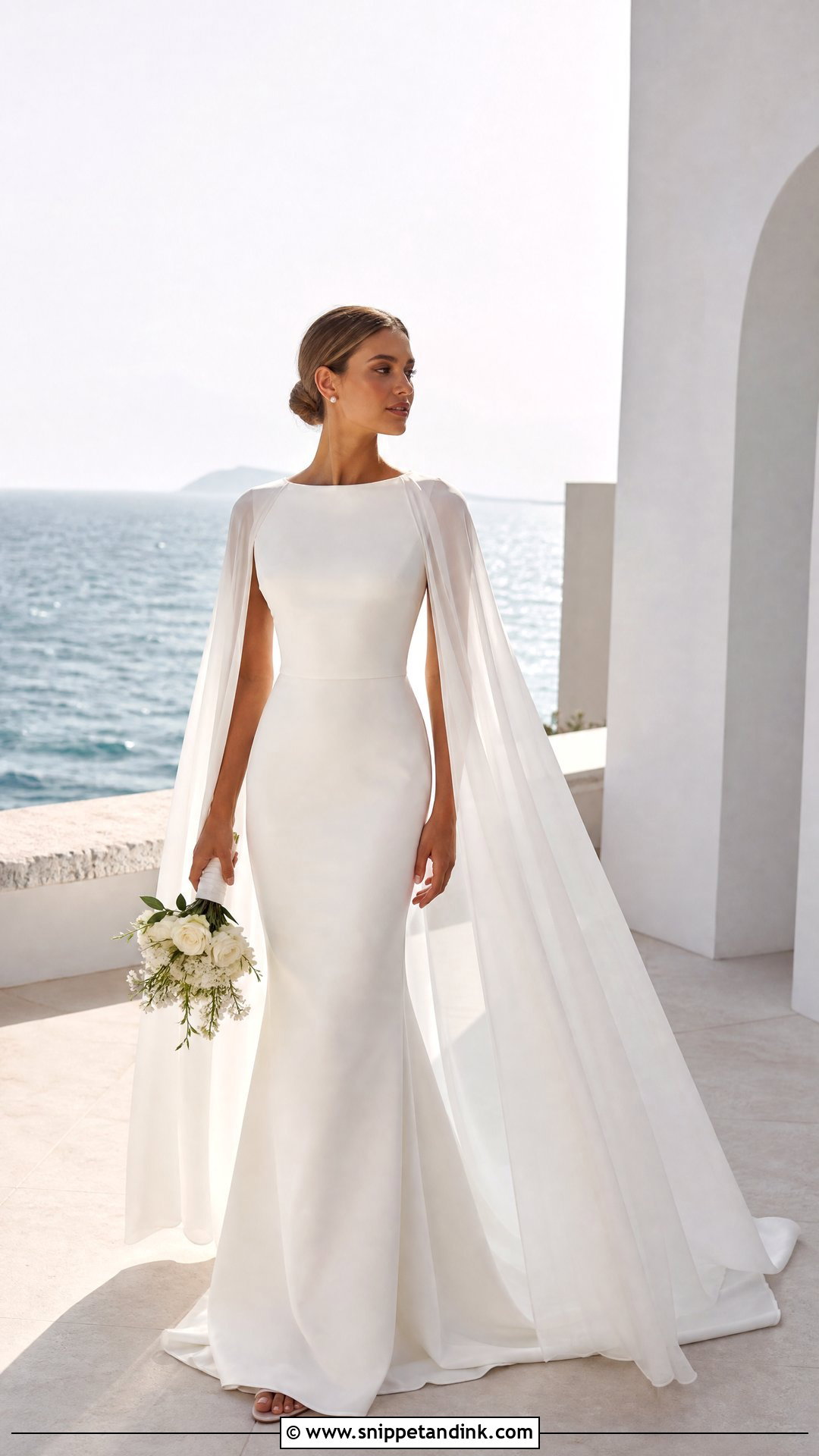
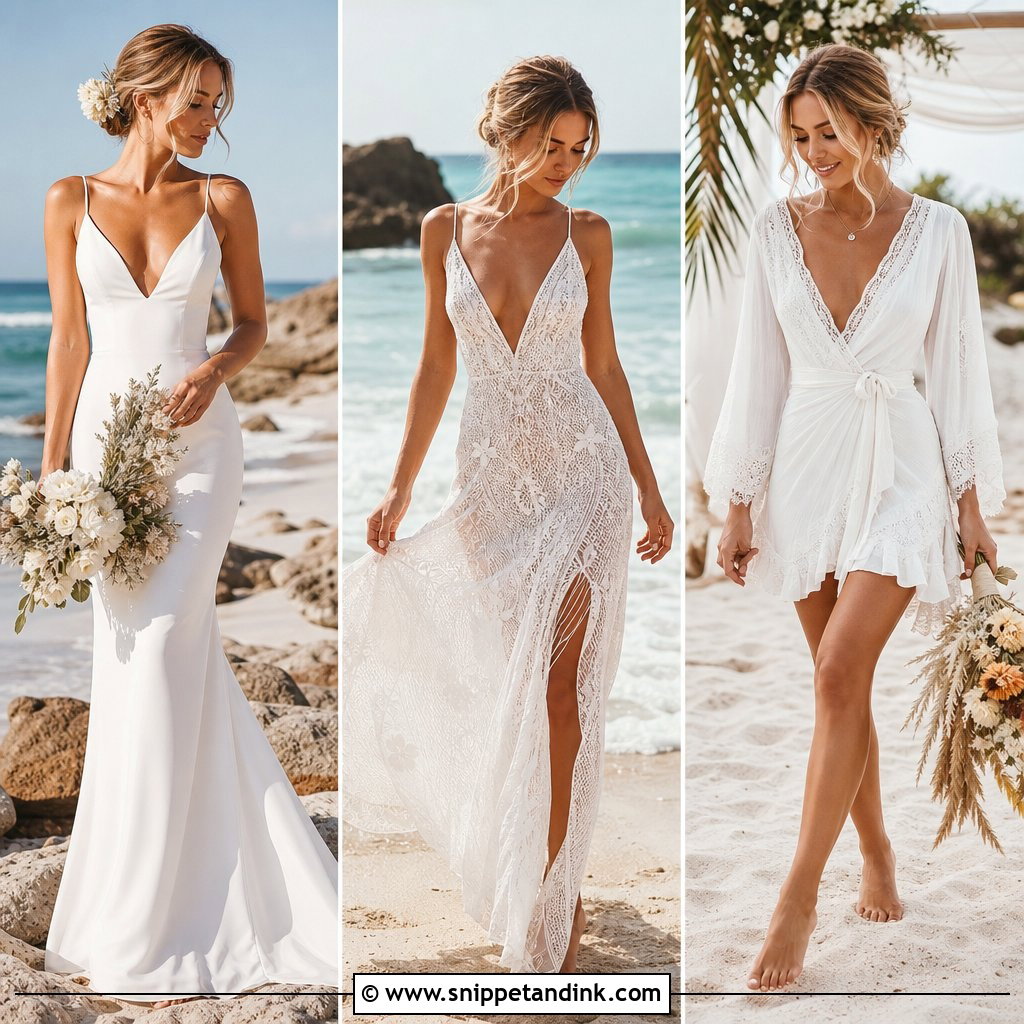
A cape is my favourite answer to a windy ceremony. A sheer shoulder cape, capelet or detachable chiffon cape gives movement and drama in photos, attached at the shoulders so it can’t blow off your head like a veil. It pairs best with a simple crepe dress, satin slip or fitted sheath. Pearl studs and a low bun keep the neckline clear. Wear it for the ceremony, then unhook it for dancing.
Flying With the Dress to a Destination Wedding
If the coast is a flight away, plan the dress’s journey as carefully as your own. Most brides carry it on rather than check it, because a lost suitcase is not something you can fix in two days. Check with the airline before you fly about cabin storage for garment bags; some crews will hang it, but it isn’t guaranteed. Ask the shop to pack it in a breathable garment bag with tissue in the bodice and folds.
When you land
- Unpack the dress straight away and hang it from a sturdy hanger, using the hanging loops rather than the straps.
- Ask the hotel about a steamer, or bring a travel steamer; never put a hotel iron on chiffon, organza or satin.
- Steam inside out where possible, keeping the steamer moving and a short distance from the fabric.
- Keep the dress out of direct sun and away from the bathroom, where heat and humidity can mark it.
Plan for the end of the day too. A hem that has met sand and seawater should be shaken out and allowed to dry before it’s packed, and then cleaned by a specialist when you’re home. Salt left in the fabric can stiffen and discolour it over time.
Dress for the Wind, the Sand and the Light
A seaside wedding brings sun, breeze, sand and movement into every hour of the day, so the dress has to work with them. Light fabrics, a secure fit, a shorter train and simple accessories nearly always beat a heavy gown and a long veil. Chiffon A-lines, satin slips, lace, blue tulle and capes can all get you there. Think about walking, weather and shoes before the final choice, and test the dress outside if you can. Get those right and you’ll enjoy the ocean instead of fighting it.
You'll Like These Ideas:


Leave a Reply