
A bridesmaid at an Indian wedding rarely gets one hair appointment. She gets four or five, spread across mehndi, haldi, sangeet, the ceremony and the reception, and each one asks something different of her hair: a dupatta pinned over it, a heavy jhumka pulling at the ear, three hours of dancing. When I plan bridesmaid hair, I start with the function and the outfit, then the jewelry, and only then the style. The looks below run from jasmine buns to waves and braids, and for each one I’ve added what I’d actually watch for when doing it.
Sorting Out Five Functions Without Five Full Blowouts
Most bridesmaids don’t need a fresh, full style for every event, and trying to get one burns money, time and your hair. I plan it in layers. Freshly washed hair holds curls worst, so the day-old wash is the better base for a waved reception look. A braid or sleek bun can be done on second or third-day hair and will often hold better than on clean hair.
- Haldi: wear a simple braid or bun on hair you’re happy to wash afterward. Turmeric paste can tint light or highlighted hair yellow, so keep it tied up and away from the face.
- Mehndi: keep hair off your hands and shoulders for the hours the paste is drying. A side braid or a low bun saves you from smudging.
- Ceremony: the dupatta, the jewelry and the heat of the mandap matter most. A pinned bun or a gajra style is the safe choice.
- Sangeet and reception: this is where open hair and curls make sense, ideally indoors and later in the evening.
If you share a stylist with the bride’s party, ask for your slot early in the morning schedule and arrive with clean, fully dry hair. Arriving with wet hair pushes back every appointment after yours.
1. Indian Bridesmaid Bun With Gajra
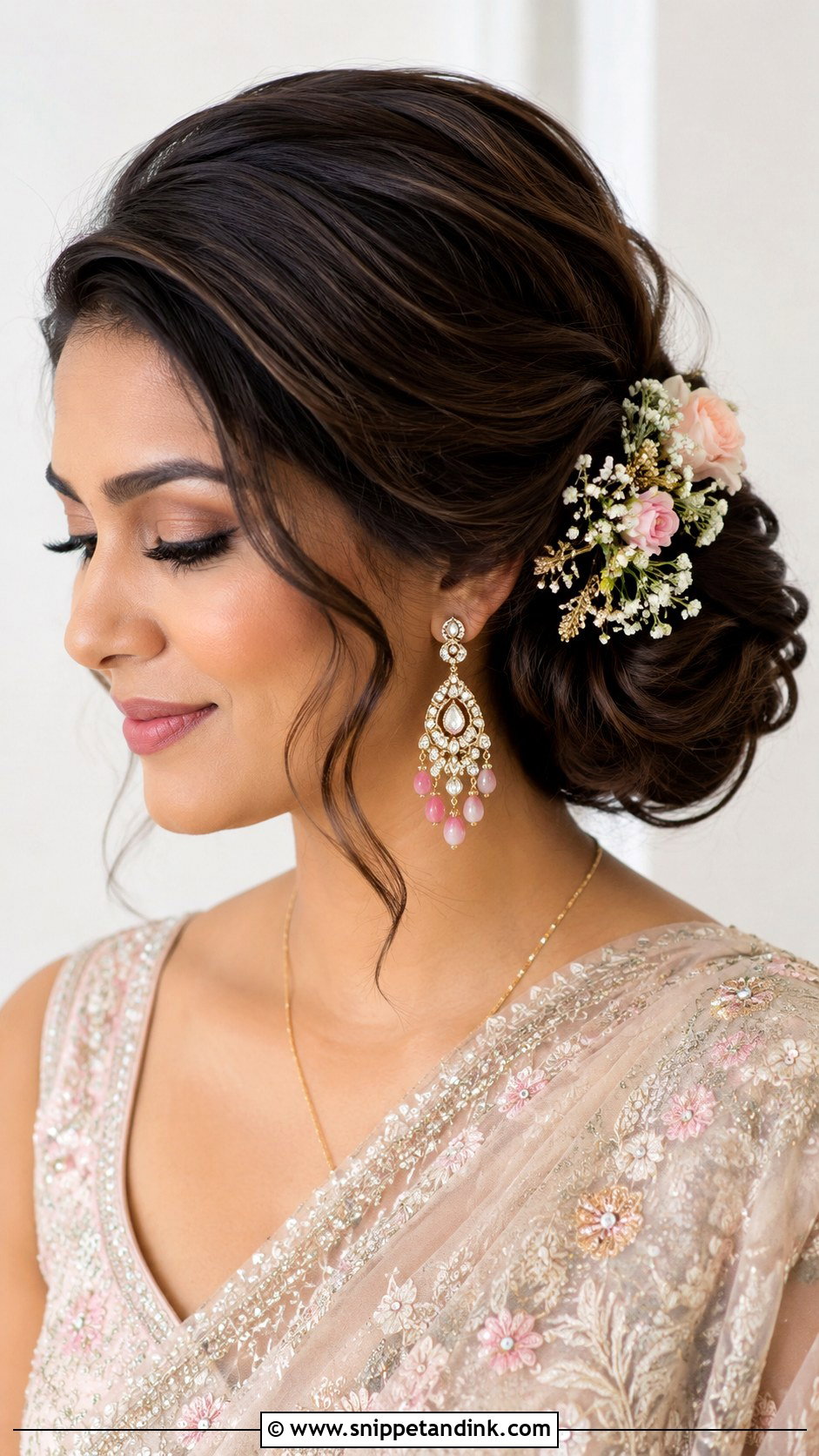
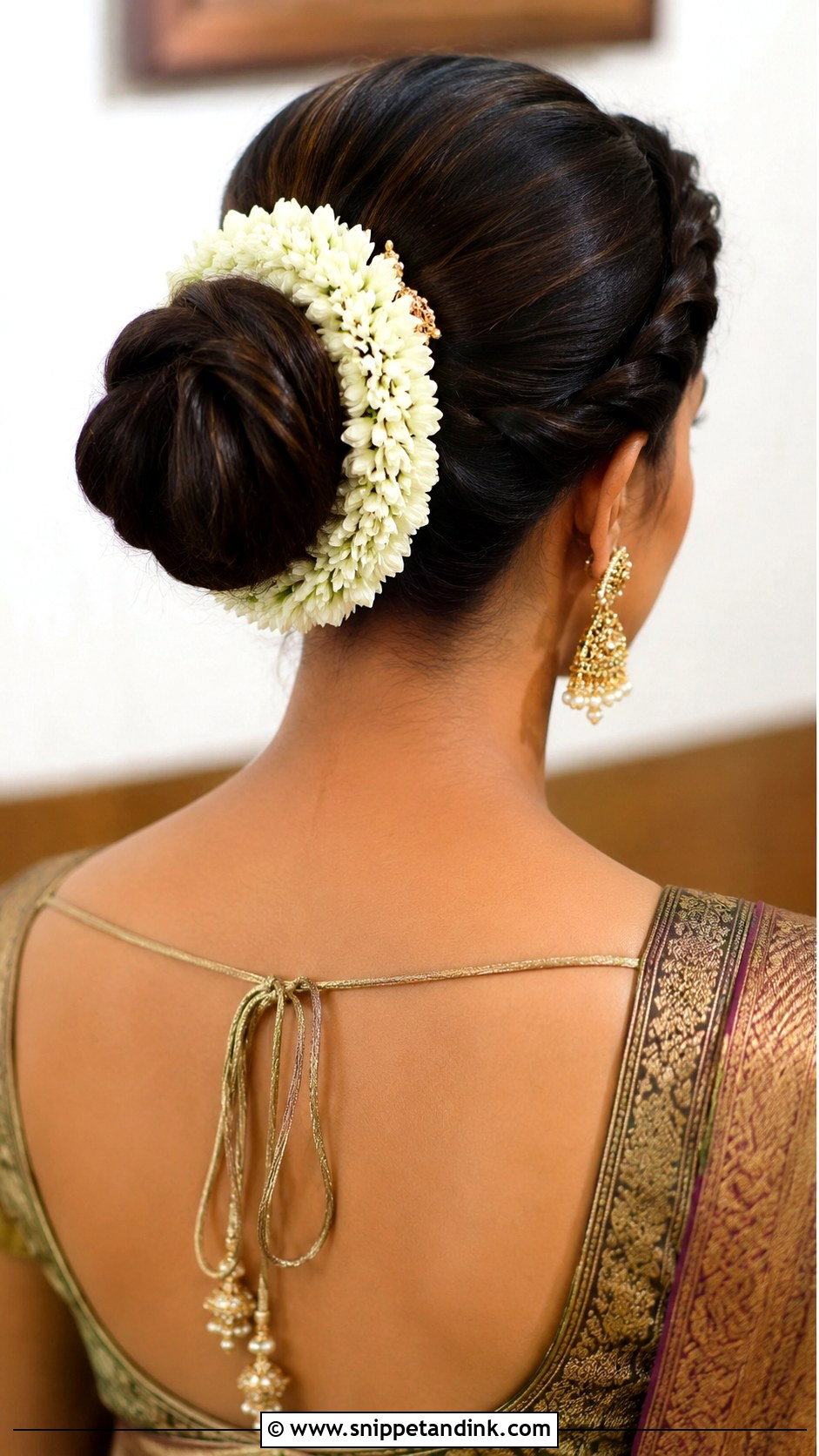
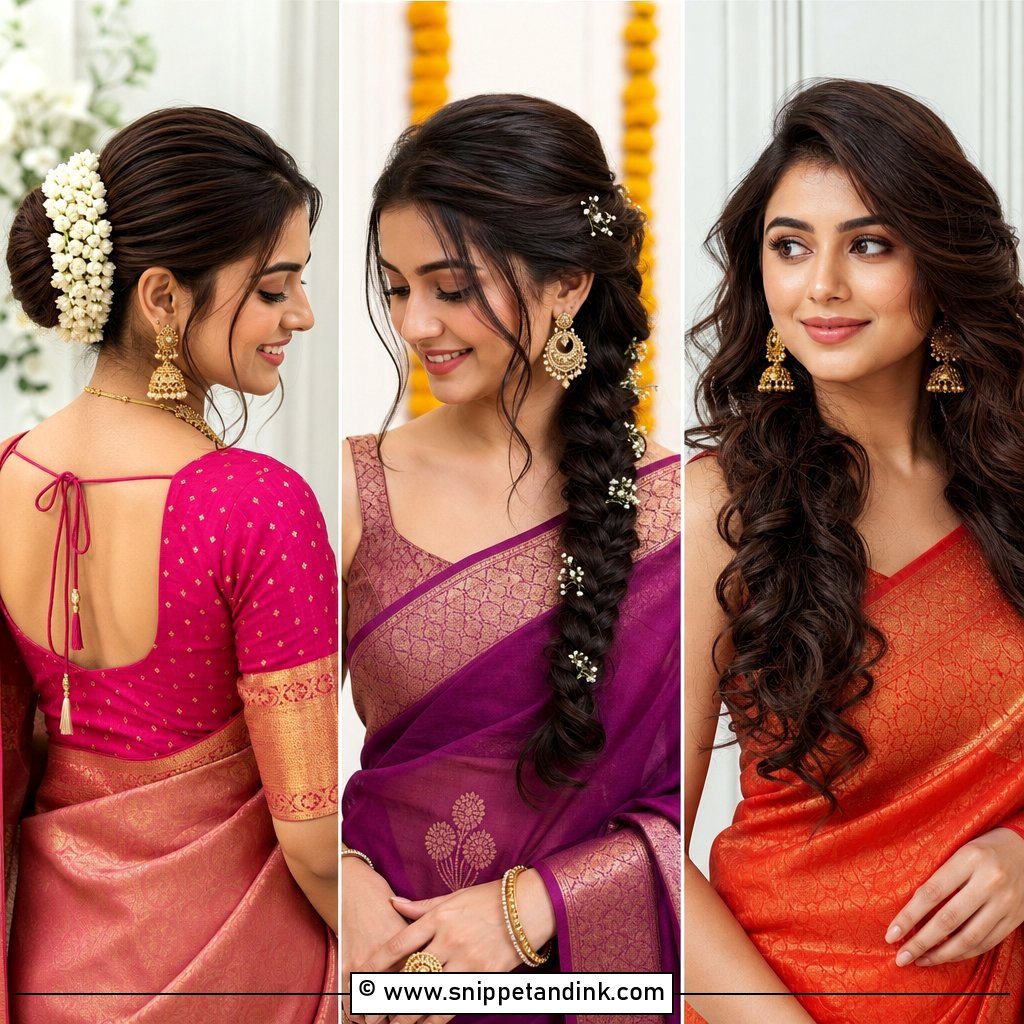
A gajra bun is the style I reach for when a bridesmaid is in a silk saree for a puja or ceremony. The jasmine strand gets wrapped around the bun last, after it’s pinned solid, because fresh flowers are heavier than they look and will drag a loose bun sideways by mid-afternoon. Sit it low if a dupatta goes over the head and a little higher if it doesn’t. Keep the gajra in a damp cloth until the moment it goes on; jasmine browns fast in a warm dressing room.
2. Indian Bridesmaid Low Bun
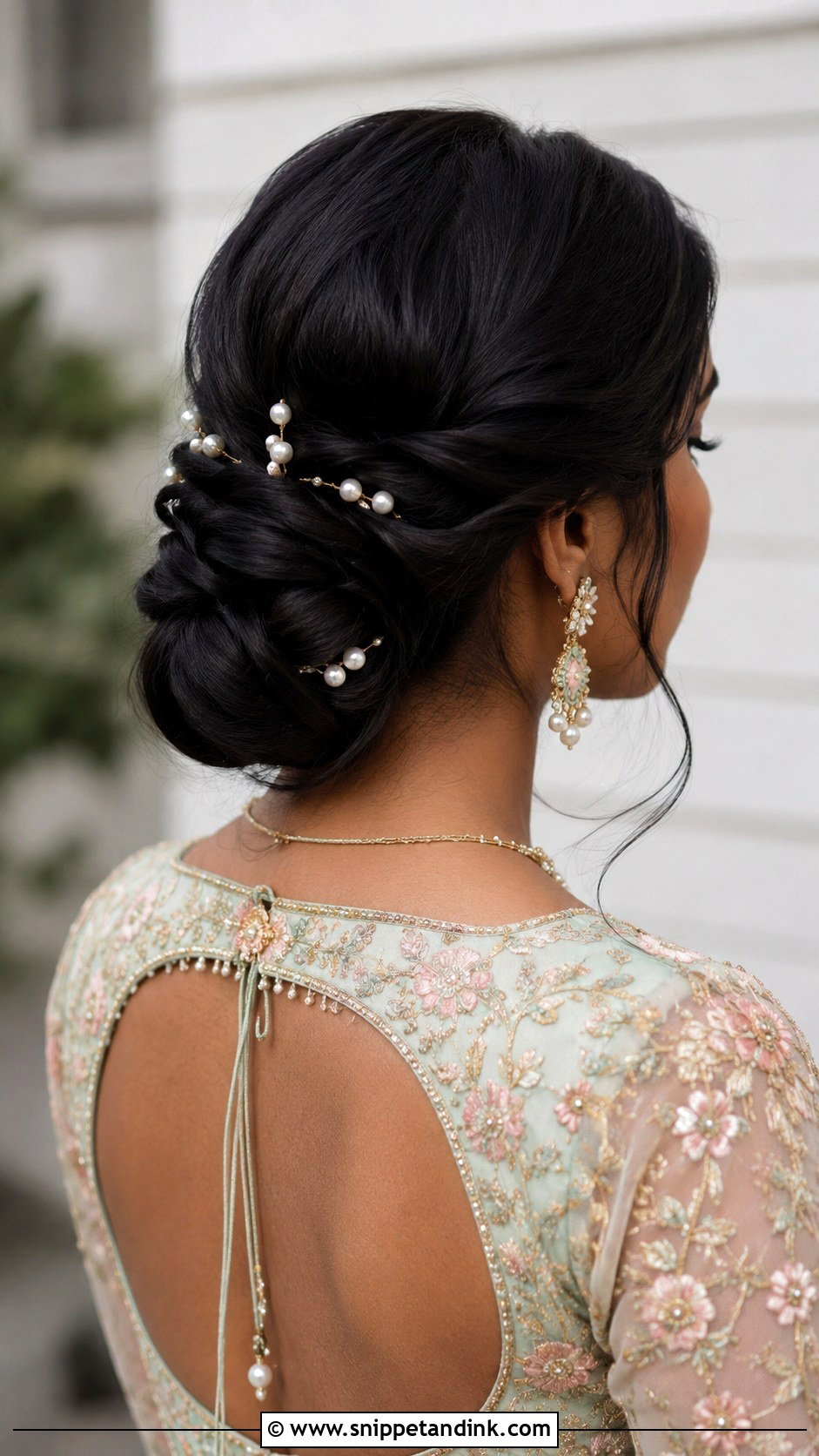
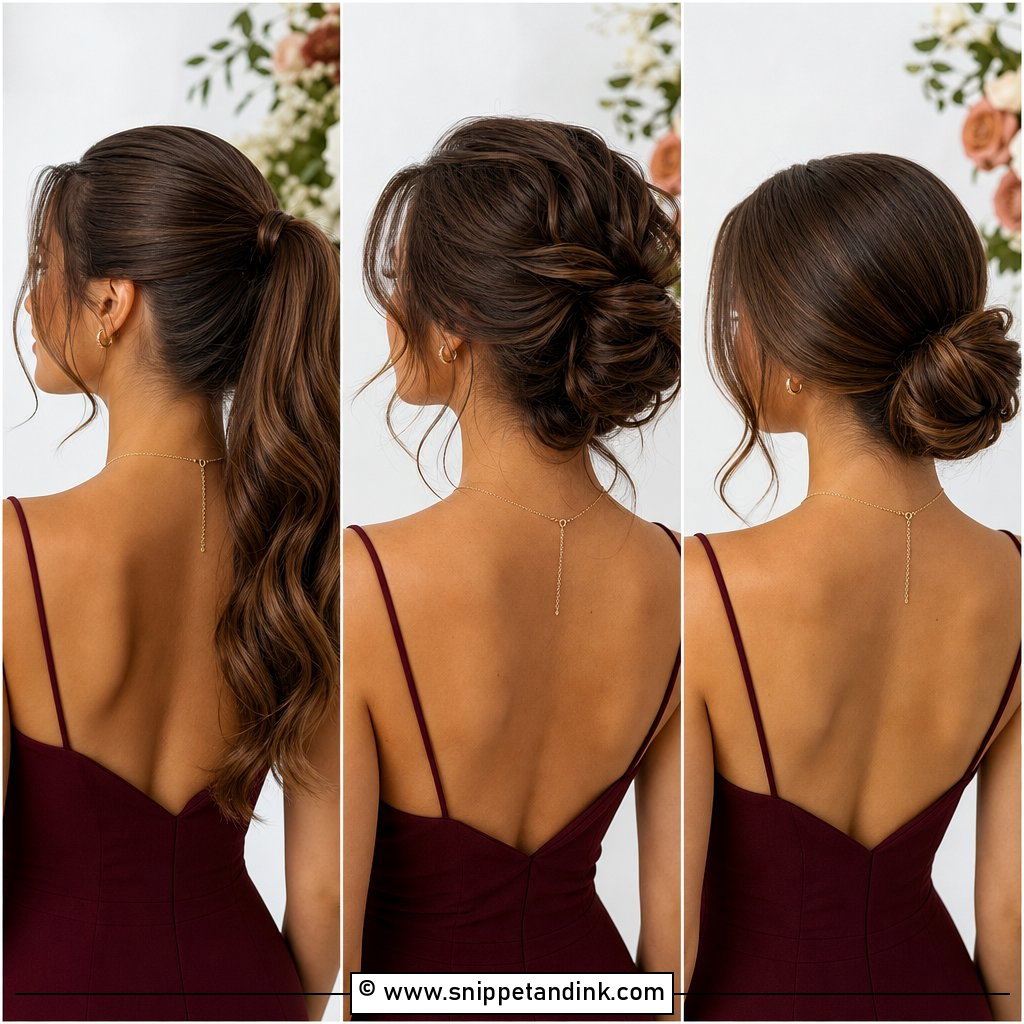
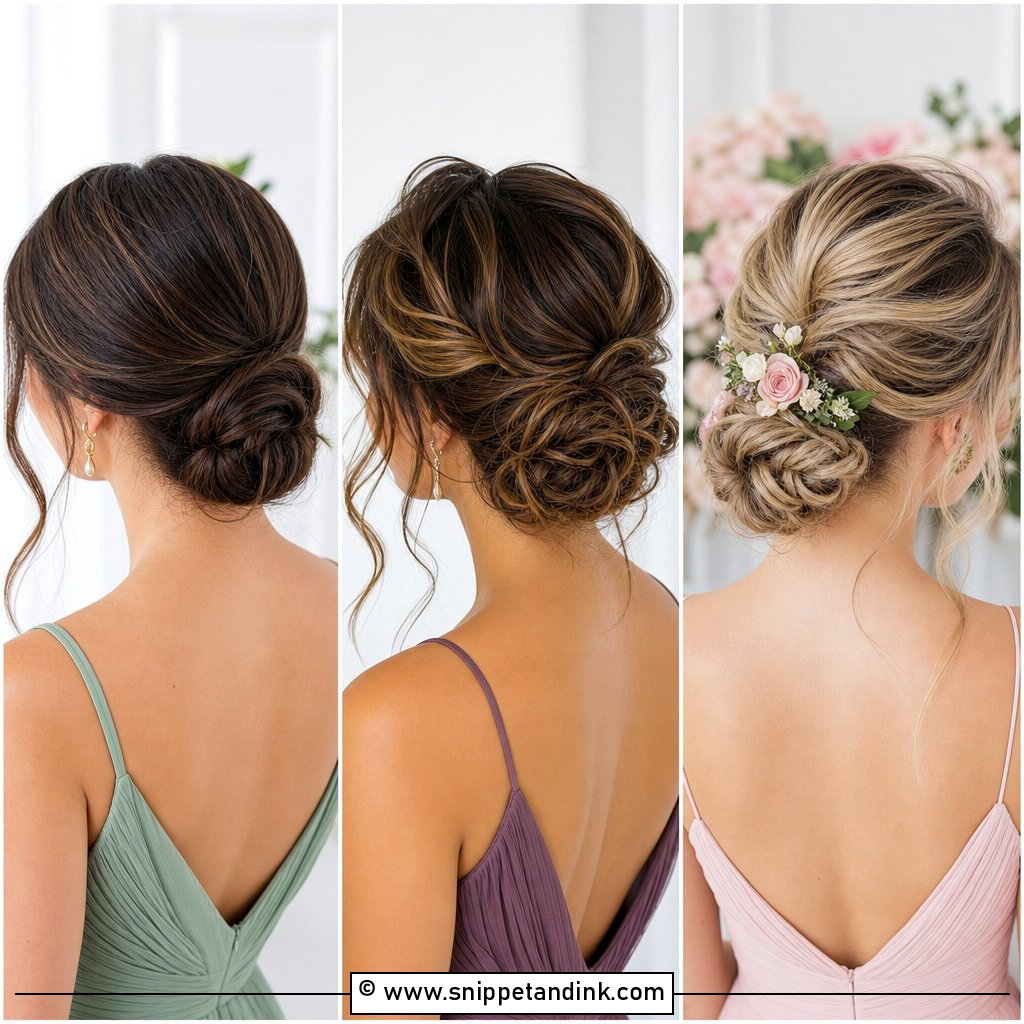
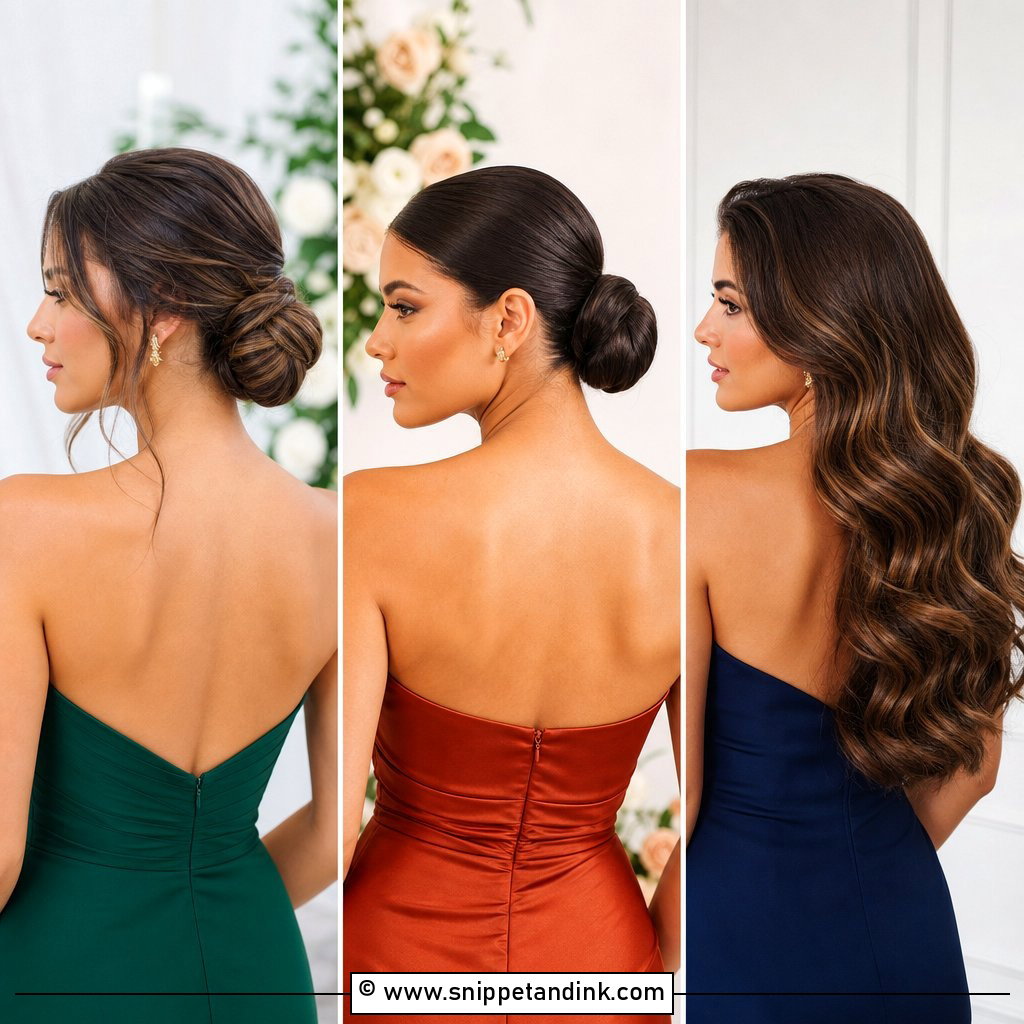
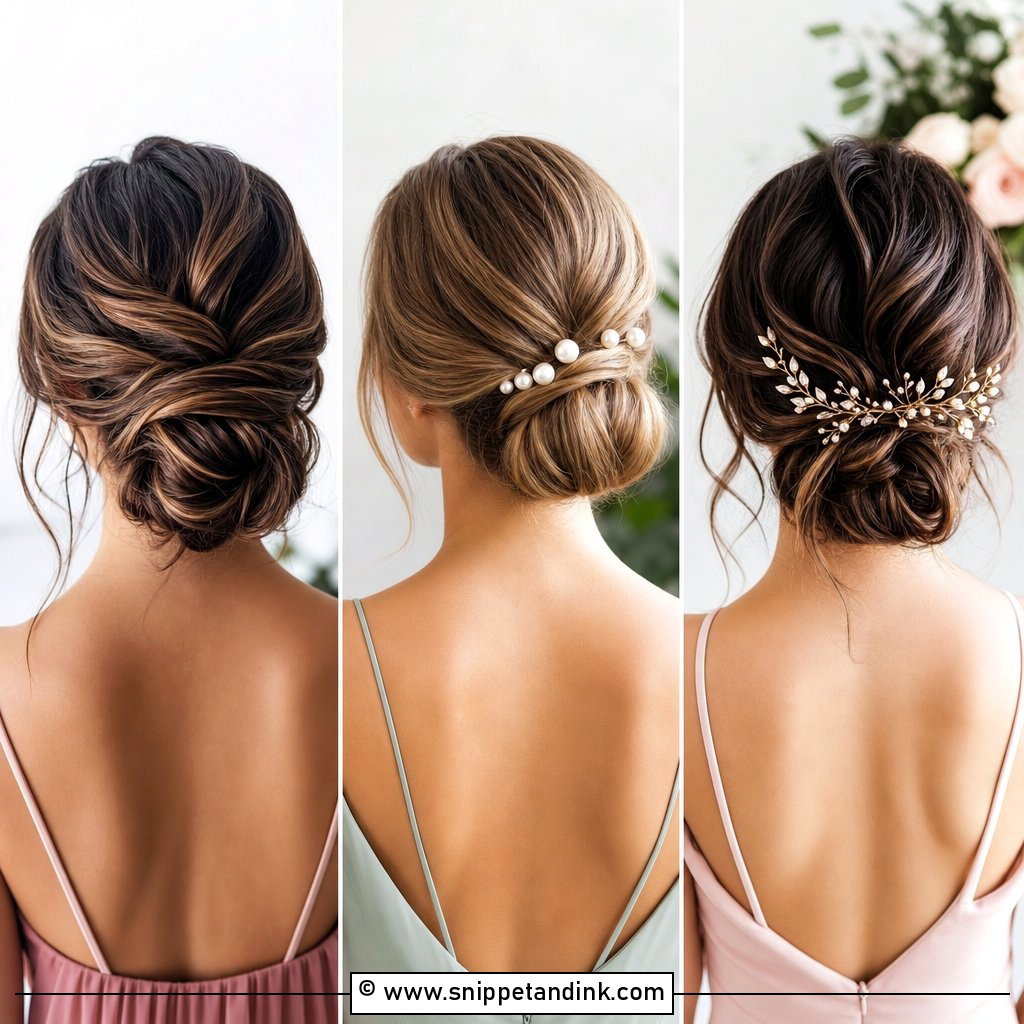
I like a low bun for any bridesmaid with a heavily worked blouse back or a big necklace, because it keeps the neckline clear and gives a dupatta something solid to pin into. The bun can be smooth, twisted or braided; what matters for a bridesmaid is that it stays a step simpler than the bride’s. With heavy earrings or a maang tikka, I build the bun first and anchor the tikka chain into it, so the jewelry hangs straight instead of sliding with the part.
3. Indian Bridesmaid Messy Bun
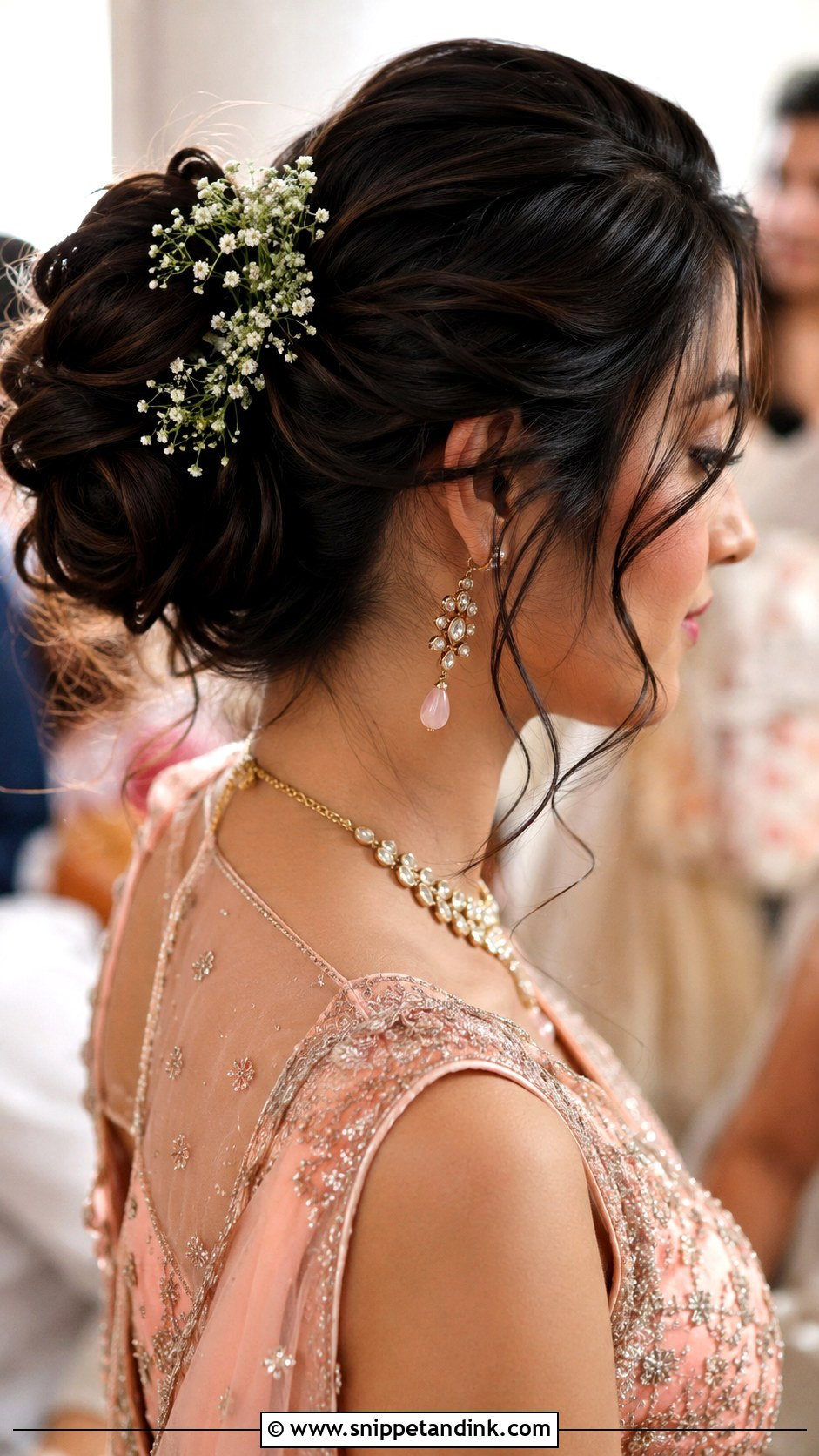
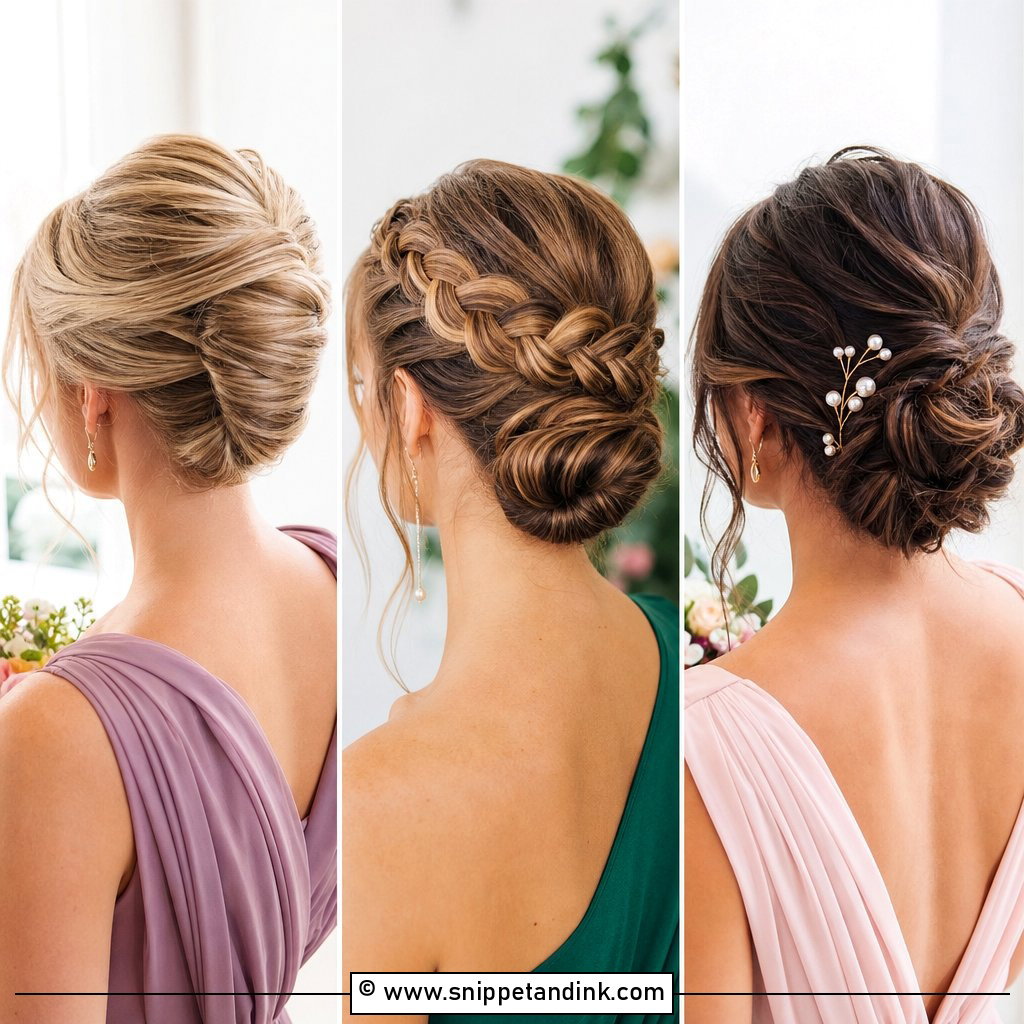
The messy bun is the one people underestimate. It only looks undone; underneath there’s a tight ponytail base and a lot of crossed pins, otherwise it collapses after the first round of dancing at the sangeet. I texturize medium to long hair with a dry spray before pulling anything loose. On very fine or silky hair it struggles to hold its shape, and I’d suggest the braided bun instead. A few small flowers or pearl pins are enough decoration for a mehndi or reception.
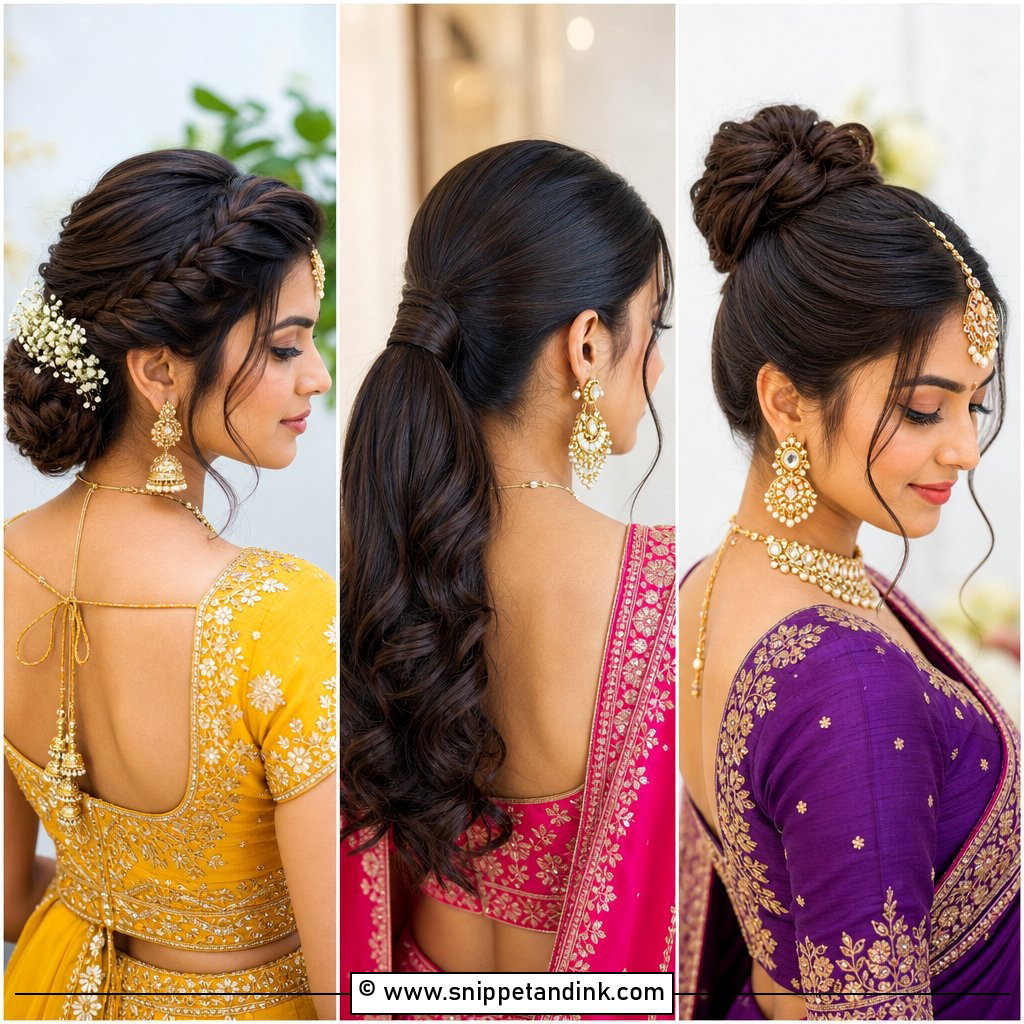
4. Indian Bridesmaid Braided Bun
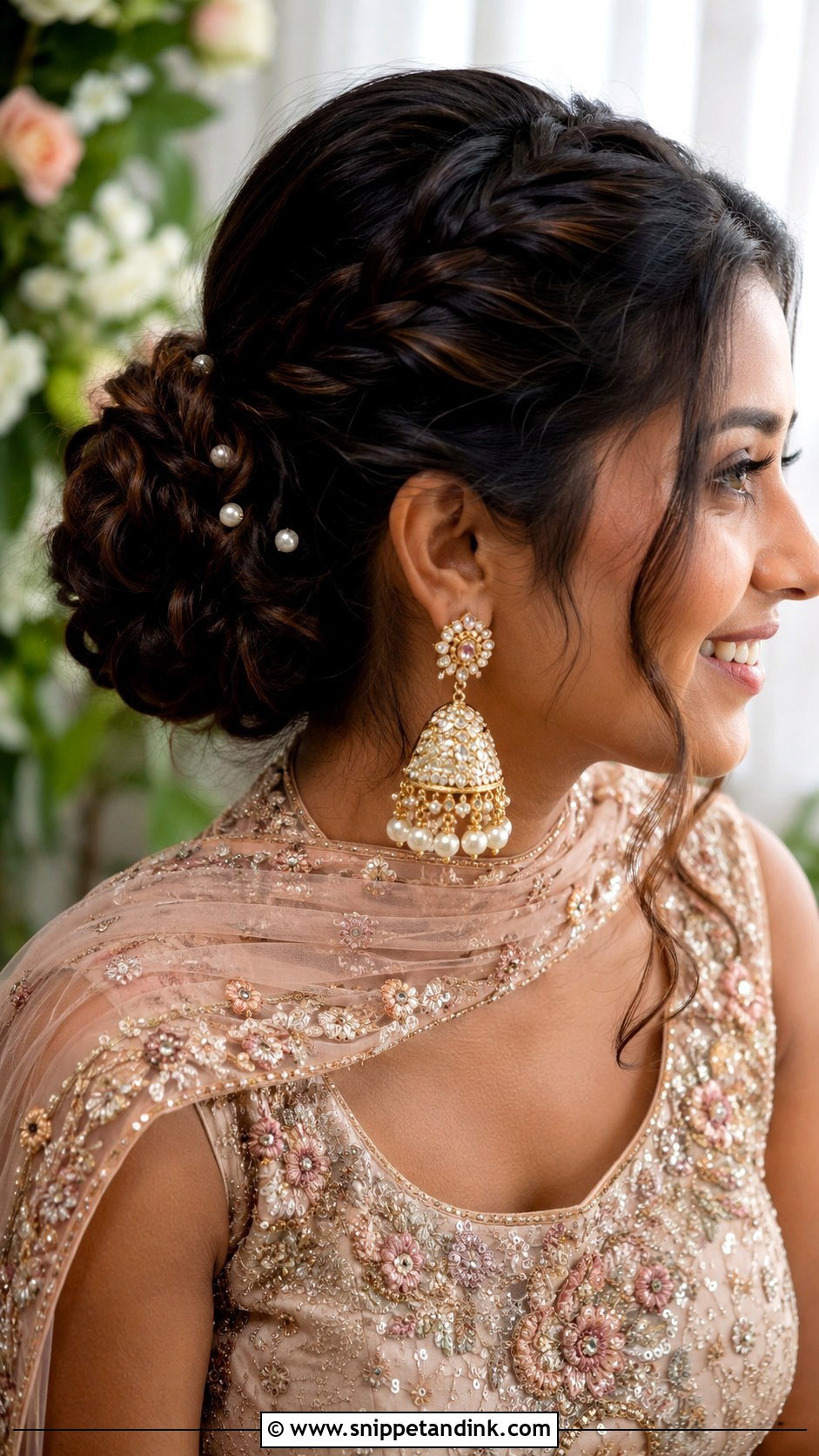
Thick hair is where the braided bun earns its place. Braiding the length first compresses the volume, so the bun ends up smaller and much lighter on the head than a plain coil of the same hair. It also gives the back of the head real detail, which matters more than people think, since half the photos at a wedding catch you from behind or in profile. Tuck tiny flowers or gold pins into the braid’s loops rather than on top of them so they don’t fall out.
5. Indian Bridesmaid Side Bun
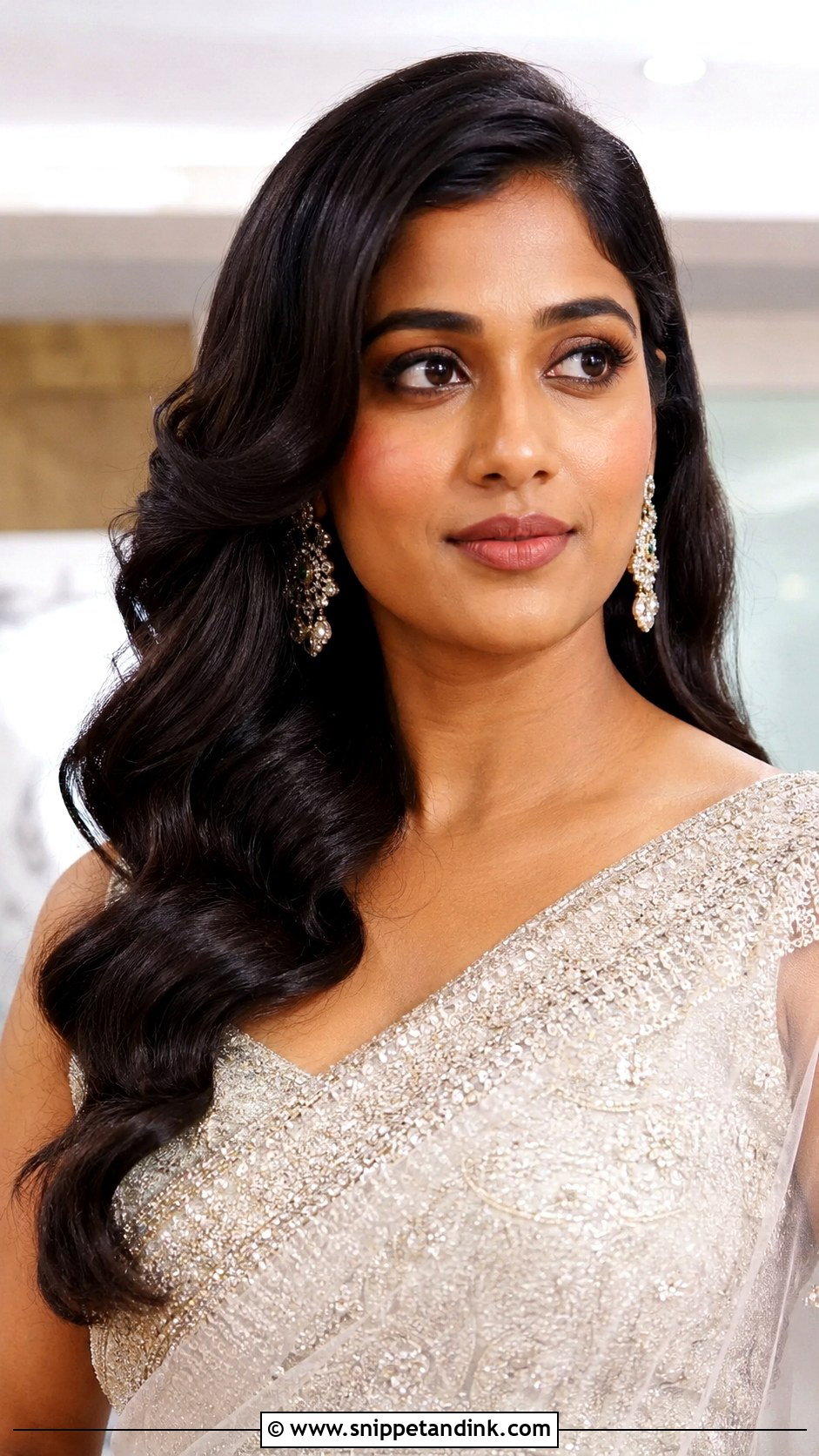
A side bun sits low near one ear and shows up in front-facing photos, which a centered low bun doesn’t. That’s why I pair it with one-shoulder blouses and sarees where the pallu falls on the opposite side. Check which side the dupatta or pallu will go before we start; putting the bun under the drape hides it completely. On a heavily embroidered or mirror-work outfit, keep the hair accessories small so they don’t compete.
6. Indian Bridesmaid Sleek Bun
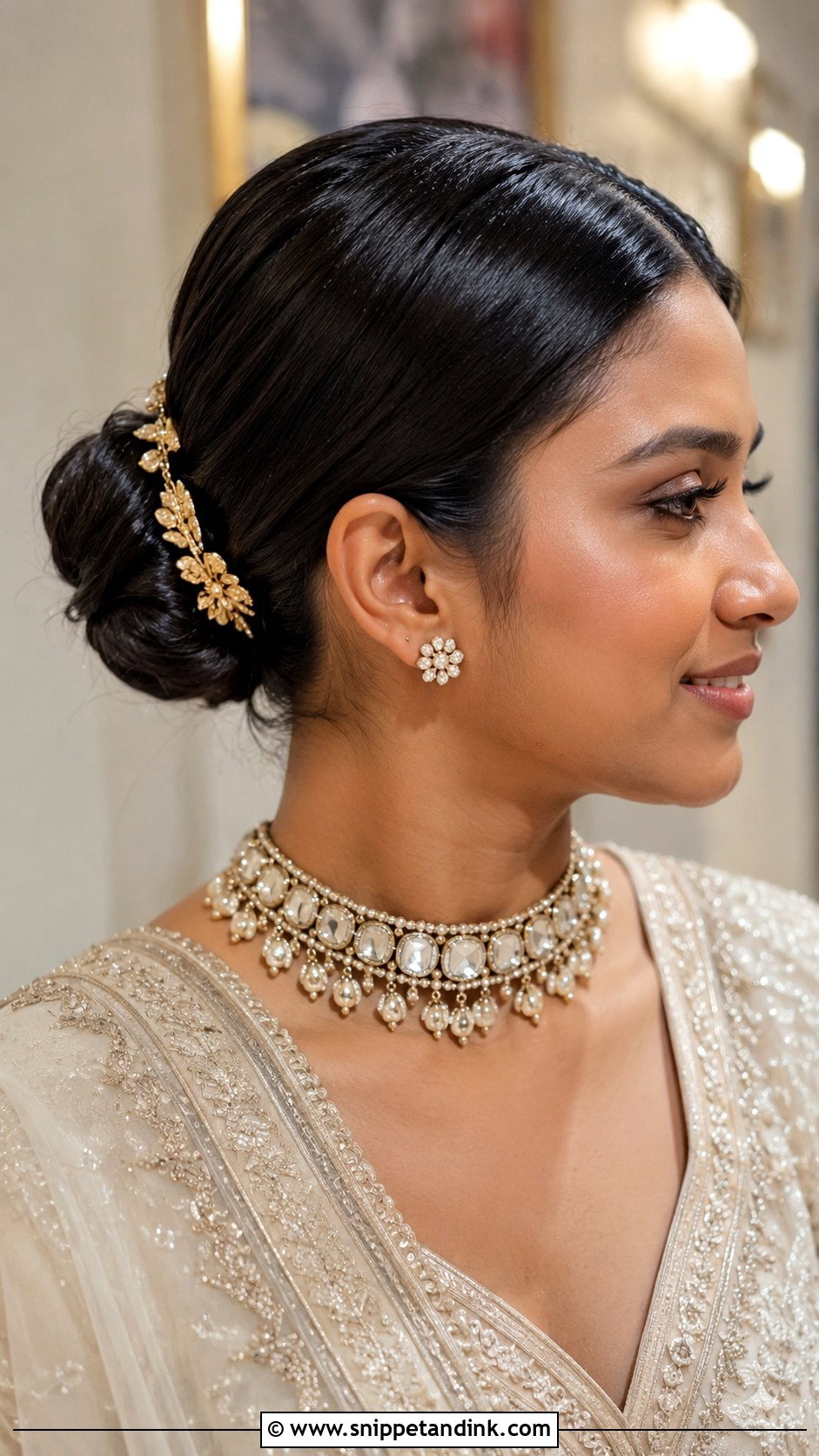
A sleek bun lives or dies on the prep. I blow-dry the hair completely straight first, then brush it back with a little gel at the hairline and a light serum through the lengths. The payoff is that it handles humidity better than anything with curls, and it puts chokers and jhumkas front and center. A center part reads traditional; a deep side part looks more fashion-led. One fault to know: it shows every flyaway and bump in close-ups, so it needs a careful hand.
7. Indian Bridesmaid Half Up Half Down Hair
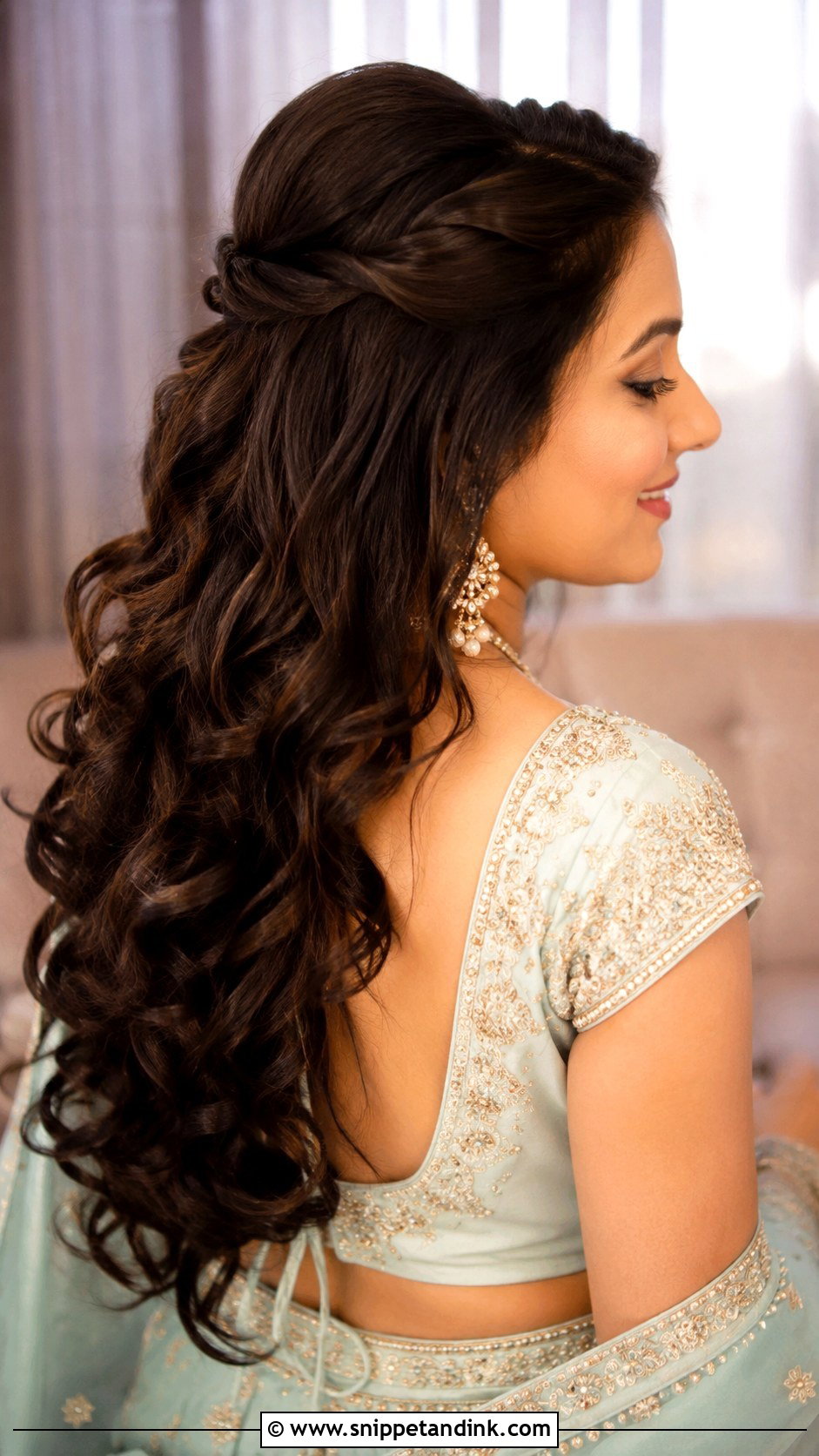
Half up, half down gives you the length of open hair with the front pinned away from the face, which helps when you’re eating, dancing and hugging people all evening. The top section can be twisted, braided or held with a decorative clip. The trap is the curls underneath. They need to be set with heat and cooled in the pin before release, or they’ll flatten long before the reception ends. Lighter sarees, lehengas and gowns all suit it, and a few small flowers soften the top section.
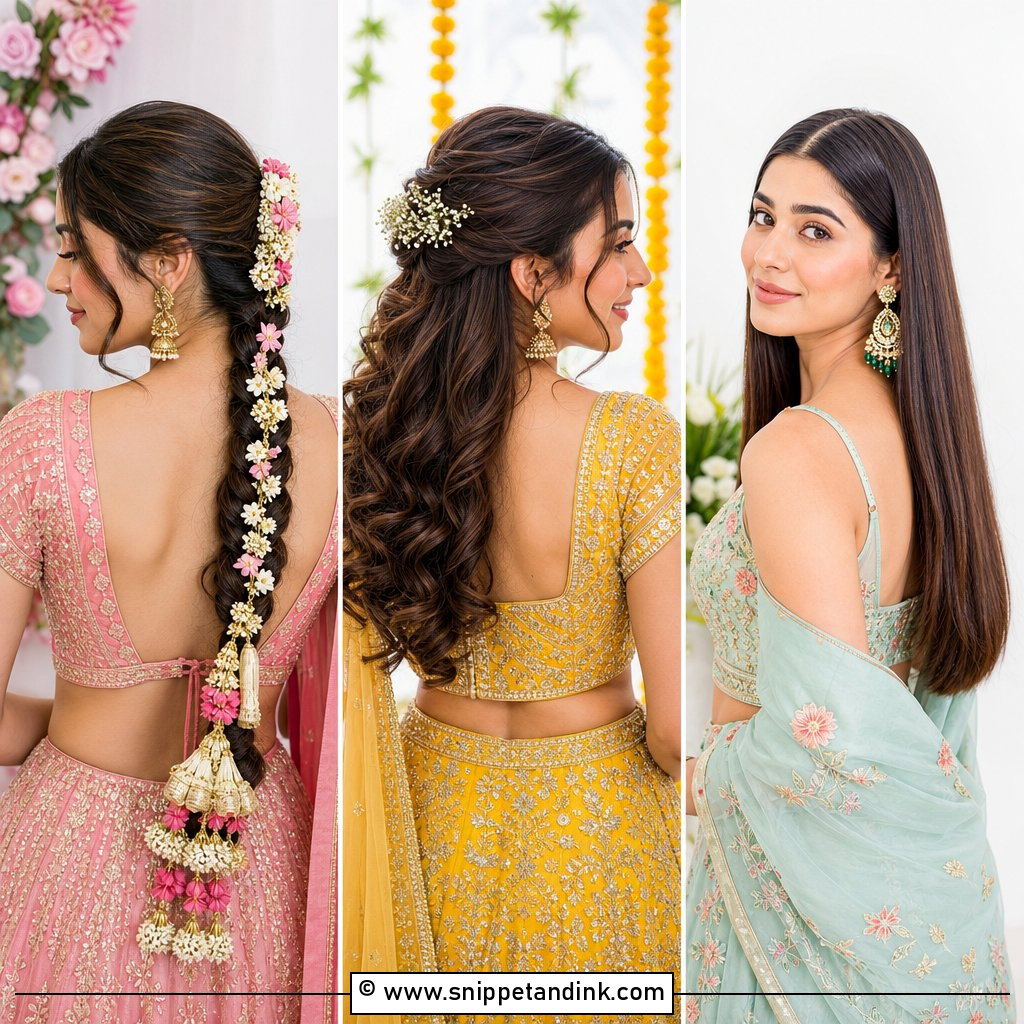
8. Indian Bridesmaid Soft Curls
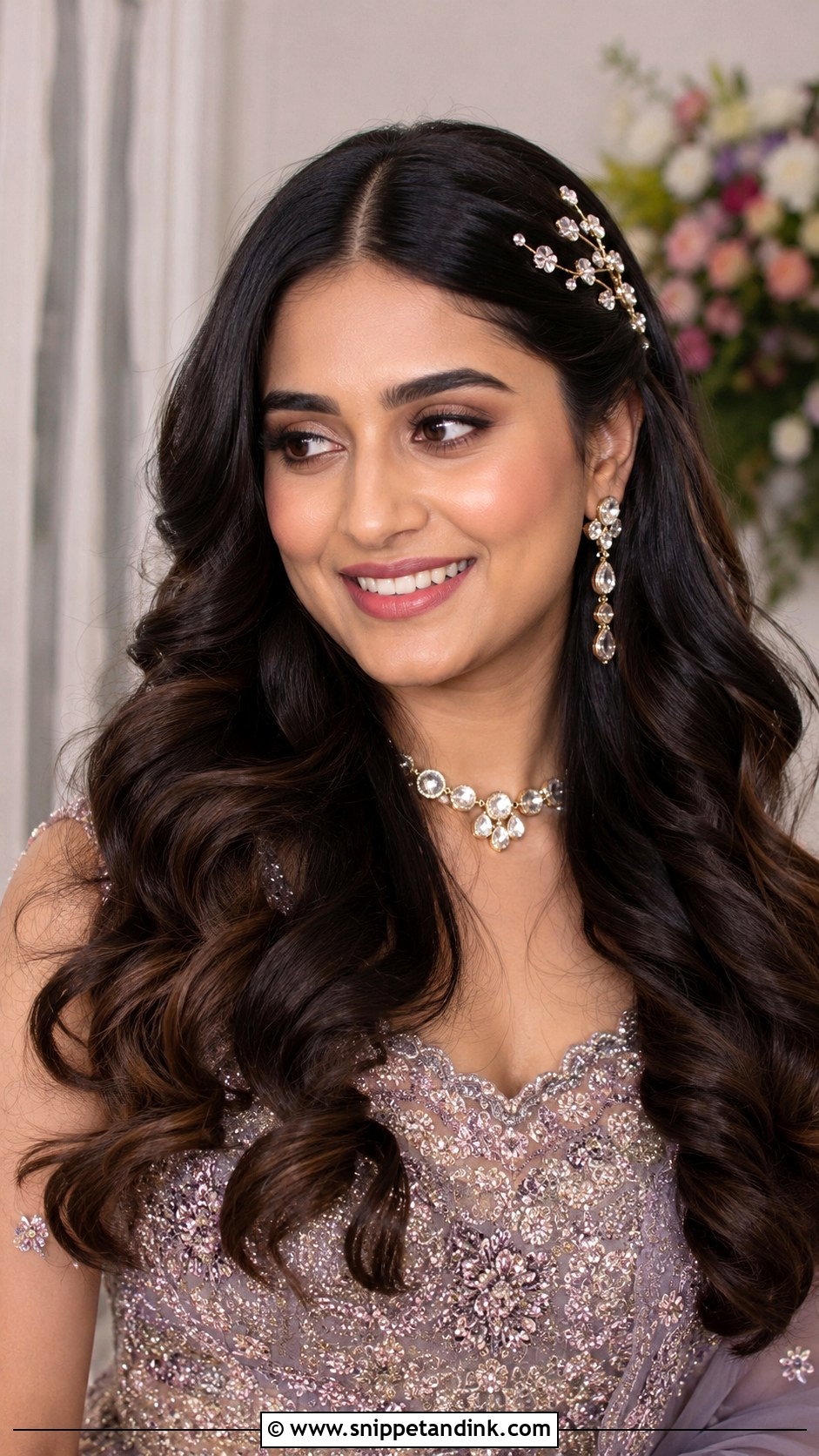
Open curls are what most bridesmaids ask me for at the sangeet or reception, and they’re the style I’m most honest about. Open hair is warm and heavy in an outdoor summer function, and in humidity the curl drops faster than you’d like. Indoors, in an air-conditioned hall, they hold much better. I set each curl, let it cool fully, then brush it out so it looks soft rather than ringletted. To make the look more Indian wedding-ready, add a maang tikka or one side accessory picked from your outfit’s metalwork.
9. Indian Bridesmaid Loose Waves
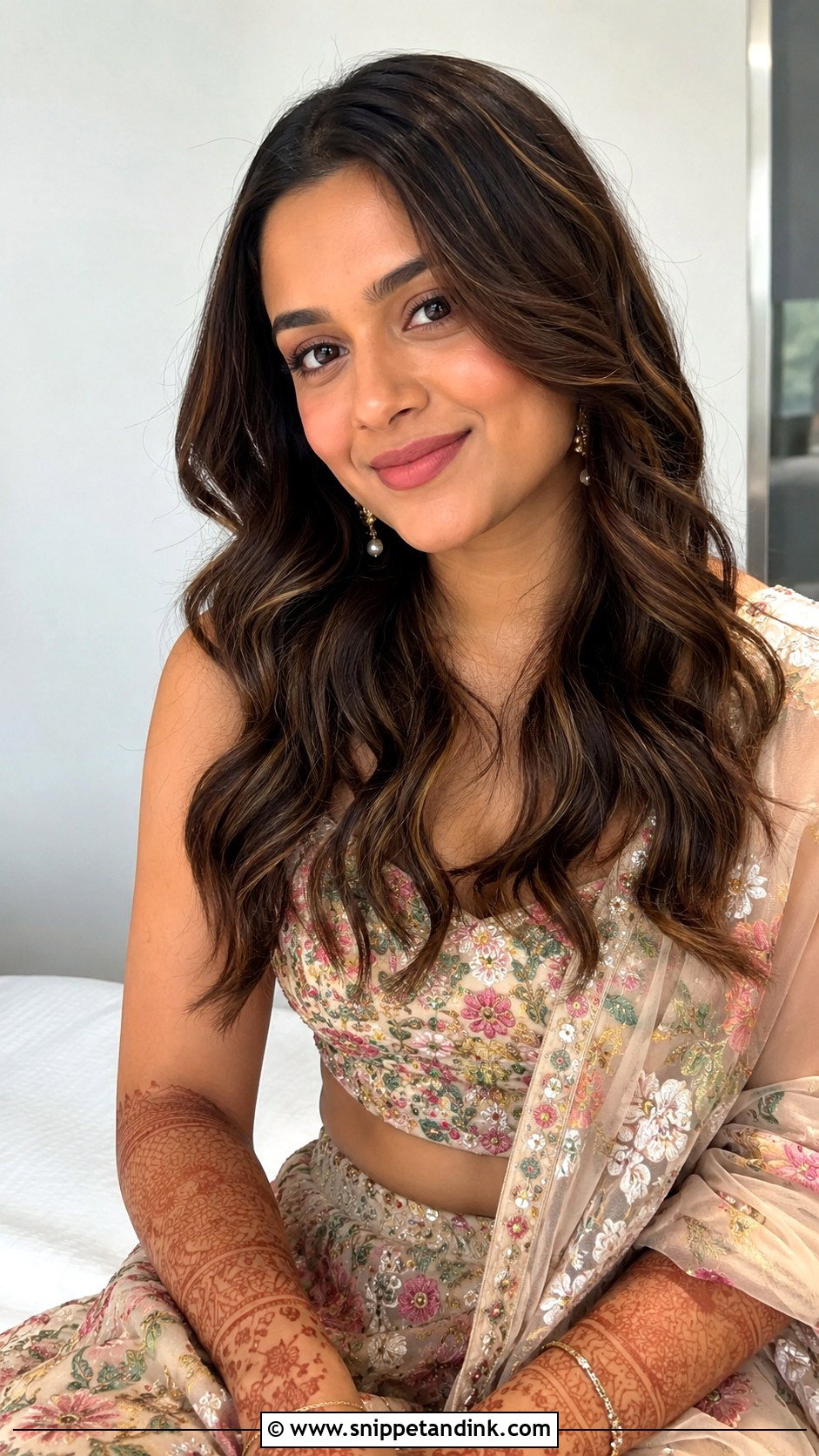
Loose waves are the relaxed option, and they suit mehndi, haldi and brunch-style functions where nobody wants a stiff set. I use a larger barrel and leave the ends straighter, which reads more modern and grows out more gracefully over the day. They suit medium and long hair, with a center part, a side part or one side pinned back. A flexible setting spray keeps movement without crunch. If it’s a haldi, please wear these on second-day hair you don’t mind getting turmeric in.
10. Indian Bridesmaid Hollywood Waves
Hollywood waves need a deep side part and a smooth blow-dry before the iron even comes out, because the wave depends on every curl falling in the same direction and then being brushed into one continuous S. They suit receptions, cocktail nights and formal sangeets, especially with gowns and pre-draped sarees. The heavy side shows off one earring brilliantly. I’d skip them for anyone whose dupatta is going over the head, since the fabric presses the wave flat in minutes.
11. Indian Bridesmaid Side Swept Curls
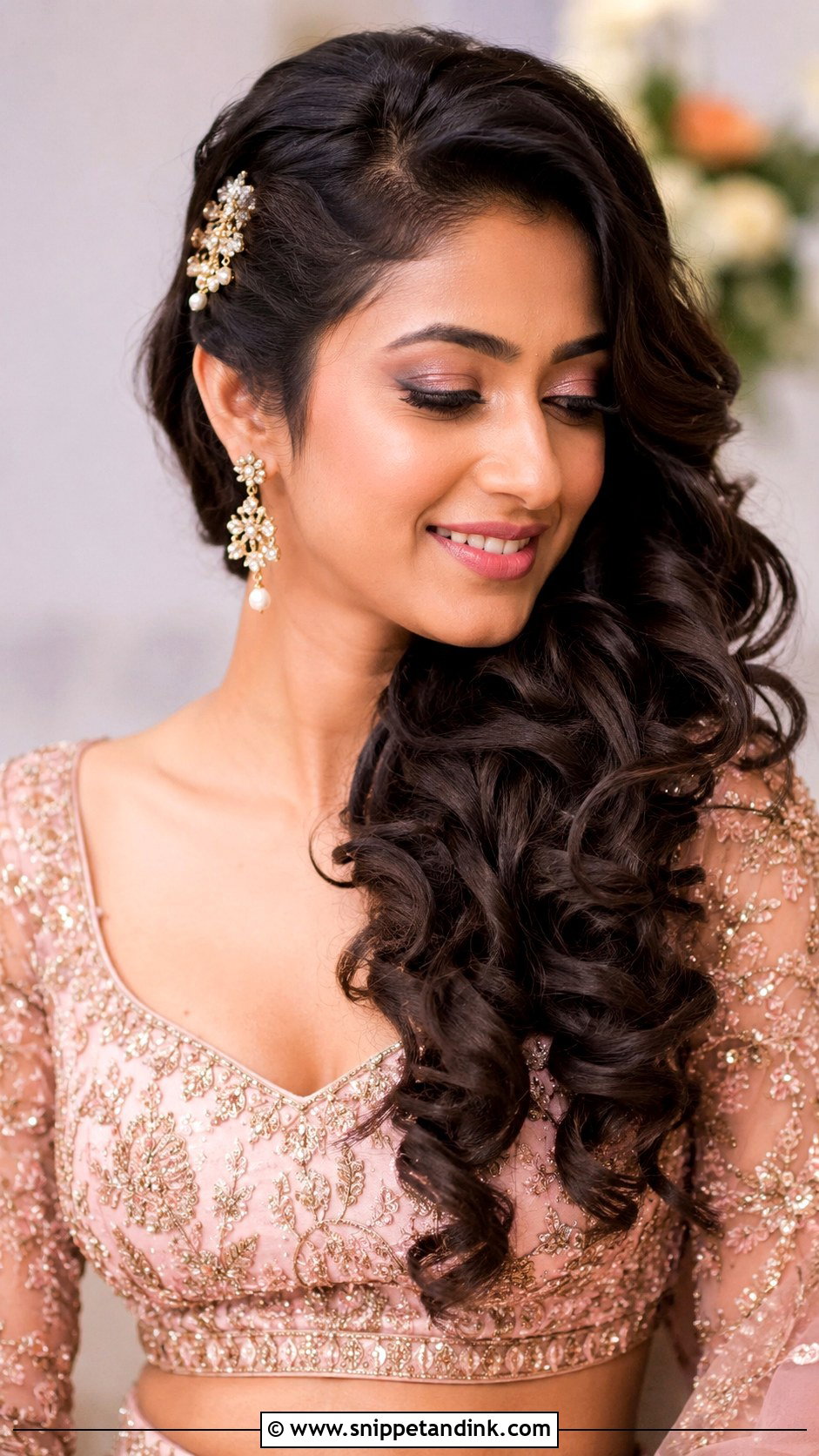
Side swept curls sit everything over one shoulder, leaving the other side of the neckline and blouse clear. The secret is on the hidden side: I cross two or three pins behind the ear to lock the hair across, otherwise the curls slowly migrate back to both shoulders. Long earrings look good on the bare side. The curls can be crisp for a reception or slightly brushed out for a sangeet, and a single jeweled or floral piece at the pinned point covers the grips.
12. Indian Bridesmaid Fishtail Braid
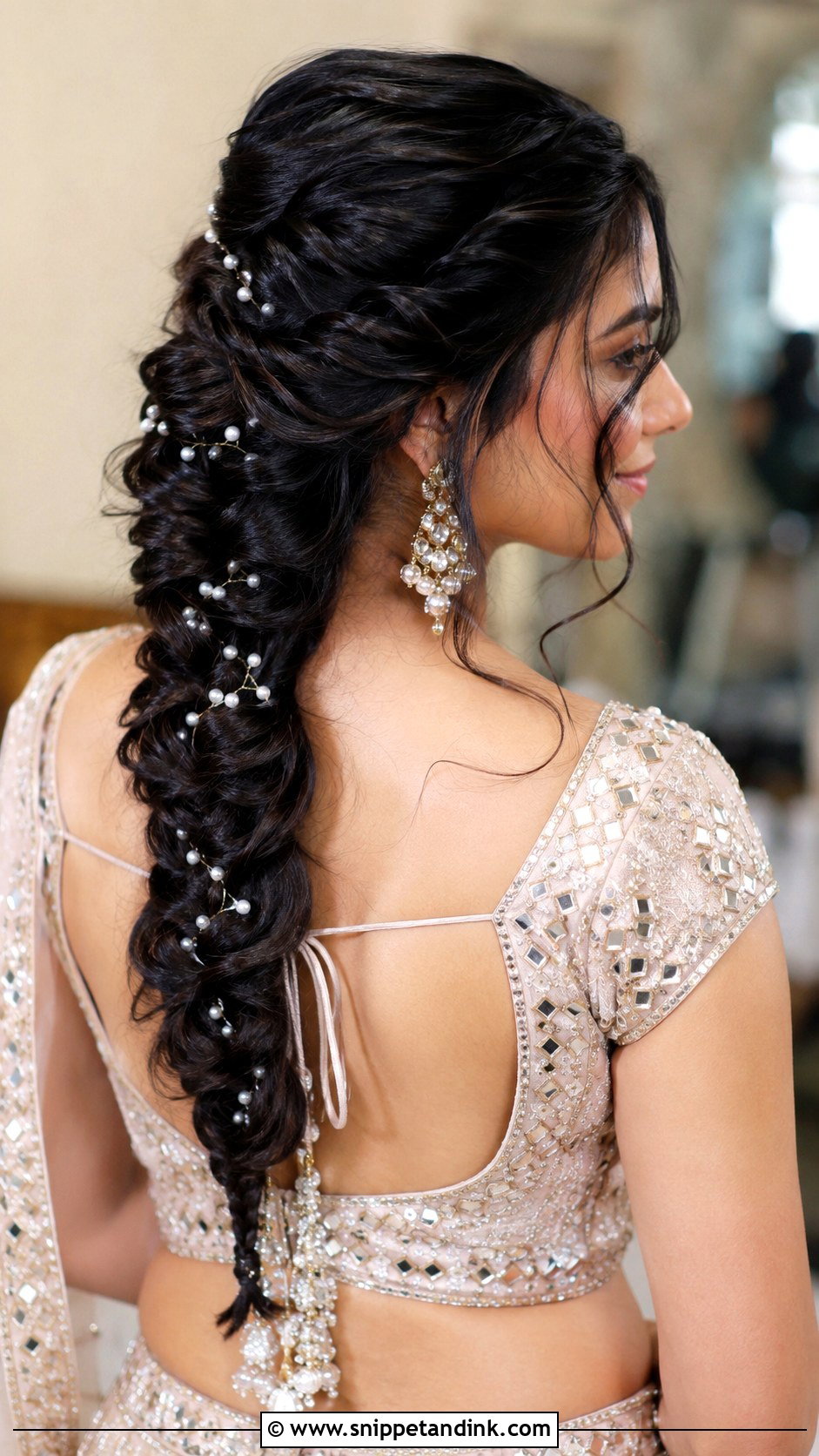
A fishtail takes longer to braid than a regular three-strand, but it lies flatter and stays put through a full night of dancing. On long hair I braid it tight, then gently pull the edges apart to widen it, which makes thin hair look much fuller. Gold thread or small pearls woven through suit lehengas and crop-top skirts. Keep a few soft pieces at the front, because a fully scraped-back fishtail can look severe in photos.
13. Indian Bridesmaid Side Braid
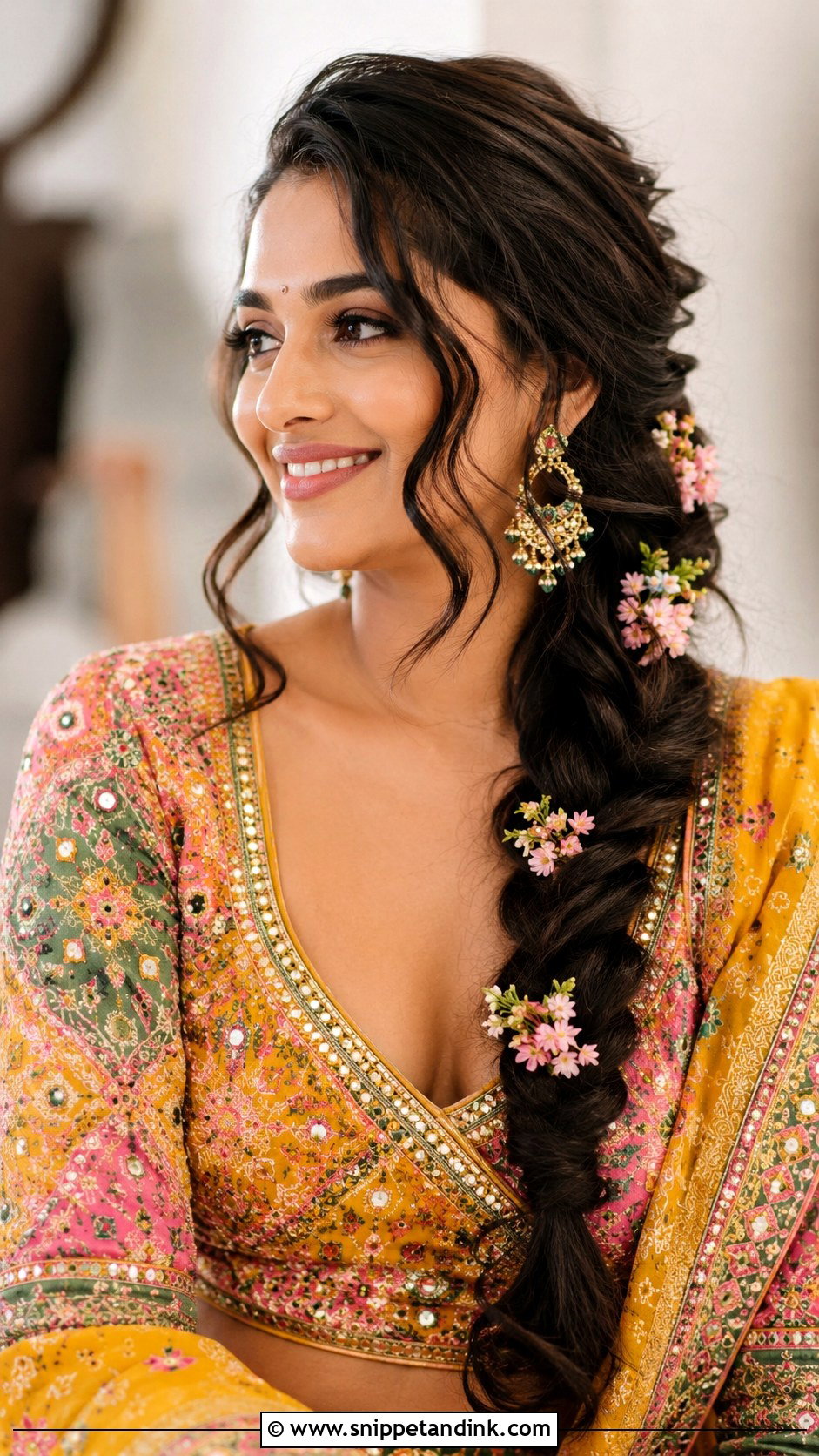
For mehndi and daytime functions, a side braid is what I’d put most bridesmaids in. It keeps hair off the hands while the henna dries, and nobody has to worry about hair touching wet paste. It suits lehengas, shararas and printed sarees and leaves the earrings on the other side visible. I loosen the braid a little after tying it for a fuller shape. Keep the flowers lighter than the bride’s floral braid; the bride should always have the most decorated hair in the room.
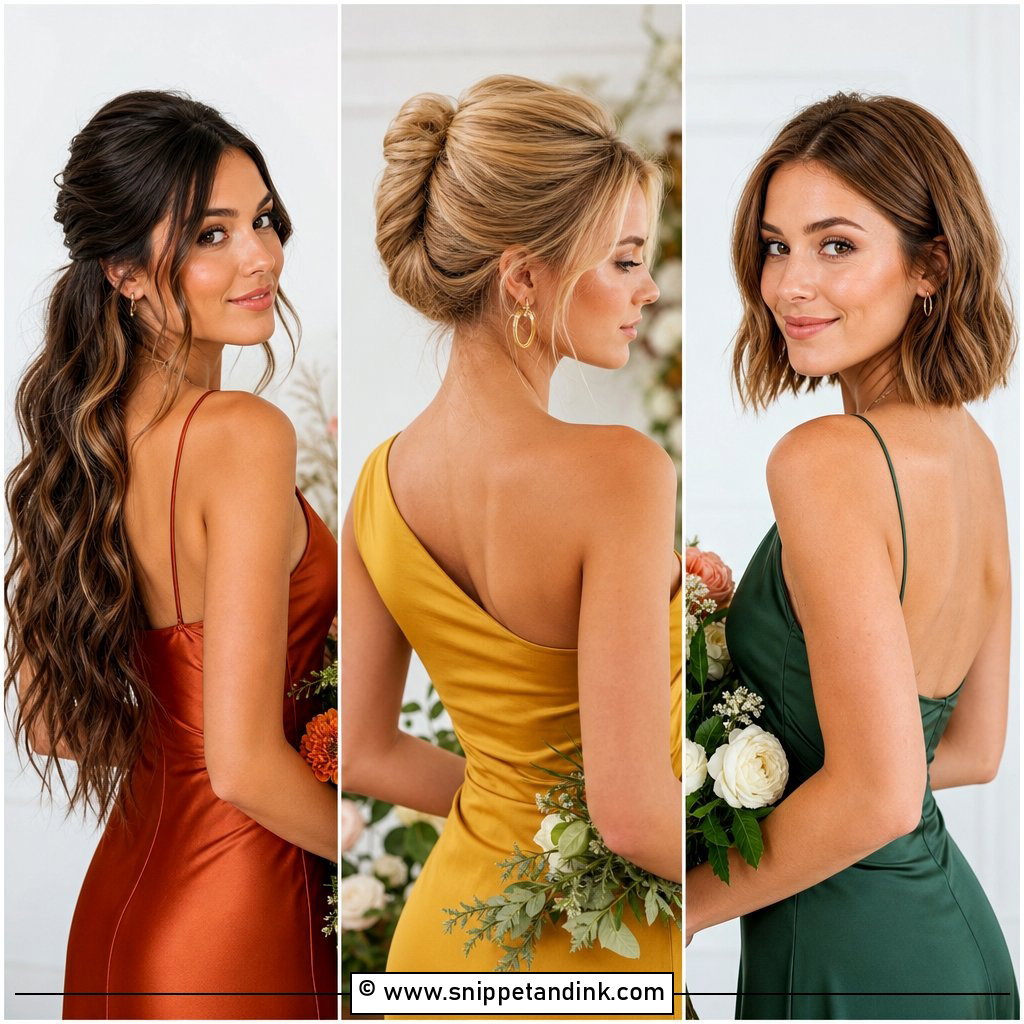
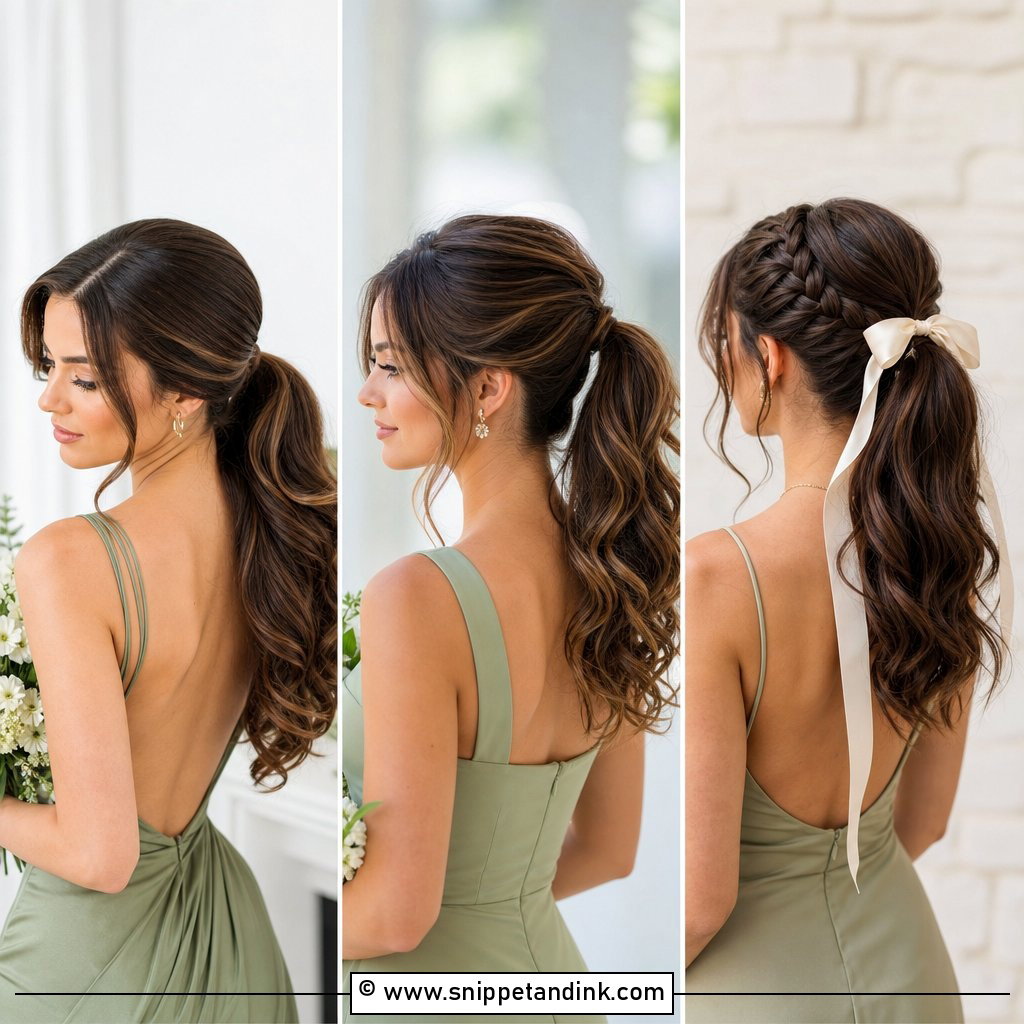
14. Indian Bridesmaid Bubble Braid
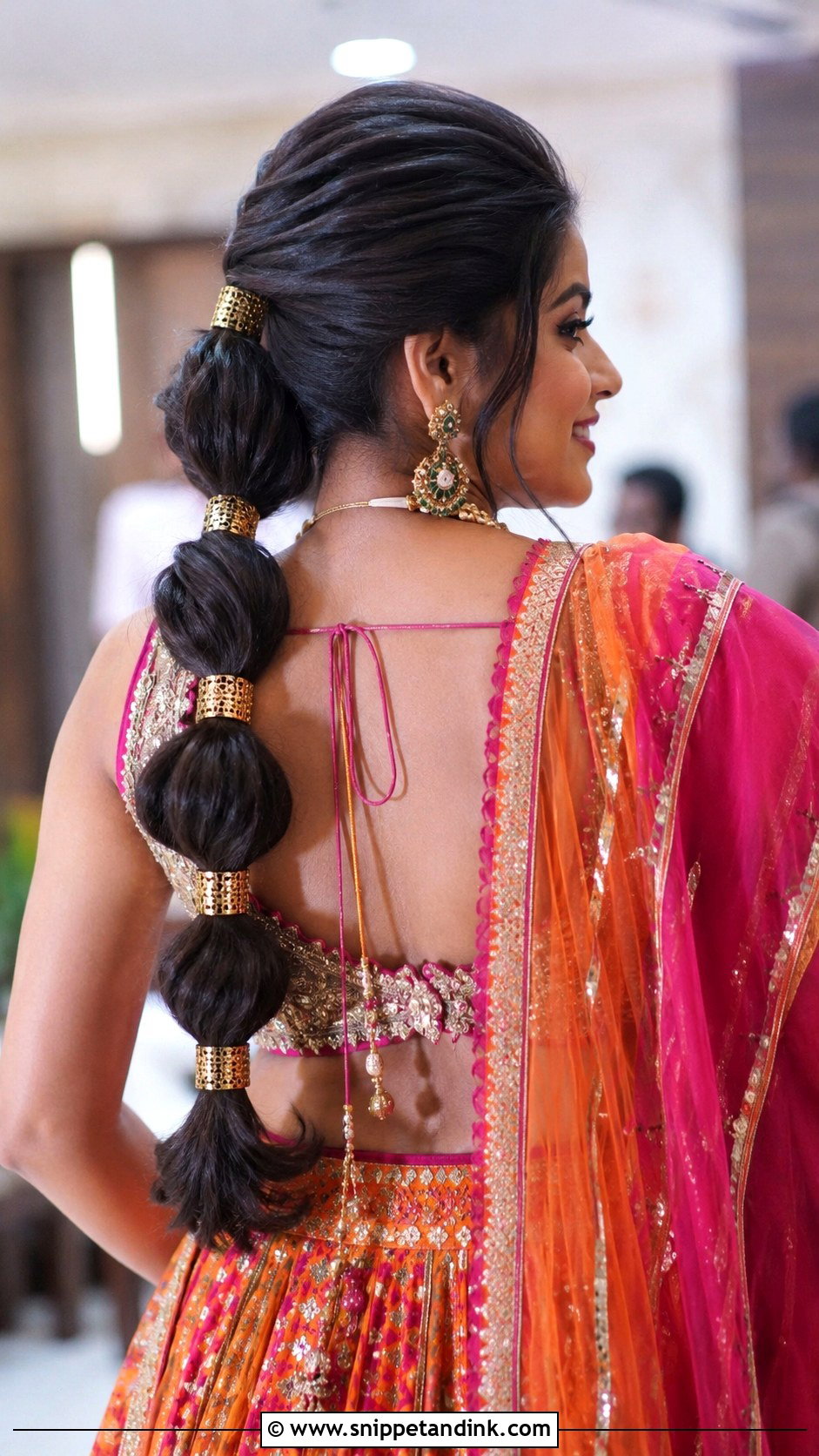
A bubble braid is the easiest of the braided styles to do yourself. You tie elastics at intervals down a ponytail and gently pull each section out into a rounded bubble, so there’s no weaving skill involved. Clear elastics are worth buying; colored ones show in close-ups. It suits sangeet and mehndi with mirror-work lehengas and bright shararas, and small gold cuffs between the bubbles give it a festive finish. It also holds very well through dancing.
15. Indian Bridesmaid Parandi Braid
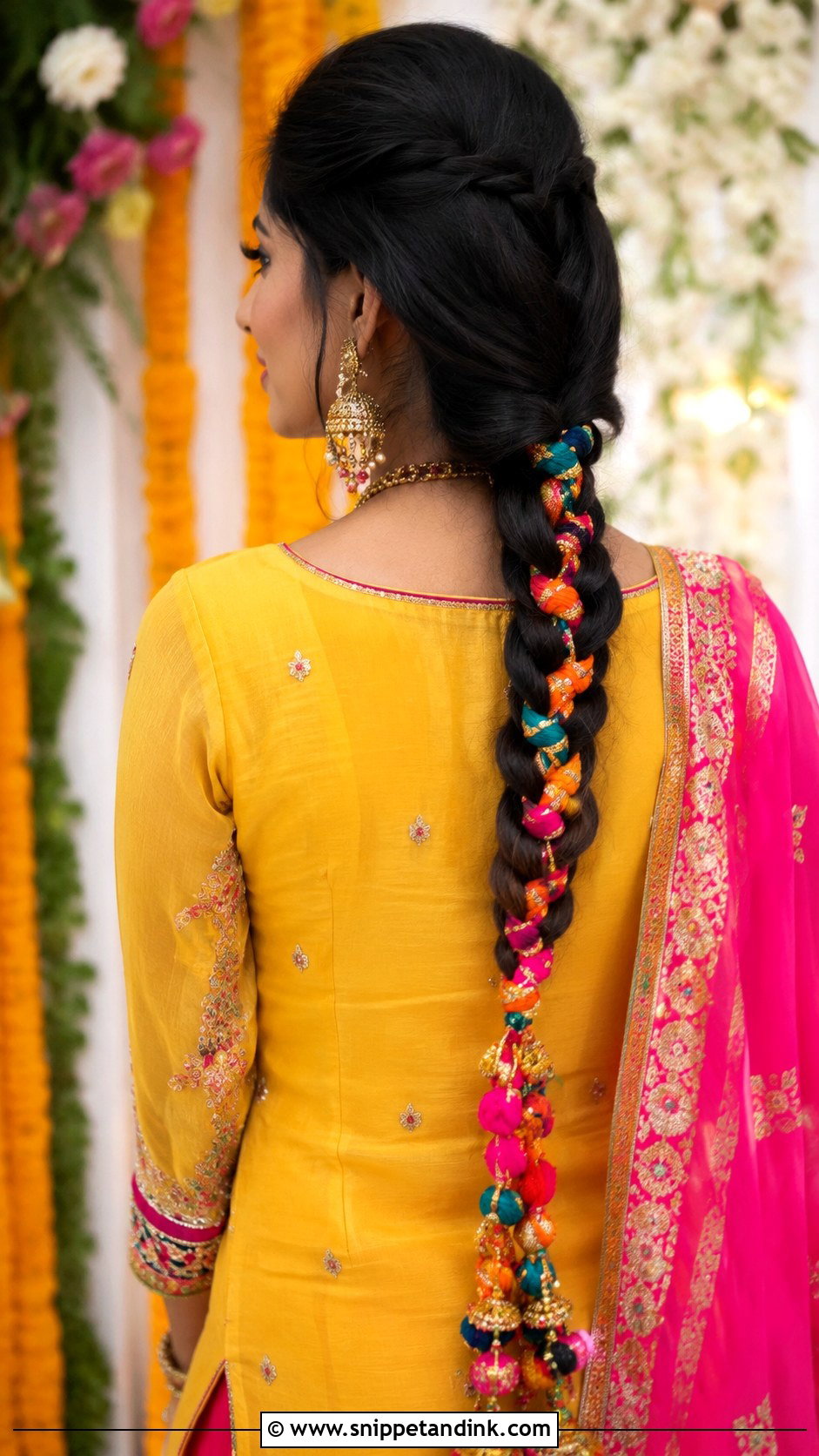
A parandi is a tasseled, often colorful braid extension with Punjabi roots, braided into the bottom half of the hair. It adds length and swing, which is why bridesmaids with shoulder-length hair love it. I start the parandi about halfway down the braid so its weight is shared with your own hair rather than hanging from the ends. Match it to your outfit or deliberately contrast it, and pick a lighter one than the bride’s. It works with patiala suits, lehengas and bright ethnic sets.
16. Indian Bridesmaid Floral Braid
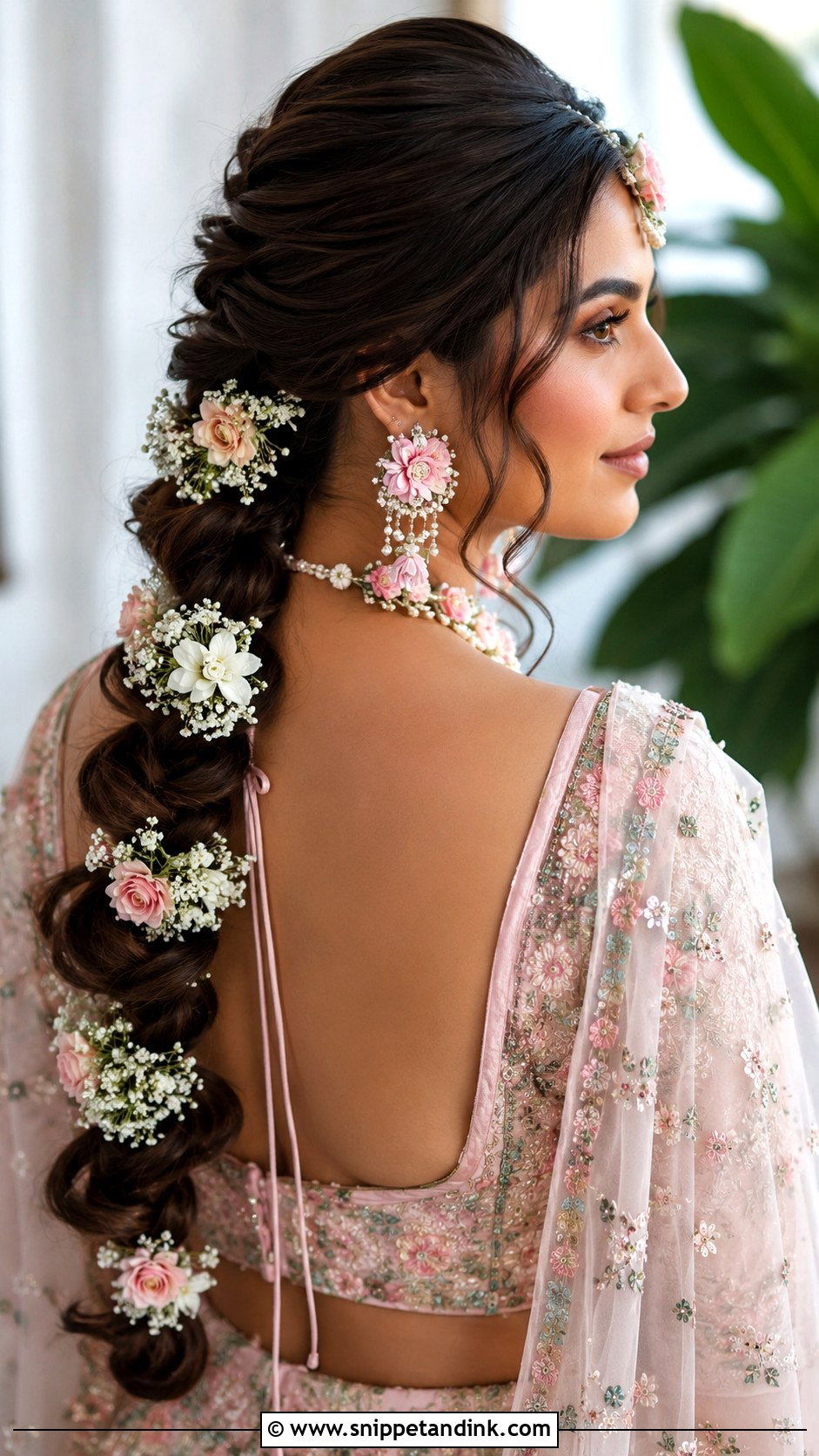
On a floral braid, the flower choice matters as much as the braid. Jasmine and baby’s breath hold up for hours; roses and soft pastel blooms wilt faster once they’re out of water, especially outdoors. I wire or pin each flower individually into the braid rather than threading them on a string, so they sit where I want and don’t slide down. The braid itself can be a classic plait, a fishtail or a loose textured one. Keep the placement sparer than the bride’s version.
17. Indian Bridesmaid Poola Jada
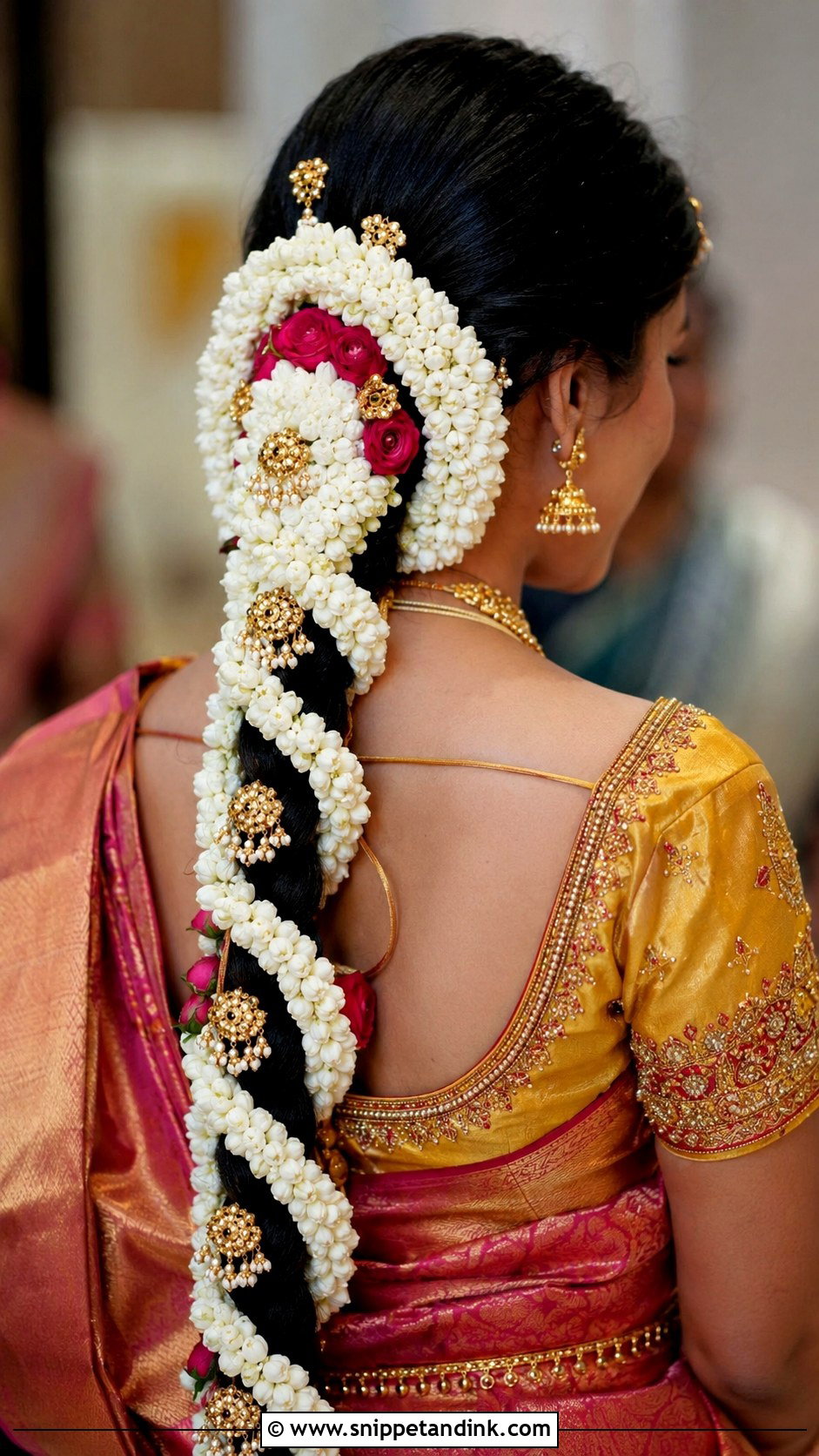
A Poola Jada is a traditional South Indian braid covered with flowers and ornaments, and on a bride it can be very heavy. For a bridesmaid, I simplify it: a flower covering on the top section only, or a single line of jasmine with a few gold accents running down. It needs long hair, though a clip-in extension braided in can give the length. Pair it with a silk saree and temple jewelry, and keep the front smooth and parted to match the ceremonial mood.
18. Indian Bridesmaid Ponytail
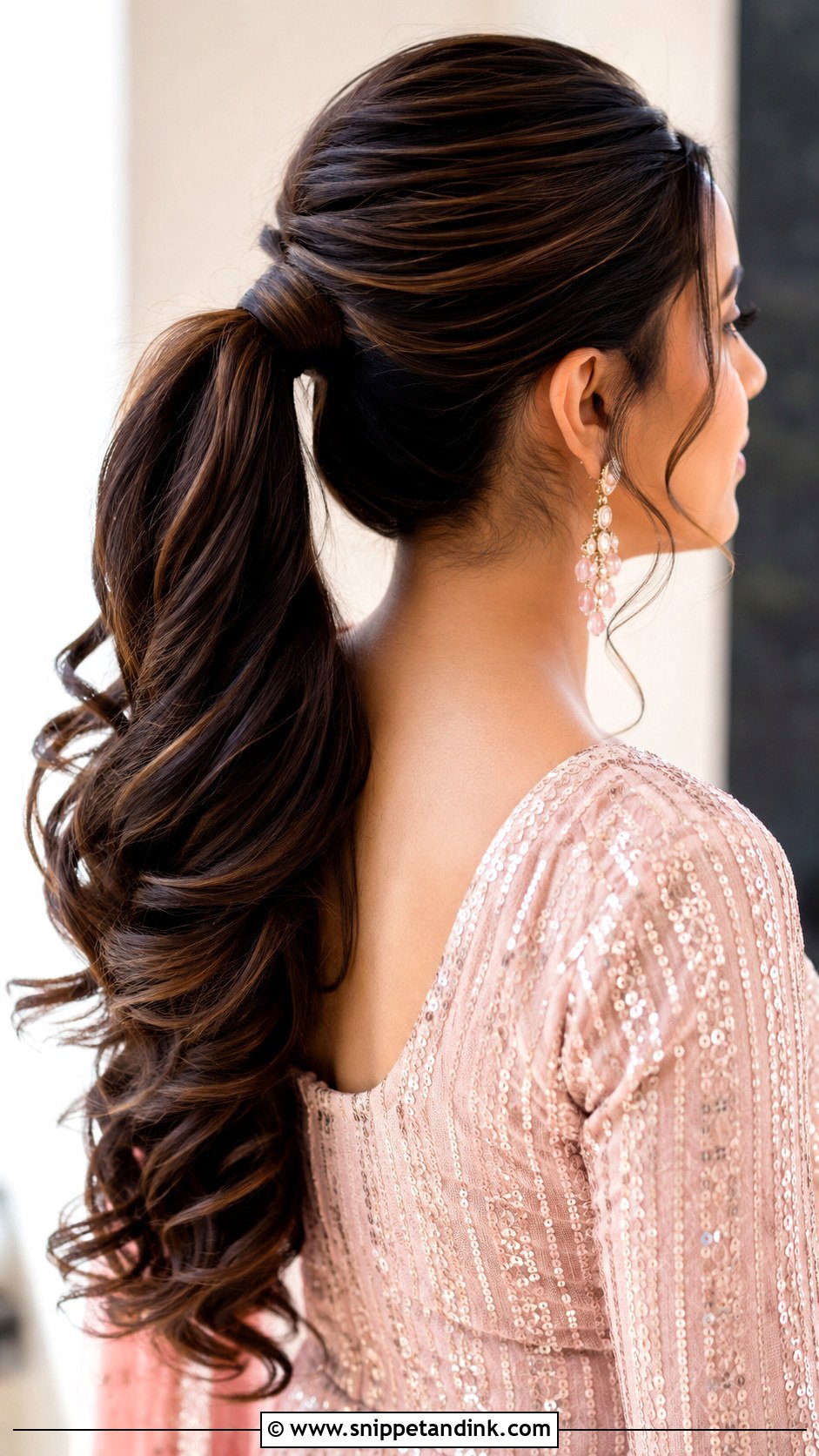
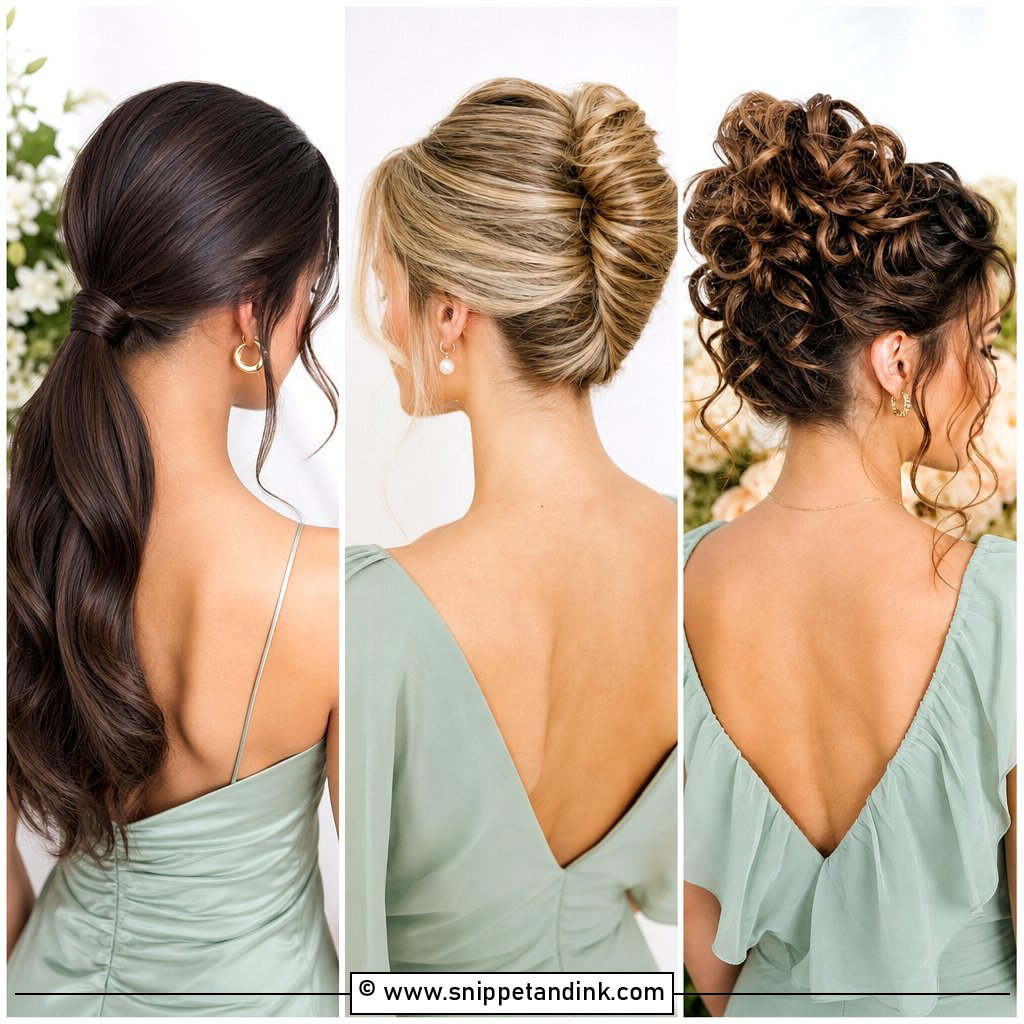
A ponytail can look polished at an Indian wedding when it has some height at the crown and the elastic is hidden under a wrapped section of hair. For most bridesmaids I do a mid or low pony with curled ends, which sits nicely with a lehenga or gown. Higher and sleek reads bolder with fusion outfits. The comfort is real: nothing to unpin, nothing to collapse, and you can dance without thinking about it. A jeweled clip or small floral detail at the base finishes it.
19. Indian Bridesmaid Sleek Ponytail
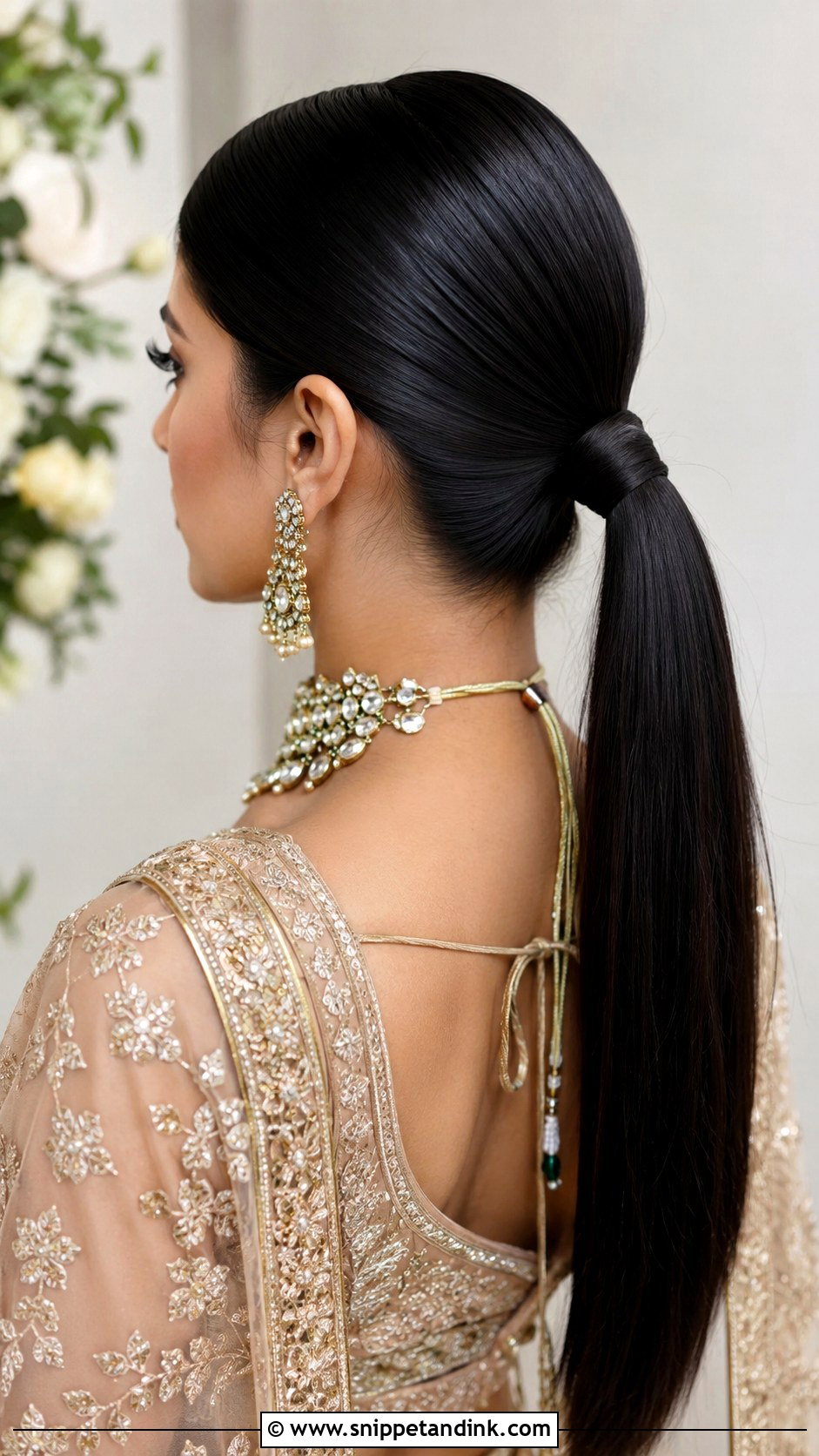
A sleek ponytail is all about the roots. I use a strong hold gel only from the hairline to the elastic and leave the lengths free, so the ponytail still moves. It suits structured lehengas, saree gowns and modern blouse cuts, and it shows off makeup, statement earrings and chokers with nothing in the way. If your hairline is fragile or you get tension headaches, ask for it lower and slightly looser; a tight sleek pony pulled for ten hours hurts.
20. Indian Bridesmaid High Ponytail
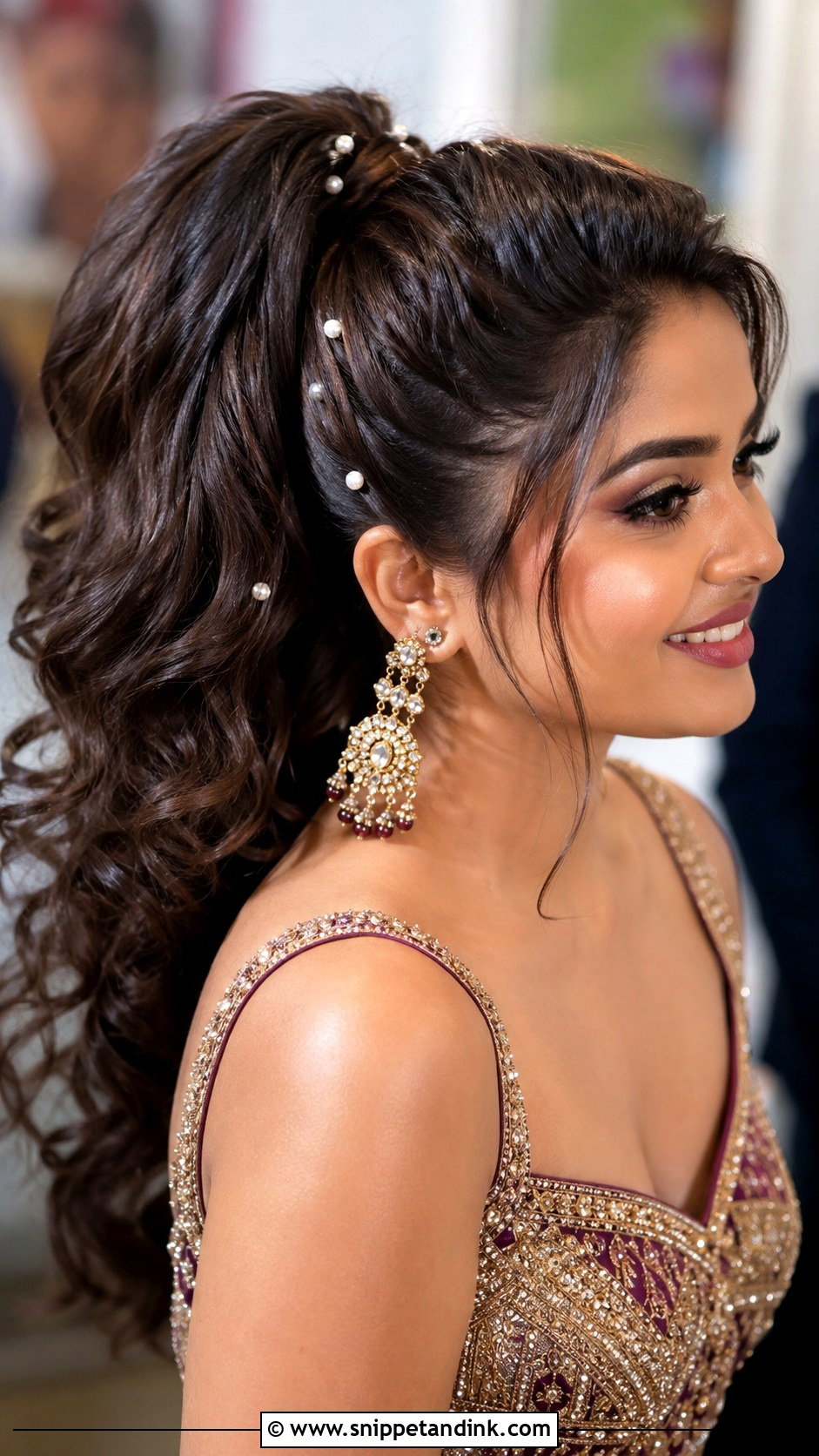
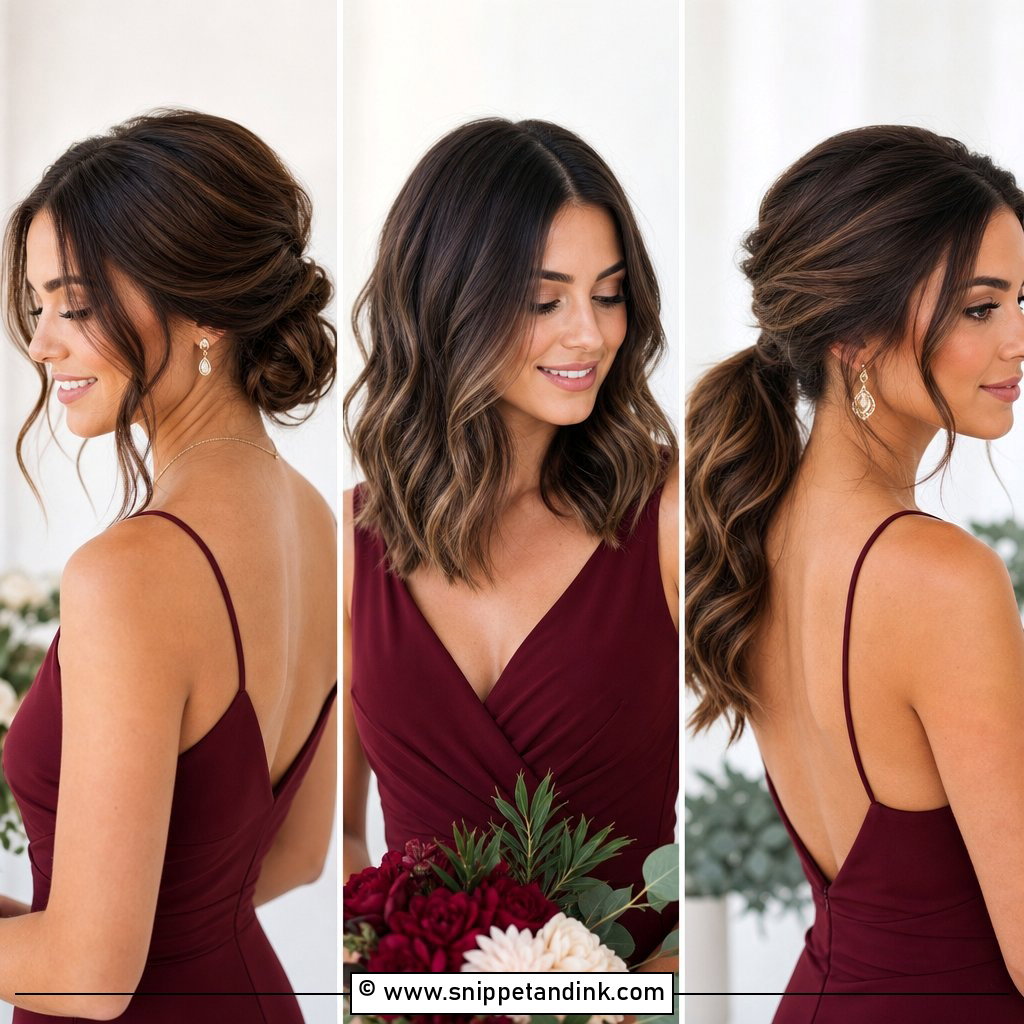
A high ponytail gives instant lift for sangeet and reception nights, and it keeps the neck clear under a heavy necklace. Curled or waved ends give it bounce. Pinning the base properly matters, because a high pony pulls at the crown, and I usually anchor it with two crossed pins under the elastic to stop it drooping by the end of the night. A soft lift at the crown or a sleek front changes the mood completely. A slim embellished band or a few tiny pearls give it an Indian touch.
21. Indian Bridesmaid Crown Braid
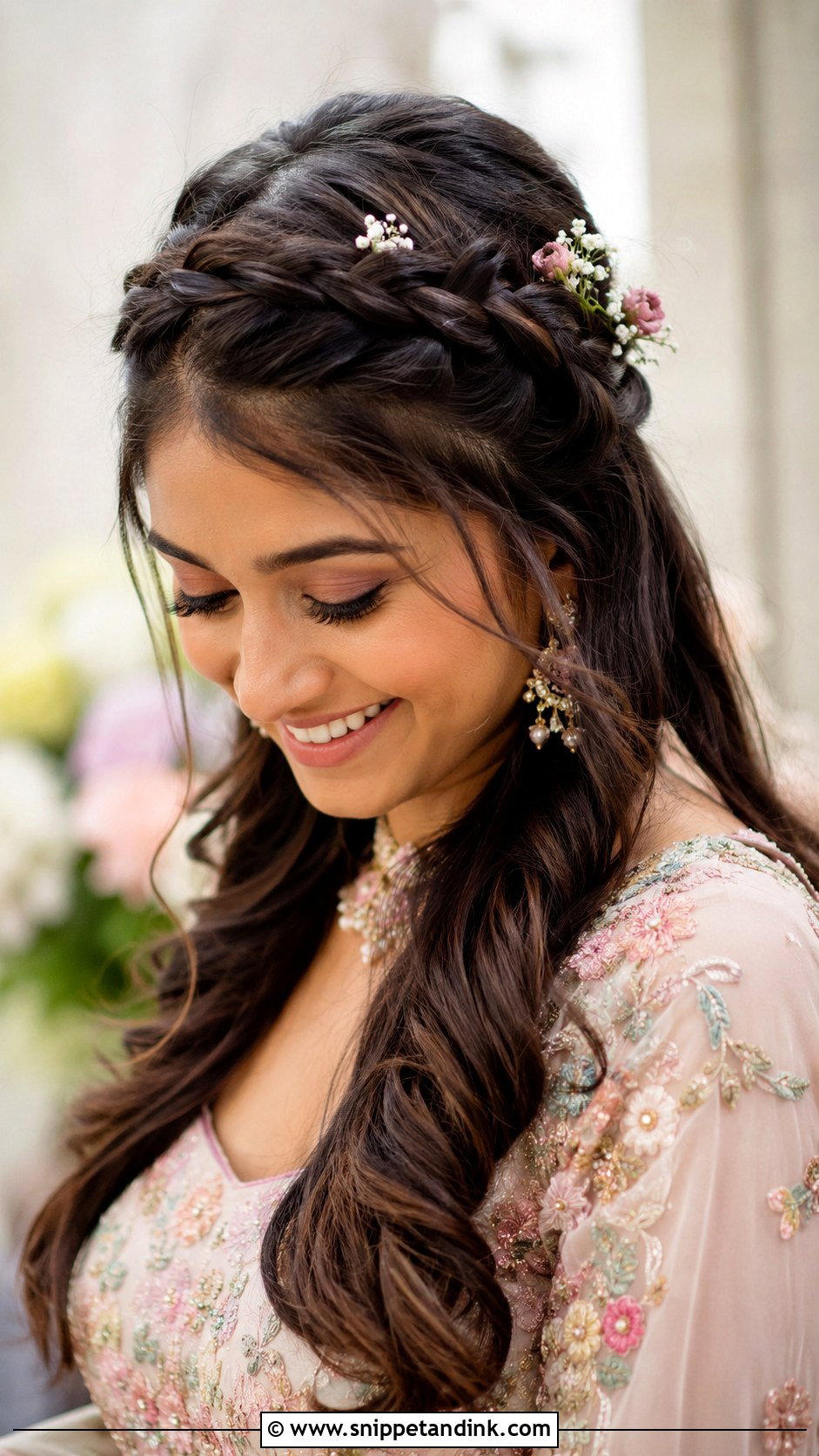
A crown braid runs around the head like a headband and then joins a bun, ponytail or loose waves at the back. It keeps every strand off the face, which is handy at a garden wedding or mehndi with pastel outfits. I braid it with the hair slightly loose and then pull out the edges, because a tight crown braid pulls at the temples and starts aching after a couple of hours. Small flowers or pearl pins tucked along it are enough decoration.
22. Indian Bridesmaid Front Puff Hairstyle
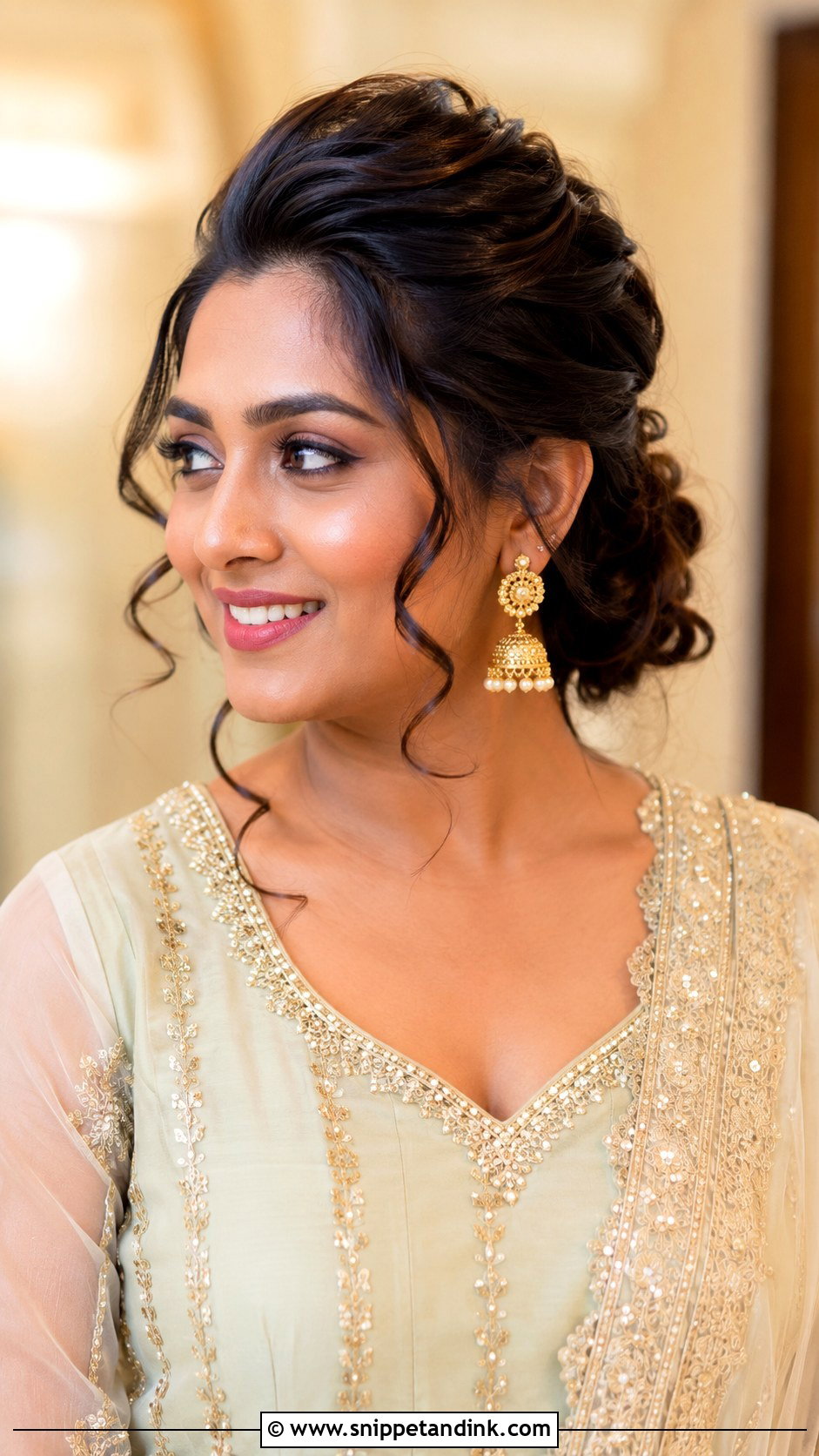
The front puff adds height at the crown and is a long-standing favorite at Indian weddings, partly because it lifts the face in photos. On a round or oval face it gives good balance. The key for a bridesmaid is size: smooth and lifted, never stiff or oversized. I backcomb only the underside of the front section, smooth the top layer over it and lock it with hidden pins and light spray. It can lead into a bun, braid, ponytail or half-up look, and sits well under a maang tikka.
23. Indian Bridesmaid Maang Tikka Hairstyle
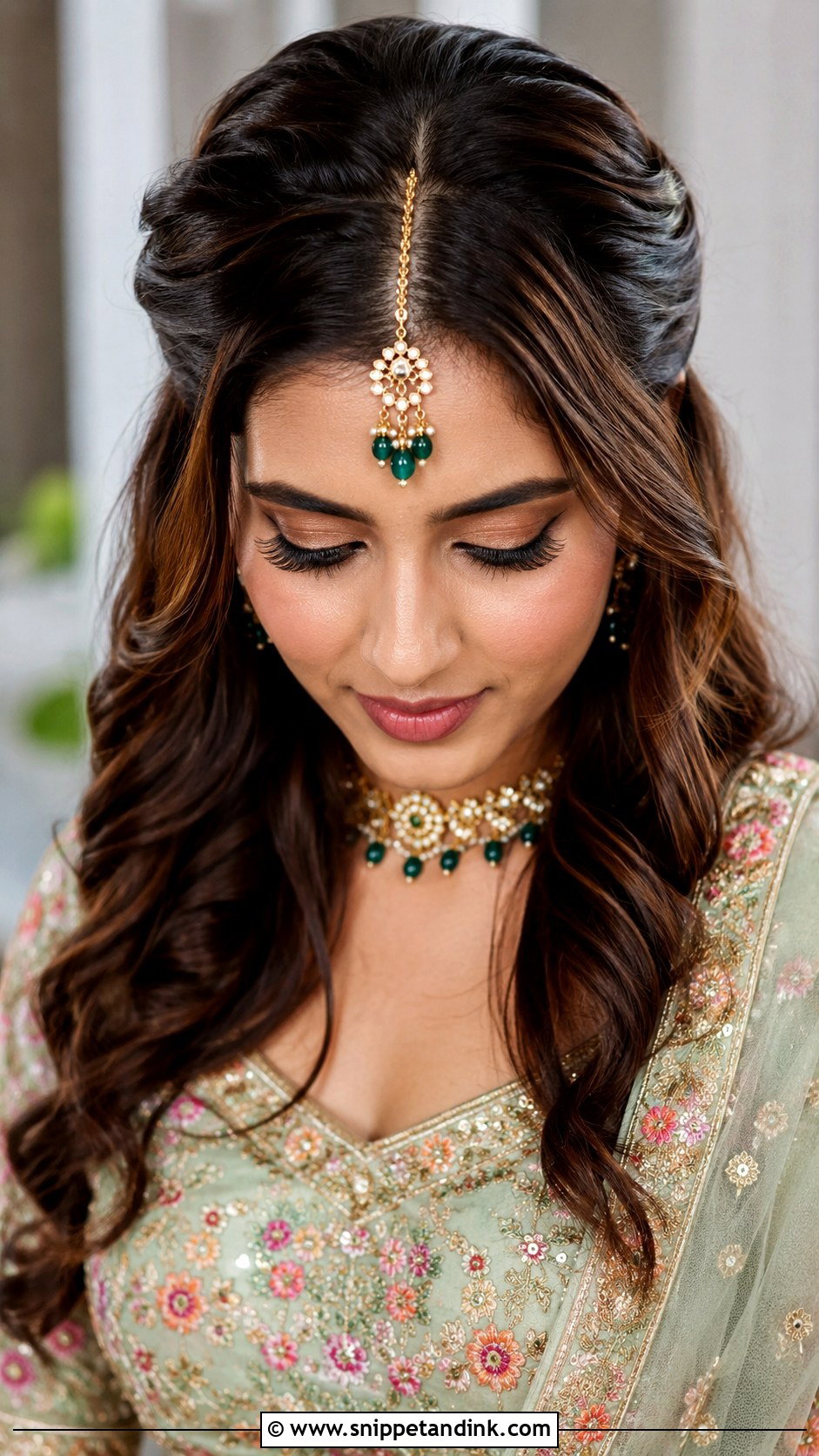
With a maang tikka, the hairstyle is really built around the jewelry. A clean center part is the most common choice, since it gives the tikka a straight line to sit in. I pin the tikka’s hook just behind the crown and run a small pin through the chain near the hairline so it doesn’t slide when you turn your head. It can go with a bun, waves, a braid or a half-up style. For bridesmaids, pick a lighter tikka than the bride’s, and test the weight at a trial: a heavy pendant tugs at the part all evening.
24. Indian Bridesmaid Short Hair
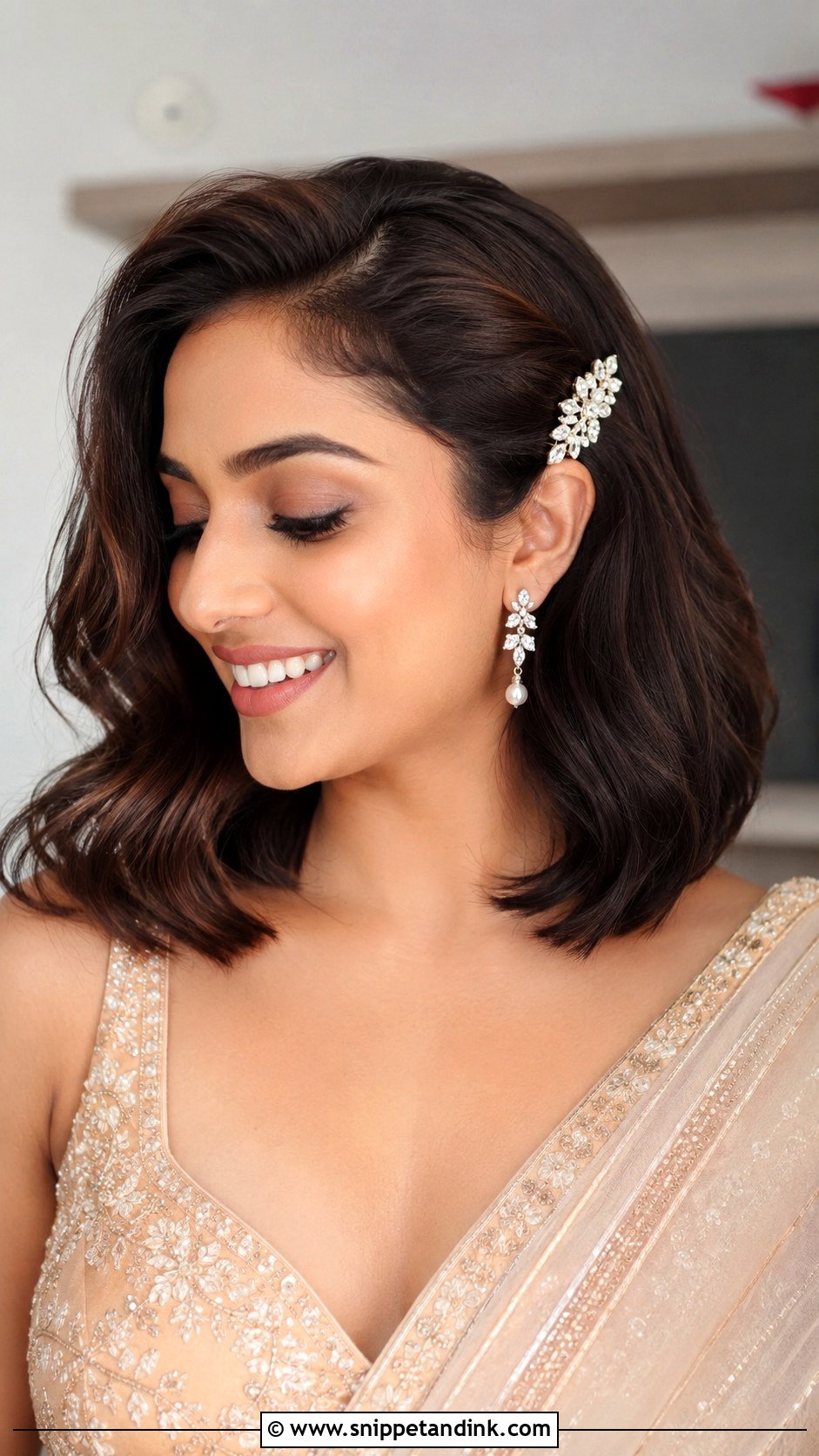
Short hair works well for Indian bridesmaids, but it needs a plan rather than a compromise. A bob or lob can be waved, tucked behind one ear or pinned with a decorative clip on one side. If it’s too short for a bun, a small braid at the temple adds detail without needing length. Maang tikkas work too; I anchor them with a tiny clip under the part since there’s less hair to hold the hook. Sarees, gowns and modern lehengas all suit it, and shine matters a lot on short hair in photos.
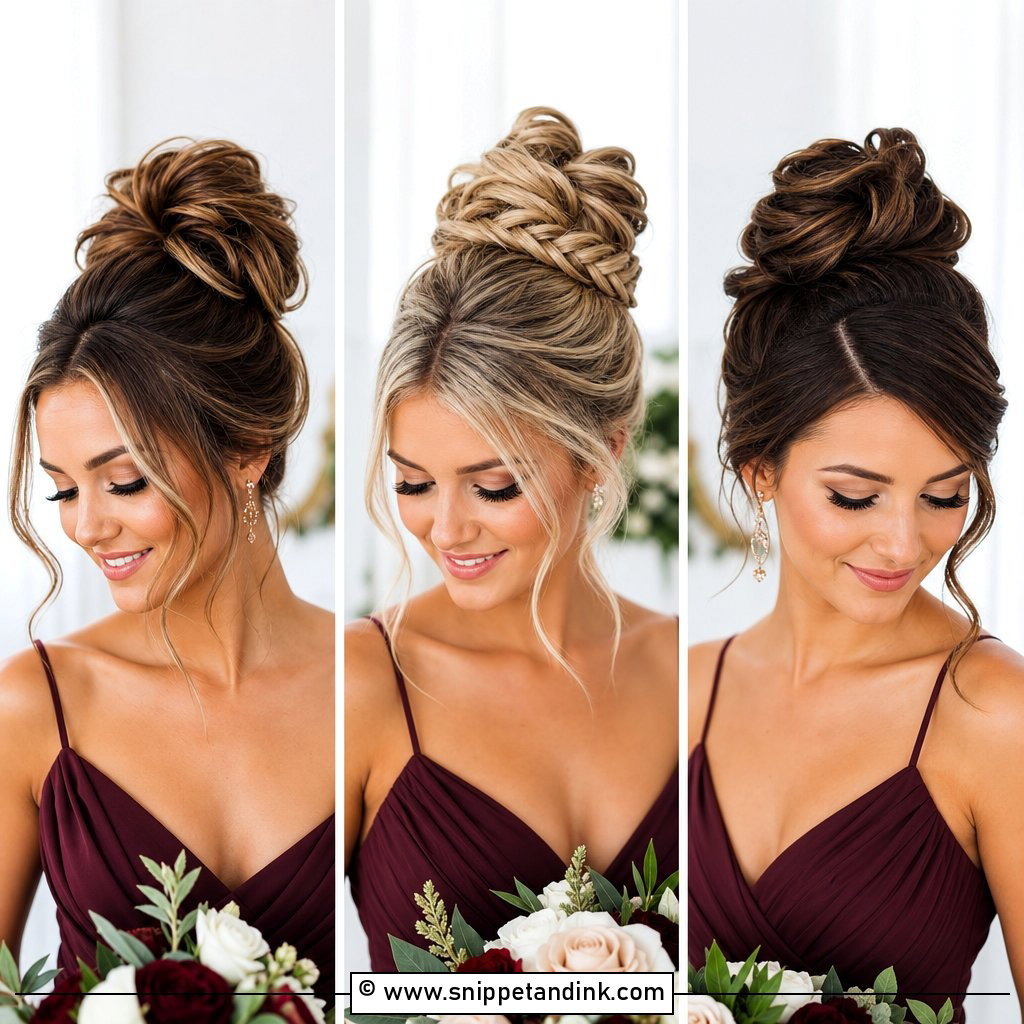
25. Indian Bridesmaid Open Hair With Dupatta
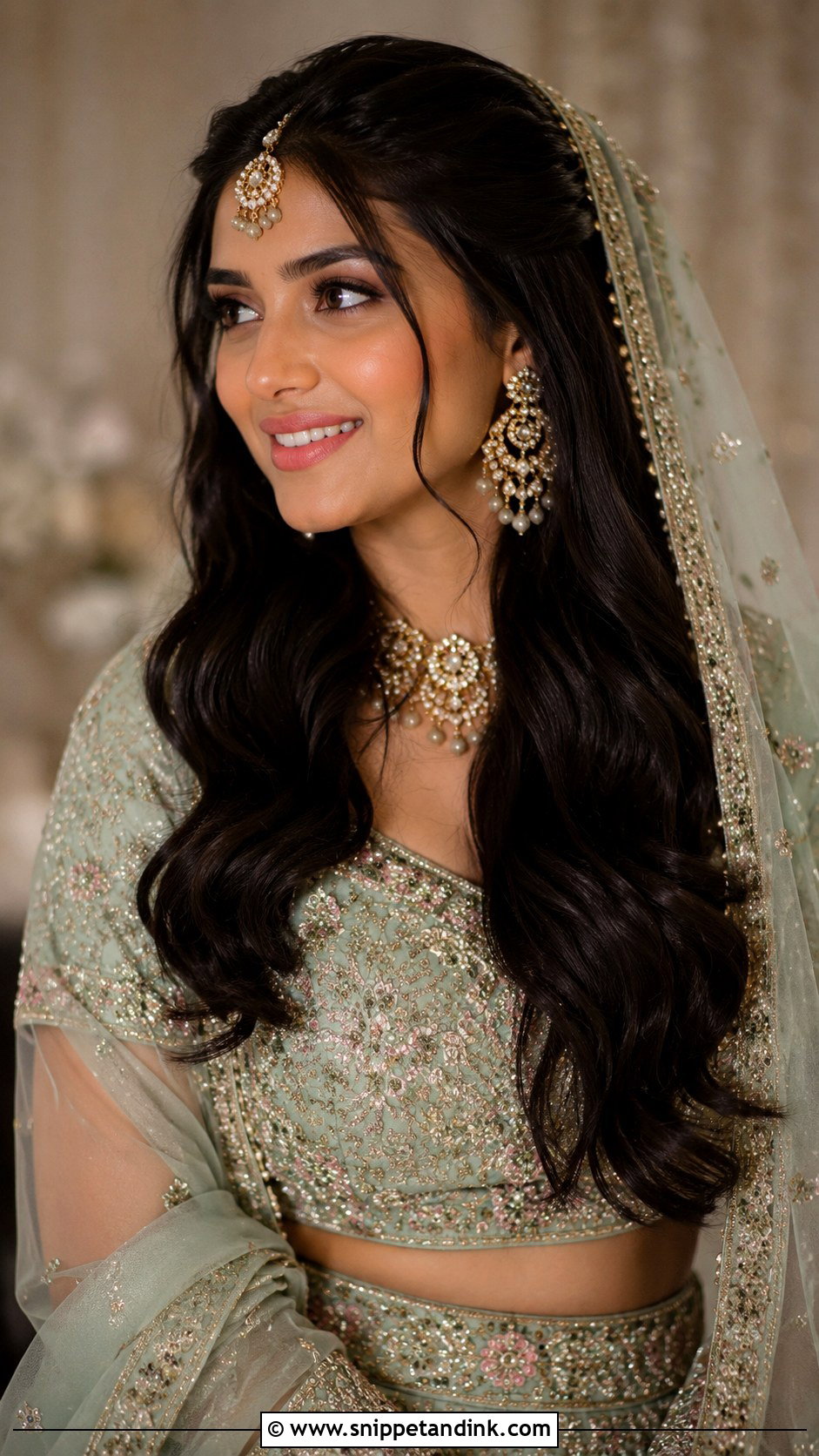
Open hair under a dupatta needs a little engineering. If the dupatta sits on the head, I keep the crown flat and smooth, because any height there gets crushed by the fabric. I put two hidden grips at the crown for the dupatta pins to catch, which stops the fabric from dragging the hair down. If the dupatta is pinned over one shoulder instead, you can have more volume and curl. Soft curls or a smooth blowout move nicely under fabric, and it suits receptions, engagement functions and lighter saree drapes.
Where Indian Bridesmaid Hair Usually Goes Wrong on the Day
After enough wedding mornings, I can tell you most hair problems come from the same few places. Nearly all of them can be prevented at a trial or with a small kit in your clutch.
Jewelry weight
Heavy jhumkas and tikkas pull at the hair around them. Wear the actual pieces to your trial, not lighter stand-ins, and ask your stylist to build anchor points under the hair where the tikka hook and any sahara chains will sit. Jhumka support chains can be pinned into a bun so the earlobe isn’t carrying all the weight.
Extensions that don’t match
Clip-ins bought online are often a shade or two off, and the difference shows most in daylight at a mehndi or haldi. Buy them early, match them against the ends of your own hair rather than the roots, and have them curled or straightened to match your texture before the wedding week.
Wilting flowers
Fresh jasmine and roses start to droop within a few hours in the heat. Store them wrapped in a damp cloth in the fridge until you’re dressed, add them at the very end, and keep a few spare stems in a small container for a mid-event refresh.
In your clutch: six bobby pins, a small travel spray, a fine comb and two clear elastics. That covers almost anything short of a full restyle.
Let the Dupatta and Jewelry Decide First
Work backward from the outfit, the dupatta placement and the jewelry for each function, and the right style usually becomes obvious. Buns hold heavy dupattas and ceremony jewelry; braids keep hair out of the way at mehndi and daytime events; waves and ponytails suit a sangeet or reception. With statement jewelry, keep the face open. With a simple outfit, let flowers or pearls do the work. And do a trial, especially if you’re adding extensions or fresh flowers, because those are the two things most likely to surprise you on the day.
You'll Like These Ideas:


Leave a Reply