
Bangs are the part of a bride’s hair I spend the most time on per square inch. They sit right on the face, they touch your makeup all day, and they decide whether you look like yourself in the photos. Worn with loose hair, they let everything move while your fringe frames your eyes and cheekbones. The trick is building the rest of the style around the fringe you have, not forcing it into a shape it won’t keep. Curtain, wispy, blunt, side-swept, curly or baby-short, each one behaves differently over a long day, and that’s what the fifteen looks below are about.
Should You Cut Bangs Just for the Wedding?
I get asked this a lot, and my honest answer is usually not right before. A new fringe takes weeks to learn: which way it falls, where your cowlick pushes it, how fast it gets oily. If you’ve never worn bangs, the wedding morning is not when you want to discover that yours flips up on the left.
If you want to try one first
- Cut longer curtain bangs at least three months out. They’re the easiest to grow back out or blend into layers if you change your mind.
- Wear them through a few humid days and a few greasy-hair days before deciding.
- If you’d rather not cut at all, a clip-in fringe matched to your color lets you test the look in photos, and some brides end up wearing it on the day.
Timing the last trim
For brides who already wear bangs, I suggest a trim five to seven days before the wedding. That’s enough time for the cut line to soften and for you to style it a few times at home. A trim the day before often looks too sharp, and if it goes too short there’s no time for it to settle.
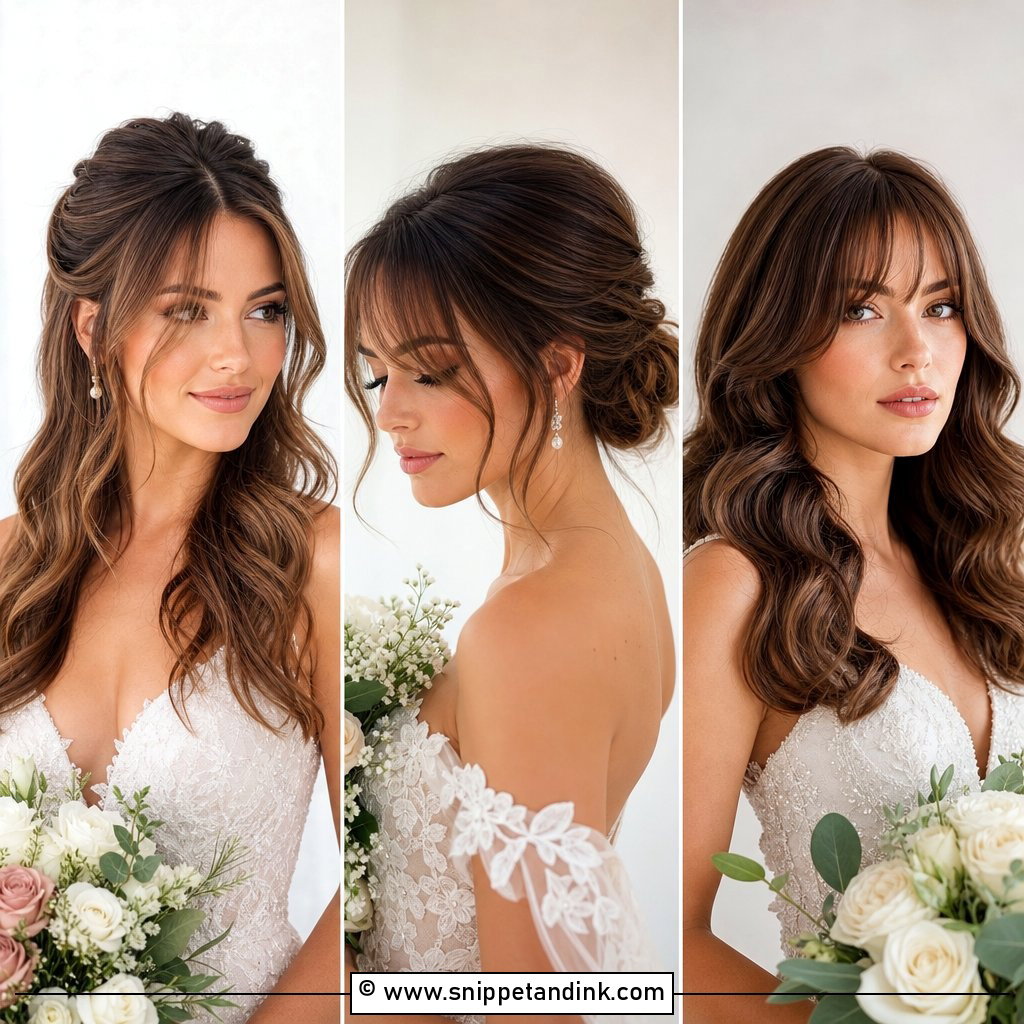
1. Bridal Hair Down With Curtain Bangs
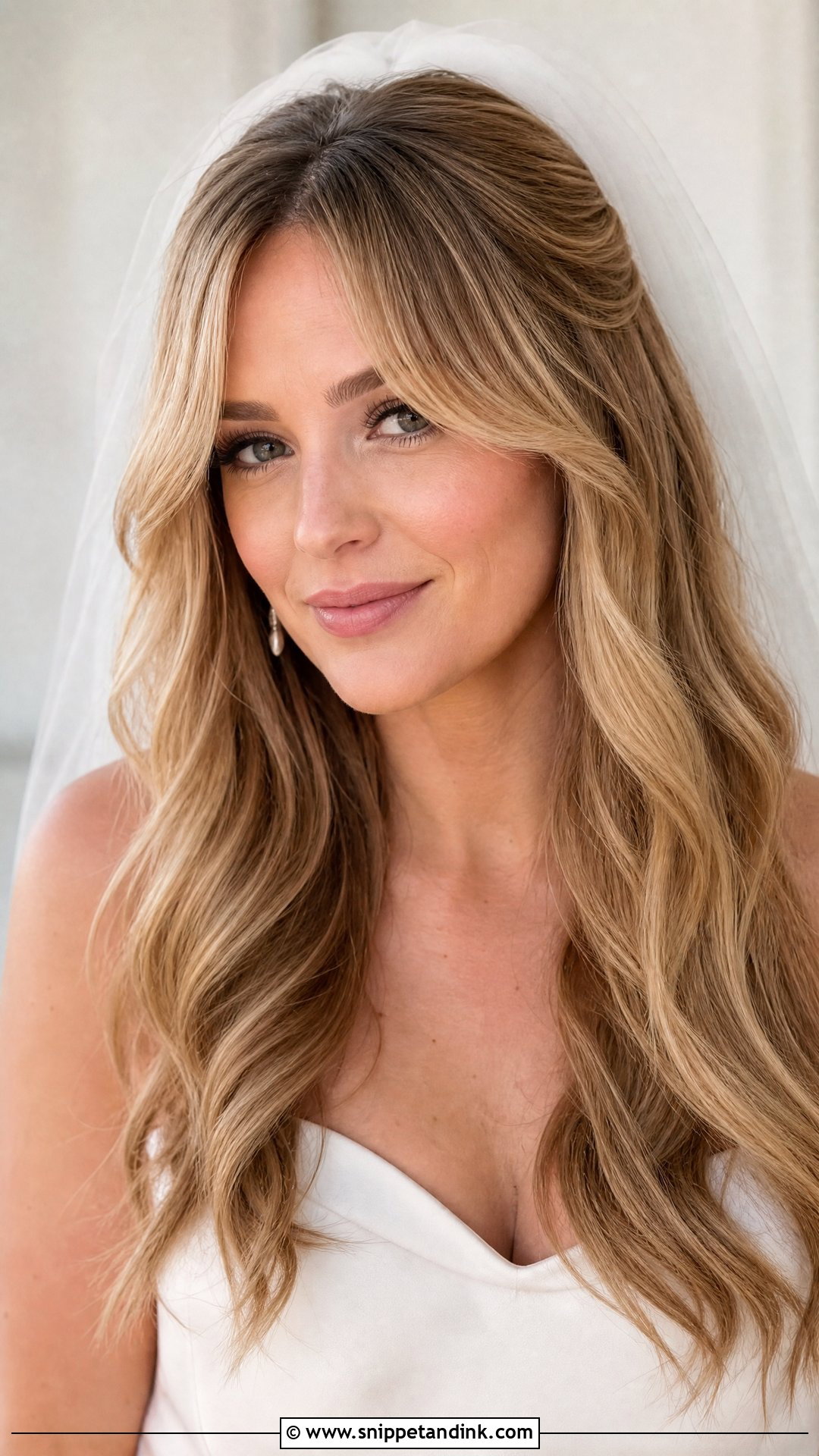
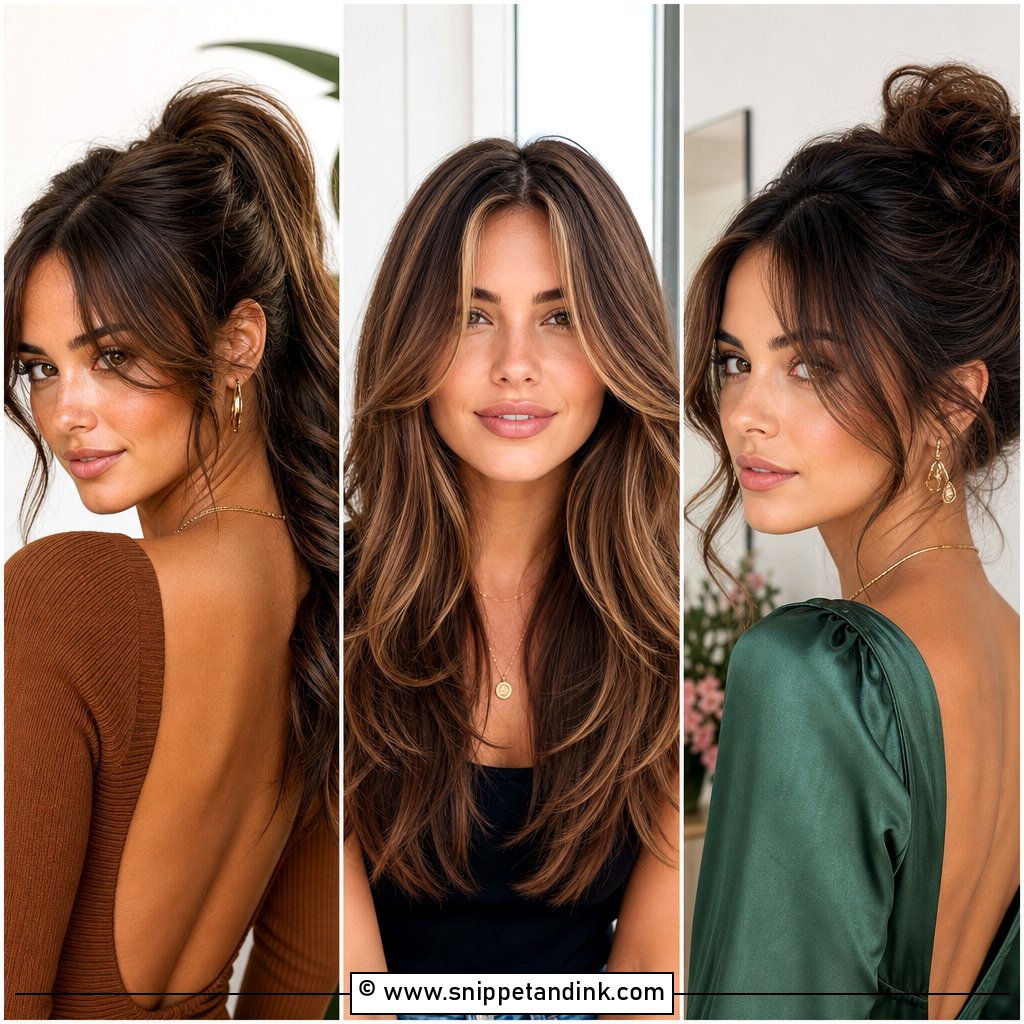
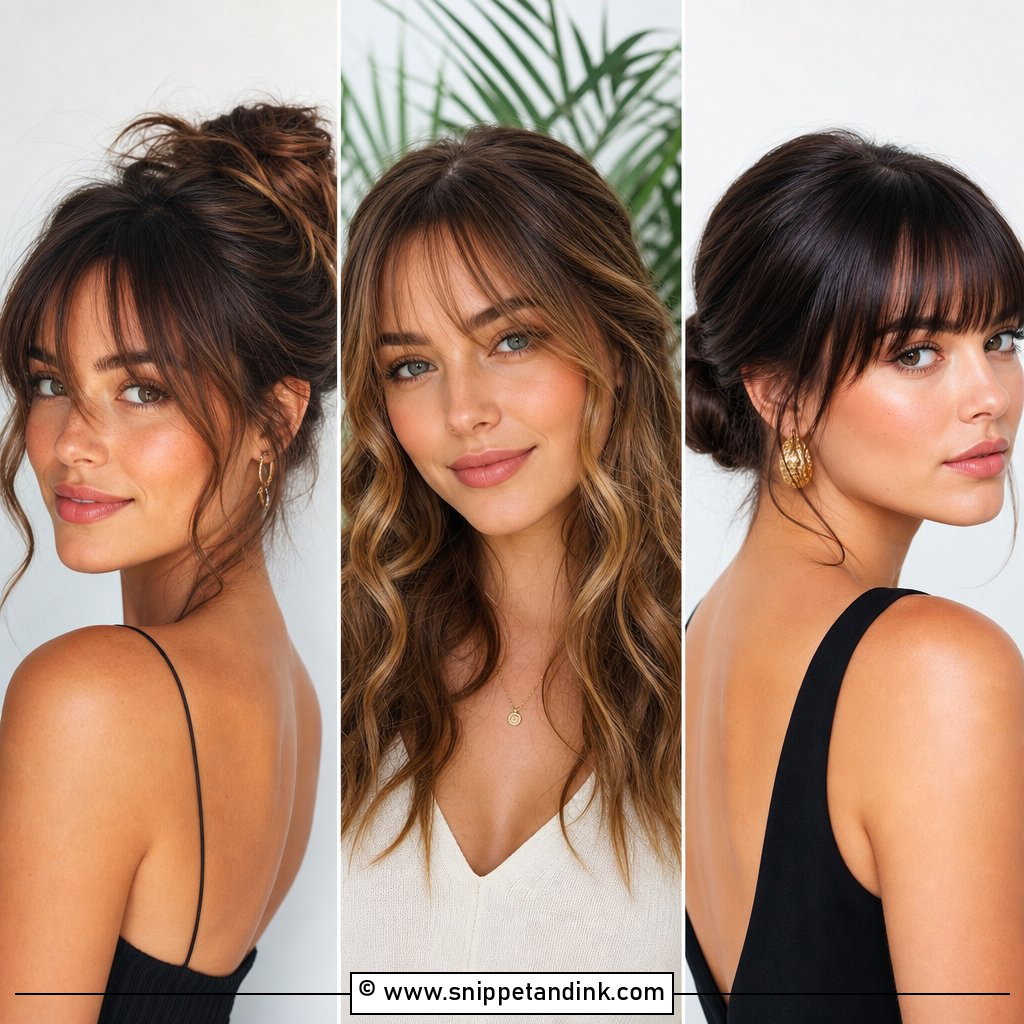
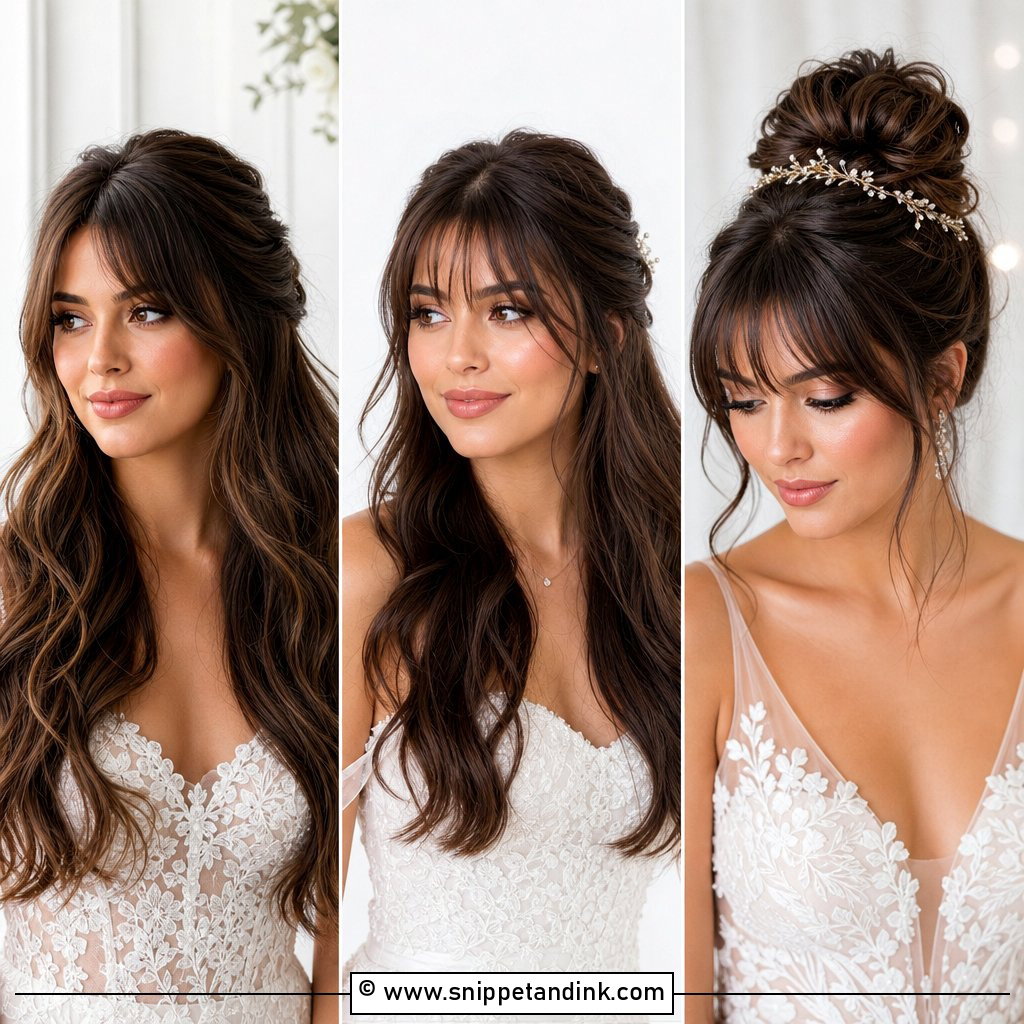
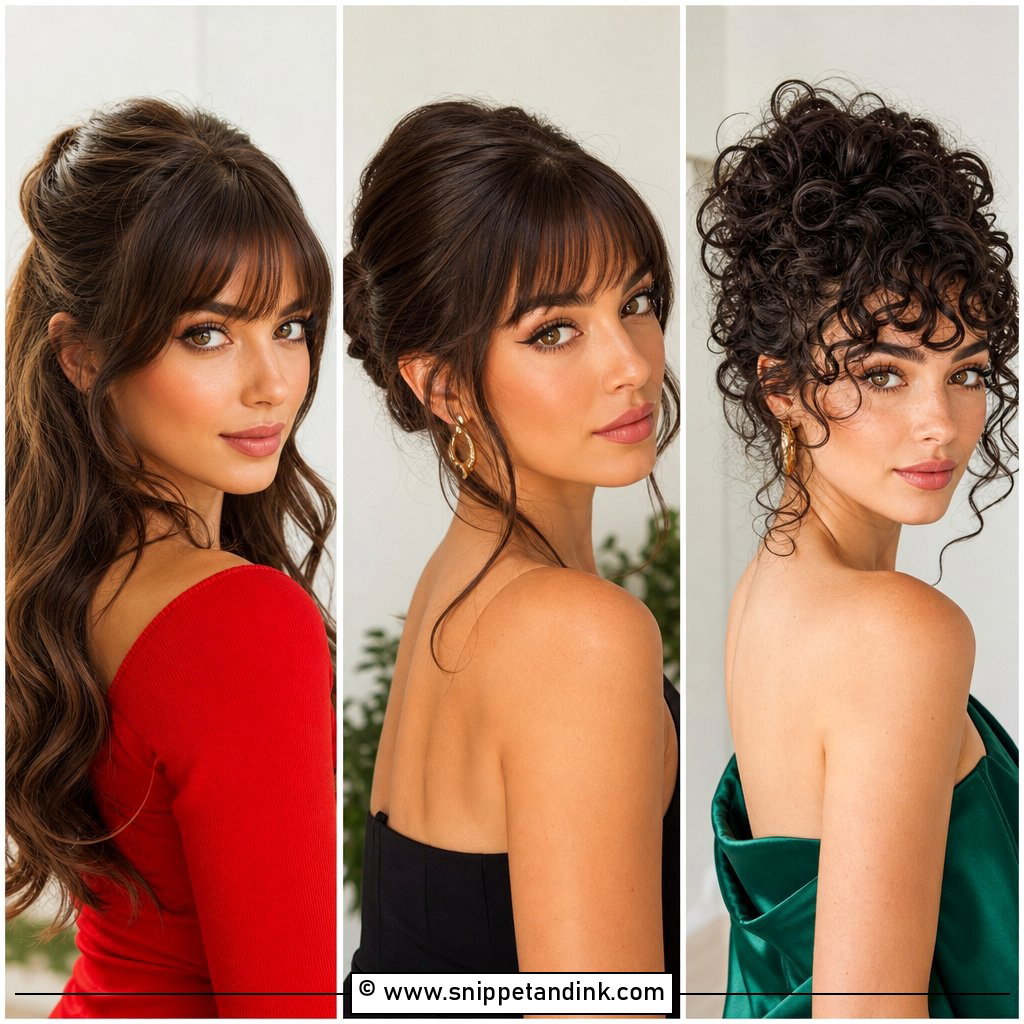
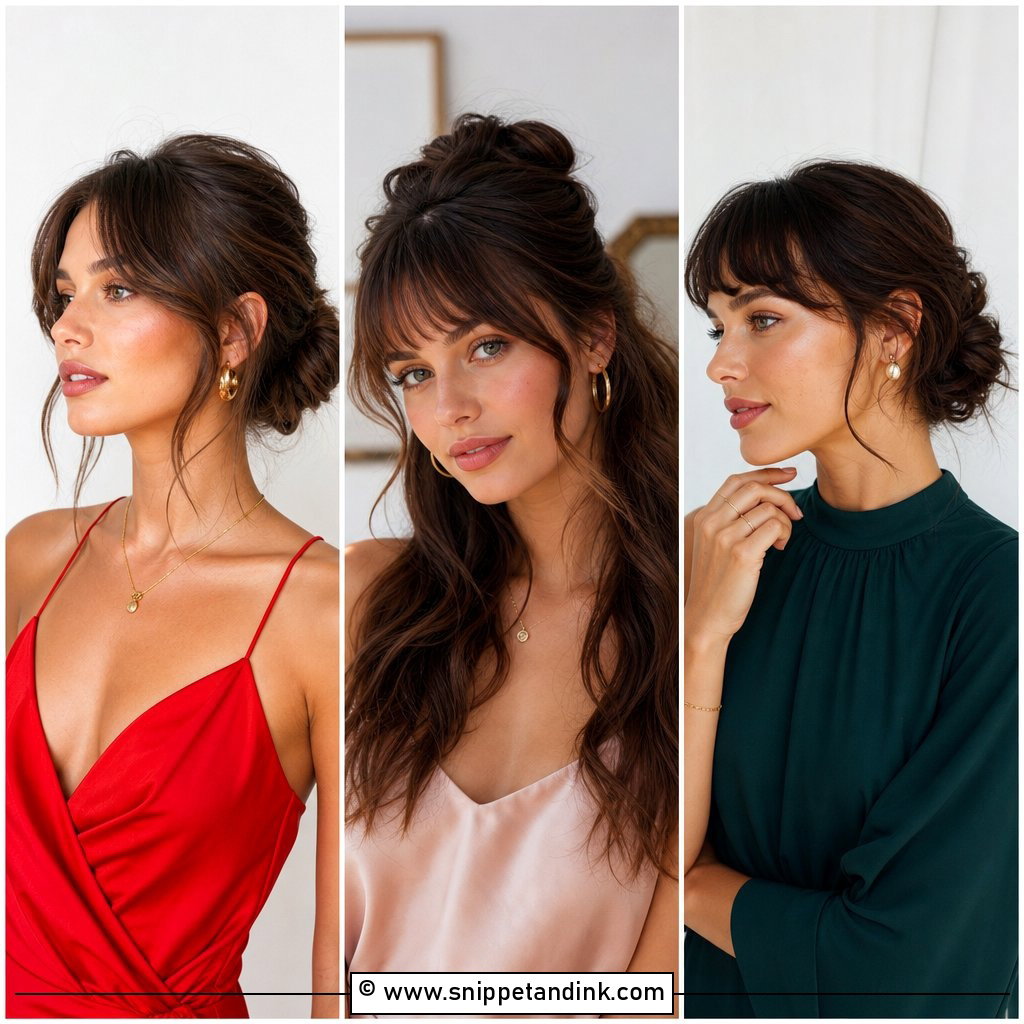
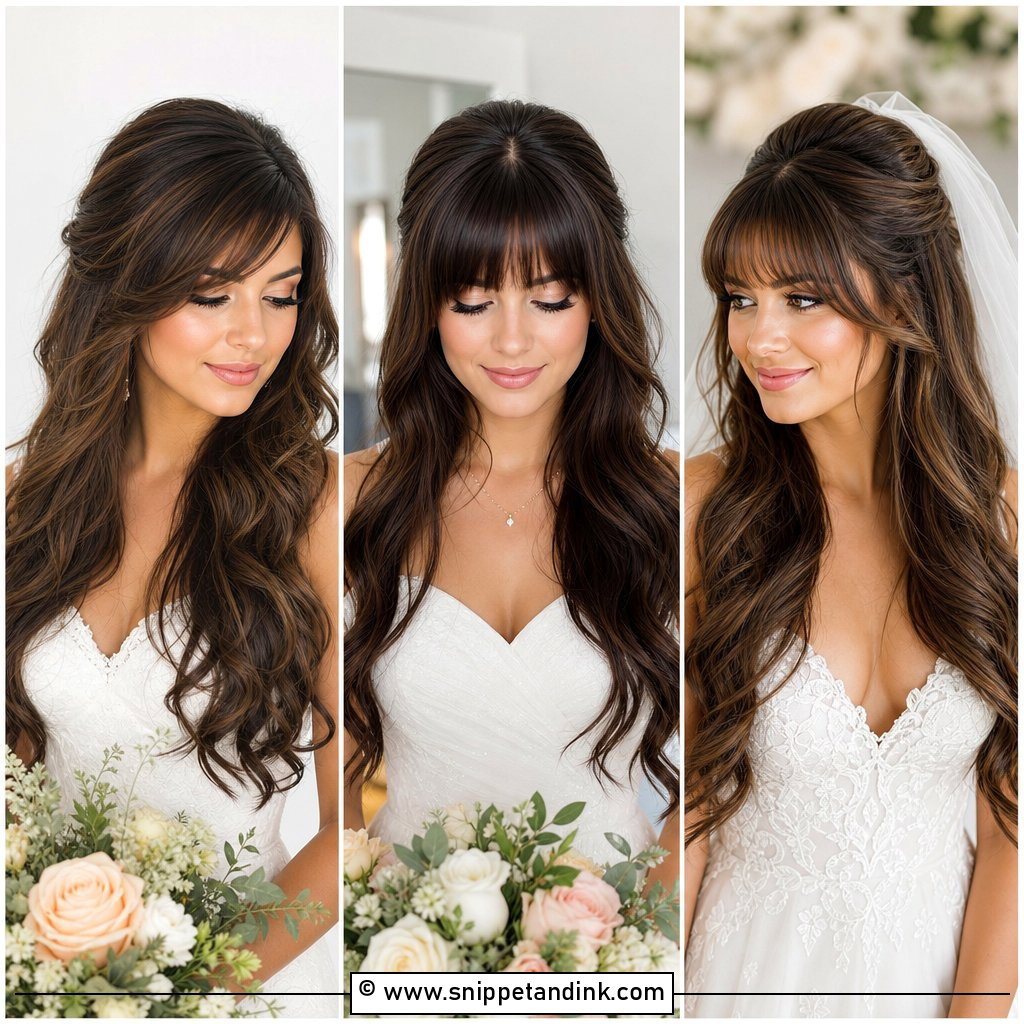
Soft curtain bangs are the most forgiving fringe for a wedding, because they’re meant to move. I blow-dry them over a round brush, back and away from the face, so they open around the eyes and blend into the side sections instead of sitting alone on the forehead. Long waves or medium layers carry them best. A middle part keeps it balanced. If you’re adding a veil, place it behind the crown so the comb doesn’t flatten the roots the bangs rely on for lift.
2. Bridal Hair Down With Wispy Bangs
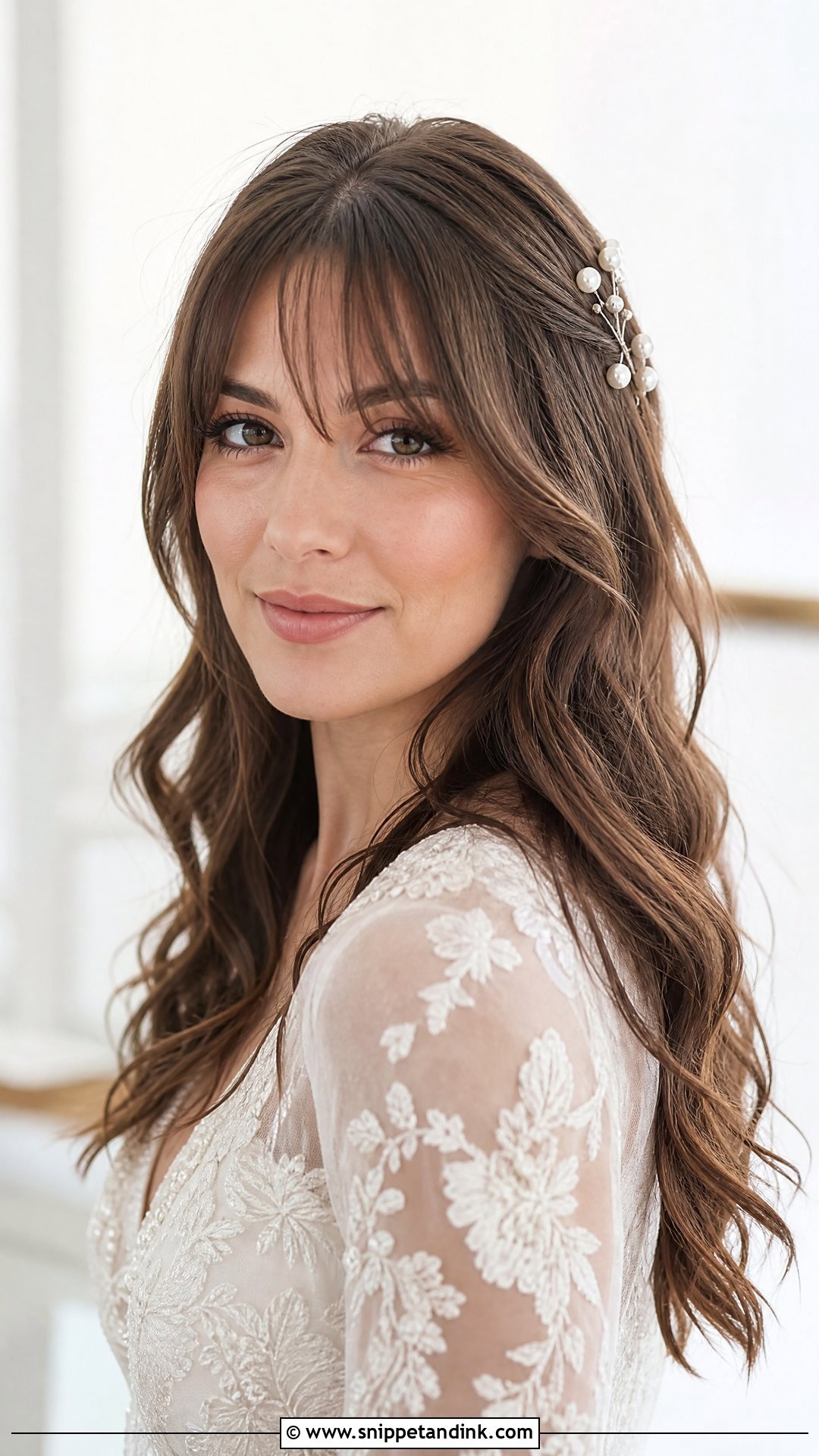
Wispy bangs are light by design, and too much product turns them into separated strings by lunchtime. I style them with a flat brush and a hairdryer on low, then use nothing heavier than a flexible spray misted onto my hand and pressed on. The lengths can be brushed waves or soft bends. Because the fringe already adds detail around the eyes, delicate earrings and a simple veil are plenty. Oily skin is the main enemy here, so a light dusting of powder at your hairline helps them stay airy.
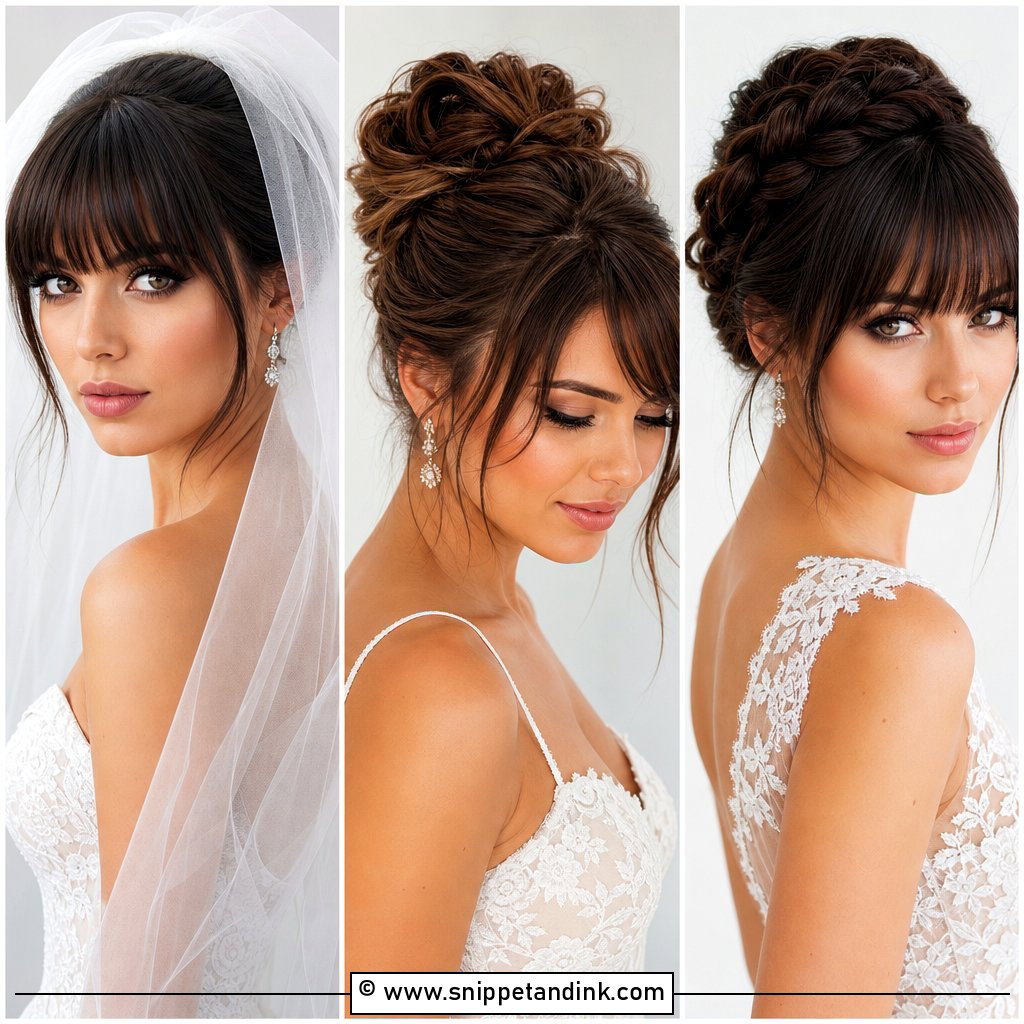
3. Bridal Hair Down With Blunt Bangs
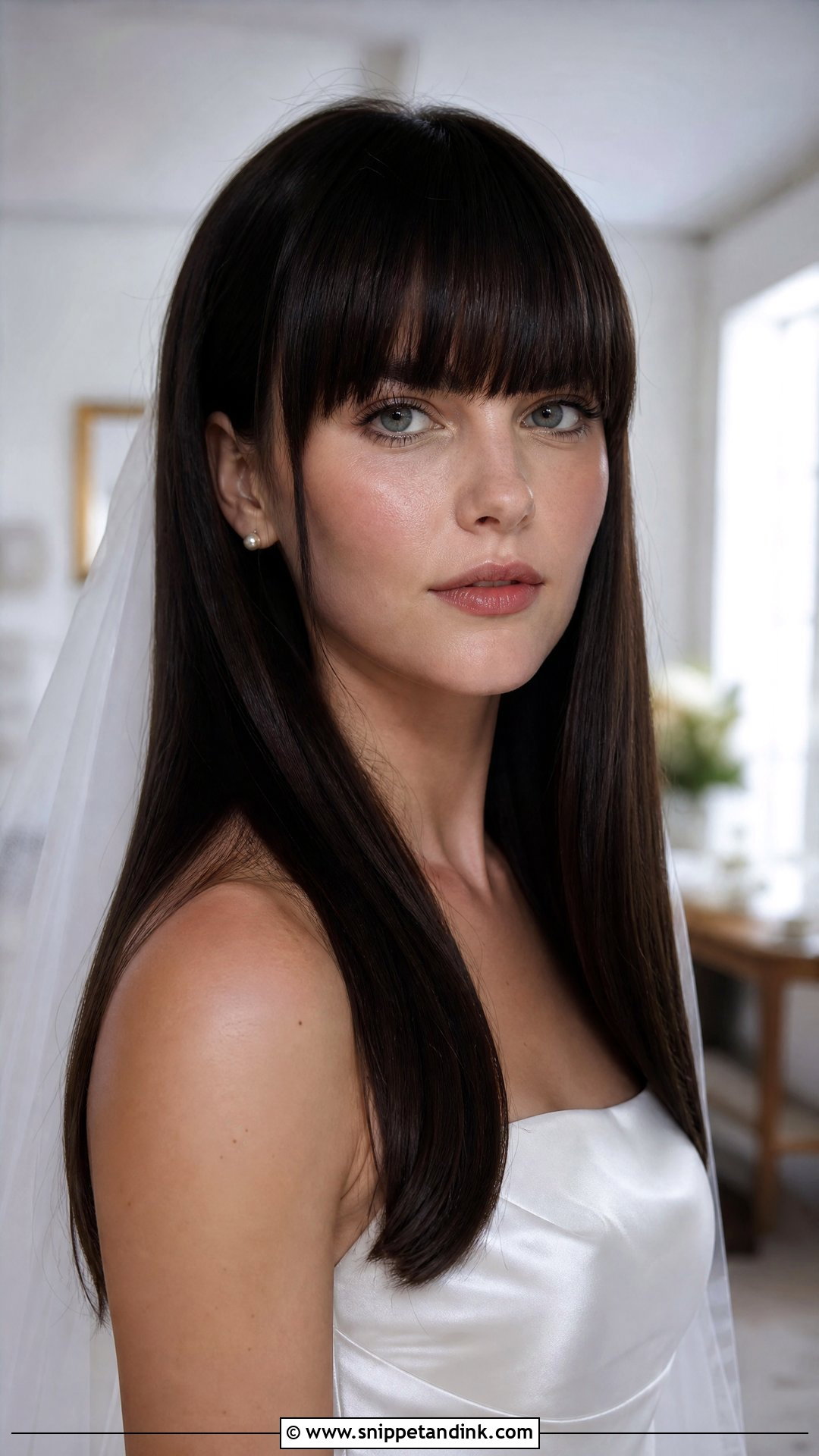
A blunt fringe is graphic, and that line is the whole point, so it has to be perfect. I’d only do this for a bride who already wears full bangs; it’s your everyday look on its best day, not a wedding experiment. Sleek straight lengths or glossy soft waves suit it. Healthy ends matter more than usual, because a heavy fringe draws the eye down the hair. I set blunt bangs flat with a paddle brush and the dryer pointing down, then finish with a shine spray. Keep accessories modest. The fringe is already strong.
4. Bridal Hair Down With Side Bangs
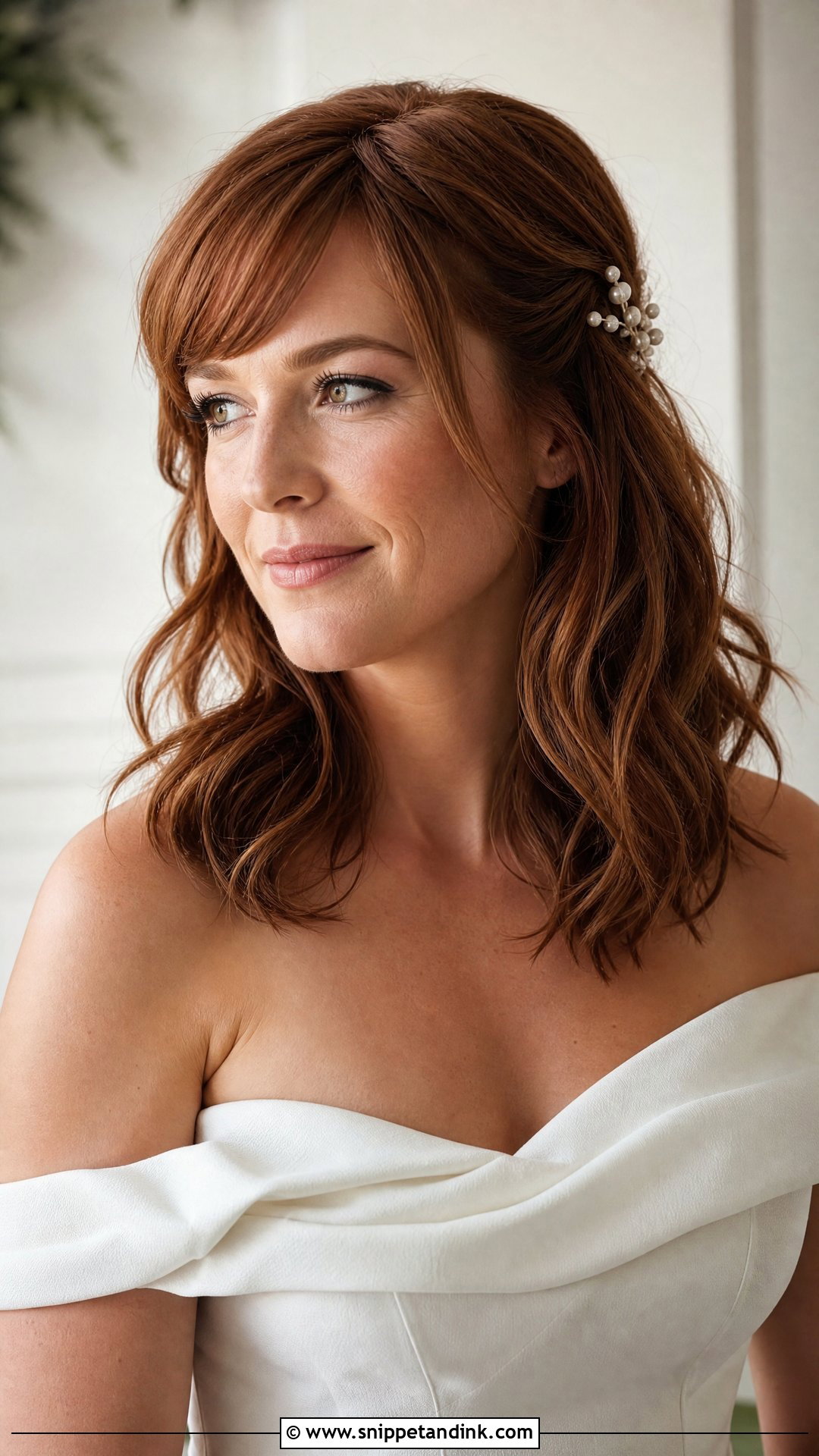
Side bangs are the easiest fringe to style into loose hair, and the one I recommend to brides growing out a fringe, since the length simply becomes part of the front layers. With a deep side part, I tuck the opposite side behind the ear with a small comb or pearl clip and let the back hang loose. The thing I watch is the bang drifting over one eye during the ceremony. A hidden bobby pin near the temple, under the wave, keeps the sweep where it belongs without showing.
5. Bridal Hair Down With Long Bangs
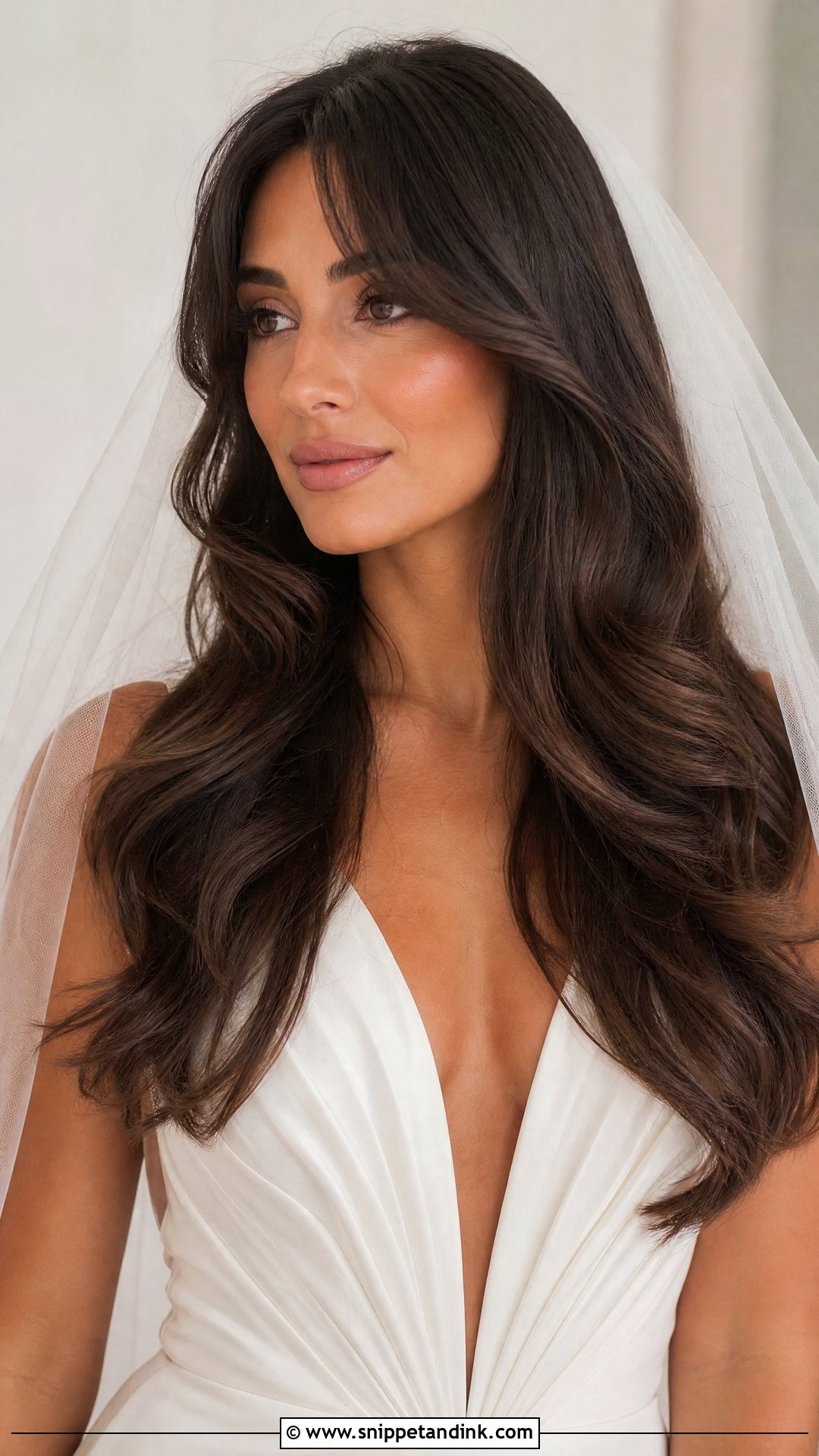
Long bangs, the ones that land around the cheekbones or jaw, are practical for a wedding because they never truly fail: if they misbehave, they can be pinned back. I curl them away from the face so they open the eyes rather than closing them in, and loose waves through the lengths connect the fringe to everything else. They suit long layered hair. For a bride who wants softness at the face but is nervous about a short fringe, this is the version I suggest.
6. Bridal Hair Down With Baby Bangs
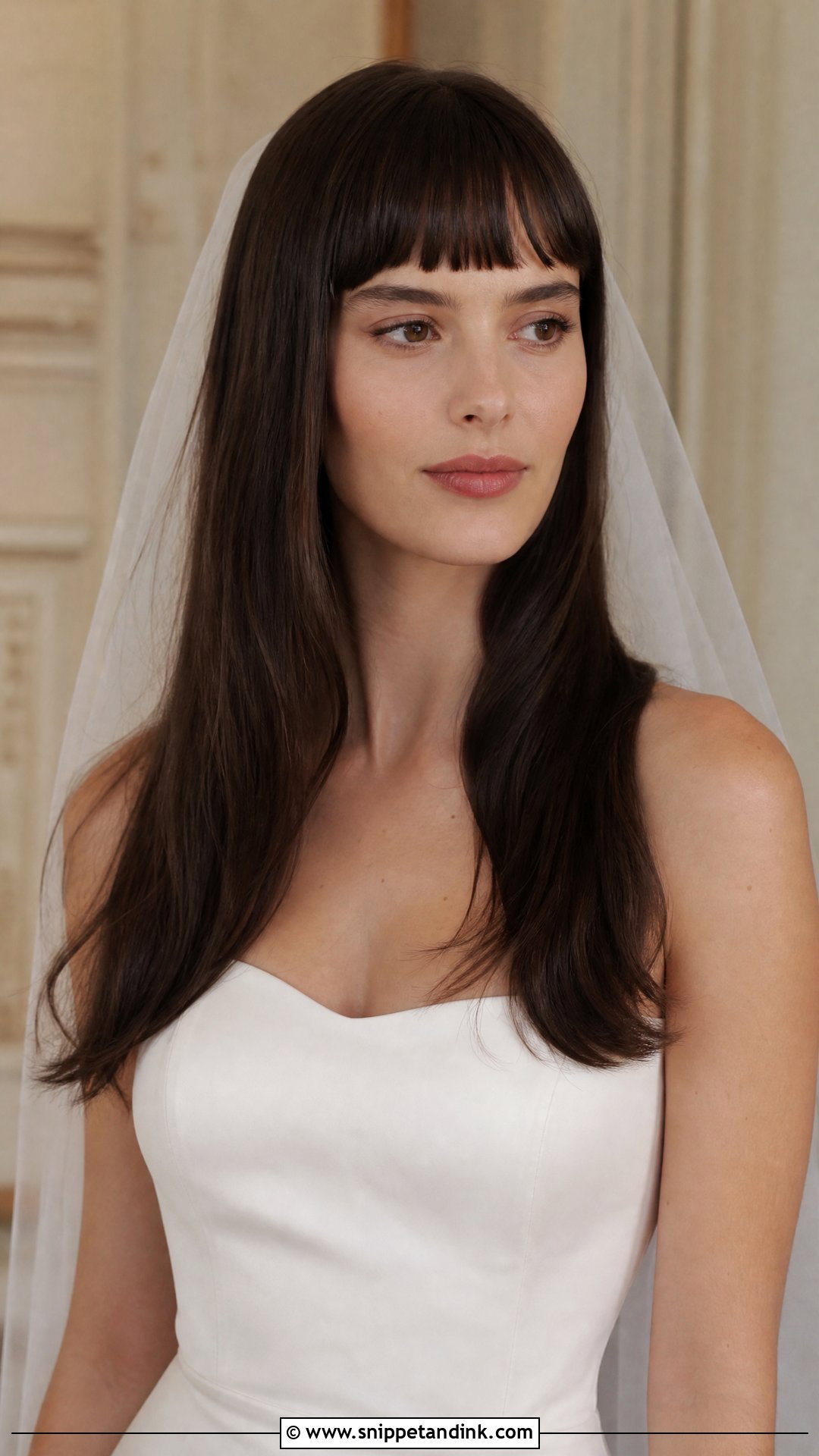
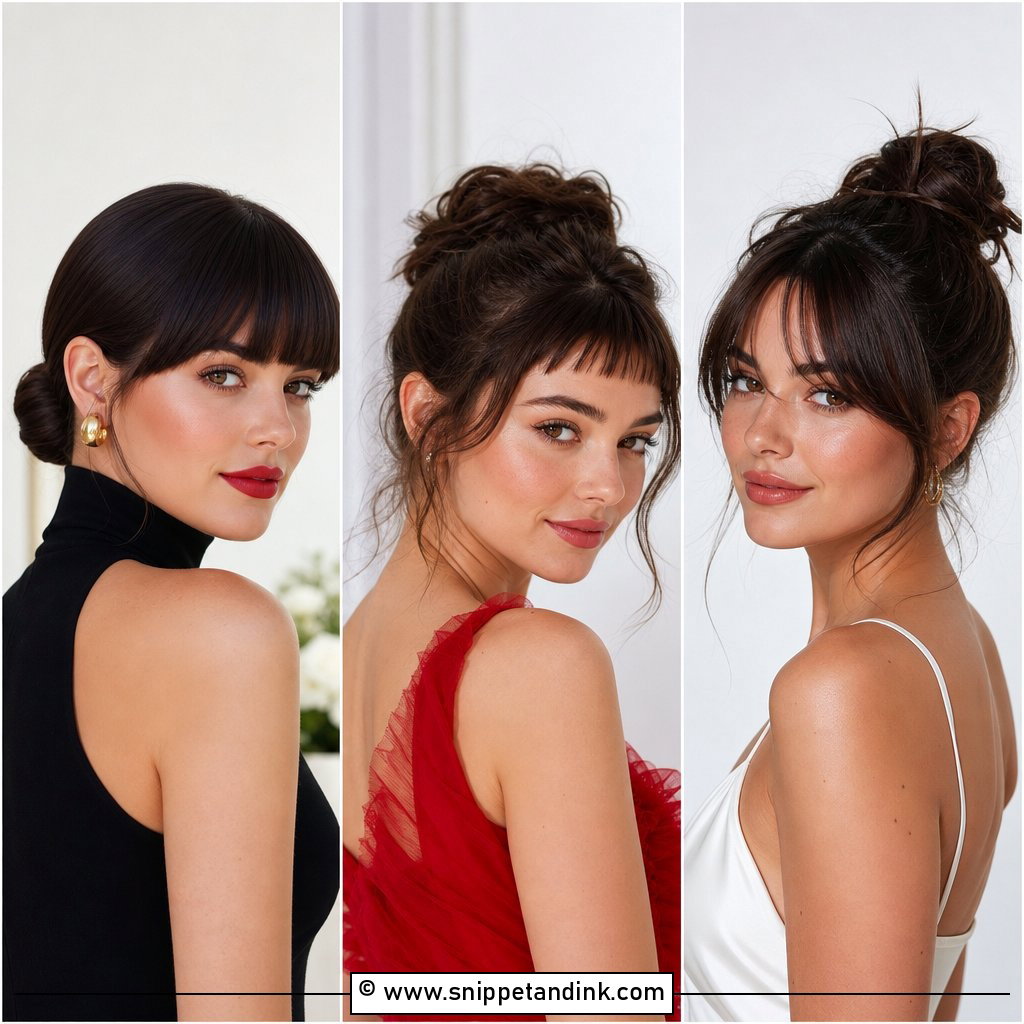
Baby bangs sit well above the brows, so they’re impossible to hide and there’s no margin for a bad trim. I’d only go there with a bride who already wears them. Balance matters: the rest of the hair should be clean, either a smooth bob, sleek long hair or controlled waves. They suit simple gowns and structured necklines. Book the last trim about a week out, never on the morning, since freshly cut baby bangs look severe for the first few days and need time to settle and soften.
7. Bridal Hair Down With Curly Bangs
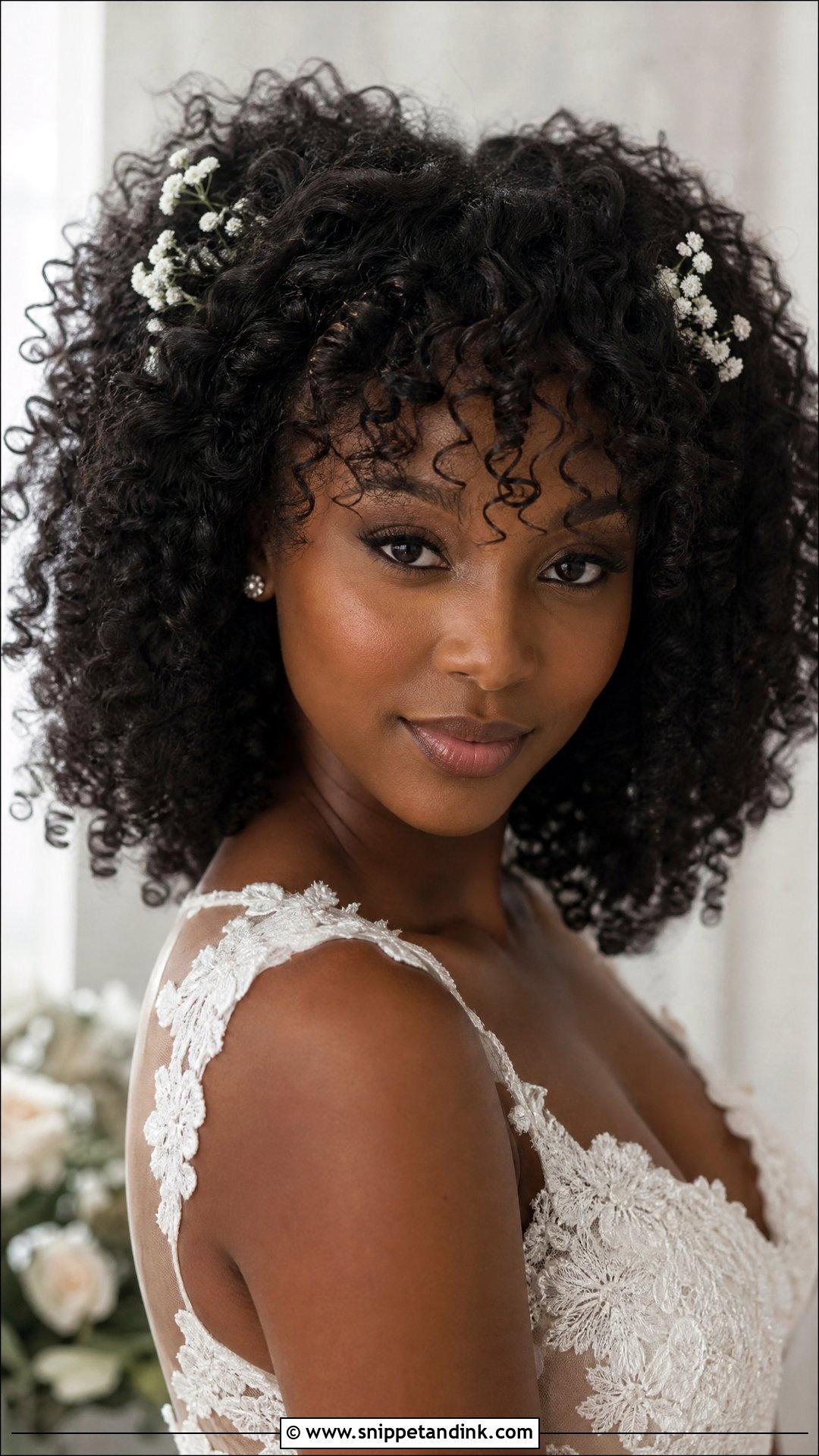
Curly bangs need a curl specialist and a dry cut, because curls shrink. Cut wet, a fringe that looks right in the chair can spring up to the hairline once it dries. On the day, I define the bangs with a little cream and let them dry undisturbed; the rest of the curls fall to the shoulders with light hold. A floral pin or slim headband works, or nothing at all. Never brush them after styling. If they frizz later, a fine mist of water and a touch of cream between the fingers brings them back.
8. Bridal Hair Down With Wavy Bangs
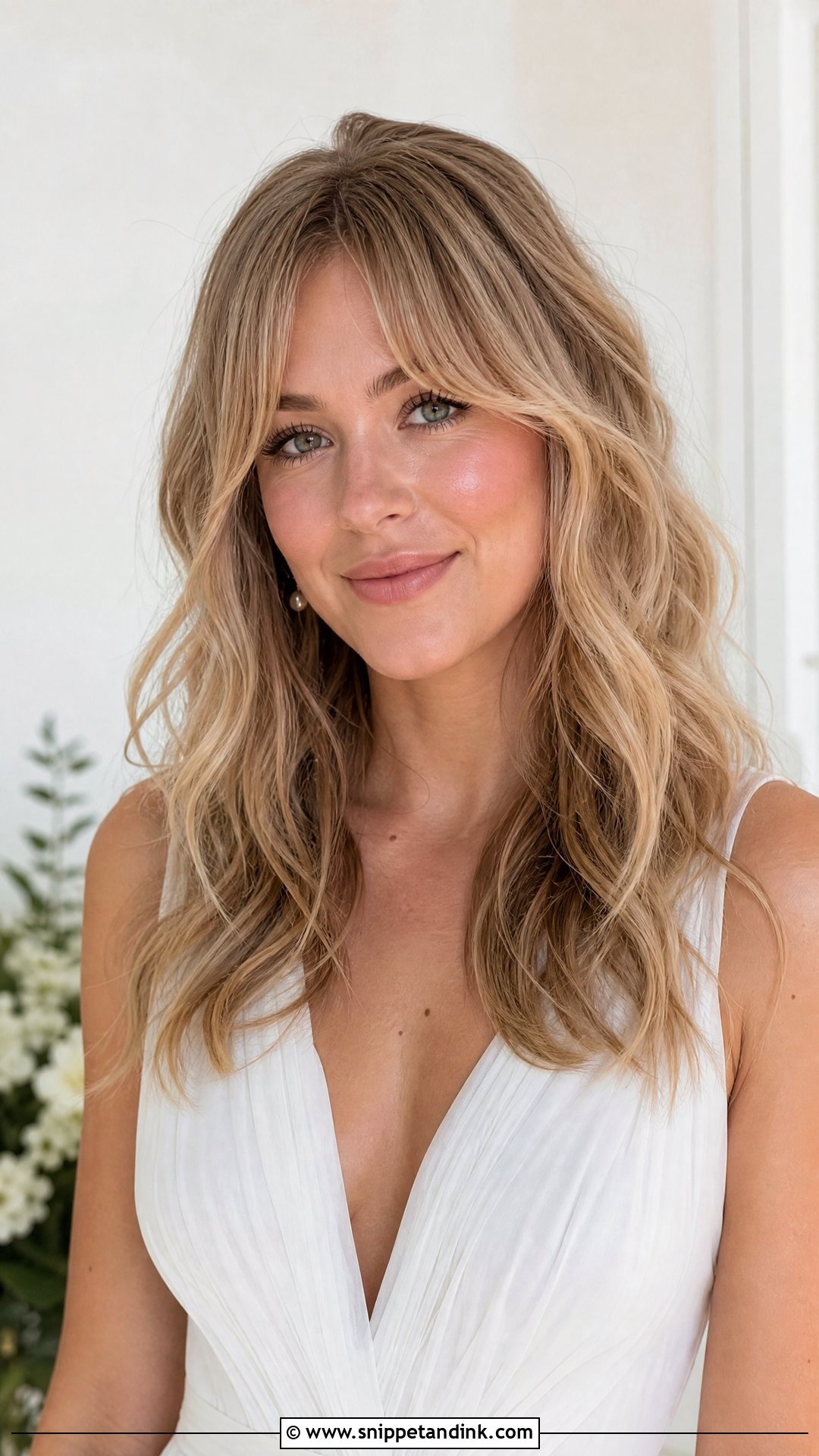
Wavy bangs only work if the bend matches the rest of the hair. A flat-ironed fringe above loose waves looks borrowed. I wrap each side of the fringe around a large iron, away from the face, then break it up with my fingers so it reads as the same texture as the lengths. Center or slightly off-center parts both suit; I decide by looking at the hairline. Outdoor weddings are where this fringe shines, because a little wind just adds to the look.
9. Bridal Hair Down With Straight Bangs
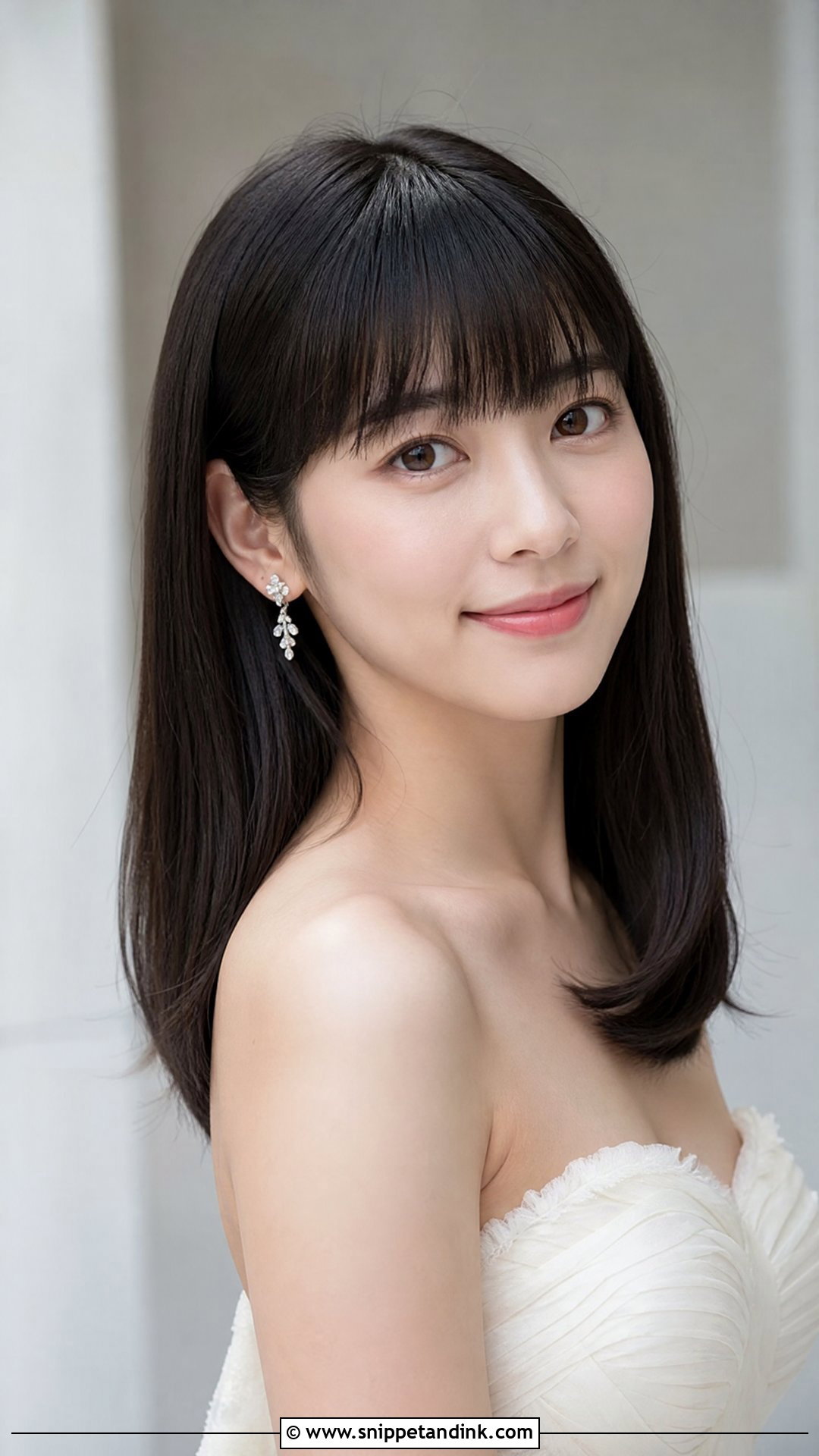
Straight bangs with smooth, glossy lengths give a clean line that suits sleek dresses and city venues. The risk is grease. Fringe hair sits on your forehead, picks up skin oil and foundation, and by the afternoon it separates. I keep products near the roots very light and use a little dry shampoo on the underside of the bangs before they go near your face. The lengths can be pin-straight or curved slightly at the ends. In portraits, shine and dimension in the color make the shape read clearly.
10. Bridal Hair Down With Bardot Bangs
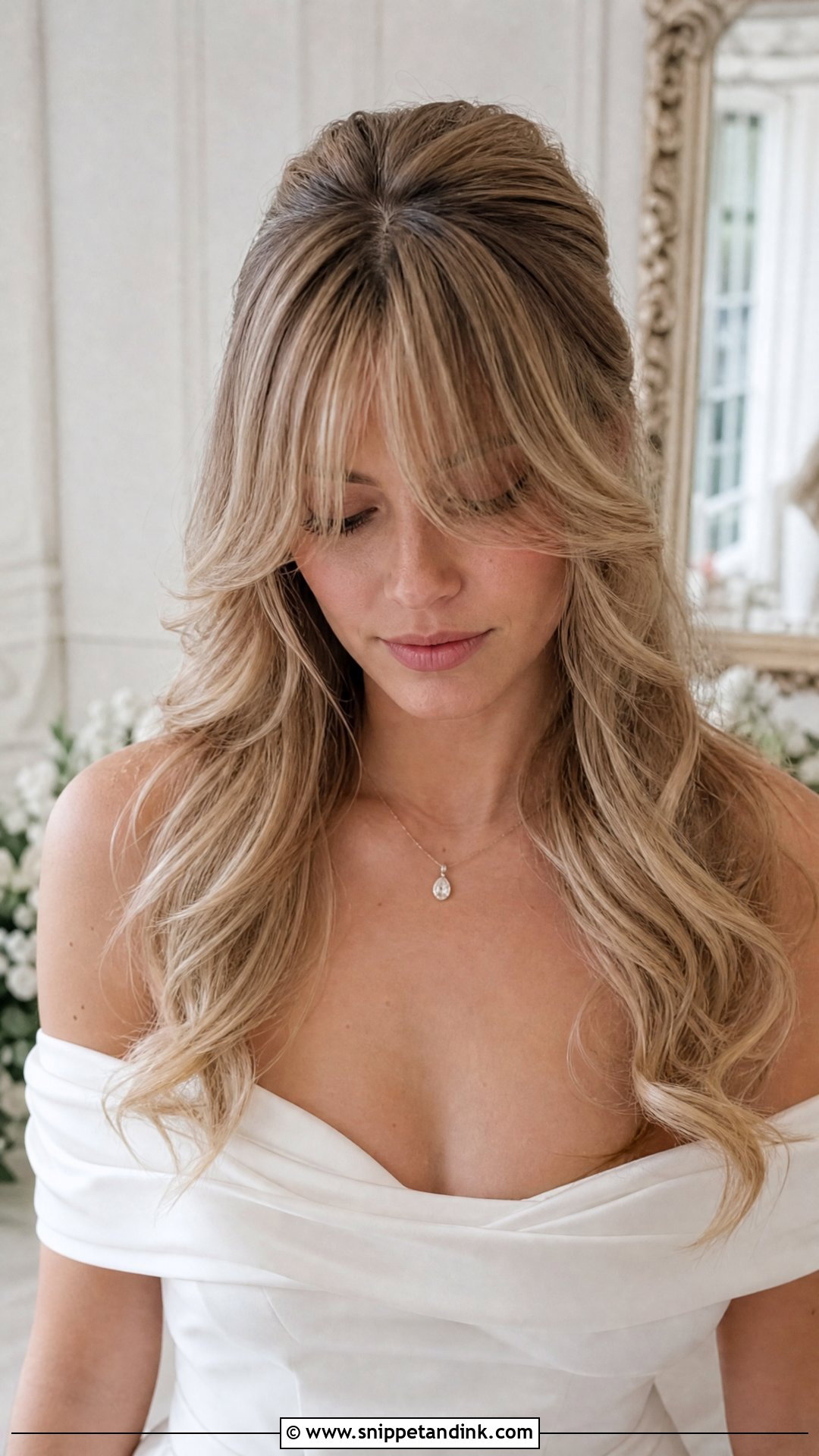
Bardot bangs are fuller in the middle and longer at the sides, styled with lift, and they bring a vintage mood. I set them on a round brush with volume at the root, then blend them into big brushed waves or loose curls. Off-the-shoulder gowns are their natural partner, as the hair frames both the face and the collarbone. Flat roots ruin this one, so a root-lift spray before drying is essential. A lightweight veil or a bow placed behind the crown finishes it without covering the face.
11. Bridal Hair Down With Bottleneck Bangs
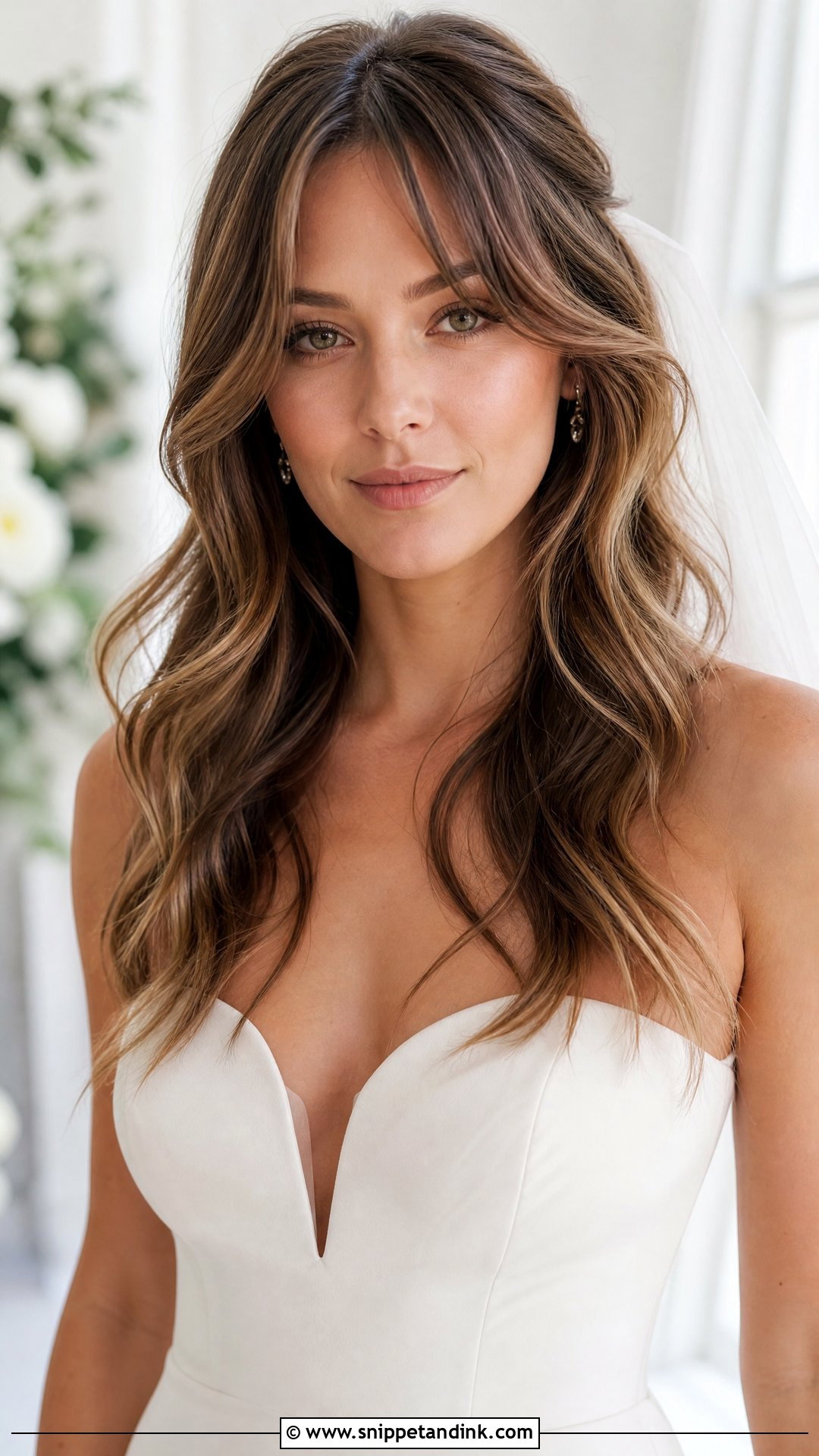
Bottleneck bangs are narrow and short in the center, longer as they reach the cheekbones, so they frame the face without the weight of a full fringe. A natural center part and soft waves with layered ends suit them. I keep the root smooth and give the ends a gentle curve outward with a small round brush. The longer side pieces can stick to lip gloss once they hit the cheeks, which is something to check in the trial. On the plus side, the shape grows out easily if you decide later it isn’t for you.
12. Bridal Hair Down With Feathered Bangs
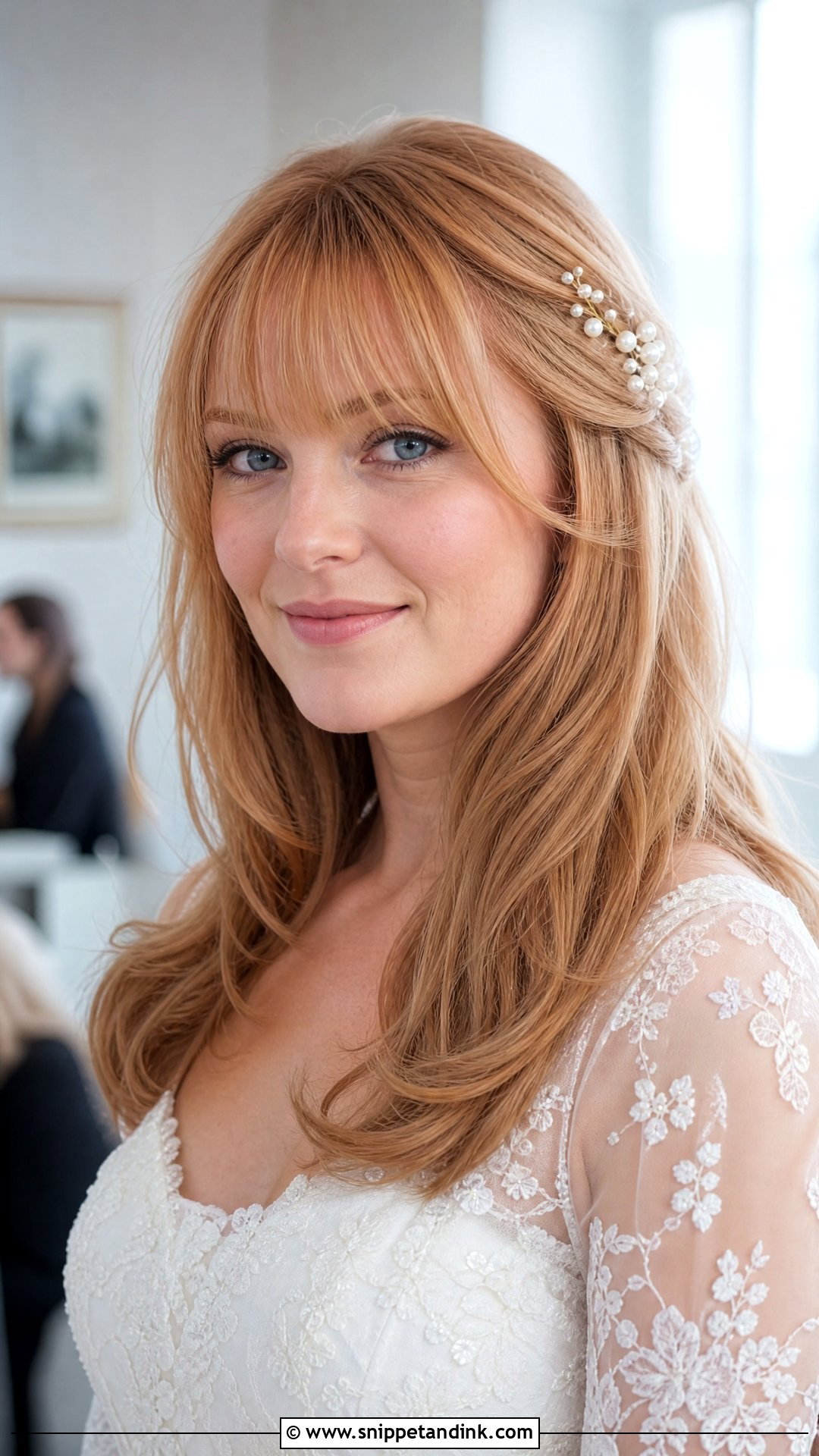
Feathered bangs are cut with soft texture, so they don’t sit like one solid piece across the forehead. I like them for fine or medium hair because they add movement without weight. Style them slightly apart or swept softly to one side, with layered waves or a bouncy blowout behind. Fine hair loses lift by mid-afternoon, so I set the bangs on a velcro roller while makeup is being done, then release them at the last minute. Pearl pins, a sheer veil or small flowers all suit.
13. Bridal Hair Down With Bangs And Veil
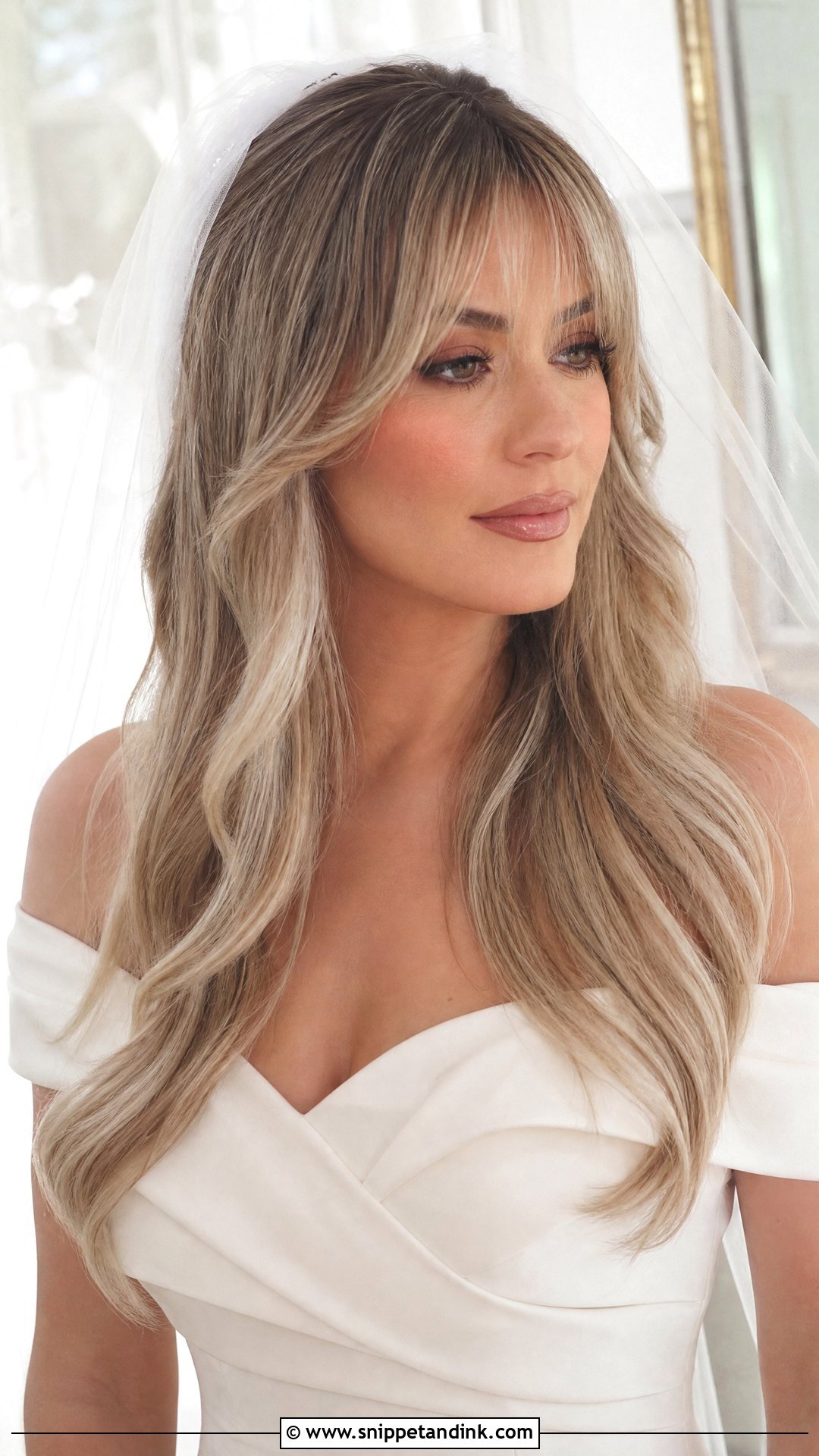
A veil can sit well with bridal hair down and bangs as long as it never presses on the fringe. I usually place the comb behind the crown or just below it, anchored on a hidden pinned section, so the bangs keep their lift. Curtain, wispy and side bangs handle a veil best because they already move. Watch blusher veils in particular. Lifting one up and back drags across the fringe, so practise that moment at your trial and ask whoever lifts it to start from below the bangs.
14. Bridal Hair Down With Bangs And Headband
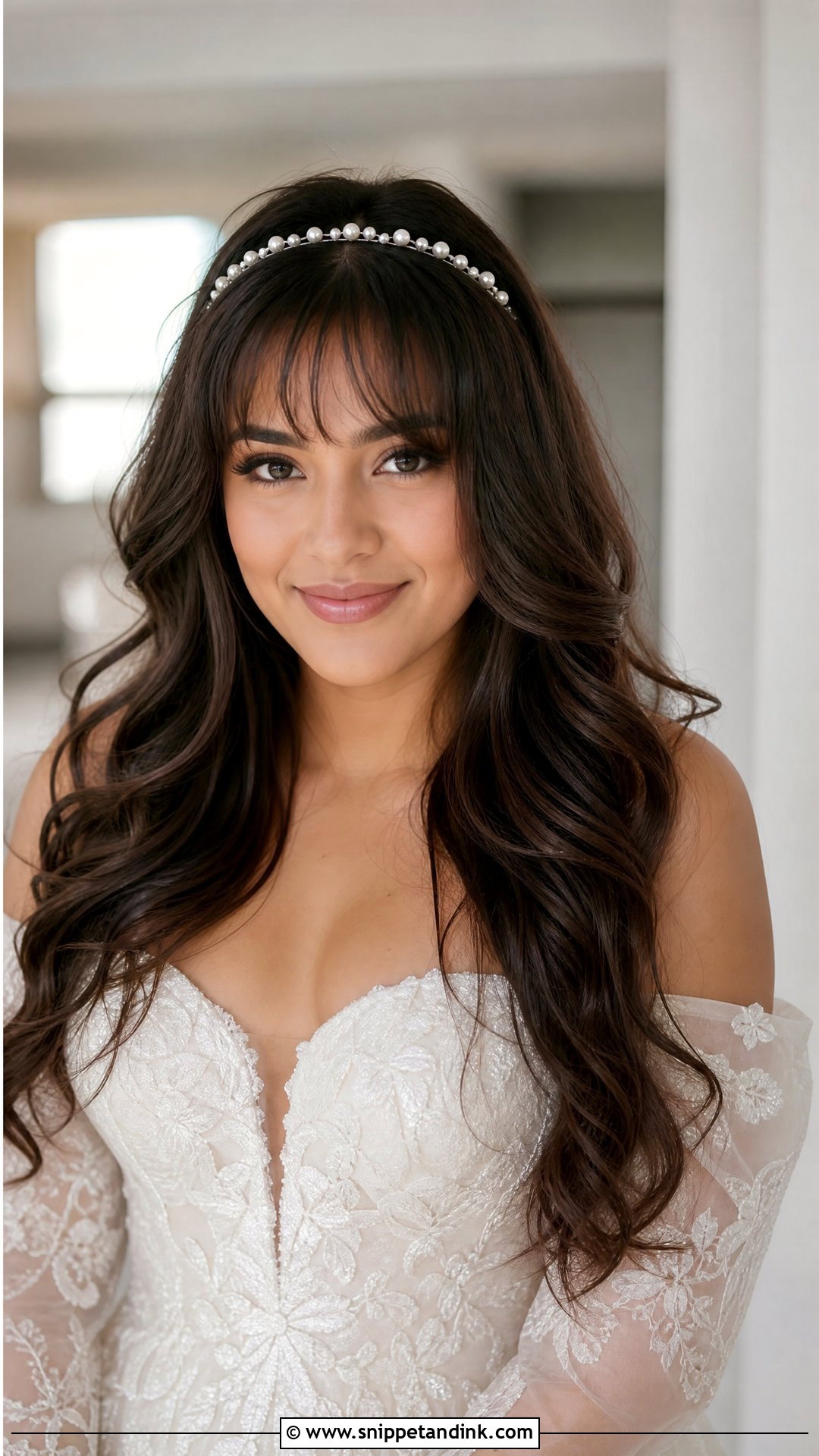
A headband adds structure around the crown in seconds, and with a fringe it goes slightly behind the bangs so they stay visible in front. Pearl, satin, crystal or a slim metal band can suit; choose by your dress. Loose waves or a smooth blowout both work with it. The trap is pushing the band too far forward, which flattens the bang roots and leaves a dent. Wear it for an hour at your trial, too. Some bands press behind the ears painfully after a while.
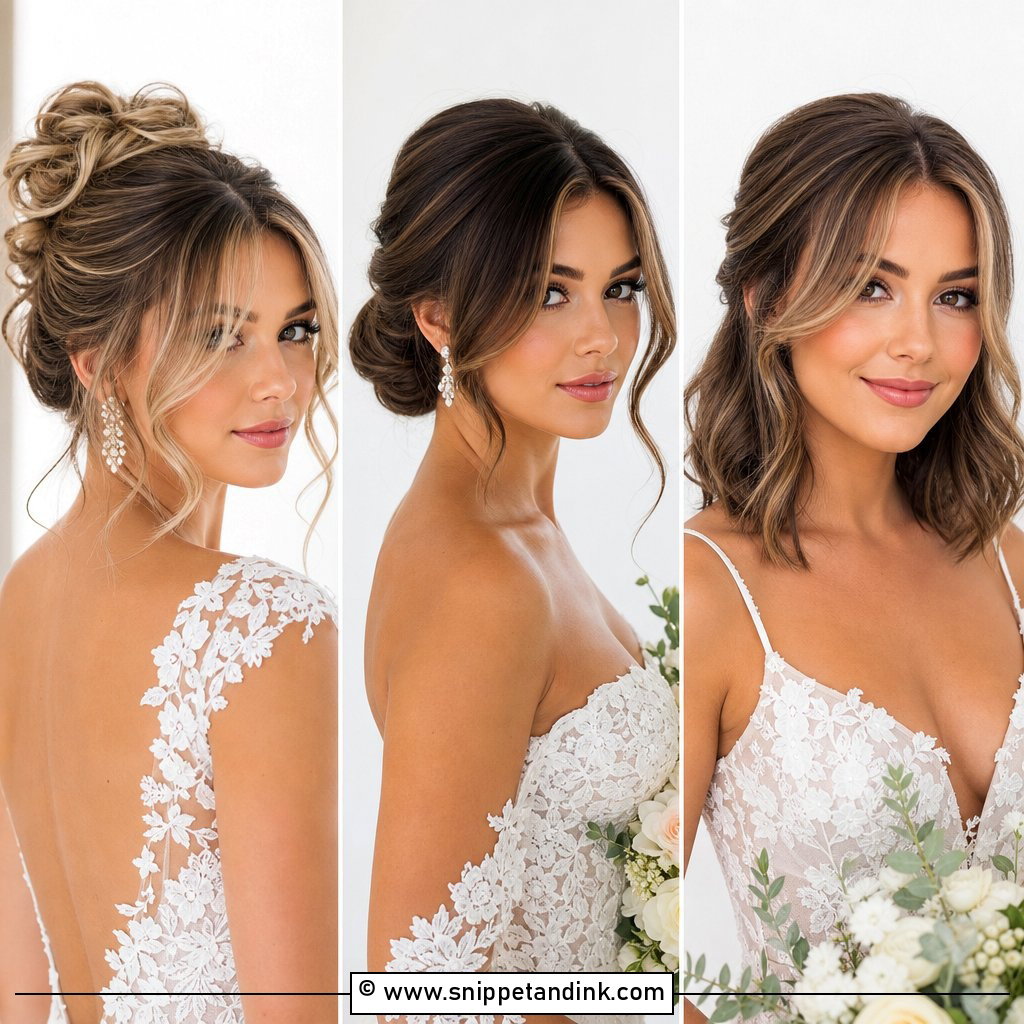
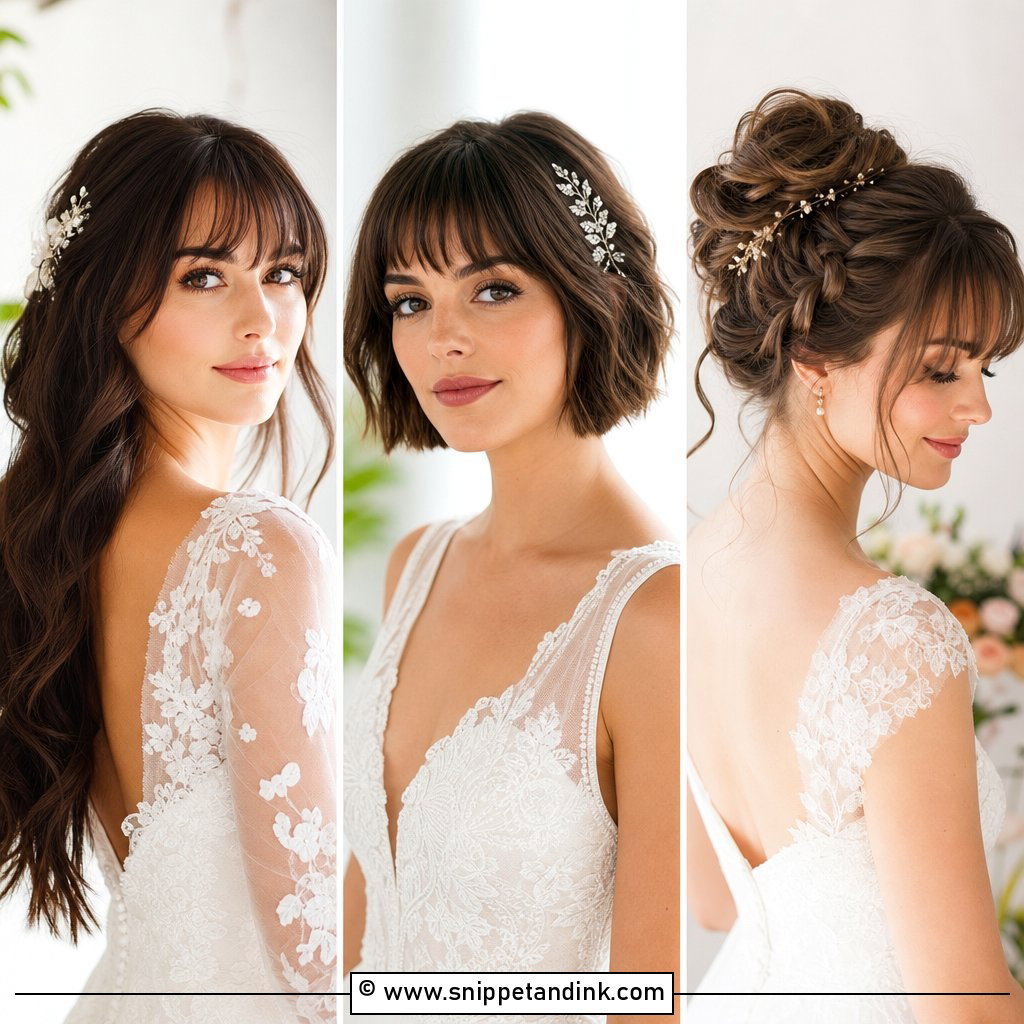
15. Bridal Hair Down With Bangs And Flowers
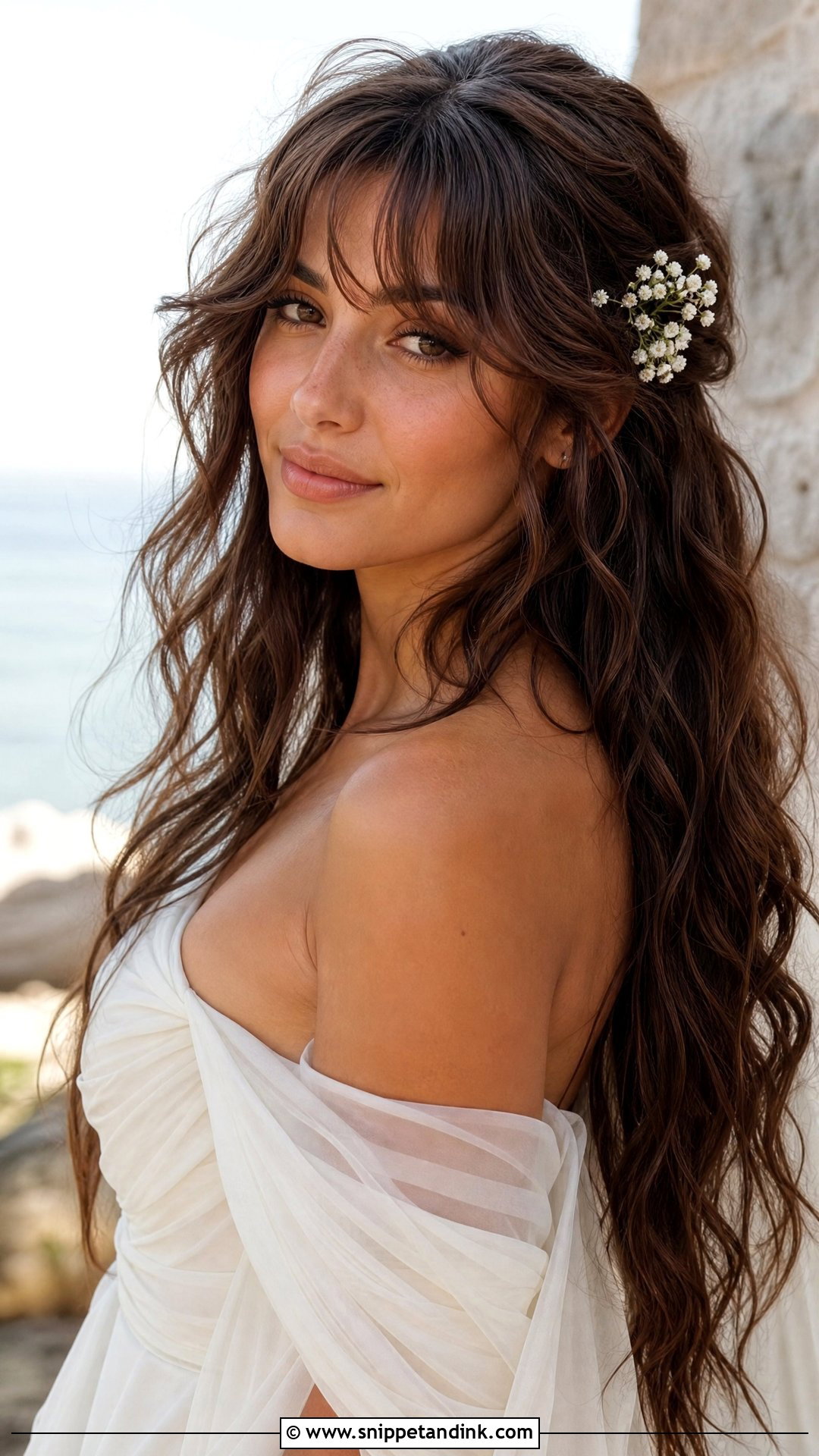
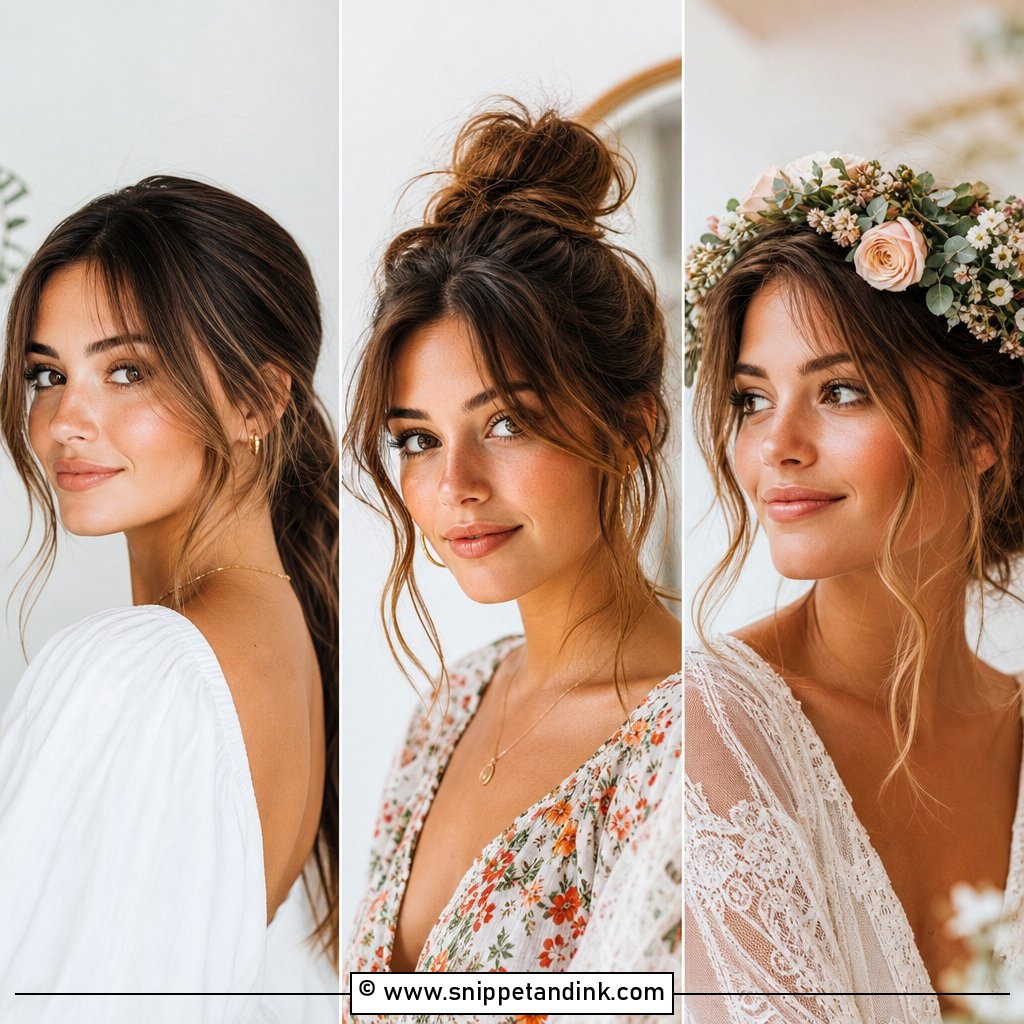
Fresh or faux flowers belong to the side of the face, behind the ear or along one section of waves, kept away from the fringe so it stays light and visible. Curtain bangs, curly bangs and wispy bangs all pair well with them. Match flower size to texture: tiny blossoms for fine hair, larger blooms in fuller curls. Fresh flowers wilt in heat and can drip sap, so I ask the florist for blooms that hold out of water and pin them in as late as possible. Spring and summer garden ceremonies suit this best.
Bangs Sit on Your Makeup All Day
This is the part nobody plans for. A fringe rests on foundation, powder and sometimes setting spray for twelve hours. Skin oil and makeup work up into the hair, and by the evening the bangs separate into stripes or stick to the forehead. A few things keep that from happening.
- Have makeup done before the bangs get their final style, so the fringe doesn’t sit on wet product.
- Ask your makeup artist to go lighter on foundation and heavier on powder where the fringe will rest.
- Put a little dry shampoo on the underside of the bangs, not the top, to absorb oil without dulling the shine.
- Pack blotting papers, a mini round brush and a travel dry shampoo for the evening reset.
- Avoid touching or pushing the bangs aside all day. Hands are the fastest way to grease them.
If they do flatten before the reception, a two-minute fix works: lift the fringe, blot your forehead, spray a little dry shampoo at the roots, then blast with a cool dryer or brush into place with your fingers. I tell maids of honour to watch for it before the first dance.
The Fringe You Already Love Is Usually the Right One
A fringe makes loose wedding hair feel personal, and nearly any type can work if the rest of the style is built around it. Curtain bangs keep things soft, waves add romance, a blunt fringe reads sleek and curls stay natural. Your texture, dress, venue and the way you like to see yourself decide the version. Book a trial, bring photos from several angles, and test your veil or accessories with the exact fringe shape you’ll wear on the day. If you leave that trial feeling comfortable, you’ve got it right.
You'll Like These Ideas:


Leave a Reply