
The loose updo is the style where a bride’s reference photo and her hair’s actual behaviour disagree most often. In pictures it looks like the hair was gathered up in thirty seconds. In reality, that undone finish sits on a firm, hidden base, and without one the whole thing slides by the speeches. These updos keep hair off the neck and still leave some movement and pieces around the face, so they suit garden ceremonies as well as ballrooms. Below are fifteen versions, with what goes into each and where they tend to fail.
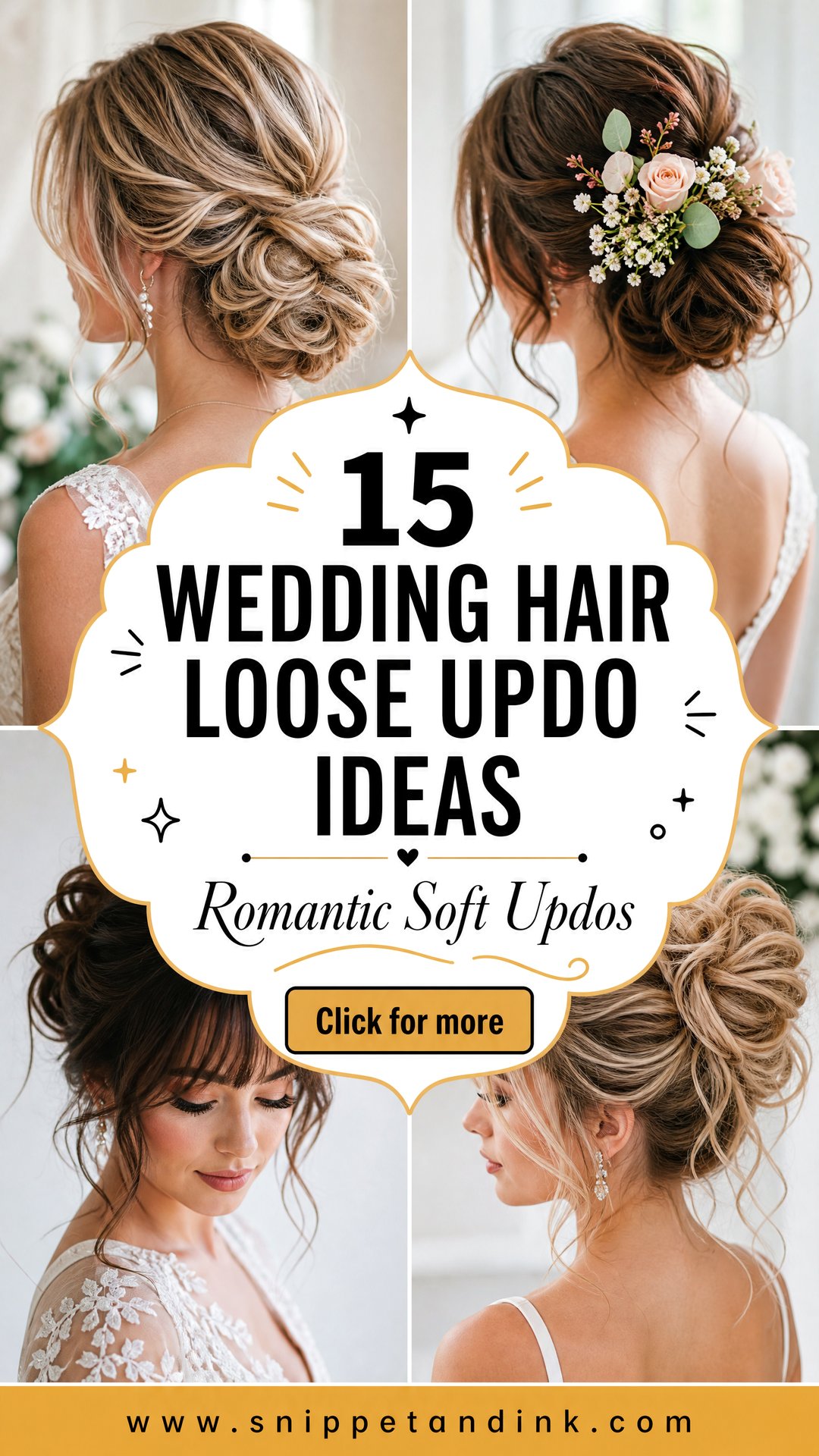
Loose on the Outside, Locked Underneath
Every relaxed updo I make has the same three layers. First comes texture: the hair is curled or waved before anything goes up, because straight hair has nothing to grip and slides out of pins. Second is the foundation, usually a small ponytail, a hidden twist or a cluster of crossed pins that the rest of the style is attached to. Third is the soft outer layer, which is the only part anyone sees.
- Arrive with hair washed the day before, not that morning. Squeaky clean hair has no grip.
- Skip oils and smoothing serums for a couple of days. They make pins slip.
- Expect texture spray or powder between sections. It isn’t extra product for the sake of it; it’s what makes loose hair stay where it’s put.
- Ask how long the full build takes. A loose updo often takes longer than a sleek one.
Fine, slippery hair needs the most support, and sometimes a couple of small clip-in wefts placed under the outer layer, purely for grip. Very thick hair needs the opposite: sections removed from the bun and pinned flat underneath so the shape doesn’t balloon.
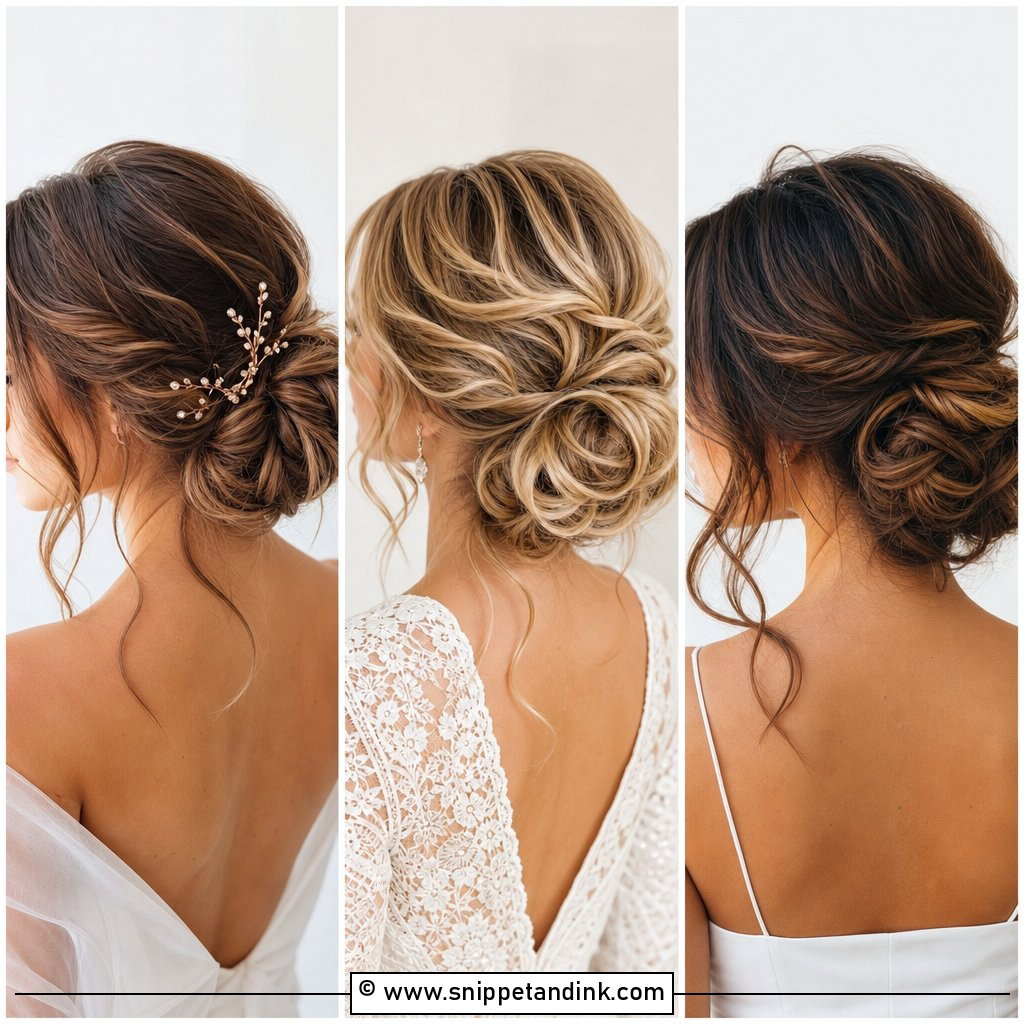
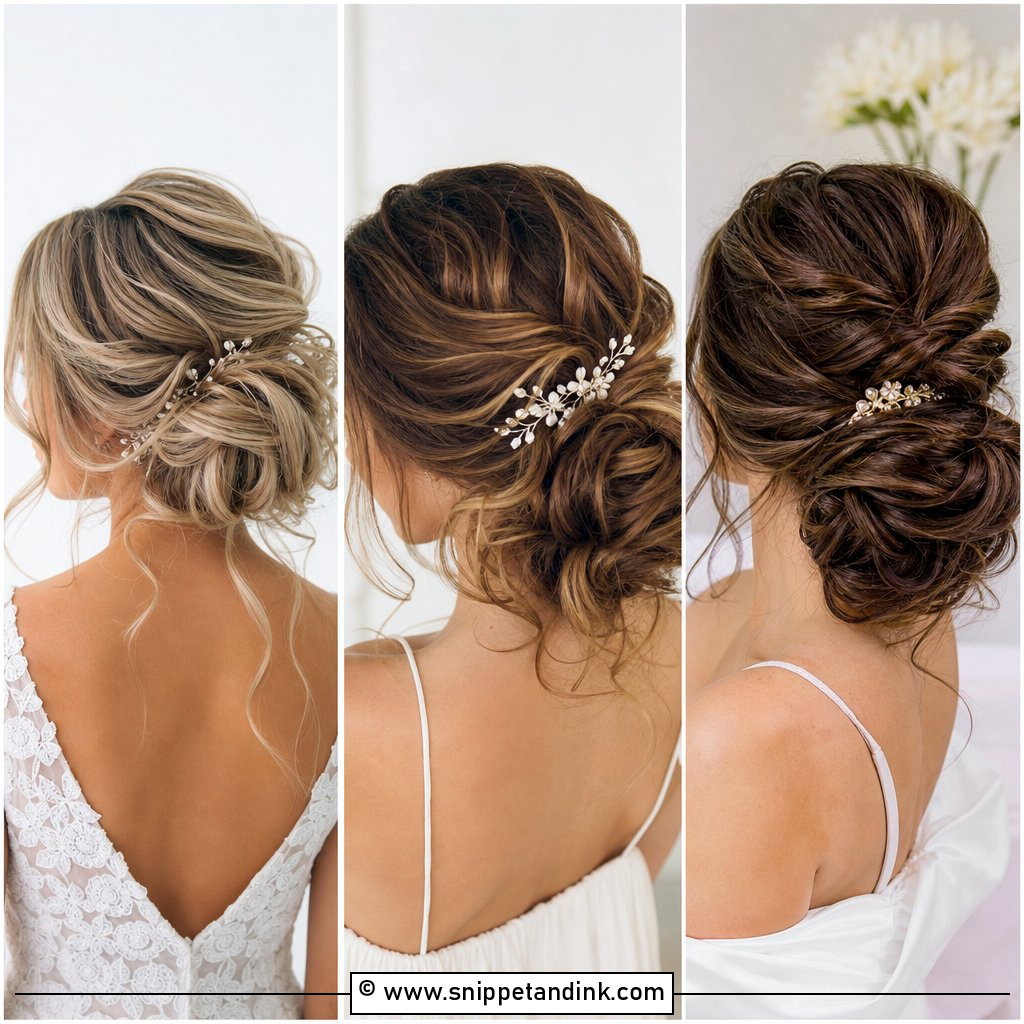
1. Loose Low Bun Wedding Hair
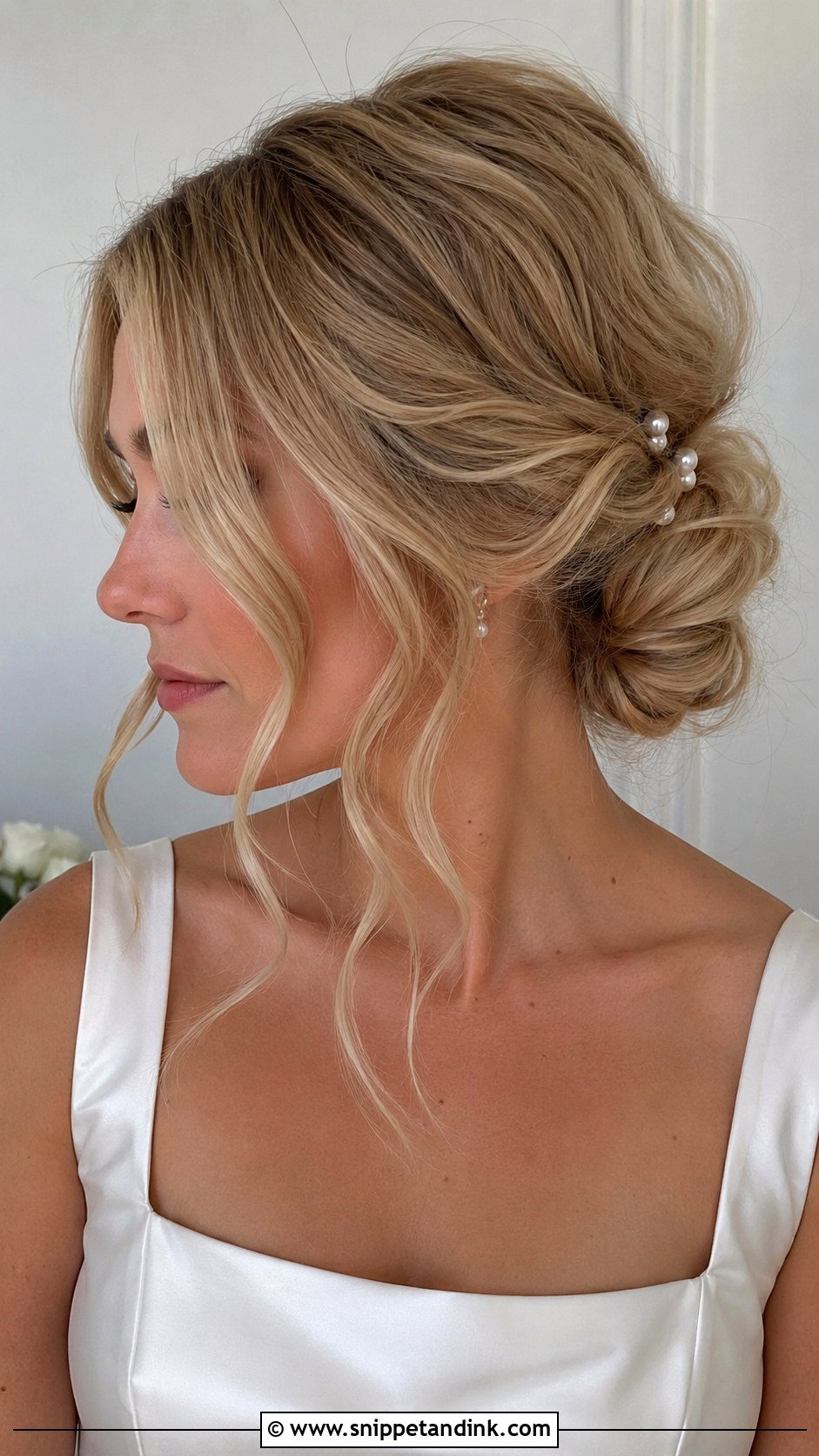
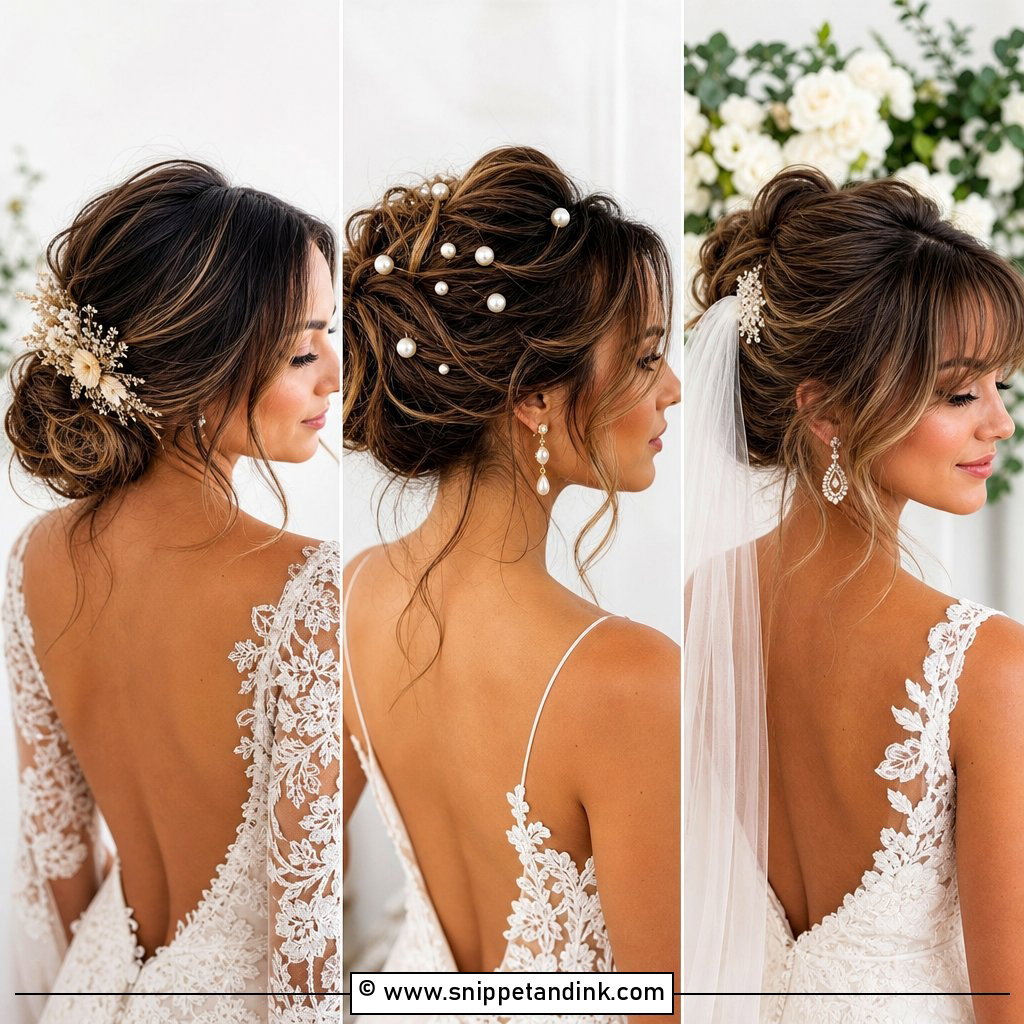
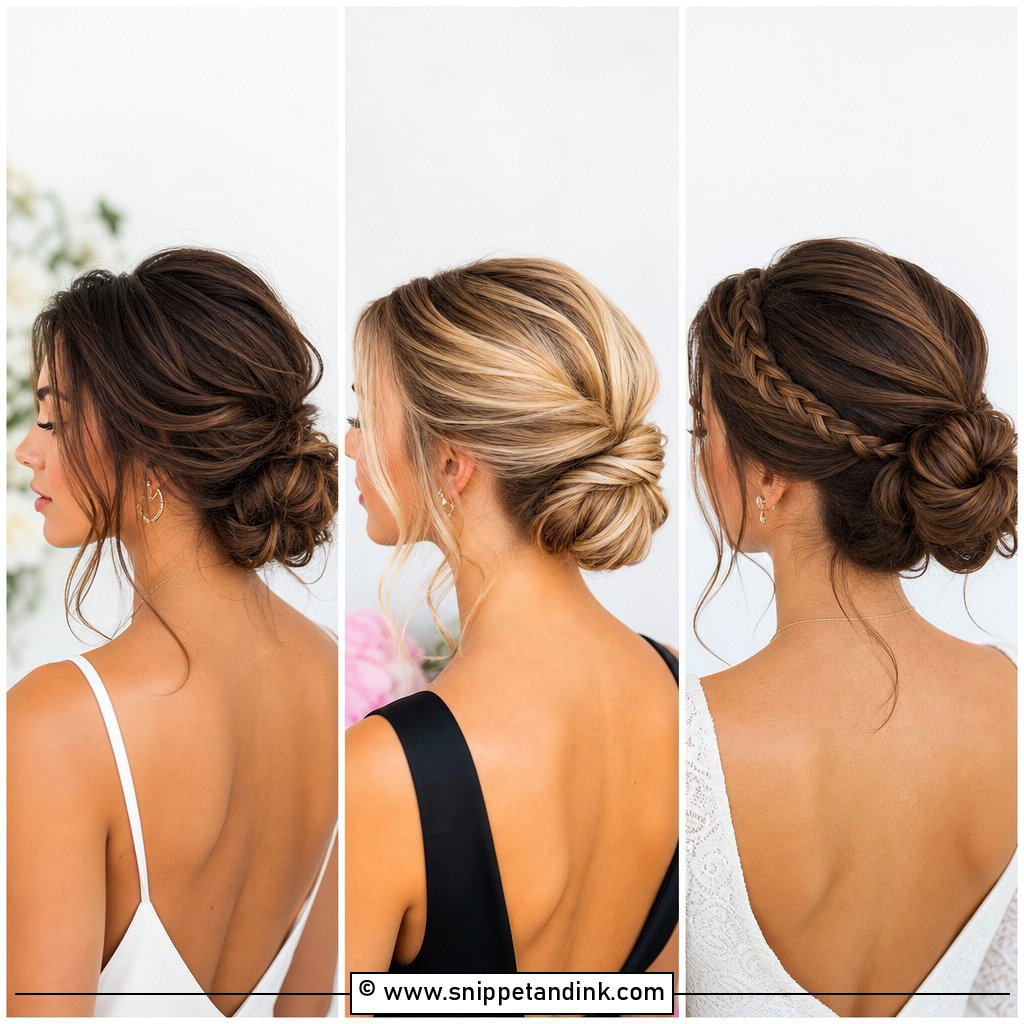
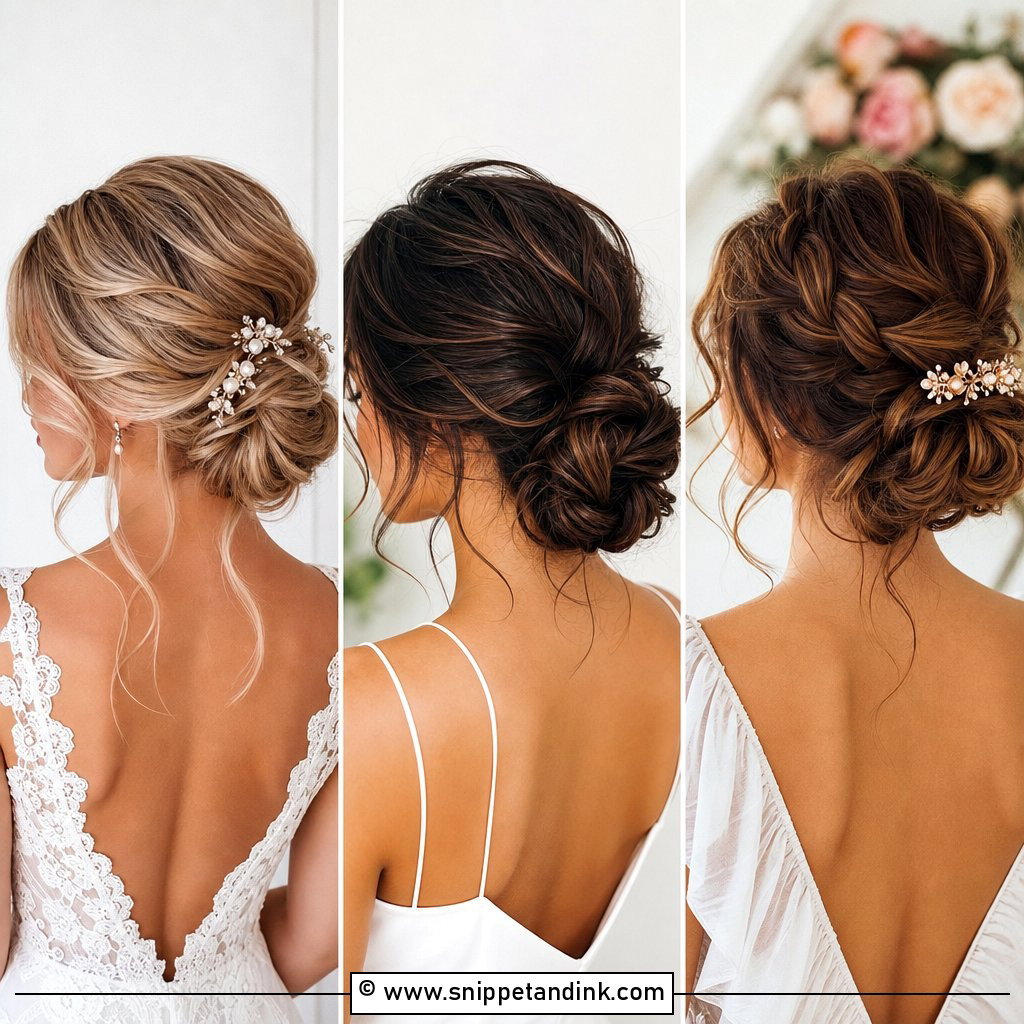
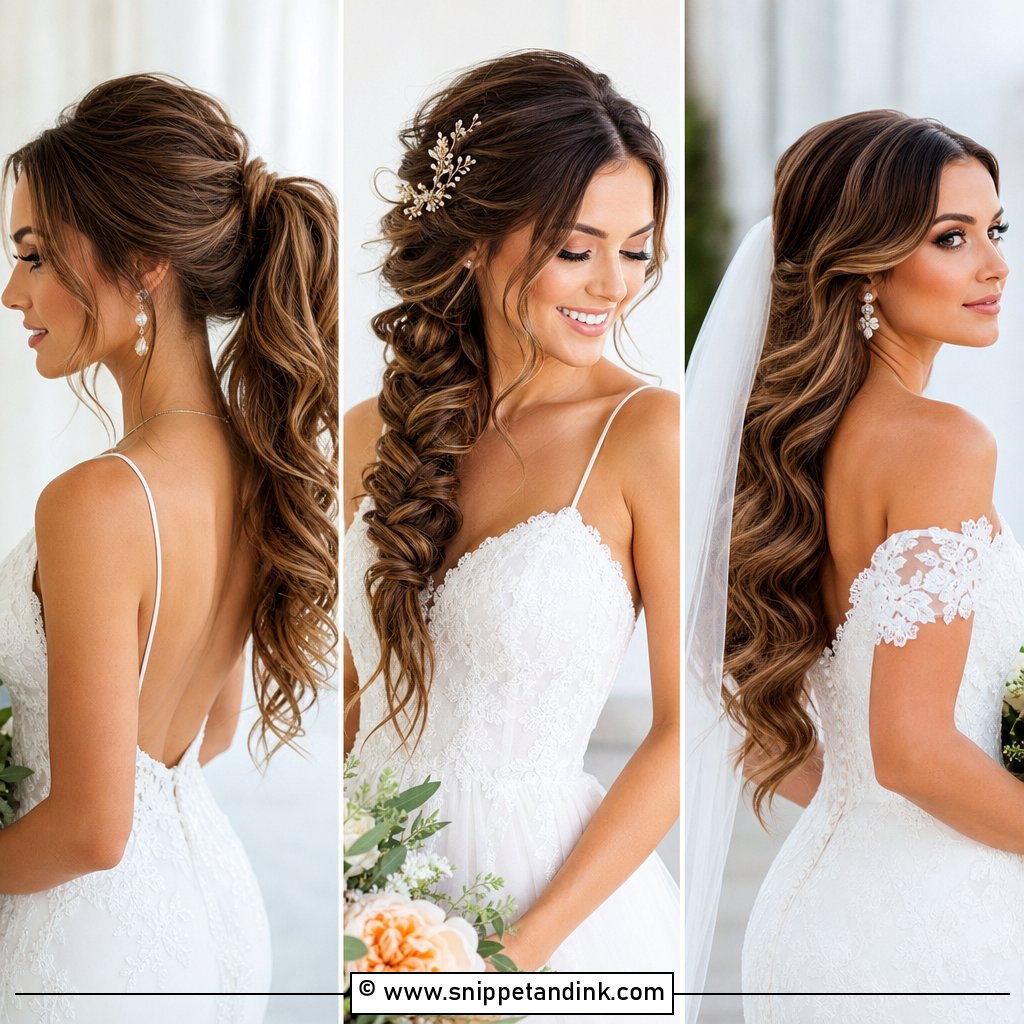
The low bun gets requested more than any other updo I do, and it earns it: the weight sits at the nape where it’s easy to secure, and nothing pulls at the hairline. I add a little crown lift so the profile isn’t flat, and I pull out two or three pieces at the front after pinning, not before. Veils, pearl pins and floral combs all sit above it comfortably. It shows off an off-the-shoulder, square or open-back neckline without hiding anything.
2. Loose Curly Updo Wedding Hair
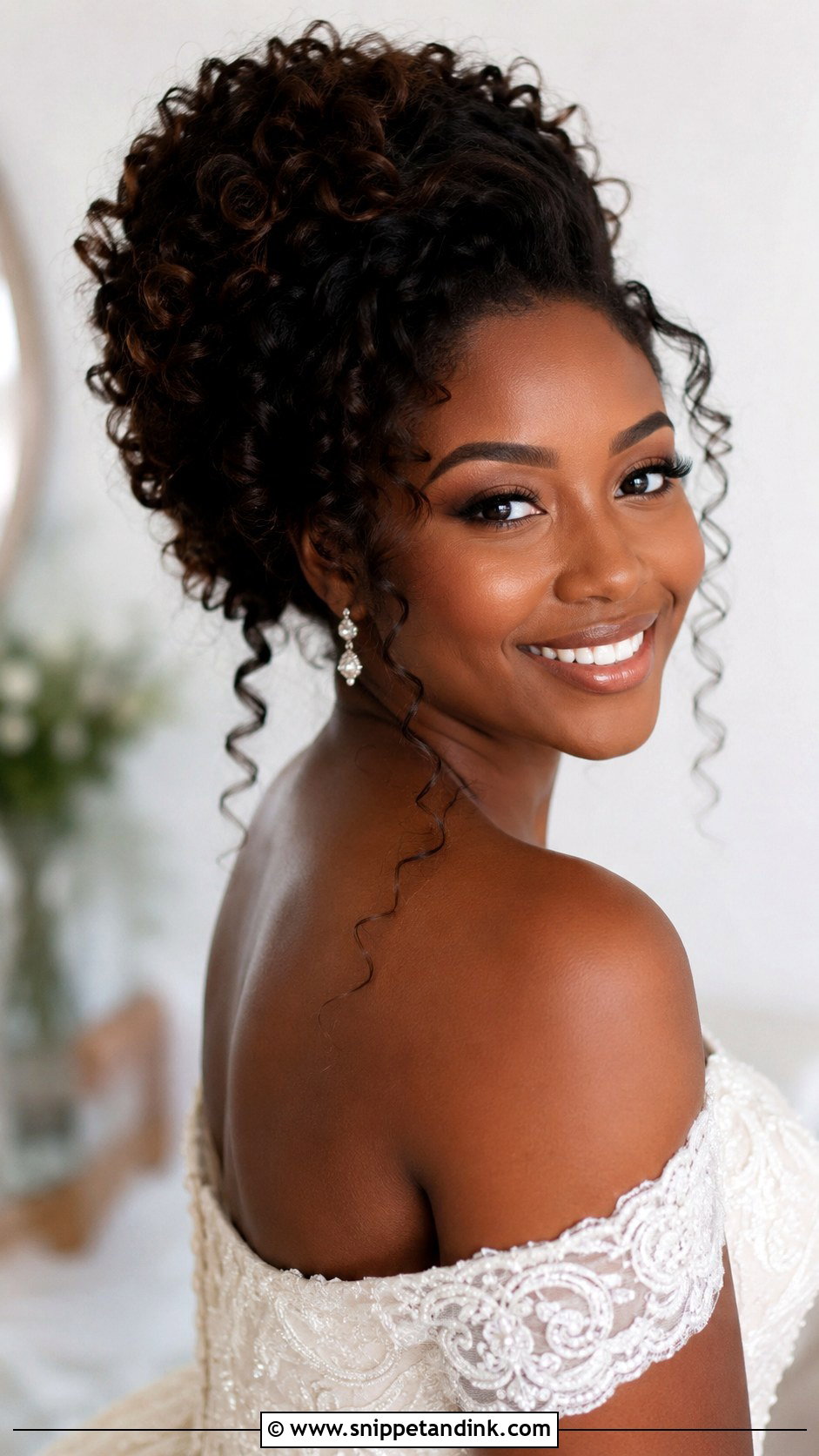
A curly updo keeps the curl pattern on show while the weight goes up. I pin curls in small clusters so the shape stays airy instead of packed into one dense knot. It’s made for curly, wavy, or curled long hair. If your curls are natural, come with them styled the way you’d wear them on a good day, with your usual curl products, and don’t brush them out. Curls brushed dry turn to frizz, and that can’t be undone on the morning. A small comb or a few pins add detail without flattening the pattern.
3. Loose Chignon Wedding Hair
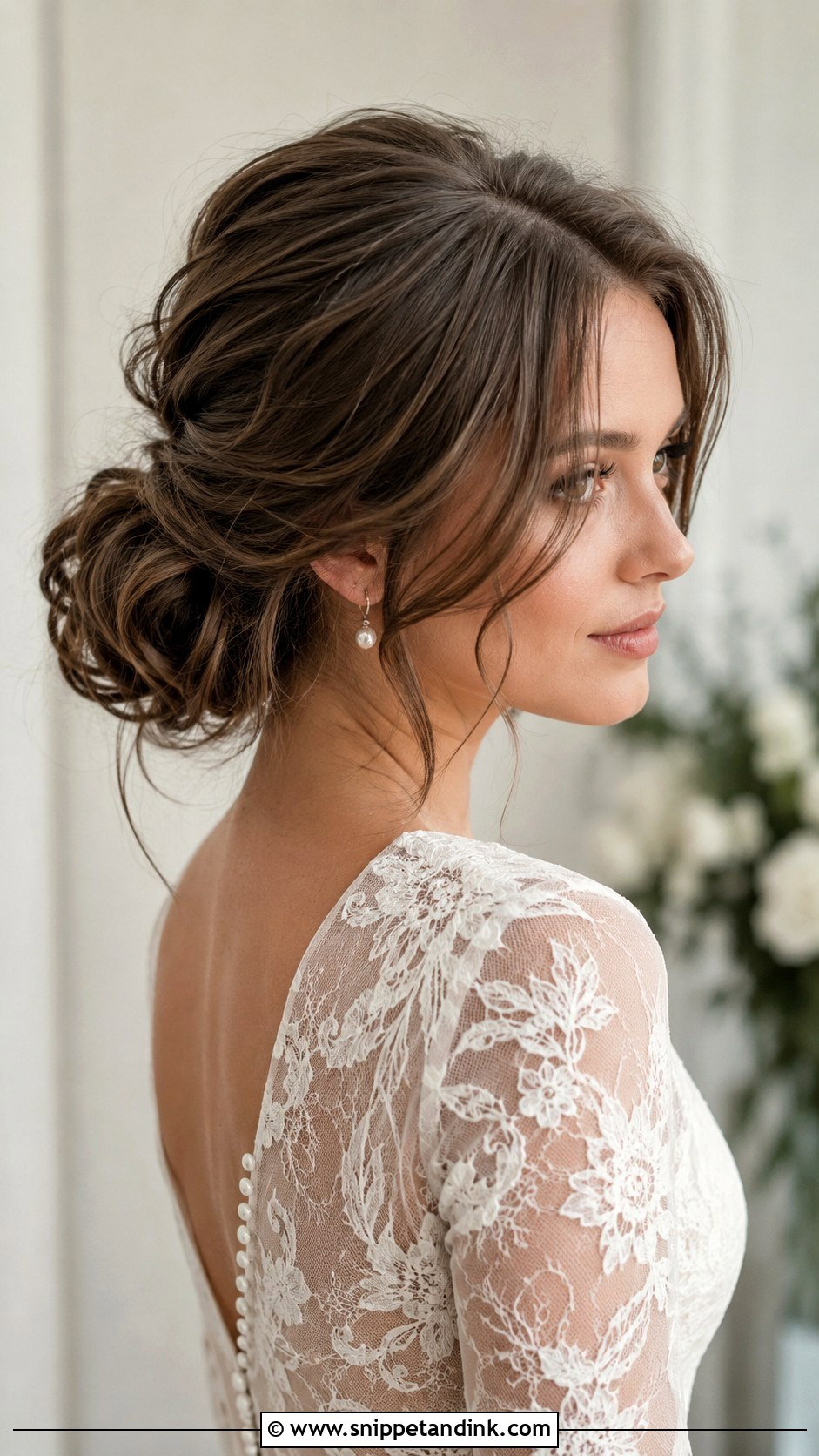
A traditional chignon is a smooth, tight roll. The loose version keeps the same placement at the nape but lets the hair fold in soft bends, with a little give at the edges. It suits a bride who wants refinement without the slicked-back severity. I’ll set it slightly off centre if the veil is going on one side. Lace sleeves and clean gowns go well with it, and light teasing at the crown keeps the top from looking flat.
4. Loose Braided Updo Wedding Hair
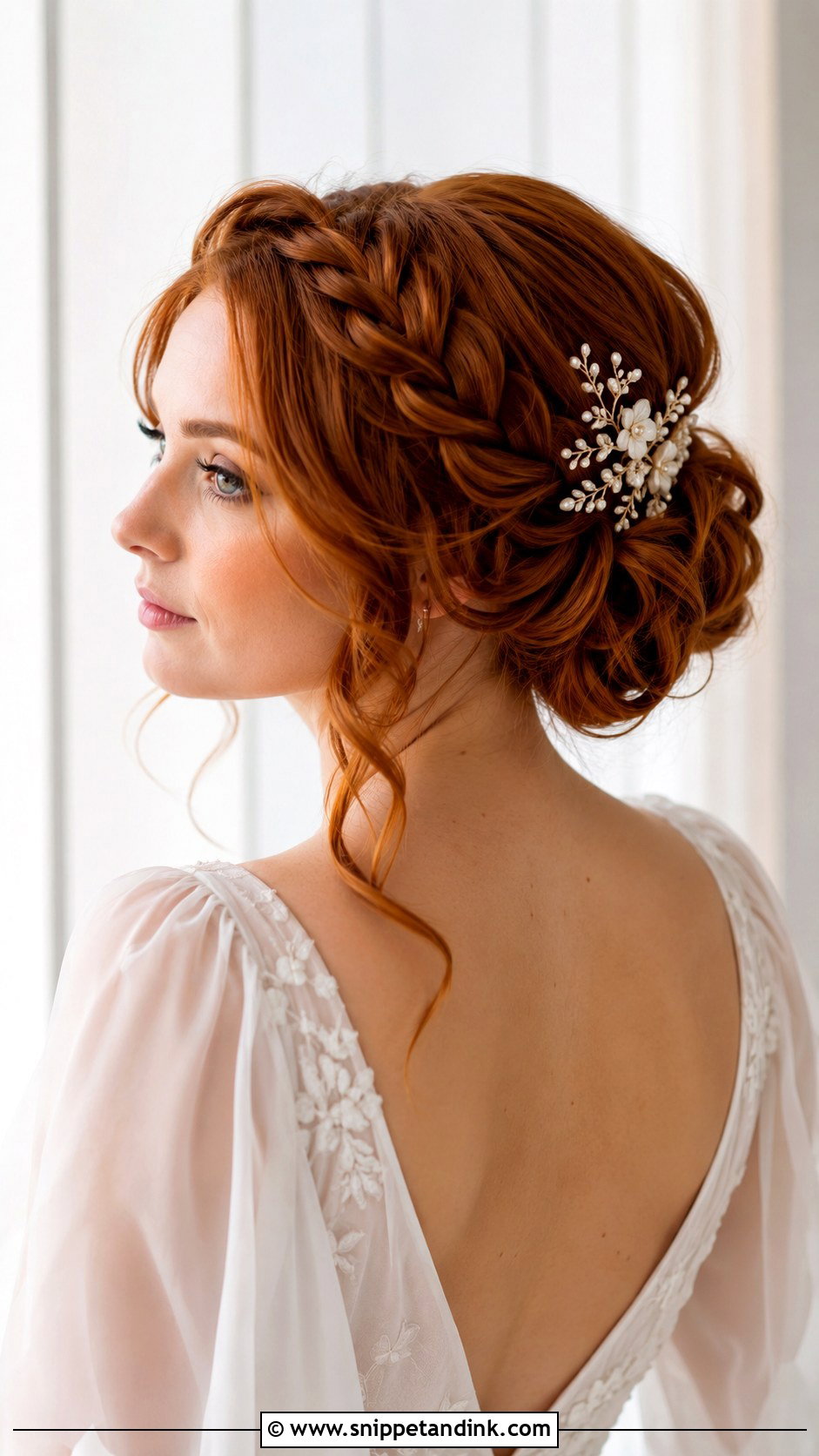
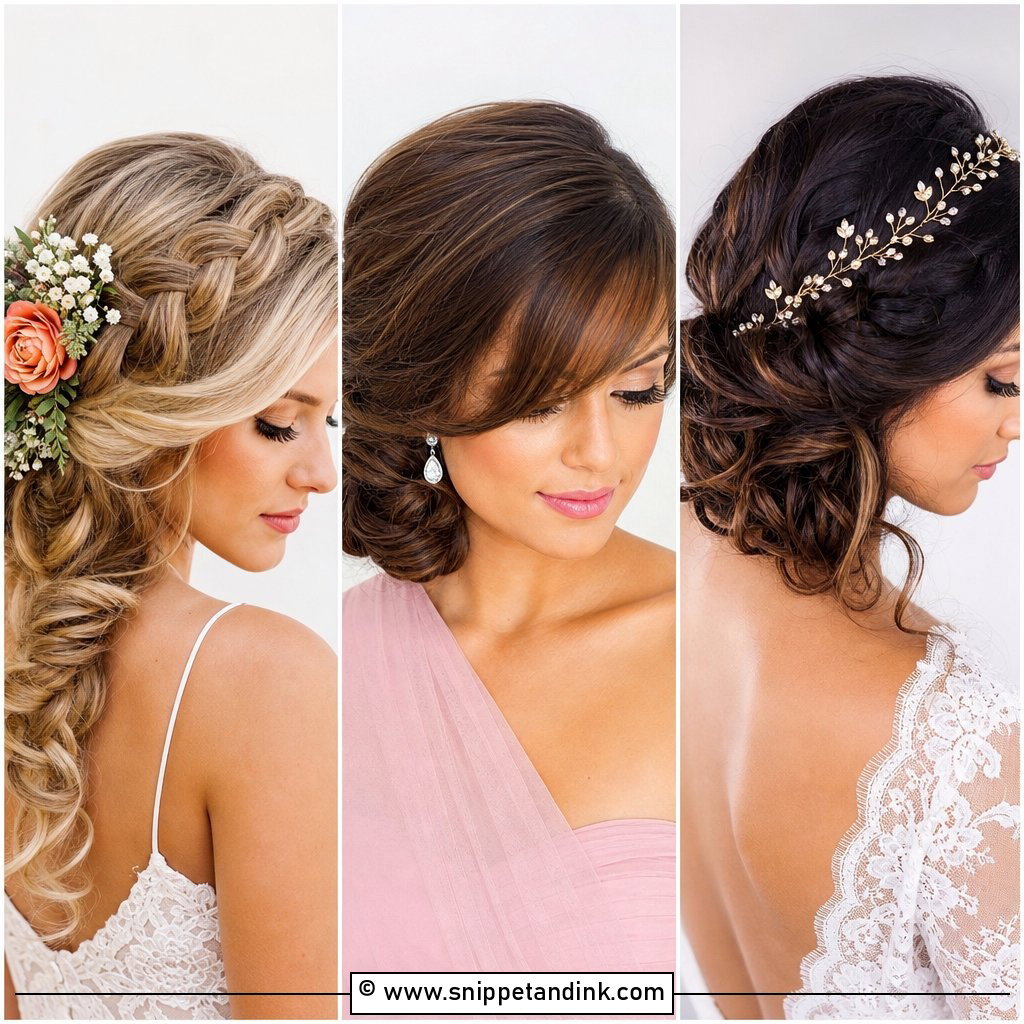
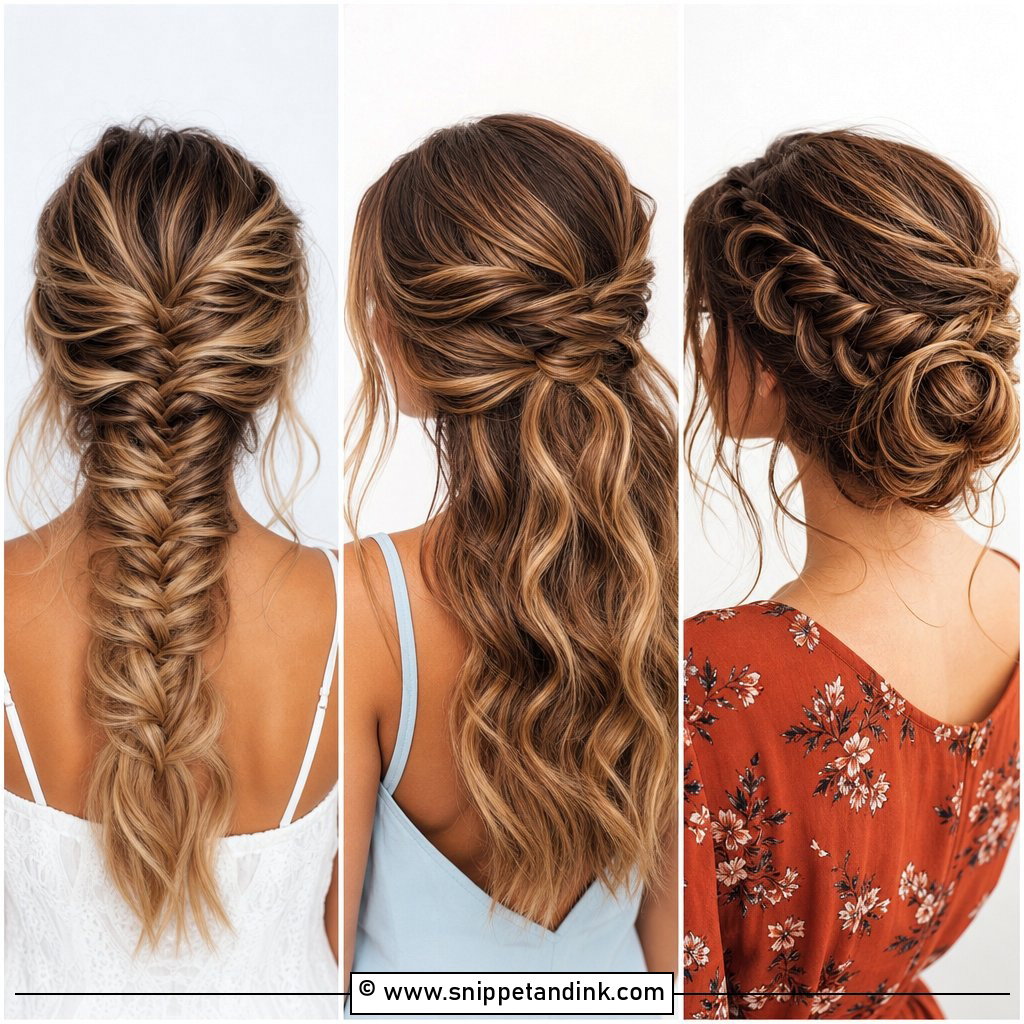
Braids pull double duty in a loose updo. They add texture, and they also lock down layered hair, because shorter layers that would escape a plain bun get caught in the plait. The braid can wrap into a low bun, blend into a twisted chignon or cross the crown. I braid first, then gently pull the edges of each loop to widen it, a technique called pancaking. A few soft tendrils around the face keep it from looking schoolgirl-tidy.
5. Loose Side Updo Wedding Hair
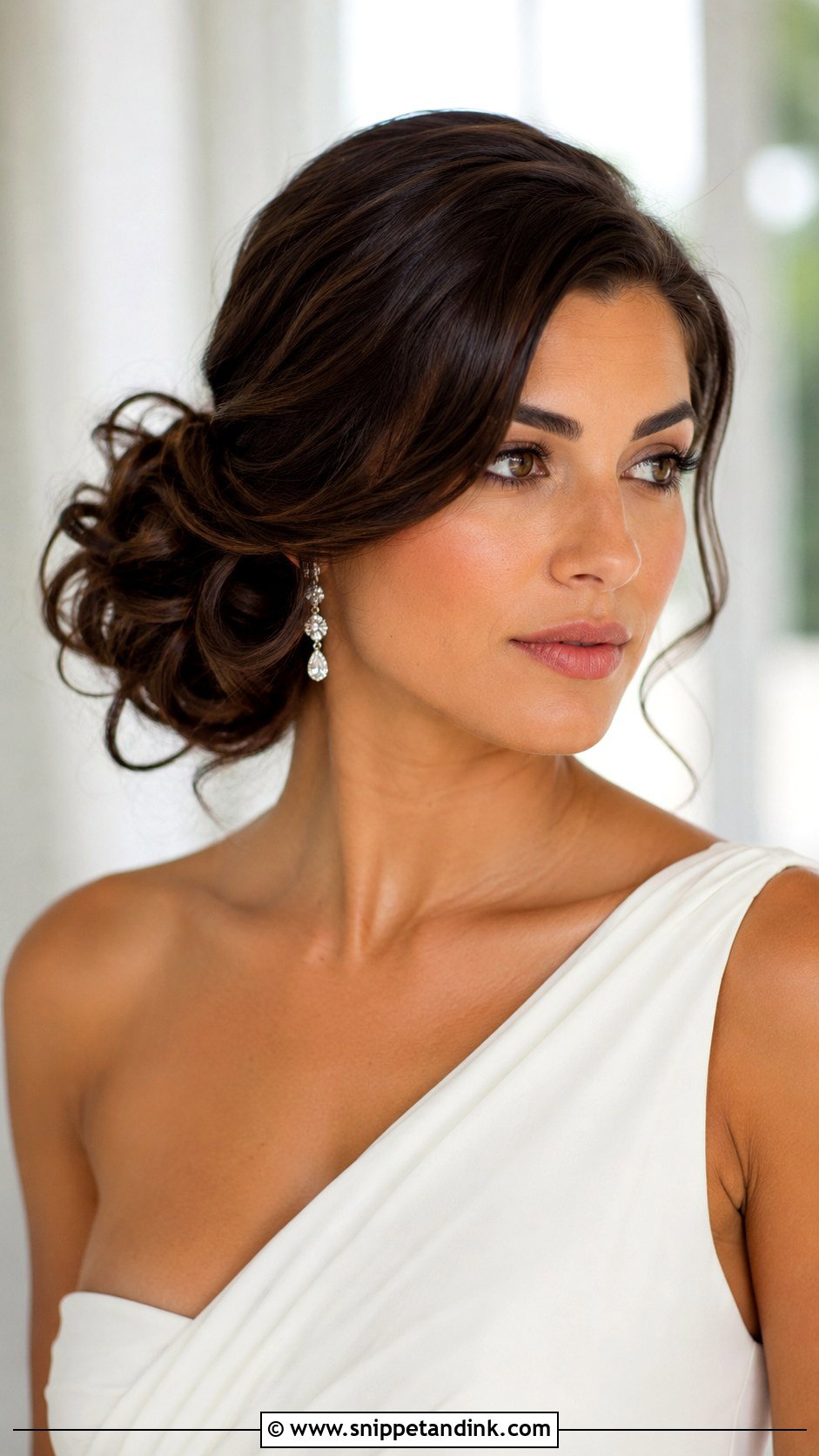
The side updo is the one to choose if you want your hair visible from the front in vow photos, since a centred bun disappears from straight on. The hair gathers low on one side of the nape. Put it on the side opposite your partner at the altar, so the camera sees both your face and the updo. One-shoulder gowns and a strong earring on the bare side balance it well. Curly, twisted or knotted finishes all work, depending on texture.
6. Loose Updo Wedding Hair With Veil
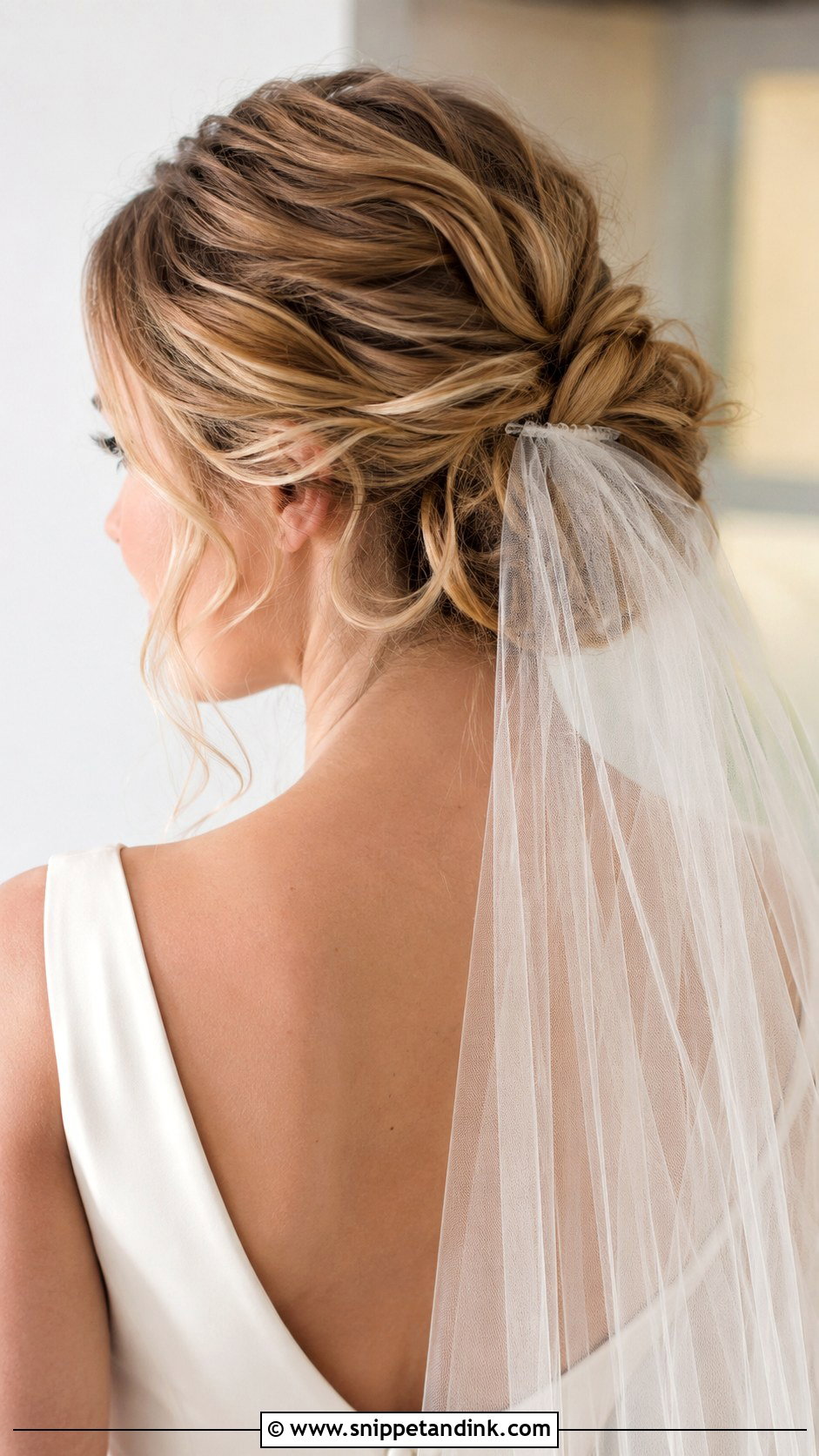
The veil is the reason many loose updos fail early. A soft bun doesn’t give a comb anything solid, so I build a small pinned base, usually a tight twist or a mini ponytail, exactly where the comb will sit. Low buns, chignons and textured knots let the veil sit above or below. If the veil is coming off after the ceremony, tell your stylist at the trial so the comb is removed without dragging pieces out with it. Front tendrils keep the look finished once the tulle is gone.
7. Loose Updo Wedding Hair With Flowers
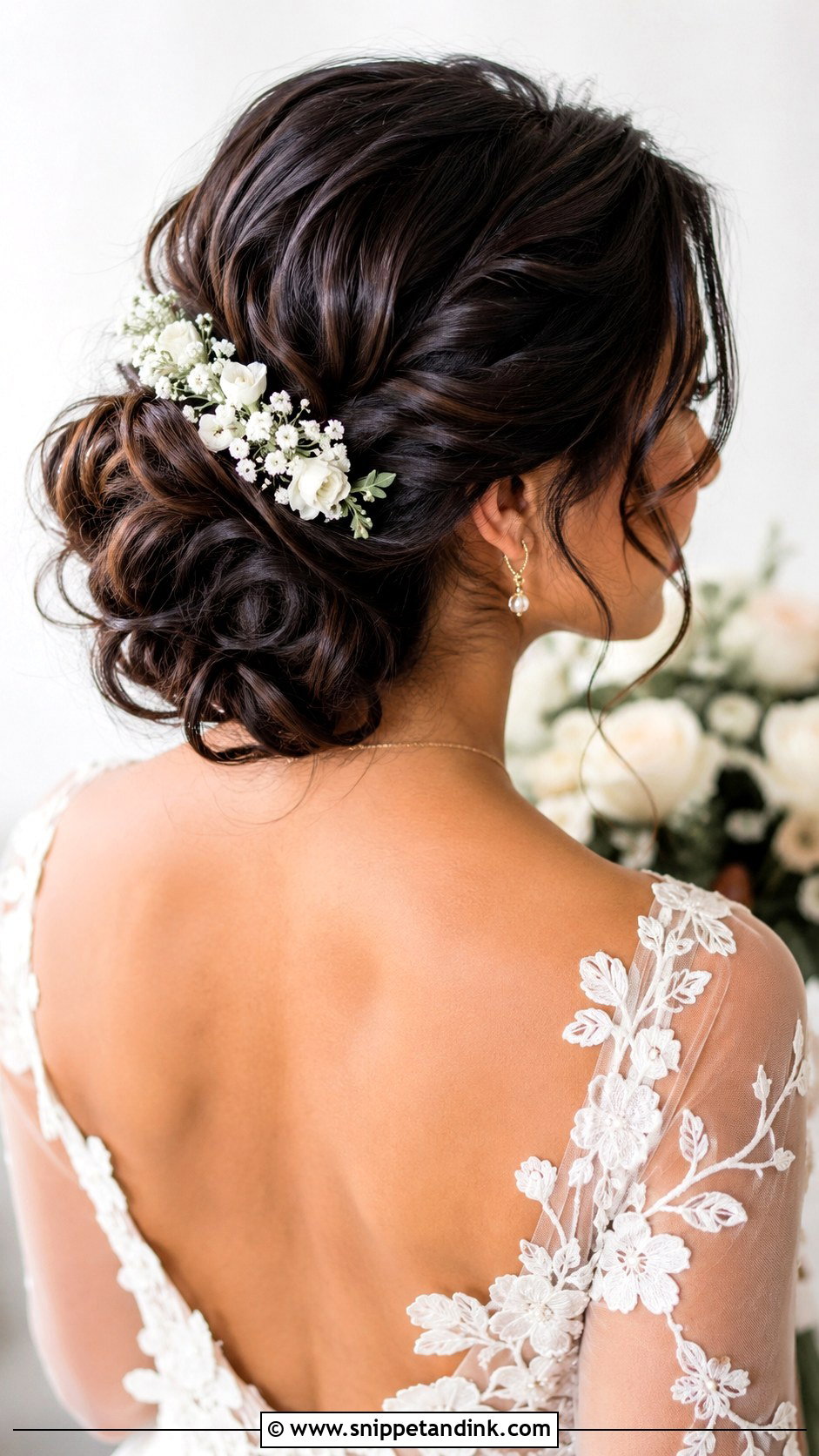
Flowers suit a loose updo better than a polished one, because the texture gives stems something to tuck into. They can sit around a low bun, in a braid or along one side. Fresh blooms wilt in heat, so I ask the florist for hardier stems wired short and keep them out of the sun until the last moment. Baby’s breath, mini roses, orchids and small wax flowers all hold reasonably well. Match them to the bouquet so the hair doesn’t look like a separate idea.
8. Loose Twisted Updo Wedding Hair
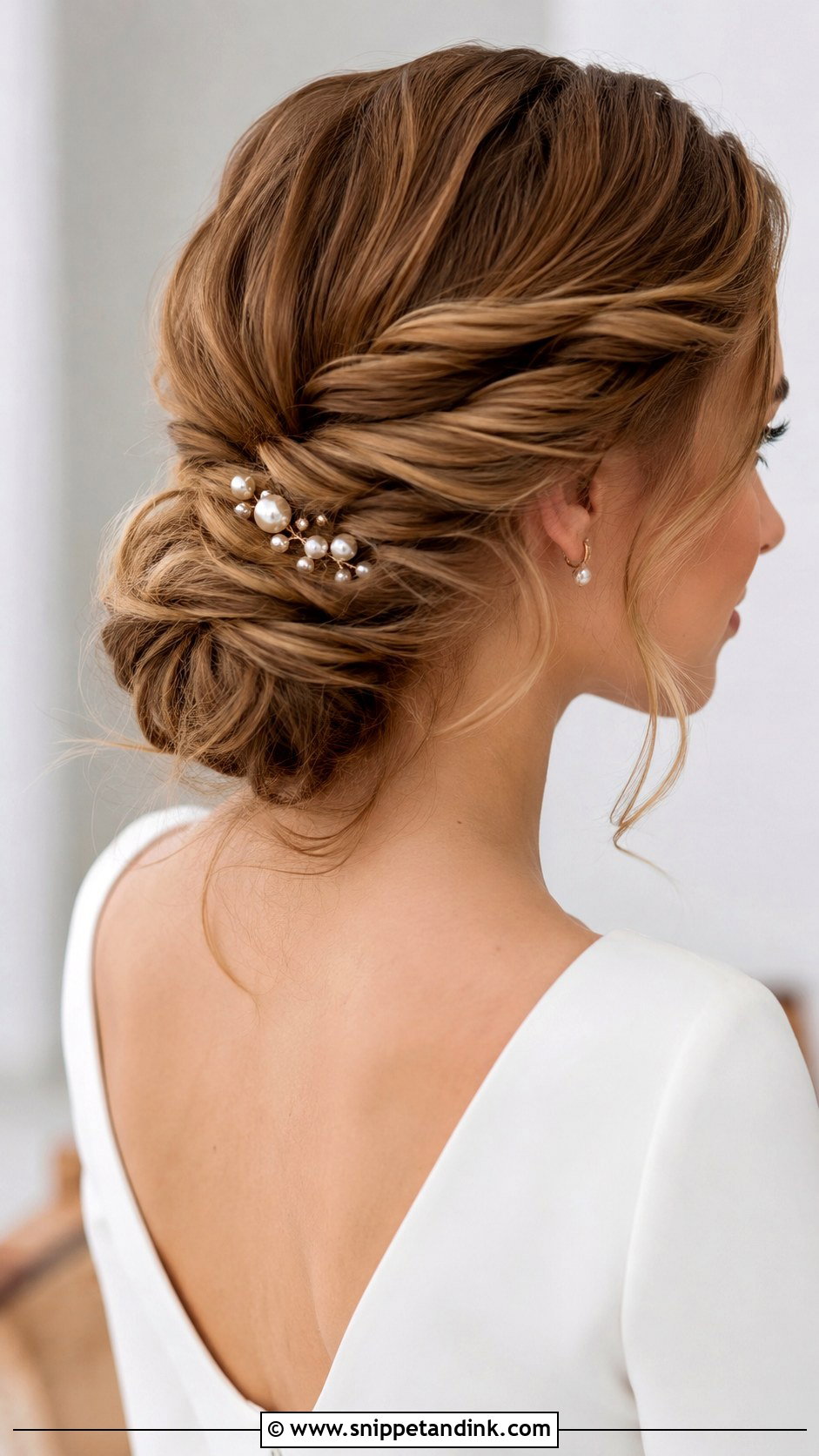
Twists are my go-to for fine hair that needs to look fuller. A twisted section is bulkier than the same section smoothed back, and the ridges give shape without a weave pattern. Thick hair benefits too, because twisting packs it down neatly. I twist each section back toward the bun, pin it at the base, then loosen the ridges slightly with my fingertips. Pearl pins or a crystal comb finish it.
9. Loose Messy Bun Wedding Hair
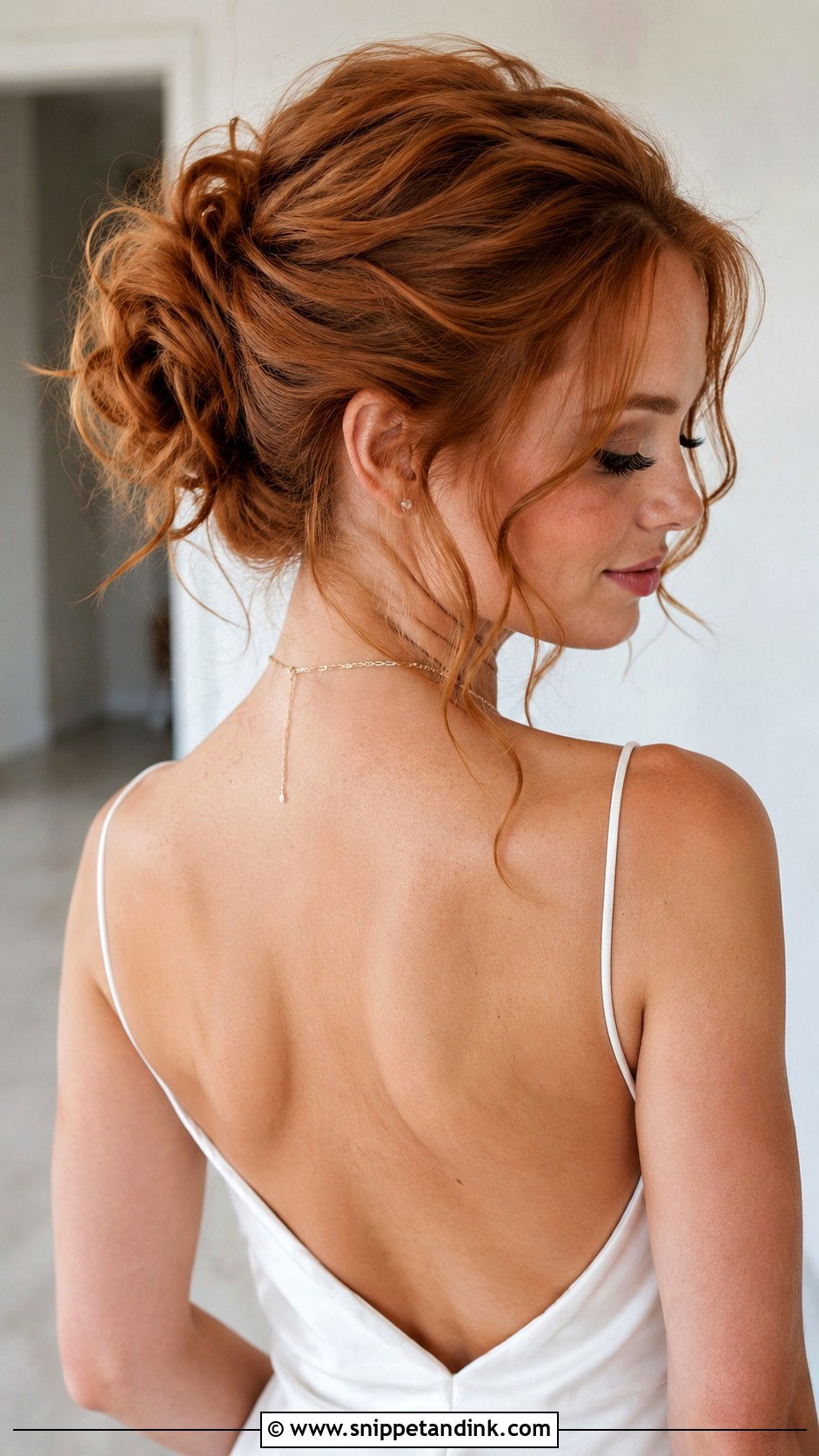
Nobody wants a messy bun that is actually messy. The version that works is built from waved hair, pinned with plenty of grip, and then pulled apart in specific places so it looks relaxed. The texture is a decision, not an accident. Height depends on your neck and dress; I place it so the bun sits level with the ear in profile, then raise or lower from there. Boho and simple gowns suit it. Long-wear spray and strong pins are not optional, because a messy bun that loosens further just looks dropped.
10. Loose Updo Wedding Hair For Long Hair
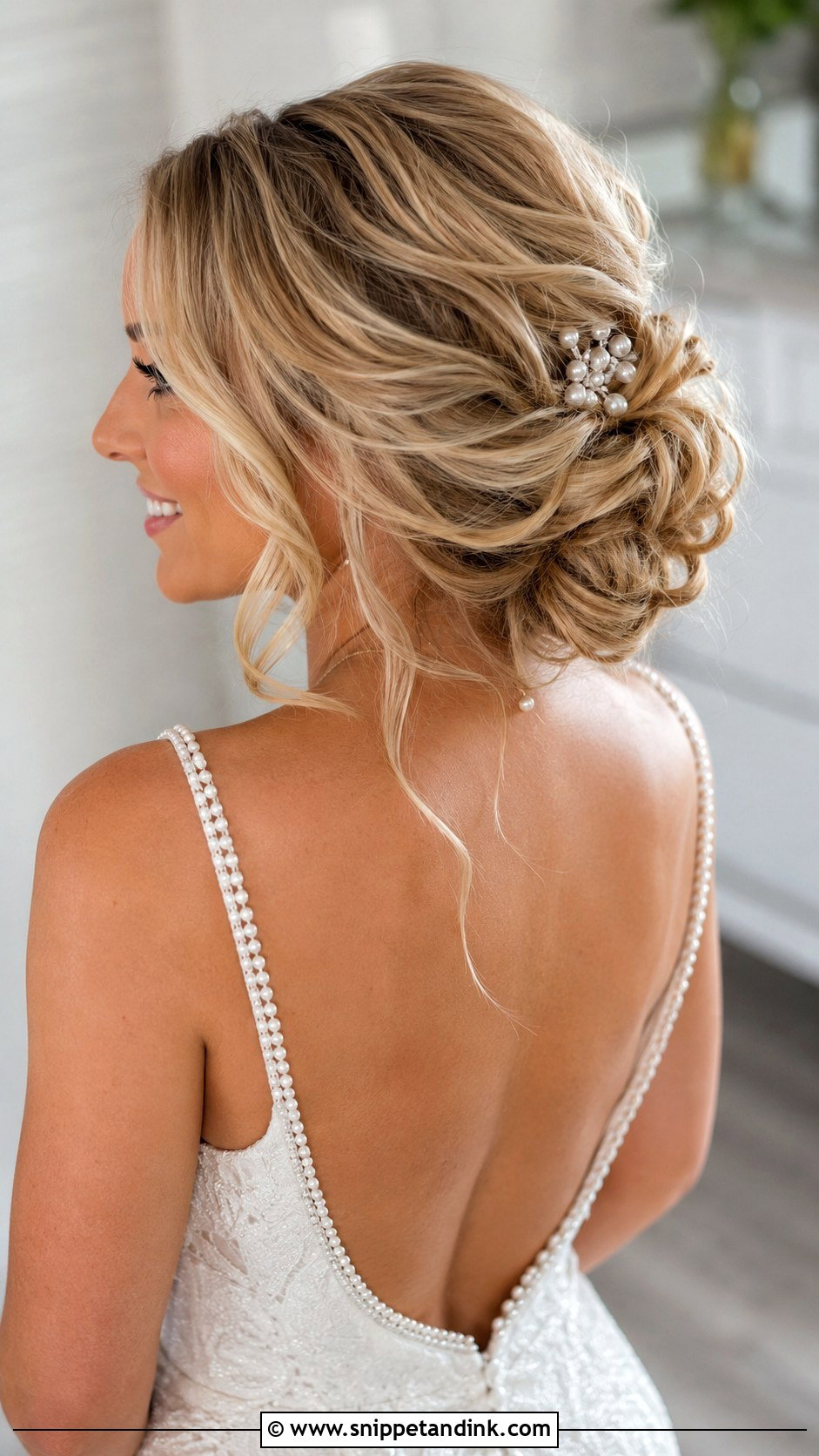
Long hair gives the most volume but is also the heaviest to put up, and a long-hair updo that hangs off one elastic will give you a headache by the reception. I split the hair into two or three anchored sections so the weight spreads across the back of the head. The length can wrap into a full low bun, a curled chignon or a layered twist. Curl the face-framing pieces to match the rest, so they don’t look like leftovers.
11. Loose Updo Wedding Hair For Medium Hair
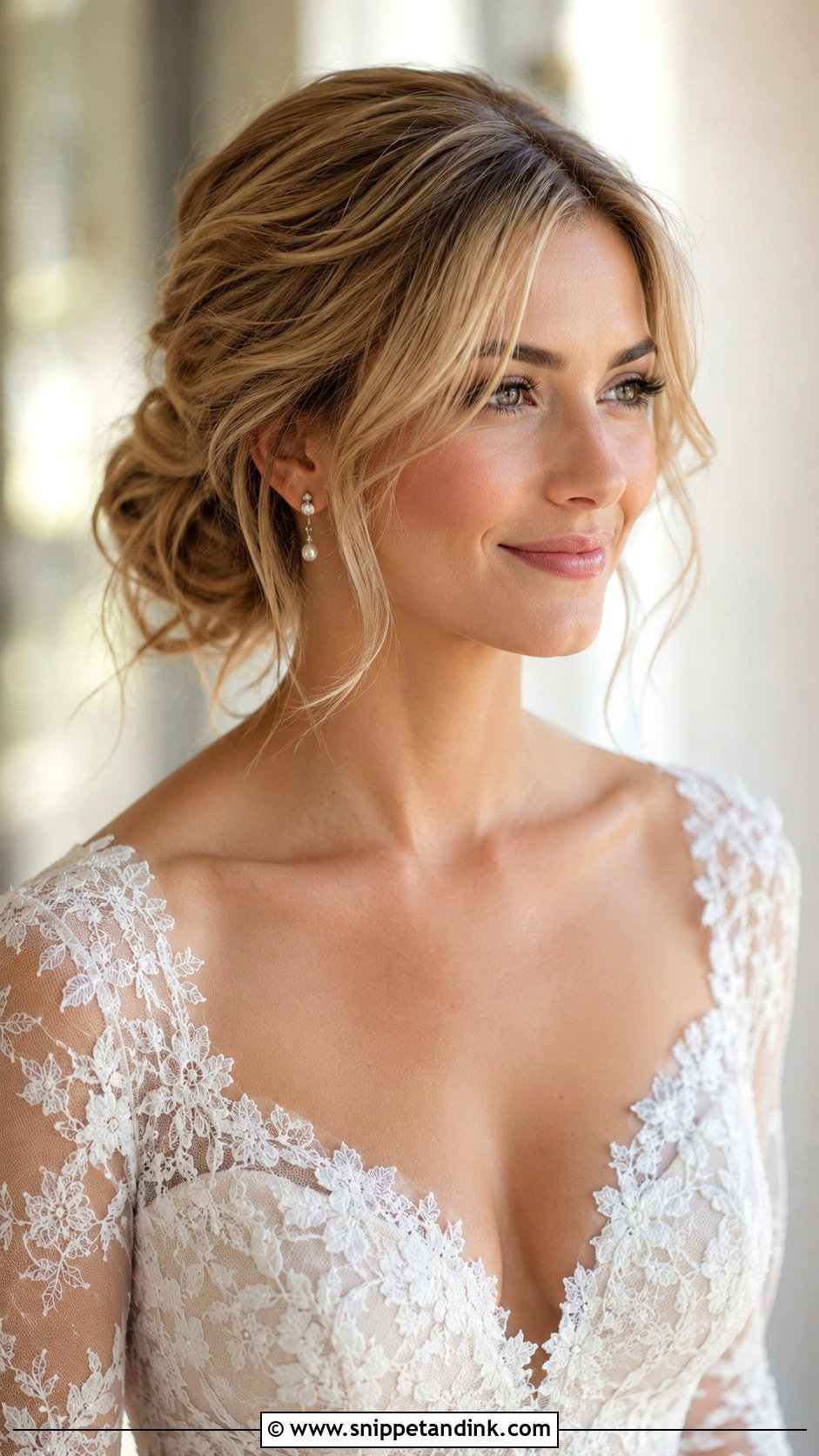
Shoulder and collarbone lengths can absolutely go up, but there’s less hair to build a shape from. I curl first so the hair has more body, then pin it into a low knot or soft chignon. When there isn’t enough to make a full bun, a small padding piece or two clip-in wefts fill it out without looking added on. Focus on movement rather than size. Veils and small combs suit it well.
12. Loose Updo Wedding Hair With Bangs
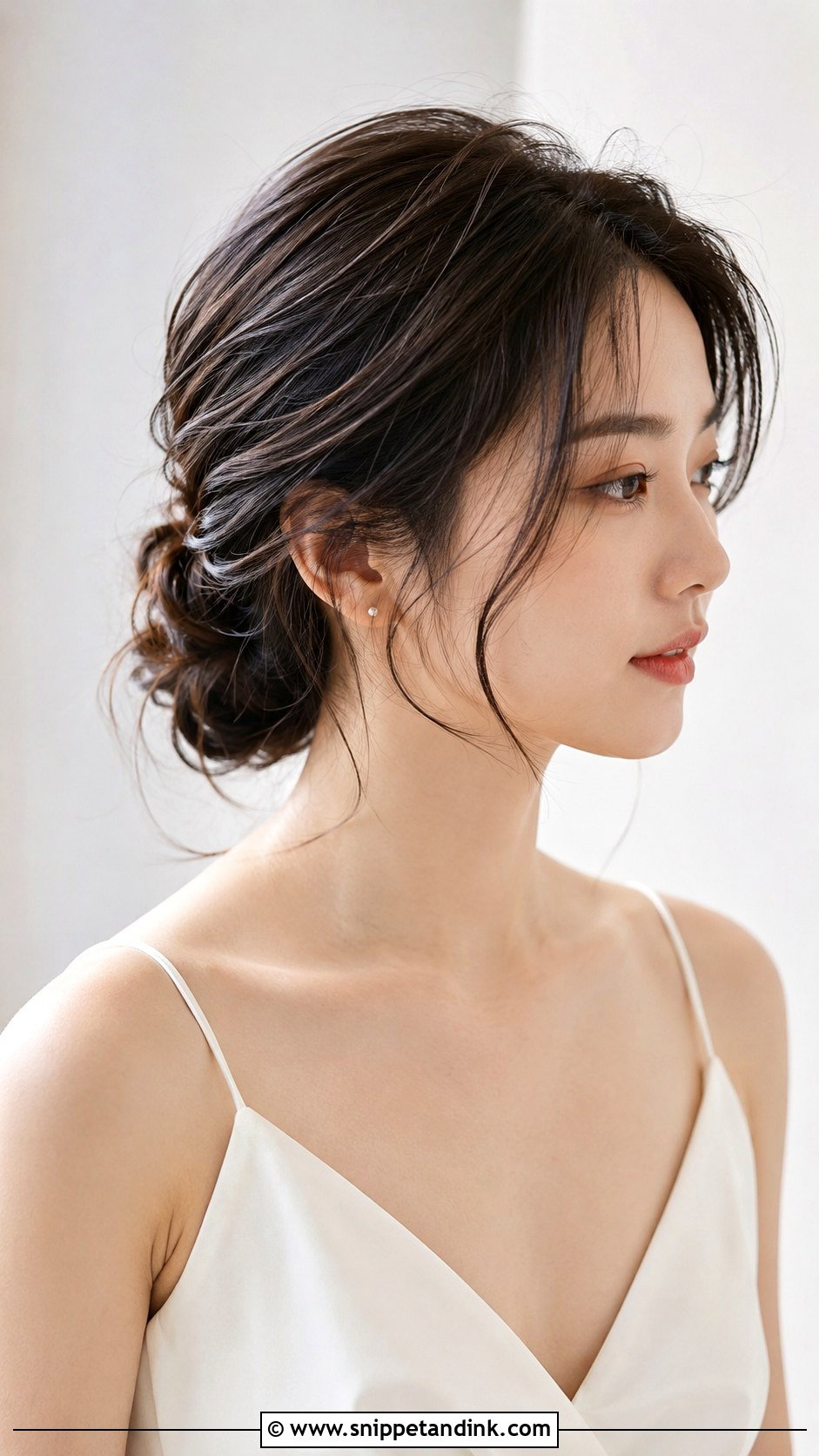
If you wear curtain bangs, wispy bangs or a full fringe every day, build the updo around them rather than pinning them back. Brides who sweep their fringe away for the wedding often don’t recognise themselves in photos. Get the fringe trimmed about a week ahead so it has settled, not the day before. I style it with a round brush rather than an iron so it moves. A little height at the crown balances the face with a fringe.
13. Loose Updo Wedding Hair With Face Framing Pieces
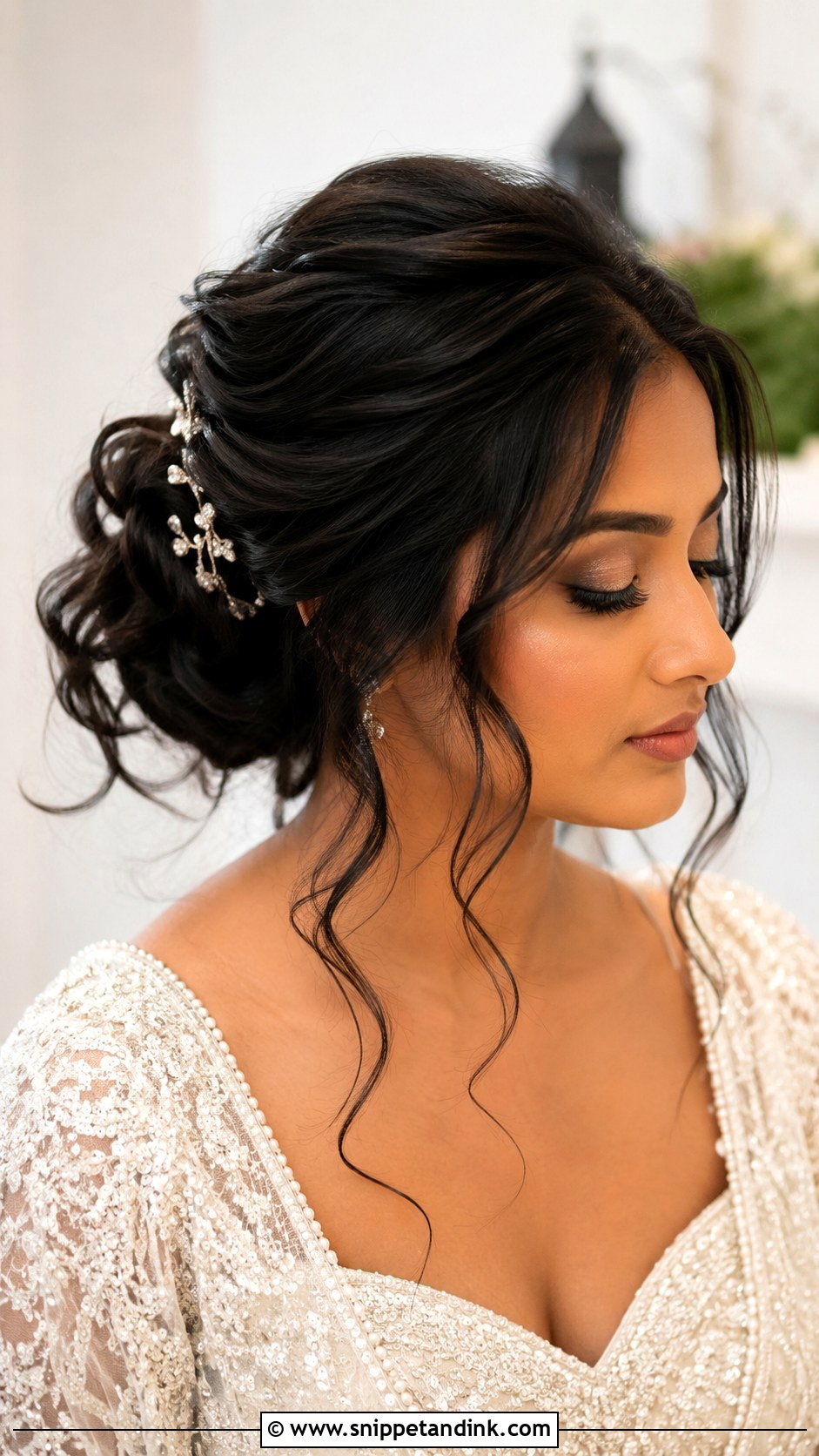
Face-framing pieces decide whether a loose updo looks soft or simply unfinished. Too many strands and it reads as falling down; too few and it turns strict. I usually leave one or two pieces per side and cut them into position only after the updo is complete, matched to the cheekbones, jaw and part. They work with buns, braids, chignons and twisted knots. I check them in close-up and in profile before anything is sprayed.
14. Loose Boho Updo Wedding Hair
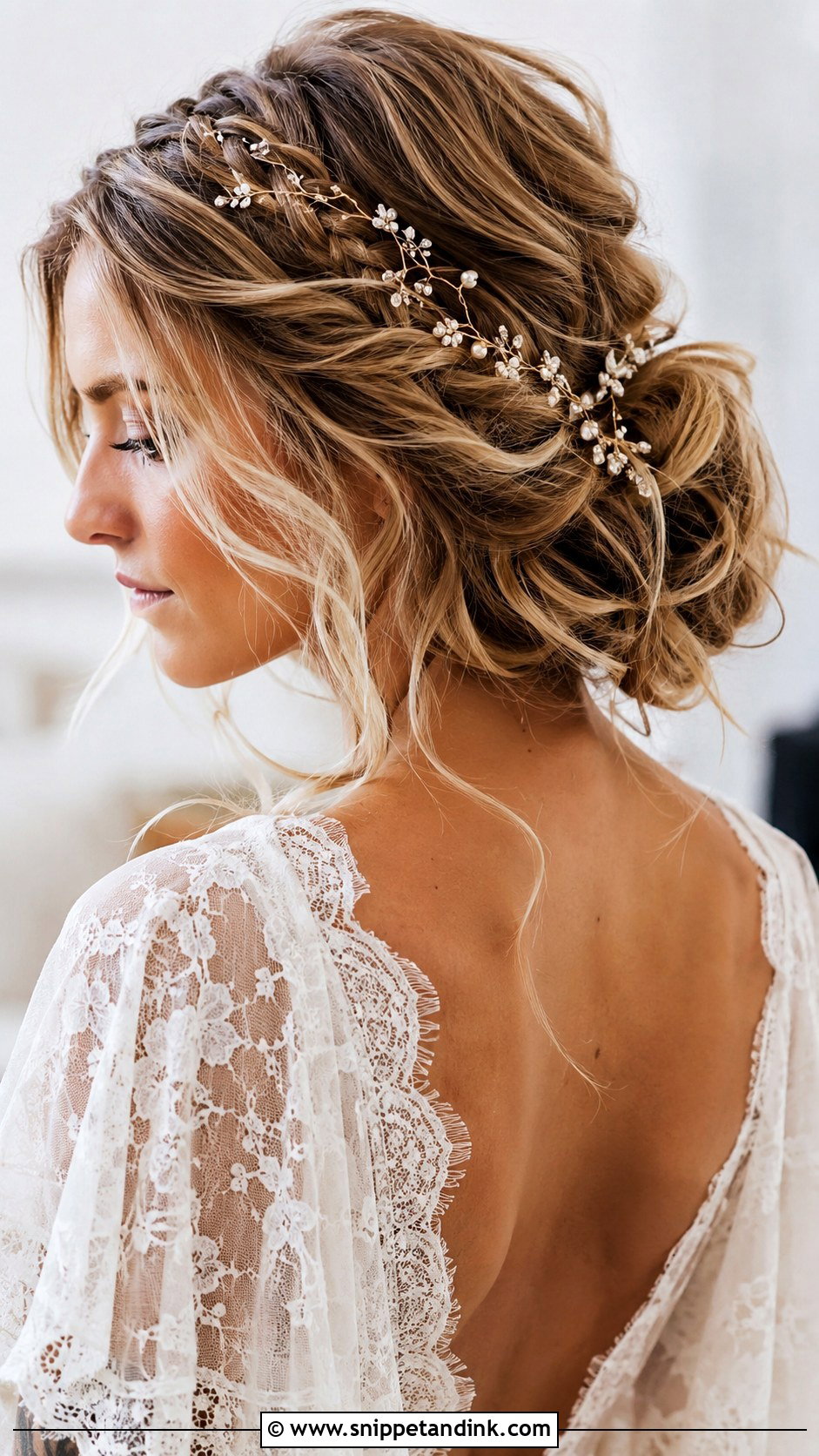
Boho updos mix small braids, twists and waves into a shape that looks gathered rather than built. Outdoor, rustic and beach weddings suit it. Hard-hold spray works against the look, so I set each section with grip spray and texture powder while building, and finish lightly. Tiny flowers, pearl pins or a delicate vine can sit in the texture without dominating it. Start with waves so the braids have somewhere to sit.
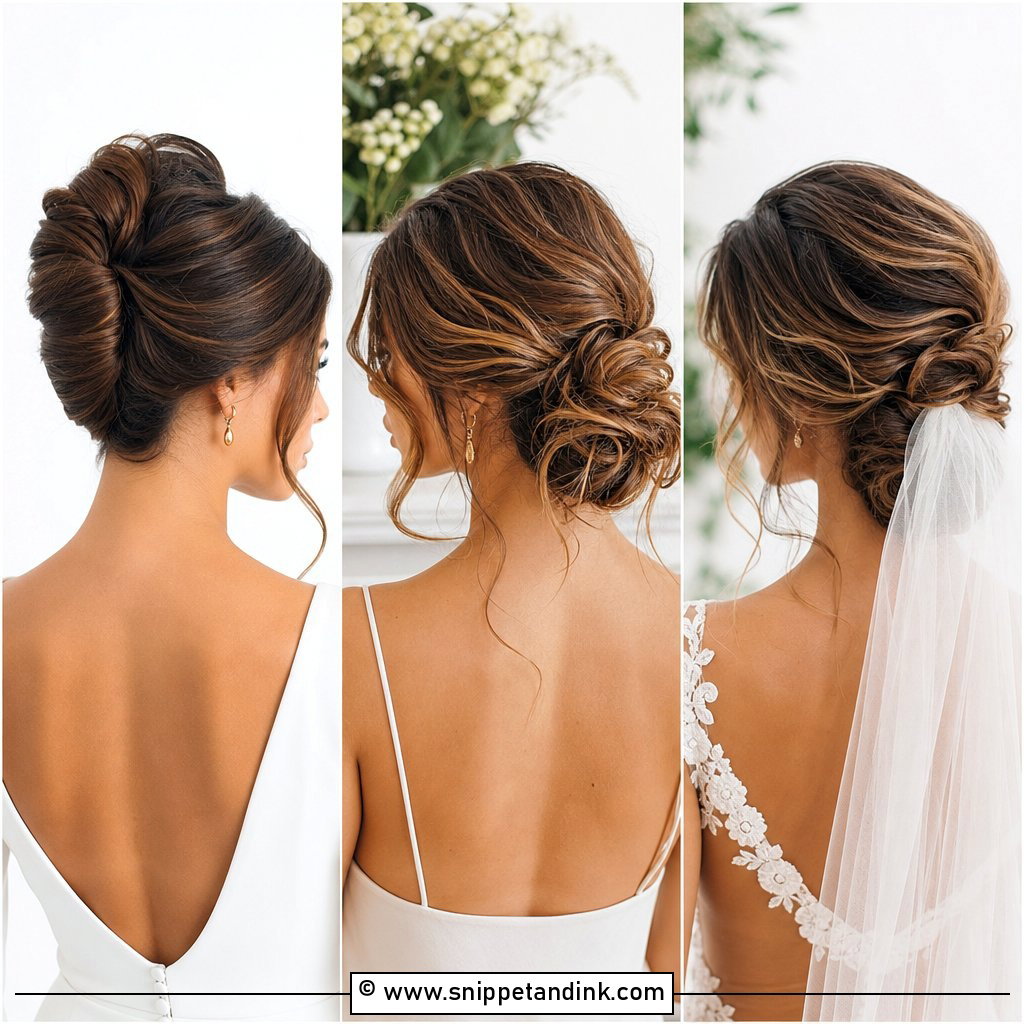
15. Loose High Updo Wedding Hair
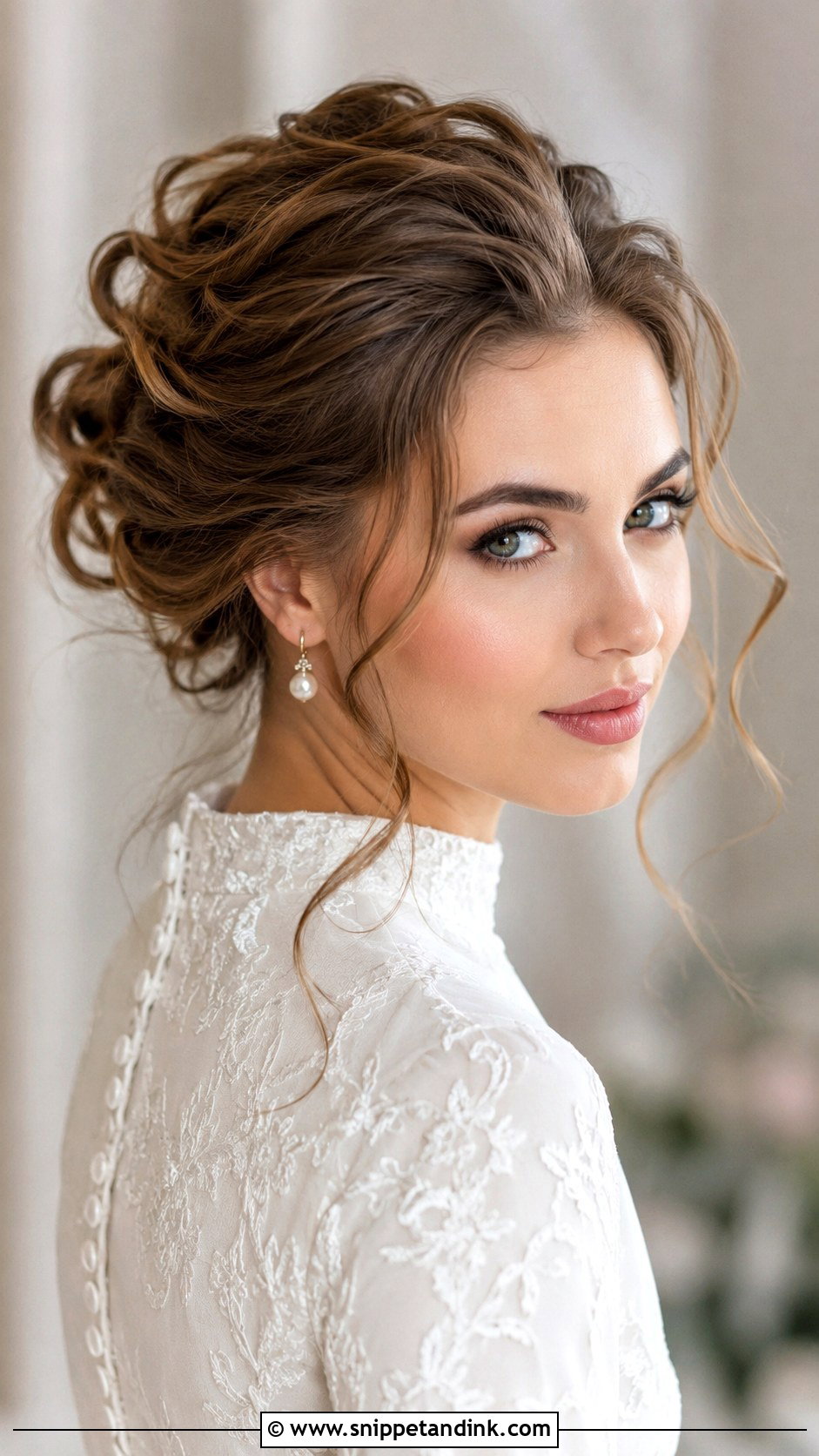
A high loose updo gives height without the ballerina-bun tightness. It balances a high neckline or busy bodice and keeps hair off the neck on hot days. Because it’s at the crown, gravity works against it. I anchor it with a small ponytail or hidden twist underneath so the soft outer layer has something to grip. Face-framing tendrils keep it from looking strict. It can feel heavy with a full cathedral veil, so test both together.
Saying “Messy” to a Stylist Without Getting a Bird’s Nest
Words like messy, undone, soft and textured mean very different things to different stylists. The clearest briefs I get are visual: three photos of what you like, and one or two of what you don’t. The second set is often more useful, because it shows me where your limit is.
Point at specific parts of a picture. Is it the smooth hairline you like, or the loose ends at the nape? Is the volume on top or at the back? I’d also ask yourself how your hair looks when you put it up on a normal day. If you always pull a few strands down, you’ll probably want them on the day too.
What loosening is normal by the reception
A soft updo will relax over a long day, and some of that is welcome. A few extra pieces around the face, a slightly lower bun and softer curls are normal. A bun that has sagged toward the collar, or a veil comb hanging at an angle, is not. Keep a few matching bobby pins and a mini spray with whoever holds your bag, and ask a bridesmaid to check the back of your hair before the evening photos.
A Soft Updo Is Only as Good as Its Base
Loose updos sit between down hair and a sculpted style, and that middle ground is why they need more planning than they look like they do. Low buns, curly chignons, braids, side styles and high knots all work when the base is right and the texture is prepped. Bring several saved photos to your trial and say what you like in each one, and what you don’t. Discuss veil placement, weather and how many front pieces you want. Then wear the trial style for the rest of the day to see where it loosens.
You'll Like These Ideas:



Leave a Reply