
Bangs do half the framing work before I’ve touched the rest of the hair, which is why brides with a fringe often need less styling than they expect. The fringe changes how every shape reads. Curtain bangs take the edge off a formal updo, a wispy fringe makes waves feel lighter, and a blunt one gives a classic bun a sharper, fashion-led look. What bangs do need is planning: they’re the part of your hair closest to your skin, makeup and veil, and the first part to react to heat and humidity.
Makeup, Forehead Oil and a Fringe That Splits by Lunch
The thing that ruins bridal bangs most often isn’t the hair. It’s what’s underneath. A fringe rests on your forehead for hours, picking up skincare, primer, foundation and natural oil, and by early afternoon it separates into greasy sections. Brides without bangs never have this problem, so it’s easy to overlook.
Talk to your makeup artist about it. I ask for a light, mattifying base on the forehead and a dusting of setting powder where the fringe sits, with richer skincare kept to the cheeks. Hair and makeup timing matters too: if the bangs are styled before foundation goes on, they get pinned up out of the way and finished last.
On the day, a small amount of dry shampoo at the root of the fringe absorbs oil before it shows. Blotting papers for your forehead help as well, and they’re better than touching the bangs with your fingers, which adds more oil. If it’s hot, a tiny clip to lift the fringe off your skin between photos keeps it fresh.
1. Wedding Updo With Curtain Bangs
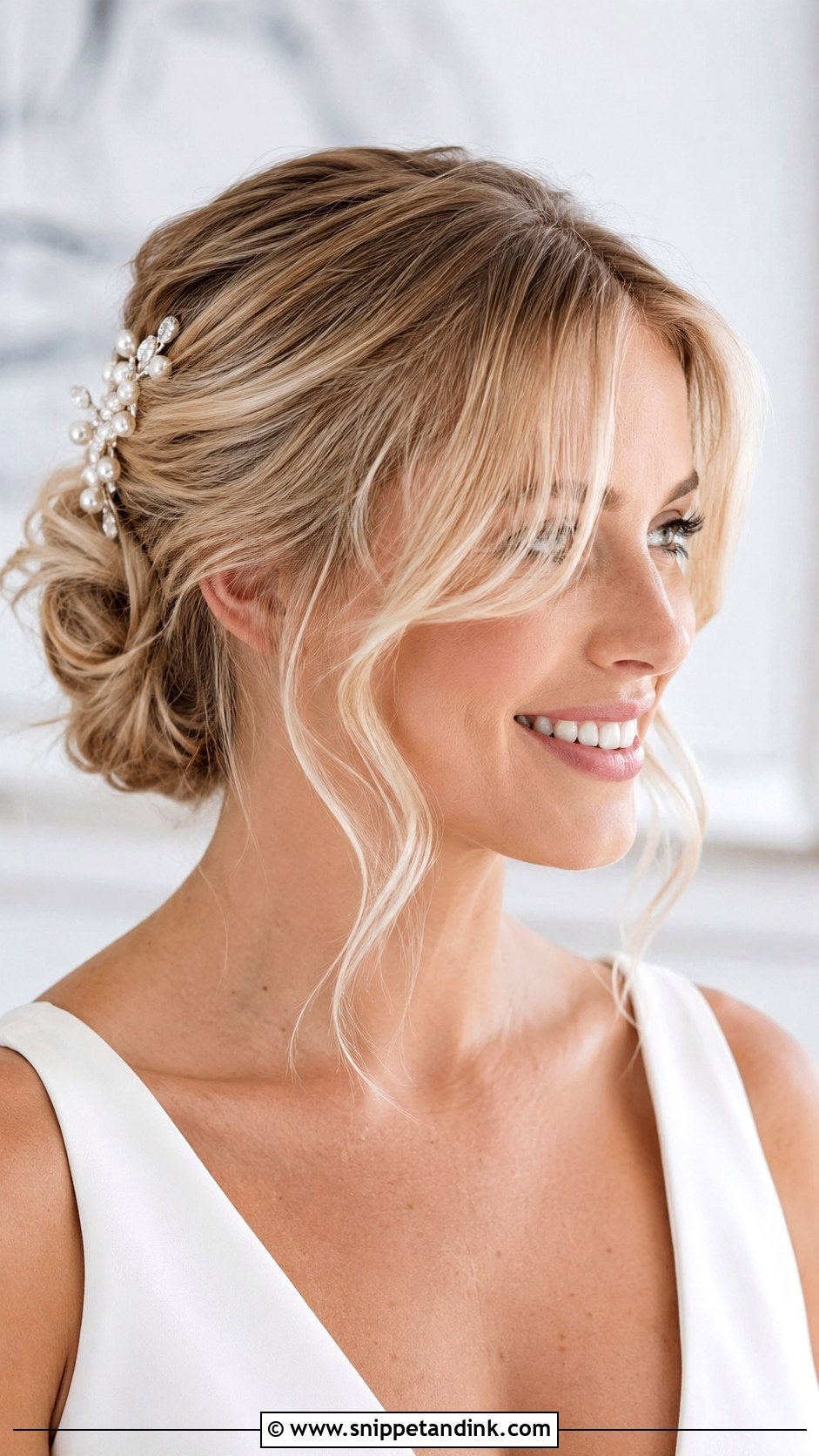
Curtain bangs and an updo are the combination I’m asked for most, because the fringe softens everything pulled back behind it. I blow-dry the bangs first, over a round brush and away from the center, before building a low bun or loose twisted updo. Doing them last means they’ve been crushed under clips for an hour. On medium to long hair, I pull a few face-framing pieces from just behind the bangs and curl them in the same direction so the fringe blends into the updo instead of sitting on top of it like a separate piece.
2. Wedding Low Bun With Bangs
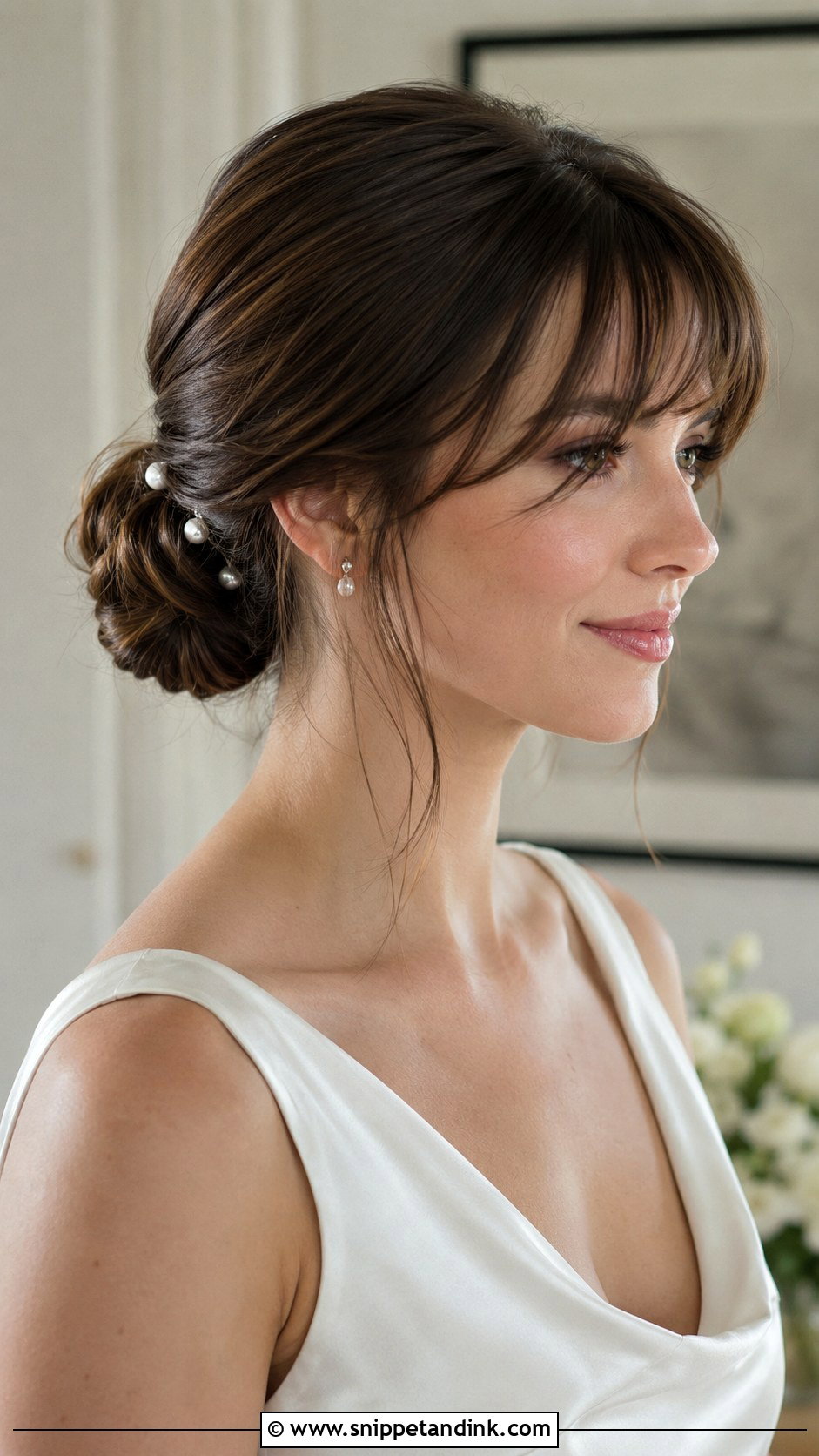
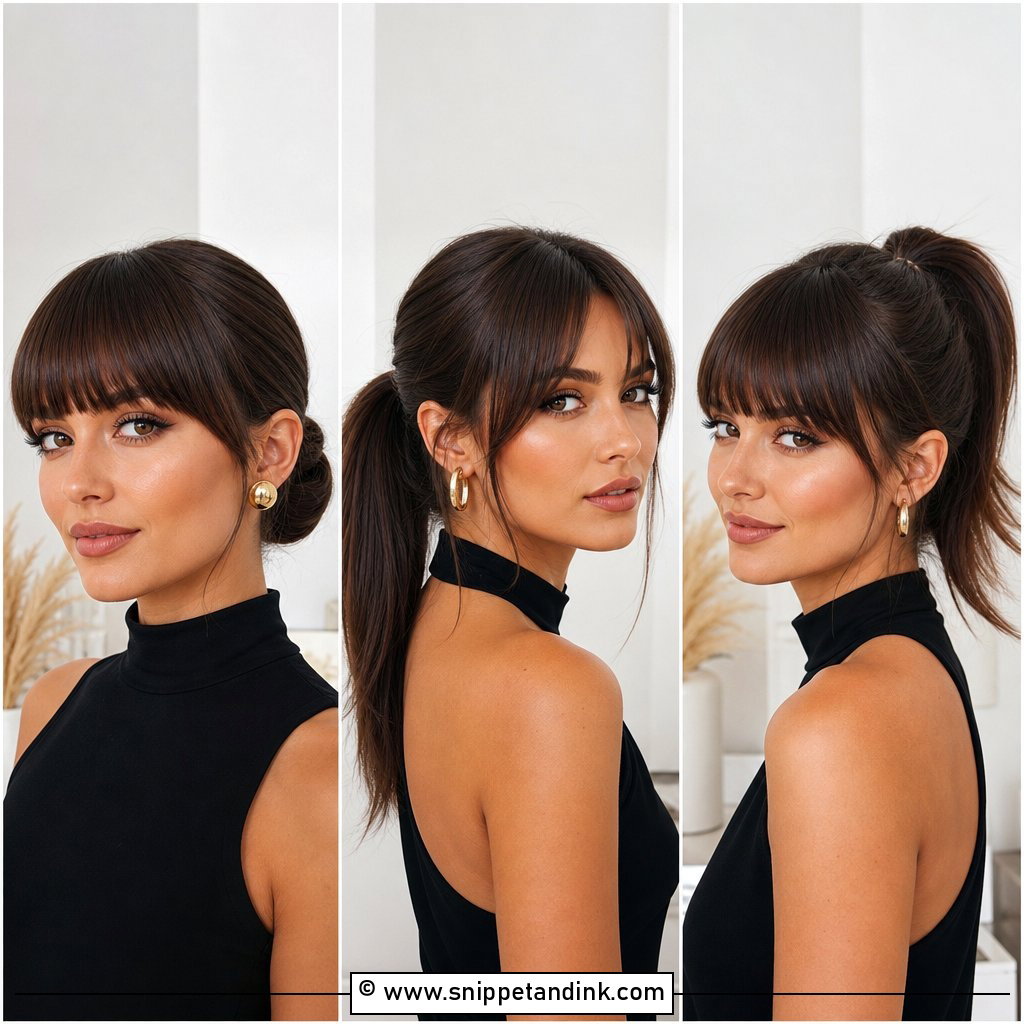
Sitting at the nape, a wedding low bun with bangs is the most comfortable pairing in this list, and the fringe stops a smooth bun looking severe from the front. Wispy or side-swept bangs suit it best. Fine hair can still manage a full bun here; I texturize the lengths or tuck in a small form. Keep spray on the bangs to a light mist from a distance, as a direct blast makes them clump.
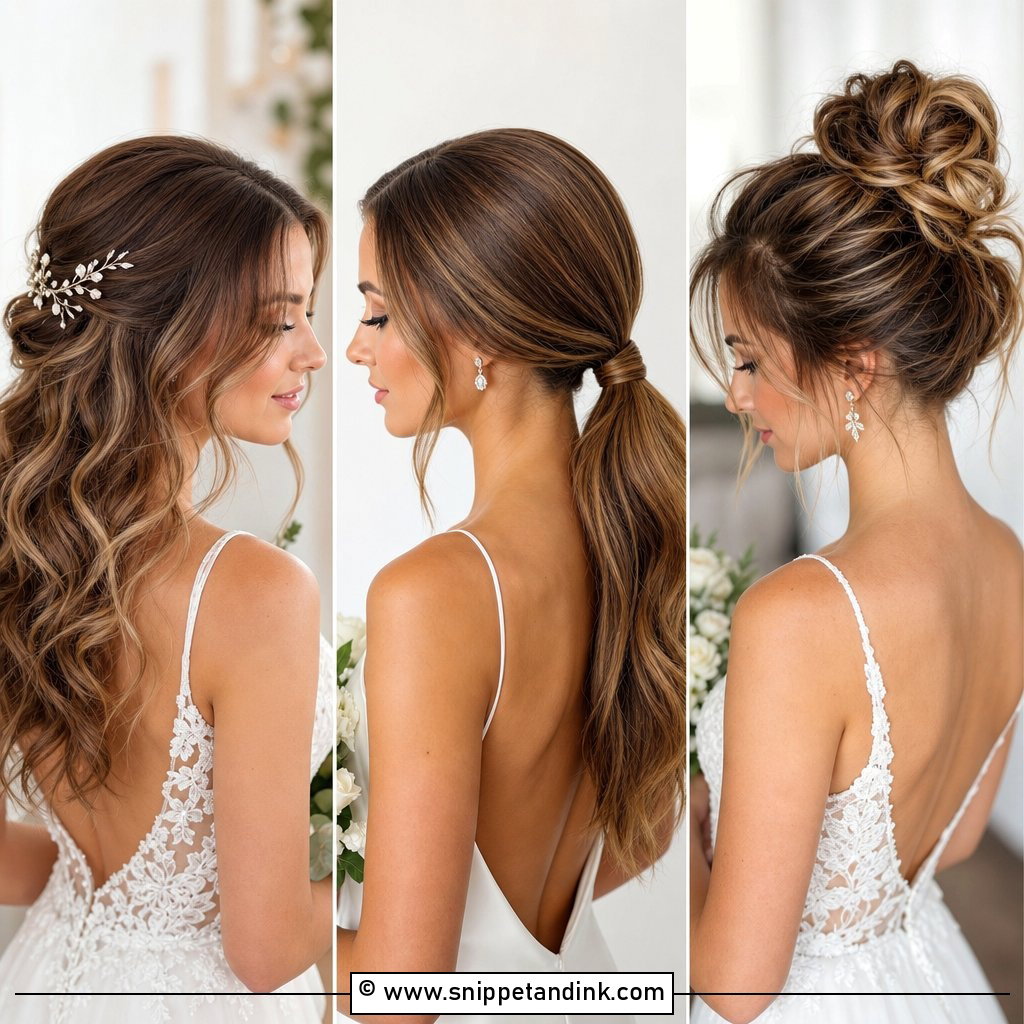
3. Wedding Half Up Half Down With Bangs
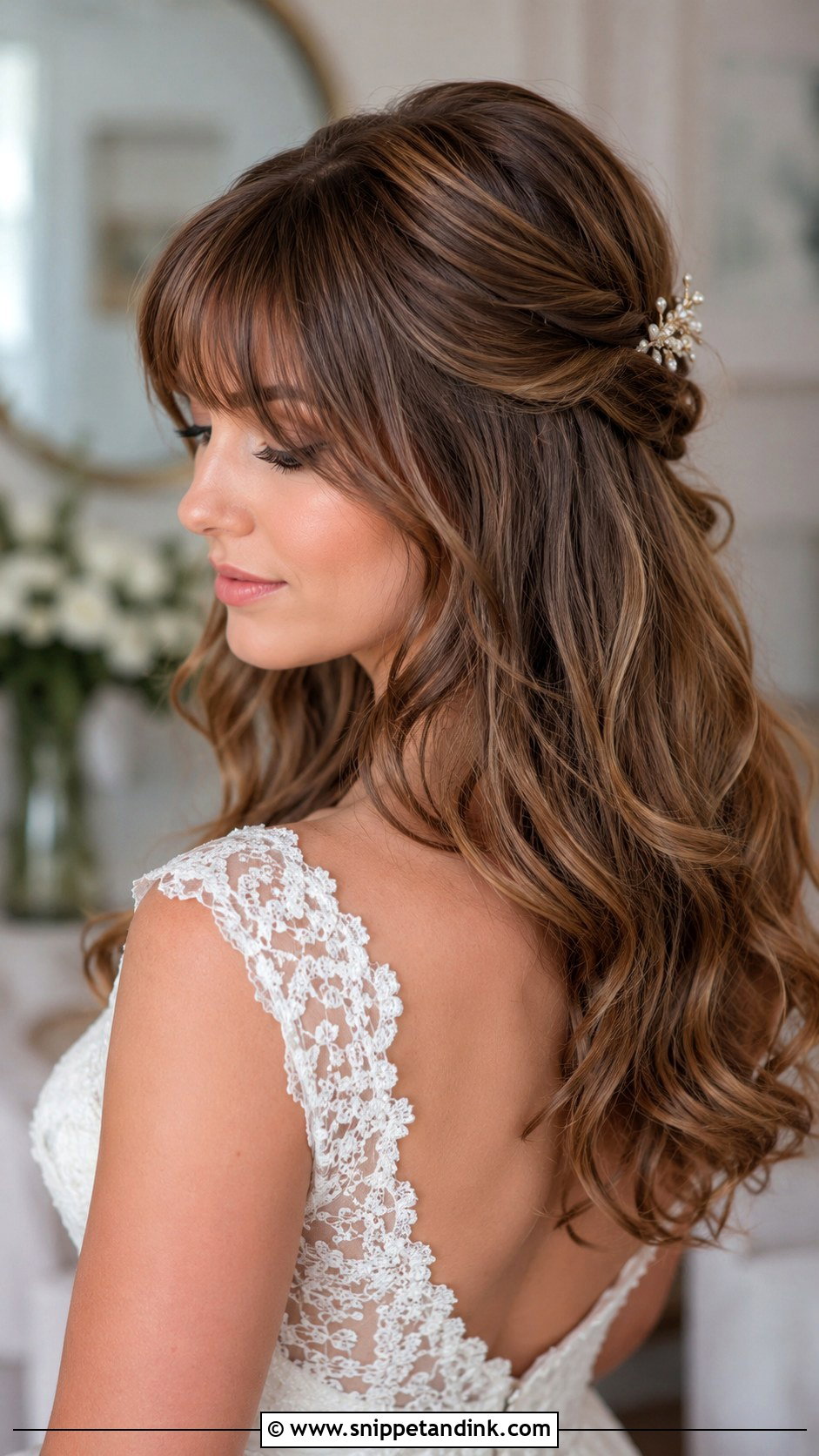
With bangs, a half up style needs less height at the crown than usual, because the fringe already gives the front some shape. I take a smaller top section, twist it back and pin it, then wave the lengths. If the crown gets too much volume, the look becomes top-heavy under a fringe. There’s plenty of room behind the twist for a veil comb or a delicate barrette.
4. Wedding Ponytail With Bangs
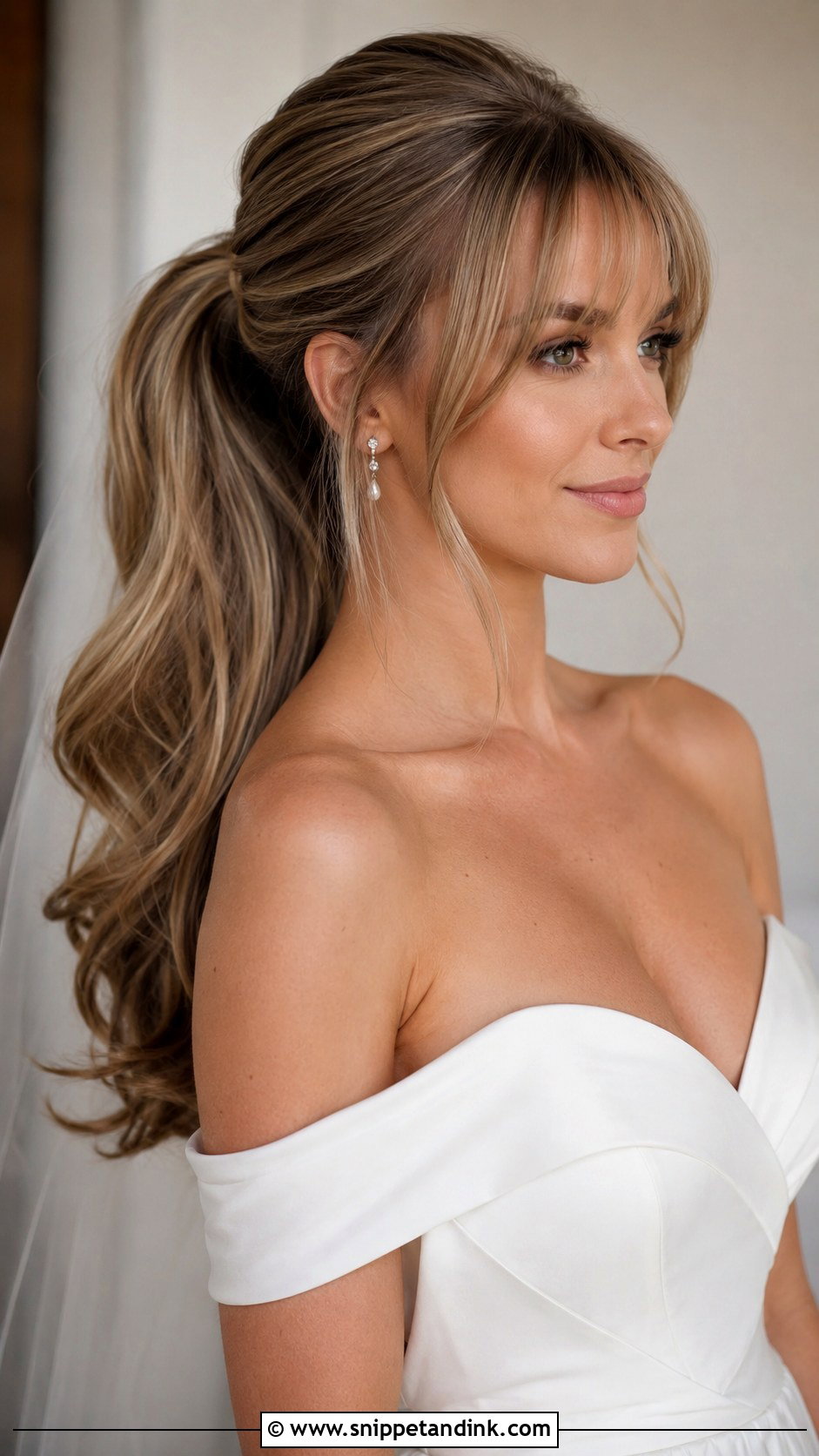
A ponytail with bangs is one of the more modern pairings, and the fringe means the face never looks bare with a strapless or minimal dress. Height changes the mood: high is dramatic, mid is balanced, low is softer. I wrap a section of hair around the elastic, then curl the length. Extensions help if your ponytail looks thin, since a full tail reads more formal. It holds for hours of dancing; the bangs are what will need a touch-up, not the ponytail.
5. Wedding Chignon With Side Bangs
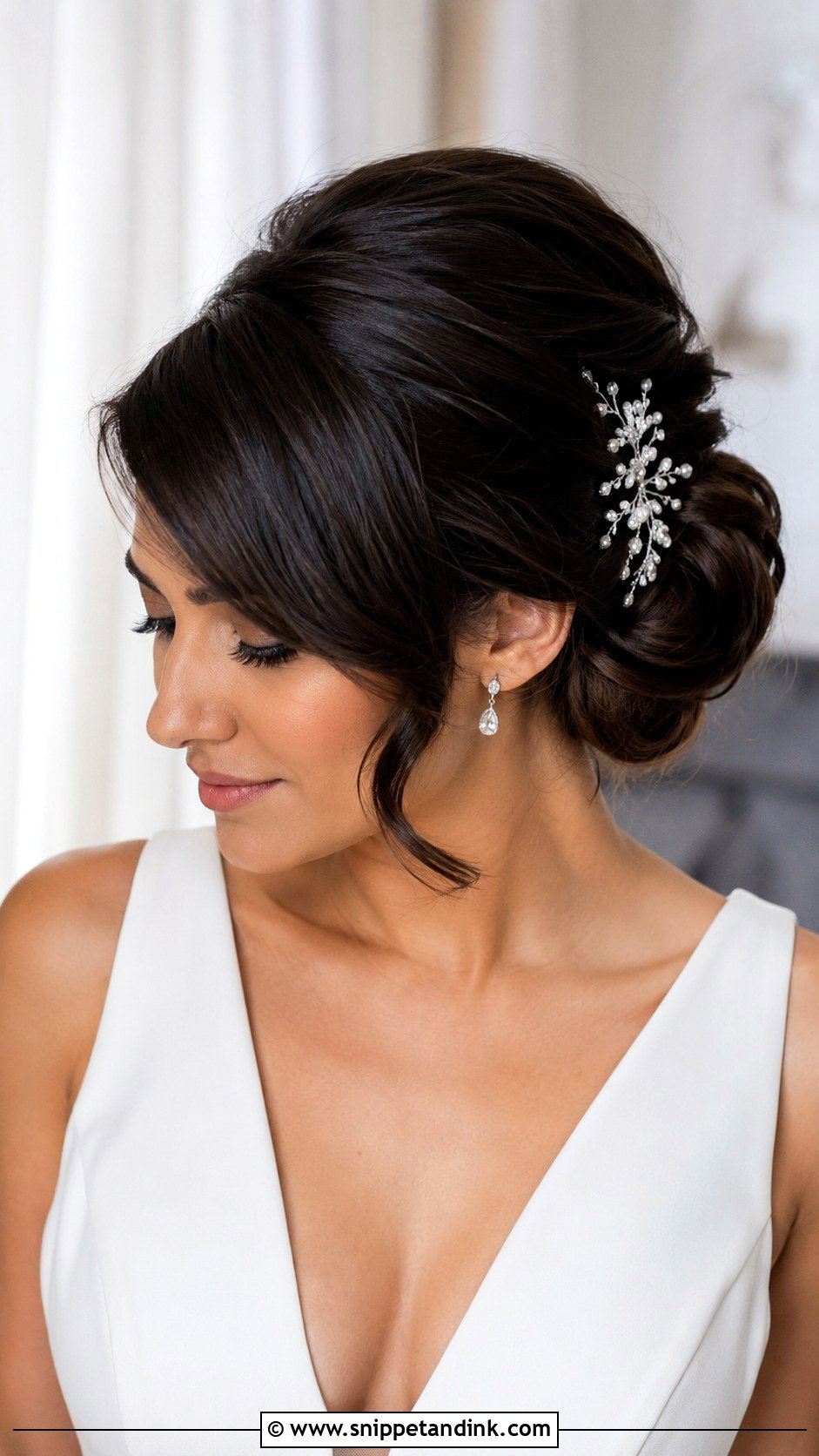
Side bangs and a low chignon are a natural match because the sweep of the fringe leads the eye straight into the bun. If you don’t want the full coverage of a heavy fringe, this gives you some softness at the forehead without it. I set the side bangs with a large Velcro roller while I work on the chignon, which gives them a soft curve that lasts. Keep the bun sleek for a formal venue and looser for a garden.
6. Wedding Waves With Bangs
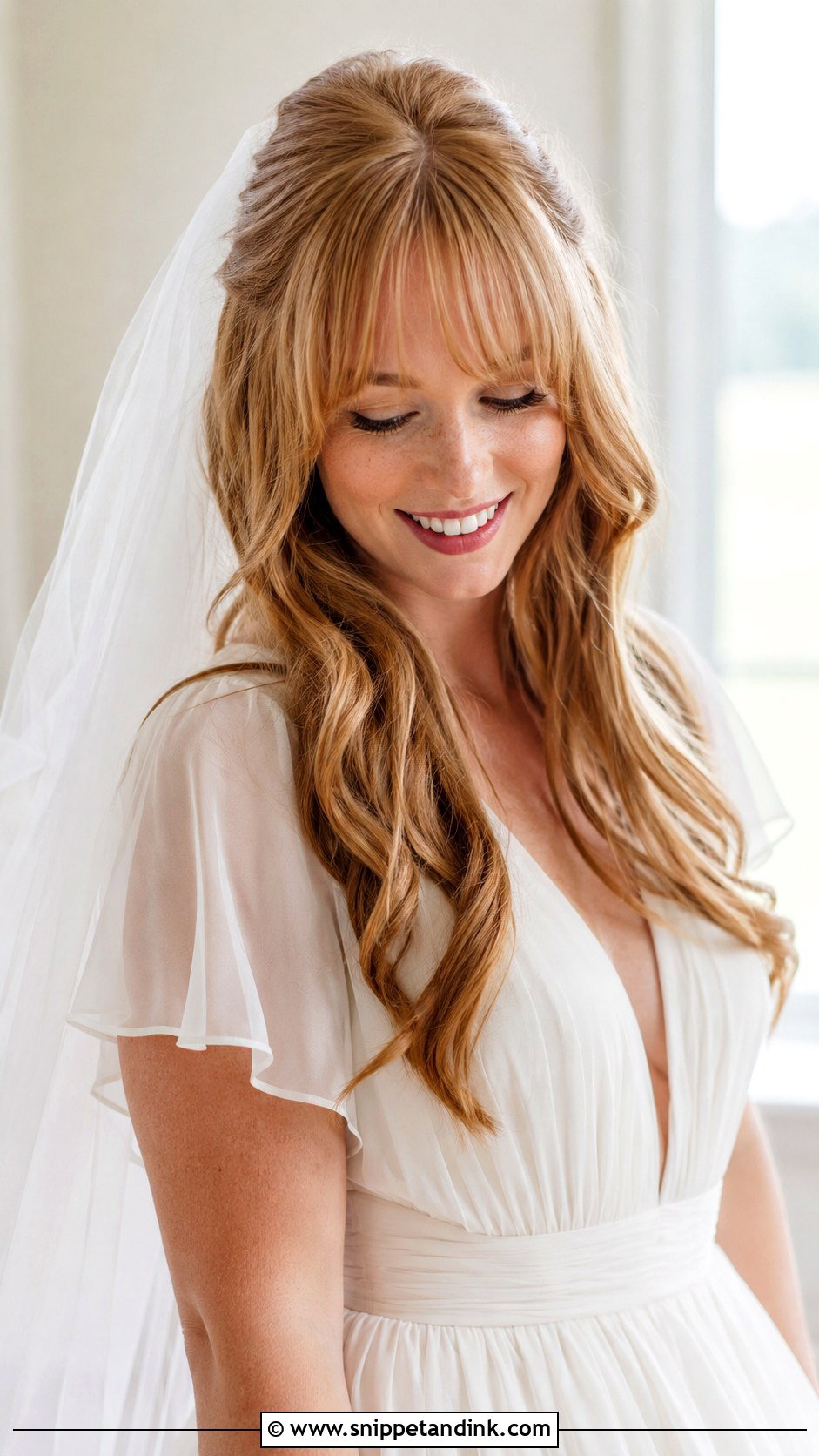
Waves with bangs is the simplest look here. Curtain bangs, bottleneck bangs, and wispy fringe all blend well into loose waves, as long as the waves start below the fringe line; curling the bangs the same way as the lengths looks like a costume. I flat-iron the fringe with a small bend at the ends and use a light setting spray on the waves. Beach or outdoor weddings suit it, though humidity will lift the fringe first.
7. Wedding High Bun With Bangs
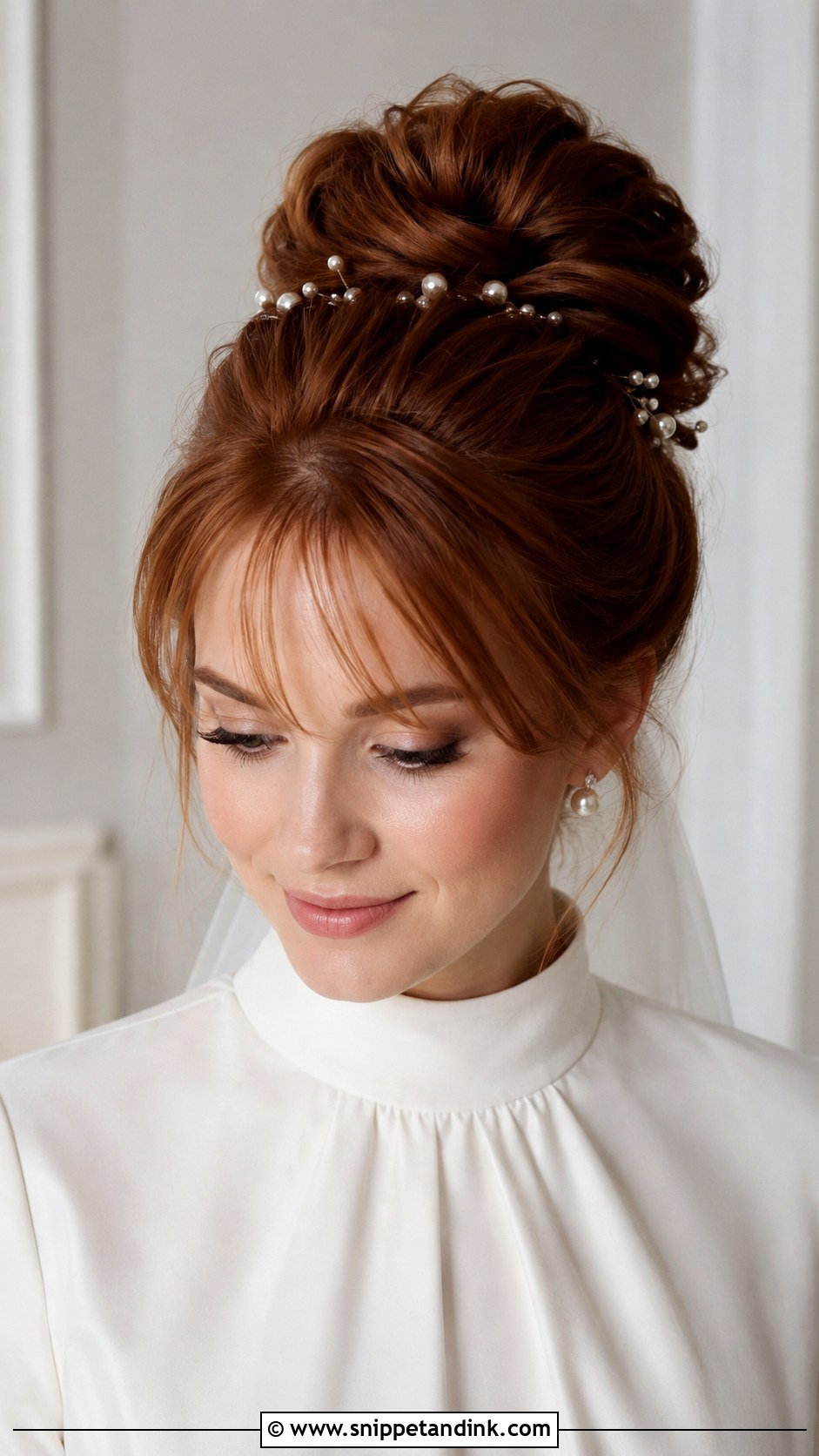
A high bun opens the face and lengthens the neck, and a fringe stops it looking strict. The bun itself can be smooth, braided or messy. My caution is with blunt, heavy bangs and a very high bun: the two strong shapes can compete. Wispy or curtain bangs balance it better. If your hair is fine, a bun form adds size. Use as little product on the bangs as you can, since heavy product separates them into strands before the ceremony ends.
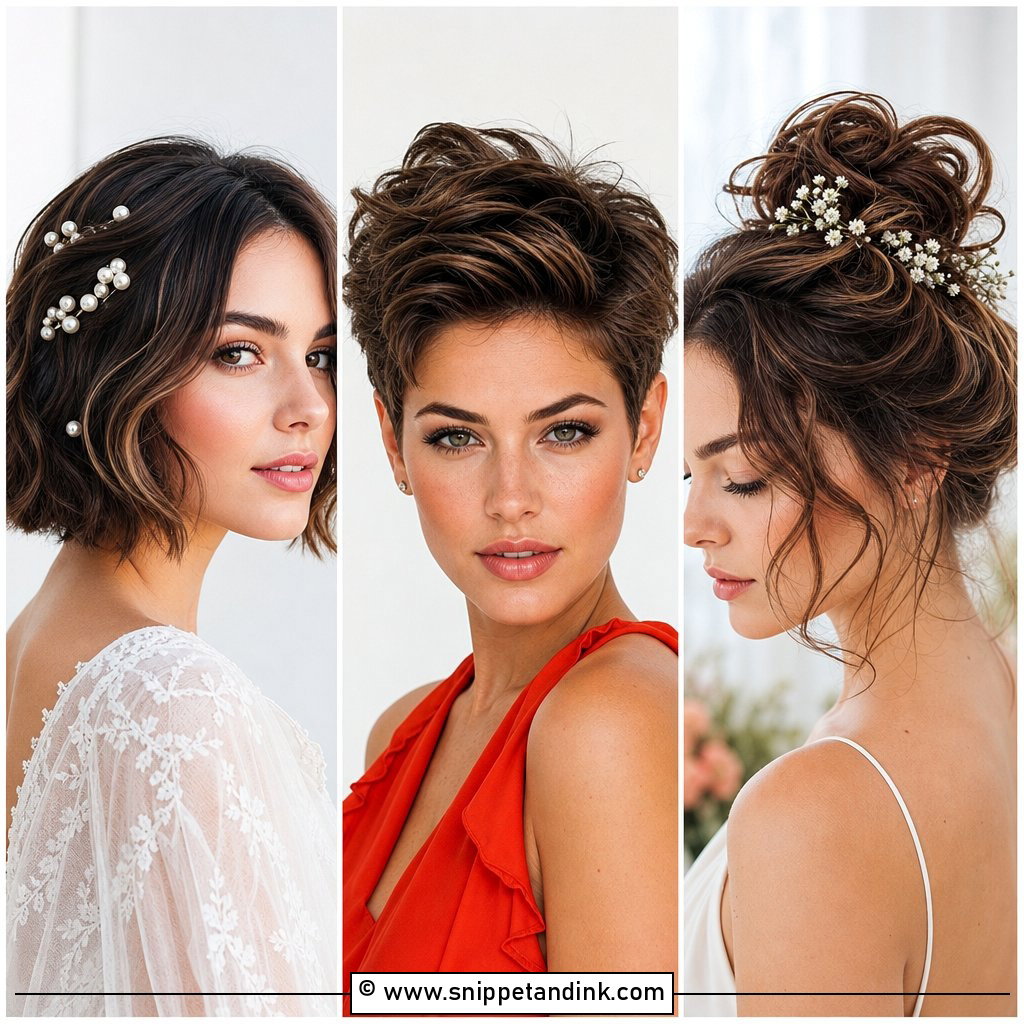
8. Wedding Bob With Bangs
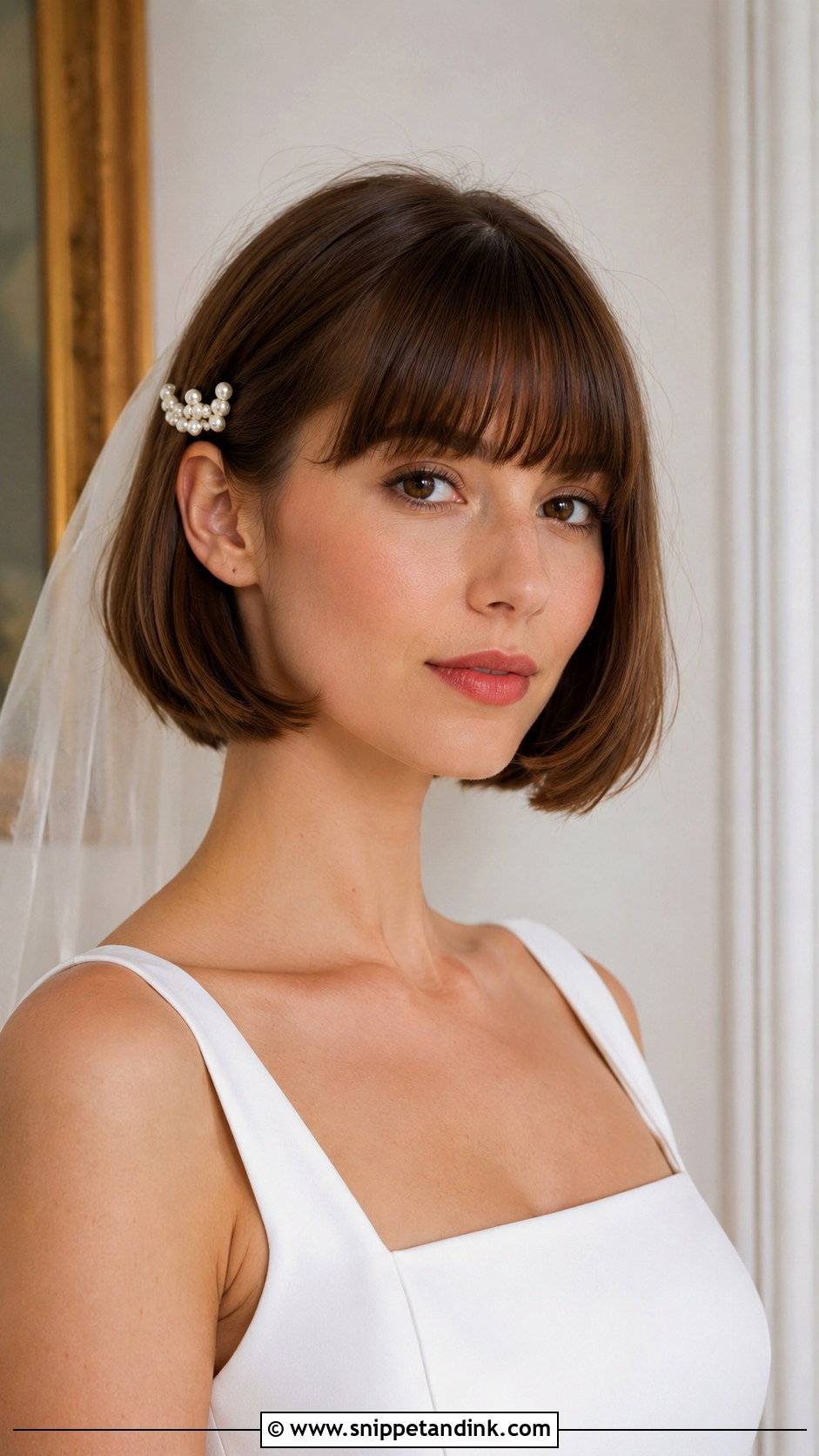
A bob already has a clear outline, and bangs finish it. Sleek and tucked behind one ear, waved, or with a deep side part all work. The finish depends on smooth ends: I blow-dry with a paddle brush, then bevel the ends under with a flat iron. Shoulder-baring dresses show off the jawline that the bob exposes. A small veil, pearl clip or satin headband adds the bridal element.
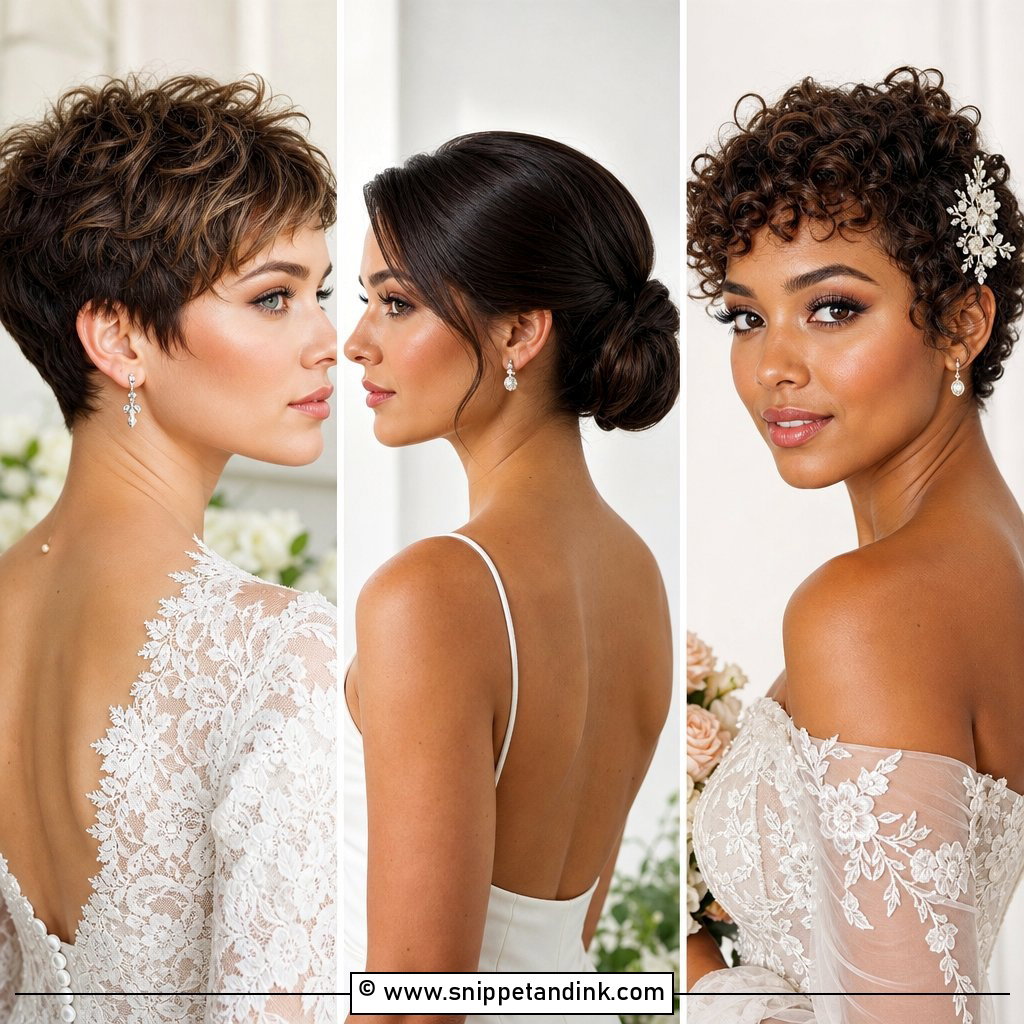
9. Wedding Pixie Cut With Bangs
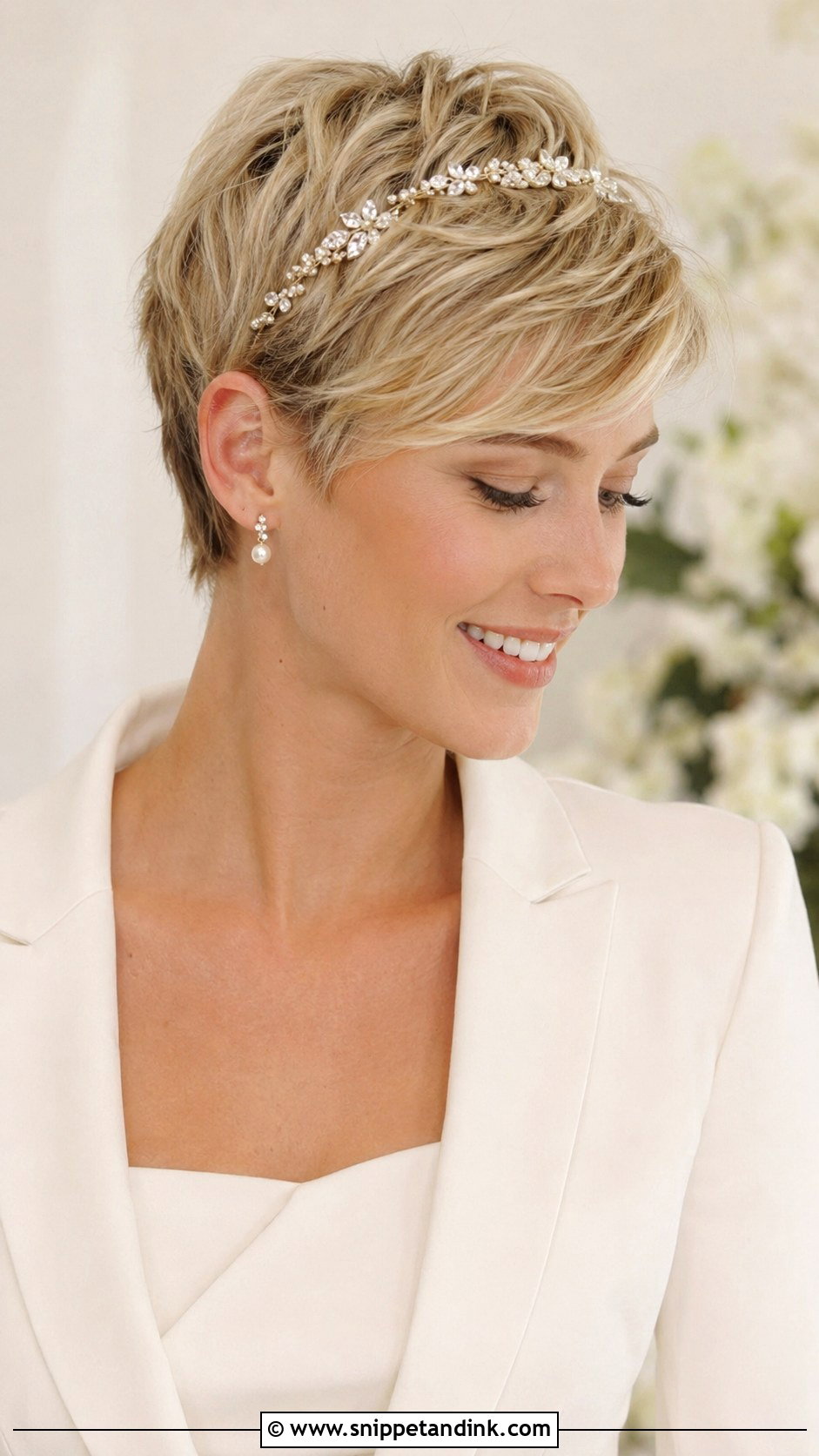
A wedding pixie cut with bangs puts the whole focus on the face, so makeup and earrings matter more than usual. The fringe can sweep to one side, sit textured or be cut into a short micro fringe. A micro fringe is very exposed; get it cut by the person who’ll style it, and give it a week to settle. For accessories, a birdcage veil or slim headband is right in scale with the cut. Ask for piecey movement rather than a stiff finish.
10. Wedding Braided Updo With Bangs
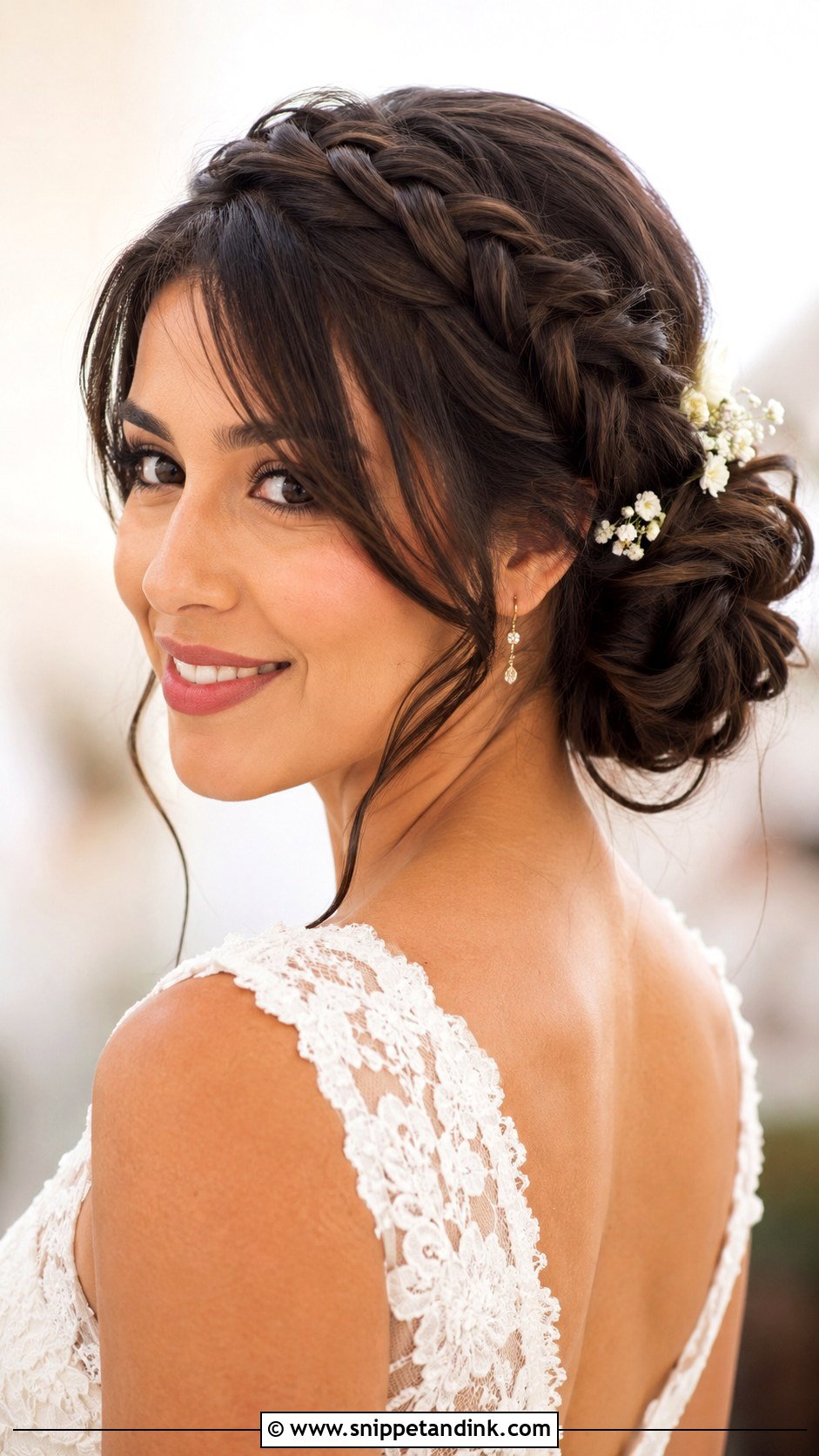
Braided updos have a lot happening at the back, and bangs keep the front simple, which is a helpful balance. The braid can circle the crown, lead into a low bun or sit across the back of the head. Bangs and a crown braid can clash where they meet at the temples, so I start the braid a little behind the hairline. On long, thick hair, a braided base is also very secure. Rustic and garden weddings suit it.
11. Wedding Messy Bun With Bangs
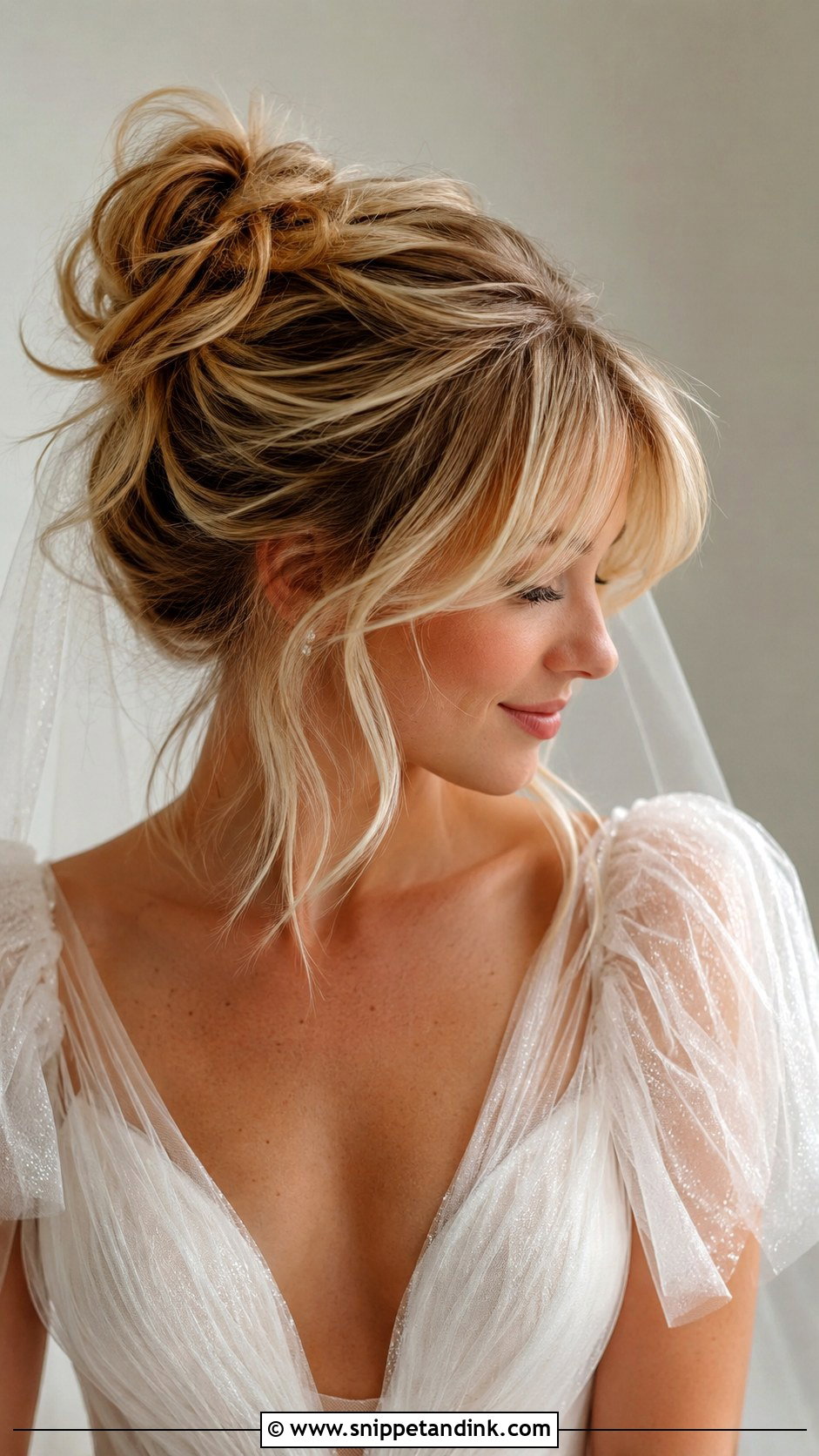
A messy bun with bangs looks spontaneous but takes planning, because both the bun and the fringe are meant to look slightly undone, and there’s a fine line between relaxed and untidy. I build grip in the lengths with texture spray, pin the bun securely, then loosen it. The bangs get a little bend and are left soft. Lace or boho dresses and outdoor venues suit it. Keep hairspray light; crunchy is the one thing a messy bun can’t be.
12. Wedding Hollywood Waves With Bangs
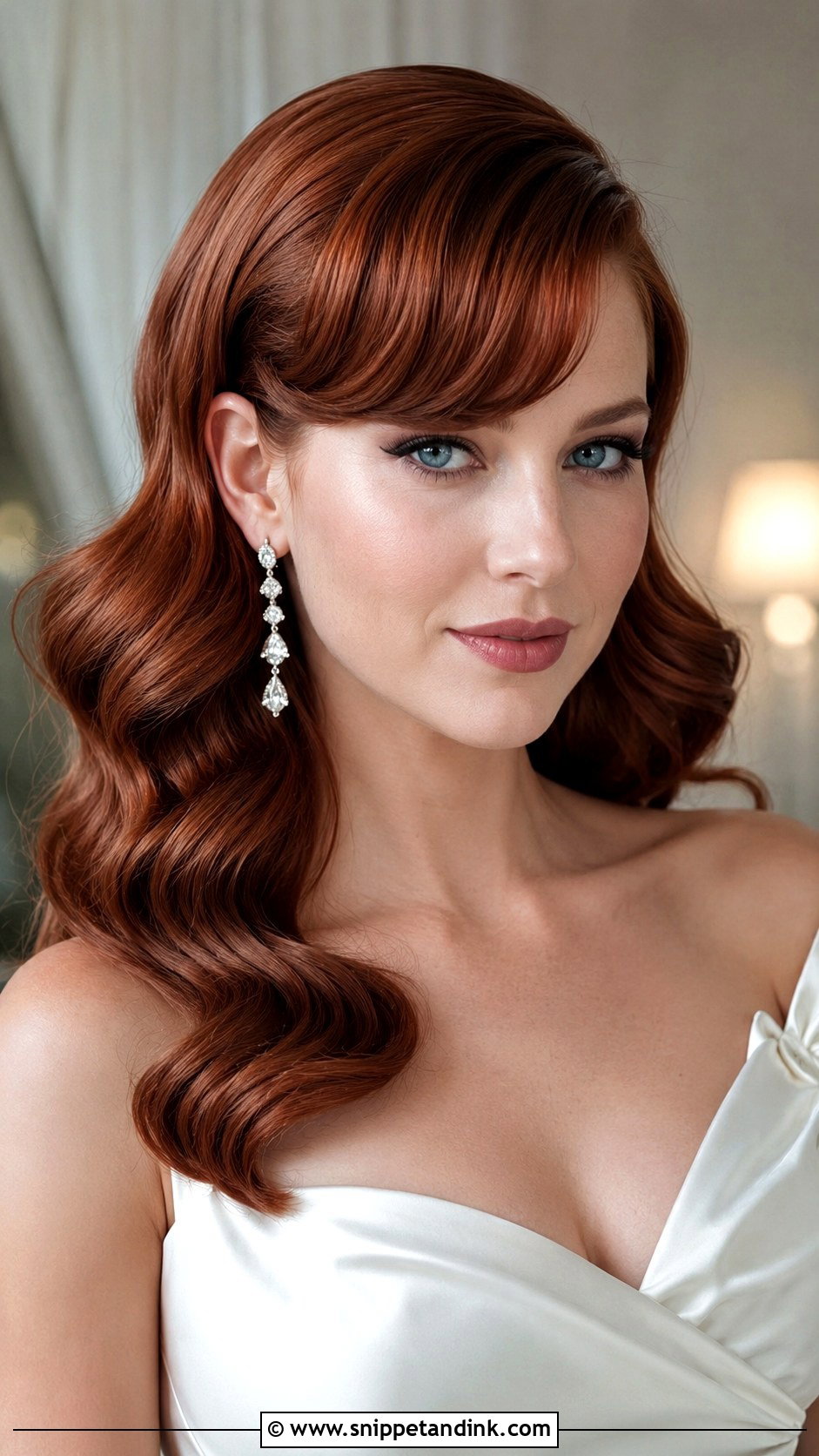
Hollywood waves with bangs soften a very sculpted vintage shape and make it easier to wear. Side bangs flow directly into the first wave, which is the most natural pairing; curtain bangs can work but need to be set in the same direction as the wave. Satin gowns and fitted dresses suit it best. This style takes time, so plan an extra half hour in the morning schedule. Use strong pins, a humidity-resistant finishing spray and a light shine mist so it stays polished through the reception.
13. Wedding Loose Curls With Bangs
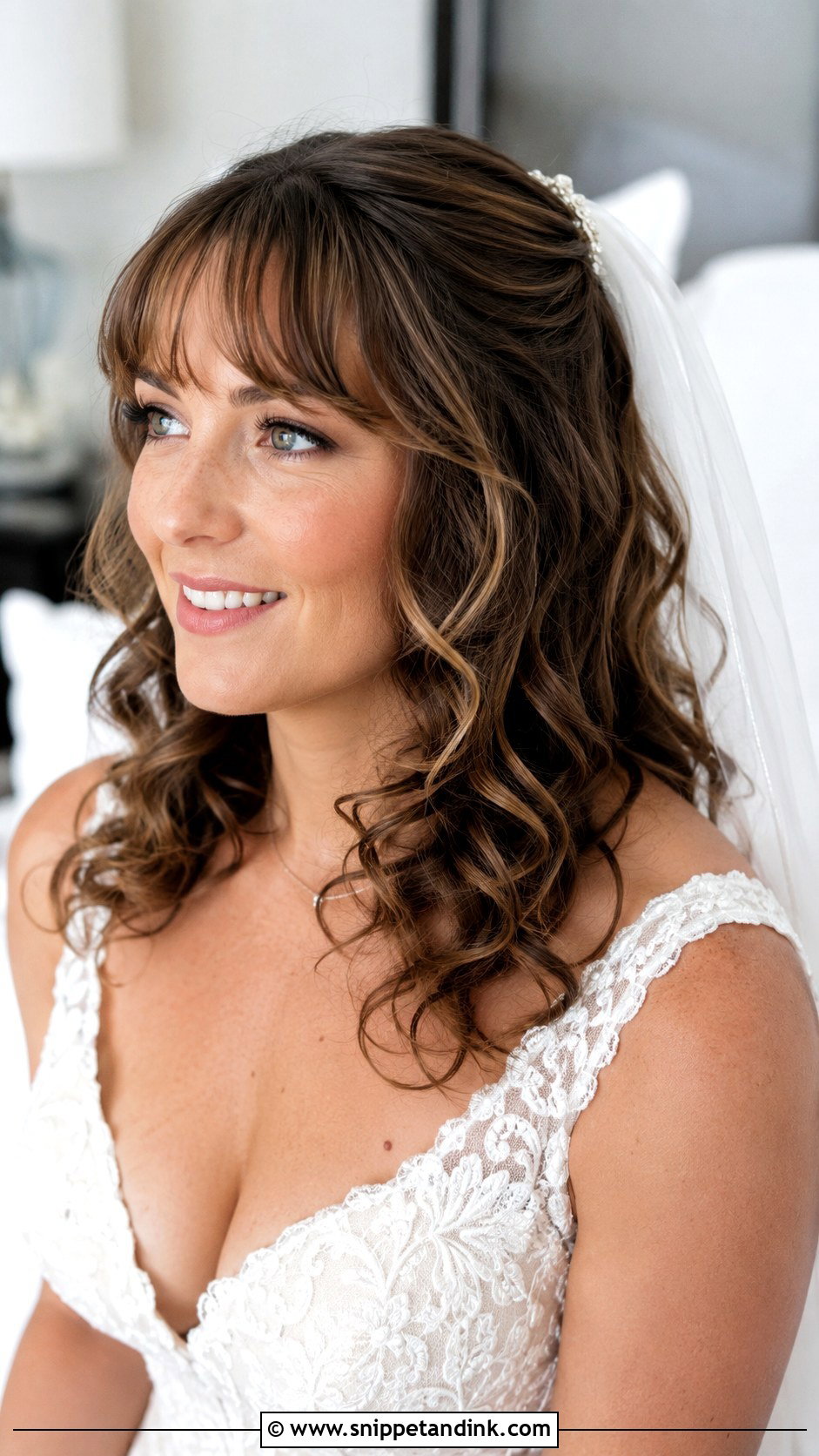
Wedding loose curls with bangs work best on medium and long hair, with soft curls rather than tight ones. The fringe should belong to the curls, not float above them. I curl just the ends of the bangs and the face-framing pieces next to them in the same direction, so the front reads as one shape. A veil at the crown or a small accessory at the side finishes it without covering the curls.
14. Wedding French Twist With Bangs
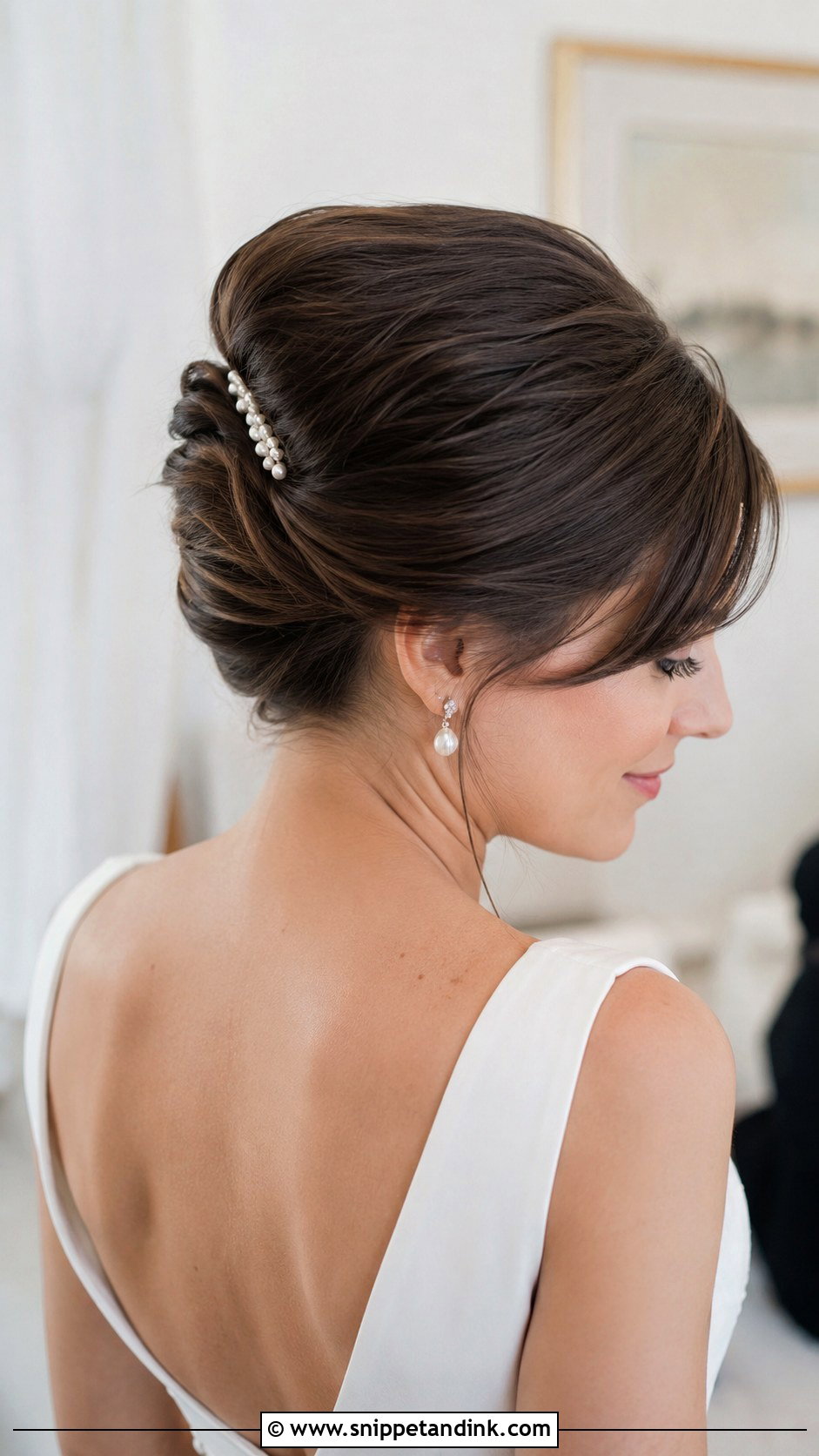
A French twist with bangs has a slightly retro, polished feel. The twist lifts the back and keeps it neat, while the fringe adds personality at the front. Straight, wavy and lightly textured hair all twist well. I prefer it slightly relaxed for a modern look, rather than tight and lacquered. Gowns with clean lines, high necks or open backs pair well with it, and a pearl pin or slim comb along the seam hides the pins.
15. Wedding Short Hair With Bangs
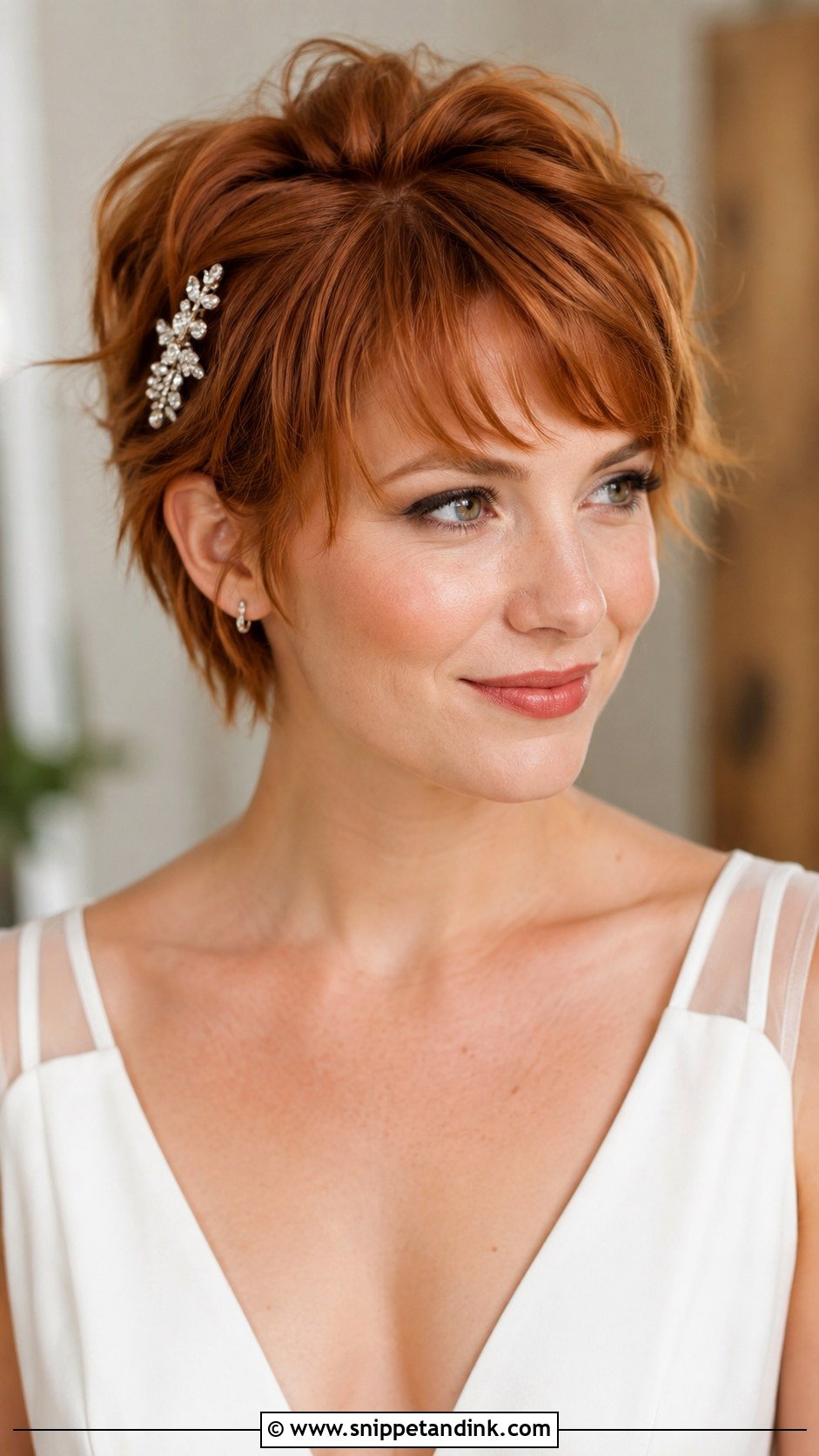
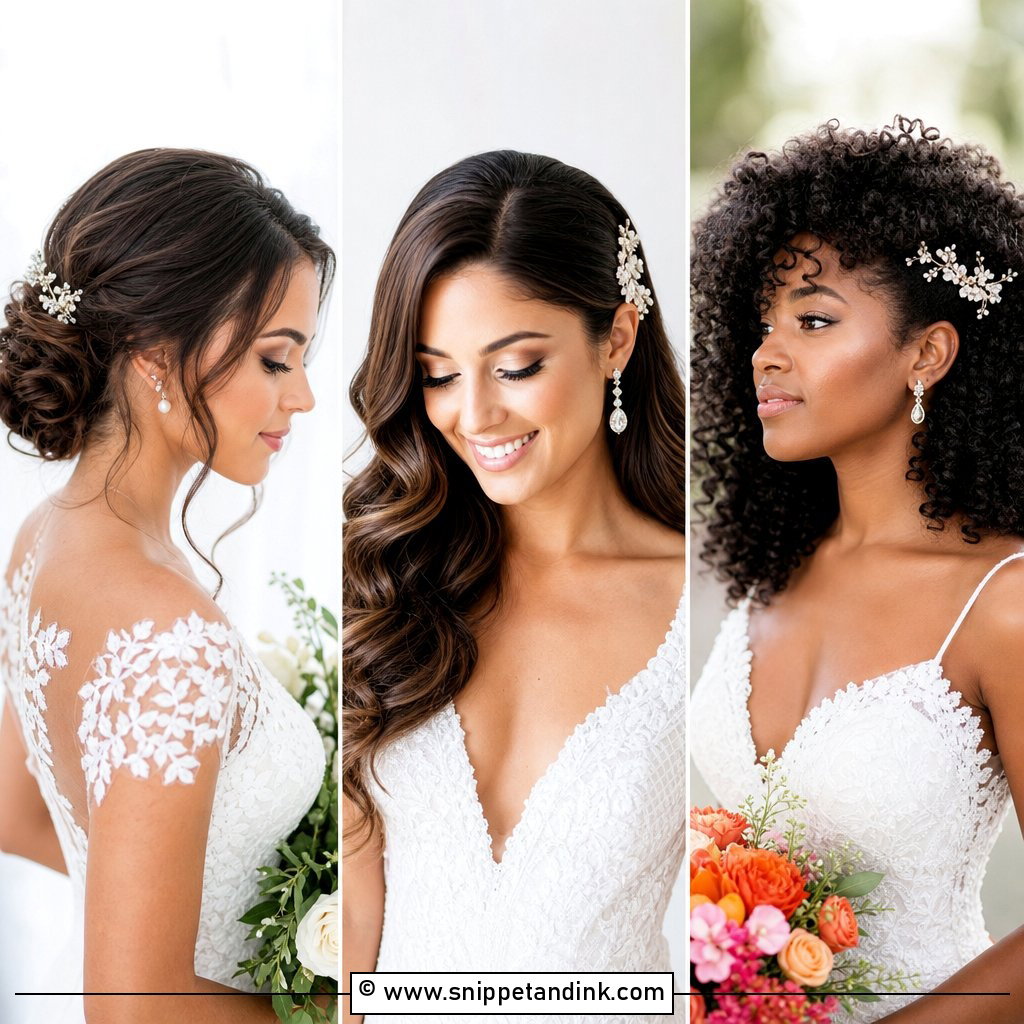
Short hair with bangs already has a defined shape, so the styling is about polish rather than construction. Whether it’s a cropped bob, bixie, shag or chin-length cut, I focus on shine, clean ends and controlled texture. Soft waves lean romantic; a sleek finish leans modern. No extensions or complicated updo needed. A headband, small veil or pearl barrette makes it ready for the ceremony.
Cowlicks, Trims and the Calendar for a Wedding Fringe
A fringe grows past the eyebrows faster than most people expect, and a fresh cut can look blunt for a few days. These are the timings I suggest:
- New bangs: at least two to three months ahead, so you’ve lived with them and know how they behave.
- Final fringe trim: four to seven days before the wedding, by your regular stylist, not at home.
- Cowlick at the hairline: tell your stylist before the cut; it often needs the fringe left slightly longer so its weight holds it down.
- Wash plan: bangs can be washed alone in the sink the morning of the wedding even if the rest of your hair was washed the day before.
If your fringe has grown too long close to the date, your stylist can sweep it to the side or into curtain bangs for the day rather than cutting it short at the last minute.
Humidity is the other fringe problem worth rehearsing. Bangs are short and light, so they frizz or curl up long before the rest of the hair moves. Ask your stylist to show you, or a bridesmaid, a quick reset: a little water on the fingertips, a few passes with a small round brush and a travel dryer if the venue has a plug, or simply flattening them under a clean comb while they dry. Two minutes before the reception entrance is usually enough.
The Fringe Is Part of the Style, Not an Extra
Every look here, from a low bun to a sleek ponytail, depends on treating the bangs as part of the whole style. Style them early, blend them into the face-framing pieces, and test them with your veil and makeup at the trial. Check the front from the side and from slightly above, as your photographer will. Bangs move with humidity and hugs, so keep a small comb and blotting papers in your bag and plan for a quick fix after the ceremony.
You'll Like These Ideas:


Leave a Reply