
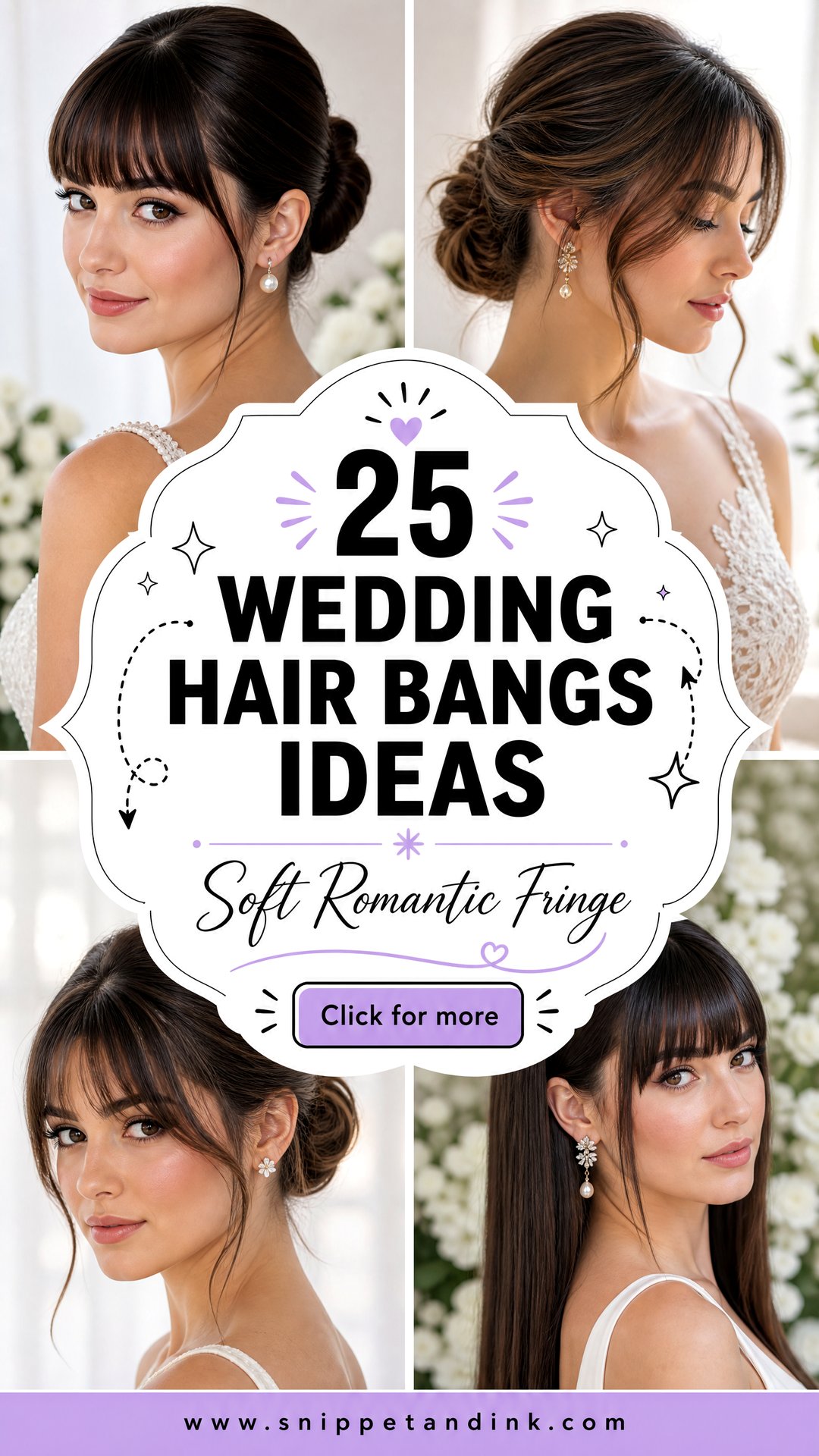
Bangs are the part of bridal hair I spend the most time on at a trial, because a fringe sits right in the middle of every close-up and has nowhere to hide. A soft curtain fringe forgives a lot. A blunt one shows every cowlick and every bit of forehead oil by mid-afternoon. Each of the 25 ideas below pairs a specific fringe with a specific style, and under each one I’ve noted what I would check before committing to it: how dense your hair is, where the veil will sit, and how many hours the fringe has to hold.
When to Cut Bangs So They Sit Right on the Day
The question I hear most about wedding bangs is when to cut them. A freshly cut fringe looks heavy and a little too short for the first few days, then relaxes. That is why I never cut bangs on the wedding morning, and why the right timing depends on where you’re starting.
Never had bangs before
Cut them two to three months out, not at your trial. You need time to find out where your cowlicks are, whether your forehead breaks out under hair, and whether you actually like styling them every morning. If you hate them, that is enough time to grow them into a curtain length. Curtain and long side-swept shapes are the gentlest way to try a fringe for the first time.
Already wearing a fringe
Book a final trim five to seven days before the wedding. Ask for it to be checked dry, because bangs shrink as they dry and a cut done only on wet hair can end up shorter than you planned. Bring your trial photos so the cut is shaped toward the wedding style rather than your everyday length.
Halfway through growing them out
- Don’t trim the length; ask only for the corners to be softened so they blend into your layers.
- Lean toward styles that use the length as face-framing pieces: long curtain bangs, a side sweep, or a fringe pinned back with a twist.
- Tell your stylist at the trial that you’re growing them out, so the style is planned around where the ends fall now.
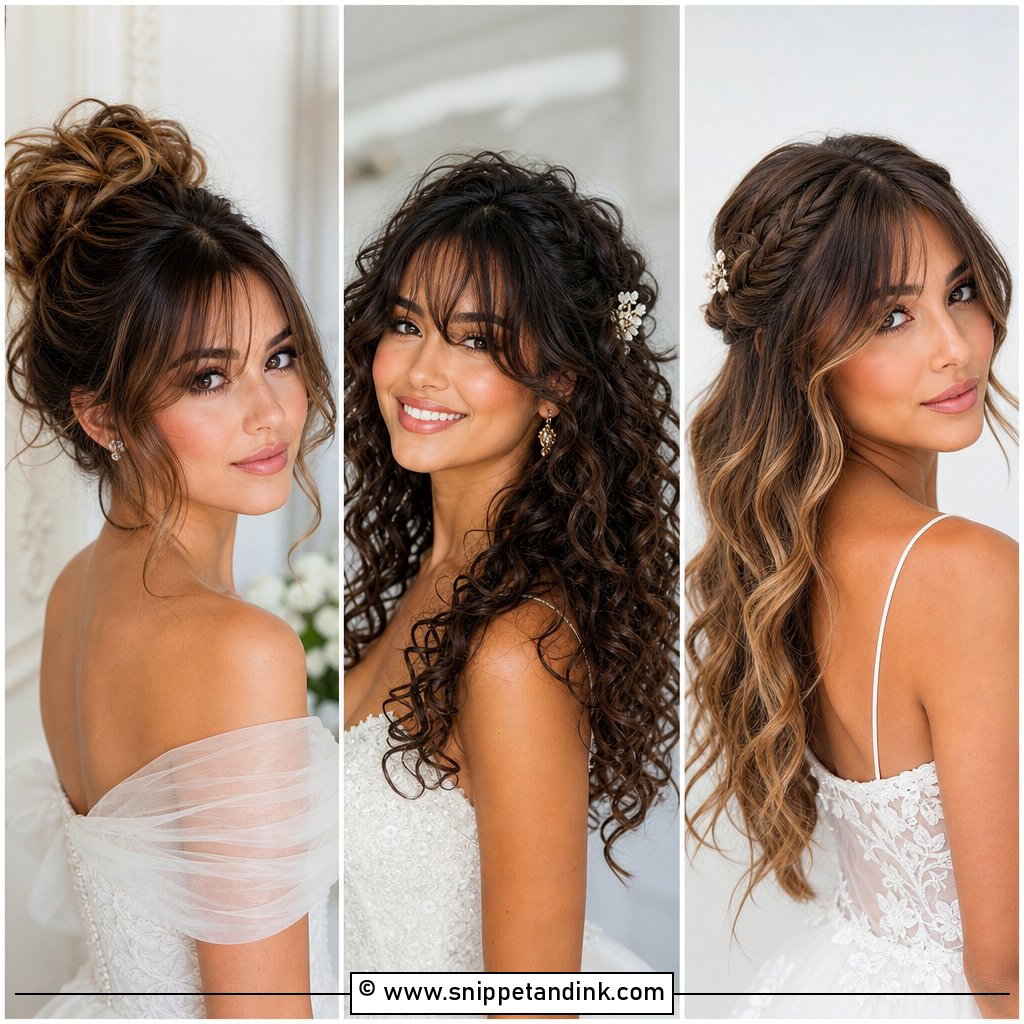
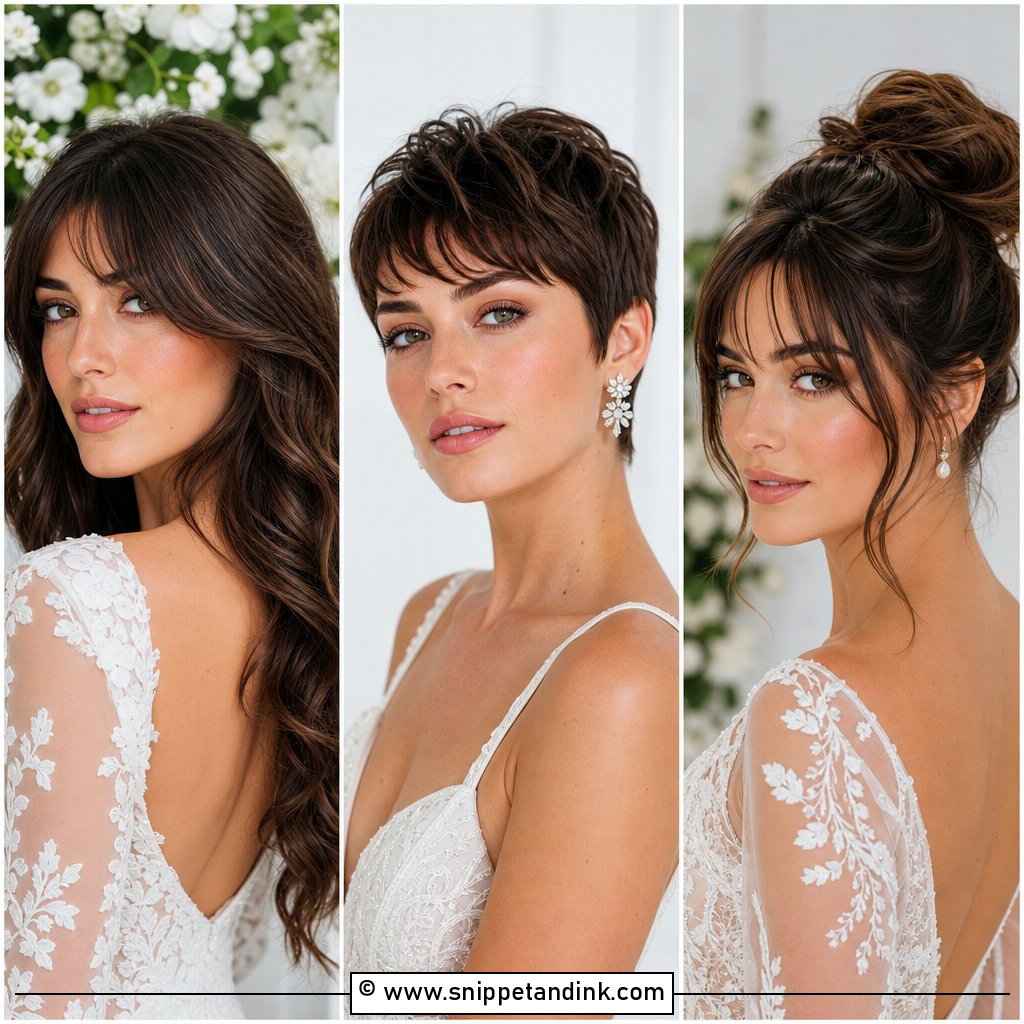
1. Curtain Bangs With Loose Waves
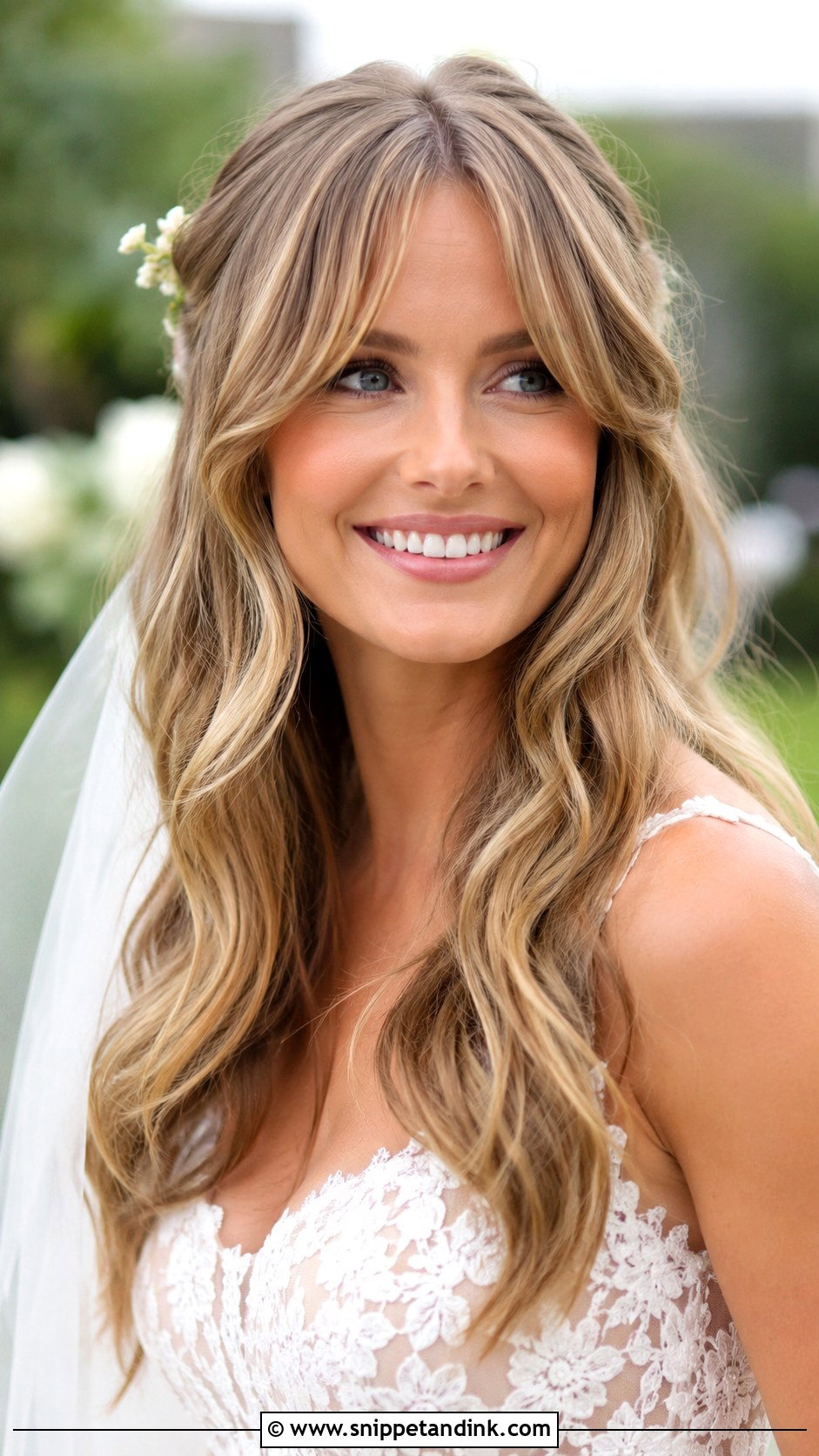
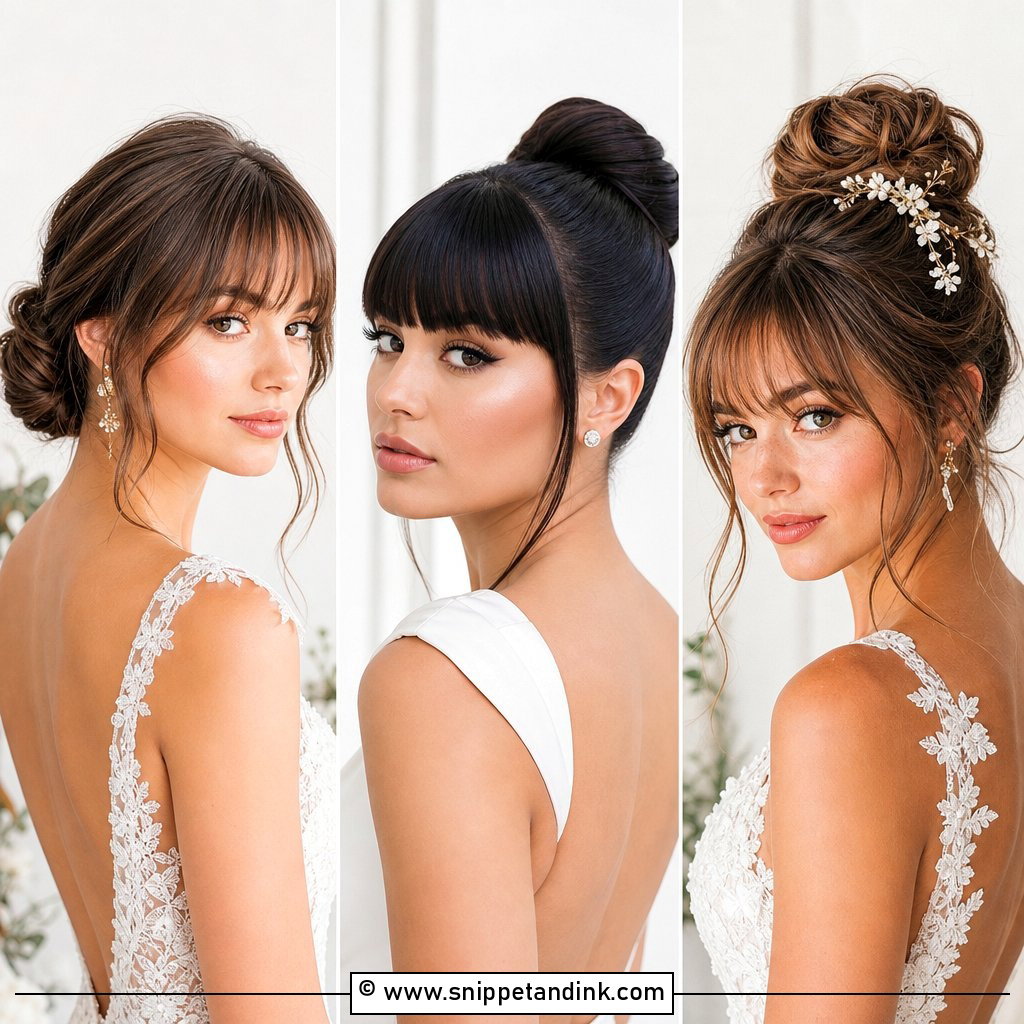
This is the pairing I suggest most often to brides who already have a fringe. Curtain bangs are cut to split and fall away from the centre, so they move with loose waves instead of fighting them. I curl each side away from the face with a large barrel, then brush it out so the ends melt into the first wave below the cheekbone. The weak spot is the middle part: a cowlick at the hairline will flip one side up by the reception, so I blow-dry that section flat with a paddle brush before anything else touches it. If you want more of your face open, pin one side back behind the ear.
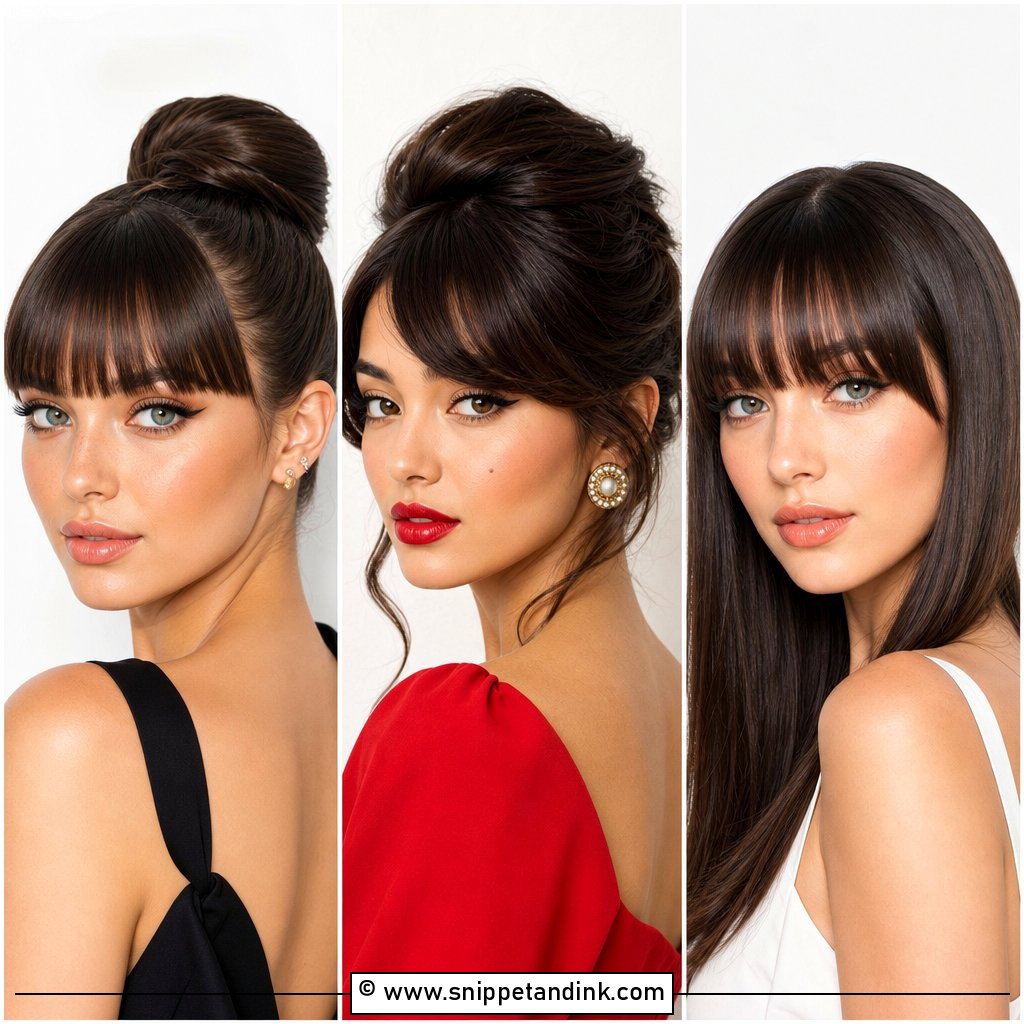
2. Blunt Bangs With Sleek Bun
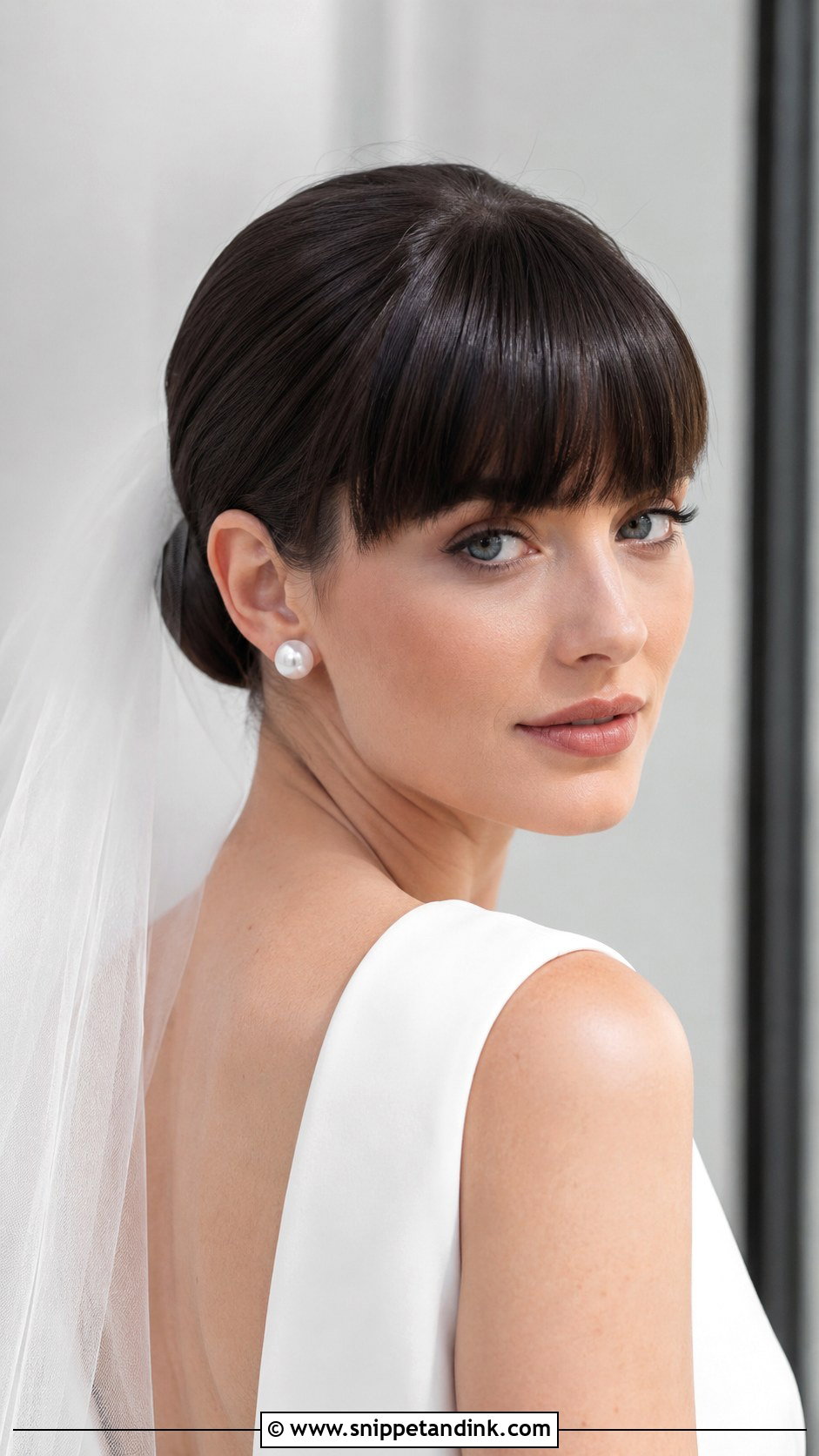
Blunt bangs with a tight bun are an exercise in precision. With nothing loose around the face, the fringe line is the whole look, so I want it trimmed within a week of the wedding and dried with the round brush pointed down, which gives a soft bevel instead of a bubble. I’d steer you away from this one if your forehead gets shiny quickly, since a heavy fringe sitting on oily skin separates into strands by the speeches. Keep the powder going under the bangs, and choose a structured veil or a single pearl pin so the line stays clean.
3. Wispy Bangs With Romantic Updo
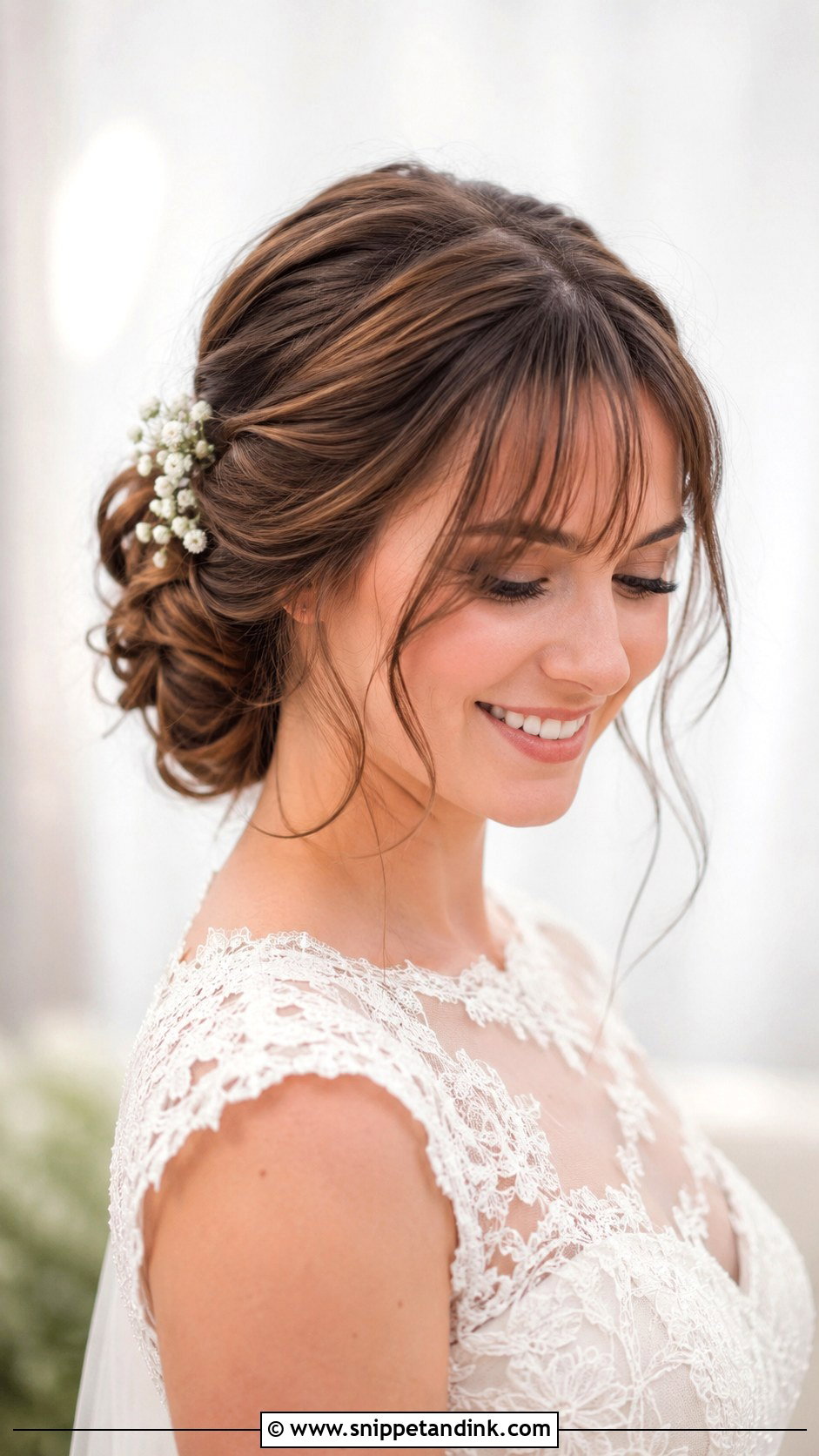
Thin, wispy bangs take the stiffness out of a twist or a chignon. There is so little hair in them that they behave more like face-framing tendrils than a fringe, which makes them the most forgiving choice here if you’re halfway through growing bangs out. The trap is product. One pump too much serum and they clump into three greasy points, so I work in a dry texture spray with my fingers, never a comb, and then leave them alone. A few sprigs of baby’s breath in the updo keep the softness going at the back.
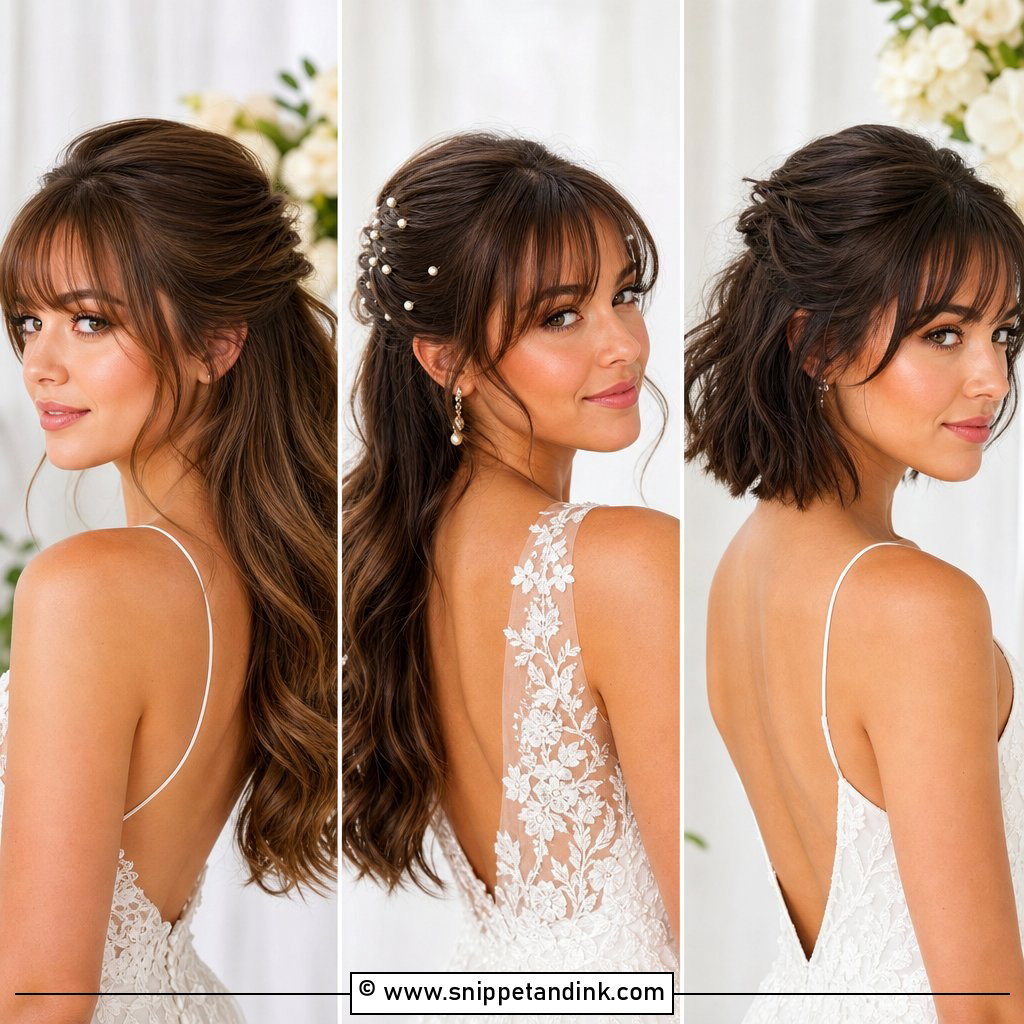
4. Side Swept Bangs With Half Up Half Down
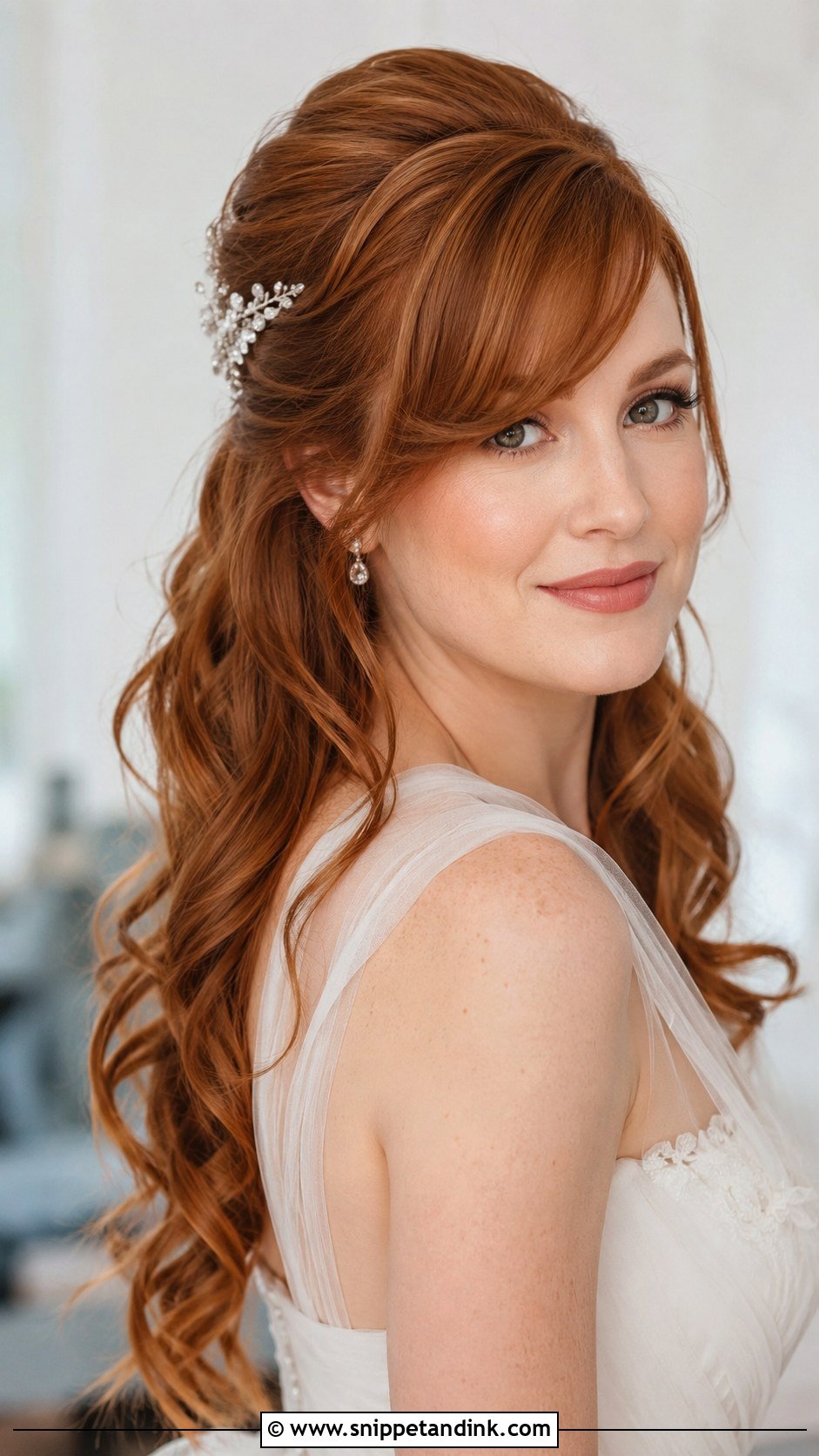
A side sweep is the most adaptable fringe for a half-up style because you can decide the direction on the day. I always sweep it toward the side your hair naturally parts; forcing it the other way works for an hour and then springs back. Round and heart-shaped faces get the most from it, since the diagonal line breaks up width across the forehead. When I secure the top section, I keep the pins under the crown so the fringe isn’t dragged back into the half-up and robbed of its sweep. A clip over that join hides the hardware.
5. Baby Bangs With Vintage Updo
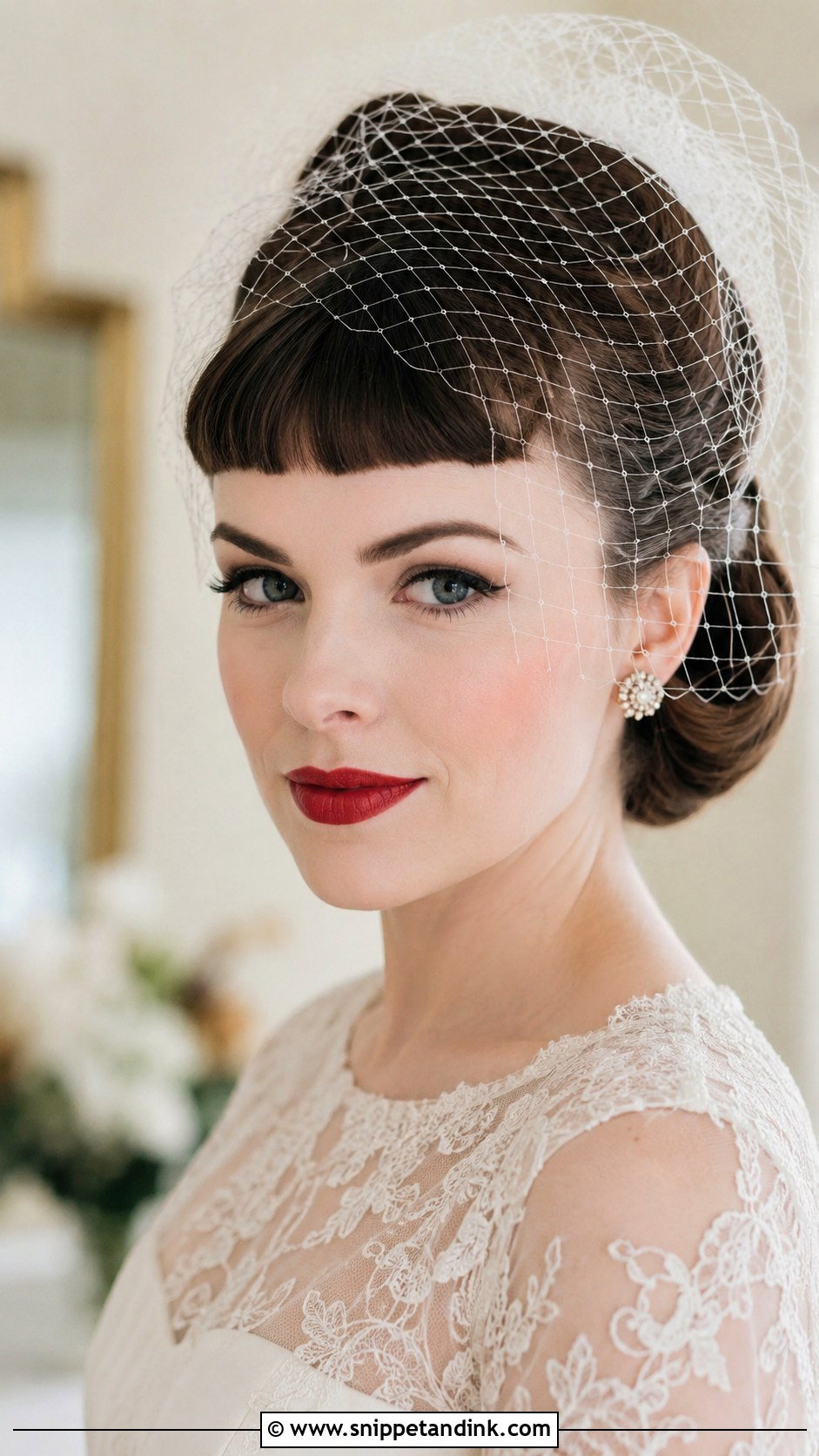
Baby bangs are a commitment I want a bride to have lived with before the wedding, not cut the week of it. They sit well above the brows, show every contour of the forehead, and can’t be pinned away if you change your mind. On a face with strong brows and defined features they look sharp with a 1950s or 1960s updo, a smooth roll or a set at the crown. Cut them at least a month out so you see how they grow, keep everything else sleek, and finish with a birdcage veil or an old comb.
6. Bottleneck Bangs With Low Bun
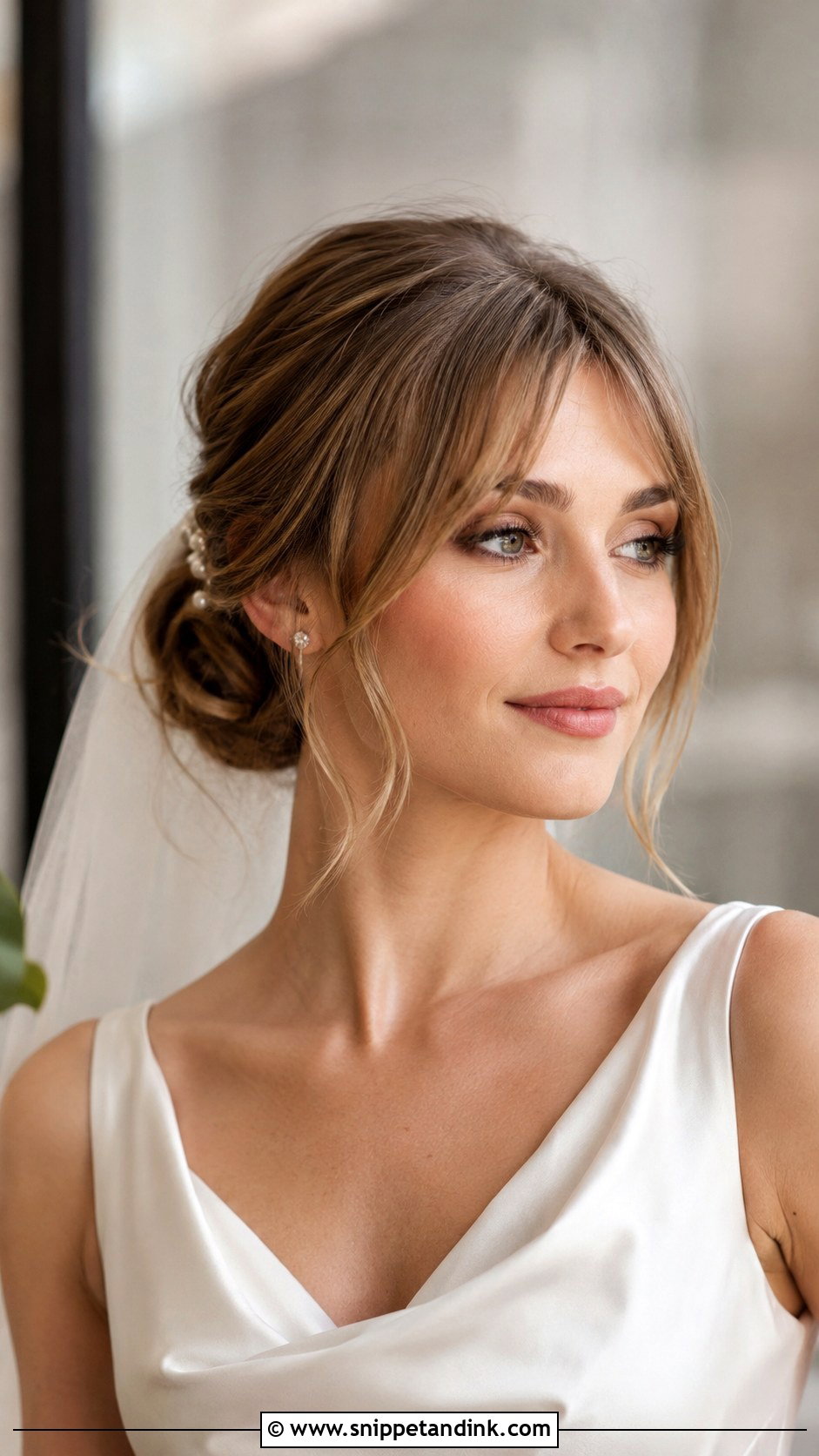
Bottleneck bangs are short and narrow at the centre and lengthen toward the cheekbones, which is why I treat them as the halfway point between a curtain and a full fringe. They suit a bride who is nervous about heavy bangs, because the longer ends do the softening around a low bun. The shape depends entirely on how it’s dried. I blow the centre down and forward first, then round the sides over a medium brush, otherwise it collapses into two flat curtains. A thin headband sits neatly behind it.
7. Long Bangs With French Twist
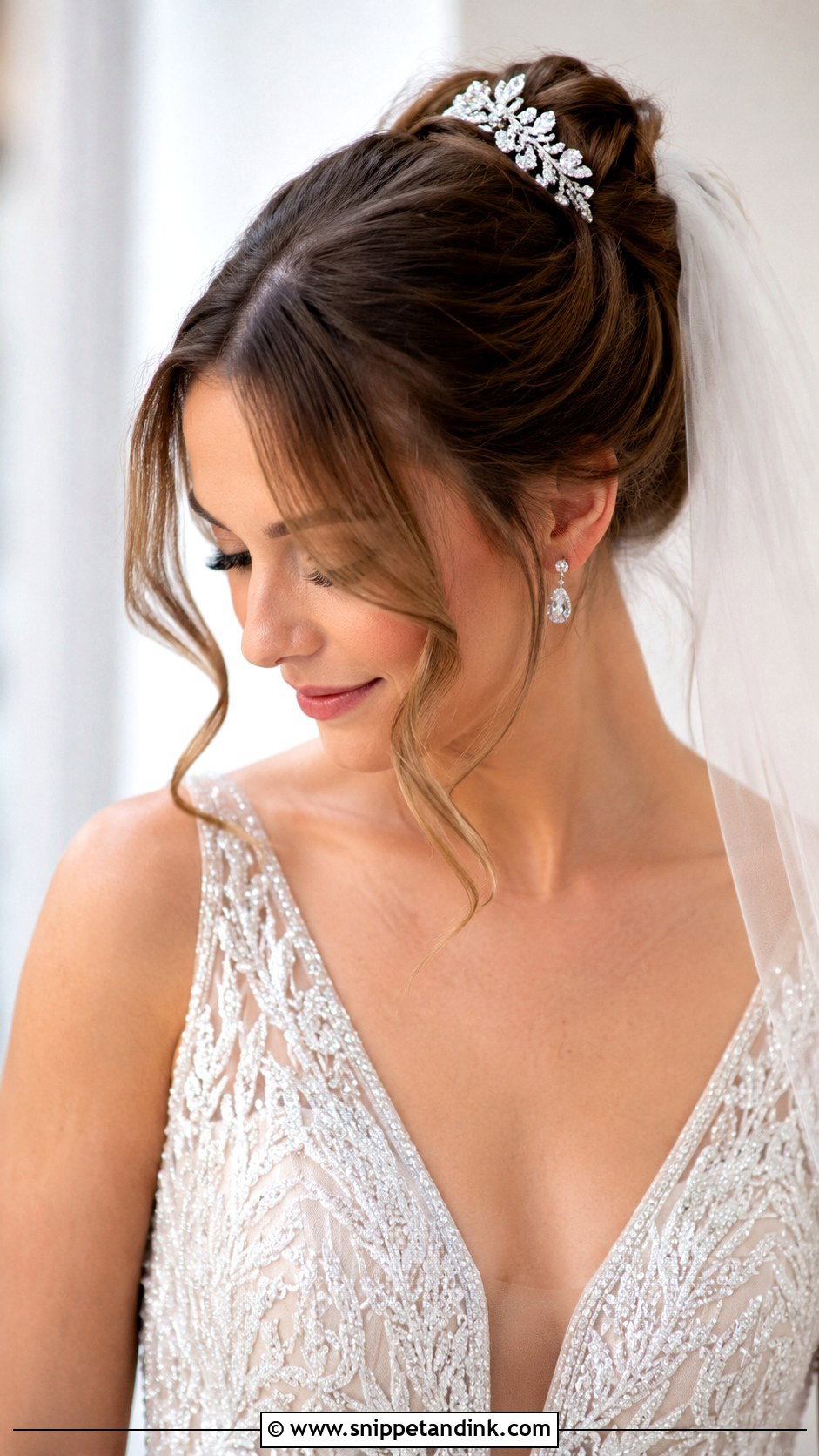
Long bangs give me the most options next to a French twist: I can bend them softly with a curling iron, tuck one side behind an ear, or let both fall at cheekbone level. That flexibility is why I like this for brides growing a fringe out. The twist itself needs a firm base, so I prep the back with texture spray and cross-pin the seam before I touch the front. Put a jeweled comb at the side of the twist and keep the fringe free; under a cathedral veil, the front of your hair is what shows in most ceremony shots.
8. Thick Blunt Bangs With Beach Waves
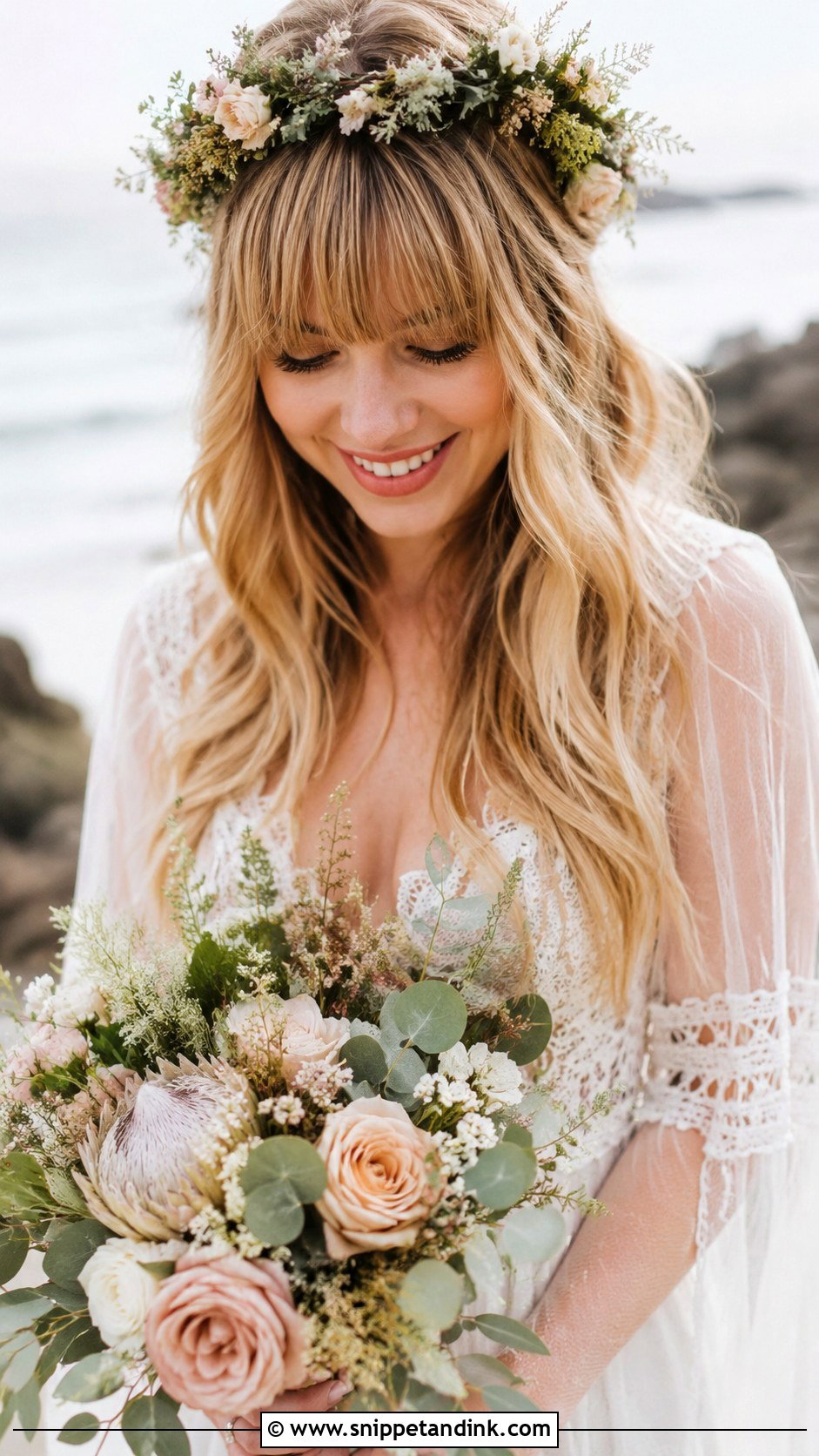
This one needs density. On fine hair, the waves pull weight away from a thick blunt fringe and it starts to look like a separate hairpiece, so I recommend it mainly to brides with a lot of hair. At the final trim I point-cut the ends of the bangs slightly so they move instead of sitting like a shelf. I wave the lengths with a flat iron and leave the last inch straight, which keeps the beachy texture deliberate next to the clean fringe. A flower crown works here, and so does wearing nothing in the hair at all.
9. Curtain Bangs With Textured Low Bun
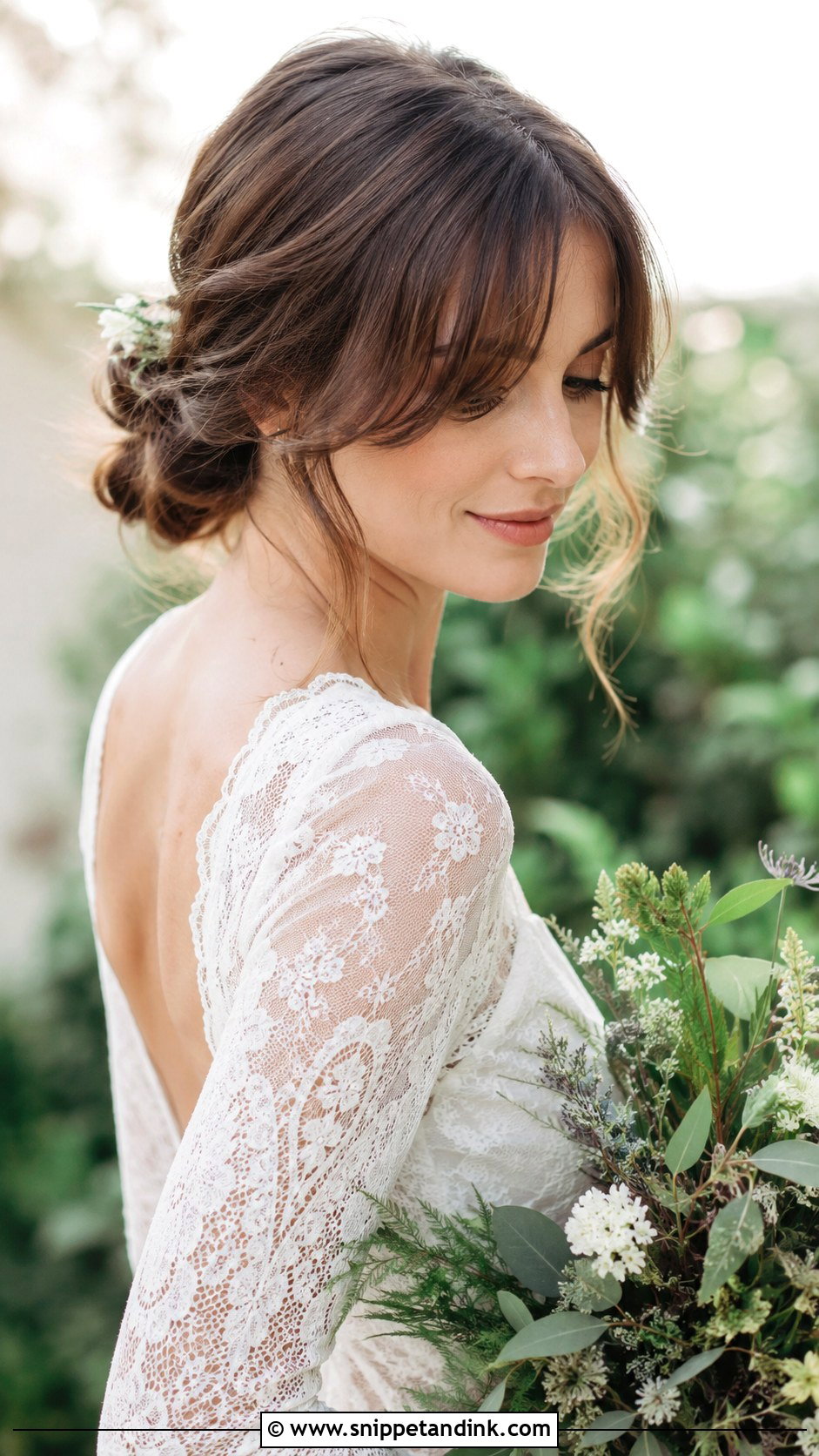
I build a textured low bun loosely on purpose, pulling a few pieces free after it’s pinned, so the curtain bangs read as part of the same mood rather than the only soft thing on your head. Silky hair needs grip first. Without texture spray or dry shampoo worked through, a loose bun slides toward the neck by evening. For a garden ceremony, small wildflowers or greenery tucked into the twists are light enough not to drag it down.
10. Pinned Back Bangs With Soft Curls
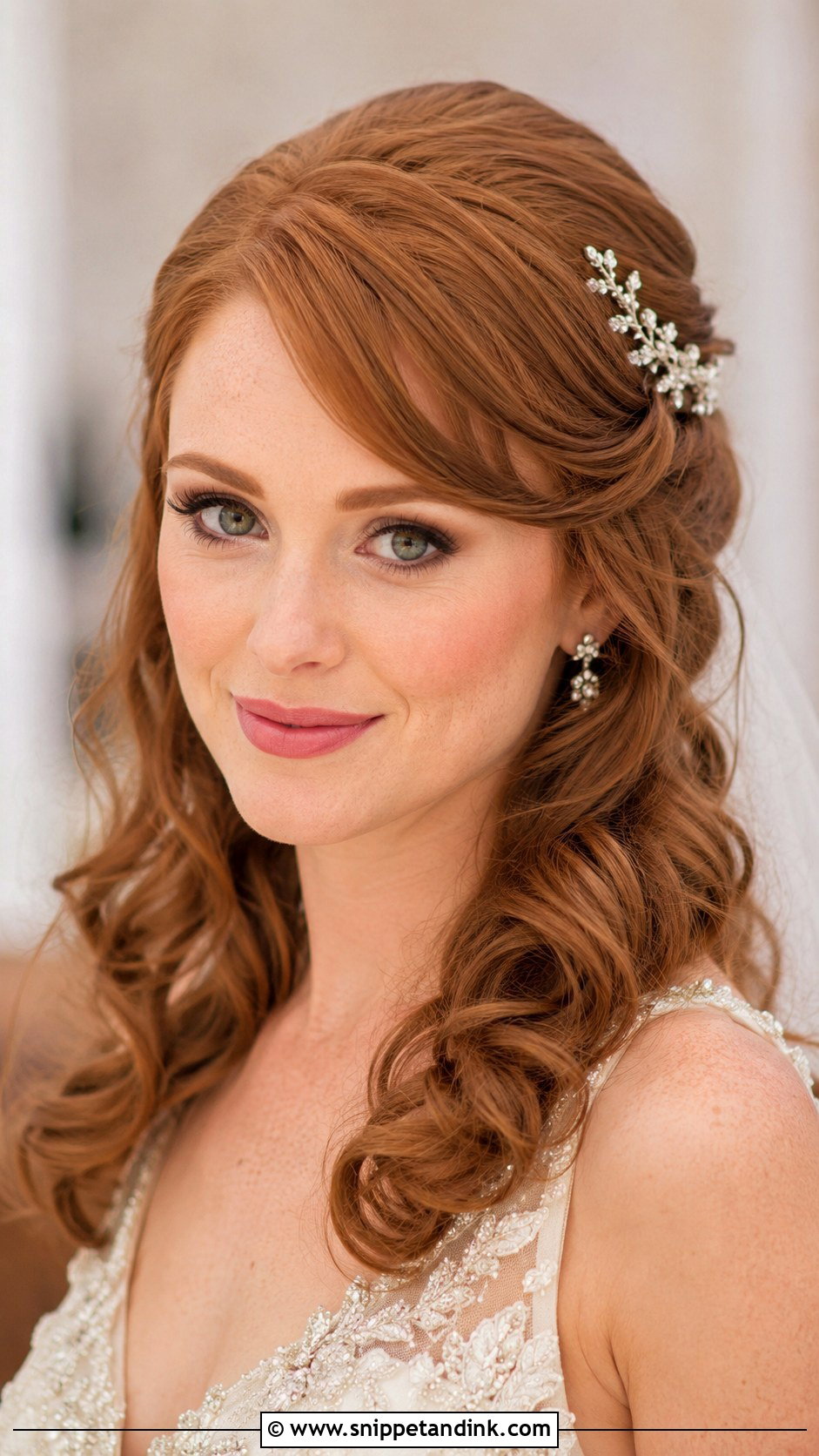
Pinning a fringe back is my fallback when a bride loves her bangs but worries about heat, sweat or an awkward growing-out stage. I sweep it to one side, twist it once so the pin grips hair rather than skin, and anchor it with two crossed bobby pins before the decorative clip goes on top. A decorative pin on its own rarely holds a fringe all day. Soft curls through the lengths stop it from looking like an everyday clip-back, and you can take the pins out for the reception if you want the bangs back.
11. Full Fringe With Sleek Ponytail
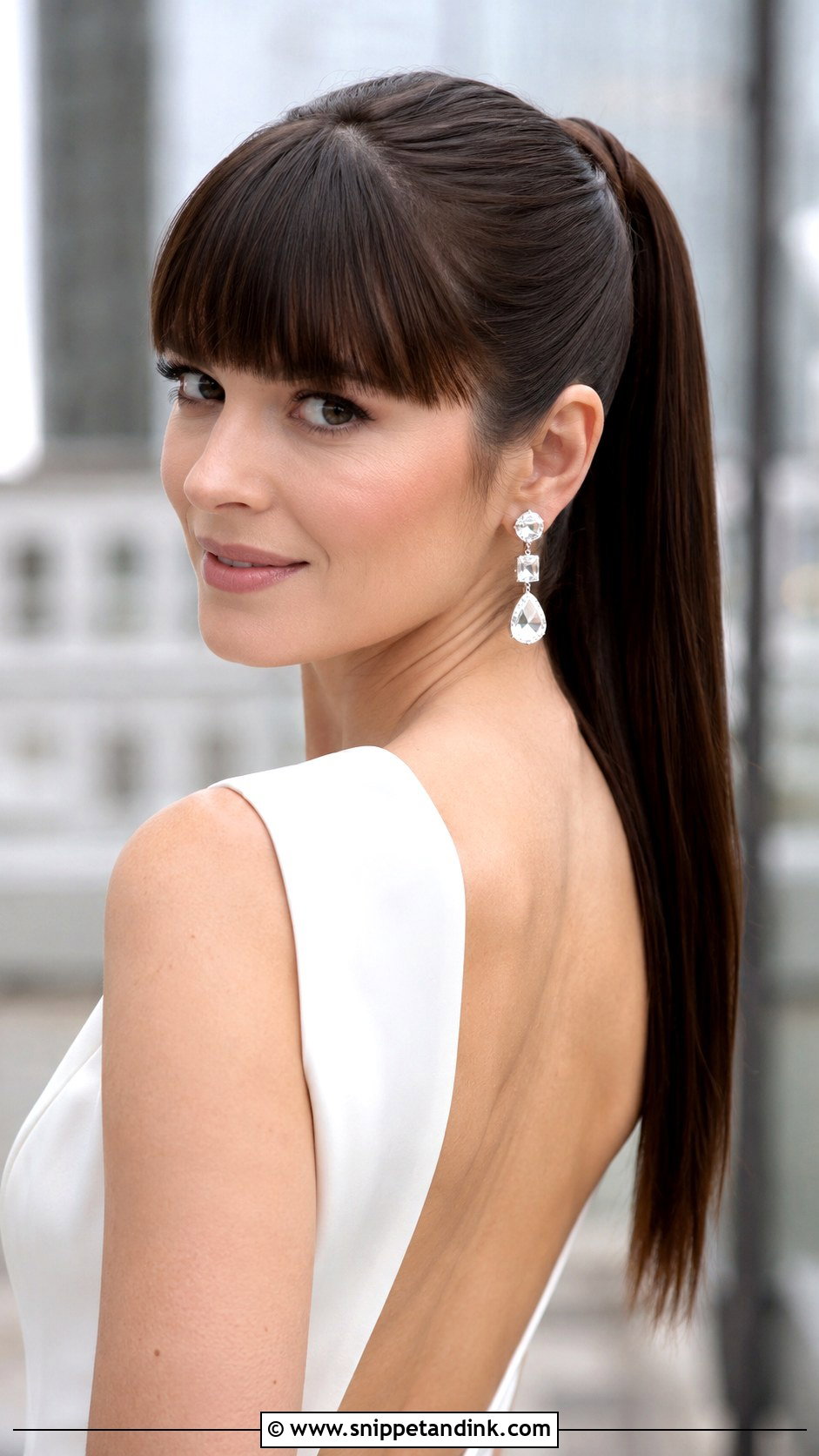
A full fringe with a high, sleek ponytail is the most fashion-led look here, and honestly one of the more tiring to wear. A heavy high pony pulls on the scalp for hours, so I tie it with a bungee elastic and put a supporting pin underneath. The neck is completely open, which hands all the attention to statement earrings. I wrap a strand of hair around the base to hide the elastic. I wouldn’t pair it with a long veil, though: the comb has to sit under the pony, and the weight drags the whole thing down.
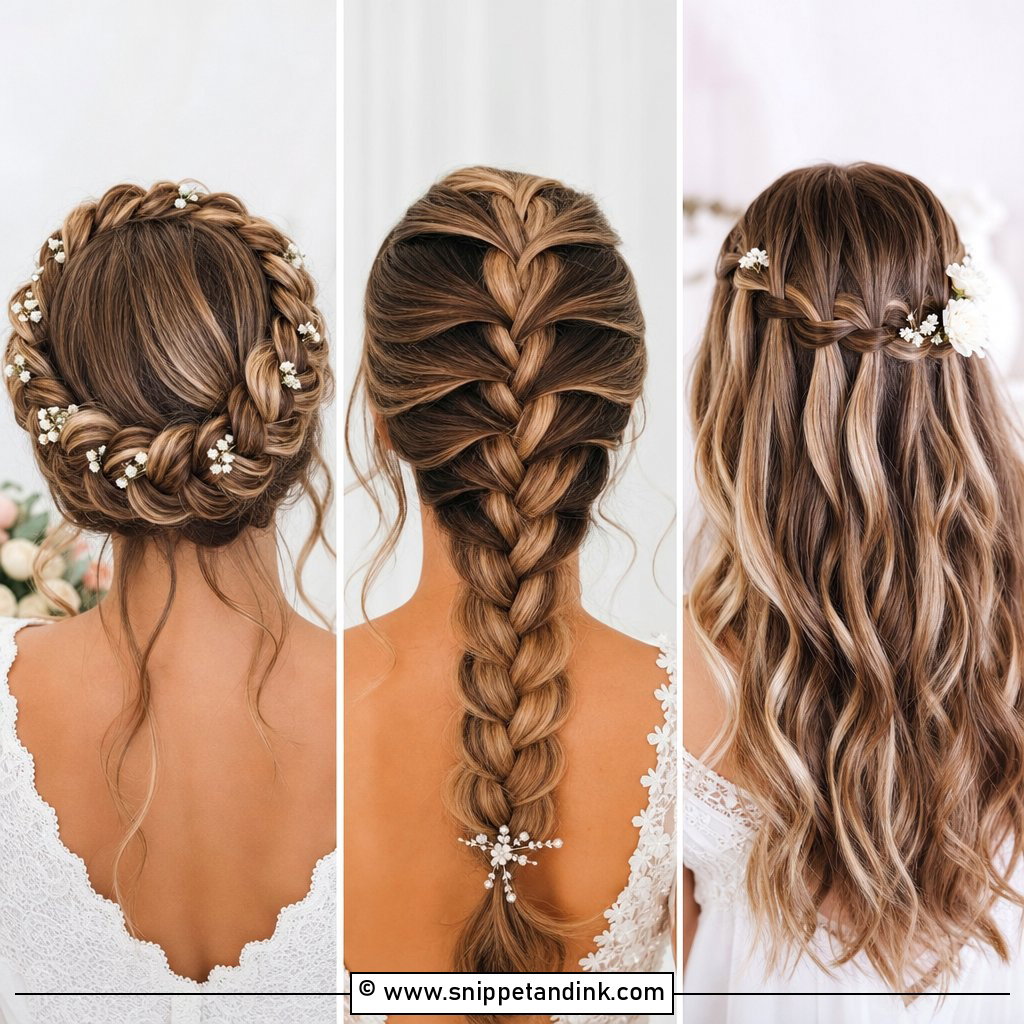
12. Wispy Bangs With Braided Crown
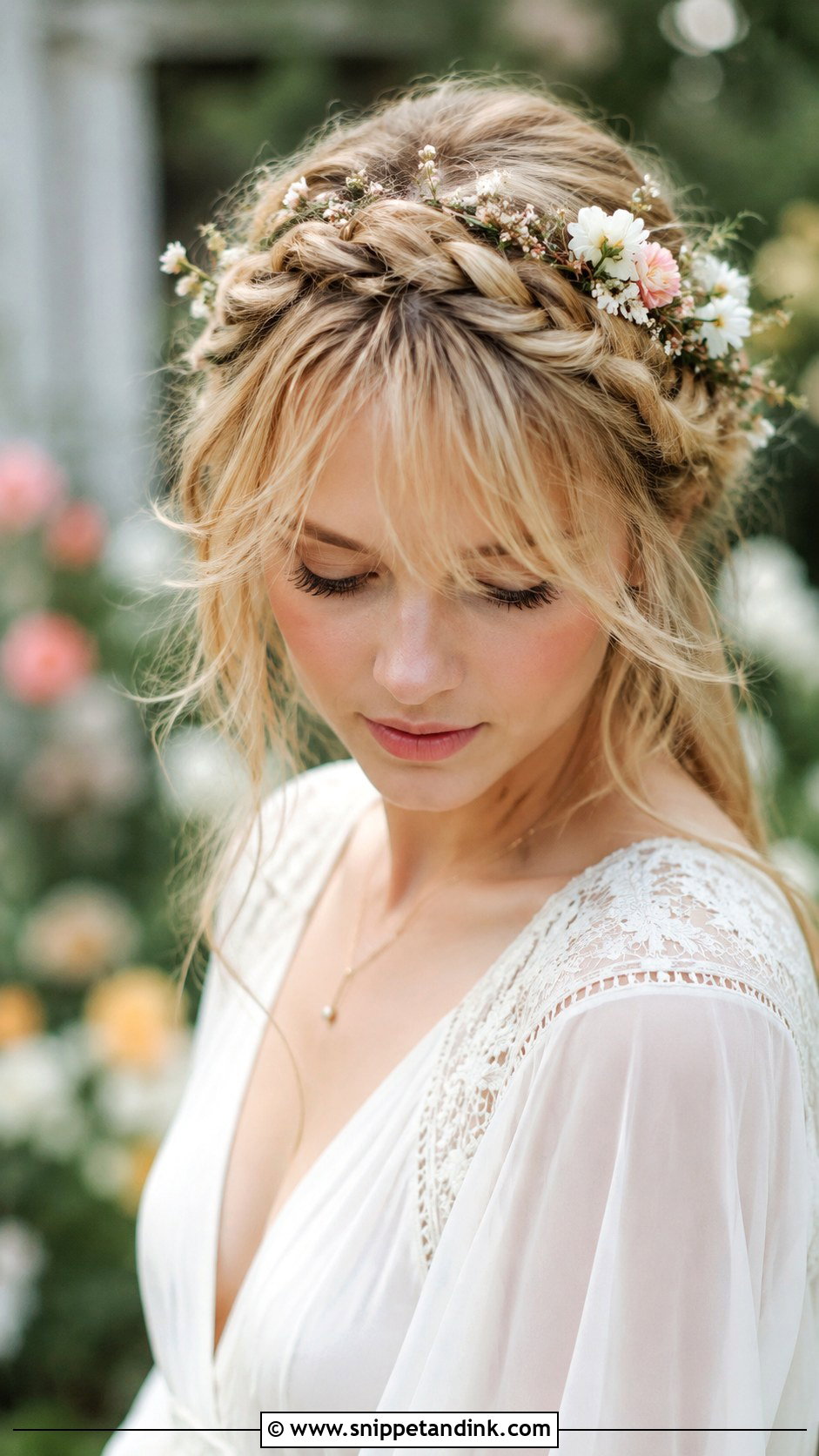
A braided crown with wispy bangs is one of the most secure styles I do, because the braid is pinned into itself all the way around the head and doesn’t rely on volume to stay put. Keep the fringe light, just a few wisps, or it reads as a second line across the forehead. If your hair doesn’t reach around your head, I add a matching clip-in weft into the plait. Baby’s breath tucks in neatly between the sections and survives a full day.
13. Side Bangs With Low Chignon
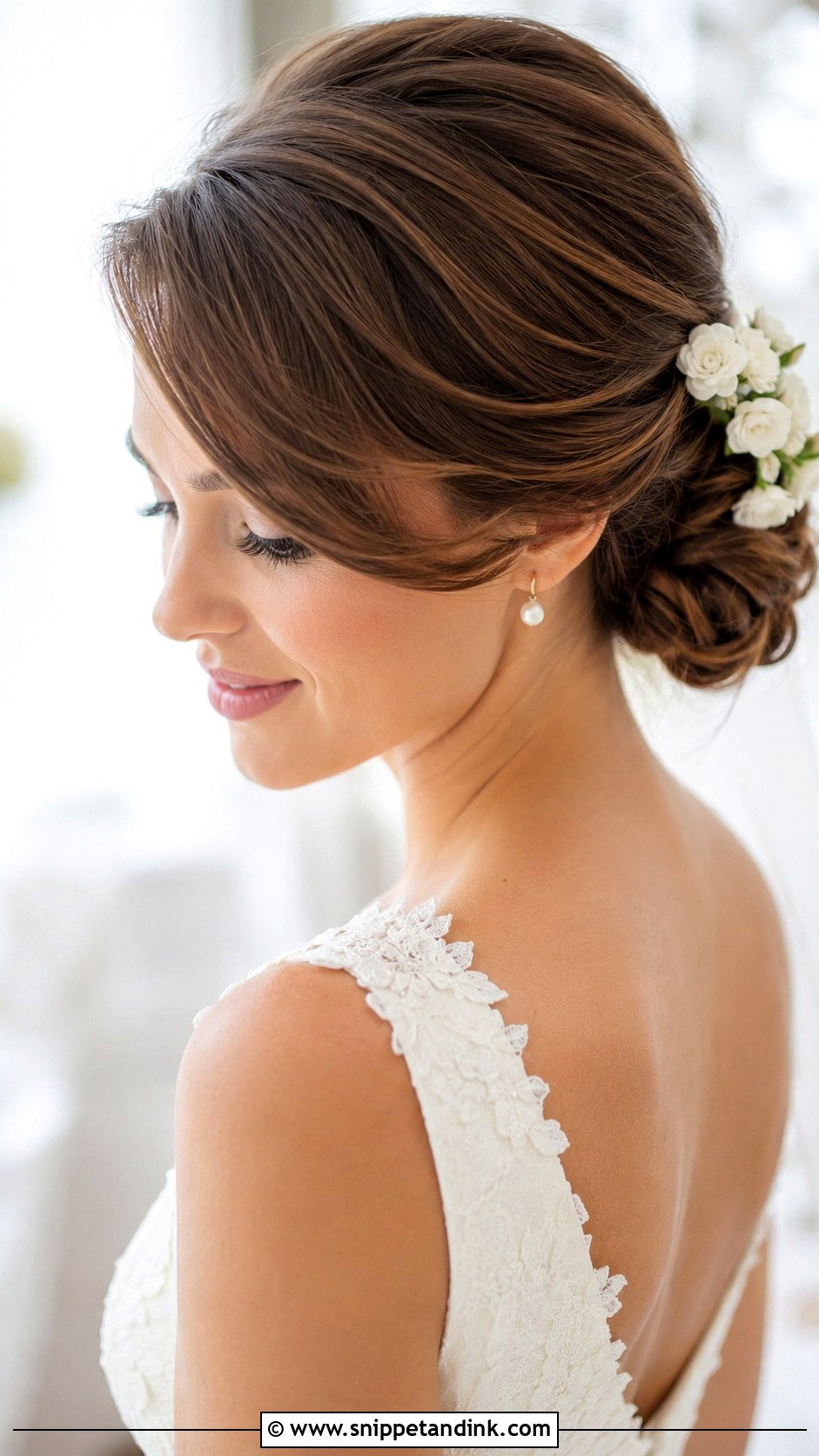
Side bangs into a low chignon is the safest classic pairing I know. It suits most faces, holds up under a veil comb, and won’t look dated in your photos later. What I watch is the transition: the fringe has to blend into the hair travelling back to the nape, not stop abruptly at the ear. I curl the fringe away from the face and pin its ends into the side of the chignon so the whole thing reads as one piece. A small pin near the knot is all the decoration it needs.
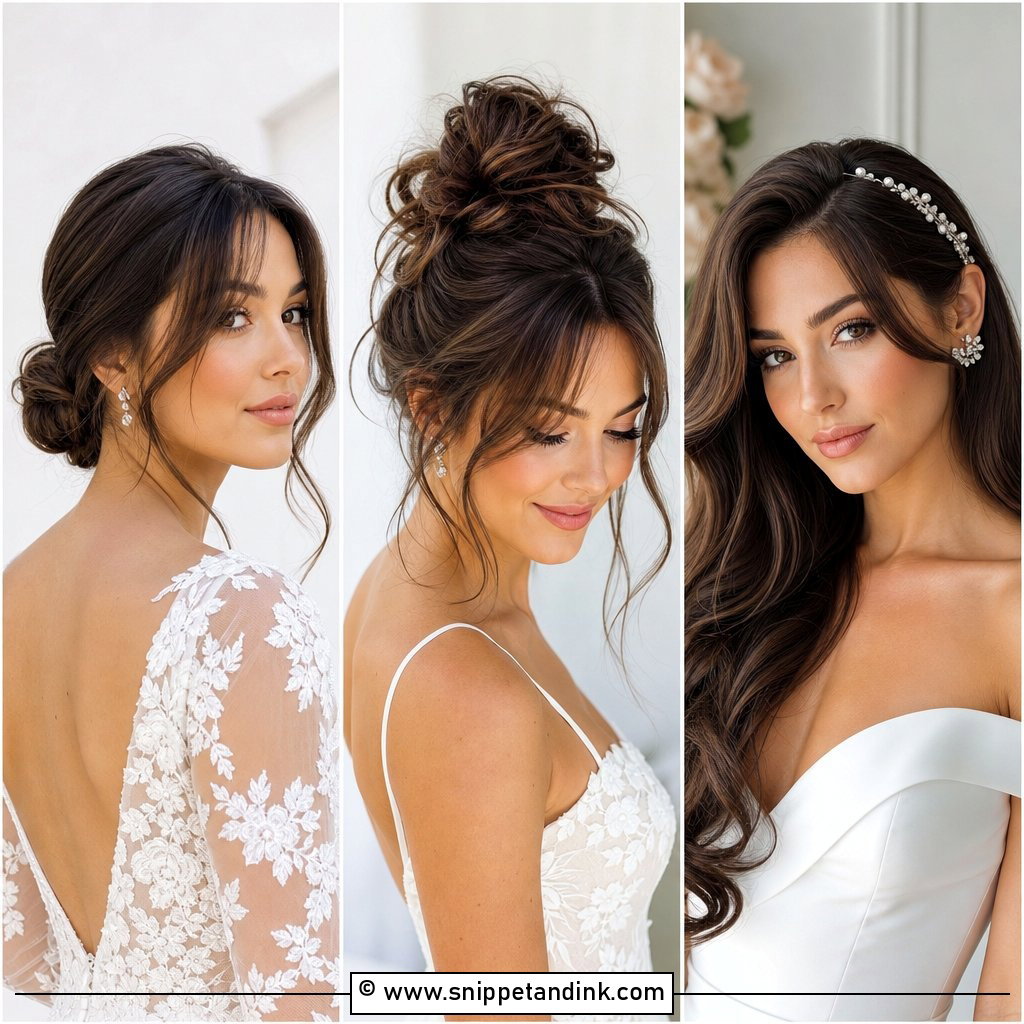
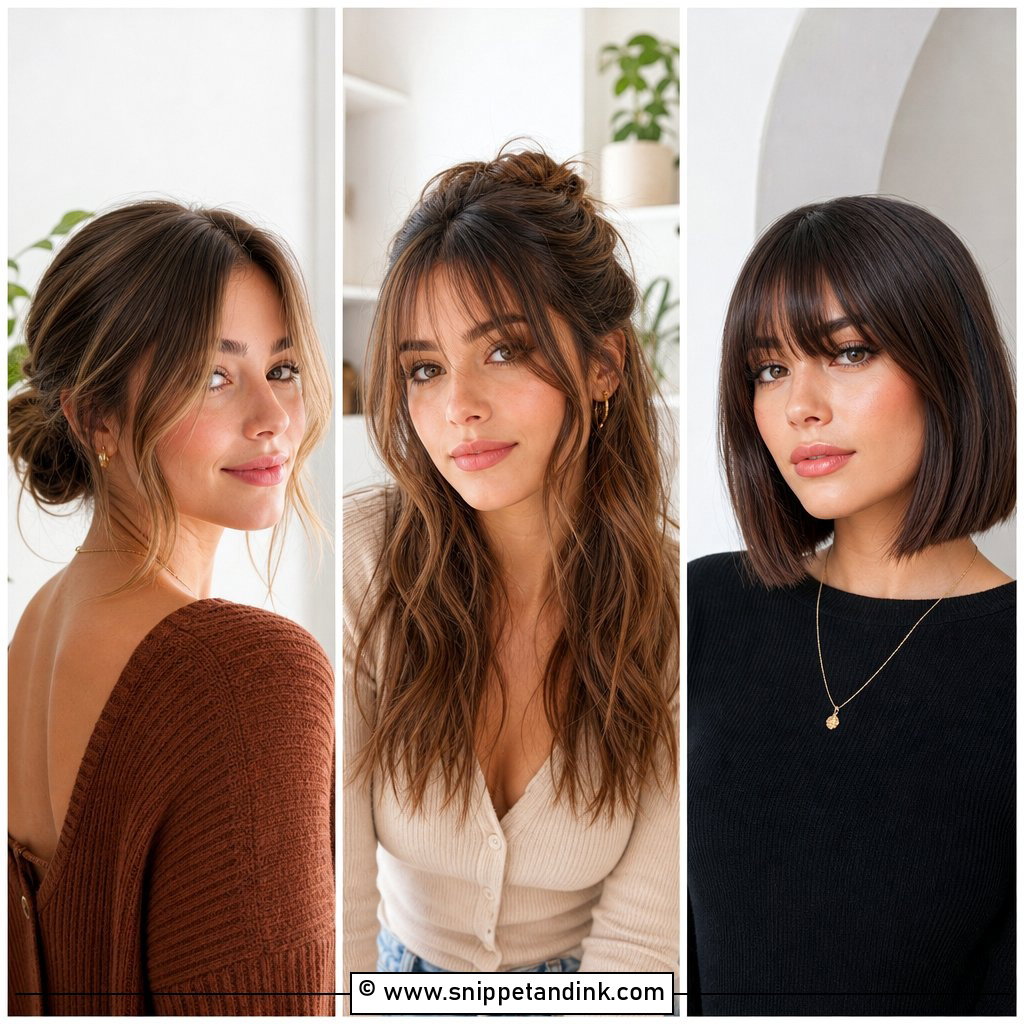
14. Curtain Bangs With Ballet Bun
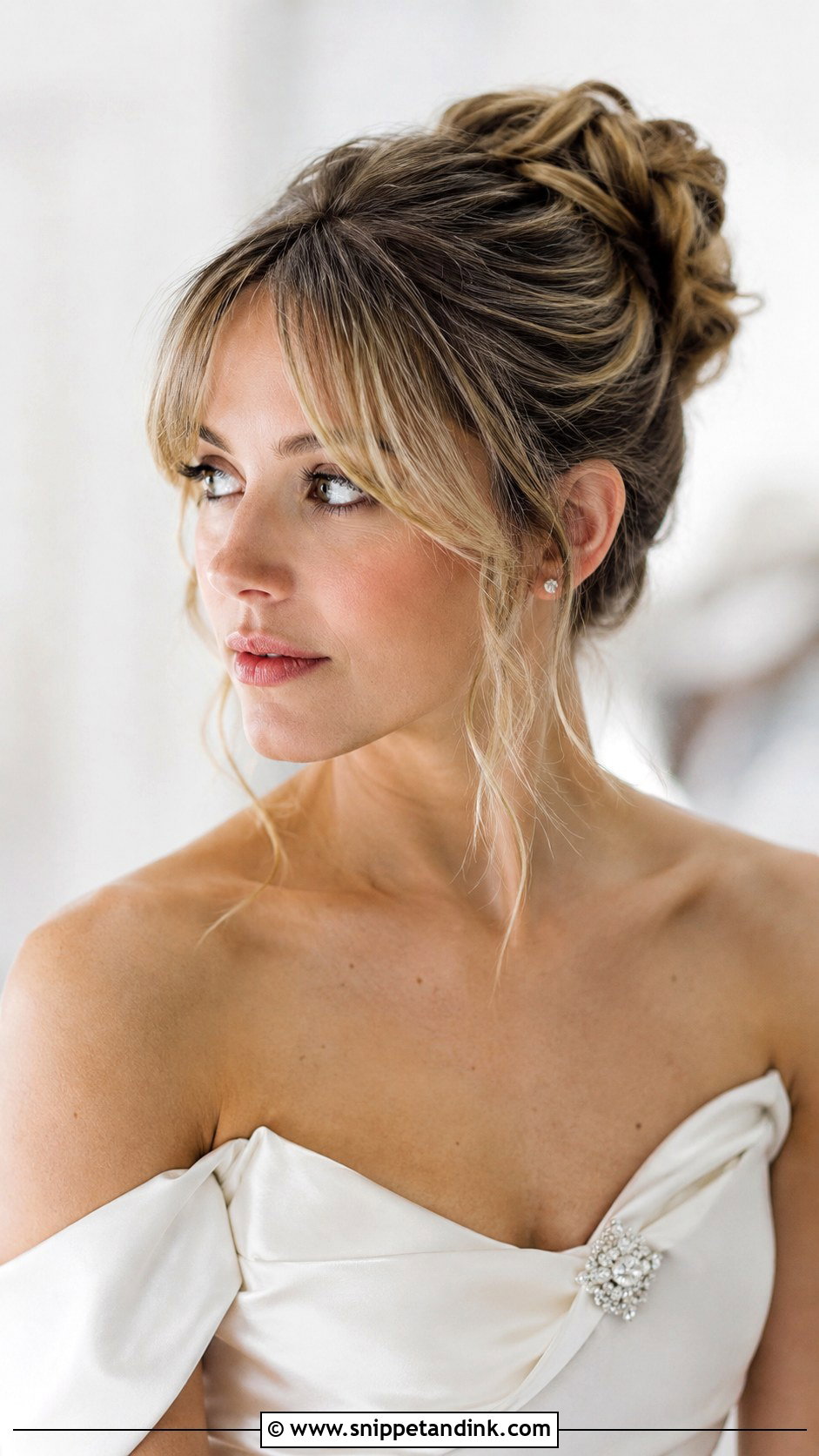
A high ballet bun is pulled tight and smooth, and on some faces that looks severe. Loose curtain bangs undo it by putting softness exactly where the bun takes it away. I set the bun over a donut or with long pins worked in a figure eight, and I make sure the fringe stays out of the brush when I slick the sides up. The bun itself won’t move all day. The bangs are the part that may need a quick pass with a mini flat iron before the reception.
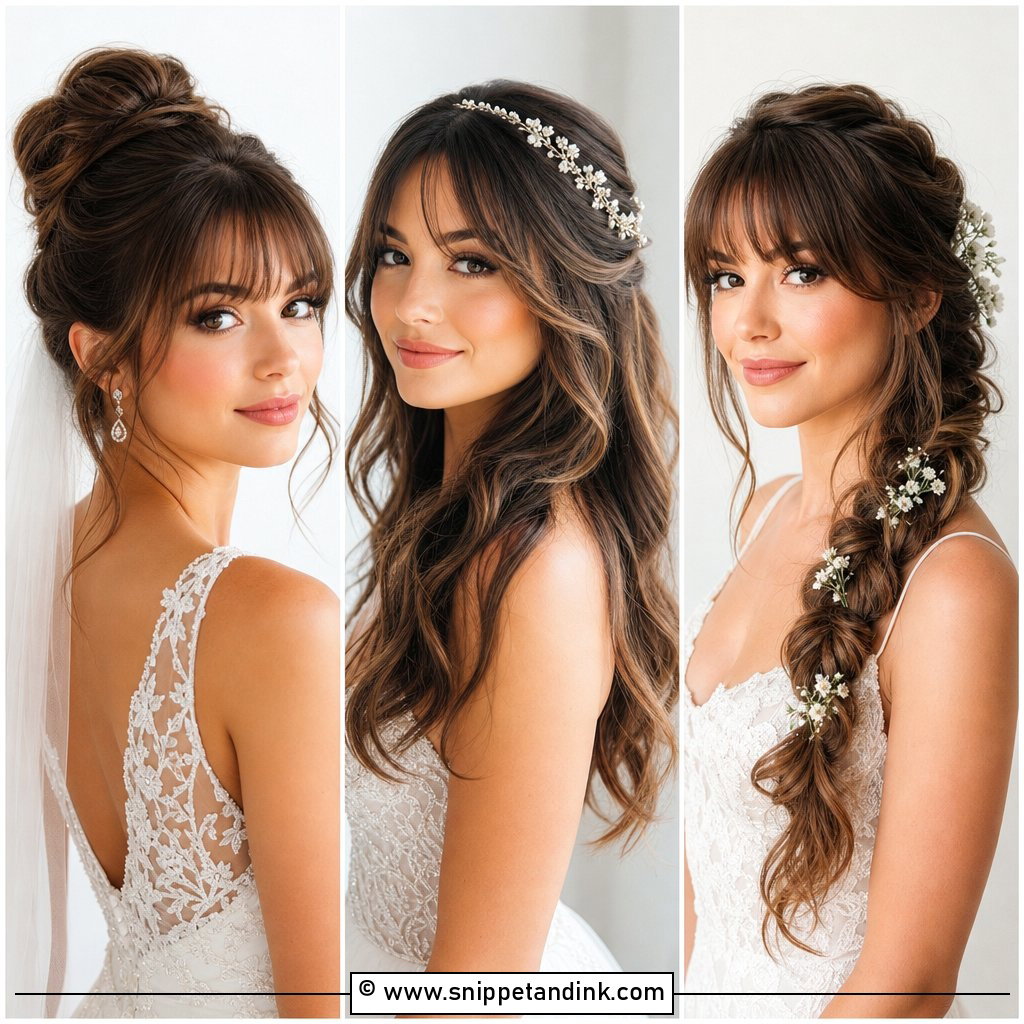
15. Blunt Bangs With Boho Waves
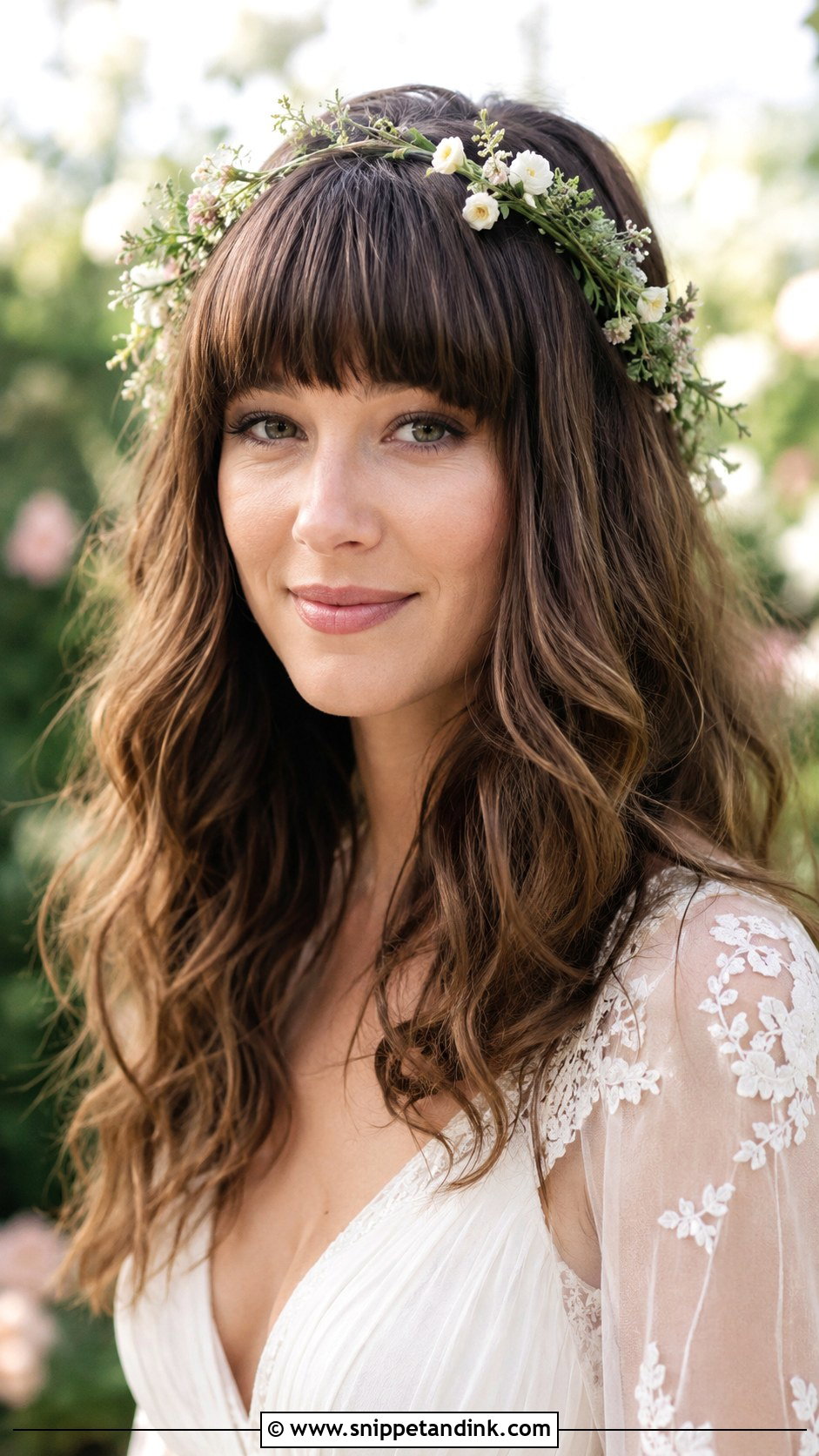
Blunt bangs and messy boho waves sound like a contradiction, and that tension is the appeal. To make it look intentional, I twist sections in alternating directions so the waves stay uneven, while the fringe stays smooth without being stiff. Waves that are too neat turn the whole thing into a costume. It’s more at home under a flower crown at an outdoor ceremony than in a ballroom.
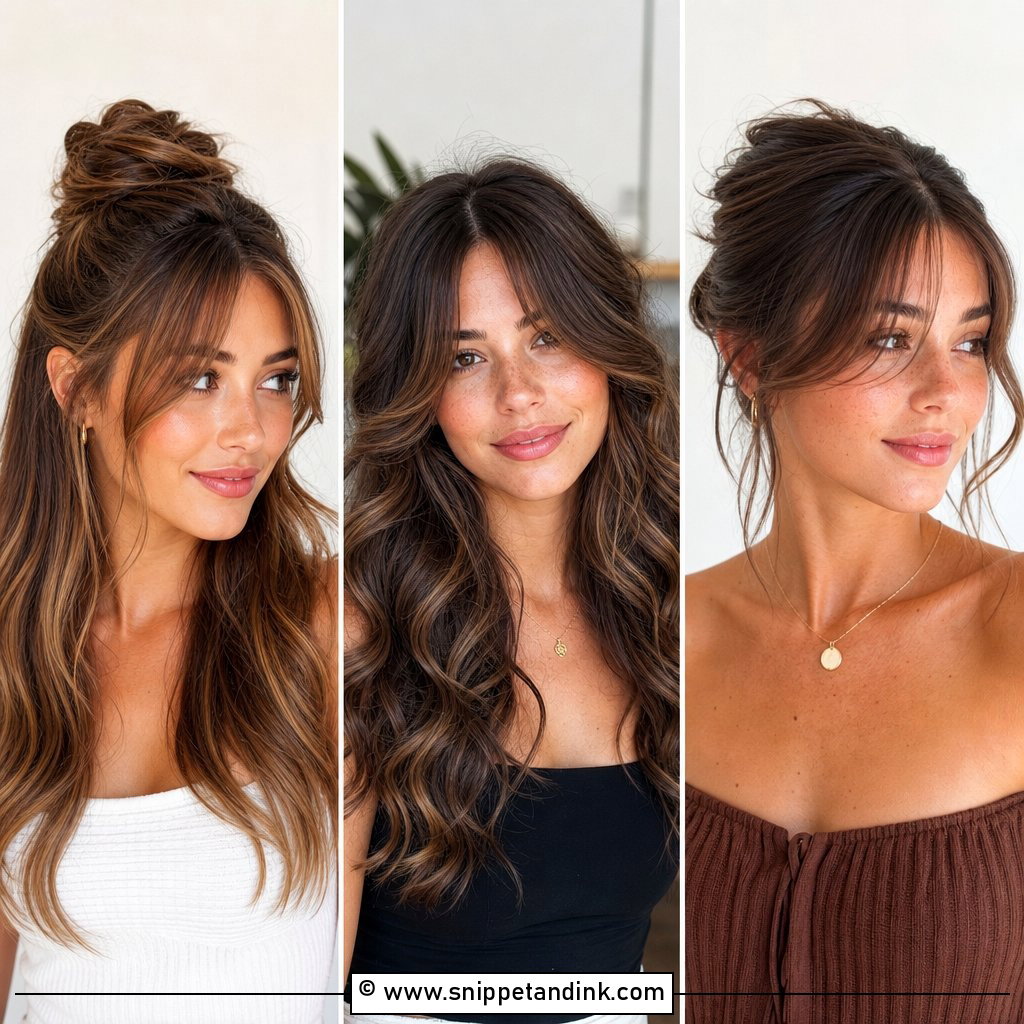
16. Long Curtain Bangs With Down Style
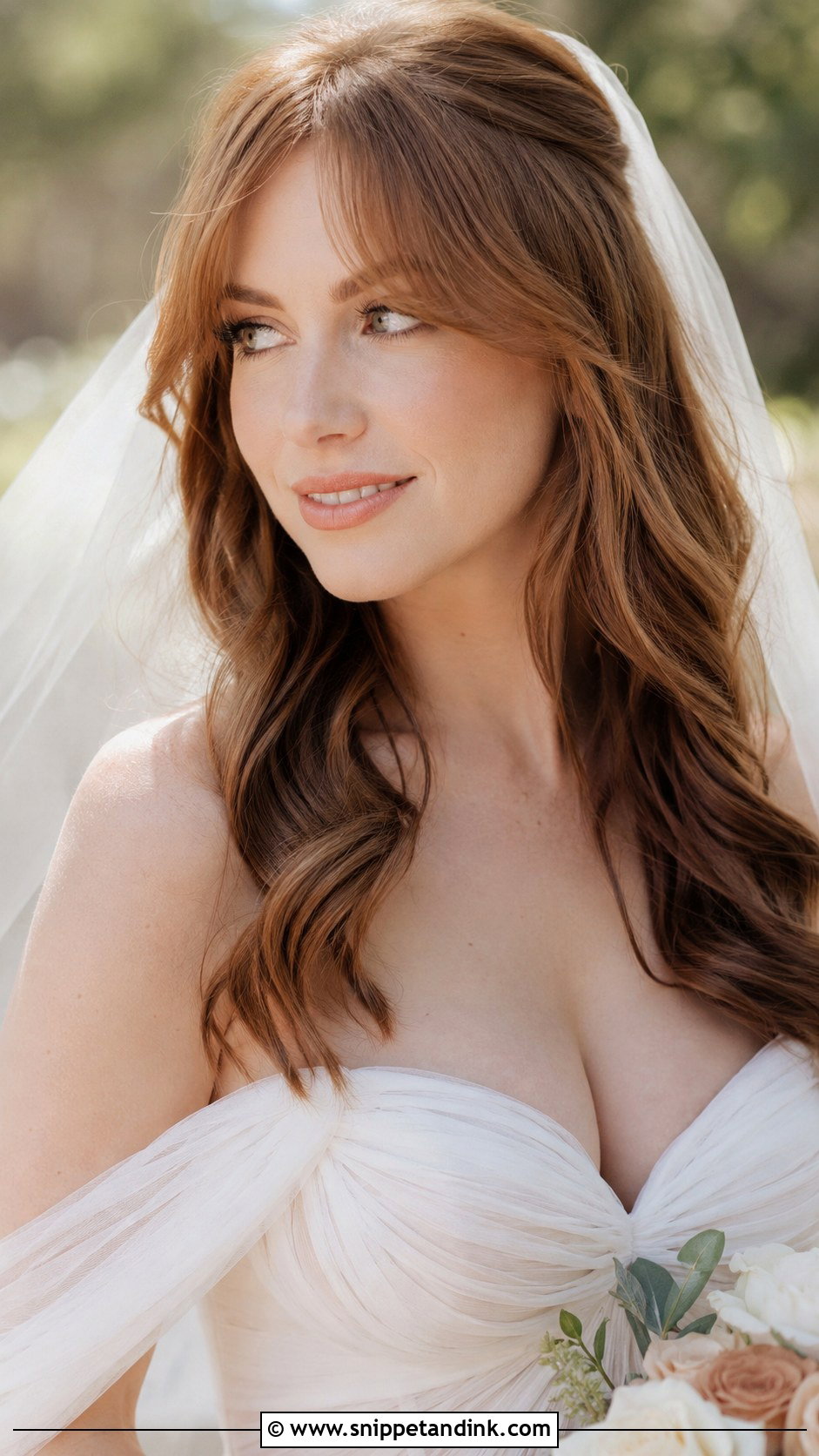
Long curtain bangs are the lowest-commitment fringe on this list, since they are really face-framing layers you can tuck behind your ears whenever you like. The challenge with any down style is drop. I pin each curl while it cools, brush out just before the dress goes on, and warn brides that hair worn down will be flatter by evening, especially in humid weather. A floaty veil suits it because it moves with the hair instead of pinning it flat.
17. Feathered Bangs With Half Up Beehive
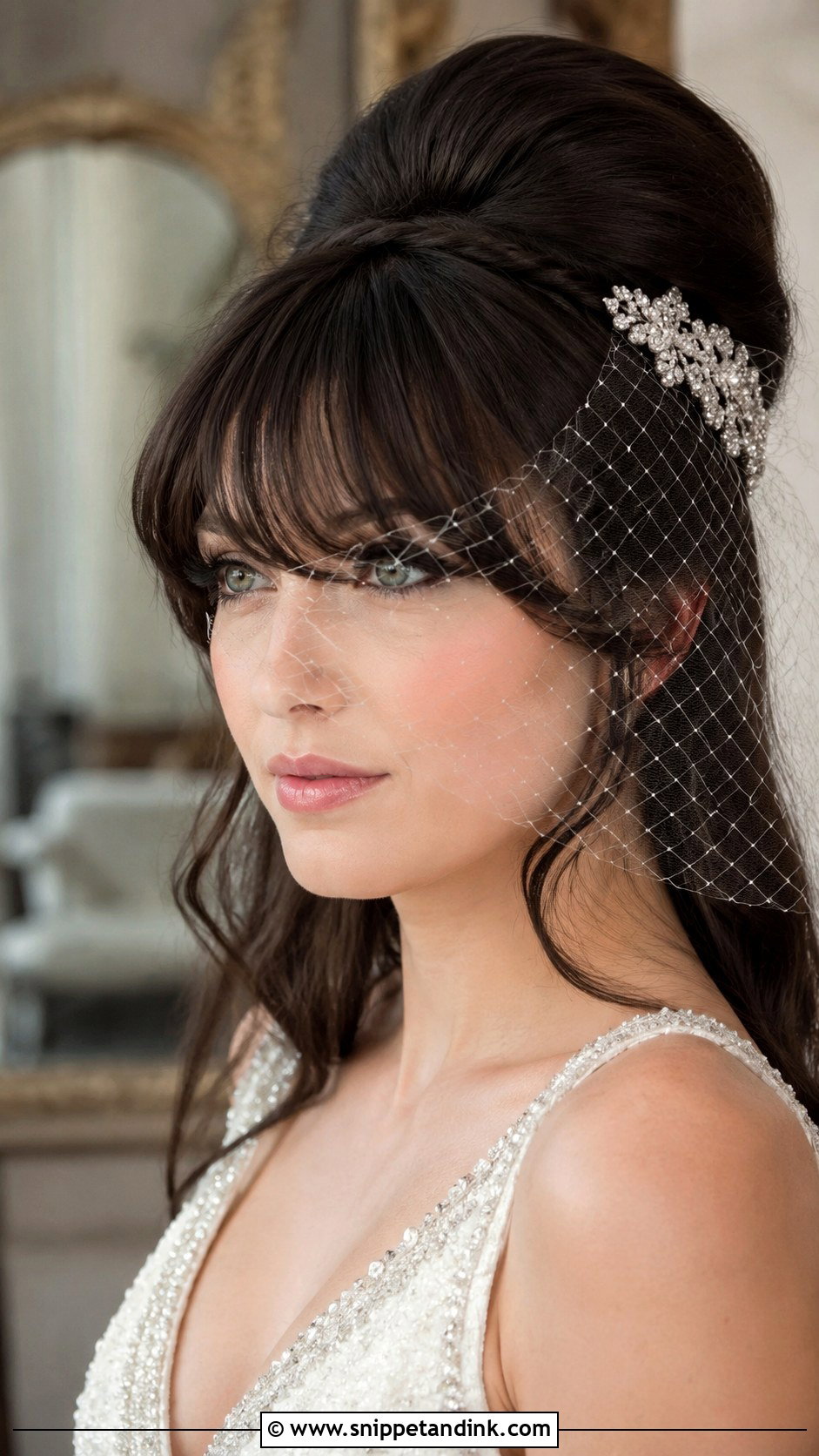
A half-up beehive needs serious backcombing at the crown, and that’s where most of my time goes: tease thin sections at the root, smooth only the top layer over them, then pin the base firmly. Lightly feathered bangs take the edge off the height. Think about the veil before you commit. A comb pushed in under the beehive can collapse it, so I usually suggest a birdcage veil or a small clip in front instead.
18. Wispy Fringe With Tousled Down Look
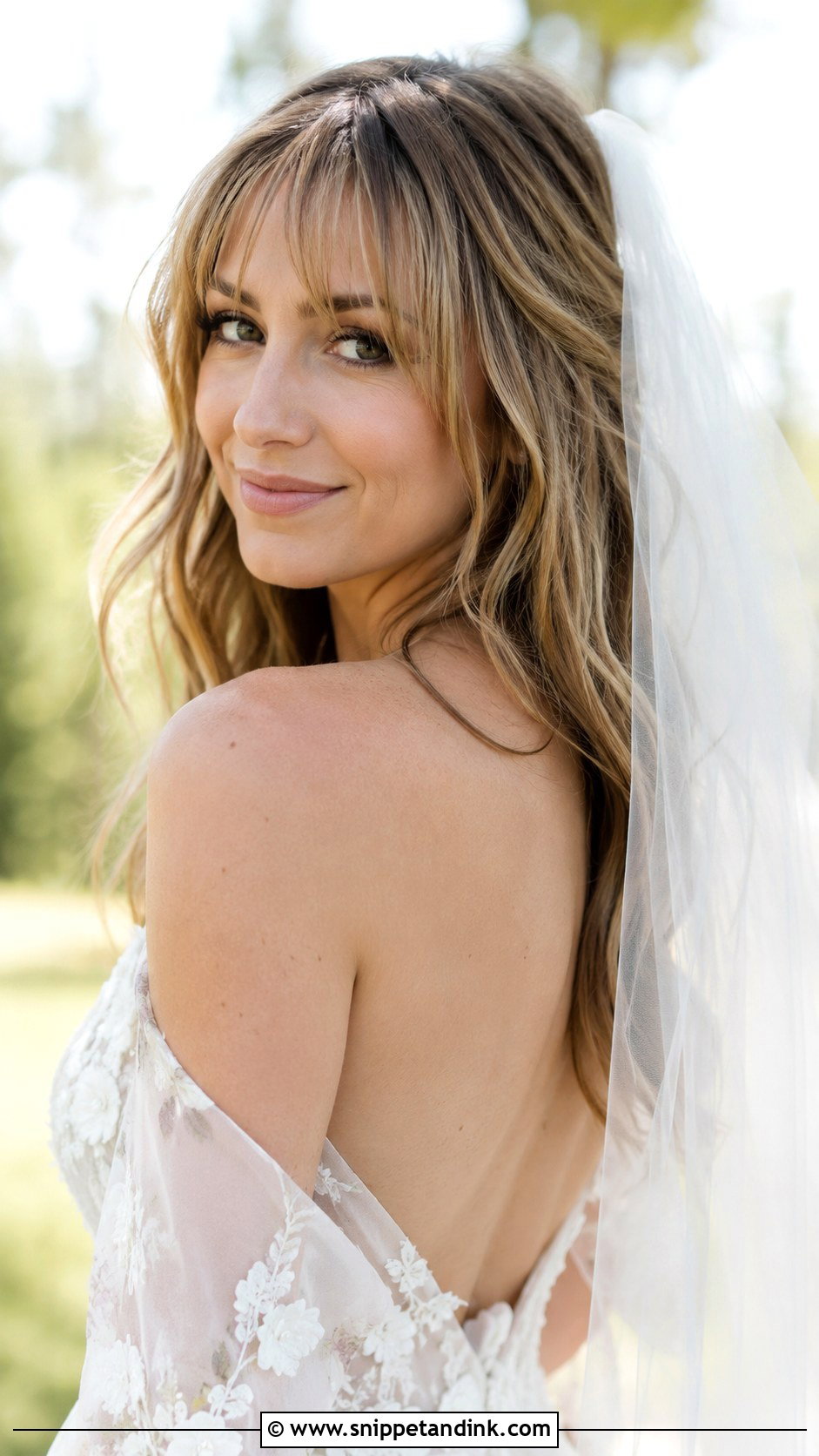
Tousled hair takes more work than it looks. I curl in mixed directions with a medium iron, then break the curls apart with my fingers and a dry texture spray so the wispy fringe blends into the waves instead of sitting on top of them. If your hair is very fine and straight, expect this to relax a lot by evening; tousled hair has nowhere to go but flat. It sits well with a long floaty veil and soft, glowy makeup.
19. Straight Across Bangs With Sleek Chignon
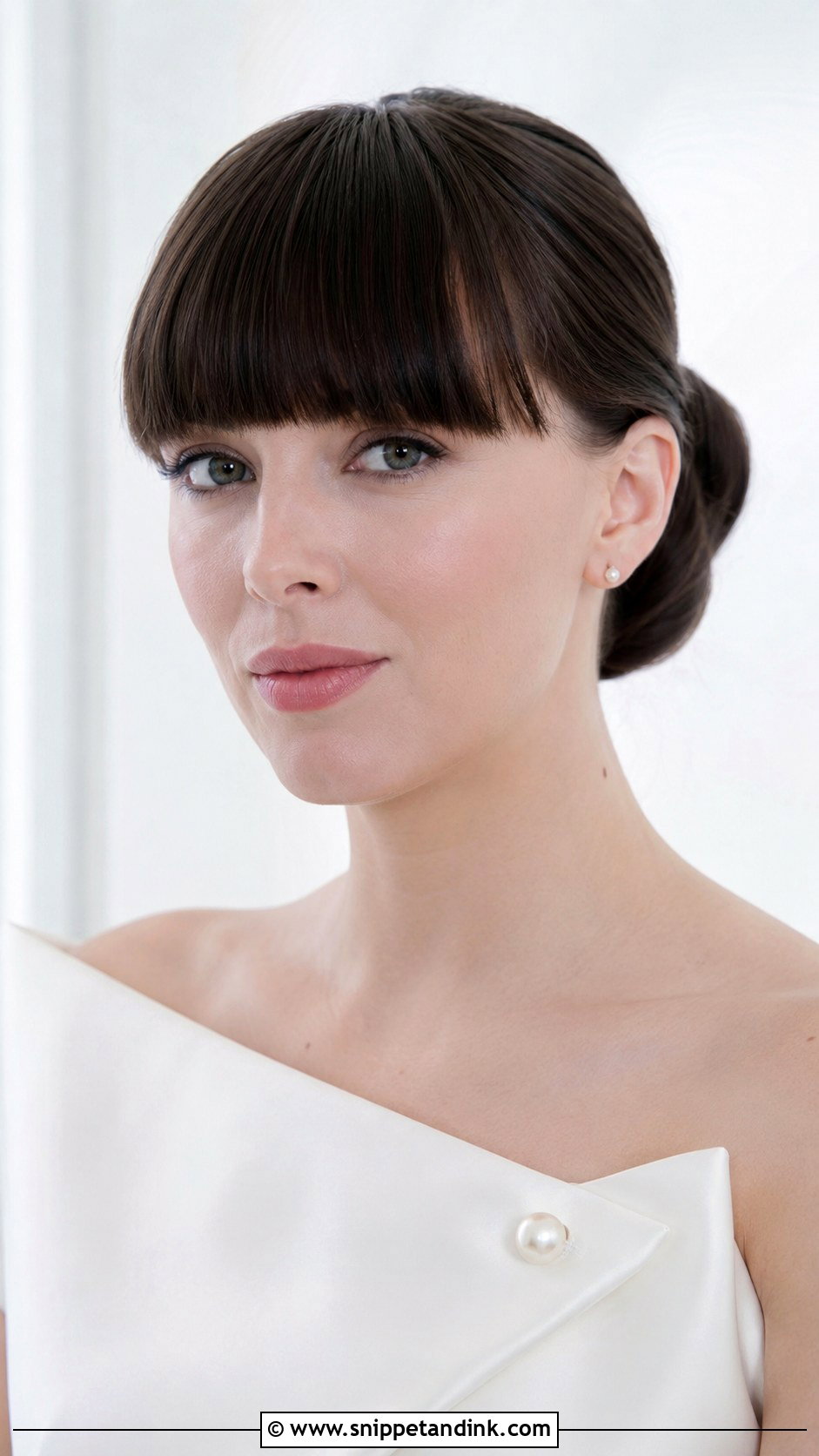
This only works if both halves are equally polished; a fluffy fringe next to a glass-smooth chignon looks unfinished. I dry the straight-across bangs first, while the rest is still damp, so the part can’t set in the wrong direction, then smooth the back with a boar bristle brush and a pea-sized amount of cream. Strong features carry it best. One pearl pin is plenty.
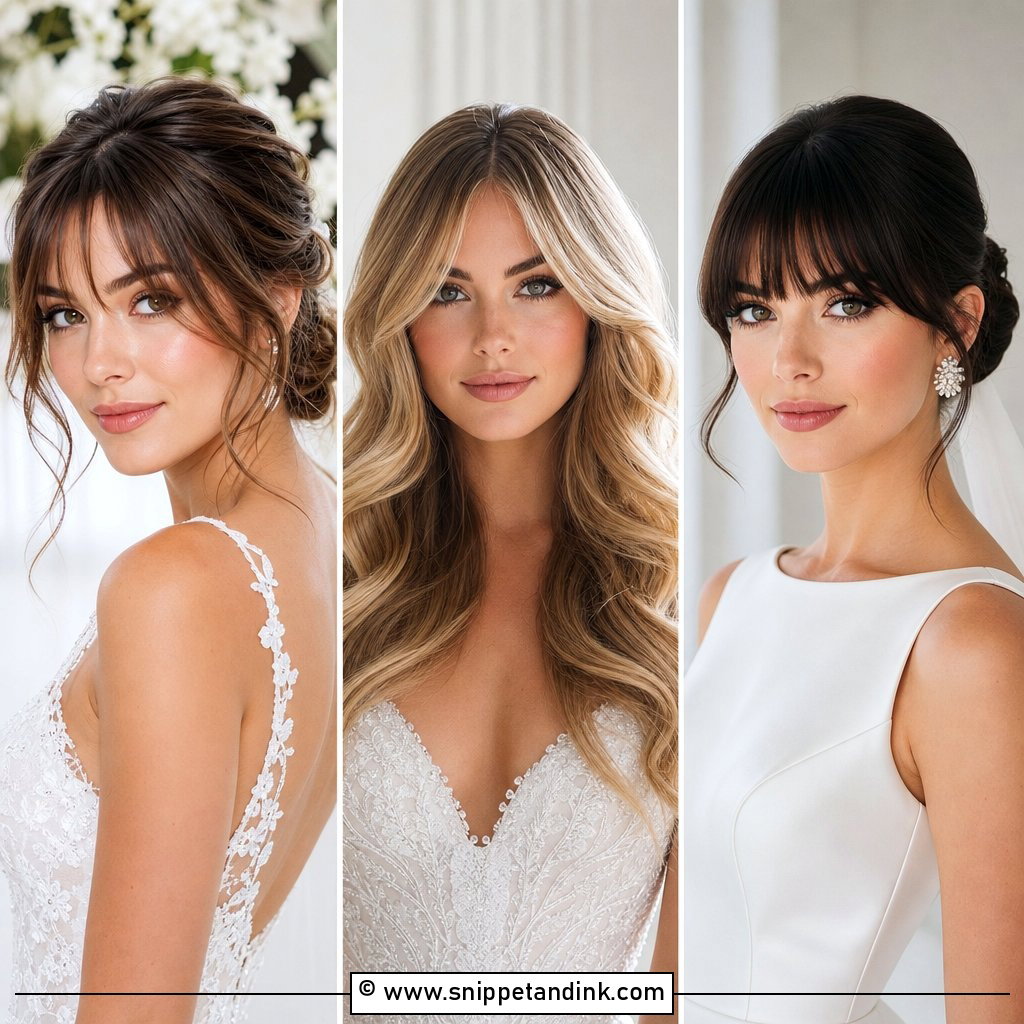
20. Curtain Bangs With Floral Crown
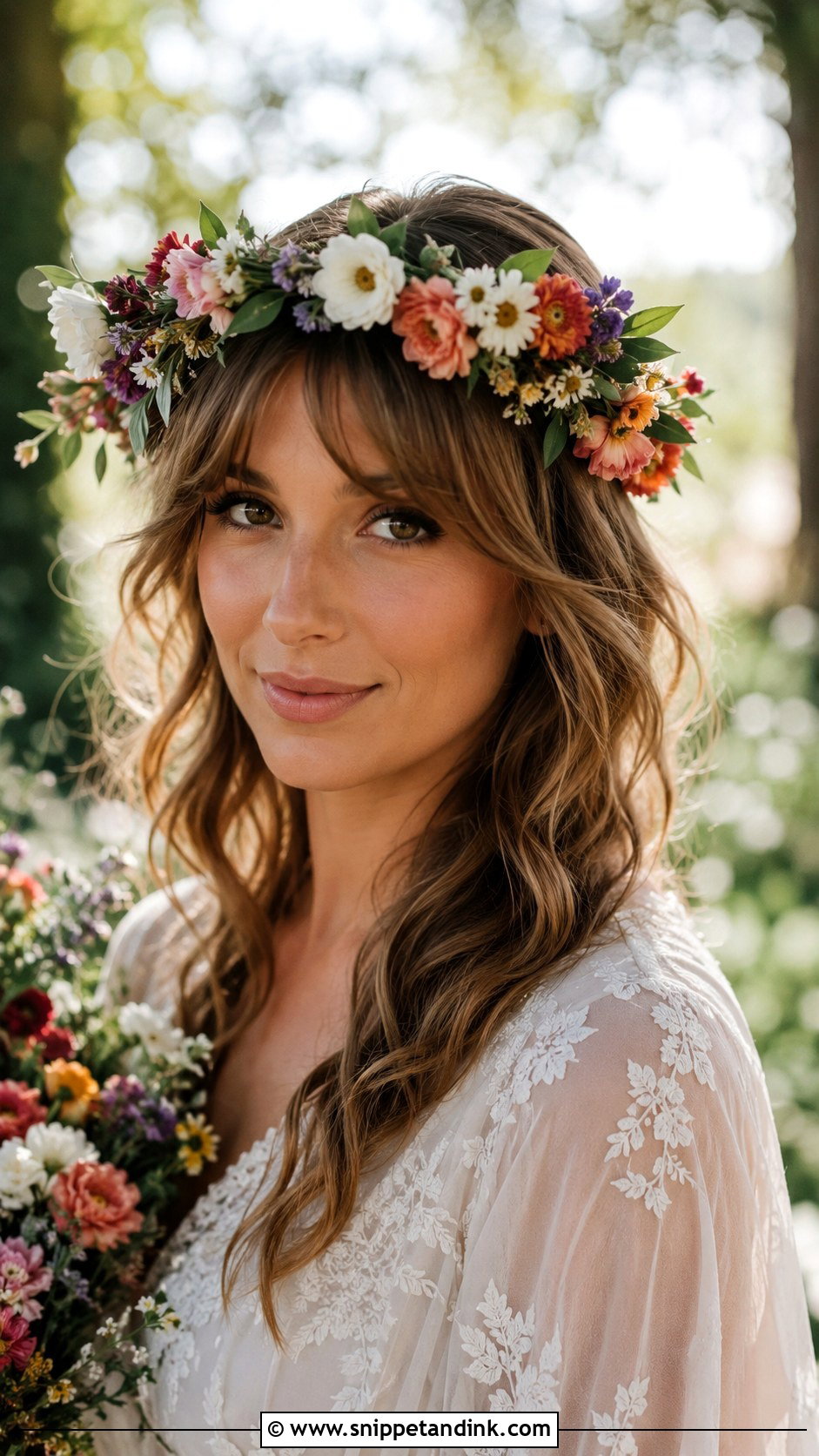
Fresh flowers are heavier than they look, and a crown resting on curtain bangs will flatten them before the first photos. I set the crown slightly behind the hairline so the fringe sits in front of it, then anchor it with bobby pins hidden in small sections of hair. Ask your florist for blooms that cope out of water for several hours, such as spray roses, waxflower and sturdy greenery, and have the crown delivered as close to getting-dressed time as possible. Hair worn down or in a relaxed half-up suits it best.
21. Side Swept Fringe With Vintage Waves
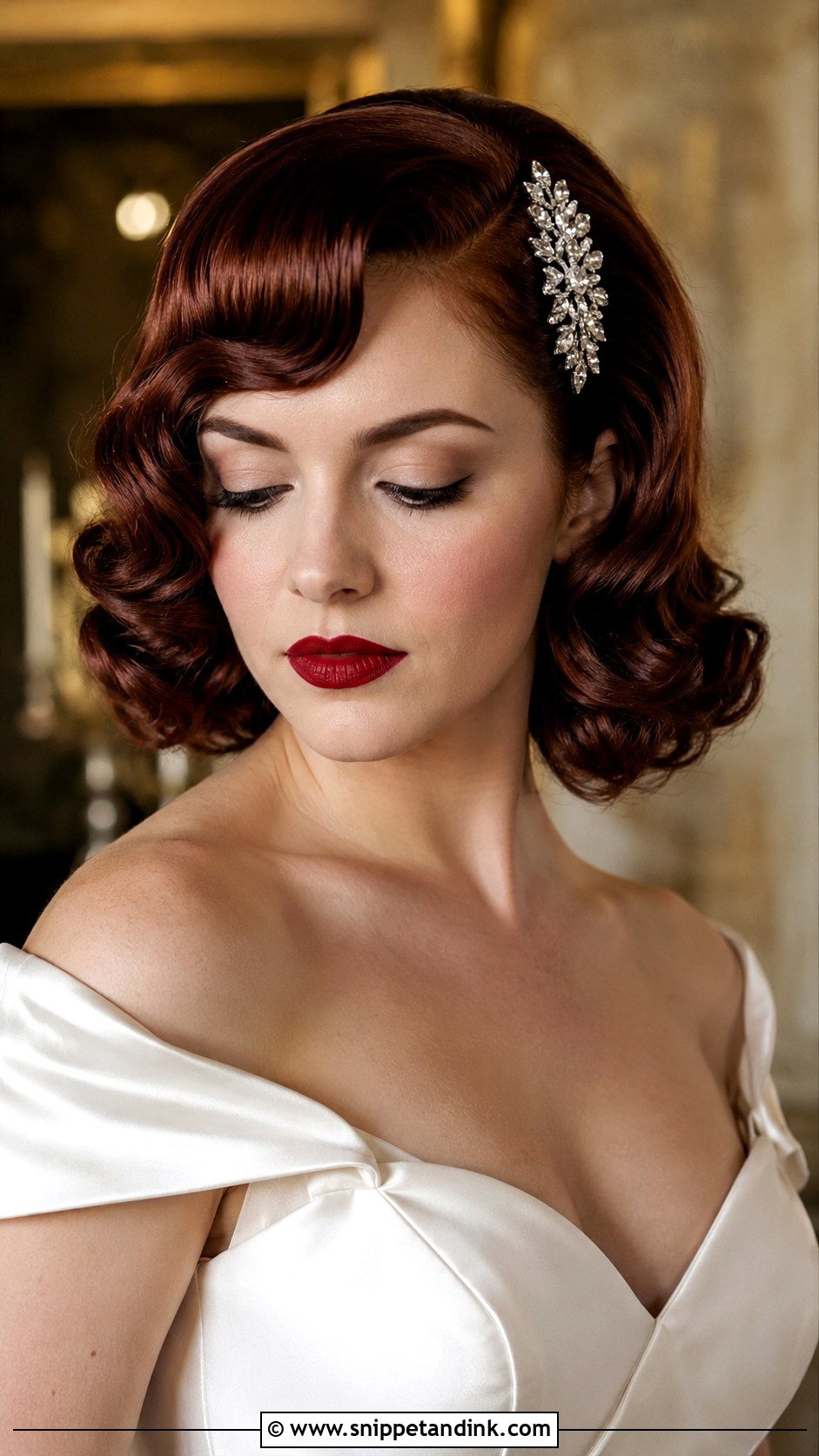
Vintage waves are a set, not a curl, and I treat them like one. Everything is curled in the same direction, pinned to cool, then brushed out into a single S-shape that the side-swept fringe flows straight into. Leave the fringe out as its own piece and the wave pattern breaks at the temple. Humidity is the enemy of this look, so for summer outdoor weddings I use more hold than feels necessary. A jeweled comb behind one ear and a bold lip finish it.
22. Soft Bangs With Boho Braided Half Up
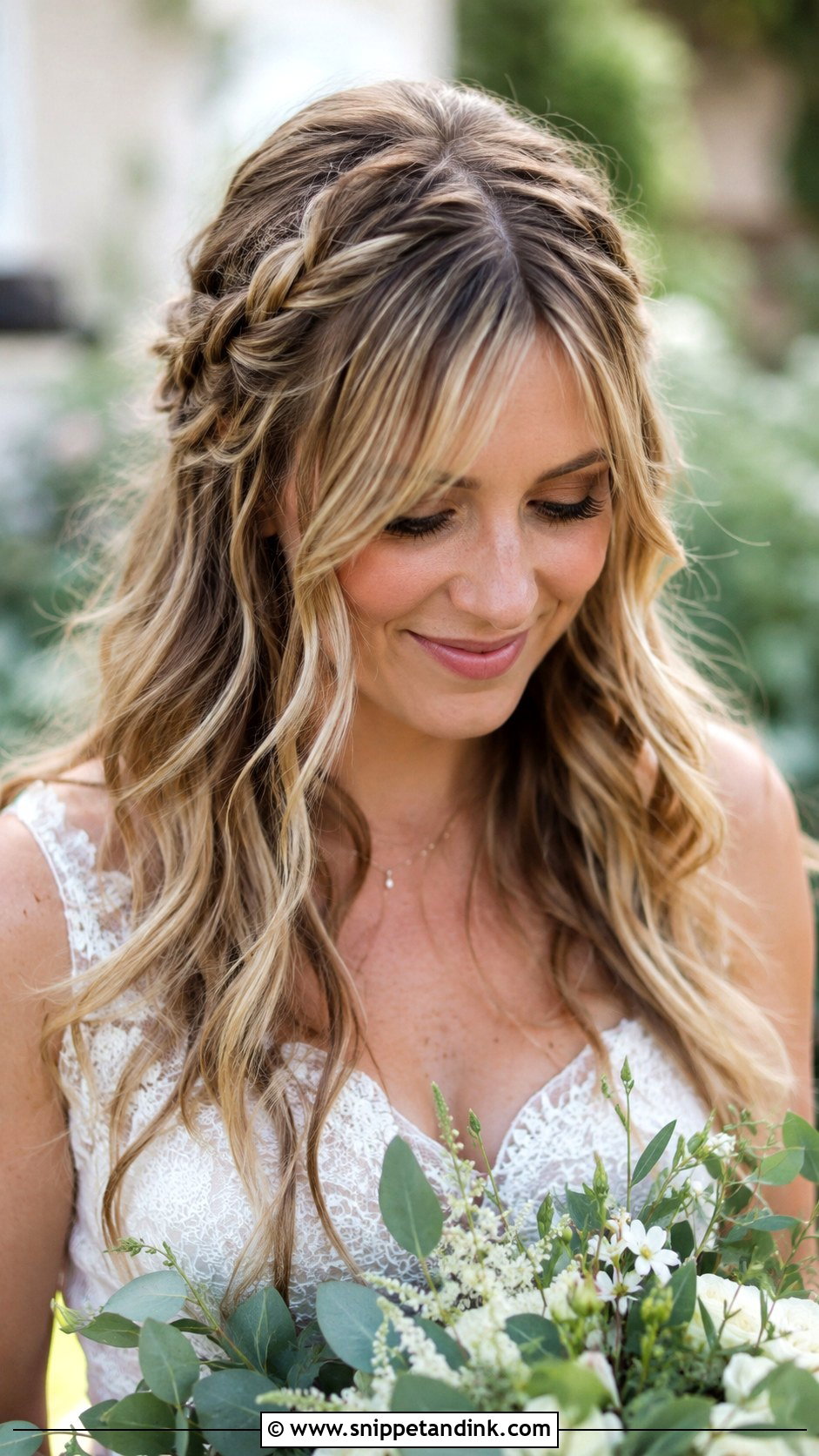
For this half-up, I braid two thin plaits starting just behind the fringe and pin them together at the back of the crown, loosening each braid with my fingers before it’s secured. Where the braids begin matters: start them too close to the face and they drag the bangs back with them. A sprig of greenery or a couple of small flowers can tuck into the join, and the lengths stay in loose waves.
23. Blunt Bangs With Sleek Straight Hair
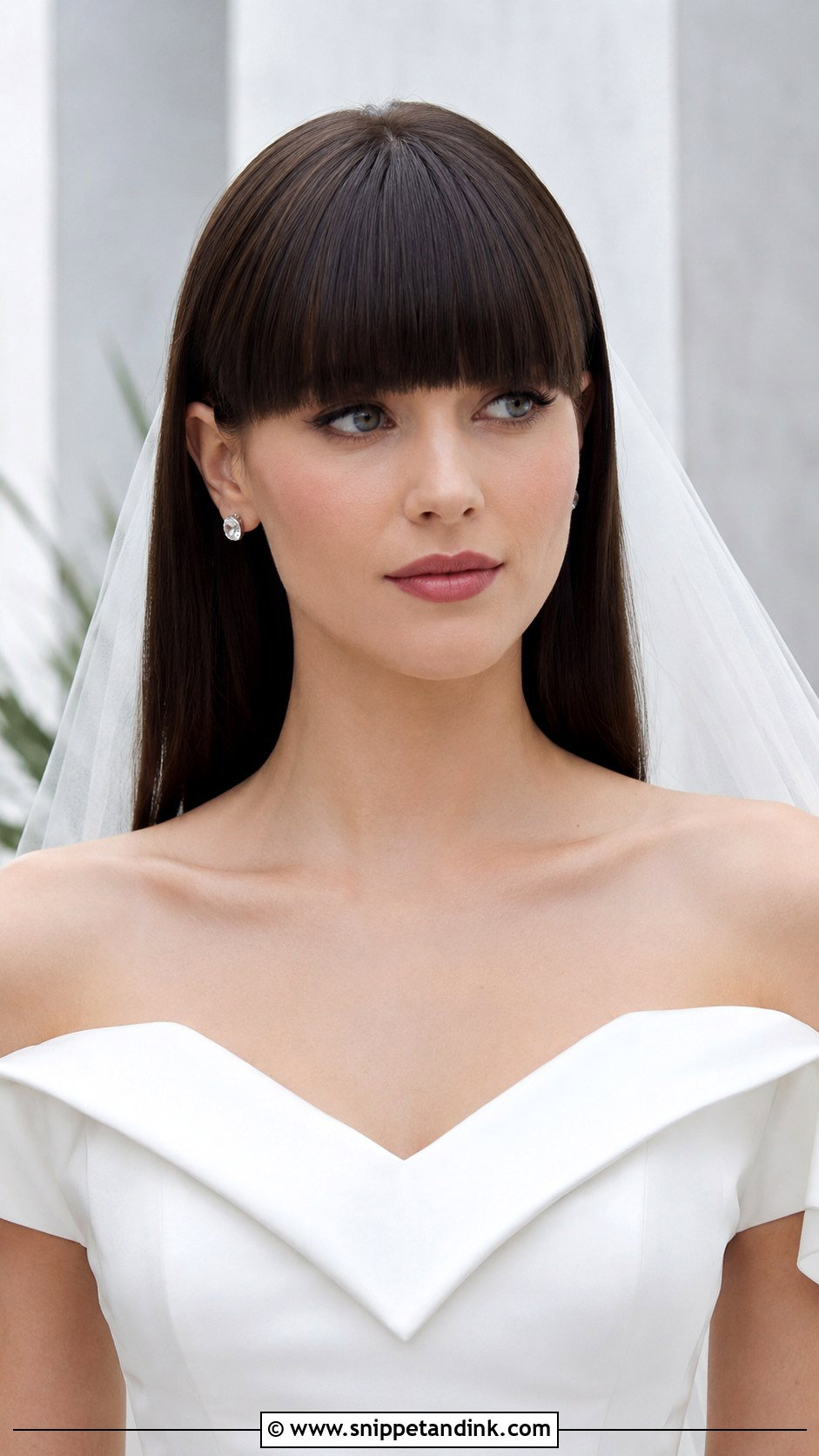
Poker-straight hair is the simplest look to describe and the hardest to keep, because every kink shows. I flat iron in small sections with heat protectant and a light shine spray, then tell the bride to stop touching it, since hands running through the lengths all day create friction frizz. If you sweat easily, keep blotting papers for your forehead, because an oily blunt fringe splits fast. A structured, minimal gown matches its clean lines.
24. Wispy Curtain Bangs With Low Ponytail
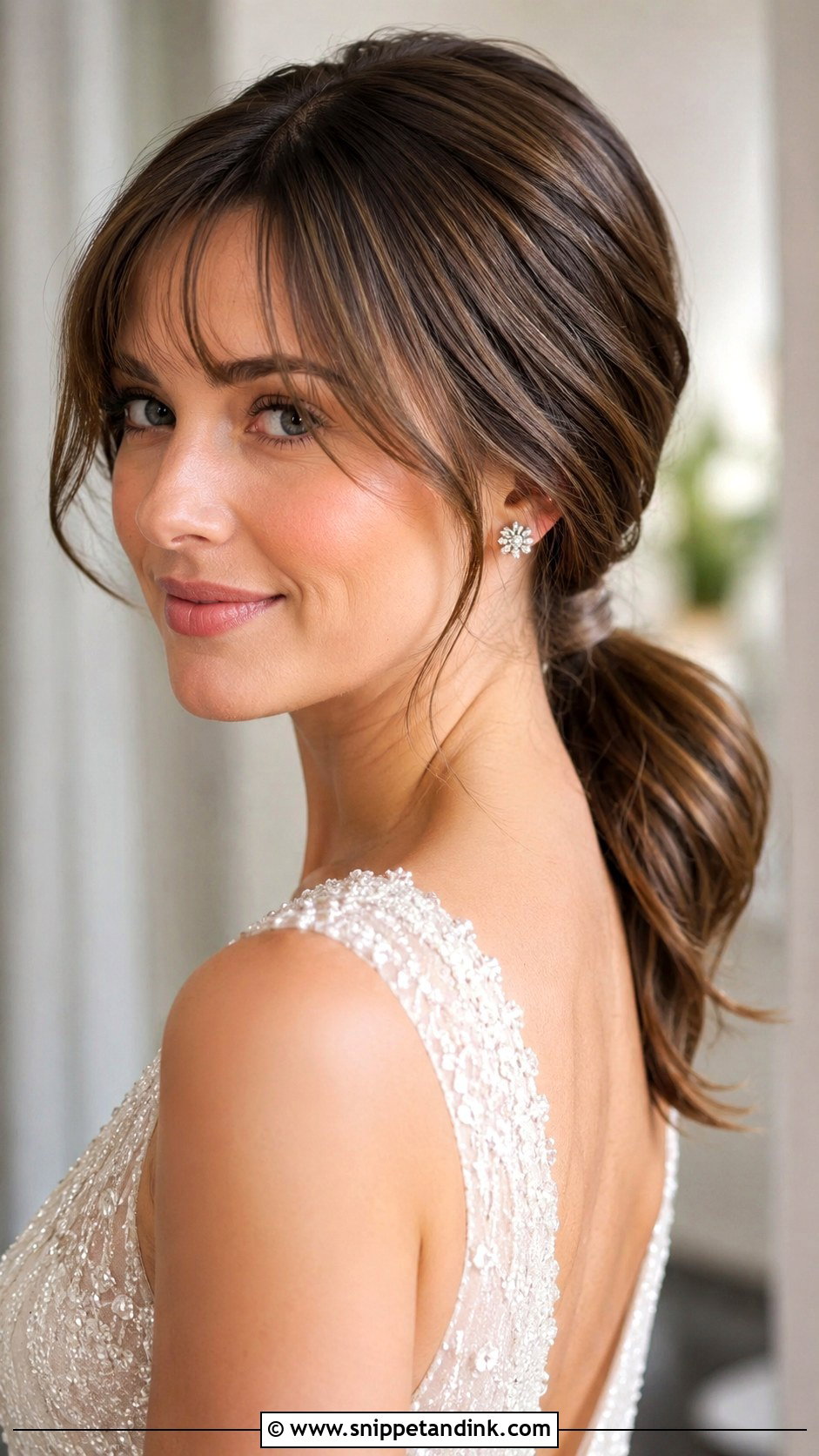
Wispy curtain bangs with a low ponytail is one of the few styles I’d call genuinely comfortable from morning to last dance: nothing pulls on the crown and nothing needs repinning. I wrap a strand of hair around the elastic and pin it underneath so no band shows. The low pony lengthens the neck while the fringe softens the front. A small sparkly pin above the wrap is enough.
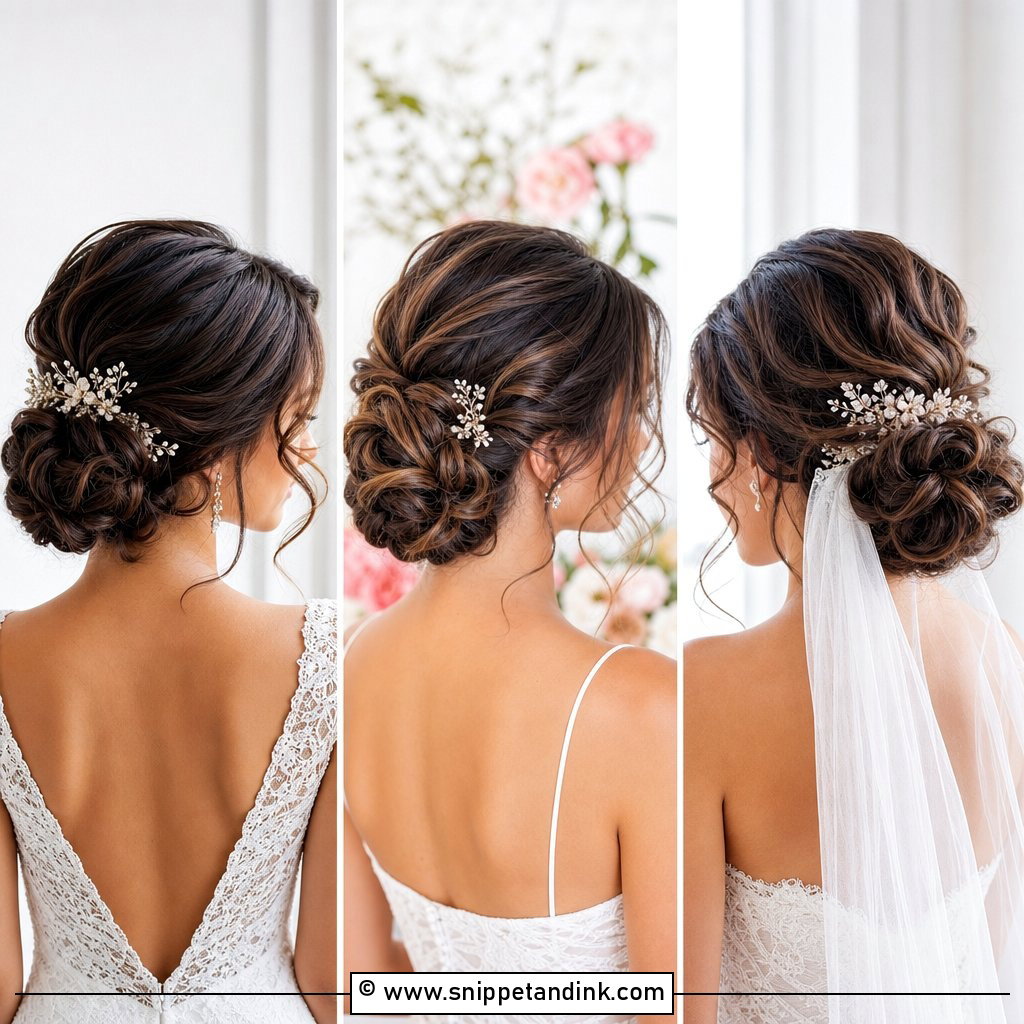


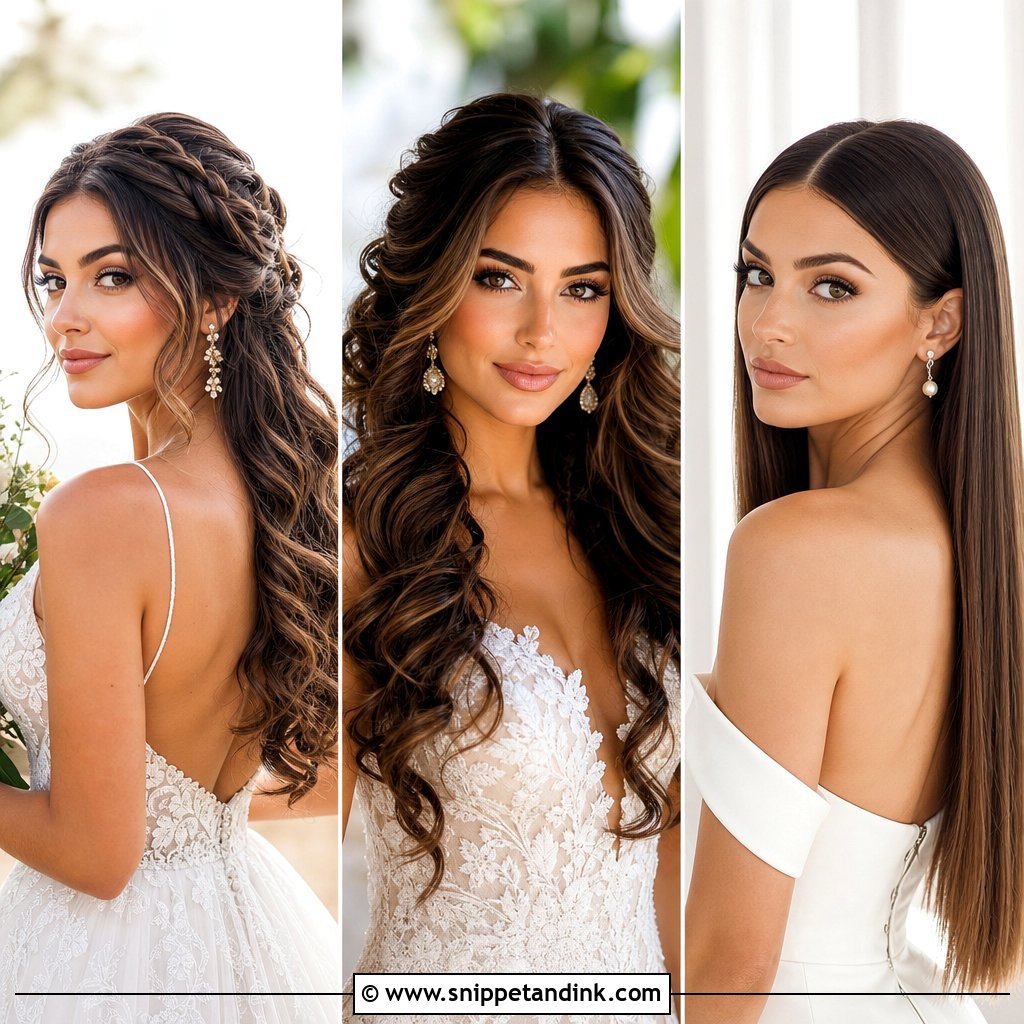
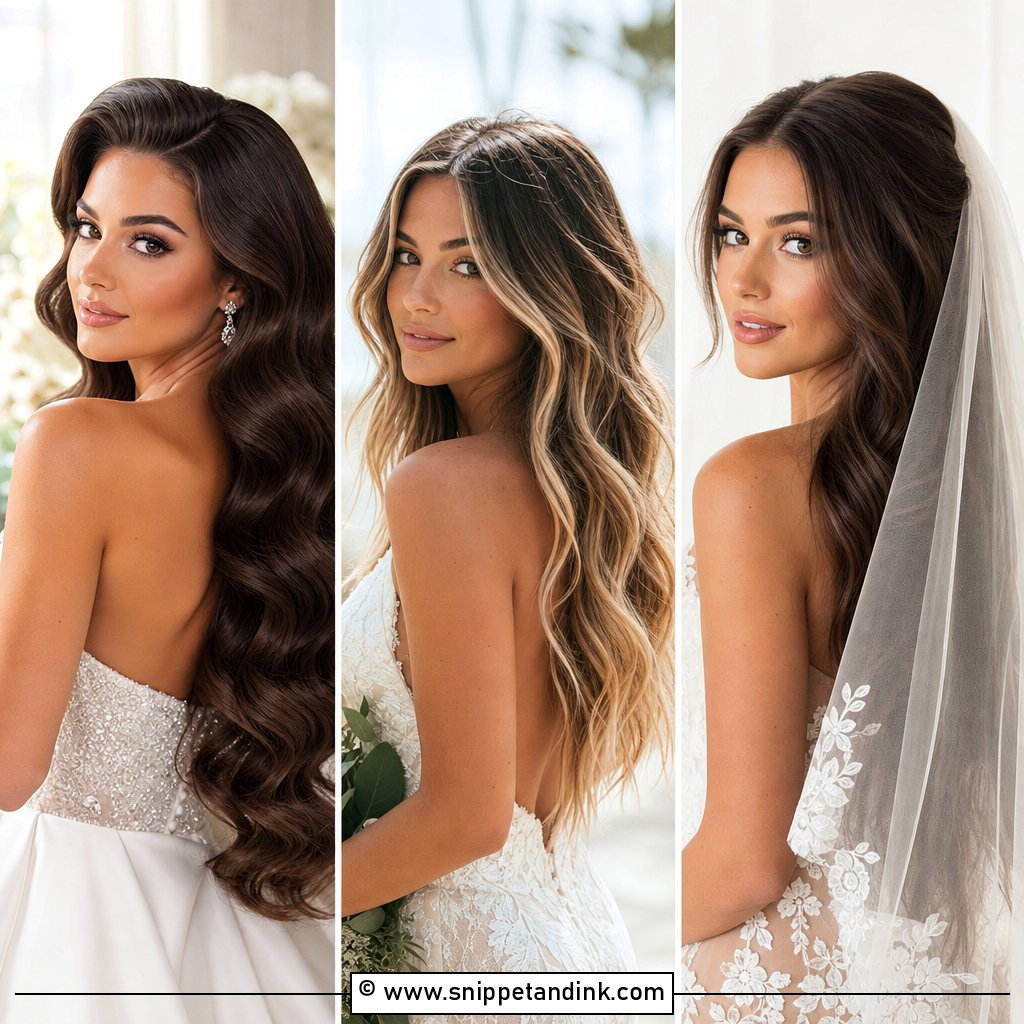
25. Curtain Bangs With Romantic Curls
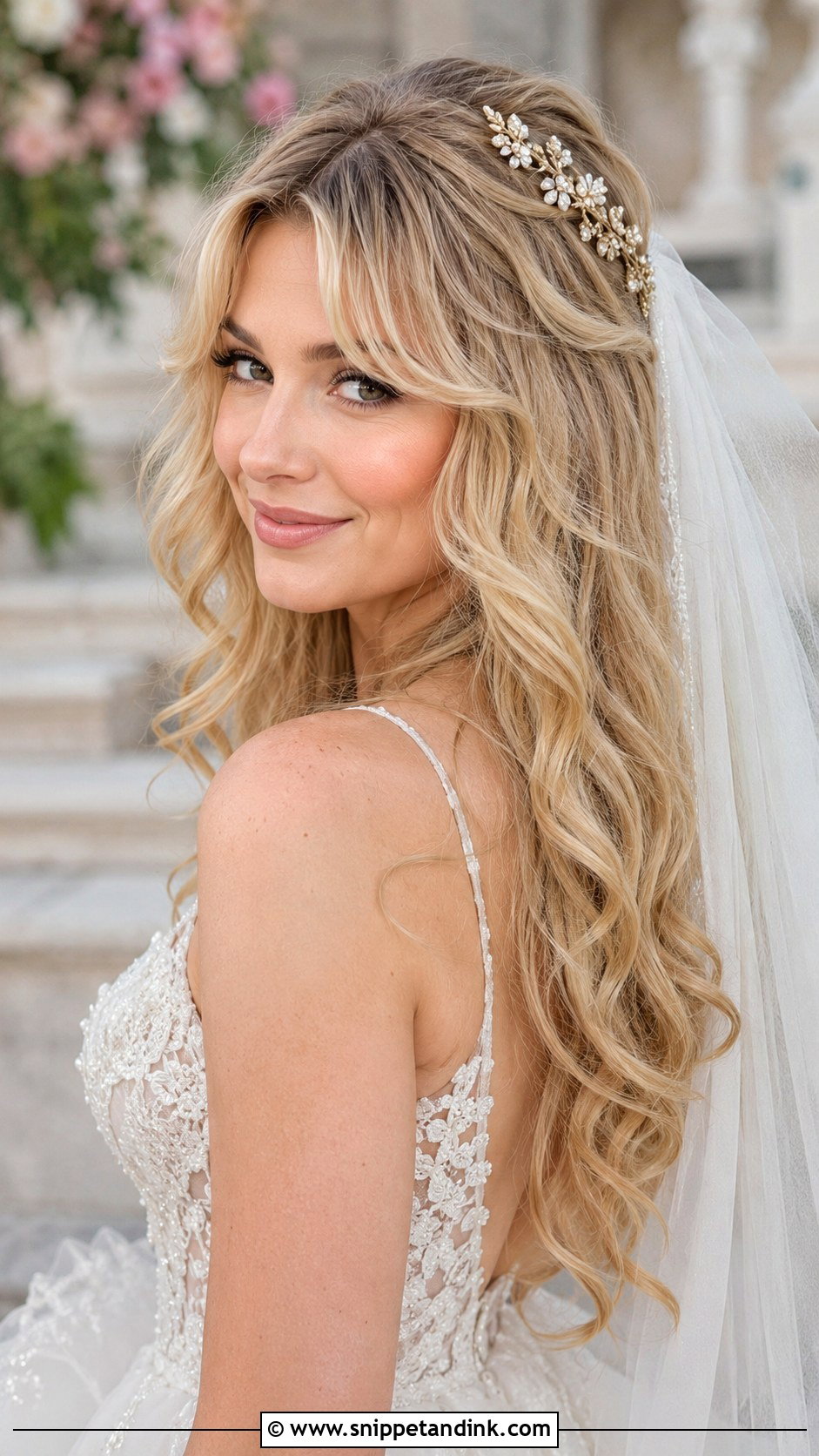
Big curls under curtain bangs need two curl sizes: a larger barrel for the fringe so it bends rather than coils, and a smaller one through the lengths for bounce. Give the fringe the same tight curl as the rest and it springs up and looks short. I curl the bangs last so they are freshest for the ceremony, and I leave a mini flat iron with whoever is helping you for a reception touch-up. A comb or a few flowers can sit behind one ear.
Why Bangs Split and Lift Before the Reception
A fringe rarely fails because of the style. It fails because of skin and weather. Your forehead produces oil all day, and a fringe resting on it soaks that up, separates into strands and starts to lie flat. Heat and dancing add sweat. Humidity makes curls drop and blunt edges frizz. And if you cry during the vows, the bangs get pushed around by every tissue.
I fix most of this before you leave my chair. I use a mattifying primer and powder on the forehead, keep heavy creams and oils out of the fringe entirely, and set the bangs with a light flexible spray rather than a stiff one, so they can be reshaped later instead of cracking. For outdoor summer weddings I’ll suggest a style with more of the fringe pinned or swept, simply because the less hair sits flat on skin, the longer it lasts.
Then give your maid of honour or a sister a small bag for the evening:
- Blotting papers, pressed onto the forehead before any fixing so oil comes off first.
- A travel-size dry shampoo, sprayed at the root of the fringe from a distance and brushed out with fingers.
- A cordless mini flat iron to smooth a split blunt fringe or re-bend a curtain.
- Four or five bobby pins the colour of your hair, in case the fringe needs to go back for the last part of the night.
Your Current Fringe Gets the Final Say
The fringe you already have matters more than any picture. If your bangs are freshly cut and you love them, almost any style above will work. If you’re growing them out, the long curtain, side-swept and pinned-back options are kinder to the in-between length. Bring photos of the two or three looks you keep returning to, wear a top with a neckline close to your dress, and pay attention to how the bangs feel after a few hours. That trial will tell you more about your own fringe than any list can.
You'll Like These Ideas:


Leave a Reply