
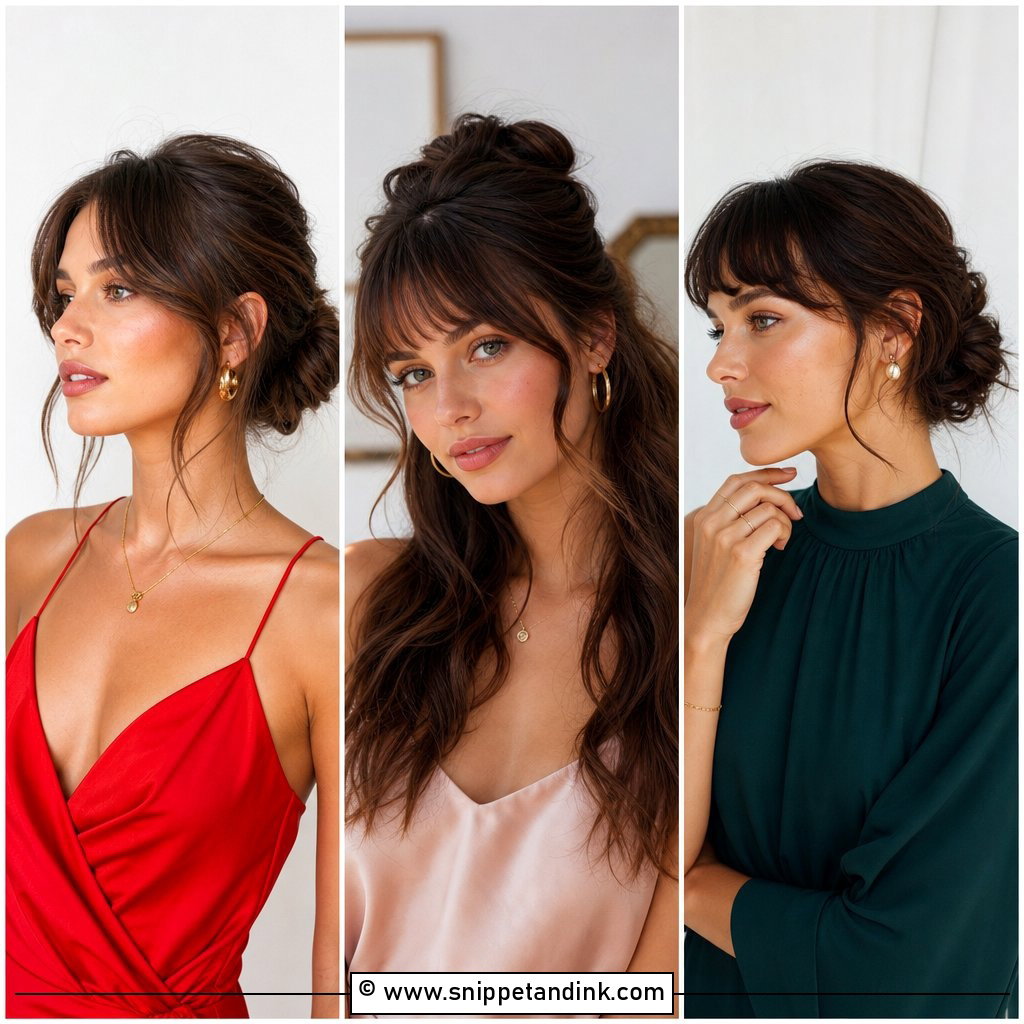
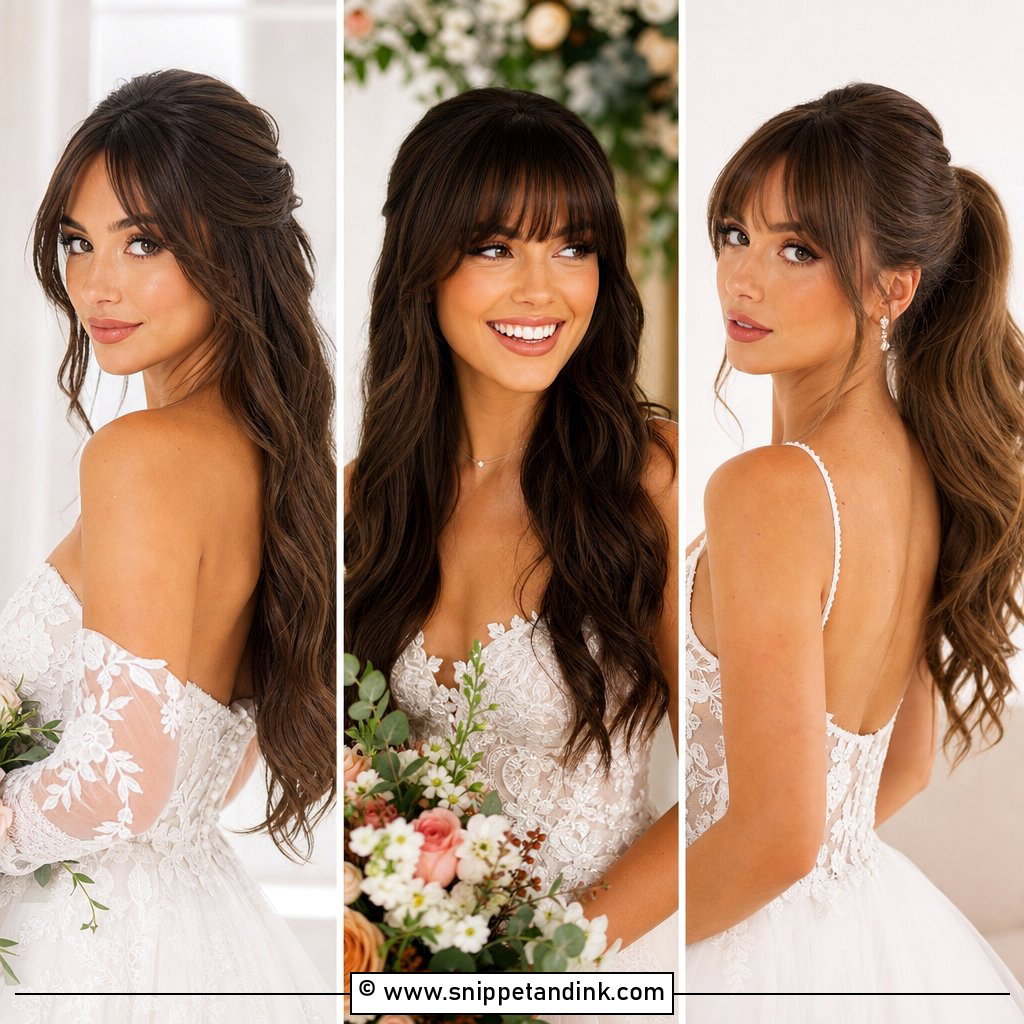
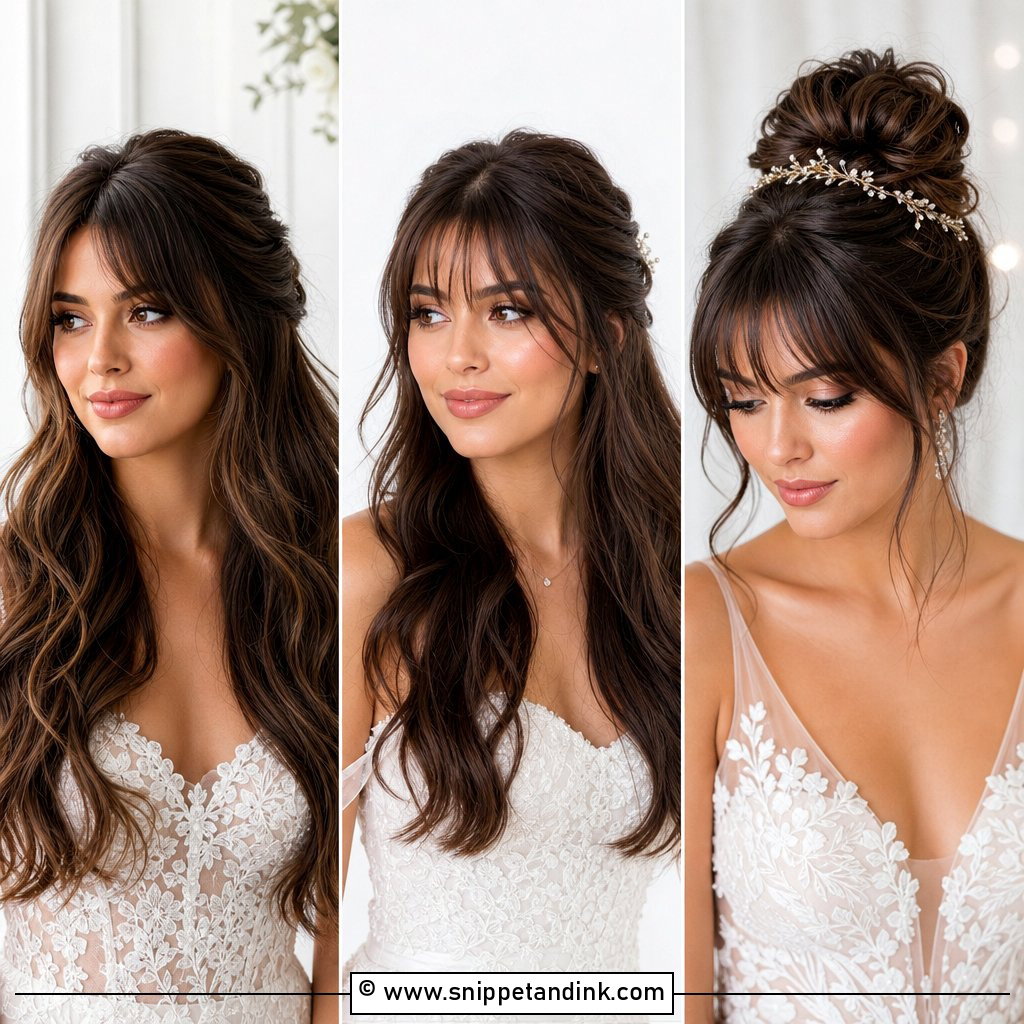
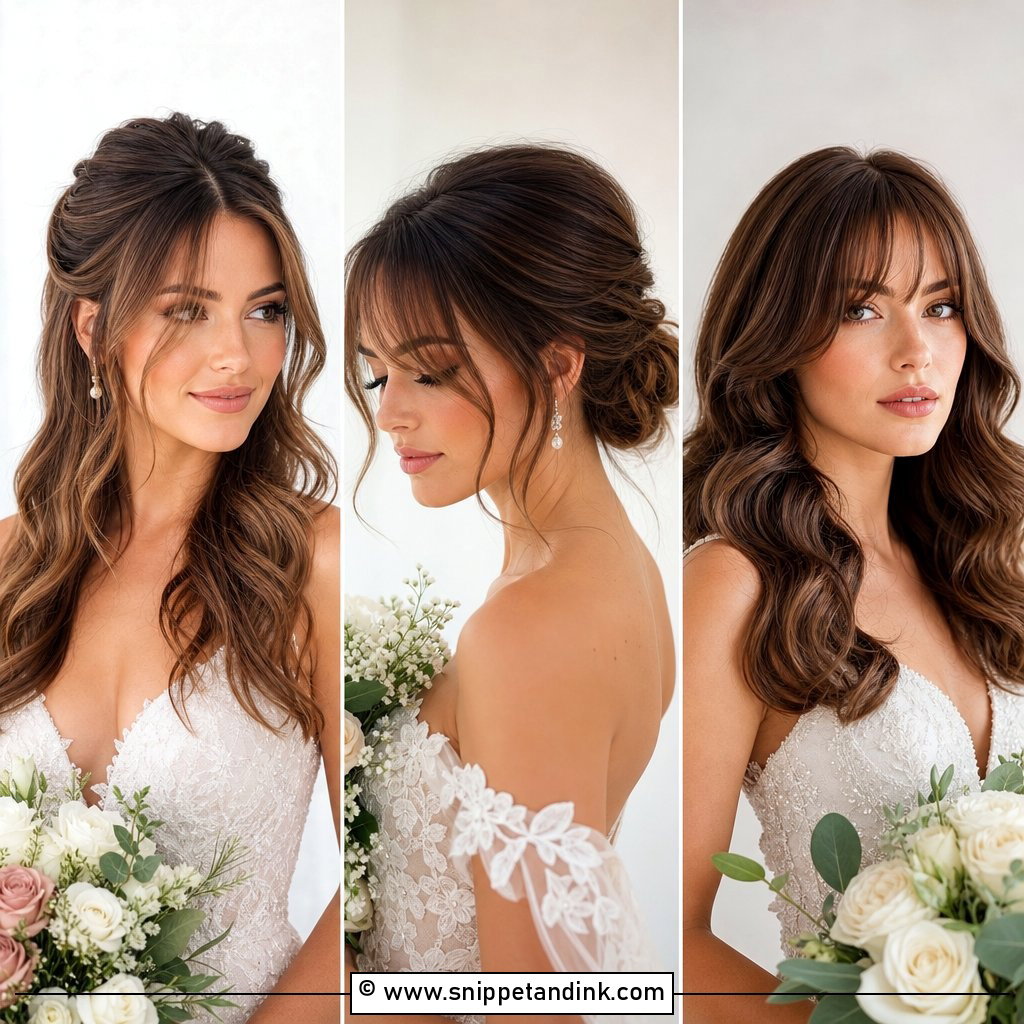
A fringe changes how I plan a whole bridal style, because it sits right where the camera and the veil both look first. It frames the eyes, it hides a forehead some brides feel self-conscious about, and it can make an updo look current instead of pageant. The catch is that bangs are the first part of the hair to go flat, split or turn greasy, so the style behind them has to be chosen with that in mind. Below are 20 ways brides wear a fringe, from wispy curtain bangs to a heavy blunt line, with my notes on how each one actually holds up through a ceremony, a dinner and a dance floor.
When to Trim Your Bangs Before the Wedding
The most common fringe disaster I see isn’t the style on the day. It’s a trim the night before, done at the bathroom mirror. Fresh-cut bangs always sit higher and look harsher for the first few days, especially blunt ones, because the hair hasn’t settled into its natural fall yet.
For most brides I suggest a trim about a week before the wedding. That gives blunt bangs time to soften at the edges and lets curtain bangs relax into their part. Wispy bangs can be dusted closer to the date, since only the very ends are touched. If you want a brand new fringe for the wedding, get it cut at least two months ahead so you can live with it, learn how it behaves with a cowlick, and still have time to grow it back if you hate it.
- Bring a photo of how you style your fringe day to day, not just how you want it on the day.
- Ask for the cut to be done dry if your hair shrinks or springs up when it dries; a wet cut on a fringe can land shorter than expected.
- Wear the fringe the way you will on the wedding day to your trial, then trim after the trial if needed, not before.
1. Curtain Bangs With Loose Waves
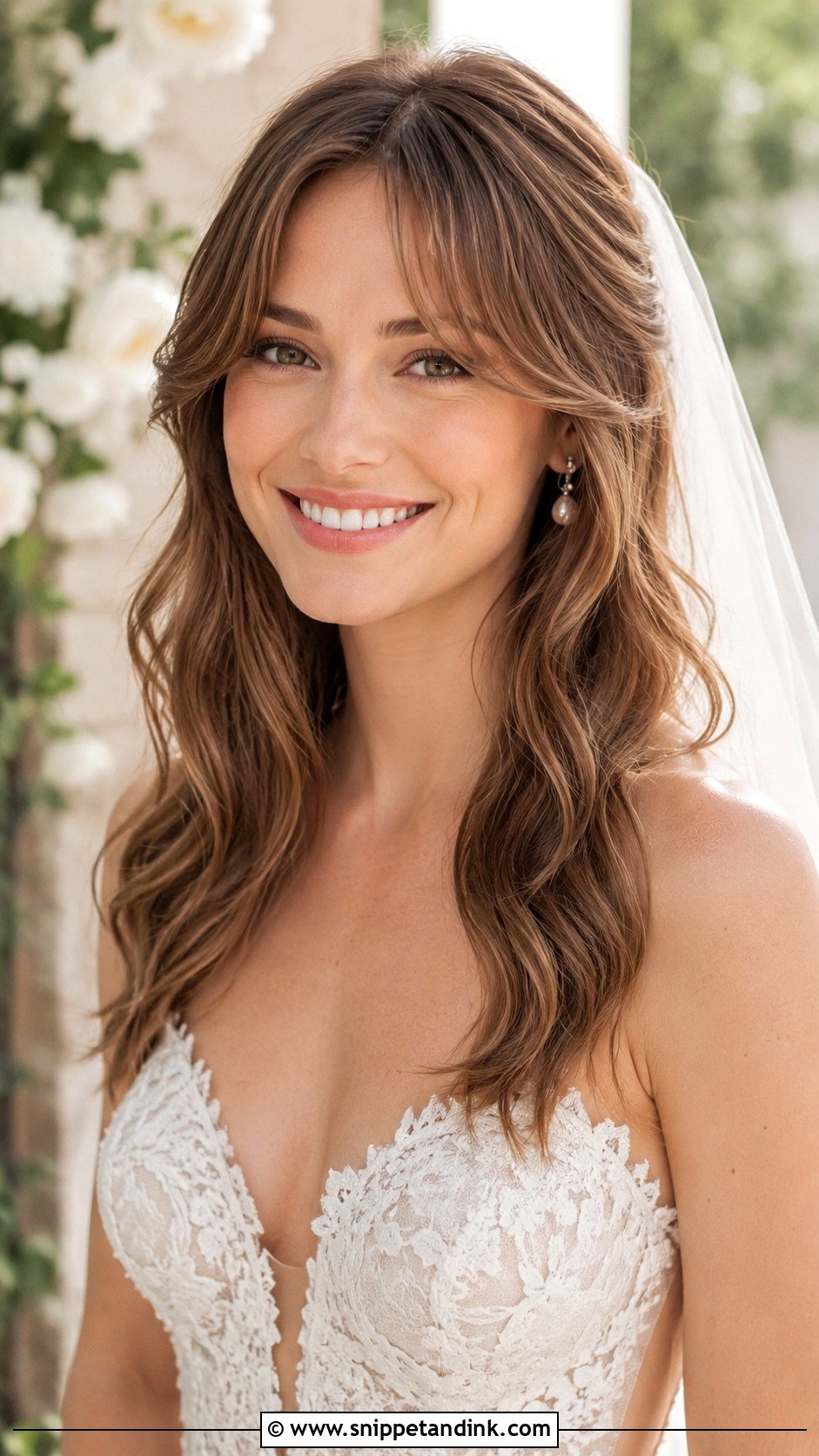
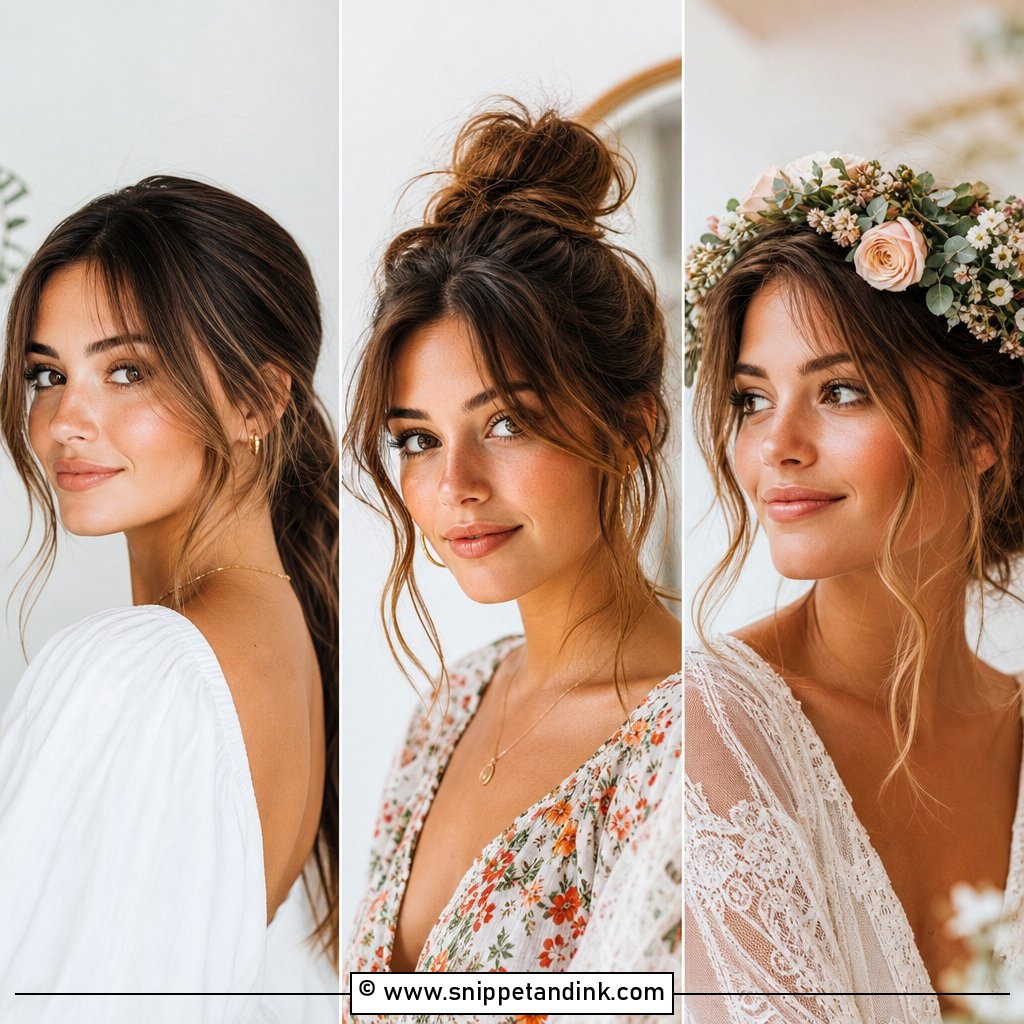
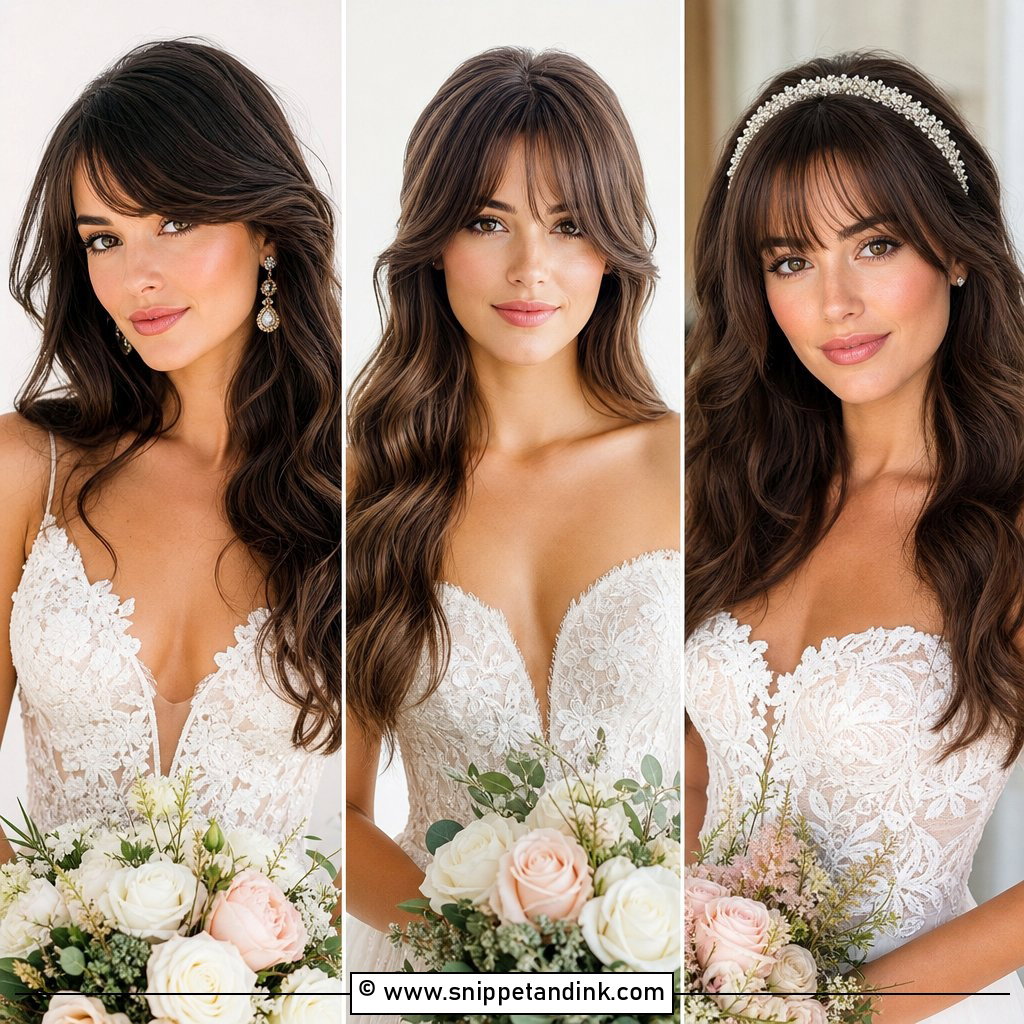
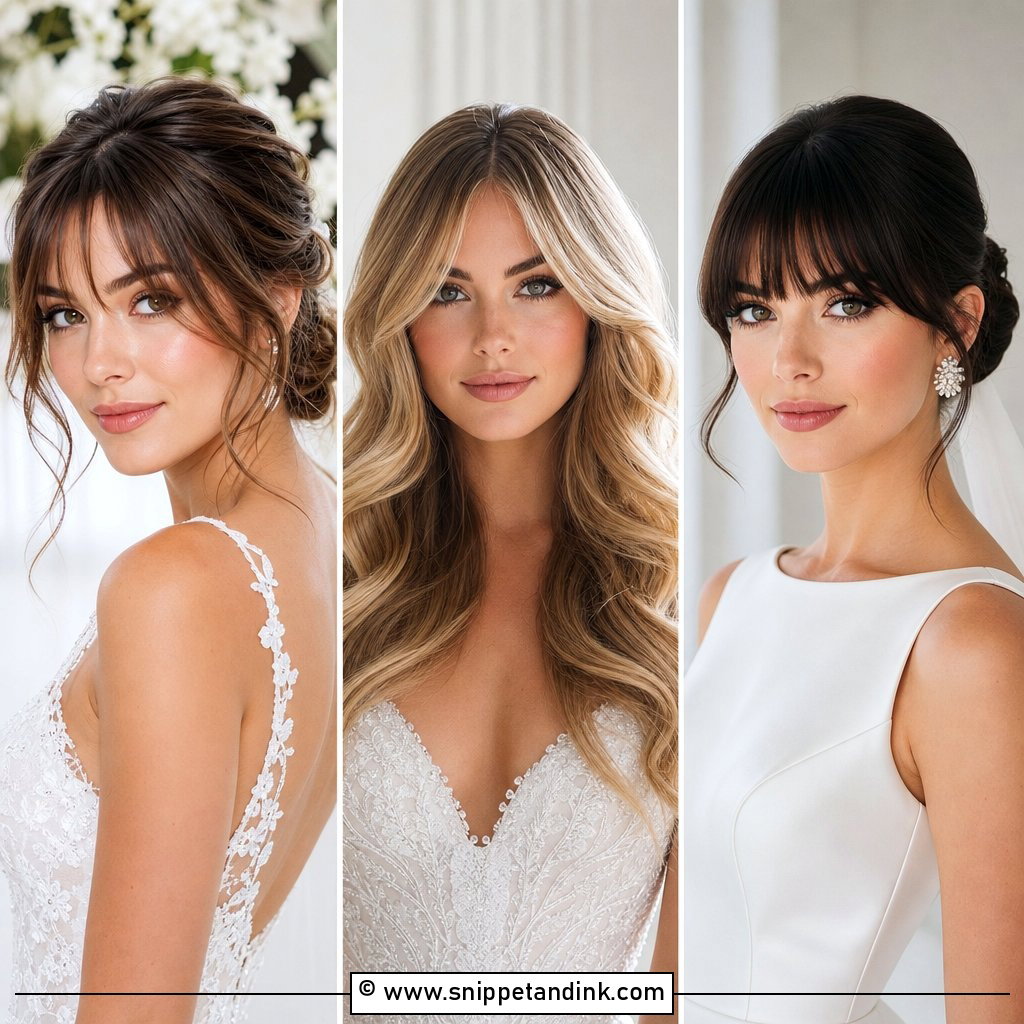
Curtain bangs with loose waves is the combination I book most often, and for good reason: the curtain bangs framing your face blend into the waves, so if the fringe separates by evening nobody can tell. I set the bangs on a large round brush away from the face rather than curling them with an iron, which keeps the bend soft instead of flicked. The waves themselves need a firm setting spray if the ceremony is outdoors. Leave it unadorned or add a thin vine; anything heavier competes with the fringe.
2. Blunt Bangs With a Sleek Low Bun
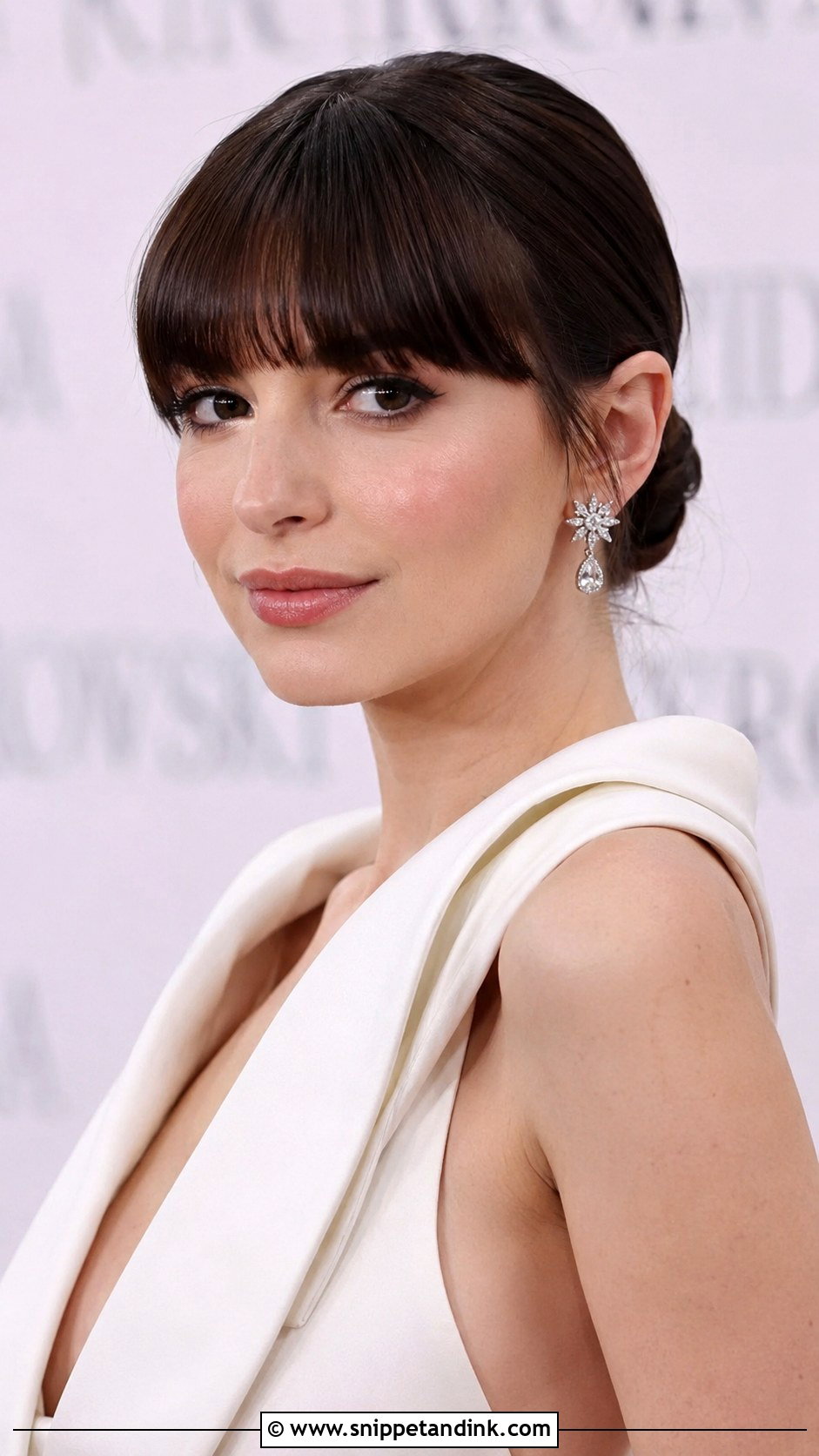
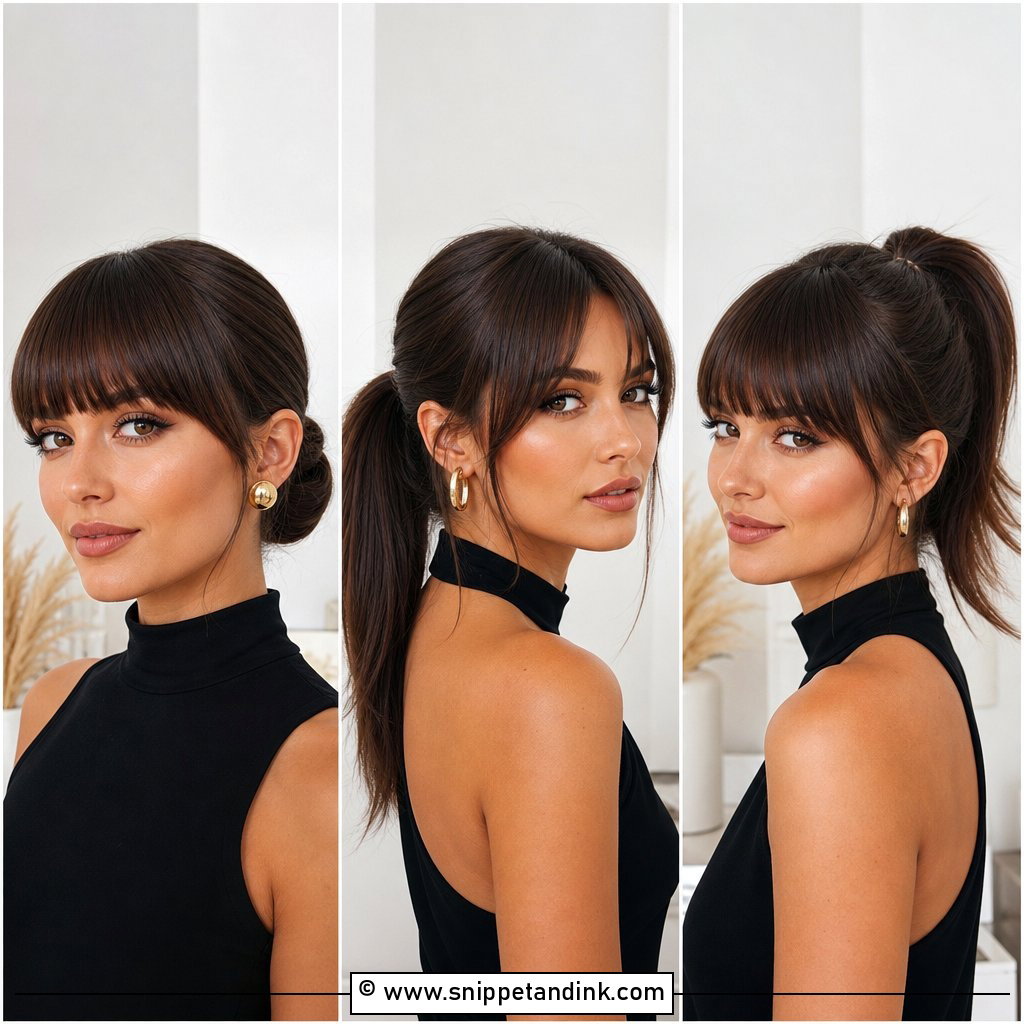
A blunt line at the brows with a sleek low bun is pure geometry, and that is exactly why it is unforgiving. Every flyaway shows. I blow the fringe flat with a paddle brush, nozzle pointing down, then press it for two seconds with a flat iron set low so it doesn’t turn shiny and stiff. The bun sits at the nape so the profile stays clean. Heavy statement earrings suit it; a cathedral veil anchored above the bun suits it even better. If you already wear blunt bangs every day, this is the version that will look most like you.
3. Wispy Bangs With a Romantic Updo
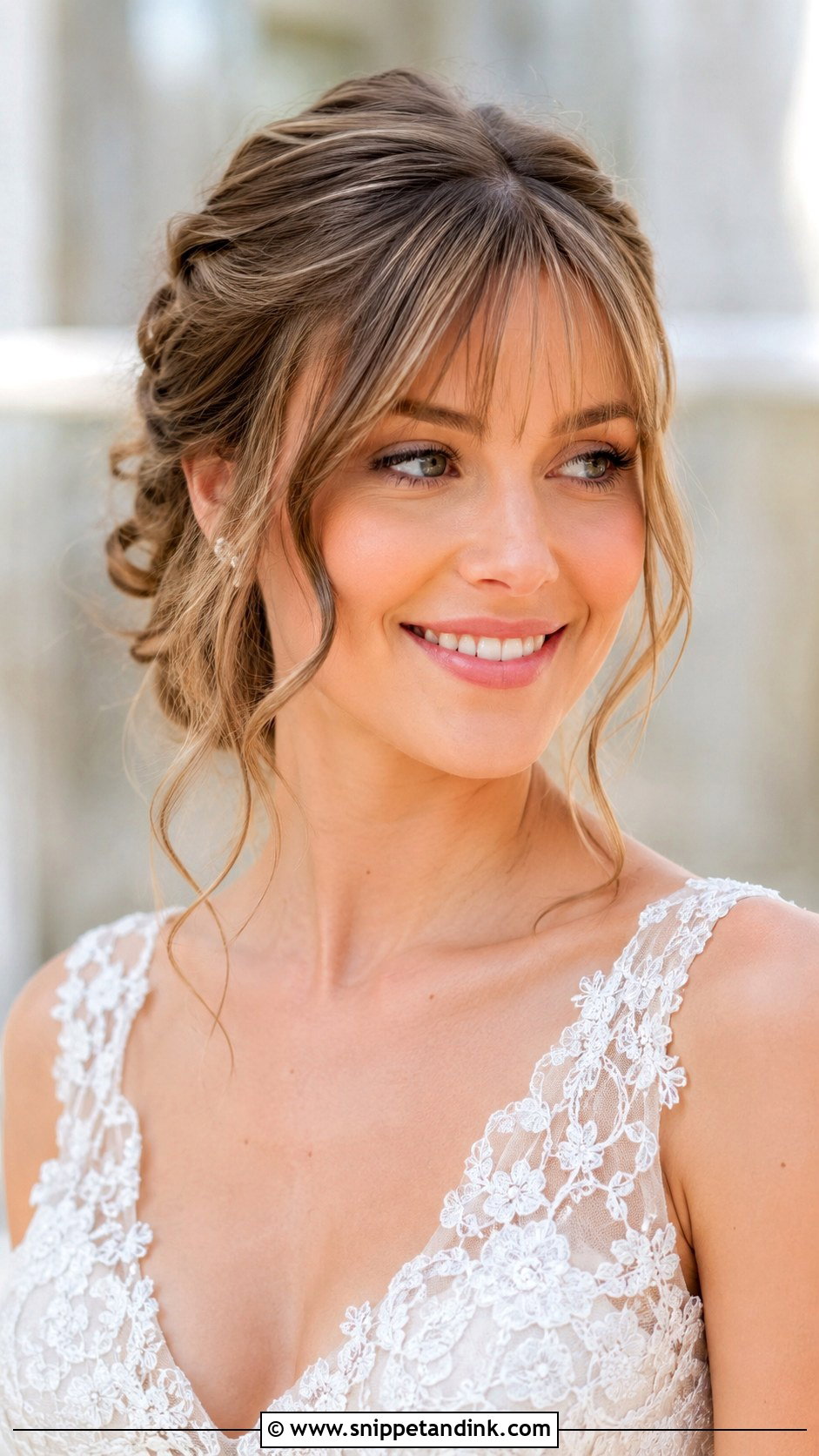
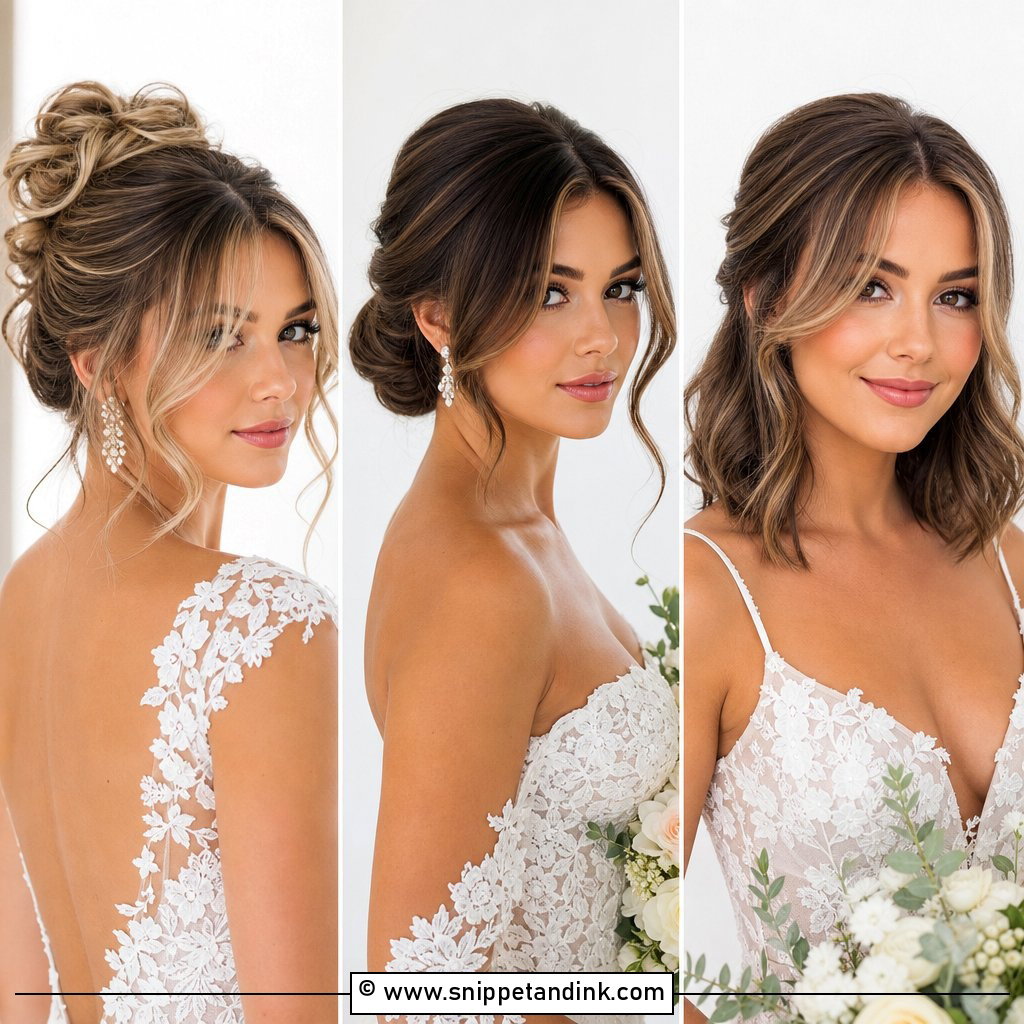
Wispy bangs are mostly air, which means they show oil faster than any other fringe. Under a textured updo they work well, because the loose tendrils around the face give the fine fringe something to blend with. I build height at the crown with backcombing at the root only, then pin the updo low enough that a veil comb can slide in above it. Spring and summer garden weddings suit it. My one warning: a bride who touches her face a lot will have a separated, stringy fringe by the reception, so a small pot of dry shampoo goes in the bridesmaid’s bag.
4. Side-Swept Bangs With Hollywood Waves
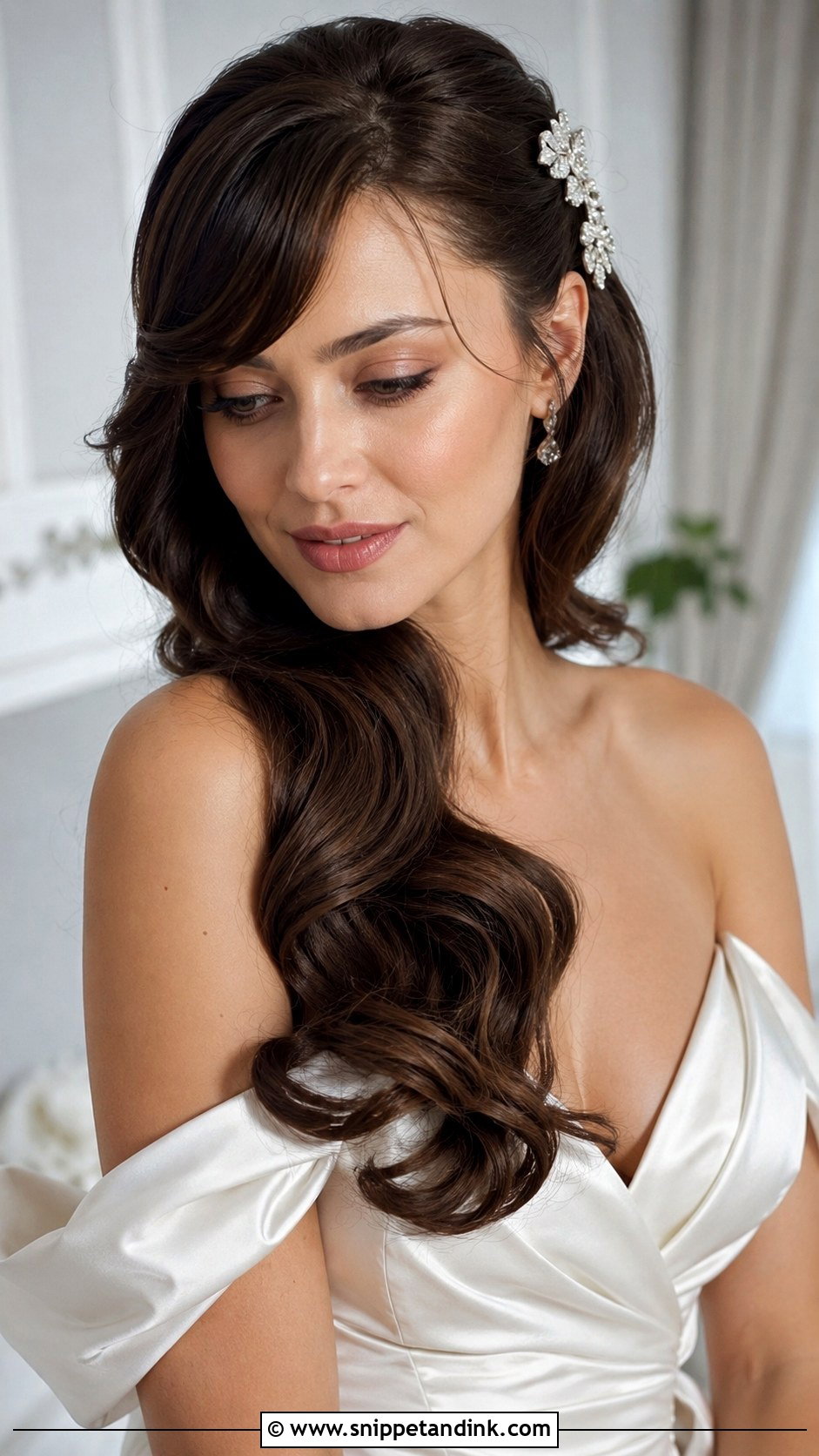
Side-swept bangs dissolve into Hollywood waves almost by design, because the fringe becomes the start of the first wave. The work is in the direction: every section has to be curled the same way and brushed out together, or the sweep breaks into separate pieces. I pin each wave while it cools with flat clips, then brush once with a boar bristle brush. It needs a formal evening setting and a gown that matches the drama. This is also my first suggestion for a bride halfway through growing out a fringe.
5. Curtain Bangs With a Half-Up Half-Down Style
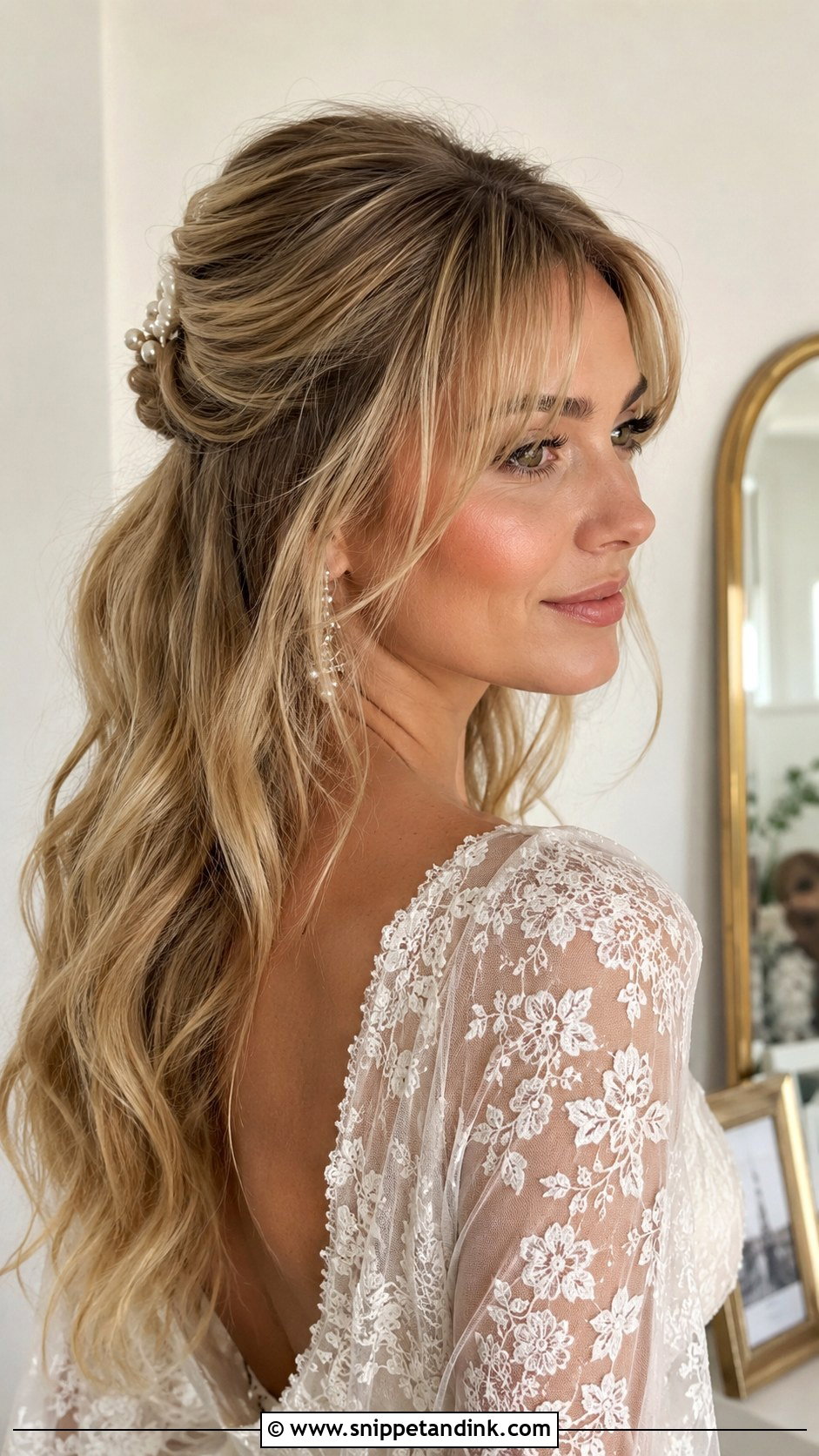
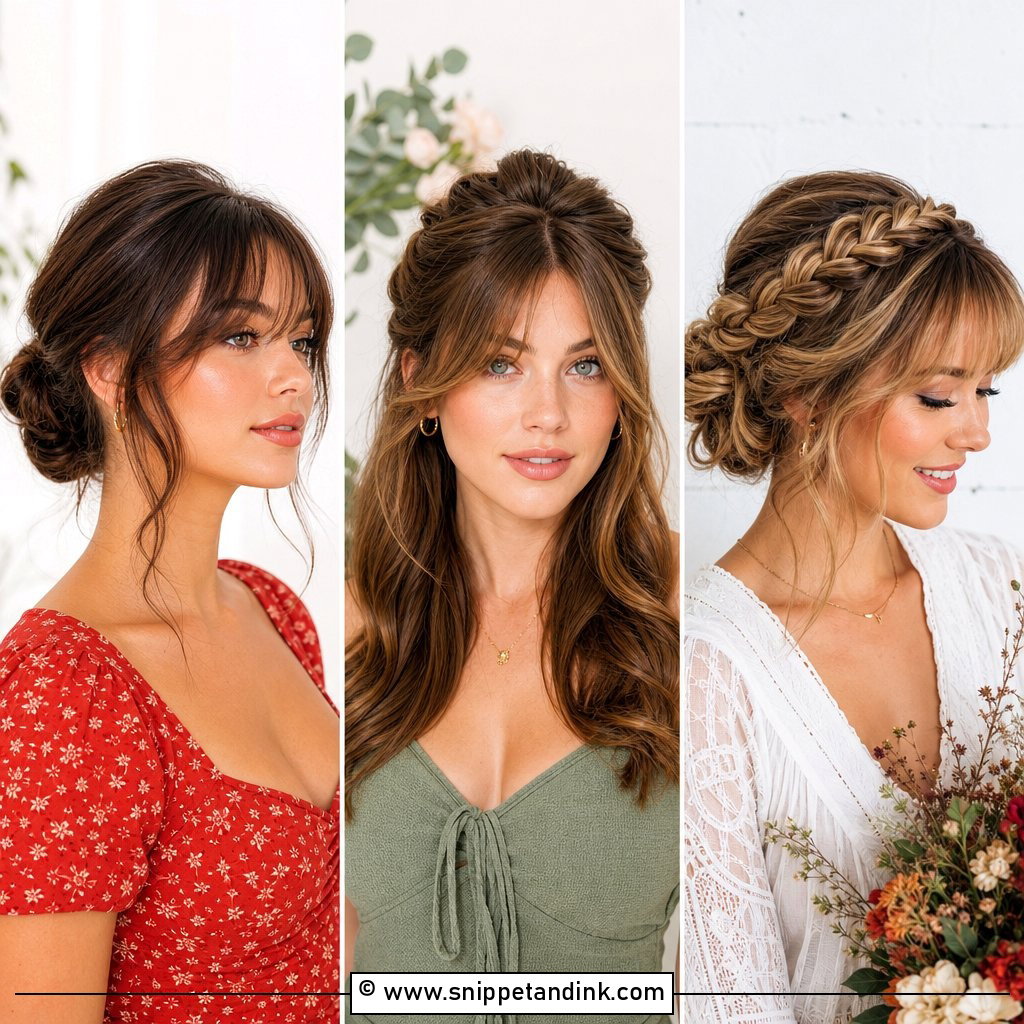
Half-up, half-down with curtain bangs is the compromise I suggest to brides who can’t decide, and it is more practical than it looks. The pinned top section takes weight off the face, so the fringe isn’t fighting the rest of the hair. Where I’m careful is the join: the bangs need a clear gap before the side sections are pulled back, otherwise the fringe gets dragged into the twist and looks short and lopsided. Pearl pins or tiny florals sit nicely along the back, and the whole thing survives dancing far better than fully loose hair.
6. Blunt Bangs With a Sleek Straight Style
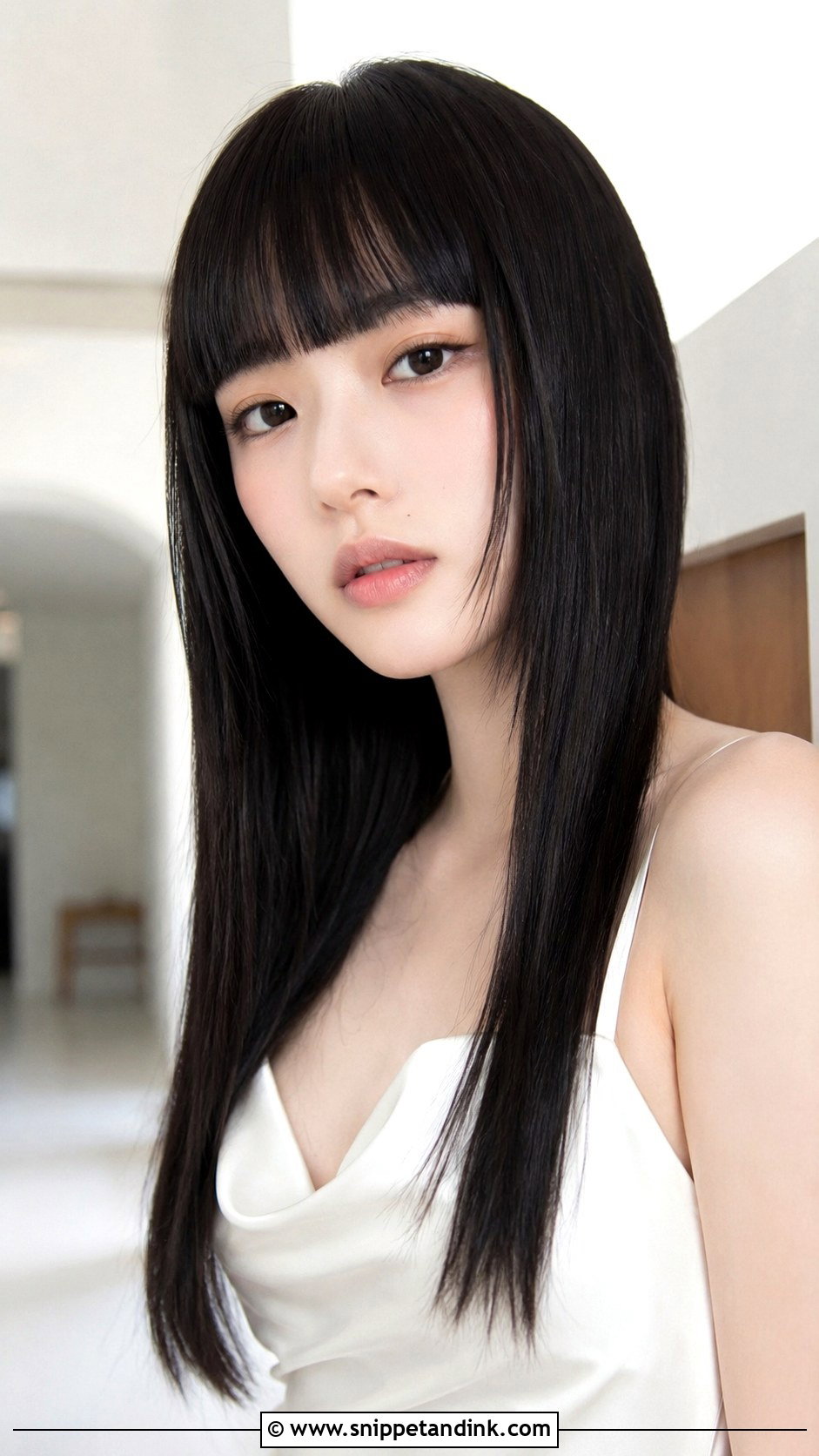
Blunt bangs over long, glassy straight hair is a minimalist look with no hiding place. The ends have to be freshly trimmed, the fringe line perfectly level, and the lengths smoothed with a serum that doesn’t weigh down the roots. Humidity is the real risk here. Straight hair that has been ironed will start to bend within an hour on a damp day, so I only steer brides toward this one for indoor or air-conditioned venues. A slip dress and almost no accessories finish it.
7. Wispy Bangs With a Low Ponytail
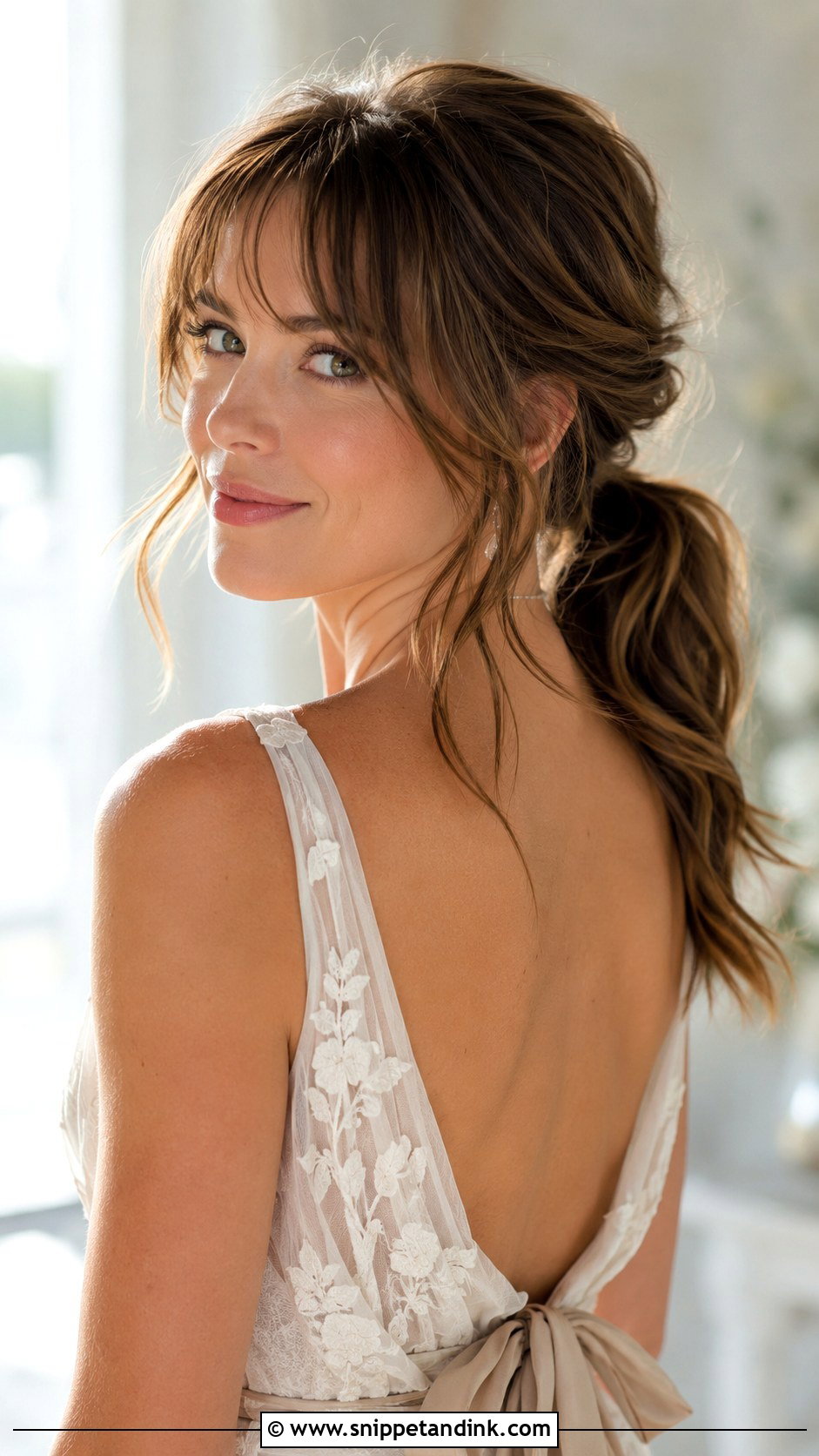
A low, loose ponytail with wispy bangs is one of the easiest styles to wear for twelve hours, and it suits rustic or outdoor weddings well. I tie it with a clear elastic first, wrap a small section around to hide it, then pull out a few pieces at the temples to soften the line. Those pieces connect the airy fringe to the ponytail so the face isn’t framed by a hard edge. Ribbon tied over the base adds a sweet, handmade detail without extra weight.
8. Curtain Bangs With a Boho Braid
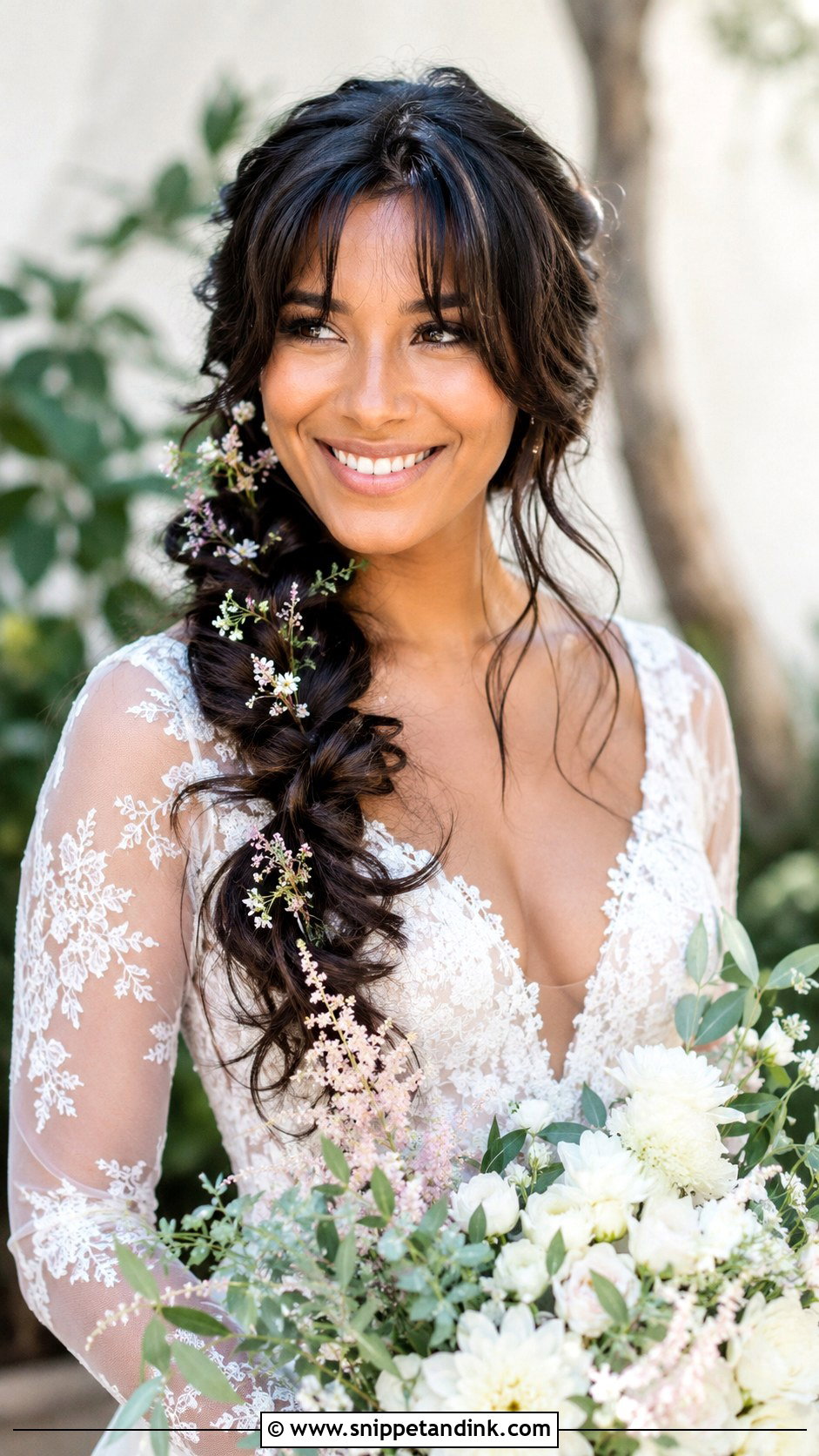
Boho brides tend to love this pairing: Curtain bangs with a soft, pulled-apart braid. The braid has to be built on second-day hair or prepped with texture spray, because clean, silky hair won’t grip when I pancake the loops for width. Keep the fringe out of the braid entirely. If the first strand of the braid takes in any bang hair, the fringe pulls tight and looks shorter on one side. Wildflowers tucked into the braid are pretty for a garden or beach, but they wilt fast in direct sun, so I place them last.
9. Blunt Bangs With a Veil
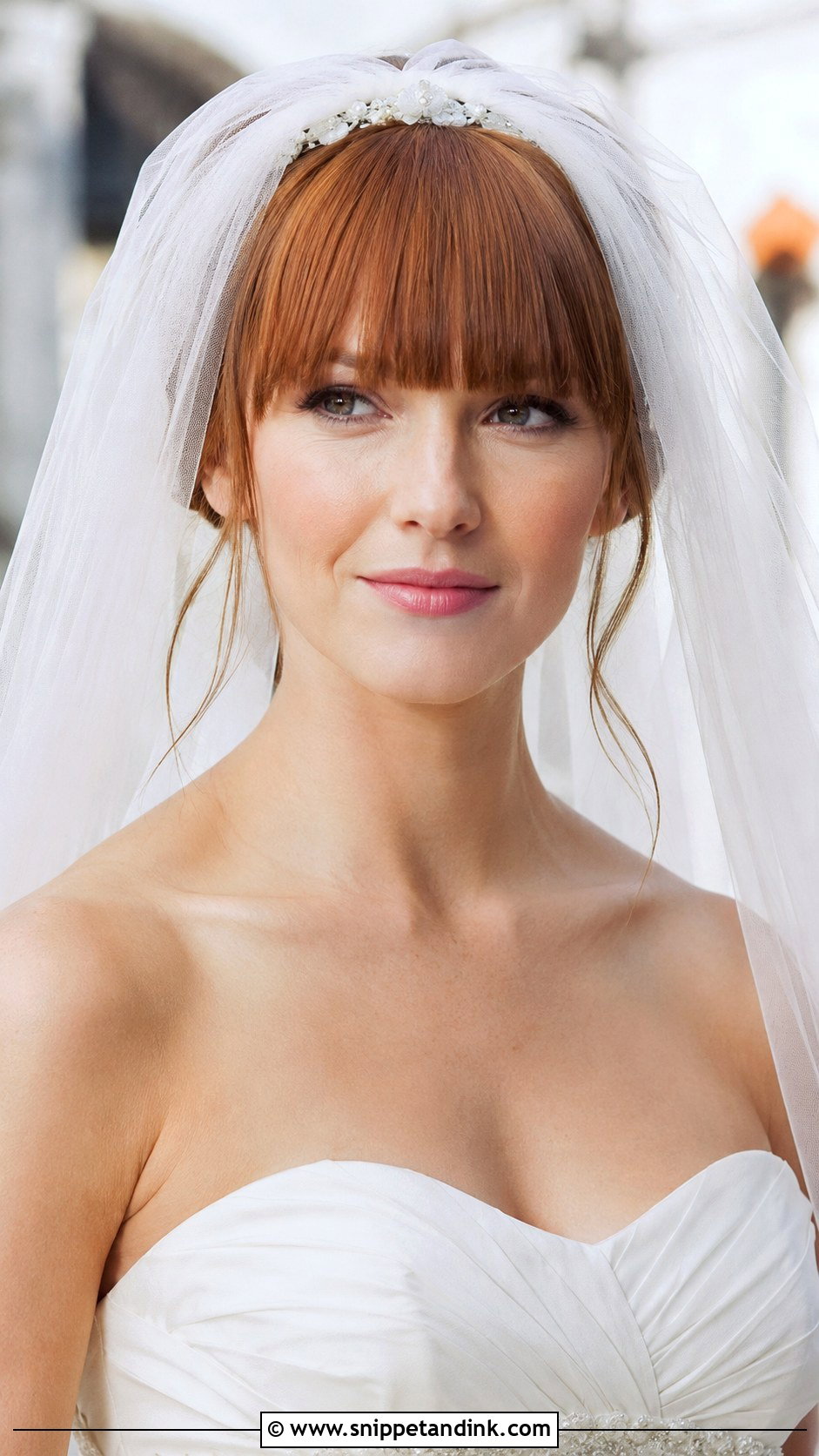
A veil over blunt bangs is a combination I love, and it is all about placement. The comb goes in behind the crown or under the bun, never at the front, so the fringe stays visible and the tulle falls from behind it. If the comb sits too far forward, the veil pushes the fringe down into the eyes and it reads like a curtain over the face. Both short and cathedral veils work. At the trial I always put the actual veil in, because tulle weight changes how a fringe lies.
10. Side Bangs With a Textured Bun
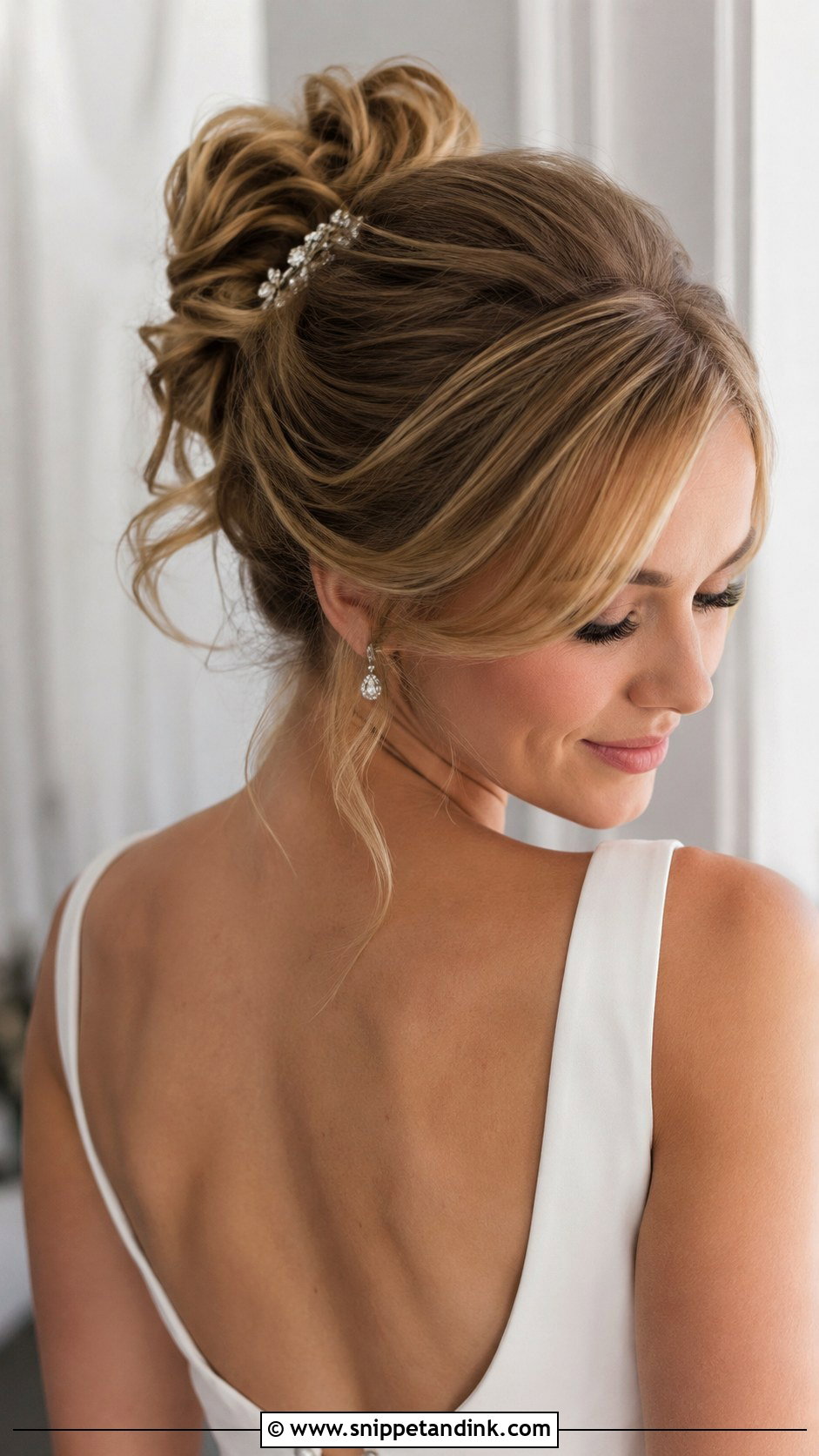
Side bangs with a textured bun suit a wider range of weddings than almost any other style here, from a courthouse to a ballroom. The fringe sweeps across in one direction and the bun is built loose, with a few tendrils left at the ears. I usually set the side part on the opposite side to any cowlick at the hairline, since a cowlick will lift a side bang straight back up. A single sparkly clip on the bun is enough.
11. Curtain Bangs With a Flower Crown
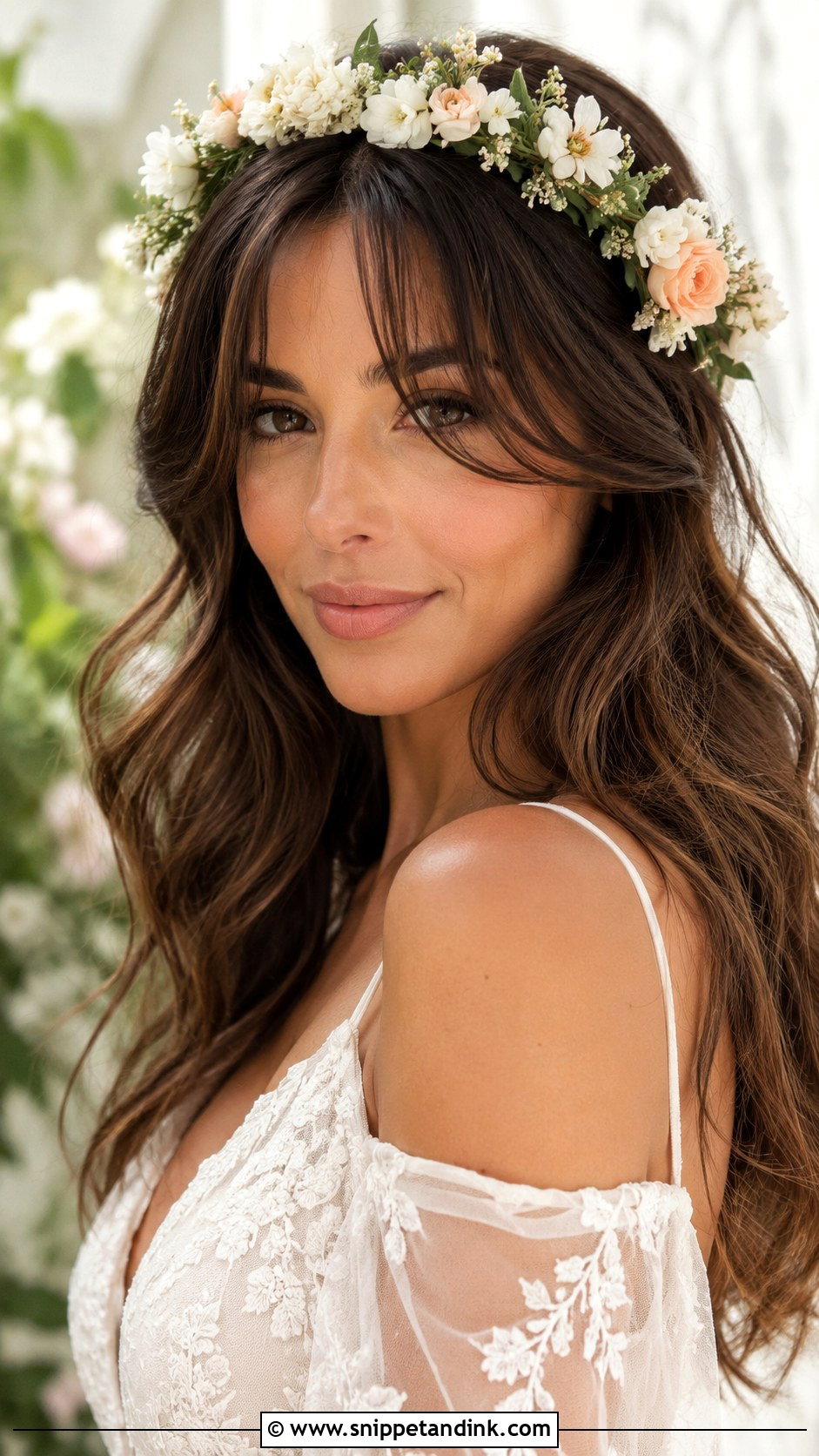
Flower crowns and curtain bangs work together because the fringe gives the face a line of its own, so the crown reads as an accessory rather than the whole look. The trick is to sit the crown behind the fringe, not on top of it. A crown pressed onto bangs flattens them by the first photo. I secure it with bobby pins crossed under the band at both temples. Fresh crowns need to be made the day before and misted, and I’d pick sturdy blooms like spray roses over anything delicate that will droop on warm skin.
12. Blunt Bangs With a High Ponytail
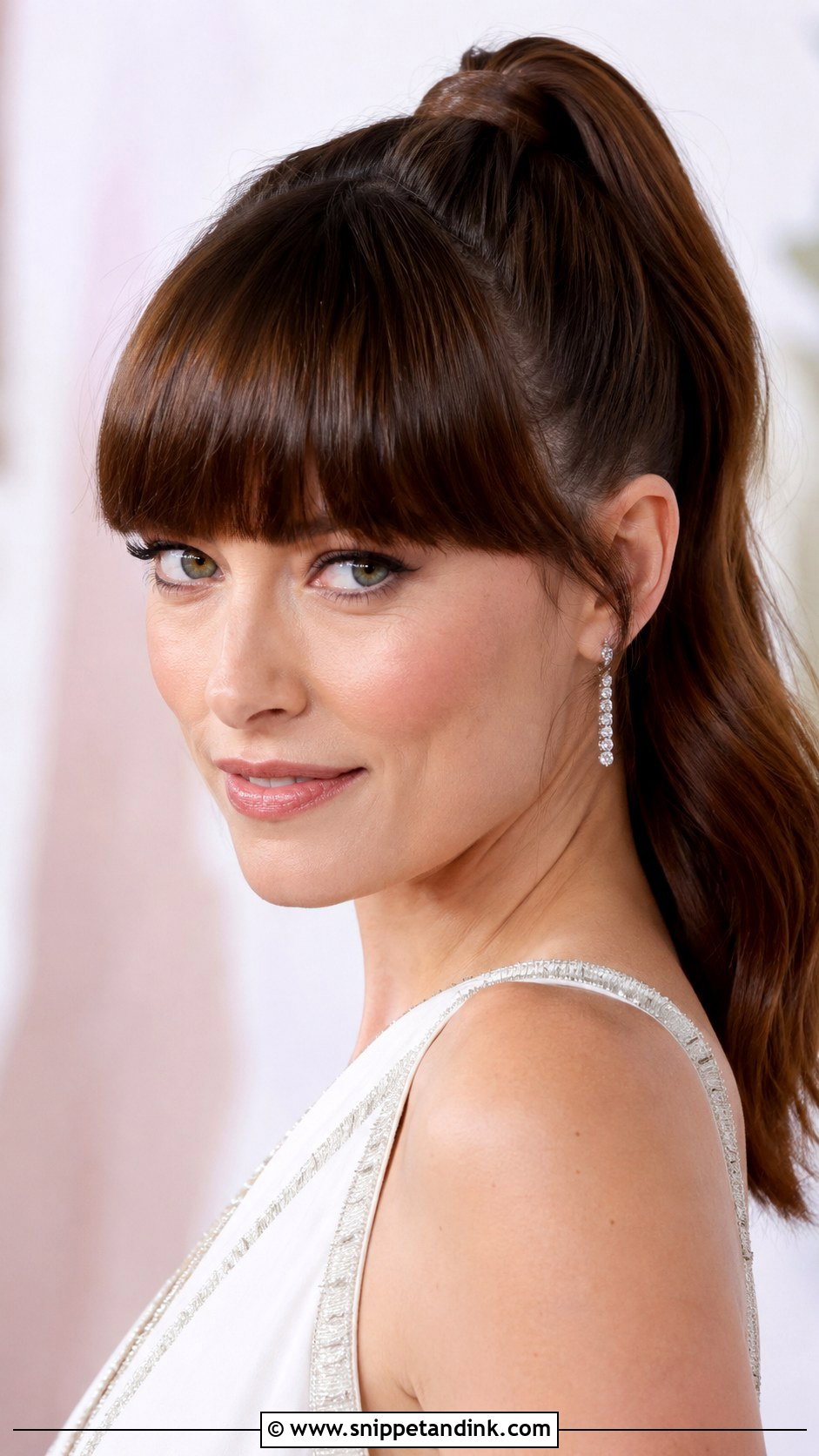
A high ponytail with a blunt fringe is playful and a little runway, and it photographs with a lot of energy. The lift needs support: I build a small backcombed cushion under the crown so the ponytail stands up instead of drooping by the speeches. Brushing everything up toward the crown also pulls the hairline tight, and that tension can make blunt bangs flip apart in the middle, so I leave a slightly wider fringe section than usual. Wrap a strand around the base to hide the elastic. It keeps hair off the neck, which matters at a summer reception.
13. Wispy Bangs With Soft Curls
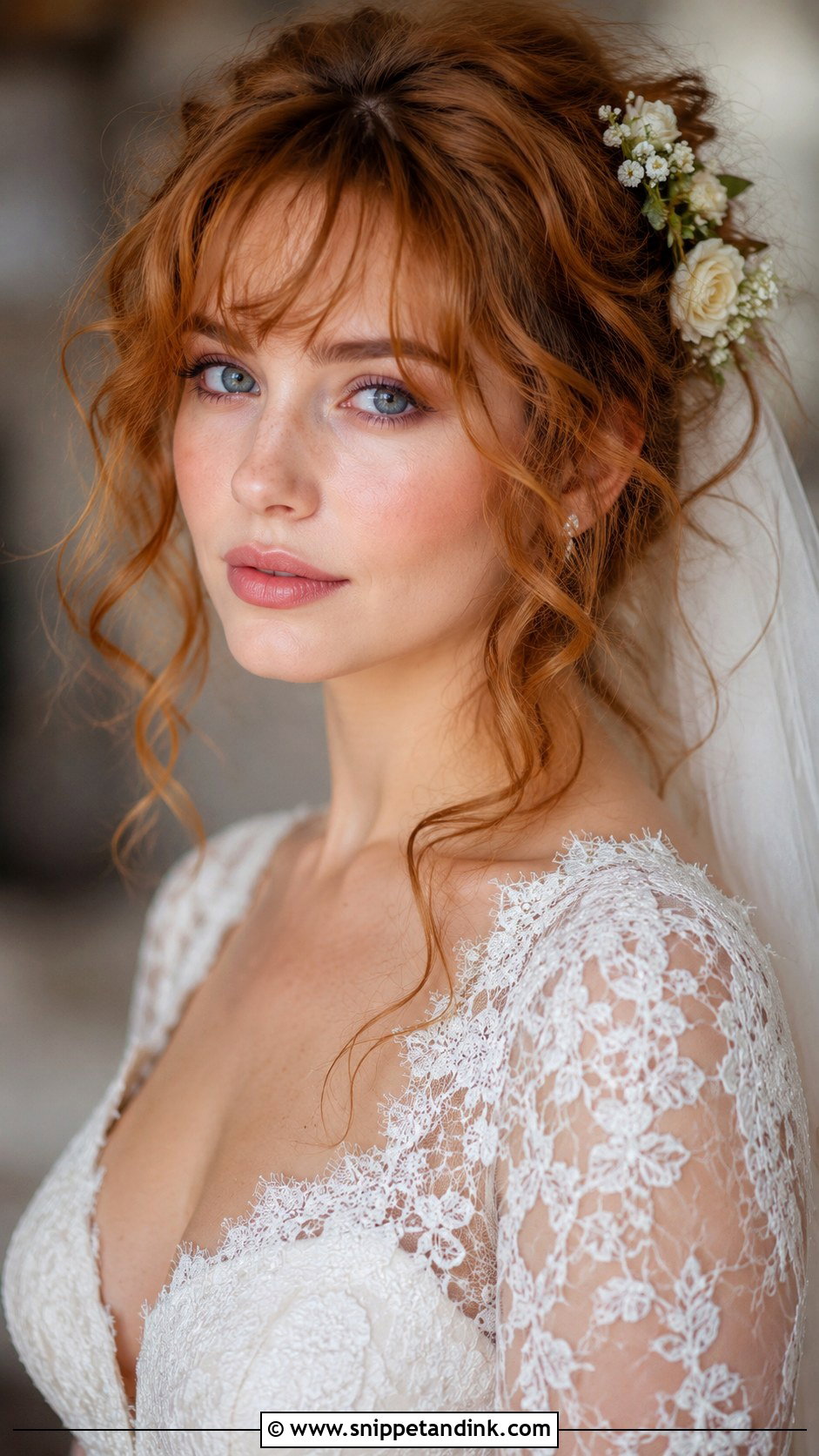
Soft curls with wispy bangs is the gentlest look on the list. I curl the lengths with a one-and-a-quarter-inch iron and leave the fringe almost untouched, maybe a light bend with a round brush, because a curled wispy fringe tends to separate into little hooks. Curls on very fine hair will drop within a few hours unless they are pinned to set while cooling. Wear it down or half-back, and keep any pin small so it doesn’t drag the curls flat.
14. Curtain Bangs With a Sleek Low Ponytail
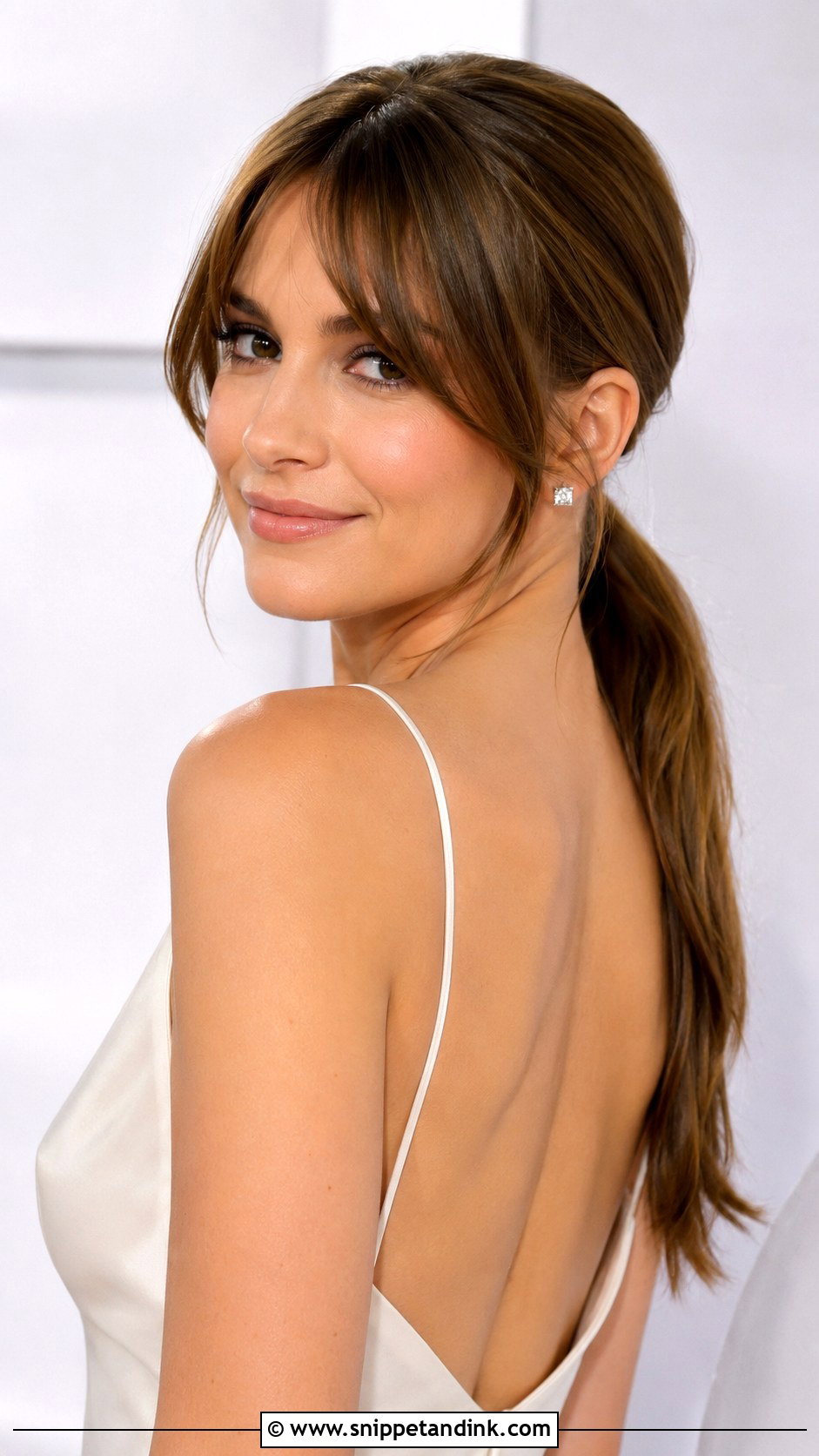
A sleek low ponytail with curtain bangs is the cleanest way to soften a severe shape. Without the fringe, a scraped-back low pony can look harsh on some faces; with the curtain sections falling either side, it suddenly feels relaxed. I smooth the lengths with a small amount of cream and a boar brush, then wrap a strand around the base. It moves from ceremony to reception without any touch-up beyond pressing the fringe back into place.
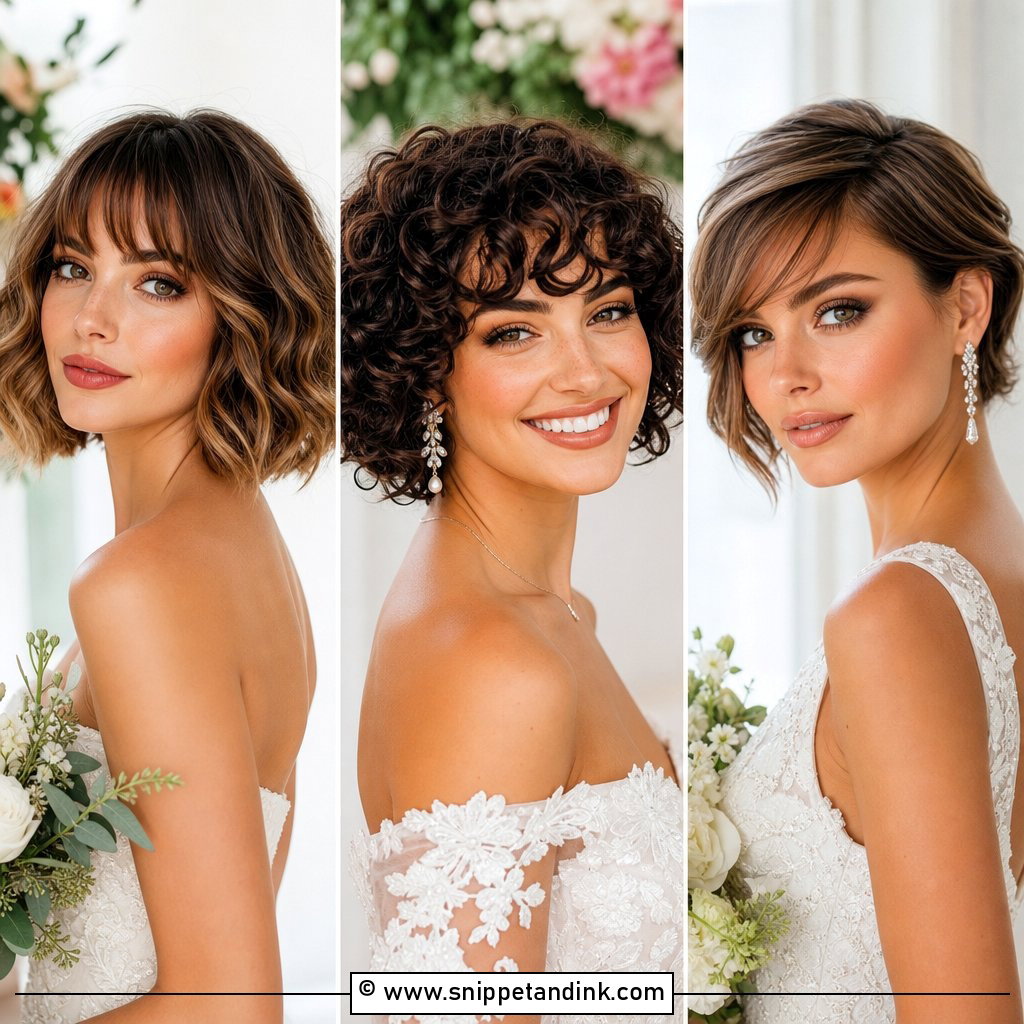
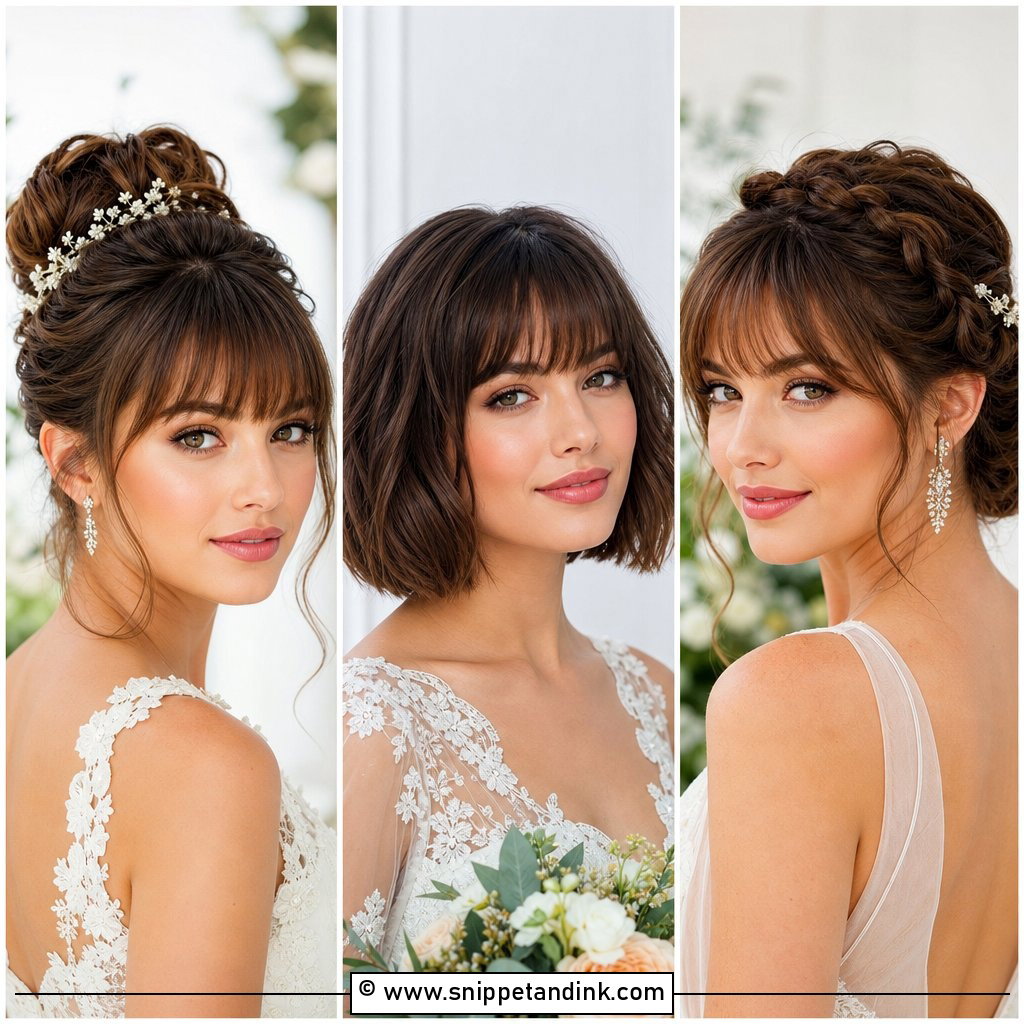
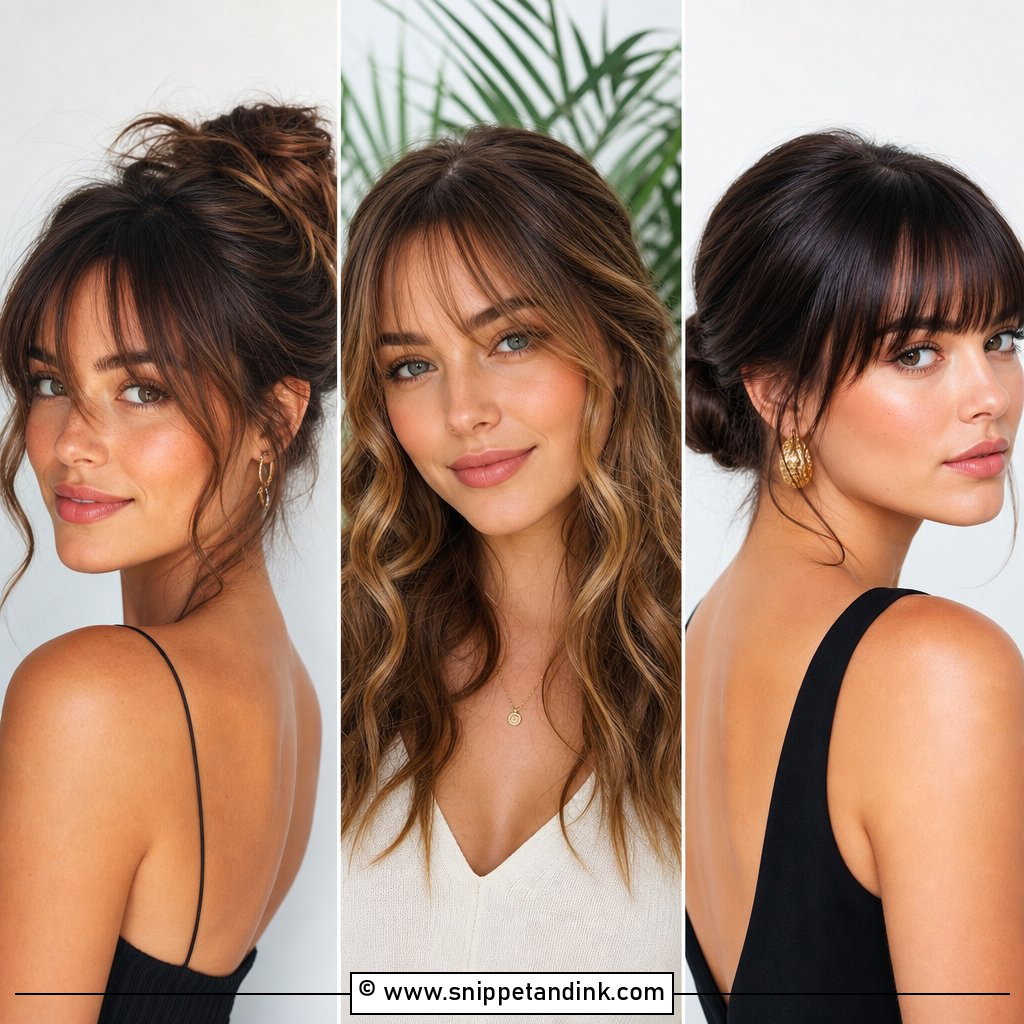
15. Blunt Bangs With a Braided Updo
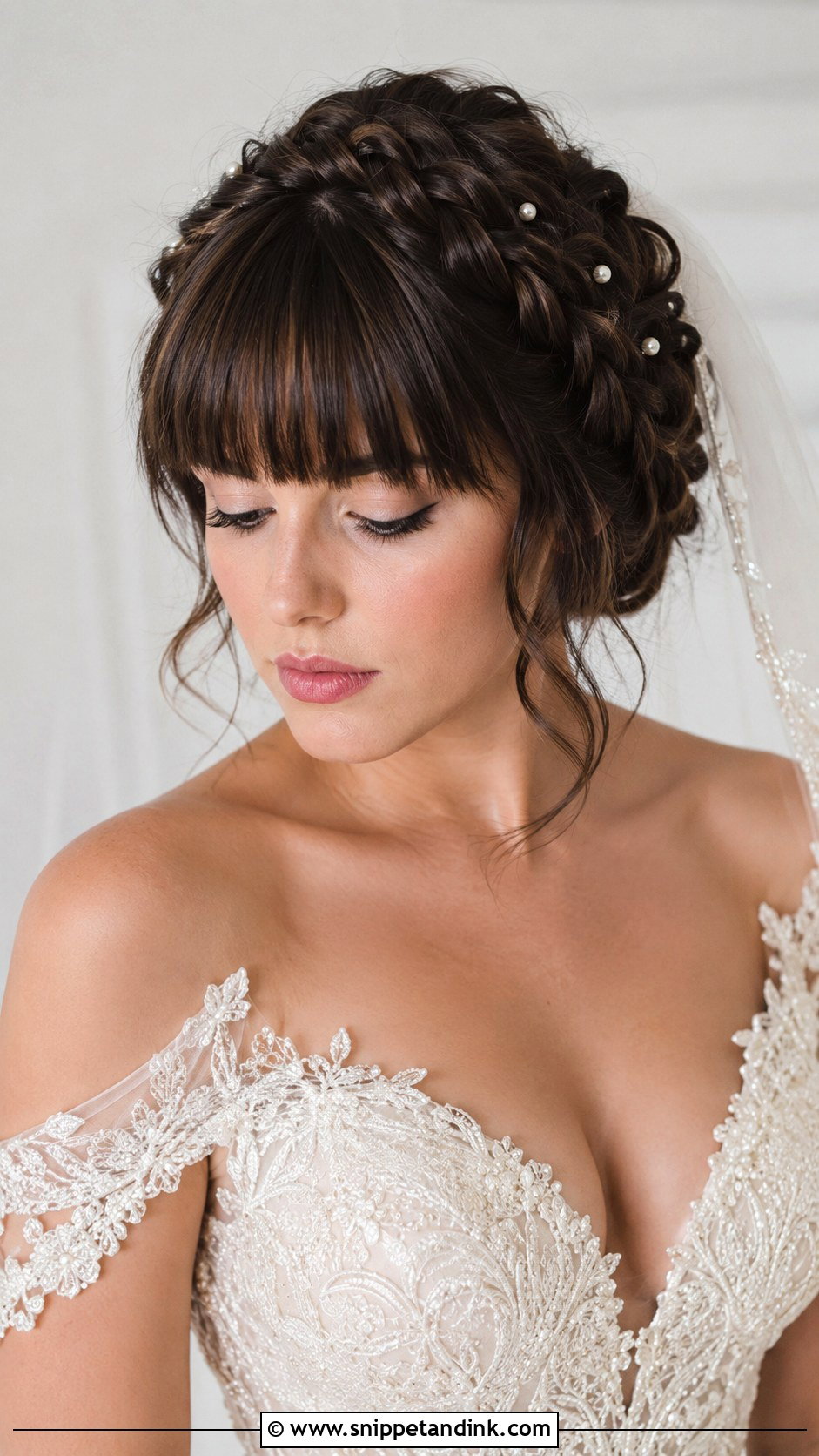
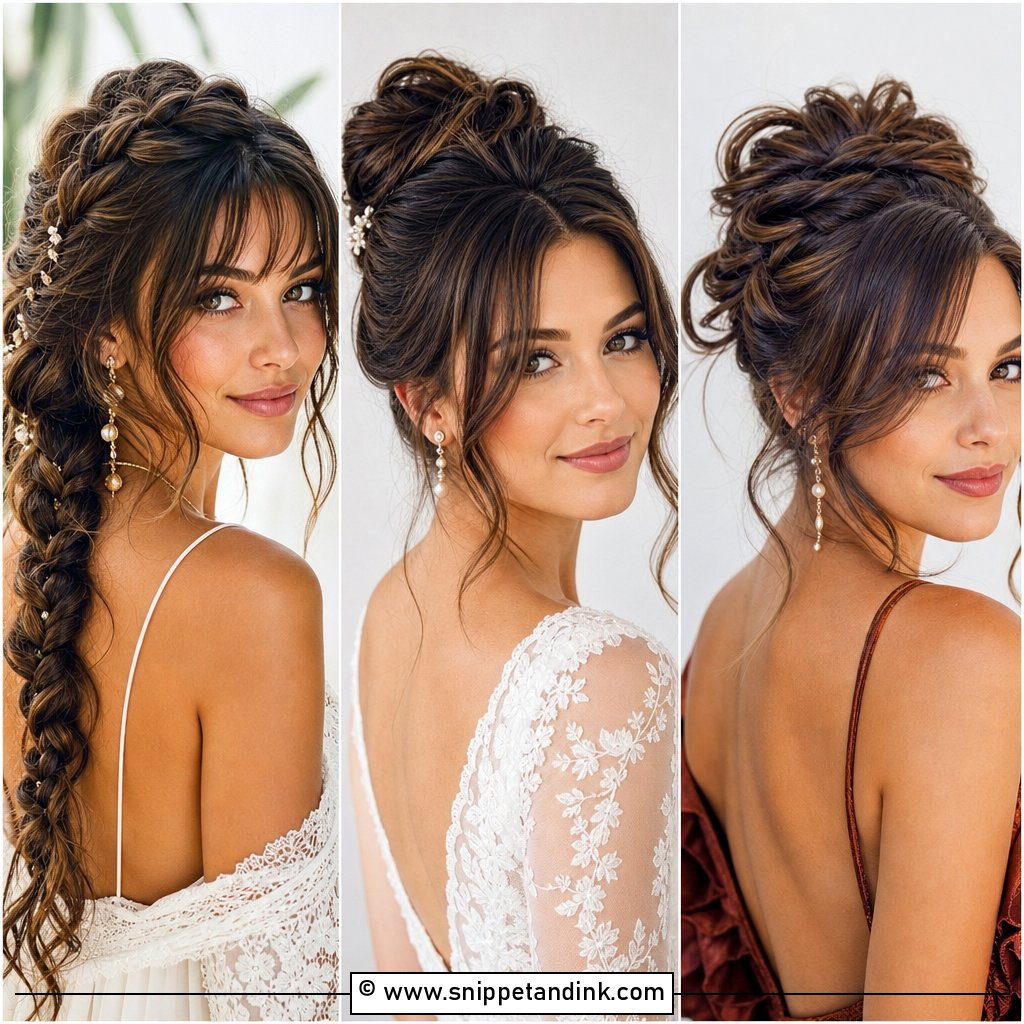
Blunt bangs in front of a braided updo set crisp against woven, and that contrast is the whole point. This is a long chair session: a braided updo with multiple Dutch or fishtail braids can take a good while, so I schedule this bride first. The braids need to be tight at the scalp and loose at the ends, or the updo looks heavy. Small pearls threaded into the braids add detail without competing with the fringe. A bride who wants something detailed from the back and simple from the front will get exactly that.
16. Side-Swept Bangs With a Chignon
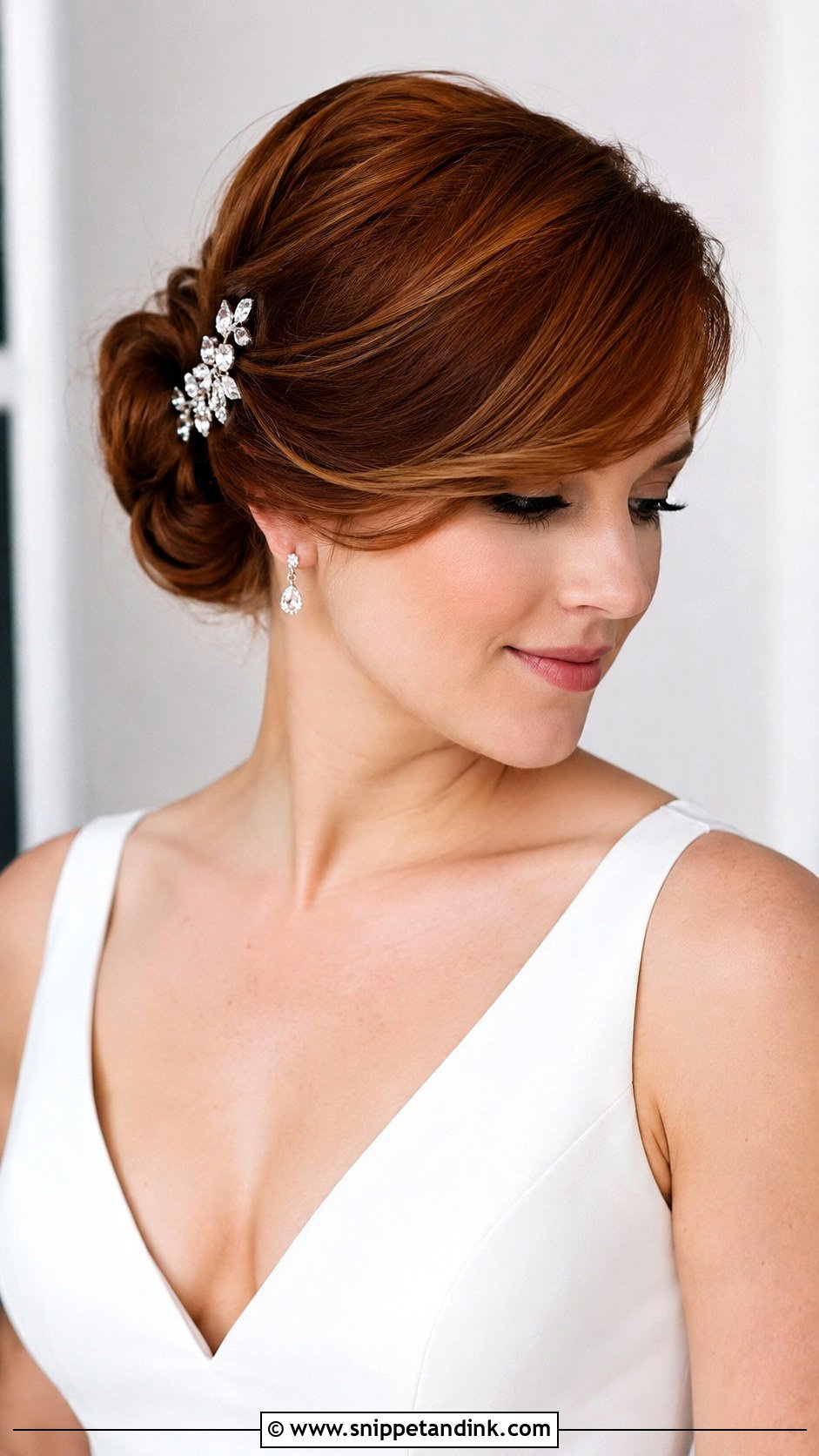
A low chignon with side-swept bangs is the most traditional look here, and it pairs easily with a veil or long earrings. I set the chignon at the nape and keep it compact so a veil comb can sit directly above it. The side fringe softens the structured shape, which is useful if a bride worries a classic chignon will make her look severe. A jeweled comb on the opposite side to the sweep balances the profile.
17. Curtain Bangs With a Beehive Half-Up
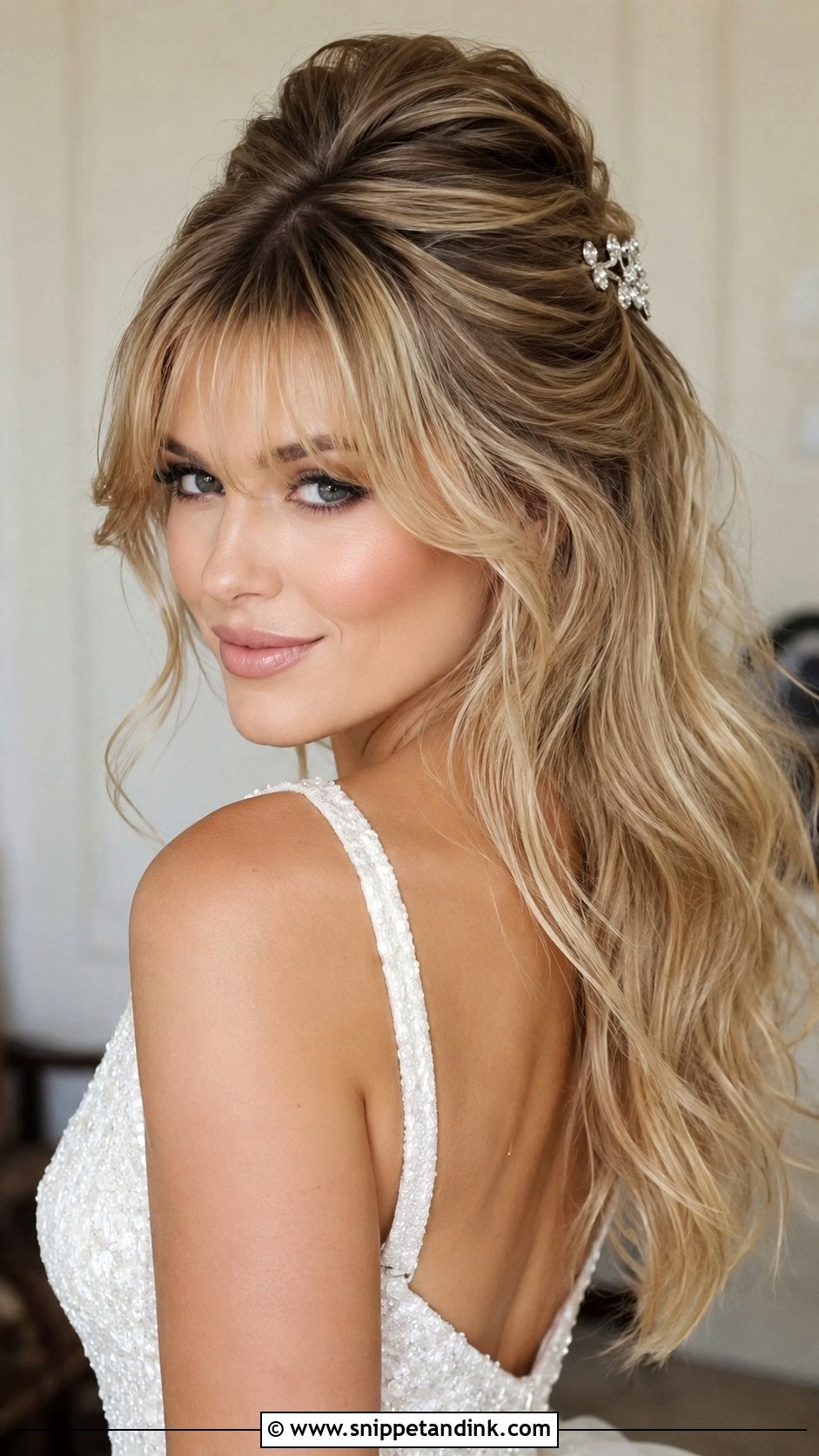
Curtain bangs ahead of a bold half-up beehive is retro without being costume, as long as the fringe stays light. The volume comes from backcombing the crown in horizontal sections and smoothing the top layer over it, then pinning it back with crossed pins. Very fine hair may need a small padded insert to hold this height past dinner. Leave the rest in loose waves. If the fringe is heavy, the beehive tips into full sixties, so I keep the curtain sections feathery.
18. Wispy Bangs With a Twisted Updo
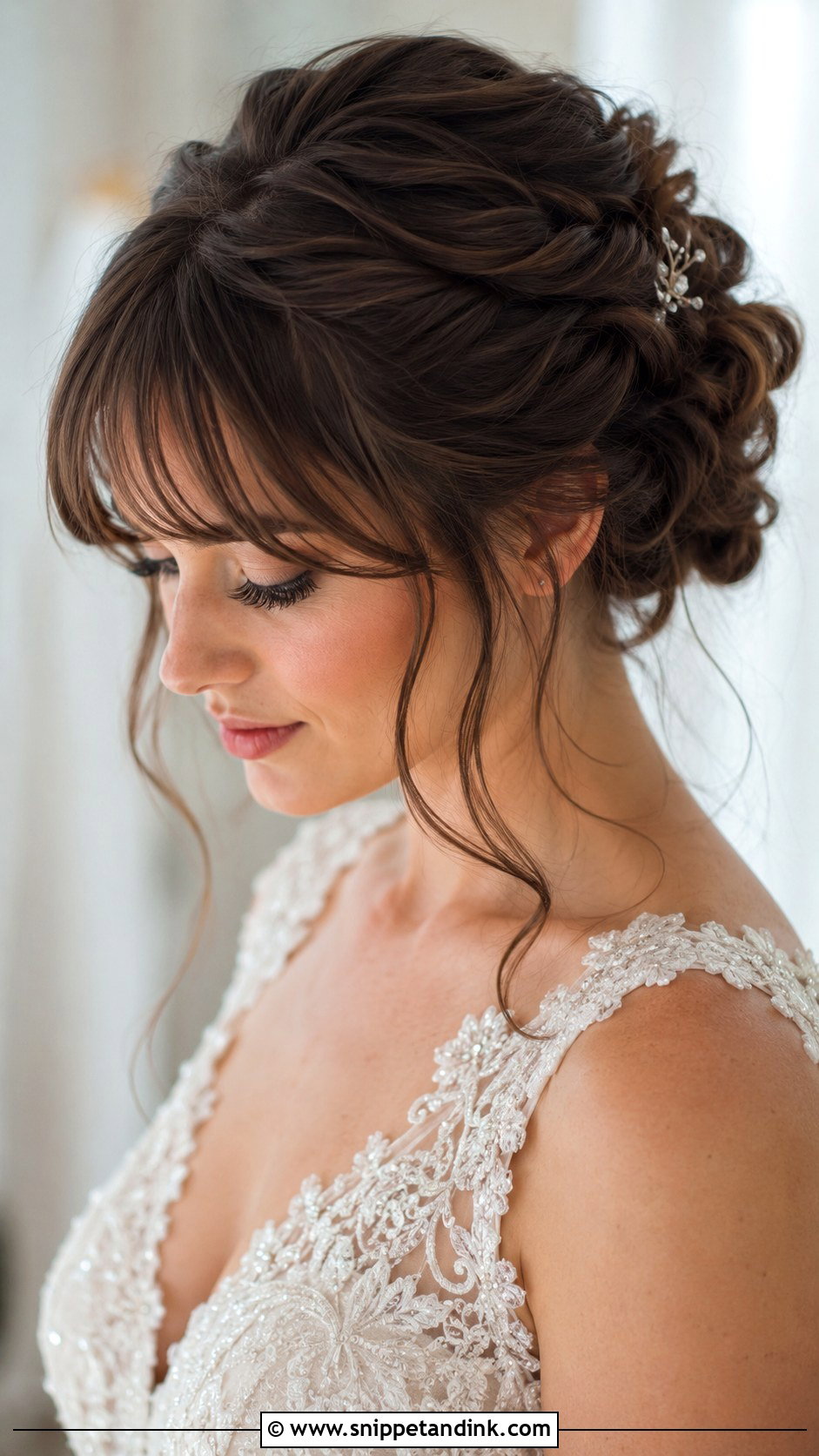
Wispy bangs in front of a twisted updo show how much texture a fringe can carry behind it. The twists catch light along each turn, so they suit candlelight and evening venues. I start each twist with a little grip spray to stop slippage, then pin it with the pin hidden inside the twist. Pull a few tendrils loose in front of the ears. It suits both formal and relaxed weddings; what it doesn’t suit is very short layered hair, because the layer ends pop out of the twists.
19. Blunt Bangs With Long Waves
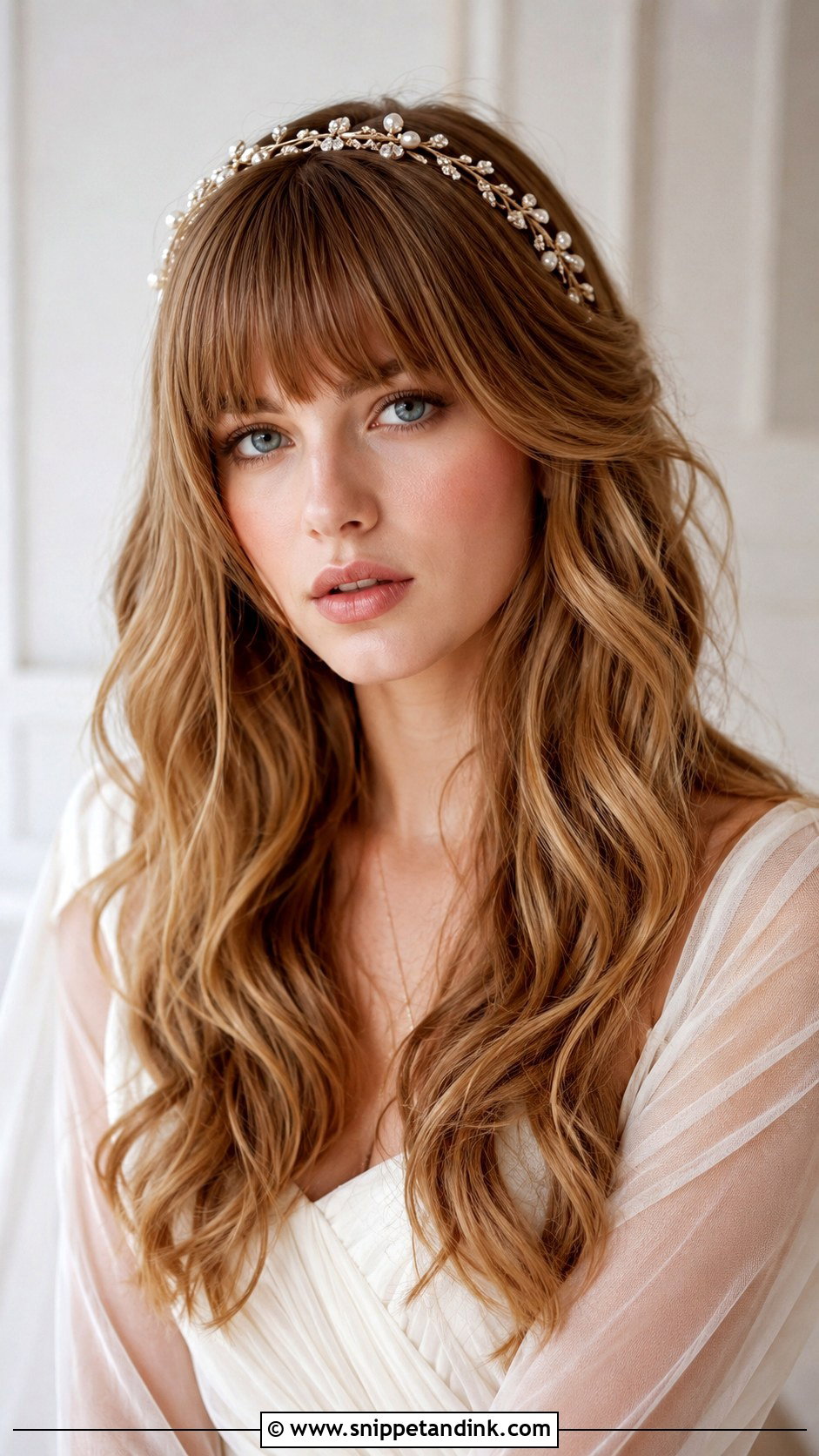
Blunt bangs with long waves is drama with a modern edge. The fringe frames the eyes while the waves carry volume through the length, and the contrast between straight and curved is what keeps it interesting. Long hair gets heavy when curled, so I set the waves with a firm-hold mousse at the roots and brush them out only once they’ve cooled completely. Wear it all down, or pull one section back behind an ear to show earrings. A thin headband should sit behind the fringe, never pressing on it.
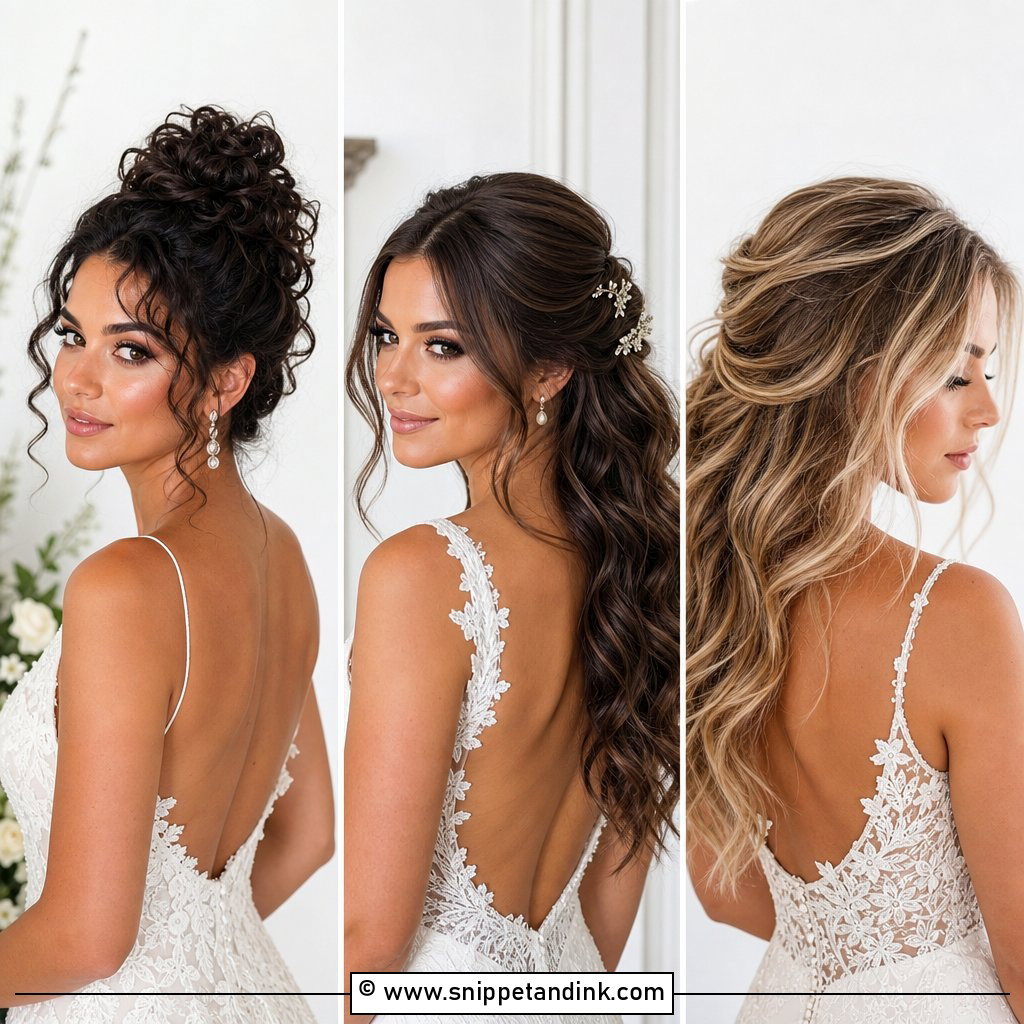
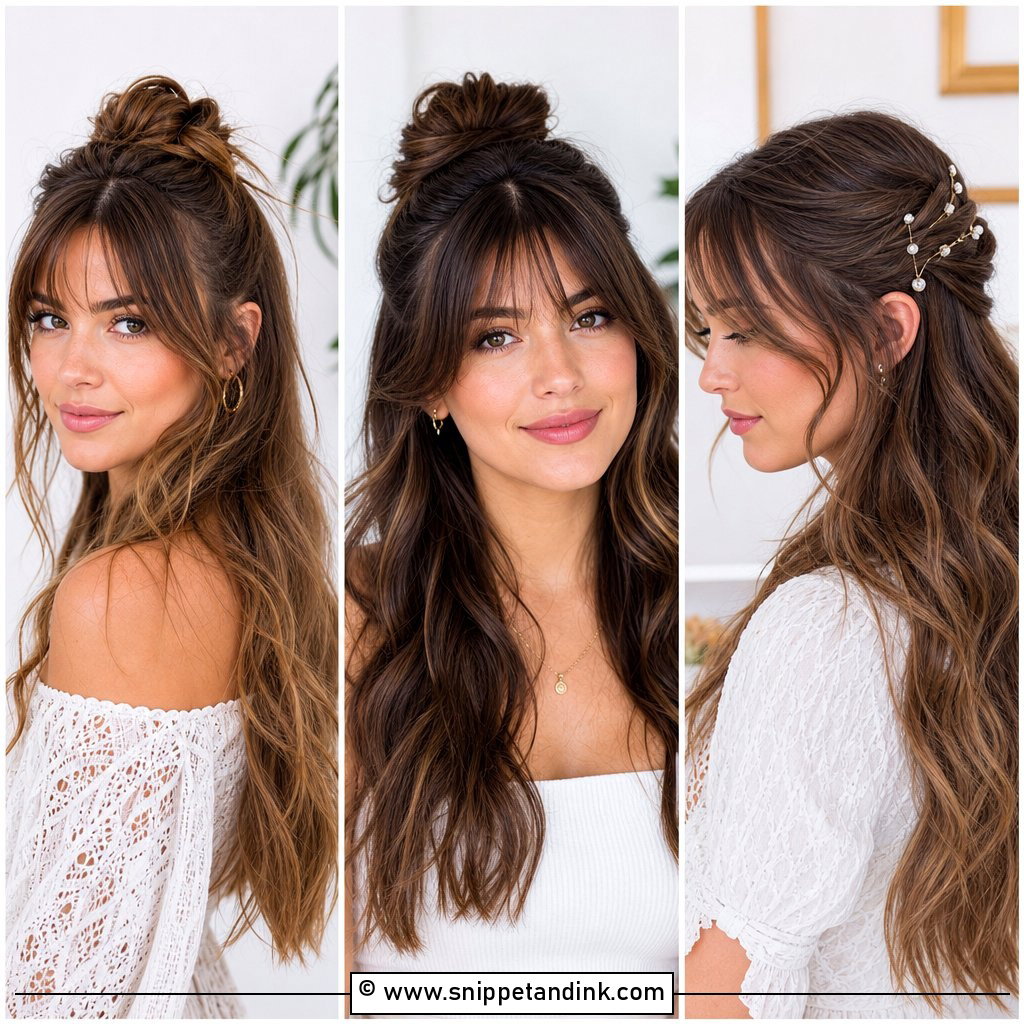
20. Curtain Bangs With a Messy Bun
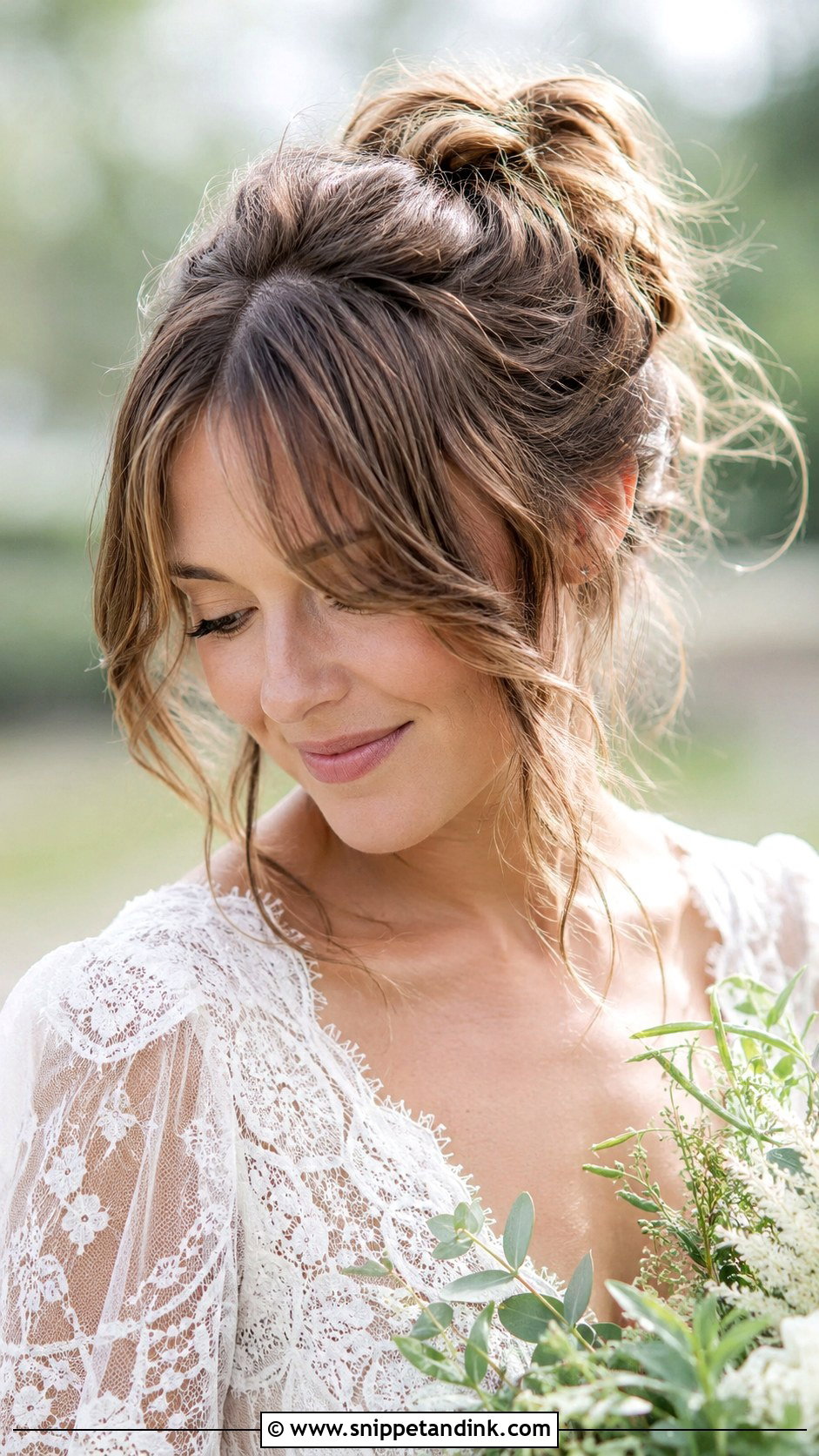
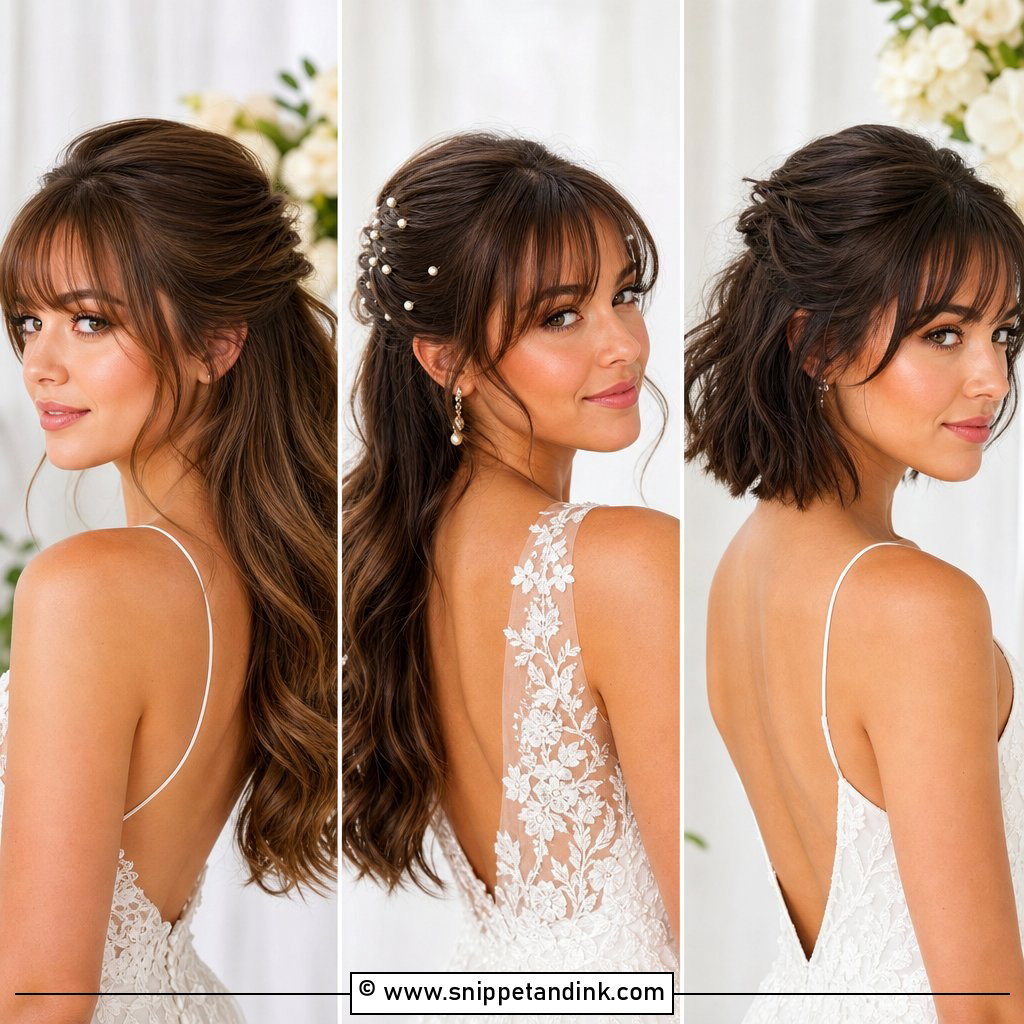
A messy bun with curtain bangs is the most relaxed look here, and it is not as unplanned as it appears. A properly messy bun has structure inside it: I pin a smooth base first, then loosen the outer loops and pull out pieces around the face. Without that base, it slides down the head by the first dance. The curtain fringe gives the face shape so the undone bun doesn’t read as untidy. Greenery tucked into the bun suits boho and outdoor weddings.
Oily Foreheads, Cowlicks and Humid Ceremonies
Bangs touch skin all day, and that is their weak point. Foundation, primer and natural oil from the forehead migrate into the hair, so a fringe that looked perfect at nine in the morning can separate into strips by the speeches. I ask my makeup artist to set the forehead with powder before I finish the fringe, and I keep the fringe a few millimetres off the skin by blowing it with a little lift at the root.
What goes in the touch-up bag
- Blotting papers for the forehead, used before you touch the bangs.
- A travel can of dry shampoo, sprayed into the fringe from at least a forearm’s distance away and brushed through.
- A small round brush or a fringe comb.
- Two flat clips to pin the fringe back while you eat or touch up makeup.
Cowlicks are the other battle. If the hairline grows in a swirl, I blow-dry the fringe in both directions first to neutralise it, then finish it in the direction it should sit. Fighting a strong cowlick with heat on the day rarely holds, so I’d rather choose a curtain or side-swept style that follows it.
Humidity changes everything. Curly and wavy hair shrinks and lifts first at the hairline, so a blunt fringe on textured hair can creep up by a centimetre in a damp marquee. If your ceremony is outside in summer, bring that up at your trial. A slightly longer, side-swept fringe forgives humidity far better than a short straight line.
Your Fringe on the Day, From First Look to Last Dance
A fringe gives a bride her own face back in a world of pinned-up, polished hair, and almost every style above can be adapted to the type of bangs you already have. Curtain bangs blend into waves and half-up styles, blunt bangs suit sleek shapes and a veil set behind them, and wispy bangs soften updos and twists. Book your trim, test the veil placement, and keep blotting papers close. Then pick the look that suits your hair texture and venue, and your wedding hair with bangs will last as long as the party does.
You'll Like These Ideas:
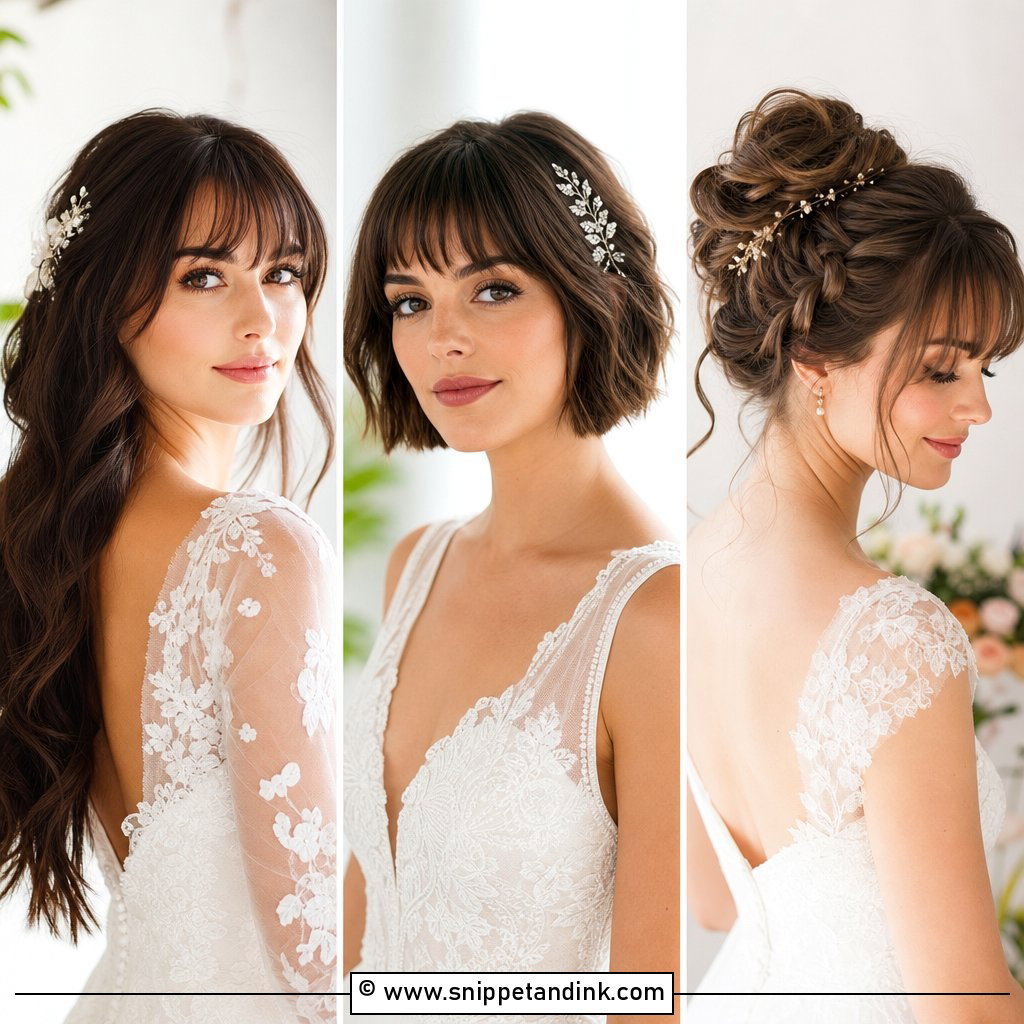


Leave a Reply