
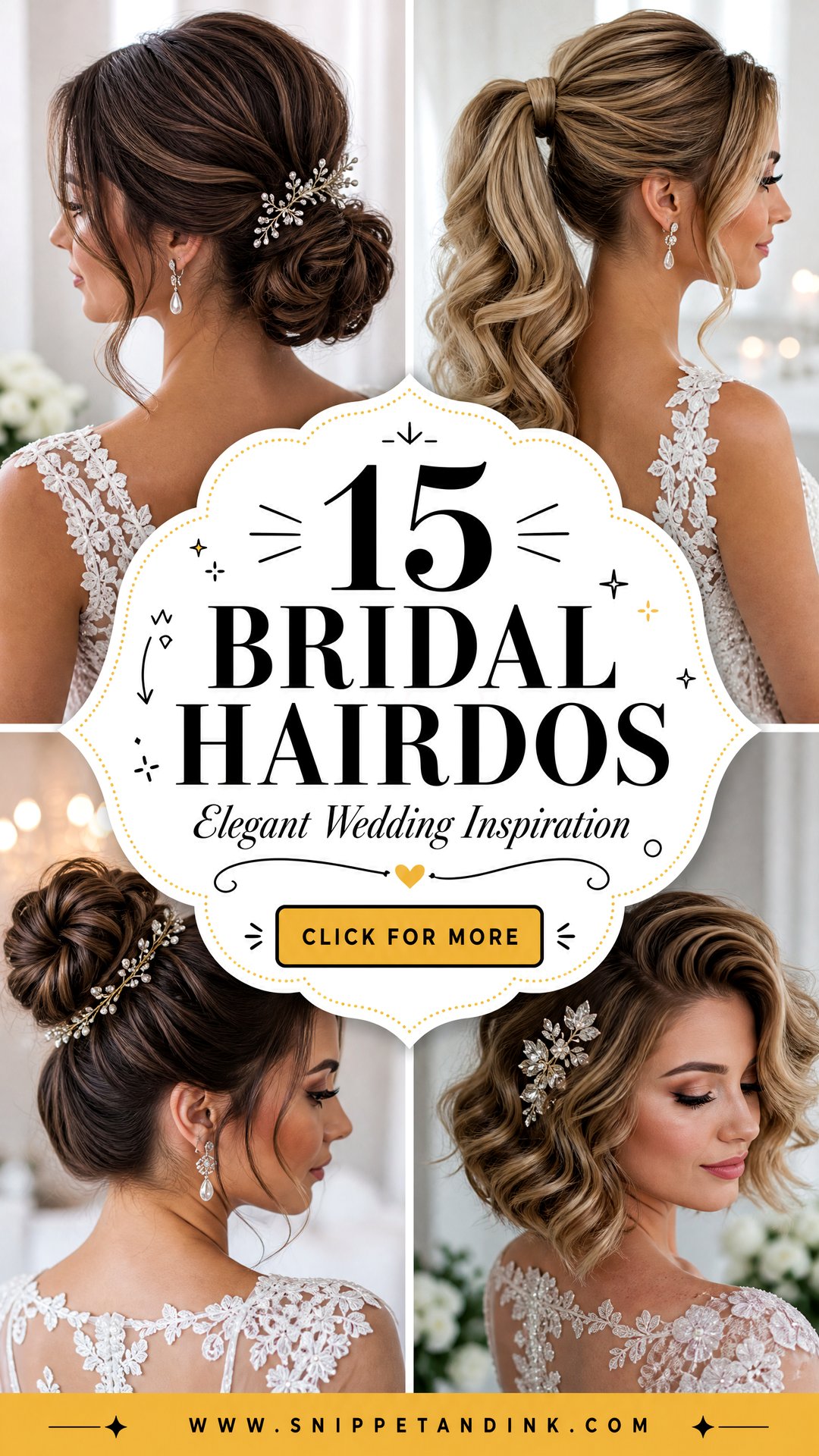
Bridal hair is in a good place right now: polished, but still recognisably the woman wearing it. The best bridal hairdos for 2026 have moved away from crunchy ringlets and identical updos. When a bride sits in my chair, the questions I ask are about her neckline, her veil, the venue and how long the day runs, because those decide the style more than any photo does. Every hairdo below has to survive portraits, a lot of hugging and a dance floor, so I’ve said where each one is strong and where it needs help.
Six Weeks Out: Getting Your Hair Ready to Be Styled
Most of what makes a wedding hairdo last happens before anyone picks up a curling iron. Hair in good condition, cut at the right time, simply behaves better in my hands.
Have your last trim about two to three weeks before the wedding, enough time for blunt ends to soften but not long enough for split ends to return. If you’re colouring, do it a week or two ahead so the tone settles and your scalp isn’t tender when pins go in. A big colour change or dramatic cut close to the date is a gamble, since your trial was done on different hair.
If you’ll wear extensions for fullness in a ponytail or chignon, buy them before the trial and bring them, so I can check the colour match and weight. And ask your stylist how they want your hair on the morning. I prefer hair washed the night before rather than squeaky clean, because freshly washed hair is slippery and pins slide straight out.
1. Bridal Low Bun
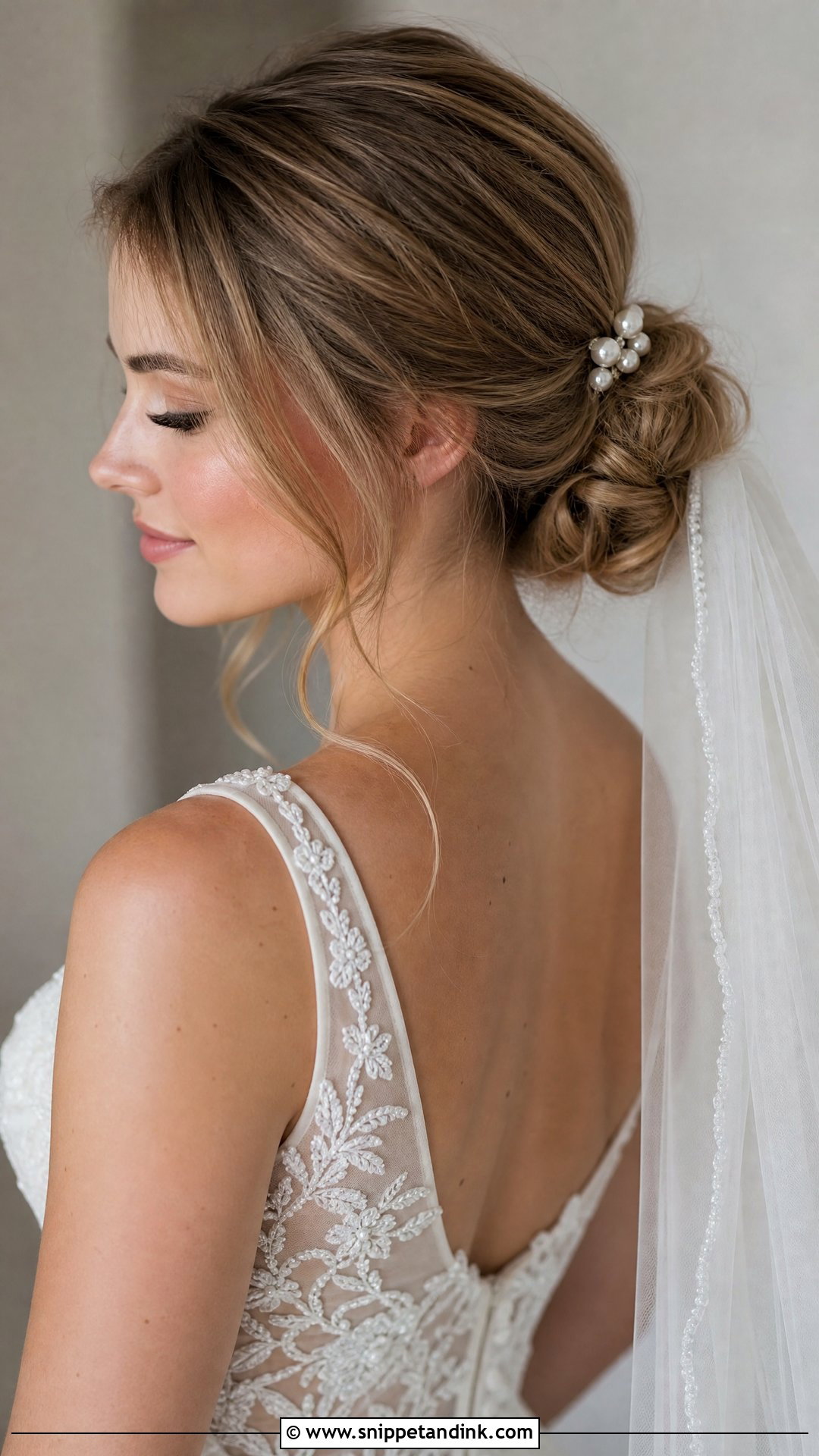
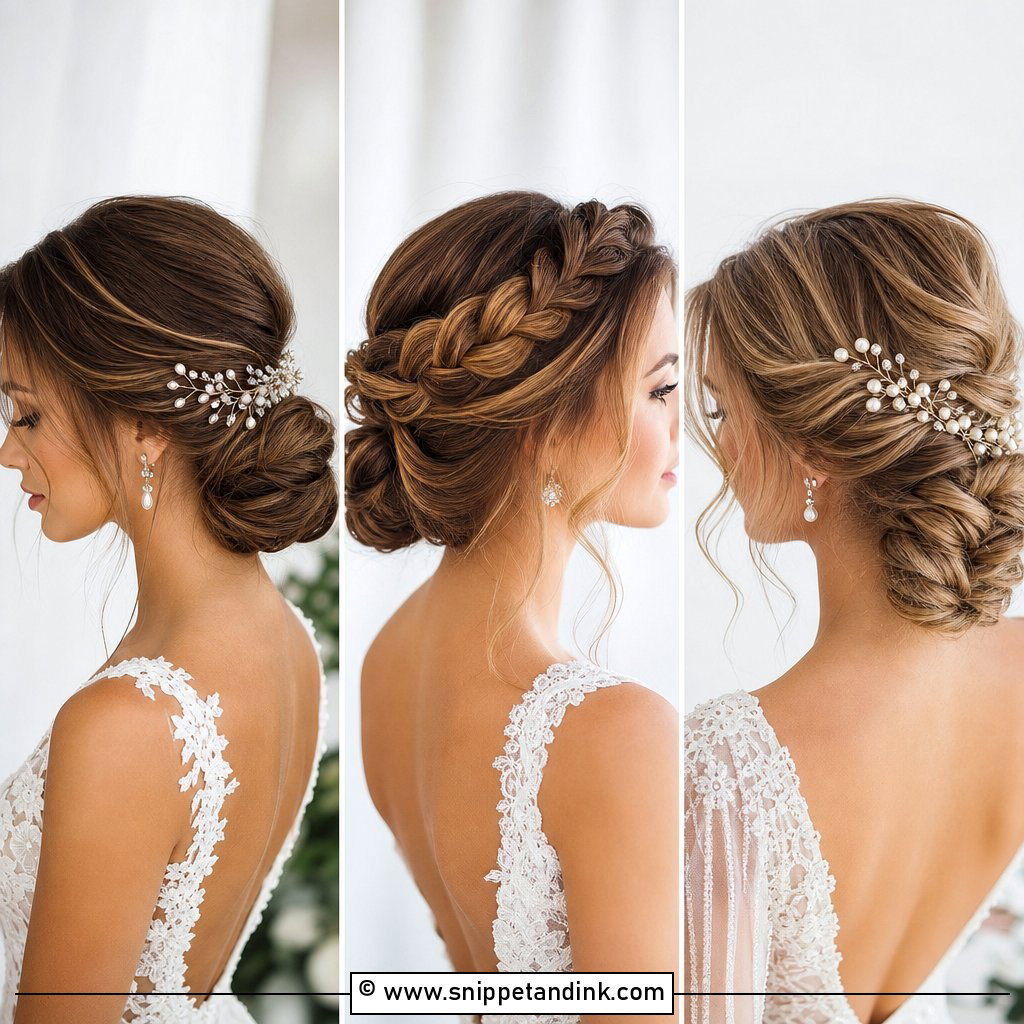
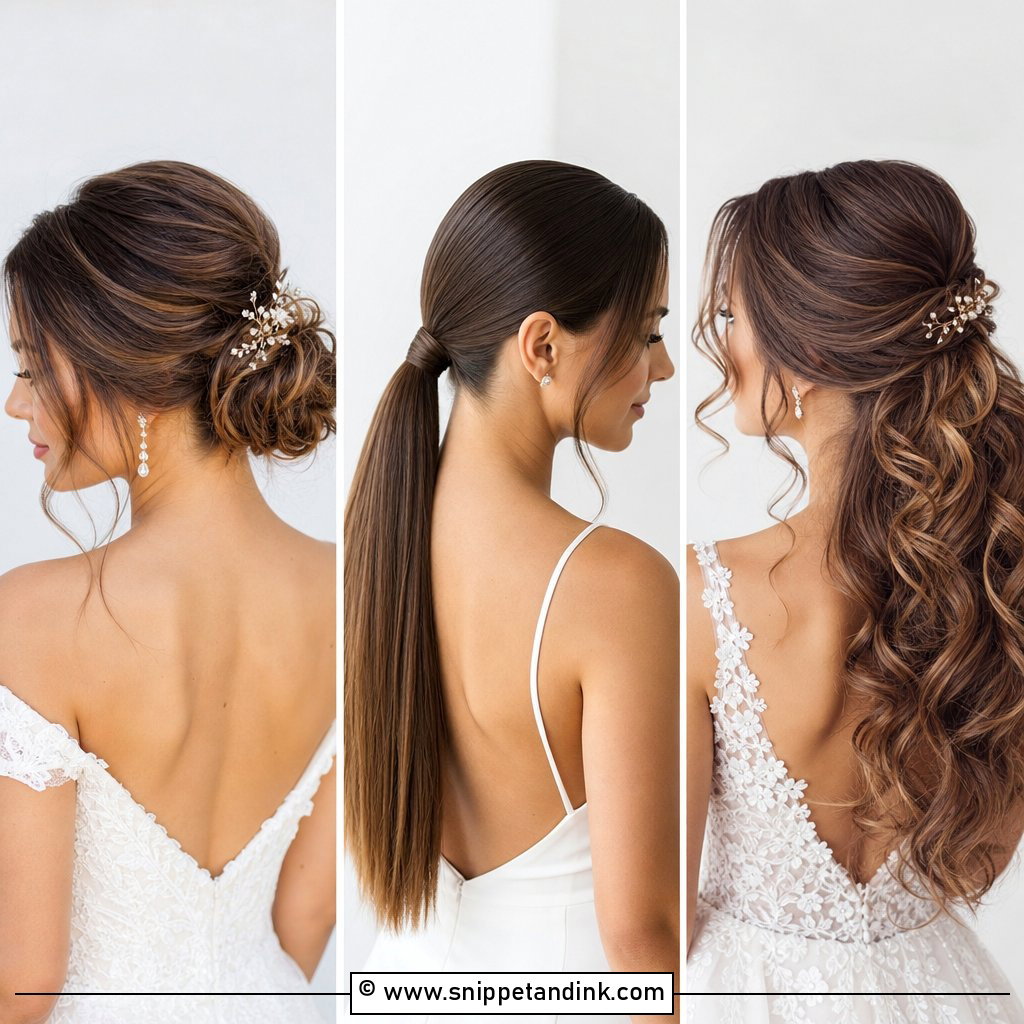
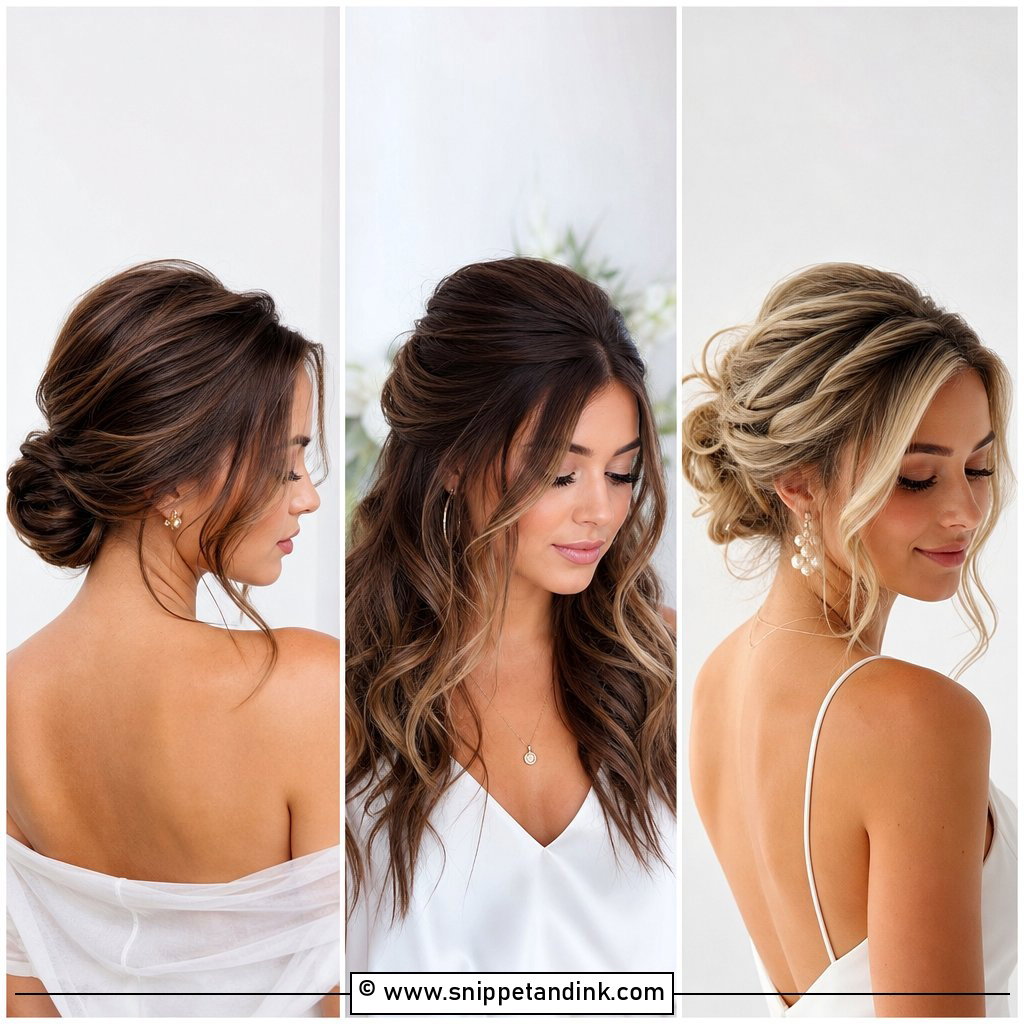
The low bun is the style I can make work on almost any bride, which is why it turns up at so many trials. Sitting at the nape, it leaves room above for veils, pearl pins, combs and hair vines. It keeps the shoulders clear, so strapless, square, high-neck and open-back gowns all show properly. Soft volume at the crown reads romantic; a smoother top reads modern. I build it on a small hidden ponytail so the bun has something solid to pin into, then pull the face-framing pieces last, once I can see the finished outline.
2. Bridal Chignon
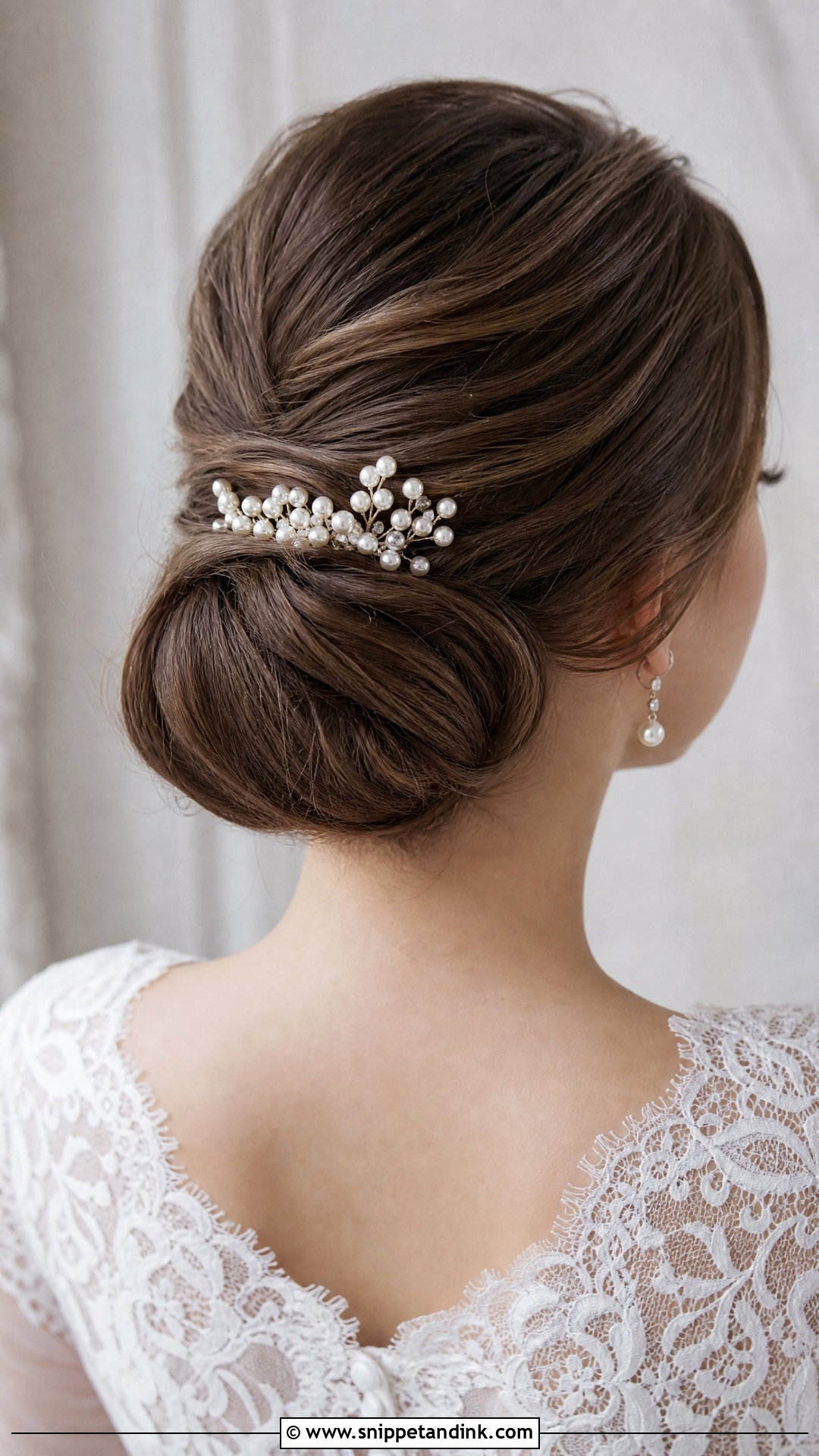
A chignon differs from a plain bun in its shape: the hair is rolled, tucked or twisted, so the back has more to look at during the ceremony. It reads refined without going stiff. Lace dresses, satin gowns and cathedral veils all suit a low chignon. Fine hair is the usual worry, and I solve it with a small padding piece or a few clip-in wefts hidden in the roll rather than backcombing everything into a helmet. Keep the front smooth with a gentle side part, or let a few loose pieces fall at the cheekbones.
3. Bridal Sleek Bun
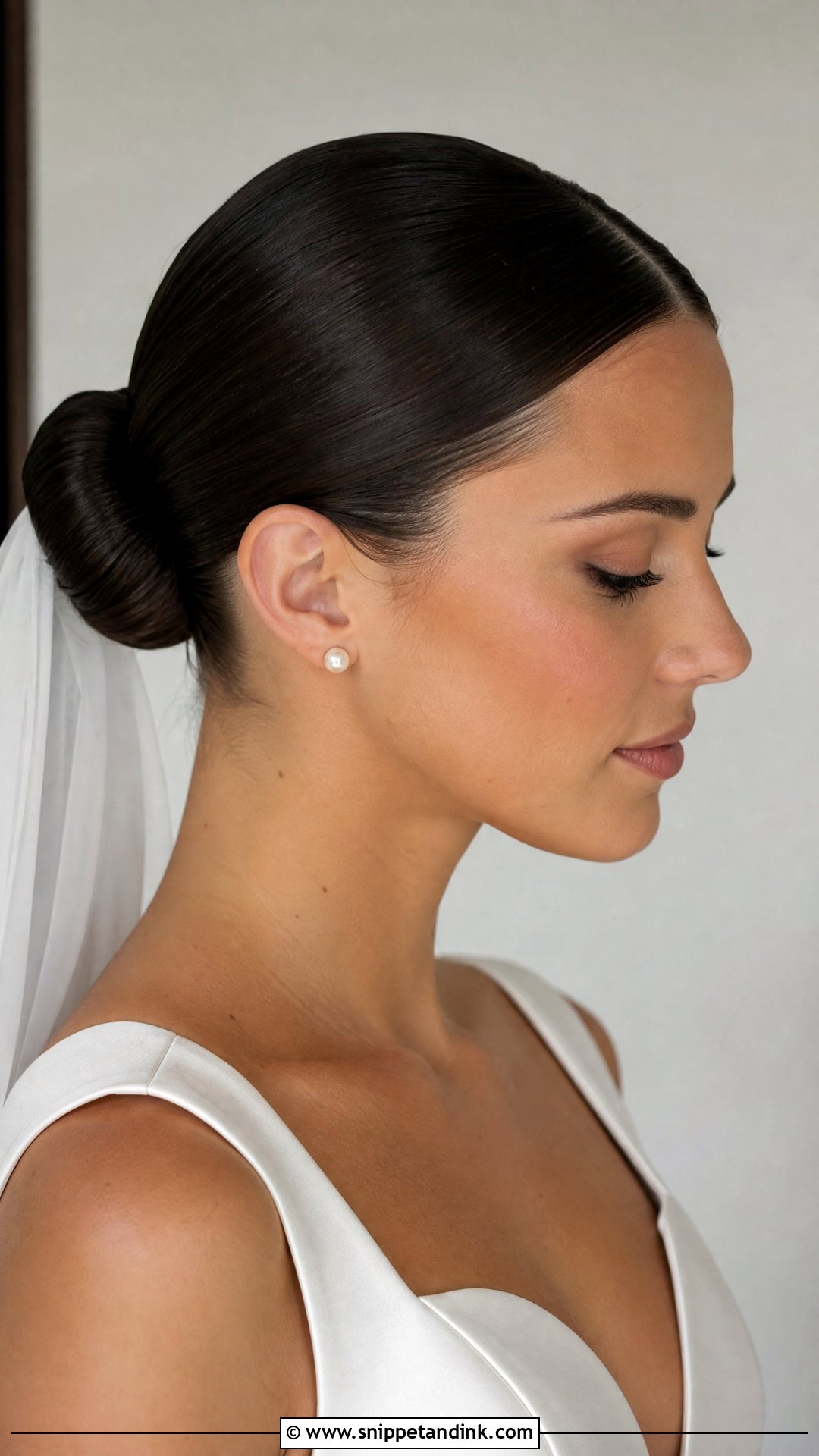
A sleek bun is unforgiving, which is exactly why some brides love it. Every bump shows, so I blow-dry the hair completely smooth before brushing it back, and I’d never attempt it on hair that’s still damp at the roots. It suits minimalist gowns, structured bodices and big earrings. Smoothing cream, strong pins and an anti-humidity spray keep it glossy, and the hair stays off the neck on a hot day. One caution: pull it too tight and you’ll feel it by the speeches.
4. Bridal French Twist
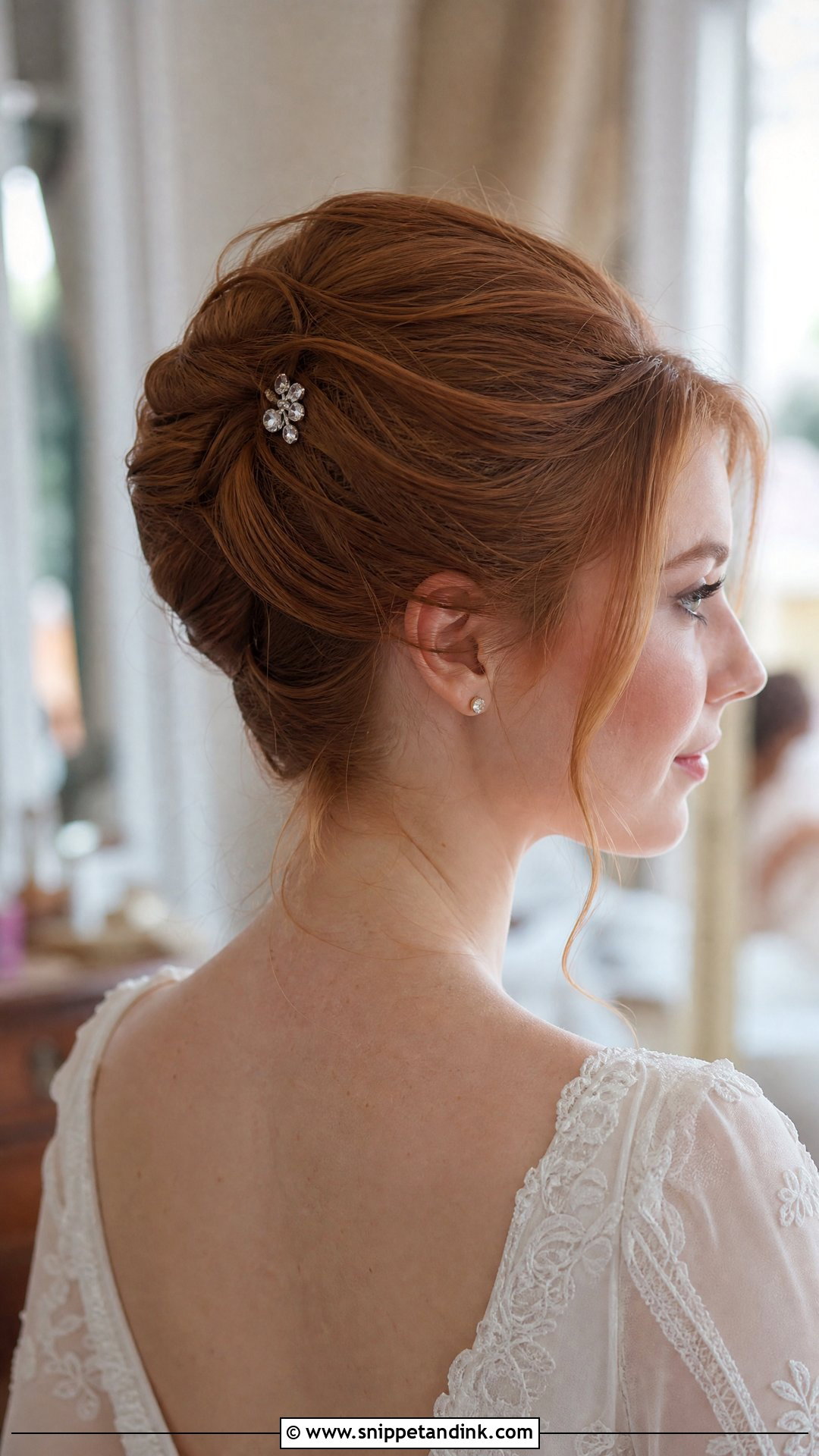
The French twist lifts the hair vertically and gives you a long, clean profile. Medium to long hair is easiest, though I can twist shorter lengths with careful crossed pinning down the seam. A loose twist with wispy pieces looks romantic; a tight one looks editorial. Bateau and off-the-shoulder necklines show it off, and vintage-inspired dresses were practically made for it. The part people don’t see is the row of pins hidden inside the fold: if your stylist doesn’t lock that seam, the twist starts opening by mid-afternoon.
5. Bridal Half Up Half Down
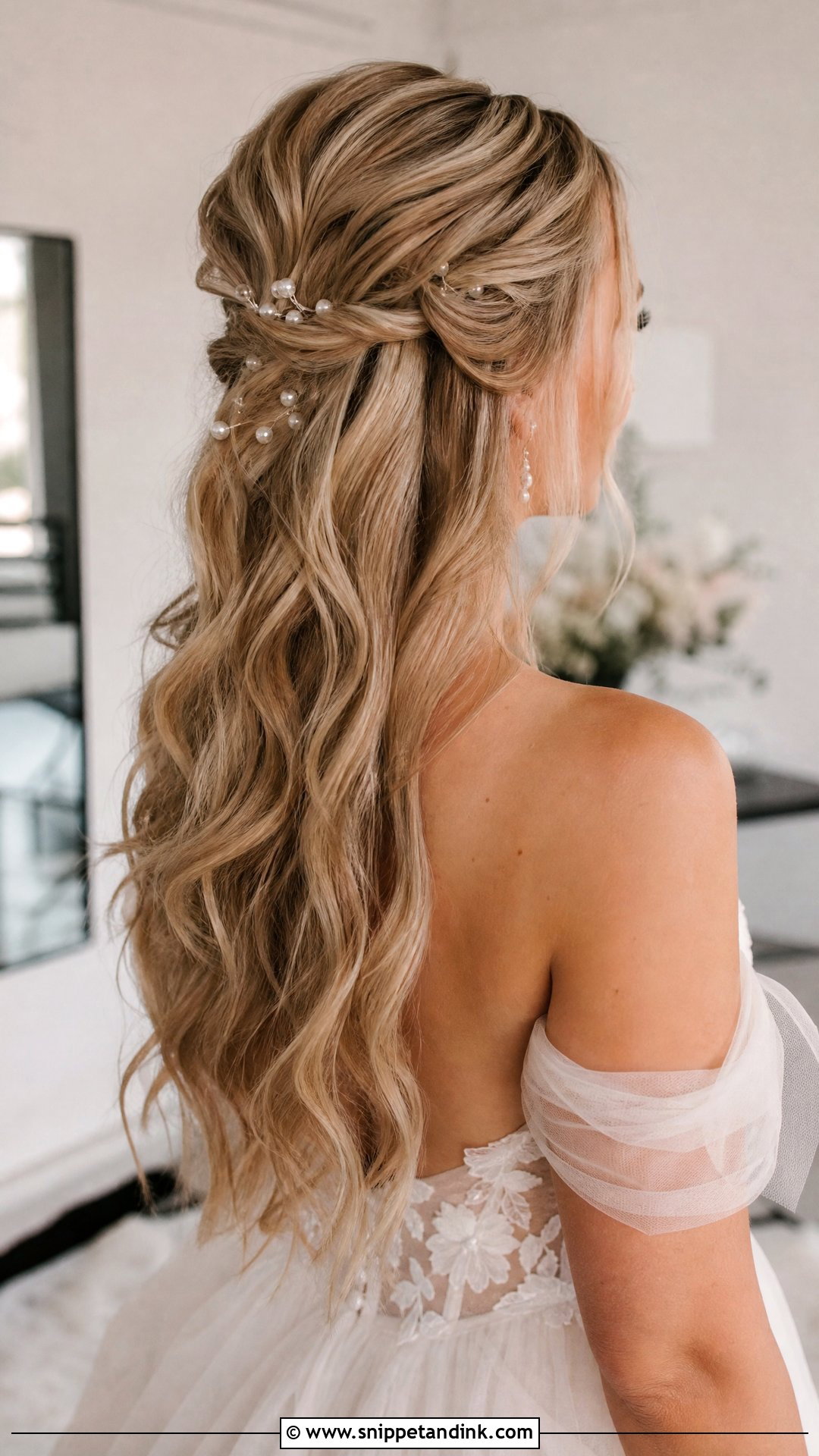
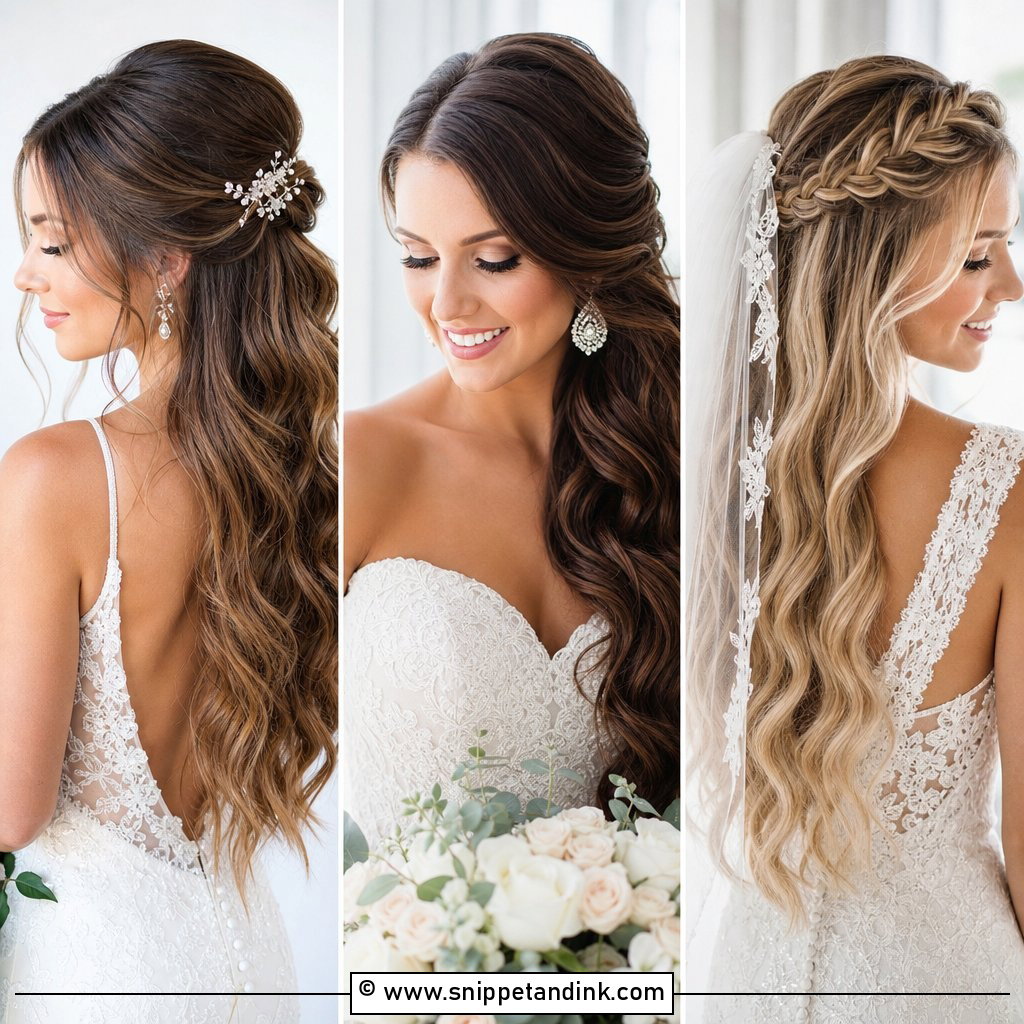
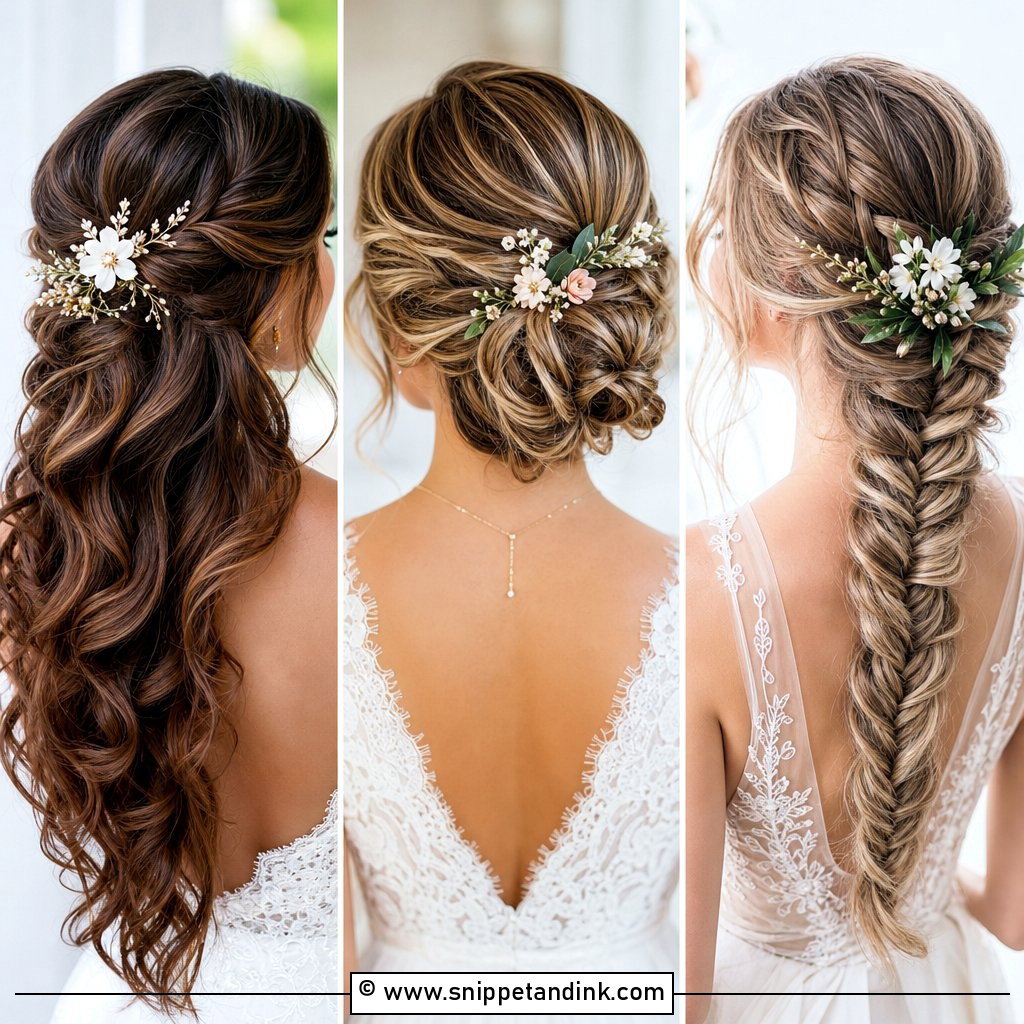
Brides who wear their hair down every day often feel most like themselves in a bridal half up half down hairdo. The top is pinned off the face and the length stays loose, so it still moves. A lifted crown, twisted sides or a tiny braid adds detail, and it handles veils and small floral pins well. Straight, heavy hair is the hard case: the curls in the down section drop fastest. I set the waves first, let them cool completely, then pin the top, with root volume built in before any of it.
6. Bridal Hollywood Waves
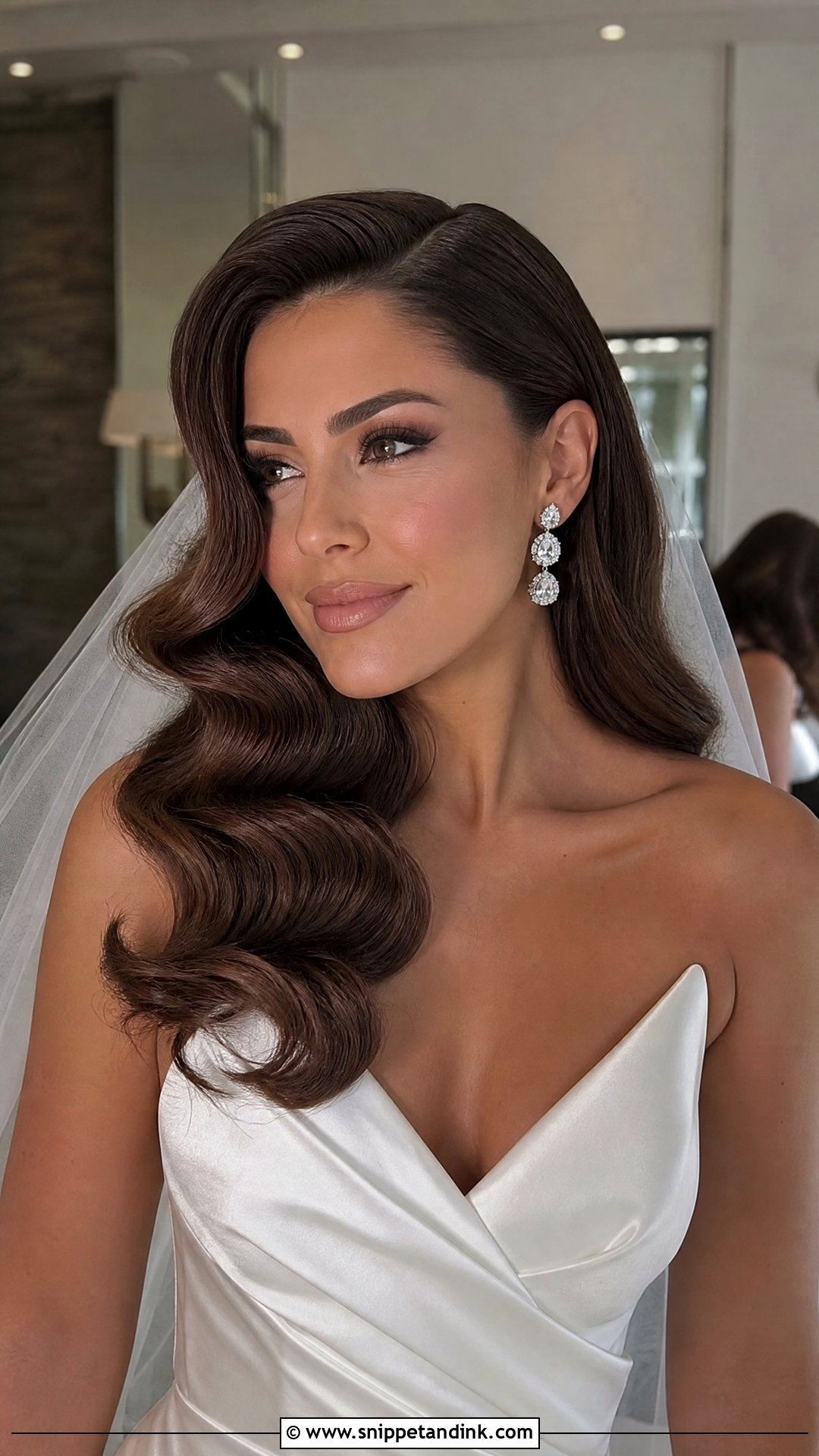
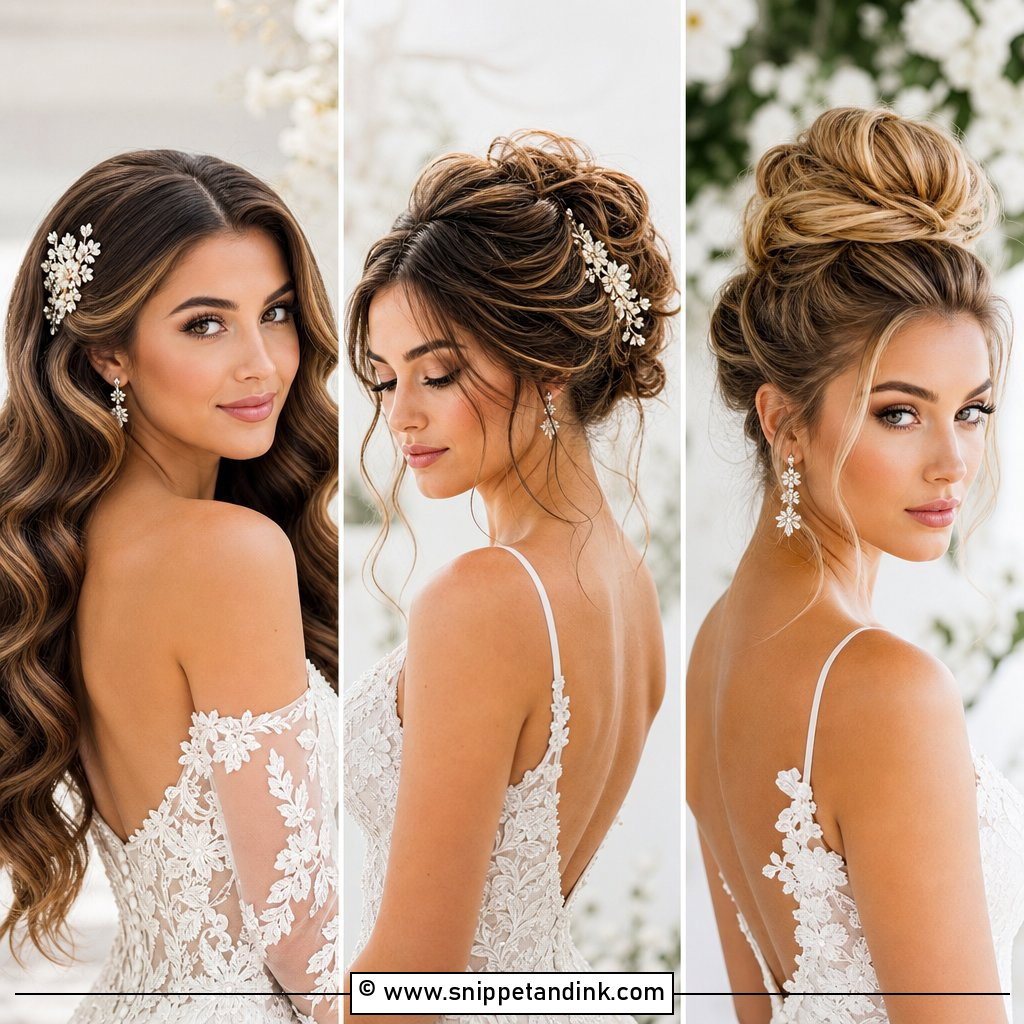
Hollywood waves are all about control. The hair is curled in one direction, brushed into a single wave pattern and then sculpted, so the shine runs along each ridge. Satin gowns, fitted silhouettes and statement earrings sit well with it. A deep side part makes it dramatic; a centre part makes it feel current. I clip each wave while it sets and only remove the clips once the hair is cold, because brushing warm curls collapses the pattern. Done properly, the ends stay smooth rather than frizzy.
7. Bridal Loose Curls
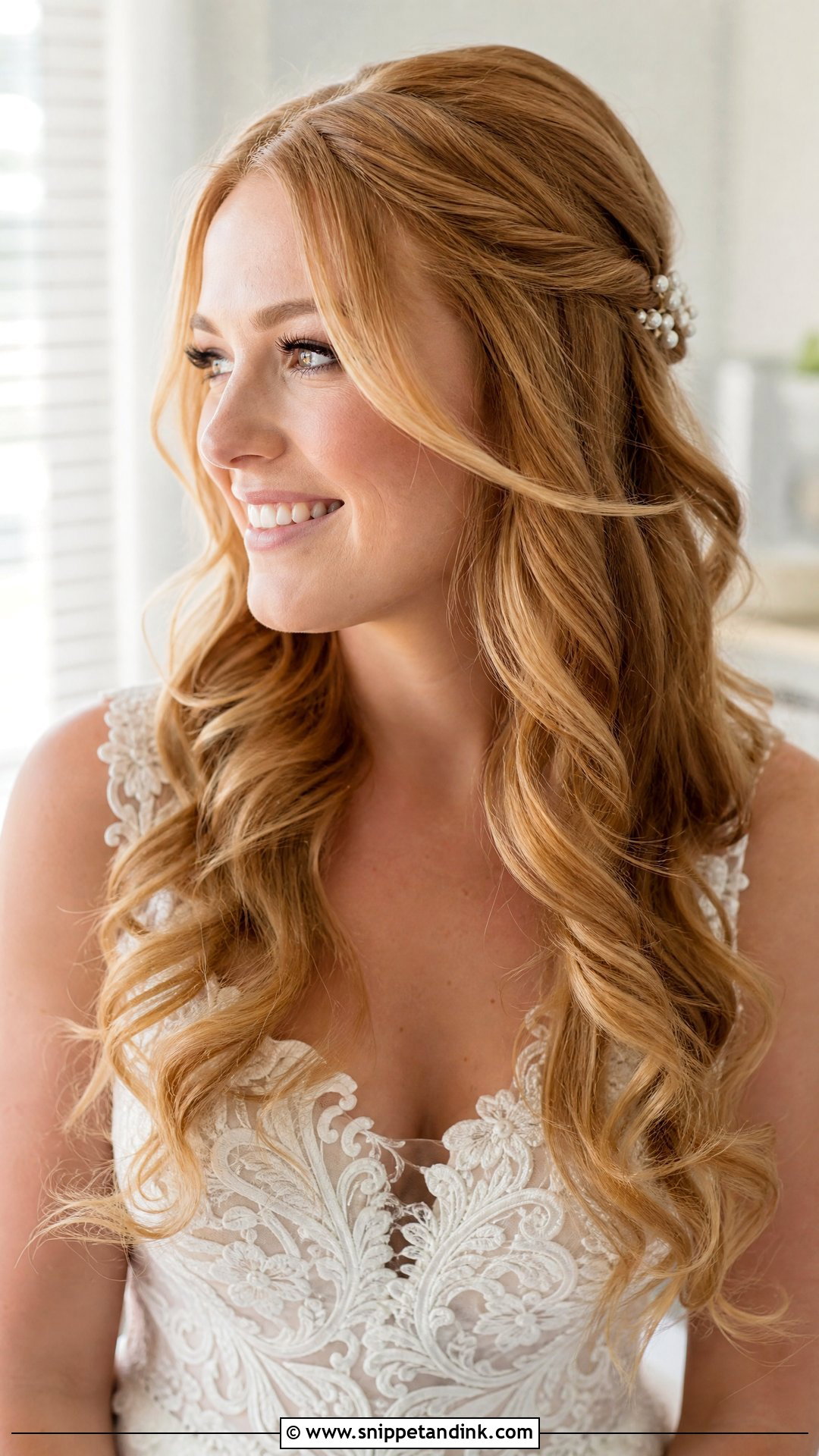
Loose curls are wearable on most lengths, but they’re also the style most likely to disappear by dinner. Prep is everything: I use mousse or a setting spray at the roots before curling, and I curl smaller than the finished look because curls relax. Wear them fully down, pinned at one side or under a veil at the crown. Garden, beach and relaxed indoor ceremonies suit them. Layers help the curls fall naturally, and a few face-framing pieces brighten the cheekbones in photos.
8. Bridal Braided Updo
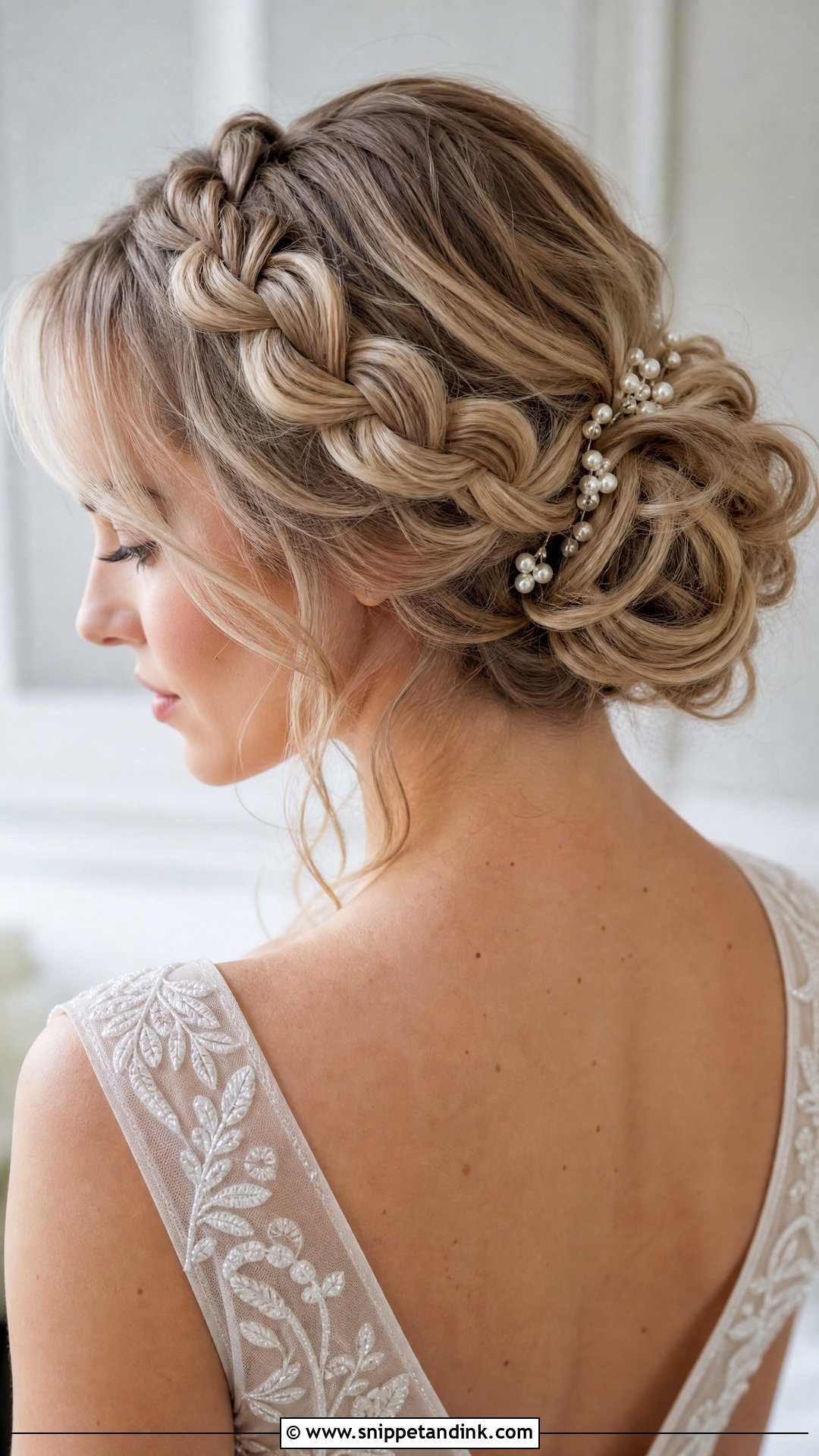
A braided updo is what I suggest when a bride wants romance but doesn’t trust loose curls to last until the reception. The braid can wrap into a low bun, cross the crown or blend into a twisted chignon. Highlighted and dimensional shades show off especially well, because each pulled-out loop catches a different tone. Thick hair holds it most easily. I braid snugly, pin it in place, and only then pull the loops apart; loosening first makes the whole thing slide. Small pearls or tiny flowers are fine, but let the braid stay the feature.
9. Bridal Side Braid
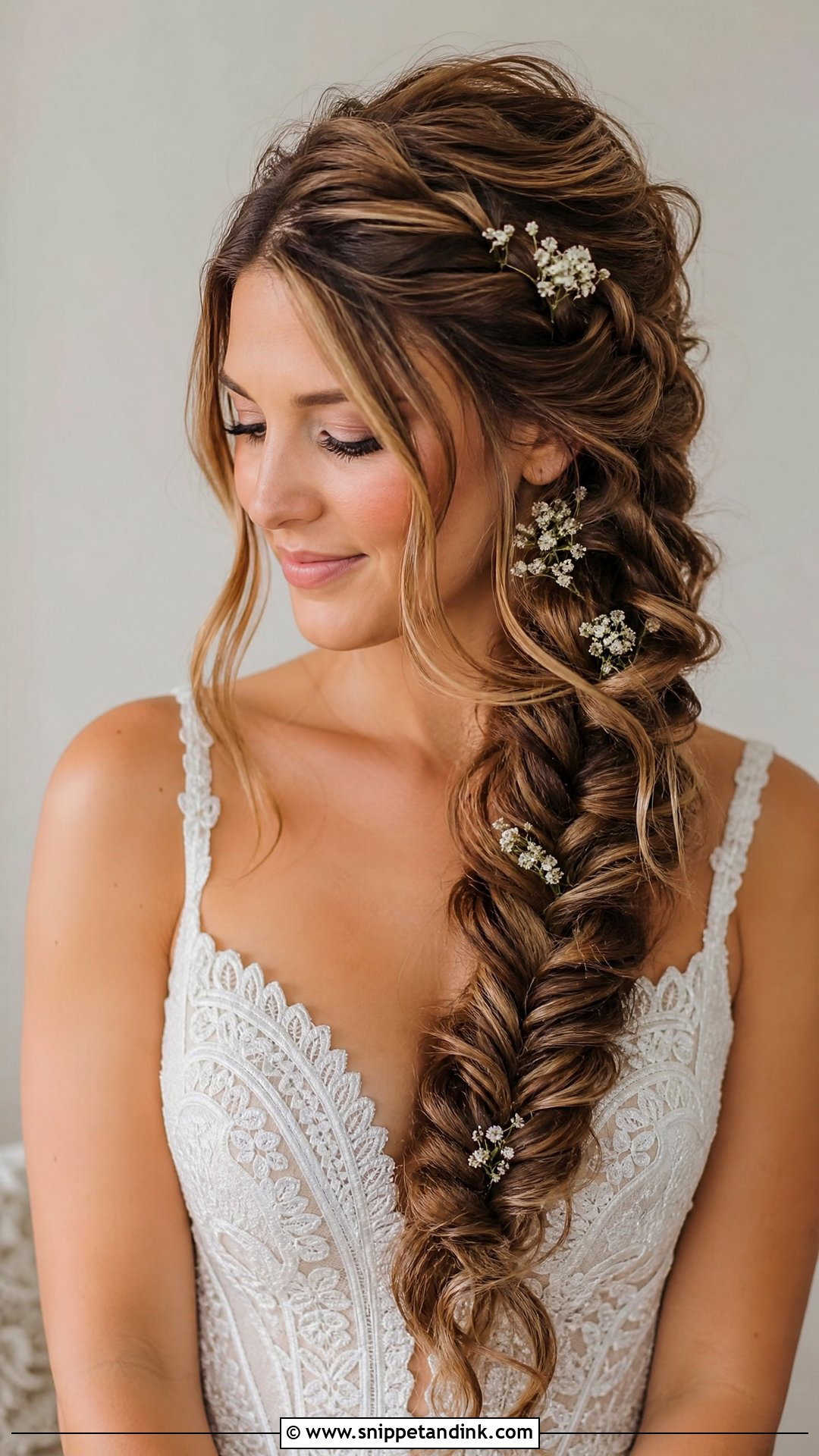
A side braid keeps long hair forward, resting over one shoulder where the camera can see it. A fishtail, a loose three-strand or a textured Dutch braid all look bridal once there’s volume at the crown. Open necklines, boho gowns and floral combs go with it, and it stays controlled at windy outdoor venues. The weak point is the shoulder seam of the dress: lace and beading can snag the braid, so I tie off with a clear elastic and pin the end under rather than leaving it loose.
10. Bridal Ponytail
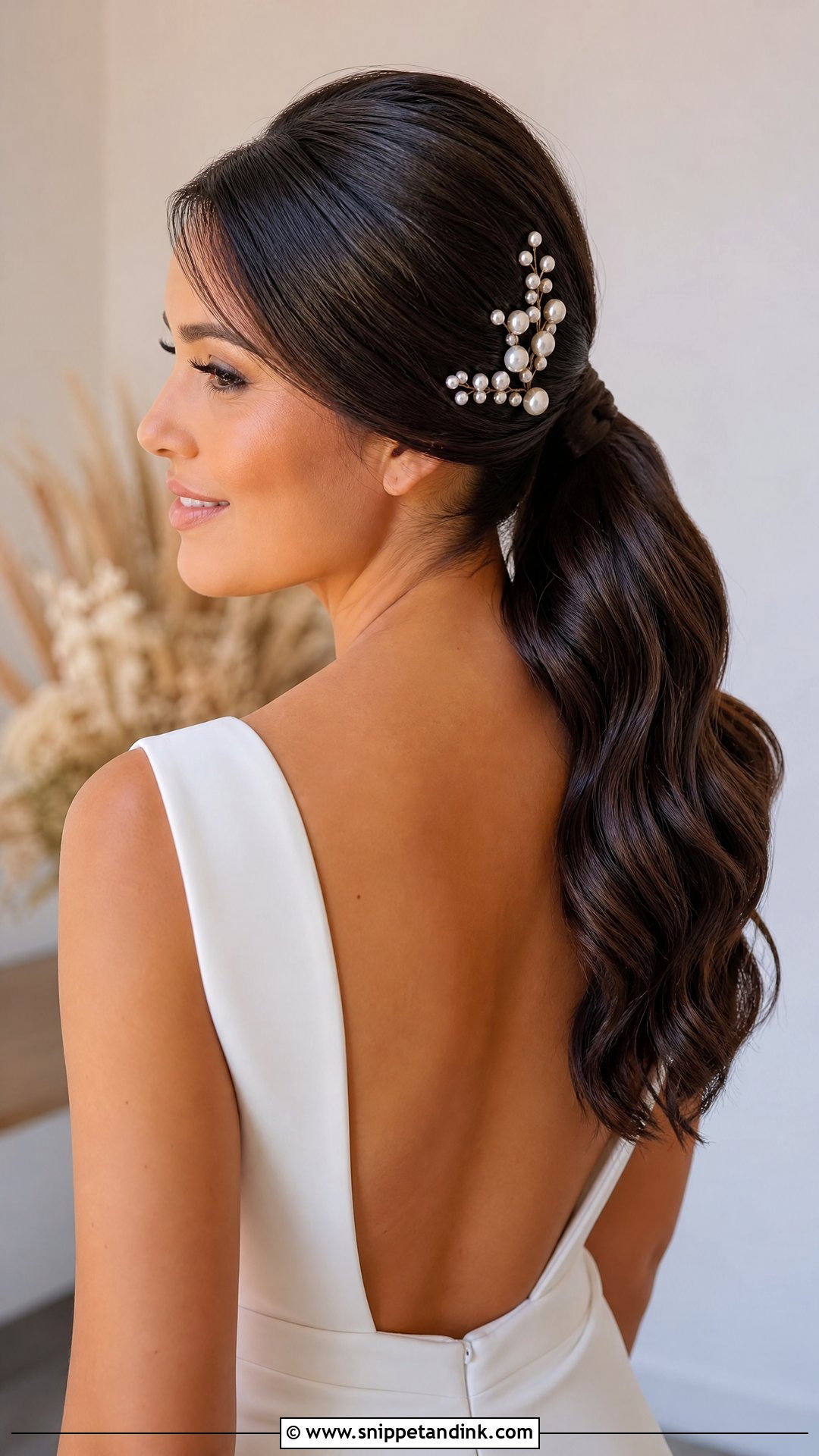
A ponytail is for the bride who wants hair off her face but simply isn’t a bun person. High ponytails feel lifted and modern; low ones feel quieter. I wrap a strand around the elastic to hide it and wave through the length so it moves. Modern gowns, jumpsuits and statement earrings suit it, and the profile is strong from the side. Clip-in extensions add fullness to the tail without touching the smooth top. My one rule: secure the ponytail with two elastics, one under the other, so the weight of the tail doesn’t drag it lower through the evening.
11. Bridal High Bun
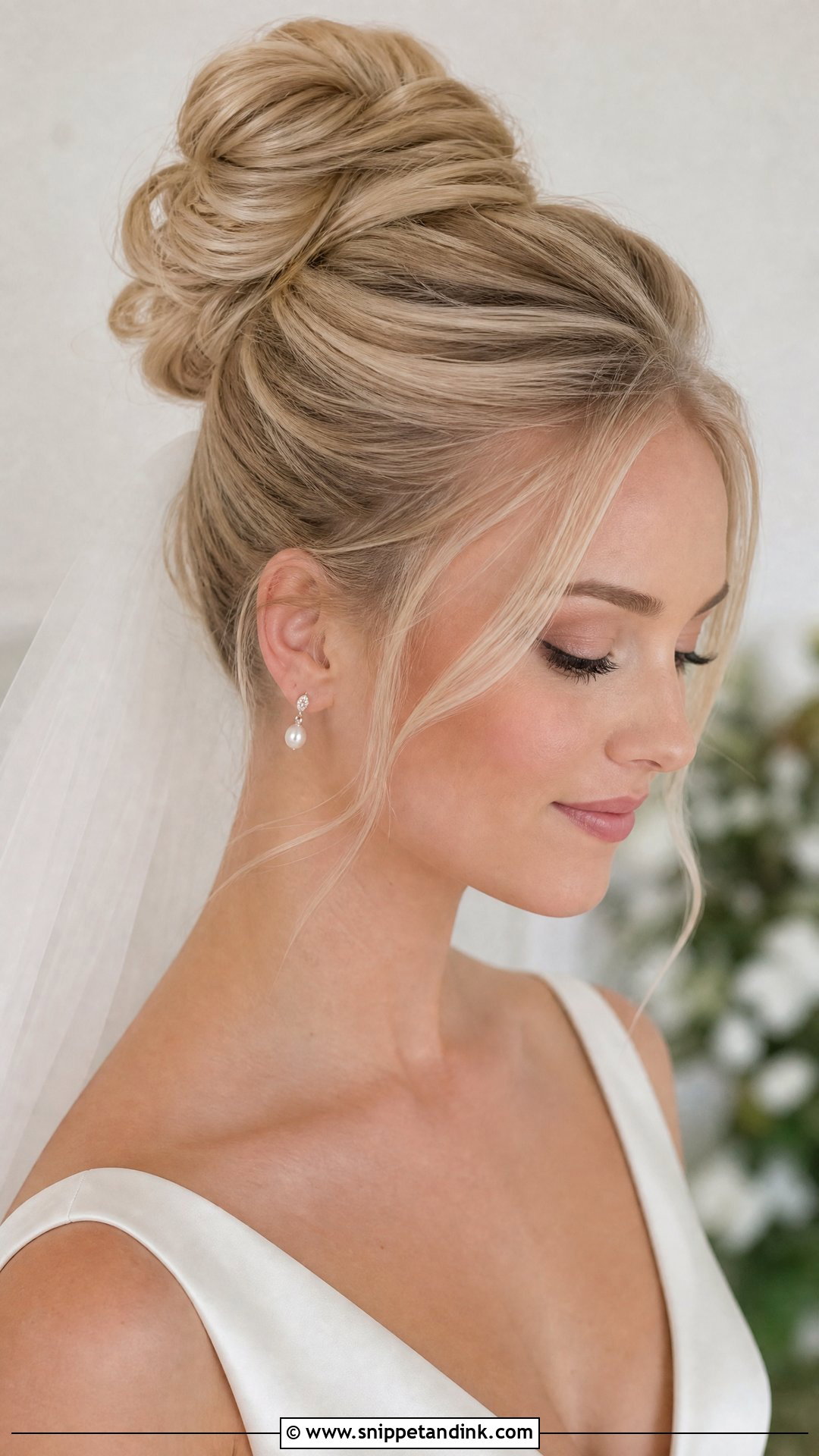
A high bun shows off the neck, the earrings and any detail at the back of the dress. It can be sculpted smooth or left softly textured. Veils tuck under it, and tiaras and pearl pins sit well in front. It’s cool in warm weather, too. Placement makes or breaks it, though: too far forward and it looks like a topknot, too tight and you’ll have a headache by evening. I always check it in profile in a hand mirror before I spray, and leave a little softness at the hairline.
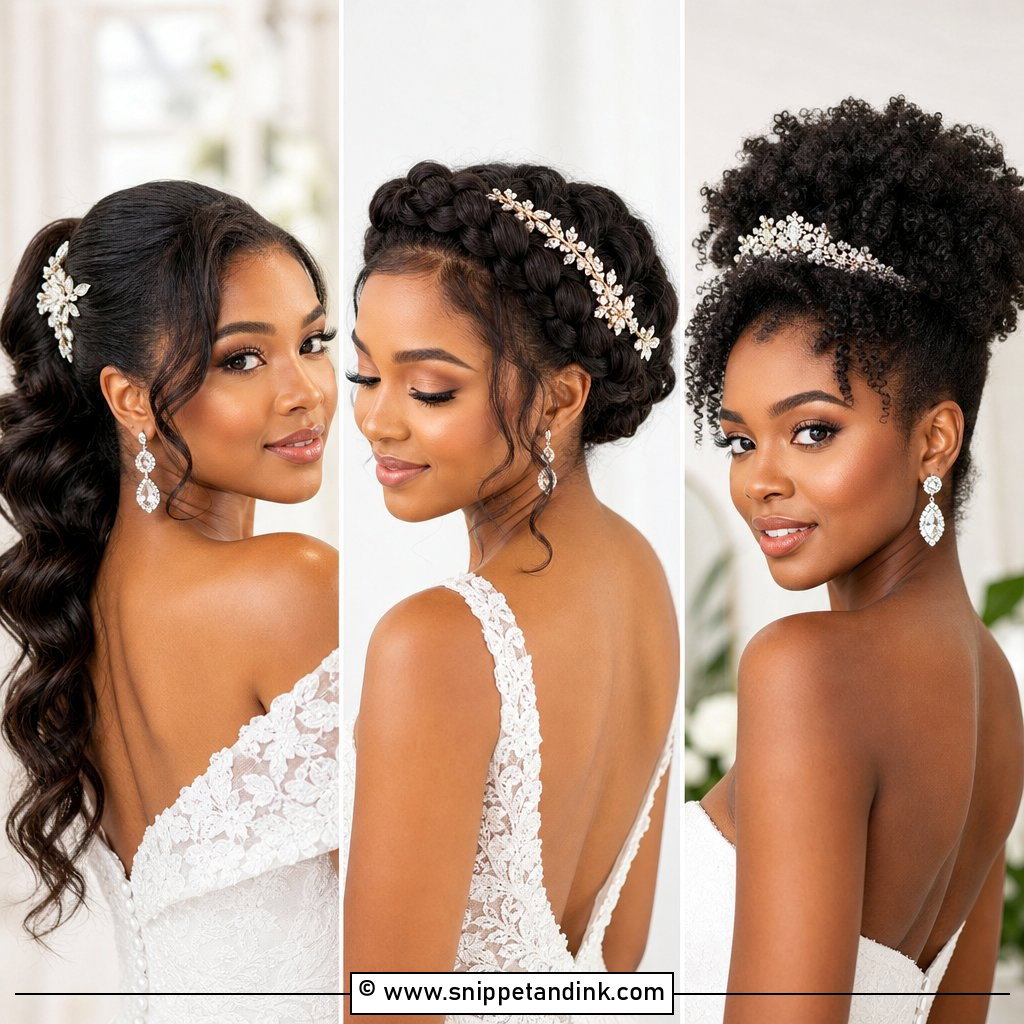
12. Bridal Curly Updo
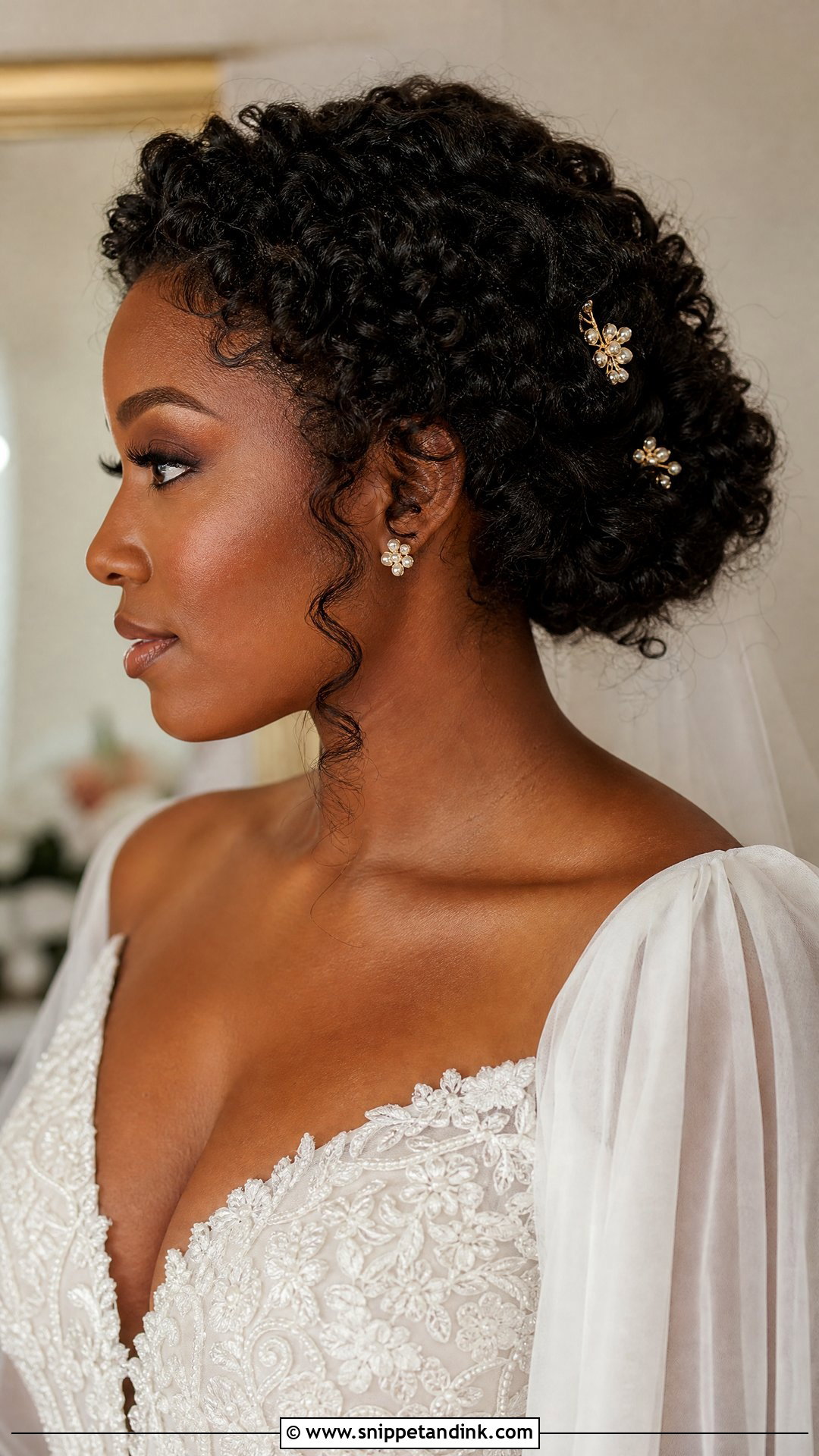
A curly updo should use the curl pattern, not fight it. Instead of flattening the hair, I gather and pin the curls to build volume, at the nape, at the crown, or in a looser updo with tendrils. It suits curly, coily and textured hair because the pattern stays visible. Moisture comes first: well-hydrated curls clump and define, while dry ones frizz once the room fills up. I set the shape fully before adding any pins, flowers or a veil, because adjusting curls after accessories go in disturbs the definition.
13. Bridal Short Hair Waves
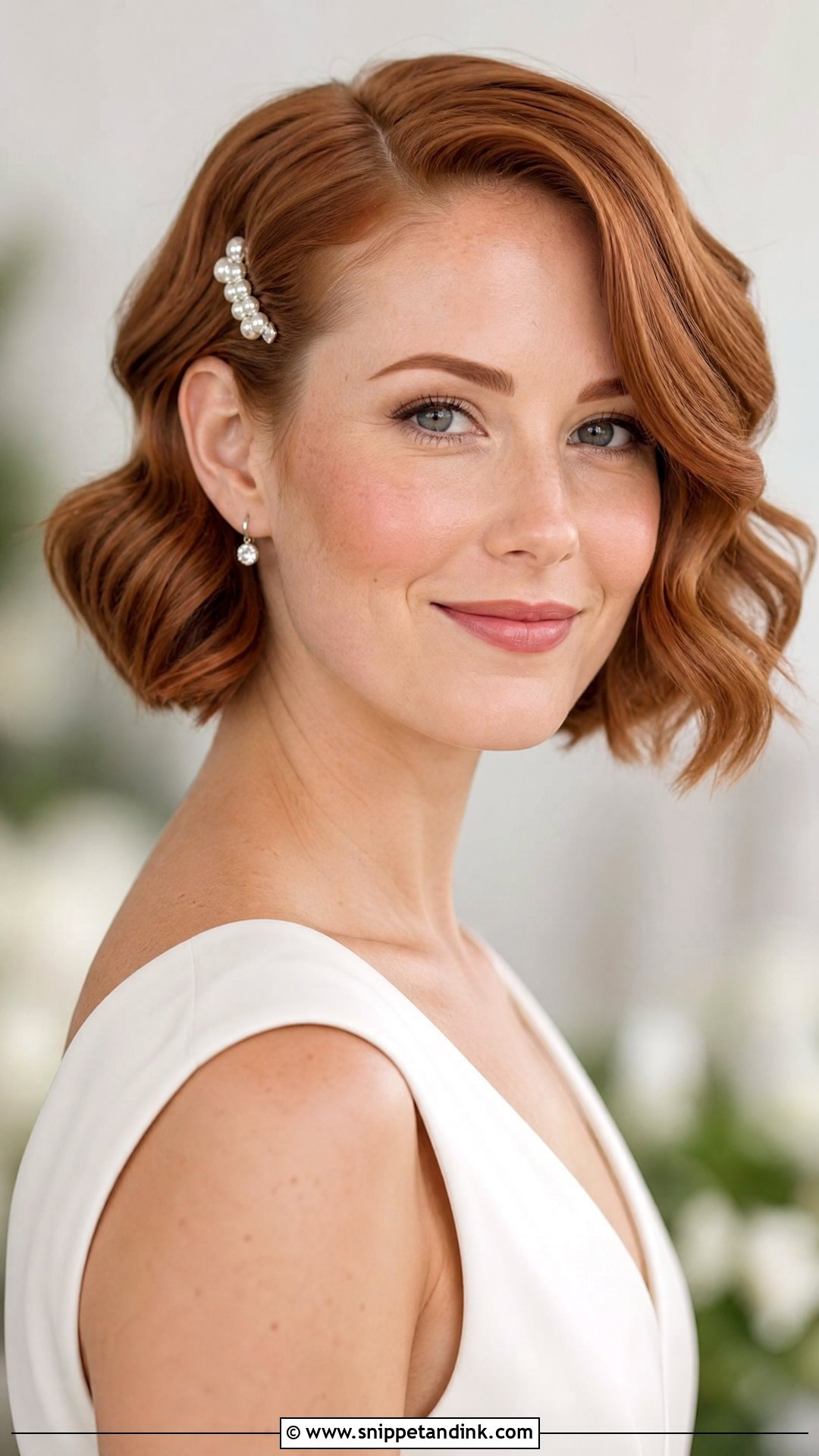
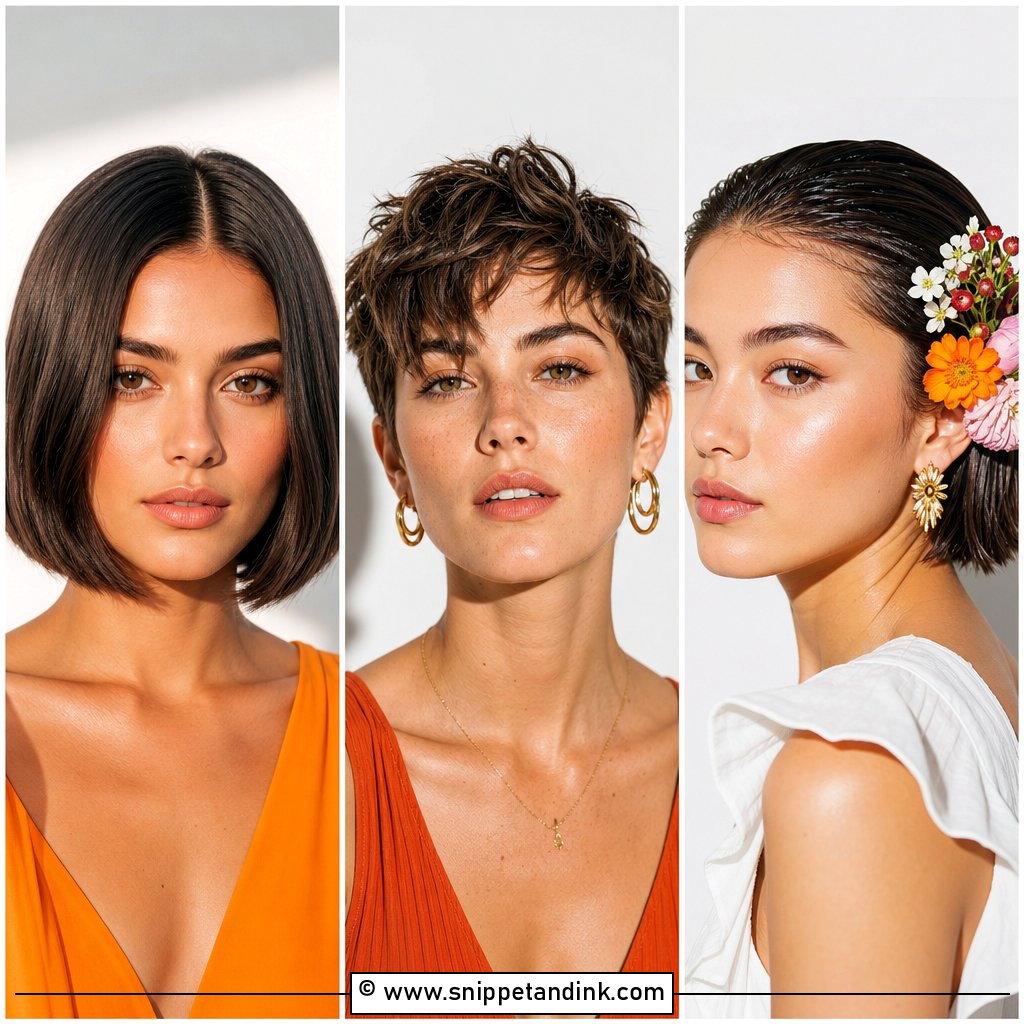
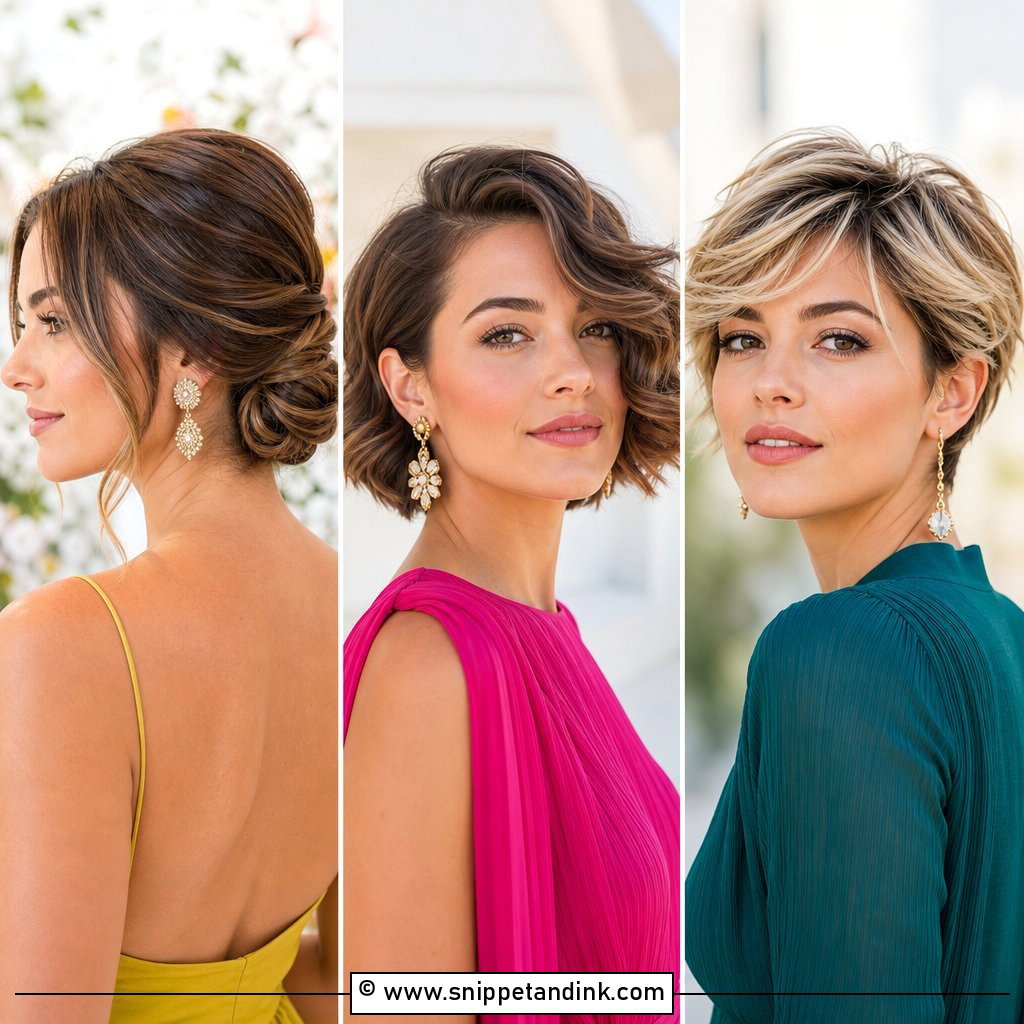
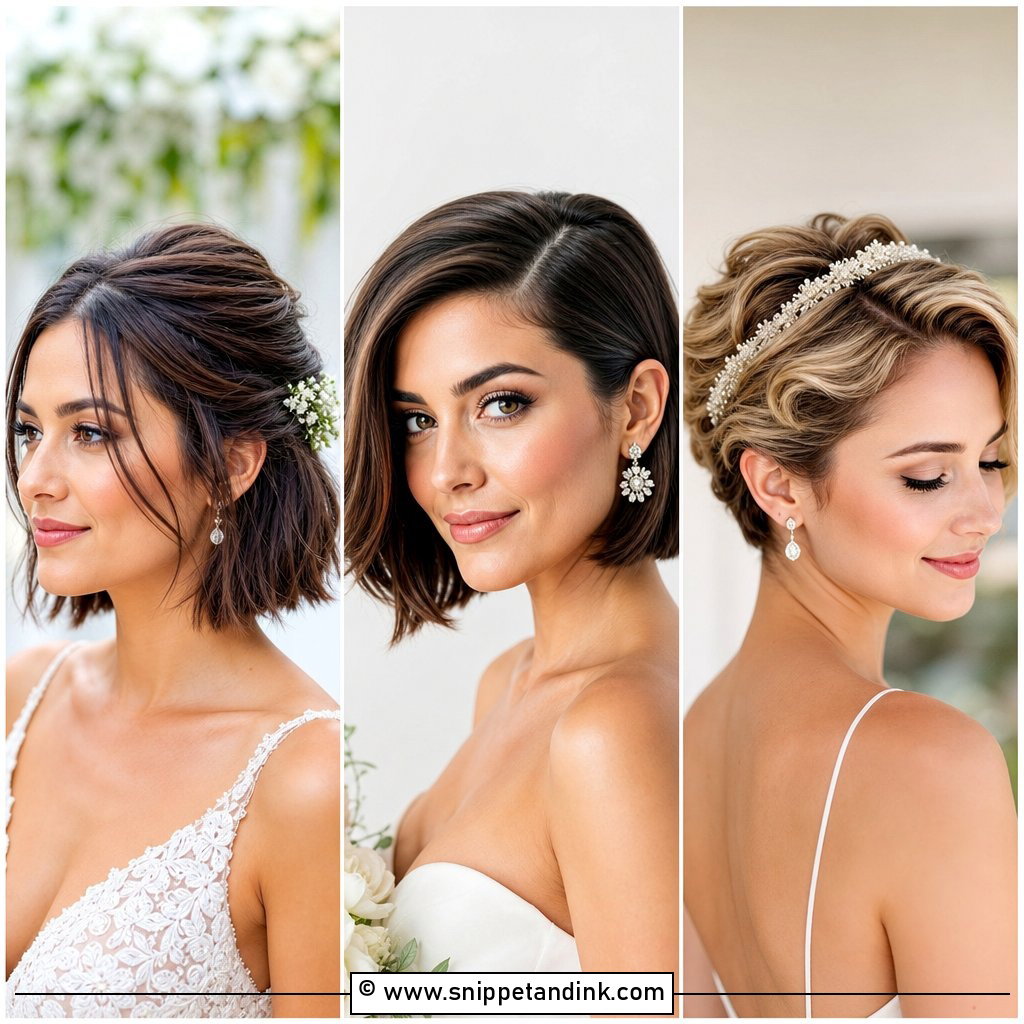
Short hair can look every bit as bridal as long hair; it just asks for precise work. A wavy bob or chin-length cut needs shaped texture and a smooth finish. Side parts, tucked pieces, pearl clips and birdcage veils all sit well with it. On fine short hair I use root lift and a light texture spray; on thick hair, a smoothing product keeps waves from puffing. The appeal of bridal short hair waves is that nothing competes with the face, the makeup or the neckline.
14. Bridal Bob Hairdo
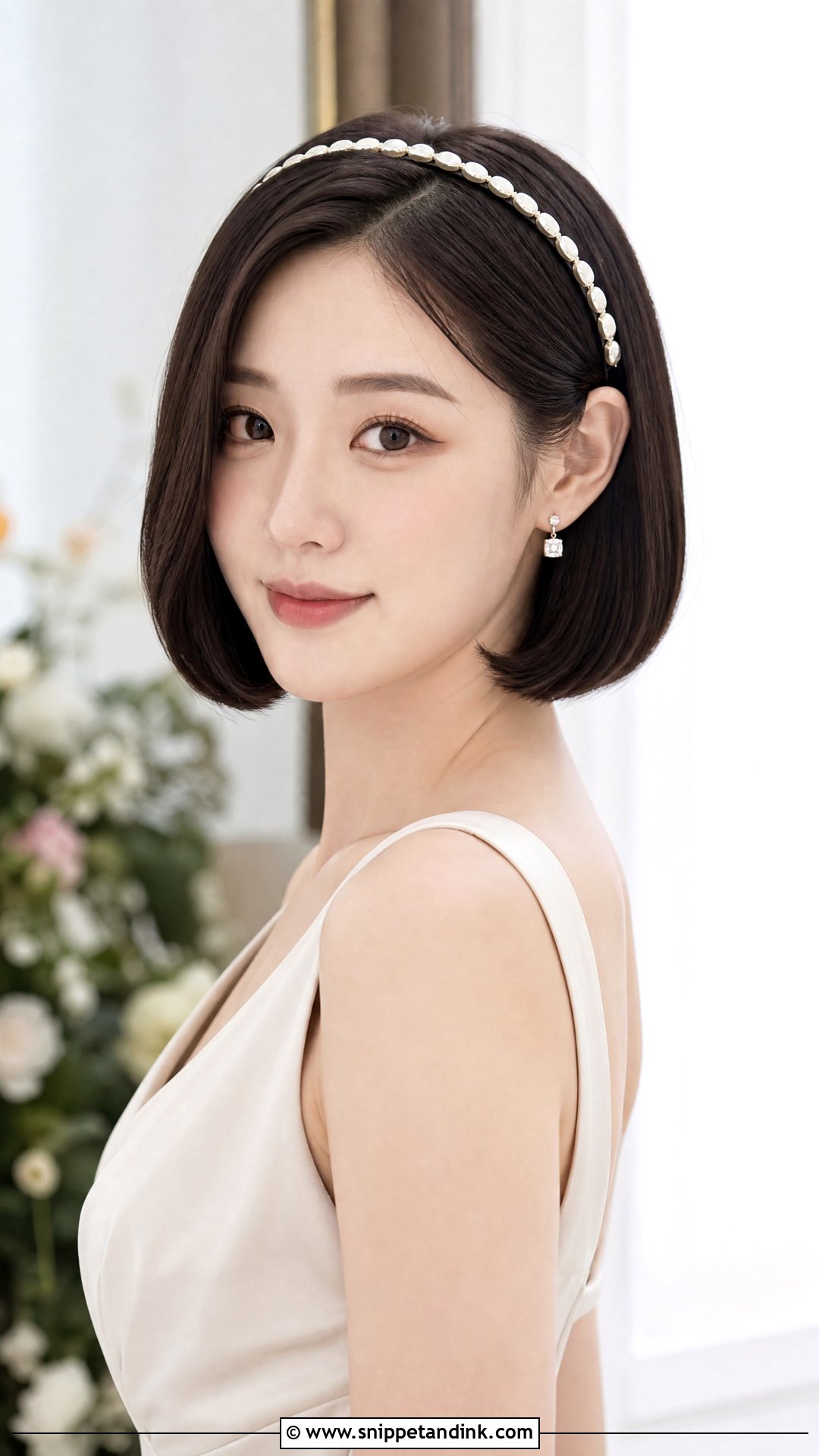
A bridal bob hairdo needs no extensions and very little time, which brides with sensitive scalps appreciate. Wear it sleek and tucked behind one ear, softly waved, or with a deep side part. Pearl barrettes, satin headbands and short veils suit the length. The difference between everyday and wedding-ready is the ends: I smooth and bend them so they sit intentionally rather than flicking out. Blunt, layered or angled, a bob looks finished when the volume is controlled.
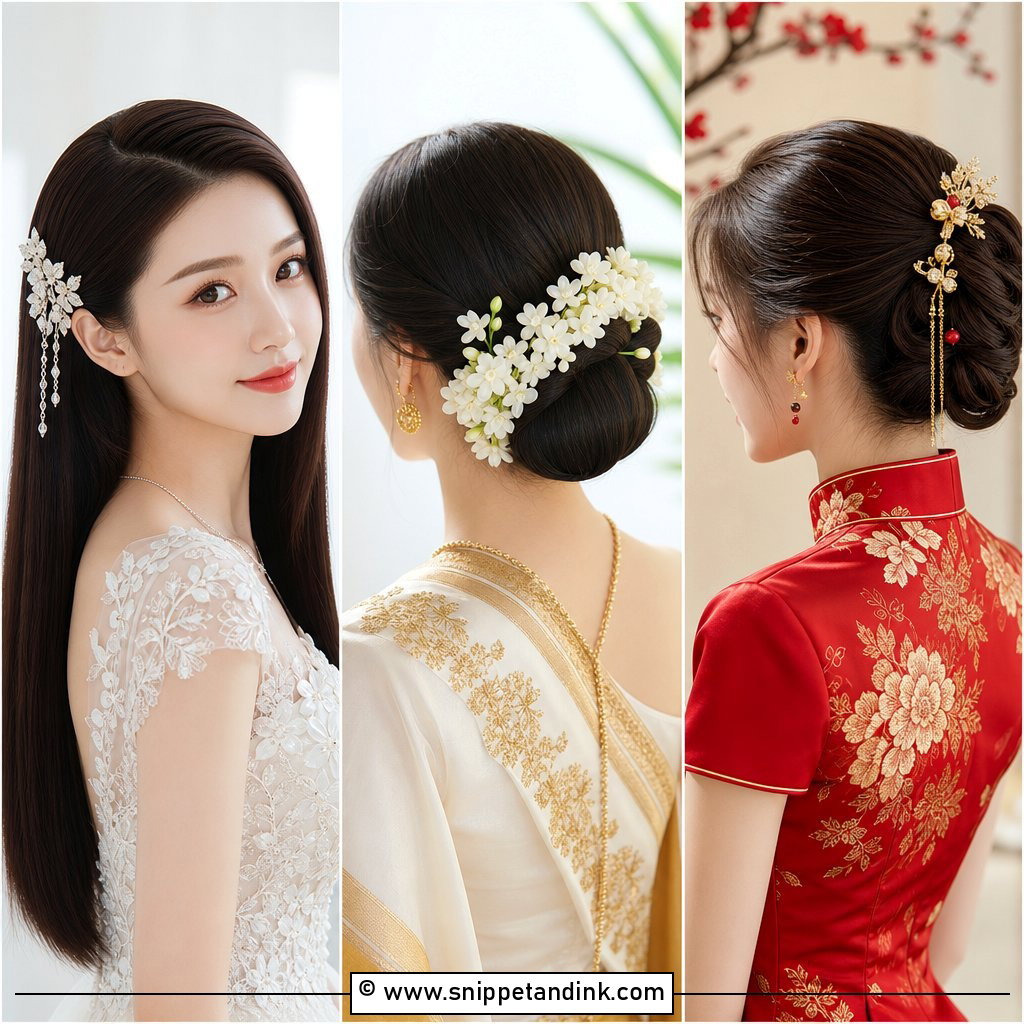
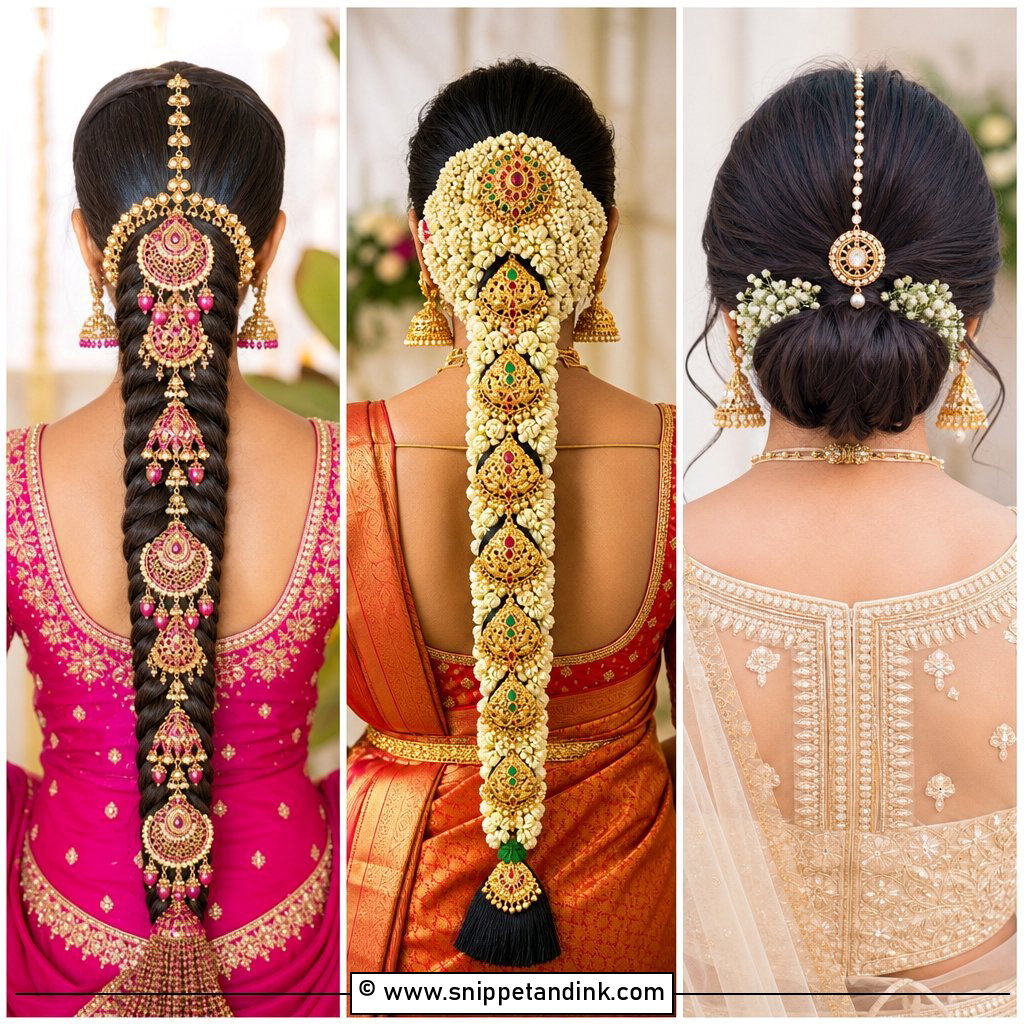
15. Bridal Floral Updo
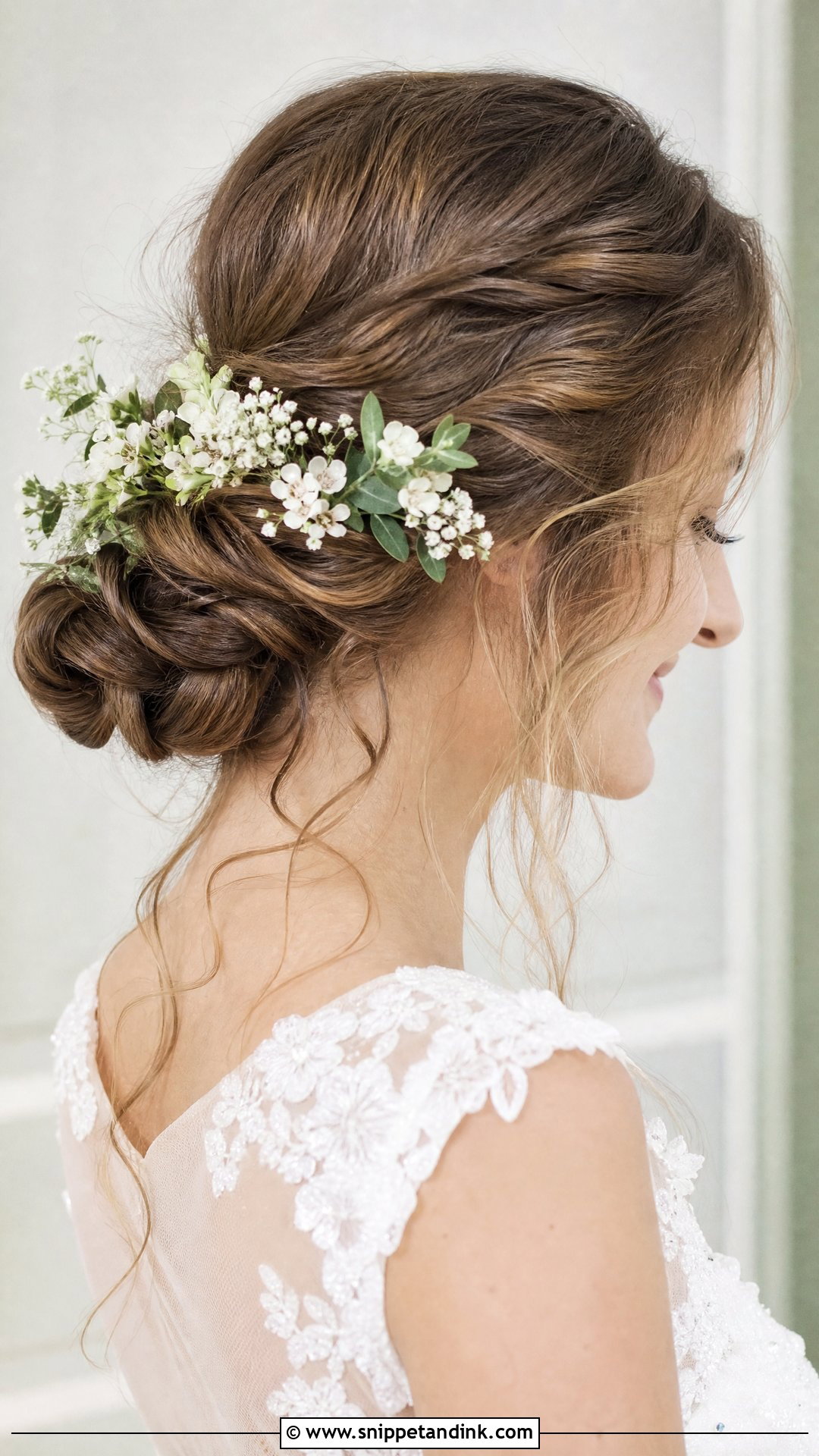
A floral updo is a bun, chignon or twisted updo finished with small flowers or greenery. Restraint is what makes it work. A cluster of tiny blooms along one side of the bun looks more refined than big heads dotted everywhere. Soft waves, textured twists and loose pieces at the face all go with it. Ask your florist which of your bouquet flowers will last out of water for the whole day; spray roses and wax flower cope, while gardenias brown wherever they’re touched. I add the flowers last, after the final spray, so hairspray doesn’t spot the petals.
How These Styles Age Between the Vows and the Last Song
A wedding day can mean ten or twelve hours in the same hairdo. Some of these styles barely change in that time; others are at their best at two in the afternoon and look quite different by the cake cutting.
The ones that barely move
Sleek buns, French twists, chignons and braided updos are pinned all the way through, so they hold almost exactly as set. Comfort is the thing to watch: a very tight sleek bun can give you a headache by evening, and a heavy veil pulling on it makes that worse. I always ask brides to tell me at the trial if anything pinches, because it only gets worse.
The ones that soften
Loose curls, Hollywood waves and the down section of half up half down all relax over the day, and in humid weather they can drop a lot. That isn’t always bad; slightly undone waves look good in evening light. To keep them defined, pin the curls while they cool and use a setting product at the roots. Straight, heavy hair will still lose more curl than textured hair, and no product fully changes that.
The small repair kit
A handful of bobby pins in your hair colour, a travel hairspray, a few clear elastics and a fine tail comb cover nearly every repair. Hand them to someone who’ll be near you all day, because you won’t be carrying a bag.
Wear Your Trial Version Out for the Rest of That Day
Trends can point you somewhere, but your dress, your hair’s texture, the season and how much fuss you’ll tolerate should make the final call. If you like polish, start with a sleek bun, a French twist or a chignon. If you want softness, try half up half down, loose curls or Hollywood waves. If you need something that won’t move, look at the braided and curly updos. Then wear the trial style out for the rest of the day, through lunch, errands and a car ride, and see how it looks at six o’clock. That’s the version you’ll actually be wearing.
You'll Like These Ideas:


Leave a Reply