
A Korean chignon, a South Indian jasmine braid and a Chinese tea-ceremony updo have very little in common technically, even though they all get filed under Asian bridal hair. One relies on a dense, tight knot; another on extra length and the weight of gold ornaments; the third on a neat nape that clears a high collar. I’ve gathered 25 stunning Asian wedding hairstyles here and added what I’d tell you at the consultation for each: which hair it suits, how it’s anchored and where it tends to fail.
Running a Hair Trial That Mirrors the Wedding Morning
A trial is only useful if it’s a rehearsal, not a preview. I ask brides to book it about one to two months before the wedding, which leaves time to change direction, and to arrive with hair prepared the way it will be on the day: washed the night before, dried smooth, no oil.
- Wear a top with the same neckline as your outfit, or bring the blouse.
- Bring every accessory: pins, combs, veil, dupatta, binyeo, gold ornaments. A sample of real flowers too, if possible.
- Ask for photos from the front, both sides and the back, in daylight and with flash.
- Keep the style in for the rest of the day and note what moved, what pinched and what drooped. That’s the information that improves the wedding version.
If you’re having more than one ceremony, such as a tea ceremony in the morning and a reception at night, trial both looks or at least plan how one turns into the other.
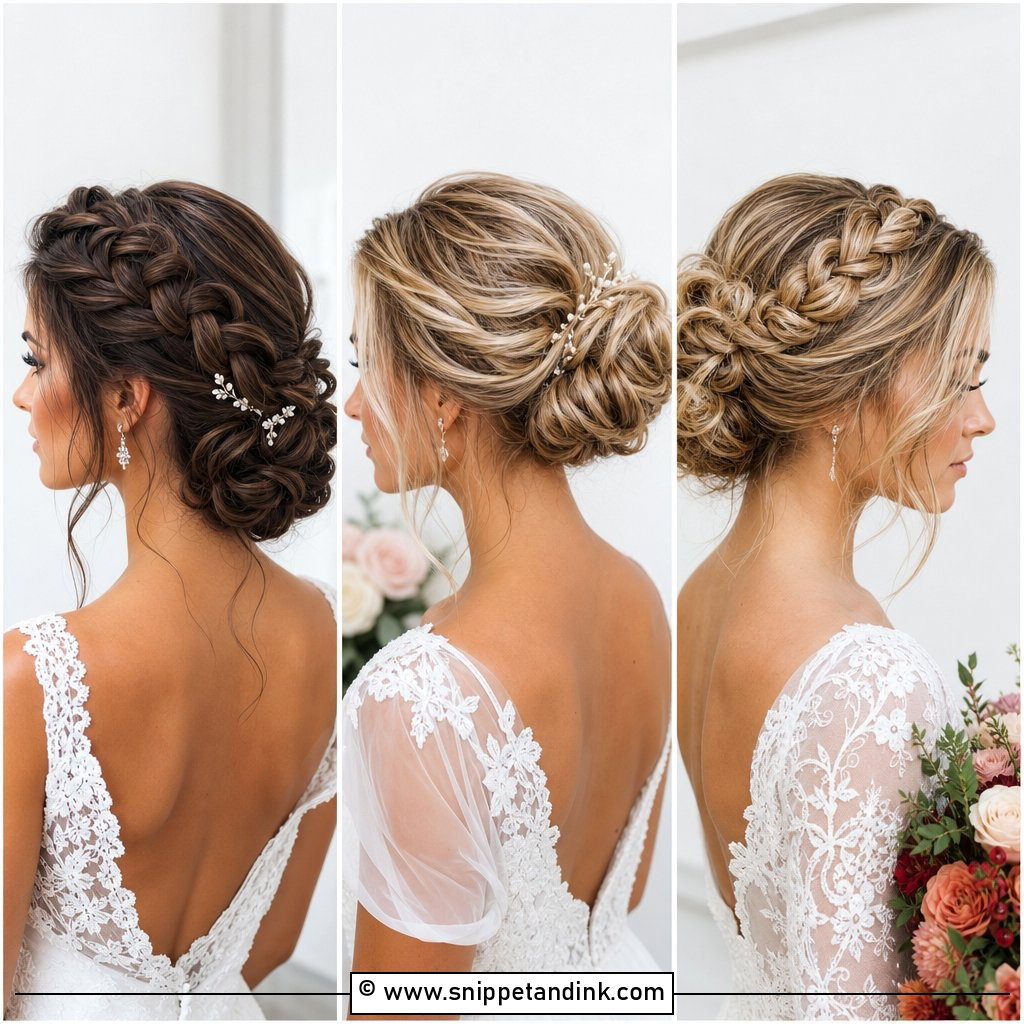
1. Low Bun Wedding Hairstyle
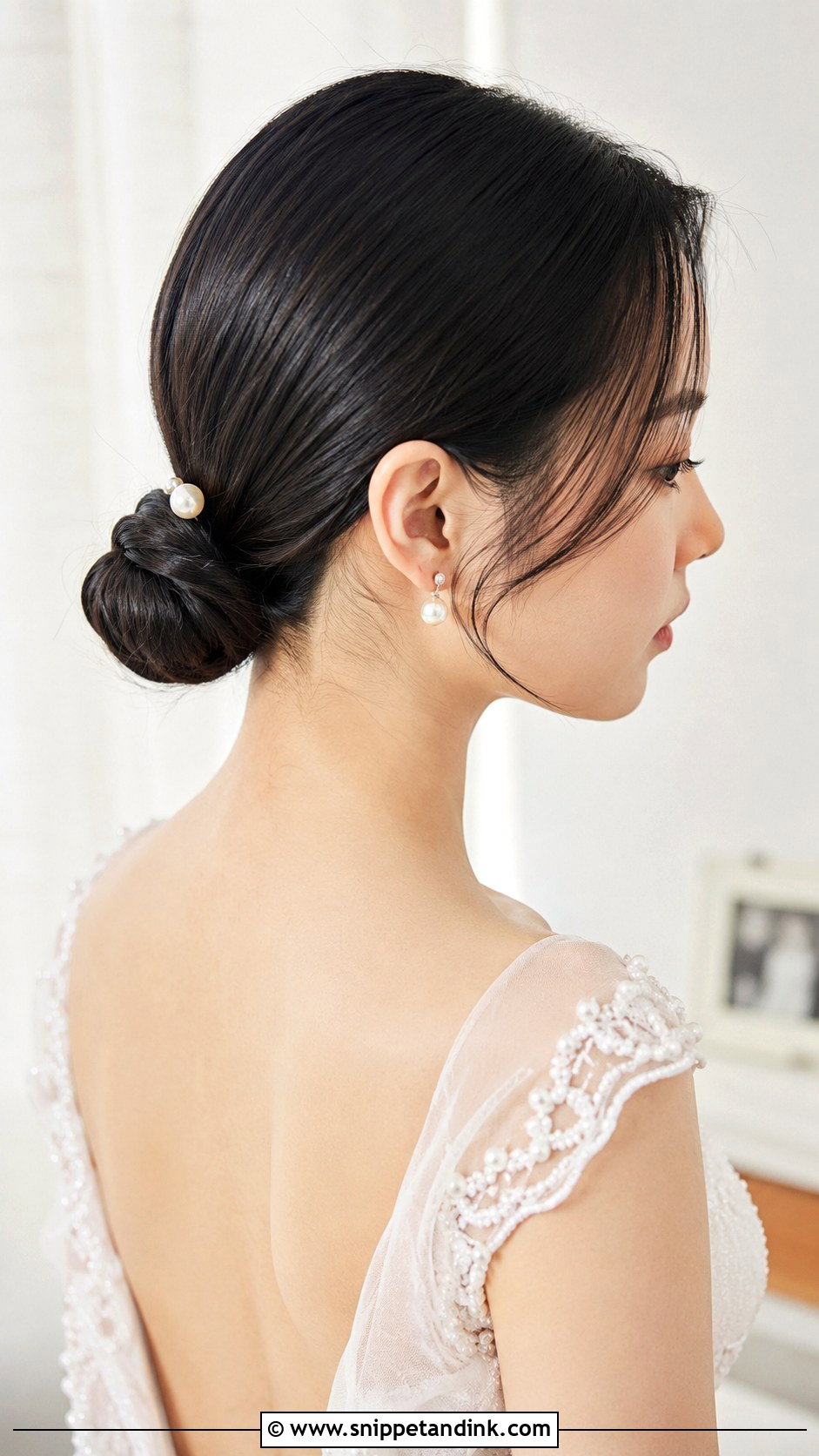
The low bun is the most requested style I know of among Korean and East Asian brides, and for good reason. It sits at the nape, works under a veil and suits both traditional dress and a modern gown. I keep it slightly looser at the crown than a ballet bun so it doesn’t look severe in photos, and leave one or two fine strands near the face if you want softness. A single jeweled pin or fresh flower is plenty.
2. Floral Braided Updo
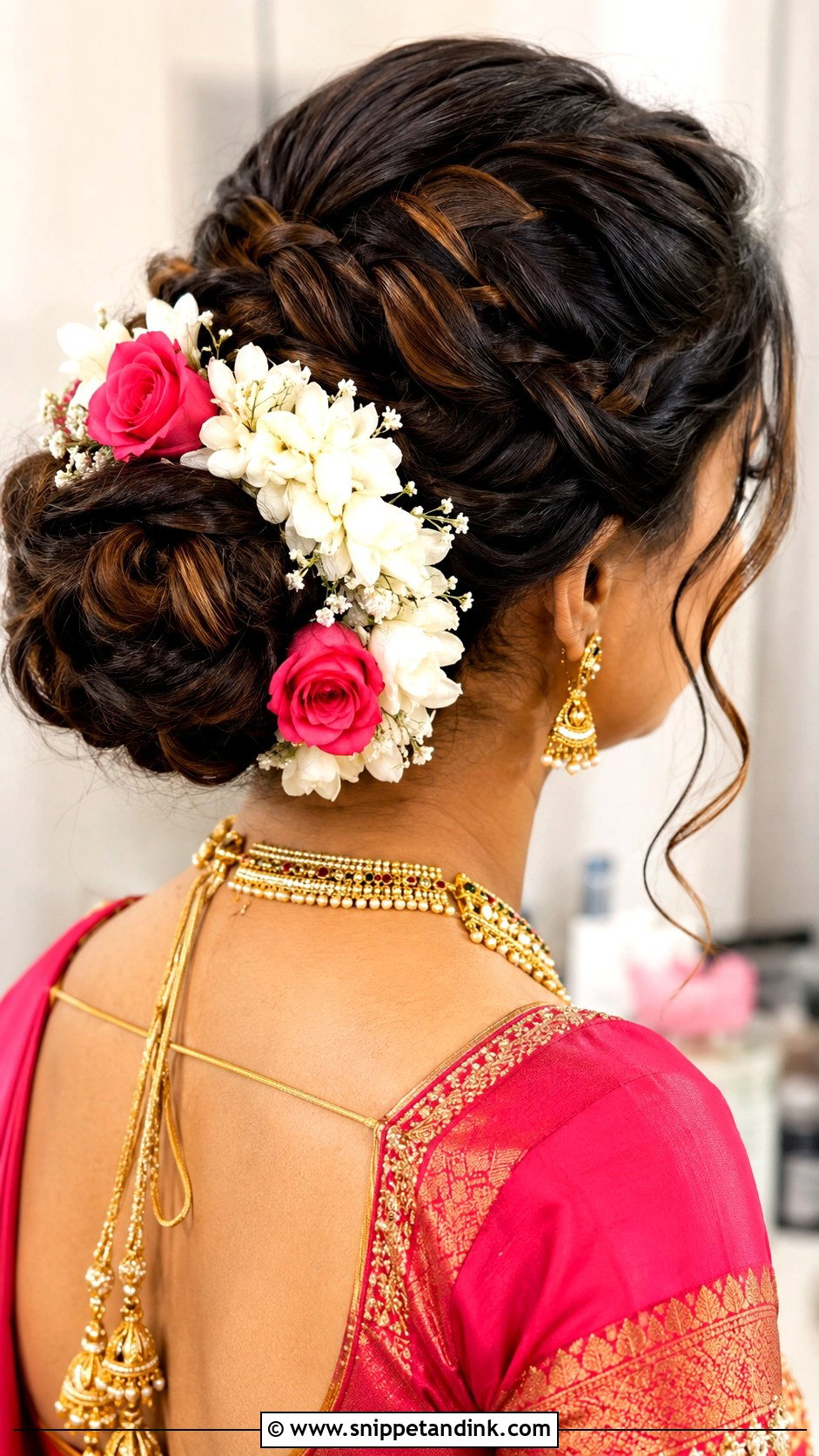
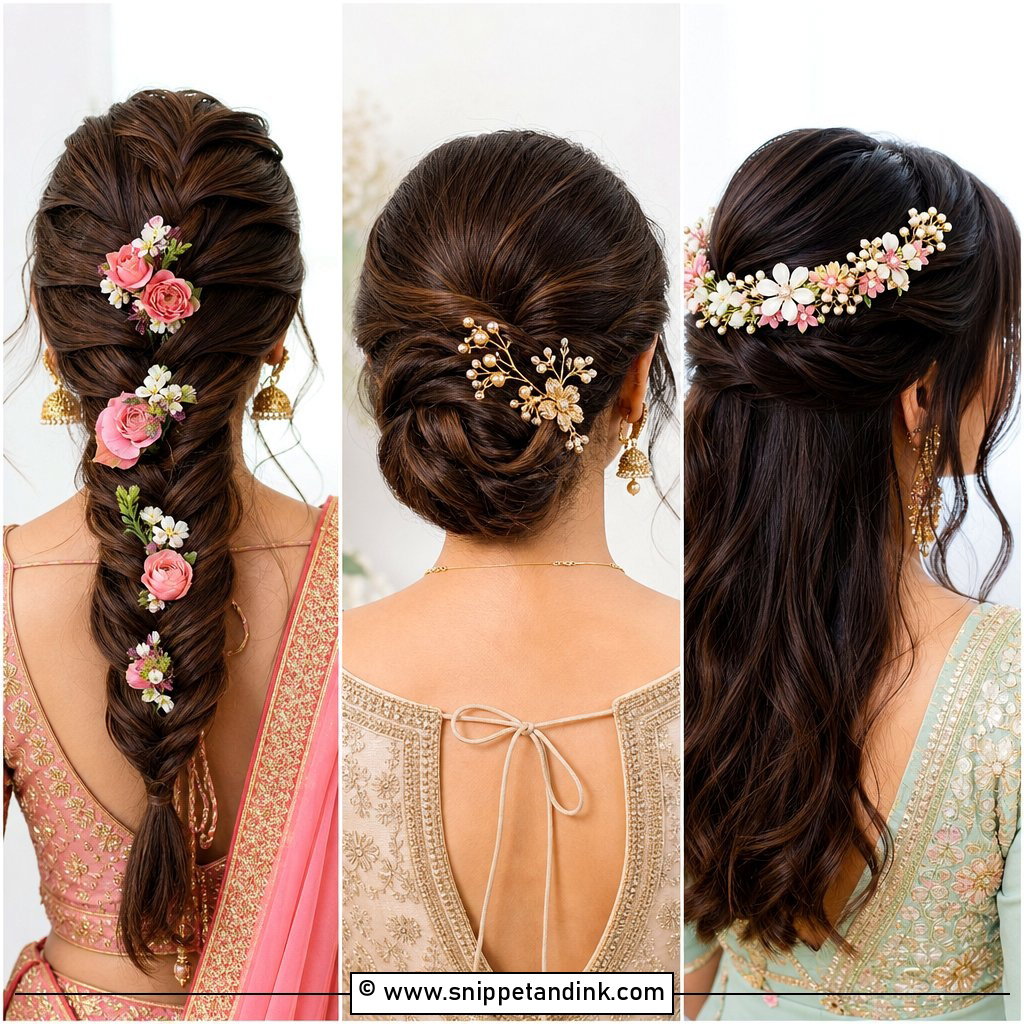
Braids woven together and studded with jasmine, roses or orchids are a familiar sight at South Asian and South Indian weddings, where the flowers carry meaning as well as fragrance. Orchids are the toughest of the three and stay fresh the longest out of water; jasmine smells wonderful but bruises easily, so I add it last. The braids themselves hold through long rituals and dancing because the plaits lock each other in. A floral braided updo gives you that rich, garden-heavy finish without loose hair to manage.
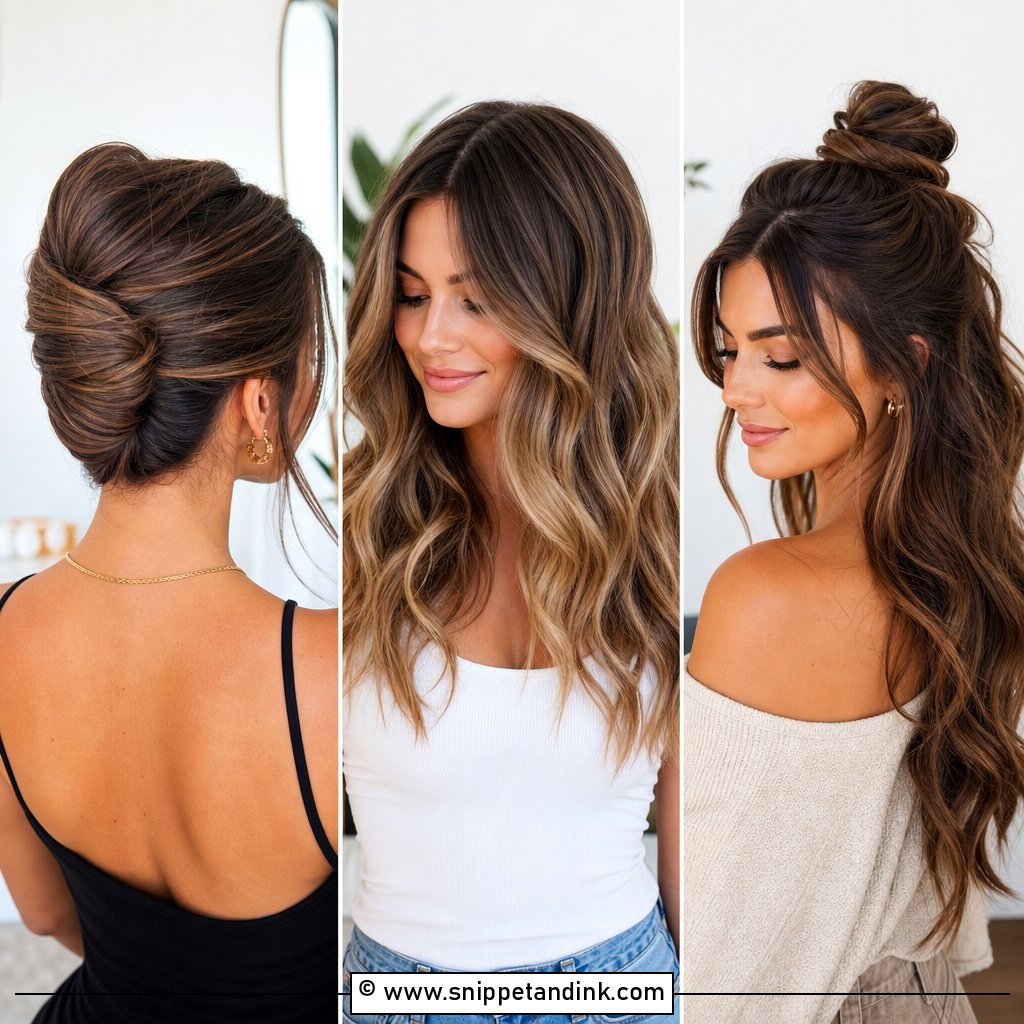
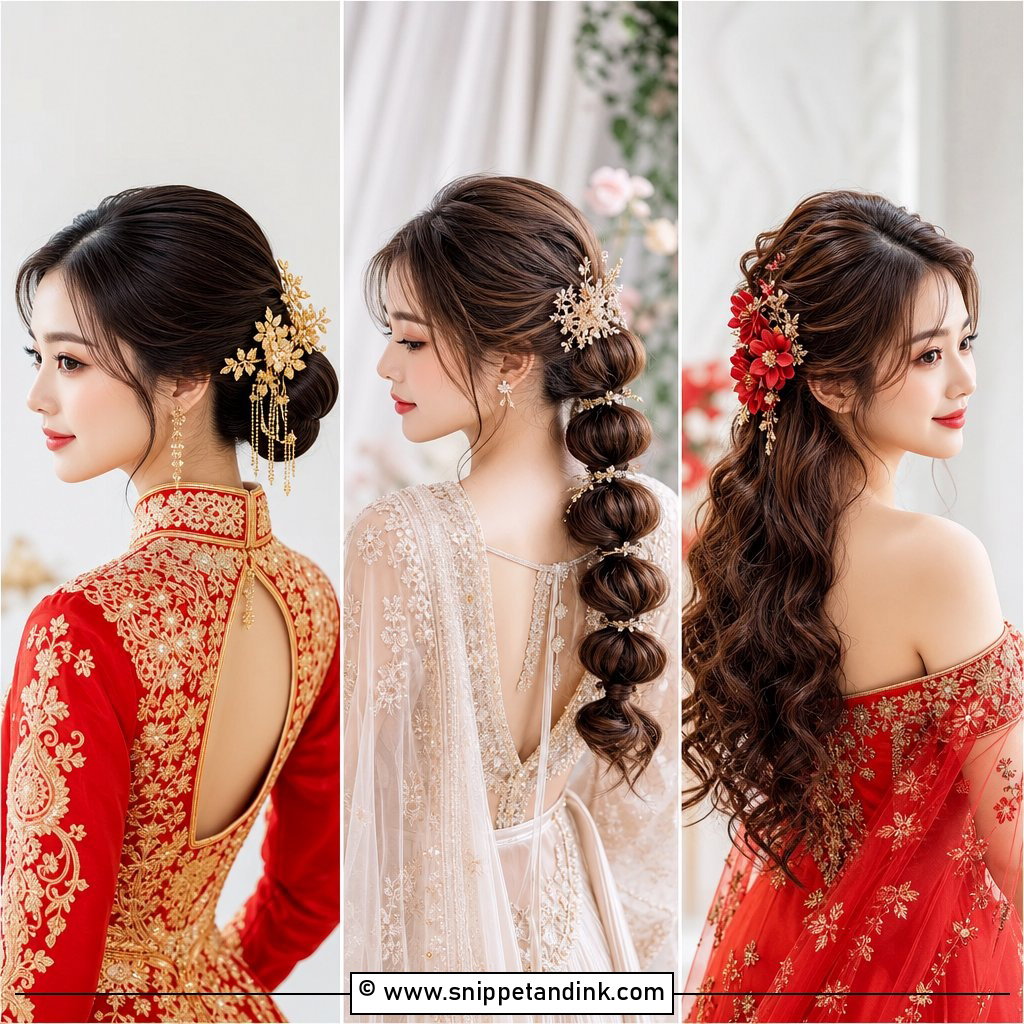
3. Korean Chignon Bridal Style
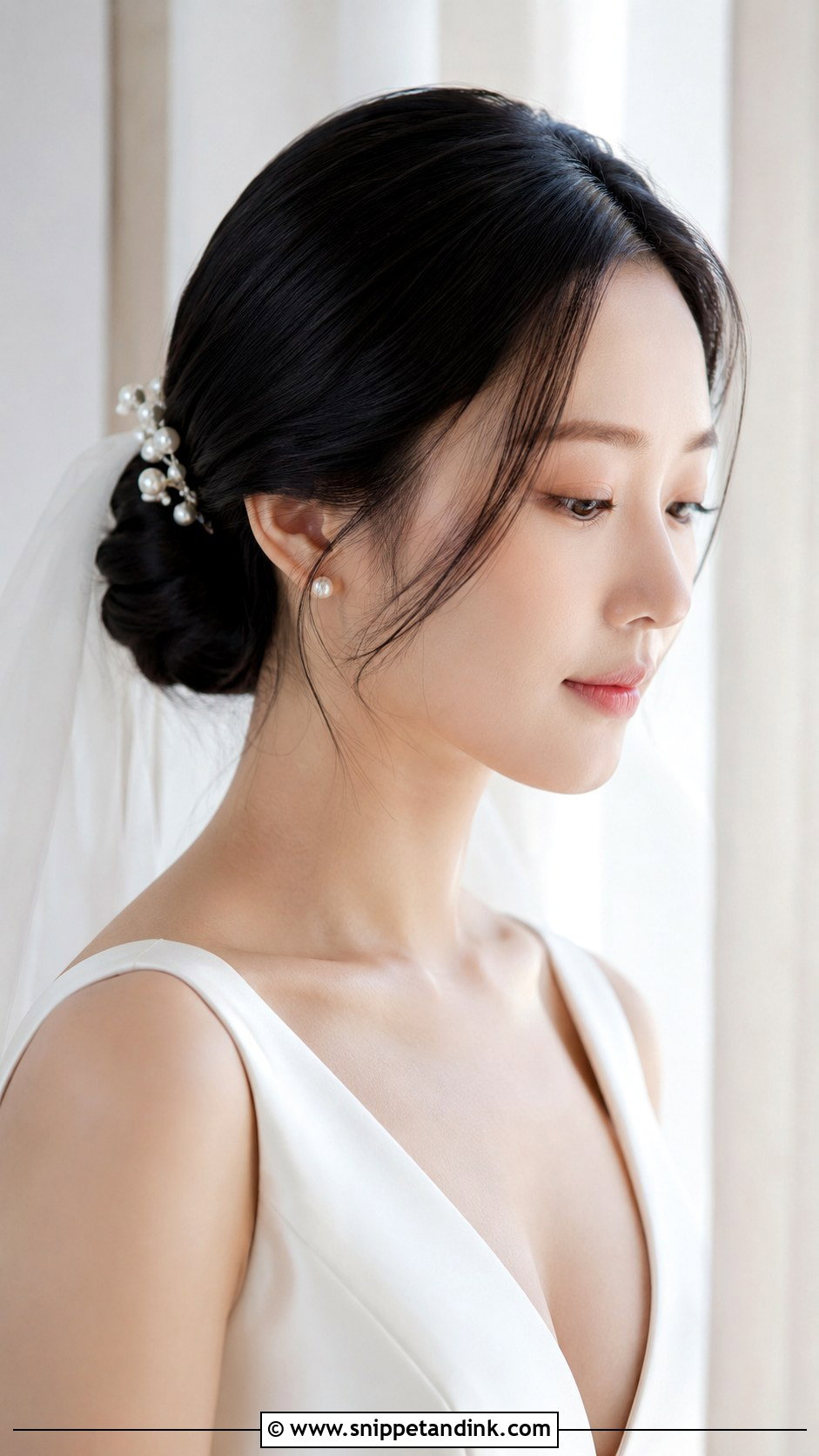
The Korean chignon is a sleek, low knot that keeps the silhouette clean and lets your skin and makeup do the talking. It pairs naturally with minimalist gowns. What makes it work is density: I roll the hair tightly and pin from underneath so the knot looks small and solid rather than puffy. One pearl pin is enough decoration. Add face-framing pieces only if they suit your face shape; on a round face they often help, on a long face they can drag the eye down.
4. Half-Up Half-Down With Flowers
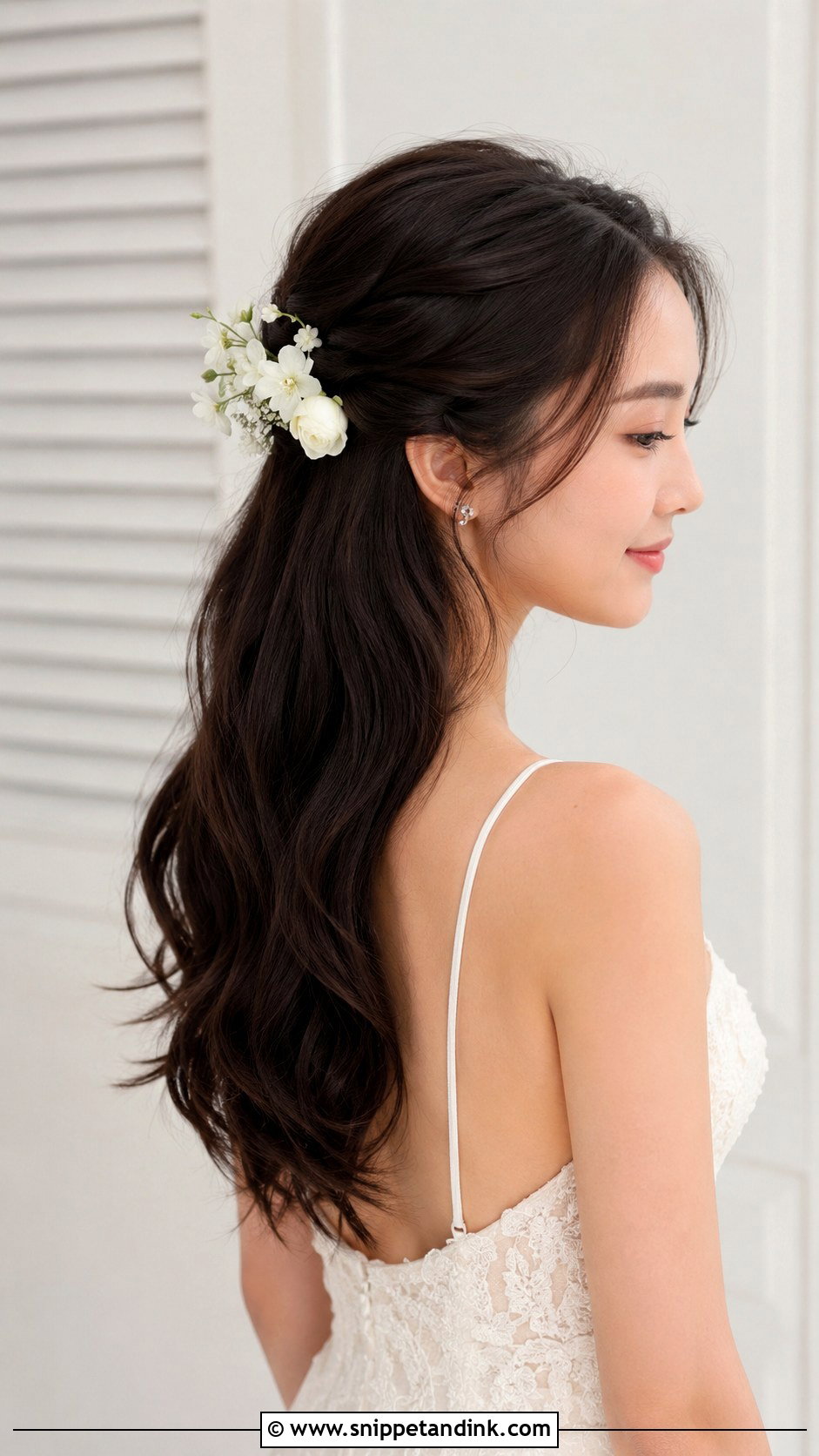
Half-up, half-down keeps your length visible while the top section stays pinned back. Fresh flowers or jeweled pins at the crown hide the join. It suits most textures, but the down half is the part that changes through the day. Straight hair loses curl; curly hair can puff in humidity. I set the curls firmly and give you a small brush to smooth them before the reception. It’s a sensible choice if a full updo feels too formal for you.
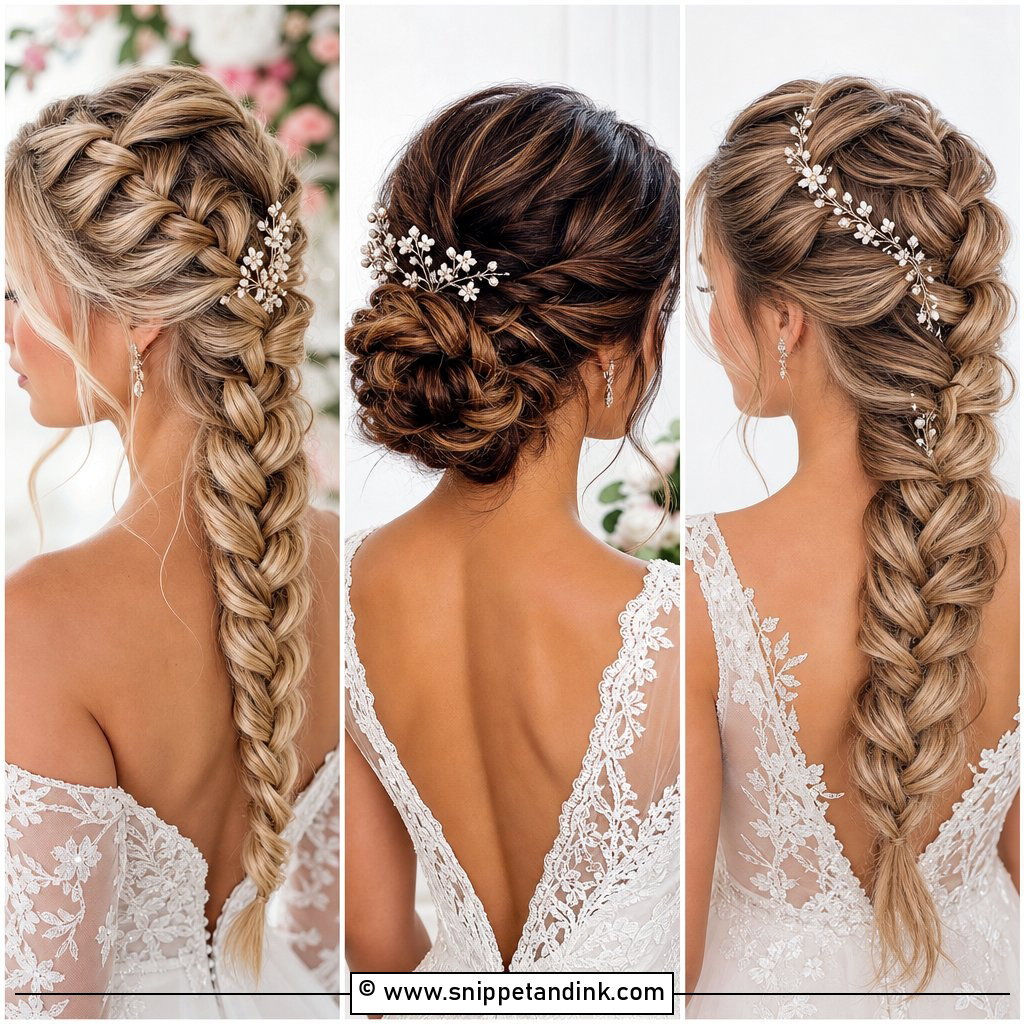
5. Voluminous Messy Braid
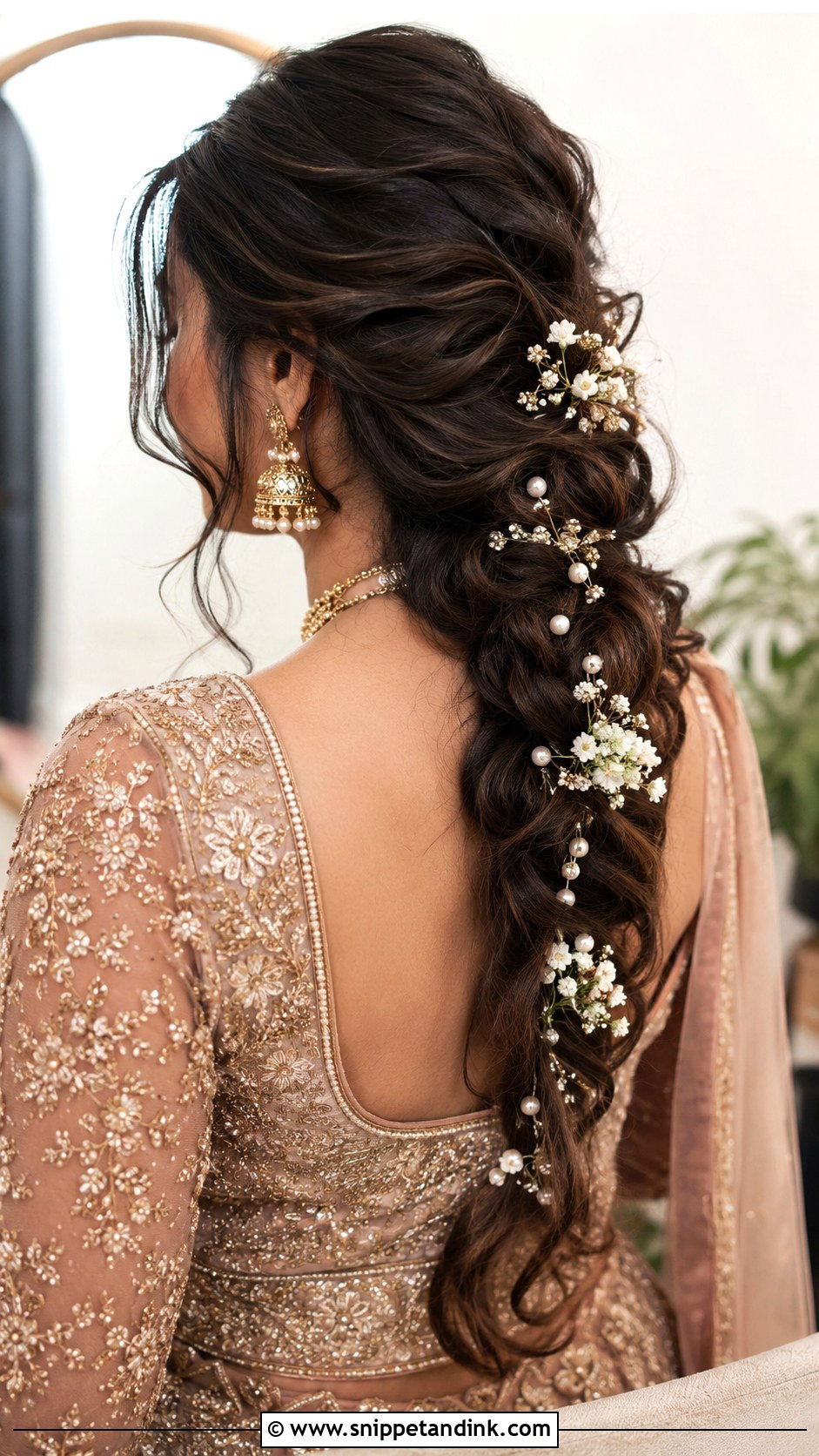
A loosely woven braid pulled apart for fullness looks royal rather than casual when it’s big enough, which is why I’d keep it for long, thick hair. Pulling the loops wider is called pancaking, and the trick is to do it gradually from the top down so the braid stays even. Small flowers, pearls or sparkling pins along the braid dress it up. Fine hair can wear it with a clip-in weft hidden inside.
6. Top Knot Bun Bridal Look
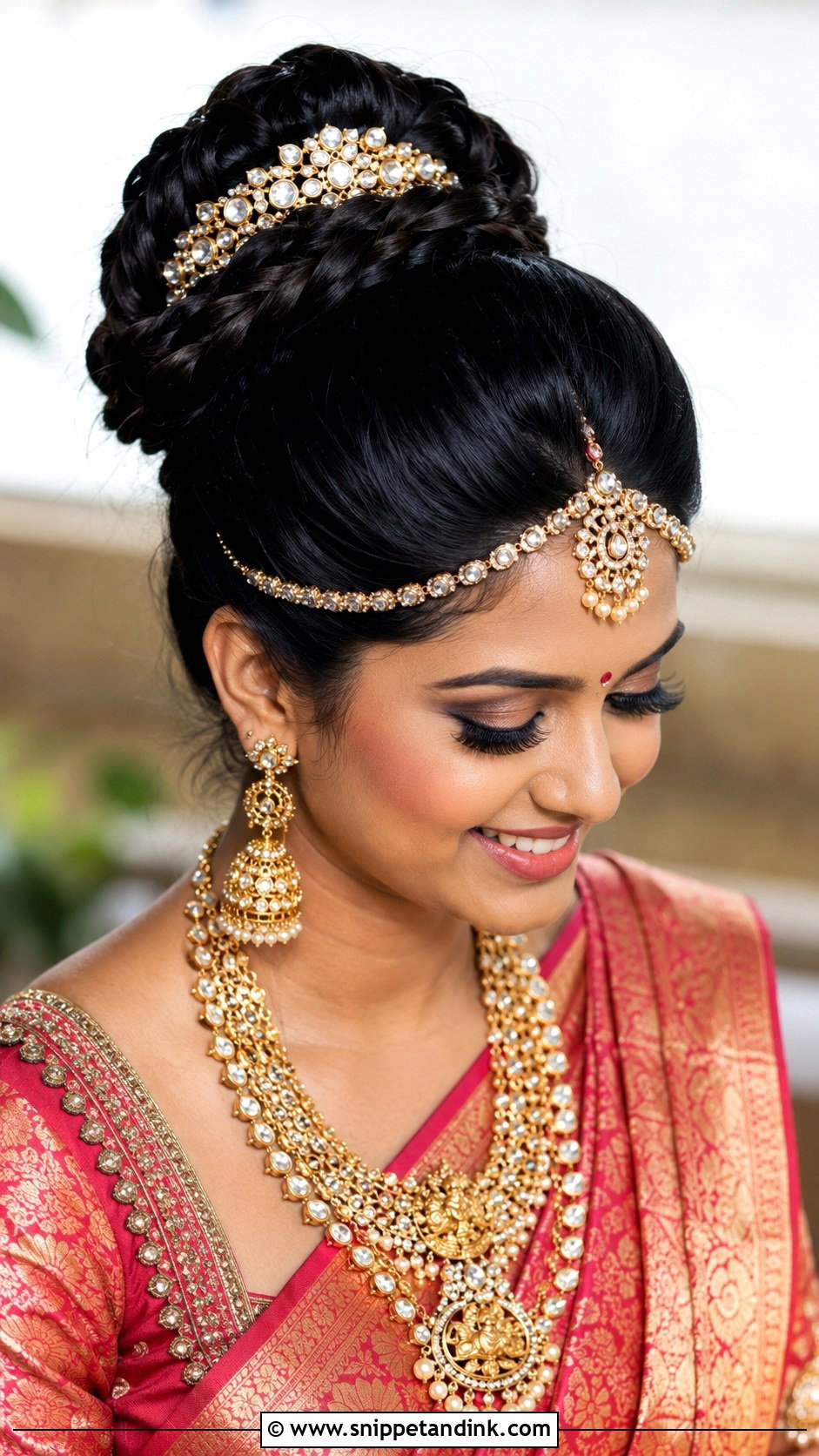
Placed high on the crown, the top knot adds height and works with heavy traditional jewellery, which is why it’s common at South Indian and Sri Lankan weddings. It can be wrapped with braids or decorated with garlands and jeweled pieces. A high bun carrying ornaments is a heavy load at the top of the head, so I build a firm ponytail base first and pin each ornament through it. It keeps your neck cool in warm-weather ceremonies.
7. Sleek Straight Bridal Hair
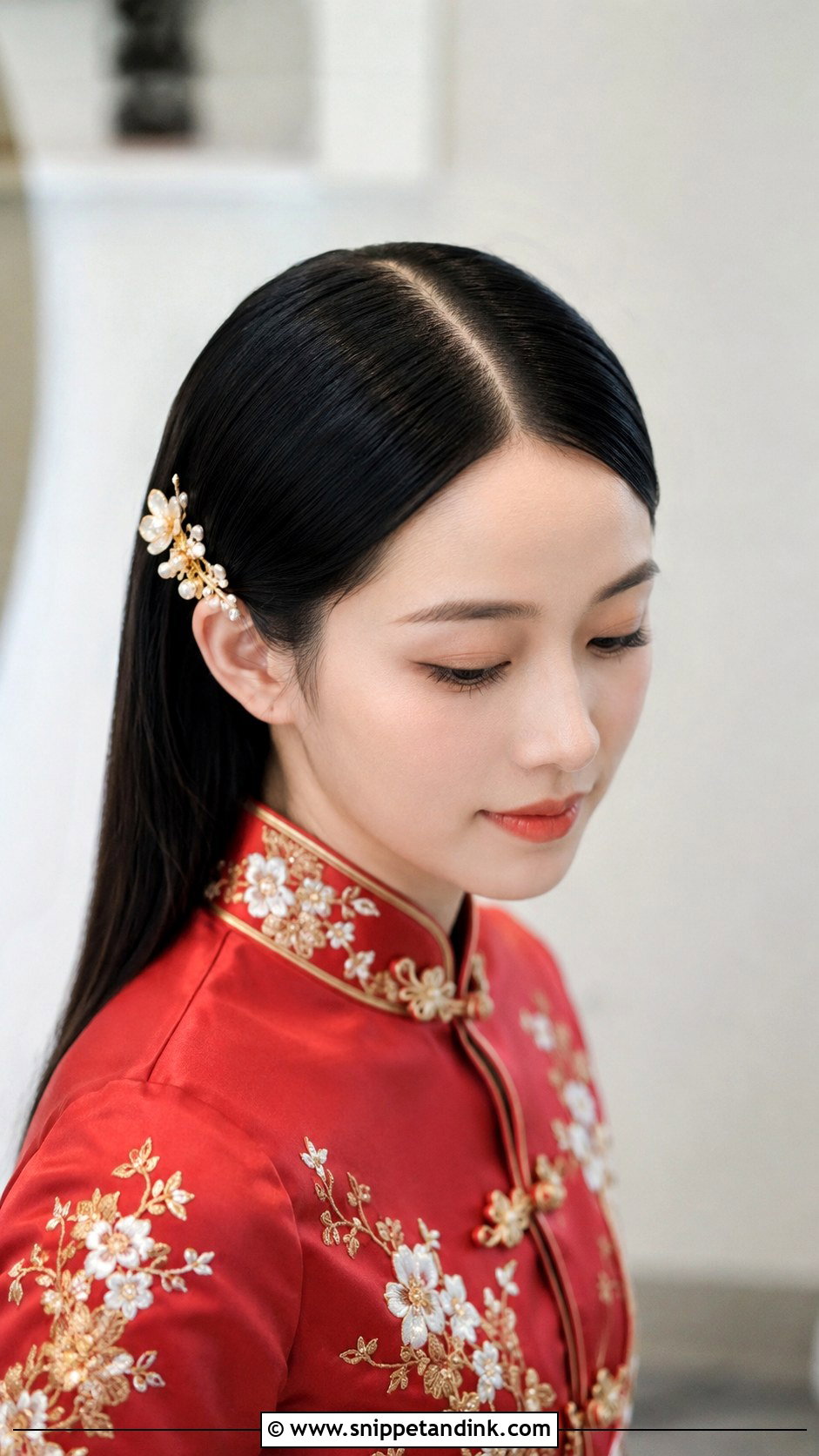
Straight, glossy hair, worn down with a clean part. Easy? It looks it, but shine depends on prep: a heat protectant, thin sections under the flat iron and a tiny amount of serum on the ends only. It pairs naturally with cheongsam dresses and minimalist gowns, and a delicate pin or small clip adds a little sparkle. I’d pass on it for a humid outdoor ceremony, where straight hair frizzes at the ends within an hour.
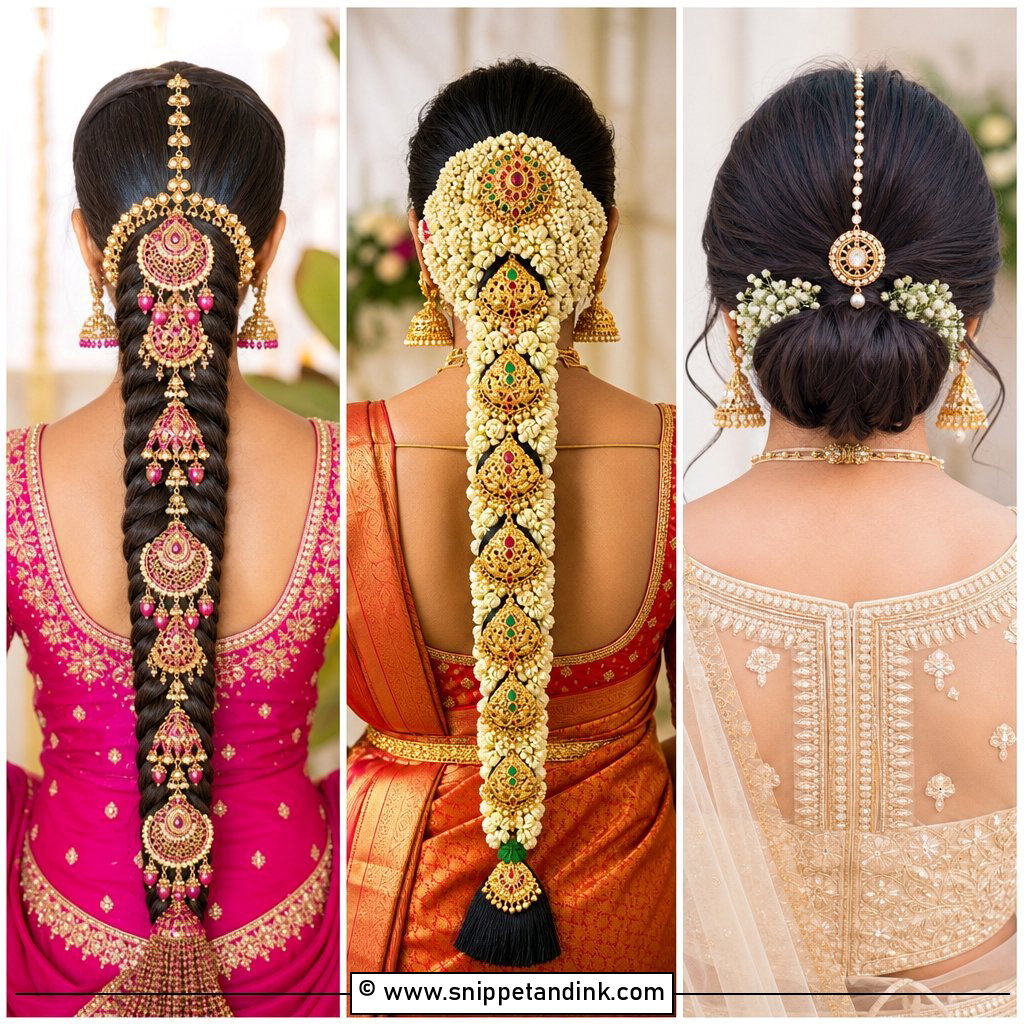
8. Jasmine Flower Adorned Bun
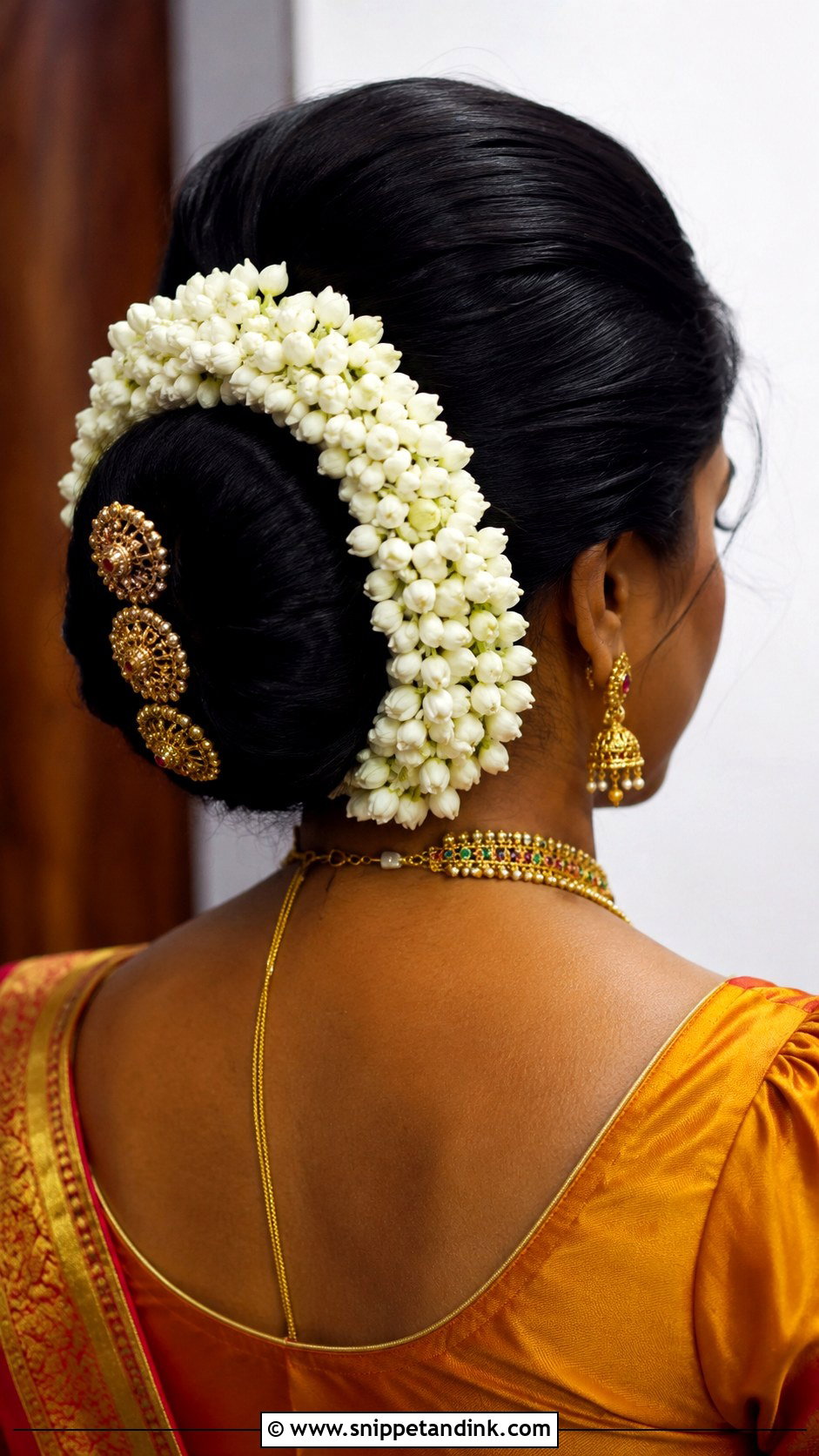
The jasmine-adorned bun is one of the most traditional choices for South Indian brides. Strings of gajra are wrapped around a neat bun, white against dark hair, often with gold hairpins and temple jewellery. The bun needs to be firm enough to take dozens of U-pins, because each strand of jasmine has to be pinned every few centimetres or it slips as you move. Expect the buds to open and soften over the hours; that’s part of its charm and why I always ask for a spare string.
9. Side-Swept Curls Wedding Style
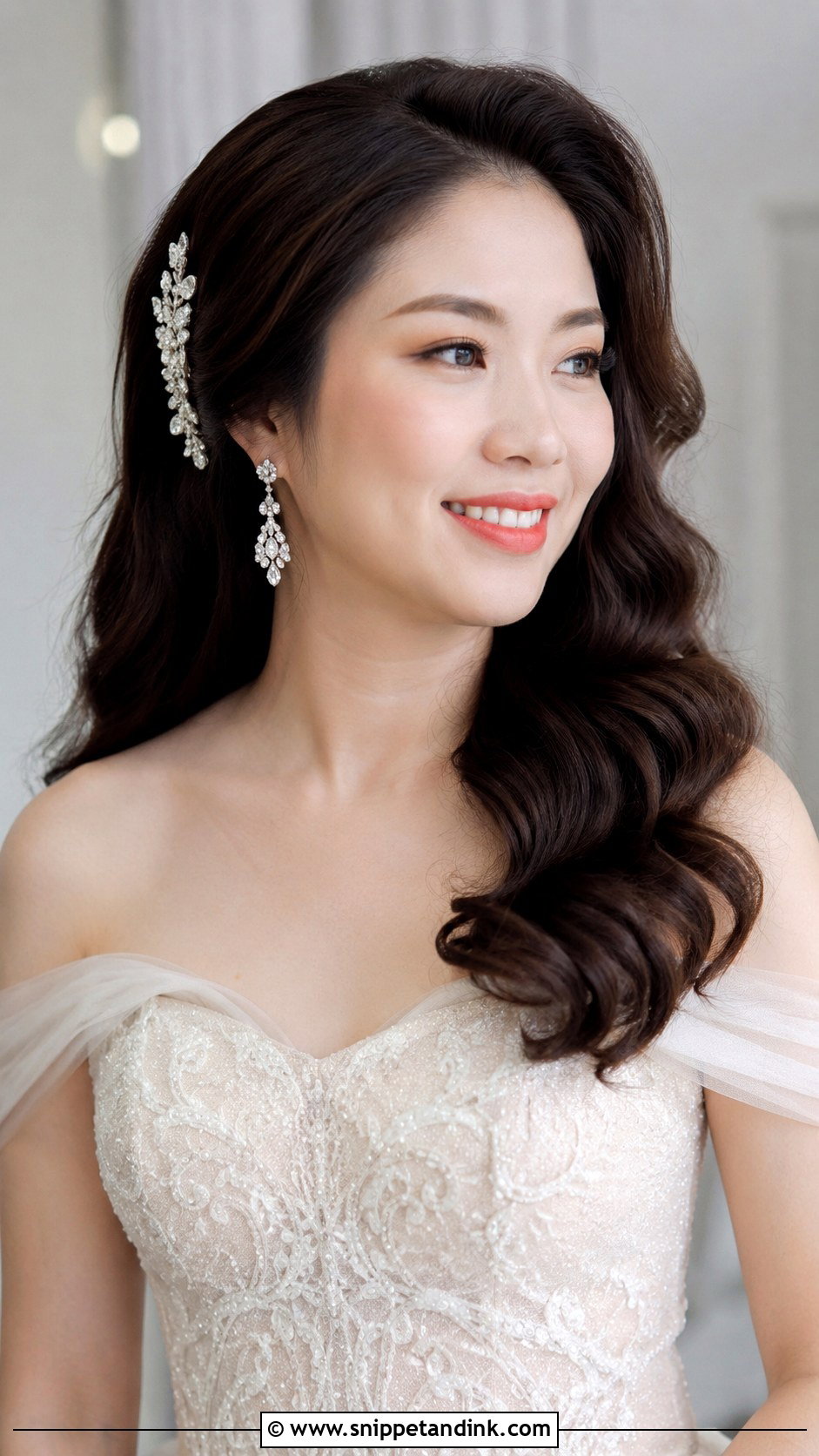
Curls swept over one shoulder, the opposite side pinned with a clip or a few flowers. It pairs with off-shoulder gowns and statement earrings and suits medium to long hair. Most of the weight sits on one side, so I hide a row of crossed pins behind the ear to stop it sliding back to centre. A vintage feel, plenty of volume and movement, and very little maintenance once it’s set.
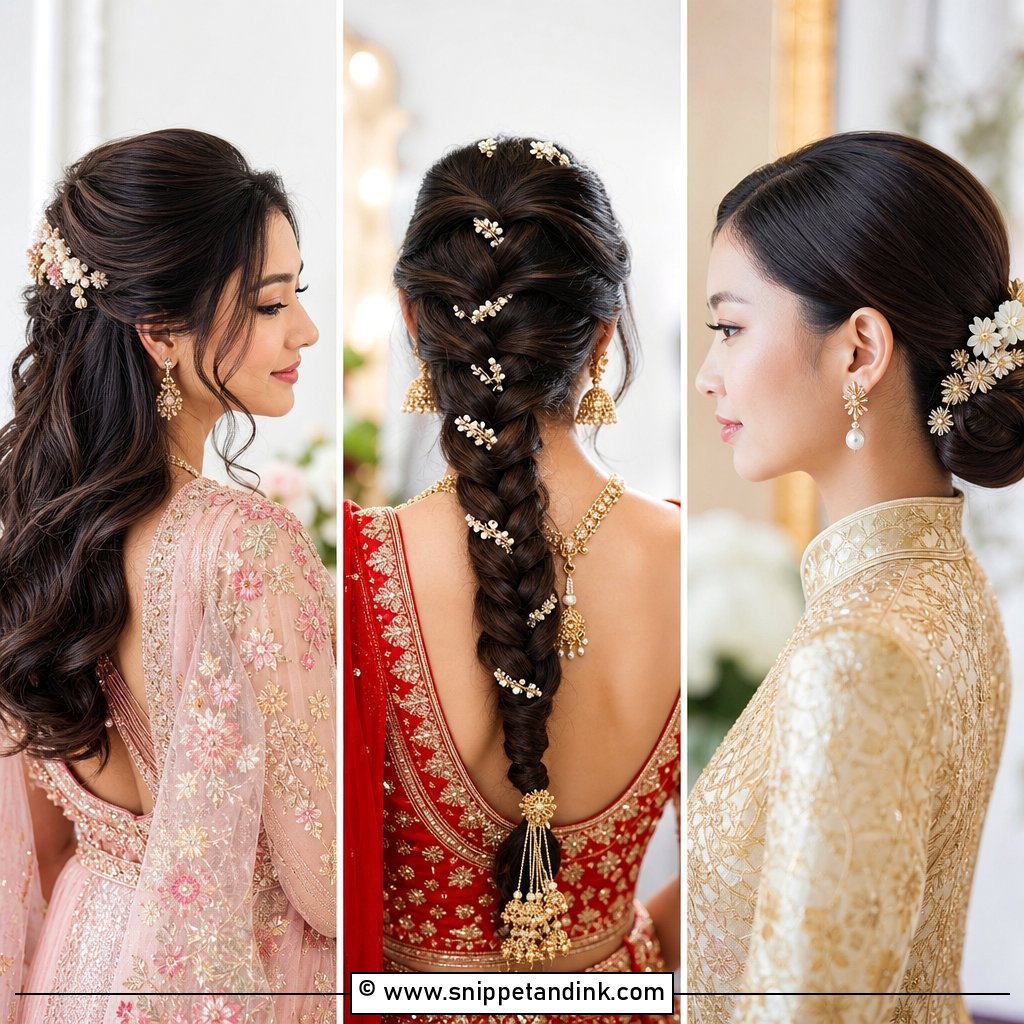
10. Traditional Cheongsam Updo
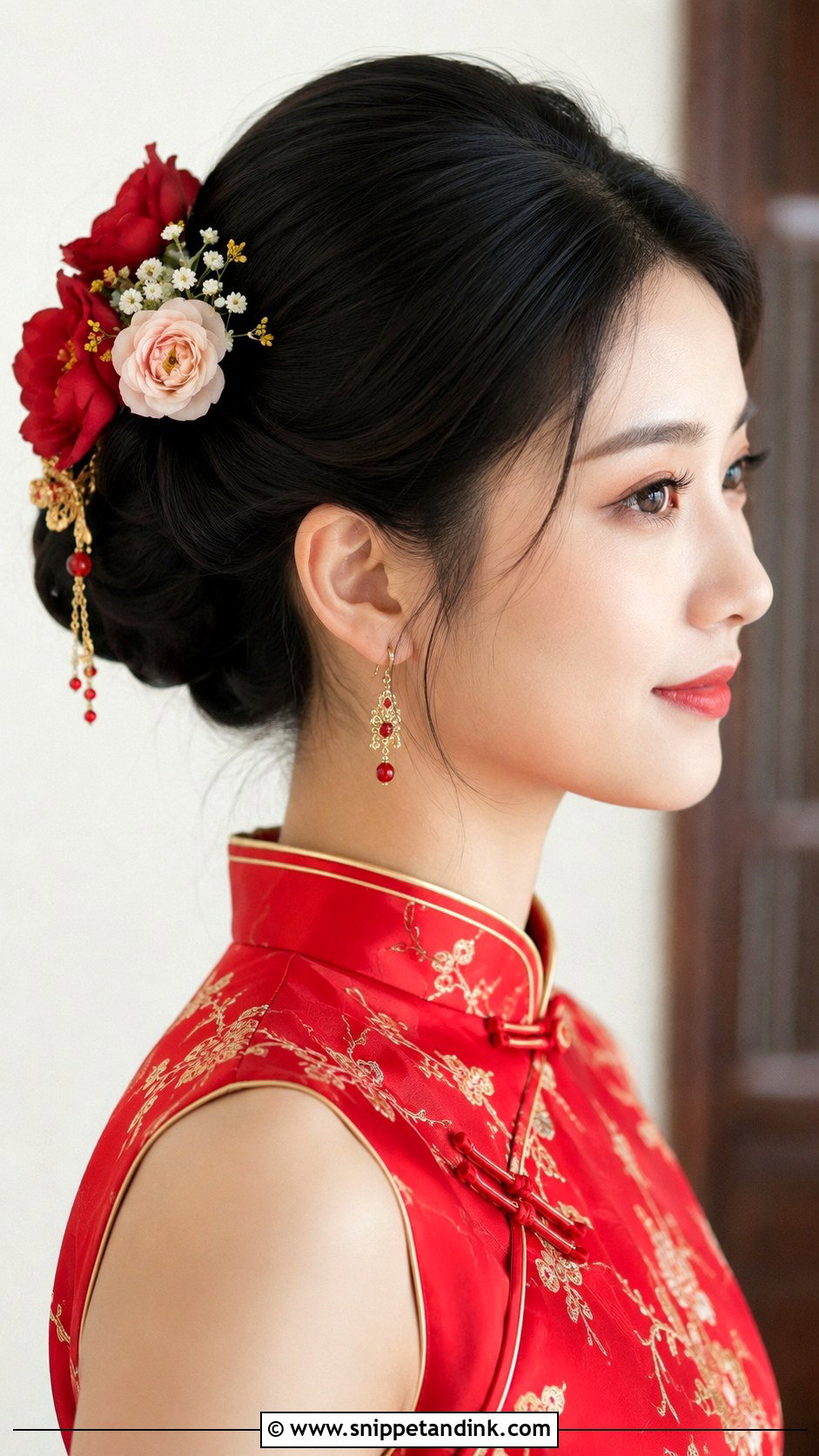
A cheongsam’s high mandarin collar decides this hairstyle for you: the hair has to sit above it, sleek and pinned up, so the collar and shoulders stay clear, finished with ornamental hairpins or fresh flowers. I place the bun a little higher than a standard low bun so it never rubs the collar, which is the quickest way to get frizz and a creased neckline. It suits tea ceremonies and formal portraits.
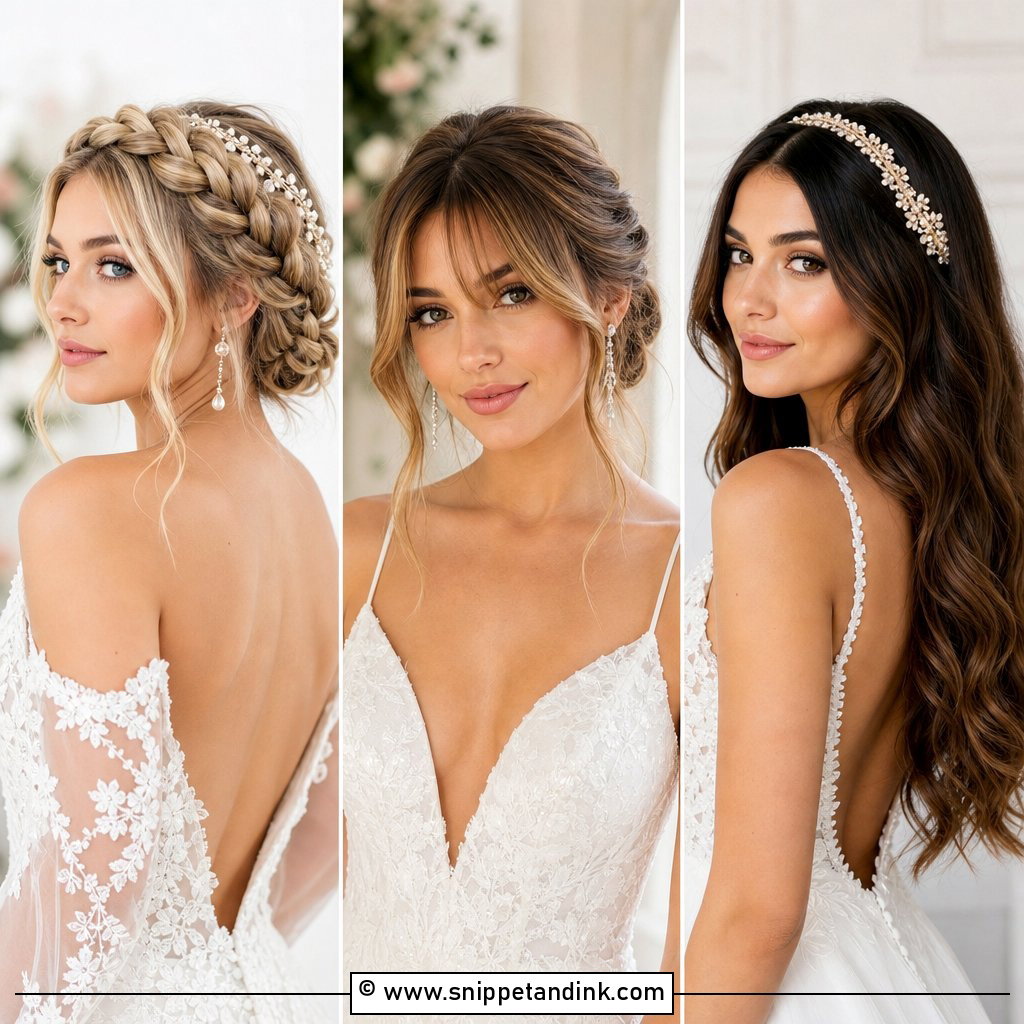
11. Braided Crown Bridal Hairstyle
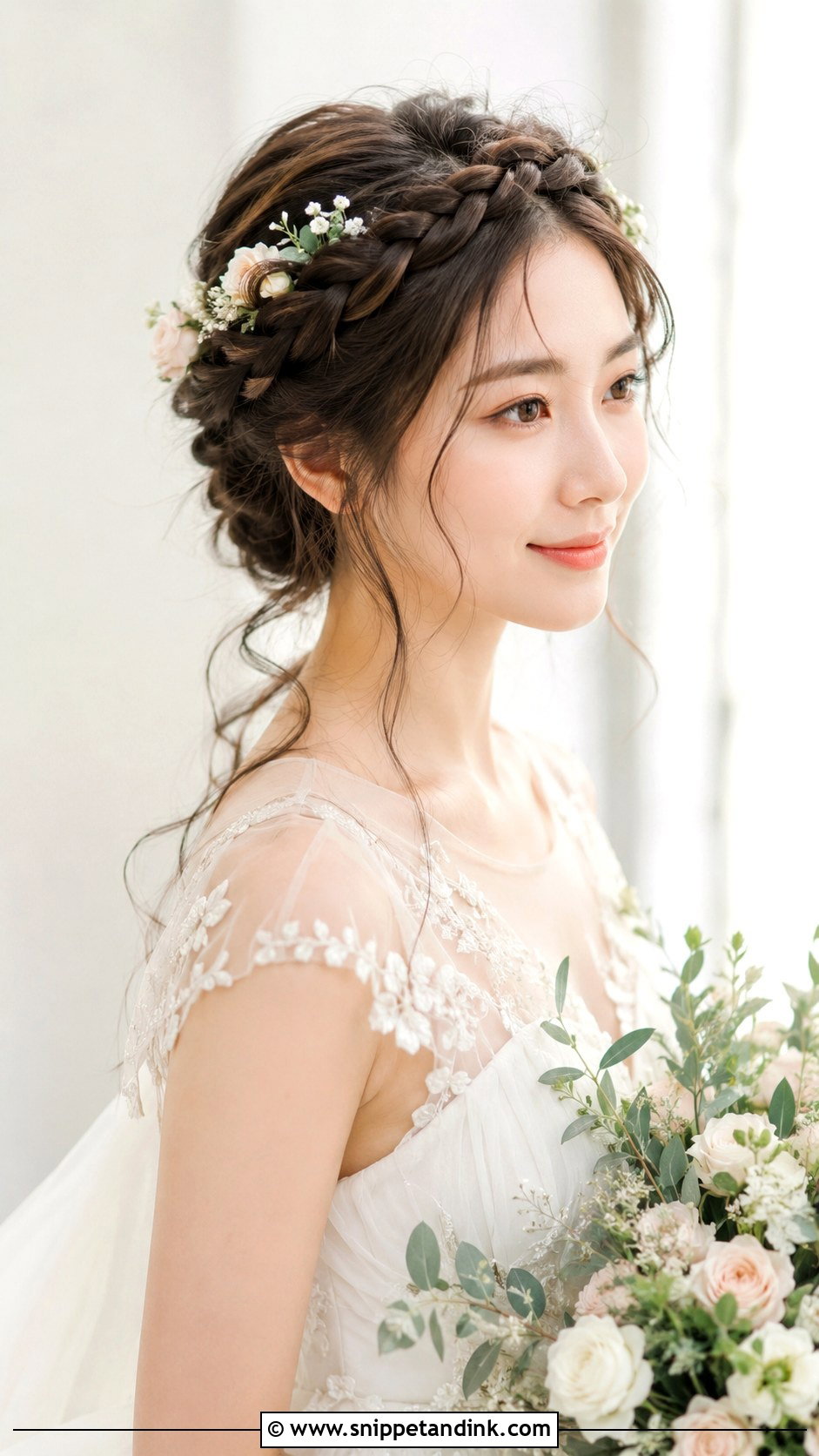
A braided crown circles the head like a halo, frames the face and keeps hair off the neck. Garden and outdoor weddings are where I see it most. It needs longer hair to reach right around, and I pin it every few centimetres so the braid follows the curve of the head instead of sagging at the back. Small flowers or pearls tucked in keep it soft. Flowing gowns and natural makeup suit it best.
12. Pearl-Embellished Low Bun
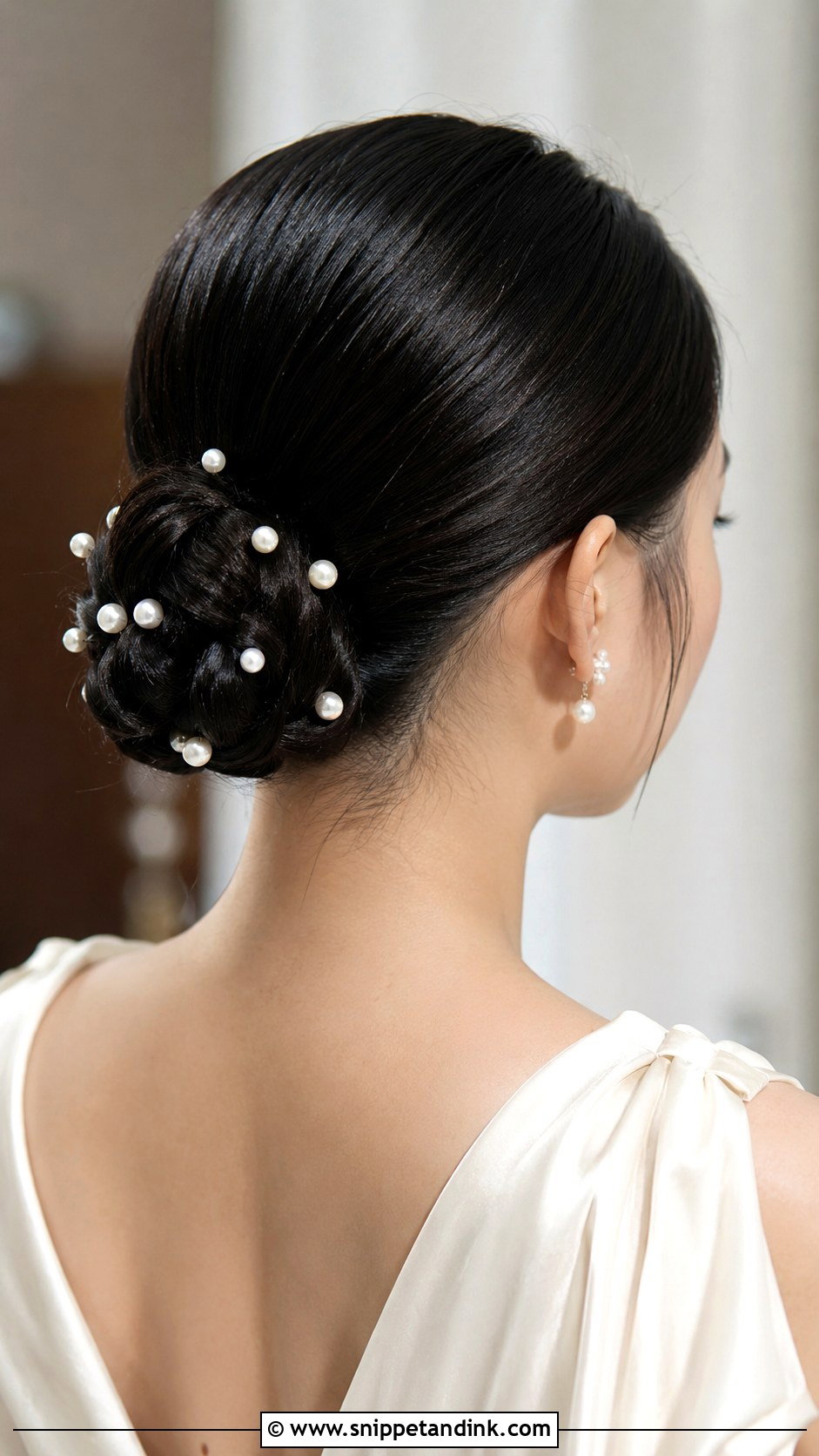
Pearls catch soft light in a way crystals don’t, which is why the pearl-embellished low bun reads as refined rather than flashy. Popular with modern Korean and East Asian brides, it’s a smooth, sleek bun dotted with pearl pins, and it carries well from ceremony to reception. I hold back on quantity; five to seven pearls usually look intentional, while twenty start to look like a pattern. Matching pearl earrings tie it together.
13. Loose Romantic Waves
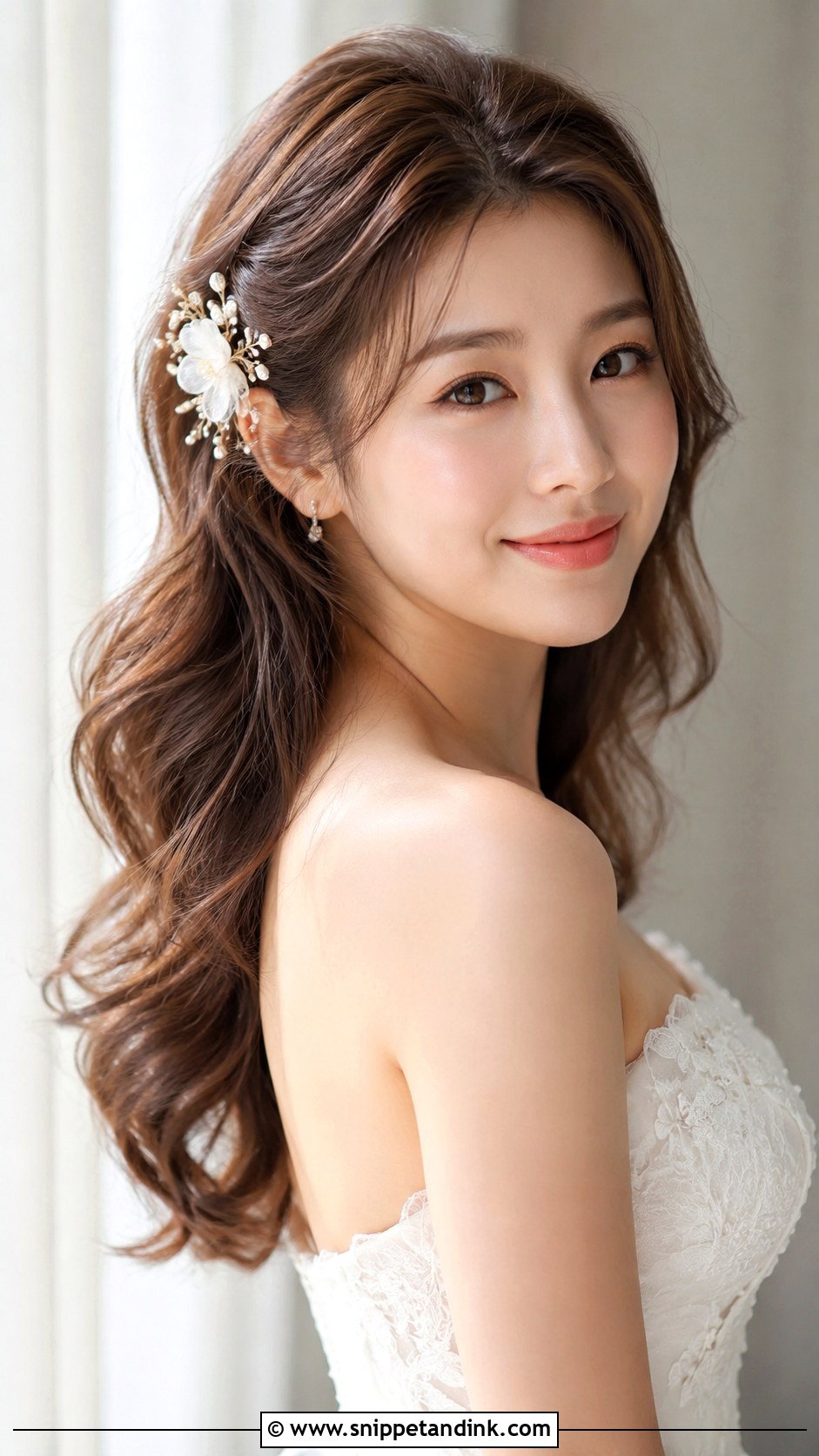
Loose waves are comfortable and suit most face shapes and medium to long hair. You can wear them all down or pin one side back with a floral clip, and they suit modern gowns and traditional outfits alike. The honest caveat: on silky, straight hair, waves loosen faster than anything else on this list. I set them with mousse and pin-curls, and suggest a mid-day touch-up if the photos run late.
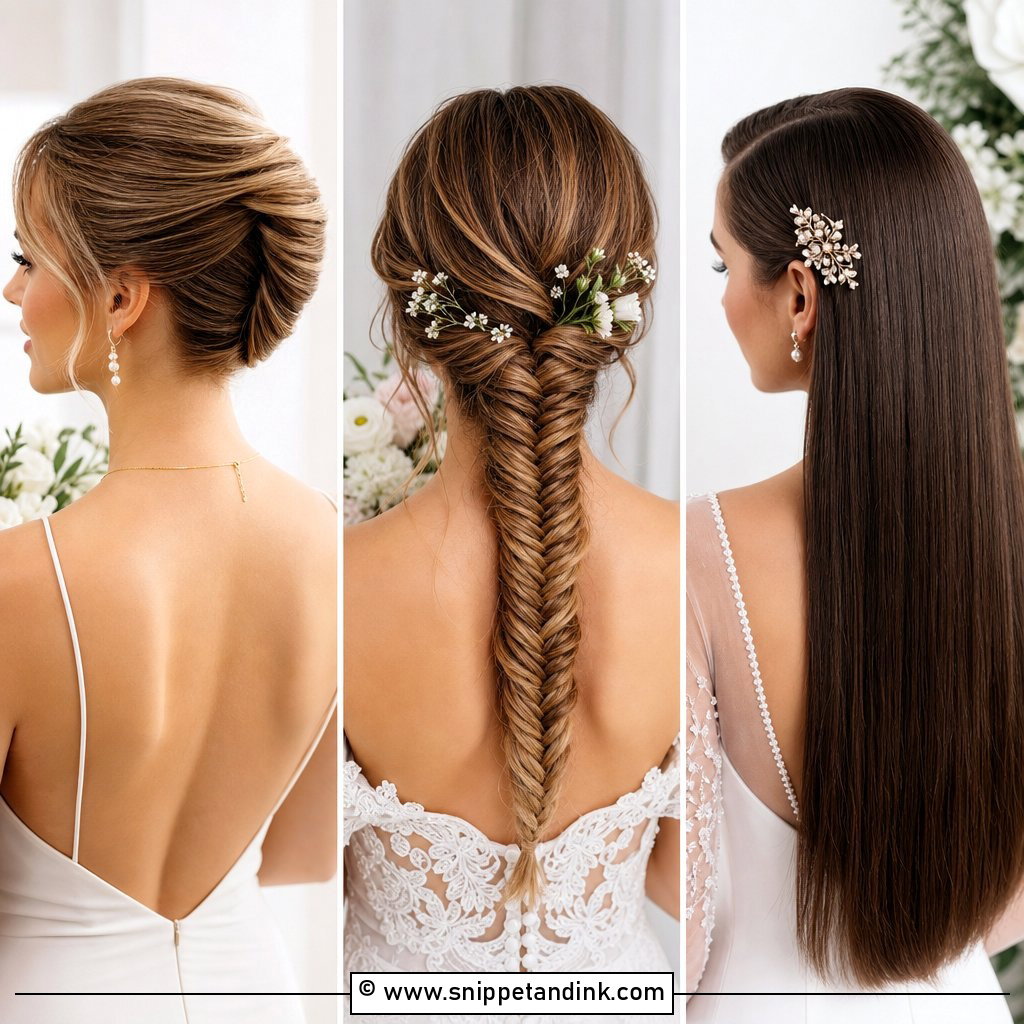
14. Fishtail Braid Wedding Look
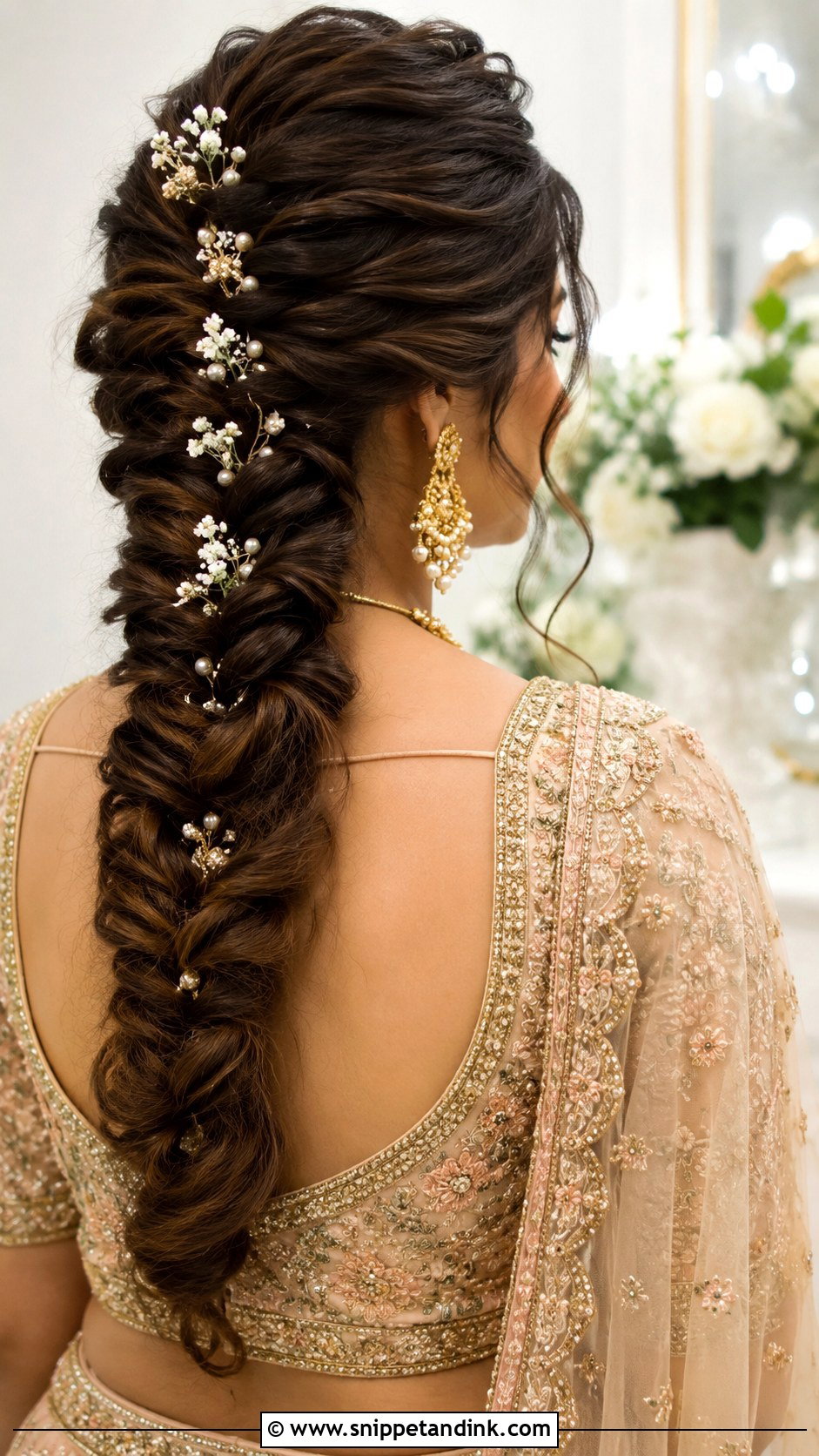
Fishtail braids look intricate but use only two sections, crossed in thin strands. Worn to one side or down the back and pulled apart gently for volume, it has a modern edge. It works best on long, thick hair. I braid it tight and loosen afterwards so the braid has both texture and grip. Tiny flowers or pearl pins along its length add detail you’ll notice in close-ups.
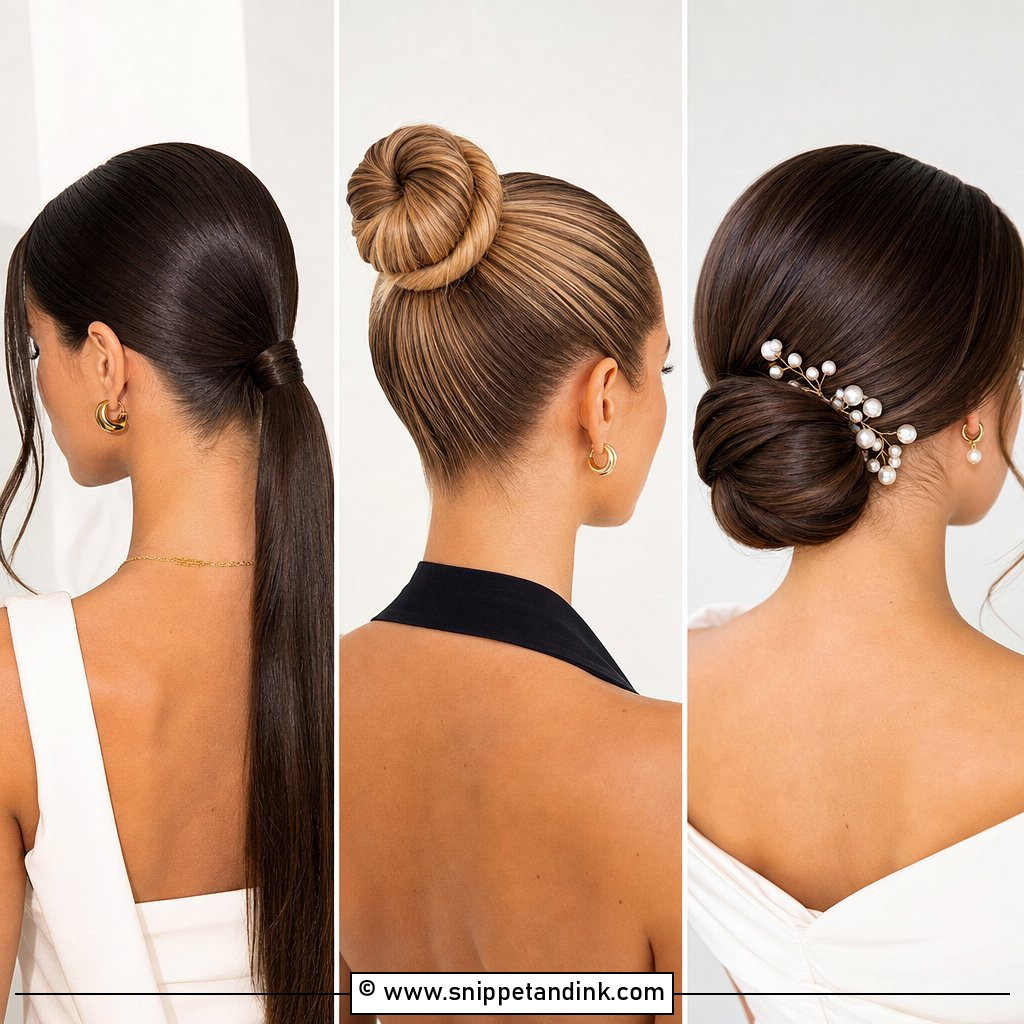
15. Hair Accessory Statement Updo
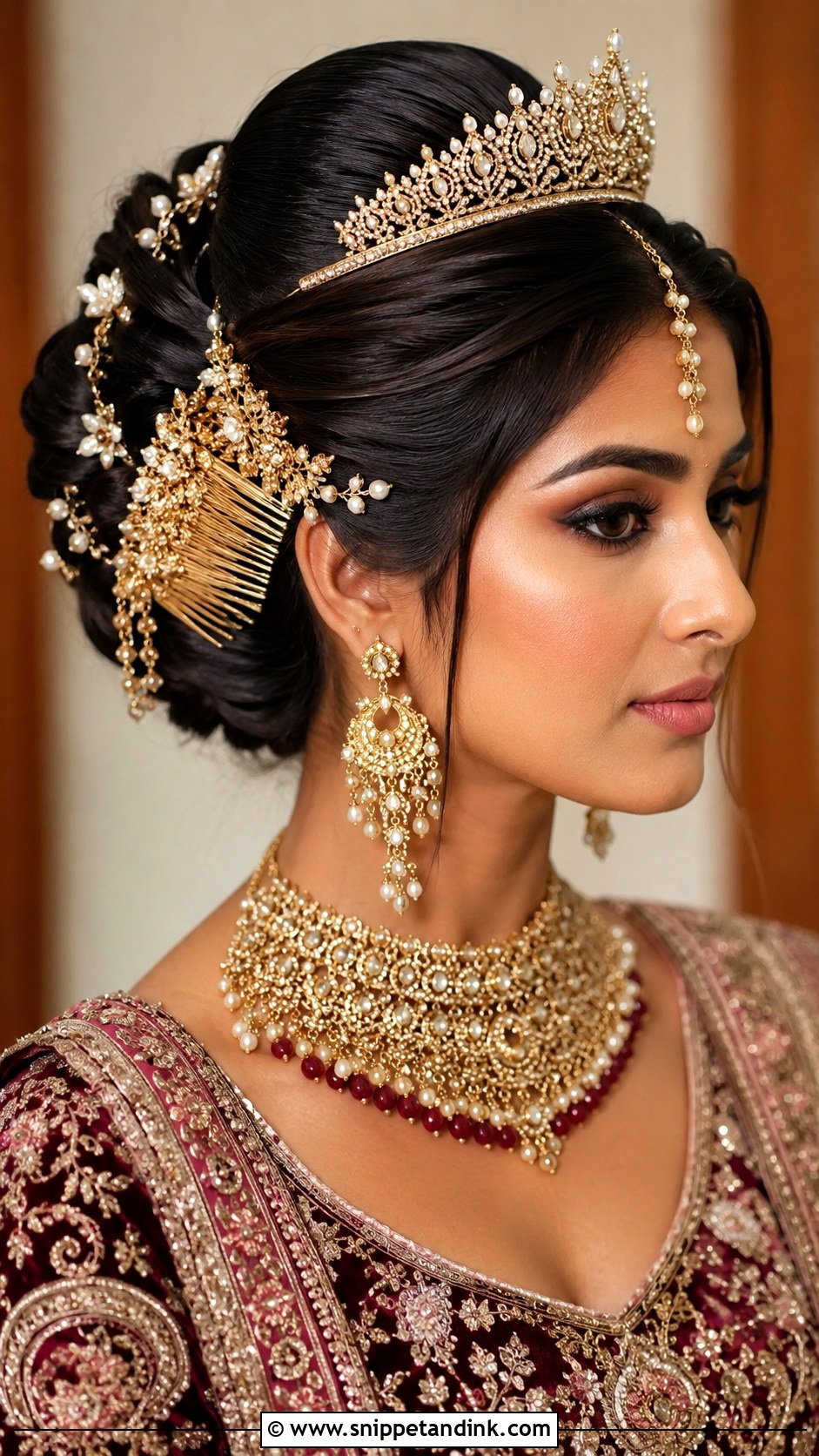
Here the accessories are the point. Ornate pins, combs or a tiara are built into a sleek, pinned updo, and at many Asian weddings these pieces have family or cultural significance. The updo has to be engineered to carry them. I plan placement at the trial with the actual pieces, because a heavy comb pinned into the surface layer will tip forward within an hour. It sits naturally with heavy bridal jewellery and ornate outfits.
16. Twisted Side Bun Style
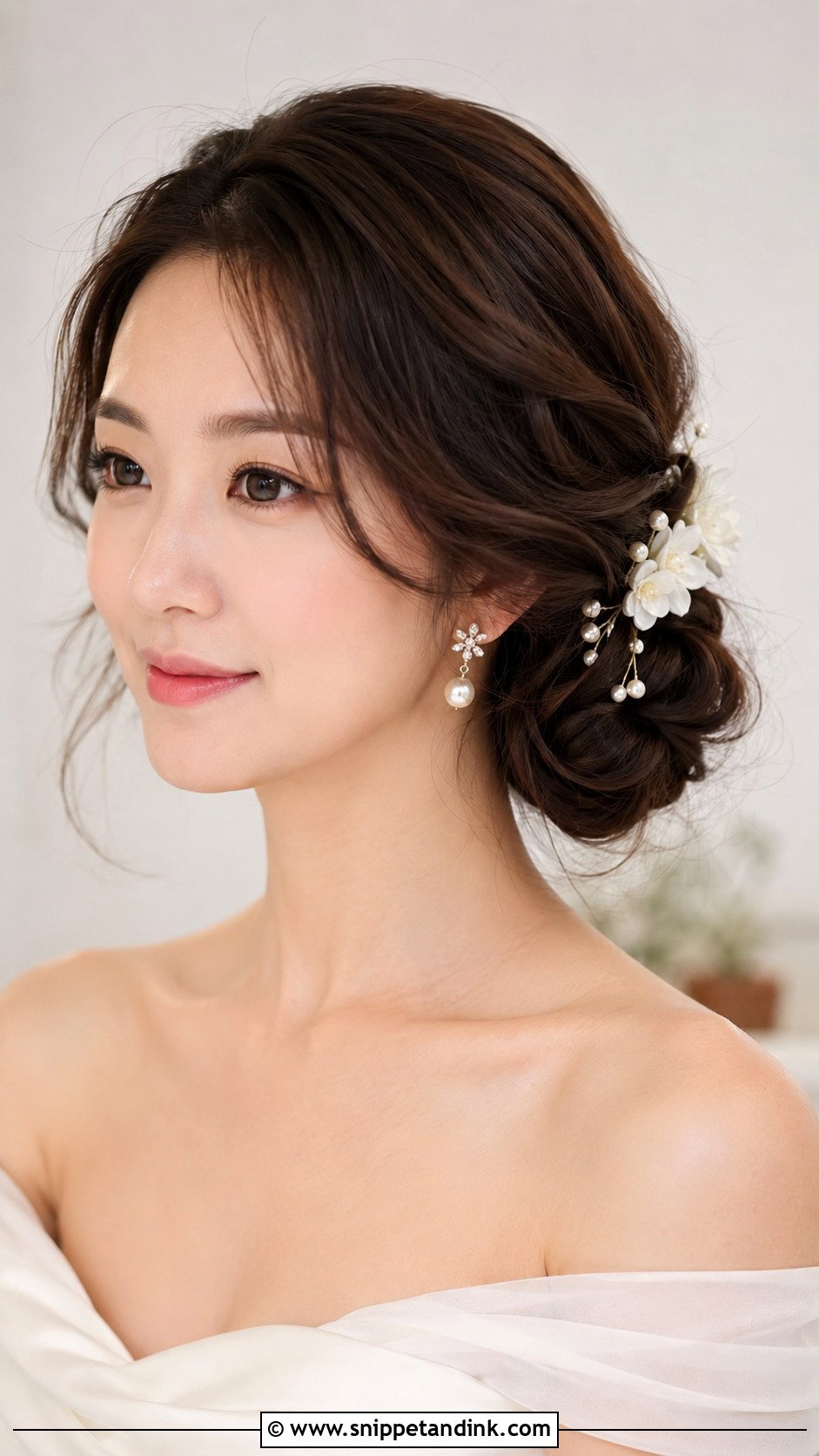
Gathered to one side and twisted into a bun, this style has asymmetry and texture without much fuss. The side placement flatters the face and shows off dangling earrings. Off-shoulder gowns suit it well. I anchor the bun behind the ear rather than at the nape, otherwise it drifts. Flowers or pearl pins finish it, and it moves easily from ceremony to reception.
17. Long Layered Bridal Waves
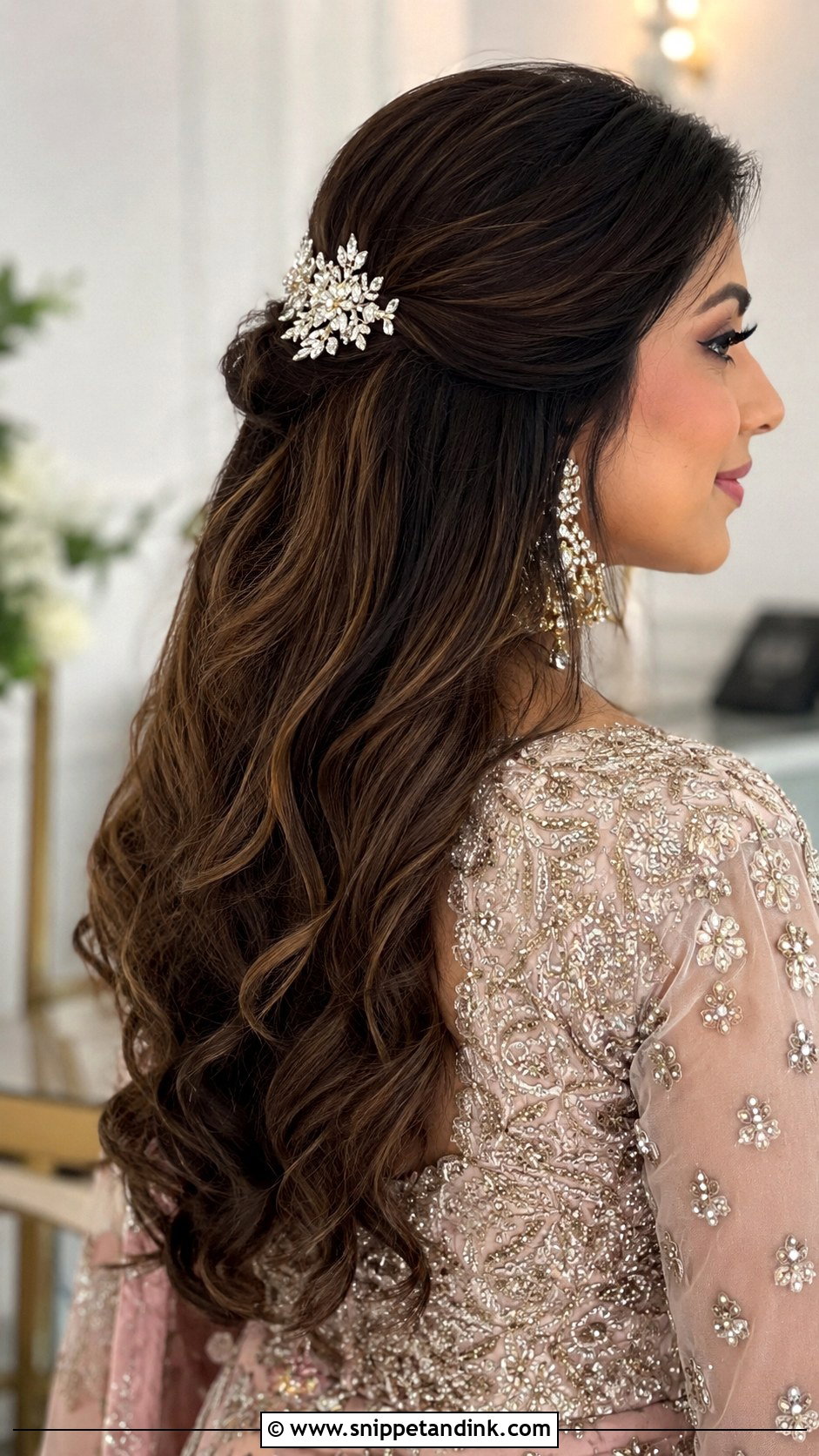
Long layers add movement and make hair look fuller once waved. They suit South Asian and Middle Eastern brides with long hair particularly well. The layers matter for the cut, not just the styling: I’d book the trim two to three weeks out so the layers look soft rather than freshly chopped. Part it down the center or to the side, and add a small clip or a few flowers if you like.
18. Decorated Single Braid
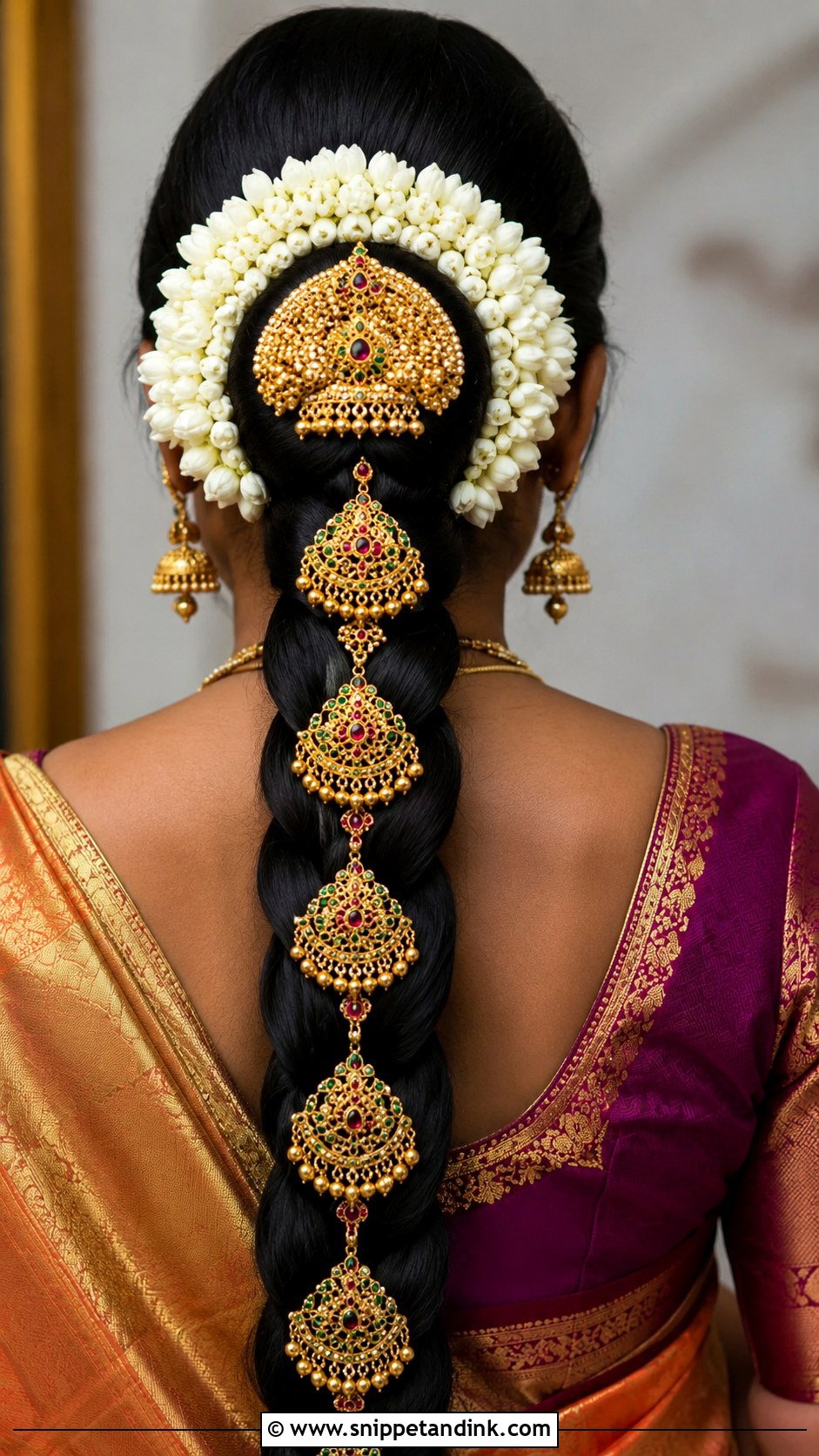
The decorated single braid is a South Indian bridal tradition: a thick, neat braid down the back, adorned with jasmine, gold ornaments and jewelled pieces from top to bottom. It’s associated with beauty and prosperity, and it sits with heavy silk sarees and temple jewellery. Many brides add a hair extension to give the braid its traditional length and thickness, and the gold pieces are often heavy enough to pull at the scalp, so the braid needs to start firmly at the crown.
19. Soft Updo With Curtain Bangs
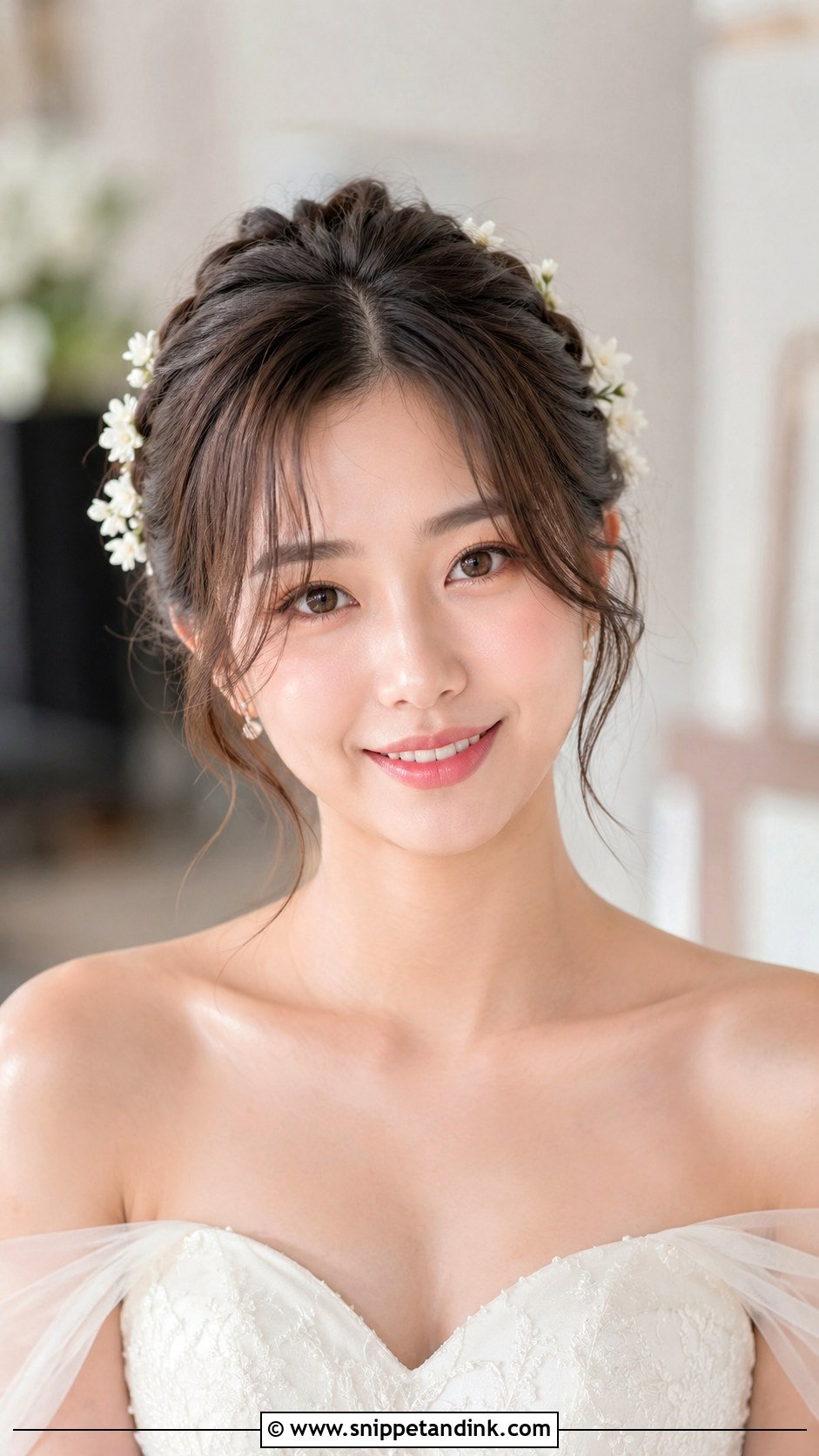
Curtain bangs parted gently in the middle soften a neat updo and give it a contemporary feel, which many East Asian brides like. The bangs need to be cut a few weeks before the wedding so they’ve settled. On the day I round-brush them outward, away from the eyes, and set them with a light spray. Small clips or flowers in the updo add detail without competing with the fringe.
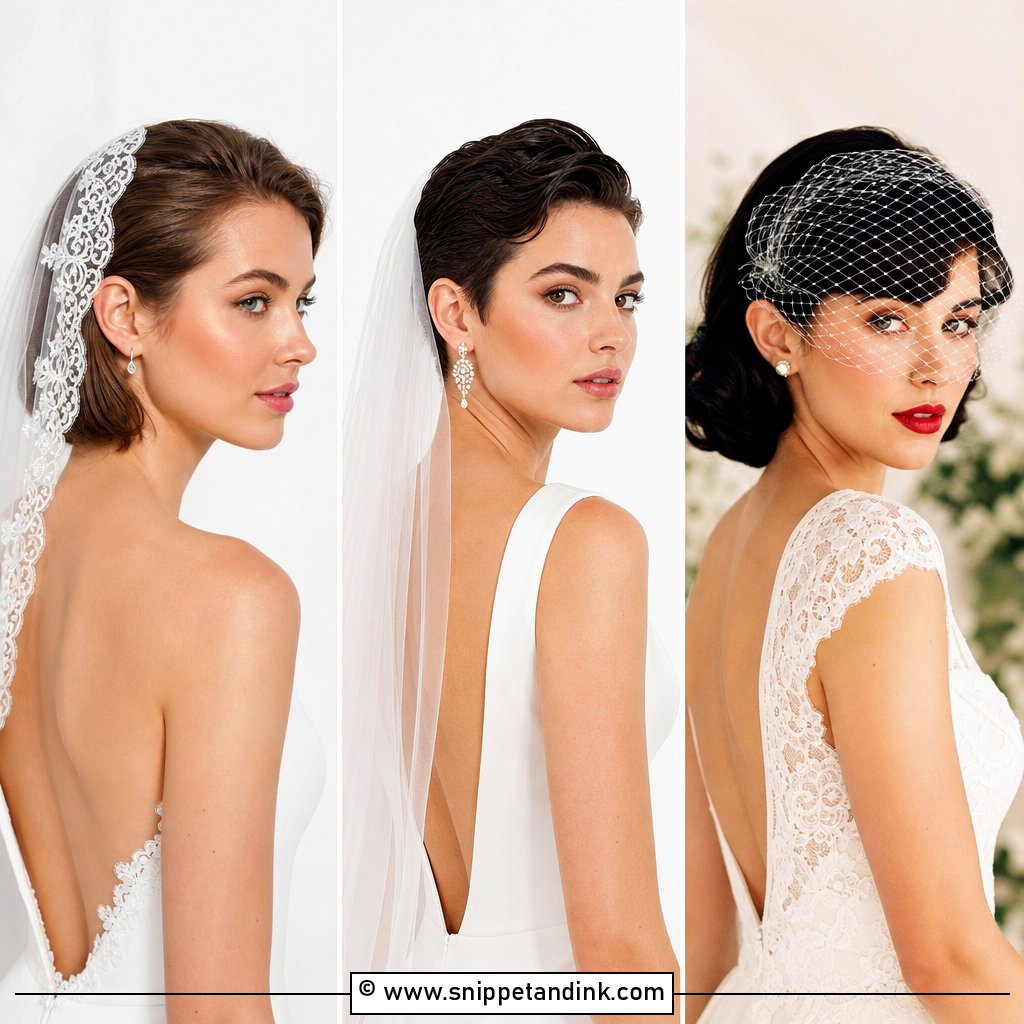
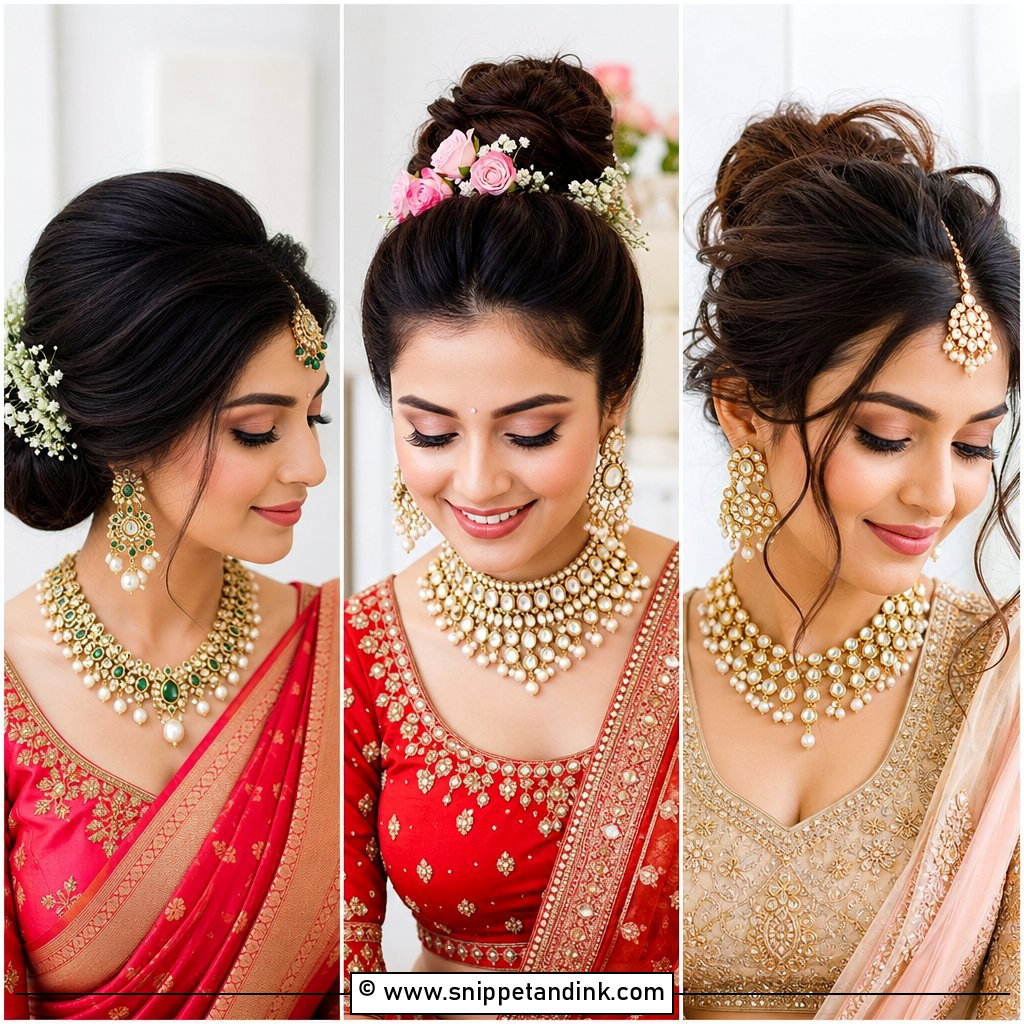
20. Bridal Ponytail With Volume
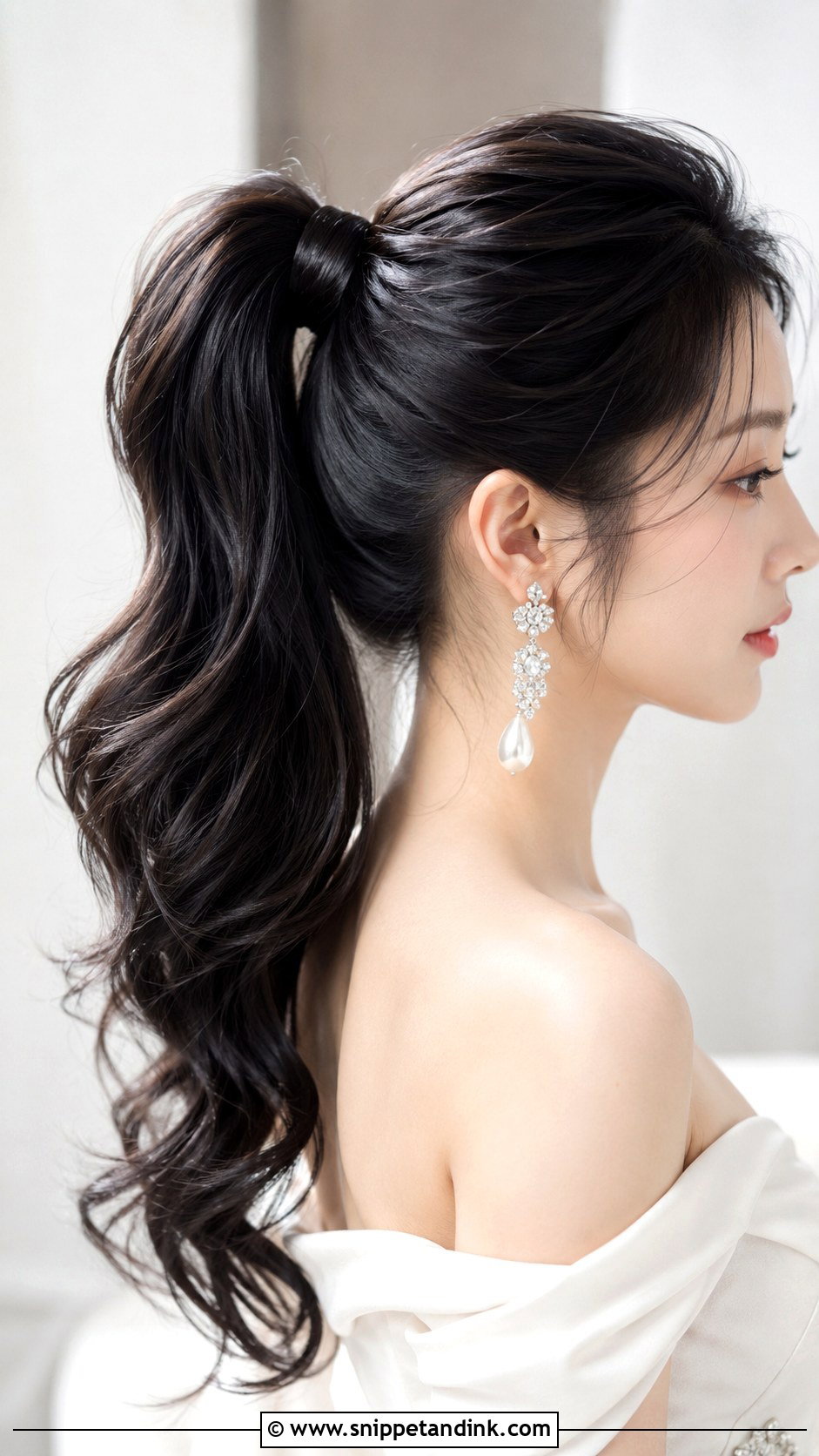
A ponytail can be bridal. Pulled back high or low with body and bounce, a wrapped strand hiding the elastic and waves through the length. I tease the underside of the tail for volume and lock the wrap with two hidden pins. It shows off statement earrings, keeps hair off the face in warm weather and suits contemporary gowns.
21. Flower Garland Hairstyle
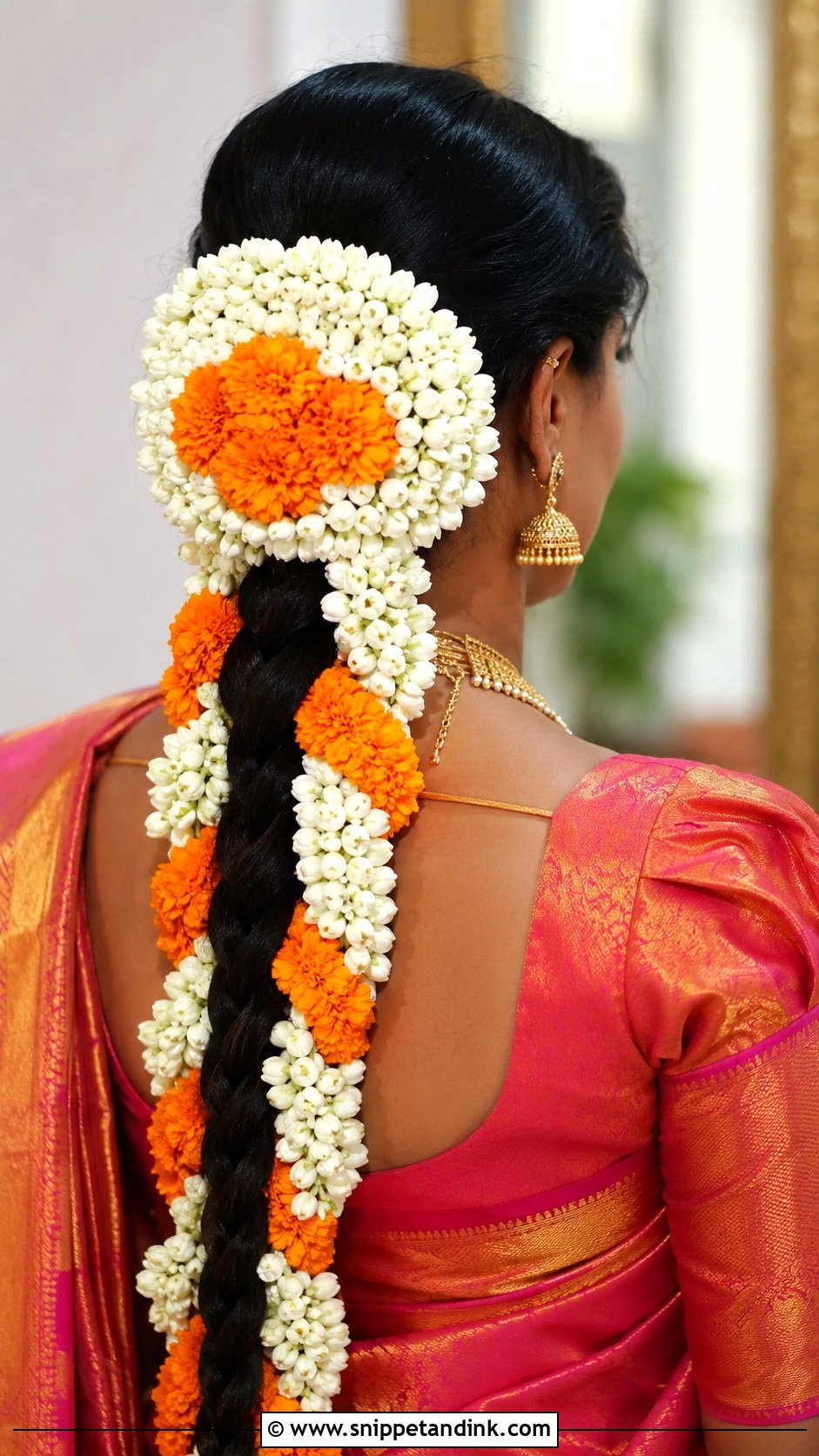
In South Indian and Sri Lankan weddings, a garland of jasmine, roses or marigolds draped over braids or buns adds colour, fragrance and cultural meaning. Marigolds are the hardiest of those and hold up through long ceremonies; jasmine and roses wilt faster in heat. I pin the garland every few centimetres and keep a spare string nearby. It pairs naturally with silk sarees and gold jewellery.
22. Sleek Bun With Hairpin Accents
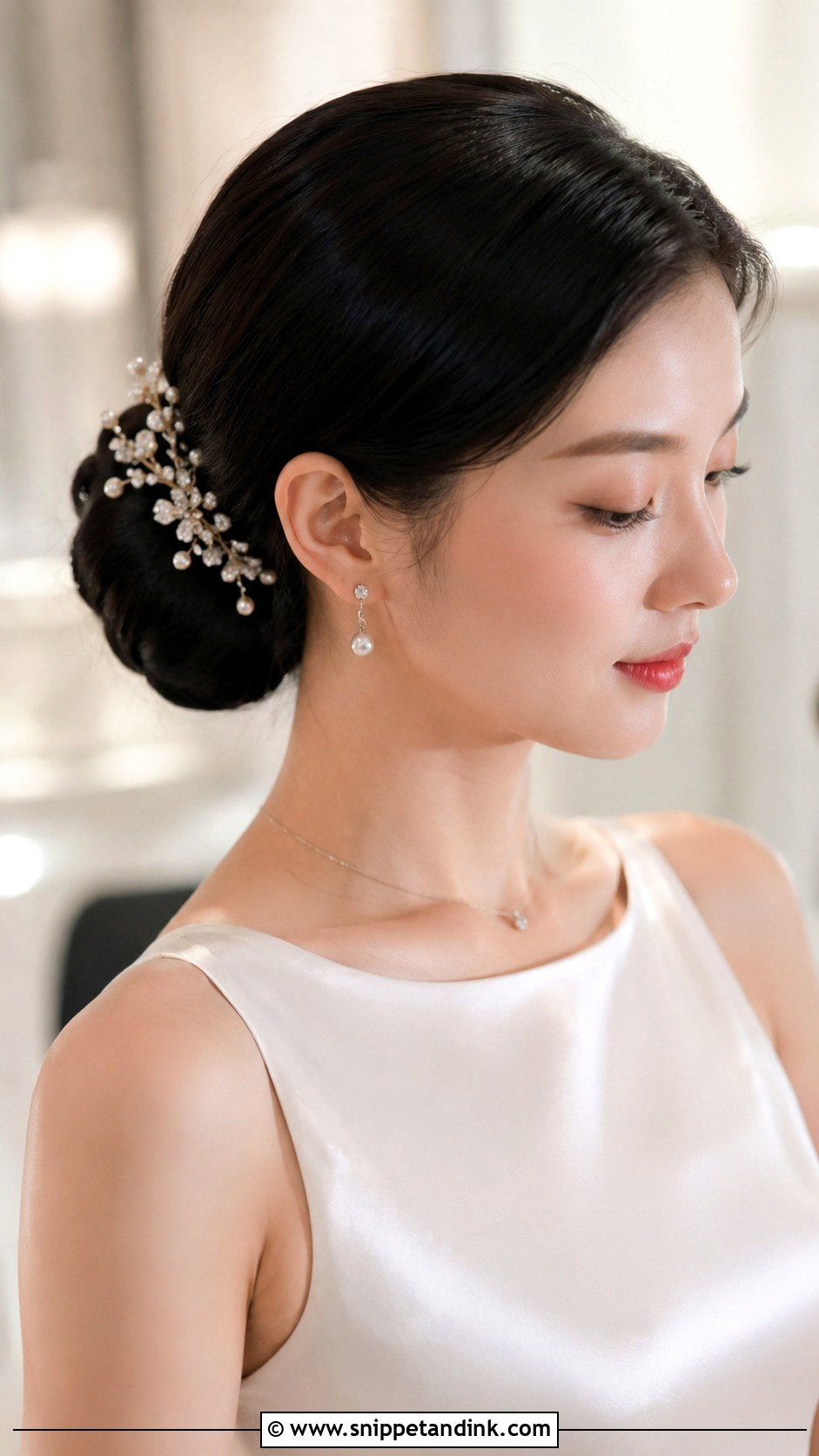
Clean lines and a few delicate pins: this bun, worn low or high, is the minimalist’s choice. It suits Korean and East Asian brides who want modern understatement, and the pins can be pearl, crystal or gold to match your jewellery. A sleek finish shows every flyaway, so I smooth with a little balm and a fine-tooth comb before placing the pins. It works equally well at ceremonies and receptions with simple gowns.
23. Romantic Braided Half-Updo
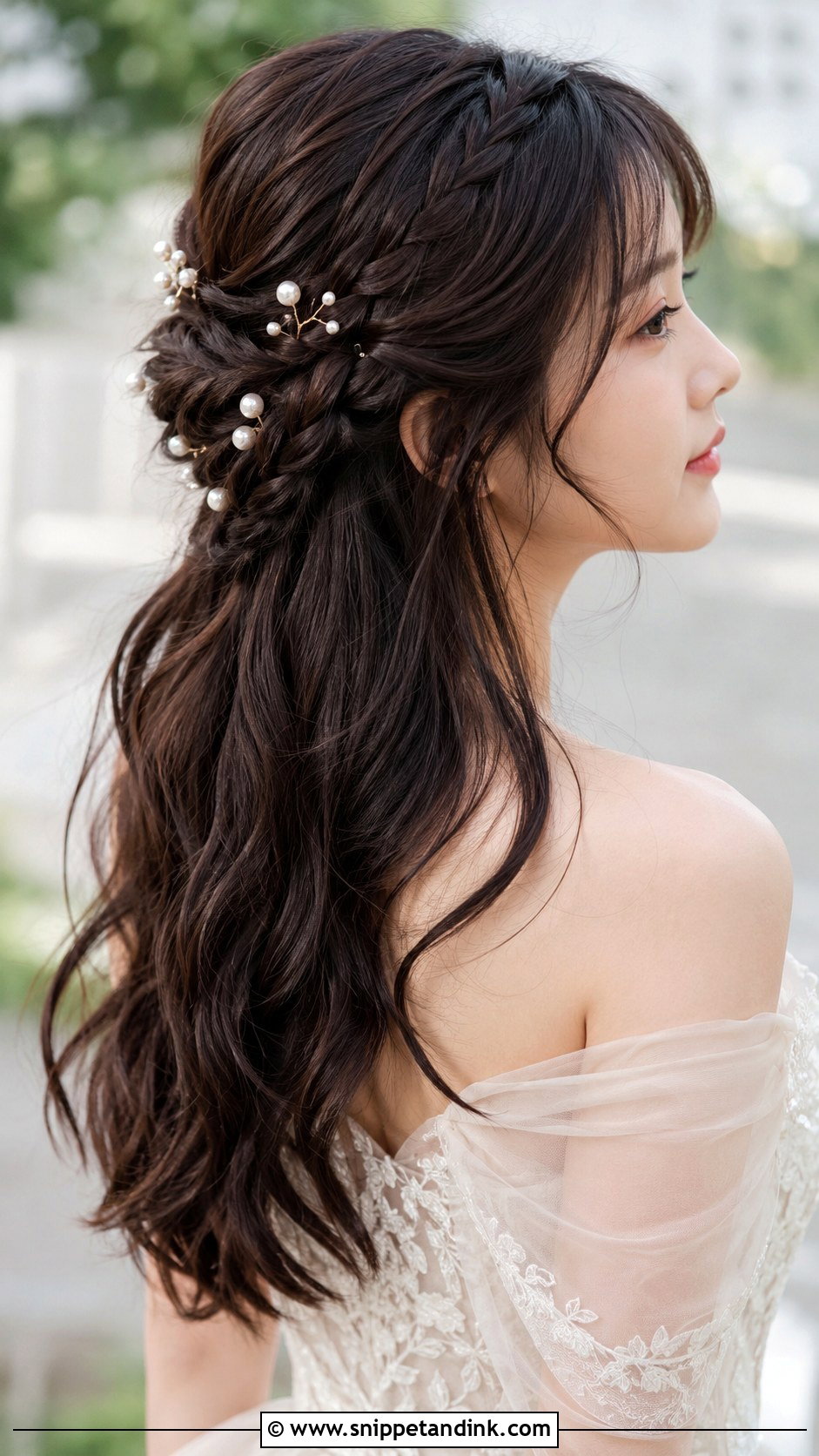
Small braids pinned back from the top, the rest left long. The braided half-updo gives texture without committing to a full updo, frames the face and shows off shine. I keep the braids thin and slightly loose so they don’t look childlike. Tiny flowers or pearls along them add charm. Most textures work, and it pairs with both traditional and modern outfits.
24. Vintage Inspired Finger Waves
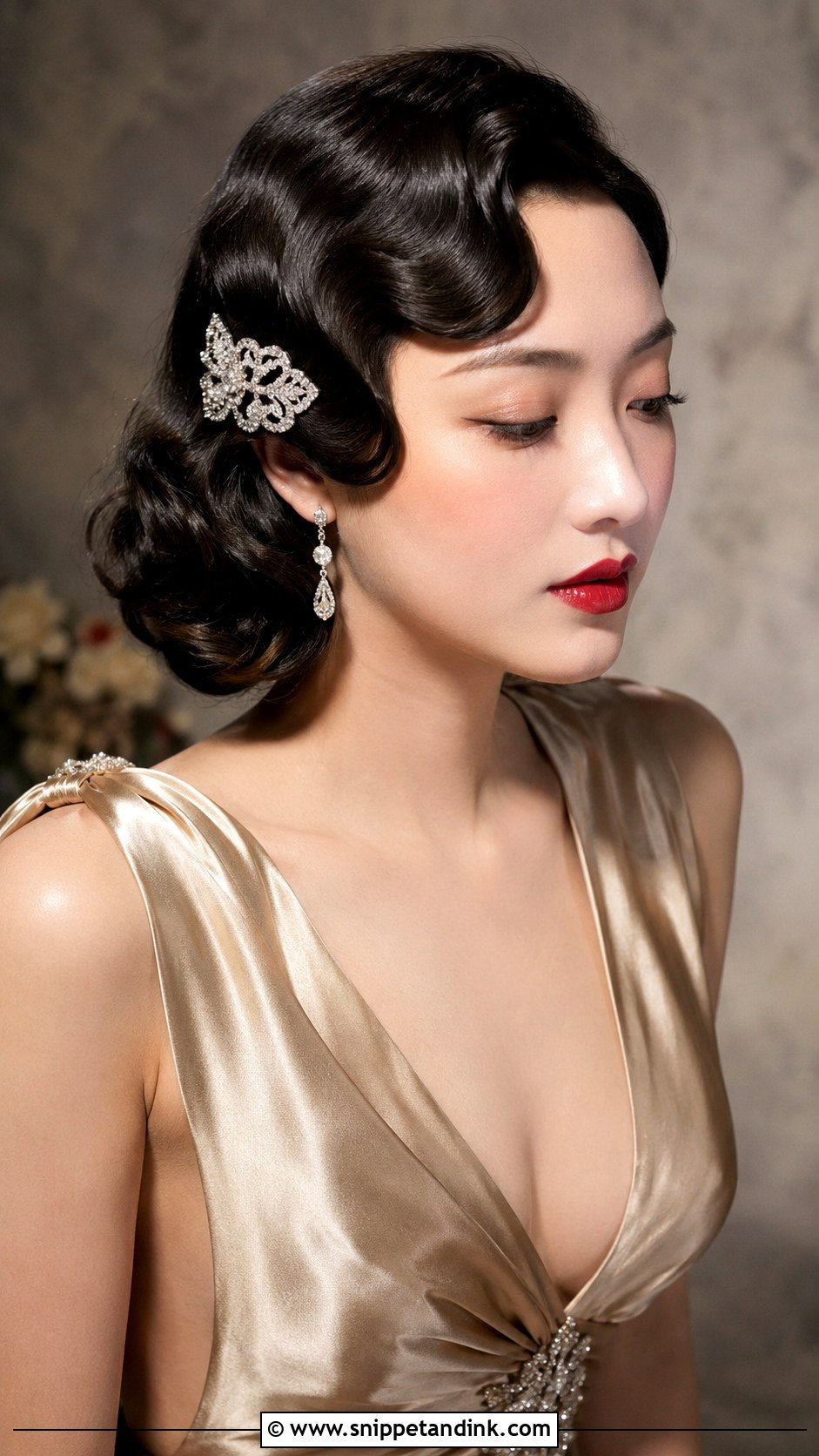
Finger waves are sculpted S-shaped waves that hug the head, a retro look that suits shorter and medium hair. They can sit against a sleek bun or flow free, with a jeweled clip for sparkle, and they look right with elegant gowns and bold makeup. They’re also one of the hardest techniques to do well. Ask to see your stylist’s own photographs of finger waves before you commit, because poorly set waves just look flat.
25. Floral Crown With Loose Hair
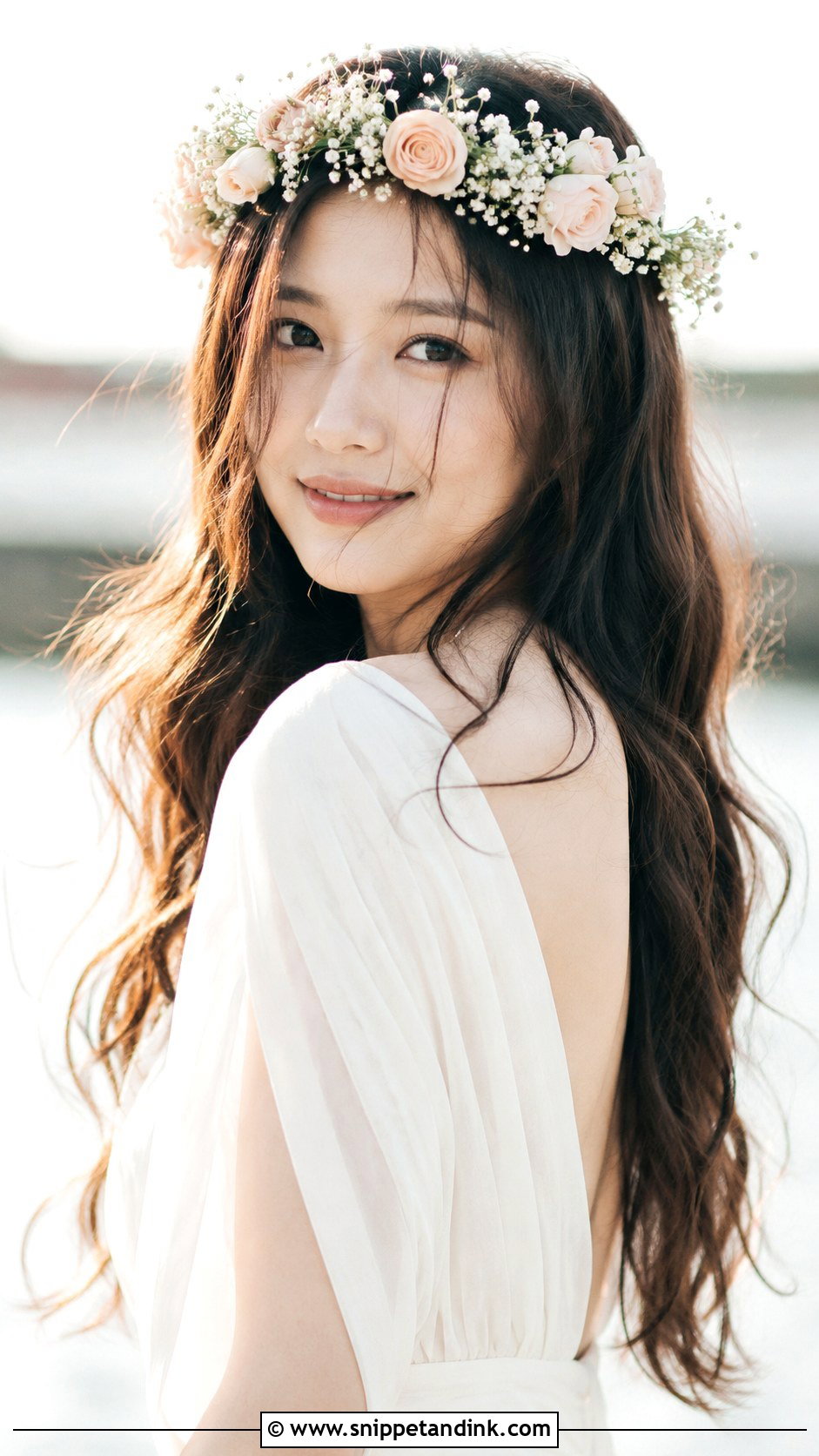
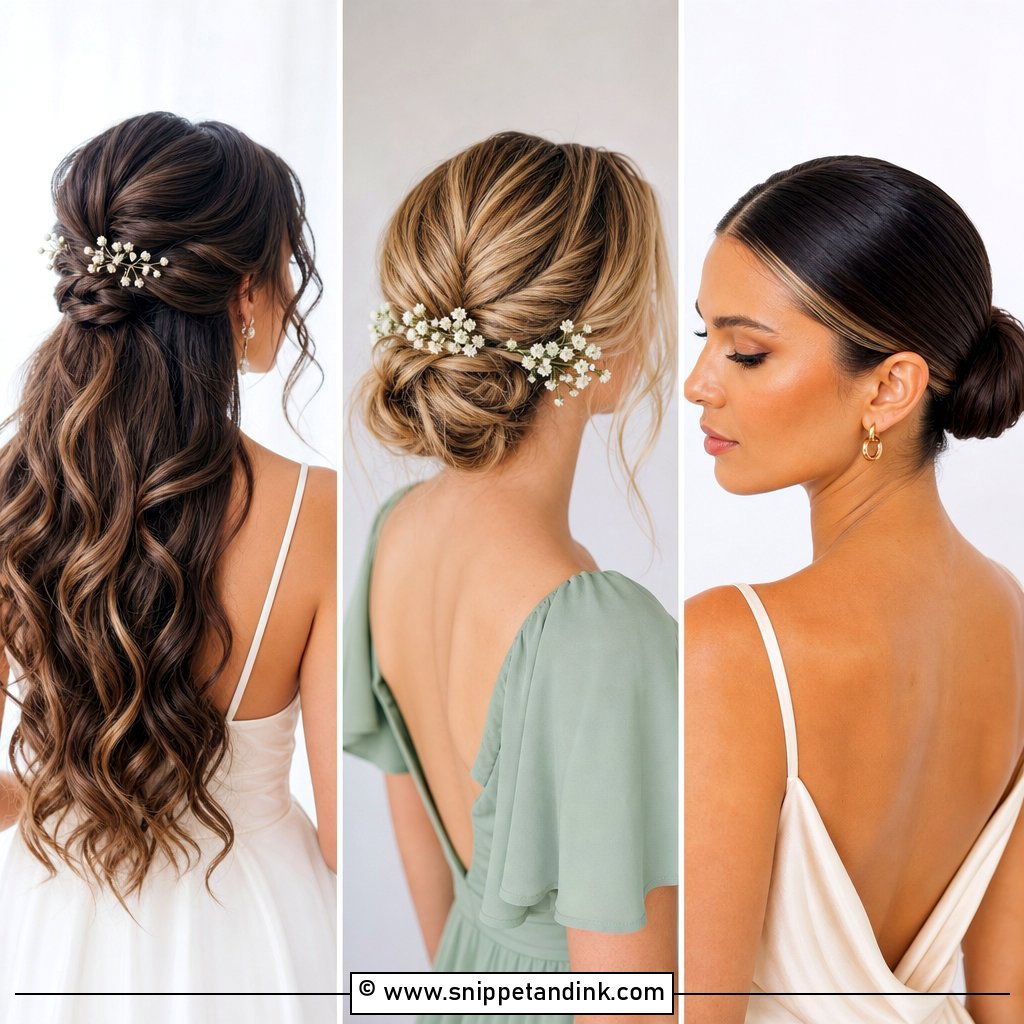
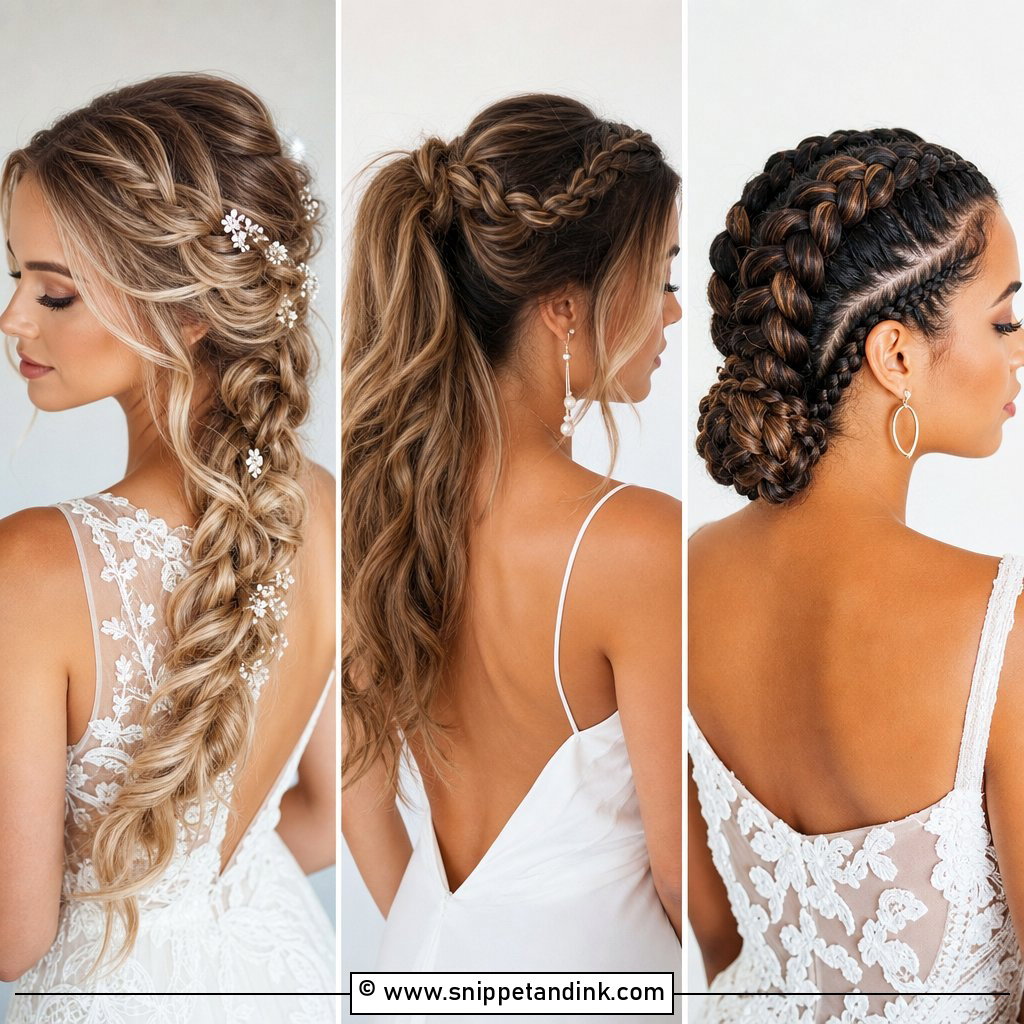
A fresh floral crown over flowing hair suits outdoor and bohemian weddings. Roses, baby’s breath and seasonal blooms make up the crown, and the hair falls freely below. The crown should be built on wire and fitted at your trial, because one that’s too tight hurts by the first dance and one that’s too loose slips. I pin it at the back and sides. Keep the crown chilled until you put it on.
Extensions, Heavy Ornaments and a Comfortable Scalp
Traditional South Indian bridal braids are often longer and thicker than a bride’s natural hair. Many use a hair extension braided in at the nape, and a jada or flower braid covering adds more weight on top of that. That’s normal, and it looks right. What I watch is comfort. A braid that starts too tight at the crown, then carries gold ornaments and fresh flowers for eight hours, gives you a headache by the reception.
How I spread the load
I anchor heavy pieces into a firm base, split the weight across several pinning points and keep the tightest section at the nape rather than at the hairline. If you have a sensitive scalp, say so at the trial. Wear the full set for at least an hour there, so we can adjust before it matters.
The same thinking applies to the other traditions here. A binyeo or a set of heavy Chinese ornamental pins needs a dense, tight knot to pass through, and a tiara or jeweled comb needs a backcombed base to bite into. When something feels wrong at the trial, such as a pin pressing behind your ear or a comb pulling at your temple, mention it straight away. A small change of angle at the trial is easy; on the wedding morning, there may not be time.
What Your Stylist Needs From You Before the Morning
From a sleek Korean chignon to a jasmine bun and a floral crown, these styles cover very different weddings. The right one depends on your hair type, the season and the ceremony, as well as your dress and culture. Send your stylist photos of your outfit’s neckline, a list of every accessory and ornament you’ll wear, the ceremony schedule and whether there’s an outfit change. With that, she can plan a style that actually lasts, instead of guessing on the morning.
You'll Like These Ideas:



Leave a Reply