
Bridal hair across India changes from region to region and from function to function. A Tamil bride’s jasmine-covered braid, a Bengali bride’s bun under a white mukut and a Punjabi bride’s jhoomar each come with their own pinning, weight and timing. These 30 Indian wedding hairstyles cover the haldi, mehendi, sangeet and the ceremony itself, with honest notes from the styling chair: what each look needs from your hair, which events it survives and where it usually needs help.
Regional Bridal Hair Has Its Own Rules
Many brides bring me inspiration photos from a completely different regional tradition, and the look can still work. What changes is what the hair has to carry. A few examples I meet often:
- South Indian ceremonies usually mean a long braid covered in jasmine and a jadanagam or jadai billai. The weight runs down the back, so the top of the braid needs a strong anchor.
- Bengali brides wear a mukut on top of the head, often with a veil. The bun sits low so the crown can rest without pushing it out of shape.
- Punjabi and North Indian brides often wear a heavy dupatta pinned into the hair, plus a tikka or matha patti. A low bun at the nape takes that load best.
- Muslim brides who wear a jhoomar need a firm braided anchor on one side, since the ornament hangs from a single hook.
If you’re mixing traditions, tell your stylist which pieces you’ll wear at each function. The jewellery shapes the hair more than the outfit does.
1. Traditional Gajra Bun
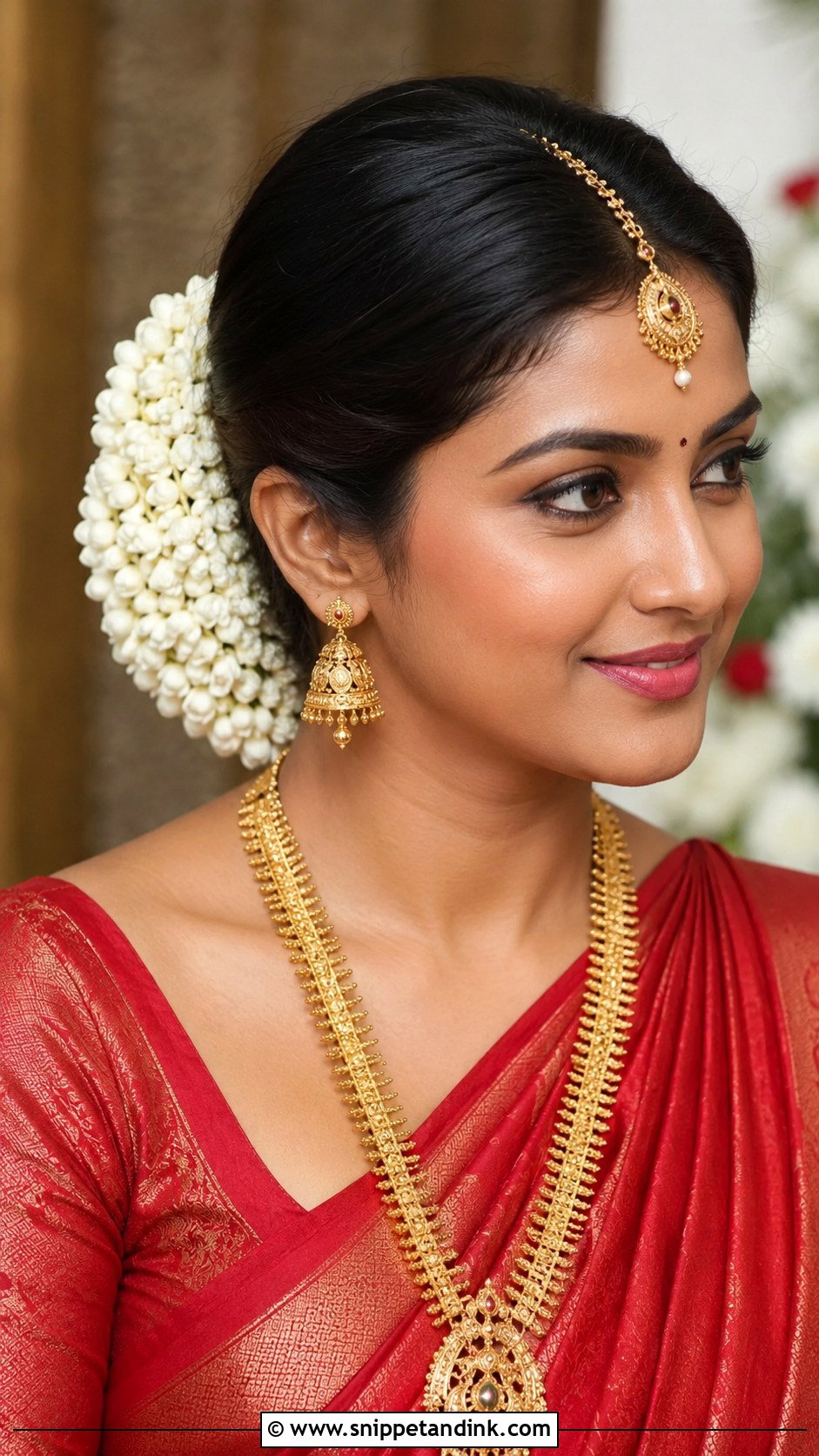
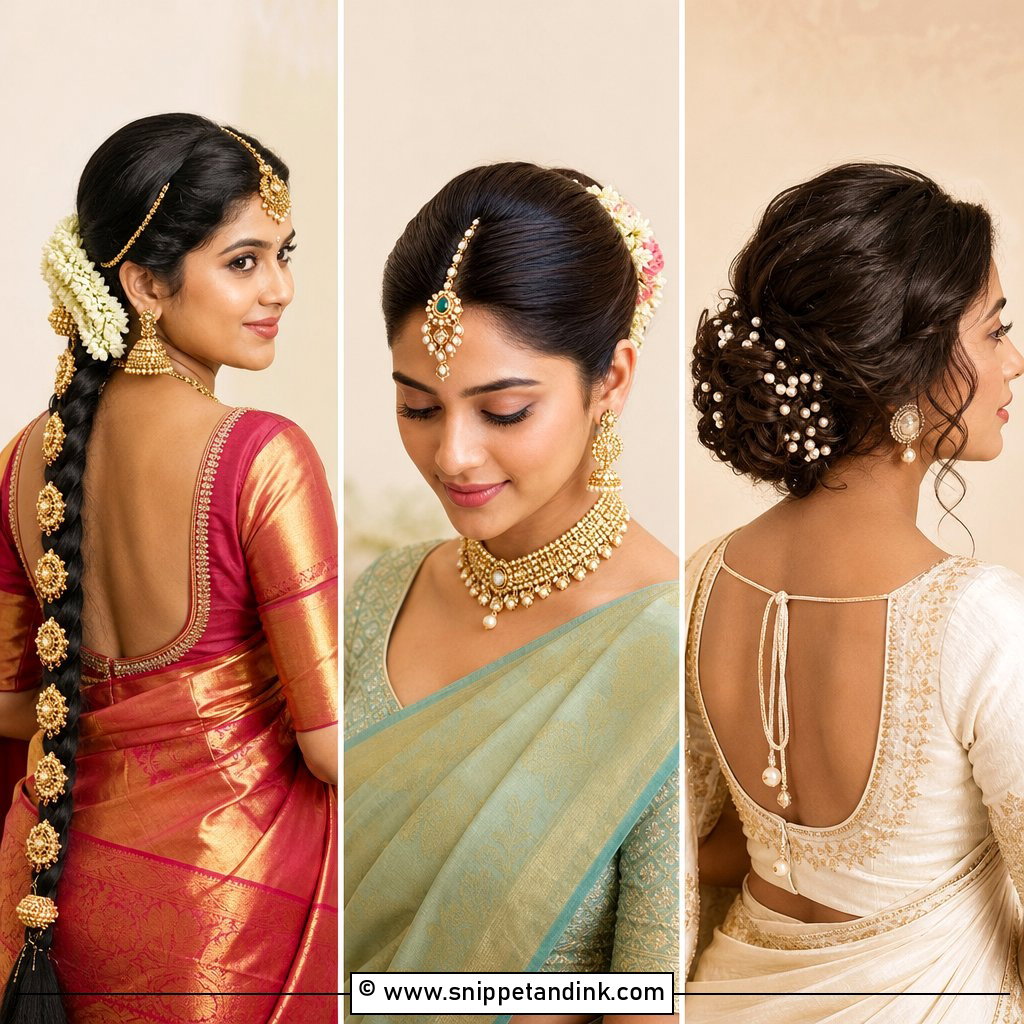
A classic gajra bun is still the look I’d trust most for a temple wedding. The bun can sit at the crown or the nape; I choose the nape when a saree pallu or dupatta will cover the head, so the fabric drapes smoothly. Fresh jasmine wraps around it, pinned through the string every few centimetres. The flowers will brown within hours in heat, so they’re the very last thing to go on. Keep the bun sleek for a refined line, or add a little volume if your jewellery is heavy and needs balancing.
2. Rani Jhoomar Braid
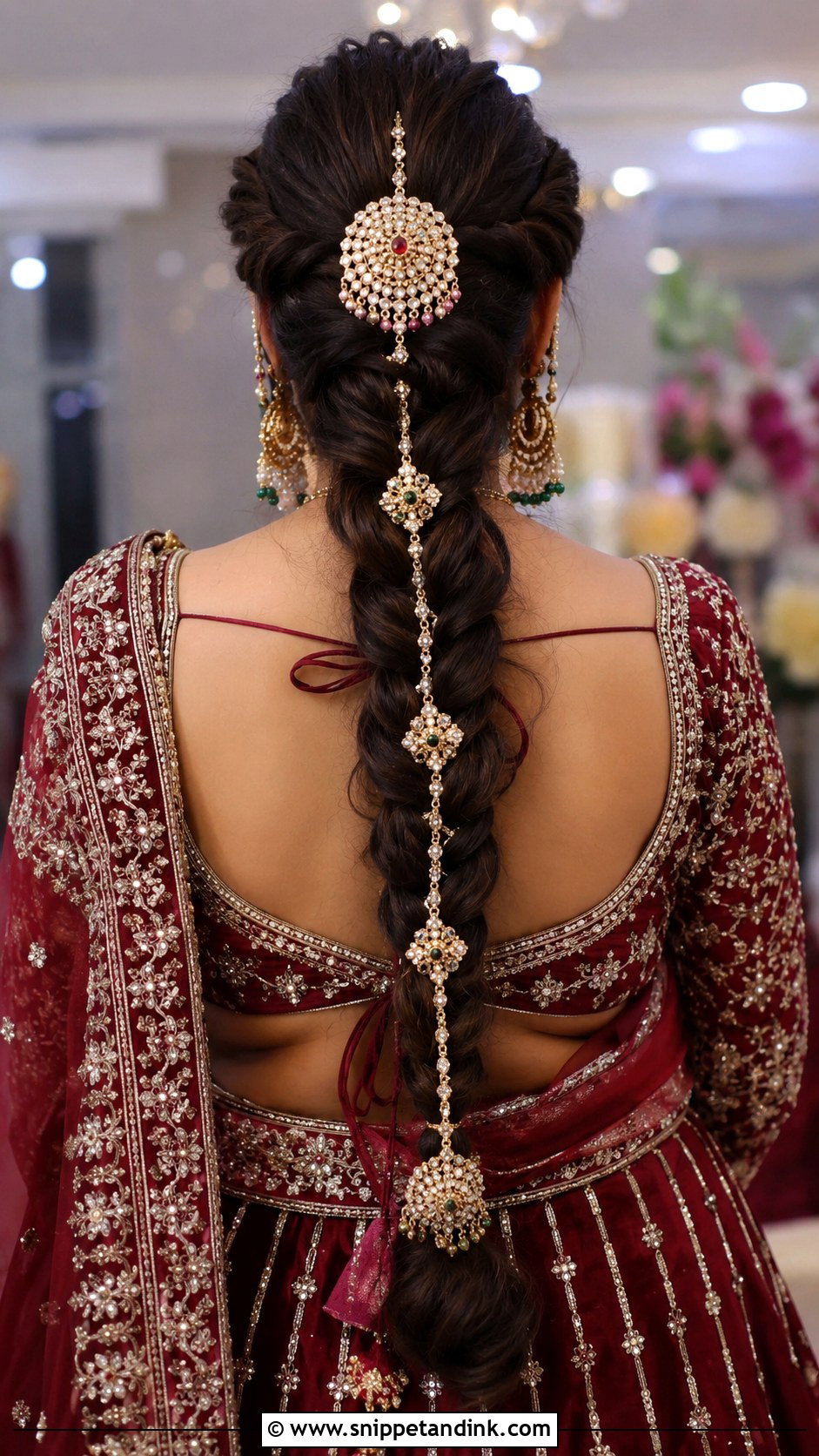
The Rani Jhoomar braid pairs a thick braid down the back with a jhoomar, the fan-shaped ornament worn on one side of the head. That side placement is the tricky part. A jhoomar is surprisingly heavy, and it hangs from a single hook, so I build a small, tight braided anchor under it and cross several pins through that before attaching. Gold thread or pearls along the braid match the jhoomar’s metal. For the main ceremony with a rich lehenga, it carries real presence, but try it on at your trial: some brides find the one-sided weight uncomfortable after a few hours.
3. Messy Bun With Loose Strands
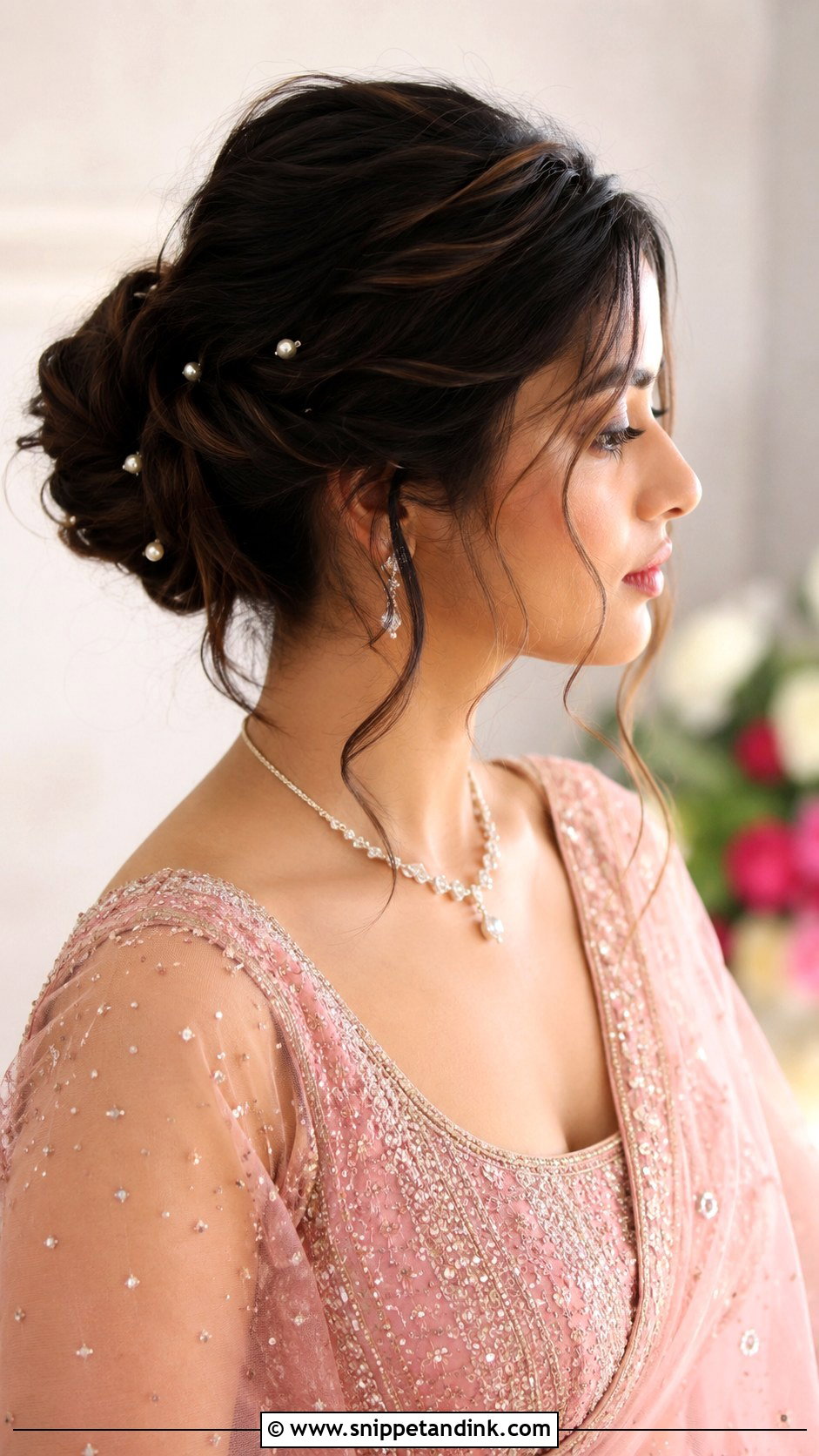
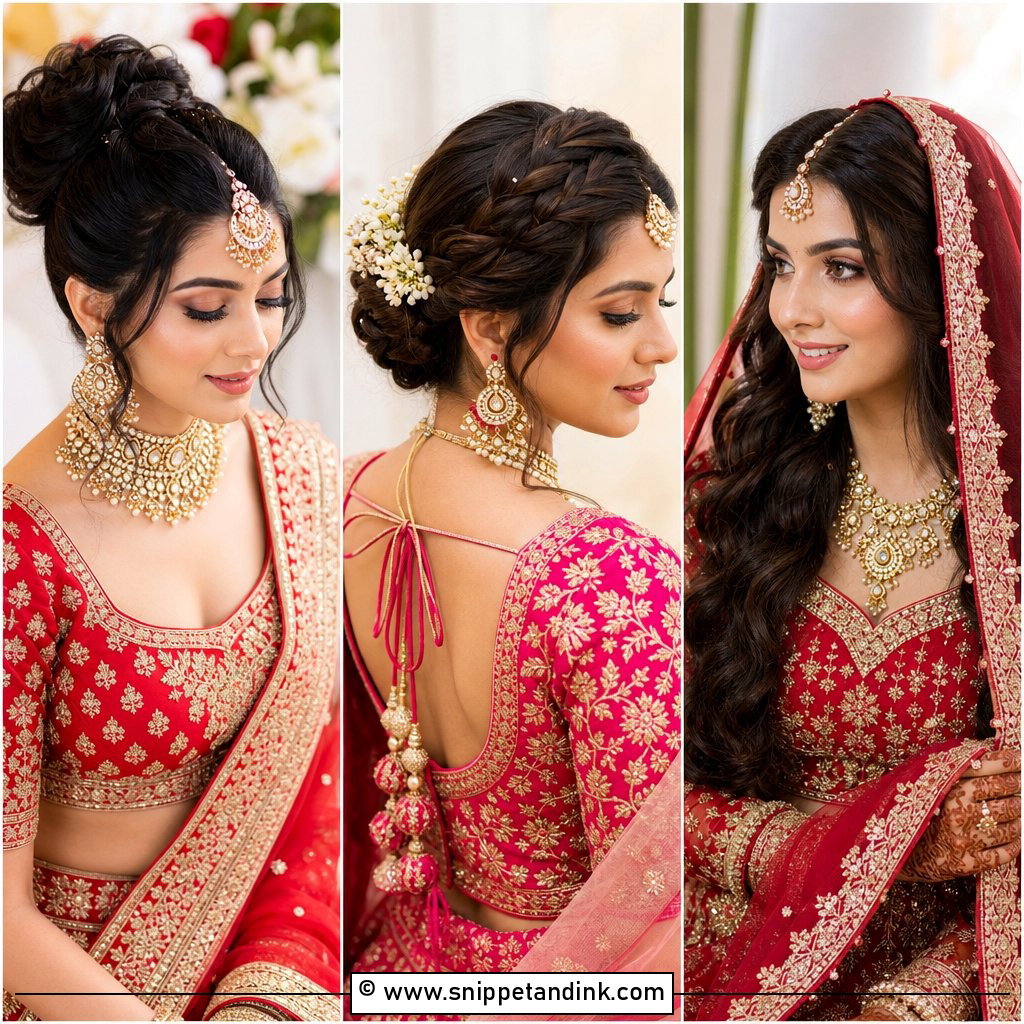
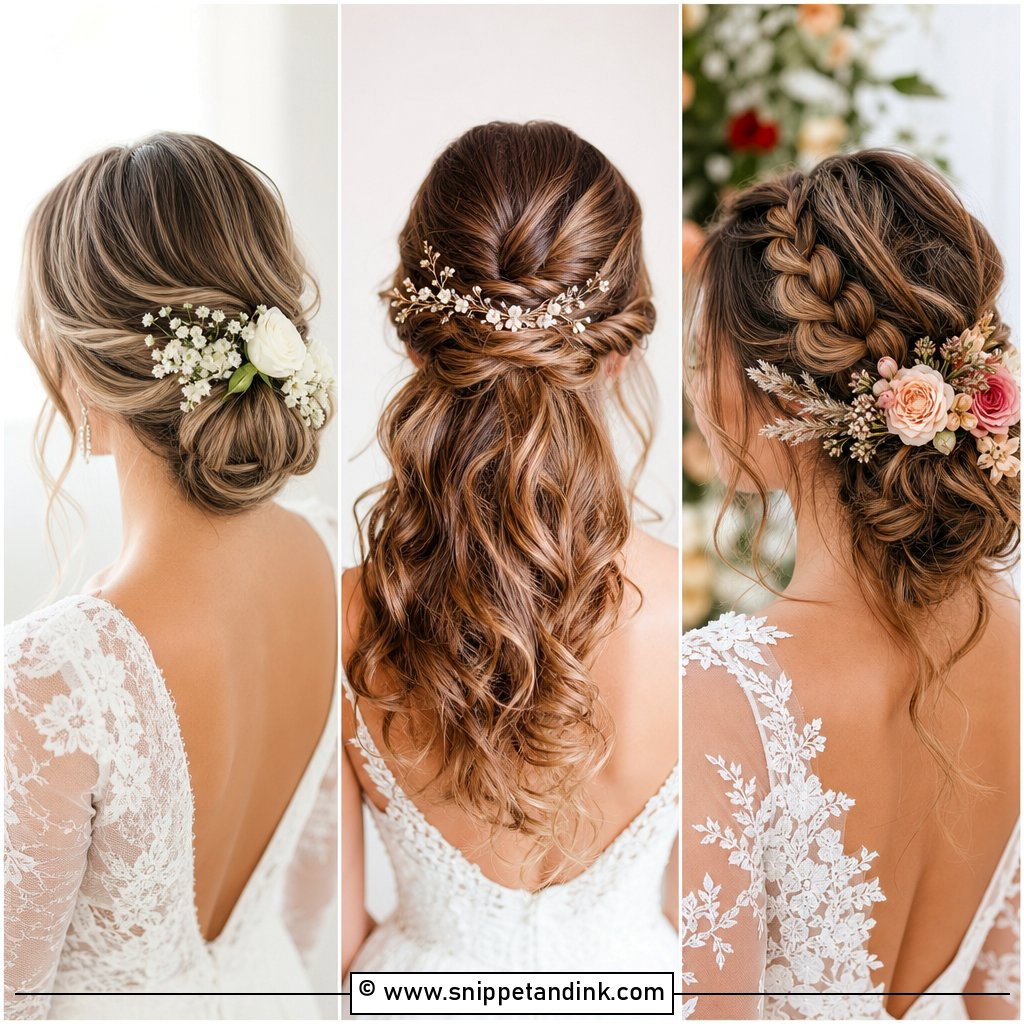
A soft messy bun only looks casual. Underneath, I build a firm base and pin it tightly, then pull out strands and loosen the outer layer as the last step. If the bun starts loose, it collapses during the sangeet dancing. Pearl pins or one floral accent keep it bridal. It sits as comfortably with a heavy lehenga as with an Indo-Western outfit, and it’s a sensible choice for a destination wedding, where humidity would undo sleeker styles anyway.
4. South Indian Bridal Braid
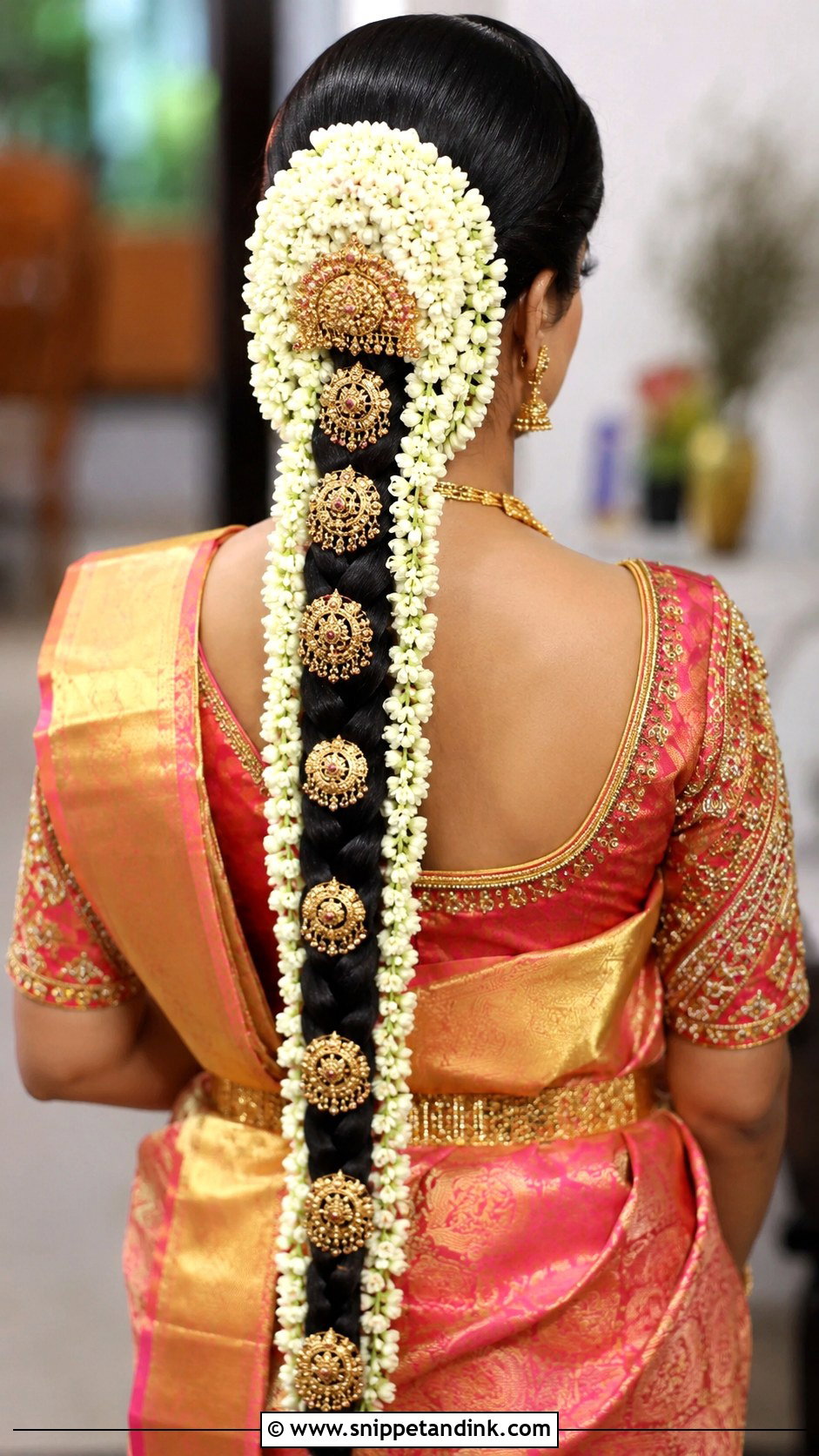
The South Indian braid is a single, thick plait, often wrapped in several rows of jasmine and finished with a jadanagam, the long serpent-shaped gold ornament that runs down the braid. Few brides have natural waist-length hair, so a matching false braid is common, and I attach it high enough that the ornament covers the join. The plait itself should be tight and well defined so the jewellery lies flat. With a Kanjeevaram silk saree and temple jewellery, it’s the traditional choice for a South Indian ceremony. Expect the total weight of flowers and gold to be noticeable by evening.
5. Hollywood Waves Open Hair
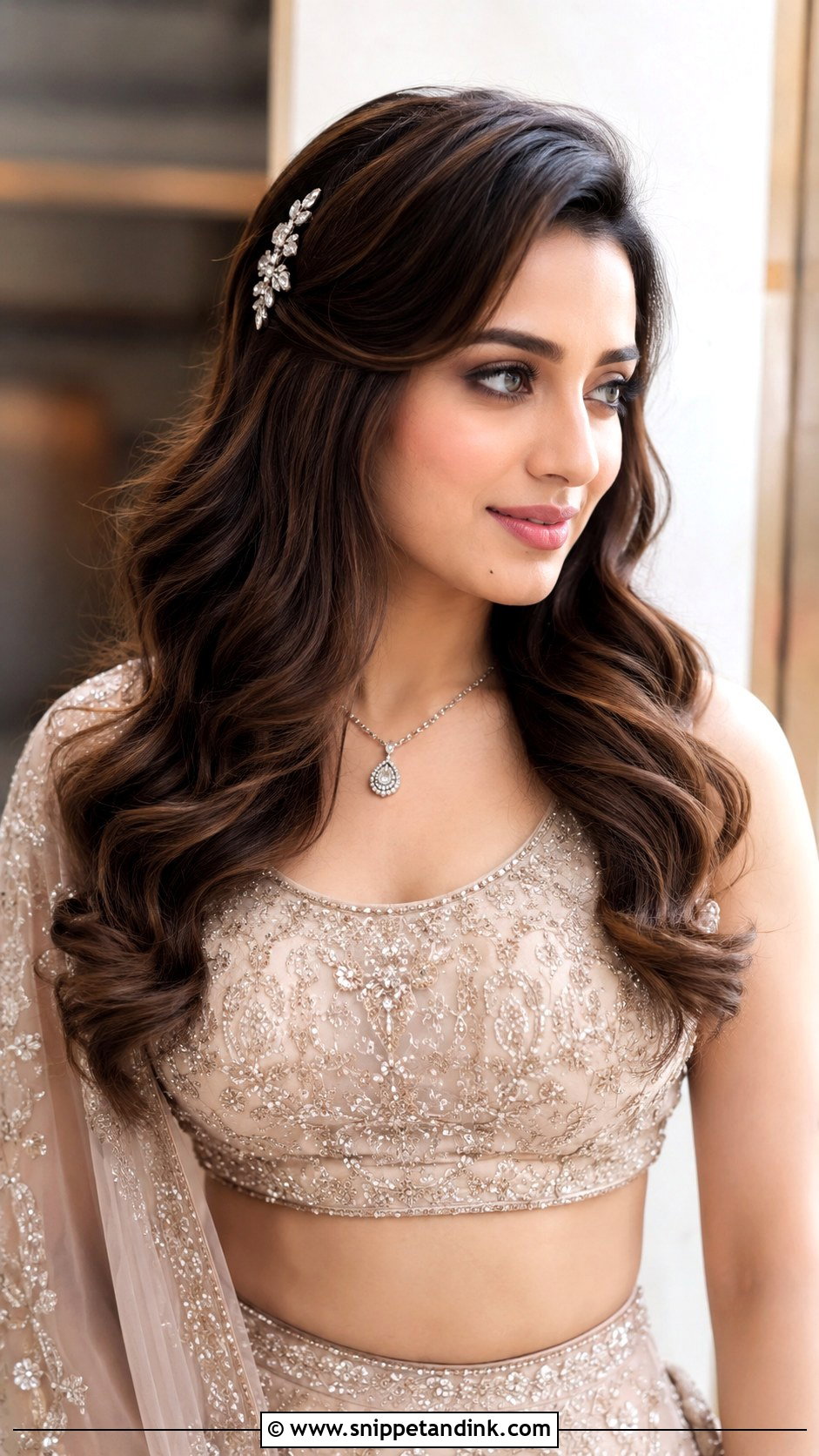
Open Hollywood waves are popular because they look soft without being shapeless. The technique is the key: each section is curled in the same direction, set until cool, then brushed out into a single wave. I like them for haldi, mehendi and destination weddings, though open hair at a haldi will get turmeric on it, so I’d keep it for later functions if you can. A diamond hairpin above one ear adds sparkle. They suit modern lehengas and Indo-Western gowns. In humid weather, set them firmly, because waves are the first to drop.
6. Floral Overflowing Bun
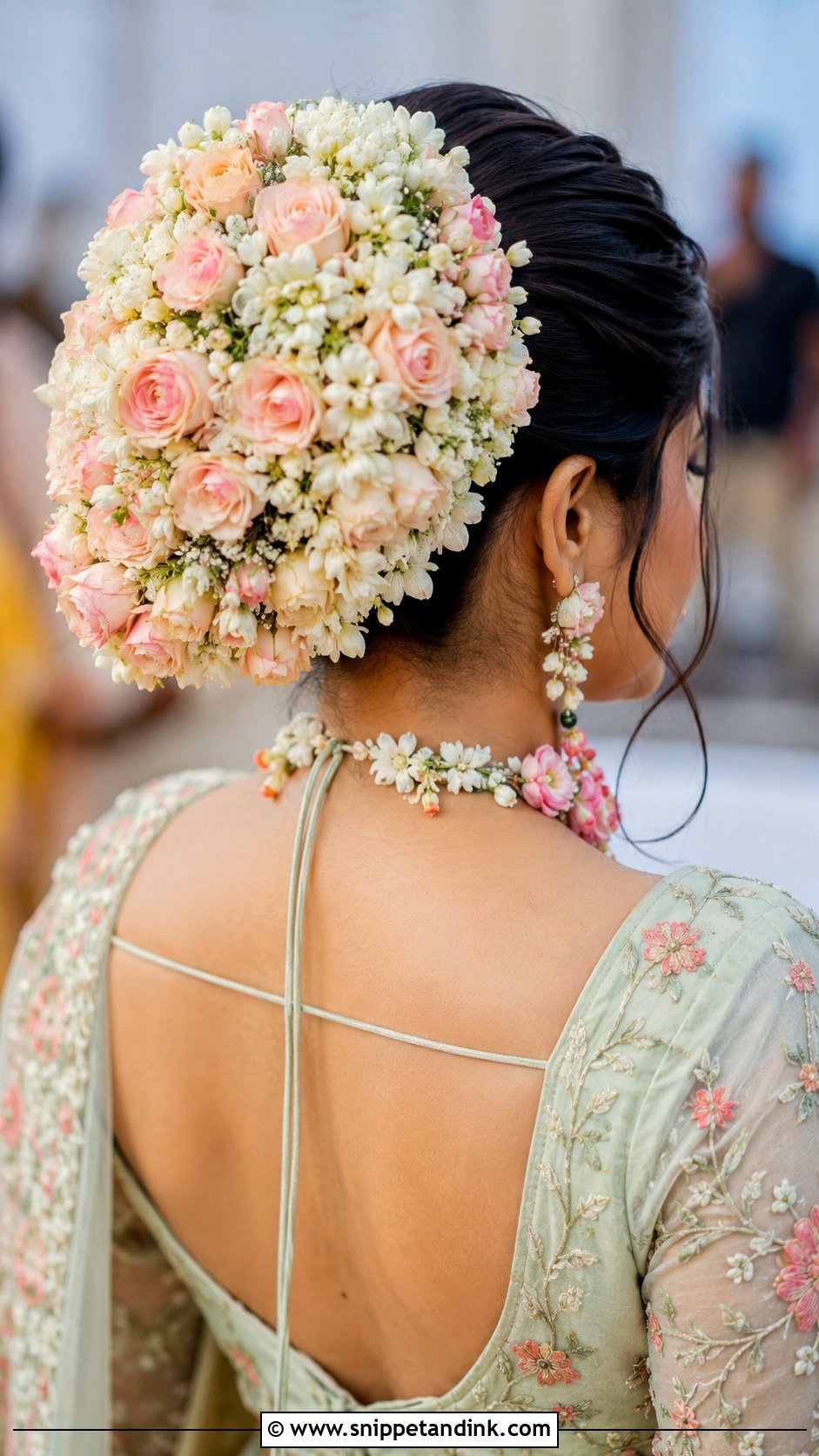
The overflowing floral bun is built for the camera. A large bun is covered in blooms in soft pastel tones like blush roses, white jasmine and baby’s breath, spilling out around the edges. It’s a heavy look, so I use a padded filler inside the bun to give the flowers something firm to pin into. Fresh flowers wilt under hot sun at a haldi, so for daytime I often mix in a few silk ones. It pairs with pastel lehengas and floral jewellery and makes sense for mehendi or haldi ceremonies.
7. Half-Up Half-Down With Curls
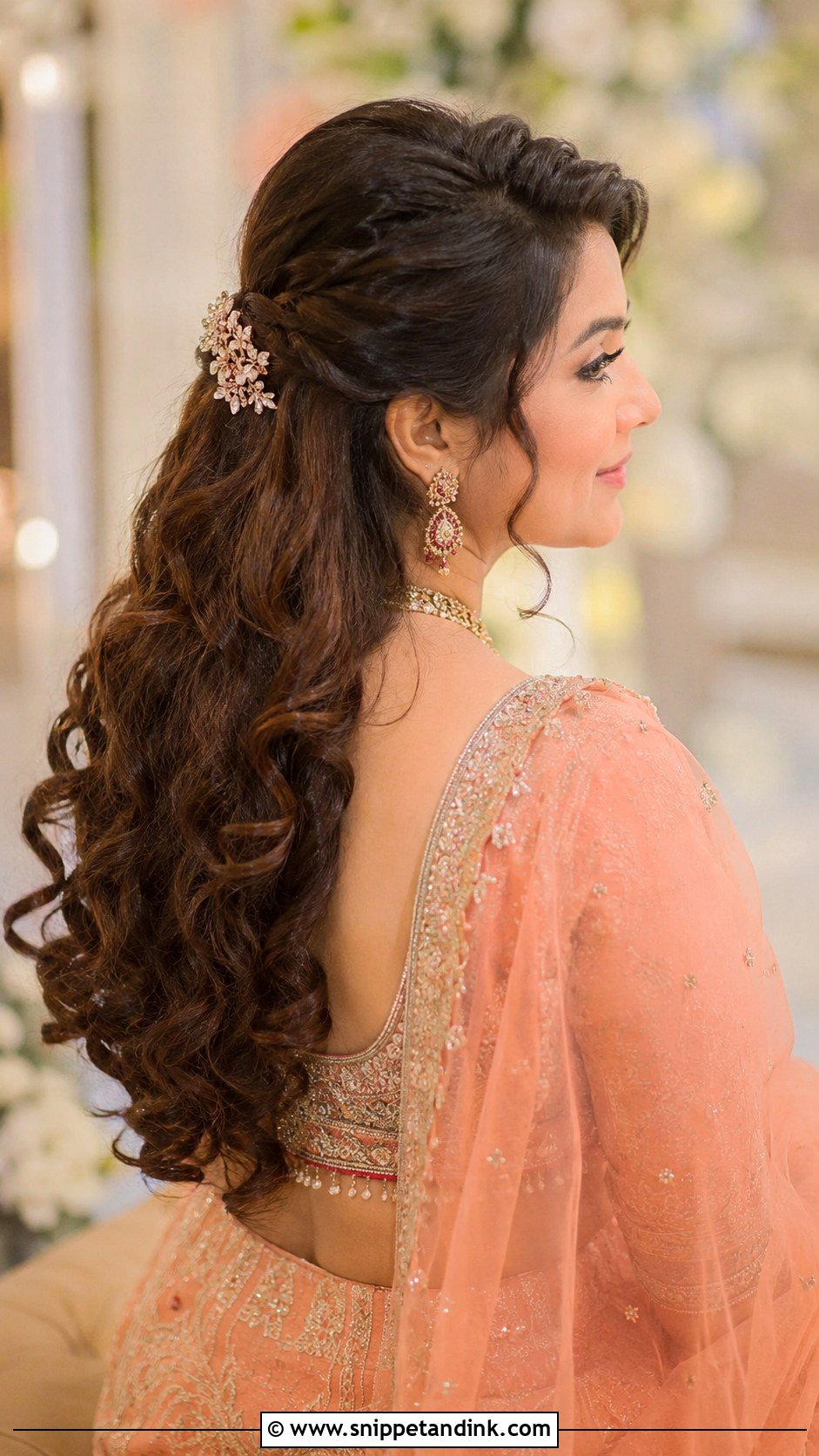
Half-up, half-down lets you wear your hair down and still keep it neat. The top section is pulled back and pinned, and the rest falls in soft curls. A jewelled hairpin or floral accent covers the pins. I curl the bottom section first, then secure the top so the curls don’t get crushed. It works with lehengas and sarees, and I’d suggest it for receptions and sangeet nights. With heavy earrings, keep the curls behind the shoulders so they don’t tangle with the jewellery.
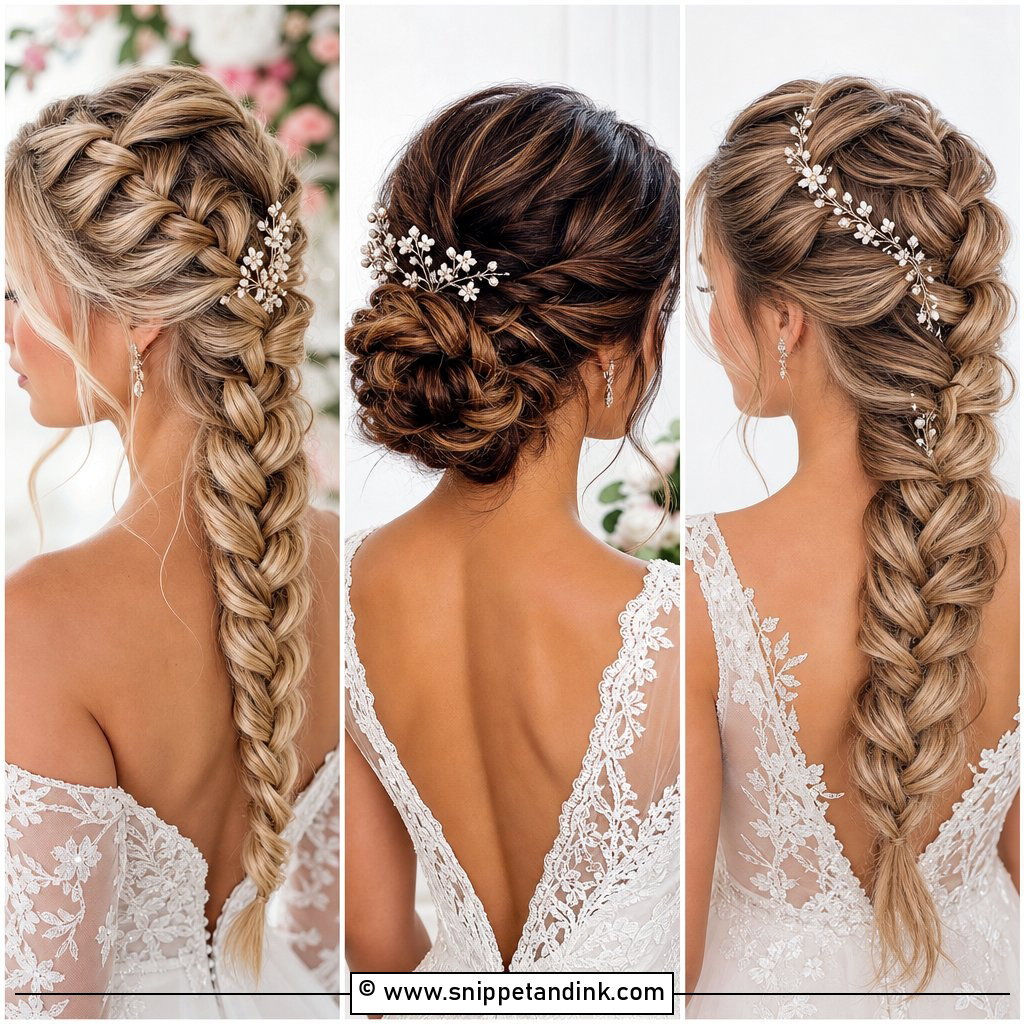
8. Fishtail Braid With Flowers
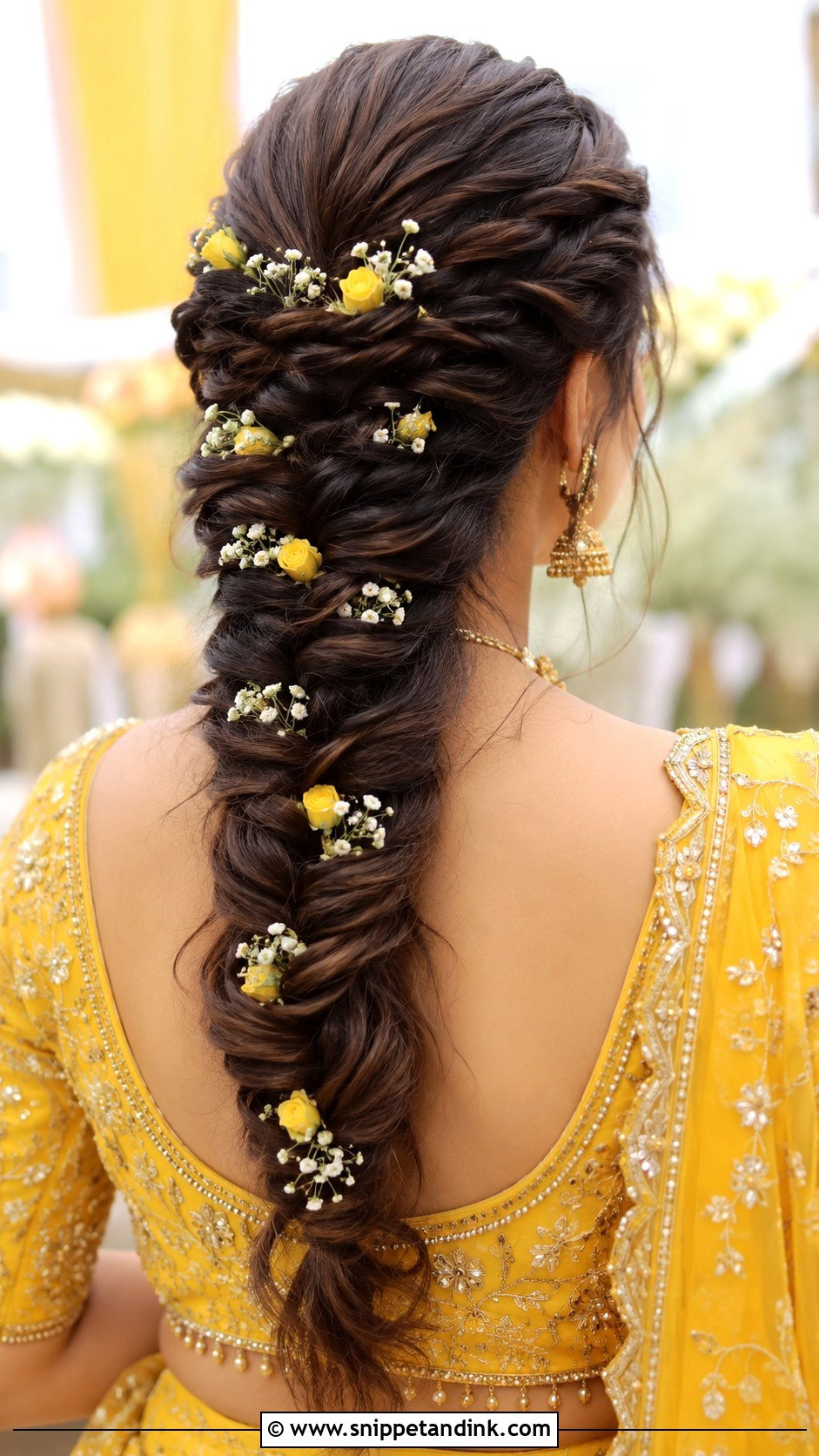
A fishtail braid has a fine, rope-like weave that looks much more complicated than it is. I loosen the hair at the crown first for volume, then weave the fishtail down the back and gently widen it. Small flowers can be tucked into the weave. Extensions make it longer and fuller if your own hair is thin. It suits mehendi and sangeet. The weave holds flowers well, but very layered hair will have short pieces poking out, which is normal.
9. Low Bun With Maang Tikka
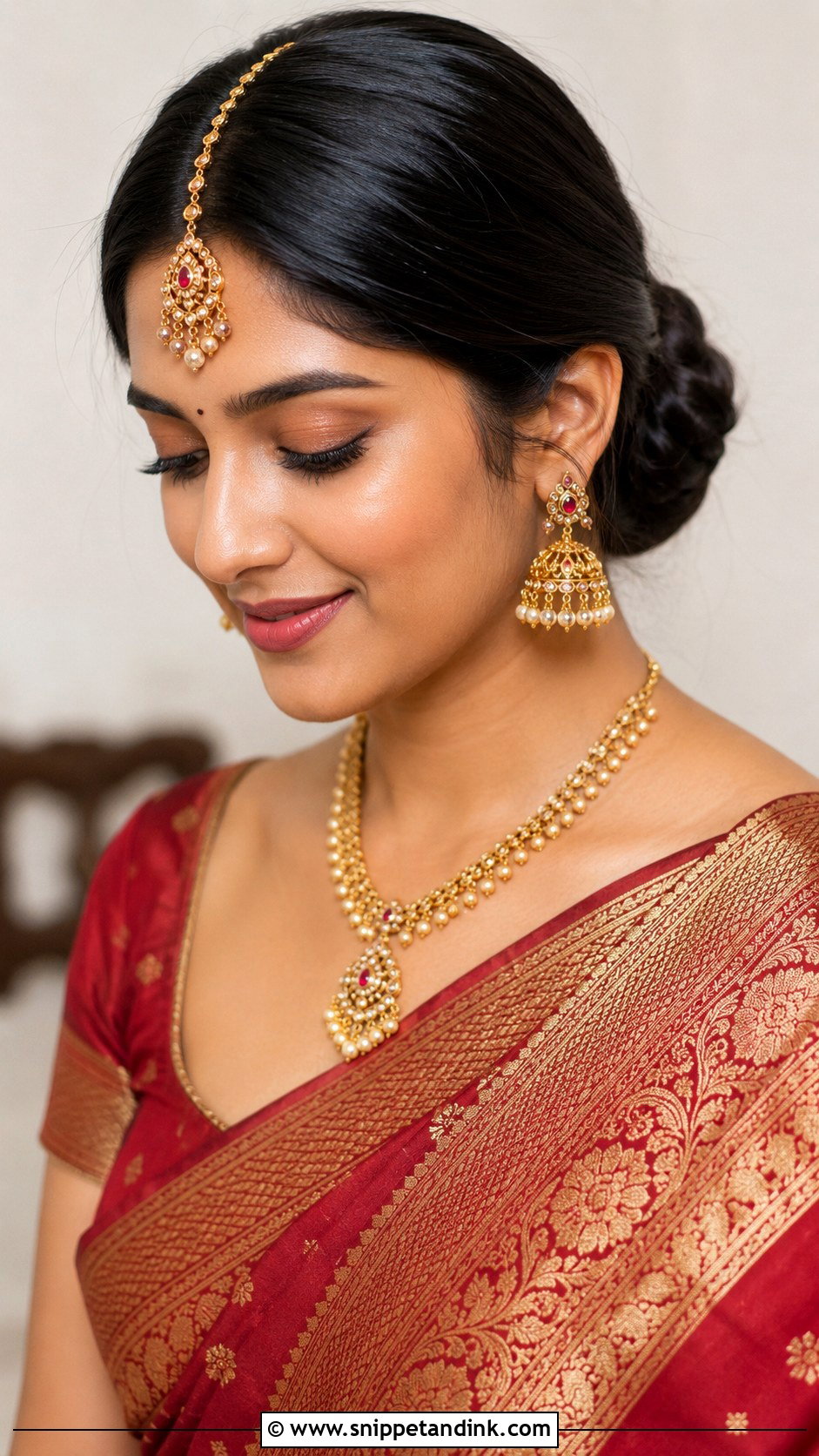
There’s a reason the low bun is so common: placed at the nape, it’s comfortable for long ceremonies and gives the dupatta a solid place to pin. A statement maang tikka draws attention to the face. I smooth the hair back with a cream, then build the bun around a filler if the hair is fine. It pairs with heavy sarees and classic gold jewellery. A few decorative pins or fresh flowers add a softer note. Brides of any age can wear it.
10. Pearl-Lined Braid
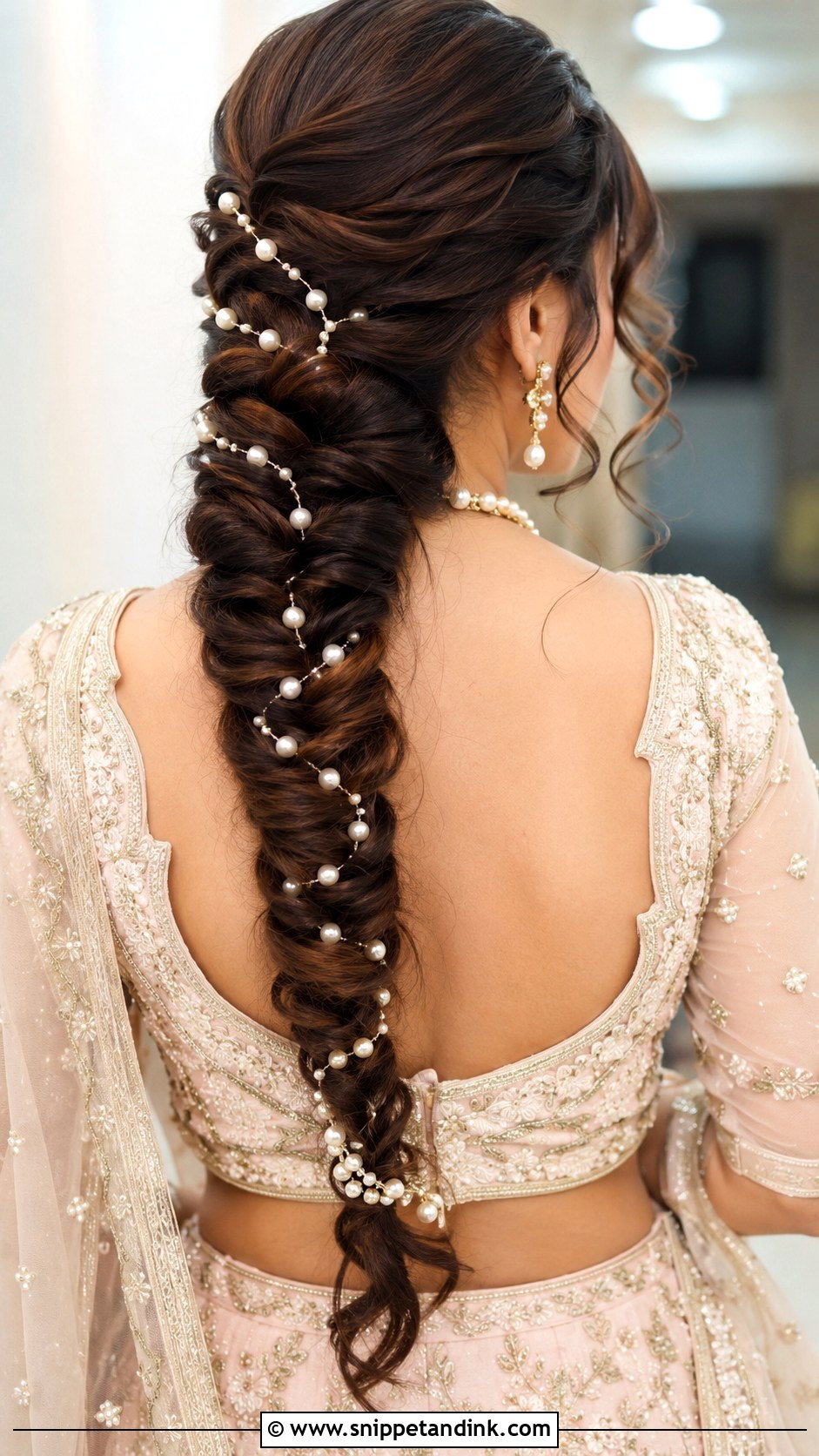
Pearls give a braid a quiet shine that gold can’t, and they weigh almost nothing. I thread them through one strand before braiding, or pin them along the outer edge, because pearls set in the middle of a plait sink into shadow. Pastel and ivory lehengas and pearl jewellery sets are the natural match, and engagements and receptions suit it best. On very dark hair, cream or champagne pearls look softer in photos than stark white ones, which can read almost like plastic under flash.
11. Bengali Bridal Bun
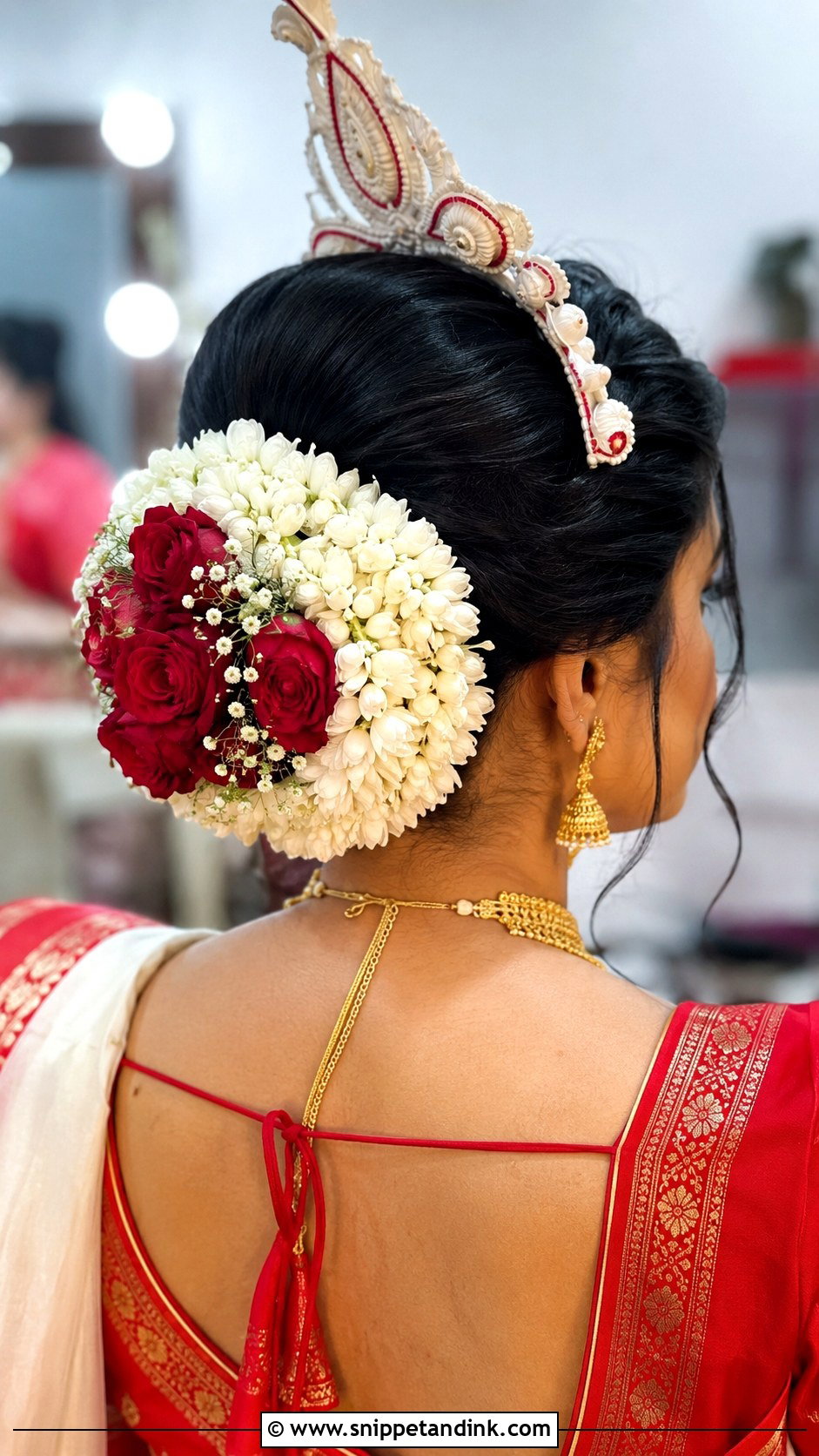
The Bengali bridal bun is a large, rounded bun at the back of the head, often decorated with white and red flowers. It sits below the traditional mukut, the white crown made of sola pith, which rests on top of the head. I position the bun low enough that the mukut and the veil can sit without pushing it out of shape. It’s worn with the classic red and white Bengali saree. Plan your bun around the mukut you’ll be wearing, because sizes vary.
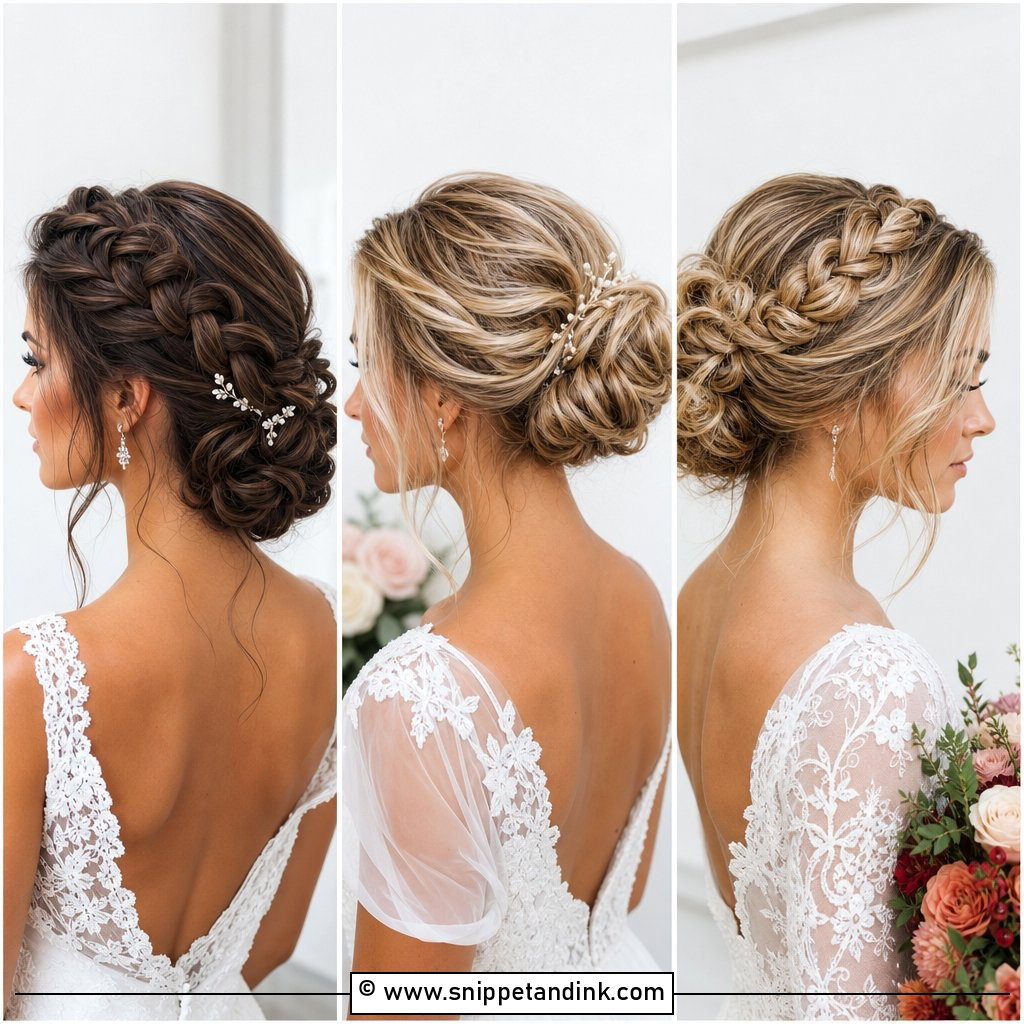
12. Braided Bun Combination
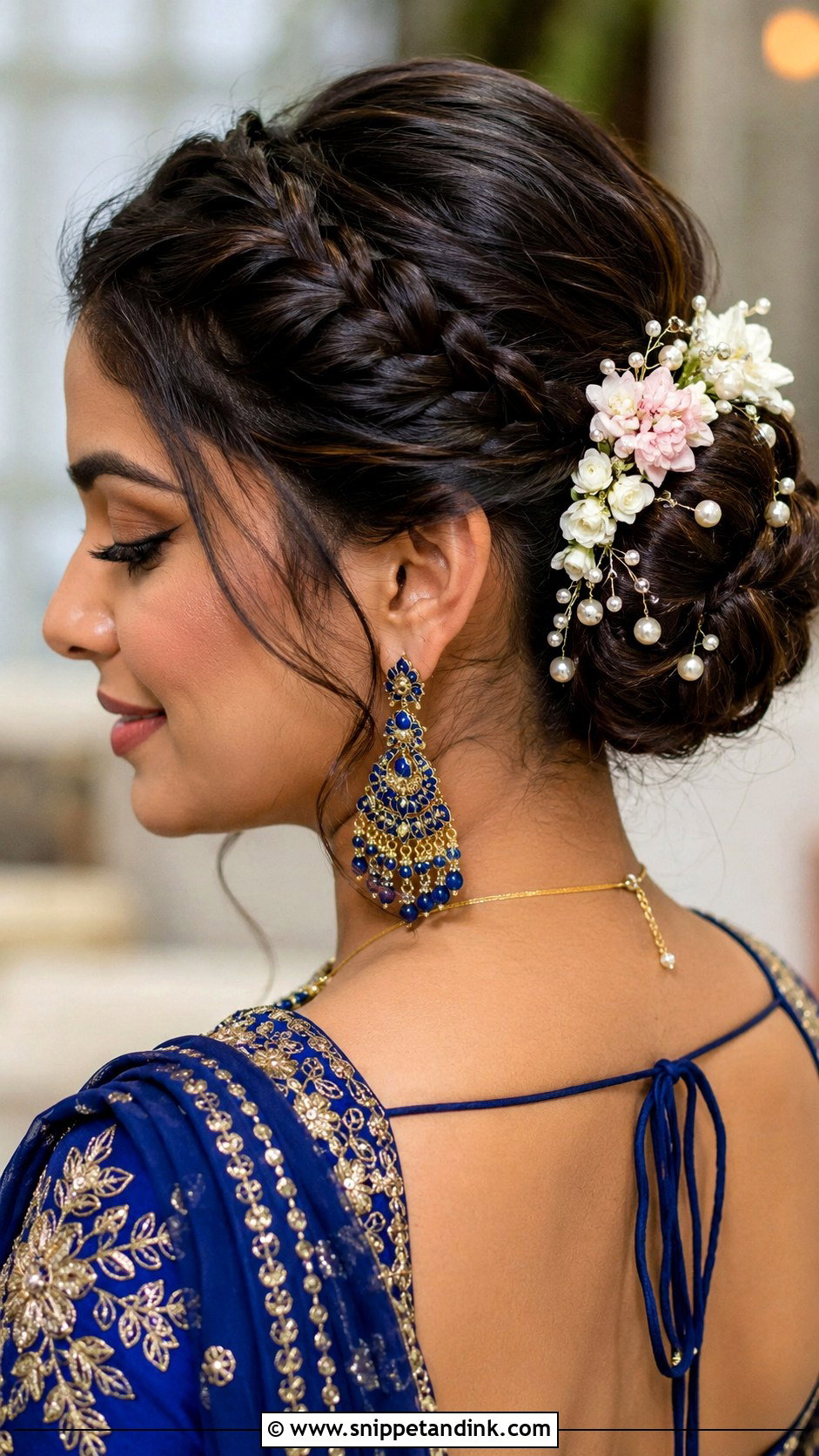
A braided bun mixes French braids or fishtails gathered into a neat bun at the back. The braids grip pins well, so this is one of the most secure updos on the list. I braid the sections first, then coil them around the base. Pearls, flowers or gold accents can be tucked in. It works for the main wedding ceremony and receptions, and with heavy lehengas or sarees.
13. Rose Twist Hairstyle
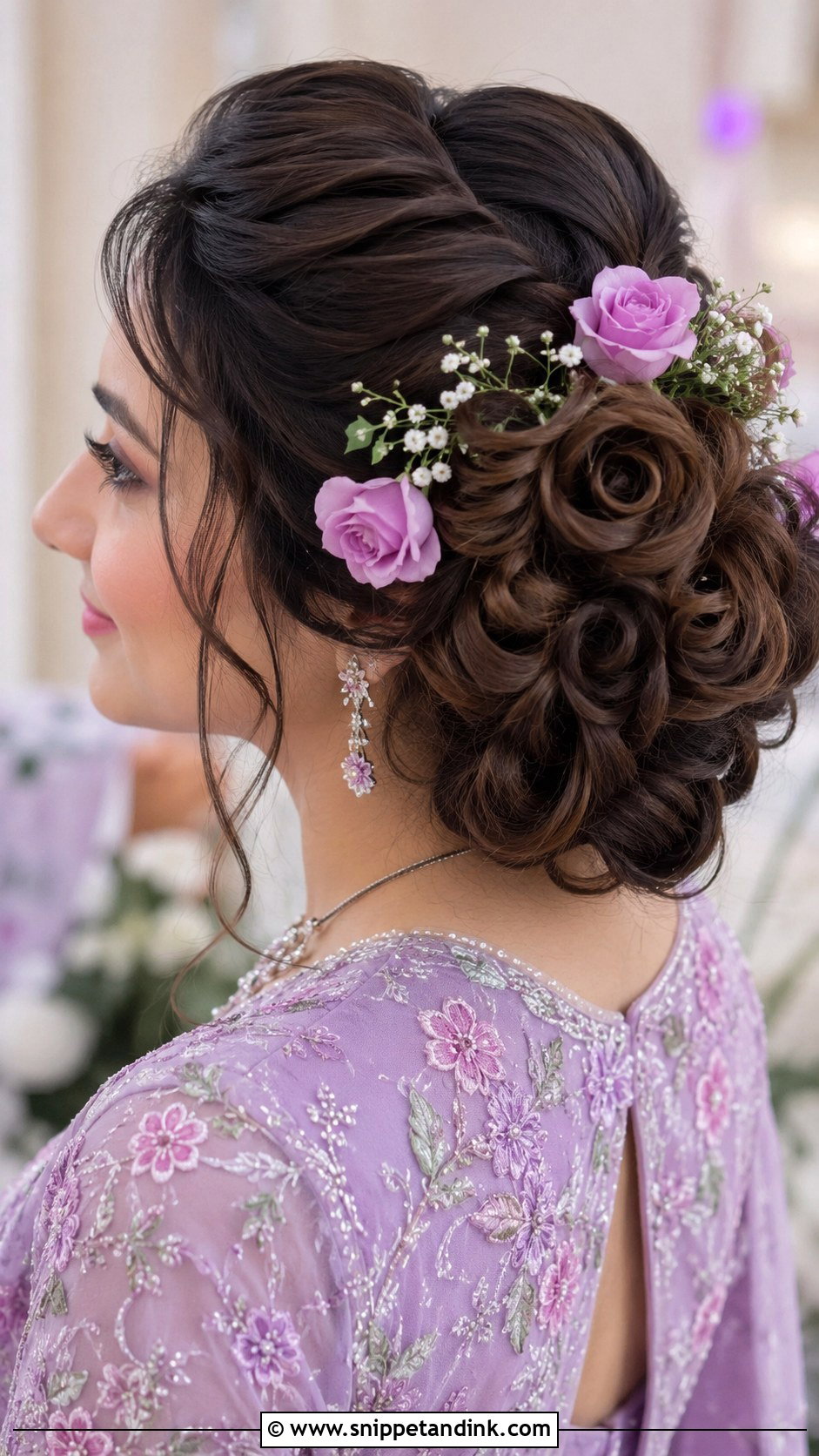
A rose twist takes small sections of hair, twists them tightly and coils them into flower shapes. It’s a creative look for mehendi and haldi, with pastel or floral outfits. Real or decorative flowers can be added in between. The twists need strong pins through the center, or they unravel. Freshly washed hair is too slippery, so I’d style this on second-day hair.
14. Sleek Straight Open Hair
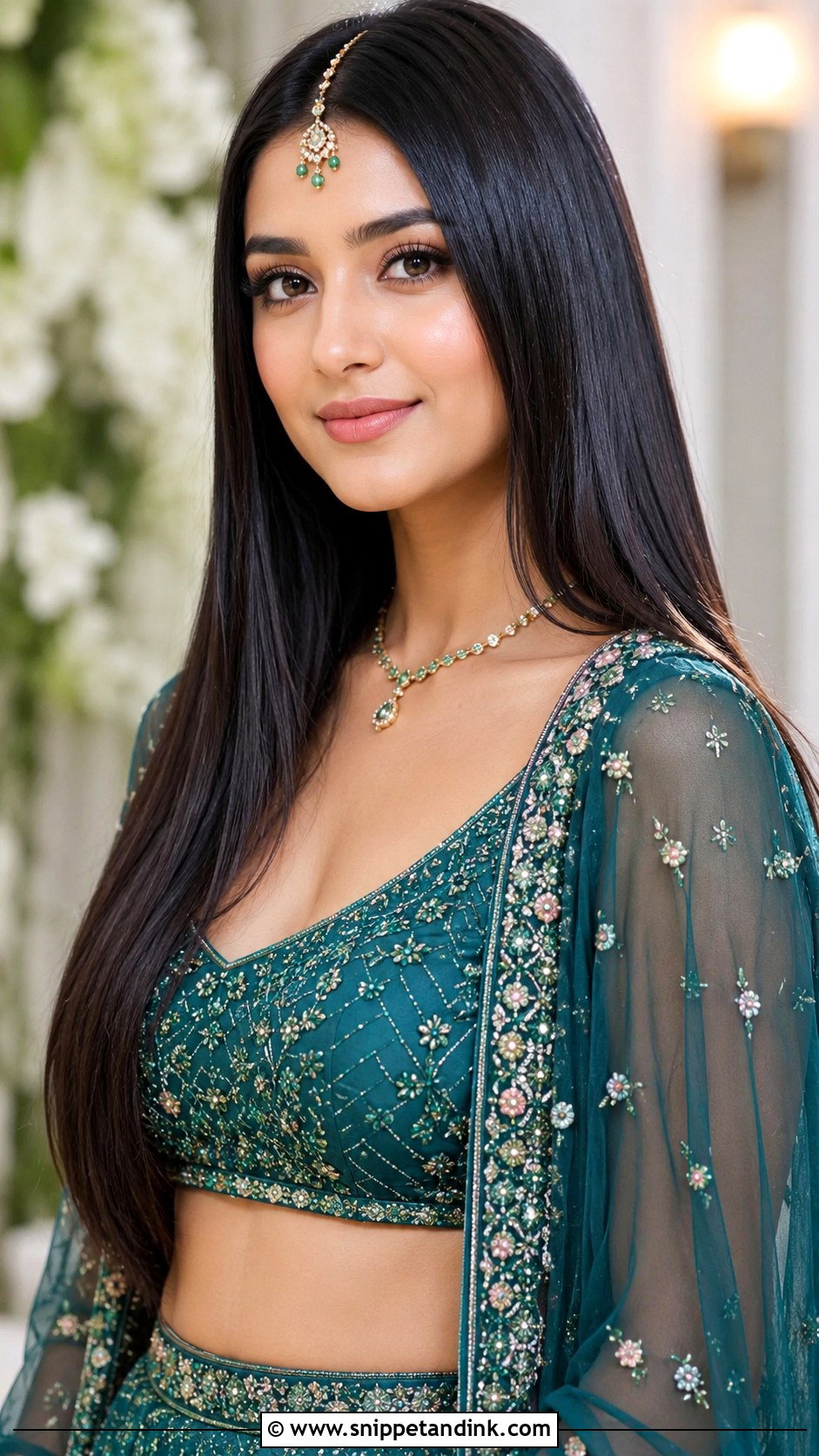
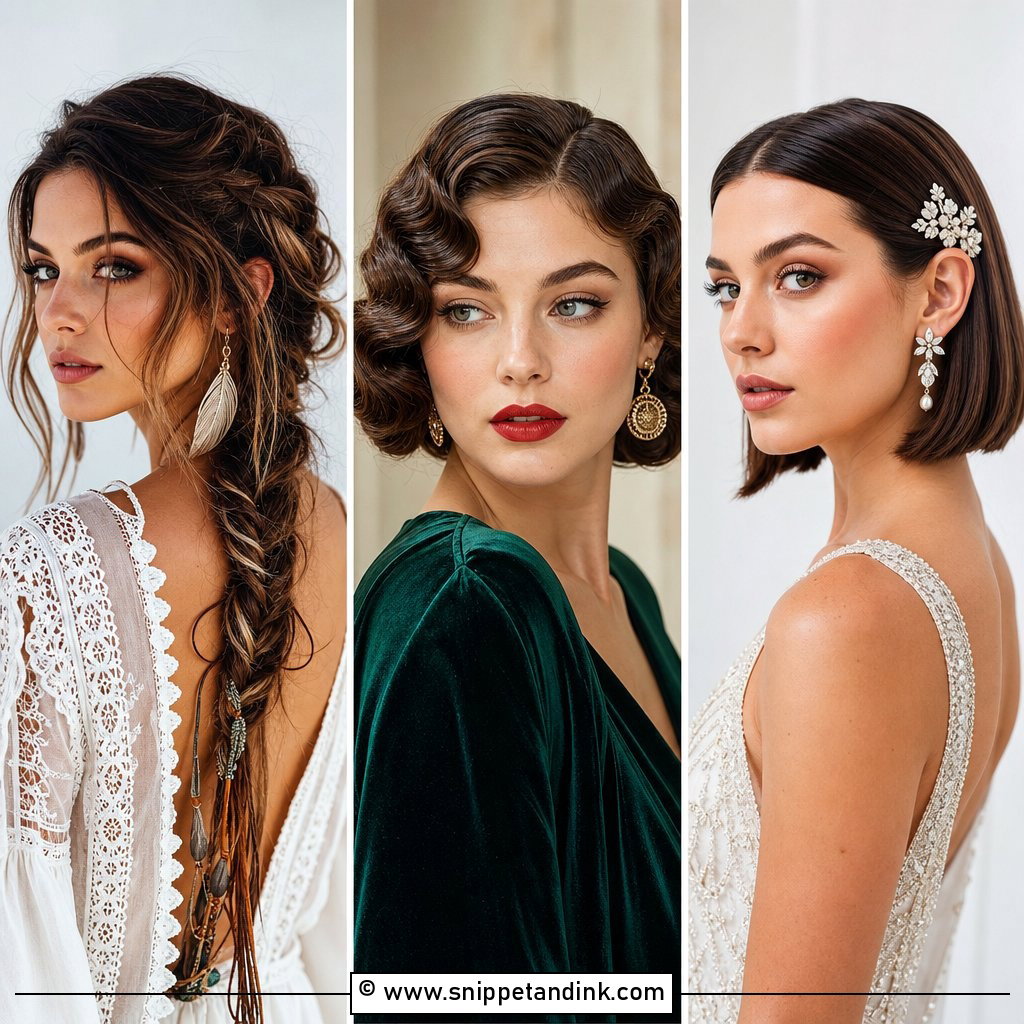
Sleek, straight open hair is one of the hardest looks to keep perfect. Every section needs to be flat-ironed, and a serum adds shine. Humidity is the enemy, since straight hair frizzes fast in heat. A simple maang tikka or a delicate hairpin adds sparkle. It goes well with modern lehengas and Indo-Western outfits at the sangeet or a cocktail reception. If your hair is naturally curly, expect to need a touch-up during the evening.
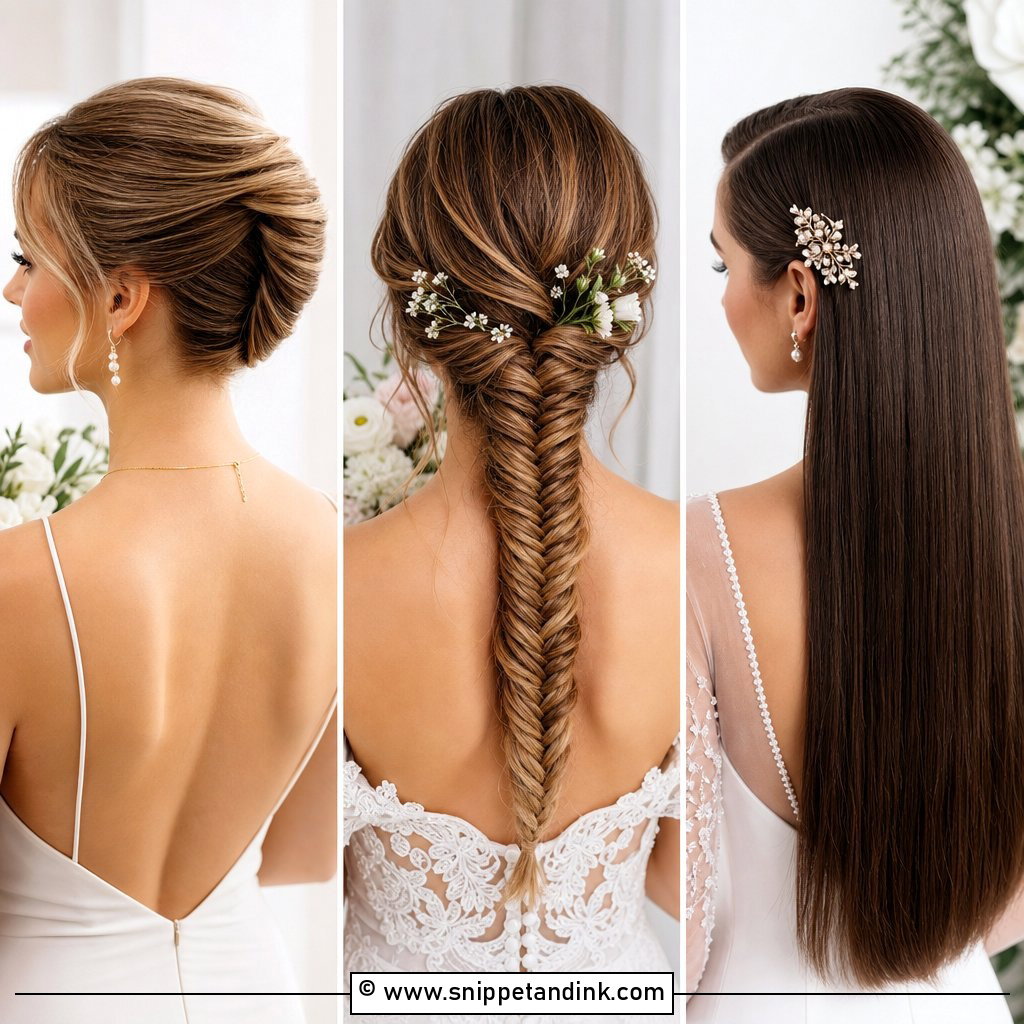
15. Dutch Braid Crown
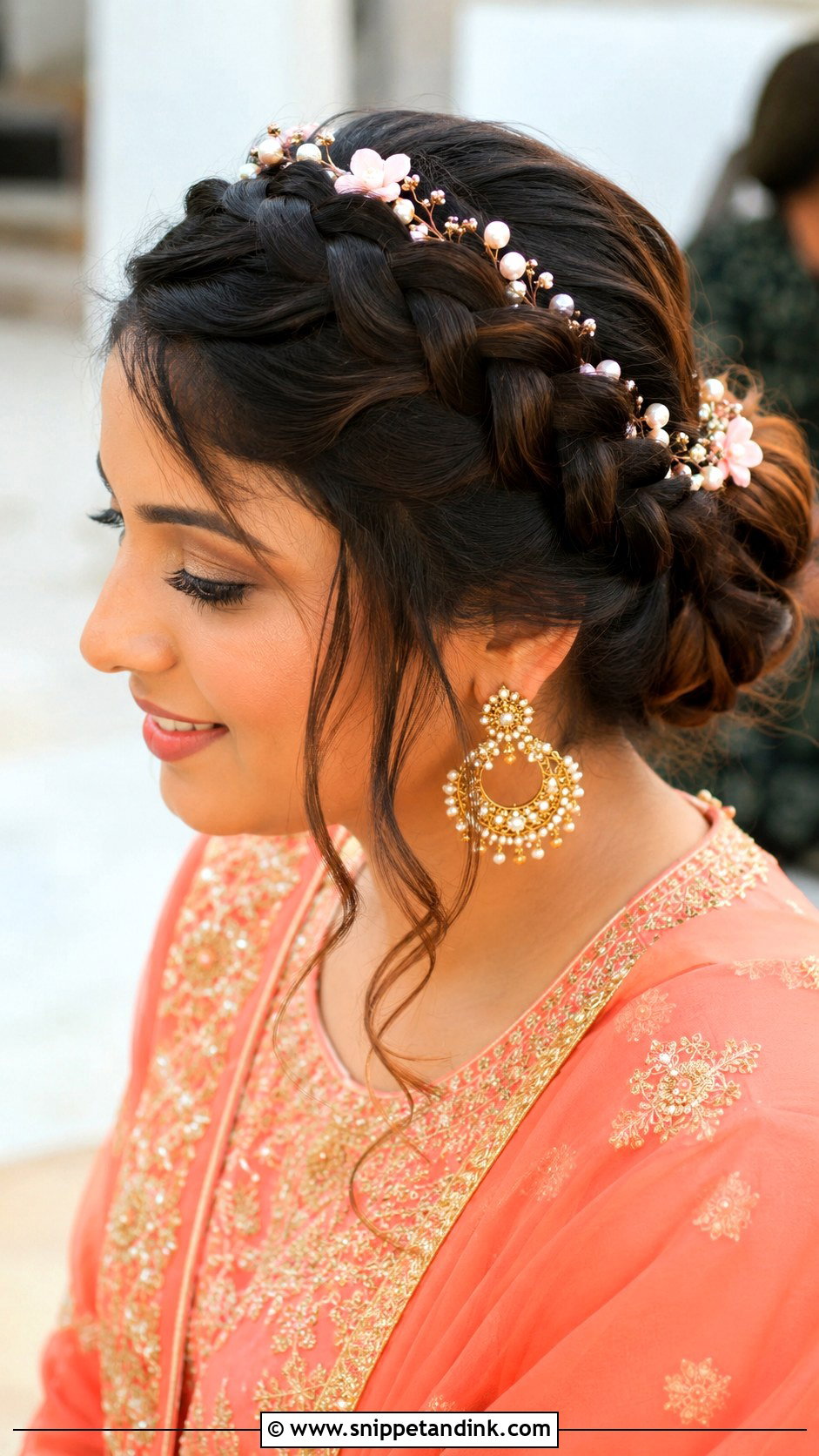
A Dutch braid crown wraps a raised, three-dimensional braid around the head like a halo. It keeps hair off your face and holds pearls, gold threads or small flowers well. I’d suggest it for mehendi and sangeet, because a crown braid takes up the space a maang tikka or matha patti would need. Thick hair makes the fullest crown; finer hair may need a clip-in piece to wrap all the way round.
16. Curly Side-Swept Hair
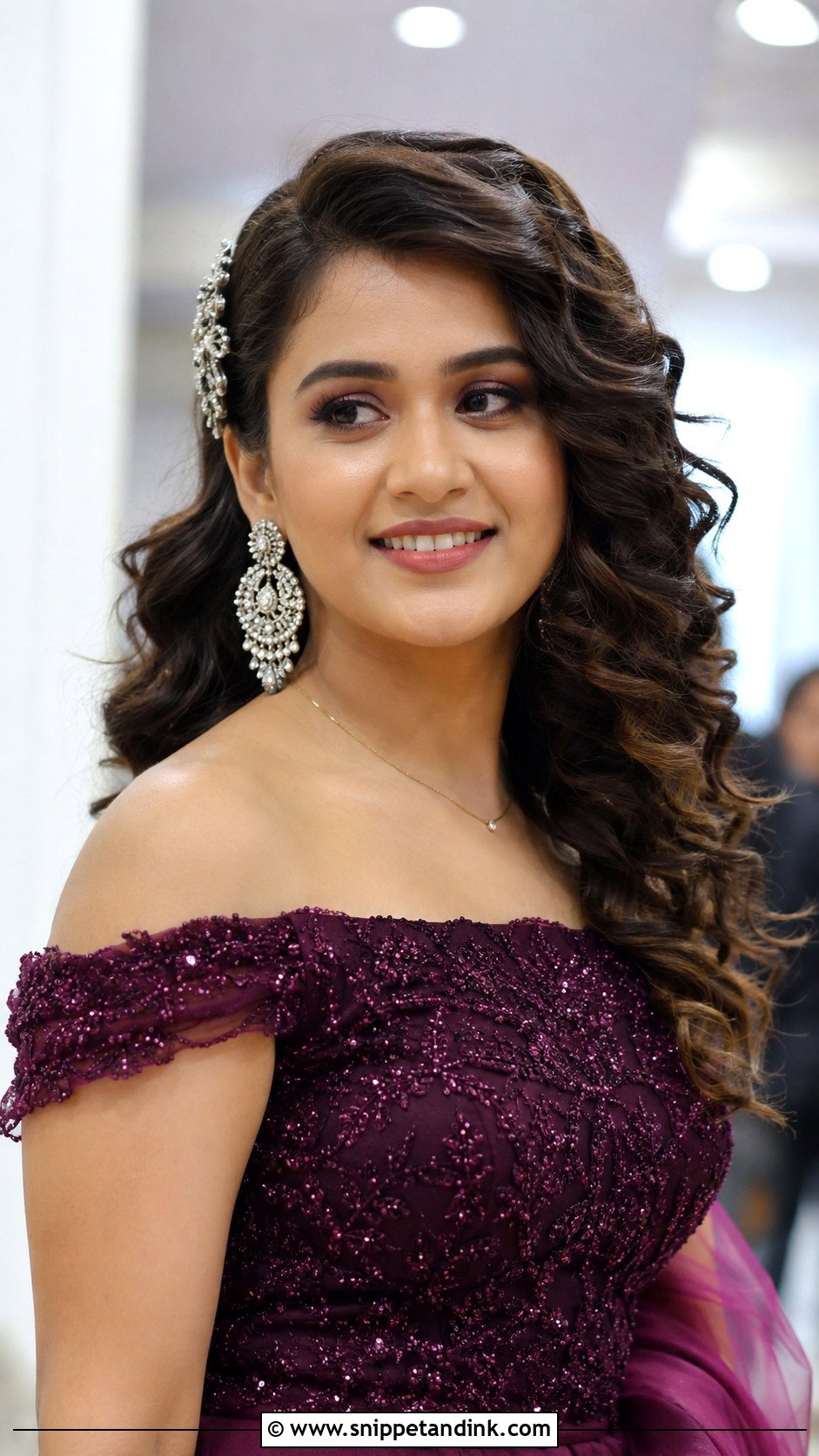
Curly side-swept hair gathers voluminous curls over one shoulder and shows off earrings on the other side. I anchor the swept section behind the opposite ear with crossed pins; a decorative pin or flower covers it. It goes well with off-shoulder blouses and modern lehengas. Receptions and sangeet nights suit it. Curls will drop slightly in heat, so a quick touch-up halfway through helps.
17. Mermaid Braid With Butterflies
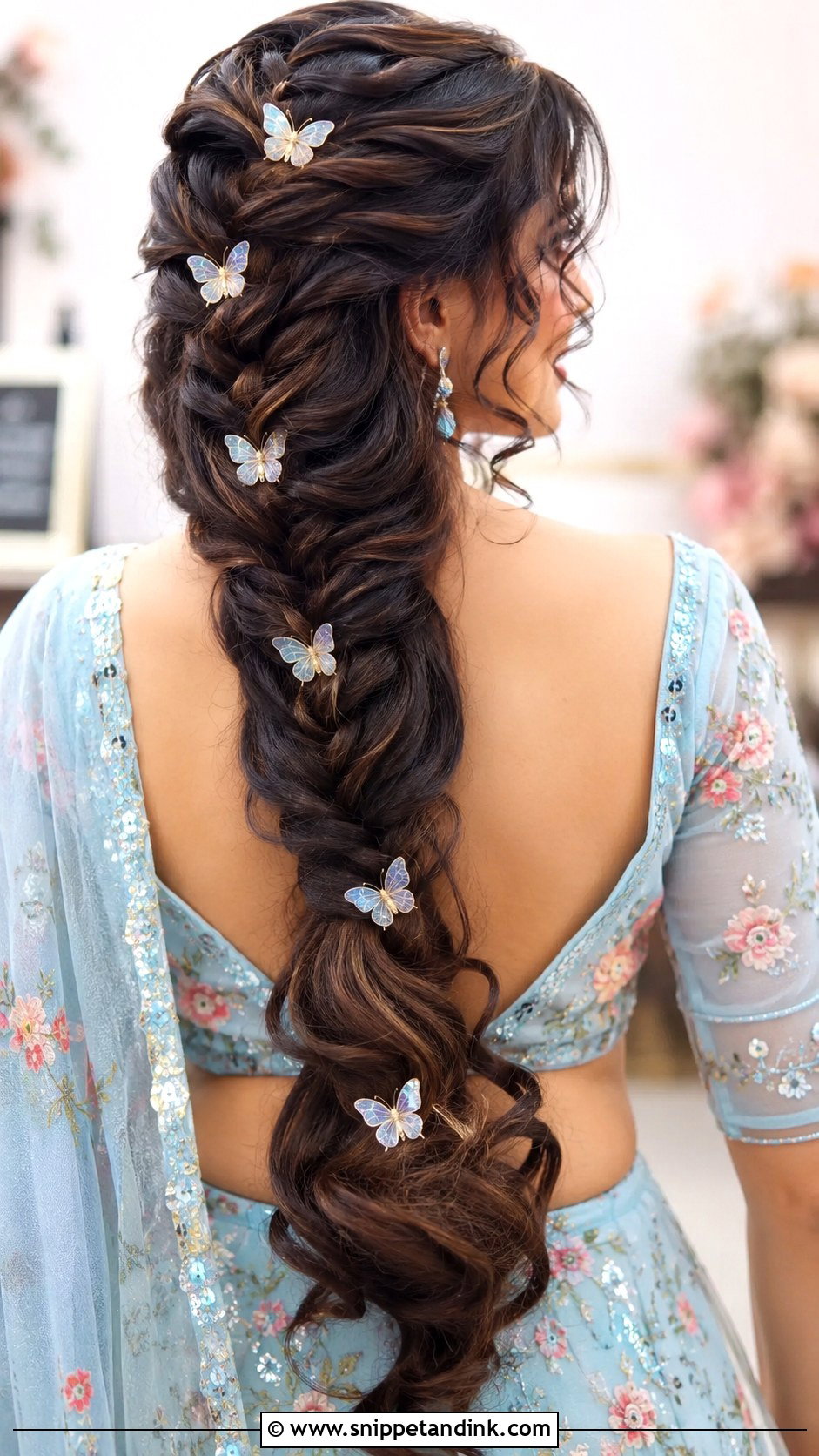
A mermaid braid is a thick, full braid made by pulling the edges wide, so it looks like it’s cascading. Mini butterfly accessories add a playful touch for mehendi and haldi. Extensions help get the thick look, since few brides have that much hair naturally. It pairs with pastel and floral outfits. The butterflies are light, but avoid metal clips that pull on fine hair.
18. Floral Crown Open Hair
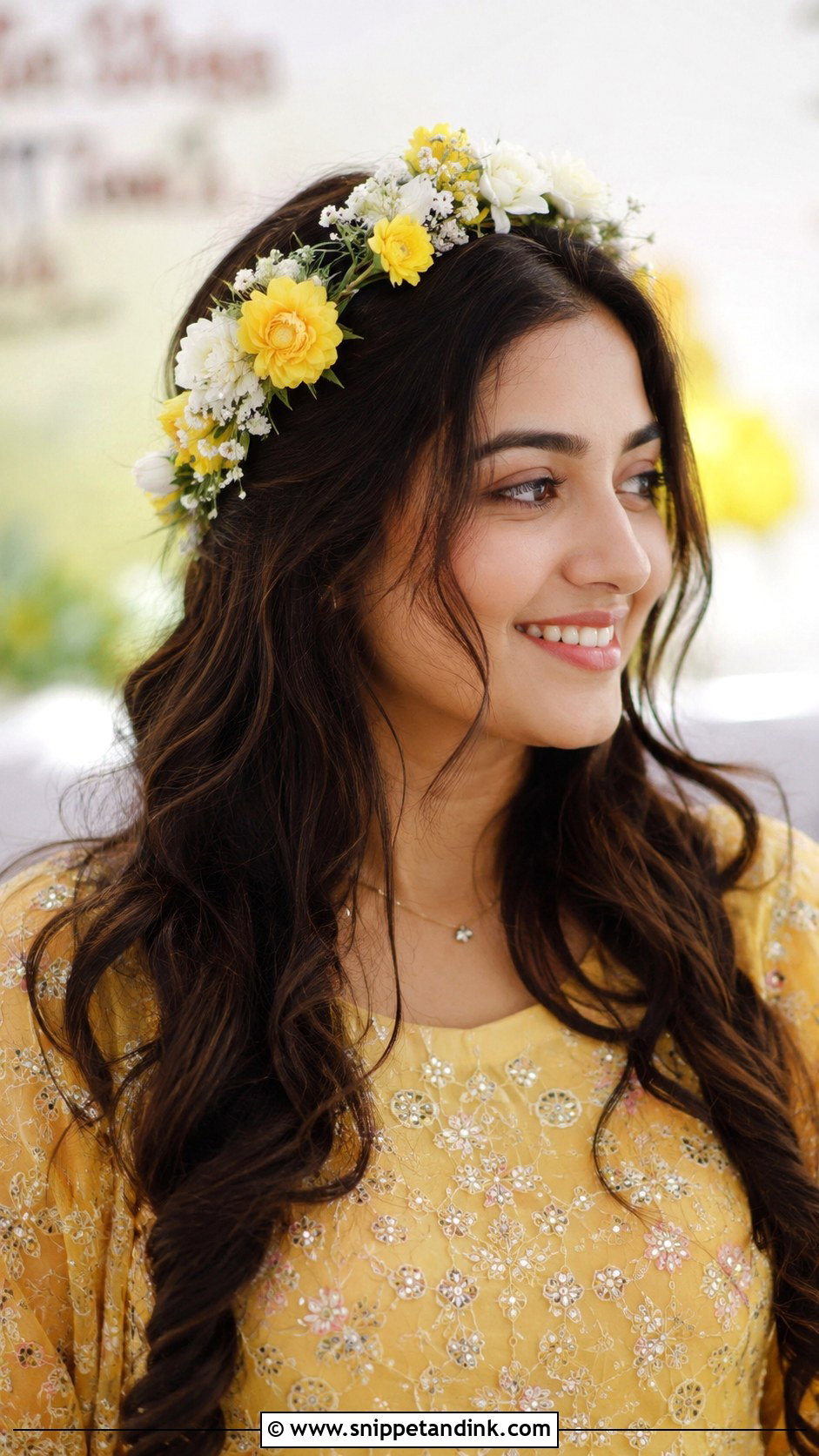
A floral crown with open hair is a relaxed, boho look for haldi, mehendi and outdoor destination weddings. The crown rests on loose waves. Fresh flowers wilt in the sun, so I’d use sturdy blooms or silk ones for daytime. The crown needs pinning in at least four points so it doesn’t slide. It pairs with pastel lehengas and flowing outfits.
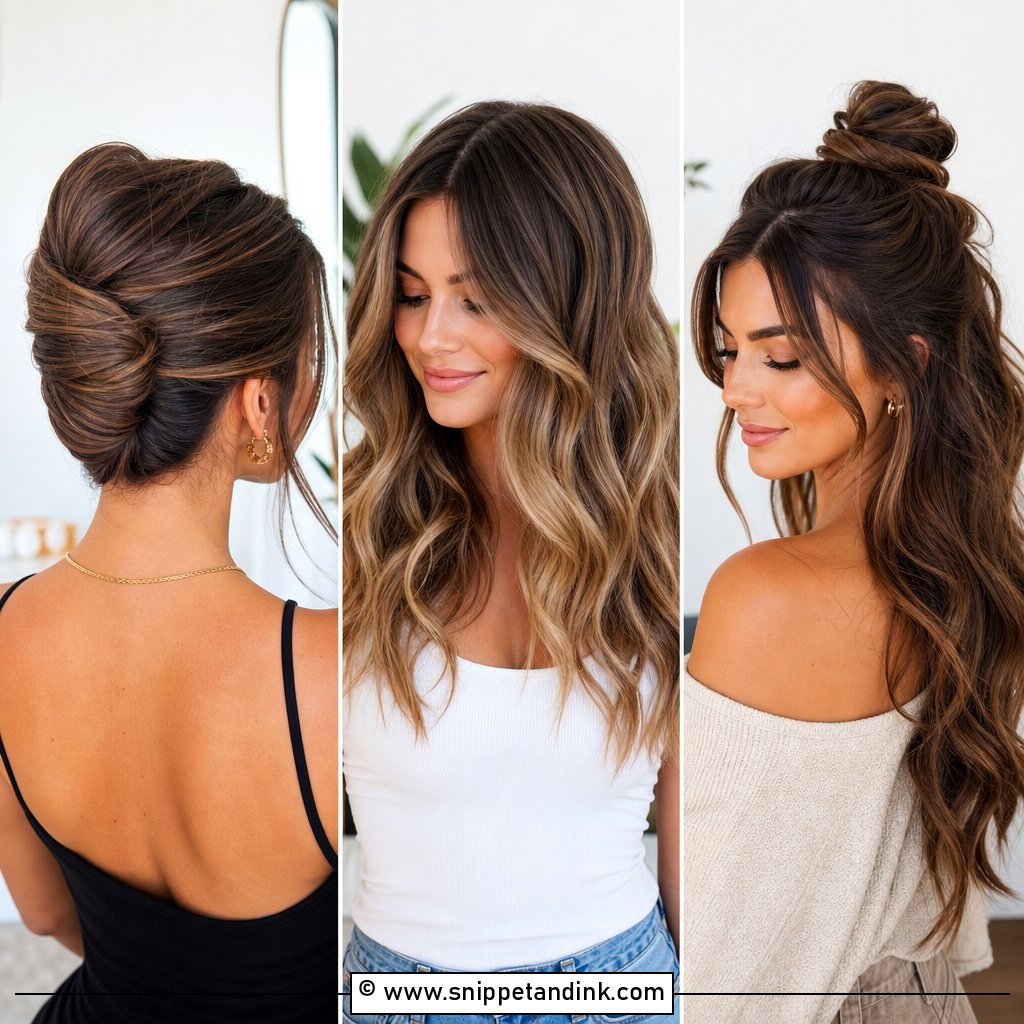
19. Sleek High Bun
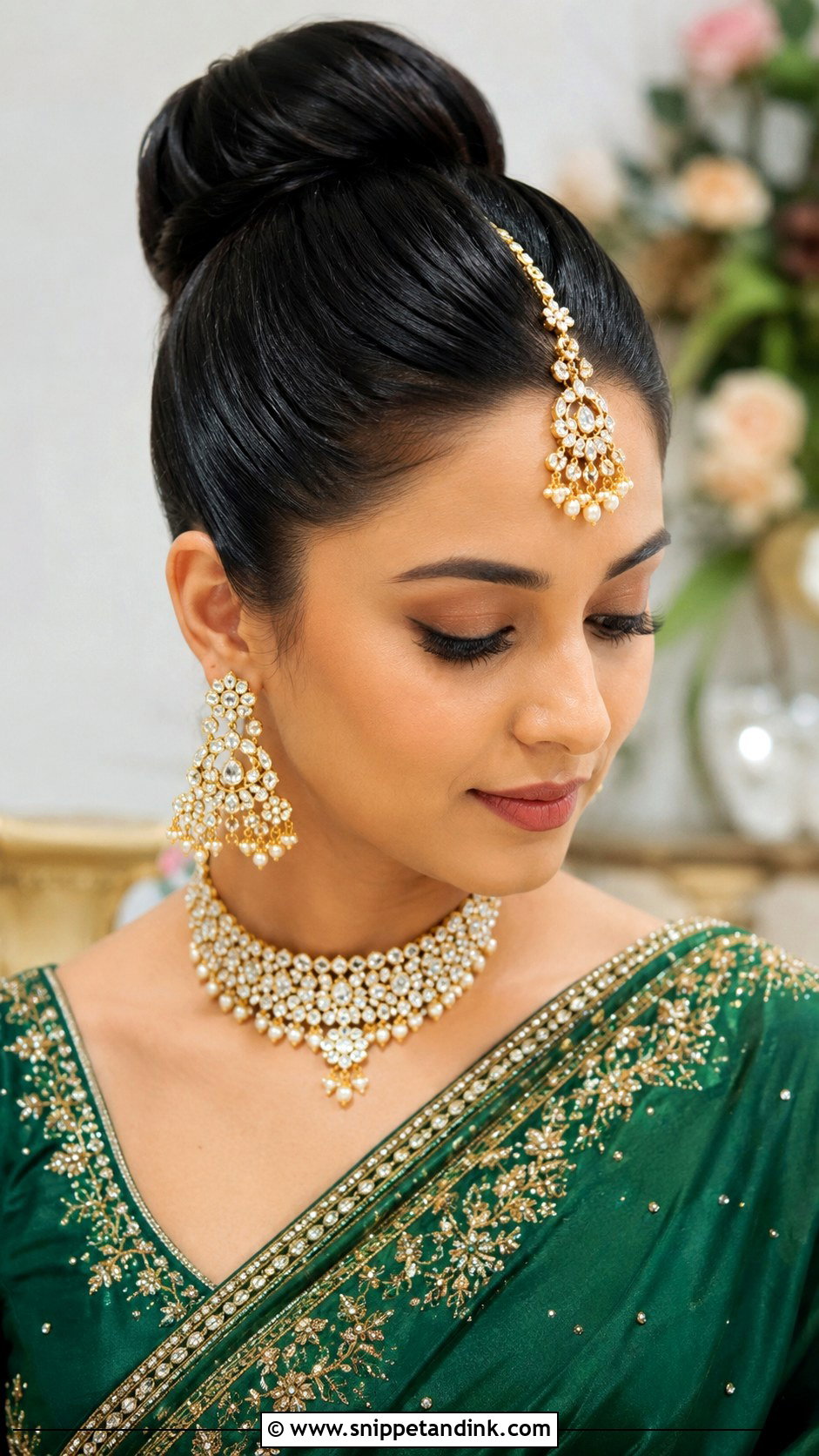
A sleek high bun sits on the crown and lengthens the neck. It’s clean and confident, and shows off statement earrings and necklaces. A maang tikka or decorative pins complete it. The high position pulls on the scalp more than a low bun, so I build a strong base and avoid heavy accessories. It goes with heavy sarees and structured lehengas, for the ceremony or reception. If a dupatta will cover your head, a high bun can push it up, so check at the trial.
20. Jadanagam Decorated Braid
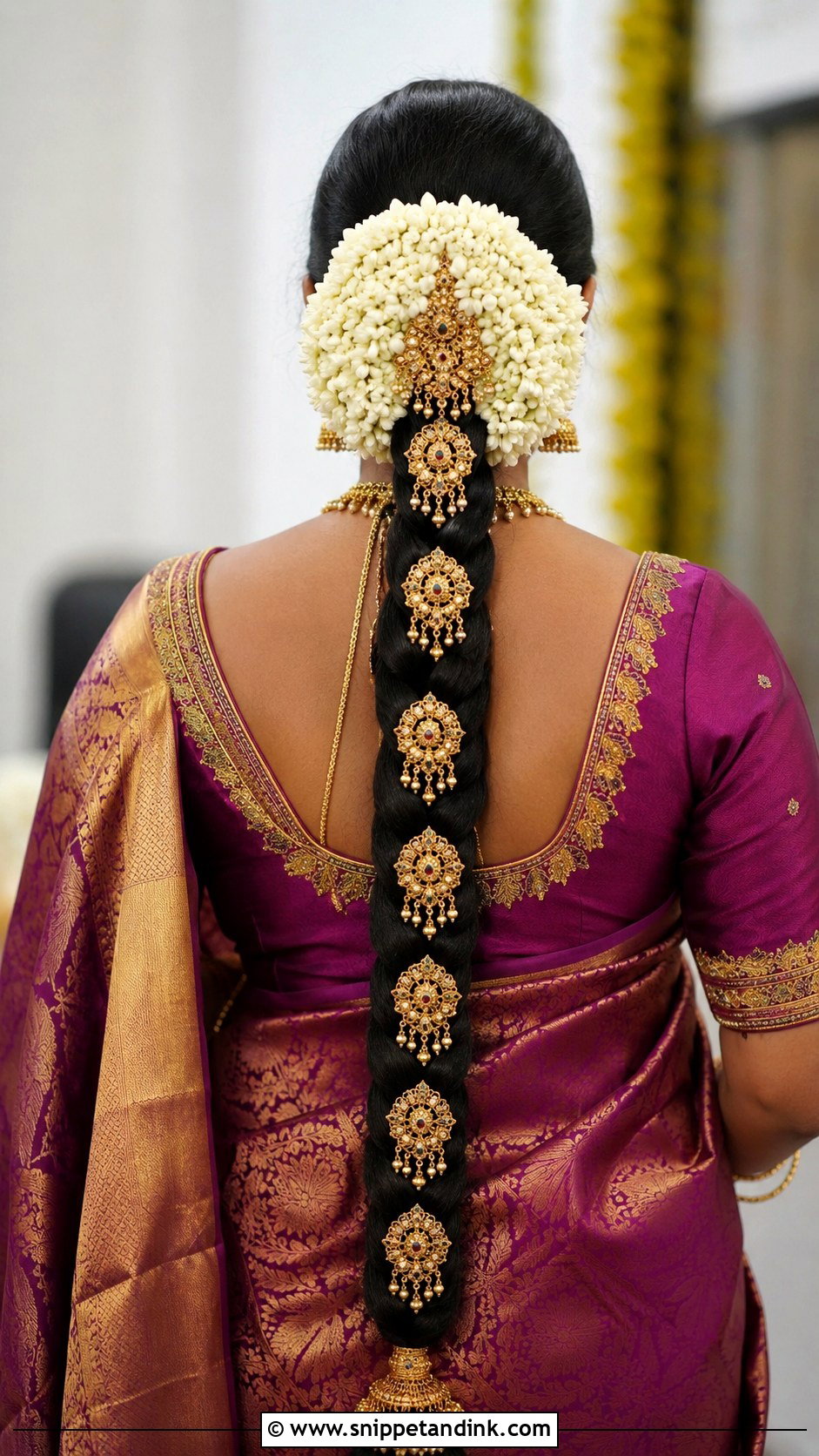
The jadanagam braid is the full South Indian ceremonial look: a long braid covered from top to tip in gold ornaments, often with jasmine woven through. The ornaments are heavy, so I secure the top of the braid with a hidden cluster of pins and attach the jadanagam in sections. It goes with Kanjeevaram silk sarees and temple jewellery. Expect to feel the weight after a few hours; that’s normal with traditional gold. Rented or gold-plated pieces are lighter.
21. Loose Wavy Low Ponytail
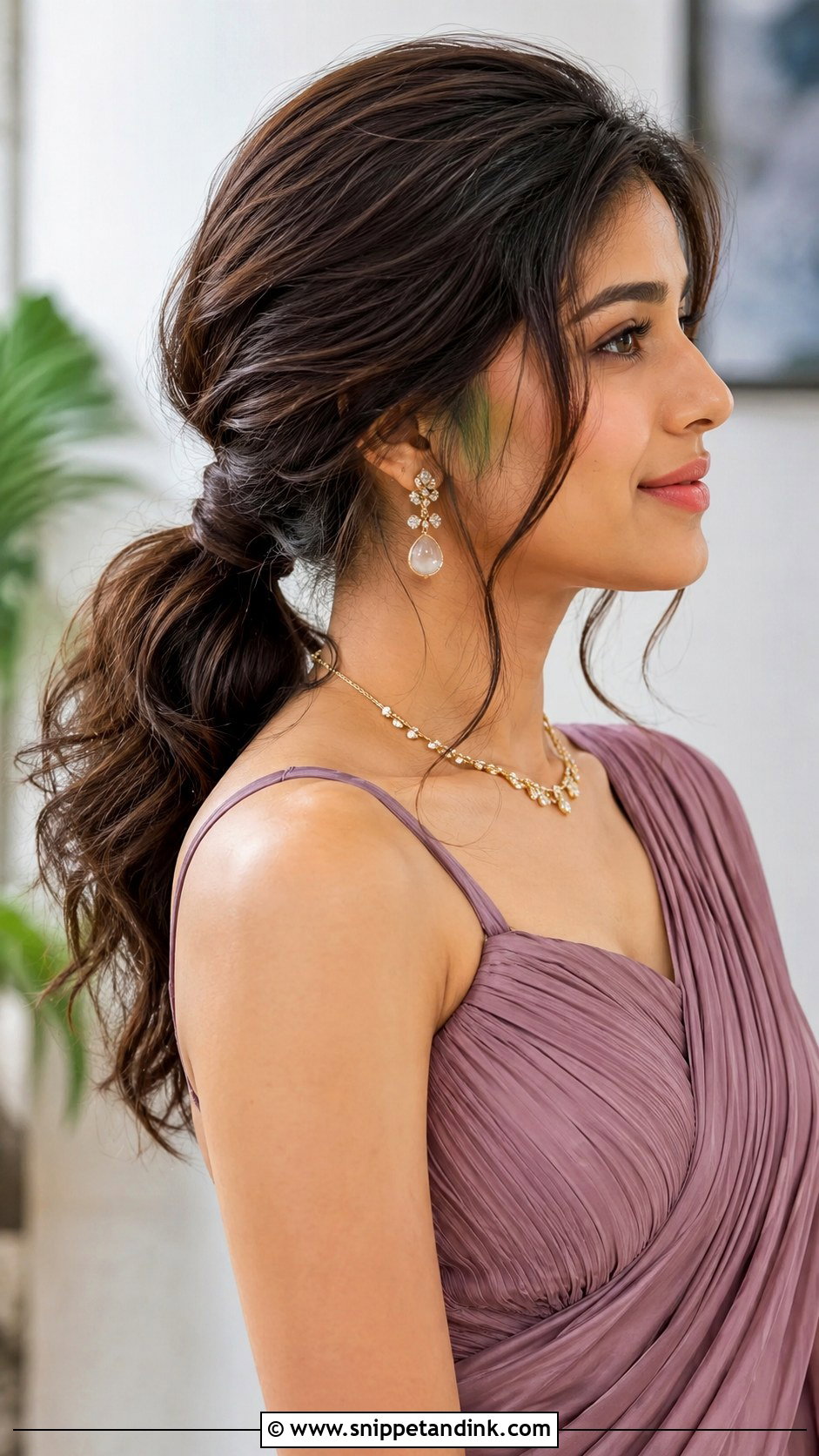
A loose wavy low ponytail is relaxed and modern. Soft waves are gathered at the nape, and a decorative hair tie or wrapped strand hides the band. It works with Indo-Western outfits and modern lehengas at the sangeet or a cocktail reception. I secure the ponytail over a small hidden braid so it doesn’t slide down as you dance. Waves add movement but will relax over the night.
22. Maang Tikka Open Curls
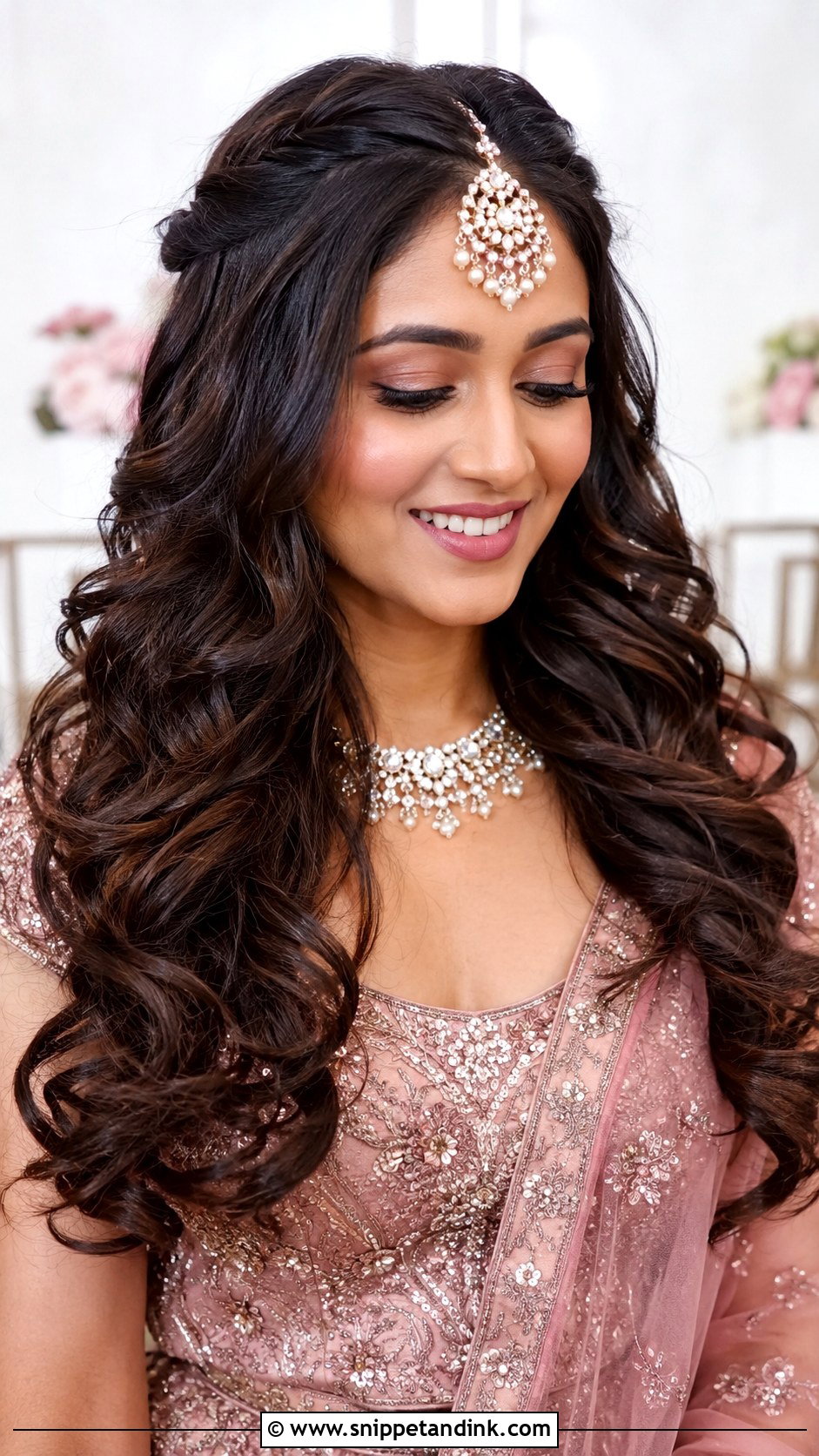
The tikka is the anchor of this look, literally. Its chain needs a small, firmly pinned section at the top of the head to hook into, and I create that before a single curl goes in. The rest of the hair falls in open curls down the back. Engagements and receptions suit it, with a lehenga or a saree. Curls drop faster in a warm room, so I leave them pinned in coils until the last possible moment and release them just before you walk out.
23. Braided Crown With Bun
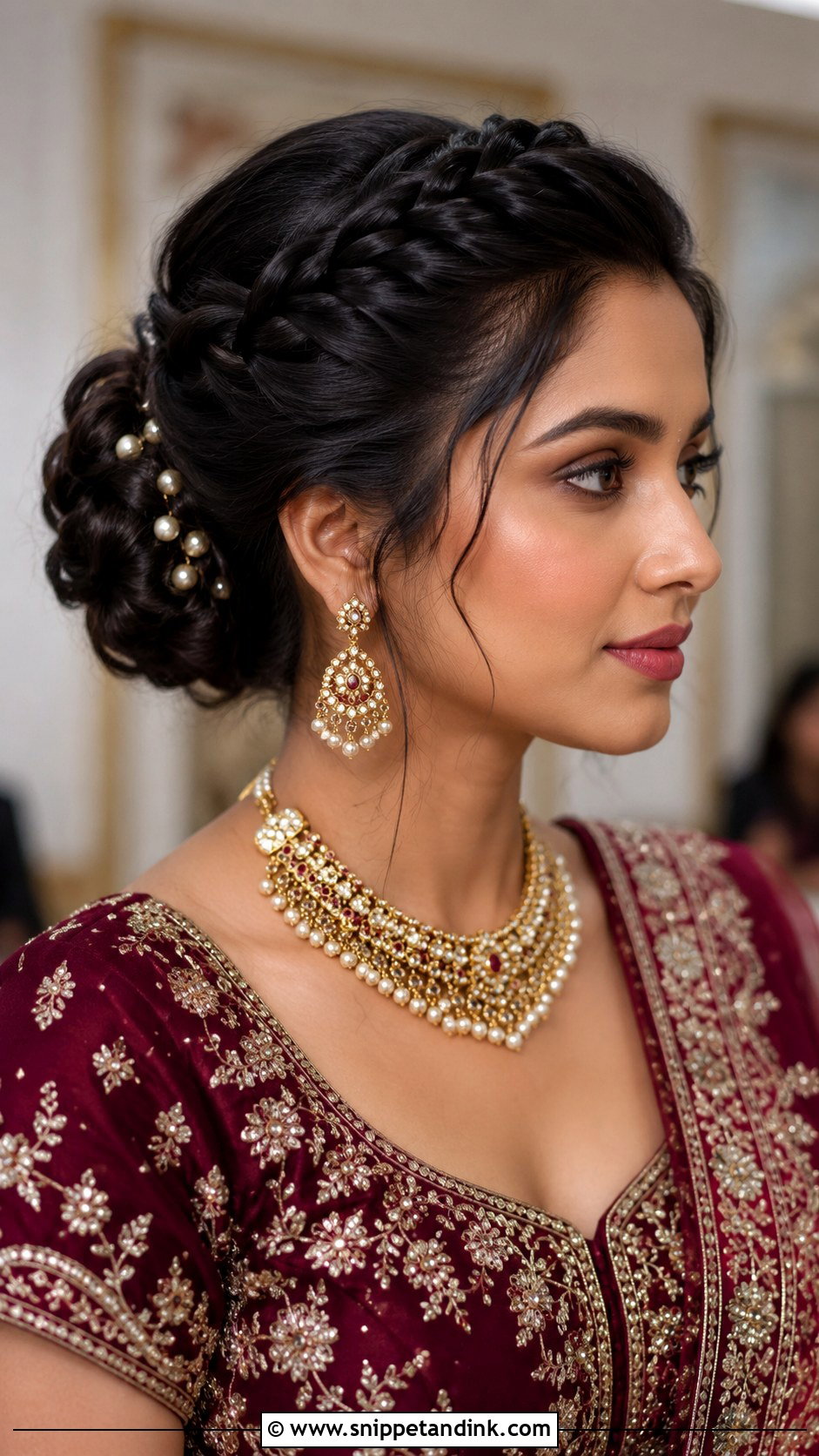
With a braided halo running into a polished bun, the whole head is decorated, which reads well from every seat in a big hall. I braid the crown first and pin it flat, then gather the rest into the bun so the two parts feel connected. Pearls, gold accents or fresh flowers all sit securely in the braid. The one thing to settle early is forehead jewellery: a crown braid takes the space a matha patti would need, so a single tikka is usually the better partner.
24. Side Bun With Gajra
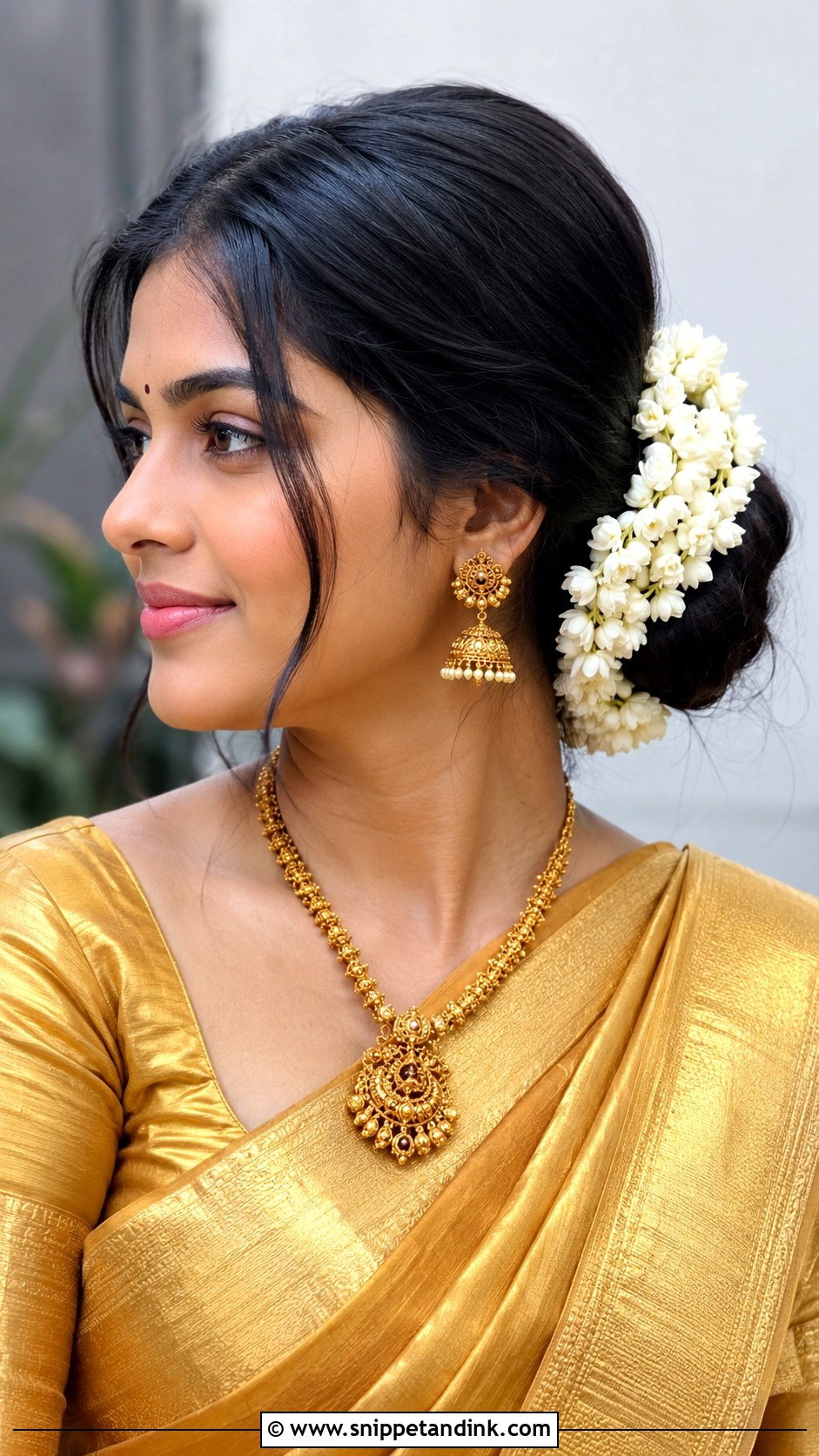
Moving the gajra bun off-center softens a very traditional look. I build the bun slightly behind one ear rather than directly beside it, because a bun sitting on the jaw line rubs against the shoulder and loosens each time you turn. Jasmine is wound around it last, after every pin is in. Silk sarees and temple jewellery suit it, for the ceremony or a reception. Earrings on the open side get all the attention, so choose that pair carefully.
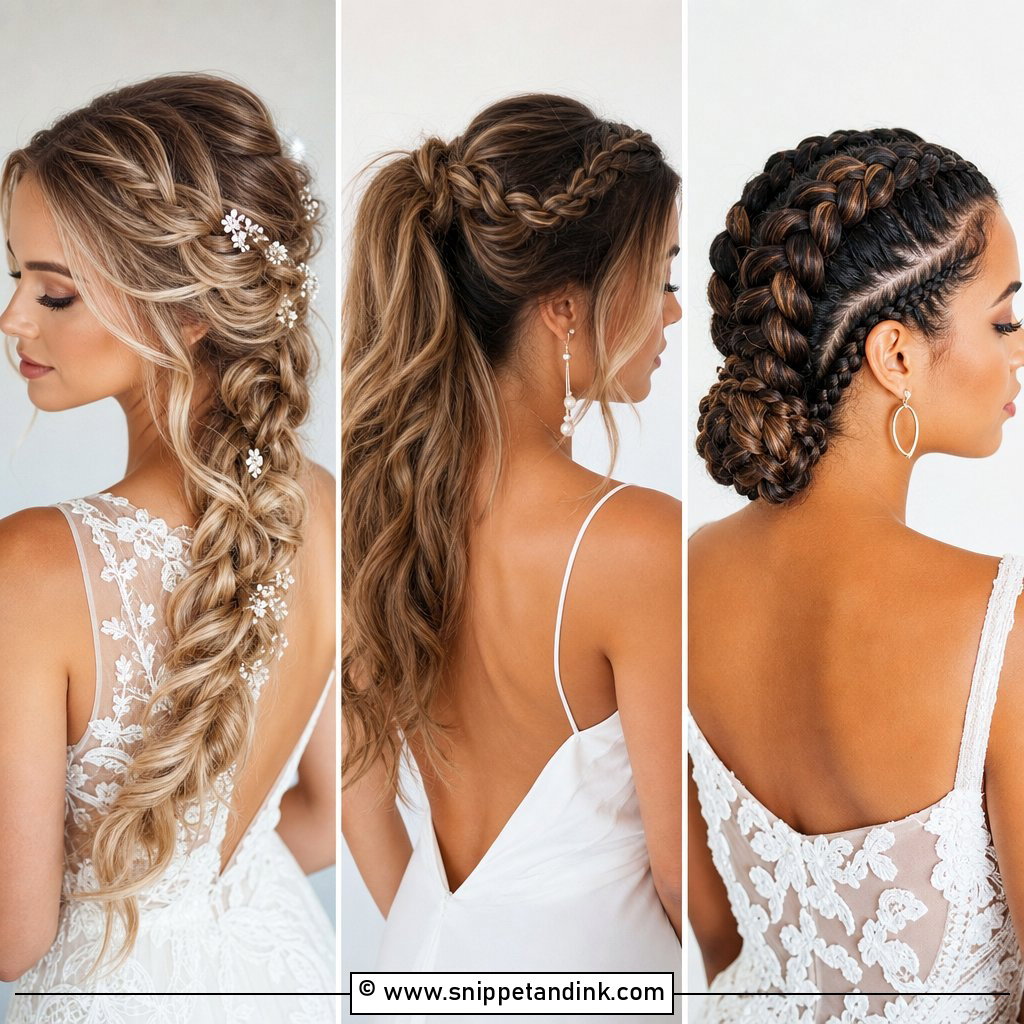
25. Voluminous Curly Updo
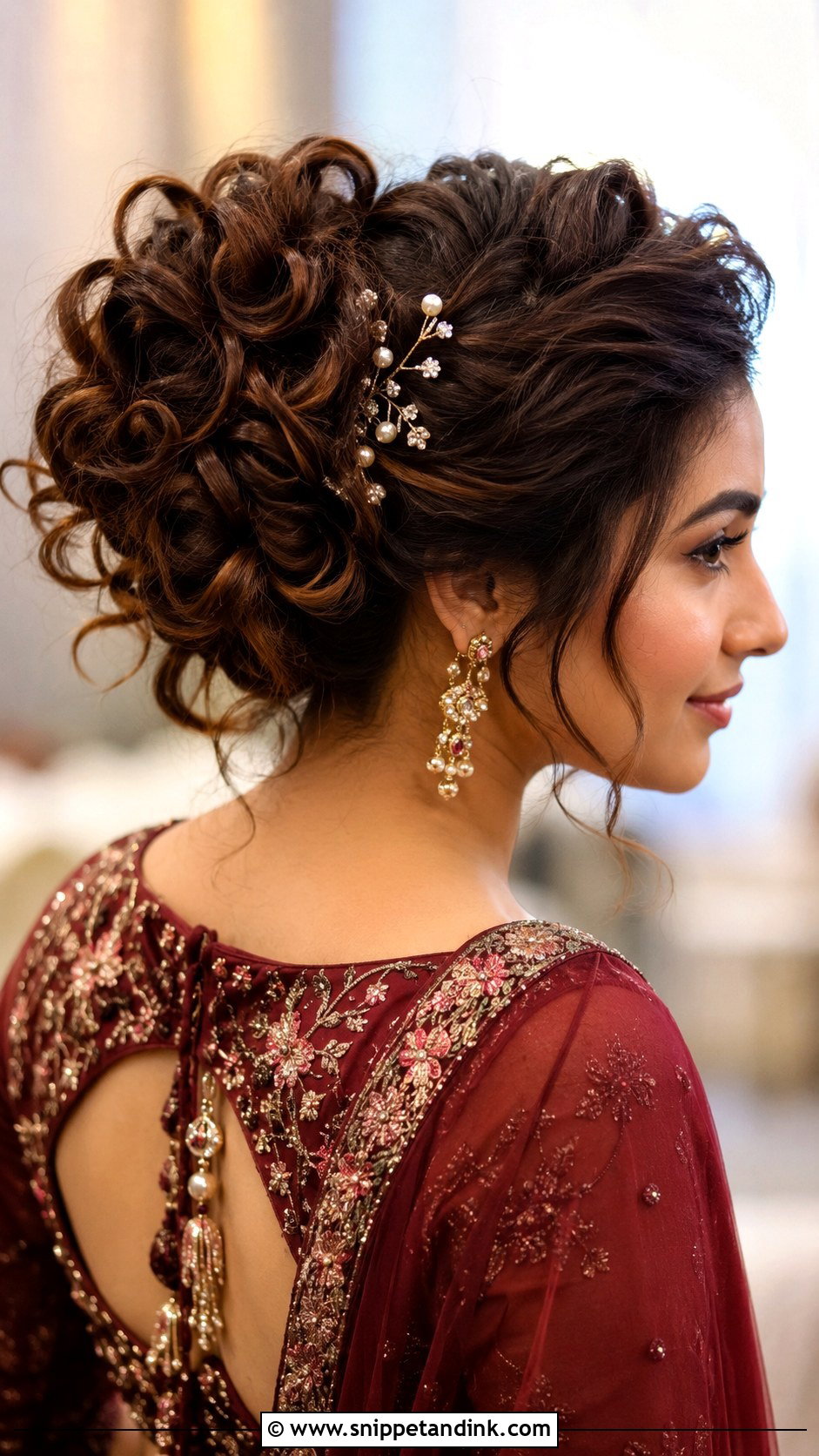
Naturally curly hair is made for this updo, and I’d rather use your own curl than fight it with a straightener. Each curl is set, then pinned individually into a full, high shape, which is slower than gathering everything at once but holds far better. Decorative pins, pearls or flowers fill any gaps. Heavy lehengas and structured outfits balance its volume. If your hair is straight, the curls must be set with rollers and well sprayed, or the updo slowly flattens.
26. Twisted Side Braid
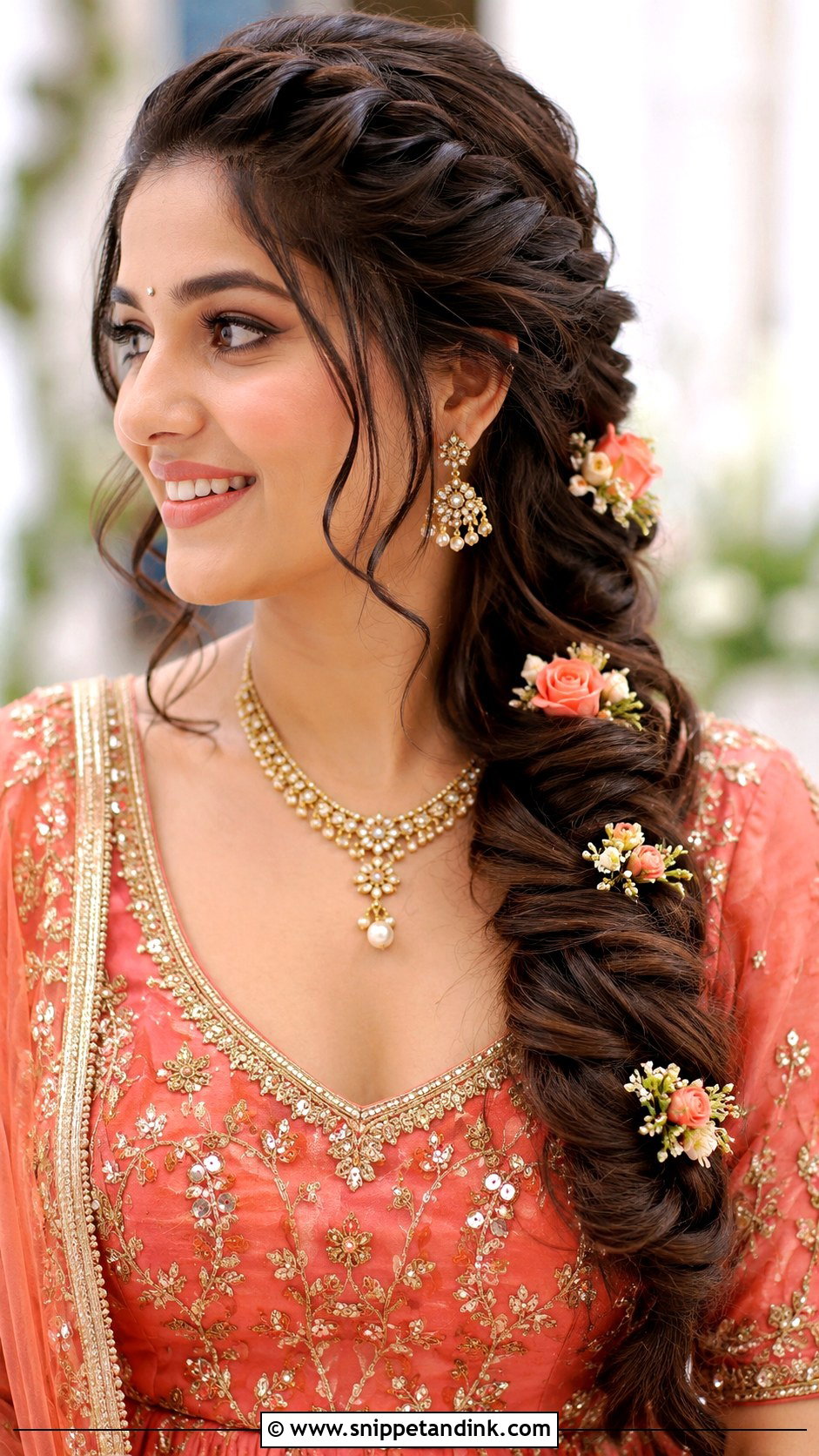
A twisted side braid is braid and rope twist combined, laid over one shoulder. I start the twist just behind the ear so the braid hangs where it naturally wants to fall, rather than pulling across the neck. Fresh flowers or pearls can be woven through it. Mehendi and sangeet are where it works, with traditional or contemporary outfits. For mehendi, keep it on the side opposite your dominant hand, so it stays clear of fresh henna.
27. Polished Donut Bun
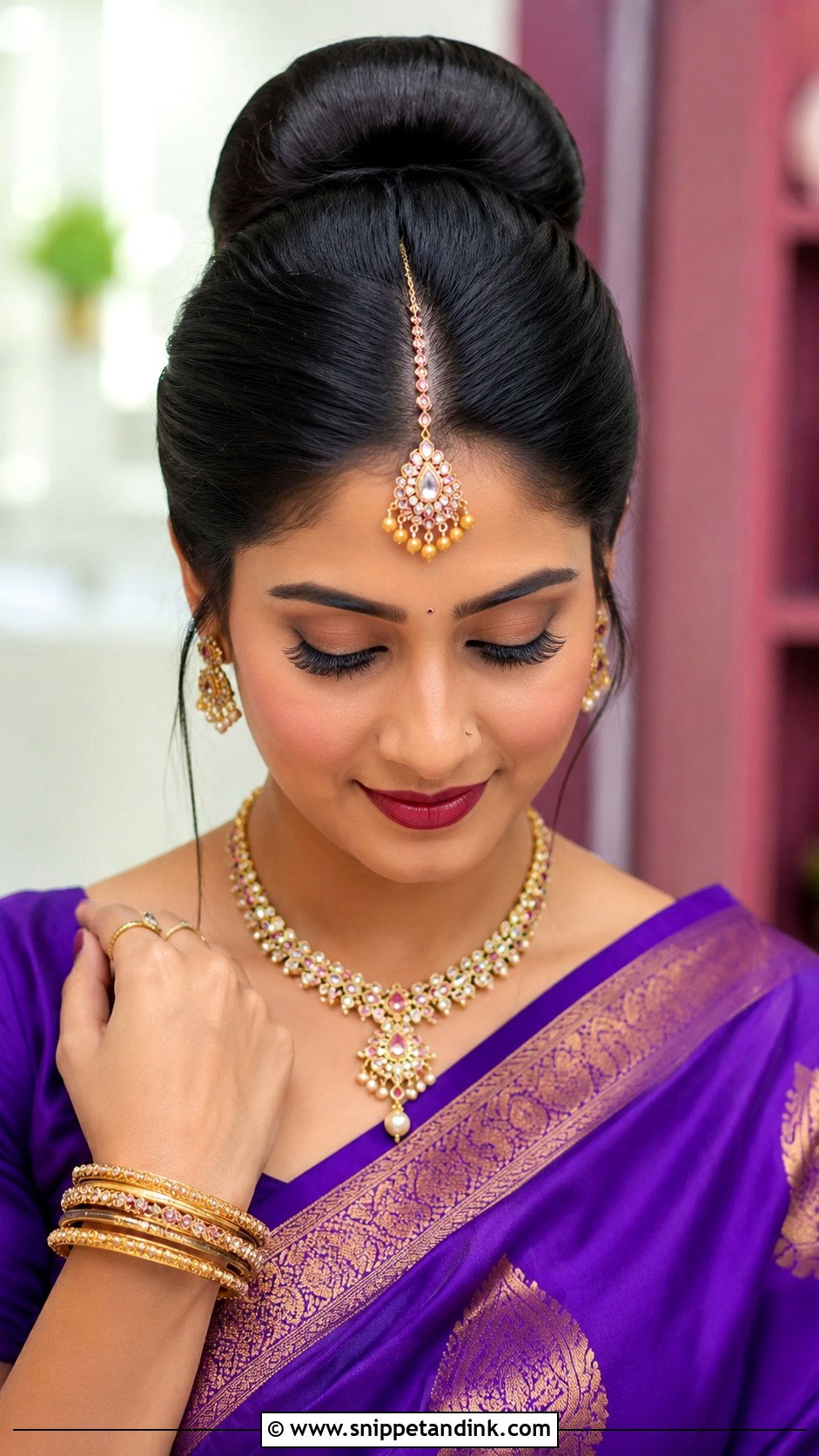
That perfectly round shape comes from a foam ring hidden inside. The hair is spread over the ring, tucked under and pinned, which gives a smooth, even bun even on fine hair. Choose a ring that matches your hair colour so no foam peeks through. A statement maang tikka or decorative pins complete it. Heavy sarees and classic lehengas suit it, especially for the main ceremony, and it’s one of the easiest styles to pin a dupatta into.
28. Open Hair With Hair Accessories
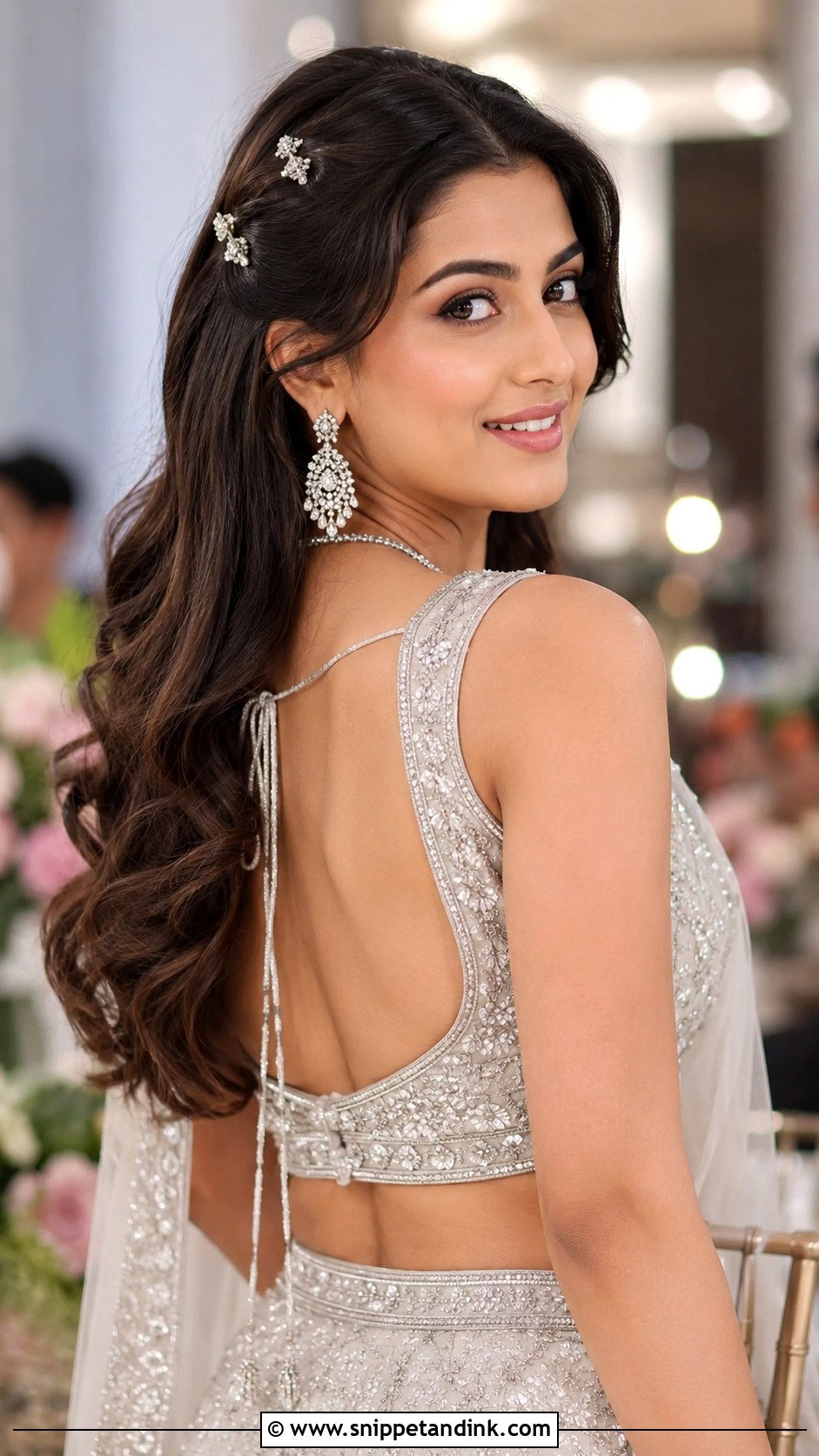
Statement accessories turn open hair into a bridal look without needing an updo. Diamond pins, jewelled clips or a fine hair chain can sit on waves or sleek straight hair. I slide each pin in at a slight angle so it grips rather than resting on the surface, and anchor a hair chain to a small pinned section behind each ear. Modern lehengas and Indo-Western outfits at sangeet nights and cocktail receptions are its natural setting.
29. Floral Braided Half Updo
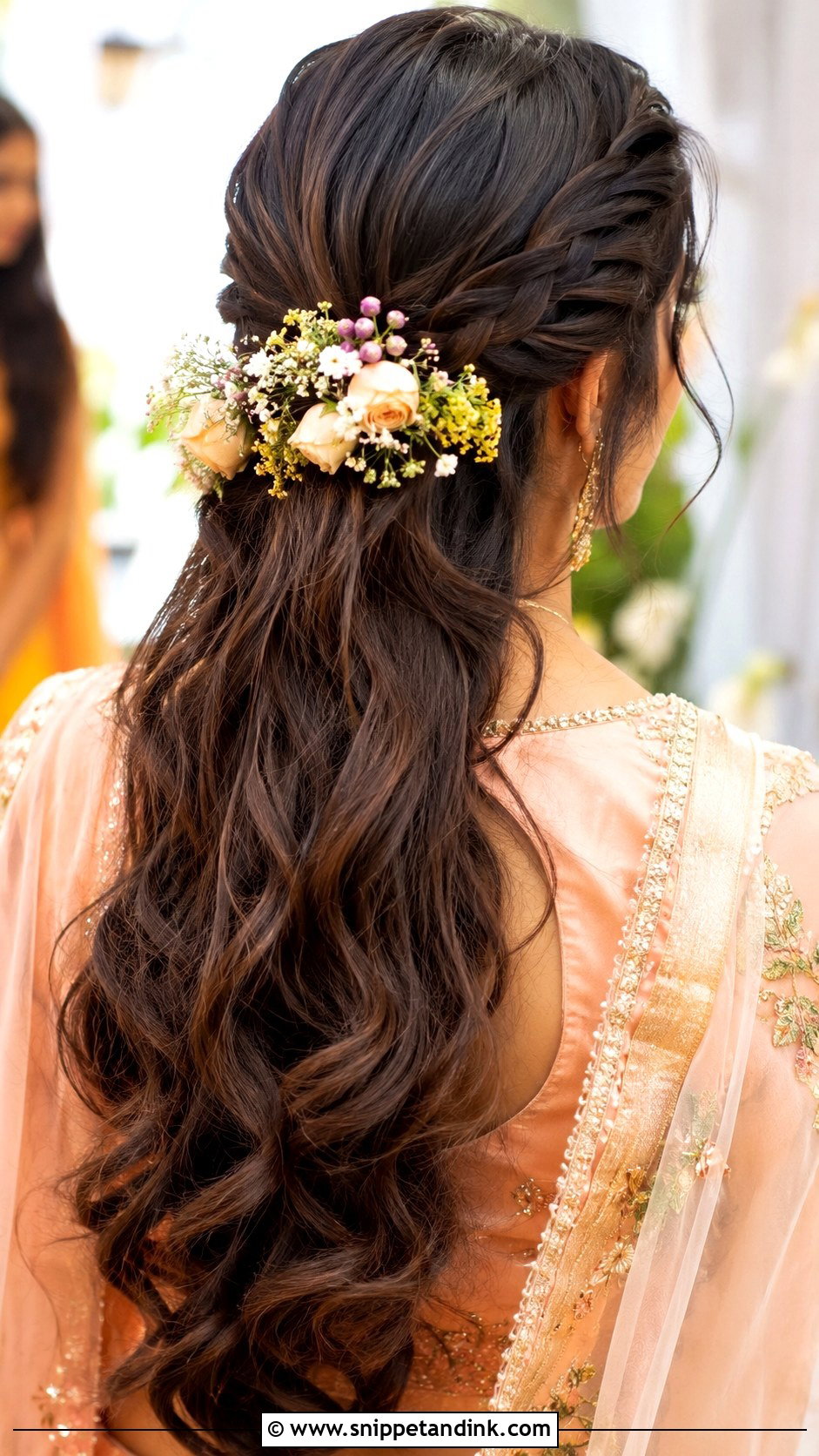
Braided sections pulled back from the face, dressed with flowers, with the rest of the hair falling in waves: it’s a half updo with more structure than usual. I braid first, then pin the braids together at the back of the head, where the flowers hide the join. Mehendi, haldi and outdoor weddings suit it, with pastel and floral outfits. In strong sun, fresh flowers wilt within a few hours, so a few silk blooms mixed in keep it looking fresh.
30. Vintage Retro Bun
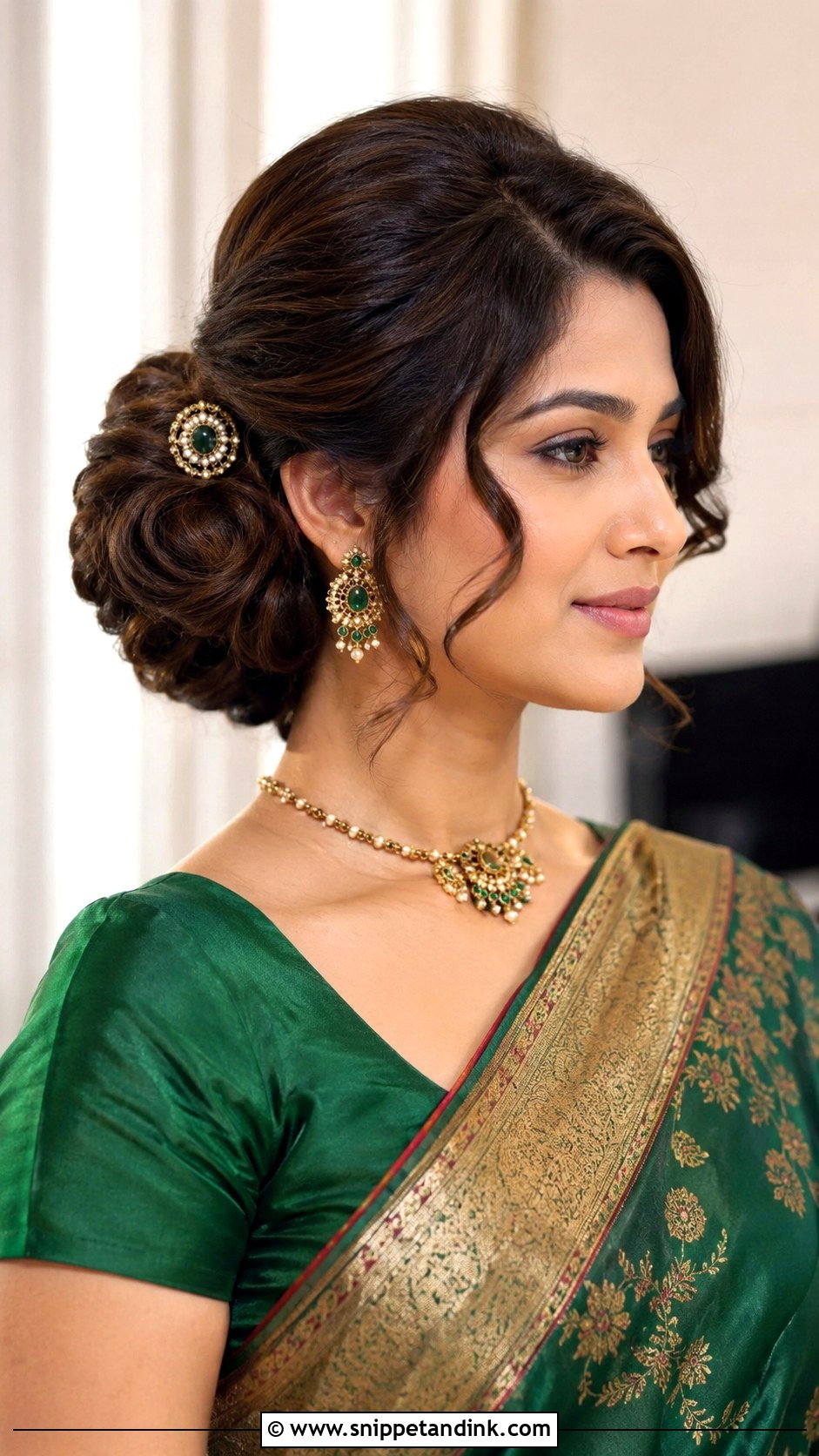
Retro waves at the front with a structured bun behind give a 1940s profile. The front waves are set with clips while the curls cool, then brushed into a single S-shape, which is the slow part. A brooch, pearls or a few flowers on the bun complete it. Classic sarees and traditional jewellery suit it, at receptions or the main ceremony. If your hair is very layered at the front, the waves won’t hold their shape, so check at the trial.
Undoing a Bridal Bun Without Losing Half Your Hair
After a long day of pins, spray and flowers, brides often rip everything out in a hurry, and that’s when most breakage happens. A little patience saves a lot of hair.
- Remove jewellery first, unhooking chains rather than pulling them.
- Take out the flowers next, then find pins by feel and slide each one out in the direction it went in. Count them if you can; there are usually more than you expect.
- Gently loosen the bun with your fingers before using a brush.
- Apply a conditioner or oil to dry hair to soften the hairspray, then work through knots from the ends upward with a wide-tooth comb.
- Wash with a gentle shampoo, and condition well.
If you have another function the next day, don’t wash the same night unless you need to. Brushing out and sleeping in a loose braid gives the next stylist better hair to work with.
A tender scalp after a day of heavy jewellery is common and usually fades by morning. A warm shower and a gentle scalp massage with your fingertips help. If one spot stays sore, that is where a pin or hook was pressing, which is worth mentioning to the stylist before the next function.
The Look That Lasts From Haldi to Vidaai
Start with your outfit, your jewellery and the order of your ceremonies, and the right hairstyle usually becomes clear. A gajra bun, a jadanagam braid, a Bengali bun under a mukut or open waves can all work. Mix tradition and newer ideas as you like. Do a trial with your real jewellery and dupatta so you know how the look feels after a few hours, and share your saved favourites with your stylist.
You'll Like These Ideas:




Leave a Reply