
Pearls are the accessory I see go wrong most quietly. They glow rather than sparkle, so they flatter almost any hair color and any style of wedding, but they only look right when they’re part of the hairstyle’s plan instead of pushed in at the end. Placement follows the shape: a scatter of tiny pins through waves, a single comb at the side of a bun, a pearl headband to give short hair a finished edge. Your dress shade, veil and hair texture decide the rest, and each style below comes with what I’d watch for when I build it.
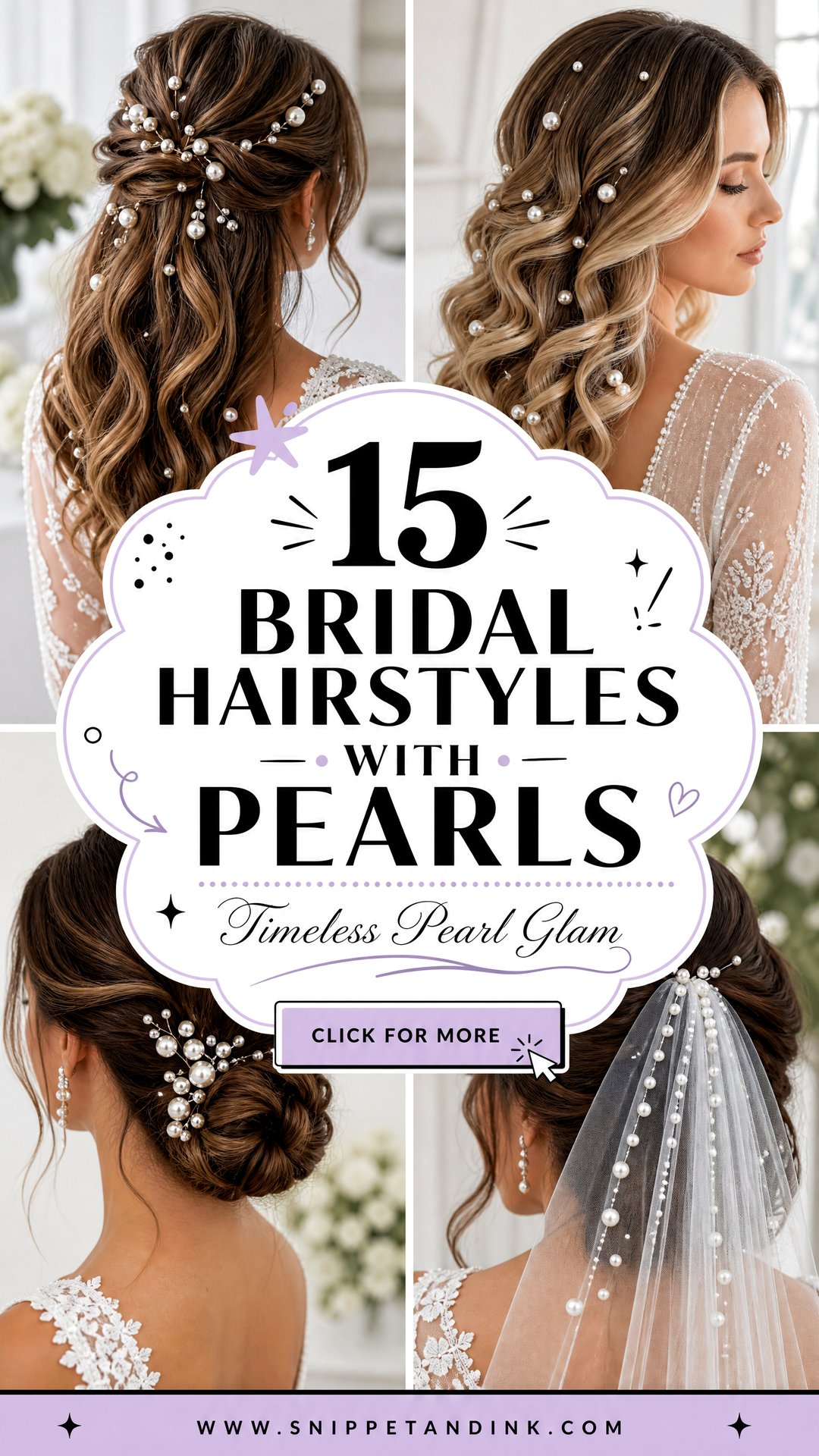
Ivory Gown, Bright White Pearls: Why Shade Matters
I’d answer this before you buy a single pin. Pearl hair accessories come in bright white, cream, ivory and warmer blush or champagne tones, and a mismatch shows clearly in photos. Bright white pearls against an ivory gown can make the dress look yellowed. Cream pearls against a stark white dress can look dingy.
- Hold the pearl piece right against the bodice fabric in daylight, not under shop lighting.
- Match the pearls to the dress first, then to your veil edging. Veils are often a shade different from the gown.
- Check the metal on combs and pins. Gold settings warm the look, silver cools it, and rose gold sits in between. Keep it consistent with your earrings.
- Dark hair shows off pearls easily. On pale blonde or grey hair, slightly larger pearls or a mix of sizes stops them disappearing.
How many pins is too many?
On a bun or chignon, a modest handful of small pins reads as intentional; keep adding and the hair starts to look speckled. A single comb or slide is often enough by itself. If the veil is heavily pearled, cut hair pins back to two or three so the pieces don’t compete.
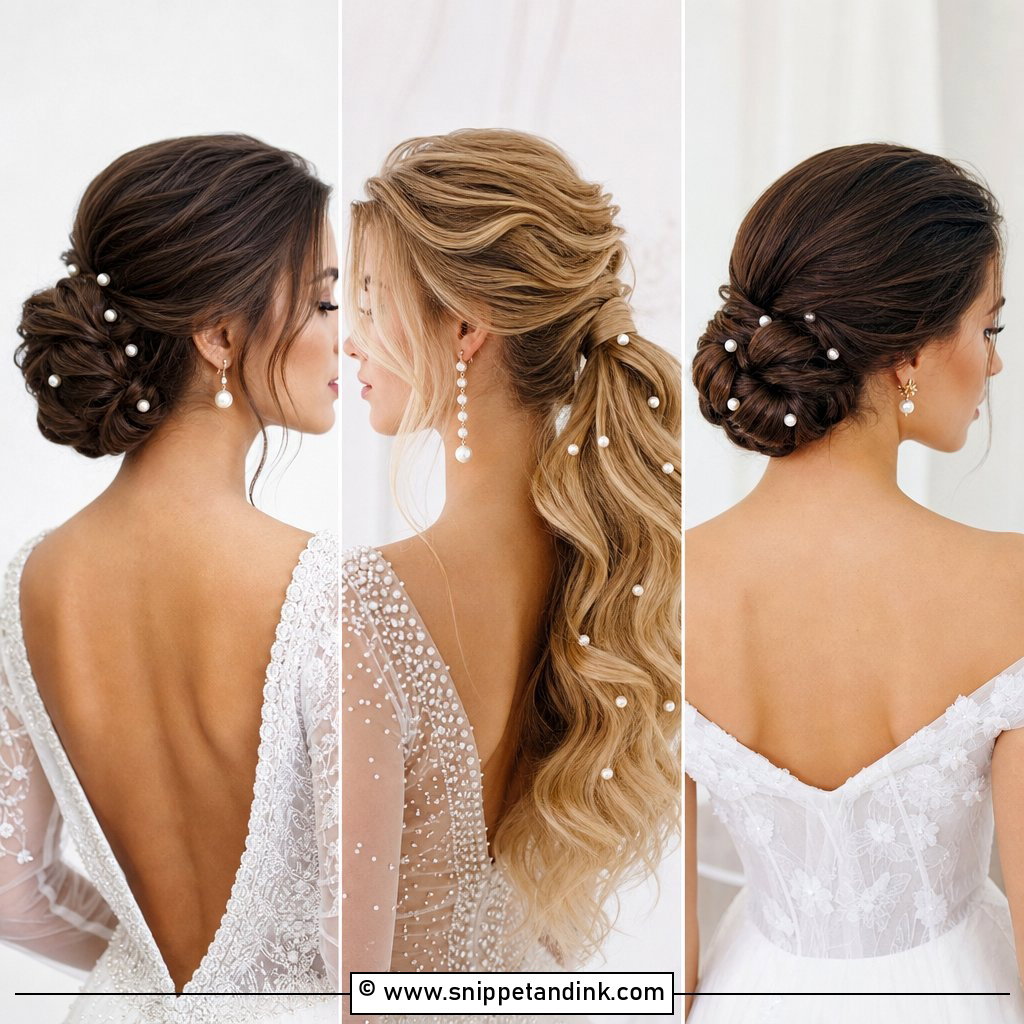
1. Pearl Bridal Updo
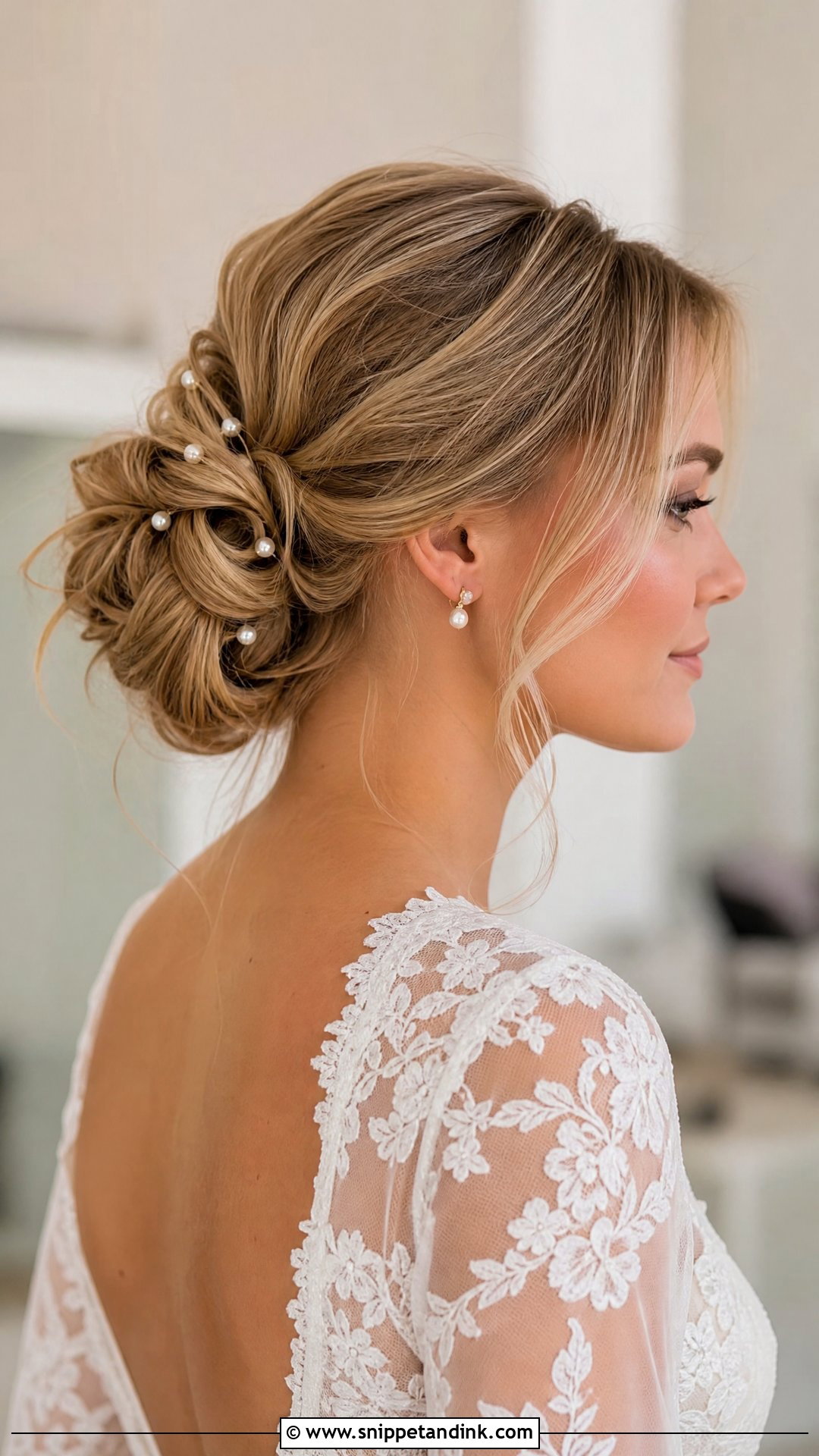
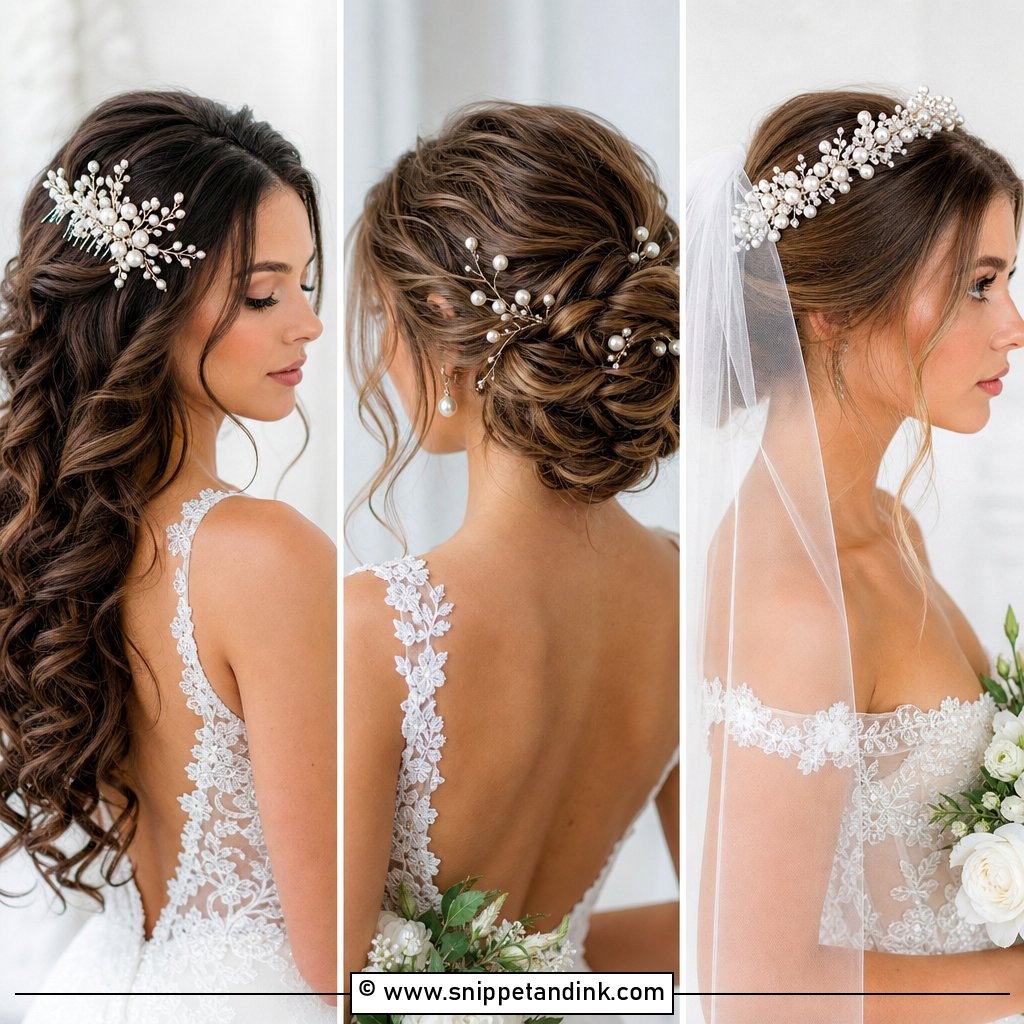
An updo is the easiest place to put pearls because the hair is already fixed in place and every pin has a twist to grip. I’ll shape it low, high, sleek or textured depending on the neckline. Lace, open backs and high necks all suit it. The pearls go in last, tucked along the folds of the twist where they catch light from the side. If you’d like a softer front, ask for two thin face-framing pieces, curled away from the face, but decide that at the trial, not on the morning.
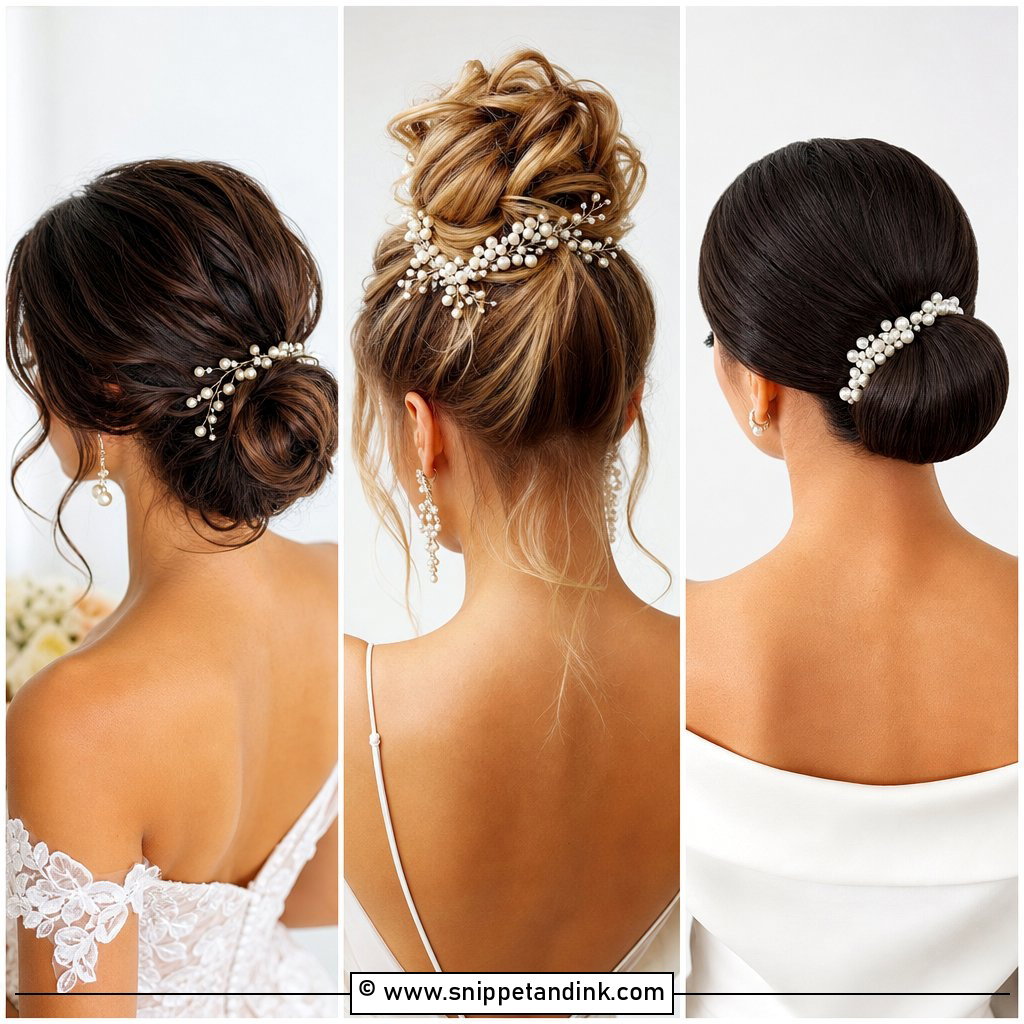
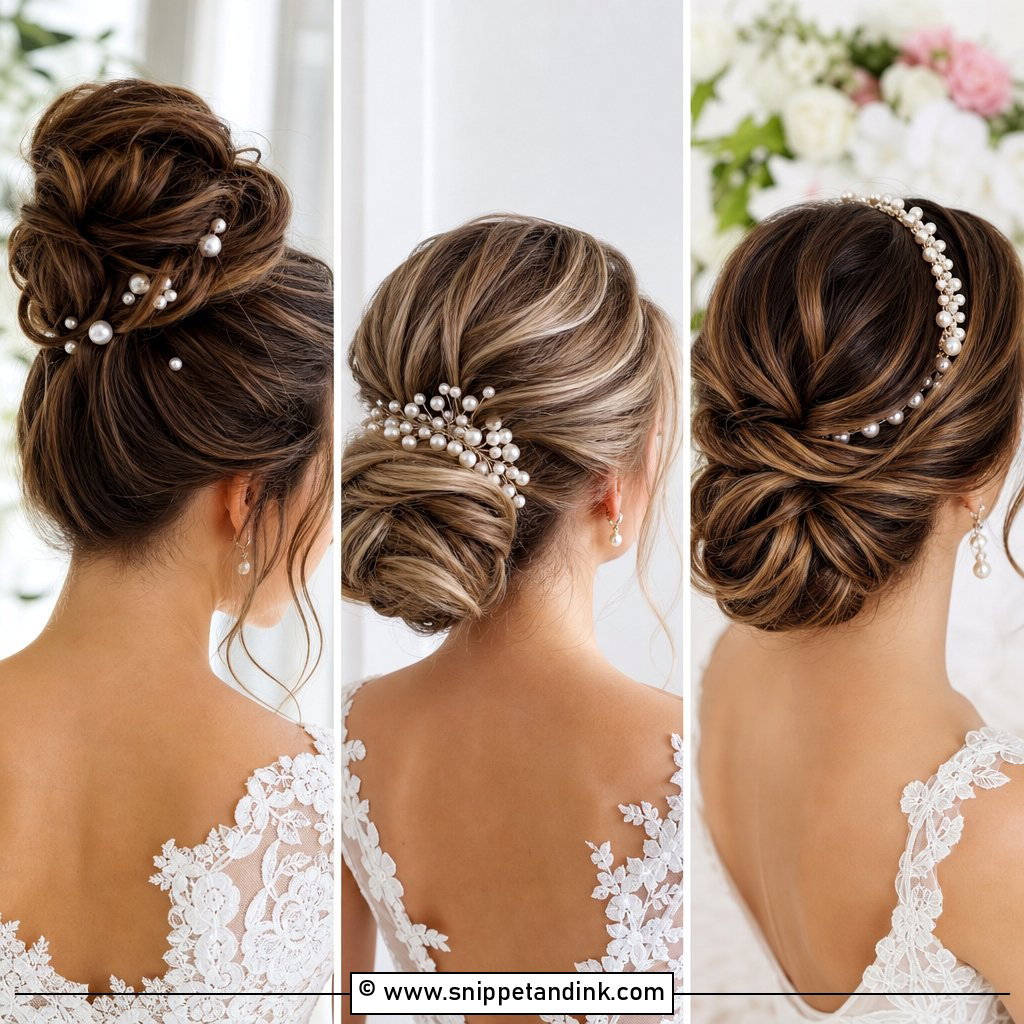
2. Pearl Bridal Bun
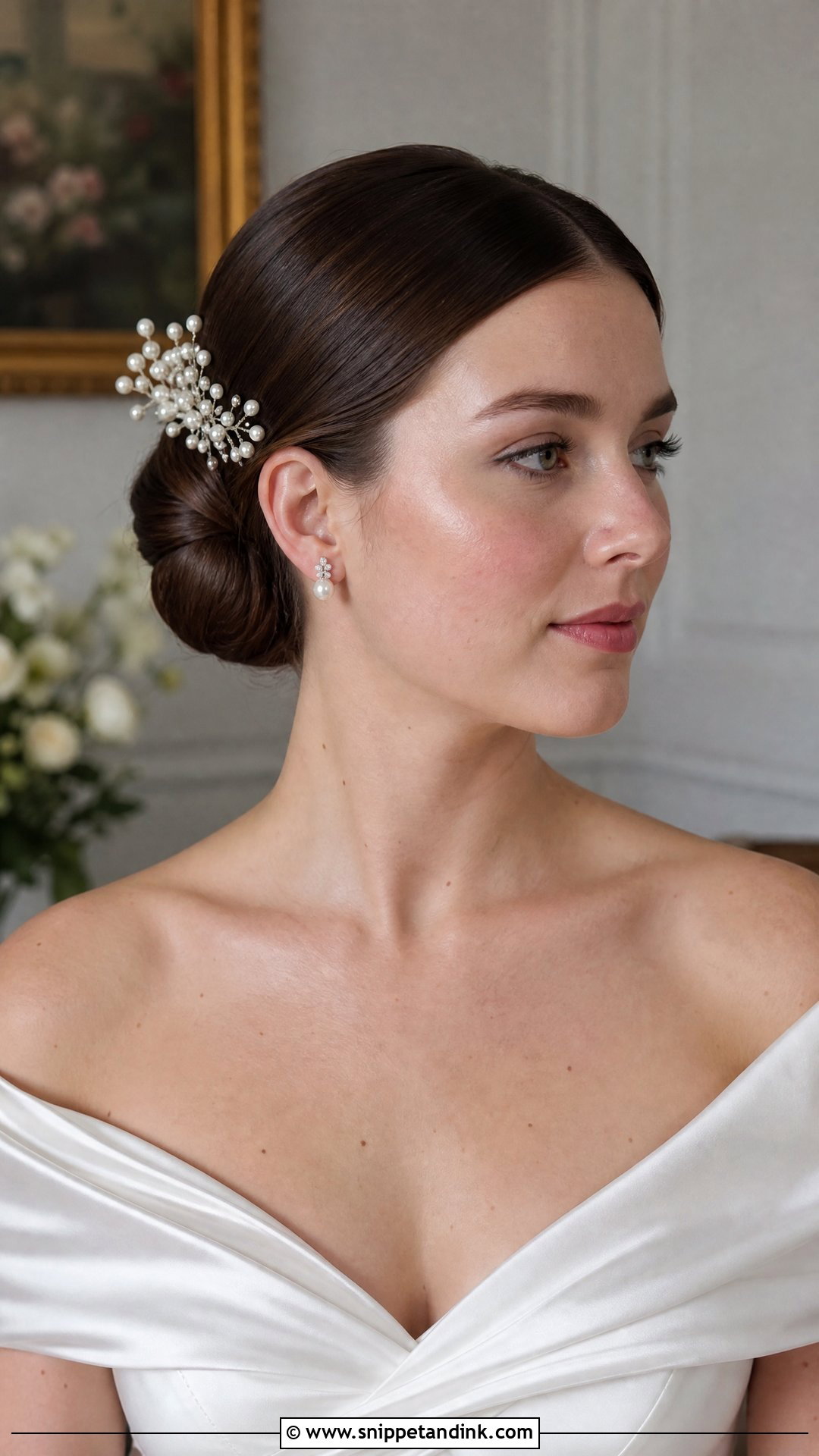
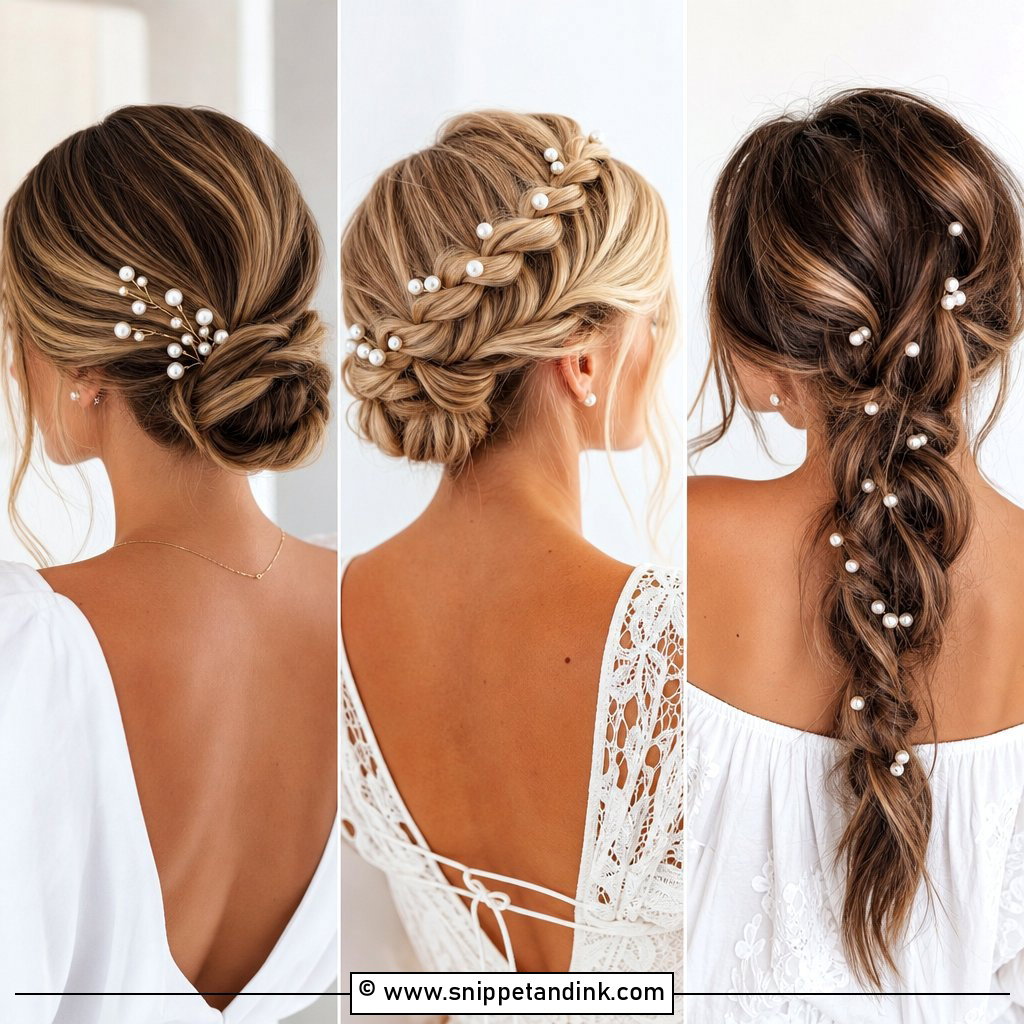
With a bun, the question I ask first is where the veil goes. Above the bun or tucked under it changes where the pearls can sit, because a comb and a veil can’t share the same spot. A low bun with a scatter of pearl pins is the classic version. A center-parted bun with one pearl comb is the modern one. Fine hair needs padding or light backcombing to give the bun real size, and very thick hair needs the opposite: thinning out the section before it’s wound, or the bun ends up heavy and lumpy.
3. Pearl Bridal Ponytail
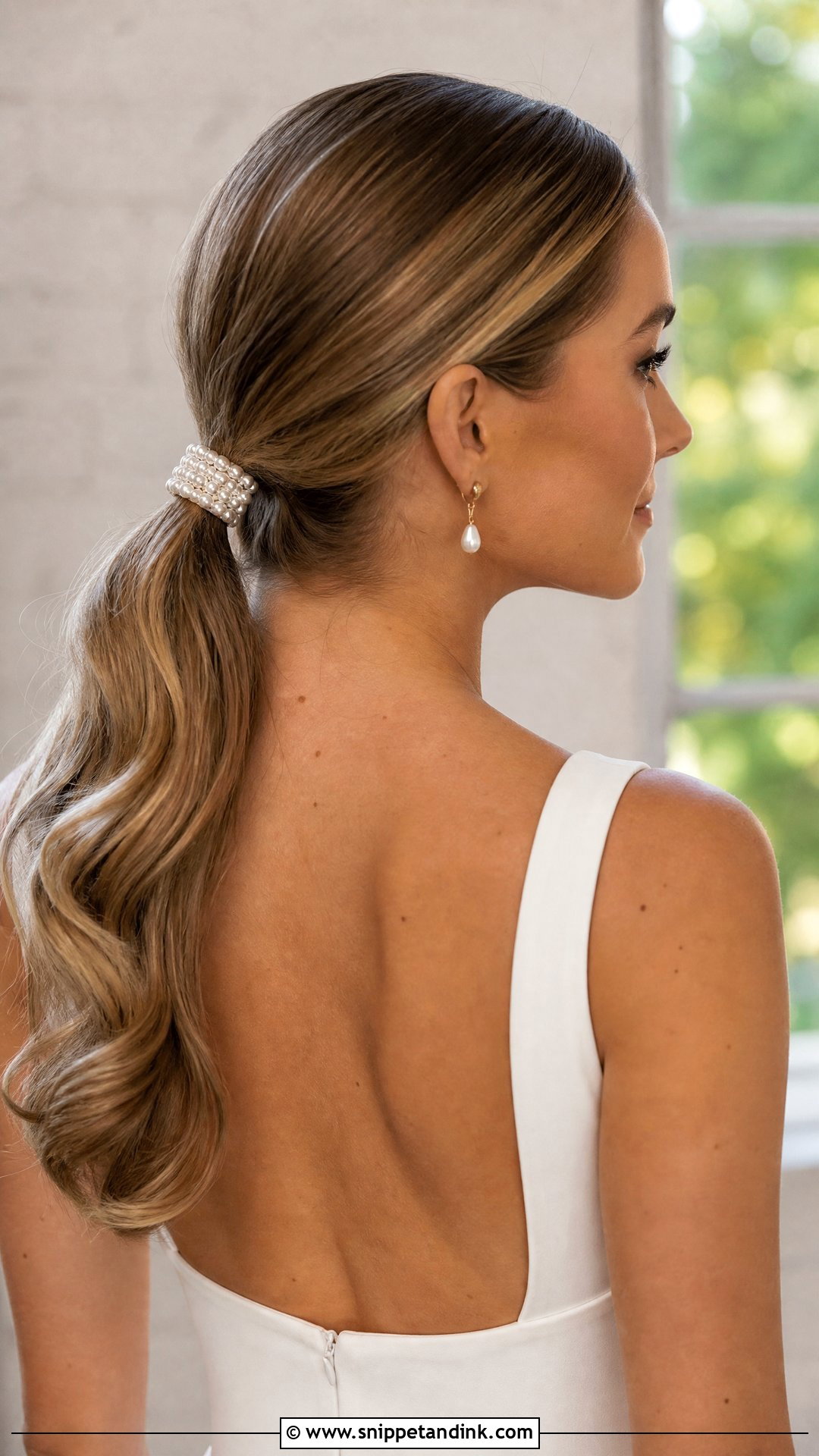
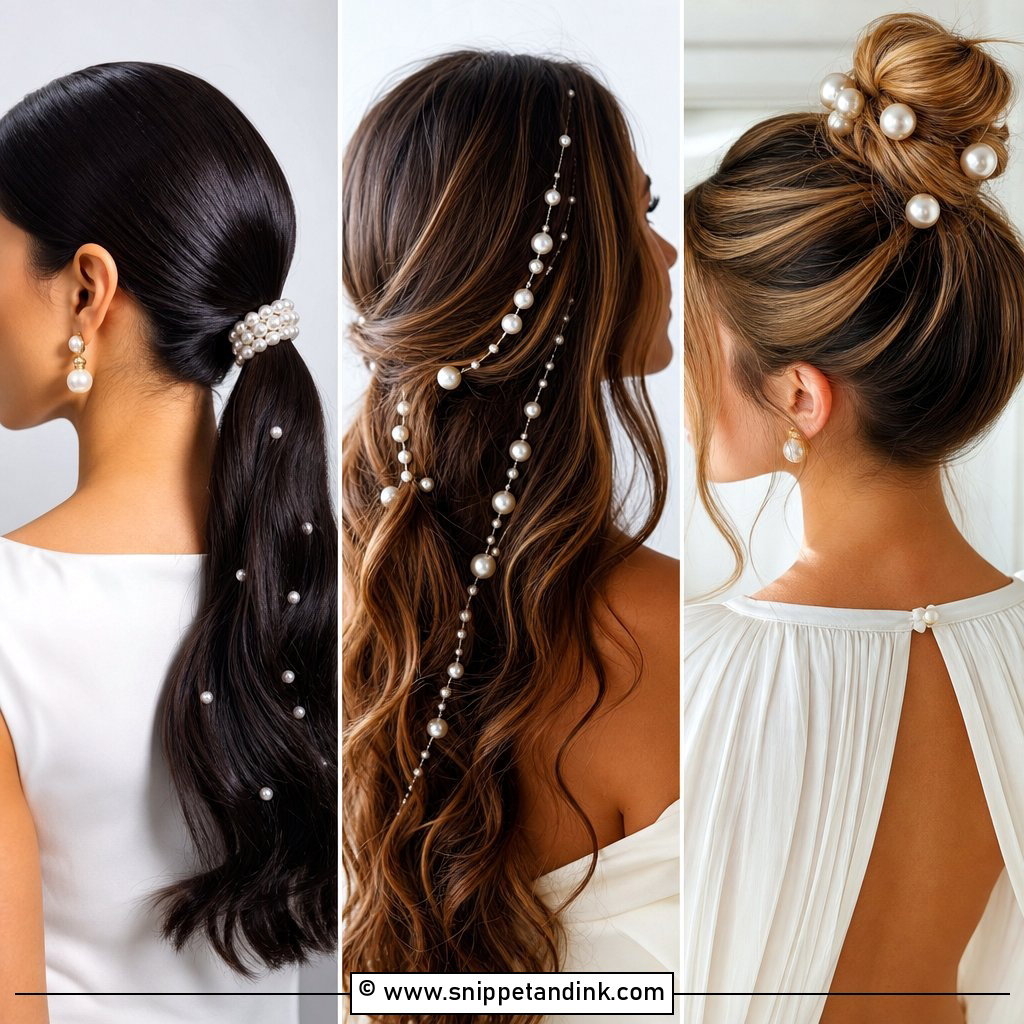
A ponytail can easily slide into looking casual, and pearls are what keep it bridal. I wrap the elastic with a pearl cuff or a strand of hair studded with pins, then add a few pearls down the length. Low and glossy suits a minimal satin gown; high and waved suits a reception change. Smoothing the hairline matters more here than in any other style, since there’s nowhere for flyaways to hide. Strapless and square necklines show it off best.
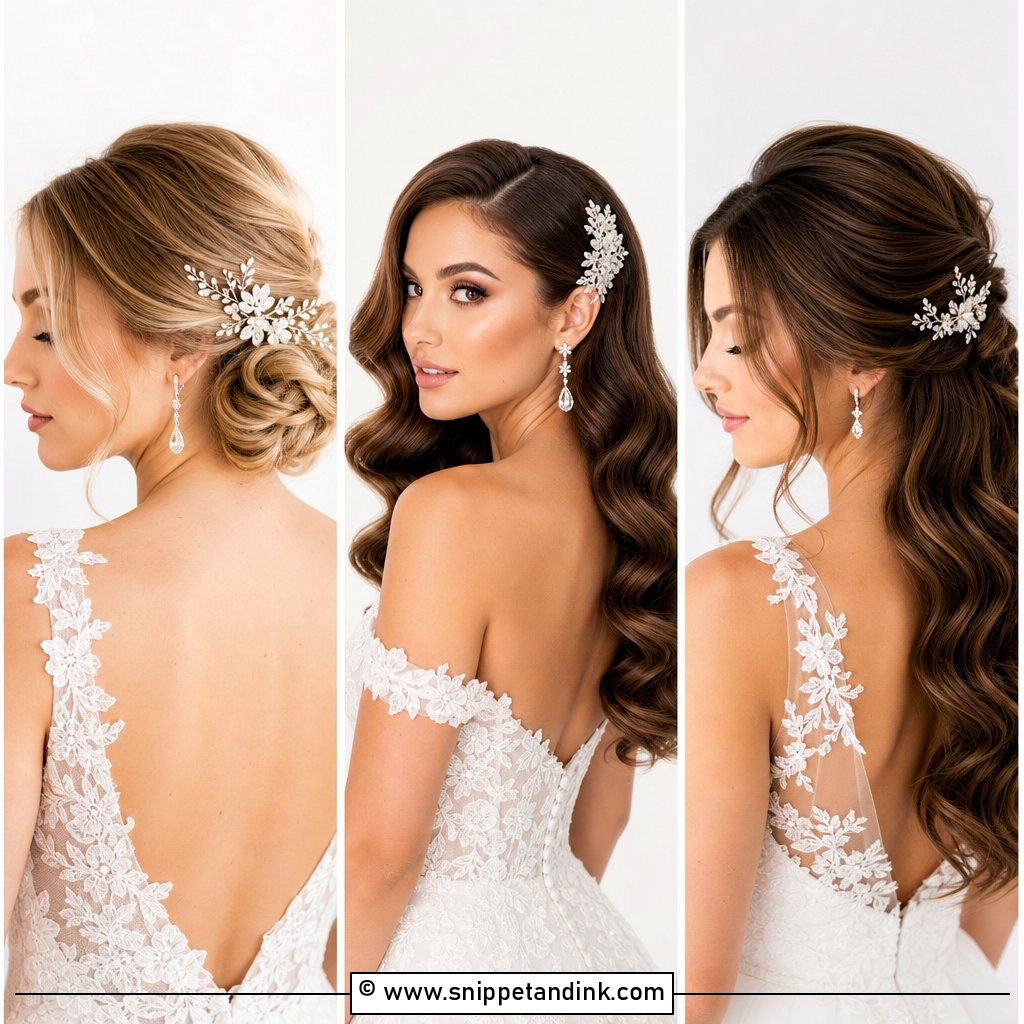
4. Pearl Bridal Half Up Hair
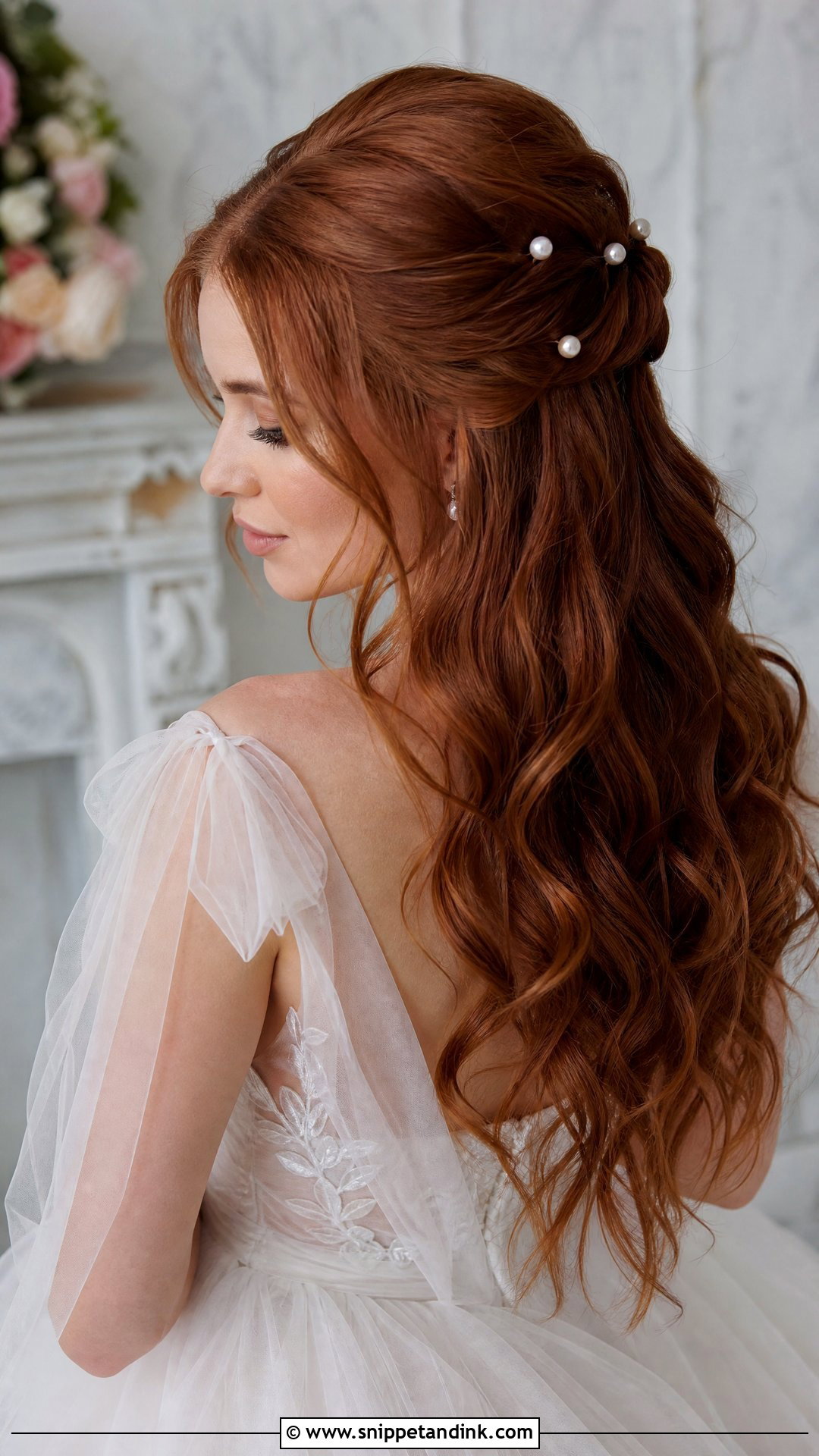
Half up sits between control and softness. The top section can be twisted, braided or simply pinned back, and that pinned section is the anchor for everything: pearl clips, a veil comb, or both. Below it, the waves move freely. I set the pearls along the line where the top section meets the loose hair, because that’s where they frame the back of the head in photos. It holds up outdoors much better than fully loose hair, and you won’t keep pushing it off your face.
5. Pearl Bridal Waves
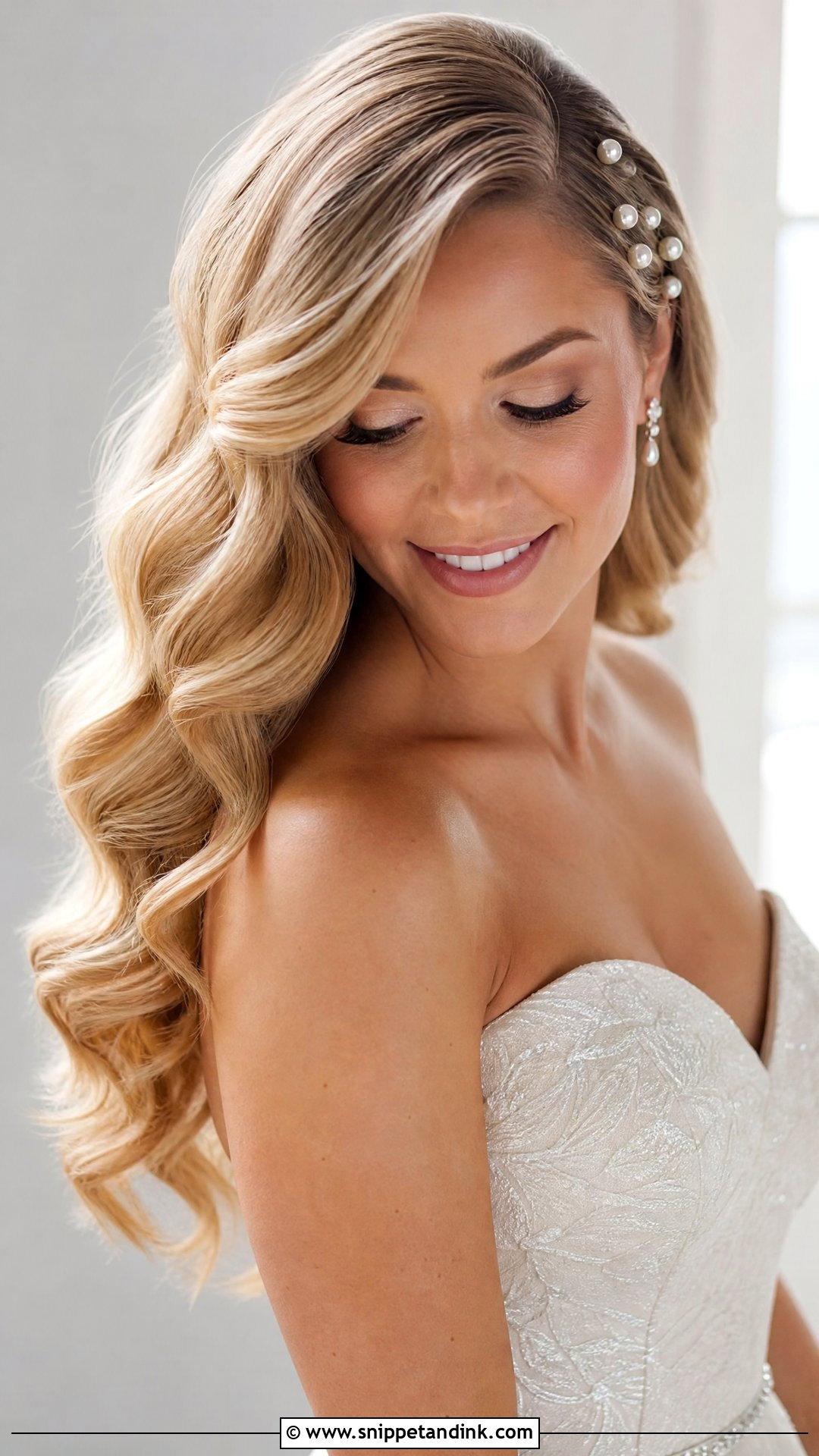
Loose waves and pearls need a light touch. Too many pins and the hair looks speckled. I keep the wave pattern polished and fairly uniform so the pearls read clearly, then place them in one zone: along a deep side part, or in a small cluster near one ear. Long hair and layered cuts hold the shape best. Use a flexible hold rather than a stiff lacquer, and if you have extensions, blend them before the pearls go in, so no pin lands on a weft clip.
6. Pearl Bridal Braid
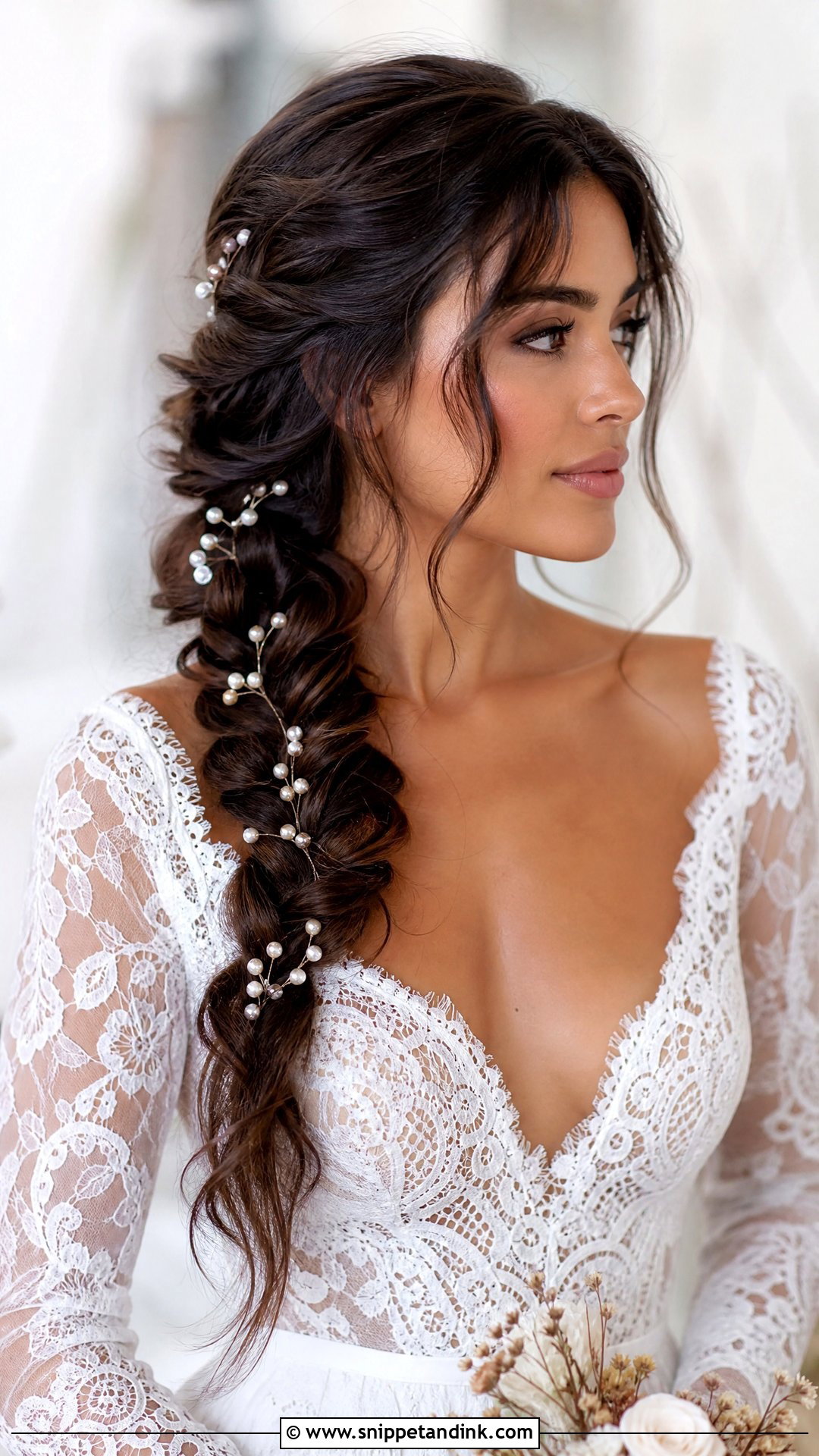
Braids hold pearls better than any loose style, because each pin can slide into a woven section and lock. A loose fishtail, a side braid or a braided crown all work; on thick hair the braid also turns bulk into shape. I tighten the braid first and then pull the edges apart gently, since doing it the other way loosens everything. Follow the line of the braid with the pearls so they look woven in, and leave them out of the tail end, where they tend to fall.
7. Pearl Bridal Chignon
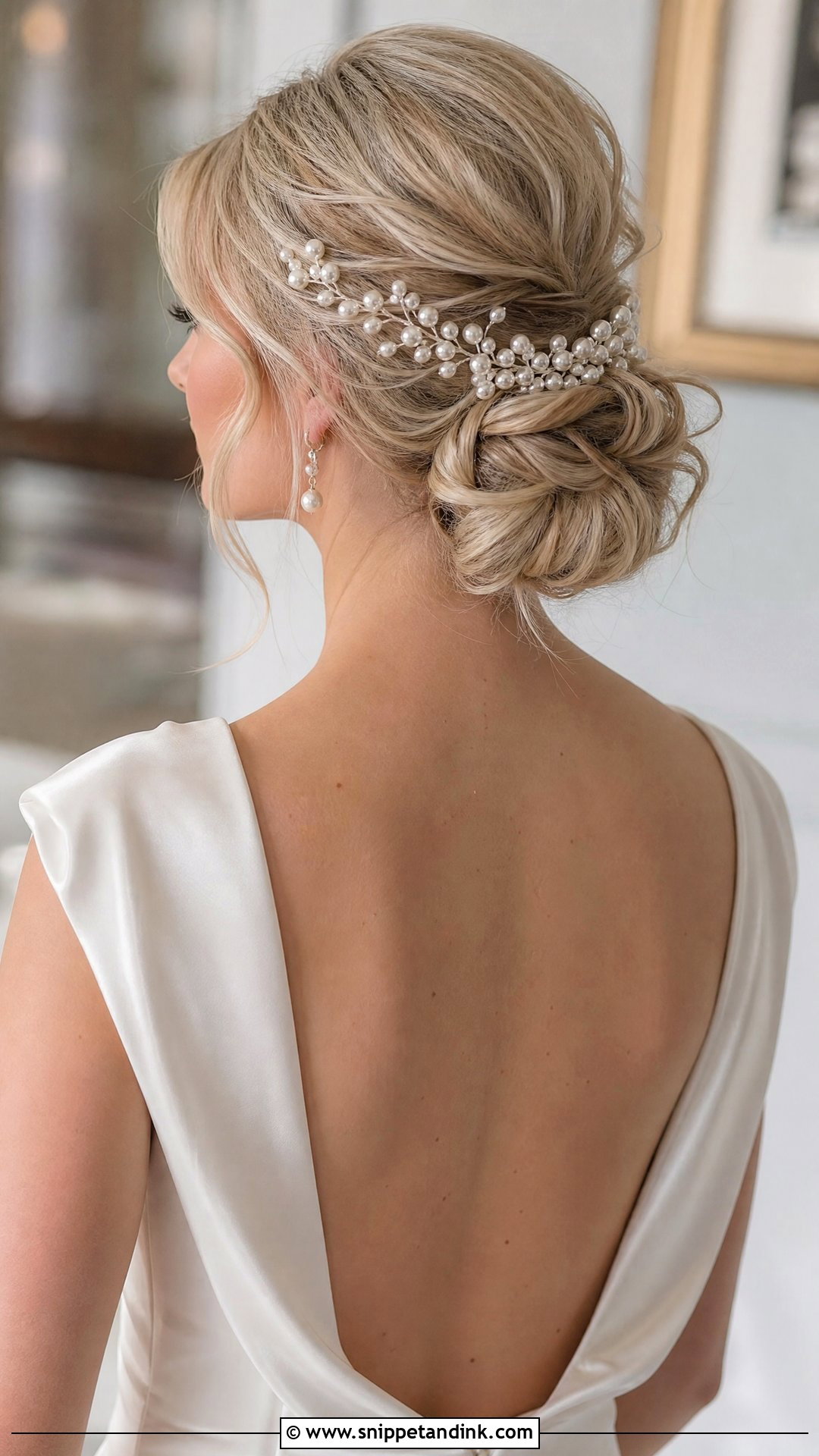
The chignon sits low at the nape, which leaves the crown free for a veil and gives pearls a neat frame. Warm-weather weddings are where I recommend it most, since it keeps hair off the neck without the tightness of a high bun. Highlights and balayage show up well in the twisted shape. Rather than ringing the whole chignon with pearls, I’ll often place a cluster on one side only. Asymmetry keeps it from looking like a costume piece.
8. Pearl Bridal French Twist
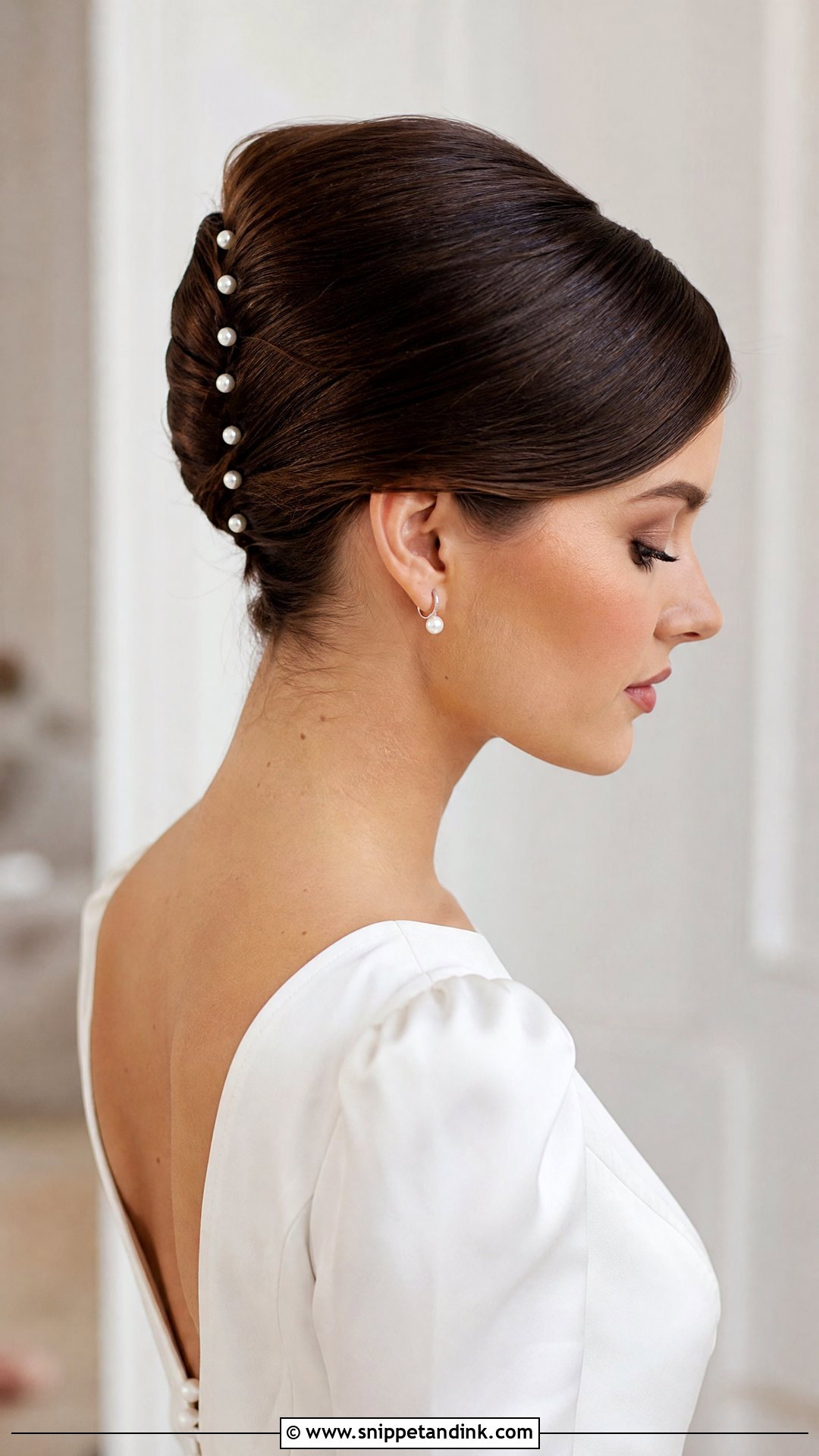
A French twist needs grip to hold its seam, so freshly washed silky hair is its enemy. I prep with texture spray and sometimes a quick blow-dry with mousse the day before. Pearl pins can follow the seam of the twist from nape to crown, or a single comb can sit at the side. It suits classic gowns and city weddings. Pair it with a side part or a soft front wave. A dead-straight center part makes the shape look stiff.
9. Pearl Bridal Low Bun
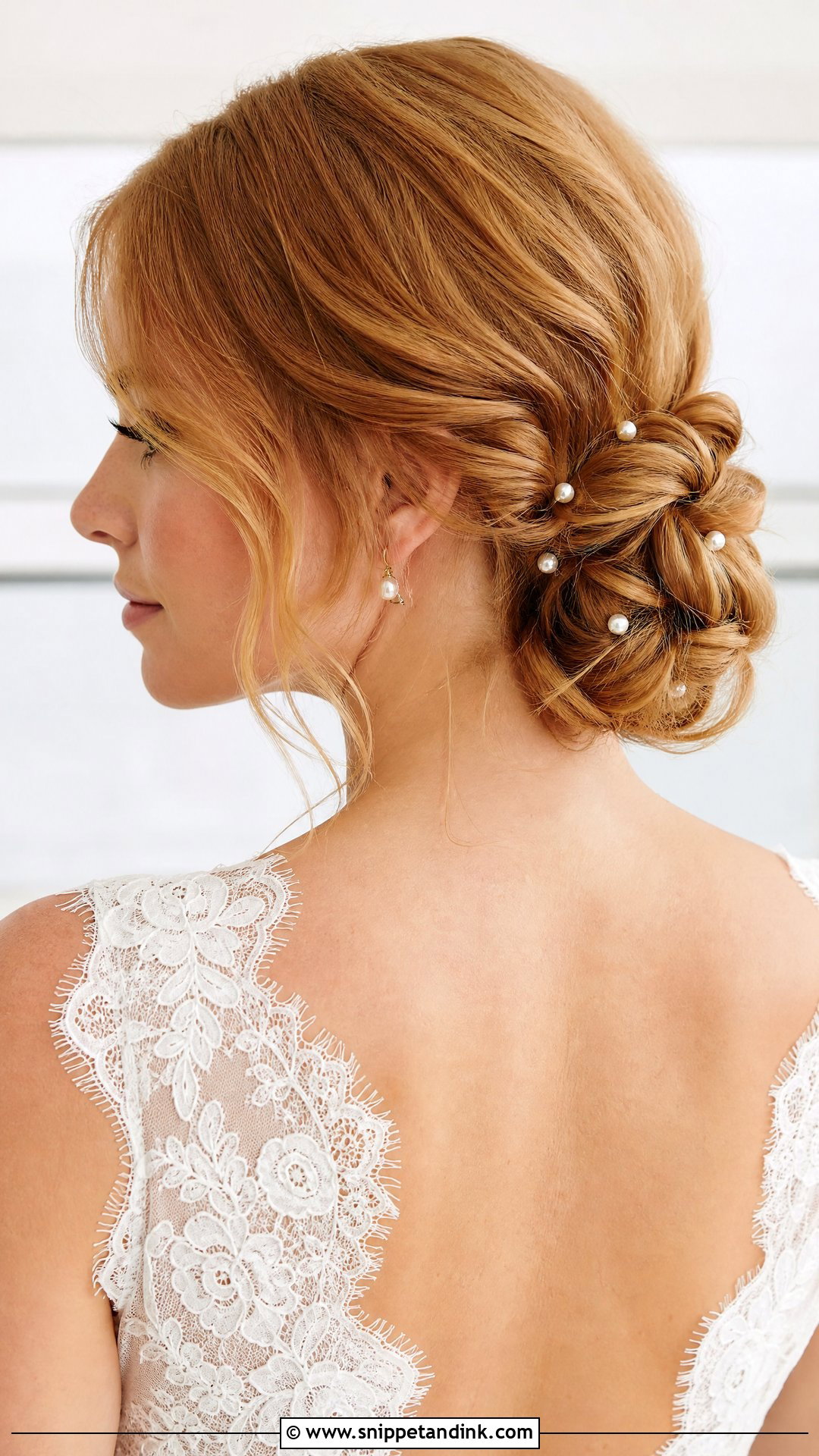
Simple, comfortable, and easy to adjust if your plans change. A low bun can be sleek, twisted, braided or slightly loose at the edges, and it sits happily under or below a veil. Pearls go around the bun, in a line down one side, or in one small comb, and I’d pick one of those, not all three. Off-the-shoulder, bateau and open-back gowns all suit it. Pull the bun a little looser if you want a softer face shape; a tight one can look severe under a cathedral veil.
10. Pearl Bridal Headband
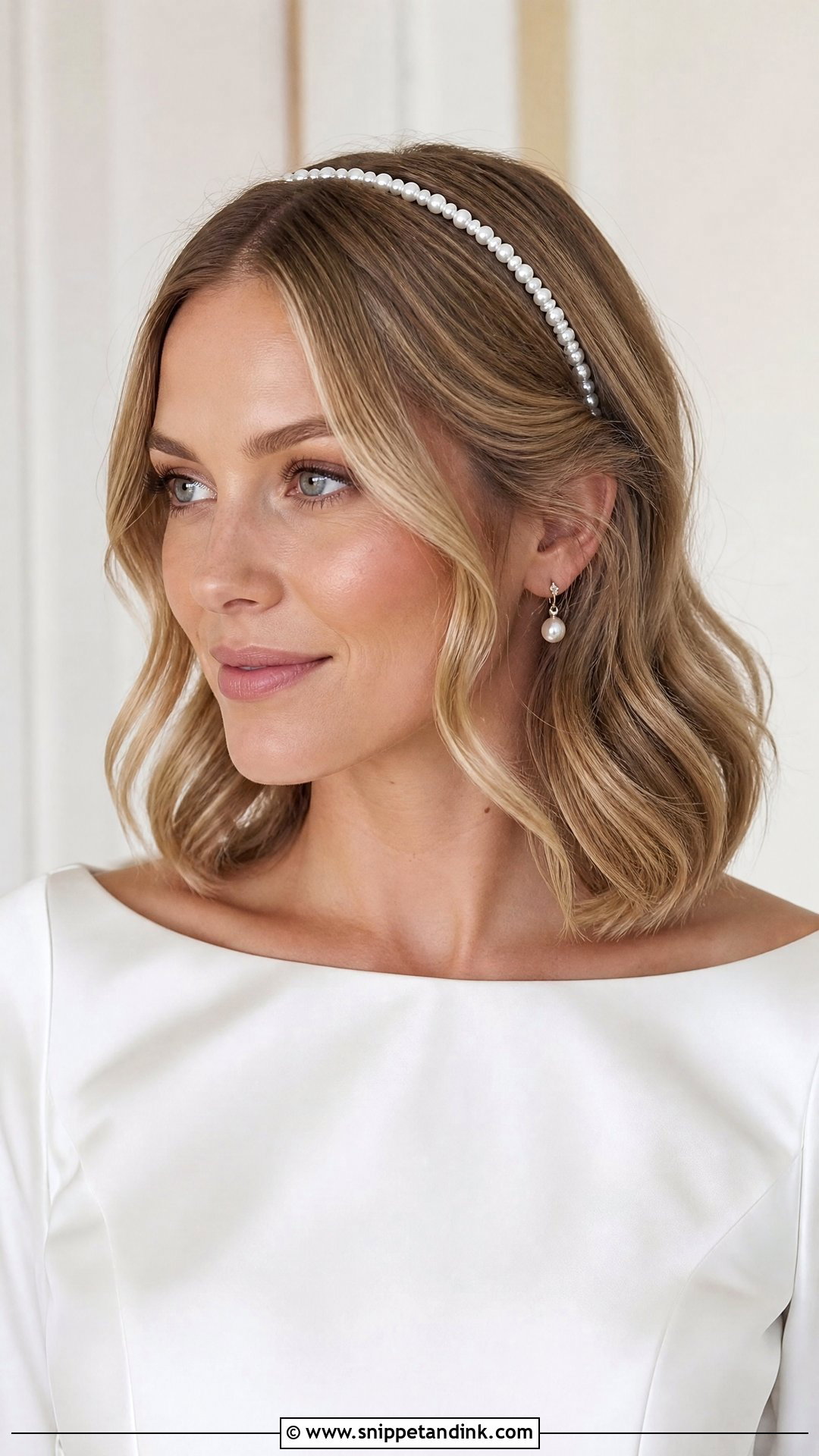
A headband is the most removable option on this list, which matters if you want to change your look after the ceremony. A thin pearl headband sits quietly on waves or a bob; a wider padded one makes more of a fashion statement. Unlike back-of-head pieces, it shows in front-facing photos. The catch is pressure: some headbands dig in behind the ears after a few hours, so wear yours around the house for an afternoon. If it’s bold, keep the earrings small.
11. Pearl Bridal Hair Vine
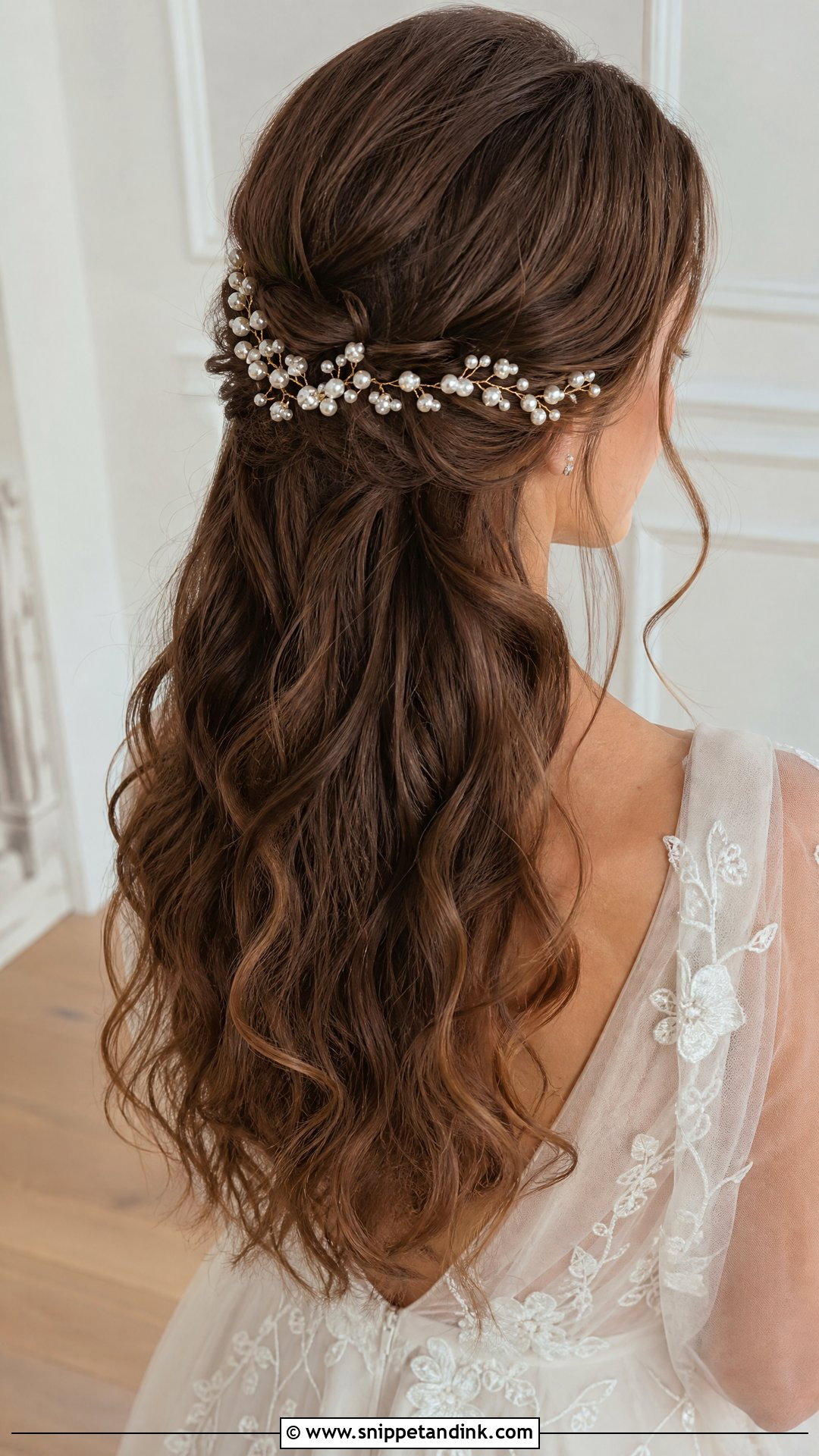
Hair vines bend to whatever shape you give them. I wrap them around low buns, weave them through braids or lay them across a half up look. Hair vines keep pearls airy because the pearls are spaced along wire rather than packed together. Small pearls suit fine hair; larger mixed sizes suit fuller hair. The wire needs pinning every few inches with matching bobby pins, otherwise the vine lifts away from the head when you turn.
12. Pearl Bridal Bob
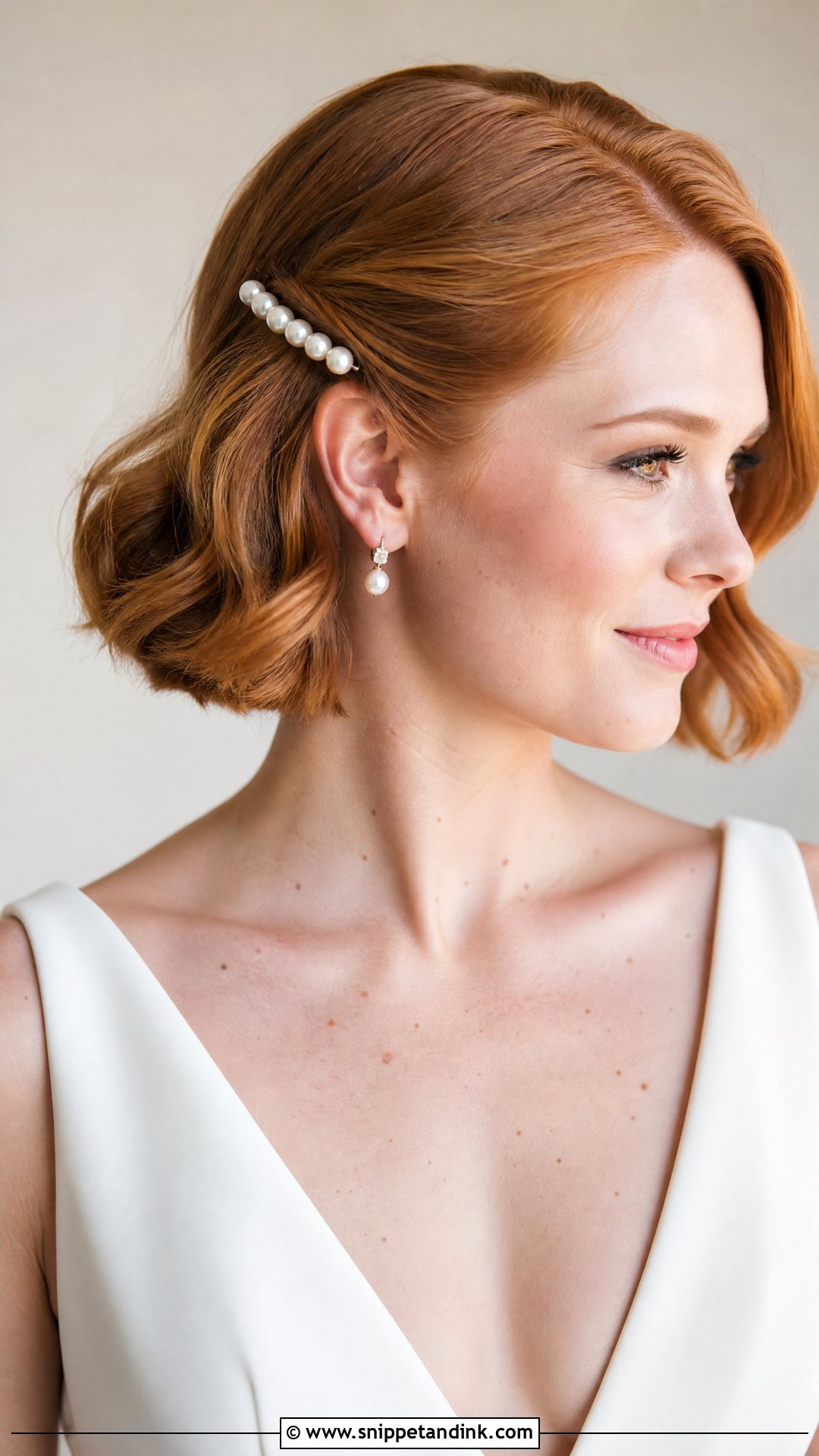
Short hair is not a problem to solve. A pearl bridal bob lets you show off your cut without extensions. Smooth with a headband reads polished; softly waved with a few clips reads relaxed. I usually tuck one side behind the ear and put the pearls on that side, which draws the eye to the cheekbone. A sharp part and a glossy finish make it look intentional.
13. Pearl Bridal Short Hair
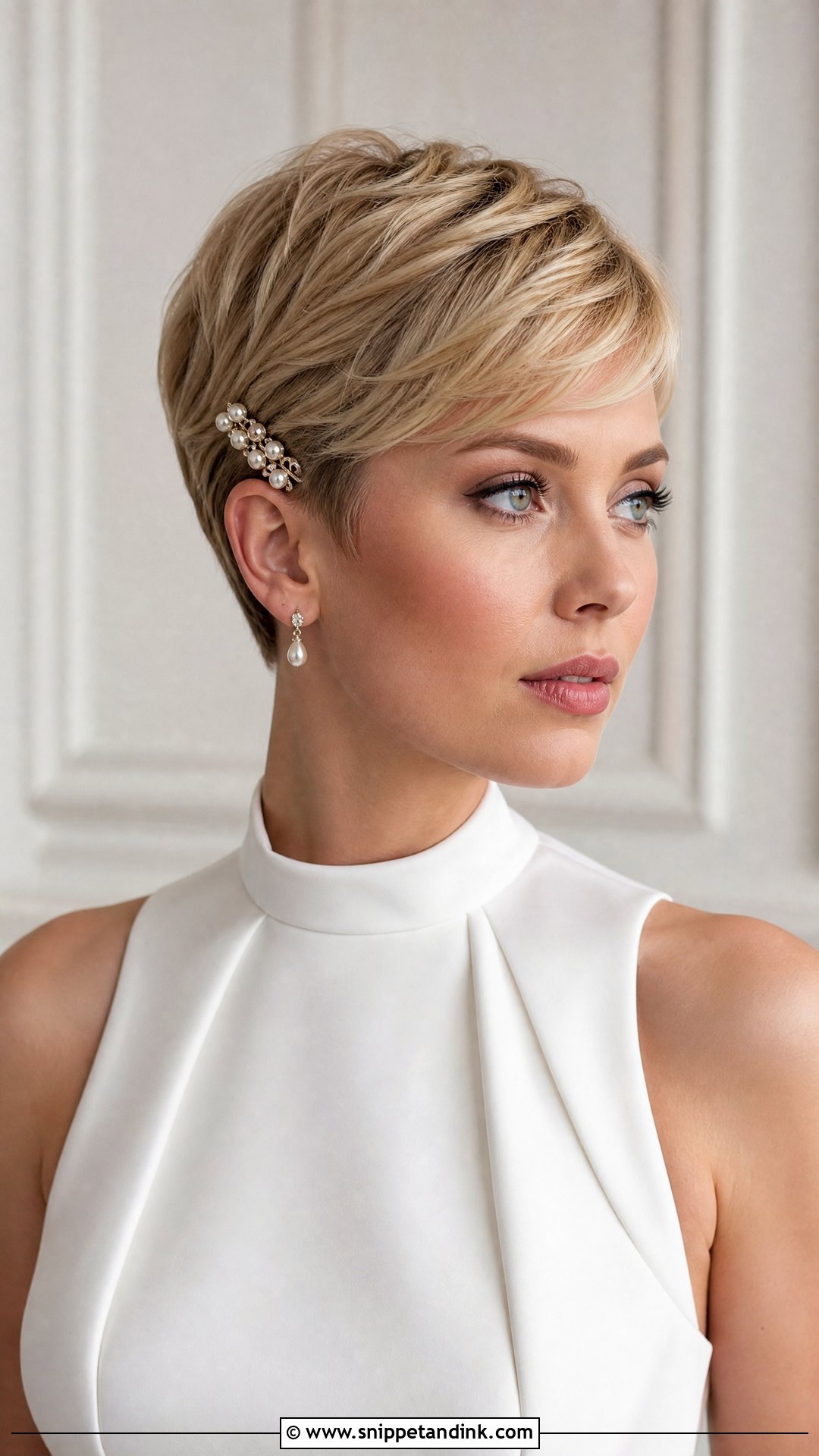
With a pixie or a cropped cut, there’s less hair to hide a mistake in, so placement matters more than quantity. Pixie cuts, cropped waves and short layers all take pearl barrettes, combs or slim headbands well. One strong piece looks better than several small ones. Very short hair often won’t hold a standard comb, so I look for barrettes with a firm clasp or anchor the piece with crossed pins underneath. Add lift at the crown, or go sleek; either way, let the cut stay the main shape.
14. Pearl Bridal Curly Hair
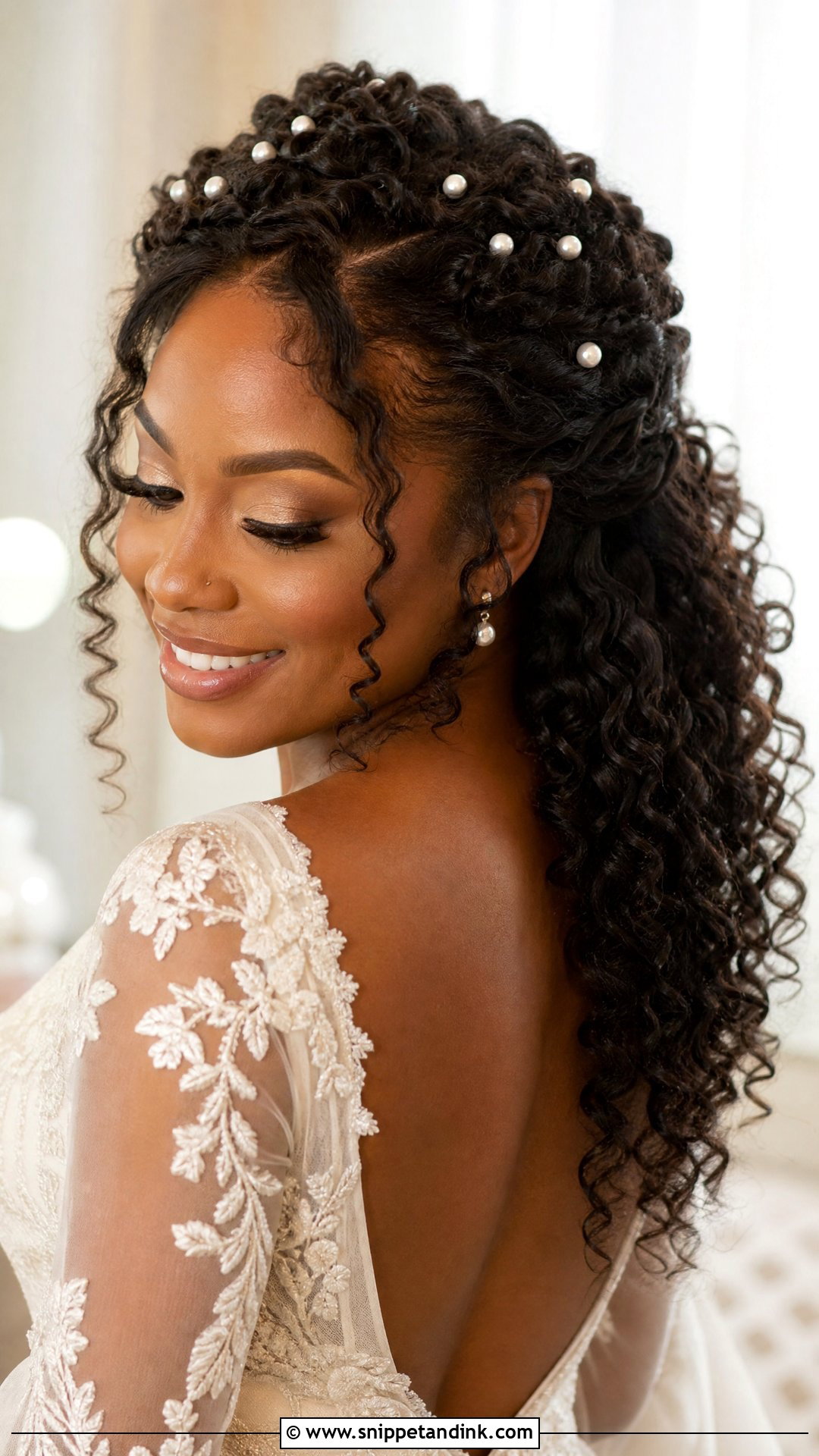
Curls and pearls work well together, provided the curls stay hydrated and soft. I define the texture first, build volume at the crown, and leave the face-framing curls loose. Pearls then go into a curly updo, along one side, or into a half up shape. Pin them at the base of a curl rather than through the middle of it, because pushing a pin through a coil snags the pattern and leaves a frizzy patch. The result looks like your own hair, dressed up.
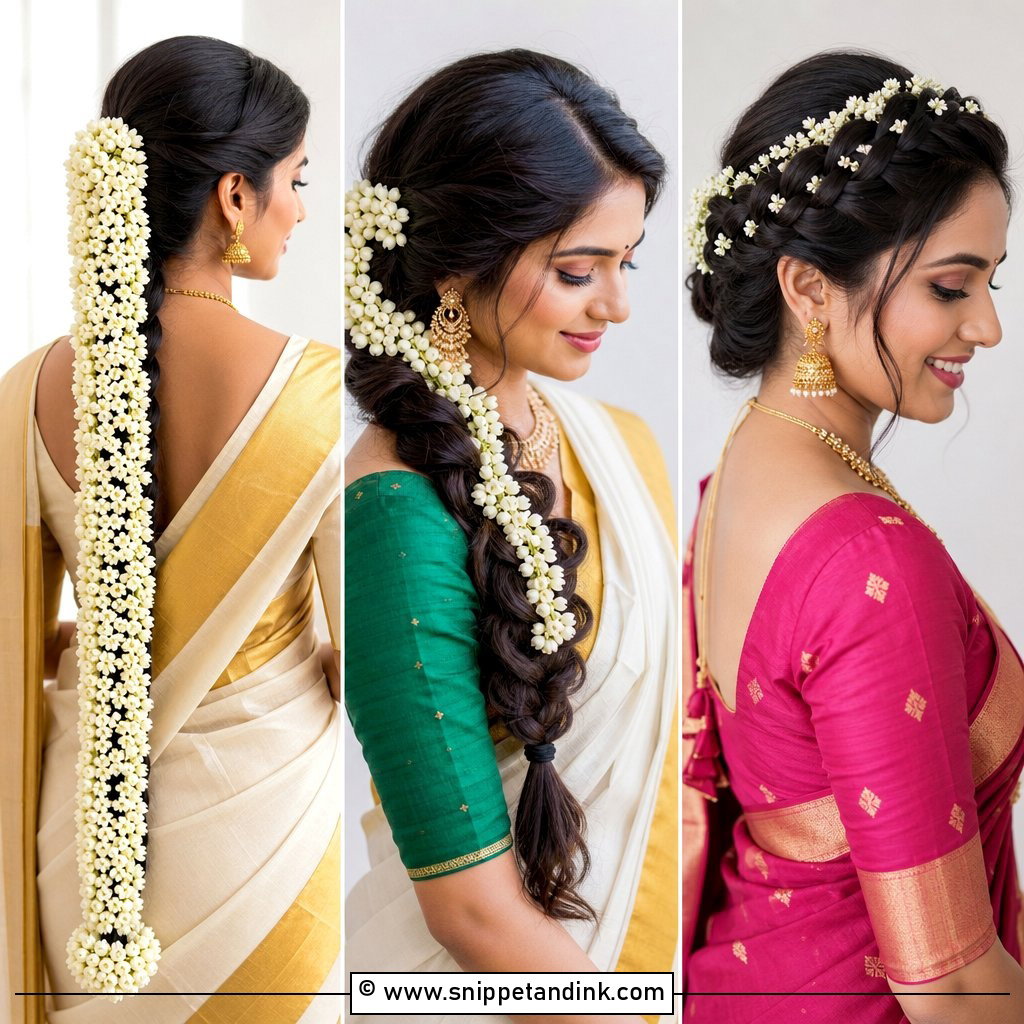
15. Pearl Bridal Veil Hair
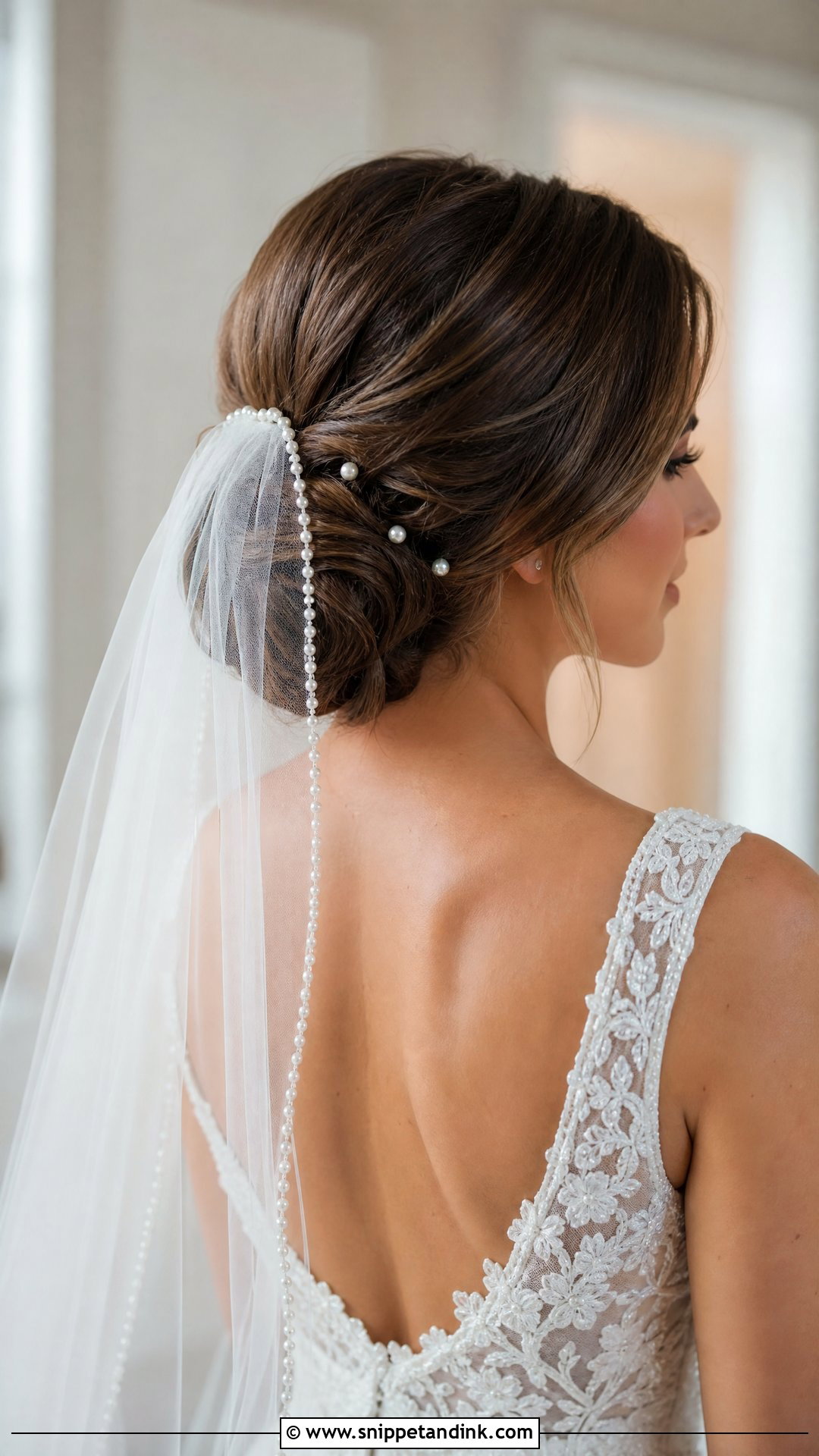
Pearls in the hair and pearls on the veil have to be planned together for a complete aisle look. If the veil edge is heavily pearled, keep hair pieces small. If the veil is plain, a pearl comb or a few pins add the detail. A low bun, chignon, waves or half up all work. Test it at your trial: put the veil in, take it out, and check that the hairstyle still holds once the comb is gone, since that’s exactly what happens before the reception.
Glass, Plastic or Freshwater Pearls After Eight Hours
Most bridal hair pearls are faux, and that’s fine. The difference is how they behave over a long day. Glass pearls are heavier, have a richer sheen and keep their coating well. Plastic pearls are easy on fine hair, but cheaper ones chip or peel, especially if a hot tong brushes them during a touch-up. Freshwater pearls are real, slightly irregular, and give a softer, more organic look, though they need gentle handling.
- Pearls go in after the hair is curled and set, never before heat styling.
- Spray first, then add the pearls. Lacquer dulls pearl coating and can leave it tacky.
- Heavier glass or freshwater pieces need a firm base. Anchor them with a crossed bobby pin underneath.
- If one falls out on the dance floor, it was usually sitting in loose waves instead of gripping a section of the updo.
Afterwards, wipe each piece with a soft dry cloth to lift hairspray and makeup, and store them flat in a box or fabric pouch rather than a sealed plastic bag. Real pearls in particular dislike being sealed airtight. Looked after, they’re a sweet thing to lend to a sister or friend later.
Decide Whether Pearls Lead or Support
Pearls suit almost every bride, and that’s precisely why the placement deserves thought. They can make a plain bun look finished, give waves a soft glow, or turn a short cut into a proper wedding look. Settle on the hairstyle that fits your dress, venue and comfort first. Then decide whether pearls are the main detail or a quiet accent, and buy accordingly. At your trial, look at the back of your head in a hand mirror and take a photo from the side. That’s the view most of your guests will see.
You'll Like These Ideas:


Leave a Reply