
A Kerala Hindu bride’s hair is built around three things: jasmine, gold and a Kasavu saree with a narrow border that doesn’t compete with either. Unlike many North Indian bridal looks, the hair here is rarely about height or heavy setting. It’s about a braid or bun that can carry flowers and temple jewellery for hours, through a muhurtham that often starts early in the morning. I’ve gathered twenty-five Kerala Hindu bridal hairstyles here, from the poolajada to softer half-up curls for an engagement shoot, with notes on what each one asks of your hair and when in the wedding it fits best.
Ordering Jasmine So It Still Looks Fresh at the Muhurtham
Flowers make or break a Kerala bridal look, and they’re the part brides plan least. I ask for jasmine strung from buds on the morning of the wedding, not open flowers bought the evening before. Buds open slowly through the day and stay white; flowers that are already open tend to brown at the edges before lunch.
Keep the strings wrapped in a damp cotton cloth in a cool spot until I’m ready to use them. Don’t put them in a sealed plastic bag in the sun, which steams them.
Jasmine also has a strong scent in a closed room. If you get headaches from it, tell me at the trial; I can use fewer strings near the face and more toward the tip of the braid.
How much to order
- Full-length jasmine braid: order more than you think, since the strings go round many times.
- Bun with gajra: two or three thick garlands.
- Poolajada: order the made-up panel from the florist rather than loose flowers.
Confirm quantities with your florist and stylist together, as string lengths vary. Running short at seven in the morning, with a muhurtham time fixed, is a problem I’d rather you avoid.
1. Long Jasmine Braid for Kerala Bride
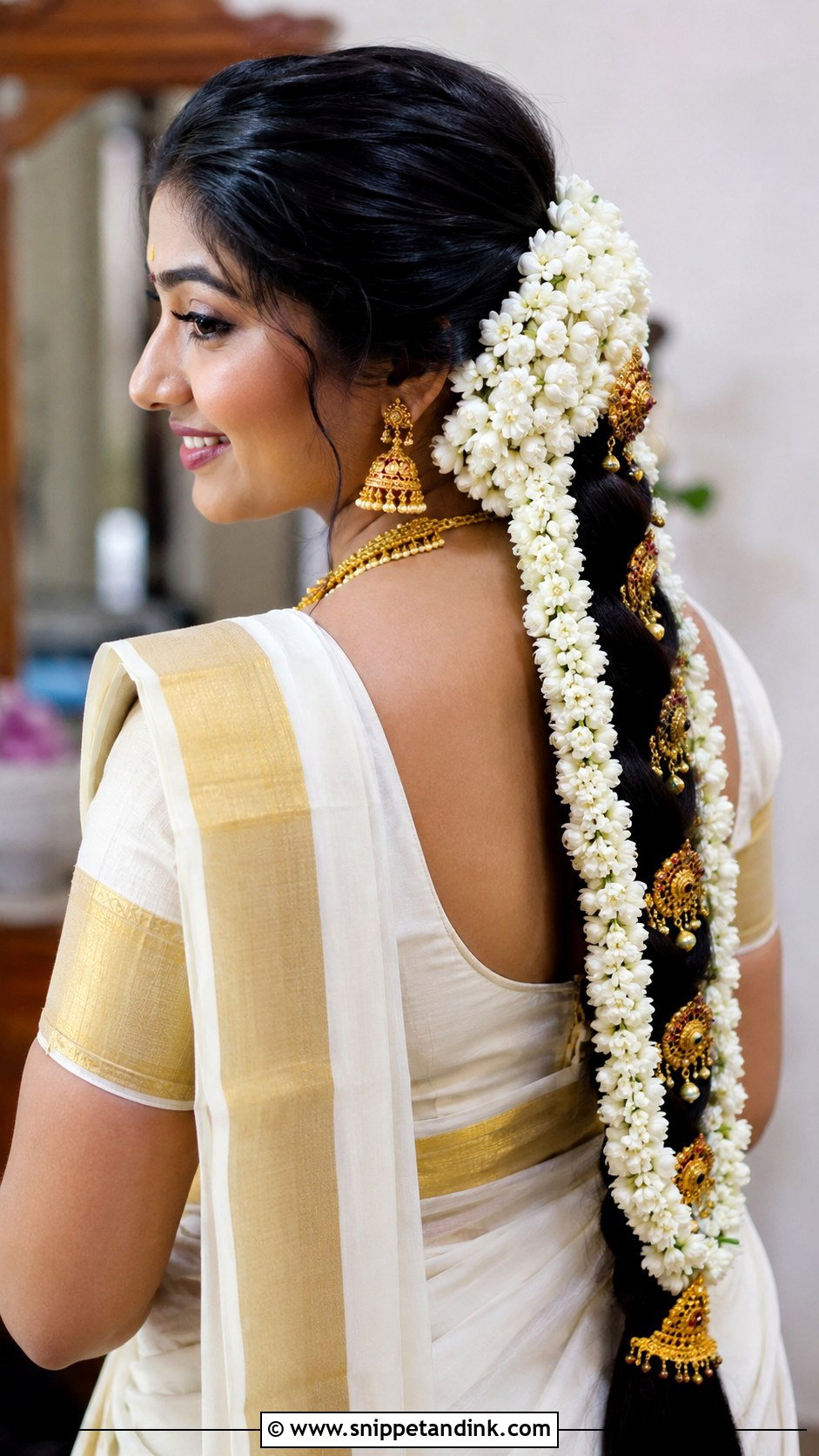
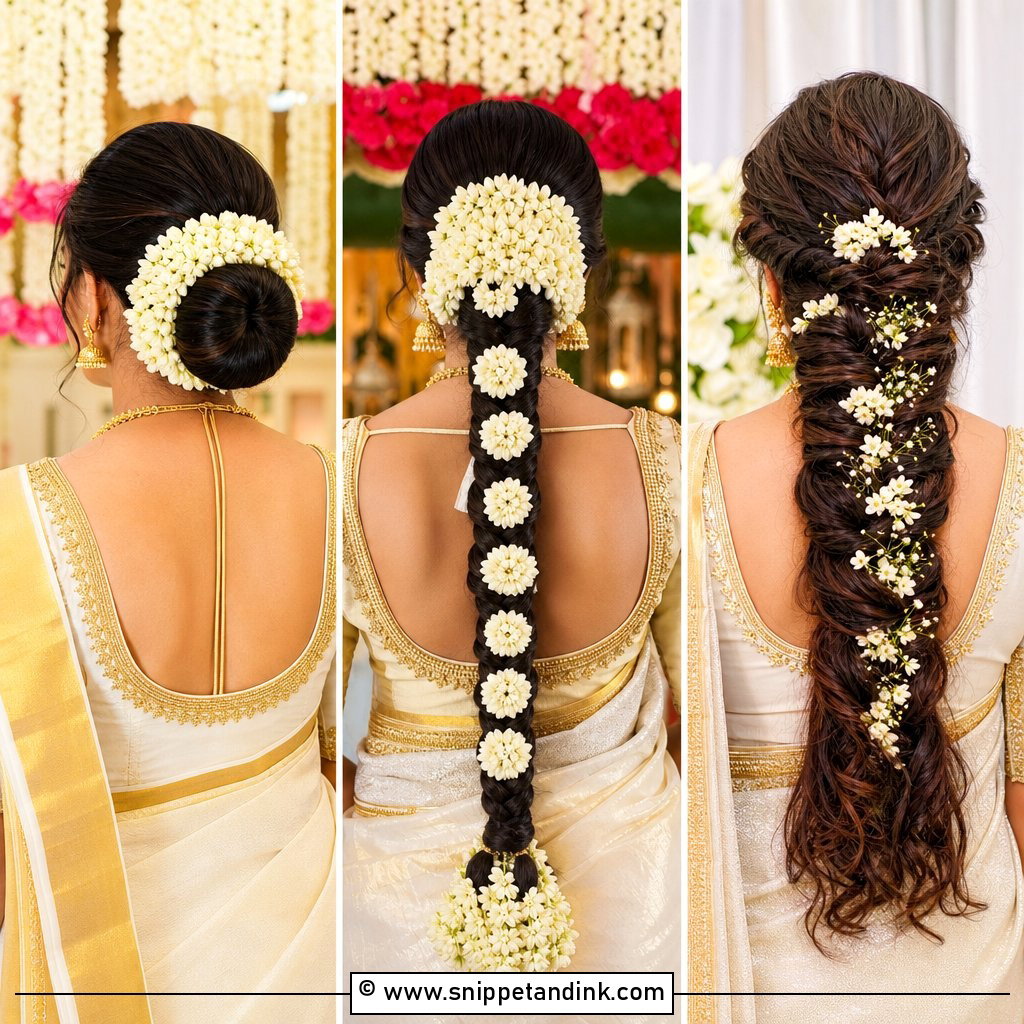
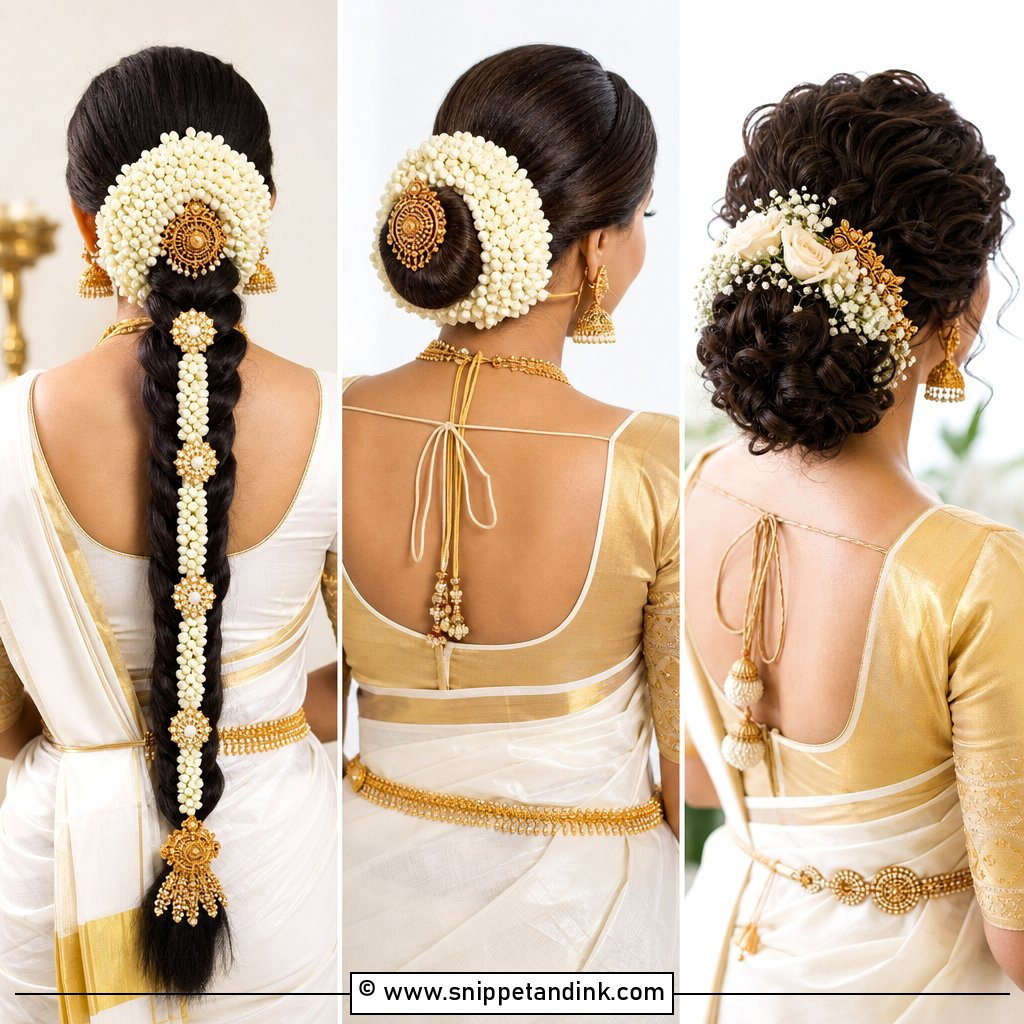
The long jasmine braid is the look most Kerala brides picture first. One thick plait, covered from crown to tip in strings of jasmine, sometimes with a gold nagapadam set between the flower layers. The flowers are heavier than they look, so I anchor the top of the braid with crossed pins under the first strings, which takes the drag off the scalp. Long, healthy hair carries it best; if yours is shoulder length, a matching braid extension underneath gives the length and the base to sew flowers onto.
2. Low Bun with Jasmine and Kanakambaram
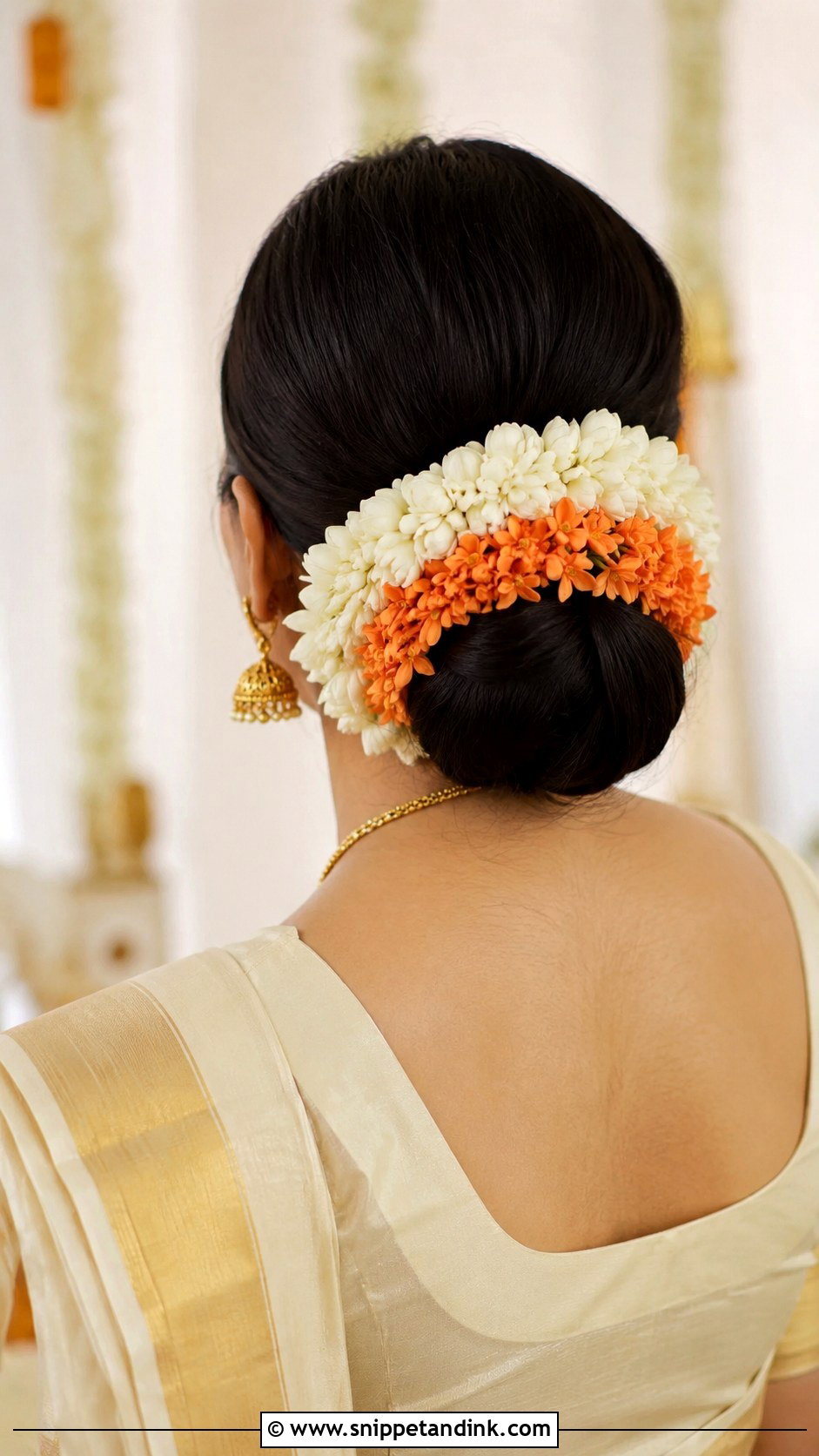
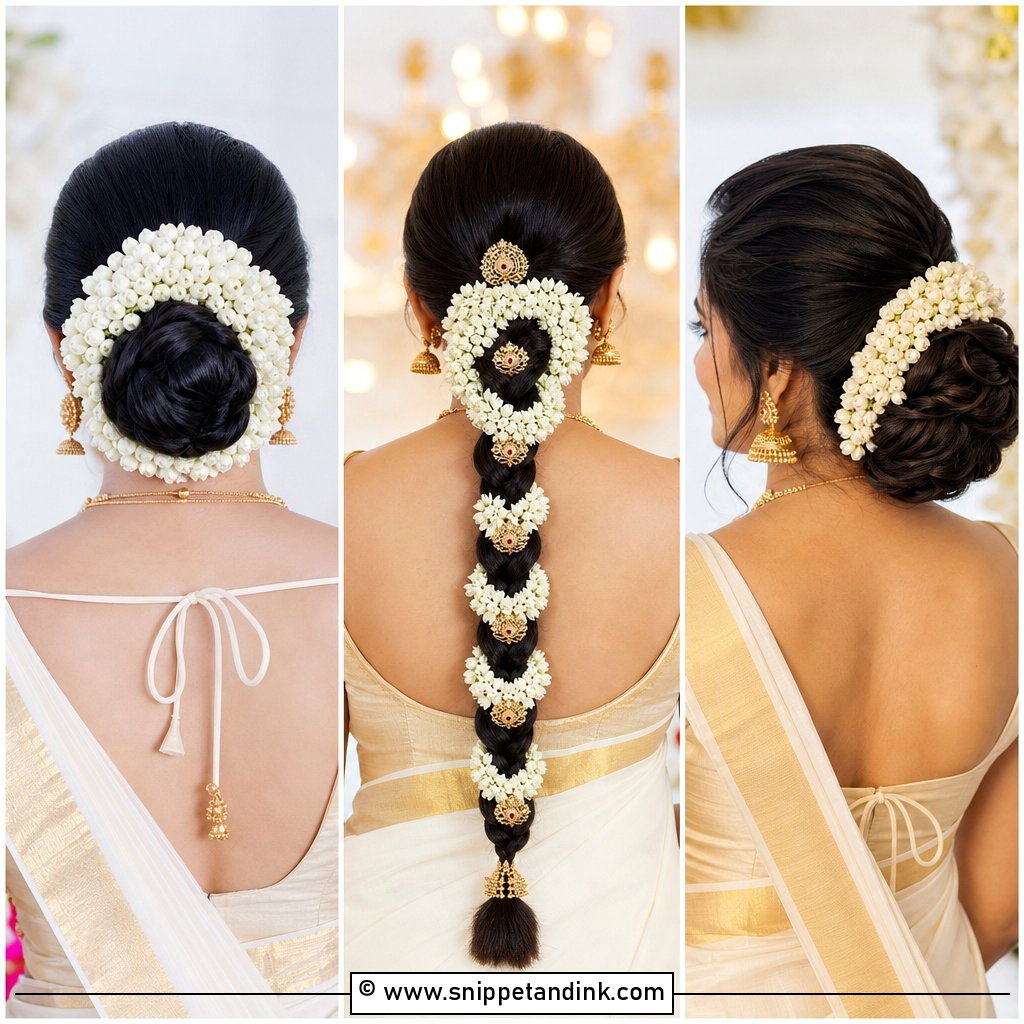
A low bun ringed with white jasmine and orange kanakambaram gives you the two-tone flower ring without a full braid’s weight. Sitting at the nape, it leaves the neck clear for temple necklaces and jhumkas. I build the bun over a small padding so the strings have something firm to wrap round, otherwise they slide down as the ceremony goes on. Brides who want something tidy and low-maintenance usually end up here.
3. Poolajada Braid with Floral Layers
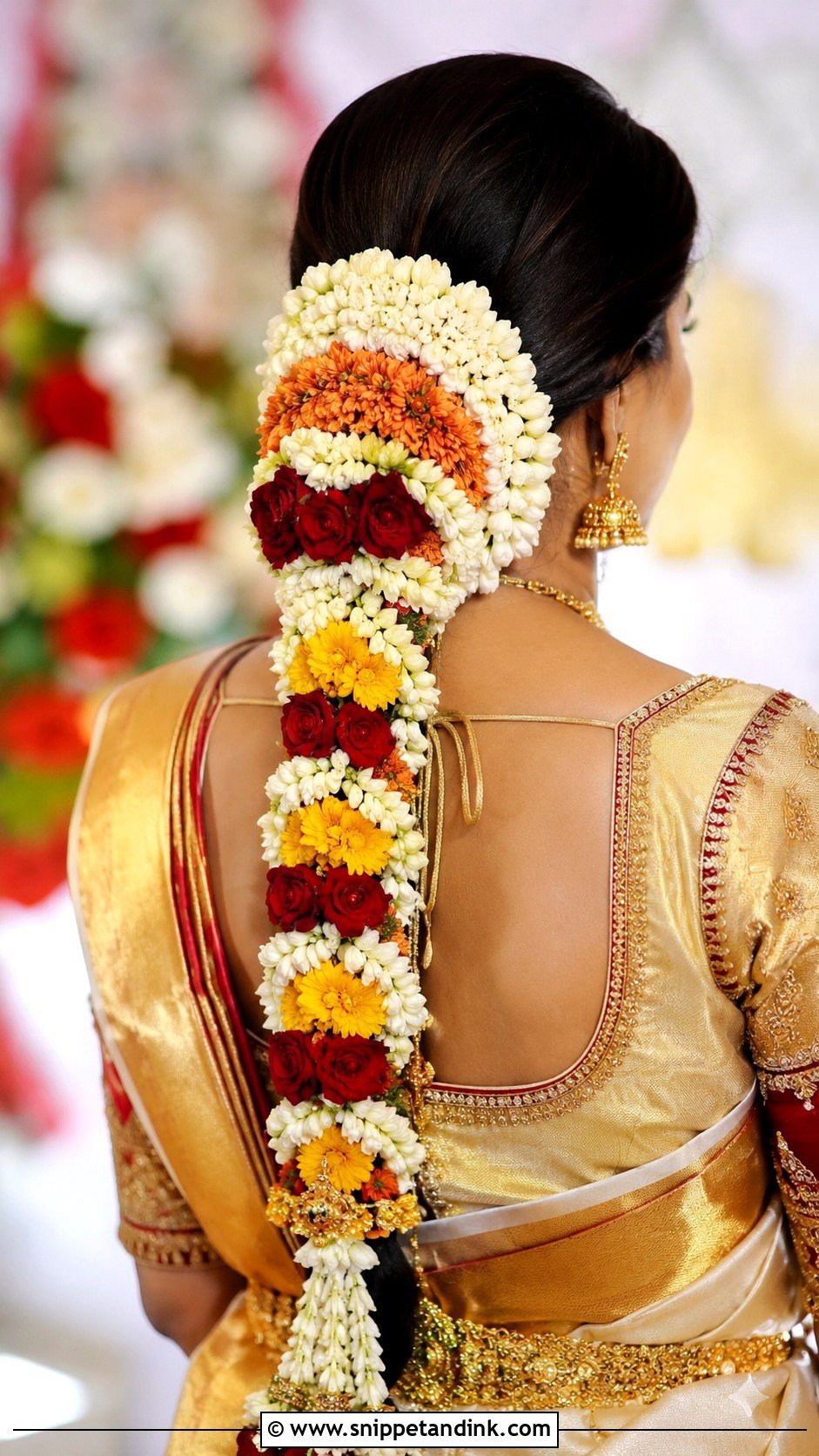
The poolajada is the grand South Indian bridal braid: one big plait covered in clusters of jasmine, rose and marigold that taper toward the end, often with a gold piece at the crown. Most poolajadas are made as a separate flower panel and attached to the braid rather than built strand by strand on your head, which saves an hour in the chair. The panel is heavy, so I secure it at several points down its length, not just at the top. It belongs at a full traditional ceremony, where the back of the bride is in half the photographs.
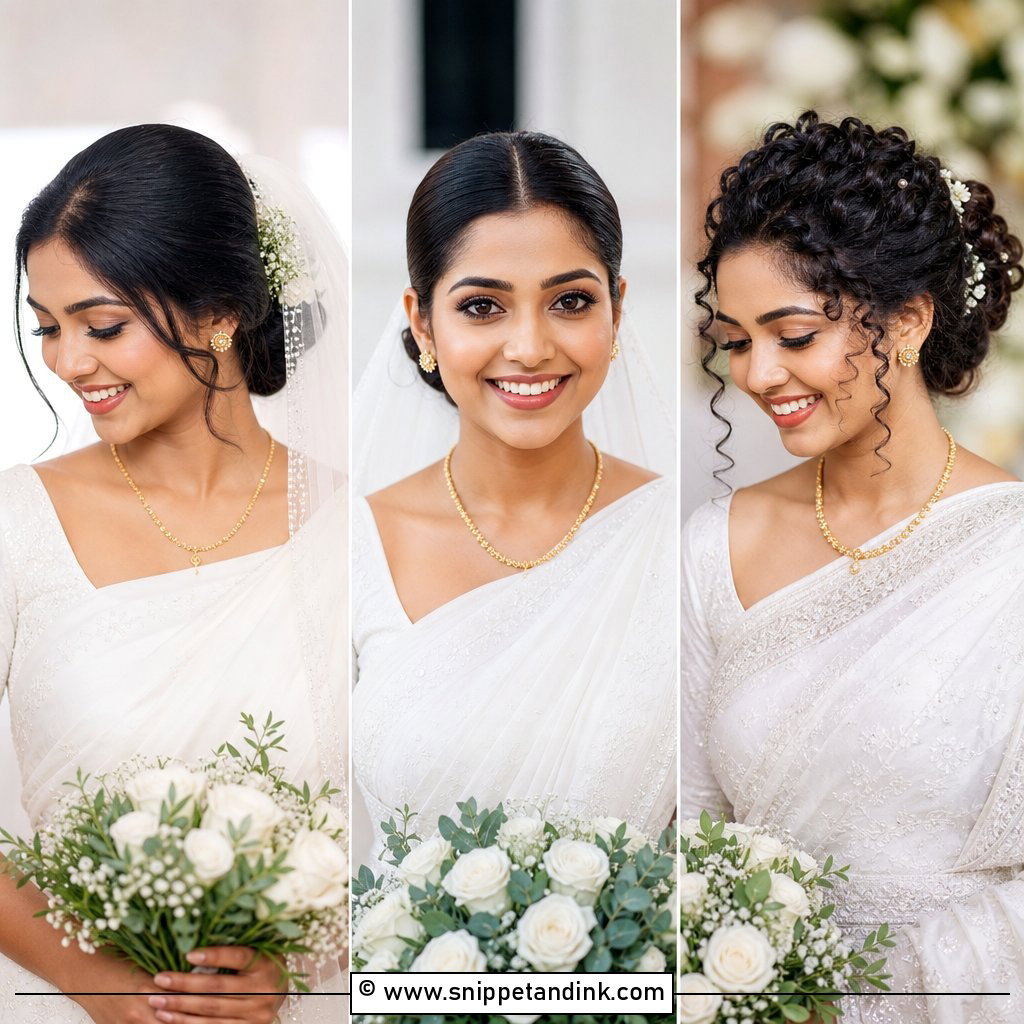
4. Half-Up Curls for Engagement Ceremony
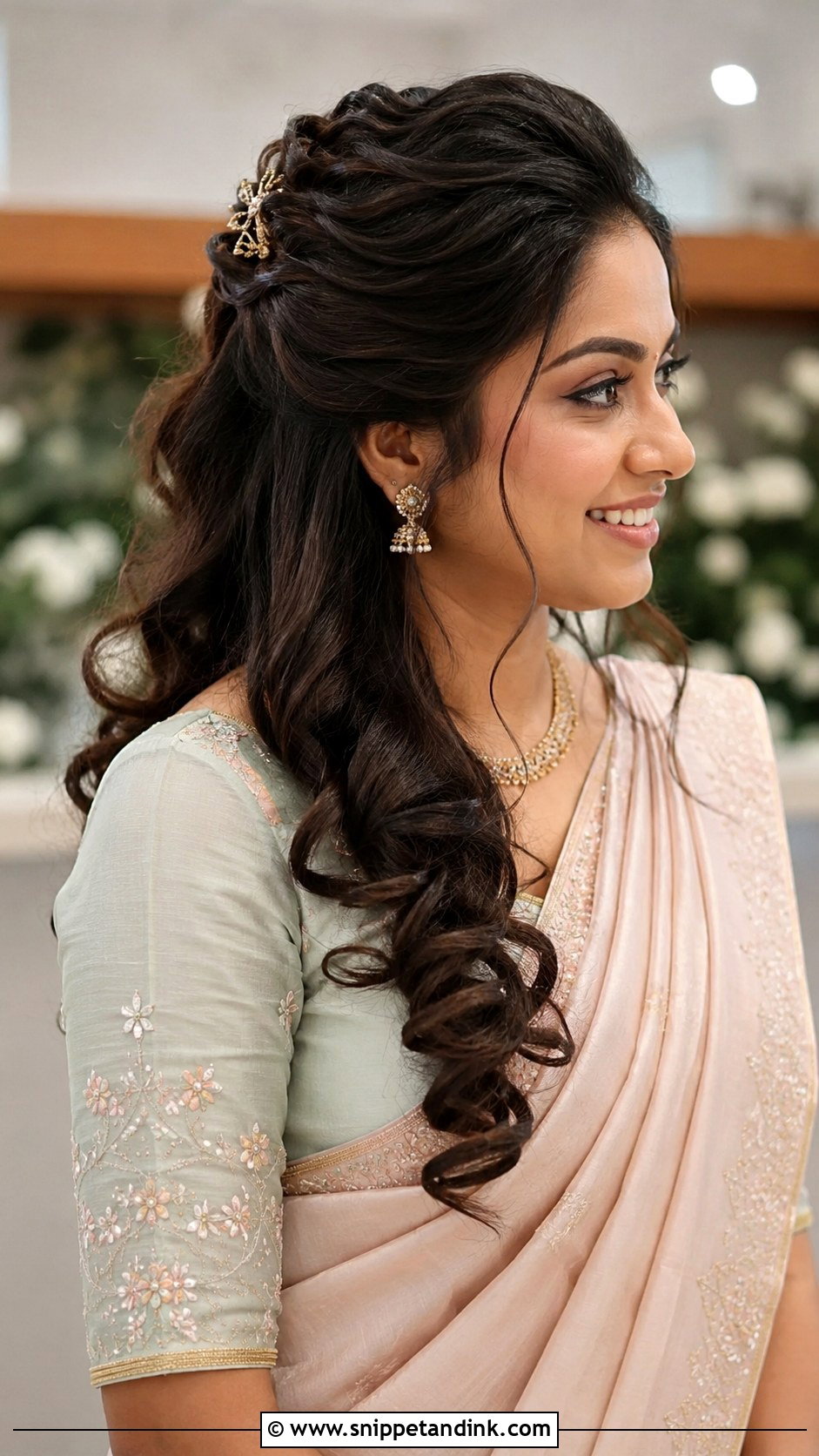
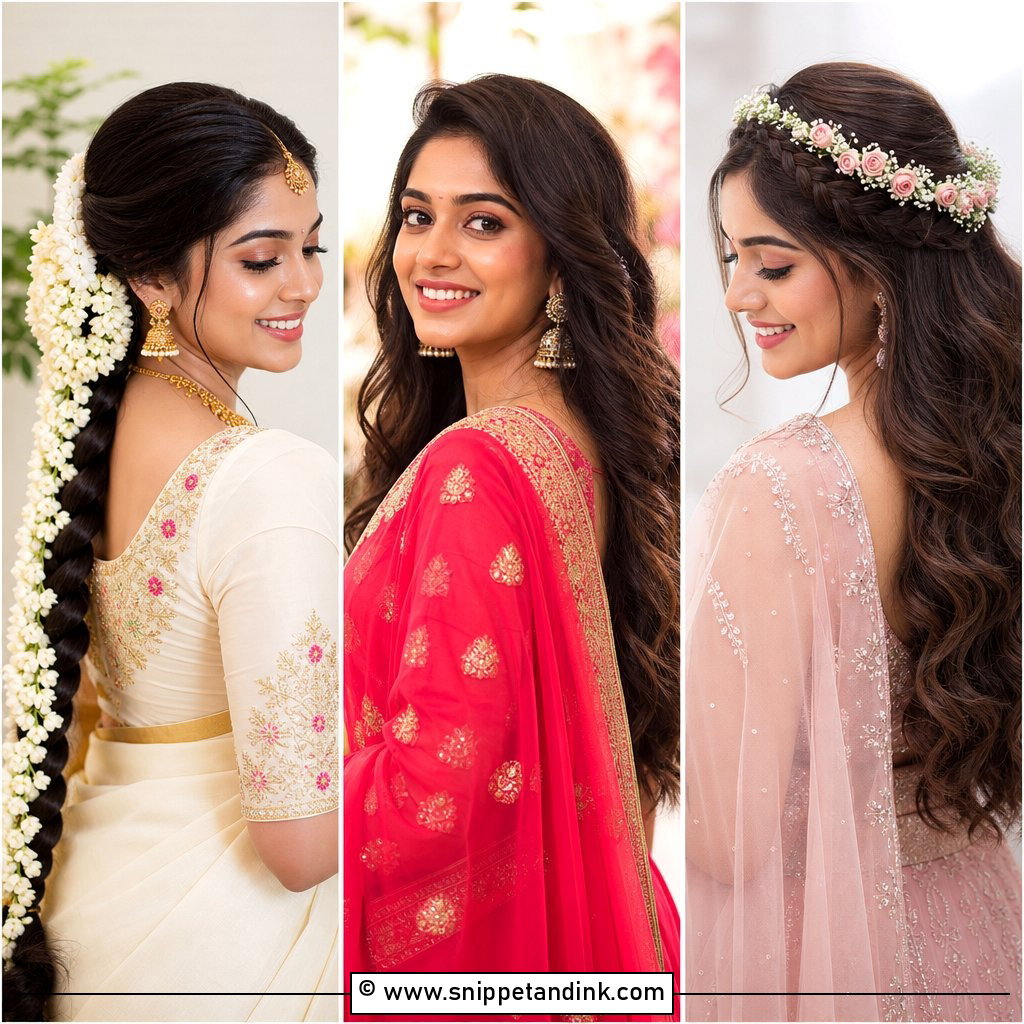
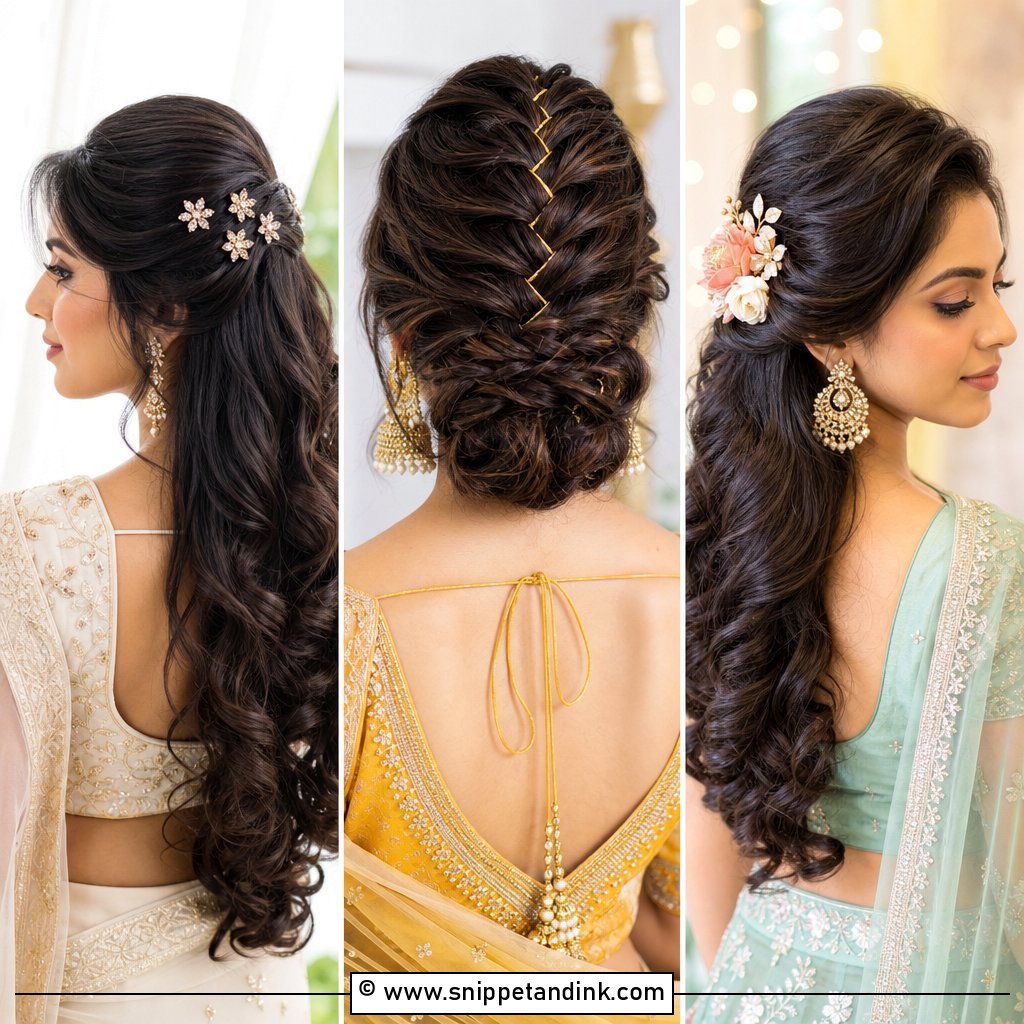
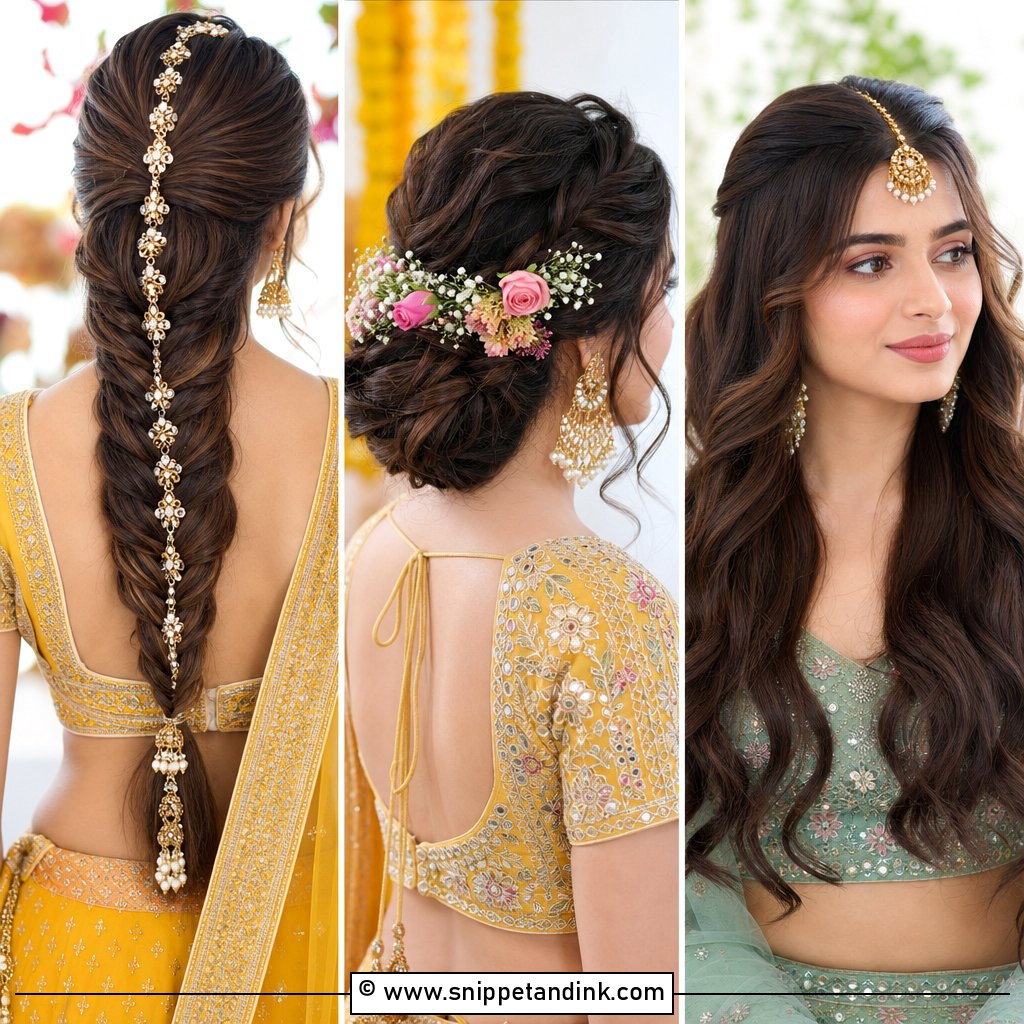
Half-up curls suit the engagement, the haldi or a pre-wedding shoot, when a full braid would feel too formal. The upper section comes back and is pinned with a gold clip or one flower; the rest falls in loose waves. South Indian hair is often thick and heavy, and curls drop faster in it, so I set each curl with a pin while it cools. Pair it with a lighter saree and modern jewellery.
5. Side Braid Draped with Jasmine
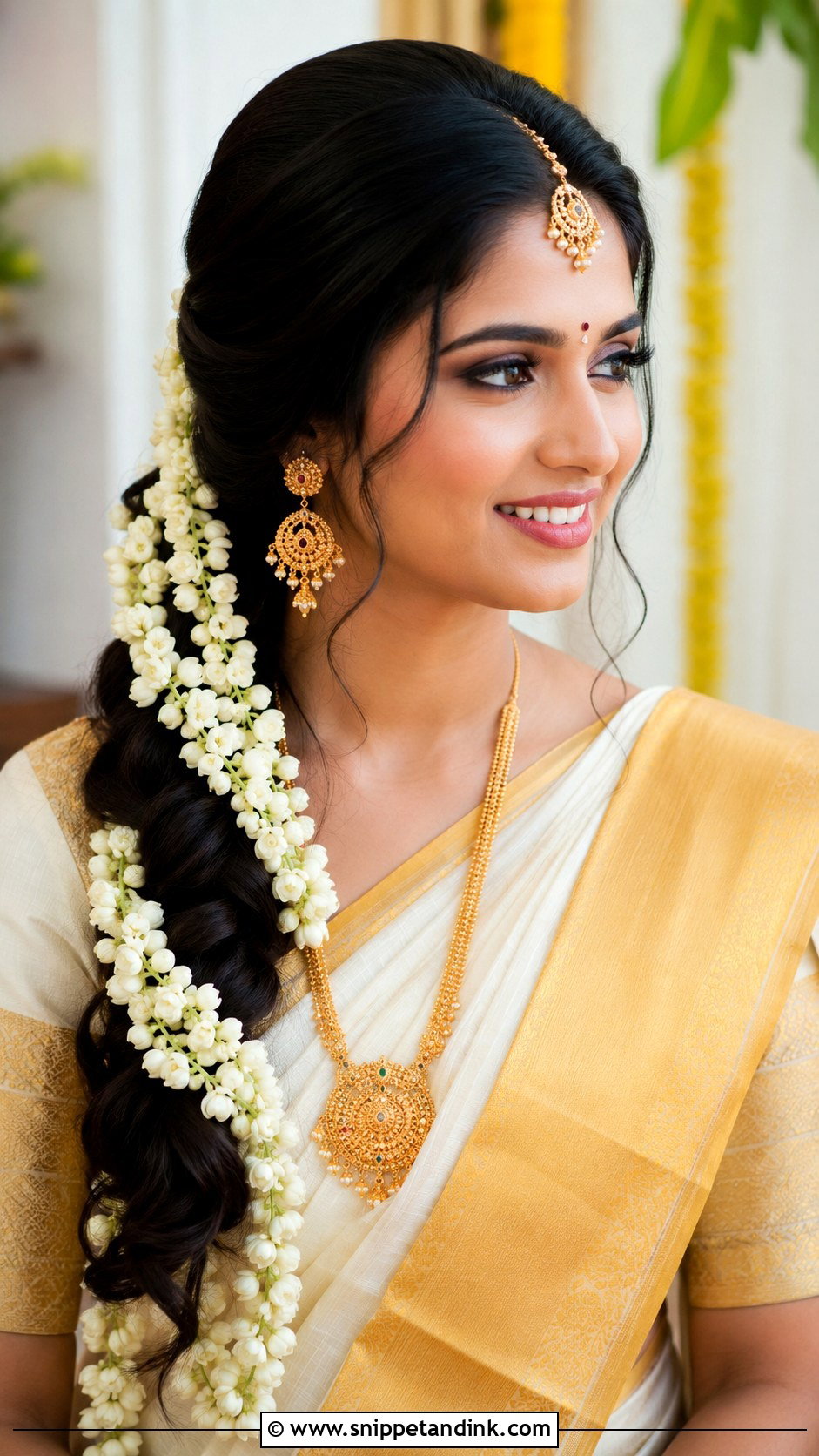
Bringing the braid over one shoulder keeps the jasmine in front-facing photos, which a back braid can’t do. The plait sits loose and wrapped with strings, framing the neckline beside statement earrings and a maang tikka. I’d skip it if your necklace is a long haram, since the braid and the chain fight for the same space on your chest. With a choker, it works well.
6. Bun with Gajra Wrap
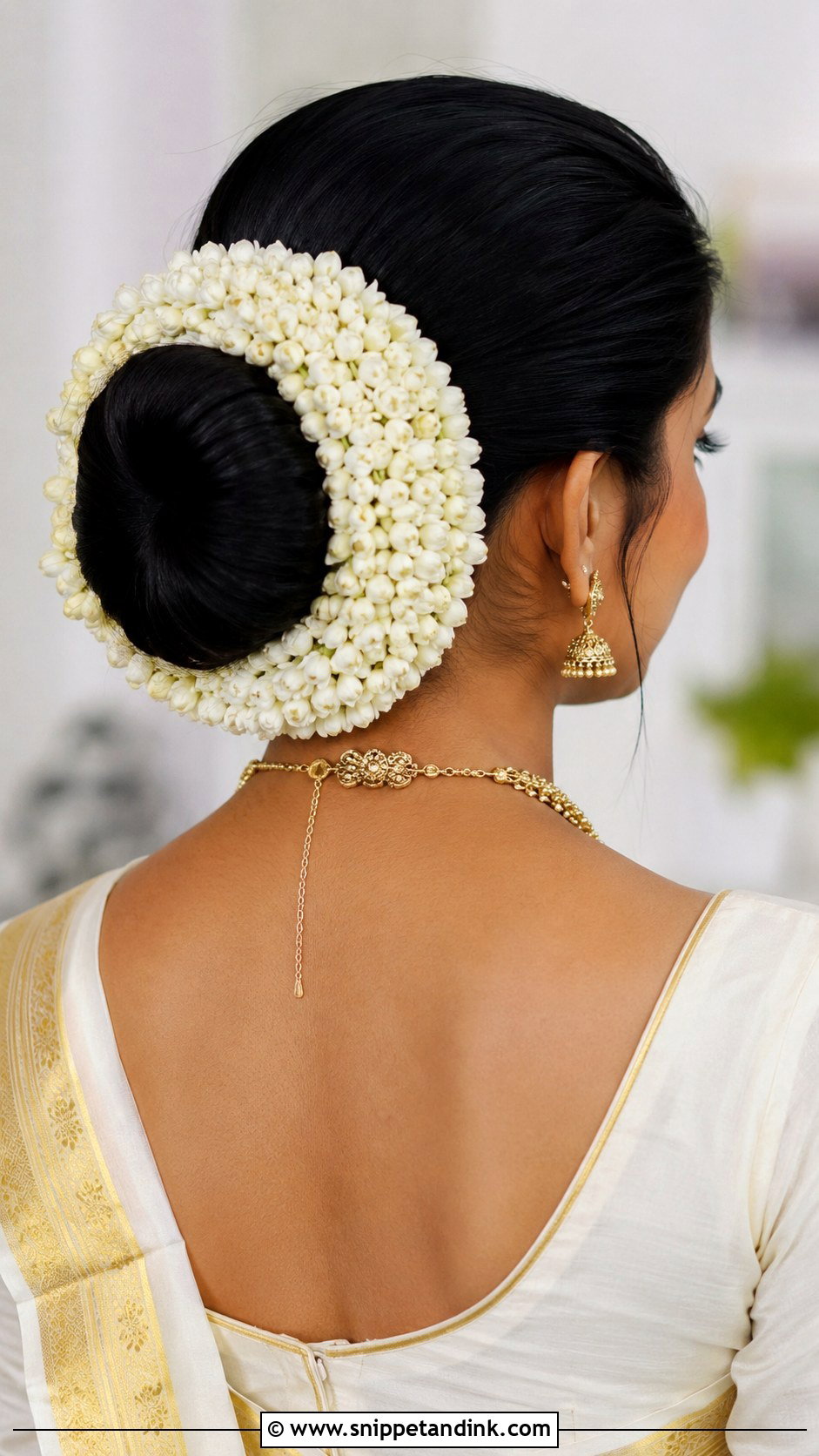
A gajra wrapped round a smooth bun is the most adaptable look in this list. Thick jasmine garlands add volume and scent, and because the bun can be built with extensions, it works on any length. The face stays clear for the bindi and temple jewellery. I wrap the gajra in two passes rather than one tight coil; it sits fuller and won’t squeeze the bun out of shape.
7. Braided Bun with Temple Jewelry
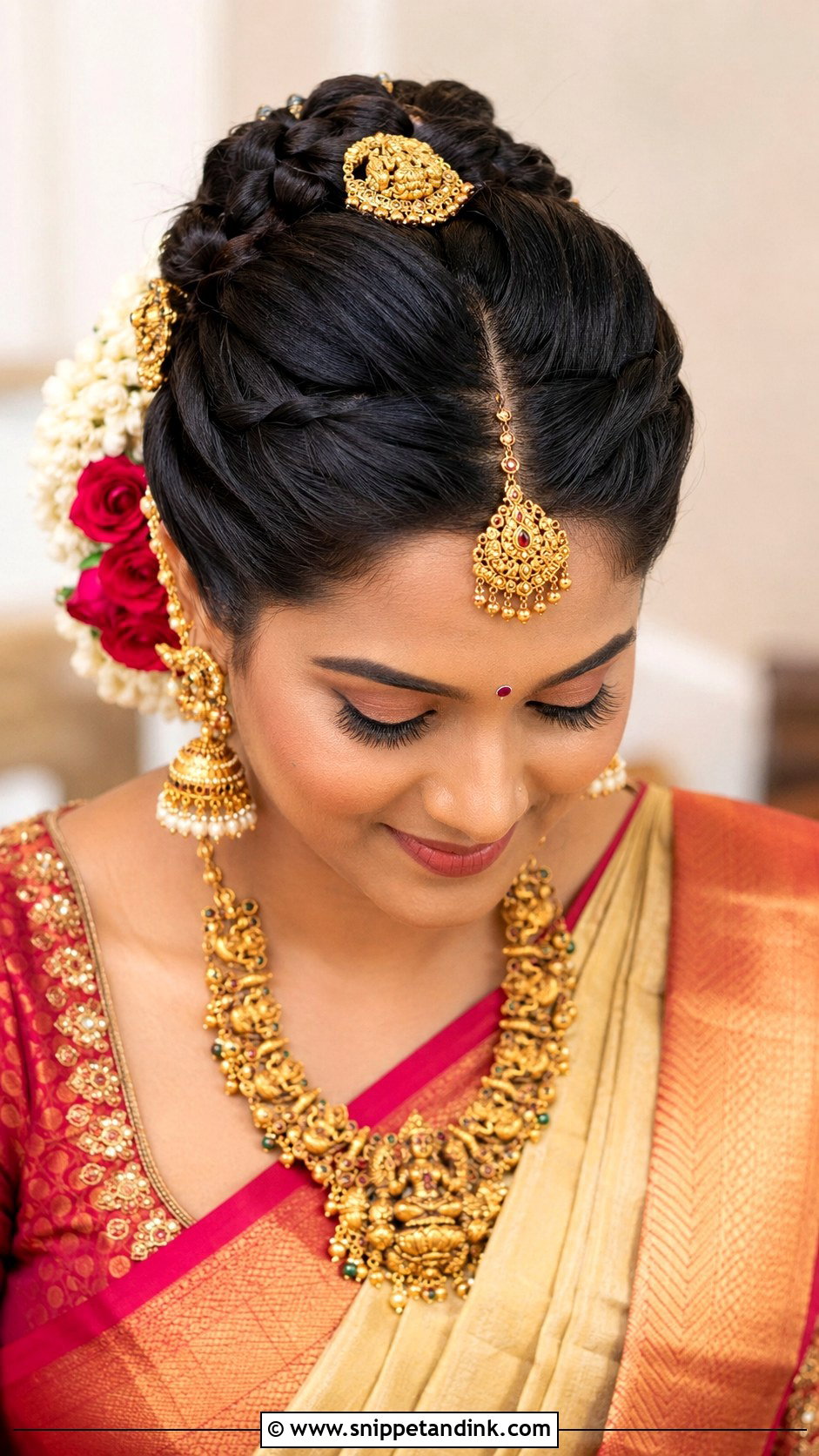
A braided bun with temple jewellery is the most structured look here. I braid two or three sections, coil them into a bun, then pin gold pieces on top and tuck flowers into the gaps. The braids give the pins something to grip, so it holds through long rituals and dancing. Layered gold against white flowers makes the back view the most detailed part of the bridal look, and it’s the version I suggest when the family has heritage hair ornaments to show.
8. Open Hair with Floral Crown
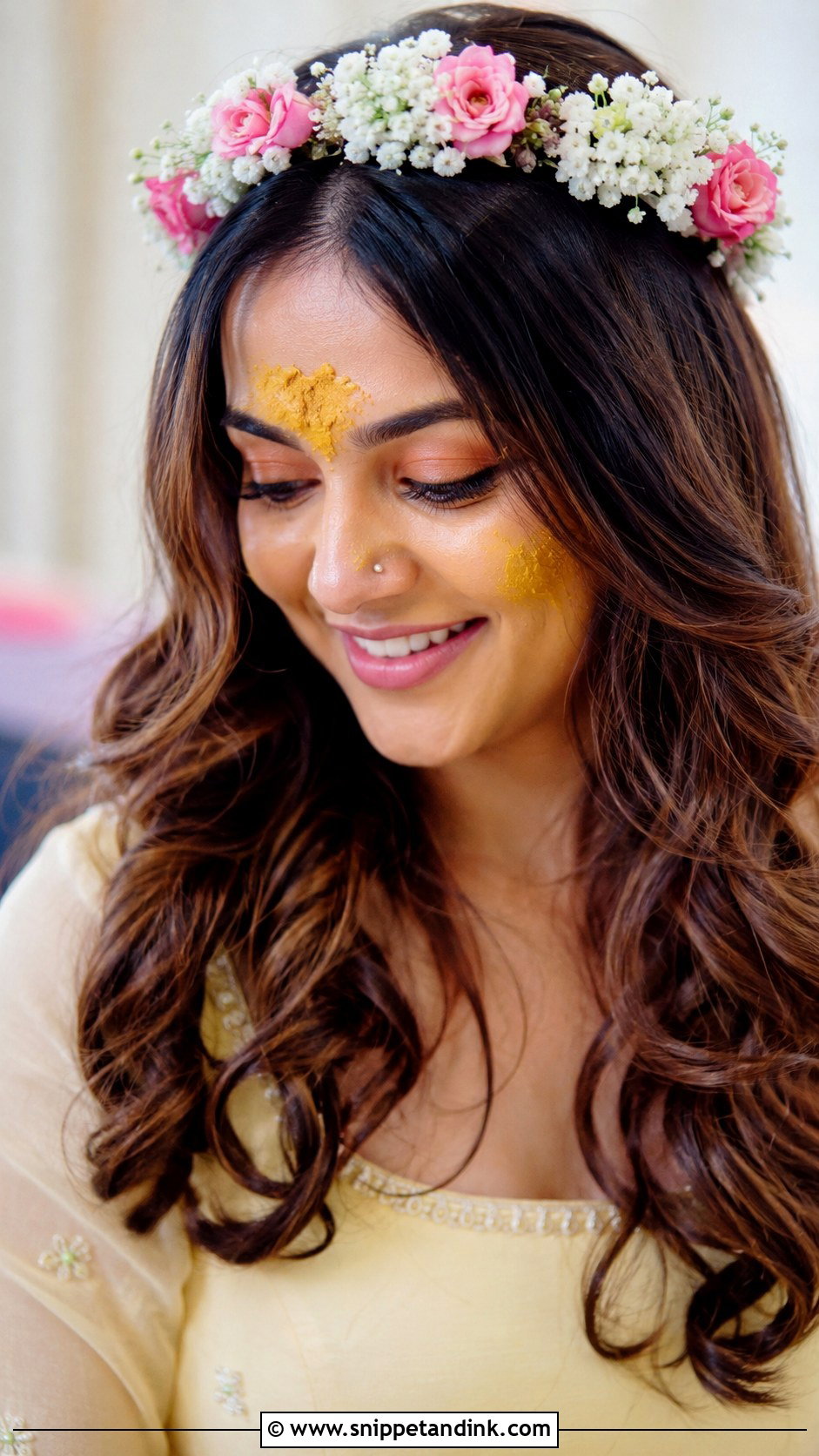
Open hair with a floral crown is lighter and younger in feel, so it belongs at the haldi or mehndi rather than the muhurtham. A jasmine and small rose crown sits along the hairline while soft waves show length. Pin the crown at the temples and behind, as jasmine strings are slippery on open hair. Pastels and minimal jewellery suit it.
9. Fishtail Braid with Jasmine
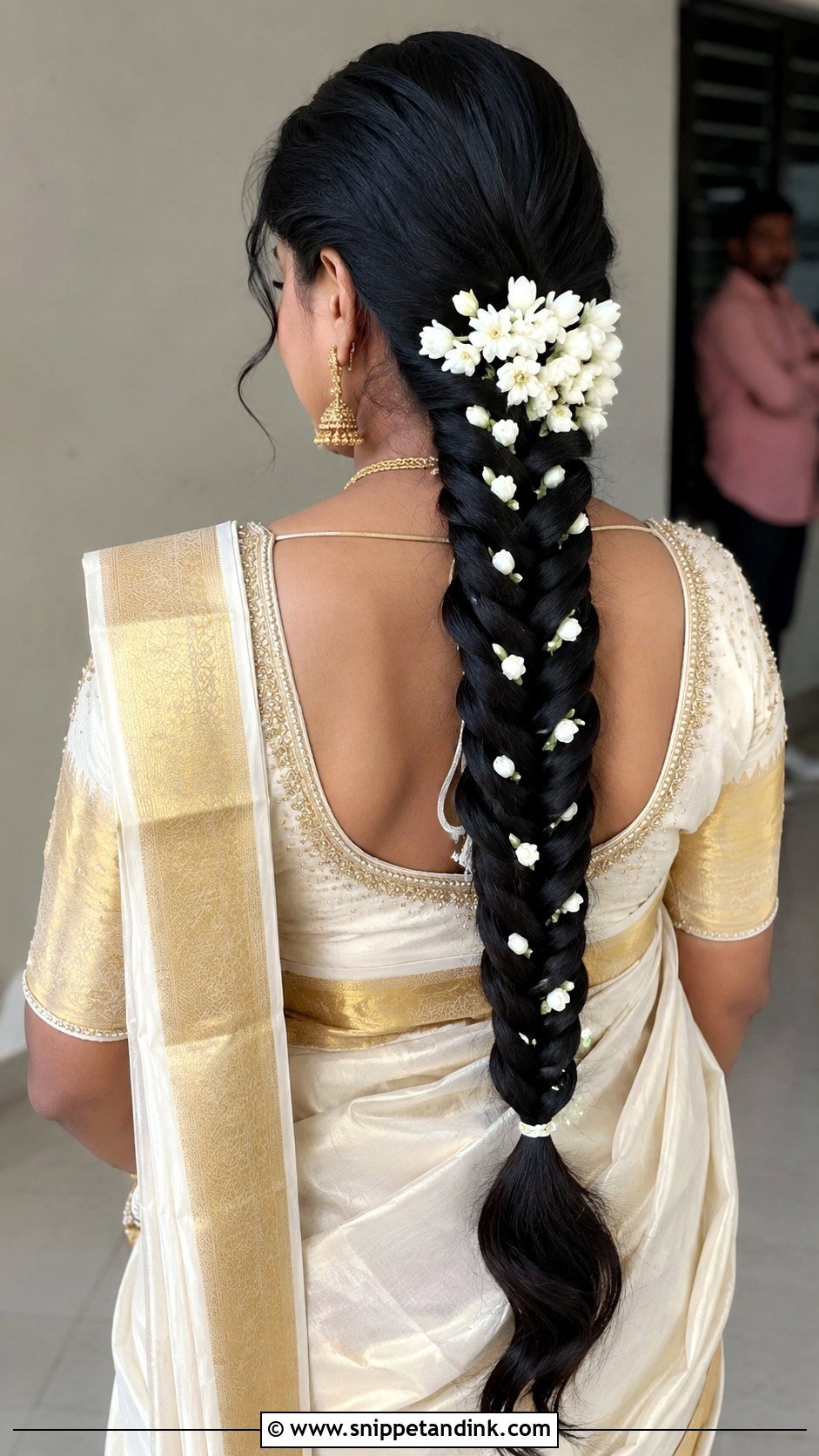
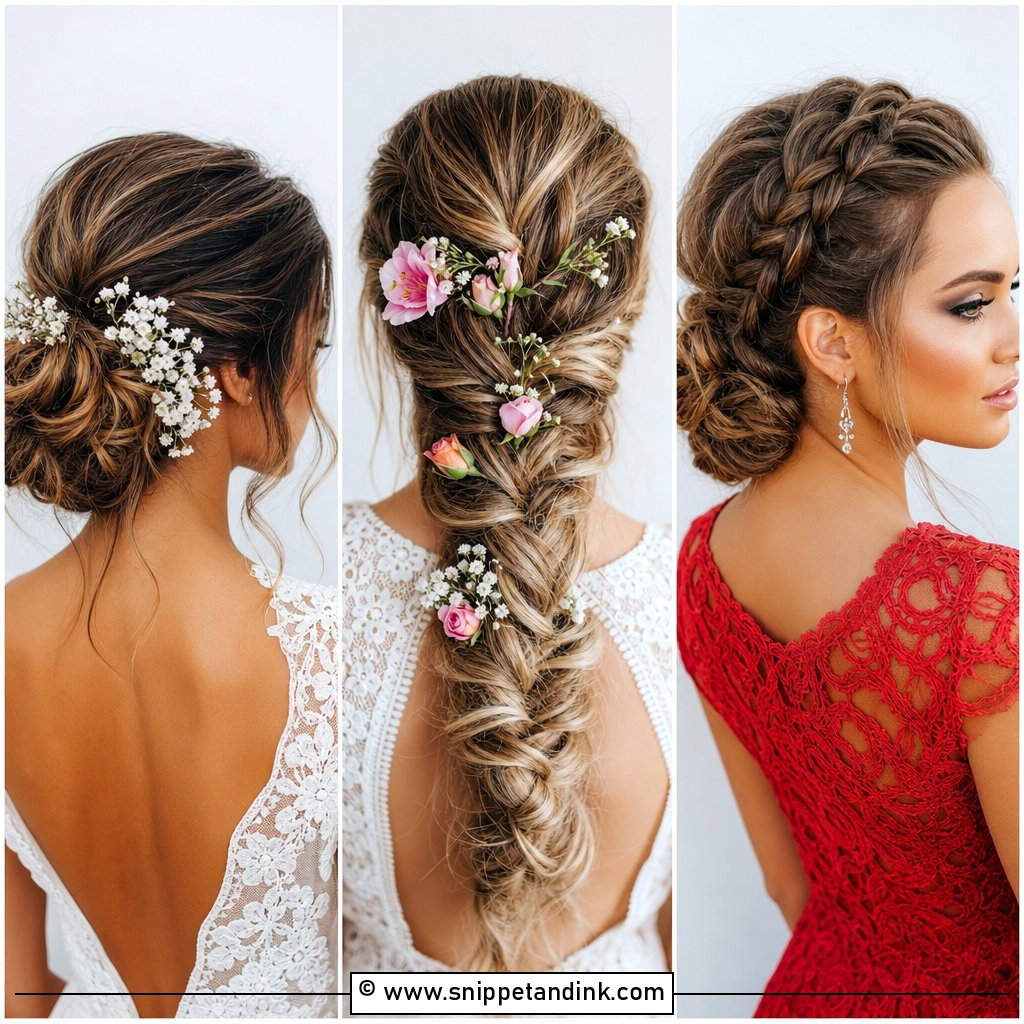
A fishtail braid has texture before a single flower is added, so I use fewer jasmine buds, tucked into the weave, rather than a full wrap. Swept to the side or straight down the back, it grips well and suits both traditional and contemporary sarees. It’s a good choice for a bride who wants the flower tradition without the full weight.
10. Messy Bun for Haldi Function
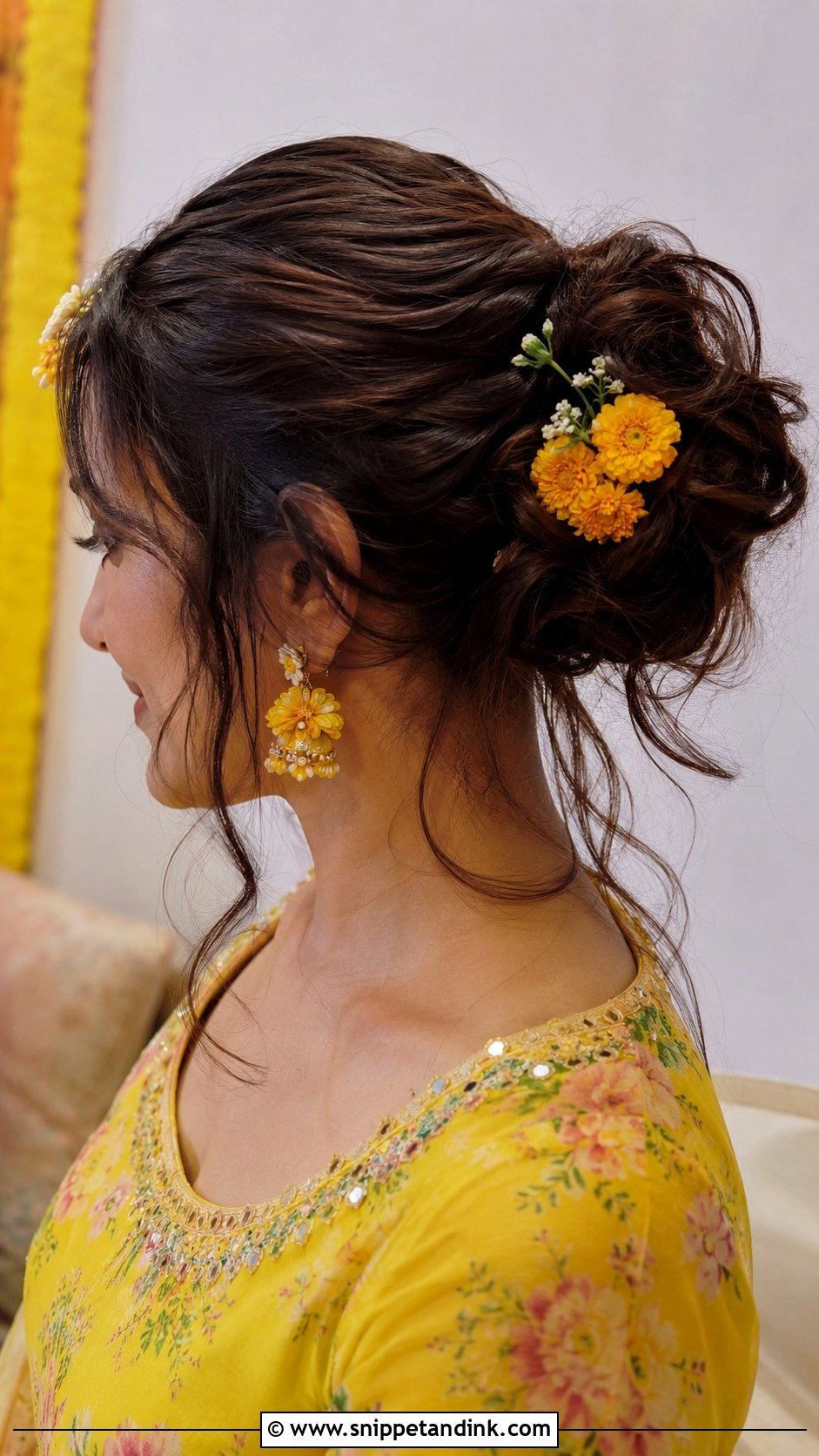
The haldi gets messy, and the hair should be ready for that. A loose, textured bun with a few strands out and a sprig of jasmine or marigold is my usual pick, because turmeric paste washes out of a bun far more easily than out of open waves. It sits well with bright yellow and floral outfits, and if it gets disturbed, it just looks more relaxed.
11. Double Braid with Flowers
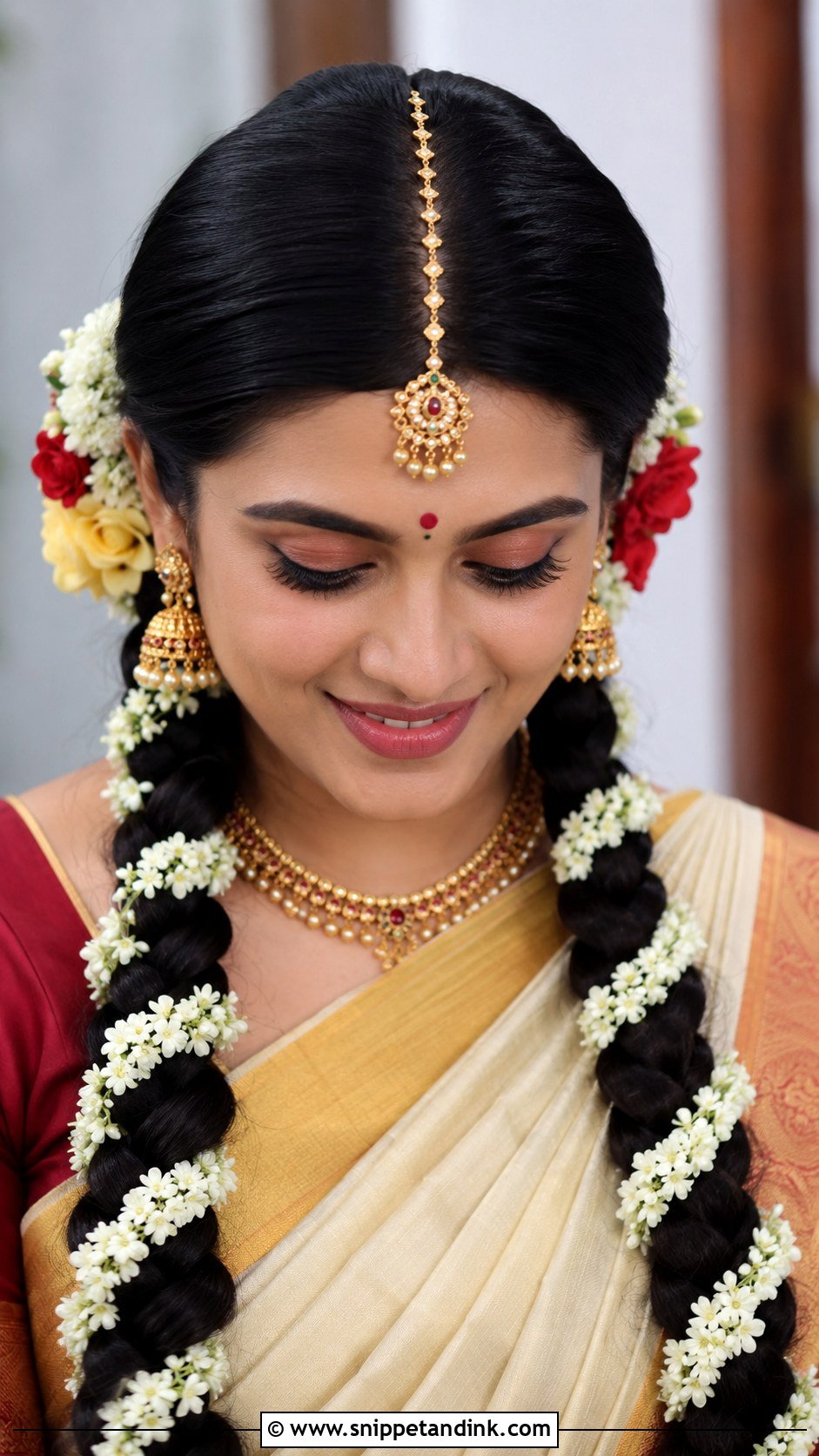
Double braids are playful and very secure for sangeet dancing. Centre part, two plaits, each wrapped with thin jasmine strands. They frame the face from the front, so pair them with jhumkas and a simple tikka. On a main ceremony, though, I find they can look too young; I’d keep them for the pre-wedding events.
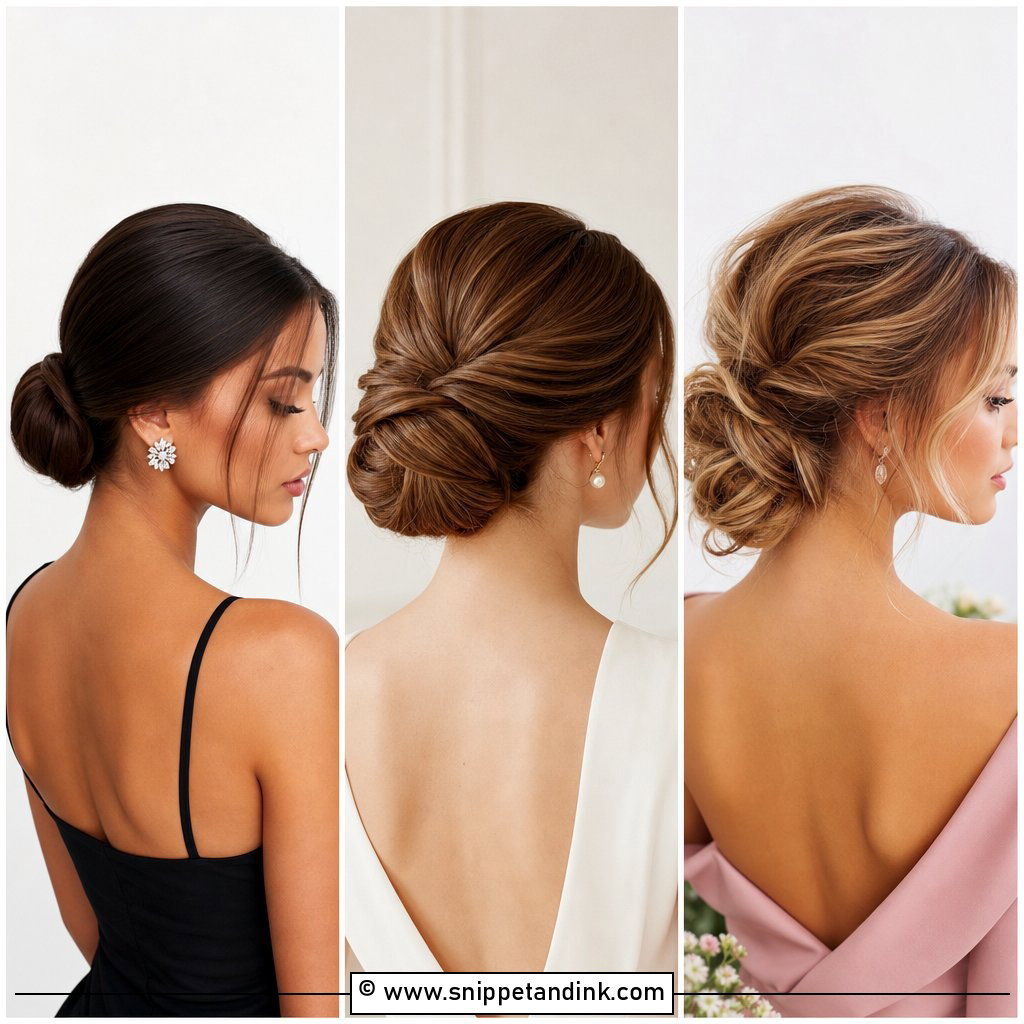
12. Sleek Low Bun with Hair Brooch
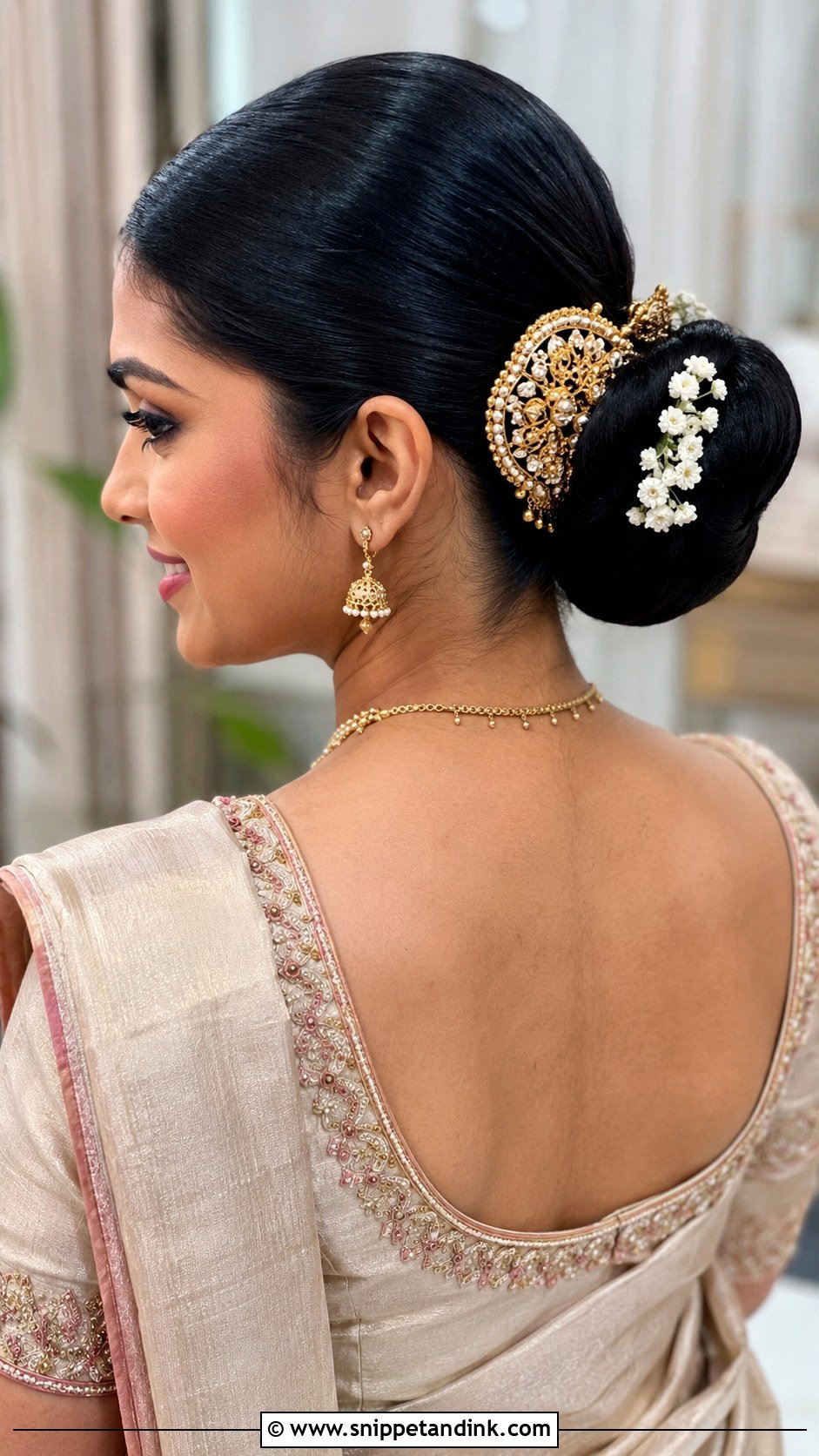
A sleek low bun suits the reception bride who wants clean lines. Hair is smoothed back into a tight, glossy bun at the nape, with one gold brooch or a small jasmine cluster at the side. To get that finish on thick, wavy hair, I blow-dry it straight first; smoothing cream alone won’t hold against humidity. The saree and jewellery carry the look.
13. Curly Open Hair for Reception
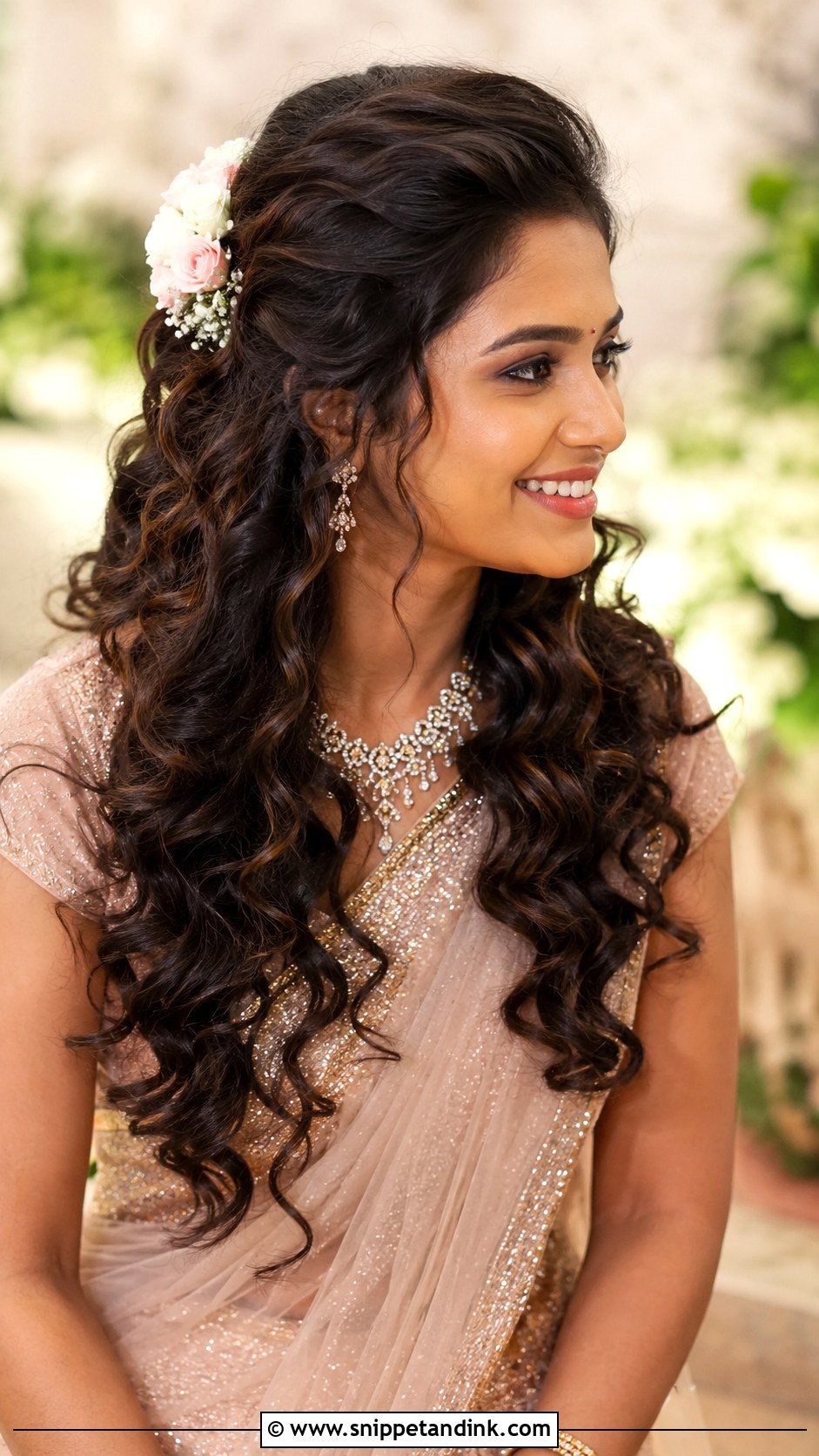
Reception curls are the change brides often want after a traditional morning. Soft, voluminous curls left open, a side flower or a small gold piece near the crown, and an embellished silk saree. Kerala humidity is the enemy here, so I set the curls with a firm-hold spray and pin them up while I do makeup. It’s the strongest contrast to the jasmine braid of the ceremony.
14. Braided Crown with Jasmine
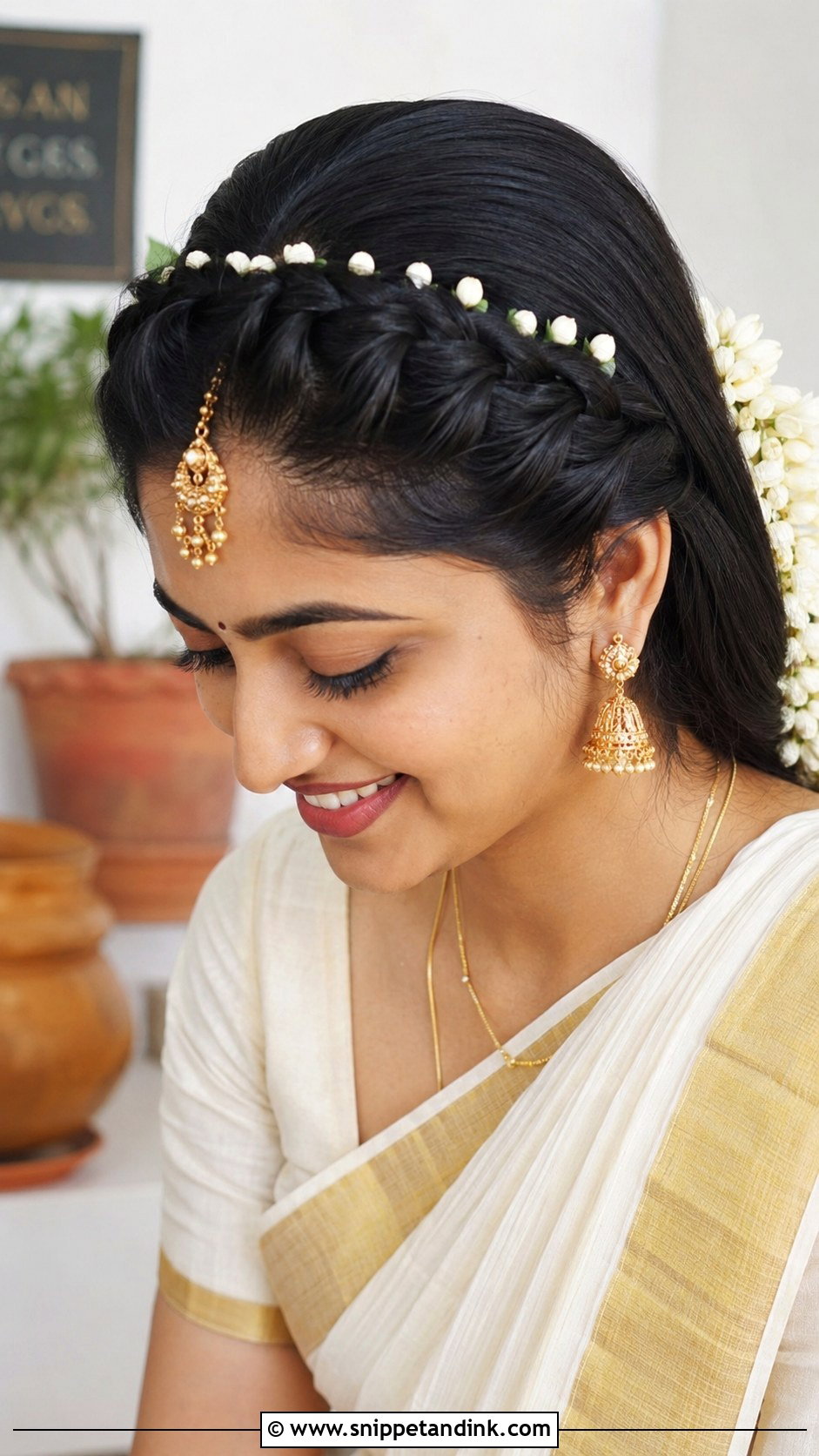
The braided crown wraps a plait along the hairline like a halo, with jasmine buds tucked through. It keeps hair entirely off the face, which helps on a hot daytime ceremony, and the maang tikka sits neatly at its centre. Long hair is needed to go fully round; with shorter hair I start two braids behind the ears and pin them to meet.
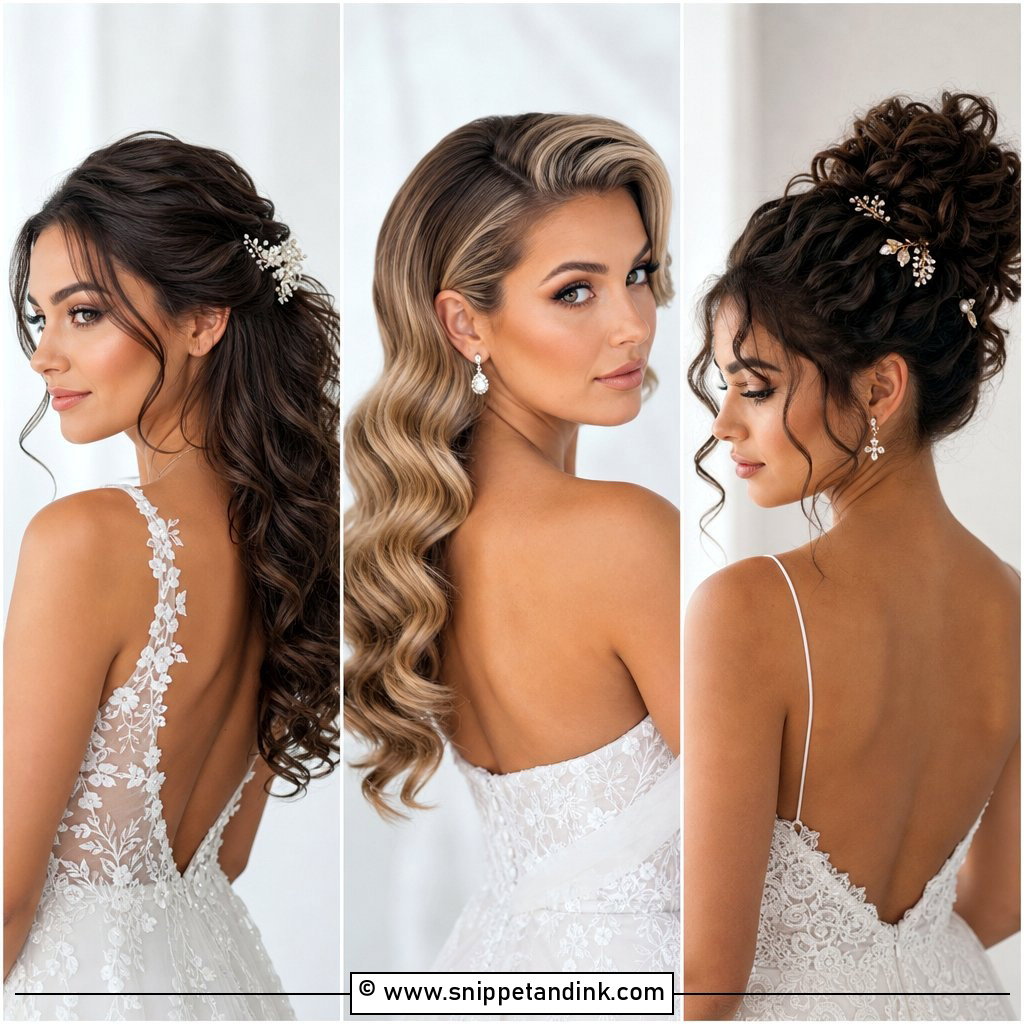
15. Low Chignon with Floral Accent
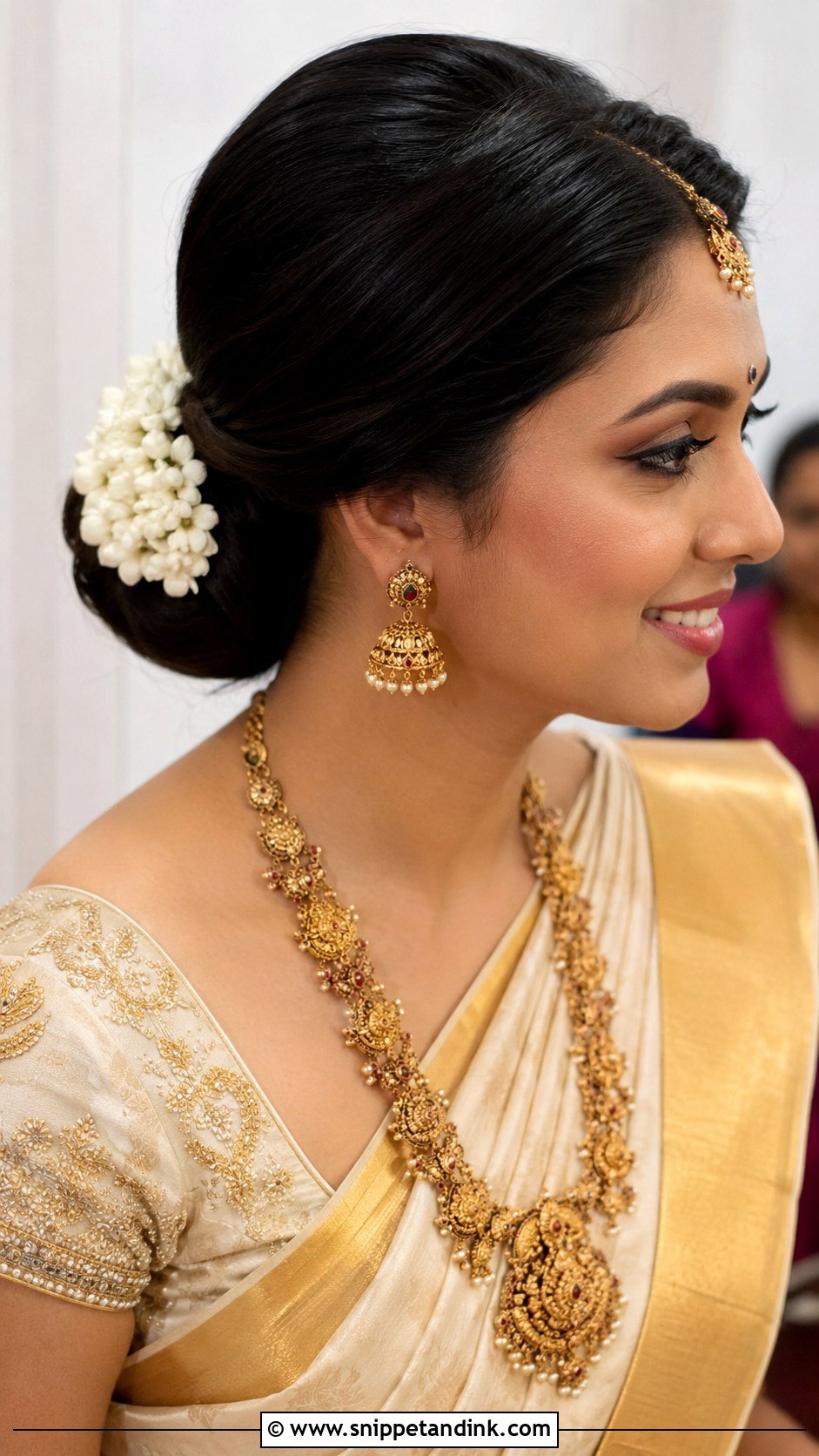
A low chignon is a smooth roll at the nape with a small jasmine cluster pinned to one side. It reads polished and slightly mature, and it shows temple necklaces and earrings fully. Chignons hold well because the roll locks the pins in. Traditional or modern sarees both sit easily with it.
16. Thick Braid with Gold Jada Billa
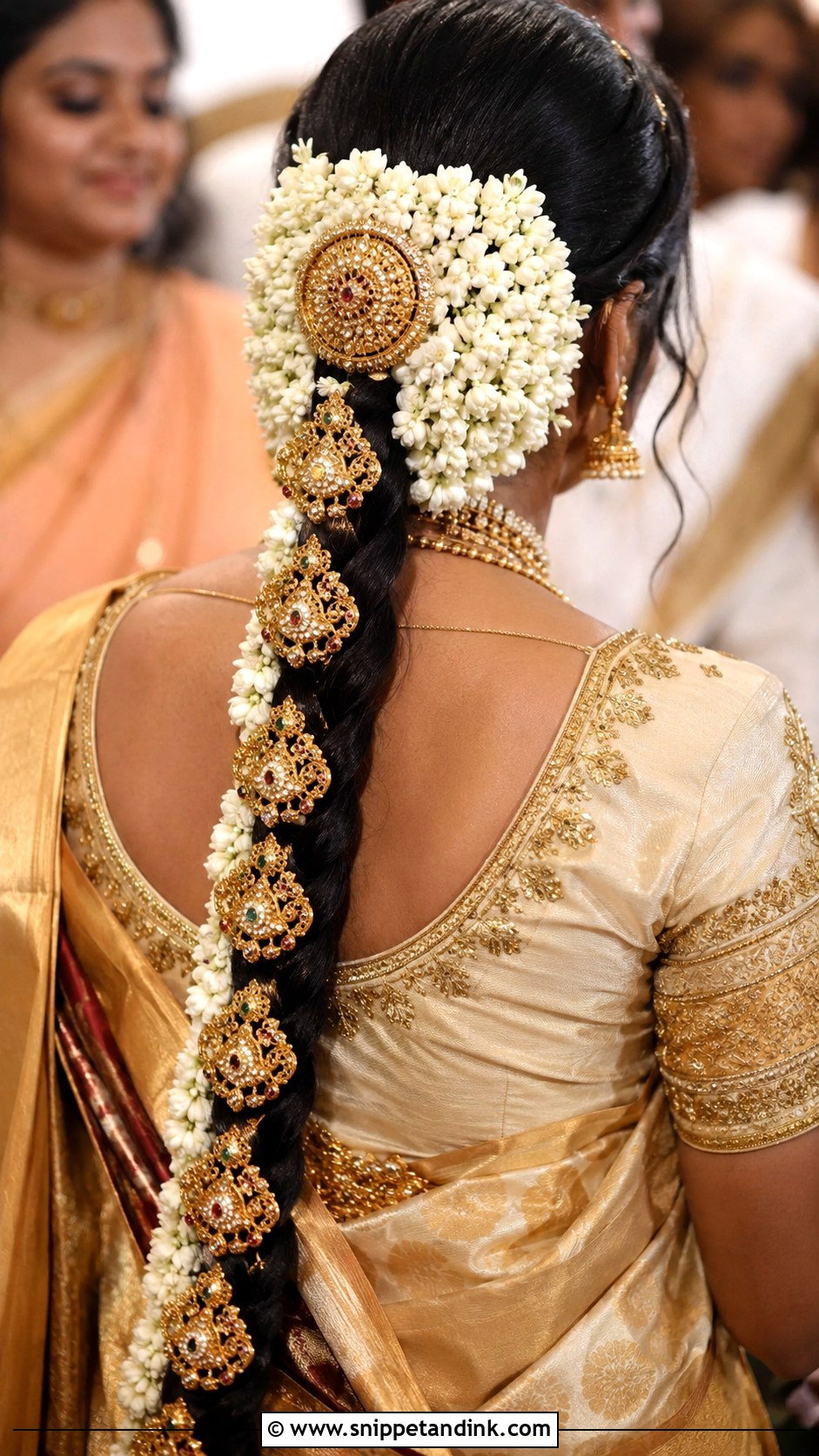
Gold jada billa pieces run down a thick braid as a chain of carved ornaments, with jasmine filling the gaps. This is the most ceremonial look in the collection, and the heaviest: a full jada set plus flowers can pull noticeably. I’d only do it on long, thick hair, and I sew or pin the set to the braid at several points, never only at the crown. Wear it for the muhurtham itself.
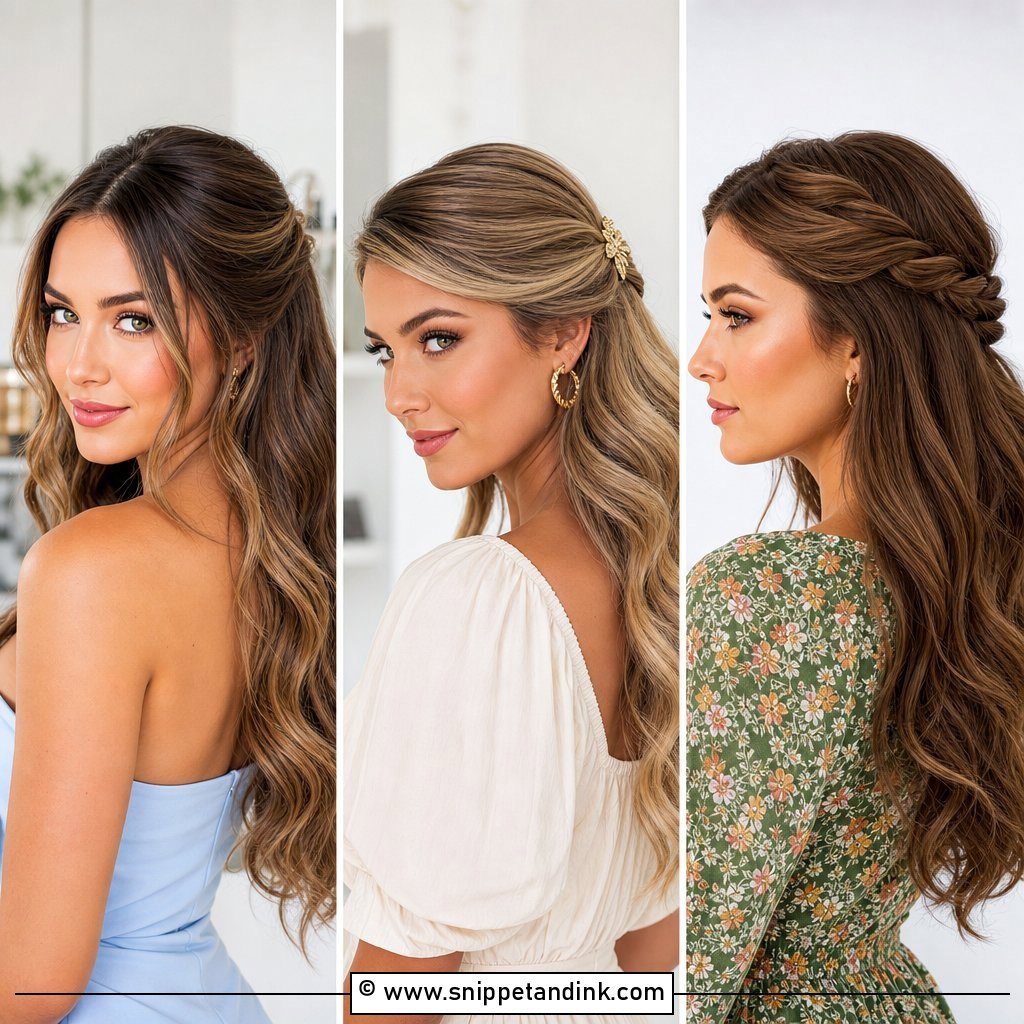
17. Wavy Side-Swept Hair for Photoshoot
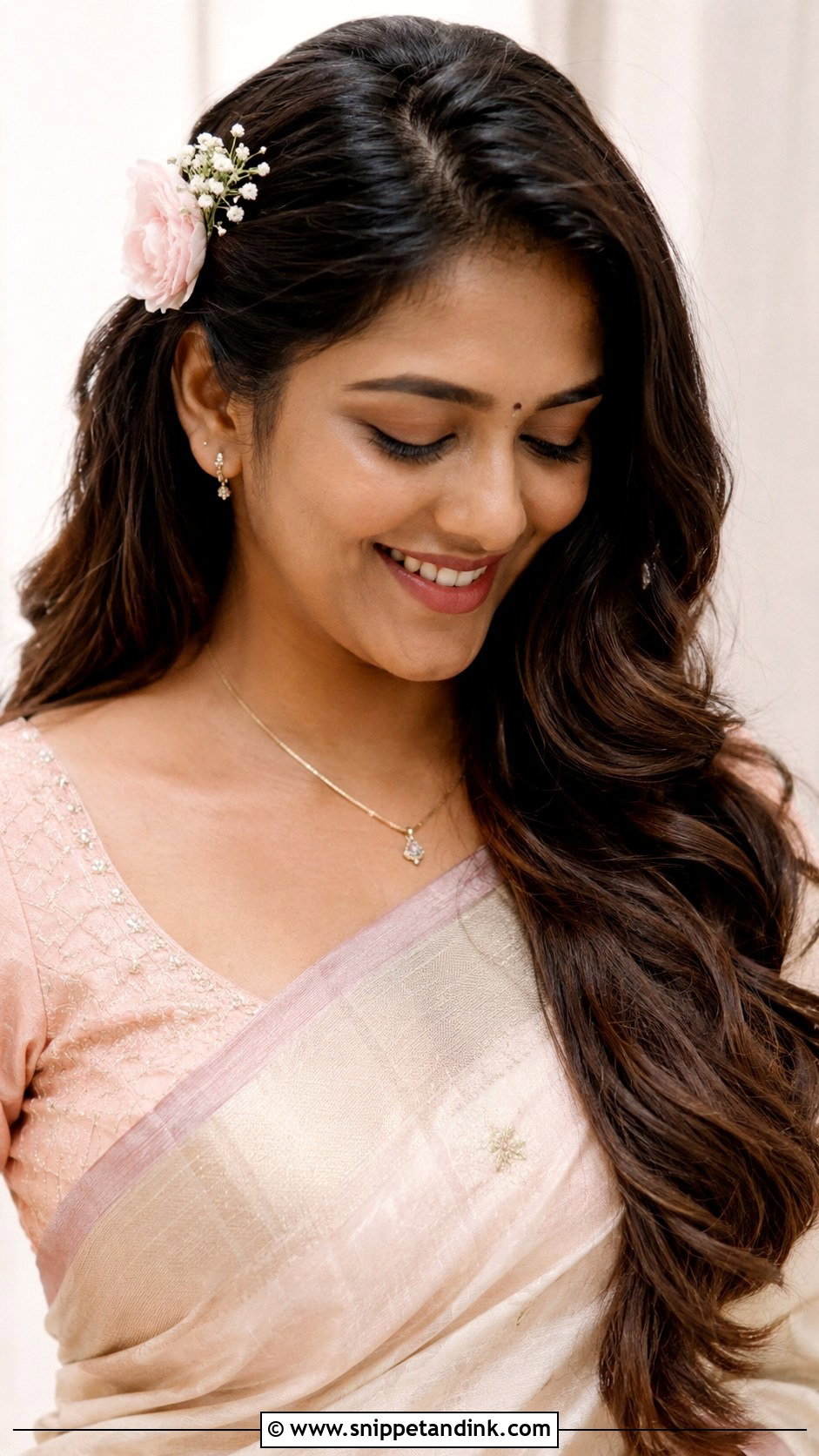
Side-swept waves are made for a pre-wedding shoot. Loose waves over one shoulder, one flower or pin near the part, and a light saree or pastel outfit. On camera, waves read softer than curls, and they move naturally in candid shots. I’d leave this one out of an outdoor shoot on a windy day; side-swept hair goes everywhere.
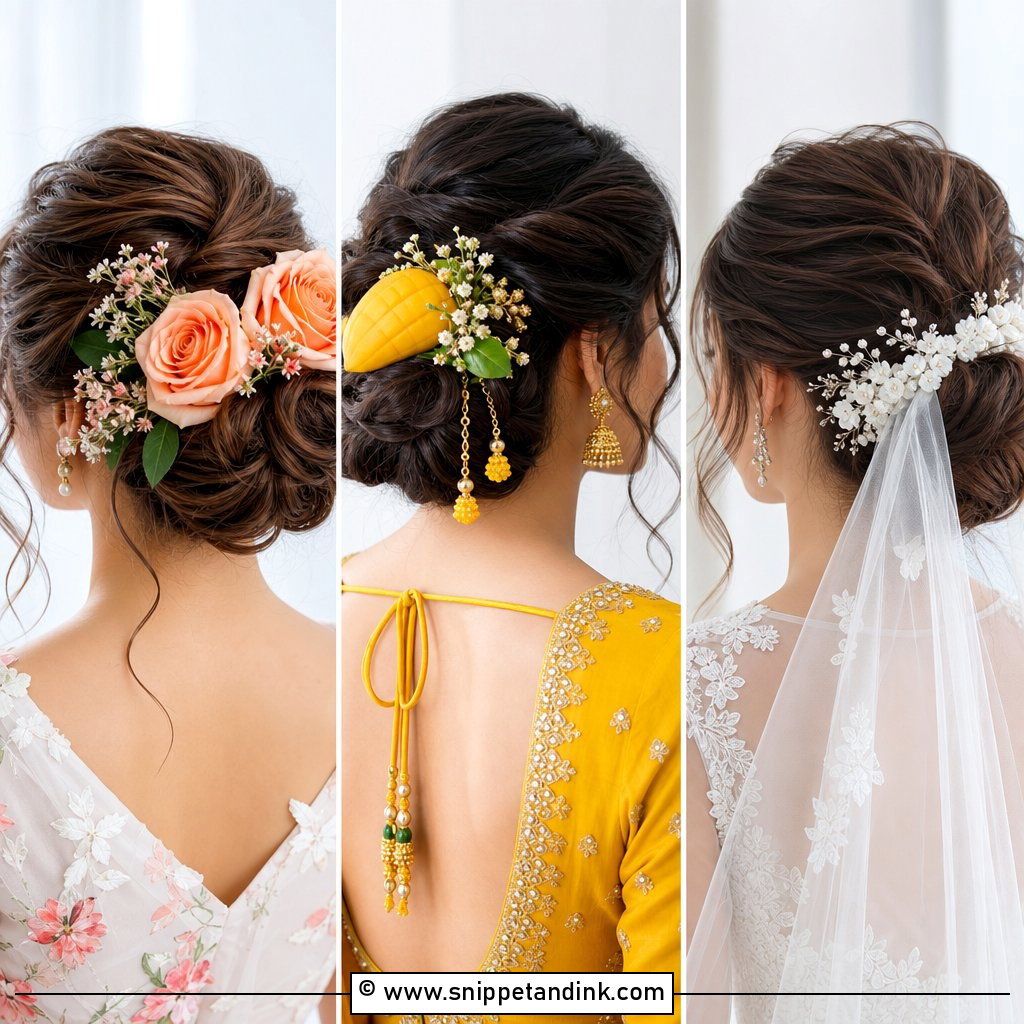
18. Bun with Mango Mala Hair Accessory
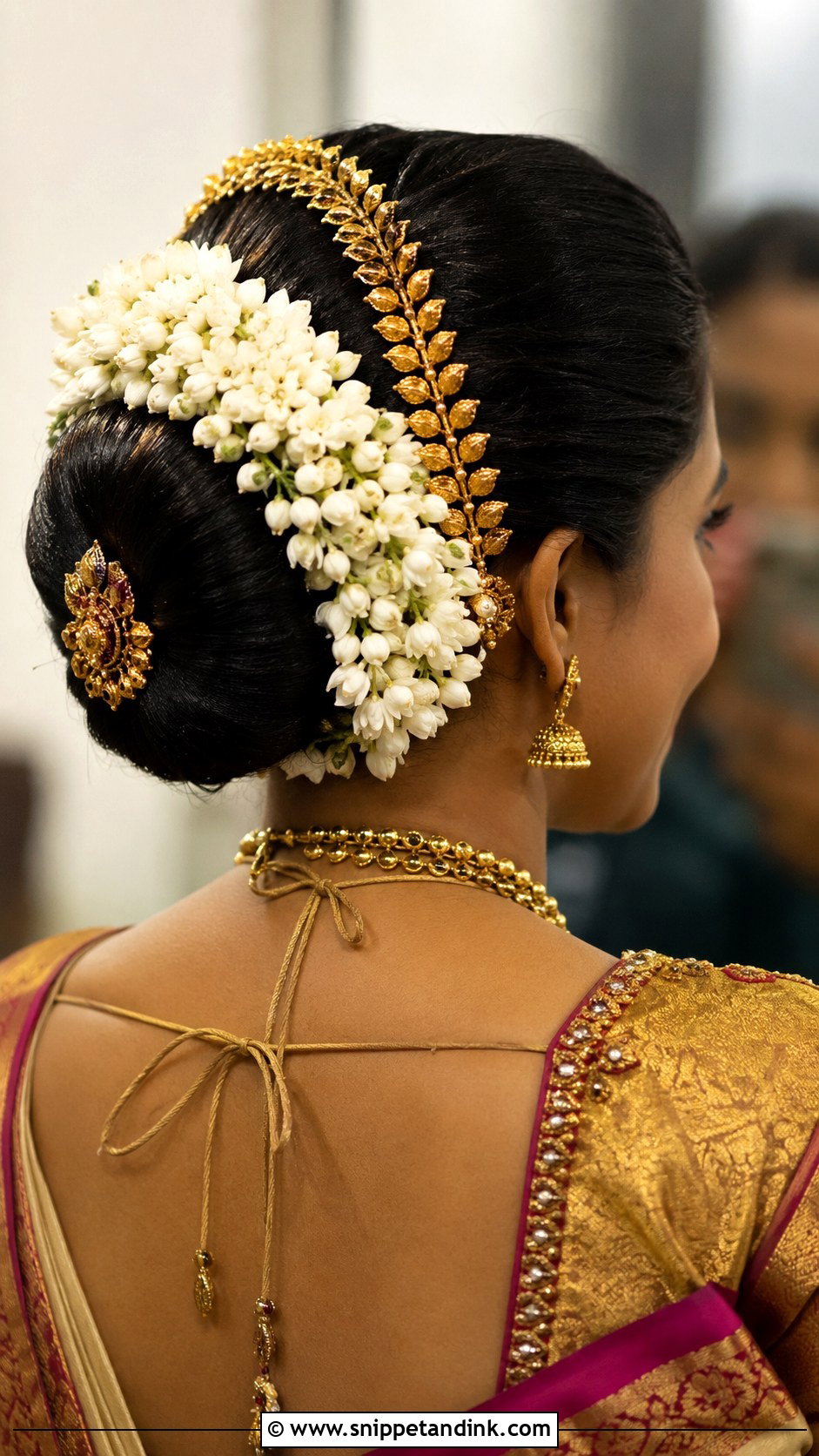
A mango-shaped gold mala arched round a bun ties hair to jewellery when your necklace carries the same mango motif. Jasmine strands add softness alongside. The mala is fairly rigid, so I shape the bun first to its curve, then pin the ornament close. It’s a traditional, coordinated choice for the main ceremony.
19. Loose Braid with Baby’s Breath
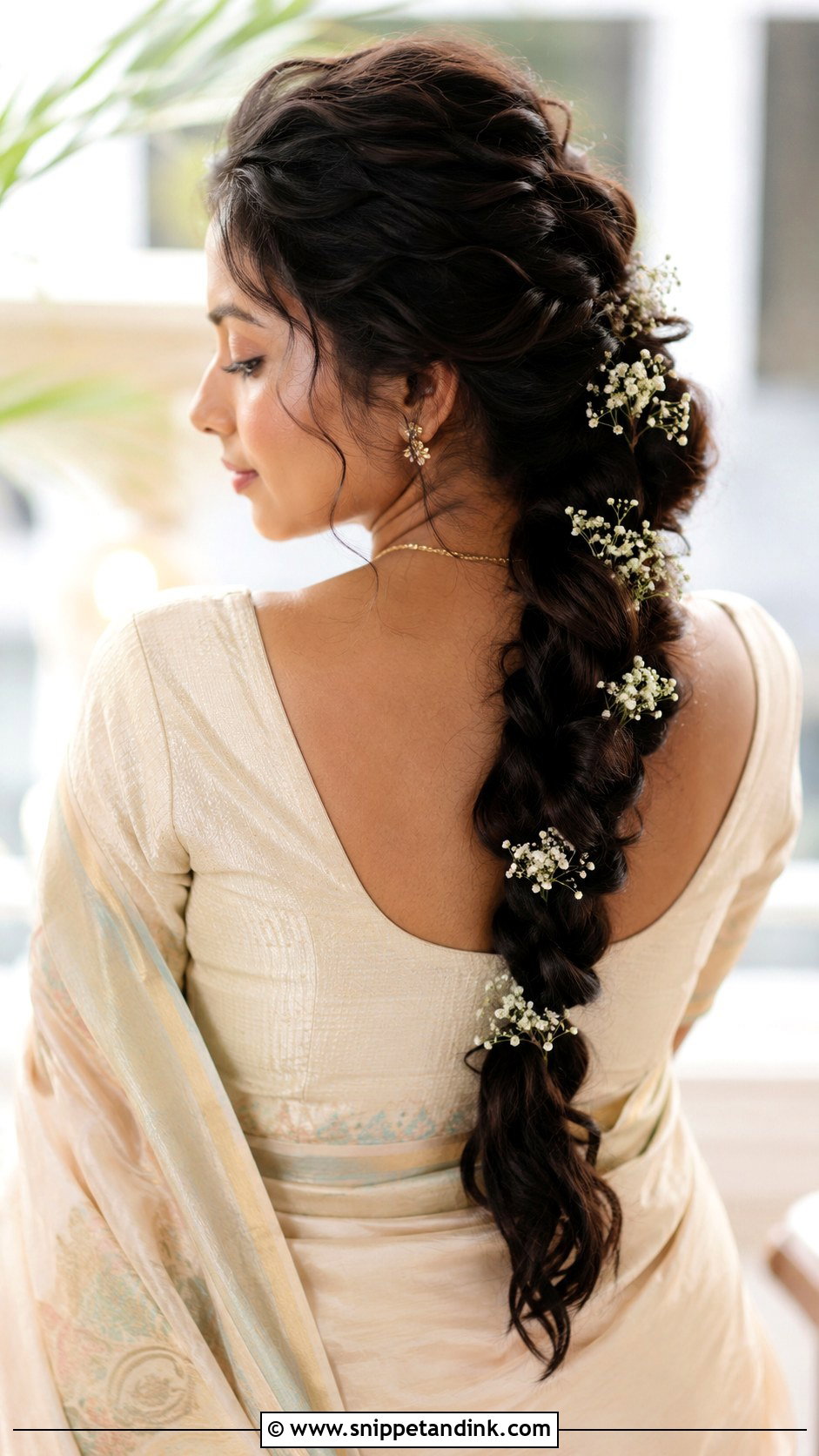
Baby’s breath on a loose braid gives a lighter, more modern flower effect than jasmine. The tiny blooms dot the plait instead of covering it. It suits engagements and outdoor ceremonies with minimal jewellery. Baby’s breath dries out in heat, so I’d add it at the last moment, keeping the stems in water until then.
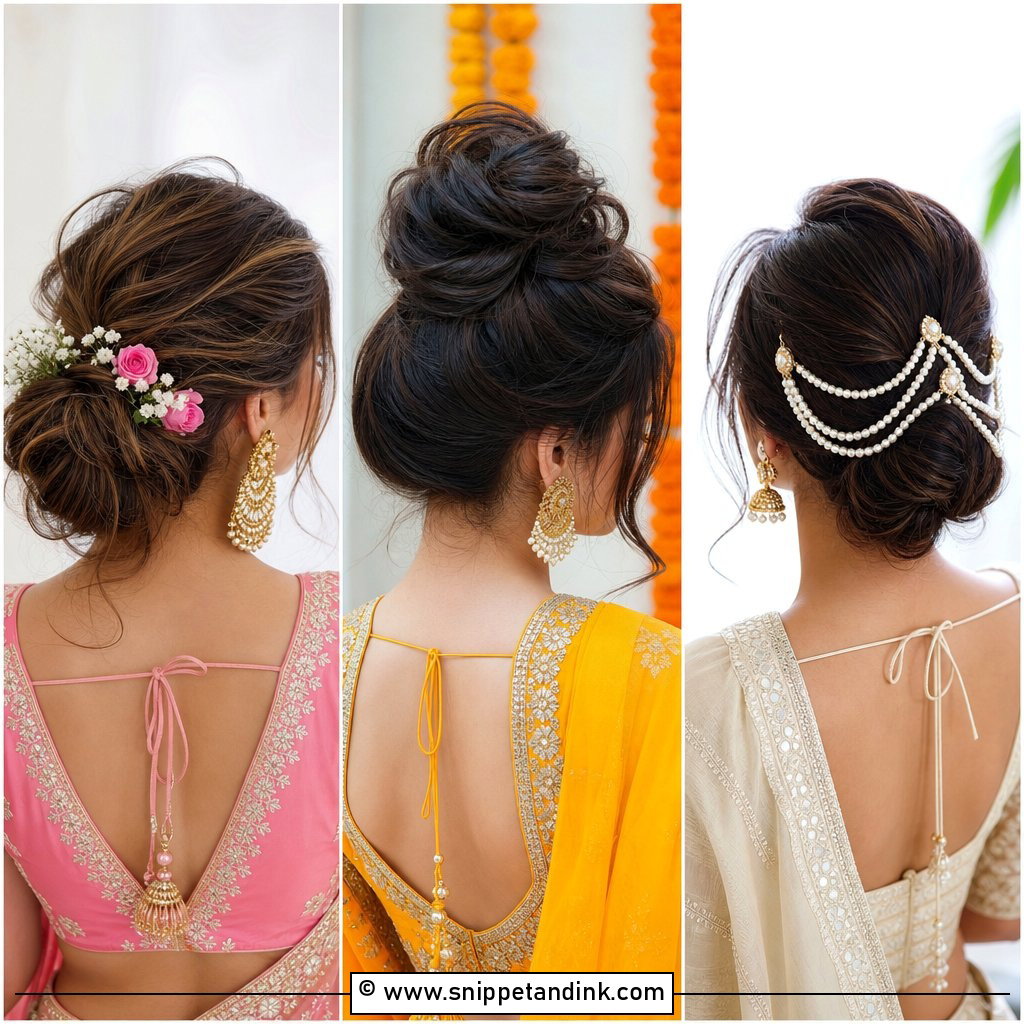
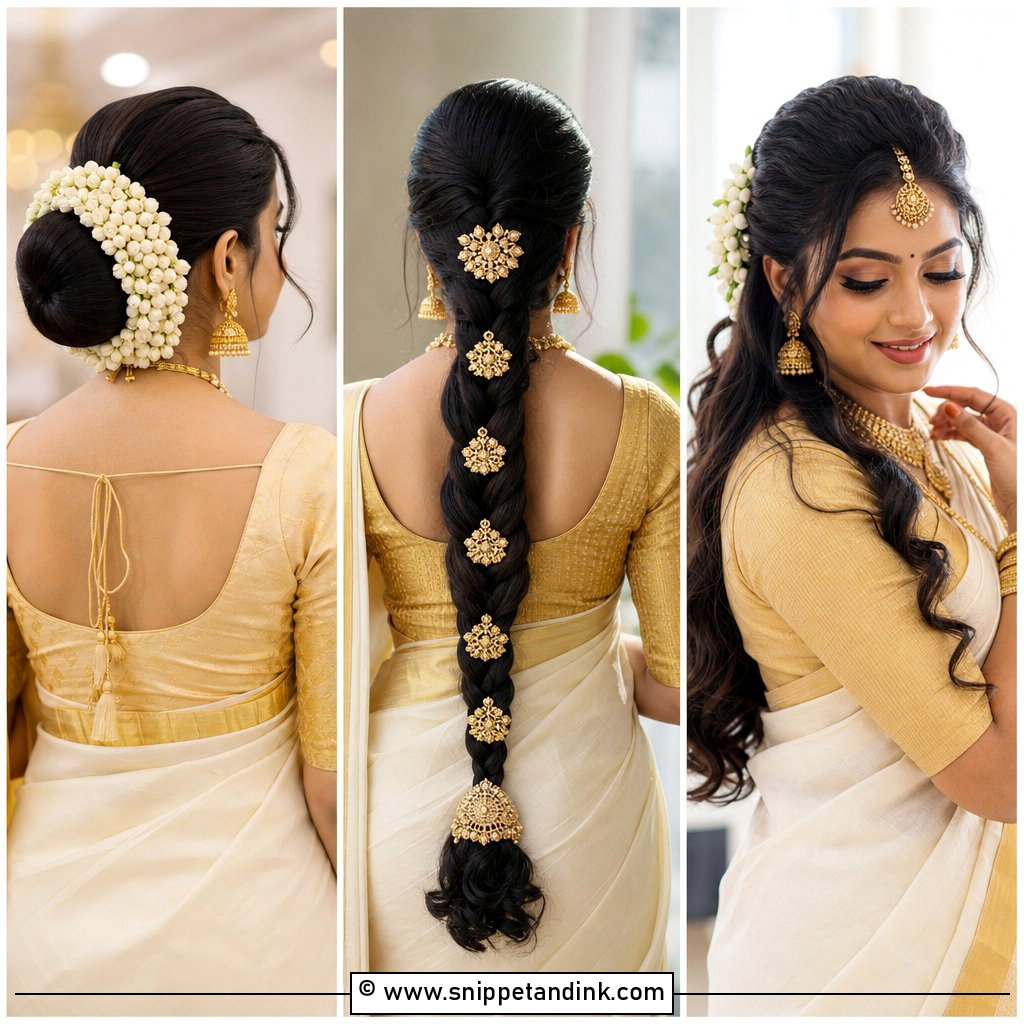
20. Half Braid Half Open Hairstyle
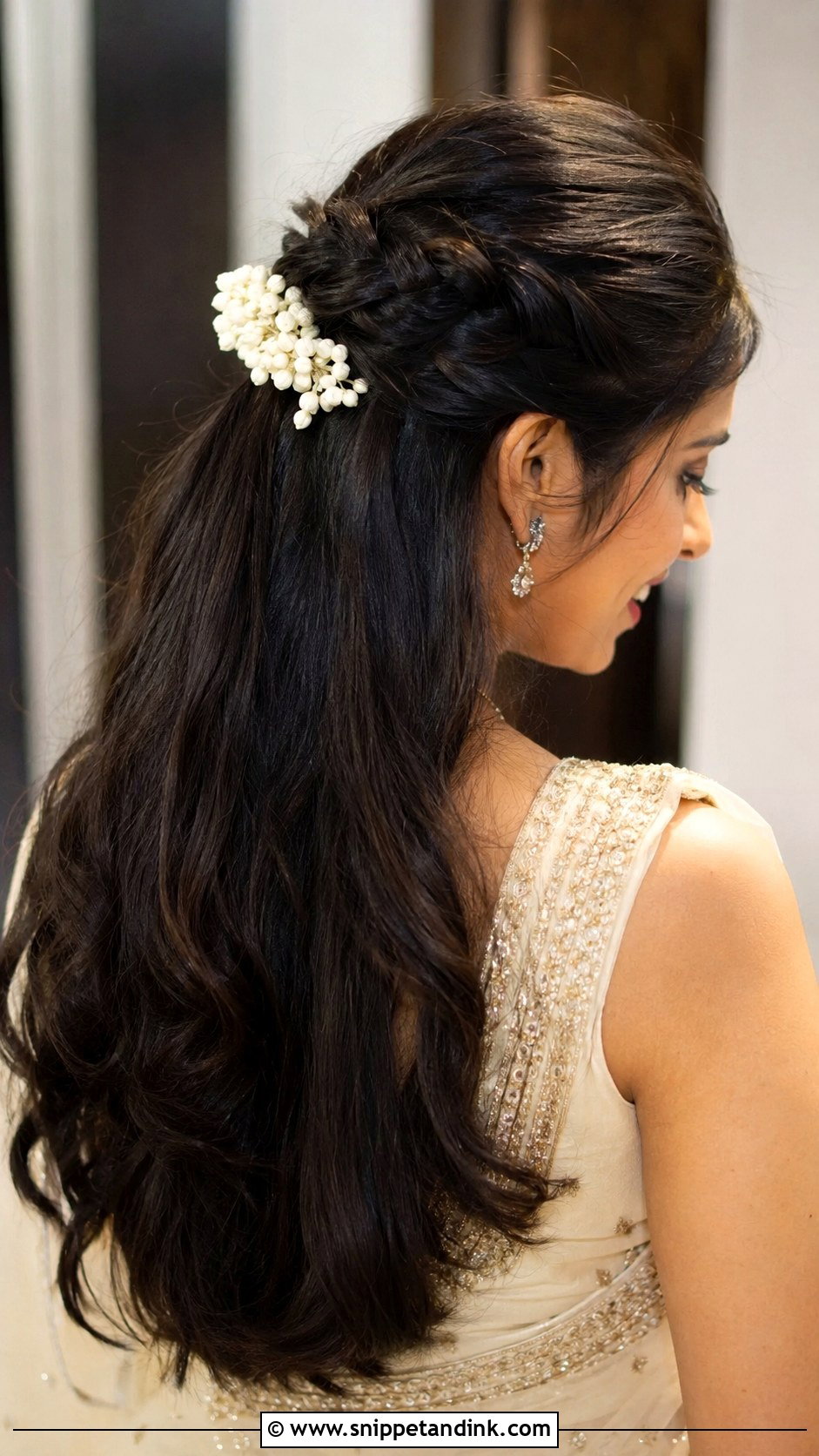
Half braid, half open gives a braided top or side section with the length left free and jasmine buds in the braided part. It works for mehndi, sangeet and casual events, and it’s the answer when a bride can’t decide between braid and open hair. Thick hair holds the braid well; very fine hair may need a little texture spray first.
21. Bun with Multiple Flower Rows
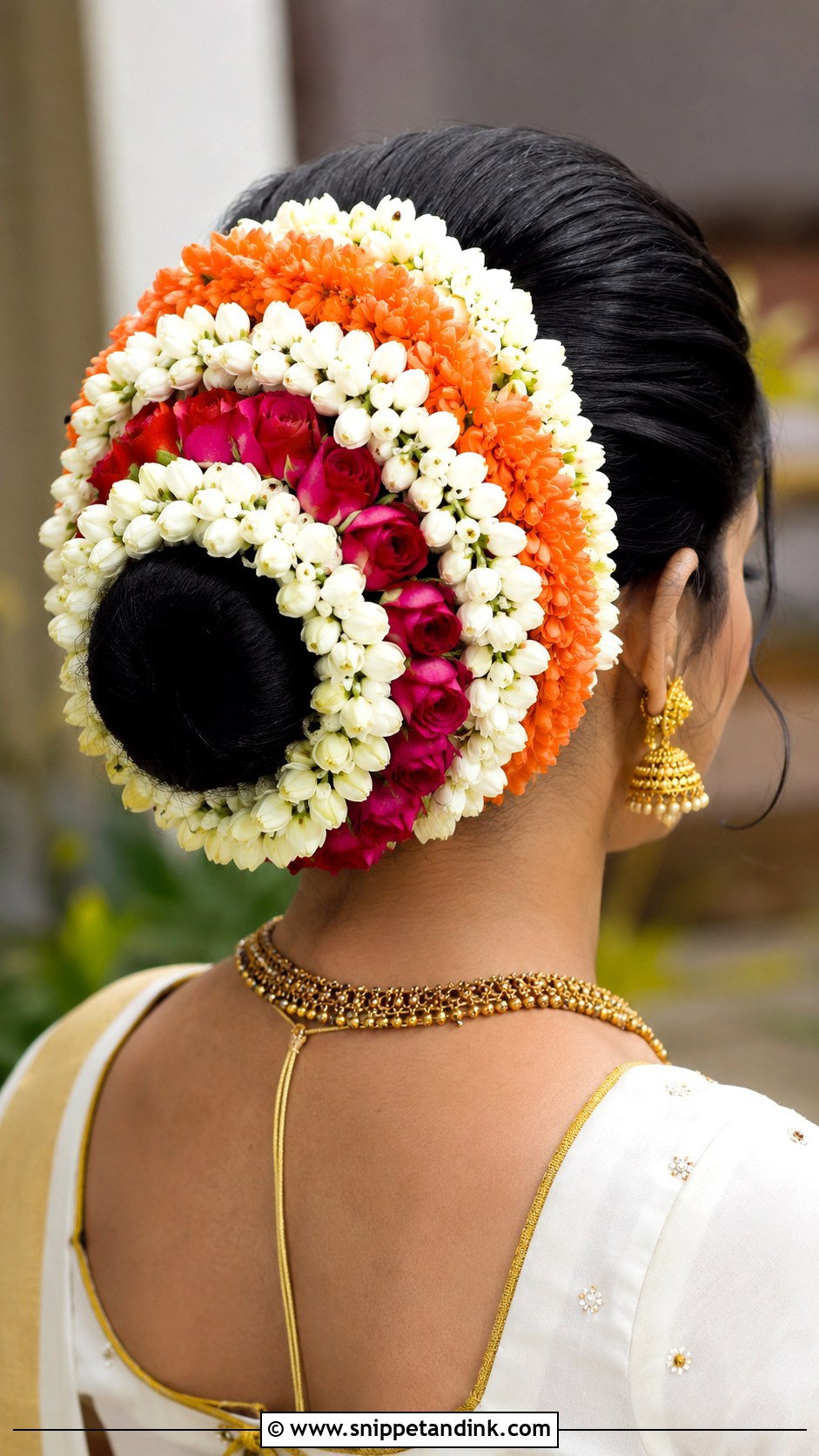
Several rows of jasmine, kanakambaram and rose petals round a full bun make the densest flower look here. It’s festive and colourful against gold jewellery and a Kasavu saree, and the face stays clear for makeup. Expect it to be heavy and warm by midday. I build the bun over a firm base and use extra pins at the nape.
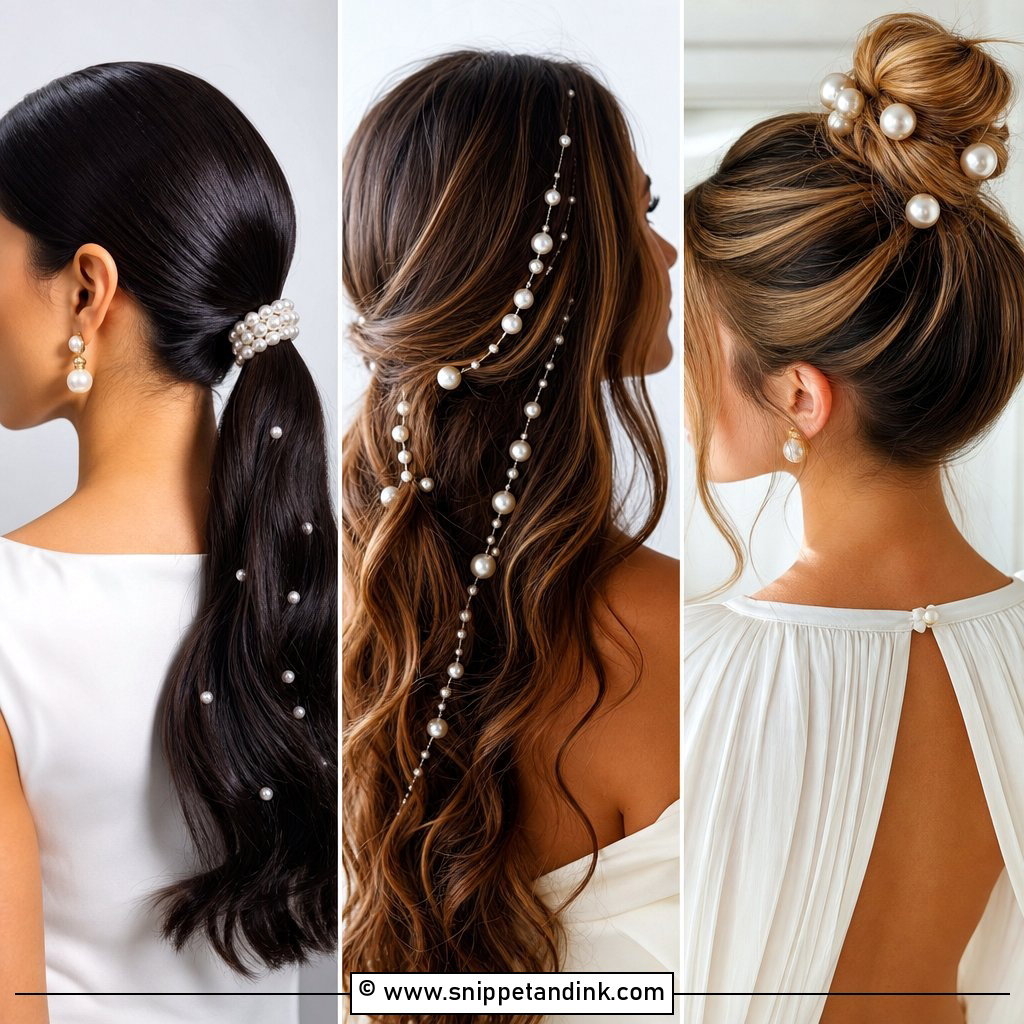
22. Sleek Ponytail with Jasmine
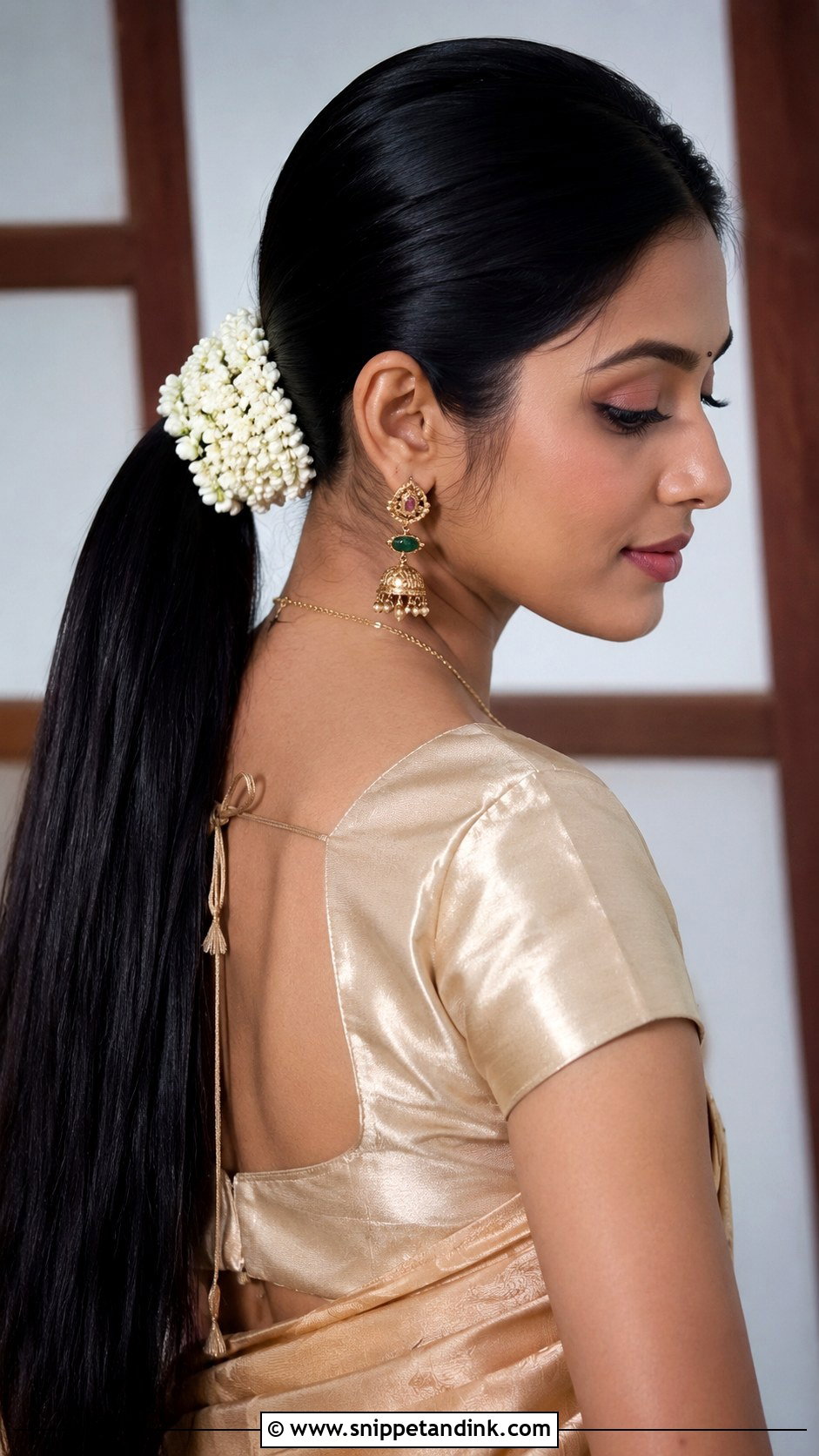
A ponytail is a modern option, high or low, with jasmine wrapped round the base. It’s light and quick, good for busy pre-wedding days or a reception. I wrap a strand of hair round the elastic first, then add the flowers over it so they don’t slip. Statement earrings balance it.
23. Braid with Rose and Jasmine Mix
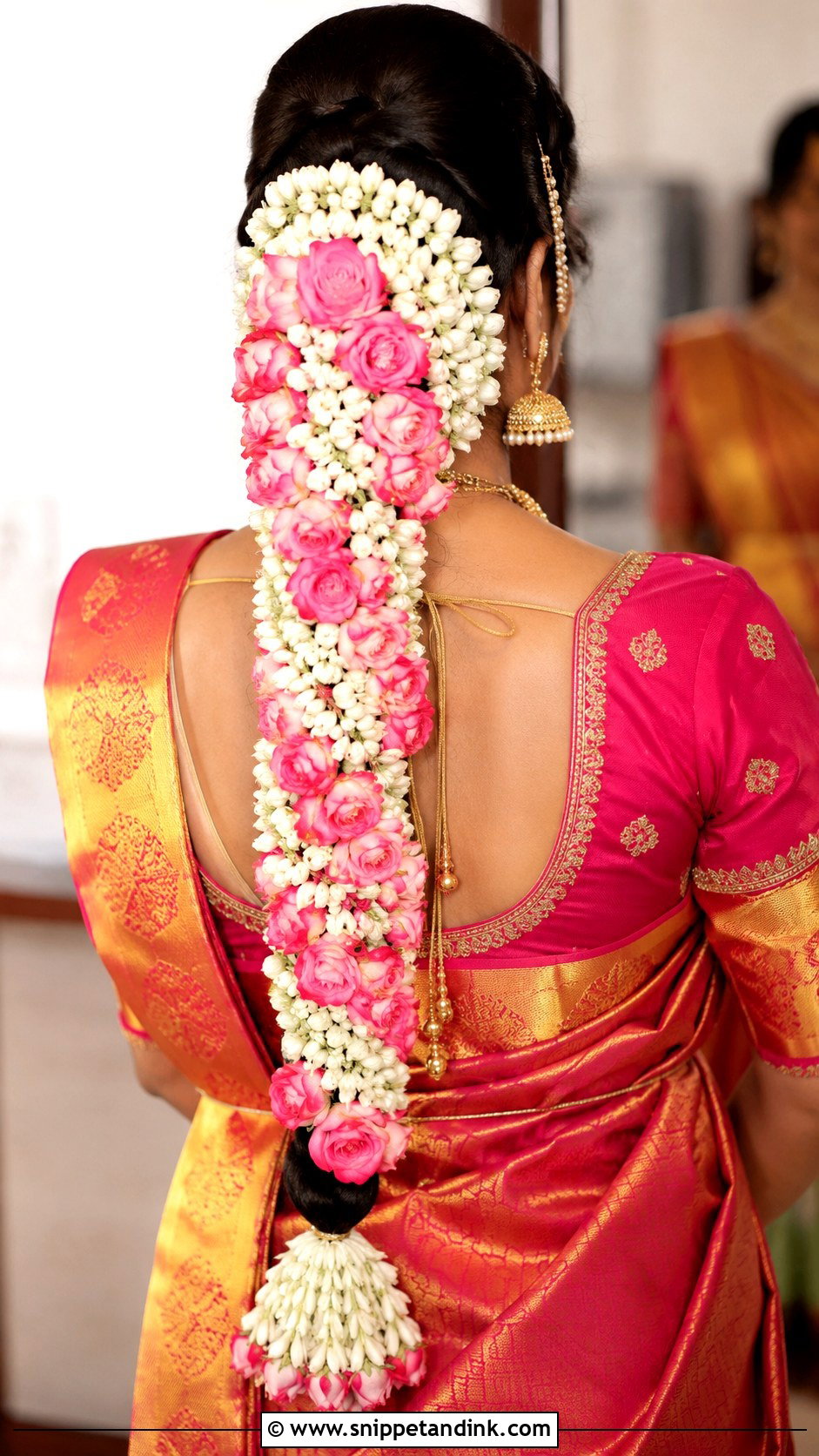
Mixing pink or red roses with jasmine down a braid adds colour that stands out against dark hair and gold. It’s festive enough for the main ceremony or a photo session. Roses wilt sooner than jasmine in heat, so I ask the florist for tight buds and add them last.
24. Twisted Updo with Floral Pins
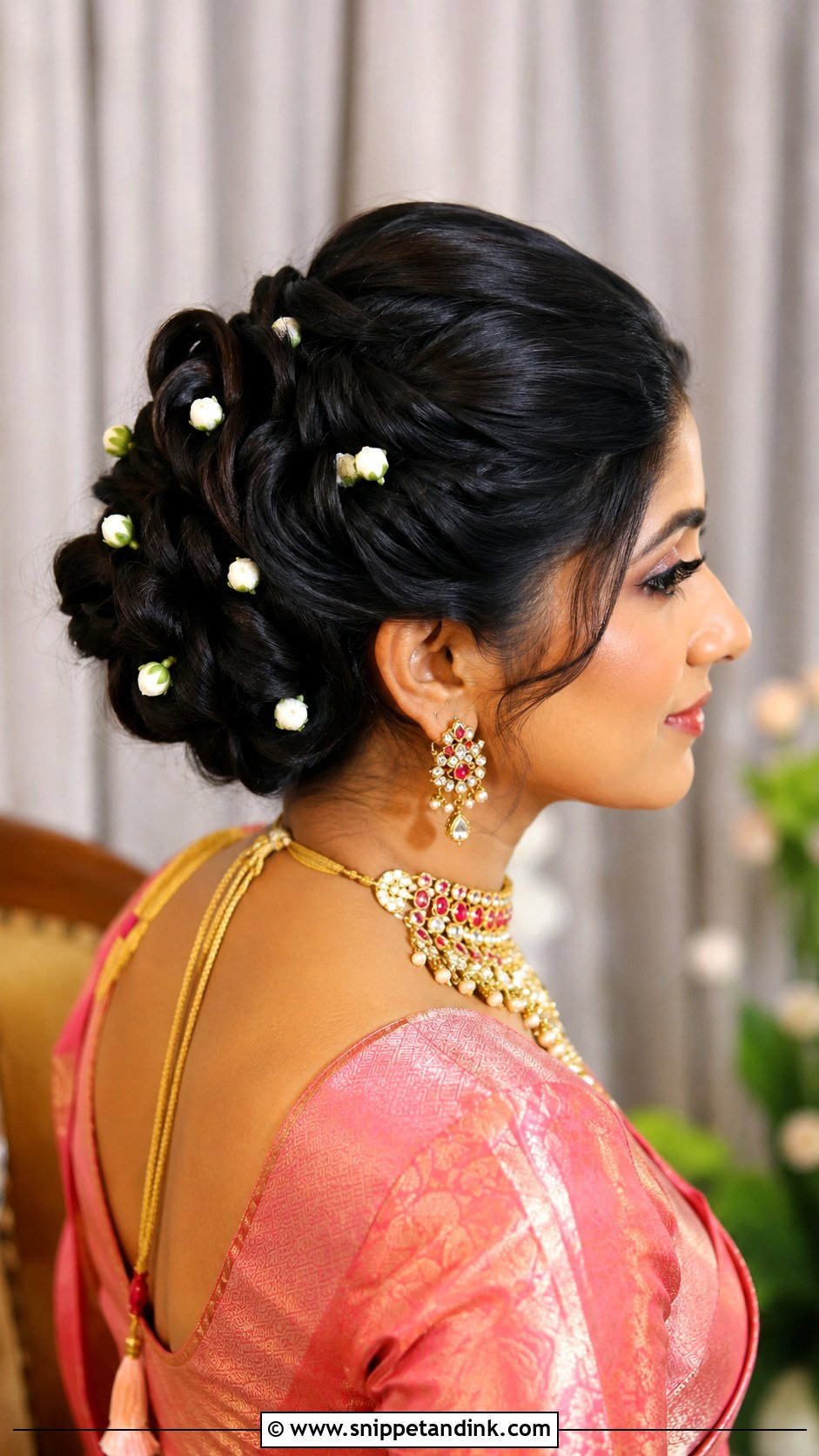
A twisted updo rolls hair into pinned twists at the back, scattered with small floral pins or jasmine buds. It’s sophisticated, it clears the neckline for statement jewellery and the twists hold through an evening. Reception brides like it because it reads modern while keeping a little flower tradition.
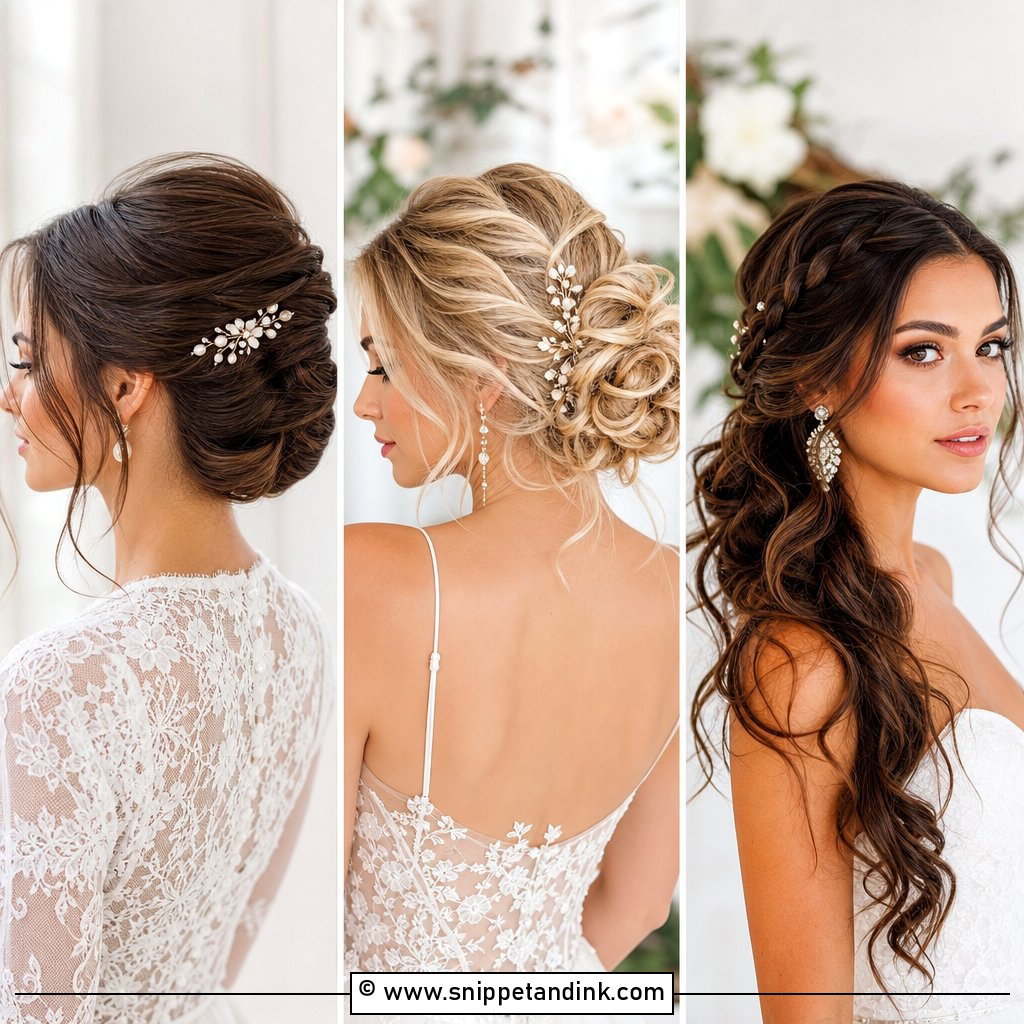
25. Classic Plait with Hanging Jasmine Strings
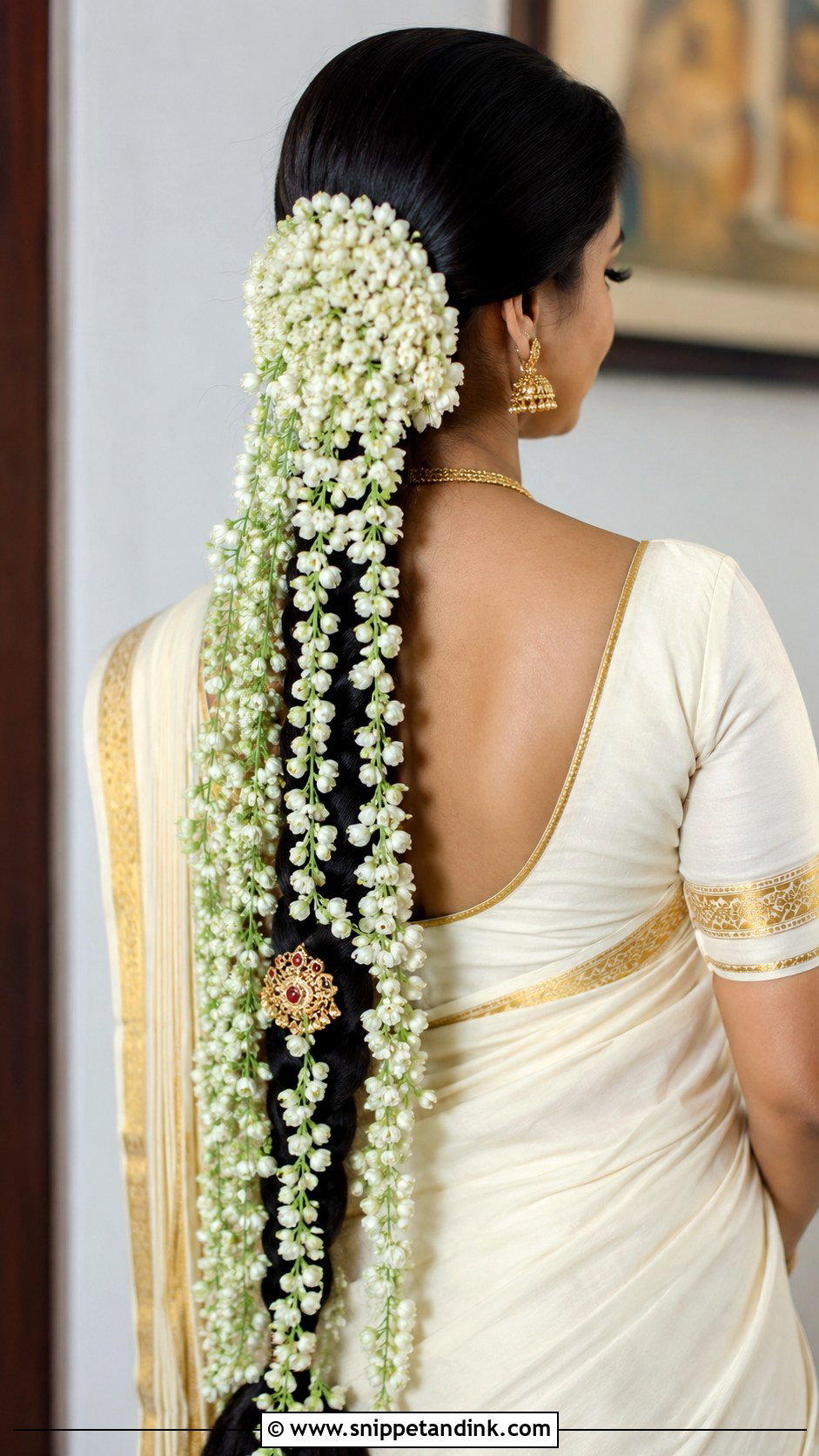
The classic plait with hanging jasmine strings is the simplest traditional look of all. Long strings dangle loosely from the braid and sway as you move. It pairs with a Kasavu saree and gold for temple weddings and daytime ceremonies. Hanging strings tangle in a car seat, so I pin them up loosely for the drive and release them on arrival.
From Temple Braid to Reception Hair in One Afternoon
Many Kerala weddings hold the ceremony in the morning and the reception that evening, sometimes with only a few hours between. A heavy flower braid doesn’t convert into soft curls; the hair underneath is flattened and creased from the plait and the pins.
I plan the change before the wedding starts. If you want open curls at night, I braid the morning look over hair that I’ve already curled and set, so taking it out reveals waves instead of crimps. If the reception is a sleek bun, I keep the braid a little tighter, so the hair is smooth when it comes down.
- Remove flowers and jewellery first, one piece at a time, to avoid tangling.
- Take out pins from the bottom up.
- Brush through from the ends with a wide-tooth comb.
- Refresh the roots with dry shampoo before restyling.
Allow at least an hour for the change. Rushing it is how strands get pulled out with the pins.
Jasmine, Gold and the Braid That Holds Them
Kerala bridal hair works because it doesn’t overreach. A jasmine braid for the muhurtham, a softer half-up for the engagement, a relaxed bun for the haldi: each event has its own fit. Match the style to your saree, your jewellery and how much weight you’re comfortable carrying for hours. Take a few of these to your stylist, try them at a trial with the actual jewellery, and adapt from there.
You'll Like These Ideas:


Leave a Reply