
An Indian bridal bun has a harder job than most updos. It has to sit under a dupatta that may weigh more than the hair itself, hold a maang tikka chain in place, carry gajras or pins, and still look tidy after hours of rituals, photos and hugging relatives. That is why I treat the bun as the foundation of the whole look rather than a finishing touch. Below are 25 Indian wedding bun hairstyles I’d happily build for a bride, with notes on what each one needs underneath to stay put and who it suits best.
Building a Bun That Can Carry a Dupatta, Tikka and Gajra
Most bridal buns that fail do so because of weight, not technique. A lehenga dupatta pinned to the head can be surprisingly heavy, and add a maang tikka, a maathapatti and a few strands of fresh flowers and the bun is holding far more than any everyday updo does. So I build every Indian bridal bun from the inside out.
- Start with prepped, not freshly washed, hair. Wash the evening before. Day-old hair grips pins better, and I add texture spray or dry shampoo at the roots for the same reason.
- Secure the base first. I tie a firm ponytail or pin a small cross of hair where the bun will sit, so every later pin has something solid to lock into.
- Use the right pins. Bobby pins close sections; U-pins attach the bun shape; long hairpins hold flowers and jewelry. Mixing them up is why things slide.
- Pin the dupatta to the hair, not the bun. The dupatta should be fixed to anchor sections at the crown and sides. Pinning it straight into the bun drags the whole knot down by the end of the pheras.
If you have very heavy or very long hair, tell your stylist at booking. Thick hair adds weight of its own, and a bun that size often needs to sit lower and be split into two sections to stop headaches over a long day.
1. Sleek Low Bun With Center Part
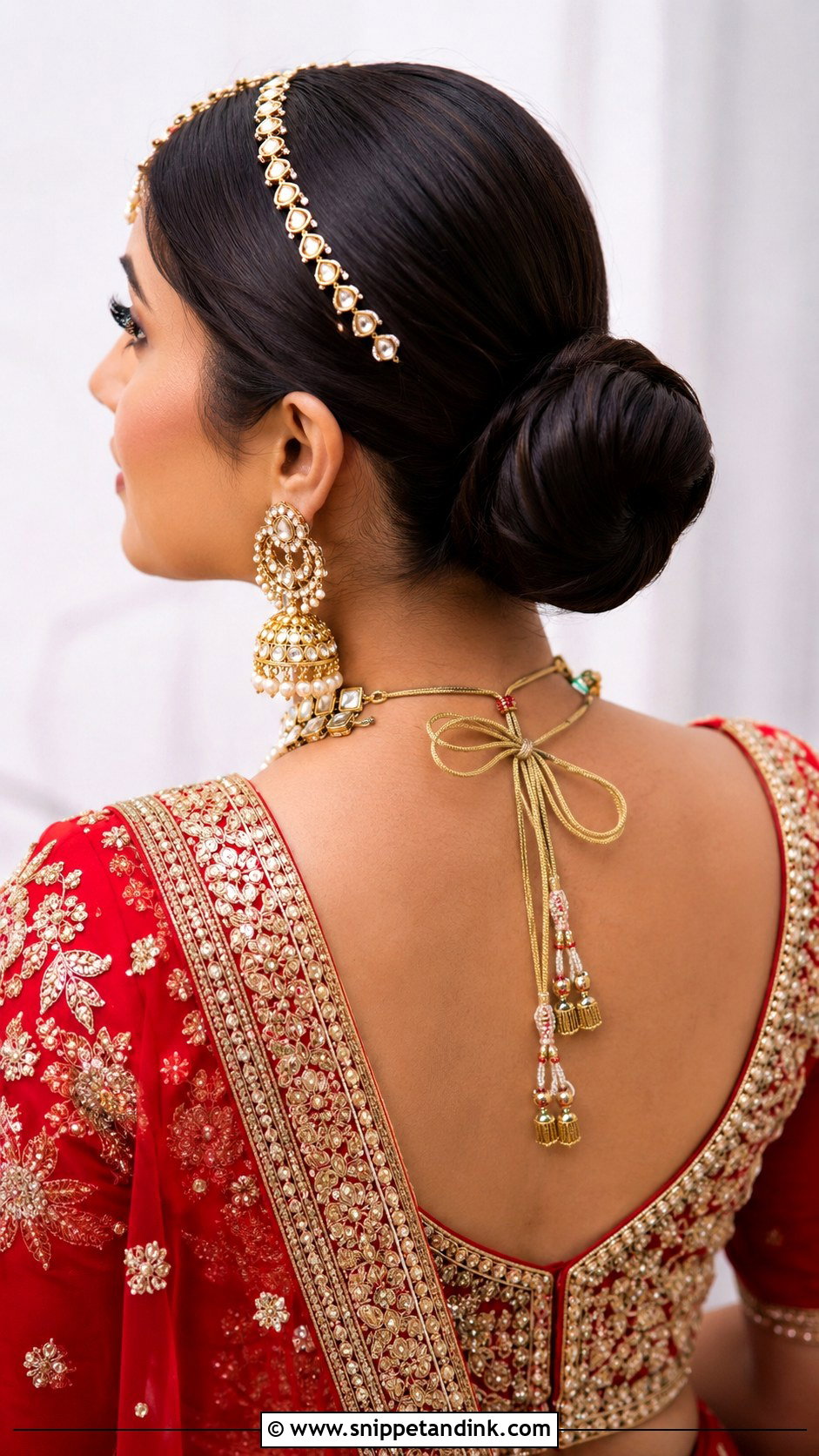
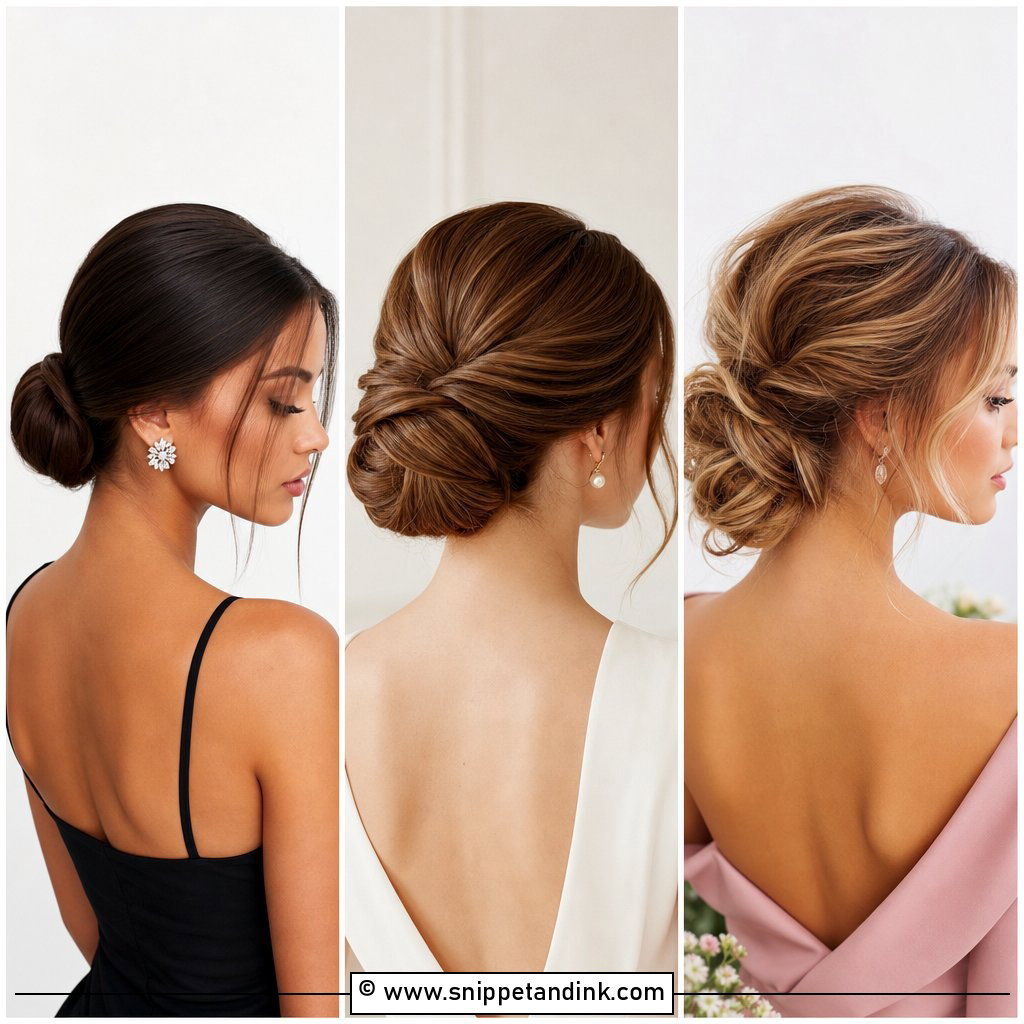
Hair is pulled back tight with a clean center part and coiled into a smooth knot at the nape. Of everything here, this is the style with the least room for error: any bump at the crown or kink from a hair tie shows straight away, so I blow-dry the hair flat and brush it into the band while it is still slightly warm. It lets a red lehenga and a matha patti do the talking. A small amount of shine serum on the surface helps, but go light, because too much reads as wet and greasy under flash. I’d steer very short layers away from it, since the ends tend to poke out of the knot by the reception.
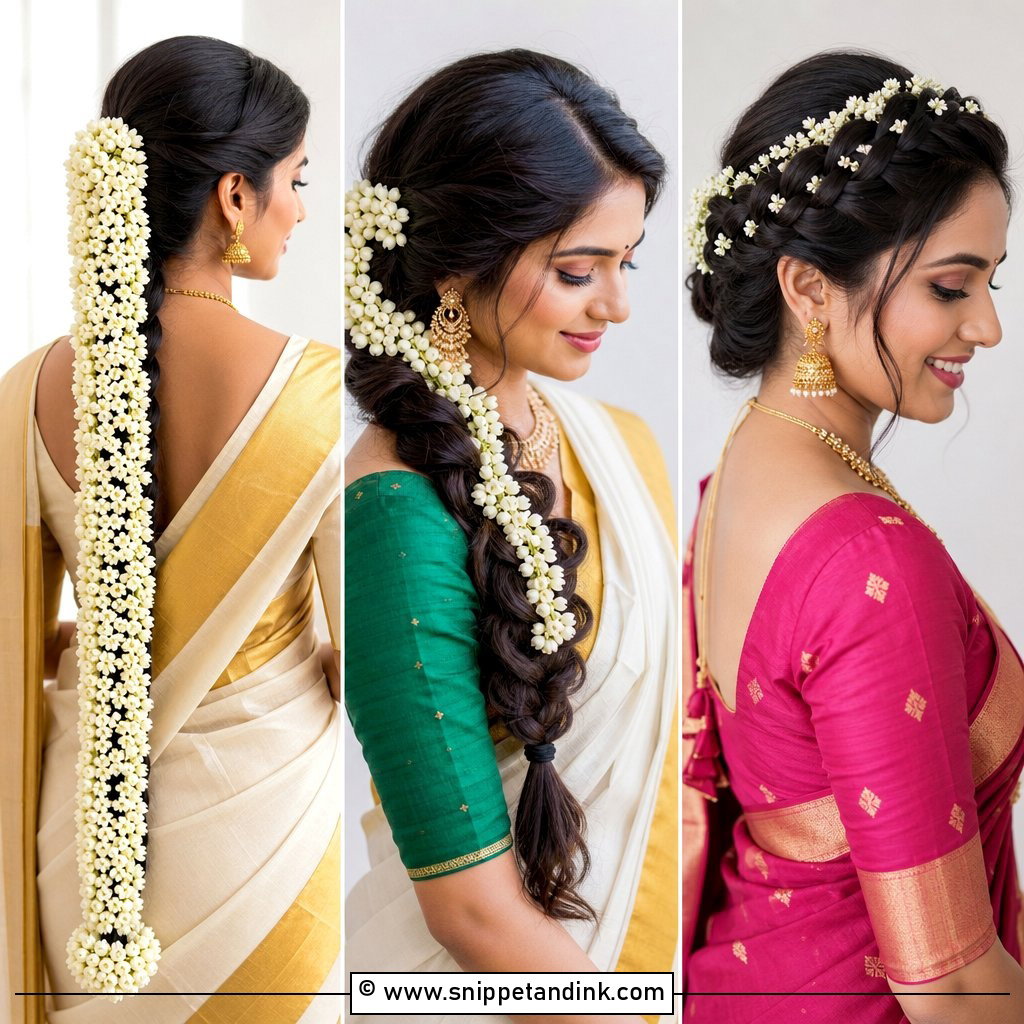
2. Jasmine Gajra Wrapped Bun
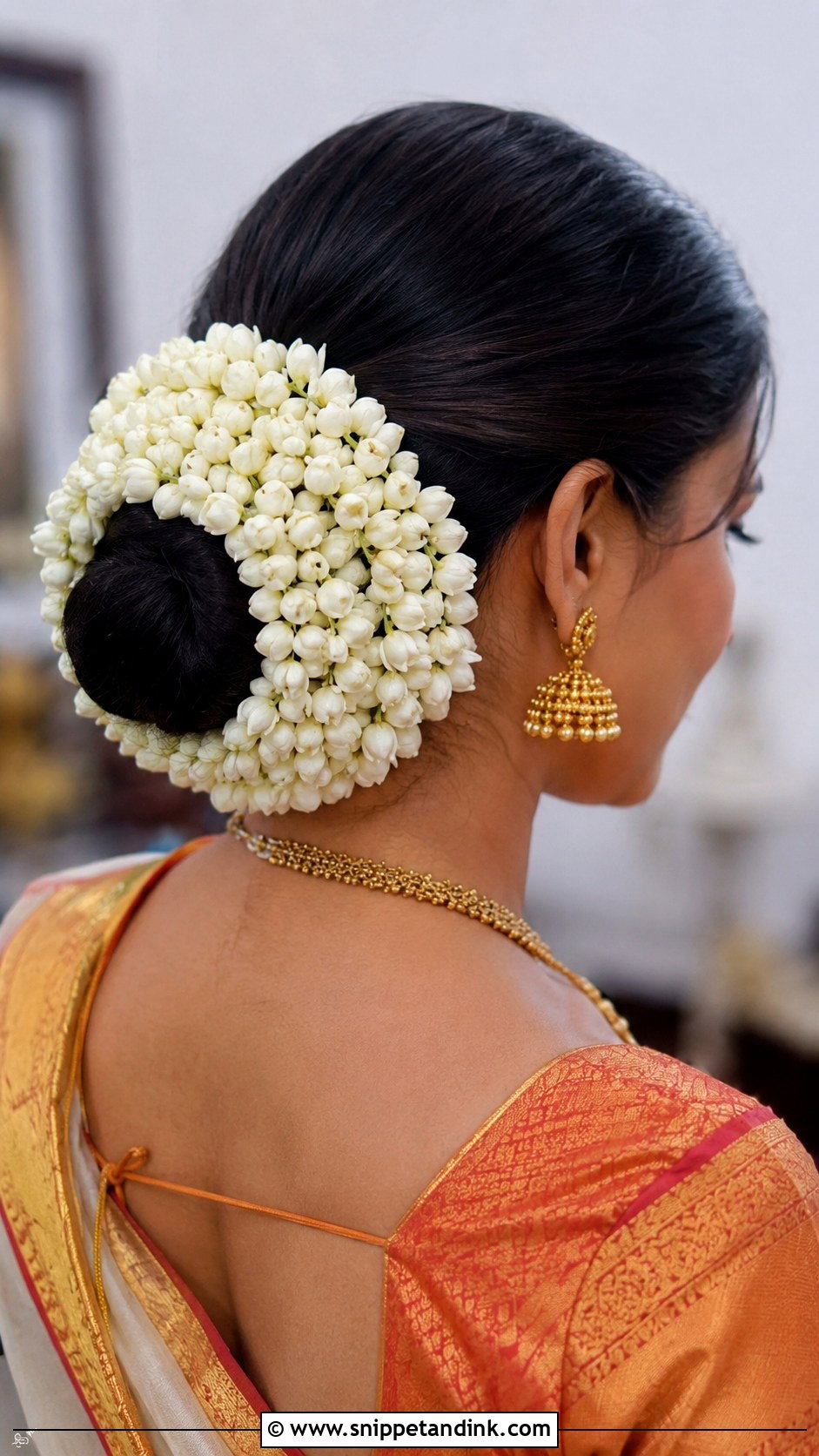
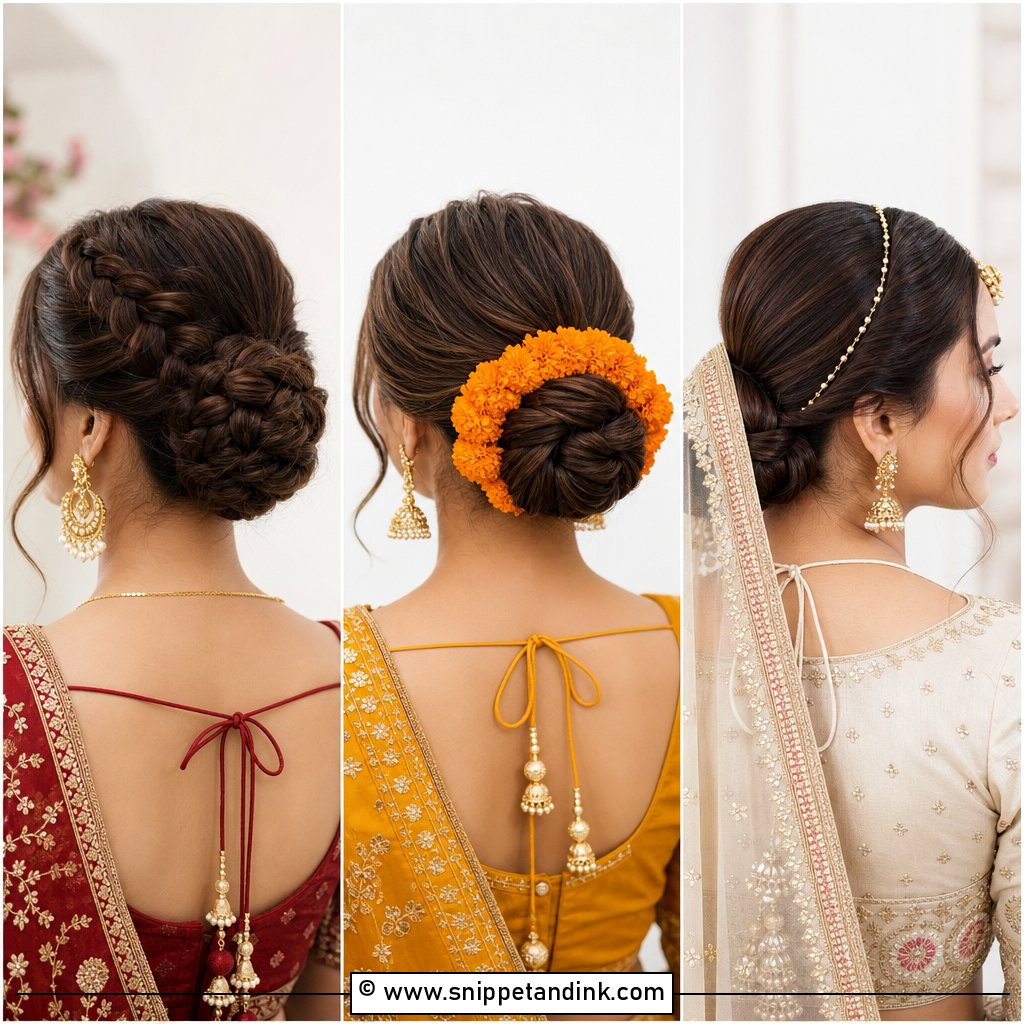
Fresh jasmine has a scent no fake flower can copy, and it is the reason so many South Indian brides still insist on it. A neat bun is wrapped with layers of fragrant jasmine gajras, and the white against dark hair shows up clearly in every frame. It sits naturally with silk Kanjeevaram sarees and temple jewelry. The practical catch is weight and timing. Several strands of gajra get heavy, so I pin each strand into the base of the bun with U-pins rather than resting it on top, and I ask families to buy the flowers the morning of the wedding and keep them in a damp cloth until I fix them, so the buds open on the bride instead of browning in a car.
3. Soft Messy Low Bun
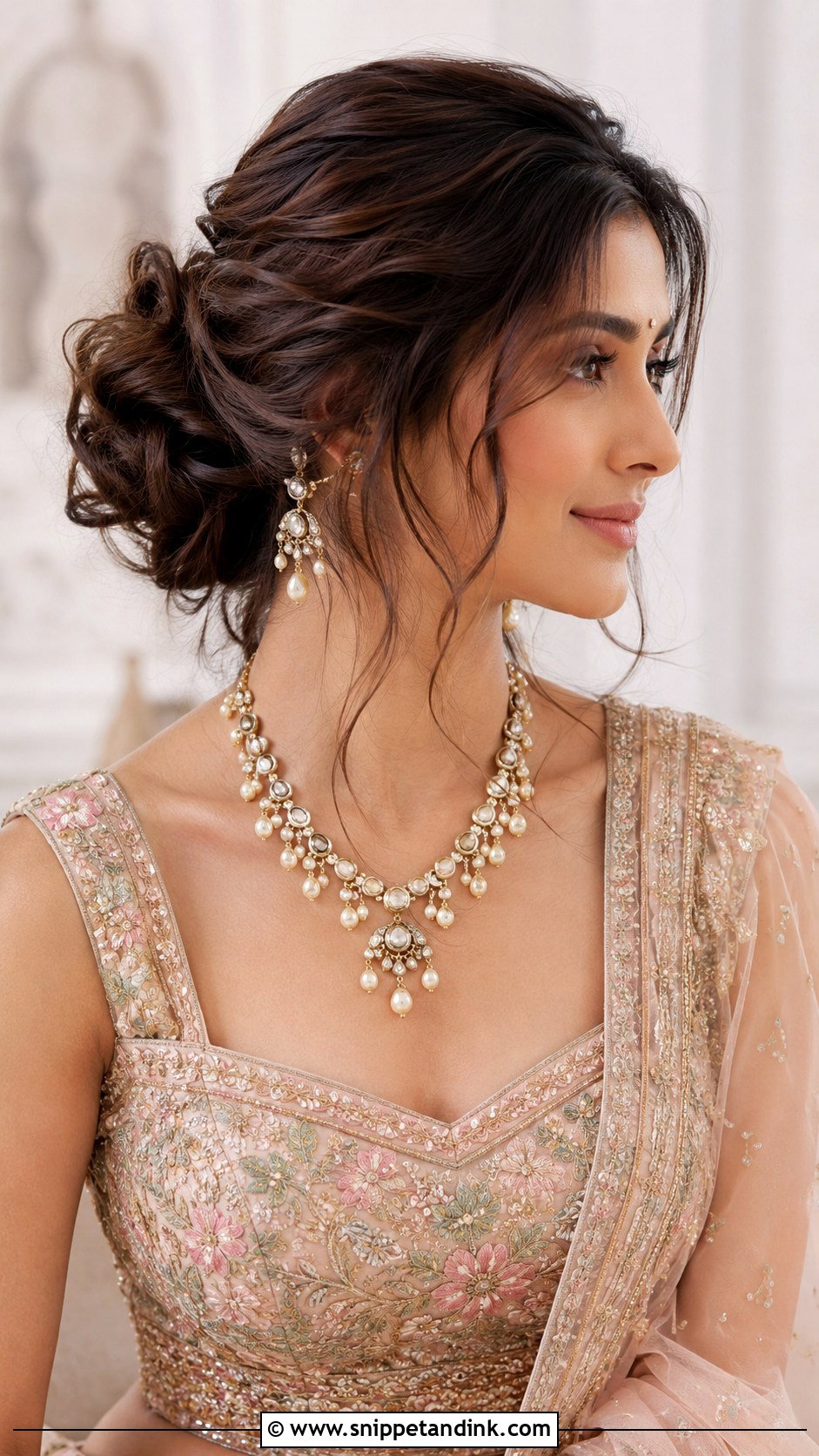
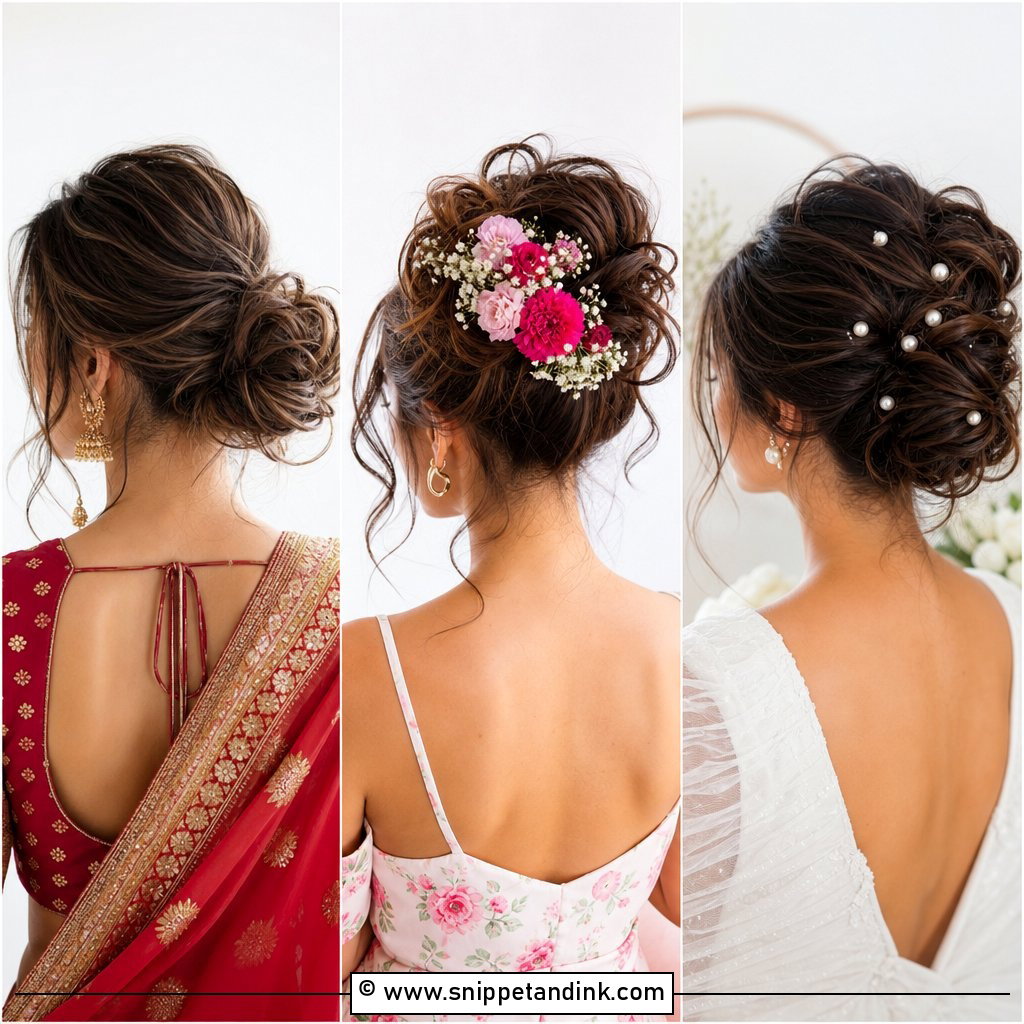
Loose strands frame the face while the bun sits low and tousled at the neck. Messy is the most misunderstood word in my job. A soft bun that still looks soft at the end of the day has to be pinned firmly underneath; the looseness only lives on the surface. I set the hair with a curling tong first so the texture has something to hold, then pull pieces out by hand once it is secure. Daytime and outdoor ceremonies suit it, and the softer outline takes the edge off round and square faces. Brides with silky, very straight hair need extra texturizing spray here, or the pieces slip flat within an hour.
4. Braided Bun With Fishtail Detail
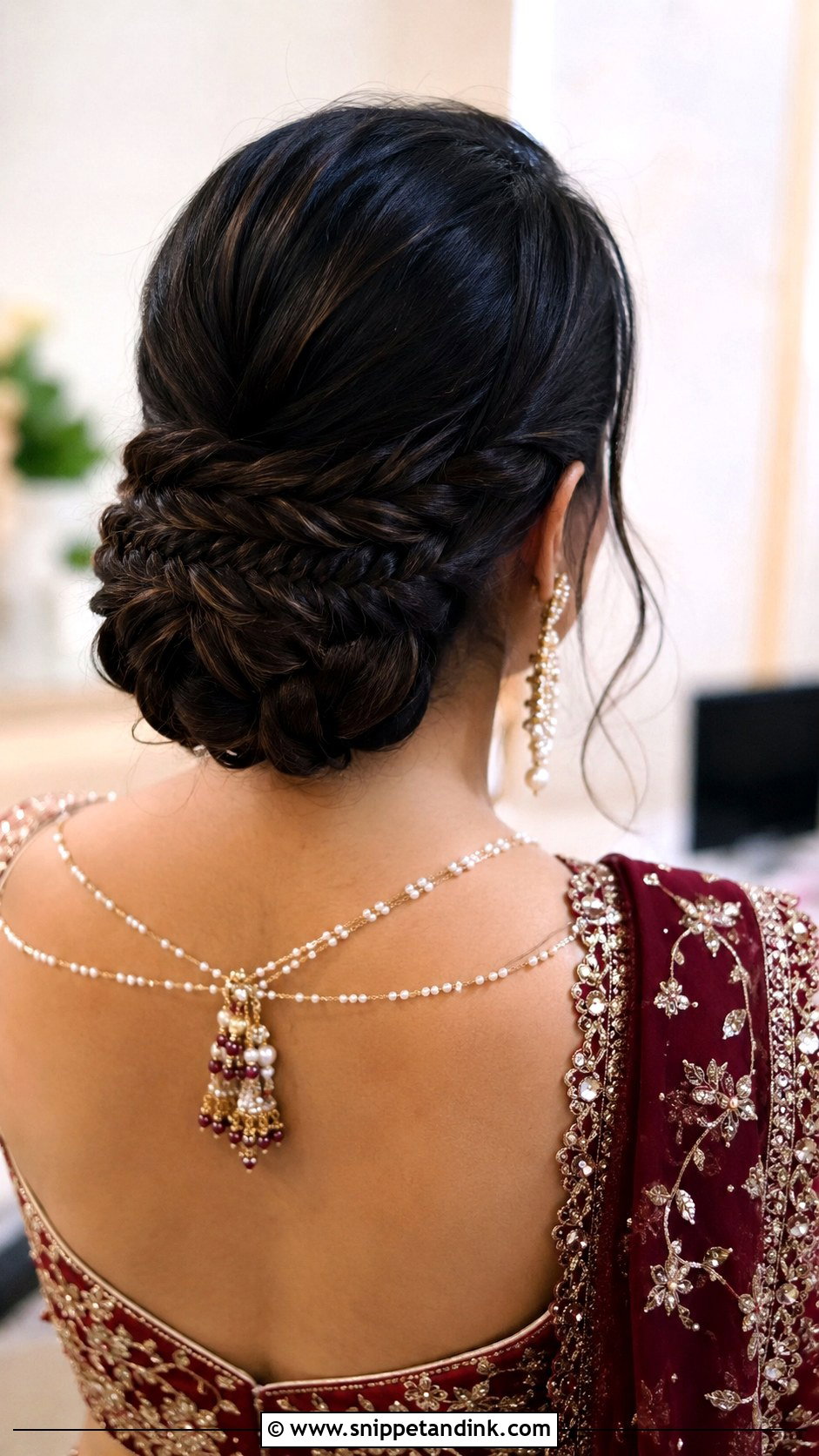
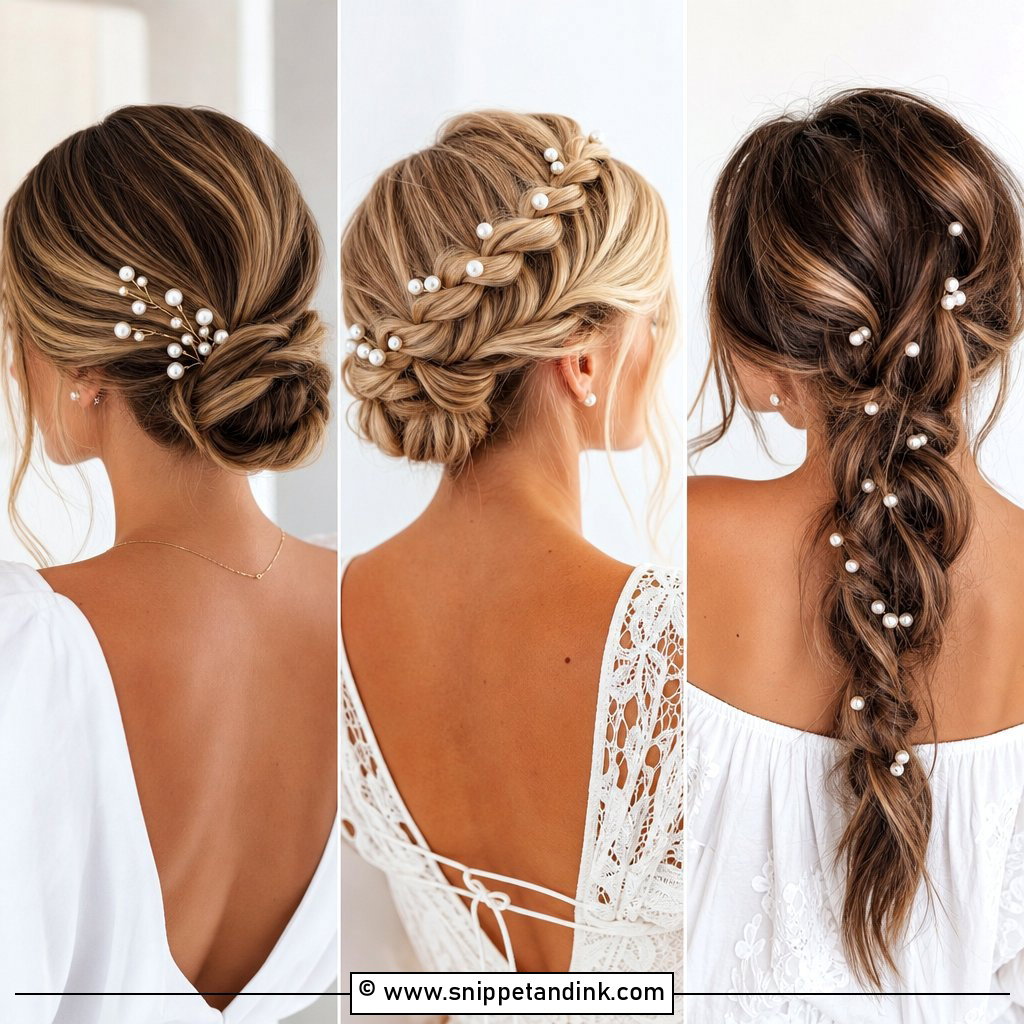
French or fishtail braids are woven and wrapped into a bun at the nape, which gives the finished knot a handmade surface. Braided buns are among the sturdiest styles I do, because each braid acts as its own anchor and the pins grip the woven sections instead of sliding through smooth hair. That makes it a sensible pick for long ceremonies under a lehenga dupatta or a saree pallu. Small flowers or pearls can be tucked into the plaits. The one thing I check at the trial is length: a fishtail eats up hair, so shoulder-length brides may need a clip-in piece to make the bun big enough.
5. Floral Bun With Roses
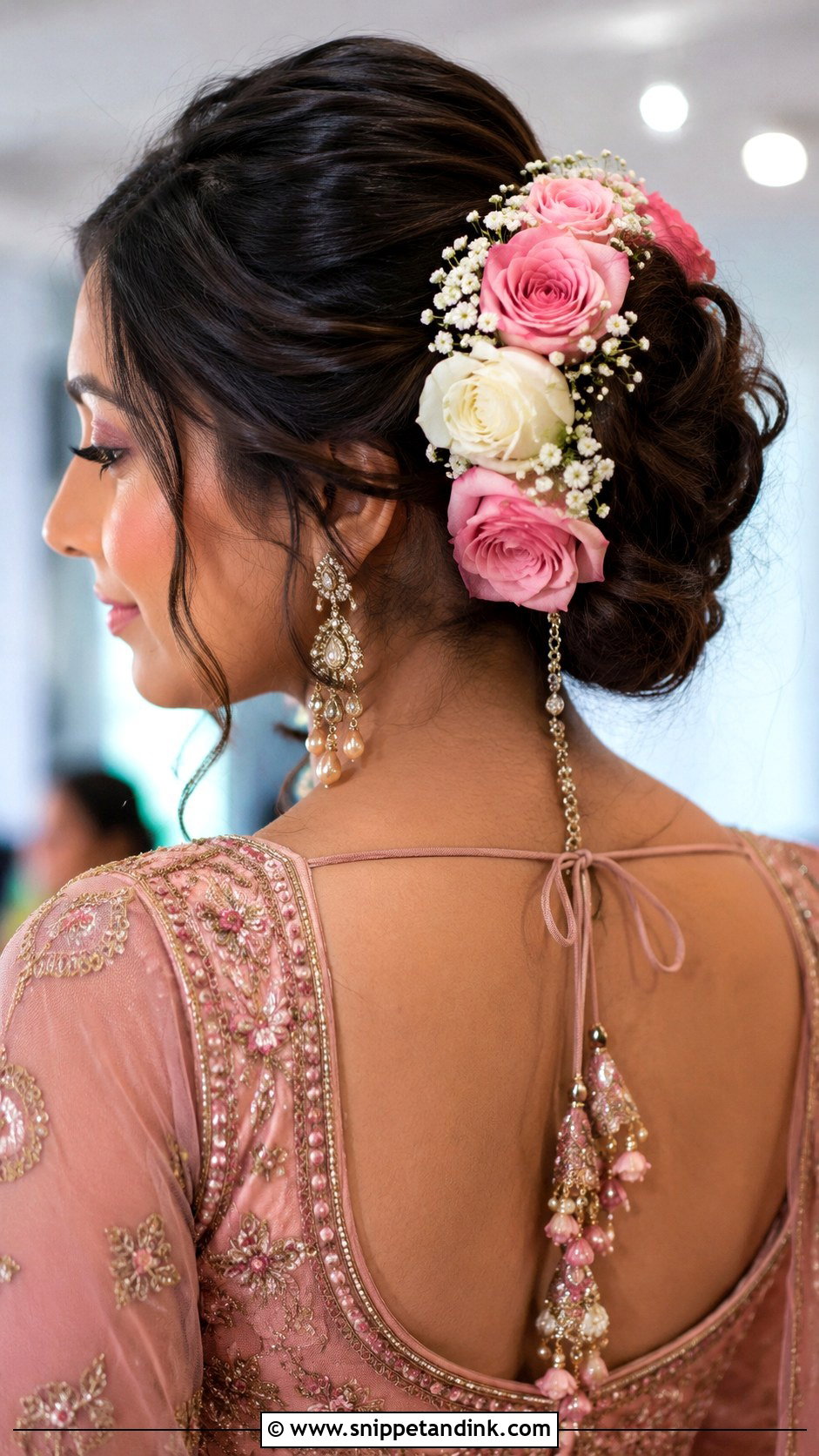
Fresh roses arranged around the base of a smooth or messy bun give the most classic floral finish of the lot. Pinks, reds and whites all stand out against dark hair, and a little baby’s breath between the roses breaks up the outline. Roses are a good choice for daytime functions and pastel or jewel-toned outfits. A rose is much heavier than jasmine, though. I wire each stem short and push it into the bun at an angle so it sits against the hair, not on top of it, and I keep the largest blooms low near the nape where the bun is densest.
6. Twisted Rope Bun
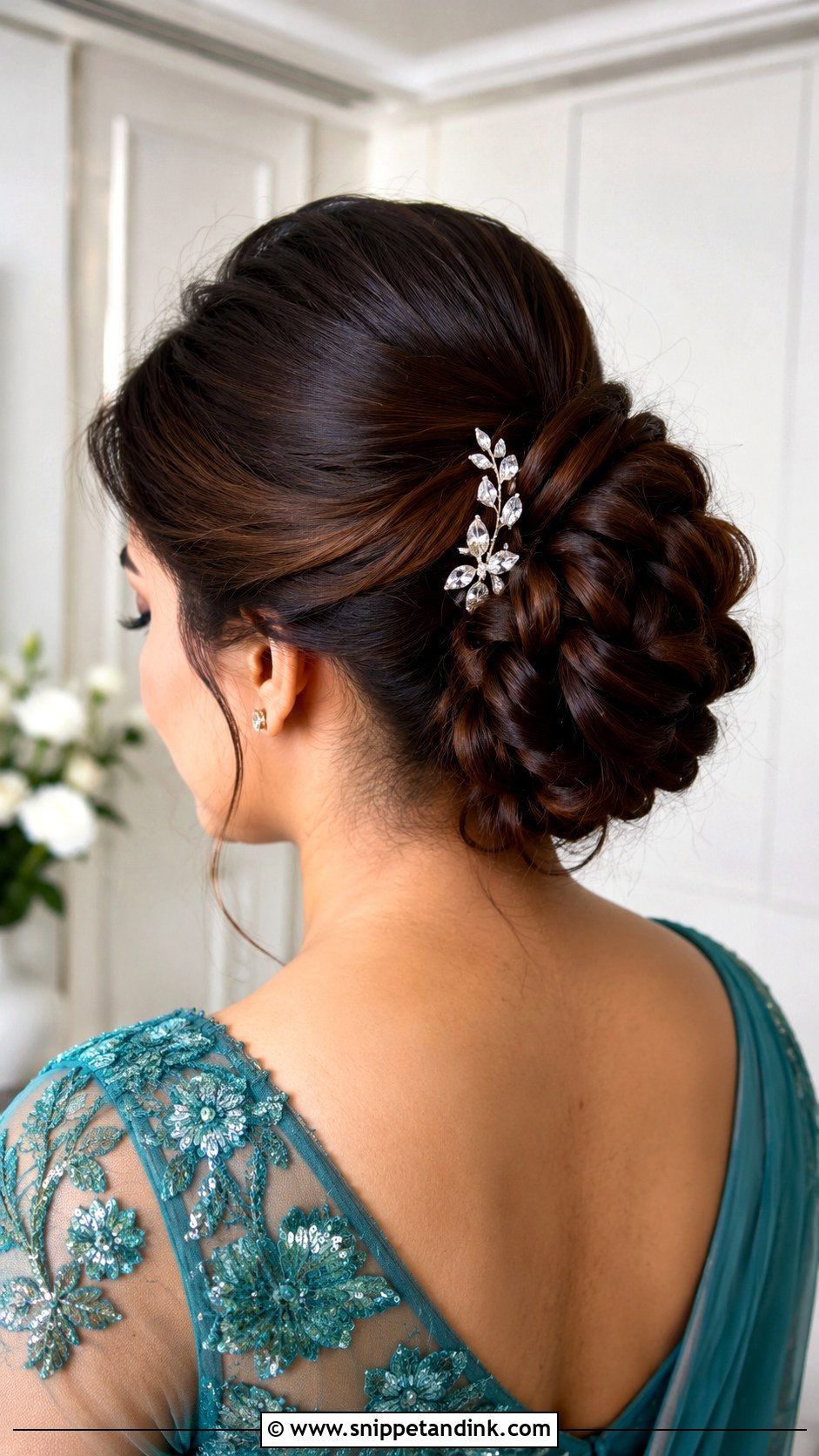
Two sections of hair are twisted around each other and coiled into a textured knot, and the rope pattern catches light along each ridge. It reads a little more modern than a smooth bun, which is why I suggest it for a sangeet or reception rather than the main ceremony. Twists tighten as you coil them, so the style grips well and survives a night of dancing. A sparkly pin or two is all it needs. It flatters long and oval faces most, and very fine hair can look thin in it unless I add a padding piece inside the coil.
7. Bun With Maang Tikka and Maathapatti
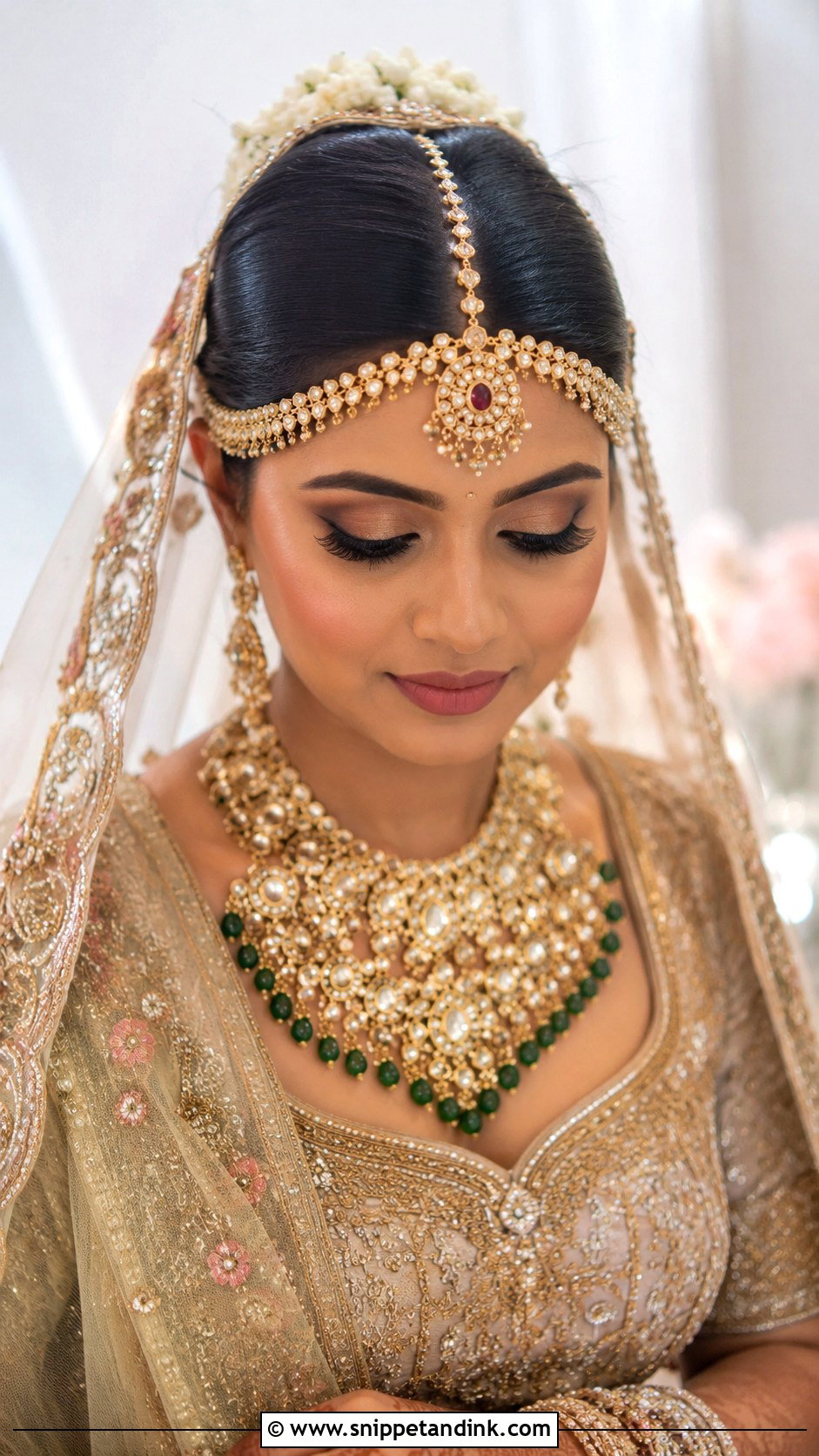
Some looks are really about the jewelry. Here a sleek or softly textured bun sits behind a statement maang tikka and maathapatti that frame the forehead. The bun itself is kept simple so it never competes. What matters is what you cannot see: the tikka chain and the side chains of the maathapatti need something solid to clip into, so I build a small anchor of pinned hair at the crown before the bun goes in. Without it, a heavy tikka drags forward and sits crooked by the pheras. Please bring the actual pieces to your trial, not photos of them.
8. Messy Bun With Loose Curls
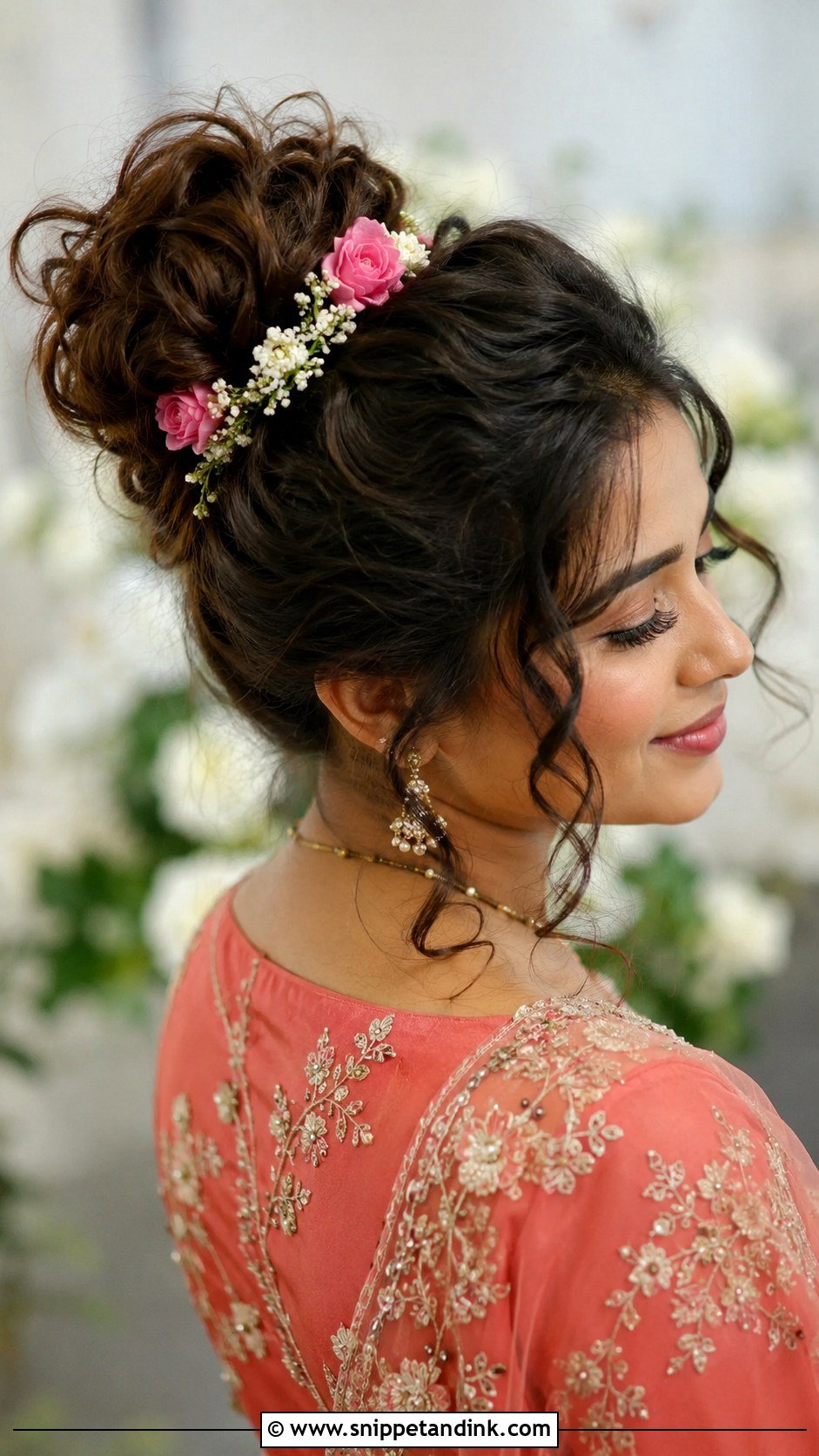
A few curled tendrils are left loose in front while the rest gathers into a tousled bun behind. The curls bring movement and make finer hair look fuller, which is the main reason I suggest it to brides who worry about thin hair showing. It suits engagement, mehndi and reception events. Humidity is its weak spot. Curls on fine hair can drop flat within a couple of hours, so I curl smaller than the finished look, pin each curl to cool, and only brush them out just before the bride leaves the chair.
9. Sleek Bun With Side Part
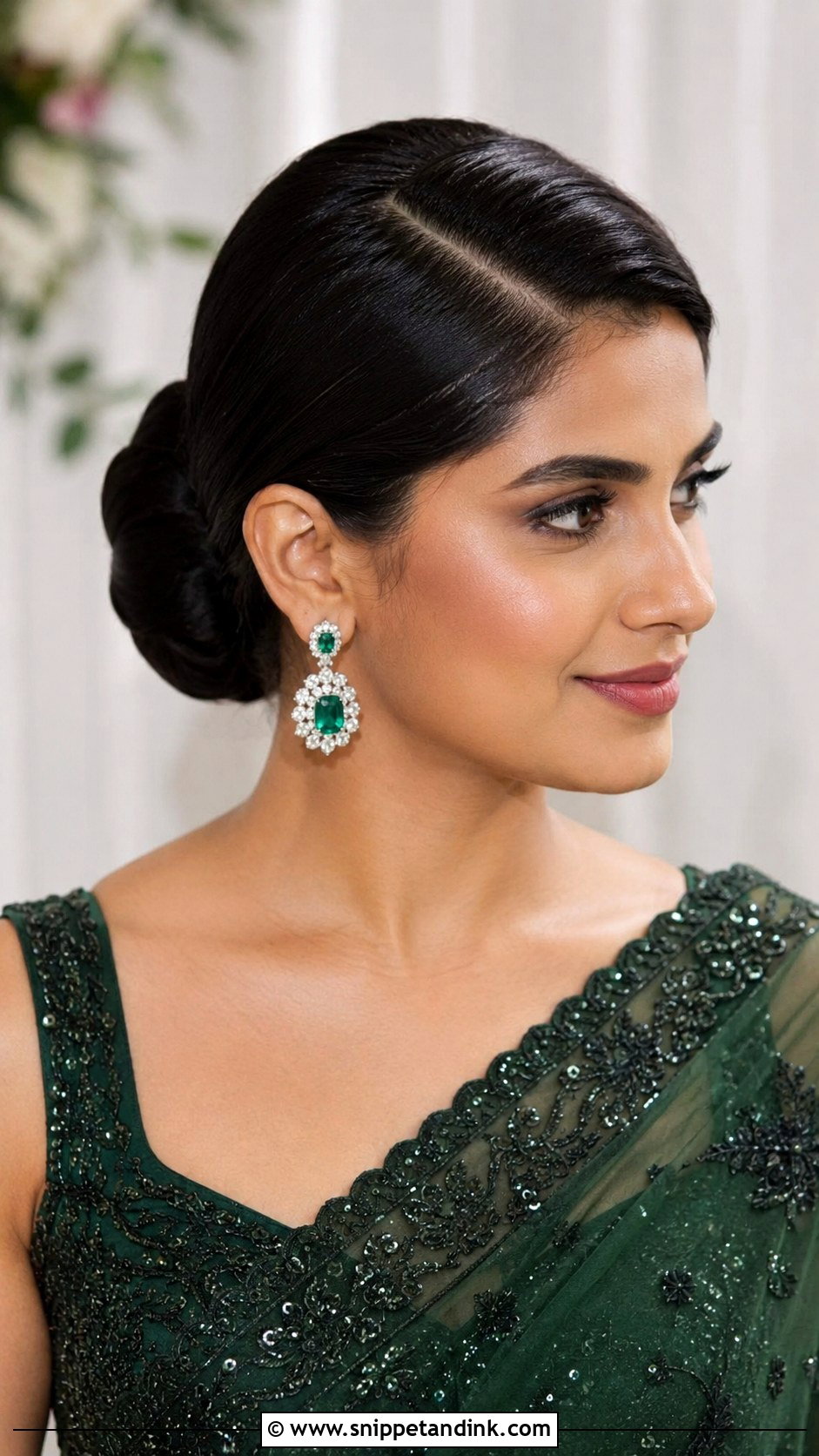
Smoothing everything to one side and gathering it into a tidy low bun gives the face a soft diagonal that a center part does not. That angle is kind to strong jawlines and sharp features, and it shows off one large earring well. It works with a saree or a reception gown. I always ask which side the dupatta will be draped over before I choose the part, because a deep side part on the same side as a heavy dupatta gets flattened within the first hour of the ceremony, leaving you with a dent nobody wants on your special day.
10. Donut Bun With Pearl Pins
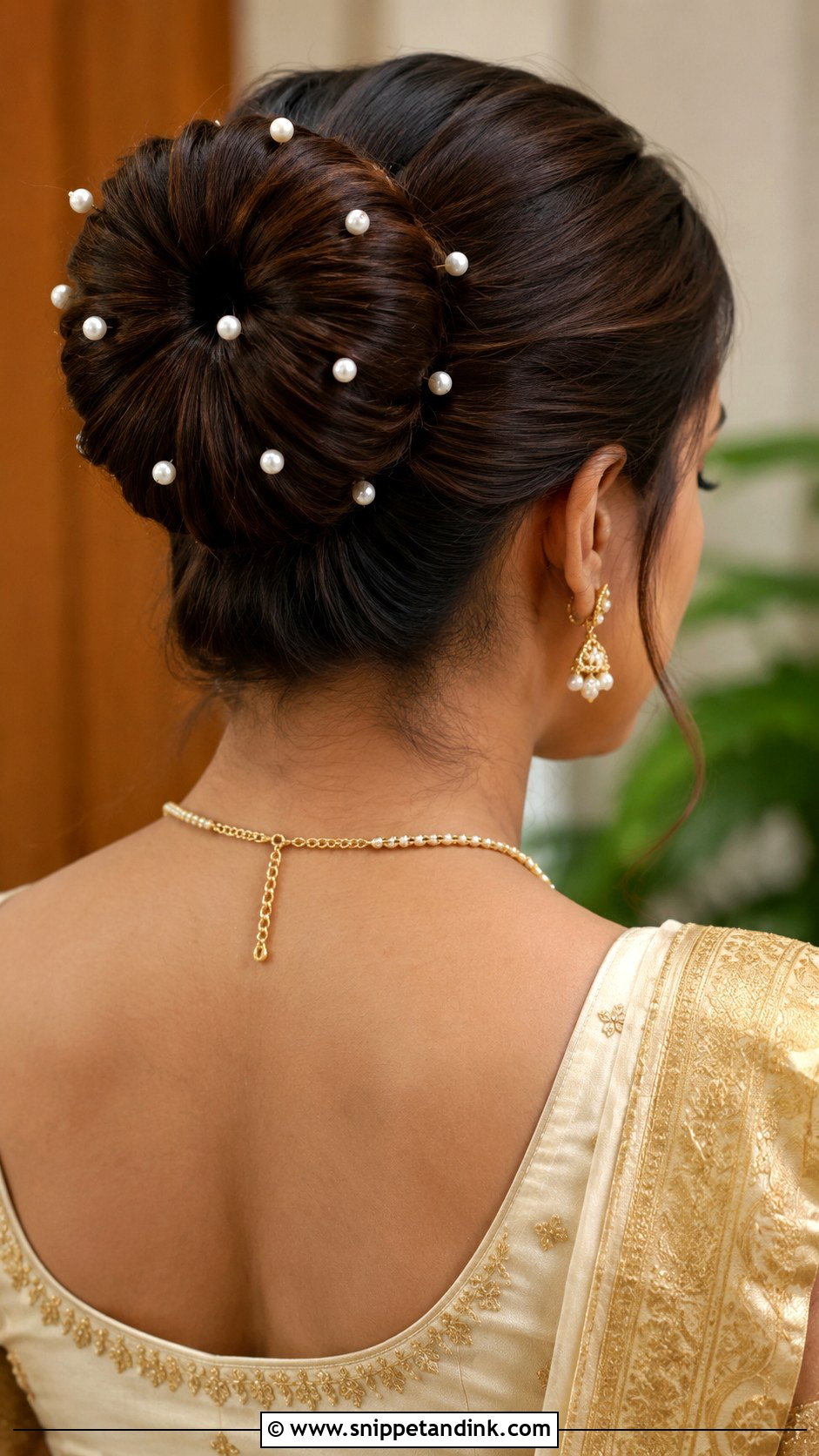
Wrapping the hair around a donut form gives a big, rounded knot with a very even outline. Pearl pins dotted across the surface pick up light without adding much weight. I reach for a donut most often with brides who have fine or thinning hair, since the form does the bulking that their own hair cannot. The trick is matching the donut color to the hair and covering it fully, because a glimpse of mesh at the edge is the first thing a camera finds. It stays put through long ceremonies with very little touching up.
11. Braided Crown Bun
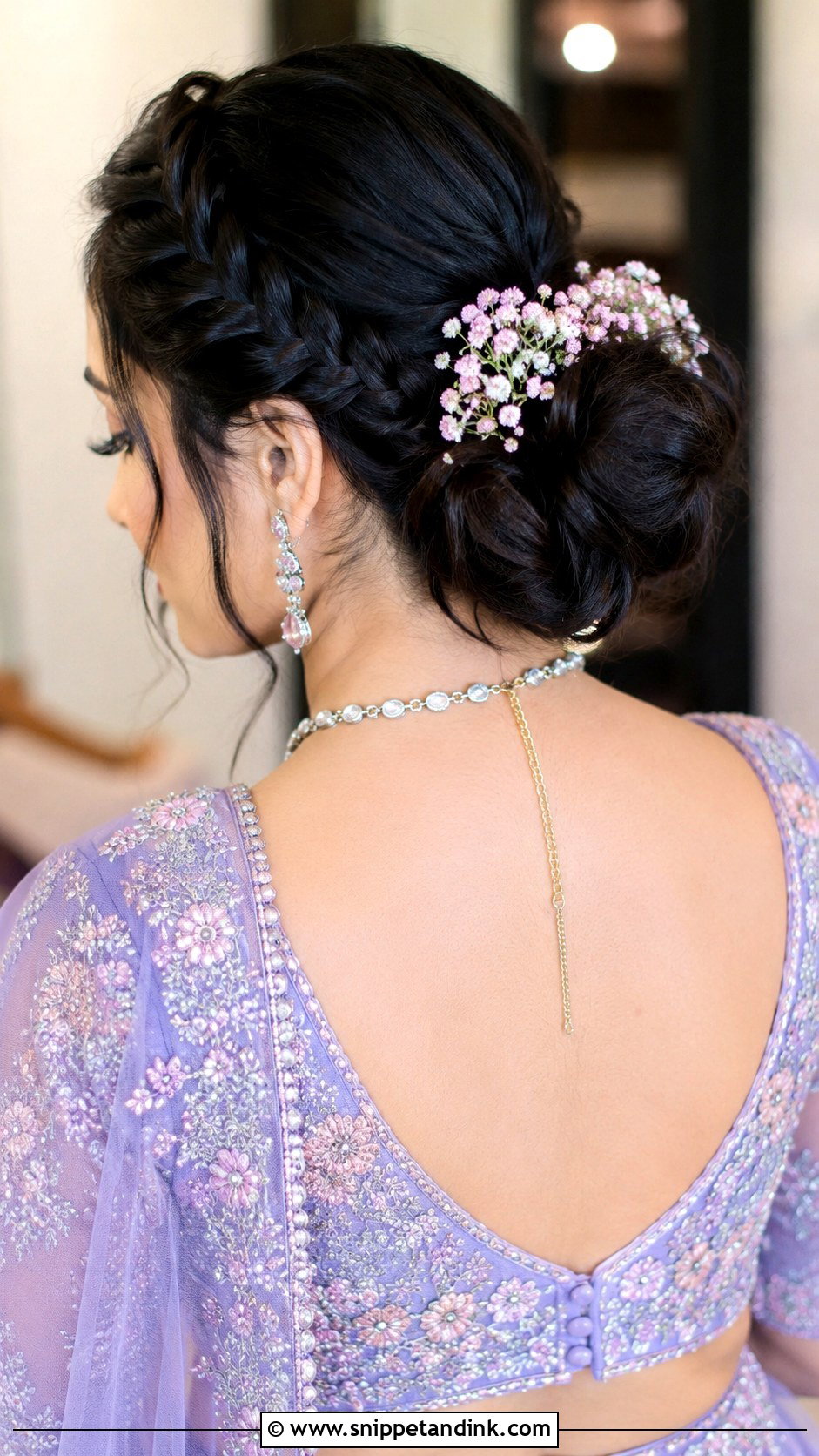
A braid circles the head like a crown and the remaining hair is gathered into a soft bun at the back. The braid line is a great spot for tiny flowers or pearls, and it gives a frame around the face that works with modern and traditional outfits alike. For me, the honest question here is whether a dupatta is going over it. A crown braid is lost under a heavy head covering, so I usually save this one for the engagement or reception and keep the braid fairly flat if a veil or dupatta has to sit on top.
12. Low Bun With Floral Half Crown
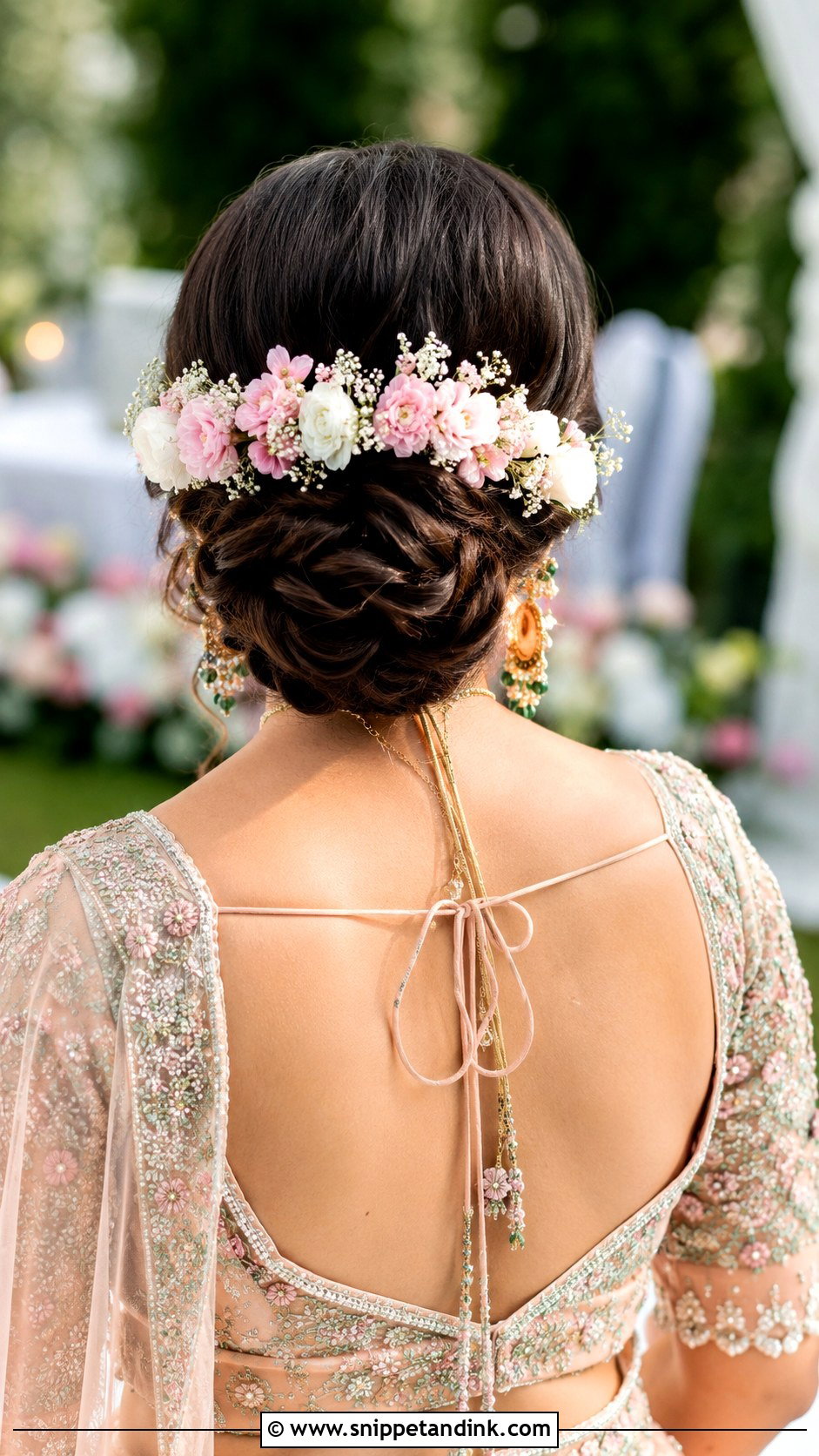
Fresh blooms are arranged in a half-moon behind the low bun, framing it from above. Daytime and outdoor weddings suit it, as do pastel lehengas and lighter sarees, and the bun underneath can be sleek or loosely textured. You can mix several colors of flower or keep to one. I build the half crown on a thin wire or a fabric band rather than pinning flower by flower into the hair, so it can be lifted off in one piece for the evening and the bun underneath still looks finished.
13. Voluminous Puff Bun
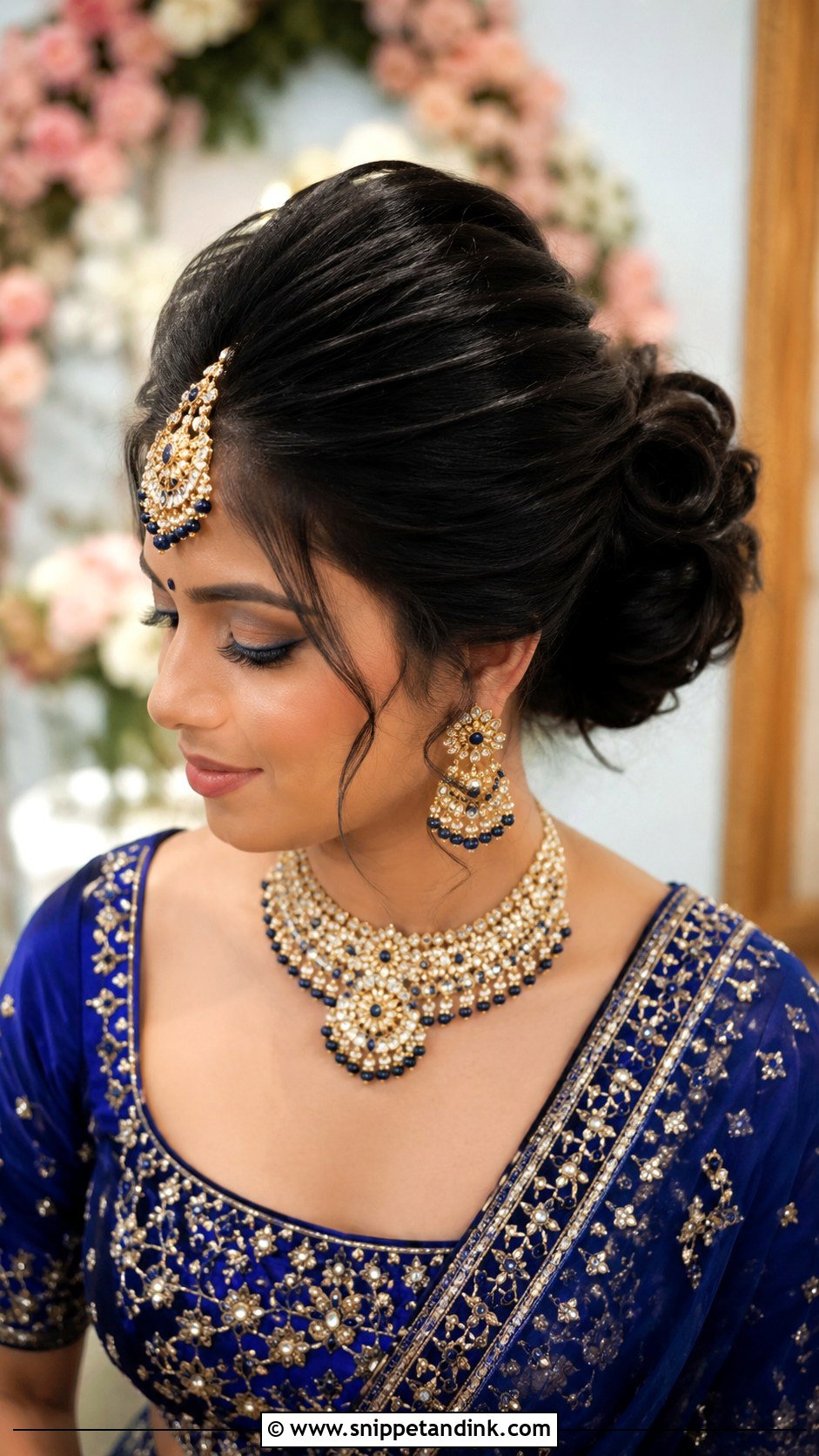
The front section is teased and smoothed back into a voluminous puff, and the rest forms a neat bun behind it. The extra height lengthens a round face and gives a heavy maang tikka something to rest against. A puff that collapses halfway through the pheras is a common disappointment, so I backcomb only at the roots, smooth the top layer over it, and lock the base with crossed bobby pins before any spray goes on. Keep it moderate if you are wearing a thick dupatta, since a very high puff pushes the fabric up and away from the face.
14. Bun With Bubble Gajra Braid
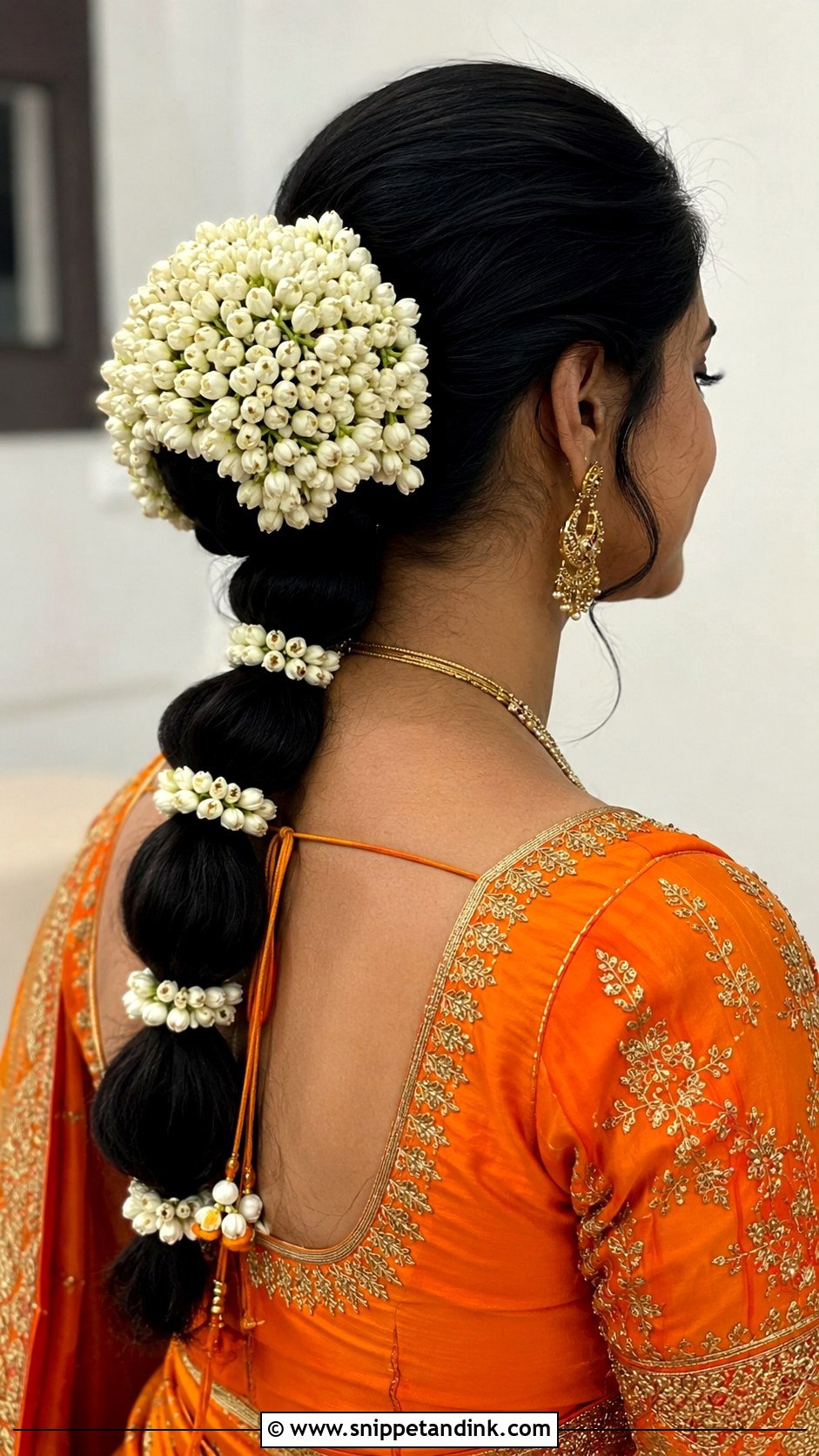
The bubble gajra braid is sectioned into puffy bubbles with small elastics, each bubble wrapped with a thin strand of gajra, and the whole braid is then coiled into a bun. It is playful and fragrant, which is why it belongs at mehndi and sangeet functions more than the main ceremony. The elastics need to be clear or matched to the hair, and I pull each bubble open gently by hand so it does not look stiff. With bright, lively outfits it feels fun rather than formal.
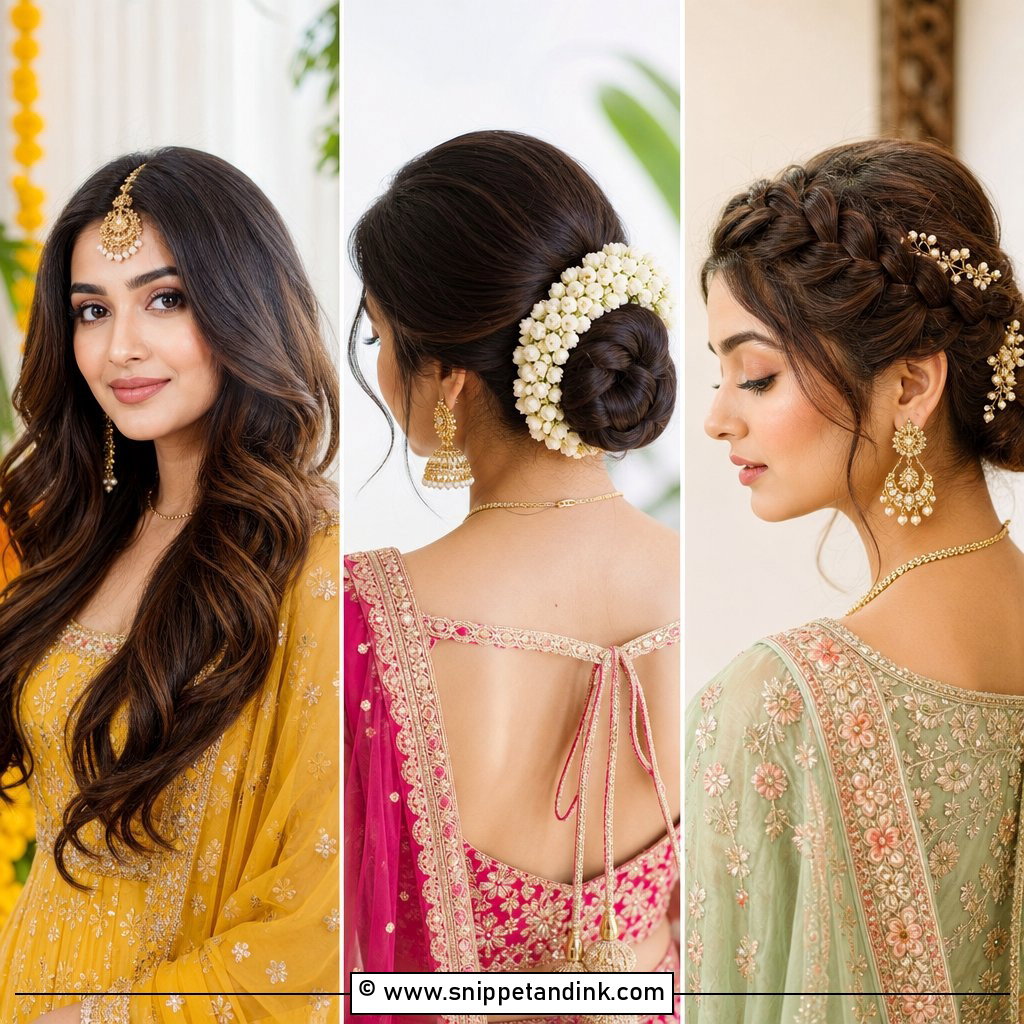
15. Sleek Bun With Statement Hair Accessory
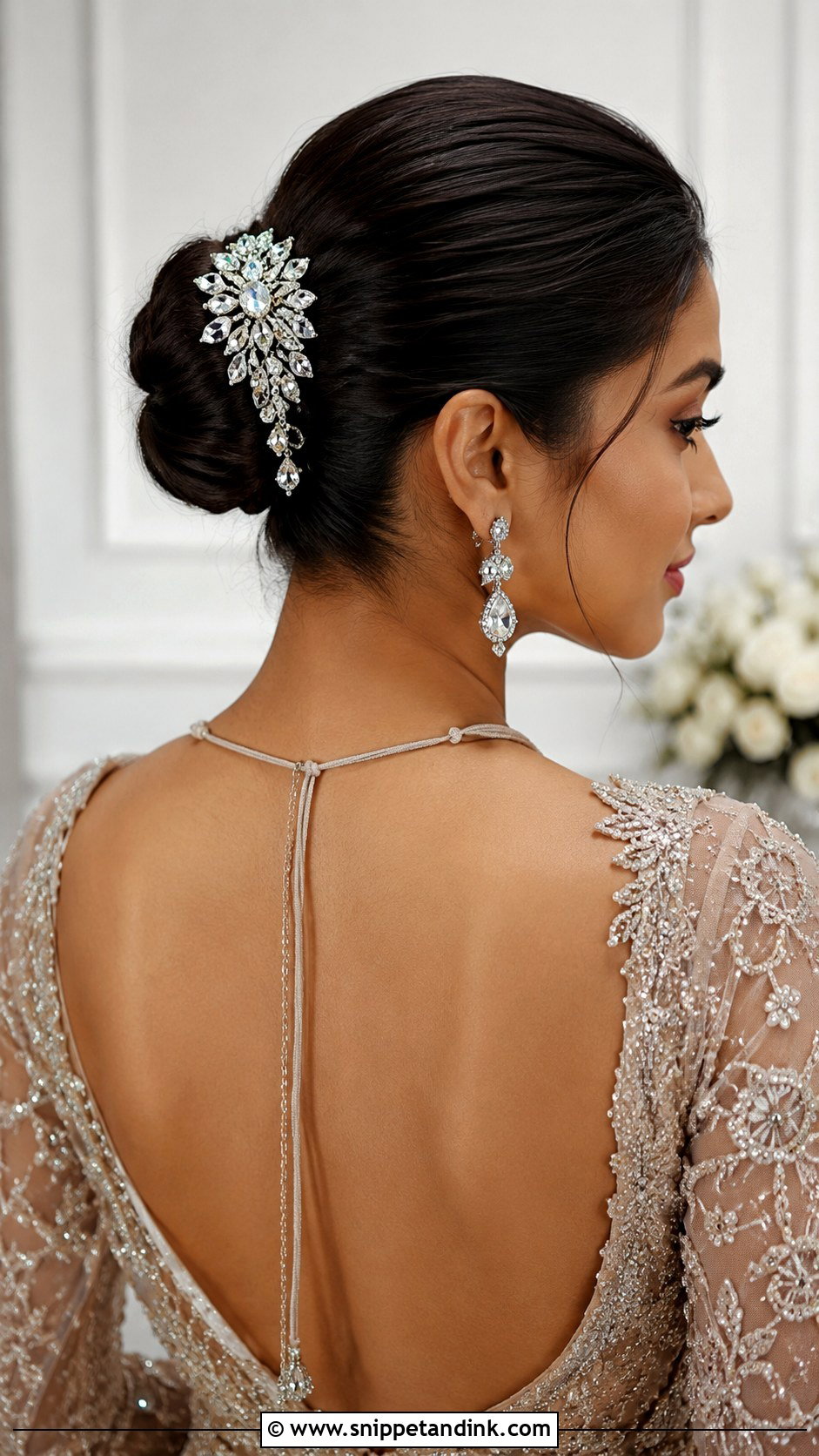
One bold accessory on a sleek bun is the most restrained idea on this list. The hair is smoothed back into a polished knot, and a single jeweled hairpin or ornate brooch does all the decorating. I like it with contemporary gowns and fusion outfits at a reception. The accessory has to be secured to the bun’s structure and not just pushed into the surface, so I sew heavier brooches onto a small comb first. If the piece is large, look at it from the side in a mirror at the trial; it often needs to sit lower than you expect.
16. Side Swept Bun With Flowers
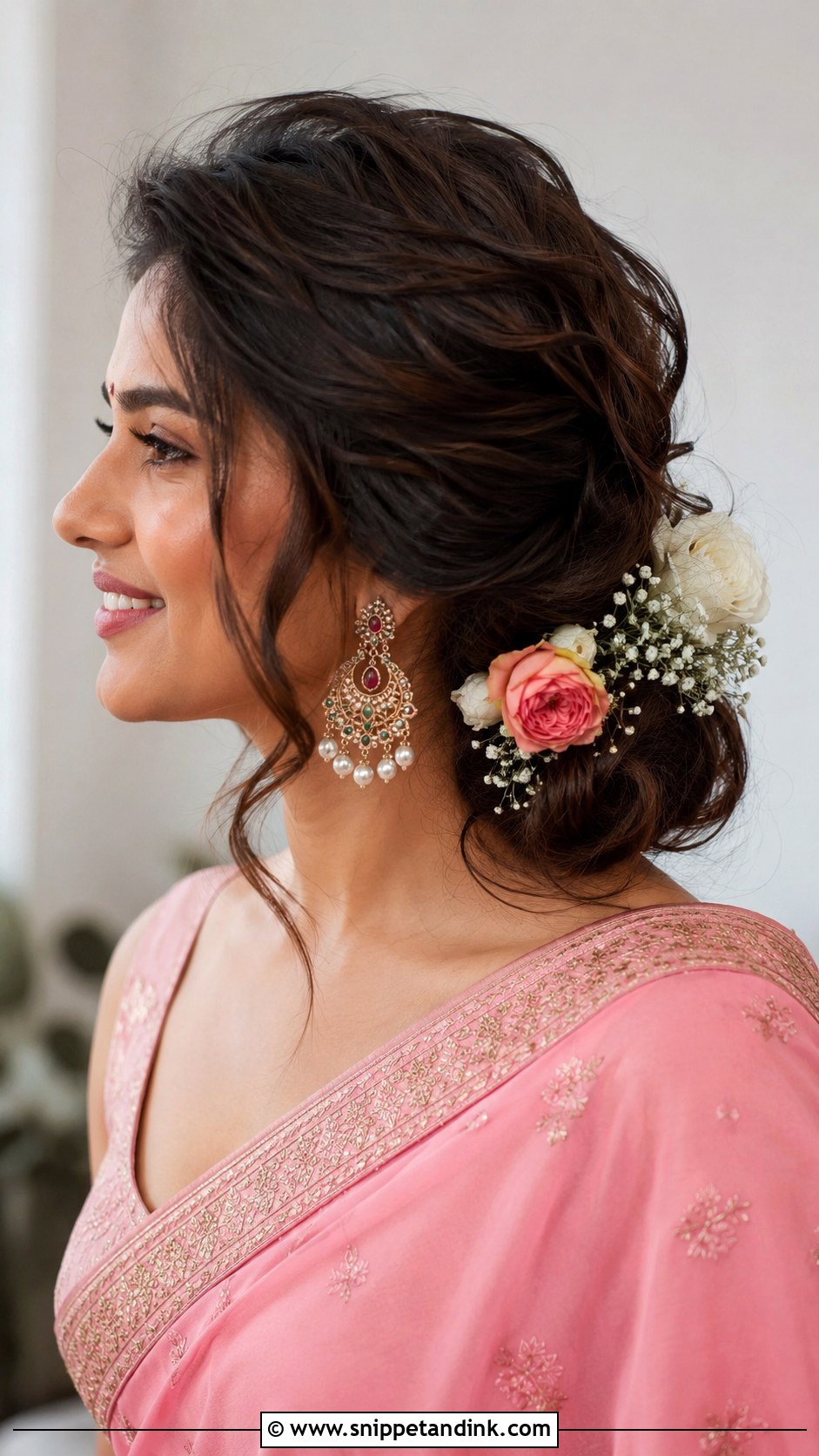
Gathering the hair to one side and coiling it into a low bun near the shoulder leaves the opposite side of the neck bare, so a statement earring gets the spotlight. Fresh flowers tucked around it add color. It sits well with draped sarees and flowing lehengas at daytime or outdoor ceremonies. Think about the seating plan before choosing it. A bun on the shoulder rubs against a high collar or a heavy dupatta border, and if the photographer mostly shoots you from one side, the bun should sit on the side facing away from the camera so your face stays clear.
17. Bun With Long Trailing Braid Accents
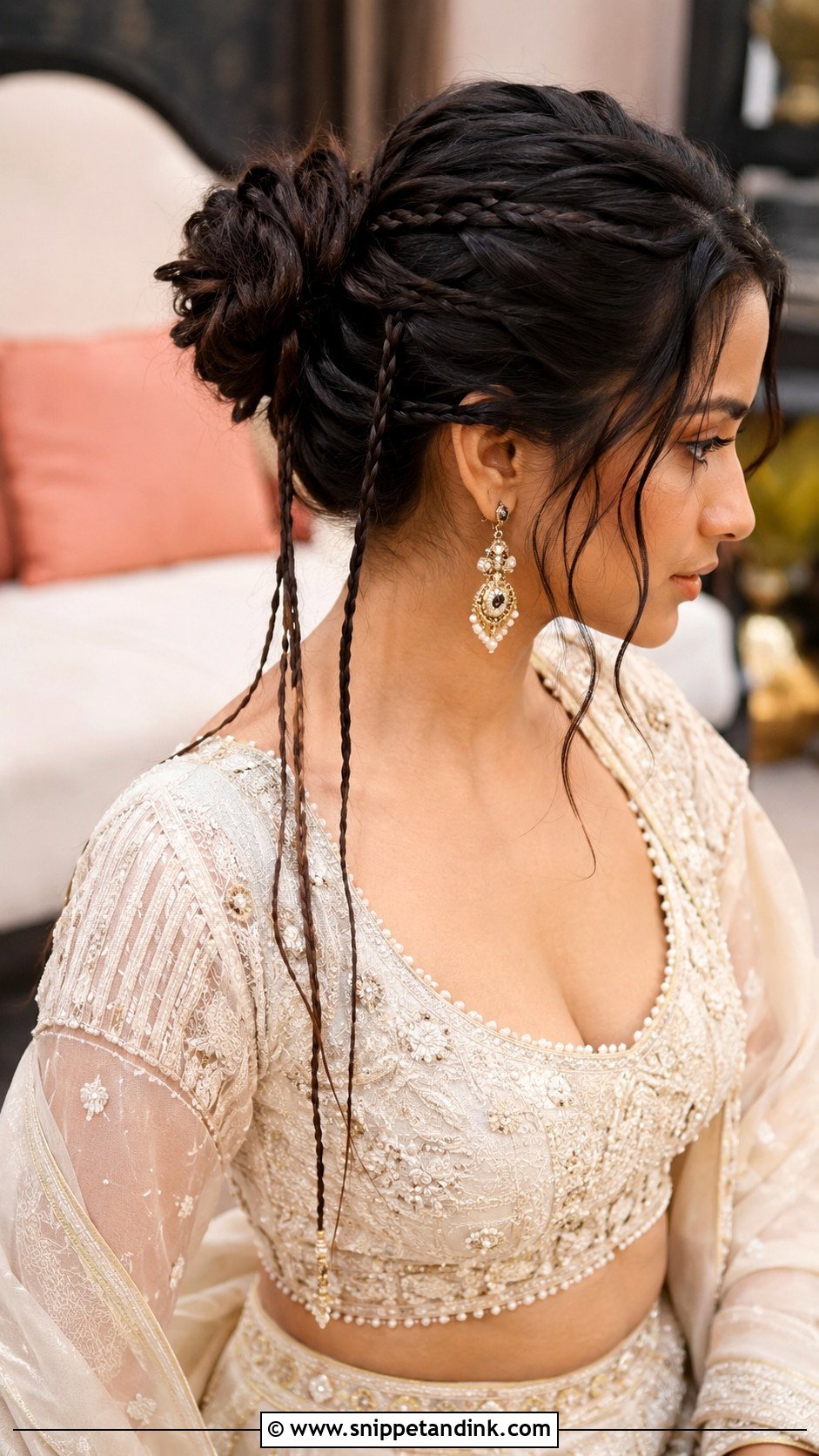
Some brides hate the idea of all their length disappearing into a knot. A few trailing braid accents solve that: a neat bun sits at the back while thin braids trail down or wrap around it. The braids can hold tiny flowers or beads, and the look suits traditional and fusion outfits. Thin trailing braids tangle easily in jewelry and dupatta embroidery, so I finish the ends with a tiny clear band and a drop of oil, and I keep them short enough that the bride can sit without them catching under her.
18. Classic Chignon Bun
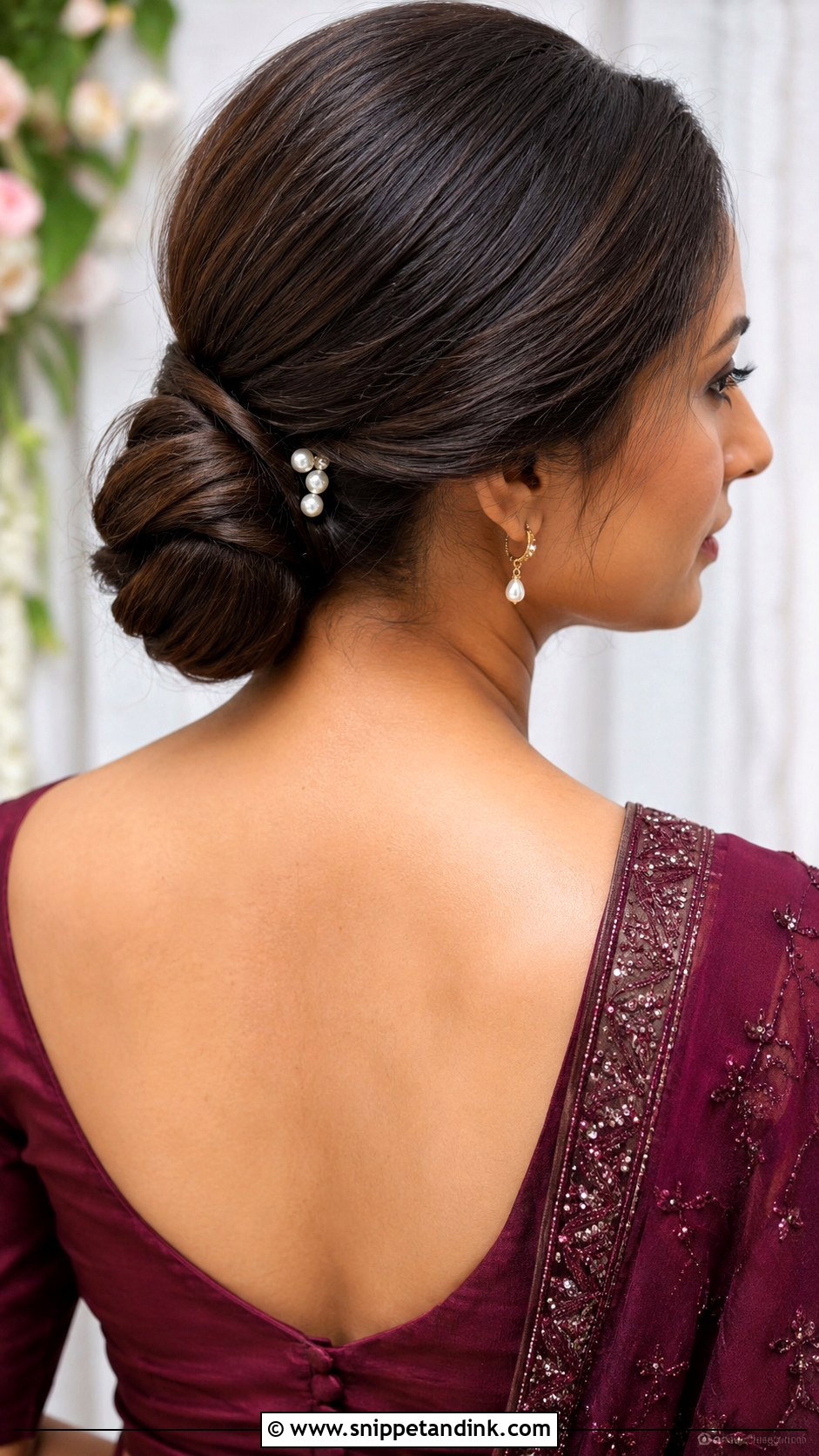
Twisted and tucked into a low, smooth knot at the nape, the chignon is about as fuss-free as bridal hair gets. Its clean lines show off jewelry, and it works with sarees and gowns alike. A few pearl pins or a small floral accent soften it. It is my usual answer for a bride who hates the feeling of a tight, heavy style, since a well-pinned chignon sits close to the head and spreads weight evenly. It does need medium length or longer; anything above the shoulder will not tuck in neatly without a hairpiece.
19. Bun With Multicolor Flowers
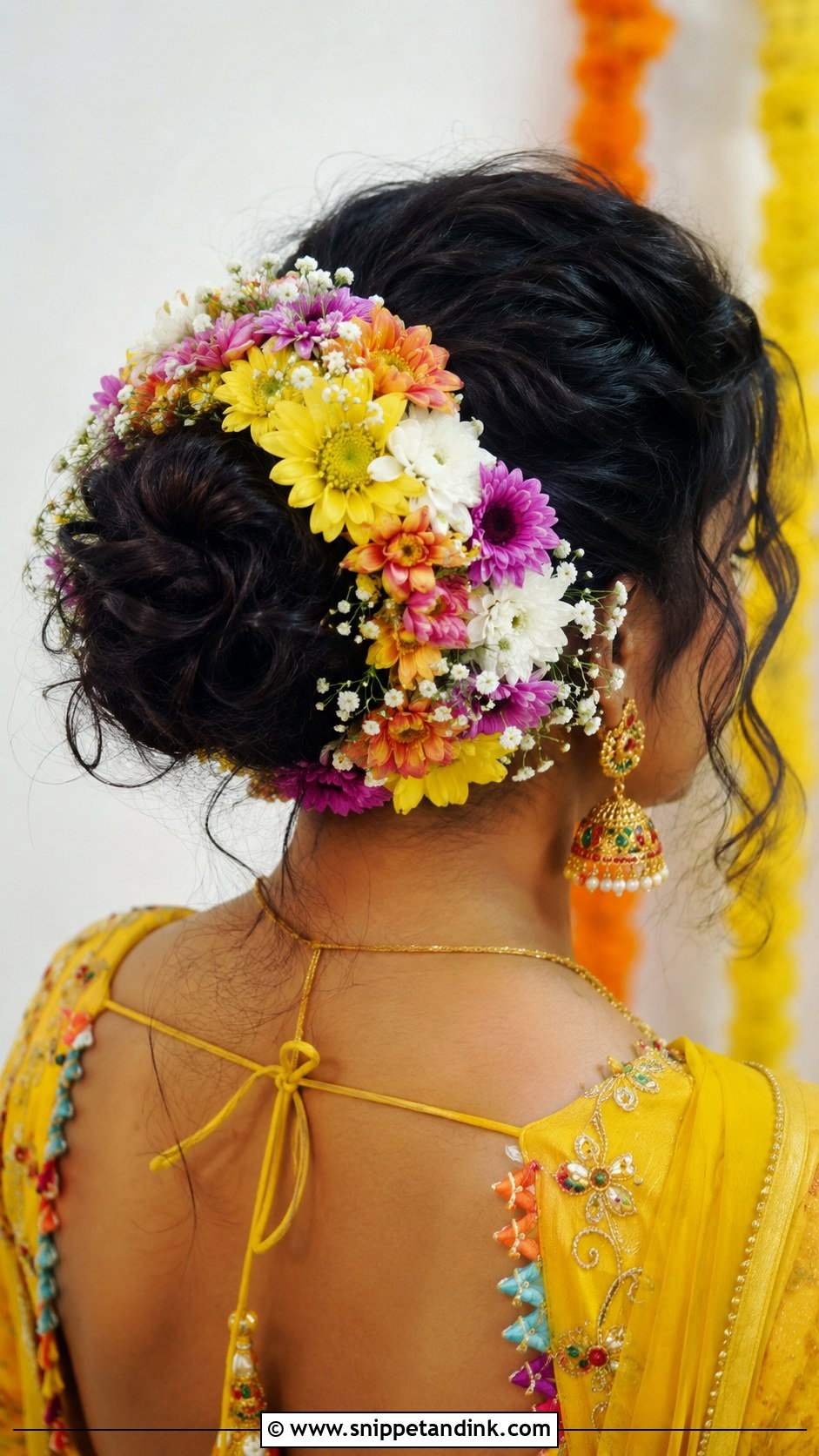
A rainbow of blooms around a sleek or messy bun is the cheerful option on this list. The color mix pops against dark hair and suits haldi, mehndi and sangeet functions where nobody expects anything solemn. You can pick flowers that echo your outfit. One practical note: if this is for the haldi, plan on the flowers being ruined, since turmeric paste stains petals instantly. I use cheaper, sturdier blooms or silk flowers for that function and save the good ones for later.

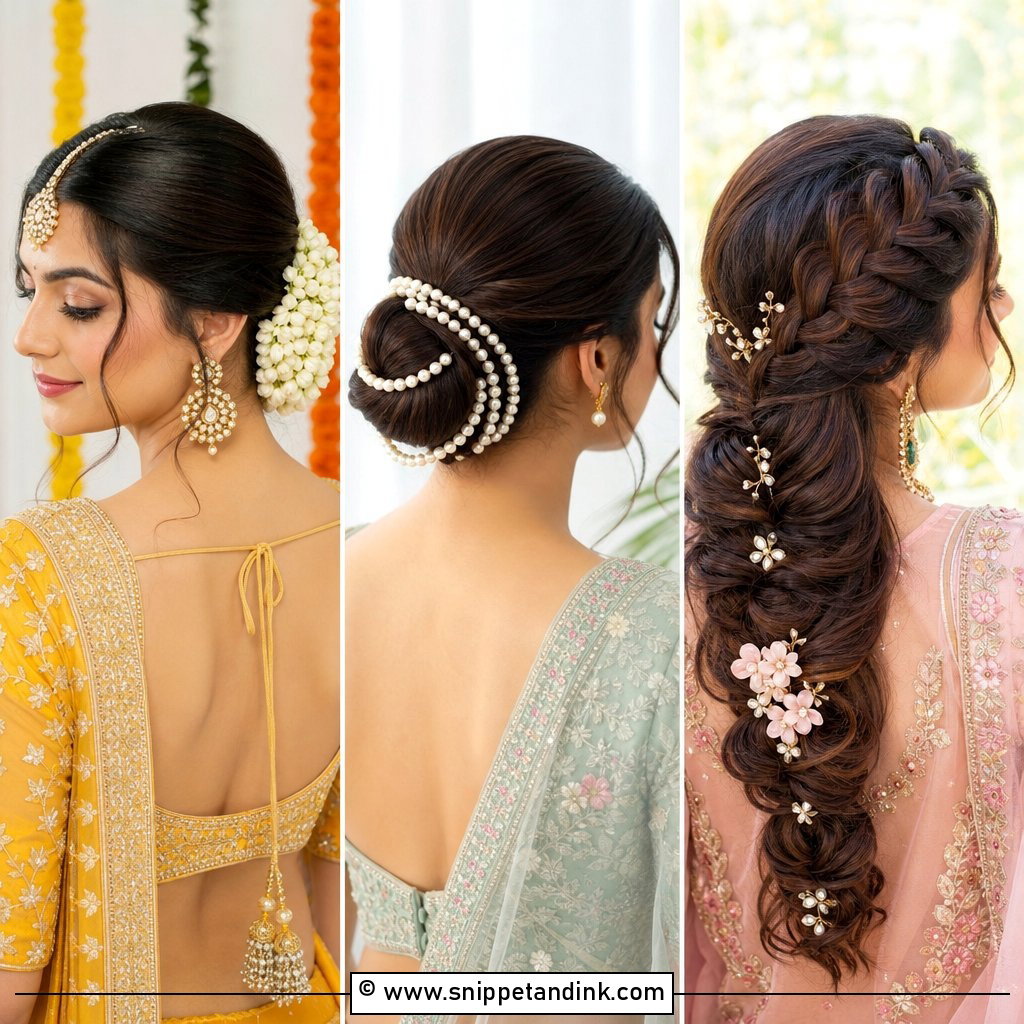
20. Textured Bun With Soft Waves
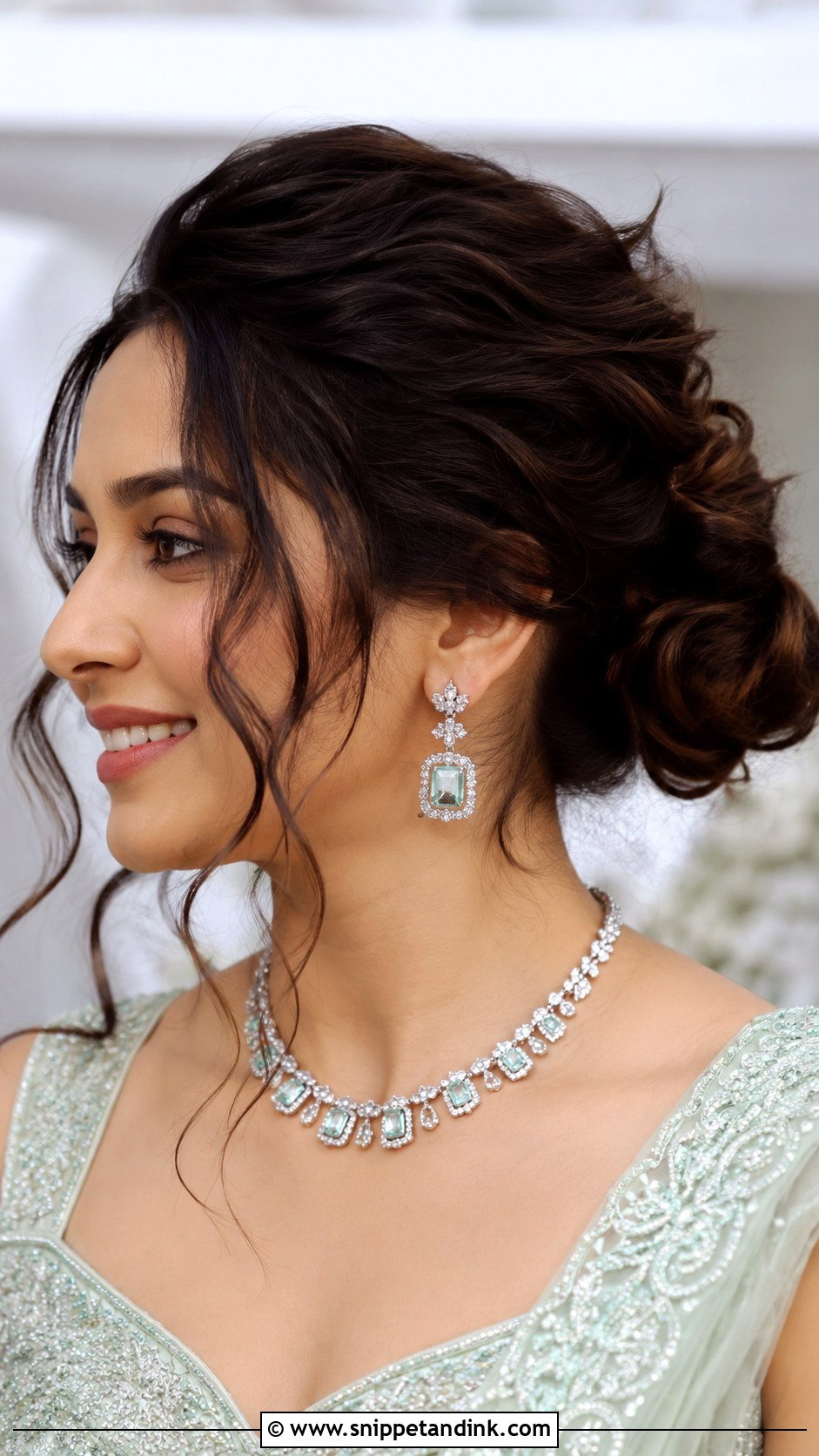
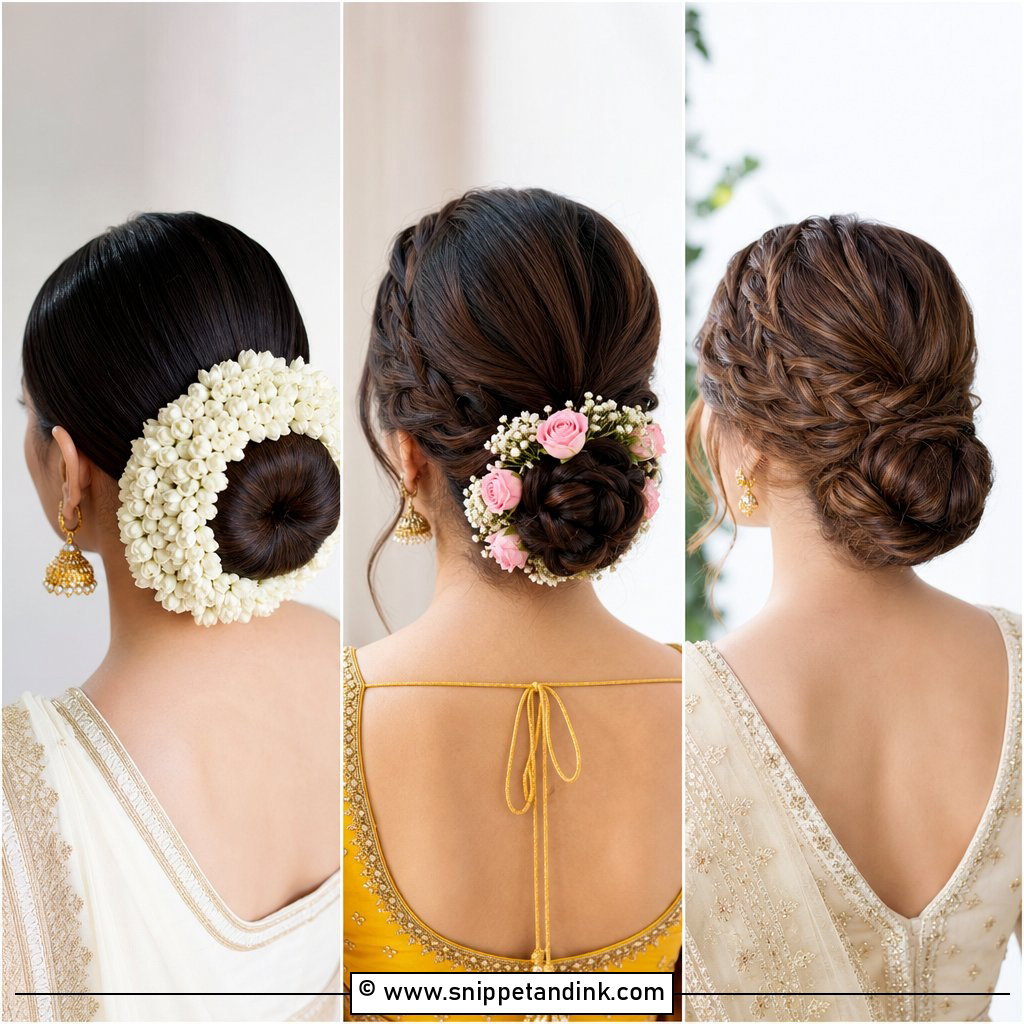
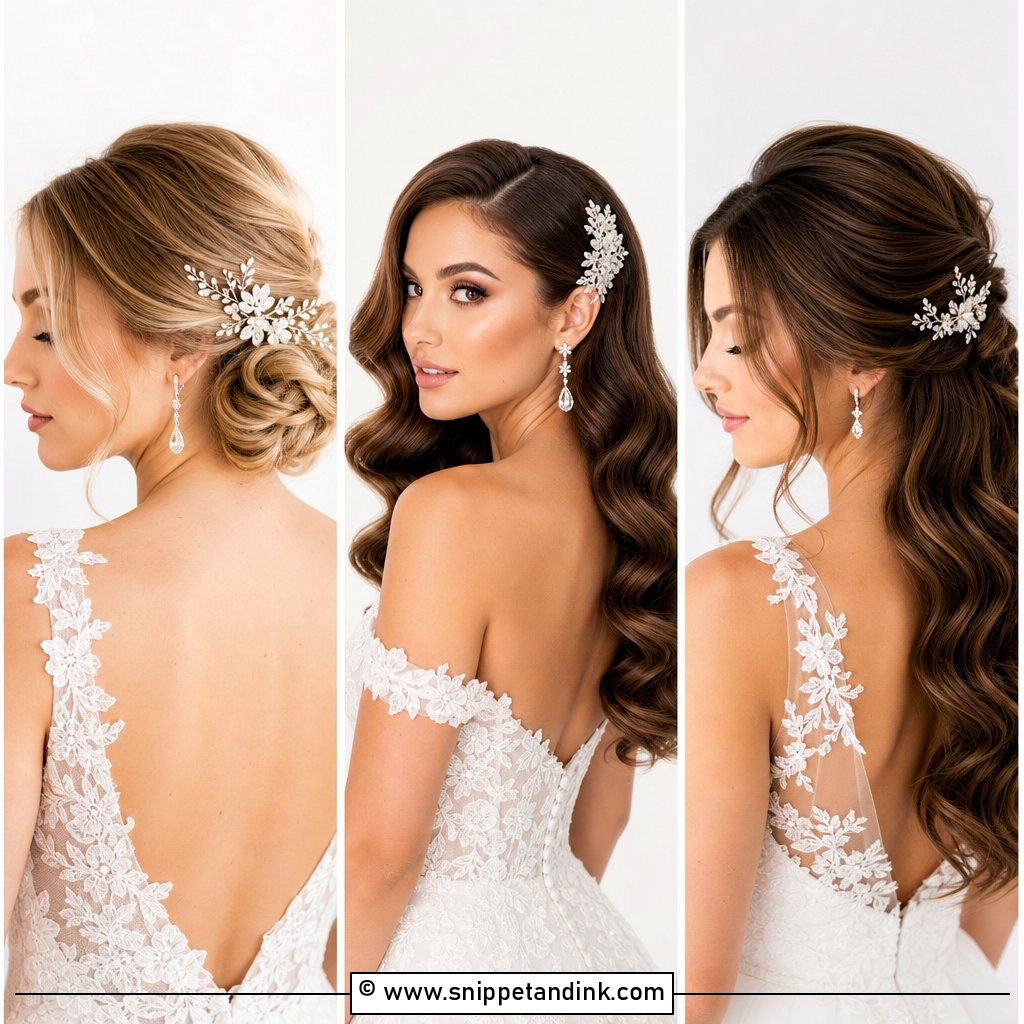
The hair is waved first and then gathered loosely, so the texture runs right through the bun and into the face-framing tendrils. It adds volume and movement, which helps finer hair, and it suits lightweight outfits and dainty accessories at the reception or engagement. Waves are the part that fails, not the bun. I set them with a firm-hold mousse on damp hair before drying, since a curling iron alone on freshly washed, silky hair usually drops out before dinner.
21. Bun With Pearl Strand Accents
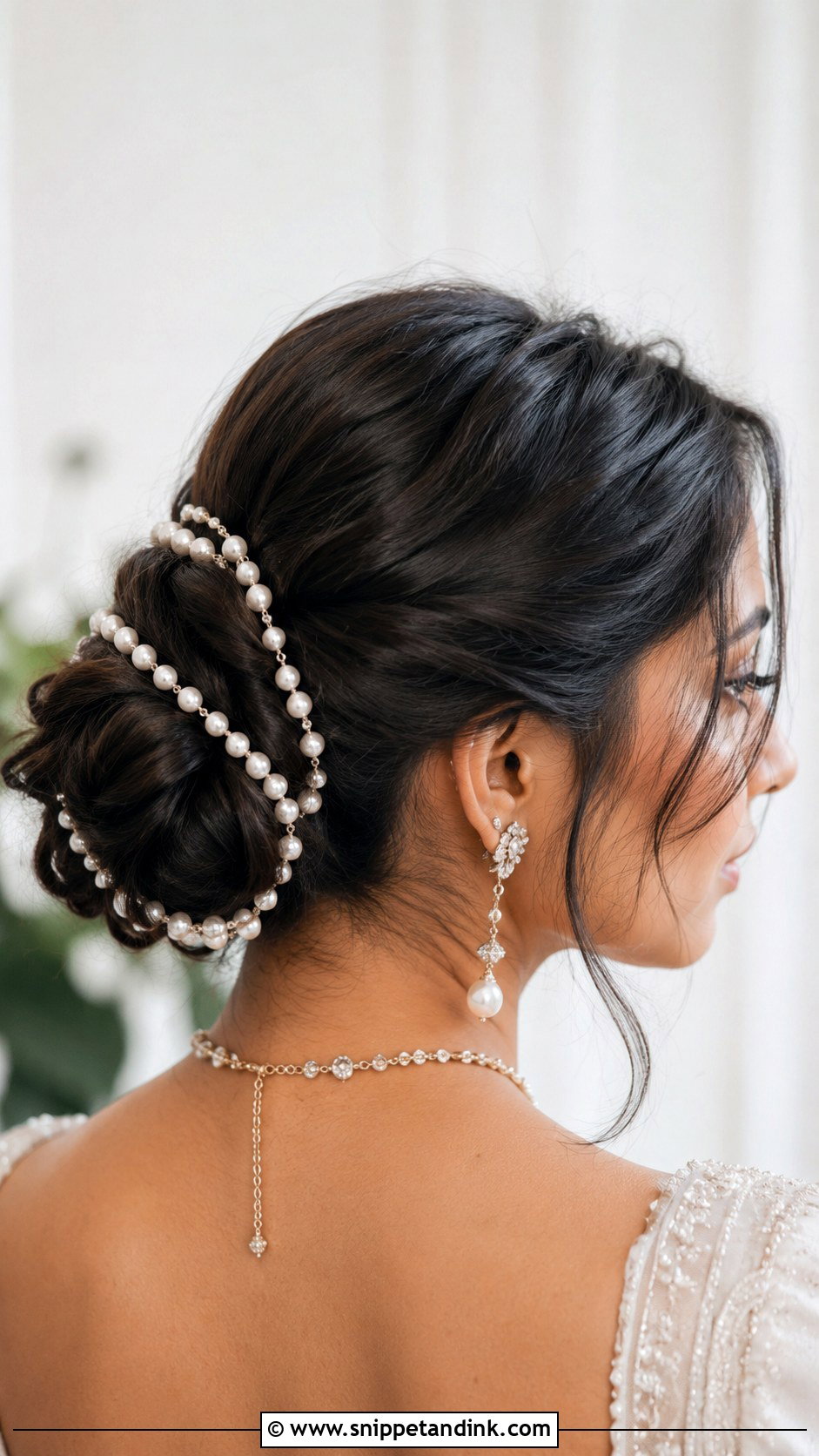
Strings of pearls are woven through or draped around the bun, and they pick up a soft shimmer under any lighting. Traditional and contemporary outfits both work, and it is a good fit for reception and engagement ceremonies. Real or good faux pearl strands are heavier than they look, so I thread them onto a long hairpin at each end and loop them under sections of the bun rather than wrapping them on the outside, where they slide down within an hour. Keep a little space between strands; packed too tightly they read as one white band in photos.
22. High Bun With Volume
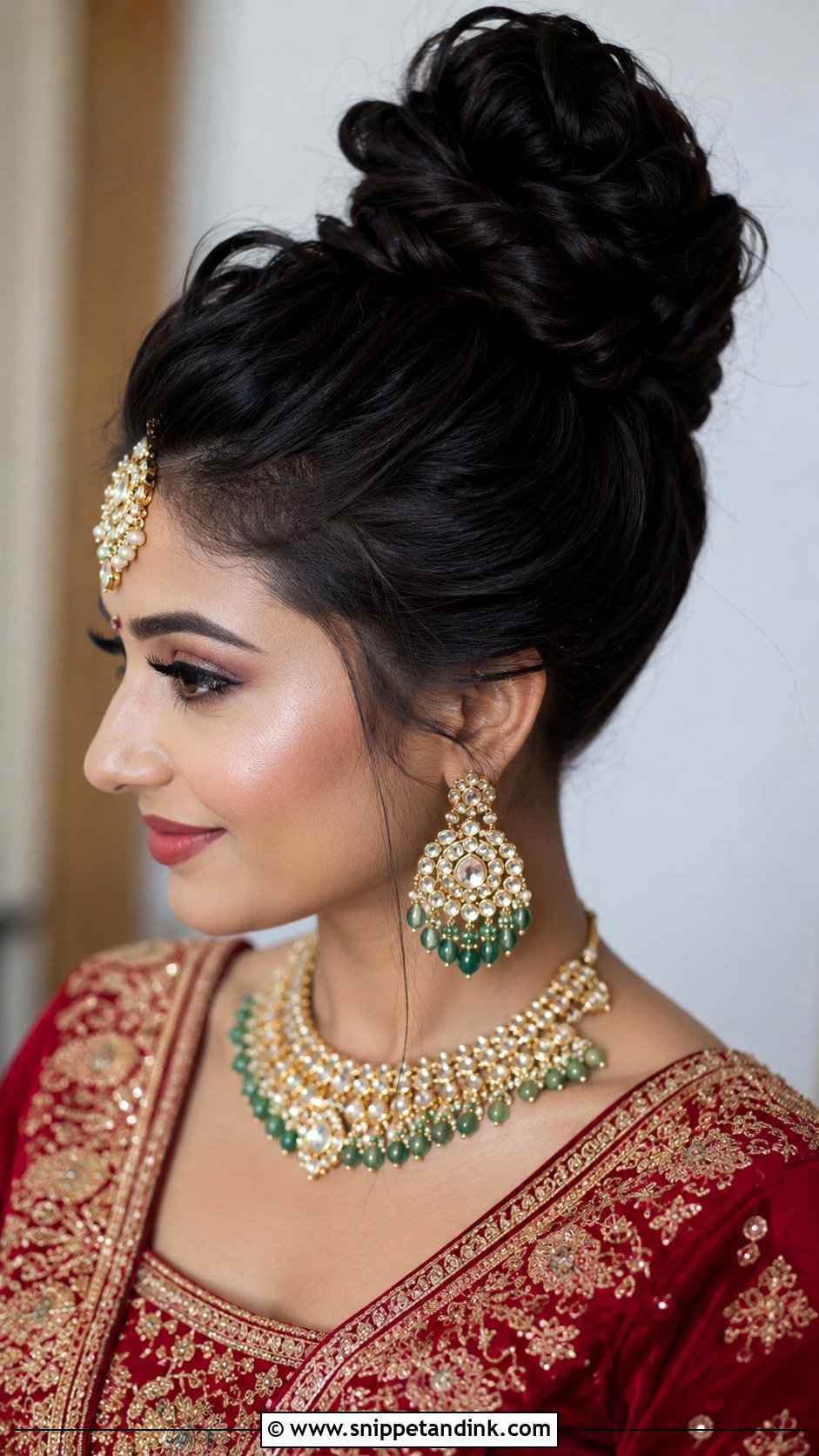
Gathering the hair high at the crown into a big knot lengthens the neck and gives the outline real presence. Bold earrings and ornate necklaces look stronger with nothing at the nape to compete, and round or heart-shaped faces gain height from it. Flowers or jeweled pins finish it off. It is my reception suggestion more than a ceremony one, because a high bun and a dupatta pinned on the head fight each other. If you do want it under a dupatta, I place the bun slightly back from the crown so the fabric drapes over it instead of perching on top.
23. Bun With Gota Patti or Embellished Flowers
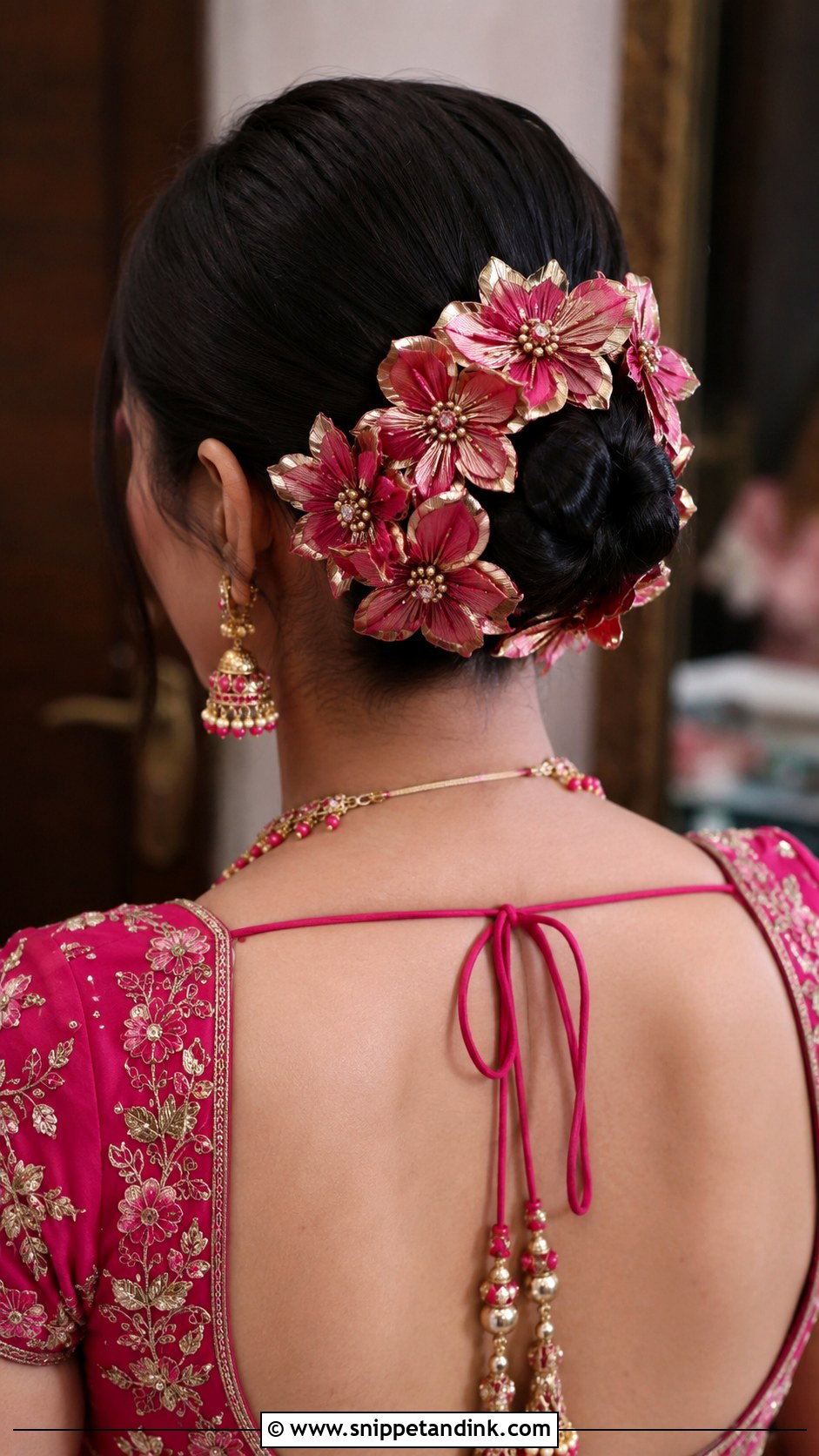
Gota patti or fabric flowers give shine and color without any risk of wilting. The bun is decorated with metallic ribbon blooms or embellished accents in whatever shade matches the outfit. They are ideal for sangeet and mehndi functions, and they last through long, hot days in a way fresh flowers never will. Fabric pieces are light, but they come on rigid backings, so I bend them slightly to follow the curve of the bun before pinning. Flat pieces on a round bun stick out at the edges, and that shows in every side profile.
24. Romantic Updo Bun With Tendrils
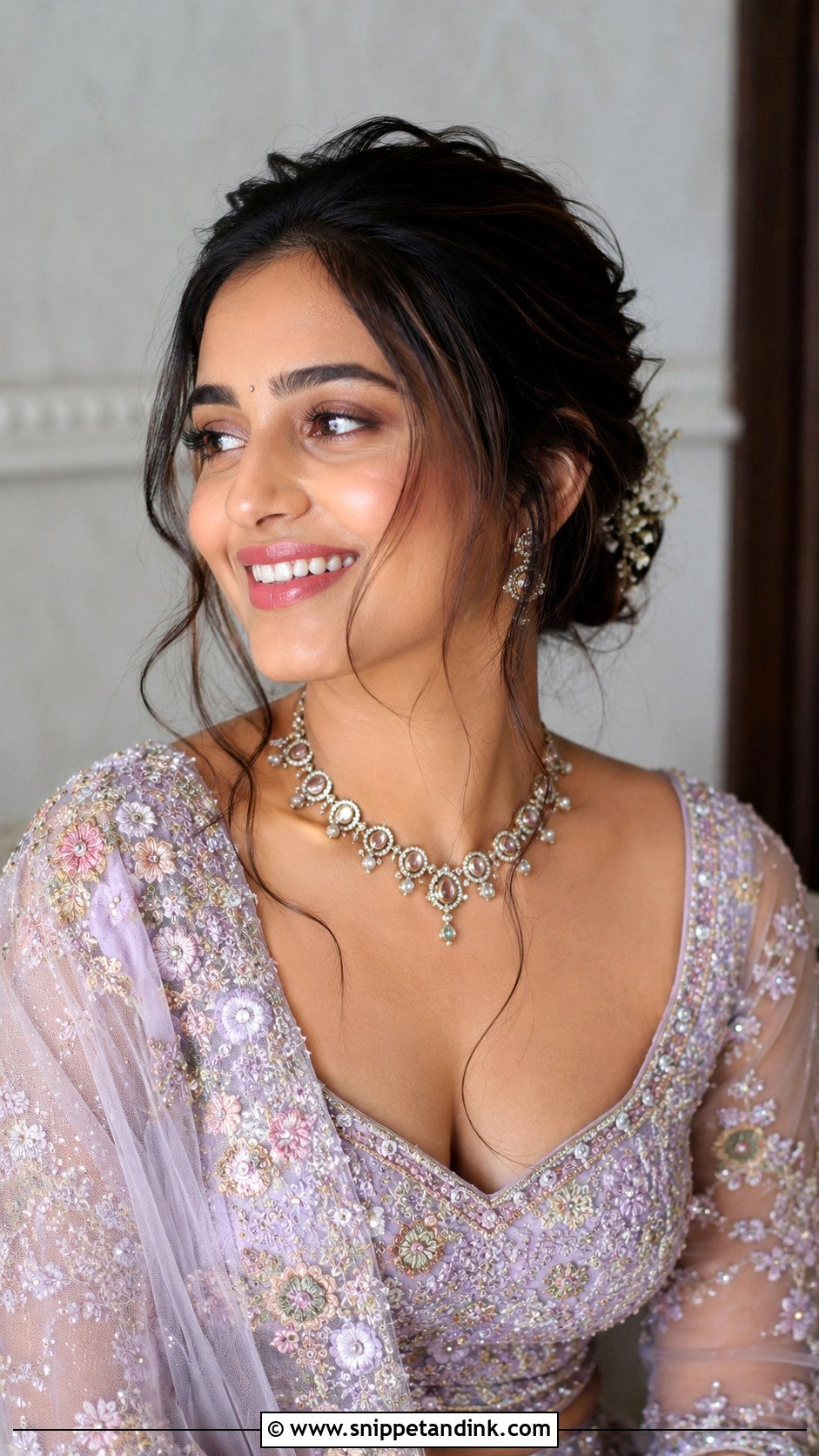
Most of the hair is gathered into a gentle updo while soft pieces fall loose around the face. The tendrils soften the overall outline and suit pastel and floral outfits at engagements, mehndi and receptions. Small flowers or delicate pins finish it. Tendrils need restraint. I leave two or three on each side at most and cut them in at different lengths, since a fringe of identical strands looks like hair that has fallen out rather than hair that was left out on purpose.
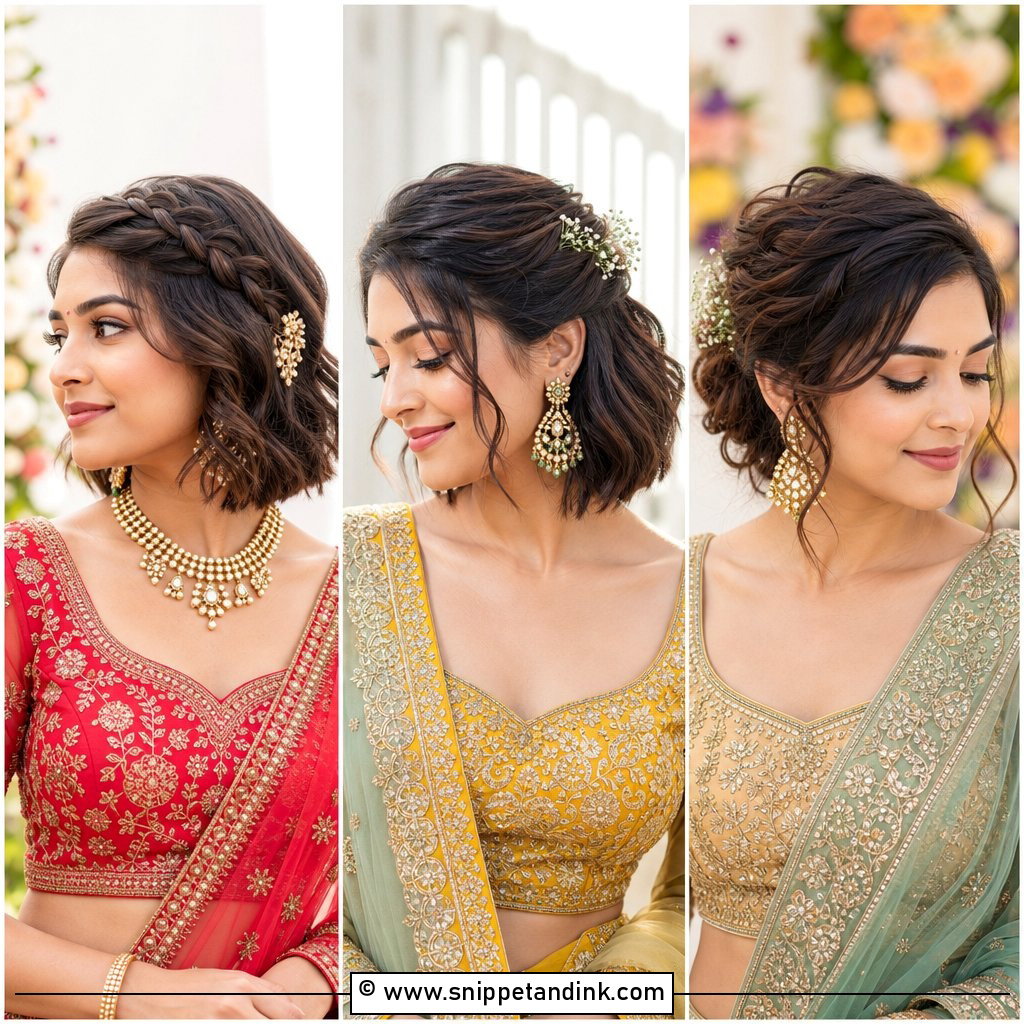

25. Low Bun With Layered Two Tone Flowers
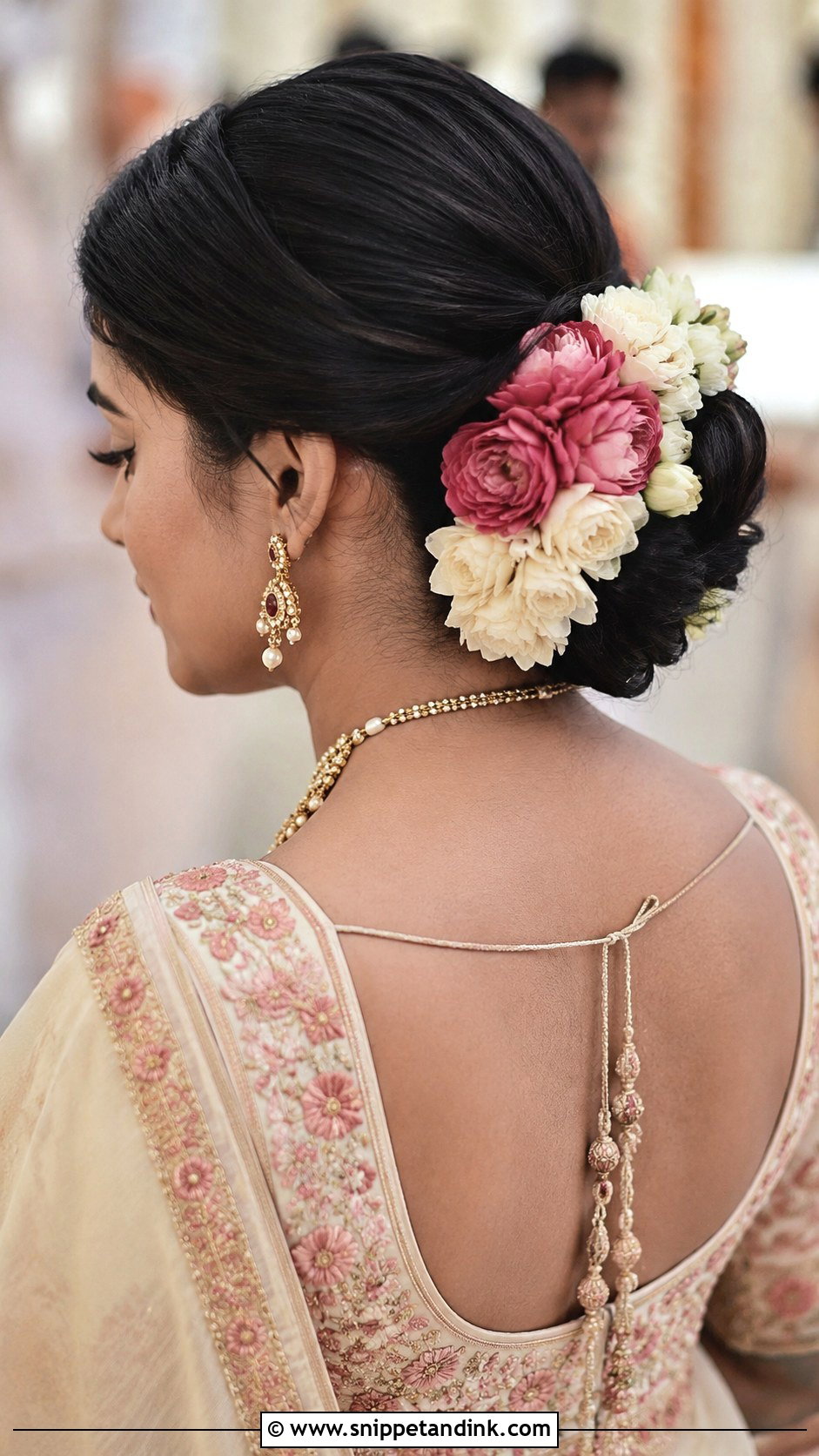
Blooms in two contrasting colors are layered around a low bun, giving it depth that a single shade cannot. It works for daytime and evening ceremonies, and the colors can pick up your outfit or jewelry. I usually put the darker shade on the bottom layer and the lighter one on top, because the lighter color catches the light and makes the bun look fuller. Agree the exact flowers with your florist and stylist together, so they arrive in sizes that actually fit the bun.
Fresh Jasmine, Silk Roses and the Heat of a Long Muhurat
Flowers appear in more than half of these buns, and they behave very differently from pins or jewelry. Jasmine buds open and then brown as they warm up, roses bruise where pins pass through the stem, and anything fresh starts to droop under hot mandap lighting or an outdoor afternoon sun.
My routine is simple. Fresh flowers arrive the same morning, stay wrapped in a damp cloth in a cool room, and go on last, after the hair is fully set and sprayed, because hairspray stains petals and speeds up wilting. For a day with several functions I often split the flowers: fresh for the ceremony, then silk, gota or pearl pieces for the reception, which also saves the bride from the scent of tired jasmine by midnight.
How Your Hair Length Changes Which Bun Will Work
Not every bun here suits every head of hair, and it helps to know which ones are realistic before the trial.
- Shoulder length or shorter: the sleek low bun, chignon and side-swept bun need a clip-in hairpiece or a donut. Braided and rope styles use up even more length.
- Fine or thin hair: donut buns, puff buns and textured styles with curls give the most fullness. Very sleek styles show every gap.
- Very thick or curly hair: braided buns and chignons hold beautifully. A super sleek finish takes longer to blow out and may frizz in humidity, so plan for extra time in the chair.
- Layered cuts: expect a few short ends near the nape; textured or messy buns hide them far better than a polished knot.
A Bun Is Only as Strong as What Holds It
The right bun depends on your outfit, the ceremony, and how many hours you need it to last. A sleek knot gives jewelry the room it needs; a soft, textured bun keeps things relaxed; and gajras, roses, pearl pins and a maang tikka turn a plain knot into bridal hair. Shorter hair is not a barrier, since clip-in pieces can create almost any of these. Book a full trial with your actual dupatta and jewelry, wear it for a few hours afterward, and you’ll know exactly how it will feel on the day.
You'll Like These Ideas:



Leave a Reply