
The bridal hair I’m asked for most these days is polished but soft, the kind that looks styled without looking lacquered. It has to sit well with a veil, pearls or flowers, a clean gown or lace sleeves, and often a second reception dress too. Low bun, glossy waves, braided updo, half up: any of them can be right, as long as it flatters your face, holds through the photos and still feels like you. Below are fifteen looks I return to again and again, from classic to textured, with notes on how each one is built and who it suits.
Twelve Hours Later: Which of These Styles Hold Up
Every look here can be done well. They just age differently over a long day, and I’d rather you know that before you fall for one.
The sturdiest: sleek buns, chignons, French twists and braided updos. Once they’re pinned into a solid base, they barely move. The trade-off is that they show every flyaway, so they need careful finishing and a little gloss to avoid looking dry under flash.
The middle ground: half-up styles, ponytails and loose updos. The pinned part stays put while the loose lengths relax, so curls drop into softer bends by the reception. Most brides like that version better anyway.
The ones that change most: Hollywood waves and side-swept curls worn fully down. Heat, humidity, hugs and a veil brushing against them all loosen the pattern. Choose them if you love them, but plan a mid-day refresh and accept that the evening version will be looser.
Natural curls sit in their own category. Set properly, defined curls often hold well, though humidity can expand them. Ask your stylist how your pattern behaves in the weather you’re expecting.
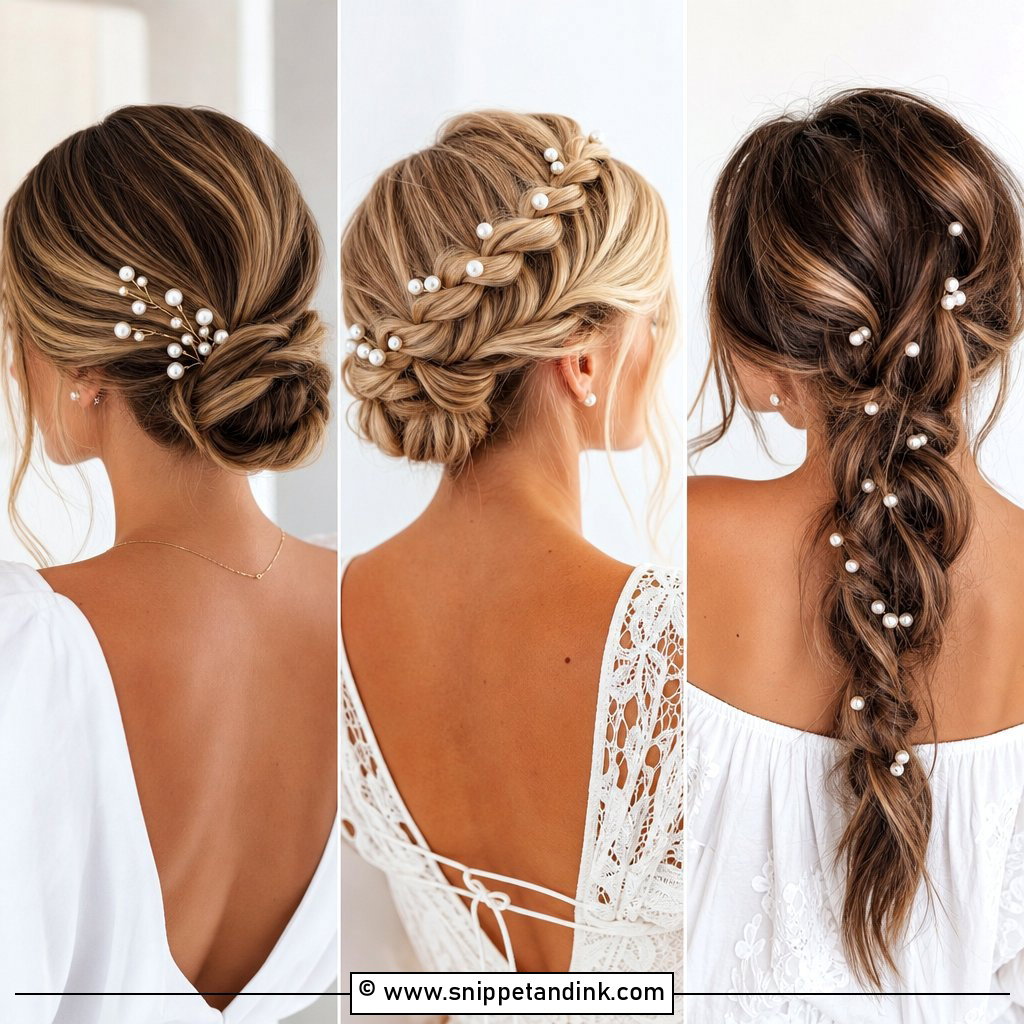
1. Bridal Low Bun
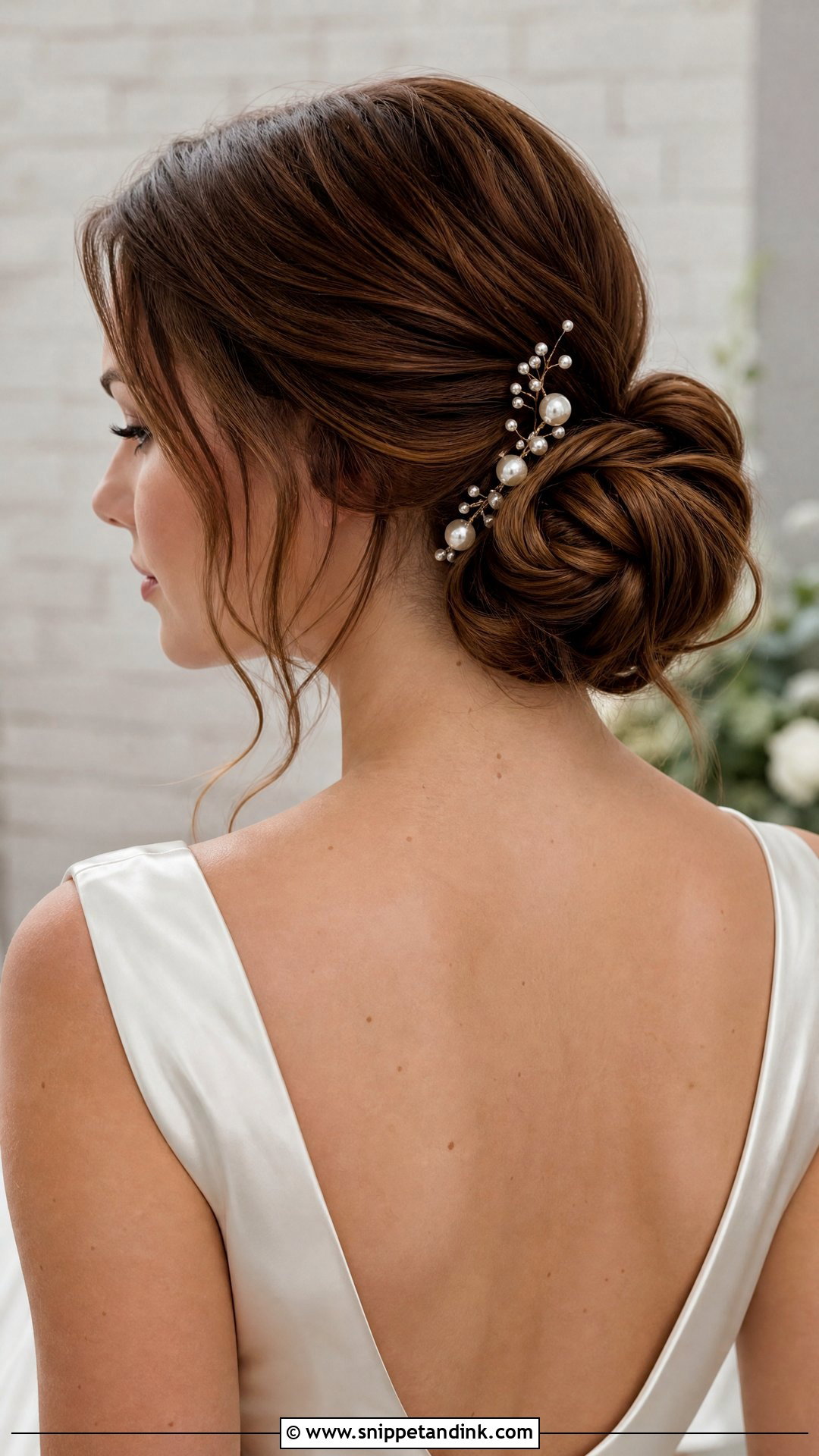
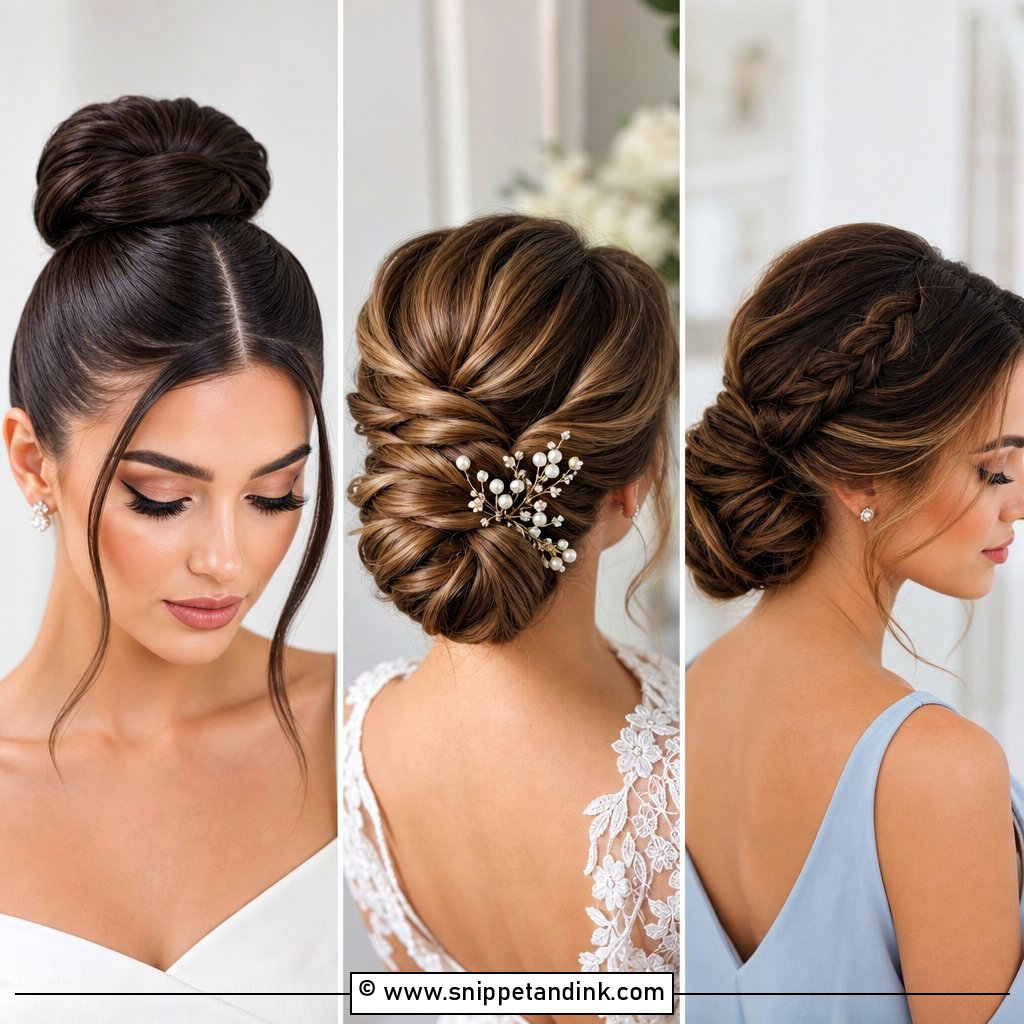
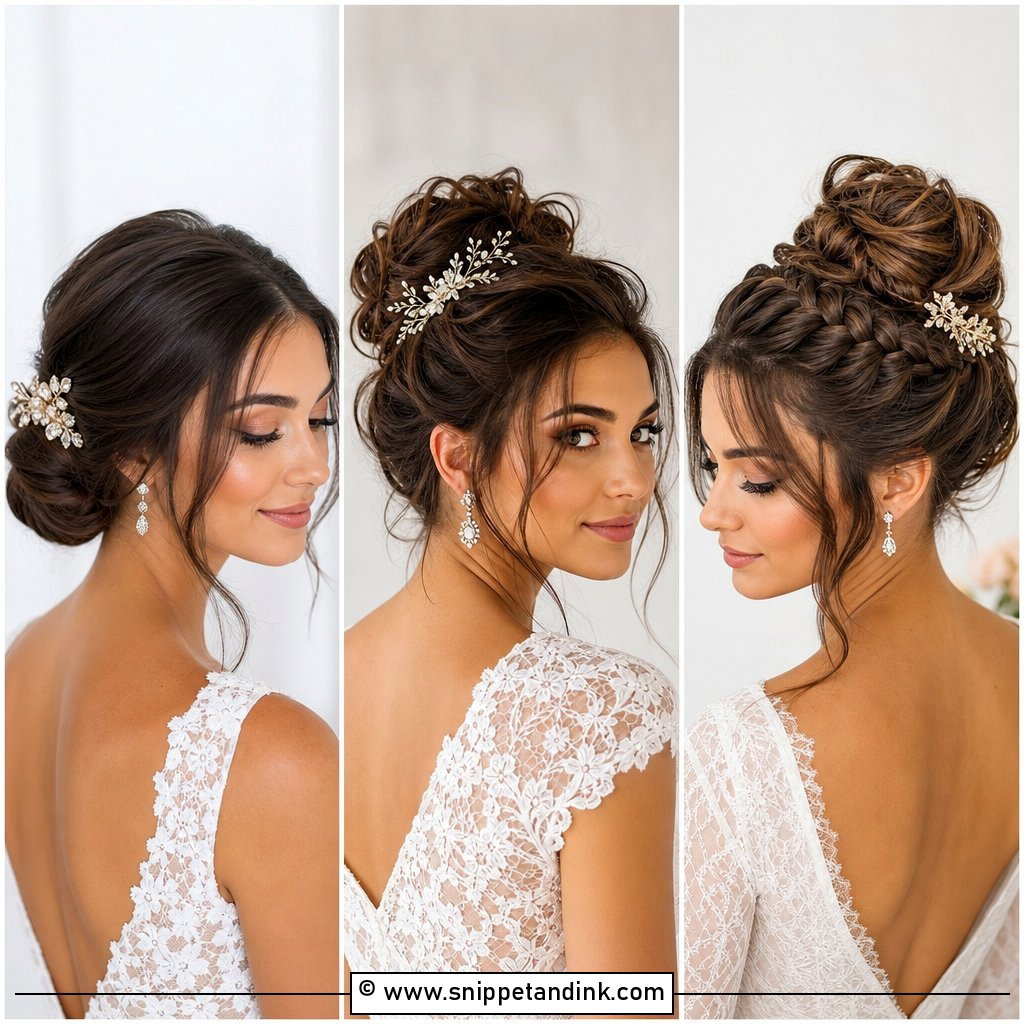
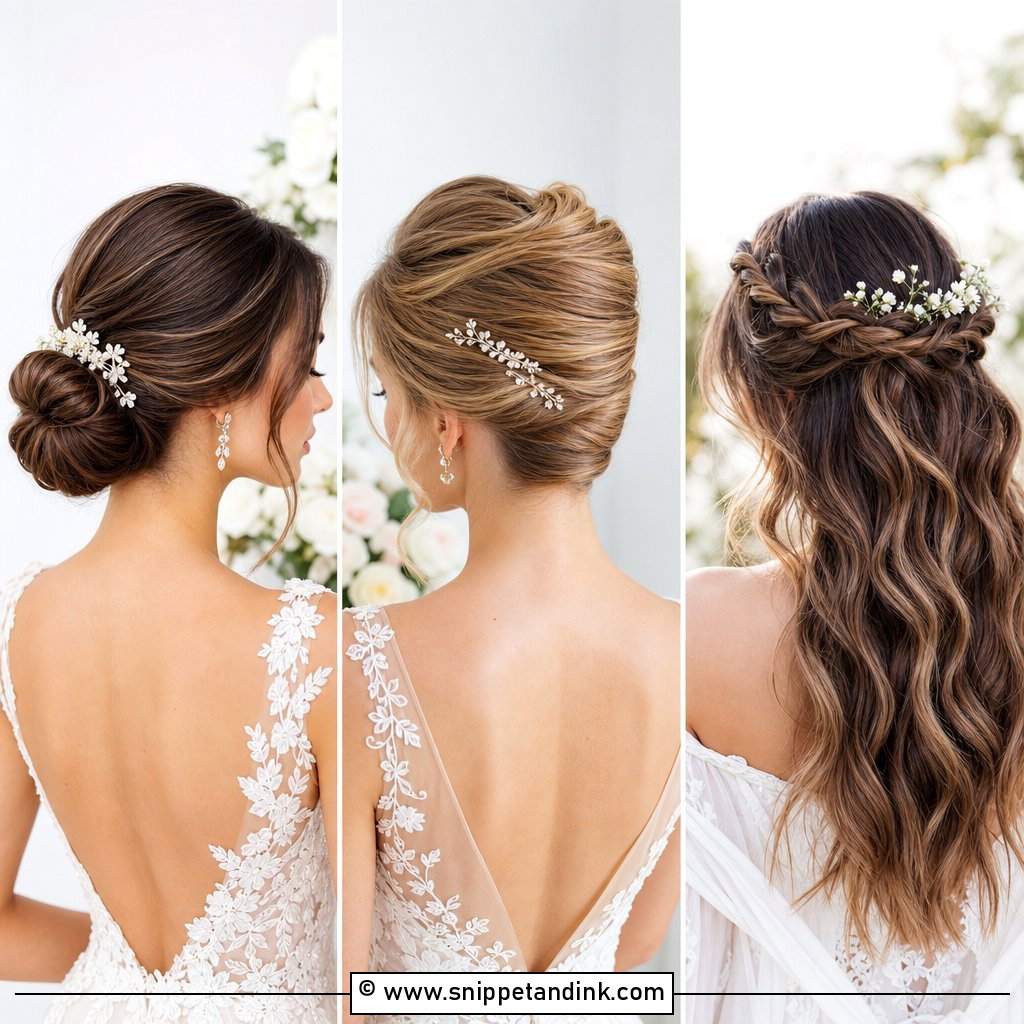
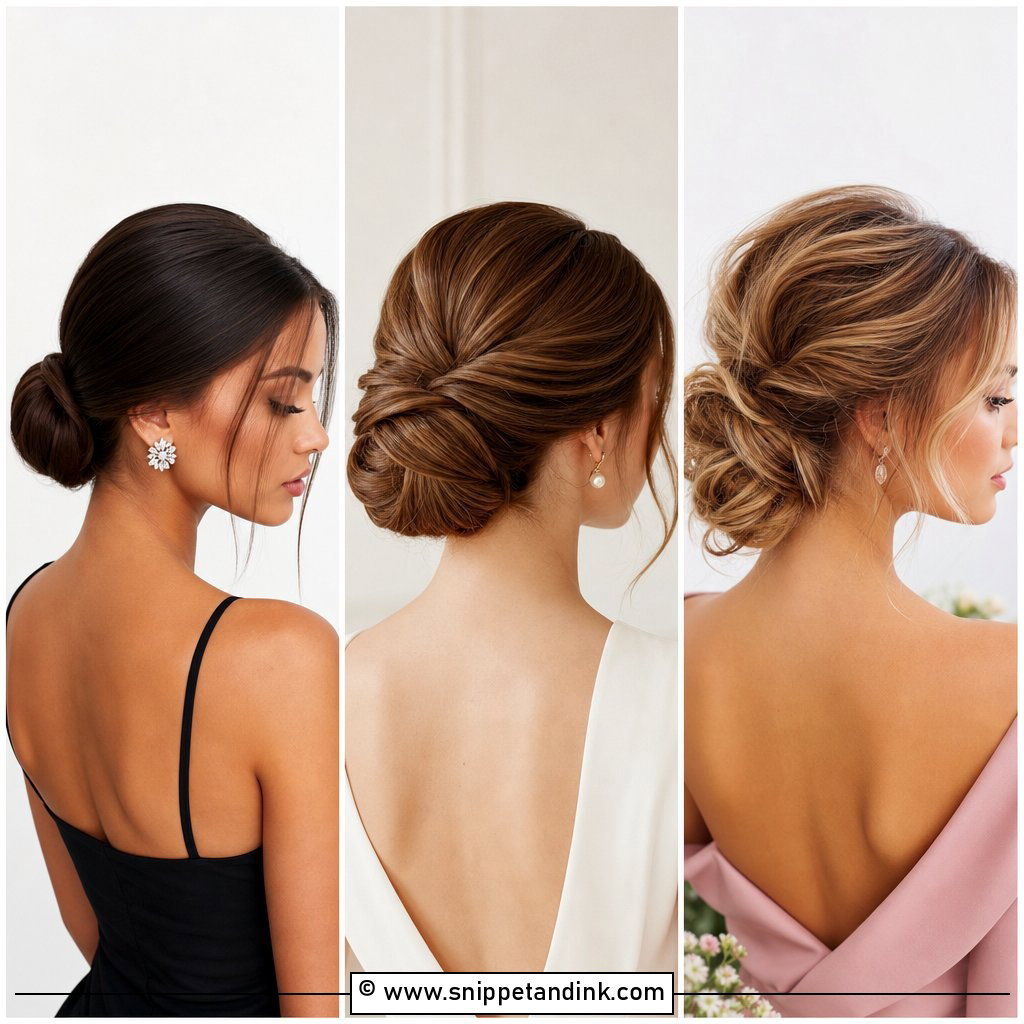
If I had to choose one style that looks right from every angle, it would be the low bun. It sits close to the nape, which leaves the neckline clear for strapless, square, high-neck and lace gowns, and it gives a veil comb or pearl pins an easy home. I prep with texture spray first so the pins grip, then decide on finish: a little crown volume reads romantic, a smoother shape reads modern. Leave out one or two face-framing pieces at most. More than that starts to look like the bun is coming loose.
2. Bridal Chignon
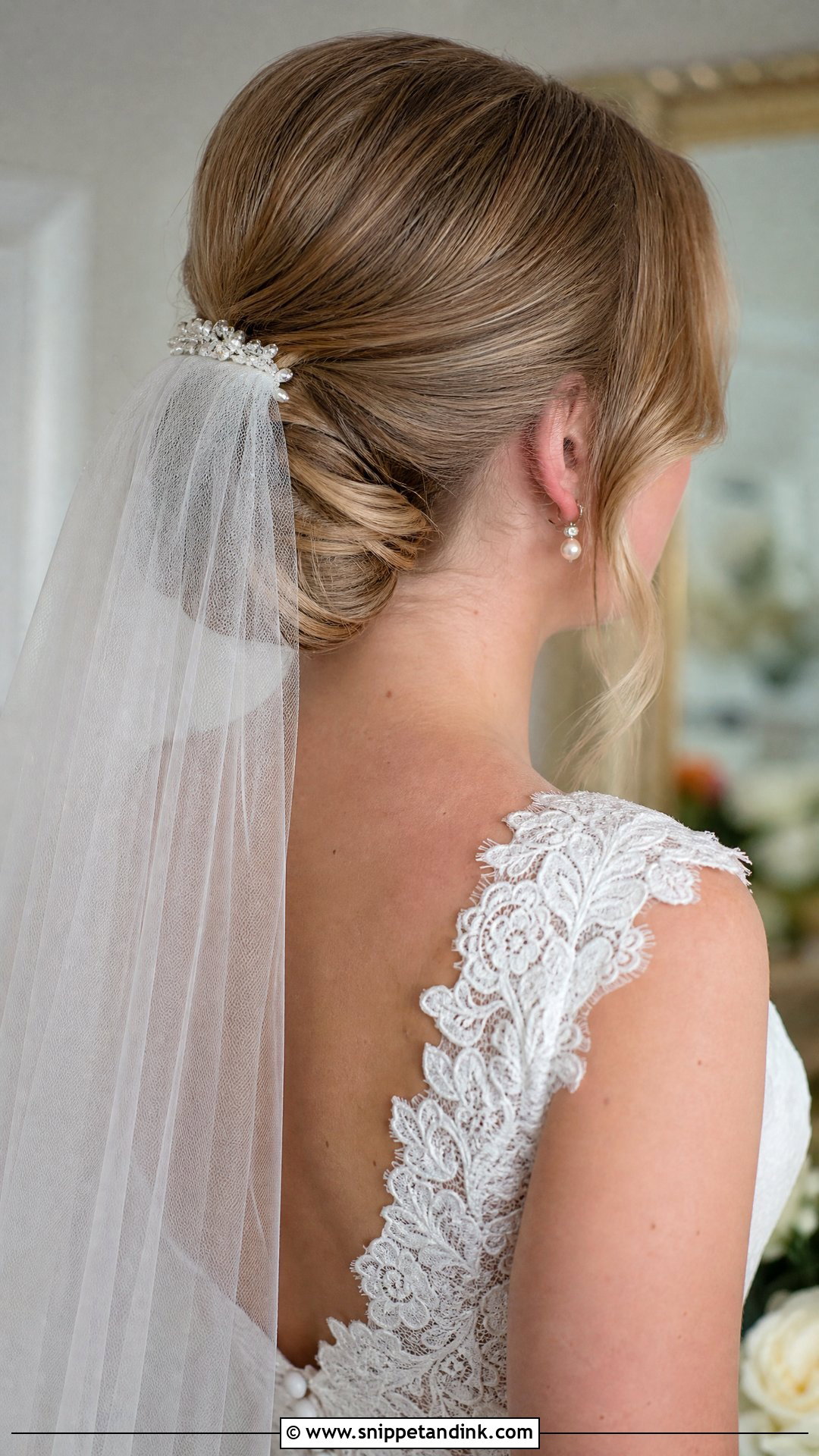
Where a basic bun is one round shape, a chignon is built from twists and tucks, so it has detail that shows up in close-up portraits. It can sit low at the nape, slightly off to one side or dead center. Medium to long hair suits it best. With fine hair I’ll use a small padding piece or a few clip-in wefts underneath so the shape doesn’t look thin, and you’d never see them. A veil comb, a few small pins or tiny flowers are all it needs.
3. Bridal Half Up Half Down
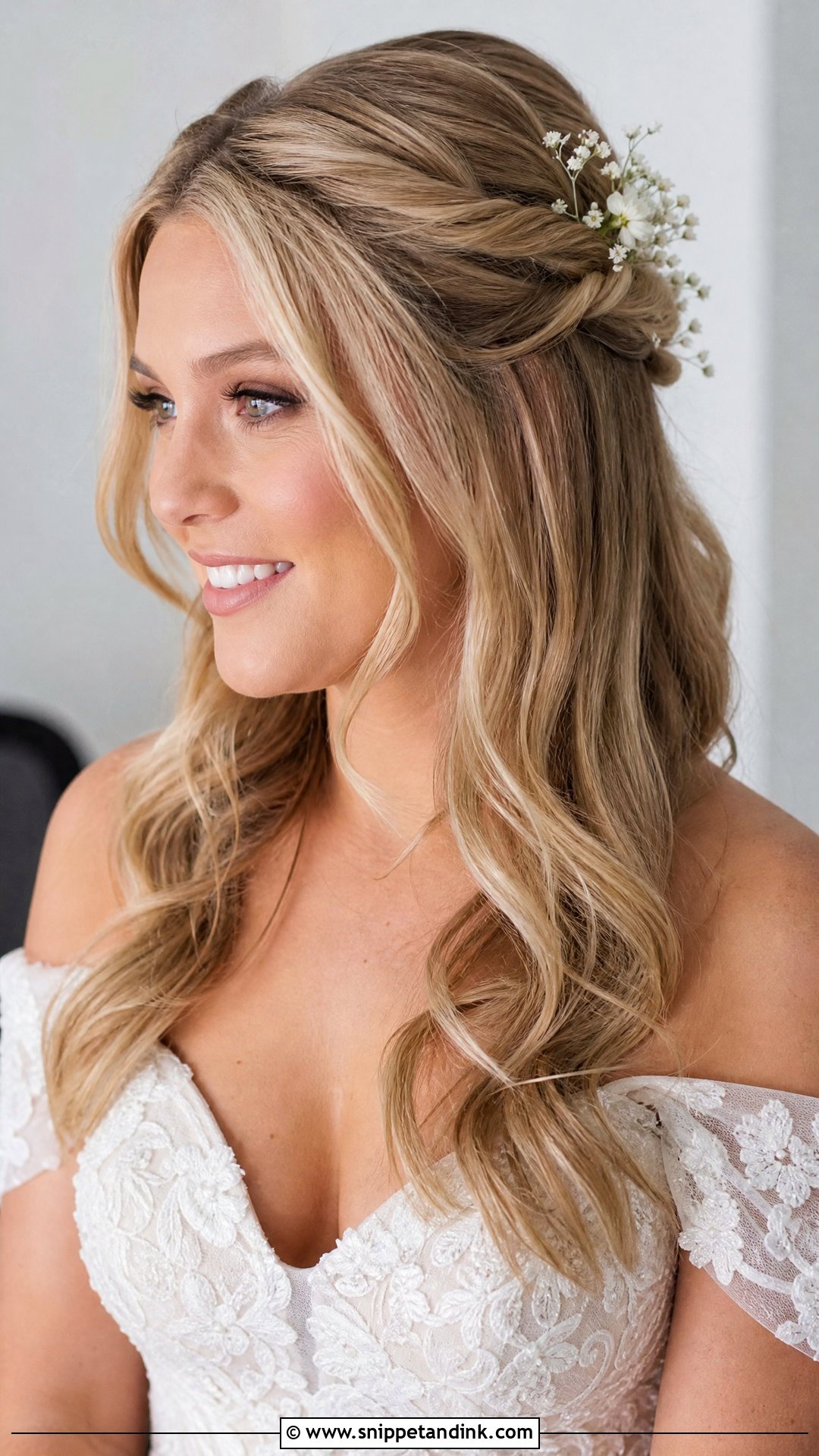
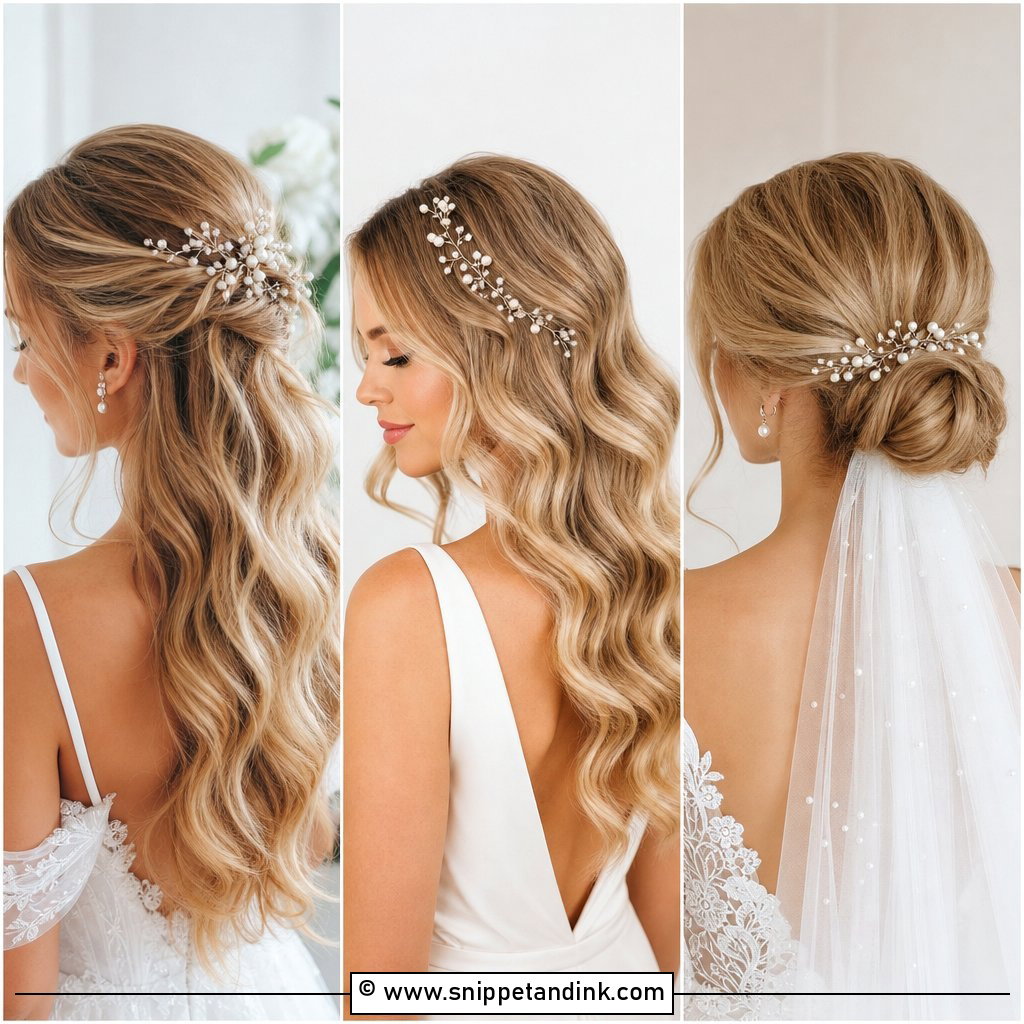
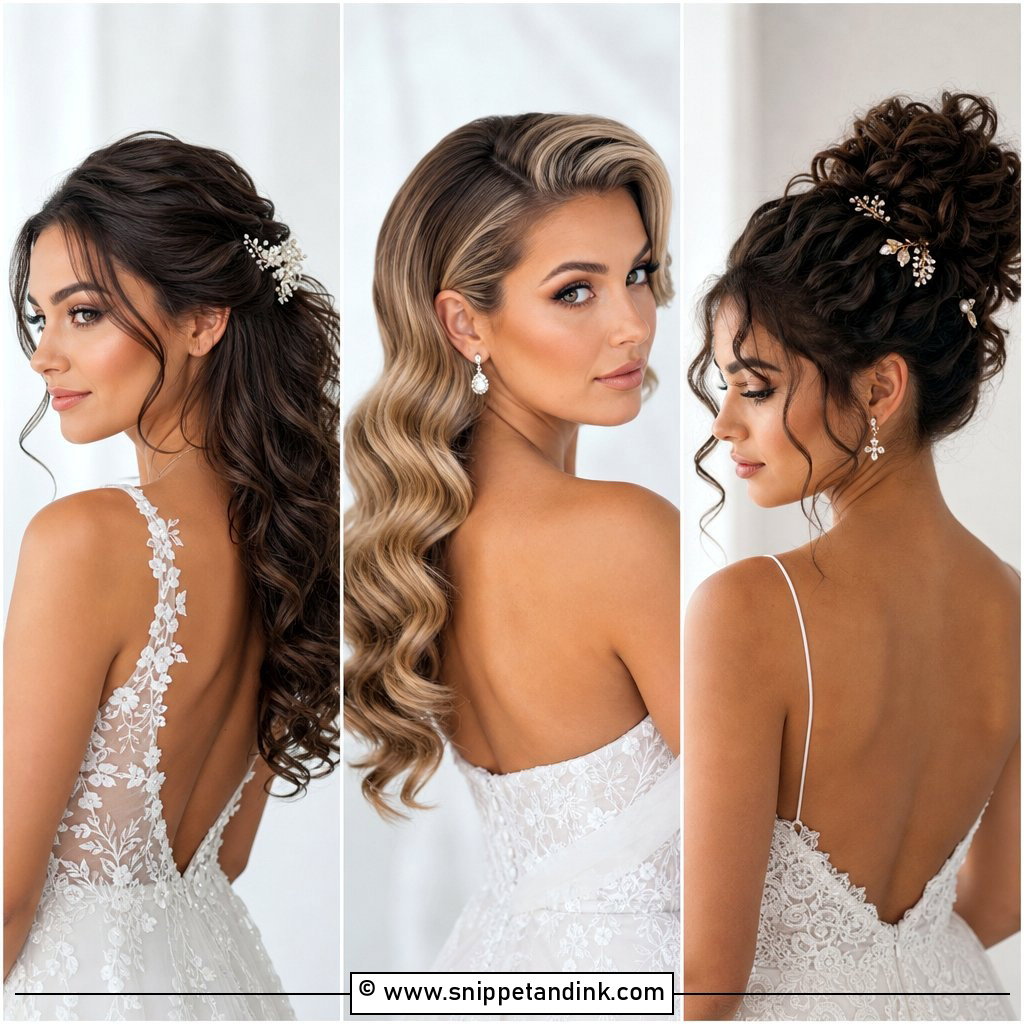
Half up keeps hair off your face while the lengths stay loose and moving. I like it with curled ends or polished bends through the mid-lengths, and it can lean relaxed for a beach or garden or more formal for a ballroom. The base matters: I tease the crown lightly before pinning so the lifted section doesn’t sit flat. A twisted crown, a small braid, a pearl clip or a floral pin then turns it bridal. It’s the easiest way to get volume at the top without committing to a full updo.
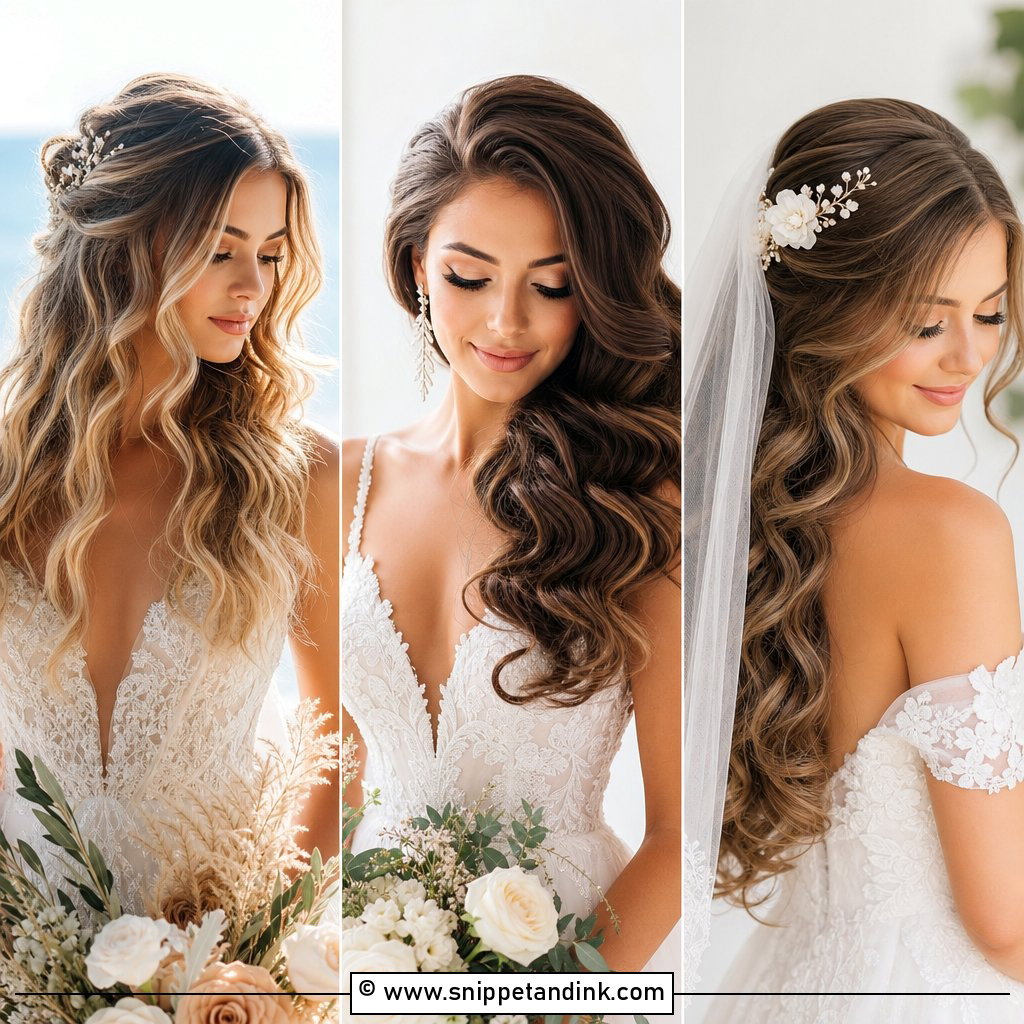
4. Bridal Hollywood Waves
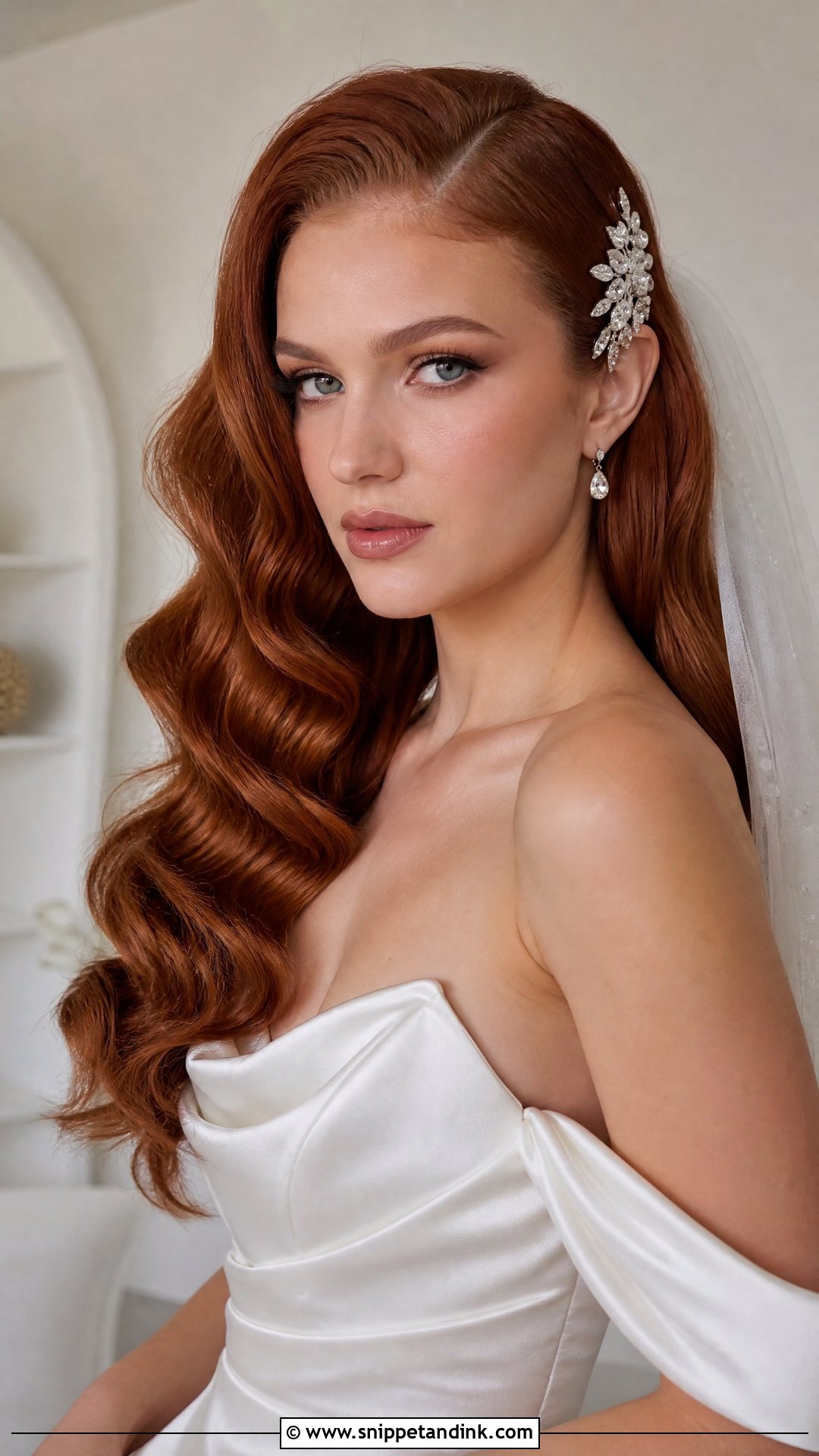
Hollywood waves are uniform: every curl set in the same direction, then brushed into one continuous S-shape. That’s what separates them from ordinary curls. I pin each curl to cool, brush it out with a boar bristle brush and clip the ridges for a few minutes to sharpen them. A side part, a fitted or satin dress and very few accessories let the hair do the work. Frizz shows instantly, so smoothing prep is non-negotiable. Medium to long hair suits it, and extensions can add fullness and length. Tucking one side behind the ear with a clip helps it hold.
5. Bridal Soft Waves
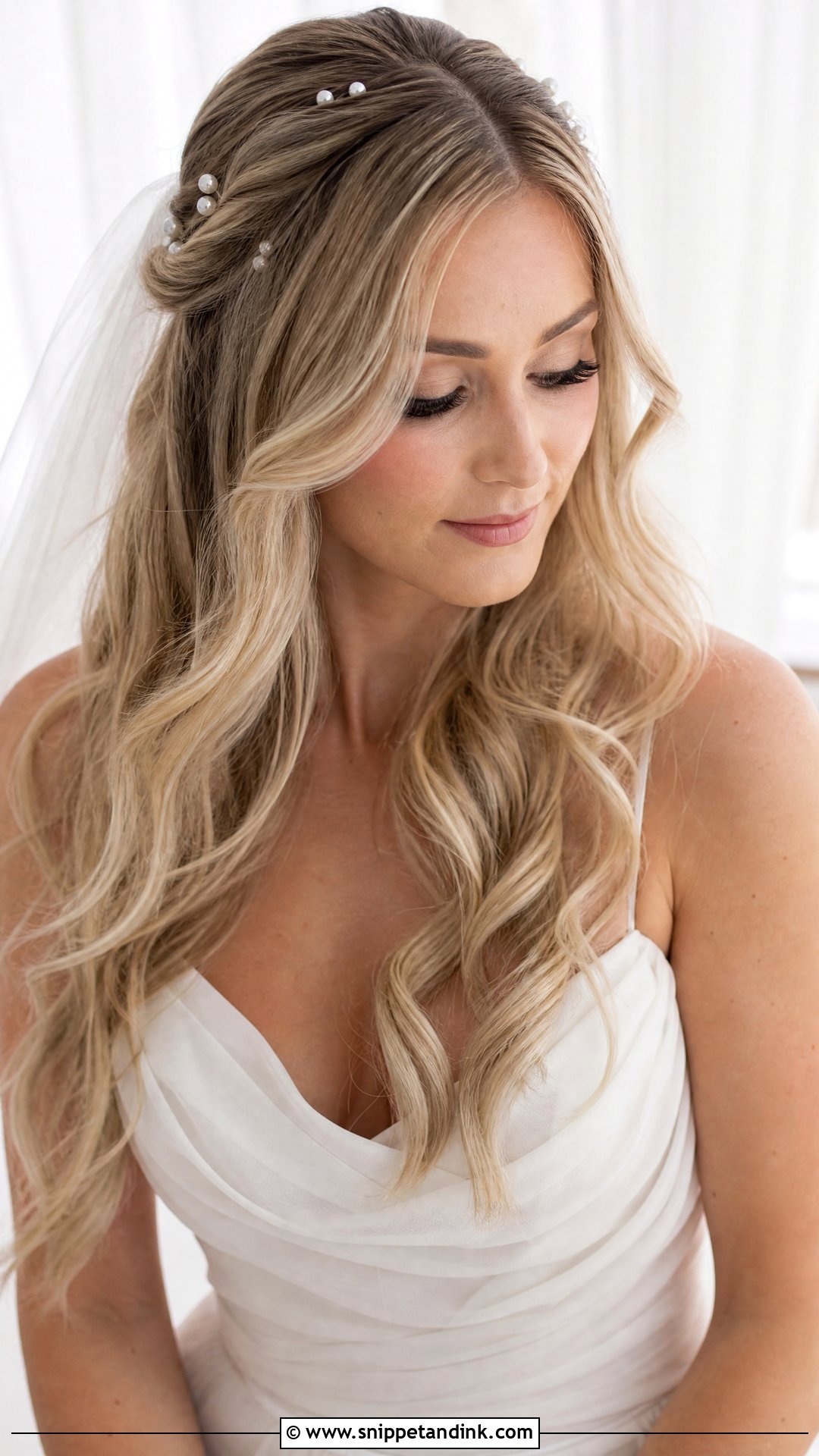
Soft waves are what I suggest when a bride wants movement but finds Hollywood waves too structured. They’re curled, then brushed out gently so the curls loosen into bends, and set with a flexible spray so they stay touchable. They work at almost any length and sit easily under a veil, a flower crown or pearl pins. A middle part looks current, and a side part gives more lift. If your hair is very straight and slippery, expect the waves to soften by evening; that’s normal, not a styling failure.
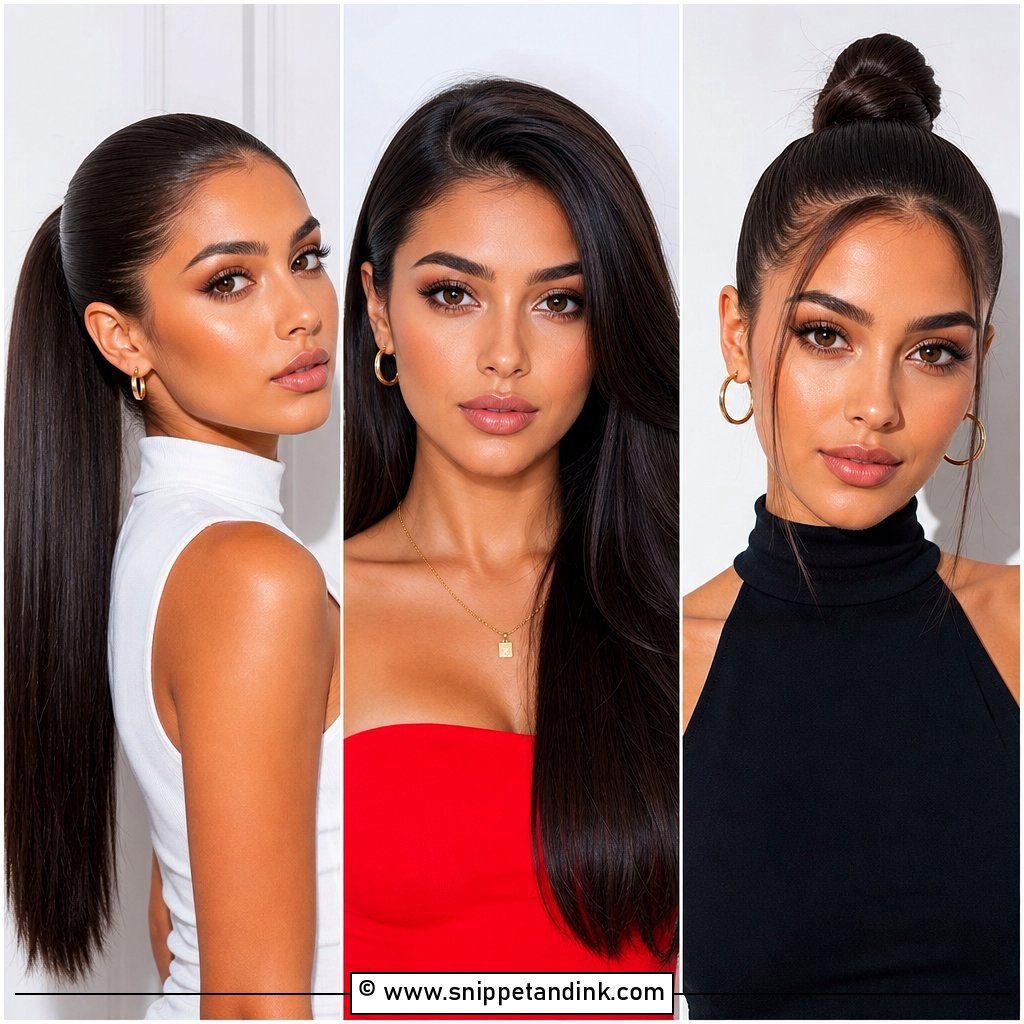
6. Bridal Sleek Bun
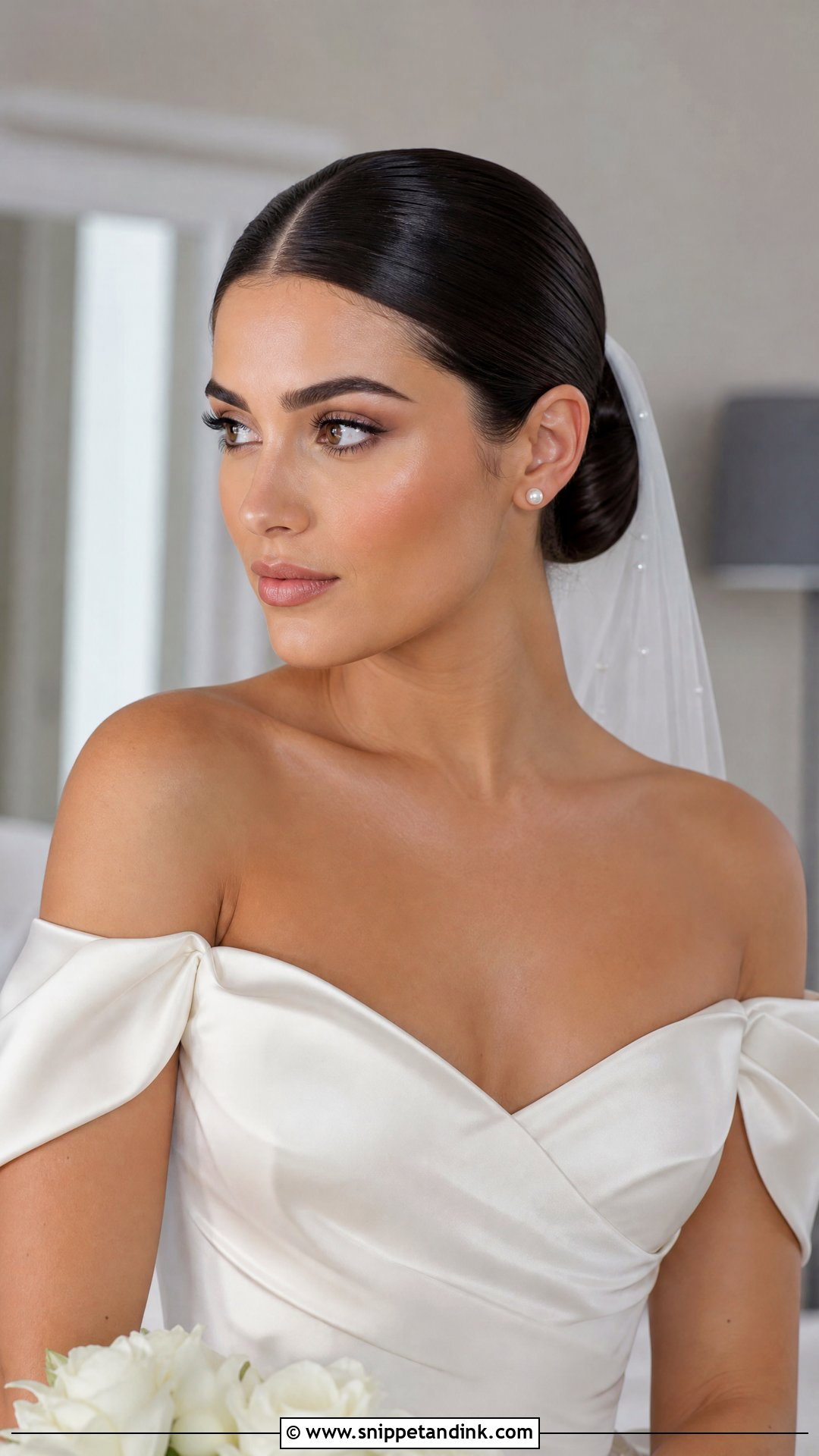
There’s nothing to hide behind with a sleek bun. Smoothed back into a low or mid bun with a glossy finish, it puts all the attention on your face and dress, and it suits minimalist gowns and sculpted necklines best. It works on straight, wavy, and relaxed textures, with a center part or no visible part at all. I check the hairline in natural light before anything else, because baby hairs and flyaways are what make it look cheap or expensive. A soft brush, a tiny amount of wax stick and a mist of shine spray handle most of them.
7. Bridal Braided Updo
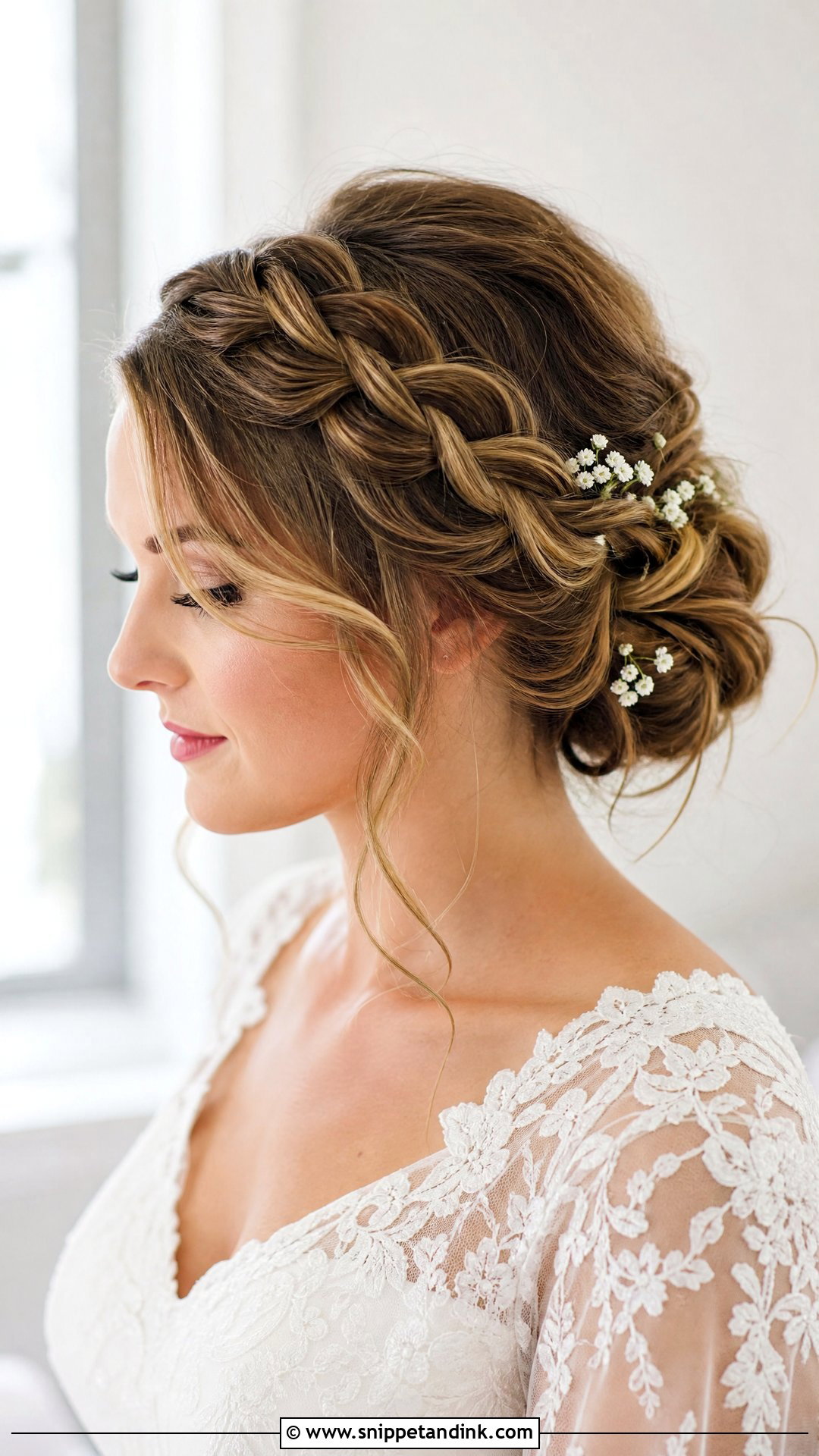
A braided updo gives you more interest than a plain bun and more security than loose hair. Braids can wrap around the bun, cross the crown or run softly through the sides. On fine hair the braid adds visible thickness; on thick hair it controls bulk that would otherwise make the bun huge. I loosen the braid after pinning, but only a little, since an over-pulled braid loses its pattern by dinner. Rustic, garden and lace-gown weddings suit it, and pearl pins or small flowers tuck into the loops neatly.
8. Bridal French Twist
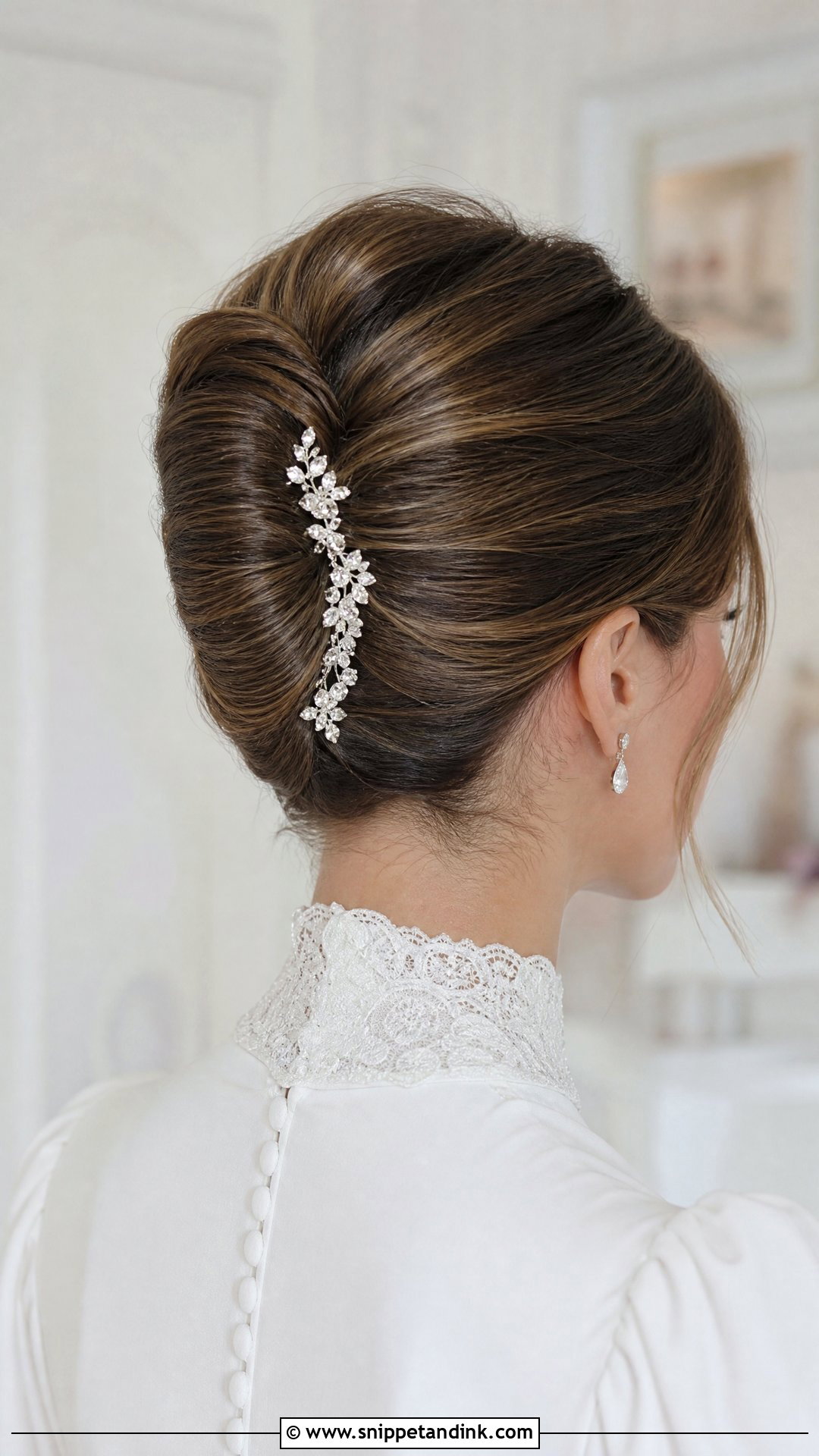
The French twist lifts the hair into a vertical roll, which visually lengthens the neck. It’s my pick for vintage-leaning brides, clean gowns and formal portraits. The classic version is smooth and tucked; a modern one can keep some volume, a few loose strands at the face or a softer texture. I build it on a column of crossed bobby pins down the back of the head, which the twist then wraps over. Medium to long hair is easiest, though shorter hair can work with extra pins. A veil at the base or a comb along the seam finishes it.
9. Bridal Ponytail
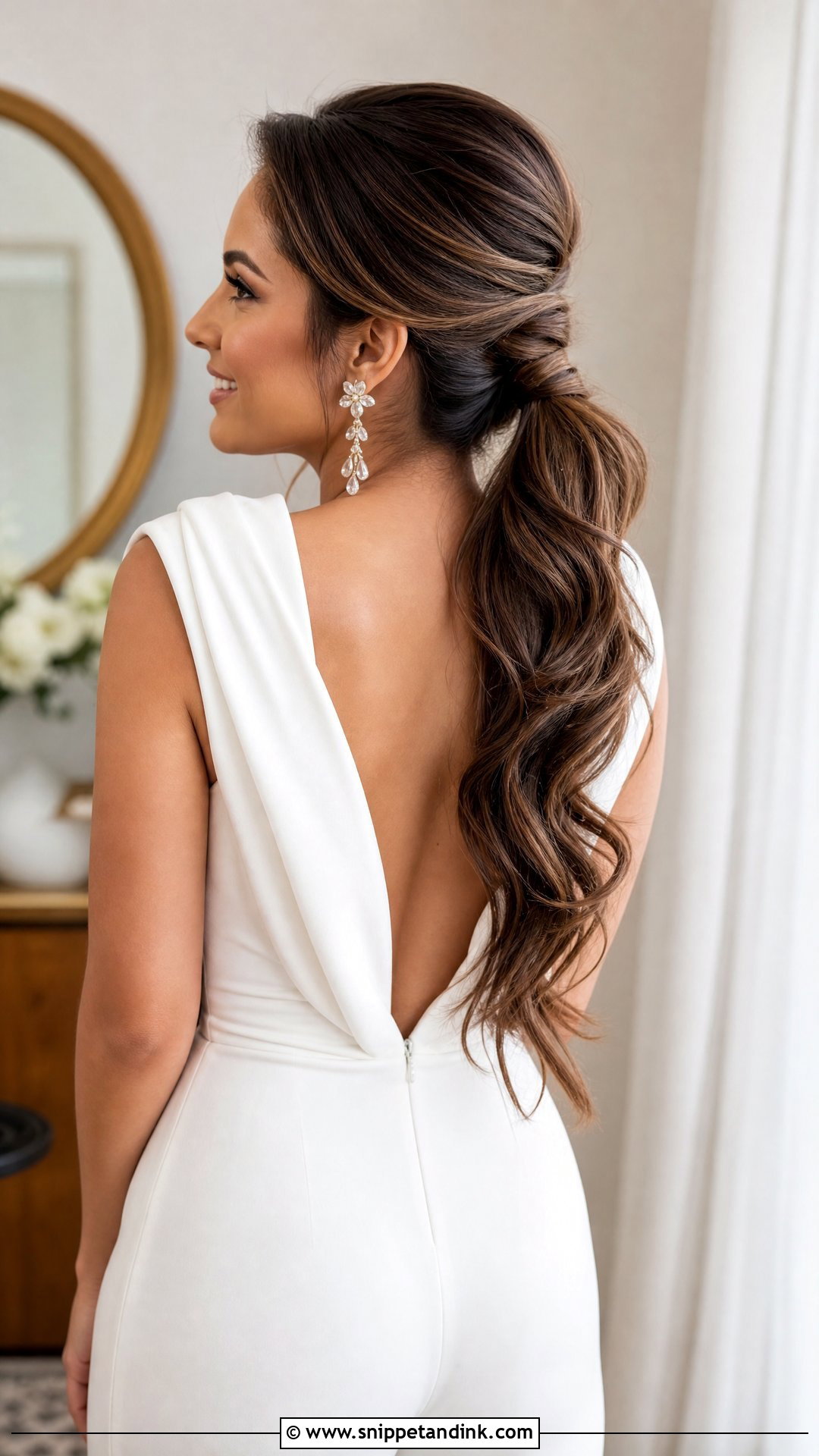
Ponytails earn their place. High and sleek feels fashion-forward, low and smooth feels quiet, and waves through the length add movement. It keeps hair off your face while still showing length in photos, and it suits open-back gowns, modern dresses, jumpsuits and reception outfits. To make it look finished, I wrap a strip of hair around the base to hide the elastic and pin it underneath. A second hidden elastic a little lower stops the tail from drooping by the end of the night. And yes, it’s the easiest style on this list to dance in.
10. Bridal Side Swept Curls
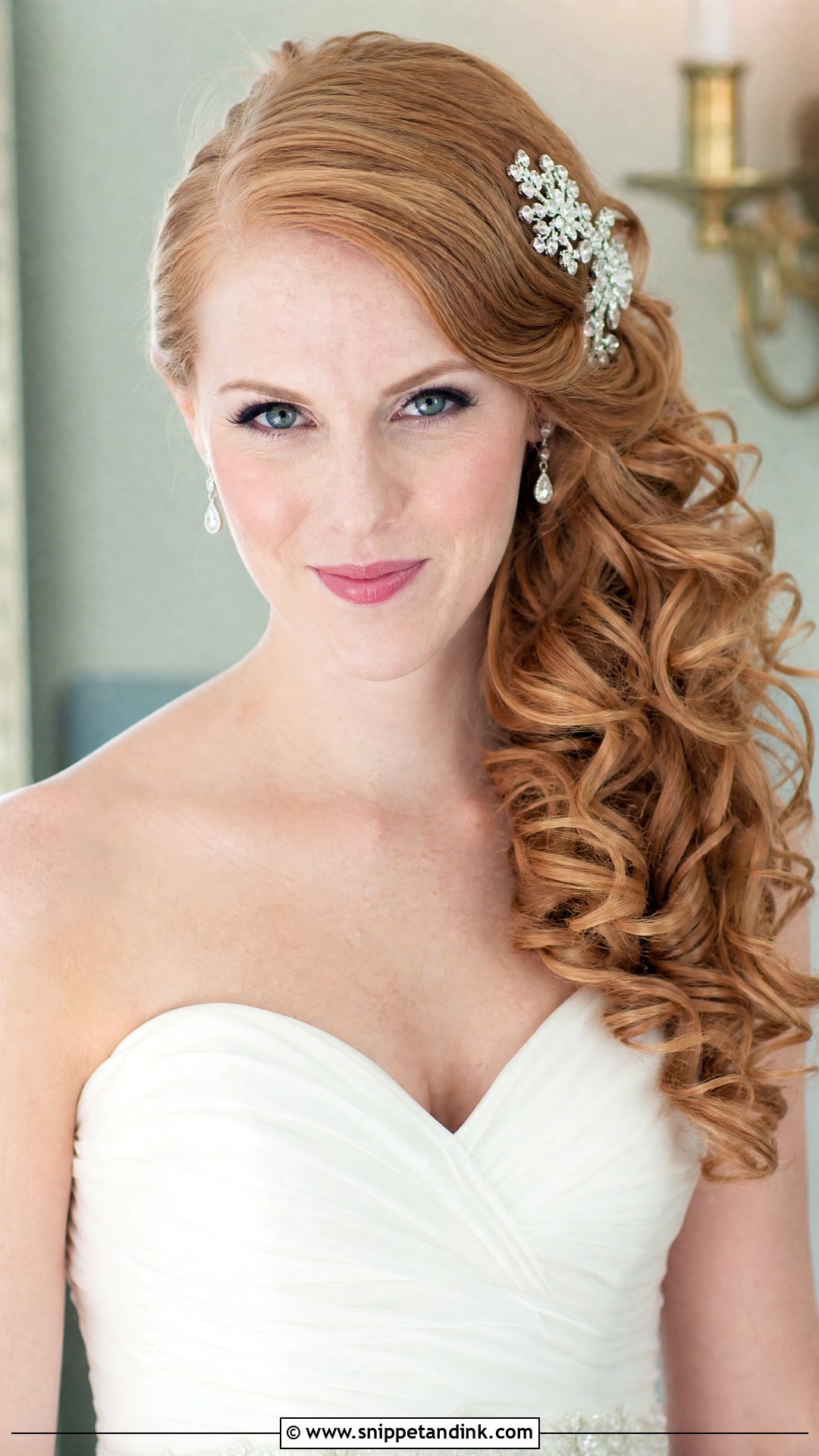
Gathering curls over one shoulder gives you a glamorous shape without a full updo, and it photographs best from the front. It balances one-shoulder dresses, sweetheart necklines and gowns with detailed backs, since the back stays mostly clear. I anchor the swept side with a row of pins hidden behind the ear, crossed in an X so they lock. Medium to long hair is easiest; extensions help if you want a fuller drape. Remember which side the curls fall on when you plan the ceremony position, so guests and the camera see the full shape.
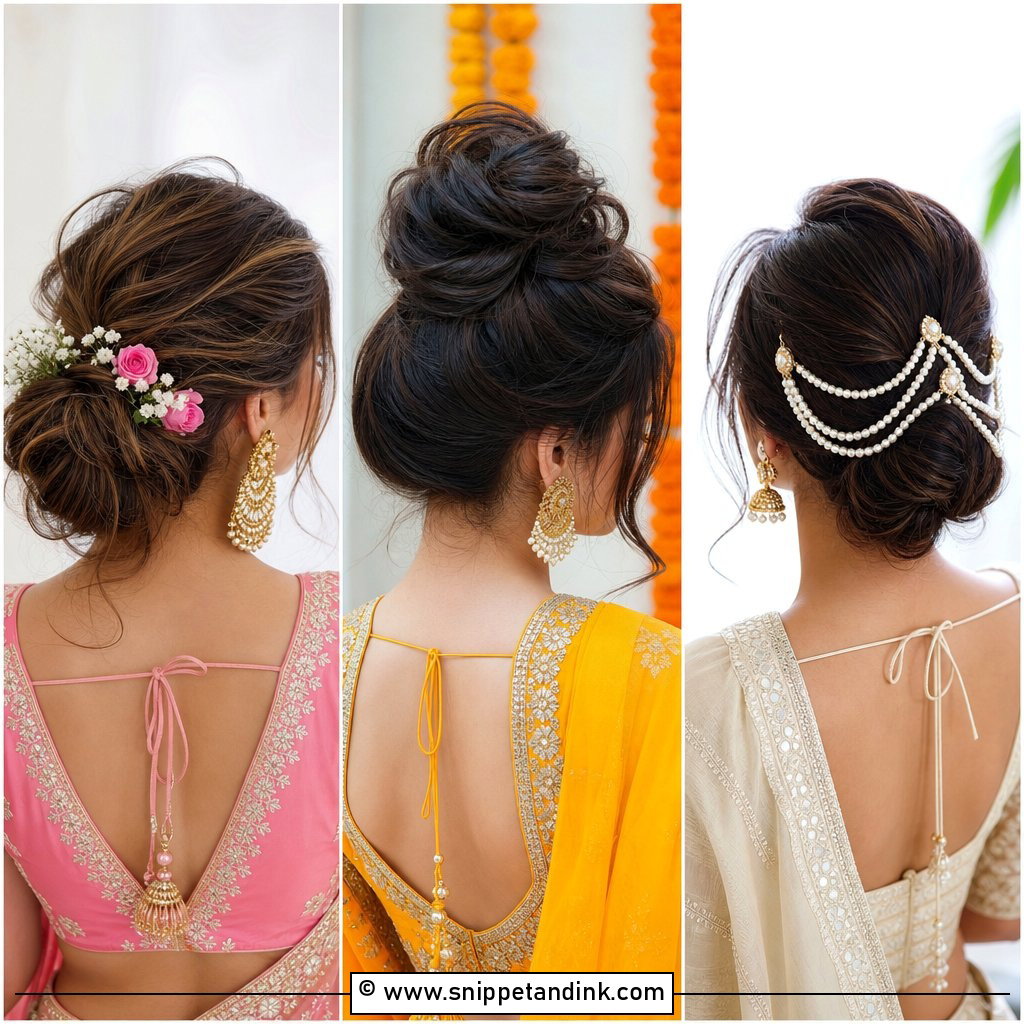
11. Bridal High Bun
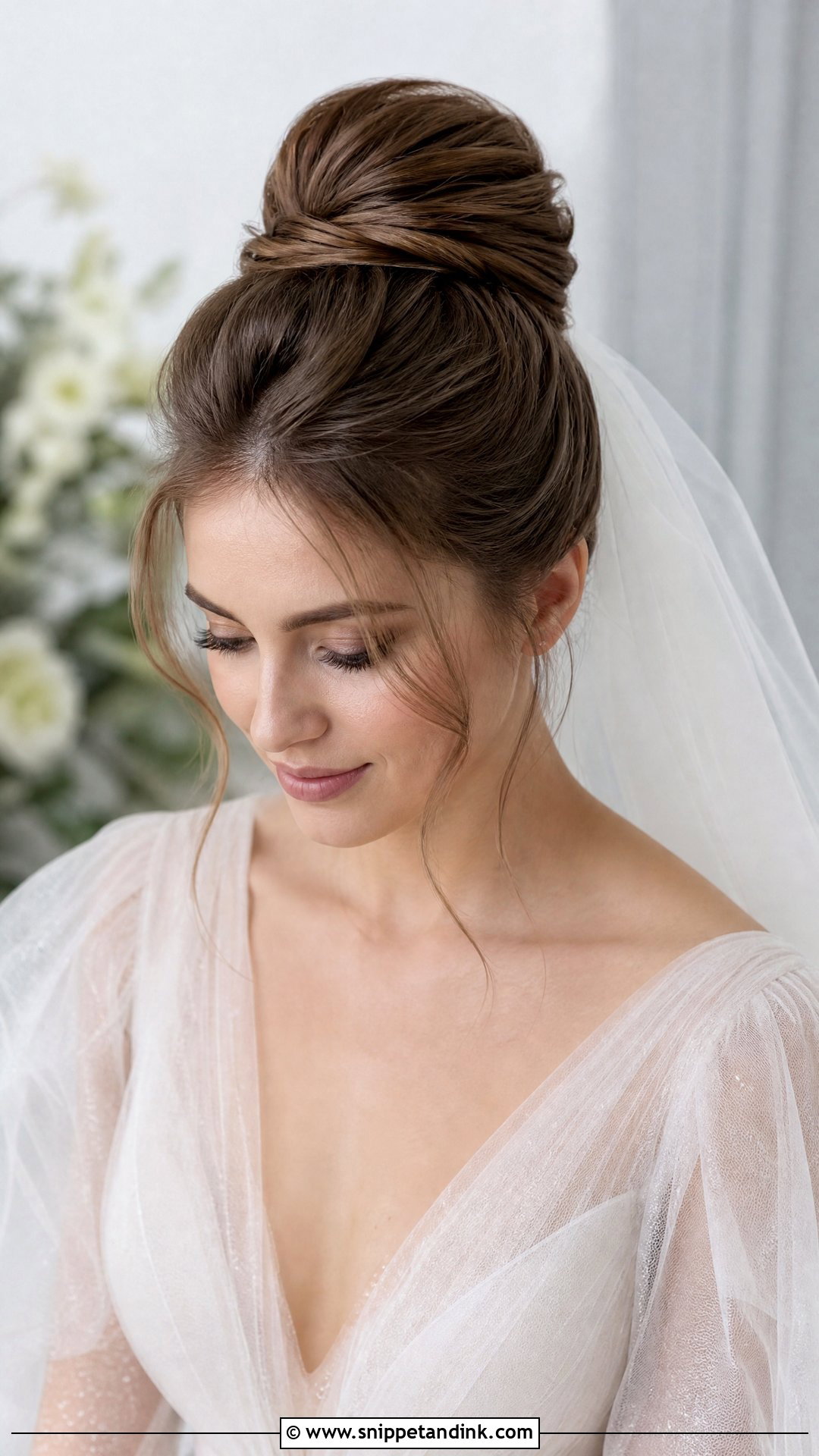
A high bun lifts everything, which gives that graceful ballerina-inspired shape and shows off a dramatic neckline or big earrings. It can be neat and smooth or slightly textured. For summer weddings it’s a relief, since nothing touches your neck. The risk is severity, especially with a tight pull back from the forehead, so I keep a little softness at the front or leave a couple of fine tendrils. A veil looks best tucked underneath rather than on top, where it can make the whole thing look top-heavy.
12. Bridal Loose Updo
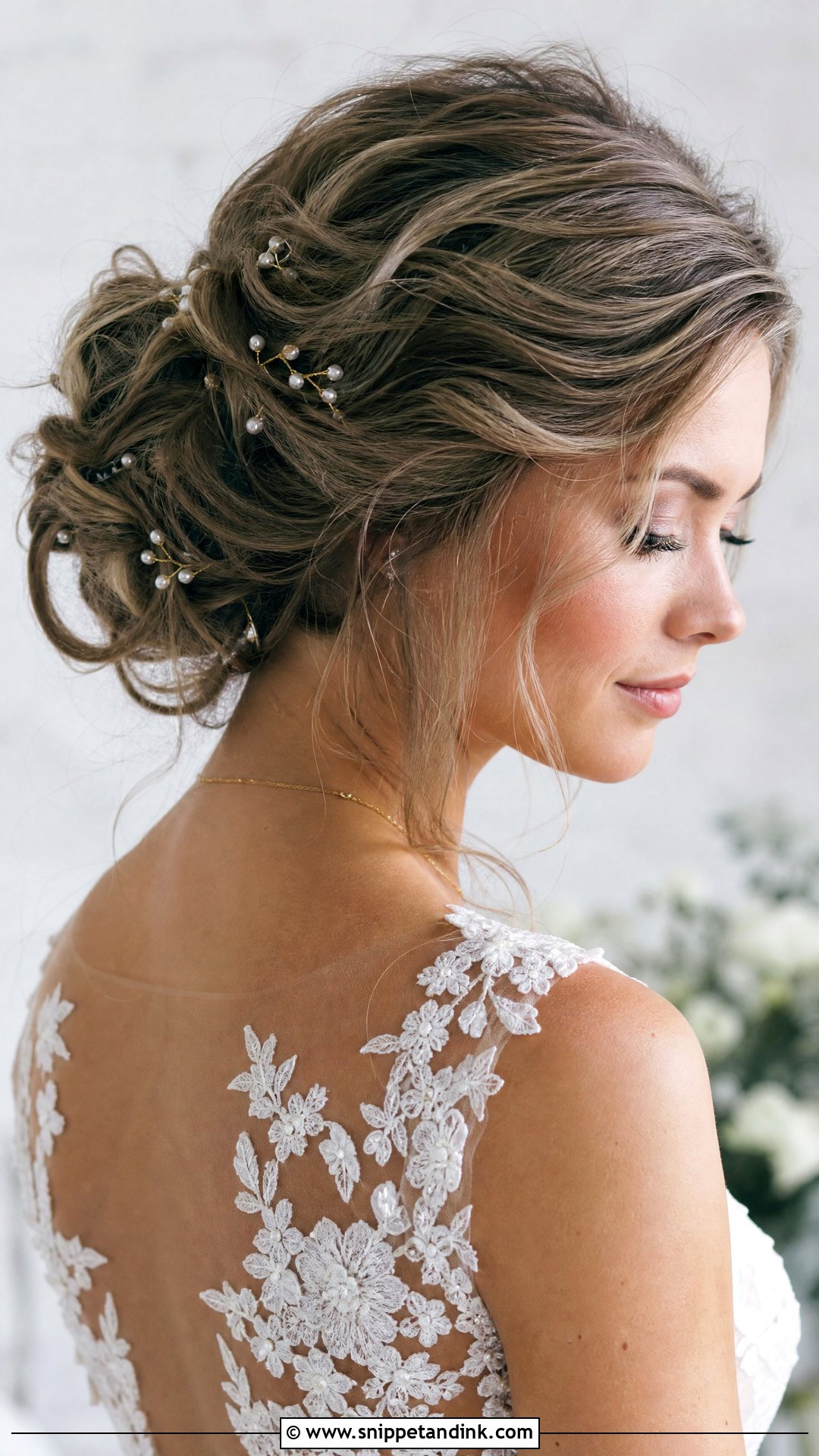
Loose updos look easy and take the most hidden structure of any updo. I pin the hair in soft sections over a secure base so the airy pieces have something firm to hang from, and I place every loose strand deliberately rather than pulling random bits out at the end. Lace gowns, garden ceremonies and soft makeup suit it. The pieces left out at the face can be tailored to your bone structure, which is why it flatters so many people. A few pearl pins or tiny blossoms are enough.
13. Bridal Natural Curls
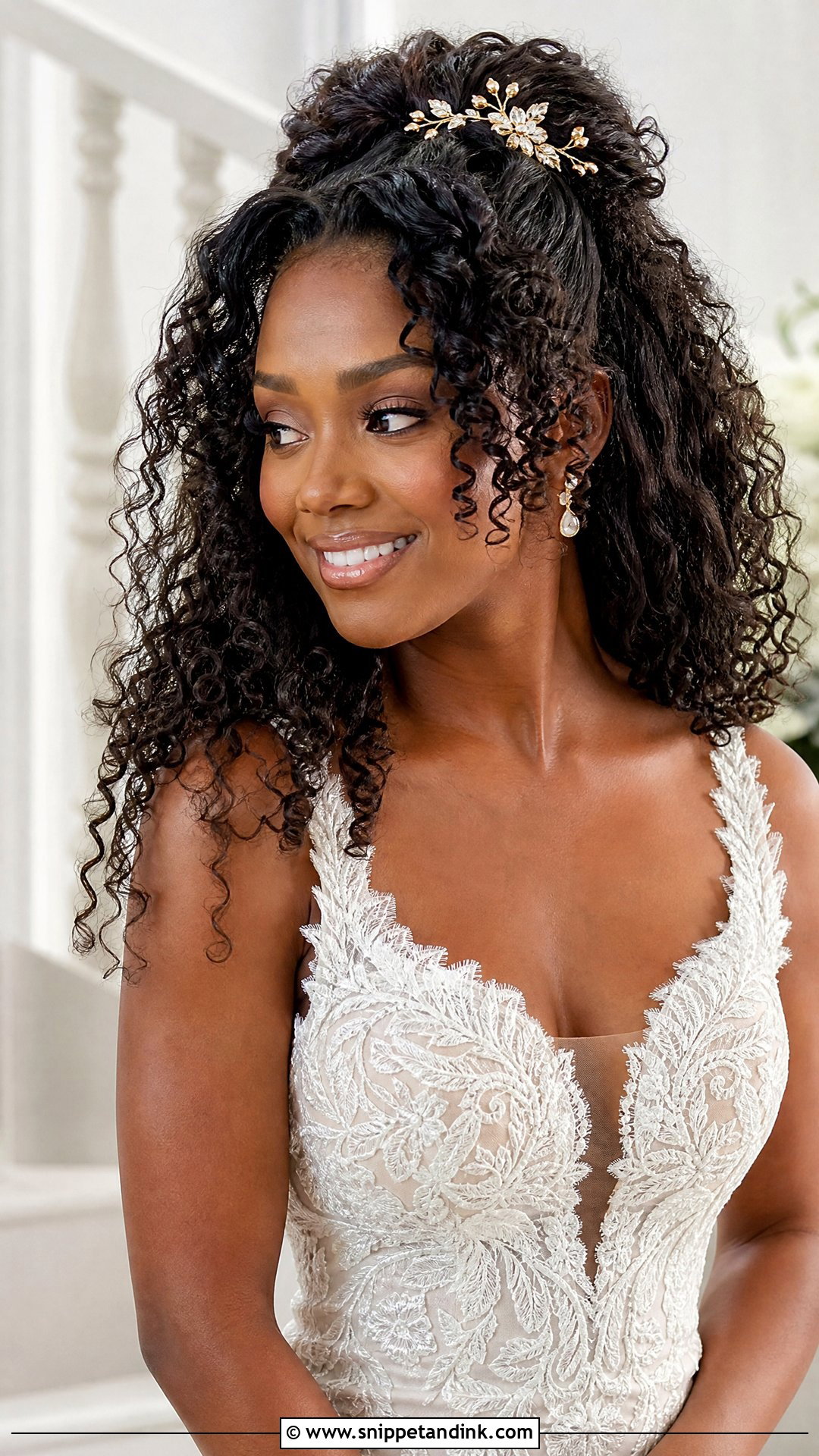
With natural curls, I’m working with the pattern, not around it. Down, pinned to one side, in a curly updo or half up for more control, they need hydration, definition and frizz control above all, so a steady curl routine in the weeks before matters more than anything I do on the day. I diffuse rather than brush, and I set the veil comb into a pinned section so it doesn’t crush volume at the crown. Floral pins, gold accents and pearl combs all sit well among curls.
14. Bridal Short Hair
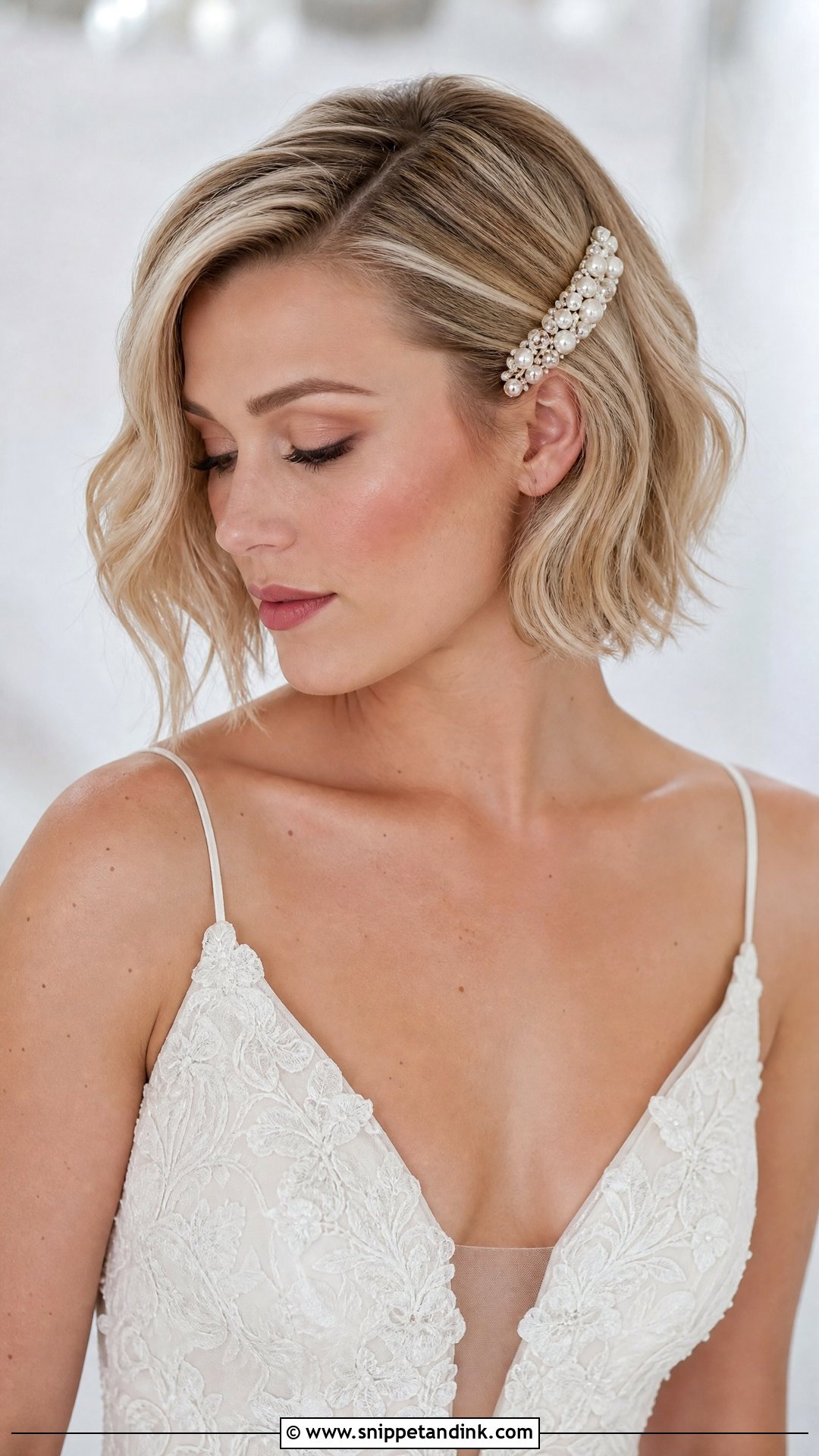
Short hair has an advantage long hair doesn’t: everything else shows. Earrings, makeup and neckline detail all get room. A bob, pixie, lob or crop can be waved, sleek, lifted at the root or given a deep side part. Accessories carry more weight here, so I’d pick one, maybe a pearl clip, a fine headband, a mini veil or a floral comb, rather than several. Shape is the priority, which might mean smoothed ends or lifted roots. Done with care, short bridal hair looks deliberate and modern, never like a compromise.
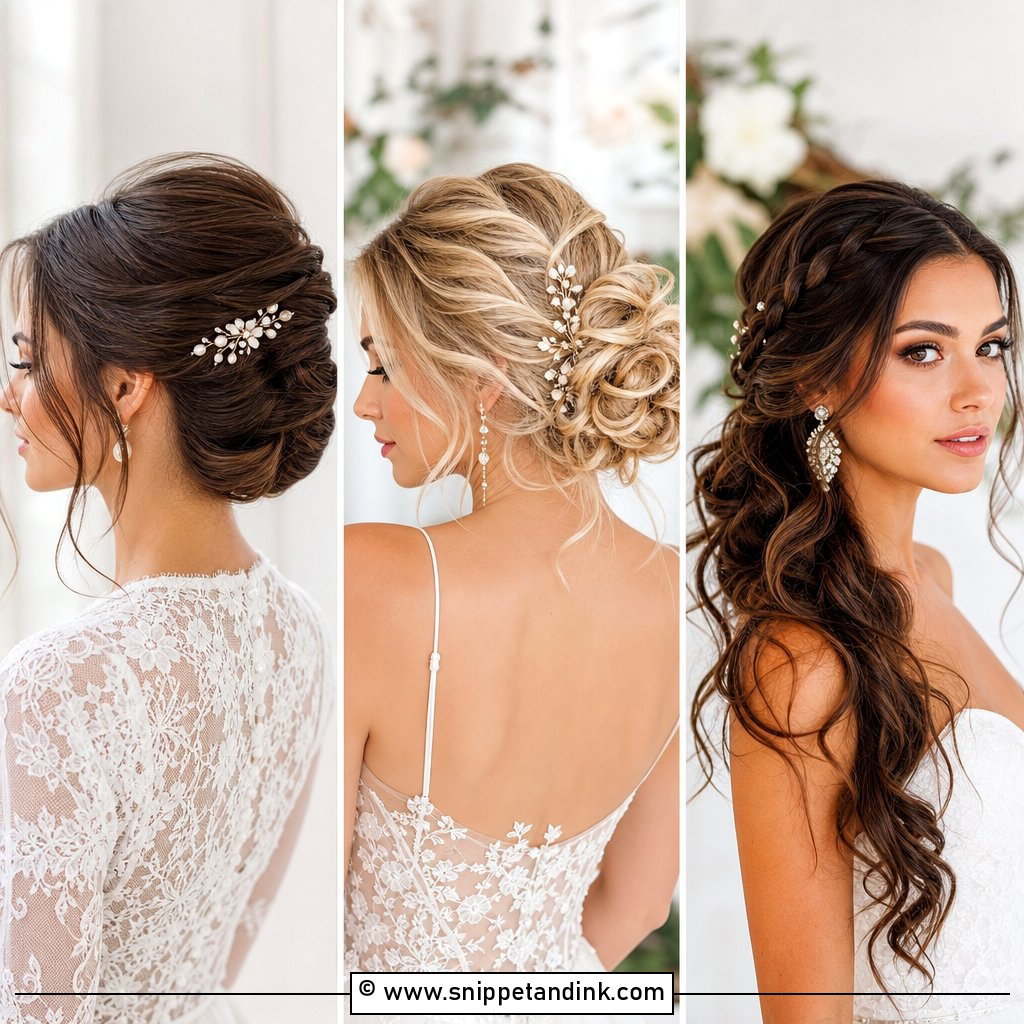
15. Bridal Veil Hairstyle
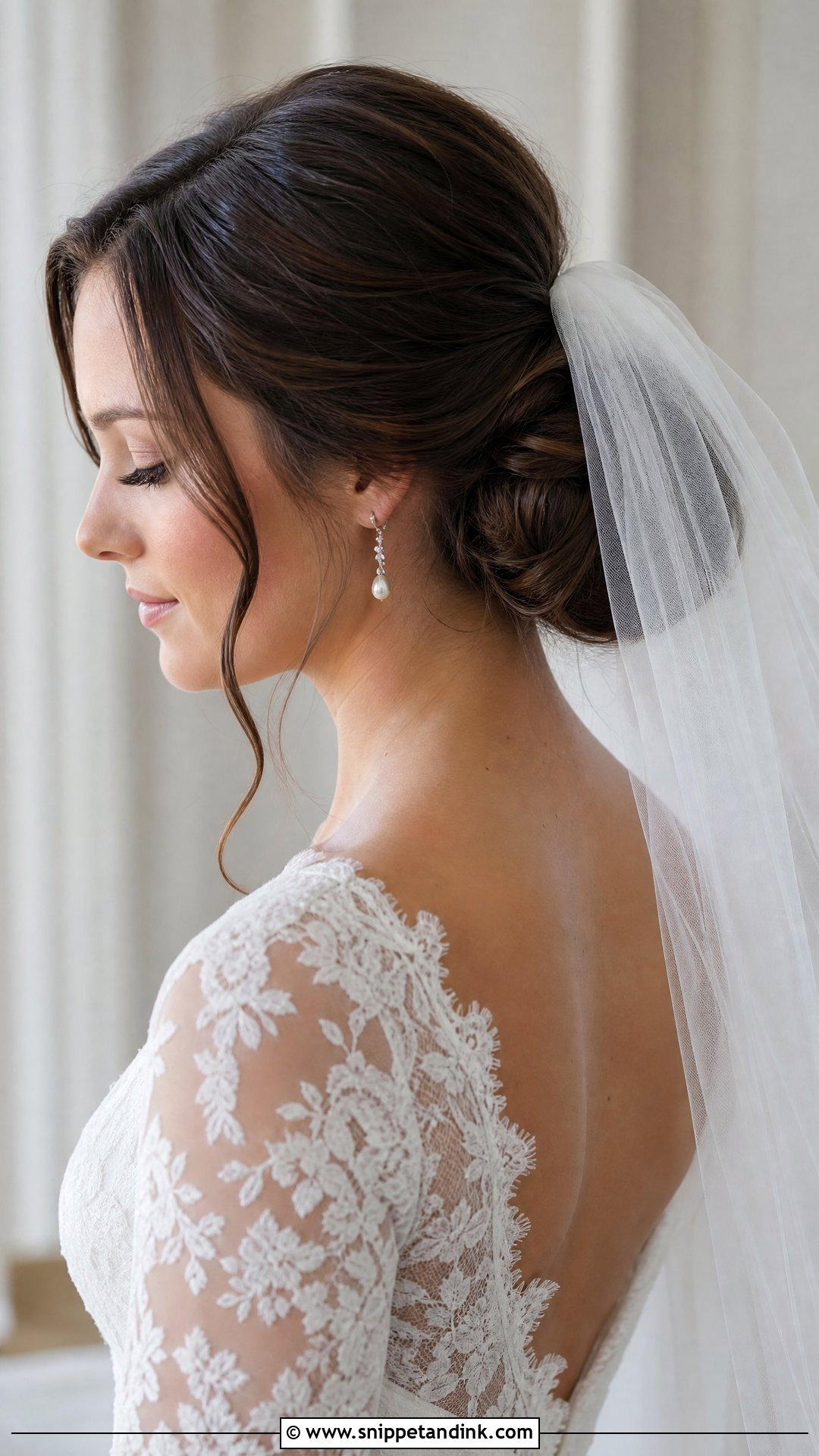
Start with the veil, then build the hair. Low buns, chignons, half-up styles, waves and sleek updos all take a veil, but each needs it placed differently. Above the bun reads classic and formal; under the bun shows off more of the hair. On loose styles, a half-up base gives the comb something to grip. I always ask brides to bring the actual veil to the trial, because weight matters: a long, edged cathedral veil pulls far harder than a short tulle one, and I’ll pin it accordingly.
After the Veil Comes Out Before Dinner
Plenty of brides wear the veil for the ceremony and portraits, then take it out. What’s underneath has to look finished on its own, and that’s easy to forget at the trial.
- Ask to see the hair with the veil removed, not just in. A comb can leave a flattened patch or a gap in a bun.
- Decide who removes it, and have them watch how it was anchored so they don’t pull half the pins out with it.
- Keep a small replacement ready: a pearl clip, a jeweled pin or a fresh flower can sit exactly where the comb was.
- If you wear a loose style, consider a quick switch after dinner, such as gathering waves into a low pony for dancing.
If the Updo Starts to Ache
Heavy hair, tight pins and a weighty veil can give you a headache by mid-afternoon. Tell your stylist at the trial if anything pulls, because it rarely improves. I place pins flat against the scalp rather than pressing in, and for long or thick hair I’d set the bun a little lower so it rests on the neck instead of hanging from the crown.
Trends Start the Mood Board, Your Hair Finishes It
Trends are a fine place to start, but your dress, venue, hair texture and face shape should make the final call. A sleek bun suits one bride; soft waves, natural curls or a braided updo will feel more honest on another. Book a trial, bring the veil and accessories, and have someone photograph you from the front, side and back. Comfort counts as much as the look itself. Hair that feels secure and yours stops being something you think about, and becomes part of the magic of the day.
You'll Like These Ideas:


Leave a Reply