
The hairstyle has to work with everything else a Desi bride is wearing: a dupatta that may sit on the head for hours, a tikka on the part, heavy earrings, and an outfit that changes with every function. That’s why I never start with a photo of a hairstyle alone. The twenty looks below run from South Indian jada braids full of jasmine to pearl-laced fishtails and polished reception buns. Under each, I’ve written what I’d check before agreeing to build it and which function it fits best, so you can take a realistic shortlist to your trial.
Thin, Short or Very Thick? Adjusting These Looks to Your Hair
Most of the photos you’ll see of Desi bridal hair show long, dense hair, and a lot of it is extensions. Your own hair can do most of these looks with a few adjustments.
Fine or thin hair
Clip-in extensions are the easiest fix for open curls, braids and the jada. Buy them at least a month ahead and match the colour in daylight; natural black hair varies more than people expect, from soft black to a warm brown at the ends. For buns, a filler or donut gives size without heavy backcombing.
Very thick, heavy hair
Thick hair is strong but heavy. I use larger U-pins and section the bun so the weight is split rather than piled on one point. Curls drop faster under their own weight, so I set them longer and use a firmer hold spray.
Short hair or a bob
Half-up styles, flower crowns and a sleek bun with a filler are all possible. A long jada braid or bubble braid needs extensions, and that’s fine.
1. Floral Bun for Indian Bride
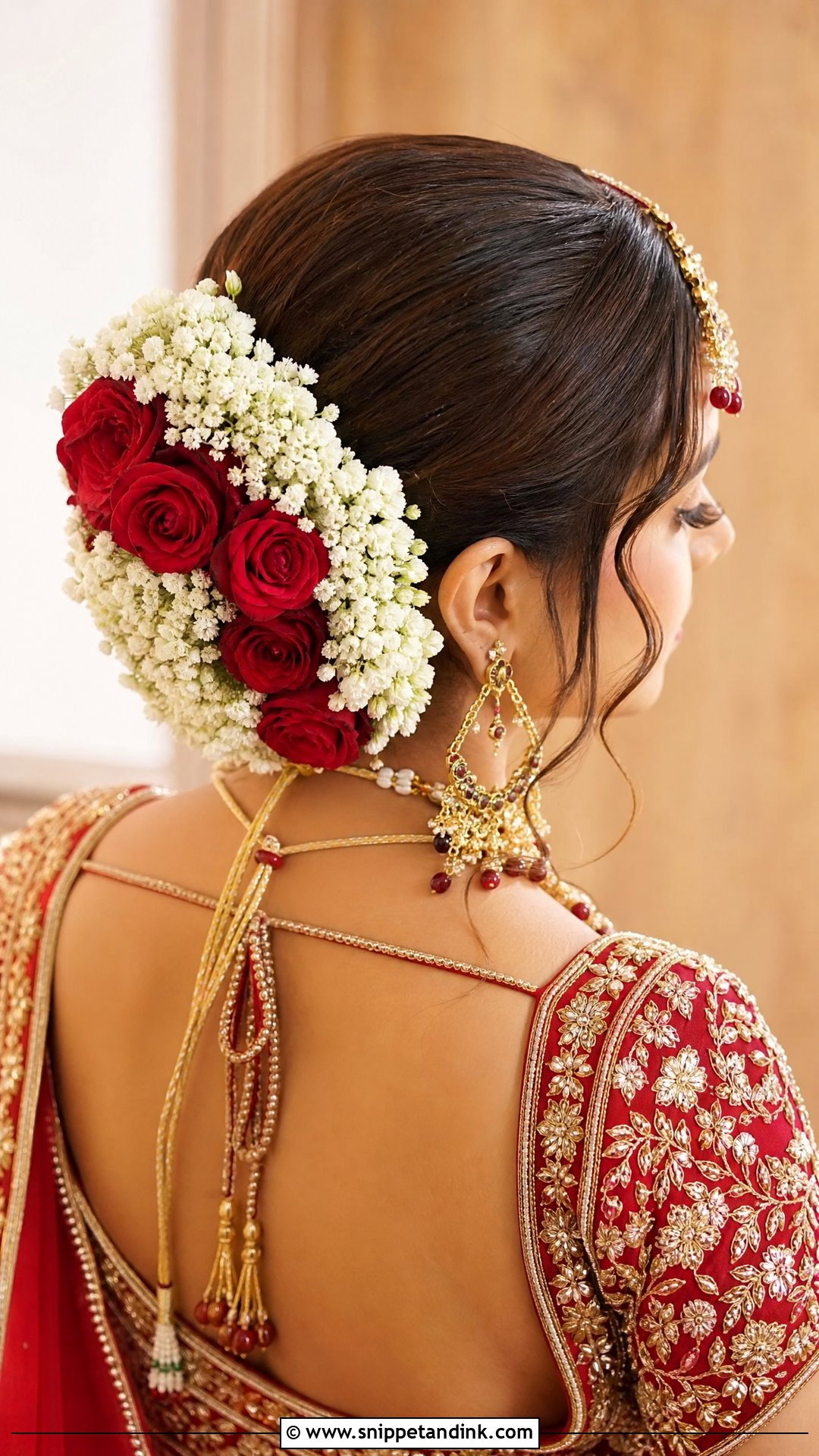
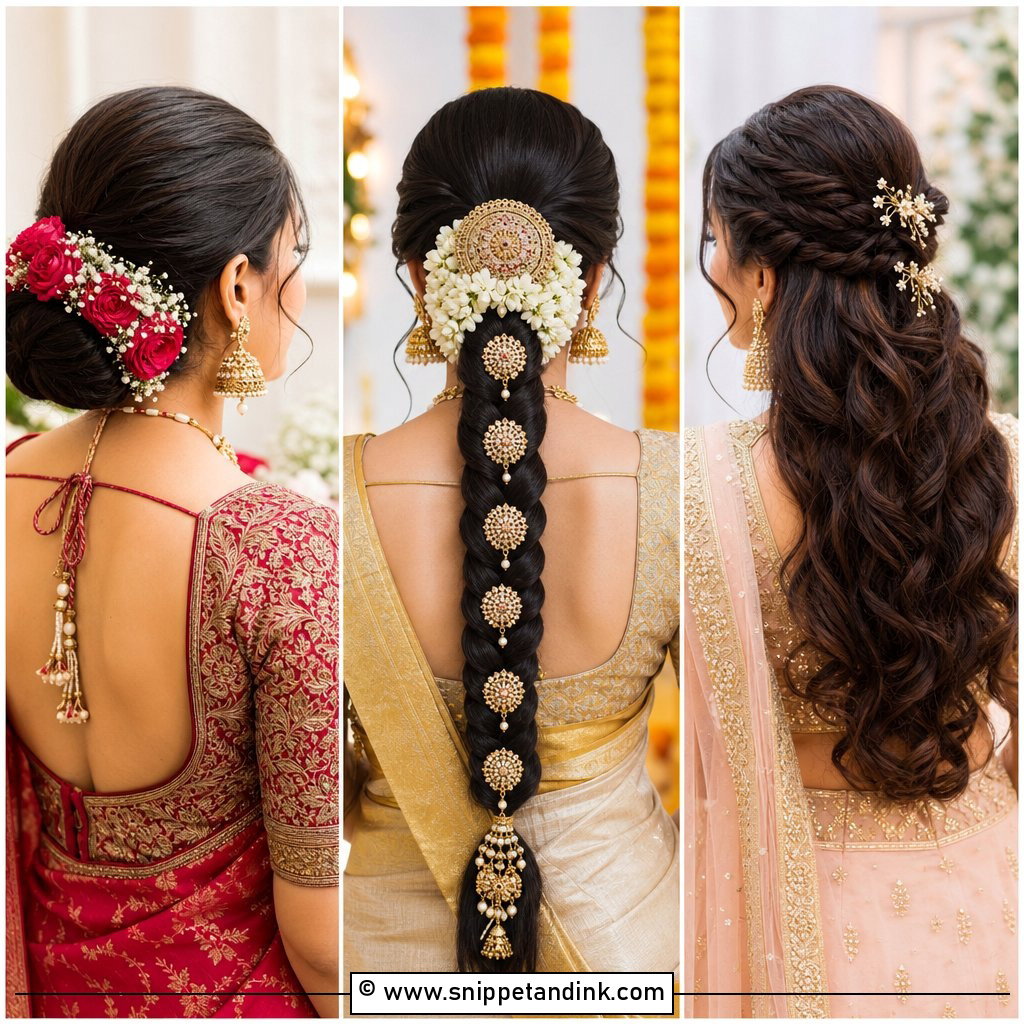
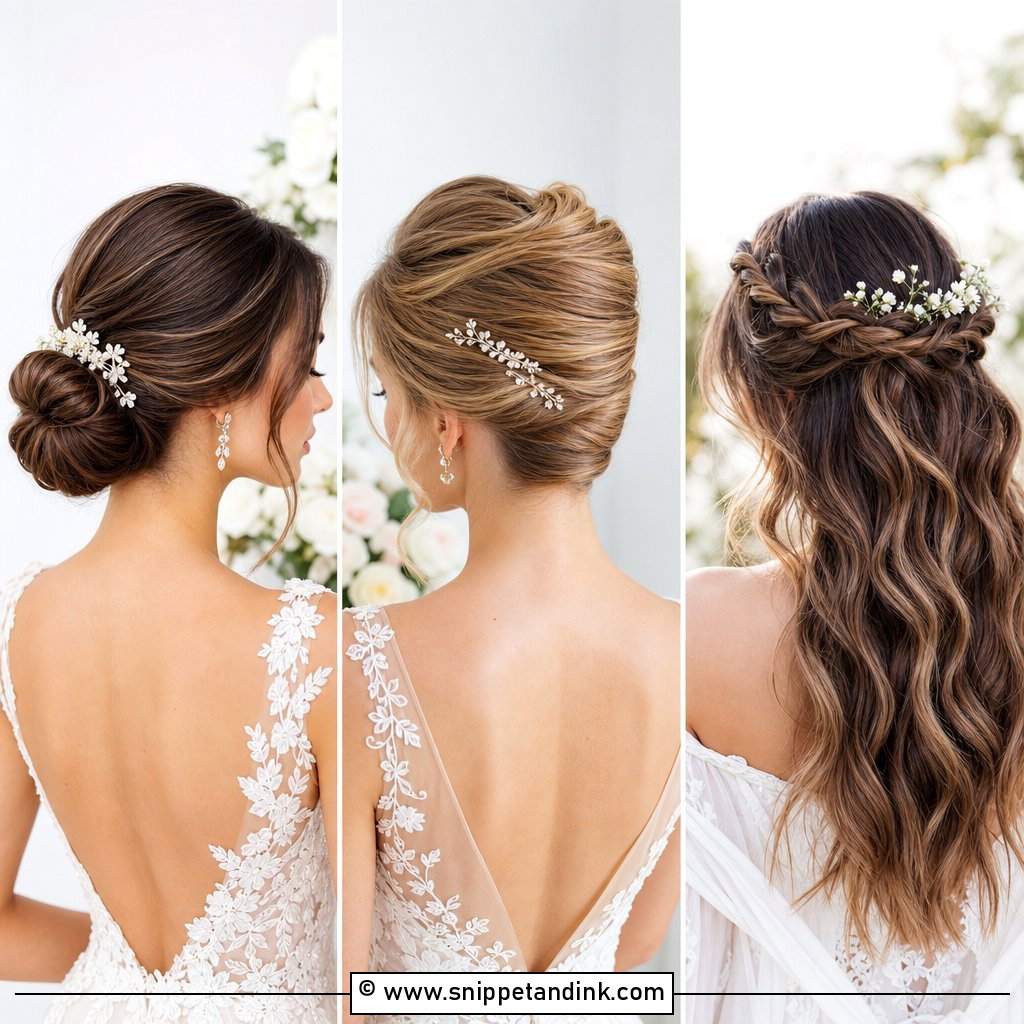
A low bun wrapped in flowers is still the look I build most for the main ceremony, mostly because it handles a dupatta better than anything else. Sitting at the nape, it lets the dupatta drape over the head and rest on the bun, where I can pin it from underneath. Roses, jasmine and marigolds all work; roses add colour, jasmine adds scent. Keep it tight and polished or loosen it for a softer finish. A maang tikka or a passa at the temple completes it.
2. South Indian Bridal Braid With Jada
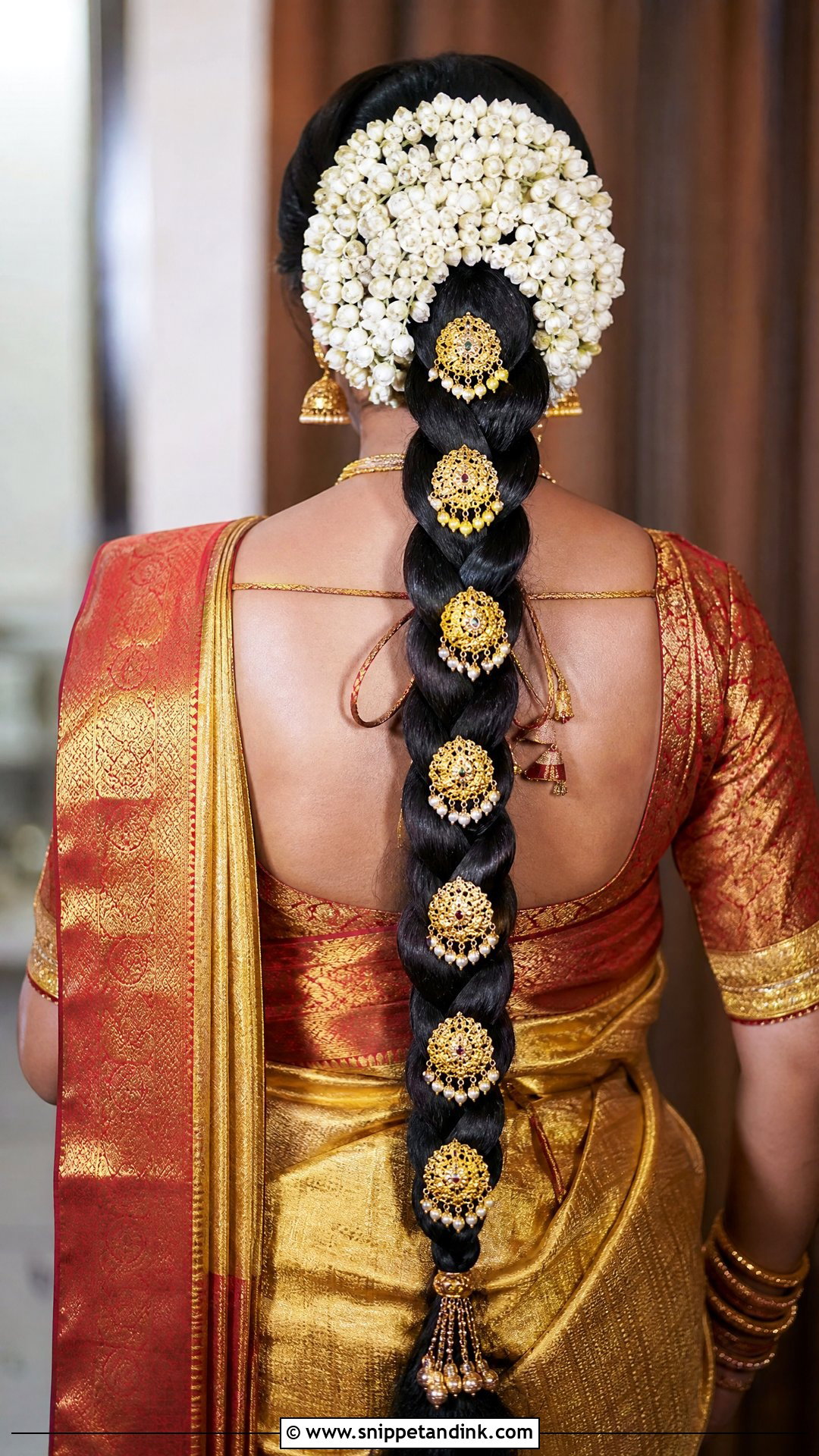
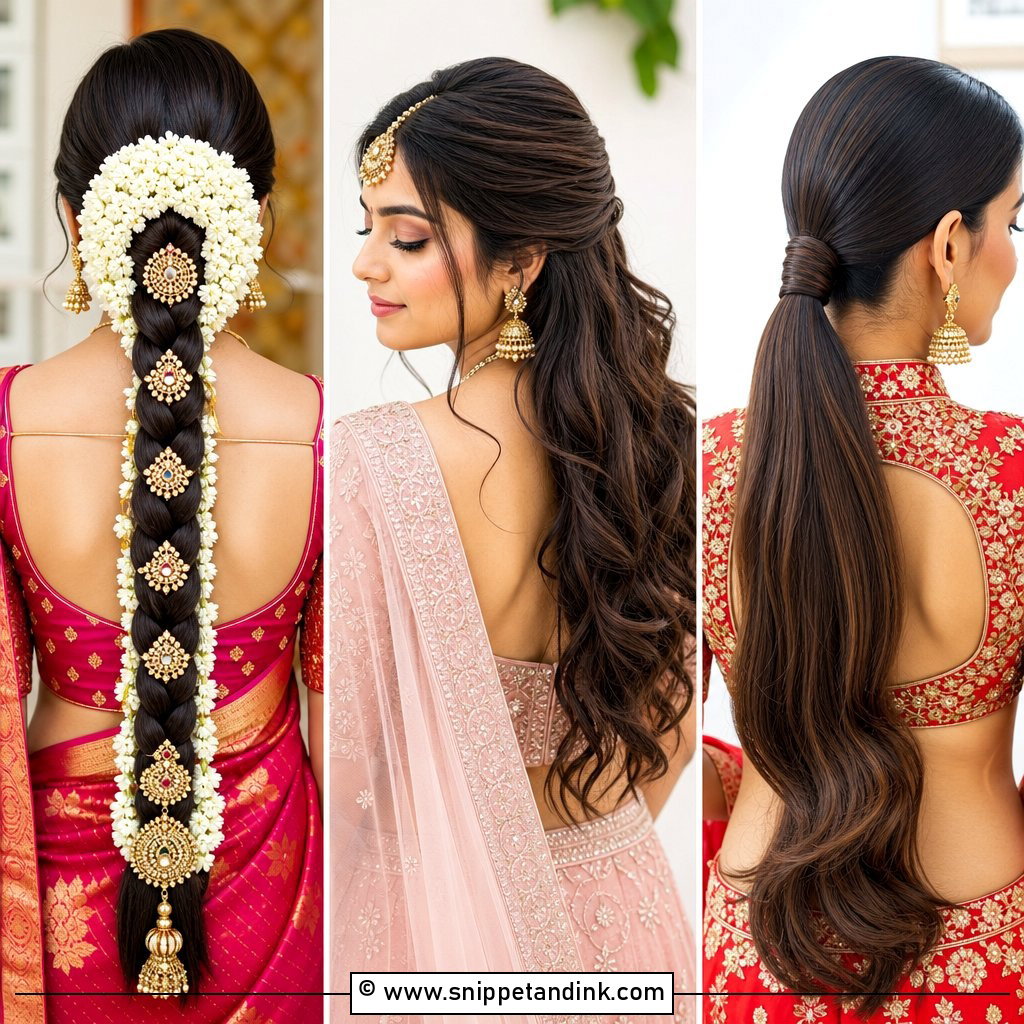
Poolajada turns one thick braid into the main event. The braid runs down the back and is covered in rows of fresh jasmine, roses or gold jada billalu ornaments, and the flowers carry real meaning for many families. The flower covering is usually made by a florist on a base that’s then attached to the braid, so book it early and ask how it fastens. Natural hair often isn’t long enough to reach the hips, so a matching extension braided in from the nape is common and nothing to be shy about. Temple jewelry and a maang tikka pair with it.
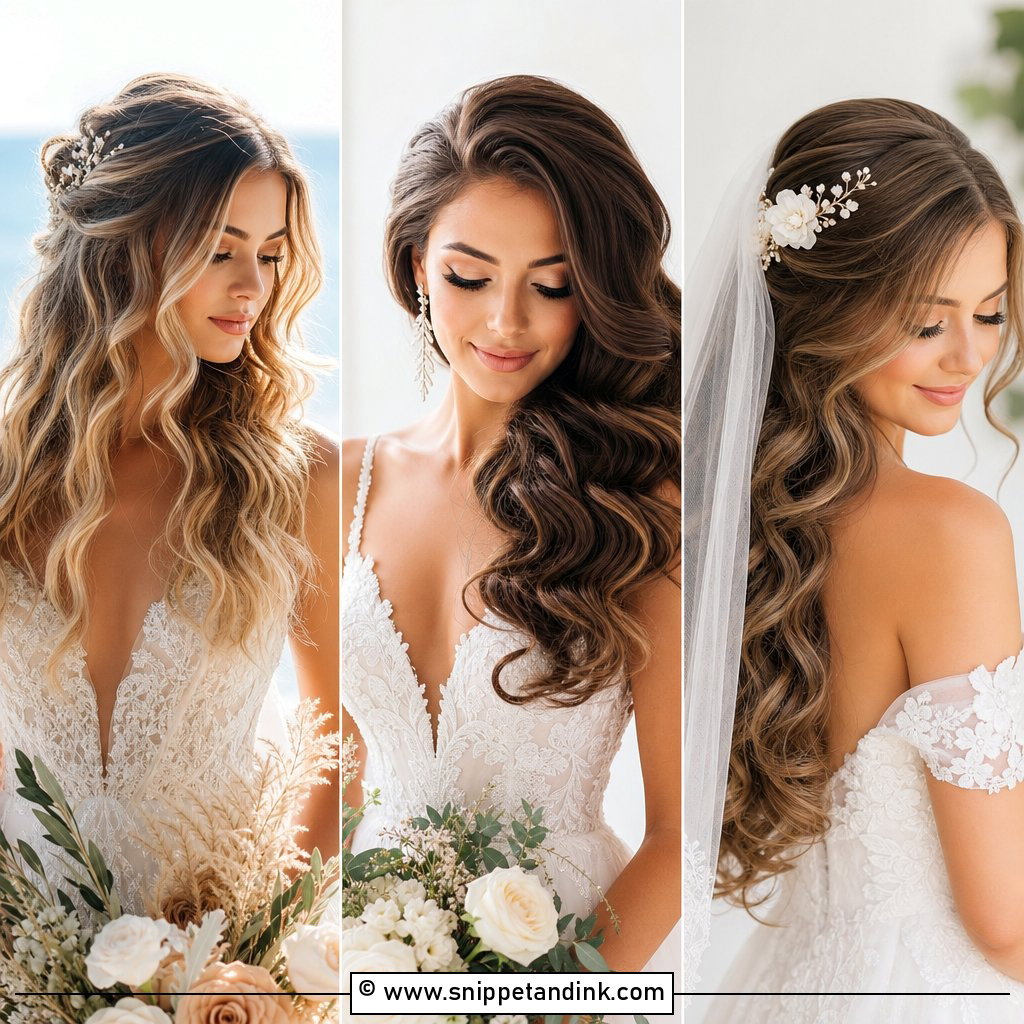
3. Open Hair With Soft Curls
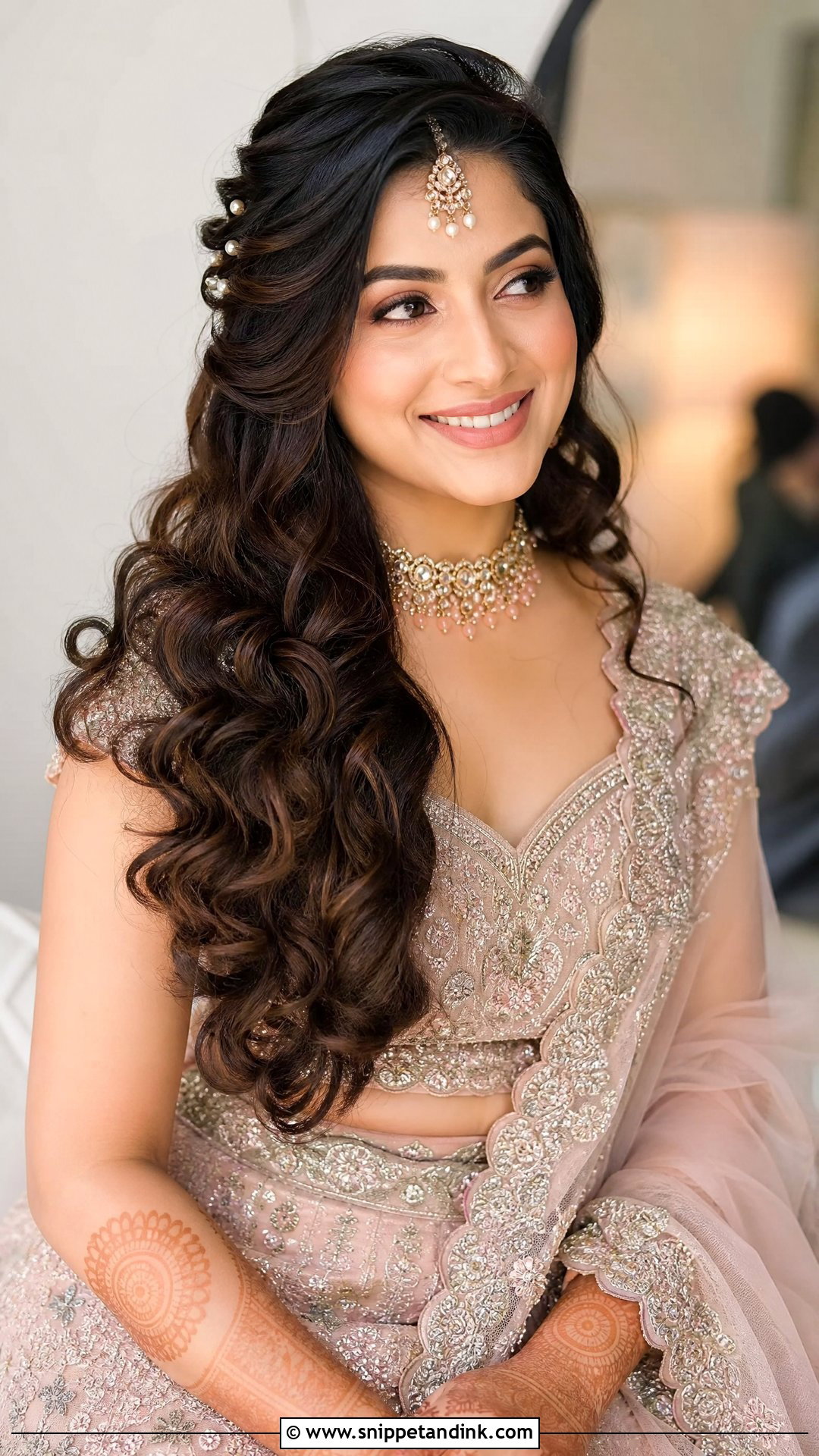
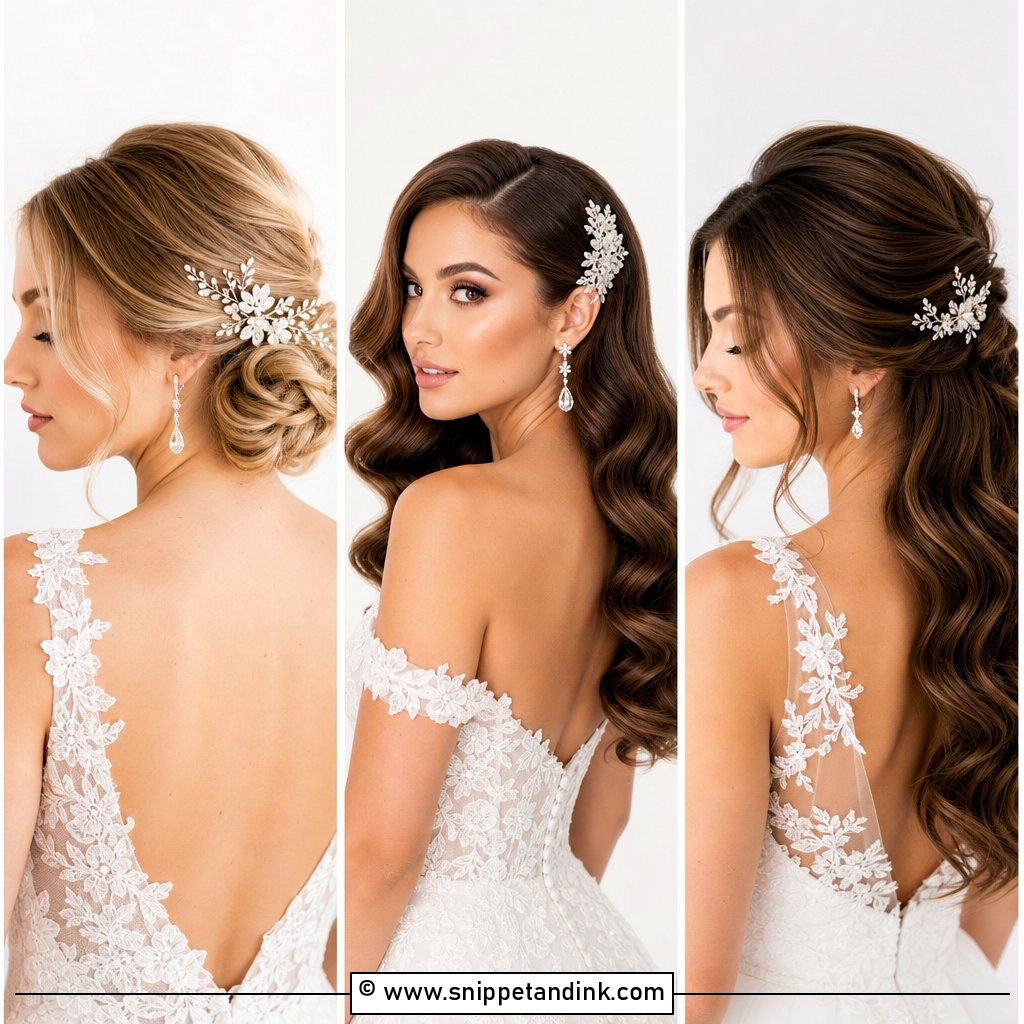
Open curls are the most requested look for receptions and sangeet nights, and the ones that fail are almost always under-prepped. I curl with a wand or rollers on dry, product-primed hair and let every curl set cool. Pin one side back or sweep everything over a shoulder. Clip-in extensions make thinner hair look fuller and give the curls something to hold onto. A small tikka, pearl pins or a few fresh flowers make it bridal.
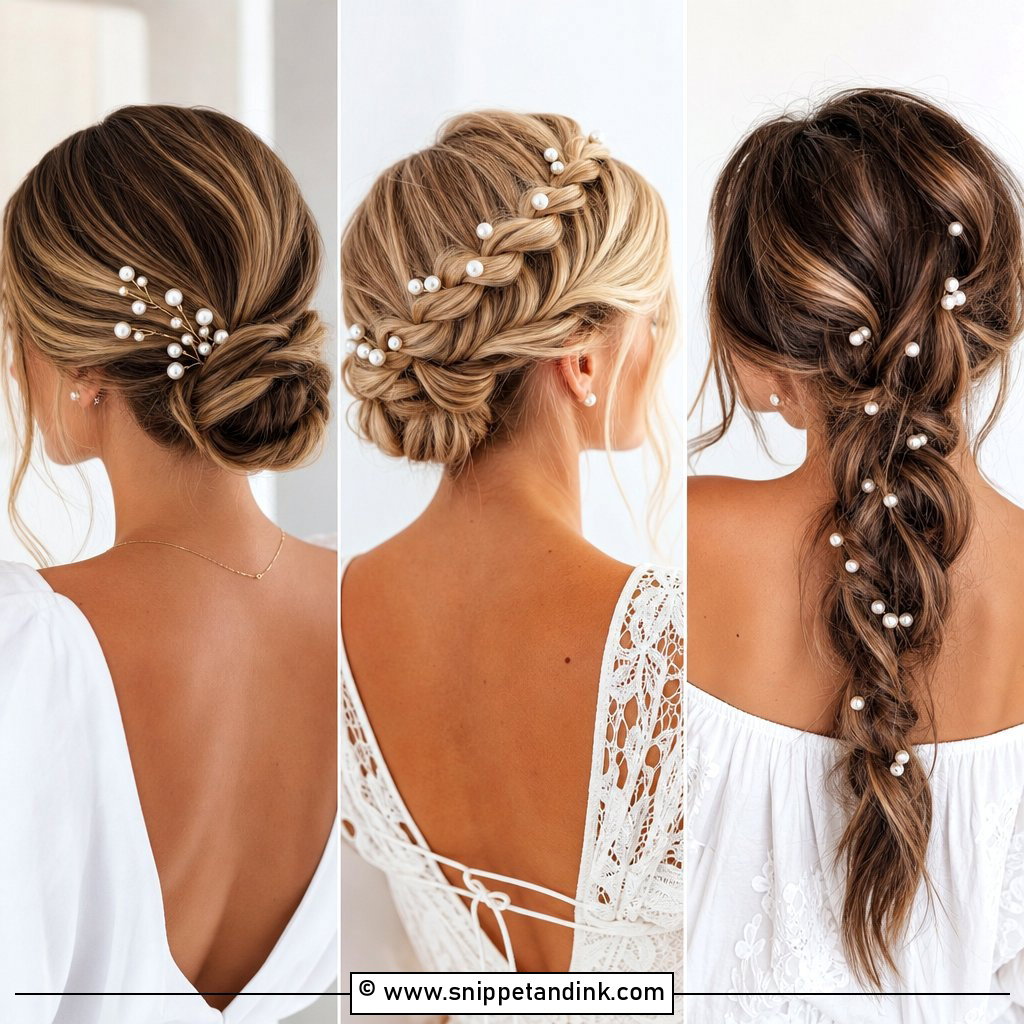
4. Fishtail Braid With Pearls
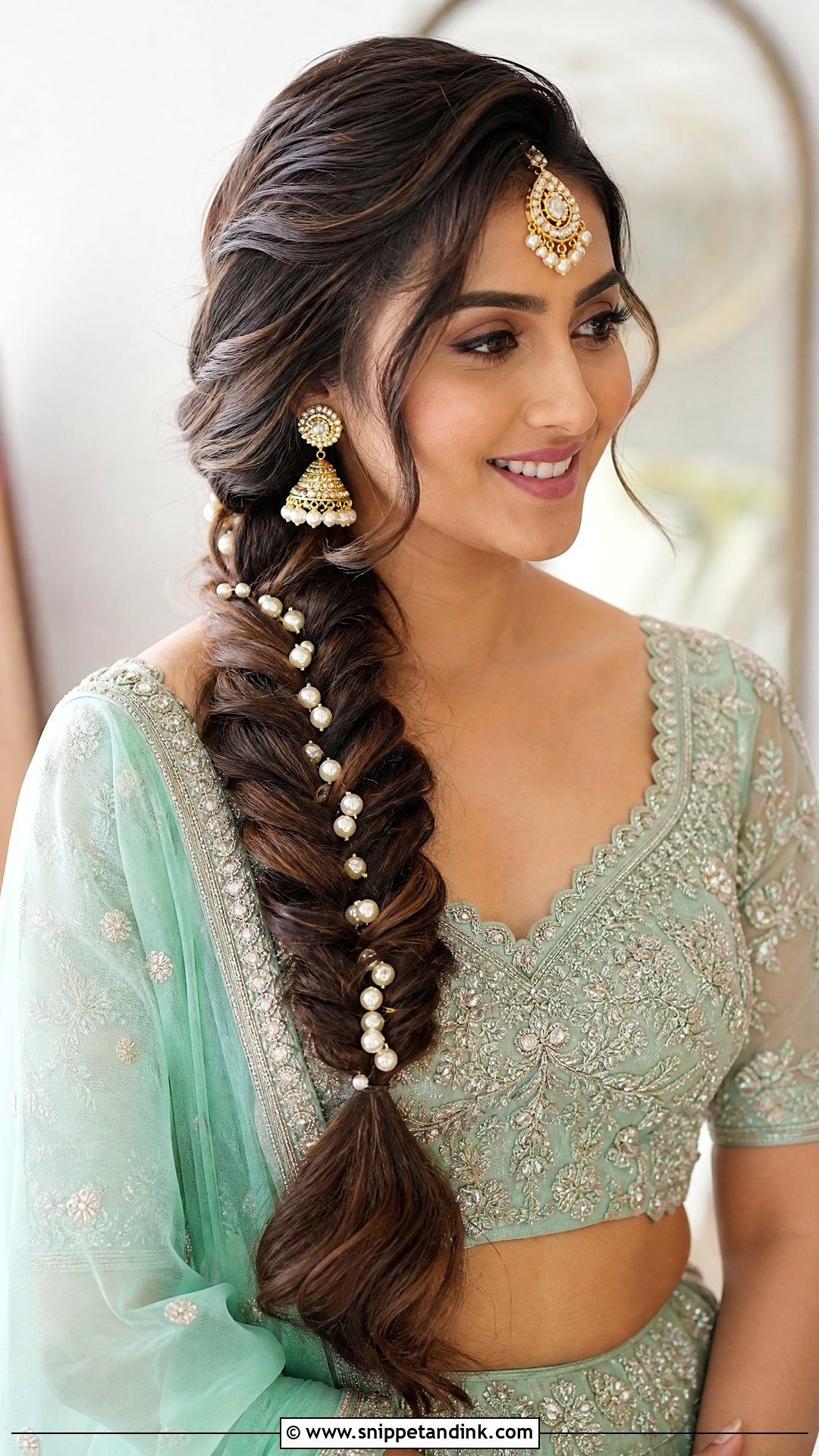
A fishtail looks more complicated than it is, which is part of its appeal. The woven texture catches light, and threading tiny pearls or gold beads through it adds shimmer. Wear it down the back or over one shoulder for a softer line. I loosen it slightly by pulling the outer edges, which makes it look fuller in photos. It fits a mehndi or sangeet well, with jhumkas and a simple maang tikka.
5. Low Bun With Gajra
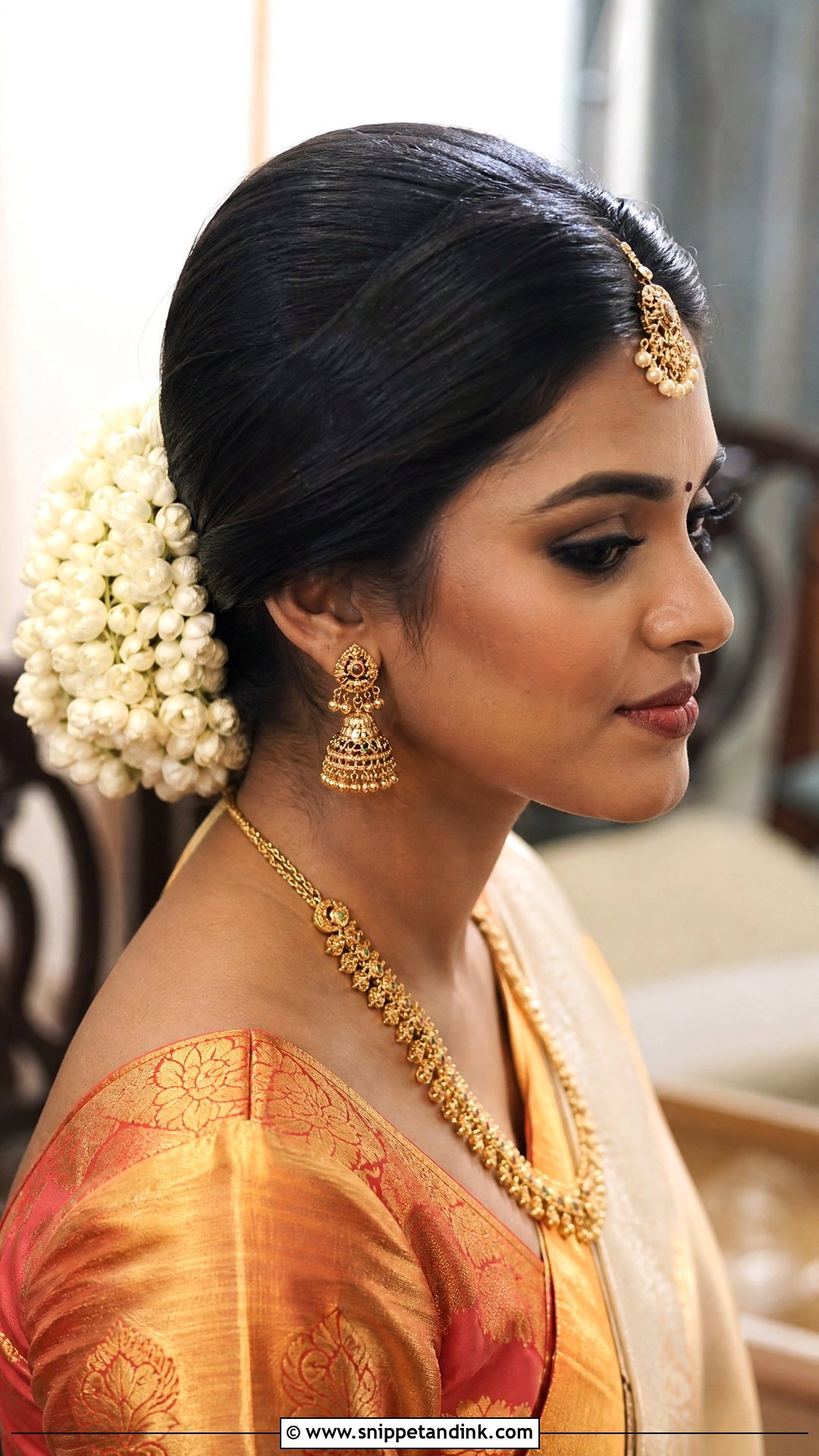
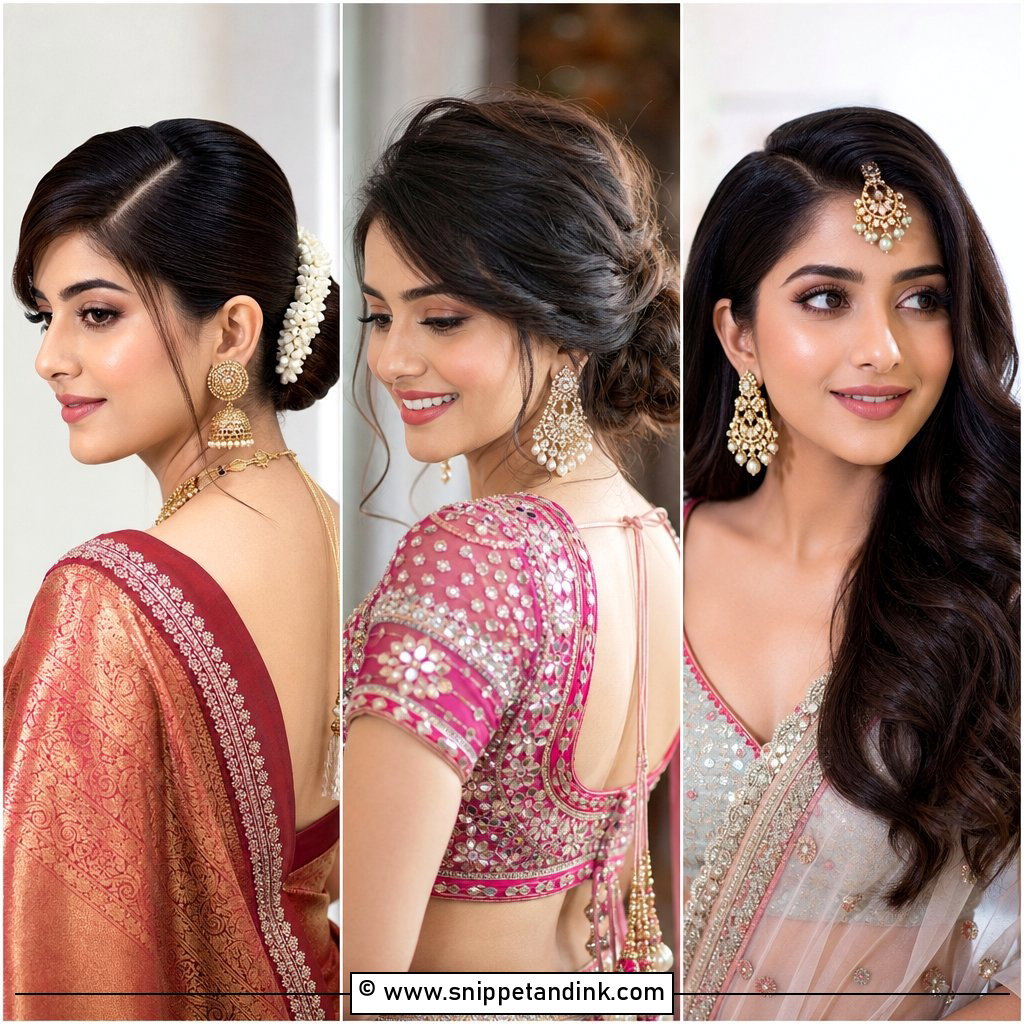
The gajra bun is something many South Indian women wear on ordinary festive days, and for a wedding it simply gets a fuller gajra and better pins. A neat low bun sits at the nape, encircled by jasmine or mogra strings. It’s light and comfortable through a long muhurtam, which is why I recommend it for brides who’ll be seated for hours. Silk and Kanjeevaram sarees suit it, and gold hairpins or a temple-style tikka add sparkle. No artificial flower gives you that fragrance.
6. Half-Up Half-Down Bridal Hairstyle
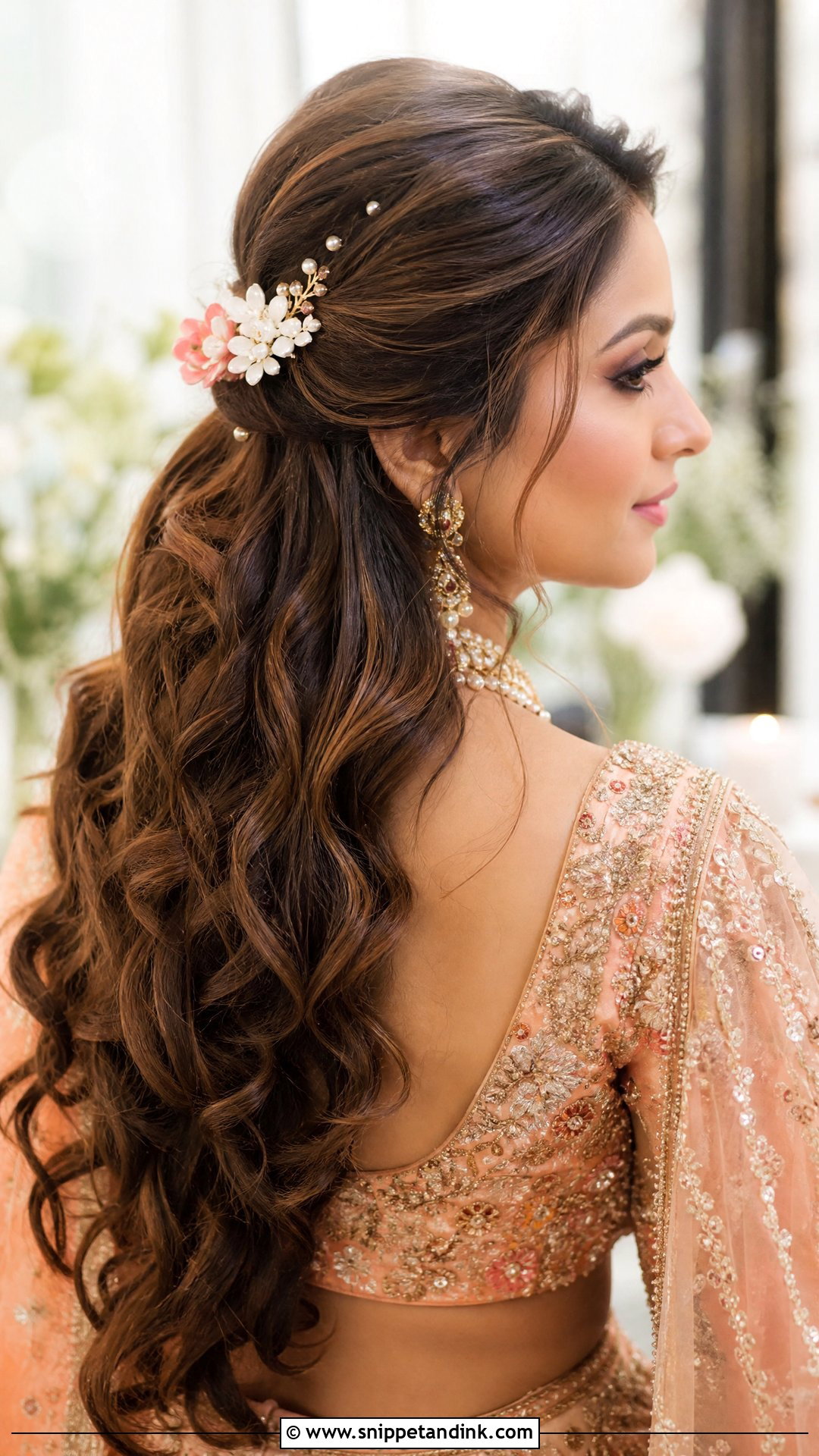
Half-up, half-down pins the top section back and leaves the rest in soft waves. It keeps the hair off the face and gives a tikka or hairband somewhere to anchor. I often braid or twist the pinned-back section instead of just clipping it, since a twist grips better than a smooth section. It’s a regular choice for receptions and engagement ceremonies. Medium to long hair suits it, with a lehenga or a gown.
7. Messy Bun for Desi Bride
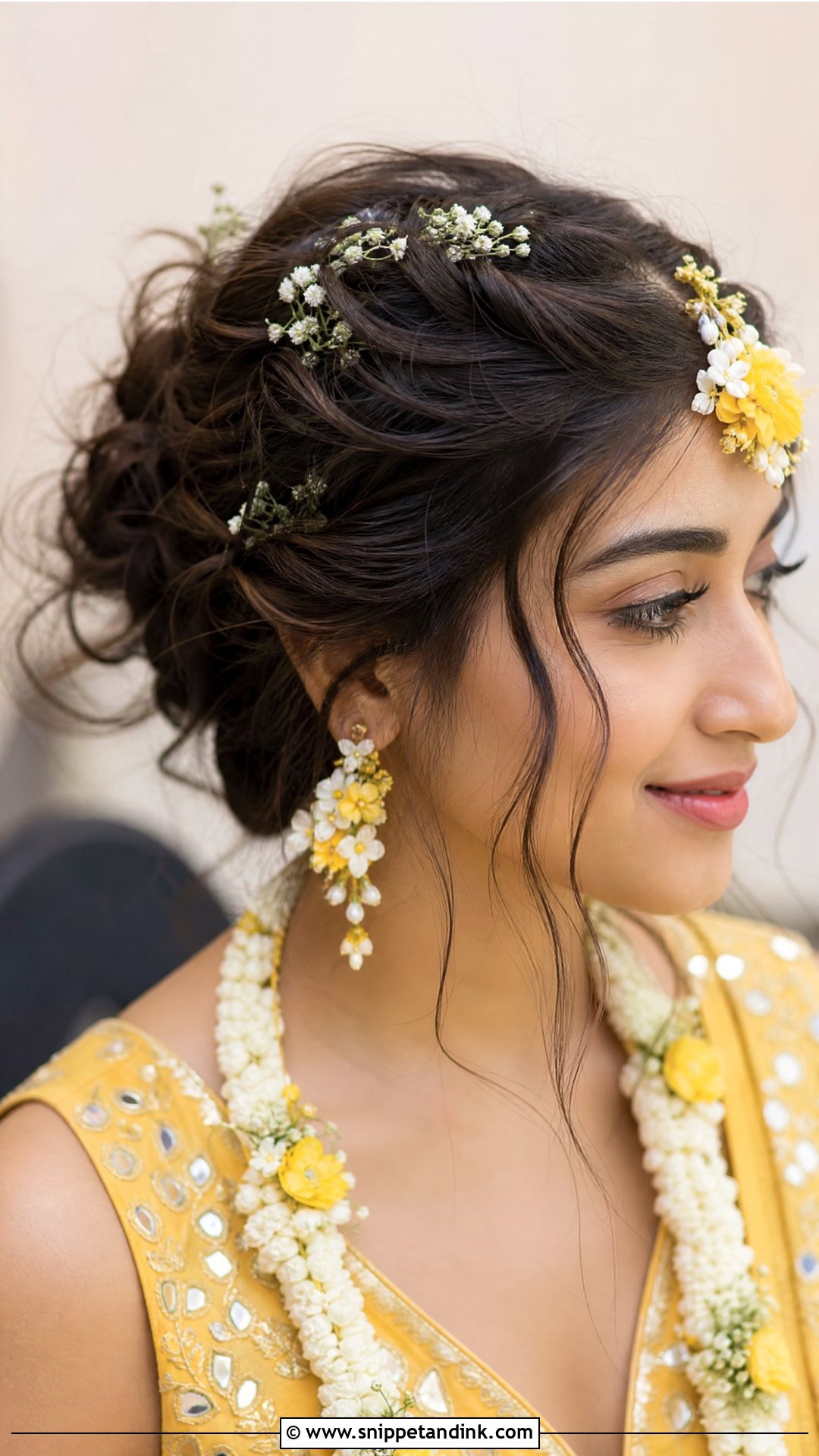
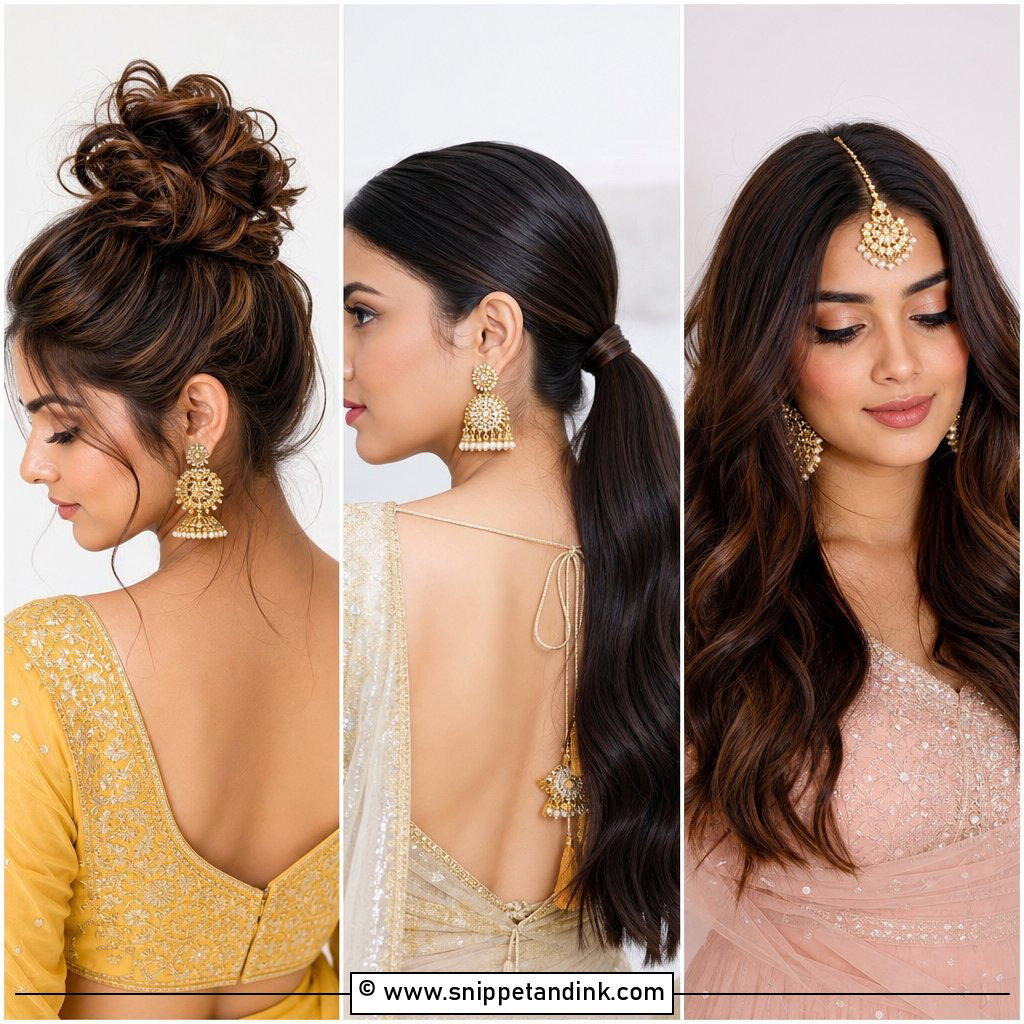
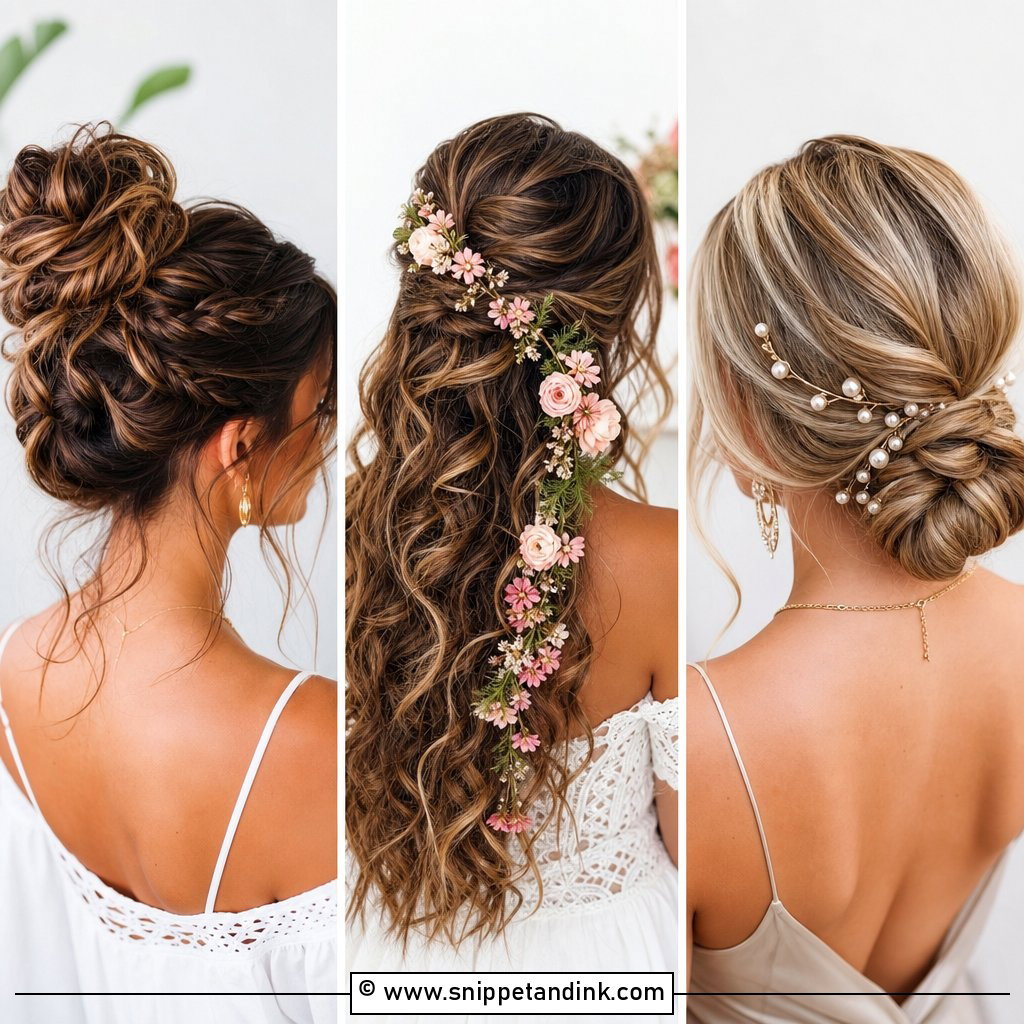
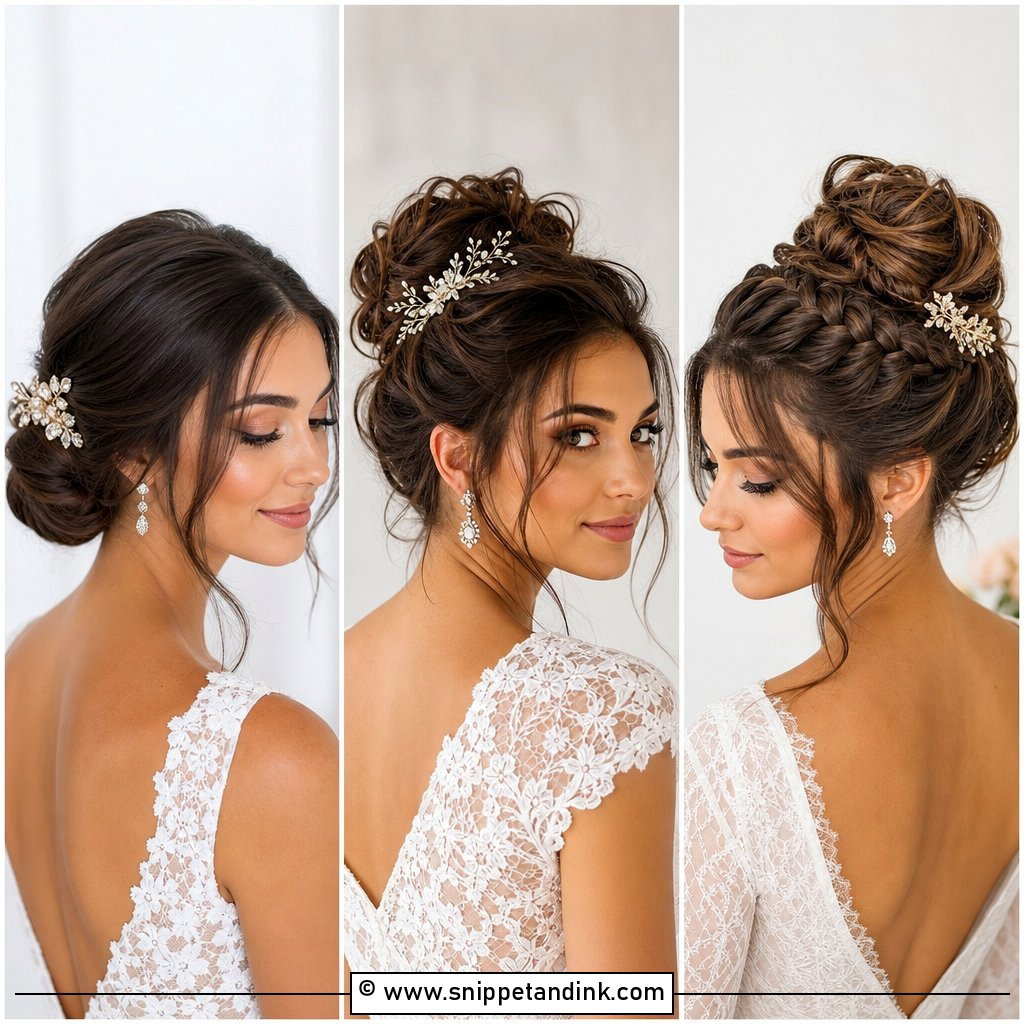
Loose tendrils and soft texture make the messy bun the opposite of a tight chignon. Done right, it looks casual but has structure underneath: I curl the hair first and pin it in sections so it stays comfortable for a full mehndi or haldi. Baby’s breath, small roses or gold accents tuck in easily. Pull out a couple of face-framing strands to soften it. It works on fine and thick hair alike.
8. Dutch Braid Bridal Updo
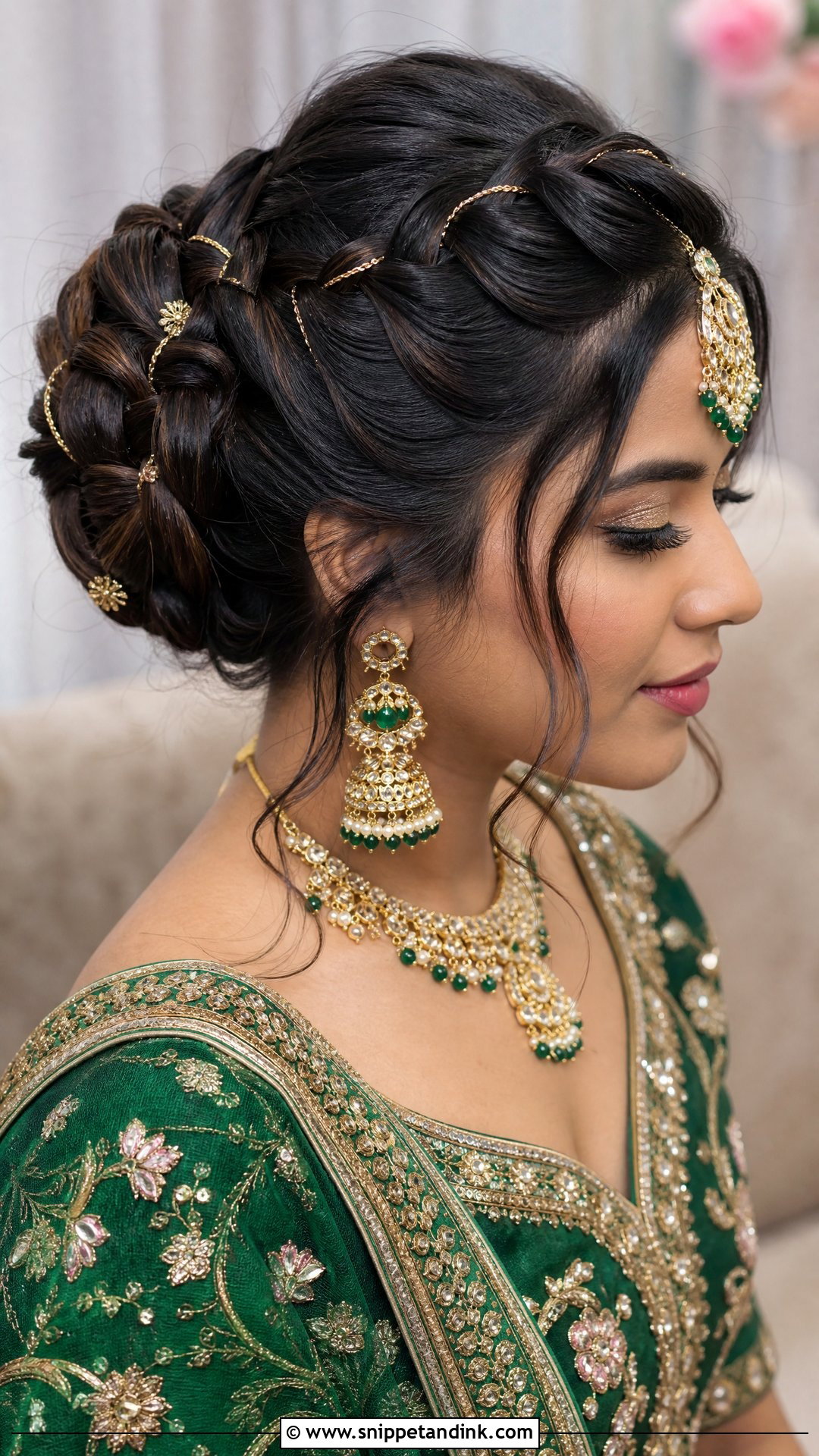
A Dutch braid sits on top of the hair, not underneath, so it gives a raised, three-dimensional texture. Coil it into a bun or wrap it around the head crown-style. It’s sturdy, which is why I suggest it for sangeet and mehndi functions with lots of dancing. Gold threads or pearls woven in add detail. If your hair is layered, I braid tighter at the start and pin any short pieces that poke out as I go.
9. Side Swept Curls With Maang Tikka
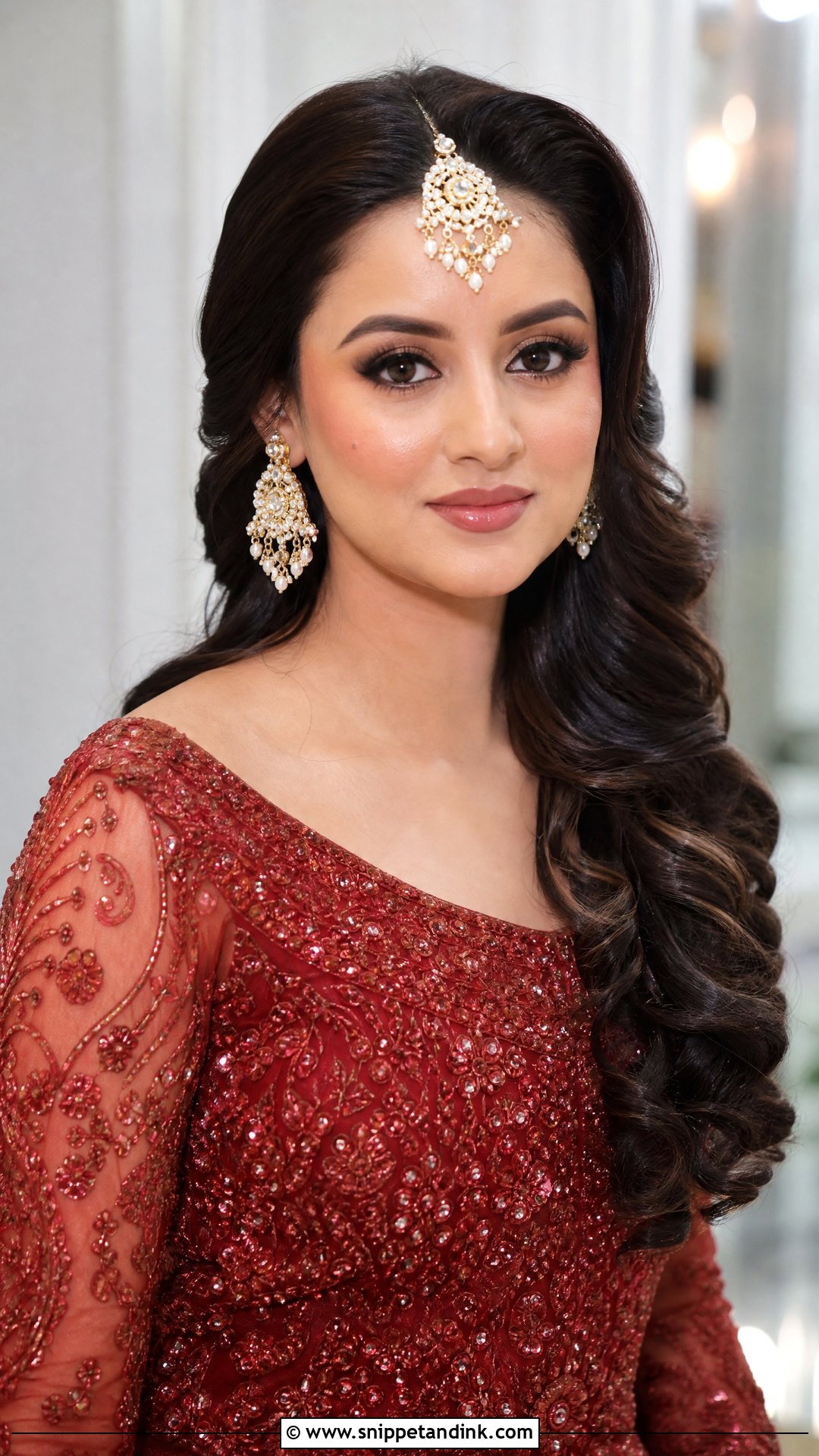
All the hair goes over one shoulder in flowing waves, which leaves the other side clear for a statement earring and the maang tikka. It’s a reception favourite. The sweep only stays where it is if the back is secured, so I cross pins behind the ear on the hidden side before arranging the curls. A jeweled accessory near the part adds sparkle. Oval and round faces suit the asymmetry particularly well.
10. Rose Twist Bridal Hairstyle
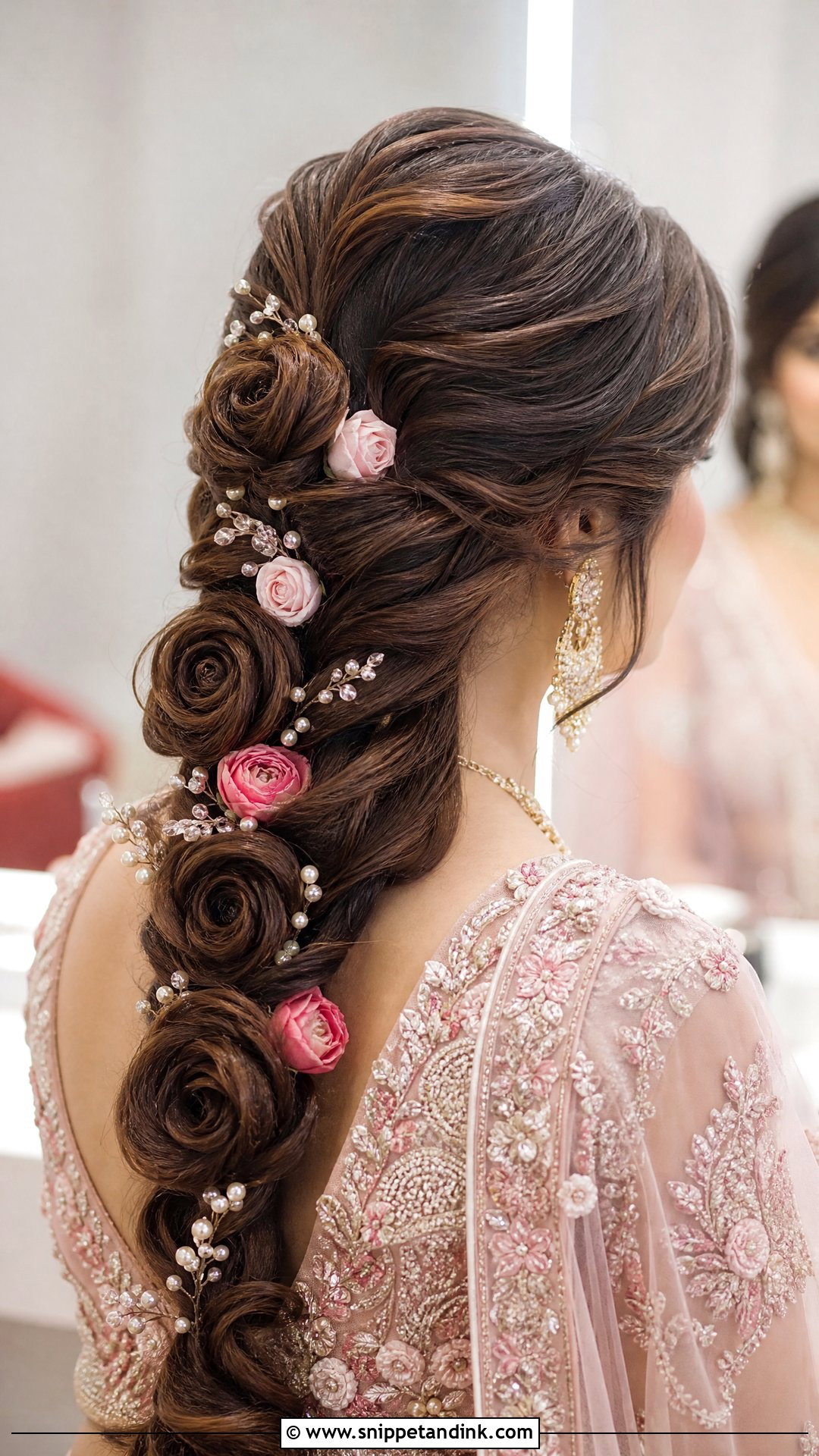
Rose twists shape small sections of hair into spirals that look like opening roses, often around a low bun or over open waves. They take patience. Each rose is a twisted section coiled flat and pinned through the centre, and on very fine hair they come out small, so I add a little texture spray first. Real or fabric roses tucked between them can carry the theme further. It’s a good option if you’d like something more personal than a standard bun, for an engagement or reception.
11. Bun With Maang Tikka and Passa
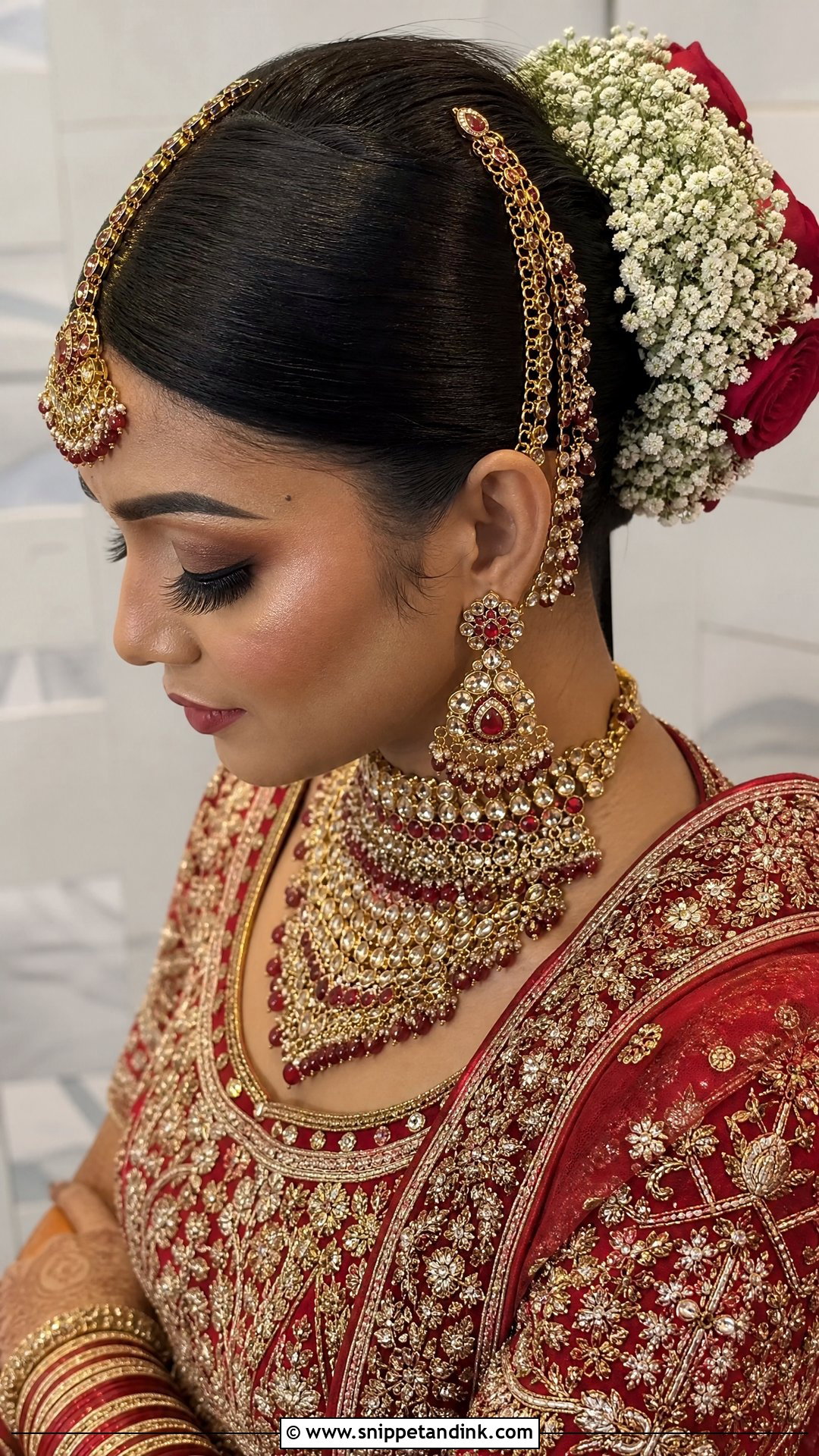
This is the full traditional set: a sleek bun with a maang tikka on the centre part and a passa draped along one side. The bun holds the hair while the jewelry does the talking. Getting both pieces to sit right is the real work. I pin the tikka to the part and fix the passa to small anchor sections above the ear before the bun is finished. It suits heavy bridal lehengas and dupattas for the main ceremony. A jeweled pin or a few fresh flowers add balance.
12. Curly Downdo for Mehndi
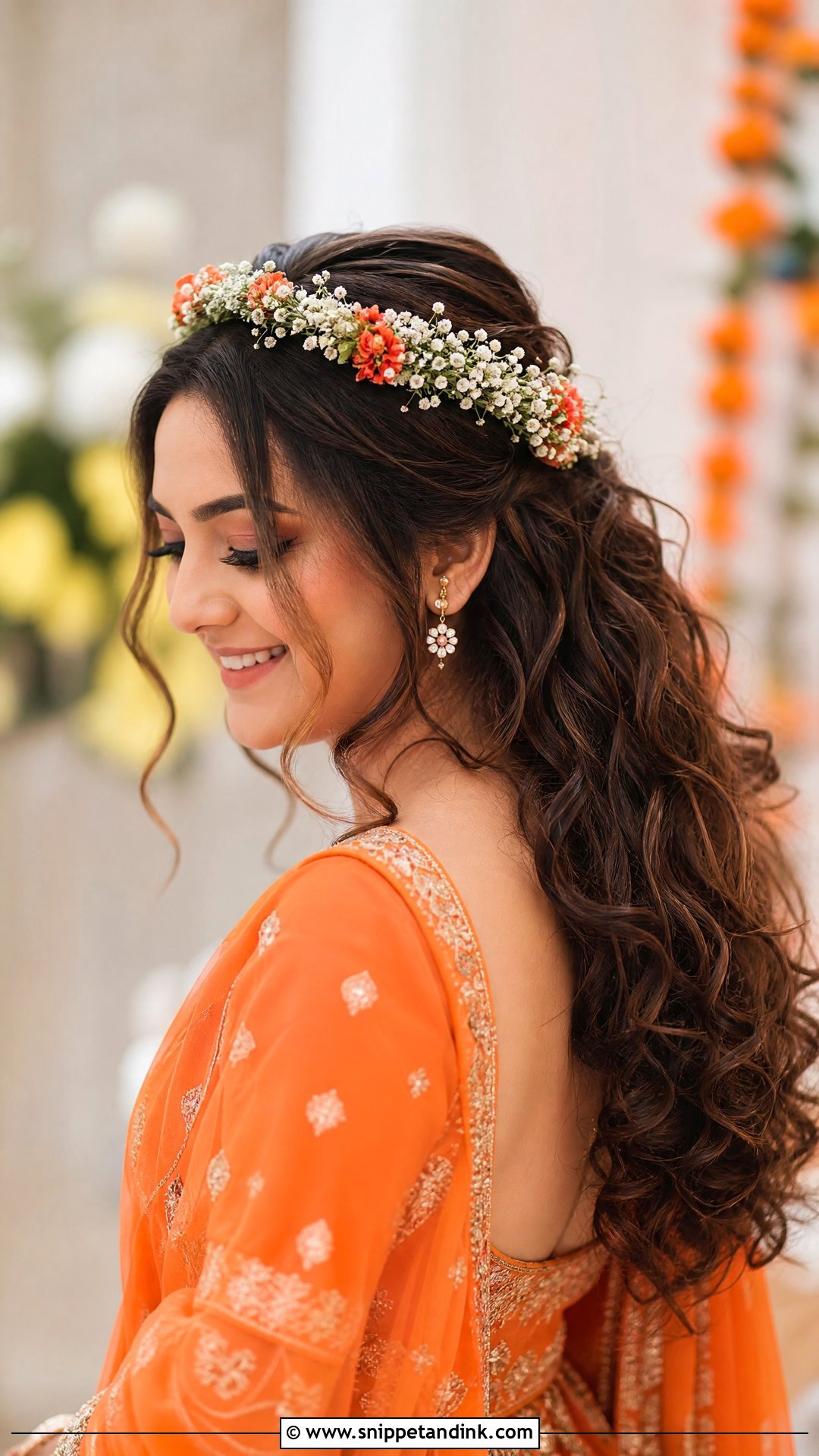
A curly downdo leaves natural texture loose and moving, which suits a mehndi perfectly. For naturally curly hair, I define the curls with a cream and dry them with a diffuser instead of brushing them out, and add a floral hairband or a few flowers. It’s low-maintenance, which matters on a day when your hands are covered in wet henna. Bright, colourful mehndi outfits pair with it.
13. Sleek Low Bun for Reception
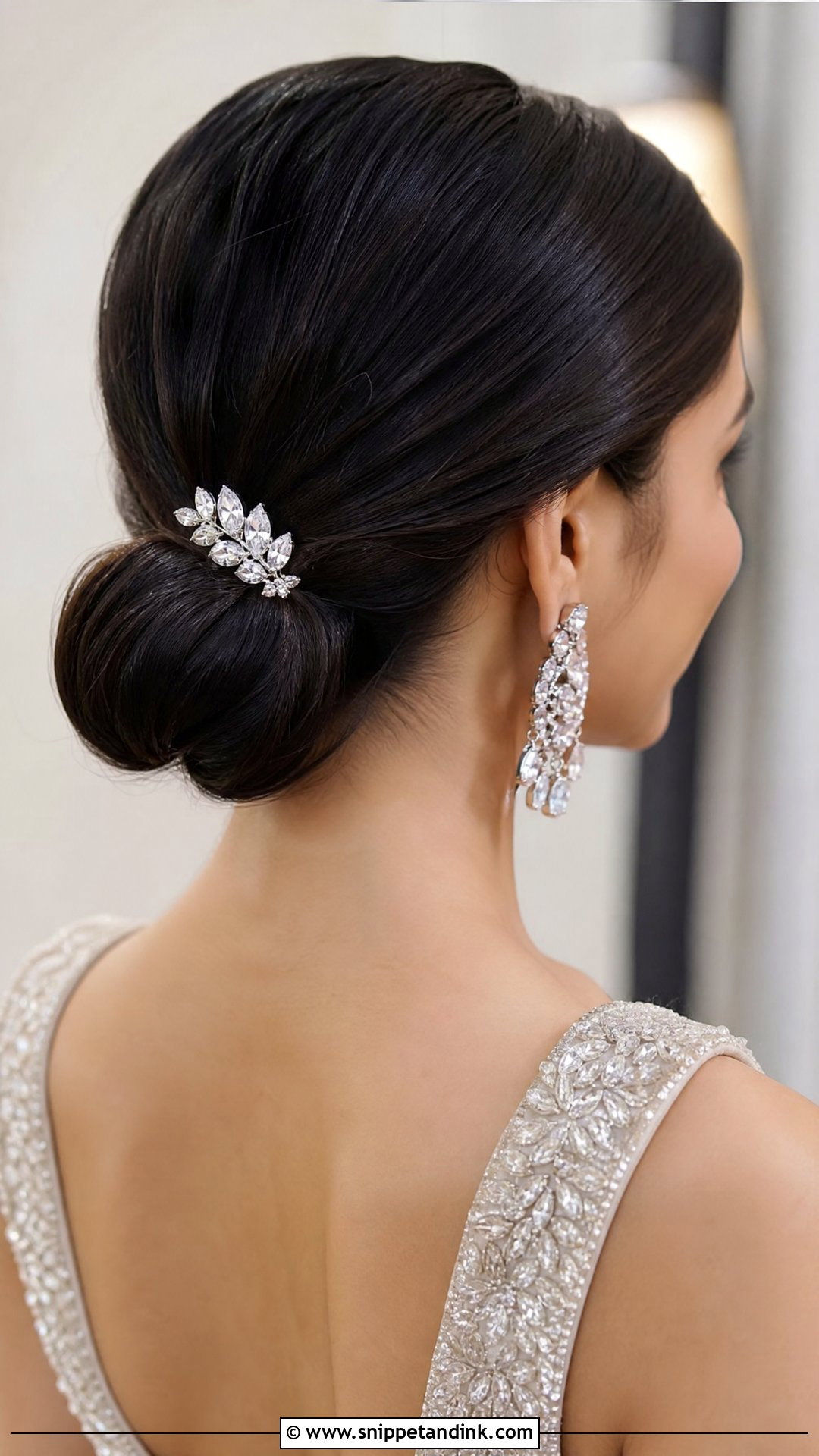
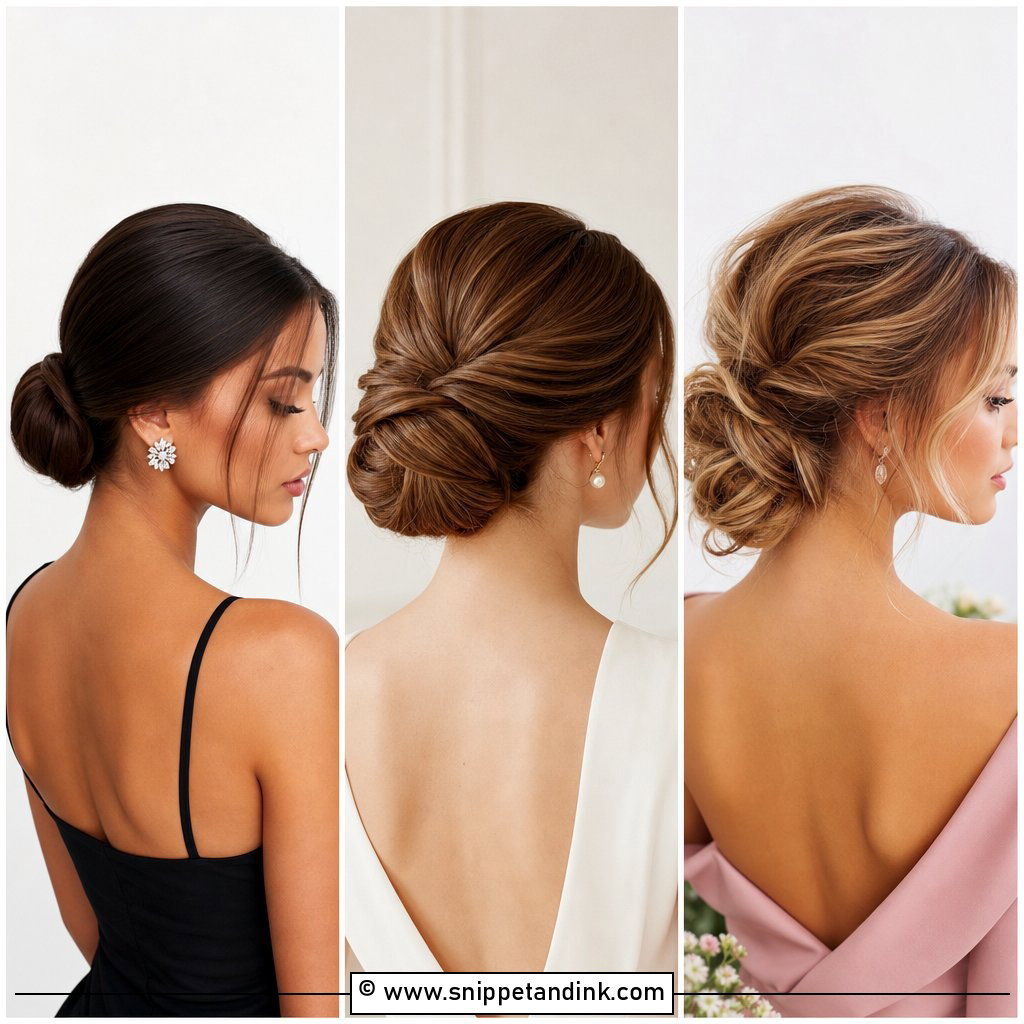
A sleek low bun pulls the hair smooth to the nape with not a strand out of place, so the jewelry and outfit get full attention. The polish comes from the prep: a smoothing blow-dry, then a fine-tooth comb and a little gel at the hairline. Pick a centre or side part. A simple diamond pin or pearl accent is plenty. Sharp jawlines and statement earrings show well with it, at a reception with a structured gown or contemporary lehenga.
14. Fresh Flower Crown Hairstyle
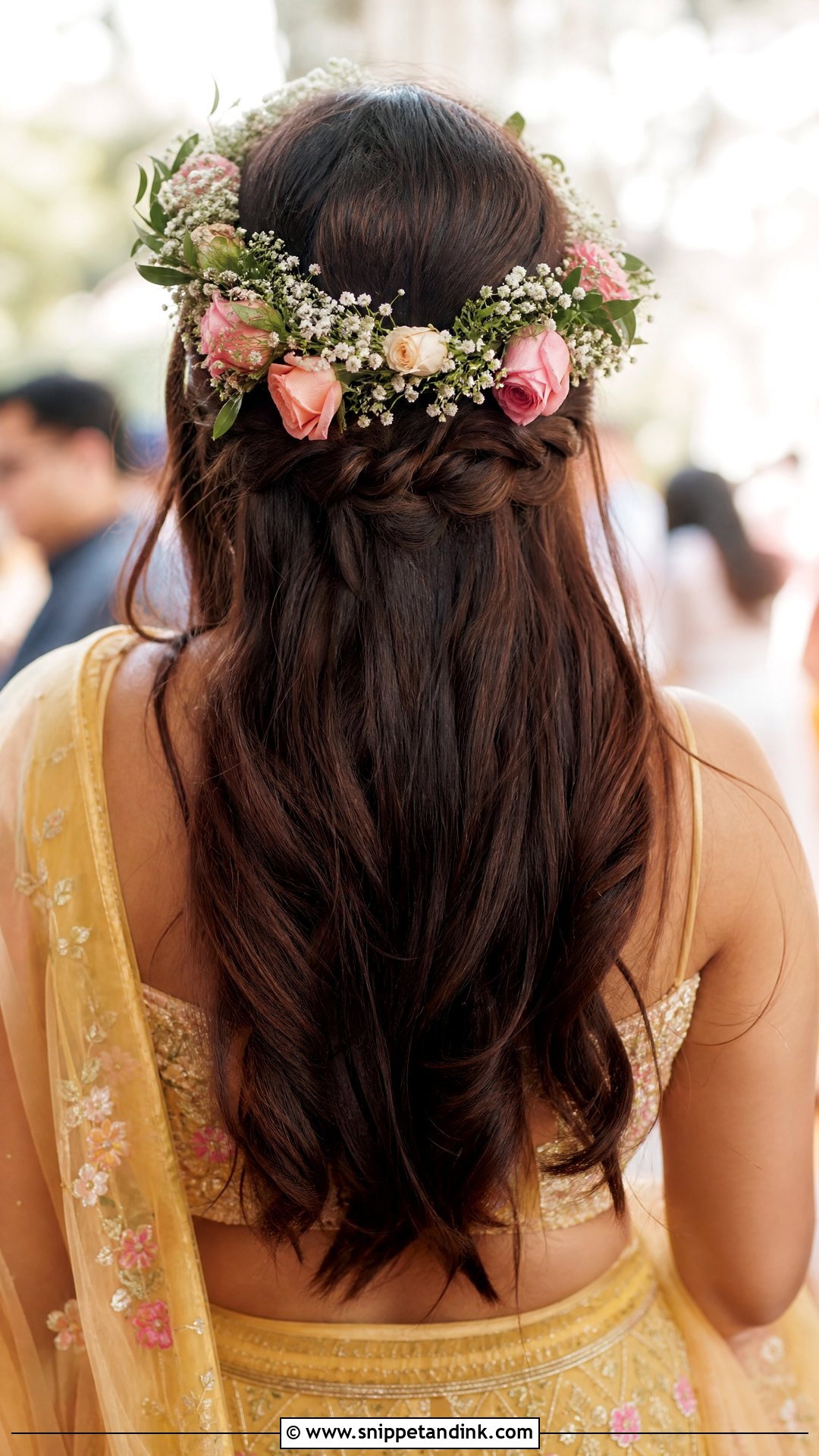
Real blooms around the crown of the head like a halo suit open hair or a loose braid down the back. It’s a daytime look for haldi, mehndi or an outdoor function. Mix roses, baby’s breath and greenery. Fresh crowns wilt in direct sun, so I’d have the florist make it the morning of and keep it in the fridge until you’re dressed. Keep the rest of the hair simple.
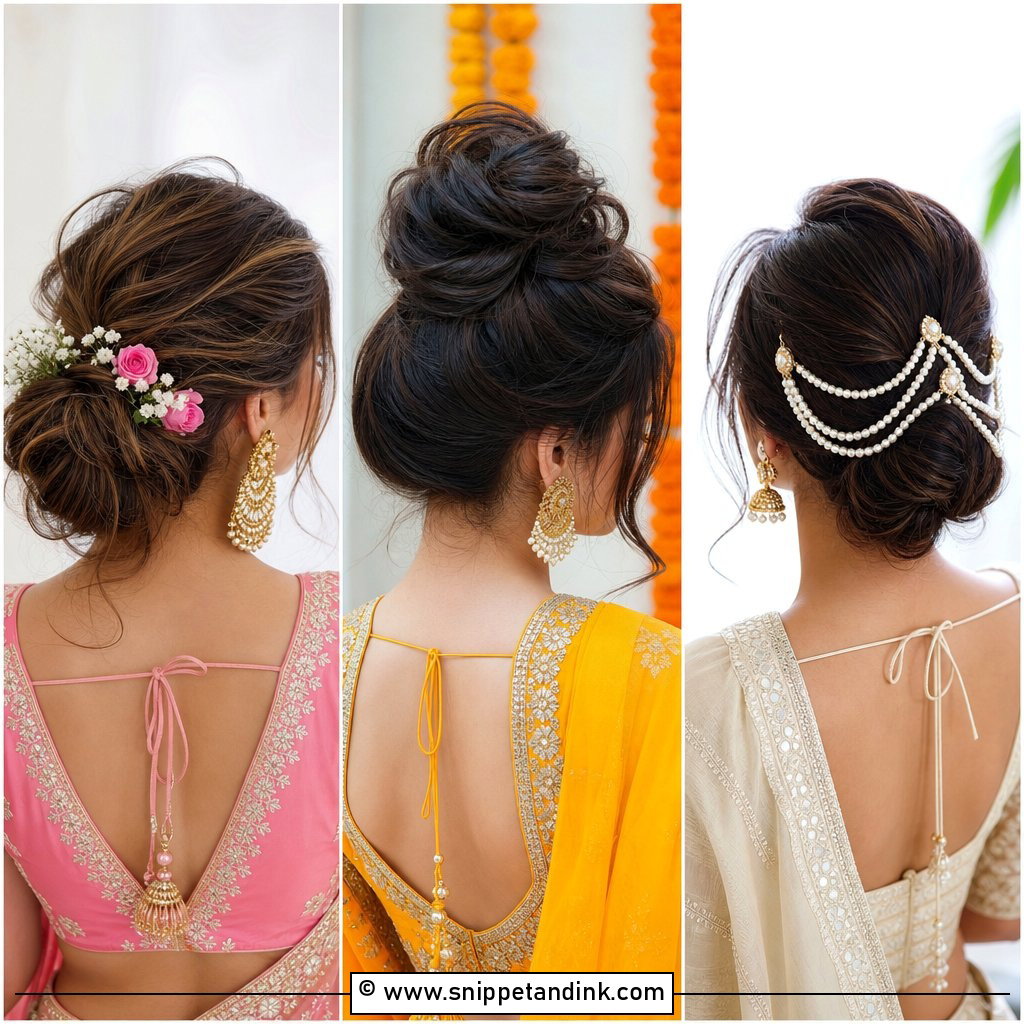
15. Bubble Braid With Beachy Waves
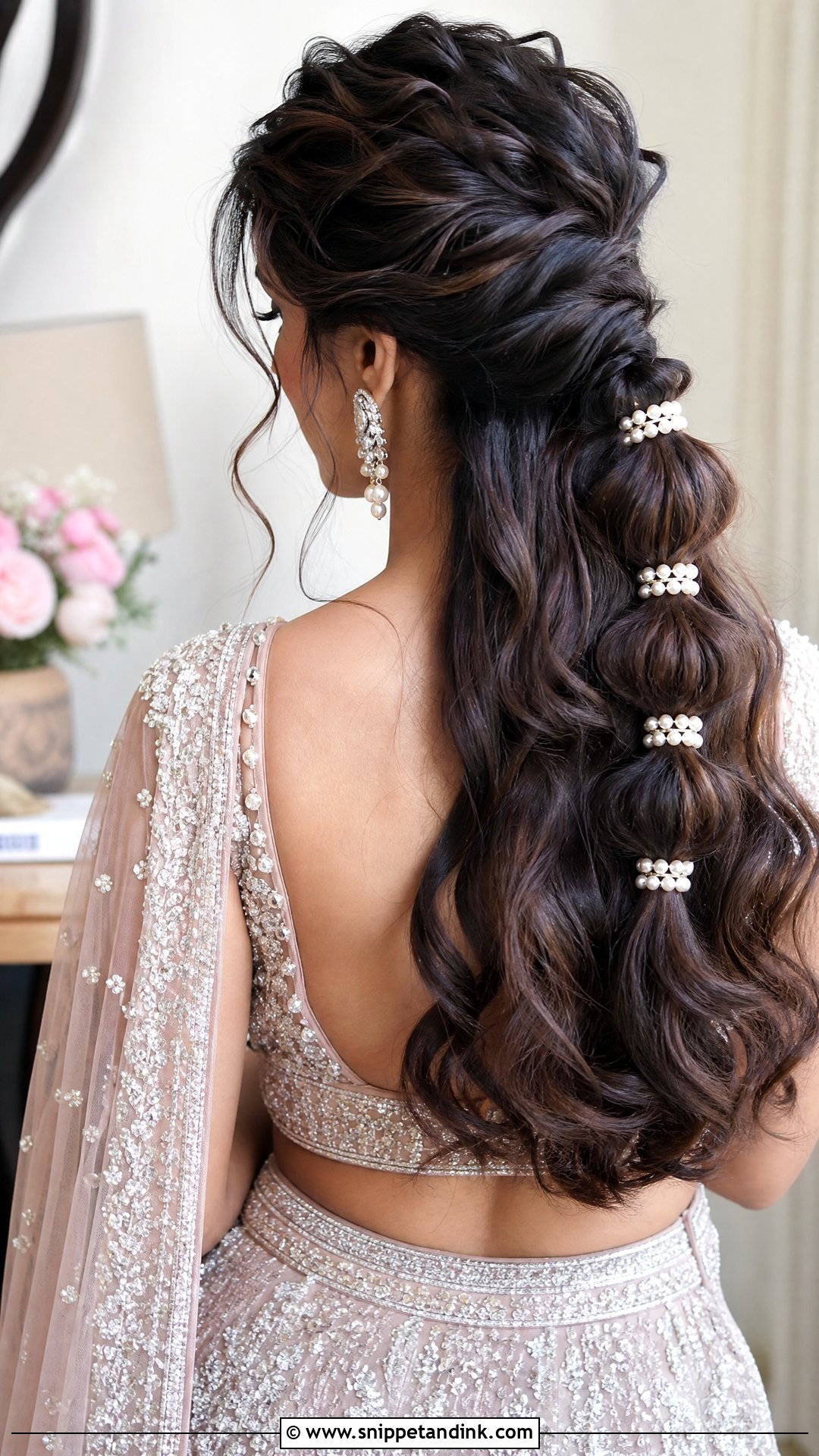
Bubble braids are sections tied with small elastics at intervals, each one pulled wide into a rounded bubble, with the rest of the hair in loose waves. They feel young and modern, especially for a sangeet or engagement. Pearls or gold cuffs on the elastics make it bridal. Extensions add length and fuller bubbles. I’d use clear elastics, never coloured ones, so the ties disappear in photos.
16. Braided Bun With Fresh Flowers
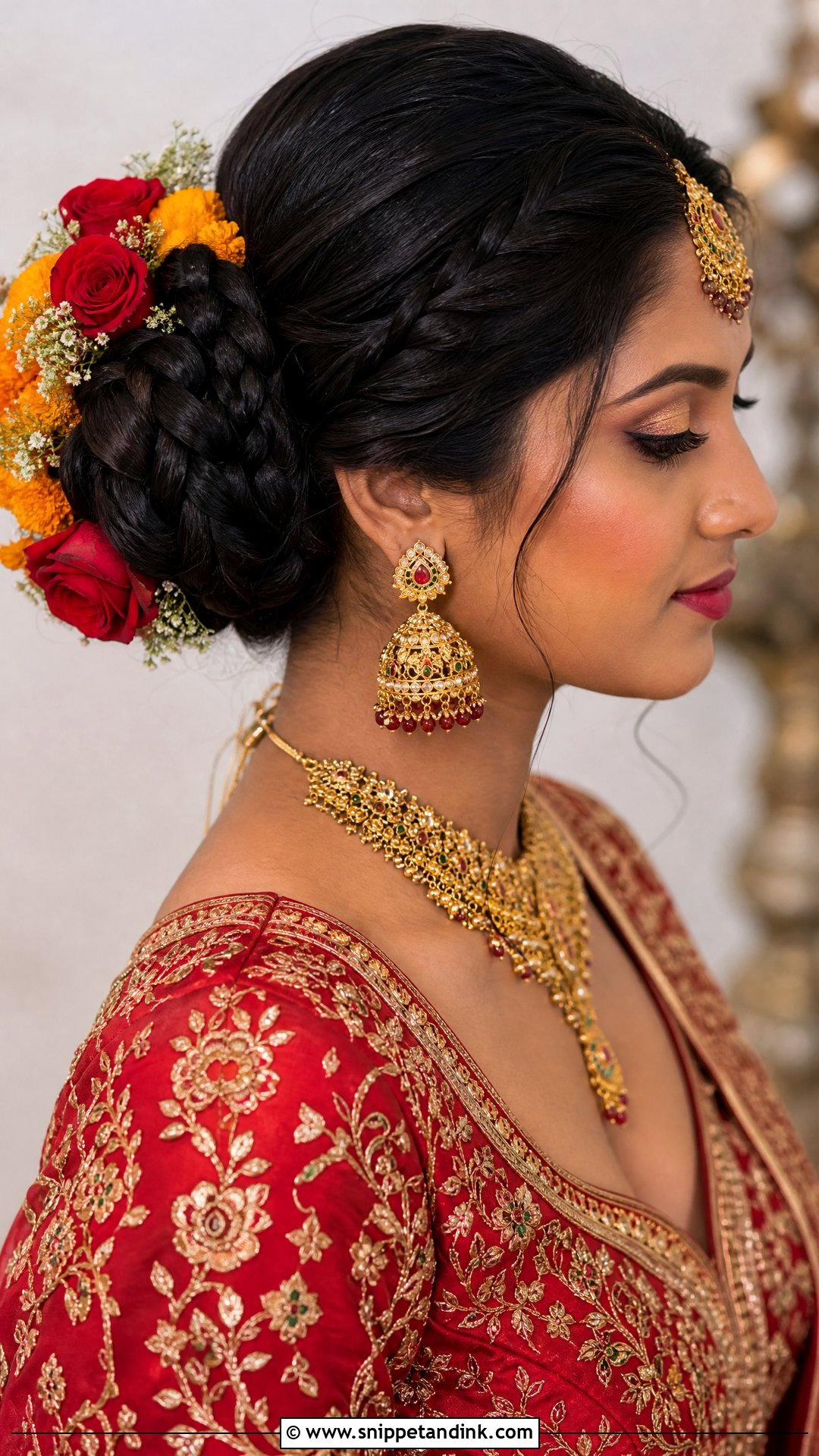
A braid coiled into a bun with blooms around it gives texture and security together. It’s one of my most dependable options for daytime ceremonies and the main wedding, since a braided coil barely moves even through dancing. Marigolds, roses or jasmine all suit it. Pair it with jhumkas and a maang tikka. For thinner hair, I add a bun filler under the coil so it doesn’t look small.
17. Wavy Open Hair With Pearl Accents
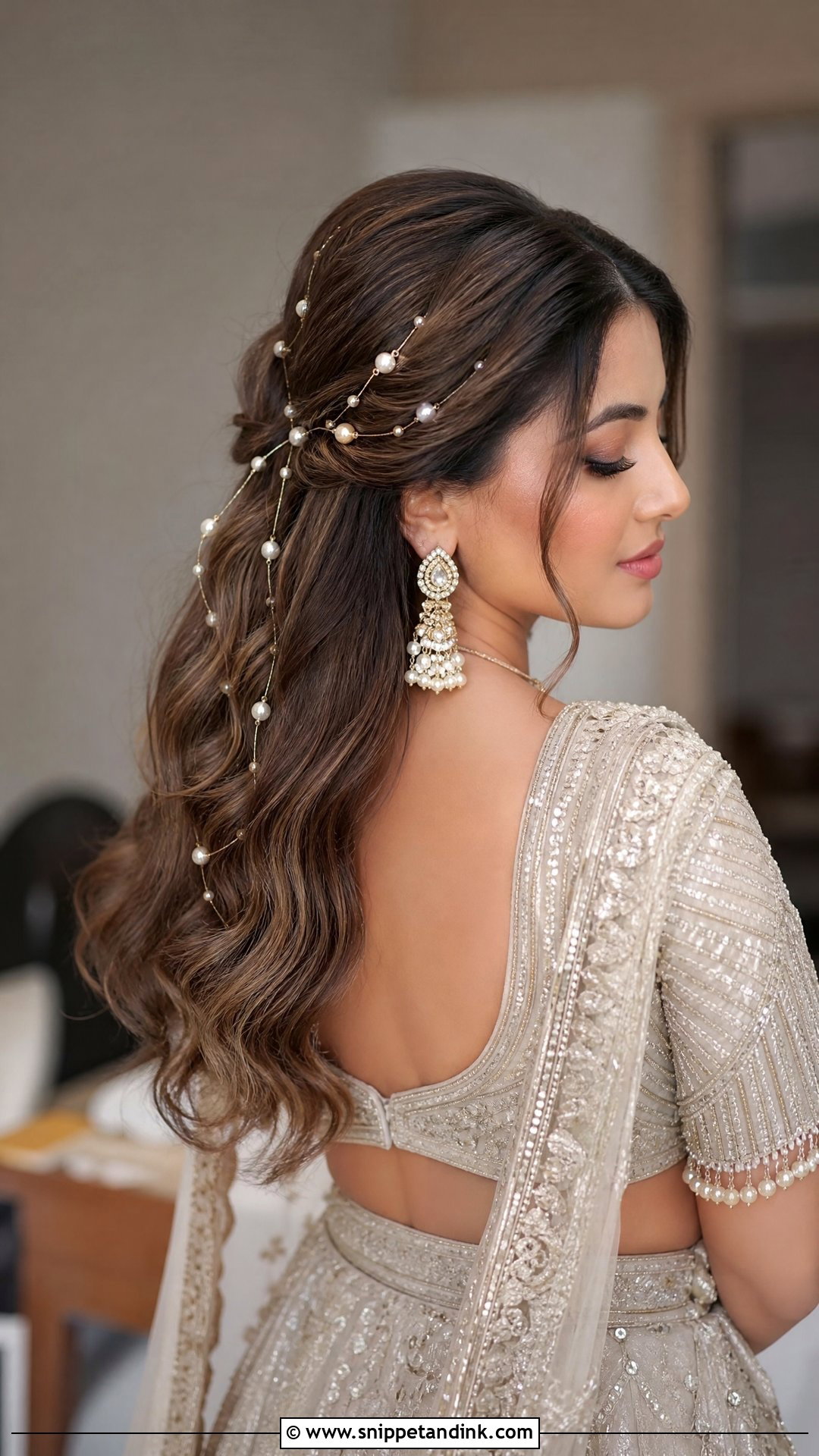
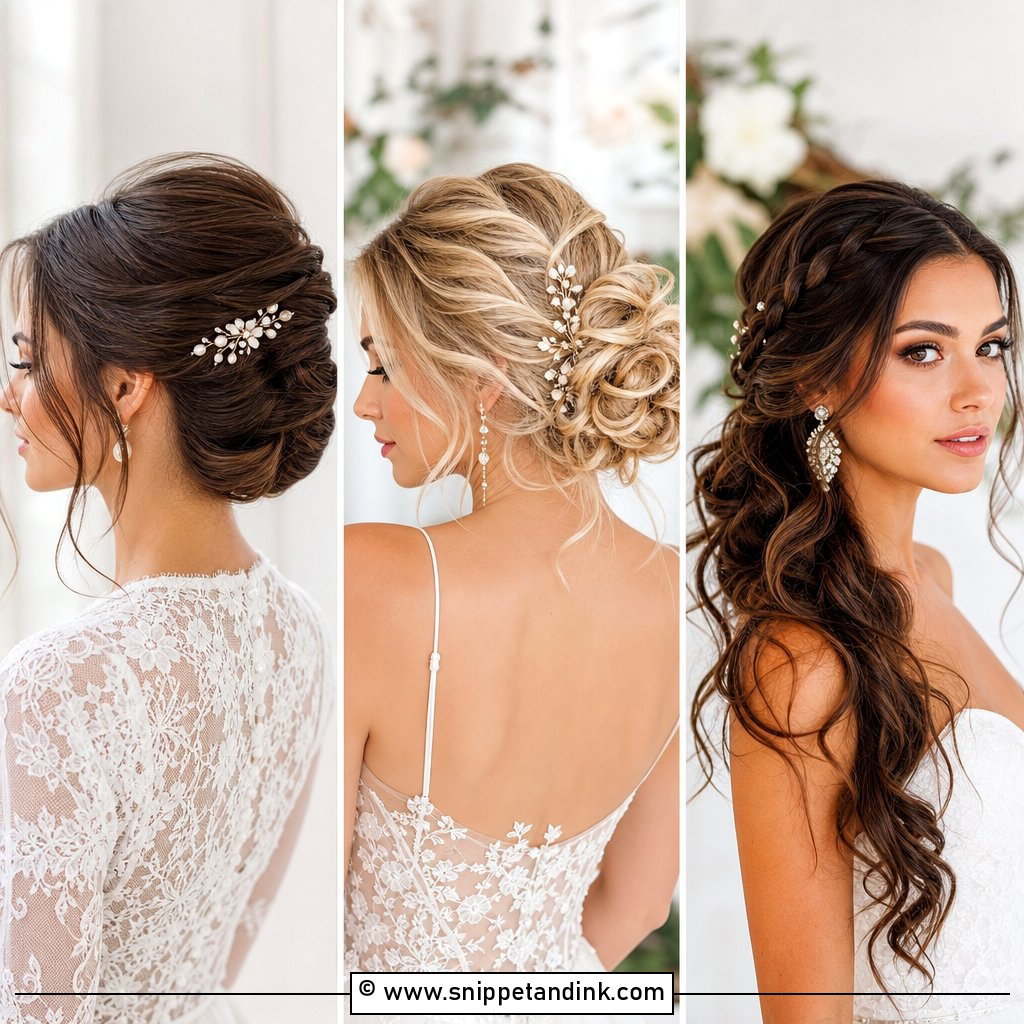
Loose waves with pearl pins or chains woven through look soft and modern for a reception. The pearls catch light without overwhelming the hair. Centre or side part both work. Extensions boost volume. My caution is about the pearl chains: they tangle easily in loose waves, so I anchor them to two small hidden braids rather than letting them rest on the surface. Pearl jhumkas tie the theme together.
18. Crown Braid for Indian Wedding
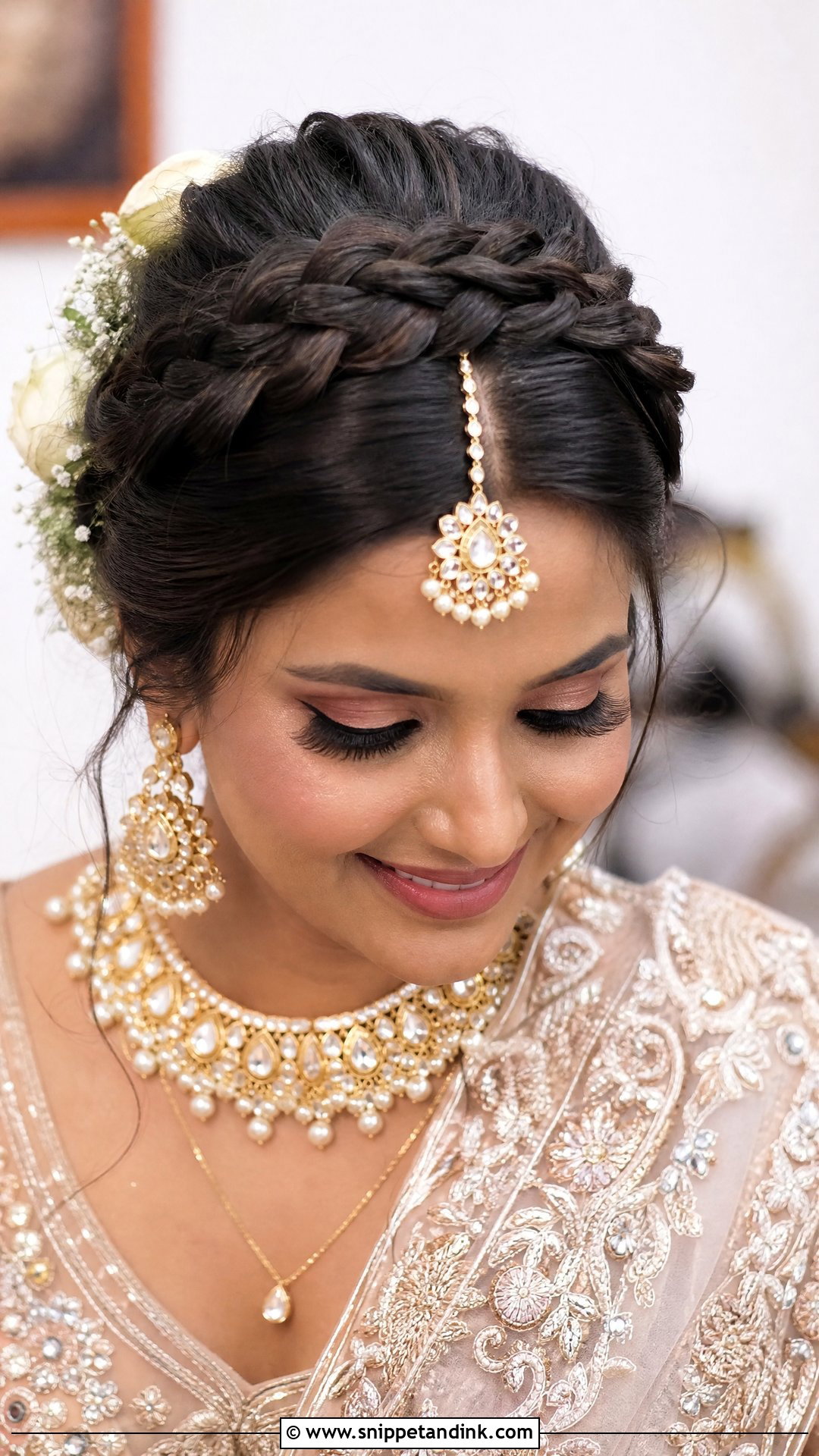
Braided sections pulled up and around the crown create a halo that looks regal from every angle. It keeps all the hair off the face and neck, which is a relief during a long, warm ceremony. Flowers, pearls or gold accents can be woven in, and a maang tikka sits at the centre part. It fits traditional and fusion outfits. On shorter hair, I start the braids lower and hide the ends under the opposite braid.
19. Twisted Updo With Hair Jewelry
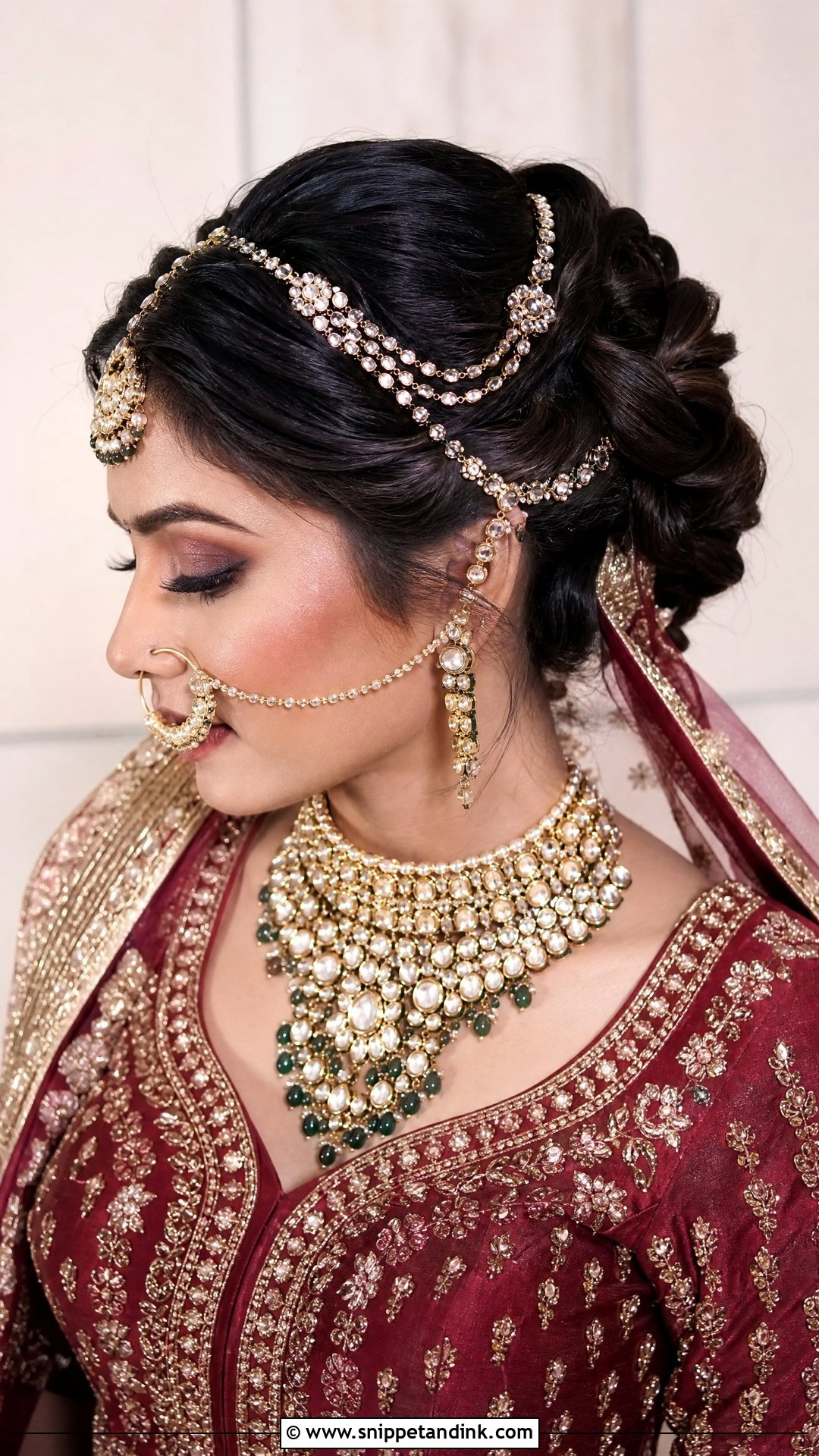
Twisted sections pinned upward form the base here, and jeweled chains, pearls or matha patti pieces are layered on top. It’s the most ornate option, for a main ceremony with heavy lehengas and statement necklaces. Because the jewelry adds real weight, I build the twists tight and pin each ornament into a twist, not into loose hair. Soft face-framing strands stop it from looking stiff. It does take time, so allow for that on the morning.
20. Loose Side Braid With Flowers
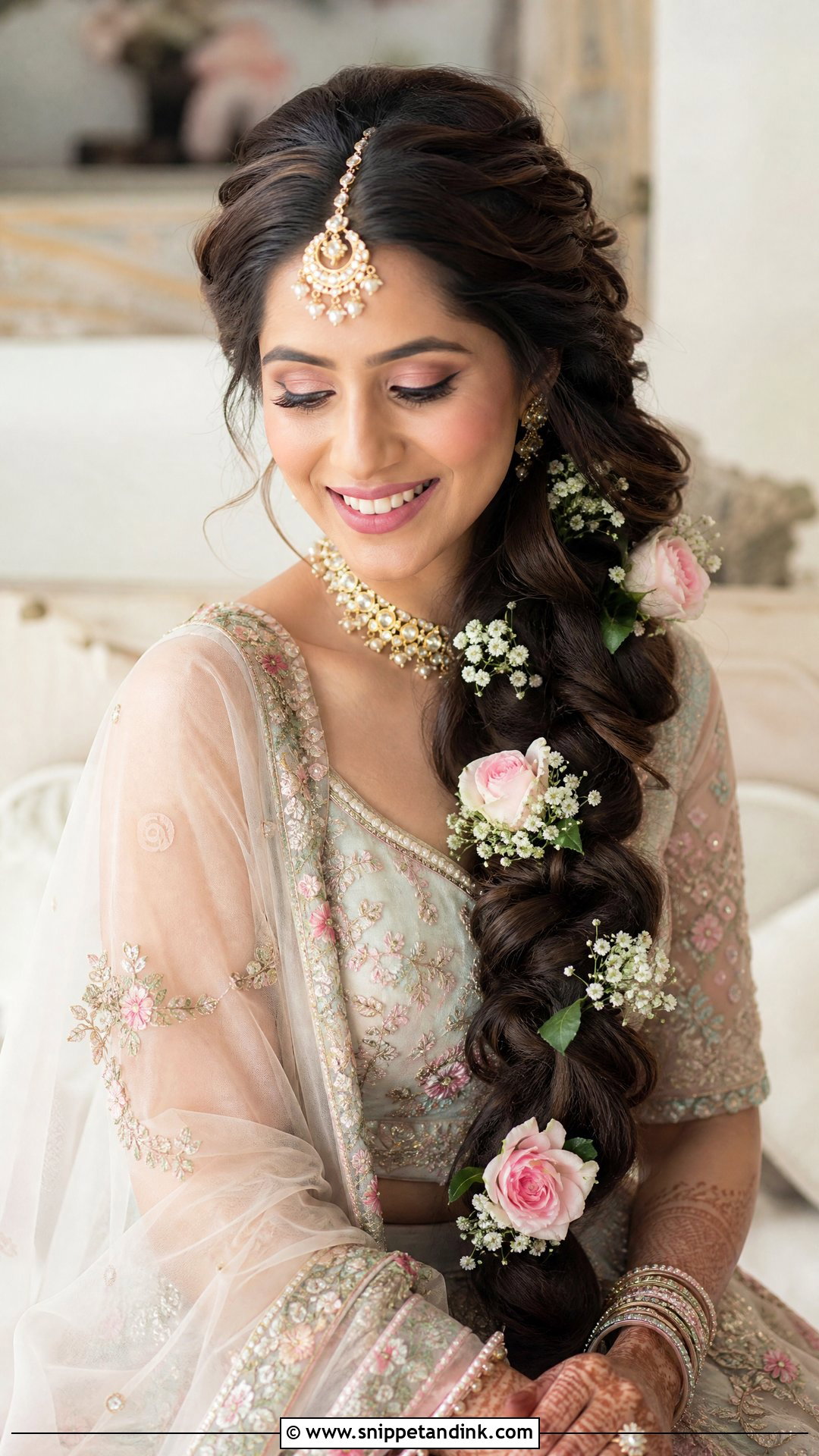
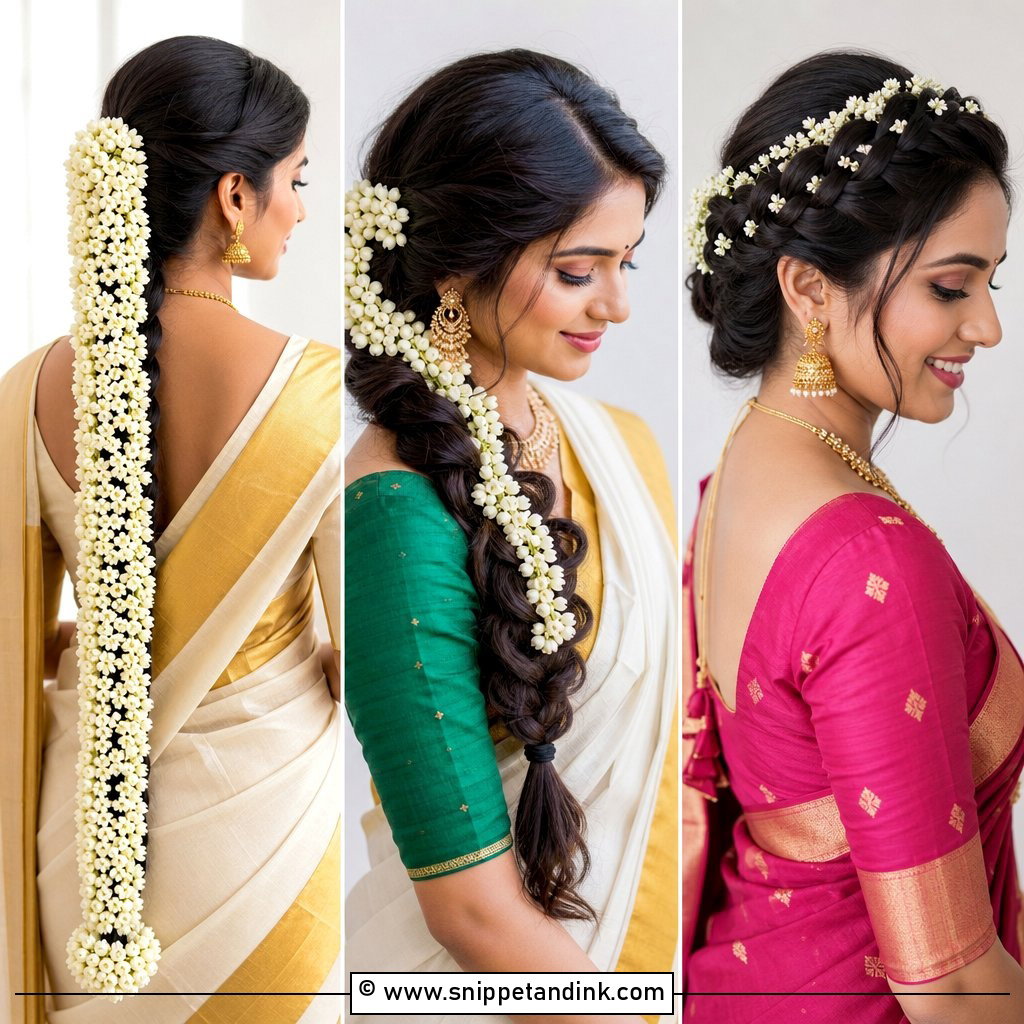
A loose side braid stays airy and full rather than tight, with fresh flowers tucked along it for colour and scent. It suits mehndi, haldi and daytime functions, and the side placement shows off earrings and the neckline. I pull the loops gently to soften the plait. A small maang tikka and a few floral accents finish it. It’s comfortable enough to sit through hours of henna.
The Wedding Morning, Hour by Hour in the Chair
Bridal hair with a dupatta and jewelry takes longer than most brides plan for. Depending on the look, I’d allow somewhere between one and a half and three hours for hair alone, and it varies with the stylist and the style.
- Wear a front-opening shirt, so nothing has to go over your head once the style is in.
- Arrive with clean, dry hair, washed the day before for updos.
- Hair is usually prepped and set first, then makeup is done while curls cool.
- Get dressed in the lehenga or saree before the final hair touches, since the neckline affects where everything sits.
- The dupatta, tikka and passa go on last, pinned into the finished style.
After the last function, take pins out slowly, one at a time, before brushing. Then wash with a conditioner and leave the hair free of heat for a few days. After several days of updos it needs the rest.
Mix One Traditional Look With One Modern One
Plan your hair per function, not just for the wedding. A gajra bun for the mandap, a pearl-laced fishtail for the sangeet and open waves for the reception make a good spread. Think about your hair length and the hours you’ll be wearing each look, and don’t hesitate to mix traditional styles with newer ones like rose twists or bubble braids. Book a trial with your outfits and jewelry ready, and I’d do it at least a month before the first function.
You'll Like These Ideas:



Leave a Reply