
I love vintage bridal work because the techniques are honest. A pin curl, a roller set or a well-placed roll either holds or it doesn’t, and the old methods hold remarkably well. The looks below range across about fifty years: 1920s finger waves and faux bobs, 1940s rolls and snoods, 1950s ponytails and pageboys, 1960s bouffants. Each one can be softened enough to wear with a modern gown. For every style I’ve noted how it’s built, what hair it needs, and where it usually trips people up.
Guests See the Back of Your Head for the Whole Ceremony
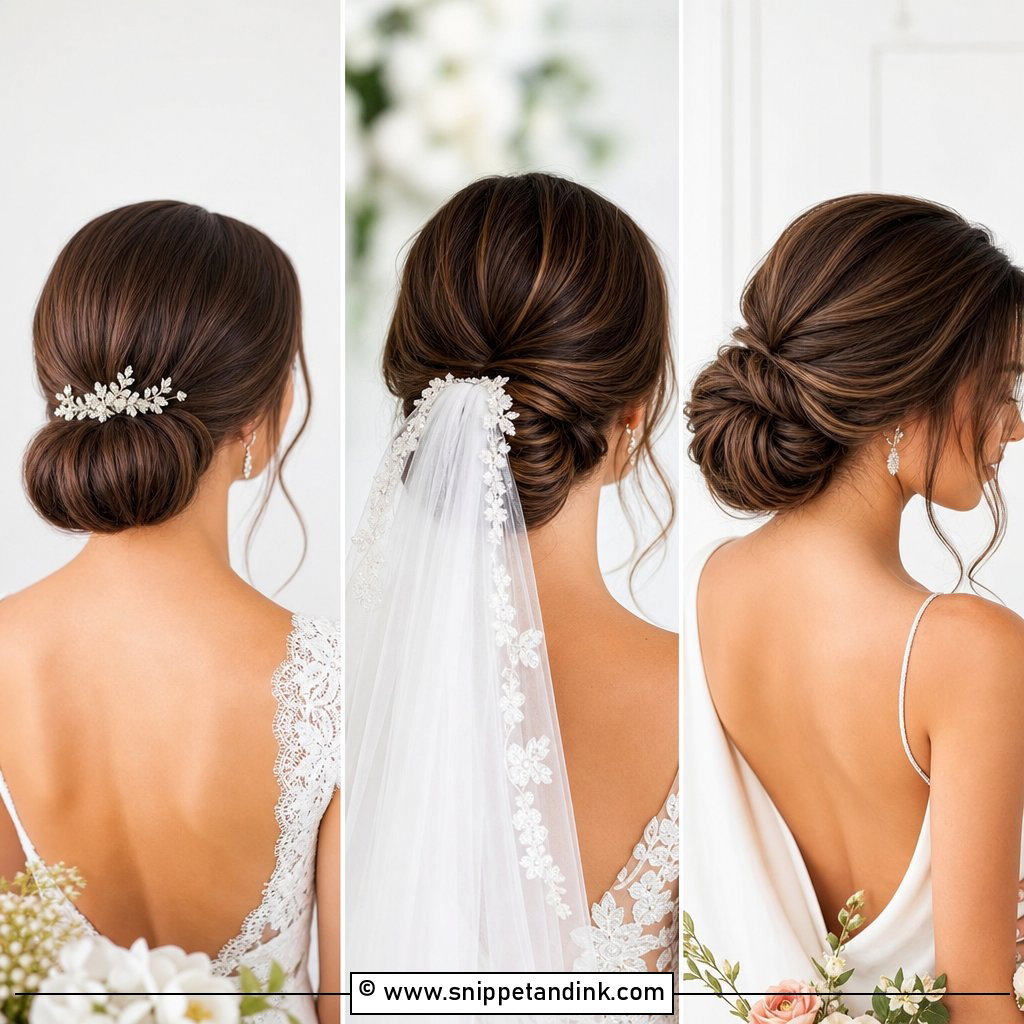
Brides choose hair from front-facing photos, but during the ceremony everyone behind you sees only the back, often for twenty minutes or more. Vintage styles differ a lot from that angle, so I always show a bride the back in a hand mirror at her trial.
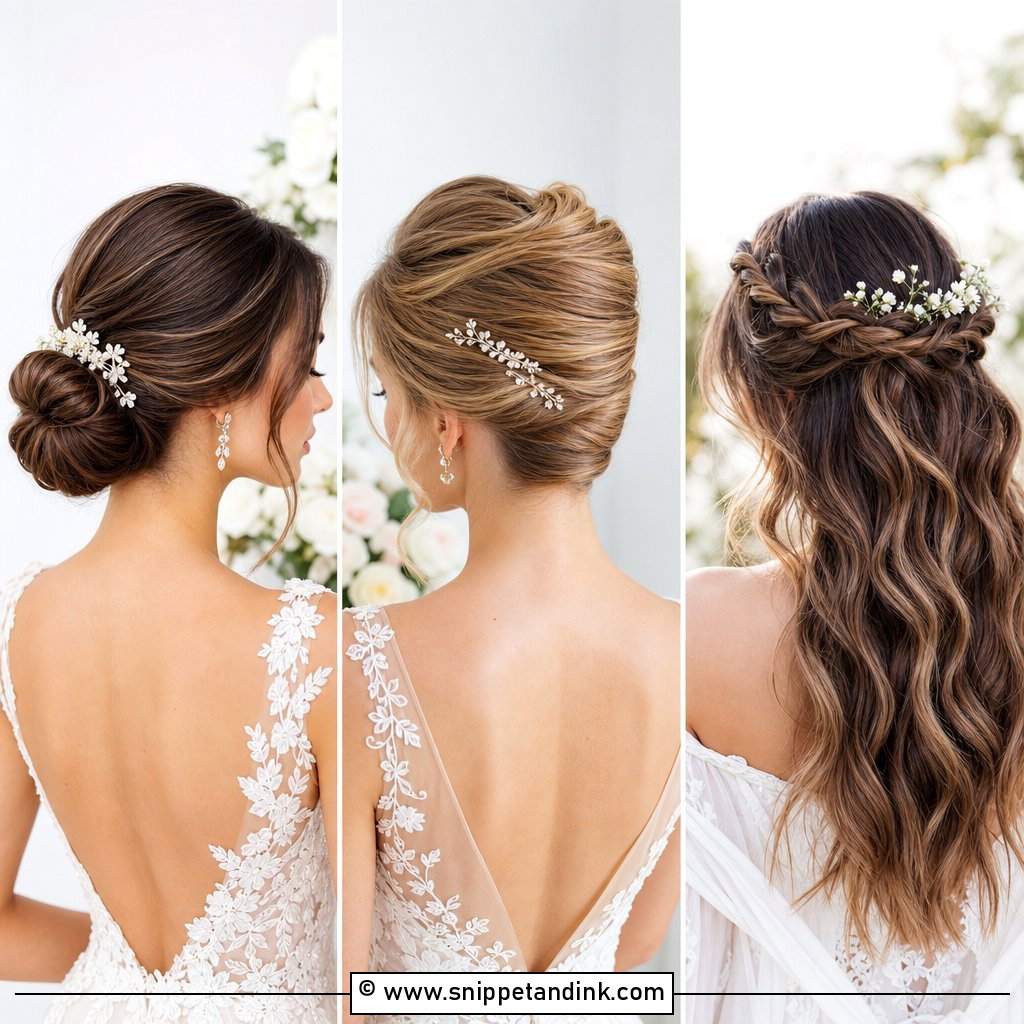
- Victory rolls and finger waves are front-loaded; from behind they can look like a plain bun or flat hair unless the back is finished with equal care.
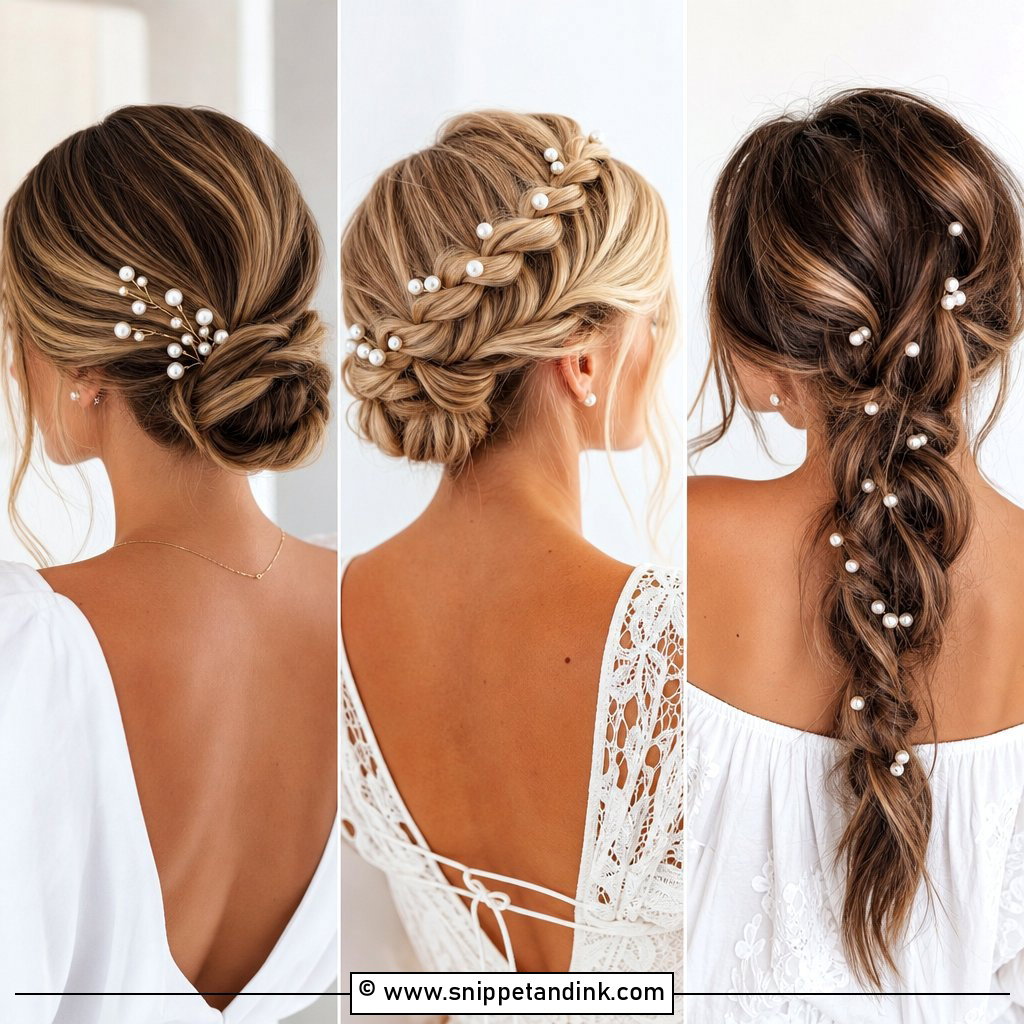
- Chignons, Gibson tucks, snoods and pearl-studded buns are made for the back view, and they frame a veil well.
- Side-swept waves look asymmetric from behind, which is lovely if the veil sits on the opposite side.
- A beehive or bouffant can block the view of people seated directly behind, so keep the height moderate at a small venue.
If your ceremony has you facing an officiant with guests behind you, give the back of your hair as much thought as the front.
1. Finger Waves Wedding Hairstyle
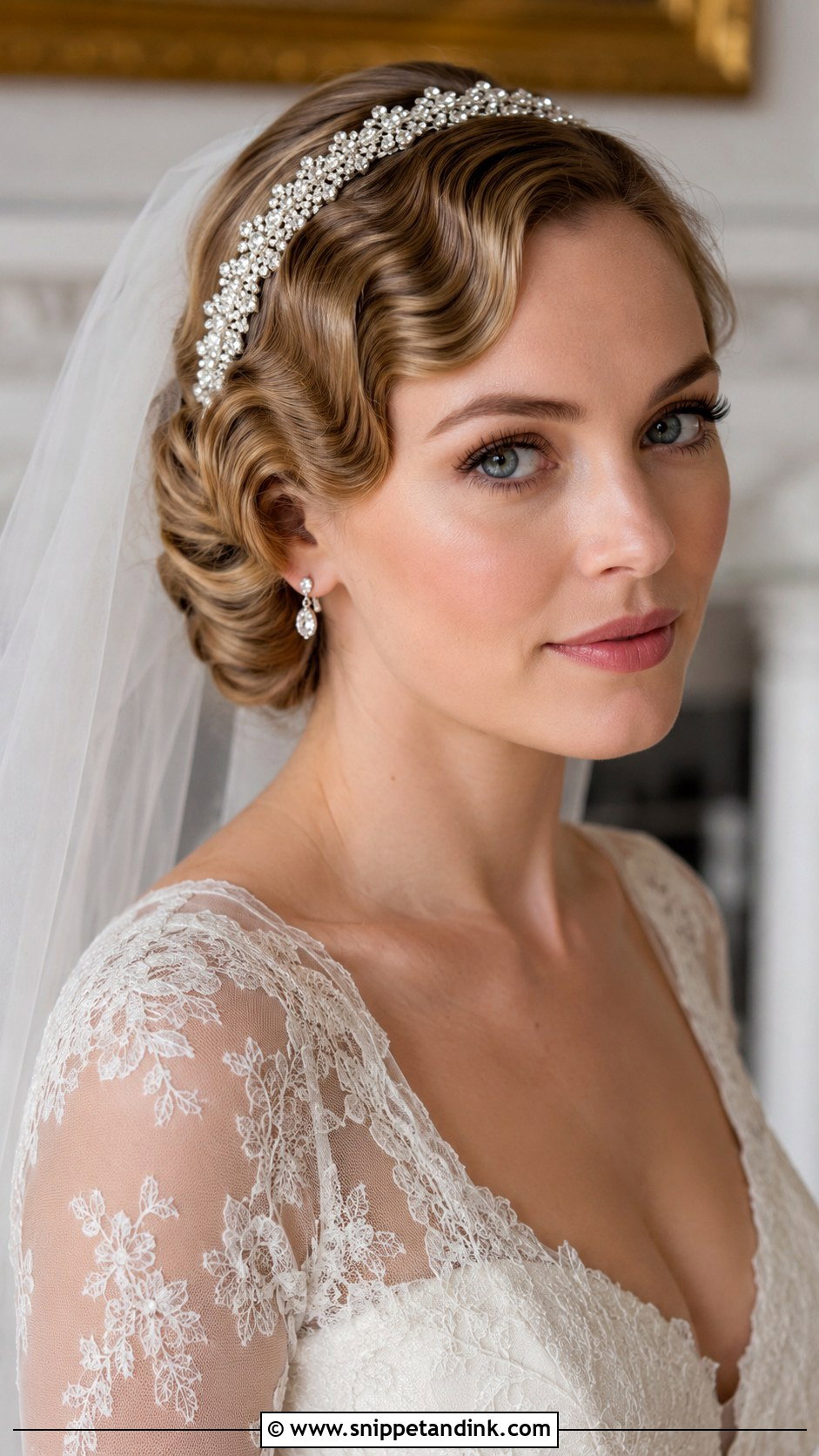
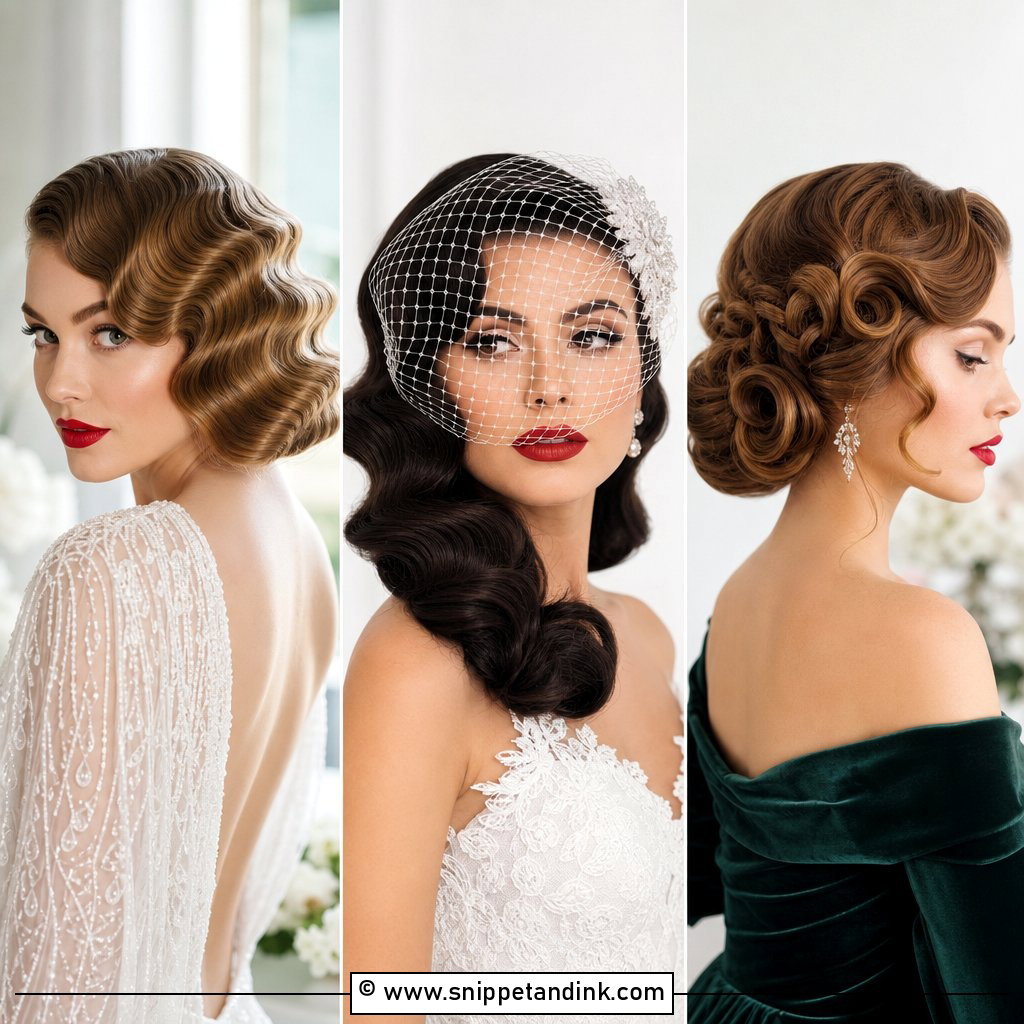
Finger waves are pushed into wet, gelled hair one ridge at a time and dried until completely set. Nothing brings Great Gatsby glamour faster. They’re easiest on a short bob; on longer hair I wave the front and sides and tuck the lengths into a low roll so the head shape stays sleek. A beaded headband or small jeweled clip completes it. Once dry and sprayed, they’re very low-maintenance; humidity is the main thing that can soften the ridges.
2. Victory Rolls Bridal Updo
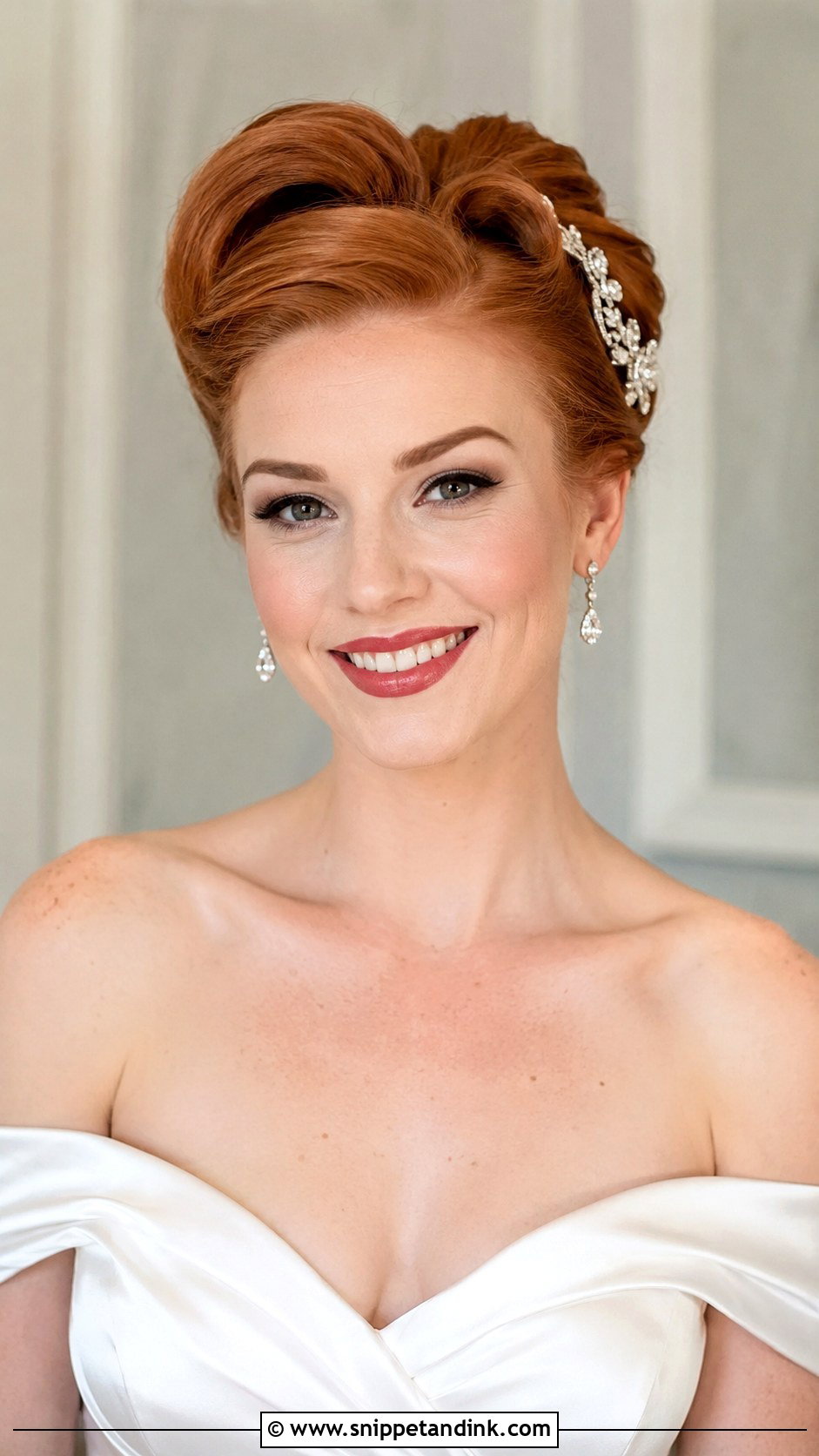
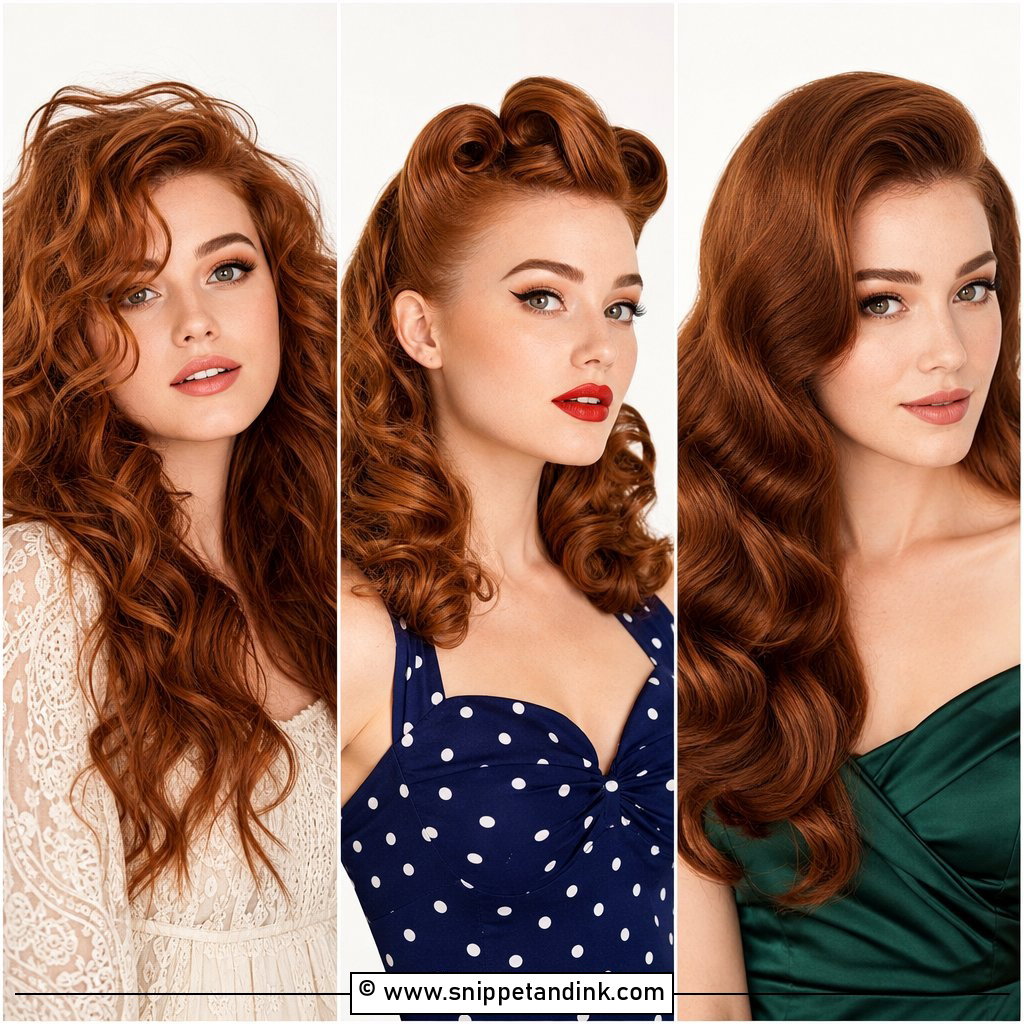
Each victory roll starts as a teased section, gets rolled around two fingers into smooth, voluminous rolls, and is pinned from inside with crossed bobby pins. Two symmetrical rolls are the classic pin-up version; a single larger roll looks softer and makes room for a veil. Fresh flowers or a vintage comb dress it. They add height and frame the face, so they suit brides who are happy to be the most dramatic thing in the room.
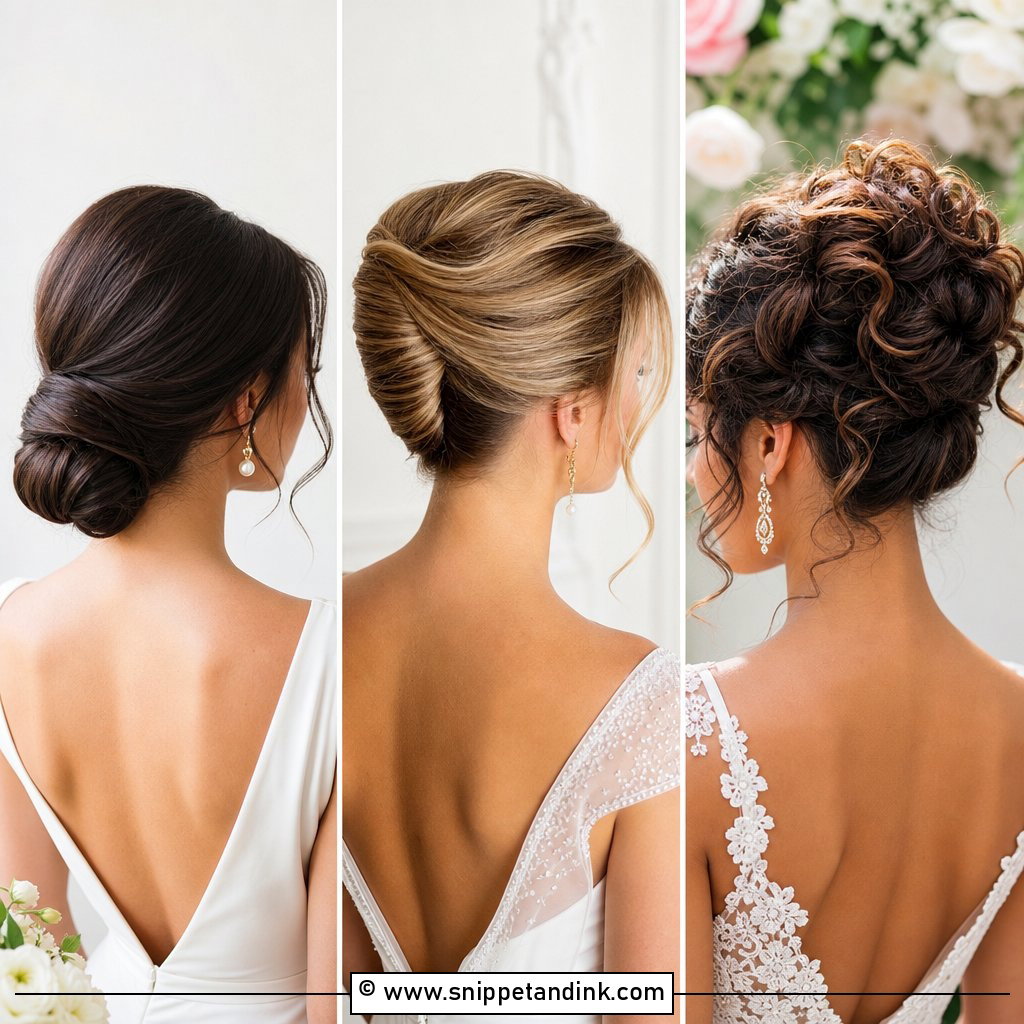
3. Soft Chignon Wedding Updo
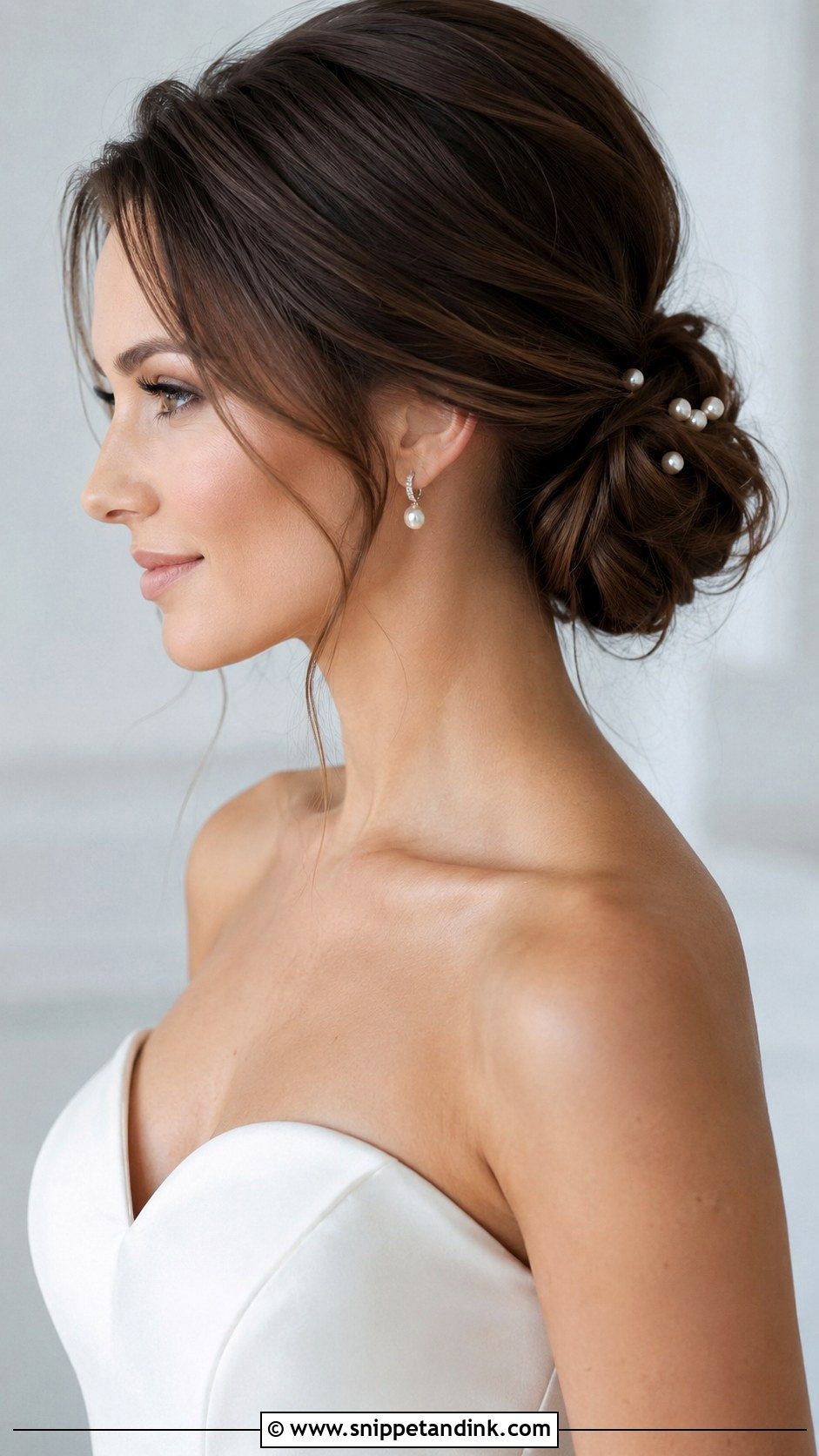
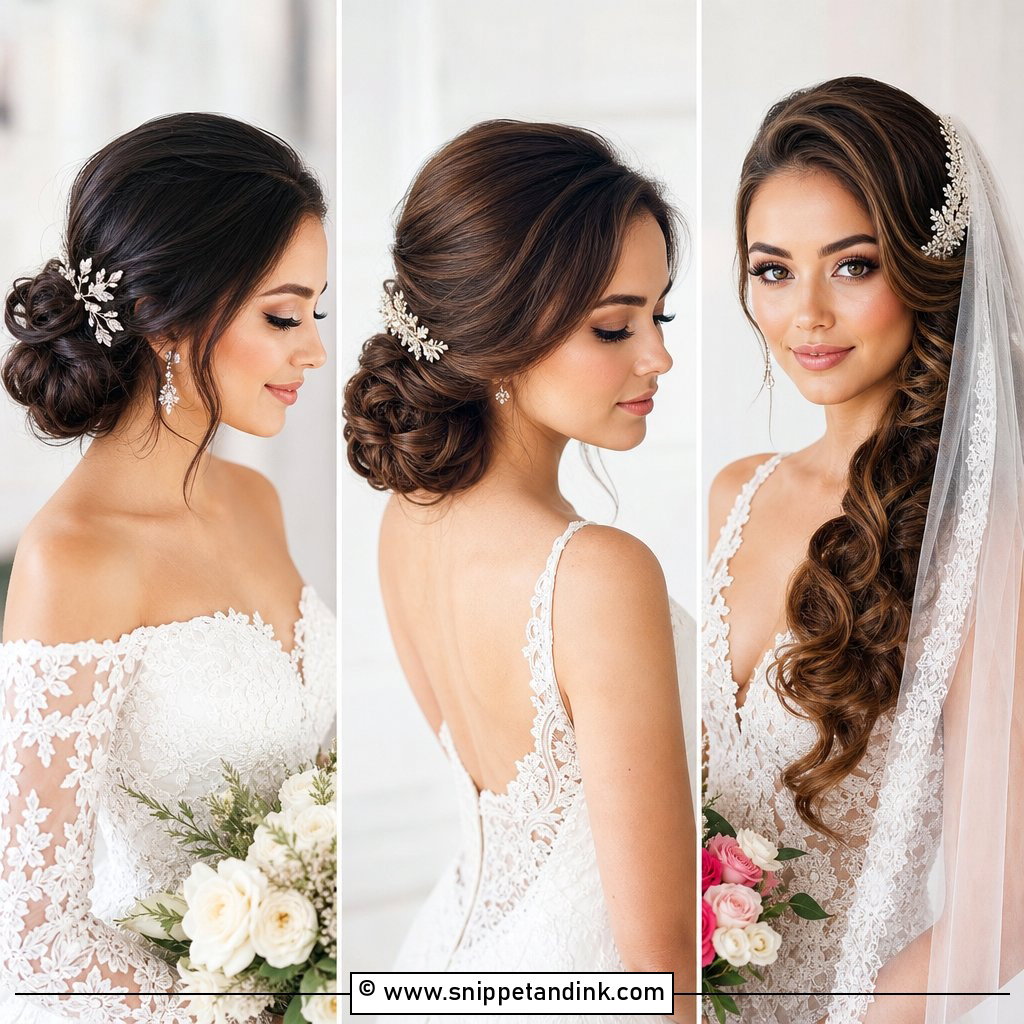
Few styles are as dependable as a low, looped chignon at the nape. It suits nearly every length and face shape, keeps hair off the shoulders in warm weather, and takes pearls, flowers or a single hairpin equally well. The trick is a solid base: I tie a small ponytail first and build the loops around it, so nothing shifts during hugs. Leave a couple of tendrils loose and curl them, otherwise they hang limp by evening.
4. Beehive Wedding Hairstyle
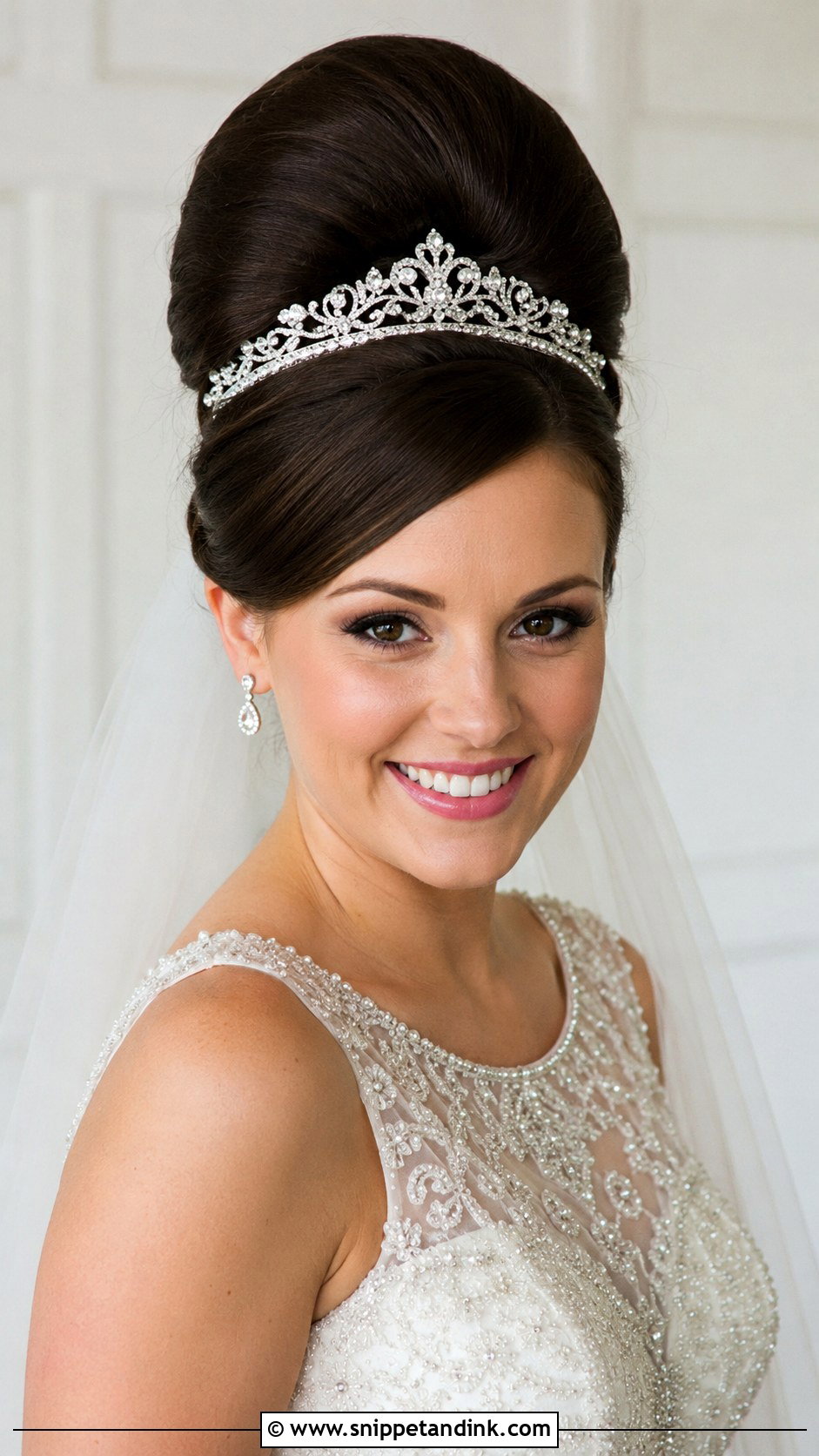
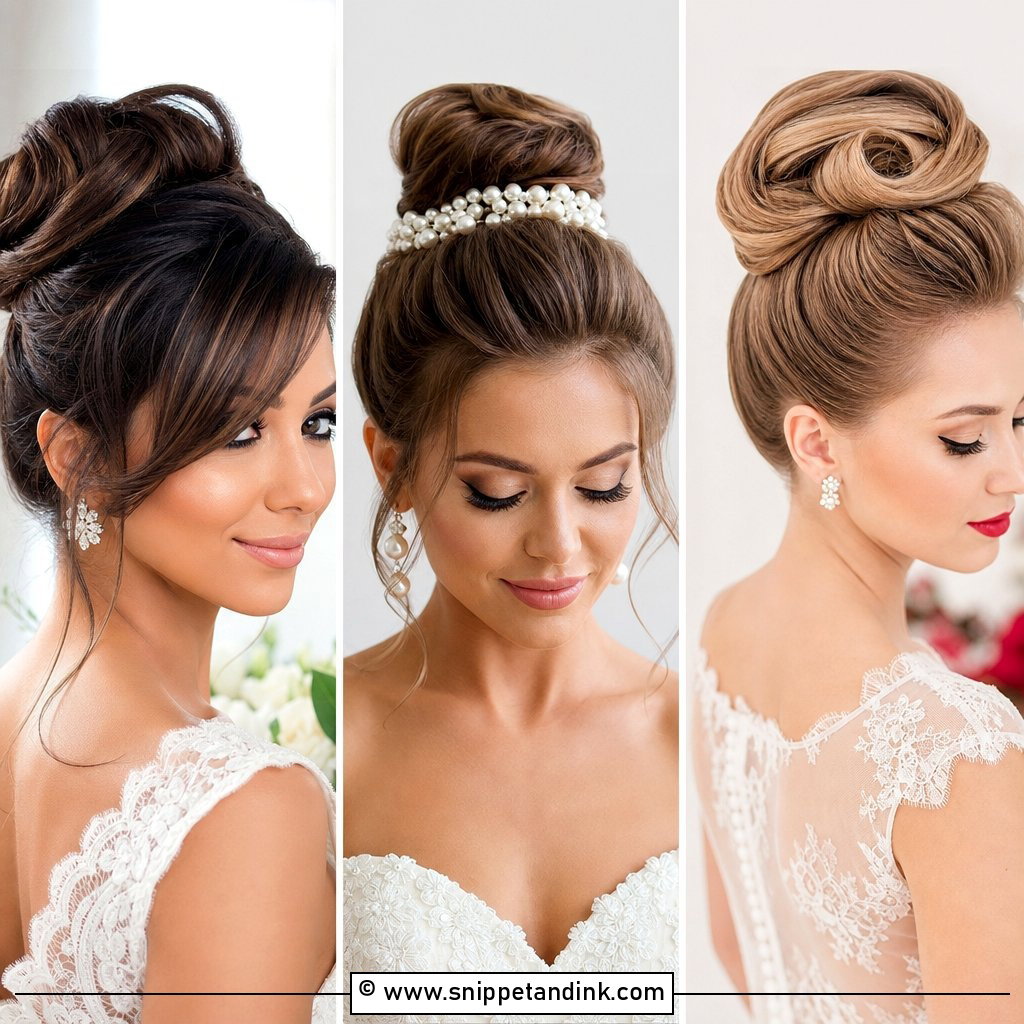
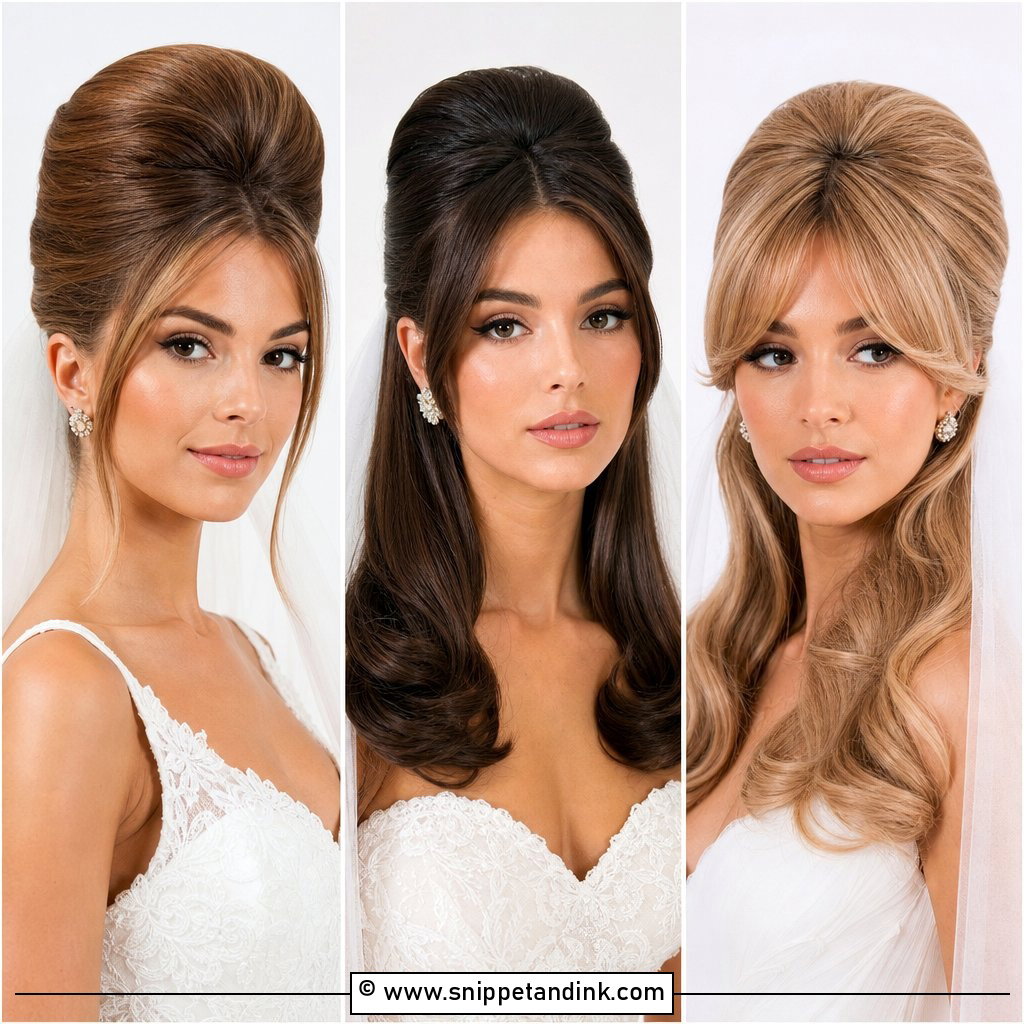
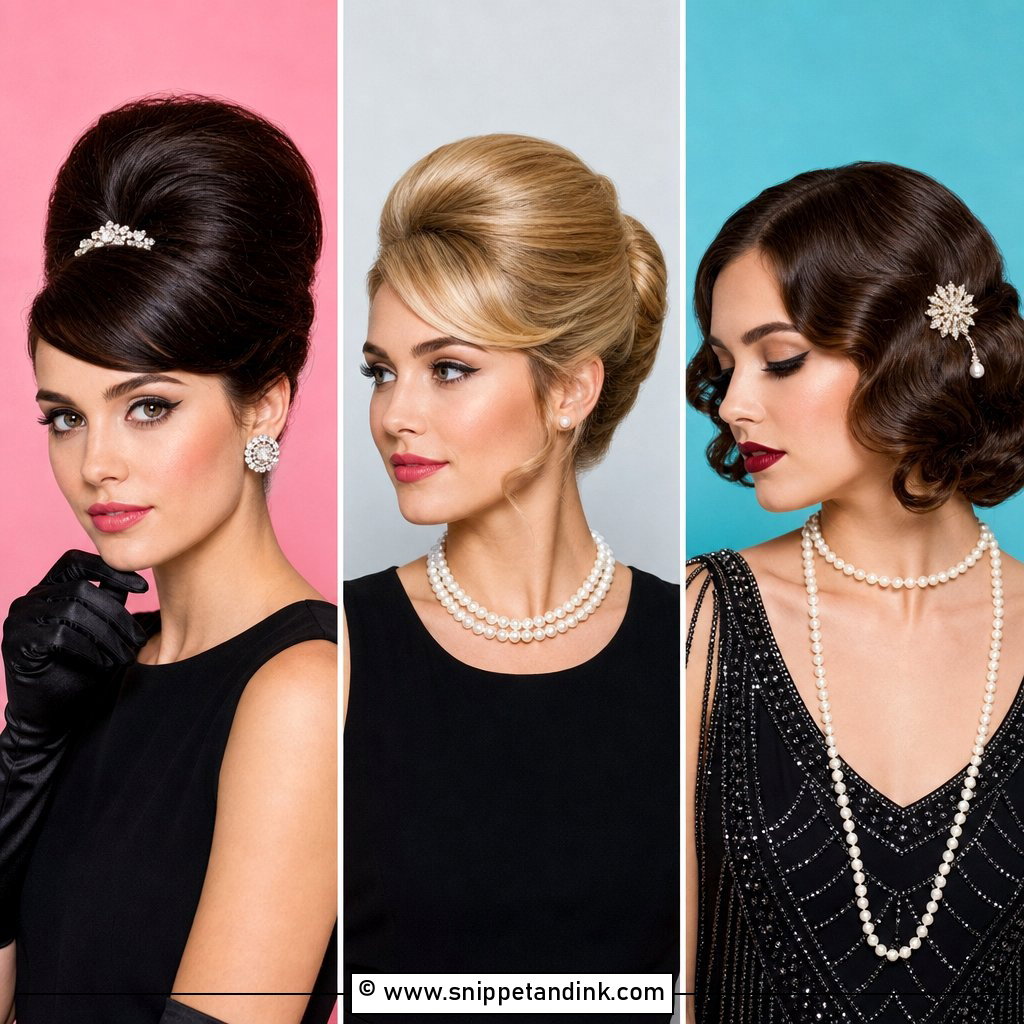
The beehive was a late 1950s and 1960s statement: teased high, smoothed into a rounded dome and pinned for all-day hold. A birdcage veil or tiara can sit at the crown. Thick, long hair builds the tallest hive. On finer hair, I use a padding form or a hair rat in a matching shade so the dome holds without hours of teasing that’s hard to brush out later. Wear it sky-high for full impact, or lower and softer if the rest of the look is modern.
5. Retro Pin Curls Hairstyle
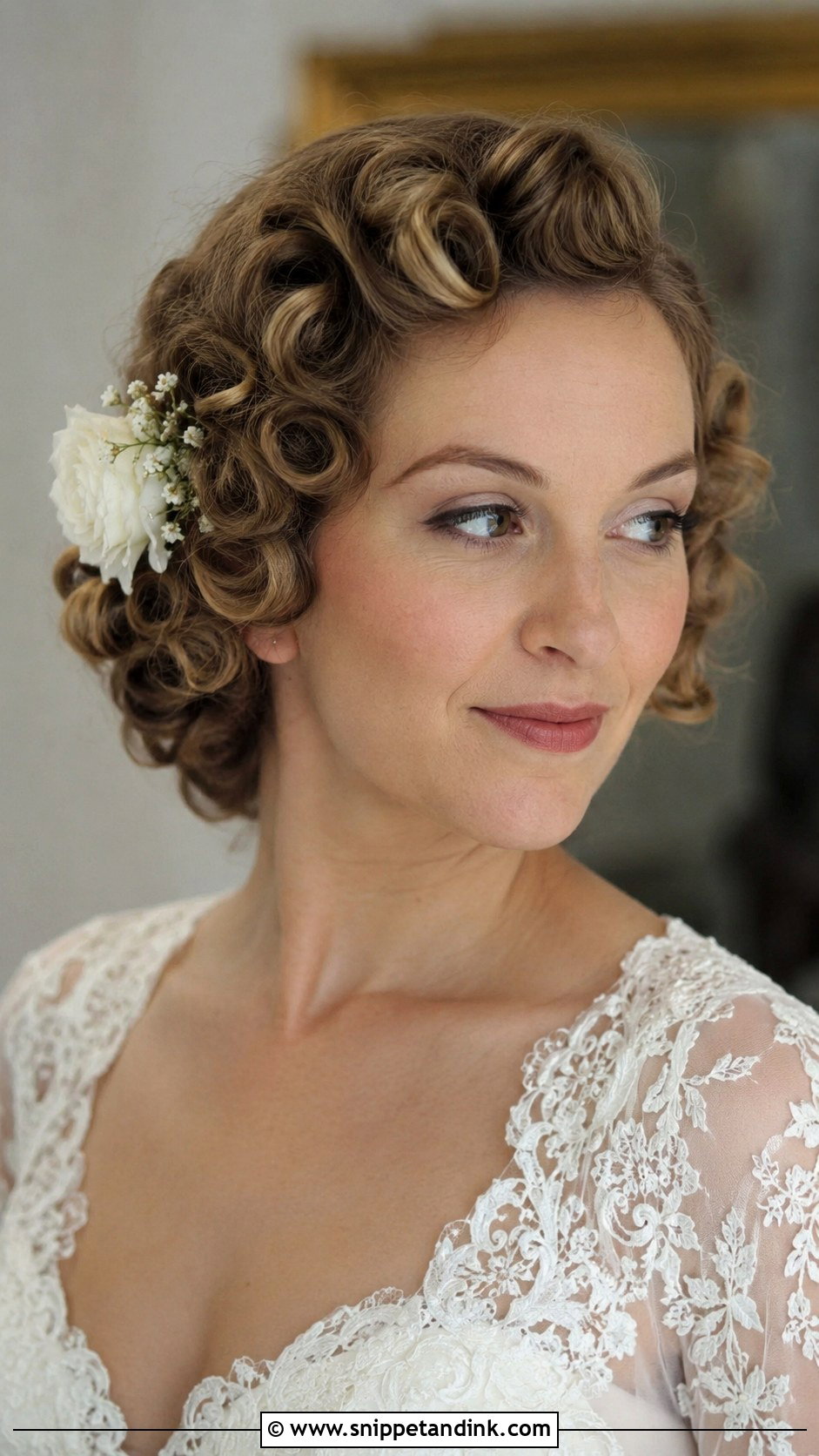
Pin curls are coils of hair wound flat and clipped against the head until they set. They date back to the 1920s and 1930s, when they softened blunt bobs. You can leave them defined for springy, doll-like texture, or brush them into waves. On short and medium hair they hold better than iron curls, because the shape is set while cooling. A jeweled clip or a small flower behind the ear finishes the look.
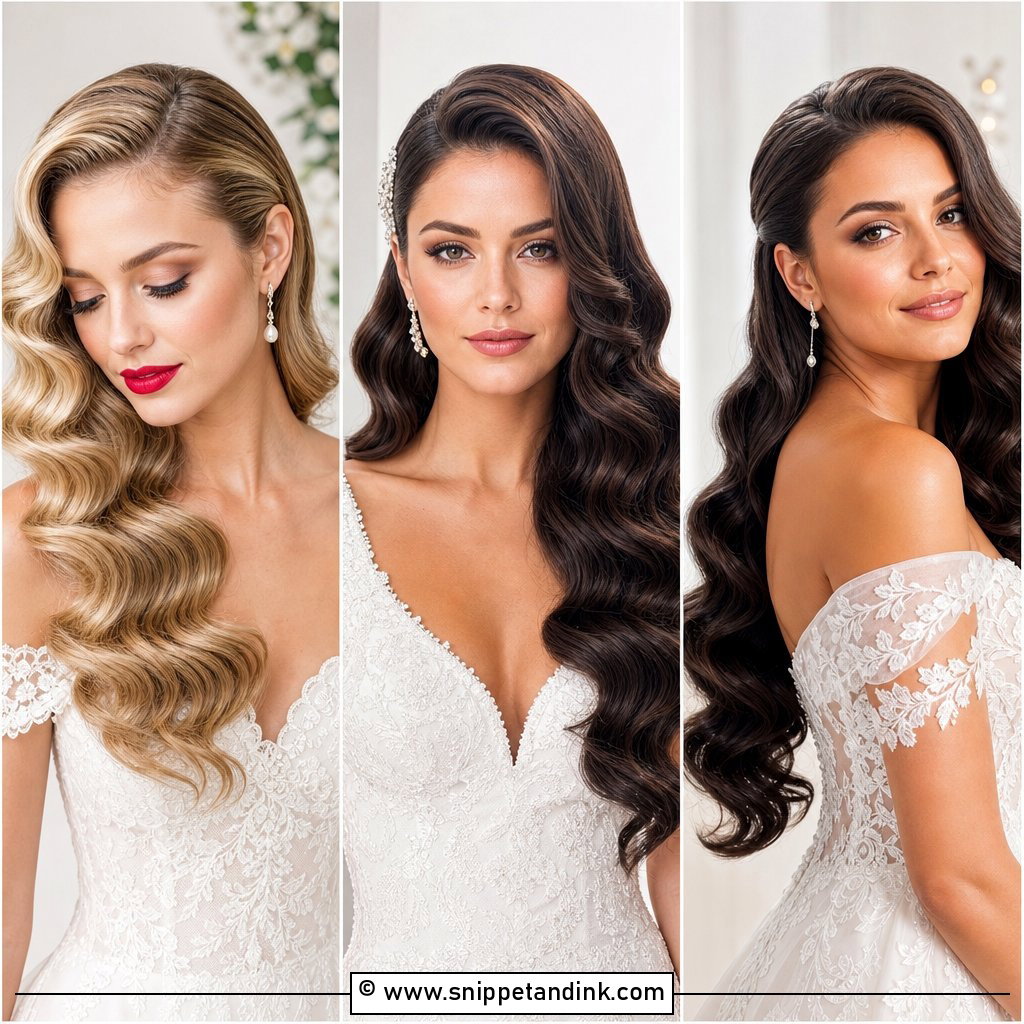
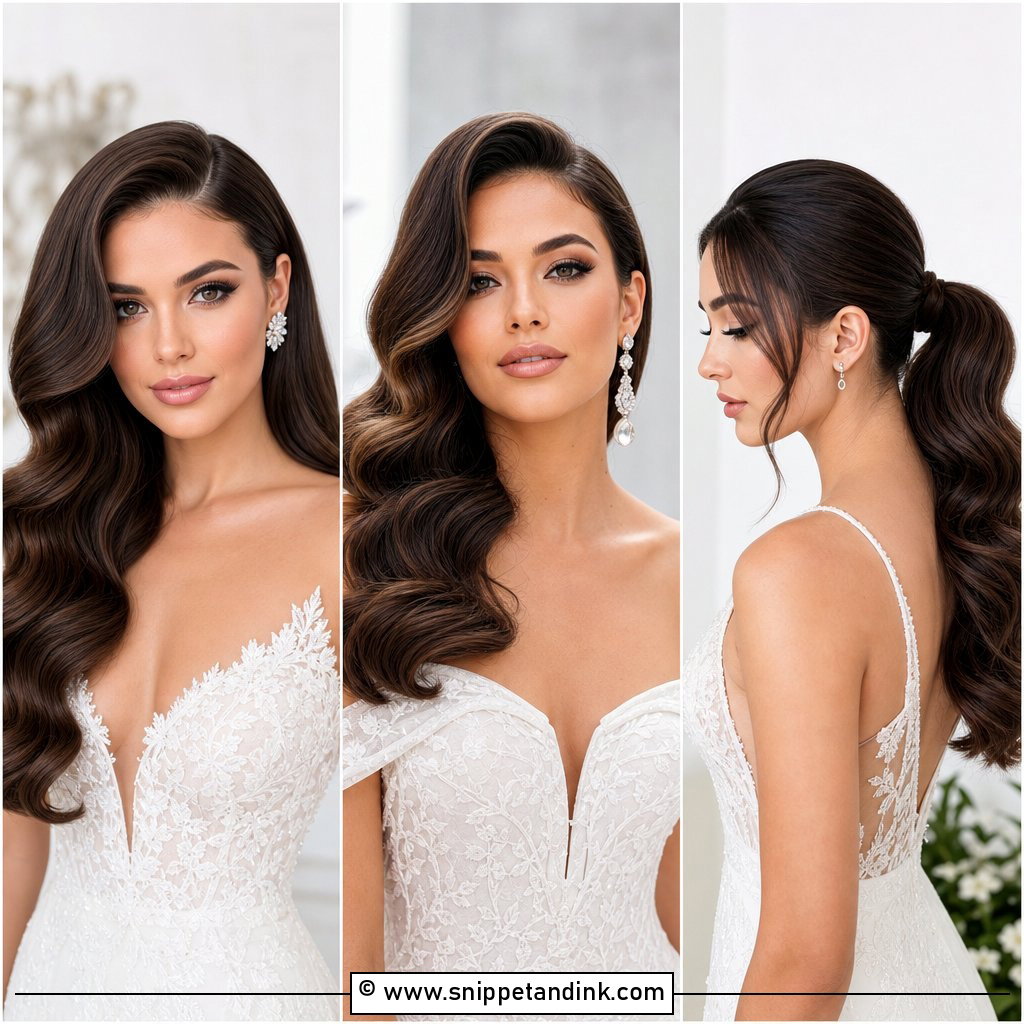
6. Hollywood Waves Wedding Hairstyle
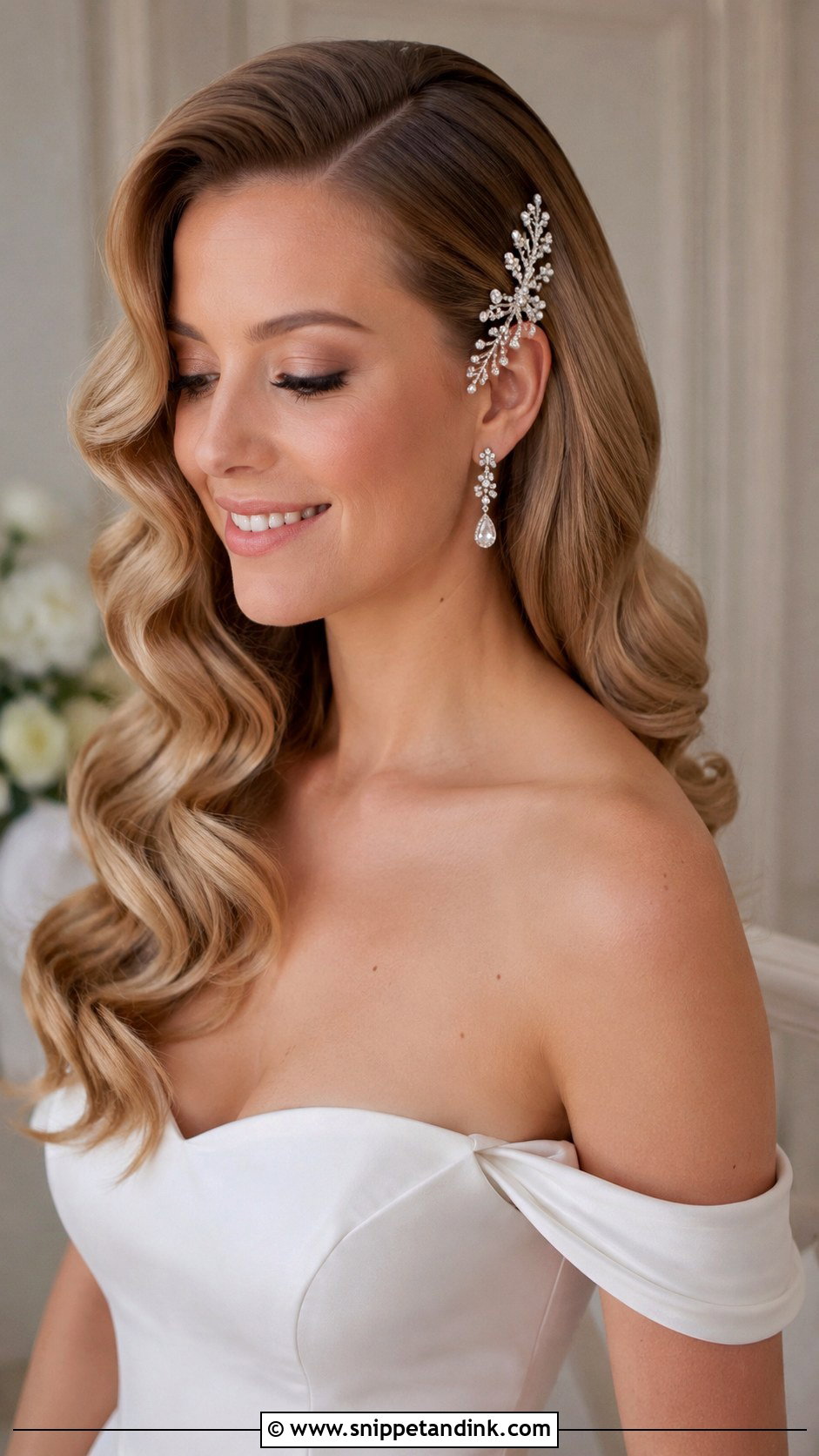
Old Hollywood waves come from the 1930s and 1940s: deep, glossy waves cascading over one shoulder from a side part. They’re set, cooled and brushed out with a natural bristle brush until the surface looks polished. Medium to long hair suits them best, and they go well with strapless or off-the-shoulder gowns, where nothing interrupts the line of the hair. A sparkling comb at the part is optional. I’d steer very layered cuts away from this one, as short layers break up the continuous wave.
7. Low Bun With Side Part
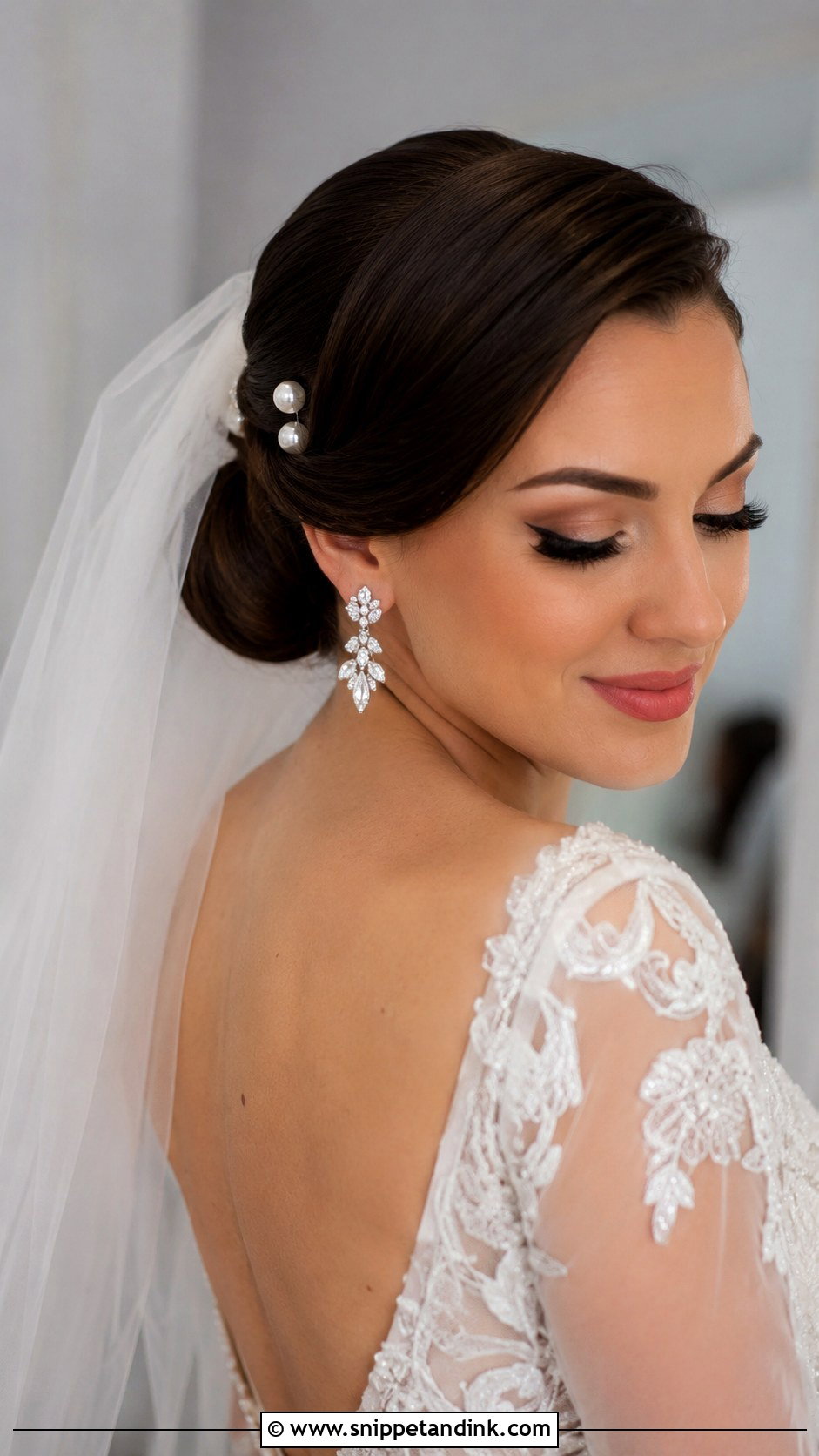
A deep side part with a smooth low bun has a quiet 1930s and 1940s feel. The side part does the vintage work, so the bun itself can be tight and polished or loosened a little. Pearl pins or a vintage brooch adapted onto a clip add detail. Because it’s low and compact, it sits neatly under a long veil and stays put through dancing. Make sure the part is set the way your hair naturally falls, or it will try to drift back by the evening.
8. Gibson Tuck Wedding Hairstyle
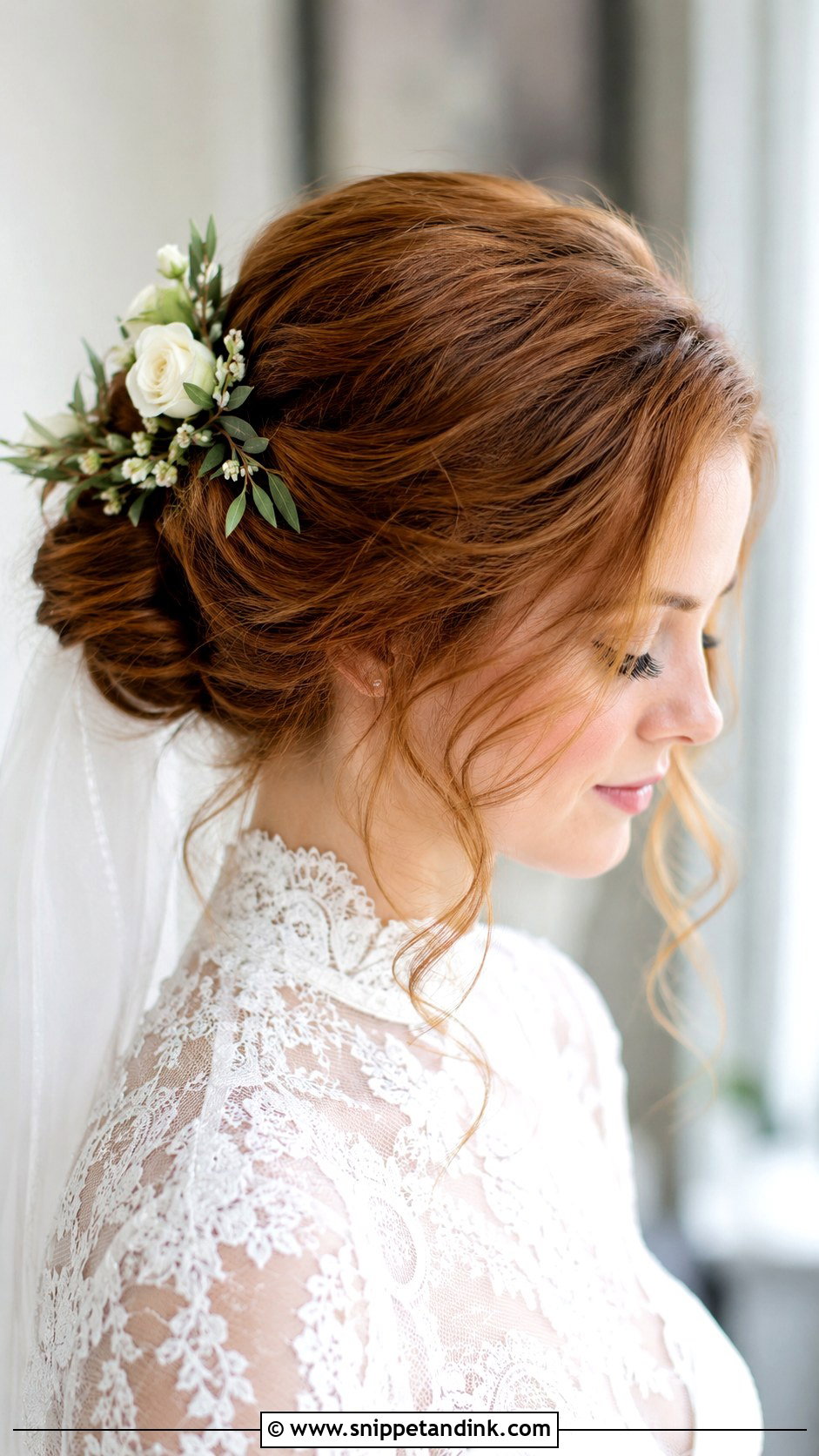
The Gibson tuck rolls the hair under itself into a smooth loop at the back of the head, an Edwardian shape that’s easy to wear all day. It suits medium to long hair, high-neck or lace gowns, and a few loose pieces at the face. Wavy hair grips into the roll naturally; very silky hair needs some texture spray first or the tuck slowly unrolls. Fresh flowers or pearl pins tucked along the roll finish it.
9. Bouffant Updo for Brides
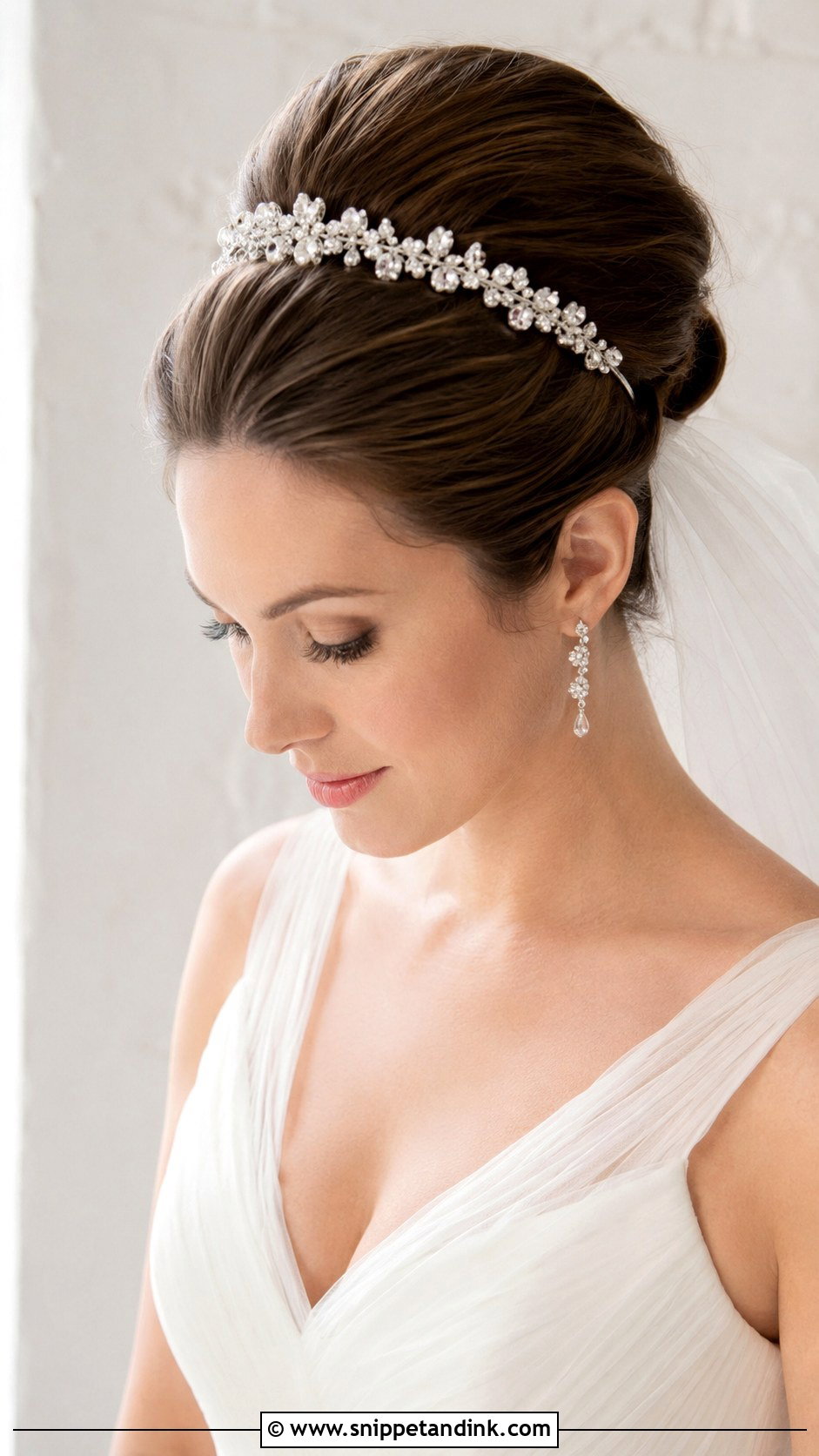
A bouffant updo lifts the crown with teasing and keeps the back smooth, a very 1960s shape. A tiara or decorative headband sits well just in front of the height. It can be a full updo or combined with soft curls at the back. The lift lengthens round and oval faces. Teasing at the root, not the surface, is what makes a bouffant survive the night; surface teasing collapses as soon as hair warms up.
10. Half-Up Victory Rolls
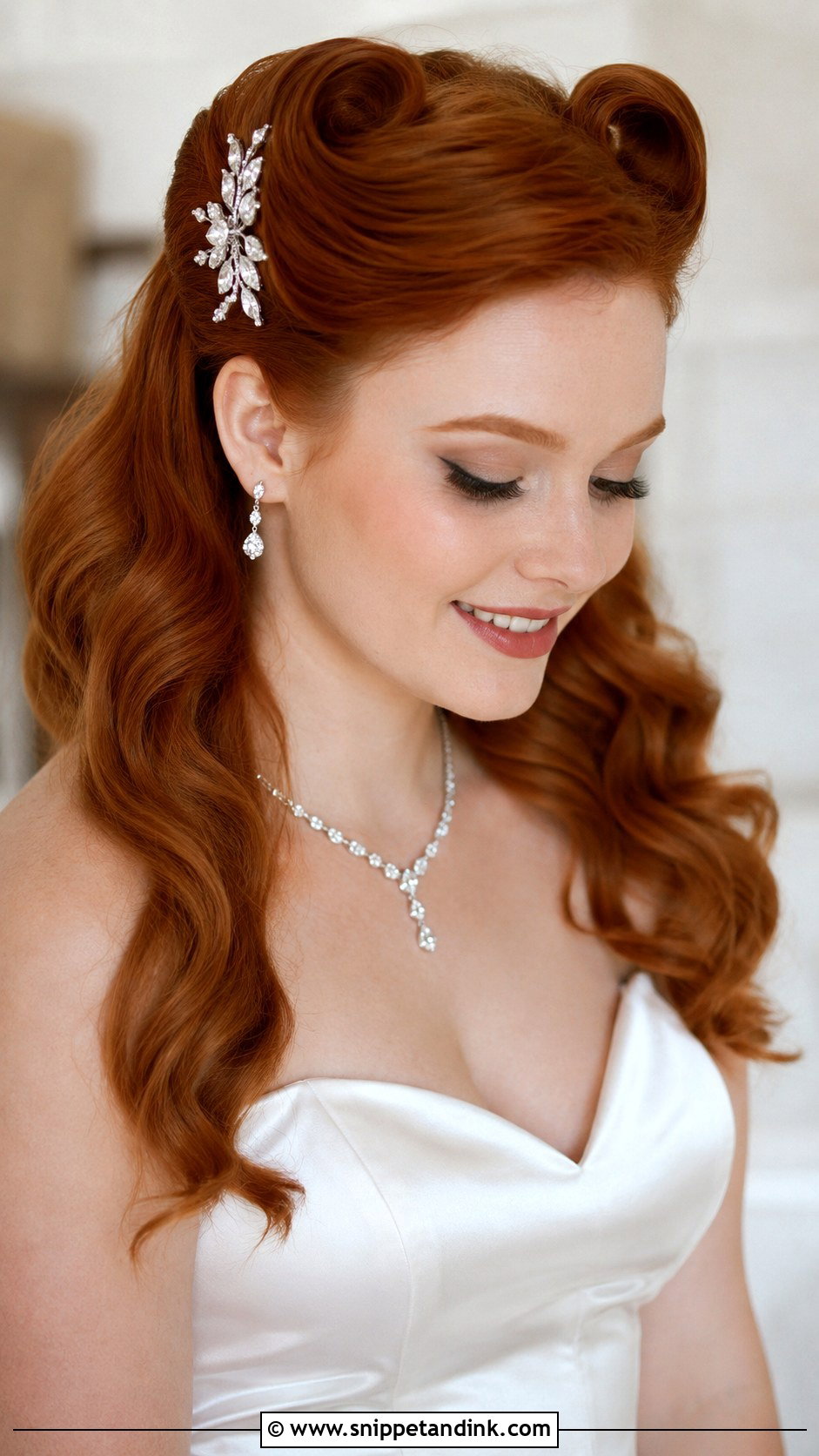
Rolls on top, loose waves below: this gives pin-up character without a full updo. The rolls frame the face and add height at the crown, while the lengths are set in waves with a little shine at the end. Long hair suits it best. The waves below will relax faster than the pinned rolls, so I set the lengths a little tighter than the finished look. A flower or clip beside the rolls adds the finishing touch.
11. Faux Bob Wedding Hairstyle
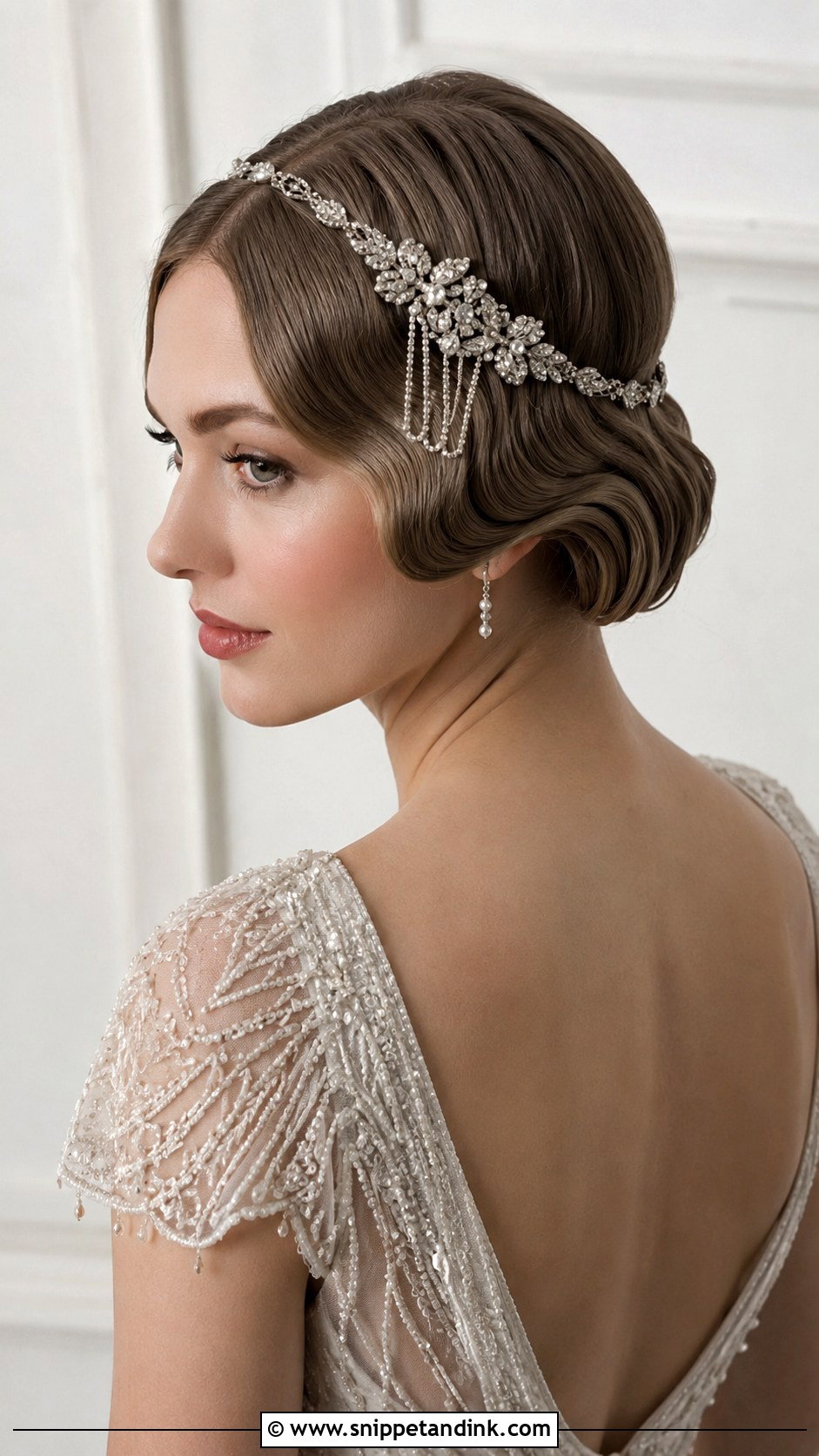
A faux bob gives a 1920s silhouette without a haircut. The lengths are rolled under and pinned at the nape to imitate a blunt bob, often with finger waves or soft curls at the front. It sits naturally at art deco and Gatsby weddings, and it’s the clever choice if you’re growing your hair out. Shoulder to mid-back length works best; extremely long hair makes the roll bulky. A beaded headpiece, feathered clip or jeweled band adds period detail.
12. Braided Updo With Vintage Flair
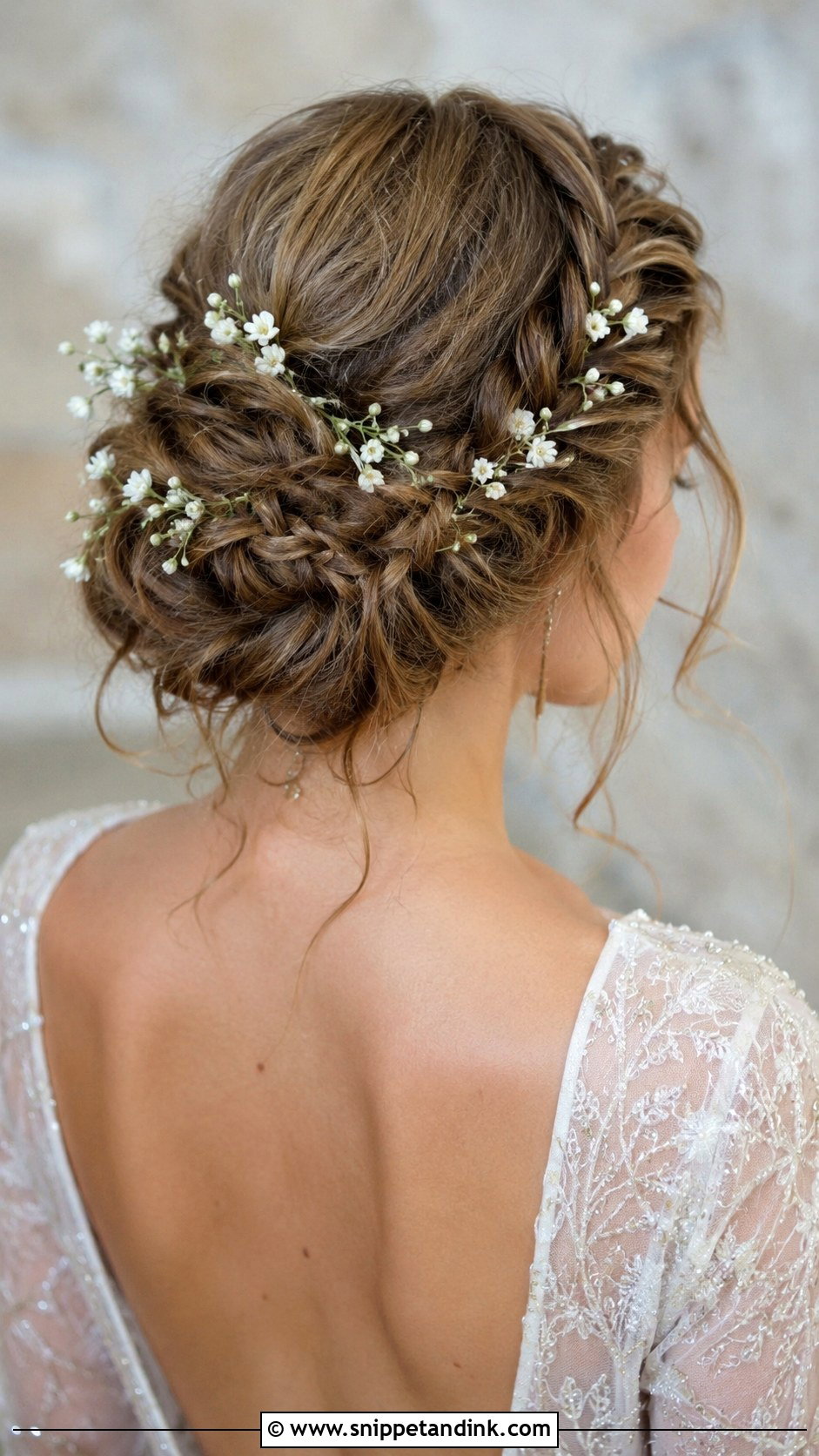
Braids woven into a gathered bun or twist add texture to a vintage updo, with soft, slightly loose braids and face-framing tendrils for a relaxed feel. They’re also one of the most secure places to anchor tiny flowers, pearls or pins, because the plait grips them. Medium to long hair suits it, as do bohemian and garden weddings. I pancake the braid edges gently after pinning, so they look fuller without loosening.
13. Snood Inspired Wedding Hairstyle
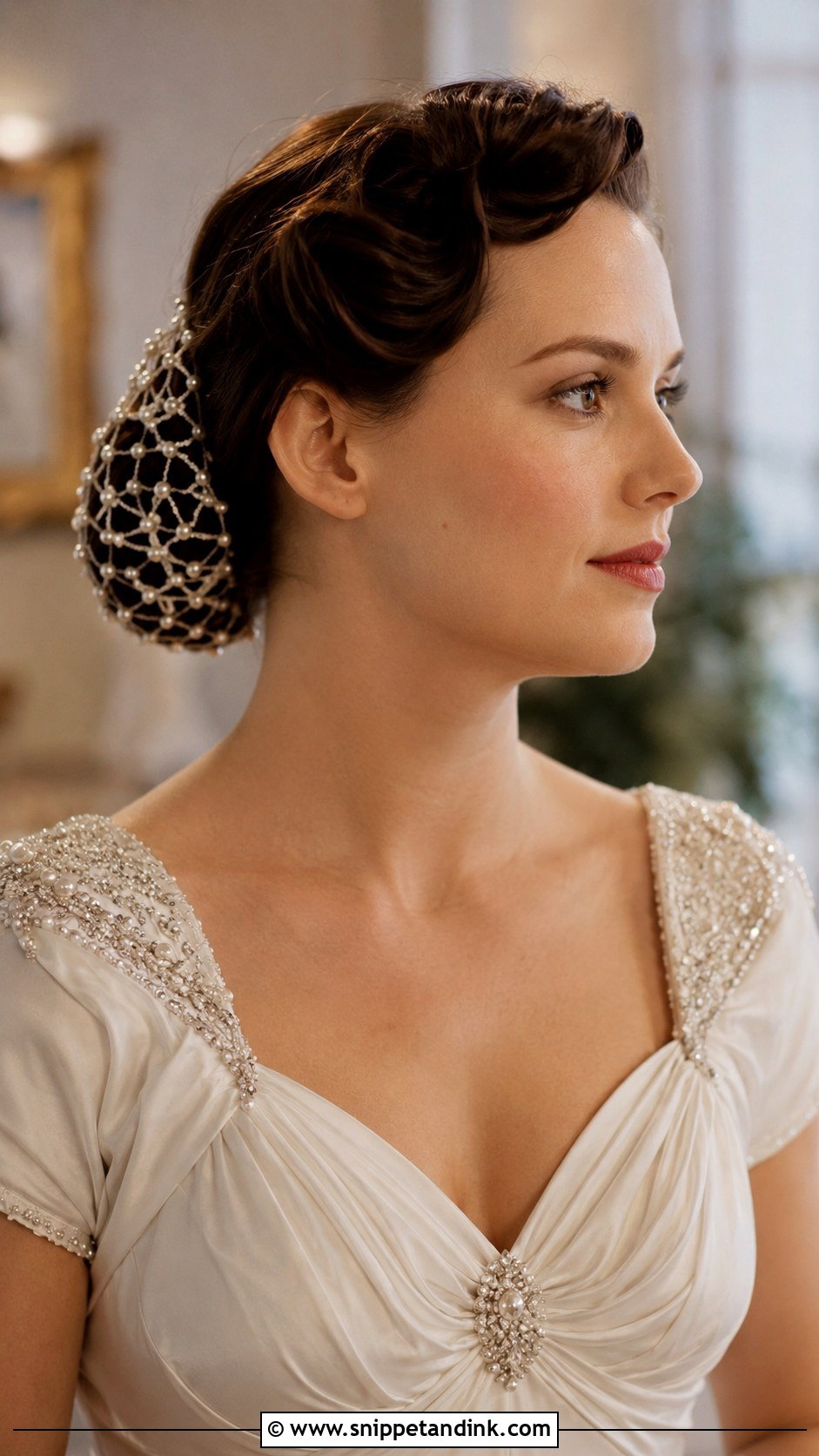
The snood is a 1940s hair net that gathers the lengths into a soft pouch at the back, usually with smooth or rolled sections at the front. For a wedding, a pearl-beaded or fine mesh snood can coordinate with the gown. It’s very practical: the hair inside is contained and can’t tangle or drop. I pin the snood’s edge along the hairline in several places so the weight of the hair doesn’t drag it down. Medium to long hair fits it best.
14. Loose Vintage Curls Hairstyle
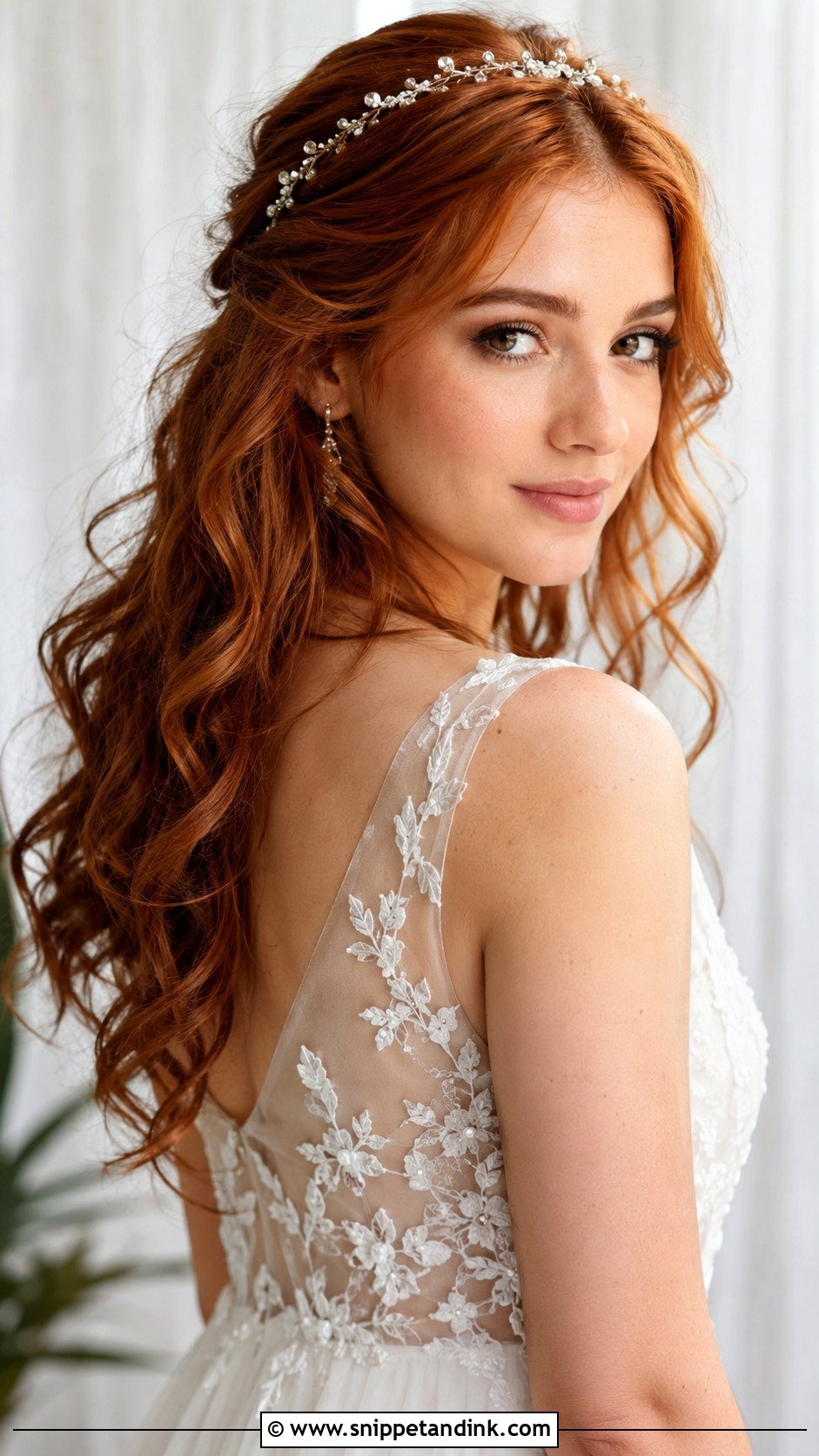
Loose vintage curls are brushed out into soft waves that fall over the shoulders. They suit medium to long hair and nearly every gown. They’re also the least structured style on this list, which means they’re the first to drop in humidity. I set them with pin curls or rollers rather than just an iron, and brush out only once they’re cold. A comb, flower crown or headband adds a personal touch.
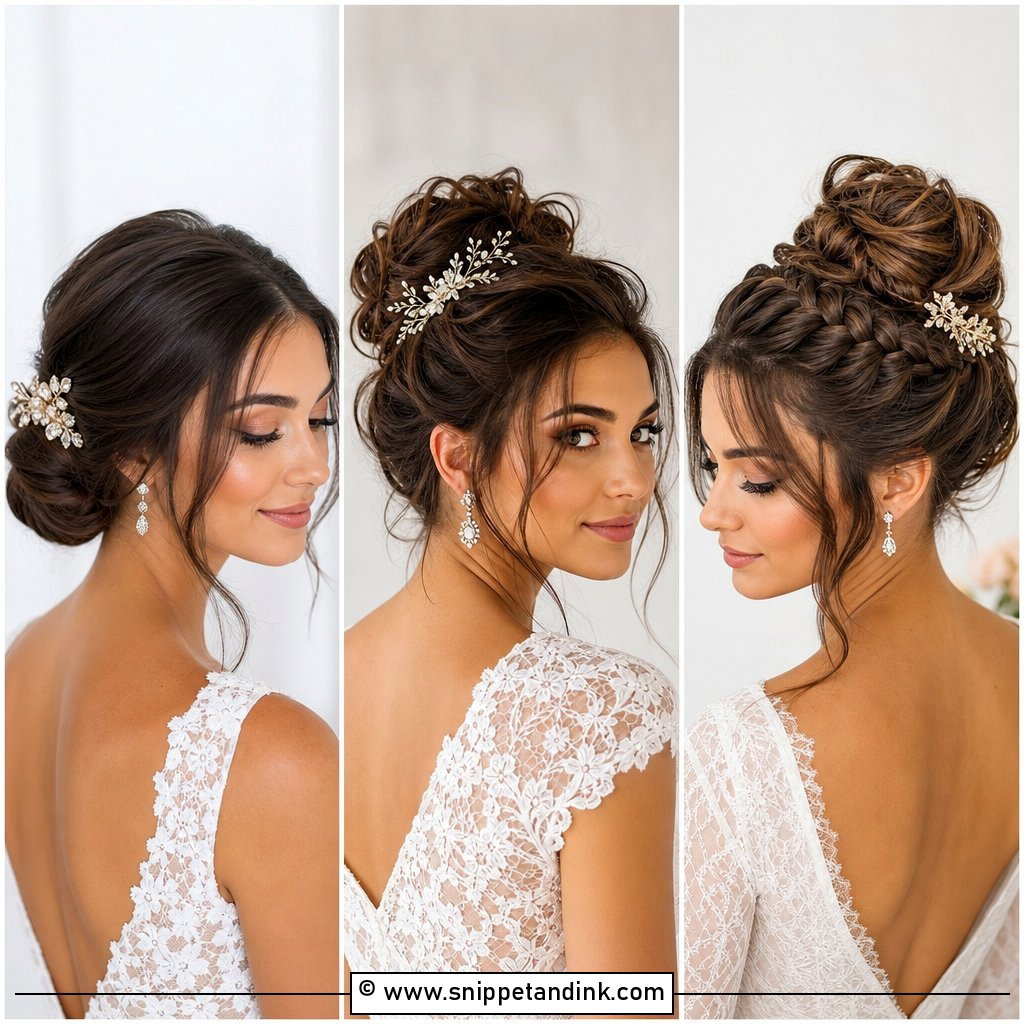
15. Marcel Waves Bridal Hairstyle
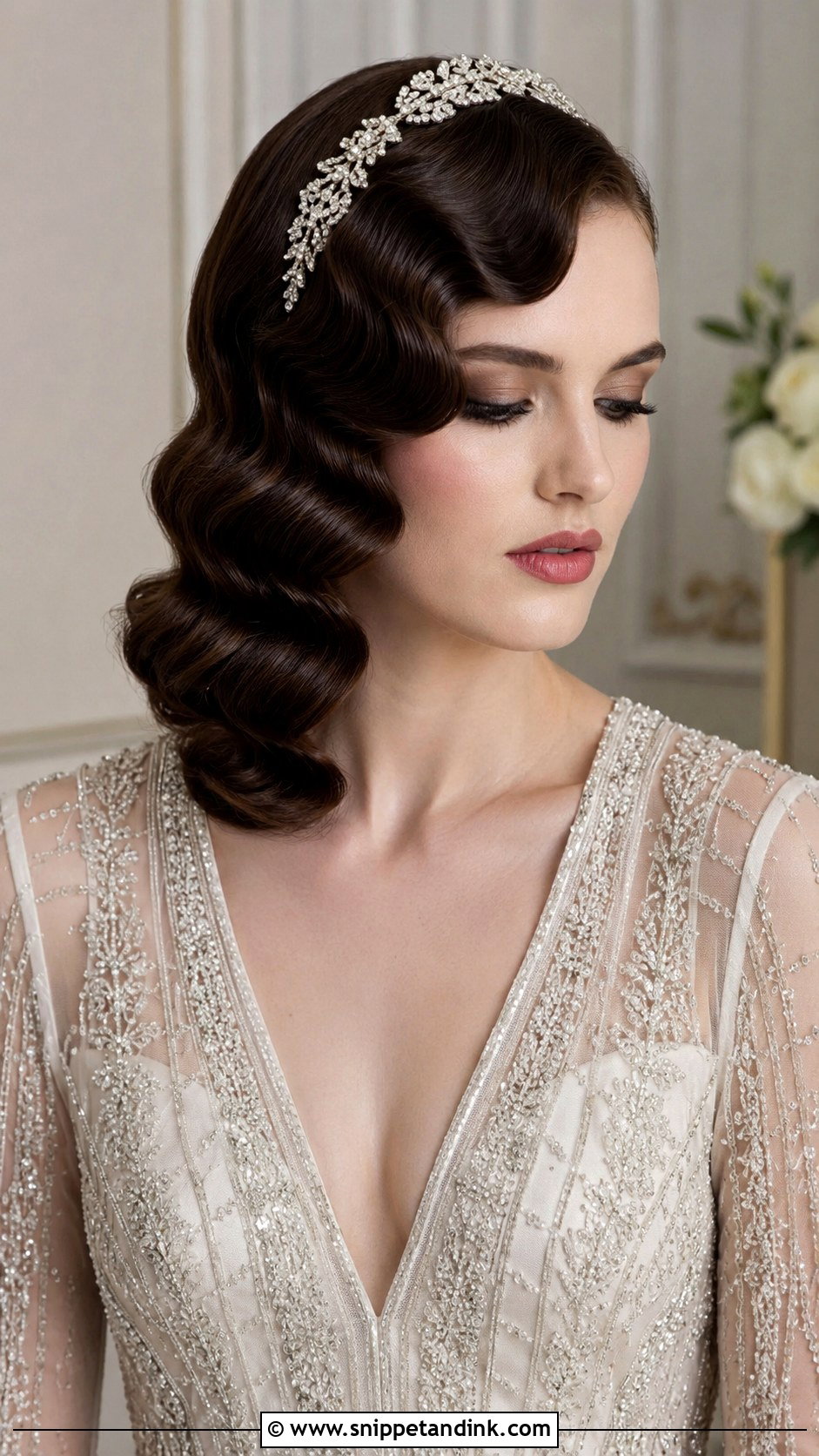
Marcel waves are the older cousin of finger waves: deep, regular ripples pressed into the hair with a heated Marcel iron. They belong to the 1920s and 1930s and fit art deco weddings. Short and medium hair shows them best. The iron is a specialist tool, so ask your stylist whether they’ve actually worked with one. A jeweled headpiece or vintage comb completes the sleek outline.
16. Updo With Birdcage Veil
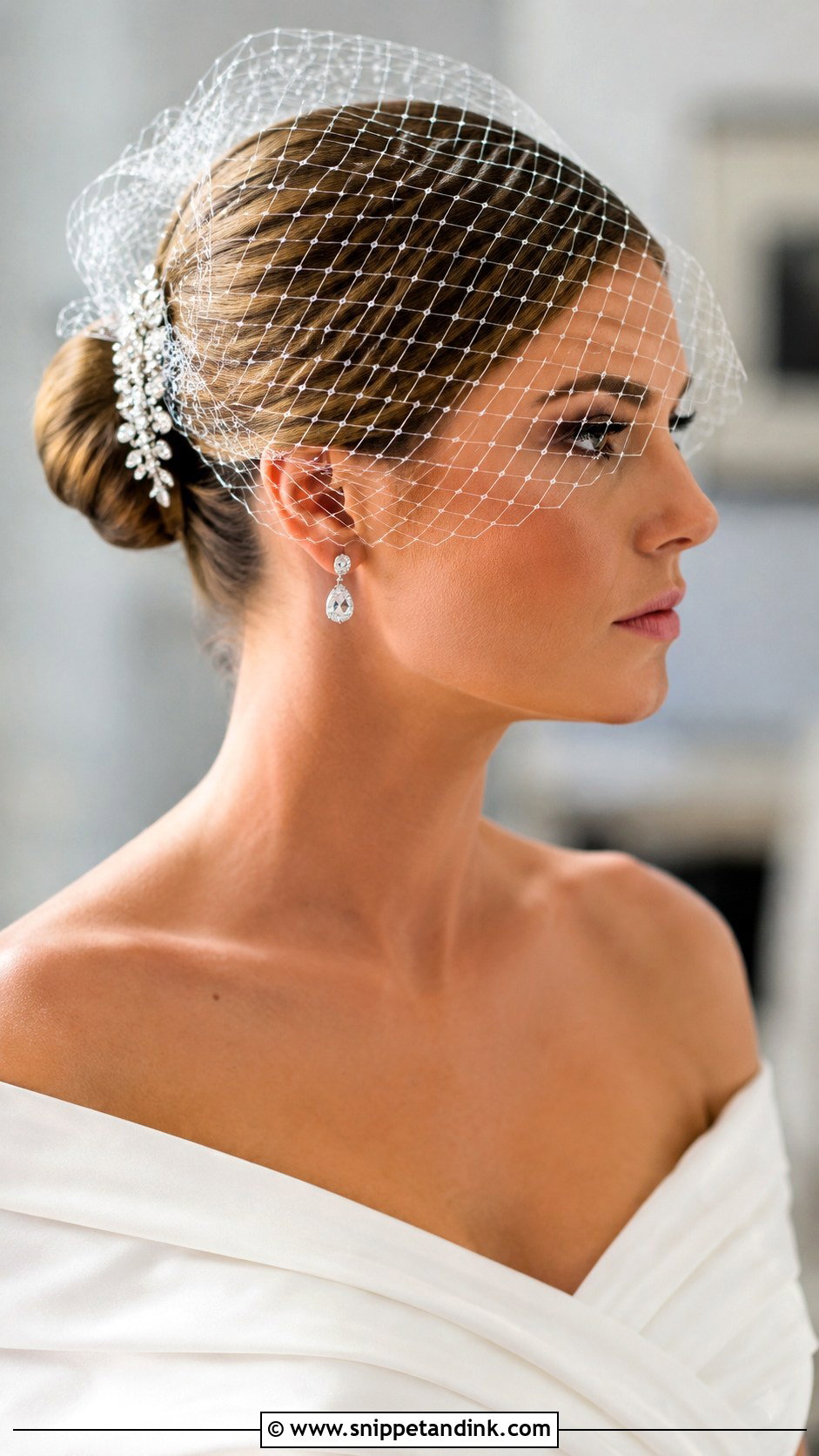
A birdcage veil over a polished updo is a 1940s and 1950s pairing with plenty of personality. The short net crosses the face, and sleek buns, chignons or finger waves sit behind it. I keep the hair smooth because the veil’s fine net catches on loose, textured hair. A flower or jeweled pin on the side opposite the veil’s comb balances it. It’s a confident, slightly playful look for a less traditional bride.
17. Side Swept Vintage Waves
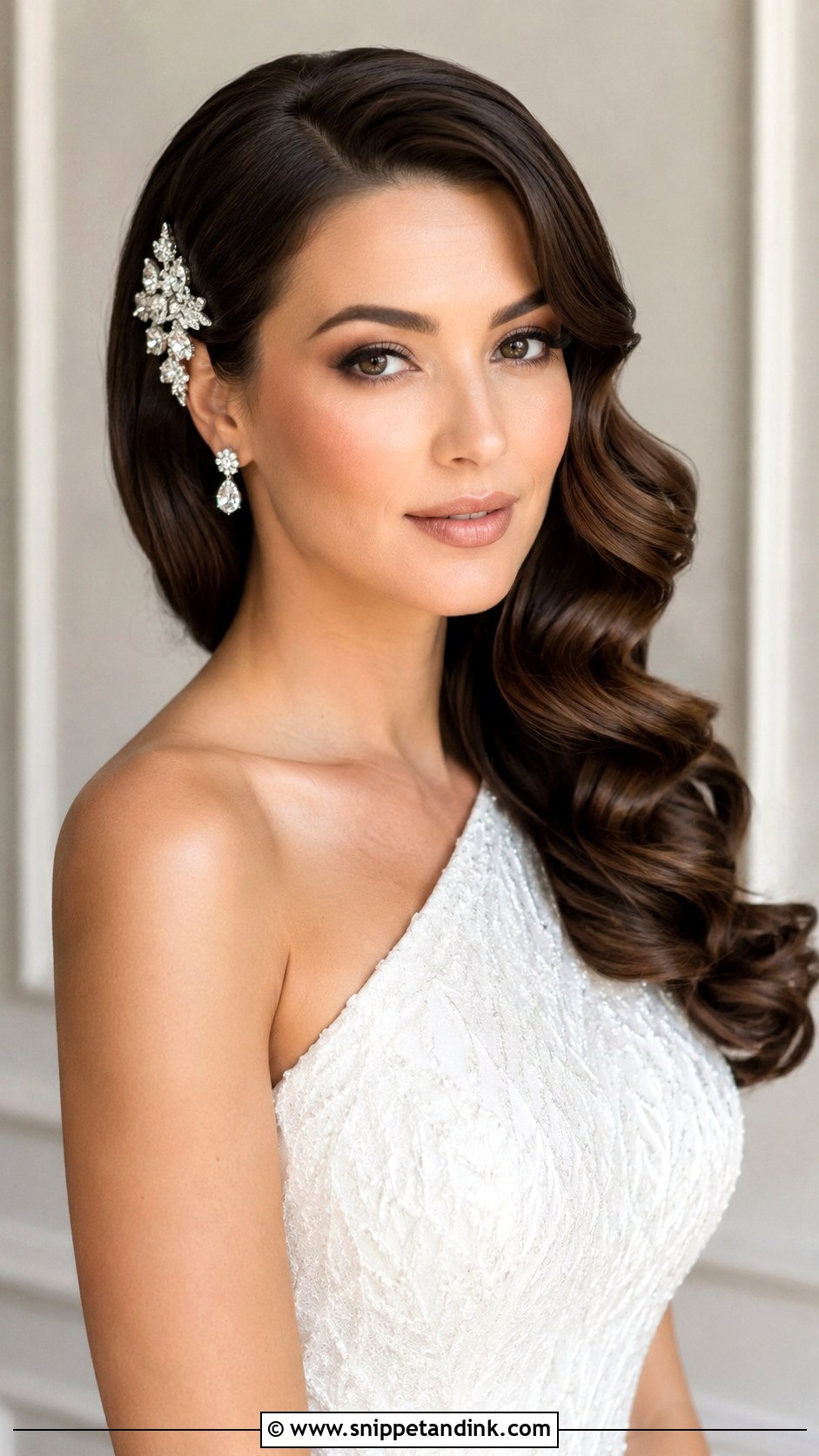
Gathering soft waves over one shoulder gives a graceful asymmetry, the starlet look. The waves are smooth and glossy, framing the face and suiting off-the-shoulder or one-shoulder gowns. A comb or small flower near the part finishes it. To keep everything on one side, I pin the back section underneath with a hidden row of crossed pins behind the opposite ear. Without that, the hair slowly slides back to the center.
18. Pompadour Wedding Hairstyle
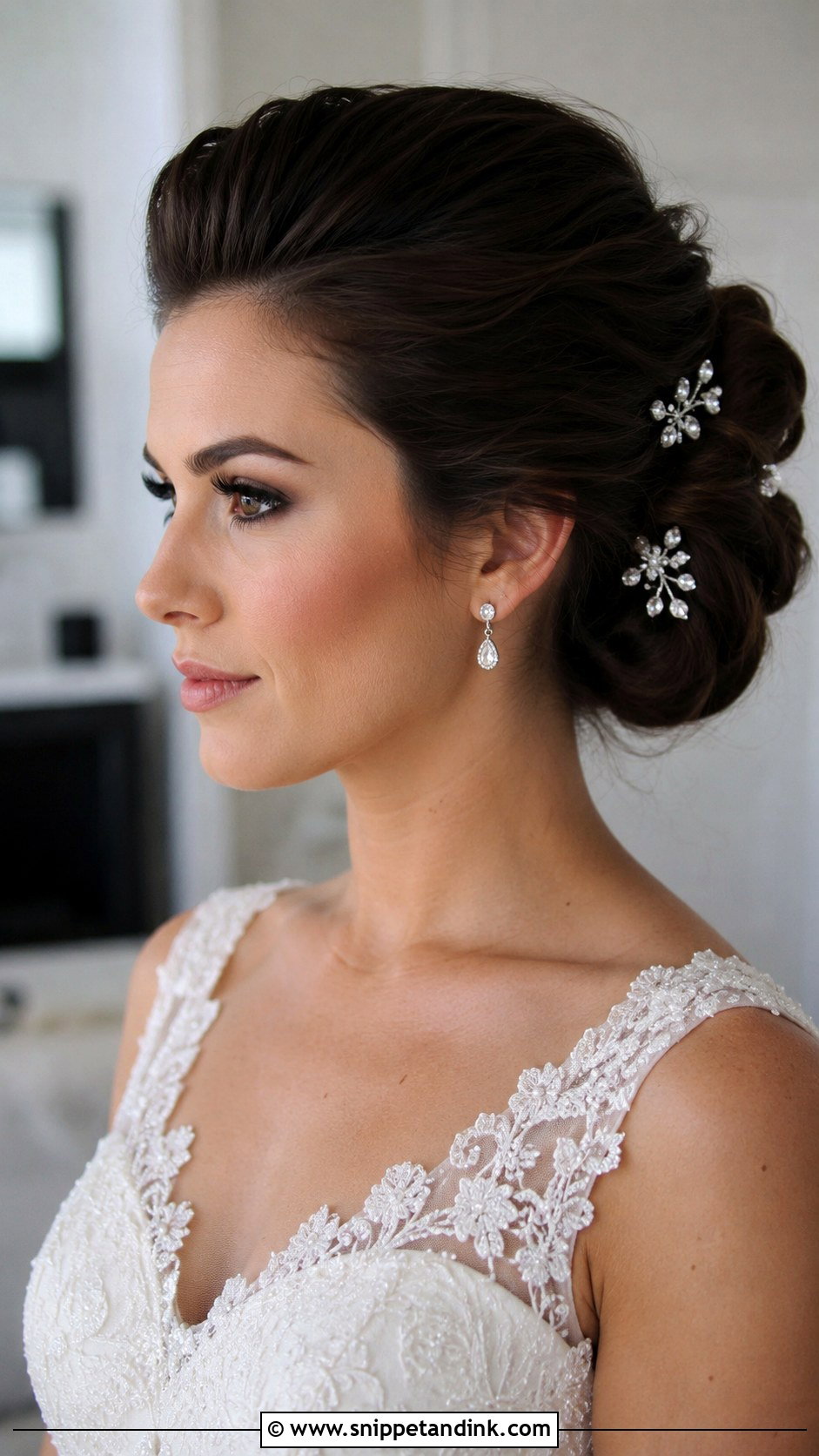
A pompadour lifts the front section up and back into a smooth, high roll. It’s appeared in several decades and suits brides who want a strong, structured outline. Pair it with a low bun, soft curls or a sleek ponytail behind. The height elongates the face. On fine hair, a small padding piece under the roll keeps it from flattening, and a tiara or jeweled pins can sit just behind it.
19. Pageboy Bridal Hairstyle
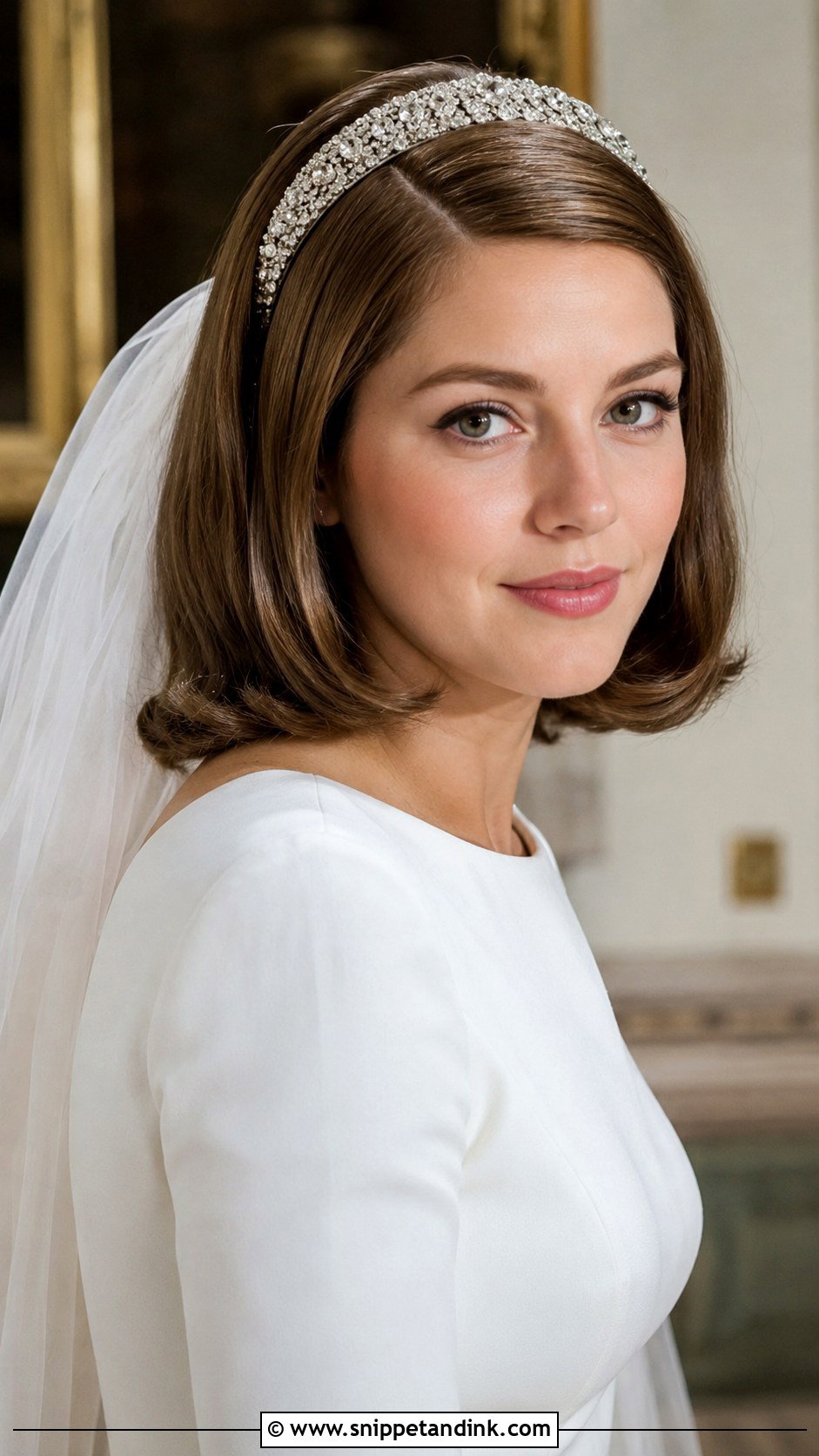
The pageboy is a 1950s and early 1960s shape: smooth hair that curves under at the ends into a rounded outline. It needs chin-to-shoulder length and is set on large rollers, then brushed under with a round brush. Thick, coarse hair can puff out at the sides, so a smoothing step before setting helps. A jeweled headband or clip adds the bridal note. It’s clean and polished, made for simple, structured gowns.
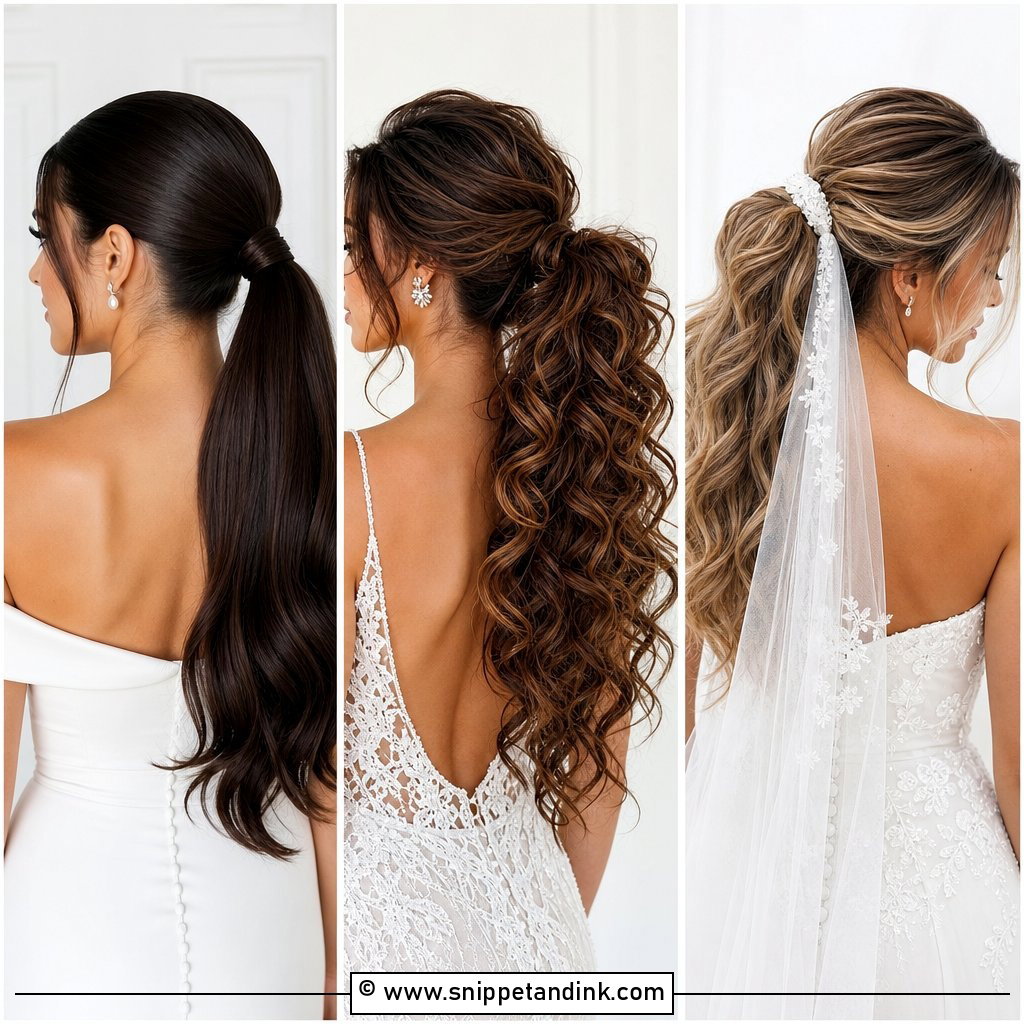
20. Vintage Ponytail Wedding Hairstyle
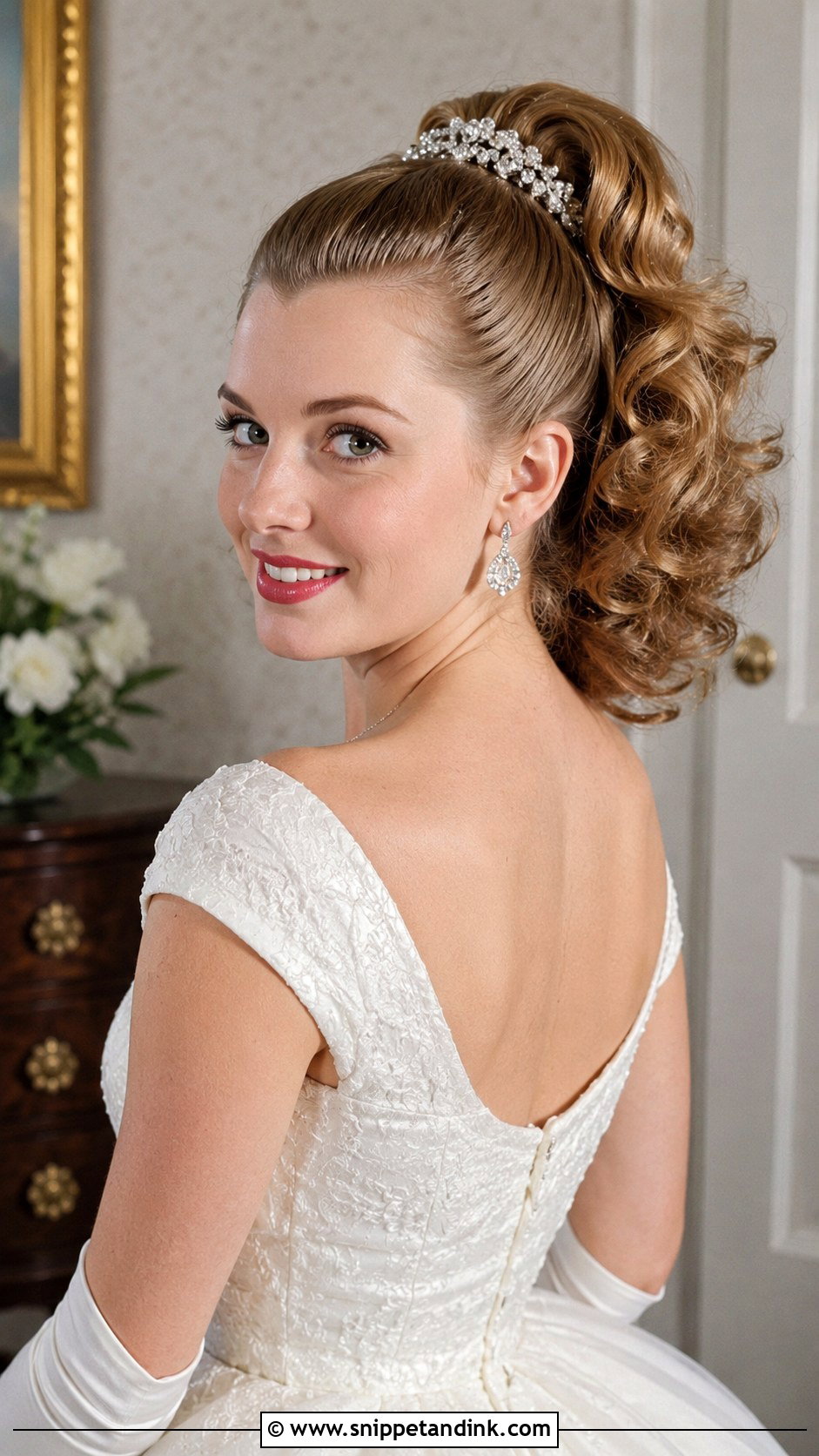
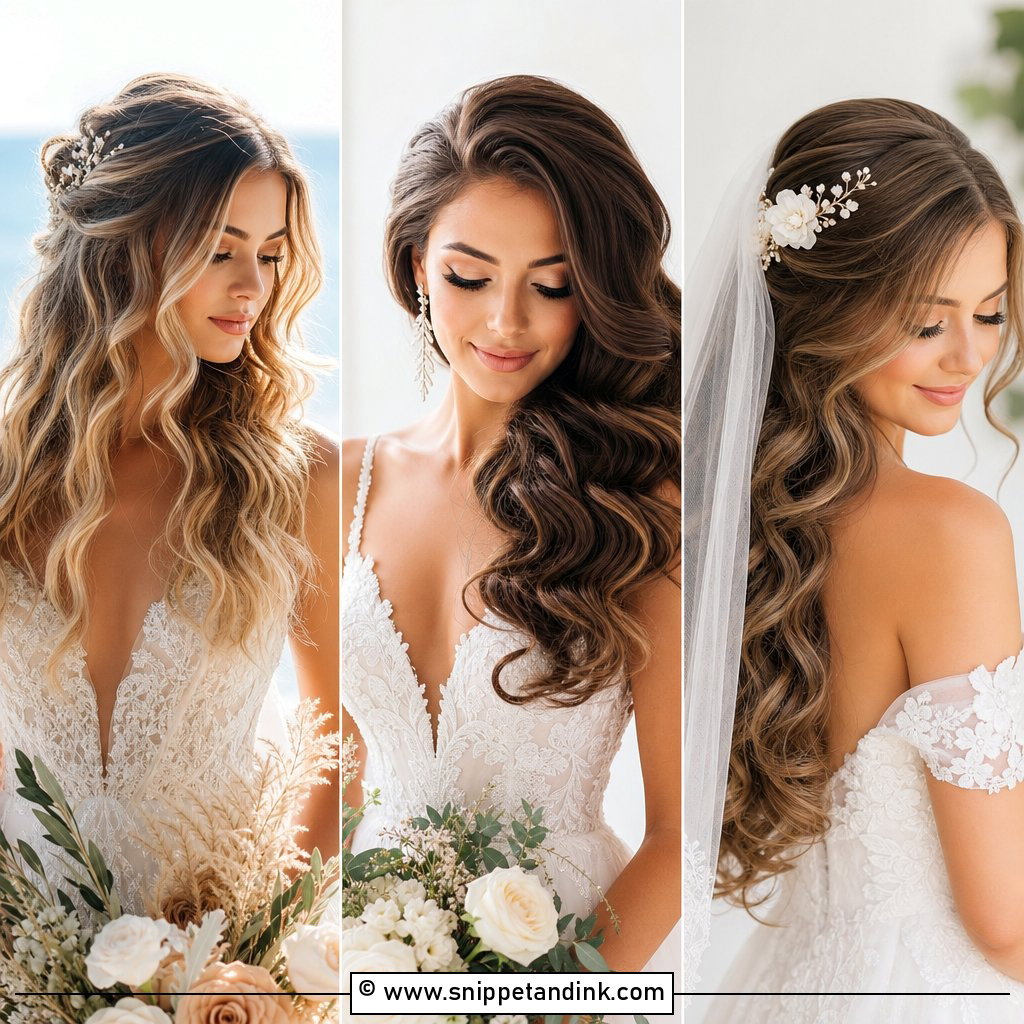
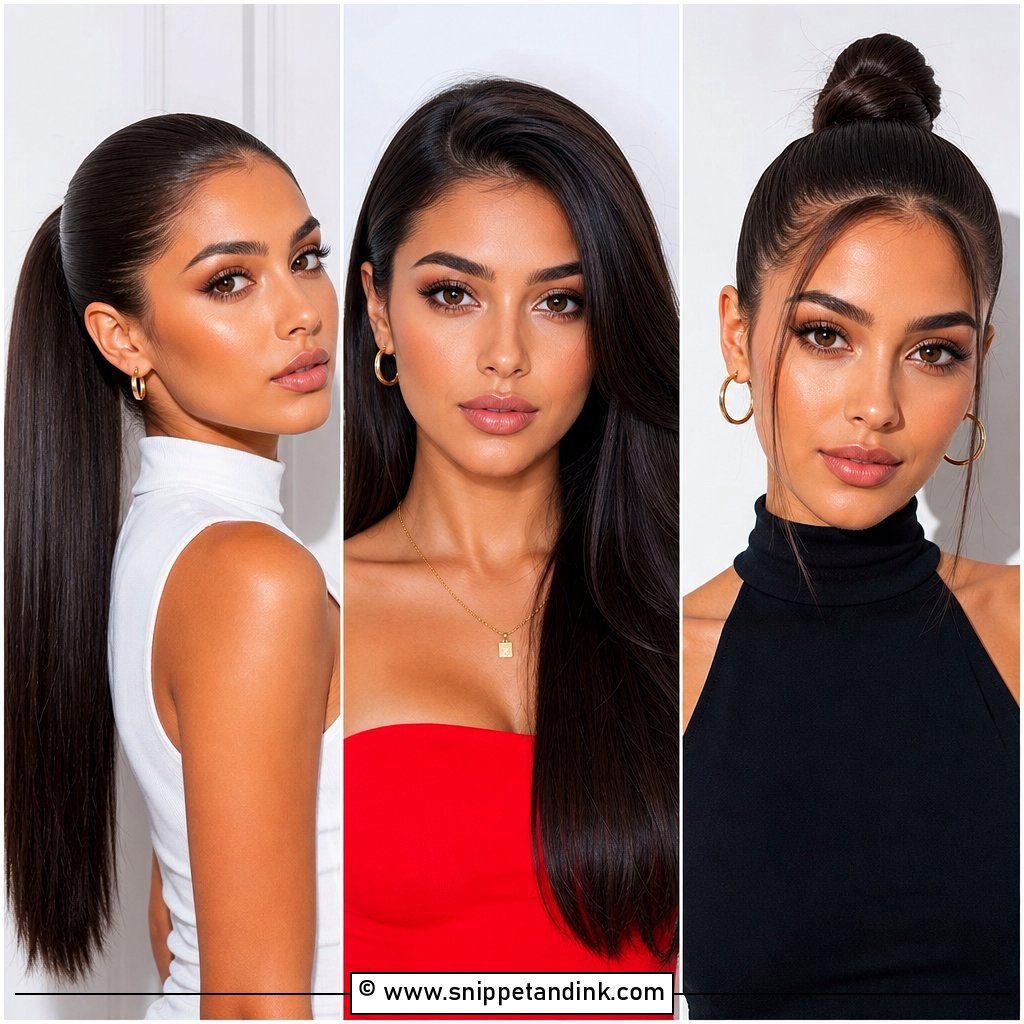
A high, bouncy ponytail with springy curls is 1950s fun. It keeps hair off your face in warm weather and suits medium to long hair. A ribbon, jeweled wrap or fresh flowers around the base cover the elastic. High ponytails can pull on the scalp over a long day, so I secure them with two crossed elastics rather than one very tight band. Tease the base slightly before tying for lift.
21. Flower Crown Vintage Hairstyle
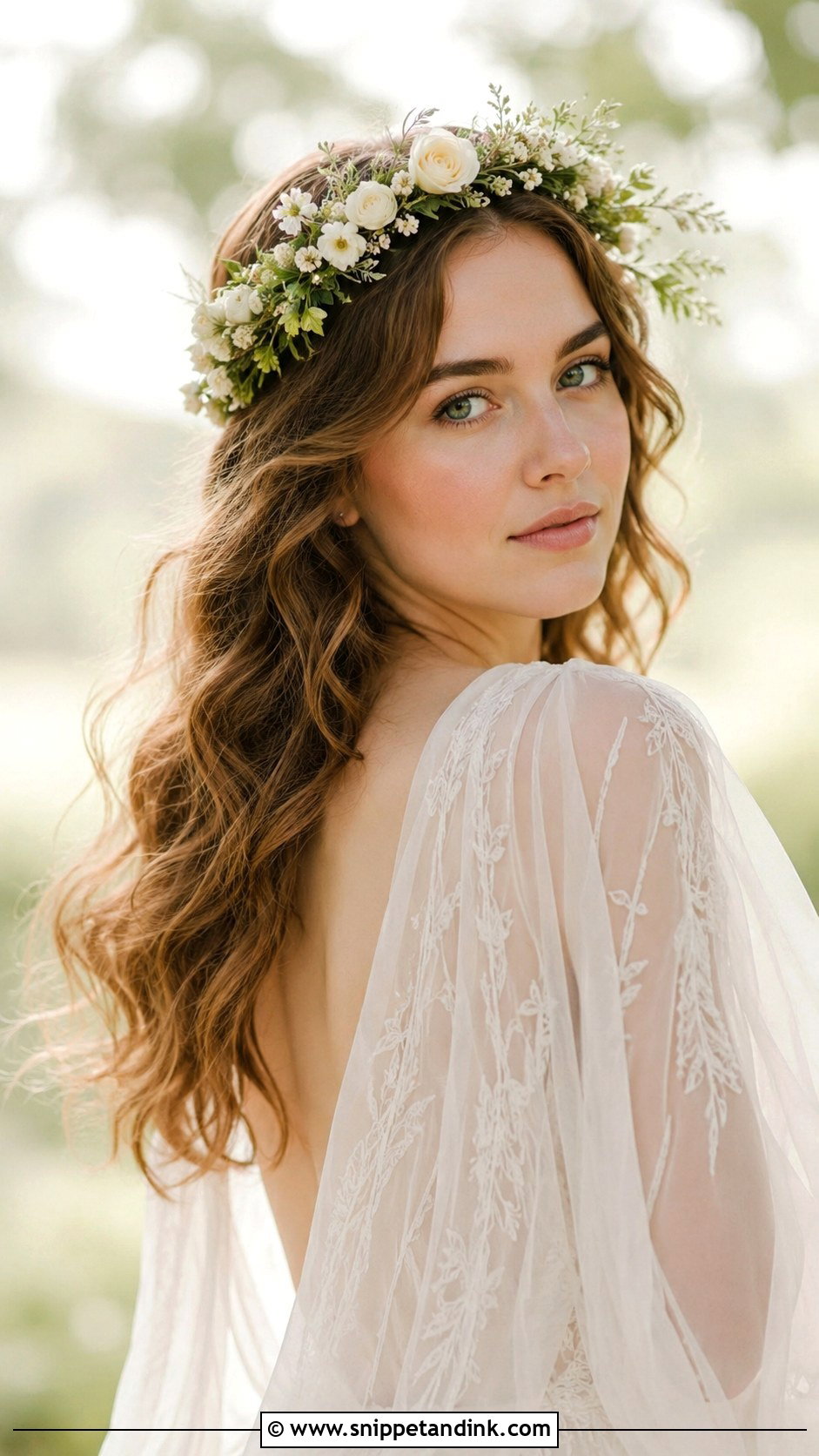
A flower crown over soft vintage waves is the romantic, garden-party end of vintage. It sits on loose curls or a soft half-up style, and suits outdoor weddings with flowing gowns. Crowns can be heavy, so I pin them through the base wire at several points into small anchor sections. Ask your florist for blooms that last out of water, and choose ones that echo your bouquet. Any hair length works.
22. Sleek Vintage Bob Hairstyle
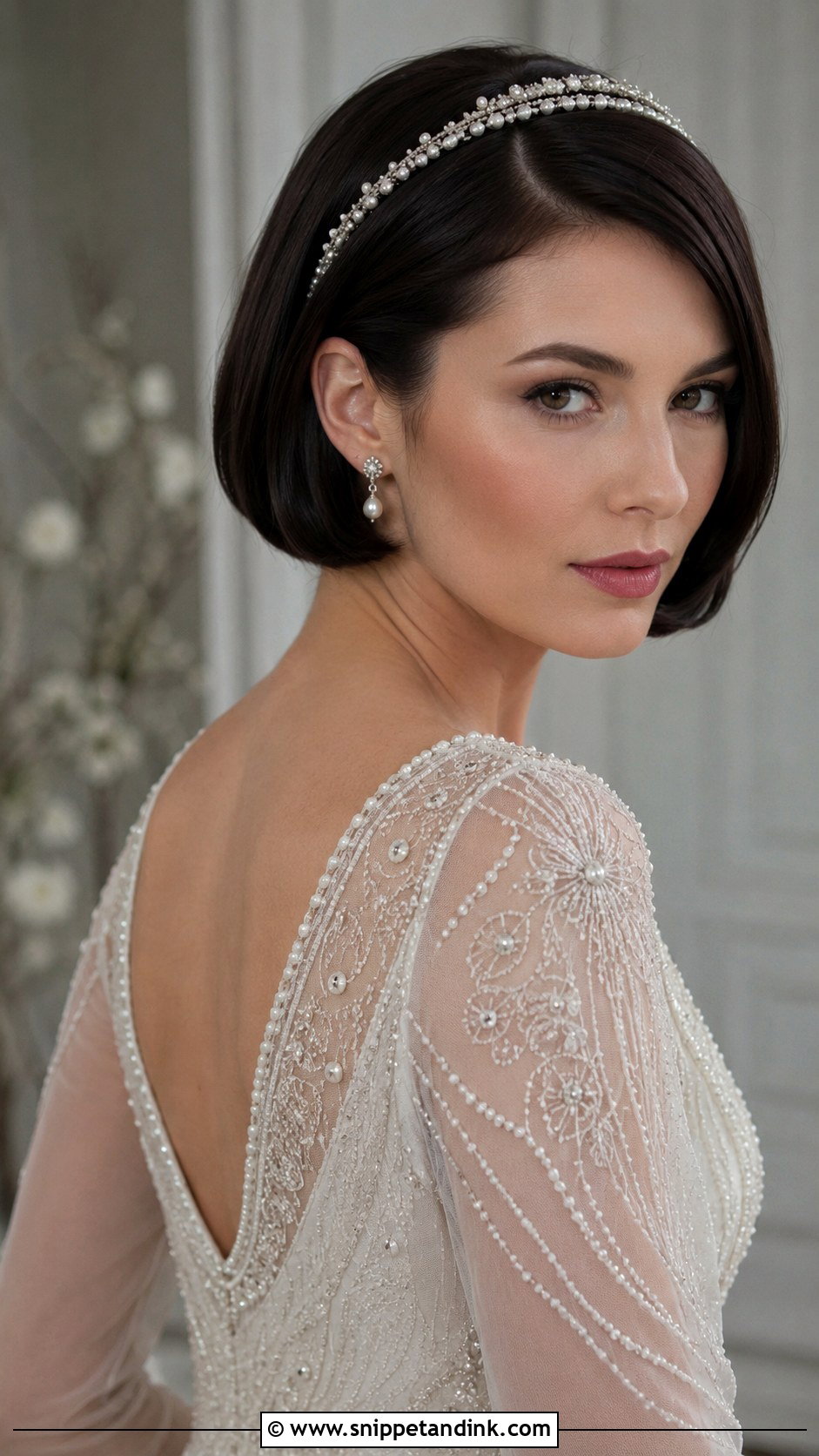
A sleek 1920s bob has blunt ends and a clean structured outline. For short hair it’s a chic, flapper-style look for an art deco celebration, especially with finger waves or a deep side part. A beaded headband, jeweled clip or feathered piece adds detail. Blunt ends show every kink, so the cut should be fresh, ideally trimmed a couple of weeks before. It stays sleek all day with little upkeep.
23. Twisted Crown Wedding Hairstyle
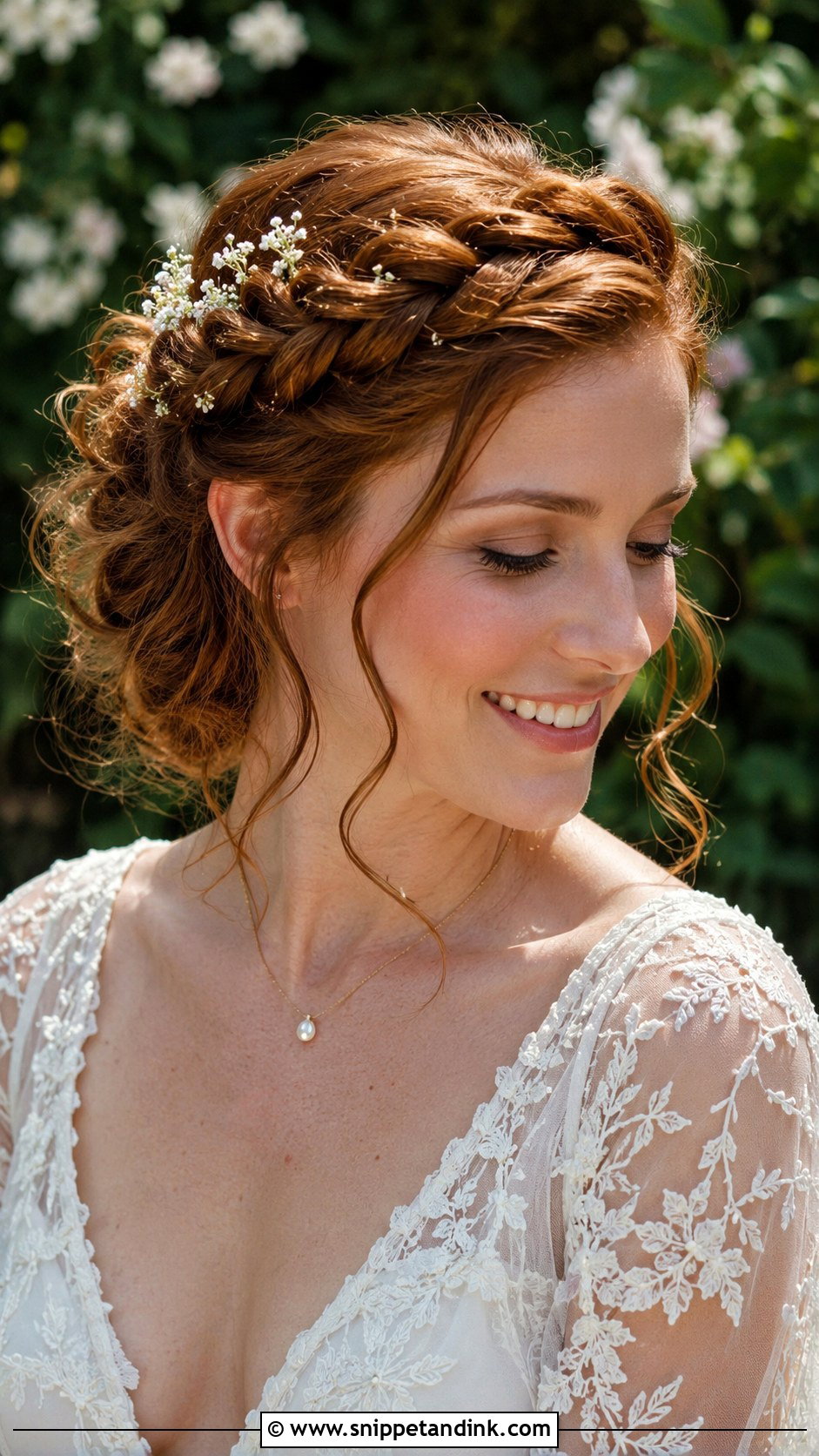
A twisted crown wraps elegant rope-like twists around the head like a halo. It suits loose curls behind or a polished updo, and medium to long hair. I twist each section in the same direction and then wrap the two together the opposite way, which locks the rope so it doesn’t unwind. Tiny flowers, pearls or pins decorate it well. It fits garden weddings and anyone who likes intricate detail.
24. Bardot Bouffant Half-Up Hairstyle
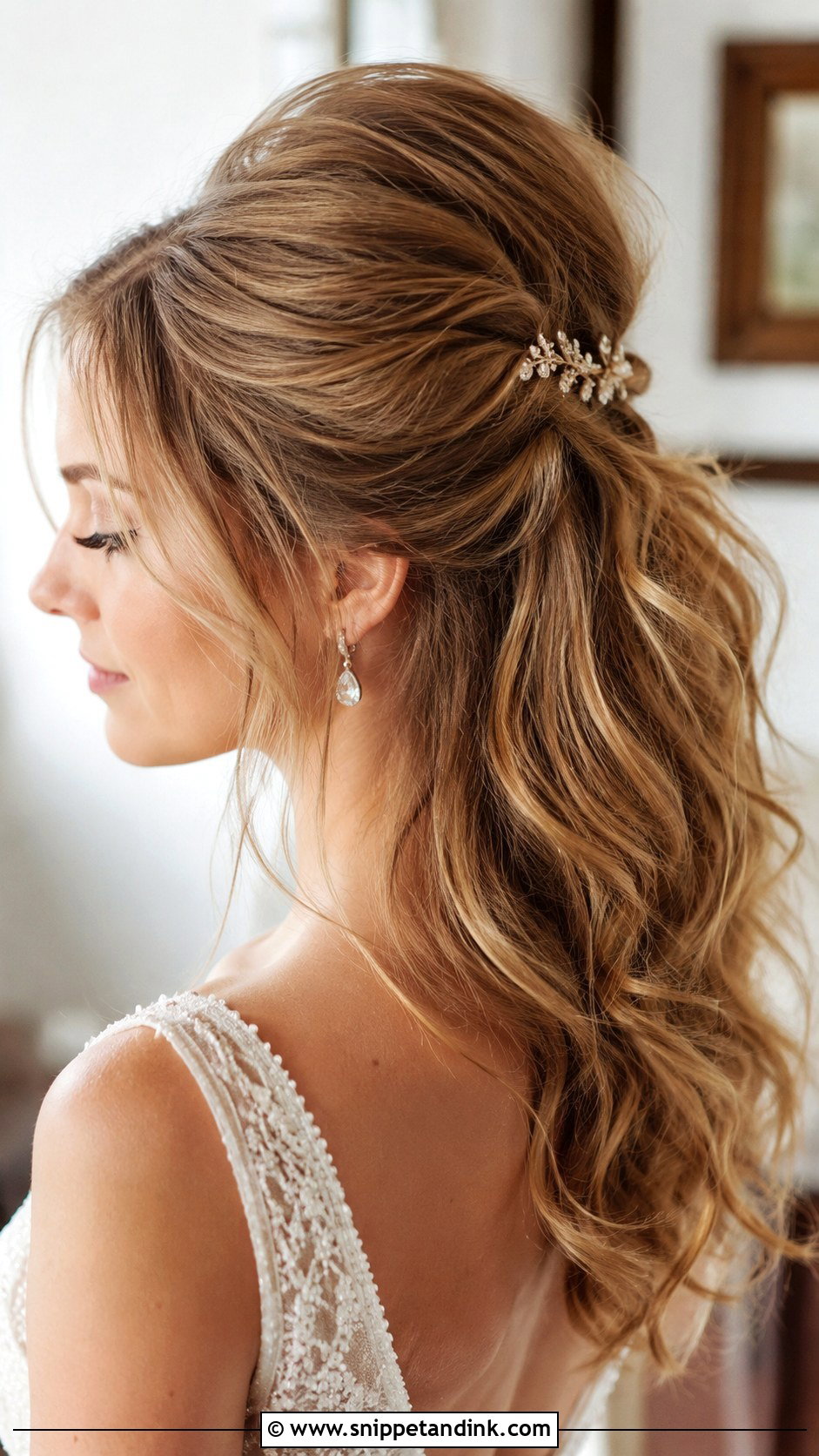
Bardot hair teases the crown for lifted height and leaves the rest loose and tousled. This half-up version holds the bouffant in place with a pinned section behind it, so the volume lasts. Medium to long hair suits it, as do many gown styles. A delicate clip or fresh flowers near the crown add a bridal note. It’s the sexiest look on this list and the one most at risk of flattening if the teasing is too light.
25. Pearl Embellished Vintage Updo
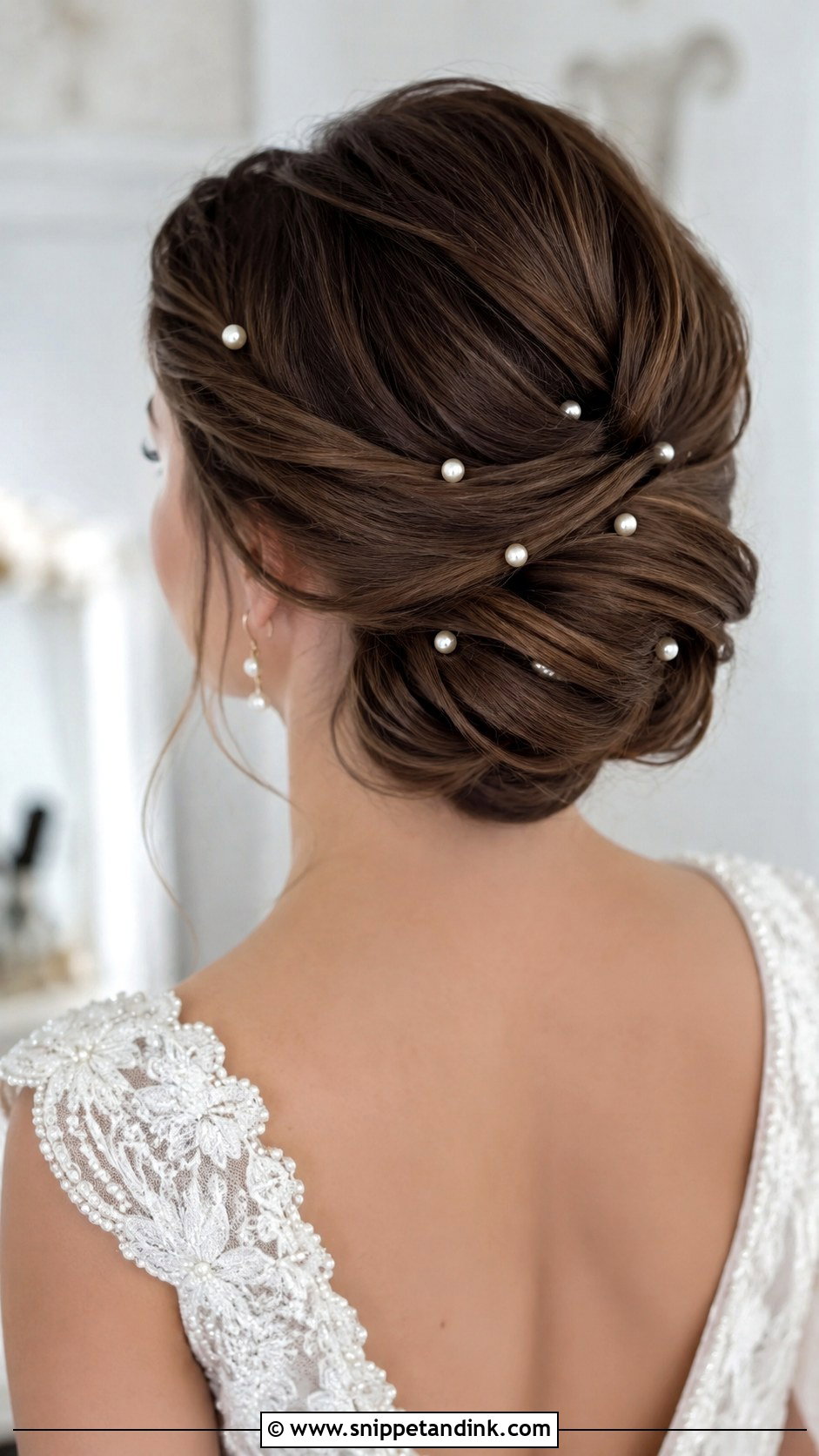
A smooth bun or chignon scattered with pearl pins gives a soft glow in photos. It suits medium to long hair and both formal and intimate weddings. I place pearls along the curve of the bun in an uneven trail rather than a straight line, so it looks natural. Pins hold best in hair with a little texture; freshly washed silky hair lets them slide out. Keep it polished or loosen it slightly for a softer finish.
Old Photographs Make Better References Than Mood Boards
Modern inspiration photos are often styled with extensions, heavy editing or tricks that don’t translate to a long wedding day. When a bride wants an authentic vintage look, I ask her to find real photographs from the decade, like a grandparent’s wedding album or old portraits, alongside her modern ones. They show how the hair was actually built and how it sat on real heads.
Bring photos from the front, the side and the back if you can find them, and note which details you love most. It’s much easier for a stylist to adapt one clear reference than to merge six.
Your Bridesmaids Can Share the Decade Without Copying You
A vintage bride with a modern bridal party can look disconnected in group photos. The fix isn’t identical hair. I give the party a related style from the same era, so a bride in victory rolls might have bridesmaids in soft pin-curl waves with a single roll. Each person keeps something that suits her own hair, and the photos still feel cohesive.
Remember that vintage sets take longer per head than modern styles. Tell your stylist how many people are being done, so they can bring an assistant or start early enough that the bride is finished last, with the freshest set.
A Vintage Look Built to Last From Aisle to Last Dance
Vintage hairstyles cover a lot of history, from finger waves and Marcel waves to beehives, ponytails and soft romantic curls. Each carries its own character, and nearly all of them blend comfortably with a modern gown and accessories. What they share is technique: setting, pinning and patience. Book a trial with a stylist who knows the era you love, test it with your veil and accessories, and you’ll walk down the aisle with hair that holds as well as it looks.
You'll Like These Ideas:


Leave a Reply