
A high pony is the style I reach for when an Indian wedding day runs from a morning ceremony into a late reception and the bride still wants her neck, earrings and blouse on show. Lifting the hair off the shoulders keeps a heavy choker visible and stops the dupatta from tangling in loose lengths. It sits comfortably through mehndi, sangeet, engagement and reception, and it changes character completely depending on what you add to it. Below are fifteen versions I’d happily put on a bride or her sisters, with notes on how each one holds up and who it suits.
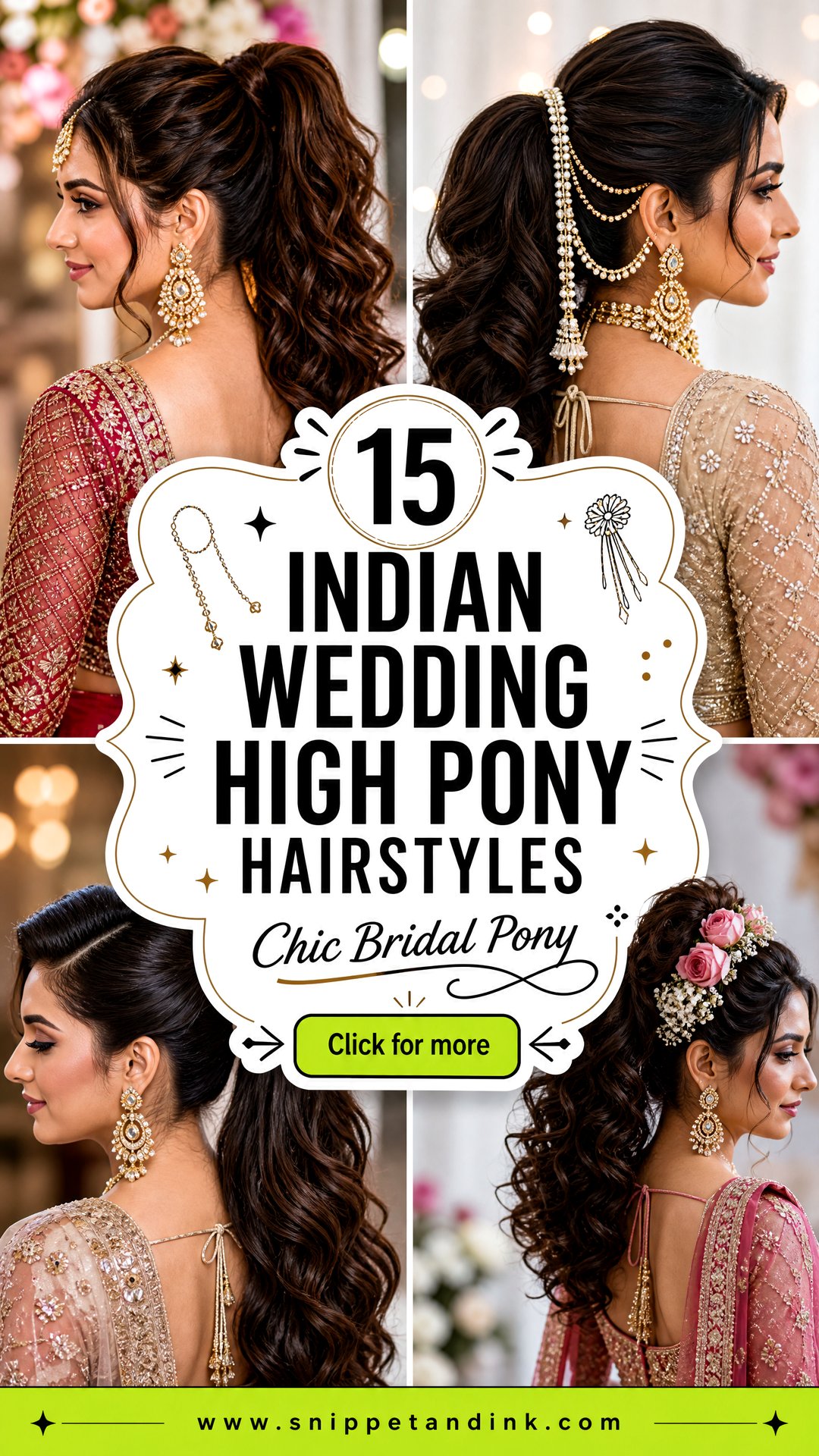
Anchoring a High Pony So It Carries Extensions and a Long Night
Most high ponies that fail at a wedding fail at the elastic, not in the curls. The weight of curled hair, a clip-in pony and a jeweled wrap all hangs from one point on the crown, and by the third hour gravity wins unless the base was built for it. This is how I set one up.
- Find the height first. I tie a test pony and have you look straight ahead; placed on the line running from your chin up past your cheekbone, it sits high without looking like gym hair and still leaves room for a dupatta behind it.
- Prep for grip, not shine. Freshly washed, slippery hair lets the elastic creep down, so I put a little dry shampoo or texture spray at the roots before brushing back.
- Use two elastics. A small, tight one goes on first and a second sits on top. Extensions clip in above this base or wrap around it; they should never hang from the length alone.
- Cross-pin the base. Two bobby pins pushed in from opposite sides in an X lock the pony to the scalp so it can’t swing loose when you dance.
- Wrap and hide. A strand of your own hair, or a strip from the extension, covers the elastics and is pinned underneath.
If tight ponies have given you headaches before, tell me at the trial. I can sit it slightly lower and spread the hold across more pins so the tension isn’t concentrated on a few strands at the crown.
1. Indian Wedding Sleek High Pony
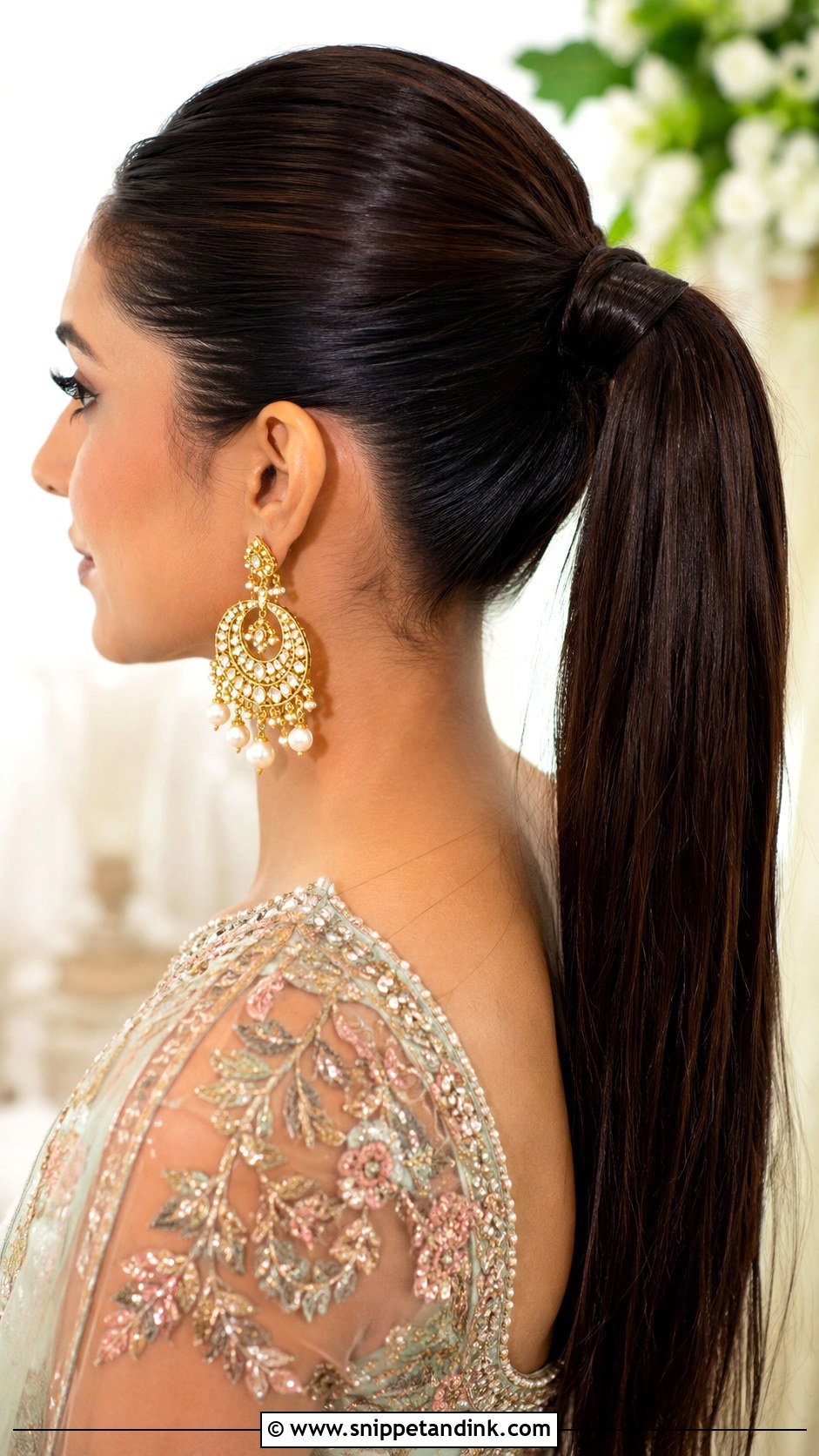
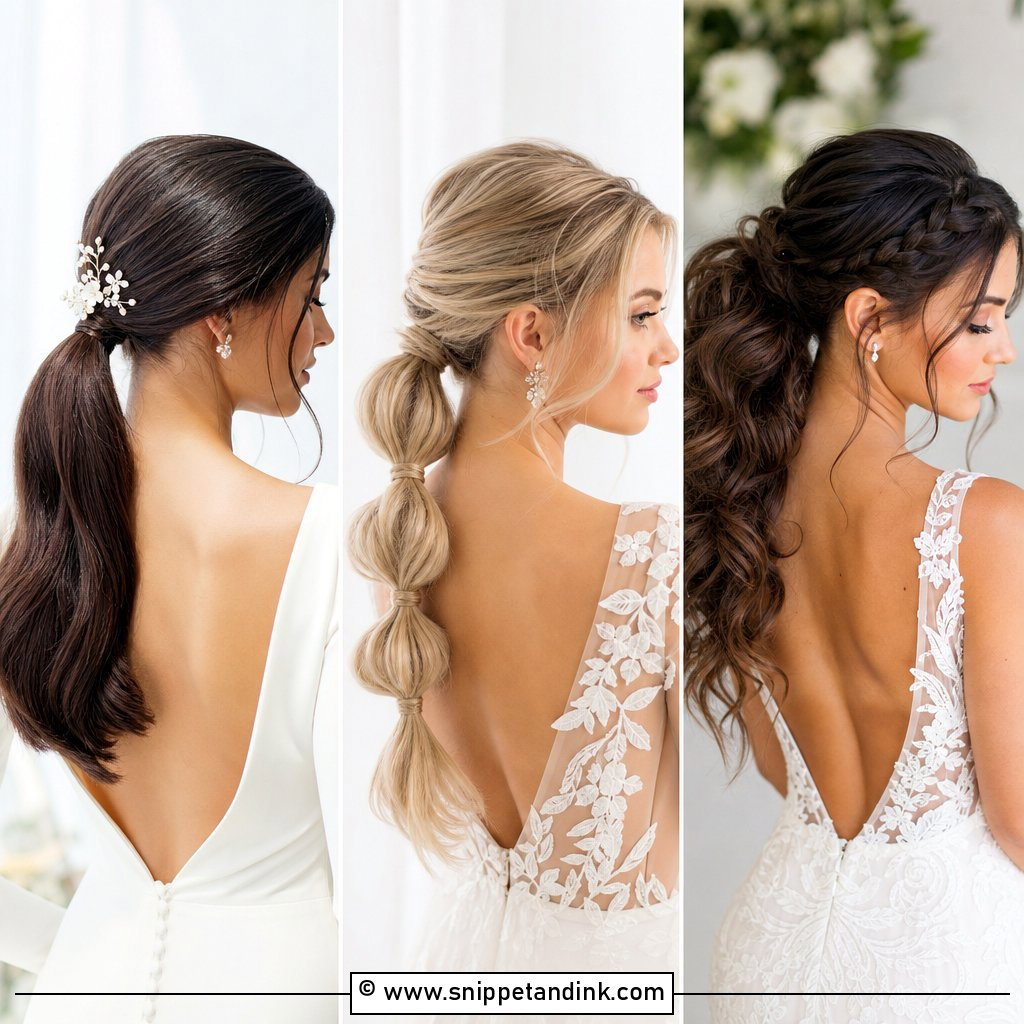
A sleek high pony lifts the face and leaves the jewelry to do the talking. I brush the hair back while it’s still slightly warm from the blow-dry, tie it at the crown, then wrap a strand around the elastic and pin it underneath. Structured lehengas, sequin sarees, cape blouses and reception gowns all suit its clean line. The catch is that sleek shows everything: a bump at the nape or flyaways at the hairline will jump out in flash photos, so I smooth with serum first and set with a firm spray at the end. On fine hair I clip extensions in under the pony so the length doesn’t look thin against a heavy outfit.
2. Indian Wedding Curly High Pony
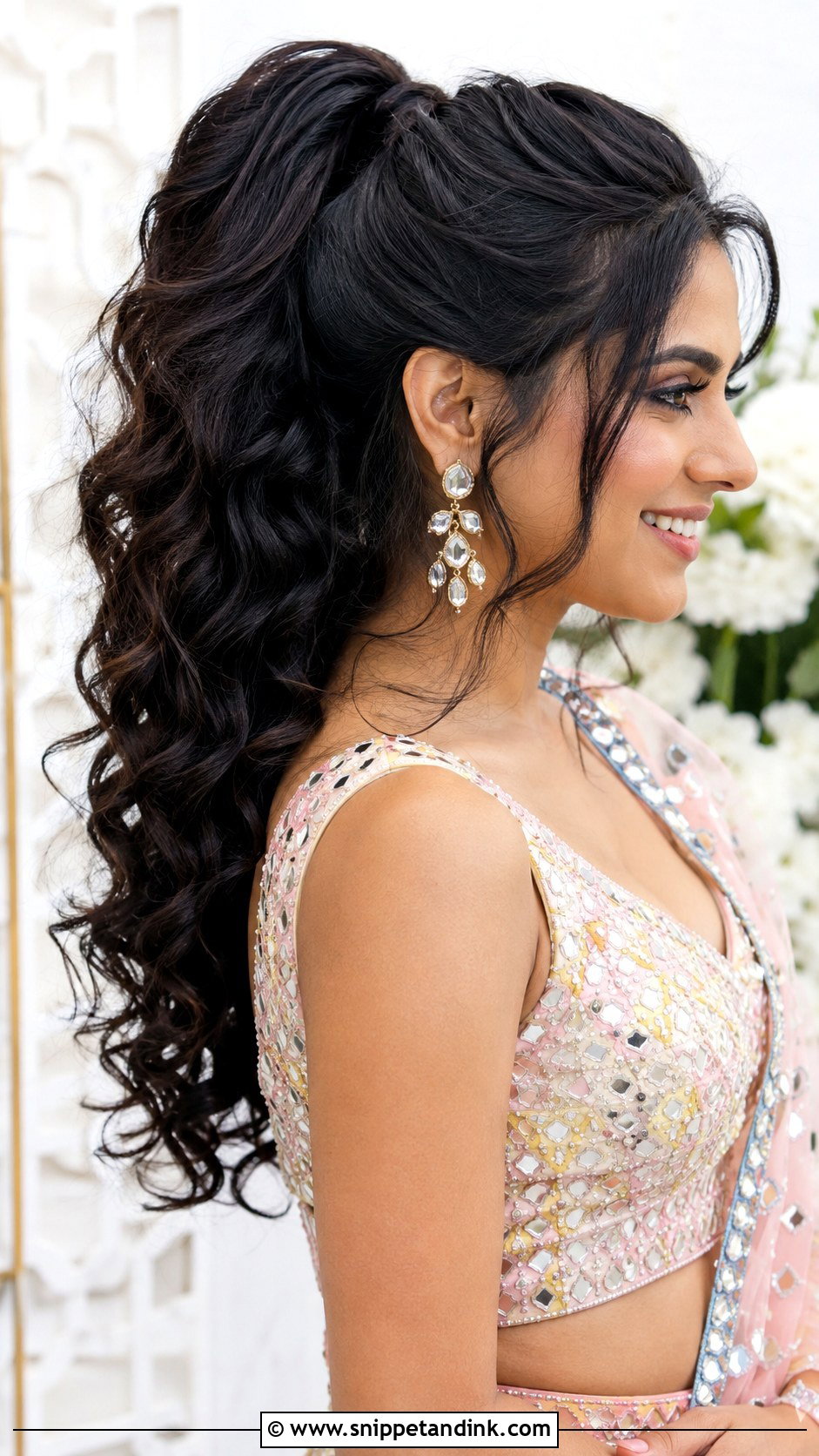
Curls falling from a high crown move every time you turn, which is why I like this for sangeet nights. It suits bridesmaids, sisters of the bride and brides who want something lighter before the main ceremony. I keep the crown smooth and curl the length in medium to large sections, then pin each curl up to cool before releasing it. Curls that set while cooling last far longer than ones dropped straight off the iron. Finish with a flexible spray rather than a lacquer, or the curls go crunchy once you start dancing.
3. Indian Wedding High Pony With Puff
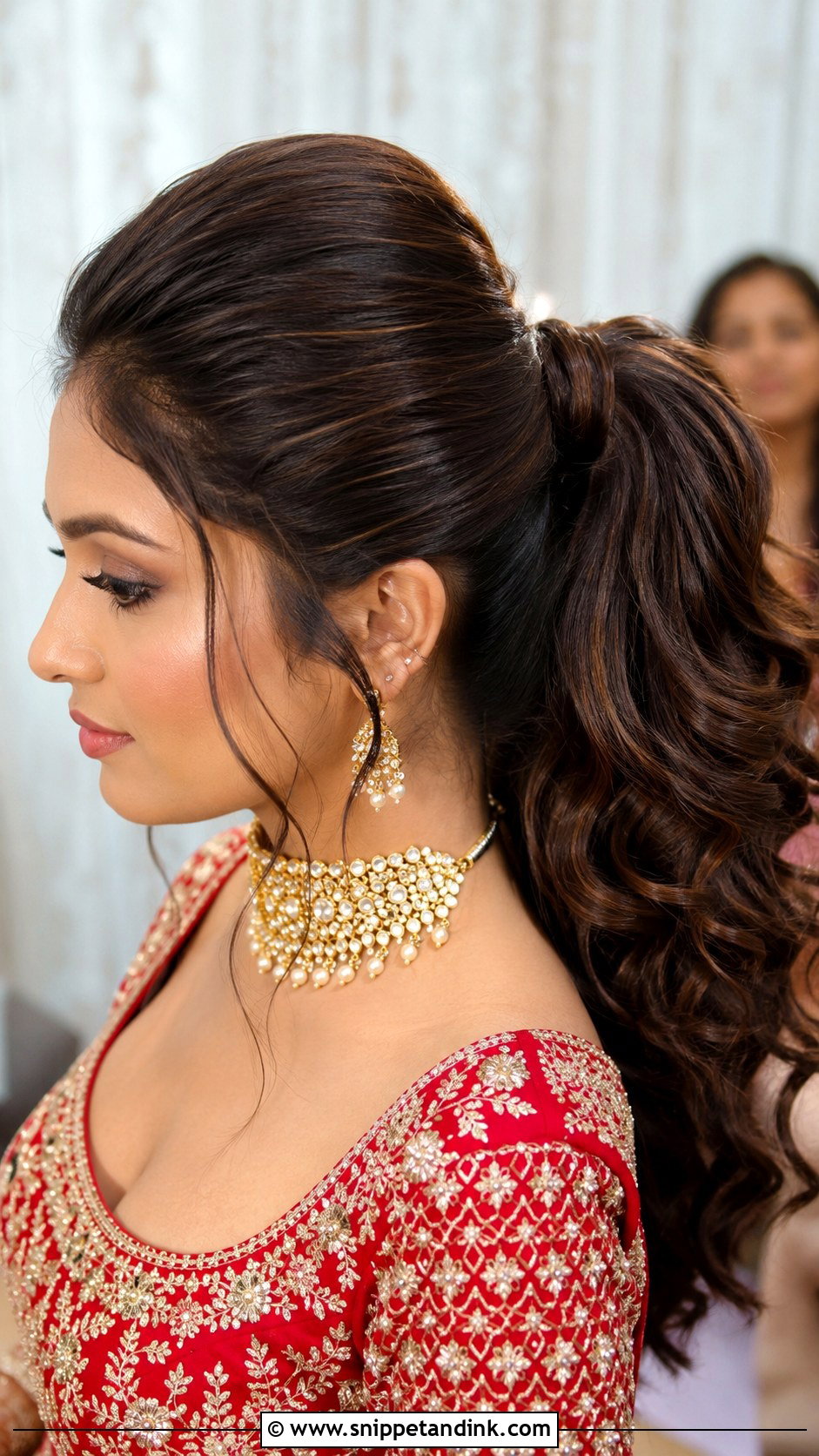
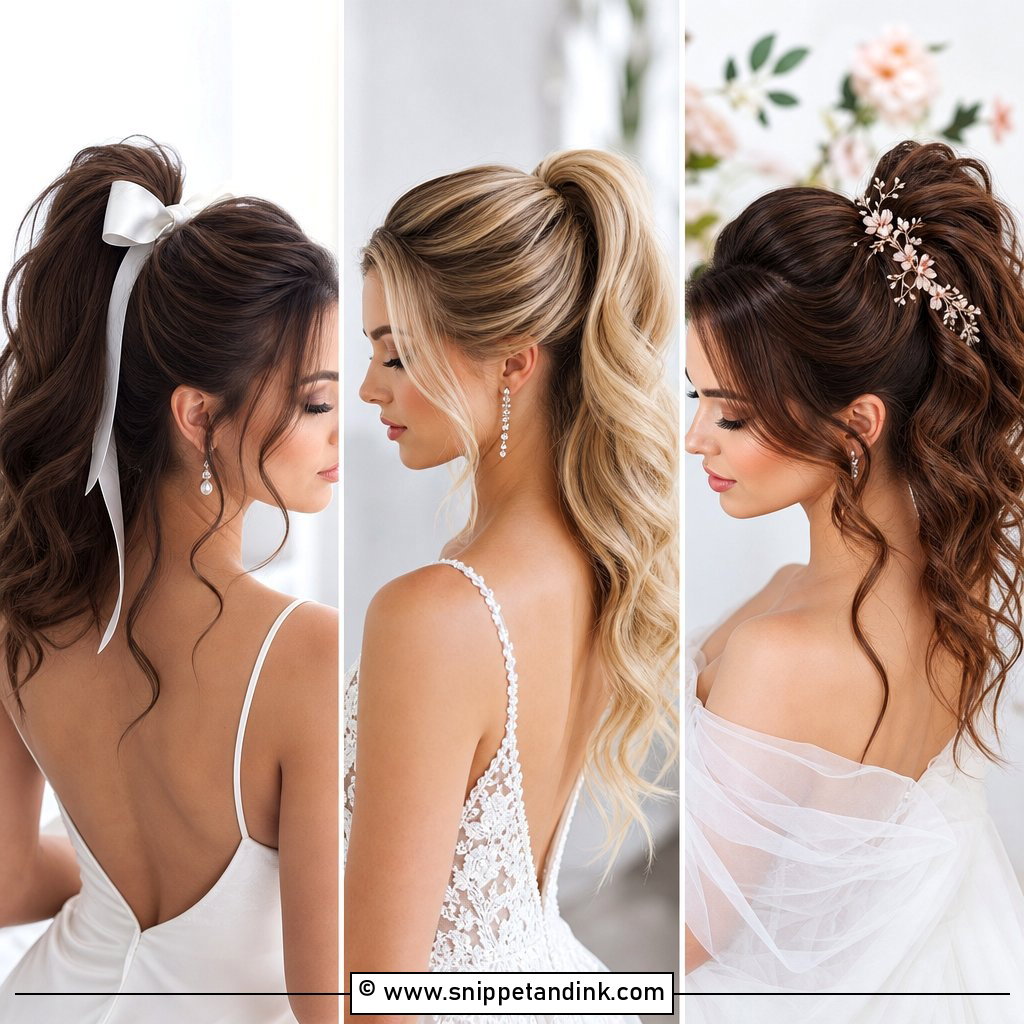
The puff is the most traditional shape here, and it’s also where I see the most overdone results. I backcomb the front and crown at the root only, smooth the top layer over it, and pin it before tying the pony so the lift doesn’t collapse into the elastic. That extra height balances a heavy lehenga, a big dupatta and statement jewelry, and it lengthens round, oval and heart-shaped faces. Keep it modest. A puff taller than about two fingers looks dated in profile and fights with a dupatta pinned over the head. The length can be curled, waved or left straight.
4. Indian Wedding High Pony With Gajra
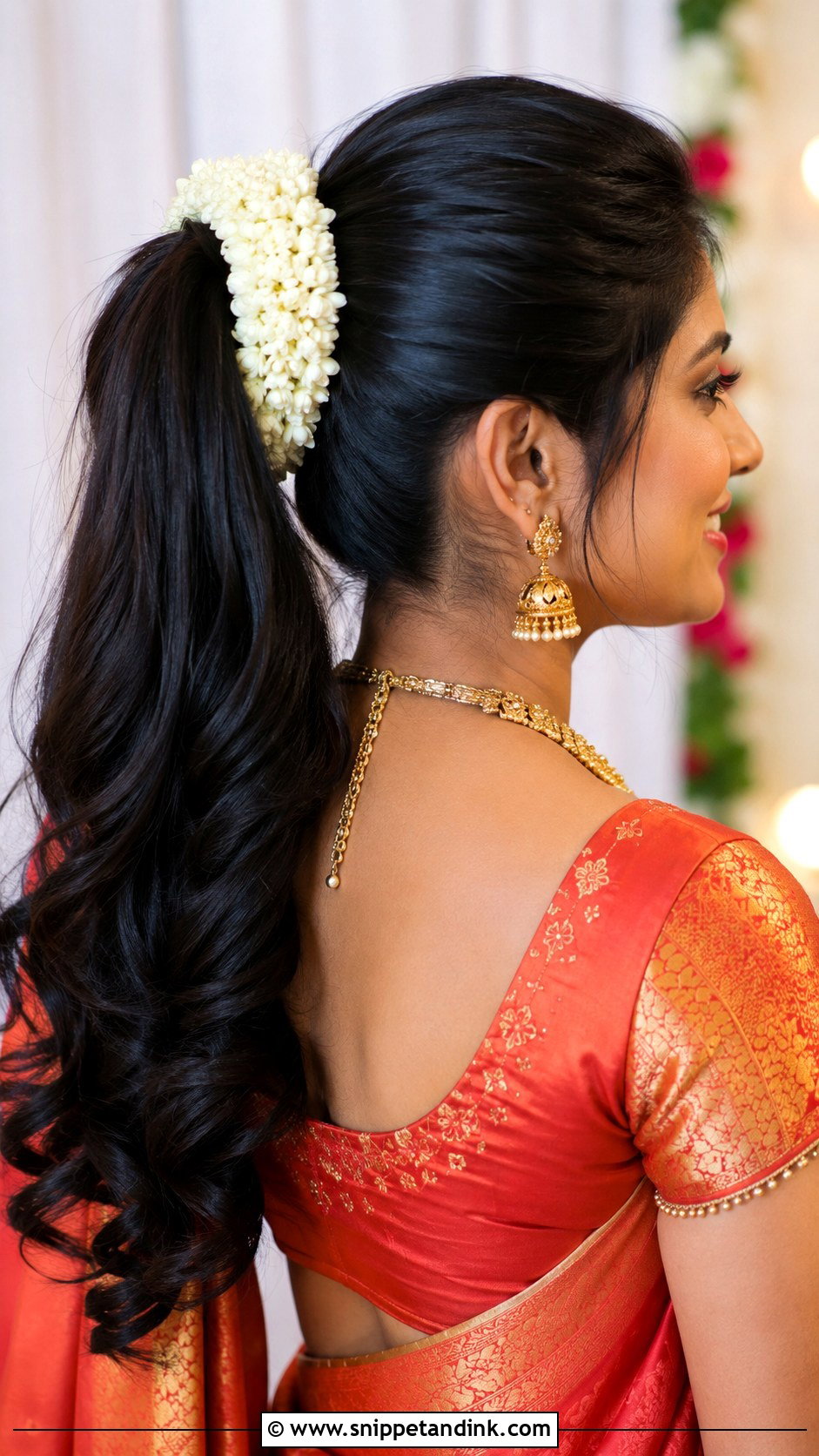
Jasmine turns a ponytail from party hair into bridal hair in one step. I keep the crown smooth, secure the base very firmly, and then have the jasmine wrapped around the elastic so it hides the tie completely. Fresh strands are heavier than people expect and wilt in heat, so I ask for them to arrive the morning of the function and keep them cool and lightly damp in a box until pinning. It suits haldi, mehndi, temple ceremonies and traditional sarees, while roses or baby’s breath read more modern. Keep the flowers at the base; trailed down the length, they make the pony look like it’s sagging.
5. Indian Wedding Braided High Pony
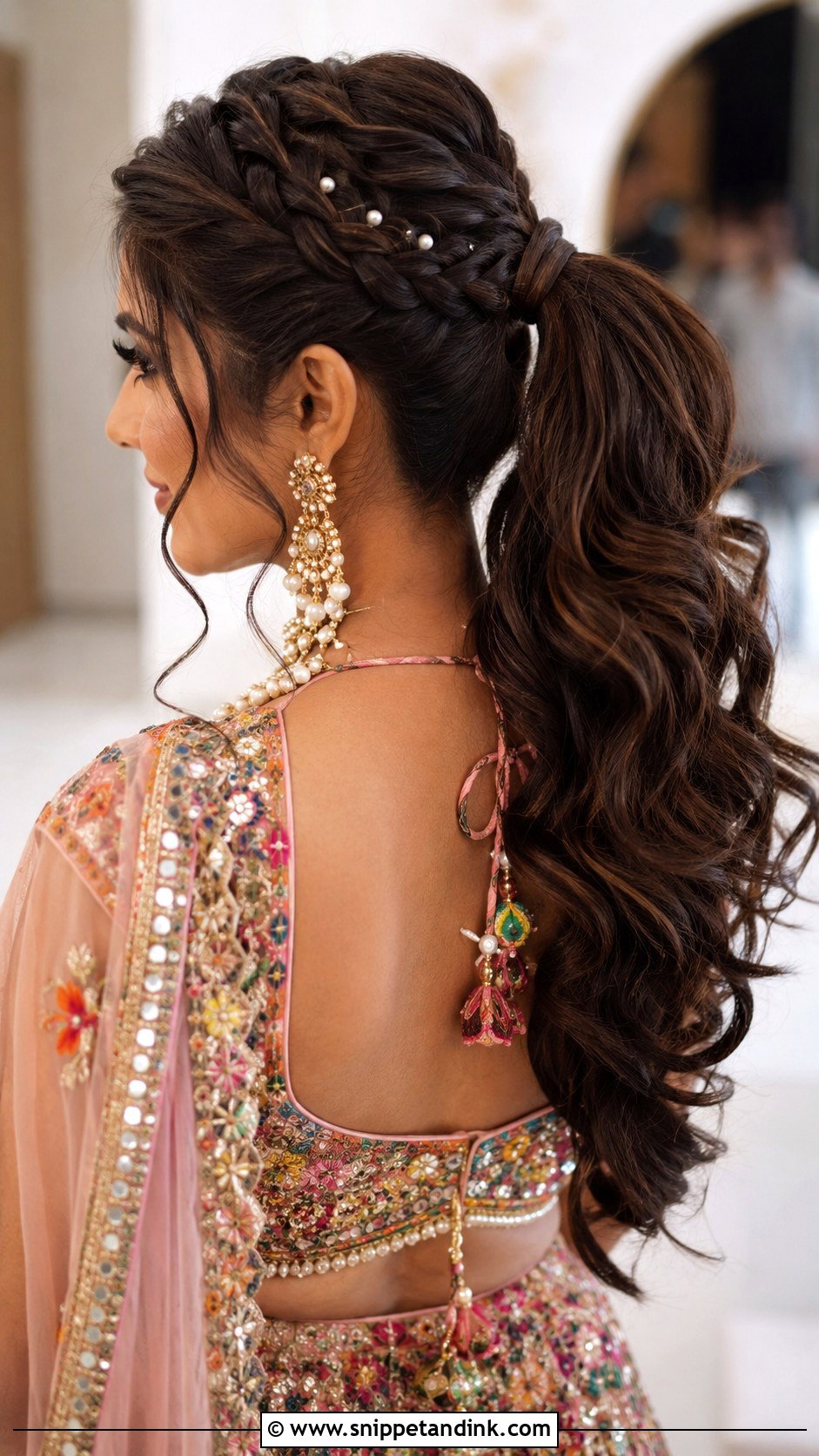
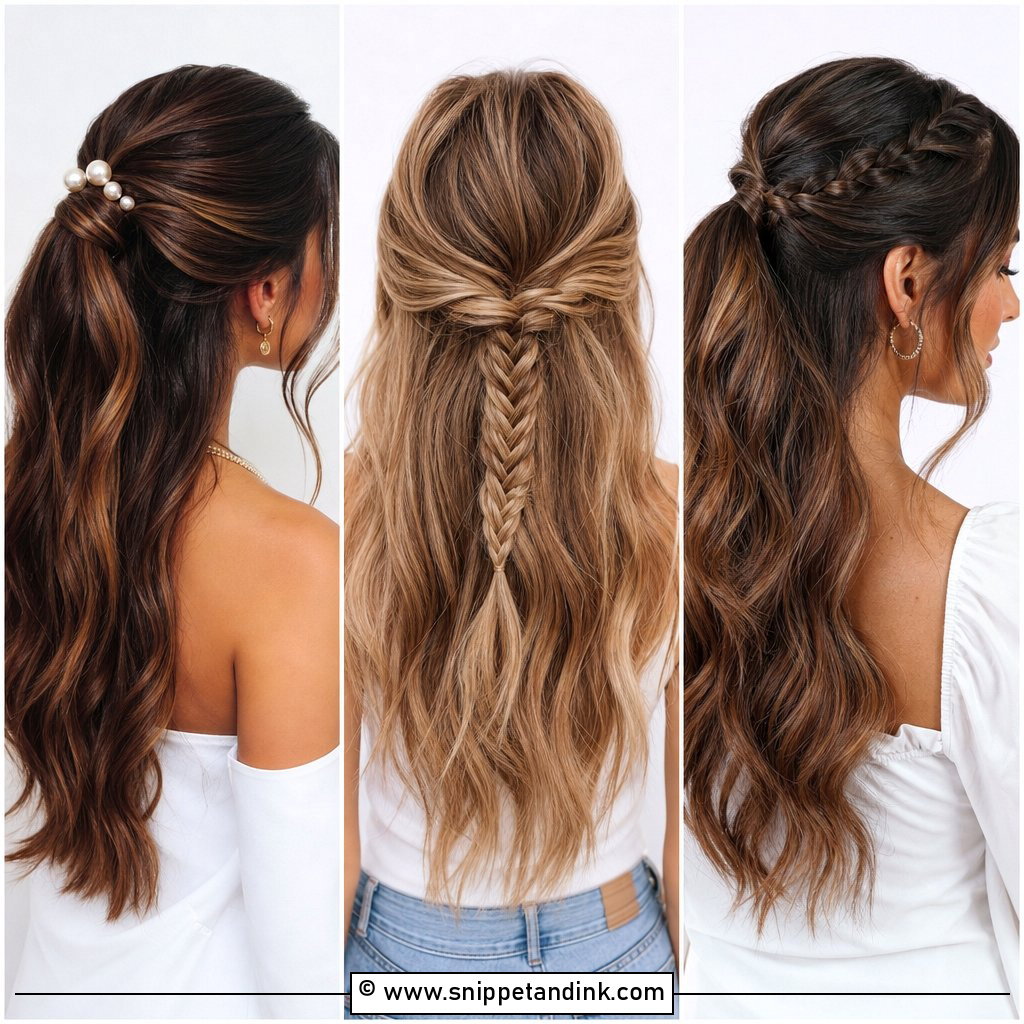
Braids at the front give you detail while keeping every strand off the face, which matters at a mehndi when henna is drying on your hands and you can’t touch your hair. I usually run one or two Dutch braids from the hairline back into the pony. A Dutch braid sits on top of the hair and photographs as a raised line, whereas a French braid lies flatter and can vanish on camera. The length stays wavy or curled, and pearl pins, gold beads or tiny floral clips along the braid dress it up. If your hairline has short, broken pieces, a braid tucks them in far better than a sleek brush-back ever will.
6. Indian Wedding High Pony With Maang Tikka
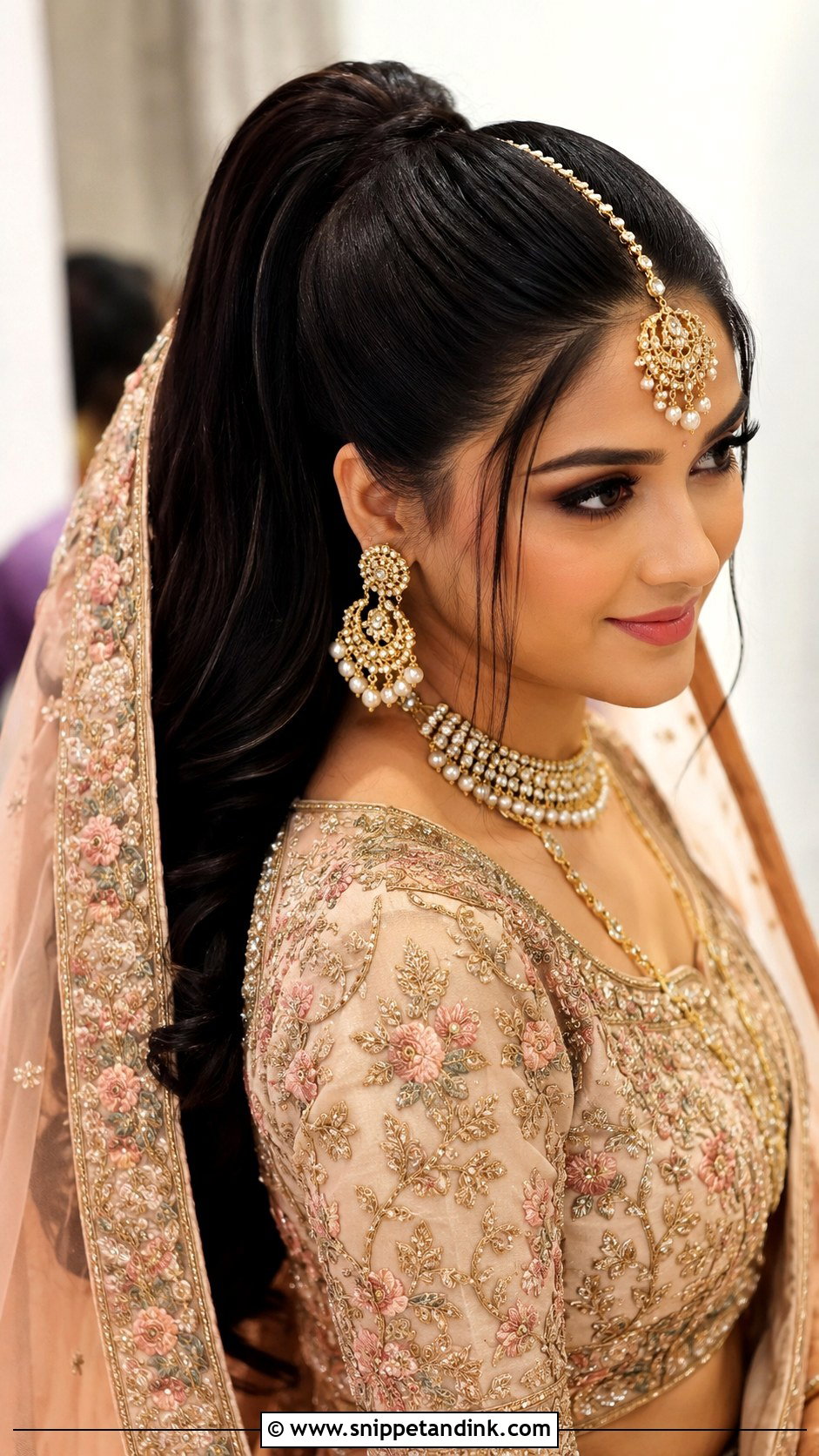
With a maang tikka, the center part has to be razor sharp, because the chain sits right on it and any wobble in the line shows. I pin the tikka before finishing the pony: the hook goes in at the crown, and a small bobby pin crosses over the chain near the hairline so it can’t slide when you bow your head. Then the hair is smoothed back from the part and tied high. Keep the length full with curls or waves. A sharp part, a slick pony and heavy jewelry together can look severe.
7. Indian Wedding High Pony With Loose Waves
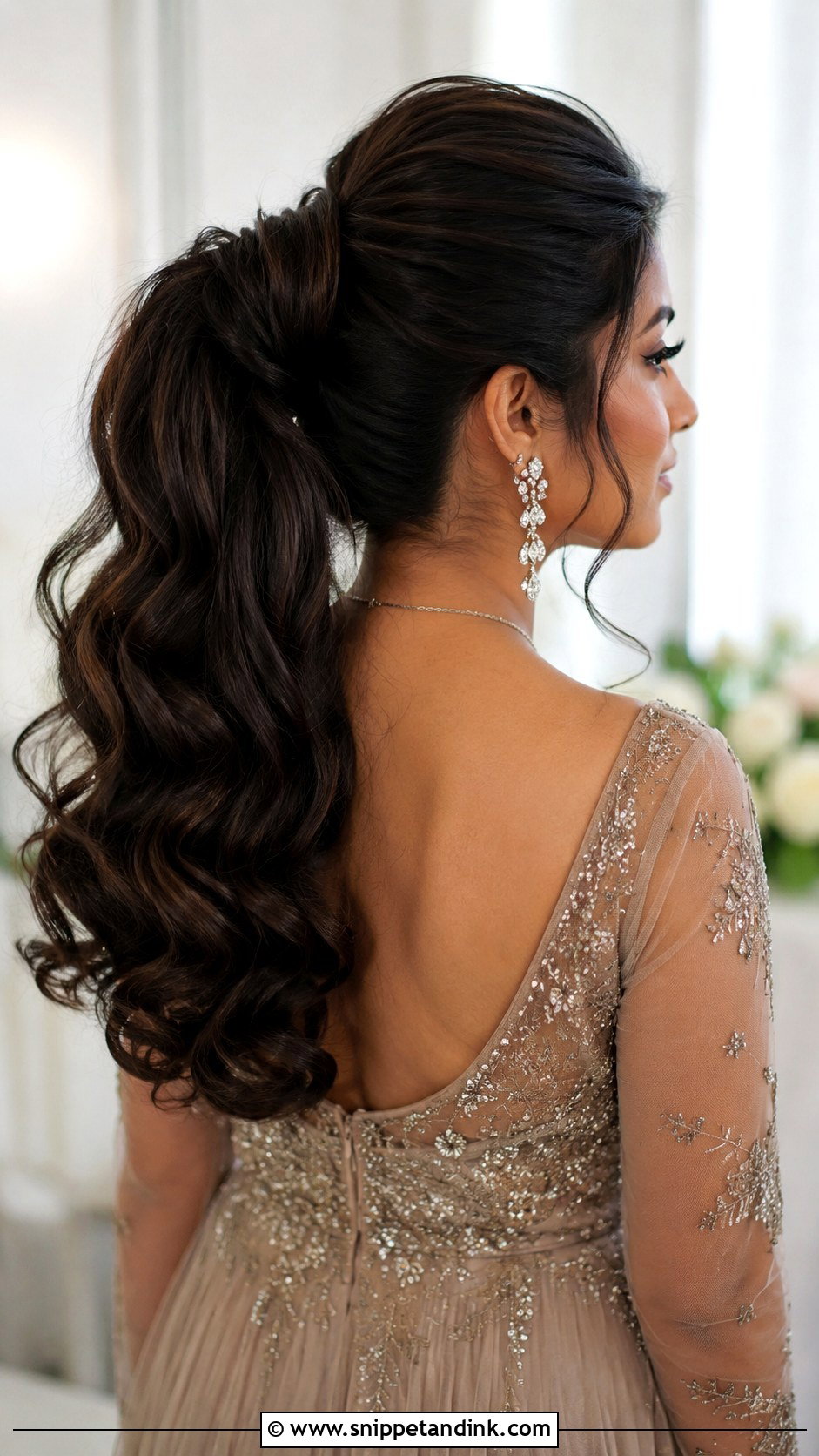
Loose waves are my default when a bride can’t decide, because they soften nearly any outfit and read well on camera. The crown stays smooth or lightly lifted, and the pony is set in wide waves with a flat iron or a large barrel. They add visible fullness, which helps medium-length hair that isn’t especially thick. I’d save this one for engagement parties, cocktail nights and air-conditioned receptions; at a humid outdoor mehndi, wide waves can relax to nearly straight within a couple of hours. A light mist of texture spray through the length keeps them airy instead of flat.
8. Indian Wedding High Pony With Hair Chain
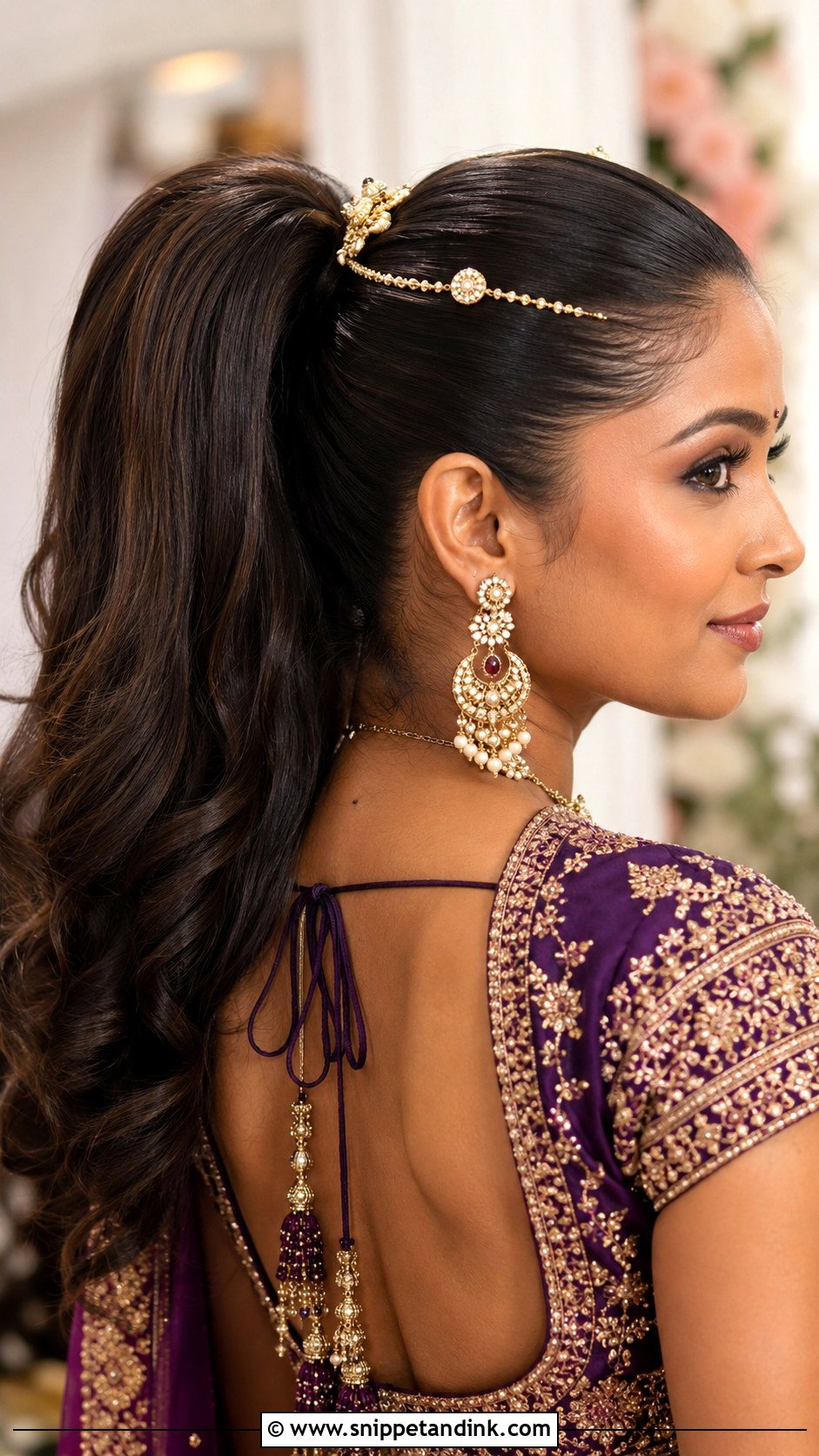
A hair chain does a lot with very little. The pony sits high and smooth, and fine chains or a matha patti style piece drape across the crown or loop around the base. Sleek roots are essential, since a chain lying on textured hair simply disappears. It suits royal lehengas, silk sarees and heavy gold embroidery. I anchor chains with hidden bobby pins at the temples and behind the ears, because that’s exactly where they pull when you turn your head. Keep the pony itself soft and full so the metal isn’t sitting on what looks like bare scalp.
9. Indian Wedding High Pony With Fishtail Braid
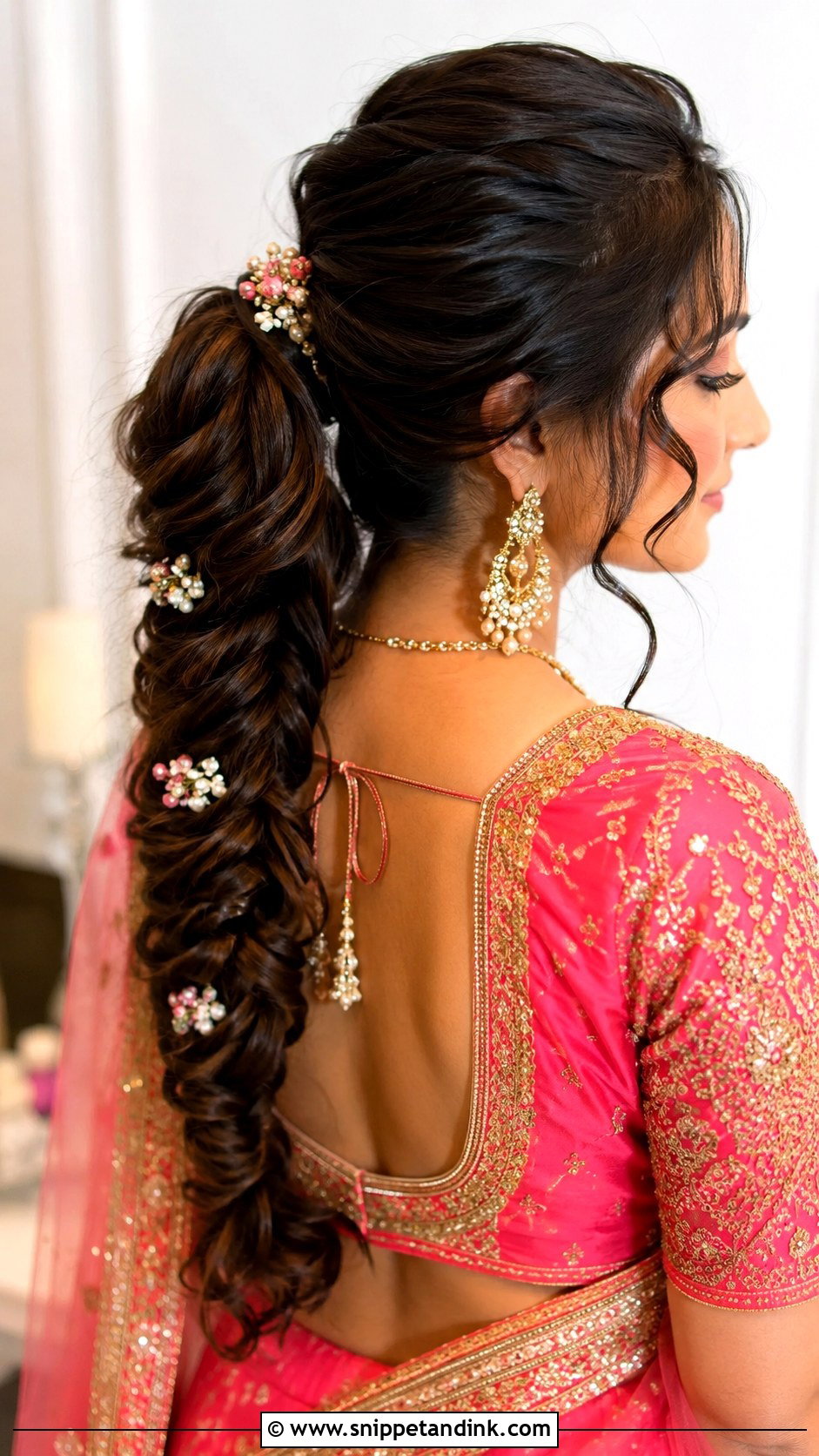
Tying the pony first and then fishtailing the length gives you the height of a ponytail with the detail of a braid. I braid it fairly loose and pull the edges out gently, working from the bottom up so the braid widens toward the elastic instead of tapering away. It’s well suited to mehndi, haldi and daytime events where full glam feels too formal, and it’s the best option here for very long hair, since the length can’t whip around. Tuck small flowers, pearls or gold pins into the braid, and leave a few face pieces loose for a more relaxed finish.
10. Indian Wedding High Pony With Pearl Pins
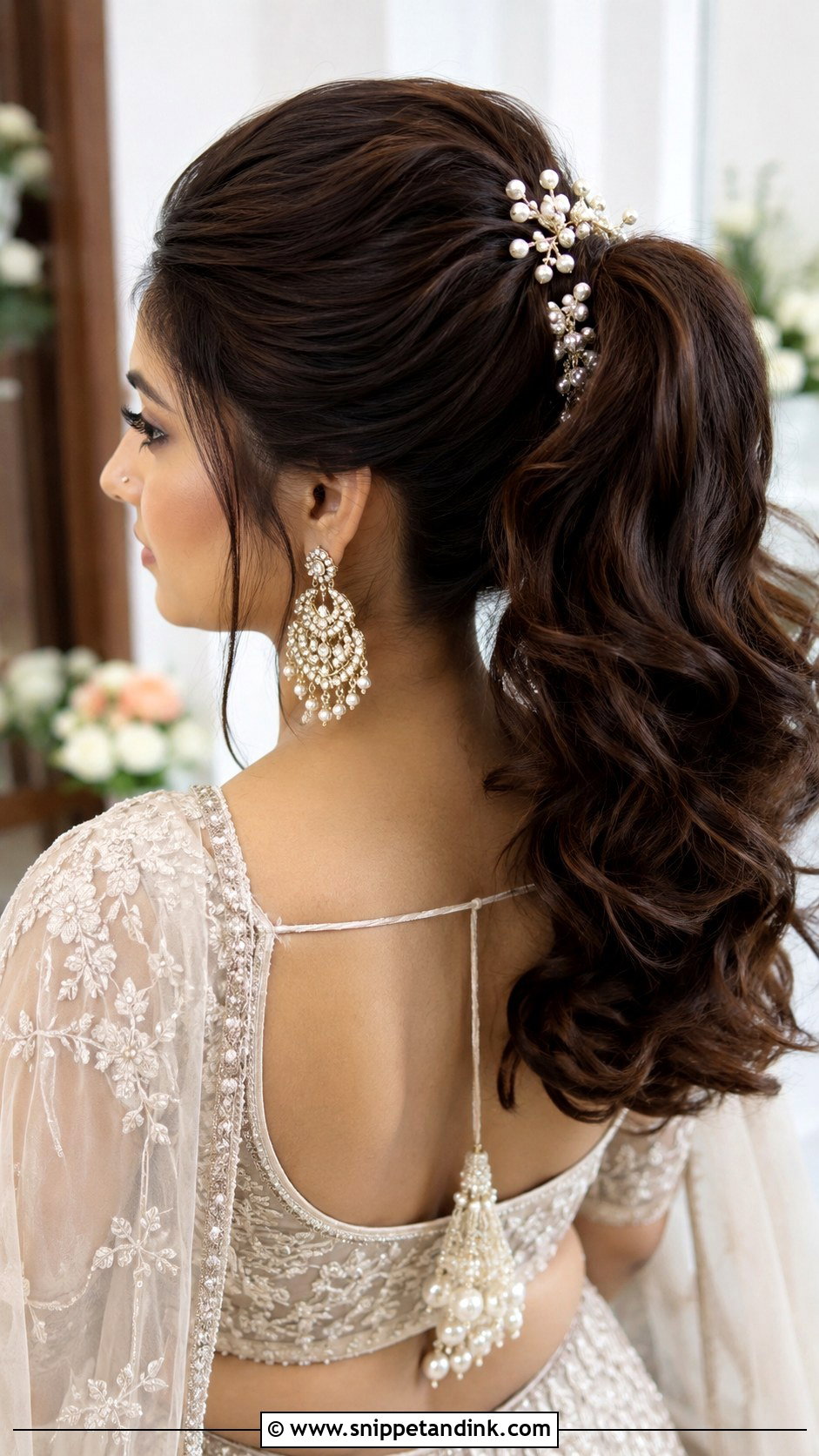
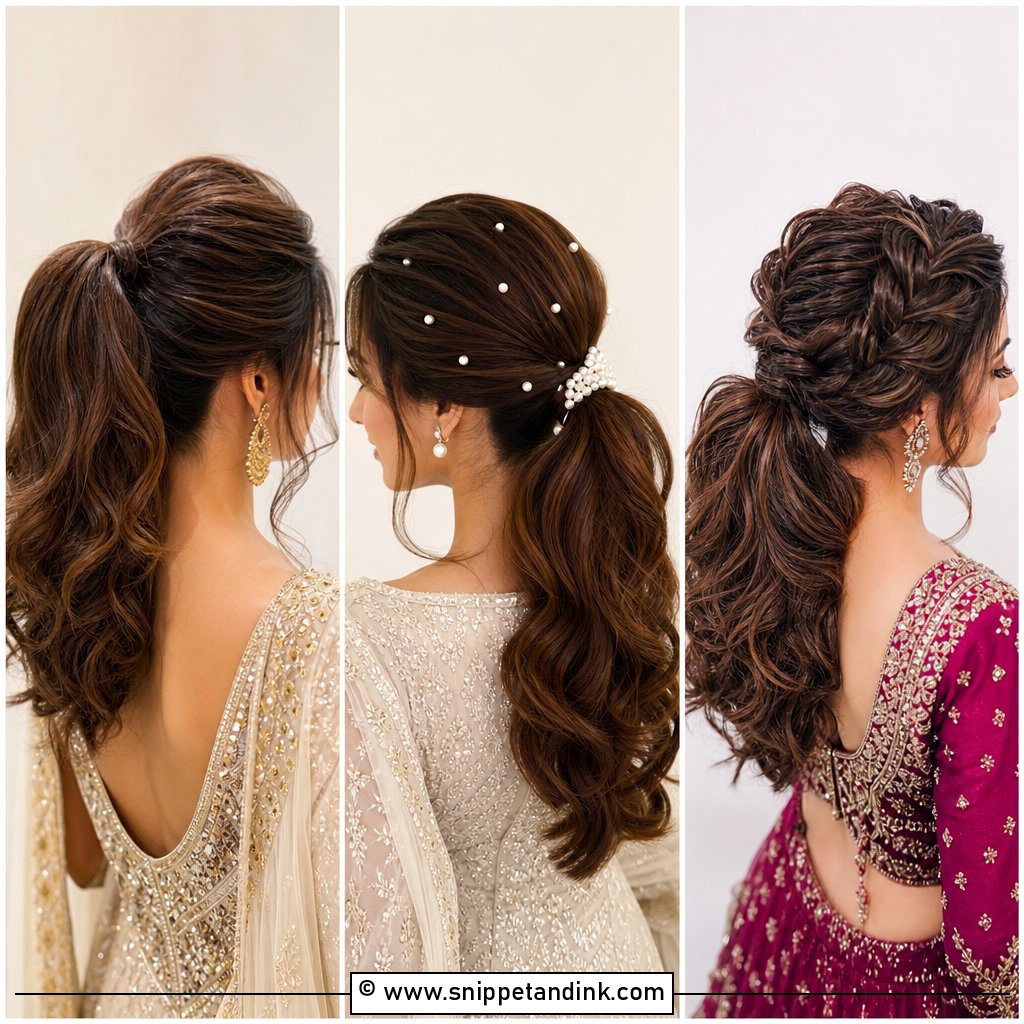
Pearls dress up a pony without adding much weight. I start with a smooth crown and a full curled pony, then place small pearl pins around the base, along a side twist or lightly over the top section. Ivory, blush, champagne and pastel outfits suit them best; against deep red and heavy gold, small pearls tend to get lost. One thing I avoid is pushing pins into the curled length. Each pin adds weight and breaks the curl’s shape, so those curls drop faster. Keep the pearls near the crown.
11. Indian Wedding High Pony With Side Part
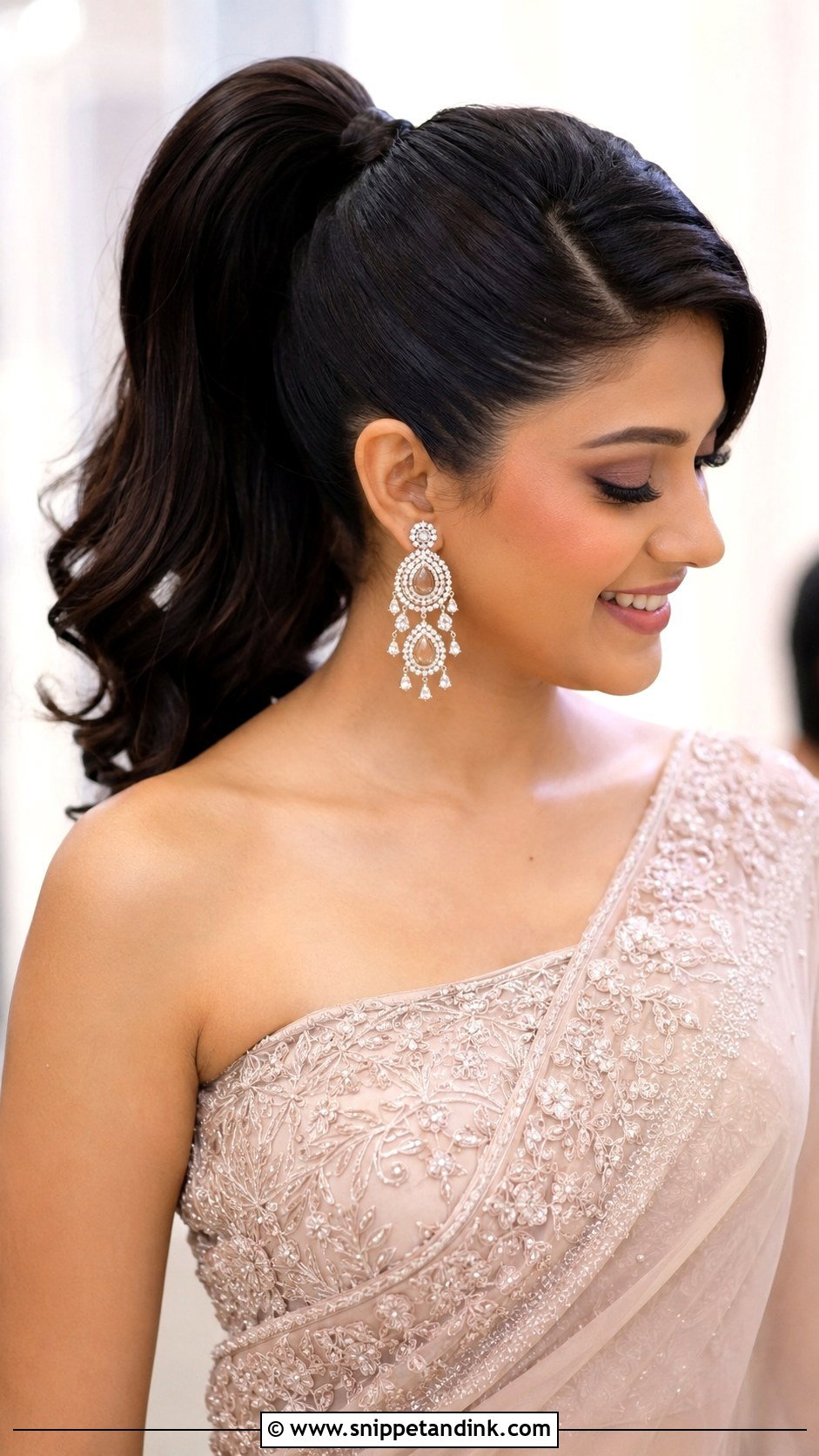
A deep side part gives the high pony a softer, more glamorous line than a center part. The front sweeps across the forehead and blends back into curls or waves at the crown. It balances a broad forehead and suits statement earrings and one-shoulder blouses, since the hair stays lifted while still showing some movement. My worry with this one is the sweep itself: on silky hair it tends to fall forward by the reception. I lay it with a little gel or styling cream and hide a pin behind the ear to hold it. A wrapped base finishes the pony cleanly.
12. Indian Wedding Bubble High Pony
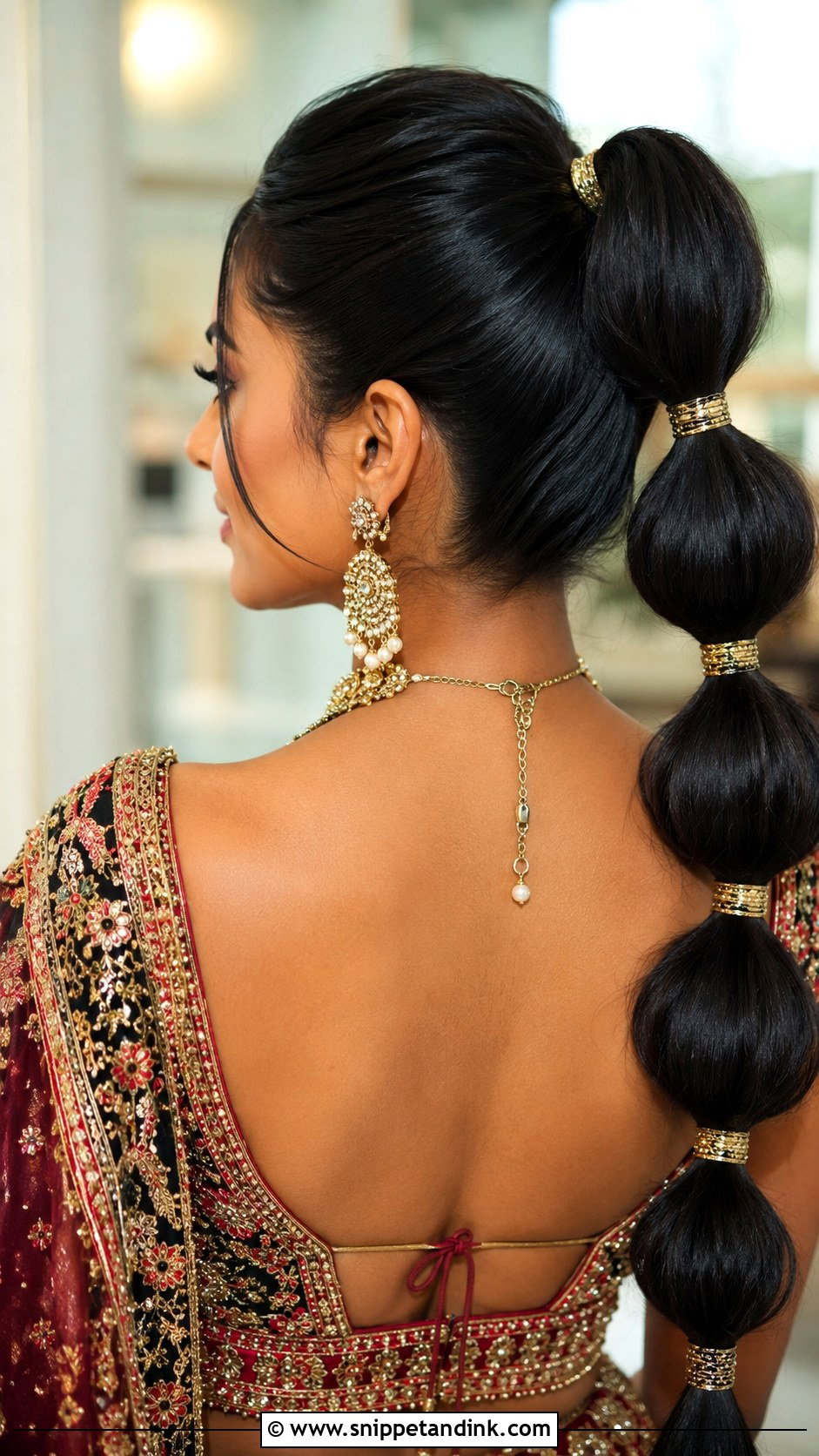
The bubble high pony is the playful one, and I’d keep it for a sangeet or mehndi rather than the main ceremony. The pony is tied high, then small clear elastics go down the length every few inches and each section is gently pulled out into a rounded bubble. Gold thread, pearl bands or tiny floral ties make those elastics look intentional. It needs length, so on hair shorter than mid-back I add a clip-in pony. Keep the crown sleek; if the top is fluffy too, the whole style starts to look childish.
13. Indian Wedding High Pony With Curls And Flowers
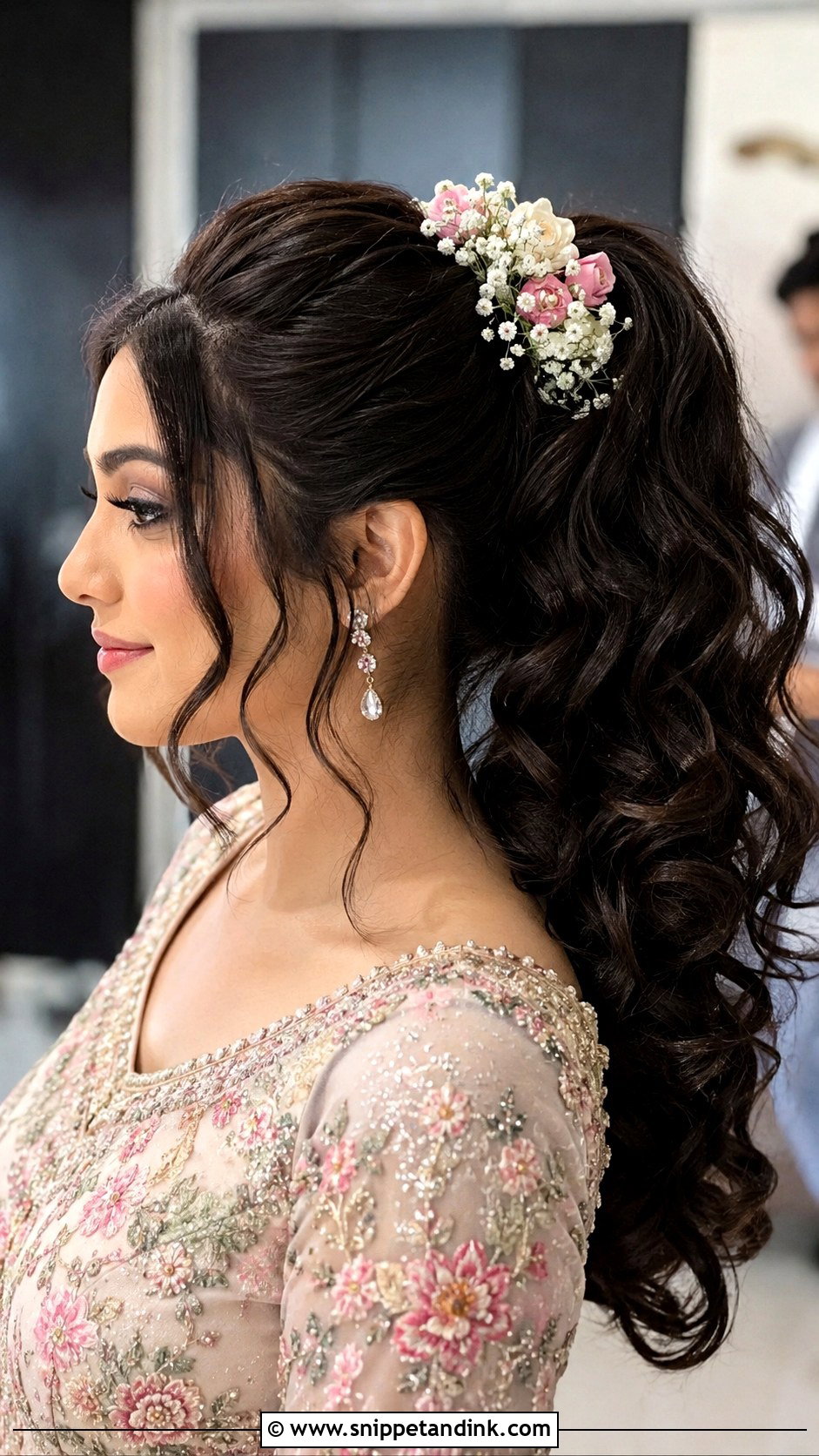
Curls plus flowers make a pony that looks finished from every side, which counts at a mehndi where guests sit around you all evening. I place the pony high, curl it in defined sections and tuck small flowers around the base or along one side. Bridesmaids, mehndi guests and brides at a pre-wedding function all wear it well. Jasmine reads traditional and roses romantic. Don’t cover the whole pony, though. Three or four small clusters are plenty, and the curls should stay the main feature.
14. Indian Wedding High Pony With Front Twists
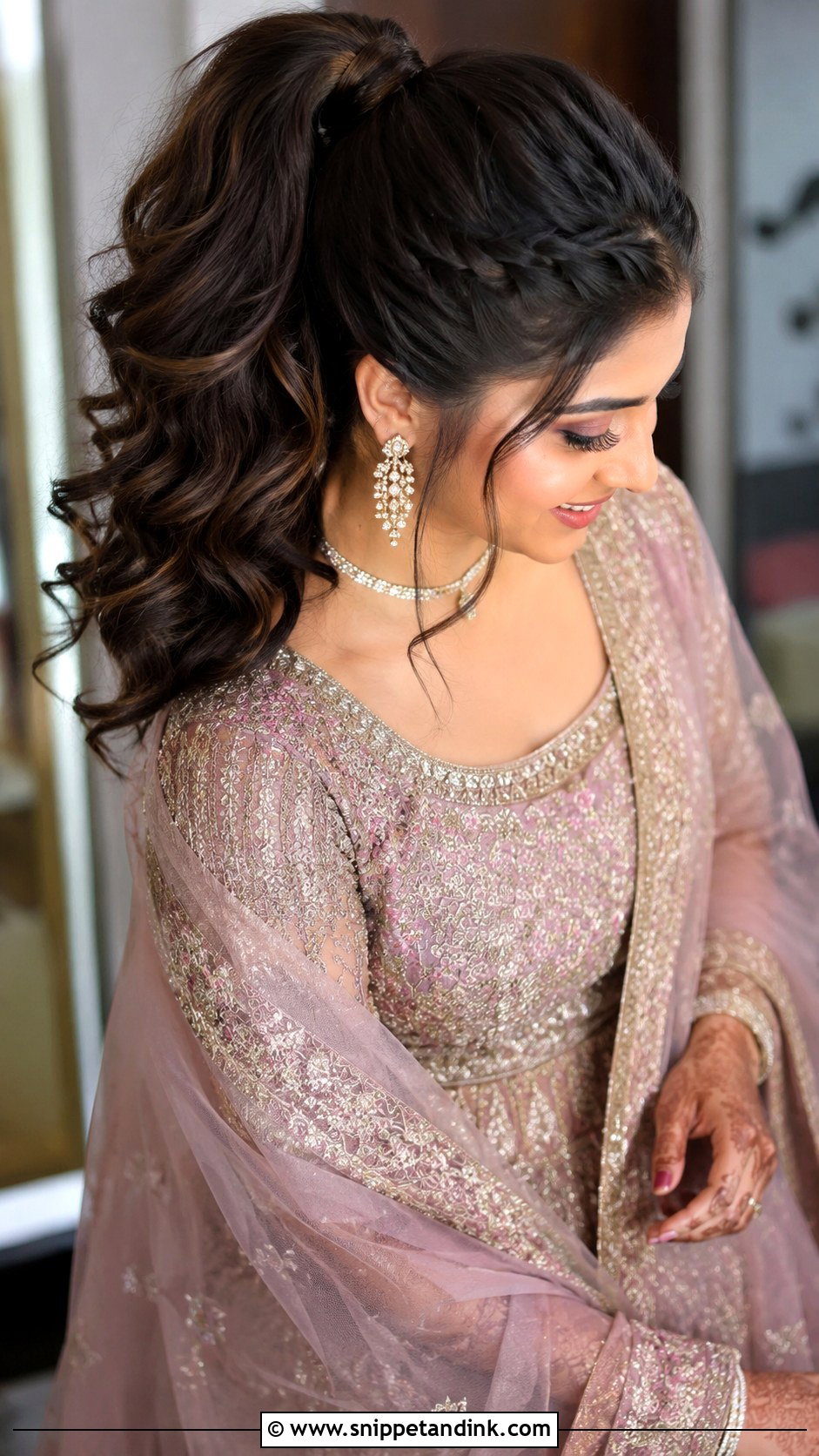
Two front twists are the simplest way to add detail without any accessories, and they’re my fix for short front layers that won’t reach a ponytail. I take a section at each temple, twist it back loosely and fold it into the pony, locking each end with a pair of crossed bobby pins. The length can be curled, waved or lightly crimped. Younger bridesmaids and guests do well with it because it survives running, hugging and a dupatta being thrown over the head, and it’s quick to do.
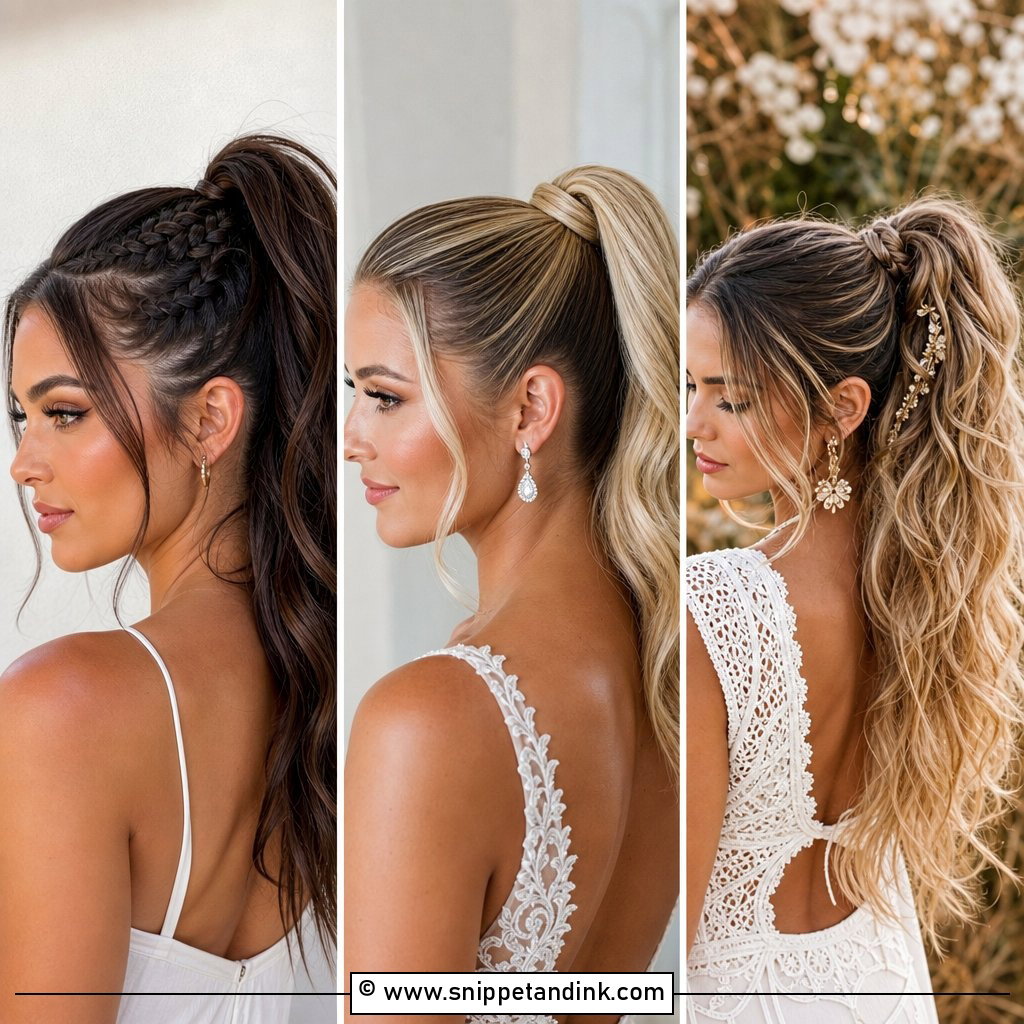
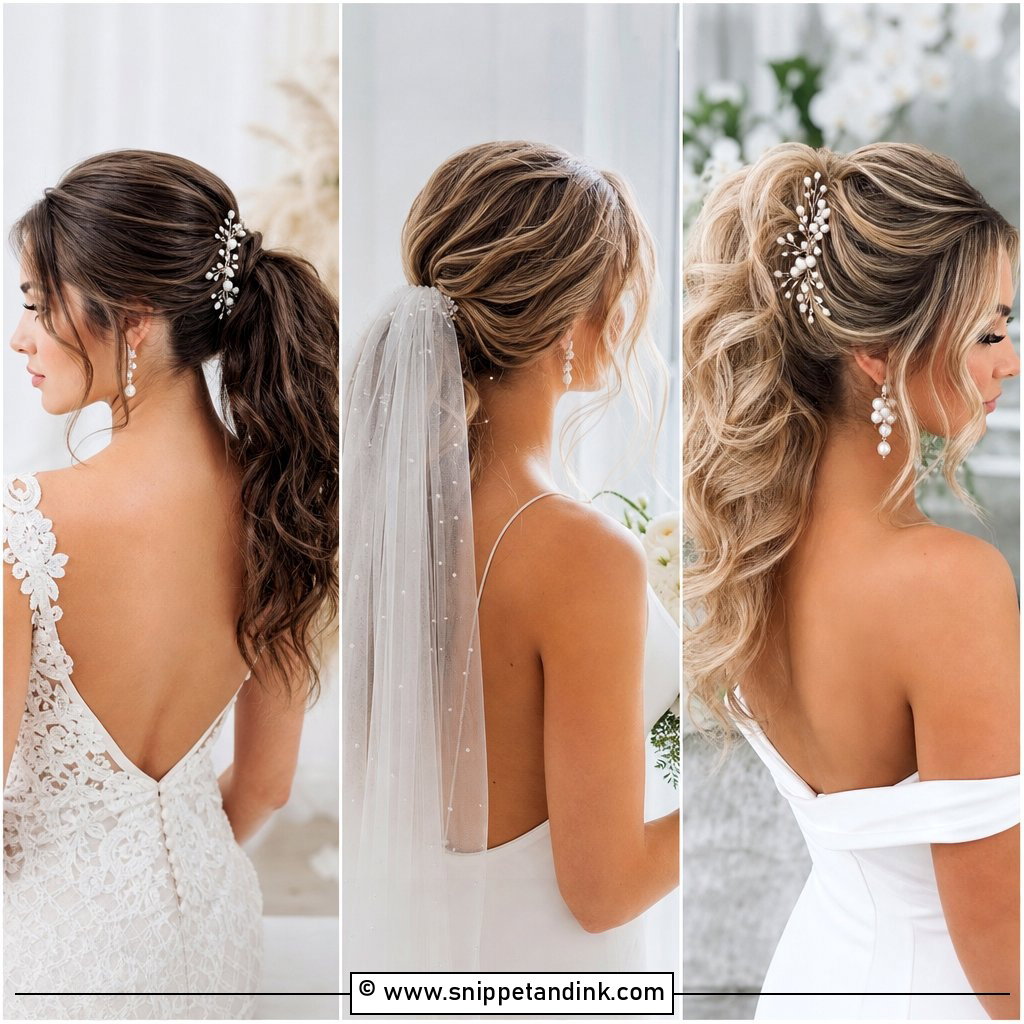
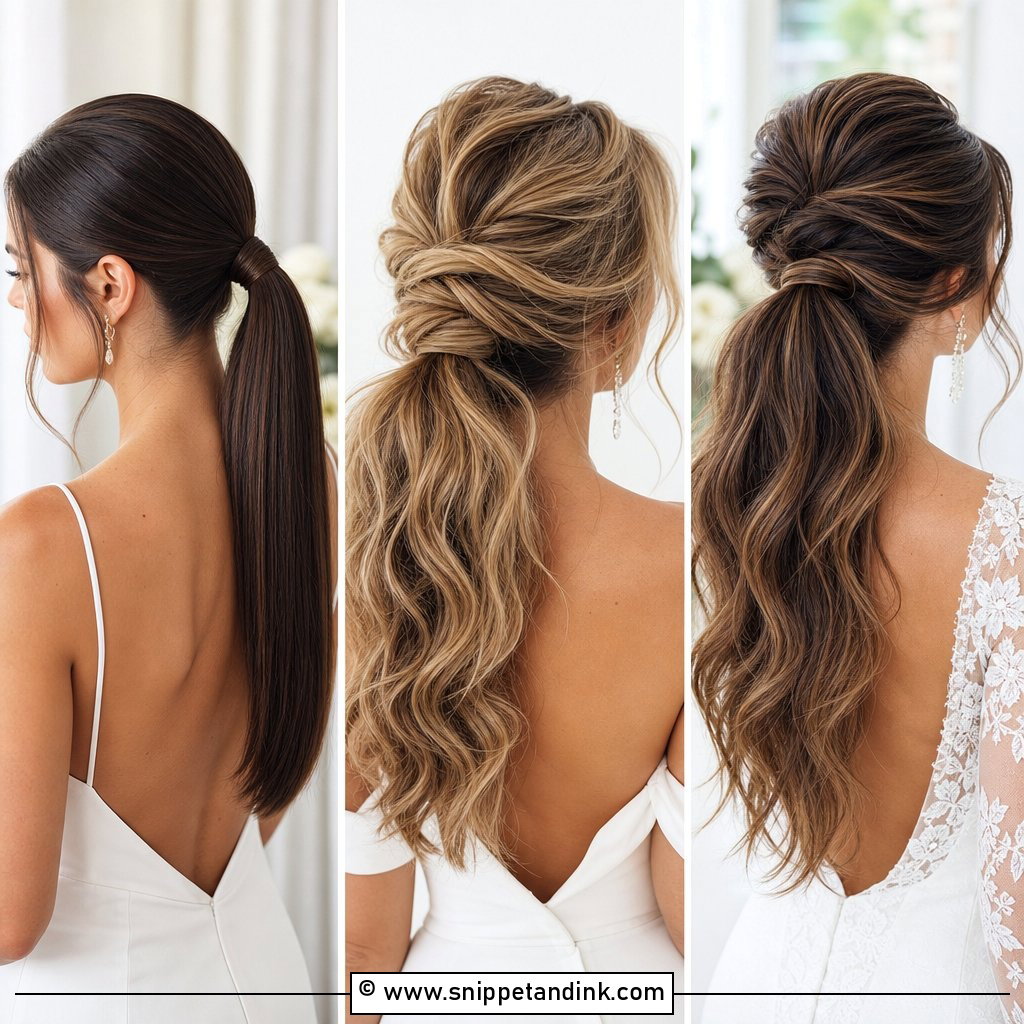
15. Indian Wedding Voluminous High Pony
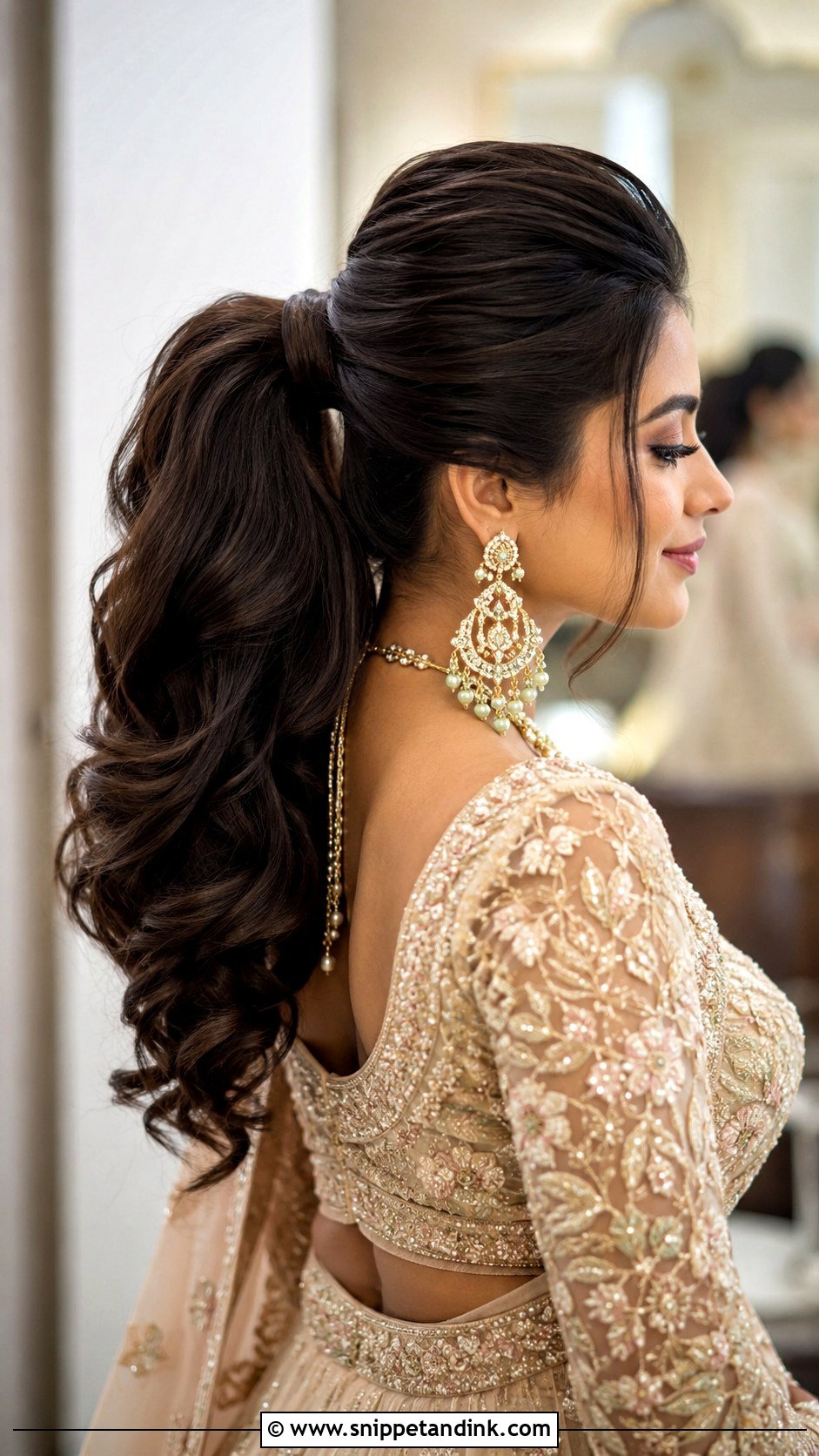
This is the reception pony: big, glossy and built for photos. The crown is lifted slightly, the base anchored hard, and the length set in large waves or curls for maximum fullness. Most of the thick, swinging ponies you see in bridal shoots rely on extensions, and I’d plan for them unless your own hair is very dense. It pairs with dramatic lehengas, embellished gowns and modern saree drapes. Keep the front smooth so the volume lives in the pony, not around your face. The base carries all that weight, so I build it before a single curl goes in.
Where the Dupatta Sits When Your Hair Is Up on the Crown
A high pony and a head-covering dupatta can share space, but only if we plan it. For ceremonies where the dupatta goes over your head, I pin it just in front of the pony with U-pins through the fabric into the base, so its weight pulls on the anchor and not on your hairline. The pony then falls out over the dupatta at the back, which looks deliberate in photos.
Net and light georgette dupattas are easy. Heavy velvet or zardozi borders are another matter: they want to slide backwards and drag the pony with them. For those I add a small hidden comb in front of the base for the fabric to hook onto, and I’d lean toward a slightly lower pony so the dupatta drapes rather than tents. If you’ll take it off for the reception, have someone ready to check the crown; pin marks and flattened volume take five minutes to fix.
Turning One Pony Into Two Looks Across Back-to-Back Functions
A well-built base can carry you from mehndi to sangeet on the same day. Between functions I keep the anchor and change only the length: re-curl it, swap jasmine for a hair chain, or braid it for dancing. What I’d never do is let a bride sleep in a high pony. The base pulls on the scalp all night and the crown is flat and creased by morning, so take it down, braid it loosely and start fresh the next day.
A High Pony Lives or Dies at the Elastic
Every pony on this list depends on the same thing: a base that’s tied tight, wrapped clean and anchored well enough to carry curls, extensions and accessories without drooping by the reception. Match the version to the function and outfit, and bring your accessories and any extensions to the trial so I can see how the weight actually sits. If your hair is fine, plan extensions early, since color-matching them takes longer than most brides expect.
You'll Like These Ideas:


Leave a Reply